WO2022083659A1 - 基于丙烯聚合物的复合薄膜及其制备方法和应用 - Google Patents
基于丙烯聚合物的复合薄膜及其制备方法和应用 Download PDFInfo
- Publication number
- WO2022083659A1 WO2022083659A1 PCT/CN2021/125096 CN2021125096W WO2022083659A1 WO 2022083659 A1 WO2022083659 A1 WO 2022083659A1 CN 2021125096 W CN2021125096 W CN 2021125096W WO 2022083659 A1 WO2022083659 A1 WO 2022083659A1
- Authority
- WO
- WIPO (PCT)
- Prior art keywords
- weight
- layer
- propylene
- composite film
- component
- Prior art date
- Legal status (The legal status is an assumption and is not a legal conclusion. Google has not performed a legal analysis and makes no representation as to the accuracy of the status listed.)
- Ceased
Links
Images


Classifications
-
- B—PERFORMING OPERATIONS; TRANSPORTING
- B29—WORKING OF PLASTICS; WORKING OF SUBSTANCES IN A PLASTIC STATE IN GENERAL
- B29C—SHAPING OR JOINING OF PLASTICS; SHAPING OF MATERIAL IN A PLASTIC STATE, NOT OTHERWISE PROVIDED FOR; AFTER-TREATMENT OF THE SHAPED PRODUCTS, e.g. REPAIRING
- B29C48/00—Extrusion moulding, i.e. expressing the moulding material through a die or nozzle which imparts the desired form; Apparatus therefor
- B29C48/03—Extrusion moulding, i.e. expressing the moulding material through a die or nozzle which imparts the desired form; Apparatus therefor characterised by the shape of the extruded material at extrusion
- B29C48/07—Flat, e.g. panels
- B29C48/08—Flat, e.g. panels flexible, e.g. films
-
- B—PERFORMING OPERATIONS; TRANSPORTING
- B29—WORKING OF PLASTICS; WORKING OF SUBSTANCES IN A PLASTIC STATE IN GENERAL
- B29C—SHAPING OR JOINING OF PLASTICS; SHAPING OF MATERIAL IN A PLASTIC STATE, NOT OTHERWISE PROVIDED FOR; AFTER-TREATMENT OF THE SHAPED PRODUCTS, e.g. REPAIRING
- B29C48/00—Extrusion moulding, i.e. expressing the moulding material through a die or nozzle which imparts the desired form; Apparatus therefor
- B29C48/16—Articles comprising two or more components, e.g. co-extruded layers
- B29C48/18—Articles comprising two or more components, e.g. co-extruded layers the components being layers
- B29C48/21—Articles comprising two or more components, e.g. co-extruded layers the components being layers the layers being joined at their surfaces
-
- B—PERFORMING OPERATIONS; TRANSPORTING
- B29—WORKING OF PLASTICS; WORKING OF SUBSTANCES IN A PLASTIC STATE IN GENERAL
- B29C—SHAPING OR JOINING OF PLASTICS; SHAPING OF MATERIAL IN A PLASTIC STATE, NOT OTHERWISE PROVIDED FOR; AFTER-TREATMENT OF THE SHAPED PRODUCTS, e.g. REPAIRING
- B29C48/00—Extrusion moulding, i.e. expressing the moulding material through a die or nozzle which imparts the desired form; Apparatus therefor
- B29C48/25—Component parts, details or accessories; Auxiliary operations
- B29C48/36—Means for plasticising or homogenising the moulding material or forcing it through the nozzle or die
- B29C48/49—Means for plasticising or homogenising the moulding material or forcing it through the nozzle or die using two or more extruders to feed one die or nozzle
-
- B—PERFORMING OPERATIONS; TRANSPORTING
- B29—WORKING OF PLASTICS; WORKING OF SUBSTANCES IN A PLASTIC STATE IN GENERAL
- B29C—SHAPING OR JOINING OF PLASTICS; SHAPING OF MATERIAL IN A PLASTIC STATE, NOT OTHERWISE PROVIDED FOR; AFTER-TREATMENT OF THE SHAPED PRODUCTS, e.g. REPAIRING
- B29C48/00—Extrusion moulding, i.e. expressing the moulding material through a die or nozzle which imparts the desired form; Apparatus therefor
- B29C48/25—Component parts, details or accessories; Auxiliary operations
- B29C48/88—Thermal treatment of the stream of extruded material, e.g. cooling
- B29C48/911—Cooling
- B29C48/9135—Cooling of flat articles, e.g. using specially adapted supporting means
- B29C48/914—Cooling drums
-
- B—PERFORMING OPERATIONS; TRANSPORTING
- B29—WORKING OF PLASTICS; WORKING OF SUBSTANCES IN A PLASTIC STATE IN GENERAL
- B29C—SHAPING OR JOINING OF PLASTICS; SHAPING OF MATERIAL IN A PLASTIC STATE, NOT OTHERWISE PROVIDED FOR; AFTER-TREATMENT OF THE SHAPED PRODUCTS, e.g. REPAIRING
- B29C48/00—Extrusion moulding, i.e. expressing the moulding material through a die or nozzle which imparts the desired form; Apparatus therefor
- B29C48/25—Component parts, details or accessories; Auxiliary operations
- B29C48/92—Measuring, controlling or regulating
-
- B—PERFORMING OPERATIONS; TRANSPORTING
- B32—LAYERED PRODUCTS
- B32B—LAYERED PRODUCTS, i.e. PRODUCTS BUILT-UP OF STRATA OF FLAT OR NON-FLAT, e.g. CELLULAR OR HONEYCOMB, FORM
- B32B27/00—Layered products comprising a layer of synthetic resin
- B32B27/06—Layered products comprising a layer of synthetic resin as the main or only constituent of a layer, which is next to another layer of the same or of a different material
-
- B—PERFORMING OPERATIONS; TRANSPORTING
- B32—LAYERED PRODUCTS
- B32B—LAYERED PRODUCTS, i.e. PRODUCTS BUILT-UP OF STRATA OF FLAT OR NON-FLAT, e.g. CELLULAR OR HONEYCOMB, FORM
- B32B27/00—Layered products comprising a layer of synthetic resin
- B32B27/06—Layered products comprising a layer of synthetic resin as the main or only constituent of a layer, which is next to another layer of the same or of a different material
- B32B27/08—Layered products comprising a layer of synthetic resin as the main or only constituent of a layer, which is next to another layer of the same or of a different material of synthetic resin
-
- B—PERFORMING OPERATIONS; TRANSPORTING
- B32—LAYERED PRODUCTS
- B32B—LAYERED PRODUCTS, i.e. PRODUCTS BUILT-UP OF STRATA OF FLAT OR NON-FLAT, e.g. CELLULAR OR HONEYCOMB, FORM
- B32B27/00—Layered products comprising a layer of synthetic resin
- B32B27/18—Layered products comprising a layer of synthetic resin characterised by the use of special additives
-
- B—PERFORMING OPERATIONS; TRANSPORTING
- B32—LAYERED PRODUCTS
- B32B—LAYERED PRODUCTS, i.e. PRODUCTS BUILT-UP OF STRATA OF FLAT OR NON-FLAT, e.g. CELLULAR OR HONEYCOMB, FORM
- B32B27/00—Layered products comprising a layer of synthetic resin
- B32B27/18—Layered products comprising a layer of synthetic resin characterised by the use of special additives
- B32B27/20—Layered products comprising a layer of synthetic resin characterised by the use of special additives using fillers, pigments, thixotroping agents
-
- B—PERFORMING OPERATIONS; TRANSPORTING
- B32—LAYERED PRODUCTS
- B32B—LAYERED PRODUCTS, i.e. PRODUCTS BUILT-UP OF STRATA OF FLAT OR NON-FLAT, e.g. CELLULAR OR HONEYCOMB, FORM
- B32B27/00—Layered products comprising a layer of synthetic resin
- B32B27/32—Layered products comprising a layer of synthetic resin comprising polyolefins
-
- B—PERFORMING OPERATIONS; TRANSPORTING
- B32—LAYERED PRODUCTS
- B32B—LAYERED PRODUCTS, i.e. PRODUCTS BUILT-UP OF STRATA OF FLAT OR NON-FLAT, e.g. CELLULAR OR HONEYCOMB, FORM
- B32B7/00—Layered products characterised by the relation between layers; Layered products characterised by the relative orientation of features between layers, or by the relative values of a measurable parameter between layers, i.e. products comprising layers having different physical, chemical or physicochemical properties; Layered products characterised by the interconnection of layers
- B32B7/02—Physical, chemical or physicochemical properties
-
- B—PERFORMING OPERATIONS; TRANSPORTING
- B32—LAYERED PRODUCTS
- B32B—LAYERED PRODUCTS, i.e. PRODUCTS BUILT-UP OF STRATA OF FLAT OR NON-FLAT, e.g. CELLULAR OR HONEYCOMB, FORM
- B32B7/00—Layered products characterised by the relation between layers; Layered products characterised by the relative orientation of features between layers, or by the relative values of a measurable parameter between layers, i.e. products comprising layers having different physical, chemical or physicochemical properties; Layered products characterised by the interconnection of layers
- B32B7/02—Physical, chemical or physicochemical properties
- B32B7/022—Mechanical properties
-
- B—PERFORMING OPERATIONS; TRANSPORTING
- B32—LAYERED PRODUCTS
- B32B—LAYERED PRODUCTS, i.e. PRODUCTS BUILT-UP OF STRATA OF FLAT OR NON-FLAT, e.g. CELLULAR OR HONEYCOMB, FORM
- B32B7/00—Layered products characterised by the relation between layers; Layered products characterised by the relative orientation of features between layers, or by the relative values of a measurable parameter between layers, i.e. products comprising layers having different physical, chemical or physicochemical properties; Layered products characterised by the interconnection of layers
- B32B7/02—Physical, chemical or physicochemical properties
- B32B7/027—Thermal properties
-
- B—PERFORMING OPERATIONS; TRANSPORTING
- B65—CONVEYING; PACKING; STORING; HANDLING THIN OR FILAMENTARY MATERIAL
- B65D—CONTAINERS FOR STORAGE OR TRANSPORT OF ARTICLES OR MATERIALS, e.g. BAGS, BARRELS, BOTTLES, BOXES, CANS, CARTONS, CRATES, DRUMS, JARS, TANKS, HOPPERS, FORWARDING CONTAINERS; ACCESSORIES, CLOSURES, OR FITTINGS THEREFOR; PACKAGING ELEMENTS; PACKAGES
- B65D65/00—Wrappers or flexible covers; Packaging materials of special type or form
- B65D65/38—Packaging materials of special type or form
- B65D65/40—Applications of laminates for particular packaging purposes
-
- C—CHEMISTRY; METALLURGY
- C08—ORGANIC MACROMOLECULAR COMPOUNDS; THEIR PREPARATION OR CHEMICAL WORKING-UP; COMPOSITIONS BASED THEREON
- C08J—WORKING-UP; GENERAL PROCESSES OF COMPOUNDING; AFTER-TREATMENT NOT COVERED BY SUBCLASSES C08B, C08C, C08F, C08G or C08H
- C08J5/00—Manufacture of articles or shaped materials containing macromolecular substances
- C08J5/18—Manufacture of films or sheets
-
- C—CHEMISTRY; METALLURGY
- C08—ORGANIC MACROMOLECULAR COMPOUNDS; THEIR PREPARATION OR CHEMICAL WORKING-UP; COMPOSITIONS BASED THEREON
- C08L—COMPOSITIONS OF MACROMOLECULAR COMPOUNDS
- C08L23/00—Compositions of homopolymers or copolymers of unsaturated aliphatic hydrocarbons having only one carbon-to-carbon double bond; Compositions of derivatives of such polymers
- C08L23/02—Compositions of homopolymers or copolymers of unsaturated aliphatic hydrocarbons having only one carbon-to-carbon double bond; Compositions of derivatives of such polymers not modified by chemical after-treatment
- C08L23/04—Homopolymers or copolymers of ethene
- C08L23/08—Copolymers of ethene
-
- C—CHEMISTRY; METALLURGY
- C08—ORGANIC MACROMOLECULAR COMPOUNDS; THEIR PREPARATION OR CHEMICAL WORKING-UP; COMPOSITIONS BASED THEREON
- C08L—COMPOSITIONS OF MACROMOLECULAR COMPOUNDS
- C08L23/00—Compositions of homopolymers or copolymers of unsaturated aliphatic hydrocarbons having only one carbon-to-carbon double bond; Compositions of derivatives of such polymers
- C08L23/02—Compositions of homopolymers or copolymers of unsaturated aliphatic hydrocarbons having only one carbon-to-carbon double bond; Compositions of derivatives of such polymers not modified by chemical after-treatment
- C08L23/10—Homopolymers or copolymers of propene
- C08L23/12—Polypropene
-
- C—CHEMISTRY; METALLURGY
- C08—ORGANIC MACROMOLECULAR COMPOUNDS; THEIR PREPARATION OR CHEMICAL WORKING-UP; COMPOSITIONS BASED THEREON
- C08L—COMPOSITIONS OF MACROMOLECULAR COMPOUNDS
- C08L23/00—Compositions of homopolymers or copolymers of unsaturated aliphatic hydrocarbons having only one carbon-to-carbon double bond; Compositions of derivatives of such polymers
- C08L23/02—Compositions of homopolymers or copolymers of unsaturated aliphatic hydrocarbons having only one carbon-to-carbon double bond; Compositions of derivatives of such polymers not modified by chemical after-treatment
- C08L23/10—Homopolymers or copolymers of propene
- C08L23/14—Copolymers of propene
-
- C—CHEMISTRY; METALLURGY
- C08—ORGANIC MACROMOLECULAR COMPOUNDS; THEIR PREPARATION OR CHEMICAL WORKING-UP; COMPOSITIONS BASED THEREON
- C08L—COMPOSITIONS OF MACROMOLECULAR COMPOUNDS
- C08L53/00—Compositions of block copolymers containing at least one sequence of a polymer obtained by reactions only involving carbon-to-carbon unsaturated bonds; Compositions of derivatives of such polymers
- C08L53/02—Compositions of block copolymers containing at least one sequence of a polymer obtained by reactions only involving carbon-to-carbon unsaturated bonds; Compositions of derivatives of such polymers of vinyl-aromatic monomers and conjugated dienes
-
- B—PERFORMING OPERATIONS; TRANSPORTING
- B01—PHYSICAL OR CHEMICAL PROCESSES OR APPARATUS IN GENERAL
- B01D—SEPARATION
- B01D2323/00—Details relating to membrane preparation
- B01D2323/10—Specific pressure applied
-
- B—PERFORMING OPERATIONS; TRANSPORTING
- B01—PHYSICAL OR CHEMICAL PROCESSES OR APPARATUS IN GENERAL
- B01D—SEPARATION
- B01D2325/00—Details relating to properties of membranes
- B01D2325/02—Details relating to pores or porosity of the membranes
- B01D2325/021—Pore shapes
-
- B—PERFORMING OPERATIONS; TRANSPORTING
- B01—PHYSICAL OR CHEMICAL PROCESSES OR APPARATUS IN GENERAL
- B01D—SEPARATION
- B01D69/00—Semi-permeable membranes for separation processes or apparatus characterised by their form, structure or properties; Manufacturing processes specially adapted therefor
- B01D69/02—Semi-permeable membranes for separation processes or apparatus characterised by their form, structure or properties; Manufacturing processes specially adapted therefor characterised by their properties
-
- B—PERFORMING OPERATIONS; TRANSPORTING
- B01—PHYSICAL OR CHEMICAL PROCESSES OR APPARATUS IN GENERAL
- B01D—SEPARATION
- B01D71/00—Semi-permeable membranes for separation processes or apparatus characterised by the material; Manufacturing processes specially adapted therefor
- B01D71/06—Organic material
- B01D71/26—Polyalkenes
-
- B—PERFORMING OPERATIONS; TRANSPORTING
- B29—WORKING OF PLASTICS; WORKING OF SUBSTANCES IN A PLASTIC STATE IN GENERAL
- B29C—SHAPING OR JOINING OF PLASTICS; SHAPING OF MATERIAL IN A PLASTIC STATE, NOT OTHERWISE PROVIDED FOR; AFTER-TREATMENT OF THE SHAPED PRODUCTS, e.g. REPAIRING
- B29C2948/00—Indexing scheme relating to extrusion moulding
- B29C2948/92—Measuring, controlling or regulating
- B29C2948/92504—Controlled parameter
- B29C2948/92704—Temperature
-
- B—PERFORMING OPERATIONS; TRANSPORTING
- B29—WORKING OF PLASTICS; WORKING OF SUBSTANCES IN A PLASTIC STATE IN GENERAL
- B29C—SHAPING OR JOINING OF PLASTICS; SHAPING OF MATERIAL IN A PLASTIC STATE, NOT OTHERWISE PROVIDED FOR; AFTER-TREATMENT OF THE SHAPED PRODUCTS, e.g. REPAIRING
- B29C48/00—Extrusion moulding, i.e. expressing the moulding material through a die or nozzle which imparts the desired form; Apparatus therefor
- B29C48/001—Combinations of extrusion moulding with other shaping operations
- B29C48/0018—Combinations of extrusion moulding with other shaping operations combined with shaping by orienting, stretching or shrinking, e.g. film blowing
-
- B—PERFORMING OPERATIONS; TRANSPORTING
- B29—WORKING OF PLASTICS; WORKING OF SUBSTANCES IN A PLASTIC STATE IN GENERAL
- B29C—SHAPING OR JOINING OF PLASTICS; SHAPING OF MATERIAL IN A PLASTIC STATE, NOT OTHERWISE PROVIDED FOR; AFTER-TREATMENT OF THE SHAPED PRODUCTS, e.g. REPAIRING
- B29C48/00—Extrusion moulding, i.e. expressing the moulding material through a die or nozzle which imparts the desired form; Apparatus therefor
- B29C48/001—Combinations of extrusion moulding with other shaping operations
- B29C48/0022—Combinations of extrusion moulding with other shaping operations combined with cutting
-
- B—PERFORMING OPERATIONS; TRANSPORTING
- B29—WORKING OF PLASTICS; WORKING OF SUBSTANCES IN A PLASTIC STATE IN GENERAL
- B29C—SHAPING OR JOINING OF PLASTICS; SHAPING OF MATERIAL IN A PLASTIC STATE, NOT OTHERWISE PROVIDED FOR; AFTER-TREATMENT OF THE SHAPED PRODUCTS, e.g. REPAIRING
- B29C48/00—Extrusion moulding, i.e. expressing the moulding material through a die or nozzle which imparts the desired form; Apparatus therefor
- B29C48/03—Extrusion moulding, i.e. expressing the moulding material through a die or nozzle which imparts the desired form; Apparatus therefor characterised by the shape of the extruded material at extrusion
- B29C48/04—Particle-shaped
-
- B—PERFORMING OPERATIONS; TRANSPORTING
- B29—WORKING OF PLASTICS; WORKING OF SUBSTANCES IN A PLASTIC STATE IN GENERAL
- B29C—SHAPING OR JOINING OF PLASTICS; SHAPING OF MATERIAL IN A PLASTIC STATE, NOT OTHERWISE PROVIDED FOR; AFTER-TREATMENT OF THE SHAPED PRODUCTS, e.g. REPAIRING
- B29C48/00—Extrusion moulding, i.e. expressing the moulding material through a die or nozzle which imparts the desired form; Apparatus therefor
- B29C48/25—Component parts, details or accessories; Auxiliary operations
- B29C48/28—Storing of extruded material, e.g. by winding up or stacking
-
- B—PERFORMING OPERATIONS; TRANSPORTING
- B29—WORKING OF PLASTICS; WORKING OF SUBSTANCES IN A PLASTIC STATE IN GENERAL
- B29C—SHAPING OR JOINING OF PLASTICS; SHAPING OF MATERIAL IN A PLASTIC STATE, NOT OTHERWISE PROVIDED FOR; AFTER-TREATMENT OF THE SHAPED PRODUCTS, e.g. REPAIRING
- B29C48/00—Extrusion moulding, i.e. expressing the moulding material through a die or nozzle which imparts the desired form; Apparatus therefor
- B29C48/25—Component parts, details or accessories; Auxiliary operations
- B29C48/36—Means for plasticising or homogenising the moulding material or forcing it through the nozzle or die
- B29C48/395—Means for plasticising or homogenising the moulding material or forcing it through the nozzle or die using screws surrounded by a cooperating barrel, e.g. single screw extruders
- B29C48/40—Means for plasticising or homogenising the moulding material or forcing it through the nozzle or die using screws surrounded by a cooperating barrel, e.g. single screw extruders using two or more parallel screws or at least two parallel non-intermeshing screws, e.g. twin screw extruders
-
- B—PERFORMING OPERATIONS; TRANSPORTING
- B29—WORKING OF PLASTICS; WORKING OF SUBSTANCES IN A PLASTIC STATE IN GENERAL
- B29C—SHAPING OR JOINING OF PLASTICS; SHAPING OF MATERIAL IN A PLASTIC STATE, NOT OTHERWISE PROVIDED FOR; AFTER-TREATMENT OF THE SHAPED PRODUCTS, e.g. REPAIRING
- B29C55/00—Shaping by stretching, e.g. drawing through a die; Apparatus therefor
- B29C55/02—Shaping by stretching, e.g. drawing through a die; Apparatus therefor of plates or sheets
- B29C55/10—Shaping by stretching, e.g. drawing through a die; Apparatus therefor of plates or sheets multiaxial
- B29C55/12—Shaping by stretching, e.g. drawing through a die; Apparatus therefor of plates or sheets multiaxial biaxial
- B29C55/14—Shaping by stretching, e.g. drawing through a die; Apparatus therefor of plates or sheets multiaxial biaxial successively
- B29C55/143—Shaping by stretching, e.g. drawing through a die; Apparatus therefor of plates or sheets multiaxial biaxial successively firstly parallel to the direction of feed and then transversely thereto
-
- B—PERFORMING OPERATIONS; TRANSPORTING
- B29—WORKING OF PLASTICS; WORKING OF SUBSTANCES IN A PLASTIC STATE IN GENERAL
- B29K—INDEXING SCHEME ASSOCIATED WITH SUBCLASSES B29B, B29C OR B29D, RELATING TO MOULDING MATERIALS OR TO MATERIALS FOR MOULDS, REINFORCEMENTS, FILLERS OR PREFORMED PARTS, e.g. INSERTS
- B29K2023/00—Use of polyalkenes or derivatives thereof as moulding material
- B29K2023/10—Polymers of propylene
- B29K2023/12—PP, i.e. polypropylene
-
- B—PERFORMING OPERATIONS; TRANSPORTING
- B29—WORKING OF PLASTICS; WORKING OF SUBSTANCES IN A PLASTIC STATE IN GENERAL
- B29K—INDEXING SCHEME ASSOCIATED WITH SUBCLASSES B29B, B29C OR B29D, RELATING TO MOULDING MATERIALS OR TO MATERIALS FOR MOULDS, REINFORCEMENTS, FILLERS OR PREFORMED PARTS, e.g. INSERTS
- B29K2105/00—Condition, form or state of moulded material or of the material to be shaped
- B29K2105/0005—Condition, form or state of moulded material or of the material to be shaped containing compounding ingredients
-
- B—PERFORMING OPERATIONS; TRANSPORTING
- B32—LAYERED PRODUCTS
- B32B—LAYERED PRODUCTS, i.e. PRODUCTS BUILT-UP OF STRATA OF FLAT OR NON-FLAT, e.g. CELLULAR OR HONEYCOMB, FORM
- B32B2250/00—Layers arrangement
- B32B2250/02—2 layers
-
- B—PERFORMING OPERATIONS; TRANSPORTING
- B32—LAYERED PRODUCTS
- B32B—LAYERED PRODUCTS, i.e. PRODUCTS BUILT-UP OF STRATA OF FLAT OR NON-FLAT, e.g. CELLULAR OR HONEYCOMB, FORM
- B32B2250/00—Layers arrangement
- B32B2250/03—3 layers
-
- B—PERFORMING OPERATIONS; TRANSPORTING
- B32—LAYERED PRODUCTS
- B32B—LAYERED PRODUCTS, i.e. PRODUCTS BUILT-UP OF STRATA OF FLAT OR NON-FLAT, e.g. CELLULAR OR HONEYCOMB, FORM
- B32B2250/00—Layers arrangement
- B32B2250/04—4 layers
-
- B—PERFORMING OPERATIONS; TRANSPORTING
- B32—LAYERED PRODUCTS
- B32B—LAYERED PRODUCTS, i.e. PRODUCTS BUILT-UP OF STRATA OF FLAT OR NON-FLAT, e.g. CELLULAR OR HONEYCOMB, FORM
- B32B2250/00—Layers arrangement
- B32B2250/05—5 or more layers
-
- B—PERFORMING OPERATIONS; TRANSPORTING
- B32—LAYERED PRODUCTS
- B32B—LAYERED PRODUCTS, i.e. PRODUCTS BUILT-UP OF STRATA OF FLAT OR NON-FLAT, e.g. CELLULAR OR HONEYCOMB, FORM
- B32B2250/00—Layers arrangement
- B32B2250/24—All layers being polymeric
- B32B2250/242—All polymers belonging to those covered by group B32B27/32
-
- B—PERFORMING OPERATIONS; TRANSPORTING
- B32—LAYERED PRODUCTS
- B32B—LAYERED PRODUCTS, i.e. PRODUCTS BUILT-UP OF STRATA OF FLAT OR NON-FLAT, e.g. CELLULAR OR HONEYCOMB, FORM
- B32B2262/00—Composition or structural features of fibres which form a fibrous or filamentary layer or are present as additives
- B32B2262/10—Inorganic fibres
- B32B2262/106—Carbon fibres, e.g. graphite fibres
-
- B—PERFORMING OPERATIONS; TRANSPORTING
- B32—LAYERED PRODUCTS
- B32B—LAYERED PRODUCTS, i.e. PRODUCTS BUILT-UP OF STRATA OF FLAT OR NON-FLAT, e.g. CELLULAR OR HONEYCOMB, FORM
- B32B2264/00—Composition or properties of particles which form a particulate layer or are present as additives
- B32B2264/02—Synthetic macromolecular particles
- B32B2264/0214—Particles made of materials belonging to B32B27/00
-
- B—PERFORMING OPERATIONS; TRANSPORTING
- B32—LAYERED PRODUCTS
- B32B—LAYERED PRODUCTS, i.e. PRODUCTS BUILT-UP OF STRATA OF FLAT OR NON-FLAT, e.g. CELLULAR OR HONEYCOMB, FORM
- B32B2264/00—Composition or properties of particles which form a particulate layer or are present as additives
- B32B2264/10—Inorganic particles
- B32B2264/101—Glass
-
- B—PERFORMING OPERATIONS; TRANSPORTING
- B32—LAYERED PRODUCTS
- B32B—LAYERED PRODUCTS, i.e. PRODUCTS BUILT-UP OF STRATA OF FLAT OR NON-FLAT, e.g. CELLULAR OR HONEYCOMB, FORM
- B32B2264/00—Composition or properties of particles which form a particulate layer or are present as additives
- B32B2264/10—Inorganic particles
- B32B2264/102—Oxide or hydroxide
-
- B—PERFORMING OPERATIONS; TRANSPORTING
- B32—LAYERED PRODUCTS
- B32B—LAYERED PRODUCTS, i.e. PRODUCTS BUILT-UP OF STRATA OF FLAT OR NON-FLAT, e.g. CELLULAR OR HONEYCOMB, FORM
- B32B2264/00—Composition or properties of particles which form a particulate layer or are present as additives
- B32B2264/10—Inorganic particles
- B32B2264/107—Ceramic
- B32B2264/108—Carbon, e.g. graphite particles
-
- B—PERFORMING OPERATIONS; TRANSPORTING
- B32—LAYERED PRODUCTS
- B32B—LAYERED PRODUCTS, i.e. PRODUCTS BUILT-UP OF STRATA OF FLAT OR NON-FLAT, e.g. CELLULAR OR HONEYCOMB, FORM
- B32B2264/00—Composition or properties of particles which form a particulate layer or are present as additives
- B32B2264/30—Particles characterised by physical dimension
- B32B2264/303—Average diameter greater than 1µm
-
- B—PERFORMING OPERATIONS; TRANSPORTING
- B32—LAYERED PRODUCTS
- B32B—LAYERED PRODUCTS, i.e. PRODUCTS BUILT-UP OF STRATA OF FLAT OR NON-FLAT, e.g. CELLULAR OR HONEYCOMB, FORM
- B32B2270/00—Resin or rubber layer containing a blend of at least two different polymers
-
- B—PERFORMING OPERATIONS; TRANSPORTING
- B32—LAYERED PRODUCTS
- B32B—LAYERED PRODUCTS, i.e. PRODUCTS BUILT-UP OF STRATA OF FLAT OR NON-FLAT, e.g. CELLULAR OR HONEYCOMB, FORM
- B32B2274/00—Thermoplastic elastomer material
-
- B—PERFORMING OPERATIONS; TRANSPORTING
- B32—LAYERED PRODUCTS
- B32B—LAYERED PRODUCTS, i.e. PRODUCTS BUILT-UP OF STRATA OF FLAT OR NON-FLAT, e.g. CELLULAR OR HONEYCOMB, FORM
- B32B2307/00—Properties of the layers or laminate
- B32B2307/30—Properties of the layers or laminate having particular thermal properties
- B32B2307/31—Heat sealable
-
- B—PERFORMING OPERATIONS; TRANSPORTING
- B32—LAYERED PRODUCTS
- B32B—LAYERED PRODUCTS, i.e. PRODUCTS BUILT-UP OF STRATA OF FLAT OR NON-FLAT, e.g. CELLULAR OR HONEYCOMB, FORM
- B32B2307/00—Properties of the layers or laminate
- B32B2307/40—Properties of the layers or laminate having particular optical properties
- B32B2307/412—Transparent
-
- B—PERFORMING OPERATIONS; TRANSPORTING
- B32—LAYERED PRODUCTS
- B32B—LAYERED PRODUCTS, i.e. PRODUCTS BUILT-UP OF STRATA OF FLAT OR NON-FLAT, e.g. CELLULAR OR HONEYCOMB, FORM
- B32B2307/00—Properties of the layers or laminate
- B32B2307/50—Properties of the layers or laminate having particular mechanical properties
- B32B2307/514—Oriented
- B32B2307/518—Oriented bi-axially
-
- B—PERFORMING OPERATIONS; TRANSPORTING
- B32—LAYERED PRODUCTS
- B32B—LAYERED PRODUCTS, i.e. PRODUCTS BUILT-UP OF STRATA OF FLAT OR NON-FLAT, e.g. CELLULAR OR HONEYCOMB, FORM
- B32B2307/00—Properties of the layers or laminate
- B32B2307/50—Properties of the layers or laminate having particular mechanical properties
- B32B2307/54—Yield strength; Tensile strength
-
- B—PERFORMING OPERATIONS; TRANSPORTING
- B32—LAYERED PRODUCTS
- B32B—LAYERED PRODUCTS, i.e. PRODUCTS BUILT-UP OF STRATA OF FLAT OR NON-FLAT, e.g. CELLULAR OR HONEYCOMB, FORM
- B32B2307/00—Properties of the layers or laminate
- B32B2307/50—Properties of the layers or laminate having particular mechanical properties
- B32B2307/558—Impact strength, toughness
-
- B—PERFORMING OPERATIONS; TRANSPORTING
- B32—LAYERED PRODUCTS
- B32B—LAYERED PRODUCTS, i.e. PRODUCTS BUILT-UP OF STRATA OF FLAT OR NON-FLAT, e.g. CELLULAR OR HONEYCOMB, FORM
- B32B2307/00—Properties of the layers or laminate
- B32B2307/70—Other properties
- B32B2307/732—Dimensional properties
- B32B2307/737—Dimensions, e.g. volume or area
- B32B2307/7375—Linear, e.g. length, distance or width
- B32B2307/7376—Thickness
-
- B—PERFORMING OPERATIONS; TRANSPORTING
- B32—LAYERED PRODUCTS
- B32B—LAYERED PRODUCTS, i.e. PRODUCTS BUILT-UP OF STRATA OF FLAT OR NON-FLAT, e.g. CELLULAR OR HONEYCOMB, FORM
- B32B2439/00—Containers; Receptacles
- B32B2439/40—Closed containers
-
- B—PERFORMING OPERATIONS; TRANSPORTING
- B32—LAYERED PRODUCTS
- B32B—LAYERED PRODUCTS, i.e. PRODUCTS BUILT-UP OF STRATA OF FLAT OR NON-FLAT, e.g. CELLULAR OR HONEYCOMB, FORM
- B32B2439/00—Containers; Receptacles
- B32B2439/70—Food packaging
-
- B—PERFORMING OPERATIONS; TRANSPORTING
- B32—LAYERED PRODUCTS
- B32B—LAYERED PRODUCTS, i.e. PRODUCTS BUILT-UP OF STRATA OF FLAT OR NON-FLAT, e.g. CELLULAR OR HONEYCOMB, FORM
- B32B2457/00—Electrical equipment
- B32B2457/10—Batteries
-
- C—CHEMISTRY; METALLURGY
- C09—DYES; PAINTS; POLISHES; NATURAL RESINS; ADHESIVES; COMPOSITIONS NOT OTHERWISE PROVIDED FOR; APPLICATIONS OF MATERIALS NOT OTHERWISE PROVIDED FOR
- C09J—ADHESIVES; NON-MECHANICAL ASPECTS OF ADHESIVE PROCESSES IN GENERAL; ADHESIVE PROCESSES NOT PROVIDED FOR ELSEWHERE; USE OF MATERIALS AS ADHESIVES
- C09J151/00—Adhesives based on graft polymers in which the grafted component is obtained by reactions only involving carbon-to-carbon unsaturated bonds; Adhesives based on derivatives of such polymers
- C09J151/06—Adhesives based on graft polymers in which the grafted component is obtained by reactions only involving carbon-to-carbon unsaturated bonds; Adhesives based on derivatives of such polymers grafted on to homopolymers or copolymers of aliphatic hydrocarbons containing only one carbon-to-carbon double bond
Definitions
- the present invention relates to the field of polymer films, in particular to a propylene polymer-based composite film, a preparation method and application thereof, and a packaging material comprising the composite film.
- Polypropylene films are usually prepared by methods such as casting and biaxial stretching, but polypropylene films prepared from homopolypropylene raw materials usually have low impact strength. Polypropylene films are often used in packaging applications, which require high impact properties, as well as good optical properties for content visualization and aesthetics.
- impact-resistant polypropylene can be used to prepare films, or polyolefin elastomers can be added to polypropylene, but the films prepared by the above methods usually have high haze, poor transparency and other optical properties . It is also possible to add nucleating agents to the film at the same time to reduce the haze of the film by refining the crystals in the film, but this method leads to a decrease in impact performance.
- the film can also be prepared by a multi-layer co-extrusion method.
- CN101913279A adopts a three-layer co-extrusion method to prepare a composite film.
- the layers in the film contain 1:10-1:3 Elastomer and PP are blended in proportion, and the elastomer provides better impact resistance.
- the elastomer will also lead to a large difference in the flow properties of the core surface layer, further aggravating the problem of uneven film surface, and may lead to uneven performance of the film everywhere;
- the difference in properties also affects the uniformity of the film and can affect the optical and mechanical properties of the film.
- propylene polymer-based films It is difficult for existing propylene polymer-based films to have good optical properties and impact resistance at the same time; in addition, when propylene polymer films are used in packaging applications, it is generally desirable to have better performance at lower heat sealing temperatures. Good heat sealing performance, the propylene polymer films in the prior art cannot meet such performance requirements. In addition, existing composite films have poor uniformity in thickness and properties.
- the object of the present invention is to provide a low haze high impact film based on propylene polymer and a preparation method thereof.
- Such films can have both good impact resistance and optical properties.
- Another object of the present invention is to provide a film as described above which may additionally have good mechanical properties (eg tensile properties) and/or good heat seal strength at lower heat seal temperatures.
- Another object of the present invention is to provide a transparent impact-resistant composite film based on propylene polymers, which has good impact resistance and optical properties at the same time, and has good film thickness and uniformity of properties.
- Another object of the present invention is to provide a preparation method of the composite film, which has a stable preparation process and good uniformity of the obtained film.
- a propylene impact copolymer containing a specific elastic moiety as a raw material in at least one layer of a composite film, through extrusion casting, a specific microstructure containing a uniformly dispersed strip-like rubber phase is prepared.
- the composite film thus achieves the purpose.
- a first aspect of the present invention provides a propylene polymer-based composite film comprising at least two distinct layers: layer a and layer b;
- layer a and layer b each comprise at least one propylene polymer
- layer a and layer b comprises a propylene impact copolymer
- the propylene impact copolymer comprises elastic moieties which form a dispersed strip-like rubber phase in the composite film.
- a second aspect of the present invention provides a method for preparing the composite film of the present invention, which comprises extrusion casting the raw material composition for forming each layer to form the composite film.
- the third aspect of the present invention provides the application of the composite film of the present invention in the field of packaging materials.
- a fourth aspect of the present invention provides a packaging material comprising the composite film of the present invention.
- Fig. 1a and Fig. 1b are schematic diagrams of the sampling point selection of the thin film of the present invention.
- Example A1 is a scanning electron microscope (SEM) photograph of a cross-section of the raw propylene impact copolymer spline used in Example A1 according to the present invention.
- FIG. 3 is an atomic force microscope photograph of a section of the thin film of Example A1 according to the present invention.
- FIG. 4 is an atomic force microscope photograph of a section of a thin film of Comparative Example A3 according to the present invention.
- FIG. 5 is an atomic force microscope photograph of a section of a thin film of Example C1 according to the present invention.
- Figure 6a is a SEM photograph of a cross-section of the raw propylene impact copolymer spline used in Example E1 according to the present invention.
- Figure 6b is a SEM photograph of a cross-section of the raw propylene impact copolymer spline used in Comparative Example E1 according to the present invention.
- FIG. 7 is an atomic force microscope photograph of a section of a thin film of Example E1 according to the present invention.
- a first aspect of the present invention provides a propylene polymer-based composite film comprising at least two distinct layers: layer a and layer b;
- layer a and layer b each comprise at least one propylene polymer
- layer a and layer b comprises a propylene impact copolymer
- the propylene impact copolymer comprises elastic moieties which form a dispersed strip-like rubber phase in the composite film.
- Dispersed as used herein means that the rubber phase is not continuously distributed in the composite film.
- AFM atomic force microscope
- TD transverse direction
- stripe refers to a shape with an aspect ratio generally greater than 2.
- aspect ratio refers to the ratio of the vertical axis to the horizontal axis of an object.
- the longitudinal axis refers to the longest dimension of the object (here, the rubber phase), ie the distance between two points on the contour of the object that are farthest apart.
- the horizontal axis refers to the length of the straight line perpendicular to the vertical axis between the intersection points with the object outline and the longest distance between the intersection points.
- the average size of the lateral axis of the rubber phase may be 20-200 nm, more preferably 20-150 nm.
- the average value of the aspect ratio of the rubber phase may be 5-20, preferably 5-15.
- the transverse dimension and aspect ratio are measured by atomic force microscopy, observing a cross section of the composite film cut in the transverse direction (TD). Based on 200 sample points, the average value of the horizontal axis size of the rubber phase was calculated as the average size of the horizontal axis of the rubber phase, and the average value of the aspect ratio of the rubber phase was calculated as the average value of the aspect ratio of the rubber phase.
- the machine direction refers to the machine direction.
- the transverse direction refers to the direction perpendicular to the machining direction.
- the rubber phases are advantageously arranged parallel to each other.
- parallel alignment means that the transverse cross-sections of the rubber phases are aligned parallel to each other along a certain direction. Excluded here are a small amount of rubber phase particles arranged in different directions in local areas that are inconsistent with the overall arrangement direction of the rubber phase particles in the entire composite film due to the preparation process, and those that cannot be clearly observed due to the preparation process or AFM method. Rubber phase particles.
- parallel arrangement includes substantially parallel conditions.
- the transverse cross-sections of the rubber phase are at an angle of no greater than about 10 degrees to each other, preferably less than about 5 degrees.
- Both layer a and layer b in the present invention comprise at least one propylene polymer, both consist of a propylene polymer-based composition, but differ in their specific composition and/or thickness.
- the entire composite film is a propylene polymer-based composite film, which can also be called a polypropylene composite film.
- layer a is intended to serve as the core layer of the composite film, ie a layer relatively remote from the medium to which the composite film is to be in contact during use of the composite film.
- Layer b is intended to serve as the skin layer of the composite film, ie the layer close to the medium to which the composite film is to be in contact during use of the composite film, such as the electrolyte to which the battery packaging material comes into contact.
- At least one of the layers a and b comprises the propylene impact copolymer having a specific elastic portion, so that the entire composite film contains a specific dispersed rubber phase.
- the elastic portion may appear as a spherical or near-spherical rubber phase in scanning electron micrographs of impact bars of the propylene impact copolymer.
- the propylene impact copolymer is preferably a propylene impact copolymer containing ethylene units, wherein the elastic part is a copolymerized part containing ethylene units, preferably selected from ethylene-propylene copolymerized parts and ethylene-butene copolymerized parts.
- the propylene impact copolymer comprises a propylene homopolymeric portion and the copolymerized portion containing ethylene units.
- the propylene homopolymeric portion may comprise an isotactic polymeric structure.
- the content of the copolymerized moiety containing ethylene units in the propylene impact copolymer is preferably 3-15% by weight, more preferably 7-12% by weight, as determined by13C NMR.
- the ethylene unit content of the propylene impact copolymer is preferably 1-14% by weight, preferably 3-12% by weight, based on the total weight of the propylene impact copolymer.
- the ethylene unit content preferably does not exceed 40% by weight.
- the ethylene unit group [EEE] content preferably does not exceed 20% by weight, determined by 13 C NMR.
- the propylene impact copolymer may have a block structure or comprise a propylene block copolymer.
- the melt mass flow rate (MFR) of the propylene impact copolymer at 230° C. and a load of 2.16kg can be 1-10g/10min, preferably 1-8g/10min, determined according to the standard GB/T 3682-2000, test The temperature was 230°C and the load was 2.16kg.
- Useful propylene impact copolymers are commercially available, such as propylene impact copolymers of Zhongsha Petrochemical under the brand name EP200K, propylene impact copolymers of Shanghai Petrochemical under the brand names of F200R and M180R, and propylene impact copolymers of Maoming Petrochemical under the brand name PPB-M02D. Impact copolymer, Korea Hyosung brand J410F propylene impact copolymer.
- the propylene impact copolymers can also be prepared by continuous polymerization in the presence of Ziegler-Natta catalysts with high stereoselectivity.
- the continuous polymerization method means that the preparation process includes at least two sequential steps, wherein the elastic part and the non-elastic part are each prepared in a separate step, and, in addition to the first step, the latter step has been The resulting polymer is carried out in the presence of the catalyst used in the previous step.
- Layer a may comprise homopolypropylene and/or propylene random copolymer.
- the melt mass flow rate of the homopolypropylene at 230°C under a load of 2.16kg is preferably 2-15g/10min, measured according to the standard GB/T 3682-2000, the test temperature is 230°C, and the load is 2.16kg.
- the isotacticity of the homopolypropylene is preferably greater than 97%, as determined by13C NMR.
- the molecular weight distribution Mw/Mn of the homopolypropylene is preferably 4.5-7.0, as determined by gel permeation chromatography (GPC).
- the propylene random copolymer may be a copolymer of propylene and ethylene and/or butene, such as ethylene-propylene-butene ternary random copolymer, propylene-ethylene binary random copolymer, propylene-butene di- Elemental random copolymers.
- the melt mass flow rate of the propylene random copolymer at 230° C. and a load of 2.16kg can be 2-15g/10min, preferably 2-10g/10min, determined according to the standard GB/T 3682-2000.
- the molecular weight distribution Mw/Mn of the random copolymer is preferably 4.5-7.0, as determined by GPC.
- Useful propylene random polymers are commercially available, for example, random propylene copolymers of Yanshan Petrochemical's grade F5006, Shanghai Petrochemical's random propylene copolymers of grades F500EPS, F800EDF or F800EPS; or by methods conventional in the art preparation.
- Layer b may comprise a propylene random copolymer.
- the propylene random copolymer is as described above.
- the propylene random copolymers in layer b and layer a may be the same or different.
- layer b may comprise 60-100 wt% propylene random copolymer.
- At least one of layer a and layer b may comprise a polyolefin elastomer, thereby advantageously further enhancing the impact resistance of the composite film.
- the polyolefin elastomer may be an elastomeric copolymer of ethylene and an alpha olefin.
- the alpha olefin is preferably a C 3 -C 12 alpha olefin, more preferably at least one selected from the group consisting of propylene, 1-butene, 1-hexene and 1-octene.
- Useful polyolefin elastomers are commercially available, for example, Dow's polyolefin elastomer 8200, Dow's 8411 polyolefin elastomer, Mitsui's DF640 or DF840 polyolefin elastomers, Exxon's polyolefin elastomers are 6102, VM3980 or EXACT3139; or can be prepared by conventional methods in the art.
- the elastic portion in the propylene impact copolymer and the polyolefin elastomer form a dispersed rubber phase in the composite film, which also takes the form of strips and is parallel to each other arrangement.
- the average size of the transverse axis of such a rubber phase may also be 20 to 200 nm, preferably 20 to 150 nm.
- the average aspect ratio of the rubber phase may be 5-20, preferably 5-15.
- the dimensions are determined by AFM as described above.
- the presence of the polyolefin elastomer advantageously compensates for possible uneven distribution of the rubber phase in the propylene impact copolymer, thereby improving the uniformity of impact properties throughout the film.
- the polyolefin elastomer has a shear viscosity ratio ⁇ 160 / ⁇ 640 of 1.2-3, preferably 1.7-2.3 at 230° C. and shear rates of 160r ⁇ 1 and 640r ⁇ 1 .
- the shear viscosity ⁇ 640 of the polyolefin elastomer at 230° C. and a shear rate of 640r ⁇ 1 is preferably 100-500 Pa ⁇ s, more preferably 140-400 Pa ⁇ s.
- Shear viscosity ⁇ 160 and ⁇ 640 were determined according to ISO 11443:2014 using a capillary rheometer.
- the material constituting layer a may have a melt mass flow rate at 230°C under a load of 2.16kg of 2-10g/10min, preferably 2-8g/10min, more preferably 3-7g /10min, measured according to the standard GB/T3682-2000, the test temperature is 230°C, and the load is 2.16kg.
- the material constituting layer b may have a melt mass flow rate at 230°C under a load of 2.16kg of 2-10g/10min, preferably 3-10g/10min, more preferably 3-9g/ 10min, more preferably 4-8g/10min, measured according to the standard GB/T 3682-2000, the test temperature is 230°C, and the load is 2.16kg.
- melt mass flow rate can advantageously make the film preparation process smoother, resulting in better uniformity, mechanical properties and optical properties of the film.
- Layer a and layer b may both comprise the propylene impact copolymer, wherein the propylene impact copolymer in layer a and layer b may be the same or different. It is also possible that only one of the layers a and b contains the propylene impact copolymer.
- Layer a and layer b may also both comprise the polyolefin elastomer, wherein the polyolefin elastomers in layer a and layer b may be the same or different.
- the ratio between the weight ratio of the polyolefin elastomer in the layer a and the weight ratio of the polyolefin elastomer in the layer b is 6:1-1:6. It is also possible that only one of the layers a and b contains the polyolefin elastomer.
- Layer a and layer b may also both comprise said propylene impact copolymer and said polyolefin elastomer, wherein the propylene impact copolymer in layer a and layer b may be the same or different, and layer a and layer b
- the polyolefin elastomers in can also be the same or different.
- layers a and b contains the propylene impact copolymer and one or both of the layers a and b contain the polyolefin elastomer; alternatively, layers a and b contain the polyolefin elastomer Only one layer of b contains the polyolefin elastomer, and one or both of layers a and b contain the propylene impact copolymer.
- layer a comprises the homopolypropylene, the propylene impact copolymer and the polyolefin elastomer
- layer b comprises the random propylene copolymer and the polyolefin elastomer
- the ratio between the weight ratio of the polyolefin elastomer in layer a and the weight ratio of the polyolefin elastomer in layer b is 2:1-1:4, for example, it can be It is 1.5:1, 1:1, 1:1.5, 1:2, 1:2.5, 1:3, 1:3.5 and any value therebetween, more preferably 1:1-1:2.
- the ratio of the weight proportion of the polyolefin elastomer in the above layer a to the weight proportion of the polyolefin elastomer in the layer b can further improve the impact resistance and impact resistance of the composite film. Optical performance, while making the extrusion process smoother.
- layer a may comprise 40-90% by weight, preferably 50-90% by weight, more preferably 55-75% by weight of said homopolypropylene, 5-40% by weight, preferably 10 - 30% by weight of said propylene impact copolymer and 2 to 30% by weight, preferably 5 to 20% by weight of said polyolefin elastomer, each based on the total weight of layer a.
- Layer b may comprise 40-95% by weight, preferably 60-95% by weight, more preferably 75-90% by weight of said random propylene copolymer, and 5-60% by weight, preferably 5-40% by weight, more preferably 10 - 25% by weight of said polyolefin elastomer, each based on the total weight of layer b.
- Composite films comprising such skin layers and core layers may advantageously have not only excellent optical properties, but also enhanced heat seal strength.
- the thickness uniformity and property uniformity of the film can be greatly improved when the polyolefin elastomers in both layer a and layer b meet the following conditions: at 230°C, shear rates 160r -1 and 640r
- the ratio of shear viscosity ⁇ 160 / ⁇ 640 under -1 is 1.2-3, preferably 1.7-2.3, and the shear viscosity ⁇ 640 at 230°C and shear rate 640r -1 is 100-500Pa ⁇ s, It is preferably 140-400 Pa ⁇ s.
- the difference in shear viscosity ( ⁇ A 160 - ⁇ B at 230°C and shear rate 160r ⁇ 1 of the propylene polymer composition constituting the layer a and the propylene polymer composition constituting the layer b) 160 ) and the difference ( ⁇ A 640 - ⁇ B 640 ) of the shear viscosity at 230 ° C and shear rate 640r -1 are all ⁇ 0, and the ratio of the two ( ⁇ A 160 - ⁇ B 160 )/( ⁇ A 640 - ⁇ B 640 ) is 1-2.6, preferably 1.4-2.5, more preferably 1.5-2.2, so that the uniformity of film thickness and performance can be further improved by adjusting the fluidity compatibility of each layer of raw materials.
- layer a comprises a propylene polymer and the polyolefin elastomer
- layer b comprises the random propylene copolymer, the polyolefin elastomer and the propylene impact copolymer.
- the propylene polymer in layer a may be selected from homopolypropylene and/or the propylene impact copolymer.
- layer a may comprise 70-100% by weight of propylene polymer.
- the ratio between the weight ratio of the polyolefin elastomer in layer a and the weight ratio of the polyolefin elastomer in layer b is 10:1-1:6, preferably 6 :1-1:4, more preferably 4:1-1:4, such as 3.5:1, 3:1, 2.5:1, 2:1, 1.5:1, 1:1, 1:1.5, 1 :2, 1:2.5, 1:3, 1:3.5 and any value in between.
- the ratio of the weight proportion of the polyolefin elastomer in the above layer a to the weight proportion of the polyolefin elastomer in the layer b can further improve the impact resistance and impact resistance of the composite film. Optical performance, while making the extrusion process smoother.
- layer a may comprise 50-95% by weight, preferably 70-95% by weight, more preferably 80-95% by weight of said propylene polymer and 5-50% by weight, preferably 5- 30% by weight, more preferably 5-20% by weight of said polyolefin elastomer, each based on the total weight of layer a;
- layer b may comprise 40-90% by weight, preferably 50-90% by weight, more preferably 60-85% by weight % by weight of said random propylene copolymer, 5-40% by weight, preferably 5-30% by weight, more preferably 5-20% by weight of said polyolefin elastomer and 2-30% by weight, preferably 5-20% by weight % of the propylene impact copolymer, each based on the total weight of layer b.
- a composite film comprising such a skin layer and a core layer can not only have improved impact resistance and improved optical and mechanical properties, but also due to the fact that the skin layer (heat seal layer) contains a specific rubber phase of the propylene impact copolymer and other components.
- the synergistic effect between the components can effectively improve the heat sealing strength while reducing the heat sealing temperature.
- layer a comprises the polyolefin elastomer, the propylene impact copolymer and other types of propylene polymers, which may be selected from the homopolypropylene and/or propylene random copolymer; and layer b comprises said random propylene copolymer and said polyolefin elastomer.
- layer a may comprise 40-90 wt% propylene impact copolymer, 5-40 wt% other types of propylene polymers and 2-30 wt% polyolefin elastomer, Preferably 55-75% by weight of propylene impact copolymer, 10-30% by weight of other types of propylene polymers and 5-20% by weight of polyolefin elastomer, each based on the total weight of layer a; layer b may comprise 40-95% by weight of propylene random copolymer and 5-60% by weight of polyolefin elastomer, preferably 75-90% by weight of propylene random copolymer and 10-25% by weight of polyolefin elastomer, each based on the layer total weight of b.
- the composite film can have good impact resistance, optical properties and tensile properties at the same time, and can have good heat-sealing strength at a lower heat-sealing temperature.
- the sum of the wt % of all components of each layer is 100 wt %.
- Layer a and/or layer b may also contain additives conventionally used in polymer films, such as antioxidants, lubricants, antihalogens, light stabilizers, heat stabilizers, colorants, fillers, slip agents, surface adhesives At least one of adhesive, electromagnetic shielding aid, flame retardant, insulating additive, anti-sticking agent and antistatic agent, etc.
- additives conventionally used in polymer films such as antioxidants, lubricants, antihalogens, light stabilizers, heat stabilizers, colorants, fillers, slip agents, surface adhesives At least one of adhesive, electromagnetic shielding aid, flame retardant, insulating additive, anti-sticking agent and antistatic agent, etc.
- antioxidants can be used to improve the oxidation resistance of the composite film during processing.
- the antioxidant can be various antioxidants commonly used in the art, such as at least one of antioxidant 1076, antioxidant 1010, antioxidant 168, and thioester antioxidants (such as DLTP, DSTP), etc. kind.
- the content of the antioxidant may be 0.1-0.8 parts by weight, preferably 0.2-0.4 parts by weight.
- the composite film may also contain other film auxiliaries commonly used in the art, such as selected from lubricants, anti-halogen agents, light stabilizers, heat stabilizers, colorants, fillers, slip agents, surface adhesives At least one of adhesive, electromagnetic shielding aid, flame retardant, insulating additive, anti-sticking agent and antistatic agent.
- film auxiliaries can be used in conventional amounts.
- the content of each of the other film auxiliaries can be 0.01-0.5 parts by weight, preferably 0.05-0.3 parts by weight, more preferably 0.01-0.5 parts by weight. 0.05-0.15 parts by weight unless otherwise specified.
- lubricants can be added to the composite film.
- the lubricant may be a PEG-based lubricant and/or a monoglyceride-based lubricant. Based on the total weight of the layer being 100 parts by weight, the content of the lubricant may be 0.01-0.5 part by weight, preferably 0.05-0.2 part by weight.
- polar monomer modified polypropylene can be added as a surface adhesive, thereby enhancing the bonding between the composite film and the interface of other materials, and obtaining a high-adhesion and high-impact propylene polymer composite film .
- the polar monomer-modified polypropylene is especially added in layer b.
- layer a may comprise 40-90% by weight, preferably 50-85% by weight of homopolypropylene, 5-45% by weight, preferably 10-30% by weight % by weight of propylene impact copolymer and 2-40% by weight, preferably 5-20% by weight of polyolefin elastomer; and based on the total weight of layer b, layer b comprises 40-99% by weight, preferably 70-90% by weight % by weight of propylene random copolymer, 0-30% by weight, preferably 5-15% by weight of polyolefin elastomer and 1-30% by weight, preferably 5-15% by weight of polar monomer modified polypropylene.
- layer a may comprise 50-100% by weight, preferably 75-95% by weight polypropylene and 0-50% by weight, preferably 5-25% by weight, based on the total weight of layer a % of polyolefin elastomer; and based on the total weight of layer b, layer b may comprise 30-90% by weight, preferably 60-85% by weight of propylene random copolymer, 5-40% by weight, preferably 5-20% by weight % by weight of polyolefin elastomer, 2.5-20% by weight, preferably 5-10% by weight of propylene impact copolymer and 2.5-20% by weight, preferably 5-10% by weight of polar monomer modified polypropylene.
- the polar monomer in the polar monomer-modified polypropylene may be selected from at least one of hydroxyl group-containing comonomers, cyano group-containing comonomers and acid anhydride monomers.
- the hydroxyl-containing comonomer is preferably a hydroxy acid and/or vinyl alcohol.
- the cyano group-containing comonomer is preferably a cyanoacrylate.
- the acid anhydride monomer is preferably maleic anhydride and/or itaconic anhydride, more preferably maleic anhydride.
- Maleic anhydride grafted polypropylene (PP-g-MAH) has both polar groups and olefin non-polar segments, and it has the basic physical properties of the original polypropylene, such as high crystallinity, high strength, high impact, etc. properties and improved adhesion to other materials.
- the polar monomer-modified polypropylene is commercially available, for example, maleic anhydride-modified polypropylene with the brand name of QF551A from Mitsui, maleic anhydride-modified polypropylene with the brand name of CMG9801 from Jiayirong, Exxon The company's grade is PO1015 maleic anhydride modified polypropylene.
- a conductive filler can also be added to the composite film of the present invention, thereby improving the antistatic property of the composite film.
- the conductive filler is preferably added in layer b.
- the conductive filler may be added in an amount of 0.1-10 parts by weight, preferably 0.5-4.5 parts by weight, based on 100 parts by weight of the total weight of the matrix polymer in layer b.
- the conductive filler may be, for example, at least one of carbon black, graphite, carbon nanotubes, carbon fibers, conductive metal particles, conductive metal fibers, and metal oxides.
- the carbon black-based conductive filler includes, but is not limited to, at least one of acetylene carbon black, superconducting carbon black, and special conducting carbon black.
- the graphite-based conductive filler includes, but is not limited to, at least one of natural graphite, expandable graphite, expanded graphite and graphene.
- the carbon nanotube-based conductive fillers include, but are not limited to, unsurface-modified or surface-modified single-wall carbon nanotubes and/or multi-wall carbon nanotubes.
- the conductive metal in the conductive metal particles and the conductive metal fibers may each independently be at least one of silver, aluminum, copper, iron, nickel and stainless steel.
- the conductive metal-coated filler may be selected from at least one of lead-plated, nickel-plated, silver-plated glass balls, glass fibers and mica flakes.
- the metal oxide includes, but is not limited to, at least one of titanium oxide, zinc oxide, tin oxide, indium oxide, and cadmium oxide.
- Antistatic propylene polymer films can be prepared by adding conductive fillers, and their surface resistivity can be 10 2 -10 8 ⁇ , preferably 10 2 -10 4 ⁇ , as measured by Keithley 6517B Electrometer. The antistatic properties of the films are durable and less affected by ambient humidity.
- an electromagnetic shielding aid can be added to the composite film to prepare an electromagnetic shielding film.
- the electromagnetic shielding aid is preferably added in layer b.
- the electromagnetic shielding aids may be conductive metal fillers and/or carbon materials.
- the conductive metal filler is preferably conductive metal particles and/or conductive metal fibers.
- the metals in the conductive metal particles and the conductive metal fibers may each be independently selected from one or more of silver, aluminum, copper, iron, nickel, and stainless steel.
- the carbon material is preferably one or more of carbon black, graphite, graphene and carbon nanotubes.
- the electromagnetic shielding aid can be added in an amount of 5-30 parts by weight, preferably 15-25 parts by weight, based on 100 parts by weight of the matrix polymer in layer b.
- the electromagnetic shielding effectiveness of the obtained composite film can reach ⁇ 25dB, preferably ⁇ 28dB.
- the electromagnetic wave band is in the frequency range of 50MHz to 1GHz when tested with a flange coaxial test equipment.
- the electromagnetic shielding aid can also be used in combination with a coupling agent.
- the coupling agent can improve the compatibility between the matrix polymer component (resin component) of the propylene polymer composition and the electromagnetic shielding aid, and the type, usage and amount of the coupling agent can be conventionally selected in the field,
- the coupling agent may be selected from titanate type coupling agents, and the titanate type coupling agent may be selected from monoalkoxy type titanate, monoalkyl pyrophosphate type titanate, One or more of coordination titanate and chelate titanate; preferably, the titanate coupling agent is selected from tetrabutyl titanate and/or tetraisopropyl titanate.
- the content of the coupling agent may be 1-6 parts by weight, preferably 4-6 parts by weight, based on 100 parts by weight of the total weight of the base polymer components.
- Flame retardants can also be added to the composite film to improve the flame retardant properties.
- it can be added in layers a and/or b, and can also be added in another layer c, in which case layer c is a flame retardant functional layer.
- layer c may comprise 30-80% by weight, preferably 40-70% by weight of propylene polymer and 20-70% by weight, preferably 30-60% by weight of flame retardant, based on the total weight of layer c.
- the oxygen index ⁇ 21% can be achieved, preferably the oxygen index ⁇ 23%, measured according to the method specified in GB/T 2406-2008.
- the flame retardant can be selected from the hydrates of metal or non-metal hydroxides and/or oxides, phosphorus-based flame retardants, boron-based flame retardants, antimony-based flame retardants and intumescent flame retardants. at least one.
- the metal or non-metal hydroxide and/or oxide hydrate may be at least one of aluminum, magnesium, boron, zinc hydroxide and layered double metal hydroxide;
- the phosphorus-based flame retardant The agent can be at least one of red phosphorus, phosphate, polyphosphate and phosphate ester;
- the boron-based flame retardant can be boric acid and/or borate, and the borate is preferably ammonium borate and/or Zinc borate;
- the antimony flame retardant can be at least one of antimony trioxide, antimony pentoxide and sodium antimonate;
- the intumescent flame retardant is sulfuric acid, pentaerythritol or its dimer or trimer , butaneerythritol, cyclohexanol, sorbitol, glucose, maltose, starch, resorcinol, ammonium polyphosphate, dicyandiamide, melamine, urea, mel
- the flame retardant is an intumescent flame retardant, preferably a mixture of ammonium polyphosphate and pentaerythritol, and specifically, the weight ratio of ammonium polyphosphate and pentaerythritol is 0.5-5:1.
- the flame retardant is a mixture of magnesium hydroxide and aluminum hydroxide, and specifically, the weight ratio of magnesium hydroxide and aluminum hydroxide is 0.5-2:1.
- the flame retardant polypropylene film prepared by adding flame retardant has the advantages of easy processing and good performance.
- colorants can be added to the composite film.
- the colorant may be a conventional choice in the art, including but not limited to at least one of azo pigments, phthalocyanine pigments, heterocyclic pigments, lake pigments, dyes, optical brighteners, and fluorescent pigments.
- the colorants described above are all commercially available.
- the colorant is preferably added in layer a. Based on 100 parts by weight of the matrix polymer in the layer a, the content of the colorant may be 0.1-1 part by weight, preferably 0.3-0.8 part by weight.
- Layer a may also include a dispersant.
- the dispersant can improve the processability and uniformity between the matrix polymer component of the layer a and the colorant, and the type, usage and amount of the dispersant can be conventionally selected in the art.
- the dispersant can be For low molecular weight polyethylene wax, the weight content of the dispersant may be 20-30% by weight of the colorant.
- a slip agent can also be added to the composite film of the present invention.
- the slip agent can be an amide slip agent, preferably at least one of erucamide, oleic acid amide, stearic acid amide, behenic acid amide, stearyl erucic acid amide and ethylene bis-stearamide. kind.
- the slip agent may be a mixture of an amide type slip agent and a migration-resistant slip agent, wherein the amide type slip agent is preferably erucamide, oleic acid amide, stearic acid amide, At least one of behenamide, stearyl erucamide and ethylene bisstearamide.
- the migration-resistant slip agent is preferably at least one of polytetrafluoroethylene particles, polyimide particles, polyamide particles, polycarbonate particles, organic silicon, nano-calcium carbonate, mica and nano-silica.
- the weight ratio of the amide-based slip agent and the migration-resistant slip agent is 1:20-1:1, preferably 1:10-1:2.
- the particle size range of the migration-resistant slip agent contained in the slip agent may be 0.1-5 ⁇ m, preferably 0.3-2 ⁇ m.
- the slip agent can be added in the layer a and/or the layer b, and its addition amount can be 0.01-1.5% by weight, preferably 0.08-0.6% by weight, based on the total weight of the layer.
- slip agents are added in both layer a and layer b.
- the molecular weight of the amide type slip agent in the slip agent in the layer b is not less than the molecular weight of the amide type slip agent in the slip agent in the layer a.
- an amide-based slip agent is added to layer a, and a mixture of an amide-type slip agent and a migration-resistant slip agent is added to layer b.
- the initial slip performance of the film is improved.
- the migration-resistant slip agent in the composite slip agent can provide a part of the slip performance without the need for precipitation.
- the particle size range can ensure that the heat sealing performance and optical properties of the film will not change; in addition, the amide-type slip agent in the surface layer can also provide a certain slip performance, further reduce the friction coefficient of the film, and improve the initial smoothness of the film. slip performance.
- better high-temperature slip and heat-sealing performance retention can be provided through the use of the composite slip agent and the combination of the slip agent in the core surface layer.
- the obtained composite film may have a surface friction coefficient of ⁇ 0.3, preferably ⁇ 0.23; after heating at 60°C for 24 hours, the change of the film surface friction coefficient is ⁇ 0.02, preferably the change of the film surface friction coefficient ⁇ 0.01.
- insulating additives can be added to the composite film of the present invention, so that the electrical insulating properties of the propylene polymer composite film can be improved.
- propylene graft polymers can be used as insulating additives.
- a propylene graft polymer can be added in layer a and/or layer b.
- the propylene graft polymer can be added in an amount of 5 to 45% by weight, based on the total weight of the layer.
- layer a comprises 50-90% by weight, preferably 55-75% by weight of homopolypropylene, 5-45% by weight, preferably 10-30% by weight of propylene, based on the total weight of layer a
- layer a comprises 50-100% by weight, preferably 75-95% by weight of propylene polymer and 0-50% by weight, preferably 5-25% by weight of polymer, based on the total weight of layer a olefin elastomer; and layer b comprising 50-90% by weight, 60-85% by weight of propylene random copolymer, 5-40% by weight, preferably 5-20% by weight of polyolefin elastomer, based on the total weight of layer b body and 2-40% by weight, preferably 5-20% by weight of the propylene graft polymer.
- the propylene graft polymer may include structural units derived from copolymerized polypropylene and structural units derived from grafted monomers grafted thereto.
- the grafting monomers can be selected from acrylates; acrylics; styrenes; alkenyl-containing silanes; alkenyl-containing heterocyclic monomers; acid anhydrides with at least one olefinic unsaturation and alkenyl-containing A combination of polymerized monomers.
- the melt mass flow rate of the propylene graft polymer at 230°C under a load of 2.16kg can be 0.01-30g/10min, preferably 0.05-20g/10min, more preferably 0.1-10g/10min, more preferably 0.2 -8g/10min.
- the copolymerized polypropylene may be a propylene copolymer containing ethylene or higher alpha-olefins or a mixture thereof.
- the comonomer of the copolymerized polypropylene is selected from at least one of ethylene and C 4 -C 8 ⁇ -olefin.
- the C 4 -C 8 alpha-olefins include but are not limited to: 1-butene, 1-pentene, 4-methyl-1-pentene, 1-hexene, 1-heptene and 1-octene at least one of them.
- the comonomer is preferably ethylene and/or 1-butene, and further preferably, the copolymerized polypropylene consists of propylene and ethylene.
- the copolymerized polypropylene also has at least one of the following features: the comonomer content is 0.5-30 mol%, preferably 4-25 mol%; the xylene soluble content is 2-80 wt% , preferably 18-75% by weight, more preferably 30-70% by weight; comonomer content in the soluble matter is 10-70% by weight, preferably 10-50% by weight, more preferably 20-35% by weight;
- the intrinsic viscosity ratio of the soluble matter to polypropylene is 0.3-5, preferably 0.5-3, more preferably 0.8-1.3; the melt mass flow rate at 230° C.
- under a load of 2.16kg is 0.01-60g/10min, Preferably it is 0.05-35g/10min, more preferably 0.5-15g/10min; melting temperature Tm is above 100°C, preferably 110-180°C, more preferably 120-170°C; weight average molecular weight is 20 ⁇ 10 4 -60 ⁇ 10 4 g/mol.
- the copolymerized polypropylene can be any suitable polypropylene powder that is commercially available, and can also be produced by a common polymerization process described in the literature. For example, refer to the methods described in CN101679557A and CN101058654A.
- the propylene graft polymer may include structural units derived from copolymerized polypropylene and grafted thereto structural units derived from acrylic monomers and optionally acrylic monomers. Based on the weight of the propylene graft polymer, the content of the grafted structural units derived from acrylic monomers and optional acrylic monomers may be 0.3-7% by weight, preferably 0.8-5% by weight . In the propylene graft polymer, the molar ratio of the structural unit derived from the acrylate monomer to the structural unit derived from the acrylic monomer may be 1:0-2, preferably 1:0.125-1.
- the acrylate-based monomer used as the grafting monomer can be any monomeric acrylate-based compound that can be polymerized by free radicals, and can be selected from at least one of the monomers having the structure shown in formula I;
- R 1 , R 2 , R 3 are each independently selected from H, C 1 -C 6 straight-chain alkyl, C 3 -C 6 branched-chain alkyl;
- R 4 is selected from substituted or unsubstituted following groups: C 1 -C 20 straight chain alkyl, C 3 -C 20 branched chain alkyl, C 3 -C 12 cycloalkyl, C 3 -C 12 epoxy alkyl, C 3 -C 12 epoxy alkyl alkyl , the substituted group is selected from at least one of halogen, amino and hydroxyl.
- the acrylate monomer is selected from methyl (meth)acrylate, sec-butyl (meth)acrylate, ethyl (meth)acrylate, n-butyl (meth)acrylate, (meth)acrylate Isobutyl acrylate, tert-butyl (meth)acrylate, isooctyl (meth)acrylate, dodecyl (meth)acrylate, cocoate (meth)acrylate, ten (meth)acrylate At least one of octaalkyl ester, dimethylaminoethyl (meth)acrylate, diethylaminoethyl (meth)acrylate, dimethylaminopropyl (meth)acrylate and glycidyl (meth)acrylate kind.
- the acrylic monomer can be any monomeric acrylic compound that can be polymerized by free radicals, and can be selected from at least one of the monomers having the structure shown in formula II;
- R 1 , R 2 , and R 3 are each independently selected from H, C 1 -C 6 straight-chain alkyl, and C 3 -C 6 branched-chain alkyl.
- the acrylic monomer is selected from at least one of acrylic acid, methacrylic acid and 2-ethylacrylic acid.
- C 3 -C 12 epoxyalkylalkyl refers to an alkylene oxide substituted alkyl group having 3 to 12 carbon atoms, eg, oxiranylmethyl.
- structural units derived from acrylic monomers may not exist, or may coexist with structural units derived from acrylic monomers, preferably, structural units derived from acrylic monomers and acrylic monomers
- the molar ratio of the structural units of the monomer is 1:0-2, preferably 1:0.125-1.
- the ratio of the total mass of the acrylic monomer and optional acrylic monomer to the mass of the copolymerized polypropylene is 0.1-10:100, preferably 0.5-8:100, more preferably 0.8-7: 100.
- the molar ratio of the acrylate monomer to the acrylic monomer is 1:0-2, preferably 1:0.125-1.
- the propylene graft polymer may include structural units derived from copolymerized polypropylene and structural units derived from styrene-based monomers. Based on the weight of the propylene graft polymer, the content of the grafted structural units derived from the styrene-based monomer in the propylene graft polymer may be 0.5-14% by weight, preferably 1-7.5% by weight, More preferably, it is 1.5 to 5% by weight.
- the styrene-based monomer used as the grafting monomer can be any monomeric styrene-based compound that can be polymerized by free radicals, and can be selected from monomers with the structure shown in formula III, monomers with the structure shown in formula IV at least one of the monomer and the monomer having the structure shown in formula V;
- R 1 , R 2 , R 3 are each independently selected from H, substituted or unsubstituted C 1 -C 6 alkyl;
- R 4 -R 8 are each independently selected from H, halogen, hydroxyl, amino , phosphoric acid group, sulfonic acid group, substituted or unsubstituted C 1 -C 12 alkyl, substituted or unsubstituted C 3 -C 12 cycloalkyl, substituted or unsubstituted C 1 -C 12 alkoxy group, substituted or unsubstituted C 1 -C 12 ester group, substituted or unsubstituted C 1 -C 12 amine group, the substituent group is selected from halogen, hydroxyl, amino, phosphoric acid group, sulfonic acid group, C 1 -C 12 alkyl group, C 3 -C 12 cycloalkyl group, C 1 -C 12 alkoxy group, C 1 -C 12 ester group, C
- R 1 , R 2 , R 3 are each independently selected from H, substituted or unsubstituted C 1 -C 6 alkyl;
- R 4 -R 10 are each independently selected from H, halogen, hydroxyl, amino , phosphoric acid group, sulfonic acid group, substituted or unsubstituted C 1 -C 12 alkyl, substituted or unsubstituted C 3 -C 12 cycloalkyl, substituted or unsubstituted C 1 -C 12 alkoxy group, substituted or unsubstituted C 1 -C 12 ester group, substituted or unsubstituted C 1 -C 12 amine group, the substituent group is selected from halogen, hydroxyl, amino, phosphoric acid group, sulfonic acid group, C 1 -C 12 alkyl group, C 3 -C 12 cycloalkyl group, C 1 -C 12 alkoxy group, C 1 -C 12 ester group, C
- R 1 ', R 2 ', R 3 ' are each independently selected from H, substituted or unsubstituted C 1 -C 6 alkyl;
- R 4 '-R 10 ' are each independently selected from H, Halogen, hydroxyl, amino, phosphoric acid, sulfonic acid, substituted or unsubstituted C 1 -C 12 alkyl, substituted or unsubstituted C 3 -C 12 cycloalkyl, substituted or unsubstituted C 1 - C 12 alkoxy group, substituted or unsubstituted C 1 -C 12 ester group, substituted or unsubstituted C 1 -C 12 amine group, the substituted group is selected from halogen, hydroxyl, amino, phosphoric acid group , sulfonic acid group, C 1 -C 12 alkyl group, C 3 -C 12 cycloalkyl group, C 1 -C 12 alkoxy group, C 1 -C 12 este
- the styrene-based monomer can be selected from styrene, ⁇ -methylstyrene, 1-vinylnaphthalene, 2-vinylnaphthalene, mono- or poly-substituted styrene, mono- or poly-substituted styrene At least one of ⁇ -methylstyrene, monosubstituted or polysubstituted 1-vinylnaphthalene and monosubstituted or polysubstituted 2-vinylnaphthalene; the substituent group is preferably selected from halogen, hydroxyl, amino, Phosphoric acid group, sulfonic acid group, C 1 -C 8 straight-chain alkyl, C 3 -C 8 branched or cycloalkyl, C 1 -C 6 straight-chain alkoxy, C 3 -C 8 branched alkoxy or cyclic alkoxy, C 1 -C 8 straight chain este
- the styrene-based monomer is selected from at least one of styrene, ⁇ -methylstyrene, 2-methylstyrene, 3-methylstyrene and 4-methylstyrene.
- the mass ratio of the styrene-based monomer to the copolymerized polypropylene may be 0.5-16:100, preferably 1-12:100, more preferably 2-10:100.
- the propylene graft polymer includes a structural unit derived from a copolymerized polypropylene and a structural unit derived from an alkenyl group-containing silane-based monomer. Based on the weight of the propylene graft polymer, the content of the grafted structural unit derived from the alkenyl group-containing silane monomer in the propylene graft polymer b may be 0.2-6% by weight, preferably 0.2% -2.5 wt%.
- the alkenyl-containing silane-based monomer used as the grafting monomer can be any monomeric silane-based compound that can be polymerized by free radicals, and can be selected from the alkenyl-containing silane-based monomer selected from the group having the formula VI at least one of the monomers showing the structure,
- R 1 is a C 2 -C 12 alkenyl group, preferably a monounsaturated alkenyl group;
- R 2 , R 3 , R 4 are each independently selected from substituted or unsubstituted C 1 -C 12 straight chain Alkyl, substituted or unsubstituted C 3 -C 12 branched alkyl, substituted or unsubstituted C 1 -C 12 alkoxy, substituted or unsubstituted C 1 -C 12 acyloxy; preferably R 1 is a C 2 -C 6 alkenyl group, preferably a monounsaturated alkenyl group;
- R 2 , R 3 , R 4 are each independently selected from substituted or unsubstituted C 1 -C 6 straight-chain alkyl groups , substituted or unsubstituted C 3 -C 6 branched alkyl, substituted or unsubstituted C 1 -C 6 alkoxy, substituted or unsubstit
- the alkenyl-containing silane-based monomer is selected from vinyltriethoxysilane, vinyltrimethoxysilane, vinyltriisopropoxysilane, vinyltri-tert-butoxysilane, vinyl triacetoxysilane, methylvinyldimethoxysilane, ethylvinyldiethoxysilane, allyltriethoxysilane, allyltrimethoxysilane, allyltriisopropyl Oxysilane, vinyl tris ( ⁇ -methoxyethoxy) silane, allyl tris ( ⁇ -methoxyethoxy) silane, allyl tri-tert-butoxy silane, allyl triacetoxy At least one of silane, methallyldimethoxysilane, and ethylallyldiethoxysilane.
- the mass ratio of the alkenyl-containing silane-based monomer to the copolymerized polypropylene may be 0.5-12:100, preferably 0.8-9:100, more preferably 1-6:100.
- the propylene graft polymer includes structural units derived from copolymerized polypropylene, structural units derived from acid anhydride monomers, and structural units derived from alkenyl-containing polymerized monomers.
- the alkenyl group-containing polymerizable monomer may be selected from vinyl acetate, styrene, ⁇ -methylstyrene, (meth)acrylate, vinyl alkyl ether, vinyl pyrrolidone, vinyl pyridine, vinyl imidazole and At least one of acrylonitrile.
- the acid anhydride is preferably selected from maleic anhydride and/or itaconic anhydride.
- the content of the graft-on structural unit derived from the acid anhydride monomer and the alkenyl group-containing polymerized monomer may be 0.1-5 wt %, preferably 0.4-3 wt %.
- the content of the grafted structural units derived from acid anhydride monomers may be 0.05 to 2% by weight, preferably 0.2 to 0.7% by weight.
- the molar ratio of the structural unit derived from the acid anhydride monomer to the structural unit derived from the alkenyl group-containing polymerized monomer may be 1:1-20, preferably 1:1-10.
- the alkenyl group-containing polymerizable monomer used as the grafting monomer is preferably at least one selected from the monomers having the structure represented by formula 1,
- R 1 , R 2 , R 3 are each independently selected from H, substituted or unsubstituted alkyl;
- R 4 is selected from substituted or unsubstituted alkyl, substituted or unsubstituted alkoxy, substituted or unsubstituted Unsubstituted aryl, substituted or unsubstituted ester, substituted or unsubstituted carboxyl, substituted or unsubstituted cycloalkyl or heterocyclyl, cyano.
- R 1 , R 2 , R 3 are each independently selected from H, substituted or unsubstituted C 1 -C 6 alkyl, more preferably, R 1 , R 2 , R 3 are each independently selected from H, Substituted or unsubstituted C 1 -C 3 alkyl;
- R 4 is selected from substituted or unsubstituted C 1 -C 20 alkyl, substituted or unsubstituted C 1 -C 20 alkoxy, substituted or unsubstituted C 6 -C 20 aryl group, substituted or unsubstituted C 1 -C 20 ester group, substituted or unsubstituted C 1 -C 20 carboxyl group, substituted or unsubstituted C 3 -C 20 cycloalkyl group or heterocyclic group, cyano, the substituted group is halogen, hydroxyl, amino, C 1 -C 6 alkyl, C 3 -C 6 cycloalkyl;
- the heterocyclic group is selected from imidazolyl, pyrazolyl, carbazolyl, pyrrolidone, pyridyl, piperidinyl, caprolactam, pyrazinyl, thiazolyl, purinyl, morpholinyl, oxa oxazoline.
- R 1 , R 2 , R 3 are each independently selected from H, substituted or unsubstituted C 1 -C 6 alkyl;
- R 4 is selected from a group represented by formula 2, a group represented by formula 3, a group represented by formula 4, a group represented by formula 5, a combination of a group represented by formula 5 and a group represented by formula 6, a heterocyclic ring group;
- R 4 -R 8 are each independently selected from H, halogen, hydroxyl, amino, phosphoric acid group, sulfonic acid group, substituted or unsubstituted C 1 -C 12 alkyl, substituted or unsubstituted C 3 -C 12 cycloalkyl, substituted or unsubstituted C 1 -C 12 alkoxy, substituted or unsubstituted C 1 -C 12 ester group, substituted or unsubstituted C 1 -C 12 amine group , the substituted group is selected from halogen, hydroxyl, amino, phosphoric acid group, sulfonic acid group, C 1 -C 12 alkyl group, C 3 -C 12 cycloalkyl group, C 1 -C 12 alkoxy group , C 1 -C 12 ester group, C 1 -C 12 amine group; preferably, R 4 -R 8 are each independently selected from H, halogen, hydroxyl, amino, substituted
- R 4 -R 10 are each independently selected from H, halogen, hydroxyl, amino, phosphoric acid group, sulfonic acid group, substituted or unsubstituted C 1 -C 12 alkyl, substituted or unsubstituted C 3 -C 12 cycloalkyl, substituted or unsubstituted C 1 -C 12 alkoxy, substituted or unsubstituted C 1 -C 12 ester group, substituted or unsubstituted C 1 -C 12 amine group , the substituted group is selected from halogen, hydroxyl, amino, phosphoric acid group, sulfonic acid group, C 1 -C 12 alkyl group, C 3 -C 12 cycloalkyl group, C 1 -C 12 alkoxy group , C 1 -C 12 ester group, C 1 -C 12 amine group; preferably, R 4 -R 10 are each independently selected from H, halogen, hydroxyl, amino, substituted
- R 4 '-R 10 ' are each independently selected from H, halogen, hydroxyl, amino, phosphoric acid, sulfonic acid, substituted or unsubstituted C 1 -C 12 alkyl, substituted or unsubstituted C 3 -C 12 cycloalkyl, substituted or unsubstituted C 1 -C 12 alkoxy, substituted or unsubstituted C 1 -C 12 ester group, substituted or unsubstituted C 1 -C 12 Amine group, the substituted group is selected from halogen, hydroxyl, amino, phosphoric acid group, sulfonic acid group, C 1 -C 12 alkyl, C 3 -C 12 cycloalkyl, C 1 -C 12 alkane Oxy group, C 1 -C 12 ester group, C 1 -C 12 amine group; preferably, R 4 '-R 10 ' are each independently selected from H, halogen, hydroxyl, amino, amino
- R m is selected from the following substituted or unsubstituted groups: C 1 -C 20 straight chain alkyl, C 3 -C 20 branched chain alkyl, C 3 -C 12 cycloalkyl, C 3 -C 12 epoxyalkyl, C3 - C12 epoxyalkylalkyl , the substituted group is selected from at least one of halogen, amino and hydroxyl.
- the alkenyl group-containing polymerized monomer is selected from vinyl acetate, styrene, ⁇ -methylstyrene, (meth)acrylate, vinyl alkyl ether, vinyl pyrrolidone, vinyl pyridine, vinyl At least one of imidazole and acrylonitrile; the (meth)acrylate is preferably at least one of methyl (meth)acrylate, ethyl (meth)acrylate and glycidyl (meth)acrylate .
- the ethylenic group-containing polymerized monomer is selected from vinyl acetate, styrene, and ⁇ -methylstyrene.
- the ethylenic group-containing polymerizable monomer is styrene.
- the molar ratio of the structural unit derived from the (maleic) anhydride monomer to the structural unit derived from the alkenyl group-containing polymerized monomer in the acid anhydride group-containing propylene graft polymer may be 1:1-20, preferably 1:1-20. 1:1-10.
- the acid anhydride may be selected from acid anhydrides having at least one olefinic unsaturation; more preferably, the acid anhydride is selected from maleic anhydride and/or itaconic anhydride; further preferably, the acid anhydride is maleic anhydride.
- the mass ratio of the total mass of the acid anhydride monomer and the ethylenic group-containing polymerized monomer to the copolymerized polypropylene may be 0.1-8:100, preferably 0.3-5:100.
- the mass amount of the acid anhydride monomer may be 5-100 wt % of the mass amount of the ethylenic group-containing polymerized monomer, preferably 10-100 wt %.
- the propylene graft polymer includes structural units derived from copolymerized polypropylene and structural units derived from alkenyl-containing heterocyclic monomers. Based on the weight of the propylene graft polymer, the content of the grafted structural unit derived from the alkenyl group-containing heterocyclic monomer may be 0.5-6 wt %, preferably 0.5-4 wt %.
- the alkenyl-containing heterocyclic monomer as the grafting monomer can be any alkenyl-containing heterocyclic compound that can be polymerized by free radicals, and can be selected from alkenyl-substituted imidazole, alkenyl-containing Substituted pyrazole, alkenyl substituted carbazole, alkenyl substituted pyrrolidone, alkenyl substituted pyridine or pyridine salt, alkenyl substituted piperidine, alkenyl substituted caprolactam , at least one of pyrazine containing alkenyl substituent, thiazole containing alkenyl substituent, purine containing alkenyl substituent, morpholine containing alkenyl substituent and oxazoline containing alkenyl substituent;
- the alkenyl-containing heterocyclic monomer is a monoalkenyl-containing heterocyclic monomer.
- the alkenyl-containing heterocyclic monomer can be selected from: 1-vinylimidazole, 2-methyl-1-vinylimidazole, N-allylimidazole, 1-vinylpyrazole, 3 -Methyl-1-vinylpyrazole, vinylcarbazole, N-vinylpyrrolidone, 2-vinylpyridine, 3-vinylpyridine, 4-vinylpyridine, 2-methyl-5-vinylpyridine , vinylpyridine N oxide, vinylpyridine salt, vinylpiperidine, N-vinylcaprolactam, 2-vinylpyrazine, N-vinylpiperazine, 4-methyl-5-vinylthiazole, N - at least one of vinylpurine, vinylmorpholine and vinyloxazoline.
- the mass ratio of the alkenyl-containing heterocyclic monomer to the copolymerized polypropylene may be 0.3-12:100, preferably 0.5-10:100.
- the grafting reaction described herein is a free radical polymerization reaction. Upon free radical polymerization, the grafted monomers form covalent linkages (grafts) to the copolymerized polypropylene.
- the propylene graft polymer can be prepared by solid-phase grafting reaction of copolymerized polypropylene and graft monomers, for example, according to Chinese patent applications with application numbers 202011195771.2, 202011191001.0, 202011195799.6, 202011190917.4, and 202011195819.X prepared by the method described.
- it can be prepared by a method comprising the following steps: in the presence of an inert gas, a solid-phase grafting reaction is performed on a reaction mixture comprising a copolymerized polypropylene and a grafting monomer to obtain the propylene graft polymer.
- the solid-phase grafting reaction can be carried out with reference to various conventional methods in the art, for example, forming active grafting points on the copolymerized polypropylene in the presence of a grafting monomer, or forming active grafting on the copolymerized polypropylene first
- the dots are then treated with monomers for grafting.
- Grafting sites can be formed by treatment with free radical initiators, or by treatment with high energy ionizing radiation or microwaves. Free radicals generated in the polymer as a result of chemical or radiation treatment form grafting points on the polymer and initiate polymerization of the monomers at these points.
- the grafting point is initiated by a free-radical initiator and the grafting reaction further proceeds.
- the reaction mixture further includes a radical initiator; further preferably, the radical initiator is selected from peroxide-based radical initiators and/or azo-based radical initiators.
- the peroxide-based free radical initiator is preferably selected from dibenzoyl peroxide, dicumyl peroxide, di-tert-butyl peroxide, lauroyl peroxide, lauroyl peroxide, peroxide At least one of tert-butyl benzoate, diisopropyl peroxydicarbonate, tert-butyl peroxy(2-ethylhexanoate) and dicyclohexyl peroxydicarbonate; the azo is free
- the base initiator is preferably azobisisobutyronitrile and/or azobisisoheptanenitrile.
- the grafting point is initiated by a peroxide-based radical initiator and the grafting reaction is further carried out.
- the grafting reaction can also be carried out by the methods described in CN106543369A, CN104499281A, CN102108112A, CN109251270A, CN1884326A and CN101492517B.
- the ratio of the mass of the free radical initiator to the total mass of the grafting monomer may be 0.1-10:100, preferably 0.5-5:100.
- the temperature of the grafting reaction can be 30-130°C, preferably 60-120°C; the time can be 0.5-10h, preferably 1-5h.
- reaction mixture includes all the materials added to the grafting reaction system, and the materials can be added at one time or at different stages of the reaction.
- the reaction mixture may also include a dispersant, and the dispersant is preferably water or an aqueous solution of sodium chloride.
- the mass amount of the dispersant is preferably 50-300% of the mass of the copolymerized polypropylene.
- the reaction mixture may also include an interface agent, which is an organic solvent that has a swelling effect on polyolefins, preferably at least one of the following organic solvents that have a swelling effect on copolymerized polypropylene: ether solvents, Ketone-based solvent, aromatic hydrocarbon-based solvent, alkane-based solvent; more preferably at least one of the following organic solvents: chlorinated benzene, polychlorinated benzene, alkanes above C 6 or naphthenic hydrocarbons, benzene, C 1 -C 4 Alkyl-substituted benzene, C 2 -C 6 aliphatic ether, C 3 -C 6 aliphatic ketone, decalin; more preferably at least one of the following organic solvents: benzene, toluene, xylene, chlorobenzene, tetrahydrofuran, Diethyl ether, acetone, hexane, cyclohexane,
- the reaction mixture may also include an organic solvent as a solvent for dissolving the solid radical initiator, and the organic solvent preferably includes C 2 -C 5 alcohols, C 2 -C 4 ethers and C 3 -C 5 ketones At least one of, more preferably at least one of C 2 -C 4 alcohols, C 2 -C 3 ethers and C 3 -C 5 ketones, most preferably at least one of ethanol, ether and acetone kind.
- the mass content of the organic solvent is preferably 1-35% of the mass of the copolymerized polypropylene.
- the grafted monomers can be polymerized individually or with each other to form a certain amount of ungrafted polymer, so the propylene grafted polymer can include both the copolymerized polypropylene and the grafted monomers through the grafting reaction
- the directly prepared product also includes the graft-modified polypropylene pure product obtained by further purifying the product. Therefore, the preparation method may optionally include a step of purifying the crude product. The purification can be carried out by various methods conventional in the art, such as extraction methods.
- the grafting efficiency of the grafting reaction is controlled to be 5-100%, preferably 30-100%, more preferably 25-80%, or 35-60%.
- the concept of the grafting efficiency is well known to those skilled in the art, and refers to the amount of grafted monomers on the graft/total amount of the grafted monomers fed into the reaction.
- the inert gas can be various inert gases commonly used in the art, including but not limited to nitrogen and argon.
- the composite film of the present invention may consist of only layer a and layer b, that is, a bilayer film.
- the composite film of the present invention may comprise, in addition to layer a and layer b, one or more additional layers, ie three or more layers, thereby forming three layers layer film or more than three-layer film, where layer b is the surface layer of the composite film.
- the composition of this additional layer may be the same as or different from that of layer a or layer b.
- the layer may also be a mixture of the components of layer a and the components of layer b.
- the additional layer is called layer c
- layer b and layer c are located on both sides of layer a, that is, layer c is located on the opposite side of layer a from layer b, this Time layer c is also the surface layer.
- the composite film has five layers, it is possible that two layers b serve as upper and lower layers, respectively, two layers c serve as intermediate layers, and one layer a serves as a core layer.
- the thicknesses of layer a, layer b and optional layer c and further layers in the present invention are not particularly limited.
- the ratio of the sum of the thicknesses of the other layers except the layer a to the thickness of the layer a may be 1:6-2:1, for example, it may be 1:5.5, 1:5, 1:4.5, 1:4, 1:4. 3.5, 1:3, 1:2.5, 1:2, 1:1.5, 1:1, 1.5:1, and any value between them, preferably 1:4-2:1, more preferably 1:2- 1:1.
- Such composite films can advantageously have better mechanical properties (eg, tensile strength) and performance stability.
- the composite film of the present invention can have excellent impact resistance and optical properties at the same time because the composite film of the present invention contains the rubber phase derived from the propylene impact copolymer in the form of dispersed strips arranged in parallel with each other, It even has excellent mechanical properties (such as tensile strength) and/or excellent heat-sealing properties, and can have good heat-sealing strength at lower heat-sealing temperatures.
- the rubber phase and the non-elastic portion in the propylene impact copolymer are associated with the homopolymer
- the synergistic interaction between the polymer spherulites formed by propylene and the rubber phase of the polyolefin elastomer can further improve the impact resistance and optical properties of the composite film at the same time, and even improve its mechanical properties.
- the composite film according to the invention may advantageously have one or more, preferably all of the following properties:
- the pendulum impact strength is ⁇ 0.4J, such as ⁇ 0.5J, 0.6J or 0.7J, preferably ⁇ 0.9J, more preferably ⁇ 1.1J, such as ⁇ 1.5J, or even ⁇ 1.8J;
- the haze of the film is less than 7%, preferably ⁇ 5%, more preferably ⁇ 3%, for example ⁇ 2.5%, even more preferably ⁇ 2%;
- the longitudinal (MD) tensile strength is ⁇ 40MPa, preferably ⁇ 50MPa;
- the heat sealing strength at 150°C is ⁇ 12N/15mm, preferably ⁇ 15N/15mm, preferably ⁇ 17N/15mm, more preferably ⁇ 18N/15mm, even ⁇ 19N/15mm, such as ⁇ 20N/15mm;
- the thickness deviation in the MD direction is not more than 1.3, for example, not more than 1.0, preferably not more than 0.5;
- the thickness deviation in the TD direction is not more than 1.5, for example, not more than 1.3, preferably not more than 0.75 or not more than 0.8;
- the deviation of impact resistance in MD direction is not more than 0.05, preferably not more than 0.03;
- the deviation of impact resistance in TD direction is not more than 0.07, preferably not more than 0.05, more preferably not more than 0.04;
- Volume resistivity ⁇ 1.5 ⁇ 10 15 ⁇ m, preferably rate ⁇ 2.0 ⁇ 10 15 ⁇ m.
- Pendulum impact strength according to the standard GB/T 8809-2015;
- Heat-sealing strength According to the standard QB/T 2358, the heat-sealing temperature is 150°C, the heat-sealing pressure is 0.2MPa, and the heat-sealing time is 3s during sample preparation.
- Thickness deviation in the MD direction The thickness of the film was tested with a thickness gauge of Mitutoyo Japan, model 7301. As shown in Figure 1a, after the film is trimmed, on the center line of the film, take a point every 1 meter along the MD direction, take a total of 10 points, and test each point according to the method specified in GB/T 8809-2015. Thickness, the average value is the thickness (MD) of the film. And based on the above data, the standard deviation of the thickness is calculated as the thickness deviation in the MD direction.
- Thickness deviation in the TD direction as shown in Figure 1b, along the TD direction of any part of the film, take 10 points uniformly, test the thickness of each point according to the method specified in GB/T 8809-2015, and take the average value as the film thickness (TD). And based on the above data, the standard deviation of the thickness is calculated as the thickness deviation in the TD direction.
- Impact strength deviation in MD direction as shown in Figure 1a, after the film is trimmed, take a point every 1 meter along the MD direction on the center line of the film, taking a total of 10 points, according to GB/T 8809-2015 The impact strength of each point is tested by the specified method, and the average value is taken as the impact strength (MD) of the film; and the standard deviation of the impact strength is calculated according to the above data as the impact strength deviation in the MD direction.
- MD impact strength
- Impact strength deviation in TD direction as shown in Figure 1b, along the TD direction of any part of the film, take 10 points uniformly, test the impact strength of each point according to the method specified in GB/T 8809-2015, and take the average value is the impact strength (TD) of the film; and according to the above data, the standard deviation of the impact strength is calculated as the impact strength deviation in the TD direction.
- Film surface energy measured according to the method specified in GB/T 14216-2008.
- Volume resistivity measured according to the method specified in GB/T 1410-2006.
- the second aspect of the present invention provides a method for preparing the composite film of the present invention.
- the method of the present invention comprises extrusion casting the feedstock composition for forming each layer to form the composite film.
- the elastic part of the propylene impact copolymer used in the raw material composition can form a granular rubber phase
- the average particle size of the rubber phase is less than or equal to 1.8 ⁇ m, preferably less than or equal to 1.8 ⁇ m. It is equal to 1.5 ⁇ m, and the maximum particle size is not more than 2.5 ⁇ m, preferably not more than 2 ⁇ m, measured by SEM observation of the spline section.
- the rubber phase is generally spherical or nearly spherical.
- the spherical and sub-spherical shape means that the aspect ratio of the particles is substantially in the range of 1-2. “Substantially” means that at least 90% of the rubber phase particles have an aspect ratio in the range of 1-2.
- the average particle size and the maximum particle size of the rubber phase in the propylene impact copolymer in the raw material were determined by observing the cross section of the impact strip by the scanning electron microscope (SEM) method, and the impact strip was determined according to the method specified in the standard GB/T 8809-2015 preparation.
- SEM scanning electron microscope
- the diameter of the particle is determined; for nearly spherical particles, the longitudinal axis of the particle (the distance between the two most distant points on the particle profile) is measured.
- the average value of the above-mentioned dimensions of 50 sample points was obtained by SEM photograph observation as the average particle diameter, and the maximum value of the above-mentioned dimensions in the above-mentioned sample points was taken as the maximum particle diameter.
- the size of the rubber phase in the raw propylene impact copolymer by controlling the size of the rubber phase in the raw propylene impact copolymer, the size of the rubber phase in the composite film can be made within the specific range according to the present invention.
- the components of the polymer composition used to prepare the layers may be mixed or blended prior to the extrusion process, and optionally granulated.
- the pelletizing process can be carried out as follows: the propylene polymer composition A used to make up layer a and the propylene polymer composition B used to make up layer b and optionally the polymer composition used to make up additional layers
- the components and optional additives are mixed uniformly in a high-speed mixer, and the uniformly mixed materials are added to a twin-screw extruder, melted and mixed, uniformly extruded and pelletized, and dried to obtain pellets.
- the processing temperature of the twin-screw extruder can be controlled to be 170-230°C.
- the extrusion casting process of the pellets can be carried out in a conventional manner and using conventional equipment.
- the extrusion casting method may include sending the pellets of the polymer composition for preparing each layer to a plurality of extruders respectively, and after the pellets are co-extruded and compounded out through the die of the extruder, the pellets are sequentially casted. Roll, pulling roll, and then trimming and winding, so as to prepare the composite film.
- the temperature of extrusion casting can be controlled to 170-230°C.
- the temperature of the casting roll may be 10-50°C.
- the rubber phase contained in the propylene impact copolymer as the raw material is deformed during the preparation process of the composite film, and is transformed from spherical or nearly spherical to strip-like, and is oriented in a certain direction, that is, are arranged in parallel and maintain such a microstructure in the final composite film product, thereby obtaining a composite film with good impact resistance and optical properties according to the present invention.
- the polyolefin elastomer used is also deformed during the preparation of the composite film, becoming a strip-like rubber phase, and is oriented in a certain direction, i.e. parallel, and remains so in the final composite film product.
- the microstructure of the composite film simultaneously interacts synergistically with the rubber phase derived from the propylene impact copolymer, thereby further improving the impact resistance and optical properties of the composite film as well as other properties (mechanical properties, heat sealing properties, film uniformity, etc.).
- the obtained composite film can be stretched in a subsequent process, such as biaxial stretching, so that the mechanical properties of the composite film can be advantageously further improved.
- the preparation method of the composite film includes pelletizing the propylene polymer composition A and the propylene polymer composition B, extrusion casting, and stretching to prepare the composite film.
- the third aspect of the present invention provides the application of the composite film of the present invention in the field of packaging materials.
- the composite film of the present invention can have good impact resistance and optical properties at the same time, even good tensile properties and/or good heat sealing strength at lower heat sealing temperature, and even good thickness and/or performance uniformity, so the composite film of the present invention is particularly useful in high-end packaging fields, such as fields where both film impact resistance and optical properties are required to be high, such as battery packaging materials, electronic product packaging and high-end food packaging. and other fields.
- the packaging materials may be, for example, those comprising aluminum-plastic composite films.
- layer a serves as the core layer, ie, the layer relatively far from the medium to which the composite film is to be contacted
- layer b serves as the skin layer, ie, the layer close to the medium to which the composite film is to be contacted.
- the medium is, for example, the electrolyte that the battery packaging material contacts.
- a fourth aspect of the present invention provides a packaging material comprising the composite film of the present invention.
- the packaging material may be, for example, battery packaging material, electronic product packaging material or food packaging material, especially high-end food packaging material.
- the packaging materials may be, for example, those comprising aluminum-plastic composite films.
- the film casting equipment was purchased from Labtech, Sweden, model LCR400.
- MFR Melt mass flow rate
- Film heat sealing strength measured according to the method specified in QB/T 2358. During sample preparation, the heat-sealing temperature was 150°C, the heat-sealing pressure was 0.2MPa, and the heat-sealing time was 3s.
- Isotacticity measured by 13 C NMR, using a nuclear magnetic resonance spectrometer (NMR) of AVANCE III from Bruker, Switzerland to measure the carbon nuclear magnetic spectrum ( 13 C-NMR) of the propylene polymer at 400 MHz, wherein the solvent For deuterated o-dichlorobenzene, the sample concentration is 250mg sample/2.5mL solvent.
- NMR nuclear magnetic resonance spectrometer
- BHT 2,6-di-tert-butyl-4-methylphenol antioxidant
- the isotacticity is taken as the content of diad isotactic [mm].
- molecular weight distribution measure by gel permeation chromatography (GPC), adopt the gel permeation chromatograph of PL-GPC 220 produced by British Polymer Laboratories company to measure in combination with IR5 type infrared detector, wherein , the chromatographic column in the gel permeation chromatograph is 3 Plgel 10 ⁇ m MIXED-B columns connected in series, the solvent and mobile phase are 1,2,4-trichlorobenzene (containing 0.3g/1000mL of antioxidant 2,6 -di-tert-butyl-p-cresol), the column temperature was 150 °C, the flow rate was 1.0 mL/min, and the EasiCal PS-1 narrow-distribution polystyrene standard produced by PL Company was used for universal calibration.
- GPC gel permeation chromatography
- Test of film thickness and thickness deviation The thickness of the film was tested with a thickness gauge of Japan Mitutoyo, model 7301. As shown in Figure 1a, after the film is trimmed, on the center line of the film, take a point every 1 meter along the MD direction, take a total of 10 points, and test each point according to the method specified in GB/T 8809-2015. Thickness, the average value is the thickness (MD) of the film. And based on the above data, the standard deviation of the thickness is calculated as the thickness deviation in the MD direction.
- the shear viscosities of the propylene polymer composition A in the examples and comparative examples at shear rates of 160 s -1 and 640 s -1 are denoted as ⁇ A 160 and ⁇ A 640 , respectively, and the propylene polymer composition B at shear rates of The shear viscosities at 160s -1 and 640s -1 are denoted as ⁇ B 160 and ⁇ B 640 , respectively, and P represents the shear viscosity of propylene polymer composition A and propylene polymer composition B at a shear rate of 160r -1 .
- Atomic force microscope (AFM) photo The Dimension FastScan Icon type atomic force microscope of Bruker Company in the United States was used to scan and observe the cross section of the film sample cut along the transverse direction using the quantitative nanomechanical scanning mode.
- the transverse axis size and aspect ratio of the rubber phase in the film was scanned and observed.
- the horizontal axis of the phase (the length of the straight line with the longest distance between the intersection points intersecting with the outline of the object among the lines perpendicular to the vertical axis), and the vertical axis (the distance between the two points on the outline of the object that are farthest apart) distance) and aspect ratio were measured, calculated and counted, and the average size of the horizontal axis and the average of the aspect ratio were obtained based on 200 sample points.
- the average particle size and maximum particle size of the rubber phase of the propylene impact copolymer in the raw material Using the scanning electron microscope of EM-30AX from Korea COXEM, the cross section of the impact spline after the gold spray treatment was scanned by gold spray treatment. Observe, measure and count the particle size of the rubber phase to obtain the average particle size and the maximum particle size.
- For spherical particles measure the diameter of the particle; for nearly spherical particles, measure the longitudinal axis of the particle (the distance between the two farthest points on the outline of the object), and obtain the largest of the above dimensions based on 50 sample points The value was taken as the maximum particle diameter, and the average value of the above-mentioned dimensions was calculated as the average particle diameter.
- 13 C NMR was measured using a 400 MHz nuclear magnetic resonance spectrometer (NMR) from Bruker, Switzerland, with the instrument model AVANCE III.
- the solvent was deuterated o-dichlorobenzene, 250 mg of sample/2.5 ml of solvent.
- 2 mg of BHT antioxidant was added to the samples. Dissolve the sample at 140°C, collect 13 C-NMR, the test temperature is 125°C, the probe size is 10 mm, the 90° pulse, the sampling time AQ is 5 seconds, the delay time D1 is 1 second, and the number of scans is 6000 times.
- Comonomer content of polypropylene copolymerized in the propylene graft polymer was determined by quantitative Fourier transform infrared (FTIR) spectroscopy. The correlation of the determined comonomer content was calibrated by quantitative nuclear magnetic resonance (NMR) spectroscopy. The calibration method based on the results obtained from the quantitative 13 C-NMR spectrum is carried out according to conventional methods in the art.
- FTIR quantitative Fourier transform infrared
- NMR nuclear magnetic resonance
- the weight average molecular weight of the copolymerized polypropylene in the propylene graft polymer measured by high temperature GPC, using PL-GPC 220 gel permeation chromatography of Polymer Laboratory Company, the sample is dissolved in 1,2,4-trichlorobenzene , the concentration is 1.0mg/ml.
- the test temperature was 150°C, and the solution flow rate was 1.0ml/min.
- the molecular weight of polystyrene was used as an internal reference to formulate a standard curve, and the molecular weight and molecular weight distribution of the samples were calculated according to the elution time.
- Melting temperature Tm Differential scanning calorimeter was used to analyze the melting process and crystallization process of the material. The specific operation is as follows: under nitrogen protection, the 5-10 mg sample is measured from 20 °C to 200 °C using a three-stage temperature rise and fall measurement method, and the change of heat flow reflects the melting and crystallization process of the material, so as to calculate the melting temperature Tm.
- Grafting efficiency GE, parameter M1 put 2-4 g of the grafted product into a Soxhlet extractor, use ethyl acetate (for the case of alkenyl-containing silane monomers as grafting monomers, use acetone ) extraction for 24 hours to remove unreacted monomers and their homopolymers to obtain pure grafted products, oven-dried and weighed to calculate parameters M1 and grafting efficiency GE.
- the parameter M1 represents the total content of structural units derived from graft monomers in the propylene graft polymer.
- the formulas for calculating M1 and GE are as follows:
- w 0 is the mass of the PP matrix
- w 1 is the mass of the graft product before extraction
- w 2 is the mass of the graft product after extraction
- w 3 is the total mass of the grafted monomer.
- the parameter M2 represents the content of grafted structural units derived from maleic anhydride monomers in the propylene graft polymer.
- the formula for calculating M2 is as follows:
- w 1 is the mass of the graft product before extraction
- w 2 is the mass of the graft product after extraction
- %G MAH is the mass content of maleic anhydride.
- Component a is a homopolymerized polypropylene with a grade of PPH-FA03 (purchased from Qingdao Refinery, with a melt mass flow rate of 3.1 g/10min, an isotacticity of 98%, and a molecular weight distribution of Mw/Mn of 4.7);
- b is a propylene impact copolymer with a trade name of EP200K (purchased from Zhongsha Petrochemical, with an ethylene content of 8 wt %, an ethylene-propylene copolymer content of 13 wt %, and a melt mass flow rate of 3.2 g/10min);
- components c is a polyolefin elastomer with the grade of 6102 (purchased from Exxon Company, obtained by copolymerizing propylene and ethylene, and the content of ethylene structural unit is 16% by weight).
- the above-mentioned components are weighed and mixed according to the proportions, wherein the parts by mass Wa of component a are 75 parts by weight, the parts by mass Wb of component b are 10 parts by weight, and the parts by mass of component c are 10 parts by weight Wc is 15 parts by weight.
- lubricant PEG lubricant produced by Swiss Clariant company, molecular weight is 10000, and the sum of the mass of above-mentioned component a, component b and component c is 100 parts by weight, the amount of lubricant added is 0.1 weight part parts
- lubricant PEG lubricant produced by Swiss Clariant company, molecular weight is 10000, and the sum of the mass of above-mentioned component a, component b and component c is 100 parts by weight, the amount of lubricant added is 0.1 weight part parts
- Component x is the random propylene copolymer with trade mark F5006 (purchased from Yanshan Petrochemical, ethylene-propylene-butene terpolymer, and the melt mass flow rate is 5.2g/10min); component y is the grade of 6102 Polyolefin elastomer (purchased from Exxon).
- the components prepared above are weighed and mixed according to the proportions, wherein the mass fraction Wx of the component x is 75 weight parts, and the mass fraction Wy of the component y is 25 weight parts. Wc:Wy is 3:5.
- the other operations are the same as those in step (1), and finally the pellets of the propylene polymer composition B are obtained.
- the melt mass flow rate MFR B 3.2 g/10min.
- the pellets of the propylene polymer composition A and the propylene polymer composition B obtained in the above steps (1) and (2) are dried, and then the propylene polymer composition A is added to the multi-layer extrusion casting machine.
- the propylene polymer composition B is added to the upper surface layer extruder of the multi-layer extrusion casting machine, wherein the upper surface layer extruder also needs to be added with an inorganic antiblocking agent (silicon dioxide). , Japan Mizusawa, brand JC-50, the same below), the weight ratio of anti-blocking agent and propylene polymer composition pellets is 0.02:1.
- the temperature of the casting chill roll was set to 30° C., and then it was wound up to form a composite film, which consisted of an upper skin layer (layer b) and a core layer (layer a).
- the film thickness was 50 ⁇ m with a thickness ratio of layer b to layer a of 1:2.
- the atomic force microscope photograph of the section of the composite film is shown in FIG. 3 .
- the black part is the rubber phase, and the rubber phase is dispersed, strip-like, and arranged parallel to each other.
- the rubber phase had an average size on the horizontal axis of 56 nm and an average aspect ratio of 10.3.
- Component a is a homopolymerized polypropylene with a grade of PPH-FA03 (purchased from Qingdao Refinery, with a melt mass flow rate of 3.1 g/10min, an isotacticity of 98%, and a molecular weight distribution of Mw/Mn of 4.7);
- b is a propylene impact copolymer with a brand name of M180R (purchased from Shanghai Petrochemical, with an ethylene content of 11% by weight, an ethylene-propylene copolymerization content of 15% by weight, and a melt mass flow rate of 2.0g/10min);
- component c It is a polyolefin elastomer with the trade name of DF640 (obtained by copolymerization of ethylene and butene, the content of butene structural unit is 32% by weight, purchased from Mitsui Corporation).
- the above-mentioned components are weighed and mixed according to the proportions, wherein the parts by mass Wa of component a are 65 parts by weight, the parts by mass Wb of component b are 30 parts by weight, and the parts by mass of component c are 30 parts by weight Wc is 5 parts by weight.
- lubricant PEG lubricant produced by Swiss Clariant company, molecular weight is 10000, and the sum of the mass of above-mentioned component a, component b and component c is 100 parts by weight, the amount of lubricant added is 0.1 weight part parts
- lubricant PEG lubricant produced by Swiss Clariant company, molecular weight is 10000, and the sum of the mass of above-mentioned component a, component b and component c is 100 parts by weight, the amount of lubricant added is 0.1 weight part parts
- Component x is a random propylene copolymer with trade name F500EPS (purchased from Shanghai Petrochemical, ethylene-propylene-butene terpolymer, melt mass flow rate is 5.3g/10min); component y is a DF640 Polyolefin elastomer (purchased from Mitsui Corporation).
- the components prepared above are weighed and mixed according to the proportions, wherein the mass fraction Wx of the component x is 90 weight parts, and the mass fraction Wy of the component y is 10 weight parts. Wc:Wy is 1:2.
- the pellets of the propylene polymer composition A and the propylene polymer composition B obtained in the above steps (1) and (2) are dried, and then the propylene polymer composition A is added to the multi-layer extrusion casting machine.
- the propylene polymer composition B is added to the upper surface layer extruder and the lower layer extruder of the multi-layer extrusion casting machine, wherein the upper and lower layer extruders also need to be added.
- Inorganic release agent (silica, same as above), the weight ratio of release agent to propylene polymer composition pellets was all 0.02:1.
- the temperature of the casting quench roll was set to 30°C, and then wound up to make a composite film, which consists of upper and lower layers (layer b; the composition of layer c and layer b is the same) and the core layer (layer a) constitutes.
- the thickness of the film is 50 ⁇ m, and the ratio of the sum of the thickness of the upper and lower layers to the thickness of the core layer is 1:1.
- Component a is a homopolypropylene with a trade mark of FC801 (purchased from Shanghai Petrochemical, the melt mass flow rate is 7.8 g/10min, the isotacticity is 98%, and the molecular weight distribution Mw/Mn is 4.8); component b is a trade mark It is a propylene impact copolymer of PPB-M02D (purchased from Maoming Petrochemical, with an ethylene content of 8 wt %, an ethylene-propylene copolymerized part content of 10 wt %, an ethylene-propylene copolymerized part content of 10 wt %, and its room temperature xylene can be The ethylene unit content in the solution is 36.3% by weight, the ethylene unit group [EEE] content is 18.5% by weight, and the melt mass flow rate is 1.5g/10min); It is obtained by copolymerization with octene, and the content of octene structural unit is 14% by weight, which is purchased
- the above-mentioned components are weighed and mixed according to the proportions, wherein the parts by mass Wa of component a are 55 parts by weight, the parts by mass Wb of component b are 25 parts by weight, and the parts by mass of component c are 25 parts by weight Wc is 20 parts by weight.
- lubricant PEG lubricant produced by Swiss Clariant company, molecular weight is 10000, and the sum of the mass of above-mentioned component a, component b and component c is 100 parts by weight, the amount of lubricant added is 0.1 weight part parts
- lubricant PEG lubricant produced by Swiss Clariant company, molecular weight is 10000, and the sum of the mass of above-mentioned component a, component b and component c is 100 parts by weight, the amount of lubricant added is 0.1 weight part parts
- Component x is a random propylene copolymer with the trade name of F800EPS (purchased from Shanghai Petrochemical, which is an ethylene-propylene-butene terpolymer, and the melt mass flow rate is 8.2g/10min); component y is the trade mark of EXACT3139 The polyolefin elastomer (purchased from Exxon).
- the components prepared above are weighed and mixed according to the proportions, wherein the mass fraction Wx of the component x is 80 weight parts, and the mass fraction Wy of the component y is 20 weight parts. Wc:Wy is 1:1.
- the other operations are the same as those in step (1), and finally the pellets of the propylene polymer composition B are obtained.
- the melt mass flow rate MFR B 7.9 g/10min.
- the preparation process is the same as the step (3) of Example A1.
- the operation is the same as the step (3) of Example A1.
- the film thickness was 50 ⁇ m, where the thickness ratio of layer b and layer a was 1:3.
- the operation is the same as the step (3) of Example A2.
- the thickness of the film is 50 ⁇ m, and the ratio of the sum of the thickness of the upper and lower layers to the thickness of the core layer is 2:1.
- the operation is the same as the step (3) of Example A3.
- the film thickness is 50 ⁇ m, and the ratio of the thickness of the upper surface layer to the thickness of the core layer is 1:4.
- the operation is the same as the step (3) of Example A1.
- the film thickness was 50 ⁇ m, where the thickness ratio of layer b and layer a was 1:3.
- the composite film was prepared according to the method of Example A1. Only the propylene polymer composition B contains only component x.
- a composite film was prepared according to the operation of Example A1, except that only the propylene polymer composition A was used for extrusion casting into a single-layer film, and the film thickness was 50 ⁇ m.
- a composite film was prepared according to the operation of Example A2, except that only the propylene polymer composition B was used for extrusion casting into a single-layer film, and the film thickness was 50 ⁇ m.
- a composite film was prepared as in Example A1, except that the propylene polymer composition A contained only component b. As shown in FIG. 4 , according to AFM observation, the rubber phase had an average size of 380 nm on the horizontal axis and an average aspect ratio of 23.4.
- the composite film was prepared according to the operation of Example A1, except that the propylene polymer composition A only contained component a and component b, wherein the mass fraction Wa of component a was 75 parts by weight, and the mass fraction Wb of component b 25 parts by weight.
- the composite film was prepared according to the operation of Example A1, except that the propylene polymer composition A only contained component a and component c, wherein the mass fraction Wa of component a was 75 parts by weight, and the mass fraction Wc of component c 25 parts by weight.
- the composite film according to the present invention can have good impact resistance and optical properties at the same time, and even have good tensile strength and good heat-sealing strength.
- the composite film of the present invention can achieve a better balance of the above-mentioned various properties, and during extrusion casting, the stability of the film surface and the thickness uniformity. better.
- Component a is a homopolymerized polypropylene with a grade of PPH-FA03 (purchased from Qingdao Refinery, with a melt mass flow rate of 3.1 g/10min, an isotacticity of 98%, and a molecular weight distribution of Mw/Mn of 4.7);
- b is a polyolefin elastomer with the grade of 6102 (purchased from Exxon).
- the components prepared above are weighed and mixed according to the proportions, wherein the mass fraction Wa of the component a is 80 weight parts, and the mass fraction Wb of the component b is 20 weight parts.
- lubricant PEG lubricant produced by Clariant, Switzerland, molecular weight is 10,000, and based on the sum of the mass of the above-mentioned component a and component b as 100 parts by weight, the amount of lubricant added is 0.1 part by weight
- the mixture is added to the high-speed mixer and mixed evenly, and then the mixed material is added to the feeder of the twin-screw extruder manufactured by W&P Company.
- the material enters the twin-screw through the feeder.
- Component x is the random propylene copolymer with trade mark F5006 (purchased from Yanshan Petrochemical, ethylene-propylene-butene terpolymer, and the melt mass flow rate is 5.2g/10min); component y is the grade of 6102 Polyolefin elastomer (purchased from Exxon); component z is a propylene impact copolymer (purchased from Zhongsha Petrochemical Co., Ltd.) with a trade name of EP200K, with an ethylene content of 8 wt % and an ethylene-propylene copolymer content of 13 wt % , the melt mass flow rate is 3.2g/10min).
- the pellets of the propylene polymer composition A and the propylene polymer composition B obtained in the above steps (1) and (2) are dried, and then the propylene polymer composition A is added to the multi-layer extrusion casting machine.
- the propylene polymer composition B is added to the upper surface layer extruder of the multi-layer extrusion casting machine, wherein the upper surface layer extruder also needs to be added with an inorganic antiblocking agent (silicon dioxide). , the same as above), the weight ratio of release agent to propylene polymer composition pellets is 0.02:1.
- the temperature of the casting chill roll was set to 30° C., and the film was wound to form a composite film, which consisted of an upper surface layer (layer b) and a core layer (layer a).
- the film thickness was 50 ⁇ m, where the thickness ratio of layer b and layer a was 1:2.
- Component a is a propylene impact copolymer with a trade mark of M180R (purchased from Shanghai Petrochemical, with an ethylene content of 11% by weight, an ethylene-propylene copolymerization content of 15% by weight, and a melt mass flow rate of 2.0g/10min);
- Item b is a polyolefin elastomer with the grade of DF640 (purchased from Mitsui Company). The components prepared above are weighed and mixed according to the proportions, wherein the mass fraction Wa of the component a is 95 weight parts, and the mass fraction Wb of the component b is 5 weight parts.
- lubricant PEG lubricant produced by Clariant, Switzerland, molecular weight is 10,000, and based on the sum of the mass of the above-mentioned component a and component b as 100 parts by weight, the amount of lubricant added is 0.1 part by weight
- the mixture is added to the high-speed mixer and mixed evenly, and then the mixed material is added to the feeder of the twin-screw extruder manufactured by W&P Company.
- the material enters the twin-screw through the feeder.
- Component x is a random propylene copolymer with trade name F500EPS (purchased from Shanghai Petrochemical, ethylene-propylene-butene terpolymer, melt mass flow rate is 5.3g/10min); component y is a DF640 Polyolefin elastomer (purchased from Mitsui Co., Ltd.); component z is a propylene impact copolymer with trade name M180R (purchased from Shanghai Petrochemical, ethylene content is 11% by weight, ethylene-propylene copolymer content is 15% by weight, melt The mass flow rate was 2.0 g/10 min).
- F500EPS purchasedd from Shanghai Petrochemical, ethylene-propylene-butene terpolymer, melt mass flow rate is 5.3g/10min
- component y is a DF640 Polyolefin elastomer (purchased from Mitsui Co., Ltd.)
- component z is a propylene impact copolymer with trade name M180R (purchased from Shanghai
- the pellets of the propylene polymer composition A and the propylene polymer composition B obtained in the above steps (1) and (2) are dried, and then the propylene polymer composition A is added to the multi-layer extrusion casting machine.
- the propylene polymer composition B is added to the upper surface layer extruder and the lower layer extruder of the multi-layer extrusion casting machine, wherein the upper and lower layer extruders also need to be added.
- Inorganic release agent (silica, same as above), the weight ratio of release agent to propylene polymer composition pellets was all 0.02:1.
- the temperature of the casting quench roll is set to 30°C, and the roll is wound to make a composite film, which consists of upper and lower layers (layer b; the composition of layer c and layer b is the same) and a core layer (Layer a) constitutes.
- the thickness of the film is 50 ⁇ m, and the ratio of the thickness of the upper and lower layers to the core layer is 1:1.
- Component a is a homopolypropylene with a trade mark of FC801 (purchased from Shanghai Petrochemical, the melt mass flow rate is 7.8 g/10min, the isotacticity is 98%, and the molecular weight distribution Mw/Mn is 4.8);
- component b is a trade mark Polyolefin elastomer (purchased from Exxon Corporation) of EXACT3139. The components prepared above are weighed and mixed according to the proportions, wherein the mass fraction Wa of the component a is 85 weight parts, and the mass fraction Wb of the component b is 15 weight parts.
- lubricant PEG lubricant produced by Clariant, Switzerland, molecular weight is 10,000, and based on the sum of the mass of the above-mentioned component a and component b as 100 parts by weight, the amount of lubricant added is 0.1 part by weight
- the mixture is added to the high-speed mixer and mixed evenly, and then the mixed material is added to the feeder of the twin-screw extruder manufactured by W&P Company.
- the material enters the twin-screw through the feeder.
- Component x is a random propylene copolymer with a trade name of F800EPS (purchased from Shanghai Petrochemical); component y is a polyolefin elastomer with a trade mark of EXACT3139 (purchased from Exxon); component z is a trade mark of PPB-M02D
- the polypropylene impact copolymer (purchased from Maoming Petrochemical).
- the above-mentioned components are weighed and mixed according to the proportions, wherein the mass fraction Wx of the component x is 85 parts by weight, the mass fraction Wy of the component y is 10 weight parts, and the mass fraction of the component z is 10 weight parts. Wz is 5 parts by weight.
- Wb:Wy is 3:2.
- the other operations are the same as those in step (1), and finally the pellets of the propylene polymer composition B are obtained.
- the melt mass flow rate MFR B 7.4 g/10min.
- the preparation process is the same as the step (3) of Example B1.
- step (2) of embodiment B1 Operation is the same as the step (2) of embodiment B1, except wherein the mass fraction Wx of component x is 90 weight parts, the mass fraction Wy of component y is 5 weight parts, and the mass fraction Wz of component z is 5 weight parts share. Wb:Wy is 6:1.
- the operation is the same as step (3) of Example B1.
- the film thickness was 50 ⁇ m, where the thickness ratio of layer b and layer a was 1:3.
- the operation is the same as step (3) in Example B2.
- the thickness of the film is 50 ⁇ m, and the ratio of the sum of the thickness of the upper and lower layers to the thickness of the core layer is 2:1.
- the operation is the same as the step (3) of Embodiment B3.
- the film thickness is 50 ⁇ m, and the ratio of the thickness of the upper surface layer to the thickness of the core layer is 1:4.
- the operation is the same as step (1) of Example B1.
- the mass fraction Wa of component a is 100 parts by weight.
- step (2) of Example B1 The operation is the same as the step (2) of Example B1, except that the mass fraction Wx of component x is 50 weight parts, the mass fraction Wy of component y is 20 weight parts, and the mass fraction Wz of component z is 30 weight parts share.
- the other operations are the same as those in step (1), and finally the pellets of the propylene polymer composition B are obtained.
- the melt mass flow rate MFR B 3.5 g/10min.
- the operation is the same as step (3) of Example B1.
- the film thickness was 50 ⁇ m, where the thickness ratio of layer b and layer a was 1:3.
- the composite film was prepared according to the method of Example B1, except that in the preparation of the propylene polymer composition B, the mass fraction Wx of the component x was 40 parts by weight, the mass fraction Wy of the component y was 30 parts by weight, and the component The mass fraction Wz of z is 30 parts by weight.
- a composite film was prepared according to the method of Example B1, except that only the propylene polymer composition A was used for extrusion casting into a single-layer film, and the film thickness was 50 ⁇ m.
- a composite film was prepared according to the method of Example B2, except that only the propylene polymer composition B was used for extrusion casting into a single-layer film, and the film thickness was 50 ⁇ m.
- a composite film was prepared according to the method of Example B1, except that the propylene polymer composition B contained only component x.
- the composite film was prepared according to the method of Example B1, except that the propylene polymer composition B only contained component x and component y, wherein the mass fraction Wx of component x was 85 parts by weight, and the mass fraction Wy of component y 15 parts by weight.
- the composite film was prepared according to the method of Example B2, except that the propylene polymer composition B only contained component x and component z, wherein the mass fraction Wx of component x was 70 parts by weight, and the mass fraction Wz of component z 30 parts by weight.
- the composite film according to the present invention has good impact resistance and optical properties at the same time, and even has good tensile properties and good heat-sealing strength.
- the composite film of the present invention can achieve a good balance of various properties, and during extrusion casting, the stability of the film surface and the thickness uniformity are better. .
- Example A1 The operation of Example A1 was basically repeated, except that the polyolefin elastomer used in the steps (1) and (2) was replaced by a polyolefin elastomer with a grade of 8200 (purchased from Dow Company, which is ethylene-1-octene copolymerization).
- the content of octene structural unit is 38% by weight
- shear rates 160r -1 and 640r -1 is 2.18
- the elastomer The shear viscosity ⁇ 640 at 230° C.
- step (3) the weight ratio of release agent to propylene polymer composition pellets is both 0.2:100.
- melt mass flow rate MFR A 3.8g/10min
- MFR B 4.2g/10min.
- the atomic force microscope photograph of the section of the composite film is shown in FIG. 5 .
- the black part is the rubber phase, and the rubber phase is dispersed, strip-like, and arranged parallel to each other.
- the rubber phase had an average size on the horizontal axis of 84 nm, and an average aspect ratio of 8.8.
- the composite film was observed under an atomic force microscope, and a dispersed, strip-like, mutually parallel rubber phase was seen, the average size of the rubber phase was 105 nm on the transverse axis, and the average aspect ratio was 8.5.
- Component a is a homopolypropylene with a trade mark of FC801 (purchased from Shanghai Petrochemical, the melt mass flow rate is 7.8 g/10min, the isotacticity is 98%, and the molecular weight distribution Mw/Mn is 4.8);
- component b is a trade mark It is the propylene impact copolymer of PPB-M02D (purchased from Maoming Petrochemical Company, the ethylene content is 8% by weight, the content of the ethylene-propylene copolymerization part is 10% by weight, and the ethylene unit content in the room temperature xylene soluble is 36.3% by weight, The ethylene unit group [EEE] content is 18.5% by weight, and the melt mass flow rate is 1.5 g/10min);
- component c is a polyolefin elastomer with the trade name VM3980 (purchased from Exxon, propylene-ethylene copolymer, The ethylene structural unit content is 9% by weight, the shear visco
- the above-mentioned components are weighed and mixed according to the proportions, wherein the parts by mass Wa of component a are 55 parts by weight, the parts by mass Wb of component b are 25 parts by weight, and the parts by mass of component c are 25 parts by weight Wc is 20 parts by weight.
- lubricant PEG lubricant produced by Swiss Clariant company, molecular weight is 10000, and the sum of the mass of above-mentioned component a, component b and component c is 100 parts by weight, the amount of lubricant added is 0.1 weight part
- the mixture is added to the high-speed mixer and mixed evenly, and then the mixed material is added to the feeder of the twin-screw extruder manufactured by W&P Company, and the material enters the twin-screw through the feeder.
- Component x is a random propylene copolymer with trade mark F800EDF (purchased from Shanghai Petrochemical, propylene-ethylene binary copolymer, melt mass flow rate is 7.8g/10min); component y is a polyolefin elastic with trade mark VM3980 (purchased from Exxon Company, propylene-ethylene copolymer, the content of ethylene structural unit is 9% by weight, the ratio of shear viscosity of this polyolefin elastomer at 230 ° C, shear rate 160r -1 and 640r -1 ⁇ 160 / ⁇ 640 was 2.26, and the shear viscosity ⁇ 640 of the elastomer at 230° C.
- F800EDF trade mark
- component y is a polyolefin elastic with trade mark VM3980 (purchased from Exxon Company, propylene-ethylene copolymer, the content of ethylene structural unit is 9% by weight, the ratio of shear viscosity of this poly
- the pellets of the propylene polymer composition A and the propylene polymer composition B obtained in the above steps (1) and (2) are dried, and then the propylene polymer composition A is added to the multi-layer extrusion casting machine.
- the propylene polymer composition B is added to the upper surface layer extruder and the lower layer extruder of the multi-layer extrusion casting machine, wherein inorganic inorganic compounds are added to the upper and lower layer extruders.
- Antiblocking agent (silica, same as above), the weight ratio of antiblocking agent to propylene polymer composition pellets was all 0.2:100.
- the temperature of the casting quench roll is set to 30°C, and the roll is wound to make a composite film, which consists of upper and lower layers (layer b; the composition of layer c and layer b is the same) and a core layer (Layer a) constitutes.
- the thickness of the film is 50 ⁇ m, and the ratio of the sum of the thickness of the upper and lower layers to the thickness of the core layer is 1:4.
- the composite film was observed under an atomic force microscope, and a dispersed, strip-like, mutually parallel rubber phase could be seen, the average size of the rubber phase was 88 nm in the transverse axis, and the average aspect ratio was 9.6.
- component c is a polyolefin elastomer with the brand name of 8411 (purchased from Dow Company, it is an ethylene-1-octene copolymer, and the content of octene structural unit is 36% by weight).
- the shear viscosity ratio ⁇ 160 / ⁇ 640 of the polyolefin elastomer at 230°C, shear rate 160r -1 and 640r -1 is 1.80, and the shear viscosity of the elastomer at 230°C and shear rate 640r -1 is 1.80.
- step (2) of Example C1 The operation is the same as the step (2) of Example C1, except that the mass fraction Wx of the component x is 92 parts by weight, and the mass fraction Wy of the component y is 8 parts by weight.
- the other operations are the same as those in step (1), and finally the pellets of the propylene polymer composition B are obtained.
- the melt mass flow rate MFR B 7.5g/10min.
- the operation is the same as the step (3) of Example C1.
- the film thickness was 50 ⁇ m, where the thickness ratio of layer b and layer a was 1:6.
- the composite film was observed under an atomic force microscope, and a dispersed, strip-shaped, mutually parallel rubber phase was seen, the average size of the lateral axis of the rubber phase was 196 nm, and the average aspect ratio was 5.3.
- the operation is the same as the step (3) of Example C2.
- the thickness of the film is 50 ⁇ m, and the ratio of the sum of the thickness of the upper and lower layers to the thickness of the core layer is 2:1.
- the composite film was observed under an atomic force microscope, and a dispersed, strip-shaped, mutually parallel rubber phase was seen, the average size of the lateral axis of the rubber phase was 23 nm, and the average aspect ratio was 19.8.
- step (2) of Example C1 The operation is the same as the step (2) of Example C1, except that the mass fraction Wx of the component x is 85 weight parts, and the mass fraction Wy of the component y is 15 weight parts.
- the other operations are the same as those in step (1), and finally the pellets of the propylene polymer composition B are obtained.
- the melt mass flow rate MFR B 4.3 g/10min.
- Example C1 The operation is the same as in Example C1.
- the film thickness was 50 ⁇ m, where the thickness ratio of layer b and layer a was 1:3.
- the composite film was observed under an atomic force microscope, and a dispersed, strip-shaped, mutually parallel rubber phase was seen, the average size of the lateral axis of the rubber phase was 145 nm, and the average aspect ratio was 12.1.
- the composite film was observed under an atomic force microscope, and a dispersed, strip-like, mutually parallel rubber phase was seen, the average size of the lateral axis of the rubber phase was 88 nm, and the average aspect ratio was 17.0.
- the propylene polymer composition A was prepared according to the method of Example C3, and the propylene polymer composition B was prepared according to the method of Example C2, so that both ( ⁇ A 160 - ⁇ B 160 ) and ( ⁇ A 640 - ⁇ B 640 ) were less than 0.
- the composite film was prepared according to the method of Example C3.
- the propylene polymer film was prepared according to the method of Example C1, except that in the preparation process of the propylene polymer composition A, the polyolefin elastomer c was replaced with a polyolefin elastomer (purchased from Mitsui Company, DF740)
- the butene structural unit content is 28% by weight
- shear rates 160r -1 and 640r -1 is 1.63
- the elastomer is at 230°C
- the shear viscosity ⁇ 640 under shear rate 640r -1 is 554Pa ⁇ s).
- the propylene polymer film was prepared according to the method of Example C2, the difference was that in the preparation process of the propylene polymer composition B, the polyolefin elastomer y was replaced with a polyolefin elastomer with a grade of 8400 (purchased from The Dow Company).
- propylene-octene copolymer the content of octene structural unit is 35%.
- the ratio of shear viscosity ⁇ 160 / ⁇ 640 of the polyolefin elastomer at 230 ° C, shear rate 160r -1 and 640r -1 is 2.45
- the shear viscosity ⁇ 640 of the elastomer at 230°C and shear rate 640r -1 is 84Pa ⁇ s).
- a composite film was prepared according to the method of Example C1, except that the propylene polymer composition B contained only component x.
- the composite film was prepared according to the method of Example C1, except that the propylene polymer composition A only contained component a and component b, wherein the mass fraction Wa of component a was 75 parts by weight, and the mass of component b was 75 parts by weight.
- the number of parts Wb is 25 parts by weight.
- the composite film was prepared according to the method of Example C1, except that the propylene polymer composition A only contained component a and component c, wherein the mass fraction Wa of component a was 75 parts by weight, and the mass of component c was 75 parts by weight.
- the number of parts Wc is 25 parts by weight.
- the composite films according to the present invention have both good impact resistance and optical properties, and even good film uniformity, especially when polyolefins with specific shear viscosities are used In the case of elastomers, the film surface is stable during extrusion casting, and the uniformity of film thickness and impact resistance is greatly improved.
- Example B1 The operation of Example B1 is basically repeated, except:
- the polyolefin elastomer used in the step (2) was replaced with a polyolefin elastomer with a trade mark of 8200 (purchased from Dow Company, ethylene-1-octene copolymer, the octene structural unit content was 38% by weight, and the polymer was The shear viscosity ratio ⁇ 160 / ⁇ 640 of the olefin elastomer at 230°C, shear rate 160r -1 and 640r -1 is 2.18, and the shear rate of the elastomer at 230°C and shear rate 640r -1 The viscosity ⁇ 640 is 185 Pa ⁇ s).
- step (3) the weight ratio of the release agent to the propylene polymer composition pellets is both 0.2:100.
- the composite film was observed under an atomic force microscope, and a dispersed, strip-shaped, mutually parallel rubber phase was seen, the average size of the rubber phase was 72 nm in the transverse axis, and the average aspect ratio was 5.5.
- Example B2 The operation of Example B2 was basically repeated, except that the polyolefin elastomer used in steps (1) and (2) was replaced by a polyolefin elastomer of DF840 (purchased from Mitsui, ethylene-1-butene copolymer). , the butene structural unit content is 25% by weight, the shear viscosity ratio ⁇ 160 / ⁇ 640 of the polyolefin elastomer at 230 ° C, shear rates 160r -1 and 640r -1 is 1.75, and the elastomer is 230 r -1 .
- the shear viscosity ⁇ 640 at °C and shear rate of 640r -1 is 398 Pa ⁇ s); in step (3), the weight ratio of the antiblocking agent to the propylene polymer composition pellets is both 0.2:100.
- the composite film was observed under an atomic force microscope, and a dispersed, strip-like and mutually parallel rubber phase was seen, the average size of the rubber phase was 130 nm in the transverse axis, and the average aspect ratio was 6.4.
- Component a is a homopolypropylene with a trade mark of FC801 (purchased from Shanghai Petrochemical, the melt mass flow rate is 7.8 g/10min, the isotacticity is 98%, and the molecular weight distribution Mw/Mn is 4.8);
- component b is a trade mark Polyolefin elastomer of VM3980 (purchased from Exxon, propylene-ethylene copolymer, ethylene structural unit content of 9% by weight, the polyolefin elastomer at 230° C., shear rates 160r -1 and 640r -1
- the shear viscosity ratio ⁇ 160 / ⁇ 640 of the elastomer is 2.26, and the shear viscosity of the elastomer at 230°C and shear rate 640r ⁇ 1 is 205Pa ⁇ s).
- the components prepared above are weighed and mixed according to the proportions, wherein the mass fraction Wa of the component a is 85 weight parts, and the mass fraction Wb of the component b is 15 weight parts. Then add lubricant (PEG lubricant produced by Clariant, Switzerland, molecular weight is 10,000, and based on the sum of the mass of the above-mentioned component a and component b as 100 parts by weight, the amount of lubricant added is 0.1 part by weight), then The mixture is added to the high-speed mixer and mixed evenly, and then the mixed material is added to the feeder of the twin-screw extruder manufactured by W&P Company. The material enters the twin-screw through the feeder.
- lubricant PEG lubricant produced by Clariant, Switzerland, molecular weight is 10,000, and based on the sum of the mass of the above-mentioned component a and component b as 100 parts by weight, the amount of lubricant added is 0.1 part by weight
- Component x is the propylene random copolymer with trade mark F800EDF (purchased from Shanghai Petrochemical, is an ethylene-propylene binary copolymer, and the melt mass flow rate is 7.8g/10min);
- component y is the polyolefin with trade mark VM3980 Elastomer (purchased from Exxon Company, propylene-ethylene copolymer, the content of ethylene structural unit is 9% by weight, the shear viscosity of the polyolefin elastomer at 230 ° C, shear rate 160r -1 and 640r -1 is between The ratio ⁇ 160 / ⁇ 640 is 2.26, and the shear viscosity of the elastomer at 230 ° C and shear rate 640r -1 is 205Pa s);
- component z is a propylene impact copolymer with a trade mark of PPB-M02D (purchased From Maoming Petrochemical, the content of ethylene is 8% by weight,
- the above-mentioned components are weighed and mixed according to the proportions, wherein the mass fraction Wx of the component x is 85 parts by weight, the mass fraction Wy of the component y is 10 weight parts, and the mass fraction of the component z is 10 weight parts. Wz is 5 parts by weight.
- the preparation process is the same as the step (3) of Example D1.
- the composite film was observed under an atomic force microscope, and a dispersed, strip-like, mutually parallel rubber phase was seen, the average size of the lateral axis of the rubber phase was 72 nm, and the average aspect ratio was 13.2.
- the operation is the same as the step (2) of Example D1, except that the mass fraction Wx of component x is 90 parts by weight, the mass fraction Wy of component y is 5 weight parts, and the mass fraction Wz of component z is 5 parts by weight.
- the other operations are the same as the operations in step (1), and finally the pellets of the propylene polymer composition B are obtained.
- the melt mass flow rate MFR B 5.2 g/10min.
- the operation is the same as step (3) of Example D1.
- the film thickness was 50 ⁇ m, where the thickness ratio of layer b and layer a was 1:3.
- the steps are the same as in Example D2.
- the thickness of the film is 50 ⁇ m, and the ratio of the sum of the thickness of the upper and lower layers to the thickness of the core layer is 2:1.
- the mass fraction Wx of component x is 50 parts by weight
- the mass fraction Wy of component y is 30 parts by weight
- component y is a polystyrene with a trade mark of 8411.
- Olefin elastomer ethylene-1-octene copolymer, octene structural unit content of 36% by weight, purchased from Dow Company, the polyolefin elastomer at 230 ° C, shear rate 160r -1 and 640r -1 under the The ratio of shear viscosity ⁇ 160 / ⁇ 640 was 1.80, and the shear viscosity of the elastomer at 230° C.
- the operation is the same as the step (3) of Example D3.
- the film thickness is 50 ⁇ m, and the ratio of the thickness of the upper surface layer to the thickness of the core layer is 1:4.
- the composite film was observed under an atomic force microscope, and a dispersed, strip-shaped, mutually parallel rubber phase was seen, the average size of the lateral axis of the rubber phase was 25 nm, and the average aspect ratio was 19.7.
- the operation is the same as the step (2) of Example D1, except that the mass fraction Wx of component x is 50 parts by weight, the mass fraction Wy of component y is 20 weight parts, and the mass fraction Wz of component z is 30 parts by weight.
- the other operations are the same as the operations in step (1), and finally the pellets of the propylene polymer composition B are obtained.
- the melt mass flow rate MFR B 3.7 g/10min.
- the operation is the same as step (3) of Example D1.
- the film thickness was 50 ⁇ m, where the thickness ratio of layer b and layer a was 1:3.
- the composite film was observed under an atomic force microscope, and a dispersed, strip-shaped, mutually parallel rubber phase was seen, the average size of the lateral axis of the rubber phase was 67 nm, and the average aspect ratio was 17.5.
- the composite film was observed under an atomic force microscope, and a dispersed, strip-shaped, mutually parallel rubber phase was seen, the average size of the lateral axis of the rubber phase was 190 nm, and the average aspect ratio was 5.1.
- the composite film was observed under an atomic force microscope, and a dispersed, strip-like, mutually parallel rubber phase was seen, the average size of the lateral axis of the rubber phase was 145 nm, and the average aspect ratio was 7.8.
- the composite film was observed under an atomic force microscope, and a dispersed, strip-like, mutually parallel rubber phase was seen, the average size of the lateral axis of the rubber phase was 85 nm, and the average aspect ratio was 18.3.
- the propylene polymer composition A was prepared according to the method of Example D3, and the propylene polymer composition B was prepared according to the method of Example D2, so that both ( ⁇ A 160 - ⁇ B 160 ) and ( ⁇ A 640 - ⁇ B 640 ) were less than 0.
- the composite film was prepared according to the method of Example D3.
- the composite film was prepared according to the method of Example D1, the difference was that the polyolefin elastomer b was replaced with a polyolefin elastomer with a trade mark of DF740 (purchased from Mitsui Company, and the polyolefin elastomer was heated at 230°C and a shear rate of 160r-
- the ratio ⁇ 160 / ⁇ 640 of shear viscosity at 1 and 640r -1 was 1.63, and the shear viscosity of the elastomer at 230°C and shear rate 640r -1 was 554 Pa ⁇ s).
- Melt mass flow rate MFR A of propylene polymer composition A 2.6 g/10 min.
- the film thickness was 50 ⁇ m.
- a composite film was prepared according to the method of Example D1, except that the propylene polymer composition B contained only component x.
- the composite film was prepared according to the method of Example D1, except that the propylene polymer composition B only contained component x and component y, wherein the mass fraction Wx of component x was 85 parts by weight, and the mass of component y was 85 parts by weight.
- the number of parts Wy is 15 parts by weight.
- the composite film was prepared according to the method of Example D2, except that the propylene polymer composition B only contained component x and component z, wherein the mass fraction Wx of component x was 70 parts by weight, and the mass of component z was 70 parts by weight.
- the number of parts Wz is 30 parts by weight.
- the composite film was prepared according to the method of Example D2. The difference is that propylene polymer composition A contains only component a.
- the composite film according to the present invention has both good impact resistance and optical properties.
- the composite film of the present invention has better comprehensive properties, especially when a polyolefin elastomer with a specific shear viscosity is used, the film surface is stable and the film thickness is stable during extrusion casting. The uniformity and the uniformity of the impact resistance properties are greatly improved.
- Component a is a propylene impact copolymer with a trade name of J410F (purchased from Hyosung, South Korea, the average particle size of the rubber phase is 600 nm, the maximum particle size of the rubber phase is 800 nm, the ethylene unit content is 5.3% by weight, and the ethylene-propylene copolymer content is 5.3% by weight. It is 7.2 wt %. In its room temperature xylene soluble, the ethylene unit content is 26.0 wt %. The ethylene unit group [EEE] content is 6.9 wt %. The melt mass flow rate is 4.6 g/10min.
- Figure 6a shows the propylene SEM photo of the cross section of the impact copolymer spline); component b is a homopolypropylene with a grade of PPH-FA03 (purchased from Qingdao Refinery, the melt mass flow rate is 3.0g/10min, and the molecular weight distribution Mw/Mn is 4.6); Component c is a polyolefin elastomer with the trade name of DF840 (purchased from Mitsui Corporation, which is an ethylene-1-butene copolymer).
- the above-mentioned components are weighed and mixed according to the proportions, wherein the parts by mass Wa of component a are 65 parts by weight, the parts by mass Wb of component b are 30 parts by weight, and the parts by mass of component c are 30 parts by weight Wc is 5 parts by weight.
- lubricant PEG lubricant produced by Swiss Clariant company, molecular weight is 10000, and the sum of the mass of above-mentioned component a, component b and component c is 100 parts by weight, the amount of lubricant added is 0.1 weight part parts
- lubricant PEG lubricant produced by Swiss Clariant company, molecular weight is 10000, and the sum of the mass of above-mentioned component a, component b and component c is 100 parts by weight, the amount of lubricant added is 0.1 weight part parts
- Component x is a propylene random copolymer with the trade name of F500EPS (purchased from Shanghai Petrochemical, which is an ethylene-propylene-butene terpolymer, and the melt mass flow rate is 5.3g/10min); component y is the trade mark of DF840 The polyolefin elastomer (purchased from Mitsui, as ethylene-1-butene copolymer).
- the components prepared above are weighed and mixed according to the proportions, wherein the mass fraction Wx of the component x is 90 weight parts, and the mass fraction Wy of the component y is 10 weight parts.
- the other operations are the same as those in step (1), and finally the pellets of the propylene polymer composition B are obtained.
- the melt mass flow rate MFR B 5.6 g/10min.
- the pellets of the propylene polymer composition A and the propylene polymer composition B obtained in the above steps (1) and (2) are dried, and then the propylene polymer composition A is added to the multi-layer extrusion casting machine.
- the propylene polymer composition B is added to the upper surface layer extruder and the lower layer extruder of the multi-layer extrusion casting machine, wherein inorganic inorganic compounds are added to the upper and lower layer extruders.
- the antiblocking agent (silica, ibid.), the weight ratio of the antiblocking agent to the pellets of the propylene polymer composition was all 0.2:100.
- the temperature of the casting quench roll was set to 30°C, and the film was wound to form a composite film, which consisted of upper and lower layers (layer b) and a core layer (layer a).
- the thickness of the film is 50 ⁇ m, and the ratio of the sum of the thickness of the upper and lower layers to the thickness of the core layer is 1:1.
- the atomic force microscope photo of the cut surface of the composite film is shown in Figure 7, wherein the black part is the rubber phase, and it can be seen that the rubber phase is dispersed, strip-shaped, and arranged parallel to each other.
- the average size of the lateral axis of the rubber phase was 53 nm, and the average value of the aspect ratio was 5.2.
- Component a is the propylene impact copolymer (purchased from Shanghai Petrochemical Co., Ltd.) whose trade mark is F200R, and the ethylene unit content is 9.1% by weight, and the content of the ethylene-propylene copolymerized part is 12.2% by weight.
- the average particle size of the rubber phase is 800 nm, and the maximum particle size is 800 nm. is 1 ⁇ m, the content of ethylene units in the room temperature xylene soluble is 38.1% by weight.
- the content of ethylene unit group [EEE] is 13.6% by weight.
- the melt mass flow rate is 2.1g/10min); -FA03 homopolypropylene (purchased from Qingdao Refinery, with a melt mass flow rate of 3.1g/10min and a molecular weight distribution of Mw/Mn of 4.7); component c is a polyolefin elastomer with a grade of 8200 (purchased from Taobao Company, ethylene-1-octene copolymer).
- the above-mentioned components are weighed and mixed according to the proportions, wherein the parts by mass Wa of component a are 75 parts by weight, the parts by mass Wb of component b are 10 parts by weight, and the parts by mass of component c are 10 parts by weight Wc is 15 parts by weight.
- lubricant PEG lubricant produced by Swiss Clariant company, molecular weight is 10000, and the sum of the mass of above-mentioned component a, component b and component c is 100 parts by weight, the amount of lubricant added is 0.1 weight part parts
- lubricant PEG lubricant produced by Swiss Clariant company, molecular weight is 10000, and the sum of the mass of above-mentioned component a, component b and component c is 100 parts by weight, the amount of lubricant added is 0.1 weight part parts
- Component x is a propylene random copolymer with trade mark F5006 (purchased from Yanshan Petrochemical, ethylene-propylene-butene terpolymer, melt mass flow rate is 5.2g/10min); component y is a 8200 grade Polyolefin elastomer (available from The Dow Company, ethylene-1-octene copolymer).
- the components prepared above are weighed and mixed according to the proportions, wherein the mass fraction Wx of the component x is 75 weight parts, and the mass fraction Wy of the component y is 25 weight parts.
- the other operations are the same as those in step (1), and finally the pellets of the propylene polymer composition B are obtained.
- the melt mass flow rate MFR B 4.2 g/10min.
- the pellets of the propylene polymer composition A and the propylene polymer composition B obtained in the above steps (1) and (2) are dried, and then the propylene polymer composition A is added to the multi-layer extrusion casting machine.
- the propylene polymer composition B is added to the upper surface layer extruder of the multi-layer extrusion casting machine, wherein the upper surface layer extruder is added with an inorganic anti-blocking agent (silicon dioxide, Ibid), the weight ratio of release agent to pellets of the propylene polymer composition was 0.2:100.
- the temperature of the casting chill roll was set to 30° C., and the film was wound to form a composite film, which consisted of an upper surface layer (layer b) and a core layer (layer a).
- the film thickness was 50 ⁇ m, where the thickness ratio of layer b and layer a was 1:2.
- the composite film was observed under an atomic force microscope, and a dispersed, striped, and parallel to each other rubber phase was seen, the average size of the lateral axis of the rubber phase was 62 nm, and the average aspect ratio was 11.2.
- Component a is a propylene impact copolymer with a trade name of PPB-M02D (the average particle size of the rubber phase is 1.4 ⁇ m, the maximum particle size of the rubber phase is 1.9 ⁇ m, purchased from Maoming Petrochemical, ethylene content is 8% by weight, ethylene-propylene copolymerization The partial content is 10% by weight, and in the room temperature xylene soluble, the content of ethylene units is 36.3% by weight.
- PPB-M02D the average particle size of the rubber phase is 1.4 ⁇ m, the maximum particle size of the rubber phase is 1.9 ⁇ m, purchased from Maoming Petrochemical, ethylene content is 8% by weight, ethylene-propylene copolymerization The partial content is 10% by weight, and in the room temperature xylene soluble, the content of ethylene units is 36.3% by weight.
- the content of ethylene unit group [EEE] is 18.5% by weight, and the melt mass flow rate is 1.5g/10min);
- b is the propylene-ethylene binary random copolymer polypropylene with the trade mark F800EDF (purchased from Shanghai Petrochemical, the melt mass flow rate is 7.8g/10min);
- component c is the polyolefin elastomer with the trade mark VM3980 (purchased from Angstrom Kesen Company, for propylene-ethylene copolymer).
- the above-mentioned components are weighed and mixed according to the proportions, wherein the parts by mass Wa of component a are 55 parts by weight, the parts by mass Wb of component b are 25 parts by weight, and the parts by mass of component c are 25 parts by weight Wc is 20 parts by weight.
- lubricant PEG lubricant produced by Swiss Clariant company, molecular weight is 10000, and the sum of the mass of above-mentioned component a, component b and component c is 100 parts by weight, the amount of lubricant added is 0.1 weight part parts
- lubricant PEG lubricant produced by Swiss Clariant company, molecular weight is 10000, and the sum of the mass of above-mentioned component a, component b and component c is 100 parts by weight, the amount of lubricant added is 0.1 weight part parts
- Component x is a propylene random copolymer with trade mark F800EDF (purchased from Shanghai Petrochemical, is a propylene-ethylene binary copolymer, and the melt mass flow rate is 7.8g/10min); component y is a polyolefin with trade mark VM3980 Elastomer (purchased from Exxon as a propylene-ethylene copolymer).
- the components prepared above are weighed and mixed according to the proportions, wherein the mass fraction Wx of the component x is 80 weight parts, and the mass fraction Wy of the component y is 20 weight parts.
- the other operations are the same as those in step (1), and finally the pellets of the propylene polymer composition B are obtained.
- the melt mass flow rate MFR B 8.3 g/10min.
- the thickness of the obtained film is 50 ⁇ m, and the ratio of the sum of the thickness of the upper and lower layers to the thickness of the core layer is 1:4.
- Example E2 The operation is the same as the step (1) of Example E2, except that the mass fraction Wa of component a is 80 parts by weight, the mass fraction Wb of component b is 18 weight parts, and the mass fraction Wc of component c is 2 parts by weight.
- step (2) of Example E2 The operation is the same as the step (2) of Example E2, except that the mass fraction Wx of the component x is 92 parts by weight, and the mass fraction Wy of the component y is 8 parts by weight.
- the other operations are the same as those in step (1), and finally the pellets of the propylene polymer composition B are obtained.
- the melt mass flow rate MFR B 7.5g/10min.
- the operation is the same as step (3) of Example E2.
- the film thickness was 50 ⁇ m, where the thickness ratio of layer b and layer a was 1:6.
- the composite film was observed under an atomic force microscope, and the rubber phases were dispersed, striped, and arranged in parallel with each other.
- the average size of the lateral axis of the rubber phases was 77 nm, and the average aspect ratio was 5.6.
- the operation is the same as step (3) of Example E1.
- the thickness of the film is 50 ⁇ m, and the ratio of the sum of the thickness of the upper and lower layers to the thickness of the core layer is 2:1.
- the composite film was observed under an atomic force microscope, and the rubber phases were dispersed, striped and arranged parallel to each other, the average size of the transverse axis of the rubber phases was 25 nm, and the average aspect ratio was 14.6.
- the composite film was observed under an atomic force microscope, and the rubber phases were dispersed, striped, and arranged parallel to each other.
- the average size of the lateral axis of the rubber phases was 138 nm, and the average aspect ratio was 6.3.
- step (2) of Example E2 The operation is the same as the step (2) of Example E2, except that the mass fraction Wx of the component x is 85 parts by weight, and the mass fraction Wy of the component y is 15 parts by weight.
- the other operations are the same as those in step (1), and finally the pellets of the propylene polymer composition B are obtained.
- the melt mass flow rate MFR B 4.3 g/10min.
- the operation is the same as step (3) of Example E2.
- the film thickness was 50 ⁇ m, where the thickness ratio of layer b and layer a was 1:3.
- the composite film was observed under an atomic force microscope, and the rubber phases were dispersed, striped and arranged parallel to each other, the average size of the lateral axis of the rubber phases was 106 nm, and the average aspect ratio was 8.6.
- the composite film was prepared according to the method of Example E2, the difference was that in the preparation process of the propylene polymer composition A, the propylene impact copolymer was replaced with a propylene impact copolymer with a trade mark of F780R (purchased from Shanghai Petrochemical, rubber).
- the average particle size of the phase is 2.0 ⁇ m
- the maximum particle size of the rubber phase is 3.0 ⁇ m
- the content of ethylene units is 9.0% by weight
- the content of ethylene-propylene copolymerized part is 17.1% by weight.
- the melt mass flow rate is 7.3 g/10min.
- Figure 6b is a SEM photograph of the cross section of the propylene impact copolymer spline).
- the composite film was prepared according to the method of Example E2, except that the propylene polymer composition A only contained component a and component b, wherein the mass fraction Wa of component a was 75 parts by weight, and the mass of component b was 75 parts by weight.
- the number of parts Wb is 25 parts by weight.
- the composite film was prepared according to the method of Example E2, except that the propylene polymer composition A only contained component a and component c, wherein the mass fraction Wa of component a was 75 parts by weight, and the mass of component c was 75 parts by weight.
- the number of parts Wc is 25 parts by weight.
- the composite film with the microstructure according to the present invention has both good impact resistance and optical properties, and even good heat seal strength.
- composite films made with propylene impact copolymers not according to the present invention without the microstructures according to the present invention have poor optical properties or impact properties, and the film surface does not appear to be well after extrusion casting. Stable, it is difficult to obtain a film of uniform thickness.
- Component a is a homopolymerized polypropylene with a grade of PPH-FA03 (purchased from Qingdao Refinery, with a melt mass flow rate of 3.1 g/10min, an isotacticity of 98%, and a molecular weight distribution of Mw/Mn of 4.7);
- b is a polyolefin elastomer with the grade of 8411 (purchased from Dow Company, which is an ethylene-1-octene copolymer).
- the components prepared above are weighed and mixed according to the proportions, wherein the mass fraction Wa of the component a is 80 weight parts, and the mass fraction Wb of the component b is 20 weight parts.
- lubricant PEG lubricant produced by Clariant, Switzerland, molecular weight is 10,000, and based on the sum of the mass of the above-mentioned component a and component b as 100 parts by weight, the amount of lubricant added is 0.1 part by weight
- the mixture is added to the high-speed mixer and mixed evenly, and then the mixed material is added to the feeder of the twin-screw extruder manufactured by W&P Company. The material enters the twin-screw through the feeder.
- Component x is a propylene random copolymer with trade mark F5006 (purchased from Yanshan Petrochemical, is an ethylene-propylene-butene terpolymer, and the melt mass flow rate is 5.2g/10min); component y is a trade mark of 8200 The polyolefin elastomer (purchased from Dow, which is ethylene-1-octene copolymer); component z is polypropylene impact copolymer with the grade of PPB-M02D, the average particle size of the rubber phase is 1.4 ⁇ m, and the rubber The phase maximum particle size is 1.9 ⁇ m, purchased from Maoming Petrochemical, the ethylene content is 8 wt %, and the melt mass flow rate is 1.5 g/10 min).
- trade mark F5006 purchased from Yanshan Petrochemical, is an ethylene-propylene-butene terpolymer, and the melt mass flow rate is 5.2g/10min
- component y is a trade mark of 8200
- the above-mentioned components are weighed and mixed according to the proportions, wherein the mass fraction Wx of the component x is 85 parts by weight, the mass fraction Wy of the component y is 5 weight parts, and the mass fraction of the component z is 5 weight parts. Wz is 10 parts by weight.
- the pellets of the propylene polymer composition A and the propylene polymer composition B obtained in the above steps (1) and (2) are dried, and then the propylene polymer composition A is added to the multi-layer extrusion casting machine.
- the propylene polymer composition B is added to the upper surface layer extruder of the multi-layer extrusion casting machine, wherein the upper surface layer extruder is added with an inorganic anti-blocking agent (silicon dioxide, Ibid), the weight ratio of release agent to propylene polymer composition pellets was 0.2:100.
- the temperature of the casting chill roll was set to 30° C., and the film was wound to form a composite film, which consisted of an upper surface layer (layer b) and a core layer (layer a).
- the film thickness was 50 ⁇ m, where the thickness ratio of layer b and layer a was 1:2.
- the atomic force microscope photo of the cross section of the composite film shows that there is a rubber phase in the film, the rubber phase is uniformly dispersed, strip-shaped, and arranged parallel to each other, and the average size of the transverse axis of the rubber phase is 128nm, The average aspect ratio is 5.2.
- Component a is the propylene impact copolymer of F200R (purchased from Shanghai Petrochemical, the rubber phase average particle size is 800nm, the rubber phase maximum particle size is 1 ⁇ m, the ethylene content is 9.1% by weight, and the ethylene-propylene copolymerization part content is 12.2 % by weight, in its room temperature xylene solubles, the ethylene unit content is 38.1 wt %, the ethylene unit group [EEE] content is 13.6 wt %, and the melt mass flow rate is 2.1 g/10min); component b is the grade of Polyolefin elastomer of DF840 (purchased from Mitsui, as ethylene-1-butene copolymer).
- the components prepared above are weighed and mixed according to the proportions, wherein the mass fraction Wa of the component a is 95 weight parts, and the mass fraction Wb of the component b is 5 weight parts. Then add a lubricant (the lubricant is a PEG lubricant produced by Clariant, Switzerland, with a molecular weight of 10,000, and the sum of the mass of the above-mentioned component a and component b is 100 parts by weight, and the added amount of the lubricant is 0.1 parts by weight), then add the mixture into a high-speed mixer to mix evenly, and then add the mixed material to the feeder of the twin-screw extruder manufactured by W&P Company, and the material enters the twin-screw via the feeder for processing.
- a lubricant is a PEG lubricant produced by Clariant, Switzerland, with a molecular weight of 10,000, and the sum of the mass of the above-mentioned component a and component b is 100 parts by weight, and
- the temperature of the screw is maintained between 160-230 ° C, and the screw is melted and mixed uniformly, extruded, granulated and dried to obtain propylene polymer composition A pellets.
- the melt mass flow rate MFR A 3.6g/10min.
- Component x is a propylene random copolymer with the trade name of F500EPS (purchased from Shanghai Petrochemical, which is an ethylene-propylene-butene terpolymer, and the melt mass flow rate is 5.3g/10min); component y is the trade mark of DF840 The polyolefin elastomer (purchased from Mitsui Co., Ltd.); component z is a polypropylene impact copolymer with the grade of F200R.
- the above-mentioned components are weighed and mixed according to the proportions, wherein the mass fraction Wx of the component x is 60 parts by weight, the mass fraction Wy of the component y is 20 weight parts, and the mass fraction of the component z is 20 parts by weight. Wz is 20 parts by weight.
- the pellets of the propylene polymer composition A and the propylene polymer composition B obtained in the above steps (1) and (2) are dried, and then the propylene polymer composition A is added to the multi-layer extrusion casting machine.
- the propylene polymer composition B is added to the upper surface layer extruder and the lower layer extruder of the multi-layer extrusion casting machine, wherein inorganic inorganic compounds are added to the upper and lower layer extruders.
- Antiblocking agent (silica, same as above), the weight ratio of antiblocking agent to propylene polymer composition pellets was all 0.2:100.
- the temperature of the casting quench roll was set to 30°C, and the film was wound to form a composite film, which consisted of upper and lower layers (layer b) and a core layer (layer a).
- the thickness of the film is 50 ⁇ m, and the ratio of the sum of the thickness of the upper and lower layers to the thickness of the core layer is 1:1.
- the composite film was observed under an atomic force microscope, and a dispersed, striped, and parallel to each other rubber phase was seen, the average size of the lateral axis of the rubber phase was 88 nm, and the average aspect ratio was 7.5.
- Component a is a homopolypropylene with a trade mark of FC801 (purchased from Shanghai Petrochemical, the melt mass flow rate is 7.8 g/10min, the isotacticity is 98%, and the molecular weight distribution Mw/Mn is 4.8); component b is a trade mark It is a polyolefin elastomer of VM3980 (purchased from Exxon Company, it is a propylene-ethylene copolymer, the content of ethylene structural unit is 9% by weight).
- the components prepared above are weighed and mixed according to the proportions, wherein the mass fraction Wa of the component a is 85 weight parts, and the mass fraction Wb of the component b is 15 weight parts.
- the lubricant is a PEG lubricant produced by Clariant, Switzerland, with a molecular weight of 10,000, and the sum of the mass of the above-mentioned component a and component b is 100 parts by weight, and the added amount of the lubricant is 0.1 parts by weight
- the mixture was added to a high-speed mixer to mix evenly, and then the mixed material was added to the feeder of the twin-screw extruder manufactured by W&P Company, and the material entered the twin-screw through the feeder for processing.
- the temperature of the screw is kept between 160-230 ° C, and the screw is melted and mixed uniformly, extruded, granulated and dried to obtain propylene polymer composition A pellets.
- the melt mass flow rate MFR A 7.4g/10min.
- Component x is a propylene random copolymer with a trade mark of F800EPS (purchased from Shanghai Petrochemical, is an ethylene-propylene-butene terpolymer, and the melt mass flow rate is 8.2g/10min); component y is a trade mark of VM3980 The polyolefin elastomer (purchased from Exxon Corporation, is a propylene-ethylene copolymer, and the content of ethylene structural units is 9% by weight; component z is a polypropylene impact copolymer with a trade name of J410F (purchased from Hyosung, South Korea, The average particle size of the rubber phase is 600 nm, the maximum particle size of the rubber phase is 800 nm, the ethylene content is 5.3% by weight, the content of the ethylene-propylene copolymer part is 7.2% by weight, and the room temperature xylene soluble The content of ethylene units is 26.0% by weight , the ethylene unit group [EEE] content is 6.
- the preparation process is the same as the step (3) of Example F1.
- the composite film was observed under an atomic force microscope, and a dispersed, strip-like, and parallel to each other rubber phase was seen, the average size of the lateral axis of the rubber phase was 54 nm, and the average aspect ratio was 9.8.
- the step is the same as the step (2) of Embodiment F1, except that the mass fraction Wx of component x is 90 parts by weight, the mass fraction Wy of component y is 5 weight parts, and the mass fraction Wz of component z is 5 parts by weight.
- Other operations are the same as the operations in step (1), and finally the pellets of the propylene polymer composition B are obtained.
- the melt mass flow rate MFR B 5.5g/10min.
- Example F1 The steps are the same as in Example F1.
- the film thickness was 50 ⁇ m with a thickness ratio of layer B to layer A of 1:3.
- the operation is the same as that of Example F2.
- the thickness of the film is 50 ⁇ m, and the ratio of the sum of the thickness of the upper and lower layers to the thickness of the core layer is 2:1.
- the operation is the same as step (3) of Example F3.
- the film thickness is 50 ⁇ m, and the ratio of the thickness of the upper surface layer to the thickness of the core layer is 1:4.
- the composite film was observed under an atomic force microscope, and a dispersed, striped, and parallel to each other rubber phase was seen, the average size of the lateral axis of the rubber phase was 28 nm, and the average aspect ratio was 14.5.
- the operation is the same as the step (2) of Example F1, except that the mass fraction Wx of component x is 50 parts by weight, the mass fraction Wy of component y is 20 weight parts, and the mass fraction Wz of component z is 30 parts by weight.
- Other operations are the same as the operations in step (1), and finally the pellets of the propylene polymer composition B are obtained.
- the melt mass flow rate MFR B 4.3 g/10min.
- the operation is the same as step (3) of Example F1.
- the film thickness was 50 ⁇ m with a thickness ratio of layer B to layer A of 1:3.
- the composite film was observed under an atomic force microscope, and a dispersed, striped, and parallel to each other rubber phase was seen, the average size of the lateral axis of the rubber phase was 120 nm, and the average aspect ratio was 5.5.
- the composite film was observed under an atomic force microscope, and a dispersed, striped, and parallel to each other rubber phase was seen, the average size of the lateral axis of the rubber phase was 145 nm, and the average aspect ratio was 7.4.
- the composite film was observed under an atomic force microscope, and a dispersed, striped, and parallel to each other rubber phase was seen, the average size of the lateral axis of the rubber phase was 102 nm, and the average aspect ratio was 9.3.
- the composite film was prepared according to the method of Example F1, except that in the preparation process of the propylene polymer composition B, the polypropylene impact copolymer z was replaced with a polypropylene impact copolymer with a trade mark of F780R (purchased from Shanghai Petrochemical Co., Ltd.).
- the average particle size of the rubber phase is 2.0 ⁇ m
- the maximum particle size is 3.0 ⁇ m
- the ethylene unit content is 9.0 wt %
- the ethylene-propylene copolymer content is 17.1 wt %
- the melt mass flow rate is 7.3g/10min).
- the film thickness was 50 ⁇ m.
- the film thickness was 50 ⁇ m.
- a composite film was prepared according to the method of Example F1, except that the propylene polymer composition B contained only component x.
- the composite film was prepared according to the method of Example F1, except that the propylene polymer composition B only contained component x and component y, wherein the mass fraction Wx of component x was 85 parts by weight, and the mass of component y was 85 parts by weight.
- the number of parts Wy is 15 parts by weight.
- the composite film was prepared according to the method of Example F2, except that the propylene polymer composition B only contained component x and component z, wherein the mass fraction Wx of component x was 70 parts by weight, and the mass of component z was 70 parts by weight.
- the number of parts Wz is 30 parts by weight.
- the composite film with the microstructure according to the present invention prepared by using the propylene impact copolymer according to the present invention has both good impact resistance and optical properties, as well as good tensile properties. performance and good heat seal strength.
- composite films not having the microstructures according to the present invention prepared using the propylene impact copolymers not according to the present invention have poor optical properties or impact properties, and at the same time poor tensile properties or heat seal strength;
- the film surface is unstable, and it is difficult to obtain a film with a uniform thickness.
- Example G1 (using maleic anhydride modified polypropylene)
- Component a is a homopolymerized polypropylene with a grade of PPH-FA03 (purchased from Qingdao Refinery, with a melt mass flow rate of 3.1 g/10min, an isotacticity of 98%, and a molecular weight distribution of Mw/Mn of 4.7);
- b is a propylene impact copolymer with a trade mark of EP200K (purchased from Zhongsha Petrochemical, with an ethylene content of 8% by weight and a melt mass flow rate of 3.2 g/10min);
- component c is a polyolefin elastomer with a trade mark of 6102 ( Available from Exxon as an ethylene-propylene copolymer).
- the above-mentioned components are weighed and mixed according to the proportions, wherein the parts by mass Wa of component a are 75 parts by weight, the parts by mass Wb of component b are 10 parts by weight, and the parts by mass of component c are 10 parts by weight Wc is 15 parts by weight.
- lubricant the PEG lubricant produced by Clariant, Switzerland, FL7540L, the molecular weight is 10000, and the sum of the mass of the above-mentioned component a, component b and component c is 100 parts by weight, and the amount of lubricant added is 0.1 parts by weight
- the mixture was added to a high-speed mixer to mix evenly, and then the mixed material was added to the feeder of the twin-screw extruder manufactured by W&P Company, and the material entered the twin-screw through the feeder for processing.
- the temperature of the screw is maintained between 160-230 ° C, and the screw is melted and mixed evenly, extruded, pelletized and dried to obtain pellets of the propylene polymer composition A.
- Component x is a propylene random copolymer with trade mark F5006 (purchased from Yanshan Petrochemical, is an ethylene-propylene-butene terpolymer, and the melt mass flow rate is 5.2g/10min); component y is a trade mark of 6102 The polyolefin elastomer (purchased from Exxon, which is an ethylene-propylene copolymer); component z is maleic anhydride modified polypropylene (purchased from Mitsui Co., Ltd.) with the brand name QF551A.
- the above-mentioned components are weighed and mixed according to the proportions, wherein the mass fraction Wx of the component x is 70 weight parts, the mass fraction Wy of the component y is 15 weight parts, and the mass fraction of the component z is 15 weight parts. Wz is 15 parts by weight. Wc:Wy is 1:1.
- the pellets of the propylene polymer composition A and the propylene polymer composition B obtained in the above steps (1) and (2) are dried, and then the propylene polymer composition A is added to the multi-layer extrusion casting machine.
- the propylene polymer composition B is added to the upper surface layer extruder of the multi-layer extrusion casting machine, wherein the upper surface layer extruder is added with an inorganic anti-blocking agent (silicon dioxide, Ibid), the weight ratio of release agent to propylene polymer composition pellets was 0.2:100.
- the temperature of the casting chill roll was set to 30° C., and the film was wound to form a composite film, which consisted of an upper surface layer (layer b) and a core layer (layer a).
- the thickness of the composite film is 50 ⁇ m, and the thickness ratio of layer b and layer a is 1:2.
- the composite film was observed under an atomic force microscope, and a rubber phase was seen, the average size of the rubber phase was 65 nm on the horizontal axis, and the average value of the aspect ratio was 10.9.
- Example G2 (using polypropylene-g-glycidyl methacrylate)
- the basic copolymerized polypropylene powder with the following characteristics was selected: ethylene content of comonomer 18.1 wt%, xylene soluble content 48.7 wt%, soluble comonomer content 31.9 wt%, soluble content/copolymerized polypropylene
- the intrinsic viscosity ratio is 0.89
- the weight average molecular weight is 34.3 ⁇ 10 4 g/mol
- the MFR at 230°C under a load of 2.16kg is 1.21g/10min
- Tm 143.4°C
- the fine powder less than 40 meshes is removed by sieving.
- Component a is a homopolymerized polypropylene with a grade of PPH-FA03 (purchased from Qingdao Refinery, with a melt mass flow rate of 3.1 g/10min, an isotacticity of 98%, and a molecular weight distribution of Mw/Mn of 4.7);
- b is polypropylene-g-glycidyl methacrylate prepared as above;
- component c is a polyolefin elastomer with a trade name of 6102 (purchased from Exxon, which is an ethylene-propylene copolymer).
- the above-mentioned components are weighed and mixed according to the proportions, wherein the parts by mass Wa of component a are 75 parts by weight, the parts by mass Wb of component b are 10 parts by weight, and the parts by mass of component c are 10 parts by weight Wc is 15 parts by weight.
- a lubricant is a PEG lubricant produced by Clariant, Switzerland, with a molecular weight of 10,000, and the sum of the mass of the above-mentioned component a, component b and component c is 100 parts by weight, and the amount of the lubricant is 100 parts by weight.
- the addition amount is 0.1 parts by weight), then the mixture is added to the high-speed mixer and mixed evenly, and then the mixed material is added to the feeder of the twin-screw extruder manufactured by W&P Company, and the material enters the twin-screw extruder through the feeder.
- the temperature of the screw is maintained between 160-230 ° C during the processing, and the screw is melted and mixed uniformly, extruded, pelletized and dried to obtain pellets of the propylene polymer composition A, and the melt quality is tested.
- Flow rate MFR A 2.8 g/10 min.
- Component x is a propylene random copolymer with trade mark F5006 (purchased from Yanshan Petrochemical, is an ethylene-propylene-butene terpolymer, and the melt mass flow rate is 5.2g/10min); component y is a trade mark of 6102 The polyolefin elastomer (purchased from Exxon, as ethylene-propylene copolymer).
- the components prepared above are weighed and mixed according to the proportions, wherein the mass fraction Wx of the component x is 75 weight parts, and the mass fraction Wy of the component y is 25 weight parts. Wc:Wy is 3:5.
- the pellets of the propylene polymer composition A and the propylene polymer composition B obtained in the above steps (1) and (2) are dried, and then the propylene polymer composition A is added to the multi-layer extrusion casting machine.
- the propylene polymer composition B is added to the upper surface layer extruder of the multi-layer extrusion casting machine, wherein the upper surface layer extruder is added with an inorganic anti-blocking agent (silicon dioxide, Ibid), the weight ratio of release agent to propylene polymer composition pellets was 0.2:100.
- the temperature of the casting chill roll was set to 30° C., and the film was wound to form a composite film, which consisted of an upper surface layer (layer b) and a core layer (layer a).
- the film thickness was 50 ⁇ m, where the thickness ratio of layer b and layer a was 1:2.
- Example G3 (using polypropylene-g-styrene)
- the basic copolymerized polypropylene powder with the following characteristics was selected: ethylene content of comonomer 18.1 wt%, xylene soluble content 48.7 wt%, soluble comonomer content 31.9 wt%, soluble content/copolymerized polypropylene
- the intrinsic viscosity ratio is 0.89
- the weight average molecular weight is 34.3 ⁇ 10 4 g/mol
- the MFR at 230°C under a load of 2.16kg is 1.21g/10min
- Tm 143.4°C
- the fine powder less than 40 meshes is removed by sieving.
- Component a is a homopolymerized polypropylene with a grade of PPH-FA03 (purchased from Qingdao Refinery, the melt mass flow rate is 3.1 g/10min, the isotacticity is 98%, and the molecular weight distribution Mw/Mn is 4.7);
- b is polypropylene-g-styrene prepared as above;
- component c is polyolefin elastomer with trade name 6102 (purchased from Exxon, which is an ethylene-propylene copolymer).
- the above-mentioned components are weighed and mixed according to the proportions, wherein the parts by mass Wa of component a are 75 parts by weight, the parts by mass Wb of component b are 10 parts by weight, and the parts by mass of component c are 10 parts by weight Wc is 15 parts by weight.
- lubricant PEG lubricant produced by Swiss Clariant company, molecular weight is 10000, and the sum of the mass of above-mentioned component a, component b and component c is 100 parts by weight, the amount of lubricant added is 0.1 weight part
- the mixture is added to the high-speed mixer and mixed evenly, and then the mixed material is added to the feeder of the twin-screw extruder manufactured by W&P Company, and the material enters the twin-screw through the feeder.
- the temperature of the middle screw is kept between 160-230 ° C, and the screw is melted and mixed uniformly, extruded, pelletized and dried to obtain pellets of the propylene polymer composition A.
- the melt mass flow rate MFR A 2.9g/10min.
- Component x is a propylene random copolymer with trade mark F5006 (purchased from Yanshan Petrochemical, is an ethylene-propylene-butene terpolymer, and the melt mass flow rate is 5.2g/10min); component y is a trade mark of 6102 The polyolefin elastomer (purchased from Exxon, as ethylene-propylene copolymer).
- the components prepared above are weighed and mixed according to the proportions, wherein the mass fraction Wx of the component x is 75 weight parts, and the mass fraction Wy of the component y is 25 weight parts. Wc:Wy is 3:5.
- the pellets of the propylene polymer composition A and the propylene polymer composition B obtained in the above steps (1) and (2) are dried, and then the propylene polymer composition A is added to the multi-layer extrusion casting machine.
- the propylene polymer composition B is added to the upper surface layer extruder of the multi-layer extrusion casting machine, wherein the upper surface layer extruder is added with an inorganic anti-blocking agent (silicon dioxide, Ibid), the weight ratio of release agent to propylene polymer composition pellets was 0.2:100.
- the temperature of the casting chill roll was set to 30° C., and the film was wound to form a composite film, which consisted of an upper surface layer (layer b) and a core layer (layer a).
- the film thickness was 50 ⁇ m, where the thickness ratio of layer b and layer a was 1:2.
- Example G4 (using polypropylene-g-vinyltriethoxysilane)
- the basic copolymerized polypropylene powder with the following characteristics was selected: ethylene content of comonomer 18.1 wt%, xylene soluble content 48.7 wt%, soluble comonomer content 31.9 wt%, soluble content/copolymerized polypropylene
- the intrinsic viscosity ratio is 0.89
- the weight average molecular weight is 34.3 ⁇ 10 4 g/mol
- the MFR at 230°C under a load of 2.16kg is 1.21g/10min
- Tm 143.4°C
- the fine powder less than 40 meshes is removed by sieving.
- Component a is a homopolymerized polypropylene with a grade of PPH-FA03 (purchased from Qingdao Refinery, with a melt mass flow rate of 3.1 g/10min, an isotacticity of 98%, and a molecular weight distribution of Mw/Mn of 4.7);
- b is polypropylene-g-vinyltriethoxysilane prepared as above;
- component c is polyolefin elastomer with trade name 6102 (purchased from Exxon, which is an ethylene-propylene copolymer).
- the above-mentioned components are weighed and mixed according to the proportions, wherein the parts by mass Wa of component a are 75 parts by weight, the parts by mass Wb of component b are 10 parts by weight, and the parts by mass of component c are 10 parts by weight Wc is 15 parts by weight.
- lubricant PEG lubricant produced by Swiss Clariant company, molecular weight is 10000, and the sum of the mass of above-mentioned component a, component b and component c is 100 parts by weight, the amount of lubricant added is 0.1 weight part parts
- lubricant PEG lubricant produced by Swiss Clariant company, molecular weight is 10000, and the sum of the mass of above-mentioned component a, component b and component c is 100 parts by weight, the amount of lubricant added is 0.1 weight part parts
- the temperature of the middle screw is kept between 160-230 ° C, and the screw is melted and mixed uniformly, extruded, pelletized and dried to obtain pellets of the propylene polymer composition A.
- the melt mass flow rate MFR A 3.0g/10min.
- Component x is a propylene random copolymer with trade mark F5006 (purchased from Yanshan Petrochemical, is an ethylene-propylene-butene terpolymer, and the melt mass flow rate is 5.2g/10min); component y is a trade mark of 6102 The polyolefin elastomer (purchased from Exxon, as ethylene-propylene copolymer).
- the components prepared above are weighed and mixed according to the proportions, wherein the mass fraction Wx of the component x is 75 weight parts, and the mass fraction Wy of the component y is 25 weight parts. Wc:Wy is 3:5.
- the pellets of the propylene polymer composition A and the propylene polymer composition B obtained in the above steps (1) and (2) are dried, and then the propylene polymer composition A is added to the multi-layer extrusion casting machine.
- the propylene polymer composition B is added to the upper surface layer extruder of the multi-layer extrusion casting machine, wherein the upper surface layer extruder is added with an inorganic anti-blocking agent (silicon dioxide, Ibid), the weight ratio of release agent to propylene polymer composition pellets was 0.2:100.
- the temperature of the casting chill roll was set to 30° C., and the film was wound to form a composite film, which consisted of an upper surface layer (layer b) and a core layer (layer a).
- the film thickness was 50 ⁇ m, where the thickness ratio of layer b and layer a was 1:2.
- the basic copolymerized polypropylene powder with the following characteristics was selected: ethylene content of comonomer 18.1 wt%, xylene soluble content 48.7 wt%, soluble comonomer content 31.9 wt%, soluble content/copolymerized polypropylene
- the intrinsic viscosity ratio is 0.89
- the weight average molecular weight is 34.3 ⁇ 10 4 g/mol
- the MFR at 230°C under a load of 2.16kg is 1.21g/10min
- Tm 143.4°C
- the fine powder less than 40 meshes is removed by sieving.
- Component a is a homopolymerized polypropylene with a grade of PPH-FA03 (purchased from Qingdao Refinery, with a melt mass flow rate of 3.1 g/10min, an isotacticity of 98%, and a molecular weight distribution of Mw/Mn of 4.7);
- b is polypropylene-g-4-vinylpyridine prepared as above;
- component c is a polyolefin elastomer with the brand name of 6102 (purchased from Exxon, which is an ethylene-propylene copolymer).
- the above-mentioned components are weighed and mixed according to the proportions, wherein the parts by mass Wa of component a are 75 parts by weight, the parts by mass Wb of component b are 10 parts by weight, and the parts by mass of component c are 10 parts by weight Wc is 15 parts by weight.
- lubricant PEG lubricant produced by Swiss Clariant company, molecular weight is 10000, and the sum of the mass of above-mentioned component a, component b and component c is 100 parts by weight, the amount of lubricant added is 0.1 weight part parts
- lubricant PEG lubricant produced by Swiss Clariant company, molecular weight is 10000, and the sum of the mass of above-mentioned component a, component b and component c is 100 parts by weight, the amount of lubricant added is 0.1 weight part parts
- the temperature of the middle screw is kept between 160-230 ° C, and the screw is melted and mixed uniformly, extruded, pelletized and dried to obtain pellets of the propylene polymer composition A.
- the melt mass flow rate MFR A 3.1g/10min.
- Component x is a propylene random copolymer with trade mark F5006 (purchased from Yanshan Petrochemical, is an ethylene-propylene-butene terpolymer, and the melt mass flow rate is 5.2g/10min); component y is a trade mark of 6102 The polyolefin elastomer (purchased from Exxon, as ethylene-propylene copolymer).
- the components prepared above are weighed and mixed according to the proportions, wherein the mass fraction Wx of the component x is 75 weight parts, and the mass fraction Wy of the component y is 25 weight parts. Wc:Wy is 3:5.
- the propylene polymer composition A and propylene polymer composition B pellets obtained in the above steps (1) and (2) are dried, and then the propylene polymer composition A is added to the core of the multi-layer extrusion casting machine
- the propylene polymer composition B was added to the upper surface layer extruder of the multi-layer extrusion casting machine, wherein an inorganic antiblocking agent (silica, ibid.) was added to the upper surface layer extruder. ), the weight ratio of release agent to propylene polymer composition pellets was 0.2:100.
- the temperature of the casting chill roll was set to 30° C., and the film was wound to form a composite film, which was composed of an upper surface layer (layer b) and a core layer (layer b).
- the film thickness was 50 ⁇ m, where the thickness ratio of layer b and layer a was 1:2.
- Example G6 (using polypropylene-g-styrene prepared in Example G3)
- Component a is a homopolymerized polypropylene with a grade of PPH-FA03 (purchased from Qingdao Refinery, with a melt mass flow rate of 3.1 g/10min, an isotacticity of 98%, and a molecular weight distribution of Mw/Mn of 4.7);
- b is a polyolefin elastomer with the grade of 6102 (purchased from Exxon, which is an ethylene-propylene copolymer).
- the components prepared above are weighed and mixed according to the proportions, wherein the mass fraction Wa of the component a is 80 weight parts, and the mass fraction Wb of the component b is 20 weight parts.
- the lubricant is a PEG lubricant produced by Clariant, Switzerland, with a molecular weight of 10,000, and the sum of the mass of the above-mentioned component a and component b is 100 parts by weight, and the added amount of the lubricant is 0.1 parts by weight
- the mixture was added to a high-speed mixer to mix evenly, and then the mixed material was added to the feeder of the twin-screw extruder manufactured by W&P Company, and the material entered the twin-screw through the feeder for processing.
- the temperature of the screw is maintained between 160-230 ° C, and the screw is melted and mixed evenly, extruded, pelletized and dried to obtain pellets of the propylene polymer composition A.
- the propylene polymer composition A and propylene polymer composition B pellets obtained in the above steps (1) and (2) are dried, and then the propylene polymer composition A is added to the core of the multi-layer extrusion casting machine
- the propylene polymer composition B was added to the upper surface layer extruder of the multi-layer extrusion casting machine, wherein an inorganic antiblocking agent (silica, ibid.) was added to the upper surface layer extruder. ), the weight ratio of release agent to propylene polymer composition pellets was 0.2:100.
- the temperature of the casting chill roll was set to 30° C., and the film was wound to form a composite film, which consisted of an upper surface layer (layer b) and a core layer (layer a).
- the film thickness was 50 ⁇ m, where the thickness ratio of layer b and layer a was 1:2.
- Example G7 (using polypropylene-g-styrene/maleic anhydride)
- Component a is a homopolypropylene with a trade name of PPH-FA03 (purchased from Qingdao Refinery, with a melt flow rate of 3.1 g/10min, an isotacticity of 98%, and a molecular weight distribution of Mw/Mn of 4.7); component b It is polypropylene-g-styrene/maleic anhydride prepared as above; component c is a polyolefin elastomer with the grade of 6102 (purchased from Exxon, which is an ethylene-propylene copolymer).
- the above-mentioned components are weighed and mixed according to the proportions, wherein the parts by mass Wa of component a are 75 parts by weight, the parts by mass Wb of component b are 10 parts by weight, and the parts by mass of component c are 10 parts by weight Wc is 15 parts by weight.
- lubricant PEG lubricant produced by Swiss Clariant company, molecular weight is 10000, and the sum of the mass of above-mentioned component a, component b and component c is 100 parts by weight, the amount of lubricant added is 0.1 weight part parts
- lubricant PEG lubricant produced by Swiss Clariant company, molecular weight is 10000, and the sum of the mass of above-mentioned component a, component b and component c is 100 parts by weight, the amount of lubricant added is 0.1 weight part parts
- the temperature of the middle screw is kept between 160-230 ° C, and the screw is melted and mixed uniformly, extruded, pelletized and dried to obtain pellets of the propylene polymer composition A.
- the melt mass flow rate MFR A 2.9g/10min.
- Component x is the random polypropylene with trade mark F5006 (purchased from Yanshan Petrochemical, which is ethylene-propylene-butene terpolymer, and the melt flow rate is 5.2g/10min); component y is the polypropylene with trade mark 6102. Olefin elastomer (available from Exxon as an ethylene-propylene copolymer).
- the components prepared above are weighed and mixed according to the proportions, wherein the mass fraction Wx of the component x is 75 weight parts, and the mass fraction Wy of the component y is 25 weight parts. Wc:Wy is 3:5.
- the pellets of the propylene polymer composition A and the propylene polymer composition B obtained in the above steps (1) and (2) are dried, and then the propylene polymer composition A is added to the multi-layer extrusion casting machine.
- the propylene polymer composition B is added to the upper surface layer extruder of the multi-layer extrusion casting machine, wherein the upper surface layer extruder is added with an inorganic anti-blocking agent (silicon dioxide, The same below), the weight ratio of the release agent to the propylene polymer composition pellets was 0.2:100.
- the temperature of the casting chill roll was set to 30° C., and the film was wound to form a composite film, which consisted of an upper surface layer (layer b) and a core layer (layer a).
- the film thickness was 50 ⁇ m, where the thickness ratio of layer b and layer a was 1:2.
Landscapes
- Chemical & Material Sciences (AREA)
- Engineering & Computer Science (AREA)
- Mechanical Engineering (AREA)
- Polymers & Plastics (AREA)
- Chemical Kinetics & Catalysis (AREA)
- Medicinal Chemistry (AREA)
- Health & Medical Sciences (AREA)
- Organic Chemistry (AREA)
- Manufacturing & Machinery (AREA)
- Physics & Mathematics (AREA)
- Thermal Sciences (AREA)
- Materials Engineering (AREA)
- Laminated Bodies (AREA)
- Wrappers (AREA)
- Compositions Of Macromolecular Compounds (AREA)
Abstract
Description


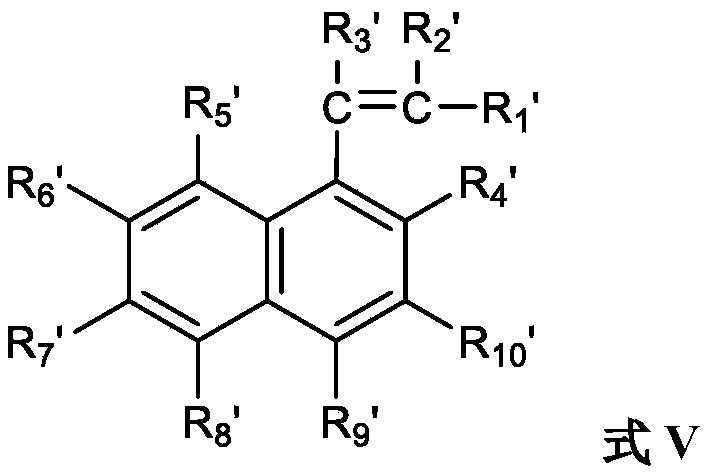


Claims (30)
- 一种基于丙烯聚合物的复合薄膜,至少包括两个不同的层:层a和层b;其中层a和层b各自包含至少一种丙烯聚合物;并且层a和层b中的至少一个层包含丙烯抗冲共聚物;其中所述丙烯抗冲共聚物包含弹性部分,该弹性部分在复合薄膜中形成分散的呈条状的橡胶相,所述橡胶相彼此平行排列,并且所述橡胶相的橫轴的平均尺寸为20-200nm和纵横比的平均值为5-20,通过原子力显微镜观察复合薄膜沿橫向(TD)切割的横截面测定。
- 根据权利要求1所述的复合薄膜,其特征在于,所述橡胶相的橫轴的平均尺寸为20-150nm,和纵横比的平均值为5-15,通过原子力显微镜观察复合薄膜沿横向切割的横截面测定。
- 根据权利要求1或2所述的复合薄膜,其特征在于,所述橡胶相的横向截面彼此之间的夹角不大于10度,优选小于5度,通过原子力显微镜观察复合薄膜沿橫向切割的横截面测定。
- 根据权利要求1-3中任一项所述的复合薄膜,其特征在于,所述弹性部分在丙烯抗冲共聚物的冲击样条的扫描电子显微镜照片中显现为球状或近球状橡胶相。
- 根据权利要求1-4中任一项所述的复合薄膜,其特征在于,所述丙烯抗冲共聚物是含有乙烯单元的丙烯抗冲共聚物,其中所述弹性部分是含有乙烯单元的共聚部分,优选选自乙烯-丙烯共聚部分和乙烯-丁烯共聚部分;优选地,所述丙烯抗冲共聚物包含丙烯均聚部分与所述含有乙烯单元的共聚部分;和/或所述丙烯抗冲共聚物中的含有乙烯单元的共聚部分含量为3-15重量%,优选7-12重量%;和/或以所述丙烯抗冲共聚物的总重量计,所述丙烯抗冲共聚物的乙烯单元含量为1-14重量%,优选3-12重量%;和/或,在所述丙烯抗冲共聚物的室温二甲苯可溶物中,乙烯单元含量不超过40重量%,和/ 或,乙烯单元组[EEE]含量不超过20重量%,通过 13C NMR测定;和/或,所述丙烯抗冲共聚物在230℃、2.16kg载荷下的熔体质量流动速率为1-10g/10min,优选1-8g/10min。
- 根据权利要求1-5中任一项所述的复合薄膜,其特征在于,层a和层b中都包含所述丙烯抗冲共聚物,其中层a和层b中的丙烯抗冲共聚物是相同或不同的;或者,层a和层b中的仅一个层含有所述丙烯抗冲共聚物。
- 根据权利要求1-6中任一项所述的复合薄膜,其特征在于,层a和层b中的至少一个层包含聚烯烃弹性体;优选地,所述聚烯烃弹性体为乙烯与α烯烃的弹性体共聚物,其中所述α烯烃优选为C 3-C 12的α烯烃,更优选选自丙烯、1-丁烯、1-己烯和1-辛烯中的至少一种;优选地,所述聚烯烃弹性体在230℃、剪切速率160r -1和640r -1下的剪切黏度之比η 160/η 640为1.2-3,优选为1.7-2.3,和/或,所述聚烯烃弹性体在230℃、剪切速率640r -1下的剪切黏度η 640为100-500Pa·s,优选为140-400Pa·s,所述剪切黏度根据ISO11443:2014,采用毛细管流变仪测定。
- 根据权利要求7所述的复合薄膜,其特征在于所述丙烯抗冲共聚物中的弹性部分和所述聚烯烃弹性体在复合薄膜中形成分散的橡胶相,该橡胶相呈现条状形式,该橡胶相的橫轴的平均尺寸为20-200nm,优选20-150nm;并且该橡胶相的纵横比的平均值为5-20,优选5-15,通过原子力显微镜观察复合薄膜沿横向切割的横截面测定。
- 根据权利要求7所述的复合薄膜,其特征在于,层a和层b中都包含所述聚烯烃弹性体,其中层a和层b中的聚烯烃弹性体是相同或不同的;优选地,层a中所述聚烯烃弹性体的重量比例与层b中所述聚烯烃弹性体的重量比例之间的比值为6:1-1:6;或者,层a和层b中的仅一个层含有所述聚烯烃弹性体。
- 根据权利要求1-9中任一项所述的复合薄膜,其特征在于,层a包含均聚聚丙烯和/或 丙烯无规共聚物;优选地,所述均聚聚丙烯在230℃、2.16kg载荷下的熔体质量流动速率为2-15g/10min;和/或,所述均聚聚丙烯的等规度大于97%;和/或,所述均聚聚丙烯的分子量分布Mw/Mn为4.5-7.0;优选地,所述丙烯无规共聚物选自乙烯-丙烯-丁烯三元无规共聚物、丙烯-乙烯二元无规共聚物、丙烯-丁烯二元无规共聚物中的至少一种;和/或,所述丙烯无规共聚物在230℃、2.16kg载荷下的熔体质量流动速率为2-15g/10min,优选2-10g/10min;和/或,所述丙烯无规共聚物的分子量分布Mw/Mn为4.5-7.0。
- 根据权利要求1-10中任一项所述的复合薄膜,其特征在于,层b包含丙烯无规共聚物;优选地,所述丙烯无规共聚物选自乙烯-丙烯-丁烯三元无规共聚物、丙烯-乙烯二元无规共聚物、丙烯-丁烯二元无规共聚物中的至少一种;和/或,所述丙烯无规共聚物在230℃、2.16kg载荷下的熔体质量流动速率为2-15g/10min,优选2-10g/10min;和/或,所述丙烯无规共聚物的分子量分布Mw/Mn为4.5-7.0。
- 根据权利要求11所述的复合薄膜,其特征在于,层a包含所述聚烯烃弹性体、所述丙烯抗冲共聚物和其他类型的丙烯聚合物,所述其他类型的丙烯聚合物优选选自所述均聚聚丙烯和/或丙烯无规共聚物;并且层b包含所述无规丙烯共聚物和所述聚烯烃弹性体;优选地,层a包含40-90重量%的丙烯抗冲共聚物、5-40重量%的其他类型的丙烯聚合物和2-30重量%的聚烯烃弹性体,优选55-75重量%的丙烯抗冲共聚物、10-30重量%的其他类型的丙烯聚合物和5-20重量%的聚烯烃弹性体,各自基于层a的总重量计;和,层b包含40-95重量%的丙烯无规共聚物和5-60重量%的聚烯烃弹性体,优选75-90重量%的丙烯无规共聚物和10-25重量%的聚烯烃弹性体,各自基于层b的总重量计。
- 根据权利要求11所述的复合薄膜,其特征在于,层a包含所述均聚聚丙烯、所述丙烯抗冲共聚物和所述聚烯烃弹性体并且层b包含所述无规丙烯共聚物和所述聚烯烃弹性体;优选地,层a中所述聚烯烃弹性体的重量比例与层b中所述聚烯烃弹性体的重量比例之间的比值为2:1-1:4,优选为1:1-1:2;和/或优选地,层a包含40-90重量%,优选50-90重量%的所述均聚聚丙烯、5-40重量% 的所述丙烯抗冲共聚物和2-30重量%的所述聚烯烃弹性体;更优选地,层a包含55-75重量%的所述均聚聚丙烯、10-30重量%的所述丙烯抗冲共聚物和5-20重量%的所述聚烯烃弹性体,各自基于层a的总重量计;和,层b包含40-95重量%,优选60-95重量%的无规丙烯共聚物和5-60重量%,优选5-40重量%的聚烯烃弹性体;优选地,层b包含75-90重量%的无规丙烯共聚物和10-25重量%的聚烯烃弹性体,各自基于层b的总重量计。
- 根据权利要求11所述的复合薄膜,其特征在于,层a包含丙烯聚合物和所述聚烯烃弹性体,所述丙烯聚合物优选选自均聚聚丙烯和/或所述丙烯抗冲共聚物;并且层b包含所述无规丙烯共聚物、所述聚烯烃弹性体和所述丙烯抗冲共聚物;优选地,层a中所述聚烯烃弹性体的重量比例与层b中所述聚烯烃弹性体的重量比例之间的比值为6:1-1:4,优选为4:1-1:4;和/或优选地,层a包含50-95重量%的所述丙烯聚合物和5-50重量%的所述聚烯烃弹性体;更优选地,层a包含70-95重量%的所述丙烯聚合物和5-30重量%的所述聚烯烃弹性体;再更优选地,层a包含80-95重量%的所述丙烯聚合物和5-20重量%的所述聚烯烃弹性体,各自基于层a的总重量计;和,层b包含40-90重量%的所述无规丙烯共聚物、5-40重量%的所述聚烯烃弹性体和2-30重量%的所述丙烯抗冲共聚物;更优选地,层b包含50-90重量%的所述无规丙烯共聚物、5-30重量%的所述聚烯烃弹性体和2-30重量%的所述丙烯抗冲共聚物;再优选地,层b包含60-85重量%的所述无规丙烯共聚物、5-20重量%的所述聚烯烃弹性体和5-20重量%的所述丙烯抗冲共聚物,各自基于层b的总重量计。
- 根据权利要求1-14中任一项所述的复合薄膜,其特征在于,层a和/或层b还包含添加剂,例如选自抗氧剂、润滑剂、抗卤素剂、光稳定剂、热稳定剂、着色剂、填料、爽滑剂、防粘剂、表面粘接剂、电磁屏蔽助剂、阻燃剂、绝缘添加剂和抗静电剂中的至少一种。
- 根据权利要求15所述的复合薄膜,其特征在于,所述抗氧剂选自抗氧剂1076、抗氧剂1010、抗氧剂168和硫酯类抗氧剂中的至少一种,优选地,以所在层的总重量为100重量份计,所述抗氧剂的含量为0.1-0.8重量份,优选为0.2-0.4重量份;和/或,所述润滑剂是PEG类润滑剂和/或单甘酯类润滑剂,优选地,以所在层的总重量为100重量份计,所述润滑剂的含量为0.01-0.5重量份,优选为0.05-0.2重量份;和/或,所述填料是导电填料,优选选自炭黑类、石墨类、碳纳米管类、碳纤维类、导电金属粒子、导电金属纤维、包覆有导电金属的填料和金属氧化物中的至少一种;导电填料优选添加在层b中,以层b中基体聚合物的总重量为100重量份计,导电填料添加量优选为0.1-10重量份;和/或,所述电磁屏蔽助剂为导电金属填料和/或碳材料;所述导电金属填料优选为导电金属粒子和/或导电金属纤维;所述碳材料优选为炭黑、石墨、石墨烯和碳纳米管中的一种或多种;优选地,所述电磁屏蔽助剂添加在层b中,优选添加量为5-30重量份,优选15-25重量份,以层b中基体聚合物的重量为100重量份计;优选地,所述电磁屏蔽助剂与钛酸酯类偶联剂组合使用;和/或,所述阻燃剂选自金属或非金属的氢氧化物和/或氧化物的水合物、磷系阻燃剂、硼系阻燃剂、锑系阻燃剂和膨胀型阻燃剂中的至少一种;优选添加在除了层a和层b之外的层中;和/或,所述着色剂选自偶氮颜料、酞菁颜料、杂环颜料、色淀颜料、染料、荧光增白剂和荧光颜料中的至少一种;优选添加在层a中;和/或所述爽滑剂选自酰胺类爽滑剂(优选芥酸酰胺、油酸酰胺、硬脂酸酰胺、山嵛酸酰胺、硬脂基芥酸酰胺和乙撑双硬脂酰胺中的至少一种);或者酰胺类爽滑剂和耐迁移型爽滑剂(优选聚四氟乙烯微粒、聚酰亚胺微粒、聚酰胺微粒、聚碳酸酯微粒、有机硅、纳米碳酸钙、云母和纳米二氧化硅中的至少一种)的混合物;优选,在层a和层b中都添加爽滑剂,其中层a中添加酰胺类爽滑剂,而层b中添加酰胺类爽滑剂和耐迁移型爽滑剂的混合物。
- 根据权利要求15所述的复合薄膜,其特征在于,所述表面粘接剂是极性单体改性聚丙烯,其中优选地,所述极性单体选自含羟基共聚单体、含氰基共聚单体和酸酐单体中的至少一种,更优选选自羟基酸、乙烯醇、氰基丙烯酸酯、马来酸酐和衣康酸酐;极性单体改性聚丙烯优选添加在层b中,基于层b的总重量计,其添加量优选为1-30重量%,更优选5-15重量%。
- 根据权利要求15所述的复合薄膜,其特征在于,所述绝缘添加剂是丙烯接枝聚合物,例如添加在层a和/或层b中;基于所在层的总重量计,其添加量优选为5-45重量%;优选地,所述丙烯接枝聚合物包含衍生自共聚聚丙烯的结构单元和衍生自以下接枝单体的结构单元:丙烯酸酯类;丙烯酸类;苯乙烯类;含烯基的硅烷类;含烯基的杂环类单体;具 有至少一个烯烃不饱和度的酸酐和含烯基聚合单体的组合。
- 根据权利要求18所述的复合薄膜,其特征在于,所述丙烯接枝聚合物由共聚聚丙烯与接枝单体经固相接枝反应制得;和/或所述共聚聚丙烯中除丙烯外的共聚单体选自乙烯和C 4-C 8的α-烯烃中的至少一种;和/或,所述共聚聚丙烯具有以下特征中的至少一种:共聚单体含量为0.5-30mol%,优选为4-25mol%;二甲苯可溶物含量为2-80重量%,优选为18-75重量%,进一步优选为30-70重量%;可溶物中共聚单体含量为10-70重量%,优选为10-50重量%,进一步优选为20-35重量%;可溶物与共聚聚丙烯的特性粘数比为0.3-5,优选为0.5-3,更优选为0.8-1.3;在230℃,2.16kg载荷下的熔体质量流动速率为0.01-60g/10min,优选为0.05-35g/10min,进一步优选为0.5-15g/10min;熔融温度Tm为100℃以上,优选为110-180℃,进一步优选为120-170℃;重均分子量为20×10 4-60×10 4g/mol;和/或,所述丙烯接枝聚合物在230℃,2.16kg载荷下的熔体质量流动速率为0.01-30g/10min,优选为0.05-20g/10min,进一步优选为0.1-10g/10min,更优选为0.2-8g/10min。
- 根据权利要求18或19所述的复合薄膜,其特征在于,所述丙烯接枝聚合物包括衍生自共聚聚丙烯的结构单元和接枝到其上的衍生自丙烯酸酯类单体以及任选的丙烯酸类单体的结构单元;优选地,以丙烯接枝聚合物的重量为基准,接枝上的衍生自丙烯酸酯类单体以及任选的丙烯酸类单体的结构单元的含量为0.3-7重量%,优选为0.8-5重量%;优选地,所述丙烯接枝聚合物中,衍生自丙烯酸酯类单体的结构单元与衍生自丙烯酸类单体的结构单元的摩尔比为1:0-2,优选为1:0.125-1;或者,所述丙烯接枝聚合物包括衍生自共聚聚丙烯的结构单元和衍生自苯乙烯类单体的结构单元;以丙烯接枝聚合物的重量计,所述丙烯接枝聚合物中衍生自苯乙烯类单体的接枝上的结构单元的含量为0.5-14重量%,优选为1-7.5重量%,更优选为1.5-5重量%;或者,所述丙烯接枝聚合物包括衍生自共聚聚丙烯的结构单元和衍生自含烯基的硅烷类单体的结构单元;优选地,以丙烯接枝聚合物的重量为基准,所述丙烯接枝聚合物b中衍生 自含烯基的硅烷类单体的接枝上的结构单元的含量为0.2-6重量%,优选为0.2-2.5重量%;或者,所述丙烯接枝聚合物包括衍生自共聚聚丙烯的结构单元、衍生自酸酐单体的结构单元和衍生自含烯基聚合单体的结构单元;所述含烯基聚合单体优选选自乙酸乙烯酯、苯乙烯、α-甲基苯乙烯、(甲基)丙烯酸酯、乙烯基烷基醚、乙烯基吡咯烷酮、乙烯基吡啶、乙烯基咪唑和丙烯腈中的至少一种;所述酸酐优选选自马来酸酐和/或衣康酸酐;优选地,衍生自酸酐单体和含烯基聚合单体的接枝上的结构单元的含量为0.1-5重量%,优选为0.4-3重量%;和/或,接枝上的衍生自酸酐单体的结构单元的含量为0.05-2重量%,优选为0.2-0.7重量%;和/或,衍生自酸酐单体的结构单元与衍生自含烯基聚合单体的结构单元的摩尔比为1:1-20,优选为1:1-10;或者,所述丙烯接枝聚合物包括衍生自共聚聚丙烯的结构单元和衍生自含烯基的杂环类单体的结构单元;优选地,以丙烯接枝聚合物的重量为基准,接枝上的衍生自含烯基的杂环类单体的结构单元的含量为0.5-6重量%,优选为0.5-4重量%。
- 根据权利要求1-20中任一项所述的复合薄膜,其特征在于,层a的材料在230℃下、2.16kg载荷作用下的熔体质量流动速率为2-10g/10min,优选为2-8g/10min,更优选为3-7g/10min;和/或层b的材料在230℃下、2.16kg载荷作用下的熔体质量流动速率为2-10g/10min,优选为3-9g/10min,更优选为4-8g/10min。
- 根据权利要求1-21中任一项所述的复合薄膜,其特征在于,层a的材料和层b的材料在230℃、剪切速率160r -1下的剪切黏度的差值,即ηA 160-ηB 160,与在230℃、剪切速率640r -1下的剪切黏度的差值,即ηA 640-ηB 640,均≥0,且二者的比值(ηA 160-ηB 160)/(ηA 640-ηB 640)为1-2.6,优选为1.4-2.5,更优选为1.5-2.2,所述剪切黏度根据ISO11443:2014,采用毛细管流变仪测定。
- 根据权利要求1-21中任一项所述的复合薄膜,其特征在于,所述复合薄膜还包含一个或多个另外的层,在此层b为复合薄膜的表层,其中该另外的层的组成与层a或层b的组成相同或不同;当复合薄膜为三层薄膜时,该另外的层称为层c,层b与层c分别位于层a的两侧。
- 根据权利要求22所述的复合薄膜,其特征在于,复合薄膜中除了层a之外的其他层的厚度之和与层a的厚度之比为1:6-2:1,优选1:4-2:1,更优选为1:2-1:1。
- 根据权利要求1-24中任一项所述的复合薄膜,其特征在于,所述复合薄膜具有以下性能中的一种或多种:1)摆锤冲击强度为≥0.4J,更优选≥0.9J,再更优选≥1.1J,更优选≥1.5J;2)薄膜雾度为小于7%,优选≤5%,更优选≤2%;3)纵向拉伸强度为≥40MPa,优选≥50MPa;4)在150℃下的热封强度为≥12N/15mm,优选≥15N/15mm,更优选≥18N/15mm;5)MD方向厚度偏差不大于1.3,优选不大于1.0,更优选不大于0.5;6)TD方向厚度偏差不大于1.5,优选不大于1.3,更优选不大于0.75;7)MD方向抗冲击性能偏差不大于0.05,优选不大于0.03;8)TD方向抗冲击性能偏差不大于0.07,优选不大于0.05;9)表面能≥29mN/m,优选≥35mN/m;10)体积电阻率≥1.5×10 15Ω·m,优选率≥2.0×10 15Ω·m。
- 一种制备根据权利要求1-25中任一项所述的复合薄膜的方法,包括:将用于形成各层的原料组合物在任选的造粒过程后挤出流延形成所述复合薄膜,其中在挤出过程之前,原料组合物中使用的丙烯抗冲共聚物中的弹性部分形成粒状橡胶相,该橡胶相的平均粒径为小于或等于1.8μm,优选地小于或等于1.5μm,且最大粒径不超过2.5μm,优选不超过2μm,通过扫描电子显微镜观察冲击样条断面测定。
- 根据权利要求26所述的方法,其特征在于,原料组合物中使用的丙烯抗冲共聚物中的弹性部分形成球状或近球状橡胶相。
- 根据权利要求26或27所述的方法,其特征在于,该方法进一步包括将所得复合薄膜进行拉伸,优选双向拉伸。
- 根据权利要求1-25中任一项所述的复合薄膜或根据权利要求26-28中任一项所述的方 法得到的复合薄膜在包装材料领域,例如在电池包装材料、电子产品包装材料或食品包装材料中的应用。
- 包装材料,其包含根据权利要求1-25中任一项所述的复合薄膜或根据权利要求26-29中任一项所述的方法得到的复合薄膜,所述包装材料例如是电池包装材料、电子产品包装材料或食品包装材料,如包含铝塑复合膜的那些。
Priority Applications (5)
| Application Number | Priority Date | Filing Date | Title |
|---|---|---|---|
| KR1020237017082A KR20230090352A (ko) | 2020-10-20 | 2021-10-20 | 프로필렌 폴리머계 복합 필름, 그의 제조 방법 및 그의 용도 |
| CN202180064273.0A CN116261518B (zh) | 2020-10-20 | 2021-10-20 | 基于丙烯聚合物的复合薄膜及其制备方法和应用 |
| US18/249,794 US20240017533A1 (en) | 2020-10-20 | 2021-10-20 | Propylene polymer-based composite film, preparation method therefor, and application thereof |
| JP2023524150A JP7778143B2 (ja) | 2020-10-20 | 2021-10-20 | プロピレンポリマー系複合フィルム、その製造方法およびその利用 |
| EP21882074.4A EP4234238B1 (en) | 2020-10-20 | 2021-10-20 | Propylene polymer-based composite film, preparation method therefor, and application thereof |
Applications Claiming Priority (4)
| Application Number | Priority Date | Filing Date | Title |
|---|---|---|---|
| CN202011125599.3 | 2020-10-20 | ||
| CN202011126164.0 | 2020-10-20 | ||
| CN202011125599.3A CN114434913B (zh) | 2020-10-20 | 2020-10-20 | 聚丙烯复合薄膜及其制备方法和应用 |
| CN202011126164.0A CN114434914B (zh) | 2020-10-20 | 2020-10-20 | 一种复合薄膜及其制备方法和应用 |
Publications (1)
| Publication Number | Publication Date |
|---|---|
| WO2022083659A1 true WO2022083659A1 (zh) | 2022-04-28 |
Family
ID=81291588
Family Applications (1)
| Application Number | Title | Priority Date | Filing Date |
|---|---|---|---|
| PCT/CN2021/125096 Ceased WO2022083659A1 (zh) | 2020-10-20 | 2021-10-20 | 基于丙烯聚合物的复合薄膜及其制备方法和应用 |
Country Status (6)
| Country | Link |
|---|---|
| US (1) | US20240017533A1 (zh) |
| EP (1) | EP4234238B1 (zh) |
| JP (1) | JP7778143B2 (zh) |
| KR (1) | KR20230090352A (zh) |
| CN (1) | CN116261518B (zh) |
| WO (1) | WO2022083659A1 (zh) |
Cited By (5)
| Publication number | Priority date | Publication date | Assignee | Title |
|---|---|---|---|---|
| CN114908477A (zh) * | 2022-06-28 | 2022-08-16 | 甘肃农业大学 | 用于水果套袋的聚丙烯无纺布及其制备方法 |
| CN117087280A (zh) * | 2022-05-12 | 2023-11-21 | 中国石油化工股份有限公司 | 聚丙烯薄膜及其应用 |
| CN118849575A (zh) * | 2023-04-29 | 2024-10-29 | 中国石油化工股份有限公司 | 导电高强度聚丙烯片材及其织物、聚丙烯复合材料以及其制法和应用 |
| CN118849572A (zh) * | 2023-04-29 | 2024-10-29 | 中国石油化工股份有限公司 | 抗静电聚丙烯片材及其织物、高强度高抗冲抗静电聚丙烯复合材料以及其制法和应用 |
| CN118906600A (zh) * | 2023-05-07 | 2024-11-08 | 中国石油化工股份有限公司 | 阻燃高强度高抗冲聚丙烯片材及其织物、阻燃聚丙烯复合材料以及其制法和应用 |
Families Citing this family (4)
| Publication number | Priority date | Publication date | Assignee | Title |
|---|---|---|---|---|
| EP4144776A4 (en) * | 2020-04-29 | 2024-05-29 | China Petroleum & Chemical Corporation | POLYPROPYLENE GRAFT WITH ANHYDRIDE GROUP AND PRODUCTION PROCESS FOR POLYPROPYLENE GRAFT |
| CA3181555A1 (en) * | 2020-04-29 | 2021-11-04 | China Petroleum & Chemical Corporation | Grafting-modified polypropylene material and preparation method thereof |
| JP7632733B1 (ja) | 2024-06-20 | 2025-02-19 | 王子ホールディングス株式会社 | 延伸ポリオレフィンフィルム |
| CN119823495A (zh) * | 2024-12-31 | 2025-04-15 | 金发科技股份有限公司 | 一种聚丙烯复合材料及其制备方法和应用 |
Citations (14)
| Publication number | Priority date | Publication date | Assignee | Title |
|---|---|---|---|---|
| CN101058654A (zh) | 2006-04-20 | 2007-10-24 | 中国石油化工股份有限公司 | 高性能聚丙烯组合物的制备方法 |
| CN101492517A (zh) | 2009-02-20 | 2009-07-29 | 北京化工大学 | 聚丙烯接枝聚合物的制备方法 |
| CN101679557A (zh) | 2007-05-22 | 2010-03-24 | 巴塞尔聚烯烃意大利有限责任公司 | 用于制备软质丙烯聚合物组合物的方法 |
| CN101913279A (zh) | 2010-07-08 | 2010-12-15 | 福建凯达印务有限公司 | 增韧型三层共挤复合薄膜及其制备方法 |
| CN102108112A (zh) | 2011-01-18 | 2011-06-29 | 黑龙江省科学院技术物理研究所 | 预辐照聚丙烯接枝共聚物及其制备方法 |
| CN104080874A (zh) * | 2012-01-31 | 2014-10-01 | 艾利丹尼森公司 | 取向的抗冲共聚物聚丙烯膜 |
| CN104499281A (zh) | 2015-01-14 | 2015-04-08 | 深圳前海中盛环保科技有限公司 | 一种制备强酸性离子交换纤维的方法 |
| CN105593012A (zh) * | 2013-10-11 | 2016-05-18 | 宝洁公司 | 多层聚合物膜 |
| CN106029771A (zh) * | 2013-12-23 | 2016-10-12 | 布拉斯科美国有限公司 | 具有增强的外观和优良模塑流动性的基于丙烯的组合物 |
| CN106366540A (zh) * | 2016-08-29 | 2017-02-01 | 联泓新材料有限公司 | 一种可热封的绝缘材料及其制备方法和应用 |
| CN106543369A (zh) | 2015-09-18 | 2017-03-29 | 中国石油化工股份有限公司 | 一种丙烯聚合物接枝极性单体的方法 |
| CN108943932A (zh) * | 2018-08-01 | 2018-12-07 | 张家港康得新光电材料有限公司 | 热封层、cpp膜、其制备方法及铝塑膜 |
| CN109251270A (zh) | 2018-08-11 | 2019-01-22 | 洛阳和梦科技有限公司 | 顺酐接枝聚丙烯的制备方法 |
| CN112041943A (zh) * | 2018-07-03 | 2020-12-04 | Ls电线有限公司 | 电力电缆 |
Family Cites Families (7)
| Publication number | Priority date | Publication date | Assignee | Title |
|---|---|---|---|---|
| JP4915067B2 (ja) * | 2004-09-15 | 2012-04-11 | 住友化学株式会社 | ポリプロピレン系樹脂組成物およびそれからなる射出成形体 |
| US7754814B2 (en) * | 2005-05-16 | 2010-07-13 | Fina Technology, Inc. | Polypropylene materials and method of preparing polypropylene materials |
| EP2504391B1 (en) * | 2009-11-25 | 2018-07-25 | Dow Global Technologies LLC | Molded polymeric article with low haze and high clarity |
| US10486402B2 (en) * | 2013-12-31 | 2019-11-26 | Dow Global Technologies Llc | Multilayered films, methods of manufacture thereof and articles comprising the same |
| WO2017040023A1 (en) * | 2015-08-31 | 2017-03-09 | E. I. Du Pont De Nemours And Company | Adhesive compositions and multilayered structures comprising functionalized polypropylene |
| CN108909123A (zh) * | 2018-07-12 | 2018-11-30 | 安徽迈高化工科技有限公司 | 一种易剥离耐高温蒸煮聚丙烯薄膜 |
| CN111645374A (zh) * | 2020-04-30 | 2020-09-11 | 乐凯胶片股份有限公司 | 太阳能电池背板用透明聚烯烃薄膜 |
-
2021
- 2021-10-20 CN CN202180064273.0A patent/CN116261518B/zh active Active
- 2021-10-20 WO PCT/CN2021/125096 patent/WO2022083659A1/zh not_active Ceased
- 2021-10-20 EP EP21882074.4A patent/EP4234238B1/en active Active
- 2021-10-20 US US18/249,794 patent/US20240017533A1/en active Pending
- 2021-10-20 JP JP2023524150A patent/JP7778143B2/ja active Active
- 2021-10-20 KR KR1020237017082A patent/KR20230090352A/ko active Pending
Patent Citations (14)
| Publication number | Priority date | Publication date | Assignee | Title |
|---|---|---|---|---|
| CN101058654A (zh) | 2006-04-20 | 2007-10-24 | 中国石油化工股份有限公司 | 高性能聚丙烯组合物的制备方法 |
| CN101679557A (zh) | 2007-05-22 | 2010-03-24 | 巴塞尔聚烯烃意大利有限责任公司 | 用于制备软质丙烯聚合物组合物的方法 |
| CN101492517A (zh) | 2009-02-20 | 2009-07-29 | 北京化工大学 | 聚丙烯接枝聚合物的制备方法 |
| CN101913279A (zh) | 2010-07-08 | 2010-12-15 | 福建凯达印务有限公司 | 增韧型三层共挤复合薄膜及其制备方法 |
| CN102108112A (zh) | 2011-01-18 | 2011-06-29 | 黑龙江省科学院技术物理研究所 | 预辐照聚丙烯接枝共聚物及其制备方法 |
| CN104080874A (zh) * | 2012-01-31 | 2014-10-01 | 艾利丹尼森公司 | 取向的抗冲共聚物聚丙烯膜 |
| CN105593012A (zh) * | 2013-10-11 | 2016-05-18 | 宝洁公司 | 多层聚合物膜 |
| CN106029771A (zh) * | 2013-12-23 | 2016-10-12 | 布拉斯科美国有限公司 | 具有增强的外观和优良模塑流动性的基于丙烯的组合物 |
| CN104499281A (zh) | 2015-01-14 | 2015-04-08 | 深圳前海中盛环保科技有限公司 | 一种制备强酸性离子交换纤维的方法 |
| CN106543369A (zh) | 2015-09-18 | 2017-03-29 | 中国石油化工股份有限公司 | 一种丙烯聚合物接枝极性单体的方法 |
| CN106366540A (zh) * | 2016-08-29 | 2017-02-01 | 联泓新材料有限公司 | 一种可热封的绝缘材料及其制备方法和应用 |
| CN112041943A (zh) * | 2018-07-03 | 2020-12-04 | Ls电线有限公司 | 电力电缆 |
| CN108943932A (zh) * | 2018-08-01 | 2018-12-07 | 张家港康得新光电材料有限公司 | 热封层、cpp膜、其制备方法及铝塑膜 |
| CN109251270A (zh) | 2018-08-11 | 2019-01-22 | 洛阳和梦科技有限公司 | 顺酐接枝聚丙烯的制备方法 |
Non-Patent Citations (2)
| Title |
|---|
| See also references of EP4234238A4 |
| ZHANG GUANGPING: "Solid Phase Graft of Maleic Anhydride onto Polypropylene in Helical Ribbon Reactor", CHINA PLASTICS, vol. 16, no. 2, February 2002 (2002-02-01), pages 69 - 71 |
Cited By (5)
| Publication number | Priority date | Publication date | Assignee | Title |
|---|---|---|---|---|
| CN117087280A (zh) * | 2022-05-12 | 2023-11-21 | 中国石油化工股份有限公司 | 聚丙烯薄膜及其应用 |
| CN114908477A (zh) * | 2022-06-28 | 2022-08-16 | 甘肃农业大学 | 用于水果套袋的聚丙烯无纺布及其制备方法 |
| CN118849575A (zh) * | 2023-04-29 | 2024-10-29 | 中国石油化工股份有限公司 | 导电高强度聚丙烯片材及其织物、聚丙烯复合材料以及其制法和应用 |
| CN118849572A (zh) * | 2023-04-29 | 2024-10-29 | 中国石油化工股份有限公司 | 抗静电聚丙烯片材及其织物、高强度高抗冲抗静电聚丙烯复合材料以及其制法和应用 |
| CN118906600A (zh) * | 2023-05-07 | 2024-11-08 | 中国石油化工股份有限公司 | 阻燃高强度高抗冲聚丙烯片材及其织物、阻燃聚丙烯复合材料以及其制法和应用 |
Also Published As
| Publication number | Publication date |
|---|---|
| US20240017533A1 (en) | 2024-01-18 |
| JP7778143B2 (ja) | 2025-12-01 |
| CN116261518B (zh) | 2026-03-17 |
| JP2023546449A (ja) | 2023-11-02 |
| CN116261518A (zh) | 2023-06-13 |
| EP4234238A1 (en) | 2023-08-30 |
| KR20230090352A (ko) | 2023-06-21 |
| EP4234238B1 (en) | 2025-08-27 |
| EP4234238A4 (en) | 2024-09-25 |
Similar Documents
| Publication | Publication Date | Title |
|---|---|---|
| WO2022083659A1 (zh) | 基于丙烯聚合物的复合薄膜及其制备方法和应用 | |
| EP2754691B1 (en) | Fiber-reinforced polypropylene resin composition and molded article thereof | |
| CN105848878B (zh) | 多层薄膜、其制造方法以及包含其的制品 | |
| CN107075201B (zh) | 纤维增强的阻燃性聚丙烯类树脂组合物和使用其的成形体 | |
| JP6613578B2 (ja) | 繊維強化ポリプロピレン系樹脂組成物 | |
| CN106795345B (zh) | 纤维增强的阻燃性聚丙烯类树脂组合物和使用其的成形体 | |
| EP3591010A1 (en) | Electroconductive resin composition, method for manufacturing same and molded article obtained therefrom | |
| CN108137894A (zh) | 树脂组合物、由该组合物形成的成型体及管 | |
| JP2012201792A (ja) | 変性プロピレン重合体 | |
| CN115895162A (zh) | 一种功能化聚丙烯复合材料及其制备方法与应用 | |
| CN115991020B (zh) | 一种聚丙烯复合薄膜及其制备方法和应用 | |
| JP2023108919A (ja) | 接着性樹脂組成物及び積層体 | |
| RU2838237C1 (ru) | Композитная пленка на основе пропиленового полимера, способ ее приготовления и ее применение | |
| US8618215B2 (en) | Modified polypropylene-based polymer and composition comprising it | |
| CN115991908A (zh) | 一种聚丙烯复合薄膜及其制备方法和应用 | |
| CN115991031B (zh) | 一种聚丙烯复合薄膜及其制备方法和应用 | |
| CN117447789B (zh) | 一种含酸酐改性聚丙烯复合材料及其制备方法与应用 | |
| CN117924826A (zh) | 珠光膜用聚丙烯组合物及其制备方法与应用、聚丙烯珠光膜 | |
| JP2014172915A (ja) | 発泡用繊維強化ポリプロピレン系樹脂組成物及びそれを発泡成形してなる成形体 | |
| CN115991909A (zh) | 一种聚丙烯复合薄膜及其制备方法和应用 | |
| CN115991035B (zh) | 一种聚丙烯复合薄膜及其制备方法和应用 | |
| CN115991038B (zh) | 一种聚丙烯复合薄膜及其制备方法和应用 | |
| CN115991037B (zh) | 一种聚丙烯复合薄膜及其制备方法和应用 | |
| CN115991021B (zh) | 一种聚丙烯复合薄膜及其制备方法和应用 | |
| CN115991032B (zh) | 一种聚丙烯复合薄膜及其制备方法和应用 |
Legal Events
| Date | Code | Title | Description |
|---|---|---|---|
| 121 | Ep: the epo has been informed by wipo that ep was designated in this application |
Ref document number: 21882074 Country of ref document: EP Kind code of ref document: A1 |
|
| WWE | Wipo information: entry into national phase |
Ref document number: 2023524150 Country of ref document: JP |
|
| WWE | Wipo information: entry into national phase |
Ref document number: 18249794 Country of ref document: US |
|
| REG | Reference to national code |
Ref country code: BR Ref legal event code: B01A Ref document number: 112023007325 Country of ref document: BR |
|
| WWE | Wipo information: entry into national phase |
Ref document number: 202317034583 Country of ref document: IN |
|
| ENP | Entry into the national phase |
Ref document number: 20237017082 Country of ref document: KR Kind code of ref document: A |
|
| ENP | Entry into the national phase |
Ref document number: 112023007325 Country of ref document: BR Kind code of ref document: A2 Effective date: 20230419 |
|
| NENP | Non-entry into the national phase |
Ref country code: DE |
|
| ENP | Entry into the national phase |
Ref document number: 2021882074 Country of ref document: EP Effective date: 20230522 |
|
| WWG | Wipo information: grant in national office |
Ref document number: 2023112968 Country of ref document: RU |
|
| WWG | Wipo information: grant in national office |
Ref document number: 2021882074 Country of ref document: EP |