WO2022092264A1 - 情報処理システム、処理装置及び情報処理方法 - Google Patents
情報処理システム、処理装置及び情報処理方法 Download PDFInfo
- Publication number
- WO2022092264A1 WO2022092264A1 PCT/JP2021/040021 JP2021040021W WO2022092264A1 WO 2022092264 A1 WO2022092264 A1 WO 2022092264A1 JP 2021040021 W JP2021040021 W JP 2021040021W WO 2022092264 A1 WO2022092264 A1 WO 2022092264A1
- Authority
- WO
- WIPO (PCT)
- Prior art keywords
- candidate
- unit
- function
- processing device
- execution
- Prior art date
- Legal status (The legal status is an assumption and is not a legal conclusion. Google has not performed a legal analysis and makes no representation as to the accuracy of the status listed.)
- Ceased
Links
Images








Classifications
-
- G—PHYSICS
- G01—MEASURING; TESTING
- G01C—MEASURING DISTANCES, LEVELS OR BEARINGS; SURVEYING; NAVIGATION; GYROSCOPIC INSTRUMENTS; PHOTOGRAMMETRY OR VIDEOGRAMMETRY
- G01C21/00—Navigation; Navigational instruments not provided for in groups G01C1/00 - G01C19/00
- G01C21/38—Electronic maps specially adapted for navigation; Updating thereof
- G01C21/3804—Creation or updating of map data
- G01C21/3859—Differential updating map data
-
- G—PHYSICS
- G06—COMPUTING OR CALCULATING; COUNTING
- G06F—ELECTRIC DIGITAL DATA PROCESSING
- G06F9/00—Arrangements for program control, e.g. control units
- G06F9/06—Arrangements for program control, e.g. control units using stored programs, i.e. using an internal store of processing equipment to receive or retain programs
- G06F9/46—Multiprogramming arrangements
- G06F9/50—Allocation of resources, e.g. of the central processing unit [CPU]
- G06F9/5005—Allocation of resources, e.g. of the central processing unit [CPU] to service a request
- G06F9/5027—Allocation of resources, e.g. of the central processing unit [CPU] to service a request the resource being a machine, e.g. CPUs, Servers, Terminals
- G06F9/5044—Allocation of resources, e.g. of the central processing unit [CPU] to service a request the resource being a machine, e.g. CPUs, Servers, Terminals considering hardware capabilities
-
- H—ELECTRICITY
- H04—ELECTRIC COMMUNICATION TECHNIQUE
- H04L—TRANSMISSION OF DIGITAL INFORMATION, e.g. TELEGRAPHIC COMMUNICATION
- H04L67/00—Network arrangements or protocols for supporting network services or applications
- H04L67/01—Protocols
- H04L67/10—Protocols in which an application is distributed across nodes in the network
-
- H—ELECTRICITY
- H04—ELECTRIC COMMUNICATION TECHNIQUE
- H04L—TRANSMISSION OF DIGITAL INFORMATION, e.g. TELEGRAPHIC COMMUNICATION
- H04L67/00—Network arrangements or protocols for supporting network services or applications
- H04L67/01—Protocols
- H04L67/12—Protocols specially adapted for proprietary or special-purpose networking environments, e.g. medical networks, sensor networks, networks in vehicles or remote metering networks
-
- H—ELECTRICITY
- H04—ELECTRIC COMMUNICATION TECHNIQUE
- H04L—TRANSMISSION OF DIGITAL INFORMATION, e.g. TELEGRAPHIC COMMUNICATION
- H04L67/00—Network arrangements or protocols for supporting network services or applications
- H04L67/34—Network arrangements or protocols for supporting network services or applications involving the movement of software or configuration parameters
-
- G—PHYSICS
- G06—COMPUTING OR CALCULATING; COUNTING
- G06F—ELECTRIC DIGITAL DATA PROCESSING
- G06F11/00—Error detection; Error correction; Monitoring
- G06F11/07—Responding to the occurrence of a fault, e.g. fault tolerance
- G06F11/0703—Error or fault processing not based on redundancy, i.e. by taking additional measures to deal with the error or fault not making use of redundancy in operation, in hardware, or in data representation
- G06F11/0706—Error or fault processing not based on redundancy, i.e. by taking additional measures to deal with the error or fault not making use of redundancy in operation, in hardware, or in data representation the processing taking place on a specific hardware platform or in a specific software environment
- G06F11/0709—Error or fault processing not based on redundancy, i.e. by taking additional measures to deal with the error or fault not making use of redundancy in operation, in hardware, or in data representation the processing taking place on a specific hardware platform or in a specific software environment in a distributed system consisting of a plurality of standalone computer nodes, e.g. clusters, client-server systems
-
- G—PHYSICS
- G06—COMPUTING OR CALCULATING; COUNTING
- G06F—ELECTRIC DIGITAL DATA PROCESSING
- G06F11/00—Error detection; Error correction; Monitoring
- G06F11/07—Responding to the occurrence of a fault, e.g. fault tolerance
- G06F11/0703—Error or fault processing not based on redundancy, i.e. by taking additional measures to deal with the error or fault not making use of redundancy in operation, in hardware, or in data representation
- G06F11/0706—Error or fault processing not based on redundancy, i.e. by taking additional measures to deal with the error or fault not making use of redundancy in operation, in hardware, or in data representation the processing taking place on a specific hardware platform or in a specific software environment
- G06F11/0736—Error or fault processing not based on redundancy, i.e. by taking additional measures to deal with the error or fault not making use of redundancy in operation, in hardware, or in data representation the processing taking place on a specific hardware platform or in a specific software environment in functional embedded systems, i.e. in a data processing system designed as a combination of hardware and software dedicated to performing a certain function
- G06F11/0739—Error or fault processing not based on redundancy, i.e. by taking additional measures to deal with the error or fault not making use of redundancy in operation, in hardware, or in data representation the processing taking place on a specific hardware platform or in a specific software environment in functional embedded systems, i.e. in a data processing system designed as a combination of hardware and software dedicated to performing a certain function in a data processing system embedded in automotive or aircraft systems
-
- G—PHYSICS
- G06—COMPUTING OR CALCULATING; COUNTING
- G06F—ELECTRIC DIGITAL DATA PROCESSING
- G06F11/00—Error detection; Error correction; Monitoring
- G06F11/07—Responding to the occurrence of a fault, e.g. fault tolerance
- G06F11/0703—Error or fault processing not based on redundancy, i.e. by taking additional measures to deal with the error or fault not making use of redundancy in operation, in hardware, or in data representation
- G06F11/0751—Error or fault detection not based on redundancy
- G06F11/0754—Error or fault detection not based on redundancy by exceeding limits
- G06F11/0757—Error or fault detection not based on redundancy by exceeding limits by exceeding a time limit, i.e. time-out, e.g. watchdogs
-
- G—PHYSICS
- G06—COMPUTING OR CALCULATING; COUNTING
- G06F—ELECTRIC DIGITAL DATA PROCESSING
- G06F11/00—Error detection; Error correction; Monitoring
- G06F11/07—Responding to the occurrence of a fault, e.g. fault tolerance
- G06F11/14—Error detection or correction of the data by redundancy in operations
- G06F11/1402—Saving, restoring, recovering or retrying
- G06F11/1415—Saving, restoring, recovering or retrying at system level
- G06F11/1443—Transmit or communication errors
Definitions
- the present invention relates to a technique for mutually utilizing the results of processing executed by two or more processing devices constituting a network.
- Patent Document 1 discloses a navigation system including a plurality of devices divided according to different functions regarding navigation.
- the navigation system is configured to give an instruction from one device to the other device, and the other device to which the instruction is given processes the instruction according to the function and returns the result of the process. There is.
- Patent Document 2 discloses a fax transmission instruction to a substitute device when it is determined that the fax transmission instruction information is transmitted to the designated fax device and the result information "line BUSY" is received. Techniques for transmitting information are disclosed.
- the navigation device cannot communicate with the server.
- the other device given an instruction from one device becomes unable to communicate in this way, one device cannot receive the processing result.
- the technique described in Patent Document 2 since the substitute device is used after it is found that the designated device cannot execute the process, both the result of the process by the designated device and the result of the process by the substitute device can be obtained.
- the reliability of the result of processing by the designated device and the alternative device is lowered.
- the time lag until the result of processing by the alternative device is obtained becomes large.
- An object of the present invention is to provide an information processing system or the like that can obtain reliable results with a reduced time lag.
- the information processing system forms a network with two or more processing devices.
- Each of the processing devices includes a communication unit and a control unit.
- the control unit constitutes a module that executes a predetermined function based on software.
- the communication unit communicates based on the control of the control unit.
- At least one of the control units selects a first candidate and a second candidate.
- the first candidate is any one of the modules.
- the second candidate performs the same function as the first candidate.
- the second candidate is a module having a lower rank based on a predetermined criterion than the first candidate.
- At least one of the control units transmits a command to the first candidate and the second candidate.
- An instruction is an instruction to execute a function.
- At least one of the control units can receive the first execution result and the second execution result.
- the first execution result is the result of the first candidate executing the instruction.
- the second execution result is the result of the second candidate executing the instruction.
- the information processing system of the first aspect since the first execution result and the second execution result can be received, the reliability of the obtained result is high, and if the first execution result cannot be received. , The second execution result can be received early. Therefore, the information processing system can obtain reliable results with less time lag.
- the information processing system of the first aspect can have the following configuration.
- At least one of the control units has a function execution unit.
- the function execution unit selects the first candidate and the second candidate.
- the function execution unit transmits commands to the first candidate and the second candidate.
- the function execution unit receives the first execution result and the second execution result.
- the function execution unit outputs information based on the second execution result to the output unit.
- the output unit outputs at least one of image data and audio data. If the function execution unit does not receive the first execution result even after a predetermined time has elapsed after transmitting the command to the first candidate and the second candidate, the function execution unit outputs the above.
- the result of executing the predetermined function by outputting the second execution result from the output unit when it takes time to acquire the first execution result or when the first execution result cannot be acquired, the result of executing the predetermined function by outputting the second execution result from the output unit. It is possible to prevent it from taking a long time to output the execution result.
- the criteria are the magnitude of the communication speed, the new version of the software corresponding to the instruction, or the new version of the map data.
- the communication speed is the amount of data that can be transmitted / received per unit time between the first processing device including the function executing unit and the second processing device that is a processing device different from the first processing device.
- Map data is map data used when navigation is performed as a function.
- the module having a high communication speed is selected as the first candidate and the second candidate, so that the time required for sending and receiving the execution result can be shortened. can. Therefore, it is possible to easily obtain the execution result quickly.
- the standard is a new version of software corresponding to an instruction
- a module based on the software with improved functions is selected as the first candidate and the second candidate. Therefore, it is possible to easily obtain a better execution result.
- the reference is a version of map data, it is possible to acquire the execution result of navigation using a newer map.
- the information processing system of the first aspect can have the following configuration.
- the function executing unit selects the module incorporated in the first processing device as the first candidate or the second candidate.
- the module incorporated in the first processing device provided with the control unit for outputting the execution result information to the output unit is selected as the first candidate or the second candidate. Therefore, it is easy to avoid a situation in which both the first execution result and the second execution result cannot be obtained due to the inability to communicate.
- the information processing system of the first aspect can have the following configuration. If the function execution unit cannot receive the first execution result and the second execution result even after the lapse of a predetermined time, the function execution unit selects the first candidate and the second candidate again based on the predetermined criteria.
- the function execution unit can be configured to select the first candidate and the second candidate from the modules whose communication status is incorporated in the online processing device, respectively.
- the processing device forms a network together with other processing devices.
- the processing device includes a control unit and a communication unit.
- the control unit constitutes a module that executes a predetermined function based on software.
- the communication unit communicates based on the control of the control unit.
- the control unit selects a first candidate and a second candidate.
- the first candidate is any one of the modules.
- the second candidate performs the same function as the first candidate.
- the second candidate is a module having a lower rank based on a predetermined criterion than the first candidate.
- the control unit transmits a command to the first candidate and the second candidate.
- An instruction is an instruction to execute a function.
- the control unit receives the first execution result and the second execution result.
- the first execution result is the result of the first candidate executing the instruction.
- the second execution result is the result of the second candidate executing the instruction.
- the processing device can receive the first execution result and the second execution result, the reliability of the obtained result is high, and if the first execution result cannot be received, the second execution result is received. You can receive the results early. Therefore, the processing device can obtain a reliable result with a reduced time lag.
- the processing method is a processing method executed by an information processing system.
- the information processing system forms a network with two or more processing devices.
- Each processing device includes a communication unit and a control unit.
- the control unit constitutes a module that executes a predetermined function based on software.
- the communication unit communicates based on the control of the control unit.
- the processing method includes a step of selecting a first candidate and a second candidate.
- the first candidate is any one of the modules.
- the second candidate performs the same function as the first candidate.
- the second candidate is a module having a lower rank based on a predetermined criterion than the first candidate.
- the processing method has a step of transmitting a command to the first candidate and the second candidate.
- An instruction is an instruction to execute a function.
- the processing method has a step of receiving the first execution result and the second execution result. These steps are performed by at least one of the controls.
- the reliability of the obtained result is high, and if the first execution result cannot be received, the second execution result is received. You can receive the results early. Therefore, in the processing method, reliable results can be obtained with a reduced time lag.
- the processing device includes a control unit and a communication unit.
- the control unit performs software-based control.
- communication is controlled by the control unit.
- the software includes a first executable program.
- the first execution program causes the control unit to execute a predetermined function.
- the control unit forms a logical network.
- the logical network communicates the results obtained by performing the function.
- the control unit connects to another processing device that executes the same function as when the first execution program is executed, among other processing devices that can be connected via the communication unit.
- the other processing device executes the function based on the second execution program. Alternatively, the other processing device executes the function based on the second utilization data.
- the second executable program is at least partially different from the first executable program.
- the first usage data is used when the first execution program is executed.
- the second usage data is at least partially different from the first usage data.
- the processing device of the first aspect Since the processing device of the first aspect selectively connects the same function as when the first execution program is executed to the second execution program or another processing device that is executed based on the second utilization data, It can be connected to other processing devices that can obtain different results from the case where the first execution program is executed for the same function. Therefore, the processing device of the first aspect can suppress the inclusion of two or more processing devices that can obtain only the same result for the same function in the logical network, and may include unused processing devices. A reduced logical network can be formed.
- the software including the first execution program and the software including the second execution program are created or revised in different order in chronological order. Further, the first usage data and the second usage data are different in the order in the time series created or revised.
- control unit when the control unit is connected to another processing device, the control unit includes the respective versions of the software including the first execution program and the software including the second execution program, or the first usage data. Compare each version of the second usage data.
- control unit can easily identify other processing devices to be connected.
- control unit performs the process of connecting to the other processing device again.
- the processing device can maintain a state in which unused processing devices are less likely to be included in the logical network.
- a reliable execution result can be obtained with a reduced time lag.
- the information processing system 1 includes two or more processing devices 2. As shown in FIG. 1, the information processing system 1 constitutes a logical network 3 with two or more processing devices 2.
- the logical network 3 is a network composed of a processing device 2 owned by a user and a processing device 2 owned by a member of the same group among the devices connected to the logical network 3.
- each processing device 2 constituting the logical network 3 has two or more predetermined functions.
- the type and number of functions of the processing device 2 are different for each processing device 2.
- Each processing device 2 has the same function as one or two or more other processing devices 2.
- Each processing device 2 may have a function that the other processing devices 2 do not have.
- the information processing system 1 transmits the result of executing the function between two or more processing devices 2 having the same function via the logical network 3.
- a function of linking two or more processing devices 2 capable of executing the same function and using each other is called a "link function".
- the information processing system 1 can provide good results to the user by the link function.
- the processing device 2 includes not only the processing device 2 that directly accesses the logical network 3 but also the processing device 2 that indirectly accesses the logical network 3.
- the processing device 2 that directly accesses the logical network 3 is also referred to as a “parent node”.
- the processing device 2 that indirectly accesses the logical network 3 is also referred to as a “child node”.
- the child node accesses the logical network 3 via the parent node. Examples of the child node include a tablet terminal that cannot insert a SIM (Subscriber Identity Module) card and cannot make an LTE (Long Term Evolution) connection.
- SIM Subscriber Identity Module
- a child node can connect to the Internet by communication by Wi-Fi (registered trademark) in a home network or the like, but cannot directly connect to the Internet when communication by Wi-Fi cannot be performed such as when going out.
- Wi-Fi registered trademark
- the "node” is another name indicating the processing device 2.
- the processing device 2 that directly accesses the logical network 3 may be referred to as a "normal node” in order to distinguish it from a child node.
- the processing device 2 is a second processing device 2 based on a predetermined condition such as a communication speed among two or more processing devices 2 that can form a logical network 3 and execute the same function. Select as 1st candidate and 2nd candidate.
- the processing device 2 uses the first candidate and the second candidate at the same time or with a reduced time lag. Therefore, the processing device 2 can obtain the best result from the first candidate from the results obtained when two or more processing devices 2 constituting the logical network 3 each execute a predetermined function. Even if the first candidate cannot be used due to communication failure or the like, the processing device 2 is the second best after the result obtained from the first candidate as a result of executing a predetermined function by using the second candidate. You can get the result quickly.
- a predetermined condition such as a communication speed among two or more processing devices 2 that can form a logical network 3 and execute the same function. Select as 1st candidate and 2nd candidate.
- the processing device 2 uses the first candidate and the second candidate at the same time or with a reduced time
- Two or more processing devices 2 constituting the logical network 3 are connected wirelessly or by wire.
- wireless and wired may be mixed in the method of connecting the processing devices 2.
- the processing device 2 is a navigation device 2A, a server 2B, and a mobile terminal 2C.
- Two or more servers of the same type 2B and two or more servers of different types from the server 2B form a server group 2Z.
- Examples of the server having a different type from the server 2B include the signaling server 2B1 shown in FIG.
- the signaling server 2B1 plays a central role in the servers included in the server group 2Z.
- the signaling server 2B1 is used for constructing the logical network 3.
- the signaling server 2B1 is used to grasp the communication state of each processing device 2.
- the navigation device 2A and the mobile terminal 2C are processing devices 2 as one electronic device, respectively.
- the mobile terminal 2C is, for example, a smartphone or a tablet device.
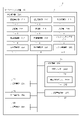
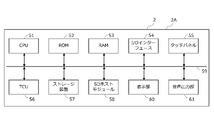
- the processing device 2 shown in FIGS. 2 to 4 includes a control unit 21, a communication unit 23, a storage unit 24, an operation unit 25, a display unit 26, a voice output unit 27, and a positioning unit 28.
- the configurations included in each processing device 2 are designated by the same reference numerals, and the description thereof is omitted.
- the navigation device 2A includes a navigation control unit 21A which is a control unit 21, a navigation communication unit 23A which is a communication unit 23, a navigation storage unit 24A which is a storage unit 24, and a navigation operation unit which is an operation unit 25. It includes 25A, a navigation display unit 26A which is a display unit 26, and a navigation audio output unit 27A which is an audio output unit 27.
- the server 2B includes a server control unit 21B which is a control unit 21, a server communication unit 23B which is a communication unit 23, and a server storage unit 24B which is a storage unit 24.
- the mobile terminal 2C is a mobile control unit 21C which is a control unit 21, a mobile communication unit 23C which is a communication unit 23, a mobile storage unit 24C which is a storage unit 24, and an operation unit 25. It includes a mobile operation unit 25C, a mobile display unit 26C which is a display unit 26, a mobile audio output unit 27C which is an audio output unit 27, and a mobile positioning unit 28C which is a positioning unit 28.
- the configuration of the navigation device 2A, the server 2B, or the mobile terminal 2C is not limited to the above, and may not include a part of the above configuration, or may include other configurations in addition to the configuration.
- control unit 21 is a module 4, which includes a function execution unit 211, a communication control unit 212, an output control unit 213, a guidance unit 214, a search unit 215, a search unit 216, and a map drawing unit. It includes at least one of 217, a traffic information unit 218, a map matching unit 219, a difference updating unit 220, a status confirmation unit 221 and a link function unit 222.
- Module 4 is a functionally cohesive part that constitutes at least a part of a device, a machine, a system, software, and the like. Each module 4 is a part of hardware and software for executing any one of the above functions of the control unit 21. Module 4 may be referred to as an engine.
- Module 4 executes a predetermined function.
- the predetermined functions are, for example, function execution, communication control, output control, guidance, search, search, map drawing, traffic information, map matching, difference update, status confirmation, and link function.
- execution result the result of the module 4 executing a predetermined function is referred to as an “execution result”.
- the execution result by the first candidate is also referred to as “first execution result”
- the execution result by the second candidate is also referred to as "second execution result”.
- the navigation control unit 21A, the server control unit 21B, and the mobile control unit 21C each constitute at least a part of the module 4.
- a program that is software corresponding to the module 4 that can be executed by the control unit 21 is stored in the storage unit 24.
- the program for executing the above function is referred to as an execution program 242.
- the function execution unit 211 In the navigation device 2A, the function execution unit 211, the communication control unit 212, the output control unit 213, the guidance unit 214, the search unit 215, the search unit 216, the map drawing unit 217, the traffic information unit 218, the map matching unit 219, and the difference update unit.
- the execution program 242 corresponding to the 220, the state confirmation unit 221 and the link function unit 222 is stored in the navigation storage unit 24A, respectively.
- the execution program 242 corresponding to the communication control unit 212, the search unit 215, the search unit 216, the traffic information unit 218, the map matching unit 219, the difference update unit 220, the status confirmation unit 221 and the link function unit 222 are provided. , Are stored in the server storage unit 24B, respectively.
- the mobile terminal 2C is the same as the navigation device 2A.
- the control unit 21 controls the communication unit 23, the storage unit 24, the operation unit 25, the display unit 26, the voice output unit 27, and the positioning unit 28, respectively.
- the control unit 21 is realized by, for example, a control device such as a CPU (Central Processing Unit) or an MPU (Micro Processing Unit) executing a program stored in the storage unit 24.
- a control device such as a CPU (Central Processing Unit) or an MPU (Micro Processing Unit) executing a program stored in the storage unit 24.
- Module 4 can use usage data when executing a predetermined function.
- the usage data is, for example, map data.
- Module 4 uses map data, for example, when performing functions such as search, search, map drawing, and map matching.
- the control unit 21 may include two or more modules 4 that execute the same function by using different versions of software.
- the software version corresponding to the module 4 is referred to as the module 4 version for convenience.
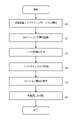
- the processing device 2 and the signaling server 2B1 construct the logical network 3 by performing the construction process shown in FIG.
- the information processing system 1 transmits the execution result between the processing devices 2 capable of executing the same function via the logical network 3. Therefore, the execution result does not need to be transmitted between the processing devices 2 that can obtain only the same result for the same function.
- the logical network 3 is formed by connecting processing devices 2 that can obtain different execution results when the same function is executed. By using such a logical network 3, the information processing system 1 can effectively realize the link function.
- the link function unit 222 performs a process for constructing the logical network 3.
- the link function unit 222 automatically starts the construction process of the logical network 3 when the processing device 2 is started.
- the link function unit 222 causes the display unit 26 to display a button for starting the construction of the logical network 3, and when the button displayed on the display unit 26 is pressed by the user, the construction of the logical network 3 starts. It may be configured to be.
- the construction of the logical network 3 includes the new participation of the processing device 2 in the already constructed logical network 3.
- the following describes a case where the processing device 2 newly joins the already constructed logical network 3. Even when the logical network 3 is constructed from scratch, the processing performed by the processing device 2 and the signaling server 2B1 is the same.
- step S1 the link function unit 222 connects to the signaling server 2B1 shown in FIG. 6 via the communication unit.
- Two or more signaling servers 2B1 are provided.
- each processing device 2 is connected to any one of the signaling servers 2B1 in order to distribute the processing load.
- the processing device 2 maintains the connection with the signaling server 2B1 connected in this step S1 until it leaves the logical network 3.
- the processing device 2 is disconnected from the logical network 3 when the power is turned off. When the processing device 2 is restarted for updating software or usage data, for example, the processing device 2 leaves the logical network 3.
- the link function unit 222 When connecting to the signaling server 2B1, the link function unit 222 transmits a connection request to the signaling server 2B1 via the communication unit 23.
- the connection request is transmitted to the signaling server 2B1 selected by a load balancer (not shown).
- the load balancer is a device that monitors the processing load of the signaling server 2B1.
- the signaling server receives the connection request, it establishes a connection with the processing device 2.
- the database 2B3 registers the location information.
- the location information is information related to communication between the processing devices 2.
- the link function unit 222 requests the signaling server 2B1 to register the location information.
- the link function unit 222 requests registration of location information by transmitting location information to the signaling server 2B1 via the communication unit 23.
- the signaling server 2B1 that has received the location information registers the location information in the database 2B3.
- the location information is registered in the database 2B3 via the signaling server 2B1 connected to the processing device 2 when the processing device 2 makes a registration request.
- the location information includes the device ID of the processing device 2, the user ID, the device ID of the parent node, the connection server, the IP address, the port, the online status, the expiration date of the location information, and the update date and time of the location information. Are shown respectively.
- the device ID is information that identifies the processing device 2.
- the device ID is given as unique information for each processing device 2.
- the user ID is information that identifies a user who is using the processing device 2.
- the user ID is, for example, an e-mail address.
- the device ID of the parent node is information that identifies the parent node.
- the connection server is the signaling server 2B1 to which the processing device 2 is connected.
- the IP address is information for identifying a device connected to the Internet.
- the IP address is assigned to each processing device 2.
- the port is a port number used by the processing device 2 for communication.
- the online state information indicates whether the communication state of the processing device 2 is online. For example, "1" indicates that the communication status is online.
- the expiration date of the location information is the expiration date for the location information of the processing device 2 registered in the database 2B3 to function effectively.
- the database 2B3 updates the location information of the corresponding processing device 2.
- the database 2B3 deletes the location information without updating it.
- the update date and time is the date and time when the location information is registered or updated in the database 2B3.
- the location information is not limited to this information.
- the processing device 2 and the signaling server 2B1 perform the processing of step S1 and the processing of step S2, for example, according to the timing chart of FIG.
- the processing device 2 makes a WebSocket connection request to the signaling server 2B1 in order to enable communication according to the WebSocket communication standard.
- a connection by WebSocket is established between the processing device 2 and the signaling server 2B1.
- HTTP HyperText Transfer Protocol
- the server side cannot deliver PUSH to the client.
- the processing device 2 and the signaling server 2B1 can communicate in both directions by WebSocket.
- the processing device 2 transmits a command indicating a registration request for location information to the signaling server 2B1.
- the signaling server 2B1 stores the location information received from the processing device 2 in the database 2B3.
- the location information of the processing device 2 is registered in the database 2B3.
- the processing device 2 can refer to the location information of the other processing device 2 registered in the database 2B3 via the signaling server 2B1.
- the signaling server 2B1 transmits information regarding the expiration date of the location information to the processing device 2.
- the processing device 2 can recognize the expiration date of its own location information registered in the database 2B3.
- the processing device 2 retransmits the location information registration request to the signaling server 2B1 in order to update the location information, as shown in A350, at the timing when the location information reaches the expiration date.
- the child node participates in the logical network 3
- the child node, the parent node, and the signaling server 2B1 perform the processing of step S1 and the processing of step S2, for example, according to the timing chart of FIG.
- the child node requests connection with the parent node 2D3 by short-range wireless communication, for example, in the processing of A410.
- the child node does not have a means for directly connecting to the signaling server 2B1 or the like.
- the child node is connected to the parent node by, for example, short-range wireless communication or USB connection.
- the child node is connected to the signaling server 2B1 via the parent node.
- Short-range wireless communication includes, for example, a Bluetooth® connection.
- the parent node notifies the child node that the connection by short-range wireless communication has become possible.
- the child node requests the signaling server 2B1 to register the location information in the database 2B3 via the parent node.
- the parent node makes a request for registration of location information from the child node to the signaling server 2B1 on behalf of the child node.
- the signaling server 2B1 stores the received location information of the child node in the database 2B3.
- the location information of the child node is registered in the database 2B3.
- the processing device 2 can refer to the location information of the child node registered in the database 2B3 via the signaling server 2B1.
- the signaling server 2B1 transmits information regarding the expiration date of the location information of the child node to the parent node.
- the parent node transmits information regarding the expiration date of the location information of the child node to the child node.
- the child node can recognize the expiration date of its own location information registered in the database 2B3.
- each processing device 2 that intends to construct the logical network 3 can confirm each other's location information by referring to the database 2B3.
- the communication standard and protocol used for the connection between the processing device 2 and the signaling server 2B1 may be arbitrarily changed.
- the link function unit 222 creates node information.
- the node information includes a session description unit and a media description unit.
- the user ID, IP address, and device ID of the processing device 2 are described in the session description unit.
- the media description unit can be provided with the function name, port number, version information, and the execution result of the function for each function to be executed by the processing device 2 or executed by another processing device 2 to receive the result. Whether or not and whether or not to request is described.
- the function name indicates a function such as search and search.
- the version information indicates the version of the software including the execution program 242 that executes the function.
- step S4 the link function unit 222 acquires a contact list from the connected signaling server 2B1. Based on the contact list, the link function unit 222 determines another processing device 2 to be transmitted to transmit node information in order to construct the logical network 3.
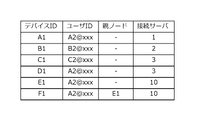
- the link function unit 222 When acquiring the contact list, the link function unit 222 requests the contact list from the connected signaling server 2B1 via the communication unit 23. Upon receiving the contact list request, the signaling server 2B1 transmits the contact list shown in FIG. 11 to the processing device 2.
- the contact list includes information indicating the device ID, user ID, parent node, and connection server of each processing device 2 that may be able to construct the logical network 3, respectively.
- the contact list is composed of the location information shown in FIG. 7 which is necessary for establishing a session.
- the link function unit 222 transmits node information to, for example, another processing device 2 having the same user ID as the processing device 2 based on the location information.
- step S5 the link function unit 222 requests another processing device 2 to start a session.
- the process of starting a session between the processing devices 2 will be described with reference to FIGS. 12 and 13.
- the link function unit 222 first transmits node information to another processing device 2 via the communication unit 23 in the processing of S400 and A500 and A510.
- the other processing device 2 to which the node information is sent is the other processing device 2 having the same user ID as the processing device 2, but the present invention is not limited to this.
- the link function unit 222 provided in the other processing device 2 that has received the node information has the processing device 2 that has transmitted the node information and the other processing device 2 that has received the node information based on the node information. It is determined whether or not the processing device 2 that has transmitted the node information has the function required by at least one of the above. That is, the other processing device 2 that has received the node information starts a session with the processing device 2 that has sent the node information, and determines whether or not to construct the logical network 3.
- the link function unit 222 provided in the navigation device 2A compares the node information of the mobile terminal 2C received in the processes of S400 and A500 and A510 with the node information of the navigation device 2A created in the process of step S5.
- the link function unit 222 provided in the navigation device 2A determines whether or not the corresponding software versions are different between the module 4 of the navigation device 2A and the module 4 of the mobile terminal 2C, which execute the same function.
- the function here is a function that the mobile terminal 2C requests from the navigation device 2A and that the navigation device 2A can provide to the mobile terminal 2C.
- the link function unit 222 provided in the navigation device 2A determines that the mobile terminal 2C has a function required by the mobile terminal 2C.
- the link function unit 222 provided in the navigation device 2A is software corresponding to the module 4 that executes the function that the navigation device 2A requests from the mobile terminal 2C and that the mobile terminal 2C can provide to the navigation device 2A. Determine if each version of is different. When the software version corresponding to each module 4 is different, the link function unit 222 provided in the navigation device 2A determines that the mobile terminal 2C has the function required by the navigation device 2A.
- the link function unit 222 is not limited to the configuration in which the versions of the software are compared.
- the link function unit 222 may be configured so as to be able to determine whether or not at least a part of the execution program 242 of each module 4 is different.
- the link function unit 222 has a configuration for determining whether or not the order in the time series in which each software is created or revised is the same or different, without comparing the versions of the software. May be good. Creation here does not mean that existing software is revised to create a new version of software, but that software that does not have a previous version is created.
- the link function unit 222 may be configured to compare the versions of the usage data used by each module 4 instead of comparing the versions of the software corresponding to each module 4. In the case of this configuration, if the version of the usage data is different, the link function unit 222 determines that the other processing device has the function required by the processing device 2. Of the different usage data, the usage data used when the first execution program is executed corresponds to the first usage data. Of the different usage data, the usage data used when the second execution program is executed corresponds to the second usage data. The second usage data is at least partially different from the first usage data.
- the link function unit 222 is not limited to the configuration for comparing the versions of the usage data.
- the link function unit 222 may be configured so as to be able to determine whether or not at least a part of the usage data used by each module 4 is different. Therefore, the link function unit 222 is configured to determine whether or not the order in which each usage data is created or revised in the time series is the same or different, without comparing the versions of the usage data. There may be. Creation here does not mean that existing usage data is revised to create a new version of usage data, but that usage data that does not have a previous version is newly created.
- the link function unit 222 may be configured to compare both the version of each software and the version of each usage data.
- Each module 4 of the processing device 2 and the other processing device 2 can obtain different execution results even if the execution program 242 or the usage data is different, even if the same function is executed.
- the link function unit 222 provided in the other processing device 2 that has received the node information determines whether to start a session with the processing device 2 that has transmitted the node information.
- the link function unit 222 provided in the other processing device 2 that has received the node information returns the determination result and the node information to the processing device 2 that has transmitted the node information in the processing of A520 and A530 via the communication unit 23. do.
- the link function unit 222 provided in the processing device 2 that has transmitted the node information receives from the other processing device 2 the determination result that the processing device 2 has the function required by at least one processing device 2 and the node information, S420 and A540.
- the request for starting the session is transmitted to the other processing device 2 via the communication unit 23.
- the link function unit 222 provided in the processing device 2 that has transmitted the node information receives a determination result from the other processing device 2 that it does not have the functions required by each other, the communication unit is processed by S430 and A550. Information for notifying that the start of the session is unnecessary is transmitted to the other processing device 2 via the 23.
- the other processing device 2 that received the request to start the session starts the session with the processing device 2 that requested the start of the session, and establishes the session.
- Each processing device 2 performs processing such as collection of address candidates in order to establish a session.
- the logical network 3 is constructed not only when the processing device 2 is newly connected to the logical network 3, but also when the processing device 2 updates the software including the execution program 242 or the usage data such as the map data 241. Even if it happens, it will be done again.
- the link function unit 222 performs a process of connecting to another processing device 2 again in order to construct the logical network 3.
- the link function unit 222 provided in the processing device 2 is executed by the first execution program based on the second execution program or the second usage data among the other processing devices 2 that can be connected via the communication unit 23.
- a logical network 3 is formed by connecting to another processing device 2 that performs the same function as the case where the data is performed. Therefore, the execution result obtained by executing the predetermined function by the other processing device 2 may be different from the result obtained by executing the predetermined function in the own processing device which is its own processing device. That is, forming a logical network 3 with another processing device 2 that obtains a different execution result, instead of another processing device 2 that obtains the same execution result as the execution result obtained by executing a predetermined function in the processing device 2. Will be.
- the processing device 2 can form a logical network 3 in which a connection can be established only for the processing device 2 that produces a useful result in the execution of a predetermined function, and the management cost can be reduced.
- the server group 2Z is composed of two or more servers 2B for information processing load balancing, data backup, and the like.
- the two or more servers 2B are divided according to the function, and two or more servers 2B having the same function are provided.
- the transmission information transmitted and received between the processing devices 2 in order to execute the link function includes at least one of a user ID, a command ID, a request ID, information indicating a time stamp, and information indicating a result. Or one is included.
- the user ID is identification information that identifies the user of each processing device 2.
- the command ID is identification information indicating an instruction to be executed.
- the request ID is unique identification information given for each instruction.
- the time stamp indicates the time when the information to be transmitted is transmitted.
- the information indicating the result indicates the result of executing the instruction related to the command ID.
- each processing device 2 When transmitting a command to execute a predetermined function to another processing device 2, each processing device 2 transmits transmission information including at least a command ID and a request ID to the other processing device 2. When transmitting the result of executing an instruction to another processing device 2, each processing device 2 transmits transmission information including at least a request ID and information indicating the result to the other processing device 2.
- the information processing system 1 When the transmission information is transmitted from the navigation device 2A or the mobile terminal 2C to the server group 2Z, the information processing system 1 distributes the transmission information to different servers 2B in order to distribute the processing load of the server 2B.
- the information processing system 1 distributes transmission information to each corresponding processing device 2.
- the information of the server 2B to which the transmission information is distributed is stored in the server 2B for at least a certain period of time.
- the transmission information is distributed to the same server 2B as before.
- the information of the server 2B to which the transmission information is distributed is reset.
- each processing device 2 communicates with the signaling server 2B1 called a heartbeat.
- the signaling server 2B1 determines whether the communication status of each processing device 2 is online or offline by performing a heartbeat.
- the signaling server 2B1 is configured to send a pin frame to the processing device 2, and the status confirmation unit 221 of the processing device 2 is configured to send a Pong frame back to the signaling server 2B1. .. Specifically, it is as follows.
- Database 2B3 is one of the servers constituting the server group 2Z.
- the processing device 2 to which the pin frame is sent in the processing of A101 sends back a ponframe to the signaling server 2B1.
- the exchange between the pin frame and the pong frame is performed at predetermined time intervals.
- the predetermined time interval may be constant or irregular. While such exchange between the pin frame and the pon frame is normally performed, the communication state of the processing device 2 is online.
- the signaling server 2B1 sends a pin frame to the processing device 2 in the processing of A110, if there is no response from the processing device 2 like A111, the communication status of the processing device 2 is offline. It has become.
- the signaling server 2B1 requests the database 2B3 to update the record that manages the communication status.
- the record that manages the communication status of the database 2B3 is updated.
- the signaling server 2B1 also notifies the other signaling server 2B1 that the communication status of the processing device 2 is offline.
- the other signaling server 2B1 confirms the communication status of the other processing device 2. Then, in the processing of A114, the other signaling server 2B1 notifies the other processing device 2 that the communication state of the processing device 2 is offline.
- the signaling server 2B1 sends a pin frame to the processing device 2 at a predetermined time interval in the processing of A120.
- the predetermined time interval may be constant or irregular.
- the signaling server 2B1 requests the database 2B3 to update the record that manages the communication status.
- the signaling server 2B1 also notifies the other signaling server 2B1 that the communication status of the processing device 2 is online.
- the other signaling server 2B1 notifies the other processing device 2 that the communication state of the processing device 2 is online.
- the signaling server 2B1 can confirm the communication status of each processing device 2. For example, when the processing device 2 is the navigation device 2A, when a vehicle enters a place where radio waves do not reach, such as a tunnel or an underground parking lot, even if the signaling server 2B1 transmits a pin frame to the navigation device 2A, a response of the ponframe is received. It disappears. In such a case, by the above processing, each processing device 2 included in the logical network 3 recognizes that the communication state of the navigation device 2A is offline. The communication status of the processing device 2 may be confirmed by a method other than the heartbeat.
- the function execution unit 211 determines the priority of each module 4 based on the selection criteria which is a predetermined criterion, and the first candidate having the highest priority and the first candidate next to the first candidate. Select the second candidate of priority respectively.
- the first candidate is module 4, which is presumed to give the best execution results.
- the second candidate is a module 4 that can execute the same function as the first candidate and is estimated to obtain the second best execution result after the first candidate.
- the selection criteria of the module 4 are, for example, to receive a more accurate execution result, or to receive an execution result earlier.
- the function execution unit 211 selects the first candidate and the second candidate based on any one of the version of the module 4, the version of the map data 241 and the communication speed.
- the communication speed is the amount of data that can be transmitted / received per unit time between the processing device 2 that transmits a command for executing a predetermined function and the other processing device 2.
- the function execution unit 211 selects a first candidate and a second candidate from the modules 4 whose communication status is incorporated in the online processing device 2. That is, the module 4 whose communication state is incorporated in the offline processing device 2 is not selected as either the first candidate or the second candidate.
- the selection criterion is the version of the module 4
- the function execution unit 211 raises the priority of the module 4 having a newer version.
- the selection criterion is the version of the map data 241, the function execution unit 211 raises the priority of the module 4 having a new version.
- the function execution unit 211 raises the priority of the module 4 incorporated in the processing device 2 having a high communication speed.
- the selection criteria may be predetermined, and the processing device 2 may be configured so that the selection criteria can be changed by the user. In this case, the selection criterion may be stored in the storage unit 24. Further, the processing device 2 may be configured so that the selection criteria are determined by machine learning.
- the function execution unit 211 selects a first candidate and a second candidate from two or more processing devices 2 constituting the logical network 3.
- the processing device 2 can transmit and receive the execution result obtained by executing a predetermined function by communicating with another processing device 2 forming the logical network 3 via the communication unit 23.
- the execution result that can be acquired from the other processing device 2 is the same as the execution result obtained when the processing device 2 is executed by the module 4 provided in the processing device 2, the execution result from the other processing device 2 Is less likely to be received. Therefore, the function execution unit 211 selects the first candidate and the second candidate from the two or more processing devices 2 constituting the logical network 3.
- the logical network 3 is formed by connecting processing devices 2 having different versions of software including the execution program 242 and versions of usage data used when the execution program 242 is executed. Therefore, the function execution unit 211 is the first candidate from among two or more processing devices 2 that can execute the same function by using software including different execution programs 242 or usage data such as different map data 241. And the second candidate. Since the logical network 3 is unlikely to include a processing device 2 that is unlikely to be used, the information processing system 1 is effective as an option when the function execution unit 211 selects the first candidate and the second candidate. It can be narrowed down to, and the processing load can be reduced.
- the function execution unit 211 transmits a command to each of the first candidate and the second candidate to execute a predetermined function. It should be noted that the transmission referred to here is an instruction, that is, transmission of transmission information, and does not include confirmation of transmission.
- the function execution unit 211 simultaneously transmits commands to the first candidate and the second candidate. If it is possible to perform a plurality of processes in parallel, the function execution unit 211 performs a process for transmitting an instruction to the first candidate and a process for transmitting an instruction to the second candidate in parallel. And do it. When the parallel processing cannot be performed, the function execution unit 211 performs the processing for transmitting the instruction in the order of the processing for transmitting the instruction to the first candidate and the processing for transmitting the instruction to the second candidate. ..
- the function execution unit 211 performs a process for transmitting an instruction to the second candidate immediately after performing a process for transmitting the command to the first candidate. Immediately after transmitting the command to the first candidate, it means that there is no delay after transmitting the command to the first candidate. It is preferable that the function execution unit 211 transmits the command to the second candidate within 1 second after transmitting the command to the first candidate. Further, it is more preferable that the function execution unit 211 transmits the command to the second candidate within 0.5 seconds after transmitting the command to the first candidate. Further, it is more preferable that the function execution unit 211 transmits the command to the second candidate within 0.1 seconds after transmitting the command to the first candidate.
- the function execution unit 211 transmits the command to the second candidate within 0.05 seconds after transmitting the command to the first candidate. Further, it is extremely preferable that the function execution unit 211 transmits the command to the second candidate within 0.01 seconds after transmitting the command to the first candidate.
- the function execution unit 211 can perform a process for transmitting an instruction to the second candidate before performing a process for recognizing the first execution result. Specific examples of the process of transmitting these commands will be described later.
- the function execution unit 211 cannot perform parallel processing, the function execution unit 211 is a virtual parallel processing in which a process for transmitting an instruction to the first candidate and a process for transmitting an instruction to the second candidate are time-divided. You may go with.
- the function execution unit 211 uses the execution result of the first candidate or the execution result of the second candidate.
- the function execution unit 211 acquires the execution result of the first candidate within a predetermined time, it determines that the execution result of the first candidate is displayed on the display unit 26 and output from the voice output unit 27.
- the function execution unit 211 does not acquire the execution result of the first candidate for a predetermined time, the function execution unit 211 causes the display unit 26 to display the execution result of the second candidate and outputs the second candidate execution result from the voice output unit 27. decide.
- the function execution unit 211 acquires the execution result of the first candidate or the second candidate of the processing device 2. ..
- the function execution unit 211 is the first candidate or the second candidate via the communication unit 23. Get the execution result of the candidate.
- the communication control unit 212 controls the communication unit 23 to transmit and receive transmission information between the processing devices 2. Specifically, the communication control unit 212 manages the connection established between the processing devices 2 and specifies the processing device 2 which is the partner to be communicated with. The communication control unit 212 identifies another processing device 2 including the first candidate or the second candidate by specifying the other party to transmit the command for executing the function, and transmits the command to the specified processing device 2. The communication unit 23 is controlled so as to do so. Further, the communication control unit 212 identifies that the execution result transmitted from the processing device 2 specified above is the execution result transmitted from the processing device 2 that has transmitted the command.
- the output control unit 213 controls the display unit 26 and the audio output unit 27, respectively.
- the output control unit 213 outputs the image data generated based on the information based on the execution result of the first candidate or the second candidate to the display unit 26, and outputs the audio data to the audio output unit 27.
- Guidance unit 214 generates information for guiding the user along at least one of voice and display along the route.
- the search unit 215 searches for a facility based on the map data 241 based on information such as a facility name and a telephone number input by the user via the operation unit 25.
- Facilities include, for example, gas stations, charging stations, hospitals, police stations, fire stations, train stations, convenience stores, parks, mountains, and other specific locations.
- the map data 241 includes various information necessary for route guidance and map display.
- the map data 241 includes road information and facility information. Road information is represented by a combination of nodes and links. Nodes are set, for example, at intersections, road ends, and the like. The link is set, for example, at a position connecting adjacent nodes.
- the facility information is information representing a building or POI (Point Of Interest).
- This map data may include information representing the shape of the road, the latitude and longitude of the road, the curvature of the road, the slope of the road, the direction of the road, the direction of passage of the road, and the like for each link.
- the map data may also include information on the types of roads such as expressways and general roads. In general, the newer the version of the map data, the more suitable the content is.
- the map data is composed of, for example, data corresponding to each of a plurality of parcels. The parcel is set by dividing the ground surface into rectangles of a predetermined size based on latitude and longitude.
- the search unit 216 searches for a route from the departure point to the destination based on the map data 241.
- the map drawing unit 217 generates data for displaying a map on the display unit 26 based on the map data 241.
- This map shows, for example, the current location of the vehicle equipped with the processing device 2 or the person holding the processing device 2, and the route from the current location to the destination.
- the vehicle is an automobile.
- the vehicle may be, for example, a motorcycle, a bicycle, or a train.
- the traffic information unit 218 and the traffic information unit 218 perform various processes related to traffic information.
- the traffic information unit 218 notifies the user of the traffic information as necessary.
- the notification of traffic information is performed by displaying the traffic information on the display unit 26 or outputting the voice from the voice output unit 27.
- Traffic information includes information about traffic jams, information about the existence of accident vehicles, and information about dangers that exist in the vicinity or beyond an ongoing route.
- the traffic information unit 218 may transmit information such as identification information, position information, and time for identifying the navigation device 2A to the server 2B.
- the map matching unit 219 performs map matching processing based on the position information indicating the current location.
- the map matching process is, for example, a process of correcting the latitude information and the longitude information acquired by the GPS (Global Positioning System) sensor provided in the vehicle to the position on the road indicated by the map data.
- the map matching unit 219 superimposes the current location of the vehicle indicated by the latitude information and the longitude information on the map information, and obtains a link corresponding to the superposed position.
- the information about the current location used in the map drawing unit 217 is the information of the current location corrected by the map matching unit 219.
- the map matching unit 219 may acquire information about the current location such as latitude information and longitude information by the positioning unit 28 mounted on the processing device 2 instead of the GPS provided in the vehicle.
- the difference update unit 220 updates the map data 241 stored in the storage unit 24.
- the navigation device 2A is configured to automatically update the map, which is a process of updating the map data 241A.
- the navigation device 2A is configured to download map difference data from the server 2B at a predetermined timing and write the downloaded map difference data to the navigation storage unit 24A or a recording medium (not shown).
- the recording medium is, for example, an SD card.
- the recording medium is connected to the navigation device 2A via an interface (not shown) of the navigation device 2A.
- the map difference data is the map data of the part different from the map data of the previous version.
- the map difference data is acquired in parcel units, for example.
- the processing device 2 since the map difference data is used for updating the map, the time required for updating the map can be shortened as compared with the case where the entire map data is downloaded.
- the status confirmation unit 221 transmits a Pong frame to another signaling server 2B1 via the communication unit 23 so that the status of the processing device 2 can be confirmed.
- the communication unit 23 includes a navigation communication unit 23A, a server communication unit 23B, and a mobile communication unit 23C.
- the communication unit 23 communicates with each other by transmitting and receiving data to and from each other via the network.
- the navigation communication unit 23A is realized by a configuration having a communication function such as TCU (Telecommunication Control Unit or Telematics Control Unit) or DCM (Data Communication Unit).
- the operation unit 25 includes a navigation operation unit 25A and a mobile operation unit 25C.
- the operation unit 25 detects a user's instruction and outputs information indicating the detected operation to the control unit 21.
- the navigation operation unit 25A and the mobile operation unit 25C are touch panels when the navigation display unit 26A and the mobile display unit 26C are each composed of a touch panel.
- the display unit 26 includes a navigation display unit 26A and a mobile display unit 26C.
- the display unit 26 displays a map based on the map data 241 respectively.
- the display unit 26 is, for example, a liquid crystal display, an organic EL display, or the like.
- the storage unit 24 includes a navigation storage unit 24A, a server storage unit 24B, and a mobile storage unit 24C.
- the storage unit 24 stores various types of information.
- the storage unit 24 stores the map data 241 and the software.
- the software includes various programs executed by the processing device 2. Examples of these programs include a program for activating the processing device 2, a program for updating a map, and an execution program 242 for executing a search, search, link function, and the like.
- the voice output unit 27 includes a navigation voice output unit 27A and a mobile voice output unit 27C.
- the voice output unit 27 outputs guidance information as voice when guiding the user along the route.
- the audio output unit 27 is a speaker.
- the positioning unit 28 includes the mobile positioning unit 28C.
- the positioning unit 28 acquires the current location of the processing device 2 having the positioning unit 28 as latitude information and longitude information.
- the positioning unit 28 is, for example, a GPS sensor.
- the processing device 2 that outputs the execution result to the display unit 26 and the audio output unit 27 is referred to as “own node”.
- the "own node” corresponds to the first processing device. That is, in many cases, the own node is the own processing device 2 operated by the user. The own node is, for example, a navigation device 2A.
- the processing device 2 other than the own node is referred to as "another node”. The other node is, for example, a mobile terminal 2C or a server 2B.
- the "other node” corresponds to the second processing device.
- step S100 the function execution unit 211 resets the value of the number of trials to 0.
- step S110 the function execution unit 211 executes the candidate selection process.
- the candidate selection process is performed by the function execution unit 211 provided in the own node, but the present invention is not limited to this. Even if the function execution unit 211 provided in the other node selects the first candidate and the second candidate, and the first candidate and the second candidate selected by the function execution unit 211 provided in the other node are transmitted to the own node. good. In such a configuration, the function execution unit 211 provided in the own node determines to accept the result selected by the function execution unit 211 provided in the other node. Therefore, even in the case of the above configuration, it can be said that the function execution unit 211 provided in the own node selects the first candidate and the second candidate.
- step S200 of the candidate selection process shown in FIG. 16 first, the function execution unit 211 determines whether or not the candidate module 4 exists in the logical network 3. That is, the function execution unit 211 determines whether or not the predetermined function to be executed can be executed. In step S200, if the module 4 capable of executing a predetermined function does not exist in the logical network 3, the function execution unit 211 ends the candidate selection process.
- the function execution unit 211 selects a first candidate from the modules 4 based on a predetermined selection criterion in step S210. do.
- the selection criteria here are as described above and are omitted here.
- step S220 the function execution unit 211 determines whether the selected first candidate is another node. If the selected first candidate is the module 4 of the own node instead of the other node, the function execution unit 211 ends the candidate selection process without selecting the second candidate in step S221. On the other hand, when the first candidate is the module 4 of the other node, in step S230, the function execution unit 211 determines whether or not there is a candidate other than the first candidate. If there are no candidates other than the first candidate, in step S221, the function execution unit 211 ends the candidate selection process without selecting the second candidate.
- the function execution unit 211 determines whether or not the candidate module 4 exists in the own node.
- the function execution unit 211 selects the module 4 incorporated in the own node as the second candidate.
- the function execution unit 211 selects the most suitable module 4 next to the first candidate as the second candidate in the selection criteria, and is a candidate. End the selection process.
- step S120 of the candidate selection process when no candidate for the module 4 that executes a predetermined function is selected in step S120 of the candidate selection process, the function execution unit 211 sets the display unit 26 and voice in step S121. The user is notified that an error has occurred via the output unit 27. Further, the function execution unit 211 notifies the control unit 21 that an error has occurred. On the other hand, when at least one candidate of the module 4 that executes a predetermined function is selected, the process proceeds to the function execution process in step S130.
- step S300 the function execution unit 211 transmits an instruction to execute a predetermined function to the first candidate and the second candidate. After that, when the execution result is acquired from the first candidate within a predetermined time, the function execution unit 211 uses the execution result of the first candidate in step S311. Specifically, the function execution unit 211 outputs image data to the display unit 26 and outputs audio data to the audio output unit 27 based on the information based on the execution result of the first candidate.
- step S330 the function execution unit 211 confirms whether or not the execution result is acquired from the second candidate.
- step S331 the function execution unit 211 uses the execution result of the second candidate.
- the function execution unit 211 ends the process as it is.
- the function execution unit 211 ends the execution result acquisition process.
- the function execution unit 211 confirms the number of trials at this time.
- step S150 when the number of trials is less than the upper limit of the number of trials, in step S151, the function execution unit 211 adds 1 to the number of trials and repeats the processing after step S110.
- step S152 the function execution unit 211 notifies the user that an error has occurred via the display unit 26 and the voice output unit 27. Further, the function execution unit 211 notifies the control unit 21 that an error has occurred.
- the function execution unit 211 selects the first candidate and the second candidate up to the upper limit of the number of trials, and tries to acquire the execution result.
- the control unit 21 uses the execution result of the first candidate when the execution result of the first candidate is obtained within a predetermined time, and uses the execution result of the second candidate otherwise.
- the first candidate may be incorporated in either the own node or another node, but when the first candidate is incorporated in the own node, the function execution unit 211 , Do not select the second candidate.
- the configuration is not limited to this, and the function execution unit 211 may select the second candidate when the first candidate is incorporated in the own node.
- the first candidate and the second candidate may both be modules 4 incorporated in other nodes.
- Example 1 of command transmission when the processing device 2 has two or more processing cores such as a CPU, the function executing unit 211 issues a processing A201 for transmitting an instruction to the first candidate and an instruction to the second candidate. Is processed in parallel with the process A202 for transmitting.
- the first candidate and the second candidate When an instruction is transmitted from the function execution unit 211, the first candidate and the second candidate perform processes A211 and A221 for receiving the instruction, and processes A212 and A222 for executing the instruction, respectively. After that, the first candidate and the second candidate perform processes A213 and A223 for transmitting the execution result, respectively.
- the function execution unit 211 receives the execution result and performs the processes A231 and A232 for recognizing the respective execution results.
- the command is transmitted via a bus or the like.
- the command is transmitted via the communication unit 23.
- the process A202X for transmitting the command is performed.
- the second candidate performs the process A221X for receiving the instruction
- the second candidate performs the process A222X for executing the instruction and performs the process A223X for transmitting the execution result.
- the time until the function execution unit 211 receives the execution result from the second candidate is longer than that in the first embodiment.
- Example 2 of command transmission when the processing device 2 has only one processing core such as a CPU, the function executing unit 211 includes the processes A201A, A201B, and A201C for transmitting instructions to the first candidate. , Processings A202A, A202B, and A202C for transmitting instructions to the second candidate are time-divided and processed by virtual parallel processing. After that, the first candidate and the second candidate perform the processes A211 and A221 for receiving the instruction, perform the processes A212 and A222 for executing the instruction, and then perform the processes A213 and A223 for transmitting the execution result.
- the function execution unit 211 receives the execution result and performs the processes A231A, A231B, A232A, and A232B for recognizing the respective execution results.
- the transmission of the command to the first candidate is faster than the transmission of the command to the second candidate, but the transmission of the command to the first candidate and the second candidate is slower than that in the first embodiment.
- the time until the function execution unit 211 receives the execution result from the second candidate is shorter.
- the function execution unit 211 transmits the command to the second candidate immediately after transmitting the command to the first candidate, but there are various modes of command transmission. In either case, the function execution unit 211 transmits the command to the second candidate before the time when the execution result of the first candidate is received. In other words, the time until the function execution unit 211 transmits the instruction to the first candidate and receives the first execution result, and the function execution unit 211 transmits the instruction to the second candidate and receives the second execution result. It can be said that time overlaps. That is, as compared with the comparative example, the function executing unit 211 transmits the command to the second candidate without confirmation without confirming the result of transmitting the command to the first candidate.
- the function execution unit 211 of the processing device 2 transmits an instruction to execute a predetermined function to the first candidate and the second candidate, and can receive the first execution result and the second execution result. ..
- the subsequent processing can be performed based on both the first execution result and the second execution result. For example, when it is determined that the reliability of the first execution result is low, it is possible to use a more reliable execution result by using the second execution result. Further, by transmitting the instruction to the second candidate without waiting for the first execution result, it is possible to suppress the occurrence of a time lag for obtaining a highly reliable execution result.
- the function execution unit 211 of the processing device 2 transmits a command to execute a predetermined function to the first candidate and the second candidate, and then receives a response from the first candidate to this command.
- the order was transmitted to the second candidate.
- the response from the first candidate includes the reception of the execution result and the reception of information that the processing device 2 including the first candidate is in the BUSY state, for example. Therefore, when the execution result of the predetermined function cannot be obtained from the first candidate, the execution result can be obtained earlier than the configuration in which the instruction to execute the predetermined function is transmitted to the second candidate again. .. Further, for example, when a module whose version is newer than the second candidate is selected as the first candidate, but the execution result of the first candidate cannot be obtained for a long time, the execution result of the second candidate which is an old version is used. be able to.
- the information processing system 1 can receive the first execution result and the second execution result, even if the received first execution result cannot be used due to inadequate data or the like, the second execution result can be used for execution. The reliability of the result can be guaranteed.
- the function execution unit 211 transmits the first execution result, which is the execution result of the first candidate, even after a predetermined time has elapsed after transmitting the command to the first candidate and the second candidate, respectively. If it cannot be acquired, the image data or audio data indicating the second execution result, which is the execution result of the second candidate, may be output to the display unit 26 or the audio output unit 27, respectively. As a result, when it takes time to acquire the first execution result, an image is displayed on the display unit 26 based on the second execution result, and the voice is output from the voice output unit 27 to execute a predetermined function. It is possible to prevent it from taking a long time to output the execution result which is the result.
- the selection criterion of the first candidate and the second candidate by the function execution unit 211 is set to the magnitude of the communication speed, it is possible to easily acquire the result of executing the predetermined function earlier. Further, when the selection criterion is the version of the module 4, it becomes easier to obtain a better result as a result of executing a predetermined function. Further, when the selection criterion is the version of the map data 241, for example, the search result of the route based on the newer map data 241 can be obtained.
- the version of the map data 241 of the processing device 2 including the function execution unit 211 to which the command is transmitted is different from the version of the map data 241 of the processing device 2 including the first candidate or the second candidate to which the command is transmitted. May cause a contradiction between the execution result and the map data 241.
- the map data 241 corresponding to the road that is the route to the destination is not included in the map data 241 of the function executing unit 211 that has transmitted the command.
- the function execution unit 211 requests the processing device 2 in which the first candidate or the second candidate is incorporated to transmit the map data of the portion necessary for displaying the execution result.
- the function execution unit 211 requests the processing device 2 in which the first candidate or the second candidate is incorporated to transmit the data of the parcel including the route from the current location to the destination.
- the processing device 2 which is the own node.
- the function execution unit 211 provided in the own node transmits the parcel data including the route from the current location to the destination to the processing device 2 including the first candidate or the second candidate as described above. You may request to do so.
- the function execution unit 211 may select at least the first candidate or the second candidate from the modules 4 incorporated in the own node. Since it usually does not occur that the execution result cannot be obtained from the module 4 incorporated in the own node, it is possible to avoid a state in which the execution result of a predetermined function cannot be obtained by doing so.
- the function execution unit 211 again bases the first candidate and the second candidate on the predetermined selection criteria. You may reselect the second candidate.
- the function execution unit 211 reselects the first candidate and the second candidate by using the order obtained in the previous candidate selection process. In this case, the function execution unit 211 newly selects the module 4, which has the lowest rank next to the second candidate selected in the previous candidate selection process, as the first candidate. The function execution unit 211 newly selects the module 4 having the lowest rank next to the newly selected first candidate as the second candidate.
- the function execution unit 211 may change the selection criteria when the candidate selection process is performed again.
- the function execution unit 211 selects only the module 4 whose communication status is incorporated in the online processing device 2. As a result, the function execution unit 211 can exclude the module 4 whose communication state is incorporated in the offline processing device 2 from the selection target, so that it is easy to avoid the situation where the execution result cannot be obtained from the module 4.
- the navigation device 2A of the processing device 2 includes a CPU 51, a ROM (Read Only Memory) 52, a RAM (Random Access Memory) 53, an I / O interface 54, and a touch panel 55. It includes a TCU 56, a storage device 57, an SD host module 58, a bus 59, a display unit 60, and an audio output unit 61. These configurations are, but are not limited to, semiconductor integrated circuits that are one or more pieces of hardware.
- the CPU 51 functions as an arithmetic processing unit and a control device.
- the CPU 51 controls the overall operation of the navigation device 2A according to various programs.
- the CPU 51 executes various programs stored in the ROM 52 with the RAM 53 as a work area.
- the CPU functions as the control unit 21 of the processing device 2 by executing the program.
- the ROM 52 stores programs, calculation parameters, etc. used by the CPU 51.
- the ROM 52 stores, for example, a program of a module executed by the control unit 21.
- the ROM 52 is a part of the storage unit 24 of the processing device 2.
- the RAM 53 temporarily stores a program used when the CPU 51 executes control. Further, the RAM 53 temporarily stores variables and the like that are appropriately changed when the CPU 51 executes control.
- the RAM 53 is a part of the storage unit 24 of the processing device 2.
- the I / O interface 54 inputs / outputs data to / from the device connected to the navigation device 2A.
- the I / O interface 54 receives information on input operations by the user, data on position information, and the like from sensors or input devices for navigation devices mounted on the vehicle.
- the I / O interface 54 provides the read data and the like to the CPU 51 via the RAM 53 as needed.
- the touch panel 55 detects an input operation by the user.
- the touch panel 55 is an operation unit 25 of the processing device 2.
- the touch panel 55 may be integrated with the display unit 60.
- the TCU 56 communicates with the server 2B and the mobile terminal 2C, respectively.
- the navigation device 2A may communicate with the mobile terminal 2C by short-range wireless communication.
- the TCU 56 is a communication unit 23 of the processing device 2.
- the storage device 57 is realized by, for example, a magnetic storage device, a semiconductor storage device, an optical storage device, an optical magnetic storage device, or the like.
- the magnetic storage device is, for example, an HDD (Hard Disk Drive).
- the storage device 57 stores a program executed by the CPU 51, various data including data acquired from the outside, and the like.
- the storage device 57 is a part of the storage unit 24 of the processing device 2.
- the SD host module 58 reads and writes information to the SD card which is the inserted recording medium.
- the SD host module 58 outputs the information read from the recording medium to, for example, the RAM 53.
- the display unit 60 outputs an image based on the input image data.
- the display unit 60 is a display unit 26 of the processing device 2, and is a liquid crystal display, an organic EL display, or the like.
- the voice output unit 61 outputs voice based on the input voice data.
- the audio output unit 61 is an audio output unit 27 of the processing device 2 and is a speaker.
- the bus 59 connects each configuration of the navigation device 2A. As a result, each configuration of the navigation device 2A can transmit and receive data to and from each other.
- the mobile terminal 2C of the processing device 2 has the same configuration as the navigation device 2A described above, but differs in that it includes, for example, a GPS sensor (not shown).
- the GPS sensor is a positioning unit 28 of the processing device 2.
- the candidate selection process of the embodiment may be performed by the following modification shown in FIG. 22. This modification differs from the candidate selection process of the embodiment in that the first candidate and the second candidate are selected without considering whether the node is the own node or another node.
- step S200 the function execution unit 211 determines whether or not the module 4 capable of executing the predetermined function to be executed exists in the logical network 3. If the module 4 capable of executing a predetermined function does not exist in the logical network, the function execution unit 211 ends the candidate selection process.
- step S210 the function execution unit 211 selects a first candidate from the module 4 based on a predetermined selection criterion.
- the selection criteria here are as described above and are omitted here.
- the function execution unit 211 confirms whether or not the function execution unit 211 has a candidate other than the first candidate. If there is no candidate other than the first candidate, in S221, the function execution unit 211 ends the candidate selection process without selecting the second candidate.
- the function execution unit 211 selects the most suitable module 4 next to the first candidate with respect to the selection criteria as the second candidate, and performs the candidate selection process. finish.
- the function execution unit 211 may preferentially select a module of another node or its own node as the first candidate. That is, as one of the selection criteria for selecting the first candidate and the second candidate, the criterion of preferentially selecting the own node or another node may be used.
- the processing device 2 forms a logical network 3 with another processing device 2 that performs the same function among the other processing devices 2 that can be connected.
- the storage unit 24 of the self-processing device 2 and the other processing device 2 has software including an execution program 242 executed by the control unit 21, and map data 241 used when the execution program 242 is executed. Store usage data. At least a part of the above software and usage data is different between the self-processing device 2 forming the logical network 3 and the other processing device 2.
- the self-processing device 2 forming the logical network 3 and the other processing device 2 have different versions of the software and usage data.
- the processing device 2 can establish a connection only to other processing devices 2 that bring about useful results in the execution of a predetermined function to form the logical network 3, and reduce the management cost of the logical network 3. can.
- the other processing devices 2 forming the logical network 3 have different versions of at least one of the software and the usage data, and also have different orders in the time series in which at least one of the software and the usage data is created. May be good.
- control unit 21 of the processing device 2 reforms the logical network 3 when the version of the software including its own execution program 242 or the version of the usage data is changed.
- the version of the execution program 242 of the processing device 2 or the usage data is changed, the same function is executed based on at least one of the execution program 242 and the usage data having a different version.
- the network can be appropriately reformed with the other processing device 2.
- the processing device 2 it is determined whether or not the processing device 2 that has received the node information should start the session, but the method is not limited to this method.
- the processing device 2 newly connected to the signaling server 2B1 should send a signal requesting node information to another processing device 2, receive node information from the other processing device 2, and start a session. Processing that determines the processing device 2 of the above may be performed.
- the number of modules selected as candidates by the function execution unit 211 may be three or more. That is, the function execution unit 211 may be configured to select the first candidate to the third candidate.
- the function execution unit 211 is a first candidate and a second candidate from the module 4 in which the communication state is incorporated in the online processing device 2 and the module 4 in which the communication state is incorporated in the offline processing device 2. It may be configured to select and.
- the function execution unit 211 uses the execution result of the first candidate or the execution result of the second candidate, it does not necessarily have to be displayed on the display unit 26 and output from the voice output unit 27.
- at least one of the execution result of the first candidate and the execution result of the second candidate may be used for processing other than output.
- at least one of the execution result of the first candidate and the execution result of the second candidate may be stored in the storage unit 24.
- the logical network 3 may include a television as the processing device 2.
- the same type of processing device 2 may be included in the same logical network 3.
- the television may be connected to the Internet, that is, the logical network 3 by wire, for example.
- the server control unit 21B which is the control unit 21 of the server 2B, may be configured to include the function execution unit 211.
- Each of the processing devices 2 constituting the logical network 3 is one electronic device, but two or more electronic devices may be regarded as one processing device 2 to form a logical network.
- the logical network 3 is managed by the group ID.
- the information processing system 1 can connect the processing devices 2 in the same group.
- module 4 is mainly software
- the module 4 may be hardware or a combination of software and hardware.
- the function execution unit 211 may select a candidate module 4 according to the response speed instead of the communication speed. That is, the time required for a response when data is transmitted / received between the processing device 2 for transmitting an instruction to execute a predetermined function and another processing device 2 may be used as the selection criterion of the module 4.
- the module selection criteria by the function execution unit 211 is not based on any one index, but may be a combination of a plurality of indexes.
- the function execution unit 211 may perform scoring based on indicators such as the communication speed, the version of the module 4, and the version of the map, and may select the module 4 having a high score as the first candidate or the second candidate.
Landscapes
- Engineering & Computer Science (AREA)
- Radar, Positioning & Navigation (AREA)
- Remote Sensing (AREA)
- Physics & Mathematics (AREA)
- General Physics & Mathematics (AREA)
- Computer Networks & Wireless Communication (AREA)
- Signal Processing (AREA)
- Automation & Control Theory (AREA)
- Software Systems (AREA)
- Theoretical Computer Science (AREA)
- General Engineering & Computer Science (AREA)
- Health & Medical Sciences (AREA)
- General Health & Medical Sciences (AREA)
- Computing Systems (AREA)
- Medical Informatics (AREA)
- Computer And Data Communications (AREA)
- Hardware Redundancy (AREA)
- Information Transfer Between Computers (AREA)
Abstract
Description
図1に示す本発明の一実施形態である情報処理システム1は、2以上の処理装置2を備える。図1に示すように、情報処理システム1は、2以上の処理装置2で論理ネットワーク3を構成する。論理ネットワーク3は、論理ネットワーク3に接続された機器のうち、ユーザが所有している処理装置2及び同一のグループのメンバーがそれぞれ所有している処理装置2で構成されるネットワークである。
処理装置2及びシグナリングサーバ2B1は、図5に示す構築処理を行うことで論理ネットワーク3を構築する。情報処理システム1は、論理ネットワーク3を介して、それぞれ同一の機能を実行できる処理装置2間で実行結果を伝達する。そのため、実行結果は、同一の機能に対して同一の結果しか得られない処理装置2間では伝達される必要がない。論理ネットワーク3は、同一の機能を実行した場合にそれぞれ異なる実行結果が得られる処理装置2同士を接続して形成される。このような論理ネットワーク3を利用することで、情報処理システム1は、リンク機能を効果的に実現できる。
サーバ群2Zは、情報処理の負荷分散及びデータのバックアップ等のため、2以上のサーバ2Bで構成される。2以上のサーバ2Bは、機能ごとに分けられるとともに、同じ機能を有するサーバ2Bが2以上設けられている。
次に、所定の機能を実行する際に第1候補及び第2候補を用いて実行結果を取得する実行結果取得処理について、図15から図17に示すフローチャートを参照しながら説明する。なお、以下の説明では、実行結果を表示部26及び音声出力部27に出力する処理装置2を「自ノード」という。「自ノード」は第1処理装置に相当する。すなわち、多くの場合において自ノードはユーザが操作している自己の処理装置2である。自ノードは、例えばナビゲーション装置2Aである。一方、自ノード以外の処理装置2を「他ノード」という。他ノードは、例えばモバイル端末2C又はサーバ2Bである。「他ノード」は第2処理装置に相当する。
図16に示した候補選択処理のステップS200において、まず、機能実行部211は、候補となるモジュール4が論理ネットワーク3に存在するかどうかを判断する。すなわち、機能実行部211は、実行しようとする所定の機能を実行できるかどうか判断する。ステップS200において、論理ネットワーク3に所定の機能を実行できるモジュール4が存在しなければ、機能実行部211は候補選択処理を終了する。
図17の機能実行処理において、まず、ステップS300において、機能実行部211は、第1候補及び第2候補に、所定の機能を実行させる命令を伝達する。その後、所定時間の間に第1候補から実行結果を取得した場合は、ステップS311において、機能実行部211は、この第1候補の実行結果を利用する。具体的には、機能実行部211は、第1候補の実行結果に基づく情報に基づいて、表示部26に画像データを出力し、音声出力部27に音声データを出力する。
図18に示されるように、処理装置2がCPUなどの処理用のコアを2以上有する場合には、機能実行部211は、第1候補に命令を伝達する処理A201と、第2候補に命令を伝達する処理A202とを並列に処理する。機能実行部211から命令が伝達されると、第1候補及び第2候補は、それぞれ命令を受信する処理A211及びA221を行い、命令を実行する処理A212及びA222を行う。その後、第1候補及び第2候補は、それぞれ実行結果を送信する処理A213及びA223を行う。その後、機能実行部211は、実行結果を受信して、それぞれの実行結果を認識する処理A231及びA232を行う。なお、第1候補または第2候補が、自ノードに組み込まれている場合には、バスなどを介して命令が伝達される。一方、第1候補または第2候補が、他ノードに組み込まれている場合には、通信部23を介して命令が伝達される。
ここで、図19に示された比較例をみると、機能実行部211が第1候補に命令を伝達する処理A201Xを行った後、機能実行部211はすぐには第2候補に対して命令を伝達しない。その後、第1候補が命令を受信する処理A211Xを行うと、第1候補は、第1候補を含む処理装置2がBUSY状態であり命令を実行できないこと示す情報を送信する処理A214Xを行う。第1候補に命令を伝達した機能実行部211が、第1候補を含む処理装置2がBUSY状態であることを示す情報を受信する処理A231Xを行うと、機能実行部211は、第2候補に命令を伝達する処理A202Xを行う。第2候補が命令を受信する処理A221Xを行うと、第2候補は命令を実行するための処理A222Xを行い、実行結果を送信する処理A223Xを行う。この比較例では、上記の実施例1と比較して、機能実行部211が第2候補からの実行結果を受け取るまでの時間が長くなる。
図20に示されるように、処理装置2がCPUなどの処理用のコアを1つだけ有する場合には、機能実行部211は、第1候補に命令を伝達する処理A201A、A201B、及びA201Cと、第2候補に命令を伝達する処理A202A、A202B、及びA202Cとを、時間的に分割して仮想的な並列処理で処理する。その後、第1候補及び第2候補は、それぞれ命令を受信する処理A211及びA221を行い、命令を実行する処理A212及びA222を行い、その後、実行結果を送信する処理A213及びA223を行う。その後、機能実行部211は、実行結果を受信し、それぞれの実行結果を認識する処理A231A、A231B、A232A、及びA232Bを行う。この場合、第1候補への命令の伝達が、第2候補への命令の伝達より早くなるが、第1候補及び第2候補への命令の伝達は、上記の実施例1よりも遅くなる。ただし、比較例と比較すると、機能実行部211が第2候補から実行結果を受け取るまでの時間が短くなる。
図21に示すように、処理装置2のうちのナビゲーション装置2Aは、CPU51と、ROM(Read Only Memory)52と、RAM(Random Access Memory)53と、I/Oインターフェース54と、タッチパネル55と、TCU56と、ストレージ装置57と、SDホストモジュール58と、バス59と、表示部60と、音声出力部61とを備える。これらの構成は、1以上のハードウェアである半導体集積回路であるが、これに限定されない。
実施形態の候補選択処理は、図22に示す以下の変形例により行われてもよい。本変形例では、第1候補及び第2候補を、自ノードか他ノードかを考慮することなく選択する点で、実施形態の候補選択処理と異なる。
上記のように、処理装置2は、接続できる他の処理装置2のうち、同一の機能を実行する他の処理装置2と論理ネットワーク3を形成する。自処理装置2及び他の処理装置2の記憶部24は、それぞれ制御部21で実行される実行プログラム242を含むソフトウェアと、この実行プログラム242が実行される場合に利用される地図データ241などの利用データを記憶する。論理ネットワーク3を形成する自処理装置2と他の処理装置2とでは、上記ソフトウェア、及び利用データの少なくとも一部が異なる。好ましくは、論理ネットワーク3を形成する自処理装置2と他の処理装置2とでは、上記ソフトウェア、及び利用データのバージョンが異なる。このようにして論理ネットワーク3を形成することで、他の処理装置2による所定の機能の実行により得られる結果は、自処理装置2における所定の機能の実行により得られる結果とは異なるものとなる。すなわち、自処理装置2における所定の機能の実行により得られる結果と同一の結果を得る他の処理装置2ではなく、異なる結果が得られる他の処理装置2と論理ネットワーク3を形成することとなる。これにより、処理装置2は、所定の機能の実行において有益な結果をもたらす他の処理装置2に限定して接続を確立して論理ネットワーク3を形成し、論理ネットワーク3の管理コストを下げることができる。
機能実行部211によって候補として選択されるモジュールは、3つ以上であってもよい。すなわち、機能実行部211は、第1候補から第3候補までを選択する構成であってもよい。
Claims (8)
- ソフトウェアに基づいて所定の機能を実行するモジュールを構成する制御部と、前記制御部の制御に基づいて通信する通信部とをそれぞれ備える2以上の処理装置でネットワークを形成する情報処理システムであって、
前記制御部の少なくともいずれか1つは、
前記モジュールのいずれか1つである第1候補と、前記第1候補と同一の前記機能を実行し、かつ、前記第1候補よりも所定の基準に基づく順位が低い前記モジュールである第2候補とを選択し、
前記第1候補と前記第2候補とに前記機能を実行させる命令を伝達し、
前記第1候補が前記命令を実行した第1実行結果、及び、前記第2候補が前記命令を実行した第2実行結果を受け取れることを特徴とする情報処理システム。 - 前記制御部の少なくともいずれか1つは、前記第1候補及び前記第2候補の選択と、前記第1候補及び前記第2候補への前記命令の伝達と、前記第1実行結果及び前記第2実行結果の受け取りを行う機能実行部を有し、
前記機能実行部は、
前記第1候補と前記第2候補とに前記命令を伝達した後、所定の時間が経過しても、前記第1実行結果を受け取れない場合、前記第2実行結果に基づく情報を、画像データ及び音声データの少なくともいずれか一方を出力する出力部に出力させることを特徴とする請求項1に記載の情報処理システム。 - 前記基準は、前記機能実行部を備える第1処理装置と、前記第1処理装置と異なる第2処理装置との間で単位時間あたりに送受信できるデータの量である通信速度の大きさ、前記命令に対応する前記ソフトウェアのバージョンの新しさ、又は、前記機能としてナビゲーションが実行される場合に利用される地図データのバージョンの新しさであることを特徴とする請求項2に記載の情報処理システム。
- 前記機能実行部は、
前記第1処理装置が前記命令に沿った前記機能を実行できる場合、前記第1処理装置に組み込まれた前記モジュールを、前記第1候補又は前記第2候補として選択することを特徴とする請求項3に記載の情報処理システム。 - 前記機能実行部は、
前記所定の時間が経過しても、前記第1実行結果及び前記第2実行結果を受け取れない場合、所定の基準に基づいて、再度、前記第1候補及び前記第2候補をそれぞれ選択することを特徴とする請求項4に記載の情報処理システム。 - 前記機能実行部は、
通信の状態がオンラインの前記処理装置に組み込まれた前記モジュールの中から、前記第1候補及び前記第2候補をそれぞれ選択することを特徴とする請求項4又は請求項5に記載の情報処理システム。 - ソフトウェアに基づいて所定の機能を実行するモジュールを構成する制御部と、前記制御部の制御に基づいて通信する通信部とを備える処理装置であって、
他の前記処理装置とともにネットワークを形成し、
前記制御部は、
前記モジュールのいずれか1つである第1候補と、前記第1候補と同一の前記機能を実行し、かつ、前記第1候補よりも所定の基準に基づく順位が低い前記モジュールである第2候補とを選択し、
前記第1候補と前記第2候補とに前記機能を実行させる命令を伝達し、
前記第1候補が前記命令を実行した第1実行結果、及び、前記第2候補が前記命令を実行した第2実行結果を受け取れることを特徴とする処理装置。 - ソフトウェアに基づいて所定の機能を実行するモジュールを構成する制御部と、前記制御部の制御に基づいて通信する通信部とをそれぞれ備える2以上の処理装置でネットワークを形成する情報処理システムで実行される処理方法であって、
前記制御部の少なくともいずれか1つによって、
前記モジュールのいずれか1つである第1候補と、前記第1候補と同一の前記機能を実行し、かつ、前記第1候補よりも所定の基準に基づく順位が低い前記モジュールである第2候補とを選択するステップと、
前記第1候補と前記第2候補とに前記機能を実行させる命令を伝達するステップと、
前記第1候補が前記命令を実行した結果である第1実行結果、及び、前記第2候補が前記命令を実行した結果である第2実行結果を受け取れるステップと、が実行されることを特徴とする処理方法。
Priority Applications (3)
| Application Number | Priority Date | Filing Date | Title |
|---|---|---|---|
| EP21886381.9A EP4239483B1 (en) | 2020-10-30 | 2021-10-29 | Information processing system and information processing method |
| JP2022559259A JP7467672B2 (ja) | 2020-10-30 | 2021-10-29 | 情報処理システム、処理装置及び情報処理方法 |
| US18/120,535 US12061095B2 (en) | 2020-10-30 | 2023-03-13 | Information processing system, processing device, and information processing method |
Applications Claiming Priority (4)
| Application Number | Priority Date | Filing Date | Title |
|---|---|---|---|
| JP2020-183058 | 2020-10-30 | ||
| JP2020183058 | 2020-10-30 | ||
| JP2021014004 | 2021-01-29 | ||
| JP2021-014004 | 2021-01-29 |
Related Child Applications (1)
| Application Number | Title | Priority Date | Filing Date |
|---|---|---|---|
| US18/120,535 Continuation US12061095B2 (en) | 2020-10-30 | 2023-03-13 | Information processing system, processing device, and information processing method |
Publications (1)
| Publication Number | Publication Date |
|---|---|
| WO2022092264A1 true WO2022092264A1 (ja) | 2022-05-05 |
Family
ID=81384017
Family Applications (1)
| Application Number | Title | Priority Date | Filing Date |
|---|---|---|---|
| PCT/JP2021/040021 Ceased WO2022092264A1 (ja) | 2020-10-30 | 2021-10-29 | 情報処理システム、処理装置及び情報処理方法 |
Country Status (4)
| Country | Link |
|---|---|
| US (1) | US12061095B2 (ja) |
| EP (1) | EP4239483B1 (ja) |
| JP (1) | JP7467672B2 (ja) |
| WO (1) | WO2022092264A1 (ja) |
Families Citing this family (1)
| Publication number | Priority date | Publication date | Assignee | Title |
|---|---|---|---|---|
| EP4449270A4 (en) * | 2021-12-17 | 2025-12-24 | Blackthorn Ip Llc | Data ingestion from independent sources and data partitioning across database systems |
Citations (4)
| Publication number | Priority date | Publication date | Assignee | Title |
|---|---|---|---|---|
| JP2017041015A (ja) * | 2015-08-18 | 2017-02-23 | 富士通株式会社 | 情報処理装置、情報処理システム、情報処理方法及び情報処理プログラム |
| JP2018028518A (ja) | 2016-08-19 | 2018-02-22 | 株式会社 ミックウェア | ナビゲーションシステム及びコンピュータプログラム |
| JP2018147339A (ja) * | 2017-03-08 | 2018-09-20 | 日本電気株式会社 | システム管理装置、システム管理方法、プログラム、情報処理システム |
| JP2018201112A (ja) | 2017-05-26 | 2018-12-20 | ブラザー工業株式会社 | プログラム及び携帯端末 |
Family Cites Families (6)
| Publication number | Priority date | Publication date | Assignee | Title |
|---|---|---|---|---|
| CA2868583C (en) * | 2010-03-19 | 2015-11-17 | Martin Palzer | Concept for communicating between different entities using different data portions for different channels |
| CN103346974B (zh) * | 2013-06-03 | 2015-04-08 | 华为技术有限公司 | 一种业务流程的控制方法及网络设备 |
| JP6237737B2 (ja) * | 2015-09-15 | 2017-11-29 | 株式会社デンソー | 車両用通信装置、コンピュータプログラム及び通信システム |
| WO2020079941A1 (ja) * | 2018-10-15 | 2020-04-23 | ソニー株式会社 | 情報処理装置及び情報処理方法、並びにコンピュータプログラム |
| EP3996058B1 (en) * | 2018-10-29 | 2024-03-06 | Hexagon Technology Center GmbH | Facility surveillance systems and methods |
| WO2021205407A1 (en) * | 2020-04-09 | 2021-10-14 | Telefonaktiebolaget Lm Ericsson (Publ) | Handling of conditional reconfiguration delay |
-
2021
- 2021-10-29 JP JP2022559259A patent/JP7467672B2/ja active Active
- 2021-10-29 EP EP21886381.9A patent/EP4239483B1/en active Active
- 2021-10-29 WO PCT/JP2021/040021 patent/WO2022092264A1/ja not_active Ceased
-
2023
- 2023-03-13 US US18/120,535 patent/US12061095B2/en active Active
Patent Citations (4)
| Publication number | Priority date | Publication date | Assignee | Title |
|---|---|---|---|---|
| JP2017041015A (ja) * | 2015-08-18 | 2017-02-23 | 富士通株式会社 | 情報処理装置、情報処理システム、情報処理方法及び情報処理プログラム |
| JP2018028518A (ja) | 2016-08-19 | 2018-02-22 | 株式会社 ミックウェア | ナビゲーションシステム及びコンピュータプログラム |
| JP2018147339A (ja) * | 2017-03-08 | 2018-09-20 | 日本電気株式会社 | システム管理装置、システム管理方法、プログラム、情報処理システム |
| JP2018201112A (ja) | 2017-05-26 | 2018-12-20 | ブラザー工業株式会社 | プログラム及び携帯端末 |
Non-Patent Citations (1)
| Title |
|---|
| See also references of EP4239483A4 |
Also Published As
| Publication number | Publication date |
|---|---|
| US12061095B2 (en) | 2024-08-13 |
| EP4239483C0 (en) | 2025-09-17 |
| JP7467672B2 (ja) | 2024-04-15 |
| EP4239483B1 (en) | 2025-09-17 |
| EP4239483A4 (en) | 2024-10-09 |
| US20230221141A1 (en) | 2023-07-13 |
| JPWO2022092264A1 (ja) | 2022-05-05 |
| EP4239483A1 (en) | 2023-09-06 |
Similar Documents
| Publication | Publication Date | Title |
|---|---|---|
| RU2653412C2 (ru) | Навигационная система для мобильного устройства | |
| JP6619797B2 (ja) | 所定の位置データ点の決定およびサービス提供者への供給 | |
| CN111736584B (zh) | 信息处理装置、信息处理方法和存储介质 | |
| JP2010054484A (ja) | ナビゲーションシステム、ナビゲーション装置、ナビゲーション方法およびナビゲーションプログラム | |
| CN109561380A (zh) | 在移动网络中识别并定位用户 | |
| US20150339593A1 (en) | Vehicle generated social network updates | |
| US20220058763A1 (en) | Information processing apparatus, information processing method, and non-transitory storage medium | |
| US20200175446A1 (en) | System and method for managing taxi dispatch, and program for controlling taxi dispatch requests | |
| JP6951935B2 (ja) | 動態管理サーバ、動態管理方法および動態管理プログラム | |
| JP6663824B2 (ja) | ナビゲーションシステム及びコンピュータプログラム | |
| US20200020245A1 (en) | Information processing apparatus, information processing method, and program | |
| JP7467672B2 (ja) | 情報処理システム、処理装置及び情報処理方法 | |
| JP7081320B2 (ja) | 情報処理装置及び情報処理方法、プログラム | |
| US11514387B2 (en) | Information processing apparatus, information processing method, and non-transitory storage medium | |
| JP2021143905A (ja) | 情報処理装置、プログラム、及びシステム | |
| US20210245768A1 (en) | Information processing apparatus, system, and information processing method | |
| JP2002310700A (ja) | 駐車場案内システム | |
| JP2022084457A (ja) | サーバ装置、端末装置、プログラム、車両、及びシステムの動作方法 | |
| JP2017208009A (ja) | 検索システムおよび検索プログラム | |
| US11908033B2 (en) | Information processing apparatus, information processing system, and non-temporary storage medium | |
| US20230324186A1 (en) | Route information providing device and route information providing method | |
| US11561537B2 (en) | Information processing device, information processing method, and system | |
| US20240070793A1 (en) | Order reception system, order reception method, and storage medium | |
| JP7287254B2 (ja) | 情報処理装置、情報処理方法、及び、プログラム | |
| JP2008192087A (ja) | 情報検索システム・装置・方法・プログラム、利用者端末、登録者端末、データベース構築方法 |
Legal Events
| Date | Code | Title | Description |
|---|---|---|---|
| 121 | Ep: the epo has been informed by wipo that ep was designated in this application |
Ref document number: 21886381 Country of ref document: EP Kind code of ref document: A1 |
|
| ENP | Entry into the national phase |
Ref document number: 2022559259 Country of ref document: JP Kind code of ref document: A |
|
| NENP | Non-entry into the national phase |
Ref country code: DE |
|
| ENP | Entry into the national phase |
Ref document number: 2021886381 Country of ref document: EP Effective date: 20230530 |
|
| WWG | Wipo information: grant in national office |
Ref document number: 2021886381 Country of ref document: EP |