WO2022113792A1 - 生体信号解析システム - Google Patents
生体信号解析システム Download PDFInfo
- Publication number
- WO2022113792A1 WO2022113792A1 PCT/JP2021/041847 JP2021041847W WO2022113792A1 WO 2022113792 A1 WO2022113792 A1 WO 2022113792A1 JP 2021041847 W JP2021041847 W JP 2021041847W WO 2022113792 A1 WO2022113792 A1 WO 2022113792A1
- Authority
- WO
- WIPO (PCT)
- Prior art keywords
- data
- unit
- learning
- determination
- biological signal
- Prior art date
- Legal status (The legal status is an assumption and is not a legal conclusion. Google has not performed a legal analysis and makes no representation as to the accuracy of the status listed.)
- Ceased
Links
Images





Classifications
-
- A—HUMAN NECESSITIES
- A61—MEDICAL OR VETERINARY SCIENCE; HYGIENE
- A61B—DIAGNOSIS; SURGERY; IDENTIFICATION
- A61B5/00—Measuring for diagnostic purposes; Identification of persons
- A61B5/24—Detecting, measuring or recording bioelectric or biomagnetic signals of the body or parts thereof
- A61B5/316—Modalities, i.e. specific diagnostic methods
- A61B5/318—Heart-related electrical modalities, e.g. electrocardiography [ECG]
- A61B5/346—Analysis of electrocardiograms
- A61B5/349—Detecting specific parameters of the electrocardiograph cycle
-
- G—PHYSICS
- G06—COMPUTING OR CALCULATING; COUNTING
- G06N—COMPUTING ARRANGEMENTS BASED ON SPECIFIC COMPUTATIONAL MODELS
- G06N3/00—Computing arrangements based on biological models
- G06N3/02—Neural networks
- G06N3/08—Learning methods
- G06N3/088—Non-supervised learning, e.g. competitive learning
-
- A—HUMAN NECESSITIES
- A61—MEDICAL OR VETERINARY SCIENCE; HYGIENE
- A61B—DIAGNOSIS; SURGERY; IDENTIFICATION
- A61B5/00—Measuring for diagnostic purposes; Identification of persons
- A61B5/24—Detecting, measuring or recording bioelectric or biomagnetic signals of the body or parts thereof
- A61B5/316—Modalities, i.e. specific diagnostic methods
- A61B5/318—Heart-related electrical modalities, e.g. electrocardiography [ECG]
- A61B5/346—Analysis of electrocardiograms
- A61B5/347—Detecting the frequency distribution of signals
-
- A—HUMAN NECESSITIES
- A61—MEDICAL OR VETERINARY SCIENCE; HYGIENE
- A61B—DIAGNOSIS; SURGERY; IDENTIFICATION
- A61B5/00—Measuring for diagnostic purposes; Identification of persons
- A61B5/24—Detecting, measuring or recording bioelectric or biomagnetic signals of the body or parts thereof
- A61B5/316—Modalities, i.e. specific diagnostic methods
- A61B5/318—Heart-related electrical modalities, e.g. electrocardiography [ECG]
- A61B5/346—Analysis of electrocardiograms
- A61B5/349—Detecting specific parameters of the electrocardiograph cycle
- A61B5/361—Detecting fibrillation
-
- A—HUMAN NECESSITIES
- A61—MEDICAL OR VETERINARY SCIENCE; HYGIENE
- A61B—DIAGNOSIS; SURGERY; IDENTIFICATION
- A61B5/00—Measuring for diagnostic purposes; Identification of persons
- A61B5/24—Detecting, measuring or recording bioelectric or biomagnetic signals of the body or parts thereof
- A61B5/316—Modalities, i.e. specific diagnostic methods
- A61B5/318—Heart-related electrical modalities, e.g. electrocardiography [ECG]
- A61B5/346—Analysis of electrocardiograms
- A61B5/349—Detecting specific parameters of the electrocardiograph cycle
- A61B5/363—Detecting tachycardia or bradycardia
-
- A—HUMAN NECESSITIES
- A61—MEDICAL OR VETERINARY SCIENCE; HYGIENE
- A61B—DIAGNOSIS; SURGERY; IDENTIFICATION
- A61B5/00—Measuring for diagnostic purposes; Identification of persons
- A61B5/24—Detecting, measuring or recording bioelectric or biomagnetic signals of the body or parts thereof
- A61B5/316—Modalities, i.e. specific diagnostic methods
- A61B5/318—Heart-related electrical modalities, e.g. electrocardiography [ECG]
- A61B5/346—Analysis of electrocardiograms
- A61B5/349—Detecting specific parameters of the electrocardiograph cycle
- A61B5/364—Detecting abnormal ECG interval, e.g. extrasystoles, ectopic heartbeats
-
- A—HUMAN NECESSITIES
- A61—MEDICAL OR VETERINARY SCIENCE; HYGIENE
- A61B—DIAGNOSIS; SURGERY; IDENTIFICATION
- A61B5/00—Measuring for diagnostic purposes; Identification of persons
- A61B5/72—Signal processing specially adapted for physiological signals or for diagnostic purposes
- A61B5/7235—Details of waveform analysis
- A61B5/7264—Classification of physiological signals or data, e.g. using neural networks, statistical classifiers, expert systems or fuzzy systems
- A61B5/7267—Classification of physiological signals or data, e.g. using neural networks, statistical classifiers, expert systems or fuzzy systems involving training the classification device
-
- G—PHYSICS
- G06—COMPUTING OR CALCULATING; COUNTING
- G06N—COMPUTING ARRANGEMENTS BASED ON SPECIFIC COMPUTATIONAL MODELS
- G06N20/00—Machine learning
-
- G—PHYSICS
- G06—COMPUTING OR CALCULATING; COUNTING
- G06N—COMPUTING ARRANGEMENTS BASED ON SPECIFIC COMPUTATIONAL MODELS
- G06N3/00—Computing arrangements based on biological models
- G06N3/02—Neural networks
- G06N3/04—Architecture, e.g. interconnection topology
- G06N3/045—Combinations of networks
- G06N3/0455—Auto-encoder networks; Encoder-decoder networks
-
- G—PHYSICS
- G06—COMPUTING OR CALCULATING; COUNTING
- G06N—COMPUTING ARRANGEMENTS BASED ON SPECIFIC COMPUTATIONAL MODELS
- G06N3/00—Computing arrangements based on biological models
- G06N3/02—Neural networks
- G06N3/08—Learning methods
- G06N3/084—Backpropagation, e.g. using gradient descent
Definitions
- a series of biological signal analysis systems of the present invention that achieve the above object have the following configurations.
- (1) A series of biological signal analysis systems that determine arrhythmia based on electrocardiographic information.
- An input unit that accepts the input of electrocardiographic information and
- a data conversion unit that generates determination data by converting the electrocardiographic information from time to frequency, and
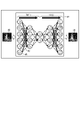
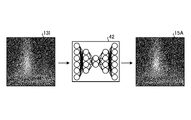
- a data restoration unit that generates restored data by restoring the determination data using a trained model consisting of a self-encoder
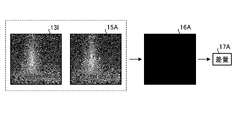
- a difference calculation unit that calculates the difference between the restored data and the determination data
- a determination unit that determines whether the determination data is normal waveform data or arrhythmia waveform data based on the difference amount.
- a biological signal analysis system equipped with A biological signal analysis system equipped with.
- the trained model is a model generated by training using a plurality of known training data whose 95% or more is generated based on normal waveform data.
- the biological signal analysis system according to (1) is a model generated by training using a plurality of known training data whose 95% or more is generated based on normal waveform data.
- the electrocardiographic information 10 acquired from the determination target includes the information of the determination target 1, the acquisition date and time, the location, and the measurement result.
- the measurement result is waveform data 11 obtained by plotting the horizontal axis as time and the vertical axis as voltage (see FIG. 1).
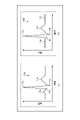
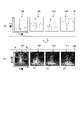
- FIG. 2 is a diagram showing a detailed example of the electrocardiographic information 10 used for the analysis.
- FIG. 2A shows the waveform data 11A of the normal pulse
- FIG. 2B shows the waveform data 11B of the atrial fibrillation in which the F wave is generated.
- Each waveform data may include components called P wave 11a, Q wave 11b, R wave 11c, S wave 11d, T wave 11e, and F wave 11f, and these shapes are used as a criterion for determining arrhythmia.
- the shape of the waveform data of the electrocardiographic information 10 may change depending on the determination target and the biological signal measuring device.
- the input unit 31 receives the input of the electrocardiographic information output from the biological signal measuring device 2. Further, the input unit 31 extracts unit waveform data from the waveform data 11 of the acquired electrocardiographic information.
- the input unit 31 is composed of a connector electrically connected to the biometric signal measuring instrument 2, a communication device provided with a means of communication with the biometric signal measuring instrument 2, or an input port of a medium in which data is stored, and further includes a keyboard. It may be configured to include a user interface such as a mouse and a microphone.
- the determination unit 36 determines whether the pulse of the determination target 1 is normal waveform data or arrhythmia waveform data based on the difference amount calculated by the difference calculation unit 35.
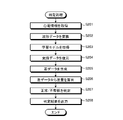
- the data restoration unit 34 acquires the learning model generated by the learning unit 33 (step S203). At this time, the data restoration unit 34 acquires a learning model with reference to the storage unit 38, or acquires a learning model from the learning unit 33.
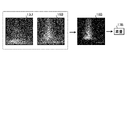
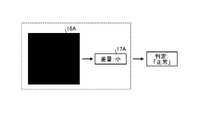
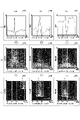
- the determination unit 36 determines whether the arrhythmia is normal or arrhythmia depending on whether the difference amount calculated by the difference calculation unit 35 (for example, the difference amounts 17A and 17B) is smaller than the preset threshold value. And output the judgment result.
- 11A and 11B are diagrams showing a processing example of the determination unit according to the first embodiment. Here, it is assumed that the difference amount 17A is smaller than the threshold value and the difference amount 17B is larger than the threshold value. As shown in FIG. 11A, the difference amount 17A is determined to be "normal” because the difference amount is small. On the other hand, as shown in FIG. 11B, since the difference amount 17B has a large difference amount, it is determined to be "arrhythmia".
- the determination process in the second embodiment differs only in the learning model acquisition process (step S203 shown in FIG. 5), and the rest conforms to the flowchart shown in FIG.
- the learning model acquisition process one is selected from a plurality of learning data groups or learning models (self-encoders) possessed by the learning unit 33 based on the characteristics of the waveform shape of the unit waveform data in the determination target 1.
- the learning model to be selected is determined according to the purpose, but it is preferably the one most suitable for the determination process.
- a method of selecting the most suitable learning model for example, a plurality of learning models and waveform data obtained from the determination target 1 are processed by the data restoration unit 34 and the difference calculation unit 35 and output.
- a method of selecting the learning model with the smallest difference is conceivable, but this is not the case.
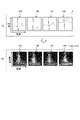
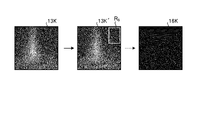
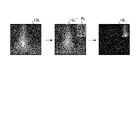
- the intensity distribution is flat (see FIG. 13A).
- the weighted data 13L'in which the region R 6 is weighted based on the determination data 13L known to be derived from atrial fibrillation a large feature appears in the region R 6 , so that the obtained difference data 16L is not available.
- the data has a uniform intensity distribution (see FIG. 13B).
- Embodiment 7 of the present invention will be described. Since the configuration of the biological signal analysis system according to the seventh embodiment is the same as that of the biological signal analysis system 3 according to the first embodiment, the description thereof will be omitted. Hereinafter, a part different from the first embodiment will be described.
Landscapes
- Health & Medical Sciences (AREA)
- Life Sciences & Earth Sciences (AREA)
- Engineering & Computer Science (AREA)
- Cardiology (AREA)
- Physics & Mathematics (AREA)
- Medical Informatics (AREA)
- Molecular Biology (AREA)
- Biophysics (AREA)
- Biomedical Technology (AREA)
- General Health & Medical Sciences (AREA)
- Heart & Thoracic Surgery (AREA)
- Surgery (AREA)
- Animal Behavior & Ethology (AREA)
- Public Health (AREA)
- Veterinary Medicine (AREA)
- Pathology (AREA)
- Theoretical Computer Science (AREA)
- Artificial Intelligence (AREA)
- Software Systems (AREA)
- Mathematical Physics (AREA)
- Evolutionary Computation (AREA)
- Computing Systems (AREA)
- General Engineering & Computer Science (AREA)
- General Physics & Mathematics (AREA)
- Data Mining & Analysis (AREA)
- Computer Vision & Pattern Recognition (AREA)
- Computational Linguistics (AREA)
- Fuzzy Systems (AREA)
- Physiology (AREA)
- Psychiatry (AREA)
- Signal Processing (AREA)
- Measurement And Recording Of Electrical Phenomena And Electrical Characteristics Of The Living Body (AREA)
Abstract
Description
非特許文献1では、RRレシオの異常性に特徴を持つ不整脈しか判定できない。前述したように不整脈には様々な種類があり、心室頻拍などRRレシオに特徴の出ない不整脈も存在するため、これらの不整脈の見逃しが発生する。また、バラツキからRRレシオの異常性を評価するため、心房細動を判定にはその不整脈(バラツキ)が長期に亘って連続的に続いている必要があり、突発的に発生する不整脈は判定が困難である。
非特許文献2では、事前学習が必要であるため、学習していない不整脈の判定を行うことはできない。
(1)心電情報に基づいて不整脈の判定を行う一連の生体信号解析システムであって、
前記心電情報の入力を受け付ける入力部と、
前記心電情報を時間-周波数変換して判定用データを生成するデータ変換部と、
自己符号化器からなる学習済みモデルを用いて前記判定用データを復元した復元データを生成するデータ復元部と、
前記復元データと前記判定用データとの差量を算出する差算出部と、
前記差量に基づいて、前記判定用データが正常波形データおよび不整脈波形データのいずれであるかを判定する判定部と、
を備える生体信号解析システム。
(1)に記載の生体信号解析システム。
(1)に記載の生体信号解析システム。
(1)に記載の生体信号解析システム。
前記データ変換部は、前記単位波形データを時間-周波数変換して前記判定用データを生成する、
(1)~(4)のいずれかに記載の生体信号解析システム。
(1)~(5)のいずれかに記載の生体信号解析システム。
前記判定部は、前記差データの時間および周波数特徴に基づいて不整脈要因を特定する、
(1)~(6)のいずれかに記載の生体信号解析システム。
(1)~(7)のいずれかに記載の生体信号解析システム。
をさらに備える(1)~(8)のいずれかに記載の生体信号解析システム。
をさらに備え、
前記学習部は、
前記既知の学習用データの特徴に応じた複数の自己符号化器、
を有し、
判定対象の正常波形データの特徴に基づいて、前記複数の自己符号化器から自己符号化器を1つ選択する、
(2)に記載の生体信号解析システム。
をさらに備え、
前記学習部は、
前記既知の学習用データの特徴に応じた複数の学習用データ群または複数の自己符号化器、
を有し、
判定対象の正常波形データの特徴に基づいて前記複数の学習用データ群または前記複数の自己符号化器から学習用データ群または自己符号化器を1つ選択する、
(3)に記載の生体信号解析システム。
図1は、本発明の実施形態1に係る一連の生体信号解析システムの構成例を示す図である。図1によれば、解析対象である心電情報10は、生体信号測定器2を介して判定対象1から取得する。判定対象1は、人や動物等、特に限定されない。生体信号測定器2の例としては、心電計が挙げられる。
図2は、解析に用いる心電情報10の詳細例を示す図である。図2の(a)は正常な脈の波形データ11Aを示し、図2の(b)はF波が発生している心房細動の波形データ11Bを示す例である。各波形データは、P波11a、Q波11b、R波11c、S波11d、T波11e、F波11fと呼ばれる成分を含み得るものであり、これらの形状は不整脈の判定基準として用いられる。なお、心電情報10が有する波形データは、判定対象や生体信号測定器によってその形状が変わることもある。
また、図3に示す例では単位波形ごとにセグメント化するために、一定区間の極大値から検出されるR波11cのピーク位置11cpに基づいて前後指定秒数をひとつの単位波形としているが、この限りではない。入力部31は、波形データがR波11cを有しておらず、R波11cのピーク位置11cpを検出することができない場合、波形データの極大値を求め、その時間を基準位置として、前後指定秒数を一つの単位として抽出する。
次に、本発明の実施形態2について説明する。本実施形態2は実施形態1に従属する。実施形態2に係る生体信号解析システムの構成は、実施形態1に係る生体信号解析システム3と同じであるため、説明を省略する。以下、実施形態1とは異なる部分について説明する。
次に、本発明の実施形態3について説明する。実施形態3に係る生体信号解析システムの構成は、実施形態1に係る生体信号解析システム3と同じであるため、説明を省略する。以下、実施形態1とは異なる部分について説明する。
次に、本発明の実施形態4について説明する。本実施形態4は実施形態3に従属する。実施形態4に係る生体信号解析システムの構成は、実施形態1に係る生体信号解析システム3と同じであるため、説明を省略する。以下、実施形態3とは異なる部分について説明する。
次に、本発明の実施形態5について説明する。実施形態5に係る生体信号解析システムの構成は、実施形態1に係る生体信号解析システム3と同じであるため、説明を省略する。以下、実施形態1とは異なる部分について説明する。
次に、本発明の実施形態6について説明する。実施形態6に係る生体信号解析システムの構成は、実施形態1に係る生体信号解析システム3と同じであるため、説明を省略する。以下、実施形態1とは異なる部分について説明する。
次に、本発明の実施形態7について説明する。実施形態7に係る生体信号解析システムの構成は、実施形態1に係る生体信号解析システム3と同じであるため、説明を省略する。以下、実施形態1とは異なる部分について説明する。
ここまで、本発明を実施するための形態を説明してきたが、本発明は、上述した実施形態によってのみ限定されるべきものではない。例えば、生体信号解析システム3が学習部33を備えるものとして説明したが、生体信号解析システム3が学習部33を有さずに、通信ネットワークを介して学習モデルを取得する構成としてもよい。また、解析対象の情報は、心電情報に限らず、上述した波形データを用いるものであれば適用可能である。
2 生体信号測定器
3 生体信号解析システム
10 心電情報
11 波形データ
12、12A~12H 単位波形データ
13、13A~13H 三次元特徴データ
13I~13L、14A、14B、19A~19C 判定用データ
13K´、13L´ 重み付けデータ
14X 学習用データ
15A、15B 復元データ
16A、16B、16K、16L、20A~20C 差データ
17A、17B 差量
31 入力部
32 データ変換部
33 学習部
34 データ復元部
35 差算出部
36 判定部
37 制御部
38 記憶部
41a、41b 自己符号化器
42 学習モデル
43 入力データ
Claims (11)
- 心電情報に基づいて不整脈の判定を行う一連の生体信号解析システムであって、
前記心電情報の入力を受け付ける入力部と、
前記心電情報を時間-周波数変換して判定用データを生成するデータ変換部と、
自己符号化器からなる学習済みモデルを用いて前記判定用データを復元した復元データを生成するデータ復元部と、
前記復元データと前記判定用データとの差量を算出する差算出部と、
前記差量に基づいて、前記判定用データが正常波形データおよび不整脈波形データのいずれであるかを判定する判定部と、
を備える生体信号解析システム。 - 前記学習済みモデルは、95%以上が正常波形データに基づいて生成される複数の既知の学習用データを用いた学習により生成されたモデルである、
請求項1に記載の生体信号解析システム。 - 前記学習済みモデルは、95%以上が正常波形データに基づいて生成される複数の既知の学習用データ、および判定を行う対象から取得した学習用データを用いた学習により生成されたモデルである、
請求項1に記載の生体信号解析システム。 - 前記学習済みモデルは、判定対象から取得した学習用データを用いた学習により生成されたモデルである、
請求項1に記載の生体信号解析システム。 - 前記入力部は、前記心電情報が有する波形データに対し、所定の時間範囲の波形データを抽出した単位波形データにセグメント化し、
前記データ変換部は、前記単位波形データを時間-周波数変換して前記判定用データを生成する、
請求項1~4のいずれかに記載の生体信号解析システム。 - 前記データ変換部は、前記判定用データにおいて不整脈の時間-周波数特徴領域に対して重み付けした重み付けデータを生成する、
請求項1~5のいずれかに記載の生体信号解析システム。 - 前記差算出部は、前記復元データと前記判定用データとの差を示す差データを生成し、該差データに基づいて前記差量を算出し、
前記判定部は、前記差データの時間および周波数特徴に基づいて不整脈要因を特定する、
請求項1~6のいずれかに記載の生体信号解析システム。 - 前記学習済みモデルは、前記正常波形データであることが既知の学習用データを用いた学習により生成されたモデルである、
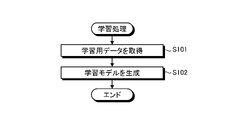
請求項1~7のいずれかに記載の生体信号解析システム。 - 学習用データを用いて前記自己符号化器の学習を行って前記学習済みモデルを生成する学習部、
をさらに備える請求項1~8のいずれかに記載の生体信号解析システム。 - 前記学習用データを用いて前記自己符号化器の学習を行って前記学習済みモデルを生成する学習部、
をさらに備え、
前記学習部は、
前記既知の学習用データの特徴に応じた複数の自己符号化器、
を有し、
判定対象の正常波形データの特徴に基づいて、前記複数の自己符号化器から自己符号化器を1つ選択する、
請求項2に記載の生体信号解析システム。 - 前記学習用データを用いて前記自己符号化器の学習を行って前記学習済みモデルを生成する学習部、
をさらに備え、
前記学習部は、
前記既知の学習用データの特徴に応じた複数の学習用データ群または複数の自己符号化器、
を有し、
判定対象の正常波形データの特徴に基づいて前記複数の学習用データ群または前記複数の自己符号化器から学習用データ群または自己符号化器を1つ選択する、
請求項3に記載の生体信号解析システム。
Priority Applications (6)
| Application Number | Priority Date | Filing Date | Title |
|---|---|---|---|
| ES21897766T ES3032892T3 (en) | 2020-11-24 | 2021-11-15 | Biological signal analysis system |
| EP21897766.8A EP4252652B1 (en) | 2020-11-24 | 2021-11-15 | Biological signal analysis system |
| CN202180078704.9A CN116528763B (zh) | 2020-11-24 | 2021-11-15 | 生物信号解析系统 |
| JP2021570835A JP7294459B2 (ja) | 2020-11-24 | 2021-11-15 | 生体信号解析システム |
| KR1020237015640A KR20230107806A (ko) | 2020-11-24 | 2021-11-15 | 생체 신호 해석 시스템 |
| US18/037,124 US12484832B2 (en) | 2020-11-24 | 2021-11-15 | Biosignal analysis system |
Applications Claiming Priority (2)
| Application Number | Priority Date | Filing Date | Title |
|---|---|---|---|
| JP2020-194594 | 2020-11-24 | ||
| JP2020194594 | 2020-11-24 |
Publications (1)
| Publication Number | Publication Date |
|---|---|
| WO2022113792A1 true WO2022113792A1 (ja) | 2022-06-02 |
Family
ID=81755969
Family Applications (1)
| Application Number | Title | Priority Date | Filing Date |
|---|---|---|---|
| PCT/JP2021/041847 Ceased WO2022113792A1 (ja) | 2020-11-24 | 2021-11-15 | 生体信号解析システム |
Country Status (7)
| Country | Link |
|---|---|
| US (1) | US12484832B2 (ja) |
| EP (1) | EP4252652B1 (ja) |
| JP (1) | JP7294459B2 (ja) |
| KR (1) | KR20230107806A (ja) |
| CN (1) | CN116528763B (ja) |
| ES (1) | ES3032892T3 (ja) |
| WO (1) | WO2022113792A1 (ja) |
Cited By (2)
| Publication number | Priority date | Publication date | Assignee | Title |
|---|---|---|---|---|
| WO2024163389A1 (en) * | 2023-01-31 | 2024-08-08 | Mars, Incorporated | Systems and methods for deep learning based ecg-signal classifications for canines |
| WO2025120869A1 (ja) * | 2023-12-05 | 2025-06-12 | 三菱電機株式会社 | モデル生成装置、生体データ推定装置、モデル生成システム、生体データ推定システム、および、モデル生成方法 |
Families Citing this family (3)
| Publication number | Priority date | Publication date | Assignee | Title |
|---|---|---|---|---|
| JP7479909B2 (ja) * | 2020-04-20 | 2024-05-09 | 株式会社東海理化電機製作所 | 学習装置、学習方法、および測定装置 |
| JP7294459B2 (ja) * | 2020-11-24 | 2023-06-20 | 東レ株式会社 | 生体信号解析システム |
| KR102927826B1 (ko) * | 2025-01-21 | 2026-02-13 | 주식회사 뷰노 | 심전도 데이터 증강 방법 |
Citations (5)
| Publication number | Priority date | Publication date | Assignee | Title |
|---|---|---|---|---|
| JP2014100473A (ja) * | 2012-11-16 | 2014-06-05 | Samsung Electronics Co Ltd | 遠隔疾病管理装置及び遠隔疾病管理方法並びに無線センサ |
| JP2014150826A (ja) * | 2013-02-05 | 2014-08-25 | Nippon Koden Corp | 心電図解析装置 |
| JP2019033878A (ja) * | 2017-08-15 | 2019-03-07 | イーグルマトリックス株式会社 | 異常検出方法、異常検出装置及び異常検出プログラム |
| JP2020036633A (ja) * | 2018-08-31 | 2020-03-12 | 富士通株式会社 | 異常判別プログラム、異常判別方法および異常判別装置 |
| JP2020156927A (ja) * | 2019-03-27 | 2020-10-01 | 日本光電工業株式会社 | 生体情報測定装置、不整脈解析システム、不整脈解析方法、不整脈解析プログラム |
Family Cites Families (15)
| Publication number | Priority date | Publication date | Assignee | Title |
|---|---|---|---|---|
| KR100967994B1 (ko) | 2008-02-18 | 2010-07-07 | 연세대학교 산학협력단 | 주기성을 갖는 생체 신호 데이터의 실시간 압축 전송 및저장 방법과 이를 위한 심혈관 시스템 |
| FR2935822B1 (fr) * | 2008-09-05 | 2010-09-17 | Commissariat Energie Atomique | Procede de reconnaissance de formes et systeme mettant en oeuvre le procede |
| JP2014171589A (ja) | 2013-03-07 | 2014-09-22 | Seiko Epson Corp | 心房細動解析装置およびプログラム |
| EP3081157A1 (en) | 2015-04-17 | 2016-10-19 | Seiko Epson Corporation | Biological information processing system, biological information processing device, terminal device, method for generating analysis result information, and biological information processing method |
| WO2017124044A1 (en) * | 2016-01-15 | 2017-07-20 | The Regents Of The University Of California | Machine-learning-based denoising of doppler ultrasound blood flow and intracranial pressure signal |
| JP2018189522A (ja) | 2017-05-08 | 2018-11-29 | キユーピー株式会社 | 設備故障の予兆診断方法 |
| US10602942B2 (en) | 2017-08-25 | 2020-03-31 | Cambridge Heartwear Limited | Method of detecting abnormalities in ECG signals |
| TWI653967B (zh) * | 2017-12-08 | 2019-03-21 | 國立成功大學 | 心律不整診斷系統與裝置及心律不整辨識方法 |
| KR102179040B1 (ko) | 2018-10-25 | 2020-11-16 | 한국외국어대학교 연구산학협력단 | 딥러닝 기반 표면 실장 부품 조립 장치의 동작 이상 검출 장치 및 방법 |
| CN111261278A (zh) | 2018-11-30 | 2020-06-09 | 上海图灵医疗科技有限公司 | 一种基于三维图像的深度学习模型的心脏疾病检测方法 |
| CN111261289A (zh) | 2018-11-30 | 2020-06-09 | 上海图灵医疗科技有限公司 | 一种基于人工智能模型的心脏疾病的检测方法 |
| CN110801221B (zh) * | 2019-12-09 | 2021-04-27 | 中山大学 | 基于无监督特征学习的睡眠呼吸暂停片段检测设备 |
| CN111084621B (zh) | 2019-12-30 | 2022-09-06 | 上海数创医疗科技有限公司 | 基于深度自编码器的qrs波群形态识别方法和装置 |
| CN111265210A (zh) | 2020-03-24 | 2020-06-12 | 华中科技大学 | 一种基于深度学习的房颤预测装置和设备 |
| JP7294459B2 (ja) * | 2020-11-24 | 2023-06-20 | 東レ株式会社 | 生体信号解析システム |
-
2021
- 2021-11-15 JP JP2021570835A patent/JP7294459B2/ja active Active
- 2021-11-15 WO PCT/JP2021/041847 patent/WO2022113792A1/ja not_active Ceased
- 2021-11-15 ES ES21897766T patent/ES3032892T3/es active Active
- 2021-11-15 US US18/037,124 patent/US12484832B2/en active Active
- 2021-11-15 CN CN202180078704.9A patent/CN116528763B/zh active Active
- 2021-11-15 EP EP21897766.8A patent/EP4252652B1/en active Active
- 2021-11-15 KR KR1020237015640A patent/KR20230107806A/ko active Pending
Patent Citations (5)
| Publication number | Priority date | Publication date | Assignee | Title |
|---|---|---|---|---|
| JP2014100473A (ja) * | 2012-11-16 | 2014-06-05 | Samsung Electronics Co Ltd | 遠隔疾病管理装置及び遠隔疾病管理方法並びに無線センサ |
| JP2014150826A (ja) * | 2013-02-05 | 2014-08-25 | Nippon Koden Corp | 心電図解析装置 |
| JP2019033878A (ja) * | 2017-08-15 | 2019-03-07 | イーグルマトリックス株式会社 | 異常検出方法、異常検出装置及び異常検出プログラム |
| JP2020036633A (ja) * | 2018-08-31 | 2020-03-12 | 富士通株式会社 | 異常判別プログラム、異常判別方法および異常判別装置 |
| JP2020156927A (ja) * | 2019-03-27 | 2020-10-01 | 日本光電工業株式会社 | 生体情報測定装置、不整脈解析システム、不整脈解析方法、不整脈解析プログラム |
Non-Patent Citations (3)
| Title |
|---|
| A. QAYYUMF. MERIAUDEAUG. C. Y. CHAN: "Classification of Atrial Fibrillation with Pre-Trained Convolutional Neural Network Models", 2018 IEEE-EMBS CONFERENCE ON BIOMEDICAL ENGINEERING AND SCIENCES (IECBES), SARAWAK, MALAYSIA, 2018, pages 594 - 599, XP033514160, DOI: 10.1109/IECBES.2018.8626624 |
| HEALEY: "Robust detection of atrial fibrillation for a long term telemonitoring system", COMPUTERS IN CARDIOLOGY, 2005, LYON, 2005, pages 619 - 622, XP010889911, DOI: 10.1109/CIC.2005.1588177 |
| See also references of EP4252652A4 |
Cited By (2)
| Publication number | Priority date | Publication date | Assignee | Title |
|---|---|---|---|---|
| WO2024163389A1 (en) * | 2023-01-31 | 2024-08-08 | Mars, Incorporated | Systems and methods for deep learning based ecg-signal classifications for canines |
| WO2025120869A1 (ja) * | 2023-12-05 | 2025-06-12 | 三菱電機株式会社 | モデル生成装置、生体データ推定装置、モデル生成システム、生体データ推定システム、および、モデル生成方法 |
Also Published As
| Publication number | Publication date |
|---|---|
| EP4252652A1 (en) | 2023-10-04 |
| US12484832B2 (en) | 2025-12-02 |
| CN116528763A (zh) | 2023-08-01 |
| CN116528763B (zh) | 2025-12-16 |
| US20240000364A1 (en) | 2024-01-04 |
| JP7294459B2 (ja) | 2023-06-20 |
| ES3032892T3 (en) | 2025-07-28 |
| JPWO2022113792A1 (ja) | 2022-06-02 |
| EP4252652A4 (en) | 2024-10-09 |
| KR20230107806A (ko) | 2023-07-18 |
| EP4252652B1 (en) | 2025-05-07 |
Similar Documents
| Publication | Publication Date | Title |
|---|---|---|
| WO2022113792A1 (ja) | 生体信号解析システム | |
| CN109171712B (zh) | 心房颤动识别方法、装置、设备及计算机可读存储介质 | |
| Safara et al. | Multi-level basis selection of wavelet packet decomposition tree for heart sound classification | |
| CN108186011B (zh) | 房颤检测方法、装置及可读存储介质 | |
| CN107832737B (zh) | 基于人工智能的心电图干扰识别方法 | |
| CN114041786B (zh) | 心冲击图信号的检测方法、装置以及设备 | |
| CN110338786B (zh) | 一种癫痫样放电的识别与分类方法、系统、装置和介质 | |
| US20160183811A1 (en) | System and method of detecting abnormal movement of a physical object | |
| WO2019038109A1 (en) | METHOD FOR DETECTING ANOMALIES IN ECG SIGNALS | |
| WO2019100566A1 (zh) | 基于人工智能自学习的静态心电图分析方法和装置 | |
| CN106778685A (zh) | 心电图图像识别方法、装置及服务终端 | |
| JP7297464B2 (ja) | 生体信号処理装置および自動解析用データ生成方法 | |
| CN114190944B (zh) | 基于脑电信号的鲁棒情绪识别方法 | |
| JP7263770B2 (ja) | 分類装置、分類システム、分類方法及びプログラム | |
| CN112617851A (zh) | 一种基于心电信号的脑力负荷分类方法及系统 | |
| Rezaei et al. | Data augmentation for heart arrhythmia classification | |
| Xu et al. | Analysis of an experimental model of in vitro cardiac tissue using phase space reconstruction | |
| CN108836312B (zh) | 一种基于人工智能的进行杂波剔除的方法及系统 | |
| EP4501238A1 (en) | Electrocardiogram signal analysis system | |
| Oster et al. | An Artificial Model of the Electrocardiogram during Paroxysmal Atrial Fibrillation. | |
| Al-Fahoum et al. | ECG arrhythmia classification using simple reconstructed phase space approach | |
| CN110738093A (zh) | 基于改进小世界回声状态网络肌电的分类方法 | |
| Chetan et al. | Cardiac arrhythmia classification from multilead ECG using multiscale non-linear analysis | |
| TWI901386B (zh) | 處理運動訊號的電子裝置和方法 | |
| KR102608735B1 (ko) | 인공지능 기반의 심전도 신호 분석 장치 및 방법 |
Legal Events
| Date | Code | Title | Description |
|---|---|---|---|
| ENP | Entry into the national phase |
Ref document number: 2021570835 Country of ref document: JP Kind code of ref document: A |
|
| 121 | Ep: the epo has been informed by wipo that ep was designated in this application |
Ref document number: 21897766 Country of ref document: EP Kind code of ref document: A1 |
|
| WWE | Wipo information: entry into national phase |
Ref document number: 18037124 Country of ref document: US |
|
| WWE | Wipo information: entry into national phase |
Ref document number: 202180078704.9 Country of ref document: CN |
|
| NENP | Non-entry into the national phase |
Ref country code: DE |
|
| ENP | Entry into the national phase |
Ref document number: 2021897766 Country of ref document: EP Effective date: 20230626 |
|
| WWG | Wipo information: grant in national office |
Ref document number: 2021897766 Country of ref document: EP |