WO2022114105A1 - 高純度βニコチンアミドモノヌクレオチド(NMN)及びその製造方法 - Google Patents
高純度βニコチンアミドモノヌクレオチド(NMN)及びその製造方法 Download PDFInfo
- Publication number
- WO2022114105A1 WO2022114105A1 PCT/JP2021/043333 JP2021043333W WO2022114105A1 WO 2022114105 A1 WO2022114105 A1 WO 2022114105A1 JP 2021043333 W JP2021043333 W JP 2021043333W WO 2022114105 A1 WO2022114105 A1 WO 2022114105A1
- Authority
- WO
- WIPO (PCT)
- Prior art keywords
- purity
- nmn
- nicotinamide
- present
- βnmn
- Prior art date
- Legal status (The legal status is an assumption and is not a legal conclusion. Google has not performed a legal analysis and makes no representation as to the accuracy of the status listed.)
- Ceased
Links
Images






Classifications
-
- C—CHEMISTRY; METALLURGY
- C07—ORGANIC CHEMISTRY
- C07H—SUGARS; DERIVATIVES THEREOF; NUCLEOSIDES; NUCLEOTIDES; NUCLEIC ACIDS
- C07H19/00—Compounds containing a hetero ring sharing one ring hetero atom with a saccharide radical; Nucleosides; Mononucleotides; Anhydro-derivatives thereof
- C07H19/02—Compounds containing a hetero ring sharing one ring hetero atom with a saccharide radical; Nucleosides; Mononucleotides; Anhydro-derivatives thereof sharing nitrogen
- C07H19/04—Heterocyclic radicals containing only nitrogen atoms as ring hetero atom
- C07H19/048—Pyridine radicals
-
- A—HUMAN NECESSITIES
- A23—FOODS OR FOODSTUFFS; TREATMENT THEREOF, NOT COVERED BY OTHER CLASSES
- A23L—FOODS, FOODSTUFFS OR NON-ALCOHOLIC BEVERAGES, NOT OTHERWISE PROVIDED FOR; PREPARATION OR TREATMENT THEREOF
- A23L33/00—Modifying nutritive qualities of foods; Dietetic products; Preparation or treatment thereof
- A23L33/10—Modifying nutritive qualities of foods; Dietetic products; Preparation or treatment thereof using additives
- A23L33/13—Nucleic acids or derivatives thereof
-
- A—HUMAN NECESSITIES
- A61—MEDICAL OR VETERINARY SCIENCE; HYGIENE
- A61K—PREPARATIONS FOR MEDICAL, DENTAL OR TOILETRY PURPOSES
- A61K31/00—Medicinal preparations containing organic active ingredients
- A61K31/70—Carbohydrates; Sugars; Derivatives thereof
- A61K31/7042—Compounds having saccharide radicals and heterocyclic rings
- A61K31/7052—Compounds having saccharide radicals and heterocyclic rings having nitrogen as a ring hetero atom, e.g. nucleosides, nucleotides
- A61K31/706—Compounds having saccharide radicals and heterocyclic rings having nitrogen as a ring hetero atom, e.g. nucleosides, nucleotides containing six-membered rings with nitrogen as a ring hetero atom
-
- A—HUMAN NECESSITIES
- A61—MEDICAL OR VETERINARY SCIENCE; HYGIENE
- A61P—SPECIFIC THERAPEUTIC ACTIVITY OF CHEMICAL COMPOUNDS OR MEDICINAL PREPARATIONS
- A61P25/00—Drugs for disorders of the nervous system
- A61P25/28—Drugs for disorders of the nervous system for treating neurodegenerative disorders of the central nervous system, e.g. nootropic agents, cognition enhancers, drugs for treating Alzheimer's disease or other forms of dementia
-
- A—HUMAN NECESSITIES
- A61—MEDICAL OR VETERINARY SCIENCE; HYGIENE
- A61P—SPECIFIC THERAPEUTIC ACTIVITY OF CHEMICAL COMPOUNDS OR MEDICINAL PREPARATIONS
- A61P3/00—Drugs for disorders of the metabolism
-
- A—HUMAN NECESSITIES
- A61—MEDICAL OR VETERINARY SCIENCE; HYGIENE
- A61P—SPECIFIC THERAPEUTIC ACTIVITY OF CHEMICAL COMPOUNDS OR MEDICINAL PREPARATIONS
- A61P43/00—Drugs for specific purposes, not provided for in groups A61P1/00-A61P41/00
-
- A—HUMAN NECESSITIES
- A61—MEDICAL OR VETERINARY SCIENCE; HYGIENE
- A61P—SPECIFIC THERAPEUTIC ACTIVITY OF CHEMICAL COMPOUNDS OR MEDICINAL PREPARATIONS
- A61P5/00—Drugs for disorders of the endocrine system
-
- A—HUMAN NECESSITIES
- A61—MEDICAL OR VETERINARY SCIENCE; HYGIENE
- A61P—SPECIFIC THERAPEUTIC ACTIVITY OF CHEMICAL COMPOUNDS OR MEDICINAL PREPARATIONS
- A61P9/00—Drugs for disorders of the cardiovascular system
- A61P9/10—Drugs for disorders of the cardiovascular system for treating ischaemic or atherosclerotic diseases, e.g. antianginal drugs, coronary vasodilators, drugs for myocardial infarction, retinopathy, cerebrovascula insufficiency, renal arteriosclerosis
-
- C—CHEMISTRY; METALLURGY
- C07—ORGANIC CHEMISTRY
- C07H—SUGARS; DERIVATIVES THEREOF; NUCLEOSIDES; NUCLEOTIDES; NUCLEIC ACIDS
- C07H1/00—Processes for the preparation of sugar derivatives
- C07H1/06—Separation; Purification
-
- C—CHEMISTRY; METALLURGY
- C07—ORGANIC CHEMISTRY
- C07H—SUGARS; DERIVATIVES THEREOF; NUCLEOSIDES; NUCLEOTIDES; NUCLEIC ACIDS
- C07H19/00—Compounds containing a hetero ring sharing one ring hetero atom with a saccharide radical; Nucleosides; Mononucleotides; Anhydro-derivatives thereof
- C07H19/02—Compounds containing a hetero ring sharing one ring hetero atom with a saccharide radical; Nucleosides; Mononucleotides; Anhydro-derivatives thereof sharing nitrogen
- C07H19/04—Heterocyclic radicals containing only nitrogen atoms as ring hetero atom
- C07H19/06—Pyrimidine radicals
- C07H19/10—Pyrimidine radicals with the saccharide radical esterified by phosphoric or polyphosphoric acids
-
- C—CHEMISTRY; METALLURGY
- C07—ORGANIC CHEMISTRY
- C07H—SUGARS; DERIVATIVES THEREOF; NUCLEOSIDES; NUCLEOTIDES; NUCLEIC ACIDS
- C07H19/00—Compounds containing a hetero ring sharing one ring hetero atom with a saccharide radical; Nucleosides; Mononucleotides; Anhydro-derivatives thereof
- C07H19/02—Compounds containing a hetero ring sharing one ring hetero atom with a saccharide radical; Nucleosides; Mononucleotides; Anhydro-derivatives thereof sharing nitrogen
- C07H19/04—Heterocyclic radicals containing only nitrogen atoms as ring hetero atom
- C07H19/16—Purine radicals
- C07H19/20—Purine radicals with the saccharide radical esterified by phosphoric or polyphosphoric acids
-
- C—CHEMISTRY; METALLURGY
- C12—BIOCHEMISTRY; BEER; SPIRITS; WINE; VINEGAR; MICROBIOLOGY; ENZYMOLOGY; MUTATION OR GENETIC ENGINEERING
- C12N—MICROORGANISMS OR ENZYMES; COMPOSITIONS THEREOF; PROPAGATING, PRESERVING, OR MAINTAINING MICROORGANISMS; MUTATION OR GENETIC ENGINEERING; CULTURE MEDIA
- C12N9/00—Enzymes; Proenzymes; Compositions thereof; Processes for preparing, activating, inhibiting, separating or purifying enzymes
- C12N9/10—Transferases (2.)
- C12N9/12—Transferases (2.) transferring phosphorus containing groups, e.g. kinases (2.7)
- C12N9/1241—Nucleotidyltransferases (2.7.7)
-
- C—CHEMISTRY; METALLURGY
- C12—BIOCHEMISTRY; BEER; SPIRITS; WINE; VINEGAR; MICROBIOLOGY; ENZYMOLOGY; MUTATION OR GENETIC ENGINEERING
- C12P—FERMENTATION OR ENZYME-USING PROCESSES TO SYNTHESISE A DESIRED CHEMICAL COMPOUND OR COMPOSITION OR TO SEPARATE OPTICAL ISOMERS FROM A RACEMIC MIXTURE
- C12P19/00—Preparation of compounds containing saccharide radicals
- C12P19/26—Preparation of nitrogen-containing carbohydrates
- C12P19/28—N-glycosides
- C12P19/30—Nucleotides
-
- C—CHEMISTRY; METALLURGY
- C12—BIOCHEMISTRY; BEER; SPIRITS; WINE; VINEGAR; MICROBIOLOGY; ENZYMOLOGY; MUTATION OR GENETIC ENGINEERING
- C12Y—ENZYMES
- C12Y204/00—Glycosyltransferases (2.4)
- C12Y204/02—Pentosyltransferases (2.4.2)
- C12Y204/02007—Adenine phosphoribosyltransferase (2.4.2.7)
-
- C—CHEMISTRY; METALLURGY
- C12—BIOCHEMISTRY; BEER; SPIRITS; WINE; VINEGAR; MICROBIOLOGY; ENZYMOLOGY; MUTATION OR GENETIC ENGINEERING
- C12Y—ENZYMES
- C12Y207/00—Transferases transferring phosphorus-containing groups (2.7)
- C12Y207/06—Diphosphotransferases (2.7.6)
- C12Y207/06001—Ribose-phosphate diphosphokinase (2.7.6.1)
-
- C—CHEMISTRY; METALLURGY
- C12—BIOCHEMISTRY; BEER; SPIRITS; WINE; VINEGAR; MICROBIOLOGY; ENZYMOLOGY; MUTATION OR GENETIC ENGINEERING
- C12Y—ENZYMES
- C12Y207/00—Transferases transferring phosphorus-containing groups (2.7)
- C12Y207/07—Nucleotidyltransferases (2.7.7)
- C12Y207/07001—Nicotinamide-nucleotide adenylyltransferase (2.7.7.1)
-
- C—CHEMISTRY; METALLURGY
- C12—BIOCHEMISTRY; BEER; SPIRITS; WINE; VINEGAR; MICROBIOLOGY; ENZYMOLOGY; MUTATION OR GENETIC ENGINEERING
- C12Y—ENZYMES
- C12Y302/00—Hydrolases acting on glycosyl compounds, i.e. glycosylases (3.2)
- C12Y302/02—Hydrolases acting on glycosyl compounds, i.e. glycosylases (3.2) hydrolysing N-glycosyl compounds (3.2.2)
- C12Y302/02004—AMP nucleosidase (3.2.2.4)
-
- A—HUMAN NECESSITIES
- A23—FOODS OR FOODSTUFFS; TREATMENT THEREOF, NOT COVERED BY OTHER CLASSES
- A23V—INDEXING SCHEME RELATING TO FOODS, FOODSTUFFS OR NON-ALCOHOLIC BEVERAGES AND LACTIC OR PROPIONIC ACID BACTERIA USED IN FOODSTUFFS OR FOOD PREPARATION
- A23V2002/00—Food compositions, function of food ingredients or processes for food or foodstuffs
-
- A—HUMAN NECESSITIES
- A23—FOODS OR FOODSTUFFS; TREATMENT THEREOF, NOT COVERED BY OTHER CLASSES
- A23V—INDEXING SCHEME RELATING TO FOODS, FOODSTUFFS OR NON-ALCOHOLIC BEVERAGES AND LACTIC OR PROPIONIC ACID BACTERIA USED IN FOODSTUFFS OR FOOD PREPARATION
- A23V2200/00—Function of food ingredients
- A23V2200/30—Foods, ingredients or supplements having a functional effect on health
- A23V2200/302—Foods, ingredients or supplements having a functional effect on health having a modulating effect on age
Definitions
- the present invention relates to high-purity ⁇ -nicotinamide mononucleotide (NMN) and a method for producing the same.
- Anti-aging medicine covers a wide range of areas such as endocrine and metabolism, arteriosclerosis, nutrition, locomotorium, and sensory organs, and is not only for the elderly, but for people of all ages. The goal is to extend the amount of time you can spend healthy with youthful physical functioning than your current age.
- Nicotinamide mononucleotide is a synthetic intermediate for nicotinamide adenine dinucleotide (NAD +).
- NAD + nicotinamide adenine dinucleotide
- NMN controls the activity of the longevity gene "sirtuin” through conversion to NAD +, and that administration of NMN to mice exhibits an anti-aging effect, and it is attracting attention as a substance that suppresses aging (). See Non-Patent Documents 1 to 3).
- NMN is originally a substance that is naturally produced in the body, but it is known that the ability to produce NMN in the body decreases with aging. Therefore, functional foods, pharmaceuticals and the like for anti-aging including such NMN have been developed.
- NMN As a method for producing NMN, cells (yeast, bacteria, etc.) overexpressing nicotinamide phosphoribosyltransferase (Nampt) are isolated, and the cells are cultured in the presence of nicotinamide (NAM) to produce NMN.
- Nicotinamide (NAM), ATP and ribose are used as raw materials and reacted under the catalytic action of nicotinamide phosphoribosyl transferase (Nampt), ribose phosphate pyrophosphate kinase and ribose kinase to produce NMN.
- Methods see Patent Document 2 and the like are known.
- the present invention has been made in view of such circumstances, and an object of the present invention is to provide an NMN having high purity and a low content of impurities.
- the present inventors have added a step using a dynamic axis compression column (DAC column) or the like to the method for producing NMN, and the purity is 99.0 mass. % Or more and as impurities C 11 H 15 NO 9 P, C 10 H 16 N 5 O 10 P 2 , C 9 H 15 N 3 O 8 P, C 9 H 15 N 3 O 7 P, C 9 High-purity ⁇ -nicotinamide mononucleotide (NMN) containing H 16 N 4 O 8 P, C 10 H 15 N 5 O 7 P, and C 21 H 27 N 6 O 15 P 2 below the detection limit. Succeeded in manufacturing. That is, the gist of the present invention is as follows.
- ⁇ -nicotinamide mononucleotide (NMN).
- An antiaging composition containing the high-purity ⁇ -nicotinamide mononucleotide (NMN) according to [1] as an active ingredient.
- NPN high-purity ⁇ -nicotinamide mononucleotide
- (I) A step of reacting AMP nucleosidase, ribose phosphate diphosphokinase, adenosine monophosphate (AMP), adenosine triphosphate (ATP), and ribose-5-phosphate (R5P).
- Nicotinamide phosphoribosyltransferase (Nampt), the reaction product of the above step (I), the step of reacting with nicotinamide (NAM), (III) Purifying the reaction product of the above step (II) by an ion exchange column, and (IV) subjecting the purified product of the above step (III) to a dynamic axis compression column (DAC column).
- the purity is 99.0% by mass or more, and C 11 H 15 NO 9 P, C 10 H 16 N 5 O 10 P 2 , C 9 H 15 N 3 O 8 P, as impurities.
- the contents of C 9 H 15 N 3 O 7 P, C 9 H 16 N 4 O 8 P, C 10 H 15 N 5 O 7 P, and C 21 H 27 N 6 O 15 P 2 are below the detection limit.
- High Purity ⁇ Nicotinamide Mononucleotide (NMN) is provided. NMNs that have been highly purified to a level where impurities are not detected, such as the high-purity ⁇ NMN of the present invention, have not existed in the past.
- the high-purity ⁇ NMN of the present invention exhibits an excellent anti-aging effect and is highly safe because impurities are below the detection limit. Therefore, even if it is ingested for a long period of time, there is no concern that it will have an adverse effect on the body.
- the high-purity ⁇ NMN of the present invention has an unexpected effect of being superior in stability as compared with the conventional NMN. From the above, the high-purity ⁇ NMN of the present invention is suitably used for functional foods, pharmaceuticals, quasi-drugs and the like for the purpose of anti-aging.
- nicotinamide mononucleotide (chemical formula: C 11 H 15 N 2 O 8 P) is a compound represented by the following structural formula, and is generally called NMN (Nicotinamide mononucleotide), which is a coenzyme NAD +. It is known as an intermediate metabolite involved in biosynthesis. In vivo, it is produced in the NAD metabolic pathway by liver tissue, that is, the pathway from quinolinic acid to the synthesis of nicotinamide adenine dinucleotide (NAD) via the kynurenine pathway.
- NAD nicotinamide adenine dinucleotide
- nicotinic acid mononucleotide NaMN
- QA quinolinic acid
- kynurenine pathway which is a tryptophan metabolic pathway
- NaMN nicotinic acid mononucleotide
- NaMN nicotinic acid mononucleotide
- NAD nicotinic acid adenine dinucleotide
- Nicotinamide (NaM) is converted to nicotinamide mononucleotide by nicotinamide phosphoribosyltransferase (NAMPT), and then nicotinamide mononucleotide is converted by nicotinamide mononucleotide adenyltransferase (NMNAT) to produce NAD. Nicotinamide mononucleotide is also produced from nicotinamide riboside (NR). There are two types of nicotinamide mononucleotides, ⁇ -form and ⁇ -form, as optical isomers, but in the present invention, ⁇ -form having an anti-aging effect is used.
- the high-purity ⁇ -nicotinamide mononucleotide (NMN) of the present invention has a purity of 99.0% by mass or more and is C 11 H 15 NO 9 P, C 10 H 16 N 5 O 10 P 2 , as impurities.
- the content of 2 is below the detection limit. So far, many supplements containing NMN claiming high purity have been put on the market, but the NMN used as a raw material includes any of the impurities represented by the above chemical formulas in addition to the main component NMN. Contains. In the high-purity ⁇ NMN of the present invention, the impurities represented by the above chemical formula are below the detection limit.
- the purity (%) of NMN is calculated by calculating the absolute content of the main component by the area percentage method (high-speed liquid chromatography-ultraviolet absorption spectroscopy) or quantitative NMR method (nuclear magnetic resonance spectroscopy) by LC-UV. Ru.
- NMN sample is dissolved in water, and LC-UV measurement is performed at a detection wavelength of 266 nm using a device such as LC-30AD (manufactured by Shimadzu Corporation).
- LC-30AD manufactured by Shimadzu Corporation.
- the ratio (%) of the main component to the total area of the peaks of the chromatogram of the obtained sample can be defined as the purity (%) of ⁇ NMN.
- the NMN sample and the internal standard substance are dissolved in an appropriate amount of heavy water, and for example, using an FT-NMR device JNM-ECA400 type (manufactured by JECL RESONANCE), resonance frequency: 1 H; 400 MHz, measurement mode. : 1 H NMR, solvent: heavy water, internal standard substance (IS): dimethyl sulfone, reference substance: IS-derived signal; NMR measurement is performed at 3.16 ppm. 1 From the 1 H NMR spectrum, the value calculated by using the following formula can be used as the purity (%).
- the high-purity ⁇ NMN of the present invention has a purity of 99.0% by mass or more, and is either an area percentage method (high-speed liquid chromatography-ultraviolet absorption spectroscopy) or a quantitative NMR method (nuclear magnetic resonance spectroscopy) by LC-UV. It may be calculated as 99.0% by mass or more depending on the measuring method, but it is preferably calculated as 99.0% by mass or more by both measuring methods.
- Measurement and analysis of impurities contained in NMN are performed by LC-MS and LC-MS / MS.
- the equipment to be used is not limited, but for example, LC-30AD (manufactured by Shimadzu Corporation), Q Active Plus (Thermo Fisher Scientific), etc. are used, and the measurement is performed at a detection wavelength of 266 nm and a measurement mass range of m / z 100-1500. be able to.
- the high-purity ⁇ NMN of the present invention C 11 H 15 NO 9 P, C 10 H 16 N 5 O 10 P 2 , C 9 H 15 N 3 O 8 P, C 9 H 15 N Substances represented by the chemical formulas of 3 O 7 P, C 9 H 16 N 4 O 8 P, C 10 H 15 N 5 O 7 P, and C 21 H 27 N 6 O 15 P 2 are below the detection limit.
- the high-purity ⁇ NMN of the present invention can be obtained in which the content of NMN as a main component is sufficiently high and the content of impurities is suppressed as much as possible.
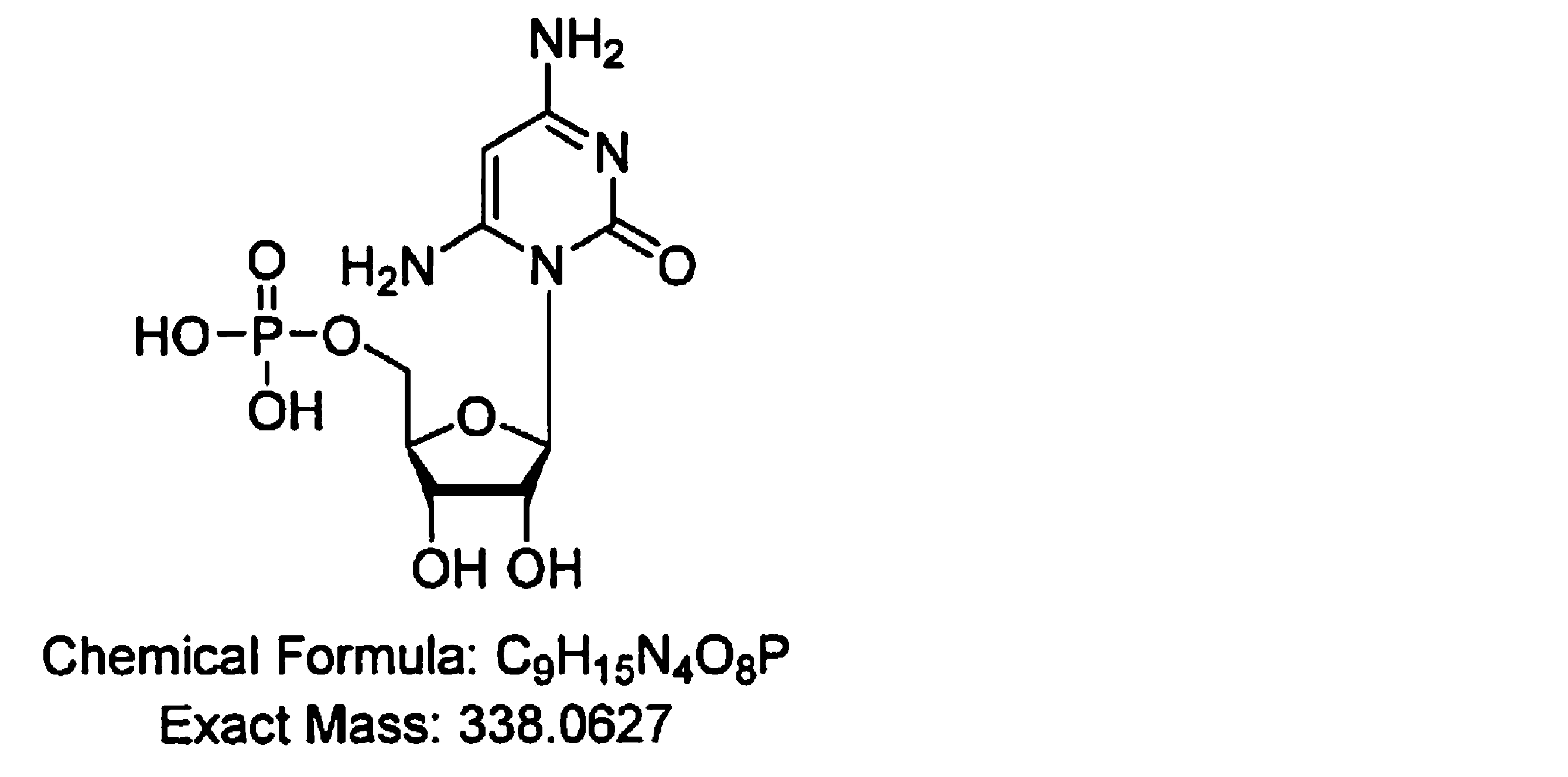
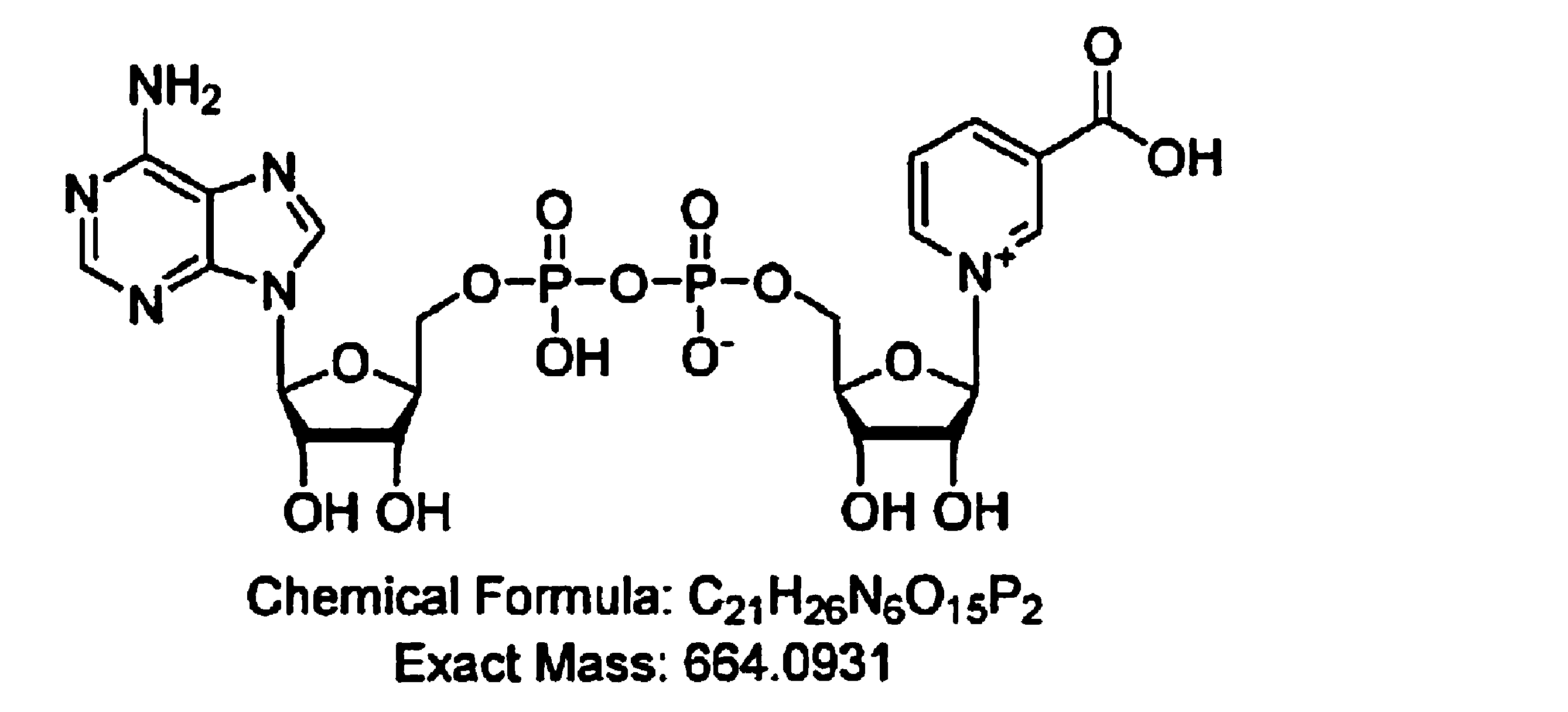
- These substances are considered to be raw materials, intermediates, decomposition products, etc. in the manufacturing process of NMN, and the chemical formulas that can be specified by the above measurement / analysis methods are as described above, but the estimated structures of each are as shown below. Is. The numbers of each component correspond to those shown in Table 3 of the examples.
- the high-purity ⁇ NMN of the present invention is expected to be effective in preventing diseases such as Alzheimer's disease and heart failure and improving symptoms, as well as having an excellent anti-aging effect.
- Such high-purity ⁇ NMN of the present invention is expected to be used as an ingredient in functional foods, pharmaceuticals, cosmetics and the like.
- the present invention also includes a pharmaceutical composition containing the above-mentioned high-purity ⁇ -nicotinamide mononucleotide (NMN) as an active ingredient.
- the present invention also includes an anti-aging composition containing the above-mentioned high-purity ⁇ -nicotinamide mononucleotide (NMN) as an active ingredient.
- compositions and antiaging composition of the present invention can be used for pharmaceuticals, quasi-drugs, foods, functional foods and the like.
- Such a composition of the present invention may contain other components in addition to the above-mentioned high-purity ⁇ NMN of the present invention, depending on the intended use and form, as long as the effects of the present invention are not impaired.
- Examples of the above other components include pharmaceutically acceptable carriers and additives.
- Examples of such carriers and additives include water, tonicity agents, thickeners, sugars, sugar alcohols, preservatives (preservatives), bactericides or antibacterial agents, pH adjusters, stabilizers, and the like.
- Auxiliary agents, antioxidants, sweeteners, acidulants, colorants, flavoring agents, flavors, cooling agents and the like can be mentioned, but are not limited thereto.
- the amount of high-purity ⁇ NMN contained in the composition of the present invention may be appropriately adjusted depending on the intended use and form, but is usually 0.1% by weight to 100% by weight, and 1% by weight to 95% by weight, 1% by weight. It can be from 90% by weight, 1% by weight to 85% by weight, 1% by weight to 80% by weight, and 2% by weight to 75% by weight. Considering the balance between the stability of the formulation, the ease of handling and the effect, the content is preferably 1% by weight to 85% by weight, more preferably 1% by weight to 80% by weight, and 2% by weight to 75% by weight. It is more preferable to have.
- composition of the present invention can be administered orally or parenterally, systemically or topically.
- routes of administration include oral, intravenous, intramuscular, intraarterial, intramedullary, intrathecal, intraventricular, transdermal, subcutaneous, intraperitoneal, intranasal, topical, sublingual, rectal, etc. .. Of these, oral, intravenous, intramuscular, and subcutaneous are preferred routes of administration.
- composition of the present invention can be prepared and formulated by mixing the high-purity ⁇ NMN of the present invention with a pharmaceutically acceptable carrier and / or excipient by a conventional method.
- the dosage form includes tablets (including sugar-coated tablets), capsules, granules, powders, troches, chewables, rounds, liquids for internal use, etc.
- Oral preparations such as emulsions, syrups, suspensions and elixirs; external preparations such as ointments, gels, creams and patches, injections (eg, subcutaneous injections, intravenous injections, intramuscular injections) , Intraperitoneal injection), intravenous drip, parenteral preparations such as suppositories, and the like.
- composition of the present invention when provided as a food or a functional food, it may be in the form of a normal food, or may be a capsule, a granule, a powder, a troche, a chewable agent, a pill, an internal liquid agent, or an emulsion. , Syrup, suspending agent, elixir, etc. may be used as a supplement.
- the composition of the present invention comprises decreased physical activity, decreased sleep quality, decreased cognitive function, decreased glucose metabolism, decreased vision, type II diabetes, obesity, age-related obesity, and age-related blood.
- the dose of the composition of the present invention needs to be determined according to the situation of the patient in need of treatment and the subject in need of improvement, and the dose and the number of doses are sufficiently affected by the high-purity ⁇ NMN. It can be adjusted to be exerted.
- the composition of the present invention has a high-purity ⁇ NMN amount of 1 mg to 10 g, preferably 10 mg to 5 g, more preferably 50 mg to 1 g, and 100 mg per day. It is more preferably ⁇ 1 g, and more preferably 200 mg to 600 mg, as a particularly preferable dose.
- the target of administration of the composition of the present invention is a mammal, preferably humans, horses, cows, dogs, cats and the like, and more preferably humans.
- the present invention relates to (I) a step of reacting AMP nucleosidase, ribose phosphate diphosphokinase, adenosine monophosphate (AMP), adenosine triphosphate (ATP), and ribose-5-phosphate (R5P), (II).
- Nicotinamide phosphoribosyltransferase (Nampt), the reaction product of the above step (I), the step of reacting with nicotine amide (NAM), (III) the step of purifying the reaction product of the above step (II) by an ion exchange column, and (IV) A method for producing high-purity ⁇ -nicotinamide mononucleotide (NMN), which comprises a step of subjecting the purified product of the above step (III) to a dynamic axis compression column (DAC column).
- the production method of the present invention preferably further includes (V) a step of crystallizing the purified product of the above step (IV).
- the purity as described above is 99.0% by mass or more, and C 11 H 15 NO 9 P, C 10 H 16 N 5 O 10 P 2 , C 9 H 15 N as impurities.
- the contents of 3 O 8 P, C 9 H 15 N 3 O 7 P, C 9 H 16 N 4 O 8 P, C 10 H 15 N 5 O 7 P, and C 21 H 27 N 6 O 15 P 2 High-purity ⁇ NMN below the detection limit can be produced.
- Step (I)> This step is a step of reacting AMP nucleosidase, ribose phosphate diphosphokinase, adenosine monophosphate (AMP), adenosine triphosphate (ATP), and ribose-5-phosphate (R5P).
- Phosphoribosyl diphosphate (PRPP) which is the reaction product of this step, is used for the reaction of step (II).
- AMP nucleosidase (EC 3.2.2.4) is an enzyme that catalyzes the following chemical reactions. This enzyme is classified as a hydrolase, especially a glycosidase that degrades N-glycosyl compounds. The systematic name is AMP phosphoribohydrolase. It is also called adenylate nucleosidase.
- Ribose-phosphate diphosphokinase Ribose-phosphate diphosphokinase (EC 2.76.1) is also called ribose-phosphate pyrophosphokinase, phosphoribosylpyrophosphate synthase. ⁇ PPRibP synthetase; PP-ribose P synthetase; 5-phosphoribosyl-1-pyrophosphate synthetase; 5-phosphoribose pyrophosphorylase; 5-phosphoribosyl-alpha-1-pyrophosphate synthetase; phosphoribosyl-diphosphate synthetase; phosphoribosylpyrophosphate synthase; pyrophosphoribosylphosphate synthetase; ribophosphate Pyrophosphokinase; called ribose-5-phosphate pyrophosphokinase and the like.
- the above-mentioned enzyme used in this step may be a natural enzyme as long as it can catalyze each target reaction, or is produced by modifying the amino acid sequence of the natural enzyme. It may be a mutant enzyme having an improved expression level and enzyme activity.
- various tags proteins or peptides
- the types of tags include His tags (histidin tag, Strep (II) -tag, GST tag (glutathione-S-transferase tag), MBP tag (martose-binding protein tag), GFP tag (green fluorescent protein tag), and SUMO tag.
- His tags prolifer (II) -tag
- GST tag glutlutathione-S-transferase tag
- MBP tag martose-binding protein tag
- GFP tag green fluorescent protein tag
- SUMO tag SUMO tag.
- the enzyme used in this step is preferably immobilized on a carrier or the like in order to improve the reaction efficiency.
- the method of immobilization is not particularly limited, but can be performed by, for example, the following method.
- Protein content of 5-10 mg / ml of ribosphosphate diphosphokinase (ribosphosphate pyrophosphokinase) and AMP nucleosidase in an enzyme washing buffer (0.02M Tris-HC1 / 0.001M EDTA solution, pH 7.0), respectively.
- an equal amount of enzyme diluted solution and PB solution (2.0 mol / L potassium dihydrogen phosphate, pH 7.5) are mixed, and enzyme immobilization of epoxy LX-3000 type (enzyme 50 mg / carrier 1 g) or the like.
- the carrier is added and reacted at 25 ° C. for 20 hours with a shaker (rotational speed of 150 rpm).
- reaction solution is filtered through a filter bag and washed with an enzyme washing buffer 5 to 6 times to obtain immobilized ribose-phosphate diphosphokinase (ribose-phosphate pyrophosphokinase) and immobilized AMP nucleosidase.
- An example of a specific form of this step is as follows. Prepare a substrate solution containing 0.1 mM to 200 mM ATP, 0.1 mM to 300 mM AMP, 0.1 mM to 100 mM MgCl 2 , 0.1 mM to 100 mM KCl, and 10 to 200 mM Tris-HCl buffer. The mixture was added to the reaction vessel to adjust the pH to 6.5 to 8.5, preferably 7.0 to 7.5.
- Both AMP nucleosidase and diphosphokinase ribose phosphate were added thereto at a rate of 0.1 g / L to 200 g / L, and at a rate of 50 rpm, 30 to 50 ° C., preferably 35 ° C. to 40 ° C., and more.
- the reaction is preferably carried out under the condition of 37 ° C. with stirring. After 1 to 8 hours, the reaction solution is terminated and the process proceeds to the second step.
- Step (II)> This step is a step of reacting nicotinamide phosphoribosyltransferase (Nampt), the reaction product of the above step (I), and nicotinamide (NAM). This step gives a crude product solution of NMN.
- Nampt Nicotinamide phosphoribosyltransferase (Nampt)
- Nampt EC 2.4.2.12
- NAD nicotinamide adenine dinucleotide
- ATP is not essential in the NMN synthesis reaction between PRPP and NAM by Nampt.
- Nampt has ATP hydrolysis activity, and the self-phosphorylation of Nampt by hydrolysis of ATP changes the enzymatic parameters and chemical equilibrium in a direction favorable to NMN production. ATP may be added.
- Nampt examples include those derived from human (Homo sapiens) (NP_005737), those derived from mouse (Mus musculus) (NP_0674499), those derived from rat (Rattus norvegicus) (NP_808789), and those derived from zebrafish (Danio rerio). (NP_997833), Haemophilus ducreyi (AAR87771), Deinococcus radiodurans (AE001890), Oenococcus oneeni (KZD13878), Shewanella oneidensis (NP71), etc.
- the bacterium is a group of prokaryotes having no nuclear envelope, and is a group of organisms including Escherichia coli, Bacillus subtilis, cyanobacteria and the like.
- the Nampt used in this step may be a natural enzyme as long as it can catalyze the target reaction, or is preferably prepared by modifying the amino acid sequence of the natural enzyme. May be a mutant enzyme having an improved expression level and enzyme activity.
- various tags may be added to each enzyme for the purpose of simplifying purification, promoting soluble expression, detection by an antibody, and the like. The types of tags are as described in step (I).
- the Nampt used in this step is preferably immobilized on a carrier or the like in order to improve the reaction efficiency.
- the method of immobilization is as described in step (I).
- step (III) An example of a specific form of this step is as follows.
- the reaction solution obtained in the above step (I) is transferred to another reaction kettle.
- NAM nicotinamide
- MgCl 2 MgCl 2 of 1 mM to 100 mM
- Tris-HCl buffer 20 to 100 mM
- Nampt was added so as to be 1 to 100 g / L, and the pH was maintained at about 30 ° C. to 50 ° C., preferably 35 ° C. to 40 ° C., more preferably 37 ° C. at a rate of 50 rpm to about pH 6.
- the reaction is carried out under the conditions of 5 to 8.5, preferably pH 7.5 to 8.0, for 1 to 8 hours with stirring.
- the obtained reaction solution is filtered and the process proceeds to step (III). This step gives a crude product of NMN.
- Step (III)> This step is a step of purifying the reaction product of the above step (II) by an ion exchange column. High-purity NMN can be obtained from the crude product of NMN obtained in step (II) by this step.
- This step is a step of high-pressure sorting the purified product of the above step (III) on a dynamic axis compression column (DAC column). By this step, impurities are sufficiently removed, and a high-purity ⁇ NMN having a purity of 99.0% or more can be obtained.
- DAC column dynamic axis compression column
- the dynamic axis compression column (DAC column) used in the present invention is not particularly limited, and a commercially available dynamic axis compression column (DAC column) can be generally used.
- DAC column a commercially available dynamic axis compression column
- the column is filled with an anion exchange resin or a cation exchange resin for use.
- the high-purity ⁇ NMN obtained by the above high-pressure fractionation is decolorized by subjecting it to a decolorization column or the like, further nanofiltered and concentrated, and the obtained purified product is advanced to the next step (V).
- This step is a step of crystallizing the purified product of the above step (IV).
- Ethanol is preferable as the solvent used for crystallization. It is preferable to recrystallize by the same method in order to further increase the purity and remove impurities.
- the purified product obtained by this step has a purity of 99.0% or more and is C 11 H 15 NO 9 P, C 10 H 16 N 5 O 10 P 2 , C 9 H 15 N 3 O 8 as impurities.
- the contents of P, C 9 H 15 N 3 O 7 P, C 9 H 16 N 4 O 8 P, C 10 H 15 N 5 O 7 P, and C 21 H 27 N 6 O 15 P 2 are below the detection limit. It is a high-purity ⁇ NMN.
- reaction solution is filtered through a filter bag and washed with an enzyme washing buffer 5 to 6 times to obtain immobilized Nampt, immobilized ribose-phosphate diphosphokinase (ribosulfate pyrophosphokinase), and immobilized AMP nucleosidase. rice field.
- Step I A substrate solution containing 15 mM ATP, 100 mM AMP, 10 mM MgCl 2 , 10 mM KCl, and 70 mM Tris-HCl buffer was prepared and added to the reaction vessel to pH 7.0-7. Adjusted to 5. Both AMP nucleosidase and diphosphokinase ribose phosphate were added thereto at a rate of 20 g / L, and the mixture was stirred and reacted at a rate of 50 rpm under the condition of 35 ° C. After 3 hours, the reaction solution was terminated and the process proceeded to the second step.
- Step II The reaction solution obtained in Step I was transferred to another reaction kettle. Each was added so that the final concentration was 60 mM nicotinamide (NAM), 20 mM MgCl 2 , and 100 mM Tris-HCl buffer. Further, Nampt was added so as to be 20 g / L, and the reaction was stirred at a rate of 50 rpm under the conditions of 35 ° C. and pH 7.5 to 8.0. After 3 hours, the reaction was completed, the reaction solution was filtered, and the process proceeded to the third step.
- NAM nicotinamide
- MgCl 2 20 mM MgCl 2
- Tris-HCl buffer 100 mM Tris-HCl buffer.
- Nampt was added so as to be 20 g / L, and the reaction was stirred at a rate of 50 rpm under the conditions of 35 ° C. and pH 7.5 to 8.0. After 3 hours, the reaction was completed, the reaction solution was filtered, and the process proceed
- Step III The filtrate obtained in Step II was placed on an ion exchange column (DEAE-Toypearl, MonoQ column, etc.), and the purified solution was recovered.
- an ion exchange column DEAE-Toypearl, MonoQ column, etc.
- Step IV The purified solution obtained in Step III was nanofiltered for concentration, and the concentrated solution was recovered.
- the recovered concentrated solution was subjected to DAC-300 (Beijing Tong Heng Innovation Technology Co., Ltd.), which is a dynamic axis compression column, to remove impurities. Further, it was decolorized with a resin to obtain a decolorized solution. Then, the decolorizing solution was nanofiltered and concentrated.
- DAC-300 Beijing Tong Heng Innovation Technology Co., Ltd.
- Step V The purified product obtained in Step IV was crystallized with ethanol to obtain a crude product.
- the crude product was redissolved, recrystallized from ethanol, freeze-dried, and then the high-purity ⁇ NMN powder of the present invention was obtained.
- the ratio (%) of the main component to the total area of the peaks of the chromatogram of the obtained sample was defined as the purity (%) of ⁇ NMN.
- the purity of the high-purity ⁇ NMN obtained in (5) above was 99.2% .
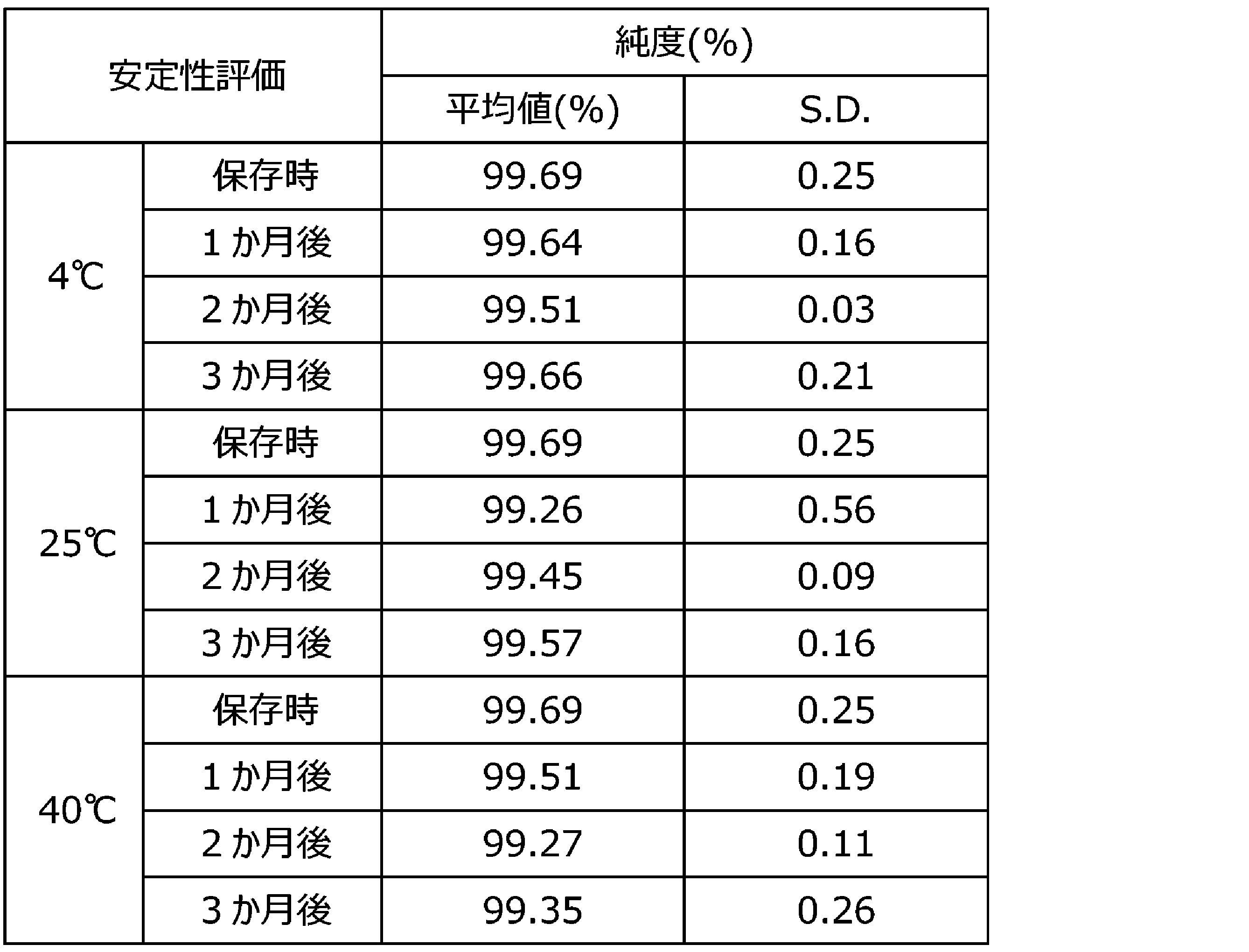
- the high-purity ⁇ NMN obtained in (5) above should maintain a purity of 99% or more for 3 months even when stored at any temperature of 4 ° C, 25 ° C, or 40 ° C. Was done. This result shows that the high-purity ⁇ NMN obtained in (5) above is extremely excellent in stability.
- Table 2 shows the results of the stability test of NMN produced by the conventional method (the method in which the IV step and the V step in the present invention are not performed).
- NMN produced by the conventional method can maintain the purity at the start of storage for 30 days when stored at 4 ° C, but when stored at 25 ° C (room temperature), it can be stored at 25 ° C (room temperature).
- the purity decreased with time, from 97.94% at the start of storage to 81.74% after 15 days and 65.66% after 30 days. From this result, it was found that the NMN obtained by the production method of the present invention can maintain high purity for a long period of time and is extremely excellent in stability as compared with the NMN produced by the conventional method. rice field.
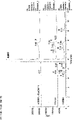
- the obtained chromatogram is shown in FIG.
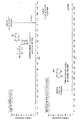
- Impurities to be analyzed are numbered in order from the one with the shortest retention time (Fig. 2).
- the components common to the samples are numbered the same (components Nos. 1 to 8).
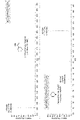
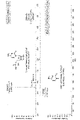
- the mass spectrum and product ion spectrum of each peak of each sample are shown in FIGS. 3 to 14.
- Table 3 shows the results of the precise mass and composition calculation of each component (components Nos. 1 to 8).
- D. Indicates that the component is below the detection limit.
- the high-purity ⁇ NMN of the present invention has no. Nicotinamide (NAM) of 7 was detected, but other impurities were below the detection limit.
- NAM Nicotinamide
- the commercial product A No. 2. No. 5, No. 7 was detected
- the commercial product B No. 1, No. 2. No. 3, No. 4, No. 6, No. 7, No. 8 was detected.
- the high-purity ⁇ NMN of the present invention has a purity of 99.0% or more when measured by either the area percentage method or the quantitative NMR method using LC-UV, and the No. 1 shown in Table 3 above. Impurities 1 to 6 and 8 were below the detection limit. As described above, the high-purity ⁇ NMN of the present invention has high purity and the specific impurities are below the detection limit, so that the stability of the main component is high, and not only under low temperature conditions but also under room temperature conditions and temperature conditions higher than room temperature. It is considered to maintain high purity for a long period of time and have excellent stability.
- the purity is 99.0% by mass or more, and C 11 H 15 NO 9 P, C 10 H 16 N 5 O 10 P 2 , C 9 H 15 N 3 O 8 P, as impurities.
- the contents of C 9 H 15 N 3 O 7 P, C 9 H 16 N 4 O 8 P, C 10 H 15 N 5 O 7 P, and C 21 H 27 N 6 O 15 P 2 are below the detection limit.
- High Purity ⁇ Nicotinamide Mononucleotide (NMN) is provided. NMNs that have been highly purified to a level where impurities are not detected, such as the high-purity ⁇ NMN of the present invention, have not existed in the past.
- the high-purity ⁇ NMN of the present invention exhibits an excellent anti-aging effect and is highly safe because impurities are below the detection limit. Therefore, even if it is ingested for a long period of time, there is no concern that it will have an adverse effect on the body.
- the high-purity ⁇ NMN of the present invention has an unexpected effect of being superior in stability as compared with the conventional NMN. From the above, the high-purity ⁇ NMN of the present invention is suitably used for functional foods, pharmaceuticals, quasi-drugs and the like for the purpose of anti-aging.
Landscapes
- Chemical & Material Sciences (AREA)
- Health & Medical Sciences (AREA)
- Life Sciences & Earth Sciences (AREA)
- Organic Chemistry (AREA)
- Engineering & Computer Science (AREA)
- General Health & Medical Sciences (AREA)
- Bioinformatics & Cheminformatics (AREA)
- Biochemistry (AREA)
- Genetics & Genomics (AREA)
- Molecular Biology (AREA)
- Wood Science & Technology (AREA)
- Zoology (AREA)
- Biotechnology (AREA)
- General Chemical & Material Sciences (AREA)
- Chemical Kinetics & Catalysis (AREA)
- Medicinal Chemistry (AREA)
- Pharmacology & Pharmacy (AREA)
- Animal Behavior & Ethology (AREA)
- Public Health (AREA)
- Veterinary Medicine (AREA)
- General Engineering & Computer Science (AREA)
- Nuclear Medicine, Radiotherapy & Molecular Imaging (AREA)
- Microbiology (AREA)
- Biomedical Technology (AREA)
- Diabetes (AREA)
- Neurology (AREA)
- Neurosurgery (AREA)
- Food Science & Technology (AREA)
- Nutrition Science (AREA)
- Mycology (AREA)
- Obesity (AREA)
- Hematology (AREA)
- Epidemiology (AREA)
- Polymers & Plastics (AREA)
- Endocrinology (AREA)
- Cardiology (AREA)
- Heart & Thoracic Surgery (AREA)
- Hospice & Palliative Care (AREA)
- Vascular Medicine (AREA)
- Urology & Nephrology (AREA)
Abstract
Description
[2][1]に記載の高純度βニコチンアミドモノヌクレオチド(NMN)を有効成分として含有する医薬組成物。
[3][1]に記載の高純度βニコチンアミドモノヌクレオチド(NMN)を有効成分として含有する老化防止用組成物。
[4](I)AMPヌクレオシダーゼ、リボースリン酸ジホスホキナーゼ、アデノシン一リン酸(AMP)、アデノシン三リン酸(ATP)、及びリボース-5-リン酸(R5P)を反応させる工程、
(II)ニコチンアミドホスホリボシルトランスフェラーゼ(Nampt)、上記工程(I)の反応産物、ニコチンアミド(NAM)を反応させる工程、
(III)上記工程(II)の反応産物をイオン交換カラムにより精製する工程、及び
(IV)上記工程(III)の精製産物を、動的軸圧縮カラム(DACカラム)にかける工程
を含む、高純度βニコチンアミドモノヌクレオチド(NMN)の製造方法。
本発明において、ニコチンアミドモノヌクレオチド(化学式:C11H15N2O8P)は、下記構造式で表される化合物であり、一般にNMN(Nicotinamide mononucleotide)と呼ばれており、補酵素NAD+の生合成に関与する中間代謝物として知られている。生体内では、肝臓組織によるNAD代謝経路、すなわち、キヌレニン経路を経てキノリン酸からニコチンアミドアデニンジヌクレオチド(NAD)の合成に向かう経路において産生されている。生体内においては、トリプトファンを出発物質とした場合、トリプトファンはトリプトファン代謝経路であるキヌレニン経路を経てキノリン酸(QA)に変換され、さらにニコチン酸モノヌクレオチド(NaMN)となる。他方、ニコチン酸(Na)を出発物質とした場合、ニコチン酸は直接NaMNに変換される。NaMNはその後、ニコチン酸アデニンジヌクレオチド(NaAD)を経て、NADサイクルによってNAD、ニコチンアミド(NaM)、ニコチンアミドモノヌクレオチドと相互に変換される。ニコチンアミド(NaM)は、ニコチンアミドホスホリボシルトランスフェラーゼ(NAMPT)によってニコチンアミドモノヌクレオチドに変換され、次いでニコチンアミドモノヌクレオチドがニコチンアミドモノヌクレオチドアデニルトランスフェラーゼ(NMNAT)により変換されてNADが生成される。なお、ニコチンアミドリボシド(NR)からもニコチンアミドモノヌクレオチドが産生される。ニコチンアミドモノヌクレオチドには光学異性体としてα体、β体の2種類が存在しているが、本発明では抗老化作用を有するβ体が使用される。

Pa=Sa/Ss×Ns/Na×Ma/Ms×ms/ma×Ps
Ss:内部標準物質の積分値
Sa:試験物質の積分値
Ns:内部標準物質のプロトン数(6)
Na:試験物質のプロトン数(1)
Ms:内部標準物質の分子量(94.13)
Ma:試験物質の分子量(334.22)
ms:内部標準物質の秤量値(mg)
ma:試験物質の秤量値(mg)
Ps:内部標準物質の純度(%)
Pa:試験物質の純度
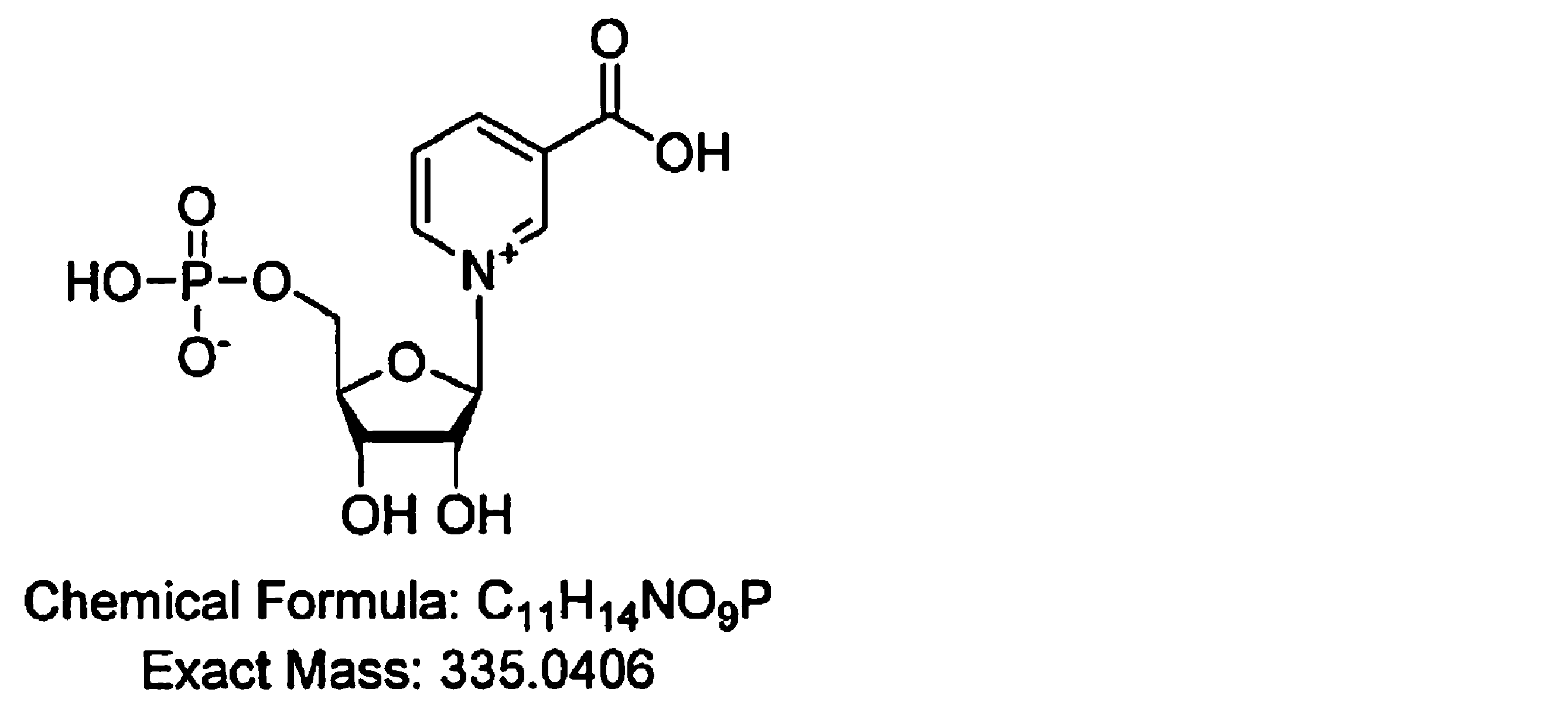
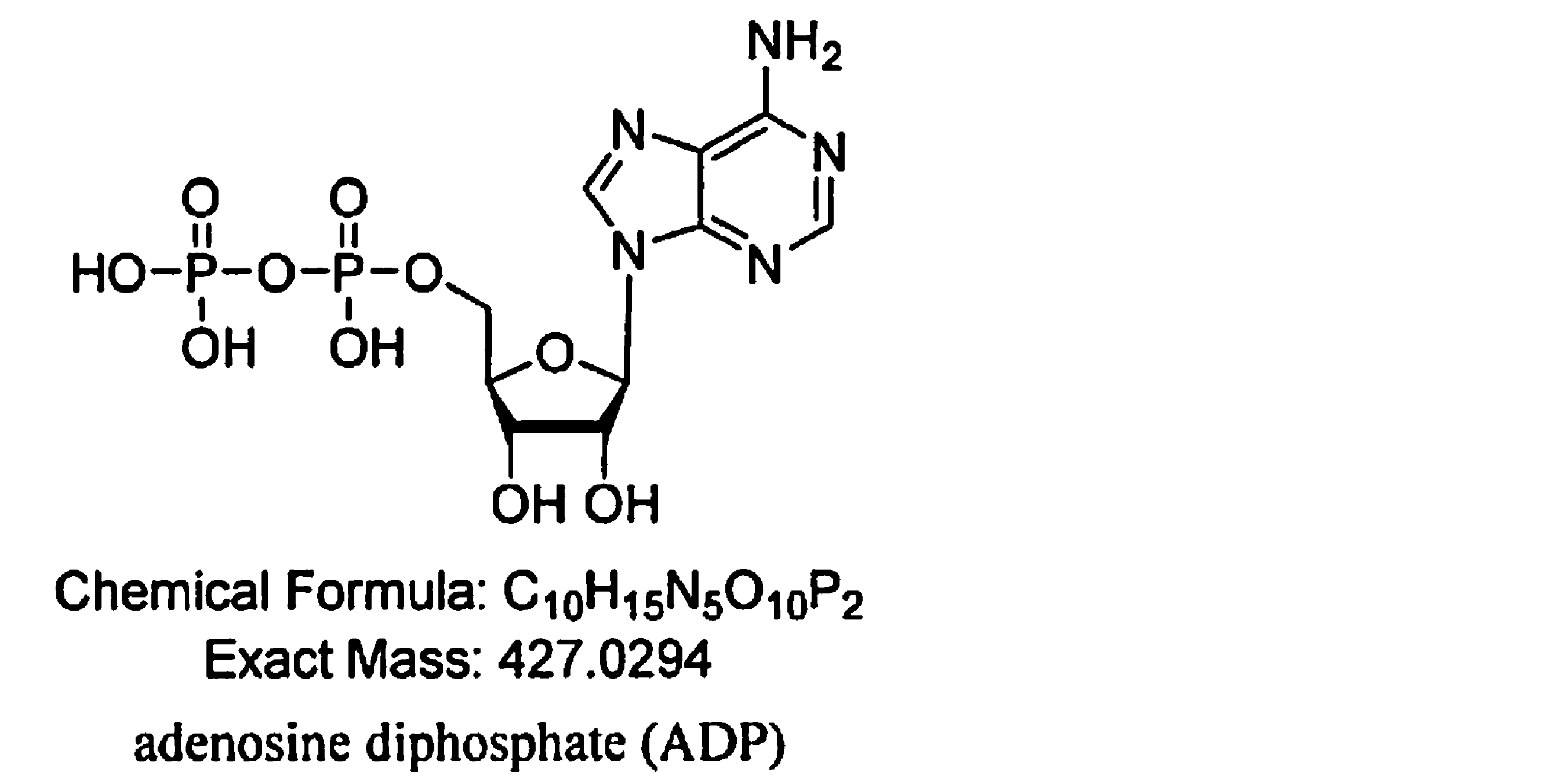

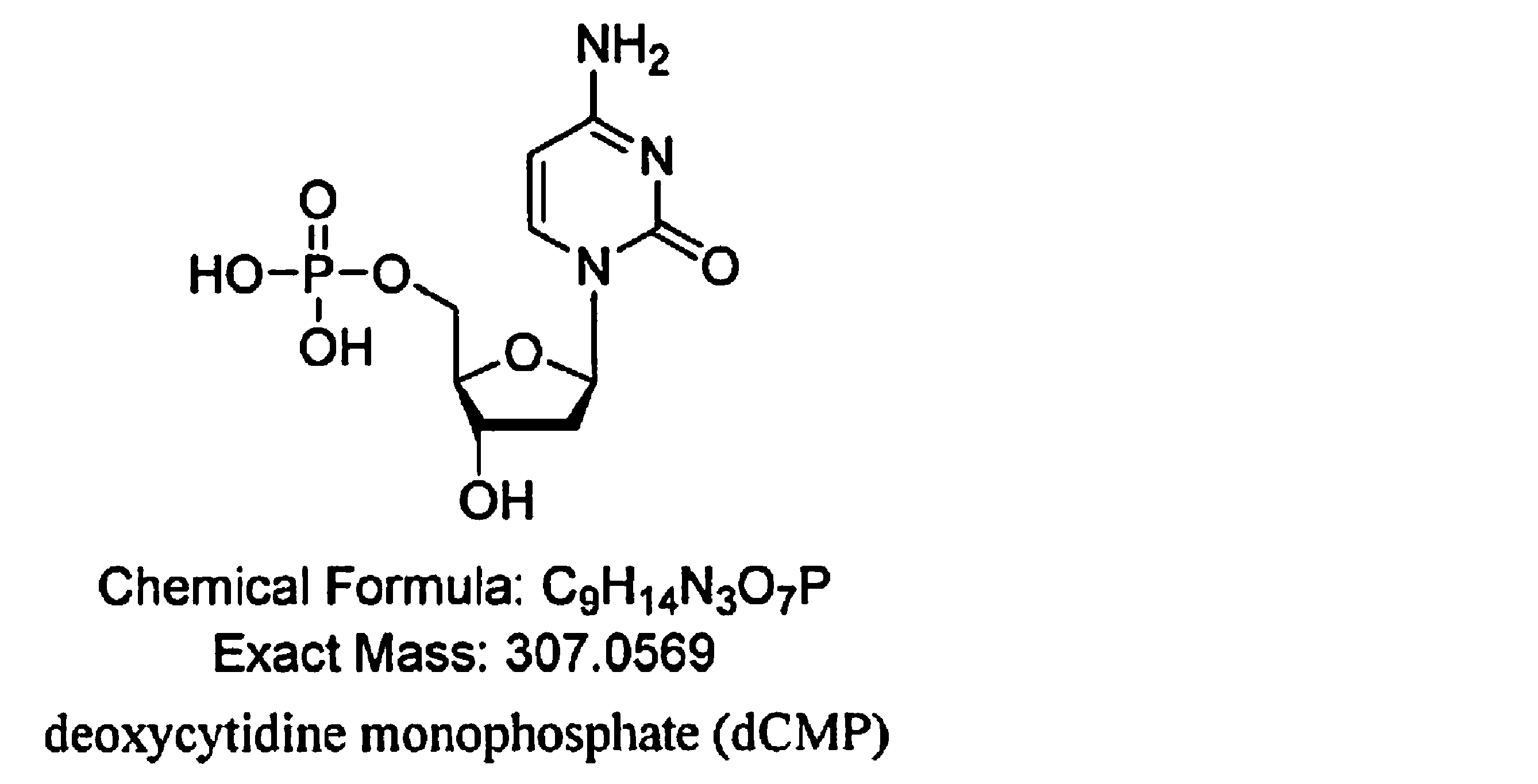

本発明は、(I)AMPヌクレオシダーゼ、リボースリン酸ジホスホキナーゼ、アデノシン一リン酸(AMP)、アデノシン三リン酸(ATP)、及びリボース-5-リン酸(R5P)を反応させる工程、(II)ニコチンアミドホスホリボシルトランスフェラーゼ(Nampt)、上記工程(I)の反応産物、ニコチンアミド(NAM)を反応させる工程、(III)上記工程(II)の反応産物をイオン交換カラムにより精製する工程、及び(IV)上記工程(III)の精製産物を、動的軸圧縮カラム(DACカラム)にかける工程を含む、高純度βニコチンアミドモノヌクレオチド(NMN)の製造方法も含む。本発明の製造方法は、上記工程に加えてさらに、(V)上記工程(IV)の精製産物を、結晶化する工程を含むことが好ましい。本発明の方法によると、上述したような純度が99.0質量%以上であり、且つ不純物としてのC11H15NO9P、C10H16N5O10P2、C9H15N3O8P、C9H15N3O7P、C9H16N4O8P、C10H15N5O7P、及びC21H27N6O15P2の含有量が検出限界以下である高純度βNMNを製造することができる。
本工程は、AMPヌクレオシダーゼ、リボースリン酸ジホスホキナーゼ、アデノシン一リン酸(AMP)、アデノシン三リン酸(ATP)、及びリボース-5-リン酸(R5P)を反応させる工程である。本工程の反応産物であるホスホリボシル二リン酸(PRPP)が工程(II)の反応に用いられる。
AMPヌクレオシダーゼ(EC3.2.2.4)は、以下の化学反応を触媒する酵素である。この酵素は加水分解酵素、特にN-グリコシル化合物を分解するグリコシダーゼに分類される。系統名はAMPホスホリボヒドロラーゼ(AMP phosphoribohydrolase)である。アデニル酸ヌクレオシダーゼ等と呼ばれることもある。

リボースリン酸ジホスホキナーゼ(EC2.7.6.1)は、リボースリン酸ピロホスホキナーゼ、ホスホリボシルピロリン酸シンターゼとも呼ばれる。それ以外にもPPRibP synthetase; PP-ribose P synthetase; 5-phosphoribosyl-1-pyrophosphate synthetase; 5-phosphoribose pyrophosphorylase; 5-phosphoribosyl-alpha-1-pyrophosphate synthetase; phosphoribosyl-diphosphate synthetase; phosphoribosylpyrophosphate synthase; pyrophosphoribosylphosphate synthetase; ribophosphate pyrophosphokinase; ribose-5-phosphate pyrophosphokinase等と呼ばれる。以下の化学反応を触媒する酵素である。プリンやピリミジンを持ったヌクレオチド、補因子のNADおよびNADP、ヒスチジンやトリプトファンといったアミノ酸の合成に関わる。ペントースリン酸経路に由来するリボース-5-リン酸を、これらの合成系に振り向ける酵素である。

本工程は、ニコチンアミドホスホリボシルトランスフェラーゼ(Nampt)、上記工程(I)の反応産物、ニコチンアミド(NAM)を反応させる工程である。本工程により、NMNの粗生成物溶液が得られる。
Nampt(EC2.4.2.12)は、一般的にNAD(ニコチンアミドアデニンジヌクレオチド)サルベージ経路に関与することが知られており、本発明において、PRPP及びNAMからNMNを生成させる反応のために利用される酵素である。NamptによるPRPPとNAMからのNMN合成反応において、本来、ATPは必須ではない。しかし、NamptにはATP加水分解活性があり、ATPの加水分解によってNamptが自己リン酸化されることで、NMN生成に有利な方向に酵素学的パラメータや化学平衡が変化することから本工程にはATPを添加してもよい。
本工程は、上記工程(II)の反応産物をイオン交換カラムにより精製する工程である。本工程により工程(II)で得られたNMNの粗生成物中から純度の高いNMNが得られる。
本工程は、上記工程(III)の精製産物を、動的軸圧縮カラム(DACカラム)にかけて高圧分取する工程である。本工程により、不純物が十分除去され、純度が99.0%以上の高純度βNMNが得られる。
本工程は、上記工程(IV)の精製産物を、結晶化する工程である。結晶化に用いる溶媒としては、エタノールが好ましい。さらに純度を挙げ、不純物を除去するために、同様の方法で再結晶させることが好ましい。本工程によって得られる精製産物は、純度99.0%以上であり、かつ且つ不純物としてのC11H15NO9P、C10H16N5O10P2、C9H15N3O8P、C9H15N3O7P、C9H16N4O8P、C10H15N5O7P、及びC21H27N6O15P2の含有量が検出限界以下である、高純度βNMNである。
(1)酵素の固定化
Nampt、リボースリン酸ジホスホキナーゼ(リボースリン酸ピロホスホキナーゼ)、及びAMPヌクレオシダーゼをそれぞれ酵素洗浄バッファー(0.02M Tris-HC1/0.001M EDTA溶液、pH7.0)で5-10mg/mlのタンパク質含有量に希釈し、等量の酵素希釈液とPB溶液(2.0mol/L リン酸二水素カリウム、pH7.5)を混合し、酵素固定化担体エポキシLX-3000型(酵素50mg/担体1g)を添加して25℃で20時間、シェーカー(150rpmの回転数)で反応させた。反応終了後、反応液をフィルターバッグでろ過し、酵素洗浄バッファーで5~6回洗浄し、固定化Nampt、固定化リボースリン酸ジホスホキナーゼ(リボースリン酸ピロホスホキナーゼ)、固定化AMPヌクレオシダーゼを得た。
15mMのATP、100mMのAMP、10mMのMgCl2、10mMのKCl、70mMのTris-HCl緩衝液を含む基質溶液を用意し、反応釜に添加してpH7.0~7.5になるように調整した。そこに、AMPヌクレオシダーゼ及びリボースリン酸ジホスホキナーゼをいずれも20g/Lとなるように添加し、50rpmの速度で、35℃の条件下、撹拌して反応させた。3時間後、反応液を終了し、第II工程に進めた。
第I工程で得られた反応液を別の反応釜に移した。終濃度が60mM ニコチンアミド(NAM)、20mM MgCl2、100mM Tris-HCl緩衝液となるようにそれぞれを添加した。さらに、Namptを20g/Lとなるように添加し、50rpmの速度で、35℃、pH7.5~8.0の条件下、撹拌して反応させた。3時間後、反応を終了して反応液を濾過し、第III工程に進めた。
第II工程で得られた濾液をイオン交換カラム(DEAE-Toypearl、MonoQカラム等)にかけ、精製された溶液を回収した。
第III工程で得られた精製溶液を濃縮のためにナノ濾過し、濃縮溶液を回収した。回収した濃縮溶液を動的軸圧縮カラムであるDAC-300(Beijing Tong Heng Innovation Technology Co., Ltd.)にかけ、不純物を除去した。さらに樹脂により脱色して脱色溶液を得た。その後、脱色溶液をナノ濾過して濃縮した。
第IV工程で得られた精製産物をエタノールにより結晶化し、粗生成物を得た。粗生成物を再溶解し、エタノールにより再結晶させ、凍結乾燥後、本発明の高純度βNMNの粉末を得た。
(1)高純度βNMNの純度
LC-UVによる面積百分率法(高速液体クロマトグラフィ-紫外線吸収分光法)及び定量NMR法(核磁気共鳴分光法)により主成分の絶対含量の算出を行った。
装置名:LC-30AD(島津製作所社製)
検出波長:266nm
装置名:FT-NMR装置 JNM-ECA400型(JECL RESONANCE社製)
共鳴周波数:1H;400MHz
測定モード:1H NMR
溶媒:重水
内部標準物質(IS):ジメチルスルホン
基準物質:IS由来シグナル;3.16ppm
Pa=Sa/Ss×Ns/Na×Ma/Ms×ms/ma×Ps
Ss:内部標準物質の積分値
Sa:試験物質の積分値
Ns:内部標準物質のプロトン数(6)
Na:試験物質のプロトン数(1)
Ms:内部標準物質の分子量(94.13)
Ma:試験物質の分子量(334.22)
ms:内部標準物質の秤量値(mg)
ma:試験物質の秤量値(mg)
Ps:内部標準物質の純度(%)
Pa:試験物質の純度
上記(5)で得られた高純度βNMNを4℃、25℃、40℃で保存した場合の安定性を調べた。各試料は条件毎に3点ずつ用意した。保存時、1か月後、2か月後、3か月後の各試料中のβNMNの純度をLC-UVによる面積百分率法で測定した。結果を下記表1に示す。

上記(5)で得られた本発明の高純度βNMN、NMNの市販品A、NMNの市販品Bについて、不純物の含有量を測定した。具体的には、これらのNMNに含まれる主成分(NMN)及び不純物を、LC-MS及びLC-MS/MSにより測定した。分析条件は、以下のとおりである。
装置名:LC-30AD(島津製作所社製)
検出波長:266nm
MS装置:Q Exactive Plus (Thermo Fisher Scientific)
測定質量範囲:m/z 100-1500


Claims (4)
- 純度が99.0質量%以上であり、且つ不純物としてのC11H15NO9P、C10H16N5O10P2、C9H15N3O8P、C9H15N3O7P、C9H16N4O8P、C10H15N5O7P、及びC21H27N6O15P2の含有量が検出限界以下である、高純度βニコチンアミドモノヌクレオチド(NMN)。
- 請求項1に記載の高純度βニコチンアミドモノヌクレオチド(NMN)を有効成分として含有する医薬組成物。
- 請求項1に記載の高純度βニコチンアミドモノヌクレオチド(NMN)を有効成分として含有する老化防止用組成物。
- (I)AMPヌクレオシダーゼ、リボースリン酸ジホスホキナーゼ、アデノシン一リン酸(AMP)、アデノシン三リン酸(ATP)、及びリボース-5-リン酸(R5P)を反応させる工程、
(II)ニコチンアミドホスホリボシルトランスフェラーゼ(Nampt)、上記工程(I)の反応産物、ニコチンアミド(NAM)を反応させる工程、
(III)上記工程(II)の反応産物をイオン交換カラムにより精製する工程、及び
(IV)上記工程(III)の精製産物を、動的軸圧縮カラム(DACカラム)にかける工程
を含む、高純度βニコチンアミドモノヌクレオチド(NMN)の製造方法。
Priority Applications (5)
| Application Number | Priority Date | Filing Date | Title |
|---|---|---|---|
| JP2022565435A JPWO2022114105A1 (ja) | 2020-11-27 | 2021-11-26 | |
| KR1020237021520A KR20230113770A9 (ko) | 2020-11-27 | 2021-11-26 | 고순도 β 니코틴아미드 모노뉴클레오티드(NMN) 및 그 제조 방법 |
| US18/038,351 US20230416291A1 (en) | 2020-11-27 | 2021-11-26 | HIGH-PURITY ß-NICOTINAMIDE MONONUCLEOTIDE (NMN) AND METHOD FOR PRODUCING SAME |
| CN202180079830.6A CN116528696A (zh) | 2020-11-27 | 2021-11-26 | 高纯度β烟酰胺单核苷酸(NMN)及其制造方法 |
| EP21898077.9A EP4253396A4 (en) | 2020-11-27 | 2021-11-26 | HIGH PURITY BETA-NICOTINAMIDE MONONUCLEOTIDE (NMN) AND PROCESS FOR ITS PRODUCTION |
Applications Claiming Priority (2)
| Application Number | Priority Date | Filing Date | Title |
|---|---|---|---|
| JP2020197381 | 2020-11-27 | ||
| JP2020-197381 | 2020-11-27 |
Publications (1)
| Publication Number | Publication Date |
|---|---|
| WO2022114105A1 true WO2022114105A1 (ja) | 2022-06-02 |
Family
ID=81754422
Family Applications (1)
| Application Number | Title | Priority Date | Filing Date |
|---|---|---|---|
| PCT/JP2021/043333 Ceased WO2022114105A1 (ja) | 2020-11-27 | 2021-11-26 | 高純度βニコチンアミドモノヌクレオチド(NMN)及びその製造方法 |
Country Status (6)
| Country | Link |
|---|---|
| US (1) | US20230416291A1 (ja) |
| EP (1) | EP4253396A4 (ja) |
| JP (1) | JPWO2022114105A1 (ja) |
| KR (1) | KR20230113770A9 (ja) |
| CN (1) | CN116528696A (ja) |
| WO (1) | WO2022114105A1 (ja) |
Cited By (2)
| Publication number | Priority date | Publication date | Assignee | Title |
|---|---|---|---|---|
| WO2024096091A1 (ja) * | 2022-11-04 | 2024-05-10 | ミライラボバイオサイエンス株式会社 | イヌの腸内細菌叢改善用剤 |
| WO2024225432A1 (ja) * | 2023-04-28 | 2024-10-31 | シード医療製薬株式会社 | Nmn凍結乾燥製剤の製造方法 |
Citations (7)
| Publication number | Priority date | Publication date | Assignee | Title |
|---|---|---|---|---|
| JP2009515935A (ja) * | 2005-11-18 | 2009-04-16 | サノフイ−アベンテイス | 3−アシルインドール誘導体、これらの調製および治療的使用 |
| JP2009538275A (ja) * | 2006-04-21 | 2009-11-05 | オルソ−マクニール ファーマシューティカル, インコーポレイテッド | アルツハイマー病の治療のためのテルフェニル誘導体 |
| JP2014527955A (ja) * | 2011-06-29 | 2014-10-23 | アストラゼネカ・アクチエボラーグAstrazeneca Aktiebolag | 糖質コルチコイド介在性障害の処置のための、インダゾリルアミド誘導体の結晶形 |
| WO2015069860A1 (en) | 2013-11-06 | 2015-05-14 | President And Fellows Of Harvard College | Biological production of nad precursors and analogs |
| WO2017185549A1 (zh) | 2016-07-30 | 2017-11-02 | 邦泰生物工程(深圳)有限公司 | 一种制备烟酰胺单核苷酸的方法2 |
| WO2018023205A1 (zh) * | 2016-07-30 | 2018-02-08 | 邦泰生物工程(深圳)有限公司 | 一种烟酰胺单核苷酸的纯化方法 |
| JP2019525760A (ja) * | 2016-07-30 | 2019-09-12 | 邦泰生物工程(深▲セン▼)有限公司 | ニコチンアミドホスホリボシルトランスフェラーゼ突然変異体及びその応用 |
Family Cites Families (11)
| Publication number | Priority date | Publication date | Assignee | Title |
|---|---|---|---|---|
| KR20150069860A (ko) | 2013-12-16 | 2015-06-24 | 송석록 | 낚시용 자석 봉돌 |
| GB2542881B (en) * | 2015-10-02 | 2020-01-01 | Carr Andrew | Crystal forms of ß-nicotinamide mononucleotide |
| DE102016105985A1 (de) | 2016-04-01 | 2017-10-05 | Wipotec Wiege- Und Positioniersysteme Gmbh | Verfahren und Vorrichtung zur Laserbearbeitung |
| WO2018047715A1 (ja) * | 2016-09-06 | 2018-03-15 | 協和発酵バイオ株式会社 | β-ニコチンアミドモノヌクレオチドの結晶及びその製造方法 |
| CN108530504B (zh) * | 2017-03-02 | 2021-10-22 | 江苏康缘药业股份有限公司 | 一种化合物及其制备方法和应用 |
| CN108530505A (zh) * | 2017-03-02 | 2018-09-14 | 江苏康缘药业股份有限公司 | 一种黄酮苷类化合物及其制备方法和应用 |
| CN110483601A (zh) * | 2019-08-12 | 2019-11-22 | 上海龙翔生物医药开发有限公司 | 制备β-烟酸胺单核苷酸的方法及其应用 |
| CN110845548B (zh) * | 2019-11-22 | 2021-02-09 | 武汉一若生物材料有限公司 | 一种制备β-烟酰胺单核苷酸及其钠盐的方法 |
| CN111187759A (zh) * | 2020-01-19 | 2020-05-22 | 杭州唯泰生物药业有限公司 | 用于制备烟酰胺单核苷酸的酶组合物及酶法制备烟酰胺单核苷酸的方法 |
| CN111377983B (zh) * | 2020-03-26 | 2023-05-16 | 音芙医药科技(上海)有限公司 | 一种β-烟酰胺单核苷酸的制备方法 |
| CN111568913A (zh) * | 2020-05-18 | 2020-08-25 | 厦门医学院 | 黄酮c-苷类化合物的用途 |
-
2021
- 2021-11-26 EP EP21898077.9A patent/EP4253396A4/en active Pending
- 2021-11-26 JP JP2022565435A patent/JPWO2022114105A1/ja active Pending
- 2021-11-26 KR KR1020237021520A patent/KR20230113770A9/ko active Pending
- 2021-11-26 CN CN202180079830.6A patent/CN116528696A/zh active Pending
- 2021-11-26 WO PCT/JP2021/043333 patent/WO2022114105A1/ja not_active Ceased
- 2021-11-26 US US18/038,351 patent/US20230416291A1/en active Pending
Patent Citations (7)
| Publication number | Priority date | Publication date | Assignee | Title |
|---|---|---|---|---|
| JP2009515935A (ja) * | 2005-11-18 | 2009-04-16 | サノフイ−アベンテイス | 3−アシルインドール誘導体、これらの調製および治療的使用 |
| JP2009538275A (ja) * | 2006-04-21 | 2009-11-05 | オルソ−マクニール ファーマシューティカル, インコーポレイテッド | アルツハイマー病の治療のためのテルフェニル誘導体 |
| JP2014527955A (ja) * | 2011-06-29 | 2014-10-23 | アストラゼネカ・アクチエボラーグAstrazeneca Aktiebolag | 糖質コルチコイド介在性障害の処置のための、インダゾリルアミド誘導体の結晶形 |
| WO2015069860A1 (en) | 2013-11-06 | 2015-05-14 | President And Fellows Of Harvard College | Biological production of nad precursors and analogs |
| WO2017185549A1 (zh) | 2016-07-30 | 2017-11-02 | 邦泰生物工程(深圳)有限公司 | 一种制备烟酰胺单核苷酸的方法2 |
| WO2018023205A1 (zh) * | 2016-07-30 | 2018-02-08 | 邦泰生物工程(深圳)有限公司 | 一种烟酰胺单核苷酸的纯化方法 |
| JP2019525760A (ja) * | 2016-07-30 | 2019-09-12 | 邦泰生物工程(深▲セン▼)有限公司 | ニコチンアミドホスホリボシルトランスフェラーゼ突然変異体及びその応用 |
Non-Patent Citations (4)
| Title |
|---|
| GOMES, A.P. ET AL., CELL, vol. 155, 2013, pages 1624 - 1638 |
| See also references of EP4253396A4 |
| STEIN, L.R.IMAI, S., EMBO J., vol. 33, 2014, pages 1321 - 1340 |
| YOSHINO, J.MILLS, K.F.YOON, M.J.IMAI, S., CELL METAB., vol. 14, 2011, pages 528 - 536 |
Cited By (2)
| Publication number | Priority date | Publication date | Assignee | Title |
|---|---|---|---|---|
| WO2024096091A1 (ja) * | 2022-11-04 | 2024-05-10 | ミライラボバイオサイエンス株式会社 | イヌの腸内細菌叢改善用剤 |
| WO2024225432A1 (ja) * | 2023-04-28 | 2024-10-31 | シード医療製薬株式会社 | Nmn凍結乾燥製剤の製造方法 |
Also Published As
| Publication number | Publication date |
|---|---|
| EP4253396A4 (en) | 2024-09-11 |
| EP4253396A1 (en) | 2023-10-04 |
| US20230416291A1 (en) | 2023-12-28 |
| CN116528696A (zh) | 2023-08-01 |
| KR20230113770A9 (ko) | 2024-03-25 |
| KR20230113770A (ko) | 2023-08-01 |
| JPWO2022114105A1 (ja) | 2022-06-02 |
Similar Documents
| Publication | Publication Date | Title |
|---|---|---|
| CA1057681A (en) | Sulphonic acid salts of s-adenosilmethionine, process for the preparation thereof and therapeutic compositions containing them | |
| Ciardo et al. | Topical review: Neurologic aspects of adenylosuccinate lyase deficiency | |
| US20210205250A1 (en) | Creatine oral supplementation using creatine hydrochloride salt | |
| EP0164964A1 (en) | Lipoidal biopterin compounds | |
| US20110190265A1 (en) | Methods and compositions for treating bacterial infections by inhibiting quorum sensing | |
| NO151119B (no) | Analogifremgangsmaate ved fremstilling av terapeutisk aktive ornithin og argininsalter av forgrenede ketosyrer | |
| EP3199154A1 (en) | Novel life-prolonging agent, life-prolonging method making use of same, novel dual oxidase activator, method for activating dual oxidase, manufacture of life-prolonging agent, and manufacture of dual oxidase activator | |
| AU2020353676B2 (en) | Methods for treating hyperphenylalaninemia | |
| EP4253396A1 (en) | High-purity beta-nicotinamide mononucleotide (nmn) and method for producing same | |
| US20080146577A1 (en) | Methods and Compositions for the Treatment of Attention Deficit Hyperactivity Disorder and Hyperphenylalanemia | |
| Salerno et al. | Effect of D-ribose on purine synthesis and neurological symptoms in a patient with adenylosuccinase deficiency | |
| EP2647637B1 (en) | Purinylpyridinylamino-2,4-difluorophenyl sulfonamide derivative, pharmaceutically acceptable salt thereof, preparation method thereof, and pharmaceutical composition with inhibitory activity against raf kinase, containing same as active ingredient | |
| EP1014808B1 (en) | Fatty acids as a diet supplement | |
| US6596696B1 (en) | Malto-oligosaccharide derivatives and uses thereof | |
| JP7648026B2 (ja) | β-ニコチンアミドモノヌクレオチド又はその薬理学的に許容される塩からなる化合物を含む組成物、並びにその品質評価方法および酵素反応性の判定方法 | |
| EP1232748B1 (en) | Use of substituted nitrobenzene derivatives for the treatment of diseases caused by bacteria, fungi and viruses | |
| US8778996B2 (en) | Method of treating a human being for a class of neurological defects and seizure disorders | |
| Jaeken et al. | The clinical aspects of ASase deficiency | |
| SE502323C2 (sv) | Användning av N-(2-hydroxietyl)nikotinamidnitrat eller ett farmaceutiskt godtagbart salt därav för framställning av ett läkemedel aktivt för behandling av sjukdomar förbundna med cerebral ischemi | |
| EP4260850A1 (en) | Pharmaceutical composition comprising pterosin compound and derivative thereof as active ingredient for prevention or treatment of pka-related disease | |
| CN102755340A (zh) | 血糖值降低剂 | |
| WO2026053929A1 (ja) | 細胞内atpおよび細胞内nadの量を増加させるための組成物 | |
| JP5663731B2 (ja) | Dna合成酵素の阻害剤 | |
| KR20240161799A (ko) | 결정질 베타 니코틴아미드 리보시드 트리아세테이트 클로라이드의 생산 방법 | |
| AU2012202556A1 (en) | Methods and compositions for the treatment of attention deficit hyperactivity disorder and hyperphenylalanemia |
Legal Events
| Date | Code | Title | Description |
|---|---|---|---|
| 121 | Ep: the epo has been informed by wipo that ep was designated in this application |
Ref document number: 21898077 Country of ref document: EP Kind code of ref document: A1 |
|
| ENP | Entry into the national phase |
Ref document number: 2022565435 Country of ref document: JP Kind code of ref document: A |
|
| WWE | Wipo information: entry into national phase |
Ref document number: 18038351 Country of ref document: US |
|
| WWE | Wipo information: entry into national phase |
Ref document number: 202180079830.6 Country of ref document: CN |
|
| ENP | Entry into the national phase |
Ref document number: 20237021520 Country of ref document: KR Kind code of ref document: A |
|
| NENP | Non-entry into the national phase |
Ref country code: DE |
|
| ENP | Entry into the national phase |
Ref document number: 2021898077 Country of ref document: EP Effective date: 20230627 |