WO2022124866A1 - 항-pd-1 항체 및 이의 용도 - Google Patents
항-pd-1 항체 및 이의 용도 Download PDFInfo
- Publication number
- WO2022124866A1 WO2022124866A1 PCT/KR2021/018799 KR2021018799W WO2022124866A1 WO 2022124866 A1 WO2022124866 A1 WO 2022124866A1 KR 2021018799 W KR2021018799 W KR 2021018799W WO 2022124866 A1 WO2022124866 A1 WO 2022124866A1
- Authority
- WO
- WIPO (PCT)
- Prior art keywords
- antibody
- seq
- antigen
- variable region
- chain variable
- Prior art date
- Legal status (The legal status is an assumption and is not a legal conclusion. Google has not performed a legal analysis and makes no representation as to the accuracy of the status listed.)
- Ceased
Links
Images






Classifications
-
- C—CHEMISTRY; METALLURGY
- C07—ORGANIC CHEMISTRY
- C07K—PEPTIDES
- C07K16/00—Immunoglobulins [IG], e.g. monoclonal or polyclonal antibodies
- C07K16/18—Immunoglobulins [IG], e.g. monoclonal or polyclonal antibodies against material from animals or humans
- C07K16/28—Immunoglobulins [IG], e.g. monoclonal or polyclonal antibodies against material from animals or humans against receptors, cell surface antigens or cell surface determinants
- C07K16/2803—Immunoglobulins [IG], e.g. monoclonal or polyclonal antibodies against material from animals or humans against receptors, cell surface antigens or cell surface determinants against the immunoglobulin superfamily
- C07K16/2818—Immunoglobulins [IG], e.g. monoclonal or polyclonal antibodies against material from animals or humans against receptors, cell surface antigens or cell surface determinants against the immunoglobulin superfamily against CD28 or CD152
-
- A—HUMAN NECESSITIES
- A61—MEDICAL OR VETERINARY SCIENCE; HYGIENE
- A61K—PREPARATIONS FOR MEDICAL, DENTAL OR TOILETRY PURPOSES
- A61K35/00—Medicinal preparations containing materials or reaction products thereof with undetermined constitution
- A61K35/12—Materials from mammals; Compositions comprising non-specified tissues or cells; Compositions comprising non-embryonic stem cells; Genetically modified cells
- A61K35/14—Blood; Artificial blood
- A61K35/17—Lymphocytes; B-cells; T-cells; Natural killer cells; Interferon-activated or cytokine-activated lymphocytes
-
- A—HUMAN NECESSITIES
- A61—MEDICAL OR VETERINARY SCIENCE; HYGIENE
- A61K—PREPARATIONS FOR MEDICAL, DENTAL OR TOILETRY PURPOSES
- A61K39/00—Medicinal preparations containing antigens or antibodies
-
- A—HUMAN NECESSITIES
- A61—MEDICAL OR VETERINARY SCIENCE; HYGIENE
- A61K—PREPARATIONS FOR MEDICAL, DENTAL OR TOILETRY PURPOSES
- A61K40/00—Cellular immunotherapy
- A61K40/10—Cellular immunotherapy characterised by the cell type used
-
- A—HUMAN NECESSITIES
- A61—MEDICAL OR VETERINARY SCIENCE; HYGIENE
- A61K—PREPARATIONS FOR MEDICAL, DENTAL OR TOILETRY PURPOSES
- A61K40/00—Cellular immunotherapy
- A61K40/10—Cellular immunotherapy characterised by the cell type used
- A61K40/11—T-cells, e.g. tumour infiltrating lymphocytes [TIL] or regulatory T [Treg] cells; Lymphokine-activated killer [LAK] cells
-
- A—HUMAN NECESSITIES
- A61—MEDICAL OR VETERINARY SCIENCE; HYGIENE
- A61K—PREPARATIONS FOR MEDICAL, DENTAL OR TOILETRY PURPOSES
- A61K40/00—Cellular immunotherapy
- A61K40/40—Cellular immunotherapy characterised by antigens that are targeted or presented by cells of the immune system
- A61K40/41—Vertebrate antigens
- A61K40/42—Cancer antigens
-
- A—HUMAN NECESSITIES
- A61—MEDICAL OR VETERINARY SCIENCE; HYGIENE
- A61K—PREPARATIONS FOR MEDICAL, DENTAL OR TOILETRY PURPOSES
- A61K40/00—Cellular immunotherapy
- A61K40/40—Cellular immunotherapy characterised by antigens that are targeted or presented by cells of the immune system
- A61K40/41—Vertebrate antigens
- A61K40/42—Cancer antigens
- A61K40/4202—Receptors, cell surface antigens or cell surface determinants
- A61K40/421—Immunoglobulin superfamily
-
- A—HUMAN NECESSITIES
- A61—MEDICAL OR VETERINARY SCIENCE; HYGIENE
- A61K—PREPARATIONS FOR MEDICAL, DENTAL OR TOILETRY PURPOSES
- A61K47/00—Medicinal preparations characterised by the non-active ingredients used, e.g. carriers or inert additives; Targeting or modifying agents chemically bound to the active ingredient
- A61K47/50—Medicinal preparations characterised by the non-active ingredients used, e.g. carriers or inert additives; Targeting or modifying agents chemically bound to the active ingredient the non-active ingredient being chemically bound to the active ingredient, e.g. polymer-drug conjugates
- A61K47/51—Medicinal preparations characterised by the non-active ingredients used, e.g. carriers or inert additives; Targeting or modifying agents chemically bound to the active ingredient the non-active ingredient being chemically bound to the active ingredient, e.g. polymer-drug conjugates the non-active ingredient being a modifying agent
- A61K47/68—Medicinal preparations characterised by the non-active ingredients used, e.g. carriers or inert additives; Targeting or modifying agents chemically bound to the active ingredient the non-active ingredient being chemically bound to the active ingredient, e.g. polymer-drug conjugates the non-active ingredient being a modifying agent the modifying agent being an antibody, an immunoglobulin or a fragment thereof, e.g. an Fc-fragment
- A61K47/6801—Drug-antibody or immunoglobulin conjugates defined by the pharmacologically or therapeutically active agent
- A61K47/6803—Drugs conjugated to an antibody or immunoglobulin, e.g. cisplatin-antibody conjugates
-
- A—HUMAN NECESSITIES
- A61—MEDICAL OR VETERINARY SCIENCE; HYGIENE
- A61P—SPECIFIC THERAPEUTIC ACTIVITY OF CHEMICAL COMPOUNDS OR MEDICINAL PREPARATIONS
- A61P35/00—Antineoplastic agents
-
- C—CHEMISTRY; METALLURGY
- C07—ORGANIC CHEMISTRY
- C07K—PEPTIDES
- C07K14/00—Peptides having more than 20 amino acids; Gastrins; Somatostatins; Melanotropins; Derivatives thereof
- C07K14/435—Peptides having more than 20 amino acids; Gastrins; Somatostatins; Melanotropins; Derivatives thereof from animals; from humans
- C07K14/705—Receptors; Cell surface antigens; Cell surface determinants
- C07K14/70503—Immunoglobulin superfamily
- C07K14/7051—T-cell receptor (TcR)-CD3 complex
-
- A—HUMAN NECESSITIES
- A61—MEDICAL OR VETERINARY SCIENCE; HYGIENE
- A61K—PREPARATIONS FOR MEDICAL, DENTAL OR TOILETRY PURPOSES
- A61K39/00—Medicinal preparations containing antigens or antibodies
- A61K2039/505—Medicinal preparations containing antigens or antibodies comprising antibodies
-
- A—HUMAN NECESSITIES
- A61—MEDICAL OR VETERINARY SCIENCE; HYGIENE
- A61K—PREPARATIONS FOR MEDICAL, DENTAL OR TOILETRY PURPOSES
- A61K39/00—Medicinal preparations containing antigens or antibodies
- A61K2039/545—Medicinal preparations containing antigens or antibodies characterised by the dose, timing or administration schedule
-
- A—HUMAN NECESSITIES
- A61—MEDICAL OR VETERINARY SCIENCE; HYGIENE
- A61K—PREPARATIONS FOR MEDICAL, DENTAL OR TOILETRY PURPOSES
- A61K35/00—Medicinal preparations containing materials or reaction products thereof with undetermined constitution
-
- C—CHEMISTRY; METALLURGY
- C07—ORGANIC CHEMISTRY
- C07K—PEPTIDES
- C07K2317/00—Immunoglobulins specific features
- C07K2317/20—Immunoglobulins specific features characterized by taxonomic origin
- C07K2317/24—Immunoglobulins specific features characterized by taxonomic origin containing regions, domains or residues from different species, e.g. chimeric, humanized or veneered
-
- C—CHEMISTRY; METALLURGY
- C07—ORGANIC CHEMISTRY
- C07K—PEPTIDES
- C07K2317/00—Immunoglobulins specific features
- C07K2317/30—Immunoglobulins specific features characterized by aspects of specificity or valency
- C07K2317/31—Immunoglobulins specific features characterized by aspects of specificity or valency multispecific
-
- C—CHEMISTRY; METALLURGY
- C07—ORGANIC CHEMISTRY
- C07K—PEPTIDES
- C07K2317/00—Immunoglobulins specific features
- C07K2317/30—Immunoglobulins specific features characterized by aspects of specificity or valency
- C07K2317/33—Crossreactivity, e.g. for species or epitope, or lack of said crossreactivity
-
- C—CHEMISTRY; METALLURGY
- C07—ORGANIC CHEMISTRY
- C07K—PEPTIDES
- C07K2317/00—Immunoglobulins specific features
- C07K2317/50—Immunoglobulins specific features characterized by immunoglobulin fragments
- C07K2317/56—Immunoglobulins specific features characterized by immunoglobulin fragments variable (Fv) region, i.e. VH and/or VL
- C07K2317/565—Complementarity determining region [CDR]
-
- C—CHEMISTRY; METALLURGY
- C07—ORGANIC CHEMISTRY
- C07K—PEPTIDES
- C07K2317/00—Immunoglobulins specific features
- C07K2317/60—Immunoglobulins specific features characterized by non-natural combinations of immunoglobulin fragments
- C07K2317/62—Immunoglobulins specific features characterized by non-natural combinations of immunoglobulin fragments comprising only variable region components
- C07K2317/622—Single chain antibody (scFv)
-
- C—CHEMISTRY; METALLURGY
- C07—ORGANIC CHEMISTRY
- C07K—PEPTIDES
- C07K2317/00—Immunoglobulins specific features
- C07K2317/70—Immunoglobulins specific features characterized by effect upon binding to a cell or to an antigen
- C07K2317/73—Inducing cell death, e.g. apoptosis, necrosis or inhibition of cell proliferation
-
- C—CHEMISTRY; METALLURGY
- C07—ORGANIC CHEMISTRY
- C07K—PEPTIDES
- C07K2317/00—Immunoglobulins specific features
- C07K2317/70—Immunoglobulins specific features characterized by effect upon binding to a cell or to an antigen
- C07K2317/76—Antagonist effect on antigen, e.g. neutralization or inhibition of binding
-
- C—CHEMISTRY; METALLURGY
- C07—ORGANIC CHEMISTRY
- C07K—PEPTIDES
- C07K2317/00—Immunoglobulins specific features
- C07K2317/90—Immunoglobulins specific features characterized by (pharmaco)kinetic aspects or by stability of the immunoglobulin
- C07K2317/92—Affinity (KD), association rate (Ka), dissociation rate (Kd) or EC50 value
-
- C—CHEMISTRY; METALLURGY
- C07—ORGANIC CHEMISTRY
- C07K—PEPTIDES
- C07K2319/00—Fusion polypeptide
- C07K2319/01—Fusion polypeptide containing a localisation/targetting motif
- C07K2319/03—Fusion polypeptide containing a localisation/targetting motif containing a transmembrane segment
Definitions
- the present invention provides an anti-PD-1 (Programmed cell death protein 1) antibody or antigen-binding fragment thereof, a nucleic acid encoding the same, a recombinant expression vector containing the nucleic acid, a host cell transfected with the recombinant expression vector, the antibody or its A method for producing an antigen-binding fragment, a bi- or multispecific antibody comprising the antibody or antigen-binding fragment thereof, and one or more scFvs of the antibody and an scFv of an antibody that binds to an immune cell activating antigen, engaging immune cells ( immune cell engage) a bispecific or multispecific antibody, an antibody-drug conjugate (ADC) in which the antibody or antigen-binding fragment thereof is bound to a drug, the scFv of the anti-PD-1 antibody is an antigen-binding site of the extracellular domain
- a chimeric antigen receptor (CAR) comprising It relates to a composition and a method for treating cancer.
- PD-1 is recognized as playing an important role in immune regulation and maintenance of peripheral tolerance.
- Programmed Cell Death Receptor 1 Programmed Cell Death Receptor 1: PD-1; programmed cell death receptor 1, programmed cell death protein 1, CD279), an immunosuppressive receptor mainly expressed on activated T and B cells, is CD28 and cytotoxic T -A member of the immunoglobulin superfamily related to lymphocyte-associated protein-4 (CTLA-4, CD152), PD-1 is an extracellular Ig variable-type (V-type) binding ligand and cytoplasmic binding signaling molecule It is a type I transmembrane glycoprotein that contains a tail.
- V-type variable-type
- T T, B and NKT cells
- T/B cell receptor signaling on lymphocytes, monocytes and myeloid cells.
- Harpe et al. The function of programmed cell death 1 and its ligands in regulating autoimmunity and infection. Nature Immunology (2007); 8:239-245).
- PD-1 attenuates T-cell responses when bound by PD-L1 (CD274, B7-H1) and/or PD-L2 (CD273, B7-DC). Binding of these ligands to PD-1 transmits signals that inhibit T-cell proliferation, cytokine production and cytolytic function. Blockade of PD-L1 binding to PD-1 enhances tumor-specific CD8+ T-cell immunity, facilitating clearance of tumor cells by the immune system.
- the ligands for PD-1, PD-L1 (CD274, B7-H1) and/or PD-L2 (CD273, B7-DC), are expressed in human cancers occurring in various tissues. For example, in a large sample set of ovarian cancer, renal cancer, colorectal cancer, pancreatic cancer, liver cancer and melanoma, PD-L1 expression correlates with poor prognosis and reduces overall survival, regardless of subsequent treatment.
- PD-L1-expressing tumor cells interact with PD-1 expressing T cells to attenuate T cell activation and evade immune surveillance, thereby contributing to an impaired immune response against the tumor.
- the present inventors have completed the present invention by confirming that, as a result of earnest efforts to develop a novel anti-PD-1 antibody, excellent properties and efficacy of the antibody, and the like, can be used for the desired cancer treatment. .
- An object of the present invention is to provide a novel antibody or antigen-binding fragment thereof against PD-1 (Programmed cell death protein 1).
- Another object of the present invention is to provide a nucleic acid encoding the antibody or antigen-binding fragment thereof.
- Another object of the present invention is to provide a recombinant expression vector containing the nucleic acid or a host cell transfected with the recombinant expression vector.
- Another object of the present invention is to provide a method for producing an antibody or antigen-binding fragment thereof that specifically binds to PD-1.
- Another object of the present invention is to provide a bispecific or multispecific antibody comprising the antibody or antigen-binding fragment thereof.
- Another object of the present invention is to provide an immune cell engaging bispecific or multispecific antibody comprising the antibody or antigen-binding fragment thereof.
- Another object of the present invention is to provide an antibody-drug conjugate (ADC) in which the antibody or antigen-binding fragment thereof is bound to a drug.
- ADC antibody-drug conjugate
- Another object of the present invention is a chimeric antigen receptor (CAR) comprising the scFv of the anti-PD-1 antibody as an antigen-binding site of an extracellular domain, an immune cell into which the chimeric antigen receptor is introduced, and the immune cell comprising the To provide a composition for combination therapy.
- CAR chimeric antigen receptor
- Another object of the present invention is to provide a composition for combination therapy comprising the antibody or antigen-binding fragment thereof or the immune cell engaging bispecific or multispecific antibody.
- Another object of the present invention is an antibody or antigen-binding fragment thereof, a bi- or multispecific antibody comprising the antibody or antigen-binding fragment thereof, an antibody-drug conjugate comprising the antibody or antigen-binding fragment thereof, the antibody or antigen thereof
- a chimeric antigen receptor comprising a binding fragment
- a composition for treating cancer comprising the chimeric antigen receptor, or a method for treating cancer.
- the present invention provides an antibody or antigen-binding fragment thereof that specifically binds to PD-1, comprising:
- heavy chain CDR1 comprising at least one amino acid sequence selected from the group consisting of SEQ ID Nos: 1, 8 and 14;
- a heavy chain CDR2 comprising at least one amino acid sequence selected from the group consisting of SEQ ID NOs: 2, 9 and 15;
- a heavy chain CDR3 comprising at least one amino acid sequence selected from the group consisting of SEQ ID NOs: 3, 4, 10, 16 and 56;
- a light chain CDR1 comprising at least one amino acid sequence selected from the group consisting of SEQ ID NOs: 5, 11, 17, 57 and 58;
- a light chain CDR2 comprising at least one amino acid sequence selected from the group consisting of SEQ ID NOs: 6, 12 and 18;
- a light chain CDR3 comprising at least one amino acid sequence selected from the group consisting of SEQ ID Nos: 7, 13 and 19.
- the present invention provides a nucleic acid encoding the antibody or antigen-binding fragment thereof.
- the present invention also provides a recombinant expression vector comprising the nucleic acid.
- the present invention also provides a host cell transfected with the recombinant expression vector.
- the present invention also comprises the steps of culturing a host cell to produce an antibody; And it provides a method for producing an antibody or antigen-binding fragment thereof that specifically binds to PD-1, comprising the step of isolating and purifying the produced antibody.
- the present invention also provides a bispecific or multispecific antibody comprising the antibody or antigen-binding fragment thereof.
- the present invention also provides an immune cell engage bispecific or multispecific antibody comprising at least one scFv of the antibody and an scFv of the antibody that binds to an immune cell activating antigen.
- the present invention also provides an antibody-drug conjugate (ADC) wherein the antibody or antigen-binding fragment thereof is bound to a drug.
- ADC antibody-drug conjugate
- the present invention also provides a chimeric antigen receptor (CAR) comprising an extracellular domain comprising an antigen-binding site, a transmembrane domain and an intracellular signaling domain, wherein the antigen-binding site of the extracellular domain is an scFv of the antibody.
- CAR chimeric antigen receptor
- the present invention also provides an immune cell comprising the chimeric antigen receptor (CAR).
- CAR chimeric antigen receptor
- the present invention also provides a composition for combination therapy comprising the immune cell and a drug other than the anti-PD-1 antibody.
- the present invention also provides a composition for combination therapy comprising the antibody or antigen-binding fragment thereof and at least one selected from the group consisting of:
- immune cells comprising an antigen receptor (CAR) comprising an scFv fragment for an antibody other than an anti-PD-1 antibody as an extracellular domain; and
- CAR antigen receptor
- the present invention also provides a composition for combination therapy comprising the bispecific or multispecific antibody and at least one selected from the group consisting of:
- immune cells comprising an antigen receptor (CAR) comprising an scFv fragment for an antibody other than an anti-PD-1 antibody as an extracellular domain; and
- CAR antigen receptor
- the present invention also relates to the antibody or antigen-binding fragment thereof, a bi- or multispecific antibody comprising the antibody or antigen-binding fragment thereof, an antibody-drug conjugate comprising the antibody or antigen-binding fragment thereof, the antibody or antigen thereof It provides a composition for treating cancer, comprising a chimeric antigen receptor containing a binding fragment or immune cells into which the chimeric antigen receptor is introduced.
- the present invention also relates to the antibody or antigen-binding fragment thereof, a bispecific or multispecific antibody comprising the antibody or antigen-binding fragment thereof, an antibody-drug conjugate, a chimeric antigen receptor, an immune cell comprising the chimeric antigen receptor, or dual It provides a method for treating cancer, comprising administering a specific immune cell conjugate.
- the anti-PD-1 antibody or antigen-binding fragment thereof according to the present invention exhibits excellent binding ability to PD-1, and can be usefully used for the prevention or treatment of a desired tumor or cancer.
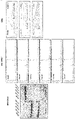
- mice 1 shows screening of immunized mice. During immunization with cDNA and rhprotein, serum from each mouse was isolated to confirm the formation of PD-1 antibody. After two cDNA vaccinations, PD-1 antibody was formed in #2 and 4 mice, and it was confirmed that PD-1 antibody was formed in all mice after protein boosting. Hybidoma development was performed by Fusion using spleens of #2 and 4 mice.
- FIG. 3 shows hPD-1 antibody hybridoma screening by Q-ELISA.
- Each clone was selected by quantitatively comparing antibody production by culturing 1x10⁶ hybridoma for 24 hours and performing ELISA using the supernatant.
- 9 clones of 2-2B3, 2-3C3, 2-5F1, 2-7C5, 2-9A9, and 4-8D4, 4-8H11, 4-9D12, and 4-9F10 were selected.
- 4a to 4c show the properties of hPD-1 hybridoma antibodies.
- Purified antibodies were characterized by SDS-PAGE stain (Fig. 4a), SEC-HPLC (Fig. 4b), and SPR (Fig. 4c). 8 clones showed similar binding affinity with recombinant human PD-1-His protein (ECD), among which 4-9D12 and 4-9F10 had slightly higher binding affinity.
- ECD human PD-1-His protein
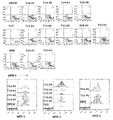
- FIG. 5 shows a binding test between hPD-1 antibodies and hPD-1 expressing cells by flow cytometry.
- flow cytometry analysis of the binding effect of the antibody to PD-1 using some of the PD-1 expressing effector cells used in the PD-1/PD-L1 blocking assay 2-2B3 (49.9%), 2-7C5 (50.4%) and 4-8D4 (23.5%) were identified.
- FIG. 6 shows a hPD-1/PD-L1 blocking functional assay for hPD-1 hybridoma antibodies.
- the analysis showed that when co-cultured with two genetically engineered cell lines, PD-1 effector cells and PD-L1 aAPC cells, PD-1/PD-L1 interaction inhibited TCR-mediated luminescence.
- the PD-1/PD-L1 interaction is disrupted by the function of the selected antibody, luminescence is induced by TCR activation.
- control anti- It exhibited a blocking effect similar to that of the PD-1 antibody.
- FIG. 7A to 7C show humanization of selected 3 clones antibodies. Compared to Keytruda, the characteristics of the antibody were analyzed, and the binding force of the selected antibodies was 2 to 8 times lower. In expressing hPD-1, SDS-PAGE & Q-ELISA (FIG. 7a), SEC-HPLC & SPR (FIG. 7b) and binding effect results (FIG. 7c) of humanized PD-1 antibodies were shown.
- Figure 8a shows the results of analyzing the tumor size for the in vivo efficacy analysis of the humanized candidate antibody of the present invention.
- Figure 8b shows the hepatotoxicity test results of the humanized candidate antibody of the present invention.
- Figure 9a to 9c show the results of gene engineering for increasing the affinity for antigen of each candidate antibody.
- Figure 9a is an antibody of 5 clones with improved affinity of 2B3W
- Figure 9b is an antibody of 5 clones with improved affinity of 7C
- Figure 9c is an antibody of 2 clones with improved affinity of 8D4
- Figure 9d is a competitor antibody It shows the results of screening T14-05 (5.8 nM), which has a higher affinity compared to Keytruda (9 nM), and T15-01 (9.7 nM), which has a similar affinity.
- FIG. 10a shows the results of analysis by flow cytometry of the binding ability of the antibodies selected to improve the affinity of each candidate antibody to cells overexpressing hPD-1.
- FIG. 10b shows the results of analyzing the binding affinity of the candidate antibody in activated hCD8 T cells isolated from human blood by flow cytometry.
- FIG. 11a shows the results of analyzing at the cellular level the efficacy of each candidate antibody for inhibiting the binding of an effector cell expressing hPD-1 and an APC cell expressing hPD-L1, its receptor.
- 11B shows the results of comparison with keytruda, which is a positive control for T14-05 and T15-01 antibodies.
- 12A shows the results of sequence analysis of the VH, VL and CDR regions of the selected 2B3W candidate antibody and its engineered clone antibodies.
- 12B shows the results of sequence analysis of the VH, VL and CDR regions of the selected 7C5 candidate antibody and its engineered clone antibodies.
- Figure 12c shows the VH, VL, and CDR region sequence analysis results of the selected 8D4 candidate antibody and its engineered clone antibodies.
- 12D shows the results of comparing the sequences of the final candidate antibodies selected with the keytruda amino acid sequence as a positive control.
- FIGS. 14A to 14C show the results of in vivo efficacy analysis of the final candidate antibody.
- Figure 14a shows the tumor size analysis results for each individual in each group according to the administration of the antibody.
- 14B shows the results of graphing the average tumor size of each group.
- 14c shows the distribution results of CD4 and CD8 T cells in each group.
- Balb/c mice were immunized by vaccination with full-length human PD-1 gene and boosting of recombinant human PD-1 protein, and then the spleen were fused with mouse myeloma cells, sp2/o.
- Anti-hPD-1 antibody-producing hybridomas were screened and clones were selected. Selected clones were purified, their characteristics were analyzed, and hybridoma antibodies having a function to block the binding of hPD-1/PD-L1 were selected.
- hybridoma antibodies having a function to block the binding of hPD-1/PD-L1 were selected.
- cDNA cloning of the selected anti-hPD-1 antibodies chimeric PD-1 antibodies and finally humanized PD-1 antibodies were developed.
- the present invention relates to an antibody or antigen-binding fragment thereof that specifically binds to PD-1, comprising: a heavy chain comprising at least one amino acid sequence selected from the group consisting of SEQ ID NOs: 1, 8 and 14 CDR1, a heavy chain CDR2 comprising at least one amino acid sequence selected from the group consisting of SEQ ID NOs: 2, 9 and 15, a heavy chain CDR3 comprising at least one amino acid sequence selected from the group consisting of SEQ ID NOs: 3, 4, 10, 16 and 56; A light chain CDR1 comprising at least one amino acid sequence selected from the group consisting of SEQ ID NOs: 5, 11, 17, 57 and 58, a light chain CDR2 comprising at least one amino acid sequence selected from the group consisting of SEQ ID NOs: 6, 12 and 18, and SEQ ID NO: A light chain CDR3 comprising at least one amino acid sequence selected from the group consisting of 7, 13 and 19.
- antibody refers to an anti-PD-1 antibody that specifically binds to PD-1.
- the scope of the present invention includes not only complete antibody forms that specifically bind to PD-1, but also antigen-binding fragments of the antibody molecule.
- a complete antibody has a structure having two full-length light chains and two full-length heavy chains, each light chain connected to the heavy chain by a disulfide bond.
- the term “heavy chain” refers to a full-length heavy chain comprising a variable region domain VH comprising an amino acid sequence having sufficient variable region sequence to confer specificity to an antigen and three constant region domains CH1, CH2 and CH3. and fragments thereof.
- the term “light chain” refers to a full-length light chain comprising a variable region domain VL and a constant region CL comprising an amino acid sequence having sufficient variable region sequence to confer specificity to an antigen, and fragments thereof. all means
- the whole antibody includes subtypes of IgA, IgD, IgE, IgM and IgG, in particular, IgG includes IgG1, IgG2, IgG3 and IgG4.
- the heavy chain constant region has gamma ( ⁇ ), mu ( ⁇ ), alpha ( ⁇ ), delta ( ⁇ ) and epsilon ( ⁇ ) types and subclasses gamma 1 ( ⁇ 1), gamma 2 ( ⁇ 2), gamma 3 ( ⁇ 3). ), gamma 4 ( ⁇ 4), alpha 1 ( ⁇ 1) and alpha 2 ( ⁇ 2).
- the constant region of the light chain has a kappa ( ⁇ ) and a lambda ( ⁇ ) type.
- Antigen-binding fragment or antibody fragment of an antibody refers to a fragment having an antigen-binding function, and includes Fab, F(ab'), F(ab')2 and Fv.
- Fab has a structure having variable regions of light and heavy chains, constant regions of light chain and first constant region (CH1) of heavy chain, and has one antigen-binding site.
- Fab' differs from Fab in that it has a hinge-region comprising one or more cysteine residues at the C-terminus of the heavy chain CH1 domain.
- F(ab')2 is formed when a cysteine residue in the hinge region of Fab' forms a disulfide bond.
- Fv corresponds to the smallest antibody fragment having only a heavy chain variable region and a light chain variable region.
- double-chain Fv two-chain Fv
- the heavy chain variable region and the light chain variable region are connected by a non-covalent bond
- single-chain Fv scFv
- scFv single-chain Fv
- antibody fragments can be prepared by using proteolytic enzymes (for example, by restriction digestion of the intact antibody with papain to obtain Fab, and by digestion with pepsin to obtain F(ab')2), or by genetic recombination technology. can be produced using proteolytic enzymes (for example, by restriction digestion of the intact antibody with papain to obtain Fab, and by digestion with pepsin to obtain F(ab')2), or by genetic recombination technology. can be produced using proteolytic enzymes (for example, by restriction digestion of the intact antibody with papain to obtain Fab, and by digestion with pepsin to obtain F(ab')2), or by genetic recombination technology. can be produced using proteolytic enzymes (for example, by restriction digestion of the intact antibody with papain to obtain Fab, and by digestion with pepsin to obtain F(ab')2), or by genetic recombination technology. can be produced using proteolytic enzymes (for example, by restriction digestion of the intact antibody with papain to obtain
- Fv fragment is an antibody fragment that contains a complete antibody recognition and binding site. This region is a dimer in which one heavy chain variable domain and one light chain variable domain are bound.
- a “Fab” fragment comprises the variable and constant domains of a light chain and the variable and first constant domains (CH1) of a heavy chain.
- F(ab')2 antibody fragments generally comprise a pair of Fab' fragments covalently linked by cysteines in the hinge region present at the C-terminus of the Fab' fragment.
- a “single chain Fv (scFv)” antibody fragment is a construct consisting of a single polypeptide chain comprising the VH and VL domains of an antibody. It may further comprise a polypeptide linker between the VH domain and the VL domain that enables the scFv to form the desired structure for antigen binding.
- the antibody of the invention is a monoclonal antibody, multispecific antibody, human antibody, humanized antibody, chimeric antibody, scFv, Fab fragment, F(ab')2 fragment, disulfide-bonded Fvs (sdFv) and anti-idiotypic (anti-Id) antibodies, or epitope-binding fragments of such antibodies, and the like.
- the heavy chain constant region may be selected from any one isotype of gamma ( ⁇ ), mu ( ⁇ ), alpha ( ⁇ ), delta ( ⁇ ) or epsilon ( ⁇ ).
- the constant region is gamma 1 (IgG1), gamma 2 (IgG2), gamma 3 (IgG3) or gamma 4 (IgG4).
- the light chain constant region may be kappa or lambda type.
- Said monoclonal antibody refers to an antibody obtained from a substantially homogeneous population of antibodies, i.e., the individual antibodies comprising the population are identical except for possible naturally occurring mutations that may be present in trace amounts.
- Monoclonal antibodies are highly specific, being directed against a single antigenic site.
- conventional (polyclonal) antibodies which typically include different antibodies directed against different determinants (epitopes)
- each monoclonal antibody is directed against a single determinant on the antigen.
- Epitope refers to a protein determinant to which an antibody can specifically bind. Epitopes are usually composed of a group of chemically active surface molecules, such as amino acids or sugar side chains, and generally have specific three-dimensional structural characteristics as well as specific charge properties. Conformational and non-steric epitopes are distinguished in that binding to the former is lost but not to the latter in the presence of a denaturing solvent.
- non-human antibodies are chimeric antibodies that contain minimal sequence derived from non-human immunoglobulin.
- humanized antibodies are of a non-human species (donor antibody) that retain the desired specificity, affinity and ability for residues from the hypervariable region of the recipient, eg, mouse, rat, rabbit or non-human primate. It is a human immunoglobulin (recipient antibody) replaced with residues from the hypervariable region of
- human antibody is a molecule derived from human immunoglobulin, and means that the entire amino acid sequence constituting the antibody, including the complementarity determining region and structural region, is composed of human immunoglobulin.
- a portion of the heavy and/or light chain is identical to or homologous to the corresponding sequence in an antibody from a particular species or belonging to a particular antibody class or subclass, while the remaining chain(s) are from another species or from another antibody class or subclass.
- Included are "chimeric" antibodies (immunoglobulins) that are identical to or homologous to the corresponding sequence in antibodies belonging to the subclass, as well as fragments of such antibodies that exhibit the desired biological activity.
- variable region of an antibody refers to the light and heavy chain portions of an antibody molecule comprising the amino acid sequences of complementarity determining regions (CDRs; ie, CDR1, CDR2, and CDR3) and framework regions (FR).
- CDRs complementarity determining regions
- FR framework regions
- VH refers to the variable domain of a heavy chain
- VL refers to the variable domain of the light chain.
- CDR Complementary determining region
- the anti-PD-1 antibody or antigen-binding fragment thereof according to the present invention may include, for example:
- a heavy chain variable region comprising the heavy chain CDR1 of SEQ ID NO: 1, the heavy chain CDR2 of SEQ ID NO: 2 and the heavy chain CDR3 of SEQ ID NO: 3, and the light chain CDR1 of SEQ ID NO: 5, the light chain CDR2 of SEQ ID NO: 6 and the light chain of SEQ ID NO: 7 a light chain variable region comprising CDR3;
- a heavy chain variable region comprising the heavy chain CDR1 of SEQ ID NO: 1, the heavy chain CDR2 of SEQ ID NO: 2 and the heavy chain CDR3 of SEQ ID NO: 4, and the light chain CDR1 of SEQ ID NO: 5, the light chain CDR2 of SEQ ID NO: 6 and the light chain of SEQ ID NO: 7 a light chain variable region comprising CDR3;
- a heavy chain variable region comprising the heavy chain CDR1 of SEQ ID NO: 8, the heavy chain CDR2 of SEQ ID NO: 9 and the heavy chain CDR3 of SEQ ID NO: 10, and the light chain CDR1 of SEQ ID NO: 11, the light chain CDR2 of SEQ ID NO: 12 and the light chain of SEQ ID NO: 13 a light chain variable region comprising CDR3;
- a heavy chain variable region comprising the heavy chain CDR1 of SEQ ID NO: 14, the heavy chain CDR2 of SEQ ID NO: 15 and the heavy chain CDR3 of SEQ ID NO: 16, and the light chain CDR1 of SEQ ID NO: 17, the light chain CDR2 of SEQ ID NO: 18 and the light chain of SEQ ID NO: 19 a light chain variable region comprising CDR3;
- a heavy chain variable region comprising the heavy chain CDR1 of SEQ ID NO: 1, the heavy chain CDR2 of SEQ ID NO: 2 and the heavy chain CDR3 of SEQ ID NO: 56, and the light chain CDR1 of SEQ ID NO: 57, the light chain CDR2 of SEQ ID NO: 6 and the light chain of SEQ ID NO: 7 a light chain variable region comprising CDR3; or
- a heavy chain variable region comprising the heavy chain CDR1 of SEQ ID NO: 8, the heavy chain CDR2 of SEQ ID NO: 9 and the heavy chain CDR3 of SEQ ID NO: 10, and the light chain CDR1 of SEQ ID NO: 58, the light chain CDR2 of SEQ ID NO: 12 and the light chain of SEQ ID NO: 13 A light chain variable region comprising CDR3.
- a “framework region (FR)” is a variable domain residue other than CDR residues. Each variable domain typically has four FRs: FR1, FR2, FR3 and FR4.
- the binding affinity of the anti-PD-1 antibody to PD-1 is in the range of 10 -5 M to 10 -12 M.
- the binding affinity of an anti-PD-1 antibody to PD-1 is 10 -6 M to 10 -12 M, 10 -7 M to 10 -12 M, 10 -8 M to 10 -12 M, 10 -9 M to 10 -12 M, 10 -5 M to 10 -11 M, 10 -6 M to 10 -11 M, 10 -7 M to 10 -11 M, 10 -8 M to 10 -11 M, 10 -9 M to 10 -11 M, 10 -10 M to 10 -11 M, 10 -5 M to 10 -10 M, 10 -6 M to 10 -10 M, 10 -7 M to 10 -10 M, 10 -8 M to 10 -10 M, 10 -9 M to 10 -10 M, 10 -5 M to 10 -9 M, 10 -6 M to 10 -9 M, 10 -7 M to 10 -9 M, 10 -8 M to 10 -9 M, 10 -5 M to 10 -8 M, 10 -6 M to 10 -8
- the PD-1-binding antibody or antigen-binding fragment thereof is a heavy chain variable region comprising at least one amino acid sequence selected from the group consisting of SEQ ID NOs: 20, 21, 23, 25, 27, 28, 30, 32, 48 and 50 may include
- the antibody or antigen-binding fragment thereof binding to PD-1 is a light chain comprising at least one amino acid sequence selected from the group consisting of SEQ ID NOs: 22, 24, 26, 29, 31, 33, 49, 51, 54 and 55 It may include a variable region.
- it may include:
- An scFv is an antibody fragment, which is a construct consisting of a single polypeptide chain comprising the VH and VL domains of an antibody. It may further comprise a polypeptide linker between the VH domain and the VL domain that enables the scFv to form the desired structure for antigen binding.
- the VH and VL domains may be linked via a linker.
- the heavy chain variable region comprising one or more amino acid sequences selected from the group consisting of SEQ ID NOs: 20, 21, 23, 25, 27, 28, 30, 32, 48 and 50 is linked to SEQ ID NOs: 22, 24, 26, 29, It may be linked to a light chain variable region comprising one or more amino acid sequences selected from the group consisting of 31, 33, 49, 51, 54 and 55.
- it may include:
- the linker may be a peptide linker and may have a length of about 10-25 aa.
- hydrophilic amino acids such as glycine and/or serine may be included, but are not limited thereto.
- the linker may include, for example, (GS) n , (GGS) n , (GSGGS) n or (G n S) m (n and m are each 1 to 10), but the linker is For example, it may be (G n S) m (n and m are each 1 to 10).
- the linker may include GGGGS.
- Phage display is a technique for displaying a variant polypeptide as a fusion protein with at least a portion of an envelope protein on the surface of a phage, eg, a filamentous phage particle.
- the usefulness of phage display resides in the fact that, by targeting a large library of randomized protein variants, it is possible to quickly and efficiently sort sequences that bind to a target antigen with high affinity. Displaying peptide and protein libraries on phage has been used to screen millions of polypeptides for polypeptides with specific binding properties.
- Phage display technology has provided a powerful tool for generating and screening novel proteins that bind specific ligands (eg antigens). Phage display technology can be used to generate large libraries of protein variants and rapidly sort sequences that bind target antigens with high affinity.
- a nucleic acid encoding a variant polypeptide is fused with a nucleic acid sequence encoding a viral envelope protein, such as a gene III protein or a gene VIII protein.
- a monovalent phage display system has been developed in which a nucleic acid sequence encoding a protein or polypeptide is fused with a nucleic acid sequence encoding a portion of a gene III protein. In a monovalent phage display system, the gene fusion is expressed at low levels and the wild-type gene III protein is also expressed to maintain particle infectivity.
- Proving the expression of peptides on the surface of filamentous phage and functional antibody fragments in the periplasm of E. coli is important for developing antibody phage display libraries.
- Libraries of antibodies or antigen-binding polypeptides have been prepared in a number of ways, for example, by altering a single gene by inserting a random DNA sequence or by cloning a family of related genes.
- the library can be screened for expression of an antibody or antigen-binding protein accompanied by a desired characteristic.
- Phage display technology has several advantages over conventional hybridoma and recombinant methods for producing antibodies with desired characteristics. This technology allows the generation of large antibody libraries with various sequences in a short time without using animals. Preparation of hybridomas or humanized antibodies may require a production period of several months. In addition, since no immunization is required, the phage antibody library can generate antibodies against antigens that are toxic or of low antigenicity. Phage antibody libraries can also be used to generate and identify novel therapeutic antibodies.
- Techniques for generating human antibodies from immunized, non-immunized human, germline sequences, or from na ⁇ ve B cell Ig repertoires using phage display libraries can be used.
- a variety of lymphoid tissues can be used to prepare na ⁇ ve or non-immune antigen-binding libraries.
- a technology capable of identifying and isolating high-affinity antibodies from phage display libraries is important for isolating novel therapeutic antibodies.
- Isolation of high affinity antibodies from a library may depend on the size of the library, production efficiency in bacterial cells, and diversity of the library.
- the size of the library is reduced by improper folding of the antibody or antigen-binding protein and inefficient production due to the presence of stop codons.
- Expression in bacterial cells can be inhibited if the antibody or antigen binding domain does not fold properly.
- Expression can be improved by alternately mutating residues on the surface of the variable/constant interface or at selected CDR residues.
- the sequence of the framework region is one element to provide for proper folding when generating antibody phage libraries in bacterial cells.
- CDR3 regions have been found to often participate in antigen binding. Since the CDR3 regions on the heavy chain vary considerably in size, sequence and structural conformation, they can be used to prepare a variety of libraries.
- diversity can be generated by randomizing the CDR regions of the variable heavy and light chains using all 20 amino acids at each position.
- the use of all 20 amino acids can result in highly diverse variant antibody sequences and increase the chances of identifying novel antibodies.
- the antibody or antibody fragment of the present invention may include not only the sequence of the anti-PD-1 antibody of the present invention described herein, but also a biological equivalent thereof to the extent that it can specifically recognize PD-1.
- additional changes may be made to the amino acid sequence of an antibody to further improve the binding affinity and/or other biological properties of the antibody.
- modifications include, for example, deletions, insertions and/or substitutions of amino acid sequence residues of the antibody.
- amino acid variations are made based on the relative similarity of amino acid side chain substituents, such as hydrophobicity, hydrophilicity, charge, size, and the like.
- arginine, lysine and histidine are all positively charged residues; Alanine, glycine and serine have similar sizes; It can be seen that phenylalanine, tryptophan and tyrosine have similar shapes. Therefore, based on these considerations, arginine, lysine and histidine; alanine, glycine and serine; And phenylalanine, tryptophan and tyrosine can be said to be biologically functional equivalents.
- the antibody or nucleic acid molecule encoding the same of the present invention is interpreted to include a sequence showing substantial identity to the sequence set forth in SEQ ID NO:.
- the substantial identity is at least 90% when the sequence of the present invention and any other sequences are aligned as much as possible, and the aligned sequence is analyzed using an algorithm commonly used in the art. refers to a sequence exhibiting homology, most preferably at least 95% homology, at least 96% homology, at least 97% homology, at least 98% homology, at least 99% homology.
- Alignment methods for sequence comparison are known in the art.
- the NCBI Basic Local Alignment Search Tool (BLAST) can be accessed from NBCI, etc.
- BLAST can be accessed at www.ncbi.nlm.nih.gov/BLAST/.
- a method for comparing sequence homology using this program can be found at www.ncbi.nlm.nih.gov/BLAST/blast_help.html.
- the antibody or antigen-binding fragment thereof of the present invention is 90%, 91%, 92%, 93%, 94%, 95%, 96%, 97%, 98% compared to the specified sequence or all of the sequences described in the specification. , 99%, or more homology.
- homology can be determined by sequence comparison and/or alignment by methods known in the art. For example, a sequence comparison algorithm (ie, BLAST or BLAST 2.0), manual alignment, or visual inspection can be used to determine the percent sequence homology of a nucleic acid or protein of the invention.
- the present invention relates to a nucleic acid encoding the antibody or antigen-binding fragment thereof.
- An antibody or antigen-binding fragment thereof can be recombinantly produced by isolating a nucleic acid encoding the antibody or antigen-binding fragment thereof of the present invention.
- Nucleic acid has a meaning comprehensively encompassing DNA (gDNA and cDNA) and RNA molecules, and nucleotides, which are the basic building blocks of nucleic acids, include natural nucleotides as well as analogues in which sugar or base regions are modified. .
- the sequences of the nucleic acids encoding the heavy and light chain variable regions of the present invention may be modified. Such modifications include additions, deletions, or non-conservative or conservative substitutions of nucleotides.
- the nucleic acid encoding the PD-1 binding antibody or antigen-binding fragment thereof may include a nucleic acid encoding a heavy chain variable region or a light chain variable region selected from the group consisting of SEQ ID NOs: 34 to 47.
- it may include:
- nucleic acid encoding a heavy chain variable region of SEQ ID NO: 34 and a nucleic acid encoding a light chain variable region of SEQ ID NO: 36;
- nucleic acid encoding a heavy chain variable region of SEQ ID NO: 35 and a nucleic acid encoding a light chain variable region of SEQ ID NO: 36;
- nucleic acid encoding a heavy chain variable region of SEQ ID NO: 37 and a nucleic acid encoding a light chain variable region of SEQ ID NO: 38;
- nucleic acid encoding a heavy chain variable region of SEQ ID NO: 39 and a nucleic acid encoding a light chain variable region of SEQ ID NO: 40;
- nucleic acid encoding a heavy chain variable region of SEQ ID NO: 41 and a nucleic acid encoding a light chain variable region of SEQ ID NO: 43;
- nucleic acid encoding a heavy chain variable region of SEQ ID NO: 42 and a nucleic acid encoding a light chain variable region of SEQ ID NO: 43;
- nucleic acid encoding a heavy chain variable region of SEQ ID NO: 44 and a nucleic acid encoding a light chain variable region of SEQ ID NO: 45;
- DNA encoding the antibody is easily isolated or synthesized using conventional molecular biological techniques (eg, by using an oligonucleotide probe capable of specifically binding to DNA encoding the antibody and the heavy and light chains)
- the nucleic acid is isolated and inserted into a replicable vector for further cloning (amplification of DNA) or further expression.
- the present invention relates to a recombinant expression vector comprising the nucleic acid from another aspect.
- the term "vector” is a means for expressing a target gene in a host cell, and a viral vector such as a plasmid vector, a cosmid vector, a bacteriophage vector, an adenoviral vector, a retroviral vector, and an adeno-associated viral vector. etc.
- Components of a vector generally include, but are not limited to, one or more of the following: a signal sequence, an origin of replication, one or more antibiotic resistance marker genes, an enhancer element, a promoter, a transcription termination sequence. Nucleic acids encoding antibodies are operatively linked, such as promoters and transcription termination sequences.
- operably linked refers to a functional association between a nucleic acid expression control sequence (eg, an array of promoter, signal sequence or transcriptional regulator binding sites) and another nucleic acid sequence, such that the control sequence is the other nucleic acid sequence to regulate transcription and/or translation of
- a nucleic acid expression control sequence eg, an array of promoter, signal sequence or transcriptional regulator binding sites
- a strong promoter capable of propagating transcription eg, tac promoter, lac promoter, lacUV5 promoter, lpp promoter, pL ⁇ promoter, pR ⁇ promoter, rac5 promoter, amp promoter, recA promoter, SP6 promoter, trp promoter and T7 promoter
- a ribosome binding site for initiation of translation e.g, lac promoter, lacUV5 promoter, lpp promoter, pL ⁇ promoter, pR ⁇ promoter, rac5 promoter, amp promoter, recA promoter, SP6 promoter, trp promoter and T7 promoter
- a promoter derived from the genome of a mammalian cell eg, a metallotionine promoter, a ⁇ -actin promoter, a human heglobin promoter, and a human muscle creatine promoter
- a mammalian cell eg, a metallotionine promoter, a ⁇ -actin promoter, a human heglobin promoter, and a human muscle creatine promoter
- Promoters derived from animal viruses e.g., adenovirus late promoter, vaccinia virus 7.5K promoter, SV40 promoter, cytomegalovirus (CMV) promoter, tk promoter of HSV, mouse mammary tumor virus (MMTV) promoter, LTR promoter of HIV , the promoter of Moloney virus, the promoter of Epstein Barr virus (EBV) and the promoter of Loose sarcoma virus (RSV)), and generally has a polyadenylation sequence as a transcription termination sequence.
- animal viruses e.g., adenovirus late promoter, vaccinia virus 7.5K promoter, SV40 promoter, cytomegalovirus (CMV) promoter, tk promoter of HSV, mouse mammary tumor virus (MMTV) promoter, LTR promoter of HIV , the promoter of Moloney virus, the promoter of Epstein Barr virus (EBV) and the promoter of Loose sarcom
- the vector may be fused with other sequences to facilitate purification of the antibody expressed therefrom.
- the sequence to be fused includes, for example, glutathione S-transferase (Pharmacia, USA), maltose binding protein (NEB, USA), FLAG (IBI, USA) and 6x His (hexahistidine; Quiagen, USA).
- the vector contains an antibiotic resistance gene commonly used in the art as a selection marker, and for example, ampicillin, gentamicin, carbenicillin, chloramphenicol, streptomycin, kanamycin, geneticin, neomycin and tetracycline. There is a resistance gene.
- the present invention relates to a host cell transfected with the recombinant expression vector.
- the host cell used to produce the antibody of the present invention may be, but is not limited to, a prokaryotic, yeast or higher eukaryotic cell.
- Bacillus genus strains such as Escherichia coli, Bacillus subtilus and Bacillus thuringiensis, Streptomyces, Pseudomonas (eg, Pseudomonas) (Pseudomonas putida), Proteus mirabilis and Staphylococcus (eg, Staphylocus carnosus), such as prokaryotic host cells can be used.
- animal cells are of greatest interest, and examples of useful host cell lines include COS-7, BHK, CHO, CHOK1, DXB-11, DG-44, CHO/-DHFR, CV1, COS-7, HEK293, BHK, TM4, VERO, HELA, MDCK, BRL 3A, W138, Hep G2, SK-Hep, MMT, TRI, MRC 5, FS4, 3T3, RIN, A549, PC12, K562, PER.C6, SP2/0, NS-0 , U20S, or may be HT1080, but is not limited thereto.
- the present invention comprises the steps of culturing the host cell to generate an antibody; And it relates to a method for producing an antibody or antigen-binding fragment thereof that specifically binds to PD-1, comprising the step of isolating and purifying the produced antibody.
- the host cells may be cultured in various media. Among commercially available media, it can be used as a culture medium without limitation. All other essential supplements known to those skilled in the art may be included in appropriate concentrations. Culture conditions, such as temperature, pH, etc., are already used with the host cells selected for expression and will be apparent to those skilled in the art.
- impurities may be removed by, for example, centrifugation or ultrafiltration, and the resultant product may be purified using, for example, affinity chromatography. Additional other purification techniques may be used, such as anion or cation exchange chromatography, hydrophobic interaction chromatography, hydroxylapatite chromatography, and the like.
- the present invention relates to a bispecific or multispecific antibody comprising the antibody or antigen-binding fragment thereof.
- Bispecific antibody refers to an antibody having binding ability or antagonistic ability to one or more targets, and a form in which an antibody having binding ability or antagonistic ability to two different targets is bound, or an antibody having binding ability to one target and a different target It refers to an antibody to which a substance having antagonistic ability is bound.
- a multispecific antibody refers to an antibody having binding specificities for at least three different antigens.
- a multi-specific antibody is a tri-specific antibody or more, for example, a tri-specific antibody, a tetra-specific antibody, or a target that targets more. may include antibodies.
- Antibodies belonging to bispecific or multispecific antibodies may be classified into scFv-based antibodies, Fab-based antibodies, and IgG-based antibodies.
- a bispecific or multispecific antibody since two or more signals can be simultaneously inhibited or amplified, it can be more effective than when one signal is inhibited/amplified, and each signal must be treated with a respective signal inhibitor. Compared with the case, low dose administration is possible, and it is possible to suppress/amplify two or more signals in the same time and space.
- bispecific or multispecific antibodies Methods for making bispecific or multispecific antibodies are well known. Traditionally, recombinant production of bispecific antibodies is based on the co-expression of two or more immunoglobulin heavy/light chain pairs under conditions in which the two or more heavy chains have different specificities.
- a diabody can be made by preparing a hybrid scFv in a heterodimeric form by combining the VL and VH of different scFvs, and linking different scFvs with each other
- tendem ScFv can be prepared
- heterodimeric miniantibodies can be prepared by expressing CH1 and CL of Fab at the ends of each scFv.
- Fab's directed against a specific antigen can be combined with each other using a disulfide bond or a mediator to form a heterodimeric Fab, and the heavy or light chain of a specific Fab can be It can be prepared to have two antigen valencies by expressing scFvs for different antigens at the ends, or to have four antigen valencies in homodimeric form by providing a hinge region between Fab and scFv.
- a dual-target bibody with three antigen binding values, and different scFvs to the light and heavy chain ends of the Fab are fused to the antigen. It can be obtained by chemically conjugating three different Fabs, a triple-targeted bibody having three valencies.
- bispecific or multispecific antibodies based on IgG hybrid hybridomas, also known as quadromas, were prepared by re-crossing mouse and rat hybridomas by Trion Pharma. Thus, a method for producing a bispecific antibody is known.
- a bispecific antibody can be prepared in the so-called 'Holes and Knob' form, which is produced in a heterodimeric form by modifying some amino acids of the CH3 homodimeric domain of Fc for different heavy chains while sharing the light chain portion.
- two different scFvs can be fused to the constant domains instead of the light and heavy chain variable domains of IgG to produce homodimeric (scFv)4-IgG.
- ImClone Inc. is based on IMC-1C11, a chimeric monoclonal antibody against human VEGFR-2, and mouse platelet-derived growth factor receptor- ⁇ at the amino terminus of the light chain of this antibody. ), a bispecific antibody was produced and reported by fusion of only a single variable domain.
- bispecific or multispecific antibodies which are bispecific, trivalent or tetravalent or higher.
- WO2001/077342 WO2009/080251, WO2009/080252, WO2009/080253, WO2009/080254, WO2010/112193, WO2010/115589
- antibodies described in WO2010/136172, WO2010/145792, WO2010/145793 and WO2011/117330 which are bivalent, trivalent or tetravalent or higher.
- a bivalent, trivalent or more tetravalent antibody indicates that two or more binding domains, three or more binding domains or four or more binding domains, respectively, are present in the antibody molecule.
- the bi- or multispecific antibody according to the present invention comprises the anti-PD-1 antibody or antigen-binding fragment, specifically in the form of a complete IgG antibody or fragment thereof, for example, single-chain Fv, V H domain and/or It may be included in the form of V L domain, Fab or (Fab) 2 .
- the antibody or antigen-binding fragment thereof that binds to a different target than the antibody targeting PD-1 may include one or more selected from the group consisting of NRP1.
- the antibody or antigen-binding fragment thereof may specifically include a complete IgG antibody or fragment thereof, for example, in the form of a single chain Fv, V H domain and/or V L domain, Fab or (Fab) 2 .
- the bi- or multispecific antibody according to the present invention can secure additional binding specificity induced or mediated by other targets in addition to PD-1.
- the bispecific antibody according to the present invention is PD-1 and FGFR3, TIGIT, PD-L1, BTLA, CTLA-4, VISTA, LAG3, TIM3, CD137 (4-1BB), VISTA, CD258 (LIGHT) , MARCO, CD134 (OX40), CD28, CD278 (ICOS), CD27, CD154 (CD40L), CD357 (GITR), CD30, DR3, CD226 (DNAM1), CD96, CD200, CD200R, Transferrin receptor, c
- One selected from the group consisting of -Met, EGFR, HER2, KDR, PDGFRa, and NRP1 can be simultaneously targeted.
- the multispecific antibody according to the present invention is PD-1 and FGFR3, TIGIT, PD-L1, BTLA, CTLA-4, VISTA, LAG3, TIM3, CD137 (4-1BB), VISTA, CD258 (LIGHT) , MARCO, CD134 (OX40), CD28, CD278 (ICOS), CD27, CD154 (CD40L), CD357 (GITR), CD30, DR3, CD226 (DNAM1), CD96, CD200, CD200R, Transferrin receptor, c -Met, EGFR, HER2, KDR, PDGFRa, two or more selected from the group consisting of NRP1 can be targeted simultaneously.
- the present invention relates to an immune cell engage bispecific or multispecific antibody comprising an scFv of an antibody and one or more scFvs of an antibody that bind to an immune cell activating antigen.
- a cytolytic synapse is temporarily induced between a cytotoxic T cell and a cancer target cell to release a toxic substance.
- the immune cell activating antigen may be selected from, for example, an antibody or antigen-binding fragment thereof binding thereto may serve as an immune cell engager:
- T cell activating antigens include CD3, TCR ⁇ , TCR ⁇ , TCR ⁇ , TCR ⁇ , ICOS, CD28, CD27, HVEM, LIGHT, CD40, 4-1BB, OX40, DR3, GITR, CD30, TIM1, SLAM, CD2, or CD226;
- NK cell activating antigens are NKp30, NKp40, NKp44, NKp46, NKG2D, DNAM1, DAP10, CD16 (e.g., CD16a, CD16b), CRTAM, CD27, PSGL1, CD96, CD100 (SEMA4D), NKp80, CD244 (SLAMF4 or 2B4), SLAMF6, SLAMF7, KIR2DS2, KIR2DS4, KIR3DS1, KIR2DS3, KIR2DS5, KIR2DS1, CD94, NKG2C, NKG2E or CD160;
- CD16 e.g., CD16a, CD16b
- CRTAM CD27, PSGL1, CD96, CD100 (SEMA4D)
- NKp80 CD244
- SLAMF4 or 2B4 SLAMF6, SLAMF7, KIR2DS2, KIR2DS4, KIR3DS1, KIR2DS3, KIR2DS5, KIR2DS1, CD94, NKG2
- B cell activating antigens include OX40, CD40 or CD70;
- Macrophage activating antigens include CD2 agonists, CD40, CD70, Toll-like Receptor (TCR) agonists, CD47, STING or OX40L; or
- the dendritic cell activating antigen is a CD2 agonist, OX40, OX40L, 41BB agonist, TCR agonist, CD47 agonist, or STING agonist.
- the immune cell engager is specifically described in US Patent Application Publication No. 2017/0368169, and may be incorporated herein by reference.
- the immune cell-engaging bispecific or multispecific antibody comprises a tandem scFv and is capable of binding to the following antigens and surface antigens on cancer cells.
- the surface antigen on said cancer cells is PD-1 targeted by the antibody according to the invention:
- CD16 e.g., CD16a, CD16b
- CRTAM CD27, PSGL1, CD96, CD100 (SEMA4D)
- NKp80 CD244
- SLAMF4 or 2B4 SLAMF7, KIR2DS2, SLAMF7, KIR2DS2 , KIR2DS4, KIR3DS1, KIR2DS3, KIR2DS5, KIR2DS1,
- CD2 agonist CD40, CD70, TCR (Toll-like Receptor) agonist, CD47, STING or OX40L; or
- CD2 agonist OX40, OX40L, 41BB agonist, TCR agonist, CD47 agonist, or STING agonist.
- Said immune cell engaging bispecific or multispecific antibody can be, for example, VL(PD-1)-VH(PD-1)-VH(CD3 or CD16A)-VL(CD3 or CD16A), VH(PD- 1)-VL(PD-1)-VH(CD3 or CD16A)-VL(CD3 or CD16A), VH(CD3 or CD16A)-VL(CD3 or CD16A)-VH(PD-1)-VL(PD-1 ) or VH(CD3 or CD16A)-VL(CD3 or CD16A)-VL(PD-1)-VH(PD-1) form.
- the scFv is, for example, a heavy chain variable region comprising one or more amino acid sequences selected from the group consisting of SEQ ID NOs: 20, 21, 23, 25, 27, 28, 30, 32, 48 and 50 through a linker to SEQ ID NO: 22 , 24, 26, 29, 31, 33, 49, 51, 54 and a light chain variable region comprising at least one amino acid sequence selected from the group consisting of 55, wherein the heavy chain variable region and the light chain variable region may be connected by a linker. have.
- the linker may be a peptide linker and may have a length of about 10-25 aa.
- hydrophilic amino acids such as glycine and/or serine may be included.
- the linker may include, for example, (GS)n, (GGS)n, (GSGGS)n or (GnS)m (n and m are each 1 to 10), but the linker is, for example, (G n S) m (n and m are each 1 to 10).
- the linker may include GGGGS.
- Examples of the immune cell engaging bispecific or multispecific antibody include blinatumomab (Amgen) that binds to CD3 and CD19; solitomab (Amgen) that binds to CD3 and EpCAM; MEDI 565 (MedImmune, Amgen) that binds to CD3 and CEA; and BAY2010112 (Bayer, Amgen) that binds to CD3 and PSMA.
- Exemplary DARTs include MGD006 (Macrogenics) that binds CD3 and CD123; and MGD007 (Macrogenics), which binds to CD3 and gpA33.
- Exemplary TandAbs include AFM11 (Affimed Therapeutics) that binds to CD3 and CD19; and AFM13 (Affimed Therapeutics) that binds to CD30 and CD16A.
- ADCs Antibody-Drug Conjugates
- the present invention relates to an antibody-drug conjugate (ADC) in which the antibody or antigen-binding fragment thereof is bound to a drug.
- ADC antibody-drug conjugate
- the anticancer drug In the antibody-drug conjugate, the anticancer drug must be stably bound to the antibody until the anticancer drug is delivered to the target cancer cell.
- the drug delivered to the target must be released from the antibody to induce the death of the target cell.
- the drug when the drug is stably bound to the antibody and released from the target cell, it must have sufficient cytotoxicity to induce the death of the target cell.
- the antibody may be bound to a drug through a linker.
- the linker is a site that connects the anti-PD-1 antibody and the drug, and allows the drug to be released from the antibody in a cleavable form under intracellular conditions, that is, in the intracellular environment. Reflecting the long half-life of the antibody, the antibody It should be stable during systemic circulation, and binding of the linker to the drug should not affect the stability and pharmacokinetics of the antibody.
- the linker may include, for example, a cleavable linker or a non-cleavable linker.
- a cleavable linker such as a peptide linker
- it can be cleaved by an intracellular peptidase or protease enzyme such as a lysosomal or endosomal protease
- a non-cleavable linker e.g. a thioether linker, where the antibody is cleaved by intracellular hydrolysis.
- the drug may be released after non-selective degradation.
- the cleavable linker may include a peptide linker.
- the peptide linker has a length of at least two or more amino acids.
- dipeptides of Val-Cit, Val-Ala, or Val-Cit or Phe-Leu or Gly-Phe-Leu-Gly may be included. Examples of linkers are specifically described in International Patent Application Publication No. WO2004/010957, which may be incorporated herein by reference.
- the antibody-drug conjugate is encapsulated into the cancer cell through the endo-lysosomal pathway after the antibody region of the ADC binds to the antigen of the target cancer cell to form the ADC-antigen complex.
- the intracellular release of the cytotoxic drug is regulated by the internal environment of the endosome/lysosome.
- the cleavable linker is pH sensitive, which may be sensitive to hydrolysis at certain pH values.
- pH sensitive linkers can be hydrolyzed under acidic conditions.
- acid labile linkers capable of being hydrolyzed in the lysosome such as hydrazones, semicarbazones, thiosemicarbazones, cis-aconitic amides, orthoesters, acetals, ketal or the like.
- the linker may be cleaved under reducing conditions, for example, a disulfide linker may correspond to this.
- SATA N-succinimidyl-S-acetylthioacetate
- SPDP N-succinimidyl-3-(2-pyridyldithio)propionate
- SPDB N-succinimidyl-3-(2-pyridyldithio)butyrate
- SMPT N-succinimidyl-oxycarbonyl -alpha-methyl-alpha-(2-pyridyl-dithio)toluene
- This disulfide linker can be cleaved by disulfide exchange with thiols of intracellular glutathione.
- the drug and/or drug-linker may be randomly conjugated via lysine of the antibody or via cysteine exposed upon reduction of a disulfide bond chain.
- the linker-drug may be bound through a genetically engineered tag, for example, a cysteine present in a peptide or protein.
- the genetically engineered tag for example, a peptide or protein, may include an amino acid motif that can be recognized by, for example, isoprenoid transferase.
- the peptide or protein has a deletion at the carboxy terminus of the peptide or protein, or has an addition through a covalent bond of a spacer unit to the carboxy (C) terminus of the peptide or protein.
- the peptide or protein may be directly covalently bonded to an amino acid motif or may be covalently bonded to a spacer unit to be linked to the amino acid motif.
- the amino acid spacer unit is composed of 1 to 20 amino acids, and among them, a glycine unit is preferable.
- the isoprenoid transferase may be, for example, farnesyl transferase (FTase, farnesyl protein transferase) or geranylgeranyl transferase (GGTase, geranylgeranyl transferase), and FTase and GGTase I are CAAX motif and GGTase II can recognize XXCC, XCXC or CXX motif, where C is cysteine, A is an aliphatic amino acid, and X is an amino acid that determines the substrate specificity of an isoprenoid transferase. have.
- FTase farnesyl transferase
- GGTase I are CAAX motif
- GGTase II can recognize XXCC, XCXC or CXX motif, where C is cysteine, A is an aliphatic amino acid, and X is an amino acid that determines the substrate specificity of an isoprenoid transferas
- the linker is a beta-glucuronide linker that is recognized and hydrolyzed by beta-glucuronidase, which is present in multiple numbers in lysosomes or is overexpressed in some tumor cells.
- beta-glucuronidase beta-glucuronidase
- beta-glucuronide linker disclosed in International Patent Application Publication No. WO2015/182984, for example, a beta-glucuronide linker including a self-immolative group may be used.
- a beta-glucuronide linker including a self-immolative group may be used.
- the linker may be, for example, a non-cleavable linker, and the drug is released through only one step of antibody hydrolysis in the cell, for example, to produce an amino acid-linker-drug complex.
- This type of linker may be a thioether group or a maleimidocaproyl group, and may maintain stability in blood.
- the linker-drug may be bound through a cysteine exposed when the disulfide bond chain of the antibody is reduced, or the linker-drug may be bound by random linkage or by introducing an antibody terminal binding peptide having the sequence GGGGGGGCVIM.
- the drug may be bound to an antibody as an agent exhibiting a pharmacological effect, and specifically may be a chemotherapeutic agent, a toxin, micro RNA (miRNA), siRNA, shRNA, or a radioactive isotope.
- the chemotherapeutic agent may be, for example, a cytotoxic agent or an immunosuppressive agent. Specifically, it may include a microtubulin inhibitor, a mitosis inhibitor, a topoisomerase inhibitor, or a chemotherapeutic agent that can function as a DNA intercalator.
- it may include an immunomodulatory compound, an anticancer agent, an antiviral agent, an antibacterial agent, an antifungal agent, an anthelmintic agent, or a combination thereof.
- Such drugs include, for example, maytansinoids, auristatins (including MMAE, MMAF), aminopterin, actinomycin, bleomycin, thalisomycin, camptothecin, N8-acetyl spermidine, 1-(2 Chloroethyl)-1,2-dimethyl sulfonyl hydrazide, esperamicin, etoposide, 6-mercaptopurine, dolastatin, trichothecene, calicheamicin, taxol, taxane, paclitaxel , docetaxel, methotrexate, vincristine, vinblastine, doxorubicin, melphalan, mitomycin A, mitomycin C, chlorambucil, duocarmycin, L-asparaginase (L-asparaginase), mercaptopurine (mercaptopurine), thioguanine, hydroxyurea, cytarabine,
- the drug is an amine, thiol, hydroxyl, hydrazide, oxime, hydrazine, thiosemicarbazone, hydrazine carboxylate, capable of reacting to form a covalent bond with an electrophilic group on the linker and linker reagent; and one or more nucleophilic groups selected from the group consisting of an arylhydrazide group.
- ADC was prepared in which the antibody or antigen-binding fragment thereof according to the present invention was linked to a drug, for example, auristatin (MMAE) through the MC-vc-PAB linker. It was confirmed that these ADCs exhibit the desired cytotoxicity.
- a drug for example, auristatin (MMAE)
- MMAE auristatin
- the present invention is a chimeric antigen receptor (CAR) comprising an extracellular domain comprising an antigen-binding site, a transmembrane domain and an intracellular signaling domain, wherein the antigen-binding site of the extracellular domain is the scFv of the antibody It relates to a chimeric antigen receptor, characterized in that.
- CAR chimeric antigen receptor
- Chimeric antigen receptors are synthetic constructs designed to induce an immune response against a target antigen and cells expressing the antigen.
- the CAR comprises an extracellular domain, a transmembrane domain and an intracellular signaling domain.
- a gene encoding a receptor recognizing a cancer cell surface antigen specifically expressed on the surface of cancer cells into immune cells, cancer cells can be killed.
- immune cells containing a receptor that binds to an antigen specifically expressed in cancer cells it is possible to induce an immune response by targeting only cancer cells.
- the CAR includes the scFv of the anti-PD-1 antibody according to the present invention as an antigen recognition site of an extracellular domain.
- a second-generation CAR combining a co-stimulatory domain (CD28 or CD137/4-1BB) and CD3 ⁇ was prepared to improve responsiveness to immune cells. Compared with the first-generation CAR, the number of CAR-containing immune cells remaining in the body significantly increased.
- the second generation CAR used one auxiliary stimulation domain, whereas the third generation CAR used two or more auxiliary stimulation domains.
- a co-stimulatory domain can be combined with 4-1BB, CD28 or OX40, etc. to achieve expansion and persistence of immune cells including CAR in vivo.
- the second-generation CAR is specifically described in U.S. Patent Nos. 7,741,465, 7,446,190 or 9,212,229, and the third-generation CAR is specifically described in U.S. Patent No. 8,822,647, which is incorporated herein by reference.
- cytokines such as IL-12 or IL-15
- additional genes encoding cytokines such as IL-12 or IL-15 are included to allow the expression of additional CAR-based immune proteins of cytokines
- the fifth-generation CAR includes interleukins to enhance immune cells. It further comprises a receptor chain such as IL-2R ⁇ .
- the 4th generation CAR is specifically described in US Patent No. 10,316,102, and the 5th generation CAR is specifically described in US Patent No. 10,336,810, which is incorporated herein by reference.
- the antigen binding site of the extracellular domain is an scFv of an antibody.
- the VH and VL domains may be linked via a linker.
- the heavy chain variable region comprising one or more amino acid sequences selected from the group consisting of SEQ ID NOs: 20, 21, 23, 25, 27, 28, 30, 32, 48 and 50 is linked to SEQ ID NOs: 22, 24, 26, 29, It may be linked to a light chain variable region comprising one or more amino acid sequences selected from the group consisting of 31, 33, 49, 51, 54 and 55.
- the linker may be a peptide linker and may have a length of about 10-25 aa.
- hydrophilic amino acids such as glycine and/or serine may be included.
- the linker may include, for example, (GS) n , (GGS) n , (GSGGS) n or (G n S) m (n and m are each 1 to 10), but the linker is, for example (G n S) m (n and m are each 1 to 10).
- the linker may include GGGGS.
- the trans membrane domain may be derived from a natural or synthetic source. When the source is natural, the domain may be derived from any membrane bound protein or trans membrane protein.
- the transmembrane domain is the T-cell receptor, CD28, CD3 epsilon, CD45, CD4, CD5, CD8, CD9, CD16, CD22, CD33, CD37, CD64, CD80, CD86, CD134, CD137, CD154, ICOS alpha, beta or zeta chains.
- hydrophobic residues such as leucine and valine may be included, or peptides including phenylalanine, tryptophan, and valine may be included at each end.
- a short oligo- or polypeptide linker of 2 to 10 amino acids in length can form a bond between the trans membrane domain and the cytoplasmic signaling domain of the CAR.
- a glycine-serine peptide may be used as a linker.
- the signal transduction domain can induce activation of the normal effector function of the immune cell in which the CAR is located. For example, it can induce cytolytic activation or helper activation through the secretion of cytokines.
- the signaling domain may comprise a truncated fragment of an intracellular signaling domain sufficient to transduce an effector function signal.
- the cytoplasm of the T cell receptor (TCR) and the co-receptor, which act in concert to initiate signal transduction after antigen receptor engagement with the signal transduction domain, may be included.
- Primary cytoplasmic signaling sequences regulate primary activation of the TCR complex in a stimulatory or inhibitory manner.
- Primary cytoplasmic signaling sequences that act in a stimulatory manner may contain a signaling motif known as an immunoreceptor tyrosine-based activation motif or ITAM.
- ITAMs containing primary cytoplasmic signaling sequences may include TCR zeta, FcR gamma, FcR beta, CD3 gamma, CD3 delta, CD3 epsilon, CD5, CD22, CD79a, CD79b, and CD66d.
- the cytoplasmic domain of the CAR may include a CD3 zeta chain portion and a costimulatory signaling region.
- Costimulatory signaling region refers to the portion of the CAR comprising the intracellular domain of a costimulatory molecule.
- CD27, CD28, 4-1BB (CD137), OX40, CD30, CD40, ICOS, lymphocyte function-related antigen-1 (LFA-1), CD2, CD7, LIGHT, NKG2C, B7-H3, and CD83 and ligands that specifically bind to it may be included.
- Cytoplasmic signaling sequences within the cytoplasmic signaling portion of the CAR may be linked via a peptide linker comprising 2 to 10 amino acids, eg, glycine-serine.
- the present invention relates to an immune cell into which the chimeric antigen receptor (CAR) is introduced.
- CAR chimeric antigen receptor
- the immune cells are capable of inducing a desired cancer therapeutic effect by inducing immunity, for example, T cells, NK cells, cytokine-induced killer cells (CIK), activated cytotoxic T lymphocytes (Cytotoxic).
- T Lymphocyte, CTL cytokine-induced killer cells
- macrophages cytotoxic T lymphocytes
- TIL tumor tissue infiltrating Lymphocytes
- a chimeric antigen receptor (CAR) in which an scFv for an antibody other than the anti-PD-1 antibody is included as an antigen-binding site of an extracellular domain may be additionally introduced.
- Antibodies other than the anti-PD-1 antibody include, for example, FGFR3, TIGIT, PD-L1, BTLA, CTLA-4, VISTA, LAG3, TIM3, CD137 (4-1BB), VISTA, CD258 (LIGHT), MARCO, CD134 (OX40), CD28, CD278 (ICOS), CD27, CD154 (CD40L), CD357 (GITR), CD30, DR3, CD226 (DNAM1), CD96, CD200, CD200R, Transferrin receptor, c-Met, It may be an antibody targeting EGFR, HER2, KDR, PDGFRa, or NRP1.
- the present invention provides an antibody or antigen-binding fragment thereof, a bi- or multispecific antibody comprising the antibody or antigen-binding fragment thereof, an antibody-drug conjugate comprising the antibody or antigen-binding fragment thereof, the antibody or It relates to a composition for treating cancer comprising a chimeric antigen receptor comprising an antigen-binding fragment thereof or an immune cell comprising the chimeric antigen receptor.
- the present invention provides, for example, (a) an antibody or antigen-binding fragment thereof against PD-1 according to the present invention, a bi- or multispecific antibody comprising the antibody or antigen-binding fragment thereof, the antibody or antigen-binding fragment thereof an antibody-drug conjugate comprising a, a chimeric antigen receptor comprising the antibody or antigen-binding fragment thereof, or a pharmaceutically effective amount of immune cells comprising the chimeric antigen receptor; And (b) may be a pharmaceutical composition for the prevention or treatment of cancer comprising a pharmaceutically acceptable carrier.
- the present invention also provides an antibody or antigen-binding fragment thereof against PD-1 according to the present invention, a bi- or multispecific antibody comprising the antibody or antigen-binding fragment thereof, an antibody comprising the antibody or antigen-binding fragment thereof- It may be a method for preventing or treating cancer, comprising administering to a cancer patient a drug conjugate, a chimeric antigen receptor comprising the antibody or antigen-binding fragment thereof, or an immune cell comprising the chimeric antigen receptor.
- Prevention means any action that suppresses or delays the progression of clinical symptoms of a disease by administration of the composition according to the present invention, and “treatment” refers to suppression of the development of clinical symptoms for a disease, alleviation of clinical symptoms for a disease, or means removal.
- the cancer is, for example, Hodgkin's lymphoma, non-Hodgkin's lymphoma (eg, B-cell lymphoma, diffuse large B-cell lymphoma, follicular lymphoma, chronic lymphocytic leukemia, mantle cell lymphoma, marginal area B-cell lymphoma, Burkitt's lymphoma) , lymphoid cell lymphoma, hairy cell leukemia), acute myeloid leukemia, chronic myelogenous leukemia, myelodysplastic syndrome, multiple myeloma, or acute lymphocytic leukemia.
- non-Hodgkin's lymphoma eg, B-cell lymphoma, diffuse large B-cell lymphoma, follicular lymphoma, chronic lymphocytic leukemia, mantle cell lymphoma, marginal area B-cell lymphoma, Burkitt's lymphoma
- Said cancer is, for example, ovarian cancer, rectal cancer, gastric cancer, testicular cancer, anal region cancer, uterine cancer, colon cancer, rectal cancer, renal cell carcinoma, liver cancer, non-small cell carcinoma of the lung, small intestine cancer, esophageal cancer, melanoma, Kaposi's sarcoma, Endocrine cancer, thyroid cancer, parathyroid cancer, adrenal cancer, bone cancer, pancreatic cancer, skin cancer, head and neck cancer, skin or intraocular malignant melanoma, uterine cancer, brain stem glioma, pituitary adenocarcinoma, epidermal cancer, carcinoma of the cervical squamous cell carcinoma, fallopian tube Carcinoma, endometrial carcinoma, vaginal carcinoma, soft tissue sarcoma, urethral cancer, vulvar carcinoma, penile cancer, bladder cancer, kidney or ureter cancer, renal pelvic carcinoma, spinal tumor, neoplasm of central nervous system (CNS), primary CNS
- the cancer may be, for example, glioblastoma, lung cancer, bladder cancer, oral cancer, head and neck squamous cell cancer, gallbladder cancer or cervical cancer.
- the antibody or antigen-binding fragment thereof is a barrier formed by a tight junction in the capillary endothelial cell membrane of the brain that exists between the brain and spine and the surrounding circulatory system, the blood-brain barrier (blood-brain barrier). barrier) needs to be passed. It can be used in conjunction with a transporter to cross the BBB.
- a method of disrupting the osmotic pressure of the BBB using a method such as bradkinin or HIFU (Hign density fucues ultrasound). It may also include the use of delivery systems such as receptor-mediated transcytosis of glucose and amino acid transporters, insulin or transferrin, or blocking the active efflux transporter of glycoproteins in cells.
- a method such as bradkinin or HIFU (Hign density fucues ultrasound). It may also include the use of delivery systems such as receptor-mediated transcytosis of glucose and amino acid transporters, insulin or transferrin, or blocking the active efflux transporter of glycoproteins in cells.
- compositions of the present invention are commonly used in formulation, and include lactose, dextrose, sucrose, sorbitol, mannitol, starch, acacia gum, calcium phosphate, alginate, gelatin, calcium silicate. , microcrystalline cellulose, polyvinylpyrrolidone, water, syrup, methyl cellulose, methylhydroxybenzoate, propylhydroxybenzoate, talc, magnesium stearate and mineral oil.
- the composition of the present invention may further include a lubricant, a wetting agent, a sweetening agent, a flavoring agent, an emulsifying agent, a suspending agent, a preservative, and the like, in addition to the above components.
- the pharmaceutical composition of the present invention may be administered orally or parenterally, and in the case of parenteral administration, intravenous injection, subcutaneous injection, intramuscular injection, intraperitoneal injection, endothelial administration, topical administration, intranasal administration, intrapulmonary administration and rectal administration etc. can be administered.
- parenteral administration intravenous injection, subcutaneous injection, intramuscular injection, intraperitoneal injection, endothelial administration, topical administration, intranasal administration, intrapulmonary administration and rectal administration etc. can be administered.
- oral compositions should be formulated to coat the active agent or to protect it from degradation in the stomach.
- the pharmaceutical composition may be administered by any device capable of transporting the active agent to a target cell.
- a suitable dosage of the composition according to the present invention varies depending on factors such as formulation method, administration mode, age, weight, sex, pathological condition, food, administration time, administration route, excretion rate, and response sensitivity of the patient, usually Thus, a skilled physician can easily determine and prescribe an effective dosage for the desired treatment or prevention.
- the daily dosage of the pharmaceutical composition of the present invention is 0.0001-100 mg/kg.
- the term “pharmaceutically effective amount” refers to an amount sufficient to prevent or treat cancer.
- the pharmaceutical composition of the present invention is prepared in unit dosage form by formulating using a pharmaceutically acceptable carrier and/or excipient according to a method that can be easily carried out by a person of ordinary skill in the art to which the present invention pertains. or it may be prepared by incorporation into a multi-dose container.
- the formulation may be in the form of a solution, suspension, or emulsion in oil or aqueous medium, or may be in the form of an extract, powder, suppository, powder, granule, tablet or capsule, and may additionally include a dispersant or stabilizer.
- the present invention relates to a composition for combination therapy comprising an immune cell and a drug other than an anti-PD-1 antibody.
- the drug other than the anti-PD-1 antibody may include a chemotherapeutic agent or an antibody other than the anti-PD-1 antibody.
- drugs include maytansinoids, auristatin (including MMAE, MMAF), aminopterin, actinomycin, bleomycin, thalisomycin, camptothecin, N8-acetyl spermidine, 1-(2 chloroethyl)- 1,2-dimethyl sulfonyl hydrazide, esperamicin, etoposide, 6-mercaptopurine, dolastatin, tricotecene, calicheamicin, taxol, taxane, paclitaxel, docetaxel ), methotrexate, vincristine, vinblastine, doxorubicin, melphalan, mitomycin A, mitomycin C, chlorambucil, duocarmycin, L-asparaginase (L-asparaginase), mercaptopurine, Thioguanine, hydroxyurea, cytarabine, cyclophosphamide, ifosf
- the antibody other than the anti-PD-1 antibody is, for example, FGFR3, TIGIT, PD-L1, BTLA, CTLA-4, VISTA, LAG3, TIM3, CD137(4-1BB), VISTA, CD258 (LIGHT), MARCO, CD134 (OX40), CD28, CD278 (ICOS), CD27, CD154 (CD40L), CD357 (GITR), CD30, DR3, CD226 (DNAM1), CD96, CD200, CD200R, Transferrin receptor ), c-Met, EGFR, HER2, KDR, PDGFRa, may be an antibody or antigen-binding fragment thereof targeting one or more selected from the group consisting of NRP1.
- the present invention relates to a composition for combination therapy comprising an antibody or antigen-binding fragment thereof and at least one selected from the group consisting of the following.
- immune cells comprising an antigen receptor (CAR) comprising an scFv for an antibody other than an anti-PD-1 antibody as an extracellular domain; and
- CAR antigen receptor
- the present invention relates to a composition for combination therapy comprising the above immune cell engaging bispecific or multispecific antibody and at least one selected from the group consisting of:
- immune cells comprising an antigen receptor (CAR) comprising an scFv fragment for an antibody other than an anti-PD-1 antibody as an extracellular domain; and
- CAR antigen receptor
- the immune cells are capable of inducing a desired cancer therapeutic effect by inducing immune treatment, for example, immunity, for example, T cells, NK cells, cytokine-induced killer cells (CIK), activated cells.
- immune treatment for example, immunity, for example, T cells, NK cells, cytokine-induced killer cells (CIK), activated cells.
- Cytotoxic T lymphocytes (CTL), macrophages, tumor tissue infiltrating T cells (Tumor-Infiltrating Lymphocytes, TIL), may be selected from the group consisting of dendritic cells, but is not limited thereto.
- the antibody other than the anti-PD-1 antibody is an antibody that targets a target other than PD-1, for example, FGFR3, TIGIT, PD-L1, BTLA, CTLA-4, VISTA, LAG3, TIM3, CD137 (4- 1BB), VISTA, CD258 (LIGHT), MARCO, CD134 (OX40), CD28, CD278 (ICOS), CD27, CD154 (CD40L), CD357 (GITR), CD30, DR3, CD226 (DNAM1), CD96, CD200, CD200R , transferrin receptor, c-Met, EGFR, HER2, KDR, PDGFRa, or may be an antibody or antigen-binding fragment thereof binding to NRP1, but is not limited thereto.
- a target other than PD-1 for example, FGFR3, TIGIT, PD-L1, BTLA, CTLA-4, VISTA, LAG3, TIM3, CD137 (4- 1BB), VISTA, CD258 (LIGHT), MARCO
- the immune checkpoint inhibitor refers to an agent capable of inducing T cell activation by blocking the T cell inhibitory signal at a site where antigen presenting cells (APCs) and immune cells, for example, T cells meet.
- the immune checkpoint inhibitor is, for example, TIGIT, PD-L1, BTLA, CTLA-4, VISTA, LAG3, TIM3, CD137 (4-1BB), CD258 (LIGHT), MARCO, CD134 (OX40), CD28, CD278 ( ICOS), CD27, CD154 (CD40L), CD357 (GITR), CD30, DR3, CD226 (DNAM1), CD96, CD200, or CD200R.
- Each of the first component and the second component to be administered in combination may be administered simultaneously.
- each of the first component and the second component to be administered in combination may be administered separately at a predetermined time interval.
- the second component may be separately administered before or after administration of the first component among the subject of the combined administration.
- Companion diagnostics is a type of molecular diagnostic technique for predicting the patient's responsiveness to a specific drug treatment. Considering the sensitivity, it is possible to present a standard that allows the treatment of a drug suitable for the patient.
- the sample refers to a biological subject obtained from a tissue or body fluid of a patient.
- Sources of tissue samples include solid tissue, such as those derived from frozen and/or preserved organs, tissue samples, biopsies, or aspirates; blood or any blood component (eg, serum, plasma); bone marrow or any component of bone marrow; It can be body fluids such as urine, cerebrospinal fluid, whole blood, plasma and serum.
- a sample may comprise a non-cellular fraction (eg, urine, plasma, serum or other non-cellular body fluid).
- a sample may include a bodily fluid, such as blood (eg, whole blood).
- the sample may be a whole blood sample, a whole bone marrow sample, a whole peripheral blood sample, or a whole tumor sample obtained from a patient.
- the "pre" sample is a sample that is substantially free of components (eg, cells) that have been removed or isolated from the sample.
- the sample eg, a blood sample
- a “pre” sample such as a whole tissue sample or a whole tumor sample, substantially retains the microenvironment from the tissue of origin, eg, may substantially retain the structure of the tumor or immune microenvironment.
- a sample, such as a tumor sample can be processed (eg, ground, minced, blended, milled, etc.) into smaller pieces and diluted (eg, with a physiologically compatible buffer or medium).
- Confirmation of the expression of the gene is a process of confirming the presence and level of expression of the gene, and may be performed by polymerase chain reaction (PCR), and in some cases transcription polymerase reaction (RT-PCR), competitive reverse transcription polymerization Competitive RT-PCR, Real-time RT-PCR, RNase protection assay (RPA), Northern blotting, can be performed using a DNA chip.
- PCR polymerase chain reaction
- RT-PCR transcription polymerase reaction
- RPA RNase protection assay
- Northern blotting can be performed using a DNA chip.
- PCR Polymerase chain reaction
- Multiplex PCR real-time PCR, differential display PCR (DD-PCR), rapid amplification of cDNA ends (RACE), inverse polymerase chain reaction chain reaction: IPCR), vectorette PCR, and TAIL-PCR (thermal asymmetric interlaced PCR) may be performed.
- DD-PCR differential display PCR
- RACE rapid amplification of cDNA ends
- IPCR inverse polymerase chain reaction chain reaction
- vectorette PCR vectorette PCR
- TAIL-PCR thermo asymmetric interlaced PCR
- Analysis methods for this include Western blot, ELISA (enzyme linked immunosorbent assay, ELISA), radioimmunoassay (RIA), radioimmunodiffusion, Ouchterlony immune diffusion method, and rocket Immunoelectrophoresis, tissue immunostaining, Immunoprecipitation Assay, Complement Fixation Assay, Fluorescence Activated Cell Sorter (FACS), a method using a protein chip, etc. may be included. .
- the full-length PD-1 DNA sequence was cloned into a vaccination vector and used as DNA vaccination.
- Mice were immunized by merging with recombinant human PD-1-His protein, and 293 stably expressing human PD-1.
- a cell line was prepared. Blood was collected before and after immunization to confirm the degree of immunization.
- sera was isolated and bound to a 293 cell line expressing human PD-1.
- anti-PD-1 antibodies were generated in the sera of mice 1, 2 and 4.
- serum was isolated and bound to a 293 cell line expressing human PD-1.
- mice 2 and 4 were fused with SP2/0 myeloid cells to generate hybridoma clones.
- the candidate antibody clones having binding affinity to recombinant human PD-1-His protein were first selected by ELISA using a hybridoma culture medium.
- the selected antibody was 2-fold serial dilution from 5ug, and as a result of confirming the blocking effect on the binding of PD-1 and PD-L1, positive control anti-PD-1 antibody in clones 2-2B3, 2-7C5, and 4-8D4 (Promega) showed similar inhibitory effects.
- the selected 3 clones were antibodies with different base and amino acid sequences, and these 3 antibodies were humanized.
- Table 1 summarizes the VH, VL, and CDR region sequence analysis results of the selected clones.
- two clones of 2-2B3 were denoted as 2-2B3W and 2-2B3R.
- VH CDR1 is GFVFSNYD (SEQ ID NO: 1)
- VH CDR2 is ITIGGGTT (SEQ ID NO: 2)
- VH CDR3 is ARWVYDPLYAMDY (SEQ ID NO: 3)
- VL CDR1 is ESVDNYGISF (SEQ ID NO: 5)
- VL CDR2 is AAS (SEQ ID NO: 6)
- VL CDR3 is QQSKEVPWT (SEQ ID NO: 7);
- VH CDR1 is GFVFSNYD (SEQ ID NO: 1)
- VH CDR2 is ITIGGGTT (SEQ ID NO: 2)
- VH CDR3 is ARRVYDPLYAMDY (SEQ ID NO: 4)
- VL CDR1 is ESVDNYGISF (SEQ ID NO: 5)
- VL CDR2 is AAS (SEQ ID NO: 6)
- VL CDR3 is QQSKEVPWT (SEQ ID NO: 7);
- VH CDR1 is GFTFSSFG (SEQ ID NO: 8)
- VH CDR2 is IYSNGDYT (SEQ ID NO: 9)
- VH CDR3 is ARYYGNYGGYFDY (SEQ ID NO: 10)
- VL CDR1 is QSVSNDVA (SEQ ID NO: 11)
- VL CDR2 is YAS (SEQ ID NO: 12)
- VL CDR3 is QQDYSSPPT (SEQ ID NO: 13);
- VH CDR1 is GYTFTTYW (SEQ ID NO: 14)
- VH CDR2 is INPTTGYT (SEQ ID NO: 15)
- VH CDR3 is ARGVRYYFDY (SEQ ID NO: 16)
- VL CDR1 is QSLLDSRTRKNY (SEQ ID NO: 17)
- VL CDR2 is WAS (SEQ ID NO: 18)
- VL CDR3 is KQSYNLIT (SEQ ID NO: 19).
- humanized antibodies 2B3W, 2B3R, 7C5 and 8D4 to clones 2-2B3W, 2-2B3R, 2-7C5 and 4-8D4 were prepared.
- the results of sequence analysis of the prepared humanized antibody are shown in Table 3.
- VH heavy chain variable region
- VL light chain variable region
- VH CDR1 is GFVFSNYD (SEQ ID NO: 1)
- VH CDR2 is ITIGGGTT (SEQ ID NO: 2)
- VH CDR3 is ARWVYDPLYAMDY (SEQ ID NO: 3)
- VL CDR1 is ESVDNYGISF (SEQ ID NO: 5)
- VL CDR2 is AAS (SEQ ID NO: 6)
- VL CDR3 is QQSKEVPWT (SEQ ID NO: 7);
- VH heavy chain variable region
- VL light chain variable region
- VH CDR1 is GFVFSNYD (SEQ ID NO: 1)
- VH CDR2 is ITIGGGTT (SEQ ID NO: 2)
- VH CDR3 is ARRVYDPLYAMDY (SEQ ID NO: 4)
- VL CDR1 is ESVDNYGISF (SEQ ID NO: 5)
- VL CDR2 is AAS (SEQ ID NO: 6)
- VL CDR3 is QQSKEVPWT (SEQ ID NO: 7);
- VH heavy chain variable region
- VL light chain variable region
- VH CDR1 is GFTFSSFG (SEQ ID NO: 8)
- VH CDR2 is IYSNGDYT (SEQ ID NO: 9)
- VH CDR3 is ARYYGNYGGYFDY (SEQ ID NO: 10)
- VL CDR1 is QSVSNDVA (SEQ ID NO: 11)
- VL CDR2 is YAS (SEQ ID NO: 12)
- VL CDR3 is QQDYSSPPT (SEQ ID NO: 13);
- VH CDR1 is GYTFTTYW (SEQ ID NO: 14)
- VH CDR2 is INPTTGYT (SEQ ID NO: 15)
- VH CDR3 is ARGVRYYFDY (SEQ ID NO: 16)
- VL CDR1 is QSLLDSRTRKNY (SEQ ID NO: 17)
- VL CDR2 is WAS (SEQ ID NO: 18)
- VL CDR3 is KQSYNLIT (SEQ ID NO: 19).
- VH and VL CDR regions of each clone are shown in bold.
- the engineered amino acid residues of each clone are underlined.
- nucleic acid sequence Optimized Nucleotide sequence SEQ ID NO: 2B3W-VH GAGGTGCAGCTGGTGGAGAGCGGCGGCGGCCTGGTGCAGCCCGGCGGCAGCCTGAGGCTGAGCTGCGCCGCCAGCGGCTTCGTGTTCAGCAACTACGACATGAGCTGGGTGAGGCAGGCCCCCGGCAAGGGCCTGGAGTGGGTGGCCTACATCACCATCGGCGGCGGCACCACCTACTACCCCGACACCGTGAAGGGCAGGTTCACCATCAGCAGGGACAACGCCAAGAACAGCCTGTACCTGCAGATGAACAGCCTGAGGGCCGAGGACACCGCCGTGTACTACTGCGCCAGGTGGGTGTACGACCCCCTGTACGCCATGGACTACTGGGGCCAGGGCACCACCGTGACCGTGACCGTGAGCAGC 41 2B3W-VL GACATCGTGCTGACCCAGACCCCTGAGCCTGAGCGTGACCCCCGGCCAGCCCGCCAGCATCAGCTGCAGGGCCAGCCAGCAGC 41 2
- each purified humanized antibody was bound to 293 cells expressing human PD-1, and as a result of flow cytometry analysis, the three humanized antibodies 2B3W, 7C5 and 8D4 showed high binding affinity. was selected as a candidate antibody for
- the present inventors analyzed the in vivo efficacy of the humanized antibody 2B3W, 7C5 and 8D4 candidate antibodies selected in Example 5 above.
- a tumor model was created using the hPD-L1-expressing MC38 cancer cell line (mouse colon cancer) in hPD-1 expressing C57BL/6 knock-in mice. Markers for anticancer efficacy and hepatotoxicity in serum were measured.
- Humanized candidate antibodies 2B3W, 7C5, and 8D4 were administered at a concentration of 10 mg/kg 5 times at 3-day intervals, and 5 mice were grouped for each humanized antibody.
- the present inventors performed gene engineering to increase the affinity for the antigen of the humanized antibody 2B3W, 7C5, and 8D4 candidate antibodies selected in Example 5, to obtain each candidate antibody.
- the characteristics of each antibody were analyzed by SDS-PAGE, SEC-HPLC and SPR and compared with the positive control, keytruda.
- antibodies T14-01, T14-02, T14-03, T14-04 and T14-05 were obtained from 5 clones with improved affinity for 2B3W, and positive control.
- the affinity-improved T14-05 (5.8nM) from 2B3W showed higher antigen affinity than keytruda.
- the present inventors analyzed the binding affinity of the humanized antibodies 2B3W, 7C5, 8D4, T14-05 and T15-01 selected in the above Examples to hPD-1-overexpressing cells by flow cytometry.
- the present inventors found that the humanized antibodies 2B3W, 7C5, 8D4, T14-05, and T15-01 selected in the above Examples are formed between an effector cell expressing hPD-1 and an APC cell expressing its receptor hPD-L1. The ability to inhibit binding was analyzed at the cellular level.
- PD-1/PD-L1 Blockade Bioassay (Promega) kit was used, and Jurkat Effector cells expressing human PD-1 and having a luciferase reporter and CHO-K1 aAPC expressing human PD-L1 were co-cultured.
- the candidate antibody was treated, when the antibody binds to hPD-1 and blocks the binding to hPD-L1, the TCR signal is activated to measure the level of luciferase expression.
- Each candidate antibody and the affinity-improved candidate antibody were compared.
- clones T14-05 and T15-01 were selected and sequenced as final candidate antibodies.
- the results of sequence analysis of the clones T14-05 and T15-01 are shown in Table 3 above.
- VH CDR1 is GFVFSNYD (SEQ ID NO: 1)
- VH CDR2 is ITIGGGTT (SEQ ID NO: 2)
- VH CDR3 is ARWRYDPLFAMDYW (SEQ ID NO: 56)
- VL CDR1 is ESVTDYGISFMN (SEQ ID NO: 57)
- VL CDR2 is AAS (SEQ ID NO: 6) and VL CDR3 is QQSKEVPWT (SEQ ID NO: 7);
- T15-01 (7C5-T15-01) having improved affinity from 7C5 it comprises a heavy chain variable region (VH) of SEQ ID NO: 50 and a light chain variable region (VL) of SEQ ID NO: 51;
- VH CDR1 is GFTFSSFG (SEQ ID NO: 8)
- VH CDR2 is IYSNGDYT (SEQ ID NO: 9)
- VH CDR3 is ARYYGNYGGYFDY (SEQ ID NO: 10)
- VL CDR1 is QSVWDDLT (SEQ ID NO: 58)
- VL CDR2 is YAS (SEQ ID NO: 12)
- VL CDR3 is QQDYSSPPT (SEQ ID NO: 13).
- each CDR region is indicated in bold, and sequences engineered to improve affinity are indicated by underscores.
- Candidate antibody T14-05 is identical to the VH sequence of T14-04 with two amino acid changes in CDR3 of VH and two amino acid changes in CDR1 of VL.
- each CDR region is indicated in bold, and the sequence engineered to improve affinity is indicated by underscore.
- Candidate antibody T15-01 has the same VH sequence of 7C5 and 4 amino acids in VL CDR1 are changed.
- each CDR region is indicated in bold type, and sequence engineered sequences for affinity improvement are underlined. Results of analyzing the sequences of 8D4 and its clones T16-01 and T16-02 was shown.
- the present inventors evaluated the binding affinity of the humanized antibodies T14-05 and T15-01 finally selected in the above Examples in human, monkey (cynomolgus, rhesus), canine, and mouse by ELISA using PD-1 antigens of each species. analyzed.
- the two finally selected humanized humanized antibodies, T14-05 and T15-01 had cross-reactivity in monkey and no binding ability in canine and mouse.
- T14-05 (5.8 nM), which was shown to have higher affinity than the positive control, keytruda (9 nM), as a representative antibody among humanized candidate antibodies with improved affinity as a representative antibody in vivo .
- Anticancer efficacy was analyzed.
- hPD-L1 expressing mouse colon cancer MC38 cell line was administered to hPD-1 expressing C57BL/6 knock-in mice to create a tumor model and analyze the anticancer efficacy.
- the T14-05 antibody (EU135-T14.05) was administered at 3 concentrations of 1 mg/kg, 3 mg/kg, and 5 mg/kg 6 times at 3-day intervals, and 6 mice were grouped at each antibody administration concentration.
- a competitor antibody, Keytruda was administered at a concentration of 5 mg/kg for comparative analysis.
- Tumor size was measured twice a week from the first administration day. Each group was divided based on the average size of the mouse tumor size from 100 to 150 mm 3 , and a number tag was made for each mouse individual to track the tumor size according to the antibody administration.
- the average value of the tumor size results in each group was graphed.
- the antibody-administered group showed a decrease in cancer growth compared to the continuous tumor growth of the control PBS, and in particular, the 5 mg/kg concentration group had a better anticancer effect than the competitive antibody, keytruda.
- the T14-05 administration group showed anticancer efficacy depending on the antibody administration concentration.
- mice CD4 and CD8 T cells were analyzed by flow cytometry using mouse CD45, mouse CD8, and mouse CD4 antibodies.
- anticancer efficacy appears due to an increase in CD8 T cells, which are immune killer cells, in the antibody-administered group.
Landscapes
- Health & Medical Sciences (AREA)
- Life Sciences & Earth Sciences (AREA)
- Chemical & Material Sciences (AREA)
- Immunology (AREA)
- General Health & Medical Sciences (AREA)
- Public Health (AREA)
- Veterinary Medicine (AREA)
- Animal Behavior & Ethology (AREA)
- Epidemiology (AREA)
- Organic Chemistry (AREA)
- Medicinal Chemistry (AREA)
- Pharmacology & Pharmacy (AREA)
- Engineering & Computer Science (AREA)
- Proteomics, Peptides & Aminoacids (AREA)
- Cell Biology (AREA)
- Genetics & Genomics (AREA)
- Molecular Biology (AREA)
- Biochemistry (AREA)
- Biophysics (AREA)
- Bioinformatics & Cheminformatics (AREA)
- Zoology (AREA)
- Toxicology (AREA)
- Gastroenterology & Hepatology (AREA)
- Microbiology (AREA)
- Mycology (AREA)
- Nuclear Medicine, Radiotherapy & Molecular Imaging (AREA)
- General Chemical & Material Sciences (AREA)
- Chemical Kinetics & Catalysis (AREA)
- Hematology (AREA)
- Virology (AREA)
- Biomedical Technology (AREA)
- Biotechnology (AREA)
- Developmental Biology & Embryology (AREA)
- Peptides Or Proteins (AREA)
- Medicines Containing Antibodies Or Antigens For Use As Internal Diagnostic Agents (AREA)
- Micro-Organisms Or Cultivation Processes Thereof (AREA)
- Pharmaceuticals Containing Other Organic And Inorganic Compounds (AREA)
- Medicines Containing Material From Animals Or Micro-Organisms (AREA)
- Acyclic And Carbocyclic Compounds In Medicinal Compositions (AREA)
- Medicinal Preparation (AREA)
Abstract
Description
| 클론 | 구분 | Amino acid sequence | 서열번호 |
| 2-2B3W | VH | MDSRLNLVFLVLTLKGVKCEVQLVESGGGLVKPGGSLKLSCAASGFVFSNYDMSWVRQTPEKRLEWVAYITIGGGTTYYPDTVKGRFTISRDNAKNTLYLQMNSLKSEDTAIYYCAR W VYDPLYAMDYWGQGTSVTVSS | 20 |
| VL | METDTLLLWVLLLWVPGSTGDILLTQSPASLAVSLGQRATISCRASESVDNYGISFMNWFQQKPGQPPKLLIYAASNQGSGVPARFSGSGSGTDFSLNIHPMEEDDTAMYFCQQSKEVPWTFGGGTKLEIK | 22 | |
| 2-2B3R | VH | MDSRLNLVFLVLTLKGVKCEVQLVESGGGLVKPGGSLKLSCAASGFVFSNYDMSWVRQTPEKRLEWVAYITIGGGTTYYPDTVKGRFTISRDNAKNTLYLQMNSLKSEDTAIYYCAR R VYDPLYAMDYWGQGTSVTVSS | 21 |
| VL | METDTLLLWVLLLWVPGSTGDILLTQSPASLAVSLGQRATISCRASESVDNYGISFMNWFQQKPGQPPKLLIYAASNQGSGVPARFSGSGSGTDFSLNIHPMEEDDTAMYFCQQSKEVPWTFGGGTKLEIK | 22 | |
| 2-7C5 | VH | MDSRLNLVFLALILKGVQCEVQLVESGGGLVQPVGSLKLSCAASGFTFSSFGMSWVRQTPDKRLELVATIYSNGDYTYYPDSVKGRFTVSRDNAKNTLYLQMSSLKSEDTAMYYCARYYGNYGGYFDYWGQGTTLTVSS | 23 |
| VL | MESQTQVFVFLLLCVSGAHGSIVMTQTPKFLLVSAGDRVTITCKASQSVSNDVAWYQQKPGQSPKLLIYYASNRYTGAPDRFTGSGYGTDFTFTISTVQAEDLAVYFCQQDYSSPPTFGGGTKLEIK | 24 | |
| 4-8D4 | VH | MECTWVILFLFSVTAGVHSQVQLQQSGAELAKPGASVKMSCKASGYTFTTYWIHWVKQRPGQGLEWIGYINPTTGYTEYNQKFKDKATLTADKSSNTAYMQLSSLTSEDSAVYYCARGVRYYFDYWGKGTTLTVSS | 25 |
| VL | MGFKMESQSLVLILLLLWVSGSCGDIVMSQSPSSLAVSAGEKVTMSCKSSQSLLDSRTRKNYLAWYQQKPGQSPKLLIYWASTRESGVPDRFTGSGSGTDFTLTISSVKAEDLAVYLCKQSYNLITFGAGTKLELK | 26 |
| Optimized Nucleotide sequence | 서열번호 | |
| 2-2B3W-VH | ATGGACTCCAGGCTCAATTTAGTTTTCCTTGTCCTTACTTTAAAAGGTGTGAAGTGTGAAGTGCAGCTGGTGGAGTCTGGGGGAGGCTTAGTGAAGCCTGGAGGGTCCCTGAAACTCTCCTGTGCAGCCTCTGGATTCGTTTTCAGTAACTATGACATGTCTTGGGTTCGCCAGACTCCGGAGAAGAGGCTGGAGTGGGTCGCATACATTACTATTGGTGGTGGTACCACCTACTATCCAGACACTGTGAAGGGCCGATTCACCATCTCCAGAGACAATGCCAAGAACACCCTGTACCTTCAAATGAACAGTCTGAAGTCTGAGGACACAGCCATATATTACTGTGCAAGGTGGGTCTATGATCCTCTCTATGCTATGGACTACTGGGGTCAAGGAACCTCAGTCACCGTCTCCTCA | 34 |
| 2-2B3W-VL | ATGGAGACAGACACACTCCTGCTATGGGTCCTGCTTCTCTGGGTTCCAGGTTCCACAGGTGACATTTTGCTGACCCAATCTCCAGCTTCTTTGGCTGTGTCTCTAGGGCAGAGGGCCACCATCTCCTGCAGAGCCAGCGAAAGTGTTGATAATTATGGCATTAGTTTTATGAACTGGTTCCAACAGAAACCAGGACAGCCACCCAAACTCCTCATCTATGCTGCATCCAACCAAGGATCCGGGGTCCCTGCCAGGTTTAGTGGCAGTGGGTCTGGGACAGACTTCAGCCTCAACATCCATCCTATGGAGGAGGATGATACTGCAATGTATTTCTGTCAGCAAAGTAAGGAGGTTCCGTGGACGTTCGGTGGAGGCACCAAGCTGGAAATCAAA | 36 |
| 2-2B3R-VH | ATGGACTCCAGGCTCAATTTAGTTTTCCTTGTCCTTACTTTAAAAGGTGTGAAGTGTGAAGTGCAGCTGGTGGAGTCTGGGGGAGGCTTAGTGAAGCCTGGAGGGTCCCTGAAACTCTCCTGTGCAGCCTCTGGATTCGTTTTCAGTAACTATGACATGTCTTGGGTTCGCCAGACTCCGGAGAAGAGGCTGGAGTGGGTCGCATACATTACTATTGGTGGTGGTACCACCTACTATCCAGACACTGTGAAGGGCCGATTCACCATCTCCAGAGACAATGCCAAGAACACCCTGTACCTTCAAATGAACAGTCTGAAGTCTGAGGACACAGCCATATATTACTGTGCAAGGCGGGTCTATGATCCTCTCTATGCTATGGACTACTGGGGTCAAGGAACCTCAGTCACCGTCTCCTCA | 35 |
| 2-2B3R-VL | ATGGAGACAGACACACTCCTGCTATGGGTCCTGCTTCTCTGGGTTCCAGGTTCCACAGGTGACATTTTGCTGACCCAATCTCCAGCTTCTTTGGCTGTGTCTCTAGGGCAGAGGGCCACCATCTCCTGCAGAGCCAGCGAAAGTGTTGATAATTATGGCATTAGTTTTATGAACTGGTTCCAACAGAAACCAGGACAGCCACCCAAACTCCTCATCTATGCTGCATCCAACCAAGGATCCGGGGTCCCTGCCAGGTTTAGTGGCAGTGGGTCTGGGACAGACTTCAGCCTCAACATCCATCCTATGGAGGAGGATGATACTGCAATGTATTTCTGTCAGCAAAGTAAGGAGGTTCCGTGGACGTTCGGTGGAGGCACCAAGCTGGAAATCAAA | 36 |
| 2-7C5-VH | ATGGACTCCAGGCTCAATTTAGTTTTCCTTGCCCTTATTTTAAAAGGTGTCCAGTGTGAGGTGCAGCTGGTGGAGTCTGGGGGAGGCTTAGTGCAGCCTGTAGGGTCCCTGAAACTCTCCTGTGCAGCCTCTGGATTCACTTTCAGTAGTTTTGGCATGTCTTGGGTTCGCCAGACTCCAGACAAGAGGCTGGAGTTGGTCGCAACCATTTATAGTAATGGTGATTACACCTATTATCCAGACAGTGTGAAGGGCCGATTCACCGTCTCCAGAGACAATGCCAAGAACACCCTGTACCTGCAAATGAGCAGTCTGAAGTCTGAGGACACAGCCATGTATTACTGTGCAAGGTACTATGGTAACTACGGGGGGTACTTTGACTACTGGGGCCAAGGCACCACTCTCACAGTCTCCTCA | 37 |
| 2-7C5-VL | ATGGAGTCACAGACCCAGGTCTTTGTATTTCTACTGCTCTGTGTGTCTGGTGCTCATGGGAGTATTGTGATGACCCAGACTCCCAAATTCCTGCTTGTATCAGCAGGAGACAGGGTTACCATAACCTGCAAGGCCAGTCAGAGTGTGAGTAATGATGTAGCTTGGTACCAACAGAAGCCAGGGCAGTCTCCTAAATTGCTGATATACTATGCATCCAATCGCTACACTGGAGCCCCTGATCGCTTCACTGGCAGTGGATATGGGACGGATTTCACTTTCACCATCAGCACTGTGCAGGCTGAAGACCTGGCAGTTTATTTCTGTCAGCAGGATTATAGCTCTCCTCCGACATTCGGTGGAGGCACCAAGCTGGAAATCAAA | 38 |
| 4-8D4-VH | ATGGAATGCACCTGGGTCATTCTCTTCCTGTTTTCAGTAACTGCAGGTGTCCACTCCCAGGTCCAGCTTCAGCAGTCTGGGGCTGAACTGGCAAAACCTGGGGCCTCAGTGAAGATGTCCTGCAAGGCTTCTGGCTACACCTTTACTACCTACTGGATTCACTGGGTAAAACAGAGGCCTGGACAGGGACTGGAATGGATTGGATACATTAATCCTACCACTGGTTATACTGAATACAATCAGAAGTTCAAGGACAAGGCCACATTGACTGCAGACAAATCCTCCAACACAGCCTACATGCAACTGAGCAGCCTGACATCTGAGGACTCTGCAGTCTATTACTGTGCAAGAGGAGTACGGTACTACTTTGACTACTGGGGCAAAGGCACCACTCTCACAGTCTCCTCA | 39 |
| 4-8D4-VL | ATGGGCTTCAAGATGGAGTCACAGTCTCTGGTTCTTATATTGCTGCTGCTATGGGTATCTGGTTCCTGTGGGGACATTGTGATGTCACAGTCTCCATCCTCCCTGGCTGTGTCAGCAGGAGAGAAGGTCACTATGAGCTGCAAATCCAGTCAGAGTCTGCTCGACAGTAGAACCCGAAAGAACTACTTGGCTTGGTACCAGCAGAAACCAGGGCAGTCTCCTAAACTGCTGATCTACTGGGCATCCACTAGGGAATCTGGGGTCCCTGATCGCTTCACAGGCAGTGGATCTGGGACAGATTTCACTCTCACCATCAGCAGTGTGAAGGCTGAAGACCTGGCAGTTTATCTCTGCAAGCAATCTTATAATCTGATCACGTTCGGTGCTGGGACCAAGCTGGAGCTGAAA | 40 |
| 클론 | 구분 | Amino acid sequence | 서열번호 |
| 2B3W | VH | EVQLVESGGGLVQPGGSLRLSCAASGFVFSNYDMSWVRQAPGKGLEWVAYITIGGGTTYYPDTVKGRFTISRDNAKNSLYLQMNSLRAEDTAVYYCARWVYDPLYAMDYWGQGTTVTVSS | 27 |
| VL | DIVLTQTPLSLSVTPGQPASISCRASESVDNYGISFMNWFLQKPGQPPQLLIYAASNQGSGVPDRFSGSGSGTDFTLKISRVEAEDVGVYYCQQSKEVPWTFGQGTKVEIK | 29 | |
| 2B3R | VH | EVQLVESGGGLVQPGGSLRLSCAASGFVFSNYDMSWVRQAPGKGLEWVAYITIGGGTTYYPDTVKGRFTISRDNAKNSLYLQMNSLRAEDTAVYYCAR R VYDPLYAMDYWGQGTTVTVSS | 28 |
| VL | DIVLTQTPLSLSVTPGQPASISCRASESVDNYGISFMNWFLQKPGQPPQLLIYAASNQGSGVPDRFSGSGSGTDFTLKISRVEAEDVGVYYCQQSKEVPWTFGQGTKVEIK | 29 | |
| 2B3W-T14-05 | VH | EVQLVESGGGLVQPGGSLRLSCAASGFVFSNYDMSWVRQAPGKGLEWVAYITIGGGTTYYPDTVKGRFTISRDNAKNSLYLQMNSLRAEDTAVYYCARW R YDPL F AMDYWGQGTTVTVSS | 48 |
| VL | DIVLTQTPLSLSVTPGQPASISCRASESV TD YGISFMNWFLQKPGQPPQLLIYAASNQGSGVPDRFSGSGSGTDFTLKISRVEAEDVGVYYCQQSKEVPWTFGQGTKVEIK | 49 | |
| 7C5 | VH | EVQLVESGGGLVKPGGSLRLSCAASGFTFSSFGMSWVRQAPGKGLELVATIYSNGDYTYYPDSVKGRFTVSRDNAKNSLYLQMNSLRAEDTAVYYCARYYGNYGGYFDYWGQGTLVTVSS | 30 |
| VL | AIQMTQSPSSLSASVGDRVTITCKASQSVSNDVAWYQQKPGKAPKLLIYYASNRYTGVPSRFSGSGSGTDFTLTISSLQPEDFATYYCQQDYSSPPTFGGGTKVEIK | 31 | |
| 7C5-T15-01 | VH | EVQLVESGGGLVKPGGSLRLSCAASGFTFSSFGMSWVRQAPGKGLELVATIYSNGDYTYYPDSVKGRFTVSRDNAKNSLYLQMNSLRAEDTAVYYCARYYGNYGGYFDYWGQGTLVTVSS | 50 |
| VL | AIQMTQSPSSLSASVGDRVTITCKASQSV WD D LT WYQQKPGKAPKLLIYYASNRYTGVPSRFSGSGSGTDFTLTISSLQPEDFATYYCQQDYSSPPTFGGGTKVEIK | 51 | |
| 8D4 | VH | QVQLVQSGAEVKKPGASVKVSCKASGYTFTTYWIHWVRQAPGQGLEWIGYINPTTGYTEYNQKFKDRATLTADKSTSTAYMELSSLRSEDTAVYYCARGVRYYFDYWGKGTTVTVSS | 32 |
| VL | DIVMTQSPDSLAVSLGERATINCKSSQSLLDSRTRKNYLAWYQQKPGQPPKLLIYWASTRESGVPDRFSGSGSGTDFTLTISSLQAEDVAVYYCKQSYNLITFGQGTKLEIK | 33 | |
| 8D4-T16-01 | VH | QVQLVQSGAEVKKPGASVKVSCKASGYTFTTYWIHWVRQAPGQGLEWIGYINPTTGYTEYNQKFKDRATLTADKSTSTAYMELSSLRSEDTAVYYCARGVRYYFDYWGKGTTVTVSS | 52 |
| VL | DIVMTQSPDSLAVSLGERATINCKSSQSLLDSRTRKNYLAWYQQKPGQPPKLLIYWASTRESGVPDRFSGSGSGTDFTLTISSLQAEDVAVYYCKQSYNLITFGQGTKLEIK | 53 | |
| 8D4-T16-02 | VH | QVQLVQSGAEVKKPGASVKVSCKASGYTFTTYWIHWVRQAPGQGLEWIGYINPTTGYTEYNQKFKDRATLTADKSTSTAYMELSSLRSEDTAVYYCARGVRYYFDYWGKGTTVTVSS | 54 |
| VL | DIVMTQSPDSLAVSLGERATINCKSSQSLLDSRTRKNYLAWYQQKPGQPPKLLIYWASTRESGVPDRFSGSGSGTDFTLTISSLQAEDVAVYYC Q Q Q Y DPP ITFGQGTKLEIK | 55 |
| Optimized Nucleotide sequence | 서열번호 | |
| 2B3W-VH | GAGGTGCAGCTGGTGGAGAGCGGCGGCGGCCTGGTGCAGCCCGGCGGCAGCCTGAGGCTGAGCTGCGCCGCCAGCGGCTTCGTGTTCAGCAACTACGACATGAGCTGGGTGAGGCAGGCCCCCGGCAAGGGCCTGGAGTGGGTGGCCTACATCACCATCGGCGGCGGCACCACCTACTACCCCGACACCGTGAAGGGCAGGTTCACCATCAGCAGGGACAACGCCAAGAACAGCCTGTACCTGCAGATGAACAGCCTGAGGGCCGAGGACACCGCCGTGTACTACTGCGCCAGGTGGGTGTACGACCCCCTGTACGCCATGGACTACTGGGGCCAGGGCACCACCGTGACCGTGAGCAGC | 41 |
| 2B3W-VL | GACATCGTGCTGACCCAGACCCCCCTGAGCCTGAGCGTGACCCCCGGCCAGCCCGCCAGCATCAGCTGCAGGGCCAGCGAGAGCGTGGACAACTACGGCATCAGCTTCATGAACTGGTTCCTGCAGAAGCCCGGCCAGCCCCCCCAGCTGCTGATCTACGCCGCCAGCAACCAGGGCAGCGGCGTGCCCGACAGGTTCAGCGGCAGCGGCAGCGGCACCGACTTCACCCTGAAGATCAGCAGGGTGGAGGCCGAGGACGTGGGCGTGTACTACTGCCAGCAGAGCAAGGAGGTGCCCTGGACCTTCGGCCAGGGCACCAAGGTGGAGATCAAG | 43 |
| 2B3R-VH | GAGGTGCAGCTGGTGGAGAGCGGCGGCGGCCTGGTGCAGCCCGGCGGCAGCCTGAGGCTGAGCTGCGCCGCCAGCGGCTTCGTGTTCAGCAACTACGACATGAGCTGGGTGAGGCAGGCCCCCGGCAAGGGCCTGGAGTGGGTGGCCTACATCACCATCGGCGGCGGCACCACCTACTACCCCGACACCGTGAAGGGCAGGTTCACCATCAGCAGGGACAACGCCAAGAACAGCCTGTACCTGCAGATGAACAGCCTGAGGGCCGAGGACACCGCCGTGTACTACTGCGCCAGGAGGGTGTACGACCCCCTGTACGCCATGGACTACTGGGGCCAGGGCACCACCGTGACCGTGAGCAGC | 42 |
| 2B3R-VL | GACATCGTGCTGACCCAGACCCCCCTGAGCCTGAGCGTGACCCCCGGCCAGCCCGCCAGCATCAGCTGCAGGGCCAGCGAGAGCGTGGACAACTACGGCATCAGCTTCATGAACTGGTTCCTGCAGAAGCCCGGCCAGCCCCCCCAGCTGCTGATCTACGCCGCCAGCAACCAGGGCAGCGGCGTGCCCGACAGGTTCAGCGGCAGCGGCAGCGGCACCGACTTCACCCTGAAGATCAGCAGGGTGGAGGCCGAGGACGTGGGCGTGTACTACTGCCAGCAGAGCAAGGAGGTGCCCTGGACCTTCGGCCAGGGCACCAAGGTGGAGATCAAG | 43 |
| 7C5-VH | GAGGTGCAGCTGGTGGAGAGCGGCGGCGGCCTGGTGAAGCCCGGCGGCAGCCTGAGGCTGAGCTGCGCCGCCAGCGGCTTCACCTTCAGCAGCTTCGGCATGAGCTGGGTGAGGCAGGCCCCCGGCAAGGGCCTGGAGCTGGTGGCCACCATCTACAGCAACGGCGACTACACCTACTACCCCGACAGCGTGAAGGGCAGGTTCACCGTGAGCAGGGACAACGCCAAGAACAGCCTGTACCTGCAGATGAACAGCCTGAGGGCCGAGGACACCGCCGTGTACTACTGCGCCAGGTACTACGGCAACTACGGCGGCTACTTCGACTACTGGGGCCAGGGCACCCTGGTGACCGTGAGCAGC | 44 |
| 7C5-VL | GCCATCCAGATGACCCAGAGCCCCAGCAGCCTGAGCGCCAGCGTGGGCGACAGGGTGACCATCACCTGCAAGGCCAGCCAGAGCGTGAGCAACGACGTGGCCTGGTACCAGCAGAAGCCCGGCAAGGCCCCCAAGCTGCTGATCTACTACGCCAGCAACAGGTACACCGGCGTGCCCAGCAGGTTCAGCGGCAGCGGCAGCGGCACCGACTTCACCCTGACCATCAGCAGCCTGCAGCCCGAGGACTTCGCCACCTACTACTGCCAGCAGGACTACAGCAGCCCCCCCACCTTCGGCGGCGGCACCAAGGTGGAGATCAAG | 45 |
| 8D4-VH | CAGGTGCAGCTGGTGCAGAGCGGCGCCGAGGTGAAGAAGCCCGGCGCCAGCGTGAAGGTGAGCTGCAAGGCCAGCGGCTACACCTTCACCACCTACTGGATCCACTGGGTGAGGCAGGCCCCCGGCCAGGGCCTGGAGTGGATCGGCTACATCAACCCCACCACCGGCTACACCGAGTACAACCAGAAGTTCAAGGACAGGGCCACCCTGACCGCCGACAAGAGCACCAGCACCGCCTACATGGAGCTGAGCAGCCTGAGGAGCGAGGACACCGCCGTGTACTACTGCGCCAGGGGCGTGAGGTACTACTTCGACTACTGGGGCAAGGGCACCACCGTGACCGTGAGCAGC | 46 |
| 8D4-VL | GACATCGTGATGACCCAGAGCCCCGACAGCCTGGCCGTGAGCCTGGGCGAGAGGGCCACCATCAACTGCAAGAGCAGCCAGAGCCTGCTGGACAGCAGGACCAGGAAGAACTACCTGGCCTGGTACCAGCAGAAGCCCGGCCAGCCCCCCAAGCTGCTGATCTACTGGGCCAGCACCAGGGAGAGCGGCGTGCCCGACAGGTTCAGCGGCAGCGGCAGCGGCACCGACTTCACCCTGACCATCAGCAGCCTGCAGGCCGAGGACGTGGCCGTGTACTACTGCAAGCAGAGCTACAACCTGATCACCTTCGGCCAGGGCACCAAGCTGGAGATCAAG | 47 |
Claims (37)
- 다음을 포함하는 PD-1 (Programmed cell death protein 1)에 특이적으로 결합하는 항체 또는 이의 항원 결합단편:서열번호 1, 8 및 14로 구성된 군에서 선택된 하나 이상의 아미노산 서열을 포함하는 중쇄 CDR1,서열번호 2, 9 및 15로 구성된 군에서 선택된 하나 이상의 아미노산 서열을 포함하는 중쇄 CDR2,서열번호 3, 4, 10, 16 및 56으로 구성된 군에서 선택된 하나 이상의 아미노산 서열을 포함하는 중쇄 CDR3,서열번호 5, 11, 17, 57 및 58로 구성된 군에서 선택된 하나 이상의 아미노산 서열을 포함하는 경쇄 CDR1,서열번호 6, 12 및 18로 구성된 군에서 선택된 하나 이상의 아미노산 서열을 포함하는 경쇄 CDR2 및서열번호 7, 13 및 19으로 구성된 군에서 선택된 하나 이상의 아미노산 서열을 포함하는 경쇄 CDR3.
- 제1항에 있어서,상기 항체 또는 이의 항원 결합단편은,(i) 서열번호 1의 중쇄 CDR1, 서열번호 2의 중쇄 CDR2 및 서열번호 3의 중쇄 CDR3을 포함하는 중쇄 가변영역, 및 서열번호 5의 경쇄 CDR1, 서열번호 6의 경쇄 CDR2 및 서열번호 7의 경쇄 CDR3를 포함하는 경쇄 가변영역;(ii) 서열번호 1의 중쇄 CDR1, 서열번호 2의 중쇄 CDR2 및 서열번호 4의 중쇄 CDR3을 포함하는 중쇄 가변영역, 및 서열번호 5의 경쇄 CDR1, 서열번호 6의 경쇄 CDR2 및 서열번호 7의 경쇄 CDR3를 포함하는 경쇄 가변영역;(iii) 서열번호 8의 중쇄 CDR1, 서열번호 9의 중쇄 CDR2 및 서열번호 10의 중쇄 CDR3을 포함하는 중쇄 가변영역, 및 서열번호 11의 경쇄 CDR1, 서열번호 12의 경쇄 CDR2 및 서열번호 13의 경쇄 CDR3를 포함하는 경쇄 가변영역;(iv) 서열번호 14의 중쇄 CDR1, 서열번호 15의 중쇄 CDR2 및 서열번호 16의 중쇄 CDR3을 포함하는 중쇄 가변영역, 및 서열번호 17의 경쇄 CDR1, 서열번호 18의 경쇄 CDR2 및 서열번호 19의 경쇄 CDR3를 포함하는 경쇄 가변영역;(v) 서열번호 1의 중쇄 CDR1, 서열번호 2의 중쇄 CDR2 및 서열번호 56의 중쇄 CDR3을 포함하는 중쇄 가변영역, 및 서열번호 57의 경쇄 CDR1, 서열번호 6의 경쇄 CDR2 및 서열번호 7의 경쇄 CDR3를 포함하는 경쇄 가변영역; 또는(vi) 서열번호 8의 중쇄 CDR1, 서열번호 9의 중쇄 CDR2 및 서열번호 10의 중쇄 CDR3을 포함하는 중쇄 가변영역, 및 서열번호 58의 경쇄 CDR1, 서열번호 12의 경쇄 CDR2 및 서열번호 13의 경쇄 CDR3를 포함하는 경쇄 가변영역;을 포함하는,항체 또는 이의 항원 결합단편.
- 제1항에 있어서,상기 항체 또는 이의 항원 결합단편은,서열번호 20, 21, 23, 25, 27, 28, 30, 32, 48 및 50으로 구성된 군에서 선택된 하나 이상의 아미노산 서열을 포함하는 중쇄 가변영역을 포함하는,항체 또는 이의 항원 결합단편.
- 제1항에 있어서,상기 항체 또는 이의 항원 결합단편은,서열번호 22, 24, 26, 29, 31, 33, 49, 51, 54 및 55로 구성된 군에서 선택된 하나 이상의 아미노산 서열을 포함하는 경쇄 가변영역을 포함하는,항체 또는 이의 항원 결합단편.
- 제1항에 있어서,상기 항체 또는 이의 항원 결합단편은,서열번호 20의 중쇄 가변영역 및 서열번호 22의 경쇄 가변영역;서열번호 21의 중쇄 가변영역 및 서열번호 22의 경쇄 가변영역;서열번호 23의 중쇄 가변영역 및 서열번호 24의 경쇄 가변영역;서열번호 25의 중쇄 가변영역 및 서열번호 26의 경쇄 가변영역;서열번호 27의 중쇄 가변영역 및 서열번호 29의 경쇄 가변영역;서열번호 28의 중쇄 가변영역 및 서열번호 29의 경쇄 가변영역;서열번호 30의 중쇄 가변영역 및 서열번호 31의 경쇄 가변영역;서열번호 32의 중쇄 가변영역 및 서열번호 33의 경쇄 가변영역;서열번호 48의 중쇄 가변영역 및 서열번호 49의 경쇄 가변영역;서열번호 50의 중쇄 가변영역 및 서열번호 51의 경쇄 가변영역;서열번호 52의 중쇄 가변영역 및 서열번호 53의 경쇄 가변영역; 또는서열번호 54의 중쇄 가변영역 및 서열번호 55의 경쇄 가변영역;을 포함하는,항체 또는 이의 항원 결합단편.
- 제1항에 있어서,상기 항체 또는 이의 항원 결합단편은, 단쇄 Fvs (scFv), 단쇄 항체, Fab, F(ab'), 다이설파이드-결합 Fvs (sdFv)을 포함하는,항체 또는 이의 항원 결합단편.
- 제6항에 있어서,상기 scFv는 중쇄 가변영역과 경쇄 가변영역이 링커를 통해 연결된 것을 특징으로 하는,항체 또는 이의 항원 결합단편.
- 제1항 내지 제7항 중 어느 한 항에 따른 항체 또는 이의 항원 결합단편을 코딩하는 핵산.
- 제8항의 핵산을 포함하는 재조합 발현벡터.
- 제9항의 재조합 발현벡터로 형질감염된 숙주세포.
- 제10항에 있어서, COS-7, BHK, CHO, CHOK1, DXB-11, DG-44, CHO/-DHFR, CV1, COS-7, HEK293, BHK, TM4, VERO, HELA, MDCK, BRL 3A, W138, Hep G2, SK-Hep, MMT, TRI, MRC 5, FS4, 3T3, RIN, A549, PC12, K562, PER.C6, SP2/0, NS-0, U20S, 또는 HT1080인 숙주세포.
- 제10항의 숙주세포를 배양하여 항체를 생성하는 단계; 및 생성된 항체를 분리 및 정제하는 단계를 포함하는, PD-1에 특이적으로 결합하는 항체 또는 이의 항원 결합단편의 제조방법.
- 제1항 내지 제7항 중 어느 한 항에 따른 항체 또는 이의 항원 결합단편을 포함하는 이중 또는 다중특이적 항체.
- 제13항에 있어서, FGFR3, TIGIT, PD-L1, BTLA, CTLA-4, VISTA, LAG3, TIM3, CD137(4-1BB), VISTA, CD258(LIGHT), MARCO, CD134(OX40), CD28, CD278(ICOS), CD27, CD154(CD40L), CD357(GITR), CD30, DR3, CD226(DNAM1), CD96, CD200, CD200R, 트랜스페린 수용체 (Transferrin receptor), c-Met, EGFR, HER2, KDR, PDGFRa, NRP1으로 구성된 군에서 선택된 하나 이상에 결합하는 항체 또는 이의 항원 결합단편을 파트너로 포함하는 이중 또는 다중특이적 항체.
- 제1항 내지 제7항 중 어느 한 항에 따른 항체의 scFv 및 면역세포 활성화 항원에 결합하는 항체의 scFv를 하나 이상 포함하는, 면역세포 인게이징(immune cell engage) 이중특이적 또는 다중특이적 항체.
- 제15항에 있어서, 상기 면역세포 활성화 항원은 다음에 해당하는, 이중특이적 또는 다중특이적 항체:T 세포 활성화 항원으로 CD3, TCRα, TCRβ, TCRγ, TCRξ, ICOS, CD28, CD27, HVEM, LIGHT, CD40, 4-1BB, OX40, DR3, GITR, CD30, TIM1, SLAM, CD2, 또는 CD226;NK세포 활성화 항원으로 NKp30, NKp40, NKp44, NKp46, NKG2D, DNAM1, DAP10, CD16 (CD16a 또는 CD16b), CRTAM, CD27, PSGL1, CD96, CD100 (SEMA4D), NKp80, CD244 (SLAMF4 또는 2B4), SLAMF6, SLAMF7, KIR2DS2, KIR2DS4, KIR3DS1, KIR2DS3, KIR2DS5, KIR2DS1, CD94, NKG2C, NKG2E 또는 CD160;B세포 활성화 항원으로 OX40, CD40 또는 CD70;대식세포 활성화 항원으로 CD2 아고니스트, CD40, CD70, TCR (Toll-like Receptor) 아고니스트, CD47, STING 또는 OX40L; 또는수지상세포 활성화 항원은 CD2 아고니스트, OX40, OX40L, 41BB 아고니스트, TCR 아고니스트, CD47 아고니스트, 또는 STING 아고니스트.
- 제1항 내지 제7항 중 어느 한 항에 따른 항체 또는 이의 항원 결합단편이 약물에 결합된 항체-약물 접합체 (ADC).
- 제17항에 있어서, 상기 약물은 마이탄시노이드, 오리스타틴 (MMAE, MMAF 포함), 아미노프테린, 악티노마이신, 블레오마이신, 탈리소마이신, 캄프토쎄신, N8-아세틸 스퍼미딘, 1-(2 클로로에틸)-1,2-다이메틸 술포닐 하이드라자이드, 에스퍼라마이신, 에토포사이드, 6-머캅토퓨린, 돌라스타틴, 트리코테센, 칼리케아미신, 탁솔(taxol), 탁산, 파클리탁셀(paclitaxel), 도세탁셀(docetaxel), 메토트렉세이트, 빈크리스틴, 빈블라스틴, 독소루비신, 멜팔란, 미토마이신 A, 미토마이신 C, 클로람부실, 듀오카마이신, L-아스파라기나제(L-asparaginase), 머캡토퓨린(mercaptopurine), 티오구아닌(thioguanine), 하이드록시우레아(hydroxyurea), 시타라빈(cytarabine), 사이클로포스파미드(cyclophosphamide), 이포스파미드(ifosfamide), 니트로소우레아(nitrosourea), 시스플라틴(cisplatin), 카보플라틴(carboplatin), 미토마이신(mitomycin), 다카바진(dacarbazine), 프로카바진(procarbazine), 토포테칸(topotecan), 질소 머스터드(nitrogen mustard), 사이톡산(cytoxan), 에토포시드(etoposide),5-플루오로우라실(5-fluorouracil), CNU(bischloroethylnitrosourea), 이리노테칸(irinotecan), 캄포토테신(camptothecin), 블레오마이신(bleomycin), 이다루비신(idarubicin), 다우노루비신(daunorubicin), 닥티노마이신(dactinomycin), 플리카마이신(plicamycin), 미톡산트론(mitoxantrone), 아스파라기나제(asparaginase), 비노렐빈(vinorelbine), 클로로람부실(chlorambucil), 멜파란(melphalan), 카르무스틴(carmustine), 로무스틴(lomustine), 부설판(busuLfan), 트레오설판(treosulfan), 데카바진(decarbazine), 에토포시드(etoposide), 테니포시드(teniposide), 토포테칸(topotecan), 9-아미노캠프토테신(9-aminocamptothecin), 크리스나톨(crisnatol), 미토마이신 C(mitomycin C), 트리메트렉세이트(trimetrexate), 마이코페놀산(mycophenolic acid), 티아조퓨린(tiazofurin), 리바비린(ribavirin), EICAR(5-ethynyl-1-beta-Dribofuranosylimidazole-4-carboxamide), 하이드록시우레아(hydroxyurea), 데프록사민(deferoxamine), 플룩수리딘(floxuridine), 독시플루리딘(doxifluridine), 랄티트렉세드(raltitrexed), 시타라빈(cytarabine(ara C)), 시토신 아라비노시드(cytosine arabinoside), 플루다라빈(fludarabine), 타목시펜(tamoxifen), 라록시펜(raloxifene), 메게스트롤(megestrol), 고세렐린(goserelin), 류프롤리드 아세 테이트(leuprolide acetate), 플루타미드(flutamide), 바이칼루타마이드(bicalutamide), EB1089, CB1093, KH1060, 베르테포르핀(verteporfin), 프탈로시아닌(phthalocyanine), 광감작제 Pe4(photosensitizer Pe4), 데메톡시-하이포크레린 A(demethoxy-hypocrellin A), 인터페론-α(Interferon-α), 인터페론-γ(Interferon-γ), 종양 괴사 인자(tumor necrosis factor), 겜사이타빈(Gemcitabine), 벨케이드(velcade), 레발미드(revamid), 탈라미드(thalamid), 로바스타틴(lovastatin), 1-메틸-4-페닐피리디늄 이온(1-methyl-4-phenylpyridiniumion), 스타우로스포린(staurosporine), 악티노마이신 D(actinomycin D), 닥티노마이신(dactinomycin), 블레오마이신 A2(bleomycin A2), 블레오마이신 B2(bleomycinB2), 페플로마이신(peplomycin), 에피루비신(epirubicin), 피라루비신(pirarubicin), 조루비신(zorubicin), 마이토산트론(mitoxantrone), 베라파밀(verapamil) 및 탑시가르긴(thapsigargin), 핵산 분해 효소 및 세균이나 동식물 유래의 독소로 구성된 군에서 선택된 하나 이상인 것을 특징으로 하는 항체-약물 접합체.
- 제17항에 있어서, 상기 항체 또는 이의 항원 결합단편은 약물과 링커를 통하여 결합되는 것을 특징으로 하는 항체-약물 접합체.
- 제19항에 있어서, 상기 링커는 절단성 링커 또는 비절단성 링커인 것을 특징으로 하는 항체-약물 접합체.
- 제20항에 있어서, 상기 절단성 링커는 산성 불안정 링커 (acid-labile linker), 이황화 링커, 펩타이드 링커, 또는 베타-글루쿠로나이드 (beta-glucuronide) 링커이고, 또는 상기 비절단성 링커는 티오에테르기 또는 말레이미도카프로일기를 포함하는 것을 특징으로 하는 항체-약물 접합체.
- 제19항에 있어서, 상기 링커는 항체의 이황화 결합 환원시 노출되는 시스테인 잔기 또는 항체에 결합된 태그에 존재하는 시스테인 잔기에 결합되는 것을 특징으로 하는 항체-약물 접합체.
- 항원 결합 부위를 포함하는 세포외도메인, 트랜스 멤브레인 도메인 및 세포내 신호전달 도메인을 포함하는 키메라 항원 수용체(CAR)로, 상기 세포외도메인의 항원 결합 부위는 제1항 내지 제7항 중 어느 한 항에 따른 항체의 scFv인 것을 특징으로 하는 키메라 항원 수용체.
- 제23항에 따른 키메라 항원 수용체(CAR)가 도입되어 있는 면역세포.
- 제24항에 있어서, T 세포, NK 세포, 사이토카인 유도 살해세포(Cytokine Induced Killer cell, CIK), 활성화 세포독성 T 림프구(Cytotoxic T Lymphocyte, CTL), 마크로파지, 종양 조직 내 침투 T 세포 (Tumor-Infiltrating Lymphocytes, TIL), 수지상세포로 구성된 군에서 선택된 하나 이상인 면역세포.
- 제23항에 있어서, 항-PD-1 항체 이외의 항체에 대한 scFv가 세포외도메인의 항원 결합 부위로 포함된 키메라 항원 수용체(CAR)가 추가로 도입되어 있는 면역세포.
- 제26항에 있어서, 상기 항-PD-1 항체 이외의 항체는 FGFR3, TIGIT, PD-L1, BTLA, CTLA-4, VISTA, LAG3, TIM3, CD137(4-1BB), VISTA, CD258(LIGHT), MARCO, CD134(OX40), CD28, CD278(ICOS), CD27, CD154(CD40L), CD357(GITR), CD30, DR3, CD226(DNAM1), CD96, CD200, CD200R, 트랜스페린 수용체 (Transferrin receptor), c-Met, EGFR, HER2, KDR, PDGFRa, NRP1으로 구성된 군에서 선택된 하나 이상을 타겟하는 항체 또는 이의 항원 결합단편인 면역세포.
- 제24항의 면역세포 및 항-PD-1 항체 이외의 약물을 포함하는 병용 치료용 조성물.
- 제28항에 있어서, 상기 항-PD-1 항체 이외의 약물은 FGFR3, TIGIT, PD-L1, BTLA, CTLA-4, VISTA, LAG3, TIM3, CD137(4-1BB), VISTA, CD258(LIGHT), MARCO, CD134(OX40), CD28, CD278(ICOS), CD27, CD154(CD40L), CD357(GITR), CD30, DR3, CD226(DNAM1), CD96, CD200, CD200R, 트랜스페린 수용체 (Transferrin receptor), c-Met, EGFR, HER2, KDR, PDGFRa, NRP1으로 구성된 군에서 선택된 하나 이상을 타겟하는 항체 또는 이의 항원 결합단편인 조성물.
- 제1항 내지 제7항 중 어느 한 항에 따른 항체 또는 이의 항원 결합단편과 다음으로 구성된 군에서 선택된 하나 이상을 포함하는 병용 치료용 조성물:(i) 면역세포;(ii) 항-PD-1 항체 이외의 항체에 대한 scFv를 세포외도메인으로 포함하는 항원 수용체(CAR)를 포함하는 면역세포; 및(iii) 면역관문억제제 (Immune checkpoint inhibitor).
- 제30항에 있어서, 상기 면역세포는 T 세포, NK 세포, 사이토카인 유도 살해세포(Cytokine Induced Killer cell, CIK), 활성화 세포독성 T 림프구(Cytotoxic T Lymphocyte, CTL), 마크로파지, 종양 조직 내 침투 T 세포 (Tumor-Infiltrating Lymphocytes, TIL), 수지상세포로 구성된 군에서 선택된 하나 이상인 조성물.
- 제30항에 있어서, 상기 항-PD-1 항체 이외의 항체는 FGFR3, TIGIT, PD-L1, BTLA, CTLA-4, VISTA, LAG3, TIM3, CD137(4-1BB), VISTA, CD258(LIGHT), MARCO, CD134(OX40), CD28, CD278(ICOS), CD27, CD154(CD40L), CD357(GITR), CD30, DR3, CD226(DNAM1), CD96, CD200, CD200R, 트랜스페린 수용체 (Transferrin receptor), c-Met, EGFR, HER2, KDR, PDGFRa, NRP1으로 구성된 군에서 선택된 하나 이상을 타겟하는 항체 또는 이의 항원 결합단편인 조성물.
- 제30항에 있어서, 상기 면역관문억제제는 TIGIT, PD-L1, BTLA, CTLA-4, VISTA, LAG3, TIM3, CD137(4-1BB), CD258(LIGHT), MARCO, CD134(OX40), CD28, CD278(ICOS), CD27, CD154(CD40L), CD357(GITR), CD30, DR3, CD226(DNAM1), CD96, CD200, 또는 CD200R를 타겟으로 하는 약물인 조성물.
- 제13항에 따른 이중특이적 또는 다중특이적 항체 및 다음으로 구성된 군에서 선택된 하나 이상을 포함하는 병용 치료용 조성물:(i) 면역세포;(ii) 항-PD-1 항체 이외의 항체에 대한 scFv 단편을 세포외도메인으로 포함하는 항원 수용체(CAR)를 포함하는 면역세포; 및(iii) 면역관문억제제 (Immune checkpoint inhibitor).
- 제34항에 있어서, 상기 항-PD-1 항체 이외의 항체는 FGFR3, TIGIT, PD-L1, BTLA, CTLA-4, VISTA, LAG3, TIM3, CD137(4-1BB), VISTA, CD258(LIGHT), MARCO, CD134(OX40), CD28, CD278(ICOS), CD27, CD154(CD40L), CD357(GITR), CD30, DR3, CD226(DNAM1), CD96, CD200, CD200R, 트랜스페린 수용체 (Transferrin receptor), c-Met, EGFR, HER2, KDR, PDGFRa, NRP1으로 구성된 군에서 선택된 하나 이상을 타겟하는 항체 또는 이의 항원 결합 단편인 조성물.
- 제34항에 있어서, 상기 면역관문억제제는 TIGIT, PD-L1, BTLA, CTLA-4, VISTA, LAG3, TIM3, CD137(4-1BB), CD258(LIGHT), MARCO, CD134(OX40), CD28, CD278(ICOS), CD27, CD154(CD40L), CD357(GITR), CD30, DR3, CD226(DNAM1), CD96, CD200 또는 CD200R 를 타겟으로 하는 약물인 조성물.
- 제1항 내지 제7항 중 어느 한 항에 따른 항체 또는 이의 항원 결합단편, 상기 항체 또는 이의 항원 결합단편을 포함하는 이중 또는 다중특이적 항체, 상기 항체 또는 이의 항원 결합단편을 포함하는 항체-약물 접합체, 상기 항체 또는 이의 항원 결합단편을 포함하는 키메라 항원 수용체 또는 상기 키메라 항원 수용체를 포함하는 면역세포를 포함하는 암 치료용 조성물.
Priority Applications (4)
| Application Number | Priority Date | Filing Date | Title |
|---|---|---|---|
| CN202180083724.5A CN116782937A (zh) | 2020-12-10 | 2021-12-10 | 抗pd-1抗体及其用途 |
| US18/256,999 US20250270320A1 (en) | 2020-12-10 | 2021-12-10 | Anti-pd-1 antibody and uses thereof |
| JP2023535601A JP2023553157A (ja) | 2020-12-10 | 2021-12-10 | 抗-pd-1抗体およびその用途 |
| EP21903911.2A EP4261225A4 (en) | 2020-12-10 | 2021-12-10 | ANTI-PD-1 ANTIBODY AND ITS USES |
Applications Claiming Priority (2)
| Application Number | Priority Date | Filing Date | Title |
|---|---|---|---|
| US202063123705P | 2020-12-10 | 2020-12-10 | |
| US63/123,705 | 2020-12-10 |
Publications (1)
| Publication Number | Publication Date |
|---|---|
| WO2022124866A1 true WO2022124866A1 (ko) | 2022-06-16 |
Family
ID=81974508
Family Applications (1)
| Application Number | Title | Priority Date | Filing Date |
|---|---|---|---|
| PCT/KR2021/018799 Ceased WO2022124866A1 (ko) | 2020-12-10 | 2021-12-10 | 항-pd-1 항체 및 이의 용도 |
Country Status (6)
| Country | Link |
|---|---|
| US (1) | US20250270320A1 (ko) |
| EP (1) | EP4261225A4 (ko) |
| JP (1) | JP2023553157A (ko) |
| KR (1) | KR20220082775A (ko) |
| CN (1) | CN116782937A (ko) |
| WO (1) | WO2022124866A1 (ko) |
Cited By (1)
| Publication number | Priority date | Publication date | Assignee | Title |
|---|---|---|---|---|
| WO2025113570A1 (en) * | 2023-11-29 | 2025-06-05 | Vetigenics, Inc. | Fully canine antibodies and uses thereof |
Families Citing this family (4)
| Publication number | Priority date | Publication date | Assignee | Title |
|---|---|---|---|---|
| CN119768507A (zh) * | 2022-06-24 | 2025-04-04 | 怡诺安有限公司 | 表达免疫检查点调节剂的免疫细胞及其用途 |
| WO2025113644A1 (zh) * | 2023-11-30 | 2025-06-05 | 江苏康宁杰瑞生物制药有限公司 | Pd-l1结合分子与蛋白-药物偶联物的组合及其用途 |
| CN118105483B (zh) * | 2024-02-02 | 2025-03-11 | 济宁医学院附属医院 | Ox40激活抗体和抗血管生成剂在制备抗肿瘤药物中的应用 |
| CN119792537B (zh) * | 2025-01-22 | 2025-10-21 | 常州大学 | 利巴韦林与pd-1抑制剂联合用药物组合物及其应用 |
Citations (25)
| Publication number | Priority date | Publication date | Assignee | Title |
|---|---|---|---|---|
| WO2001077342A1 (en) | 2000-04-11 | 2001-10-18 | Genentech, Inc. | Multivalent antibodies and uses therefor |
| WO2004010957A2 (en) | 2002-07-31 | 2004-02-05 | Seattle Genetics, Inc. | Drug conjugates and their use for treating cancer, an autoimmune disease or an infectious disease |
| US7446190B2 (en) | 2002-05-28 | 2008-11-04 | Sloan-Kettering Institute For Cancer Research | Nucleic acids encoding chimeric T cell receptors |
| WO2009080251A1 (en) | 2007-12-21 | 2009-07-02 | F. Hoffmann-La Roche Ag | Bivalent, bispecific antibodies |
| WO2009080252A1 (en) | 2007-12-21 | 2009-07-02 | F. Hoffmann-La Roche Ag | Bivalent, bispecific antibodies |
| WO2009080253A1 (en) | 2007-12-21 | 2009-07-02 | F. Hoffmann-La Roche Ag | Bivalent, bispecific antibodies |
| WO2009080254A1 (en) | 2007-12-21 | 2009-07-02 | F. Hoffmann-La Roche Ag | Bivalent, bispecific antibodies |
| US7741465B1 (en) | 1992-03-18 | 2010-06-22 | Zelig Eshhar | Chimeric receptor genes and cells transformed therewith |
| WO2010112193A1 (en) | 2009-04-02 | 2010-10-07 | Roche Glycart Ag | Multispecific antibodies comprising full length antibodies and single chain fab fragments |
| WO2010115589A1 (en) | 2009-04-07 | 2010-10-14 | Roche Glycart Ag | Trivalent, bispecific antibodies |
| WO2010136172A1 (en) | 2009-05-27 | 2010-12-02 | F. Hoffmann-La Roche Ag | Tri- or tetraspecific antibodies |
| WO2010145793A1 (en) | 2009-06-18 | 2010-12-23 | F. Hoffmann-La Roche Ag | Bispecific, tetravalent antigen binding proteins |
| WO2010145792A1 (en) | 2009-06-16 | 2010-12-23 | F. Hoffmann-La Roche Ag | Bispecific antigen binding proteins |
| WO2011117330A1 (en) | 2010-03-26 | 2011-09-29 | Roche Glycart Ag | Bispecific antibodies |
| US8822647B2 (en) | 2008-08-26 | 2014-09-02 | City Of Hope | Method and compositions using a chimeric antigen receptor for enhanced anti-tumor effector functioning of T cells |
| WO2015182984A1 (ko) | 2014-05-28 | 2015-12-03 | 주식회사 레고켐 바이오사이언스 | 자가-희생 기를 포함하는 화합물 |
| US9212229B2 (en) | 2010-09-08 | 2015-12-15 | Chemotherapeutisches Forschungsinstitut Georg-Speyer-Haus | Chimeric antigen receptors with an optimized hinge region |
| US20170368169A1 (en) | 2016-03-21 | 2017-12-28 | Elstar Therapeutics, Inc. | Multispecific and multifunctional molecules and uses thereof |
| US20180051085A1 (en) * | 2016-06-17 | 2018-02-22 | Immunomedics, Inc. | Novel anti-pd-1 checkpoint inhibitor antibodies that block binding of pd-l1 to pd-1 |
| KR20180034588A (ko) * | 2015-07-30 | 2018-04-04 | 마크로제닉스, 인크. | Pd-1-결합 분자 및 그것의 사용 방법 |
| US10316102B2 (en) | 2014-10-09 | 2019-06-11 | Yamaguchi University | Car expression vector and car-expressing T cells |
| US10336810B2 (en) | 2015-02-12 | 2019-07-02 | University Health Network | Chimeric antigen receptors, encoding nucleic acids and methods of use thereof |
| KR20190085553A (ko) * | 2017-01-20 | 2019-07-18 | 타유 후아시아 바이오테크 메디컬 그룹 컴퍼니 리미티드 | 항-pd-1 항체 및 이의 용도 |
| WO2019148410A1 (en) * | 2018-02-01 | 2019-08-08 | Merck Sharp & Dohme Corp. | Anti-pd-1 antibodies |
| TW202003558A (zh) * | 2018-05-23 | 2020-01-16 | 中國大陸商大有華夏生物醫藥集團有限公司 | 抗pd-1抗體及其用途 |
Family Cites Families (8)
| Publication number | Priority date | Publication date | Assignee | Title |
|---|---|---|---|---|
| EP3916017A1 (en) * | 2014-12-22 | 2021-12-01 | PD-1 Acquisition Group, LLC | Anti-pd-1 antibodies |
| RU2656181C1 (ru) * | 2016-07-13 | 2018-05-31 | Закрытое Акционерное Общество "Биокад" | Анти-pd-1-антитела, способ их получения и способ применения |
| WO2018129714A1 (zh) * | 2017-01-13 | 2018-07-19 | 杭州翰思生物医药有限公司 | 抗pd-1的单克隆抗体及其应用 |
| CN108341871A (zh) * | 2017-01-24 | 2018-07-31 | 三生国健药业(上海)股份有限公司 | 抗pd-1单克隆抗体及其制备方法和应用 |
| IL276675B2 (en) * | 2018-02-23 | 2023-10-01 | Eucure Beijing Biopharma Co Ltd | Anti-PD-1 antibodies and uses thereof |
| WO2020063823A1 (en) * | 2018-09-27 | 2020-04-02 | Zai Lab (Shanghai) Co., Ltd. | Anti-pd-1 antibodies and uses thereof |
| CN111349162A (zh) * | 2018-12-21 | 2020-06-30 | 神州细胞工程有限公司 | 人源化抗pd-1抗体及其用途 |
| CN111423510B (zh) * | 2019-01-10 | 2024-02-06 | 迈威(上海)生物科技股份有限公司 | 重组抗人pd-1抗体及其应用 |
-
2021
- 2021-12-10 EP EP21903911.2A patent/EP4261225A4/en active Pending
- 2021-12-10 WO PCT/KR2021/018799 patent/WO2022124866A1/ko not_active Ceased
- 2021-12-10 JP JP2023535601A patent/JP2023553157A/ja active Pending
- 2021-12-10 US US18/256,999 patent/US20250270320A1/en active Pending
- 2021-12-10 KR KR1020210176744A patent/KR20220082775A/ko active Pending
- 2021-12-10 CN CN202180083724.5A patent/CN116782937A/zh active Pending
Patent Citations (25)
| Publication number | Priority date | Publication date | Assignee | Title |
|---|---|---|---|---|
| US7741465B1 (en) | 1992-03-18 | 2010-06-22 | Zelig Eshhar | Chimeric receptor genes and cells transformed therewith |
| WO2001077342A1 (en) | 2000-04-11 | 2001-10-18 | Genentech, Inc. | Multivalent antibodies and uses therefor |
| US7446190B2 (en) | 2002-05-28 | 2008-11-04 | Sloan-Kettering Institute For Cancer Research | Nucleic acids encoding chimeric T cell receptors |
| WO2004010957A2 (en) | 2002-07-31 | 2004-02-05 | Seattle Genetics, Inc. | Drug conjugates and their use for treating cancer, an autoimmune disease or an infectious disease |
| WO2009080251A1 (en) | 2007-12-21 | 2009-07-02 | F. Hoffmann-La Roche Ag | Bivalent, bispecific antibodies |
| WO2009080252A1 (en) | 2007-12-21 | 2009-07-02 | F. Hoffmann-La Roche Ag | Bivalent, bispecific antibodies |
| WO2009080253A1 (en) | 2007-12-21 | 2009-07-02 | F. Hoffmann-La Roche Ag | Bivalent, bispecific antibodies |
| WO2009080254A1 (en) | 2007-12-21 | 2009-07-02 | F. Hoffmann-La Roche Ag | Bivalent, bispecific antibodies |
| US8822647B2 (en) | 2008-08-26 | 2014-09-02 | City Of Hope | Method and compositions using a chimeric antigen receptor for enhanced anti-tumor effector functioning of T cells |
| WO2010112193A1 (en) | 2009-04-02 | 2010-10-07 | Roche Glycart Ag | Multispecific antibodies comprising full length antibodies and single chain fab fragments |
| WO2010115589A1 (en) | 2009-04-07 | 2010-10-14 | Roche Glycart Ag | Trivalent, bispecific antibodies |
| WO2010136172A1 (en) | 2009-05-27 | 2010-12-02 | F. Hoffmann-La Roche Ag | Tri- or tetraspecific antibodies |
| WO2010145792A1 (en) | 2009-06-16 | 2010-12-23 | F. Hoffmann-La Roche Ag | Bispecific antigen binding proteins |
| WO2010145793A1 (en) | 2009-06-18 | 2010-12-23 | F. Hoffmann-La Roche Ag | Bispecific, tetravalent antigen binding proteins |
| WO2011117330A1 (en) | 2010-03-26 | 2011-09-29 | Roche Glycart Ag | Bispecific antibodies |
| US9212229B2 (en) | 2010-09-08 | 2015-12-15 | Chemotherapeutisches Forschungsinstitut Georg-Speyer-Haus | Chimeric antigen receptors with an optimized hinge region |
| WO2015182984A1 (ko) | 2014-05-28 | 2015-12-03 | 주식회사 레고켐 바이오사이언스 | 자가-희생 기를 포함하는 화합물 |
| US10316102B2 (en) | 2014-10-09 | 2019-06-11 | Yamaguchi University | Car expression vector and car-expressing T cells |
| US10336810B2 (en) | 2015-02-12 | 2019-07-02 | University Health Network | Chimeric antigen receptors, encoding nucleic acids and methods of use thereof |
| KR20180034588A (ko) * | 2015-07-30 | 2018-04-04 | 마크로제닉스, 인크. | Pd-1-결합 분자 및 그것의 사용 방법 |
| US20170368169A1 (en) | 2016-03-21 | 2017-12-28 | Elstar Therapeutics, Inc. | Multispecific and multifunctional molecules and uses thereof |
| US20180051085A1 (en) * | 2016-06-17 | 2018-02-22 | Immunomedics, Inc. | Novel anti-pd-1 checkpoint inhibitor antibodies that block binding of pd-l1 to pd-1 |
| KR20190085553A (ko) * | 2017-01-20 | 2019-07-18 | 타유 후아시아 바이오테크 메디컬 그룹 컴퍼니 리미티드 | 항-pd-1 항체 및 이의 용도 |
| WO2019148410A1 (en) * | 2018-02-01 | 2019-08-08 | Merck Sharp & Dohme Corp. | Anti-pd-1 antibodies |
| TW202003558A (zh) * | 2018-05-23 | 2020-01-16 | 中國大陸商大有華夏生物醫藥集團有限公司 | 抗pd-1抗體及其用途 |
Non-Patent Citations (2)
| Title |
|---|
| See also references of EP4261225A4 |
| SHARPE ET AL.: "The function of programmed cell death 1 and its ligands in regulating autoimmunity and infection", NATURE IMMUNOLOGY, vol. 8, 2007, pages 239 - 245 |
Cited By (1)
| Publication number | Priority date | Publication date | Assignee | Title |
|---|---|---|---|---|
| WO2025113570A1 (en) * | 2023-11-29 | 2025-06-05 | Vetigenics, Inc. | Fully canine antibodies and uses thereof |
Also Published As
| Publication number | Publication date |
|---|---|
| JP2023553157A (ja) | 2023-12-20 |
| EP4261225A4 (en) | 2024-11-13 |
| KR20220082775A (ko) | 2022-06-17 |
| US20250270320A1 (en) | 2025-08-28 |
| CN116782937A (zh) | 2023-09-19 |
| EP4261225A1 (en) | 2023-10-18 |
Similar Documents
| Publication | Publication Date | Title |
|---|---|---|
| WO2022124866A1 (ko) | 항-pd-1 항체 및 이의 용도 | |
| WO2019225787A1 (ko) | 항-b7-h3 항체 및 그 용도 | |
| WO2021235894A1 (en) | Anti-HER2 Antibody or Antigen-binding Fragment thereof, and Chimeric Antigen Receptor Comprising Same | |
| WO2018217058A1 (en) | Anti-human interleukin-2 antibodies and uses thereof | |
| WO2024025343A1 (ko) | 항-ror1 항체 및 이의 용도 | |
| WO2015133817A1 (ko) | B 세포 림프종 세포를 특이적으로 인지하는 단일클론항체 및 이의 용도 | |
| WO2022039490A1 (en) | Anti-b7-h4/anti-4-1bb bispecific antibodies and use thereof | |
| WO2019050362A2 (ko) | 인간 dlk1에 대한 항체 및 이의 용도 | |
| WO2018174544A2 (ko) | Muc1에 특이적으로 결합하는 항체 및 그의 용도 | |
| WO2019190206A1 (ko) | 클라우딘 3의 ecl-2에 특이적으로 결합하는 항체, 이의 단편 및 이들의 용도 | |
| WO2022149837A1 (ko) | 항-fgfr3 항체 및 이의 용도 | |
| WO2021101346A1 (en) | Anti-ror1/anti-4-1bb bispecific antibodies and uses thereof | |
| WO2022169269A1 (ko) | 항 ctla-4 항체 및 이의 용도 | |
| WO2021210939A1 (ko) | 항-her2 어피바디 및 이를 스위치 분자로 이용하는 스위처블 키메라 항원 수용체 | |
| WO2021235696A1 (ko) | Cd22에 특이적인 항체 및 이의 용도 | |
| WO2021101349A1 (ko) | Ror1 및 b7-h3에 결합하는 항체, 이를 포함하는 항체-약물 접합체 및 그 용도 | |
| WO2023090704A1 (ko) | 인간화된 cd22에 특이적인 항체 및 이를 이용한 키메라 항원 수용체 | |
| WO2022216079A1 (ko) | Gucy2c 결합 폴리펩타이드 및 그의 용도 | |
| WO2022124864A1 (ko) | 항-tigit 항체 및 이의 용도 | |
| WO2020209645A1 (ko) | 프로그램화된 세포 사멸 단백질 리간드-1 (pd-l1)에 대한 항체 및 이의 용도 | |
| WO2024172363A1 (ko) | 항-cntn4 항체 및 그의 용도 | |
| WO2022145739A1 (en) | Humanized antibody specific for cd22 and chimeric antigen receptor using the same | |
| WO2023224412A1 (ko) | Pd-l1 및 cd47에 대한 이중특이적 인간화 단일 도메인 항체 및 이의 용도 | |
| WO2025183244A1 (ko) | Psma에 대한 항체 및 그의 용도 | |
| WO2025188047A1 (en) | Anti-lilrb4 antibodies and anti-lilrb4/anti-4-1bb bispecific antibodies and uses thereof |
Legal Events
| Date | Code | Title | Description |
|---|---|---|---|
| 121 | Ep: the epo has been informed by wipo that ep was designated in this application |
Ref document number: 21903911 Country of ref document: EP Kind code of ref document: A1 |
|
| WWE | Wipo information: entry into national phase |
Ref document number: 2023535601 Country of ref document: JP |
|
| WWE | Wipo information: entry into national phase |
Ref document number: 202180083724.5 Country of ref document: CN |
|
| NENP | Non-entry into the national phase |
Ref country code: DE |
|
| ENP | Entry into the national phase |
Ref document number: 2021903911 Country of ref document: EP Effective date: 20230710 |
|
| WWP | Wipo information: published in national office |
Ref document number: 18256999 Country of ref document: US |