WO2022143091A1 - 定位方法、设备及计算机可读存储介质 - Google Patents
定位方法、设备及计算机可读存储介质 Download PDFInfo
- Publication number
- WO2022143091A1 WO2022143091A1 PCT/CN2021/136892 CN2021136892W WO2022143091A1 WO 2022143091 A1 WO2022143091 A1 WO 2022143091A1 CN 2021136892 W CN2021136892 W CN 2021136892W WO 2022143091 A1 WO2022143091 A1 WO 2022143091A1
- Authority
- WO
- WIPO (PCT)
- Prior art keywords
- terminal
- positioning reference
- reference signal
- positioning
- configuration information
- Prior art date
- Legal status (The legal status is an assumption and is not a legal conclusion. Google has not performed a legal analysis and makes no representation as to the accuracy of the status listed.)
- Ceased
Links
Images




Classifications
-
- G—PHYSICS
- G01—MEASURING; TESTING
- G01S—RADIO DIRECTION-FINDING; RADIO NAVIGATION; DETERMINING DISTANCE OR VELOCITY BY USE OF RADIO WAVES; LOCATING OR PRESENCE-DETECTING BY USE OF THE REFLECTION OR RERADIATION OF RADIO WAVES; ANALOGOUS ARRANGEMENTS USING OTHER WAVES
- G01S5/00—Position-fixing by co-ordinating two or more direction or position line determinations; Position-fixing by co-ordinating two or more distance determinations
- G01S5/02—Position-fixing by co-ordinating two or more direction or position line determinations; Position-fixing by co-ordinating two or more distance determinations using radio waves
- G01S5/0205—Details
- G01S5/0236—Assistance data, e.g. base station almanac
-
- H—ELECTRICITY
- H04—ELECTRIC COMMUNICATION TECHNIQUE
- H04W—WIRELESS COMMUNICATION NETWORKS
- H04W64/00—Locating users or terminals or network equipment for network management purposes, e.g. mobility management
- H04W64/006—Locating users or terminals or network equipment for network management purposes, e.g. mobility management with additional information processing, e.g. for direction or speed determination
-
- H—ELECTRICITY
- H04—ELECTRIC COMMUNICATION TECHNIQUE
- H04W—WIRELESS COMMUNICATION NETWORKS
- H04W64/00—Locating users or terminals or network equipment for network management purposes, e.g. mobility management
-
- G—PHYSICS
- G01—MEASURING; TESTING
- G01S—RADIO DIRECTION-FINDING; RADIO NAVIGATION; DETERMINING DISTANCE OR VELOCITY BY USE OF RADIO WAVES; LOCATING OR PRESENCE-DETECTING BY USE OF THE REFLECTION OR RERADIATION OF RADIO WAVES; ANALOGOUS ARRANGEMENTS USING OTHER WAVES
- G01S19/00—Satellite radio beacon positioning systems; Determining position, velocity or attitude using signals transmitted by such systems
- G01S19/01—Satellite radio beacon positioning systems transmitting time-stamped messages, e.g. GPS [Global Positioning System], GLONASS [Global Orbiting Navigation Satellite System] or GALILEO
- G01S19/13—Receivers
- G01S19/33—Multimode operation in different systems which transmit time stamped messages, e.g. GPS/GLONASS
-
- G—PHYSICS
- G01—MEASURING; TESTING
- G01S—RADIO DIRECTION-FINDING; RADIO NAVIGATION; DETERMINING DISTANCE OR VELOCITY BY USE OF RADIO WAVES; LOCATING OR PRESENCE-DETECTING BY USE OF THE REFLECTION OR RERADIATION OF RADIO WAVES; ANALOGOUS ARRANGEMENTS USING OTHER WAVES
- G01S5/00—Position-fixing by co-ordinating two or more direction or position line determinations; Position-fixing by co-ordinating two or more distance determinations
- G01S5/0009—Transmission of position information to remote stations
- G01S5/0018—Transmission from mobile station to base station
- G01S5/0036—Transmission from mobile station to base station of measured values, i.e. measurement on mobile and position calculation on base station
-
- G—PHYSICS
- G01—MEASURING; TESTING
- G01S—RADIO DIRECTION-FINDING; RADIO NAVIGATION; DETERMINING DISTANCE OR VELOCITY BY USE OF RADIO WAVES; LOCATING OR PRESENCE-DETECTING BY USE OF THE REFLECTION OR RERADIATION OF RADIO WAVES; ANALOGOUS ARRANGEMENTS USING OTHER WAVES
- G01S5/00—Position-fixing by co-ordinating two or more direction or position line determinations; Position-fixing by co-ordinating two or more distance determinations
- G01S5/02—Position-fixing by co-ordinating two or more direction or position line determinations; Position-fixing by co-ordinating two or more distance determinations using radio waves
- G01S5/0205—Details
- G01S5/021—Calibration, monitoring or correction
-
- G—PHYSICS
- G01—MEASURING; TESTING
- G01S—RADIO DIRECTION-FINDING; RADIO NAVIGATION; DETERMINING DISTANCE OR VELOCITY BY USE OF RADIO WAVES; LOCATING OR PRESENCE-DETECTING BY USE OF THE REFLECTION OR RERADIATION OF RADIO WAVES; ANALOGOUS ARRANGEMENTS USING OTHER WAVES
- G01S5/00—Position-fixing by co-ordinating two or more direction or position line determinations; Position-fixing by co-ordinating two or more distance determinations
- G01S5/02—Position-fixing by co-ordinating two or more direction or position line determinations; Position-fixing by co-ordinating two or more distance determinations using radio waves
- G01S5/0257—Hybrid positioning
- G01S5/0268—Hybrid positioning by deriving positions from different combinations of signals or of estimated positions in a single positioning system
-
- G—PHYSICS
- G01—MEASURING; TESTING
- G01S—RADIO DIRECTION-FINDING; RADIO NAVIGATION; DETERMINING DISTANCE OR VELOCITY BY USE OF RADIO WAVES; LOCATING OR PRESENCE-DETECTING BY USE OF THE REFLECTION OR RERADIATION OF RADIO WAVES; ANALOGOUS ARRANGEMENTS USING OTHER WAVES
- G01S5/00—Position-fixing by co-ordinating two or more direction or position line determinations; Position-fixing by co-ordinating two or more distance determinations
- G01S5/02—Position-fixing by co-ordinating two or more direction or position line determinations; Position-fixing by co-ordinating two or more distance determinations using radio waves
- G01S5/10—Position of receiver fixed by co-ordinating a plurality of position lines defined by path-difference measurements, e.g. omega or decca systems
-
- H—ELECTRICITY
- H04—ELECTRIC COMMUNICATION TECHNIQUE
- H04L—TRANSMISSION OF DIGITAL INFORMATION, e.g. TELEGRAPHIC COMMUNICATION
- H04L5/00—Arrangements affording multiple use of the transmission path
- H04L5/0001—Arrangements for dividing the transmission path
- H04L5/0014—Three-dimensional division
- H04L5/0023—Time-frequency-space
-
- H—ELECTRICITY
- H04—ELECTRIC COMMUNICATION TECHNIQUE
- H04L—TRANSMISSION OF DIGITAL INFORMATION, e.g. TELEGRAPHIC COMMUNICATION
- H04L5/00—Arrangements affording multiple use of the transmission path
- H04L5/003—Arrangements for allocating sub-channels of the transmission path
- H04L5/0048—Allocation of pilot signals, i.e. of signals known to the receiver
-
- H—ELECTRICITY
- H04—ELECTRIC COMMUNICATION TECHNIQUE
- H04L—TRANSMISSION OF DIGITAL INFORMATION, e.g. TELEGRAPHIC COMMUNICATION
- H04L5/00—Arrangements affording multiple use of the transmission path
- H04L5/003—Arrangements for allocating sub-channels of the transmission path
- H04L5/0078—Timing of allocation
- H04L5/0082—Timing of allocation at predetermined intervals
-
- H—ELECTRICITY
- H04—ELECTRIC COMMUNICATION TECHNIQUE
- H04L—TRANSMISSION OF DIGITAL INFORMATION, e.g. TELEGRAPHIC COMMUNICATION
- H04L5/00—Arrangements affording multiple use of the transmission path
- H04L5/0091—Signalling for the administration of the divided path, e.g. signalling of configuration information
-
- H—ELECTRICITY
- H04—ELECTRIC COMMUNICATION TECHNIQUE
- H04W—WIRELESS COMMUNICATION NETWORKS
- H04W24/00—Supervisory, monitoring or testing arrangements
- H04W24/08—Testing, supervising or monitoring using real traffic
-
- H—ELECTRICITY
- H04—ELECTRIC COMMUNICATION TECHNIQUE
- H04W—WIRELESS COMMUNICATION NETWORKS
- H04W4/00—Services specially adapted for wireless communication networks; Facilities therefor
- H04W4/02—Services making use of location information
- H04W4/025—Services making use of location information using location based information parameters
-
- H—ELECTRICITY
- H04—ELECTRIC COMMUNICATION TECHNIQUE
- H04W—WIRELESS COMMUNICATION NETWORKS
- H04W72/00—Local resource management
- H04W72/04—Wireless resource allocation
- H04W72/044—Wireless resource allocation based on the type of the allocated resource
- H04W72/0446—Resources in time domain, e.g. slots or frames
-
- H—ELECTRICITY
- H04—ELECTRIC COMMUNICATION TECHNIQUE
- H04W—WIRELESS COMMUNICATION NETWORKS
- H04W72/00—Local resource management
- H04W72/04—Wireless resource allocation
- H04W72/044—Wireless resource allocation based on the type of the allocated resource
- H04W72/0453—Resources in frequency domain, e.g. a carrier in FDMA
-
- H—ELECTRICITY
- H04—ELECTRIC COMMUNICATION TECHNIQUE
- H04W—WIRELESS COMMUNICATION NETWORKS
- H04W88/00—Devices specially adapted for wireless communication networks, e.g. terminals, base stations or access point devices
- H04W88/14—Backbone network devices
-
- H—ELECTRICITY
- H04—ELECTRIC COMMUNICATION TECHNIQUE
- H04W—WIRELESS COMMUNICATION NETWORKS
- H04W92/00—Interfaces specially adapted for wireless communication networks
- H04W92/16—Interfaces between hierarchically similar devices
- H04W92/18—Interfaces between hierarchically similar devices between terminal devices
-
- H—ELECTRICITY
- H04—ELECTRIC COMMUNICATION TECHNIQUE
- H04L—TRANSMISSION OF DIGITAL INFORMATION, e.g. TELEGRAPHIC COMMUNICATION
- H04L5/00—Arrangements affording multiple use of the transmission path
- H04L5/003—Arrangements for allocating sub-channels of the transmission path
- H04L5/0032—Distributed allocation, i.e. involving a plurality of allocating devices, each making partial allocation
- H04L5/0033—Distributed allocation, i.e. involving a plurality of allocating devices, each making partial allocation each allocating device acting autonomously, i.e. without negotiation with other allocating devices
-
- H—ELECTRICITY
- H04—ELECTRIC COMMUNICATION TECHNIQUE
- H04L—TRANSMISSION OF DIGITAL INFORMATION, e.g. TELEGRAPHIC COMMUNICATION
- H04L5/00—Arrangements affording multiple use of the transmission path
- H04L5/003—Arrangements for allocating sub-channels of the transmission path
- H04L5/0058—Allocation criteria
- H04L5/0069—Allocation based on distance or geographical location
-
- H—ELECTRICITY
- H04—ELECTRIC COMMUNICATION TECHNIQUE
- H04W—WIRELESS COMMUNICATION NETWORKS
- H04W24/00—Supervisory, monitoring or testing arrangements
- H04W24/10—Scheduling measurement reports ; Arrangements for measurement reports
Definitions
- the present application relates to the field of communication technologies, and in particular, the present application relates to a positioning method, a device, and a computer-readable storage medium.
- the 3GPP architecture does not consider a scenario in which a terminal accessing the base station under the coverage of the base station can also provide a positioning reference signal when data transmission is performed through a sidelink (direct communication link).
- the positioning reference signals sent by the outdoor coverage base stations cannot meet the requirements of high-precision positioning. If the rate is not high enough, etc., the accuracy of the outdoor positioning results based on the cellular network will be greatly reduced.
- the Sidelink scenario higher requirements are placed on the positioning accuracy. If the existing positioning architecture is used, the positioning accuracy requirements of Sidelink cannot be fully met.
- the present application provides a positioning method, device, and computer-readable storage medium, which can solve the problem that the existing positioning framework cannot meet the positioning accuracy requirement in the Sidelink scenario.
- the technical solution is as follows:
- a positioning method executed by a core network device, and the method includes:
- configuration information is sent to the located terminal and the target terminal at the same time, where the configuration information is used to instruct the target terminal to send a positioning reference signal according to the configuration information, and to instruct the located terminal to send a positioning reference signal according to the configuration information.
- the configuration information receives the positioning reference signal for locating the located terminal.
- the sending configuration information to the located terminal and the target terminal at the same time according to the first request includes:
- the configured configuration information is sent to the located terminal and the target terminal at the same time.
- the determining the target terminal for sending the positioning reference signal according to the identification information of the located terminal carried in the first request includes:
- a terminal subordinate to the base station and a terminal subordinate to a neighboring cell base station of the base station are determined as the target terminal.
- the method before configuring corresponding configuration information for the target terminal, the method further includes:
- the configuration information for configuring the corresponding positioning reference signal for the target terminal includes:
- Corresponding configuration information is configured for the terminal that supports sending the positioning reference signal.
- the selecting from the target terminals for terminals that support sending positioning reference signals includes:
- the terminal that supports sending the positioning reference signal is selected from the target terminal.
- the feedback message also carries parameter information of the positioning reference signal sent by the target terminal, and configuring corresponding configuration information for the terminal that supports sending the positioning reference signal includes:
- corresponding configuration information is configured for the terminal that supports sending the positioning reference signal.
- the parameter information includes at least one of the following items: bandwidth of the positioning reference signal sent by the target terminal, frequency point information, and duration.
- the method further includes:
- the identification ID of the terminal that supports sending positioning reference signals is sent to the located terminal, so that the located terminal receives the positioning reference signal sent by the terminal corresponding to the identification ID according to the configuration information.
- the method further includes:
- the measurement result includes: a time difference of arrival between positioning reference signals and a corresponding positioning reference signal ID;
- the geographic location of the located terminal is determined according to the measurement result and the corresponding timestamp, as well as the geographic location information and the corresponding timestamp.
- the obtaining of the geographic location information reported by the at least one target terminal and the timestamp corresponding to the geographic location information includes:
- the geographical location information and the corresponding time stamp of the at least one target terminal are filtered out from the received geographical location information and the corresponding time stamp reported by the target terminal;
- the geographic location information and the corresponding timestamp reported by the at least one target terminal are received.
- the method further includes:
- the configuration information includes at least one of the following:
- the transmission mode includes: periodic, semi-persistent, aperiodic;
- the indication information of the time domain resources of the semi-persistent positioning reference signal which is used to indicate: the time point, duration, and interval period of the positioning reference signal to start sending, or, the time point to start sending, the time point to end sending, The interval period for sending;
- the indication information of the time domain resource of the periodic positioning reference signal which is used to indicate: the transmission period of the positioning reference signal;
- the indication information of the time domain resource of the aperiodic positioning reference signal is used to indicate: the time point when the positioning reference signal starts to be sent, the duration, and the time point when the transmission ends.
- a positioning method executed by a core network device, and the method includes:
- the configuration information is sent to the located terminal, where the configuration information is used to instruct the located terminal to receive the positioning reference signal according to the configuration information, so as to be used for the positioning reference signal to the located terminal. Locate the terminal for positioning.
- the method further includes:
- the identification ID of the terminal that supports sending the positioning reference signal is sent to the located terminal.
- the filtering out the terminals that support sending positioning reference signals from the target terminals includes:
- the terminal that supports sending the positioning reference signal is selected from the target terminal.
- a positioning method executed by a terminal to be positioned, and the method includes:
- the multiple transmitters include a target terminal and a base station to which the target terminal belongs;
- Positioning is performed according to the positioning reference signal.
- the performing positioning according to the positioning reference signal includes:
- the geographic location is determined according to the arrival time difference and the corresponding timestamp, as well as the received geographic location information, speed information and corresponding timestamps from each transmitter of the core network device.
- the method further includes:
- the determining the geographic location according to the arrival time difference and the corresponding timestamp, and the received geographic location information, speed information and corresponding timestamps from each transmitter of the core network device including:
- the geographic location is determined according to the arrival time difference, the geographic location information, speed information and the corresponding timestamp of each transmitting end, and the timestamp corresponding to the arrival time difference after calibration processing.
- the acquiring calibration parameters includes:
- the calibration parameter is determined from the first time stamp, the second time stamp and the third time stamp.
- determining the geographic location according to the arrival time difference and the corresponding timestamp, and the received geographic location information, speed information and corresponding timestamps from each transmitting end of the core network device location including:
- the geographic location is determined according to the remaining arrival time difference and the corresponding timestamp, as well as the geographic location information of the corresponding transmitter and the corresponding timestamp.
- the method before receiving the positioning reference signals sent by multiple transmitters according to the configuration information, the method further includes:
- the receiving, according to the configuration information, positioning reference signals sent by multiple transmitters includes:
- the positioning reference signal sent by the terminal corresponding to the identification ID is received according to the configuration information.
- the method further includes: reporting the geographic location to the core network device.
- the performing positioning according to the positioning reference signal includes:
- the measurement result and the corresponding time stamp reported to the core network device so that the core network device can determine the geographic location of the located terminal, wherein the measurement result includes: the time difference of arrival between the positioning reference signals and the corresponding time stamp The positioning reference signal ID.
- the configuration information includes at least one of the following:
- the transmission mode includes: periodic, semi-persistent, aperiodic;
- the indication information of the time domain resources of the semi-persistent positioning reference signal which is used to indicate: the time point, duration, and interval period of the positioning reference signal to start sending, or, the time point to start sending, the time point to end sending, The interval period for sending;
- the indication information of the time domain resource of the periodic positioning reference signal which is used to indicate: the transmission period of the positioning reference signal;
- the indication information of the time domain resource of the aperiodic positioning reference signal is used to indicate: the time point when the positioning reference signal starts to be sent, the duration, and the time point when the transmission ends.
- a core network device including:
- a transceiver configured to receive a first request under the control of the processor, where the first request is used to request the location information of the located terminal; according to the first request, to the located terminal and the target terminal at the same time sending configuration information, where the configuration information is used to instruct the target terminal to send a positioning reference signal according to the configuration information, and instruct the located terminal to receive the positioning reference signal according to the configuration information, so as to be used for Positioned by the positioned terminal;
- a processor for reading a computer program in the memory and executing control of the transceiver.
- the processor is specifically configured to: determine the target terminal for sending the positioning reference signal according to the identification information of the located terminal carried in the first request; configure the corresponding terminal for the target terminal configuration information;
- the transceiver is specifically configured to send the configured configuration information to the located terminal and the target terminal simultaneously under the control of the processor.
- the processor is specifically configured to: determine, according to the identification information of the located terminal, the base station to which the located terminal belongs; The terminal subordinate to the cell base station is determined as the target terminal.
- the processor is specifically configured to: filter out a terminal that supports sending a positioning reference signal from the target terminal; and configure corresponding configuration information for the terminal that supports sending a positioning reference signal.
- a core network device including:
- a transceiver configured to send preset configuration information to a target terminal under the control of the processor, where the configuration information is used to instruct the target terminal to send a positioning reference signal according to the configuration information;
- the configuration information is sent to the located terminal, where the configuration information is used to instruct the located terminal to receive the positioning reference signal according to the configuration information, so as to be used for the positioning reference signal to the located terminal.
- a processor for reading a computer program in the memory and executing control of the transceiver.
- a terminal including:
- a transceiver configured to receive configuration information sent by a core network device under the control of the processor; and receive positioning reference signals sent by multiple transmitters according to the configuration information, wherein the multiple transmitters include a target terminal and the base station to which the target terminal belongs;
- the processor is configured to read the computer program in the memory and execute the control of the transceiver, and perform positioning according to the positioning reference signal received by the transceiver.
- the processor is specifically configured to: measure the time difference of arrival between the positioning reference signals sent by each transmitter;
- the geographic location is determined according to the arrival time difference and the corresponding timestamp, as well as the received geographic location information, speed information and corresponding timestamps from each transmitter of the core network device.
- the processor is specifically configured to: measure the time difference of arrival between the positioning reference signals sent by each transmitter;
- the transceiver is further configured to report a measurement result and a corresponding time stamp to the core network device, so that the core network device can determine the geographic location of the located terminal, where the measurement result includes: a positioning reference signal Arrival time difference and the corresponding positioning reference signal ID.
- a core network device including:
- a receiving unit configured to receive a first request, where the first request is used to request location information of the located terminal
- a sending unit configured to send configuration information to the located terminal and the target terminal at the same time according to the first request, where the configuration information is used to instruct the target terminal to send a positioning reference signal according to the configuration information, and to instruct the target terminal to send a positioning reference signal.
- the located terminal receives the positioning reference signal according to the configuration information, so as to locate the located terminal.
- a core network device including:
- a sending unit configured to send preset configuration information to a target terminal, where the configuration information is used to instruct the target terminal to send a positioning reference signal according to the configuration information
- a receiving unit configured to receive a first request, where the first request is used to request location information of the located terminal
- the sending unit is further configured to, according to the first request, send the configuration information to the located terminal, where the configuration information is used to instruct the located terminal to receive the positioning reference signal according to the configuration information , for locating the located terminal.
- a terminal including:
- a receiving unit configured to receive configuration information sent by a core network device; receive positioning reference signals sent by multiple transmitters according to the configuration information, wherein the multiple transmitters include a target terminal and a base station to which the target terminal belongs;
- a positioning unit configured to locate the located terminal according to the positioning reference signal.
- a tenth aspect provides a processor-readable storage medium, where a computer program is stored in the processor-readable storage medium, and the computer program is configured to cause the processor to perform the positioning method shown in the first aspect corresponding to the operation, or, perform an operation corresponding to the positioning method shown in the second aspect, or perform an operation corresponding to the positioning method shown in the third aspect.
- Fig. 1 is the positioning frame diagram of the related art
- Fig. 2 is the schematic diagram of Sidelink communication process in the related art
- FIG. 3 is a schematic flowchart of a positioning method according to an embodiment of the present application.
- FIG. 4 is a schematic flowchart of a positioning method provided by another embodiment of the present application.
- FIG. 5 is a schematic flowchart of a positioning method according to another embodiment of the present application.
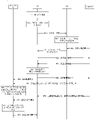
- FIG. 6 is an interactive schematic diagram of a positioning method provided by an embodiment of the present application.
- FIG. 7 is an interactive schematic diagram of a positioning method provided by another embodiment of the present application.
- FIG. 8 is an interactive schematic diagram of a positioning method provided by another embodiment of the present application.
- FIG. 9 is a schematic structural diagram of a core network device according to an embodiment of the present application.
- FIG. 10 is a schematic structural diagram of a terminal device according to an embodiment of the present application.
- applicable systems may be global system of mobile communication (GSM) system, code division multiple access (CDMA) system, wideband code division multiple access (Wideband Code Division Multiple Access, WCDMA) general packet Wireless service (general packet radio service, GPRS) system, long term evolution (long term evolution, LTE) system, LTE frequency division duplex (frequency division duplex, FDD) system, LTE time division duplex (time division duplex, TDD) system, Long term evolution advanced (LTE-A) system, universal mobile telecommunication system (UMTS), worldwide interoperability for microwave access (WiMAX) system, 5G New Radio (New Radio, NR) system, etc.
- GSM global system of mobile communication
- CDMA code division multiple access
- WCDMA Wideband Code Division Multiple Access
- general packet Wireless service general packet Radio service
- GPRS general packet Wireless service
- LTE long term evolution
- LTE long term evolution
- LTE frequency division duplex frequency division duplex
- TDD time division duplex
- LTE-A Long term evolution advanced
- the terminal device involved in the embodiments of the present application may be a device that provides voice and/or data connectivity to a user, a handheld device with a wireless connection function, or other processing device connected to a wireless modem.
- the name of the terminal device may be different.
- the terminal device may be called user equipment (User Equipment, UE).
- Wireless terminal equipment can communicate with one or more core networks (Core Network, CN) via a radio access network (Radio Access Network, RAN).
- RAN Radio Access Network
- "telephone) and computers with mobile terminal equipment eg portable, pocket-sized, hand-held, computer-built or vehicle-mounted mobile devices, which exchange language and/or data with the radio access network.
- Wireless terminal equipment may also be referred to as system, subscriber unit, subscriber station, mobile station, mobile station, remote station, access point , a remote terminal device (remote terminal), an access terminal device (access terminal), a user terminal device (user terminal), a user agent (user agent), and a user device (user device), which are not limited in the embodiments of the present application.
- the network side device involved in the embodiments of the present application may be a base station, and the base station may include a plurality of cells providing services for the terminal.
- the base station may also be called an access point, or may be a device in the access network that communicates with wireless terminal equipment through one or more sectors on the air interface, or other names.
- the network-side equipment can be used to exchange received air frames with Internet Protocol (IP) packets, and act as a router between the wireless terminal equipment and the rest of the access network, where the rest of the access network can include Internet Protocol (IP) communication network.
- IP Internet Protocol
- the network side equipment can also coordinate the attribute management of the air interface.
- the network-side device involved in the embodiments of the present application may be a network-side device (Base Transceiver Station) in a Global System for Mobile Communications (GSM) or a Code Division Multiple Access (Code Division Multiple Access, CDMA).
- BTS Global System for Mobile Communications
- BTS can also be a network side device (NodeB) in Wide-band Code Division Multiple Access (WCDMA), or it can be an evolution in a long term evolution (LTE) system type network side equipment (evolutional Node B, eNB or e-NodeB), 5G base station (gNB) in 5G network architecture (next generation system), or Home evolved Node B (HeNB), relay node (relay node), home base station (femto), pico base station (pico), etc., are not limited in the embodiments of this application.
- the network-side device may include a centralized unit (centralized unit, CU) node and a distributed unit (distributed unit, DU) node, and the centralized unit and
- One or more antennas can be used between the network side device and the terminal device to perform multiple input multiple output (Multi Input Multi Output, MIMO) transmission, and MIMO transmission can be single user MIMO (Single User MIMO, SU-MIMO) or multi-user MIMO MIMO (Multiple User MIMO, MU-MIMO).
- MIMO transmission can be 2D-MIMO, 3D-MIMO, FD-MIMO, or massive-MIMO, or diversity transmission, precoding transmission, or beamforming transmission.
- the core network device involved in the embodiments of the present application may be a location server (Location Management Function, LMF), which is a physical or logical entity that manages the location of a target device, that is, a wireless device to be located, and is located in an evolution service mobile location center (E -SMLC) control plane architecture, responsible for selecting the positioning method and triggering the corresponding positioning measurement, and can calculate the final result and accuracy of the positioning.
- LMF Location Management Function
- E -SMLC evolution service mobile location center
- NG-RAN can send positioning reference signals, or perform positioning measurement based on assistance information
- terminal equipment UE can send positioning reference signals, or based on assistance
- the information can be used for positioning measurement, and the final result and accuracy of positioning can also be calculated based on the measurement results.
- LTE Positioning Protocol includes the positioning methods supported by the target device, different aspects supported by a positioning method (such as supported assisted global navigation satellites) System A-GNSS assistance data type) and some common characteristics of positioning that are not limited to a certain positioning method (such as the ability to handle multiple LPP transactions).
- the LPP location capability transfer transaction may be triggered by a server request, specifically: the server sends an LPP request capability message to request the relevant location capability of the target device; or, the target device "actively reports", specifically: the target device transmits the relevant location capability to the server. , to actively transmit capability information, which may include specific positioning methods and commonalities of some positioning methods.
- the server can be an LMF in the 5G positioning architecture.
- Direct communication refers to the way in which adjacent terminals can transmit data over a direct communication link (also known as Sidelink) within a short range.
- the wireless interface corresponding to the Sidelink link is called the direct communication interface, also called the Sidelink interface, as shown in Figure 2.
- the current 3GPP architecture does not consider a scenario in which a terminal accessing the base station under the coverage of the base station can also provide a positioning reference signal when data transmission is performed through a sidelink (direct communication link).
- the positioning reference signals sent by the outdoor coverage base stations cannot meet the high-precision positioning requirements. If the rate is not high enough, etc., the accuracy of the outdoor positioning results based on the cellular network will be greatly reduced.
- the Sidelink scenario higher requirements are placed on the positioning accuracy. If the existing positioning architecture is used, the positioning accuracy requirements of Sidelink cannot be fully met.
- the positioning method, device and processor-readable storage medium provided by the present application aim to solve the above technical problems in the prior art.
- the embodiment of the present application provides a positioning method: not only the base station can send a positioning reference signal, but also some terminals under the base station (some terminals that access the base station under the coverage of the base station) can also send the positioning reference signal through the PC5 interface, thereby The density of the positioning reference signals in the network and the irrelevance of the geometric distribution of the sent positioning signals are improved, thereby improving the positioning accuracy of the located terminal.
- the base station reports the positioning reference signal resource pool to the LMF server, and the LMF sends the PC5PRS configuration to the located terminal and the target terminal, informing the target terminal that the PRS signal and the corresponding resource configuration can be broadcast on the PC5 interface, and informs that the located terminal can use the PC5 interface. Resource configuration for receiving PRS signals. In this way, the target terminal obtains the configuration of PC5PRS, and can send positioning reference signals as required, so that the positioned terminal can receive more positioning reference signals.
- An embodiment of the present application provides a positioning method 10. As shown in FIG. 3, the method 10 is executed by a core network device, for example, executed by a positioning server LMF, and the method includes:
- the terminal send configuration information to the located terminal and the target terminal at the same time, where the configuration information is used to instruct the target terminal to send a positioning reference signal according to the configuration information, and to indicate the located terminal
- the terminal receives the positioning reference signal according to the configuration information, so as to locate the located terminal.
- the first request received by the LMF may be a positioning service request from a positioning terminal
- the configuration information may include but not be limited to at least one of the following:
- the identification ID of each terminal that transmits the positioning reference signal is the identification ID of each terminal that transmits the positioning reference signal.
- Transmission modes include: periodic, semi-persistent, and aperiodic.
- the indication information of the time domain resources of the semi-persistent positioning reference signal which is used to indicate: the time point, duration, and interval period of the positioning reference signal to start sending, or, the time point to start sending, the time point to end sending, The interval period for sending.
- the indication information of the time domain resource of the periodic positioning reference signal is used to indicate: the transmission period of the positioning reference signal.
- the indication information of the time domain resource of the aperiodic positioning reference signal is used to indicate: the time point when the positioning reference signal starts to be sent, the duration, and the time point when the transmission ends.
- the LMF issues the PC5PRS configuration to the located terminal and the target terminal, informing the target terminal that the PRS signal and the corresponding resource configuration can be broadcast on the PC5 interface, and Notify the resource configuration that the located terminal can receive the PRS signal on the PC5 interface.
- the target terminal obtains the configuration of PC5PRS, and can send positioning reference signals as required, so that the positioned terminal can receive more positioning reference signals.
- the base station can send the positioning reference signal, but some terminals under the base station can also send the positioning reference signal through the PC5 interface, thereby improving the density of the positioning reference signal in the network and the geometry of sending the positioning signal The distribution is irrelevant, thereby improving the positioning accuracy of the located terminal, and thus meeting the positioning accuracy requirements in the Sidelink scenario.
- the target terminal may send the positioning reference signal on the resource indicated by the configuration information through the PC5 interface.
- the LMF can send the configuration information to the located terminal through the LPP message.
- step 120 may include:
- step 121 may include:
- a terminal subordinate to the base station and a terminal subordinate to a neighboring cell base station of the base station are determined as the target terminal.
- the core network device after the core network device receives the first request sent by the positioning terminal (the positioning terminal is the terminal that requests the geographic location of the terminal to be located), it can be based on the identification of the located terminal carried in the first request. information, obtain the base station to which the located terminal belongs by searching the database, determine the terminal subordinate to the base station and the terminal subordinate to the adjacent cell base station of the base station as the target terminal, and then configure the corresponding configuration information for the target terminal.
- the configured configuration information is sent, the target terminal sends a positioning reference signal according to the received configuration information, and the positioned terminal receives the positioning reference signal sent by the target terminal according to the received configuration information, so as to locate the positioned terminal.
- step 120 may further include:
- step 123 includes: configuring corresponding configuration information for the terminal that supports sending the positioning reference signal.
- step 124 may specifically include:
- a terminal that supports sending a positioning reference signal is selected from the target terminal.
- step 123 is specifically:
- corresponding configuration information is configured for the terminal that supports sending the positioning reference signal.
- the parameter information includes at least one of the following: bandwidth of the positioning reference signal sent by the target terminal, frequency point information, and duration.
- the terminal capable of sending the PRS can be screened out, and then Corresponding PRS resources are configured for these terminals based on their specific capabilities.
- the embodiment of the present application also provides a positioning method 100.
- the method 100 is executed by a core network device, for example, executed by a positioning server LMF, and the method 100 may include:
- the terminal to be located performs positioning.
- the configuration information for sending PRS can be configured for the terminals of the whole network in advance, for example, the same PRS resources are configured for the terminals of the whole network, so that when the first request is received, the terminal can be motivated Send PRS in time.
- the preset configuration information can be sent to the terminals of the whole network by means of a broadcast message.
- the specific implementation method here may include: the LMF directly sends the configuration information to each terminal through an LPP message; or, the LMF sends the configuration information to the base station, The base station sends the broadcast message to each terminal.
- the above positioning method 100 may further include:
- step 104 may include:
- a terminal that supports sending a positioning reference signal is selected from the target terminal.
- the above-mentioned positioning method 10 and/or positioning method 100 may further include:
- the 130 Receive a measurement result and a corresponding time stamp reported by the located terminal, where the measurement result includes: a time difference of arrival between positioning reference signals and a corresponding positioning reference signal ID;
- step 150 may include:
- the identification information of the at least one target terminal from the received geographical location information and the corresponding time stamp reported by the target terminal, filter out the geographical location information and the corresponding time stamp of the at least one target terminal;
- the LMF can determine the target terminal corresponding to the positioning reference signal ID according to the identification information of the target terminal and the positioning reference signal ID corresponding to the received measurement result, and then, according to the received positioning reference signal The arrival time difference and the corresponding time stamp, as well as the geographical location information of the determined target terminal and the corresponding time stamp, obtain the geographical location of the located terminal.
- the LMF can obtain the geographic location of the located terminal by using an existing calculation method, which is not repeated here for the sake of brevity of description.
- the above-mentioned positioning method 10 and/or positioning method 100 may further include:
- the LMF can directly receive the geographic location reported by the terminal to be located, without performing positioning calculation to determine the geographic location of the terminal to be located.
- an embodiment of the present application also provides a positioning method 20.
- the method 20 may be executed by a terminal to be positioned during the positioning process, and the method includes:
- the configuration information may include, but is not limited to, at least one of the following:
- the identification ID of each terminal that transmits the positioning reference signal is the identification ID of each terminal that transmits the positioning reference signal.
- Transmission modes include: periodic, semi-persistent, and aperiodic.
- the indication information of the time domain resources of the semi-persistent positioning reference signal which is used to indicate: the time point, duration, and interval period of the positioning reference signal to start sending, or, the time point to start sending, the time point to end sending, The interval period for sending.
- the indication information of the time domain resource of the periodic positioning reference signal is used to indicate: the transmission period of the positioning reference signal.
- the indication information of the time domain resource of the aperiodic positioning reference signal is used to indicate: the time point when the positioning reference signal starts to be sent, the duration, and the time point when the transmission ends.
- the positioned terminal receives the PC5PRS configuration issued by the LMF, and learns the resource configuration for receiving the PRS signal on the PC5 interface. It can not only receive the positioning reference signal sent by the base station, but also receive some terminals under the base station according to the configuration.
- the positioning reference signals sent through the PC5 interface can receive more positioning reference signals, thereby improving the density of positioning reference signals in the network and the irrelevance of the geometric distribution of the sent positioning signals, thereby improving the positioning of the located terminal. accuracy, which can meet the positioning accuracy requirements in Sidelink scenarios.
- the located terminal may obtain the configuration information by receiving the LPP message sent by the LMF, so as to receive the corresponding positioning reference signal on the resource indicated by the configuration information.
- step 230 may include:
- the terminal to be positioned may obtain the time difference of arrival between the positioning reference signals sent by each transmitter and the corresponding time stamp based on the measurement, and the received geographic location of each transmitter from the core network device information, speed information and corresponding time stamps to determine their geographic location, without sending the relevant information to the LMF, and the LFM will perform the positioning calculation.
- step 230 may further include:
- step 232 may include:
- the geographic location is determined according to the arrival time difference, the geographic location information, speed information and the corresponding timestamp of each transmitting end, and the timestamp corresponding to the arrival time difference after calibration processing.
- step 240 may include:
- the calibration parameter is determined from the first time stamp, the second time stamp and the third time stamp.
- two types of time differences that may exist need to be calibrated, one is brought about by the positioned terminal itself, for example: the time point at which the positioning reference signal sent by each transmitter is received and the time of positioning If there is a time difference between the calculated time points, the time point for positioning calculation needs to be corrected; the other type is caused by the network. For example, the time when each transmitter sends the positioning reference signal is not synchronized, which will cause each transmitter to send the reference signal. There is an error in the arrival time difference between the transmitted positioning reference signals, which also needs to be corrected.
- step 232 may include:
- the geographic location is determined according to the remaining arrival time difference and the corresponding timestamp, as well as the geographic location information of the corresponding transmitter and the corresponding timestamp.
- the information corresponding to the mobile terminal (including: arrival time difference and corresponding timestamp, and geographic location information and corresponding timestamp) can be eliminated The way. Since the factors that will cause errors in the positioning results during the positioning calculation are removed, the positioning accuracy can be improved.
- the obtained calibration can also be first determined. After the parameters are calibrated to the timestamps corresponding to the remaining arrival time differences, the location calculation is performed to obtain the geographic location of the located terminal. Doing so will make the final positioning result more accurate.
- the positioning method 20 may further include:
- step 220 is specifically: receiving, according to the configuration information, a positioning reference signal sent by the terminal corresponding to the identification ID.
- the positioning method 20 may further include:
- step 230 may include:
- the measurement result and the corresponding timestamp reported to the core network device so that the core network device can determine the geographic location of the located terminal, where the measurement result includes: a time difference of arrival between positioning reference signals and the corresponding positioning reference signal ID.
- the positioning method 30 includes the following steps:
- the LMF receives a first request (eg, a request for a positioning service).
- the LMF receives a first request from the positioning terminal, where the first request carries the identification information of the located terminal, and is used to request the location information of the located terminal, which may indicate that the located terminal is performing a positioning service, or may not instruct.
- the positioning terminal is a terminal that requests the geographic location of the positioned terminal.
- the LMF can select and set corresponding QoS indicator requirements according to the service type of the first request, such as: positioning accuracy requirements and positioning integrity requirements, and so on.
- the LMF determines the target terminal according to the first request.
- the base station to which the located terminal belongs can be determined according to the identification information of the located terminal carried in the first request; for the target terminal.
- the LMF configures corresponding configuration information for the target terminal.
- the same configuration information may be configured for the determined target terminal, for example, the same PRS resources are given to the target terminal, that is, the time domain, frequency domain, and space domain resources for each target terminal to send PRS may be the same of.
- the LMF may also screen the target terminals, for example, screening out terminals capable of sending PRS to send PRS. Specifically, the following steps may be included:
- the LMF sends a first request to the core network device AMF, where the first request may carry the identification ID of the target terminal, so as to request the AMF to page the target terminal to enter the positioning process.
- the AMF In response to the first request, the AMF sends a paging message to the target terminal to page the target terminal that can enter the positioning process.
- the AMF receives the response message sent by the target terminal that can enter the positioning process, to indicate that the corresponding target terminal receives the paging.
- the AMF feeds back the ID of the target terminal that receives the paging (denoted as: the first target terminal) to the LMF.
- the LMF sends a second request to the first target terminal, where the second request is used to inquire whether the first target terminal supports sending a positioning reference signal, and the second request may be an assisted positioning request, which is used to inquire whether the first target terminal has an auxiliary positioning signal. positioning capability.
- the LMF receives the feedback message sent by the first target terminal, and according to the identification information of the first target terminal carried in the feedback message, selects the terminal that supports sending the positioning reference signal from the first target terminal (marked as: the second target terminal). target terminal).
- step 330 can be:
- the LMF configures corresponding configuration information for the second target terminal according to the parameter information of the positioning reference signal sent by the target terminal carried in the feedback message.
- the parameter information includes at least one of the following items: bandwidth of the positioning reference signal sent by the target terminal, frequency point information, and duration.
- each second target terminal feeds back at least one parameter of the bandwidth, frequency point information, and duration of the positioning reference signal sent by itself, then according to the feedback from each second target terminal
- the parameters for sending the positioning reference signal are configured with corresponding configuration information.
- the LMF sends the configured configuration information to the located terminal and the target terminal.
- the target terminal is not screened, the same configuration information configured for each target terminal is sent; if the target terminal is the second target terminal obtained after screening, the configuration information configured for each second target terminal and each target terminal are sent. Configuration information corresponding to the second target terminal.
- the target terminal sends the PRS at the corresponding resource location indicated by the configuration information.
- the located terminal receives the PRS sent by the target terminal at the corresponding resource position indicated by the configuration information, and measures the time difference of arrival and the corresponding time stamp between the positioning reference signals sent by each transmitter.
- the transmitting end includes the target terminal and the base station to which the target terminal belongs.
- the process of sending the positioning reference signal by the base station can be implemented by using the existing process, and for the sake of brevity of description, no corresponding description is made in this embodiment of the present application.
- the located terminal sends a measurement result to the LMF through LPP signaling, where the measurement result includes: the arrival time difference between the positioning reference signals and the corresponding positioning reference signal ID.
- the transmitting end includes target terminals 1, 2, 3, 4 and base station 5, wherein 1, 2, 3, 4, and 5 are the identifiers of the corresponding transmitting ends, respectively.
- the arrival time difference between the positioning reference signals sent by the terminal and the corresponding positioning reference signal ID are shown in Table 1 below.
- the LMF receives the geographic location information and the corresponding timestamp reported by the target terminal.
- the LMF can determine the target terminal (referred to as the third target terminal) corresponding to the positioning reference signal ID according to the identification information of the target terminal and the positioning reference signal ID corresponding to the received measurement result.
- the corresponding positioning reference signal IDs are 1 and 3, so that the corresponding target terminals 1 and 3 are determined.
- the geographic location information and the corresponding timestamp of the third target terminal are screened out from the received geographic location information and the corresponding timestamp automatically reported by the target terminal. It should be noted that, in this case, the specific time when the LMF receives the geographic location information and the corresponding time stamp reported by the target terminal is not limited by whether the third target terminal is determined. Therefore, the execution of step 380 is not limited to the order of step numbering, which is merely an example.
- a third request may be actively sent to the third target terminal to request geographic location information of the third target terminal, and then the geographic location information and the corresponding timestamp reported by the third target terminal are received. It should be noted that, in this case, in order to accurately obtain the required relevant information of the target terminal, it is necessary to actively request the third target terminal for the corresponding geographic location information and the corresponding time after the third target terminal is determined. stamp.
- the LMF determines the geographic location of the located terminal based on the received measurement result and the reported information.
- the LMF determines the geographic location of the located terminal according to the time difference of arrival between the received positioning reference signals and the corresponding timestamp, as well as the geographic location information of the third target terminal and the corresponding timestamp. .
- the LMF can obtain the geographic location of the located terminal by using an existing calculation method, which is not repeated here for the sake of brevity of description.
- FIG. 7 a data/signaling interaction process diagram of a positioning method provided by another embodiment of the present application is shown.
- the positioning method 40 is different from the positioning method 30 in the embodiment shown in FIG. 6 in that:
- the positioned terminal receives the PRS sent by the target terminal at the corresponding resource position indicated by the configuration information, and measures the time difference of arrival between the positioning reference signals sent by each transmitter and the corresponding time stamp. , instead of sending the measurement results to the LMF, and the LMF performs positioning calculation to determine the position of the positioned terminal, but receives the information from the LFM, and then performs positioning by itself in combination with the information measured by itself.
- the specific implementation process of steps 410 to 460 included in the positioning method 40 shown in FIG. 7 is similar to the specific implementation process of steps 310 to 360 included in the positioning method 30 shown in FIG. 6 , for the sake of brevity of description , and will not be repeated here. The differences between the two embodiments will be described in detail below.
- the method 40 includes:
- the LMF receives the geographic location information, the speed information, and the corresponding timestamp reported by the target terminal, and sends the reported information to the located terminal.
- step 470 is not limited to the sequence of step numbers, and this is just an example.
- the information for determining the geographic location may be processed in the following two ways.
- the first way is: according to the speed information of each transmitter and/or the geographical position information of each transmitter at the adjacent time, determine the mobile transmitter, and then remove the arrival time difference corresponding to the mobile transmitter from the arrival time difference , and then determine the geographic location according to the remaining arrival time difference and the corresponding timestamp, as well as the geographic location information of the corresponding transmitter and the corresponding timestamp.
- the second method is to perform calibration processing on the timestamp corresponding to the arrival time difference according to the obtained calibration parameters, and then, according to the arrival time difference, the geographic location information, speed information and the corresponding timestamp of each transmitter, as well as the arrival time difference after calibration processing. Corresponding timestamp to determine geographic location.
- the calibration parameter can be obtained by obtaining the first time stamp when each transmitter sends the positioning reference signal, the second time stamp when each transmitter sends the positioning reference signal, and the third time when the positioned terminal performs positioning calculation. Stamp; according to the first time stamp, the second time stamp and the third time stamp, the calibration parameter is determined.
- two types of time differences that may exist need to be calibrated, one is brought by the terminal being located itself, for example: the time point when the positioning reference signal sent by each transmitter is received and the positioning If there is a time difference between the calculated time points, the time point for positioning calculation needs to be corrected; the other type is caused by the network.
- the time when each transmitter sends the positioning reference signal is not synchronized, which will cause each transmitter to send the reference signal. There is an error in the arrival time difference between the transmitted positioning reference signals, which also needs to be corrected.
- the above-mentioned first method may be used to eliminate the information corresponding to the moving terminal, and then the positioning calculation is performed.
- the located terminal sends the obtained geographic location to the LMF.
- the positioning method 50 includes the following steps:
- the LMF sends preset configuration information to terminals in the entire network by means of a broadcast message.
- the specific implementation may include: the LMF directly sends the configuration information to each terminal through an LPP message; or the LMF sends the configuration information to the base station, and the base station sends the configuration information to each terminal through a broadcast message.
- Step 500 may be included before step 510, where the LMF pre-configures the configuration information for sending the positioning reference information for the terminals of the entire network. Since it is not certain which terminals have the ability to send PRS and which terminals do not have the ability to send PRS, and it is also uncertain which terminals have the ability to send PRS, the same PRS resources can be configured for the terminals of the whole network, namely: The time domain, frequency domain, and space domain resources used by each terminal to transmit the PRS may be the same.
- the specific configuration of the PRS resources needs to be performed according to the resources in the positioning reference signal resource pool reported by the base station.
- the LMF receives a first request (eg, a request for a positioning service).
- the LMF receives a first request from the positioning terminal, where the first request carries the identification information of the located terminal, and is used to request the location information of the located terminal, which may indicate that the located terminal is performing a positioning service, or may not instruct.
- the LMF after the LMF receives the first request, it can select and set corresponding QoS indicator requirements according to the service type of the request, such as: positioning accuracy requirements and positioning integrity requirements, and so on.
- the LMF determines, according to the first request, a target terminal that supports sending the positioning reference signal PRS.
- step 530 the following steps may be included:
- the LMF sends a first request to the core network device AMF, where the first request may carry the identification ID of the target terminal, so as to request the AMF to page the target terminal to enter the positioning process.
- the AMF In response to the first request, the AMF sends a paging message to the target terminal to page the target terminal that can enter the positioning process.
- the AMF receives the response message sent by the target terminal that can enter the positioning process, to indicate that the corresponding target terminal receives the paging.
- the AMF feeds back the ID of the target terminal that receives the paging (denoted as: the first target terminal) to the LMF.
- the LMF sends a second request to the first target terminal, where the second request is used to inquire whether the first target terminal supports sending a positioning reference signal, and the second request may be an assisted positioning request, which is used to inquire whether the first target terminal has an auxiliary positioning signal. positioning capability.
- the LMF receives a feedback message sent by the first target terminal, where the feedback message carries the identification information of the first target terminal.
- step 530 can be:
- the LMF selects a target terminal (referred to as the second target terminal) that supports sending the positioning reference signal from the first target terminal.
- the LMF sends the identification ID of the second target terminal to the located terminal.
- the second target terminal sends the PRS at the corresponding resource location indicated by the configuration information.
- the located terminal receives the PRS sent by the second target terminal at the corresponding resource position indicated by the configuration information, and measures the time difference of arrival between the positioning reference signals sent by each transmitter and the corresponding timestamp.
- the transmitting end includes the target terminal and the base station to which the target terminal belongs.
- the located terminal receives the PRS sent by the target terminal at the corresponding resource position indicated by the configuration information according to the received configuration information, and measures the difference between the positioning reference signals sent by each transmitter. After the arrival time difference and the corresponding time stamp, to determine the location of the terminal to be located, two ways can be used.
- One way is to send the measurement result to the LMF, and the LMF performs positioning calculation to determine the position of the positioned terminal.
- the LMF performs positioning calculation to determine the position of the positioned terminal.
- the terminal to be positioned receives the information from the LFM, and performs positioning by itself in combination with the information measured by itself.
- the terminal to be positioned receives the information from the LFM, and performs positioning by itself in combination with the information measured by itself.
- steps 470 to 490 included in the positioning method 40 shown in FIG. 7 which will not be repeated here for the sake of brevity of description.
- the core network device 60 includes: a memory 601 , a transceiver 602 and a processor 603 .
- the memory 601 is used to store computer programs.
- the transceiver 602 is configured to: receive a first request under the control of the processor 603, where the first request is used to request the location information of the located terminal; according to the first request, send a request to the located terminal and the target
- the terminal simultaneously sends configuration information, where the configuration information is used to instruct the target terminal to send a positioning reference signal according to the configuration information, and to instruct the located terminal to receive the positioning reference signal according to the configuration information, so as to be used for The positioned terminal performs positioning.
- the processor 603 is used to read the computer program in the memory 601 and execute the control of the transceiver.
- the processor is specifically configured to: determine the target terminal for sending the positioning reference signal according to the identification information of the located terminal carried in the first request; configure the corresponding configuration for the target terminal information.
- the transceiver is specifically configured to send the configured configuration information to the located terminal and the target terminal at the same time under the control of the processor.
- the processor is specifically configured to: determine, according to the identification information of the located terminal, the base station to which the located terminal belongs; The subordinate terminal is determined as the target terminal.
- the processor is specifically configured to: select a terminal that supports sending a positioning reference signal from the target terminals; and configure corresponding configuration information for the terminal that supports sending a positioning reference signal.
- the bus architecture in FIG. 9 may include any number of interconnected buses and bridges, specifically various circuit links of one or more processors represented by processor 603 and memory represented by memory 601 together.
- the bus architecture may also link together various other circuits, such as peripherals, voltage regulators, and power management circuits, which are well known in the art and, therefore, will not be described further herein.
- the bus interface provides the interface.
- Transceiver 602 may be a number of elements, including a transmitter and a receiver, providing means for communicating with various other devices over transmission media including wireless channels, wired channels, fiber optic cables, and the like.
- the processor 603 is responsible for managing the bus architecture and general processing, and the memory 601 may store data used by the processor 603 in performing operations.
- the processor 603 may be a central processor (CPU), an application specific integrated circuit (ASIC), a field programmable gate array (Field-Programmable Gate Array, FPGA) or a complex programmable logic device (Complex Programmable Logic Device). , CPLD), the processor can also use a multi-core architecture.
- CPU central processor
- ASIC application specific integrated circuit
- FPGA field programmable gate array
- FPGA field programmable gate array
- CPLD Complex Programmable Logic Device
- an embodiment of the present application provides a core network device, where the core network device includes: a memory, a transceiver, and a processor.
- Memory is used to store computer programs.
- the transceiver is configured to: send preset configuration information to the target terminal under the control of the processor, where the configuration information is used to instruct the target terminal to send a positioning reference signal according to the configuration information; receive a first request, the first A request is used to request the location information of the located terminal; according to the first request, the configuration information is sent to the located terminal, and the configuration information is used to instruct the located terminal to receive the location information according to the configuration information.
- the positioning reference signal is used for positioning the located terminal.
- a processor is used to read a computer program in the memory and perform control of the transceiver.
- the terminal 70 includes a memory 701 , a transceiver 702 and a processor 703 .
- the memory 701 is used to store computer programs.
- the transceiver 702 is configured to: receive configuration information sent by the core network device under the control of the processor 703; and receive positioning reference signals sent by multiple transmitters according to the configuration information, wherein the multiple transmitters include The target terminal and the base station to which the target terminal belongs.
- the processor 703 is configured to read the computer program in the memory 701 and control the transceiver, and perform positioning according to the positioning reference signal received by the transceiver.
- the processor is specifically configured to: measure the time difference of arrival between the positioning reference signals sent by each transmitting end; The geographic location information, speed information and corresponding time stamps of each transmitter of the device are used to determine the geographic location.
- the processor is specifically configured to: measure the time difference of arrival between the positioning reference signals sent by each transmitting end.
- the transceiver is further configured to: report the measurement result and the corresponding time stamp to the core network device, so that the core network device can determine the geographic location of the located terminal.
- the measurement result includes: the arrival time difference between the positioning reference signals and the corresponding positioning reference signal ID.
- the bus architecture in FIG. 10 may include any number of interconnected buses and bridges, specifically various circuit links of one or more processors represented by processor 703 and memory represented by memory 701 together.
- the bus architecture may also link together various other circuits, such as peripherals, voltage regulators, and power management circuits, which are well known in the art and, therefore, will not be described further herein.
- the bus interface provides the interface.
- Transceiver 702 may be multiple elements, including a transmitter and a receiver, providing means for communicating with various other devices over transmission media including wireless channels, wired channels, fiber optic cables, and the like.
- the user interface 704 may also be an interface capable of externally connecting the required equipment, and the connected equipment includes but is not limited to a keypad, a display, a speaker, a microphone, a joystick, and the like.
- the processor 703 is responsible for managing the bus architecture and general processing.
- Memory 702 may store data used by processor 703 in performing operations.
- the processor 703 may be a CPU (central processor), an ASIC (Application Specific Integrated Circuit, an application-specific integrated circuit), an FPGA (Field-Programmable Gate Array, a field programmable gate array) or a CPLD (Complex Programmable Logic Device) , complex programmable logic devices), the processor can also use a multi-core architecture.
- CPU central processor
- ASIC Application Specific Integrated Circuit
- FPGA Field-Programmable Gate Array
- CPLD Complex Programmable Logic Device
- complex programmable logic devices complex programmable logic devices
- the processor is configured to execute any one of the methods provided in the embodiments of the present application according to the obtained executable instructions by invoking the computer program stored in the memory.
- the processor and memory may also be physically separated.
- an embodiment of the present application further provides a core network device, where the core network device includes: a receiving unit and a sending unit.
- the receiving unit is configured to receive a first request, where the first request is used to request location information of the located terminal.
- the sending unit is configured to send configuration information to the located terminal and the target terminal at the same time according to the first request, where the configuration information is used to instruct the target terminal to send a positioning reference signal according to the configuration information, and to indicate the The located terminal receives the positioning reference signal according to the configuration information, so as to locate the located terminal.
- the core network device further includes a processing unit, configured to determine the target terminal for sending the positioning reference signal according to the identification information of the located terminal carried in the first request; configure the corresponding terminal for the target terminal configuration information.
- the sending unit is configured to send the configured configuration information to the located terminal and the target terminal at the same time.
- the processing unit is specifically configured to: determine the base station to which the located terminal belongs according to the identification information of the located terminal; The subordinate terminal is determined as the target terminal.
- the processing unit is further configured to: filter out terminals that support sending positioning reference signals from the target terminals; and configure corresponding configuration information for the terminals that support sending positioning reference signals.
- the sending unit is specifically configured to: send a second request to the target terminal, where the second request is used to inquire whether the target terminal supports sending a positioning reference signal.
- the processing unit is specifically configured to, according to the identification information of the target terminal carried in the received feedback message of the target terminal, screen out the terminal that supports sending the positioning reference signal from the target terminal.
- corresponding configuration information is configured for the terminal that supports sending the positioning reference signal.
- the parameter information includes at least one of the following items: bandwidth of the positioning reference signal sent by the target terminal, frequency point information, and duration.
- the core network device further includes a receiving unit configured to receive a measurement result and a corresponding time stamp reported by the located terminal, where the measurement result includes: a time difference of arrival between positioning reference signals and a corresponding positioning Reference Signal ID.
- the processing unit is configured to: determine at least one corresponding target terminal according to the positioning reference signal ID corresponding to the measurement result and the identification information of the target terminal; obtain the geographic location information and the corresponding timestamp reported by the at least one target terminal ; Determine the geographic location of the located terminal according to the measurement result and the corresponding timestamp, as well as the geographic location information and the corresponding timestamp.
- the processing unit is specifically configured to, according to the identification information of the at least one target terminal, filter out the at least one target terminal from the received geographic location information and the corresponding timestamp reported by the target terminal. geographic location information of a target terminal and a corresponding timestamp; or, the sending unit is specifically configured to send a third request to the at least one target terminal to request the geographic location information of the at least one target terminal.
- the receiving unit is specifically configured to receive the geographic location information and the corresponding timestamp reported by the at least one target terminal.
- the receiving unit is further configured to receive a geographic location reported by the located terminal, where the reported geographic location is obtained by performing positioning by the located terminal according to the received positioning reference signal.
- the configuration information may include, but is not limited to, at least one of the following:
- the identification ID of each terminal that transmits the positioning reference signal is the identification ID of each terminal that transmits the positioning reference signal.
- Transmission modes include: periodic, semi-persistent, and aperiodic.
- the indication information of the time domain resources of the semi-persistent positioning reference signal which is used to indicate: the time point, duration, and interval period of the positioning reference signal to start sending, or, the time point to start sending, the time point to end sending, The interval period for sending.
- the indication information of the time domain resource of the periodic positioning reference signal is used to indicate: the transmission period of the positioning reference signal.
- the indication information of the time domain resource of the aperiodic positioning reference signal is used to indicate: the time point when the positioning reference signal starts to be sent, the duration, and the time point when the transmission ends.
- an embodiment of the present application further provides a core network device, where the core network device includes: a sending unit and a receiving unit.
- the sending unit is configured to send preset configuration information to the target terminal, where the configuration information is used to instruct the target terminal to send a positioning reference signal according to the configuration information.
- the receiving unit is configured to receive a first request, where the first request is used to request location information of the located terminal.
- the sending unit is further configured to send the configuration information to the located terminal according to the first request, where the configuration information is used to instruct the located terminal to receive the positioning reference signal according to the configuration information, for locating the located terminal.
- the core network device further includes a processing unit, configured to screen out the terminals that support sending positioning reference signals from the target terminals.
- the sending unit is further configured to send an identification ID of a terminal that supports sending positioning reference signals to the located terminal, so that the located terminal receives a positioning reference signal sent by a terminal corresponding to the identification ID according to the configuration information.
- the sending unit is specifically configured to send a second request to the target terminal, where the second request is used to inquire whether the target terminal supports sending a positioning reference signal.
- the processing unit is specifically configured to, according to the identification information of the target terminal carried in the received feedback message of the target terminal, screen out the terminal that supports sending the positioning reference signal from the target terminal.
- an embodiment of the present application also provides a terminal, where the terminal includes: a receiving unit and a positioning unit.
- the receiving unit is configured to receive configuration information sent by a core network device; and receive positioning reference signals sent by multiple transmitters according to the configuration information, where the multiple transmitters include a target terminal and a base station to which the target terminal belongs.
- the positioning unit is configured to locate the located terminal according to the positioning reference signal.
- the positioning unit is specifically configured to: measure the time difference of arrival between the positioning reference signals sent by each transmitting end; The geographic location information, speed information and corresponding time stamp of each transmitter determine the geographic location.
- the positioning unit is specifically configured to perform calibration processing on the timestamp corresponding to the time difference of arrival according to the obtained calibration parameter; according to the time difference of arrival, the geographic location information and speed information of each transmitter and the corresponding time stamp, and the time stamp corresponding to the time-of-arrival difference after calibration processing, to determine the geographic location.
- the calibration parameter may be determined based on the first time stamp when each transmitter sends the positioning reference signal, the second time stamp when each transmitter sends the positioning reference signal, and the third time stamp when the positioned terminal performs positioning calculation. get.
- the positioning unit is specifically used for:
- the geographic location is determined according to the remaining arrival time difference and the corresponding timestamp, as well as the geographic location information of the corresponding transmitter and the corresponding timestamp.
- the receiving unit is further configured to:
- the positioning reference signal sent by the terminal corresponding to the identification ID is received according to the configuration information.
- a sending unit is further included, configured to report the geographic location to the core network device.
- the positioning unit is specifically configured to measure the time difference of arrival between the positioning reference signals sent by each transmitting end.
- the sending unit is further configured to report the measurement result and the corresponding time stamp to the core network device, so that the core network device can determine the geographic location of the located terminal, where the measurement result includes: a positioning reference The arrival time difference between the signals and the corresponding positioning reference signal ID.
- the configuration information may include, but is not limited to, at least one of the following:
- the identification ID of each terminal that transmits the positioning reference signal is the identification ID of each terminal that transmits the positioning reference signal.
- Transmission modes include: periodic, semi-persistent, and aperiodic.
- the indication information of the time domain resources of the semi-persistent positioning reference signal which is used to indicate: the time point, duration, and interval period of the positioning reference signal to start sending, or, the time point to start sending, the time point to end sending, The interval period for sending.
- the indication information of the time domain resource of the periodic positioning reference signal is used to indicate: the transmission period of the positioning reference signal.
- the indication information of the time domain resource of the aperiodic positioning reference signal is used to indicate: the time point when the positioning reference signal starts to be sent, the duration, and the time point when the transmission ends.
- an embodiment of the present application further provides a computer-readable storage medium, where a computer program is stored on the computer-readable storage medium, and when it runs on a computer, the computer can execute the foregoing positioning method 10, or, the positioning method 100, or, the corresponding content in the embodiment corresponding to the positioning method 20.
- the positioning method not only the base station can send the positioning reference signal, but some terminals under the base station can also send the positioning reference signal through the PC5 interface, thereby improving the density and the density of the positioning reference signal in the network.
- the geometric distribution of the transmitted positioning signal is irrelevant, thereby improving the positioning accuracy of the located terminal, which in turn can meet the positioning accuracy requirements in the Sidelink scenario.
- each functional unit in each embodiment of the present application may be integrated into one processing unit, or each unit may exist physically alone, or two or more units may be integrated into one unit.
- the above-mentioned integrated units may be implemented in the form of hardware, or may be implemented in the form of software functional units.
- the integrated unit is implemented in the form of a software functional unit and sold or used as an independent product, it may be stored in a processor-readable storage medium.
- the technical solutions of the present application can be embodied in the form of software products in essence, or the parts that contribute to the prior art, or all or part of the technical solutions, and the computer software products are stored in a storage medium , including several instructions for causing a computer device (which may be a personal computer, a server, or a network device, etc.) or a processor (processor) to execute all or part of the steps of the methods described in the various embodiments of the present application.
- the aforementioned storage medium includes: U disk, mobile hard disk, read-only memory (Read-Only Memory, ROM), random access memory (Random Access Memory, RAM), magnetic disk or optical disk and other media that can store program codes .
- the embodiments of the present application may be provided as a method, a system, or a computer program product. Accordingly, the present application may take the form of an entirely hardware embodiment, an entirely software embodiment, or an embodiment combining software and hardware aspects. Furthermore, the present application may take the form of a computer program product embodied on one or more computer-usable storage media having computer-usable program code embodied therein, including but not limited to disk storage, optical storage, and the like.
- processor-executable instructions may also be stored in a processor-readable memory capable of directing a computer or other programmable data processing apparatus to operate in a particular manner, such that the instructions stored in the processor-readable memory result in the manufacture of means including the instructions product, the instruction means implements the functions specified in the flow or flow of the flowchart and/or the block or blocks of the block diagram.
- processor-executable instructions can also be loaded onto a computer or other programmable data processing device to cause a series of operational steps to be performed on the computer or other programmable device to produce a computer-implemented process that Execution of the instructions provides steps for implementing the functions specified in the flowchart or blocks and/or the block or blocks of the block diagrams.
Landscapes
- Engineering & Computer Science (AREA)
- Signal Processing (AREA)
- Computer Networks & Wireless Communication (AREA)
- Radar, Positioning & Navigation (AREA)
- Remote Sensing (AREA)
- Physics & Mathematics (AREA)
- General Physics & Mathematics (AREA)
- Mobile Radio Communication Systems (AREA)
- Position Fixing By Use Of Radio Waves (AREA)
Abstract
Description

Claims (35)
- 一种定位方法,由核心网设备执行,所述方法包括:接收第一请求,所述第一请求用于请求被定位终端的位置信息;根据所述第一请求,向所述被定位终端和目标终端同时发送配置信息,所述配置信息用于指示所述目标终端根据所述配置信息发送定位参考信号,以及指示所述被定位终端根据所述配置信息接收所述定位参考信号,以用于对所述被定位终端进行定位。
- 根据权利要求1所述的定位方法,其中,所述根据所述第一请求,向所述被定位终端和目标终端同时发送配置信息,包括:根据所述第一请求中携带的所述被定位终端的标识信息,确定发送定位参考信号的目标终端;为所述目标终端配置相应的配置信息;向所述被定位终端和所述目标终端同时发送配置的配置信息。
- 根据权利要求2所述的定位方法,其中,所述根据所述第一请求中携带的所述被定位终端的标识信息,确定发送定位参考信号目标终端,包括:根据所述被定位终端的标识信息,确定所述被定位终端所属的基站;将所述基站下属的终端和所述基站的邻区基站下属的终端确定为所述目标终端。
- 根据权利要求2所述的定位方法,其中,在为所述目标终端配置相应的配置信息之前,所述方法还包括:从所述目标终端中筛选出支持发送定位参考信号的终端;所述为所述目标终端配置相应的配置信息,包括:为所述支持发送定位参考信号的终端配置相应的配置信息。
- 根据权利要求4所述的定位方法,其中,所述从所述目标终端中筛选出支持发送定位参考信号的终端,包括:向所述目标终端发送第二请求,所述第二请求用于询问所述目标终端是否支持发送定位参考信号;根据接收到的反馈消息中携带的所述目标终端的标识信息,从所述目标终端中筛选出所述支持发送定位参考信号的终端。
- 根据权利要求5所述的定位方法,其中,所述反馈消息中还携带所述目标终端所发送定位参考信号的参数信息,所述为所述支持发送定位参考信号的终端配置相应的配置信息,包括:根据所述参数信息,为所述支持发送定位参考信号的终端配置相应的配置信息。
- 根据权利要求6所述的定位方法,其中,所述参数信息包括以下至少一项: 所述目标终端所发送定位参考信号的带宽,频点信息,持续时长。
- 根据权利要求1-7中任一项所述的定位方法,其中,所述方法还包括:接收所述被定位终端上报的测量结果和对应的时间戳,所述测量结果包括:定位参考信号之间的到达时间差和对应的定位参考信号ID;根据所述测量结果对应的定位参考信号ID和所述目标终端的标识信息,确定对应的至少一个目标终端;获取所述至少一个目标终端上报的地理位置信息和对应的时间戳;根据所述测量结果和对应的时间戳,以及所述地理位置信息和对应的时间戳,确定所述被定位终端的地理位置。
- 根据权利要求8所述的定位方法,其中,所述获取所述至少一个目标终端上报的地理位置信息和所述地理位置信息对应的时间戳,包括;根据所述至少一个目标终端的标识信息,从接收的所述目标终端上报的地理位置信息和对应的时间戳中,筛选出所述至少一个目标终端的地理位置信息和对应的时间戳;或者,向所述至少一个目标终端发送第三请求,所述第三请求用于请求所述至少一个目标终端的地理位置信息;接收所述至少一个目标终端上报的地理位置信息和对应的时间戳。
- 根据权利要求1-7中任一项所述的定位方法,其中,所述方法还包括:接收所述被定位终端上报的地理位置,所述上报的地理位置为所述被定位终端根据接收的定位参考信号进行定位得到。
- 根据权利要求1-7中任一项所述的定位方法,其中,所述配置信息包括以下至少一项:定位参考信号的发送模式;定位参考信号的时域资源、频域资源和空域资源的指示信息;每个发送定位参考信号的终端的标识ID;其中,发送模式包括:周期性、半持续性、非周期性;半持续性的定位参考信号的时域资源的指示信息,用于指示:定位参考信号开始发送的时间点、持续时间、发送的间隔周期,或者,开始发送的时间点、结束发送的时间点、发送的间隔周期;周期性的定位参考信号的时域资源的指示信息,用于指示:定位参考信号的发送周期;非周期性的定位参考信号的时域资源的指示信息,用于指示:定位参考信号开始发送的时间点、持续时间、结束发送的时间点。
- 一种定位方法,由核心网设备执行,所述方法包括:向目标终端发送预设的配置信息,所述配置信息用于指示所述目标终端根据配置信息发送定位参考信号;接收第一请求,所述第一请求用于请求被定位终端的位置信息;根据所述第一请求,向所述被定位终端发送所述配置信息,所述配置信息用于指示所述被定位终端根据所述配置信息接收所述定位参考信号,以用于对所述被定位终端进行定位。
- 根据权利要求12所述的方法,其中,所述方法还包括:从所述目标终端中筛选出支持发送定位参考信号的终端;向所述被定位终端发送所述支持发送定位参考信号的终端的标识ID。
- 根据权利要求13所述的定位方法,其中,所述从所述目标终端中筛选出支持发送定位参考信号的终端,包括:向所述目标终端发送第二请求,所述第二请求用于询问所述目标终端是否支持发送定位参考信号;根据接收到的反馈消息中携带的所述目标终端的标识信息,从所述目标终端中筛选出所述支持发送定位参考信号的终端。
- 一种定位方法,由被定位终端执行,所述方法包括:接收核心网设备发送的配置信息;根据所述配置信息接收多个发射端发送的定位参考信号,其中,所述多个发射端包括目标终端和所述目标终端所属的基站;根据所述定位参考信号进行定位。
- 根据权利要求15所述的方法,其中,所述根据所述定位参考信号进行定位,包括:测量各个发射端所发送的定位参考信号之间的到达时间差;根据所述到达时间差和对应的时间戳,以及接收到的来自所述核心网设备的各个发射端的地理位置信息、速度信息和对应的时间戳,确定地理位置。
- 根据权利要求16所述的方法,其中,在所述根据所述到达时间差和对应的时间戳,以及接收到的来自所述核心网设备的各个发射端的地理位置信息、速度信息和对应的时间戳,确定地理位置之前,所述方法还包括:获取校准参数;所述根据所述到达时间差和对应的时间戳,以及接收到的来自所述核心网设备的各个发射端的地理位置信息、速度信息和对应的时间戳,确定地理位置,包括:根据所述校准参数对所述到达时间差对应的时间戳进行校准处理;根据所述到达时间差,所述各个发射端的地理位置信息、速度信息和对应的时间戳,以及校准处理后的所述到达时间差对应的时间戳,确定地理位置。
- 根据权利要求17所述的方法,其中,所述获取校准参数,包括:获取接收到各个发射端发送定位参考信号的第一时间戳、各个发射端发送定位参考信号时的第二时间戳,以及所述被定位终端进行定位计算时的第三时间戳;根据所述第一时间戳、第二时间戳和第三时间戳,确定所述校准参数。
- 根据权利要求16所述的方法,其中,所述根据所述到达时间差和对应的时间戳,以及接收到的来自所述核心网设备的各个发射端的地理位置信息、速度信息和对应的时间戳,确定地理位置,包括:根据所述各个发射端的速度信息,和/或,所述各个发射端相邻时刻的地理位置信息,确定移动的发射端;从所述到达时间差中剔除移动的发射端所对应的达到时间差;根据剩余的所述到达时间差和对应的时间戳,以及对应发射端的地理位置信息和相应的时间戳,确定地理位置。
- 根据权利要求16-19中任一项所述的方法,其中,在根据所述配置信息接收多个发射端发送的定位参考信号之前,所述方法还包括:接收所述核心网设备发送的支持发送定位参考信号的终端的标识ID;则,所述根据所述配置信息接收多个发射端发送的定位参考信号,包括:根据所述配置信息接收所述标识ID对应的终端发送的定位参考信号。
- 根据权利要求16-19中任一项所述的方法,其中,所述方法还包括:向所述核心网设备上报所述地理位置。
- 根据权利要求15所述的方法,其中,所述根据所述定位参考信号进行定位,包括:测量各个发射端所发送的定位参考信号之间的到达时间差;向所述核心网设备上报测量结果和对应的时间戳,以便所述核心网设备确定所述被定位终端的地理位置,其中,所述测量结果包括:定位参考信号之间的到达时间差和对应的定位参考信号ID。
- 根据权利要求15-19中任一项所述的定位方法,其中,所述配置信息包括以下至少一项:定位参考信号的发送模式;定位参考信号的时域资源、频域资源和空域资源的指示信息;每个发送定位参考信号的终端的标识ID;其中,发送模式包括:周期性、半持续性、非周期性;半持续性的定位参考信号的时域资源的指示信息,用于指示:定位参考信号开始发送的时间点、持续时间、发送的间隔周期,或者,开始发送的时间点、结束发送的时间点、发送的间隔周期;周期性的定位参考信号的时域资源的指示信息,用于指示:定位参考信号的发送周期;非周期性的定位参考信号的时域资源的指示信息,用于指示:定位参考信号开始发送的时间点、持续时间、结束发送的时间点。
- 一种核心网设备,包括:存储器,被配置为存储计算机程序;收发机,被配置为:在所述处理器的控制下接收第一请求,所述第一请求用于请求被定位终端的位置信息;根据所述第一请求,向所述被定位终端和目标终端同时发送配置信息,所述配置信息用于指示所述目标终端根据所述配置信息发送定位参考信号,以及指示所述被定位终端根据所述配置信息接收所述定位参考信号,以用于对所述被定位终端进行定位;处理器,被配置为读取所述存储器中的计算机程序并执行对所述收发机的控制。
- 根据权利要求24所述的核心网设备,其中,所述处理器具体被配置为:根据所述第一请求中携带的所述被定位终端的标识信息,确定发送定位参考信号的目标终端;为所述目标终端配置相应的配置信息;所述收发器具体被配置为:在所述处理器的控制下向所述被定位终端和所述目标终端同时发送配置的配置信息。
- 根据权利要求25所述的核心网设备,其中,所述处理器具体被配置为:根据所述被定位终端的标识信息,确定所述被定位终端所属的基站;将所述基站下属的终端和所述基站的邻区基站下属的终端确定为所述目标终端。
- 根据权利要求25所述的核心网设备,其中,所述处理器具体被配置为:从所述目标终端中筛选出支持发送定位参考信号的终端;为所述支持发送定位参考信号的终端配置相应的配置信息。
- 一种核心网设备,包括:存储器,被配置为存储计算机程序;收发机,被配置为:在所述处理器的控制下向目标终端发送预设的配置信息,所述配置信息用于指示所述目标终端根据配置信息发送定位参考信号;接收第一请求,所述第一请求用于请求被定位终端的位置信息;根据所述第一请求,向所述被定位终端发送所述配置信息,所述配置信息用于指示所述被定位终端根据所述配置信息接收所述定位参考信号,以用于对所述被定位终端进行定位;处理器,被配置为读取所述存储器中的计算机程序并执行对所述收发机的控制。
- 一种终端,包括:存储器,被配置为存储计算机程序;收发机,被配置为在所述处理器的控制下接收核心网设备发送的配置信息;并根据所述配置信息接收多个发射端发送的定位参考信号,其中,所述多个发射端包括目标终端和所述目标终端所属的基站;处理器,被配置为读取所述存储器中的计算机程序并执行对所述收发机的控制, 以及根据所述收发机接收的所述定位参考信号进行定位。
- 根据权利要求29所述的终端,其中,所述处理器具体被配置为:测量各个发射端所发送的定位参考信号之间的到达时间差;根据所述到达时间差和对应的时间戳,以及接收到的来自所述核心网设备的各个发射端的地理位置信息、速度信息和对应的时间戳,确定地理位置。
- 根据权利要求29所述的终端,其中,所述处理器具体被配置为:测量各个发射端所发送的定位参考信号之间的到达时间差;所述收发器还被配置为,向所述核心网设备上报测量结果和对应的时间戳,以便所述核心网设备确定被定位终端的地理位置,其中,所述测量结果包括:定位参考信号之间的到达时间差和对应的定位参考信号ID。
- 一种核心网设备,包括:接收单元,被配置为接收第一请求,所述第一请求用于请求被定位终端的位置信息;发送单元,被配置为:根据所述第一请求,向所述被定位终端和目标终端同时发送配置信息,所述配置信息用于指示所述目标终端根据所述配置信息发送定位参考信号,以及指示所述被定位终端根据所述配置信息接收所述定位参考信号,以用于对所述被定位终端进行定位。
- 一种核心网设备,包括:发送单元,被配置为向目标终端发送预设的配置信息,所述配置信息用于指示所述目标终端根据配置信息发送定位参考信号;接收单元,被配置为接收第一请求,所述第一请求用于请求被定位终端的位置信息;所述发送单元还被配置为,根据所述第一请求,向所述被定位终端发送所述配置信息,所述配置信息用于指示所述被定位终端根据所述配置信息接收所述定位参考信号,以用于对所述被定位终端进行定位。
- 一种终端,包括:接收单元,被配置为接收核心网设备发送的配置信息;根据所述配置信息接收多个发射端发送的定位参考信号,其中,所述多个发射端包括目标终端和所述目标终端所属的基站;定位单元,被配置为根据所述定位参考信号对被定位终端进行定位。
- 一种处理器可读存储介质,所述处理器可读存储介质存储有计算机程序,所述计算机程序用于使所述处理器执行权利要求1至14中任一项所述的定位方法,或者使所述处理器执行权利要求15至23中任一项所述的定位方法。
Priority Applications (4)
| Application Number | Priority Date | Filing Date | Title |
|---|---|---|---|
| EP21913832.8A EP4274264A4 (en) | 2020-12-31 | 2021-12-09 | POSITIONING METHOD AND DEVICE AND COMPUTER READABLE STORAGE MEDIUM |
| US18/260,232 US20240267872A1 (en) | 2020-12-31 | 2021-12-09 | Positioning method and device, and computer readable storage medium |
| KR1020237026149A KR20230125062A (ko) | 2020-12-31 | 2021-12-09 | 측위 방법, 디바이스 및 컴퓨터 판독 가능한 저장 매체 |
| JP2023540619A JP7604664B2 (ja) | 2020-12-31 | 2021-12-09 | 測位方法、機器及びコンピュータ読み取り可能な記憶媒体 |
Applications Claiming Priority (2)
| Application Number | Priority Date | Filing Date | Title |
|---|---|---|---|
| CN202011620018.3 | 2020-12-31 | ||
| CN202011620018.3A CN114698097A (zh) | 2020-12-31 | 2020-12-31 | 定位方法、设备及计算机可读存储介质 |
Publications (1)
| Publication Number | Publication Date |
|---|---|
| WO2022143091A1 true WO2022143091A1 (zh) | 2022-07-07 |
Family
ID=82133714
Family Applications (1)
| Application Number | Title | Priority Date | Filing Date |
|---|---|---|---|
| PCT/CN2021/136892 Ceased WO2022143091A1 (zh) | 2020-12-31 | 2021-12-09 | 定位方法、设备及计算机可读存储介质 |
Country Status (6)
| Country | Link |
|---|---|
| US (1) | US20240267872A1 (zh) |
| EP (1) | EP4274264A4 (zh) |
| JP (1) | JP7604664B2 (zh) |
| KR (1) | KR20230125062A (zh) |
| CN (1) | CN114698097A (zh) |
| WO (1) | WO2022143091A1 (zh) |
Families Citing this family (7)
| Publication number | Priority date | Publication date | Assignee | Title |
|---|---|---|---|---|
| US20260019209A1 (en) * | 2022-07-15 | 2026-01-15 | Beijing Xiaomi Mobile Software Co., Ltd. | Sl prs configuration negotiation method and apparatus |
| CN117676796A (zh) * | 2022-08-09 | 2024-03-08 | 中国电信股份有限公司 | 用于sl定位的方法及系统、基站 |
| CN115623588A (zh) * | 2022-09-27 | 2023-01-17 | 浪潮通信技术有限公司 | 终端定位校准方法、系统及电子设备 |
| CN115701140A (zh) * | 2022-09-28 | 2023-02-07 | 联想(北京)有限公司 | 定位方法及终端 |
| EP4618652A1 (en) * | 2022-11-09 | 2025-09-17 | Guangdong Oppo Mobile Telecommunications Corp., Ltd. | Reference signal configuration method and apparatus, and device and storage medium |
| CN116055997A (zh) * | 2022-12-30 | 2023-05-02 | 华为技术有限公司 | 通信方法以及相关装置 |
| CN119341681A (zh) * | 2023-07-18 | 2025-01-21 | 大唐移动通信设备有限公司 | 配置接收终端的方法、装置及基站 |
Citations (2)
| Publication number | Priority date | Publication date | Assignee | Title |
|---|---|---|---|---|
| CN105848098A (zh) * | 2015-01-15 | 2016-08-10 | 中国电信股份有限公司 | 定位终端的方法和网元 |
| CN109511083A (zh) * | 2017-09-11 | 2019-03-22 | 中兴通讯股份有限公司 | 一种位置信息上报、获取方法及装置 |
Family Cites Families (19)
| Publication number | Priority date | Publication date | Assignee | Title |
|---|---|---|---|---|
| CN102215561B (zh) * | 2010-04-02 | 2016-12-07 | 中兴通讯股份有限公司 | 终端到终端的定位方法及系统 |
| CN101945326A (zh) * | 2010-08-25 | 2011-01-12 | 宇龙计算机通信科技(深圳)有限公司 | 一种终端位置监控方法、系统及对应的服务器和终端 |
| US9713117B2 (en) * | 2014-09-25 | 2017-07-18 | Intel Corporation | Device-to-device assisted positioning in wireless cellular technologies |
| WO2017007386A1 (en) * | 2015-07-08 | 2017-01-12 | Telefonaktiebolaget Lm Ericsson (Publ) | Location information in communications networks |
| CN106412819B (zh) * | 2015-07-31 | 2020-11-10 | 腾讯科技(深圳)有限公司 | 定位设备的方法及装置 |
| ES2909588T3 (es) * | 2016-05-12 | 2022-05-09 | Nokia Technologies Oy | Técnicas para notificar la capacidad de conmutación de SRS de un equipo de usuario |
| WO2018107380A1 (zh) * | 2016-12-14 | 2018-06-21 | 华为技术有限公司 | 一种定位方法、系统及相关设备 |
| US20190230618A1 (en) * | 2018-01-23 | 2019-07-25 | Nokia Technologies Oy | Using sidelink information in radio-based positioning |
| CN110535578B (zh) * | 2018-05-25 | 2021-08-03 | 大唐移动通信设备有限公司 | 信号传输方法及装置 |
| WO2020037660A1 (zh) * | 2018-08-24 | 2020-02-27 | 华为技术有限公司 | 数据传输方法和装置 |
| CN114189933A (zh) * | 2018-09-27 | 2022-03-15 | 华为技术有限公司 | 信息处理方法、通信设备及存储介质 |
| CN113873632A (zh) * | 2019-02-01 | 2021-12-31 | 华为技术有限公司 | 传输信号的方法和装置 |
| CN111526581B (zh) * | 2019-02-03 | 2022-02-11 | 华为技术有限公司 | 一种用户定位的方法、网元、系统及存储介质 |
| CN111562546B (zh) * | 2019-02-14 | 2022-10-28 | 大唐移动通信设备有限公司 | 一种定位方法、装置、系统、终端、lmf实体及介质 |
| CN111669257B (zh) * | 2019-03-07 | 2021-12-10 | 华为技术有限公司 | Prs的频域资源映射方法、装置及存储介质 |
| US20220229146A1 (en) * | 2019-06-13 | 2022-07-21 | Lg Electronics Inc. | Prs transmission-based sidelink positioning of server terminal in nr v2x |
| DE102019211110A1 (de) * | 2019-07-25 | 2021-01-28 | Fraunhofer-Gesellschaft zur Förderung der angewandten Forschung e.V. | Verzögerungs-kalibrierurung für decawave uwb |
| EP4122256A1 (en) * | 2020-03-20 | 2023-01-25 | Qualcomm Incorporated | Methods and apparatuses for sidelink-assisted cooperative positioning |
| US11598836B2 (en) * | 2020-11-30 | 2023-03-07 | Motional Ad Llc | Localization of vehicles using beacons |
-
2020
- 2020-12-31 CN CN202011620018.3A patent/CN114698097A/zh active Pending
-
2021
- 2021-12-09 KR KR1020237026149A patent/KR20230125062A/ko active Pending
- 2021-12-09 JP JP2023540619A patent/JP7604664B2/ja active Active
- 2021-12-09 WO PCT/CN2021/136892 patent/WO2022143091A1/zh not_active Ceased
- 2021-12-09 US US18/260,232 patent/US20240267872A1/en not_active Abandoned
- 2021-12-09 EP EP21913832.8A patent/EP4274264A4/en active Pending
Patent Citations (2)
| Publication number | Priority date | Publication date | Assignee | Title |
|---|---|---|---|---|
| CN105848098A (zh) * | 2015-01-15 | 2016-08-10 | 中国电信股份有限公司 | 定位终端的方法和网元 |
| CN109511083A (zh) * | 2017-09-11 | 2019-03-22 | 中兴通讯股份有限公司 | 一种位置信息上报、获取方法及装置 |
Non-Patent Citations (1)
| Title |
|---|
| See also references of EP4274264A4 * |
Also Published As
| Publication number | Publication date |
|---|---|
| KR20230125062A (ko) | 2023-08-28 |
| US20240267872A1 (en) | 2024-08-08 |
| CN114698097A (zh) | 2022-07-01 |
| EP4274264A1 (en) | 2023-11-08 |
| JP7604664B2 (ja) | 2024-12-23 |
| EP4274264A4 (en) | 2024-01-24 |
| JP2024501719A (ja) | 2024-01-15 |
Similar Documents
| Publication | Publication Date | Title |
|---|---|---|
| WO2022143092A1 (zh) | 定位方法、设备及计算机可读存储介质 | |
| WO2022143091A1 (zh) | 定位方法、设备及计算机可读存储介质 | |
| TWI760931B (zh) | 資訊傳輸方法、裝置及電腦存儲介質 | |
| WO2018127193A1 (zh) | 信道状态信息反馈方法、用户设备及基站 | |
| US20230362867A1 (en) | Measurement method and apparatus for positioning, and storage medium | |
| CN114513740A (zh) | 一种定位方法、装置、终端及设备 | |
| US20240276437A1 (en) | Timing error association information transmission method and apparatus | |
| CN111034258A (zh) | 无线设备、网络节点及其执行的用于处理对小区集合的测量的方法 | |
| WO2022206361A1 (zh) | 定位方法、装置及可读存储介质 | |
| WO2023030310A1 (zh) | 信息传输方法、装置及设备 | |
| JP7559249B2 (ja) | 測位情報送信方法および装置 | |
| CN114845237A (zh) | 终端的定位方法、装置、设备、存储介质及程序产品 | |
| CN116782118A (zh) | 定位方法及相关设备 | |
| WO2024164948A1 (zh) | 测量prs的方法、设备、装置及存储介质 | |
| US20240172173A1 (en) | Information processing method, apparatus, terminal and network-side device | |
| CN115209524B (zh) | 相对定位方法、装置及可读存储介质 | |
| CN115623586A (zh) | 定位方法、主节点、辅节点及可读存储介质 | |
| CN117042173A (zh) | 资源选择方法、设备、装置及存储介质 | |
| CN116506941B (zh) | Dl-tdoa定位的方法及装置 | |
| CN116015575B (zh) | 数据处理方法及用户设备、存储介质 | |
| WO2014176733A1 (zh) | 用于定位的方法、小基站和宏基站 | |
| CN119729750A (zh) | 定位信息处理方法及装置 | |
| CN119545408A (zh) | RVQoE测量的配置方法、装置及存储介质 | |
| CN119729751A (zh) | 一种定位处理方法及装置 | |
| CN117202087A (zh) | 定位方法、装置及存储介质 |
Legal Events
| Date | Code | Title | Description |
|---|---|---|---|
| 121 | Ep: the epo has been informed by wipo that ep was designated in this application |
Ref document number: 21913832 Country of ref document: EP Kind code of ref document: A1 |
|
| WWE | Wipo information: entry into national phase |
Ref document number: 2023540619 Country of ref document: JP |
|
| WWE | Wipo information: entry into national phase |
Ref document number: 202327051076 Country of ref document: IN |
|
| ENP | Entry into the national phase |
Ref document number: 20237026149 Country of ref document: KR Kind code of ref document: A |
|
| NENP | Non-entry into the national phase |
Ref country code: DE |
|
| ENP | Entry into the national phase |
Ref document number: 2021913832 Country of ref document: EP Effective date: 20230731 |
|
| WWG | Wipo information: grant in national office |
Ref document number: 202327051076 Country of ref document: IN |