WO2022159737A1 - Anti-kit antibodies and uses thereof - Google Patents
Anti-kit antibodies and uses thereof Download PDFInfo
- Publication number
- WO2022159737A1 WO2022159737A1 PCT/US2022/013365 US2022013365W WO2022159737A1 WO 2022159737 A1 WO2022159737 A1 WO 2022159737A1 US 2022013365 W US2022013365 W US 2022013365W WO 2022159737 A1 WO2022159737 A1 WO 2022159737A1
- Authority
- WO
- WIPO (PCT)
- Prior art keywords
- antibody
- amino acid
- seq
- kit
- human
- Prior art date
- Legal status (The legal status is an assumption and is not a legal conclusion. Google has not performed a legal analysis and makes no representation as to the accuracy of the status listed.)
- Ceased
Links
Classifications
-
- C—CHEMISTRY; METALLURGY
- C07—ORGANIC CHEMISTRY
- C07K—PEPTIDES
- C07K16/00—Immunoglobulins [IG], e.g. monoclonal or polyclonal antibodies
- C07K16/18—Immunoglobulins [IG], e.g. monoclonal or polyclonal antibodies against material from animals or humans
- C07K16/28—Immunoglobulins [IG], e.g. monoclonal or polyclonal antibodies against material from animals or humans against receptors, cell surface antigens or cell surface determinants
- C07K16/2866—Immunoglobulins [IG], e.g. monoclonal or polyclonal antibodies against material from animals or humans against receptors, cell surface antigens or cell surface determinants against receptors for cytokines, lymphokines, interferons
-
- C—CHEMISTRY; METALLURGY
- C07—ORGANIC CHEMISTRY
- C07K—PEPTIDES
- C07K16/00—Immunoglobulins [IG], e.g. monoclonal or polyclonal antibodies
- C07K16/18—Immunoglobulins [IG], e.g. monoclonal or polyclonal antibodies against material from animals or humans
- C07K16/28—Immunoglobulins [IG], e.g. monoclonal or polyclonal antibodies against material from animals or humans against receptors, cell surface antigens or cell surface determinants
- C07K16/2803—Immunoglobulins [IG], e.g. monoclonal or polyclonal antibodies against material from animals or humans against receptors, cell surface antigens or cell surface determinants against the immunoglobulin superfamily
-
- A—HUMAN NECESSITIES
- A61—MEDICAL OR VETERINARY SCIENCE; HYGIENE
- A61P—SPECIFIC THERAPEUTIC ACTIVITY OF CHEMICAL COMPOUNDS OR MEDICINAL PREPARATIONS
- A61P17/00—Drugs for dermatological disorders
-
- A—HUMAN NECESSITIES
- A61—MEDICAL OR VETERINARY SCIENCE; HYGIENE
- A61P—SPECIFIC THERAPEUTIC ACTIVITY OF CHEMICAL COMPOUNDS OR MEDICINAL PREPARATIONS
- A61P37/00—Drugs for immunological or allergic disorders
- A61P37/08—Antiallergic agents
-
- A—HUMAN NECESSITIES
- A61—MEDICAL OR VETERINARY SCIENCE; HYGIENE
- A61K—PREPARATIONS FOR MEDICAL, DENTAL OR TOILETRY PURPOSES
- A61K39/00—Medicinal preparations containing antigens or antibodies
- A61K2039/505—Medicinal preparations containing antigens or antibodies comprising antibodies
-
- C—CHEMISTRY; METALLURGY
- C07—ORGANIC CHEMISTRY
- C07K—PEPTIDES
- C07K2317/00—Immunoglobulins specific features
- C07K2317/50—Immunoglobulins specific features characterized by immunoglobulin fragments
- C07K2317/52—Constant or Fc region; Isotype
-
- C—CHEMISTRY; METALLURGY
- C07—ORGANIC CHEMISTRY
- C07K—PEPTIDES
- C07K2317/00—Immunoglobulins specific features
- C07K2317/50—Immunoglobulins specific features characterized by immunoglobulin fragments
- C07K2317/52—Constant or Fc region; Isotype
- C07K2317/524—CH2 domain
-
- C—CHEMISTRY; METALLURGY
- C07—ORGANIC CHEMISTRY
- C07K—PEPTIDES
- C07K2317/00—Immunoglobulins specific features
- C07K2317/50—Immunoglobulins specific features characterized by immunoglobulin fragments
- C07K2317/52—Constant or Fc region; Isotype
- C07K2317/53—Hinge
-
- C—CHEMISTRY; METALLURGY
- C07—ORGANIC CHEMISTRY
- C07K—PEPTIDES
- C07K2317/00—Immunoglobulins specific features
- C07K2317/70—Immunoglobulins specific features characterized by effect upon binding to a cell or to an antigen
- C07K2317/71—Decreased effector function due to an Fc-modification
-
- C—CHEMISTRY; METALLURGY
- C07—ORGANIC CHEMISTRY
- C07K—PEPTIDES
- C07K2317/00—Immunoglobulins specific features
- C07K2317/70—Immunoglobulins specific features characterized by effect upon binding to a cell or to an antigen
- C07K2317/73—Inducing cell death, e.g. apoptosis, necrosis or inhibition of cell proliferation
- C07K2317/732—Antibody-dependent cellular cytotoxicity [ADCC]
-
- C—CHEMISTRY; METALLURGY
- C07—ORGANIC CHEMISTRY
- C07K—PEPTIDES
- C07K2317/00—Immunoglobulins specific features
- C07K2317/70—Immunoglobulins specific features characterized by effect upon binding to a cell or to an antigen
- C07K2317/76—Antagonist effect on antigen, e.g. neutralization or inhibition of binding
Definitions
- FIELD [0003] Provided herein are antibodies that immunospecifically bind to KIT, a receptor tyrosine kinase, and uses thereof. Also provided are polynucleotides and vectors encoding such antibodies, cells comprising such polynucleotides or vectors, and methods of making such antibodies. 2. BACKGROUND [0004] KIT (or c-Kit) is a type III receptor tyrosine kinase encoded by the c-kit gene.
- KIT comprises five extracellular immunoglobulin (Ig)-like domains, a single transmembrane region, an inhibitory cytoplasmic juxtamembrane domain, and a split cytoplasmic kinase domain separated by a kinase insert segment (see, e.g., Yarden et al., Nature, 1986, 323:226-232; Ullrich and Schlessinger, Cell, 1990, 61 :203-212; Clifford et al., J. Biol. Chem., 2003, 278:31461- 31464).
- Ig immunoglobulin
- KIT is also known as CD117 or stem cell factor receptor ("SCFR"), because it is the receptor for the stem cell factor (“SCF”) ligand (also known as Steel Factor or Kit Ligand).
- SCFR stem cell factor receptor
- SCF stem cell factor
- SCF ligand binding to the first three extracellular Ig-like domains of KIT induces receptor dimerization, and thereby activates intrinsic tyrosine kinase activity through the phosphorylation of specific tyrosine residues in the juxtamembrane and kinase domains (see, e.g., Weiss and Schlessinger, Cell, 1998, 94:277-280; Clifford et al., J. Biol. Chem., 2003, 278:31461- 31464).
- Members of the Stat, Src, ERK, and AKT signaling pathways have been shown to be downstream signal transducers of KIT signaling.
- the fourth (D4) and fifth (D5) extracellular Ig-like domains of KIT are believed to mediate receptor dimerization (see, e.g., International Patent Application Publication No. WO 2008/153926; Yuzawa et al., Cell, 2007, 130:323-334).
- Expression of KIT has been detected in various cell types, such as mast cells, stem cells, brain cells, melanoblasts, ovary cells, and cancer cells (e.g., leukemia cells) (see, e.g., Besmer, P. Curr. Opin. Cell Biol, 1991, 3:939-946; Lyman et al., Blood, 1998, 91 : 1101-1134; Ashman, L.
- KIT plays an important role in hematopoiesis, melanogenesis, and gametogenesis (see Ueda et al., Blood, 2002, 99:3342-3349).
- Antibodies that immunospecifically bind to human KIT are known, for example from International Patent Publication No WO2014018625A1, which is herein incorporated by reference in its entirety.
- an antibody which immunospecifically binds to human KIT comprising: (i) a light chain variable region (“VL") comprising VL CDR1, VL CDR2, and VL CDR3 having the amino acid sequences of SEQ ID NO: 2, SEQ ID NO: 3, and SEQ ID NO: 4, respectively; (ii) a heavy chain variable region (“VH”) comprising VH CDR1, VH CDR2, and VH CDR3 having the amino acid sequences of SEQ ID NO: 5, SEQ ID NO: 6, and SEQ ID NO: 7, respectively; and (iii) a modified (e.g., mutated) human IgG1 Fc region or domain which comprises non-naturally occurring amino acids 234A, 235Q and 322Q as numbered by the EU index as set forth in Kabat.
- VL light chain variable region
- VH heavy chain variable region
- the modified (e.g., mutated) human IgG1 Fc region or domain further comprises non-naturally occurring amino acids 252Y, 254T and 256E as numbered by the EU index as set forth in Kabat.
- the VL of the antibody comprises the amino acid sequence: DIVMTQSPSX K1 LSASVGDRVTITCKASQNVRTNVAWYQQKPGKAPKX K2 LIYSASYRYS GVPDRFX K3 GSGSGTDFTLTISSLQX K4 EDFAX K5 YX K6 CQQYNSYPRTFGGGTKVEIK (SEQ ID NO: 17), wherein X K1 is an amino acid with an aromatic or aliphatic hydroxyl side chain, ⁇ K2 is an amino acid with an aliphatic or aliphatic hydroxyl side chain, ⁇ K3 is an amino acid with an aliphatic hydroxyl side chain, ⁇ K4 is an amino acid with an amino acid with an amino acid with an aliphatic
- X K1 is the amino acid F or S
- X K2 is the amino acid A or S
- X K3 is the amino acid T or S
- X K4 is the amino acid S or P
- X K5 is the amino acid D or T
- X K6 is the amino acid F or Y
- X H1 is the amino acid L or V
- X H2 is the amino acid L or V
- X H3 is the amino acid K or R
- X H4 is the amino acid V or A
- X H5 is the amino acid L or I
- X H6 is the amino acid E or D
- X H7 is the amino acid Q or E
- X H8 is the amino acid S or T.
- the VL of the antibody comprises the amino acid sequence of SEQ ID NO: 13, 14, 15 or 16, and (ii) the VH of the antibody comprises the amino acid sequence of SEQ ID NO: 8, 9, 10, 11 or 12.
- the antibody comprises: (i) a VL comprising an amino acid sequence of SEQ ID NO: 14; (ii) a VH comprising an amino acid sequence of SEQ ID NO: 10; and (iii) a modified (e.g., mutated) human IgG1 Fc region or domain comprising non-naturally occurring amino acids 234A, 235Q and 322Q as numbered by the EU index as set forth in Kabat.
- the antibody comprises: (i) a VL comprising an amino acid sequence of SEQ ID NO: 14; (ii) a VH comprising an amino acid sequence of SEQ ID NO: 10; and (iii) a modified (e.g., mutated) human IgG1 Fc region or domain comprising non-naturally occurring amino acids 234A, 235Q, 322Q, 252Y, 254T and 256E as numbered by the EU index as set forth in Kabat.
- the antibody comprises a heavy chain comprising the amino acid sequence: QVQLVQSGAEVKKPGASVKLSCKASGYTFTDYYINWVRQAPGKGLEWIARIYPGSGNT YYNEKFKGRATLTADKSTSTAYMQLSSLRSEDTAVYFCARGVYYFDYWGQGTTVTVSS ASTKGPSVFPLAPSSKSTSGGTAALGCLVKDYFPEPVTVSWNSGALTSGVHTFPAVLQSS GLYSLSSVVTVPSSSLGTQTYICNVNHKPSNTKVDKKVEPKSCDKTHTCPPCPAPEAQG GPSVFLFPPKPKDTLYITREPEVTCVVVDVSHEDPEVKFNWYVDGVEVHNAKTKPREEQ YNSTYRVVSVLTVLHQDWLNGKEYKCQVSNKALPAPIEKTISKAKGQPREPQVYTLPPS RDELTKNQVSLTCLVKGFYPSDIAVEWESNGQPENNYK
- the antibody comprises a light chain comprising the amino acid sequence: DIVMTQSPSSLSASVGDRVTITCKASQNVRTNVAWYQQKPGKAPKALIYSASYRYSGVP DRFTGSGSGTDFTLTISSLQPEDFADYFCQQYNSYPRTFGGGTKVEIKRTVAAPSVFIFPP SDEQLKSGTASVVCLLNNFYPREAKVQWKVDNALQSGNSQESVTEQDSKDSTYSLSST LTLSKADYEKHKVYACEVTHQGLSSPVTKSFNRGEC (SEQ ID NO: 22).
- the antibody comprises (i) a heavy chain comprising the amino acid sequence: QVQLVQSGAEVKKPGASVKLSCKASGYTFTDYYINWVRQAPGKGLEWIARIYPGSGNT YYNEKFKGRATLTADKSTSTAYMQLSSLRSEDTAVYFCARGVYYFDYWGQGTTVTVSS ASTKGPSVFPLAPSSKSTSGGTAALGCLVKDYFPEPVTVSWNSGALTSGVHTFPAVLQSS GLYSLSSVVTVPSSSLGTQTYICNVNHKPSNTKVDKKVEPKSCDKTHTCPPCPAPEAQG GPSVFLFPPKPKDTLYITREPEVTCVVVDVSHEDPEVKFNWYVDGVEVHNAKTKPREEQ YNSTYRVVSVLTVLHQDWLNGKEYKCQVSNKALPAPIEKTISKAKGQPREPQVYTLPPS RDELTKNQVSLTCLVKGFYPSDIAVEWESNGQ
- a conjugate comprising an antibody provided herein linked to an agent.
- a pharmaceutical composition comprising an antibody or a conjugate provided herein and a pharmaceutically acceptable carrier.
- a polynucleotide or combination of polynucleotides comprising nucleotide sequences encoding an antibody provided herein, or the VH and VL of said antibody.
- a vector or combination of vectors comprising a polynucleotide or combination of polynucleotides provided herein.
- a host cell comprising a vector or combination of vectors provided herein or a polynucleotide or combination of polynucleotides provided herein.
- a kit comprising an antibody provided herein, a conjugate provided herein, or a pharmaceutical composition provided herein.
- a method for protecting against, treating or managing a KIT-associated disorder comprising administering to a subject in need thereof a therapeutically effective amount of an antibody provided herein, a conjugate provided herein, or a pharmaceutical composition provided herein.
- the KIT-associated disorder is a mast cell related disorder, an eosinophil related disorder, a cancer, asthma, an inflammatory condition, rheumatoid arthritis, an allergic inflammation, inflammatory bowel disease, a gastrointestinal disorder, or fibrosis.
- the KIT-associated disorder is a mast cell related disorder.
- the mast cell related disorder is chronic urticaria.
- the chronic urticaria is chronic inducible urticaria.
- the chronic inducible urticaria is cold urticaria.
- the chronic inducible urticaria is symptomatic dermographism.
- the chronic inducible urticaria is cholinergic urticaria. In another embodiment, the chronic urticaria is chronic spontaneous urticaria.
- the KIT-associated disorder is an eosinophil related disorder such as eosinophilic esophagitis (EoE).
- a method provide herein further comprises administering a second therapeutic agent to the subject.
- the second therapeutic agent is a chemotherapeutic agent, a histone deacetylase inhibitor, an antibody, a cytokine, a tyrosine kinase inhibitor, an antihistamine, a leukotriene receptor antagonist, an immunomodulator, or an anti-inflammatory agent.
- a method for inhibiting KIT activity in a cell expressing KIT comprising contacting the cell with an effective amount of an antibody provided herein, a conjugate provided herein, or a pharmaceutical composition provided herein. In specific embodiments, the method inhibits KIT activity by at least about 10% in the cell expressing KIT.
- an in vitro method for diagnosing a subject with a KIT-associated disorder comprising contacting cells or a sample obtained from the subject with an antibody provided herein and detecting the expression level of KIT in the cells or the sample.
- a method of making an antibody wherein said method comprises culturing, and/or expressing the antibody using, a host cell provided herein. In specific embodiments, the method further comprises purifying the antibody obtained from said host cell.
- the KIT-associated disorder is a mast cell related disorder, an eosinophil related disorder, a cancer, asthma, an inflammatory condition, rheumatoid arthritis, an allergic inflammation, inflammatory bowel disease, a gastrointestinal disorder, or fibrosis.
- the KIT-associated disorder is a mast cell related disorder.
- the mast cell related disorder is chronic urticaria. In one embodiment, the chronic urticaria is chronic inducible urticaria.
- the chronic inducible urticaria is cold urticaria. In one embodiment, the chronic inducible urticaria is symptomatic dermographism. In one embodiment, the chronic inducible urticaria is cholinergic urticaria. In another embodiment, the chronic urticaria is chronic spontaneous urticaria. In a specific embodiment, the KIT- associated disorder is an eosinophil related disorder such as eosinophilic esophagitis (EoE). [0029] In certain embodiments, the medicament described herein is manufactured to be administered in combination with a second therapeutic agent.
- the second therapeutic agent is a chemotherapeutic agent, a histone deacetylase inhibitor, an antibody, a cytokine, a tyrosine kinase inhibitor, an antihistamine, a leukotriene receptor antagonist, an immunomodulator, or an anti-inflammatory agent.
- a chemotherapeutic agent a histone deacetylase inhibitor
- an antibody a cytokine
- a tyrosine kinase inhibitor an antihistamine
- a leukotriene receptor antagonist an immunomodulator
- an anti-inflammatory agent is provided herein.
- the medicament inhibits KIT activity by at least about 10% in the cell expressing KIT.
- the KIT-associated disorder is a mast cell related disorder, an eosinophil related disorder, a cancer, asthma, an inflammatory condition, rheumatoid arthritis, an allergic inflammation, inflammatory bowel disease, a gastrointestinal disorder, or fibrosis.
- the KIT- associated disorder is a mast cell related disorder.
- the mast cell related disorder is chronic urticaria. In one embodiment, the chronic urticaria is chronic inducible urticaria.
- the chronic inducible urticaria is cold urticaria. In one embodiment, the chronic inducible urticaria is symptomatic dermographism. In one embodiment, the chronic inducible urticaria is cholinergic urticaria. In another embodiment, the chronic urticaria is chronic spontaneous urticaria. In a specific embodiment, the KIT-associated disorder is an eosinophil related disorder such as eosinophilic esophagitis (EoE). [0032] In certain embodiments, the method further comprises administering a second therapeutic agent to the subject.
- EoE eosinophil related disorder
- the second therapeutic agent is a chemotherapeutic agent, a histone deacetylase inhibitor, an antibody, a cytokine, a tyrosine kinase inhibitor, an antihistamine, a leukotriene receptor antagonist, an immunomodulator, or an anti-inflammatory agent.
- a method for protecting against, treating or managing chronic urticaria in a subject comprising administering to a subject in need thereof a therapeutically effective amount of (1) an antibody which immunospecifically binds to human KIT or an antigen binding fragment thereof, (2) a conjugate comprising the antibody or antigen binding fragment thereof linked to an agent, or (3) a pharmaceutical composition comprising the antibody or antigen binding fragment thereof or the conjugate, and a pharmaceutically acceptable carrier.
- the human KIT comprises the amino acid sequence of SEQ ID NO: 1.
- the antibody specifically binds to a D4 or D5 region of human KIT.
- the antibody comprises a modified (e.g., mutated) Fc region or domain (e.g., a modified (e.g., mutated) human Fc region or domain).
- the antibody has reduced Fc receptor binding activity (particularly reduced Fc ⁇ R binding activity).
- the antibody does not induce significant degranulation of FcgRI-expressing human mast cells.
- the antibody does not show significant Fc receptor-dependent KIT agonist activity.
- the antibody comprises: (A) (i) a VL comprising VL CDR1, VL CDR2, and VL CDR3 having the amino acid sequences of SEQ ID NO: 2, SEQ ID NO: 3, and SEQ ID NO: 4, respectively; and (ii) a VH comprising VH CDR1, VH CDR2, and VH CDR3 having the amino acid sequences of SEQ ID NO: 5, SEQ ID NO: 6, and SEQ ID NO: 7, respectively; (B) (i) a VL comprising VL CDR1, VL CDR2, and VL CDR3 having the amino acid sequences of SEQ ID NO: 2, SEQ ID NO: 3, and SEQ ID NO: 4, respectively; and (ii) a VH comprising VH CDR1, VH CDR2, and VH CDR3 having the amino acid sequences of SEQ ID NO: 25, SEQ ID NO: 26, and SEQ ID NO: 27, respectively; (C) (i) a VL comprising VL CDR1, VL CDR2, and VL CDR3
- the chronic urticaria is chronic inducible urticaria. In one embodiment, the chronic inducible urticaria is cold urticaria. In one embodiment, the chronic inducible urticaria is symptomatic dermographism. In one embodiment, the chronic inducible urticaria is cholinergic urticaria. In another embodiment, the chronic urticaria is chronic spontaneous urticaria. [0035] In certain embodiments, a method provide herein further comprises administering a second therapeutic agent to the subject.
- the second therapeutic agent is a chemotherapeutic agent, a histone deacetylase inhibitor, an antibody, a cytokine, a tyrosine kinase inhibitor, an antihistamine, a leukotriene receptor antagonist, an immunomodulator, or an anti-inflammatory agent.
- an antibody which immunospecifically binds to human KIT or an antigen binding fragment thereof (2) a conjugate comprising the antibody or antigen binding fragment thereof linked to an agent, or (3) a pharmaceutical composition comprising the antibody or antigen binding fragment thereof or the conjugate, and a pharmaceutically acceptable carrier, for the manufacture of a medicament for protecting against, treating or managing chronic urticaria in a subject.
- the human KIT comprises the amino acid sequence of SEQ ID NO: 1.
- the antibody specifically binds to a D4 or D5 region of human KIT.
- the antibody comprises a modified (e.g., mutated) Fc region or domain (e.g., a modified (e.g., mutated) human Fc region or domain).
- the antibody has reduced Fc receptor binding activity (particularly reduced Fc ⁇ R binding activity).
- the antibody does not induce significant degranulation of FcgRI-expressing human mast cells.
- the antibody does not show significant Fc receptor-dependent KIT agonist activity.
- the antibody comprises: (A) (i) a VL comprising VL CDR1, VL CDR2, and VL CDR3 having the amino acid sequences of SEQ ID NO: 2, SEQ ID NO: 3, and SEQ ID NO: 4, respectively; and (ii) a VH comprising VH CDR1, VH CDR2, and VH CDR3 having the amino acid sequences of SEQ ID NO: 5, SEQ ID NO: 6, and SEQ ID NO: 7, respectively; (B) (i) a VL comprising VL CDR1, VL CDR2, and VL CDR3 having the amino acid sequences of SEQ ID NO: 2, SEQ ID NO: 3, and SEQ ID NO: 4, respectively; and (ii) a VH comprising VH CDR1, VH CDR2, and VH CDR3 having the amino acid sequences of SEQ ID NO: 25, SEQ ID NO: 26, and SEQ ID NO: 27, respectively; (C) (i) a VL comprising VL CDR1, VL CDR2, and VL CDR3
- the chronic urticaria is chronic inducible urticaria.
- the chronic inducible urticaria is cold urticaria.
- the chronic inducible urticaria is symptomatic dermographism.
- the chronic inducible urticaria is cholinergic urticaria.
- the chronic urticaria is chronic spontaneous urticaria.
- the medicament described herein is manufactured to be administered in combination with a second therapeutic agent.
- the second therapeutic agent is a chemotherapeutic agent, a histone deacetylase inhibitor, an antibody, a cytokine, a tyrosine kinase inhibitor, an antihistamine, a leukotriene receptor antagonist, an immunomodulator, or an anti-inflammatory agent.
- an antibody which immunospecifically binds to human KIT or an antigen binding fragment thereof (2) a conjugate comprising the antibody or antigen binding fragment thereof linked to an agent, or (3) a pharmaceutical composition comprising the antibody or antigen binding fragment thereof or the conjugate, and a pharmaceutically acceptable carrier, for use in a method for protecting against, treating or managing chronic urticaria.
- the human KIT comprises the amino acid sequence of SEQ ID NO: 1.
- the antibody specifically binds to a D4 or D5 region of human KIT.
- the antibody comprises a modified (e.g., mutated) Fc region or domain (e.g., a modified (e.g., mutated) human Fc region or domain).
- the antibody has reduced Fc receptor binding activity (particularly reduced Fc ⁇ R binding activity).
- the antibody does not induce significant degranulation of FcgRI-expressing human mast cells.
- the antibody does not show significant Fc receptor-dependent KIT agonist activity.
- the antibody comprises: (A) (i) a VL comprising VL CDR1, VL CDR2, and VL CDR3 having the amino acid sequences of SEQ ID NO: 2, SEQ ID NO: 3, and SEQ ID NO: 4, respectively; and (ii) a VH comprising VH CDR1, VH CDR2, and VH CDR3 having the amino acid sequences of SEQ ID NO: 5, SEQ ID NO: 6, and SEQ ID NO: 7, respectively; (B) (i) a VL comprising VL CDR1, VL CDR2, and VL CDR3 having the amino acid sequences of SEQ ID NO: 2, SEQ ID NO: 3, and SEQ ID NO: 4, respectively; and (ii) a VH comprising VH CDR1, VH CDR2, and VH CDR3 having the amino acid sequences of SEQ ID NO: 25, SEQ ID NO: 26, and SEQ ID NO: 27, respectively; (C) (i) a VL comprising VL CDR1, VL CDR2, and VL CDR3
- the chronic urticaria is chronic inducible urticaria.
- the chronic inducible urticaria is cold urticaria.
- the chronic inducible urticaria is symptomatic dermographism.
- the chronic inducible urticaria is cholinergic urticaria.
- the chronic urticaria is chronic spontaneous urticaria.
- the method further comprises administering a second therapeutic agent to the subject.
- the second therapeutic agent is a chemotherapeutic agent, a histone deacetylase inhibitor, an antibody, a cytokine, a tyrosine kinase inhibitor, an antihistamine, a leukotriene receptor antagonist, an immunomodulator, or an anti-inflammatory agent.
- An antibody which immunospecifically binds to human KIT comprising: (i) a light chain variable region (“VL”) comprising VL CDR1, VL CDR2, and VL CDR3 having the amino acid sequences of SEQ ID NO: 2, SEQ ID NO: 3, and SEQ ID NO: 4, respectively; (ii) a heavy chain variable region (“VH”) comprising VH CDR1, VH CDR2, and VH CDR3 having the amino acid sequences of SEQ ID NO: 5, SEQ ID NO: 6, and SEQ ID NO: 7, respectively; and (iii) a modified (e.g., mutated) human IgG1 Fc region or domain which comprises non-naturally occurring amino acids 234A, 235Q and 322Q as numbered by the EU index as set forth in Kabat.
- VL light chain variable region
- VH heavy chain variable region
- modified (e.g., mutated) human IgG1 Fc region or domain further comprises non-naturally occurring amino acids 252Y, 254T and 256E as numbered by the EU index as set forth in Kabat. 3.
- the VL comprises the amino acid sequence: DIVMTQSPSX K1 LSASVGDRVTITCKASQNVRTNVAWYQQKPGKAPKX K2 LIYSASYRYS GVPDRFX K3 GSGSGTDFTLTISSLQX K4 EDFAX K5 YX K6 CQQYNSYPRTFGGGTKVEIK (SEQ ID NO: 17), wherein X K1 is an amino acid with an aromatic or aliphatic hydroxyl side chain, ⁇ K2 is an amino acid with an aliphatic or aliphatic hydroxyl side chain, ⁇ K3 is an amino acid with an aliphatic hydroxyl side chain, ⁇ K4 is an amino acid with an aliphatic hydroxyl side chain or is P, X K5 is an amino acid with a charged or acidic side chain and ⁇ K6 is an amino acid with an aromatic side chain; and (ii) the VH comprises the amino acid sequence: QVQSPSX K1 LSASVGDRVTIT
- X K1 is the amino acid F or S
- X K2 is the amino acid A or S
- X K3 is the amino acid T or S
- X K4 is the amino acid S or P
- X K5 is the amino acid D or T
- X K6 is the amino acid F or Y
- X H1 is the amino acid L or V
- X H2 is the amino acid L or V
- X H3 is the amino acid K or R
- X H4 is the amino acid V or A
- X H5 is the amino acid L or I
- X H6 is the amino acid E or D
- X H7 is the amino acid Q or E
- X H8 is the amino acid S or T. 5.
- any one of embodiments 1 to 5 which comprises a light chain comprising the amino acid sequence: DIVMTQSPSSLSASVGDRVTITCKASQNVRTNVAWYQQKPGKAPKALIYSASYRYSGVP DRFTGSGSGTDFTLTISSLQPEDFADYFCQQYNSYPRTFGGGTKVEIKRTVAAPSVFIFPP SDEQLKSGTASVVCLLNNFYPREAKVQWKVDNALQSGNSQESVTEQDSKDSTYSLSST LTLSKADYEKHKVYACEVTHQGLSSPVTKSFNRGEC (SEQ ID NO: 22).
- a conjugate comprising the antibody of any one of embodiments 1 to 10 linked to an agent.
- a pharmaceutical composition comprising the antibody of any one of embodiments 1 to 10, or the conjugate of embodiment 11, and a pharmaceutically acceptable carrier.
- a polynucleotide or combination of polynucleotides comprising nucleotide sequences encoding the antibody of any one of embodiments 1 to 10, or the VH and VL of said antibody.
- a vector or combination of vectors comprising the polynucleotide or combination of polynucleotides of embodiment 13.
- a host cell comprising the vector or combination of vectors of embodiment 14 or the polynucleotide or combination of polynucleotides of embodiment 13. 16.
- a kit comprising the antibody of any one of embodiments 1 to 10, the conjugate of embodiment 11, or the pharmaceutical composition of embodiment 12. 17.
- a method for protecting against, treating or managing a KIT-associated disorder comprising administering to a subject in need thereof a therapeutically effective amount of the antibody of any one of embodiments 1 to 10, the conjugate of embodiment 11, or the pharmaceutical composition of embodiment 12. 18.
- the KIT-associated disorder is a mast cell related disorder, an eosinophil related disorder, a cancer, asthma, an inflammatory condition, rheumatoid arthritis, an allergic inflammation, inflammatory bowel disease, a gastrointestinal disorder, or fibrosis.
- the method of embodiment 18, wherein the KIT-associated disorder is a mast cell related disorder. 20.
- the method of embodiment 19, wherein the mast cell related disorder is chronic urticaria.
- 26. The method of embodiment 18, wherein the KIT-associated disorder is an eosinophil related disorder.
- said second therapeutic agent is a chemotherapeutic agent, a histone deacetylase inhibitor, an antibody, a cytokine, a tyrosine kinase inhibitor, an antihistamine, a leukotriene receptor antagonist, an immunomodulator, or an anti-inflammatory agent.
- a method for inhibiting KIT activity in a cell expressing KIT comprising contacting the cell with an effective amount of the antibody of any one of embodiments 1 to 10, the conjugate of embodiment 11, or the pharmaceutical composition of embodiment 12.
- An in vitro method for diagnosing a subject with a KIT-associated disorder wherein the method comprises contacting cells or a sample obtained from the subject with the antibody of any one of embodiments 1 to 10 and detecting the expression level of KIT in the cells or the sample.
- 32. A method of making an antibody, wherein said method comprises culturing, and/or expressing the antibody using, the host cell of embodiment 15.
- the KIT-associated disorder is a mast cell related disorder, an eosinophil related disorder, a cancer, asthma, an inflammatory condition, rheumatoid arthritis, an allergic inflammation, inflammatory bowel disease, a gastrointestinal disorder, or fibrosis.
- the KIT-associated disorder is a mast cell related disorder.
- the mast cell related disorder is chronic urticaria. 38.
- 49. The antibody, conjugate, or pharmaceutical composition for use of embodiment 48, wherein the KIT-associated disorder is a mast cell related disorder, an eosinophil related disorder, a cancer, asthma, an inflammatory condition, rheumatoid arthritis, an allergic inflammation, inflammatory bowel disease, a gastrointestinal disorder, or fibrosis.
- the antibody, conjugate, or pharmaceutical composition for use of embodiment 52, wherein the chronic inducible urticaria is symptomatic dermographism.
- the antibody, conjugate, or pharmaceutical composition for use of embodiment 52, wherein the chronic inducible urticaria is cholinergic urticaria. 56.
- said second therapeutic agent is a chemotherapeutic agent, a histone deacetylase inhibitor, an antibody, a cytokine, a tyrosine kinase inhibitor, an antihistamine, a leukotriene receptor antagonist, an immunomodulator, or an anti-inflammatory agent.
- 60. The antibody of any one of embodiments 1 to 10, the conjugate of embodiment 11, or the pharmaceutical composition of embodiment 12, for use in a method for inhibiting KIT activity in a cell expressing KIT.
- a method for protecting against, treating or managing chronic urticaria in a subject comprising administering to a subject in need thereof a therapeutically effective amount of (1) an antibody which immunospecifically binds to human KIT or an antigen binding fragment thereof, (2) a conjugate comprising the antibody or antigen binding fragment thereof linked to an agent, or (3) a pharmaceutical composition comprising the antibody or antigen binding fragment thereof or the conjugate, and a pharmaceutically acceptable carrier.
- the human KIT comprises the amino acid sequence of SEQ ID NO: 1.
- 66. The method of any one of embodiments 62 to 65, wherein the antibody comprises a modified (e.g., mutated) human Fc region or domain.
- 67. The method of any one of embodiments 62 to 66, wherein the antibody has reduced Fc receptor binding activity (particularly reduced Fc ⁇ R binding activity).
- 68. The method of any one of embodiments 62 to 67, wherein the antibody does not induce significant degranulation of FcgRI-expressing human mast cells.
- 69. The method of any one of embodiments 62 to 68, wherein the antibody does not show significant Fc receptor-dependent KIT agonist activity.
- the antibody comprises: (A) (i) a VL comprising VL CDR1, VL CDR2, and VL CDR3 having the amino acid sequences of SEQ ID NO: 2, SEQ ID NO: 3, and SEQ ID NO: 4, respectively; and (ii) a VH comprising VH CDR1, VH CDR2, and VH CDR3 having the amino acid sequences of SEQ ID NO: 5, SEQ ID NO: 6, and SEQ ID NO: 7, respectively; (B) (i) a VL comprising VL CDR1, VL CDR2, and VL CDR3 having the amino acid sequences of SEQ ID NO: 2, SEQ ID NO: 3, and SEQ ID NO: 4, respectively; and (ii) a VH comprising VH CDR1, VH CDR2, and VH CDR3 having the amino acid sequences of SEQ ID NO: 25, SEQ ID NO: 26, and SEQ ID NO: 27, respectively; (C) (i) a VL comprising VL CDR1, VL CDR2, and VH CDR3
- said second therapeutic agent is a chemotherapeutic agent, a histone deacetylase inhibitor, an antibody, a cytokine, a tyrosine kinase inhibitor, an antihistamine, a leukotriene receptor antagonist, an immunomodulator, or an anti-inflammatory agent.
- a chemotherapeutic agent a histone deacetylase inhibitor
- an antibody which immunospecifically binds to human KIT or an antigen binding fragment thereof
- (2) a conjugate comprising the antibody or antigen binding fragment thereof linked to an agent
- a pharmaceutical composition comprising the antibody or antigen binding fragment thereof or the conjugate, and a pharmaceutically acceptable carrier
- embodiment 78 wherein the human KIT comprises the amino acid sequence of SEQ ID NO: 1.
- 80 The use of embodiment 78 or 79, wherein the antibody specifically binds to a D4 or D5 region of human KIT.
- 81 The use of any one of embodiments 78 to 80, wherein the antibody comprises a modified (e.g., mutated) Fc region or domain.
- 82 The use of any one of embodiments 78 to 81, wherein the antibody comprises a modified (e.g., mutated) human Fc region or domain.
- 83 The use of any one of embodiments 78 to 82, wherein the antibody has reduced Fc receptor binding activity (particularly reduced Fc ⁇ R binding activity).
- 84 The use of any one of embodiments 78 to 82, wherein the antibody has reduced Fc receptor binding activity (particularly reduced Fc ⁇ R binding activity).
- any one of embodiments 78 to 85 wherein the antibody comprises: (A) (i) a VL comprising VL CDR1, VL CDR2, and VL CDR3 having the amino acid sequences of SEQ ID NO: 2, SEQ ID NO: 3, and SEQ ID NO: 4, respectively; and (ii) a VH comprising VH CDR1, VH CDR2, and VH CDR3 having the amino acid sequences of SEQ ID NO: 5, SEQ ID NO: 6, and SEQ ID NO: 7, respectively; (B) (i) a VL comprising VL CDR1, VL CDR2, and VL CDR3 having the amino acid sequences of SEQ ID NO: 2, SEQ ID NO: 3, and SEQ ID NO: 4, respectively; and (ii) a VH comprising VH CDR1, VH CDR2, and VH CDR3 having the amino acid sequences of SEQ ID NO: 25, SEQ ID NO: 26, and SEQ ID NO: 27, respectively; (C) (i) a VL comprising VL
- invention 92 wherein said second therapeutic agent is a chemotherapeutic agent, a histone deacetylase inhibitor, an antibody, a cytokine, a tyrosine kinase inhibitor, an antihistamine, a leukotriene receptor antagonist, an immunomodulator, or an anti-inflammatory agent.
- a pharmaceutically acceptable carrier for use in a method for protecting against, treating or managing chronic urticaria in a subject.
- the antibody, conjugate, or pharmaceutical composition for use of embodiment 94, wherein the human KIT comprises the amino acid sequence of SEQ ID NO: 1.
- the antibody, conjugate, or pharmaceutical composition for use of any one of embodiments 94 to 101 wherein the antibody comprises: (A) (i) a VL comprising VL CDR1, VL CDR2, and VL CDR3 having the amino acid sequences of SEQ ID NO: 2, SEQ ID NO: 3, and SEQ ID NO: 4, respectively; and (ii) a VH comprising VH CDR1, VH CDR2, and VH CDR3 having the amino acid sequences of SEQ ID NO: 5, SEQ ID NO: 6, and SEQ ID NO: 7, respectively; (B) (i) a VL comprising VL CDR1, VL CDR2, and VL CDR3 having the amino acid sequences of SEQ ID NO: 2, SEQ ID NO: 3, and SEQ ID NO: 4, respectively; and (ii) a VH comprising VH CDR1, VH CDR2, and VH CDR3 having the amino acid sequences of SEQ ID NO: 25, SEQ ID NO: 26, and SEQ ID NO: 27, respectively; (C) (i
- FIG.1 depicts the amino acid sequence of full length human KIT (SEQ ID NO: 1), GenBankTM accession number AAC50969.
- the first through fifth extracellular Ig-like domains are indicated; " ⁇ ” depicts the amino -terminal residue of each domain and " ⁇ ” depicts the carboxyl-terminal residue of each domain.
- the D1 domain is depicted at P34 to R112
- the D2 domain is depicted at D113 to P206
- the D3 domain is depicted at A207 to D309
- the D4 domain is depicted at K3 10 to N410
- the hinge region between D4 and D5 is located at V409 to N410
- the D5 domain is depicted at T411 to K509.
- FIGS.2A-2E depict effects of a particular anti-KIT antibody according to the present invention, mAb1, on plasma tryptase levels.
- FIGS.3A and 3B depict further effects of a particular anti-KIT antibody according to the present invention, mAb1, on plasma tryptase levels.
- FIG.4 depicts effects of a particular anti-KIT antibody according to the present invention, mAb1, on plasma Stem Cell Factor (SCF) levels.
- FIG.5 depicts effects of a particular anti-KIT antibody according to the present invention, mAb1, and a corresponding antibody with the same variable region sequences but an unmutated (wild type) human IgG1 sequence, mAbc, on SCF-induced activation of wild-type KIT and downstream intracellular signaling pathways.
- FIG.6 depicts effects of a particular anti-KIT antibody according to the present invention, mAb1, and a corresponding antibody with the same variable region sequences but an unmutated (wild type) human IgG1 sequence, mAbc, on SCF-dependent cell proliferation.
- FIG.7 shows the binding affinities of a particular anti-KIT antibody according to the present invention, mAb1, and a corresponding antibody with the same variable region sequences but an unmutated (wild type) human IgG1 sequence, mAbc, for recombinant human Fc-gamma receptors (Fc ⁇ Rs) and human neonatal Fc Receptor (FcRn).
- Fc ⁇ Rs human Fc-gamma receptors
- FcRn human neonatal Fc Receptor
- FIGS.8A-8N depict the binding curves of a particular anti-KIT antibody according to the present invention, mAb1, and a corresponding antibody with the same variable region sequences but an unmutated (wild type) human IgG1 sequence, mAbc, for recombinant human Fc-gamma receptors (Fc ⁇ Rs) and human neonatal Fc Receptor (FcRn).
- FIG.8A depicts the binding curves of mAb1 for Fc ⁇ RI.
- FIG.8B depicts the binding curves of mAb1 for Fc ⁇ RIIa.
- FIG.8C depicts the binding curves of mAb1 for Fc ⁇ RIIb.
- FIG.8D depicts the binding curves of mAb1 for Fc ⁇ RIIIa.
- FIG.8E depicts the binding curves of mAb1 for Fc ⁇ RIIIb.
- FIG.8F depicts the binding curves of mAb1 for FcRn (pH 6.0).
- FIG.8G depicts the binding curves of mAb1 for FcRn (pH 7.2).
- FIG.8H depicts the binding curves of mAbc for Fc ⁇ RI.
- FIG.8I depicts the binding curves of mAbc for Fc ⁇ RIIa.
- FIG.8J depicts the binding curves of mAbc for Fc ⁇ RIIb.
- FIG.8K depicts the binding curves of mAbc for Fc ⁇ RIIIa.
- FIG.8L depicts the binding curves of mAbc for Fc ⁇ RIIIb.
- FIG.8M depicts the binding curves of mAbc for FcRn (pH 6.0).
- FIG.8N depicts the binding curves of mAbc for FcRn (pH 7.2).
- FIG.9 depicts effects of a particular anti-KIT antibody according to the present invention, mAb1, and a corresponding antibody with the same variable region sequences but an unmutated (wild type) human IgG1 sequence, mAbc, on antibody-dependent cellular cytotoxicity (ADCC) activity.
- FIG.10 depicts effects of a particular anti-KIT antibody according to the present invention, mAb1, on specific cytokine production.
- FIG.11 depicts a schematic illustrating the roles of KIT signaling in mast cells and the action of mAb1 on the KIT receptor.
- FIGS.12A-12D show that a single dose of mAb1 resulted in a rapid and durable response with a 95% complete response (CR) rate in patients with chronic inducible urticaria (CIndU).10/10 cold urticaria (ColdU) patients achieved CR (FIG.12A).8/9 symptomatic dermographism (SD) patients achieved CR and 1/9 SD patients achieved partial response (PR) (FIG.12B).
- TempTest ® results over time in ColdU patients are shown in FIG.12C.
- FIGS.13A-13B show an overall disease improvement as evidenced by physician's global assessment (Phys-GA) and patient’s global assessment (Pat-GA). Phys-GA and Pat-GA assess disease severity using a Likert scale of 0-3, where 0 is none and 3 is severe.
- FIGS.14A-14D show that mAb1 treatment markedly depleted skin mast cells and serum tryptase.
- FIG.14C shows the mast cell and tryptase kinetics.
- FIGS.15A-15D show that the kinetics for skin mast cell and tryptase depletion mirrored decreases in provocation thresholds.
- FIG.15A shows the mast cell kinetics and the TempTest ® results over time in ColdU patients.
- FIG.15B shows the mast cell kinetics and the FricTest ® results over time in SD patients.
- FIG.15C shows the tryptase kinetics and the TempTest ® results over time in ColdU patients (tryptase values below LLoQ were normalized to 0; critical temperature threshold values below 4°C (negative test) was assigned a value of 3°C).
- FIG.15D shows the tryptase kinetics and the FricTest ® results over time in SD patients.
- FIGS.16A-16D show that hematology parameters generally remained within the normal ranges and that mild, transient, and asymptomatic decreases in hemoglobin and white blood cell (WBC) parameters were noted.
- FIG.16A shows the level of hemoglobin (HgB) over time.
- FIG.16B shows the WBC count over time.
- FIG.16C shows the platelet count over time.
- FIG.16D shows the absolute neutrophil count (ANC) over time. In each graph, shaded area represents the corresponding normal range.
- An urticaria control test (UCT) score 16 means complete control of urticaria
- a UCT score ⁇ 12 means well controlled status of urticaria
- a UCT score ⁇ 12 means poorly controlled status of urticaria.
- mean UCT scores ⁇ SEM are displayed.
- FIGS.18A-18B show that a single 3 mg/kg dose of mAb1 resulted in rapid and sustained improvement in urticaria control in ColdU and SD patients.
- FIG.18A shows that 100% patients achieved “well controlled” status (UCT score ⁇ 12) by week 8.
- Mean DLQI scores ⁇ SEM are displayed.
- FIGS.20A-20B show that mAb1greatly reduced disease impact on the quality of life of patients with cold urticaria (ColdU) and symptomatic dermographism (SD).
- FIG.20A shows that 93% patients achieved clinically significant improvement in quality of life by week 4.
- ⁇ a reduction of DLQI ⁇ 4 point is minimal clinically important difference (MCID). *: only patients whose baseline DLQI scores were ⁇ 4 were included.
- FIG.20B shows that 58% patients reported no disease impact on quality of life by week 4.
- ⁇ all responses provided for each week were included.
- FIGS.21A-21B show that a single 3 mg/kg dose of mAb1 resulted in rapid and durable improvement in provocation tests with a 95% complete response (CR) and profound tryptase reduction.
- FIG.21 A shows that mAb1 resulted in rapid and durable improvement in provocation tests with a 95% complete response.
- Disease activity was assessed by critical temperature threshold (CTT) per TempTest® for cold urticaria (ColdU) and critical friction threshold (CFT) per FricTest® for symptomatic dermographism (SD). *: Critical temperature threshold values below 4°C (negative test) were assigned a value of 3°C.10/10 ColdU and 9/10 SD patients experienced CR on study.
- CTT critical temperature threshold
- CFT critical friction threshold
- CR negative provocation test at ⁇ 4°C (for ColdU) or 0 pins (for SD).
- mean values ⁇ SEM are displayed.
- FIG.21B shows that mAb1 resulted in rapid, durable and profound tryptase reduction. Tryptase values below lower limit of quantitation (1 ng/mL) were normalized to 0.
- mean values ⁇ SEM are displayed. 5.
- DETAILED DESCRIPTION Provided herein are antibodies, and antigen binding fragments thereof, that immunospecifically bind to human KIT (e.g., a KIT polypeptide containing a human KIT D4 or D5 domain), and conjugates thereof.
- antibodies that immunospecifically bind to human KIT in particular antibodies having reduced Fc receptor binding activity (particularly reduced Fc ⁇ R binding activity) and improved pharmacokinetics, reduced degranulation of FcgRI-expressing human mast cells and/or reduced Fc receptor- dependent KIT agonist activity.
- antigen binding fragments that immunospecifically bind to human KIT.
- isolated nucleic acids polynucleotides encoding such antibodies or antigen-binding fragments thereof.
- vectors e.g., expression vectors
- cells e.g., host cells
- nucleic acids polynucleotides
- methods of making such antibodies, cells e.g., host cells.
- methods and uses for protecting against, treating or managing a KIT-associated disorder or disease comprising administering an antibody described herein, or an antigen-binding fragment thereof or a conjugate thereof.
- Also provided herein are methods for diagnosing a KIT- associated disorder or disease comprising contacting a sample with an antibody or antigen binding fragment thereof described herein and determining the expression level of KIT in the sample relative to a reference sample (e.g., a control sample). Further provided herein are methods and uses for inhibiting KIT activity in a cell expressing KIT comprising contacting the cell with an effective amount of an antibody described herein or an antigen-binding fragment thereof. Also further provided herein are methods for inducing or enhancing cell differentiation or apoptosis in a cell expressing KIT comprising contacting the cell with an effective amount of an antibody described herein or an antigen-binding fragment thereof.
- administer refers to the act of injecting or otherwise physically delivering a substance (e.g., a humanized anti-KIT antibody provided herein or an antigen-binding fragment thereof) to a subject or a patient (e.g., human), such as by mucosal, topical, intradermal, parenteral, intravenous, intramuscular delivery and/or any other method of physical delivery described herein or known in the art.
- a substance e.g., a humanized anti-KIT antibody provided herein or an antigen-binding fragment thereof
- the terms "effective amount” or “therapeutically effective amount” refer to an amount of a therapy (e.g., an antibody or pharmaceutical composition provided herein) which is sufficient to reduce and/or ameliorate the severity and/or duration of a given disease and/or a symptom related thereto. These terms also encompass an amount necessary for the reduction, slowing, or amelioration of the advancement or progression of a given disease, reduction, slowing, or amelioration of the recurrence, development or onset of a given disease, and/or to improve or enhance the prophylactic or therapeutic effect(s) of another therapy (e.g., a therapy other than an anti-KIT antibody provided herein).
- a therapy e.g., an antibody or pharmaceutical composition provided herein
- "effective amount” as used herein also refers to the amount of an antibody described herein to achieve a specified result, for example, reduction in the number and/or activity of mast cells, reduction in the number and/or activity of eosinophils, inhibition (e.g., partial inhibition) of a KIT biological activity of a cell, such as inhibition of cell proliferation or cell survival, or enhancement or induction of apoptosis or cell differentiation, and the like.
- D4 or D5 region refers to a region within a KIT polypeptide spanning the fourth Ig-like extracellular (“D4") domain, the fifth Ig- like extracellular (“D5") domain, and the hinge region in between the D4 and D5 domains ("D4- D5 hinge region"), of KIT, in the following order from the amino terminus to the carboxyl terminus: D4, D4-D5 hinge region, and D5.
- amino acids V308 to H515 of FIG.1 are considered an example of a D4/D5 region or domain.
- KIT or "KIT receptor” or “KIT polypeptide” refer to any form of full-length KIT including, but not limited to, native KIT, an isoform of KIT, an interspecies KIT homolog, or a KIT variant, e.g., naturally occurring (for example, allelic or splice variant, or mutant, e.g., somatic mutant) or artificially constructed variant (for example, a recombinant or chemically modified variant).
- native KIT for example, an isoform of KIT
- an interspecies KIT homolog or a KIT variant, e.g., naturally occurring (for example, allelic or splice variant, or mutant, e.g., somatic mutant) or artificially constructed variant (for example, a recombinant or chemically modified variant).
- KIT is a type III receptor tyrosine kinase encoded by the c-kit gene (see, e.g., Yarden et ah, Nature, 1986, 323:226-232; Ullrich and Schlessinger, Cell, 1990, 61 :203-212; Clifford et al., J. Biol. Chem., 2003, 278:31461-31464; Yarden et al., EMBO J., 1987, 6:3341-3351; Mol et al., J. Biol. Chem., 2003, 278:31461-31464).
- GenBankTM accession number NM 000222 provides an exemplary human KIT nucleic acid sequence.
- GenBankTM accession numbers NP 001087241, PI 0721, and AAC50969 provide exemplary human KIT amino acid sequences.
- GenBankTM accession number AAH75716 provides an exemplary murine KIT amino acid sequence.
- Native KIT comprises five extracellular immunoglobulin (Ig)-like domains (Dl, D2, D3, D4, D5), a single transmembrane region, an inhibitory cytoplasmic juxtamembrane domain, and a split cytoplasmic kinase domain separated by a kinase insert segment (see, e.g., Yarden et al., Nature, 1986, 323:226-232; Ullrich and Schlessinger, Cell, 1990, 61 :203-212; Clifford et al., J.
- Ig immunoglobulin
- KIT is human KIT.
- KIT can exist as a monomer, dimer, multimer, native form, or denatured form.
- KIT-associated disorder or “KIT-associated disease” are used interchangeably and refer to any disease that is completely or partially caused by, associated with, or is the result of, KIT expression and/or activity or lack thereof.
- a KIT-associated disorder or disease can be known to one of skill in the art or can be ascertained by one of skill in the art.
- a KIT-associated disease or disorder is associated with KIT expression and/or activity.
- KIT expression and/or activity may contribute, in combination with one or more other factors (e.g., mutation or expression and/or activity of another gene), to development and/or progression of a KIT-associated disease or disorder.
- a KIT-associated disease or disorder is associated with one or more mutations of KIT.
- a KIT-associated disorder is a mast cell related disorder, an eosinophil related disorder, a cancer, asthma, an inflammatory condition, rheumatoid arthritis, an allergic inflammation, inflammatory bowel disease, a gastrointestinal disorder, or fibrosis.
- a KIT-associated disorder is fibrosis or an inflammatory disorder, e.g., inflammatory bowel disease (IBD), such as Crohn’s disease (CD) or ulcerative colitis (UC).
- IBD inflammatory bowel disease
- CD Crohn’s disease
- UC ulcerative colitis
- a KIT-associated disease is cancer, such as lung cancer (e.g., small cell lung cancer), leukemia, neuroblastoma, melanoma, sarcoma (e.g., Ewing’s sarcoma) or gastrointestinal stromal tumor (GIST).
- lung cancer e.g., small cell lung cancer
- leukemia e.g., neuroblastoma, melanoma
- sarcoma e.g., Ewing’s sarcoma
- GIST gastrointestinal stromal tumor
- the KIT-associated disorder is a mast cell related disorder.
- the KIT-associated disorder is an eosinophil related disorder such as eosinophilic esophagitis (EoE).
- the terms “treat,” “treatment” and “treating” refer to the reduction or amelioration of the progression, severity, and/or duration of a KIT-associated disease (e.g., cancer, inflammatory disorder, or fibrosis) resulting from the administration of one or more therapies (including, but not limited to, the administration of one or more prophylactic or therapeutic agents, such as an antibody provided herein).
- a KIT-associated disease e.g., cancer, inflammatory disorder, or fibrosis
- therapies including, but not limited to, the administration of one or more prophylactic or therapeutic agents, such as an antibody provided herein.
- the terms “manage”, “managing,” and “management” refer to the beneficial effects that a subject derives from a therapy (e.g., a prophylactic or therapeutic agent), which does not result in a cure.
- a subject is administered one or more therapies (e.g., prophylactic or therapeutic agents, such as an antibody described herein) to "manage” a disorder, or one or more symptoms thereof, so as to prevent the progression or worsening of the disorder.
- therapies e.g., prophylactic or therapeutic agents, such as an antibody described herein
- the terms "protect against,” “impede,” or “impeding” in the context of a disorder refer to the total or partial inhibition (e.g., less than 100%, 95%, 90%, 80%, 70%, 60%, 50%, 40%, 30%, 20%, 10%, or 5%) or blockage of the development, recurrence, onset or spread of the disorder, and/or symptom related thereto, resulting from the administration of a therapy or combination of therapies provided herein (e.g., a combination of prophylactic or therapeutic agents, such as an antibody described herein).
- a therapy or combination of therapies provided herein (e.g., a combination of prophylactic or therapeutic agents, such as an antibody described herein).
- prophylactic agent refers to any agent that can totally or partially inhibit the development, recurrence, onset or spread of a disorder, and/or symptom related thereto in a subject.
- the term “prophylactic agent” refers to an antibody described herein.
- the term “prophylactic agent” refers to an agent other than an antibody described herein.
- a prophylactic agent is an agent which is known to be useful to or has been or is currently being used to prevent the disorder, and/or a symptom related thereto or impede the onset, development, progression and/or severity of the disorder, and/or a symptom related thereto.
- the prophylactic agent is a human anti-KIT antibody, such as a humanized or a fully human anti-KIT monoclonal antibody.
- side effects or “adverse effects” encompasses unwanted and adverse effects of a therapy (e.g., a prophylactic or therapeutic agent). Unwanted effects are not necessarily adverse. An adverse effect from a therapy (e.g., a prophylactic or therapeutic agent) can be harmful or uncomfortable or risky.
- side effects include, diarrhea, cough, gastroenteritis, wheezing, nausea, vomiting, anorexia, abdominal cramping, fever, pain, loss of body weight, dehydration, alopecia, dyspnea, insomnia, dizziness, mucositis, nerve and muscle effects, fatigue, dry mouth, and loss of appetite, rashes or swellings at the site of administration, flu-like symptoms such as fever, chills and fatigue, digestive tract problems and allergic reactions. Additional undesired effects experienced by patients are numerous and known in the art. Many are described in the Physician's Desk Reference (71 st ed., 2017). [0074] As used herein, the terms "subject” and "patient” are used interchangeably.
- a subject is a mammal such as a non-primate (e.g., cows, pigs, horses, cats, dogs, goats, rabbits, rats, mice, etc.) or a primate (e.g., monkey and human), for example a human.
- the subject is a mammal, e.g., a human, diagnosed with a disorder.
- the subject is a mammal, e.g., a human, at risk of developing a KIT-associated disorder.
- the subject is a non-human primate.
- the subject is a human adult.
- the subject is an adult human subject at least 18 years old.
- the subject is a human child. In a specific embodiment, the subject is a human child between 1 year old to 18 years old. In a specific embodiment, the subject is a human between 1 year to 3 years old. In a specific embodiment, the subject is a human between 3 years to 12 years old or between 12 years to 18 years old.
- the terms "therapies" and “therapy” can refer to any protocol(s), method(s), compositions, formulations, and/or agent(s) that can be used in the prevention, protection against, treatment, management, or amelioration of a condition or disorder or symptom thereof or one or more symptoms or condition associated therewith.
- the terms “therapies” and “therapy” refer to drug therapy, adjuvant therapy, radiation, surgery, biological therapy, supportive therapy, and/or other therapies useful in protection against, treatment, management, prevention, or amelioration of a condition or disorder or one or more symptoms thereof or one or more symptoms or condition associated therewith.
- the term “therapy” refers to a therapy other than an anti-KIT antibody described herein or pharmaceutical composition thereof.
- an “additional therapy” and “additional therapies” refer to a therapy other than a treatment using an anti-KIT antibody described herein or pharmaceutical composition thereof.
- a therapy includes the use of an anti-KIT antibody described herein as an adjuvant therapy.
- the term “therapeutic agent” refers to any agent that can be used in the protection against, treatment, management or amelioration of a disorder and/or a symptom related thereto.
- the term “therapeutic agent” refers to an anti-KIT antibody described herein or an antigen-binding fragment thereof.
- the term “therapeutic agent” refers to an agent other than an antibody described herein.
- a therapeutic agent is an agent which is known to be useful for, or has been or is currently being used for the protection against, treatment, management or amelioration of a disorder or one or more symptoms related thereto.
- Antibodies Provided herein are antibodies (e.g., anti-KIT antibodies) that specifically bind to a KIT receptor (e.g., extracellular domain of a human KIT receptor for example as set forth in SEQ ID NO: 1 or FIG.1), or an antigen binding fragment thereof.
- a KIT receptor e.g., extracellular domain of a human KIT receptor for example as set forth in SEQ ID NO: 1 or FIG.1
- antibody and “immunoglobulin” and “Ig” are terms of art and can be used interchangeably herein and refer to a molecule with an antigen binding site that immunospecifically binds an antigen.
- Antibodies include, for example, monoclonal antibodies, recombinantly produced antibodies, monospecific antibodies, multispecific antibodies (including bispecific antibodies), human antibodies, humanized antibodies and chimeric antibodies. In certain embodiments, antibodies described herein refer to polyclonal antibody populations.
- Antibodies can be of any type (e.g., IgG, IgE, IgM, IgD, IgA or IgY), any class, (e.g., IgG1, IgG2, IgG3, IgG4, IgAl or IgA2), or any subclass (e.g., IgG2a or IgG2b) of immunoglobulin molecule.
- antibodies described herein are IgG antibodies, or a class (e.g., human IgG1 or IgG4) or subclass thereof.
- an "antigen" is a moiety or molecule that contains an epitope, and, as such, also is specifically bound by an antibody.
- the antigen, to which an antibody described herein binds is KIT (e.g., human KIT), or a fragment thereof, for example, an extracellular domain of KIT (e.g., human KIT) or a D4 region of KIT (e.g., human KIT).
- KIT e.g., human KIT
- the terms "antigen binding domain,” “antigen binding region,” “antigen binding fragment,” and similar terms refer to a portion of an antibody molecule which comprises the amino acid residues that interact with an antigen and confer on the antibody molecule its specificity for the antigen (e.g., the complementarity determining regions (CDR)).
- CDR complementarity determining regions
- the antigen binding region can be derived from any animal species, such as rodents (e.g., mouse, rat or hamster) and humans.
- the CDRs of an antibody molecule can be determined by any method well known to one of skill in the art. In particular, the CDRs can be determined according to the Kabat numbering system (see Kabat et al. (1991) Sequences of Proteins of Immunological Interest. (U.S. Department of Health and Human Services, Washington, D.C.) 5 th ed.).
- the CDRs of an antibody can be determined according to (i) the Chothia numbering scheme, which will be referred to herein as the "Chothia CDRs" (see, e.g., Chothia and Lesk, 1987, J. Mol. Biol, 196:901-917; Al-Lazikani et al., 1997, J. Mol. Biol, 273:927-948; and U.S. Patent No.7,709,226); (ii) the IMGT numbering system, for example, as described in Lefranc, M.-P., 1999, The Immunologist, 7: 132-136 and Lefranc, M.-P.
- the antigen binding fragment described herein comprise a full-length heavy chain Fc region or domain (e.g., a full-length human IgG1, human IgG2, human IgG3, or human IgG4 Fc region or domain) or a partial heavy chain Fc region or domain (e.g., a partial human IgG1, human IgG2, human IgG3, or human IgG4 Fc region or domain).
- a full-length heavy chain Fc region or domain e.g., a full-length human IgG1, human IgG2, human IgG3, or human IgG4 Fc region or domain
- a partial heavy chain Fc region or domain e.g., a partial human IgG1, human IgG2, human IgG3, or human IgG4 Fc region or domain.
- the term “constant region” or “constant domain” refers to an antibody portion, e.g., a carboxyl terminal portion of a light and/or heavy chain which is not directly involved in binding of an antibody to antigen but which exhibits or contributes to various effector functions, such as interaction with the Fc receptor.
- the terms refer to a portion of an immunoglobulin molecule having a generally more conserved amino acid sequence relative to an immunoglobulin variable domain.
- an “epitope” is a term in the art and refers to a localized region of an antigen to which an antibody can specifically bind.
- a region or a polypeptide contributing to an epitope can be contiguous amino acids of the polypeptide or an epitope can come together from two or more non-contiguous regions of the polypeptide.
- the term "heavy chain" when used in reference to an antibody refers to any distinct types, e.g., alpha (a), delta ( ⁇ ), epsilon ( ⁇ ), gamma ( ⁇ ) and mu ( ⁇ ), based on the amino acid sequence of the constant domain, which give rise to IgA, IgD, IgE, IgG and IgM classes of antibodies, respectively, including subclasses of IgG, e.g., IgGi, IgG2, IgG3 and IgG4.
- the heavy chain is a human heavy chain.
- immunospecifically binds As used herein, the terms “immunospecifically binds,” “immunospecifically recognizes,” “specifically binds,” and “specifically recognizes” are analogous terms in the context of antibodies and refer to molecules that bind to an antigen (e.g., epitope or immune complex) as such binding is understood by one skilled in the art.
- a molecule that specifically binds to an antigen may bind to other peptides or polypeptides, generally with lower affinity as determined by, e.g., immunoassays, BiacoreTM, KinExA 3000 instrument (Sapidyne Instruments, Boise, ID), or other assays known in the art.
- molecules that immunospecifically bind to an antigen bind to the antigen with a Ka that is at least 2 logs, 2.5 logs, 3 logs, 4 logs or greater than the K a when the molecules bind to another antigen.
- molecules that immunospecifically bind to an antigen do not cross react with other proteins.
- molecules that immunospecifically bind to an antigen do not cross react with other non-KIT proteins.
- an "isolated” or “purified” antibody is substantially free of cellular material or other contaminating proteins from the cell or tissue source from which the antibody is derived, or substantially free of chemical precursors or other chemicals when chemically synthesized.
- the antibody or antigen binding fragment described herein is isolated.
- Kabat numbering and like terms are recognized in the art and refer to a system of numbering amino acid residues in the heavy and light chain variable regions of an antibody, or an antigen binding portion thereof (Kabat et al. (1971) Ann. NY Acad. Sci.
- CDRs within an antibody heavy chain molecule are typically present at amino acid positions 31 to 35 (“CDR1"), amino acid positions 50 to 65 (“CDR2”), and amino acid positions 95 to 102 (“CDR3").
- CDRs within an antibody light chain molecule are typically present at amino acid positions 24 to 34 (CDR1), amino acid positions 50 to 56 (CDR2), and amino acid positions 89 to 97 (CDR3).
- the term "light chain” when used in reference to an antibody refers to any distinct types, e.g., kappa ( ⁇ ) of lambda ( ⁇ ) based on the amino acid sequence of the constant domains. Light chain amino acid sequences are well known in the art. In specific embodiments, the light chain is a human light chain.
- the term “monoclonal antibody” refers to an antibody obtained from a population of homogenous or substantially homogeneous antibodies, and each monoclonal antibody will typically recognize a single epitope on the antigen. The term “monoclonal” is not limited to any particular method for making the antibody.
- a population of monoclonal antibodies can be generated by cells, a population of cells, or a cell line.
- a "monoclonal antibody,” as used herein is an antibody produced by a single hybridoma or other cell (e.g. , host cell producing a recombinant antibody), wherein the antibody immunospecifically binds to a KIT epitope (e.g., an epitope of a D4 of human KIT) as determined, e.g., by ELISA or other antigen-binding or competitive binding assay known in the art or in the Examples provided herein.
- a KIT epitope e.g., an epitope of a D4 of human KIT
- Monoclonal antibodies described herein can, for example, be made by the hybridoma method as described in Kohler et ah; Nature, 256:495 (1975) or can be isolated from phage libraries using the techniques as described herein, for example. Other methods for the preparation of clonal cell lines and of monoclonal antibodies expressed thereby are well known in the art (see, for example, Chapter 11 in: Short Protocols in Molecular Biology, (2002) 5th Ed., Ausubel et ah, eds., John Wiley and Sons, New York).
- a monoclonal antibody is a monospecific antibody in that its antigen binding regions are specific for the same epitope.
- a monoclonal monospecific antibody can be monovalent (having one antigen binding region) or multivalent (having more than one antigen binding regions), for example, bivalent (having two antigen binding regions).
- naked antibody refers to an antibody which is not linked, fused or conjugated to another agent or molecule (e.g., label or drug), peptide or polypeptide.
- a naked antibody expressed by a mammalian host cell can be glycosylated by the host cell's glycosylation machinery, for example glycosylation enzymes.
- a naked antibody is not glycosylated when it is expressed by a host cell which does not have its own glycosylation machinery, for example glycosylation enzymes.
- a naked antibody is a whole antibody, and in other embodiments, a naked antibody is an antigen binding fragment of a whole antibody, such as a Fab antibody.
- polyclonal antibodies refers to an antibody population that includes a variety of different antibodies directed to the same and to different epitopes within an antigen or antigens.
- recombinant human antibody includes human antibodies that are isolated, prepared, expressed, or created by recombinant means, such as antibodies expressed using a recombinant expression vector transfected into a host cell, antibodies isolated from a recombinant, combinatorial human antibody library, antibodies isolated from an animal (e.g., a mouse, rabbit, goat, or cow) that is transgenic and/or transchromosomal for human immunoglobulin genes (see e.g., Taylor, L. D. et al. (1992) Nucl.
- Acids Res.20:6287-6295 or antibodies prepared, expressed, created or isolated by any other means that involves creation, e.g., via synthesis, genetic engineering of DNA sequences that encode human immunoglobulin sequences, or splicing of sequences that encode human immunoglobulins, e.g., human immunoglobulin gene sequences, to other such sequences.
- Such recombinant human antibodies can have variable and constant regions derived from human germline immunoglobulin sequences.
- the amino acid sequences of such recombinant human antibodies have been modified such thus the amino acid sequences of the VH and/or VL regions of the recombinant antibodies are sequences that, while derived from and related to human germline VH and VL sequences, do not naturally exist within the human antibody germline repertoire in vivo.
- a recombinant human antibody can be obtained by assembling several human sequence fragments into a composite human sequence of a recombinant human antibody.
- variable region refers to a portion of an antibody, generally, a portion of a light or heavy chain, typically about the amino-terminal 110 to 120 amino acids in the mature heavy chain and about 90 to 100 amino acids in the mature light chain, which differ extensively in sequence among antibodies and are used in the binding and specificity of a particular antibody for its particular antigen.
- the variability in sequence is concentrated in those regions called complementarity determining regions (CDRs) while the more highly conserved regions in the variable domain are called framework regions (FR).
- CDRs complementarity determining regions
- FR framework regions
- numbering of amino acid positions of antibodies described herein is according to the EU Index, as in Kabat et al. (1991) Sequences of Proteins of Immunological Interest, Fifth Edition, U.S. Department of Health and Human Services, NIH Publication No.91-3242 ("Kabat et al.”).
- the CDRs of an antibody can be determined according to (i) the Chothia numbering scheme, which will be referred to herein as the "Chothia CDRs" (see, e.g., Chothia and Lesk, 1987, J. Mol. Biol, 196:901-917; Al-Lazikani et al., 1997, J. Mol.
- variable region is a human variable region.
- variable region comprises rodent or murine CDRs and human framework regions (FRs).
- variable region is a primate (e.g., non-human primate) variable region.
- variable region comprises rodent or murine CDRs and primate (e.g., non-human primate) framework regions (FRs).
- FRs primate framework regions
- a variable region described herein is obtained from assembling two or more fragments of human sequences into a composite human sequence.
- anti-KIT antibodies e.g., humanized antibodies
- VL light chain variable region
- VH heavy chain variable region
- anti-KIT antibodies e.g., humanized antibodies
- VL light chain variable region
- VH heavy chain variable region
- anti-KIT antibodies e.g., humanized antibodies
- VL light chain variable region
- VH heavy chain variable region
- anti-KIT antibodies e.g., humanized antibodies
- VL comprising VL CDRs 1-3 as set forth in Table 1 (SEQ ID NOs: 2-4) and a VH comprising VH CDRs 1-3 as set forth in Table 1 (SEQ ID NOs: 5-7).
- such anti-KIT antibody is a naked antibody.
- such anti- KIT antibody is a bivalent monospecific antibody.
- such anti-KIT antibody is a bispecific antibody.
- such anti-KIT antibody is not a bispecific antibody.
- an anti-KIT antibody (e.g., humanized antibody) provided herein comprises: (i) a VL comprising the amino acid sequence: DIVMTQSPSX K1 LSASVGDRVTITCKASQNVRTNVAWYQQKPGKAPKX K2 LIYSASYRYSGVPDRFX K3 GSGSGTDFTLTISSLQX K4 EDFAX K5 YX K6 CQQYN SYPRTFGGGTKVEIK (SEQ ID NO: 17), wherein X K1 to X K6 is any amino acid; and (ii) a VH comprising the amino acid sequence: QVQLVQSGAEX H1 KKPGASVKX H2 SCKASGYTFTDYYINWVX H3 QAPGKG LEWI
- ⁇ 1 is an amino acid with an aromatic or aliphatic hydroxyl side chain
- ⁇ 2 is an amino acid with an aliphatic or aliphatic hydroxyl side chain
- ⁇ ⁇ 3 is an amino acid with an aliphatic hydroxyl side chain
- ⁇ K4 is an amino acid with an aliphatic hydroxyl side chain or is P
- X K5 is an amino acid with a charged or acidic side chain
- X K6 is an amino acid with an aromatic side chain
- X H1 is an amino acid with an aliphatic side chain
- X H2 is an amino acid with an aliphatic side chain
- X H3 is an amino acid with a polar or basic side chain
- X H4 is an amino acid with an aliphatic side chain
- X H5 is an amino acid with an aliphatic side chain
- X H6 is an amino acid with an acidic side chain
- X H7 is an amino acid with an acidic or amide derivative side chain
- ⁇ K1 is the amino acid F or S
- ⁇ 2 is the amino acid A or S
- X K3 is the amino acid T or S
- ⁇ K4 is the amino acid S or P
- X K5 is the amino acid D or T
- ⁇ K6 is the amino acid F or Y
- X H1 is the amino acid L or V
- X H2 is the amino acid L or V
- X H3 is the amino acid K or R
- X H4 is the amino acid V or A
- X H5 is the amino acid L or I
- ⁇ H6 is the amino acid E or D
- X H7 is the amino acid Q or E
- X H8 is the amino acid S or T.
- an anti-KIT antibody (e.g., humanized antibody) provided herein comprises: (i) a VL comprising the amino acid sequence: DIVMTQSPSX K1 LSASVGDRVTITCKASQNVRTNVAWYQQKPGKAPKX K2 LIYSASYRYSGVPDRFX K3 GSGSGTDFTLTISSLQX K4 EDFAX K5 YX K6 CQQYN SYPRTFGGGTKVEIK (SEQ ID NO: 17), wherein X K1 to X K6 is any amino acid; and (ii) a VH comprising a VH CDR1, VH CDR2, and VH CDR3 comprising the amino acid sequences of SEQ ID NO: 5, SEQ ID NO: 6, and SEQ ID NO: 7, respectively.
- ⁇ ⁇ 1 is an amino acid with an aromatic or aliphatic hydroxyl side chain
- ⁇ 2 is an amino acid with an aliphatic or aliphatic hydroxyl side chain
- ⁇ 3 is an amino acid with an aliphatic hydroxyl side chain
- ⁇ K4 is an amino acid with an aliphatic hydroxyl side chain or is P
- X K5 is an amino acid with a charged or acidic side chain
- X K6 is an amino acid with an aromatic side chain.
- ⁇ K1 is the amino acid F or S
- ⁇ 2 is the amino acid A or S
- X K3 is the amino acid T or S
- ⁇ K4 is the amino acid S or P
- X K5 is the amino acid D or T
- ⁇ K6 is the amino acid F or Y.
- an anti-KIT antibody (e.g., humanized antibody) provided herein comprises: (i) a VL comprising a VL CDR1, VL CDR2, and VL CDR3 having the amino acid sequences of SEQ ID NO: 2, SEQ ID NO: 3, and SEQ ID NO: 4, respectively; and (ii) a VH comprising the amino acid sequence: QVQLVQSGAEX H1 KKPGASVKX H2 SCKASGYTFTDYYINWVX H3 QAPGKG LEWIARIYPGSGNTYYNEKFKGRX H4 TX H5 TAX H6 KSTSTAYMX H7 LSSLRSE DX H8 AVYFCARGVYYFDYWGQGTTVTVSS (SEQ ID NO: 18), wherein X H1 to X H8 is any amino acid.
- X H1 is an amino acid with an aliphatic side chain
- X H2 is an amino acid with an aliphatic side chain
- X H3 is an amino acid with a polar or basic side chain
- X H4 is an amino acid with an aliphatic side chain
- X H5 is an amino acid with an aliphatic side chain
- X H6 is an amino acid with an acidic side chain
- X H7 is an amino acid with an acidic or amide derivative side chain
- X H8 is an amino acid with an aliphatic hydroxyl side chain.
- X H1 is the amino acid L or V
- X H2 is the amino acid L or V
- X H3 is the amino acid K or R
- X H4 is the amino acid V or A
- X H5 is the amino acid L or I
- ⁇ H6 is the amino acid E or D
- X H7 is the amino acid Q or E
- X H8 is the amino acid S or T.
- anti-KIT antibodies e.g., humanized antibodies
- VH heavy chain variable region
- VL light chain variable region
- such anti- KIT antibody is a naked antibody.
- such anti-KIT antibody is a bivalent monospecific antibody.
- such anti-KIT antibody is a bispecific antibody.
- such anti-KIT antibody is not a bispecific antibody.
- anti-KIT antibodies e.g., humanized antibodies
- VH comprising the amino acid sequence of SEQ ID NO: 8
- VL comprising the amino acid sequence of SEQ ID NO: 13.
- the anti-KIT antibody provided herein comprises a VH comprising the amino acid sequence of SEQ ID NO: 8, and/or a VL comprising the amino acid sequence of SEQ ID NO: 14.
- the anti-KIT antibody provided herein comprises a VH comprising the amino acid sequence of SEQ ID NO: 8, and/or a VL comprising the amino acid sequence of SEQ ID NO: 15.
- the anti-KIT antibody provided herein comprises a VH comprising the amino acid sequence of SEQ ID NO: 8, and/or a VL comprising the amino acid sequence of SEQ ID NO: 16. [00116] In one embodiment, the anti-KIT antibody provided herein comprises a VH comprising the amino acid sequence of SEQ ID NO: 9, and/or a VL comprising the amino acid sequence of SEQ ID NO: 13. In one embodiment, the anti-KIT antibody provided herein comprises a VH comprising the amino acid sequence of SEQ ID NO: 9, and/or a VL comprising the amino acid sequence of SEQ ID NO: 14.
- the anti-KIT antibody provided herein comprises a VH comprising the amino acid sequence of SEQ ID NO: 9, and/or a VL comprising the amino acid sequence of SEQ ID NO: 15. In one embodiment, the anti-KIT antibody provided herein comprises a VH comprising the amino acid sequence of SEQ ID NO: 9, and/or a VL comprising the amino acid sequence of SEQ ID NO: 16. [00117] In one embodiment, the anti-KIT antibody provided herein comprises a VH comprising the amino acid sequence of SEQ ID NO: 10, and/or a VL comprising the amino acid sequence of SEQ ID NO: 13.
- the anti-KIT antibody provided herein comprises a VH comprising the amino acid sequence of SEQ ID NO: 10, and/or a VL comprising the amino acid sequence of SEQ ID NO: 14. In one embodiment, the anti-KIT antibody provided herein comprises a VH comprising the amino acid sequence of SEQ ID NO: 10, and a VL comprising the amino acid sequence of SEQ ID NO: 14. In one embodiment, the anti-KIT antibody provided herein comprises a VH comprising the amino acid sequence of SEQ ID NO: 10, and/or a VL comprising the amino acid sequence of SEQ ID NO: 15.
- the anti-KIT antibody provided herein comprises a VH comprising the amino acid sequence of SEQ ID NO: 10, and/or a VL comprising the amino acid sequence of SEQ ID NO: 16. [00118] In one embodiment, the anti-KIT antibody provided herein comprises a VH comprising the amino acid sequence of SEQ ID NO: 11, and/or a VL comprising the amino acid sequence of SEQ ID NO: 13. In one embodiment, the anti-KIT antibody provided herein comprises a VH comprising the amino acid sequence of SEQ ID NO: 11, and/or a VL comprising the amino acid sequence of SEQ ID NO: 14.
- the anti-KIT antibody provided herein comprises a VH comprising the amino acid sequence of SEQ ID NO: 11, and/or a VL comprising the amino acid sequence of SEQ ID NO: 15. In one embodiment, the anti-KIT antibody provided herein comprises a VH comprising the amino acid sequence of SEQ ID NO: 11, and/or a VL comprising the amino acid sequence of SEQ ID NO: 16. [00119] In one embodiment, the anti-KIT antibody provided herein comprises a VH comprising the amino acid sequence of SEQ ID NO: 12, and/or a VL comprising the amino acid sequence of SEQ ID NO: 13.
- the anti-KIT antibody provided herein comprises a VH comprising the amino acid sequence of SEQ ID NO: 12, and/or a VL comprising the amino acid sequence of SEQ ID NO: 14. In one embodiment, the anti-KIT antibody provided herein comprises a VH comprising the amino acid sequence of SEQ ID NO: 12, and/or a VL comprising the amino acid sequence of SEQ ID NO: 15. In one embodiment, the anti-KIT antibody provided herein comprises a VH comprising the amino acid sequence of SEQ ID NO: 12, and/or a VL comprising the amino acid sequence of SEQ ID NO: 16.
- anti-KIT antibodies e.g., humanized antibodies
- VL comprising an amino acid sequence that is: at least 90% identical to SEQ ID NO: 13, at least 88% identical to SEQ ID NO: 14, at least 87% identical to SEQ ID NO: 15, or at least 84% identical to SEQ ID NO: 16
- VH comprising an amino acid sequence that is: at least 93% identical to SEQ ID NO: 8, at least 92% identical to SEQ ID NO: 9, at least 90% identical to SEQ ID NO: 10, at least 87% identical to SEQ ID NO: 11, or at least 86% identical to SEQ ID NO: 12.
- an anti-KIT antibody or antigen binding fragment described herein comprises a modified (e.g., mutated) Fc region or domain (e.g., a modified (e.g., mutated) human IgG Fc region or domain, such as a modified (e.g., mutated) human IgG1, IgG2, IgG3, or IgG4 Fc region or domain).
- a modified Fc region or domain e.g., a modified (e.g., mutated) human IgG Fc region or domain, such as a modified (e.g., mutated) human IgG1, IgG2, IgG3, or IgG4 Fc region or domain.
- an anti-KIT antibody or antigen binding fragment described herein has reduced Fc receptor binding activity (particularly reduced Fc ⁇ R binding activity), does not induce degranulation of FcgRI-expressing human mast cells, and/or show Fc receptor-dependent KIT agonist activity.
- one or more of these properties of the anti-KIT antibody or antigen binding fragment result from the modified (e.g., mutated) Fc region or domain.
- an anti-KIT antibody or antigen binding fragment described herein has reduced Fc receptor binding activity (particularly reduced Fc ⁇ R binding activity).
- an anti-KIT antibody or antigen binding fragment described herein does not have significant Fc receptor (particularly Fc ⁇ R) binding activity.
- an anti-KIT antibody or antigen binding fragment described herein has no detectable Fc receptor (particularly Fc ⁇ R) binding activity.
- an anti-KIT antibody or antigen binding fragment described herein has at least 10% less, at least 20% less, at least 30% less, at least 40% less, at least 50% less, at least 60% less, at least 70% less, at least 80% less, at least 90% less, at least 95% less, or at least 99% less Fc receptor (particularly Fc ⁇ R) binding activity compared to an appropriate control antibody or antigen binding fragment.
- an anti-KIT antibody or antigen binding fragment described herein comprises a modified (e.g., mutated) Fc region or domain (e.g., a modified (e.g., mutated) human IgG Fc region or domain, such as a modified (e.g., mutated) human IgG1, IgG2, IgG3, or IgG4 Fc region or domain
- the appropriate control antibody or antigen binding fragment is an antibody or antigen binding fragment having the same VH and VL but with a wild-type (unmodified) Fc region or domain of the same isotype.
- an anti-KIT antibody or antigen binding fragment described herein comprises a modified (e.g., mutated) human IgG1 Fc region or domain and has at least 10% less, at least 20% less, at least 30% less, at least 40% less, at least 50% less, at least 60% less, at least 70% less, at least 80% less, at least 90% less, at least 95% less, or at least 99% less Fc receptor (particularly Fc ⁇ R) binding activity compared to a corresponding antibody or antigen binding fragment having the same VH and VL but with a wild-type (unmodified) human IgG1 Fc region or domain.
- a modified (e.g., mutated) human IgG1 Fc region or domain has at least 10% less, at least 20% less, at least 30% less, at least 40% less, at least 50% less, at least 60% less, at least 70% less, at least 80% less, at least 90% less, at least 95% less, or at least 99% less Fc receptor (particularly Fc ⁇ R) binding activity compared to
- an anti-KIT antibody or antigen binding fragment described herein does not induce significant degranulation of FcgRI-expressing human mast cells (e.g., as determined, for example, by % release of beta-hexosaminidase from human mast cells in culture (e.g., in presence of IFN gamma)). In specific embodiments, an anti-KIT antibody or antigen binding fragment described herein does not induce detectable degranulation of FcgRI-expressing human mast cells (e.g., as determined, for example, by % release of beta-hexosaminidase from human mast cells in culture (e.g., in presence of IFN gamma)).
- an anti-KIT antibody or antigen binding fragment described herein induces at least 10% less, at least 20% less, at least 30% less, at least 40% less, at least 50% less, at least 60% less, at least 70% less, at least 80% less, at least 90% less, at least 95% less, or at least 99% less degranulation of FcgRI-expressing human mast cells (e.g., as determined, for example, by % release of beta- hexosaminidase from human mast cells in culture (e.g., in presence of IFN gamma)) compared to an appropriate control antibody or antigen binding fragment.
- release of beta-hexosaminidase from human mast cells in culture in presence of IFN gamma is reduced by more than 50% with an anti-KIT antibody or antigen binding fragment described herein compared to an appropriate control antibody or antigen binding fragment.
- release of beta-hexosaminidase from human mast cells in culture in presence of IFN gamma is reduced by more than 60%, more than 70%, or more than 80% with an anti-KIT antibody or antigen binding fragment described herein compared to an appropriate control antibody or antigen binding fragment.
- an anti-KIT antibody or antigen binding fragment described herein comprises a modified (e.g., mutated) Fc region or domain (e.g., a modified (e.g., mutated) human IgG Fc region or domain, such as a modified (e.g., mutated) human IgG1, IgG2, IgG3, or IgG4 Fc region or domain), in preferred embodiments the appropriate control antibody or antigen binding fragment is an antibody or antigen binding fragment having the same VH and VL but with a wild-type (unmodified) Fc region or domain of the same isotype.
- a modified (e.g., mutated) human IgG Fc region or domain such as a modified (e.g., mutated) human IgG1, IgG2, IgG3, or IgG4 Fc region or domain
- the appropriate control antibody or antigen binding fragment is an antibody or antigen binding fragment having the same VH and VL but with a wild-type (unmodified
- an anti-KIT antibody or antigen binding fragment described herein comprises a modified (e.g., mutated) human IgG1 Fc region or domain and induces at least 10% less, at least 20% less, at least 30% less, at least 40% less, at least 50% less, at least 60% less, at least 70% less, at least 80% less, at least 90% less, at least 95% less, or at least 99% less degranulation of FcgRI-expressing human mast cells (e.g., as determined, for example, by % release of beta-hexosaminidase from human mast cells in culture (e.g., in presence of IFN gamma)) compared to a corresponding antibody or antigen binding fragment having the same VH and VL but with a wild-type (unmodified) human IgG1 Fc region or domain.
- a modified (e.g., mutated) human IgG1 Fc region or domain induces at least 10% less, at least 20% less, at least 30% less, at least 40% less, at
- release of beta-hexosaminidase from human mast cells in culture in presence of IFN gamma is reduced by more than 50% with an anti-KIT antibody or antigen binding fragment described herein that comprises a modified (e.g., mutated) human IgG1 Fc region or domain, compared to a corresponding antibody or antigen binding fragment having the same VH and VL but with a wild-type (unmodified) human IgG1 Fc region or domain.
- release of beta-hexosaminidase from human mast cells in culture in presence of IFN gamma is reduced by more than 60%, more than 70%, or more than 80% with an anti-KIT antibody or antigen binding fragment described herein that comprises a modified (e.g., mutated) human IgG1 Fc region or domain, compared to a corresponding antibody or antigen binding fragment having the same VH and VL but with a wild-type (unmodified) human IgG1 Fc region or domain.
- an anti-KIT antibody or antigen binding fragment described herein does not show significant Fc receptor-dependent KIT agonistic activity (e.g., as determined, for example, by KIT phosphorylation).
- an anti-KIT antibody or antigen binding fragment described herein does not show detectable Fc receptor- dependent KIT agonistic activity (e.g., as determined, for example, by KIT phosphorylation).
- an anti-KIT antibody or antigen binding fragment described herein induces at least 10% less, at least 20% less, at least 30% less, at least 40% less, at least 50% less, at least 60% less, at least 70% less, at least 80% less, at least 90% less, at least 95% less, or at least 99% less Fc receptor-dependent KIT activity (e.g., as determined, for example, by KIT phosphorylation) compared to an appropriate control antibody or antigen binding fragment.
- Fc receptor-dependent KIT agonist activity (as determined by KIT phosphorylation with Fc receptors crosslinked) is reduced by more than 50% with an anti-KIT antibody or antigen binding fragment described herein compared to an appropriate control antibody or antigen binding fragment.
- Fc receptor-dependent KIT agonist activity (as determined by KIT phosphorylation with Fc receptors crosslinked) is reduced by more than 60%, more than 70%, or more than 80% with an anti-KIT antibody or antigen binding fragment described herein compared to an appropriate control antibody or antigen binding fragment.
- an anti-KIT antibody or antigen binding fragment described herein comprises a modified (e.g., mutated) Fc region or domain (e.g., a modified (e.g., mutated) human IgG Fc region or domain, such as a modified (e.g., mutated) human IgG1, IgG2, IgG3, or IgG4 Fc region or domain), in preferred embodiments the appropriate control antibody or antigen binding fragment is an antibody or antigen binding fragment having the same VH and VL but with a wild-type (unmodified) Fc region or domain of the same isotype.
- a modified (e.g., mutated) human IgG Fc region or domain such as a modified (e.g., mutated) human IgG1, IgG2, IgG3, or IgG4 Fc region or domain
- the appropriate control antibody or antigen binding fragment is an antibody or antigen binding fragment having the same VH and VL but with a wild-type (unmodified
- an anti-KIT antibody or antigen binding fragment described herein comprises a modified (e.g., mutated) human IgG1 Fc region or domain and induces at least 10% less, at least 20% less, at least 30% less, at least 40% less, at least 50% less, at least 60% less, at least 70% less, at least 80% less, at least 90% less, at least 95% less, or at least 99% less Fc receptor- dependent KIT activity (e.g., as determined, for example, by KIT phosphorylation) compared to a corresponding antibody or antigen binding fragment having the same VH and VL but with a wild-type (unmodified) human IgG1 Fc region or domain.
- a modified (e.g., mutated) human IgG1 Fc region or domain induces at least 10% less, at least 20% less, at least 30% less, at least 40% less, at least 50% less, at least 60% less, at least 70% less, at least 80% less, at least 90% less, at least 95% less, or at least
- an anti-KIT antibody or antigen binding fragment described herein does not show significant or detectable Fc receptor-dependent KIT agonistic activity as described herein even when cross-linked on THP-1 cells.
- Fc receptor-dependent KIT agonist activity (as determined by KIT phosphorylation with Fc receptors crosslinked) is reduced by more than 50% with an anti- KIT antibody or antigen binding fragment described herein that comprises a modified (e.g., mutated) human IgG1 Fc region or domain, compared to a corresponding antibody or antigen binding fragment having the same VH and VL but with a wild-type (unmodified) human IgG1 Fc region or domain.
- Fc receptor-dependent KIT agonist activity is reduced by more than 60%, more than 70%, or more than 80% with an anti-KIT antibody or antigen binding fragment described herein that comprises a modified (e.g., mutated) human IgG1 Fc region or domain, compared to a corresponding antibody or antigen binding fragment having the same VH and VL but with a wild-type (unmodified) human IgG1 Fc region or domain.
- an anti-KIT antibody or antigen binding fragment described herein that comprises a modified (e.g., mutated) human IgG1 Fc region or domain, compared to a corresponding antibody or antigen binding fragment having the same VH and VL but with a wild-type (unmodified) human IgG1 Fc region or domain.
- an anti-KIT antibody or antigen binding fragment described herein (1) reduces disease activity in a CIndU patient (e.g., a CIndU patient whose CIndU is refractory to antihistamine treatment), (2) reduces skin mast cell number in a CIndU patient (e.g., a CIndU patient whose CIndU is refractory to antihistamine treatment), (3) reduces tryptase level in a CIndU patient (e.g., a CIndU patient whose CIndU is refractory to antihistamine treatment), (4) improves urticaria control in a CIndU patient (e.g., a CIndU patient whose CIndU is refractory to antihistamine treatment), (5) improves quality of life in a CIndU patient (e.g., a CIndU patient whose CIndU is refractory to antihistamine treatment
- an anti-KIT antibody or antigen binding fragment described herein can significantly decrease the critical temperature threshold value in a TempTest ® for a CIndU patient (e.g., a CIndU patient whose CIndU is refractory to antihistamine treatment), relative to the value before treatment.
- a CIndU patient e.g., a CIndU patient whose CIndU is refractory to antihistamine treatment
- an anti-KIT antibody or antigen binding fragment described herein can decrease the critical temperature threshold value in a TempTest ® for a CIndU patient (e.g., a CIndU patient whose CIndU is refractory to antihistamine treatment) by at least 5°C, at least 6°C, at least 7°C, at least 8°C, at least 9°C, at least 10°C, at least 11°C, at least 12°C, at least 13°C, at least 14°C, at least 15°C, at least 16°C, at least 17°C, at least 18°C, at least 19°C, or at least 20°C (e.g., in a week, in 2 weeks, in 4 weeks, in 6 weeks, in 8 weeks, in 10 weeks, or in 12 weeks after treatment with the anti-KIT antibody or antigen binding fragment), relative to the value before treatment.
- a TempTest ® for a TempTest ® for a CIndU patient (e.g
- an anti-KIT antibody or antigen binding fragment described herein can significantly decrease the pin number in a FricTest ® for a CIndU patient (e.g., a CIndU patient whose CIndU is refractory to antihistamine treatment), relative to the pin number before treatment.
- an anti-KIT antibody or antigen binding fragment described herein can decrease the pin number in a FricTest ® for a CIndU patient (e.g., a CIndU patient whose CIndU is refractory to antihistamine treatment) by at least 1, at least 2, at least 3, or at least 4 (e.g., in a week, in 2 weeks, in 4 weeks, in 6 weeks, in 8 weeks, in 10 weeks, or in 12 weeks after treatment with the anti-KIT antibody or antigen binding fragment), relative to the pin number before treatment.
- a FricTest ® for a CIndU patient (e.g., a CIndU patient whose CIndU is refractory to antihistamine treatment) by at least 1, at least 2, at least 3, or at least 4 (e.g., in a week, in 2 weeks, in 4 weeks, in 6 weeks, in 8 weeks, in 10 weeks, or in 12 weeks after treatment with the anti-KIT antibody or antigen binding fragment), relative to
- the effect of the anti-KIT antibody or antigen binding fragment is sustained for at least 2 weeks, at least 4 weeks, at least 6 weeks, at least 8 weeks, at least 10 weeks, or at least 12 weeks.
- an anti-KIT antibody or antigen binding fragment described herein can significantly improve physician's global assessment (Phys-GA) and/or patient’s global assessment (Pat-GA), relative to the level before treatment.
- an anti-KIT antibody or antigen binding fragment described herein can improve physician's global assessment (Phys-GA) and/or patient’s global assessment (Pat-GA) by reducing the Likert scale (of 0-3, where 0 is none and 3 is severe) by at least 0.2, at least 0.3, at least 0.4, at least 0.5, at least 0.6, at least 0.7, at least 0.8, at least 0.9, at least 1.0, at least 1.1, at least 1.2, or at least 1.3 (e.g., in a week, in 2 weeks, in 4 weeks, in 6 weeks, in 8 weeks, in 10 weeks, or in 12 weeks after treatment with the anti-KIT antibody or antigen binding fragment), relative to the level before treatment.
- an anti-KIT antibody or antigen binding fragment described herein can significantly reduce skin mast cell number in a CIndU patient (e.g., a CIndU patient whose CIndU is refractory to antihistamine treatment), relative to the number before treatment.
- an anti-KIT antibody or antigen binding fragment described herein can reduce skin mast cell number in a CIndU patient (e.g., a CIndU patient whose CIndU is refractory to antihistamine treatment) by at least 20%, at least 40%, at least 60%, or at least 80% (e.g., in a week, in 2 weeks, in 4 weeks, in 6 weeks, in 8 weeks, in 10 weeks, or in 12 weeks after treatment with the anti-KIT antibody or antigen binding fragment), relative to the number before treatment.
- the effect of the anti-KIT antibody or antigen binding fragment is sustained for at least 2 weeks, at least 4 weeks, at least 6 weeks, at least 8 weeks, at least 10 weeks, or at least 12 weeks.
- an anti-KIT antibody or antigen binding fragment described herein can significantly reduce serum tryptase in a CIndU patient (e.g., a CIndU patient whose CIndU is refractory to antihistamine treatment), relative to the level before treatment.
- a CIndU patient e.g., a CIndU patient whose CIndU is refractory to antihistamine treatment
- an anti-KIT antibody or antigen binding fragment described herein can reduce serum tryptase in a CIndU patient (e.g., a CIndU patient whose CIndU is refractory to antihistamine treatment) by at least 50%, at least 70%, or at least 90% (e.g., in a week, in 2 weeks, in 4 weeks, in 6 weeks, in 8 weeks, in 10 weeks, or in 12 weeks after treatment with the anti-KIT antibody or antigen binding fragment), relative to the level before treatment.
- the effect of the anti-KIT antibody or antigen binding fragment is sustained for at least 2 weeks, at least 4 weeks, at least 6 weeks, at least 8 weeks, at least 10 weeks, or at least 12 weeks.
- an anti-KIT antibody or antigen binding fragment described herein can significantly improve urticaria control in a CIndU patient (e.g., a CIndU patient whose CIndU is refractory to antihistamine treatment), relative to the level before treatment.
- a CIndU patient e.g., a CIndU patient whose CIndU is refractory to antihistamine treatment
- an anti-KIT antibody or antigen binding fragment described herein can improve urticaria control in a CIndU patient (e.g., a CIndU patient whose CIndU is refractory to antihistamine treatment) by increasing the urticaria control test (UCT) score by at least 2, at least 3, at least 4, at least 5, at least 6, at least 7, at least 8, at least 9, at least 10, at least 11, at least 12, at least 13, at least 14, at least 15, or 16, or by increasing the UCT score to at least 12, at least 13, at least 14, at least 15, or 16 (e.g., in a week, in 2 weeks, in 4 weeks, in 6 weeks, in 8 weeks, in 10 weeks, or in 12 weeks after treatment with the anti-KIT antibody or antigen binding fragment), relative to the level before treatment.
- UCT urticaria control test
- an anti-KIT antibody or antigen binding fragment described herein can significantly improve quality of life in a CIndU patient (e.g., a CIndU patient whose CIndU is refractory to antihistamine treatment), relative to the level before treatment.
- an anti-KIT antibody or antigen binding fragment described herein can improve quality of life in a CIndU patient (e.g., a CIndU patient whose CIndU is refractory to antihistamine treatment) by decreasing the dermatology life quality index (DLQI) by at least 2, at least 3, at least 4, at least 5, at least 6, at least 7, at least 8, at least 9, at least 10, at least 12, at least 14, at least 16, at least 18, at least 20, or at least 25, or by decreasing the DLQI to at most 5, at most 4, at most 3, at most 2, at most 1, or 0 (e.g., in a week, in 2 weeks, in 4 weeks, in 6 weeks, in 8 weeks, in 10 weeks, or in 12 weeks after treatment with the anti-KIT antibody or antigen binding fragment), relative to the level before treatment.
- DLQI dermatology life quality index
- an anti-KIT antibody or antigen binding fragment described herein maintains hematology parameters (such as hemoglobin (HgB) level, white blood cell (WBC) count, platelet count, and/or absolute neutrophil count (ANC)) in a patient within the normal ranges.
- HgB hemoglobin
- WBC white blood cell
- ANC absolute neutrophil count
- an anti-KIT antibody or antigen binding fragment described herein maintains hematology parameters (such as hemoglobin (HgB) level, white blood cell (WBC) count, platelet count, and/or absolute neutrophil count (ANC)) in a CIndU patient (e.g., a CIndU patient whose CIndU is refractory to antihistamine treatment) within the normal ranges.
- the hematology parameters are maintained for at least 2 weeks, at least 4 weeks, at least 6 weeks, at least 8 weeks, at least 10 weeks, or at least 12 weeks.
- an anti-KIT antibody described herein has one or more of the properties described herein.
- an antigen binding fragment of an anti- KIT antibody described herein has one or more of the properties described herein.
- an antibody described herein comprises a modified Fc region or domain, wherein the Fc region or domain comprises at least one (e.g., one, two, three, four, five or six) amino acid modifications (e.g. substitution, deletion or addition) or at least one (e.g., one, two, three, four, five or six) non-naturally occurring amino acid residues.
- an antibody described herein comprises a modified Fc region or domain, wherein the Fc region or domain is an Fc region or domain of human IgG1 and comprises at least one (e.g., one, two, three, four, five or six) amino acid modifications (e.g.
- the Fc region or domain may comprise additional and/or alternative non-naturally occurring amino acid residues known to one skilled in the art (see, e.g., U.S. Patents 5,624,821; 6,277,375; 6,737,056; PCT Patent Publications WO 01/58957; WO 04/016750; WO 04/029207; WO 04/035752 and WO 05/040217).
- an antibody described herein comprises a modified Fc region or domain, wherein the Fc region or domain is an Fc region or domain of human IgG2 and comprises at least one (e.g., one, two, three, four, five or six) amino acid modifications (e.g.
- an antibody described herein comprises a modified Fc region or domain, wherein the Fc region or domain is an Fc region or domain of human IgG3 and comprises at least one (e.g., one, two, three, four, five or six) amino acid modifications (e.g.
- an antibody described herein comprises a modified Fc region or domain, wherein the Fc region or domain is an Fc region or domain of human IgG4 and comprises at least one (e.g., one, two, three, four, five or six) amino acid modifications (e.g.
- an antibody described herein comprises a modified Fc region or domain, wherein the Fc region or domain is an Fc region or domain of human IgG1 and comprises at least one (e.g., one, two, three, four, five or six) amino acid modifications (e.g.
- substitution, deletion or addition or at least one non-naturally occurring amino acid residue (e.g., one, two, three, four, five or six) selected from the group consisting of 234A, 234D, 234E, 234N, 234Q, 234T, 234H, 234Y, 234I, 234V, 234F, 235A, 235D, 235R, 235W, 235P, 235S, 235N, 235Q, 235T, 235H, 235Y, 235I, 235V, 235F, 236E, 239D, 239E, 239N, 239Q, 239F, 239T, 239H, 239Y, 240I, 240A, 240T, 240M, 241W, 241L, 241Y, 241E, 241R.243W, 243L 243Y, 243R, 243Q, 244H, 245A, 247V, 247G, 252Y, 254
- the Fc region or domain may comprise additional and/or alternative non-naturally occurring amino acid residues known to one skilled in the art (see, e.g., U.S. Patents 5,624,821; 6,277,375; 6,737,056; PCT Patent Publications WO 01/58957; WO 04/016750; WO 04/029207; WO 04/035752 and WO 05/040217).
- an antibody described herein comprises a modified Fc region or domain, wherein the Fc region or domain is an Fc region or domain of human IgG2 and comprises at least one (e.g., one, two, three, four, five or six) amino acid modifications (e.g.
- an antibody described herein comprises a modified Fc region or domain, wherein the Fc region or domain is an Fc region or domain of human IgG3 and comprises at least one (e.g., one, two, three, four, five or six) amino acid modifications (e.g.
- an antibody described herein comprises a modified Fc region or domain, wherein the Fc region or domain is an Fc region or domain of human IgG4 and comprises at least one (e.g., one, two, three, four, five or six) amino acid modifications (e.g.
- an antibody comprising an Fc region or domain, wherein the Fc region or domain is an Fc region or domain of human IgG1 and comprises at least a non-naturally occurring amino acid at one or more positions selected from the group consisting of 239, 330 and 332, as numbered by the EU index as set forth in Kabat.
- an antibody comprising an Fc region or domain, wherein the Fc region or domain is an Fc region or domain of human IgG1 and comprises at least one non- naturally occurring amino acid selected from the group consisting of 239D, 330L and 332E, as numbered by the EU index as set forth in Kabat.
- the Fc region or domain may further comprise additional non-naturally occurring amino acid at one or more positions selected from the group consisting of 252, 254, and 256, as numbered by the EU index as set forth in Kabat.
- an antibody comprising an Fc region or domain, wherein the Fc region or domain is an Fc region or domain of human IgG1 and comprises at least one non-naturally occurring amino acid selected from the group consisting of 239D, 330L and 332E, as numbered by the EU index as set forth in Kabat and at least one non-naturally occurring amino acid at one or more positions are selected from the group consisting of 252Y, 254T and 256E, as numbered by the EU index as set forth in Kabat.
- an antibody comprising an Fc region or domain, wherein the Fc region or domain is an Fc region or domain of human IgG2, IgG3, or IgG4, and comprises at least one non-naturally occurring amino acid residue that is an equivalent(s) to the amino acid residue(s) described herein for a human IgG1 Fc region or domain, as can be determined by one of skill in the art.
- an antibody comprising an Fc region or domain, wherein the Fc region or domain is an Fc region or domain of human IgG2, IgG3, or IgG4, and comprises at least one non-naturally occurring amino acid residue at one or more positions that are equivalent(s) to the positions described herein for a human IgG1 Fc region or domain, as can be determined by one of skill in the art.
- an Fc region or domain comprising such sequence exhibits one or more Fc activity, for example, binding affinity to an Fc receptor or effector function, such as ADCC or CDC.
- an Fc region or domain comprising such sequence exhibits reduced Fc activity, for example, reduced binding affinity to an Fc receptor or reduced effector function, such as ADCC or CDC.
- an Fc region or domain comprising such sequence exhibits enhanced FcRn activity, for example, enhanced half-life.
- Additional non- limiting examples of Fc region or domain modifications are provided in Ghetie et al., 1997, Nat Biotech.15:637-40; Duncan et al., 1988, Nature 332:563-564; Lund et al., 1991, J.
- the antibody described herein comprises a modified (e.g., mutated) human IgG1 Fc region or domain, which comprises non-naturally occurring amino acids 234A, 235Q and 322Q as numbered by the EU index as set forth in Kabat.
- the modified (e.g., mutated) human IgG1 Fc region or domain further comprises non-naturally occurring amino acids 252Y, 254T and 256E as numbered by the EU index as set forth in Kabat.
- the antibody described herein comprises a modified (e.g., mutated) human IgG2 Fc region or domain, which comprises non-naturally occurring amino acids that are equivalents to 234A, 235Q and 322Q as numbered by the EU index as set forth in Kabat for human IgG1 Fc region or domain, as can be determined by one of skill in the art.
- the antibody described herein comprises a modified (e.g., mutated) human IgG2 Fc region or domain, which comprises non-naturally occurring amino acids that are equivalents to 234A, 235Q, 322Q, 252Y, 254T and 256E as numbered by the EU index as set forth in Kabat for human IgG1 Fc region or domain, as can be determined by one of skill in the art.
- a modified (e.g., mutated) human IgG2 Fc region or domain which comprises non-naturally occurring amino acids that are equivalents to 234A, 235Q, 322Q, 252Y, 254T and 256E as numbered by the EU index as set forth in Kabat for human IgG1 Fc region or domain, as can be determined by one of skill in the art.
- the antibody described herein comprises a modified (e.g., mutated) human IgG3 Fc region or domain, which comprises non-naturally occurring amino acids that are equivalents to 234A, 235Q and 322Q as numbered by the EU index as set forth in Kabat for human IgG1 Fc region or domain, as can be determined by one of skill in the art.
- a modified (e.g., mutated) human IgG3 Fc region or domain which comprises non-naturally occurring amino acids that are equivalents to 234A, 235Q and 322Q as numbered by the EU index as set forth in Kabat for human IgG1 Fc region or domain, as can be determined by one of skill in the art.
- the antibody described herein comprises a modified (e.g., mutated) human IgG3 Fc region or domain, which comprises non-naturally occurring amino acids that are equivalents to 234A, 235Q, 322Q, 252Y, 254T and 256E as numbered by the EU index as set forth in Kabat for human IgG1 Fc region or domain, as can be determined by one of skill in the art.
- a modified (e.g., mutated) human IgG3 Fc region or domain which comprises non-naturally occurring amino acids that are equivalents to 234A, 235Q, 322Q, 252Y, 254T and 256E as numbered by the EU index as set forth in Kabat for human IgG1 Fc region or domain, as can be determined by one of skill in the art.
- the antibody described herein comprises a modified (e.g., mutated) human IgG4 Fc region or domain, which comprises non-naturally occurring amino acids that are equivalents to 234A, 235Q and 322Q as numbered by the EU index as set forth in Kabat for human IgG1 Fc region or domain, as can be determined by one of skill in the art.
- a modified (e.g., mutated) human IgG4 Fc region or domain which comprises non-naturally occurring amino acids that are equivalents to 234A, 235Q and 322Q as numbered by the EU index as set forth in Kabat for human IgG1 Fc region or domain, as can be determined by one of skill in the art.
- the antibody described herein comprises a modified (e.g., mutated) human IgG4 Fc region or domain, which comprises non-naturally occurring amino acids that are equivalents to 234A, 235Q, 322Q, 252Y, 254T and 256E as numbered by the EU index as set forth in Kabat for human IgG1 Fc region or domain, as can be determined by one of skill in the art.
- a modified (e.g., mutated) human IgG4 Fc region or domain which comprises non-naturally occurring amino acids that are equivalents to 234A, 235Q, 322Q, 252Y, 254T and 256E as numbered by the EU index as set forth in Kabat for human IgG1 Fc region or domain, as can be determined by one of skill in the art.
- the antibody described herein comprises the VL and VH CDR sequences set forth in Table 1 and a modified (e.g., mutated) human IgG1 Fc region or domain, wherein the modified (e.g., mutated) human IgG1 Fc region or domain comprises non- naturally occurring amino acids 234A, 235Q, and 322Q as numbered by the EU index as set forth in Kabat.
- the antibody described herein comprises the VL and VH CDR sequences set forth in Table 1 and a modified (e.g., mutated) human IgG1 Fc region or domain, wherein the modified (e.g., mutated) human IgG1 Fc region or domain comprises non- naturally occurring amino acids 234A, 235Q, 322Q, 252Y, 254T and 256E as numbered by the EU index as set forth in Kabat.
- an antibody which immunospecifically binds to human KIT, comprising: (i) a VL comprising a VL CDR1, VL CDR2, and VL CDR3 having the amino acid sequences of SEQ ID NO: 2, SEQ ID NO: 3, and SEQ ID NO: 4, respectively; (ii) a VH comprising VH CDR1, VH CDR2, and VH CDR3 having the amino acid sequences of SEQ ID NO: 5, SEQ ID NO: 6, and SEQ ID NO: 7, respectively; and (iii) a modified (e.g., mutated) human IgG1 Fc region or domain comprising non-naturally occurring amino acids 234A, 235Q, and 322Q as numbered by the EU index as set forth in Kabat.
- an antibody which immunospecifically binds to human KIT, comprising: (i) a VL comprising a VL CDR1, VL CDR2, and VL CDR3 having the amino acid sequences of SEQ ID NO: 2, SEQ ID NO: 3, and SEQ ID NO: 4, respectively; (ii) a VH comprising VH CDR1, VH CDR2, and VH CDR3 having the amino acid sequences of SEQ ID NO: 5, SEQ ID NO: 6, and SEQ ID NO: 7, respectively; and (iii) a modified (e.g., mutated) human IgG1 Fc region or domain comprising non-naturally occurring amino acids 234A, 235Q, 322Q, 252Y, 254T and 256E as numbered by the EU index as set forth in Kabat.
- an antibody which immunospecifically binds to human KIT, comprising: (i) a VL comprising the amino acid sequence:DIVMTQSPSX K1 LSASVGDRVTITCKASQNVRTNVAWYQQKPGKAPKX K2 LIYS ASYRYSGVPDRFX K3 GSGSGTDFTLTISSLQX K4 EDFAX K5 YX K6 CQQYNSYPRTFGGGTKV EIK (SEQ ID NO: 17), wherein X K1 is an amino acid with an aromatic or aliphatic hydroxyl side chain, ⁇ K2 is an amino acid with an aliphatic or aliphatic hydroxyl side chain, ⁇ K3 is an amino acid with an aliphatic hydroxyl side chain, ⁇ K4 is an amino acid with an aliphatic hydroxyl side chain or is P, X K5 is an amino acid with a charged or acidic side chain and ⁇ K6 is an amino acid sequence:DIVMTQSPSX K1 LS
- an antibody which immunospecifically binds to human KIT, comprising: i) a VL which comprises the amino acid sequence of SEQ ID NO: 13, 14, 15, or 16, and ii) a VH comprising the amino acid sequence of SEQ ID NO: 8, 9, 10, 11, or 12; and (iii) a modified (e.g., mutated) human IgG1 Fc region or domain comprising non- naturally occurring amino acids 234A, 235Q, 322Q and preferably also 252Y, 254T and 256E as numbered by the EU index as set forth in Kabat.
- an antibody which immunospecifically binds to human KIT, comprising: i) a VL which comprises the amino acid sequence of SEQ ID NO: 14 and ii) a VH which comprises the amino acid sequence of SEQ ID NO: 10; and (iii) a modified (e.g., mutated) human IgG1 Fc region or domain comprising non-naturally occurring amino acids 234A, 235Q, 322Q and preferably also 252Y, 254T and 256E as numbered by the EU index as set forth in Kabat.
- the antibody provided herein comprises a heavy chain comprising the following amino acid sequence: QVQLVQSGAEVKKPGASVKLSCKASGYTFTDYYINWVRQAPGKGLEWIARIYPGSGNT YYNEKFKGRATLTADKSTSTAYMQLSSLRSEDTAVYFCARGVYYFDYWGQGTTVTVSS ASTKGPSVFPLAPSSKSTSGGTAALGCLVKDYFPEPVTVSWNSGALTSGVHTFPAVLQSS GLYSLSSVVTVPSSSLGTQTYICNVNHKPSNTKVDKKVEPKSCDKTHTCPPCPAPEAQG GPSVFLFPPKPKDTLYITREPEVTCVVVDVSHEDPEVKFNWYVDGVEVHNAKTKPREEQ YNSTYRVVSVLTVLHQDWLNGKEYKCQVSNKALPAPIEKTISKAKGQPREPQVYTLPPS RDELTKNQVSLTCLVKGFYPSDIAVEWESNG
- the antibody provided herein comprises a light chain comprising the following amino acid sequence: DIVMTQSPSSLSASVGDRVTITCKASQNVRTNVAWYQQKPGKAPKALIYSASYRYSGVP DRFTGSGSGTDFTLTISSLQPEDFADYFCQQYNSYPRTFGGGTKVEIKRTVAAPSVFIFPP SDEQLKSGTASVVCLLNNFYPREAKVQWKVDNALQSGNSQESVTEQDSKDSTYSLSST LTLSKADYEKHKVYACEVTHQGLSSPVTKSFNRGEC (SEQ ID NO: 22).
- the antibody provided herein comprises a heavy chain comprising the following amino acid sequence: QVQLVQSGAEVKKPGASVKLSCKASGYTFTDYYINWVRQAPGKGLEWIARIYPGSGNT YYNEKFKGRATLTADKSTSTAYMQLSSLRSEDTAVYFCARGVYYFDYWGQGTTVTVSS ASTKGPSVFPLAPSSKSTSGGTAALGCLVKDYFPEPVTVSWNSGALTSGVHTFPAVLQSS GLYSLSSVVTVPSSSLGTQTYICNVNHKPSNTKVDKKVEPKSCDKTHTCPPCPAPEAQG GPSVFLFPPKPKDTLYITREPEVTCVVVDVSHEDPEVKFNWYVDGVEVHNAKTKPREEQ YNSTYRVVSVLTVLHQDWLNGKEYKCQVSNKALPAPIEKTISKAKGQPREPQVYTLPPS RDELTKNQVSLTCLVKGFYPSDIAVEWESNG
- an antibody comprising: (i) a heavy chain comprising the amino acid sequence: MEWSWVFLFFLSVTTGVHSQVQLVQSGAEVKKPGASVKLSCKASGYTFTDYYINWVRQAP GKGLEWIARIYPGSGNTYYNEKFKGRATLTADKSTSTAYMQLSSLRSEDTAVYFCARGVYYFDY WGQGTTVTVSSASTKGPSVFPLAPSSKSTSGGTAALGCLVKDYFPEPVTVSWNSGALTSG VHTFPAVLQSSGLYSLSSVVTVPSSSLGTQTYICNVNHKPSNTKVDKKVEPKSCDKTHTC PPCPAPEAQGGPSVFLFPPKPKDTLYITREPEVTCVVVDVSHEDPEVKFNWYVDGVEVH NAKTKPREEQYNSTYRVVSVLTVLHQDWLNGKEYKCQVSNKALPAPIEKTISKAKGQP REPQVYTLPPSRDEL
- an anti-KIT antibody described herein does not bind to (e.g., has no detectable binding to) any human Fc-gamma receptor (Fc ⁇ R receptor). In a specific embodiment, an anti-KIT antibody described herein does not bind to (e.g., has no detectable binding to) human Fc ⁇ RI. In a specific embodiment, an anti-KIT antibody described herein does not bind to (e.g., has no detectable binding to) human Fc ⁇ RIIa. In a specific embodiment, an anti-KIT antibody described herein does not bind to (e.g., has no detectable binding to) human Fc ⁇ RIIb.
- an anti-KIT antibody described herein does not bind to (e.g., has no detectable binding to) human Fc ⁇ RIIIa. In a specific embodiment, an anti-KIT antibody described herein does not bind to (e.g., has no detectable binding to) human Fc ⁇ RIIIb.
- an anti-KIT antibody described herein comprises a modified (e.g., mutated) human IgG constant region (e.g., a modified (e.g., mutated) human IgG1, IgG2, IgG3, or IgG4 constant region) and has an enhanced binding (e.g., an at least 2-fold, 5-fold, 10- fold, 50-fold, 100-fold, 500-fold, 1000-fold, 5000-fold, or 10000-fold higher binding affinity) to human neonatal Fc Receptor (FcRn) relative to a corresponding antibody with the same variable region sequences but an unmodified (wild type) human IgG constant region.
- a modified (e.g., mutated) human IgG constant region e.g., a modified (e.g., mutated) human IgG1, IgG2, IgG3, or IgG4 constant region
- an enhanced binding e.g., an at least 2-fold, 5-fold, 10- fold, 50-fold,
- an anti-KIT antibody described herein binds to FcRn at pH 6.0 with a KD of less than 20 nM. In a specific embodiment, an anti-KIT antibody described herein binds to FcRn at pH 6.0 with a KD of less than 2 nM. In a specific embodiment, an anti-KIT antibody described herein binds to FcRn at pH 6.0 with a KD of less than 1 nM. In a specific embodiment, an anti- KIT antibody described herein binds to FcRn at pH 6.0 with a KD of less than 500 nM.
- an anti-KIT antibody described herein binds to FcRn at pH 6.0 with a KD of less than 400 pM. In a specific embodiment, an anti-KIT antibody described herein binds to FcRn at pH 7.2 with a KD of less than 200 nM. In a specific embodiment, an anti-KIT antibody described herein binds to FcRn at pH 7.2 with a KD of less than 150 nM. In a specific embodiment, an anti-KIT antibody described herein binds to FcRn at pH 7.2 with a KD of less than 100 nM.
- an anti-KIT antibody described herein binds to FcRn at pH 7.2 with a KD of less than 80 nM.
- an anti-KIT antibody described herein comprises a modified (e.g., mutated) human IgG constant region (e.g., a modified (e.g., mutated) human IgG1, IgG2, IgG3, or IgG4 constant region) and exhibits no antibody-dependent cellular cytotoxicity (ADCC).
- an anti-KIT antibody described herein comprises a modified (e.g., mutated) human IgG constant region (e.g., a modified (e.g., mutated) human IgG1, IgG2, IgG3, or IgG4 constant region) and exhibits reduced (e.g., at least 10% less, at least 20% less, at least 30% less, at least 40% less, at least 50% less, at least 60% less, at least 70% less, at least 80% less, at least 90% less, at least 95% less, or at least 99% less) ADCC, relative to a corresponding antibody with the same variable region sequences but an unmodified (wild type) human IgG constant region.
- a modified (e.g., mutated) human IgG constant region e.g., a modified (e.g., mutated) human IgG1, IgG2, IgG3, or IgG4 constant region
- exhibits reduced e.g., at least 10% less, at least 20% less, at least
- an anti-KIT antibody described herein comprises a modified (e.g., mutated) human IgG constant region (e.g., a modified (e.g., mutated) human IgG1, IgG2, IgG3, or IgG4 constant region) and exhibits reduced (e.g., at least 10% less, at least 20% less, at least 30% less, at least 40% less, at least 50% less, at least 60% less, at least 70% less, at least 80% less, at least 90% less, at least 95% less, or at least 99% less) production of cytokines (e.g., IFN- ⁇ , IL-1 ⁇ , IL-2, IL-6, IL-8, IL-10, and/or TNF- ⁇ ), relative to a corresponding antibody with the same variable region sequences but an unmodified (wild type) human IgG constant region.
- cytokines e.g., IFN- ⁇ , IL-1 ⁇ , IL-2, IL-6, IL-8, IL-10, and/
- antigen binding fragments of the antibodies described herein preferably antigen binding fragments that comprise a full-length heavy chain Fc region or domain (e.g., a full-length human IgG1, human IgG2, human IgG3, or human IgG4 Fc region or domain).
- antigen binding fragments of the antibodies described herein that comprise a partial heavy chain Fc region or domain e.g., a partial human IgG1, human IgG2, human IgG3, or human IgG4 Fc region or domain.
- anti-KIT antibodies or antigen binding fragments thereof can be obtained using methods known in the art, for example, see Section 5.4 below.
- an anti-KIT antibody or an antigen binding fragment thereof provided herein specifically binds to a D4 domain of human KIT and a D5 region of KIT, e.g., human KIT.
- an anti-KIT antibody or an antigen binding fragment thereof provided herein specifically binds to a D5 domain of KIT, e.g., human KIT, with lower affinity than to a D4 domain of KIT, e.g., human KIT.
- an anti-KIT antibody or an antigen binding fragment thereof provided herein specifically binds to a D4 domain of KIT, e.g., human KIT, with higher affinity than to a D5 domain of KIT, e.g., human KIT; for example, the higher affinity is at least 1 fold, 2 fold, 3 fold, 4 fold, 5 fold, 10 fold, 20 fold, 50 fold, 100 fold, 500 fold, or 1000 fold as determined by methods known in the art, e.g., ELISA or Biacore assays.
- an anti-KIT antibody or an antigen binding fragment thereof provided herein specifically binds to a D4 or D4/D5 region of KIT, e.g., human KIT, and has at least 1 fold, 2 fold, 3 fold, 4 fold, 5 fold, or 10 fold higher affinity for a KIT antigen consisting essentially of a D4 domain only than a KIT antigen consisting essentially of a D5 domain only.
- an anti-KIT antibody or an antigen binding fragment thereof provided herein specifically binds to a KIT polypeptide (e.g., the D4 region of human KIT) with an EC50 (half maximal effective concentration) value of about 50 nM, 10 nM, 500 pM, 300 pM, 200 pM, 100 pM or 50 pM or less as determined by an assay described in the art, such as ELISA.
- a KIT polypeptide e.g., the D4 region of human KIT
- EC50 half maximal effective concentration
- an anti-KIT antibody or an antigen binding fragment thereof provided herein specifically binds to a KIT polypeptide (e.g., the D4 region of human KIT) with an EC 50 value of about 200 pM or 150 pM or less as determined by an assay described in the art, such as ELISA or FACs with CHO-WT-KIT cells (CHO cells engineered to recombinantly express wild-type human KIT).
- an anti-KIT antibody or an antigen binding fragment thereof provided herein is capable of blocking KIT phosphorylation with IC50 (50% inhibition concentration) value of about 600 pM or less.
- an anti-KIT antibody or an antigen binding fragment thereof provided herein is capable of inducing or enhancing KIT receptor internalization, e.g., by at least about 5%, 10%, 15%, 20%, 25%, 30%, 35%, 40%, 45%, 50%, 55%, 60%, 65%, 70%, 75%, 80%, 85%, 90%, 95%, 98%, or 99% as assessed by methods described herein or known to one of skill in the art, relative to internalization in the presence of an unrelated antibody (e.g., an antibody that does not immunospecifically bind to KIT).
- an unrelated antibody e.g., an antibody that does not immunospecifically bind to KIT.
- an anti- KIT antibody or an antigen binding fragment thereof provided herein is capable of inducing or enhancing KIT receptor internalization, e.g., by at least about 25% or 35%, optionally to about 75%, as assessed by methods described herein or known to one of skill in the art, relative to internalization in the presence of an unrelated antibody (e.g., an antibody that does not immunospecifically bind to KIT).
- an unrelated antibody e.g., an antibody that does not immunospecifically bind to KIT.
- an anti-KIT antibody or an antigen binding fragment thereof provided herein is capable of inducing or enhancing KIT receptor internalization, e.g., by at least about 1 fold, 1.2 fold, 1.3 fold, 1.4 fold, 1.5 fold, 2 fold, 2.5 fold, 3 fold, 3.5 fold, 4 fold, 4.5 fold, 5 fold, 6 fold, 7 fold, 8 fold, 9 fold, 10 fold, 15 fold, 20 fold, 30 fold, 40 fold, 50 fold, 60 fold, 70 fold, 80 fold, 90 fold, or 100 fold as assessed by methods described herein or known to one of skill in the art, relative to internalization in the presence of an unrelated antibody (e.g., an antibody that does not immunospecifically bind to KIT).
- an unrelated antibody e.g., an antibody that does not immunospecifically bind to KIT
- Techniques for the quantitation or visualization of cell surface receptors include a variety of fluorescent and radioactive techniques. For example, one method involves incubating the cells with a radiolabeled anti-receptor antibody. Alternatively, the natural ligand of the receptor can be conjugated to a fluorescent molecule or radioactive-label and incubated with the cells. Additional receptor internalization assays are well known in the art and are described in, for example, Jimenez et al., Biochemical Pharmacology, 1999, 57:1125- 1131; Bernhagen et al., Nature Medicine, 2007, 13:587-596; and Conway et al., J. Cell Physiol., 2001, 189:341-55.
- an anti-KIT antibody or an antigen binding fragment thereof provided herein is capable of inducing or enhancing KIT receptor turnover, e.g., by at least about 5%, 10%, 15%, 20%, 25%, 30%, 35%, 40%, 45%, 50%, 55%, 60%, 65%, 70%, 75%, 80%, 85%, 90%, 95%, 98%, or 99% as assessed by methods described herein or known to one of skill in the art (e.g., pulse-chase assay), relative to turnover in the presence of an unrelated antibody (e.g., an antibody that does not immunospecifically bind to KIT).
- an unrelated antibody e.g., an antibody that does not immunospecifically bind to KIT.
- an anti-KIT antibody or an antigen binding fragment thereof provided herein is capable of inducing or enhancing KIT receptor turnover, by at least about 25% or 35%, optionally to about 75%, as assessed by methods described herein or known to one of skill in the art (e.g., pulse-chase assay), relative to turnover in the presence of an unrelated antibody (e.g., an antibody that does not immunospecifically bind to KIT).
- an unrelated antibody e.g., an antibody that does not immunospecifically bind to KIT.
- an anti- KIT antibody or an antigen binding fragment thereof provided herein is capable of inducing or enhancing KIT receptor turnover, by at least about 1 fold, 1.2 fold, 1.3 fold, 1.4 fold, 1.5 fold, 2 fold, 2.5 fold, 3 fold, 3.5 fold, 4 fold, 4.5 fold, 5 fold, 6 fold, 7 fold, 8 fold, 9 fold, 10 fold, 15 fold, 20 fold, 30 fold, 40 fold, 50 fold, 60 fold, 70 fold, 80 fold, 90 fold, or 100 fold as assessed by methods described herein or known to one of skill in the art (e.g., pulse-chase assay), relative to turnover in the presence of an unrelated antibody (e.g., an antibody that does not immunospecifically bind to KIT).
- an unrelated antibody e.g., an antibody that does not immunospecifically bind to KIT
- cells expressing KIT can be pulse-labeled using 35 S-EXPRESS Protein Labeling mix (NEG772, NEN Life Science Products), washed and chased with unlabeled medium for a period of time before protein lysates from the labeled cells are immunoprecipitated using an anti-KIT antibody and resolved by SDS-PAGE and visualized (e.g., exposed to a PhosphoImager screen (Molecular Dynamics), scanned using the Typhoon8600 scanner (Amersham), and analyzed using ImageQuant software (Molecular Dynamics)) (see, e.g., Chan et al., Development, 2004, 131:5551-5560).
- an anti-KIT antibody or an antigen binding fragment thereof provided herein is capable of inducing or enhancing KIT receptor degradation, by at least about 5%, 10%, 15%, 20%, 25%, 30%, 35%, 40%, 45%, 50%, 55%, 60%, 65%, 70%, 75%, 80%, 85%, 90%, 95%, 98%, or 99% as assessed by methods described herein or known to one of skill in the art (e.g., pulse-chase assays), relative to degradation in the presence of an unrelated antibody (e.g., an antibody that does not immunospecifically bind to KIT).
- an unrelated antibody e.g., an antibody that does not immunospecifically bind to KIT.
- an anti-KIT antibody or an antigen binding fragment thereof provided herein is capable of inducing or enhancing KIT receptor degradation, by at least about 25% or 35%, optionally to about 75%, as assessed by methods described herein or known to one of skill in the art (e.g., pulse-chase assays), relative to degradation in the presence of an unrelated antibody (e.g., an antibody that does not immunospecifically bind to KIT).
- an unrelated antibody e.g., an antibody that does not immunospecifically bind to KIT.
- an anti-KIT antibody or an antigen binding fragment thereof provided herein is capable of inducing or enhancing KIT receptor degradation, by at least about 1 fold, 1.2 fold, 1.3 fold, 1.4 fold, 1.5 fold, 2 fold, 2.5 fold, 3 fold, 3.5 fold, 4 fold, 4.5 fold, 5 fold, 6 fold, 7 fold, 8 fold, 9 fold, 10 fold, 15 fold, 20 fold, 30 fold, 40 fold, 50 fold, 60 fold, 70 fold, 80 fold, 90 fold, or 100 fold as assessed by methods described herein or known to one of skill in the art (e.g., pulse-chase assays), relative to degradation in the presence of an unrelated antibody (e.g., an antibody that does not immunospecifically bind to KIT).
- an unrelated antibody e.g., an antibody that does not immunospecifically bind to KIT
- an anti-KIT antibody or an antigen binding fragment thereof provided herein does not bind the extracellular ligand binding site of KIT, e.g., the SCF binding site of KIT.
- an anti-KIT antibody or an antigen binding fragment thereof provided herein does not inhibit ligand binding to KIT, e.g., does not inhibit KIT ligand (e.g., SCF) binding to KIT, as determined by a method described in the art, for example, ELISA.
- an anti-KIT antibody or an antigen binding fragment thereof provided herein does not fully inhibit, or partially inhibits, ligand binding to KIT, e.g., does not fully inhibit, or partially inhibits, KIT ligand (e.g., SCF) binding to KIT, as determined by a method described in the art, for example, ELISA or FACS (fluorescence-activated cell sorting).
- anti-KIT antibodies e.g., human or humanized antibodies
- inhibitory antibodies that is, antibodies that inhibit (e.g. , partially inhibit) KIT activity, i.e., one or more KIT activities.
- partial inhibition of a KIT activity results in, for example, about 25% to about 65% or 75% inhibition.
- partial inhibition of a KIT activity results in, for example, about 35% to about 85% or 95% inhibition.
- KIT activities include KIT dimerization, KIT phosphorylation (e.g., tyrosine phosphorylation), signaling downstream of KIT (e.g.
- an antibody described herein inhibits KIT phosphorylation (e.g., ligand-induced phosphorylation) .
- an anti-KIT antibody or an antigen binding fragment thereof provided herein inhibits KIT tyrosine phosphorylation in the KIT cytoplasmic domain.
- an anti-KIT antibody or an antigen binding fragment thereof provided herein inhibits cell proliferation, for example, mast cell proliferation or eosinophil proliferation.
- an anti-KIT antibody or an antigen binding fragment thereof provided herein inhibits cell survival, for example mast cell survival or eosinophil cell survival.
- inhibition of cell proliferation for example, mast cell proliferation or eosinophil proliferation, is at least 10%, 20%, 30%, 40%, 50%, 60%, 70%, 80%, or 90%.
- an anti-KIT antibody or an antigen binding fragment thereof provided herein inhibits mast cell activation or eosinophil activation.
- inhibition of mast cell activation or activity or eosinophil activation or activity is at least 10%, 20%, 30%, 40%, 50%, 60%, 70%, 80%, or 90%.
- an anti-KIT antibody or an antigen binding fragment thereof provided herein inhibits eosinophil or mast cell degranulation (see, e.g., Pope et al., 2012, Med. Chem. Commun., 2013, 4:88-94; and Ochkur et al., 2012, J. Immunol. Methods, 384: 10-20).
- inhibition of eosinophil or mast cell degranulation is at least 10%, 20%, 30%, 40%, 50%, 60%, 70%, 80%, or 90%.
- an anti-KIT antibody or an antigen binding fragment thereof provided herein inhibits mast cell mediator release.
- mast cell mediator release is at least 10%, 20%, 30%, 40%, 50%, 60%, 70%, 80%, or 90%.
- Assays to measure mast cell activity such as release of mediators, from mast cell cultures, such as rodent and human mast cell cultures, have been described (see, e.g. , Kuehn et al., "Measuring Mast Cell Mediator Release,” in Current Protocols in Immunology, Unite 7.38.1- 7.38.9, November 2010 (John Wiley & Sons, Inc.).
- CD34 peripheral blood progenitor cells or a mast cell line, such as HMC-1 or human LAD2 mast cell line can be used in these assays to ascertain the effects of an anti-KIT antibody on mast cells.
- an anti-KIT antibody or an antigen binding fragment thereof provided herein induces apoptosis, for example mast cell apoptosis or eosinophil apoptosis.
- an anti-KIT antibody or an antigen binding fragment thereof provided herein induces cell differentiation, e.g., mast cell differentiation.
- an anti-KIT antibody or an antigen binding fragment thereof provided herein can achieve any one of the following: reduction in the number and/or activity of eosinophils, reduction in mast cell proliferation, reduction in plasma tryptase levels, reduction in plasma SCF levels, reduction in mast cell number or amount, inhibition or reduction in mast cell activity, reduction in mast cell induced production or release of inflammatory factors, reduction in release of inflammatory factors, restoration of mast cell homeostasis, reduced mast cell migration, reduced mast cell adhesion, inhibition or reduction in mast cell recruitment of eosinophils, and inhibition or reduction in antigen-mediated degranulation of mast cells.
- an anti-KIT antibody or an antigen binding fragment thereof provided herein inhibits KIT activity but does not inhibit KIT dimerization.
- an anti-KIT antibody or an antigen binding fragment thereof provided herein inhibits KIT activity and does not inhibit ligand binding to KIT, e.g., does not inhibit KIT ligand (e.g., SCF) binding to KIT, but does inhibit KIT dimerization.
- an anti-KIT antibody or an antigen binding fragment thereof provided herein inhibits a KIT activity, such as ligand-induced tyrosine phosphorylation of a KIT cytoplasmic domain, by about 25% to about 65% or 75%, as determined by a cell-based phosphorylation assay well known in the art, for example, the cell-based phosphorylation assay described herein.
- a KIT activity such as ligand-induced tyrosine phosphorylation of a KIT cytoplasmic domain
- an anti-KIT antibody or an antigen binding fragment thereof provided herein inhibits a KIT activity, such as ligand-induced tyrosine phosphorylation of a KIT cytoplasmic domain, by about 35% to about 85% or 95%, as determined by a cell-based phosphorylation assay well known in the art, for example, the cell-based phosphorylation assay described herein.
- a KIT activity such as ligand-induced tyrosine phosphorylation of a KIT cytoplasmic domain
- an anti-KIT antibody or an antigen binding fragment thereof provided herein inhibits a KIT activity, such as ligand-induced tyrosine phosphorylation of a KIT cytoplasmic domain, with a 50% inhibition concentration (IC50) of less than about 600 pM, or less than about 500 pM, or less than about 250 pM, as determined by a cell-based phosphorylation assay well known in the art, for example, the cell-based phosphorylation assay described herein. In a specific embodiment, the IC50 is less than about 550 pM or 200 pM.
- the IC50 is in the range of about 50 pM to about 225 pM, or in the range of 100 pM to about 600 pM. In a specific embodiment, the IC 50 is in the range of about 50 pM to about 550 pM, or about 50 pM to about 600 pM, or about 150 pM to about 550 pM.
- an anti-KIT antibody or an antigen binding fragment thereof provided herein (i) immunospecifically binds to a KIT polypeptide comprising the D4 and/or D5 region of human KIT, (ii) inhibits KIT phosphorylation (e.g., tyrosine phosphorylation), and (iii) does not fully inhibit, or partially inhibits, KIT ligand (e.g., SCF) binding to KIT.
- KIT phosphorylation e.g., tyrosine phosphorylation
- KIT ligand e.g., SCF
- such an antibody can be recombinantly expressed by CHO cells at an average titer of at least 0.5 ⁇ g/mL, for example at least 1.0 ⁇ g/mL.
- such an antibody comprises a VH domain and a VL domain that are non-immunogenic, for example, the VH domain and VL domain do not contain T cell epitopes.
- an anti-KIT antibody or an antigen binding fragment thereof provided herein immunospecifically binds to a monomeric form of KIT (e.g., human KIT).
- an anti-KIT antibody or an antigen binding fragment thereof provided herein specifically bind to a monomeric form of KIT (e.g., human KIT).
- an anti-KIT antibody or an antigen binding fragment thereof provided herein specifically binds to a dimeric form of KIT (e.g., human KIT).
- an anti-KIT antibody or an antigen binding fragment thereof provided herein does not bind to a monomeric form of KIT and specifically binds to a dimeric form of KIT or multimeric form of KIT.
- an antibody has higher affinity for a KIT monomer than a KIT dimer.
- an antibody has higher affinity for a KIT monomer than a KIT multimer.
- an anti-KIT antibody or an antigen binding fragment thereof provided herein specifically binds to a native isoform or native variant of KIT (that is a naturally occurring isoform or variant of KIT in an animal (e.g., monkey, mouse, goat, donkey, dog, cat, rabbit, pig, rat, human, frog, or bird) that can be isolated from an animal, preferably a human).
- an anti-KIT antibody or an antigen binding fragment thereof provided herein specifically binds to human KIT or a fragment thereof.
- an anti- KIT antibody or an antigen binding fragment thereof provided herein specifically binds to human KIT or a fragment thereof and does not specifically bind to a non-human KIT (e.g. monkey, mouse, goat, donkey, dog, cat, rabbit, pig, rat, or bird) or a fragment thereof.
- a non-human KIT e.g. monkey, mouse, goat, donkey, dog, cat, rabbit, pig, rat, or bird
- an anti-KIT antibody or an antigen binding fragment thereof provided herein specifically binds to human KIT or a fragment thereof and does not specifically bind to murine KIT.
- an anti-KIT antibody or an antigen binding fragment thereof provided herein specifically binds to human KIT or a fragment thereof (e.g., a D4 region of human KIT) and to canine (dog) and non-human primate (e.g., monkey) KIT.
- an anti-KIT antibody or an antigen binding fragment thereof provided herein specifically binds to human KIT or a fragment thereof (e.g., a D4 region of human KIT) and to canine (dog) and non-human primate (e.g., monkey) KIT, but does not specifically bind to murine or rat KIT or a fragment thereof (e.g., a D4 region of murine KIT).
- an anti-KIT antibody or an antigen binding fragment thereof provided herein specifically binds to human KIT or a fragment thereof (e.g. a D4 region of human KIT) and to canine (dog), feline (cat) and cynomologous KIT, but does not specifically bind to murine or rat KIT or a fragment thereof (e.g., a D4 region of murine KIT).
- an anti-KIT antibody or an antigen binding fragment thereof provided herein specifically binds to human KIT or a fragment thereof (e.g.
- a D4 region of human KIT and to canine (dog), feline (cat) and cynomologous KIT, with high affinity (e.g., at least 0.5 fold, 1 fold, 2 fold, 3 fold, 4 fold, 5 fold, or 10 fold) than to murine or rat KIT or a fragment thereof (e.g., a D4 region of murine KIT).
- an anti-KIT antibody or an antigen binding fragment thereof provided herein specifically binds to an extracellular domain of human KIT comprising a mutation, for example a somatic mutation, such as a mutation in exon 9 of human KIT wherein the Ala and Tyr residues at positions 502 and 503 are duplicated (see, e.g., Marcia et al., (2000) Am. J. Pathol.156(3):791-795; and Debiec-Rychter et al., (2004) European Journal of Cancer. 40:689-695, which are both incorporated herein by reference in their entireties, describing KIT mutations).
- a somatic mutation such as a mutation in exon 9 of human KIT wherein the Ala and Tyr residues at positions 502 and 503 are duplicated
- an anti-KIT antibody or an antigen binding fragment thereof provided herein specifically binds to an extracellular domain of human KIT which is glycosylated.
- an antibody described herein or antigen-binding fragment thereof binds to two different glycosylated forms of an extracellular domain of human KIT. For example, two forms of human KIT with different molecular weights, indicating different glycosylation patterns, have been observed by immunoblotting.
- an antibody described herein may specifically bind to both of these forms of human KIT which have different glycosylation patterns, e.g., one form is more glycosylated than the other.
- an antibody described herein or antigen- binding fragment thereof binds to an extracellular domain of human KIT which is not glycosylated.
- an anti-KIT antibody or antigen binding fragment thereof provided herein is a bivalent monospecific antibody, in that it has two antigen binding regions (e.g., two identical antigen binding regions) and both antigen binding regions specifically bind the same antigen, KIT (e.g., human KIT).
- the antigen binding region comprises the VH and VL CDRs as set forth in Table 1.
- the antigen binding region comprises a VH comprising the amino acid sequence of any one of SEQ ID NOs: 8-12, and/or a VL comprising the amino acid sequence of any one of SEQ ID NOs: 13-16.
- an anti-KIT antibody or antigen binding fragment thereof provided herein is not a bispecific antibody.
- antibodies described herein are monoclonal antibodies or isolated monoclonal antibodies.
- an antibody described herein is a humanized monoclonal antibody.
- an antibody described herein is a recombinant antibody, for example, a recombinant human antibody, recombinant humanized antibody or a recombinant monoclonal antibody.
- an antibody described herein contains non-human amino acid sequences, e.g., non-human CDRs or non-human (e.g., non-human primate) framework residues.
- recombinant antibodies can be isolated, prepared, expressed, or created by recombinant means, such as antibodies expressed using a recombinant expression vector transfected into a host cell, antibodies isolated from a recombinant, combinatorial antibody library, or antibodies prepared, expressed, created or isolated by any other means that involves creation, e.g., via synthesis, genetic engineering of DNA sequences that encode human immunoglobulin sequences, or splicing of sequences that encode human immunoglobulins, e.g., human immunoglobulin gene sequences, to other such sequences.
- the amino acid sequences of such recombinant antibodies have been modified such thus the amino acid sequences of such antibodies, e.g., VH and/or VL regions, are sequences that do not naturally exist within an organism's antibody germline repertoire in vivo, for example a murine or human germline repertoire.
- a recombinant antibody can be obtained by assembling several sequence fragments that naturally exist in an organism (e.g., primate, such as human) into a composite sequence of a recombinant antibody, wherein the composite sequence does not naturally exist within an organism (e.g., primate such as human).
- Antibodies provided herein include immunoglobulin molecules of any type (e.g., IgG, IgE, IgM, IgD, IgA and IgY), class (e.g., IgG1, IgG2, IgG3, IgG4, IgA1 and IgA2) or subclass of immunoglobulin molecule.
- an antibody provided herein is an IgG antibody (e.g. , human IgG antibody), or a class (e.g., human IgG1 or IgG4) or subclass thereof.
- an antibody described herein is an IgG1 (e.g., human IgG1 (isotype a, z, or f)) or IgG4 antibody.
- an antibody described herein is a whole or entire antibody, e.g., a whole or entire humanized, human, or composite human antibody.
- the antibody provided herein comprises an antibody light chain and heavy chain, e.g., a separate light chain and heavy chain.
- the light chain of an antibody described herein is a kappa light chain.
- the light chain of an antibody described herein is a lambda light chain.
- the light chain of an antibody described herein is a human kappa light chain or a human lambda light chain.
- an antibody described herein comprises a human light chain constant region.
- human light chain constant region sequences have been described in the art, e.g., see U.S. Patent No.5,693,780 and Kabat et al. (1991) Sequences of Proteins of Immunological Interest, Fifth Edition, U.S. Department of Health and Human Services, NIH Publication No.91- 3242.
- the heavy chain of an antibody described herein can be an alpha ( ⁇ ), delta ( ⁇ ), epsilon ( ⁇ ), gamma ( ⁇ ) or mu ( ⁇ ) heavy chain.
- the heavy chain of an antibody described can comprise a human alpha ( ⁇ ), delta ( ⁇ ), epsilon ( ⁇ ), gamma ( ⁇ ) or mu ( ⁇ ) heavy chain.
- an antibody described herein comprises a human heavy chain constant region (e.g., a human IgG constant region, for example, a human IgG1, IgG2, IgG3, or IgG4 constant region).
- Non-limiting examples of human heavy chain constant region sequences have been described in the art, e.g., see U.S. Patent No.5,693,780 and Kabat et al. (1991) Sequences of Proteins of Immunological Interest, Fifth Edition, U.S. Department of Health and Human Services, NIH Publication No.91-3242.
- the antibody described herein comprises a modified (e.g., mutated) human Fc region or domain (e.g., a modified (e.g., mutated) human IgG1 Fc region or domain, a modified (e.g., mutated) human IgG2 Fc region or domain, a modified (e.g., mutated) human IgG3 Fc region or domain, or a modified (e.g., mutated) human IgG4 Fc region or domain).
- anti-KIT antibodies described herein are human, composite human, or humanized monoclonal antibodies.
- an antibody described herein is an engineered antibody, for example, antibody produced by recombinant methods.
- an antibody described herein is a humanized antibody comprising one or more non-human (e.g. rodent or murine) CDRs and one or more human framework regions (FR), and optionally human heavy chain constant region and/or light chain constant region.
- an antibody described herein comprises one or more primate (or non- human primate) framework regions.
- an antibody described herein does not comprise non-human primate framework regions.
- Antibodies provided herein can include antibodies comprising chemical modifications, for example, antibodies which have been chemically modified, e.g., by covalent attachment of any type of molecule to the antibody.
- an anti-KIT antibody can be glycosylated, acetylated, pegylated, phosphorylated, or amidated, can be derivitized via protective/blocking groups, or can further comprise a cellular ligand and or other protein or peptide (e.g., a heterologous protein or peptide), etc.
- an antibody provided herein can be chemically modified, e.g., by glycosylation, acetylation, pegylation, phosphorylation, amidation, derivatization by known protecting/blocking groups, proteolytic cleavage, linkage to a cellular ligand or other protein, etc.
- an anti-KIT antibody described herein can contain one or more non-classical amino acids.
- an anti-KIT antibody provided herein is a naked antibody which is not linked, fused or conjugated (e.g. artificially linked, fused or conjugated) to another molecule, peptide or polypeptide (for example, a heterologous polypeptide).
- an anti-KIT antibody provided herein is not an antibody-drug conjugate.
- an anti-KIT antibody provided herein is not a fusion protein.
- an anti-KIT antibody described herein does not comprise any non-classical amino acids. 5.1.1 Antibody Conjugates [00200]
- antibodies e.g., human or humanized antibodies, or antigen-binding fragments thereof, conjugated or recombinantly fused to a diagnostic, detectable or therapeutic agent or any other molecule.
- the conjugated or recombinantly fused antibodies can be useful, e.g., for monitoring or prognosing the onset, development, progression and/or severity of a KIT-associated disorder or disease, for example, as part of a clinical testing procedure, such as determining the efficacy of a particular therapy.
- the conjugated or recombinantly fused antibodies can be useful, e.g., for protecting against, treating or managing a KIT-associated disorder, or for protecting against, treating or managing effects of a KIT-associated disorder.
- Antibodies described herein can also be conjugated to a molecule (e.g., polyethylene glycol) which can affect one or more biological and/or molecular properties of the antibodies, for example, stability (e.g., in serum), half-life, solubility, and antigenicity.
- a conjugate comprising an agent (e.g., therapeutic agent) linked to an antibody described herein (or an antigen-binding fragment thereof).
- a conjugate comprises an antibody described herein and a molecule (e.g., therapeutic or drug moiety), wherein the antibody is linked directly to the molecule, or by way of one or more linkers.
- an antibody is covalently conjugated to a molecule.
- an antibody is noncovalently conjugated to a molecule.
- an antibody described herein e.g., an antibody conjugated to an agent, binds to wild-type human KIT.
- an antibody described herein, e.g., antibody conjugated to an agent binds to an extracellular domain of human KIT comprising a mutation, for example a somatic mutation associated with cancer (e.g., GIST), such as a mutation in exon 9 of human KIT wherein the Ala and Tyr residues at positions 502 and 503 are duplicated.
- a somatic mutation associated with cancer e.g., GIST
- Such diagnosis and detection can be accomplished, for example, by coupling the antibody to detectable molecules or substances including, but not limited to, various enzymes, such as, but not limited to, horseradish peroxidase, alkaline phosphatase, beta-galactosidase, or acetylcholinesterase; prosthetic groups, such as, but not limited to, streptavidin/biotin and avidin/biotin; fluorescent materials, such as, but not limited to, umbelliferone, fluorescein, fluorescein isothiocynate, rhodamine, dichlorotriazinylamine fluorescein, dansyl chloride or phycoerythrin; luminescent materials, such as, but not limited to, luminol; bioluminescent materials, such as but not limited to, luciferase, luciferin, and aequorin; radioactive materials, such as, but not limited to, iodine ( 131 I,
- the antibody can be conjugated or recombinantly fused to a therapeutic moiety, such as a cytotoxin, e.g., a cytostatic or cytocidal agent, a therapeutic agent or a radioactive metal ion, e.g., alpha-emitters.
- a cytotoxin or cytotoxic agent includes any agent that is detrimental to cells.
- Therapeutic moieties include, but are not limited to, auristatin or a derivative thereof, e.g., monomethyl auristatin E (MMAE), monomethyl auristatin F (MMAF), auristatin PYE, and auristatin E (AE) (see, e.g., U.S. Pat. No.7,662,387 and U.S. Pat. Application Publication Nos.2008/0300192 and 2008/0025989, each of which is incorporated herein by reference); a microtubule-disrupting agent, e.g., maytansine or a derivative thereof, e.g., maytansinoid DM1 (see, e.g., U.S. Pat.
- auristatin or a derivative thereof e.g., monomethyl auristatin E (MMAE), monomethyl auristatin F (MMAF), auristatin PYE, and auristatin E (AE)
- a prodrug e.g., a prodrug of a CC-1065 (rachelmycin) analogue
- antimetabolites e.g., methotrexate, 6-mercaptopurine, 6-thioguanine, cytarabine, 5-fluorouracil decarbazine
- alkylating agents e.g., mechlorethamine, thioepa chlorambucil, melphalan, carmustine (BCNU) and lomustine (CCNU), cyclothosphamide, busulfan, dibromomannitol, streptozotocin, mitomycin C, and cisdichlorodiamine platinum (II) (DDP), and cisplatin
- minor-groove-binding alkylating agent e.g., anthracyclines (e.g., daunorubicin (
- hormones e.g., glucocorticoids, progestins, androgens, and estrogens
- DNA-repair enzyme inhibitors e.g., etoposide or topotecan
- kinase inhibitors e.g., compound ST1571, imatinib mesylate (Kantarjian et al., Clin Cancer Res.8(7):2167-76 (2002)
- cytotoxic agents e.g., paclitaxel, cytochalasin B, gramicidin D, ethidium bromide, emetine, mitomycin, etoposide, tenoposide, vincristine, vinblastine, colchicin, doxorubicin, daunorubicin, dihydroxy anthracin dione, mitoxantrone, mithramycin, actinomycin D, 1-dehydrotestosterone,
- hormones e.g., glucocorticoids, prog
- farnesyl transferase inhibitors e.g., R115777, BMS-214662, and those disclosed by, for example, U.S.
- Patent Nos. 6,277,832, 5,998,596, 5,885,834, 5,734,033, and 5,618,709 each of which is incorporated herein by reference with respect to such oligonucleotides); adenosine deaminase inhibitors (e.g., Fludarabine phosphate and 2-Chlorodeoxyadenosine); ibritumomab tiuxetan (Zevalin®); tositumomab (Bexxar®)) and pharmaceutically acceptable salts, solvates, clathrates, and prodrugs thereof.
- adenosine deaminase inhibitors e.g., Fludarabine phosphate and 2-Chlorodeoxyadenosine
- ibritumomab tiuxetan Zevalin®
- tositumomab Bexxar®
- a therapeutic moiety or drug moiety is an antitubulin drug, such as an auristatin or a derivative thereof.
- auristatins include monomethyl auristatin E (MMAE), monomethyl auristatin F (MMAF), auristatin PYE, and auristatin E (AE) (see, e.g., U.S. Pat. No.7,662,387 and U.S. Pat. Application Publication Nos. 2008/0300192 and 2008/0025989, each of which is incorporated herein by reference).
- a therapeutic moiety or drug moiety is a microtubule-disrupting agent such as maytansine or a derivative thereof, e.g., maytansinoid DM1 or DM4 (see, e.g., U.S. Pat. Nos. 7,851,432, 7,575,748, and 5,416,064, each of which is incorporated herein by reference).
- a therapeutic moiety or drug moiety is a prodrug, e.g., a prodrug of a CC- 1065 (rachelmycin) analogue (see, e.g., U.S. Patent Application Publication No.2008/0279868, and PCT International Patent Application Publication Nos.
- the antibody and therapeutic/drug agent are conjugated by way of one or more linkers. In another specific embodiment, the antibody and therapeutic/drug agent are conjugated directly.
- therapeutic moieties or drug moieties for conjugation to an antibody described herein include calicheamicins (e.g., LL- E33288 complex, for example, gamma-calicheamicin, see, e.g., U.S.
- Patent No.4,970,198 and derivatives thereof (e.g., gamma calicheamicin hydrazide derivatives), ozogamicins, duocarmycins and derivatives thereof (e.g., CC-1065 (NSC 298223), or an achiral analogue of duocarmycin (for example AS-1-145 or centanamycin)), taxanes and derivatives thereof, and enediynes and derivatives thereof (See, e.g., PCT International Patent Application Publication Nos.
- Non-limiting examples of calicheamicins suitable for conjugation to an antibody described herein are disclosed, for example, in U.S. Patent Nos.4,671,958; 5,053,394; 5,037,651; 5,079,233; and 5,108,912; and PCT International Patent Application Publication Nos.
- these compounds may contain a methyltrisulfide that reacts with appropriate thiols to form disulfides, and at the same time introduces a functional group such as a hydrazide or other functional group that may be useful for conjugating calicheamicin to an antibody described herein.
- stabilizing the disulfide bond that is present in calicheamicin conjugates by adding dimethyl substituents may yield an improved antibody/drug conjugate.
- the calicheamicin derivative is N- acetyl gamma calicheamicin dimethyl hydrazide, or NAc-gamma DMH (CL-184,538), as one of the optimized derivatives for conjugation.
- Disulfide analogs of calicheamicin which can be conjugated to an antibody described herein are described, for example, in U.S. Patent Nos. 5,606,040 and 5,770,710, each of which is incorporated herein by reference for such compound disclosure.
- a moiety e.g., calicheamicin or a derivative thereof
- a moiety e.g., calicheamicin or a derivative thereof
- a moiety is hydrolyzed from the antibody-drug conjugate at the linker.
- a moiety e.g., calicheamicin or a derivative thereof
- non-limiting examples of therapeutic moieties or drug moieties for conjugation to an antibody described herein include pyrrolobenzodiazepines (PBDs) and derivatives thereof, for example, PBD dimers (e.g., SJG-136 or SG2000), C2-unsaturated PBD dimers, pyrrolobenzodiazepine dimers bearing C2 aryl substitutions (e.g., SG2285), PBD dimer pro-drug that is activated by hydrolysis (e.g., SG2285), and polypyrrole-PBD (e.g., SG2274) (see, e.g., PCT International Patent Application Publication Nos.
- PBD dimers e.g., SJG-136 or SG2000
- C2-unsaturated PBD dimers pyrrolobenzodiazepine dimers bearing C2 aryl substitutions
- PBD dimer pro-drug that is activated by hydrolysis e.g., SG2285
- an antibody described herein can be conjugated to therapeutic moieties such as a radioactive metal ion, such as alpha-emitters such as 213 Bi or macrocyclic chelators useful for conjugating radiometal ions, including but not limited to, 131 In, 131 LU, 131 Y, 131 Ho, 131 Sm, to polypeptides.
- a radioactive metal ion such as alpha-emitters such as 213 Bi or macrocyclic chelators useful for conjugating radiometal ions, including but not limited to, 131 In, 131 LU, 131 Y, 131 Ho, 131 Sm, to polypeptides.
- the macrocyclic chelator is 1,4,7,10- tetraazacyclododecane-N,N',N",N"'-tetraacetic acid (DOTA) which can be attached to the antibody via a linker molecule.
- linker molecules are commonly known in the art and described in Denardo et al., 1998, Clin Cancer Res.4(10):2483-90; Peterson et al., 1999, Bioconjug. Chem. 10(4):553-7; and Zimmerman et al., 1999, Nucl. Med. Biol.26(8):943-50, each incorporated by reference in their entireties.
- an antibody described herein, or an antigen-binding fragment thereof is conjugated to one or more molecules (e.g., therapeutic or drug moiety) directly or indirectly via one or more linker molecules.
- a linker is an enzyme- cleavable linker or a disulfide linker.
- the cleavable linker is cleavable via an enzyme such an aminopeptidase, an aminoesterase, a dipeptidyl carboxy peptidase, or a protease of the blood clotting cascade.
- a linker comprises 1, 2, 3, 4, 5, 6, 7, 8, 9, 10, 11, 12, 13, 14, 15, or 20 amino acid residues.
- a linker consists of 1 to 10 amino acid residues, 1 to 15 amino acid residues, 5 to 20 amino acid residues, 10 to 25 amino acid residues, 10 to 30 amino acid residues, or 10 to 50 amino acid residues.
- a moiety is conjugated to an antibody by one or more linkers.
- a moiety is hydrolyzed from the antibody-drug conjugate at the linker.
- a moiety is hydrolyzed from the antibody conjugate at the linker between about a pH of 3.0 and pH 4.0 for about 1-24 hours, and at a temperature from about 20 to 50°C, preferably 37 °C.
- a linker is stable in the blood stream but releases the conjugated moiety once it is inside the targeted cells.
- a moiety is conjugated to an antibody described herein via one or more triazole-containing linkers (see, e.g., International Patent Application Publication No. WO 2007/018431, which is incorporated herein by reference).
- linkers and spacers for incorporation into antibody-drug conjugates described herein are disclosed in PCT International Patent Application Publication Nos. WO 2007/018431, WO 2004/043493, and WO 2002/083180.
- antibodies described herein can be fused to marker sequences, such as a peptide to facilitate purification.
- the marker amino acid sequence is a hexa-histidine peptide, such as the tag provided in a pQE vector (QIAGEN, Inc.), among others, many of which are commercially available.
- hexa-histidine provides for convenient purification of the fusion protein.
- Other peptide tags useful for purification include, but are not limited to, the hemagglutinin (“HA”) tag, which corresponds to an epitope derived from the influenza hemagglutinin protein (Wilson et al., 1984, Cell 37:767), and the “FLAG” tag.
- Antibodies described herein can also be attached to solid supports, which are particularly useful for immunoassays or purification of the target antigen.
- solid supports include, but are not limited to, glass, cellulose, polyacrylamide, nylon, polystyrene, polyvinyl chloride or polypropylene.
- an antibody described herein or an antigen-binding fragment thereof is an extracellular drug conjugate (ECD) comprising an antibody linked to a drug, optionally by a linker (see, e.g., PCT International Patent Application Publication No. WO 2011/031870).
- ECD extracellular drug conjugate
- the drug can act outside of the cell, and thus internalization of the conjugate is not required.
- the linker of the ECD is a non-cleavable linker.
- non-cleavable linkers examples include linkers that contain polyethylene glycol chains or polyethylene chains that are not acid or base sensitive (such as hydrazone containing linkers), are not sensitive to reducing or oxidizing agents (such as those containing disulfide linkages), and are not sensitive to enzymes that may be found in cells or circulatory system.
- Specific examples of non- cleavable linkers include SMCC linker (US Patent Application 20090202536).
- an ECD comprises a drug or agent that is a cardiac glycoside, for example, proscillaridin or a sugar-enhanced proscillaridin.
- the agent is composed from a cardiac glycoside which is void a sugar.
- the cardiac glycoside is a compound identified in PCT Pub. No. WO 2010/017480 (PCT/US2009/053159).
- Polynucleotides [00218] In certain aspects, provided herein are polynucleotides and combination of polynucleotides comprising a nucleotide sequence(s) encoding an antibody (e.g., human or humanized antibody) described herein or a fragment thereof (e.g., a variable light chain region and/or variable heavy chain region) that immunospecifically binds to a KIT antigen. Also provided herein are polynucleotides encoding KIT antigens for generating anti-KIT antibodies described herein.
- an “isolated” polynucleotide or nucleic acid molecule is one which is separated from other nucleic acid molecules which are present in the natural source (e.g., in a human) of the nucleic acid molecule.
- an “isolated” nucleic acid molecule such as a cDNA molecule, can be substantially free of other cellular material, or culture medium when produced by recombinant techniques, or substantially free of chemical precursors or other chemicals when chemically synthesized.
- the language “substantially free” includes preparations of polynucleotide or nucleic acid molecule having less than about 15%, 10%, 5%, 2%, 1%, 0.5%, or 0.1% (in particular less than about 10%) of other material, e.g., cellular material, culture medium, other nucleic acid molecules, chemical precursors and/or other chemicals.
- a nucleic acid molecule(s) encoding an antibody described herein is isolated or purified.
- a polynucleotide or a combination of polynucleotides comprising nucleotide sequences encoding an antibody or antigen binding fragment thereof described herein, or the VH and VL of said antibody or antigen binding fragment thereof.
- a polynucleotide comprising a nucleotide sequence encoding the VH of an antibody or antigen binding fragment thereof described herein.
- a polynucleotide comprising a nucleotide sequence encoding the VL of an antibody or antigen binding fragment thereof described herein.
- a polynucleotide comprising a first nucleotide sequence encoding the VH of an antibody or antigen binding fragment thereof described herein and a second nucleotide sequence encoding the VL of said antibody or antigen binding fragment.
- a combination of two polynucleotides wherein the first polynucleotide of the combination comprises a first nucleotide sequence encoding the VH of an antibody or antigen binding fragment thereof described herein and the second polynucleotide of the combination comprises a second nucleotide sequence encoding the VL of said antibody or antigen binding fragment.
- a polynucleotide comprising a nucleotide sequence encoding the heavy chain of an antibody described herein. In a specific embodiment, provided herein is a polynucleotide comprising a nucleotide sequence encoding the light chain of an antibody described herein. In a specific embodiment, provided herein is a polynucleotide comprising a first nucleotide sequence encoding the heavy chain of an antibody described herein and a second nucleotide sequence encoding the light chain of said antibody.
- the polynucleotide provided herein comprises the nucleotide sequence of SEQ ID NO: 23. In a specific embodiment, the polynucleotide provided herein comprises the nucleotide sequence of SEQ ID NO: 24.
- the polynucleotide provided herein comprises a nucleotide sequence of SEQ ID NO: 23 and a nucleotide sequence of SEQ ID NO: 24.
- the combination of polynucleotides provided herein comprises a first polynucleotide comprising a nucleotide sequence of SEQ ID NO: 23 and a second polynucleotide comprising a nucleotide sequence of SEQ ID NO: 24.
- polynucleotides encoding an anti-KIT antibody or a fragment thereof that are optimized, e.g., by codon/RNA optimization, replacement with heterologous signal sequences, and elimination of mRNA instability elements.
- Methods to generate optimized nucleic acids encoding an anti-KIT antibody or a fragment thereof (e.g., light chain, heavy chain, VH domain, or VL domain) for recombinant expression by introducing codon changes and/or eliminating inhibitory regions in the mRNA can be carried out by adapting the optimization methods described in, e.g., U.S. Patent Nos.5,965,726; 6,174,666; 6,291,664; 6,414,132; and 6,794,498, accordingly.
- potential splice sites and instability elements within the RNA can be mutated without altering the amino acids encoded by the nucleic acid sequences to increase stability of the RNA for recombinant expression.
- the alterations utilize the degeneracy of the genetic code, e.g., using an alternative codon for an identical amino acid.
- Such methods can increase expression of an anti-KIT antibody or fragment thereof by at least 1 fold, 2 fold, 3 fold, 4 fold, 5 fold, 10 fold, 20 fold, 30 fold, 40 fold, 50 fold, 60 fold, 70 fold, 80 fold, 90 fold, or 100 fold or more relative to the expression of an anti-KIT antibody encoded by polynucleotides that have not been optimized.
- an optimized polynucleotide sequence encoding an anti-KIT antibody described herein or a fragment thereof can hybridize to an antisense (e.g., complementary) polynucleotide of an unoptimized polynucleotide sequence encoding an anti-KIT antibody described herein or a fragment thereof (e.g., VL domain and/or VH domain).
- an antisense e.g., complementary
- an optimized nucleotide sequence encoding an anti-KIT antibody described herein or a fragment hybridizes under high stringency conditions to antisense polynucleotide of an unoptimized polynucleotide sequence encoding an anti-KIT antibody described herein or a fragment thereof.
- an optimized nucleotide sequence encoding an anti-KIT antibody described herein or a fragment thereof hybridizes under high stringency, intermediate or lower stringency hybridization conditions to an antisense polynucleotide of an unoptimized nucleotide sequence encoding an anti-KIT antibody described herein or a fragment thereof.
- Information regarding hybridization conditions have been described, see, e.g., U.S.
- an optimized polynucleotide sequence encoding a VL region of an antibody described herein is at least 75%, at least 80%, at least 85%, at least 90%, at least 95%, at least 98% identical to the nucleotide sequence of SEQ ID NO: 23.
- an optimized polynucleotide sequence encoding a VH region of an antibody described herein is at least 75%, at least 80%, at least 85%, at least 90%, at least 95%, at least 98% identical to the nucleotide sequence of SEQ ID NO: 24.
- the polynucleotides can be obtained, and the nucleotide sequence of the polynucleotides determined, by any method known in the art. Nucleotide sequences encoding antibodies described herein and modified versions of these antibodies can be determined using methods well known in the art, i.e., nucleotide codons known to encode particular amino acids are assembled in such a way to generate a nucleic acid that encodes the antibody.
- Such a polynucleotide encoding the antibody can be assembled from chemically synthesized oligonucleotides (e.g., as described in Kutmeier et al., 1994, BioTechniques 17:242), which, briefly, involves the synthesis of overlapping oligonucleotides containing portions of the sequence encoding the antibody, annealing and ligating of those oligonucleotides, and then amplification of the ligated oligonucleotides by PCR.
- chemically synthesized oligonucleotides e.g., as described in Kutmeier et al., 1994, BioTechniques 17:242
- oligonucleotides e.g., as described in Kutmeier et al., 1994, BioTechniques 17:242
- a polynucleotide encoding an antibody described herein can be generated from nucleic acid from a suitable source (e.g., a hybridoma) using methods well known in the art (e.g., PCR and other molecular cloning methods). For example, PCR amplification using synthetic primers hybridizable to the 3’ and 5’ ends of a known sequence can be performed using genomic DNA obtained from hybridoma cells producing the antibody of interest. Such PCR amplification methods can be used to obtain nucleic acids comprising the sequence encoding the light chain and/or heavy chain of an antibody.
- a suitable source e.g., a hybridoma
- methods well known in the art e.g., PCR and other molecular cloning methods.
- PCR amplification using synthetic primers hybridizable to the 3’ and 5’ ends of a known sequence can be performed using genomic DNA obtained from hybridoma cells producing the antibody of interest.
- Such PCR amplification methods can
- Such PCR amplification methods can be used to obtain nucleic acids comprising the sequence encoding the variable light chain region and/or the variable heavy chain region of an antibody.
- the amplified nucleic acids can be cloned into vectors for expression in host cells and for further cloning, for example, to generate chimeric and humanized antibodies.
- a nucleic acid encoding the immunoglobulin can be chemically synthesized or obtained from a suitable source (e.g., an antibody cDNA library or a cDNA library generated from, or nucleic acid, preferably poly A+ RNA, isolated from, any tissue or cells expressing the antibody, such as hybridoma cells selected to express an antibody described herein) by PCR amplification using synthetic primers hybridizable to the 3’ and 5’ ends of the sequence or by cloning using an oligonucleotide probe specific for the particular gene sequence to identify, e.g., a cDNA clone from a cDNA library that encodes the antibody.
- a suitable source e.g., an antibody cDNA library or a cDNA library generated from, or nucleic acid, preferably poly A+ RNA, isolated from, any tissue or cells expressing the antibody, such as hybridoma cells selected to express an antibody described herein
- DNA encoding anti-KIT antibodies described herein can be readily isolated and sequenced using conventional procedures (e.g., by using oligonucleotide probes that are capable of binding specifically to genes encoding the heavy and light chains of the anti-KIT antibodies).
- Hybridoma cells can serve as a source of such DNA. Once isolated, the DNA can be placed into expression vectors, which are then transfected into host cells such as E.
- coli cells simian COS cells, Chinese hamster ovary (CHO) cells (e.g., CHO cells from the CHO GS SystemTM (Lonza)), or myeloma cells that do not otherwise produce immunoglobulin protein, to obtain the synthesis of anti-KIT antibodies in the recombinant host cells.
- CHO Chinese hamster ovary
- myeloma cells that do not otherwise produce immunoglobulin protein, to obtain the synthesis of anti-KIT antibodies in the recombinant host cells.
- PCR primers including VH or VL nucleotide sequences, a restriction site, and a flanking sequence to protect the restriction site can be used to amplify the VH or VL sequences in scFv clones.
- the PCR amplified VH domains can be cloned into vectors expressing a heavy chain constant region, e.g., the human gamma 1 or gamma 4 constant region
- the PCR amplified VL domains can be cloned into vectors expressing a light chain constant region, e.g., human kappa or lambda constant regions.
- the vectors for expressing the VH or VL domains comprise an EF-1 ⁇ promoter, a secretion signal, a cloning site for the variable domain, constant domains, and a selection marker such as neomycin.
- the VH and VL domains can also be cloned into one vector expressing the necessary constant regions.
- the heavy chain conversion vectors and light chain conversion vectors are then co-transfected into cell lines to generate stable or transient cell lines that express full-length antibodies, e.g., IgG, using techniques known to those of skill in the art.
- the DNA also can be modified, for example, by substituting the coding sequence for human heavy and light chain constant domains in place of the murine sequences, or by covalently joining to the immunoglobulin coding sequence all or part of the coding sequence for a non-immunoglobulin polypeptide.
- host cells recombinantly expressing the antibodies described herein (or an antigen-binding fragment thereof) and related expression vectors.
- vectors and combination of vectors comprising polynucleotides comprising nucleotide sequences encoding anti-KIT antibodies or an antigen-binding fragment for recombinant expression in host cells, preferably in mammalian cells.
- host cells comprising such vectors or combination of vectors for recombinantly expressing anti-KIT antibodies described herein (e.g., human or humanized antibody).
- Recombinant expression of an antibody described herein that immunospecifically binds to a KIT antigen involves construction of an expression vector(s) containing a polynucleotide(s) that encode the antibody.
- an expression vector(s) containing a polynucleotide(s) that encode the antibody Once a polynucleotide encoding an antibody molecule, heavy and/or light chain of an antibody, or fragment thereof (preferably, but not necessarily, containing the heavy and/or light chain variable domain) described herein has been obtained, the vector(s) for the production of the antibody molecule can be produced by recombinant DNA technology using techniques well-known in the art.
- replicable vectors comprising a nucleotide sequence encoding an antibody molecule described herein, a heavy or light chain of an antibody, a heavy or light chain variable domain of an antibody or a fragment thereof, or a heavy or light chain CDR, operably linked to a promoter.
- Such vectors can, for example, include the nucleotide sequence encoding the constant region of the antibody molecule (see, e.g., International Publication Nos. WO 86/05807 and WO 89/01036; and U.S. Patent No.5,122,464) and the variable domain of the antibody can be cloned into such a vector for expression of the entire heavy, the entire light chain, or both the entire heavy and light chains.
- a vector comprising a polynucleotide encoding a VH of an antibody described herein or its antigen binding fragment.
- a vector comprising a polynucleotide encoding a VL of an antibody described herein or its antigen binding fragment.
- a vector comprising a polynucleotide encoding a VH and a VL of an antibody described herein or its antigen binding fragment.
- a vector comprising a first polynucleotide encoding a VH of an antibody described herein or its antigen binding fragment and a second polynucleotide encoding the VL of the antibody or antigen binding fragment.
- a combination of two vectors wherein the first vector of the combination comprises a first polynucleotide encoding the VH of an antibody described herein or its antigen binding fragment, and the second vector of the combination comprises a second polynucleotide encoding the VL of the antibody or antigen binding fragment.
- a vector comprising a polynucleotide encoding a heavy chain of an antibody described herein. In a specific embodiment, provided herein is a vector comprising a polynucleotide encoding a light chain of an antibody described herein. In a specific embodiment, provided herein is a vector comprising a polynucleotide encoding a heavy chain and a light chain of an antibody described herein. In a specific embodiment, provided herein is a vector comprising a first polynucleotide encoding a VH of an antibody described herein and a second polynucleotide encoding the VL of the antibody.
- a combination of two vectors wherein the first vector of the combination comprises a first polynucleotide encoding the VH of an antibody described herein, and the second vector of the combination comprises a second polynucleotide encoding the VL of the antibody.
- An expression vector or a combination of expression vectors can be transferred to a cell (e.g., host cell) by conventional techniques and the resulting cells can then be cultured by conventional techniques to produce an antibody described herein or a fragment thereof.
- host cells containing a polynucleotide or a combination of polynucleotides encoding an antibody described herein or fragments thereof, or a heavy or light chain thereof, or fragment thereof, or a single chain antibody described herein, operably linked to a promoter for expression of such sequences in the host cell.
- vectors encoding both the heavy and light chains, individually can be co-expressed in the host cell for expression of the entire immunoglobulin molecule, as detailed below.
- a host cell contains a vector comprising a polynucleotide encoding both the heavy chain and light chain (or both the VH and VL) of an antibody described herein, or a fragment thereof.
- a host cell contains two different vectors, a first vector comprising a polynucleotide encoding a heavy chain (or VH) of an antibody described herein, or a fragment thereof, and a second vector comprising a polynucleotide encoding a light chain (or VL) of an antibody described herein, or a fragment thereof.
- a first host cell comprises a first vector comprising a polynucleotide encoding a heavy chain (or VH) of an antibody described herein, or a fragment thereof
- a second host cell comprises a second vector comprising a polynucleotide encoding a light chain (or VL) of an antibody described herein, or a fragment thereof.
- a variety of host-expression vector systems can be utilized to express antibody molecules described herein (see, e.g., U.S. Patent No.5,807,715).
- Such host-expression systems represent vehicles by which the coding sequences of interest can be produced and subsequently purified, but also represent cells which can, when transformed or transfected with the appropriate nucleotide coding sequences, express an antibody molecule described herein in situ.
- These include but are not limited to microorganisms such as bacteria (e.g., E. coli and B.
- subtilis transformed with recombinant bacteriophage DNA, plasmid DNA or cosmid DNA expression vectors containing antibody coding sequences; yeast (e.g., Saccharomyces Pichia) transformed with recombinant yeast expression vectors containing antibody coding sequences; insect cell systems infected with recombinant virus expression vectors (e.g., baculovirus) containing antibody coding sequences; plant cell systems (e.g.,green algae such as Chlamydomonas reinhardtii) infected with recombinant virus expression vectors (e.g., cauliflower mosaic virus, CaMV; tobacco mosaic virus, TMV) or transformed with recombinant plasmid expression vectors (e.g., Ti plasmid) containing antibody coding sequences; or mammalian cell systems (e.g., COS, CHO, BHK, MDCK, HEK 293, NS0, PER.C6, VERO, CRL7O3O, Hs
- cells for expressing antibodies described herein or an antigen-binding fragment thereof are CHO cells, for example CHO cells from the CHO GS SystemTM (Lonza).
- a mammalian expression vector is pOptiVECTM or pcDNA3.3.
- bacterial cells such as Escherichia coli, and more preferably, eukaryotic cells, especially for the expression of whole recombinant antibody molecule, are used for the expression of a recombinant antibody molecule.
- mammalian cells such as Chinese hamster ovary (CHO) cells
- CHO Chinese hamster ovary
- a vector such as the major intermediate early gene promoter element from human cytomegalovirus
- antibodies described herein are produced by CHO cells or NS0 cells.
- the expression of nucleotide sequences encoding antibodies described herein which immunospecifically bind to a KIT antigen is regulated by a constitutive promoter, inducible promoter or tissue specific promoter.
- a number of expression vectors can be advantageously selected depending upon the use intended for the antibody molecule being expressed. For example, when a large quantity of such an antibody is to be produced, for the generation of pharmaceutical compositions of an antibody molecule, vectors which direct the expression of high levels of fusion protein products that are readily purified can be desirable. Such vectors include, but are not limited to, the E.
- coli expression vector pUR278 (Ruther et al., 1983, EMBO 12:1791), in which the antibody coding sequence can be ligated individually into the vector in frame with the lac Z coding region so that a fusion protein is produced; pIN vectors (Inouye & Inouye, 1985, Nucleic Acids Res.13:3101-3109; Van Heeke & Schuster, 1989, J. Biol. Chem.24:5503-5509); and the like.
- pGEX vectors can also be used to express foreign polypeptides as fusion proteins with glutathione 5-transferase (GST).
- fusion proteins are soluble and can easily be purified from lysed cells by adsorption and binding to matrix glutathione agarose beads followed by elution in the presence of free glutathione.
- the pGEX vectors are designed to include thrombin or factor Xa protease cleavage sites so that the cloned target gene product can be released from the GST moiety.
- AcNPV Autographa californica nuclear polyhedrosis virus
- the virus grows in Spodoptera frugiperda cells.
- the antibody coding sequence can be cloned individually into non-essential regions (for example the polyhedrin gene) of the virus and placed under control of an AcNPV promoter (for example the polyhedrin promoter).
- an AcNPV promoter for example the polyhedrin promoter.
- the antibody coding sequence of interest can be ligated to an adenovirus transcription/translation control complex, e.g., the late promoter and tripartite leader sequence. This chimeric gene can then be inserted in the adenovirus genome by in vitro or in vivo recombination.
- Insertion in a non-essential region of the viral genome will result in a recombinant virus that is viable and capable of expressing the antibody molecule in infected hosts (e.g., see Logan & Shenk, 1984, Proc. Natl. Acad. Sci. USA 81:355-359).
- Specific initiation signals can also be required for efficient translation of inserted antibody coding sequences. These signals include the ATG initiation codon and adjacent sequences. Furthermore, the initiation codon must be in phase with the reading frame of the desired coding sequence to ensure translation of the entire insert.
- These exogenous translational control signals and initiation codons can be of a variety of origins, both natural and synthetic.
- a host cell strain can be chosen which modulates the expression of the inserted sequences, or modifies and processes the gene product in the specific fashion desired. Such modifications (e.g., glycosylation) and processing (e.g., cleavage) of protein products can be important for the function of the protein.
- Different host cells have characteristic and specific mechanisms for the post-translational processing and modification of proteins and gene products. Appropriate cell lines or host systems can be chosen to ensure the correct modification and processing of the foreign protein expressed.
- eukaryotic host cells which possess the cellular machinery for proper processing of the primary transcript, glycosylation, and phosphorylation of the gene product can be used.
- mammalian host cells include but are not limited to CHO, VERO, BHK, Hela, COS, MDCK, HEK 293, NIH 3T3, W138, BT483, Hs578T, HTB2, BT2O and T47D, NS0 (a murine myeloma cell line that does not endogenously produce any immunoglobulin chains), CRL7O3O and HsS78Bst cells.
- humanized monoclonal anti-KIT antibodies described herein are produced in mammalian cells, such as CHO cells.
- cell lines which stably express the antibody molecule can be engineered.
- host cells can be transformed with DNA controlled by appropriate expression control elements (e.g., promoter, enhancer, sequences, transcription terminators, polyadenylation sites, etc.), and a selectable marker.
- appropriate expression control elements e.g., promoter, enhancer, sequences, transcription terminators, polyadenylation sites, etc.
- engineered cells can be allowed to grow for 1-2 days in an enriched media, and then are switched to a selective media.
- the selectable marker in the recombinant plasmid confers resistance to the selection and allows cells to stably integrate the plasmid into their chromosomes and grow to form foci which in turn can be cloned and expanded into cell lines.
- This method can advantageously be used to engineer cell lines which express the antibody molecule.
- Such engineered cell lines can be particularly useful in screening and evaluation of compositions that interact directly or indirectly with the antibody molecule.
- a number of selection systems can be used, including but not limited to, the herpes simplex virus thymidine kinase (Wigler et al., 1977, Cell 11:223), hypoxanthineguanine phosphoribosyltransferase (Szybalska & Szybalski, 1992, Proc. Natl. Acad. Sci. USA 48:202), and adenine phosphoribosyltransferase (Lowy et al., 1980, Cell 22:8-17) genes can be employed in tk-, hgprt- or aprt-cells, respectively.
- antimetabolite resistance can be used as the basis of selection for the following genes: dhfr, which confers resistance to methotrexate (Wigler et al., 1980, Natl. Acad. Sci. USA 77:357; O’Hare et al., 1981, Proc. Natl. Acad. Sci. USA 78:1527); gpt, which confers resistance to mycophenolic acid (Mulligan & Berg, 1981, Proc. Natl. Acad. Sci. USA 78:2072); neo, which confers resistance to the aminoglycoside G-418 (Wu and Wu, 1991, Biotherapy 3:87-95; Tolstoshev, 1993, Ann. Rev. Pharmacol.
- the expression levels of an antibody molecule can be increased by vector amplification (for a review, see Bebbington and Hentschel, The use of vectors based on gene amplification for the expression of cloned genes in mammalian cells in DNA cloning, Vol.3 (Academic Press, New York, 1987)).
- vector amplification for a review, see Bebbington and Hentschel, The use of vectors based on gene amplification for the expression of cloned genes in mammalian cells in DNA cloning, Vol.3 (Academic Press, New York, 1987)).
- a marker in the vector system expressing antibody is amplifiable
- increase in the level of inhibitor present in culture of host cell will increase the number of copies of the marker gene. Since the amplified region is associated with the antibody gene, production of the antibody will also increase (Crouse et al., 1983, Mol. Cell. Biol.3:257).
- the host cell can be co-transfected with two or more expression vectors described herein, the first vector encoding a heavy chain derived polypeptide and the second vector encoding a light chain derived polypeptide.
- the two vectors can contain identical selectable markers which enable equal expression of heavy and light chain polypeptides.
- the host cells can be co-transfected with different amounts of the two or more expression vectors.
- host cells can be transfected with any one of the following ratios of a first expression vector and a second expression vector: 1:1, 1:2, 1:3, 1:4, 1:5, 1:6, 1:7, 1:8, 1:9, 1:10, 1:12, 1:15, 1:20, 1:25, 1:30, 1:35, 1:40, 1:45, or 1:50.
- a single vector can be used which encodes, and is capable of expressing, both heavy and light chain polypeptides. In such situations, the light chain should be placed before the heavy chain to avoid an excess of toxic free heavy chain (Proudfoot, 1986, Nature 322:52; and Kohler, 1980, Proc. Natl. Acad. Sci. USA 77:2197-2199).
- the coding sequences for the heavy and light chains can comprise cDNA or genomic DNA.
- the expression vector can be monocistronic or multicistronic.
- a multicistronic nucleic acid construct can encode 2, 3, 4, 5, 6, 7, 8, 9, 10 or more, or in the range of 2-5, 5-10 or 10-20 genes/nucleotide sequences.
- a bicistronic nucleic acid construct can comprise in the following order a promoter, a first gene (e.g., heavy chain of an antibody described herein), and a second gene and (e.g., light chain of an antibody described herein).
- an antibody molecule described herein can be purified by any method known in the art for purification of an immunoglobulin molecule, for example, by chromatography (e.g., ion exchange, affinity, particularly by affinity for the specific antigen after Protein A, and sizing column chromatography), centrifugation, differential solubility, or by any other standard technique for the purification of proteins.
- an antibody described herein can be fused to heterologous polypeptide sequences described herein or otherwise known in the art to facilitate purification.
- an antibody described herein is isolated or purified.
- an isolated antibody is one that is substantially free of other antibodies with different antigenic specificities than the isolated antibody.
- a preparation of an antibody described herein is substantially free of cellular material and/or chemical precursors.
- substantially free of cellular material includes preparations of an antibody in which the antibody is separated from cellular components of the cells from which it is isolated or recombinantly produced.
- an antibody that is substantially free of cellular material includes preparations of antibody having less than about 30%, 20%, 10%, 5%, 2%, 1%, 0.5%, or 0.1% (by dry weight) of heterologous protein (also referred to herein as a “contaminating protein”) and/or variants of an antibody, for example, different post-translational modified forms of an antibody or other different versions of an antibody (e.g., antibody fragments).
- heterologous protein also referred to herein as a “contaminating protein”
- variants of an antibody for example, different post-translational modified forms of an antibody or other different versions of an antibody (e.g., antibody fragments).
- the antibody is recombinantly produced, it is also generally substantially free of culture medium, i.e., culture medium represents less than about 20%, 10%, 2%, 1%, 0.5%, or 0.1% of the volume of the protein preparation.
- antibodies described herein are isolated or purified.
- Antibodies e.g., human or humanized antibodies described herein (or an antigen- binding fragment thereof) that immunospecifically bind to a KIT antigen can be produced by any method known in the art for the synthesis of antibodies, for example, by chemical synthesis or by recombinant expression techniques.
- an antibody described herein comprising culturing, and/or expressing such antibody using, a host cell described herein, which methods optionally further comprise purifying the antibody obtained from the host cell.
- the methods described herein employs, unless otherwise indicated, conventional techniques in molecular biology, microbiology, genetic analysis, recombinant DNA, organic chemistry, biochemistry, PCR, oligonucleotide synthesis and modification, nucleic acid hybridization, and related fields within the skill of the art. These techniques are described in the references cited herein and are fully explained in the literature. See, e.g., Maniatis et al.
- humanized antibodies can be produced using a variety of techniques known in the art, including but not limited to, CDR-grafting (European Patent No. EP 239,400; International publication No. WO 91/09967; and U.S. Patent Nos.5,225,539, 5,530,101, and 5,585,089), veneering or resurfacing (European Patent Nos.
- Monoclonal antibodies can be prepared using a wide variety of techniques known in the art including the use of hybridoma, recombinant, and phage display technologies, or a combination thereof.
- monoclonal antibodies can be produced using hybridoma techniques including those known in the art and taught, for example, in Harlow et al., Antibodies: A Laboratory Manual, (Cold Spring Harbor Laboratory Press, 2nd ed.1988); Hammerling et al., in: Monoclonal Antibodies and T-Cell Hybridomas 563681 (Elsevier, N.Y., 1981).
- the term "monoclonal antibody” as used herein is not limited to antibodies produced through hybridoma technology.
- monoclonal antibodies can be produced by recombinant technology, e.g. recombinant monoclonal antibodies expressed by a host cell, such as a mammalian host cell.
- Methods for producing and screening for specific antibodies using hybridoma technology are routine and well known in the art.
- a mouse or other appropriate host animal such as a sheep, goat, rabbit, rat, hamster or macaque monkey, is immunized to elicit lymphocytes that produce or are capable of producing antibodies that will specifically bind to the protein (e.g., extracellular domain of human KIT) used for immunization.
- lymphocytes may be immunized in vitro.
- Lymphocytes then are fused with myeloma cells using a suitable fusing agent, such as polyethylene glycol, to form a hybridoma cell (Goding, Monoclonal Antibodies: Principles and Practice, pp.59-103 (Academic Press, 1986)). Additionally, a RIMMS (repetitive immunization multiple sites) technique can be used to immunize an animal (Kilptrack et al., 1997 Hybridoma 16:381-9, which is incorporated herein by reference).
- a suitable fusing agent such as polyethylene glycol
- Non-limiting examples of myeloma cell lines include murine myeloma lines, such as those derived from MOPC-21 and MPC-11 mouse tumors available from the Salk Institute Cell Distribution Center, San Diego, CA, USA, and SP-2 or X63-Ag8.653 cells available from the American Type Culture Collection, Rockville, MD, USA.
- Human myeloma and mouse-human heteromyeloma cell lines also have been described for the production of human monoclonal antibodies (Kozbor, J. Immunol., 133:3001 (1984); Brodeur et al., Monoclonal Antibody Production Techniques and Applications, pp.51-63 (Marcel Dekker, Inc., New York, 1987)).
- Antibodies described herein include antibody fragments which recognize specific KIT antigens and can be generated by any technique known to those of skill in the art.
- Fab and F(ab')2 fragments described herein can be produced by proteolytic cleavage of immunoglobulin molecules, using enzymes such as papain (to produce Fab fragments) or pepsin (to produce F(ab') 2 fragments).
- a Fab fragment corresponds to one of the two identical arms of an antibody molecule and contains the complete light chain paired with the VH and CHI domains of the heavy chain.
- a F(ab')2 fragment contains the two antigen-binding arms of an antibody molecule linked by disulfide bonds in the hinge region.
- PCR primers including VH or VL nucleotide sequences, a restriction site, and a flanking sequence to protect the restriction site can be used to amplify the VH or VL sequences from a template, e.g., scFv clones.
- a template e.g., scFv clones.
- the PCR amplified VH domains can be cloned into vectors expressing a VH constant region
- the PCR amplified VL domains can be cloned into vectors expressing a VL constant region, e.g., human kappa or lambda constant regions.
- the VH and VL domains can also be cloned into one vector expressing the necessary constant regions.
- the heavy chain conversion vectors and light chain conversion vectors are then co-transfected into cell lines to generate stable or transient cell lines that express full-length antibodies, e.g., IgG, using techniques known to those of skill in the art.
- Single domain antibodies for example, antibodies lacking the light chains, can be produced by methods well-known in the art. See Riechmann et al. , 1999, J. Immunol.231 :25- 38; Nuttall et al., 2000, Curr. Pharm. Biotechnol. l (3):253-263; Muylderman, 2001, J. iotechnol.
- WO 94/04678, WO 94/25591, and WO 01/44301 are provided herein.
- methods for impeding, preventing, protecting against, treating and/or managing a KIT-associated disorder or disease comprise administering to a subject in need thereof a therapeutically effective amount of an anti-KIT antibody described herein (e.g., humanized antibodies), antigen-binding fragments thereof, conjugates thereof, or a pharmaceutical composition described herein.
- methods for preventing, impeding, protecting against, treating or managing one or more symptoms of a KIT-associated disorder or disease are also provided herein.
- methods described herein for treating a KIT-associated disorder or disease provide for the reduction or amelioration of the progression, severity, and/or duration of a KIT-associated disorder or disease resulting from the administration of one or more therapies (including, but not limited to, the administration of one or more prophylactic or therapeutic agents, such as an anti-KIT antibody described herein).
- methods described herein for treating a KIT-associated disorder or disease relate to reducing one or more symptoms of a KIT-associated disorder or disease.
- an antibody described herein, or an antigen-binding fragment thereof, or a conjugate thereof, or a pharmaceutical composition described herein is for use in protecting against, treating or managing a KIT-associated disorder.
- a KIT- associated disease or disorder being treated or managed or against which is protected with an anti-KIT antibody described herein, or an antigen-binding fragment thereof, or a conjugate thereof, or a pharmaceutical composition described herein is associated with KIT expression and/or activity, e.g., involves cells expressing KIT and/or exhibiting KIT activity, but is not caused by or the result of KIT expression or activity.
- the antibody used in the methods described herein is internalized by the cell to which it binds.
- a conjugate is used in the methods described herein, wherein the conjugate comprises an antibody described herein (e.g., a humanized anti-KIT antibody), or a KIT-binding fragment thereof.
- the conjugate comprises an antibody described herein (e.g., a humanized anti-KIT antibody), or a KIT-binding fragment thereof, linked, covalently or non-covalently, to a therapeutic agent, such as a toxin.
- the conjugate used in the methods described herein is internalized into a cell to which it binds.
- KIT is aberrantly (e.g., highly) expressed by cells, for example, KIT is overexpressed.
- KIT expression e.g., on the cell surface
- a control cell e.g., a cell expressing normal levels of KIT, for example, a normal, e.g., human, mast cell, stem cell, brain cell, melanoblast, or ovary cell.
- KIT expression yields at least about 10%, 20%, 30%, 40%, 50%, 60%, 70%, 80%, 90%, or 100% higher cell surface KIT expression than the average KIT expression on the surface of a control cell population (e.g., a cell population expressing normal levels of KIT, for example, a normal, e.g., human, mast cell population, stem cell population, brain cell population, melanoblast population, or ovary cell population).
- a control cell population e.g., a cell population expressing normal levels of KIT, for example, a normal, e.g., human, mast cell population, stem cell population, brain cell population, melanoblast population, or ovary cell population.
- control cells can be obtained or derived from a healthy individual (e.g., healthy human).
- KIT can be aberrantly upregulated in a particular cell type, whether or not KIT is aberrantly expressed on the cell surface.
- KIT signaling or activity can be aberrantly upregulated in a particular cell type, whether or not KIT is aberrantly expressed on the cell surface.
- KIT signaling is at least about 10%, 20%, 30%, 40%, 50%, 60%, 70%, 80%, 90%, or 100% higher than KIT signaling of a control cell (e.g., a cell containing normal KIT signaling, for example, a mast cell, stem cell, brain cell, melanoblast, or ovary cell).
- KIT signaling is at least about 10%, 20%, 30%, 40%, 50%, 60%, 70%, 80%, 90%, or 100% higher than average KIT signaling of a control cell population (e.g., a cell population exhibiting normal KIT signaling, for example, a normal, e.g., human, mast cell population, stem cell population, brain cell population, melanoblast population, or ovary cell population).
- a normal, e.g., human, mast cell population, stem cell population, brain cell population, melanoblast population, or ovary cell population is a normal, aberrant or excessive cell signaling.
- aberrant or excessive cell signaling occurs independent of binding of KIT to a KIT ligand.
- a KIT-associated disorder or disease can be characterized by gain- of-function KIT activity, increase in KIT activity, or overexpression of KIT.
- a KIT-associated disorder or disease is completely or partially caused by or is the result of gain-of-function KIT activity or expression, e.g., overexpression, of KIT.
- the gain-of-function KIT activity can occur independent of KIT ligand (e.g., SCF) binding KIT receptor.
- high or overexpression of KIT in a cell refers to an expression level which is at least about 35%, 45%, 55%, or 65% more than the expression level of a reference cell known to have normal KIT expression or KIT activity or more than the average expression level of KIT in a population of cells or samples known to have normal KIT expression or KIT activity.
- Expression levels of KIT can be assessed by methods described herein or known to one of skill in the art (e.g., Western blotting or immunohistorychemistry).
- a KIT-associated disorder or disease is characterized by KIT activity which is higher than normal KIT activity and contributes to cellular transformation, neoplasia, and tumorogenesis.
- high or increase of KIT activity in a cell refers to a KIT activity level which is at least about 35%, 45%, 55%, or 65% more than the expression level of a reference cell known to have normal KIT activity or more than the average level of KIT activity in a population of cells or samples known to have normal KIT activity.
- a KIT activity includes tyrosine phosphorylation of the cytoplasmic domain of KIT, and signaling downstream of KIT, such as Stat or Akt signaling.
- a KIT-associated disorder is a mast cell related disorder, an eosinophil related disorder, a cancer, asthma, an inflammatory condition, rheumatoid arthritis, an allergic inflammation, inflammatory bowel disease, a gastrointestinal disorder, or fibrosis.
- a KIT-associated disorder is fibrosis or an inflammatory disorder, e.g., inflammatory bowel disease (IBD), such as Crohn’s disease (CD) or ulcerative colitis (UC).
- IBD inflammatory bowel disease
- CD Crohn’s disease
- UC ulcerative colitis
- a KIT-associated disease is cancer, such as lung cancer (e.g., small cell lung cancer), leukemia, neuroblastoma, melanoma, sarcoma (e.g., Ewing’s sarcoma) or gastrointestinal stromal tumor (GIST).
- a KIT-associated disease is a systemic mast cell disorder (e.g., mastocytosis), hematologic disorder, fibrosis (e.g., idiopathic pulmonary fibrosis (TPF), scleroderma, or myelofibrosis), or an inflammatory condition such as asthma, rheumatoid arthritis, inflammatory bowel disease, or allergic inflammation.
- the KIT-associated disorder is a mast cell related disorder.
- the KIT-associated disorder is an eosinophil related disorder such as eosinophilic esophagitis (EoE).
- EoE eosinophilic esophagitis
- Mast cells derived from bone marrow progenitors, are large cells found in connective tissues throughout the body, most abundantly in the submucosal tissues and the dermis. They contain large granules that store a variety of mediator molecules including the vasoactive amine histamine, and have high-affinity Fes receptors (FcsRI) that allow them to bind IgE monomers.
- mast cells play important roles in inflammatory and allergic reactions. However, without proper balance and regulation, mast cells can also be responsible for detrimental exaggerated reactions to antigen observed in disorders such as anaphylaxis, atopy, and rhinitis.
- KIT signaling is important for mast cell development and homeostasis, for example, expansion of mast cells from their progenitor cells and their subsequent maturation and survival in their resident tissues, homing of mast cells to their sites of residence in vivo, and promoting adhesion of mast cells to extracellular matrix proteins.
- Activation mutations of KIT have been associated with mastocytosis, characterized by overproduction of mast cells, and gastrointestinal stromal cell tumors (GIST).
- a method described herein for protecting against, treating or managing a KIT-mediated disorder e.g., fibrosis or an inflammatory condition (e.g., asthma, rheumatoid arthritis, inflammatory bowel disease, and allergic inflammation), in a subject in need thereof, can achieve at least one, two, three, four or more of the following effects due to administration of a therapeutically effective amount of an anti-KIT antibody described herein: (i) the reduction or amelioration of the severity of fibrosis or an inflammatory condition (e.g., asthma, rheumatoid arthritis, inflammatory bowel disease, and allergic inflammation) and/or one or more symptoms associated therewith; (ii) the reduction in the duration of one or more symptoms associated with fibro
- KIT-associated disorders or diseases include systemic mast cell disorders (e.g., mastocytosis), hematologic disorders, fibrosis (e.g., idiopathic pulmonary fibrosis (TPF), scleroderma, or myelofibrosis).
- systemic mast cell disorders e.g., mastocytosis
- fibrosis e.g., idiopathic pulmonary fibrosis (TPF), scleroderma, or myelofibrosis.
- TPF idiopathic pulmonary fibrosis
- scleroderma e.g., scleroderma
- myelofibrosis myelofibrosis
- the term "mast cell related disorder” or “mast cell related disorders” refers to disorders where mast cell activity contributes to the pathology and/or mast cells are found in abnormal amounts, such as above-normal amounts or below-normal amounts, in various parts of the body.
- mast cell related disorders can exhibit accumulation of pathological mast cells in potentially any or all organs and tissues and/or aberrant release of one or more mast cell mediators such as inflammatory mediators.
- inflammatory mediators released by mast cells include any of: (i) granule-associated mediators, including histamine, serotonin (5-hydroxytryptamine), and a variety of proteases and peptidases; (ii) eicosanoids such as prostaglandin D2 (PGD2) and leukotriene C4 (LTC4); and (iii) cytokines including interleukin-2 (IL-2), IL-3, IL-4, IL-5, IL-6, IL-10, IL-13, granulocyte-macrophage colony-stimulating factor (GM-CSF), and tumor necrosis factor a (TNFa), and chemokines including CCL-2, CCL-3, CCL-5, and CXCL8.
- IL-2 interleukin-2
- IL-3
- a mast cell related disorder is a mast cell related disorder of the nervous system, e.g., central nervous system, such as NMO, NMOSD, MS, or NF (e.g., NF type 1 (NF1), NF type 2 (NF2), or Schwannomatosis).
- NF NF type 1
- NF2 NF type 2
- Schwannomatosis NF type 1
- MS is a chronic inflammatory demyelinating disorder of the central nervous system (brain and spinal cord) involving episodes where white matter within the brain or spinal cord becomes inflamed and then damaged by the individual's own immune system. These inflamed areas become scarred within the brain and spinal cord.
- MS The damage disrupts the ability of parts of the nervous system to communicate, resulting in a variety of symptoms, including physical, mental, and/or psychiatric problems.
- Forms of MS include, but are not limited to, relapsing forms, with symptoms either occurring in isolated attacks, and progressive forms, with symptoms building up over time.
- Guidelines for diagnosing MS have been described, see, for example, National Collaborating Centre for Chronic Conditions (UK), "Multiple Sclerosis: National Clinical Guideline for Diagnosis and Management in Primary and Secondary Care," London: Royal College of Physicians (UK), 2004, (NICE Clinical Guidelines, No.8.), available from: http://www.ncbi.nlm.nih.gov/books/NBK48919/.
- Symptoms of MS can manifest as any neurological symptom or sign such as autonomic, visual, motor, and sensory problems.
- symptoms of MS include loss of sensitivity or changes in sensation such as tingling, pins and needles or numbness, muscle weakness, very pronounced reflexes, muscle spasms, or difficulty in moving, difficulties with coordination and balance (ataxia), problems with speech or swallowing, visual problems (nystagmus, optic neuritis or double vision), fatigue, acute or chronic pain, bladder and bowel difficulties, emotional problems such as depression or unstable mood, Uhthoff s phenomenon (a worsening of symptoms due to exposure to higher than usual temperatures), and Lhermitte's sign (an electrical sensation that runs down the back when bending the neck).
- provided herein are methods for protecting against, treating, alleviating, or managing one or more of these symptoms of MS by administering to a subject in need thereof a therapeutically effective amount of an antibody which specifically binds to KIT (e.g., human KIT) or an antigen binding fragment thereof.
- KIT e.g., human KIT
- mast cell related disorders include, for example, anaphylaxis, atopic disease, mast cell activation syndrome, allergic rhinitis, food and venom- related allergies (e.g., tree nut, shellfish, fish, hymenoptera venom or bee sting allergies), psoriasis, atopic dermatitis, rosacea, eczema, tubulointerstitial nephritis, glomerulonephritis, diabetic nephropathy, allograft rejection, amyloidosis, renovascular ischemia, reflux nephropathy, polycystic kidney disease, drug-induced nephropathy, post transplant ion fibrosis, and liver fibrosis (e.g., due to alcohol consumption, viral hepatitis B and C, and non-alcoholic steatohepatits (NASH)), parasite infection (e.g., schisto)
- NASH non-alcoholic ste
- the mast cell related disorder may be urticaria, particularly chronic urticaria, including chronic spontaneous urticaria, chronic idiopathic urticaria and chronic induced urticaria (i.e., chronic inducible urticaria (CIndU).
- the mast cell related disorder is chronic inducible urticaria.
- Chronic inducible urticarias are forms of urticaria that have an attributable trigger associated with them, typically resulting in wheals (hives) or angioedema.
- the chronic inducible urticaria is cold urticaria (ColdU).
- the chronic inducible urticaria is symptomatic dermographism (SD). Symptomatic dermographism is characterized by the development of a wheal and flare reaction in response to stroking, scratching or rubbing of the skin and usually occurs within minutes of the inciting stimulus.
- the chronic inducible urticaria is cholinergic urticaria. Cholinergic urticaria is triggered by the body’s sweating response to active or passive body warming, and is characterized by small (1–4 mm) wheals surrounded by bright red flares.
- Common triggers include exercise, hot baths/showers, fever, occlusive dressings, eating spicy foods and emotional stress.
- the chronic inducible urticaria is heat urticaria.
- the chronic inducible urticaria is delayed pressure urticaria.
- the chronic inducible urticaria is solar urticaria.
- the chronic inducible urticaria is vibratory urticaria.
- the chronic inducible urticaria is contact urticaria.
- the chronic inducible urticaria is aquagenic urticaria.
- Antihistamines are approved therapies for chronic inducible urticarias.
- the patient having a mast cell related disorder such as urticaria (e.g., chronic inducible urticaria) or an eosinophil related disorder such as eosinophilic esophagitis has failed one or more prior treatments for the disorder.
- the one or more prior treatments comprise at least one standard of care therapy for the disorder.
- the one or more prior treatments are all standard of care therapies for the disorder.
- the patient having the mast cell related disorder such as urticaria (e.g., chronic inducible urticaria) or the eosinophil related disorder such as eosinophilic esophagitis has failed an antihistamine treatment(s) for the disorder.
- the patient having the mast cell related disorder such as urticaria (e.g., chronic inducible urticaria) or the eosinophil related disorder such as eosinophilic esophagitis has failed an H1- antihistamine treatment(s) for the disorder.
- the patient having the mast cell related disorder such as urticaria (e.g., chronic inducible urticaria) or the eosinophil related disorder such as eosinophilic esophagitis has failed an H2-antihistamine treatment(s) for the disorder.
- the patient having the mast cell related disorder such as urticaria (e.g., chronic inducible urticaria) or the eosinophil related disorder such as eosinophilic esophagitis has failed both H1- and H2-antihistamine treatments for the disorder.
- the paitent having the mast cell related disorder such as urticaria (e.g., chronic inducible urticaria) or the eosinophil related disorder such as eosinophilic esophagitis has failed a treatment(s) with one or more leukotriene receptor antagonists for the disorder.
- the patient having the mast cell related disorder such as urticaria (e.g., chronic inducible urticaria) or the eosinophil related disorder such as eosinophilic esophagitis has failed a treatment(s) with one or more immunomodulators or anti-inflammatory agents for the disorder.
- the patient having the mast cell related disorder such as urticaria (e.g., chronic inducible urticaria) or the eosinophil related disorder such as eosinophilic esophagitis has failed a treatment with an IgE inhibitor such as an anti-IgE antibody, e.g., omalizumab (Xolair ® ) or ligelizumab, for the disorder.
- an IgE inhibitor such as an anti-IgE antibody, e.g., omalizumab (Xolair ® ) or ligelizumab, for the disorder.
- the patient having the mast cell related disorder such as urticaria (e.g., chronic inducible urticaria) or the eosinophil related disorder such as eosinophilic esophagitis has failed a treatment with an IL-4R inhibitor such as an anti-IL-4R antibody, e.g., dupilumab (Dupixent ® ), for the disorder.
- an IL-4R inhibitor such as an anti-IL-4R antibody, e.g., dupilumab (Dupixent ® ), for the disorder.
- the patient having the mast cell related disorder such as urticaria (e.g., chronic inducible urticaria) or the eosinophil related disorder such as eosinophilic esophagitis has failed a treatment with an IL-5R inhibitor such as an anti-IL-5R antibody, e.g., benralizumab (Fasenra ® ), for the disorder.
- an IL-5R inhibitor such as an anti-IL-5R antibody, e.g., benralizumab (Fasenra ® ), for the disorder.
- the patient having the mast cell related disorder such as urticaria (e.g., chronic inducible urticaria) or the eosinophil related disorder such as eosinophilic esophagitis has failed a treatment with an IL-5 inhibitor such as an anti-IL-5 antibody, e.g., mepolizumab, for the disorder.
- an IL-5 inhibitor such as an anti-IL-5 antibody, e.g., mepolizumab
- the patient having the mast cell related disorder such as urticaria (e.g., chronic inducible urticaria) or the eosinophil related disorder such as eosinophilic esophagitis has failed a treatment with a Siglec 8 inhibitor such as an anti-Siglec 8 antibody, e.g., bubblentelimab, for the disorder.
- urticaria e.g., chronic inducible urticaria
- eosinophil related disorder such as eosinophilic esophagitis
- the patient having the mast cell related disorder such as urticaria (e.g., chronic inducible urticaria) or the eosinophil related disorder such as eosinophilic esophagitis has failed a treatment with a TSLP or TSLPR inhibitor such as an anti-TSLP or anti-TSLPR antibody, e.g., tezepelumab (Tezspire TM ), for the disorder.
- a TSLP or TSLPR inhibitor such as an anti-TSLP or anti-TSLPR antibody, e.g., tezepelumab (Tezspire TM ), for the disorder.
- the patient having the mast cell related disorder such as urticaria (e.g., chronic inducible urticaria) or the eosinophil related disorder such as eosinophilic esophagitis has failed a treatment with a C5aR inhibitor such as an anti-C5aR antibody, e.g., avdoralimab, for the disorder.
- a C5aR inhibitor such as an anti-C5aR antibody, e.g., avdoralimab
- the patient having the mast cell related disorder such as urticaria (e.g., chronic inducible urticaria) or the eosinophil related disorder such as eosinophilic esophagitis has failed a treatment with a CD200R inhibitor such as an anti-CD200R antibody, e.g., LY3454738, for the disorder.
- a CD200R inhibitor such as an anti-CD200R antibody, e.g., LY3454738
- the patient having the mast cell related disorder such as urticaria (e.g., chronic inducible urticaria) or the eosinophil related disorder such as eosinophilic esophagitis has failed a treatment(s) with one or more Bruton’s Tyrosine Kinase (BTK) inhibitors, e.g., remibrutinib and/or rilzabrutinib, for the disorder.
- urticaria e.g., chronic inducible urticaria
- eosinophil related disorder such as eosinophilic esophagitis
- BTK Tyrosine Kinase
- the patient having the mast cell related disorder such as urticaria (e.g., chronic inducible urticaria) or the eosinophil related disorder such as eosinophilic esophagitis has failed: (1) an antihistamine treatment(s) (e.g., H1- and/or H2-antihistamine treatment(s)), (2) a treatment(s) with one or more leukotriene receptor antagonists, (3) a treatment(s) with one or more immunomodulators or anti-inflammatory agents (for example, an IgE inhibitor such as an anti-IgE antibody, e.g., omalizumab (Xolair ® ) or ligelizumab, an IL-4R inhibitor such as an anti- IL-4R antibody, e.g., dupilumab (Dupixent ® ), an IL-5R inhibitor such as an anti-IL-5R antibody, e.g., benralizumab (Fas
- the patient having the mast cell related disorder such as urticaria (e.g., chronic inducible urticaria) or the eosinophil related disorder such as eosinophilic esophagitis has failed: (1) an antihistamine treatment(s) (e.g., H1- and/or H2-antihistamine treatment(s)), and (2) a treatment(s) with one or more immunomodulators or anti-inflammatory agents (for example, an IgE inhibitor such as an anti-IgE antibody, e.g., omalizumab (Xolair ® ) or ligelizumab, an IL-4R inhibitor such as an anti-IL-4R antibody, e.g., dupilumab (Dupixent ® ), an IL-5R inhibitor such as an anti-IL-5R antibody, e.g., benralizumab (Fasenra ® ), an IL-5 inhibitor such as an anti-IL-5 antibody
- the patient having the mast cell related disorder such as urticaria (e.g., chronic inducible urticaria) or the eosinophil related disorder such as eosinophilic esophagitis has failed: (1) an antihistamine treatment(s) (e.g., H1- and/or H2-antihistamine treatment(s)), (2) a treatment with an IgE inhibitor such as an anti-IgE antibody, e.g., omalizumab (Xolair ® ) or ligelizumab, and (3) a treatment with an IL-4R inhibitor such as an anti-IL-4R antibody, e.g., dupilumab (Dupixent ® ), for the disorder.
- an antihistamine treatment(s) e.g., H1- and/or H2-antihistamine treatment(s)
- an IgE inhibitor such as an anti-IgE antibody
- Xolair ® omalizumab
- the patient having the mast cell related disorder such as urticaria (e.g., chronic inducible urticaria) or the eosinophil related disorder such as eosinophilic esophagitis has failed: (1) an antihistamine treatment(s) (e.g., H1- and/or H2-antihistamine treatment(s)), and (2) a treatment with an IgE inhibitor such as an anti- IgE antibody, e.g., omalizumab (Xolair ® ) or ligelizumab, for the disorder.
- an antihistamine treatment(s) e.g., H1- and/or H2-antihistamine treatment(s)
- an IgE inhibitor such as an anti- IgE antibody, e.g., omalizumab (Xolair ® ) or ligelizumab, for the disorder.
- the patient having the mast cell related disorder such as urticaria (e.g., chronic inducible urticaria) or the eosinophil related disorder such as eosinophilic esophagitis has failed: (1) a treatment with an IgE inhibitor such as an anti-IgE antibody, e.g., omalizumab (Xolair ® ) or ligelizumab, and (2) a treatment with an IL-4R inhibitor such as an anti-IL-4R antibody, e.g., dupilumab (Dupixent ® ), for the disorder.
- an IgE inhibitor such as an anti-IgE antibody
- Xolair ® omalizumab
- ligelizumab ligelizumab
- an IL-4R inhibitor such as an anti-IL-4R antibody
- a patient is considered to have failed a treatment for a disorder if the disorder is refractory to the treatment, resistant to the treatment, relapses after the treatment, and/or if the patient has discontinued the treatment due to intolerance of the treatment.
- the mast cell related disorder such as urticaria (e.g., chronic inducible urticaria) or the eosinophil related disorder such as eosinophilic esophagitis is refractory to one or more prior treatments for the disorder.
- the one or more prior treatments comprise at least one standard of care therapy for the disorder.
- the one or more prior treatments are all standard of care therapies for the disorder.
- the mast cell related disorder such as urticaria (e.g., chronic inducible urticaria) or the eosinophil related disorder such as eosinophilic esophagitis is refractory to an antihistamine treatment(s).
- the mast cell related disorder such as urticaria (e.g., chronic inducible urticaria) or the eosinophil related disorder such as eosinophilic esophagitis is refractory to an H1-antihistamine treatment(s).
- the mast cell related disorder such as urticaria (e.g., chronic inducible urticaria) or the eosinophil related disorder such as eosinophilic esophagitis is refractory to an H2-antihistamine treatment(s).
- the mast cell related disorder such as urticaria (e.g., chronic inducible urticaria) or the eosinophil related disorder such as eosinophilic esophagitis is refractory to both H1- and H2-antihistamine treatments.
- the mast cell related disorder such as urticaria (e.g., chronic inducible urticaria) or the eosinophil related disorder such as eosinophilic esophagitis is refractory to a treatment(s) with one or more leukotriene receptor antagonists.
- the mast cell related disorder such as urticaria (e.g., chronic inducible urticaria) or the eosinophil related disorder such as eosinophilic esophagitis is refractory to a treatment(s) with one or more immunomodulators or anti-inflammatory agents.
- the mast cell related disorder such as urticaria (e.g., chronic inducible urticaria) or the eosinophil related disorder such as eosinophilic esophagitis is refractory to a treatment with an IgE inhibitor such as an anti-IgE antibody, e.g., omalizumab (Xolair ® ) or ligelizumab.
- an IgE inhibitor such as an anti-IgE antibody, e.g., omalizumab (Xolair ® ) or ligelizumab.
- the mast cell related disorder such as urticaria (e.g., chronic inducible urticaria) or the eosinophil related disorder such as eosinophilic esophagitis is refractory to a treatment with an IL-4R inhibitor such as an anti-IL-4R antibody, e.g., dupilumab (Dupixent ® ).
- an IL-4R inhibitor such as an anti-IL-4R antibody, e.g., dupilumab (Dupixent ® ).
- the mast cell related disorder such as urticaria (e.g., chronic inducible urticaria) or the eosinophil related disorder such as eosinophilic esophagitis is refractory to a treatment with an IL-5R inhibitor such as an anti-IL-5R antibody, e.g., benralizumab (Fasenra ® ).
- an IL-5R inhibitor such as an anti-IL-5R antibody, e.g., benralizumab (Fasenra ® ).
- the mast cell related disorder such as urticaria (e.g., chronic inducible urticaria) or the eosinophil related disorder such as eosinophilic esophagitis is refractory to a treatment with an IL-5 inhibitor such as an anti-IL-5 antibody, e.g., mepolizumab.
- an IL-5 inhibitor such as an anti-IL-5 antibody, e.g., mepolizumab.
- the mast cell related disorder such as urticaria (e.g., chronic inducible urticaria) or the eosinophil related disorder such as eosinophilic esophagitis is refractory to a treatment with a Siglec 8 inhibitor such as an anti-Siglec 8 antibody, e.g., bubblentelimab.
- the mast cell related disorder such as urticaria (e.g., chronic inducible urticaria) or the eosinophil related disorder such as eosinophilic esophagitis is refractory to a treatment with a TSLP or TSLPR inhibitor such as an anti-TSLP or anti-TSLPR antibody, e.g., tezepelumab (Tezspire TM ).
- a TSLP or TSLPR inhibitor such as an anti-TSLP or anti-TSLPR antibody, e.g., tezepelumab (Tezspire TM ).
- the mast cell related disorder such as urticaria (e.g., chronic inducible urticaria) or the eosinophil related disorder such as eosinophilic esophagitis is refractory to a treatment with a C5aR inhibitor such as an anti-C5aR antibody, e.g., avdoralimab.
- urticaria e.g., chronic inducible urticaria
- eosinophil related disorder such as eosinophilic esophagitis
- a C5aR inhibitor such as an anti-C5aR antibody, e.g., avdoralimab.
- the mast cell related disorder such as urticaria (e.g., chronic inducible urticaria) or the eosinophil related disorder such as eosinophilic esophagitis is refractory to a treatment with a CD200R inhibitor such as an anti-CD200R antibody, e.g., LY3454738.
- urticaria e.g., chronic inducible urticaria
- eosinophil related disorder such as eosinophilic esophagitis
- a CD200R inhibitor such as an anti-CD200R antibody, e.g., LY3454738.
- the mast cell related disorder such as urticaria (e.g., chronic inducible urticaria) or the eosinophil related disorder such as eosinophilic esophagitis is refractory to a treatment(s) with one or more BTK inhibitors, e.g., remibrutinib and/or rilzabrutinib.
- urticaria e.g., chronic inducible urticaria
- eosinophil related disorder such as eosinophilic esophagitis
- the mast cell related disorder such as urticaria (e.g., chronic inducible urticaria) or the eosinophil related disorder such as eosinophilic esophagitis is refractory to: (1) an antihistamine treatment(s) (e.g., H1- and/or H2-antihistamine treatment(s)), (2) a treatment(s) with one or more leukotriene receptor antagonists, (3) a treatment(s) with one or more immunomodulators or anti-inflammatory agents (for example, an IgE inhibitor such as an anti-IgE antibody, e.g., omalizumab (Xolair ® ) or ligelizumab, an IL-4R inhibitor such as an anti-IL-4R antibody, e.g., dupilumab (Dupixent ® ), an IL-5R inhibitor such as an anti-IL-5R antibody, e.g., benralizumab (Fas
- the mast cell related disorder such as urticaria (e.g., chronic inducible urticaria) or the eosinophil related disorder such as eosinophilic esophagitis is refractory to: (1) an antihistamine treatment(s) (e.g., H1- and/or H2-antihistamine treatment(s)), and (2) a treatment(s) with one or more immunomodulators or anti-inflammatory agents (for example, an IgE inhibitor such as an anti-IgE antibody, e.g., omalizumab (Xolair ® ) or ligelizumab, an IL-4R inhibitor such as an anti-IL-4R antibody, e.g., dupilumab (Dupixent ® ), an IL-5R inhibitor such as an anti-IL-5R antibody, e.g., benralizumab (Fasenra ® ), an IL-5 inhibitor such as an anti-IL-5
- the mast cell related disorder such as urticaria (e.g., chronic inducible urticaria) or the eosinophil related disorder such as eosinophilic esophagitis is refractory to: (1) an antihistamine treatment(s) (e.g., H1- and/or H2-antihistamine treatment(s)), (2) a treatment with an IgE inhibitor such as an anti-IgE antibody, e.g., omalizumab (Xolair ® ) or ligelizumab, and (3) a treatment with an IL-4R inhibitor such as an anti-IL-4R antibody, e.g., dupilumab (Dupixent ® ).
- an antihistamine treatment(s) e.g., H1- and/or H2-antihistamine treatment(s)
- an IgE inhibitor such as an anti-IgE antibody
- Xolair ® omalizumab
- the mast cell related disorder such as urticaria (e.g., chronic inducible urticaria) or the eosinophil related disorder such as eosinophilic esophagitis is refractory to: (1) an antihistamine treatment(s) (e.g., H1- and/or H2-antihistamine treatment(s)), and (2) a treatment with an IgE inhibitor such as an anti-IgE antibody, e.g., omalizumab (Xolair ® ) or ligelizumab.
- an antihistamine treatment(s) e.g., H1- and/or H2-antihistamine treatment(s)
- an IgE inhibitor such as an anti-IgE antibody, e.g., omalizumab (Xolair ® ) or ligelizumab.
- the mast cell related disorder such as urticaria (e.g., chronic inducible urticaria) or the eosinophil related disorder such as eosinophilic esophagitis is refractory to: (1) a treatment with an IgE inhibitor such as an anti-IgE antibody, e.g., omalizumab (Xolair ® ) or ligelizumab, and (2) a treatment with an IL-4R inhibitor such as an anti-IL-4R antibody, e.g., dupilumab (Dupixent ® ).
- an IgE inhibitor such as an anti-IgE antibody
- Xolair ® omalizumab
- ligelizumab ligelizumab
- an IL-4R inhibitor such as an anti-IL-4R antibody
- the mast cell related disorder such as urticaria (e.g., chronic inducible urticaria) or the eosinophil related disorder such as eosinophilic esophagitis is resistant to one or more prior treatments for the disorder.
- the one or more prior treatments comprise at least one standard of care therapy for the disorder.
- the one or more prior treatments are all standard of care therapies for the disorder.
- the mast cell related disorder such as urticaria (e.g., chronic inducible urticaria) or the eosinophil related disorder such as eosinophilic esophagitis is resistant to an antihistamine treatment(s).
- the mast cell related disorder such as urticaria (e.g., chronic inducible urticaria) or the eosinophil related disorder such as eosinophilic esophagitis is resistant to an H1-antihistamine treatment(s).
- the mast cell related disorder such as urticaria (e.g., chronic inducible urticaria) or the eosinophil related disorder such as eosinophilic esophagitis is resistant to an H2-antihistamine treatment(s).
- the mast cell related disorder such as urticaria (e.g., chronic inducible urticaria) or the eosinophil related disorder such as eosinophilic esophagitis is resistant to both H1- and H2-antihistamine treatments.
- the mast cell related disorder such as urticaria (e.g., chronic inducible urticaria) or the eosinophil related disorder such as eosinophilic esophagitis is resistant to a treatment(s) with one or more leukotriene receptor antagonists.
- the mast cell related disorder such as urticaria (e.g., chronic inducible urticaria) or the eosinophil related disorder such as eosinophilic esophagitis is resistant to a treatment(s) with one or more immunomodulators or anti-inflammatory agents.
- the mast cell related disorder such as urticaria (e.g., chronic inducible urticaria) or the eosinophil related disorder such as eosinophilic esophagitis is resistant to a treatment with an IgE inhibitor such as an anti-IgE antibody, e.g., omalizumab (Xolair ® ) or ligelizumab.
- the mast cell related disorder such as urticaria (e.g., chronic inducible urticaria) or the eosinophil related disorder such as eosinophilic esophagitis is resistant to a treatment with an IL-4R inhibitor such as an anti-IL-4R antibody, e.g., dupilumab (Dupixent ® ).
- an IL-4R inhibitor such as an anti-IL-4R antibody, e.g., dupilumab (Dupixent ® ).
- the mast cell related disorder such as urticaria (e.g., chronic inducible urticaria) or the eosinophil related disorder such as eosinophilic esophagitis is resistant to a treatment with an IL-5R inhibitor such as an anti-IL-5R antibody, e.g., benralizumab (Fasenra ® ).
- an IL-5R inhibitor such as an anti-IL-5R antibody
- the mast cell related disorder such as urticaria (e.g., chronic inducible urticaria) or the eosinophil related disorder such as eosinophilic esophagitis is resistant to a treatment with an IL-5 inhibitor such as an anti-IL-5 antibody, e.g., mepolizumab.
- the mast cell related disorder such as urticaria (e.g., chronic inducible urticaria) or the eosinophil related disorder such as eosinophilic esophagitis is resistant to a treatment with a Siglec 8 inhibitor such as an anti-Siglec 8 antibody, e.g., bubblentelimab.
- the mast cell related disorder such as urticaria (e.g., chronic inducible urticaria) or the eosinophil related disorder such as eosinophilic esophagitis is resistant to a treatment with a TSLP or TSLPR inhibitor such as an anti-TSLP or anti-TSLPR antibody, e.g., tezepelumab (Tezspire TM ).
- a TSLP or TSLPR inhibitor such as an anti-TSLP or anti-TSLPR antibody, e.g., tezepelumab (Tezspire TM ).
- the mast cell related disorder such as urticaria (e.g., chronic inducible urticaria) or the eosinophil related disorder such as eosinophilic esophagitis is resistant to a treatment with a C5aR inhibitor such as an anti-C5aR antibody, e.g., avdoralimab.
- a C5aR inhibitor such as an anti-C5aR antibody
- the mast cell related disorder such as urticaria (e.g., chronic inducible urticaria) or the eosinophil related disorder such as eosinophilic esophagitis is resistant to a treatment with a CD200R inhibitor such as an anti-CD200R antibody, e.g., LY3454738.
- the mast cell related disorder such as urticaria (e.g., chronic inducible urticaria) or the eosinophil related disorder such as eosinophilic esophagitis is resistant to a treatment(s) with one or more BTK inhibitors, e.g., remibrutinib and/or rilzabrutinib.
- urticaria e.g., chronic inducible urticaria
- eosinophil related disorder such as eosinophilic esophagitis
- BTK inhibitors e.g., remibrutinib and/or rilzabrutinib.
- the mast cell related disorder such as urticaria (e.g., chronic inducible urticaria) or the eosinophil related disorder such as eosinophilic esophagitis is resistant to: (1) an antihistamine treatment(s) (e.g., H1- and/or H2-antihistamine treatment(s)), (2) a treatment(s) with one or more leukotriene receptor antagonists, (3) a treatment(s) with one or more immunomodulators or anti-inflammatory agents (for example, an IgE inhibitor such as an anti-IgE antibody, e.g., omalizumab (Xolair ® ) or ligelizumab, an IL-4R inhibitor such as an anti-IL-4R antibody, e.g., dupilumab (Dupixent ® ), an IL-5R inhibitor such as an anti-IL-5R antibody, e.g., benralizumab (Fasenra
- the mast cell related disorder such as urticaria (e.g., chronic inducible urticaria) or the eosinophil related disorder such as eosinophilic esophagitis is resistant to: (1) an antihistamine treatment(s) (e.g., H1- and/or H2-antihistamine treatment(s)), and (2) a treatment(s) with one or more immunomodulators or anti-inflammatory agents (for example, an IgE inhibitor such as an anti- IgE antibody, e.g., omalizumab (Xolair ® ) or ligelizumab, an IL-4R inhibitor such as an anti-IL- 4R antibody, e.g., dupilumab (Dupixent ® ), an IL-5R inhibitor such as an anti-IL-5R antibody, e.g., benralizumab (Fasenra ® ), an IL-5 inhibitor such as an anti-IL-5 antibody,
- the mast cell related disorder such as urticaria (e.g., chronic inducible urticaria) or the eosinophil related disorder such as eosinophilic esophagitis is resistant to: (1) an antihistamine treatment(s) (e.g., H1- and/or H2-antihistamine treatment(s)), (2) a treatment with an IgE inhibitor such as an anti- IgE antibody, e.g., omalizumab (Xolair ® ) or ligelizumab, and (3) a treatment with an IL-4R inhibitor such as an anti-IL-4R antibody, e.g., dupilumab (Dupixent ® ).
- an antihistamine treatment(s) e.g., H1- and/or H2-antihistamine treatment(s)
- an IgE inhibitor such as an anti- IgE antibody
- Xolair ® omalizumab
- the mast cell related disorder such as urticaria (e.g., chronic inducible urticaria) or the eosinophil related disorder such as eosinophilic esophagitis is resistant to: (1) an antihistamine treatment(s) (e.g., H1- and/or H2-antihistamine treatment(s)), and (2) a treatment with an IgE inhibitor such as an anti-IgE antibody, e.g., omalizumab (Xolair ® ) or ligelizumab.
- an antihistamine treatment(s) e.g., H1- and/or H2-antihistamine treatment(s)
- an IgE inhibitor such as an anti-IgE antibody, e.g., omalizumab (Xolair ® ) or ligelizumab.
- the mast cell related disorder such as urticaria (e.g., chronic inducible urticaria) or the eosinophil related disorder such as eosinophilic esophagitis is resistant to: (1) a treatment with an IgE inhibitor such as an anti-IgE antibody, e.g., omalizumab (Xolair ® ) or ligelizumab, and (2) a treatment with an IL-4R inhibitor such as an anti-IL-4R antibody, e.g., dupilumab (Dupixent ® ).
- an IgE inhibitor such as an anti-IgE antibody
- Xolair ® omalizumab
- ligelizumab ligelizumab
- an IL-4R inhibitor such as an anti-IL-4R antibody
- the mast cell related disorder such as urticaria (e.g., chronic inducible urticaria) or the eosinophil related disorder such as eosinophilic esophagitis is both refractory and resistant to one or more prior treatments for the disorder.
- the one or more prior treatments comprise at least one standard of care therapy for the disorder.
- the one or more prior treatments are all standard of care therapies for the disorder.
- the mast cell related disorder such as urticaria (e.g., chronic inducible urticaria) or the eosinophil related disorder such as eosinophilic esophagitis is both refractory and resistant to an antihistamine treatment(s).
- the mast cell related disorder such as urticaria (e.g., chronic inducible urticaria) or the eosinophil related disorder such as eosinophilic esophagitis is both refractory and resistant to an H1-antihistamine treatment(s).
- the mast cell related disorder such as urticaria (e.g., chronic inducible urticaria) or the eosinophil related disorder such as eosinophilic esophagitis is both refractory and resistant to an H2-antihistamine treatment(s).
- the mast cell related disorder such as urticaria (e.g., chronic inducible urticaria) or the eosinophil related disorder such as eosinophilic esophagitis is both refractory and resistant to both H1- and H2-antihistamine treatments.
- the mast cell related disorder such as urticaria (e.g., chronic inducible urticaria) or the eosinophil related disorder such as eosinophilic esophagitis is both refractory and resistant to a treatment(s) with one or more leukotriene receptor antagonists.
- the mast cell related disorder such as urticaria (e.g., chronic inducible urticaria) or the eosinophil related disorder such as eosinophilic esophagitis is both refractory and resistant to a treatment(s) with one or more immunomodulators or anti-inflammatory agents.
- the mast cell related disorder such as urticaria (e.g., chronic inducible urticaria) or the eosinophil related disorder such as eosinophilic esophagitis is both refractory and resistant to a treatment with an IgE inhibitor such as an anti- IgE antibody, e.g., omalizumab (Xolair ® ) or ligelizumab.
- an IgE inhibitor such as an anti- IgE antibody, e.g., omalizumab (Xolair ® ) or ligelizumab.
- the mast cell related disorder such as urticaria (e.g., chronic inducible urticaria) or the eosinophil related disorder such as eosinophilic esophagitis is both refractory and resistant to a treatment with an IL-4R inhibitor such as an anti-IL-4R antibody, e.g., dupilumab (Dupixent ® ).
- an IL-4R inhibitor such as an anti-IL-4R antibody, e.g., dupilumab (Dupixent ® ).
- the mast cell related disorder such as urticaria (e.g., chronic inducible urticaria) or the eosinophil related disorder such as eosinophilic esophagitis is both refractory and resistant to a treatment with an IL-5R inhibitor such as an anti-IL-5R antibody, e.g., benralizumab (Fasenra ® ).
- an IL-5R inhibitor such as an anti-IL-5R antibody, e.g., benralizumab (Fasenra ® ).
- the mast cell related disorder such as urticaria (e.g., chronic inducible urticaria) or the eosinophil related disorder such as eosinophilic esophagitis is both refractory and resistant to a treatment with an IL-5 inhibitor such as an anti-IL-5 antibody, e.g., mepolizumab.
- an IL-5 inhibitor such as an anti-IL-5 antibody, e.g., mepolizumab.
- the mast cell related disorder such as urticaria (e.g., chronic inducible urticaria) or the eosinophil related disorder such as eosinophilic esophagitis is both refractory and resistant to a treatment with a Siglec 8 inhibitor such as an anti-Siglec 8 antibody, e.g., bubblentelimab.
- the mast cell related disorder such as urticaria (e.g., chronic inducible urticaria) or the eosinophil related disorder such as eosinophilic esophagitis is both refractory and resistant to a treatment with a TSLP or TSLPR inhibitor such as an anti-TSLP or anti-TSLPR antibody, e.g., tezepelumab (Tezspire TM ).
- a TSLP or TSLPR inhibitor such as an anti-TSLP or anti-TSLPR antibody, e.g., tezepelumab (Tezspire TM ).
- the mast cell related disorder such as urticaria (e.g., chronic inducible urticaria) or the eosinophil related disorder such as eosinophilic esophagitis is both refractory and resistant to a treatment with a C5aR inhibitor such as an anti-C5aR antibody, e.g., avdoralimab.
- urticaria e.g., chronic inducible urticaria
- eosinophil related disorder such as eosinophilic esophagitis
- a C5aR inhibitor such as an anti-C5aR antibody, e.g., avdoralimab.
- the mast cell related disorder such as urticaria (e.g., chronic inducible urticaria) or the eosinophil related disorder such as eosinophilic esophagitis is both refractory and resistant to a treatment with a CD200R inhibitor such as an anti-CD200R antibody, e.g., LY3454738.
- urticaria e.g., chronic inducible urticaria
- eosinophil related disorder such as eosinophilic esophagitis
- a CD200R inhibitor such as an anti-CD200R antibody, e.g., LY3454738.
- the mast cell related disorder such as urticaria (e.g., chronic inducible urticaria) or the eosinophil related disorder such as eosinophilic esophagitis is both refractory and resistant to a treatment(s) with one or more BTK inhibitors, e.g., remibrutinib and/or rilzabrutinib.
- the mast cell related disorder such as urticaria (e.g., chronic inducible urticaria) or the eosinophil related disorder such as eosinophilic esophagitis is both refractory and resistant to: (1) an antihistamine treatment(s) (e.g., H1- and/or H2-antihistamine treatment(s)), (2) a treatment(s) with one or more leukotriene receptor antagonists, (3) a treatment(s) with one or more immunomodulators or anti- inflammatory agents (for example, an IgE inhibitor such as an anti-IgE antibody, e.g., omalizumab (Xolair ® ) or ligelizumab, an IL-4R inhibitor such as an anti-IL-4R antibody, e.g., dupilumab (Dupixent ® ), an IL-5R inhibitor such as an anti-IL-5R antibody, e.g., benralizumab
- the mast cell related disorder such as urticaria (e.g., chronic inducible urticaria) or the eosinophil related disorder such as eosinophilic esophagitis is both refractory and resistant to: (1) an antihistamine treatment(s) (e.g., H1- and/or H2-antihistamine treatment(s)), and (2) a treatment(s) with one or more immunomodulators or anti-inflammatory agents (for example, an IgE inhibitor such as an anti-IgE antibody, e.g., omalizumab (Xolair ® ) or ligelizumab, an IL-4R inhibitor such as an anti-IL-4R antibody, e.g., dupilumab (Dupixent ® ), an IL-5R inhibitor such as an anti-IL-5R antibody, e.g., benralizumab (Fasenra ® ), an IL-5 inhibitor such as an anti
- the mast cell related disorder such as urticaria (e.g., chronic inducible urticaria) or the eosinophil related disorder such as eosinophilic esophagitis is both refractory and resistant to: (1) an antihistamine treatment(s) (e.g., H1- and/or H2-antihistamine treatment(s)), (2) a treatment with an IgE inhibitor such as an anti-IgE antibody, e.g., omalizumab (Xolair ® ) or ligelizumab, and (3) a treatment with an IL-4R inhibitor such as an anti-IL-4R antibody, e.g., dupilumab (Dupixent ® ).
- an antihistamine treatment(s) e.g., H1- and/or H2-antihistamine treatment(s)
- an IgE inhibitor such as an anti-IgE antibody
- Xolair ® omalizumab
- the mast cell related disorder such as urticaria (e.g., chronic inducible urticaria) or the eosinophil related disorder such as eosinophilic esophagitis is both refractory and resistant to: (1) an antihistamine treatment(s) (e.g., H1- and/or H2-antihistamine treatment(s)), and (2) a treatment with an IgE inhibitor such as an anti-IgE antibody, e.g., omalizumab (Xolair ® ) or ligelizumab.
- an antihistamine treatment(s) e.g., H1- and/or H2-antihistamine treatment(s)
- an IgE inhibitor such as an anti-IgE antibody, e.g., omalizumab (Xolair ® ) or ligelizumab.
- the mast cell related disorder such as urticaria (e.g., chronic inducible urticaria) or the eosinophil related disorder such as eosinophilic esophagitis is both refractory and resistant to: (1) a treatment with an IgE inhibitor such as an anti-IgE antibody, e.g., omalizumab (Xolair ® ) or ligelizumab, and (2) a treatment with an IL-4R inhibitor such as an anti-IL-4R antibody, e.g., dupilumab (Dupixent ® ).
- an IgE inhibitor such as an anti-IgE antibody
- Xolair ® omalizumab
- ligelizumab ligelizumab
- an IL-4R inhibitor such as an anti-IL-4R antibody
- the mast cell related disorder such as urticaria (e.g., chronic inducible urticaria) or the eosinophil related disorder such as eosinophilic esophagitis is a relapsed disorder that has relapsed after one or more prior treatments for the disorder.
- the one or more prior treatments comprise at least one standard of care therapy for the disorder.
- the one or more prior treatments are all standard of care therapies for the disorder.
- the mast cell related disorder such as urticaria (e.g., chronic inducible urticaria) or the eosinophil related disorder such as eosinophilic esophagitis is a relapsed disorder that has relapsed after an antihistamine treatment(s).
- the mast cell related disorder such as urticaria (e.g., chronic inducible urticaria) or the eosinophil related disorder such as eosinophilic esophagitis is a relapsed disorder that has relapsed after an H1-antihistamine treatment(s).
- the mast cell related disorder such as urticaria (e.g., chronic inducible urticaria) or the eosinophil related disorder such as eosinophilic esophagitis is a relapsed disorder that has relapsed after an H2- antihistamine treatment(s).
- the mast cell related disorder such as urticaria (e.g., chronic inducible urticaria) or the eosinophil related disorder such as eosinophilic esophagitis is a relapsed disorder that has relapsed after both H1- and H2-antihistamine treatments.
- the mast cell related disorder such as urticaria (e.g., chronic inducible urticaria) or the eosinophil related disorder such as eosinophilic esophagitis is a relapsed disorder that has relapsed after a treatment(s) with one or more leukotriene receptor antagonists.
- the mast cell related disorder such as urticaria (e.g., chronic inducible urticaria) or the eosinophil related disorder such as eosinophilic esophagitis is a relapsed disorder that has relapsed after a treatment(s) with one or more immunomodulators or anti-inflammatory agents.
- the mast cell related disorder such as urticaria (e.g., chronic inducible urticaria) or the eosinophil related disorder such as eosinophilic esophagitis is a relapsed disorder that has relapsed after a treatment with an IgE inhibitor such as an anti-IgE antibody, e.g., omalizumab (Xolair ® ) or ligelizumab.
- an IgE inhibitor such as an anti-IgE antibody, e.g., omalizumab (Xolair ® ) or ligelizumab.
- the mast cell related disorder such as urticaria (e.g., chronic inducible urticaria) or the eosinophil related disorder such as eosinophilic esophagitis is a relapsed disorder that has relapsed after a treatment with an IL-4R inhibitor such as an anti-IL-4R antibody, e.g., dupilumab (Dupixent ® ).
- an IL-4R inhibitor such as an anti-IL-4R antibody, e.g., dupilumab (Dupixent ® ).
- the mast cell related disorder such as urticaria (e.g., chronic inducible urticaria) or the eosinophil related disorder such as eosinophilic esophagitis is a relapsed disorder that has relapsed after a treatment with an IL-5R inhibitor such as an anti-IL-5R antibody, e.g., benralizumab (Fasenra ® ).
- an IL-5R inhibitor such as an anti-IL-5R antibody
- the mast cell related disorder such as urticaria (e.g., chronic inducible urticaria) or the eosinophil related disorder such as eosinophilic esophagitis is a relapsed disorder that has relapsed after a treatment with an IL-5 inhibitor such as an anti-IL-5 antibody, e.g., mepolizumab.
- an IL-5 inhibitor such as an anti-IL-5 antibody, e.g., mepolizumab.
- the mast cell related disorder such as urticaria (e.g., chronic inducible urticaria) or the eosinophil related disorder such as eosinophilic esophagitis is a relapsed disorder that has relapsed after a treatment with a Siglec 8 inhibitor such as an anti-Siglec 8 antibody, e.g., bubblentelimab.
- the mast cell related disorder such as urticaria (e.g., chronic inducible urticaria) or the eosinophil related disorder such as eosinophilic esophagitis is a relapsed disorder that has relapsed after a treatment with a TSLP or TSLPR inhibitor such as an anti-TSLP or anti-TSLPR antibody, e.g., tezepelumab (Tezspire TM ).
- a TSLP or TSLPR inhibitor such as an anti-TSLP or anti-TSLPR antibody, e.g., tezepelumab (Tezspire TM ).
- the mast cell related disorder such as urticaria (e.g., chronic inducible urticaria) or the eosinophil related disorder such as eosinophilic esophagitis is a relapsed disorder that has relapsed after a treatment with a C5aR inhibitor such as an anti-C5aR antibody, e.g., avdoralimab.
- the mast cell related disorder such as urticaria (e.g., chronic inducible urticaria) or the eosinophil related disorder such as eosinophilic esophagitis is a relapsed disorder that has relapsed after a treatment with a CD200R inhibitor such as an anti-CD200R antibody, e.g., LY3454738.
- the mast cell related disorder such as urticaria (e.g., chronic inducible urticaria) or the eosinophil related disorder such as eosinophilic esophagitis is a relapsed disorder that has relapsed after a treatment(s) with one or more BTK inhibitors, e.g., remibrutinib and/or rilzabrutinib.
- the mast cell related disorder such as urticaria (e.g., chronic inducible urticaria) or the eosinophil related disorder such as eosinophilic esophagitis is a relapsed disorder that has relapsed after: (1) an antihistamine treatment(s) (e.g., H1- and/or H2-antihistamine treatment(s)), (2) a treatment(s) with one or more leukotriene receptor antagonists, (3) a treatment(s) with one or more immunomodulators or anti-inflammatory agents (for example, an IgE inhibitor such as an anti-IgE antibody, e.g., omalizumab (Xolair ® ) or ligelizumab, an IL-4R inhibitor such as an anti-IL-4R antibody, e.g., dupilumab (Dupixent ® ), an IL-5R inhibitor such as an anti-IL-5R antibody, e.g., ben
- the mast cell related disorder such as urticaria (e.g., chronic inducible urticaria) or the eosinophil related disorder such as eosinophilic esophagitis is a relapsed disorder that has relapsed after: (1) an antihistamine treatment(s) (e.g., H1- and/or H2-antihistamine treatment(s)), and (2) a treatment(s) with one or more immunomodulators or anti-inflammatory agents (for example, an IgE inhibitor such as an anti-IgE antibody, e.g., omalizumab (Xolair ® ) or ligelizumab, an IL-4R inhibitor such as an anti-IL-4R antibody, e.g., dupilumab (Dupixent ® ), an IL-5R inhibitor such as an anti-IL-5R antibody, e.g., benralizumab (Fasenra ® ), an IL
- the mast cell related disorder such as urticaria (e.g., chronic inducible urticaria) or the eosinophil related disorder such as eosinophilic esophagitis is a relapsed disorder that has relapsed after: (1) an antihistamine treatment(s) (e.g., H1- and/or H2-antihistamine treatment(s)), (2) a treatment with an IgE inhibitor such as an anti-IgE antibody, e.g., omalizumab (Xolair ® ) or ligelizumab, and (3) a treatment with an IL-4R inhibitor such as an anti-IL-4R antibody, e.g., dupilumab (Dupixent ® ).
- an antihistamine treatment(s) e.g., H1- and/or H2-antihistamine treatment(s)
- an IgE inhibitor such as an anti-IgE antibody
- Xolair ® o
- the mast cell related disorder such as urticaria (e.g., chronic inducible urticaria) or the eosinophil related disorder such as eosinophilic esophagitis is a relapsed disorder that has relapsed after: (1) an antihistamine treatment(s) (e.g., H1- and/or H2-antihistamine treatment(s)), and (2) a treatment with an IgE inhibitor such as an anti-IgE antibody, e.g., omalizumab (Xolair ® ) or ligelizumab.
- an antihistamine treatment(s) e.g., H1- and/or H2-antihistamine treatment(s)
- an IgE inhibitor such as an anti-IgE antibody, e.g., omalizumab (Xolair ® ) or ligelizumab.
- the mast cell related disorder such as urticaria (e.g., chronic inducible urticaria) or the eosinophil related disorder such as eosinophilic esophagitis is a relapsed disorder that has relapsed after: (1) a treatment with an IgE inhibitor such as an anti-IgE antibody, e.g., omalizumab (Xolair ® ) or ligelizumab, and (2) a treatment with an IL-4R inhibitor such as an anti-IL-4R antibody, e.g., dupilumab (Dupixent ® ).
- an IgE inhibitor such as an anti-IgE antibody
- Xolair ® omalizumab
- ligelizumab ligelizumab
- an IL-4R inhibitor such as an anti-IL-4R antibody
- the patient having the mast cell related disorder such as urticaria (e.g., chronic inducible urticaria) or the eosinophil related disorder such as eosinophilic esophagitis has discontinued one or more prior treatments for the disorder due to intolerance of the treatment(s).
- the one or more prior treatments comprise at least one standard of care therapy for the disorder.
- the one or more prior treatments are all standard of care therapies for the disorder.
- the patient having the mast cell related disorder such as urticaria (e.g., chronic inducible urticaria) or the eosinophil related disorder such as eosinophilic esophagitis has discountinued an antihistamine treatment(s) for the disorder due to intolerance of the treatment(s).
- the patient having the mast cell related disorder such as urticaria (e.g., chronic inducible urticaria) or the eosinophil related disorder such as eosinophilic esophagitis has discountinued an H1- antihistamine treatment(s) for the disorder due to intolerance of the treatment(s).
- the patient having the mast cell related disorder such as urticaria (e.g., chronic inducible urticaria) or the eosinophil related disorder such as eosinophilic esophagitis has discontinued an H2-antihistamine treatment(s) for the disorder due to intolerance of the treatment(s).
- the patient having the mast cell related disorder such as urticaria (e.g., chronic inducible urticaria) or the eosinophil related disorder such as eosinophilic esophagitis has discontinued both H1- and H2-antihistamine treatments for the disorder due to intolerance of the treatments.
- the paitent having the mast cell related disorder such as urticaria (e.g., chronic inducible urticaria) or the eosinophil related disorder such as eosinophilic esophagitis has discountinued a treatment(s) with one or more leukotriene receptor antagonists for the disorder due to intolerance of the treatment(s).
- the patient having the mast cell related disorder such as urticaria (e.g., chronic inducible urticaria) or the eosinophil related disorder such as eosinophilic esophagitis has discontinued a treatment(s) with one or more immunomodulators or anti-inflammatory agents for the disorder due to intolerance of the treatment(s).
- the patient having the mast cell related disorder such as urticaria (e.g., chronic inducible urticaria) or the eosinophil related disorder such as eosinophilic esophagitis has discontinued a treatment with an IgE inhibitor such as an anti-IgE antibody, e.g., omalizumab (Xolair ® ) or ligelizumab, for the disorder due to intolerance of the treatment.
- an IgE inhibitor such as an anti-IgE antibody, e.g., omalizumab (Xolair ® ) or ligelizumab
- the patient having the mast cell related disorder such as urticaria (e.g., chronic inducible urticaria) or the eosinophil related disorder such as eosinophilic esophagitis has discontinued a treatment with an IL-4R inhibitor such as an anti-IL-4R antibody, e.g., dupilumab (Dupixent ® ), for the disorder due to intolerance of the treatment.
- an IL-4R inhibitor such as an anti-IL-4R antibody, e.g., dupilumab (Dupixent ® , for the disorder due to intolerance of the treatment.
- the patient having the mast cell related disorder such as urticaria (e.g., chronic inducible urticaria) or the eosinophil related disorder such as eosinophilic esophagitis has discontinued a treatment with an IL-5R inhibitor such as an anti- IL-5R antibody, e.g., benralizumab (Fasenra ® ), for the disorder due to intolerance of the treatment.
- an IL-5R inhibitor such as an anti- IL-5R antibody, e.g., benralizumab (Fasenra ® , for the disorder due to intolerance of the treatment.
- the patient having the mast cell related disorder such as urticaria (e.g., chronic inducible urticaria) or the eosinophil related disorder such as eosinophilic esophagitis has discontinued a treatment with an IL-5 inhibitor such as an anti-IL-5 antibody, e.g., mepolizumab, for the disorder due to intolerance of the treatment.
- an IL-5 inhibitor such as an anti-IL-5 antibody, e.g., mepolizumab
- the patient having the mast cell related disorder such as urticaria (e.g., chronic inducible urticaria) or the eosinophil related disorder such as eosinophilic esophagitis has discontinued a treatment with a Siglec 8 inhibitor such as an anti-Siglec 8 antibody, e.g., bubblentelimab, for the disorder due to intolerance of the treatment.
- urticaria e.g., chronic inducible urticaria
- eosinophil related disorder such as eosinophilic esophagitis
- the patient having the mast cell related disorder such as urticaria (e.g., chronic inducible urticaria) or the eosinophil related disorder such as eosinophilic esophagitis has discontinued a treatment with a TSLP or TSLPR inhibitor such as an anti-TSLP or anti-TSLPR antibody, e.g., tezepelumab (Tezspire TM ), for the disorder due to intolerance of the treatment.
- a TSLP or TSLPR inhibitor such as an anti-TSLP or anti-TSLPR antibody, e.g., tezepelumab (Tezspire TM )
- the patient having the mast cell related disorder such as urticaria (e.g., chronic inducible urticaria) or the eosinophil related disorder such as eosinophilic esophagitis has discontinued a treatment with a C5aR inhibitor such as an anti-C5aR antibody, e.g., avdoralimab, for the disorder due to intolerance of the treatment.
- a C5aR inhibitor such as an anti-C5aR antibody, e.g., avdoralimab
- the patient having the mast cell related disorder such as urticaria (e.g., chronic inducible urticaria) or the eosinophil related disorder such as eosinophilic esophagitis has discontinued a treatment with a CD200R inhibitor such as an anti-CD200R antibody, e.g., LY3454738, for the disorder due to intolerance of the treatment.
- a CD200R inhibitor such as an anti-CD200R antibody, e.g., LY3454738
- the patient having the mast cell related disorder such as urticaria (e.g., chronic inducible urticaria) or the eosinophil related disorder such as eosinophilic esophagitis has discontinued a treatment(s) with one or more BTK inhibitors, e.g., remibrutinib and/or rilzabrutinib, for the disorder due to intolerance of the treatment.
- urticaria e.g., chronic inducible urticaria
- eosinophil related disorder such as eosinophilic esophagitis
- the patient having the mast cell related disorder such as urticaria (e.g., chronic inducible urticaria) or the eosinophil related disorder such as eosinophilic esophagitis has discontinued: (1) an antihistamine treatment(s) (e.g., H1- and/or H2-antihistamine treatment(s)), (2) a treatment(s) with one or more leukotriene receptor antagonists, (3) a treatment(s) with one or more immunomodulators or anti-inflammatory agents (for example, an IgE inhibitor such as an anti- IgE antibody, e.g., omalizumab (Xolair ® ) or ligelizumab, an IL-4R inhibitor such as an anti-IL- 4R antibody, e.g., dupilumab (Dupixent ® ), an IL-5R inhibitor such as an anti-IL-5R antibody, e.g., benralizumab (Fas
- the patient having the mast cell related disorder such as urticaria (e.g., chronic inducible urticaria) or the eosinophil related disorder such as eosinophilic esophagitis has discontinued: (1) an antihistamine treatment(s) (e.g., H1- and/or H2- antihistamine treatment(s)), and (2) a treatment(s) with one or more immunomodulators or anti- inflammatory agents (for example, an IgE inhibitor such as an anti-IgE antibody, e.g., omalizumab (Xolair ® ) or ligelizumab, an IL-4R inhibitor such as an anti-IL-4R antibody, e.g., dupilumab (Dupixent ® ), an IL-5R inhibitor such as an anti-IL-5R antibody, e.g., benralizumab (Fasenra ® ), an IL-5 inhibitor such as an anti-IL-5
- the patient having the mast cell related disorder such as urticaria (e.g., chronic inducible urticaria) or the eosinophil related disorder such as eosinophilic esophagitis has discontinued: (1) an antihistamine treatment(s) (e.g., H1- and/or H2-antihistamine treatment(s)), (2) a treatment with a IgE inhibitor such as an anti-IgE antibody, e.g., omalizumab (Xolair ® ) or ligelizumab, and (3) a treatment with a IL-4R inhibitor such as an anti-IL-4R antibody, e.g., dupilumab (Dupixent ® ), for the disorder due to intolerance of the treatments.
- an antihistamine treatment(s) e.g., H1- and/or H2-antihistamine treatment(s)
- a treatment with a IgE inhibitor such as an anti-IgE antibody,
- the patient having the mast cell related disorder such as urticaria (e.g., chronic inducible urticaria) or the eosinophil related disorder such as eosinophilic esophagitis has discontinued: (1) an antihistamine treatment(s) (e.g., H1- and/or H2-antihistamine treatment(s)), and (2) a treatment with an IgE inhibitor such as an anti-IgE antibody, e.g., omalizumab (Xolair ® ) or ligelizumab, for the disorder due to intolerance of the treatments.
- an antihistamine treatment(s) e.g., H1- and/or H2-antihistamine treatment(s)
- an IgE inhibitor such as an anti-IgE antibody, e.g., omalizumab (Xolair ® ) or ligelizumab
- the patient having the mast cell related disorder such as urticaria (e.g., chronic inducible urticaria) or the eosinophil related disorder such as eosinophilic esophagitis has discontinued: (1) a treatment with an IgE inhibitor such as an anti-IgE antibody, e.g., omalizumab (Xolair ® ) or ligelizumab, and (2) a treatment with an IL-4R inhibitor such as an anti-IL-4R antibody, e.g., dupilumab (Dupixent ® ), for the disorder due to intolerance of the treatments.
- an IgE inhibitor such as an anti-IgE antibody
- Xolair ® omalizumab
- ligelizumab ligelizumab
- an IL-4R inhibitor such as an anti-IL-4R antibody, e.g., dupilumab (Dupixent ®
- an anti-KIT antibody, antigen binding fragment thereof, or conjugate described herein is administered to a patient having a mast cell related disorder such as urticaria (e.g., chronic inducible urticaria) or an eosinophil related disorder such as eosinophilic esophagitis who remains symptomatic despite treatment with one or more antihistamines (e.g., H1- and/or H2-antihistamine treatment(s)) for the disorder.
- urticaria e.g., chronic inducible urticaria
- an eosinophil related disorder such as eosinophilic esophagitis who remains symptomatic despite treatment with one or more antihistamines (e.g., H1- and/or H2-antihistamine treatment(s)) for the disorder.
- antihistamines e.g., H1- and/or H2-antihistamine treatment(s)
- an anti-KIT antibody, antigen binding fragment thereof, or conjugate described herein is administered to a patient having a mast cell related disorder such as urticaria (e.g., chronic inducible urticaria) or an eosinophil related disorder such as eosinophilic esophagitis who remains symptomatic despite the use of an H1-antihistamine alone or in combination with a H2-antihistamine and/or leukotriene receptor antagonist for the disorder.
- a mast cell related disorder such as urticaria (e.g., chronic inducible urticaria) or an eosinophil related disorder such as eosinophilic esophagitis who remains symptomatic despite the use of an H1-antihistamine alone or in combination with a H2-antihistamine and/or leukotriene receptor antagonist for the disorder.
- an anti-KIT antibody, antigen binding fragment thereof, or conjugate described herein is administered to a patient having a mast cell related disorder such as urticaria (e.g., chronic inducible urticaria) or an eosinophil related disorder such as eosinophilic esophagitis who remains symptomatic despite treatment with one or more leukotriene receptor antagonists for the disorder.
- a mast cell related disorder such as urticaria (e.g., chronic inducible urticaria) or an eosinophil related disorder such as eosinophilic esophagitis who remains symptomatic despite treatment with one or more leukotriene receptor antagonists for the disorder.
- an anti-KIT antibody, antigen binding fragment thereof, or conjugate described herein is administered to a patient having a mast cell related disorder such as urticaria (e.g., chronic inducible urticaria) or an eosinophil related disorder such as eosinophilic esophagitis who remains symptomatic despite treatment with one or more immunomodulators or anti-inflammatory agents (for example, an IgE inhibitor such as an anti-IgE antibody, e.g., omalizumab (Xolair ® ) or ligelizumab, an IL-4R inhibitor such as an anti-IL-4R antibody, e.g., dupilumab (Dupixent ® ), an IL-5R inhibitor such as an anti-IL-5R antibody, e.g., benralizumab (Fasenra ® ), an IL-5 inhibitor such as an anti-IL-5 antibody, e.g., me
- an anti-KIT antibody, antigen binding fragment thereof, or conjugate described herein is administered to a patient having a mast cell related disorder such as urticaria (e.g., chronic inducible urticaria) or an eosinophil related disorder such as eosinophilic esophagitis who remains symptomatic despite treatment with an IgE inhibitor such as an anti-IgE antibody, e.g., omalizumab (Xolair ® ) or ligelizumab, for the disorder.
- a mast cell related disorder such as urticaria (e.g., chronic inducible urticaria) or an eosinophil related disorder such as eosinophilic esophagitis
- an IgE inhibitor such as an anti-IgE antibody, e.g., omalizumab (Xolair ® ) or ligelizumab, for the disorder.
- an anti-KIT antibody, antigen binding fragment thereof, or conjugate described herein is administered to a patient having a mast cell related disorder such as urticaria (e.g., chronic inducible urticaria) or an eosinophil related disorder such as eosinophilic esophagitis who remains symptomatic despite treatment with an IL-4R inhibitor such as an anti- IL-4R antibody, e.g., dupilumab (Dupixent ® ), for the disorder.
- a mast cell related disorder such as urticaria (e.g., chronic inducible urticaria) or an eosinophil related disorder such as eosinophilic esophagitis who remains symptomatic despite treatment with an IL-4R inhibitor such as an anti- IL-4R antibody, e.g., dupilumab (Dupixent ® ), for the disorder.
- a mast cell related disorder such as urticaria (e.g.,
- an anti-KIT antibody, antigen binding fragment thereof, or conjugate described herein is administered to a patient having a mast cell related disorder such as urticaria (e.g., chronic inducible urticaria) or an eosinophil related disorder such as eosinophilic esophagitis who remains symptomatic despite treatment with an IL-5R inhibitor such as an anti-IL-5R antibody, e.g., benralizumab (Fasenra ® ), for the disorder.
- a mast cell related disorder such as urticaria (e.g., chronic inducible urticaria) or an eosinophil related disorder such as eosinophilic esophagitis
- an IL-5R inhibitor such as an anti-IL-5R antibody, e.g., benralizumab (Fasenra ® ), for the disorder.
- an anti-KIT antibody, antigen binding fragment thereof, or conjugate described herein is administered to a patient having a mast cell related disorder such as urticaria (e.g., chronic inducible urticaria) or an eosinophil related disorder such as eosinophilic esophagitis who remains symptomatic despite treatment with an IL-5 inhibitor such as an anti- IL-5 antibody, e.g., mepolizumab, for the disorder.
- a mast cell related disorder such as urticaria (e.g., chronic inducible urticaria) or an eosinophil related disorder such as eosinophilic esophagitis who remains symptomatic despite treatment with an IL-5 inhibitor such as an anti- IL-5 antibody, e.g., mepolizumab, for the disorder.
- a mast cell related disorder such as urticaria (e.g., chronic inducible urticaria) or an eosinophil related disorder such as
- an anti-KIT antibody, antigen binding fragment thereof, or conjugate described herein is administered to a patient having a mast cell related disorder such as urticaria (e.g., chronic inducible urticaria) or an eosinophil related disorder such as eosinophilic esophagitis who remains symptomatic despite treatment with a Siglec 8 inhibitor such as an anti-Siglec 8 antibody, e.g., bubblentelimab, for the disorder.
- a mast cell related disorder such as urticaria (e.g., chronic inducible urticaria) or an eosinophil related disorder such as eosinophilic esophagitis who remains symptomatic despite treatment with a Siglec 8 inhibitor such as an anti-Siglec 8 antibody, e.g., bubblentelimab, for the disorder.
- an anti-KIT antibody, antigen binding fragment thereof, or conjugate described herein is administered to a patient having a mast cell related disorder such as urticaria (e.g., chronic inducible urticaria) or an eosinophil related disorder such as eosinophilic esophagitis who remains symptomatic despite treatment with a TSLP or TSLPR inhibitor such as an anti-TSLP or anti-TSLPR antibody, e.g., tezepelumab (Tezspire TM ), for the disorder.
- a mast cell related disorder such as urticaria (e.g., chronic inducible urticaria) or an eosinophil related disorder such as eosinophilic esophagitis who remains symptomatic despite treatment with a TSLP or TSLPR inhibitor such as an anti-TSLP or anti-TSLPR antibody, e.g., tezepelumab (Tezspire TM ), for the disorder.
- an anti-KIT antibody, antigen binding fragment thereof, or conjugate described herein is administered to a patient having a mast cell related disorder such as urticaria (e.g., chronic inducible urticaria) or an eosinophil related disorder such as eosinophilic esophagitis who remains symptomatic despite treatment with a C5aR inhibitor such as an anti-C5aR antibody, e.g., avdoralimab, for the disorder.
- a mast cell related disorder such as urticaria (e.g., chronic inducible urticaria) or an eosinophil related disorder such as eosinophilic esophagitis who remains symptomatic despite treatment with a C5aR inhibitor such as an anti-C5aR antibody, e.g., avdoralimab, for the disorder.
- urticaria e.g., chronic inducible urticaria
- an anti-KIT antibody, antigen binding fragment thereof, or conjugate described herein is administered to a patient having a mast cell related disorder such as urticaria (e.g., chronic inducible urticaria) or an eosinophil related disorder such as eosinophilic esophagitis who remains symptomatic despite treatment with a CD200R inhibitor such as an anti-CD200R antibody, e.g., LY3454738, for the disorder.
- a mast cell related disorder such as urticaria (e.g., chronic inducible urticaria) or an eosinophil related disorder such as eosinophilic esophagitis who remains symptomatic despite treatment with a CD200R inhibitor such as an anti-CD200R antibody, e.g., LY3454738, for the disorder.
- an anti-KIT antibody, antigen binding fragment thereof, or conjugate described herein is administered to a patient having a mast cell related disorder such as urticaria (e.g., chronic inducible urticaria) or an eosinophil related disorder such as eosinophilic esophagitis who remains symptomatic despite treatment with one or more BTK inhibitors, e.g., remibrutinib and/or rilzabrutinib, for the disorder.
- urticaria e.g., chronic inducible urticaria
- an eosinophil related disorder such as eosinophilic esophagitis who remains symptomatic despite treatment with one or more BTK inhibitors, e.g., remibrutinib and/or rilzabrutinib, for the disorder.
- BTK inhibitors e.g., remibrutinib and/or rilzabrutini
- an anti-KIT antibody, antigen binding fragment thereof, or conjugate described herein is administered to a patient having a mast cell related disorder such as urticaria (e.g., chronic inducible urticaria) or an eosinophil related disorder such as eosinophilic esophagitis who remains symptomatic despite treatment(s) with (1) one or more antihistamines, as described above, (2) one or more leukotriene receptor antagonists, as described above, (3) one or more immunomodulators or anti-inflammatory agents, as described above, and/or (4) one or more BTK inhibitors, as described above, for the disorder.
- urticaria e.g., chronic inducible urticaria
- an eosinophil related disorder such as eosinophilic esophagitis who remains symptomatic despite treatment(s) with (1) one or more antihistamines, as described above, (2) one or more leukotriene receptor antagonists, as described above, (3) one or more immunomodul
- an anti-KIT antibody, antigen binding fragment thereof, or conjugate described herein is administered to a patient having a mast cell related disorder such as urticaria (e.g., chronic inducible urticaria) or an eosinophil related disorder such as eosinophilic esophagitis who remains symptomatic despite treatments with (1) one or more antihistamines, as described above, and (2) one or more immunomodulators or anti-inflammatory agents, as described above, for the disorder.
- a mast cell related disorder such as urticaria (e.g., chronic inducible urticaria) or an eosinophil related disorder such as eosinophilic esophagitis
- urticaria e.g., chronic inducible urticaria
- an eosinophil related disorder such as eosinophilic esophagitis who remains symptomatic despite treatments with (1) one or more antihistamines, as described above, and (2) one or more immunomodulators
- an anti-KIT antibody, antigen binding fragment thereof, or conjugate described herein is administered to a patient having a mast cell related disorder such as urticaria (e.g., chronic inducible urticaria) or an eosinophil related disorder such as eosinophilic esophagitis who remains symptomatic despite treatments with (1) one or more antihistamines, as described above, (2) an IgE inhibitor such as an anti-IgE antibody, e.g., omalizumab (Xolair ® ) or ligelizumab, and (3) an IL-4R inhibitor such as an anti-IL-4R antibody, e.g., dupilumab (Dupixent ® ), for the disorder.
- a mast cell related disorder such as urticaria (e.g., chronic inducible urticaria) or an eosinophil related disorder such as eosinophilic esophagitis who remains symptomatic despite treatments with
- an anti-KIT antibody, antigen binding fragment thereof, or conjugate described herein is administered to a patient having a mast cell related disorder such as urticaria (e.g., chronic inducible urticaria) or an eosinophil related disorder such as eosinophilic esophagitis who remains symptomatic despite treatments with (1) one or more antihistamines, as described above, and (2) an IgE inhibitor such as an anti-IgE antibody, e.g., omalizumab (Xolair ® ) or ligelizumab, for the disorder.
- a mast cell related disorder such as urticaria (e.g., chronic inducible urticaria) or an eosinophil related disorder such as eosinophilic esophagitis who remains symptomatic despite treatments with (1) one or more antihistamines, as described above, and (2) an IgE inhibitor such as an anti-IgE antibody, e.g.,
- an anti-KIT antibody, antigen binding fragment thereof, or conjugate described herein is administered to a patient having a mast cell related disorder such as urticaria (e.g., chronic inducible urticaria) or an eosinophil related disorder such as eosinophilic esophagitis who remains symptomatic despite treatments with (1) an IgE inhibitor such as an anti-IgE antibody, e.g., omalizumab (Xolair ® ) or ligelizumab, and (2) an IL-4R inhibitor such as an anti-IL-4R antibody, e.g., dupilumab (Dupixent ® ), for the disorder.
- a mast cell related disorder such as urticaria (e.g., chronic inducible urticaria) or an eosinophil related disorder such as eosinophilic esophagitis
- an IgE inhibitor such as an anti-IgE antibody, e.g.,
- an anti-KIT antibody, antigen binding fragment thereof, or conjugate described herein is administered to a patient having a mast cell related disorder such as urticaria (e.g., chronic inducible urticaria) or an eosinophil related disorder such as eosinophilic esophagitis following treatment with one or more antihistamines (e.g., H1- and/or H2- antihistamine treatment(s)) for the disorder, wherein the patient has failed said treatment with one or more antihistamines (e.g., H1- and/or H2-antihistamine treatment(s)).
- urticaria e.g., chronic inducible urticaria
- an eosinophil related disorder such as eosinophilic esophagitis following treatment with one or more antihistamines (e.g., H1- and/or H2- antihistamine treatment(s)) for the disorder, wherein the patient has failed said treatment with one or more antih
- an anti-KIT antibody, antigen binding fragment thereof, or conjugate described herein is administered to a patient having a mast cell related disorder such as urticaria (e.g., chronic inducible urticaria) or an eosinophil related disorder such as eosinophilic esophagitis following treatment with one or more leukotriene receptor antagonists for the disorder, wherein the patient has failed said treatment with one or more leukotriene receptor antagonists.
- urticaria e.g., chronic inducible urticaria
- an eosinophil related disorder such as eosinophilic esophagitis following treatment with one or more leukotriene receptor antagonists for the disorder
- an anti-KIT antibody, antigen binding fragment thereof, or conjugate described herein is administered to a patient having a mast cell related disorder such as urticaria (e.g., chronic inducible urticaria) or an eosinophil related disorder such as eosinophilic esophagitis following treatment with one or more immunomodulators or anti-inflammatory agents (for example, an IgE inhibitor such as an anti-IgE antibody, e.g., omalizumab (Xolair ® ) or ligelizumab, an IL-4R inhibitor such as an anti-IL-4R antibody, e.g., dupilumab (Dupixent ® ), an IL-5R inhibitor such as an anti-IL-5R antibody, e.g., benralizumab (Fasenra ® ), an IL-5 inhibitor such as an anti-IL-5 antibody, e.g., mepolizumab,
- a mast cell related disorder such
- an anti-KIT antibody, antigen binding fragment thereof, or conjugate described herein is administered to a patient having a mast cell related disorder such as urticaria (e.g., chronic inducible urticaria) or an eosinophil related disorder such as eosinophilic esophagitis following treatment with an IgE inhibitor such as an anti-IgE antibody, e.g., omalizumab (Xolair ® ) or ligelizumab, for the disorder, wherein the patient has failed said treatment with an IgE inhibitor.
- a mast cell related disorder such as urticaria (e.g., chronic inducible urticaria) or an eosinophil related disorder such as eosinophilic esophagitis following treatment with an IgE inhibitor such as an anti-IgE antibody, e.g., omalizumab (Xolair ® ) or ligelizumab, for the disorder, where
- an anti-KIT antibody, antigen binding fragment thereof, or conjugate described herein is administered to a patient having a mast cell related disorder such as urticaria (e.g., chronic inducible urticaria) or an eosinophil related disorder such as eosinophilic esophagitis following treatment with an IL-4R inhibitor such as an anti-IL-4R antibody, e.g., dupilumab (Dupixent ® ), for the disorder, wherein the patient has failed said treatment with an IL-4R inhibitor.
- a mast cell related disorder such as urticaria (e.g., chronic inducible urticaria) or an eosinophil related disorder such as eosinophilic esophagitis following treatment with an IL-4R inhibitor such as an anti-IL-4R antibody, e.g., dupilumab (Dupixent ® ), for the disorder, wherein the patient has failed said treatment with an IL-4R inhibitor.
- an anti-KIT antibody, antigen binding fragment thereof, or conjugate described herein is administered to a patient having a mast cell related disorder such as urticaria (e.g., chronic inducible urticaria) or an eosinophil related disorder such as eosinophilic esophagitis following treatment with an IL-5R inhibitor such as an anti-IL-5R antibody, e.g., benralizumab (Fasenra ® ), for the disorder, wherein the patient has failed said treatment with an IL-5R inhibitor.
- a mast cell related disorder such as urticaria (e.g., chronic inducible urticaria) or an eosinophil related disorder such as eosinophilic esophagitis following treatment with an IL-5R inhibitor such as an anti-IL-5R antibody, e.g., benralizumab (Fasenra ® ), for the disorder, wherein the patient has failed said treatment with an IL
- an anti-KIT antibody, antigen binding fragment thereof, or conjugate described herein is administered to a patient having a mast cell related disorder such as urticaria (e.g., chronic inducible urticaria) or an eosinophil related disorder such as eosinophilic esophagitis following treatment with an IL-5 inhibitor such as an anti-IL-5 antibody, e.g., mepolizumab, for the disorder, wherein the patient has failed said treatment with an IL-5 inhibitor.
- a mast cell related disorder such as urticaria (e.g., chronic inducible urticaria) or an eosinophil related disorder such as eosinophilic esophagitis following treatment with an IL-5 inhibitor such as an anti-IL-5 antibody, e.g., mepolizumab, for the disorder, wherein the patient has failed said treatment with an IL-5 inhibitor.
- a mast cell related disorder such as urticaria (e.g., chronic inducible ur
- an anti-KIT antibody, antigen binding fragment thereof, or conjugate described herein is administered to a patient having a mast cell related disorder such as urticaria (e.g., chronic inducible urticaria) or an eosinophil related disorder such as eosinophilic esophagitis following treatment with a Siglec 8 inhibitor such as an anti-Siglec 8 antibody, e.g., bubblentelimab, for the disorder, wherein the patient has failed said treatment with a Siglec 8 inhibitor.
- urticaria e.g., chronic inducible urticaria
- an eosinophil related disorder such as eosinophilic esophagitis following treatment with a Siglec 8 inhibitor
- an anti-Siglec 8 antibody e.g., ab
- an anti-KIT antibody, antigen binding fragment thereof, or conjugate described herein is administered to a patient having a mast cell related disorder such as urticaria (e.g., chronic inducible urticaria) or an eosinophil related disorder such as eosinophilic esophagitis following treatment with a TSLP or TSLPR inhibitor such as an anti- TSLP or anti-TSLPR antibody, e.g., tezepelumab (Tezspire TM ), for the disorder, wherein the patient has failed said treatment with a TSLP or TSLPR inhibitor.
- a mast cell related disorder such as urticaria (e.g., chronic inducible urticaria) or an eosinophil related disorder such as eosinophilic esophagitis following treatment with a TSLP or TSLPR inhibitor
- a TSLP or TSLPR inhibitor such as an anti- TSLP or anti-TSLPR antibody, e.g.,
- an anti-KIT antibody, antigen binding fragment thereof, or conjugate described herein is administered to a patient having a mast cell related disorder such as urticaria (e.g., chronic inducible urticaria) or an eosinophil related disorder such as eosinophilic esophagitis following treatment with a C5aR inhibitor such as an anti-C5aR antibody, e.g., avdoralimab, for the disorder, wherein the patient has failed said treatment with a C5aR inhibitor.
- a mast cell related disorder such as urticaria (e.g., chronic inducible urticaria) or an eosinophil related disorder such as eosinophilic esophagitis following treatment with a C5aR inhibitor such as an anti-C5aR antibody, e.g., avdoralimab, for the disorder, wherein the patient has failed said treatment with a C5aR inhibitor.
- urticaria e
- an anti-KIT antibody, antigen binding fragment thereof, or conjugate described herein is administered to a patient having a mast cell related disorder such as urticaria (e.g., chronic inducible urticaria) or an eosinophil related disorder such as eosinophilic esophagitis following treatment with a CD200R inhibitor such as an anti-CD200R antibody, e.g., LY3454738, for the disorder, wherein the patient has failed said treatment with a CD200R inhibitor.
- a mast cell related disorder such as urticaria (e.g., chronic inducible urticaria) or an eosinophil related disorder such as eosinophilic esophagitis following treatment with a CD200R inhibitor such as an anti-CD200R antibody, e.g., LY3454738, for the disorder, wherein the patient has failed said treatment with a CD200R inhibitor.
- an anti-KIT antibody, antigen binding fragment thereof, or conjugate described herein is administered to a patient having a mast cell related disorder such as urticaria (e.g., chronic inducible urticaria) or an eosinophil related disorder such as eosinophilic esophagitis following treatment with one or more BTK inhibitors, e.g., remibrutinib and/or rilzabrutinib, for the disorder, wherein the patient has failed said treatment with one or more BTK inhibitors.
- urticaria e.g., chronic inducible urticaria
- an eosinophil related disorder such as eosinophilic esophagitis following treatment with one or more BTK inhibitors, e.g., remibrutinib and/or rilzabrutinib, for the disorder, wherein the patient has failed said treatment with one or more BTK inhibitors.
- an anti-KIT antibody, antigen binding fragment thereof, or conjugate described herein is administered to a patient having a mast cell related disorder such as urticaria (e.g., chronic inducible urticaria) or an eosinophil related disorder such as eosinophilic esophagitis following treatment(s) with (1) one or more antihistamines, as described above, (2) one or more leukotriene receptor antagonists, as described above, (3) one or more immunomodulators or anti-inflammatory agents, as described above, and/or (4) one or more BTK inhibitors, as described above, for the disorder; wherein the patient has failed said treatment(s).
- urticaria e.g., chronic inducible urticaria
- an eosinophil related disorder such as eosinophilic esophagitis following treatment(s) with (1) one or more antihistamines, as described above, (2) one or more leukotriene receptor antagonists, as described above, (3) one or more immunomodulators
- an anti-KIT antibody, antigen binding fragment thereof, or conjugate described herein is administered to a patient having a mast cell related disorder such as urticaria (e.g., chronic inducible urticaria) or an eosinophil related disorder such as eosinophilic esophagitis following treatments with (1) one or more antihistamines, as described above, and (2) one or more immunomodulators or anti-inflammatory agents, as described above, for the disorder; wherein the patient has failed said treatments.
- urticaria e.g., chronic inducible urticaria
- an eosinophil related disorder such as eosinophilic esophagitis following treatments with (1) one or more antihistamines, as described above, and (2) one or more immunomodulators or anti-inflammatory agents, as described above, for the disorder; wherein the patient has failed said treatments.
- an anti-KIT antibody, antigen binding fragment thereof, or conjugate described herein is administered to a patient having a mast cell related disorder such as urticaria (e.g., chronic inducible urticaria) or an eosinophil related disorder such as eosinophilic esophagitis following treatments with (1) one or more antihistamines, as described above, (2) an IgE inhibitor such as an anti-IgE antibody, e.g., omalizumab (Xolair ® ) or ligelizumab, and (3) an IL-4R inhibitor such as an anti-IL-4R antibody, e.g., dupilumab (Dupixent ® ), for the disorder; wherein the patient has failed said treatments.
- a mast cell related disorder such as urticaria (e.g., chronic inducible urticaria) or an eosinophil related disorder such as eosinophilic esophagitis following treatments with (1) one or
- an anti-KIT antibody, antigen binding fragment thereof, or conjugate described herein is administered to a patient having a mast cell related disorder such as urticaria (e.g., chronic inducible urticaria) or an eosinophil related disorder such as eosinophilic esophagitis following treatments with (1) one or more antihistamines, as described above, and (2) an IgE inhibitor such as an anti-IgE antibody, e.g., omalizumab (Xolair ® ) or ligelizumab, for the disorder; wherein the patient has failed said treatments.
- a mast cell related disorder such as urticaria (e.g., chronic inducible urticaria) or an eosinophil related disorder such as eosinophilic esophagitis following treatments with (1) one or more antihistamines, as described above, and (2) an IgE inhibitor such as an anti-IgE antibody, e.g., omali
- an anti-KIT antibody, antigen binding fragment thereof, or conjugate described herein is administered to a patient having a mast cell related disorder such as urticaria (e.g., chronic inducible urticaria) or an eosinophil related disorder such as eosinophilic esophagitis following treatments with (1) an IgE inhibitor such as an anti-IgE antibody, e.g., omalizumab (Xolair ® ) or ligelizumab, and (2) an IL-4R inhibitor such as an anti-IL-4R antibody, e.g., dupilumab (Dupixent ® ), for the dsiorder; wherein the patient has failed said treatments.
- a mast cell related disorder such as urticaria (e.g., chronic inducible urticaria) or an eosinophil related disorder such as eosinophilic esophagitis following treatments with (1) an IgE inhibitor such as an anti-Ig
- an anti-KIT antibody, antigen binding fragment thereof, or conjugate described herein is administered to a patient having a mast cell related disorder such as urticaria (e.g., chronic inducible urticaria) or an eosinophil related disorder such as eosinophilic esophagitis following treatment with one or more antihistamines (e.g., H1- and/or H2- antihistamine treatment(s)) for the disorder, wherein the disorder is refractory to said treatment with one or more antihistamines (e.g., H1- and/or H2-antihistamine treatment(s)).
- urticaria e.g., chronic inducible urticaria
- an eosinophil related disorder such as eosinophilic esophagitis
- antihistamines e.g., H1- and/or H2- antihistamine treatment(s)
- an anti-KIT antibody, antigen binding fragment thereof, or conjugate described herein is administered to a patient having a mast cell related disorder such as urticaria (e.g., chronic inducible urticaria) or an eosinophil related disorder such as eosinophilic esophagitis following treatment with one or more leukotriene receptor antagonists for the disorder, wherein the disorder is refractory to said treatment with one or more leukotriene receptor antagonists.
- urticaria e.g., chronic inducible urticaria
- an eosinophil related disorder such as eosinophilic esophagitis following treatment with one or more leukotriene receptor antagonists for the disorder
- an anti-KIT antibody, antigen binding fragment thereof, or conjugate described herein is administered to a patient having a mast cell related disorder such as urticaria (e.g., chronic inducible urticaria) or an eosinophil related disorder such as eosinophilic esophagitis following treatment with one or more immunomodulators or anti-inflammatory agents (for example, an IgE inhibitor such as an anti-IgE antibody, e.g., omalizumab (Xolair ® ) or ligelizumab, an IL-4R inhibitor such as an anti-IL-4R antibody, e.g., dupilumab (Dupixent ® ), an IL-5R inhibitor such as an anti-IL-5R antibody, e.g., benralizumab (Fasenra ® ), an IL-5 inhibitor such as an anti-IL-5 antibody, e.g., mepolizumab,
- a mast cell related disorder such
- an anti-KIT antibody, antigen binding fragment thereof, or conjugate described herein is administered to a patient having a mast cell related disorder such as urticaria (e.g., chronic inducible urticaria) or an eosinophil related disorder such as eosinophilic esophagitis following treatment with an IgE inhibitor such as an anti-IgE antibody, e.g., omalizumab (Xolair ® ) or ligelizumab, for the disorder, wherein the disorder is refractory to said treatment with an IgE inhibitor.
- a mast cell related disorder such as urticaria (e.g., chronic inducible urticaria) or an eosinophil related disorder such as eosinophilic esophagitis following treatment with an IgE inhibitor such as an anti-IgE antibody, e.g., omalizumab (Xolair ® ) or ligelizumab, for
- an anti-KIT antibody, antigen binding fragment thereof, or conjugate described herein is administered to a patient having a mast cell related disorder such as urticaria (e.g., chronic inducible urticaria) or an eosinophil related disorder such as eosinophilic esophagitis following treatment with an IL-4R inhibitor such as an anti-IL-4R antibody, e.g., dupilumab (Dupixent ® ), for the disorder, wherein the disorder is refractory to said treatment with an IL-4R inhibitor.
- a mast cell related disorder such as urticaria (e.g., chronic inducible urticaria) or an eosinophil related disorder such as eosinophilic esophagitis following treatment with an IL-4R inhibitor such as an anti-IL-4R antibody, e.g., dupilumab (Dupixent ® ), for the disorder, wherein the disorder is refractory to said treatment with an
- an anti-KIT antibody, antigen binding fragment thereof, or conjugate described herein is administered to a patient having a mast cell related disorder such as urticaria (e.g., chronic inducible urticaria) or an eosinophil related disorder such as eosinophilic esophagitis following treatment with an IL-5R inhibitor such as an anti-IL-5R antibody, e.g., benralizumab (Fasenra ® ), for the disorder, wherein the disorder is refractory to said treatment with an IL-5R inhibitor.
- a mast cell related disorder such as urticaria (e.g., chronic inducible urticaria) or an eosinophil related disorder such as eosinophilic esophagitis following treatment with an IL-5R inhibitor such as an anti-IL-5R antibody, e.g., benralizumab (Fasenra ® ), for the disorder, wherein the disorder is refrac
- an anti-KIT antibody, antigen binding fragment thereof, or conjugate described herein is administered to a patient having a mast cell related disorder such as urticaria (e.g., chronic inducible urticaria) or an eosinophil related disorder such as eosinophilic esophagitis following treatment with an IL-5 inhibitor such as an anti-IL-5 antibody, e.g., mepolizumab, for the disorder, wherein the disorder is refractory to said treatment with an IL-5 inhibitor.
- a mast cell related disorder such as urticaria (e.g., chronic inducible urticaria) or an eosinophil related disorder such as eosinophilic esophagitis following treatment with an IL-5 inhibitor such as an anti-IL-5 antibody, e.g., mepolizumab, for the disorder, wherein the disorder is refractory to said treatment with an IL-5 inhibitor.
- a mast cell related disorder such as urticaria (e.g
- an anti-KIT antibody, antigen binding fragment thereof, or conjugate described herein is administered to a patient having a mast cell related disorder such as urticaria (e.g., chronic inducible urticaria) or an eosinophil related disorder such as eosinophilic esophagitis following treatment with a Siglec 8 inhibitor such as an anti-Siglec 8 antibody, e.g., bubblentelimab, for the disorder, wherein the disorder is refractory to said treatment with a Siglec 8 inhibitor.
- a mast cell related disorder such as urticaria (e.g., chronic inducible urticaria) or an eosinophil related disorder such as eosinophilic esophagitis following treatment with a Siglec 8 inhibitor such as an anti-Siglec 8 antibody, e.g., bubblentelimab, for the disorder, wherein the disorder is refractory to said treatment with a Siglec 8 inhibitor.
- an anti-KIT antibody, antigen binding fragment thereof, or conjugate described herein is administered to a patient having a mast cell related disorder such as urticaria (e.g., chronic inducible urticaria) or an eosinophil related disorder such as eosinophilic esophagitis following treatment with a TSLP or TSLPR inhibitor such as an anti-TSLP or anti-TSLPR antibody, e.g., tezepelumab (Tezspire TM ), for the disorder, wherein the disorder is refractory to said treatment with a TSLP or TSLPR inhibitor.
- a mast cell related disorder such as urticaria (e.g., chronic inducible urticaria) or an eosinophil related disorder such as eosinophilic esophagitis following treatment with a TSLP or TSLPR inhibitor
- an anti-TSLP or anti-TSLPR antibody e.g., tezepelumab (Tezspire
- an anti-KIT antibody, antigen binding fragment thereof, or conjugate described herein is administered to a patient having a mast cell related disorder such as urticaria (e.g., chronic inducible urticaria) or an eosinophil related disorder such as eosinophilic esophagitis following treatment with a C5aR inhibitor such as an anti-C5aR antibody, e.g., avdoralimab, for the disorder, wherein the disorder is refractory to said treatment with a C5aR inhibitor.
- a mast cell related disorder such as urticaria (e.g., chronic inducible urticaria) or an eosinophil related disorder such as eosinophilic esophagitis following treatment with a C5aR inhibitor such as an anti-C5aR antibody, e.g., avdoralimab, for the disorder, wherein the disorder is refractory to said treatment with a C5aR inhibitor.
- an anti-KIT antibody, antigen binding fragment thereof, or conjugate described herein is administered to a patient having a mast cell related disorder such as urticaria (e.g., chronic inducible urticaria) or an eosinophil related disorder such as eosinophilic esophagitis following treatment with a CD200R inhibitor such as an anti- CD200R antibody, e.g., LY3454738, for the disorder, wherein the disorder is refractory to said treatment with a CD200R inhibitor.
- a mast cell related disorder such as urticaria (e.g., chronic inducible urticaria) or an eosinophil related disorder such as eosinophilic esophagitis following treatment with a CD200R inhibitor such as an anti- CD200R antibody, e.g., LY3454738, for the disorder, wherein the disorder is refractory to said treatment with a CD200R inhibitor.
- an anti-KIT antibody, antigen binding fragment thereof, or conjugate described herein is administered to a patient having a mast cell related disorder such as urticaria (e.g., chronic inducible urticaria) or an eosinophil related disorder such as eosinophilic esophagitis following treatment with one or more BTK inhibitors, e.g., remibrutinib and/or rilzabrutinib, for the disorder, wherein the disorder is refractory to said treatment with one or more BTK inhibitors.
- urticaria e.g., chronic inducible urticaria
- an eosinophil related disorder such as eosinophilic esophagitis following treatment with one or more BTK inhibitors, e.g., remibrutinib and/or rilzabrutinib, for the disorder, wherein the disorder is refractory to said treatment with one or more BTK inhibitors.
- an anti-KIT antibody, antigen binding fragment thereof, or conjugate described herein is administered to a patient having a mast cell related disorder such as urticaria (e.g., chronic inducible urticaria) or an eosinophil related disorder such as eosinophilic esophagitis following treatment(s) with (1) one or more antihistamines, as described above, (2) one or more leukotriene receptor antagonists, as described above, (3) one or more immunomodulators or anti-inflammatory agents, as described above, and/or (4) one or more BTK inhibitors, as described above, for the disorder; wherein the disorder is refractory to said treatment(s).
- urticaria e.g., chronic inducible urticaria
- an eosinophil related disorder such as eosinophilic esophagitis following treatment(s) with (1) one or more antihistamines, as described above, (2) one or more leukotriene receptor antagonists, as described above, (3) one or
- an anti-KIT antibody, antigen binding fragment thereof, or conjugate described herein is administered to a patient having a mast cell related disorder such as urticaria (e.g., chronic inducible urticaria) or an eosinophil related disorder such as eosinophilic esophagitis following treatments with (1) one or more antihistamines, as described above, and (2) one or more immunomodulators or anti-inflammatory agents, as described above, for the disorder; wherein the disorder is refractory to said treatments.
- urticaria e.g., chronic inducible urticaria
- an eosinophil related disorder such as eosinophilic esophagitis following treatments with (1) one or more antihistamines, as described above, and (2) one or more immunomodulators or anti-inflammatory agents, as described above, for the disorder; wherein the disorder is refractory to said treatments.
- an anti-KIT antibody, antigen binding fragment thereof, or conjugate described herein is administered to a patient having a mast cell related disorder such as urticaria (e.g., chronic inducible urticaria) or an eosinophil related disorder such as eosinophilic esophagitis following treatments with (1) one or more antihistamines, as described above, (2) an IgE inhibitor such as an anti-IgE antibody, e.g., omalizumab (Xolair ® ) or ligelizumab, and (3) an IL-4R inhibitor such as an anti-IL-4R antibody, e.g., dupilumab (Dupixent ® ), for the disorder; wherein the disorder is refractory to said treatments.
- a mast cell related disorder such as urticaria (e.g., chronic inducible urticaria) or an eosinophil related disorder such as eosinophilic esophagitis following treatments
- an anti-KIT antibody, antigen binding fragment thereof, or conjugate described herein is administered to a patient having a mast cell related disorder such as urticaria (e.g., chronic inducible urticaria) or an eosinophil related disorder such as eosinophilic esophagitis following treatments with (1) one or more antihistamines, as described above, and (2) an IgE inhibitor such as an anti-IgE antibody, e.g., omalizumab (Xolair ® ) or ligelizumab, for the disorder; wherein the disorder is refractory to said treatments.
- a mast cell related disorder such as urticaria (e.g., chronic inducible urticaria) or an eosinophil related disorder such as eosinophilic esophagitis following treatments with (1) one or more antihistamines, as described above, and (2) an IgE inhibitor such as an anti-IgE antibody, e.g.,
- an anti- KIT antibody, antigen binding fragment thereof, or conjugate described herein is administered to a patient having a mast cell related disorder such as urticaria (e.g., chronic inducible urticaria) or an eosinophil related disorder such as eosinophilic esophagitis following treatments with (1) an IgE inhibitor such as an anti-IgE antibody, e.g., omalizumab (Xolair ® ) or ligelizumab, and (2) an IL-4R inhibitor such as an anti-IL-4R antibody, e.g., dupilumab (Dupixent ® ), for the dsiorder; wherein the disorder is refractory to said treatments.
- a mast cell related disorder such as urticaria (e.g., chronic inducible urticaria) or an eosinophil related disorder such as eosinophilic esophagitis following treatments with (1) an IgE inhibitor such as an
- an anti-KIT antibody, antigen binding fragment thereof, or conjugate described herein is administered to a patient having a mast cell related disorder such as urticaria (e.g., chronic inducible urticaria) or an eosinophil related disorder such as eosinophilic esophagitis following treatment with one or more antihistamines (e.g., H1- and/or H2- antihistamine treatment(s)) for the disorder, wherein the disorder is resistant to said treatment with one or more antihistamines (e.g., H1- and/or H2-antihistamine treatment(s)).
- urticaria e.g., chronic inducible urticaria
- an eosinophil related disorder such as eosinophilic esophagitis following treatment with one or more antihistamines (e.g., H1- and/or H2- antihistamine treatment(s)) for the disorder, wherein the disorder is resistant to said treatment with one or more
- an anti-KIT antibody, antigen binding fragment thereof, or conjugate described herein is administered to a patient having a mast cell related disorder such as urticaria (e.g., chronic inducible urticaria) or an eosinophil related disorder such as eosinophilic esophagitis following treatment with one or more leukotriene receptor antagonists for the disorder, wherein the disorder is resistant to said treatment with one or more leukotriene receptor antagonists.
- urticaria e.g., chronic inducible urticaria
- an eosinophil related disorder such as eosinophilic esophagitis following treatment with one or more leukotriene receptor antagonists for the disorder, wherein the disorder is resistant to said treatment with one or more leukotriene receptor antagonists.
- an anti-KIT antibody, antigen binding fragment thereof, or conjugate described herein is administered to a patient having a mast cell related disorder such as urticaria (e.g., chronic inducible urticaria) or an eosinophil related disorder such as eosinophilic esophagitis following treatment with one or more immunomodulators or anti-inflammatory agents (for example, an IgE inhibitor such as an anti-IgE antibody, e.g., omalizumab (Xolair ® ) or ligelizumab, an IL-4R inhibitor such as an anti-IL-4R antibody, e.g., dupilumab (Dupixent ® ), an IL-5R inhibitor such as an anti-IL-5R antibody, e.g., benralizumab (Fasenra ® ), an IL-5 inhibitor such as an anti-IL-5 antibody, e.g., mepolizumab,
- a mast cell related disorder such
- an anti-KIT antibody, antigen binding fragment thereof, or conjugate described herein is administered to a patient having a mast cell related disorder such as urticaria (e.g., chronic inducible urticaria) or an eosinophil related disorder such as eosinophilic esophagitis following treatment with an IgE inhibitor such as an anti-IgE antibody, e.g., omalizumab (Xolair ® ) or ligelizumab, for the disorder, wherein the disorder is resistant to said treatment with an IgE inhibitor.
- a mast cell related disorder such as urticaria (e.g., chronic inducible urticaria) or an eosinophil related disorder such as eosinophilic esophagitis following treatment with an IgE inhibitor such as an anti-IgE antibody, e.g., omalizumab (Xolair ® ) or ligelizumab, for the disorder,
- an anti-KIT antibody, antigen binding fragment thereof, or conjugate described herein is administered to a patient having a mast cell related disorder such as urticaria (e.g., chronic inducible urticaria) or an eosinophil related disorder such as eosinophilic esophagitis following treatment with an IL-4R inhibitor such as an anti-IL-4R antibody, e.g., dupilumab (Dupixent ® ), for the disorder, wherein the disorder is resistant to said treatment with an IL-4R inhibitor.
- a mast cell related disorder such as urticaria (e.g., chronic inducible urticaria) or an eosinophil related disorder such as eosinophilic esophagitis following treatment with an IL-4R inhibitor such as an anti-IL-4R antibody, e.g., dupilumab (Dupixent ® ), for the disorder, wherein the disorder is resistant to said treatment with an IL-4R inhibitor.
- an anti-KIT antibody, antigen binding fragment thereof, or conjugate described herein is administered to a patient having a mast cell related disorder such as urticaria (e.g., chronic inducible urticaria) or an eosinophil related disorder such as eosinophilic esophagitis following treatment with an IL-5R inhibitor such as an anti-IL-5R antibody, e.g., benralizumab (Fasenra ® ), for the disorder, wherein the disorder is resistant to said treatment with an IL-5R inhibitor.
- a mast cell related disorder such as urticaria (e.g., chronic inducible urticaria) or an eosinophil related disorder such as eosinophilic esophagitis following treatment with an IL-5R inhibitor such as an anti-IL-5R antibody, e.g., benralizumab (Fasenra ® ), for the disorder, wherein the disorder is resistant to said treatment with an
- an anti-KIT antibody, antigen binding fragment thereof, or conjugate described herein is administered to a patient having a mast cell related disorder such as urticaria (e.g., chronic inducible urticaria) or an eosinophil related disorder such as eosinophilic esophagitis following treatment with an IL-5 inhibitor such as an anti-IL-5 antibody, e.g., mepolizumab, for the disorder, wherein the disorder is resistant to said treatment with an IL-5 inhibitor.
- a mast cell related disorder such as urticaria (e.g., chronic inducible urticaria) or an eosinophil related disorder such as eosinophilic esophagitis following treatment with an IL-5 inhibitor such as an anti-IL-5 antibody, e.g., mepolizumab, for the disorder, wherein the disorder is resistant to said treatment with an IL-5 inhibitor.
- an anti-KIT antibody, antigen binding fragment thereof, or conjugate described herein is administered to a patient having a mast cell related disorder such as urticaria (e.g., chronic inducible urticaria) or an eosinophil related disorder such as eosinophilic esophagitis following treatment with a Siglec 8 inhibitor such as an anti-Siglec 8 antibody, e.g., bubblentelimab, for the disorder, wherein the disorder is resistant to said treatment with a Siglec 8 inhibitor.
- urticaria e.g., chronic inducible urticaria
- an eosinophil related disorder such as eosinophilic esophagitis following treatment with a Siglec 8 inhibitor
- an anti-Siglec 8 antibody e.g., ab
- an anti-KIT antibody, antigen binding fragment thereof, or conjugate described herein is administered to a patient having a mast cell related disorder such as urticaria (e.g., chronic inducible urticaria) or an eosinophil related disorder such as eosinophilic esophagitis following treatment with a TSLP or TSLPR inhibitor such as an anti-TSLP or anti-TSLPR antibody, e.g., tezepelumab (Tezspire TM ), for the disorder, wherein the disorder is resistant to said treatment with a TSLP or TSLPR inhibitor.
- a mast cell related disorder such as urticaria (e.g., chronic inducible urticaria) or an eosinophil related disorder such as eosinophilic esophagitis following treatment with a TSLP or TSLPR inhibitor
- an anti-TSLP or anti-TSLPR antibody e.g., tezepelumab (Tezspire TM )
- an anti-KIT antibody, antigen binding fragment thereof, or conjugate described herein is administered to a patient having a mast cell related disorder such as urticaria (e.g., chronic inducible urticaria) or an eosinophil related disorder such as eosinophilic esophagitis following treatment with a C5aR inhibitor such as an anti-C5aR antibody, e.g., avdoralimab, for the disorder, wherein the disorder is resistant to said treatment with a C5aR inhibitor.
- a mast cell related disorder such as urticaria (e.g., chronic inducible urticaria) or an eosinophil related disorder such as eosinophilic esophagitis following treatment with a C5aR inhibitor such as an anti-C5aR antibody, e.g., avdoralimab, for the disorder, wherein the disorder is resistant to said treatment with a C5aR inhibitor.
- urticaria
- an anti-KIT antibody, antigen binding fragment thereof, or conjugate described herein is administered to a patient having a mast cell related disorder such as urticaria (e.g., chronic inducible urticaria) or an eosinophil related disorder such as eosinophilic esophagitis following treatment with a CD200R inhibitor such as an anti-CD200R antibody, e.g., LY3454738, for the disorder, wherein the disorder is resistant to said treatment with a CD200R inhibitor.
- a mast cell related disorder such as urticaria (e.g., chronic inducible urticaria) or an eosinophil related disorder such as eosinophilic esophagitis following treatment with a CD200R inhibitor such as an anti-CD200R antibody, e.g., LY3454738, for the disorder, wherein the disorder is resistant to said treatment with a CD200R inhibitor.
- an anti-KIT antibody, antigen binding fragment thereof, or conjugate described herein is administered to a patient having a mast cell related disorder such as urticaria (e.g., chronic inducible urticaria) or an eosinophil related disorder such as eosinophilic esophagitis following treatment with one or more BTK inhibitors, e.g., remibrutinib and/or rilzabrutinib, for the disorder, wherein the disorder is resistant to said treatment with one or more BTK inhibitors.
- urticaria e.g., chronic inducible urticaria
- an eosinophil related disorder such as eosinophilic esophagitis following treatment with one or more BTK inhibitors, e.g., remibrutinib and/or rilzabrutinib, for the disorder, wherein the disorder is resistant to said treatment with one or more BTK inhibitors.
- an anti-KIT antibody, antigen binding fragment thereof, or conjugate described herein is administered to a patient having a mast cell related disorder such as urticaria (e.g., chronic inducible urticaria) or an eosinophil related disorder such as eosinophilic esophagitis following treatment(s) with (1) one or more antihistamines, as described above, (2) one or more leukotriene receptor antagonists, as described above, (3) one or more immunomodulators or anti-inflammatory agents, as described above, and/or (4) one or more BTK inhibitors, as described above, for the disorder; wherein the disorder is resistant to said treatment(s).
- urticaria e.g., chronic inducible urticaria
- an eosinophil related disorder such as eosinophilic esophagitis following treatment(s) with (1) one or more antihistamines, as described above, (2) one or more leukotriene receptor antagonists, as described above, (3) one or more immunomodul
- an anti-KIT antibody, antigen binding fragment thereof, or conjugate described herein is administered to a patient having a mast cell related disorder such as urticaria (e.g., chronic inducible urticaria) or an eosinophil related disorder such as eosinophilic esophagitis following treatments with (1) one or more antihistamines, as described above, and (2) one or more immunomodulators or anti-inflammatory agents, as described above, for the disorder; wherein the disorder is resistant to said treatments.
- a mast cell related disorder such as urticaria (e.g., chronic inducible urticaria) or an eosinophil related disorder such as eosinophilic esophagitis following treatments with (1) one or more antihistamines, as described above, and (2) one or more immunomodulators or anti-inflammatory agents, as described above, for the disorder; wherein the disorder is resistant to said treatments.
- an anti-KIT antibody, antigen binding fragment thereof, or conjugate described herein is administered to a patient having a mast cell related disorder such as urticaria (e.g., chronic inducible urticaria) or an eosinophil related disorder such as eosinophilic esophagitis following treatments with (1) one or more antihistamines, as described above, (2) an IgE inhibitor such as an anti-IgE antibody, e.g., omalizumab (Xolair ® ) or ligelizumab, and (3) an IL-4R inhibitor such as an anti-IL-4R antibody, e.g., dupilumab (Dupixent ® ), for the disorder; wherein the disorder is resistant to said treatments.
- a mast cell related disorder such as urticaria (e.g., chronic inducible urticaria) or an eosinophil related disorder such as eosinophilic esophagitis following treatments with (1) one
- an anti-KIT antibody, antigen binding fragment thereof, or conjugate described herein is administered to a patient having a mast cell related disorder such as urticaria (e.g., chronic inducible urticaria) or an eosinophil related disorder such as eosinophilic esophagitis following treatments with (1) one or more antihistamines, as described above, and (2) an IgE inhibitor such as an anti-IgE antibody, e.g., omalizumab (Xolair ® ) or ligelizumab, for the disorder; wherein the disorder is resistant to said treatments.
- a mast cell related disorder such as urticaria (e.g., chronic inducible urticaria) or an eosinophil related disorder such as eosinophilic esophagitis following treatments with (1) one or more antihistamines, as described above, and (2) an IgE inhibitor such as an anti-IgE antibody, e.g., omal
- an anti- KIT antibody, antigen binding fragment thereof, or conjugate described herein is administered to a patient having a mast cell related disorder such as urticaria (e.g., chronic inducible urticaria) or an eosinophil related disorder such as eosinophilic esophagitis following treatments with (1) an IgE inhibitor such as an anti-IgE antibody, e.g., omalizumab (Xolair ® ) or ligelizumab, and (2) an IL-4R inhibitor such as an anti-IL-4R antibody, e.g., dupilumab (Dupixent ® ), for the dsiorder; wherein the disorder is resistant to said treatments.
- a mast cell related disorder such as urticaria (e.g., chronic inducible urticaria) or an eosinophil related disorder such as eosinophilic esophagitis following treatments with (1) an IgE inhibitor such as an anti-I
- an anti-KIT antibody, antigen binding fragment thereof, or conjugate described herein is administered to a patient having a mast cell related disorder such as urticaria (e.g., chronic inducible urticaria) or an eosinophil related disorder such as eosinophilic esophagitis following treatment with one or more antihistamines (e.g., H1- and/or H2- antihistamine treatment(s)) for the disorder, wherein the disorder is both refractory and resistant to said treatment with one or more antihistamines (e.g., H1- and/or H2-antihistamine treatment(s)).
- urticaria e.g., chronic inducible urticaria
- an eosinophil related disorder such as eosinophilic esophagitis
- antihistamines e.g., H1- and/or H2- antihistamine treatment(s)
- an anti-KIT antibody, antigen binding fragment thereof, or conjugate described herein is administered to a patient having a mast cell related disorder such as urticaria (e.g., chronic inducible urticaria) or an eosinophil related disorder such as eosinophilic esophagitis following treatment with one or more leukotriene receptor antagonists for the disorder, wherein the disorder is both refractory and resistant to said treatment with one or more leukotriene receptor antagonists.
- urticaria e.g., chronic inducible urticaria
- an eosinophil related disorder such as eosinophilic esophagitis following treatment with one or more leukotriene receptor antagonists for the disorder, wherein the disorder is both refractory and resistant to said treatment with one or more leukotriene receptor antagonists.
- an anti-KIT antibody, antigen binding fragment thereof, or conjugate described herein is administered to a patient having a mast cell related disorder such as urticaria (e.g., chronic inducible urticaria) or an eosinophil related disorder such as eosinophilic esophagitis following treatment with one or more immunomodulators or anti-inflammatory agents (for example, an IgE inhibitor such as an anti-IgE antibody, e.g., omalizumab (Xolair ® ) or ligelizumab, an IL-4R inhibitor such as an anti-IL-4R antibody, e.g., dupilumab (Dupixent ® ), an IL-5R inhibitor such as an anti-IL-5R antibody, e.g., benralizumab (Fasenra ® ), an IL-5 inhibitor such as an anti-IL-5 antibody, e.g., mepolizumab,
- a mast cell related disorder such
- an anti-KIT antibody, antigen binding fragment thereof, or conjugate described herein is administered to a patient having a mast cell related disorder such as urticaria (e.g., chronic inducible urticaria) or an eosinophil related disorder such as eosinophilic esophagitis following treatment with an IgE inhibitor such as an anti-IgE antibody, e.g., omalizumab (Xolair ® ) or ligelizumab, for the disorder, wherein the disorder is both refractory and resistant to said treatment with an IgE inhibitor.
- a mast cell related disorder such as urticaria (e.g., chronic inducible urticaria) or an eosinophil related disorder such as eosinophilic esophagitis following treatment with an IgE inhibitor such as an anti-IgE antibody, e.g., omalizumab (Xolair ® ) or ligelizuma
- an anti-KIT antibody, antigen binding fragment thereof, or conjugate described herein is administered to a patient having a mast cell related disorder such as urticaria (e.g., chronic inducible urticaria) or an eosinophil related disorder such as eosinophilic esophagitis following treatment with an IL-4R inhibitor such as an anti-IL-4R antibody, e.g., dupilumab (Dupixent ® ), for the disorder, wherein the disorder is both refractory and resistant to said treatment with an IL-4R inhibitor.
- a mast cell related disorder such as urticaria (e.g., chronic inducible urticaria) or an eosinophil related disorder such as eosinophilic esophagitis following treatment with an IL-4R inhibitor such as an anti-IL-4R antibody, e.g., dupilumab (Dupixent ® ), for the disorder, wherein the disorder is both refractory and
- an anti-KIT antibody, antigen binding fragment thereof, or conjugate described herein is administered to a patient having a mast cell related disorder such as urticaria (e.g., chronic inducible urticaria) or an eosinophil related disorder such as eosinophilic esophagitis following treatment with an IL-5R inhibitor such as an anti-IL-5R antibody, e.g., benralizumab (Fasenra ® ), for the disorder, wherein the disorder is both refractory and resistant to said treatment with an IL-5R inhibitor.
- a mast cell related disorder such as urticaria (e.g., chronic inducible urticaria) or an eosinophil related disorder such as eosinophilic esophagitis following treatment with an IL-5R inhibitor such as an anti-IL-5R antibody, e.g., benralizumab (Fasenra ® ), for the disorder, wherein the disorder is
- an anti-KIT antibody, antigen binding fragment thereof, or conjugate described herein is administered to a patient having a mast cell related disorder such as urticaria (e.g., chronic inducible urticaria) or an eosinophil related disorder such as eosinophilic esophagitis following treatment with an IL-5 inhibitor such as an anti-IL-5 antibody, e.g., mepolizumab, for the disorder, wherein the disorder is both refractory and resistant to said treatment with an IL-5 inhibitor.
- a mast cell related disorder such as urticaria (e.g., chronic inducible urticaria) or an eosinophil related disorder such as eosinophilic esophagitis following treatment with an IL-5 inhibitor such as an anti-IL-5 antibody, e.g., mepolizumab, for the disorder, wherein the disorder is both refractory and resistant to said treatment with an IL-5 inhibitor.
- a mast cell related disorder such as ur
- an anti-KIT antibody, antigen binding fragment thereof, or conjugate described herein is administered to a patient having a mast cell related disorder such as urticaria (e.g., chronic inducible urticaria) or an eosinophil related disorder such as eosinophilic esophagitis following treatment with a Siglec 8 inhibitor such as an anti-Siglec 8 antibody, e.g., bubblentelimab, for the disorder, wherein the disorder is both refractory and resistant to said treatment with a Siglec 8 inhibitor.
- a mast cell related disorder such as urticaria (e.g., chronic inducible urticaria) or an eosinophil related disorder such as eosinophilic esophagitis following treatment with a Siglec 8 inhibitor such as an anti-Siglec 8 antibody, e.g., bubblentelimab, for the disorder, wherein the disorder is both refractory and resistant to said treatment with a Siglec 8
- an anti-KIT antibody, antigen binding fragment thereof, or conjugate described herein is administered to a patient having a mast cell related disorder such as urticaria (e.g., chronic inducible urticaria) or an eosinophil related disorder such as eosinophilic esophagitis following treatment with a TSLP or TSLPR inhibitor such as an anti-TSLP or anti-TSLPR antibody, e.g., tezepelumab (Tezspire TM ), for the disorder, wherein the disorder is both refractory and resistant to said treatment with a TSLP or TSLPR inhibitor.
- an anti-KIT antibody, antigen binding fragment thereof, or conjugate described herein is administered to a patient having a mast cell related disorder such as urticaria (e.g., chronic inducible urticaria) or an eosinophil related disorder such as eosinophilic esophagitis following treatment with a C5aR inhibitor such as an anti-C5aR antibody, e.g., avdoralimab, for the disorder, wherein the disorder is both refractory and resistant to said treatment with a C5aR inhibitor.
- a mast cell related disorder such as urticaria (e.g., chronic inducible urticaria) or an eosinophil related disorder such as eosinophilic esophagitis following treatment with a C5aR inhibitor such as an anti-C5aR antibody, e.g., avdoralimab, for the disorder, wherein the disorder is both refractory and resistant to said treatment with a
- an anti-KIT antibody, antigen binding fragment thereof, or conjugate described herein is administered to a patient having a mast cell related disorder such as urticaria (e.g., chronic inducible urticaria) or an eosinophil related disorder such as eosinophilic esophagitis following treatment with a CD200R inhibitor such as an anti-CD200R antibody, e.g., LY3454738, for the disorder, wherein the disorder is both refractory and resistant to said treatment with a CD200R inhibitor.
- a mast cell related disorder such as urticaria (e.g., chronic inducible urticaria) or an eosinophil related disorder such as eosinophilic esophagitis following treatment with a CD200R inhibitor such as an anti-CD200R antibody, e.g., LY3454738, for the disorder, wherein the disorder is both refractory and resistant to said treatment with a CD200R inhibitor.
- an anti-KIT antibody, antigen binding fragment thereof, or conjugate described herein is administered to a patient having a mast cell related disorder such as urticaria (e.g., chronic inducible urticaria) or an eosinophil related disorder such as eosinophilic esophagitis following treatment with one or more BTK inhibitors, e.g., remibrutinib and/or rilzabrutinib, for the disorder, wherein the disorder is both refractory and resistant to said treatment with one or more BTK inhibitors.
- a mast cell related disorder such as urticaria (e.g., chronic inducible urticaria) or an eosinophil related disorder such as eosinophilic esophagitis following treatment with one or more BTK inhibitors, e.g., remibrutinib and/or rilzabrutinib, for the disorder, wherein the disorder is both refractory and resistant
- an anti-KIT antibody, antigen binding fragment thereof, or conjugate described herein is administered to a patient having a mast cell related disorder such as urticaria (e.g., chronic inducible urticaria) or an eosinophil related disorder such as eosinophilic esophagitis following treatment(s) with (1) one or more antihistamines, as described above, (2) one or more leukotriene receptor antagonists, as described above, (3) one or more immunomodulators or anti-inflammatory agents, as described above, and/or (4) one or more BTK inhibitors, as described above, for the disorder; wherein the disorder is both refractory and resistant to said treatment(s).
- urticaria e.g., chronic inducible urticaria
- an eosinophil related disorder such as eosinophilic esophagitis following treatment(s) with (1) one or more antihistamines, as described above, (2) one or more leukotriene receptor antagonists, as described above,
- an anti-KIT antibody, antigen binding fragment thereof, or conjugate described herein is administered to a patient having a mast cell related disorder such as urticaria (e.g., chronic inducible urticaria) or an eosinophil related disorder such as eosinophilic esophagitis following treatments with (1) one or more antihistamines, as described above, and (2) one or more immunomodulators or anti-inflammatory agents, as described above, for the disorder; wherein the disorder is both refractory and resistant to said treatments.
- a mast cell related disorder such as urticaria (e.g., chronic inducible urticaria) or an eosinophil related disorder such as eosinophilic esophagitis following treatments with (1) one or more antihistamines, as described above, and (2) one or more immunomodulators or anti-inflammatory agents, as described above, for the disorder; wherein the disorder is both refractory and resistant to said treatments.
- an anti-KIT antibody, antigen binding fragment thereof, or conjugate described herein is administered to a patient having a mast cell related disorder such as urticaria (e.g., chronic inducible urticaria) or an eosinophil related disorder such as eosinophilic esophagitis following treatments with (1) one or more antihistamines, as described above, (2) an IgE inhibitor such as an anti-IgE antibody, e.g., omalizumab (Xolair ® ) or ligelizumab, and (3) an IL-4R inhibitor such as an anti-IL-4R antibody, e.g., dupilumab (Dupixent ® ), for the disorder; wherein the disorder is both refractory and resistant to said treatments.
- a mast cell related disorder such as urticaria (e.g., chronic inducible urticaria) or an eosinophil related disorder such as eosinophilic esophagit
- an anti-KIT antibody, antigen binding fragment thereof, or conjugate described herein is administered to a patient having a mast cell related disorder such as urticaria (e.g., chronic inducible urticaria) or an eosinophil related disorder such as eosinophilic esophagitis following treatments with (1) one or more antihistamines, as described above, and (2) an IgE inhibitor such as an anti-IgE antibody, e.g., omalizumab (Xolair ® ) or ligelizumab, for the disorder; wherein the disorder is both refractory and resistant to said treatments.
- a mast cell related disorder such as urticaria (e.g., chronic inducible urticaria) or an eosinophil related disorder such as eosinophilic esophagitis following treatments with (1) one or more antihistamines, as described above, and (2) an IgE inhibitor such as an anti-IgE antibody, e.
- an anti-KIT antibody, antigen binding fragment thereof, or conjugate described herein is administered to a patient having a mast cell related disorder such as urticaria (e.g., chronic inducible urticaria) or an eosinophil related disorder such as eosinophilic esophagitis following treatments with (1) an IgE inhibitor such as an anti-IgE antibody, e.g., omalizumab (Xolair ® ) or ligelizumab, and (2) an IL-4R inhibitor such as an anti-IL-4R antibody, e.g., dupilumab (Dupixent ® ), for the dsiorder; wherein the disorder is both refractory and resistant to said treatments.
- a mast cell related disorder such as urticaria (e.g., chronic inducible urticaria) or an eosinophil related disorder such as eosinophilic esophagitis following treatments with (1) an IgE inhibitor
- an anti-KIT antibody, antigen binding fragment thereof, or conjugate described herein is administered to a patient having a mast cell related disorder such as urticaria (e.g., chronic inducible urticaria) or an eosinophil related disorder such as eosinophilic esophagitis following treatment with one or more antihistamines (e.g., H1- and/or H2- antihistamine treatment(s)) for the disorder, wherein the disorder is a relapsed disorder that has relapsed after said treatment with one or more antihistamines (e.g., H1- and/or H2-antihistamine treatment(s)).
- urticaria e.g., chronic inducible urticaria
- an eosinophil related disorder such as eosinophilic esophagitis following treatment with one or more antihistamines (e.g., H1- and/or H2- antihistamine treatment(s)) for the disorder
- an anti-KIT antibody, antigen binding fragment thereof, or conjugate described herein is administered to a patient having a mast cell related disorder such as urticaria (e.g., chronic inducible urticaria) or an eosinophil related disorder such as eosinophilic esophagitis following treatment with one or more leukotriene receptor antagonists for the disorder, wherein the disorder is a relapsed disorder that has relapsed after said treatment with one or more leukotriene receptor antagonists.
- urticaria e.g., chronic inducible urticaria
- an eosinophil related disorder such as eosinophilic esophagitis following treatment with one or more leukotriene receptor antagonists for the disorder
- an anti-KIT antibody, antigen binding fragment thereof, or conjugate described herein is administered to a patient having a mast cell related disorder such as urticaria (e.g., chronic inducible urticaria) or an eosinophil related disorder such as eosinophilic esophagitis following treatment with one or more immunomodulators or anti-inflammatory agents (for example, an IgE inhibitor such as an anti-IgE antibody, e.g., omalizumab (Xolair ® ) or ligelizumab, an IL-4R inhibitor such as an anti-IL-4R antibody, e.g., dupilumab (Dupixent ® ), an IL-5R inhibitor such as an anti-IL-5R antibody, e.g., benralizumab (Fasenra ® ), an IL-5 inhibitor such as an anti-IL-5 antibody, e.g., mepolizumab, a
- an anti-KIT antibody, antigen binding fragment thereof, or conjugate described herein is administered to a patient having a mast cell related disorder such as urticaria (e.g., chronic inducible urticaria) or an eosinophil related disorder such as eosinophilic esophagitis following treatment with an IgE inhibitor such as an anti-IgE antibody, e.g., omalizumab (Xolair ® ) or ligelizumab, for the disorder, wherein the disorder is a relapsed disorder that has relapsed after said treatment with an IgE inhibitor.
- a mast cell related disorder such as urticaria (e.g., chronic inducible urticaria) or an eosinophil related disorder such as eosinophilic esophagitis following treatment with an IgE inhibitor such as an anti-IgE antibody, e.g., omalizumab (Xolair ® ) or
- an anti-KIT antibody, antigen binding fragment thereof, or conjugate described herein is administered to a patient having a mast cell related disorder such as urticaria (e.g., chronic inducible urticaria) or an eosinophil related disorder such as eosinophilic esophagitis following treatment with an IL-4R inhibitor such as an anti-IL-4R antibody, e.g., dupilumab (Dupixent ® ), for the disorder, wherein the disorder is a relapsed disorder that has relapsed after said treatment with an IL-4R inhibitor.
- a mast cell related disorder such as urticaria (e.g., chronic inducible urticaria) or an eosinophil related disorder such as eosinophilic esophagitis following treatment with an IL-4R inhibitor such as an anti-IL-4R antibody, e.g., dupilumab (Dupixent ® ), for the disorder, wherein the disorder is
- an anti-KIT antibody, antigen binding fragment thereof, or conjugate described herein is administered to a patient having a mast cell related disorder such as urticaria (e.g., chronic inducible urticaria) or an eosinophil related disorder such as eosinophilic esophagitis following treatment with an IL-5R inhibitor such as an anti-IL-5R antibody, e.g., benralizumab (Fasenra ® ), for the disorder, wherein the disorder is a relapsed disorder that has relapsed after said treatment with an IL-5R inhibitor.
- a mast cell related disorder such as urticaria (e.g., chronic inducible urticaria) or an eosinophil related disorder such as eosinophilic esophagitis following treatment with an IL-5R inhibitor such as an anti-IL-5R antibody, e.g., benralizumab (Fasenra ® ), for the disorder
- an anti-KIT antibody, antigen binding fragment thereof, or conjugate described herein is administered to a patient having a mast cell related disorder such as urticaria (e.g., chronic inducible urticaria) or an eosinophil related disorder such as eosinophilic esophagitis following treatment with an IL-5 inhibitor such as an anti-IL-5 antibody, e.g., mepolizumab, for the disorder, wherein the disorder is a relapsed disorder that has relapsed after said treatment with an IL-5 inhibitor.
- a mast cell related disorder such as urticaria (e.g., chronic inducible urticaria) or an eosinophil related disorder such as eosinophilic esophagitis following treatment with an IL-5 inhibitor such as an anti-IL-5 antibody, e.g., mepolizumab, for the disorder, wherein the disorder is a relapsed disorder that has relapsed after said treatment with an IL-5 inhibitor.
- an anti-KIT antibody, antigen binding fragment thereof, or conjugate described herein is administered to a patient having a mast cell related disorder such as urticaria (e.g., chronic inducible urticaria) or an eosinophil related disorder such as eosinophilic esophagitis following treatment with a Siglec 8 inhibitor such as an anti-Siglec 8 antibody, e.g., bubblentelimab, for the disorder, wherein the disorder is a relapsed disorder that has relapsed after said treatment with a Siglec 8 inhibitor.
- a mast cell related disorder such as urticaria (e.g., chronic inducible urticaria) or an eosinophil related disorder such as eosinophilic esophagitis following treatment with a Siglec 8 inhibitor such as an anti-Siglec 8 antibody, e.g., bubblentelimab, for the disorder, wherein the disorder is a relapsed disorder that has re
- an anti-KIT antibody, antigen binding fragment thereof, or conjugate described herein is administered to a patient having a mast cell related disorder such as urticaria (e.g., chronic inducible urticaria) or an eosinophil related disorder such as eosinophilic esophagitis following treatment with a TSLP or TSLPR inhibitor such as an anti-TSLP or anti-TSLPR antibody, e.g., tezepelumab (Tezspire TM ), for the disorder, wherein the disorder is a relapsed disorder that has relapsed after said treatment with a TSLP or TSLPR inhibitor.
- a mast cell related disorder such as urticaria (e.g., chronic inducible urticaria) or an eosinophil related disorder such as eosinophilic esophagitis following treatment with a TSLP or TSLPR inhibitor
- an anti-TSLP or anti-TSLPR antibody e.g., teze
- an anti-KIT antibody, antigen binding fragment thereof, or conjugate described herein is administered to a patient having a mast cell related disorder such as urticaria (e.g., chronic inducible urticaria) or an eosinophil related disorder such as eosinophilic esophagitis following treatment with a C5aR inhibitor such as an anti-C5aR antibody, e.g., avdoralimab, for the disorder, wherein the disorder is a relapsed disorder that has relapsed after said treatment with a C5aR inhibitor.
- a mast cell related disorder such as urticaria (e.g., chronic inducible urticaria) or an eosinophil related disorder such as eosinophilic esophagitis following treatment with a C5aR inhibitor such as an anti-C5aR antibody, e.g., avdoralimab, for the disorder, wherein the disorder is a relapsed disorder
- an anti-KIT antibody, antigen binding fragment thereof, or conjugate described herein is administered to a patient having a mast cell related disorder such as urticaria (e.g., chronic inducible urticaria) or an eosinophil related disorder such as eosinophilic esophagitis following treatment with a CD200R inhibitor such as an anti-CD200R antibody, e.g., LY3454738, for the disorder, wherein the disorder is a relapsed disorder that has relapsed after said treatment with a CD200R inhibitor.
- a mast cell related disorder such as urticaria (e.g., chronic inducible urticaria) or an eosinophil related disorder such as eosinophilic esophagitis following treatment with a CD200R inhibitor such as an anti-CD200R antibody, e.g., LY3454738, for the disorder, wherein the disorder is a relapsed disorder that has relapsed after said treatment
- an anti-KIT antibody, antigen binding fragment thereof, or conjugate described herein is administered to a patient having a mast cell related disorder such as urticaria (e.g., chronic inducible urticaria) or an eosinophil related disorder such as eosinophilic esophagitis following treatment with one or more BTK inhibitors, e.g., remibrutinib and/or rilzabrutinib, for the disorder, wherein the disorder is a relapsed disorder that has relapsed after said treatment with one or more BTK inhibitors.
- urticaria e.g., chronic inducible urticaria
- an eosinophil related disorder such as eosinophilic esophagitis following treatment with one or more BTK inhibitors, e.g., remibrutinib and/or rilzabrutinib, for the disorder, wherein the disorder is a relapsed disorder that has
- an anti-KIT antibody, antigen binding fragment thereof, or conjugate described herein is administered to a patient having a mast cell related disorder such as urticaria (e.g., chronic inducible urticaria) or an eosinophil related disorder such as eosinophilic esophagitis following treatment(s) with (1) one or more antihistamines, as described above, (2) one or more leukotriene receptor antagonists, as described above, (3) one or more immunomodulators or anti-inflammatory agents, as described above, and/or (4) one or more BTK inhibitors, as described above, for the disorder; wherein the disorder is a relapsed disorder that has relapsed after said treatment(s).
- urticaria e.g., chronic inducible urticaria
- an eosinophil related disorder such as eosinophilic esophagitis following treatment(s) with (1) one or more antihistamines, as described above, (2) one or more leukotriene receptor antagonist
- an anti-KIT antibody, antigen binding fragment thereof, or conjugate described herein is administered to a patient having a mast cell related disorder such as urticaria (e.g., chronic inducible urticaria) or an eosinophil related disorder such as eosinophilic esophagitis following treatments with (1) one or more antihistamines, as described above, and (2) one or more immunomodulators or anti-inflammatory agents, as described above, for the disorder; wherein the disorder is a relapsed disorder that has relapsed after said treatments.
- a mast cell related disorder such as urticaria (e.g., chronic inducible urticaria) or an eosinophil related disorder such as eosinophilic esophagitis following treatments with (1) one or more antihistamines, as described above, and (2) one or more immunomodulators or anti-inflammatory agents, as described above, for the disorder; wherein the disorder is a relapsed disorder that has relapsed after said treatments.
- an anti-KIT antibody, antigen binding fragment thereof, or conjugate described herein is administered to a patient having a mast cell related disorder such as urticaria (e.g., chronic inducible urticaria) or an eosinophil related disorder such as eosinophilic esophagitis following treatments with (1) one or more antihistamines, as described above, (2) an IgE inhibitor such as an anti-IgE antibody, e.g., omalizumab (Xolair ® ) or ligelizumab, and (3) an IL-4R inhibitor such as an anti-IL-4R antibody, e.g., dupilumab (Dupixent ® ), for the disorder; wherein the disorder is a relapsed disorder that has relapsed after said treatments.
- a mast cell related disorder such as urticaria (e.g., chronic inducible urticaria) or an eosinophil related disorder such as eosinophil
- an anti-KIT antibody, antigen binding fragment thereof, or conjugate described herein is administered to a patient having a mast cell related disorder such as urticaria (e.g., chronic inducible urticaria) or an eosinophil related disorder such as eosinophilic esophagitis following treatments with (1) one or more antihistamines, as described above, and (2) an IgE inhibitor such as an anti-IgE antibody, e.g., omalizumab (Xolair ® ) or ligelizumab, for the disorder; wherein the disorder is a relapsed disorder that has relapsed after said treatments.
- a mast cell related disorder such as urticaria (e.g., chronic inducible urticaria) or an eosinophil related disorder such as eosinophilic esophagitis following treatments with (1) one or more antihistamines, as described above, and (2) an IgE inhibitor such as an anti-Ig
- an anti-KIT antibody, antigen binding fragment thereof, or conjugate described herein is administered to a patient having a mast cell related disorder such as urticaria (e.g., chronic inducible urticaria) or an eosinophil related disorder such as eosinophilic esophagitis following treatments with (1) an IgE inhibitor such as an anti-IgE antibody, e.g., omalizumab (Xolair ® ) or ligelizumab, and (2) an IL- 4R inhibitor such as an anti-IL-4R antibody, e.g., dupilumab (Dupixent ® ), for the dsiorder; wherein the disorder is a relapsed disorder that has relapsed after said treatments.
- a mast cell related disorder such as urticaria (e.g., chronic inducible urticaria) or an eosinophil related disorder such as eosinophilic esophagitis following treatments
- an anti-KIT antibody, antigen binding fragment thereof, or conjugate described herein is administered to a patient having a mast cell related disorder such as urticaria (e.g., chronic inducible urticaria) or an eosinophil related disorder such as eosinophilic esophagitis following treatment with one or more antihistamines (e.g., H1- and/or H2- antihistamine treatment(s)) for the disorder, wherein the patient has discontinued said treatment with one or more antihistamines (e.g., H1- and/or H2-antihistamine treatment(s)) due to intolerance of the treatment.
- a mast cell related disorder such as urticaria (e.g., chronic inducible urticaria) or an eosinophil related disorder such as eosinophilic esophagitis following treatment with one or more antihistamines (e.g., H1- and/or H2- antihistamine treatment(s)) for
- an anti-KIT antibody, antigen binding fragment thereof, or conjugate described herein is administered to a patient having a mast cell related disorder such as urticaria (e.g., chronic inducible urticaria) or an eosinophil related disorder such as eosinophilic esophagitis following treatment with one or more leukotriene receptor antagonists for the disorder, wherein the patient has discontinued said treatment with one or more leukotriene receptor antagonists due to intolerance of the treatment.
- a mast cell related disorder such as urticaria (e.g., chronic inducible urticaria) or an eosinophil related disorder such as eosinophilic esophagitis following treatment with one or more leukotriene receptor antagonists for the disorder
- an anti-KIT antibody, antigen binding fragment thereof, or conjugate described herein is administered to a patient having a mast cell related disorder such as urticaria (e.g., chronic inducible urticaria) or an eosinophil related disorder such as eosinophilic esophagitis following treatment with one or more immunomodulators or anti-inflammatory agents (for example, an IgE inhibitor such as an anti-IgE antibody, e.g., omalizumab (Xolair ® ) or ligelizumab, an IL-4R inhibitor such as an anti-IL-4R antibody, e.g., dupilumab (Dupixent ® ), an IL-5R inhibitor such as an anti-IL-5R antibody, e.g., benralizumab (Fasenra ® ), an IL-5 inhibitor such as an anti-IL-5 antibody, e.g., mepolizumab,
- a mast cell related disorder such
- an anti-KIT antibody, antigen binding fragment thereof, or conjugate described herein is administered to a patient having a mast cell related disorder such as urticaria (e.g., chronic inducible urticaria) or an eosinophil related disorder such as eosinophilic esophagitis following treatment with an IgE inhibitor such as an anti-IgE antibody, e.g., omalizumab (Xolair ® ) or ligelizumab, for the disorder, wherein the patient has discontinued said treatment with an IgE inhibitor due to intolerance of the treatment.
- a mast cell related disorder such as urticaria (e.g., chronic inducible urticaria) or an eosinophil related disorder such as eosinophilic esophagitis following treatment with an IgE inhibitor such as an anti-IgE antibody, e.g., omalizumab (Xolair ® ) or ligelizum
- an anti-KIT antibody, antigen binding fragment thereof, or conjugate described herein is administered to a patient having a mast cell related disorder such as urticaria (e.g., chronic inducible urticaria) or an eosinophil related disorder such as eosinophilic esophagitis following treatment with an IL-4R inhibitor such as an anti-IL-4R antibody, e.g., dupilumab (Dupixent ® ), for the disorder, wherein the patient has discontinued said treatment with an IL-4R inhibitor due to intolerance of the treatment.
- a mast cell related disorder such as urticaria (e.g., chronic inducible urticaria) or an eosinophil related disorder such as eosinophilic esophagitis following treatment with an IL-4R inhibitor such as an anti-IL-4R antibody, e.g., dupilumab (Dupixent ® ), for the disorder, wherein the patient has discontinued said treatment with an
- an anti-KIT antibody, antigen binding fragment thereof, or conjugate described herein is administered to a patient having a mast cell related disorder such as urticaria (e.g., chronic inducible urticaria) or an eosinophil related disorder such as eosinophilic esophagitis following treatment with an IL-5R inhibitor such as an anti-IL-5R antibody, e.g., benralizumab (Fasenra ® ), for the disorder, wherein the patient has discontinued said treatment with an IL-5R inhibitor due to intolerance of the treatment.
- a mast cell related disorder such as urticaria (e.g., chronic inducible urticaria) or an eosinophil related disorder such as eosinophilic esophagitis following treatment with an IL-5R inhibitor such as an anti-IL-5R antibody, e.g., benralizumab (Fasenra ® ), for the disorder, wherein the patient
- an anti- KIT antibody, antigen binding fragment thereof, or conjugate described herein is administered to a patient having a mast cell related disorder such as urticaria (e.g., chronic inducible urticaria) or an eosinophil related disorder such as eosinophilic esophagitis following treatment with an IL-5 inhibitor such as an anti-IL-5 antibody, e.g., mepolizumab, for the disorder, wherein the patient has discontinued said treatment with an IL-5 inhibitor due to intolerance of the treatment.
- a mast cell related disorder such as urticaria (e.g., chronic inducible urticaria) or an eosinophil related disorder such as eosinophilic esophagitis following treatment with an IL-5 inhibitor such as an anti-IL-5 antibody, e.g., mepolizumab, for the disorder, wherein the patient has discontinued said treatment with an IL-5 inhibitor due to intolerance of the treatment.
- an anti-KIT antibody, antigen binding fragment thereof, or conjugate described herein is administered to a patient having a mast cell related disorder such as urticaria (e.g., chronic inducible urticaria) or an eosinophil related disorder such as eosinophilic esophagitis following treatment with a Siglec 8 inhibitor such as an anti-Siglec 8 antibody, e.g., bubblentelimab, for the disorder, wherein the patient has discontinued said treatment with a Siglec 8 inhibitor due to intolerance of the treatment.
- a mast cell related disorder such as urticaria (e.g., chronic inducible urticaria) or an eosinophil related disorder such as eosinophilic esophagitis following treatment with a Siglec 8 inhibitor such as an anti-Siglec 8 antibody, e.g., bubblentelimab, for the disorder, wherein the patient has discontinued said treatment with a Siglec 8 inhibitor due to intolerance
- an anti-KIT antibody, antigen binding fragment thereof, or conjugate described herein is administered to a patient having a mast cell related disorder such as urticaria (e.g., chronic inducible urticaria) or an eosinophil related disorder such as eosinophilic esophagitis following treatment with a TSLP or TSLPR inhibitor such as an anti-TSLP or anti-TSLPR antibody, e.g., tezepelumab (Tezspire TM ), for the disorder, wherein the patient has discontinued said treatment with a TSLP or TSLPR inhibitor due to intolerance of the treatment.
- a mast cell related disorder such as urticaria (e.g., chronic inducible urticaria) or an eosinophil related disorder such as eosinophilic esophagitis following treatment with a TSLP or TSLPR inhibitor such as an anti-TSLP or anti-TSLPR antibody, e.g., tezepelumab
- an anti-KIT antibody, antigen binding fragment thereof, or conjugate described herein is administered to a patient having a mast cell related disorder such as urticaria (e.g., chronic inducible urticaria) or an eosinophil related disorder such as eosinophilic esophagitis following treatment with a C5aR inhibitor such as an anti-C5aR antibody, e.g., avdoralimab, for the disorder, wherein the patient has discontinued said treatment with a C5aR inhibitor due to intolerance of the treatment.
- a mast cell related disorder such as urticaria (e.g., chronic inducible urticaria) or an eosinophil related disorder such as eosinophilic esophagitis following treatment with a C5aR inhibitor such as an anti-C5aR antibody, e.g., avdoralimab, for the disorder, wherein the patient has discontinued said treatment with a C5aR inhibitor due
- an anti-KIT antibody, antigen binding fragment thereof, or conjugate described herein is administered to a patient having a mast cell related disorder such as urticaria (e.g., chronic inducible urticaria) or an eosinophil related disorder such as eosinophilic esophagitis following treatment with a CD200R inhibitor such as an anti-CD200R antibody, e.g., LY3454738, for the disorder, wherein the patient has discontinued said treatment with a CD200R inhibitor due to intolerance of the treatment.
- a mast cell related disorder such as urticaria (e.g., chronic inducible urticaria) or an eosinophil related disorder such as eosinophilic esophagitis following treatment with a CD200R inhibitor such as an anti-CD200R antibody, e.g., LY3454738, for the disorder, wherein the patient has discontinued said treatment with a CD200R inhibitor due to intolerance of the treatment.
- an anti-KIT antibody, antigen binding fragment thereof, or conjugate described herein is administered to a patient having a mast cell related disorder such as urticaria (e.g., chronic inducible urticaria) or an eosinophil related disorder such as eosinophilic esophagitis following treatment with one or more BTK inhibitors, e.g., remibrutinib and/or rilzabrutinib, for the disorder, wherein the patient has discontinued said treatment with one or more BTK inhibitors due to intolerance of the treatment.
- a mast cell related disorder such as urticaria (e.g., chronic inducible urticaria) or an eosinophil related disorder such as eosinophilic esophagitis following treatment with one or more BTK inhibitors, e.g., remibrutinib and/or rilzabrutinib, for the disorder, wherein the patient has discontinued said treatment with one or
- an anti-KIT antibody, antigen binding fragment thereof, or conjugate described herein is administered to a patient having a mast cell related disorder such as urticaria (e.g., chronic inducible urticaria) or an eosinophil related disorder such as eosinophilic esophagitis following treatment(s) with (1) one or more antihistamines, as described above, (2) one or more leukotriene receptor antagonists, as described above, (3) one or more immunomodulators or anti-inflammatory agents, as described above, and/or (4) one or more BTK inhibitors, as described above, for the disorder; wherein the patient has discontinued said treatment(s) due to intolerance of the treatment(s).
- urticaria e.g., chronic inducible urticaria
- an eosinophil related disorder such as eosinophilic esophagitis following treatment(s) with (1) one or more antihistamines, as described above, (2) one or more leukotriene receptor antagonists,
- an anti-KIT antibody, antigen binding fragment thereof, or conjugate described herein is administered to a patient having a mast cell related disorder such as urticaria (e.g., chronic inducible urticaria) or an eosinophil related disorder such as eosinophilic esophagitis following treatments with (1) one or more antihistamines, as described above, and (2) one or more immunomodulators or anti- inflammatory agents, as described above, for the disorder; wherein the patient has discontinued said treatments due to intolerance of the treatments.
- a mast cell related disorder such as urticaria (e.g., chronic inducible urticaria) or an eosinophil related disorder such as eosinophilic esophagitis following treatments with (1) one or more antihistamines, as described above, and (2) one or more immunomodulators or anti- inflammatory agents, as described above, for the disorder; wherein the patient has discontinued said treatments due to intolerance of the treatments.
- an anti-KIT antibody, antigen binding fragment thereof, or conjugate described herein is administered to a patient having a mast cell related disorder such as urticaria (e.g., chronic inducible urticaria) or an eosinophil related disorder such as eosinophilic esophagitis following treatments with (1) one or more antihistamines, as described above, (2) an IgE inhibitor such as an anti-IgE antibody, e.g., omalizumab (Xolair ® ) or ligelizumab, and (3) an IL-4R inhibitor such as an anti-IL-4R antibody, e.g., dupilumab (Dupixent ® ), for the disorder; wherein the patient has discontinued said treatments due to intolerance of the treatments.
- a mast cell related disorder such as urticaria (e.g., chronic inducible urticaria) or an eosinophil related disorder such as eosinophilic esoph
- an anti-KIT antibody, antigen binding fragment thereof, or conjugate described herein is administered to a patient having a mast cell related disorder such as urticaria (e.g., chronic inducible urticaria) or an eosinophil related disorder such as eosinophilic esophagitis following treatments with (1) one or more antihistamines, as described above, and (2) an IgE inhibitor such as an anti-IgE antibody, e.g., omalizumab (Xolair ® ) or ligelizumab, for the disorder; wherein the patient has discontinued said treatments due to intolerance of the treatments.
- a mast cell related disorder such as urticaria (e.g., chronic inducible urticaria) or an eosinophil related disorder such as eosinophilic esophagitis following treatments with (1) one or more antihistamines, as described above, and (2) an IgE inhibitor such as an anti-IgE antibody, e
- an anti-KIT antibody, antigen binding fragment thereof, or conjugate described herein is administered to a patient having a mast cell related disorder such as urticaria (e.g., chronic inducible urticaria) or an eosinophil related disorder such as eosinophilic esophagitis following treatments with (1) an IgE inhibitor such as an anti-IgE antibody, e.g., omalizumab (Xolair ® ) or ligelizumab, and (2) an IL- 4R inhibitor such as an anti-IL-4R antibody, e.g., dupilumab (Dupixent ® ), for the dsiorder; wherein the patient has discontinued said treatments due to intolerance of the treatments.
- a mast cell related disorder such as urticaria (e.g., chronic inducible urticaria) or an eosinophil related disorder such as eosinophilic esophagitis following treatments with (1) an Ig
- Eosinophils are white blood cells activated by the lymphocytes of the adaptive immune response and are important in defense against parasitic infections.
- the level of eosinophils in the blood is normally low, and it can increase markedly in certain situations, such as atopy, which can result in eosinophilia, an abnormally large number of eosinophils in the blood.
- eosinophil related disorder or "eosinophil related disorders” refers to disorders that arise when eosinophils are found in abnormal amounts, such as above -normal amounts or below-normal amounts, in various parts of the body.
- an eosinophil disorder may be associated with an abnormal amount of eosinophil in a tissue for a prolonged period of time in response to a trigger. For example, higher amounts of eosinophils may be produced in response to a trigger, such as an infection or allergen, but the high amounts of eosinophils do not decrease at a normal rate and thus are maintained at a high amount for a longer period of time than expected.
- a trigger such as an infection or allergen
- Non-limiting examples of eosinophil related disorders include allergic disorders, infectious diseases, blood disorders, immunologic disorders and reactions, endocrine disorders, pulmonary conditions, gastrointestinal disorders, neurologic disorders, rheumatologic disorders, cardiac conditions, and renal diseases.
- the eosinophil related disorder described herein is eosinophilic esophagitis (EoE).
- eosinophilia is an eosinophil related disorder characterized by a peripheral blood eosinophil count greater than a normal level, for example, greater than 450/ ⁇ L. Eosinophilia can be induced or triggered by a variety of conditions, such as allergy or infection.
- eosinophils are observed locally, for example, in the lung, heart, spinal cord, or brain.
- neurologic disorders involving eosinophils include central nervous system infections, ventriculoperitoneal shunts, and drug-induced adverse reactions.
- an increase in eosinophil count or activity can be detected in cerebrospinal fluid (CSF) or in other samples obtained from tissue of fluid of the central nervous system.
- CSF cerebrospinal fluid
- Non-limiting examples of eosinophil or mast cell related indications include upper airway diseases such as allergic rhinitis and sinusitis, foreign body aspiration, glottic stenosis, tracheal stenosis, laryngotracheomalacia, vascular rings, chronic obstructive pulmonary disease (COPD), and congestive heart failure, eosinophilic bronchitis, polychondritis, sarcoidosis, papillomatosis, arthritis (e.g., rheumatoid arthritis) and Wegener's granulomatosis.
- upper airway diseases such as allergic rhinitis and sinusitis, foreign body aspiration, glottic stenosis, tracheal stenosis, laryngotracheomalacia, vascular rings, chronic obstructive pulmonary disease (COPD), and congestive heart failure
- eosinophilic bronchitis polychond
- eosinophil related disorder or "eosinophil related disorders” can involve disorders where eosinophil activity contributes to the disorder, e.g., disorders that arise when eosinophils are found in abnormal amounts, such as above-normal amounts or below-normal amounts, in various parts of the body.
- an anti-KIT antibody or antigen binding fragment thereof described herein or a pharmaceutical composition thereof is administered to a subject in need thereof in accordance with the methods provided herein for treating an eosinophil or mast cell related disorder (e.g., an eosinophil or mast cell related disorder in the nervous system, e.g., central nervous system), at a dosage and a frequency of administration that achieves one or more of the following in a subject diagnosed with an eosinophil or mast cell related disorder: reduction in the number and/or activity of eosinophils, reduction in mast cell proliferation, reduction in mast cell number or amount, inhibition or reduction in mast cell activity, reduction in mast cell induced production of inflammatory factors, reduction in production of inflammatory factors, restoration of mast cell homeostasis, reduced mast cell migration, reduced mast cell adhesion, inhibition or reduction in mast cell recruitment of eosinophils, and inhibition or reduction in antigen-mediated degranulation of mast cells.
- an eosinophil or mast cell related disorder e.
- a KIT-associated disease is a cancer such as breast cancer, leukemia (e.g., chronic myelogenous leukemia, acute myeloid leukemia, mast cell leukemia), lung cancer (e.g., small cell lung cancer), neuroblastoma, gastrointestinal stromal tumors (GIST), melanoma, colorectal cancer, sarcoma (e.g., Ewing’s sarcoma), and germ cell tumors (e.g., seminoma).
- a cancer which is treated or managed or against which is protected by the methods provided herein is characterized by a gain-of-function KIT mutation or overexpression of KIT.
- a cancer treated in accordance with the methods described herein can be any type of cancer which comprises cancer or tumor cells expressing cell surface KIT or a mutated form thereof, which can be confirmed by any histologically or cytologically method known to one of skill in the art.
- a cancer is metastatic.
- a cancer is an advanced cancer which has spread outside the site or organ of origin, either by local invasion or metastasis.
- a cancer is a recurrent cancer which has regrown, either at the initial site or at a distant site, after a response to initial therapy (e.g., after surgery to remove the tumor and adjuvant therapy following surgery).
- a cancer is a refractory cancer which progresses even though an anti-tumor agent, such as a chemotherapeutic agent, is being administered, or has been administered, to the cancer patient.
- an anti-tumor agent such as a chemotherapeutic agent
- a non-limiting example of a refractory cancer is one which is refractory to a tyrosine kinase inhibitor, such as GLEEVEC ® (imatinib mesylate), SUTENT ® (SU11248 or sunitinib), IRESSATM (gefitinib), TARCEVA ® (erlotinib), NEXAVAR ® (sorafenib), or VOTRIENTTM (pazopanib).
- GLEEVEC ® imatinib mesylate
- SUTENT ® SU11248 or sunitinib
- IRESSATM gefitinib
- TARCEVA ® erlot
- a cancer is a refractory cancer which progresses even though radiation or chemotherapy is being administered, or has been administered, to the cancer patient.
- methods for treating a refractory cancer in a patient in need thereof comprising administering to the patient a therapeutically effective amount of an antibody described herein, wherein the refractory cancer is refractory or resistant to an anti-cancer agent such as a tyrosine kinase inhibitor (e.g., GLEEVEC ® (imatinib mesylate) or SUTENT ® (SU11248 or Sunitinib)).
- GLEEVEC ® imatinib mesylate
- SUTENT ® SU11248 or Sunitinib
- tyrosine kinse inhibitors include 706 and AMNI07 (nilotinib).
- the refractory cancer was initially responsive to an anti- cancer agent, such as a tyrosine kinase inhibitor (e.g., GLEEVEC ® or SU11248 (i.e., sunitinib)), but has developed resistance the anti-cancer agent.
- a subject has one or more mutations in KIT that confers resistance to an anti-cancer agent such as a tyrosine kinase inhibitor.
- an antibody described herein is administered to a patient who has previously received, or is currently receiving, one or more anti-cancer therapies, for example, a chemotherapeutic agent, or a tyrosine kinase inhibitor (e.g., GLEEVEC ® (imatinib mesylate), SUTENT ® (SU11248 or sunitinib), IRESSATM (gefitinib), TARCEVA ® (erlotinib), NEXAVAR ® (sorafenib), or VOTRIENTTM (pazopanib)) or a histone deacetylase inhibitor (e.g., vorinostat or suberoylanilide hydroxamic acid (SAHA)).
- a chemotherapeutic agent e.g., a chemotherapeutic agent, or a tyrosine kinase inhibitor
- GLEEVEC ® imatinib mesylate
- SUTENT ® SU
- an antibody described herein is administered to a patient who is, or is suspected of being, resistant or refractory to an anti-cancer therapy, for example, a tyrosine kinase inhibitor, e.g., GLEEVEC ® (imatinib mesylate), SUTENT ® (SU11248 or sunitinib), IRESSATM (gefitinib), TARCEVA ® (erlotinib), NEXAVAR ® (sorafenib), or VOTRIENTTM (pazopanib).
- GLEEVEC ® imatinib mesylate
- SUTENT ® SU11248 or sunitinib
- IRESSATM gefitinib
- TARCEVA ® erlotinib
- NEXAVAR ® sorafenib
- VOTRIENTTM a tyrosine kinase inhibitor
- an antibody described herein, or an antigen binding fragment thereof is administered to a patient who has previously received, or is currently receiving, one or more anti-cancer therapies, for example, an anti-growth factor receptor antibody (e.g., anti-HER2 antibody, anti- EGFR antibody, anti-VEGFR antibody, or anti-KIT antibody), or anti-growth factor antibody (e.g., anti-EGF antibody, anti-VEGF antibody).
- an anti-growth factor receptor antibody e.g., anti-HER2 antibody, anti- EGFR antibody, anti-VEGFR antibody, or anti-KIT antibody
- anti-growth factor antibody e.g., anti-EGF antibody, anti-VEGF antibody
- an antibody described herein is administered to a patient who is, or is suspected of being, resistant or refractory to an anti-cancer therapy, for example, an anti-growth factor receptor antibody (e.g., anti-HER2 antibody, anti-EGFR antibody, anti-VEGFR antibody, or anti-KIT antibody) or anti- growth factor antibody (e.g., anti-EGF antibody, anti-VEGF antibody).
- an anti-growth factor receptor antibody e.g., anti-HER2 antibody, anti-EGFR antibody, anti-VEGFR antibody, or anti-KIT antibody
- anti- growth factor antibody e.g., anti-EGF antibody, anti-VEGF antibody
- a method described herein for protecting against, treating or managing cancer in a subject in need thereof can achieve at least one, two, three, four or more of the following effects due to administration of a therapeutically effective amount of an anti- KIT antibody described herein: (i) the reduction or amelioration of the severity of cancer (e.g., leukemia, lung cancer, or gastrointestinal stromal cancer) and/or one or more symptoms associated therewith; (ii) the reduction in the duration of one or more symptoms associated with a cancer (e.g., leukemia, lung cancer, or gastrointestinal stromal cancer); (iii) the prevention in the recurrence of a tumor (e.g., lung tumor or gastrointestinal stromal tumor); (iv) the regression of a cancer (e.g., leukemia, lung cancer, or gastrointestinal stromal tumor) and/or one or more symptoms associated therewith; (v) the reduction in hospitalization of a subject; (vi) the reduction in hospitalization length;
- cancer e.g., leuk
- provided herein are methods for killing cancer cells in an individual, wherein said method comprises administering to an individual in need thereof an effective amount of an antibody described herein (e.g., a humanized anti-KIT antibody), or an antigen-binding fragment thereof, or a conjugate thereof.
- methods for inhibiting growth or proliferation of cancer cells in an individual wherein said method comprises administering to an individual in need thereof an effective amount of an antibody described herein (e.g., a humanized anti-KIT antibody), or an antigen-binding fragment thereof, or a conjugate thereof.
- partial inhibition of growth or proliferation of cancer cells is achieved, for example, inhibition of at least about 20% to about 55% of growth or proliferation of cancer cells.
- an anti-KIT antibody described herein may be administered by any suitable method to a subject in need thereof.
- administration methods include mucosal, intradermal, intravenous, intratumoral, subcutaneous, intramuscular delivery and/or any other method of physical delivery described herein or known in the art.
- an anti-KIT antibody or a pharmaceutical composition thereof is administered systemically (e.g., parenterally) to a subject in need thereof.
- an anti-KIT antibody or a pharmaceutical composition thereof is administered locally (e.g., intratumorally) to a subject in need thereof.
- an anti-KIT antibody or a pharmaceutical composition thereof is administered intravenously.
- an anti-KIT antibody or a pharmaceutical composition thereof is administered subcutaneously.
- Each dose may or may not be administered by an identical route of administration.
- an anti-KIT antibody described herein can be administered via multiple routes of administration simultaneously or subsequently to other doses of the same or a different an anti-KIT antibody described herein.
- an anti-KIT antibody described herein is administered prophylactically or therapeutically to a subject.
- An anti-KIT antibody described herein can be prophylactically or therapeutically administered to a subject so as to prevent, lessen or ameliorate a KIT-associated disorder or disease (e.g., cancer, inflammatory condition, fibrosis) or symptom thereof.
- an anti-KIT antibody described herein or a pharmaceutical composition thereof is administered to a subject in need thereof (e.g., mammal, such as human, dog or cat) in accordance with the methods for treating a KIT- associated disorder, eosinophil related disorder or mast cell related disorder provided herein will be efficacious while minimizing side effects.
- a subject in need thereof e.g., mammal, such as human, dog or cat
- the exact dosage of an anti-KIT antibody described herein to be administered to a particular subject or a pharmaceutical composition thereof can be determined in light of factors related to the subject that requires treatment.
- Factors which can be taken into account include the severity of the disease state, general health of the subject, age, and weight of the subject, diet, time and frequency of administration, combination(s) with other therapeutic agents or drugs, reaction sensitivities, and tolerance/response to therapy.
- the dosage and frequency of administration of an anti-KIT antibody described herein or a pharmaceutical composition thereof can be adjusted over time to provide sufficient levels of the anti-KIT antibody or to maintain the desired effect.
- the precise dose to be employed in the formulation will also depend on the route of administration, and the seriousness of the disorder or disease and should be decided according to the judgment of the practitioner and each patient's circumstances.
- the dosage administered to a patient, to prevent, protect against, manage, or treat a KIT-associated disorder, eosinophil related disorder or mast cell related disorder is typically 0.1 mg/kg to 100 mg/kg of the patient's body weight.
- the dosage administered to a patient, to prevent, protect against, manage, or treat a KIT-associated disorder, eosinophil related disorder (such as eosinophilic esophagitis (EoE)) or mast cell related disorder (e.g., chronic urticaria, such as chronic inducible urticaria) is about 3 mg/kg of the patient's body weight.
- human antibodies have a longer half-life within the human body than antibodies from other species due to the immune response to the foreign polypeptides. Thus, lower dosages of human antibodies and less frequent administration is often possible. Further, the dosage and frequency of administration of the antibodies described herein can be reduced by enhancing uptake and tissue penetration of the antibodies by modifications such as, for example, lipidation. [00334] In one embodiment, approximately 0.001 mg/kg (mg of antibody per kg weight of a subject) to approximately 500 mg/kg of an anti-KIT antibody described herein is administered to prevent, protect against, manage, or treat a KIT-associated disorder, a mast cell associated disorder or an eosinophil-related disorder such as eosinophilic esophagitis (EoE).
- EoE eosinophilic esophagitis
- an effective amount of an antibody provided herein is from about 0.01 mg to about 1,000 mg.
- an "effective amount” or “therapeutically effective amount” of an anti-KIT antibody described herein refers to an amount of an anti-KIT antibody described herein which is sufficient to achieve at least one, two, three, four or more of the following effects: the reduction or amelioration of the severity of a KIT- associated disorder, a mast cell associated disorder or an eosinophil-related disorder, and/or one or more symptoms associated therewith; the reduction in the duration of one or more symptoms associated with a KIT-associated disorder, a mast cell associated disorder or an eosinophil- related disorder; the prevention in the recurrence of one or more symptoms of a KIT-associated disorder, a mast cell associated disorder or an eosinophil-related disorder, and/or one or more symptoms associated therewith; the reduction in hospitalization of a subject; the reduction in hospitalization length; the inhibition (e.g., partial
- an anti-KIT antibody described herein is administered as necessary, e.g., weekly, biweekly (i.e., once every two weeks), monthly, bimonthly, trimonthly, etc.
- a single dose of an anti-KIT antibody described herein is administered one or more times to a patient to impede, prevent, protect against, manage, treat and/or ameliorate a KIT-associated disorder, a mast cell associated disorder or an eosinophil- related disorder such as eosinophilic esophagitis (EoE).
- EoE eosinophilic esophagitis
- an anti-KIT antibody or pharmaceutical composition thereof is administered to a subject in accordance with the methods for treating a KIT-associated disorder, a mast cell associated disorder or an eosinophil-related disorder, provided herein in cycles, wherein the anti-KIT antibody or pharmaceutical composition is administered for a period of time, followed by a period of rest (i.e., the anti-KIT antibody or pharmaceutical composition is not administered for a period of time).
- the methods provided herein involve administering an anti-KIT antibody by any suitable routes.
- routes of administration include, parenteral administration for example subcutaneous, intramuscular or intravenous administration, epidural administration, enteric administration, intracerebral administration, nasal administration, intraarterial administration, intracardiac administration, intraosseous infusion, intrathecal administration, and intraperitoneal administration.
- routes of administration targeting the brain, an ocular tissue or organ, spinal cord, or ear or auricular tissue.
- methods provided herein include routes of administration targeting the nervous system, e.g., central nervous system.
- methods provided herein involve administering an anti-KIT antibody via a route suitable for crossing the blood-brain barrier.
- KIT-associated disorder or disease e.g., mast cell related disorder such as urticaria (e.g., chronic inducible urticaria), eosinophil related disorder such as eosinophilic esophagitis, cancer, inflammatory condition, fibrosis
- an anti-KIT antibody described herein e.g., a humanized anti-KIT antibody
- an antigen-binding fragment thereof e.g., KIT-binding fragment thereof
- additional therapies e.g., a second therapeutic agent, such as a chemotherapeutic agent, tyrosine kinase inhibitor, PGP inhibitors, HSP-90 inhibitors, proteosome inhibitors, histone deacetylase inhibitor, antibody, or cytokine
- a second therapeutic agent such as a chemotherapeutic agent, tyrosine kinase inhibitor, PGP inhibitors, HSP-90 inhibitors, proteosome inhibitors, histone deacetylase inhibitor, antibody, or
- combination therapies for the treatment of a KIT-associated disorder or disease e.g., mast cell related disorder such as urticaria (e.g., chronic inducible urticaria), eosinophil related disorder such as eosinophilic esophagitis, cancer, inflammatory condition, fibrosis
- a KIT-associated disorder or disease e.g., mast cell related disorder such as urticaria (e.g., chronic inducible urticaria), eosinophil related disorder such as eosinophilic esophagitis, cancer, inflammatory condition, fibrosis
- an amount e.g., a therapeutically effective amount or a sub-optimal amount
- another therapy e.g., chemotherapeutic agent, tyrosine kinase inhibitor, antibody, cytokine, antihistamine, leukotriene receptor antagonist, immunomodulator, anti-inflammatory agent, or histone deacetylase inhibitor
- the combination therapies are administered to the subject at about the same time, the same day, the same week, or the same treatment cycle, or on similar or overlapping dosing schedules. In some embodiments, the combination therapies are administered to the subject simultaneously, concurrently or concomitantly. In other embodiments, the combination therapies are administered to the subject sequentially. In one embodiment, the anti-KIT antibody, antigen binding fragment thereof, or conjugate described herein is administered to the subject prior to the other therapy(ies) in the combination. In another embodiment, the anti-KIT antibody, antigen binding fragment thereof, or conjugate described herein is administered to the subject subsequent to the other therapy(ies) in the combination.
- one or more anti-KIT antibodies provided herein e.g., a humanized anti-KIT antibody
- an antigen-binding fragment thereof e.g., KIT-binding fragment thereof
- an antibody conjugate thereof can be administered prior to, concurrently with, or subsequent to the administration of one or more additional therapies (e.g., agents, surgery, or radiation) for use in protecting against, treating, managing, and/or ameoliorating a KIT-associated disorder or disease (e.g., mast cell related disorder such as urticaria (e.g., chronic inducible urticaria), eosinophil related disorder such as eosinophilic esophagitis, cancer, inflammatory condition, fibrosis).
- a KIT-associated disorder or disease e.g., mast cell related disorder such as urticaria (e.g., chronic inducible urticaria), eosinophil related disorder such as eosinophilic esophagitis, cancer, inflammatory condition
- one or more anti-KIT antibodies provided herein e.g., a humanized anti-KIT antibody
- an antigen-binding fragment thereof e.g., KIT-binding fragment thereof
- an antibody conjugate thereof can be administered prior to, concurrently with, or subsequent to the administration of one or more additional therapies such as anticancer agents, for example, tyrosine kinase inhibitors (e.g., imatinib myselyate (Gleevec ® ) or sunitinib (SUTENT), or histone deacetylase inhibitors (e.g., vorinostat or suberoylanilide hydroxamic acid (SAHA)), for protecting against, treating, managing, and/or ameoliorating a K
- tyrosine kinase inhibitors e.g., imatinib myselyate (Gleevec ® ) or sunitinib (SUTENT
- histone deacetylase inhibitors
- an anti-KIT antibody, antigen binding fragment thereof, or conjugate described herein is administered to a subject having a mast cell related disorder such as urticaria (e.g., chronic inducible urticaria) or an eosinophil related disorder such as eosinophilic esophagitis in combination with one or more antihistamines (e.g., H1- and/or H2- antihistamine treatment(s)) for the disorder.
- urticaria e.g., chronic inducible urticaria
- an eosinophil related disorder such as eosinophilic esophagitis
- antihistamines e.g., H1- and/or H2- antihistamine treatment(s)
- an anti-KIT antibody, antigen binding fragment thereof, or conjugate described herein is administered to a subject having a mast cell related disorder such as urticaria (e.g., chronic inducible urticaria) or an eosinophil related disorder such as eosinophilic esophagitis simultaneously, concurrently or concomitantly with one or more antihistamines (e.g., H1- and/or H2-antihistamine treatment(s)) for the disorder.
- a mast cell related disorder such as urticaria (e.g., chronic inducible urticaria) or an eosinophil related disorder such as eosinophilic esophagitis simultaneously, concurrently or concomitantly with one or more antihistamines (e.g., H1- and/or H2-antihistamine treatment(s)) for the disorder.
- urticaria e.g., chronic inducible urticaria
- an anti-KIT antibody, antigen binding fragment thereof, or conjugate described herein is administered to a subject having a mast cell related disorder such as urticaria (e.g., chronic inducible urticaria) or an eosinophil related disorder such as eosinophilic esophagitis sequentially with one or more antihistamines (e.g., H1- and/or H2- antihistamine treatment) for the disorder.
- urticaria e.g., chronic inducible urticaria
- an eosinophil related disorder such as eosinophilic esophagitis sequentially with one or more antihistamines (e.g., H1- and/or H2- antihistamine treatment) for the disorder.
- antihistamines e.g., H1- and/or H2- antihistamine treatment
- an anti-KIT antibody, antigen binding fragment thereof, or conjugate described herein is administered to a subject having a mast cell related disorder such as urticaria (e.g., chronic inducible urticaria) or an eosinophil related disorder such as eosinophilic esophagitis in combination with one or more leukotriene receptor antagonists for the disorder.
- a mast cell related disorder such as urticaria (e.g., chronic inducible urticaria) or an eosinophil related disorder such as eosinophilic esophagitis in combination with one or more leukotriene receptor antagonists for the disorder.
- an anti-KIT antibody, antigen binding fragment thereof, or conjugate described herein is administered to a subject having a mast cell related disorder such as urticaria (e.g., chronic inducible urticaria) or an eosinophil related disorder such as eosinophilic esophagitis simultaneously, concurrently or concomitantly with one or more leukotriene receptor antagonists for the disorder.
- a mast cell related disorder such as urticaria (e.g., chronic inducible urticaria) or an eosinophil related disorder such as eosinophilic esophagitis simultaneously, concurrently or concomitantly with one or more leukotriene receptor antagonists for the disorder.
- an anti-KIT antibody, antigen binding fragment thereof, or conjugate described herein is administered to a subject having a mast cell related disorder such as urticaria (e.g., chronic inducible urticaria) or an eosinophil related disorder such as eosinophilic esophagitis sequentially with one or more leukotriene receptor antagonists for the disorder.
- a mast cell related disorder such as urticaria (e.g., chronic inducible urticaria) or an eosinophil related disorder such as eosinophilic esophagitis sequentially with one or more leukotriene receptor antagonists for the disorder.
- an anti-KIT antibody, antigen binding fragment thereof, or conjugate described herein is administered to a subject having a mast cell related disorder such as urticaria (e.g., chronic inducible urticaria) or an eosinophil related disorder such as eosinophilic esophagitis in combination with one or more immunomodulators or anti- inflammatory agents (for example, an IgE inhibitor such as an anti-IgE antibody, e.g., omalizumab (Xolair ® ) or ligelizumab, an IL-4R inhibitor such as an anti-IL-4R antibody, e.g., dupilumab (Dupixent ® ), an IL-5R inhibitor such as an anti-IL-5R antibody, e.g., benralizumab (Fasenra ® ), an IL-5 inhibitor such as an anti-IL-5 antibody, e.g., mepolizumab,
- a mast cell related disorder
- an anti-KIT antibody, antigen binding fragment thereof, or conjugate described herein is administered to a subject having a mast cell related disorder such as urticaria (e.g., chronic inducible urticaria) or an eosinophil related disorder such as eosinophilic esophagitis simultaneously, concurrently or concomitantly with one or more immunomodulators or anti-inflammatory agents (for example, an IgE inhibitor such as an anti-IgE antibody, e.g., omalizumab (Xolair ® ) or ligelizumab, an IL-4R inhibitor such as an anti-IL-4R antibody, e.g., dupilumab (Dupixent ® ), an IL-5R inhibitor such as an anti-IL-5R antibody, e.g., benralizumab (Fasenra ® ), an IL-5 inhibitor such as an anti-IL-5 antibody, e.g., mepolizuma
- an anti-KIT antibody, antigen binding fragment thereof, or conjugate described herein is administered to a subject having a mast cell related disorder such as urticaria (e.g., chronic inducible urticaria) or an eosinophil related disorder such as eosinophilic esophagitis sequentially with one or more immunomodulators or anti-inflammatory agents (for example, an IgE inhibitor such as an anti-IgE antibody, e.g., omalizumab (Xolair ® ) or ligelizumab, an IL-4R inhibitor such as an anti-IL-4R antibody, e.g., dupilumab (Dupixent ® ), an IL-5R inhibitor such as an anti-IL-5R antibody, e.g., benralizumab (Fasenra ® ), an IL-5 inhibitor such as an anti-IL-5 antibody, e.g., mepolizumab, a Siglec 8
- an anti-KIT antibody, antigen binding fragment thereof, or conjugate described herein is administered to a subject having a mast cell related disorder such as urticaria (e.g., chronic inducible urticaria) or an eosinophil related disorder such as eosinophilic esophagitis in combination with an IgE inhibitor such as an anti-IgE antibody, e.g., omalizumab (Xolair ® ) or ligelizumab, for the disorder.
- a mast cell related disorder such as urticaria (e.g., chronic inducible urticaria) or an eosinophil related disorder such as eosinophilic esophagitis in combination with an IgE inhibitor such as an anti-IgE antibody, e.g., omalizumab (Xolair ® ) or ligelizumab, for the disorder.
- a mast cell related disorder such as urticaria (e
- an anti-KIT antibody, antigen binding fragment thereof, or conjugate described herein is administered to a subject having a mast cell related disorder such as urticaria (e.g., chronic inducible urticaria) or an eosinophil related disorder such as eosinophilic esophagitis simultaneously, concurrently, or concomitantly with an IgE inhibitor such as an anti-IgE antibody, e.g., omalizumab (Xolair ® ) or ligelizumab, for the disorder.
- a mast cell related disorder such as urticaria (e.g., chronic inducible urticaria) or an eosinophil related disorder such as eosinophilic esophagitis simultaneously, concurrently, or concomitantly with an IgE inhibitor such as an anti-IgE antibody, e.g., omalizumab (Xolair ® ) or ligelizumab, for the
- an anti-KIT antibody, antigen binding fragment thereof, or conjugate described herein is administered to a subject having a mast cell related disorder such as urticaria (e.g., chronic inducible urticaria) or an eosinophil related disorder such as eosinophilic esophagitis sequentially with an IgE inhibitor such as an anti-IgE antibody, e.g., omalizumab (Xolair ® ) or ligelizumab, for the disorder.
- a mast cell related disorder such as urticaria (e.g., chronic inducible urticaria) or an eosinophil related disorder such as eosinophilic esophagitis sequentially with an IgE inhibitor such as an anti-IgE antibody, e.g., omalizumab (Xolair ® ) or ligelizumab, for the disorder.
- a mast cell related disorder such as urticaria (e
- an anti-KIT antibody, antigen binding fragment thereof, or conjugate described herein is administered to a subject having a mast cell related disorder such as urticaria (e.g., chronic inducible urticaria) or an eosinophil related disorder such as eosinophilic esophagitis in combination with an IL-4R inhibitor such as an anti-IL-4R antibody, e.g., dupilumab (Dupixent ® ), for the disorder.
- a mast cell related disorder such as urticaria (e.g., chronic inducible urticaria) or an eosinophil related disorder such as eosinophilic esophagitis in combination with an IL-4R inhibitor such as an anti-IL-4R antibody, e.g., dupilumab (Dupixent ® ), for the disorder.
- a mast cell related disorder such as urticaria (e.g., chronic inducible urticaria) or an eo
- an anti-KIT antibody, antigen binding fragment thereof, or conjugate described herein is administered to a subject having a mast cell related disorder such as urticaria (e.g., chronic inducible urticaria) or an eosinophil related disorder such as eosinophilic esophagitis simultaneously, concurrently, or concomitantly with an IL-4R inhibitor such as an anti-IL-4R antibody, e.g., dupilumab (Dupixent ® ), for the disorder.
- a mast cell related disorder such as urticaria (e.g., chronic inducible urticaria) or an eosinophil related disorder such as eosinophilic esophagitis simultaneously, concurrently, or concomitantly with an IL-4R inhibitor such as an anti-IL-4R antibody, e.g., dupilumab (Dupixent ® ), for the disorder.
- a mast cell related disorder such as urticaria (e
- an anti-KIT antibody, antigen binding fragment thereof, or conjugate described herein is administered to a subject having a mast cell related disorder such as urticaria (e.g., chronic inducible urticaria) or an eosinophil related disorder such as eosinophilic esophagitis sequentially with an IL-4R inhibitor such as an anti-IL-4R antibody, e.g., dupilumab (Dupixent ® ), for the disorder.
- a mast cell related disorder such as urticaria (e.g., chronic inducible urticaria) or an eosinophil related disorder such as eosinophilic esophagitis sequentially with an IL-4R inhibitor such as an anti-IL-4R antibody, e.g., dupilumab (Dupixent ® ), for the disorder.
- a mast cell related disorder such as urticaria (e.g., chronic inducible urticaria) or an eo
- an anti-KIT antibody, antigen binding fragment thereof, or conjugate described herein is administered to a subject having a mast cell related disorder such as urticaria (e.g., chronic inducible urticaria) or an eosinophil related disorder such as eosinophilic esophagitis in combination with an IL-5R inhibitor such as an anti-IL-5R antibody, e.g., benralizumab (Fasenra ® ), for the disorder.
- a mast cell related disorder such as urticaria (e.g., chronic inducible urticaria) or an eosinophil related disorder such as eosinophilic esophagitis
- an IL-5R inhibitor such as an anti-IL-5R antibody, e.g., benralizumab (Fasenra ® ), for the disorder.
- an anti-KIT antibody, antigen binding fragment thereof, or conjugate described herein is administered to a subject having a mast cell related disorder such as urticaria (e.g., chronic inducible urticaria) or an eosinophil related disorder such as eosinophilic esophagitis simultaneously, concurrently, or concomitantly with an IL-5R inhibitor such as an anti-IL-5R antibody, e.g., benralizumab (Fasenra ® ), for the disorder.
- a mast cell related disorder such as urticaria (e.g., chronic inducible urticaria) or an eosinophil related disorder such as eosinophilic esophagitis simultaneously, concurrently, or concomitantly with an IL-5R inhibitor such as an anti-IL-5R antibody, e.g., benralizumab (Fasenra ® ), for the disorder.
- a mast cell related disorder such as
- an anti-KIT antibody, antigen binding fragment thereof, or conjugate described herein is administered to a subject having a mast cell related disorder such as urticaria (e.g., chronic inducible urticaria) or an eosinophil related disorder such as eosinophilic esophagitis sequentially with an IL-5R inhibitor such as an anti-IL-5R antibody, e.g., benralizumab (Fasenra ® ), for the disorder.
- a mast cell related disorder such as urticaria (e.g., chronic inducible urticaria) or an eosinophil related disorder such as eosinophilic esophagitis sequentially with an IL-5R inhibitor such as an anti-IL-5R antibody, e.g., benralizumab (Fasenra ® ), for the disorder.
- a mast cell related disorder such as urticaria (e.g., chronic inducible urticaria
- an anti-KIT antibody, antigen binding fragment thereof, or conjugate described herein is administered to a subject having a mast cell related disorder such as urticaria (e.g., chronic inducible urticaria) or an eosinophil related disorder such as eosinophilic esophagitis in combination with an IL-5 inhibitor such as an anti-IL-5 antibody, e.g., mepolizumab, for the disorder.
- a mast cell related disorder such as urticaria (e.g., chronic inducible urticaria) or an eosinophil related disorder such as eosinophilic esophagitis in combination with an IL-5 inhibitor such as an anti-IL-5 antibody, e.g., mepolizumab, for the disorder.
- an anti-KIT antibody, antigen binding fragment thereof, or conjugate described herein is administered to a subject having a mast cell related disorder such as urticaria (e.g., chronic inducible urticaria) or an eosinophil related disorder such as eosinophilic esophagitis simultaneously, concurrently, or concomitantly with an IL-5 inhibitor such as an anti-IL-5 antibody, e.g., mepolizumab, for the disorder.
- a mast cell related disorder such as urticaria (e.g., chronic inducible urticaria) or an eosinophil related disorder such as eosinophilic esophagitis simultaneously, concurrently, or concomitantly with an IL-5 inhibitor such as an anti-IL-5 antibody, e.g., mepolizumab, for the disorder.
- a mast cell related disorder such as urticaria (e.g., chronic inducible urticaria) or an eosinophil related
- an anti-KIT antibody, antigen binding fragment thereof, or conjugate described herein is administered to a subject having a mast cell related disorder such as urticaria (e.g., chronic inducible urticaria) or an eosinophil related disorder such as eosinophilic esophagitis sequentially with an IL-5 inhibitor such as an anti-IL-5 antibody, e.g., mepolizumab, for the disorder.
- a mast cell related disorder such as urticaria (e.g., chronic inducible urticaria) or an eosinophil related disorder such as eosinophilic esophagitis sequentially with an IL-5 inhibitor such as an anti-IL-5 antibody, e.g., mepolizumab, for the disorder.
- an anti-KIT antibody, antigen binding fragment thereof, or conjugate described herein is administered to a subject having a mast cell related disorder such as urticaria (e.g., chronic inducible urticaria) or an eosinophil related disorder such as eosinophilic esophagitis in combination with a Siglec 8 inhibitor such as an anti-Siglec 8 antibody, e.g., bubblentelimab, for the disorder.
- a mast cell related disorder such as urticaria (e.g., chronic inducible urticaria) or an eosinophil related disorder such as eosinophilic esophagitis in combination with a Siglec 8 inhibitor such as an anti-Siglec 8 antibody, e.g., bubblentelimab, for the disorder.
- an anti-KIT antibody, antigen binding fragment thereof, or conjugate described herein is administered to a subject having a mast cell related disorder such as urticaria (e.g., chronic inducible urticaria) or an eosinophil related disorder such as eosinophilic esophagitis simultaneously, concurrently, or concomitantly with a Siglec 8 inhibitor such as an anti-Siglec 8 antibody, e.g., bubblentelimab, for the disorder.
- a mast cell related disorder such as urticaria (e.g., chronic inducible urticaria) or an eosinophil related disorder such as eosinophilic esophagitis simultaneously, concurrently, or concomitantly with a Siglec 8 inhibitor such as an anti-Siglec 8 antibody, e.g., bubblentelimab, for the disorder.
- urticaria e.g., chronic inducible urticaria
- an anti-KIT antibody, antigen binding fragment thereof, or conjugate described herein is administered to a subject having a mast cell related disorder such as urticaria (e.g., chronic inducible urticaria) or an eosinophil related disorder such as eosinophilic esophagitis sequentially with a Siglec 8 inhibitor such as an anti-Siglec 8 antibody, e.g., bubblentelimab, for the disorder.
- a mast cell related disorder such as urticaria (e.g., chronic inducible urticaria) or an eosinophil related disorder such as eosinophilic esophagitis sequentially with a Siglec 8 inhibitor such as an anti-Siglec 8 antibody, e.g., bubblentelimab, for the disorder.
- an anti-KIT antibody, antigen binding fragment thereof, or conjugate described herein is administered to a subject having a mast cell related disorder such as urticaria (e.g., chronic inducible urticaria) or an eosinophil related disorder such as eosinophilic esophagitis in combination with a TSLP or TSLPR inhibitor such as an anti-TSLP or anti-TSLPR antibody, e.g., tezepelumab (Tezspire TM ), for the disorder.
- a mast cell related disorder such as urticaria (e.g., chronic inducible urticaria) or an eosinophil related disorder such as eosinophilic esophagitis in combination with a TSLP or TSLPR inhibitor such as an anti-TSLP or anti-TSLPR antibody, e.g., tezepelumab (Tezspire TM ), for the disorder.
- a mast cell related disorder such as urticaria (e
- an anti-KIT antibody, antigen binding fragment thereof, or conjugate described herein is administered to a subject having a mast cell related disorder such as urticaria (e.g., chronic inducible urticaria) or an eosinophil related disorder such as eosinophilic esophagitis simultaneously, concurrently, or concomitantly with a TSLP or TSLPR inhibitor such as an anti- TSLP or anti-TSLPR antibody, e.g., tezepelumab (Tezspire TM ), for the disorder.
- a mast cell related disorder such as urticaria (e.g., chronic inducible urticaria) or an eosinophil related disorder such as eosinophilic esophagitis simultaneously, concurrently, or concomitantly with a TSLP or TSLPR inhibitor such as an anti- TSLP or anti-TSLPR antibody, e.g., tezepelumab (Tezspire TM ),
- an anti-KIT antibody, antigen binding fragment thereof, or conjugate described herein is administered to a subject having a mast cell related disorder such as urticaria (e.g., chronic inducible urticaria) or an eosinophil related disorder such as eosinophilic esophagitis sequentially with a TSLP or TSLPR inhibitor such as an anti-TSLP or anti-TSLPR antibody, e.g., tezepelumab (Tezspire TM ), for the disorder.
- a mast cell related disorder such as urticaria (e.g., chronic inducible urticaria) or an eosinophil related disorder such as eosinophilic esophagitis sequentially with a TSLP or TSLPR inhibitor such as an anti-TSLP or anti-TSLPR antibody, e.g., tezepelumab (Tezspire TM ), for the disorder.
- a mast cell related disorder such as urticaria (e
- an anti-KIT antibody, antigen binding fragment thereof, or conjugate described herein is administered to a subject having a mast cell related disorder such as urticaria (e.g., chronic inducible urticaria) or an eosinophil related disorder such as eosinophilic esophagitis in combination with a C5aR inhibitor such as an anti-C5aR antibody, e.g., avdoralimab, for the disorder.
- a mast cell related disorder such as urticaria (e.g., chronic inducible urticaria) or an eosinophil related disorder such as eosinophilic esophagitis in combination with a C5aR inhibitor such as an anti-C5aR antibody, e.g., avdoralimab, for the disorder.
- urticaria e.g., chronic inducible urticaria
- an eosinophil related disorder such as eosinophilic e
- an anti-KIT antibody, antigen binding fragment thereof, or conjugate described herein is administered to a subject having a mast cell related disorder such as urticaria (e.g., chronic inducible urticaria) or an eosinophil related disorder such as eosinophilic esophagitis simultaneously, concurrently, or concomitantly with a C5aR inhibitor such as an anti-C5aR antibody, e.g., avdoralimab, for the disorder.
- a mast cell related disorder such as urticaria (e.g., chronic inducible urticaria) or an eosinophil related disorder such as eosinophilic esophagitis simultaneously, concurrently, or concomitantly with a C5aR inhibitor such as an anti-C5aR antibody, e.g., avdoralimab, for the disorder.
- an anti-KIT antibody, antigen binding fragment thereof, or conjugate described herein is administered to a subject having a mast cell related disorder such as urticaria (e.g., chronic inducible urticaria) or an eosinophil related disorder such as eosinophilic esophagitis sequentially with a C5aR inhibitor such as an anti-C5aR antibody, e.g., avdoralimab, for the disorder.
- a mast cell related disorder such as urticaria (e.g., chronic inducible urticaria) or an eosinophil related disorder such as eosinophilic esophagitis sequentially with a C5aR inhibitor such as an anti-C5aR antibody, e.g., avdoralimab, for the disorder.
- an anti-KIT antibody, antigen binding fragment thereof, or conjugate described herein is administered to a subject having a mast cell related disorder such as urticaria (e.g., chronic inducible urticaria) or an eosinophil related disorder such as eosinophilic esophagitis in combination with a CD200R inhibitor such as an anti-CD200R antibody, e.g., LY3454738, for the disorder.
- a mast cell related disorder such as urticaria (e.g., chronic inducible urticaria) or an eosinophil related disorder such as eosinophilic esophagitis in combination with a CD200R inhibitor such as an anti-CD200R antibody, e.g., LY3454738, for the disorder.
- an anti-KIT antibody, antigen binding fragment thereof, or conjugate described herein is administered to a subject having a mast cell related disorder such as urticaria (e.g., chronic inducible urticaria) or an eosinophil related disorder such as eosinophilic esophagitis simultaneously, concurrently, or concomitantly with a CD200R inhibitor such as an anti-CD200R antibody, e.g., LY3454738, for the disorder.
- a mast cell related disorder such as urticaria (e.g., chronic inducible urticaria) or an eosinophil related disorder such as eosinophilic esophagitis simultaneously, concurrently, or concomitantly with a CD200R inhibitor such as an anti-CD200R antibody, e.g., LY3454738, for the disorder.
- a mast cell related disorder such as urticaria (e.g., chronic inducible urticaria) or an
- an anti-KIT antibody, antigen binding fragment thereof, or conjugate described herein is administered to a subject having a mast cell related disorder such as urticaria (e.g., chronic inducible urticaria) or an eosinophil related disorder such as eosinophilic esophagitis sequentially with a CD200R inhibitor such as an anti-CD200R antibody, e.g., LY3454738, for the disorder.
- a mast cell related disorder such as urticaria (e.g., chronic inducible urticaria) or an eosinophil related disorder such as eosinophilic esophagitis sequentially with a CD200R inhibitor such as an anti-CD200R antibody, e.g., LY3454738, for the disorder.
- an anti-KIT antibody, antigen binding fragment thereof, or conjugate described herein is administered to a subject having a mast cell related disorder such as urticaria (e.g., chronic inducible urticaria) or an eosinophil related disorder such as eosinophilic esophagitis in combination with one or more BTK inhibitors, e.g., remibrutinib and/or rilzabrutinib, for the disorder.
- a mast cell related disorder such as urticaria (e.g., chronic inducible urticaria) or an eosinophil related disorder such as eosinophilic esophagitis in combination with one or more BTK inhibitors, e.g., remibrutinib and/or rilzabrutinib, for the disorder.
- an anti-KIT antibody, antigen binding fragment thereof, or conjugate described herein is administered to a subject having a mast cell related disorder such as urticaria (e.g., chronic inducible urticaria) or an eosinophil related disorder such as eosinophilic esophagitis simultaneously, concurrently or concomitantly with one or more BTK inhibitors, e.g., remibrutinib and/or rilzabrutinib, for the disorder.
- a mast cell related disorder such as urticaria (e.g., chronic inducible urticaria) or an eosinophil related disorder such as eosinophilic esophagitis simultaneously, concurrently or concomitantly with one or more BTK inhibitors, e.g., remibrutinib and/or rilzabrutinib, for the disorder.
- an anti-KIT antibody, antigen binding fragment thereof, or conjugate described herein is administered to a subject having a mast cell related disorder such as urticaria (e.g., chronic inducible urticaria) or an eosinophil related disorder such as eosinophilic esophagitis sequentially with one or more BTK inhibitors, e.g., remibrutinib and/or rilzabrutinib, for the disorder.
- a mast cell related disorder such as urticaria (e.g., chronic inducible urticaria) or an eosinophil related disorder such as eosinophilic esophagitis sequentially with one or more BTK inhibitors, e.g., remibrutinib and/or rilzabrutinib, for the disorder.
- an anti-KIT antibody, antigen binding fragment thereof, or conjugate described herein is administered to a subject having a mast cell related disorder such as urticaria (e.g., chronic inducible urticaria) or an eosinophil related disorder such as eosinophilic esophagitis in combination with (1) one or more antihistamines, as described above, (2) one or more leukotriene receptor antagonists, as described above, (3) one or more immunomodulators or anti-inflammatory agents, as described above, and/or (4) one or more BTK inhibitors, as described above, for the disorder.
- urticaria e.g., chronic inducible urticaria
- an eosinophil related disorder such as eosinophilic esophagitis in combination with (1) one or more antihistamines, as described above, (2) one or more leukotriene receptor antagonists, as described above, (3) one or more immunomodulators or anti-inflammatory agents, as described above, and/or (4) one or
- an anti-KIT antibody, antigen binding fragment thereof, or conjugate described herein is administered to a subject having a mast cell related disorder such as urticaria (e.g., chronic inducible urticaria) or an eosinophil related disorder such as eosinophilic esophagitis simultaneously, concurrently, or concomitantly with (1) one or more antihistamines, as described above, (2) one or more leukotriene receptor antagonists, as described above, (3) one or more immunomodulators or anti- inflammatory agents, as described above, and/or (4) one or more BTK inhibitors, as described above, for the disorder.
- urticaria e.g., chronic inducible urticaria
- an eosinophil related disorder such as eosinophilic esophagitis simultaneously, concurrently, or concomitantly with (1) one or more antihistamines, as described above, (2) one or more leukotriene receptor antagonists, as described above, (3) one or more immuno
- an anti-KIT antibody, antigen binding fragment thereof, or conjugate described herein is administered to a subject having a mast cell related disorder such as urticaria (e.g., chronic inducible urticaria) or an eosinophil related disorder such as eosinophilic esophagitis sequentially with (1) one or more antihistamines, as described above, (2) one or more leukotriene receptor antagonists, as described above, (3) one or more immunomodulators or anti-inflammatory agents, as described above, and/or (4) one or more BTK inhibitors, as described above, for the disorder.
- urticaria e.g., chronic inducible urticaria
- an eosinophil related disorder such as eosinophilic esophagitis sequentially with (1) one or more antihistamines, as described above, (2) one or more leukotriene receptor antagonists, as described above, (3) one or more immunomodulators or anti-inflammatory agents, as described above, and/or (4) one or
- an anti-KIT antibody, antigen binding fragment thereof, or conjugate described herein is administered to a subject having a mast cell related disorder such as urticaria (e.g., chronic inducible urticaria) or an eosinophil related disorder such as eosinophilic esophagitis in combination with (1) one or more antihistamines, as described above, and (2) one or more immunomodulators or anti-inflammatory agents, as described above, for the disorder.
- a mast cell related disorder such as urticaria (e.g., chronic inducible urticaria) or an eosinophil related disorder such as eosinophilic esophagitis in combination with (1) one or more antihistamines, as described above, and (2) one or more immunomodulators or anti-inflammatory agents, as described above, for the disorder.
- an anti-KIT antibody, antigen binding fragment thereof, or conjugate described herein is administered to a subject having a mast cell related disorder such as urticaria (e.g., chronic inducible urticaria) or an eosinophil related disorder such as eosinophilic esophagitis simultaneously, concurrently, or concomitantly with (1) one or more antihistamines, as described above, and (2) one or more immunomodulators or anti-inflammatory agents, as described above, for the disorder.
- a mast cell related disorder such as urticaria (e.g., chronic inducible urticaria) or an eosinophil related disorder such as eosinophilic esophagitis simultaneously, concurrently, or concomitantly with (1) one or more antihistamines, as described above, and (2) one or more immunomodulators or anti-inflammatory agents, as described above, for the disorder.
- an anti-KIT antibody, antigen binding fragment thereof, or conjugate described herein is administered to a subject having a mast cell related disorder such as urticaria (e.g., chronic inducible urticaria) or an eosinophil related disorder such as eosinophilic esophagitis sequentially with (1) one or more antihistamines, as described above, and (2) one or more immunomodulators or anti-inflammatory agents, as described above, for the disorder.
- a mast cell related disorder such as urticaria (e.g., chronic inducible urticaria) or an eosinophil related disorder such as eosinophilic esophagitis sequentially with (1) one or more antihistamines, as described above, and (2) one or more immunomodulators or anti-inflammatory agents, as described above, for the disorder.
- an anti-KIT antibody, antigen binding fragment thereof, or conjugate described herein is administered to a subject having a mast cell related disorder such as urticaria (e.g., chronic inducible urticaria) or an eosinophil related disorder such as eosinophilic esophagitis in combination with (1) one or more antihistamines, as described above, (2) an IgE inhibitor such as an anti-IgE antibody, e.g., omalizumab (Xolair ® ) or ligelizumab, and (3) an IL-4R inhibitor such as an anti-IL-4R antibody, e.g., dupilumab (Dupixent ® ), for the disorder.
- a mast cell related disorder such as urticaria (e.g., chronic inducible urticaria) or an eosinophil related disorder such as eosinophilic esophagitis in combination with (1) one or more antihistamines, as described
- an anti-KIT antibody, antigen binding fragment thereof, or conjugate described herein is administered to a subject having a mast cell related disorder such as urticaria (e.g., chronic inducible urticaria) or an eosinophil related disorder such as eosinophilic esophagitis simultaneously, concurrently, or concomitantly with (1) one or more antihistamines, as described above, (2) an IgE inhibitor such as an anti-IgE antibody, e.g., omalizumab (Xolair ® ) or ligelizumab, and (3) an IL-4R inhibitor such as an anti-IL-4R antibody, e.g., dupilumab (Dupixent ® ), for the disorder.
- a mast cell related disorder such as urticaria (e.g., chronic inducible urticaria) or an eosinophil related disorder such as eosinophilic esophagitis simultaneously, concurrently, or
- an anti-KIT antibody, antigen binding fragment thereof, or conjugate described herein is administered to a subject having a mast cell related disorder such as urticaria (e.g., chronic inducible urticaria) or an eosinophil related disorder such as eosinophilic esophagitis sequentially with (1) one or more antihistamines, as described above, (2) an IgE inhibitor such as an anti-IgE antibody, e.g., omalizumab (Xolair ® ) or ligelizumab, and (3) an IL-4R inhibitor such as an anti-IL-4R antibody, e.g., dupilumab (Dupixent ® ), for the disorder.
- a mast cell related disorder such as urticaria (e.g., chronic inducible urticaria) or an eosinophil related disorder such as eosinophilic esophagitis sequentially with (1) one or more antihistamines, as described
- an anti-KIT antibody, antigen binding fragment thereof, or conjugate described herein is administered to a subject having a mast cell related disorder such as urticaria (e.g., chronic inducible urticaria) or an eosinophil related disorder such as eosinophilic esophagitis in combination with (1) one or more antihistamines, as described above, and (2) an IgE inhibitor such as an anti-IgE antibody, e.g., omalizumab (Xolair ® ) or ligelizumab, for the disorder.
- a mast cell related disorder such as urticaria (e.g., chronic inducible urticaria) or an eosinophil related disorder such as eosinophilic esophagitis in combination with (1) one or more antihistamines, as described above, and (2) an IgE inhibitor such as an anti-IgE antibody, e.g., omalizumab (Xolair
- an anti-KIT antibody, antigen binding fragment thereof, or conjugate described herein is administered to a subject having a mast cell related disorder such as urticaria (e.g., chronic inducible urticaria) or an eosinophil related disorder such as eosinophilic esophagitis simultaneously, concurrently, or concomitantly with (1) one or more antihistamines, as described above, and (2) an IgE inhibitor such as an anti-IgE antibody, e.g., omalizumab (Xolair ® ) or ligelizumab, for the disorder.
- a mast cell related disorder such as urticaria (e.g., chronic inducible urticaria) or an eosinophil related disorder such as eosinophilic esophagitis simultaneously, concurrently, or concomitantly with (1) one or more antihistamines, as described above, and (2) an IgE inhibitor such as an anti-IgE antibody,
- an anti-KIT antibody, antigen binding fragment thereof, or conjugate described herein is administered to a subject having a mast cell related disorder such as urticaria (e.g., chronic inducible urticaria) or an eosinophil related disorder such as eosinophilic esophagitis sequentially with (1) one or more antihistamines, as described above, and (2) an IgE inhibitor such as an anti-IgE antibody, e.g., omalizumab (Xolair ® ) or ligelizumab, for the disorder.
- a mast cell related disorder such as urticaria (e.g., chronic inducible urticaria) or an eosinophil related disorder such as eosinophilic esophagitis sequentially with (1) one or more antihistamines, as described above, and (2) an IgE inhibitor such as an anti-IgE antibody, e.g., omalizumab (Xolair
- an anti-KIT antibody, antigen binding fragment thereof, or conjugate described herein is administered to a subject having a mast cell related disorder such as urticaria (e.g., chronic inducible urticaria) or an eosinophil related disorder such as eosinophilic esophagitis in combination with (1) an IgE inhibitor such as an anti-IgE antibody, e.g., omalizumab (Xolair ® ) or ligelizumab, and (2) an IL-4R inhibitor such as an anti-IL-4R antibody, e.g., dupilumab (Dupixent ® ), for the disorder.
- a mast cell related disorder such as urticaria (e.g., chronic inducible urticaria) or an eosinophil related disorder such as eosinophilic esophagitis in combination with (1) an IgE inhibitor such as an anti-IgE antibody, e.g., omali
- an anti-KIT antibody, antigen binding fragment thereof, or conjugate described herein is administered to a subject having a mast cell related disorder such as urticaria (e.g., chronic inducible urticaria) or an eosinophil related disorder such as eosinophilic esophagitis simultaneously, concurrently, or concomitantly with (1) an IgE inhibitor such as an anti-IgE antibody, e.g., omalizumab (Xolair ® ) or ligelizumab, and (2) an IL-4R inhibitor such as an anti-IL-4R antibody, e.g., dupilumab (Dupixent ® ), for the disorder.
- a mast cell related disorder such as urticaria (e.g., chronic inducible urticaria) or an eosinophil related disorder such as eosinophilic esophagitis simultaneously, concurrently, or concomitantly with (1) an IgE inhibitor such as
- an anti-KIT antibody, antigen binding fragment thereof, or conjugate described herein is administered to a subject having a mast cell related disorder such as urticaria (e.g., chronic inducible urticaria) or an eosinophil related disorder such as eosinophilic esophagitis sequentially with (1) an IgE inhibitor such as an anti- IgE antibody, e.g., omalizumab (Xolair ® ) or ligelizumab, and (2) an IL-4R inhibitor such as an anti-IL-4R antibody, e.g., dupilumab (Dupixent ® ), for the disorder.
- a mast cell related disorder such as urticaria (e.g., chronic inducible urticaria) or an eosinophil related disorder such as eosinophilic esophagitis sequentially with (1) an IgE inhibitor such as an anti- IgE antibody, e.g., omali
- combination therapies for the treatment of a KIT-associated disorder or disease e.g., mast cell related disorder such as urticaria (e.g., chronic inducible urticaria), eosinophil related disorder such as eosinophilic esophagitis, cancer, inflammatory condition, fibrosis
- a KIT-associated disorder or disease e.g., mast cell related disorder such as urticaria (e.g., chronic inducible urticaria), eosinophil related disorder such as eosinophilic esophagitis, cancer, inflammatory condition, fibrosis
- an anti-KIT antibody described herein e.g., a humanized anti-KIT antibody
- an antigen-binding fragment thereof e.g., KIT-binding fragment thereof
- another therapy e.g., chemotherapeutic agent, tyrosine kinase inhibitor, or histone deacetylase inhibitor
- the combination therapies result in a synergistic effect. In certain embodiments, the combination therapies result in an additive effect.
- the combination therapies for the treatment of cancer which involve the administration of an amount of an anti-KIT antibody described herein in combination with an amount of another therapy (e.g., surgery, radiation, stem cell transplantation, or chemotherapy) to a subject in need thereof.
- the combination therapies result in a synergistic effect.
- the combination therapies result in an additive effect.
- combination therapies for the treatment of an inflammatory condition which involve the administration of an amount of an anti-KIT antibody described herein in combination with an amount of another therapy (e.g., anti- inflammatory therapy, for example, steroid therapy) to a subject in need thereof.
- another therapy e.g., anti- inflammatory therapy, for example, steroid therapy
- the combination therapies result in a synergistic effect.
- the combination therapies result in an additive effect.
- Non-limiting examples of another therapy for use in combination with antibodies described herein include, another anti-KIT antibody that immunospecifically binds to a different epitope of KIT, one or more other antibodies (e.g., anti-HER2 antibody, anti-EGFR antibody, anti-VEGF antibody), anti-inflammatory therapy, chemotherapy (e.g., microtubule disassembly blocker, antimetabolite, topisomerase inhibitor, and DNA crosslinker or damaging agent), radiation, surgery, PGP inhibitors (e.g., cyclosporine A, Verapamil), HSP-90 inhibitors (e.g., 17- AAG, STA-9090), proteosome inhibitors (e.g., Bortezomib), and tyrosine kinase inhibitors (e.g., imatinib mesylate (GLEEVEC ® ), sunitinib (SUTENT ® or SU11248), gefitinib (IRESSATM),
- another therapy for use in combination with antibodies described herein is imatinib mesylate.
- another therapy for use in combination with antibodies described herein e.g., a humanized anti-KIT antibody
- an antigen-binding fragment thereof e.g., KIT-binding fragment thereof
- an antibody conjugate thereof include a histone deacetylase inhibitor, such as vorinostat or suberoylanilide hydroxamic acid (SAHA) or a compound having the chemical formula (I), (II), or (III) as set forth below.
- SAHA vorinostat or suberoylanilide hydroxamic acid
- a method for treating cancer comprising (i) administering an antibody described herein (e.g., a humanized anti-KIT antibody), or an antigen-binding fragment thereof (e.g., KIT-binding fragment thereof), or an antibody conjugate thereof; and (ii) a histone deacetylase inhibitor, for example, vorinostat or suberoylanilide hydroxamic acid (SAHA) or a compound having the chemical formula (I), (II), or (III) as set forth below.
- an antibody described herein e.g., a humanized anti-KIT antibody
- an antigen-binding fragment thereof e.g., KIT-binding fragment thereof
- an antibody conjugate thereof e.g., a histone deacetylase inhibitor
- SAHA vorinostat or suberoylanilide hydroxamic acid
- R 1 is hydroxylamino
- each of R 2 and R 3 are independently the same as or different from each other, substituted or unsubstituted, branched or unbranched, and are hydrogen, hydroxyl, alkyl, alkenyl, cycloalkyl, aryl, alkyloxy, aryloxy, arylalkyloxy or pyridine; or R2 and R3 are bonded together to form a piperidine; and n is an integer from 5 to 7.
- R2 is hydrogen atom and R3 is substituted or unsubstituted phenyl.
- R 3 is phenyl substituted with methyl, cyano, nitro, trifluoromethyl, amino, aminocarbonyl, methylcyano, chloro, fluoro, bromo, iodo, 2,3-difluoro, 2,4-difluoro, 2,5-difluoro, 3,4-difluoro, 3,5-difluoro, 2,6-difluoro, 1,2,3-trifluoro, 2,3,6-trifluoro, 2,4,6-trifluoro, 3,4,5-trifluoro, 2,3,5,6-tetrafluoro, 2,3,4,5,6-pentafluoro, azido, hexyl, t-butyl, phenyl, carboxyl, hydroxyl, methoxy, phenyloxy, benzyloxy, phen
- R3 is unsubstituted phenyl.
- n is 6.
- SAHA Formula (III)
- SAHA pharmaceutically acceptable salt, hydrate or solvate thereof.
- the Form I polymorph of SAHA is characterized by a Differential Scanning Calorimetry (DSC) thermogram having a single maximum value at about 164.4 ⁇ 2.0°C, as measured by a Perkins Elmer DSC 6 Instrument at a heating rate of 10°C/min from 50°C to at least 30°C above the observed melting temperature.
- DSC Differential Scanning Calorimetry
- the Form I polymorph of SAHA can be synthesized according to the methods described in U.S. Patent No.7,456,219.
- a crystalline composition comprising Lysine and SAHA characterized by an X-ray diffraction pattern substantially similar to that set forth in Figure 1 of International Patent Application Publication No.
- the crystalline composition is characterized by an X-ray diffraction pattern including characteristic peaks at about 6.8, 20.1 and 23.2 degrees 2 ⁇ , as measured with a PANanalytical X’Pert Pro X-ray powder diffractometer (range: 2-40 degrees 2 ⁇ ; source: Cu K ⁇ 1 and K ⁇ 2).
- the crystalline composition is characterized by an X-ray diffraction pattern including characteristic peaks at about 6.8, 12.6, 18.7, 20.123.2, and 24.0 degrees 2 ⁇ , as measured with a PANanalytical X’Pert Pro X-ray powder diffractometer (range: 2-40 degrees 2 ⁇ ; source: Cu K ⁇ 1 and K ⁇ 2).
- the crystalline composition is characterized by an X-ray diffraction pattern including characteristic peaks at about 6.8, 12.0, 12.6, 16.4, 18.7, 20.123.2, 24.0, 29.3 degrees 2 ⁇ , as measured with a PANanalytical X’Pert Pro X-ray powder diffractometer (range: 2-40 degrees 2 ⁇ ; source: Cu K ⁇ 1 and K ⁇ 2).
- the crystalline composition comprising Lysine and SAHA is characterized by a Differential Scanning Calorimetry (DSC) thermogram, wherein the endotherm of the crytalline composition exhibits an extrapolated onset temperature of approximately 182°C, as measured by a TA Instruments Q1000 differential scanning calorimeter at a heating rate of 10°C/min from room temperature to 300°C.
- DSC Differential Scanning Calorimetry
- the crystalline composition comprising Lysine and SAHA can be synthesized according to the methods described in International Patent Application Publication No. WO2008/042146.
- combination therapies described herein result in synergy or a synergistic effect.
- a synergistic effect of a combination therapy permits the use of lower dosages (e.g., sub-optimal doses) of an anti-KIT antibody described herein and/or an additional therapy and/or less frequent administration of an anti-KIT antibody described herein or an additional therapy to a subject.
- the ability to utilize lower dosages of an anti-KIT antibody and/or of an additional therapy and/or to administer an anti-KIT antibody or said additional therapy less frequently reduces the toxicity associated with the administration of an anti-KIT antibody or of said additional therapy, respectively, to a subject without reducing the efficacy of an anti-KIT antibody or of said additional therapy, respectively, in the treatment of a KIT-associated disorder or disease.
- a synergistic effect results in improved efficacy of an anti-KIT antibody described herein and/or of said additional therapies in treating a KIT-associated disorder or disease.
- a synergistic effect of a combination of an anti-KIT antibody described herein and one or more additional therapies avoids or reduces adverse or unwanted side effects associated with the use of any single therapy.
- the methods inhibit KIT activity by at least about 10%, at least about 20%, at least about 30%, at least about 40%, or at least about 50% in the cell expressing KIT.
- methods for inducing or enhancing apoptosis in a cell expressing KIT comprising contacting the cell with an effective amount of an antibody described herein.
- methods for inducing or enhancing cell differentiation in a cell expressing KIT comprising contacting the cell with an effective amount of an antibody described herein.
- KIT activity which can be inhibited by the methods provided herein can include any activity of KIT known or described in the art, e.g., KIT receptor dimerization, KIT receptor phosphorylation (tyrosine phosphorylation), signaling downstream of the KIT receptor (e.g., Stat, AKT, MAPK, or Ras signaling), KIT ligand (e.g., SCF) induced transcriptional regulation (e.g., SCF-induced transcriptional activation of c-Myc), induction or enhancement of cell proliferation, or cell survival.
- KIT receptor dimerization KIT receptor phosphorylation (tyrosine phosphorylation), signaling downstream of the KIT receptor (e.g., Stat, AKT, MAPK, or Ras signaling), KIT ligand (e.g., SCF) induced transcriptional regulation (e.g., SCF-induced transcriptional activation of c-Myc), induction or enhancement of cell proliferation, or cell survival.
- KIT receptor dimerization KIT receptor
- a method for inhibiting (e.g., partially inhibiting) KIT activity in a cell expressing KIT comprises contacting the cell with an effective amount of an antibody described herein (e.g., a humanized anti-KIT antibody), or an antigen-binding fragment thereof (e.g., KIT-binding fragment thereof), or an antibody conjugate thereof, sufficient to inhibit or antagonize KIT activity by at least about 10%, 15%, 20%, 25%, 30%, 35%, 40%, 45%, 50%, 55%, 60%, 65%, 70%, 75%, 80%, 85%, 90%, 95%, 98%, or 99% as assessed by methods described herein and/or known to one of skill in the art (e.g., ELISA).
- an antibody described herein e.g., a humanized anti-KIT antibody
- an antigen-binding fragment thereof e.g., KIT-binding fragment thereof
- an antibody conjugate thereof e.g., an antibody conjugate thereof
- a method for inhibiting (e.g., partially inhibiting) KIT activity in a cell expressing KIT comprises contacting the cell with an effective amount of an antibody described herein (e.g., a humanized anti-KIT antibody), or an antigen-binding fragment thereof (e.g., KIT-binding fragment thereof), or an antibody conjugate thereof, sufficient to inhibit or antagonize KIT activity by at least about 25%, 35%, 45%, 50%, 55%, or 65%, as assessed by methods described herein and/or known to one of skill in the art (e.g., ELISA).
- an antibody described herein e.g., a humanized anti-KIT antibody
- an antigen-binding fragment thereof e.g., KIT-binding fragment thereof
- an antibody conjugate thereof e.g., an antibody conjugate thereof
- KIT activity can include KIT receptor phosphorylation, KIT receptor signaling, KIT ligand (e.g., SCF) mediated cell proliferation, KIT ligand (e.g., SCF) mediated cell survival, and transcriptional activation of a KIT target gene (e.g., c-Myc).
- KIT receptor phosphorylation e.g., SCF
- KIT ligand e.g., SCF
- SCF KIT ligand
- a KIT target gene e.g., c-Myc
- a method for inhibiting KIT activity in a cell expressing KIT comprises contacting the cell with an effective amount of an antibody described herein (e.g., a humanized anti-KIT antibody), or an antigen-binding fragment thereof (e.g., KIT-binding fragment thereof), or an antibody conjugate thereof, sufficient to inhibit (e.g., partially inhibit) or antagonize downstream KIT signaling, for example, signaling of a member of the Src family kinases, PI3-kinases, or Ras-MAPK.
- an antibody described herein e.g., a humanized anti-KIT antibody
- an antigen-binding fragment thereof e.g., KIT-binding fragment thereof
- an antibody conjugate thereof e.g., an antibody conjugate thereof
- a method for inhibiting (e.g., partially inhibiting) one or more KIT activities in a cell expressing KIT comprises contacting the cell with an effective amount of an antibody described herein sufficient to inhibit or antagonize downstream KIT signaling such as phosphorylation of MAPK, phosphorylation of AKT, or phosphorylation of Stat1, Stat3, or Stat5.
- a method for inhibiting (e.g., partially inhibiting) KIT activity in a cell expressing KIT comprises contacting the cell with an effective amount of an antibody described herein sufficient to inhibit or to reduce phosphorylation of AKT (e.g., KIT ligand (e.g., SCF) induced phosphorylation of AKT) by at least about 5%, 10%, 15%, 20%, 25%, 30%, 35%, 40%, 45%, 50%, 55%, 60%, 65%, 70%, 75%, 80%, 85%, 90%, 95%, 98%, or 99% as assessed by methods described herein or known to one of skill in the art, e.g., Western blot or ELISA assay or immunoblotting assay.
- AKT e.g., KIT ligand (e.g., SCF) induced phosphorylation of AKT
- a method for inhibiting e.g., partially inhibiting) KIT activity in a cell expressing KIT comprises contacting the cell with an effective amount of an antibody described herein sufficient to inhibit or to reduce phosphorylation of AKT (e.g., KIT ligand (e.g., SCF) induced phosphorylation of AKT) by at least about 25%, 35%, 45%, 55%, or 65%, as assessed by methods described herein or known to one of skill in the art, e.g., Western blot or ELISA assay or immunoblotting assay.
- AKT e.g., KIT ligand (e.g., SCF) induced phosphorylation of AKT
- a method for inhibiting (e.g., partially inhibiting) KIT activity in a cell (e.g., cancer cell) expressing KIT comprises contacting the cell with an effective amount of an antibody described herein sufficient to inhibit proliferation of the cell.
- Cell proliferation assays are described in the art and can be readily carried out by one of skill in the art. For example, cell proliferation can be assayed by measuring Bromodeoxyuridine (BrdU) incorporation (see, e.g., Hoshino et al., 1986, Int. J. Cancer 38, 369; Campana et al., 1988, J. Immunol.
- Meth.107:79 or (3H) thymidine incorporation (see, e.g., Blechman et al., Cell, 1995, 80:103-113; Chen, J., 1996, Oncogene 13:1395-403; Jeoung, J., 1995, J. Biol. Chem.270:18367 73), by direct cell count at various time intervals (e.g., 12-hour or 24-hour intervals), or by detecting changes in transcription, translation or activity of known genes such as proto- oncogenes (e.g., fos, myc) or cell cycle markers (Rb, cdc2, cyclin A, D1, D2, D3, E, etc).
- proto- oncogenes e.g., fos, myc
- cell cycle markers Rb, cdc2, cyclin A, D1, D2, D3, E, etc.
- protein can be quantitated by known immunodiagnostic methods such as ELISA, Western blotting or immunoprecipitation using antibodies, including commercially available antibodies.
- mRNA can be quantitated using methods that are well known and routine in the art, for example, using northern analysis, RNase protection, or polymerase chain reaction in connection with reverse transcription.
- a method for inhibiting (e.g., partially inhibiting) KIT activity in cells (e.g., cancer cells) expressing KIT comprises contacting the cells with an effective amount of an antibody described herein sufficient to inhibit cell proliferation by at least about 5%, 10%, 15%, 20%, 25%, 30%, 35%, 40%, 45%, 50%, 55%, 60%, 65%, 70%, 75%, 80%, 85%, 90%, 95%, 98%, or 99% as assessed by methods described herein or known to one of skill in the art (e.g., BrdU incorporation assay).
- a method for inhibiting (e.g., partially inhibiting) KIT activity in cells expressing KIT comprises contacting the cells with an effective amount of an antibody described herein sufficient to inhibit cell proliferation by at least about 25%, 35%, 45%, 55%, or 65%, as assessed by methods described herein or known to one of skill in the art (e.g., BrdU incorporation assay).
- a method for an inhibiting or antagonizing KIT activity in cells expressing KIT comprises contacting the cells with an effective amount of an antibody described herein sufficient to inhibit cell proliferation by at least about 1 fold, 1.2 fold, 1.3 fold, 1.4 fold, 1.5 fold, 2 fold, 2.5 fold, 3 fold, 3.5 fold, 4 fold, 4.5 fold, 5 fold, 6 fold, 7 fold, 8 fold, 9 fold, 10 fold, 15 fold, 20 fold, 30 fold, 40 fold, 50 fold, 60 fold, 70 fold, 80 fold, 90 fold, or 100 fold as assessed by methods described herein or known to one of skill in the art (e.g., BrdU incorporation assay).
- a method provided herein for inhibiting KIT activity in a cell comprises contacting the cell with an effective amount of an antibody described herein sufficient to reduce or to inhibit survival of the cell.
- Cell survival assays are described in the art and can be readily carried out by one of skill in the art. For example, cell viability can be assessed by using trypan-blue staining or other cell death or viability markers known in the art. In a specific embodiment, the level of cellular ATP is measured to determined cell viability.
- cell viability is measured in three-day and seven-day periods using an assay standard in the art, such as the CellTiter-Glo Assay Kit (Promega) which measures levels of intracellular ATP. A reduction in cellular ATP is indicative of a cytotoxic effect.
- cell viability can be measured in the neutral red uptake assay.
- visual observation for morphological changes can include enlargement, granularity, cells with ragged edges, a filmy appearance, rounding, detachment from the surface of the well, or other changes.
- a method provided herein for inhibiting (e.g., partially inhibiting) KIT activity in cells expressing KIT comprises contacting the cells with an effective amount of an antibody described herein sufficient to reduce or to inhibit survival of the cells by at least about 5%, 10%, 15%, 20%, 25%, 30%, 35%, 40%, 45%, 50%, 55%, 60%, 65%, 70%, 75%, 80%, 85%, 90%, 95%, 98%, or 99% as assessed by methods described herein or known to one of skill in the art (e.g., trypan blue exclusion assay).
- a method provided herein for inhibiting (e.g., partially inhibiting) KIT activity in cells expressing KIT comprises contacting the cells with an effective amount of an antibody described herein sufficient to reduce or to inhibit survival of the cells by at least about 25%, 35%, 45%, 55%, or 65%, as assessed by methods described herein or known to one of skill in the art (e.g., trypan blue exclusion assay).
- a method provided herein for inhibiting KIT activity in cells expressing KIT comprises contacting the cells with an effective amount of an antibody described herein sufficient to reduce or to inhibit survival of the cells by at least about 1 fold, 1.2 fold, 1.3 fold, 1.4 fold, 1.5 fold, 2 fold, 2.5 fold, 3 fold, 3.5 fold, 4 fold, 4.5 fold, 5 fold, 6 fold, 7 fold, 8 fold, 9 fold, 10 fold, 15 fold, 20 fold, 30 fold, 40 fold, 50 fold, 60 fold, 70 fold, 80 fold, 90 fold, or 100 fold as assessed by methods described herein or known to one of skill in the art (e.g., trypan blue assay).
- a method provided herein for inhibiting (e.g., partially inhibiting) KIT activity in cells expressing KIT comprises contacting the cells with an effective amount of an antibody described herein sufficient to induce apoptosis (i.e., programmed cell death).
- apoptosis i.e., programmed cell death.
- flow cytometry can be used to detect activated caspase 3, an apoptosis-mediating enzyme, in cells undergoing apoptosis, or Western blotting can be used to detect cleavage of poly(ADP-ribose) polymerase (PARP (see, e.g., Smolich et al., Blood, 2001, 97:1413-1421). Cleavage of PARP is an indicator of apoptosis.
- PARP poly(ADP-ribose) polymerase
- a method provided herein for an inhibiting or antagonizing KIT activity in cells expressing KIT comprises contacting the cells with an effective amount of an antibody described herein sufficient to induce or enhance apoptosis by at least about 5%, 10%, 15%, 20%, 25%, 30%, 35%, 40%, 45%, 50%, 55%, 60%, 65%, 70%, 75%, 80%, 85%, 90%, 95%, 98%, or 99% as assessed by methods described herein or known to one of skill in the art (e.g., flow cytometry to detect activated caspases 3).
- a method provided herein for an inhibiting or antagonizing KIT activity in cells expressing KIT comprises contacting the cells with an effective amount of an antibody described herein sufficient to induce or enhance apoptosis by at least about 25%, 35%, 45%, 55%, or 65%, as assessed by methods described herein or known to one of skill in the art (e.g., flow cytometry to detect activated caspases 3).
- antibodies a method provided herein for inhibiting KIT activity in cells expressing KIT comprises contacting the cells with an effective amount of an antibody described herein sufficient to induce or enhance apoptosis by at least about 1 fold, 1.2 fold, 1.3 fold, 1.4 fold, 1.5 fold, 2 fold, 2.5 fold, 3 fold, 3.5 fold, 4 fold, 4.5 fold, 5 fold, 6 fold, 7 fold, 8 fold, 9 fold, 10 fold, 15 fold, 20 fold, 30 fold, 40 fold, 50 fold, 60 fold, 70 fold, 80 fold, 90 fold, or 100 fold as assessed by methods described herein or known to one of skill in the art (e.g., flow cytometry to detect activated caspase 3).
- a method provided herein for inhibiting (e.g., partially inhibiting) KIT activity in a cell expressing KIT comprises contacting the cells with an effective amount of an antibody described herein sufficient to induce differentiation.
- Methods for detecting differentiation are described in the art and can be readily carried out by one of skill in the art.
- flow cytometry can be used to detect expression of one or more differentiation markers, or the lack of expression of one or more undifferentiated markers, in a cell contacted with an antibody described herein.
- Western blotting can also be used to detect differentiation markers. Suitable differentiation markers and undifferentiated markers have been described and are one of skill in the art.
- a method provided herein for inhibiting (e.g., partially inhibiting) KIT activity in cells expressing KIT comprises contacting the cells with an effective amount of an antibody described herein sufficient to induce differentiation by at least about 5%, 10%, 15%, 20%, 25%, 30%, 35%, 40%, 45%, 50%, 55%, 60%, 65%, 70%, 75%, 80%, 85%, 90%, 95%, 98%, or 99% as assessed by methods described herein or known to one of skill in the art (e.g., flow cytometry).
- a method provided herein for inhibiting (e.g., partially inhibiting) KIT activity in cells expressing KIT comprises contacting the cells with an effective amount of an antibody described herein sufficient to induce differentiation by at least about 25%, 35%, 45%, 55%, or 65%, as assessed by methods described herein or known to one of skill in the art (e.g., flow cytometry).
- a method provided herein for inhibiting KIT activity in cells expressing KIT comprises contacting the cells with an effective amount of an antibody described herein sufficient to induce differentiation by at least about 1 fold, 1.2 fold, 1.3 fold, 1.4 fold, 1.5 fold, 2 fold, 2.5 fold, 3 fold, 3.5 fold, 4 fold, 4.5 fold, 5 fold, 6 fold, 7 fold, 8 fold, 9 fold, 10 fold, 15 fold, 20 fold, 30 fold, 40 fold, 50 fold, 60 fold, 70 fold, 80 fold, 90 fold, or 100 fold as assessed by methods described herein or known to one of skill in the art (e.g., flow cytometry).
- Non-limiting examples of cells which can be differentiated by the methods described herein include stem cells (e.g., embryonic stem cells, hematopoietic stem cells) and progenitor cells.
- Exemplary hematopoietic stem cell markers include CD38, CD34, CD59, CD133, Sca-1, and ABCG2.
- Non-limiting examples of neural stem cell markers include Nestin, PSA-NCAM, p75 Neurotrophin R, and Vimentin.
- Other non-limiting examples of stem cell markers include, Oct4, Sox2, Klf4, LIN28, Nanog, SSEA-3, SSEA-4, Notch, and Wnt.
- compositions such as pharmaceutical compositions, comprising one or more anti-KIT antibodies (e.g., humanized antibodies) or antigen-binding fragments thereof described herein, or conjugates thereof, described herein.
- compositions described herein can be for in vitro, in vivo, or ex vivo uses.
- a pharmaceutical composition comprising an anti-KIT antibody (e.g., a humanized antibody) or an antigen-binding fragment thereof described herein or a conjugate thereof described herein and a pharmaceutically acceptable carrier or excipient.
- the term "pharmaceutically acceptable” means being approved by a regulatory agency of the Federal or a state government, or listed in the U.S. Pharmacopeia, European Pharmacopeia or other generally recognized Pharmacopeia for use in animals, and more particularly in humans.
- Therapeutic formulations containing one or more antibodies (e.g., humanized antibodies) provided herein can be prepared for storage by mixing the antibody having the desired degree of purity with optional physiologically acceptable carriers, excipients or stabilizers (Remington's Pharmaceutical Sciences (1990) Mack Publishing Co., Easton, PA; Remington: The Science and Practice of Pharmacy, 21st ed.
- Formulations such as those described herein, can also contain more than one active compounds (for example, molecules, e.g., antibody or antibodies described herein) as necessary for the particular indication being treated.
- formulations comprise an antibody provided herein and one or more active compounds with complementary activities that do not adversely affect each other.
- compositions to be used for in vivo administration can be sterile. This is readily accomplished by filtration through, e.g., sterile filtration membranes.
- pharmaceutical compositions provided herein contain therapeutically effective amounts of one or more of the anti-KIT antibodies (e.g., humanized antibodies) provided herein, and optionally one or more additional prophylactic of therapeutic agents, in a pharmaceutically acceptable carrier.
- Such pharmaceutical compositions are useful in the prevention, protection against, treatment, management or amelioration of a KIT-associated disorder, eosinophil related disorder or mast cell related disorcer, or one or more of the symptoms thereof.
- compositions can contain one or more anti-KIT antibodies provided herein.
- the antibodies are formulated into suitable pharmaceutical preparations, such as solutions, suspensions, powders, or elixirs, in sterile solutions or suspensions for parenteral administration.
- the antibodies are formulated into suitable pharmaceutical preparations, such as solutions, suspensions, tablets, dispersible tablets, pills, capsules, powders, sustained release formulations or elixirs, for oral administration, as well as transdermal patch preparation and dry powder inhalers.
- suitable pharmaceutical preparations such as solutions, suspensions, tablets, dispersible tablets, pills, capsules, powders, sustained release formulations or elixirs, for oral administration, as well as transdermal patch preparation and dry powder inhalers.
- one or more antibodies provided herein (or conjugates thereof) is (are) mixed with a suitable pharmaceutical carrier. Concentrations of an antibody or antibodies in the compositions can, for example, be effective for delivery of an amount, upon administration, that treats, prevents, protects against or manages a KIT-associated disorder, eosinophil related disorder or mast cell related disorder, or one or more symptoms thereof.
- the compositions are formulated for single dosage administration.
- an antibody e.g., a humanized antibody
- an antibody-drug conjugate thereof is included in the pharmaceutically acceptable carrier in an effective amount sufficient to exert a therapeutically useful effect in the absence of, or with minimal or negligible, undesirable side effects on the patient treated.
- a therapeutically effective concentration can be determined empirically by testing the compounds in in vitro and in vivo systems using routine methods and then extrapolated therefrom for dosages for humans.
- the concentration of antibody in the pharmaceutical composition will depend on, e.g., the physicochemical characteristics of the antibody, the dosage schedule, and amount administered as well as other factors known to those of skill in the art.
- the concentration of antibody-drug conjugate in the pharmaceutical composition will depend on, e.g., the physicochemical characteristics of the antibody and/or the drug, the dosage schedule, and amount administered as well as other factors known to those of skill in the art.
- a therapeutically effective dosage produces a serum concentration of antibody of from about 0.1 ng/ml to about 50-100 ⁇ g/ml.
- compositions in another embodiment, provide a dosage of from about 0.001 mg to about 2000 mg of antibody per kilogram of body weight for administration over a period of time, e.g., every day, every week, every 2 weeks, or every 3, 4 or 8 weeks.
- Pharmaceutical dosage unit forms can be prepared to provide from about 0.01 mg to about 2000 mg, and in one embodiment from about 10 mg to about 500 mg of the antibody and/or a combination of other optional essential ingredients per dosage unit form.
- an antibody-drug conjugate described herein is administered at an effective dosage of about 1 to 100 mg of antibody-drug conjugate per kilogram of body weight for administration over a period of time, e.g., every day, every week, every 2 weeks, or every 3 weeks.
- An anti-KIT antibody described herein can be administered at once, or can be divided into a number of smaller doses to be administered at intervals of time. It is understood that the precise dosage and duration of treatment is a function of the disease being treated and can be determined empirically using known testing protocols or by extrapolation from in vivo or in vitro test data. It is to be noted that concentrations and dosage values can also vary with the severity of the condition to be alleviated. It is to be further understood that for any particular subject, specific dosage regimens can be adjusted over time according to the individual need and the professional judgment of the person administering or supervising the administration of the compositions, and that the concentration ranges set forth herein are exemplary only and are not intended to limit the scope or practice of the claimed compositions.
- the resulting mixture can be a solution, suspension, emulsion or the like.
- the form of the resulting mixture depends upon a number of factors, including the intended mode of administration and the solubility of the compound in the selected carrier or vehicle.
- the effective concentration is sufficient for ameliorating the symptoms of the disease, disorder or condition treated and can be empirically determined.
- Pharmaceutical compositions described herein are provided for administration to humans and animals, such as mammals (e.g., cat or dog), in unit dosage forms, such as sterile parenteral (e.g., intravenous) solutions or suspensions containing suitable quantities of the compounds or pharmaceutically acceptable derivatives thereof.
- compositions are also provided for administration to humans and animals, such as mammals (e.g., cat or dog), in unit dosage form, such as tablets, capsules, pills, powders, granules, and oral solutions or suspensions, and oil-water emulsions containing suitable quantities of the compounds or pharmaceutically acceptable derivatives thereof.
- the antibody is, in one embodiment, formulated and administered in unit-dosage forms or multiple-dosage forms.
- Unit-dose forms as used herein refers to physically discrete units suitable for human and animal subjects and packaged individually as is known in the art. Each unit-dose contains a predetermined quantity of the antibody sufficient to produce the desired therapeutic effect, in association with the required pharmaceutical carrier, vehicle or diluent.
- unit-dose forms include ampoules and syringes and individually packaged tablets or capsules.
- Unit-dose forms can be administered in fractions or multiples thereof.
- a multiple-dose form is a plurality of identical unit-dosage forms packaged in a single container to be administered in segregated unit-dose form.
- Examples of multiple-dose forms include vials, bottles of tablets or capsules or bottles of pints or gallons.
- multiple dose form is a multiple of unit-doses which are not segregated in packaging.
- one or more anti-KIT antibodies described herein are in a liquid pharmaceutical formulation.
- Liquid pharmaceutically administrable compositions can, for example, be prepared by dissolving, dispersing, or otherwise mixing an active compound as defined above and optional pharmaceutical adjuvants in a carrier, such as, for example, water, saline, aqueous dextrose, glycerol, glycols, ethanol, and the like, to thereby form a solution or suspension.
- a carrier such as, for example, water, saline, aqueous dextrose, glycerol, glycols, ethanol, and the like.
- the pharmaceutical composition to be administered can also contain minor amounts of nontoxic auxiliary substances such as wetting agents, emulsifying agents, solubilizing agents, and pH buffering agents and the like.
- Injectables can be prepared in conventional forms, either as liquid solutions or suspensions, solid forms suitable for solution or suspension in liquid prior to injection, or as emulsions.
- the injectables, solutions and emulsions also contain one or more excipients. Suitable excipients are, for example, water, saline, dextrose, glycerol or ethanol.
- the pharmaceutical compositions to be administered can also contain minor amounts of non-toxic auxiliary substances such as wetting or emulsifying agents, pH buffering agents, stabilizers, solubility enhancers, and other such agents.
- Preparations for parenteral administration include sterile solutions ready for injection, sterile dry soluble products, such as lyophilized powders, ready to be combined with a solvent just prior to use, including hypodermic tablets, sterile suspensions ready for injection, sterile dry insoluble products ready to be combined with a vehicle just prior to use and sterile emulsions.
- the solutions can be either aqueous or nonaqueous.
- suitable carriers include physiological saline or phosphate buffered saline (PBS), and solutions containing thickening and solubilizing agents, such as glucose, polyethylene glycol, and polypropylene glycol and mixtures thereof.
- PBS physiological saline or phosphate buffered saline
- suitable carriers include physiological saline or phosphate buffered saline (PBS), and solutions containing thickening and solubilizing agents, such as glucose, polyethylene glycol, and polypropylene glycol and mixtures thereof.
- Pharmaceutically acceptable carriers used in parenteral preparations include aqueous vehicles, nonaqueous vehicles, antimicrobial agents, isotonic agents, buffers, antioxidants, local anesthetics, suspending and dispersing agents, emulsifying agents, sequestering or chelating agents and other pharmaceutically acceptable substances.
- Pharmaceutical carriers also include ethyl alcohol, polyethylene glycol and propylene glycol for water miscible vehicles; and sodium hydroxide, hydrochloric acid, citric acid or lactic acid for pH adjustment.
- intravenous or intraarterial infusion of a sterile aqueous solution containing an active compound is an effective mode of administration.
- Another embodiment is a sterile aqueous or oily solution or suspension containing an active material injected as necessary to produce the desired pharmacological effect.
- An anti-KIT antibody described herein can be suspended in micronized or other suitable form.
- the form of the resulting mixture depends upon a number of factors, including the intended mode of administration and the solubility of the compound in the selected carrier or vehicle.
- the effective concentration is sufficient for ameliorating the symptoms of the condition and can be empirically determined.
- the pharmaceutical formulations are lyophilized powders, which can be reconstituted for administration as solutions, emulsions and other mixtures. They can also be reconstituted and formulated as solids or gels.
- the lyophilized powder is prepared by dissolving an antibody provided herein, in a suitable solvent. In some embodiments, the lyophilized powder is sterile.
- the solvent can contain an excipient which improves the stability or other pharmacological component of the powder or reconstituted solution, prepared from the powder.
- Excipients that can be used include, but are not limited to, dextrose, sorbital, fructose, corn syrup, xylitol, glycerin, glucose, sucrose or other suitable agent.
- the solvent can also contain a buffer, such as citrate, sodium or potassium phosphate or other such buffer known to those of skill in the art at, in one embodiment, about neutral pH. Subsequent sterile filtration of the solution followed by lyophilization under standard conditions known to those of skill in the art provides the desired formulation. In one embodiment, the resulting solution will be apportioned into vials for lyophilization.
- Each vial will contain a single dosage or multiple dosages of the compound.
- the lyophilized powder can be stored under appropriate conditions, such as at about 4 °C to room temperature.
- Reconstitution of this lyophilized powder with water for injection provides a formulation for use in parenteral administration.
- the lyophilized powder is added to sterile water or other suitable carrier. The precise amount depends upon the selected compound. Such amount can be empirically determined.
- Antibodies described herein can be formulated for local or topical application, such as for topical application to the skin and mucous membranes, such as in the eye, in the form of gels, creams, and lotions and for application to the eye or for intracisternal or intraspinal application.
- Topical administration is contemplated for transdermal delivery and also for administration to the eyes or mucosa, or for inhalation therapies.
- Nasal solutions of the active compound alone or in combination with other pharmaceutically acceptable excipients can also be administered.
- the antibodies and other compositions provided herein can also be formulated to be targeted to a particular tissue, receptor, or other area of the body of the subject to be treated. Many such targeting methods are well known to those of skill in the art. All such targeting methods are contemplated herein for use in the instant compositions. For non-limiting examples of targeting methods, see, e.g., U.S.
- the anti-KIT antibodies described herein are targeted (or otherwise administered) to the bone marrow. In some embodiments, anti-KIT antibodies described herein are targeted (or otherwise administered) to the gastrointestinal tract. In some embodiments, anti-KIT antibodies described herein are targeted (or otherwise administered) to the brain.
- an anti- KIT antibody described herein is capable of crossing the blood-brain barrier.
- anti-KIT antibodies described herein are targeted (or otherwise administered) to an ocular tissue or organ.
- a composition comprising anti-KIT antibodies described herein can be targeted to an ocular tissue or organ as eye drops or gels.
- a composition comprising anti-KIT antibodies described herein can be targeted to the ear.
- a pharmaceutical pack or kit comprising one or more containers filled with one or more of the ingredients of the pharmaceutical compositions described herein, such as one or more antibodies provided herein.
- Optionally associated with such container(s) can be a notice in the form prescribed by a governmental agency regulating the manufacture, use or sale of pharmaceuticals or biological products, which notice reflects approval by the agency of manufacture, use or sale for human administration.
- Labeled or otherwise detectable antibodies, which immunospecifically bind to a KIT antigen can be used for diagnostic purposes to detect, diagnose, or monitor a KIT-associated disease.
- Provided herein are methods for detecting KIT expression in samples obtained from patients with a KIT-associated disorder or disease.
- a method for detecting KIT expression in a sample obtained from a patient comprises contacting the sample with an anti-KIT antibody described herein and detecting the expression level of KIT in the samples, for example, by correlating the binding of anti-KIT antibody to KIT with KIT expression levels.
- Methods for detection are known to one of skill in the art.
- a method for diagnosing a subject with a KIT- associated disorder or disease comprises contacting cells or a sample obtained from the subject with an anti-KIT antibody described herein (or an antigen-binding fragment thereof) and detecting the expression level of KIT in the cells or the sample.
- a method for diagnosing a patient with a KIT-associated disorder or disease is an in vitro method.
- a method for diagnosing a patient with a KIT-associated disorder or disease is an ex vivo method.
- the method further comprises, after diagnosis, administering to the patient an antibody or antigen binding fragment described herein.
- kits for the detection of a KIT-associated disease comprising: (a) assaying the expression of a KIT antigen in cells or a tissue sample of a subject using one or more antibodies described herein; and (b) comparing the level of the KIT antigen with a control level, e.g., levels in normal tissue samples (e.g., from a patient not having a KIT-associated disease, or from the same patient before disease onset), whereby an increase in the assayed level of KIT antigen compared to the control level of the KIT antigen is indicative of a KIT-associated disease.
- Methods for detection are known to one of skill in the art.
- the anti-KIT antibody can be conjugated to a detectable molecule (e.g., as described in section 5.1.1), and the detectable molecule can be visualized using standard techniques (e.g., microscopy).
- a detectable molecule e.g., as described in section 5.1.1
- Antibodies described herein can be used to assay KIT antigen levels in a biological sample using classical immunohistological methods as described herein or as known to those of skill in the art (e.g., see Jalkanen et al., 1985, J. Cell. Biol.101:976-985; and Jalkanen et al., 1987, J. Cell . Biol. 105:3087-3096).
- antibody-based methods useful for detecting protein gene expression include immunoassays, such as ELISA and the radioimmunoassay (RIA).
- Suitable antibody assay labels are known in the art and include enzyme labels, such as, glucose oxidase; radioisotopes, such as iodine ( 125 I, 121 I), carbon ( 14 C), sulfur ( 35 S), tritium ( 3 H), indium ( 121 In), and technetium ( 99 Tc); luminescent labels, such as luminol; and fluorescent labels, such as fluorescein and rhodamine, and biotin.
- diagnostic methods described herein involve using naked or unlabeled antibodies not conjugated to a detectable marker, and the naked or unlabeled antibodies are detected indirectly, e.g., by using a secondary antibody, which can be labeled.
- high expression of KIT in a sample relative to a normal control sample e.g., sample obtained from a healthy patient not suffering from a KIT-associated disorder or disease indicates that the patient is suffering from a KIT-associated disorder or disease.
- a method for diagnosing a patient with a KIT-associated disorder or disease, such as cancer, in a sample obtained from a patient comprises contacting the sample with an anti-KIT antibody described herein and detecting the expression level of KIT in the sample.
- high expression of KIT in a sample relative to a normal control sample e.g., sample obtained from a healthy patient not suffering from a KIT-associated disorder or disease indicates that the patient is suffering from a KIT-associated disorder or disease.
- a sample can be a tumor sample derived from, or comprising tumor cells from, a patient’s tumor.
- tumor samples herein include, but are not limited to, tumor biopsies, circulating tumor cells, circulating plasma proteins, ascitic fluid, primary cell cultures or cell lines derived from tumors or exhibiting tumor-like properties, as well as preserved tumor samples, such as formalin-fixed, paraffin-embedded tumor samples or frozen tumor samples.
- a sample is a fixed tumor sample which has been histologically preserved using a fixative.
- a sample is a formalin-fixed tumor sample which has been preserved using formaldehyde as the fixative.
- a sample is an embedded tumor sample which is surrounded by a firm and generally hard medium such as paraffin, wax, celloidin, or a resin.
- a sample is a paraffin-embedded tumor sample which is surrounded by a purified mixture of solid hydrocarbons derived from petroleum.
- a sample is a frozen tumor sample which is, or has been, frozen.
- a sample for example, a paraffin-embedded sample or frozen sample, is sectioned.
- a cancer or biological sample which displays KIT expression, amplification, or activation is one which, in a diagnostic test, expresses (including overexpresses) a KIT receptor, has amplified KIT gene, and/or otherwise demonstrates activation or phosphorylation of a KIT receptor.
- a KIT-associated disease in a human.
- diagnosis comprises: a) administering (for example, parenterally, subcutaneously, or intraperitoneally) to a subject an effective amount of a labeled antibody described herein; b) waiting for a time interval following the administering for permitting the labeled antibody to preferentially concentrate at sites in the subject where the KIT antigen is expressed (and for unbound labeled molecule to be cleared to background level); c) determining background level; and d) detecting the labeled antibody in the subject, such that detection of labeled antibody above the background level indicates that the subject has a KIT -mediated disease.
- Background level can be determined by various methods including, comparing the amount of labeled molecule detected to a standard value previously determined for a particular system.
- the size of the subject and the imaging system used will determine the quantity of imaging moiety needed to produce diagnostic images.
- the quantity of radioactivity injected will normally range from about 5 to 20 millicuries of 99 Tc.
- the labeled antibody will then preferentially accumulate at the location of cells which contain the specific protein.
- In vivo tumor imaging is described in S.W. Burchiel et al., “Immunopharmacokinetics of Radiolabeled Antibodies and Their Fragments.” (Chapter 13 in Tumor Imaging: The Radiochemical Detection of Cancer, S.W. Burchiel and B.A.
- the time interval following the administration for permitting the labeled antibody to preferentially concentrate at sites in the subject and for unbound labeled antibody to be cleared to background level is 6 to 48 hours or 6 to 24 hours or 6 to 12 hours. In another embodiment the time interval following administration is 5 to 20 days or 5 to 10 days.
- monitoring of a KIT -mediated disease is carried out by repeating the method for diagnosing the a KIT -mediated disease, for example, one month after initial diagnosis, six months after initial diagnosis, one year after initial diagnosis, etc.
- Presence of the labeled molecule can be detected in the subject using methods known in the art for in vivo scanning. These methods depend upon the type of label used. Skilled artisans will be able to determine the appropriate method for detecting a particular label. Methods and devices that can be used in the diagnostic methods of the invention include, but are not limited to, computed tomography (CT), whole body scan such as position emission tomography (PET), magnetic resonance imaging (MRI), and sonography.
- CT computed tomography
- PET position emission tomography
- MRI magnetic resonance imaging
- sonography sonography
- the molecule is labeled with a radioisotope and is detected in the patient using a radiation responsive surgical instrument (Thurston et al., U.S. Patent No. 5,441,050).
- the molecule is labeled with a fluorescent compound and is detected in the patient using a fluorescence responsive scanning instrument. In another embodiment, the molecule is labeled with a positron emitting metal and is detected in the patient using positron emission-tomography. In yet another embodiment, the molecule is labeled with a paramagnetic label and is detected in a patient using magnetic resonance imaging (MRI). 6.
- MRI magnetic resonance imaging
- Example 1 Nucleic acid molecules encoding the Fc mutated H (heavy chain) and L (light chain) amino acid sequences of an anti-KIT antibody (SEQ ID NO: 23 and SEQ ID NO: 24 respectively, see Table 6 below) were cloned directly into an expression vector. Constructs were confirmed by sequencing and the vector was transfected into CHO cells. Stable transfections to establish cell lines expressing the antibody were carried out and were subsequently drug- selected. The best expressing lines were selected based on an above-background IgG titre in the supernatant, and expanded in the presence of drug selection with screening for IgG expression using an Octet ® QKe system at every stage.
- Table 6 DNA Sequences encoding heavy and light chain sequences of an anti-KIT antibody.
- the resulting antibody after removal of the leader sequences was designated antibody mAb1.
- the heavy and light chain amino acid sequences of the antibody (after removal of the leader sequences) are set forth in Table 7 below.
- Table 7 Full-length heavy and light chain amino acid sequences of mAb1.
- the Fc domain of the heavy chain of this antibody comprises non-naturally occurring amino acids 234A, 235Q, 322Q, 252Y, 254T and 256E as numbered by the EU index as set forth in Kabat. These six non-naturally occurring amino acids are shown in bold underlined text in the sequence above.
- mAb1 was determined not to induce significant degranulation of FcgRI-expressing human mast cells (as shown by % release of beta-hexosaminidase from human mast cells in culture) compared to a corresponding antibody with a wild-type (unmutated) IgG1 Fc domain (“mAbc”). Release of beta-hexosaminidase from human mast cells in culture (in presence of IFN gamma) was reduced by more than 50% with mAb1 compared to mAbc. Additionally, mAb1 did not show significant Fc receptor-dependent KIT agonist activity (as determined by KIT phosphorylation) compared to mAbc, even when cross-linked on THP-1 cells.
- Results are shown in FIGS.2A-2E, which indicates that mAb1 suppressed plasma tryptase in a dose-dependent manner.
- Example 3 [00452] A single dose of mAb1 resulted in a prolonged decrease in tryptase values below the level of assay quantitation (1 ng/mL). Values below detection level were plotted arbitrarily as 0.5 ng/mL. Absolute plasma tryptase values were shown. [00453] Results are shown in FIGS.3A and 3B, which indicates that a single dose of mAb1 provided durable tryptase suppression at both 3 mg/kg and 9 mg/kg.
- Example 4 Healthy volunteers were given a single infusion of mAb1 at 0.3, 1, 3, or 9 mg/kg or placebo. Plasma levels of stem cell factor (SCF), the only ligand for the c-KIT/CD117 receptor, were measured with an assay developed in house using a Meso Scale Diagnostics (MSD) platform. SCF plasma levels increased in a dose-dependent manner, which was consistent with allosteric blockade of SCF to the KIT receptor. Mean values and standard error of the mean were plotted by dose. [00455] Results are shown in FIG.4, which indicates that mAb1 induced a dose-dependent increase in plasma SCF levels.
- SCF stem cell factor
- IgG human IgG1 isotype control antibody
- p-KIT tyrosine phosphorylated KIT
- p-AKT phosphorylated AKT
- p-ERK phosphorylated ERK1/2.
- M-07e cells were serum-starved, then pre-treated with i) mAb1, ii) a corresponding antibody with the same variable region sequences but an unmutated (wild type) human IgG1 sequence (“mAbc”) or iii) imatinib, and then stimulated with SCF. Cells were incubated for 6 days at 37 ⁇ C. [00460] Results are shown in FIG.6. Data are representative of 3 independent experiments and are presented as means of technical triplicates and standard errors of the means.
- imatinib inhibited SCF-dependent M-07e cell proliferation less potently, with a mean IC50 of 228 ⁇ 39 nM ( ⁇ SEM) from 3 independent experiments.
- the antagonist activity of mAb1 was comparable to mAbc, indicating that the mutations introduced into the Fc region of mAb1 did not affect its ability to inhibit KIT.
- ADCC antibody-dependent cellular cytotoxicity
- mAb1 and mAbc were used as target cells.
- untransfected CHO cells which did not express KIT, were used as control target cells.
- ADCC was considered to have been activated if a dose-dependent increase in the resulting reporter gene signal was observed.
- mAbc triggered an ADCC response against KIT-expressing M- 07e target cells, whereas mAb1 or the isotype control did not. Similar results were observed with CHO-WT KIT and H526 cells.
- Example 10 [00471] A human patient presents and is diagnosed with a mast cell related disorder. The patient is administered mAb1 intravenously and is monitored before, during, and after the treatment for response by clinical assessments.
- Example 11 - A Study of mAb1 in Patients With Chronic Spontaneous Urticaria Described in this example is a protocol for a randomized, double-blind, placebo- controlled, Phase 1 multiple ascending dose study to assess the safety, pharmacokinetics, and pharmacodynamics of mAb1 as add-on therapy in patients with chronic spontaneous urticaria.
- the study type is interventional (clinical trial). The allocation of patients is randomized. The intervention model is parallel assignment. Masking type is double-blind (participant and investigator).
- the purpose of the study is to explore the safety, pharmacodynamics, and pharmacokinetics of ascending doses of mAb1 in patients with chronic spontaneous urticaria who remain symptomatic despite treatment with antihistamines.
- Patients receive multiple doses of mAb1 or placebo as add-on therapy to their antihistamine.
- Adult patients aged 18 years to 75 years of all sexes are eligible for the study. Healthy volunteers are not accepted. It is estimated that this study will enroll 40 patients.
- CSU chronic spontaneous urticaria
- H1-antihistamines alone or in combination with H2-antihistamines and/or leukotriene receptor antagonists for at least 3 days immediately prior to study entry and throughout the study.
- Key Exclusion Criteria [00496] 1. Women who are pregnant or nursing.
- [00497] 2. Clearly defined cause for chronic urticaria.
- [00498] 3. Known HIV, hepatitis B or hepatitis C infection.
- [00499] 4. Vaccination with a live vaccine within 4 weeks prior to study drug administration (subjects must agree to avoid vaccination during the study). Inactivated vaccines are allowed such as seasonal influenza for injection.
- [00500] 5. History of anaphylaxis.
- Example 12 A Single Dose Study of the Safety, Pharmacokinetics and Pharmacodynamics of mAb1 in Patients With Cold Contact Urticaria, Symptomatic Dermographism, or Cholinergic Urticaria [00502] Described herein is a protocol for an open label, Phase 1 single dose study to assess the safety, pharmacokinetics, and pharmacodynamics of mAb1 as add-on therapy in patients with cold contact urticaria, symptomatic dermographism, or cholinergic urticaria. The study type is interventional (clinical trial). The intervention mode is single group assignment.
- This study is an open label Phase 1 study evaluating the safety, pharmacokinetics, and pharmacodynamics of a single dose of mAb1 in patients with cold contact urticaria, symptomatic dermographism, or cholinergic urticaria who remain symptomatic despite treatment with antihistamines. It is estimated that ten patients with cold contact urticaria, ten patients with symptomatic dermographism, and ten patients with cholinergic urticaria will be enrolled in three separate cohorts for a total of 30 patients. Prospective patients are screened with tests in clinic as well as daily at home diaries for 2 weeks prior to enrollment. A single dose of mAb1 is administered intravenously on Day 1.
- Pre-treatment and post- treatment blood samples are collected and analyzed for changes in Stem Cell Factor.
- Blood biomarkers time frame: from Day 1 to Day 85.
- Pre-treatment and post- treatment blood samples are collected and analyzed for changes in tryptase.
- Pharmacokinetic evaluation time frame: from Day 1 to Day 85).
- mAb1 concentrations are measured.
- Immunogenicity evaluation time frame: from Day 1 to Day 85). Patients are monitored for the development of anti-drug antibodies.
- Key Inclusion Criteria [00516] 1. Diagnosis of cold contact urticaria, symptomatic dermographism, or cholinergic urticaria which does not respond to antihistamines.
- Receipt of prior biologic therapy e.g., omalizumab, dupilumab, ligelizumab
- Treatment with immunosuppressives e.g., systemic corticosteroids, cyclosporine, methotrexate, dapsone, cyclophosphamide, tacrolimus and mycophenolate mofetil, hydroxychloroquine or others
- immunosuppressives e.g., systemic corticosteroids, cyclosporine, methotrexate, dapsone, cyclophosphamide, tacrolimus and mycophenolate mofetil, hydroxychloroquine or others
- Active COVID-19 infection e.g., HIV, hepatitis B or hepatitis C infection.
- Chronic inducible urticaria is characterized by mast cell (MC)-driven wheals in response to triggers such as cold in cold urticaria (ColdU) or scratching of the skin in symptomatic dermographism (SD). These diseases, which are often severe and debilitating, can significantly impact patients’ lives.
- MCs require activation of their KIT receptors by stem cell factor for survival, proliferation, and differentiation.
- MC burden is correlated with circulating tryptase, a protease secreted specifically by MCs.
- mAb1 is a monoclonal anti-KIT antibody that was engineered to selectively inhibit stem cell factor (SCF)-dependent KIT activation (see FIG. 11). mAb1 demonstrated a profound dose related reduction of circulating tryptase and was overall well-tolerated in healthy volunteers. In this study, patients with CIndU benefited from treatment with mAb1. 6.13.2 Study Design and Methods [00528] In this ongoing open-label, Phase 1b trial, patients with ColdU and SD refractory to antihistamine treatment received a single IV infusion of mAb1 at 3 mg/kg (as add-on treatment to H1-antihistamines) with a 12-week follow-up.
- SCF stem cell factor
- Activity endpoints included provocation test (TempTest ® /ColdU; FricTest ® /SD), physician's global assessment (Phys-GA), and patient’s global assessment (Pat-GA) of disease severity.
- Mean ⁇ standard error (SE) are shown in FIGS.12C-12D, FIGS.14A-14C, FIGS.15A- 15D and FIGS.16A-16D for provocation tests, biomarkers and hematology, respectively.
- Skin MC numbers assessed using non-lesional skin biopsies were enumerated by tryptase staining. [00529] The study was amended to add a cohort of patients with cholinergic urticaria.
- PR improvement by 4°C (for ColdU) or ⁇ 2 pins (for SD).
- Improved disease activity as assessed by Phys-GA and Pat-GA was consistent with the complete response as measured by the provocation test (FIGS.13A and 13B, for ColdU and SD patients, respectively).
- FIGS.14A and 14B a single 3 mg/kg mAb1 dose resulted in a rapid, marked, and durable depletion of skin MCs (87% depletion, see FIG.14A) and suppression of serum tryptase (FIG.14B) as measured through biopsy. The MC and tryptase kinetics exhibited similar trends over time (FIG.14C).
- Chronic inducible urticaria is a group of mast cell (MC)-driven diseases characterized by itchy wheals due to known triggers, such as cold in cold urticaria (ColdU).
- MC surface receptor KIT is required for MC activation and survival.
- mAb1 is a monoclonal anti-KIT antibody that has demonstrated profound suppression of circulating tryptase, a marker of MC number, in a previous study in healthy adults.
- CTT critical temperature threshold
- CFT critical friction threshold
- SD a complete response was defined as negative provocation test.
- Study assessments also included urticaria control test (UCT) and dermatology life quality index (DLQI). 6.14.3 Results: [00543] As of the last assessment (Week 2-12), 17/18 patients achieved complete response to provocation testing. In ColdU patients, mean CTT was 18.6 °C (range: 5-27°C) at Baseline; with a median post-treatment follow-up of 10 weeks, all 9 patients achieved complete response as of the last assessment (Week 4-12) with 6/9 patients achieving complete response by Week 2.
- DLQI scores at baseline and Week 4 were available for 15 patients. Mean DLQI score improved from 11 (range: 2-21) at baseline to 2 (range: 0-8) at Week 4, 8 patients achieved a score of 0 or 1 (no disease impact on quality of life) by Week 4. The most common adverse events were hair color changes in 11/19, infusion reactions in 9/19, and taste disorder in 8/19, most events were mild. 6.14.4 Conclusions: [00544] A single 3 mg/kg dose of mAb1 demonstrated a rapid and sustained clinical response and tryptase suppression, improved quality of life, and was well-tolerated overall. These data support KIT-driven MC suppression as a potential therapeutic approach for the management of CIndU.
- Chronic inducible urticaria is a mast cell (MC)-driven disease characterized by itch and wheals triggered by cold in cold urticaria (ColdU), or skin scratching in symptomatic dermographism (SD).
- the activation of KIT receptors by stem cell factor is essential for survival, proliferation, and differentiation of MCs.
- mAb1 is a monoclonal anti-KIT antibody that was engineered to selectively inhibit stem cell factor (SCF)-dependent KIT activation (see FIG.11).
- Example 15 describes additional data obtained from the same study. The data presented in this Example 15 show the effect of mAb1 on urticaria control and quality of life (QoL) of these patients.
- 6.15.3 Study Status [00548] Twenty-one patients received study drug (i.e., mAb1) by a single intravenous infusion at 3 mg/kg and were included in the safety analysis. Eleven had ColdU and 10 patients had SD. [00549] Twenty patients received a full dose of study drug and were included in UCT, DLQI, and provocation test data. [00550] Twenty of Twenty-one patients completed the 12-week observation period; 1 was ongoing. 6.15.4 Demographics and Baseline Characteristics [00551] See Table 9 below for characterization of the 21 patients. All of the patients had prior antihistamine treatment. [00552] Table 9: Demographics and baseline characteristics.
- mAb1 also greatly reduced disease impact on the quality of life of patients with ColdU and SD (FIGS.19A and 19B).93% and 92% patients achieved ⁇ 4-point reduction (minimal clinically important difference (MCID)) in DLQI by Week 4 and 8, respectively (FIG.
Landscapes
- Health & Medical Sciences (AREA)
- Chemical & Material Sciences (AREA)
- Organic Chemistry (AREA)
- Immunology (AREA)
- Life Sciences & Earth Sciences (AREA)
- Medicinal Chemistry (AREA)
- General Health & Medical Sciences (AREA)
- Veterinary Medicine (AREA)
- Public Health (AREA)
- Animal Behavior & Ethology (AREA)
- Pharmacology & Pharmacy (AREA)
- General Chemical & Material Sciences (AREA)
- Engineering & Computer Science (AREA)
- Bioinformatics & Cheminformatics (AREA)
- Nuclear Medicine, Radiotherapy & Molecular Imaging (AREA)
- Chemical Kinetics & Catalysis (AREA)
- Genetics & Genomics (AREA)
- Dermatology (AREA)
- Proteomics, Peptides & Aminoacids (AREA)
- Molecular Biology (AREA)
- Biophysics (AREA)
- Biochemistry (AREA)
- Pulmonology (AREA)
- Medicines Containing Antibodies Or Antigens For Use As Internal Diagnostic Agents (AREA)
- Peptides Or Proteins (AREA)
- Medicines That Contain Protein Lipid Enzymes And Other Medicines (AREA)
- Measuring Or Testing Involving Enzymes Or Micro-Organisms (AREA)
- Preparation Of Compounds By Using Micro-Organisms (AREA)
- Micro-Organisms Or Cultivation Processes Thereof (AREA)
- Medicinal Preparation (AREA)
Abstract
Description


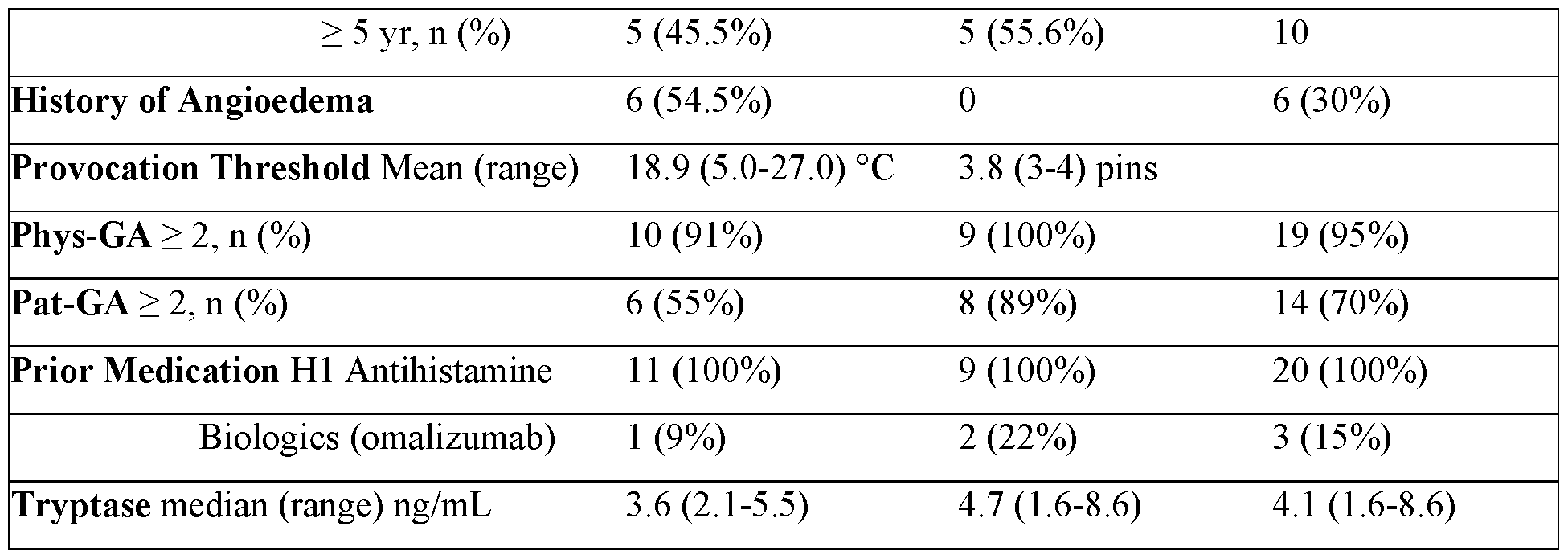

Claims
Priority Applications (10)
| Application Number | Priority Date | Filing Date | Title |
|---|---|---|---|
| BR112023014730A BR112023014730A2 (en) | 2021-01-22 | 2022-01-21 | Antibody, conjugate, pharmaceutical composition, polynucleotide or combination of polynucleotides, vector or combination of vectors, host cell, kit, method for protection against a kit-associated disorder, method for inhibiting kit activity, in vitro method for diagnosis, method for production of an antibody, method for protection against chronic urticaria |
| CA3207070A CA3207070A1 (en) | 2021-01-22 | 2022-01-21 | Anti-kit antibodies and uses thereof |
| US18/273,680 US20240117057A1 (en) | 2021-01-22 | 2022-01-21 | Anti-kit antibodies and uses thereof |
| JP2023544273A JP2024504706A (en) | 2021-01-22 | 2022-01-21 | Anti-KIT antibody and its use |
| EP22743269.7A EP4281107A4 (en) | 2021-01-22 | 2022-01-21 | ANTI-KIT ANTIBODIES AND THEIR USES |
| AU2022210365A AU2022210365A1 (en) | 2021-01-22 | 2022-01-21 | Anti-kit antibodies and uses thereof |
| IL304089A IL304089A (en) | 2021-01-22 | 2022-01-21 | Anti-kit antibodies and uses thereof |
| MX2023008518A MX2023008518A (en) | 2021-01-22 | 2022-01-21 | Anti-kit antibodies and uses thereof. |
| KR1020237027726A KR20230150275A (en) | 2021-01-22 | 2022-01-21 | Anti-KIT antibodies and uses thereof |
| CN202280023490.XA CN117136070A (en) | 2021-01-22 | 2022-01-21 | Anti-KIT antibodies and their uses |
Applications Claiming Priority (4)
| Application Number | Priority Date | Filing Date | Title |
|---|---|---|---|
| US202163140642P | 2021-01-22 | 2021-01-22 | |
| US63/140,642 | 2021-01-22 | ||
| US202163238649P | 2021-08-30 | 2021-08-30 | |
| US63/238,649 | 2021-08-30 |
Publications (1)
| Publication Number | Publication Date |
|---|---|
| WO2022159737A1 true WO2022159737A1 (en) | 2022-07-28 |
Family
ID=82549842
Family Applications (1)
| Application Number | Title | Priority Date | Filing Date |
|---|---|---|---|
| PCT/US2022/013365 Ceased WO2022159737A1 (en) | 2021-01-22 | 2022-01-21 | Anti-kit antibodies and uses thereof |
Country Status (10)
| Country | Link |
|---|---|
| US (1) | US20240117057A1 (en) |
| EP (1) | EP4281107A4 (en) |
| JP (1) | JP2024504706A (en) |
| KR (1) | KR20230150275A (en) |
| AU (1) | AU2022210365A1 (en) |
| BR (1) | BR112023014730A2 (en) |
| CA (1) | CA3207070A1 (en) |
| IL (1) | IL304089A (en) |
| MX (1) | MX2023008518A (en) |
| WO (1) | WO2022159737A1 (en) |
Cited By (8)
| Publication number | Priority date | Publication date | Assignee | Title |
|---|---|---|---|---|
| WO2024040194A1 (en) | 2022-08-17 | 2024-02-22 | Capstan Therapeutics, Inc. | Conditioning for in vivo immune cell engineering |
| WO2024186635A3 (en) * | 2023-03-03 | 2024-10-24 | Celldex Therapeutics, Inc. | Anti-stem cell factor (scf) and anti-thymic stromal lymphopoietin (tslp) antibodies and bispecific constructs |
| WO2024249954A1 (en) | 2023-05-31 | 2024-12-05 | Capstan Therapeutics, Inc. | Lipid nanoparticle formulations and compositions |
| WO2025076127A1 (en) | 2023-10-05 | 2025-04-10 | Capstan Therapeutics, Inc. | Constrained ionizable cationic lipids and lipid nanoparticles |
| WO2025076113A1 (en) | 2023-10-05 | 2025-04-10 | Capstan Therapeutics, Inc. | Ionizable cationic lipids with conserved spacing and lipid nanoparticles |
| WO2025217454A2 (en) | 2024-04-11 | 2025-10-16 | Capstan Therapeutics, Inc. | Ionizable cationic lipids and lipid nanoparticles |
| WO2025217452A1 (en) | 2024-04-11 | 2025-10-16 | Capstan Therapeutics, Inc. | Constrained ionizable cationic lipids and lipid nanoparticles |
| WO2025250726A1 (en) * | 2024-05-30 | 2025-12-04 | Celldex Therapeutics, Inc. | Anti-kit antibody dosing and methods |
Citations (3)
| Publication number | Priority date | Publication date | Assignee | Title |
|---|---|---|---|---|
| US20120189633A1 (en) * | 2011-01-26 | 2012-07-26 | Kolltan Pharmaceuticals, Inc. | Anti-kit antibodies and uses thereof |
| US20190106510A1 (en) * | 2012-07-25 | 2019-04-11 | Celldex Therapeutics, Inc. | Anti-kit antibodies and uses thereof |
| US20190153094A1 (en) * | 2014-05-23 | 2019-05-23 | Celldex Therapeutics, Inc. | Treatment of eosinophil or mast cell related disorders |
Family Cites Families (3)
| Publication number | Priority date | Publication date | Assignee | Title |
|---|---|---|---|---|
| WO2015112822A1 (en) * | 2014-01-24 | 2015-07-30 | Kolltan Pharmaceuticals, Inc. | Antibody-drug conjugates targeting kit receptor and uses thereof |
| GB201802201D0 (en) * | 2018-02-09 | 2018-03-28 | Ultrahuman Five Ltd | Binding agents |
| WO2022159744A1 (en) * | 2021-01-22 | 2022-07-28 | Celldex Therapeutics, Inc. | Treatment of chronic prurigo |
-
2022
- 2022-01-21 US US18/273,680 patent/US20240117057A1/en active Pending
- 2022-01-21 CA CA3207070A patent/CA3207070A1/en active Pending
- 2022-01-21 AU AU2022210365A patent/AU2022210365A1/en active Pending
- 2022-01-21 BR BR112023014730A patent/BR112023014730A2/en unknown
- 2022-01-21 WO PCT/US2022/013365 patent/WO2022159737A1/en not_active Ceased
- 2022-01-21 EP EP22743269.7A patent/EP4281107A4/en active Pending
- 2022-01-21 KR KR1020237027726A patent/KR20230150275A/en active Pending
- 2022-01-21 MX MX2023008518A patent/MX2023008518A/en unknown
- 2022-01-21 JP JP2023544273A patent/JP2024504706A/en active Pending
- 2022-01-21 IL IL304089A patent/IL304089A/en unknown
Patent Citations (3)
| Publication number | Priority date | Publication date | Assignee | Title |
|---|---|---|---|---|
| US20120189633A1 (en) * | 2011-01-26 | 2012-07-26 | Kolltan Pharmaceuticals, Inc. | Anti-kit antibodies and uses thereof |
| US20190106510A1 (en) * | 2012-07-25 | 2019-04-11 | Celldex Therapeutics, Inc. | Anti-kit antibodies and uses thereof |
| US20190153094A1 (en) * | 2014-05-23 | 2019-05-23 | Celldex Therapeutics, Inc. | Treatment of eosinophil or mast cell related disorders |
Non-Patent Citations (1)
| Title |
|---|
| See also references of EP4281107A4 * |
Cited By (9)
| Publication number | Priority date | Publication date | Assignee | Title |
|---|---|---|---|---|
| WO2024040194A1 (en) | 2022-08-17 | 2024-02-22 | Capstan Therapeutics, Inc. | Conditioning for in vivo immune cell engineering |
| WO2024040195A1 (en) | 2022-08-17 | 2024-02-22 | Capstan Therapeutics, Inc. | Conditioning for in vivo immune cell engineering |
| WO2024186635A3 (en) * | 2023-03-03 | 2024-10-24 | Celldex Therapeutics, Inc. | Anti-stem cell factor (scf) and anti-thymic stromal lymphopoietin (tslp) antibodies and bispecific constructs |
| WO2024249954A1 (en) | 2023-05-31 | 2024-12-05 | Capstan Therapeutics, Inc. | Lipid nanoparticle formulations and compositions |
| WO2025076127A1 (en) | 2023-10-05 | 2025-04-10 | Capstan Therapeutics, Inc. | Constrained ionizable cationic lipids and lipid nanoparticles |
| WO2025076113A1 (en) | 2023-10-05 | 2025-04-10 | Capstan Therapeutics, Inc. | Ionizable cationic lipids with conserved spacing and lipid nanoparticles |
| WO2025217454A2 (en) | 2024-04-11 | 2025-10-16 | Capstan Therapeutics, Inc. | Ionizable cationic lipids and lipid nanoparticles |
| WO2025217452A1 (en) | 2024-04-11 | 2025-10-16 | Capstan Therapeutics, Inc. | Constrained ionizable cationic lipids and lipid nanoparticles |
| WO2025250726A1 (en) * | 2024-05-30 | 2025-12-04 | Celldex Therapeutics, Inc. | Anti-kit antibody dosing and methods |
Also Published As
| Publication number | Publication date |
|---|---|
| CA3207070A1 (en) | 2022-07-28 |
| MX2023008518A (en) | 2023-07-28 |
| IL304089A (en) | 2023-08-01 |
| EP4281107A4 (en) | 2025-03-12 |
| KR20230150275A (en) | 2023-10-30 |
| BR112023014730A2 (en) | 2023-09-26 |
| AU2022210365A1 (en) | 2023-07-27 |
| AU2022210365A9 (en) | 2024-05-16 |
| JP2024504706A (en) | 2024-02-01 |
| US20240117057A1 (en) | 2024-04-11 |
| EP4281107A1 (en) | 2023-11-29 |
Similar Documents
| Publication | Publication Date | Title |
|---|---|---|
| US20240150493A1 (en) | Anti-kit antibodies and uses thereof | |
| US20240117057A1 (en) | Anti-kit antibodies and uses thereof | |
| CN117136070A (en) | Anti-KIT antibodies and their uses | |
| US20260055193A1 (en) | Anti-kit antibody formulations and methods | |
| HK1211038B (en) | Anti-kit antibodies and uses thereof |
Legal Events
| Date | Code | Title | Description |
|---|---|---|---|
| 121 | Ep: the epo has been informed by wipo that ep was designated in this application |
Ref document number: 22743269 Country of ref document: EP Kind code of ref document: A1 |
|
| ENP | Entry into the national phase |
Ref document number: 3207070 Country of ref document: CA |
|
| WWE | Wipo information: entry into national phase |
Ref document number: MX/A/2023/008518 Country of ref document: MX |
|
| WWE | Wipo information: entry into national phase |
Ref document number: 202347048870 Country of ref document: IN |
|
| WWE | Wipo information: entry into national phase |
Ref document number: 2023544273 Country of ref document: JP |
|
| ENP | Entry into the national phase |
Ref document number: 2022210365 Country of ref document: AU Date of ref document: 20220121 Kind code of ref document: A |
|
| REG | Reference to national code |
Ref country code: BR Ref legal event code: B01A Ref document number: 112023014730 Country of ref document: BR |
|
| NENP | Non-entry into the national phase |
Ref country code: DE |
|
| ENP | Entry into the national phase |
Ref document number: 2022743269 Country of ref document: EP Effective date: 20230822 |
|
| ENP | Entry into the national phase |
Ref document number: 112023014730 Country of ref document: BR Kind code of ref document: A2 Effective date: 20230721 |
|
| WWE | Wipo information: entry into national phase |
Ref document number: 11202500270W Country of ref document: SG |
|
| WWP | Wipo information: published in national office |
Ref document number: 11202500270W Country of ref document: SG |