WO2022176682A1 - モノマー組成物の製造方法及びモノマー組成物 - Google Patents
モノマー組成物の製造方法及びモノマー組成物 Download PDFInfo
- Publication number
- WO2022176682A1 WO2022176682A1 PCT/JP2022/004742 JP2022004742W WO2022176682A1 WO 2022176682 A1 WO2022176682 A1 WO 2022176682A1 JP 2022004742 W JP2022004742 W JP 2022004742W WO 2022176682 A1 WO2022176682 A1 WO 2022176682A1
- Authority
- WO
- WIPO (PCT)
- Prior art keywords
- compound
- monomer composition
- group
- urethane
- polymerizable group
- Prior art date
- Legal status (The legal status is an assumption and is not a legal conclusion. Google has not performed a legal analysis and makes no representation as to the accuracy of the status listed.)
- Ceased
Links
Classifications
-
- C—CHEMISTRY; METALLURGY
- C07—ORGANIC CHEMISTRY
- C07F—ACYCLIC, CARBOCYCLIC OR HETEROCYCLIC COMPOUNDS CONTAINING ELEMENTS OTHER THAN CARBON, HYDROGEN, HALOGEN, OXYGEN, NITROGEN, SULFUR, SELENIUM OR TELLURIUM
- C07F9/00—Compounds containing elements of Groups 5 or 15 of the Periodic Table
- C07F9/02—Phosphorus compounds
- C07F9/06—Phosphorus compounds without P—C bonds
- C07F9/08—Esters of oxyacids of phosphorus
- C07F9/09—Esters of phosphoric acids
-
- A—HUMAN NECESSITIES
- A61—MEDICAL OR VETERINARY SCIENCE; HYGIENE
- A61K—PREPARATIONS FOR MEDICAL, DENTAL OR TOILETRY PURPOSES
- A61K6/00—Preparations for dentistry
- A61K6/80—Preparations for artificial teeth, for filling teeth or for capping teeth
- A61K6/884—Preparations for artificial teeth, for filling teeth or for capping teeth comprising natural or synthetic resins
- A61K6/887—Compounds obtained by reactions only involving carbon-to-carbon unsaturated bonds
-
- A—HUMAN NECESSITIES
- A61—MEDICAL OR VETERINARY SCIENCE; HYGIENE
- A61K—PREPARATIONS FOR MEDICAL, DENTAL OR TOILETRY PURPOSES
- A61K6/00—Preparations for dentistry
- A61K6/80—Preparations for artificial teeth, for filling teeth or for capping teeth
- A61K6/884—Preparations for artificial teeth, for filling teeth or for capping teeth comprising natural or synthetic resins
- A61K6/891—Compounds obtained otherwise than by reactions only involving carbon-to-carbon unsaturated bonds
- A61K6/893—Polyurethanes
-
- C—CHEMISTRY; METALLURGY
- C07—ORGANIC CHEMISTRY
- C07F—ACYCLIC, CARBOCYCLIC OR HETEROCYCLIC COMPOUNDS CONTAINING ELEMENTS OTHER THAN CARBON, HYDROGEN, HALOGEN, OXYGEN, NITROGEN, SULFUR, SELENIUM OR TELLURIUM
- C07F9/00—Compounds containing elements of Groups 5 or 15 of the Periodic Table
- C07F9/02—Phosphorus compounds
- C07F9/06—Phosphorus compounds without P—C bonds
- C07F9/08—Esters of oxyacids of phosphorus
- C07F9/09—Esters of phosphoric acids
- C07F9/091—Esters of phosphoric acids with hydroxyalkyl compounds with further substituents on alkyl
-
- C—CHEMISTRY; METALLURGY
- C08—ORGANIC MACROMOLECULAR COMPOUNDS; THEIR PREPARATION OR CHEMICAL WORKING-UP; COMPOSITIONS BASED THEREON
- C08F—MACROMOLECULAR COMPOUNDS OBTAINED BY REACTIONS ONLY INVOLVING CARBON-TO-CARBON UNSATURATED BONDS
- C08F216/00—Copolymers of compounds having one or more unsaturated aliphatic radicals, each having only one carbon-to-carbon double bond, and at least one being terminated by an alcohol, ether, aldehydo, ketonic, acetal or ketal radical
- C08F216/12—Copolymers of compounds having one or more unsaturated aliphatic radicals, each having only one carbon-to-carbon double bond, and at least one being terminated by an alcohol, ether, aldehydo, ketonic, acetal or ketal radical by an ether radical
- C08F216/125—Monomers containing two or more unsaturated aliphatic radicals, e.g. trimethylolpropane triallyl ether or pentaerythritol triallyl ether
-
- C—CHEMISTRY; METALLURGY
- C08—ORGANIC MACROMOLECULAR COMPOUNDS; THEIR PREPARATION OR CHEMICAL WORKING-UP; COMPOSITIONS BASED THEREON
- C08F—MACROMOLECULAR COMPOUNDS OBTAINED BY REACTIONS ONLY INVOLVING CARBON-TO-CARBON UNSATURATED BONDS
- C08F230/00—Copolymers of compounds having one or more unsaturated aliphatic radicals, each having only one carbon-to-carbon double bond, and containing phosphorus, selenium, tellurium or a metal
- C08F230/02—Copolymers of compounds having one or more unsaturated aliphatic radicals, each having only one carbon-to-carbon double bond, and containing phosphorus, selenium, tellurium or a metal containing phosphorus
-
- C—CHEMISTRY; METALLURGY
- C08—ORGANIC MACROMOLECULAR COMPOUNDS; THEIR PREPARATION OR CHEMICAL WORKING-UP; COMPOSITIONS BASED THEREON
- C08F—MACROMOLECULAR COMPOUNDS OBTAINED BY REACTIONS ONLY INVOLVING CARBON-TO-CARBON UNSATURATED BONDS
- C08F30/00—Homopolymers or copolymers of compounds having one or more unsaturated aliphatic radicals, each having only one carbon-to-carbon double bond, and containing phosphorus, selenium, tellurium or a metal
- C08F30/02—Homopolymers or copolymers of compounds having one or more unsaturated aliphatic radicals, each having only one carbon-to-carbon double bond, and containing phosphorus, selenium, tellurium or a metal containing phosphorus
Definitions
- the present disclosure relates to a method for producing a monomer composition and the monomer composition.
- polymerizable monomers represented by allyl compounds have been widely used in various fields such as paints, printing plates, optical materials, and dental materials, taking advantage of their properties such as good curability and transparency.
- polymerizable monomers are used for dental restorative materials such as dental composite resins used for repairing caries, fractures, etc. of natural teeth, and for bonding dental composite resins to teeth. It is widely used for various dental adhesives, artificial teeth, denture base materials, and the like.
- Patent Document 1 discloses a crown and bridge composition containing a diallyl phthalate prepolymer, a diallyl phthalate monomer and a polymerization initiator.
- Patent document 1 JP-A-62-149608
- monomer compositions containing polymerizable monomers are sometimes required to be transparent.
- the transparency of the monomer composition is low when curing the polymerizable monomer contained in the monomer composition, it may be difficult to cure the polymerizable monomer with light.
- a polymerizable group-containing phosphoric acid compound obtained by reacting a polymerizable group-containing alcohol compound such as an allyl group-containing alcohol compound with diphosphorus pentoxide is used as a polymerizable monomer
- the polymerizable group-containing phosphoric acid compound is Compositions containing it may have reduced transparency.
- the composition according to Patent Document 1 has room for improvement in terms of transparency.
- a problem to be solved by one embodiment of the present disclosure is to provide a method for producing a monomer composition and a monomer composition that can produce a monomer composition capable of suppressing a decrease in transparency.
- Means for solving the above problems include the following aspects.
- a method for producing a monomer composition containing a polymerizable group-containing phosphoric acid compound comprising reacting a polymerizable group-containing alcohol compound, which is a compound containing no urethane bond, with diphosphorus pentoxide in the presence of a urethane compound.
- a method for producing a monomer composition comprising the step of obtaining a monomer composition containing a polymerizable group-containing phosphoric acid compound.
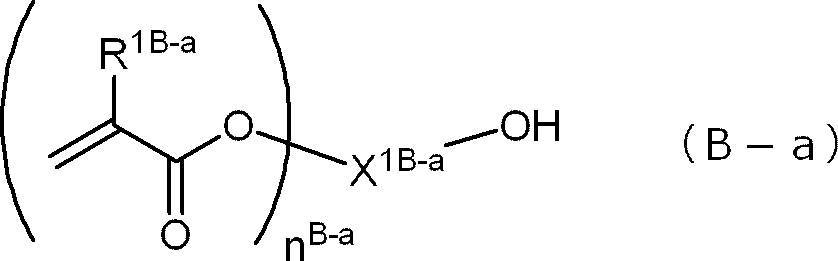
- the polymerizable group-containing alcohol compound is a compound represented by the following formula (B-1) to a compound represented by the following formula (B-7), and a compound represented by the following formula (Ba)
- R 1B-a represents a hydrogen atom or a methyl group
- X 1B-a represents an n Ba + monovalent organic group having 2 to 20 carbon atoms
- n Ba represents an integer of 1 or 2.
- ⁇ 7> The monomer composition according to ⁇ 6>, which has a spectral transmittance of 40% or more in the range of 400 nm to 800 nm at 25° C. and an optical path length of 10 mm.
- ⁇ 8> The monomer composition according to ⁇ 6> or ⁇ 7>, which is used for dental materials.
- the numerical range indicated using “-” includes the numerical values before and after "-" as the minimum and maximum values, respectively.
- the upper limit or lower limit of one numerical range may be replaced with the upper or lower limit of another numerical range described step by step. .
- the upper or lower limits of the numerical ranges may be replaced with the values shown in the examples.
- “(meth)acryloyl” means acryloyl or methacryloyl
- “(meth)acrylate” means acrylate or methacrylate.
- iso(thio)cyanate means isocyanate or isothiocyanate.
- urethane bond includes, for example, a bond formed by reacting an isocyanate group and a hydroxyl group, and a bond formed by a reaction between an isothiocyanate group and a hydroxyl group.
- the amount of each component in the composition when there are multiple substances corresponding to each component in the composition, unless otherwise specified, the amount of the multiple substances present in the composition means total volume.
- the method for producing a monomer composition of the present disclosure is a method for producing a monomer composition containing a polymerizable group-containing phosphoric acid compound, in the presence of a urethane compound, a polymerizable group-containing alcohol compound that is a compound that does not contain a urethane bond. (In the present disclosure, it is also simply referred to as a "polymerizable group-containing alcohol compound”.)
- a step of reacting diphosphorus pentoxide to obtain a monomer composition containing a polymerizable group-containing phosphoric acid compound in the present disclosure, a monomer Also referred to as a composition manufacturing process).
- the manufacturing method of the monomer composition of the present disclosure can suppress deterioration in the transparency of the obtained monomer composition by including the above configuration.
- the resulting polymerizable group-containing phosphoric acid A monomer composition containing the compound may have reduced transparency.
- a polymerizable group-containing alcohol compound and diphosphorus pentoxide are reacted in the presence of a urethane compound.
- the obtained monomer composition containing a polymerizable group-containing phosphoric acid compound can suppress deterioration in transparency.
- the monomer composition production step is a step of reacting a polymerizable group-containing alcohol compound with diphosphorus pentoxide in the presence of a urethane compound to obtain a monomer composition containing a polymerizable group-containing phosphoric acid compound. That is, the monomer composition production step is a step of phosphorylating a polymerizable group-containing alcohol compound with diphosphorus pentoxide in the presence of a urethane compound to obtain a monomer composition containing a polymerizable group-containing phosphoric acid compound.
- the reaction temperature is not particularly limited, but is preferably 10°C to 50°C, more preferably 20°C to 40°C, and more preferably 20°C to 30°C. More preferred.
- the amount of the urethane compound added is preferably 20% by mass or more, and preferably 40% by mass or more, relative to the total amount of the urethane compound and the polymerizable group-containing alcohol compound. is more preferable, and 60% by mass or more is even more preferable.
- the amount of the urethane compound added may be 90% by mass or less, or may be 80% by mass or less, relative to the total amount of the urethane compound and the polymerizable group-containing alcohol compound.
- the urethane compound in the present disclosure can be used without particular limitation as long as it is a compound containing a urethane bond.
- the urethane compound in the present disclosure preferably contains one urethane bond, and preferably contains two or more.
- the urethane compound in the present disclosure may contain one allyl group, or may contain two or more.
- the urethane compound in the present disclosure may contain one (meth)acryloyloxy group, or may contain two or more.
- the urethane compound in the present disclosure may contain one hydroxyl group, or may contain two or more hydroxyl groups.
- the hydroxyl group in the urethane compound may be phosphorylated with diphosphorus pentoxide to obtain a phosphate group-containing urethane compound.
- Urethane compounds in the present disclosure include, for example, urethane compounds containing a polymerizable group.
- a urethane (meth)acrylate compound (A) containing a urethane bond and a (meth)acryloyl group and containing no allyl group hereinafter referred to as "urethane (meth)acrylate compound (A)"
- urethane (meth)acrylate compound (A) a urethane (meth)acrylate compound (A)" ), a urethane allyl compound (B) containing a urethane bond and an allyloxy group (hereinafter sometimes referred to as "urethane allyl compound (B)", and the like.
- urethane (meth)acrylate compound (A) for example, a reaction product (a- 1), a reaction product (a-2) of an isocyanate compound containing two or more isocyanate groups and an alcohol compound containing one or more hydroxyl groups and (meth)acryloyloxy groups.
- the urethane (meth)acrylate compound (A) may or may not contain a hydroxyl group.
- a urethane (meth)acrylate compound (A) containing a hydroxyl group is a reaction product (a-3) of an isocyanate compound containing one isocyanate group and a (meth)acryloyloxy group and an alcohol compound containing three or more hydroxyl groups.
- a hydroxyl group that is, among the hydroxyl groups contained in the alcohol compound, those in which unreacted hydroxyl groups remain), and preferably contain one hydroxyl group.
- the isocyanate compound containing two or more isocyanate groups in the reaction product (a-2) is not particularly limited, but m-xylylene diisocyanate, 1,3-tetramethylxylylene diisocyanate, 2,2,4- A mixture of trimethylhexamethylene diisocyanate and 2,4,4-trimethylhexamethylene diisocyanate, 2,5-bis(isocyanatomethyl)bicyclo[2.2.1]heptane and 2,6-bis(isocyanatomethyl)bicyclo [2.2.1] It is preferable to include at least one selected from the group consisting of a mixture with heptane and isophorone diisocyanate.
- the alcohol compound containing one or more hydroxyl groups and (meth)acryloyloxy groups in the reaction product (a-2) is not particularly limited, but 2-hydroxyethyl (meth)acrylate, 2-hydroxypropyl (meth)acrylate , 2-hydroxybutyl (meth)acrylate, 4-hydroxybutyl (meth)acrylate, 2-hydroxy-3-phenoxypropyl (meth)acrylate, and 1,4-cyclohexanedimethanol mono(meth)acrylate. preferably contains at least one
- Examples of isocyanate compounds containing one or more isocyanate groups and (meth)acryloyloxy groups in the reaction product (a-1) include 2-methacryloyloxyethyl isocyanate (MOI).
- Examples of the alcohol compound containing two or more hydroxyl groups in the reaction product (a-1) include diol compounds containing two hydroxyl groups, alcohol compounds containing three or more hydroxyl groups (trimethylolpropane, glycerin, etc.), and the like. be done.
- Examples of the isocyanate compound containing one isocyanate group and (meth)acryloyloxy group in the reaction product (a-3) include 2-methacryloyloxyethyl isocyanate (MOI).
- Examples of alcohol compounds containing three or more hydroxyl groups in the reaction product (a-3) include trimethylolpropane and glycerin.
- urethane (meth)acrylate compounds include, for example, 2,2,4-trimethylhexamethylenebis(2-carbamoyloxyethyl) dimethacrylate (UDMA), 2-methacryloyloxyethyl isocyanate (MOI) and A reaction product with glycerin (GLY), a reaction product with MOI and trimethylolpropane (TMP), and the like are included.
- UDMA 2,2,4-trimethylhexamethylenebis(2-carbamoyloxyethyl) dimethacrylate
- MOI 2-methacryloyloxyethyl isocyanate
- GLY reaction product with glycerin
- TMP trimethylolpropane
- Examples of the urethane allyl compound (B) include a urethane allyl compound (X) containing no (meth)acryloyloxy group and a urethane allyl (meth)acrylate compound (Y) containing a (meth)acryloyl group.
- the urethane allyl compound (X) includes a reaction product (X1) between an isocyanate compound containing two or more isocyanate groups and an alcohol compound containing an allyloxy group.
- the isocyanate compound containing two or more isocyanate groups in the reaction product (X1) the same isocyanate compound containing two or more isocyanate groups used as a raw material for the urethane (meth)acrylate compound can be used.
- the urethane allyl (meth)acrylate compound (Y) containing a (meth)acryloyl group includes an isocyanate compound containing two or more isocyanate groups, an alcohol compound containing an allyloxy group, and one or more hydroxyl groups and (meth)acryloyloxy Examples include reaction products (Y1) with alcohol compounds containing groups.
- the isocyanate compound containing two or more isocyanate groups in the reaction product (Y1) the same isocyanate compound containing two or more isocyanate groups used as a raw material for the urethane (meth)acrylate compound can be used.
- the same compounds whose polymerizable group is an allyloxy group among the compounds shown in the section of the polymerizable group-containing alcohol compound described later can be used.
- the alcohol compound containing one or more hydroxyl groups and (meth)acryloyloxy groups in the reaction product (Y1) alcohol containing one or more hydroxyl groups and (meth)acryloyloxy groups in the reaction product (a-2) Those similar to the compound can be used.
- urethane allyl compound (B) is a mixture of 2,2,4-trimethylhexamethylene diisocyanate and 2,4,4-trimethylhexamethylene diisocyanate (TMHDI) and ethylene glycol monoallyl ether (EGMA). and reaction products (UDAR).
- TMHDI 2,2,4-trimethylhexamethylene diisocyanate and 2,4,4-trimethylhexamethylene diisocyanate
- EGMA ethylene glycol monoallyl ether
- UDAR reaction products
- Urethane compounds in the present disclosure include, for example, urethane compounds (C) that do not contain a polymerizable group.
- Ethyl carbamate etc. are mentioned as a urethane compound (C) which does not contain a polymerizable group.
- urethane compound in the present disclosure among the above, a urethane (meth)acrylate compound (A) containing a urethane bond and a (meth)acryloyl group and not containing an allyl group, a urethane allyl compound (A) containing a urethane bond and an allyloxy group ( B), and at least one selected from the group consisting of a urethane compound (C) that does not contain a polymerizable group.
- the molecular weight per urethane bond (hereinafter also referred to as "urethane bond equivalent") is preferably 700 or less, and 500 or less, from the viewpoint of suppressing a decrease in transparency. is more preferably 400 or less, and particularly preferably 300 or less.
- the urethane compound in the present disclosure may have a urethane bond equivalent of 50 or more, 60 or more, or 70 or more.
- the urethane compound in the present disclosure preferably has a molecular weight of 2000 or less, more preferably 1000 or less, and even more preferably 800 or less.
- the urethane compound in the present disclosure preferably has a molecular weight of 70 or more, more preferably 100 or more, and even more preferably 150 or more.
- a polymerizable group-containing alcohol compound is an alcohol compound containing a polymerizable group.
- a polymerizable group-containing alcohol compound in the present disclosure is a compound that does not contain a urethane bond.
- the polymerizable group in the polymerizable group-containing alcohol compound is preferably a group containing an ethylenically unsaturated bond, and is selected from the group consisting of an allyl group, an allyloxy group, a (meth)acryloyl group and a (meth)acryloyloxy group.
- the polymerizable group-containing alcohol compound preferably contains an allyl group or a (meth)acryloyl group, more preferably an allyloxy group or a (meth)acryloyloxy group, as the polymerizable group.
- the polymerizable group-containing alcohol compound is preferably a compound containing one hydroxyl group and B-1 allyloxy group in the B-valent linking group.
- B is an integer of 2 or more, and is more preferably 2 to 4 because the obtained cured product is superior in breaking energy and has a smaller polymerization shrinkage rate.
- the B-valent linking group is not particularly limited. , -SO 2 -, -NR- (R represents a hydrogen atom or an alkyl group having 1 to 10 carbon atoms, preferably a hydrogen atom), etc. bonded to one or more groups, a group consisting of a combination of the above groups, and the like. mentioned.
- a group obtained by removing B hydrogen atoms from an alkane is particularly preferable.
- the number of carbon atoms in the alkane is preferably 1-20, more preferably 1-10, and even more preferably 1-6.
- Alkane may have a substituent or may be unsubstituted.
- Alkanes may be linear, branched or cyclic. Cyclic alkanes may be monocyclic or polycyclic. Specific examples of alkanes include methane, ethane, propane, butane, 2-methylpropane, heptane, 2-methylbutane, 2,2-dimethylpropane and the like.
- the number of carbon atoms in the arene is preferably 6-18, more preferably 6-14, and even more preferably 6-10.
- Specific examples of arenes include benzene and condensed polycyclic aromatic compounds in which two or more aromatic rings are condensed.
- the polymerizable group-containing alcohol compound is not particularly limited, and examples thereof include ethylene glycol monoallyl ether, trimethylolpropane diallyl ether, pentaerythritol triallyl ether, glycerin monoallyl ether and the like.
- a polymerizable group-containing alcohol compound may be used alone or in combination of two.
- the polymerizable group-containing alcohol compound is preferably at least one selected from the group consisting of allyl group-containing alcohol compounds and (meth)acryloyl group-containing alcohol compounds.
- the polymerizable group-containing alcohol compound is a group consisting of a compound represented by the following formula (B-1) to a compound represented by the following formula (B-7), and a compound represented by the following formula (Ba). It is preferable to include at least one selected from
- R 1B-a represents a hydrogen atom or a methyl group
- X 1B-a represents an n Ba + monovalent organic group having 2 to 20 carbon atoms
- n Ba represents an integer of 1 or 2.
- X 1B-a is not particularly limited as long as it is an n Ba + monovalent organic group having 2 to 20 carbon atoms, and includes a heteroatom such as an oxygen atom, a nitrogen atom, or a sulfur atom. It may be an n Ba + monovalent organic group containing 2 to 20 carbon atoms.
- X 1B-a is preferably an n Ba + monovalent hydrocarbon group having 2 to 20 carbon atoms. Examples of the n Ba + monovalent hydrocarbon group having 2 to 20 carbon atoms include, for example, a linear or branched divalent or trivalent acyclic hydrocarbon group having 2 to 20 carbon atoms, is a divalent or trivalent cyclic hydrocarbon group having 3 to 20, and the like.
- X 1B-a preferably has 2 to 16 carbon atoms, more preferably 2 to 14 carbon atoms.
- the monomer composition of the present disclosure includes a polymerizable group-containing phosphoric acid compound and a urethane compound. By including the above configuration, the monomer composition of the present disclosure can suppress a decrease in transparency.
- a monomer composition of the present disclosure may be produced by a method for producing a monomer composition of the present disclosure.
- the polymerizable group-containing phosphoric acid compound is obtained by reacting the above-mentioned polymerizable group-containing alcohol compound with the above-mentioned diphosphorus pentoxide.
- the monomer composition of the present disclosure preferably has a spectral transmittance of 40% or more in the range of 400 nm to 800 nm at 25 ° C. and an optical path length of 10 mm, and preferably 65% or more. is more preferably 75% or more.
- the monomer composition of the present disclosure may have a spectral transmittance of less than 100% or less than 95% in the range of 400 nm to 800 nm at 25° C. and an optical path length of 10 mm.
- the content of the urethane compound is preferably 20% by mass or more, and is 40% by mass or more, relative to the total content of the polymerizable group-containing phosphoric acid compound and the urethane compound. is more preferable, and 60% by mass or more is even more preferable.
- the content of the urethane compound may be 90% by mass or less, or 80% by mass or less, relative to the total content of the polymerizable group-containing phosphoric acid compound and the urethane compound.
- the total content of the polymerizable group-containing phosphoric acid compound and the urethane compound is preferably 70% by mass or more, and is 80% by mass or more, relative to the total amount of the monomer composition. is more preferable, and 90% by mass or more is even more preferable.
- the monomer compositions of the present disclosure can preferably be used for dental materials.
- a carious cavity filling composite resin when used, the object can be achieved by filling the cavity in the oral cavity with the caries cavity filling composite resin and then photocuring it using a known light irradiation device.
- the dental material composition When used as a dental crown composite resin, the dental material composition is processed into an appropriate shape, light-cured using a known light irradiation device, and heat-treated under predetermined conditions. A desired crown material can be obtained.
- the monomer composition of the present disclosure can be suitably used as a composite resin for filling carious cavities, a composite resin for dental crowns, and the like. Since the monomer composition of the present disclosure can suppress a decrease in transparency, light can be easily transmitted, and photo-curing can be performed satisfactorily.
- the monomer composition of the present disclosure can more preferably be used for dental restorative materials such as composite resins.
- MOI 2-methacryloyloxyethyl isocyanate
- GLY glycerin
- TMP trimethylolpropane
- TMHDI mixture of 2,2,4-trimethylhexamethylene diisocyanate and 2,4,4-trimethylhexamethylene diisocyanate
- EGMA ethylene glycol monoallyl ether
- TMPDA trimethylolpropane diallyl ether
- PETA pentaerythritol triallyl ether
- HEMA 2-hydroxyethyl methacrylate
- HPMA hydroxypropyl methacrylate 4HBA: 4-hydroxybutyl acrylate
- GDMA glycerol dimethacrylate
- DBTDL dibutyltin dilaurate
- BHT dibutylhydroxytoluene
- DPPO pentoxide Diphosphorus UDMA: 2,2,4-trimethylhexamethylenebis(2-carbamoyloxyethyl) dimeth
- the transmittance L in the examples and comparative examples of the present disclosure was determined according to the following criteria. A: Transmittance was 60% or more. B: The transmittance was 30% or more and less than 60%. C: Transmittance was less than 30%.
- UDAR 0.05 parts by mass of DBTDL, 0.025 parts by mass of BHT, and 25.36 parts by mass of TMHDI were charged into a 100 mL four-necked flask equipped with a sufficiently dried stirring blade and a thermometer, and dissolved to homogenize. After forming a solution, this solution was heated to 80° C., and 24.64 parts by mass of EGMA was added dropwise over 1 hour. Since the internal temperature rose due to the heat of reaction during the dropping, the dropping amount was controlled so as to be 90° C. or less. After the entire amount of EGMA was added dropwise, the reaction was carried out for 5 hours while maintaining the reaction temperature at 90°C. At this time, the progress of the reaction was followed by HPLC analysis to confirm the end point of the reaction. 50 g of UDAR were obtained by discharging the product from the reactor.
- Example 1 20 parts by mass of PETA, 20 parts by mass of UDMA, and 80 mL of dehydrated methylene chloride were charged into a 100 mL four-necked flask equipped with a sufficiently dried stirring blade and a thermometer, and dissolved to form a homogeneous solution. The solution was thermostatted to 20°C. Subsequently, 6.65 g of DPPO (1.2 times the theoretical requirement) were charged in three portions. The reaction temperature was maintained at 20-30° C. and the reaction was carried out for 6 hours. Then, 150 mL of water was slowly added to the device to completely deactivate unreacted diphosphorus pentoxide while maintaining the temperature at room temperature. The organic layer was extracted and the volatile components were distilled off. By discharging the product from the reactor, 35 g of composition (1) containing a polymerizable group-containing phosphoric acid compound was obtained. The transmittance at 25°C was 82%.
- Examples 2 to 19 Compositions (2) to (19) containing a polymerizable group-containing phosphoric acid compound were obtained in the same manner as in Example 1, except that the reaction raw materials were changed to the combination of compounds shown in Table 1. Table 1 shows the transmittance at 25°C.
- the compositions of Examples 3 to 6, 12 and 13 also contained a phosphoric acid group-containing urethane compound.
- compositions (21) to (25) containing a polymerizable group-containing phosphoric acid compound were obtained in the same manner as in Example 1, except that the reaction raw materials were changed to the combination of compounds shown in Table 1.
- Table 1 shows the transmittance at 25°C.
- a monomer composition comprising a step of reacting a polymerizable group-containing alcohol compound with diphosphorus pentoxide in the presence of a urethane compound to obtain a monomer composition containing a polymerizable group-containing phosphoric acid compound.
- the examples using the manufacturing method of No. were excellent in the spectral transmittance L of the obtained monomer composition and its evaluation. Therefore, the monomer compositions according to Examples could suppress the decrease in transparency.
- a comparative example in which a monomer composition containing a polymerizable group-containing phosphoric acid compound was obtained by reacting a polymerizable group-containing alcohol compound with diphosphorus pentoxide under conditions in which no urethane compound was present was obtained.
- the spectral transmittance L of the monomer composition and its evaluation were inferior. Therefore, the monomer composition according to the comparative example could not suppress the decrease in transparency.
Landscapes
- Health & Medical Sciences (AREA)
- Chemical & Material Sciences (AREA)
- Organic Chemistry (AREA)
- Life Sciences & Earth Sciences (AREA)
- Oral & Maxillofacial Surgery (AREA)
- General Health & Medical Sciences (AREA)
- Polymers & Plastics (AREA)
- Medicinal Chemistry (AREA)
- Chemical Kinetics & Catalysis (AREA)
- Biochemistry (AREA)
- Molecular Biology (AREA)
- Plastic & Reconstructive Surgery (AREA)
- Epidemiology (AREA)
- Animal Behavior & Ethology (AREA)
- Public Health (AREA)
- Veterinary Medicine (AREA)
- Addition Polymer Or Copolymer, Post-Treatments, Or Chemical Modifications (AREA)
- Organic Low-Molecular-Weight Compounds And Preparation Thereof (AREA)
- Macromonomer-Based Addition Polymer (AREA)
Abstract
Description
例えば、アリル基含有アルコール化合物等の重合性基含有アルコール化合物と五酸化二リンとを反応させて得られる重合性基含有リン酸化合物を重合性モノマーとして用いる場合、重合性基含有リン酸化合物を含む組成物は透明性が低下する場合がある。
特許文献1に係る組成物は、透明性の点で改善の余地がある。
<1> 重合性基含有リン酸化合物を含むモノマー組成物の製造方法であって、ウレタン化合物の存在下、ウレタン結合を含まない化合物である重合性基含有アルコール化合物と五酸化二リンとを反応させて、重合性基含有リン酸化合物を含むモノマー組成物を得る工程を含むモノマー組成物の製造方法。
<2> 前記ウレタン化合物は、ウレタン結合1つあたりの分子量が700以下である<1>に記載のモノマー組成物の製造方法。
<3> 前記重合性基含有アルコール化合物が、アリル基含有アルコール化合物及び(メタ)アクリロイル基含有アルコール化合物からなる群から選択される少なくとも1つである<1>又は<2>に記載のモノマー組成物の製造方法。
<4> 前記重合性基含有アルコール化合物が、下記式(B-1)で表される化合物~下記式(B-7)で表される化合物、及び下記式(B-a)で表される化合物からなる群から選択される少なくとも1つを含む<1>~<3>に記載のモノマー組成物の製造方法。


<5> 前記ウレタン化合物及び前記重合性基含有アルコール化合物の合計添加質量に対して、前記ウレタン化合物の添加質量が、20質量%以上である<1>~<4>のいずれか1つに記載のモノマー組成物の製造方法。
<6> 重合性基含有リン酸化合物と、ウレタン化合物と、を含むモノマー組成物。
<7> 25℃、光路長10mmの条件における400nm~800nmの範囲の分光透過率が、40%以上である<6>に記載のモノマー組成物。
<8> 歯科材料用に用いられる<6>又は<7>に記載のモノマー組成物。
本開示中に段階的に記載されている数値範囲において、一つの数値範囲で記載された上限値又は下限値は、他の段階的な記載の数値範囲の上限値又は下限値に置き換えてもよい。また、本開示中に記載されている数値範囲において、その数値範囲の上限値又は下限値は、実施例に示されている値に置き換えてもよい。
本開示において、「(メタ)アクリロイル」とはアクリロイル又はメタクリロイルを意味し、「(メタ)アクリレート」とはアクリレート又はメタクリレートを意味する。
本開示において、「イソ(チオ)シアネート」とはイソシアネート又はイソチオシアネートを意味する。
本開示において、「ウレタン結合」は、例えば、イソシアネート基と水酸基とが反応することで形成される結合、及び、イソチオシアネート基と水酸基とが反応することで形成される結合を包含する。
本開示において、組成物中の各成分の量について言及する場合、組成物中に各成分に該当する物質が複数存在する場合には、特に断らない限り、組成物中に存在する複数の物質の合計量を意味する。
本開示のモノマー組成物の製造方法は、重合性基含有リン酸化合物を含むモノマー組成物の製造方法であって、ウレタン化合物の存在下、ウレタン結合を含まない化合物である重合性基含有アルコール化合物(本開示中、単に「重合性基含有アルコール化合物」ともいう。)と五酸化二リンとを反応させて、重合性基含有リン酸化合物を含むモノマー組成物を得る工程(本開示中、モノマー組成物製造工程ともいう)を含む。
これに対して、本開示のモノマー組成物の製造方法は、ウレタン化合物の存在下において、重合性基含有アルコール化合物と五酸化二リンとを反応させる。即ち、本開示のモノマー組成物の製造方法において、単に重合性基含有アルコール化合物と五酸化二リンとを反応させるのではなく、重合性基含有アルコール化合物と五酸化二リンとを反応させる際に、ウレタン化合物が存在する。
これによって、得られる重合性基含有リン酸化合物を含むモノマー組成物は透明性の低下を抑制できる。
本開示のモノマー組成物の製造方法によって得られる重合性基含有リン酸化合物を含むモノマー組成物は、重合性基含有リン酸化合物に加えて、さらに上記ウレタン化合物、ウレタン結合を含有するリン酸基含有ウレタン化合物等を含んでもよい。
モノマー組成物製造工程は、ウレタン化合物の存在下、重合性基含有アルコール化合物と五酸化二リンとを反応させて、重合性基含有リン酸化合物を含むモノマー組成物を得る工程である。
つまり、モノマー組成物製造工程は、ウレタン化合物の存在下、五酸化二リンによって重合性基含有アルコール化合物をリン酸化して重合性基含有リン酸化合物を含むモノマー組成物を得る工程である。
ウレタン化合物及び重合性基含有アルコール化合物の合計添加量に対して、ウレタン化合物の添加量は、90質量%以下であってもよく、80質量%以下であってもよい。
本開示におけるウレタン化合物は、ウレタン結合を含む化合物であれば、特に制限なく用いることができる。
本開示におけるウレタン化合物は、ウレタン結合を1つ含んでいることが好ましく、2つ以上含んでいることも好ましい。
本開示におけるウレタン化合物は、(メタ)アクリロイルオキシ基を1つ含んでいてもよく、2つ以上含んでいてもよい。
本開示におけるウレタン化合物は、水酸基を1つ含んでいてもよく、2つ以上含んでいてもよい。
モノマー組成物製造工程において、本開示におけるウレタン化合物が水酸基を含む場合、ウレタン化合物中の水酸基を五酸化二リンによってリン酸化して、リン酸基含有ウレタン化合物を得てもよい。
重合性基を含むウレタン化合物としては、ウレタン結合と(メタ)アクロイル基とを含みアリル基を含まないウレタン(メタ)アクリレート化合物(A)(以下、「ウレタン(メタ)アクリレート化合物(A)」と呼称する場合がある。)、ウレタン結合とアリルオキシ基とを含むウレタンアリル化合物(B)(以下、「ウレタンアリル化合物(B)」と呼称する場合がある。)等が挙げられる。
水酸基を含むウレタン(メタ)アクリレート化合物(A)は、1つのイソシアナート基及び(メタ)アクリロイルオキシ基を含むイソシアネート化合物と、3つ以上の水酸基を含むアルコール化合物との反応生成物(a-3)のうち、水酸基を含むもの(すなわち、アルコール化合物に含まれる水酸基のうち、未反応の水酸基が残っているもの)であってもよく、1つの水酸基を含むものであることが好ましい。
ウレタンアリル化合物(X)としては、イソシアネート基を2個以上含むイソシアネート化合物と、アリルオキシ基を含むアルコール化合物との反応生成物(X1)が挙げられる。
(メタ)アクリロイル基を含むウレタンアリル(メタ)アクリレート化合物(Y)としては、イソシアネート基を二つ以上含むイソシアネート化合物と、アリルオキシ基を含むアルコール化合物と、1つ以上の水酸基及び(メタ)アクリロイルオキシ基を含むアルコール化合物との反応生成物(Y1)が挙げられる。
反応生成物(Y1)における1つ以上の水酸基及び(メタ)アクリロイルオキシ基を含むアルコール化合物としては、反応生成物(a-2)における1つ以上の水酸基及び(メタ)アクリロイルオキシ基を含むアルコール化合物と同様のものを用いることができる。
重合性基を含まないウレタン化合物(C)としては、カルバミン酸エチル等が挙げられる。
本開示におけるウレタン化合物は、ウレタン結合当量が、50以上であってもよく、60以上であってもよく、70以上であってもよい。
本開示におけるウレタン化合物は、分子量が、70以上であることが好ましく、100以上であることがより好ましく、150以上であることがさらに好ましい。
重合性基含有アルコール化合物は、重合性基を含有するアルコール化合物である。
本開示における重合性基含有アルコール化合物は、ウレタン結合を含まない化合物である。
重合性基含有アルコール化合物における重合性基は、エチレン性不飽和結合を含む基であることが好ましく、アリル基、アリルオキシ基、(メタ)アクリロイル基及び(メタ)アクリロイルオキシ基からなる群から選択される少なくとも1つの基を含むことがより好ましい。
重合性基含有アルコール化合物は、重合性基として、アリル基又は(メタ)アクリロイル基を含むことが好ましく、アリルオキシ基又は(メタ)アクリロイルオキシ基を含むことがより好ましい。
重合性基含有アルコール化合物は、一種を用いてもよく、二種を組み合わせてもよい。

X1B-aは、炭素数2~20のnB-a+1価の炭化水素基であることが好ましい。
炭素数2~20のnB-a+1価の炭化水素基としては、例えば、炭素数が2~20の直鎖状又は分岐状である2価又は3価の非環状炭化水素基、炭素数が3~20の2価又は3価の環状炭化水素基等が挙げられる。
X1B-aの炭素数は、2~16であることが好ましく、2~14であることがより好ましい。
本開示のモノマー組成物は、重合性基含有リン酸化合物と、ウレタン化合物と、を含む。
本開示のモノマー組成物は、上記構成を含むことで、透明性の低下を抑制できる。
本開示のモノマー組成物は、本開示のモノマー組成物の製造方法によって製造されてもよい。重合性基含有リン酸化合物は、上述の重合性基含有アルコール化合物と上述の五酸化二リンとを反応させて得られる。
本開示のモノマー組成物は、25℃、光路長10mmの条件における400nm~800nmの範囲の分光透過率が、100%未満であってもよく、95%以下であってもよい。
本開示のモノマー組成物は、重合性基含有リン酸化合物とウレタン化合物との合計含有量に対して、ウレタン化合物の含有量が、90質量%以下であってもよく、80質量%以下であってもよい。
例えば、齲蝕窩洞充填用コンポジットレジンを使用する場合は、口腔内の窩洞に齲蝕窩洞充填用コンポジットレジンを充填した後、公知の光照射装置を用いて光硬化させることにより、目的を達成できる。
また、歯冠用コンポジットレジンとして使用する場合は、歯科材料用組成物を適切な形状に加工した後、公知の光照射装置を用いて光硬化させ、さらに所定の条件で熱処理を行うことで、所望の歯冠材料を得ることができる。
上記の場合、齲蝕窩洞充填用コンポジットレジン、歯冠用コンポジットレジン等として本開示のモノマー組成物を好適に用いることができる。
本開示のモノマー組成物は透明性の低下を抑制できるため光が透過し易く、良好に光硬化させることができる。
本開示のモノマー組成物は、より好ましくは、コンポジットレジン等の歯科修復材料用に用いることができる。
GLY:グリセリン
TMP:トリメチロールプロパン
TMHDI:2,2,4-トリメチルヘキサメチレンジイソシアネートと2,4,4-トリメチルヘキサメチレンジイソシアネートとの混合物
EGMA:エチレングリコールモノアリルエーテル
TMPDA:トリメチロールプロパンジアリルエーテル
PETA:ペンタエリスリトールトリアリルエーテル
HEMA:2-ヒドロキシエチルメタクリレート
HPMA:ヒドロキシプロピルメタクリレート
4HBA:4-ヒドロキシブチルアクリレート
GDMA:グリセロールジメタクリレート
DBTDL:ジブチルスズジラウレート
BHT:ジブチルヒドロキシトルエン
DPPO:五酸化二リン
UDMA:2,2,4-トリメチルヘキサメチレンビス(2-カルバモイルオキシエチル)ジメタクリレート(ウレタン結合当量:235)
CAE:カルバミン酸エチル(ウレタン結合当量:89)
M-GLY:MOIとGLYの反応生成物(ウレタン結合当量:201)
M-TMP:MOIとTMPの反応生成物(ウレタン結合当量:222)
UDAR:TMHDIとEGMAの反応生成物(ウレタン結合当量:207)
各実施例で得られた(メタ)アクリレートのHPLCチャートスペクトルを、株式会社島津製作所製、HPLC装置:LC-20ATを用いて測定した。
各実施例で得られた(メタ)アクリレートをCH3CNに溶解させた後、上記(メタ)アクリレートについてCH3CN/H2O=90/10の溶離液にて測定を行った。
本開示の実施例および比較例におけるLは、分光色差計(日本電色株式会社製SD-3000)を用い、可視領域400-800nmの範囲にて測定した。
測定温度は25℃にてコントロールし、光路長は10mmとした。
本開示の実施例および比較例における透過率Lについて、以下の基準で判定した。
A:透過率が60%以上であった。
B:透過率が30%以上60%未満であった。
C:透過率が30%未満であった。
十分に乾燥させた攪拌羽根、および温度計を備えた100mL4ツ口フラスコ内に、DBTDL 0.05質量部、BHT 0.025質量部、GLY 11.44質量部を装入し、溶解させて均一溶液とした後、この溶液を80℃まで昇温し、さらにMOI 38.56質量部を1時間かけて滴下した。滴下中に反応熱により内温が上昇したので、90℃以下となるように滴下量をコントロールした。MOIを全量滴下した後、反応温度を90℃に保って、5時間反応を行った。この際、HPLC分析で反応の進行を追跡して、反応の終点を確認した。反応器から生成物を排出することにより、M-GLY 50gを得た。
十分に乾燥させた攪拌羽根、および温度計を備えた100mL4ツ口フラスコ内に、DBTDL 0.05質量部、BHT 0.025質量部、TMP 15.09質量部を装入し、溶解させて均一溶液とした後、この溶液を80℃まで昇温し、さらにMOI 34.91質量部を1時間かけて滴下した。滴下中に反応熱により内温が上昇したので、90℃以下となるように滴下量をコントロールした。MOIを全量滴下した後、反応温度を90℃に保って、5時間反応を行った。この際、HPLC分析で反応の進行を追跡して、反応の終点を確認した。反応器から生成物を排出することにより、M-TMP 50gを得た。
十分に乾燥させた攪拌羽根、および温度計を備えた100mL4ツ口フラスコ内に、DBTDL 0.05質量部、BHT 0.025質量部、TMHDI 25.36質量部を装入し、溶解させて均一溶液とした後、この溶液を80℃まで昇温し、さらにEGMA 24.64質量部を1時間かけて滴下した。滴下中に反応熱により内温が上昇したので、90℃以下となるように滴下量をコントロールした。EGMAを全量滴下した後、反応温度を90℃に保って、5時間反応を行った。この際、HPLC分析で反応の進行を追跡して、反応の終点を確認した。反応器から生成物を排出することにより、UDAR 50gを得た。
十分に乾燥させた攪拌羽根、および温度計を備えた100mL4ツ口フラスコ内に、PETA 20質量部、UDMA 20質量部、脱水塩化メチレン80mLを装入し、溶解させて均一溶液とした後、この溶液を20℃に温調した。続いて、DPPO 6.65g(理論必要量の1.2倍)を3回に分けて分割装入を行った。20~30℃となるように反応温度を保ち、6時間反応を行った。その後、水150mLをゆっくりと装置に加え入れ、室温に保持したままで未反応の五酸化二リンを完全に失活させた。有機層を抽出し、揮発成分を留去した。
反応器から生成物を排出することにより、重合性基含有リン酸化合物を含む組成物(1)を35g得た。25℃における透過率は82%であった。
反応原料を、表1に示す化合物の組み合わせに変更したこと以外は実施例1と同様にして、重合性基含有リン酸化合物を含む組成物(2)~(19)を得た。25℃における透過率は表1に示すとおりである。
なお、実施例3~実施例6、実施例12及び実施例13の組成物には、リン酸基含有ウレタン化合物も含まれていた。
十分に乾燥させた攪拌羽根、および温度計を備えた100mL4ツ口フラスコ内に、PETA 40質量部、脱水塩化メチレン80mLを装入し、溶解させて均一溶液とした後、この溶液を20℃に温調した。続いて、DPPO 13.29g(理論必要量の1.2倍)を3回に分けて分割装入を行った。20~30℃となるように反応温度を保ち、6時間反応を行った。その後、水150mLをゆっくりと装置に入れ、室温に保持したままで未反応の五酸化二リンを完全に失活させた。有機層を抽出し、揮発成分を留去した。反応器から生成物を排出することにより、重合性基含有リン酸化合物を含む組成物(20)を38g得た。25℃における透過率5%であった。
反応原料を、表1に示す化合物の組み合わせに変更したこと以外は実施例1と同様にして、重合性基含有リン酸化合物を含む組成物(21)~(25)を得た。25℃における透過率は表1に示すとおりである。

一方、ウレタン化合物が存在しない条件下で、重合性基含有アルコール化合物と五酸化二リンとを反応させて、重合性基含有リン酸化合物を含むモノマー組成物を得た比較例は、得られたモノマー組成物の分光透過率L及びその評価に劣っていた。そのため、比較例に係るモノマー組成物は、透明性の低下を抑制できなかった。
本明細書に記載された全ての文献、特許出願、及び技術規格は、個々の文献、特許出願、及び技術規格が参照により取り込まれることが具体的かつ個々に記された場合と同程度に、本明細書に参照により取り込まれる。
Claims (8)
- 重合性基含有リン酸化合物を含むモノマー組成物の製造方法であって、
ウレタン化合物の存在下、ウレタン結合を含まない化合物である重合性基含有アルコール化合物と五酸化二リンとを反応させて、重合性基含有リン酸化合物を含むモノマー組成物を得る工程を含むモノマー組成物の製造方法。 - 前記ウレタン化合物は、ウレタン結合1つあたりの分子量が700以下である請求項1に記載のモノマー組成物の製造方法。
- 前記重合性基含有アルコール化合物が、アリル基含有アルコール化合物及び(メタ)アクリロイル基含有アルコール化合物からなる群から選択される少なくとも1つである請求項1又は請求項2に記載のモノマー組成物の製造方法。
- 前記重合性基含有アルコール化合物が、下記式(B-1)で表される化合物~下記式(B-7)で表される化合物、及び下記式(B-a)で表される化合物からなる群から選択される少なくとも1つを含む請求項1~請求項3に記載のモノマー組成物の製造方法。


式(B-a)中、R1B-aは、水素原子又はメチル基を表し、X1B-aは、炭素数2~20のnB-a+1価の有機基を表し、nB-aは、1又は2の整数を表す。 - 前記ウレタン化合物及び前記重合性基含有アルコール化合物の合計添加質量に対して、前記ウレタン化合物の添加質量が、20質量%以上である請求項1~請求項4のいずれか1項に記載のモノマー組成物の製造方法。
- 重合性基含有リン酸化合物と、ウレタン化合物と、を含むモノマー組成物。
- 25℃、光路長10mmの条件における400nm~800nmの範囲の分光透過率が、40%以上である請求項6に記載のモノマー組成物。
- 歯科材料用に用いられる請求項6又は請求項7に記載のモノマー組成物。
Priority Applications (3)
| Application Number | Priority Date | Filing Date | Title |
|---|---|---|---|
| US18/260,350 US20240076304A1 (en) | 2021-02-17 | 2022-02-07 | Monomer composition production method and monomer composition |
| EP22756003.4A EP4265651A4 (en) | 2021-02-17 | 2022-02-07 | PROCESS FOR PRODUCING MONOMER COMPOSITION AND MONOMER COMPOSITION |
| JP2023500744A JP7639115B2 (ja) | 2021-02-17 | 2022-02-07 | モノマー組成物の製造方法及びモノマー組成物 |
Applications Claiming Priority (2)
| Application Number | Priority Date | Filing Date | Title |
|---|---|---|---|
| JP2021023669 | 2021-02-17 | ||
| JP2021-023669 | 2021-02-17 |
Publications (1)
| Publication Number | Publication Date |
|---|---|
| WO2022176682A1 true WO2022176682A1 (ja) | 2022-08-25 |
Family
ID=82930483
Family Applications (1)
| Application Number | Title | Priority Date | Filing Date |
|---|---|---|---|
| PCT/JP2022/004742 Ceased WO2022176682A1 (ja) | 2021-02-17 | 2022-02-07 | モノマー組成物の製造方法及びモノマー組成物 |
Country Status (4)
| Country | Link |
|---|---|
| US (1) | US20240076304A1 (ja) |
| EP (1) | EP4265651A4 (ja) |
| JP (1) | JP7639115B2 (ja) |
| WO (1) | WO2022176682A1 (ja) |
Families Citing this family (1)
| Publication number | Priority date | Publication date | Assignee | Title |
|---|---|---|---|---|
| DE4307836B4 (de) | 1992-03-25 | 2005-09-29 | Volkswagen Ag | Träger zur Energieabsorption bei quer zu seiner Längsrichtung erfolgenden Stößen |
Citations (6)
| Publication number | Priority date | Publication date | Assignee | Title |
|---|---|---|---|---|
| JPS62149608A (ja) | 1985-12-10 | 1987-07-03 | Fudo Kagaku Kogyo Kk | クラウンおよびブリッジ用レジン組成物 |
| CN101353545A (zh) * | 2008-08-26 | 2009-01-28 | 苏州市明大高分子科技材料有限公司 | 紫外光固化抗菌涂料及其制备方法 |
| JP2009513546A (ja) * | 2003-07-14 | 2009-04-02 | スリーエム イーエスピーイー アーゲー | 重合すると低減された極性を有する接着剤組成物 |
| US20120115108A1 (en) * | 2010-11-08 | 2012-05-10 | Voco Gmbh | Polymerizable phosphoric acid derivatives comprising a polyalicylic structure element |
| WO2018181711A1 (ja) * | 2017-03-31 | 2018-10-04 | 三井化学株式会社 | リン含有化合物 |
| JP2021023669A (ja) | 2019-08-07 | 2021-02-22 | ダイワボウホールディングス株式会社 | 液体含浸皮膚被覆シート用不織布及びその製造方法、液体含浸皮膚被覆シート、並びにフェイスマスク |
Family Cites Families (6)
| Publication number | Priority date | Publication date | Assignee | Title |
|---|---|---|---|---|
| JP3773285B2 (ja) * | 1995-09-20 | 2006-05-10 | 株式会社松風 | 重合体中にウレタン(メタ)アクリレートを含む組成物 |
| DE10256265A1 (de) * | 2002-12-03 | 2004-06-24 | Basf Coatings Ag | Beschichtungsstoff, Verfahren zu seiner Herstellung und seine Verwendung zur Herstellung haftfester, korrosionshemmender Beschichtungen |
| CN101351183A (zh) * | 2005-12-29 | 2009-01-21 | 3M创新有限公司 | 包含水清除剂的牙科用组合物 |
| RU2586743C2 (ru) * | 2011-08-23 | 2016-06-10 | Зм Инновейтив Пропертиз Компани | Стоматологические композиции, содержащие агенты присоединения-фрагментации |
| JP6644079B2 (ja) * | 2015-02-20 | 2020-02-12 | スリーエム イノベイティブ プロパティズ カンパニー | 付加−開裂オリゴマー |
| CN105193634B (zh) * | 2015-09-21 | 2018-03-06 | 江苏科技大学 | 一种含有特殊功能单体的齿科修复充填材料及制备方法 |
-
2022
- 2022-02-07 EP EP22756003.4A patent/EP4265651A4/en active Pending
- 2022-02-07 WO PCT/JP2022/004742 patent/WO2022176682A1/ja not_active Ceased
- 2022-02-07 JP JP2023500744A patent/JP7639115B2/ja active Active
- 2022-02-07 US US18/260,350 patent/US20240076304A1/en active Pending
Patent Citations (6)
| Publication number | Priority date | Publication date | Assignee | Title |
|---|---|---|---|---|
| JPS62149608A (ja) | 1985-12-10 | 1987-07-03 | Fudo Kagaku Kogyo Kk | クラウンおよびブリッジ用レジン組成物 |
| JP2009513546A (ja) * | 2003-07-14 | 2009-04-02 | スリーエム イーエスピーイー アーゲー | 重合すると低減された極性を有する接着剤組成物 |
| CN101353545A (zh) * | 2008-08-26 | 2009-01-28 | 苏州市明大高分子科技材料有限公司 | 紫外光固化抗菌涂料及其制备方法 |
| US20120115108A1 (en) * | 2010-11-08 | 2012-05-10 | Voco Gmbh | Polymerizable phosphoric acid derivatives comprising a polyalicylic structure element |
| WO2018181711A1 (ja) * | 2017-03-31 | 2018-10-04 | 三井化学株式会社 | リン含有化合物 |
| JP2021023669A (ja) | 2019-08-07 | 2021-02-22 | ダイワボウホールディングス株式会社 | 液体含浸皮膚被覆シート用不織布及びその製造方法、液体含浸皮膚被覆シート、並びにフェイスマスク |
Non-Patent Citations (1)
| Title |
|---|
| See also references of EP4265651A4 |
Also Published As
| Publication number | Publication date |
|---|---|
| US20240076304A1 (en) | 2024-03-07 |
| EP4265651A1 (en) | 2023-10-25 |
| JP7639115B2 (ja) | 2025-03-04 |
| JPWO2022176682A1 (ja) | 2022-08-25 |
| EP4265651A4 (en) | 2024-11-06 |
Similar Documents
| Publication | Publication Date | Title |
|---|---|---|
| CN112533963B (zh) | (甲基)丙烯酸酯、牙科材料用单体组合物、成型体、牙科材料用组合物、牙科材料及(甲基)丙烯酸酯的制造方法 | |
| CN103492446B (zh) | 化合物、包含该化合物的组合物及固化物 | |
| KR101517628B1 (ko) | 개선된 치과용 복합재를 유도하는 재료 및 그로부터 제조된 치과용 복합재 | |
| CN106132383A (zh) | 牙科材料用聚合性单体组合物 | |
| WO2019107323A1 (ja) | (メタ)アクリレートおよびその用途 | |
| WO2019107322A1 (ja) | (メタ)アクリレート、モノマー組成物、該組成物から得られた歯科材料およびその製造方法 | |
| EP2521526B1 (en) | Dental materials using 2,2,4,4-tetramethyl-1,3-cyclobutanediol | |
| JP7639115B2 (ja) | モノマー組成物の製造方法及びモノマー組成物 | |
| JP7249420B2 (ja) | モノマー組成物の製造方法、原料組成物、モノマー組成物、硬化性組成物、及び成形体 | |
| JP7150826B2 (ja) | 歯科材料用重合性組成物、該組成物から得られた歯科材料 | |
| CN113164327A (zh) | (甲基)丙烯酸酯、单体组合物、成型体、牙科材料用组合物及牙科材料 | |
| JP7331111B2 (ja) | ウレタンアリル化合物、モノマー組成物、成形体、歯科材料用組成物、及び歯科材料 | |
| JP2024053301A (ja) | (メタ)アクリレート、表面処理フィラー、歯科材料用組成物及びシランカップリング剤 | |
| JP7108050B2 (ja) | モノマー組成物及びその製造方法、原料組成物、硬化性組成物、並びに成形体 | |
| JP2025104892A (ja) | モノマー用組成物の製造方法、重合性組成物の製造方法、モノマー用組成物及び重合性組成物 | |
| JP7582781B2 (ja) | モノマー組成物、成形体、歯科材料用組成物、歯科材料及び(メタ)アクリレート(a)の製造方法 | |
| US20250207005A1 (en) | Adhesive composition for stereolithographic article and non-stereolithographic article | |
| WO2015142886A1 (en) | Dental composites | |
| WO2025204779A1 (ja) | 化合物、モノマー組成物、硬化性組成物、及び硬化物 |
Legal Events
| Date | Code | Title | Description |
|---|---|---|---|
| 121 | Ep: the epo has been informed by wipo that ep was designated in this application |
Ref document number: 22756003 Country of ref document: EP Kind code of ref document: A1 |
|
| ENP | Entry into the national phase |
Ref document number: 2023500744 Country of ref document: JP Kind code of ref document: A |
|
| WWE | Wipo information: entry into national phase |
Ref document number: 18260350 Country of ref document: US |
|
| ENP | Entry into the national phase |
Ref document number: 2022756003 Country of ref document: EP Effective date: 20230721 |
|
| NENP | Non-entry into the national phase |
Ref country code: DE |