WO2022190497A1 - ポリフェニレンエーテル、その製造方法、熱硬化組成物、プリプレグ、及び積層体 - Google Patents
ポリフェニレンエーテル、その製造方法、熱硬化組成物、プリプレグ、及び積層体 Download PDFInfo
- Publication number
- WO2022190497A1 WO2022190497A1 PCT/JP2021/046373 JP2021046373W WO2022190497A1 WO 2022190497 A1 WO2022190497 A1 WO 2022190497A1 JP 2021046373 W JP2021046373 W JP 2021046373W WO 2022190497 A1 WO2022190497 A1 WO 2022190497A1
- Authority
- WO
- WIPO (PCT)
- Prior art keywords
- formula
- polyphenylene ether
- carbon atoms
- group
- phenol
- Prior art date
- Legal status (The legal status is an assumption and is not a legal conclusion. Google has not performed a legal analysis and makes no representation as to the accuracy of the status listed.)
- Ceased
Links
Classifications
-
- C—CHEMISTRY; METALLURGY
- C08—ORGANIC MACROMOLECULAR COMPOUNDS; THEIR PREPARATION OR CHEMICAL WORKING-UP; COMPOSITIONS BASED THEREON
- C08G—MACROMOLECULAR COMPOUNDS OBTAINED OTHERWISE THAN BY REACTIONS ONLY INVOLVING UNSATURATED CARBON-TO-CARBON BONDS
- C08G65/00—Macromolecular compounds obtained by reactions forming an ether link in the main chain of the macromolecule
- C08G65/34—Macromolecular compounds obtained by reactions forming an ether link in the main chain of the macromolecule from hydroxy compounds or their metallic derivatives
- C08G65/38—Macromolecular compounds obtained by reactions forming an ether link in the main chain of the macromolecule from hydroxy compounds or their metallic derivatives derived from phenols
- C08G65/44—Macromolecular compounds obtained by reactions forming an ether link in the main chain of the macromolecule from hydroxy compounds or their metallic derivatives derived from phenols by oxidation of phenols
-
- B—PERFORMING OPERATIONS; TRANSPORTING
- B32—LAYERED PRODUCTS
- B32B—LAYERED PRODUCTS, i.e. PRODUCTS BUILT-UP OF STRATA OF FLAT OR NON-FLAT, e.g. CELLULAR OR HONEYCOMB, FORM
- B32B15/00—Layered products comprising a layer of metal
- B32B15/04—Layered products comprising a layer of metal comprising metal as the main or only constituent of a layer, which is next to another layer of the same or of a different material
- B32B15/08—Layered products comprising a layer of metal comprising metal as the main or only constituent of a layer, which is next to another layer of the same or of a different material of synthetic resin
-
- B—PERFORMING OPERATIONS; TRANSPORTING
- B32—LAYERED PRODUCTS
- B32B—LAYERED PRODUCTS, i.e. PRODUCTS BUILT-UP OF STRATA OF FLAT OR NON-FLAT, e.g. CELLULAR OR HONEYCOMB, FORM
- B32B15/00—Layered products comprising a layer of metal
- B32B15/20—Layered products comprising a layer of metal comprising aluminium or copper
-
- C—CHEMISTRY; METALLURGY
- C08—ORGANIC MACROMOLECULAR COMPOUNDS; THEIR PREPARATION OR CHEMICAL WORKING-UP; COMPOSITIONS BASED THEREON
- C08F—MACROMOLECULAR COMPOUNDS OBTAINED BY REACTIONS ONLY INVOLVING CARBON-TO-CARBON UNSATURATED BONDS
- C08F290/00—Macromolecular compounds obtained by polymerising monomers on to polymers modified by introduction of aliphatic unsaturated end or side groups
-
- C—CHEMISTRY; METALLURGY
- C08—ORGANIC MACROMOLECULAR COMPOUNDS; THEIR PREPARATION OR CHEMICAL WORKING-UP; COMPOSITIONS BASED THEREON
- C08G—MACROMOLECULAR COMPOUNDS OBTAINED OTHERWISE THAN BY REACTIONS ONLY INVOLVING UNSATURATED CARBON-TO-CARBON BONDS
- C08G65/00—Macromolecular compounds obtained by reactions forming an ether link in the main chain of the macromolecule
- C08G65/34—Macromolecular compounds obtained by reactions forming an ether link in the main chain of the macromolecule from hydroxy compounds or their metallic derivatives
- C08G65/48—Polymers modified by chemical after-treatment
-
- C—CHEMISTRY; METALLURGY
- C08—ORGANIC MACROMOLECULAR COMPOUNDS; THEIR PREPARATION OR CHEMICAL WORKING-UP; COMPOSITIONS BASED THEREON
- C08G—MACROMOLECULAR COMPOUNDS OBTAINED OTHERWISE THAN BY REACTIONS ONLY INVOLVING UNSATURATED CARBON-TO-CARBON BONDS
- C08G65/00—Macromolecular compounds obtained by reactions forming an ether link in the main chain of the macromolecule
- C08G65/34—Macromolecular compounds obtained by reactions forming an ether link in the main chain of the macromolecule from hydroxy compounds or their metallic derivatives
- C08G65/48—Polymers modified by chemical after-treatment
- C08G65/485—Polyphenylene oxides
-
- C—CHEMISTRY; METALLURGY
- C08—ORGANIC MACROMOLECULAR COMPOUNDS; THEIR PREPARATION OR CHEMICAL WORKING-UP; COMPOSITIONS BASED THEREON
- C08J—WORKING-UP; GENERAL PROCESSES OF COMPOUNDING; AFTER-TREATMENT NOT COVERED BY SUBCLASSES C08B, C08C, C08F, C08G or C08H
- C08J5/00—Manufacture of articles or shaped materials containing macromolecular substances
- C08J5/24—Impregnating materials with prepolymers which can be polymerised in situ, e.g. manufacture of prepregs
- C08J5/241—Impregnating materials with prepolymers which can be polymerised in situ, e.g. manufacture of prepregs using inorganic fibres
- C08J5/244—Impregnating materials with prepolymers which can be polymerised in situ, e.g. manufacture of prepregs using inorganic fibres using glass fibres
-
- C—CHEMISTRY; METALLURGY
- C08—ORGANIC MACROMOLECULAR COMPOUNDS; THEIR PREPARATION OR CHEMICAL WORKING-UP; COMPOSITIONS BASED THEREON
- C08L—COMPOSITIONS OF MACROMOLECULAR COMPOUNDS
- C08L71/00—Compositions of polyethers obtained by reactions forming an ether link in the main chain; Compositions of derivatives of such polymers
- C08L71/08—Polyethers derived from hydroxy compounds or from their metallic derivatives
- C08L71/10—Polyethers derived from hydroxy compounds or from their metallic derivatives from phenols
- C08L71/12—Polyphenylene oxides
-
- C—CHEMISTRY; METALLURGY
- C08—ORGANIC MACROMOLECULAR COMPOUNDS; THEIR PREPARATION OR CHEMICAL WORKING-UP; COMPOSITIONS BASED THEREON
- C08L—COMPOSITIONS OF MACROMOLECULAR COMPOUNDS
- C08L71/00—Compositions of polyethers obtained by reactions forming an ether link in the main chain; Compositions of derivatives of such polymers
- C08L71/08—Polyethers derived from hydroxy compounds or from their metallic derivatives
- C08L71/10—Polyethers derived from hydroxy compounds or from their metallic derivatives from phenols
- C08L71/12—Polyphenylene oxides
- C08L71/123—Polyphenylene oxides not modified by chemical after-treatment
-
- C—CHEMISTRY; METALLURGY
- C08—ORGANIC MACROMOLECULAR COMPOUNDS; THEIR PREPARATION OR CHEMICAL WORKING-UP; COMPOSITIONS BASED THEREON
- C08L—COMPOSITIONS OF MACROMOLECULAR COMPOUNDS
- C08L71/00—Compositions of polyethers obtained by reactions forming an ether link in the main chain; Compositions of derivatives of such polymers
- C08L71/08—Polyethers derived from hydroxy compounds or from their metallic derivatives
- C08L71/10—Polyethers derived from hydroxy compounds or from their metallic derivatives from phenols
- C08L71/12—Polyphenylene oxides
- C08L71/126—Polyphenylene oxides modified by chemical after-treatment
-
- C—CHEMISTRY; METALLURGY
- C08—ORGANIC MACROMOLECULAR COMPOUNDS; THEIR PREPARATION OR CHEMICAL WORKING-UP; COMPOSITIONS BASED THEREON
- C08J—WORKING-UP; GENERAL PROCESSES OF COMPOUNDING; AFTER-TREATMENT NOT COVERED BY SUBCLASSES C08B, C08C, C08F, C08G or C08H
- C08J2371/00—Characterised by the use of polyethers obtained by reactions forming an ether link in the main chain; Derivatives of such polymers
- C08J2371/08—Polyethers derived from hydroxy compounds or from their metallic derivatives
- C08J2371/10—Polyethers derived from hydroxy compounds or from their metallic derivatives from phenols
- C08J2371/12—Polyphenylene oxides
-
- C—CHEMISTRY; METALLURGY
- C08—ORGANIC MACROMOLECULAR COMPOUNDS; THEIR PREPARATION OR CHEMICAL WORKING-UP; COMPOSITIONS BASED THEREON
- C08K—Use of inorganic or non-macromolecular organic substances as compounding ingredients
- C08K7/00—Use of ingredients characterised by shape
- C08K7/02—Fibres or whiskers
- C08K7/04—Fibres or whiskers inorganic
- C08K7/14—Glass
Definitions
- the present invention relates to polyphenylene ether, its manufacturing method, thermosetting composition, prepreg, and laminate.
- Polyphenylene ether (hereinafter also referred to as "PPE") has excellent high-frequency characteristics, flame retardancy, and heat resistance. It is widely used as a material in various industrial material fields. In recent years, in particular, its low dielectric properties and heat resistance have led to its application as a modifier in electronic material applications such as substrate materials and various other applications.
- Patent Documents 4 and 6 propose low-molecular polyfunctional polyphenylene ethers obtained by polymerization in the presence of polyfunctional phenol compounds. These multifunctional polyphenylene ethers have a branched structure, so they have lower solution viscosity than linear polymers at the same molecular weight, and have higher fluidity than linear polymers even at the same molecular weight.
- a polymer having a relatively high molecular weight can be used, and improvement in the physical properties of the cured product can be expected.
- the number of cross-linking reaction sites increases, in addition to contributing to the improvement of the above physical properties, it is expected that the cross-linking reaction can be easily controlled.
- JP-A-2004-99824 Japanese Patent Application Laid-Open No. 2004-339328 Japanese Patent Publication No. 2008-510059 U.S. Pat. No. 9,012,572 JP 2007-308685 A Japanese Patent Application Laid-Open No. 2007-070598
- Patent Document 1 discloses a method for producing a polyphenylene ether with a low molecular weight or a polyfunctional polyphenylene ether in order to improve the solvent solubility of the polyphenylene ether, but simply lowering the molecular weight of the polyphenylene ether
- solubility in general-purpose ketone solvents such as methyl ethyl ketone at room temperature has not been significantly improved, and is still insufficient.
- the present invention has been made in view of the above problems, and aims to provide a polyphenylene ether excellent in solubility in general-purpose ketone solvents and a method for producing the same.
- Another object of the present invention is to provide a thermosetting composition, a prepreg, and a laminate using the polyphenylene ether.
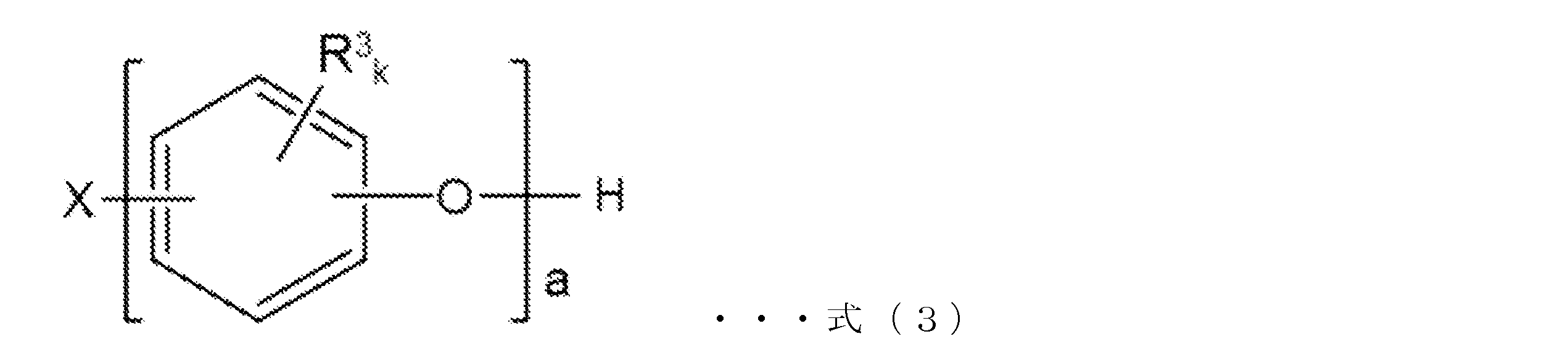
- the present invention is as follows. [1] characterized by comprising a repeating unit derived from a phenol of the following formula (1), a repeating unit derived from a phenol of the following formula (2), and a structural unit derived from a phenol of the following formula (3) , polyphenylene ether.
- each R 11 is independently an optionally substituted saturated hydrocarbon group having 1 to 6 carbon atoms, an optionally substituted aryl group having 6 to 12 carbon atoms, or a halogen atom; and each R 12 is independently a hydrogen atom, an optionally substituted hydrocarbon group having 1 to 6 carbon atoms, an optionally substituted aryl group having 6 to 12 carbon atoms, or a halogen atom.
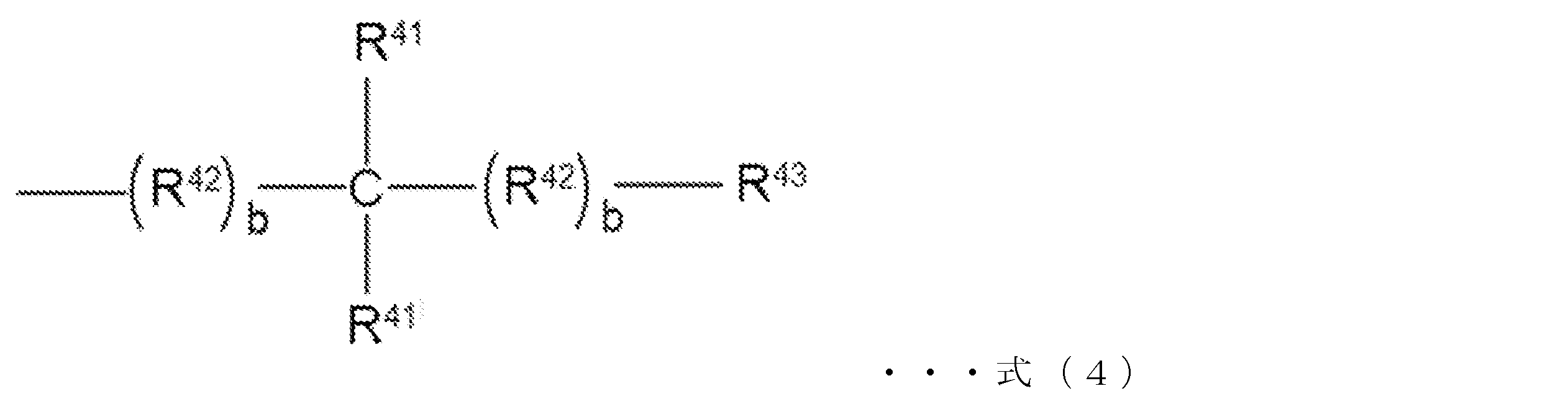
- each R 22 is independently a hydrogen atom, an optionally substituted saturated or unsaturated hydrocarbon group having 1 to 20 carbon atoms, an optionally substituted aryl having 6 to 12 carbon atoms, is a group or a halogen atom, two R 22 are not both hydrogen atoms, and R 21 is a partial structure represented by the following formula (4).
- X is an a-valent linking group
- a is an integer of 2 to 6
- R 3 is a linear alkyl group having 1 to 8 carbon atoms and the following formula (4) , wherein the carbon atom of the benzene ring to which -O- is bonded is the 1st position, and is bonded to at least one carbon atom at the 2nd or 6th position, and k are each independently It is an integer from 1 to 4.
- each R 41 is independently an optionally substituted linear alkyl group having 1 to 8 carbon atoms, or a cyclic alkyl structure having 1 to 8 carbon atoms in which two R 41 are bonded.
- R 42 are each independently an optionally substituted alkylene group having 1 to 8 carbon atoms, each b is independently 0 or 1, R 43 is a hydrogen atom, optionally substituted It is either an alkyl group having 1 to 8 carbon atoms or an optionally substituted phenyl group.
- the partial structure represented by the formula (4), which is R 21 in the formula (2), and the partial structure represented by the formula (4) in the R 3 of the formula (3) may be the same, can be different.
- R 8 is a saturated or unsaturated divalent hydrocarbon group having 1 to 10 carbon atoms, and the saturated or unsaturated divalent hydrocarbon has 1 to 10 carbon atoms.
- R 9 is a hydrogen atom or a saturated or unsaturated hydrocarbon group having 1 to 10 carbon atoms, and the saturated or unsaturated hydrocarbon has 1 carbon atom. It may have a substituent as long as it satisfies the conditions of ⁇ 10.
- [5] The polyphenylene ether according to any one of [1] to [4], which has a polystyrene-equivalent number average molecular weight of 500 to 15,000.
- [6] The method for producing a polyphenylene ether according to any one of [1] to [5], comprising a step of oxidatively polymerizing the phenol of the formula (1), the phenol of the formula (2), and the phenol of the formula (3). .
- a thermosetting composition comprising the polyphenylene ether according to any one of [1] to [6].
- a prepreg which is a composite comprising a substrate and the thermosetting composition according to [7].
- the prepreg according to [8] wherein the base material is glass cloth.
- a laminate comprising a cured product of the prepreg according to [8] or [9] and a metal foil.
- thermosetting composition a prepreg, and a laminate using the polyphenylene ether can be provided.
- this embodiment the form for carrying out the present invention (hereinafter referred to as "this embodiment") will be described in detail.
- the following embodiments are exemplifications for explaining the present invention, and the present invention is not limited only to these embodiments, and the present invention can be appropriately modified within the scope of the gist thereof. can be implemented.
- polyphenylene ether in which some or all of the hydroxyl groups contained in the polyphenylene ether are modified is sometimes simply referred to as "polyphenylene ether". Therefore, the expression “polyphenylene ether” includes both unmodified polyphenylene ether and modified polyphenylene ether, unless otherwise contradicted.
- a (numerical value) to B (numerical value) mean A or more and B or less.
- substituents include, for example, saturated or unsaturated hydrocarbon groups having 1 to 10 carbon atoms, aryl groups having 6 to 10 carbon atoms, and halogen atoms.
- the polyphenylene ether of the present embodiment includes a repeating unit derived from a phenol of the following formula (1), a repeating unit derived from a phenol of the following formula (2), and a structure derived from a phenol of the following formula (3)
- R 42 are each independently an optionally substituted alkylene group having 1 to 8 carbon atoms, each b is independently 0 or 1, R 43 is a hydrogen atom, optionally substituted It is either an alkyl group having 1 to 8 carbon atoms or an optionally substituted phenyl group.
- each R 11 is preferably a saturated hydrocarbon group having 1 to 6 carbon atoms or an aryl group having 6 to 12 carbon atoms, more preferably a methyl group or a phenyl group, still more preferably is a methyl group.
- two R 11 preferably have the same structure.
- the substituent for the saturated hydrocarbon group having 1 to 6 carbon atoms and the aryl group having 6 to 12 carbon atoms for R 11 includes a saturated or unsaturated hydrocarbon group having 1 to 10 carbon atoms and an aryl group having 6 to 10 carbon atoms. groups and halogen atoms.
- each R 12 is preferably a hydrogen atom or a hydrocarbon group having 1 to 6 carbon atoms, more preferably a hydrogen atom or a methyl group.
- two R 12 are preferably different, and more preferably one is a hydrogen atom and the other is a hydrocarbon group having 1 to 6 carbon atoms (preferably a methyl group).
- Substituents for the hydrocarbon group having 1 to 6 carbon atoms and the aryl group having 6 to 12 carbon atoms for R 12 include a saturated or unsaturated hydrocarbon group having 1 to 10 carbon atoms and an aryl group having 6 to 10 carbon atoms. , and halogen atoms.
- two R 22 are preferably different, and more preferably one is a hydrogen atom and the other is a hydrocarbon group having 1 to 6 carbon atoms (preferably a methyl group).
- the substituents for the saturated or unsaturated hydrocarbon group having 1 to 20 carbon atoms and the aryl group having 6 to 12 carbon atoms for R 22 include a saturated or unsaturated hydrocarbon group having 1 to 10 carbon atoms, and a 10 aryl groups and halogen atoms.
- the respective proportions of the repeating unit derived from phenol of formula (1), the repeating unit derived from phenol of formula (2), and the structural unit derived from phenol of formula (3) can be determined, for example, by 1 H NMR, 13 It can be determined using an analysis method such as C NMR, and more specifically, it can be measured by the method described in Examples below.
- repeating units derived from formula (1) include repeating units having the structure of formula (9) below. (In formula (9), R 11 and R 12 are the same as in formula (1).)
- the structural unit derived from the phenol of formula (3) has the structure of formula (12) below, and the phenol of formula (3) is unsubstituted With the ortho position of substitution, the structure derived from the phenol of formula (3) has the structure of formula (12) below, the structure of formula (13) below, or a combination thereof.
- R3 in formulas (12) and (13) is the same as in formula ( 3 ).
- Examples of the monohydric phenol compound represented by the above formula (1) include 2,6-dimethylphenol, 2-methyl-6-ethylphenol, 2,6-diethylphenol, 2-ethyl-6-n- Propylphenol, 2-methyl-6-chlorophenol, 2-methyl-6-bromophenol, 2-methyl-6-n-propylphenol, 2-ethyl-6-bromophenol, 2-methyl-6-n-butylphenol , 2,6-di-n-propylphenol, 2-ethyl-6-chlorophenol, 2-methyl-6-phenylphenol, 2,6-diphenylphenol, 2-methyl-6-tolylphenol, 2,6- ditolylphenol, 2,3,6-trimethylphenol, 2,3-diethyl-6-n-propylphenol, 2,3,6-tributylphenol, 2,6-di-n-butyl-3-methylphenol, 2,6-dimethyl-3-n-butylphenol, 2,6-dimethyl-3-t-butylphenol and the like.
- 2,6-dimethylphenol, 2,3,6-trimethylphenol, and 2,6-diphenylphenol are particularly preferred because they are inexpensive and readily available.
- the monohydric phenol compound represented by the above formula (1) may be used singly or in combination of two or more.
- Examples of the monohydric phenol compound represented by the above formula (2) include 2-isopropyl-5-methylphenol, 2-cyclohexyl-5-methylphenol, 2-tert-butyl-5-methylphenol, 2- and isobutyl-5-methylphenol. 2-t-butyl-5-methylphenol and 2-cyclohexyl-5-methylphenol, which are bulky substituents, are more preferable from the viewpoint of suppressing hyperbranching and gelation.
- the monohydric phenol compound represented by the above formula (2) may be used singly or in combination of two or more.
- phenol compounds having two phenol units in the molecule include, for example, 2,2-bis(3,5-dimethyl-4-hydroxyphenyl) Propane, 2,2-bis(4-hydroxy-3-methylphenyl)propane, 4,4′-methylenebis(2,6-dimethylphenol), bis(4-hydroxy-3-methylphenyl)sulfide, bis(4 -hydroxy-3,5-dimethylphenyl)sulfone, ⁇ , ⁇ '-bis(4-hydroxy-3,5-dimethylphenyl)-1,4-diisopropylbenzene, 9,9-bis(4-hydroxy-3- methylphenyl)fluorene, 1,1-bis(4-hydroxy-3-methylphenyl)cyclohexane, 1,1-bis(2-methyl-4-hydroxy-5-t-butylphenyl)butane and the like.
- 2,2-bis(3,5-dimethyl-4-hydroxyphenyl) 2,2-bis(3,5-dimethyl-4-hydroxyphenyl
- phenol compounds having three or more phenol units in the molecule include, for example, 4,4′-[(3-hydroxyphenyl)methylene ] bis(2,6-dimethylphenol), 4,4′-[(3-hydroxyphenyl)methylene]bis(2,3,6-trimethylphenol), 4,4′-[(4-hydroxyphenyl)methylene ] bis(2,6-dimethylphenol), 4,4′-[(4-hydroxyphenyl)methylene]bis(2,3,6-trimethylphenol), 4,4′-[(2-hydroxy-3- methoxyphenyl)methylene]bis(2,6-dimethylphenol), 4,4'-[(4-hydroxy-3-ethoxyphenyl)methylene]bis(2,3,6-trimethylethylphenol), 4,4' -[(3,4-dihydroxyphenyl)methylene]bis(2,6-dimethylphenol), 4,4′-[(3,4-dihydroxyphenyl)methylene]bis(2,6-dimethylphenol), 4,4′-[
- 1,1,3-tris(2-methyl-4-hydroxy-5-t-butylphenyl)butane is preferred because it is particularly inexpensive and readily available.
- the polyhydric phenol compound represented by the above formula (3) may be used singly or in combination of multiple types.
- the number of phenolic hydroxyl groups in the polyhydric phenol compound represented by the above formula (3) is not particularly limited as long as it is 2 to 6, but from the viewpoint of facilitating the control of the thermosetting speed, preferably 2 ⁇ 4.
- oxidative polymerization of phenol having a hydrogen atom at the ortho position can form an ether bond even at the ortho position, so during oxidative polymerization It becomes difficult to control the bonding position of the phenolic compound, resulting in a branched polymer having a high molecular weight, and finally a solvent-insoluble gel component is generated.
- an aromatic solvent that is a good solvent for polyphenylene ether can be used as a polymerization solvent in the oxidative polymerization step.
- the good solvent for polyphenylene ether is a solvent capable of dissolving polyphenylene ether.
- aromatic hydrocarbons such as ethylbenzene, halogenated hydrocarbons such as chlorobenzene and dichlorobenzene; nitro compounds such as nitrobenzene;
- a known catalyst system that can be generally used for the production of polyphenylene ether can be used.
- a generally known catalyst system one comprising a transition metal ion having oxidation-reduction ability and an amine compound capable of forming a complex with the transition metal ion is known.
- it comprises a copper compound and an amine compound.
- They include a catalyst system, a catalyst system comprising a manganese compound and an amine compound, a catalyst system comprising a cobalt compound and an amine compound, and the like. Since the polymerization reaction proceeds efficiently under slightly alkaline conditions, some alkali or additional amine compounds may be added here.
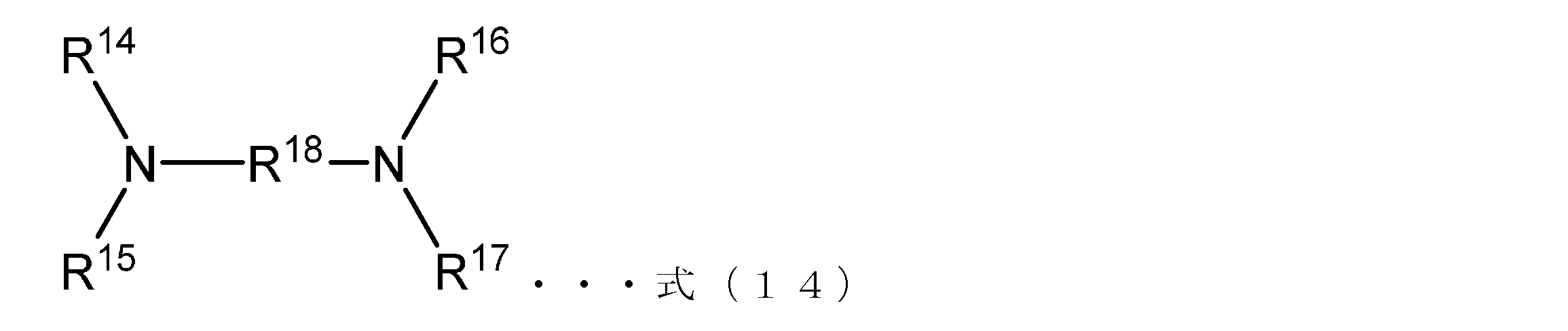
- the polymerization catalyst preferably used in the present embodiment is a catalyst comprising a copper compound, a halogen compound and an amine compound as constituent components of the catalyst, and more preferably a diamine compound represented by the following formula (14) as the amine compound. is a catalyst containing
- R 14 , R 15 , R 16 and R 17 are each independently a hydrogen atom, a linear or branched alkyl group having 1 to 6 carbon atoms, and are not all hydrogen atoms at the same time.
- R 18 is a linear or methyl-branched alkylene group having 2 to 5 carbon atoms.
- Suitable copper compounds may be cuprous compounds, cupric compounds or mixtures thereof.
- cupric compounds include cupric chloride, cupric bromide, cupric sulfate, and cupric nitrate.
- cuprous compounds include cuprous chloride, cuprous bromide, cuprous sulfate, and cuprous nitrate.
- particularly preferred metal compounds are cuprous chloride, cupric chloride, cuprous bromide and cupric bromide.
- These copper salts may also be synthesized at the time of use from oxides (eg, cuprous oxide), carbonates, hydroxides, etc. and the corresponding halogens or acids.
- a frequently used method is a method of mixing cuprous oxide and hydrogen halide (or a solution of hydrogen halide) as exemplified above.
- halogen compounds include hydrogen chloride, hydrogen bromide, hydrogen iodide, sodium chloride, sodium bromide, sodium iodide, potassium chloride, potassium bromide, potassium iodide, tetramethylammonium chloride, and tetramethylammonium bromide. , tetramethylammonium iodide, tetraethylammonium chloride, tetraethylammonium bromide, tetraethylammonium iodide, and the like. Moreover, these can be used as an aqueous solution or a solution using a suitable solvent. These halogen compounds may be used alone as a component, or may be used in combination of two or more. Preferred halogen compounds are aqueous solutions of hydrogen chloride and hydrogen bromide.
- oxygen-containing gas in the polymerization of the present embodiment in addition to pure oxygen, a mixture of oxygen and an inert gas such as nitrogen at an arbitrary ratio, air, and air and an inert gas such as nitrogen are arbitrary. can be used. Normal pressure is sufficient for the system internal pressure during the polymerization reaction, but if necessary, either reduced pressure or increased pressure can be used.
- the polymerization temperature is not particularly limited, but if it is too low, the reaction will not progress easily, and if it is too high, the reaction selectivity may decrease or gel may be formed. It is in the range of 40°C.
- the organic phase containing the polyphenylene ether after the liquid-liquid separation may be concentrated and dried by volatilizing the solvent.
- the method for volatilizing the solvent contained in the organic phase is not particularly limited, but a method of transferring the organic phase to a high-temperature concentration tank and distilling off the solvent to concentrate, or distilling toluene using a device such as a rotary evaporator. A method of removing and concentrating is mentioned.
- the drying step preferably uses a dryer with a mixing function. Dryers having a mixing function include stirring-type and tumble-type dryers. As a result, the throughput can be increased, and productivity can be maintained at a high level.
- the polyphenylene ether of the present embodiment is obtained by equilibrating the polyphenylene ether derived from the phenol of the above formula (1) with the phenol compound of the above formula (2) and the phenol compound of the above formula (3) in the presence of an oxidizing agent. It can also be produced by a partition reaction. Redistribution reactions are known in the art and are described, for example, in US Pat. No. 3,496,236 to Cooper et al. and US Pat. No. 5,880,221 to Liska et al.
- the method for introducing a functional group to the hydroxyl group of the unmodified polyphenylene ether is not limited, for example, the hydroxyl group of the unmodified polyphenylene ether and a carboxylic acid having a carbon-carbon double bond (hereinafter, carboxylic acid) formation of an ester bond. Obtained by reaction.
- carboxylic acid a carboxylic acid halide with a polymer terminal hydroxyl group
- b. formation of an ester bond by reaction with a carboxylic anhydride c.
- a method by transesterification reaction and the like can be mentioned.
- the method for producing the modified polyphenylene ether of the present embodiment is not limited to the method for producing the modified polyphenylene ether of the present embodiment described above, and includes the oxidation polymerization step, copper extraction and by-product removal step, and liquid-liquid separation described above. The order and number of steps, concentration/drying steps, etc. may be adjusted as appropriate.
- the polyphenylene ether solution of the present embodiment contains at least the polyphenylene ether of the present embodiment and a ketone solvent, and may further contain other components. Moreover, as a solvent, a solvent other than the ketone solvent may be included. Examples of the ketone solvent include acetone, methyl ethyl ketone, methyl propyl ketone, methyl isobutyl ketone, diisobutyl ketone, cyclohexanone and the like.
- the polyphenylene ether of the present embodiment can be used as a raw material for thermosetting compositions.
- the thermosetting composition is not particularly limited as long as it contains polyphenylene ether, but preferably further contains a cross-linking agent and an organic peroxide, and if desired, a thermoplastic resin, a flame retardant, other additives, Silica fillers, solvents and the like can also be included.
- the constituent elements of the thermosetting composition of this embodiment are described below.
- crosslinking agent Any cross-linking agent capable of undergoing or promoting the cross-linking reaction can be used in the thermoset compositions of the present embodiments.
- the cross-linking agent preferably has a number average molecular weight of 4,000 or less. When the number average molecular weight of the cross-linking agent is 4,000 or less, an increase in the viscosity of the thermosetting composition can be suppressed, and good resin fluidity during heat molding can be obtained.
- the number average molecular weight may be a value measured by a general molecular weight measurement method, and specifically a value measured using GPC.
- the cross-linking agent preferably has an average of two or more carbon-carbon unsaturated double bonds per molecule from the viewpoint of cross-linking reaction.
- the cross-linking agent may be composed of one type of compound, or may be composed of two or more types of compounds.
- the term "carbon-carbon unsaturated double bond" as used herein refers to a double bond located at the terminal branched from the main chain when the cross-linking agent is a polymer or oligomer. Carbon-carbon unsaturated double bonds include, for example, 1,2-vinyl bonds in polybutadiene.
- the number (average value) of carbon-carbon unsaturated double bonds per molecule of the cross-linking agent is preferably 2-4.
- the number (average value) of carbon-carbon unsaturated double bonds per molecule of the cross-linking agent is preferably 4-26.
- the number average molecular weight of the cross-linking agent is 1,500 or more and 4,000 or less, the number (average value) of carbon-carbon unsaturated double bonds per molecule of the cross-linking agent is 26-60. preferable.
- the number average molecular weight of the cross-linking agent is within the above range, the number of carbon-carbon unsaturated double bonds is equal to or greater than the above specific value, so that the thermosetting composition of the present embodiment exhibits the reactivity of the cross-linking agent is further increased, the crosslink density of the cured product of the thermosetting composition is further improved, and as a result, further excellent heat resistance can be imparted.
- the number average molecular weight of the cross-linking agent is within the above range, the number of carbon-carbon unsaturated double bonds is not more than the above specific value, thereby imparting even better resin fluidity during thermoforming. can.
- cross-linking agents examples include triallyl isocyanurate compounds such as triallyl isocyanurate (TAIC), triallyl cyanurate compounds such as triallyl cyanurate (TAC), and polyfunctional methacrylates having two or more methacrylic groups in the molecule.
- TAIC triallyl isocyanurate
- TAC triallyl cyanurate
- polyfunctional methacrylates having two or more methacrylic groups in the molecule.
- compounds polyfunctional acrylate compounds having two or more acrylic groups in the molecule, polyfunctional vinyl compounds having two or more vinyl groups in the molecule such as polybutadiene, vinylbenzyl compounds such as divinylbenzene having a vinylbenzyl group in the molecule , 4,4′-bismaleimidediphenylmethane, and other polyfunctional maleimide compounds having two or more maleimide groups in the molecule.
- cross-linking agents are used singly or in combination of two or more.
- the cross-linking agent preferably contains at least one compound selected from the group consisting of triallyl cyanurate, triallyl isocyanurate, and polybutadiene. Since the cross-linking agent contains at least one or more compounds described above, the thermosetting composition is more excellent in compatibility and coatability between the cross-linking agent and the polyphenylene ether, and is mounted on an electronic circuit board. The substrate properties tend to be more excellent.
- the mass ratio of the polyphenylene ether and the cross-linking agent is said to further improve the compatibility between the cross-linking agent and the polyphenylene ether, the coatability of the thermosetting composition, and the characteristics of the mounted electronic circuit board. From the point of view, it is preferably 25:75 to 95:5, more preferably 32:68 to 85:15.
- organic peroxide Any organic peroxide capable of accelerating the polymerization reaction of the thermoset composition comprising the polyphenylene ether and the crosslinker can be used in this embodiment.
- organic peroxides include benzoyl peroxide, cumene hydroperoxide, 2,5-dimethylhexane-2,5-dihydroperoxide, 2,5-dimethyl-2,5-di(t-butyl peroxide), oxy)hexyne-3, di-t-butyl peroxide, t-butylcumyl peroxide, di(2-t-butylperoxyisopropyl)benzene, 2,5-dimethyl-2,5-di(t-butylperoxy ) Hexane, dicumyl peroxide, di-t-butylperoxyisophthalate, t-butylperoxybenzoate, 2,2-bis(t-butylperoxy)butane, 2,2-bis(t-butylperoxy
- Radical generators such as 2,3-dimethyl-2,3-diphenylbutane can also be used as reaction initiators for thermosetting compositions. Among them, 2,5-dimethyl-2,5-di(t-butylperoxy ) hexyne-3, di(2-t-butylperoxyisopropyl)benzene, and 2,5-dimethyl-2,5-di(t-butylperoxy)hexane are preferred.
- the 1-minute half-life temperature of the organic peroxide is preferably 155 to 185°C, more preferably 160 to 180°C, still more preferably 165 to 175°C. Since the one-minute half-life temperature of the organic peroxide is in the range of 155 to 185 ° C., the compatibility between the organic peroxide and the polyphenylene ether, the coatability of the thermosetting composition, and the mounted electronic circuit The properties of the substrate tend to be even more excellent.
- the 1-minute half-life temperature is the temperature at which the organic peroxide decomposes and the amount of active oxygen halves in 1 minute.
- organic peroxides having a 1-minute half-life temperature in the range of 155 to 185° C. include t-hexylperoxyisopropyl monocarbonate (155.0° C.), t-butylperoxy-3,5,5- trimethylhexanoate (166.0°C), t-butyl peroxylaurate (159.4°C), t-butylperoxyisopropyl monocarbonate (158.8°C), t-butylperoxy 2-ethylhexyl monocarbonate ( 161.4°C), t-hexylperoxybenzoate (160.3°C), 2,5-dimethyl-2,5-di(benzoylperoxy)hexane (158.2°C), t-butylperoxyacetate ( 159.9°C), 2,2-di-(t-butylperoxy)butane (159.9°C), t-butyl peroxybenzoate (166.8°C), n-he
- the content of the organic peroxide is based on the total of 100 parts by mass of the polyphenylene ether and the cross-linking agent, and the compatibility between the organic peroxide and the polyphenylene ether and the coatability of the thermosetting composition are further improved. , preferably 0.05 parts by mass or more, more preferably 0.5 parts by mass or more, still more preferably 1 part by mass or more, and even more preferably 1.5 parts by mass or more, and the thermosetting composition is applied to the electronic circuit board From the viewpoint of excellent board characteristics when mounted, the amount is preferably 5 parts by mass or less, more preferably 4.5 parts by mass or less.
- thermoplastic resin is a block copolymer of a vinyl aromatic compound and an olefinic alkene compound and its hydrogenated product (a hydrogenated block copolymer obtained by hydrogenating a block copolymer of a vinyl aromatic compound and an olefinic alkene compound). block copolymers) and homopolymers of vinyl aromatic compounds.
- the weight-average molecular weight of the thermoplastic resin is preferably more than 50,000 to 780 from the viewpoint of being more excellent in compatibility with polyphenylene ether, resin fluidity, coatability of the thermosetting composition, heat resistance during curing, and the like. ,000 or less, more preferably 60,000 to 750,000, still more preferably 70,000 to 700,000.
- the vinyl aromatic compound may have an aromatic ring and a vinyl group in the molecule, and examples thereof include styrene.
- the olefinic alkene compound may be any alkene having a linear or branched structure in the molecule, and examples thereof include ethylene, propylene, butylene, isobutylene, butadiene, and isoprene.
- the hydrogenation rate in the above hydrogenated product is not particularly limited, and a portion of the carbon-carbon unsaturated double bonds derived from the olefinic alkene compound may remain.
- the content of the thermoplastic resin is preferably 2 to 20 parts by mass, more preferably 3 to 19 parts by mass, based on a total of 100 parts by mass of the polyphenylene ether and the cross-linking agent, and 4 to 18 parts by mass. Parts by weight is more preferred, and 5 to 17 parts by weight is particularly preferred.
- the thermosetting composition of the present embodiment is more excellent in compatibility and coatability between the thermoplastic resin and the polyphenylene ether, and when mounted on an electronic circuit board It tends to be more excellent in substrate properties.
- the flame retardant is preferably decabromodiphenylethane from the viewpoint of better compatibility between the flame retardant and the polyphenylene ether, the coatability of the thermosetting composition, and the characteristics of the mounted electronic circuit board. .
- thermosetting composition of the present embodiment may further contain additives such as heat stabilizers, antioxidants, UV absorbers, surfactants, lubricants, solvents, etc., in addition to the flame retardant and silica filler.
- additives such as heat stabilizers, antioxidants, UV absorbers, surfactants, lubricants, solvents, etc.
- the thermosetting composition of the present embodiment contains a solvent, it can be in the form of a varnish in which the solid components in the thermosetting composition are dissolved or dispersed in the solvent.
- a resin film can be formed from the cured composition.
- the prepreg of the present embodiment is a composite comprising a base material and the thermosetting composition of the present embodiment described above, and a base material and the thermosetting composition of the present embodiment impregnated or applied to the base material.
- the prepreg can be obtained, for example, by impregnating a base material such as a glass cloth with the varnish of the thermosetting composition, and then removing the solvent by drying with a hot air dryer or the like.
- glass cloths such as roving cloth, cloth, chopped mat, surfacing mat, etc.; asbestos cloth, metal fiber cloth, and other synthetic or natural inorganic fiber cloth; wholly aromatic polyamide fiber, wholly aromatic polyester Woven or non-woven fabric obtained from liquid crystal fiber such as fiber, polybenzoxazole fiber; Natural fiber cloth such as cotton cloth, hemp cloth, felt; Cloth obtained from carbon fiber cloth, kraft paper, cotton paper, paper-glass mixed yarn, etc. natural cellulosic substrates; polytetrafluoroethylene porous films; Among them, glass cloth is preferable. You may use these base materials individually by 1 type or in combination of 2 or more types.
- a method for producing a metal-clad laminate for example, a composite (for example, the above-mentioned prepreg) composed of a thermosetting composition and a base material is formed, and after stacking this with a metal foil, the thermosetting composition
- a method of obtaining a laminate in which a cured composite and a metal foil are laminated by curing is a printed wiring board. At least part of the metal foil is preferably removed from the metal-clad laminate of the printed wiring board.
- the printed wiring board of the present embodiment can typically be formed by using the prepreg of the present embodiment described above and performing pressurization and heat molding. Substrates include those described above with respect to prepregs.
- the printed wiring board of the present embodiment has excellent heat resistance and electrical properties (low dielectric constant and low dielectric loss tangent), and furthermore, electrical properties associated with environmental changes can be suppressed, and has excellent insulation reliability and mechanical properties.
- the repeating unit derived from the phenol of the formula (1) that is, the 2,6-dimethylphenol-derived structure (2,6-dimethylphenylene unit) and a repeating unit derived from the phenol of formula (2), i.e., a signal derived from a 2-tert-butyl-5-methylphenol-derived structure (2-tert-butyl-5-methylphenylene unit)
- Structural units derived from phenol of formula (3) ie, 2,2-bis(3,5-dimethyl-4-hydroxyphenyl)propane-derived structure (2,2-bis(3,5-dimethyl-4- Hydroxyphenyl)propane unit) was analyzed as follows for assigning signals.
- Mn number average molecular weight
- Shimadzu Corporation gel permeation chromatography product name: LC2030S
- LC2030S gel permeation chromatography
- a calibration curve is created with standard polystyrene and ethylbenzene, and the number average of the obtained polyphenylene ether is calculated using this calibration curve.
- Molecular weight (Mn) measurements were made.
- standard polystyrene molecular weights of 1,300 and 550 were used.
- As the column two K-805L columns manufactured by Showa Denko KK were connected in series. Chloroform was used as the solvent, the solvent flow rate was 1.0 mL/min, and the column temperature was 40°C.
- Example 1 A 1.5 liter jacketed reactor equipped with a sparger, stirring turbine blades and baffles for the introduction of oxygen-containing gas at the bottom of the reactor and a reflux condenser in the vent gas line at the top of the reactor was equipped with a preconditioned zero point.
- the organic phase was concentrated by a rotary evaporator to a polymer concentration of 25% by weight.
- the above solution was mixed with methanol at a ratio of 6 to the polymer solution to precipitate the polymer.
- Wet polyphenylene ether was obtained by vacuum filtration using a glass filter. The wet polyphenylene ether was then washed with an amount of methanol to give a ratio of 3 methanol to wet polyphenylene ether. The above washing operation was performed three times.
- the wet polyphenylene ether was then held at 140° C. and 1 mmHg for 120 minutes to obtain a dry polyphenylene ether. Each measurement was performed on the obtained polyphenylene ether by the method described above. Table 1 shows the results of each analysis.
- Example 2 The phenolic raw materials were 22.00 g of 2,6-dimethylphenol, 69.01 g of 2-tert-butyl-5-methylphenol, 8.98 g of 2,2-bis(3,5-dimethyl-4-hydroxyphenyl ) The procedure was carried out in the same manner as in Example 1 except that propane was used. Table 1 shows the results of each analysis.
- Example 3 The phenolic raw materials were 20.00 g of 2,6-dimethylphenol, 62.75 g of 2-tert-butyl-5-methylphenol, 17.25 g of 2,2-bis(3,5-dimethyl-4-hydroxyphenyl ) The procedure was carried out in the same manner as in Example 1 except that propane was used. Table 1 shows the results of each analysis.
- Example 4 The phenolic raw materials were 18.16 g of 2,6-dimethylphenol, 56.97 g of 2-tert-butyl-5-methylphenol, 24.87 g of 2,2-bis(3,5-dimethyl-4-hydroxyphenyl ) The procedure was carried out in the same manner as in Example 1 except that propane was used. Table 1 shows the results of each analysis.
- Example 5 The phenolic raw materials were 16.72 g of 2,6-dimethylphenol, 52.45 g of 2-tert-butyl-5-methylphenol, 30.83 g of 1,1-bis(2-methyl-4-hydroxy-5- The operation was carried out in the same manner as in Example 1, except that t-butylphenyl)butane (ADEKA: AO-40) was used. Table 1 shows the results of each analysis.
- Example 6 The phenol raw material was 60.99 g of 2,6-dimethylphenol, 9.11 g of 2-tert-butyl-5-methylphenol, 29.90 g of 1,1,3-tris(2-methyl-4-hydroxy- The procedure was carried out in the same manner as in Example 1, except that 5-t-butylphenyl)butane (ADEKA: AO-30) was used. Table 1 shows the results of each analysis.
- Example 7 The phenolic raw materials were 25.52 g of 2,6-dimethylphenol, 34.31 g of 2-tert-butyl-5-methylphenol, 40.18 g of 1,1,3-tris(2-methyl-4-hydroxy- The procedure was carried out in the same manner as in Example 1, except that 5-t-butylphenyl)butane (ADEKA: AO-30) was used. Table 1 shows the results of each analysis.
- Example 8 The phenolic raw materials were 14.79 g of 2,6-dimethylphenol, 46.40 g of 2-tert-butyl-5-methylphenol, 38.81 g of 1,1,3-tris(2-methyl-4-hydroxy- The procedure was carried out in the same manner as in Example 1, except that 5-t-butylphenyl)butane (ADEKA: AO-30) was used. Table 1 shows the results of each analysis.
- Example 9 Oxidative polymerization, copper extraction, liquid-liquid separation, and concentration by a rotary evaporator were carried out in the same manner as in Example 1, and a polymer solution having a polymer concentration of 25% by mass was used as the stock solution for the modification reaction. After replacing the inside of the reactor with nitrogen, 200 g of unmodified polyphenylene ether solution, 4-dimethyl 0.94 g of aminopyridine was charged. 43 mL of triethylamine was added using a syringe while stirring. After that, 14.9 mL of methacryloyl chloride was collected in a syringe and dropped into the system at room temperature.
- the flask was heated in an oil bath for 1 hour after the completion of the dropwise addition, and stirring was continued at 90°C. After that, the mixture was further heated in an oil bath to continue the reaction under reflux. After 4 hours from the start of reflux, the heating was stopped, and after returning to room temperature, 5 g of methanol was added to terminate the reaction. Then, the reaction solution was filtered using a glass filter to obtain a solution from which the by-produced triethylammonium salt was removed. The above solution was mixed with methanol having a ratio of methanol to polymer solution of 10 to precipitate the polymer. Wet polyphenylene ether was obtained by vacuum filtration using a glass filter.
- the wet polyphenylene ether was then washed with an amount of methanol to give a ratio of methanol to wet polyphenylene ether of 2.5. The above washing operation was performed three times. The wet polyphenylene ether was then held at 100° C. and 1 mmHg for 8 hours to obtain a dry polyphenylene ether. 1 H NMR measurement was performed to confirm the proton peak derived from the olefin of the methacrylic group, and it was determined that the hydroxyl group was modified with the methacrylic group.
- a prepreg was obtained by removing the This prepreg was cut into a predetermined size, and the solid content of the thermosetting composition in the prepreg was calculated by comparing the mass of the prepreg with the mass of glass cloth of the same size, and it was 52% by mass. .
- a predetermined number of these prepregs are stacked, and copper foil (manufactured by Furukawa Electric Co., Ltd., thickness 35 ⁇ m, GTS-MP foil) is superimposed on both sides of the prepreg, and vacuum press is performed to obtain copper clad.
- a laminate was obtained.
- the pressure is set to 40 kg/cm 2 while heating from room temperature at a temperature increase rate of 2°C/min, and then, after the temperature reaches 200°C, the temperature is maintained at 200°C.
- a pressure of 40 kg/cm 2 and a time of 60 minutes were adopted.
- a laminate (about 0.5 mm thick) was obtained by removing the copper foil from the copper-clad laminate by etching.
- the dielectric properties of the laminate obtained by the method described above were measured. Table 2 shows the results of each analysis.
- Example 12 Oxidative polymerization, copper extraction, liquid-liquid separation, and concentration by a rotary evaporator were carried out in the same manner as in Example 4, and the mixture was held at 100° C. and 1 mmHg for 2 hours to obtain a dry polyphenylene ether. After methacrylic modification was carried out in the same manner as in Example 9, except that the dry polyphenylene ether was used as the raw material for the modification reaction, a laminate was produced and the dielectric properties were measured. Table 2 shows the results of each analysis.
- Example 13 Oxidative polymerization, copper extraction, liquid-liquid separation and concentration by a rotary evaporator were carried out in the same manner as in Example 5, and the mixture was held at 100° C. and 1 mmHg for 2 hours to obtain a dry polyphenylene ether. After methacrylic modification was carried out in the same manner as in Example 9, except that the dry polyphenylene ether was used as the raw material for the modification reaction, a laminate was produced and the dielectric properties were measured. Table 2 shows the results of each analysis.
- Example 14 Oxidative polymerization, copper extraction, liquid-liquid separation, and concentration by a rotary evaporator were carried out in the same manner as in Example 6, and the mixture was held at 100° C. and 1 mmHg for 2 hours to obtain a dry polyphenylene ether. After methacrylic modification was carried out in the same manner as in Example 9, except that the dry polyphenylene ether was used as the raw material for the modification reaction, a laminate was produced and the dielectric properties were measured. Table 2 shows the results of each analysis.
- Example 15 Oxidative polymerization, copper extraction, liquid-liquid separation, and concentration by a rotary evaporator were carried out in the same manner as in Example 7, and the mixture was held at 100° C. and 1 mmHg for 2 hours to obtain a dry polyphenylene ether. After methacrylic modification was carried out in the same manner as in Example 9, except that the dry polyphenylene ether was used as the raw material for the modification reaction, a laminate was produced and the dielectric properties were measured. Table 2 shows the results of each analysis.
- Comparative Example 5 Oxidative polymerization, copper extraction, liquid-liquid separation, and concentration by a rotary evaporator were carried out in the same manner as in Comparative Example 2, and the mixture was held at 100° C. and 1 mmHg for 2 hours to obtain a dry polyphenylene ether. After methacrylic modification was carried out in the same manner as in Example 9, except that the dry polyphenylene ether was used as the raw material for the modification reaction, a laminate was produced and the dielectric properties were measured. Table 2 shows the results of each analysis.
Landscapes
- Chemical & Material Sciences (AREA)
- Organic Chemistry (AREA)
- Polymers & Plastics (AREA)
- Medicinal Chemistry (AREA)
- Chemical Kinetics & Catalysis (AREA)
- Health & Medical Sciences (AREA)
- Materials Engineering (AREA)
- Engineering & Computer Science (AREA)
- General Chemical & Material Sciences (AREA)
- Manufacturing & Machinery (AREA)
- Inorganic Chemistry (AREA)
- Polyethers (AREA)
- Reinforced Plastic Materials (AREA)
- Compositions Of Macromolecular Compounds (AREA)
- Laminated Bodies (AREA)
Abstract
Description
また、特許文献2には、所定のポリフェニレンエーテル部分を分子構造内に有し、かつ、この分子末端に、p-エテニルベンジル基やm-エテニルベンジル基等を少なくとも1つ以上有してなる変性ポリフェニレンエーテル化合物が記載されている。
さらに、特許文献3には、ポリフェニレンエーテル部分を分子構造内に有し、かつ、この分子末端に、メタクリル基を有した変性ポリマーについて記載されている。
[1]
下記式(1)のフェノールから誘導された繰り返し単位と、下記式(2)のフェノールから誘導された繰り返し単位と、下記式(3)のフェノールから誘導された構造単位とを含むことを特徴とする、ポリフェニレンエーテル。
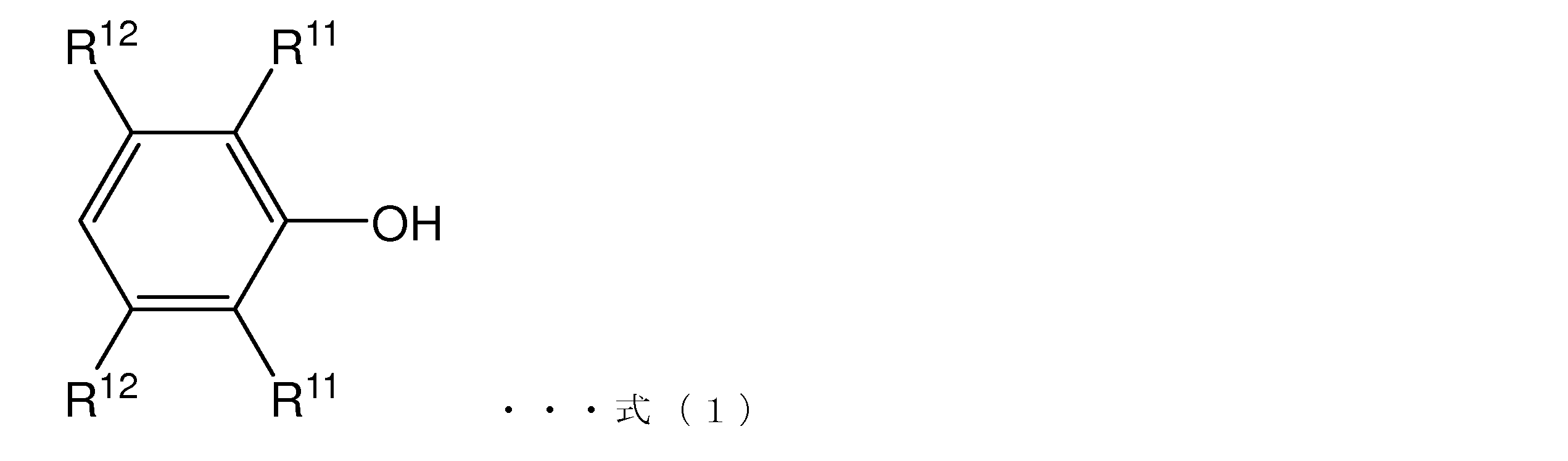
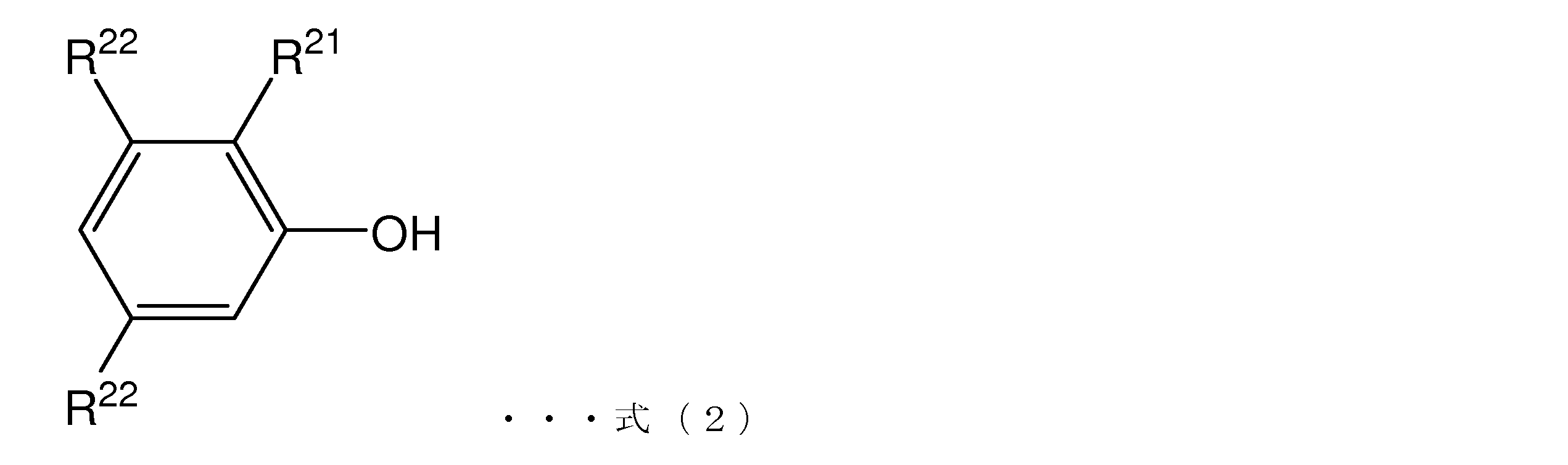

前記式(2)のR21である前記式(4)で表される部分構造及び前記式(3)のR3のうち前記式(4)で表される部分構造は、それぞれ同一でもよく、異なっていてもよい。
[2]
前記式(2)のフェノールから誘導された繰り返し単位の少なくとも1つにおいて、R21がt-ブチル基である、[1]に記載のポリフェニレンエーテル。
[3]
前記式(3)のR3のうち、少なくとも一つがt-ブチル基である、[1]又は[2]に記載のポリフェニレンエーテル。
[4]
下記式(5)、式(6)、式(7)、及び式(8)からなる群から選ばれる少なくとも一つの部分構造を有する、[1]~[3]のいずれかに記載のポリフェニレンエーテル。



[5]
ポリスチレン換算の数平均分子量が500~15,000である、[1]~[4]のいずれかに記載のポリフェニレンエーテル。
[6]
前記式(1)のフェノール、前記式(2)のフェノール及び前記式(3)のフェノールの酸化重合を行う工程を含む、[1]~[5]のいずれかに記載のポリフェニレンエーテルの製造方法。
[7]
[1]~[6]のいずれかに記載のポリフェニレンエーテルを含む、熱硬化組成物。
[8]
基材と、[7]に記載の熱硬化組成物とを含む複合体である、プリプレグ。
[9]
前記基材がガラスクロスである、[8]に記載のプリプレグ。
[10]
[8]又は[9]に記載のプリプレグの硬化物と、金属箔とを含む、積層体。
なお、本明細書において、A(数値)~B(数値)は、A以上B以下を意味する。また、本明細書において、置換基とは、例えば、炭素数1~10の飽和又は不飽和炭化水素基、炭素数6~10のアリール基、ハロゲン原子が挙げられる。
本実施形態のポリフェニレンエーテルは、下記式(1)のフェノールから誘導された繰り返し単位と、下記式(2)のフェノールから誘導された繰り返し単位と、下記式(3)のフェノールから誘導された構造単位とを含むポリフェニレンエーテルであり、化合物中の繰り返し単位が下記式(1)のフェノールから誘導された繰り返し単位と、下記式(2)のフェノールから誘導された繰り返し単位と、下記式(3)のフェノールから誘導された構造単位とのみからなっていてもよい。
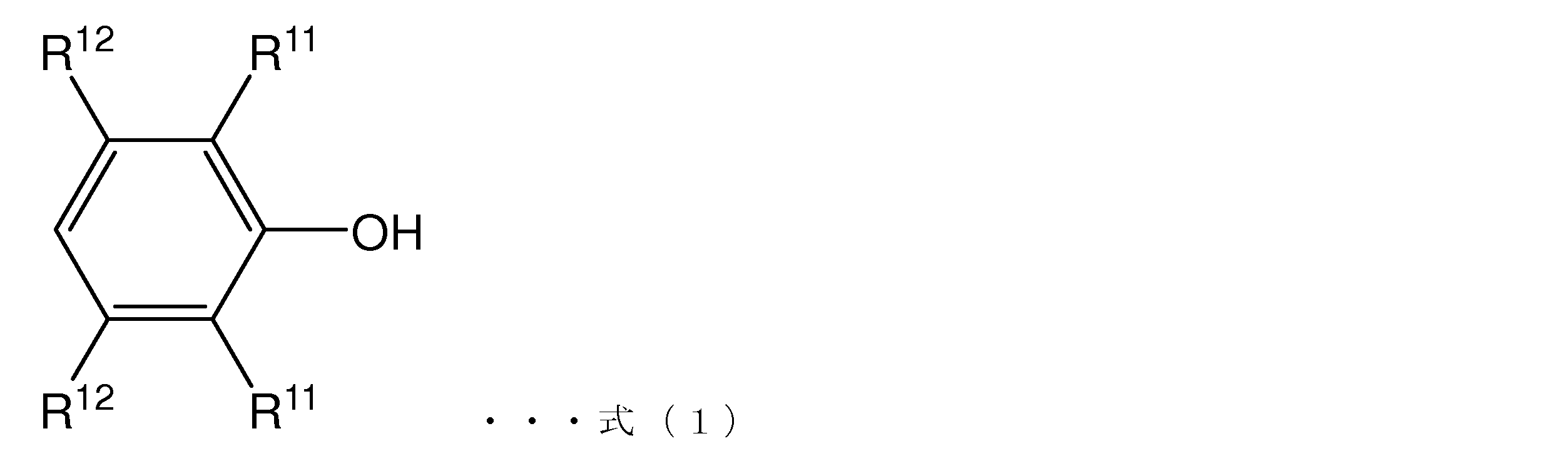
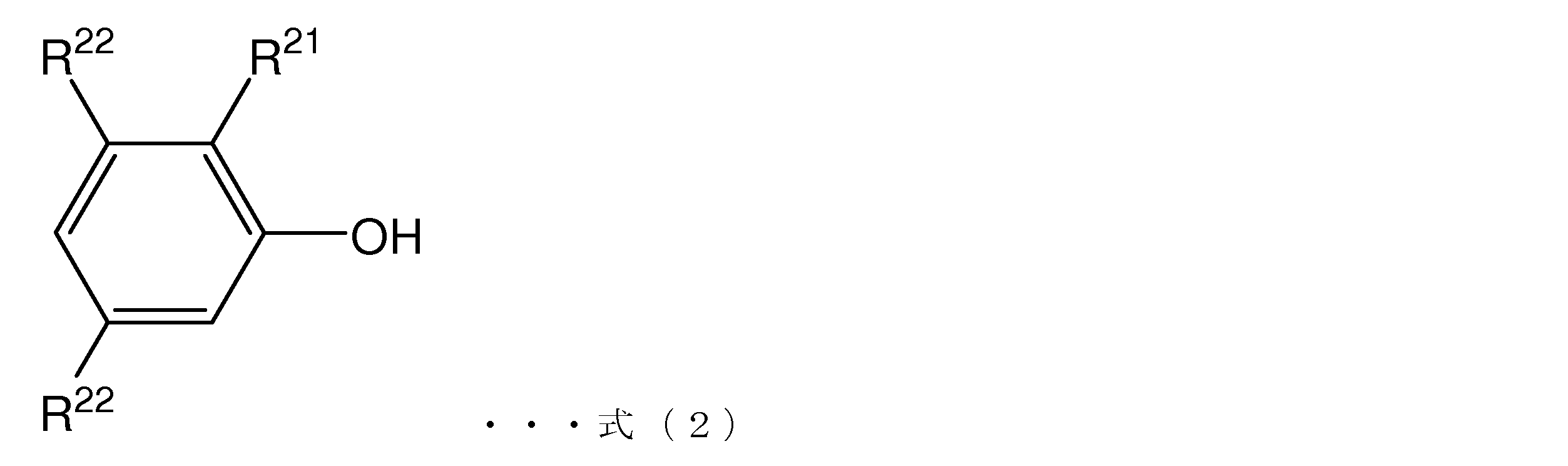
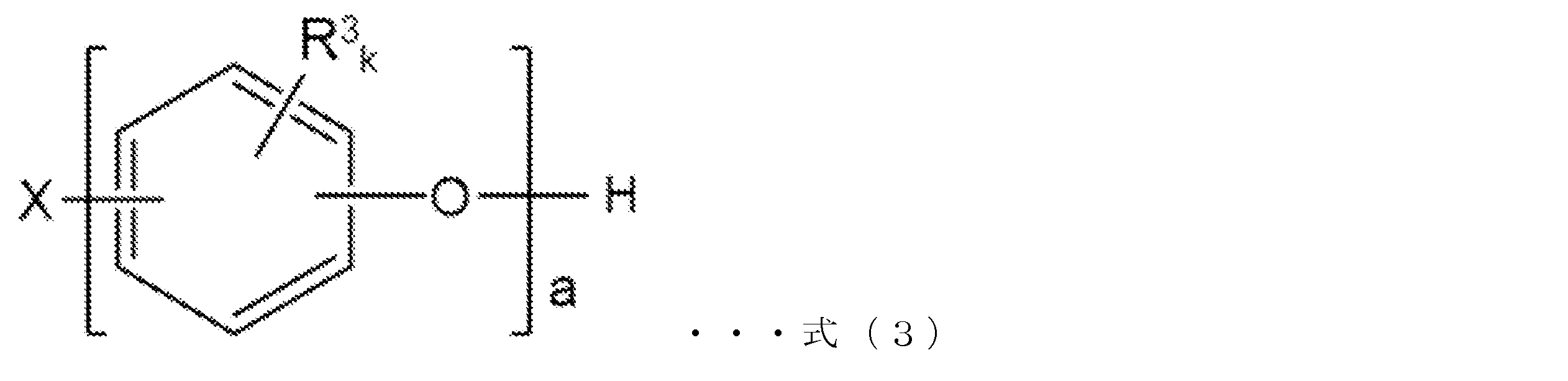
上記R11の炭素数1~6の飽和炭化水素基、炭素数6~12のアリール基における置換基としては、炭素数1~10の飽和又は不飽和炭化水素基、炭素数6~10のアリール基、ハロゲン原子が挙げられる。
上記R12の炭素数1~6の炭化水素基、炭素数6~12のアリール基における置換基としては、炭素数1~10の飽和又は不飽和炭化水素基、炭素数6~10のアリール基、ハロゲン原子が挙げられる。
上記R22の炭素数1~20の飽和又は不飽和炭化水素基、炭素数6~12のアリール基における置換基としては、炭素数1~10の飽和又は不飽和炭化水素基、炭素数6~10のアリール基、ハロゲン原子が挙げられる。
上記式(3)中、kは各々独立に、1~4の整数であり、好ましくは2~4の整数である。
R3は、-O-が結合するベンゼン環の炭素原子を1位として、2位及び6位の少なくとも一方の炭素原子に結合しており、2位及び/又は6位に結合したR3が炭素数1~8の直鎖状アルキル基である場合、2位及び6位の両方に結合していることが好ましく、2位及び/又は6位に結合したR3が式(4)で表される部分構造である場合、2位又は6位どちらか一方のみに結合していることが好ましい。
上記式(2)のR21と上記式(3)のR3がいずれも式(4)で表される部分構造(官能基)である場合(上記式(2)で表されるフェノール化合物と上記式(3)で表されるフェノール化合物両方に上記式(4)で表される部分構造(官能基)が置換している場合)、それぞれの式(4)で表される部分構造(官能基)の構造は同一でも異なっていても良い。
上記Xとしては、単結合又はエステル結合等を介して、R3が結合しているベンゼン環に結合するa価のアルキル骨格、単結合又はエステル結合等を介して、R3が結合しているベンゼン環に結合するa価のアリール骨格、単結合又はエステル結合等を介して、R3が結合しているベンゼン環に結合するa価の複素環骨格等が挙げられる。
ここで、アルキル骨格としては、特に制限されないが、例えば、炭素数2~6の少なくともa個に分岐した鎖式炭化水素(例えば、鎖式飽和炭化水素)の分岐末端が部分構造のベンゼン環に直接結合する骨格(a個の分岐末端にベンゼン環が結合していればよく、ベンゼン環が結合しない分岐末端があってもよい。)等が挙げられる。また、アリール骨格としては、特に制限されないが、例えば、ベンゼン環、メシチレン基、又は2-ヒドロキシ-5-メチル-1,3-フェニレン基が、単結合又はアルキル鎖を介して、R3が結合しているベンゼン環に結合する骨格等が挙げられる。更に、複素環骨格としては、特に制限されないが、例えば、トリアジン環が単結合又はアルキル鎖を介して、R3が結合しているベンゼン環に結合する骨格等が挙げられる。
上記R41の炭素数1~8の直鎖アルキル基における置換基、上記R42の炭素数1~8のアルキレン基における置換基、及び上記R43の炭素数1~8のアルキル基及びフェニル基における置換基、としては、炭素数1~10の飽和又は不飽和炭化水素基、炭素数6~10のアリール基、ハロゲン原子が挙げられる。
なお、上述の通り、前記式(2)のR21は式(4)で表される部分構造であり、式(3)のR3は式(4)で表される部分構造であってもよいところ、これらの式(4)で表される部分構造は、それぞれ同一でもよく、異なっていてもよい。
また、式(1)のフェノールから誘導された繰り返し単位及び式(2)のフェノールから誘導された繰り返し単位の合計と、式(3)のフェノールから誘導された構造単位とのモル比(式(1)のフェノールから誘導された繰り返し単位及び式(2)のフェノールから誘導された繰り返し単位の合計:式(3)のフェノールから誘導された構造単位)は、99.5:0.5~70:30であることが好ましく、99:1~80:20であることがより好しく、98.5:1.5~85:15であることが更に好ましく、98:2~92:8であることが特に好ましい。
式(1)のフェノールから誘導された繰り返し単位と式(2)のフェノールから誘導された繰り返し単位、式(3)のフェノールから誘導された構造単位のそれぞれの割合は、例えば1H NMR、13C NMR等の解析手法を用いて求めることができ、より具体的には後述の実施例に記載の方法により測定することができる。
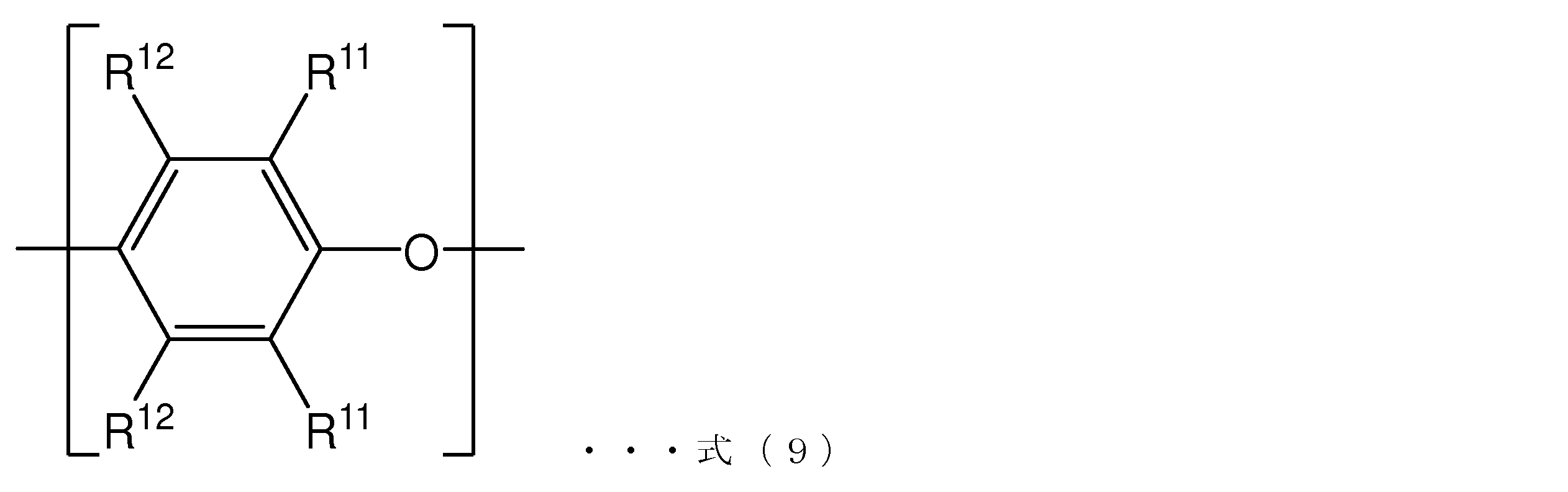
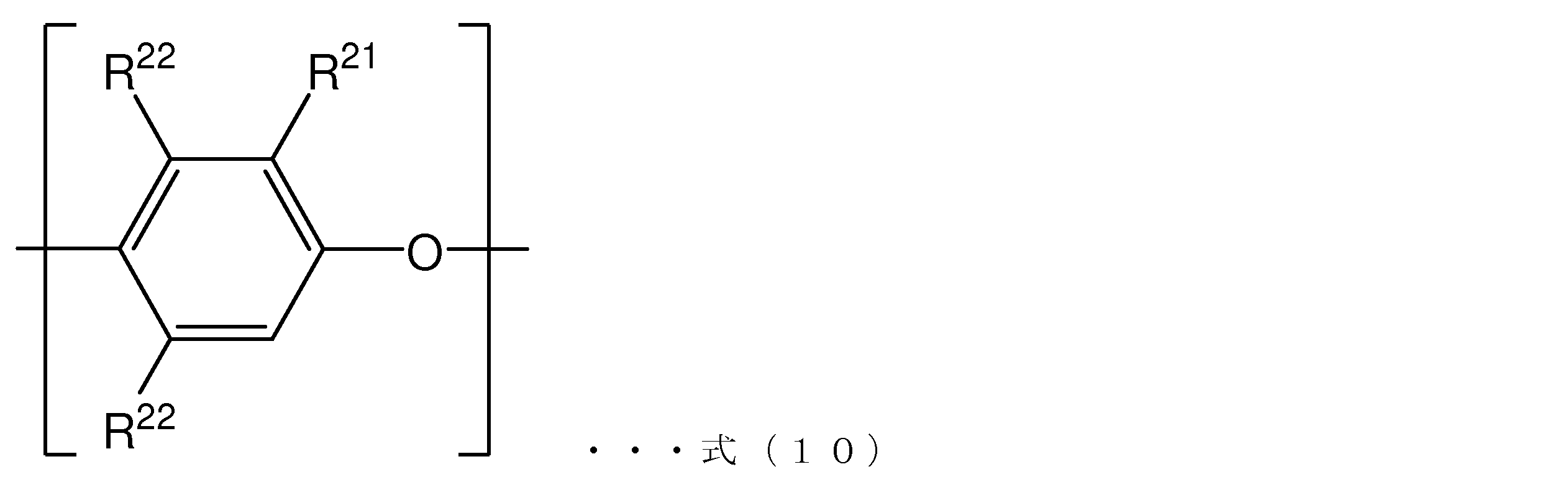
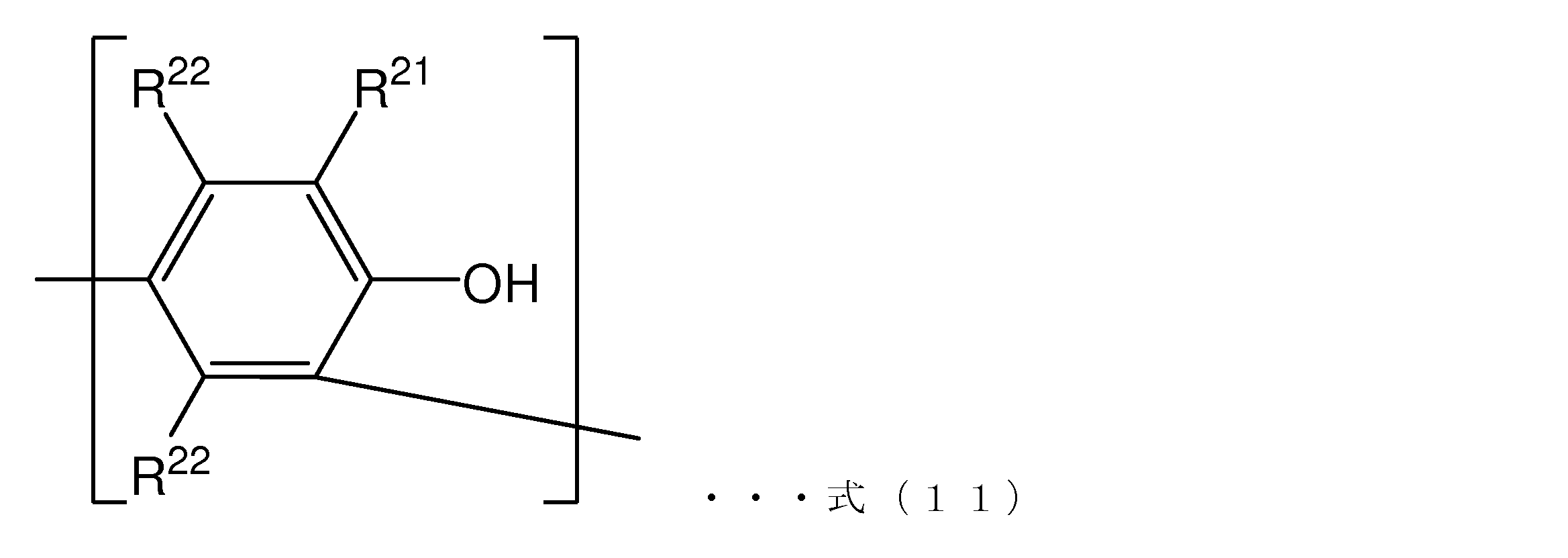
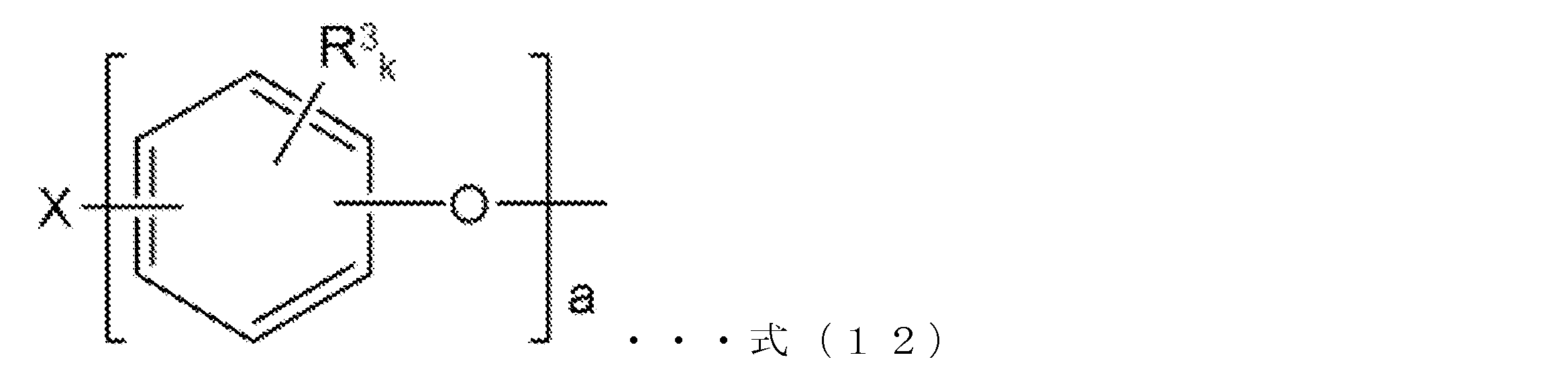
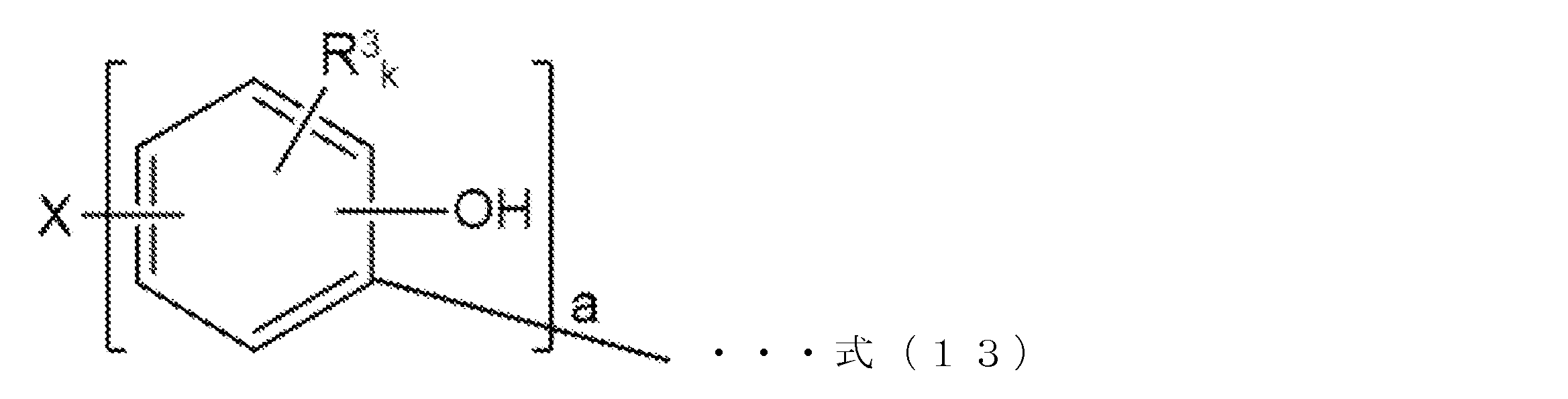



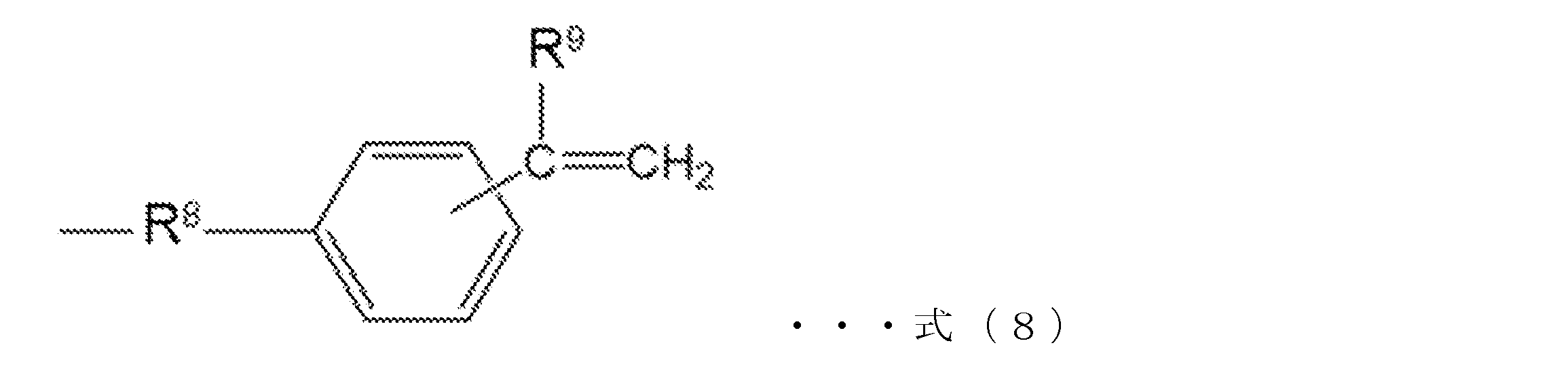
なお、上記式(5)、式(6)、式(7)、式(8)からなる群から選ばれる少なくとも一つで表される部分構造は、ポリフェニレンエーテルに含まれる水酸基の酸素と直接結合してよい。
なお、数平均分子量は、後述の実施例に記載の方法により求められる。
本実施形態のポリフェニレンエーテルは、例えば、上記式(1)、式(2)で表される一価のフェノール化合物と、式(3)で表される多価のフェノール化合物の酸化重合を行う工程を少なくとも含む方法により得られる。上記酸化重合を行う工程は、上記式(1)のフェノール、式(2)のフェノール、及び式(3)のフェノールを少なくとも含む原料を酸化重合することが好ましい。
上記式(1)で表される一価のフェノール化合物は、1種を単独で用いてもよいし、複数種を組み合わせて用いてもよい。
上記式(2)で表される一価のフェノール化合物は、1種を単独で用いてもよいし、複数種を組み合わせて用いてもよい。
上記式(3)で表される多価のフェノール化合物は、1種を単独で用いてもよいし、複数種を組み合わせて用いてもよい。
一方、上記式(2)で表される片側のオルト位に嵩高い置換基を有するフェノールを用いた場合には反対側のオルト位に水素原子を有するにも関わらず、酸化重合時のフェノール化合物の結合位置の制御が可能となり、ゲル化が抑えられ、溶剤に可溶なポリフェニレンエーテルを得ることが出来る。
ここで、ポリフェニレンエーテルの製造方法では、酸化重合工程において、重合溶剤としてポリフェニレンエーテルの良溶剤である芳香族系溶剤を用いることができる。
ここで、ポリフェニレンエーテルの良溶剤とは、ポリフェニレンエーテルを溶解させることができる溶剤であり、このような溶剤を例示すると、ベンゼン、トルエン、キシレン(o-、m-、p-の各異性体を含む)、エチルベンゼン等の芳香族炭化水素やクロロベンゼン、ジクロロベンゼン等のハロゲン化炭化水素;ニトロベンゼンのようなニトロ化合物;等が挙げられる。
本実施形態において、重合反応終了後の後処理方法については、特に制限はない。通常、塩酸や酢酸等の酸、又はエチレンジアミン4酢酸(EDTA)及びその塩、ニトリロトリ酢酸及びその塩等を反応液に加えて、触媒を失活させる。また、ポリフェニレンエーテルの重合により生じる二価フェノール体の副生成物を除去処理する方法も、従来既知の方法を用いて行うことができる。上記の様に触媒である金属イオンが実質的に失活されている状態であれば、該混合物を加熱するだけで脱色される。また既知の還元剤を必要量添加する方法でも可能である。既知の還元剤としては、ハイドロキノン、亜二チオン酸ナトリウム等が挙げられる。
ポリフェニレンエーテルの製造方法においては、銅触媒を失活させた化合物を抽出するため水を添加し、有機相と水相に液液分離を行った後、水相を除去することで有機相から銅触媒を除去してよい。この液液分離工程は、特に限定されないが、静置分離、遠心分離機による分離等の方法が挙げられる。上記液液分離を促進させるためには、公知の界面活性剤等を用いてもよい。
続いて、本実施形態のポリフェニレンエーテルの製造方法においては、液液分離後の上記ポリフェニレンエーテルが含まれた有機相を、溶剤を揮発させることで濃縮・乾燥させてよい。
未変性ポリフェニレンエーテルの水酸基へ官能基を導入する方法に限定はなく、例えば、未変性ポリフェニレンエーテルの水酸基と、炭素-炭素2重結合を有するカルボン酸(以下、カルボン酸)とのエステル結合の形成反応により得られる。エステル結合の形成法は、公知の様々な方法を利用することが出来る。例えば、a.カルボン酸ハロゲン化物とポリマー末端の水酸基との反応、b.カルボン酸無水物との反応によるエステル結合の形成、c.カルボン酸との直接反応、d.エステル交換反応による方法等が挙げられる。aのカルボン酸ハロゲン化物との反応は最も一般的な方法の一つである。カルボン酸ハロゲン化物としては、塩化物、臭化物が一般的に用いられるが、他のハロゲンを利用してもかまわない。反応は、水酸基との直接反応、水酸基のアルカリ金属塩との反応のいずれでも構わない。カルボン酸ハロゲン化物と水酸基との直接反応ではハロゲン化水素等の酸が発生するため、酸をトラップする目的でアミン等の弱塩基を共存させてもよい。bのカルボン酸無水物との反応やcのカルボン酸との直接反応では、反応点を活性化し、反応を促進するために、例えばカルボジイミド類やジメチルアミノピリジン等の化合物を共存させてもかまわない。dのエステル交換反応の場合は、必要に応じて、生成したアルコール類の除去を行うことが望ましい。また、反応を促進させるために公知の金属触媒類を共存させてもかまわない。反応後は、アミン塩等の副生物等を除くために、水、酸性、又はアルカリ性の水溶液で洗浄してもかまわないし、ポリマー溶液をアルコール類のような貧溶媒中に滴下し、再沈殿により、目的物を回収してもかまわない。またポリマー溶液を洗浄後、減圧下に溶媒を留去し、ポリマーを回収してもかまわない。
本実施形態のポリフェニレンエーテル溶液は、上述の本実施形態のポリフェニレンエーテルとケトン系溶媒とを少なくとも含み、さらに他の成分を含んでいてもよい。また、溶媒として、ケトン系溶媒以外の溶媒を含んでいてもよい。
上記ケトン系溶媒としては、アセトン、メチルエチルケトン、メチルプロピルケトン、メチルイソブチルケトン、ジイソブチルケトン、シクロヘキサノン等が挙げられる。
上記ポリフェニレンエーテル溶液100質量%に対する、上記ポリフェニレンエーテルと上記ケトン系溶媒との合計質量の割合としては、80質量%以上であることが好ましく、より好ましくは90質量%以上、さらに好ましくは95質量%以上、特に好ましくは100質量%である。
上記ポリフェニレンエーテル溶液100質量%に対する上記ポリフェニレンエーテルの質量割合としては、1~40質量%が好ましい。また、上記ポリフェニレンエーテル溶液100質量%に対する上記ケトン系溶媒の質量割合としては、60~99質量%が好ましい。
上記ポリフェニレンエーテル溶液は、例えば、上記ポリフェニレンエーテル、上記ケトン系溶媒、及び任意の他の成分や他の溶媒等を混合することで製造することができる。
本実施形態のポリフェニレンエーテルは、熱硬化組成物の原料として用いることができる。熱硬化組成物は、ポリフェニレンエーテルを含むものであれば特に限定されないが、架橋剤と、有機過酸化物とを更に含むことが好ましく、所望により、熱可塑性樹脂、難燃剤、その他の添加剤、シリカフィラー、溶剤等を更に含むことができる。本実施形態の熱硬化組成物の構成要素について以下に説明する。
本実施形態のポリフェニレンエーテルは、上述のとおり、熱硬化組成物において、単独の樹脂として使用してもよいし、他の構造を有するポリフェニレンエーテルと併用してもよく、公知の各種添加剤と組み合わせて使用することもできる。
他の成分と組み合わせて用いる場合、熱硬化組成物中のポリフェニレンエーテルの含有量は、0.5~95質量%であることが好ましく、より好ましくは20~93質量%、更に好ましくは40~90質量%である。
本実施形態の熱硬化組成物では、架橋反応を起こすか、又は促進する能力を有する任意の架橋剤を使用することができる。
架橋剤は、数平均分子量が4,000以下であることが好ましい。架橋剤の数平均分子量が4,000以下であると、熱硬化組成物の粘度の増大を抑制でき、また加熱成形時の良好な樹脂流動性が得られる。
なお、数平均分子量は、一般的な分子量測定方法で測定した値としてよく、具体的には、GPCを用いて測定した値等が挙げられる。
なお、本明細書にいう「炭素-炭素不飽和二重結合」とは、架橋剤がポリマー又はオリゴマーである場合、主鎖より分岐した末端に位置する二重結合をいう。炭素-炭素不飽和二重結合としては、例えば、ポリブタジエンにおける1,2-ビニル結合が挙げられる。
本実施形態では、ポリフェニレンエーテル及び架橋剤を含む熱硬化組成物の重合反応を促進する能力を有する任意の有機過酸化物を使用することができる。有機過酸化物としては、例えば、ベンゾイルパーオキサイド、クメンハイドロパーオキサイド、2,5-ジメチルヘキサン-2,5-ジハイドロパーオキサイド、2,5-ジメチル-2,5-ジ(t-ブチルパーオキシ)ヘキシン-3、ジ-t-ブチルパーオキサイド、t-ブチルクミルパーオキサイド、ジ(2-t-ブチルペルオキシイソプロピル)ベンゼン、2,5-ジメチル-2,5-ジ(t-ブチルパーオキシ)ヘキサン、ジクミルパーオキサイド、ジ-t-ブチルパーオキシイソフタレート、t-ブチルパーオキシベンゾエート、2,2-ビス(t-ブチルパーオキシ)ブタン、2,2-ビス(t-ブチルパーオキシ)オクタン、2,5-ジメチル-2,5-ジ(ベンゾイルパーオキシ)ヘキサン、ジ(トリメチルシリル)パーオキサイド、トリメチルシリルトリフェニルシリルパーオキサイド等の過酸化物が挙げられる。なお、2,3-ジメチル-2,3-ジフェニルブタン等のラジカル発生剤も熱硬化組成物のための反応開始剤として使用することができる。中でも、得られる耐熱性及び機械特性に優れ、更に低い誘電率及び誘電正接を有する硬化物を提供することができるという観点から、2,5-ジメチル-2,5-ジ(t-ブチルパーオキシ)ヘキシン-3、ジ(2-t-ブチルペルオキシイソプロピル)ベンゼン、及び2,5-ジメチル-2,5-ジ(t-ブチルパーオキシ)ヘキサンが好ましい。
なお、本明細書において、1分間半減期温度とは、有機過酸化物が分解して、その活性酸素量が半分になる時間が1分間となる温度である。1分間半減期温度は、ラジカルに対して不活性な溶剤、例えばベンゼン等に有機過酸化物を0.05~0.1mol/Lの濃度となるように溶解させ、有機過酸化物溶液を窒素雰囲気化で熱分解させる方法で確認される値である。
熱可塑性樹脂は、ビニル芳香族化合物とオレフィン系アルケン化合物とのブロック共重合体及びその水素添加物(ビニル芳香族化合物とオレフィン系アルケン化合物とのブロック共重合体を水素添加して得られる水添ブロック共重合体)、並びにビニル芳香族化合物の単独重合体から成る群より選択される少なくとも1種であることが好ましい。
また、熱可塑性樹脂の重量平均分子量は、ポリフェニレンエーテルとの相溶性、樹脂流動性、熱硬化組成物の塗工性及び硬化時の耐熱性等に一層優れる観点から、好ましくは50,000超780,000以下、より好ましくは60,000~750,000、更に好ましくは70,000~700,000である。
熱硬化組成物は、ポリフェニレンエーテル、架橋剤及び有機過酸化物と、上記で説明された種類及び重量平均分子量を有する熱可塑性樹脂とを含むと、ポリフェニレンエーテルと他の含有成分との相溶性及び基材等への塗工性が良好になる傾向にあり、ひいては電子回路基板に組み込まれたときの基板特性にも優れることがある。
なお、重量平均分子量は、ゲルパーミエーションクロマトグラフィー(GPC)を用いて求められる。
オレフィン系アルケン化合物としては、分子内に直鎖若しくは分岐構造を有するアルケンであればよく、例えば、エチレン、プロピレン、ブチレン、イソブチレン、ブタジエン、及びイソプレン等が挙げられる。
熱可塑性樹脂としては、ポリフェニレンエーテルとの相溶性に一層優れる観点から、スチレン-ブタジエンブロック共重合体、スチレン-エチレン-ブタジエンブロック共重合体、スチレン-エチレン-ブチレンブロック共重合体、スチレン-ブタジエン-ブチレンブロック共重合体、スチレン-イソプレンブロック共重合体、スチレン-エチレン-プロピレンブロック共重合体、スチレン-イソブチレンブロック共重合体、スチレン-ブタジエンブロック共重合体の水素添加物、スチレン-エチレン-ブタジエンブロック共重合体の水素添加物、スチレン-ブタジエン-ブチレンブロック共重合体の水素添加物、スチレン-イソプレンブロック共重合体の水素添加物、及びスチレンの単独重合体(ポリスチレン)から成る群より選択される少なくとも1種であることが好ましく、スチレン-ブタジエンブロック共重合体、スチレン-ブタジエンブロック共重合体の水素添加物、及びポリスチレンからなる群より選択される1種以上であることがより好ましい。
本実施形態の熱硬化組成物は、難燃剤を含むことが好ましい。難燃剤としては、耐熱性を向上できる観点から、熱硬化組成物の硬化後に熱硬化組成物中の他の含有成分と相溶しないものであれば特に制限されない。好ましくは、難燃剤は、熱硬化組成物の硬化後に熱硬化組成物中のポリフェニレンエーテル及び/又は架橋剤と相溶しない。
難燃剤としては、例えば、三酸化アンチモン、水酸化アルミニウム、水酸化マグネシウム、ホウ酸亜鉛等の無機難燃剤;ヘキサブロモベンゼン、デカブロモジフェニルエタン、4,4-ジブロモビフェニル、エチレンビステトラブロモフタルイミド等の芳香族臭素化合物;レゾルシノールビス-ジフェニルホスフェート、レゾルシノールビス-ジキシレニルホスフェート等のリン系難燃剤等が挙げられる。これらの難燃剤は、1種を単独で、又は2種以上を組み合わせて用いてもよい。これらの中でも、難燃剤は、難燃剤とポリフェニレンエーテルとの相溶性、熱硬化組成物の塗工性、実装された電子回路基板の特性に一層優れる観点から、デカブロモジフェニルエタンであることが好ましい。
本実施形態の熱硬化組成物は、シリカフィラーを含有してもよい。シリカフィラーとしては、例えば、天然シリカ、溶融シリカ、合成シリカ、アモルファスシリカ、アエロジル、及び中空シリカ等が挙げられる。
シリカフィラーの含有量は、ポリフェニレンエーテル樹脂と架橋剤との合計100質量部に対して、10~100質量部としてよい。また、シリカフィラーは、その表面にシランカップリング剤等を用いて表面処理をされたものであってもよい。
本実施形態の熱硬化組成物は、溶剤を含む場合には、熱硬化組成物中の固形成分が溶剤に溶解又は分散したワニスの形態であることが可能であり、また、本実施形態の熱硬化組成物から樹脂フィルムを形成することができる。
溶剤としては、溶解性の観点から、トルエン、キシレン等の芳香族系化合物、メチルエチルケトン(MEK)、シクロペンタノン、シクロヘキサノン及びクロロホルム等が好ましい。これらの溶剤は1種を単独で、又は2種以上を組み合わせて用いてもよい。
本実施形態のプリプレグは、基材と上述の本実施形態の熱硬化組成物とを含み、基材とこの基材に含浸又は塗布された本実施形態の熱硬化組成物とを含む複合体であることが好ましい。プリプレグは、例えば、ガラスクロス等の基材を上記熱硬化組成物のワニスに含浸させた後、熱風乾燥機等で溶剤分を乾燥除去することにより得られる。
本実施形態の積層体は、上述の本実施形態のプリプレグの硬化物と金属箔とを含み、本実施形態の熱硬化組成物又は本実施形態のプリプレグと金属箔とを積層して硬化して得られる金属張積層板であることが好ましい。金属張積層板は、プリプレグの硬化物(以下、「硬化物複合体」ともいう。)と金属箔とが積層して密着している形態を有することが好ましく、電子基板用材料として好適に用いられる。
金属箔としては、例えば、アルミ箔及び銅箔が挙げられ、これらの中でも銅箔は電気抵抗が低いため好ましい。
金属箔と組合せる硬化物複合体は、1枚でも複数枚でもよく、用途に応じて複合体の片面又は両面に金属箔を重ねて積層板に加工する。
前記金属張積層板の特に好ましい用途の1つはプリント配線板である。プリント配線板は、金属張積層板から金属箔の少なくとも一部が除去されていることが好ましい。
本実施形態のプリント配線板は、本実施形態の金属張積層板から金属箔の少なくとも一部が除去されている。本実施形態のプリント配線板は、典型的には、上述した本実施形態のプリプレグを用いて、加圧加熱成形する方法で形成できる。基材としてはプリプレグに関して前述したのと同様のものが挙げられる。
本実施形態のプリント配線板は、本実施形態の熱硬化組成物を含むことにより、優れた耐熱性及び電気特性(低誘電率及び低誘電正接)を有し、更には環境変動に伴う電気特性の変動を抑制可能であり、更には優れた絶縁信頼性及び機械特性を有する。
実施例及び比較例で得られた未変性ポリフェニレンエーテルを重クロロホルムに溶解し、テトラメチルシランを内部標準として用い、1H-NMR測定(JEOL製500MHz)を行った。測定の際、未変性ポリフェニレンエーテルは事前に140℃、1mmHgで8時間保持することでトルエンや水等の揮発成分を除去し、乾燥状態の未変性ポリフェニレンエーテルとして測定を行った。式(1)、式(2)、及び式(3)のフェノールから誘導される単位のシグナルを同定し、それぞれの割合を算出した。
例えば、実施例1で得られた未変性ポリフェニレンエーテルにおいては、式(1)のフェノールから誘導された繰り返し単位、即ち、2,6-ジメチルフェノール由来構造(2,6-ジメチルフェニレンユニット)に由来するシグナルと、式(2)のフェノールから誘導された繰り返し単位、即ち、2-tert-ブチル-5-メチルフェノール由来構造(2-tert-ブチル-5-メチルフェニレンユニット)に由来するシグナルと、式(3)のフェノールから誘導された構造単位、即ち、2,2-ビス(3,5-ジメチル-4-ヒドロキシフェニル)プロパン由来構造(2,2-ビス(3,5-ジメチル-4-ヒドロキシフェニル)プロパンユニット)に由来するシグナルの帰属方法について下記の通り解析した。各フェノールから誘導された繰り返し単位のピークは次の領域に現れる。
2,6-ジメチルフェニレンユニット、2-tert-ブチル-5-メチルフェニレンユニット及び2,2-ビス(3,5-ジメチル-4-ヒドロキシフェニル)プロパンユニットのメチル基の水素原子由来のピーク(それぞれ6H、3H、18Hずつ):1.60~2.50ppm(ただし、トルエンのメチル基の水素原子由来のピークを除く)
2-tert-ブチル-5-メチルフェニレンユニットのtert-ブチル基の水素原子由来のピーク(9H):1.00~1.52ppm(ただし、水の水素原子由来のピークを除く)
2,2-ビス(3,5-ジメチル-4-ヒドロキシフェニル)プロパンユニット内部の水素原子由来のピーク(4H):6.85~7.00ppm
上記シグナルの積分値を調べ、下記数式(1)により2,6-ジメチルフェニレンユニットのメチル基の水素原子由来のピークの1プロトン当たりの積分値を求めることができる。
F={C-3×(D/9)-18×(E/4)}/6 ・・・数式(1)
C:2,6-ジメチルフェニレンユニット、2-tert-ブチル-5-メチルフェニレンユニット及び2,2-ビス(3,5-ジメチル-4-ヒドロキシフェニル)プロパンユニットのメチル基由来のピークの積分値
D:2-tert-ブチル-5-メチルフェニレンユニットのtert-ブチル由来のピークの積分値
E:2,2-ビス(3,5-ジメチル-4-ヒドロキシフェニル)プロパンユニット内部の水素原子由来のピークの積分値
F:2,6-ジメチルフェニレンユニットのメチル由来のピークの1プロトン当たりの積分値
さらに下記数式(2)、(3)により、式(1)のフェノールから誘導された繰り返し単位と式(2)のフェノールから誘導された繰り返し単位との合計に対する式(1)又は式(2)のフェノールから誘導された繰り返し単位の割合(mol%)を計算することができる。
式(1)のフェノールから誘導された繰り返し単位の割合(mol%)=F/{(D/9)+F}×100 ・・・数式(2)
式(2)のフェノールから誘導された繰り返し単位の割合(mol%)=(D/9)/{(D/9)+F}×100 ・・・数式(3)
また、下記数式(4)により、未変性ポリフェニレンエーテルに対する式(3)のフェノールから誘導された繰り返し単位の割合(mol%)を計算することができる。
式(3)のフェノールから誘導された繰り返し単位の割合(mol%)=(E/4)/{(D/9)+F+(E/4)}×100 ・・・数式(4)
実施例及び比較例で得られた変性ポリフェニレンエーテルを測定溶媒(水酸基を消失させるため重水を1滴加えた重クロロホルム)に溶解し、テトラメチルシランを内部標準として用い、1H-NMR測定(JEOL製500MHz)を行った。測定の際、変性ポリフェニレンエーテルは事前に140℃、1mmHgで8時間保持することでトルエンや水等の揮発成分を除去し、乾燥状態の変性ポリフェニレンエーテルとして測定を行った。式(1)、式(2)、及び式(3)のフェノールから誘導される単位のシグナルを同定し、それぞれの割合を算出した。
例えば、実施例9で得られた変性ポリフェニレンエーテルにおいては、式(1)のフェノールから誘導された繰り返し単位、即ち、2,6-ジメチルフェノール由来構造(2,6-ジメチルフェニレンユニット)に由来するシグナルと、式(2)のフェノールから誘導された繰り返し単位、即ち、2-tert-ブチル-5-メチルフェノール由来構造(2-tert-ブチル-5-メチルフェニレンユニット)に由来するシグナルと、式(3)のフェノールから誘導された構造単位、即ち、2,2-ビス(3,5-ジメチル-4-ヒドロキシフェニル)プロパン由来構造(2,2-ビス(3,5-ジメチル-4-ヒドロキシフェニル)プロパンユニット)に由来するシグナルと、式(5)、式(6)、式(7)又は式(8)からなる群から選ばれる部分構造に由来するシグナル、即ち、メタクリル基由来構造に由来するシグナルの帰属方法について下記の通り解析した。各フェノールから誘導された繰り返し単位のピークは次の領域に現れる。
2,6-ジメチルフェニレンユニット、2-tert-ブチル-5-メチルフェニレンユニット、2,2-ビス(3,5-ジメチル-4-ヒドロキシフェニル)プロパンユニット及びメタクリル基のメチル基の水素原子由来のピーク(それぞれ6H、3H、18H、3Hずつ):1.60~2.50ppm(ただし、トルエンのメチル基の水素原子由来のピークを除く)
2-tert-ブチル-5-メチルフェニレンユニットのtert-ブチル基の水素原子由来のピーク(9H):1.00~1.52ppm(ただし、水の水素原子由来のピークを除く)
2,2-ビス(3,5-ジメチル-4-ヒドロキシフェニル)プロパンユニット内部の水素原子由来のピーク(4H):6.85~7.00ppm
メタクリル基のメチレン基の一つの水素原子由来のピーク(1H):4.4~5.8ppm
上記シグナルの積分値を調べ、下記数式(5)により2,6-ジメチルフェニレンユニットのメチル基の水素原子由来のピークの1プロトン当たりの積分値を求めることができる。
F={C-3×(D/9)-18×(E/4)-3×(H/1)}/6 ・・・数式(5)
C:2,6-ジメチルフェニレンユニット、2-tert-ブチル-5-メチルフェニレンユニット及び2,2-ビス(3,5-ジメチル-4-ヒドロキシフェニル)プロパンユニットのメチル基由来のピークの積分値
D:2-tert-ブチル-5-メチルフェニレンユニットのtert-ブチル由来のピークの積分値
E:2,2-ビス(3,5-ジメチル-4-ヒドロキシフェニル)プロパンユニット内部の水素原子由来のピークの積分値
F:2,6-ジメチルフェニレンユニットのメチル由来のピークの1プロトン当たりの積分値
H:メタクリル基のメチレン基の一つの水素原子由来のピークの積分値
さらに下記数式(6)、(7)により、式(1)のフェノールから誘導された繰り返し単位と式(2)のフェノールから誘導された繰り返し単位との合計に対する式(1)又は式(2)のフェノールから誘導された繰り返し単位の割合(mol%)を計算することができる。
式(1)のフェノールから誘導された繰り返し単位の割合(mol%)=F/{(D/9)+F}×100 ・・・数式(6)
式(2)のフェノールから誘導された繰り返し単位の割合(mol%)=(D/9)/{(D/9)+F}×100 ・・・数式(7)
また、下記数式(8)により、変性ポリフェニレンエーテルに対する式(3)のフェノールから誘導された繰り返し単位の割合(mol%)を計算することができる。
式(3)のフェノールから誘導された繰り返し単位の割合(mol%)=(E/4)/{(D/9)+F+(E/4)}×100 ・・・数式(8)
測定装置として、島津(株)製ゲルパーミエーションクロマトグラフィー(製品名:LC2030S)を用い、標準ポリスチレンとエチルベンゼンにより検量線を作成し、この検量線を利用して、得られたポリフェニレンエーテルの数平均分子量(Mn)の測定を行った。
標準ポリスチレンとしては、分子量が、3,650,000、2,170,000、1,090,000、681,000、204,000、52,000、30,200、13,800、3,360、1,300、550のものを用いた。
カラムは、昭和電工(株)製K-805Lを2本直列につないだものを使用した。溶剤は、クロロホルムを使用し、溶剤の流量は1.0mL/分、カラムの温度は40℃として測定した。測定用試料としては、ポリフェニレンエーテルの1g/Lクロロホルム溶液を作製して用いた。検出部のUVの波長は、標準ポリスチレンの場合は254nm、ポリフェニレンエーテルの場合は283nmとした。
上記測定データに基づきGPCにより得られた分子量分布を示す曲線に基づくピーク面積の割合から数平均分子量(Mn)(g/mol)算出した。
ガラス製の透明スクリュー管にポリフェニレンエーテル2gとメチルエチルケトン2gを秤量した。攪拌子とマグネチックスターラーを用い1時間攪拌することで50質量%のメチルエチルケトン溶液を調製した後、7日間20℃で放置した。7日間後の溶液が透明性を保っている場合は「〇」(良好)、溶液が一部濁っている(溶液の上方は透明であるが、下方は濁っている)場合は「△」、溶液が全体的に濁っている場合は「×」(不良)と判定した。
ガラス製の透明スクリュー管にポリフェニレンエーテル2gとトルエン3gを秤量した。攪拌子とマグネチックスターラーを用い1時間攪拌することで40質量%のトルエン溶液を調製した。この溶液を、B型粘度計を用い25℃、30rpmの条件で液粘度を測定した。
実施例及び比較例で製造された積層板の10GHzでの誘電特性(誘電率、誘電正接)を、空洞共振法にて測定した。測定装置として、ネットワークアナライザー(N5230A、AgilentTechnologies社製)、及び関東電子応用開発社製の空洞共振器(Cavity Resornator CPシリーズ)を用いた。積層板を、ガラスクロスの経糸が長辺となるように幅約2mm、長さ50mm、厚さ約0.5mmの短冊状に切り出した。次に、105℃±2℃のオーブンに入れ2時間乾燥させた後、23℃、相対湿度50±5%の環境下に24±5時間静置した。その後、23℃、相対湿度50±5%の環境下で上記測定装置を用いることにより、誘電特性(誘電率、誘電正接)の測定を行った。
反応器底部に酸素含有ガス導入の為のスパージャー、攪拌タービン翼及びバッフルを備え、反応器上部のベントガスラインに還流冷却器を備えた1.5リットルのジャケット付き反応器に、予め調整した0.10gの酸化第一銅及び0.77gの47%臭化水素の混合物と、0.25gのN,N’-ジ-t-ブチルエチレンジアミン、3.62gのジメチル-n-ブチルアミン、1.19gのジ-n-ブチルアミン、894gのトルエン、23.28gの2,6-ジメチルフェノール、73.03gの2-tert-ブチル-5-メチルフェノール、3.69gの2,2-ビス(3,5-ジメチル-4-ヒドロキシフェニル)プロパンを入れた。次いで、激しく攪拌しながら反応器へ1.05L/分の速度で空気をスパージャーより導入し始めると同時に、重合温度は20℃を保つようにジャケットに熱媒を通して調節した。空気を導入し始めてから150分後、空気の通気をやめ、反応器内の窒素ガス置換を行った後、この重合混合物に1.10gのエチレンジアミン四酢酸四ナトリウム塩四水和物(同仁化学研究所製試薬)を水100gの水溶液として添加した。次いで70℃に加温し、70℃にて2時間、銅抽出を実施した。その後、静置分離により未変性ポリフェニレンエーテル溶液(有機相)と、触媒金属を移した水相とに分離した。上記有機相をロータリーエバポレーターによりポリマー濃度が25質量%になるまで濃縮した。
上記溶液を、ポリマー溶液に対するメタノールの比が6となるメタノールを混合し、ポリマーの析出を行った。ガラスフィルターを用いた減圧濾過により湿潤ポリフェニレンエーテルを得た。さらに湿潤ポリフェニレンエーテルに対するメタノールの比が3となる量のメタノールにより湿潤ポリフェニレンエーテルを洗浄した。上記洗浄操作を三回行った。ついで、湿潤ポリフェニレンエーテルを、140℃、1mmHgで120分保持し、乾燥状態のポリフェニレンエーテルを得た。
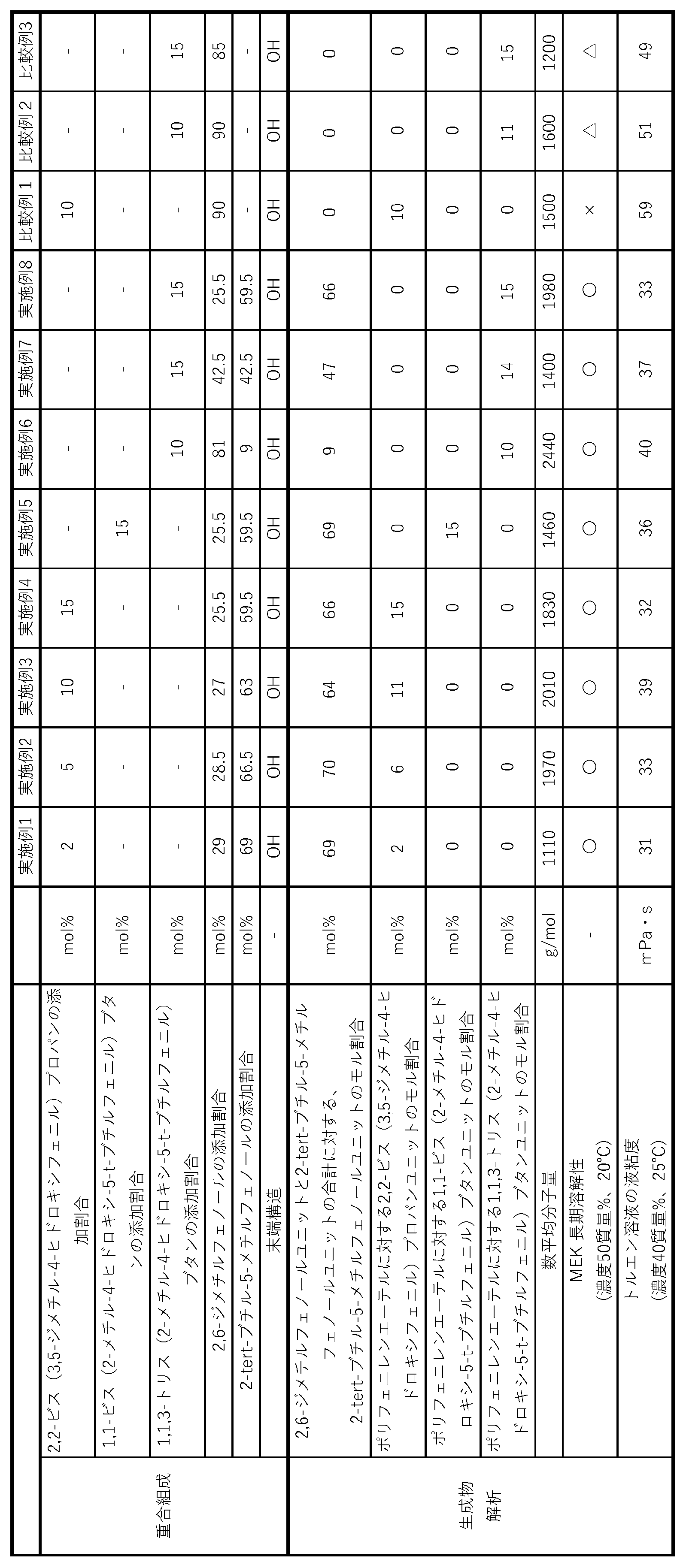
得られたポリフェニレンエーテルについて上述した方法により各測定を行った。各分析結果を表1に示す。
フェノール原料を、22.00gの2,6-ジメチルフェノール、69.01gの2-tert-ブチル-5-メチルフェノール、8.98gの2,2-ビス(3,5-ジメチル-4-ヒドロキシフェニル)プロパンとした他は実施例1と同様の方法で操作を実施した。
各分析結果を表1に示す。
フェノール原料を、20.00gの2,6-ジメチルフェノール、62.75gの2-tert-ブチル-5-メチルフェノール、17.25gの2,2-ビス(3,5-ジメチル-4-ヒドロキシフェニル)プロパンとした他は実施例1と同様の方法で操作を実施した。
各分析結果を表1に示す。
フェノール原料を、18.16gの2,6-ジメチルフェノール、56.97gの2-tert-ブチル-5-メチルフェノール、24.87gの2,2-ビス(3,5-ジメチル-4-ヒドロキシフェニル)プロパンとした他は実施例1と同様の方法で操作を実施した。
各分析結果を表1に示す。
フェノール原料を、16.72gの2,6-ジメチルフェノール、52.45gの2-tert-ブチル-5-メチルフェノール、30.83gの1,1-ビス(2-メチル-4-ヒドロキシ-5-t-ブチルフェニル)ブタン(ADEKA製:AO-40)とした他は実施例1と同様の方法で操作を実施した。
各分析結果を表1に示す。
フェノール原料を、60.99gの2,6-ジメチルフェノール、9.11gの2-tert-ブチル-5-メチルフェノール、29.90gの1,1,3-トリス(2-メチル-4-ヒドロキシ-5-t-ブチルフェニル)ブタン(ADEKA製:AO-30)とした他は実施例1と同様の方法で操作を実施した。
各分析結果を表1に示す。
フェノール原料を、25.52gの2,6-ジメチルフェノール、34.31gの2-tert-ブチル-5-メチルフェノール、40.18gの1,1,3-トリス(2-メチル-4-ヒドロキシ-5-t-ブチルフェニル)ブタン(ADEKA製:AO-30)とした他は実施例1と同様の方法で操作を実施した。
各分析結果を表1に示す。
フェノール原料を、14.79gの2,6-ジメチルフェノール、46.40gの2-tert-ブチル-5-メチルフェノール、38.81gの1,1,3-トリス(2-メチル-4-ヒドロキシ-5-t-ブチルフェニル)ブタン(ADEKA製:AO-30)とした他は実施例1と同様の方法で操作を実施した。
各分析結果を表1に示す。
実施例1と同様に酸化重合、銅抽出、液液分離及びロータリーエバポレーターによる濃縮を行い、ポリマー濃度25質量%のポリマー溶液を変性反応の原液として用いた。
反応器上部に窒素ガス導入の為のライン、反応器上部のベントガスラインに還流冷却器を備えた500mLの三口フラスコに、反応器内部を窒素置換した後、未変性ポリフェニレンエーテル溶液200g、4-ジメチルアミノピリジン0.94gを投入した。攪拌をしながらシリンジを用いてトリエチルアミン43mLを加えた。その後、塩化メタクリロイル14.9mLをシリンジに採取し、室温にて系内に滴下した。滴下終了後から1時間、オイルバスでフラスコを加熱し90℃で攪拌を継続した。その後、さらにオイルバスで加熱し、還流状態で反応を継続した。還流開始から4時間経過した段階で加熱をやめ、常温に戻った後にメタノール5gを加えて反応を停止した。次いで、ガラスフィルターを用いて反応溶液を濾過し、副生するトリエチルアンモニウム塩を除去した溶液を得た。上記溶液を、ポリマー溶液に対するメタノールの比が10となるメタノールと混合し、ポリマーの析出を行った。ガラスフィルターを用いた減圧濾過により湿潤ポリフェニレンエーテルを得た。さらに湿潤ポリフェニレンエーテルに対するメタノールの比が2.5となる量のメタノールにより湿潤ポリフェニレンエーテルを洗浄した。上記洗浄操作を三回行った。ついで、湿潤ポリフェニレンエーテルを、100℃、1mmHgで8時間保持し、乾燥状態のポリフェニレンエーテルを得た。1H NMR測定を行いメタクリル基のオレフィン由来のプロトンピークを確認したことより、水酸基がメタクリル基に変性されていると判断した。
次に、変性したポリフェニレンエーテル79質量部に対し、TAIC(日本化成社製)20質量部、有機過酸化物(パーブチルP、日油社製)1質量部をトルエンに添加し、攪拌、溶解させてワニスを得た(固形分濃度58質量%)。このワニスに、Lガラスクロス(旭シュエーベル社製、スタイル:2116)を含浸させた後、所定のスリットに通すことにより余分なワニスを掻き落とし、105℃の乾燥オーブンにて所定時間乾燥させ、トルエンを除去することにより、プリプレグを得た。このプリプレグを所定サイズに切り出し、そのプリプレグの質量と同サイズのガラスクロスの質量とを比較することで、プリプレグにおける熱硬化組成物の固形分の含有量を算出したところ、52質量%であった。
このプリプレグを所定枚数重ね、更にその重ね合わせたプリプレグの両面に銅箔(古川電気工業株式会社製、厚み35μm、GTS-MP箔)を重ね合わせた状態で、真空プレスを行うことにより、銅張積層板を得た。この真空プレスの工程では、先ず、室温から昇温速度2℃/分で加熱しながら圧力40kg/cm2の条件とし、次いで、温度が200℃に達した後に、温度を200℃に維持したまま圧力40kg/cm2及び時間60分間の条件を採用した。
次に、上記銅張積層板から、エッチングにより銅箔を除去することにより積層板(厚さ約0.5mm)を得た。前述した方法により得られた積層板の誘電特性を測定した。
各分析結果を表2に示す。
実施例2と同様に酸化重合、銅抽出、液液分離及びロータリーエバポレーターによる濃縮を行い、さらに100℃、1mmHgで2時間保持し、乾燥状態のポリフェニレンエーテルを得た。上記乾燥状態のポリフェニレンエーテルを変性反応の原料として用いた点以外は実施例9と同様にメタクリル変性を行った後、積層板を作成し誘電特性を測定した。
各分析結果を表2に示す。
実施例3と同様に酸化重合、銅抽出、液液分離及びロータリーエバポレーターによる濃縮を行い、さらに100℃、1mmHgで2時間保持し、乾燥状態のポリフェニレンエーテルを得た。上記乾燥状態のポリフェニレンエーテルを変性反応の原料として用いた点以外は実施例9と同様にメタクリル変性を行った後、積層板を作成し誘電特性を測定した。
各分析結果を表2に示す。
実施例4と同様に酸化重合、銅抽出、液液分離及びロータリーエバポレーターによる濃縮を行い、さらに100℃、1mmHgで2時間保持し、乾燥状態のポリフェニレンエーテルを得た。上記乾燥状態のポリフェニレンエーテルを変性反応の原料として用いた点以外は実施例9と同様にメタクリル変性を行った後、積層板を作成し誘電特性を測定した。
各分析結果を表2に示す。
実施例5と同様に酸化重合、銅抽出、液液分離及びロータリーエバポレーターによる濃縮を行い、さらに100℃、1mmHgで2時間保持し、乾燥状態のポリフェニレンエーテルを得た。上記乾燥状態のポリフェニレンエーテルを変性反応の原料として用いた点以外は実施例9と同様にメタクリル変性を行った後、積層板を作成し誘電特性を測定した。
各分析結果を表2に示す。
実施例6と同様に酸化重合、銅抽出、液液分離及びロータリーエバポレーターによる濃縮を行い、さらに100℃、1mmHgで2時間保持し、乾燥状態のポリフェニレンエーテルを得た。上記乾燥状態のポリフェニレンエーテルを変性反応の原料として用いた点以外は実施例9と同様にメタクリル変性を行った後、積層板を作成し誘電特性を測定した。
各分析結果を表2に示す。
実施例7と同様に酸化重合、銅抽出、液液分離及びロータリーエバポレーターによる濃縮を行い、さらに100℃、1mmHgで2時間保持し、乾燥状態のポリフェニレンエーテルを得た。上記乾燥状態のポリフェニレンエーテルを変性反応の原料として用いた点以外は実施例9と同様にメタクリル変性を行った後、積層板を作成し誘電特性を測定した。
各分析結果を表2に示す。
実施例8と同様に酸化重合、銅抽出、液液分離及びロータリーエバポレーターによる濃縮を行い、さらに100℃、1mmHgで2時間保持し、乾燥状態のポリフェニレンエーテルを得た。上記乾燥状態のポリフェニレンエーテルを変性反応の原料として用いた点以外は実施例9と同様にメタクリル変性を行った後、積層板を作成し誘電特性を測定した。
各分析結果を表2に示す。
フェノール原料を、79.45gの2,6-ジメチルフェノール、20.55gの2,2-ビス(3,5-ジメチル-4-ヒドロキシフェニル)プロパンとした他は実施例1と同様の方法で操作を実施した。
各分析結果を表1に示す。
フェノール原料を、66.86gの2,6-ジメチルフェノール、33.14gの1,1,3-トリス(2-メチル-4-ヒドロキシ-5-t-ブチルフェニル)ブタン(ADEKA製:AO-30)とした他は実施例1と同様の方法で操作を実施した。
各分析結果を表1に示す。
フェノール原料を、55.95gの2,6-ジメチルフェノール、44.05gの1,1,3-トリス(2-メチル-4-ヒドロキシ-5-t-ブチルフェニル)ブタン(ADEKA製:AO-30)とした他は実施例1と同様の方法で操作を実施した。
各分析結果を表1に示す。
比較例1と同様に酸化重合、銅抽出、液液分離及びロータリーエバポレーターによる濃縮を行い、さらに100℃、1mmHgで2時間保持し、乾燥状態のポリフェニレンエーテルを得た。上記乾燥状態のポリフェニレンエーテルを変性反応の原料として用いた点以外は実施例9と同様にメタクリル変性を行った後、積層板を作成し誘電特性を測定した。
各分析結果を表2に示す。
比較例2と同様に酸化重合、銅抽出、液液分離及びロータリーエバポレーターによる濃縮を行い、さらに100℃、1mmHgで2時間保持し、乾燥状態のポリフェニレンエーテルを得た。上記乾燥状態のポリフェニレンエーテルを変性反応の原料として用いた点以外は実施例9と同様にメタクリル変性を行った後、積層板を作成し誘電特性を測定した。
各分析結果を表2に示す。
比較例3と同様に酸化重合、銅抽出、液液分離及びロータリーエバポレーターによる濃縮を行い、さらに100℃、1mmHgで2時間保持し、乾燥状態のポリフェニレンエーテルを得た。上記乾燥状態のポリフェニレンエーテルを変性反応の原料として用いた点以外は実施例9と同様にメタクリル変性を行った後、積層板を作成し誘電特性を測定した。
各分析結果を表2に示す。
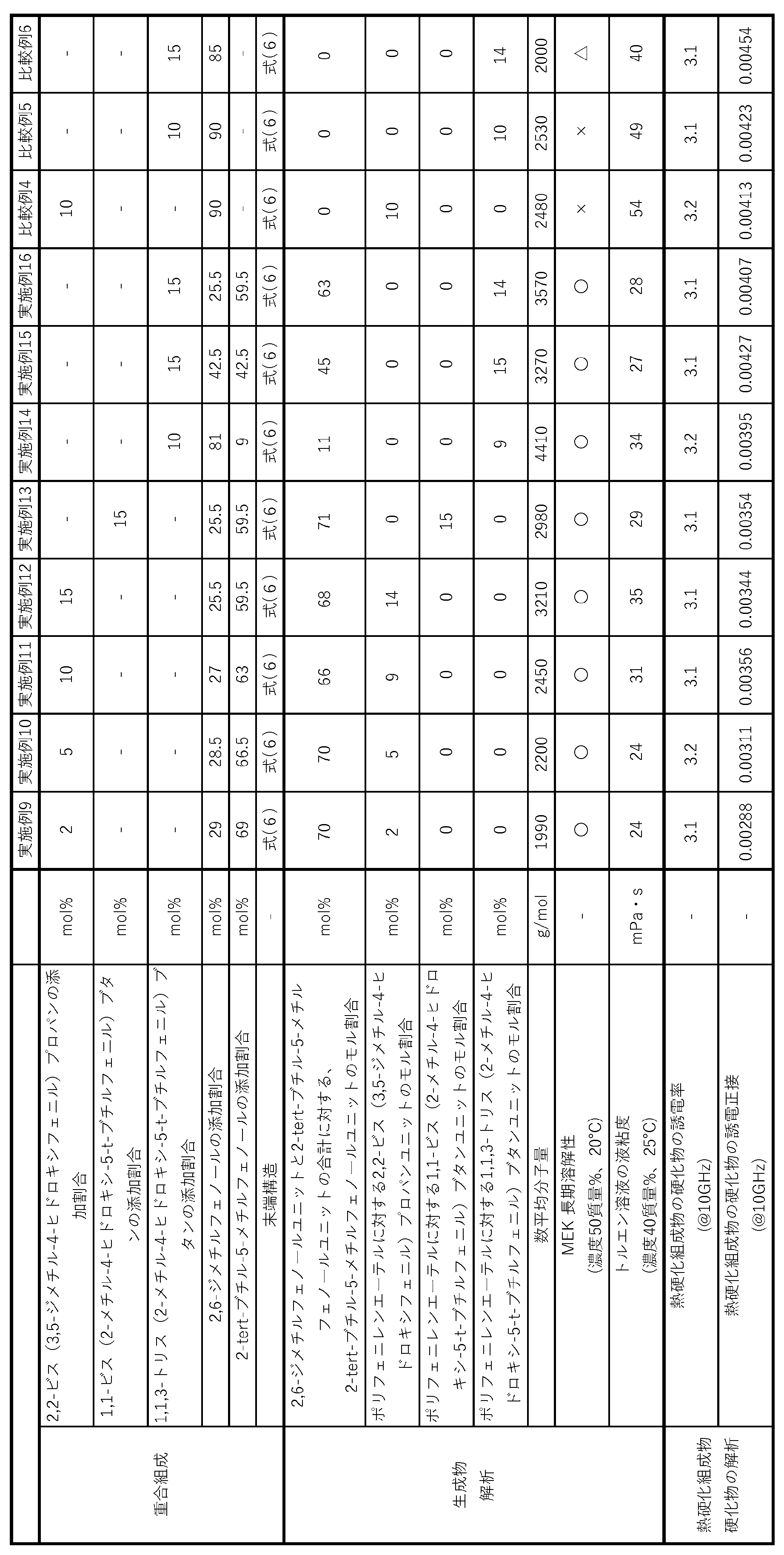
更に、実施例によるポリフェニレンエーテルを用いた積層板では、比較例のポリフェニレンエーテルを用いた積層板に比べ優れた誘電特性を示すことが出来た。
Claims (10)
- 下記式(1)のフェノールから誘導された繰り返し単位と、下記式(2)のフェノールから誘導された繰り返し単位と、下記式(3)のフェノールから誘導された構造単位とを含むことを特徴とする、ポリフェニレンエーテル。

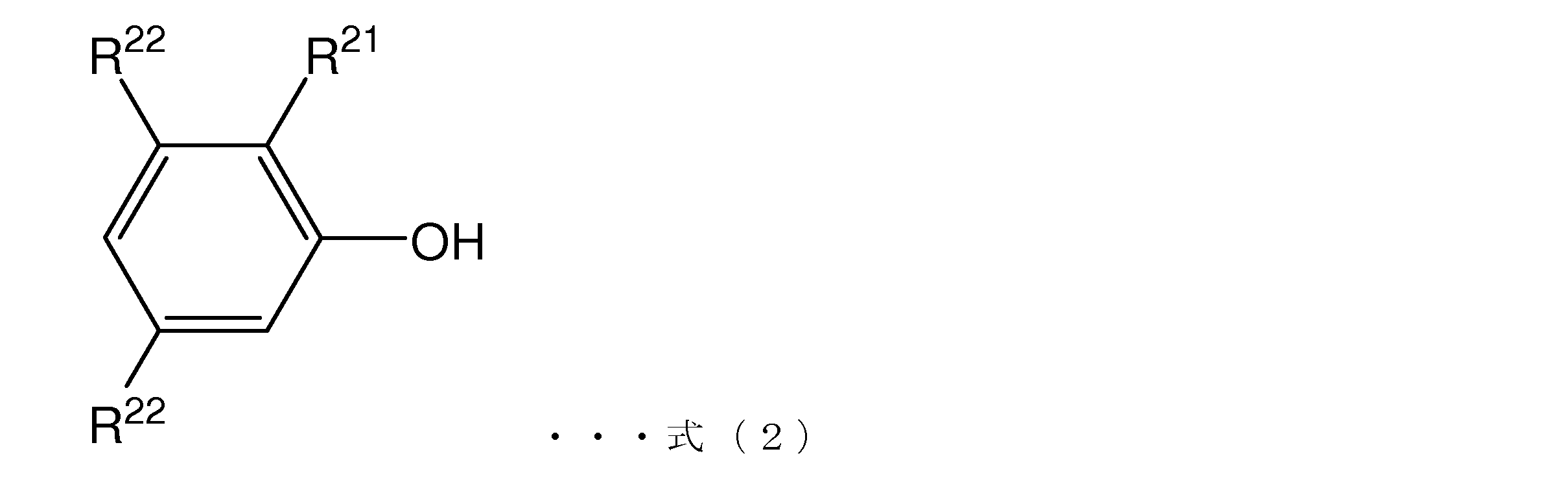
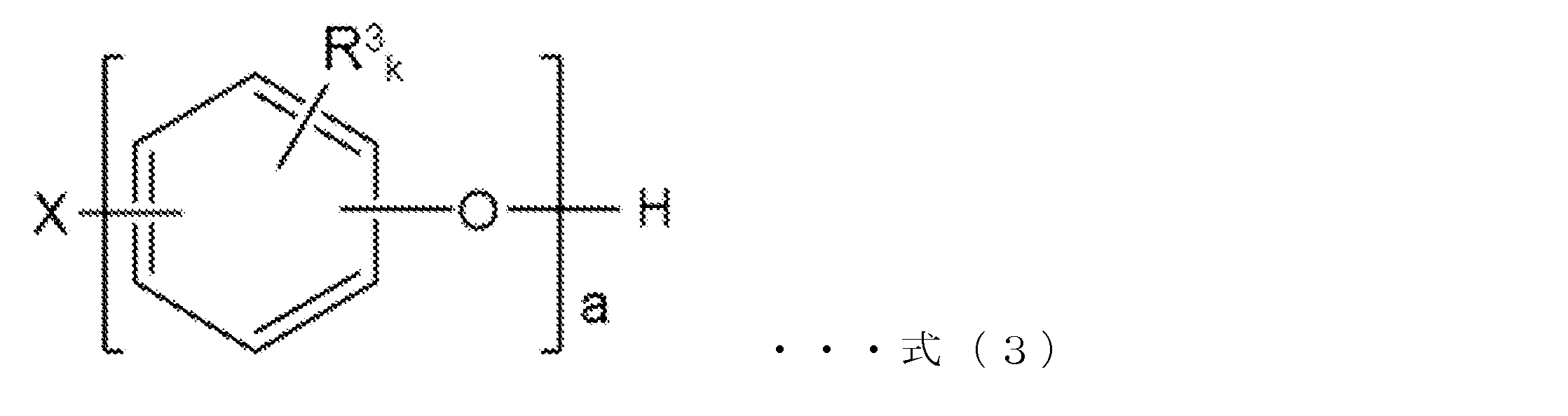
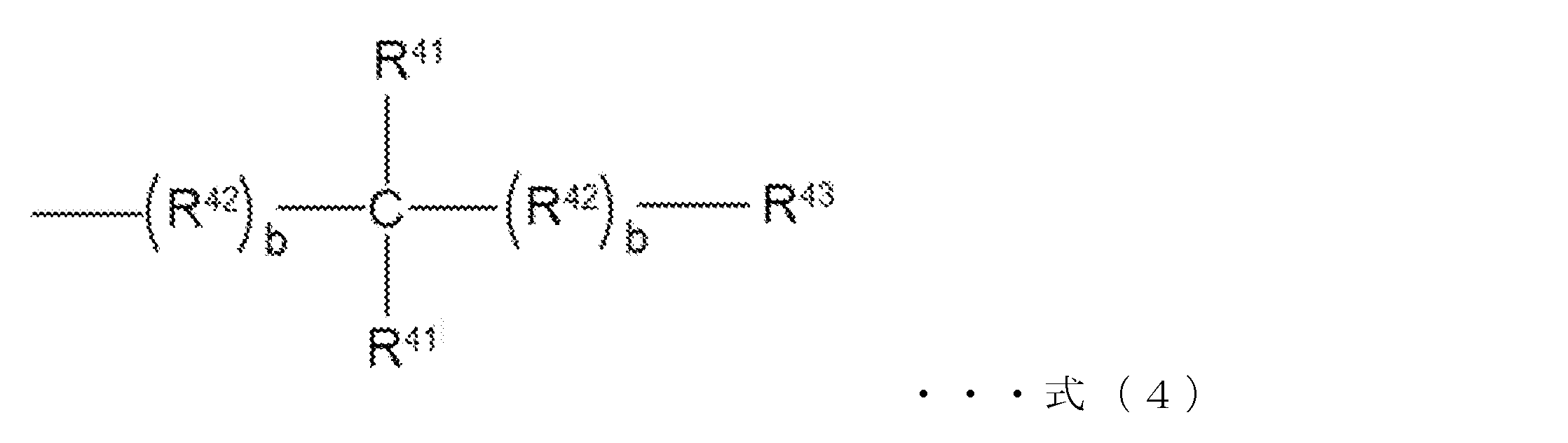
前記式(2)のR21である前記式(4)で表される部分構造及び前記式(3)のR3のうち前記式(4)で表される部分構造は、それぞれ同一でもよく、異なっていてもよい。 - 前記式(2)のフェノールから誘導された繰り返し単位の少なくとも1つにおいて、R21がt-ブチル基である、請求項1に記載のポリフェニレンエーテル。
- 前記式(3)のR3のうち、少なくとも一つがt-ブチル基である、請求項1又は2に記載のポリフェニレンエーテル。
- 下記式(5)、式(6)、式(7)、及び式(8)からなる群から選ばれる少なくとも一つの部分構造を有する、請求項1~3のいずれか一項に記載のポリフェニレンエーテル。




- ポリスチレン換算の数平均分子量が500~15,000である、請求項1~4のいずれか一項に記載のポリフェニレンエーテル。
- 前記式(1)のフェノール、前記式(2)のフェノール及び前記式(3)のフェノールの酸化重合を行う工程を含む、請求項1~5のいずれか一項に記載のポリフェニレンエーテルの製造方法。
- 請求項1~6のいずれか一項に記載のポリフェニレンエーテルを含む、熱硬化組成物。
- 基材と、請求項7に記載の熱硬化組成物とを含む複合体である、プリプレグ。
- 前記基材がガラスクロスである、請求項8に記載のプリプレグ。
- 請求項8又は9に記載のプリプレグの硬化物と、金属箔とを含む、積層体。
Priority Applications (6)
| Application Number | Priority Date | Filing Date | Title |
|---|---|---|---|
| EP21930342.7A EP4306571B1 (en) | 2021-03-10 | 2021-12-15 | Polyphenylene ether, method for producing same, thermally curable composition, prepreg, and multilayer body |
| CN202511808504.0A CN121495109A (zh) | 2021-03-10 | 2021-12-15 | 聚苯醚、其制造方法、热固化组合物、预浸料和层积体 |
| JP2023505110A JPWO2022190497A1 (ja) | 2021-03-10 | 2021-12-15 | |
| US18/548,536 US20240166812A1 (en) | 2021-03-10 | 2021-12-15 | Polyphenylene ether, production method of the same, thermosetting composition, prepreg, and laminate |
| KR1020237022021A KR20230113372A (ko) | 2021-03-10 | 2021-12-15 | 폴리페닐렌에테르, 그 제조 방법, 열경화 조성물, 프리프레그및 적층체 |
| CN202180094659.6A CN116888186A (zh) | 2021-03-10 | 2021-12-15 | 聚苯醚、其制造方法、热固化组合物、预浸料和层积体 |
Applications Claiming Priority (2)
| Application Number | Priority Date | Filing Date | Title |
|---|---|---|---|
| JP2021-038318 | 2021-03-10 | ||
| JP2021038318 | 2021-03-10 |
Publications (1)
| Publication Number | Publication Date |
|---|---|
| WO2022190497A1 true WO2022190497A1 (ja) | 2022-09-15 |
Family
ID=83227869
Family Applications (1)
| Application Number | Title | Priority Date | Filing Date |
|---|---|---|---|
| PCT/JP2021/046373 Ceased WO2022190497A1 (ja) | 2021-03-10 | 2021-12-15 | ポリフェニレンエーテル、その製造方法、熱硬化組成物、プリプレグ、及び積層体 |
Country Status (7)
| Country | Link |
|---|---|
| US (1) | US20240166812A1 (ja) |
| EP (1) | EP4306571B1 (ja) |
| JP (1) | JPWO2022190497A1 (ja) |
| KR (1) | KR20230113372A (ja) |
| CN (2) | CN116888186A (ja) |
| TW (1) | TWI809679B (ja) |
| WO (1) | WO2022190497A1 (ja) |
Cited By (1)
| Publication number | Priority date | Publication date | Assignee | Title |
|---|---|---|---|---|
| WO2024034294A1 (ja) * | 2022-08-08 | 2024-02-15 | 旭化成株式会社 | アスファルト組成物 |
Families Citing this family (1)
| Publication number | Priority date | Publication date | Assignee | Title |
|---|---|---|---|---|
| CN119875032A (zh) * | 2023-10-23 | 2025-04-25 | 旭化成株式会社 | 树脂组合物、树脂膜、预浸料和覆金属层积板 |
Citations (7)
| Publication number | Priority date | Publication date | Assignee | Title |
|---|---|---|---|---|
| US3496236A (en) | 1966-05-03 | 1970-02-17 | Gen Electric | Equilibration of poly-(1,4-phenylene ethers) |
| JPS56104935A (en) * | 1980-01-24 | 1981-08-21 | Sumitomo Chem Co Ltd | Preparation of polyphenylene-ether copolymer |
| JPS5744625A (en) * | 1980-09-01 | 1982-03-13 | Sumitomo Chem Co Ltd | Preparation of polyphenylene oxide |
| US5880221A (en) | 1997-02-14 | 1999-03-09 | General Electric Company | Redistribution of polyphenylene ethers and polyphenylene ethers with novel structure |
| JP2001040088A (ja) * | 1999-05-21 | 2001-02-13 | Agency Of Ind Science & Technol | 非晶性2,5−ジ置換フェノール酸化重合体 |
| JP2002030145A (ja) * | 2000-07-17 | 2002-01-31 | National Institute Of Advanced Industrial & Technology | 結晶性2,5−ジ置換フェノール酸化重合体 |
| JP2015101727A (ja) * | 2013-11-21 | 2015-06-04 | 南亜塑膠工業股▲ふん▼有限公司 | 安全性及び収率の改善に役立つポリフェニレンエーテルの製造方法 |
Family Cites Families (13)
| Publication number | Priority date | Publication date | Assignee | Title |
|---|---|---|---|---|
| JPS56104961A (en) * | 1980-01-24 | 1981-08-21 | Sumitomo Chem Co Ltd | Novel polyphenylene-ether resin composition |
| JPS5787454A (en) * | 1980-11-20 | 1982-05-31 | Sumitomo Chem Co Ltd | Polyphenylene oxide composition |
| JPS57149351A (en) * | 1981-03-12 | 1982-09-14 | Sumitomo Chem Co Ltd | Polyphenylene oxide composition |
| JPH07692B2 (ja) * | 1986-03-24 | 1995-01-11 | 住友化学工業株式会社 | 熱可塑性樹脂組成物 |
| JP4007828B2 (ja) * | 2002-03-08 | 2007-11-14 | 旭化成ケミカルズ株式会社 | 低分子量ポリフェニレンエーテルの製造方法 |
| JP2004099824A (ja) | 2002-09-12 | 2004-04-02 | Asahi Kasei Chemicals Corp | 低分子量ポリフェニレンエーテルパウダー |
| JP2004339328A (ja) | 2003-05-14 | 2004-12-02 | Matsushita Electric Works Ltd | 変性ポリフェニレンエーテル化合物及びその製造方法 |
| US7329708B2 (en) | 2004-08-18 | 2008-02-12 | General Electric Company | Functionalized poly(arylene ether) composition and method |
| JP5439700B2 (ja) * | 2005-08-11 | 2014-03-12 | 三菱瓦斯化学株式会社 | 多官能フェニレンエーテルオリゴマー体、エポキシ樹脂、及び樹脂組成物 |
| JP5176336B2 (ja) * | 2006-03-15 | 2013-04-03 | 三菱瓦斯化学株式会社 | ポリビニルベンジルエーテル化合物およびそれを含む硬化性樹脂組成物および硬化性フィルム |
| TWI510517B (zh) * | 2013-04-30 | 2015-12-01 | Ind Tech Res Inst | 聚酚醚寡聚物及包含其之產品 |
| EP3401349B1 (en) * | 2016-01-08 | 2020-02-26 | Asahi Kasei Kabushiki Kaisha | Polyphenylene ether and resin composition |
| JP6906171B2 (ja) * | 2016-01-19 | 2021-07-21 | パナソニックIpマネジメント株式会社 | ポリフェニレンエーテル樹脂組成物、プリプレグ、金属張積層板及びプリント配線板 |
-
2021
- 2021-12-15 US US18/548,536 patent/US20240166812A1/en active Pending
- 2021-12-15 JP JP2023505110A patent/JPWO2022190497A1/ja active Pending
- 2021-12-15 CN CN202180094659.6A patent/CN116888186A/zh active Pending
- 2021-12-15 CN CN202511808504.0A patent/CN121495109A/zh active Pending
- 2021-12-15 KR KR1020237022021A patent/KR20230113372A/ko not_active Ceased
- 2021-12-15 EP EP21930342.7A patent/EP4306571B1/en active Active
- 2021-12-15 WO PCT/JP2021/046373 patent/WO2022190497A1/ja not_active Ceased
-
2022
- 2022-01-25 TW TW111103094A patent/TWI809679B/zh active
Patent Citations (7)
| Publication number | Priority date | Publication date | Assignee | Title |
|---|---|---|---|---|
| US3496236A (en) | 1966-05-03 | 1970-02-17 | Gen Electric | Equilibration of poly-(1,4-phenylene ethers) |
| JPS56104935A (en) * | 1980-01-24 | 1981-08-21 | Sumitomo Chem Co Ltd | Preparation of polyphenylene-ether copolymer |
| JPS5744625A (en) * | 1980-09-01 | 1982-03-13 | Sumitomo Chem Co Ltd | Preparation of polyphenylene oxide |
| US5880221A (en) | 1997-02-14 | 1999-03-09 | General Electric Company | Redistribution of polyphenylene ethers and polyphenylene ethers with novel structure |
| JP2001040088A (ja) * | 1999-05-21 | 2001-02-13 | Agency Of Ind Science & Technol | 非晶性2,5−ジ置換フェノール酸化重合体 |
| JP2002030145A (ja) * | 2000-07-17 | 2002-01-31 | National Institute Of Advanced Industrial & Technology | 結晶性2,5−ジ置換フェノール酸化重合体 |
| JP2015101727A (ja) * | 2013-11-21 | 2015-06-04 | 南亜塑膠工業股▲ふん▼有限公司 | 安全性及び収率の改善に役立つポリフェニレンエーテルの製造方法 |
Non-Patent Citations (1)
| Title |
|---|
| See also references of EP4306571A4 |
Cited By (1)
| Publication number | Priority date | Publication date | Assignee | Title |
|---|---|---|---|---|
| WO2024034294A1 (ja) * | 2022-08-08 | 2024-02-15 | 旭化成株式会社 | アスファルト組成物 |
Also Published As
| Publication number | Publication date |
|---|---|
| TW202237695A (zh) | 2022-10-01 |
| US20240166812A1 (en) | 2024-05-23 |
| EP4306571A4 (en) | 2024-08-28 |
| KR20230113372A (ko) | 2023-07-28 |
| EP4306571B1 (en) | 2024-12-25 |
| EP4306571A1 (en) | 2024-01-17 |
| CN116888186A (zh) | 2023-10-13 |
| CN121495109A (zh) | 2026-02-10 |
| JPWO2022190497A1 (ja) | 2022-09-15 |
| TWI809679B (zh) | 2023-07-21 |
Similar Documents
| Publication | Publication Date | Title |
|---|---|---|
| JP7741256B2 (ja) | ポリフェニレンエーテル、その製造方法、熱硬化組成物、プリプレグ、及び積層体 | |
| WO2022190497A1 (ja) | ポリフェニレンエーテル、その製造方法、熱硬化組成物、プリプレグ、及び積層体 | |
| JP2023172820A (ja) | ポリフェニレンエーテル、樹脂組成物、樹脂フィルム、プリプレグ、及び金属張積層板 | |
| JP7630705B1 (ja) | 樹脂組成物、樹脂フィルム、プリプレグ及び金属張積層板 | |
| JP2025083303A (ja) | 樹脂組成物、樹脂フィルム、プリプレグ及び金属張積層板 | |
| JP7836229B2 (ja) | ポリフェニレンエーテル、その製造方法、熱硬化性組成物、プリプレグ、及び積層体 | |
| JP7617260B2 (ja) | ポリフェニレンエーテル、その製造方法、熱硬化組成物、プリプレグ、及び積層体 | |
| CN117106172A (zh) | 聚苯醚、树脂组合物、树脂膜、预浸料和覆金属层积板 | |
| JP7563948B2 (ja) | 変性ポリフェニレンエーテル、その製造方法、プリプレグ及び積層体 | |
| JP2021181546A (ja) | 変性ポリフェニレンエーテル、その製造方法、熱硬化組成物、プリプレグ、及び積層体 | |
| TWI900300B (zh) | 樹脂組合物、樹脂膜、預浸體及金屬箔積層板 | |
| TWI870858B (zh) | 聚苯醚、樹脂組合物、樹脂膜、預浸體、及金屬貼合積層板 | |
| JP2024116077A (ja) | ワニス及びワニスの製造方法 | |
| JP2025161762A (ja) | 樹脂組成物、樹脂フィルム、プリプレグ及び金属張積層板 | |
| JP2024125052A (ja) | ポリフェニレンエーテル、熱硬化性組成物、プリプレグ、及び積層体 | |
| JP2025083302A (ja) | 樹脂組成物、樹脂フィルム、プリプレグ及び金属張積層板 |
Legal Events
| Date | Code | Title | Description |
|---|---|---|---|
| 121 | Ep: the epo has been informed by wipo that ep was designated in this application |
Ref document number: 21930342 Country of ref document: EP Kind code of ref document: A1 |
|
| ENP | Entry into the national phase |
Ref document number: 2023505110 Country of ref document: JP Kind code of ref document: A |
|
| ENP | Entry into the national phase |
Ref document number: 20237022021 Country of ref document: KR Kind code of ref document: A |
|
| WWE | Wipo information: entry into national phase |
Ref document number: 202180094659.6 Country of ref document: CN |
|
| WWE | Wipo information: entry into national phase |
Ref document number: 18548536 Country of ref document: US |
|
| WWE | Wipo information: entry into national phase |
Ref document number: 2021930342 Country of ref document: EP |
|
| NENP | Non-entry into the national phase |
Ref country code: DE |
|
| ENP | Entry into the national phase |
Ref document number: 2021930342 Country of ref document: EP Effective date: 20231010 |
|
| WWE | Wipo information: entry into national phase |
Ref document number: 11202306484W Country of ref document: SG |