WO2022192623A1 - Oral canine feed and methods for controlling flea infestations in a canine - Google Patents
Oral canine feed and methods for controlling flea infestations in a canine Download PDFInfo
- Publication number
- WO2022192623A1 WO2022192623A1 PCT/US2022/019877 US2022019877W WO2022192623A1 WO 2022192623 A1 WO2022192623 A1 WO 2022192623A1 US 2022019877 W US2022019877 W US 2022019877W WO 2022192623 A1 WO2022192623 A1 WO 2022192623A1
- Authority
- WO
- WIPO (PCT)
- Prior art keywords
- canine
- isoxazoline
- feed
- days
- group
- Prior art date
- Legal status (The legal status is an assumption and is not a legal conclusion. Google has not performed a legal analysis and makes no representation as to the accuracy of the status listed.)
- Ceased
Links
Classifications
-
- A—HUMAN NECESSITIES
- A61—MEDICAL OR VETERINARY SCIENCE; HYGIENE
- A61K—PREPARATIONS FOR MEDICAL, DENTAL OR TOILETRY PURPOSES
- A61K31/00—Medicinal preparations containing organic active ingredients
- A61K31/33—Heterocyclic compounds
- A61K31/395—Heterocyclic compounds having nitrogen as a ring hetero atom, e.g. guanethidine or rifamycins
- A61K31/41—Heterocyclic compounds having nitrogen as a ring hetero atom, e.g. guanethidine or rifamycins having five-membered rings with two or more ring hetero atoms, at least one of which being nitrogen, e.g. tetrazole
- A61K31/415—1,2-Diazoles
- A61K31/4155—1,2-Diazoles non condensed and containing further heterocyclic rings
-
- A—HUMAN NECESSITIES
- A61—MEDICAL OR VETERINARY SCIENCE; HYGIENE
- A61K—PREPARATIONS FOR MEDICAL, DENTAL OR TOILETRY PURPOSES
- A61K31/00—Medicinal preparations containing organic active ingredients
- A61K31/33—Heterocyclic compounds
- A61K31/395—Heterocyclic compounds having nitrogen as a ring hetero atom, e.g. guanethidine or rifamycins
- A61K31/41—Heterocyclic compounds having nitrogen as a ring hetero atom, e.g. guanethidine or rifamycins having five-membered rings with two or more ring hetero atoms, at least one of which being nitrogen, e.g. tetrazole
- A61K31/42—Oxazoles
-
- A—HUMAN NECESSITIES
- A01—AGRICULTURE; FORESTRY; ANIMAL HUSBANDRY; HUNTING; TRAPPING; FISHING
- A01N—PRESERVATION OF BODIES OF HUMANS OR ANIMALS OR PLANTS OR PARTS THEREOF; BIOCIDES, e.g. AS DISINFECTANTS, AS PESTICIDES OR AS HERBICIDES; PEST REPELLANTS OR ATTRACTANTS; PLANT GROWTH REGULATORS
- A01N43/00—Biocides, pest repellants or attractants, or plant growth regulators containing heterocyclic compounds
- A01N43/72—Biocides, pest repellants or attractants, or plant growth regulators containing heterocyclic compounds having rings with nitrogen atoms and oxygen or sulfur atoms as ring hetero atoms
- A01N43/80—Biocides, pest repellants or attractants, or plant growth regulators containing heterocyclic compounds having rings with nitrogen atoms and oxygen or sulfur atoms as ring hetero atoms five-membered rings with one nitrogen atom and either one oxygen atom or one sulfur atom in positions 1,2
-
- A—HUMAN NECESSITIES
- A01—AGRICULTURE; FORESTRY; ANIMAL HUSBANDRY; HUNTING; TRAPPING; FISHING
- A01P—BIOCIDAL, PEST REPELLANT, PEST ATTRACTANT OR PLANT GROWTH REGULATORY ACTIVITY OF CHEMICAL COMPOUNDS OR PREPARATIONS
- A01P7/00—Arthropodicides
- A01P7/04—Insecticides
-
- A—HUMAN NECESSITIES
- A61—MEDICAL OR VETERINARY SCIENCE; HYGIENE
- A61K—PREPARATIONS FOR MEDICAL, DENTAL OR TOILETRY PURPOSES
- A61K31/00—Medicinal preparations containing organic active ingredients
- A61K31/33—Heterocyclic compounds
- A61K31/395—Heterocyclic compounds having nitrogen as a ring hetero atom, e.g. guanethidine or rifamycins
- A61K31/41—Heterocyclic compounds having nitrogen as a ring hetero atom, e.g. guanethidine or rifamycins having five-membered rings with two or more ring hetero atoms, at least one of which being nitrogen, e.g. tetrazole
- A61K31/415—1,2-Diazoles
-
- A—HUMAN NECESSITIES
- A61—MEDICAL OR VETERINARY SCIENCE; HYGIENE
- A61K—PREPARATIONS FOR MEDICAL, DENTAL OR TOILETRY PURPOSES
- A61K31/00—Medicinal preparations containing organic active ingredients
- A61K31/33—Heterocyclic compounds
- A61K31/395—Heterocyclic compounds having nitrogen as a ring hetero atom, e.g. guanethidine or rifamycins
- A61K31/41—Heterocyclic compounds having nitrogen as a ring hetero atom, e.g. guanethidine or rifamycins having five-membered rings with two or more ring hetero atoms, at least one of which being nitrogen, e.g. tetrazole
- A61K31/42—Oxazoles
- A61K31/422—Oxazoles not condensed and containing further heterocyclic rings
-
- A—HUMAN NECESSITIES
- A61—MEDICAL OR VETERINARY SCIENCE; HYGIENE
- A61K—PREPARATIONS FOR MEDICAL, DENTAL OR TOILETRY PURPOSES
- A61K9/00—Medicinal preparations characterised by special physical form
- A61K9/0012—Galenical forms characterised by the site of application
- A61K9/0053—Mouth and digestive tract, i.e. intraoral and peroral administration
- A61K9/0056—Mouth soluble or dispersible forms; Suckable, eatable, chewable coherent forms; Forms rapidly disintegrating in the mouth; Lozenges; Lollipops; Bite capsules; Baked products; Baits or other oral forms for animals
-
- A—HUMAN NECESSITIES
- A61—MEDICAL OR VETERINARY SCIENCE; HYGIENE
- A61P—SPECIFIC THERAPEUTIC ACTIVITY OF CHEMICAL COMPOUNDS OR MEDICINAL PREPARATIONS
- A61P33/00—Antiparasitic agents
- A61P33/14—Ectoparasiticides, e.g. scabicides
Definitions
- the teachings of this disclosure generally relate to an isoxazoline, a canine feed or chew that includes the isoxazoline and a method of administering the isoxazoline to control flea infestations in canines.
- Treatments currently available for controlling flea infestations in canines achieve varying degrees of success. Many treatments involve chemicals applied to indoor and outdoor surfaces, as well as to the canine.
- the chemicals used include a variety of carbamates, pyrethrins and pyrethroids, certain macrocyclic lactones, insect growth regulators (including chitin synthesis inhibitors, juvenile hormone analogs, and juvenile hormones), nitromethylenes, neonicotinoids, pyridines and pyrazoles or fiproles. These compounds often have toxic side effects that are a problem for both the canine and its owner. In addition, there is evidence that the use of these chemicals may be ineffective due to insecticide resistance and treatment deficiencies. [M. K.
- Topical treatments are a well-known method for controlling flea infestations in canines. While there are numerous ways to deliver these therapeutic agents to the coats and skins of canines, many of these methods are either ineffective and/or present safety risks to the canine or user during or after the dispensing activity. More particularly, because a physical connection must be achieved between the applicator tip and the drug delivery device when the applicator tip is installed thereon, there is inherently a risk that the connection will be inadequate, thereby permitting some of the therapeutic agent to leak out of the device and into physical contact with the user.
- isoxazolines can provide improved control over flea infestations in canines when orally administered in smaller, more frequent/chronic doses.
- the administration is discussed below as being combined with feed.
- the isoxazoline may be administered by itself or in a dosage form other than feed, such as a chew, tablet, liquid, gel or other suitable form for oral administration.
- a dosage form other than feed such as a chew, tablet, liquid, gel or other suitable form for oral administration.
- less total isoxazoline is required over the same time period to control flea infestations.
- the total amount of isoxazoline required for a therapeutically effective once-monthly dose can be reduced by 10-87.5% by converting to daily administration.
- at least two problems arise: (1) creating a homogenous feed; and (2) analytical control testing for a very small dose of isoxazoline may be difficult to accomplish.
- the analytical matrix from feeds can be quite complex and difficult to assay. Assays will be in the parts per million to billion range for some needed dose and feed concentrations.
- one of skill in the art may opt to increase the daily dose such that the total of the daily doses over the course of one month equals the prior art once-monthly dose or is even higher, for example, 200% of the prior art once-monthly dose. This may be done to help ensure homogeneity as well as increase assay accuracy and decrease analytical variability when administering the dose as part of a feed.
- the method and composition taught herein have the further advantage of encouraging compliance because the smaller doses of an isoxazoline can be incorporated into a feed. Since owners naturally follow a daily feeding regimen in any event, this makes it less likely that owners will forget or neglect to administer the isoxazoline. Thus, this disclosure provides a method for prolonged control of fleas in a safer and more effective manner than that achieved with previously known treatment methodologies. All the owner need remember is to feed their pet as they normally would.
- bioavailability of certain isoxazolines can be improved by administering them with feed.
- this disclosure provides a method for prolonged control of fleas in a safer and more effective manner than that achieved with previously known treatments.
- Isoxazolines are a class of five-membered heterocyclic chemical compounds, containing one atom each of oxygen and nitrogen which are located adjacent to one another.
- Isoxazolines are all derivatives of isoxazole. They are structural isomers of the more common oxazolines and exist in three different isomers depending on the location of the double bond.
- Isoxazoline derivatives are known.
- W02007/105814, WO2008/122375, and W02009/035004 disclose certain alkylene linked amides.
- WO20 10/032437 discloses that the benzyl amide can be moved to the position ortho to the isoxazoline.
- W02007/075459 discloses phenyl isoxazolines substituted with 5- to 6- membered heterocycles
- W02010/084067 and W02010/025998 disclose phenyl isoxazolines substituted with 10- to 11-membered fused aryl and heteroaryls.
- Chiral processes for manufacturing isoxazolines are disclosed in WO2011/104089 and W02009/063910.
- isoxazolines compounds are known, including but not limited to 4- (5-methyl-5-substituted pyrrolyl-4,5-dihydroisoxazole-3-yl) benzoic acid amide derivatives; 4-(5 -substituted carbamoylmethyl-4,5-dihydroisoxazole-3-yl) benzoic acid amide derivatives; 3-(5-substituted carbamoylmethyl-5-substituted alkyl-4, 5- dihydroisoxazole-3-yl) benzoic acid amide derivatives; 4-(5 -substituted carbamoylmethyl- 4,5-dihydroisoxazole-3-yl) benzamidine derivatives; 4-(5-substituted-5 -substituted aryl- 4, 5-dihydroisoxazole-3-yl)benzoic acid amide compounds; 3-(4-substituted phenyl)
- Isoxazoiines of particular interest for controlling flea infestations in canines are afoxolaner (chemical names: (a) 1-Naphthalenecarboxamide, 4-[5-[3-chloro-5- (trifluoromethyl)phenyl]-4,5-dihydro-5-(trifluoromethyl)-3-isoxazolyl]-N-[2-oxo-2- [(2,2,2-trifluoroethyl)amino]ethyl]-; or (b) 4- ⁇ 5-[3-chloro-5-(trifluoromethyl)phenyl]-5- (trifluoromethyl)-4,5-dihydroisoxazol-3-yl ⁇ -N- ⁇ 2-oxo-2-[(2,2,2- trifluoroethyl)amino]ethyl ⁇ naphthalene-l-carboxamide), fluralaner (chemical names: (a) Benzamide, 4-[5-(3,5-dichlor
- isoxazolines with the following structures are suitable for the methods and formulations of this disclosure: [0018] Isoxazolines can react to form salts that are also useful in the methods and formulations of this disclosure.
- the salts may be prepared using standard procedures for salt preparation.
- suitable salts can be acid addition salts such as hydrohalo genated acids, e.g., hydrofluoric acid, hydrochloric acid, hydrobromic acid and hydroiodide, nitric acid, sulfuric acid, phosphoric acid, chloric acid, perchloric acid, salts of sulfonic acids, e.g., methanesulfonic acid, ethanesulfonic acid, trifluoromethanesulfonic acid, benzenesulfonic acid, p-toluenesulfonic acid, salts of carboxylic acids, e.g., valeric acids, formic acid, acetic acid, propionic acid, trifluoroacetic acid, fumaric acid, tartaric acid, oxalic acid, maleic acid, malic acid, succinic acid, benzoic acid, mandelic acid, ascorbic acid, lactic acid, gluconic acid, citric acid or salts of amino acids, e
- isoxazoline and “isoxazoline or a derivative thereof’ as used herein refer to any isoxazoline, isoxazoline derivative, a salt thereof, a metabolite thereof, or a combination thereof.
- Isoxazolines also provide advantages because they are very effective against fleas with post-treatment residual protection when orally administered in smaller, more frequent/chronic doses. Furthermore, isoxazolines have no known insecticidal cross- resistance to existing compounds. Thus, they are especially useful against flea populations on canines that have existing levels of resistance to currently used products. Isoxazolines, therefore, can be used in integrated pest management (IPM) programs to extend the life line of commonly used products where resistance is not well developed or has not yet developed.
- IPM integrated pest management
- Systemic efficacy e.g., ingestion of blood containing isoxazolines by fleas
- the advantages of oral systemic treatments and killing of fleas from their ingestion of blood, compared to topical applications and contact killing, include: a) reduced exposure to the human applicator and children and objects in the canine’s environment (e.g., flooring, carpets, furniture); b) no worry about loss from exposure of the canine to water (lakes, streams, bathing, etc.) or from loss due to rubbing; c) no concern about UV exposure and degradation; d) no problems with oxidation from oils on skin, etc.; and e) assurance that the entire dose is administered (compared to a topical application where some of the dose may drip off, rub off and/or remain in the dispensing tube immediately after treatment).
- the formulations, or feeds, and methods of this disclosure may further include, in combination with the isoxazoline, one or more other active substances having therapeutic efficacy.
- active substances include agents efficacious against fleas.
- Active substances may include, for example, spinosyns, certain macrocyclic lactones, insect growth regulators (including chitin synthesis inhibitors, juvenile hormone analogs, and juvenile hormones), nitromethylenes, neonicotinoids, pyridines and pyrazoles or fiproles.
- the methods of this disclosure are carried out by administering the isoxazoline to the canine in small, frequent doses. To facilitate routine dosing, the isoxazoline administration may be carried out using a feed or chew.
- feeds and snacks, chews, treats or supplemental feeds in the broad categories of dry, semi-moist, canned-retorted feeds or fresh refrigerated feeds may be adapted for use with this disclosure.
- the canine receives a maintenance quantity of isoxazoline by consuming the feed product on a weekly, semi- weekly or daily basis.
- isoxazoline By incorporating smaller doses of isoxazoline into an animal feed composition and administering it at an effective rate (most preferably daily), the blood level of isoxazoline rises over time until it reaches an optimal steady state where it can be maintained by a daily or substantially daily dosage.
- an effective rate most preferably daily
- isoxazoline is orally administered in larger doses at lower frequency, e.g., a single treatment of a large dose that is administered via “treat” once in a 30-day period
- the level of isoxazoline in the blood spikes at the time of the dose and then falls until the next dose is administered.
- the administration of a large dose at low frequency means that the canine must consume more isoxazoline in each dose so that the blood level of isoxazoline does not fall below the necessary level for effective protection before the next dose.
- controlling a flea infestation refers to preventing, minimizing or eliminating an infestation by fleas on a canine.
- lea refers to any member of the order Siphonaptera.
- the term “flea” includes the egg, larval, pupal, and adult stages of development.
- Cams refers to any member of the genus Cams, which includes such species as wolves, dogs, coyotes and jackals.
- a “feed” is an animal feed, snack, treat or other supplemental feed that may be administered daily or substantially daily.
- a pet owner may vary the canine’s meals and snacks from time to time while still conveniently administering a daily dose of isoxazoline.
- chew refers to a treat that has flavor and aromatic properties that are appealing to a canine, but typically has no nutritional value.
- a “feed” and/or a “chew” may be used interchangeably.
- the term “effective time”, also referred to herein as “effective duration”, for the purposes of this disclosure includes at least the duration of feed administration needed to bring the level of isoxazoline in the canine’s blood to a sufficiently high level for controlling fleas, i.e., a “therapeutically effective” level.
- the effective time may be as little as three days. In other instances, the effective time may be seven days or fifteen days or longer. As discussed below, the effective time will vary based on how frequently the feed or isoxazoline is administered.
- the “effective time” will vary as a function of the frequency at which the feed is administered.
- the term “effective frequency” as used herein means the number of feedings over a given time that produce a therapeutically effective concentration of isoxazoline in the canine’s blood. In all events, the term “effective frequency” as used herein contemplates multiple feedings including the isoxazoline per month.
- the isoxazoline may be administered in a range of frequencies. For example, the isoxazoline may be administered at a frequency of daily, every other day, every third day, once per week or even at inconsistent time intervals.
- the effective frequency may affect the duration required to obtain a therapeutically effective level of isoxazoline in the canine’s blood.
- the duration of feed administration required to achieve a therapeutically effective level of isoxazoline in the canine’s blood, and thus the “effective time”, would be comparatively less than if the canine were being fed the isoxazoline composition only once or twice per week.
- the effective frequency is influenced by the amount of the daily dose in mg/kg of body weight of the canine. Particularly, at slightly higher daily doses, missed doses have less of an impact on efficacy.
- the effective frequency is influenced by the duration of treatment.
- the animal feed may need to be administered more often than would be necessary after a longer period of use, i.e., once a therapeutically effective level is obtained.
- substantially daily means a sufficiently regular basis such that the isoxazoline concentration in the canine’s blood rises to and remains at a therapeutically effective level.
- the disclosed feed composition can preferably be fed to a canine every day indefinitely.
- the canine may be ill or the owner may run out of the medicated feed composition.
- the disclosed method is robust enough that the canine has a significant level of protection from fleas even with occasional intermptions in daily feeding of the medicated animal feed composition.
- the term “substantially daily” includes at least 10 days per month, more preferably at least 15 days per month, still more preferably at least 20 days per month. All of these feeding frequencies, whether they be, e.g., three times per week, every other day or daily, fit under the umbrella of substantially daily provided that they promote the isoxazoline reaching and maintaining a therapeutically effective level of the isoxazoline in the canine’s blood.
- the term “therapeutically effective” means that the dose or blood level of isoxazoline is sufficient to control the flea infestation better than if no drug were present.
- the isoxazoline may be present on its own or with one or more additional active substances. Preferably it controls the flea infestation at around at least 50% better than if no drug were present, and more preferably it controls the flea infestation at about at least 90% better than if no drug were present.
- an effective or therapeutically effective amount of an isoxazoline is administered orally to the canine.
- effective amount or “therapeutically effective amount” refers to the amount needed to control the flea infestation. As those in the art will understand, this amount will vary depending upon a number of factors. These factors include, for example, the type of canine being treated and its weight and general physical condition.
- Isoxazolines vary in potency. Thus, the effective amount of isoxazoline must be calculated for each particular isoxazoline used in the method according to this disclosure.
- the effective amount for a daily dose of an isoxazoline will be in the range of about 12.5%-90% of the approved label dose for said isoxazoline divided by length of the dosing/retreatment interval (e.g., the dosage divided by 30 for a product administered once per month).
- a higher dose of, e.g., 90%-200% of the approved label dose for said isoxazoline may be selected for reasons such as, but not limited to, manufacturability, ease of testing and analysis, etc.
- the particular dose selected may be sufficient to raise the canine’s blood concentration of said isoxazoline to a therapeutically effective level within about 7 days of substantially daily administrations, more preferably within about 5 days of substantially daily administrations, most preferably within about 3 days of substantially daily administrations.
- concentrations of isoxazoline in terms of feeds such as kibble
- administration using other dosage forms such as treats or chews.
- the isoxazoline may be administered by itself or in a tablet, liquid, gel or other suitable form for oral administration.
- concentration of isoxazoline will vary according to the particular dosage form.
- the concentration of isoxazoline in the treat will be greater than, e.g., the concentration of isoxazoline in a kibble.
- concentration of isoxazoline in a kibble For example, if the daily dose of isoxazoline based on the weight of the canine is 20mg, then a typical 5g treat may contain about 0.004 percent isoxazoline (by weight). Since the amount of kibble consumed in a day is more than 5g, the percent isoxazoline in kibble will be smaller.
- an effective amount of mivorilaner may be a dose of from about 0.04 to about 3.33 mg of mivorilaner/kg of body weight of the canine. More preferably, an effective amount of mivorilaner may be a dose of from about 0.07 to about 1.5 mg of mivorilaner/kg of body weight of the canine. More commonly, the effective amount is from about 0.04 to about 1.25 mg/kg of body weight of the canine.
- Animal feeds will typically contain from about 0.0001 to about 0.08 percent of mivorilaner (by weight) in the feed. Preferably between about 0.0002 to about 0.05 percent of mivorilaner (by weight) in the feed. Most preferably between about 0.0006 to about 0.03 percent of mivorilaner component or components (by weight) in the feed.
- an effective amount of lotilaner may be a dose of from about 0.017 to about 1.33 mg of lotilaner/kg of body weight of the canine. More preferably, an effective amount of lotilaner may be a dose of from about 0.027 to about 0.6 mg of lotilaner/kg of body weight of the canine. More commonly, the effective amount is from about 0.017 to about 0.5 mg/kg of body weight of the canine.
- Animal feeds will typically contain from about 0.00004 to about 0.03 percent of lotilaner (by weight) in the feed; preferably between about 0.00008 to about 0.02 percent of lotilaner (by weight) in the feed; most preferably between about 0.0002 to about 0.001 percent of lotilaner component or components (by weight) in the feed.
- an effective amount of afoxolaner may be a dose of from about 0.002 to about 0.167 mg of afoxolaner/kg of body weight of the canine. More preferably, an effective amount of afoxolaner may be a dose of from about 0.003 to about 0.075 mg of afoxolaner/kg of body weight of the canine. More commonly, the effective amount is from about 0.002 to about 0.0625 mg/kg of body weight of the canine.
- Animal feeds will typically contain from about 0.000005 to about 0.03 percent of afoxolaner (by weight) in the feed; preferably between about 0.00001 to about 0.02 percent of afoxolaner (by weight) in the feed; most preferably between about 0,00003 to about 0.0012 percent of afoxolaner component or components (by weight) in the feed.
- an effective amount of sarolaner may be a dose of from about 0.001 to about 0.08 mg of sarolaner/kg of body weight of the canine. More preferably, an effective amount of sarolaner maybe a dose of from about 0.0016 to about 0.036 mg of sarolaner/kg of body weight of the canine. More commonly, the effective amount is from about 0.001 to about 0.03 mg/kg of body weight of the canine.
- Animal feeds will typically contain from about 0.000002 to about 0.03 percent of sarolaner (by weight) in the feed; preferably between about 0.000004 to about 0.02 percent of sarolaner (by weight) in the feed most preferably between about 0.0003 to about 0.0006 percent of sarolaner component or components (by weight) in the feed.
- an effective amount of fluralaner may be a dose of from about 0.008 to about 0.67 mg of fluralaner/kg of body weight of the canine. More preferably, an effective amount of fluralaner may be a dose of from about 0.013 to about 0.3 mg of fluralaner/kg of body weight of the canine. More commonly, the effective amount is from about 0.008 to about 0.25 mg/kg of body weight of the canine.
- Animal feeds will typically contain from about 0.00002 to about 0.03 percent of fluralaner (by weight) in the feed; preferably between about 0,00004 to about 0.02 percent of fluralaner (by weight) in the feed; most preferably between about 0.0001 to about 0.006 percent of fluralaner component or components (by weight) in the feed.
- an effective amount of umifoxolaner may be a dose of from about 0.001 to about 0.08 mg of umifoxolaner/kg of body weight of the canine. More preferably, an effective amount of umifoxolaner may be a dose of from about 0.0017 to about 0.04 mg of umifoxolaner/kg of body weight of the canine. More commonly, the effective amount is from about 0.001 to about 0.03125 mg/kg of body weight of the canine.
- Animal feeds will typically contain from about 0.000002 to about 0.03 percent of umifoxolaner (by weight) in the feed; preferably between about 0.000005 to about 0.02 percent of umifoxolaner (by weight) in the feed; most preferably between about 0.00001 to about 0.0006 percent of umifoxolaner component or components (by weight) in the feed.
- an effective amount of esafoxolaner may be a dose of from about 0.001 to about 0.08 mg of esafoxolaner/kg of body weight of the canine.
- an effective amount of esafoxolaner may be a dose of from about 0.0017 to about 0.04 mg of esafoxolaner/kg of body weight of the canine. More commonly, the effective amount is from about 0.001 to about 0.03125 mg/kg of body weight of the canine.
- Animal feeds will typically contain from about 0.000002 to about 0.03 percent of esafoxolaner (by weight) in the feed; preferably between about 0.000005 to about 0.02 percent of esafoxolaner (by weight) in the feed; most preferably between about 0.00001 to about 0.0006 percent of esafoxolaner component or components (by weight) in the feed.
- an effective amount of tigolaner may be a dose of from about 0.001 to about 0.08 mg of tigolaner/kg of body weight of the canine.
- an effective amount of tigolaner may be a dose of from about 0.0017 to about 0.04 mg of tigolaner/kg of body weight of the canine. More commonly, the effective amount is from about 0.001 to about 0.03125 mg/kg of body weight of the canine.
- Animal feeds will typically contain from about 0.000002 to about 0.03 percent of tigolaner (by weight) in the feed; preferably between about 0.000005 to about 0.02 percent of tigolaner (by weight) in the feed; most preferably between about 0.00001 to about 0.0006 percent of tigolaner component or components (by weight) in the feed.
- this disclosure relates to a method of controlling a flea infestation in a canine by administering a systemically active oral composition including isoxazoline and animal feed or a chew at least once per week, more preferably three times per week, most preferably substantially daily.
- a systemically active oral composition that includes an isoxazoline and animal feed or a chew.
- This disclosure also relates to the use of an isoxazoline for the manufacture of an animal feed or a chew for controlling a flea infestation on a canine.
- This disclosure also relates to a method of controlling a flea infestation on a canine for a prolonged time, comprising orally administering daily or substantially daily doses of an effective amount of an isoxazoline to the canine.
- This method is especially useful for controlling fleas on a canine for a prolonged time comprising orally administering substantially daily doses of an effective amount of an isoxazoline to the canine.
- An aspect of this disclosure is the oral administration of an amount of isoxazoline which is, in and of itself, ineffective or sub-optimal for controlling a flea infestation in a canine when administered in a single dose once per month, but over time with repeated administrations, as described herein, results in efficacious control of flea infestations.
- Ineffective or sub-optimal means that a single dosing, as well as several dosings, results in less than a 50% reduction in the flea infestation, including no, or substantially no, reduction, as compared to no drug administration at all. This reflects the chronic, rather than acute, administration aspect disclosed herein.
- Embodiment 1 A method of controlling a flea infestation in a canine in need thereof, comprising orally administering to said canine an effective amount of an isoxazoline for an effective time at a frequency of at least four times per month.
- Embodiment 2 The method of embodiment 1, wherein said canine is a dog.
- Embodiment 3 The method of any of embodiment 1 or 2, wherein said isoxazoline is mivorilaner, or a salt thereof.
- Embodiment 4 The method of embodiment 3, wherein said mivorilaner is provided in a feed in an amount selected from the group consisting of between about 0.0001 to about 0.08 percent by weight of the feed and between about 0.0002 to about 0.05 percent by weight of the feed.
- Embodiment 5 The method of any of embodiments 3-4, wherein said mivorilaner is administered to said canine in an amount selected from the group consisting of between about 0.04 mg/kg and about 3.33 mg/kg of body weight of said canine and between about 0.07 mg/kg and about 1.5 mg/kg of body weight of said canine.
- Embodiment 6 The method of any of embodiments 3-5, wherein said administration provides a concentration of mivorilaner of more than about 40 ng/mL and less than about 12,000 ng/mL in said canine’s blood for a period of time selected from the group consisting of at least 30 days and at least 365 days.
- Embodiment 7 The method of any of embodiment 1 or 2, wherein said isoxazoline is fluralaner, or a salt thereof.
- Embodiment 8 The method of embodiment 7, wherein said fluralaner is provided in a feed in an amount selected from the group consisting of between about 0.00002 to about 0.03 percent by weight of the feed and between about 0.00004 to about 0.02 percent by weight of the feed.
- Embodiment 9 The method of any of embodiments 7-8, wherein said fluralaner is administered to said canine in an amount selected from the group consisting of between about 0.008 mg/kg and about 0.67 mg/kg of body weight of said canine, and between about 0.013 mg/kg and about 0.3 mg/kg of body weight of said canine.
- Embodiment 10 The method of any of embodiments 7-9, wherein said administration provides a concentration of fluralaner of more than about 4 ng/mL and less than about 3000 ng/mL in said canine’s blood for a period of time selected from the group consisting of at least 30 days and at least 365 days.
- Embodiment 11 The method of any of embodiment 1 or 2, wherein said isoxazoline is sarolaner, or a salt thereof.
- Embodiment 12 The method of embodiment 12, wherein said sarolaner is provided in a feed in an amount selected from the group consisting of between about 0.000002 to about 0.03 percent by weight of the feed, and between about 0.000004 to about 0.02 percent by weight of the feed.
- Embodiment 13 The method of any of embodiments 11-12, wherein said sarolaner is administered to said canine in an amount selected from the group consisting of between about 0.001 mg/kg and about 0.08 mg/kg of body weight of said canine, and between about 0.0016 mg/kg and about 0.036 mg/kg of body weight of said canine.
- Embodiment 14 The method of any of embodiments 11-13, wherein said administration provides a concentration of sarolaner of more than about 1 ng/mL and less than about 800 ng/mL in said canine’s blood for a period of time selected from the group consisting of at least 30 days and at least 365 days.
- Embodiment 15 The method of any of embodiment 1 or 2, wherein said isoxazoline is afoxolaner, or a salt thereof
- Embodiment 16 The method of embodiment 15, wherein said afoxolaner is provided in a feed in an amount selected from the group consisting of between about 0.000005 to about 0.03 percent by weight of they feed, and between about 0.00001 to about 0.02 percent by weight of the feed.
- Embodiment 17 The method of any of embodiments 15-16, wherein said afoxolaner is administered to said canine in an amount selected from the group consisting of between about 0.002 mg/kg and about 0.167 mg/kg of body weight of said canine and between about 0.003 mg/kg and about 0.075 mg/kg of body weight of said canine.
- Embodiment 18 The method of any of embodiments 15-17, wherein said administration provides a concentration of afoxolaner of more than about 2 ng/mL and less than about 1200 ng/mL in said canine’s blood for a period of time selected from the group consisting of at least 30 days and at least 365 days.
- Embodiment 19 The method of any of embodiment 1 or 2, wherein said isoxazoline is lotilaner, or a salt thereof.
- Embodiment 20 The method of embodiment 19, wherein said lotilaner is provided in a feed in an amount selected from the group consisting of between about 0.00004 to about 0.03 percent by weight of the feed and between about 0.00008 to about 0.02 percent by weight of the feed.
- Embodiment 21 The method of any of embodiments 19-20, wherein said lotilaner is administered to said canine in an amount selected from the group consisting of between about 0.017 mg/kg and about 1.33 mg/kg of body weight of said canine and between about 0.027 mg/kg and about 0.6 mg/kg of body weight of said canine.
- Embodiment 22 The method of any of embodiments 19-21, wherein said administration provides a concentration of lotilaner of more than about 8 ng/mL and less than about 3000 ng/mL in said canine’s blood for a period of time selected from the group consisting of at least 30 days and at least 365 days.
- Embodiment 23 The method of any of embodiments 1-22, wherein said isoxazoline is administered as a component of a feed.
- Embodiment 24 The method of embodiment 23, wherein said feed is dry dog food.
- Embodiment 25 The method of embodiment 23, wherein said feed is wet dog food.
- Embodiment 26 The method of any of embodiments 1-22, wherein said isoxazoline is administered as a component of a chew.
- Embodiment 27 The method of any of embodiments 1-26, wherein said frequency is selected from the group consisting of at least 3 times per week, substantially daily and daily.
- Embodiment 28 The method of any of embodiments 1-27, wherein said effective time comprises administering the isoxazoline for a period of time selected from the group consisting of at least one week and at least two weeks.
- Embodiment 29 The method of any of embodiments 1-28, wherein said administration provides a therapeutically effective level of isoxazoline in said canine’s blood within a period of time selected from the group consisting of one week of the first administration of said isoxazoline and two days of the first administration of said isoxazoline.
- Embodiment 30 The method of any of embodiments 1-29, wherein said administration provides a therapeutically effective level of isoxazoline in said canine’s blood for a period of time selected from the group consisting of at least 30 days, at least 60 days, at least 90 days, at least 180 days and at least 365 days.
- Embodiment 31 The method of any of embodiments 1-30, wherein said isoxazoline is administered for a period of time selected from the group consisting of at least 15 out of 30 days, and at least 20 out of 30 days.
- Embodiment 32 The method of any of embodiments 1-31, wherein said isoxazoline is administered as a component of a feed that comprises one or more other active substances.
- Embodiment 33 The method of any of embodiments 1-32, further comprising discontinuing the administration of the isoxazoline for a period of time selected from the group consisting of at least 3 days and at least 7 days, wherein the canine’s blood concentration of isoxazoline is maintained at a therapeutically effective level.
- Embodiment 34 The method of embodiment 33, further comprising resuming the administration of the isoxazoline after the discontinuing of the administration of the isoxazoline and thereby maintaining the canine’s blood concentration of isoxazoline at the therapeutically effective level.
- Embodiment 35 An isoxazoline for use in controlling fleas on a canine in need thereof, said isoxazoline, or salt thereof, being administered in an effective amount to said canine for an effective time at a frequency of at least 4 times per month.
- Embodiment 36 The isoxazoline of embodiment 35, wherein said canine is a dog.
- Embodiment 37 The isoxazoline of any of embodiment 35 or 36, wherein said isoxazoline is mivorilaner, or a salt thereof.
- Embodiment 38 The isoxazoline of embodiment 37, wherein said mivorilaner is provided in a feed in an amount selected from the group consisting of between about 0.0001 to about 0.08 percent by weight of the feed and between about 0.0002 to about 0.05 percent by weight of the feed.
- Embodiment 39 The isoxazoline of any of embodiments 37-38, wherein said mivorilaner is administered to said canine in an amount selected from the group consisting of between about 0.04 mg/kg and about 3.33 mg/kg of body weight of said canine and between about 0.07 mg/kg and about 1.5 mg/kg of body weight of said canine.
- Embodiment 40 The isoxazoline of any of embodiments 37-39, wherein said administration provides a concentration of mivorilaner of more than about 40 ng/mL and less than about 12,000 ng/mL in said canine’s blood for a period of time selected from the group consisting of at least 30 days and at least 365 days.
- Embodiment 41 The isoxazoline of any of embodiment 35 or 36, wherein said isoxazoline is fluralaner, or a salt thereof.
- Embodiment 42 The isoxazoline of embodiment 41, wherein said fluralaner is provided in a feed in an amount selected from the group consisting of between about 0.00002 to about 0.03 percent by weight of the feed and about 0.00004 to about 0.02 percent by weight of the feed.
- Embodiment 43 The isoxazoline of any of embodiments 41-42, wherein said fluralaner is administered to said canine in an amount selected from the group consisting of between about 0.008 mg/kg and about 0.67 mg/kg of body weight of said canine and between about 0.013 mg/kg and about 0.3 mg/kg of body weight of said canine.
- Embodiment 44 The isoxazoline of any of embodiments 41-43, wherein said administration provides a concentration of fluralaner of more than about 4 ng/mL and less than about 3000 ng/mL in said canine’s blood for a period of time selected from the group consisting of at least 30 days and at least 365 days.
- Embodiment 45 The isoxazoline of any of embodiment 35 or 36, wherein said isoxazoline is sarolaner, or a salt thereof.
- Embodiment 46 The isoxazoline of embodiment 45, wherein said sarolaner is provided in a feed in an amount selected from the group consisting of between about 0.000002 to about 0.03 percent by weight of the feed and between about 0.000004 to about 0.02 percent by weight of the feed.
- Embodiment 47 The isoxazoline of any of embodiments 45-46, wherein said sarolaner is administered to said canine in an amount selected from the group consisting of between about 0.001 mg/kg and about 0.08 mg/kg of body weight of said canine and between about 0.0016 mg/kg and about 0.036 mg/kg of body weight of said canine.
- Embodiment 48 The isoxazoline of any of embodiments 45-47, wherein said administration provides a concentration of sarolaner of more than about 1 ng/mL and less than about 800 ng/mL in said canine’s blood for a period of time selected from the group consisting of at least 30 days and at least 365 days.
- Embodiment 49 The isoxazoline of any of embodiment 35 or 36, wherein said isoxazoline is afoxolaner, or a salt thereof.
- Embodiment 50 The isoxazoline of embodiment 49, wherein said afoxolaner is provided in a feed in an amount selected from the group consisting of between about 0.000005 to about 0.03 percent by weight of the feed and between about 0.00001 to about 0.02 percent by weight of the feed.
- Embodiment 51 The isoxazoline of any of embodiments 49-50, wherein said afoxolaner is administered to said canine in an amount selected from the group consisting of between about 0.002 mg/kg and about 0.167 mg/kg of body weight of said canine and between about 0.003 mg/kg and about 0.075 mg/kg of body weight of said canine.
- Embodiment 52 The isoxazoline of any of embodiments 49-51, wherein said administration provides a concentration of afoxolaner of more than about 2 ng/ml. and less than about 1200 ng/mL in said canine’s blood for a period of time selected from the group consisting of at least 30 days and at least 365 days.
- Embodiment 53 The isoxazoline of any of embodiment 35 or 36, wherein said isoxazoline is lotilaner, or a salt thereof.
- Embodiment 54 The isoxazoline of embodiment 53, wherein said lotilaner is provided in a feed in an amount selected from the group consisting of between about 0.00004 to about 0.03 percent by weight of the feed and between about 0.00008 to about 0.02 percent by weight of the feed.
- Embodiment 55 The isoxazoline of any of embodiments 53-54, wherein said lotilaner is administered to said canine in an amount selected from the group consisting of between about 0.017 mg/kg and about 1.33 mg/kg of body weight of said canine and between about 0.027 mg/kg and about 0.6 mg/kg of body weight of said canine.
- Embodiment 56 The isoxazoline of any of embodiments 53-55, wherein said administration provides a concentration of lotilaner of more than about 8 ng/mL and less than about 3000 ng/mL in said canine’s blood for a period of time selected from the group consisting of at least 30 days and at least 365 days.
- Embodiment 57 The isoxazoline of any of embodiments 35-56, wherein said isoxazoline is administered as a component of a feed.
- Embodiment 58 The isoxazoline of embodiment 57, wherein said feed is dry dog food.
- Embodiment 59 The isoxazoline of embodiment 57, wherein said feed is wet dog food.
- Embodiment 60 The isoxazoline of any of embodiments 35-56, wherein said isoxazoline is administered as a component of a chew
- Embodiment 61 The isoxazoline of any of embodiments 35-60, wherein said feeding frequency is selected from the group consisting of at least 3 times per week, substantially daily and daily.
- Embodiment 62 The isoxazoline of any of embodiments 35-61, wherein said effective time comprises administering the isoxazoline for a period of time selected from the group consisting of at least one week and at least two weeks.
- Embodiment 63 The isoxazoline of any of embodiments 35-62, wherein said administration provides a therapeutically effective level of isoxazoline in said canine’s blood within a period of time selected from the group consisting of one week of the first administration of said isoxazoline and two days of the first administration of said isoxazoline.
- Embodiment 64 The isoxazoline of any of embodiments 35-63, wherein said administration provides a therapeutically effective level of isoxazoline in said canine’s blood for a period of time selected from the group consisting of at least 30 days, at least 60 days, at least 90 days, at least 180 days and at least 365 days.
- Embodiment 65 The isoxazoline of any of embodiments 35-64, wherein said isoxazoline is administered at a frequency selected from the group consisting of at least 15 out of 30 days and at least 20 out of 30 days.
- Embodiment 66 The isoxazoline of any of embodiments 35-65, wherein said isoxazoline is administered as a component of a feed that comprises one or more other active substances.
- Embodiment 67 The isoxazoline of any of embodiments 35-66, further comprising discontinuing the administration of the isoxazoline for a period of time selected from the group consisting of at least 3 days and at least 7 days, wherein the canine’s blood concentration of isoxazoline is maintained at a therapeutically effective level.
- Embodiment 68 The isoxazoline of embodiment 67, further comprising resuming the administration of the isoxazoline after the discontinuing of the administration of the isoxazoline and thereby maintaining the canine’s blood concentration of isoxazoline at the therapeutically effective level.
- Embodiment 69 A feed or chew for controlling fleas in a canine, comprising an effective amount of an isoxazoline when administered to said canine for an effective time at a frequency of at least four times per month.
- Embodiment 70 The feed or chew of embodiment 69, wherein said canine is a dog.
- Embodiment 71 The feed or chew of any of embodiment 69 or 70, wherein said isoxazoline is mivorilaner, or a salt thereof.
- Embodiment 72 The feed or chew of embodiment 71 , wherein said mivorilaner is provided in a feed in an amount selected from the group consisting of between about 0.0001 to about 0.08 percent by weight of the feed and between about 0.0002 to about 0.05 percent by weight of the feed.
- Embodiment 73 The feed or chew of any of embodiments 71-72, wherein said mivorilaner is administered to said canine in an amount selected from the group consisting of between about 0.04 mg/kg and about 3.33 mg/kg of body weight of said canine and between about 0.07 mg/kg and about 1.5 mg/kg of body weight of said canine.
- Embodiment 74 The feed or chew of any of embodiments 71-73, wherein said administration provides a concentration of mivorilaner of more than about 40 ng/mL and less than about 12,000 ng/mL in said canine’s blood for a period of time selected from the group consisting of at least 30 days and at least 365 days.
- Embodiment 75 The feed or chew of any of embodiment 69 or 70, wherein said isoxazoline is fluralaner, or a salt thereof.
- Embodiment 76 The feed or chew of embodiment 75, wherein said fluralaner is provided in a feed in an amount selected from the group consisting of between about 0.00002 to about 0.03 percent by weight of the feed and between about 0.00004 to about 0.02 percent by weight of the feed.
- Embodiment 77 The feed or chew of any of embodiments 75-76, wherein said fluralaner is administered to said canine in an amount selected from the group consisting of between about 0.008 mg/kg and about 0.67 mg/kg of body weight of said canine and between about 0.013 mg/kg and about 0.3 mg/kg of body weight of said canine.
- Embodiment 78 The feed or chew of any of embodiments 75-77, wherein said administration provides a concentration of fluralaner of more than about 4 ng/mL and less than about 3000 ng/mL in said canine’s blood for a period of time selected from the group consisting of at least 30 days and at least 365 days.
- Embodiment 79 The feed or chew of any of embodiment 69 or 70, wherein said isoxazoline is sarolaner, or a salt thereof.
- Embodiment 80 The feed or chew of embodiment 79, wherein said sarolaner is provided in a feed in an amount selected from the group consisting of between about 0.000002 to about 0.03 percent by weight of the feed and between about 0.000004 to about 0.02 percent by weight of the feed.
- Embodiment 81 The feed or chew of any of embodiments 79-80, wherein said sarolaner is administered to said canine in an amount selected from the group consisting of between about 0.001 mg/kg and about 0.08 mg/kg of body weight of said canine and between about 0.0016 mg/kg and about 0.036 mg/kg of body weight of said canine.
- Embodiment 82 The feed or chew of any of embodiments 79-81, wherein said administration provides a concentration of sarolaner of more than about 1 ng/mL and less than about 800 ng/mL in said canine’s blood for a period of time selected from the group consisting of at least 30 days and at least 365 days.
- Embodiment 83 The feed or chew of any of embodiment 69 or 70 wherein said isoxazoline is afoxolaner, or a salt thereof.
- Embodiment 84 The feed or chew of embodiment 83, wherein said afoxolaner is provided in a feed in an amount selected from the group consisting of between about 0.000005 to about 0.03 percent by weight of the feed and between about 0.00001 to about 0.02 percent by weight of the feed.
- Embodiment 85 The feed or chew of any of embodiments 83-84, wherein said afoxolaner is administered to said canine in an amount selected from the group consisting of between about 0.002 mg/kg and about 0.167 mg/kg of body weight of said canine and between about 0.003 mg/kg and about 0.075 mg/kg of body weight of said canine.
- Embodiment 86 The feed or chew of any of embodiments 83-85, wherein said administration provides a concentration of afoxolaner of more than about 2 ng/mL and less than about 1200 ng/mL in said canine’s blood for a period of time selected from the group consisting of at least 30 days and at least 365 days.
- Embodiment 87 The feed or chew of any of embodiment 69 or 70, wherein said isoxazoline is lotilaner, or a salt thereof.
- Embodiment 88 The feed or chew of embodiment 87, wherein said lotilaner is provided in a feed in an amount selected from the group consisting of between about 0.00004 to about 0.03 percent by weight of the feed and between about 0.00008 to about 0.02 percent by weight of the feed.
- Embodiment 89 The feed or chew of any of embodiments 87-88, wherein said lotilaner is administered to said canine in an amount selected from the group consisting of between about 0.017 mg/kg and about 1.33 mg/kg of body weight of said canine and between about 0.027 mg/kg and about 0.6 mg/kg of body weight of said canine.
- Embodiment 90 The feed or chew of any of embodiments 87-89, wherein said administration provides a concentration of lotilaner of more than about 8 ng/mL and less than about 3000 ng/mL in said canine’s blood for a period of time selected from the group consisting of at least 30 days and at least 365 days.
- Embodiment 91 The feed or chew of any of embodiments 69-90, wherein said feed is dry dog food.
- Embodiment 92 The feed or chew of any of embodiments 69-90, wherein said feed is wet dog food.
- Embodiment 93 The feed or chew of any of embodiments 69-92, wherein said frequency is selected from the group consisting of at least 3 times per week, substantially daily and daily.
- Embodiment 94 The feed or chew of any of embodiments 69-93, wherein said effective time comprises administering the feed or chew for a period of time selected from the group consisting of at least one week and at least two weeks.
- Embodiment 95 The feed or chew of any of embodiments 69-94, wherein said administration provides a therapeutically effective level of isoxazoline in said canine’s blood within a period of time selected from the group consisting of one week of the first administration of said feed or chew and two days of the first administration of said feed or chew.
- Embodiment 96 The feed or chew of any of embodiments 69-95, wherein said administration provides a therapeutically effective level of isoxazoline in said canine’s blood for a period of time selected from the group consisting of at least 30 days, at least 60 days, at least 90 days, at least 180 days and at least 365 days.
- Embodiment 97 The feed or chew of any of embodiments 69-96, wherein said feed or chew is administered at a frequency selected from the group consisting of at least 15 out of 30 days and at least 20 out of 30 days.
- Embodiment 98 The feed or chew of any of embodiments 69-97, wherein said feed or chew comprises one or more other active substances.
- Embodiment 99 The feed or chew of any of embodiments 69-98, further comprising discontinuing the administration of the feed or chew for a period of time selected from the group consisting of at least 3 days and at least 7 days, wherein the canine’s blood concentration of isoxazoline is maintained at a therapeutically effective level.
- Embodiment 100 The feed or chew of embodiment 99, further comprising resuming the administration of the feed or chew after the discontinuing of the administration of the feed or chew and thereby maintaining the canine’s blood concentration of isoxazoline at the therapeutically effective level.
- Embodiment 101 The method of any of embodiment 1 or 2, wherein said isoxazoline is umifoxolaner, or a salt thereof.
- Embodiment 102 The method of embodiment 101, wherein said umifoxolaner is provided in a feed in an amount selected from the group consisting of between about 0.000002 to about 0.03 percent by weight of the feed and between about 0.000005 to about 0.02 percent by weight of the feed.
- Embodiment 103 The method of any of embodiments 101-102, wherein said umifoxolaner is administered to said canine in an amount selected from the group consisting of between about 0.001 mg/kg and about 0.08 mg/kg of body weight of said canine and between about 0.0017 mg/kg and about 0.04 mg/kg of body weight of said canine.
- Embodiment 104 The method of any of embodiments 101-103, wherein said administration provides a concentration of umifoxolaner of more than about 1 ng/mL and less than about 600 ng/mL in said canine’s blood for a period of time selected from the group consisting of at least 30 days and at least 365 days.
- Embodiment 105 The method of any of embodiment 1 or 2, wherein said isoxazoline is esafoxolaner, or a salt thereof.
- Embodiment 106 The method of embodiment 105, wherein said esafoxolaner is provided in a feed in an amount selected from the group consisting of between about 0.000002 to about 0.03 percent by weight of the feed and between about 0.000005 to about 0.02 percent by weight of the feed.
- Embodiment 107 The method of any of embodiments 105-106, wherein said esafoxolaner is administered to said canine in an amount selected from the group consisting of between about 0.001 mg/kg and about 0.08 mg/kg of body weight of said canine and between about 0.0017 mg/kg and about 0.04 mg/kg of body weight of said canine.
- Embodiment 108 The method of any of embodiments 105-107, wherein said administration provides a concentration of esafoxolaner of more than about 1 ng/mL and less than about 600 ng/mL in said canine’s blood for a period of time selected from the group consisting of at least 30 days and at least 365 days.
- Embodiment 109 The method of any of embodiment 1 or 2, wherein said isoxazoline is tigolaner, or a salt thereof.
- Embodiment 110 The method of embodiment 109, wherein said tigolaner is provided in a feed in an amount selected from the group consisting of between about 0.000002 to about 0.03 percent by weight of the feed and between about 0.000005 to about 0.02 percent by weight of the feed.
- Embodiment 111 The method of any of embodiments 109-110, wherein said tigolaner is administered to said canine in an amount selected from the group consisting of between about 0.001 mg/kg and about 0.08 mg/kg of body weight of said canine and between about 0.0017 mg/kg and about 0.04 mg/kg of body weight of said canine.
- Embodiment 112 The method of any of embodiments 109-111, wherein said administration provides a concentration of tigolaner of more than about 1 ng/mL and less than about 800 ng/mL in said canine’s blood for a period of time selected from the group consisting of at least 30 days and at least 365 days.
- Embodiment 113 The isoxazoline of any of embodiment 35 or 36, wherein said isoxazoline is umifoxolaner, or a salt thereof.
- Embodiment 114 The isoxazoline of embodiment 113, wherein said umifoxolaner is provided in a feed in an amount selected from the group consisting of between about 0.000002 to about 0.03 percent by weight of the feed and between about 0.000005 to about 0.02 percent by weight of the feed.
- Embodiment 115 The isoxazoline of any of embodiments 113-114, wherein said umifoxolaner is administered to said canine in an amount selected from the group consisting of between about 0.001 mg/kg and about 0.08 mg/kg of body weight of said canine and between about 0.0017 mg/kg and about 0.04 mg/kg of body weight of said canine.
- Embodiment 116 The isoxazoline of any of embodiments 113-115, wherein said administration provides a concentration of umifoxolaner of more than about 1 ng/mL and less than about 600 ng/mL in said canine’s blood for a period of time selected from the group consisting of at least 30 days and at least 365 days.
- Embodiment 117 The isoxazoline of any of embodiment 35 or 36, wherein said isoxazoline is esafoxolaner, or a salt thereof.
- Embodiment 118 The isoxazoline of embodiment 117, wherein said esafoxolaner is provided in a feed in an amount selected from the group consisting of between about 0.000002 to about 0.03 percent by weight of the feed and between about 0.000005 to about 0.02 percent by weight of the feed.
- Embodiment 119 The isoxazoline of any of embodiments 117-118, wherein said esafoxolaner is administered to said canine in an amount selected from the group consisting of between about 0.001 mg/kg and about 0.08 mg/kg of body weight of said canine and between about 0.0017 mg/kg and about 0.04 mg/kg of body weight of said canine.
- Embodiment 120 The isoxazoline of any of embodiments 117-119, wherein said administration provides a concentration of esafoxolaner of more than about 1 ng/mL and less than about 600 ng/mL in said canine’s blood for a period of time selected from the group consisting of at least 30 days and at least 365 days.
- Embodiment 121 The isoxazoline of any of embodiment 35 or 36, wherein said isoxazoline is tigolaner, or a salt thereof.
- Embodiment 122 The isoxazoline of embodiment 121, wherein said tigolaner is provided in a feed in an amount selected from the group consisting of between about 0.000002 to about 0.03 percent by weight of the feed and between about 0.000005 to about 0.02 percent by weight of the feed.
- Embodiment 123 The isoxazoline of any of embodiments 120-121, wherein said tigolaner is administered to said canine in an amount selected from the group consisting of between about 0.001 mg/kg and about 0.08 mg/kg of body weight of said canine and between about 0.0017 mg/kg and about 0.04 mg/kg of body weight of said canine.
- Embodiment 124 The isoxazoline of any of embodiments 120-122, wherein said administration provides a concentration of tigolaner of more than about 1 ng/mL and less than about 800 ng/mL in said canine’s blood for a period of time selected from the group consisting of at least 30 days and at least 365 days.
- Embodiment 125 The feed or chew of any of embodiment 69 or 70, wherein said isoxazoline is umifoxolaner, or a salt thereof.
- Embodiment 126 The feed or chew of embodiment 125, wherein said umifoxolaner is provided in a feed in an amount selected from the group consisting of between about 0.000002 to about 0.03 percent by weight of the feed and between about 0.000005 to about 0.02 percent by weight of the feed.
- Embodiment 127 The feed or chew of any of embodiments 125-126, wherein said umifoxolaner is administered to said canine in an amount selected from the group consisting of between about 0.001 mg/kg and about 0.08 mg/kg of body weight of said canine and between about 0.0017 mg/kg and about 0.04 mg/kg of body weight of said canine.
- Embodiment 128 The feed or chew of any of embodiments 125-127, wherein said administration provides a concentration of umifoxolaner of more than about 1 ng/mL and less than about 600 ng/mL in said canine’s blood for a period of time selected from the group consisting of at least 30 days and at least 365 days.
- Embodiment 129 The feed or chew of any of embodiment 69 or 70, wherein said isoxazoline is esafoxolaner, or a salt thereof.
- Embodiment 130 The feed or chew of embodiment 129, wherein said esafoxolaner is provided in a feed in an amount selected from the group consisting of between about 0.000002 to about 0.03 percent by weight of the feed and between about 0.000005 to about 0.02 percent by weight of the feed.
- Embodiment 131 The feed or chew of any of embodiments 129-130, wherein said esafoxolaner is administered to said canine in an amount selected from the group consisting of between about 0.001 mg/kg and about 0.08 mg/kg of body weight of said canine and between about 0.0017 mg/kg and about 0.04 mg/kg of body weight of said canine.
- Embodiment 132 The feed or chew of any of embodiments 129-131, wherein said administration provides a concentration of esafoxolaner of more than about 1 ng/mL and less than about 600 ng/mL in said canine’s blood for a period of time selected from the group consisting of at least 30 days and at least 365 days.
- Embodiment 133 The feed or chew of any of embodiment 69 or 70, wherein said isoxazoline is tigolaner, or a salt thereof.
- Embodiment 134 The feed or chew of embodiment 133, wherein said tigolaner is provided in a feed in an amount selected from the group consisting of between about 0.000002 to about 0.03 percent by weight of the feed and between about 0.000005 to about 0.02 percent by weight of the feed.
- Embodiment 135 The feed or chew of any of embodiments 133-134, wherein said tigolaner is administered to said canine in an amount selected from the group consisting of between about 0.001 mg/kg and about 0.08 mg/kg of body weight of said canine and between about 0.0017 mg/kg and about 0.04 mg/kg of body weight of said canine.
- Embodiment 136 The feed or chew of any of embodiments 133-135, wherein said administration provides a concentration of tigolaner of more than about 1 ng/mL and less than about 800 ng/mL in said canine’s blood for a period of time selected from the group consisting of at least 30 days and at least 365 days.
- administration provides a therapeutically effective concentration of the particular isoxazoline in said canine’s blood for at least 30 days.
- concentration may vary according to the particular isoxazoline.
- administration of mivorilaner provides a concentration of isoxazoline of more than about 40 ng/mL and less than about 12,000 ng/mL in said canine’s blood for at least 30 days. More preferably, administration of mivorilaner provides a concentration of isoxazoline of more than about 40 ng/mL and less than about 2500 ng/mL in said canine’s blood for at least 30 days.
- afoxolaner provides a concentration of isoxazoline of more than about 2 ng/mL and less than about 1200 ng/mL in said canine’s blood for at least 30 days. More preferably, afoxolaner provides a concentration of isoxazoline of more than about 2 ng/mL and less than about 600 ng/mL in said canine’s blood for at least 30 days. In another example, fluralaner provides a concentration of isoxazoline of more than about 4 ng/mL and less than about 3000 ng/mL in said canine’s blood for at least 30 days.
- fluralaner provides a concentration of isoxazoline of more than about 4 ng/mL and less than about 1500 ng/mL in said canine’s blood for at least 30 days.
- sarolaner provides a concentration of isoxazoline of more than about 1 ng/mL and less than about 800 ng/mL in said canine’s blood for at least 30 days.
- sarolaner provides a concentration of isoxazoline of more than about 1 ng/mL and less than about 400 ng/mL in said canine’s blood for at least 30 days.
- lotilaner provides a concentration of isoxazoline of more than about 8 ng/mL and less than about 3000 ng/mL in said canine’s blood for at least 30 days. More preferably, lotilaner provides a concentration of isoxazoline of more than about 8 ng/mL and less than about 2000 ng/mL in said canine’s blood for at least 30 days. In another example, tigolaner provides a concentration of isoxazoline of more than about 1 ng/mL and less than about 800 ng/mL in said canine’s blood for at least 30 days.
- tigolaner provides a concentration of isoxazoline of more than about 1 ng/mL and less than about 300 ng/mL in said canine’s blood for at least 30 days.
- umifoxolaner provides a concentration of isoxazoline of more than about 1 ng/mL and less than about 600 ng/mL in said canine’s blood for at least 30 days.
- umifoxolaner provides a concentration of isoxazoline of more than about 1 ng/mL and less than about 300 ng/mL in said canine’s blood for at least 30 days.
- esafoxolaner provides a concentration of isoxazoline of more than about 1 ng/mL and less than about 600 ng/mL in said canine’s blood for at least 30 days. More preferably, esafoxolaner provides a concentration of isoxazoline of more than about 1 ng/mL and less than about 300 ng/mL in said canine’s blood for at least 30 days.
- administration provides a therapeutically effective concentration of the particular isoxazoline in said canine’s blood for at least 365 days.
- concentration may vary according to the particular isoxazoline.
- administration of mivorilaner provides a concentration of isoxazoline of more than about 40 ng/mL and less than about 12,000 ng/mL in said canine’s blood for at least 365 days. More preferably, administration of mivorilaner provides a concentration of isoxazoline of more than about 40 ng/mL and less than about 2500 ng/mL in said canine’s blood for at least 365 days.
- afoxolaner provides a concentration of isoxazoline of more than about 2 ng/mL and less than about 1200 ng/mL in said canine’s blood for at least 365 days. More preferably, afoxolaner provides a concentration of isoxazoline of more than about 2 ng/mL and less than about 600 ng/mL in said canine’s blood for at least 365 days. In another example, fluralaner provides a concentration of isoxazoline of more than about 4 ng/mL and less than about 3000 ng/mL in said canine’s blood for at least 365 days.
- fluralaner provides a concentration of isoxazoline of more than about 4 ng/mL and less than about 1500 ng/mL in said canine’s blood for at least 365 days.
- sarolaner provides a concentration of isoxazoline of more than about 1 ng/mL and less than about 800 ng/mL in said canine’s blood for at least 365 days.
- sarolaner provides a concentration of isoxazoline of more than about 1 ng/mL and less than about 400 ng/mL in said canine’s blood for at least 365 days.
- lotilaner provides a concentration of isoxazoline of more than about 8 ng/mL and less than about 3000 ng/mL in said canine’s blood for at least 365 days. More preferably, lotilaner provides a concentration of isoxazoline of more than about 8 ng/mL and less than about 2000 ng/mL in said canine’s blood for at least 365 days. In another example, tigolaner provides a concentration of isoxazoline of more than about 1 ng/mL and less than about 800 ng/mL in said canine’s blood for at least 365 days.
- tigolaner provides a concentration of isoxazoline of more than about 1 ng/mL and less than about 300 ng/mL in said canine’s blood for at least 365 days.
- umifoxolaner provides a concentration of isoxazoline of more than about 1 ng/mL and less than about 600 ng/mL in said canine’s blood for at least 365 days.
- umifoxolaner provides a concentration of isoxazoline of more than about 1 ng/mL and less than about 300 ng/mL in said canine’s blood for at least 365 days.
- esafoxolaner provides a concentration of isoxazoline of more than about 1 ng/mL and less than about 600 ng/mL in said canine’s blood for at least 365 days. More preferably, esafoxolaner provides a concentration of isoxazoline of more than about 1 ng/mL and less than about 300 ng/mL in said canine’s blood for at least 365 days.
- a pool of 14 dogs are to be preliminarily infested with ⁇ 100 unfed adult C. felis in order to identify dogs that can suitably sustain a reliable infestation rate, defined as approximately 50% fleas being live at the end of a 48-hour period.
- the 12 dogs with the highest live flea counts are to be selected for inclusion in the study.
- the dogs are to be divided into a control group and a treatment group.
- the dogs are to be housed individually during the study period and are to be fed a commercial dry dog food ration with ad libitum access to water.
- Each dog in the treatment group is to receive by mouth a liquid formulation of isoxazoline.
- the dosage of 0.75 mg/kg is to be administered to the dogs on each of days 0- 29.
- Dogs in the control group are not to receive isoxazoline or any other flea control treatment.
- Each dog in the treatment group is to be offered its daily ration (dry food) and the individual doses of liquid formulation are to be administered after the individual dog has eaten at least 25% of its total daily ration.
- After receiving the dose of isoxazoline the dogs are to be allowed to continue eating. This mimics incorporating the isoxazoline in feed.
- Each dog in the treatment group and the control group is to be experimentally infested with 100 unfed adult fleas on test days 2, 5, 12, 20 and 35. Comb counts for live adult fleas are to be conducted on days 4, 7, 14, 21 and 37.
- Results Percent reduction in live adult flea counts for the treatment group are shown in the graph below with mivorilaner.
- blood is to be drawn at 72, 168, 336, 504, 720 and 888 hours after the initial dose of isoxazoline is administered. The average concentration of isoxazoline in the blood for different dosage levels can then be determined.
- a pool of 46 dogs are to be preliminarily infested with ⁇ 50 unfed adult R. sanguineus ticks in order to identify dogs that can suitably sustain a reliable infestation rate, defined as approximately 25% of attached ticks being live at the end of a 48-hour period.
- the 40 dogs with the highest live attached tick counts are to be selected for inclusion in the study.
- the dogs are to be randomly assigned to one of a control group and 4 treatment groups.
- the dogs are to be housed individually during the study period and are to be fed a commercial dry dog food ration with ad libitum access to water.
- test groups 2-5) Each dog in a treatment group (test groups 2-5) is to receive by mouth a liquid formulation of isoxazoline. The dosage is to be administered to the dogs on each of days 0-59 according to test groups:
- Dogs in the control group are not to receive isoxazoline or any other flea control treatment.
- Each dog in the treatment group is to be offered its daily ration (dry food) and the individual doses of liquid formulation are to be administered after the individual dog has eaten at least 25% of its total daily ration.
- After receiving the dose of isoxazoline the dogs are to be allowed to continue eating. This mimics incorporating the isoxazoline in feed.
- Each dog in the treatment group and the control group is to be experimentally infested with 100 unfed adult fleas on test days -1, 5, 12, 19, 28, 35 and 42. Comb counts for live adult fleas are to be conducted on days 2, 7, 14, 21, 30, 37 and 44.
- blood is to be drawn at 0, 72, 120, 168, 336, 504, 720, 888, 1056, 1224 and 1440 hours after the initial dose of isoxazoline is administered.
- the average concentration of isoxazoline in the blood for different dosage levels can then be determined.
- Dogs are to have ad libitum access to water, On Day 1 of the study, juvenile dogs are to be offered ⁇ 25% of their daily ration as canned feed prior to receiving the isoxazoline dose. After 4 hours, the juveniles are to be offered the remainder of their daily ration as dry feed. On day 1 of the study, adult dogs are to be provided - 1/3 can of dog food prior to dosing and the remainder of their daily ration after the 10-hour blood collection time point. For the remainder of the study, the daily ration for all dogs should be provided for -2 hours.
- Dogs are to receive 1 dose of isoxazoline in the fed state on Day 1 of the study. Dogs are to be fasted prior to treatment (juveniles are to be fasted ⁇ 10 hours). Once it is observed that a dog has eaten 25% of its daily ration, it is to receive the isoxazoline treatment within approximately 30 minutes. This mimics incorporating the isoxazoline in feed.
- Blood samples are to be taken for test groups 1 and 2 (intravenous administration) at 0, 0.083, 0.25, 0.5, 1, 3, 6, 10, 24, 48 and 96 hours after the initial treatment and 7, 10, 14, 21, 28 and 32 days after the initial treatment.
- Blood samples are to be taken for test groups 3 and 4 (oral administration) at 0, 0.25, 0.5, 1, 3, 6, 10, 24, 48 and 96 hours after the initial treatment and 7, 10, 14, 21, 28 and 32 days after the initial treatment. After the initial samples on day 1, dogs are to be fasted a minimum of 4 hours prior to taking further blood samples.
- the dogs are to be housed individually during the study period and are to be fed a commercial dry dog food ration with ad libitum access to water.
- test groups 2-5) Each dog in a treatment group (test groups 2-5) is to receive by mouth a liquid formulation of isoxazoline. The dosage is to be administered to the dogs on each of days 0-20 according to test groups:
- Dogs in the control group are not to receive isoxazoline or any other flea control treatment.
- Each dog in the treatment group is to be offered its daily ration (dry food) and the individual doses of liquid formulation are to be administered after the individual dog has eaten at least 25% of its total daily ration.
- After receiving the dose of isoxazoline the dogs are to be allowed to continue eating. This mimics incorporating the isoxazoline in feed.
- Each dog in the treatment group and the control group is to be experimentally infested with 100 unfed adult fleas on test days -1, 5 and 28. Comb counts for live adult fleas are to be conducted on days 2, 7, and 30.
- the dogs are to be housed individually during the study period and are to have ad libitum access to water.
- Blood samples are to be taken at the following times: 0 hr (at the time the medicated feed is provided), 0.25 hr, 0.5 hr, 1 hr, 3 hr, 6 hr, 10 hr, 1 day, 2 days, 4 days, 6 days, 9 days, 13 days, 20 days, 27 days and 31 days after the medicated feed is provided.
- Results The mean plasma concentrations in a study performed with Mivorilaner approximately according to this example are shown in the table and chart below: Mean (SD) Plasma Mivorilaner Concentration Versus Time Profiles Following a Single 1 mg/kg Oral Dose in 5 Different Kibble Dog Food Formulations
- a pool of dogs are to be preliminarily infested with ⁇ 50 unfed adult R. sanguineus ticks in order to produce dogs that can suitably sustain a reliable infestation rate, defined as approximately 25% of attached ticks being live at the end of a 72-hour period.
- the 24 dogs with the highest live attached tick counts are to be selected for inclusion in the study.
- the 18 dogs with the highest live attached tick counts are to be randomly assigned to one of a control group and 2 treatment groups.
- the 6 dogs with the next highest live attached tick counts are to be assigned to a third treatment group [0239]
- the dogs are to be housed individually during the study period and are to have ad libitum access to water.
- Each dog in a treatment group (test groups 2-4) is to receive a medicated daily feed from study days 0-49.
- the medicated daily feed is to be offered to the dogs for 1 hour on each of days 0-49 according to test groups:
- Blood is to be drawn at 0, 1, 3, 6, 10, 24, 48, 96, 168, 240 and 336 hours after the initial dose of isoxazoline is administered. The average concentration of isoxazoline in the blood for different dosage levels can then be determined.
- test groups 2-5) are to receive by mouth a liquid formulation of isoxazoline.
- the dosage is to be administered to the dogs on each of days 0-27 according to test groups:
- Dogs in the control group are not to receive isoxazoline or any other flea control treatment.
- Each dog in the treatment group is to be offered its daily ration (dry food) and the individual doses of liquid formulation are to be administered after the individual dog has eaten at least 25% of its total daily ration.
- After receiving the dose of isoxazoline the dogs are to be allowed to continue eating. This mimics incorporating the isoxazoline in feed.
- Each dog in the treatment group and the control group is to be experimentally infested with 100 unfed adult fleas on test days -1, 5 and 33. Comb counts for live adult fleas are to be conducted on days 2, 7, and 35.
Landscapes
- Health & Medical Sciences (AREA)
- Life Sciences & Earth Sciences (AREA)
- Veterinary Medicine (AREA)
- Chemical & Material Sciences (AREA)
- General Health & Medical Sciences (AREA)
- Pharmacology & Pharmacy (AREA)
- Animal Behavior & Ethology (AREA)
- Public Health (AREA)
- Medicinal Chemistry (AREA)
- Epidemiology (AREA)
- Zoology (AREA)
- General Chemical & Material Sciences (AREA)
- Chemical Kinetics & Catalysis (AREA)
- Pest Control & Pesticides (AREA)
- Plant Pathology (AREA)
- Wood Science & Technology (AREA)
- Engineering & Computer Science (AREA)
- Environmental Sciences (AREA)
- Organic Chemistry (AREA)
- Physiology (AREA)
- Nutrition Science (AREA)
- Tropical Medicine & Parasitology (AREA)
- Nuclear Medicine, Radiotherapy & Molecular Imaging (AREA)
- Insects & Arthropods (AREA)
- Dentistry (AREA)
- Agronomy & Crop Science (AREA)
- Pharmaceuticals Containing Other Organic And Inorganic Compounds (AREA)
- Fodder In General (AREA)
Abstract
Description


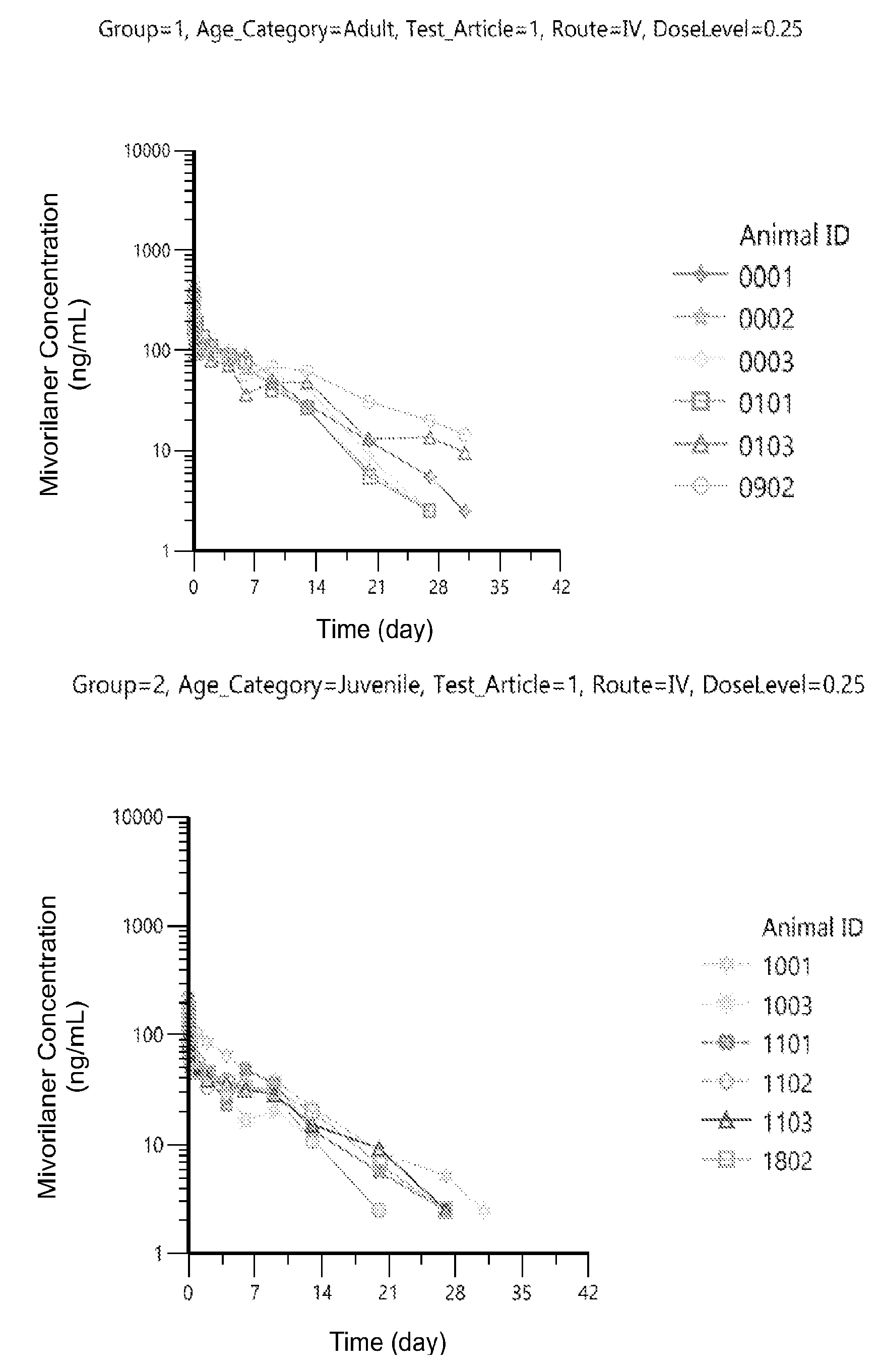


Claims
Priority Applications (6)
| Application Number | Priority Date | Filing Date | Title |
|---|---|---|---|
| EP22768050.1A EP4304356A4 (en) | 2021-03-11 | 2022-03-11 | CANINE ORAL FOOD AND METHODS OF CONTROLLING FLEA INFESTATIONS IN A CANID |
| BR112023017446A BR112023017446A2 (en) | 2021-03-11 | 2022-03-11 | ORAL DOG FOOD AND METHODS FOR CONTROLLING FLEA INFESTATIONS IN A CANINE |
| CN202280034073.5A CN117412673A (en) | 2021-03-11 | 2022-03-11 | Canine Oral Feeds and Methods of Controlling Flea Infestations in Canines |
| AU2022232510A AU2022232510A1 (en) | 2021-03-11 | 2022-03-11 | Oral canine feed and methods for controlling flea infestations in a canine |
| JP2023555751A JP2024511957A (en) | 2021-03-11 | 2022-03-11 | Oral canine feed and methods for controlling flea infestations in canines |
| US18/464,034 US20230414569A1 (en) | 2021-03-11 | 2023-09-08 | Oral canine feed and methods for controlling flea infestations in a canine |
Applications Claiming Priority (2)
| Application Number | Priority Date | Filing Date | Title |
|---|---|---|---|
| US202163159738P | 2021-03-11 | 2021-03-11 | |
| US63/159,738 | 2021-03-11 |
Related Child Applications (1)
| Application Number | Title | Priority Date | Filing Date |
|---|---|---|---|
| US18/464,034 Continuation US20230414569A1 (en) | 2021-03-11 | 2023-09-08 | Oral canine feed and methods for controlling flea infestations in a canine |
Publications (1)
| Publication Number | Publication Date |
|---|---|
| WO2022192623A1 true WO2022192623A1 (en) | 2022-09-15 |
Family
ID=83227158
Family Applications (1)
| Application Number | Title | Priority Date | Filing Date |
|---|---|---|---|
| PCT/US2022/019877 Ceased WO2022192623A1 (en) | 2021-03-11 | 2022-03-11 | Oral canine feed and methods for controlling flea infestations in a canine |
Country Status (7)
| Country | Link |
|---|---|
| US (1) | US20230414569A1 (en) |
| EP (1) | EP4304356A4 (en) |
| JP (1) | JP2024511957A (en) |
| CN (1) | CN117412673A (en) |
| AU (1) | AU2022232510A1 (en) |
| BR (1) | BR112023017446A2 (en) |
| WO (1) | WO2022192623A1 (en) |
Citations (5)
| Publication number | Priority date | Publication date | Assignee | Title |
|---|---|---|---|---|
| WO2012155676A1 (en) * | 2011-05-19 | 2012-11-22 | Eli Lilly And Company | Parasiticidal compounds, methods, and formulations |
| US20130131017A1 (en) * | 2011-11-21 | 2013-05-23 | Anacor Pharmaceuticals, Inc. | Boron-containing small molecules |
| US8784885B2 (en) * | 2002-10-16 | 2014-07-22 | Takeda Pharmaceutical Company Limited | Controlled release preparation |
| US20150111936A1 (en) * | 2007-08-17 | 2015-04-23 | Intervet Inc. | Isoxazoline compositions and their use as antiparasitics |
| US9770440B2 (en) * | 2012-04-04 | 2017-09-26 | Intervet Inc. | Solid oral pharmaceutical compositions for isoxazoline compounds |
Family Cites Families (3)
| Publication number | Priority date | Publication date | Assignee | Title |
|---|---|---|---|---|
| US3968207A (en) * | 1973-12-10 | 1976-07-06 | American Cyanamid Company | Method of controlling fleas and ticks on cats and dogs |
| WO2015086551A1 (en) * | 2013-12-10 | 2015-06-18 | Intervet International B.V. | Antiparasitic use of isoxazoline compounds |
| WO2020201440A1 (en) * | 2019-04-03 | 2020-10-08 | Virbac | Low dose fluralaner compositions for protection against parasitic invertebrate pest |
-
2022
- 2022-03-11 CN CN202280034073.5A patent/CN117412673A/en active Pending
- 2022-03-11 BR BR112023017446A patent/BR112023017446A2/en unknown
- 2022-03-11 JP JP2023555751A patent/JP2024511957A/en active Pending
- 2022-03-11 EP EP22768050.1A patent/EP4304356A4/en active Pending
- 2022-03-11 AU AU2022232510A patent/AU2022232510A1/en active Pending
- 2022-03-11 WO PCT/US2022/019877 patent/WO2022192623A1/en not_active Ceased
-
2023
- 2023-09-08 US US18/464,034 patent/US20230414569A1/en active Pending
Patent Citations (5)
| Publication number | Priority date | Publication date | Assignee | Title |
|---|---|---|---|---|
| US8784885B2 (en) * | 2002-10-16 | 2014-07-22 | Takeda Pharmaceutical Company Limited | Controlled release preparation |
| US20150111936A1 (en) * | 2007-08-17 | 2015-04-23 | Intervet Inc. | Isoxazoline compositions and their use as antiparasitics |
| WO2012155676A1 (en) * | 2011-05-19 | 2012-11-22 | Eli Lilly And Company | Parasiticidal compounds, methods, and formulations |
| US20130131017A1 (en) * | 2011-11-21 | 2013-05-23 | Anacor Pharmaceuticals, Inc. | Boron-containing small molecules |
| US9770440B2 (en) * | 2012-04-04 | 2017-09-26 | Intervet Inc. | Solid oral pharmaceutical compositions for isoxazoline compounds |
Non-Patent Citations (1)
| Title |
|---|
| See also references of EP4304356A4 * |
Also Published As
| Publication number | Publication date |
|---|---|
| CN117412673A (en) | 2024-01-16 |
| EP4304356A1 (en) | 2024-01-17 |
| EP4304356A4 (en) | 2025-02-19 |
| BR112023017446A2 (en) | 2023-11-07 |
| AU2022232510A1 (en) | 2023-09-21 |
| US20230414569A1 (en) | 2023-12-28 |
| JP2024511957A (en) | 2024-03-18 |
Similar Documents
| Publication | Publication Date | Title |
|---|---|---|
| US20240165085A1 (en) | Oral feline feed and methods for controlling tick infestations in a feline | |
| US20230414569A1 (en) | Oral canine feed and methods for controlling flea infestations in a canine | |
| US20240156789A1 (en) | Oral feline feed and methods for controlling flea infestations in a feline | |
| US20230413822A1 (en) | Oral canine feed and methods for controlling tick infestations in a canine | |
| US20230413819A1 (en) | Methods for controlling flea and tick infestations in a mammal | |
| US20240138442A1 (en) | Oral feline feed and methods for controlling flea infestations in a feline | |
| US20230414644A1 (en) | Oral canine feed and methods for controlling flea infestations in a canine | |
| KR20230161995A (en) | Feed and method for controlling mite infestation in mammals |
Legal Events
| Date | Code | Title | Description |
|---|---|---|---|
| 121 | Ep: the epo has been informed by wipo that ep was designated in this application |
Ref document number: 22768050 Country of ref document: EP Kind code of ref document: A1 |
|
| WWE | Wipo information: entry into national phase |
Ref document number: 2022232510 Country of ref document: AU |
|
| REG | Reference to national code |
Ref country code: BR Ref legal event code: B01A Ref document number: 112023017446 Country of ref document: BR |
|
| WWE | Wipo information: entry into national phase |
Ref document number: 2023555751 Country of ref document: JP |
|
| ENP | Entry into the national phase |
Ref document number: 2022232510 Country of ref document: AU Date of ref document: 20220311 Kind code of ref document: A |
|
| WWE | Wipo information: entry into national phase |
Ref document number: 2022768050 Country of ref document: EP |
|
| NENP | Non-entry into the national phase |
Ref country code: DE |
|
| ENP | Entry into the national phase |
Ref document number: 112023017446 Country of ref document: BR Kind code of ref document: A2 Effective date: 20230829 |
|
| WWE | Wipo information: entry into national phase |
Ref document number: 202280034073.5 Country of ref document: CN |
|
| ENP | Entry into the national phase |
Ref document number: 2022768050 Country of ref document: EP Effective date: 20231011 |