WO2022196150A1 - リモート発行システムおよびデータ生成サーバ - Google Patents
リモート発行システムおよびデータ生成サーバ Download PDFInfo
- Publication number
- WO2022196150A1 WO2022196150A1 PCT/JP2022/004002 JP2022004002W WO2022196150A1 WO 2022196150 A1 WO2022196150 A1 WO 2022196150A1 JP 2022004002 W JP2022004002 W JP 2022004002W WO 2022196150 A1 WO2022196150 A1 WO 2022196150A1
- Authority
- WO
- WIPO (PCT)
- Prior art keywords
- data
- card
- electronic device
- portable electronic
- processor
- Prior art date
- Legal status (The legal status is an assumption and is not a legal conclusion. Google has not performed a legal analysis and makes no representation as to the accuracy of the status listed.)
- Ceased
Links
Images





Classifications
-
- H—ELECTRICITY
- H04—ELECTRIC COMMUNICATION TECHNIQUE
- H04L—TRANSMISSION OF DIGITAL INFORMATION, e.g. TELEGRAPHIC COMMUNICATION
- H04L63/00—Network architectures or network communication protocols for network security
- H04L63/08—Network architectures or network communication protocols for network security for authentication of entities
- H04L63/0861—Network architectures or network communication protocols for network security for authentication of entities using biometrical features, e.g. fingerprint, retina-scan
-
- G—PHYSICS
- G06—COMPUTING OR CALCULATING; COUNTING
- G06F—ELECTRIC DIGITAL DATA PROCESSING
- G06F21/00—Security arrangements for protecting computers, components thereof, programs or data against unauthorised activity
- G06F21/30—Authentication, i.e. establishing the identity or authorisation of security principals
- G06F21/31—User authentication
- G06F21/32—User authentication using biometric data, e.g. fingerprints, iris scans or voiceprints
-
- G—PHYSICS
- G06—COMPUTING OR CALCULATING; COUNTING
- G06F—ELECTRIC DIGITAL DATA PROCESSING
- G06F21/00—Security arrangements for protecting computers, components thereof, programs or data against unauthorised activity
- G06F21/30—Authentication, i.e. establishing the identity or authorisation of security principals
- G06F21/31—User authentication
- G06F21/34—User authentication involving the use of external additional devices, e.g. dongles or smart cards
-
- G—PHYSICS
- G06—COMPUTING OR CALCULATING; COUNTING
- G06F—ELECTRIC DIGITAL DATA PROCESSING
- G06F21/00—Security arrangements for protecting computers, components thereof, programs or data against unauthorised activity
- G06F21/60—Protecting data
- G06F21/62—Protecting access to data via a platform, e.g. using keys or access control rules
- G06F21/6209—Protecting access to data via a platform, e.g. using keys or access control rules to a single file or object, e.g. in a secure envelope, encrypted and accessed using a key, or with access control rules appended to the object itself
-
- G—PHYSICS
- G06—COMPUTING OR CALCULATING; COUNTING
- G06Q—INFORMATION AND COMMUNICATION TECHNOLOGY [ICT] SPECIALLY ADAPTED FOR ADMINISTRATIVE, COMMERCIAL, FINANCIAL, MANAGERIAL OR SUPERVISORY PURPOSES; SYSTEMS OR METHODS SPECIALLY ADAPTED FOR ADMINISTRATIVE, COMMERCIAL, FINANCIAL, MANAGERIAL OR SUPERVISORY PURPOSES, NOT OTHERWISE PROVIDED FOR
- G06Q20/00—Payment architectures, schemes or protocols
- G06Q20/30—Payment architectures, schemes or protocols characterised by the use of specific devices or networks
- G06Q20/34—Payment architectures, schemes or protocols characterised by the use of specific devices or networks using cards, e.g. integrated circuit [IC] cards or magnetic cards
- G06Q20/341—Active cards, i.e. cards including their own processing means, e.g. including an IC or chip
-
- G—PHYSICS
- G06—COMPUTING OR CALCULATING; COUNTING
- G06Q—INFORMATION AND COMMUNICATION TECHNOLOGY [ICT] SPECIALLY ADAPTED FOR ADMINISTRATIVE, COMMERCIAL, FINANCIAL, MANAGERIAL OR SUPERVISORY PURPOSES; SYSTEMS OR METHODS SPECIALLY ADAPTED FOR ADMINISTRATIVE, COMMERCIAL, FINANCIAL, MANAGERIAL OR SUPERVISORY PURPOSES, NOT OTHERWISE PROVIDED FOR
- G06Q20/00—Payment architectures, schemes or protocols
- G06Q20/30—Payment architectures, schemes or protocols characterised by the use of specific devices or networks
- G06Q20/34—Payment architectures, schemes or protocols characterised by the use of specific devices or networks using cards, e.g. integrated circuit [IC] cards or magnetic cards
- G06Q20/355—Personalisation of cards for use
-
- G—PHYSICS
- G06—COMPUTING OR CALCULATING; COUNTING
- G06Q—INFORMATION AND COMMUNICATION TECHNOLOGY [ICT] SPECIALLY ADAPTED FOR ADMINISTRATIVE, COMMERCIAL, FINANCIAL, MANAGERIAL OR SUPERVISORY PURPOSES; SYSTEMS OR METHODS SPECIALLY ADAPTED FOR ADMINISTRATIVE, COMMERCIAL, FINANCIAL, MANAGERIAL OR SUPERVISORY PURPOSES, NOT OTHERWISE PROVIDED FOR
- G06Q20/00—Payment architectures, schemes or protocols
- G06Q20/30—Payment architectures, schemes or protocols characterised by the use of specific devices or networks
- G06Q20/34—Payment architectures, schemes or protocols characterised by the use of specific devices or networks using cards, e.g. integrated circuit [IC] cards or magnetic cards
- G06Q20/357—Cards having a plurality of specified features
-
- G—PHYSICS
- G06—COMPUTING OR CALCULATING; COUNTING
- G06Q—INFORMATION AND COMMUNICATION TECHNOLOGY [ICT] SPECIALLY ADAPTED FOR ADMINISTRATIVE, COMMERCIAL, FINANCIAL, MANAGERIAL OR SUPERVISORY PURPOSES; SYSTEMS OR METHODS SPECIALLY ADAPTED FOR ADMINISTRATIVE, COMMERCIAL, FINANCIAL, MANAGERIAL OR SUPERVISORY PURPOSES, NOT OTHERWISE PROVIDED FOR
- G06Q20/00—Payment architectures, schemes or protocols
- G06Q20/38—Payment protocols; Details thereof
- G06Q20/40—Authorisation, e.g. identification of payer or payee, verification of customer or shop credentials; Review and approval of payers, e.g. check credit lines or negative lists
- G06Q20/401—Transaction verification
- G06Q20/4014—Identity check for transactions
- G06Q20/40145—Biometric identity checks
-
- H—ELECTRICITY
- H04—ELECTRIC COMMUNICATION TECHNIQUE
- H04L—TRANSMISSION OF DIGITAL INFORMATION, e.g. TELEGRAPHIC COMMUNICATION
- H04L9/00—Cryptographic mechanisms or cryptographic arrangements for secret or secure communications; Network security protocols
- H04L9/08—Key distribution or management, e.g. generation, sharing or updating, of cryptographic keys or passwords
- H04L9/0894—Escrow, recovery or storing of secret information, e.g. secret key escrow or cryptographic key storage
- H04L9/0897—Escrow, recovery or storing of secret information, e.g. secret key escrow or cryptographic key storage involving additional devices, e.g. trusted platform module [TPM], smartcard or USB
-
- H—ELECTRICITY
- H04—ELECTRIC COMMUNICATION TECHNIQUE
- H04L—TRANSMISSION OF DIGITAL INFORMATION, e.g. TELEGRAPHIC COMMUNICATION
- H04L9/00—Cryptographic mechanisms or cryptographic arrangements for secret or secure communications; Network security protocols
- H04L9/32—Cryptographic mechanisms or cryptographic arrangements for secret or secure communications; Network security protocols including means for verifying the identity or authority of a user of the system or for message authentication, e.g. authorization, entity authentication, data integrity or data verification, non-repudiation, key authentication or verification of credentials
- H04L9/3226—Cryptographic mechanisms or cryptographic arrangements for secret or secure communications; Network security protocols including means for verifying the identity or authority of a user of the system or for message authentication, e.g. authorization, entity authentication, data integrity or data verification, non-repudiation, key authentication or verification of credentials using a predetermined code, e.g. password, passphrase or PIN
- H04L9/3231—Biological data, e.g. fingerprint, voice or retina
-
- H—ELECTRICITY
- H04—ELECTRIC COMMUNICATION TECHNIQUE
- H04L—TRANSMISSION OF DIGITAL INFORMATION, e.g. TELEGRAPHIC COMMUNICATION
- H04L9/00—Cryptographic mechanisms or cryptographic arrangements for secret or secure communications; Network security protocols
- H04L9/32—Cryptographic mechanisms or cryptographic arrangements for secret or secure communications; Network security protocols including means for verifying the identity or authority of a user of the system or for message authentication, e.g. authorization, entity authentication, data integrity or data verification, non-repudiation, key authentication or verification of credentials
- H04L9/3271—Cryptographic mechanisms or cryptographic arrangements for secret or secure communications; Network security protocols including means for verifying the identity or authority of a user of the system or for message authentication, e.g. authorization, entity authentication, data integrity or data verification, non-repudiation, key authentication or verification of credentials using challenge-response
- H04L9/3278—Cryptographic mechanisms or cryptographic arrangements for secret or secure communications; Network security protocols including means for verifying the identity or authority of a user of the system or for message authentication, e.g. authorization, entity authentication, data integrity or data verification, non-repudiation, key authentication or verification of credentials using challenge-response using physically unclonable functions [PUF]
-
- H—ELECTRICITY
- H04—ELECTRIC COMMUNICATION TECHNIQUE
- H04W—WIRELESS COMMUNICATION NETWORKS
- H04W12/00—Security arrangements; Authentication; Protecting privacy or anonymity
- H04W12/30—Security of mobile devices; Security of mobile applications
- H04W12/35—Protecting application or service provisioning, e.g. securing SIM application provisioning
-
- H—ELECTRICITY
- H04—ELECTRIC COMMUNICATION TECHNIQUE
- H04W—WIRELESS COMMUNICATION NETWORKS
- H04W12/00—Security arrangements; Authentication; Protecting privacy or anonymity
- H04W12/40—Security arrangements using identity modules
Definitions
- Embodiments of the present invention relate to remote publishing systems and data generation servers.
- an IC card as a portable electronic device requires a secondary issuance procedure in which information for operation as a credit card, etc., is written by the operating organization so that it can be used. Also, when adding a new function to the IC card, a predetermined procedure by the operating organization is required. Conventionally, the secondary issuance of IC cards and the addition of functions are performed using a dedicated issuing machine after the user's identity has been verified by an operating institution or a staff member of a store handling the IC card using a public certificate or the like.
- the object of the present invention is to provide a remote issuing system and a data generation server that can implement a highly convenient issuing process procedure.
- a remote publishing system includes a portable electronic device and a data generation server.
- the portable electronic device has a biosensor, a memory, a communication interface and a first processor.
- a biosensor acquires biometric information.
- the memory includes a storage area for storing user's biometric information.
- the communication interface communicates with a reader/writer connected to the user terminal.
- the first processor generates authentication data for issuing processing in the portable electronic device when biometric authentication by matching biometric information acquired by the biosensor and biometric information stored in the memory is successful, and generates authentication data. is output to the reader/writer, and the issuing process is executed based on the issuance data corresponding to the authentication data supplied from the reader/writer.
- the data generation server has a communication unit and a second processor.
- the communication unit communicates with the user terminal.
- the second processor issues a request to the portable electronic device based on application data and authentication data corresponding to the contract ID. Generates issue data for executing processing, and transmits the generated issue data to the user terminal.
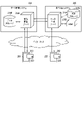
- FIG. 1 is a diagram schematically showing a configuration example of an IC card issuing system as a remote issuing system according to the first embodiment.
- FIG. 2 is a block diagram showing a configuration example of an IC card issued by an IC card issuing system as a remote issuing system according to the first embodiment.
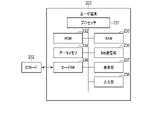
- FIG. 3 is a block diagram showing a configuration example of a mobile terminal in an IC card issuing system as a remote issuing system according to the first embodiment.
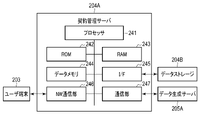
- FIG. 4 is a block diagram showing a configuration example of a contract management server in the IC card issuing system as the remote issuing system according to the first embodiment.
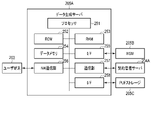
- FIG. 5 is a block diagram showing a configuration example of a data generation server in the IC card issuing system as the remote issuing system according to the first embodiment.
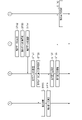
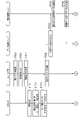
- FIG. 6 is a sequence for explaining an operation example of an application procedure in an IC card issuing system as a remote issuing system according to the first embodiment.
- FIG. 7 is a sequence for explaining an operation example of the issuing procedure in the IC card issuing system as the remote issuing system according to the first embodiment.
- FIG. 8 is a sequence for explaining an operation example of the issuing procedure in the IC card issuing system as the remote issuing system according to the first embodiment.
- FIG. 9 is a diagram schematically showing a configuration example of an IC card issuing system as a remote issuing system according to the second embodiment.
- FIG. 10 is a block diagram showing a configuration example of an IC card issued by an IC card issuing system as a remote issuing system according to the second embodiment.
- FIG. 11 is a block diagram showing a configuration example of a portable terminal in an IC card issuing system as a remote issuing system according to the second embodiment.
- FIG. 12 is a block diagram showing a configuration example of a contract management server in an IC card issuing system as a remote issuing system according to the second embodiment.
- FIG. 13 is a block diagram showing a configuration example of a data generation server in an IC card issuing system as a remote issuing system according to the second embodiment.
- FIG. 14 is a sequence for explaining an operation example of an application procedure in an IC card issuing system as a remote issuing system according to the second embodiment.
- FIG. 15 is a sequence for explaining an operation example of an issuing procedure in an IC card issuing system as a remote issuing system according to the second embodiment.
- FIG. 16 is a sequence for explaining an operation example of the issuing procedure in the IC card issuing system as the remote issuing system according to the second embodiment.
- FIG. 1 is a diagram schematically showing a configuration example of an IC card issuing system 1 as a remote issuing system according to the first embodiment.
- an IC card issuing system 1 has an IC card 2, a user terminal 3, a data management system 4, and an issue control system 5.
- FIG. 1 is a diagram schematically showing a configuration example of an IC card issuing system 1 as a remote issuing system according to the first embodiment.
- an IC card issuing system 1 has an IC card 2, a user terminal 3, a data management system 4, and an issue control system 5.
- FIG. 1 is a diagram schematically showing a configuration example of an IC card issuing system 1 as a remote issuing system according to the first embodiment.
- an IC card issuing system 1 has an IC card 2, a user terminal 3, a data management system 4, and an issue control system 5.
- FIG. 1 is a diagram schematically showing a configuration example of an IC card issuing system 1 as a remote issuing system according to the first embodiment.
- the IC card 2 is an example of a portable electronic device that has a function of performing biometric authentication.
- the IC card 2 according to the first embodiment includes a biosensor 20 for acquiring biometric information as authentication information acquired from a person.
- the biometric sensor 20 included in the IC card 2 is a fingerprint sensor that reads a fingerprint as an example of biometric information.
- the IC card 2 equipped with a fingerprint sensor 20 as a biosensor compares the fingerprint of a person read by the fingerprint sensor with the fingerprint of a registrant (user, card holder) pre-registered in the memory of the IC card 2 to Perform fingerprint authentication (biometric authentication) as identity verification.
- the IC card 2 will be described as a fingerprint sensor card having a function of performing biometric authentication using fingerprints as biometric information.
- the IC card 2 as the portable electronic device according to the first embodiment is not limited to one that performs fingerprint (biometric) authentication using a fingerprint as biometric information.
- the portable electronic device exemplified by the IC card 2 may perform biometric authentication using biometric information other than fingerprints.
- the user terminal 3 is an information processing device owned by the user.
- the user terminal 3 is, for example, a smart phone, a tablet PC, a personal computer, or the like.
- the user terminal 3 is operated by the user himself/herself, and may include a card reader/writer that communicates with the IC card 2 and a communication unit that communicates with the servers 4A and 5A via a network such as the Internet.
- the user terminal 3 may be provided with an interface for connecting to a card reader/writer as an external device instead of being provided with a card reader/writer that communicates with the IC card 2 .
- the data management system 4 is a system that remotely accepts applications for issuance processing (secondary issuance, function addition, etc.) for IC cards held by users.
- the data management system 4 has a contract management server 4A and a data storage 4B.
- the contract management server 4A is composed of a server device.
- the data storage 4B is a device including a storage device accessible from the contract management server 4A.
- the contract management server 4A has a function of accessing the data storage 4B, a function of communicating with the user terminal 3 via the Internet, and a function of communicating with the data generation server 5A of the issuance control system 5.
- the contract management server 4A communicates with the user terminal 3 owned by the user and acquires application data regarding the issuing process (contract) for the IC card held by the user from the user terminal 3.
- the issuance processing for the IC card includes secondary issuance or function addition.
- the secondary issuance of an IC card is a process including a process (personalization) of writing personal data or the like into an IC card given to a user (card holder) by an issuer.
- Function addition is a process of adding an application or the like to the IC card.
- function addition includes a process of adding an applet to an IC card as a Java (registered trademark) card.
- the contract management server 4A After acquiring the application data from the user terminal 3, the contract management server 4A issues a contract ID if a contract can be made with the application content based on the application data from the user terminal 3. When issuing the contract ID, the contract management server 4A notifies the user terminal 3 that issued the contract ID, and stores the application data and the like associated with the contract ID in the data storage 4B. Also, the contract management server 4A provides application data corresponding to the contract ID stored in the data storage 4B in response to an inquiry about application data based on the contract ID from the data generation server 5A in the issuance control system 5.
- the issuance control system 5 is a system for executing issuance processing (secondary issuance or function addition) for remote IC cards.
- the issue control system 5 has a data generation server 5A and an HSM (Hardware Security Module) 5B.
- the data generation server 5A is composed of a server device.
- the HSM 5B is a device that securely stores key information and performs cryptographic processing using the key information.
- the data generation server 5A has a function of accessing the HSM 5B, a function of communicating with the user terminal 3 via the Internet, and a function of communicating with the contract management server 4A of the data management system 4.
- the data generation server 5A performs secure communication with the IC card 2 via the user terminal 3 using the key stored in the HSM 5B and the encryption processing function.
- the data generation server 5A acquires from the user terminal 3 an issuance request including the card authentication data generated by the IC card 2 using the key information and the contract ID.
- the data generation server 5A acquires application data managed by the contract management server 4A of the data management system 4 in response to an issuance request from the user terminal 3.
- the data generation server 5A generates, based on the application data acquired in response to the issuance request, the issuance data for performing the issuance process for the IC card possessed by the user using the key information stored in the HSM 5B, and the generated issuance data is supplied to the user terminal 3.
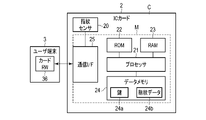
- FIG. 2 is a block diagram showing a configuration example of an IC card 2 as a portable electronic device according to the first embodiment.
- the IC card 2 is an example of a portable electronic device that is activated (becomes operable) by power supplied from an external device.
- the IC card 2 is also called a smart card.
- the IC card 2 has a main body C. As shown in FIG. The main body C is formed in a card shape from plastic or the like.
- a control module M is embedded in the main body C of the IC card 2 .
- the control module M is integrally formed with a communication interface connected to one or more IC chips.
- control module M is connected to a display 26 and a fingerprint sensor 27 as a biosensor.
- the processor 21 includes circuits that perform various processes.
- the processor 21 is, for example, a CPU (Central Processing Unit).
- the processor 21 controls the IC card 2 as a whole.
- Processor 21 implements various processing functions by executing programs stored in ROM 22 or data memory 24 . However, some or all of various functions executed by the processor 21, which will be described later, may be realized by hardware circuits.
- the ROM 22 is a non-volatile memory that functions as a program memory.
- the ROM 22 stores control programs and control data in advance.
- the ROM 22 is incorporated in the IC card 2 in a state in which control programs, control data, etc. are stored in the manufacturing stage. Control programs and control data stored in the ROM 22 are incorporated in advance according to the specifications of the IC card 2 .
- the ROM 22 stores a program for causing the processor 21 to execute a process according to a command received from an external device (card reader/writer).
- the RAM 23 is a volatile memory that functions as a working memory.
- the RAM 23 also functions as a buffer that temporarily stores data being processed by the processor 21 .
- the RAM 23 functions as a communication buffer that temporarily stores data transmitted/received to/from an external device via the communication interface 25 .
- the data memory 24 is a non-volatile memory in which data can be written and rewritten.
- the data memory 24 is composed of, for example, an EEPROM (registered trademark) (Electrically Erasable Programmable Read Only Memory) or the like.
- the data memory 24 is written with programs and various data according to the application of the IC card 2 . Program files, data files, etc. are defined in the data memory 24, and control programs and various data are written in these files.
- the data memory 24 has tamper resistance in part or all of its area, and can store data securely.
- the data memory 24 has a first storage area 24a for storing key information and a second storage area 24b for storing biometric information.
- the first storage area 24a is a tamper-resistant memory capable of securely storing data.
- key information is written in the processing (primary issuance) for making the IC card 2 usable.
- the key information corresponding to the key information written in the first storage area 24a of the IC card 2 that has been primarily issued is stored in the HSM 5B of the issuing control system 5.
- the second storage area 24b stores biometric information of the user who is the owner of the IC card 2.
- the IC card 2 is a fingerprint sensor card that performs biometric information using a fingerprint as biometric information. If the IC card 2 is a fingerprint sensor card, the second storage area 24b of the IC card 2 is written with fingerprint information as biometric information of the user who is the owner. It should be noted that in the first embodiment described below, the IC card 2 is used by the user in a state in which the fingerprint information as the user's biometric information is written in the second storage area before secondary issuance or function addition is executed. is assumed to be in possession of
- the communication interface 25 has a communication control section and an interface section, and constitutes a communication section.
- the communication interface 25 is an interface for communication connection with a card reader/writer (RW) provided in the user terminal 3 or a card reader/writer connected to the user terminal 3 via an interface.
- the communication interface 25 realizes a communication function by a communication method compatible with the interface of the card RW.
- the communication interface 25 may be configured to support a plurality of communication methods (for example, contact communication and non-contact communication).
- the communication interface 25 communicates contactlessly (wirelessly) with the card RW provided in the user terminal 3 or with the card RW connected to the user terminal 3 via an interface.
- the communication interface 25 includes an antenna for transmitting and receiving radio waves, and includes a modulation circuit for generating radio waves to be transmitted from the antenna and a demodulation circuit for generating a signal from the radio waves received by the antenna.
- the communication interface 25 contacts and communicates with the card RW provided in the user terminal 3 or the card RW connected to the user terminal 3 via an interface. Configure the communication part.
- the communication interface 25 includes a contact portion that physically and electrically contacts the contact portion provided on the card RW, and is configured by a communication control circuit or the like that controls transmission and reception of signals via the contact portion.
- the biosensor 20 is an example of an authentication information acquisition unit that acquires authentication information.
- the biosensor 20 is a sensor that acquires biometric information of a person as authentication information used for authentication processing.
- the biometric sensor 20 is assumed to be a fingerprint sensor that reads a user's fingerprint information (fingerprint image).
- a fingerprint sensor as the biosensor 20 is provided so that a sensor for reading a fingerprint is exposed on the surface of the card body C, and reads the fingerprint of a person's finger held over the exposed sensor portion. Fingerprint authentication is performed when the fingerprint information read by the biosensor 20 is collated with the fingerprint information stored in the second storage area 24b of the data memory 24.
- the biometric sensor 20 is not limited to a fingerprint sensor, and may be a sensor that acquires biometric information other than fingerprints (for example, palm prints, veins, irises, etc.).
- the IC card 2 When equipped with a sensor that acquires biometric information other than fingerprints, the IC card 2 has a function of performing biometric authentication corresponding to the biometric information acquired by the sensor (for example, an IC chip that performs palmprint collation, vein collation, iris collation, etc.). should be prepared.
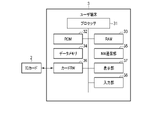
- FIG. 3 is a block diagram showing a configuration example of the user terminal 3 in the IC card issuing system 1 according to the first embodiment.
- the user terminal 3 is an electronic device on which various application programs are executed on an operating system (OS).
- the user terminal 3 may be an electronic device used by a user as a card holder holding the IC card 2 .
- the user terminal 3 is a mobile terminal including a card RW such as a smart phone, a tablet terminal, or a mobile phone, or a mobile terminal including an interface for connecting the card RW.
- the user terminal 3 may be a personal computer (PC) provided with the card RW or a PC provided with an interface for connecting the card RW.
- PC personal computer
- the user terminal 3 includes a processor 31, a ROM 32, a RAM 33, a data memory 34, a network (NW) communication unit 35, a card reader/writer (RW) 36, a display unit 37, an input unit 38, and the like.
- NW network
- RW card reader/writer
- the processor 31 executes various processes by executing programs.
- the processor 31 is, for example, a CPU (Central Processing Unit).
- the processor 31 is connected to each section within the user terminal 3 via a system bus, and transmits and receives data to and from each section.
- the processor 31 cooperates with the ROM 32 and the RAM 33 to perform operations such as control and data processing in the user terminal 3 .
- processor 31 implements various processing functions by executing application programs stored in ROM 32 or data memory 34 .
- some or all of various functions executed by the processor 31, which will be described later, may be realized by hardware circuits.
- a ROM (Read Only Memory) 32 is a non-volatile memory that stores programs and control data for realizing basic operations of the user terminal 3 .
- the ROM 32 stores programs that control basic operations such as an operating system (OS).
- the ROM 32 may store application programs and the like for realizing the functions of the user terminal 3 .
- the ROM 32 may be composed of a rewritable non-volatile memory.
- the rewritable ROM 32 is realized by an EEPROM (Electrically Erasable Programmable ROM), a flash ROM, or the like.
- a RAM (Random Access Memory) 33 is a volatile memory that temporarily stores data. RAM 33 functions as a working memory when processor 31 executes a program.
- the data memory 34 is a storage unit that stores various data.
- the data memory 34 is composed of a rewritable non-volatile memory.
- the data memory 34 may be a flash ROM, a semiconductor device memory such as SSD (Solid State Drive), or a storage device such as HDD (Hard Disc Drive).
- the data memory 34 stores application programs, operation setting values, personal information, and the like. Also, the data memory 34 may store an OS program.
- the NW communication unit 35 is a communication interface for communicating with external devices.
- the NW communication unit 35 may perform wireless communication, or may perform wired communication.
- the NW communication section 35 may communicate with the contract management server 4A and the data generation server 5A via an interface.
- the card reader/writer 36 has a function of communicating with the IC card 2 .
- the card reader/writer 36 performs power supply, clock supply, reset control, and data transmission/reception to/from the IC card 2 .
- the card reader/writer 36 After activating (activating) the IC card 2, the card reader/writer 36 transmits various commands and receives responses to the transmitted commands under the control of the processor 31.
- FIG. The user terminal 3 may be configured to include an interface for connecting to a card reader/writer as an external device.
- the card reader/writer 36 has a configuration that corresponds to the communication method that the IC card 2 has. For example, when the IC card 2 is implemented as a contactless IC card, the card reader/writer 36 communicates with the IC card 2 in a contactless (wireless) manner using a communication protocol conforming to the communication system of the contactless IC card. connect. When the IC card 2 is realized as a contact type IC card, the card reader/writer 36 has a contact portion that is in physical and electrical contact with the contact portion (interface) of the IC card 2. Send and receive data via
- the display unit 37 is a display device such as a liquid crystal panel.
- the input unit 38 is an operation device for inputting operation instructions to the user terminal 3 .
- the input unit 38 includes, for example, a touch panel.
- the display unit 37 and the input unit 38 may be configured by a display device with a touch panel (hereinafter referred to as a touch screen). Further, the input unit 38 may include an operation key configured by a button switch, a touch sensor that detects touch by an operator's finger based on a change in capacitance, or the like.
- FIG. 4 is a block diagram showing a configuration example of the contract management server 4A in the IC card issuing system 1 according to the first embodiment.
- the contract management server 4A has a processor 41 , ROM 42 , RAM 43 , data memory 44 , interface 45 , network (NW) communication section 46 and communication section 47 .
- NW network
- the processor 41 executes various processes by executing programs.
- the processor 41 is, for example, a CPU (Central Processing Unit).
- the processor 41 is connected to each section within the server 4A via a system bus, and transmits and receives data to and from each section.
- Processor 41 cooperates with ROM 42 and RAM 43 to perform operations such as control and data processing in contract management server 4A.
- a ROM (Read Only Memory) 42 is a non-volatile memory that stores programs and control data for realizing basic operations of the contract management server 4A.
- a RAM (Random Access Memory) 43 is a volatile memory that temporarily stores data. RAM 43 functions as a working memory when processor 41 executes a program.
- the data memory 44 is a storage unit that stores various data.
- the data memory 44 is composed of a rewritable non-volatile memory. For example, the data memory 44 stores an OS program, application programs, operation setting information, and the like.
- the interface 45 is an interface for accessing the data storage 4B. If the data storage 4B is a storage device as an external device, the interface 45 may be compatible with the interface standard of the storage device as the data storage 4B. Further, when the data storage 4B is a data server or the like, the interface may be configured with a communication interface for communicating with the server as the data storage 4B.
- a network (NW) communication unit 46 is a communication interface for communicating with an external device.
- the NW communication unit 46 may perform wireless communication, or may perform wired communication.
- the NW communication unit 46 may communicate with the user terminal 3 used by the user via a wide area network such as the Internet.
- the communication unit 47 is a communication interface for communicating with the data generation server.
- the communication unit 47 may perform wireless communication, or may perform wired communication.
- the communication unit 47 may be any device that can securely communicate with the data generation server 5A.
- the NW communication unit 46 and the communication unit 47 may be configured to be realized by one communication interface. Further, the interface 45 may also be configured as a common communication interface with the NW communication unit 46 or the communication unit 47 .
- FIG. 5 is a block diagram showing a configuration example of the data generation server 5A in the IC card issuing system 1 according to the first embodiment.
- the data generation server 5A has a processor 51 , ROM 52 , RAM 53 , data memory 54 , interface 55 , network (NW) communication section 56 and communication section 57 .
- NW network
- the processor 51 executes various processes by executing programs.
- the processor 51 is, for example, a CPU (Central Processing Unit).
- the processor 51 is connected to each section in the server 5A via a system bus, and transmits and receives data to and from each section.
- Processor 51 cooperates with ROM 52 and RAM 53 to perform operations such as control and data processing in data generation server 5A.
- a ROM (Read Only Memory) 52 is a non-volatile memory that stores programs and control data for realizing basic operations of the data generation server 5A.
- a RAM (Random Access Memory) 53 is a volatile memory that temporarily stores data. RAM 53 functions as a working memory when processor 51 executes a program.
- the data memory 54 is a storage unit that stores various data.
- the data memory 54 is composed of a rewritable non-volatile memory. For example, the data memory 54 stores an OS program, application programs, operation setting information, and the like.
- Interface 55 is an interface for accessing HSM5B.
- the interface 55 should just correspond to the interface standard with which HSM5B is provided.
- a network (NW) communication unit 56 is a communication interface for communicating with an external device.
- the NW communication unit 56 may perform wireless communication, or may perform wired communication.
- the NW communication unit 56 may communicate with the user terminal 3 used by the user via a wide area network such as the Internet.
- the communication unit 57 is a communication interface for communicating with the contract management server 4A.
- the communication unit 57 may perform wireless communication, or may perform wired communication.
- the communication unit 57 may be any device that can securely communicate with the contract management server 4A.
- the NW communication unit 56 and the communication unit 57 may be configured to be realized by one communication interface.
- the IC card 2 is to be handed over to the user (card holder) after the processing of primary issuance (card manufacturing and initialization). It is also assumed that a key (key information) relating to generation of card authentication data is written in the IC card 2 handed over to the user in the primary issuance. The key information written in the IC card 2 is stored in the HSM 5B in the issuing control system 5. FIG. Further, it is assumed that the IC card 2 possessed by the user (card holder) is written with the fingerprint information of the user (the person himself/herself) after the user has been authenticated.
- FIG. 6 is a sequence for explaining an operation example of an application procedure for issue processing for the IC card 2 in the IC card issuing system 1 .
- the processor 31 of the user terminal 3 receives the input of the application data through the input unit 38 according to the operation of the user as the cardholder (ST21).
- the application data includes, for example, information necessary for issuance processing (secondary issuance or function addition), personal information of the user who is the cardholder, and information about the IC card 2 possessed by the cardholder (user). It is assumed that
- the user terminal 3 may input application data using an application program, or input application data on a website for inputting application data provided on the Internet. good.
- the user terminal 3 has an application program installed in the data memory 34 .
- the processor 31 of the user terminal 3 starts the application program according to the user's operation, and inputs the application data according to the application data input format presented by the application program.
- the processor 31 of the user terminal 3 accesses an application data input site provided on the Internet by the NW communication unit 35, and conforms to the input format of the application data presented on the input site. Enter the application data according to
- the user terminal 3 may read information about the IC card 2 possessed by the cardholder (user) from the IC card 2 .
- Information (card data) about the IC card 2 includes, for example, unique identification information (ID) for identifying the IC card 2 and the like.
- ID unique identification information
- the user terminal 3 may read the personal information of the user from the IC card 2 .
- the IC card 2 is assumed to output card data in response to a request from the card reader/writer 36 of the user terminal 3 after identity verification is successful through biometric (fingerprint) authentication.
- the processor 31 of the user terminal 3 transmits a request for fingerprint authentication as biometric authentication and a request for card data to the IC card 2 using the card RW36 (ST22).
- Processor 21 of IC card 2 executes fingerprint authentication using fingerprint data stored in data memory 24 in response to a request from user terminal 3 (ST11).
- the processor 21 of the IC card 2 outputs the information of the IC card 2 to the user terminal 3 after the identity verification by fingerprint authentication is successful (ST12).
- the processor 31 of the user terminal 3 creates an examination request requesting an examination of the issuing process (contract) based on the input application data (ST23).
- the examination request examines whether it is possible (contract) to execute the issuing process (secondary issue or function addition) for the IC card 2 possessed by the card holder according to the application contents input as the application data. It is a request.
- the processor 31 of the user terminal 3 transmits the examination request to the contract management server 4A of the data management system 4 (ST24).
- the processor 31 accesses the contract management server 4A via the Internet through the NW communication unit 35, and transmits an examination request to the contract management server 4A.
- the contract management server 4A accepts an examination request from the user terminal 3 through the NW communication section 46 (ST31). Upon receiving the examination request from the user terminal 3, the processor 41 of the contract management server 4A examines whether or not to permit the issuing process requested in response to the received examination request. For example, the contract management server 4A examines whether there are any problems with the application contents indicated by the application data, and whether there are any problems with the contract for issuing the cardholder who is the applicant. The contents and procedures of the examination are not limited to a specific form as long as they conform to the operational form. It is sufficient if the examination result corresponding to the examination request is input to the contract management server 4A.
- the processor 41 of the contract management server 4A notifies the user terminal 3, which is the transmission source of the examination request, that the contract is not possible as the examination result. (ST34). Also, the processor 41 may notify the contact specified by the cardholder in the application data of the examination result.
- the processor 31 of the user terminal 3 When the processor 31 of the user terminal 3 receives the notice from the contract management server 4A that the examination result for the examination request indicates that the contract cannot be made, the processor 31 displays the fact that the examination result indicates that the contract cannot be made on the display unit 37, thereby enabling the cardholder to proceed. (ST25).
- the processor 41 of the contract management server 4A issues a contract ID (ST32).
- the processor 41 registers the application data included in the examination request for which the examination result indicates that the contract is acceptable in the data storage 4B in association with the issued contract ID (ST33).
- the data storage 4B stores the application data and the contract ID from the contract management server 4A as contract information (ST41).
- the processor 41 of the contract management server 4A notifies the user terminal 3, which is the source of the examination request, of the examination result and contract ID (ST34).
- the processor 31 of the user terminal 3 When the processor 31 of the user terminal 3 receives a notice from the contract management server 4A that the examination result for the examination request indicates that the contract is acceptable, the processor 31 of the user terminal 3 displays the contract ID on the display unit 37 along with the notification that the examination result indicates that the contract is acceptable. Display (ST25). Further, if the examination result is acceptable, the processor 31 of the user terminal 3 may display guidance on the issuing process procedure on the display unit 37 .
- the contract management server associates the application data from the cardholder who made the examination request with the contract ID and saves it in the data storage. can do.
- the IC card 2 possessed by the card holder becomes ready for remote issuing processing by the operation described later.
- the card holder uses the user terminal 3 to remotely perform the issuing process for the IC card 2. Execute the issuance procedure such as
- FIG. 7 and 8 are sequences for explaining an operation example of an issuing procedure for performing issuing processing for the IC card 2 in the IC card issuing system 1.
- FIG. A user as a card holder activates an application program (hereinafter referred to as an issue application) for issue processing for the IC card 2 on the user terminal 3 .
- the issuing application may be stored in the data memory 24 in advance, or may be downloaded from the contract management server 4A or the data generation server 5A.
- the processor 31 of the user terminal 3 activates the issuing application in response to the issuing application activation instruction input by the cardholder to the input unit 38 (ST120).
- processor 31 requests the card holder to enter the contract ID (ST121).
- the card holder inputs the acquired contract ID together with the examination result of the application data through the input unit 38 .
- the processor 31 accesses the IC card 2 using the card RW 36 and requests the IC card 2 to perform fingerprint authentication as biometric authentication for personal identification (ST122).
- the IC card 2 is activated by power supplied from the card RW36.
- the processor 21 executes fingerprint authentication processing in response to the fingerprint authentication request supplied from the card RW36 (ST111).
- the processor 21 acquires the user's fingerprint with the fingerprint sensor 20 .
- the processor 21 performs fingerprint authentication by comparing the fingerprint information acquired by the fingerprint sensor 20 and the fingerprint data stored in the data memory 24 .
- the processor 21 determines that the fingerprint authentication has succeeded. If it cannot be determined that the fingerprint information acquired by the fingerprint sensor 20 and the fingerprint data stored in the data memory 24 are the fingerprints of the same person, the processor 21 determines that fingerprint authentication has failed.
- the processor 21 notifies the card RW 36 that the fingerprint authentication has failed.
- the processor 31 of the user terminal 3 stops the issuing procedure for executing the issuing process for the IC card 2 .
- the processor 31 notifies the user of the cancellation of the issuing procedure by displaying on the display unit 37 that the issuing process for the IC card 2 has failed due to the failure of the personal identification.
- the processor 21 When the fingerprint authentication on the IC card 2 succeeds, the processor 21 notifies the card RW 36 that the fingerprint authentication has succeeded.
- the processor 31 of the user terminal 3 requests the IC card 2 via the card RW 36 for card authentication data for executing the issuing process. .
- the processor 21 of the IC card 2 generates card authentication data and supplies the generated card authentication data to the card RW36.
- the card authentication data is authentication data generated when the biometric authentication of the IC card 2 is successful, and the IC card 2 is added with a function (for example, an applet is added) or issuance processing such as secondary issuance is performed. Contains information for
- the card authentication data is generated using the key information stored in the storage area 24a of the data memory 24, which is a secure memory.
- the card authentication data also includes, for example, CPLC (information indicating the product cycle of the IC card), INITIALIZE UPDATE command and response data as information for executing the issuing process.
- the processor 21 of the IC card 2 When card authentication data is generated after successful fingerprint authentication, the processor 21 of the IC card 2 outputs the generated card authentication data to the card RW 36 of the user terminal 3 (ST113). After outputting the card authentication data, the processor 21 of the IC card 2 enables execution of the issuing process based on the issuing data generated by the data generating server 5A corresponding to the card authentication data.
- the processor 31 of the user terminal 3 acquires card authentication data from the IC card 2 for which fingerprint authentication has been successfully performed by the card RW 36, the processor 31 generates an issue request requesting an issue process for the IC card 2, and transmits the generated issue request to the data generation server. 5A (ST124).
- the processor 31 generates an issuance request containing card authentication data and a contract ID. After generating the issuance request, the processor 31 accesses the data generation server 5A in the issuance control system 5 via the Internet using the NW communication unit 35 . Upon accessing data generation server 5A, processor 31 transmits an issuance request including card authentication data and contract ID to data generation server 5A.
- the data generation server 5A receives the issue request from the user terminal 3 through the NW communication unit 56.
- the processor 51 of the data generation server 5A extracts the contract ID included in the issue request.
- the processor 51 accesses the contract management server 4A via the communication unit 57.
- FIG. Upon accessing contract management server 4A, processor 51 transmits a request for application data corresponding to the contract ID included in the issuance request to contract management server 4A (ST131).
- the contract management server 4A communicates with the data generation server 5A via the communication unit 47.
- the processor 41 of the contract management server 4A receives a request for application data corresponding to the contract ID from the data generation server 5A, it searches the data storage 4B for application data corresponding to the contract ID (ST141).
- the processor 41 transmits the application data corresponding to the contract ID to the data generation server 5A via the communication section 47 (ST142).
- the processor 51 of the data generation server 5A When application data corresponding to the contract ID included in the issuance request is received from the contract management server 4A, the processor 51 of the data generation server 5A generates issuance data for executing issuance processing based on the application data in the IC card 2. (ST132).
- the issuing data includes commands to be executed by the IC card 2 in a series of issuing processes based on the application data and data to be written to the IC card 2 in a series of issuing processes.
- the issuing data when an applet is added to the IC card 2 as issuing processing, includes an INSTALL command as a command to be executed by the IC card 2. Also, when an applet is added according to a certain credit card standard, the issued data includes an external authentication (EXTERNAL AUTHENTICATE) command and a store data (STORE DATA) command as commands to be executed by the IC card 2 .
- EXTERNAL AUTHENTICATE an applet is added according to a certain credit card standard
- STORE DATA store data
- the processor 51 processes the issued data using the key information stored by the HSM 5B in order to securely supply the issued data to the IC card 2 (ST133).
- key information corresponding to the key information held in the IC card 2 is stored in the HSM 5B.
- the issue data can be safely supplied to the IC card 2 by encryption using the HSM 5B.
- the processor 51 encrypts the data included in the issued data using the key information shared with the key information stored in the IC card 2 in the HSM 5B.
- the processor 51 After encrypting the issued data with the key information stored by the HSM 5B, the processor 51 transmits the issued data encrypted by the HSM 5B to the user terminal 3, which is the sender of the issue request (ST134).
- the user terminal 3 After transmitting the issuance request to the data generation server 5A, the user terminal 3 waits to receive the issuance data as a response to the issuance request. In this state, the user terminal 3 receives the issued data transmitted from the data generation server 5A by the NW communication section 354 (ST125). When the issued data is received, the processor 31 of the user terminal 3 outputs the issued data to the IC card 2 through the card RW 36 (ST126).
- the processor 21 of the IC card 2 acquires from the card RW 36 of the user terminal 3 the issue data corresponding to the card authentication data generated after the biometric authentication is successful. After acquiring the issue data, the processor 21 executes issue processing according to the acquired issue data (ST113).
- the processor 21 writes data to be written in the data memory 24 as the issuing process by executing the command included in the issuing data. Also, the processor 21 decrypts the encrypted data included in the issue data supplied in the issue process using the key information stored in the first storage area 24a which is the secure memory in the data memory 24 .
- the processor 21 of the IC card 2 When the issuing process based on the supplied issuing data is completed, the processor 21 of the IC card 2 notifies the completion of the issuing process to the card RW 36 of the user terminal 3 (ST114). After outputting the issue data to the IC card 2 from the card RW 36, the user terminal 3 receives a notification from the IC card 2 indicating that the issuing process has been completed.
- the display unit 37 displays a guide to the effect that the issuance process (function addition or secondary issuance) in the IC card 2 has been completed. (ST127).
- the processor 31 when receiving a notification that the IC card 2 has completed the issuing process based on the issuing data, the processor 31 notifies the completion of the issuing process to the data generation server 5A, which is the source of the issuing data, through the NW communication unit 35. (ST128).
- the communication unit 57 transmits the completion notification of the issuing process in the IC card 2 to the contract management server 4A. forward (send) to
- the contract management server 4A receives the notification of completion of the issuing process in the IC card 2 by the communication unit 47 via the data generation server 5A.
- the processor 41 of the contract management server 4A receives the notice of completion of the issuing process in the IC card 2 via the data generation server 5A, it records the completion of the issuing process corresponding to the application data in the data storage 4B (ST143). .
- the IC card issuing system securely and remotely accesses the IC card after biometric authentication has succeeded in the IC card 2 having the fingerprint sensor as a biosensor. function addition or issuance processing such as secondary issuance can be performed.
- FIG. 9 is a diagram schematically showing a configuration example of an IC card issuing system 201 as a remote issuing system according to the second embodiment.
- an IC card issuing system 201 has an IC card 202 , a user terminal 203 , a data management system 204 and an issue control system 205 .
- the IC card 202 is an example of a portable electronic device that has a function of performing biometric authentication.
- An IC card 202 according to the second embodiment includes a biosensor 220 for acquiring biometric information as authentication information acquired from a person.
- the biometric sensor 220 included in the IC card 202 is a fingerprint sensor that reads a fingerprint as an example of biometric information.
- An IC card 202 equipped with a fingerprint sensor 220 as a biosensor compares a person's fingerprint read by the fingerprint sensor with the fingerprint of a registrant (user, cardholder) pre-registered in the memory of the IC card 202 to Perform fingerprint authentication (biometric authentication) as identity verification.
- the IC card 202 as a portable electronic device has a function of outputting PUF (Physically Unclonable Function) data as unique individual device information.
- a PUF indicates information (ID) unique to an object from variations in the physical characteristics of the object, such as variations in the silicon crystal pattern of a semiconductor chip.
- the PUF data is assumed to be obtained from an electronic circuit contained in IC card 202, such as an IC chip. Since PUFs are caused by variations in individual devices that make up an electronic circuit, even if circuit patterns are illegally duplicated, PUFs themselves are difficult to duplicate.
- the PUF data is unique information for each individual IC card 202 .
- the IC card 202 will be described as a fingerprint sensor card having a function of performing biometric authentication using fingerprints as biometric information.
- the IC card 202 as a portable electronic device according to the second embodiment is not limited to one that performs fingerprint (biometric) authentication using a fingerprint as biometric information.
- the portable electronic device exemplified by the IC card 202 may perform biometric authentication using biometric information other than fingerprints.
- the user terminal 203 is an information processing device owned by the user.
- the user terminal 203 is, for example, a smart phone, a tablet PC, a personal computer, or the like.
- the user terminal 203 is operated by the user himself/herself, and may include a card reader/writer that communicates with the IC card 202 and a communication unit that communicates with the servers 4A and 5A via a network such as the Internet.
- the user terminal 203 may be provided with an interface for connecting to a card reader/writer as an external device instead of being provided with a card reader/writer that communicates with the IC card 202 .
- the data management system 204 is a system that remotely accepts applications for issuance processing (secondary issuance, function addition, etc.) for IC cards held by users.
- the data management system 204 has a contract management server 204A and a data storage 204B.
- the contract management server 204A is composed of a server device.
- Data storage 204B is a device that includes a storage device accessible from contract management server 204A.
- the contract management server 204A has a function of accessing the data storage 204B, a function of communicating with the user terminal 203 via the Internet, and a function of communicating with the data generation server 205A of the issue control system 205.
- the contract management server 204A communicates with the user terminal 203 owned by the user, and acquires application data regarding the issuing process (contract) for the IC card held by the user from the user terminal 203.
- the issuance processing for the IC card includes secondary issuance or function addition.
- the secondary issuance of an IC card is a process including a process (personalization) of writing personal data or the like into an IC card given to a user (card holder) by an issuer.
- Function addition is a process of adding an application or the like to the IC card.
- function addition includes a process of adding an applet to an IC card as a Java Card (registered trademark).
- the contract management server 204A After acquiring the application data from the user terminal 203, the contract management server 204A issues a contract ID if a contract can be made with the application content based on the application data from the user terminal 203.
- the contract management server 204A notifies the issued user terminal 203, and stores the application data associated with the contract ID and the PUF data of the IC card 202 possessed by the card holder in the data storage 204B.
- the contract management server 204A stores application data and PUF data corresponding to the contract ID stored in the data storage 204B. I will provide a.
- the issuance control system 205 is a system for executing remote IC card issuance processing (secondary issuance or function addition).
- the issue control system 205 has a data generation server 205A, an HSM (Hardware Security Module) 205B, and a PUF storage 205C.
- HSM Hardware Security Module
- the data generation server 205A is composed of a server device.
- the HSM 205B is a device that securely stores key information and performs cryptographic processing using the key information.
- the HSM 205B stores key information corresponding to the key information held by the IC card 202 that enables remote issuing processing in the IC card issuing system 201 .
- the PUF storage 205C is a storage device that holds PUF data of an IC card that enables remote issuing processing in the IC card issuing system 201 . In the PUF storage 205C, for example, PUF data of the IC card 202 issued (manufactured) by the official manufacturer of the IC card to be executed in the issuing process in the IC card issuing system 201 is registered.
- the data generation server 205A has a function of accessing the HSM 205B, a function of accessing the PUF storage 205C, a function of communicating with the user terminal 203 via the Internet, and a function of communicating with the contract management server 204A of the data management system 204.
- the data generation server 205A performs secure communication with the IC card 202 via the user terminal 203 using the key stored in the HSM 205B and the encryption processing function. Data generation server 205A acquires an issue request including card authentication data generated by IC card 202 using key information and contract ID from user terminal 203 .
- the data generation server 205A acquires application data and PUF data managed by the contract management server 204A of the data management system 204 in response to an issuance request from the user terminal 203.
- the data generation server 205A checks whether the PUF data included in the issuance request is registered in the PUF storage and whether the PUF data included in the issuance request matches the PUF data acquired together with the application data from the contract management server 204A. do.
- the data generation server 205A After confirming that the PUF data included in the issuance request is registered in the PUF storage and matches the PUF data acquired at the time of application, the data generation server 205A performs the IC card issuance process based on the application data. generate the issuance data for The data generation server supplies the user terminal 203 after processing the issued data based on the application data using the key information stored in the HSM 205B.
- FIG. 10 is a block diagram showing a configuration example of an IC card 202 as a portable electronic device according to the second embodiment.
- the IC card 202 is an example of a portable electronic device that is activated (becomes operable) by power supplied from an external device.
- IC card 202 is also referred to as a smart card.
- the IC card 202 has a body C.
- the main body C is formed in a card shape from plastic or the like.
- a control module M is embedded in the body C of the IC card 202 .
- the control module M is integrally formed with a communication interface connected to one or more IC chips.
- control module M is connected to the display 26 and a fingerprint sensor 220 as a biosensor.
- the processor 221 includes circuits that perform various processes.
- the processor 221 is, for example, a CPU (Central Processing Unit).
- a processor 221 controls the entire IC card 202 .
- Processor 221 implements various processing functions by executing programs stored in ROM 222 or data memory 224 . However, some or all of various functions executed by the processor 221, which will be described later, may be realized by hardware circuits.
- the ROM 222 is a non-volatile memory that functions as a program memory.
- the ROM 222 stores control programs and control data in advance.
- the ROM 222 is incorporated in the IC card 202 in a state in which control programs, control data, and the like are stored at the manufacturing stage. Control programs and control data stored in the ROM 222 are incorporated in advance according to the specifications of the IC card 202 .
- the ROM 222 stores a program for the processor 221 to execute processing according to commands received from an external device (card reader/writer).
- the RAM 223 is a volatile memory that functions as working memory.
- the RAM 223 also functions as a buffer that temporarily stores data being processed by the processor 221 .
- the RAM 223 functions as a communication buffer that temporarily stores data transmitted and received to and from an external device via the communication interface 225 .
- the data memory 224 is a non-volatile memory in which data can be written and rewritten.
- the data memory 224 is composed of, for example, an EEPROM (registered trademark) (Electrically Erasable Programmable Read Only Memory) or the like.
- the data memory 224 is written with programs and various data according to the application of the IC card 202 . Program files, data files, etc. are defined in the data memory 224, and control programs and various data are written in these files.
- the data memory 224 has tamper resistance in part or all of its area, and can store data securely.
- the data memory 224 has a first storage area 224a for storing key information, a second storage area 224b for storing biometric information, and a third storage area 224c for holding PUF data.
- the first storage area 224a is a tamper-resistant memory capable of securely storing data.
- key information is written in the processing (primary issuance) for making the IC card 202 usable.
- this IC card issuing system 201 the key information corresponding to the key information written in the first storage area 224 a in the IC card 202 that has been primarily issued is stored in the HSM 205 B in the issuing control system 205 .
- the second storage area 224b stores biometric information of the user who is the owner of the IC card 202.
- the IC card 202 is a fingerprint sensor card that performs biometric information using a fingerprint as biometric information. If the IC card 202 is a fingerprint sensor card, the second memory area 224b of the IC card 202 is written with fingerprint information as biometric information of the user who is the owner. It should be noted that in the second embodiment described below, the IC card 202 is used by the user with the fingerprint information as the user's biometric information written in the second storage area before secondary issuance or function addition is executed. is assumed to be in possession of
- the PUF data stored in the third storage area 224c is stored in the third storage area 224c.
- the PUF data stored in the third storage area 224c is an example of identification information unique to the IC card 202 concerned.
- the PUF data stored in the third storage area 224c is information obtained from an electronic circuit (such as an IC chip) existing within the IC card 202. FIG. For example, it is assumed that the PUF data is stored in the third storage area when the IC card 202 is manufactured.
- the PUF data is not limited to being pre-stored in the data memory 224, and may be acquired by the processor 221 during the application procedure and issuing procedure.
- the IC card 202 may be provided with a PUF circuit as hardware for outputting PUF data.
- the processor 221 may acquire PUF data from the PUF circuit.
- the communication interface 225 has a communication control section and an interface section, and constitutes a communication section.
- the communication interface 225 is an interface for communication connection with a card reader/writer (RW) provided in the user terminal 203 or a card reader/writer connected to the user terminal 203 via an interface.
- the communication interface 225 implements a communication function by a communication method compatible with the interface of the card RW.
- the communication interface 225 may be configured to support multiple communication schemes (eg, contact and contactless communication).
- the communication interface 225 communicates contactlessly (wirelessly) with the card RW provided in the user terminal 203 or the card RW connected to the user terminal 203 via an interface.
- the communication interface 225 includes an antenna for transmitting and receiving radio waves, and includes a modulation circuit for generating radio waves to be transmitted from the antenna, a demodulation circuit for generating a signal from the radio waves received by the antenna, and the like.
- the communication interface 225 contacts and communicates with the card RW provided in the user terminal 203 or the card RW connected to the user terminal 203 via an interface. Configure the communication part.
- the communication interface 225 includes a contact portion that physically and electrically contacts the contact portion provided on the card RW, and is configured by a communication control circuit or the like that controls transmission and reception of signals via the contact portion.
- the biosensor 220 is an example of an authentication information acquisition unit that acquires authentication information.
- the biosensor 220 is a sensor that acquires biometric information of a person as authentication information used for authentication processing.
- the biosensor 220 is assumed to be a fingerprint sensor that reads the user's fingerprint information (fingerprint image).
- the fingerprint sensor as the biosensor 220 is provided so that the sensor for reading the fingerprint is exposed on the surface of the card body C, and reads the fingerprint of the person's finger held over the exposed sensor portion.
- the fingerprint information read by the biosensor 220 is collated with the fingerprint information stored in the second storage area 224b of the data memory 224 to perform fingerprint authentication.
- the biometric sensor 220 is not limited to a fingerprint sensor, and may be a sensor that acquires biometric information other than fingerprints (for example, palm prints, veins, irises, etc.).
- the IC card 202 When equipped with a sensor that acquires biometric information other than fingerprints, the IC card 202 has a function of performing biometric authentication corresponding to the biometric information acquired by the sensor (for example, an IC chip that performs palmprint collation, vein collation, iris collation, etc.). should be prepared.
- FIG. 11 is a block diagram showing a configuration example of the user terminal 203 in the IC card issuing system 201 according to the second embodiment.
- the user terminal 203 is an electronic device on which various application programs are executed on an operating system (OS).
- the user terminal 203 may be an electronic device used by a user as a card holder holding the IC card 202 .
- the user terminal 203 is a mobile terminal including a card RW such as a smart phone, a tablet terminal, or a mobile phone, or a mobile terminal including an interface for connecting the card RW.
- the user terminal 203 may be a personal computer (PC) equipped with a card RW or a PC equipped with an interface for connecting the card RW.
- PC personal computer
- the user terminal 203 includes a processor 231, a ROM 232, a RAM 233, a data memory 234, a network (NW) communication unit 235, a card reader/writer (RW) 236, a display unit 237, an input unit 238, and the like.
- NW network
- RW card reader/writer
- the processor 231 executes various processes by executing programs.
- the processor 231 is, for example, a CPU (Central Processing Unit).
- the processor 231 is connected to each unit within the user terminal 203 via a system bus, and transmits and receives data to and from each unit.
- Processor 231 cooperates with ROM 232 and RAM 233 to perform operations such as control and data processing in user terminal 203 .
- processor 231 implements various processing functions by executing application programs stored in ROM 232 or data memory 234 .
- some or all of various functions executed by the processor 231, which will be described later, may be realized by hardware circuits.
- a ROM (Read Only Memory) 232 is a non-volatile memory that stores programs and control data for realizing basic operations of the user terminal 203 .
- the ROM 232 stores programs that control basic operations such as an operating system (OS).
- OS operating system
- the ROM 232 may store application programs and the like for realizing the functions of the user terminal 203 .
- the ROM 232 may be composed of a rewritable non-volatile memory.
- the rewritable ROM 232 is realized by an EEPROM (Electrically Erasable Programmable ROM), a flash ROM, or the like.
- a RAM (Random Access Memory) 233 is a volatile memory that temporarily stores data. RAM 233 functions as a working memory when processor 231 executes a program.
- the data memory 234 is a storage unit that stores various data.
- the data memory 234 is composed of a rewritable non-volatile memory.
- the data memory 234 may be a flash ROM, a semiconductor device memory such as SSD (Solid State Drive), or a storage device such as HDD (Hard Disc Drive).
- Data memory 234 stores application programs, operation settings, personal information, and the like. Also, the data memory 234 may store an OS program.
- the NW communication unit 235 is a communication interface for communicating with external devices.
- the NW communication unit 235 may perform wireless communication, or may perform wired communication.
- the NW communication unit 235 may communicate with the contract management server 204A and the data generation server 205A via an interface.
- the card reader/writer 236 has a function of communicating with the IC card 202 .
- the card reader/writer 236 performs power supply, clock supply, reset control, and data transmission/reception to/from the IC card 202 .
- the card reader/writer 236 After activating (activating) the IC card 202, the card reader/writer 236 transmits various commands and receives responses to the transmitted commands under the control of the processor 231.
- FIG. Note that the user terminal 203 may be configured to include an interface for connecting to a card reader/writer as an external device.
- the card reader/writer 236 has a configuration corresponding to the communication system that the IC card 202 has. For example, when the IC card 202 is realized as a contactless IC card, the card reader/writer 236 communicates with the IC card 202 in a contactless (wireless) manner using a communication protocol conforming to the communication system of the contactless IC card. connect. When the IC card 202 is implemented as a contact IC card, the card reader/writer 236 has a contact portion that physically and electrically contacts the contact portion (interface) of the IC card 202. Send and receive data via
- the display unit 237 is a display device such as a liquid crystal panel.
- the input unit 238 is an operation device for inputting operation instructions to the user terminal 203 .
- Input unit 238 includes, for example, a touch panel.
- the display unit 237 and the input unit 238 may be configured by a display device with a touch panel (hereinafter referred to as a touch screen). Further, the input unit 238 may include an operation key configured by a button switch, a touch sensor that detects touch by an operator's finger based on a change in capacitance, or the like.
- FIG. 12 is a block diagram showing a configuration example of the contract management server 204A in the IC card issuing system 201 according to the second embodiment.
- contract management server 204A has processor 241 , ROM 242 , RAM 243 , data memory 244 , interface 245 , network (NW) communication section 246 and communication section 247 .
- the processor 241 executes various processes by executing programs.
- the processor 241 is, for example, a CPU (Central Processing Unit).
- the processor 241 is connected to each section within the server 4A via a system bus, and transmits and receives data to and from each section.
- Processor 241 cooperates with ROM 242 and RAM 243 to perform operations such as control and data processing in contract management server 204A.
- a ROM (Read Only Memory) 242 is a non-volatile memory that stores programs and control data for realizing basic operations of the contract management server 204A.
- a RAM (Random Access Memory) 243 is a volatile memory that temporarily stores data. RAM 243 functions as a working memory when processor 241 executes a program.
- the data memory 244 is a storage unit that stores various data. The data memory 244 is composed of a rewritable non-volatile memory. For example, the data memory 244 stores an OS program, application programs, operation setting information, and the like.
- the interface 245 is an interface for accessing the data storage 204B. If the data storage 204B is a storage device as an external device, the interface 245 may be compatible with the interface standard of the storage device as the data storage 204B. If the data storage 204B is a data server or the like, the interface may be a communication interface for communicating with the server as the data storage 204B.
- a network (NW) communication unit 246 is a communication interface for communicating with an external device.
- the NW communication unit 246 may perform wireless communication, or may perform wired communication.
- the NW communication unit 246 may communicate with the user terminal 203 used by the user via a wide area network such as the Internet.
- the communication unit 247 is a communication interface for communicating with the data generation server 205A.
- the communication unit 247 may perform wireless communication, or may perform wired communication.
- the communication unit 247 may be any device that can securely communicate with the data generation server 205A.
- the NW communication unit 246 and the communication unit 247 may be configured to be realized by one communication interface.
- the interface 245 may also be configured as a common communication interface with the NW communication unit 246 or the communication unit 247 .
- FIG. 13 is a block diagram showing a configuration example of the data generation server 205A in the IC card issuing system 201 according to the second embodiment.
- data generation server 205A has processor 251 , ROM 252 , RAM 253 , data memory 254 , interface 255 , network (NW) communication section 256 , communication section 257 and interface 258 .
- the processor 251 executes various processes by executing programs.
- the processor 251 is, for example, a CPU (Central Processing Unit).
- the processor 251 is connected to each section in the server 5A via a system bus, and transmits and receives data to and from each section.
- Processor 251 cooperates with ROM 252 and RAM 253 to perform operations such as control and data processing in data generation server 205A.
- a ROM (Read Only Memory) 252 is a non-volatile memory that stores programs and control data for realizing basic operations of the data generation server 205A.
- a RAM (Random Access Memory) 253 is a volatile memory that temporarily stores data. RAM 253 functions as a working memory when processor 251 executes a program.
- the data memory 254 is a storage unit that stores various data.
- the data memory 254 is composed of a rewritable non-volatile memory. For example, the data memory 254 stores an OS program, application programs, operation setting information, and the like.
- Interface 255 is an interface for accessing HSM 205B.
- the interface 255 should just correspond to the interface standard with which HSM205B is provided.
- a network (NW) communication unit 256 is a communication interface for communicating with an external device.
- the NW communication unit 256 may perform wireless communication, or may perform wired communication.
- the NW communication unit 256 may communicate with the user terminal 203 used by the user via a wide area network such as the Internet.
- the communication unit 257 is a communication interface for communicating with the contract management server 204A.
- the communication unit 257 may perform wireless communication, or may perform wired communication.
- the communication unit 257 may be any device that can securely communicate with the contract management server 204A.
- the NW communication unit 256 and the communication unit 257 may be configured to be realized by one communication interface.
- the interface 258 is an interface for accessing the PUF storage 205C.
- the interface 258 may be compatible with the interface standard of the PUF storage 205C.
- Processor 251 checks PUF data registered in PUF storage 205C via interface 258 .
- the IC card 202 is handed over to the user (card holder) after undergoing primary issuance (card manufacturing and initialization). It is also assumed that a key (key information) relating to generation of card authentication data is written in the IC card 202 handed over to the user in primary issuance. The key information written in the IC card 202 is stored in the HSM 205B in the issuing control system 205. FIG. Further, it is assumed that the IC card 202 possessed by the user (card holder) is written with the fingerprint information of the user (principal) after the user has been authenticated.
- FIG. 14 is a sequence for explaining an operation example of an application procedure for issue processing for the IC card 202 in the IC card issuing system 201 .
- the processor 231 of the user terminal 203 accepts input of application data through the input unit 238 according to the operation of the user as the cardholder (ST221).
- the application data includes, for example, information necessary for issuance processing (secondary issuance or function addition), personal information of the user who is the cardholder, and information about the IC card 202 possessed by the cardholder (user). It is assumed that
- the user terminal 203 may input application data using an application program, or input application data on a website for inputting application data provided on the Internet. good.
- the user terminal 203 has an application program installed in the data memory 234 .
- the processor 231 of the user terminal 203 starts the application program according to the user's operation, and inputs the application data according to the application data input format presented by the application program.
- the processor 231 of the user terminal 203 accesses the application data input side provided on the Internet by the NW communication unit 235, and adapts the input format of the application data presented on the input site. Enter the application data according to
- the processor 231 of the user terminal 203 reads information on the IC card 202 possessed by the cardholder (user) from the IC card 202 in addition to the information on the application data input by the input unit 238 .
- the information about the IC card 202 includes PUF data as unique identification information (ID) for identifying the IC card 202 .
- the processor 231 of the user terminal 203 may read the user's personal information from the IC card 202.
- the IC card 202 outputs information about the IC card, including PUF data, in response to a request from the card RW 236 of the user terminal 203, after identity verification is successful through biometric authentication.
- the processor 231 of the user terminal 203 uses the card RW 236 to send a request for fingerprint authentication as biometric authentication and an output request for PUF data to the IC card 202 (ST222).
- Processor 221 of IC card 202 executes fingerprint authentication using fingerprint data stored in data memory 224 in response to a request from user terminal 203 (ST211).
- Processor 221 of IC card 202 outputs the card data including the 0PUF data of IC card 202 to user terminal 203 after the personal identification by fingerprint authentication is successful (ST212).
- the processor 231 of the user terminal 203 creates an examination request requesting examination of the issuance process (contract) based on the input application data (ST223).
- the examination request examines whether or not it is possible to execute (contract) the issue processing (secondary issue or addition of functions) to the IC card 202 possessed by the card holder according to the application contents input as the application data. It is a request.
- the examination request also includes the PUF data obtained from the IC card 202 .
- the processor 231 of the user terminal 203 transmits the review request to the contract management server 204A of the data management system 204 (ST224).
- Processor 231 accesses contract management server 204A via the Internet by NW communication unit 235, and transmits an examination request to contract management server 204A.
- the contract management server 204A receives an examination request from the user terminal 203 through the NW communication section 246 (ST231). Upon receiving the examination request from the user terminal 203, the processor 241 of the contract management server 204A examines whether or not to permit the issuing process requested according to the received examination request.
- the contract management server 204A examines whether there are any problems with the application content indicated by the application data, and whether there are any problems with the contract for issuing the cardholder who is the applicant.
- the contents and procedures of the examination are not limited to a specific form as long as they conform to the operational form.
- the examination procedure may be any procedure in which the examination results for the examination request are input to the contract management server 204A.
- the processor 241 of the contract management server 204A notifies the user terminal 203, which is the transmission source of the examination request, that the contract is not possible as the examination result. (ST234). Also, the processor 241 may notify the contact designated by the cardholder in the application data of the examination result.
- the processor 231 of the user terminal 203 When the processor 231 of the user terminal 203 receives a notice from the contract management server 204A that the examination result for the examination request indicates that the contract cannot be made, the processor 231 displays the fact that the examination result indicates that the contract cannot be made on the display unit 237, thereby enabling the card holder to (ST225).
- the processor 241 of the contract management server 204A issues a contract ID (ST232). After issuing the contract ID, processor 241 registers the application data and PUF data included in the examination request for which the examination result indicates that the contract is acceptable in data storage 204B in association with the issued contract ID (ST233). As a result, the data storage 204B stores information in which the application data from the contract management server 204A, the PUF data, and the contract ID are associated with each other (ST241).
- the processor 241 of the contract management server 204A notifies the user terminal 203, which is the source of the examination request, of the examination result and the contract ID (ST234).
- the processor 231 of the user terminal 203 When the processor 231 of the user terminal 203 receives notification from the contract management server 204A that the examination result for the examination request indicates that the contract is acceptable, the processor 231 of the user terminal 203 displays the contract ID on the display unit 237 along with the notification that the examination result indicates that the contract is acceptable. Display (ST225). Here, if the examination result is acceptable, the processor 231 of the user terminal 203 may display guidance on the issuing process procedure on the display unit 237 .
- the contract ID may be any ID that is notified to the user who will be the cardholder when the examination result indicates that the contract is acceptable.
- the contract management server 204A may notify the contract ID to the contact information (e.g., e-mail address) of the cardholder included in the application data.
- the contract management server receives the application data from the cardholder who made the examination request and the PUF of the IC card to be issued.
- the data and contract ID can be saved in data storage.
- the IC card 202 possessed by the cardholder becomes ready for remote issuing processing by the operation described later.
- the user terminal 203 is used to remotely issue the IC card 202 with the issuing procedure described later.
- FIG. 15 and 16 are sequences for explaining an operation example of an issuing procedure for performing issuing processing for the IC card 202 in the IC card issuing system 201.
- FIG. A user as a card holder activates an application program (hereinafter referred to as an issue application) for issue processing for the IC card 202 on the user terminal 203 .
- the issuing application may be stored in the data memory 224 in advance, or may be downloaded from the contract management server 204A or the data generation server 205A.
- the processor 231 of the user terminal 203 activates the issuing application in response to the issuing application activation instruction input by the cardholder to the input unit 238 (ST320).
- processor 231 requests the card holder to enter the contract ID (ST321).
- the card holder inputs the obtained contract ID together with the examination result of the application data through the input unit 238 .
- processor 231 accesses IC card 202 using card RW 236 and requests IC card 202 to perform fingerprint authentication as biometric authentication for personal identification (ST322).
- the IC card 202 is activated by power supplied from the card RW236.
- processor 221 executes fingerprint authentication processing in response to a biometric (fingerprint) authentication request supplied from card RW 236 (ST311).
- the processor 221 acquires the fingerprint of the user (card holder) using the fingerprint sensor 220 .
- the processor 221 performs fingerprint authentication by comparing the fingerprint information acquired by the fingerprint sensor 220 with the fingerprint data stored in the second storage area 224b of the data memory 224.
- the processor 221 determines that the fingerprint authentication is successful. and If it cannot be determined that the fingerprint information acquired by the fingerprint sensor 220 and the fingerprint data stored in the second storage area 224b are the fingerprints of the same person, the processor 221 assumes that the fingerprint authentication has failed.
- the processor 221 When the fingerprint authentication on the IC card 202 fails, the processor 221 notifies the card RW 236 that the fingerprint authentication has failed.
- the processor 231 of the user terminal 203 stops the issuing procedure for executing the issuing process for the IC card 202 . In this case, the processor 231 notifies the user of the cancellation of the issuing procedure by displaying on the display unit 237 that the issuing process for the IC card 202 has failed due to the failure of the identity verification.
- the processor 221 When the fingerprint authentication on the IC card 202 is successful, the processor 221 notifies the card RW 236 of the success of the fingerprint authentication.
- the processor 231 of the user terminal 203 sends card authentication data and PUF data for issuing processing to the IC card 202 via the card RW 236. and In response, the processor 221 of the IC card 202 generates card authentication data, acquires PUF data, and supplies the generated card authentication data and PUF data to the card RW 236 .
- the card authentication data is authentication data generated when the biometric authentication of the IC card 202 is successful, and the IC card 202 is subjected to issuance processing such as addition of functions (for example, addition of an applet) or secondary issuance. Contains information for
- the card authentication data is generated using the key information stored in the storage area 224a of the data memory 224, which is a secure memory.
- the card authentication data also includes, for example, CPLC (information indicating the product cycle of the IC card), INITIALIZE UPDATE command and response data as information for executing the issuing process.
- the processor 221 of the IC card 202 acquires PUF data, which is information specific to the IC card 202 .
- PUF data is held in the third storage area 224c of the data memory 224 as shown in FIG. 10, the processor 221 acquires the PUF data from the third storage area in the data memory 224.
- the processor 221 may acquire PUF data from the PUF circuit.
- the processor 221 of the IC card 202 When card authentication data is generated and PUF data is acquired after fingerprint authentication is successful, the processor 221 of the IC card 202 outputs the generated card authentication data and PUF data to the card RW 236 of the user terminal 203 (ST313). After outputting the card authentication data and the PUF data, the processor 221 of the IC card 202 makes it possible to execute the issuing process based on the issuing data generated by the data generation server 205A corresponding to the card authentication data.
- the processor 231 of the user terminal 203 acquires card authentication data and PUF data from the IC card 202 for which fingerprint authentication has been successfully performed by the card RW 236, the processor 231 generates an issue request requesting an issue process for the IC card 202, and generates the generated issue request. to the data generation server 205A (ST324).
- the processor 231 generates an issuance request that includes the contract ID input by the input unit 238 in addition to the card authentication data and PUF data acquired from the IC card 202 .
- the processor 231 accesses the data generation server 205A in the issuance control system 205 via the Internet using the NW communication unit 235 .
- processor 231 sends an issuance request including card authentication data, PUF data and contract ID to data generation server 205A.
- the data generation server 205A receives the issue request from the user terminal 203 through the NW communication unit 256.
- the processor 251 of the data generation server 205A extracts the contract ID included in the issue request.
- processor 251 accesses contract management server 204A via communication unit 257 .
- processor 251 transmits a request for application data corresponding to the contract ID included in the issuance request to contract management server 204A (ST331).
- the contract management server 204A communicates with the data generation server 205A via the communication unit 247.
- processor 241 of contract management server 204A receives a request for application data corresponding to the contract ID from data generation server 205A
- processor 241 searches data storage 204B for application data corresponding to the contract ID (ST341).
- the processor 241 transmits the application data and the PUF data corresponding to the contract ID to the data generation server 205A via the communication unit 247 ( ST342).
- the processor 251 of the data generation server 205A Upon receiving the application data and PUF data corresponding to the contract ID from the contract management server 204A, the processor 251 of the data generation server 205A registers the PUF data included in the issuance request from the user terminal 203 in the PUF storage 205C, In addition, it is confirmed whether the PUF data corresponding to the application data matches (ST332).
- the processor 251 confirms whether the PUF data included in the issuance request is registered in the PUF storage 205C. That is, the processor 251 confirms whether the PUF data included in the issuance request (the PUF data of the IC card requesting the issuance process) is registered in the PUF storage 205C or is the PUF data of a genuine IC card (authenticity). judge. Thereby, the processor 251 can confirm that the IC card requesting the issuing process is a genuine product.
- processor 251 further checks whether the PUF data included in the issuance request matches the PUF data obtained from contract management server 204A. That is, the processor 251 confirms whether the PUF data included in the issue request (the PUF data of the IC card requesting the issue process) matches the PUF data of the IC card that applied for the issue process. As a result, the processor 251 can confirm that the IC card requesting the issuing process is the same IC card that applied for the issuing process. It should be noted that the processor 251 of the data generation server 205A may check whether the PUF data included in the issuance request is registered in the PUF storage when receiving the issuance request from the user terminal 203 . That is, the processor 251 may acquire the application data and the PUF data from the contract management server 204A after confirming that the PUF data included in the issuance request is registered in the PUF storage.
- the processor 251 of the data generation server 205A executes the application in the IC card 202.
- Issue data for executing issue processing based on the data is generated (ST333).
- the issuing data includes commands to be executed by the IC card 202 in a series of issuing processes based on the application data and data to be written to the IC card 202 in a series of issuing processes.
- the issuing data when an applet is added to the IC card 202 as issuing processing, includes an INSTALL command as a command to be executed by the IC card 202 .
- the issued data when an applet is added according to a certain credit card standard, includes an external authentication (EXTERNAL AUTHENTICATE) command and a store data (STORE DATA) command as commands to be executed by the IC card 202 .
- the processor 251 processes the issued data using the key information stored by the HSM 205B in order to securely supply the issued data to the IC card 202 (ST334).
- key information corresponding to key information held in the IC card 202 is stored in the HSM 205B.
- the issue data can be safely supplied to the IC card 202 by encryption using the HSM 205B.
- the processor 251 encrypts data included in the issued data using key information shared with the key information stored in the IC card 202 in the HSM 205B.
- the processor 251 After encrypting the issued data with the key information stored by the HSM 205B, the processor 251 transmits the issued data encrypted by the HSM 205B to the user terminal 203 that sent the issue request (ST335).
- the user terminal 203 After transmitting the issuance request to the data generation server 205A, the user terminal 203 waits to receive the issuance data as a response to the issuance request. In this state, user terminal 203 receives issue data transmitted from data generation server 205A through NW communication section 2354 (ST325). When the issued data is received, processor 231 of user terminal 203 outputs the issued data to IC card 202 through card RW 236 (ST326).
- the processor 221 of the IC card 202 acquires from the card RW 236 of the user terminal 203 the issue data corresponding to the card authentication data generated after the biometric authentication is successful. After obtaining the issuance data, processor 221 executes the issuance process according to the obtained issuance data (ST314).
- the processor 221 writes the data to be written as the issuing process to the data memory 224 by executing the command included in the issuing data. Also, the processor 221 decrypts the encrypted data included in the issue data supplied in the issue process using the key information stored in the first storage area 224a which is the secure memory in the data memory 224 .
- the processor 221 of the IC card 202 When the issuing process based on the supplied issuing data is completed, the processor 221 of the IC card 202 notifies the completion of the issuing process to the card RW 236 of the user terminal 203 (ST315). After outputting the issue data to the IC card 202 from the card RW 236 , the user terminal 203 receives a notification from the IC card 202 indicating that the issuing process has been completed. When the processor 231 of the user terminal 203 receives the issuance processing completion notification from the IC card 202 through the card RW 236, the display unit 237 displays a guide to the effect that the issuance processing (function addition or secondary issuance) in the IC card 202 has been completed. (ST327).
- the processor 231 upon receiving notification that the issuing process in the IC card 202 based on the issuing data has been completed, notifies the completion of the issuing process to the data generation server 205A, which is the source of the issuing data, through the NW communication unit 235. (ST328).
- the processor 251 of the data generation server 205A receives the completion notification of the issuing process in the IC card 202 from the user terminal 203 through the NW communication unit 256
- the communication unit 257 transmits the completion notification of the issuing process in the IC card 202 to the contract management server 204A. forward (send) to
- the contract management server 204A receives the completion notification of the issuing process in the IC card 202 by the communication unit 247 via the data generation server 205A.
- the processor 241 of the contract management server 204A receives the notification of the completion of the issuing process in the IC card 202 via the data generation server 205A, it records the completion of the issuing process corresponding to the application data in the data storage 204B (ST343). .
- the IC card issuing system can perform authentication by biometric authentication on an IC card having a fingerprint sensor as a biosensor, and then confirm that the IC card is genuine and , it can be confirmed using the PUF data whether it matches the IC card at the time of application.
- the IC card issuing system can perform issuing processing such as remote addition of functions or secondary issuing of an IC card that is genuine and matches the time of application.
- the IC card issuing system uses PUF data, this artificially generates unique data for each LSI when generating an IC card as in the conventional art, which is then transferred to the LSI. This eliminates the need to write to This is because the PUF can be automatically generated by a specific algorithm using physical variations inherent in electronic circuits, semiconductor crystal patterns, and the like.
- the PUF is always unique data and does not overlap, so it is suitable as an ID for the invention according to the second embodiment.
- each of the above embodiments can be implemented not only by using hardware, but also by using software to read a program describing each function into a computer. Also, each function may be configured by selecting either software or hardware as appropriate.
Landscapes
- Engineering & Computer Science (AREA)
- Computer Security & Cryptography (AREA)
- Theoretical Computer Science (AREA)
- Computer Networks & Wireless Communication (AREA)
- Business, Economics & Management (AREA)
- Physics & Mathematics (AREA)
- General Physics & Mathematics (AREA)
- Signal Processing (AREA)
- Computer Hardware Design (AREA)
- General Engineering & Computer Science (AREA)
- Accounting & Taxation (AREA)
- General Health & Medical Sciences (AREA)
- Health & Medical Sciences (AREA)
- Strategic Management (AREA)
- General Business, Economics & Management (AREA)
- Biomedical Technology (AREA)
- Software Systems (AREA)
- Microelectronics & Electronic Packaging (AREA)
- Computing Systems (AREA)
- Bioethics (AREA)
- Finance (AREA)
- Life Sciences & Earth Sciences (AREA)
- Biodiversity & Conservation Biology (AREA)
- Financial Or Insurance-Related Operations Such As Payment And Settlement (AREA)
Abstract
Description
(第1実施形態)
まず、第1実施形態に係るリモート発行システムとしてのICカード発行システム1について説明する。
図1に示す構成例において、ICカード発行システム1は、ICカード2、ユーザ端末3、データ管理システム4、および、発行制御システム5を有する。
図2は、第1実施形態に係る携帯可能電子装置としてのICカード2の構成例を示すブロック図である。
ICカード2は、外部装置から供給される電力により活性化する(動作可能な状態になる)携帯可能電子装置の一例である。ICカード2は、スマートカードとも称される。図2に示すように、ICカード2は、本体Cを有する。本体Cは、プラスチックなどによりカード状に形成される。ICカード2の本体C内には、制御モジュールMが埋設される。制御モジュールMは、1つ又は複数のICチップに通信インターフェースが接続された状態で一体的に形成される。
図3は、第1実施形態に係るICカード発行システム1におけるユーザ端末3の構成例を示すブロック図である。
ユーザ端末3は、オペレーティングシステム(OS)上で種々のアプリケーションプログラムが実行される電子装置である。ユーザ端末3は、ICカード2を所持するカードホルダとしてのユーザが使用する電子装置であれば良い。例えば、ユーザ端末3は、スマートフォン、タブレット端末、携帯電話などのカードRWを備える携帯端末又はカードRWを接続するインターフェースを備える携帯端末である。また、ユーザ端末3は、カードRWを備えるパーソナルコンピュータ(PC)又はカードRWを接続するインターフェースを備えるPCであっても良い。
図4は、第1実施形態に係るICカード発行システム1における契約管理サーバ4Aの構成例を示すブロック図である。
図4に示すように、契約管理サーバ4Aは、プロセッサ41、ROM42、RAM43、データメモリ44、インターフェース45、ネットワーク(NW)通信部46、および、通信部47を有する。
RAM(Random Access Memory)43は、データを一時的に記憶する揮発性のメモリである。RAM43は、プロセッサ41がプログラムを実行する場合にワーキングメモリとして機能する。
データメモリ44は、各種のデータを記憶する記憶部である。データメモリ44は、データの書き換えが可能な不揮発性のメモリで構成される。例えば、データメモリ44は、OSプログラム、アプリケーションプログラム、動作設定情報などを記憶する。
なお、NW通信部46および通信部47は、1つの通信インターフェースで実現する構成しても良い。さらに、インターフェース45についても、NW通信部46又は通信部47と共通化した通信インターフェースとする構成としても良い。
図5は、第1実施形態に係るICカード発行システム1におけるデータ生成サーバ5Aの構成例を示すブロック図である。
図5に示すように、データ生成サーバ5Aは、プロセッサ51、ROM52、RAM53、データメモリ54、インターフェース55、ネットワーク(NW)通信部56、および、通信部57を有する。
RAM(Random Access Memory)53は、データを一時的に記憶する揮発性のメモリである。RAM53は、プロセッサ51がプログラムを実行する場合にワーキングメモリとして機能する。
データメモリ54は、各種のデータを記憶する記憶部である。データメモリ54は、データの書き換えが可能な不揮発性のメモリで構成される。例えば、データメモリ54は、OSプログラム、アプリケーションプログラム、動作設定情報などを記憶する。
ネットワーク(NW)通信部56は、外部装置と通信するための通信インターフェースである。NW通信部56は、無線で通信を行うものであって良いし、有線で通信を行うものであっても良い。第1実施形態に係るICカード発行システム1において、NW通信部56は、インターネットなどの広域のネットワークを介してユーザが使用するユーザ端末3と通信するものであれば良い。
なお、NW通信部56および通信部57は、1つの通信インターフェースで実現する構成しても良い。
以下に説明する動作の前提条件として、ICカード2は、一次発行(カード製造と初期化)の処理がなされた後にユーザ(カードホルダ)に渡されるものとする。また、ユーザに渡されるICカード2には、一次発行においてカード認証データの生成に関する鍵(鍵情報)が書き込まれているものとする。ICカード2に書き込まれた鍵情報は、発行制御システム5におけるHSM5Bに保存されている。さらに、ユーザ(カードホルダ)が所持するICカード2には、当該ユーザの本人認証が行われた上で当該ユーザ(本人)の指紋情報が書き込まれているものとする。
図6は、ICカード発行システム1におけるICカード2に対する発行処理の申請手続きの動作例を説明するためのシーケンスである。
カードホルダは、ユーザ端末3のプロセッサ31は、カードホルダとしてのユーザの操作に応じて入力部38による申請データの入力を受け付ける(ST21)。申請データとしては、例えば、発行処理(二次発行又は機能追加)に必要な情報、カードホルダであるユーザ自身の個人情報、および、カードホルダ(ユーザ)が所持するICカード2に関する情報などが含まれることが想定される。
図7および図8は、ICカード発行システム1におけるICカード2に対する発行処理を行うための発行手続きの動作例を説明するためのシーケンスである。
カードホルダとしてのユーザは、ユーザ端末3においてICカード2に対する発行処理用のアプリケーションプログラム(以下、発行アプリと称する)を起動させる。発行アプリは、予めデータメモリ24に記憶しておくようにしても良いし、契約管理サーバ4A又はデータ生成サーバ5Aからダウンロードするようにしても良い。
ユーザ端末3は、カードRW36によりICカード2へ発行データを出力した後にICカード2から発行処理が完了した旨の通知を受信する。ユーザ端末3のプロセッサ31は、カードRW36によりICカード2から発行処理の完了通知を受けると、ICカード2における発行処理(機能追加あるいは二次発行)が完了した旨の案内を表示部37に表示する(ST127)。
データ生成サーバ5Aのプロセッサ51は、ユーザ端末3からのICカード2における発行処理の完了通知をNW通信部56により受信すると、通信部57によりICカード2における発行処理の完了通知を契約管理サーバ4Aへ転送(送信)する。
以下、第2実施形態について、図面を参照しつつ説明する。
まず、第2実施形態に係るリモート発行システムとしてのICカード発行システム201について説明する。
図9に示す構成例において、ICカード発行システム201は、ICカード202、ユーザ端末203、データ管理システム204、および、発行制御システム205を有する。
図10は、第2実施形態に係る携帯可能電子装置としてのICカード202の構成例を示すブロック図である。
ICカード202は、外部装置から供給される電力により活性化する(動作可能な状態になる)携帯可能電子装置の一例である。ICカード202は、スマートカードとも称される。図10に示すように、ICカード202は、本体Cを有する。本体Cは、プラスチックなどによりカード状に形成される。ICカード202の本体C内には、制御モジュールMが埋設される。制御モジュールMは、1つ又は複数のICチップに通信インターフェースが接続された状態で一体的に形成される。
図11は、第2実施形態に係るICカード発行システム201におけるユーザ端末203の構成例を示すブロック図である。
ユーザ端末203は、オペレーティングシステム(OS)上で種々のアプリケーションプログラムが実行される電子装置である。ユーザ端末203は、ICカード202を所持するカードホルダとしてのユーザが使用する電子装置であれば良い。例えば、ユーザ端末203は、スマートフォン、タブレット端末、携帯電話などのカードRWを備える携帯端末又はカードRWを接続するインターフェースを備える携帯端末である。また、ユーザ端末203は、カードRWを備えるパーソナルコンピュータ(PC)又はカードRWを接続するインターフェースを備えるPCであっても良い。
図12は、第2実施形態に係るICカード発行システム201における契約管理サーバ204Aの構成例を示すブロック図である。
図12に示すように、契約管理サーバ204Aは、プロセッサ241、ROM242、RAM243、データメモリ244、インターフェース245、ネットワーク(NW)通信部246、および、通信部247を有する。
RAM(Random Access Memory)243は、データを一時的に記憶する揮発性のメモリである。RAM243は、プロセッサ241がプログラムを実行する場合にワーキングメモリとして機能する。
データメモリ244は、各種のデータを記憶する記憶部である。データメモリ244は、データの書き換えが可能な不揮発性のメモリで構成される。例えば、データメモリ244は、OSプログラム、アプリケーションプログラム、動作設定情報などを記憶する。
なお、NW通信部246および通信部247は、1つの通信インターフェースで実現する構成しても良い。さらに、インターフェース245についても、NW通信部246又は通信部247と共通化した通信インターフェースとする構成としても良い。
図13は、第2実施形態に係るICカード発行システム201におけるデータ生成サーバ205Aの構成例を示すブロック図である。
図13に示すように、データ生成サーバ205Aは、プロセッサ251、ROM252、RAM253、データメモリ254、インターフェース255、ネットワーク(NW)通信部256、通信部257、および、インターフェース258を有する。
RAM(Random Access Memory)253は、データを一時的に記憶する揮発性のメモリである。RAM253は、プロセッサ251がプログラムを実行する場合にワーキングメモリとして機能する。
データメモリ254は、各種のデータを記憶する記憶部である。データメモリ254は、データの書き換えが可能な不揮発性のメモリで構成される。例えば、データメモリ254は、OSプログラム、アプリケーションプログラム、動作設定情報などを記憶する。
ネットワーク(NW)通信部256は、外部装置と通信するための通信インターフェースである。NW通信部256は、無線で通信を行うものであって良いし、有線で通信を行うものであっても良い。第2実施形態に係るICカード発行システム201において、NW通信部256は、インターネットなどの広域のネットワークを介してユーザが使用するユーザ端末203と通信するものであれば良い。
なお、NW通信部256および通信部257は、1つの通信インターフェースで実現する構成しても良い。
以下に説明する動作の前提条件として、ICカード202は、一次発行(カード製造と初期化)の処理がなされた後にユーザ(カードホルダ)に渡されるものとする。また、ユーザに渡されるICカード202には、一次発行においてカード認証データの生成に関する鍵(鍵情報)が書き込まれているものとする。ICカード202に書き込まれた鍵情報は、発行制御システム205におけるHSM205Bに保存されている。さらに、ユーザ(カードホルダ)が所持するICカード202には、当該ユーザの本人認証が行われた上で当該ユーザ(本人)の指紋情報が書き込まれているものとする。
図14は、ICカード発行システム201におけるICカード202に対する発行処理の申請手続きの動作例を説明するためのシーケンスである。
カードホルダは、ユーザ端末203のプロセッサ231は、カードホルダとしてのユーザの操作に応じて入力部238による申請データの入力を受け付ける(ST221)。申請データとしては、例えば、発行処理(二次発行又は機能追加)に必要な情報、カードホルダであるユーザ自身の個人情報、および、カードホルダ(ユーザ)が所持するICカード202に関する情報などが含まれることが想定される。
図15および図16は、ICカード発行システム201におけるICカード202に対する発行処理を行うための発行手続きの動作例を説明するためのシーケンスである。
カードホルダとしてのユーザは、ユーザ端末203においてICカード202に対する発行処理用のアプリケーションプログラム(以下、発行アプリと称する)を起動させる。発行アプリは、予めデータメモリ224に記憶しておくようにしても良いし、契約管理サーバ204A又はデータ生成サーバ205Aからダウンロードするようにしても良い。
なお、データ生成サーバ205Aのプロセッサ251は、ユーザ端末203から発行リクエストを受けた場合に、発行リクエストに含まれるPUFデータがPUFストレージに登録されているかをチェックするようにしても良い。すなわち、プロセッサ251は、発行リクエストに含まれるPUFデータがPUFストレージに登録されていることを確認した後に、契約管理サーバ204Aから申請データとPUFデータとを取得するようにしても良い。
ユーザ端末203は、カードRW236によりICカード202へ発行データを出力した後にICカード202から発行処理が完了した旨の通知を受信する。ユーザ端末203のプロセッサ231は、カードRW236によりICカード202から発行処理の完了通知を受けると、ICカード202における発行処理(機能追加あるいは二次発行)が完了した旨の案内を表示部237に表示する(ST327)。
データ生成サーバ205Aのプロセッサ251は、ユーザ端末203からのICカード202における発行処理の完了通知をNW通信部256により受信すると、通信部257によりICカード202における発行処理の完了通知を契約管理サーバ204Aへ転送(送信)する。
Claims (18)
- 携帯可能電子装置とデータ生成サーバとを有するリモート発行システムであって、
前記携帯可能電子装置は、
生体情報を取得する生体センサと、
ユーザの生体情報を記憶する記憶領域を含むメモリと、
ユーザ端末と接続されるリーダライタと通信する通信インターフェースと、
前記生体センサにより取得する生体情報と前記メモリに保存する生体情報との照合による生体認証が成功した場合に当該携帯可能電子装置において発行処理を行うための認証データを生成し、前記認証データを前記リーダライタへ出力し、前記リーダライタから供給される前記認証データに対応する発行データに基づいて発行処理を実行する第1プロセッサと、を有し、
前記データ生成サーバは、
前記ユーザ端末と通信する通信部と、
前記ユーザ端末から前記携帯可能電子装置が生成した前記認証データと契約IDとを含む発行リクエストを受信した場合、前記契約IDに対応する申請データと前記認証データとに基づいて前記携帯可能電子装置に発行処理を実行させる発行データを生成し、生成した発行データを前記ユーザ端末へ送信する第2プロセッサと、を有する、
リモート発行システム。 - 前記携帯可能電子装置は、前記生体センサ、前記メモリ、前記第1プロセッサ、および、前記通信インターフェースを有するモジュールと、前記モジュールを格納する本体と、を備えるICカードである、
請求項1に記載のリモート発行システム。 - 前記生体センサは、指紋情報を取得する指紋センサである、
請求項1又は2のいずれか1項に記載のリモート発行システム。 - 前記携帯可能電子装置は、
前記メモリは、さらに、鍵情報を記憶するセキュアメモリを含み、
前記第1プロセッサは、前記セキュアメモリに記憶する鍵情報を用いて前記認証データを生成し、
前記データ生成サーバは、
さらに、前記携帯可能電子装置が備える前記セキュアメモリに記憶される鍵情報に対応する鍵情報を保存するハードウエアセキュリティモジュールに接続するインターフェースを有し、
前記第2プロセッサは、前記ハードウエアセキュリティモジュールが保存する鍵情報を用いて処理された前記認証データおよび前記申請データに基づく前記発行データを前記ユーザ端末へ送信する、
請求項1に記載のリモート発行システム。 - 契約管理サーバとデータ生成サーバとを有するリモート発行システムであって、
前記契約管理サーバは、
ユーザ端末と通信する第1通信部と、
前記第1通信部によりユーザ端末から携帯可能電子装置に対する発行処理を申請する申請データを含む審査リクエストを受信し、前記審査リクエストに応じた審査で前記申請データで申請される発行処理が許可された場合に契約IDを発行する第1プロセッサと、 前記契約IDと前記申請データとを対応づけて保存するデータストレージにアクセスするためのインターフェースと、と有し、
前記データ生成サーバは、
前記ユーザ端末と通信する第2通信部と、
携帯可能電子装置における生体認証が成功した場合に当該携帯可能電子装置が生成する認証データと前記契約管理サーバが発行した前記契約IDとを含む発行リクエストを前記ユーザ端末から受信し、
前記発行リクエストに含まれる契約IDに対応する申請データを前記契約管理サーバから取得し、
前記契約管理サーバから取得した申請データに基づいて前記携帯可能電子装置に発行処理を実行させる発行データを生成し、生成した発行データを前記携帯可能電子装置と通信するリーダライタを備える前記ユーザ端末へ送信する、第2プロセッサと、を有する、
リモート発行システム。 - 前記データ生成サーバは、
さらに、前記携帯可能電子装置が備えるセキュアメモリに記憶される鍵情報に対応する鍵情報を保存するハードウエアセキュリティモジュールに接続するインターフェースを有し、
前記第2プロセッサは、前記ハードウエアセキュリティモジュールが保存する鍵情報を用いて処理された前記認証データおよび前記申請データに基づく前記発行データを前記ユーザ端末へ送信する、
請求項5に記載のリモート発行システム。 - 生体認証を行う機能を備える携帯可能電子装置と通信するリーダライタを接続するユーザ端末と通信する通信部と、
前記携帯可能電子装置における生体認証が成功した場合に当該携帯可能電子装置が生成する認証データと契約IDとを含む発行リクエストを前記ユーザ端末から受信し、
前記発行リクエストに含まれる前記認証データと前記契約IDに対応する申請データとに基づいて前記携帯可能電子装置に発行処理を実行させる発行データを生成し、生成した発行データを前記ユーザ端末へ送信するプロセッサと、
を有するデータ生成サーバ。 - さらに、前記携帯可能電子装置が備えるセキュアメモリに記憶される鍵情報に対応する鍵情報を保存するハードウエアセキュリティモジュールと接続するインターフェースを有し、
前記プロセッサは、前記ハードウエアセキュリティモジュールが保存する鍵情報を用いて処理された前記認証データおよび前記申請データに基づく前記発行データを前記ユーザ端末へ送信する、
請求項7に記載のデータ生成サーバ。 - 携帯可能電子装置とデータ生成サーバとを有するリモート発行システムであって、
前記携帯可能電子装置は、
生体情報を取得する生体センサと、
ユーザの生体情報を記憶する記憶領域を含むメモリと、
リーダライタと通信する通信インターフェースと、
前記生体センサにより取得する生体情報と前記メモリに保存する生体情報との照合による生体認証が成功した場合に当該携帯可能電子装置において発行処理を行うための認証データを生成し、前記認証データと当該携帯可能電子装置に固有なPUFデータとを前記リーダライタへ出力し、前記リーダライタから供給される前記認証データに対応する発行データに基づいて発行処理を実行する第1プロセッサと、を有し、
前記データ生成サーバは、
発行処理が可能な携帯可能電子装置のPUFデータを保存するPUFストレージに接続するインターフェースと、
前記携帯可能電子装置が生成した認証データとPUFデータとを含む発行リクエストが入力された場合、前記発行リクエストに含まれるPUFデータが前記PUFストレージに登録されていれば、前記携帯可能電子装置に対する発行処理に関する申請データと前記認証データとに基づいて前記携帯可能電子装置に発行処理を実行させる発行データを生成する第2プロセッサと、を有する、
リモート発行システム。 - 前記携帯可能電子装置の前記メモリは、さらに、当該携帯可能電子装置に固有なPUFデータを記憶し、
前記携帯可能電子装置の前記第1プロセッサは、生体認証が成功した場合に前記メモリに記憶された前記PUFデータを取得する、
請求項9に記載のリモート発行システム。 - 前記携帯可能電子装置は、さらに、固有なPUFデータを出力するPUF回路を有し、 前記携帯可能電子装置の前記第1プロセッサは、生体認証が成功した場合に前記PUF回路が出力するPUFデータを取得する、
請求項9に記載のリモート発行システム。 - 前記携帯可能電子装置は、前記生体センサ、前記メモリ、前記第1プロセッサおよび前記通信インターフェースを有するモジュールと、前記モジュールを格納する本体と、を備えるICカードである、
請求項9乃至11のいずれか1項に記載のリモート発行システム。 - 前記生体センサは、指紋情報を取得する指紋センサである、
請求項9乃至12のいずれか1項に記載のリモート発行システム。 - 前記携帯可能電子装置の前記通信インターフェースは、ユーザ端末と接続されるリーダライタと通信し、
前記データ生成サーバは、
さらに、前記ユーザ端末と通信する通信部を有し、
前記データ生成サーバの前記第2プロセッサは、前記ユーザ端末から前記携帯可能電子装置が生成した認証データとPUFデータとを含む発行リクエストを受信した場合、前記発行リクエストに含まれるPUFデータが前記PUFストレージに登録されていれば、前記携帯可能電子装置に対する発行処理に関する申請データと前記認証データとに基づいて前記携帯可能電子装置に発行処理を実行させる発行データを生成し、生成した発行データを前記ユーザ端末へ送信する、
請求項9乃至13のいずれか1項に記載のリモート発行システム。 - 前記携帯可能電子装置の前記メモリは、さらに、鍵情報を記憶するセキュアメモリを含み、
前記携帯可能電子装置の前記第1プロセッサは、前記セキュアメモリに記憶する鍵情報を用いて前記認証データを生成し、
前記データ生成サーバは、
さらに、前記携帯可能電子装置が備える前記セキュアメモリに記憶される鍵情報に対応する鍵情報を保存するハードウエアセキュリティモジュールに接続する第2のインターフェースを有し、
前記データ生成サーバの前記第2プロセッサは、前記ハードウエアセキュリティモジュールが保存する鍵情報を用いて処理された前記認証データおよび前記申請データに基づく前記発行データを前記ユーザ端末へ送信する、
請求項14に記載のリモート発行システム。 - 契約管理サーバとデータ生成サーバとを有するリモート発行システムであって、
前記契約管理サーバは、
ユーザ端末と通信する第1通信部と、
前記第1通信部によりユーザ端末から携帯可能電子装置に対する発行処理を申請する申請データを含む審査リクエストを受信し、前記審査リクエストに応じた審査で前記申請データで申請される発行処理が許可された場合に契約IDを発行する第1プロセッサと、 前記契約IDと前記申請データとを対応づけて保存するデータストレージにアクセスするための第1インターフェースと、と有し、
前記データ生成サーバは、
前記ユーザ端末と通信する第2通信部と、
発行処理が可能な携帯可能電子装置のPUFデータを保存するPUFストレージに接続する第2インターフェースと、
生体認証が成功した携帯可能電子装置が生成する認証データと当該携帯可能電子装置のPUFデータと契約IDとを含む発行リクエストを前記ユーザ端末から受信した場合、前記発行リクエストに含まれるPUFデータが前記PUFストレージに登録されていれば、前記発行リクエストに含まれる契約IDに対応する申請データを前記契約管理サーバから取得し、
前記発行リクエストに含まれる認証データと前記契約管理サーバから取得した申請データとに基づいて前記携帯可能電子装置に発行処理を実行させる発行データを生成し、生成した発行データを前記携帯可能電子装置と通信するリーダライタを備える前記ユーザ端末へ送信する、第2プロセッサと、を有する、
リモート発行システム。 - 前記契約管理サーバは、
前記第1プロセッサは、前記第1通信部によりユーザ端末から携帯可能電子装置に対する発行処理を申請する申請データとPUFデータとを含む審査リクエストを受信し、
前記データストレージには、前記契約IDと前記申請データと前記PUFデータとを対応づけて保存し、
前記第2プロセッサは、
前記発行リクエストに含まれるPUFデータが前記PUFストレージに登録されていれば、前記発行リクエストに含まれる契約IDに対応する申請データとPUFデータとを前記契約管理サーバから取得し、
前記発行リクエストに含まれる認証データと前記契約管理サーバから取得したPUFデータと一致すれば、前記発行リクエストに含まれる認証データと前記契約管理サーバから取得した申請データとに基づいて前記携帯可能電子装置に発行処理を実行させる発行データを生成する、
請求項16に記載のリモート発行システム。 - 生体認証を行う機能を備える携帯可能電子装置と通信するリーダライタを接続するユーザ端末と通信する通信部と、
発行処理が可能な携帯可能電子装置のPUFデータを保存するPUFストレージに接続するインターフェースと、
生体認証が成功した携帯可能電子装置が生成する認証データとPUFデータと契約IDとを含む発行リクエストを前記ユーザ端末から受信した場合、前記発行リクエストに含まれるPUFデータが前記PUFストレージに登録されていれば、前記発行リクエストに含まれる前記認証データと前記契約IDに対応する申請データとに基づいて前記携帯可能電子装置に発行処理を実行させる発行データを生成し、生成した発行データを前記ユーザ端末へ送信するプロセッサと、
を有するデータ生成サーバ。
Priority Applications (2)
| Application Number | Priority Date | Filing Date | Title |
|---|---|---|---|
| EP22770911.0A EP4310754A4 (en) | 2021-03-18 | 2022-02-02 | REMOTE OUTPUT SYSTEM AND DATA GENERATION SERVER |
| US18/465,297 US12621294B2 (en) | 2021-03-18 | 2023-09-12 | Remote issuance system and data generation server |
Applications Claiming Priority (6)
| Application Number | Priority Date | Filing Date | Title |
|---|---|---|---|
| JP2021-044573 | 2021-03-18 | ||
| JP2021-044594 | 2021-03-18 | ||
| JP2021044594A JP2022143852A (ja) | 2021-03-18 | 2021-03-18 | リモート発行システムおよびデータ生成サーバ |
| JP2021044573 | 2021-03-18 | ||
| JP2021-146164 | 2021-09-08 | ||
| JP2021146164A JP2022145432A (ja) | 2021-03-18 | 2021-09-08 | リモート発行システムおよびデータ生成サーバ |
Related Child Applications (1)
| Application Number | Title | Priority Date | Filing Date |
|---|---|---|---|
| US18/465,297 Continuation US12621294B2 (en) | 2021-03-18 | 2023-09-12 | Remote issuance system and data generation server |
Publications (1)
| Publication Number | Publication Date |
|---|---|
| WO2022196150A1 true WO2022196150A1 (ja) | 2022-09-22 |
Family
ID=83320290
Family Applications (1)
| Application Number | Title | Priority Date | Filing Date |
|---|---|---|---|
| PCT/JP2022/004002 Ceased WO2022196150A1 (ja) | 2021-03-18 | 2022-02-02 | リモート発行システムおよびデータ生成サーバ |
Country Status (2)
| Country | Link |
|---|---|
| EP (1) | EP4310754A4 (ja) |
| WO (1) | WO2022196150A1 (ja) |
Citations (4)
| Publication number | Priority date | Publication date | Assignee | Title |
|---|---|---|---|---|
| JP2007128468A (ja) * | 2005-11-07 | 2007-05-24 | Dainippon Printing Co Ltd | Icカード発行システム、および、icカード発行方法 |
| JP2016167201A (ja) | 2015-03-10 | 2016-09-15 | 株式会社東芝 | 携帯可能電子装置、及びシステム |
| JP2018005271A (ja) * | 2016-06-27 | 2018-01-11 | 株式会社東芝 | サーバ、icカード処理装置、および、icカード処理システム |
| JP2019200683A (ja) * | 2018-05-18 | 2019-11-21 | 株式会社東芝 | 自動精算機 |
Family Cites Families (5)
| Publication number | Priority date | Publication date | Assignee | Title |
|---|---|---|---|---|
| FR2988196B1 (fr) * | 2012-03-19 | 2014-03-28 | Morpho | Procede d'authentification d'un individu porteur d'un objet d'identification |
| FR2988197B1 (fr) * | 2012-03-19 | 2015-01-02 | Morpho | Procede de generation et de verification d'identite portant l'unicite d'un couple porteur-objet |
| EP3288214B1 (en) * | 2015-04-23 | 2021-03-03 | Unho Choi | Authentication in ubiquitous environment |
| JP6946031B2 (ja) * | 2017-03-22 | 2021-10-06 | 株式会社東芝 | Icカード、およびicカードの制御方法 |
| JP7030624B2 (ja) * | 2018-06-18 | 2022-03-07 | 株式会社東芝 | Icカードシステム、及び情報登録方法 |
-
2022
- 2022-02-02 EP EP22770911.0A patent/EP4310754A4/en active Pending
- 2022-02-02 WO PCT/JP2022/004002 patent/WO2022196150A1/ja not_active Ceased
Patent Citations (4)
| Publication number | Priority date | Publication date | Assignee | Title |
|---|---|---|---|---|
| JP2007128468A (ja) * | 2005-11-07 | 2007-05-24 | Dainippon Printing Co Ltd | Icカード発行システム、および、icカード発行方法 |
| JP2016167201A (ja) | 2015-03-10 | 2016-09-15 | 株式会社東芝 | 携帯可能電子装置、及びシステム |
| JP2018005271A (ja) * | 2016-06-27 | 2018-01-11 | 株式会社東芝 | サーバ、icカード処理装置、および、icカード処理システム |
| JP2019200683A (ja) * | 2018-05-18 | 2019-11-21 | 株式会社東芝 | 自動精算機 |
Non-Patent Citations (1)
| Title |
|---|
| See also references of EP4310754A4 |
Also Published As
| Publication number | Publication date |
|---|---|
| EP4310754A4 (en) | 2025-03-12 |
| US20240048554A1 (en) | 2024-02-08 |
| EP4310754A1 (en) | 2024-01-24 |
Similar Documents
| Publication | Publication Date | Title |
|---|---|---|
| JP7204439B2 (ja) | Icカード、携帯可能電子装置、icカード処理方法及びプログラム | |
| CN108140081A (zh) | 生物计量验证方法和系统 | |
| WO2018047949A1 (ja) | 携帯可能電子装置 | |
| US20240214207A1 (en) | Information management system, authentication device, and personal information server | |
| US10523669B2 (en) | Server, IC card processing apparatus, and IC card processing system | |
| JP4089294B2 (ja) | 個人認証システム及び個人認証用端末装置 | |
| JP2022143852A (ja) | リモート発行システムおよびデータ生成サーバ | |
| JP7414545B2 (ja) | 携帯可能な認証デバイス、icカードおよび認証システム | |
| JP2022143846A (ja) | セキュリティデバイスおよび情報管理システム | |
| EP4310754A1 (en) | Remote issuing system and data-generating server | |
| US20240004979A1 (en) | Security device and information management system | |
| US12621294B2 (en) | Remote issuance system and data generation server | |
| JP2022145432A (ja) | リモート発行システムおよびデータ生成サーバ | |
| JP2020046778A (ja) | Icカード及び携帯可能電子装置 | |
| JP2017054180A (ja) | Icカード、携帯可能電子装置、icカード処理システム、および、icカード処理装置 | |
| JP2023044913A (ja) | 携帯可能電子装置、icカードおよびデータ開示設定用のプログラム | |
| US12512980B2 (en) | IC card, portable electronic device, and issuing device | |
| JP6845021B2 (ja) | 電子装置、icカードおよび情報処理システム | |
| JP7452750B1 (ja) | 電子情報記憶媒体、icチップ、icカード、公開鍵照合方法、及びプログラム | |
| JP2005234973A (ja) | 携帯型情報記憶媒体、秘匿情報管理システム、携帯型情報記憶媒体のプログラム及び秘匿情報管理方法 | |
| JP7619138B2 (ja) | 電子情報記憶媒体、処理方法、及びプログラム | |
| JP2022136649A (ja) | プログラム | |
| JP2006293458A (ja) | ユーザ認証システムおよびユーザ認証方法 | |
| JP2026049949A (ja) | セキュリティシステムおよびセキュリティデバイスの使用方法 | |
| JP2006293875A (ja) | 生体認証連携決済システム及びそれに用いるicカード用決済端末とicカード |
Legal Events
| Date | Code | Title | Description |
|---|---|---|---|
| 121 | Ep: the epo has been informed by wipo that ep was designated in this application |
Ref document number: 22770911 Country of ref document: EP Kind code of ref document: A1 |
|
| WWE | Wipo information: entry into national phase |
Ref document number: 2022770911 Country of ref document: EP |
|
| NENP | Non-entry into the national phase |
Ref country code: DE |
|
| ENP | Entry into the national phase |
Ref document number: 2022770911 Country of ref document: EP Effective date: 20231018 |
|
| WWE | Wipo information: entry into national phase |
Ref document number: 11202306716U Country of ref document: SG |