WO2022201859A1 - 情報処理装置、保険料決定方法及びシステム - Google Patents
情報処理装置、保険料決定方法及びシステム Download PDFInfo
- Publication number
- WO2022201859A1 WO2022201859A1 PCT/JP2022/003434 JP2022003434W WO2022201859A1 WO 2022201859 A1 WO2022201859 A1 WO 2022201859A1 JP 2022003434 W JP2022003434 W JP 2022003434W WO 2022201859 A1 WO2022201859 A1 WO 2022201859A1
- Authority
- WO
- WIPO (PCT)
- Prior art keywords
- information
- battery
- risk
- vehicle
- insurance premium
- Prior art date
- Legal status (The legal status is an assumption and is not a legal conclusion. Google has not performed a legal analysis and makes no representation as to the accuracy of the status listed.)
- Ceased
Links
Images




Classifications
-
- G—PHYSICS
- G06—COMPUTING OR CALCULATING; COUNTING
- G06Q—INFORMATION AND COMMUNICATION TECHNOLOGY [ICT] SPECIALLY ADAPTED FOR ADMINISTRATIVE, COMMERCIAL, FINANCIAL, MANAGERIAL OR SUPERVISORY PURPOSES; SYSTEMS OR METHODS SPECIALLY ADAPTED FOR ADMINISTRATIVE, COMMERCIAL, FINANCIAL, MANAGERIAL OR SUPERVISORY PURPOSES, NOT OTHERWISE PROVIDED FOR
- G06Q40/00—Finance; Insurance; Tax strategies; Processing of corporate or income taxes
- G06Q40/08—Insurance
-
- B—PERFORMING OPERATIONS; TRANSPORTING
- B60—VEHICLES IN GENERAL
- B60L—PROPULSION OF ELECTRICALLY-PROPELLED VEHICLES; SUPPLYING ELECTRIC POWER FOR AUXILIARY EQUIPMENT OF ELECTRICALLY-PROPELLED VEHICLES; ELECTRODYNAMIC BRAKE SYSTEMS FOR VEHICLES IN GENERAL; MAGNETIC SUSPENSION OR LEVITATION FOR VEHICLES; MONITORING OPERATING VARIABLES OF ELECTRICALLY-PROPELLED VEHICLES; ELECTRIC SAFETY DEVICES FOR ELECTRICALLY-PROPELLED VEHICLES
- B60L53/00—Methods of charging batteries, specially adapted for electric vehicles; Charging stations or on-board charging equipment therefor; Exchange of energy storage elements in electric vehicles
- B60L53/60—Monitoring or controlling charging stations
- B60L53/65—Monitoring or controlling charging stations involving identification of vehicles or their battery types
-
- B—PERFORMING OPERATIONS; TRANSPORTING
- B60—VEHICLES IN GENERAL
- B60L—PROPULSION OF ELECTRICALLY-PROPELLED VEHICLES; SUPPLYING ELECTRIC POWER FOR AUXILIARY EQUIPMENT OF ELECTRICALLY-PROPELLED VEHICLES; ELECTRODYNAMIC BRAKE SYSTEMS FOR VEHICLES IN GENERAL; MAGNETIC SUSPENSION OR LEVITATION FOR VEHICLES; MONITORING OPERATING VARIABLES OF ELECTRICALLY-PROPELLED VEHICLES; ELECTRIC SAFETY DEVICES FOR ELECTRICALLY-PROPELLED VEHICLES
- B60L53/00—Methods of charging batteries, specially adapted for electric vehicles; Charging stations or on-board charging equipment therefor; Exchange of energy storage elements in electric vehicles
- B60L53/60—Monitoring or controlling charging stations
- B60L53/68—Off-site monitoring or control, e.g. remote control
-
- B—PERFORMING OPERATIONS; TRANSPORTING
- B60—VEHICLES IN GENERAL
- B60L—PROPULSION OF ELECTRICALLY-PROPELLED VEHICLES; SUPPLYING ELECTRIC POWER FOR AUXILIARY EQUIPMENT OF ELECTRICALLY-PROPELLED VEHICLES; ELECTRODYNAMIC BRAKE SYSTEMS FOR VEHICLES IN GENERAL; MAGNETIC SUSPENSION OR LEVITATION FOR VEHICLES; MONITORING OPERATING VARIABLES OF ELECTRICALLY-PROPELLED VEHICLES; ELECTRIC SAFETY DEVICES FOR ELECTRICALLY-PROPELLED VEHICLES
- B60L58/00—Methods or circuit arrangements for monitoring or controlling batteries or fuel cells, specially adapted for electric vehicles
- B60L58/10—Methods or circuit arrangements for monitoring or controlling batteries or fuel cells, specially adapted for electric vehicles for monitoring or controlling batteries
- B60L58/12—Methods or circuit arrangements for monitoring or controlling batteries or fuel cells, specially adapted for electric vehicles for monitoring or controlling batteries responding to state of charge [SoC]
- B60L58/14—Preventing excessive discharging
-
- B—PERFORMING OPERATIONS; TRANSPORTING
- B60—VEHICLES IN GENERAL
- B60L—PROPULSION OF ELECTRICALLY-PROPELLED VEHICLES; SUPPLYING ELECTRIC POWER FOR AUXILIARY EQUIPMENT OF ELECTRICALLY-PROPELLED VEHICLES; ELECTRODYNAMIC BRAKE SYSTEMS FOR VEHICLES IN GENERAL; MAGNETIC SUSPENSION OR LEVITATION FOR VEHICLES; MONITORING OPERATING VARIABLES OF ELECTRICALLY-PROPELLED VEHICLES; ELECTRIC SAFETY DEVICES FOR ELECTRICALLY-PROPELLED VEHICLES
- B60L58/00—Methods or circuit arrangements for monitoring or controlling batteries or fuel cells, specially adapted for electric vehicles
- B60L58/10—Methods or circuit arrangements for monitoring or controlling batteries or fuel cells, specially adapted for electric vehicles for monitoring or controlling batteries
- B60L58/16—Methods or circuit arrangements for monitoring or controlling batteries or fuel cells, specially adapted for electric vehicles for monitoring or controlling batteries responding to battery ageing, e.g. to the number of charging cycles or the state of health [SoH]
-
- G—PHYSICS
- G06—COMPUTING OR CALCULATING; COUNTING
- G06Q—INFORMATION AND COMMUNICATION TECHNOLOGY [ICT] SPECIALLY ADAPTED FOR ADMINISTRATIVE, COMMERCIAL, FINANCIAL, MANAGERIAL OR SUPERVISORY PURPOSES; SYSTEMS OR METHODS SPECIALLY ADAPTED FOR ADMINISTRATIVE, COMMERCIAL, FINANCIAL, MANAGERIAL OR SUPERVISORY PURPOSES, NOT OTHERWISE PROVIDED FOR
- G06Q50/00—Information and communication technology [ICT] specially adapted for implementation of business processes of specific business sectors, e.g. utilities or tourism
- G06Q50/40—Business processes related to the transportation industry
-
- G—PHYSICS
- G08—SIGNALLING
- G08G—TRAFFIC CONTROL SYSTEMS
- G08G1/00—Traffic control systems for road vehicles
-
- G—PHYSICS
- G16—INFORMATION AND COMMUNICATION TECHNOLOGY [ICT] SPECIALLY ADAPTED FOR SPECIFIC APPLICATION FIELDS
- G16Y—INFORMATION AND COMMUNICATION TECHNOLOGY SPECIALLY ADAPTED FOR THE INTERNET OF THINGS [IoT]
- G16Y10/00—Economic sectors
- G16Y10/40—Transportation
-
- G—PHYSICS
- G16—INFORMATION AND COMMUNICATION TECHNOLOGY [ICT] SPECIALLY ADAPTED FOR SPECIFIC APPLICATION FIELDS
- G16Y—INFORMATION AND COMMUNICATION TECHNOLOGY SPECIALLY ADAPTED FOR THE INTERNET OF THINGS [IoT]
- G16Y10/00—Economic sectors
- G16Y10/50—Finance; Insurance
-
- G—PHYSICS
- G16—INFORMATION AND COMMUNICATION TECHNOLOGY [ICT] SPECIALLY ADAPTED FOR SPECIFIC APPLICATION FIELDS
- G16Y—INFORMATION AND COMMUNICATION TECHNOLOGY SPECIALLY ADAPTED FOR THE INTERNET OF THINGS [IoT]
- G16Y20/00—Information sensed or collected by the things
- G16Y20/20—Information sensed or collected by the things relating to the thing itself
-
- G—PHYSICS
- G16—INFORMATION AND COMMUNICATION TECHNOLOGY [ICT] SPECIALLY ADAPTED FOR SPECIFIC APPLICATION FIELDS
- G16Y—INFORMATION AND COMMUNICATION TECHNOLOGY SPECIALLY ADAPTED FOR THE INTERNET OF THINGS [IoT]
- G16Y40/00—IoT characterised by the purpose of the information processing
- G16Y40/20—Analytics; Diagnosis
-
- B—PERFORMING OPERATIONS; TRANSPORTING
- B60—VEHICLES IN GENERAL
- B60L—PROPULSION OF ELECTRICALLY-PROPELLED VEHICLES; SUPPLYING ELECTRIC POWER FOR AUXILIARY EQUIPMENT OF ELECTRICALLY-PROPELLED VEHICLES; ELECTRODYNAMIC BRAKE SYSTEMS FOR VEHICLES IN GENERAL; MAGNETIC SUSPENSION OR LEVITATION FOR VEHICLES; MONITORING OPERATING VARIABLES OF ELECTRICALLY-PROPELLED VEHICLES; ELECTRIC SAFETY DEVICES FOR ELECTRICALLY-PROPELLED VEHICLES
- B60L2240/00—Control parameters of input or output; Target parameters
- B60L2240/10—Vehicle control parameters
- B60L2240/12—Speed
-
- B—PERFORMING OPERATIONS; TRANSPORTING
- B60—VEHICLES IN GENERAL
- B60L—PROPULSION OF ELECTRICALLY-PROPELLED VEHICLES; SUPPLYING ELECTRIC POWER FOR AUXILIARY EQUIPMENT OF ELECTRICALLY-PROPELLED VEHICLES; ELECTRODYNAMIC BRAKE SYSTEMS FOR VEHICLES IN GENERAL; MAGNETIC SUSPENSION OR LEVITATION FOR VEHICLES; MONITORING OPERATING VARIABLES OF ELECTRICALLY-PROPELLED VEHICLES; ELECTRIC SAFETY DEVICES FOR ELECTRICALLY-PROPELLED VEHICLES
- B60L2240/00—Control parameters of input or output; Target parameters
- B60L2240/10—Vehicle control parameters
- B60L2240/26—Vehicle weight
-
- B—PERFORMING OPERATIONS; TRANSPORTING
- B60—VEHICLES IN GENERAL
- B60L—PROPULSION OF ELECTRICALLY-PROPELLED VEHICLES; SUPPLYING ELECTRIC POWER FOR AUXILIARY EQUIPMENT OF ELECTRICALLY-PROPELLED VEHICLES; ELECTRODYNAMIC BRAKE SYSTEMS FOR VEHICLES IN GENERAL; MAGNETIC SUSPENSION OR LEVITATION FOR VEHICLES; MONITORING OPERATING VARIABLES OF ELECTRICALLY-PROPELLED VEHICLES; ELECTRIC SAFETY DEVICES FOR ELECTRICALLY-PROPELLED VEHICLES
- B60L2240/00—Control parameters of input or output; Target parameters
- B60L2240/60—Navigation input
- B60L2240/62—Vehicle position
- B60L2240/622—Vehicle position by satellite navigation
-
- B—PERFORMING OPERATIONS; TRANSPORTING
- B60—VEHICLES IN GENERAL
- B60L—PROPULSION OF ELECTRICALLY-PROPELLED VEHICLES; SUPPLYING ELECTRIC POWER FOR AUXILIARY EQUIPMENT OF ELECTRICALLY-PROPELLED VEHICLES; ELECTRODYNAMIC BRAKE SYSTEMS FOR VEHICLES IN GENERAL; MAGNETIC SUSPENSION OR LEVITATION FOR VEHICLES; MONITORING OPERATING VARIABLES OF ELECTRICALLY-PROPELLED VEHICLES; ELECTRIC SAFETY DEVICES FOR ELECTRICALLY-PROPELLED VEHICLES
- B60L2240/00—Control parameters of input or output; Target parameters
- B60L2240/60—Navigation input
- B60L2240/66—Ambient conditions
- B60L2240/662—Temperature
-
- B—PERFORMING OPERATIONS; TRANSPORTING
- B60—VEHICLES IN GENERAL
- B60L—PROPULSION OF ELECTRICALLY-PROPELLED VEHICLES; SUPPLYING ELECTRIC POWER FOR AUXILIARY EQUIPMENT OF ELECTRICALLY-PROPELLED VEHICLES; ELECTRODYNAMIC BRAKE SYSTEMS FOR VEHICLES IN GENERAL; MAGNETIC SUSPENSION OR LEVITATION FOR VEHICLES; MONITORING OPERATING VARIABLES OF ELECTRICALLY-PROPELLED VEHICLES; ELECTRIC SAFETY DEVICES FOR ELECTRICALLY-PROPELLED VEHICLES
- B60L2240/00—Control parameters of input or output; Target parameters
- B60L2240/60—Navigation input
- B60L2240/66—Ambient conditions
- B60L2240/667—Precipitation
-
- B—PERFORMING OPERATIONS; TRANSPORTING
- B60—VEHICLES IN GENERAL
- B60L—PROPULSION OF ELECTRICALLY-PROPELLED VEHICLES; SUPPLYING ELECTRIC POWER FOR AUXILIARY EQUIPMENT OF ELECTRICALLY-PROPELLED VEHICLES; ELECTRODYNAMIC BRAKE SYSTEMS FOR VEHICLES IN GENERAL; MAGNETIC SUSPENSION OR LEVITATION FOR VEHICLES; MONITORING OPERATING VARIABLES OF ELECTRICALLY-PROPELLED VEHICLES; ELECTRIC SAFETY DEVICES FOR ELECTRICALLY-PROPELLED VEHICLES
- B60L2240/00—Control parameters of input or output; Target parameters
- B60L2240/60—Navigation input
- B60L2240/68—Traffic data
-
- B—PERFORMING OPERATIONS; TRANSPORTING
- B60—VEHICLES IN GENERAL
- B60L—PROPULSION OF ELECTRICALLY-PROPELLED VEHICLES; SUPPLYING ELECTRIC POWER FOR AUXILIARY EQUIPMENT OF ELECTRICALLY-PROPELLED VEHICLES; ELECTRODYNAMIC BRAKE SYSTEMS FOR VEHICLES IN GENERAL; MAGNETIC SUSPENSION OR LEVITATION FOR VEHICLES; MONITORING OPERATING VARIABLES OF ELECTRICALLY-PROPELLED VEHICLES; ELECTRIC SAFETY DEVICES FOR ELECTRICALLY-PROPELLED VEHICLES
- B60L2240/00—Control parameters of input or output; Target parameters
- B60L2240/70—Interactions with external data bases, e.g. traffic centres
-
- B—PERFORMING OPERATIONS; TRANSPORTING
- B60—VEHICLES IN GENERAL
- B60L—PROPULSION OF ELECTRICALLY-PROPELLED VEHICLES; SUPPLYING ELECTRIC POWER FOR AUXILIARY EQUIPMENT OF ELECTRICALLY-PROPELLED VEHICLES; ELECTRODYNAMIC BRAKE SYSTEMS FOR VEHICLES IN GENERAL; MAGNETIC SUSPENSION OR LEVITATION FOR VEHICLES; MONITORING OPERATING VARIABLES OF ELECTRICALLY-PROPELLED VEHICLES; ELECTRIC SAFETY DEVICES FOR ELECTRICALLY-PROPELLED VEHICLES
- B60L2250/00—Driver interactions
- B60L2250/16—Driver interactions by display
-
- B—PERFORMING OPERATIONS; TRANSPORTING
- B60—VEHICLES IN GENERAL
- B60L—PROPULSION OF ELECTRICALLY-PROPELLED VEHICLES; SUPPLYING ELECTRIC POWER FOR AUXILIARY EQUIPMENT OF ELECTRICALLY-PROPELLED VEHICLES; ELECTRODYNAMIC BRAKE SYSTEMS FOR VEHICLES IN GENERAL; MAGNETIC SUSPENSION OR LEVITATION FOR VEHICLES; MONITORING OPERATING VARIABLES OF ELECTRICALLY-PROPELLED VEHICLES; ELECTRIC SAFETY DEVICES FOR ELECTRICALLY-PROPELLED VEHICLES
- B60L2260/00—Operating Modes
- B60L2260/40—Control modes
- B60L2260/44—Control modes by parameter estimation
-
- B—PERFORMING OPERATIONS; TRANSPORTING
- B60—VEHICLES IN GENERAL
- B60L—PROPULSION OF ELECTRICALLY-PROPELLED VEHICLES; SUPPLYING ELECTRIC POWER FOR AUXILIARY EQUIPMENT OF ELECTRICALLY-PROPELLED VEHICLES; ELECTRODYNAMIC BRAKE SYSTEMS FOR VEHICLES IN GENERAL; MAGNETIC SUSPENSION OR LEVITATION FOR VEHICLES; MONITORING OPERATING VARIABLES OF ELECTRICALLY-PROPELLED VEHICLES; ELECTRIC SAFETY DEVICES FOR ELECTRICALLY-PROPELLED VEHICLES
- B60L2260/00—Operating Modes
- B60L2260/40—Control modes
- B60L2260/50—Control modes by future state prediction
- B60L2260/52—Control modes by future state prediction drive range estimation, e.g. of estimation of available travel distance
-
- B—PERFORMING OPERATIONS; TRANSPORTING
- B60—VEHICLES IN GENERAL
- B60L—PROPULSION OF ELECTRICALLY-PROPELLED VEHICLES; SUPPLYING ELECTRIC POWER FOR AUXILIARY EQUIPMENT OF ELECTRICALLY-PROPELLED VEHICLES; ELECTRODYNAMIC BRAKE SYSTEMS FOR VEHICLES IN GENERAL; MAGNETIC SUSPENSION OR LEVITATION FOR VEHICLES; MONITORING OPERATING VARIABLES OF ELECTRICALLY-PROPELLED VEHICLES; ELECTRIC SAFETY DEVICES FOR ELECTRICALLY-PROPELLED VEHICLES
- B60L2260/00—Operating Modes
- B60L2260/40—Control modes
- B60L2260/50—Control modes by future state prediction
- B60L2260/54—Energy consumption estimation
-
- H—ELECTRICITY
- H01—ELECTRIC ELEMENTS
- H01M—PROCESSES OR MEANS, e.g. BATTERIES, FOR THE DIRECT CONVERSION OF CHEMICAL ENERGY INTO ELECTRICAL ENERGY
- H01M10/00—Secondary cells; Manufacture thereof
- H01M10/42—Methods or arrangements for servicing or maintenance of secondary cells or secondary half-cells
- H01M10/48—Accumulators combined with arrangements for measuring, testing or indicating the condition of cells, e.g. the level or density of the electrolyte
Definitions
- the present disclosure relates to an information processing device, an insurance premium determination method, and a system.
- An object of the present disclosure is to provide an information processing device, an insurance premium determination method, and a system that can accurately calculate the possibility of power failure.
- the information processing apparatus indexes the risk that the charging amount of the battery becomes less than a predetermined amount while the mobile body is running, based on the information about the power consumption of the battery mounted on the mobile body.
- a risk calculation unit that calculates a risk
- an insurance premium determination unit that determines an insurance premium according to the risk.
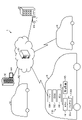
- FIG. 1 is an overall view showing an example of the configuration of an insurance premium determination system according to a first embodiment
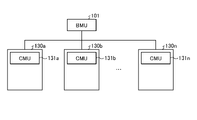
- FIG. FIG. 2 is a diagram illustrating an example of configurations of a BMU, a CMU, and a battery according to the first embodiment
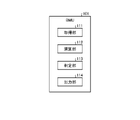
- 3 is a block diagram of an example of a functional configuration of a BMU according to the first embodiment
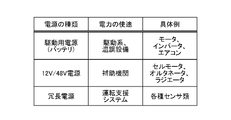
- FIG. 4 is a diagram exemplifying usage of electric power of the battery according to the first embodiment.
- 5 is a block diagram of an example of a functional configuration of the information terminal according to the first embodiment
- FIG. 6 is a diagram exemplifying various types of information collected by the information terminal according to the first embodiment
- FIG. 7 is a block diagram illustrating an example of a functional configuration of a server device according to the first embodiment
- FIG. 8 is a diagram illustrating an example of a reference map used by the server device according to the first embodiment to generate a power consumption map
- FIG. 9 is a diagram exemplifying a power consumption map generated by the server device according to the first embodiment
- FIG. 10 is a diagram exemplifying a power consumption map generated by the server device according to the first embodiment
- FIG. 11 is a diagram illustrating an example in which the server device according to the first embodiment calculates a predicted value of power consumption based on the power consumption map
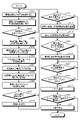
- FIG. 12 is a flowchart illustrating an example of a procedure of insurance premium determination processing by the server device according to the first embodiment
- FIG. 13 is a diagram illustrating an example of a reference map used by the server device according to the modification of the first embodiment to generate a power consumption map;
- FIG. 14 is an overall diagram showing an example of the configuration of the insurance premium determination system according to the second embodiment.
- 15 is a block diagram of an example of a functional configuration of a server device according to a second embodiment;
- FIG. 16 is a flowchart illustrating an example of a procedure of insurance premium determination processing by the server device according to the second embodiment;
- Embodiment 1 will be described with reference to the drawings.
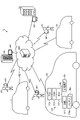
- FIG. 1 is an overall diagram showing an example of the configuration of an insurance premium determination system 1 according to the first embodiment.
- the insurance premium determination system 1 includes a vehicle control system 110 mounted on a vehicle 10, a server device 20 placed on the cloud, an information terminal 301 of an insurance company 30, and an information terminal 501 of a delivery company 50. Prepare.
- the vehicles 10 as a plurality of moving bodies are vehicles subject to a contract such as vehicle insurance, such as being owned by a delivery company 50 that is an insured person who joins the insurance company 30, for example.
- vehicle insurance such as being owned by a delivery company 50 that is an insured person who joins the insurance company 30, for example.
- the mobile body may be an electric two-wheeled vehicle or the like.
- Insurance company 30 sets premiums for these vehicles 10 .
- Each of the vehicles 10 is equipped with a vehicle control system 110 connected to the server device 20 via a network.
- the vehicle 10 is an electric vehicle (EV) that is driven using the power of the battery 130 .
- the vehicle 10 may be a hybrid vehicle (HV) or the like that uses the power of the battery 130 and the power of an internal combustion engine or the like.
- HV hybrid vehicle
- the vehicle 10 is, for example, a vehicle driven by a driver who is an employee of the delivery company 50.
- the vehicle 10 may be capable of automatic driving.
- the vehicle 10 may be an automatic driving vehicle that does not involve human intervention, such as being operated by a robot or the like.
- the vehicle control system 110 includes a TCU (Telematics Control Unit) 104, a CGW (Central Gateway) 103, an ECU (Electronic Control Unit) 102, a BMU (Battery Management Unit) 101, a plurality of batteries (batteries) 130a to 130n, and a charging device 105. Prepare.
- TCU Transmission Control Unit
- CGW Central Gateway
- ECU Electronic Control Unit
- BMU Battery Management Unit
- the in-vehicle network 120 is, for example, a CAN (Controller Area Network).
- CAN Controller Area Network
- all components may be connected to one in-vehicle network 120, or may be divided and connected to multiple channels of in-vehicle networks.
- Each of the batteries 130a to 130n supplies electric power for driving the vehicle 10.
- the individual batteries 130a-130n may be simply referred to as the battery 130.
- Battery 130 is a rechargeable secondary battery, such as a lithium ion battery.
- the type of battery 130 is not particularly limited, and may be, for example, a nickel metal hydride battery.
- the charging device 106 charges the battery 130 with power supplied from outside the vehicle 10 or regenerated power, for example.
- the BMU 101 as a second information generator collects various data indicating the state of the battery 130, analyzes the state of the battery 130 from the various data obtained, and transmits the analysis result to the ECU 102 via the in-vehicle network 120. do.
- the BMU 101 is also called a BMS (Battery Management System).
- the battery information collected by the BMU 101 includes various measured values such as voltage, current, temperature, and internal resistance of the battery 130 .
- the BMU 101 calculates the state of deterioration (SOH: State Of Health), the state of charge (SOC: State Of Charge), etc. of the battery from various measured values.
- the SOH is the percentage of the current full charge capacity (Ah) to the initial full charge capacity (Ah). The closer the SOH value is to 100%, the lower the degree of deterioration.
- the SOC is the percentage of the remaining capacity (Ah) to the full charge capacity (Ah).
- the ideal state of use of the battery 130 is that the SOC value is around 50%, which is the median value.
- the BMU 101 may not only collect information from the battery 130 and perform calculations, but may also collect battery-related information from the outside and calculate battery-related information based on the information collected from the outside.
- the ECU 102 is a VCU (Vehicle Control Unit) that controls the vehicle 10 as a whole. ECU 102 transmits battery information such as SOH and SOC acquired from BMU 101 to server device 20 via CGW 103 and TCU 104 .
- VCU Vehicle Control Unit
- the TCU 104 has a function of performing wireless communication with an external device, and performs wireless communication with the server device 20, for example.
- the CGW 103 relays data communication between the ECU 102 and the outside.
- the information terminal 501 manages the vehicle 10 owned by the delivery company 50.
- the information terminal 501 is a PC (Personal Computer) installed at the delivery company 50, a tablet terminal, or the like.
- the information terminal 501 determines a delivery route for each vehicle 10 based on delivery information and the like.
- the information terminal 501 also collects travel history information about the travel history of the vehicle 10 traveling on the delivery route.
- Information terminal 501 is connected to server device 20 wirelessly or by wire, and transmits collected travel history information to server device 20 .
- the server device 20 as an information processing device is owned by, for example, a service provider that provides insurance premium calculation services to the insurance company 30 .
- the server device 20 may be configured by, for example, one server device, or may be configured by a plurality of server devices connected to the Internet.
- the server device 20 receives battery information regarding the battery 130 transmitted from each vehicle 10 .
- the server device 20 also receives travel history information about each vehicle 10 transmitted from the information terminal 501 .
- the server device 20 has a function of determining insurance premiums set for individual vehicles 10 based on the information. Further, the server device 20 transmits the determined insurance premium information to the information terminal 301 of the insurance company 30 .
- the insurance company 30 receives an insurance premium calculation service from the service provider.
- the information terminal 301 is a PC, a tablet terminal, or the like installed at the insurance company 30 .
- Information terminal 301 is wirelessly or wiredly connected to server device 20 and receives from server device 20 insurance premium information determined by server device 20 .
- FIG. 2 is a diagram showing an example of the configuration of the BMU 101, CMUs 131a-131n, and batteries 130a-130n according to the first embodiment.
- CMUs Cell Monitoring Units
- 131a to 131n are provided one-to-one for each of the batteries 130a to 130n.
- the CMU 131 may be simply referred to when the individual CMUs 131a to 131n are not distinguished.
- the CMU 131 includes various sensors such as a current sensor, voltage sensor, and temperature sensor that measure the state of the battery 130 . These sensors may be provided outside the CMU 131, and the CMU 131 may acquire measurement values from these sensors.
- the batteries 130 are connected in parallel, for example.
- BMU 101 acquires the various data described above from individual batteries 130 connected in parallel.
- FIG. 3 is a block diagram showing an example of the functional configuration of the BMU 101 according to the first embodiment.
- the BMU 101 includes an acquisition section 111, a calculation section 112, a determination section 113 and an output section 114.
- FIG. 3 is a block diagram showing an example of the functional configuration of the BMU 101 according to the first embodiment.
- the BMU 101 includes an acquisition section 111, a calculation section 112, a determination section 113 and an output section 114.
- the acquisition unit 111, the calculation unit 112, the determination unit 113, and the output unit 114 are provided by being stored in the memory of the BMU 101 as a computer-executable program.
- the processor of the BMU 101 implements functions corresponding to the above units by reading and executing programs from the memory.
- Programs executed by the BMU 101 are stored in computer-readable recording media such as CD-ROMs, flexible disks (FDs), CD-Rs, DVDs (Digital Versatile Disks), etc., in installable or executable formats. It may be configured to be recorded and provided.
- computer-readable recording media such as CD-ROMs, flexible disks (FDs), CD-Rs, DVDs (Digital Versatile Disks), etc.
- the program executed by the BMU 101 may be stored on a computer connected to a network such as the Internet, and provided by being downloaded via the network.
- the program to be executed by the BMU 101 may be configured to be executed via a network such as the Internet without being downloaded and installed in the BMU 101 .
- the functions of the acquisition unit 111, the calculation unit 112, the determination unit 113, and the output unit 114 may be realized by a dedicated hardware circuit.
- the acquisition unit 111 acquires measured values such as voltage, current, and temperature of the battery 130 from the CMU 131 based on predetermined collection conditions.
- the collection condition is determined by the determination unit 113, for example, and includes the collection period for collecting data, the type of data to be collected, and the like.
- Acquisition unit 111 sends the acquired measurement values to calculation unit 112 , determination unit 113 and output unit 114 .
- the calculation unit 112 calculates calculation values representing the characteristics of the battery 130 based on the measured values acquired by the acquisition unit 111 . As an example, the calculation unit 112 calculates the SOH, SOC, and power consumption of each battery 130 . The calculation unit 112 outputs the calculated SOH, SOC, power consumption, etc. to the determination unit 113 and the output unit 114 .
- the determination unit 113 determines the deterioration state of the battery 130 from the SOH value calculated by the calculation unit 112, and sets the collection condition according to the deterioration state. At this time, the determination unit 113 may determine the presence or absence of deterioration based on the average value or median value of the SOH of the plurality of batteries 130, or based on the worst SOH value of the plurality of batteries 130. You may determine the presence or absence of
- the determination unit 113 determines the state of deterioration of the battery 130 based on these values, and sets the collection cycle defined in the collection conditions to be shorter and the data to be collected more frequently as the deterioration increases. . Further, the determination unit 113 may be set to increase the number of types of data defined in the collection condition as the deterioration increases.
- the contents of the latest collection conditions are stored in the memory of the BMU 101, for example, by the determination unit 113.
- the acquisition unit 111 and the calculation unit 112 read the latest collection conditions from the memory and execute processing according to the read collection conditions.
- the output unit 114 outputs the calculated battery information acquired by the acquisition unit 111 , the calculation unit 112 and the determination unit 113 to the ECU 102 via the in-vehicle network 120 .
- the ECU 102 transmits the battery information acquired from the BMU 101 to the server device 20 via the TCU 104 and CGW 103 .
- the battery information is sent to the server device 20 with a vehicle ID that uniquely identifies the vehicle 10 for which the battery information was generated and a battery information ID that uniquely identifies the timing at which the battery information was generated. be.
- the battery information transmitted to the server device 20 includes information indicating the usage environment such as the operating temperature of the battery 130 acquired by the acquisition unit 111, the SOH, SOC, and power calculated by the calculation unit 112. Information on the amount of consumption, information indicating the state of deterioration of the battery 130 determined by the determination unit 113, and the like are included.
- the power consumption described above is calculated by the calculation unit 112, for example, periodically or repeatedly at a predetermined timing.
- the calculation unit 112 may further calculate a power consumption rate (Wh/km) from the power consumption. Further, the calculation unit 112 may calculate the power consumption amount, the power consumption rate, or the like for each use.
- FIG. 4 shows an example of where power is used.
- FIG. 4 is a diagram exemplifying how the power of the battery 130 according to the first embodiment is used.
- the vehicle 10 has three types of power sources, for example, a drive power source configured by a battery 130, a 12V/48V power source, and a redundant power source.
- a drive power source configured by a battery 130
- a 12V/48V power source configured by a battery 130
- a redundant power source for example, power from the driving power supply is distributed to the 12V/48V power supply and the redundant power supply.
- the drive power source (battery 130) is used, for example, in drive systems and temperature control equipment. Specifically, the driving power supply supplies electric power to a motor, an inverter, an air conditioner, and the like to operate them.
- the 12V/48V power supply is used, for example, as an auxiliary engine. Specifically, the 12V/48V power supply powers and operates the starter motor, alternator, radiator, and the like.
- the use of the redundant power supply includes, for example, driving support systems such as automatic driving. Specifically, the redundant power supply supplies power to various sensors and the like related to the driving support system to operate them.
- the battery information transmitted from the ECU 102 to the server device 20 via the TCU 104 and the CGW 103 includes a predetermined delivery route for each power source such as the battery 130, which is a driving power source, 12V/48V power source, and redundant power source. power consumption at a predetermined timing in the vehicle 10 that is running. At this time, the battery information may include a power consumption rate instead of or in addition to the power consumption.
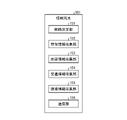
- FIG. 5 is a block diagram showing an example of the functional configuration of the information terminal 501 according to the first embodiment.
- the information terminal 501 includes a route determination unit 151, a characteristic information collection unit 152, a map information collection unit 153, a traffic information collection unit 154, an environment information collection unit 155, and a transmission unit 156.
- the information terminal 501 is, for example, a computer equipped with a microcomputer (Microcontroller).
- the microcomputer includes a processor, RAM (Random Access Memory), ROM (Read Only Memory), and the like.
- a microcomputer that constitutes the information terminal 501 may include an input/output circuit, a storage device, and the like.
- the processor reads out and executes a program stored in a ROM or the like, thereby realizing the functions corresponding to the above units.
- the program executed by the information terminal 501 is recorded in a computer-readable recording medium such as a CD-ROM, a flexible disk, a CD-R, or a DVD in an installable or executable format and provided. may be configured to
- the program executed by the information terminal 501 may be stored on a computer connected to a network such as the Internet, and provided by being downloaded via the network.
- the program to be executed on the information terminal 501 may be configured to be executed via a network such as the Internet without being downloaded and installed on the information terminal 501 .
- the route determination unit 151 the characteristic information collection unit 152, the map information collection unit 153, the traffic information collection unit 154, the environment information collection unit 155, and the transmission unit 156 are realized by dedicated hardware circuits. may be
- the route determination unit 151 determines the delivery route for the vehicle 10 based on the information on delivery and collection.
- the delivery information includes, for example, the address of the delivery destination, the desired delivery time, the number of items to be delivered, the size and weight, and the like.
- the pickup information includes, for example, the address of the pickup destination, the desired pickup time, the number, size, weight, and the like of the pickup. Based on these pieces of information, the route determination unit 151 determines an appropriate delivery route by computation.
- a proper delivery route is, for example, a route that allows delivery and pickup in a shorter time and a shorter distance.
- the characteristic information collection unit 152 collects various characteristic information about the vehicle 10 from the vehicle 10 traveling on the delivery route determined by the route determination unit 151. Collect information.
- the map information collection unit 153 acquires map information including the delivery route determined by the route determination unit 151, for example, from the Internet, and is information related to running of the vehicle 10, such as power consumption of the battery 130 of the vehicle 10. Collect information that affects
- the traffic information collection unit 154 acquires traffic information on the delivery route determined by the route determination unit 151, for example, from the Internet, and is information related to travel of the vehicle 10, such as power consumption in the battery 130 of the vehicle 10. Gather influencer information.
- the environment information collection unit 155 acquires environmental information on the delivery route determined by the route determination unit 151, for example, from the Internet, and is information related to traveling of the vehicle 10, such as power consumption in the battery 130 of the vehicle 10. Gather influencer information.
- the transmission unit 156 transmits map information, traffic information, and environmental information to the server device 20 as travel history information related to the travel history of the vehicle 10 .
- the travel history information may include information about the delivery route determined by the route determination unit 151 and actually traveled by the vehicle 10 .
- the transmission unit 156 has a vehicle ID capable of uniquely identifying the vehicle 10 for which the travel history information was generated and a timing at which the travel history information was generated.
- a travel history information ID is attached to the travel history information.
- FIG. 6 is a diagram exemplifying various types of information collected by the information terminal 501 according to the first embodiment.
- the characteristic information collected by the characteristic information collection unit 152 includes, for example, the vehicle body weight of the vehicle 10, the motor output, the load weight, and information such as the driver of the vehicle 10 at that time. These affect the power consumption of the battery 130 of the vehicle 10 traveling on the delivery route.
- the map information collected by the map information collecting unit 153 includes, for example, the distance of the delivery route, the number of traffic lights installed on the delivery route, the number of temporary stop points, the difference in elevation within the delivery route, and the number of vehicles on the delivery route. This includes information such as the area in which 10 will travel. These affect the power consumption of the battery 130 of the vehicle 10 traveling on the delivery route.
- the traffic information collected by the traffic information collection unit 154 includes, for example, information such as the speed limit according to the degree of congestion and traffic conditions of the delivery route when the vehicle 10 is traveling. These pieces of information may be classified and collected by season, day of the week, or time period. Such information may be collectable from, for example, a vehicle information and communication system (VICS (registered trademark)) or the like. These congestion degree, speed limit, etc. affect the power consumption of the battery 130 of the vehicle 10 traveling on the delivery route.
- VICS vehicle information and communication system
- the environmental information collected by the environmental information collection unit 155 includes, for example, the weather, temperature, and wind speed of the delivery route when the vehicle 10 is traveling. These affect the power consumption of the battery 130 of the vehicle 10 traveling on the delivery route.
- the characteristic information collection unit 152, the map information collection unit 153, the traffic information collection unit 154, and the environment information collection unit 155 described above are examples of a first information generation unit that generates travel history information.
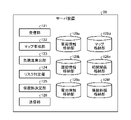
- FIG. 7 is a block diagram showing an example of the functional configuration of the server device 20 according to the first embodiment.
- the server device 20 includes a receiver 121, a map generator 122, a risk calculator 123, a risk determiner 124, an insurance premium determiner 125, a transmitter 126, a vehicle information storage 129a, history information It includes a storage unit 129b, a battery information storage unit 129c, a map storage unit 129d, a correlation storage unit 129e, and an insurance premium amount storage unit 129f.
- the server device 20 is, for example, a computer equipped with a microcomputer.
- the microcomputer includes a processor, RAM, ROM, and the like.
- a microcomputer that constitutes the server device 20 may include an input/output circuit, a storage device, and the like.
- the processor reads out and executes a program stored in a ROM or the like, thereby realizing the functions corresponding to the above units.
- the program executed by the server device 20 is recorded in a computer-readable recording medium such as a CD-ROM, a flexible disk, a CD-R, or a DVD as an installable or executable file.
- a computer-readable recording medium such as a CD-ROM, a flexible disk, a CD-R, or a DVD as an installable or executable file.
- the program executed by the server device 20 may be stored on a computer connected to a network such as the Internet, and provided by being downloaded via the network.
- the program to be executed by the server device 20 may be configured to be executed via a network such as the Internet without being downloaded and installed on the server device 20 .
- the receiving unit 121 receives vehicle information from the information terminal 301 of the insurance company 30 .
- the vehicle information is generated by, for example, the information terminal 301 of the insurance company 30 for each of the vehicles 10 owned by the delivery company 50, attached with the vehicle ID, and transmitted to the server device 20.
- the vehicle information includes vehicle type, year, lot number and type of the battery 130 installed in the vehicle, and insurance premium amount, type, grade and discount service currently applied to the vehicle. Contains information.
- the receiving unit 121 stores the vehicle information received from the information terminal 301 of the insurance company 30 in the vehicle information storage unit 129a.
- the receiving unit 121 receives travel history information related to the travel history of the vehicle 10 on the delivery route collected and transmitted by the information terminal 501 owned by the delivery company 50, for example.
- the receiving unit 121 stores the received travel history information in the history information storage unit 129b.
- the receiving unit 121 also receives battery information about the battery 130 collected by the BMU 101 of the vehicle control system 110 mounted on the vehicle 10 and transmitted from the ECU 102 via the TCU 104 and CGW 103 .
- the receiving unit 121 stores the received battery information in the battery information storage unit 129c.
- the vehicle information received from the information terminal 301 of the insurance company 30 is stored in the vehicle information storage unit 129a in association with the vehicle ID.
- the history information storage unit 129b stores the travel history information transmitted from the information terminal 501 of the delivery company 50, which is the customer of the insurance company 30, in association with the vehicle ID and the travel history information ID.
- battery information transmitted from each vehicle 10 owned by an insured person who is a customer of the insurance company 30 is stored in association with the vehicle ID.
- the map generator 122 creates a power consumption map for the vehicle 10 for which the insurance premium is to be determined, based on the travel history information and battery information of the vehicle 10 .
- the map generation unit 122 selects the vehicle 10 for which the insurance premium is to be set, out of the plurality of vehicle information stored in the vehicle information storage unit 129a. to acquire vehicle information that matches the vehicle ID of . Based on the acquired vehicle information, the map generation unit 122 selects the vehicle ID matching the vehicle ID of the vehicle 10 for which the insurance premium is to be set, from among the plurality of pieces of travel history information stored in the history information storage unit 129b. Acquire the driving history information to be used. Further, based on the acquired vehicle information, the map generation unit 122 matches the vehicle ID of the vehicle 10 for which the insurance premium is to be set, out of the plurality of pieces of battery information stored in the battery information storage unit 129c. Get battery information.
- the map generator 122 collates the travel history information ID attached to the travel history information with the battery information ID attached to the battery information, and maps the vehicle 10 traveling on the predetermined delivery route to the same area of the delivery route. , the driving history information and the battery information acquired at the same timing are associated with each other. As a result, a power consumption map is generated in which the power consumption of the vehicle 10 in a predetermined driving condition is associated with each section of the delivery route.
- the map generating unit 122 attaches the power consumption map created for each area of the delivery route with the vehicle ID of the target vehicle 10 and the history type ID indicating the associated travel history information among the travel history information. and store it in the map storage unit 129d.
- the power consumption map created for each area of the delivery route is stored in the map storage unit 129d. is stored in association with a history type ID indicating the type of
- the risk calculation unit 123 acquires at least one power consumption map that matches the vehicle ID of the vehicle 10 for which the insurance premium is set from the map storage unit 129d. In addition, the risk calculation unit 123 calculates the arrival probability indicating the probability that the target vehicle 10 can reach the predetermined destination based on the acquired power consumption map. Further, the risk calculation unit 123 calculates the risk based on the calculated arrival probability.
- the degree of risk is an index of the risk that the charge amount of the battery 130 mounted on the vehicle 10 will fall below a predetermined amount while the vehicle 10 is running. It is specified to show a good correlation with the probability of being less than the value. Various methods such as using statistical techniques and using simulation values can be used for such risk indexing.
- the degree-of-risk calculation unit 123 may vary the degree-of-risk calculation method according to the vehicle type and year included in the vehicle information of the vehicle 10 for which the insurance premium is set.
- the correlation storage unit 129e stores in advance the correlation between the degree of risk and the possibility of power outage.
- the possibility of power shortage is the possibility that the charge amount of the battery 130 mounted on the predetermined vehicle 10 becomes less than a predetermined amount while the vehicle 10 is running, that is, the power shortage occurs while the predetermined vehicle 10 is running. It is possible.
- the above correlation is calculated by, for example, a statistical method or a method using simulation values.
- the risk determination unit 124 applies the degree of risk calculated by the degree of risk calculation unit 123 to the correlation between the degree of risk and the possibility of power failure prestored in the correlation storage unit 129e, and determines the target vehicle 10. Estimate the possibility of electrical failure of Also, the risk determination unit 124 determines the risk of power shortage in the vehicle 10 from the estimation result of the possibility of power shortage.
- the correlation storage unit 129e may store a plurality of correlations according to vehicle type, year, etc.
- the risk determination unit 124 is included in the vehicle information stored in the vehicle information storage unit 129a.
- the risk of power outage may be determined using the correlation corresponding to the vehicle type, year, and the like.
- the insurance premium determination unit 125 refers to the insurance amount table stored in the insurance premium amount storage unit 129f, and considers the grade as an insured person of the delivery company 50 that owns the vehicle 10, and the risk determination unit 124.
- the insurance premium to be set for the vehicle 10 is determined based on the determination result of .
- the grade of the delivery company 50 which is the insured person, may be set based on the accident history, violation history, etc. of the delivery company 50 as usual.
- the insurance premium determination unit 125 sets a higher insurance premium as the risk of electrical shortage calculated by the risk determination unit 124 is higher, and sets a lower insurance premium as the risk of electrical shortage calculated by the risk determination unit 124 is lower. do.
- the insurance premium determination unit 125 may, for example, discount insurance premiums according to the electrical shortage risk calculated by the risk determination unit 124. In this case, for example, based on the history of the electric shortage risk of the target vehicle 10, if the electric shortage risk is stably equal to or less than a predetermined value, a discount can be given at a predetermined interest rate. Alternatively, if the target vehicle 10 has not experienced a power failure for a predetermined period or more based on the past record of power failure of the target vehicle 10, the discount is given at an interest rate according to the length of the period. can be
- the insurance premium amount storage unit 129f stores a plurality of insurance premium amount tables according to vehicle type, year, and the like.
- each insurance premium amount table an insurance premium amount corresponding to the class of the insured person including the delivery company 50 and the risk of the vehicle 10 is set.
- the timing at which the premium is determined by the server device 20 includes, for example, the time of new enrollment, as well as a predetermined number of days or a predetermined number of months before the renewal date, based on the renewal date.
- the transmission unit 126 attaches the vehicle ID to the insurance premium information determined by the insurance premium determination unit 125 and transmits the information to the information terminal 301 of the insurance company 30 .
- the insurance company 30 can receive the service of providing insurance premiums to be set for the vehicle 10 of the delivery company 50 corresponding to the vehicle ID.
- FIG. 8 is a diagram showing an example of the reference map MP used by the server device 20 according to the first embodiment to generate the power consumption map.
- the map generation unit 122 of the server device 20 generates the map information including the delivery route RT of the vehicle 10 based on the map information collected by the information terminal 501 of the delivery company 50 into a plurality of mesh-like map information.
- a reference map MP divided into areas A1 to A30 is generated.
- the number of areas divided by the map generator 122 in the reference map MP is arbitrary.
- the amount of data required to generate a power consumption map, which will be described later, and the accuracy of the power consumption map can be varied depending on what kind of configuration the areas are set in, what kind of arrangement, and to what degree of detail.
- the map generation unit 122 reads the travel history information related to the target vehicle 10 from the travel history information collected by the information terminal 501 of the delivery company 50 and stored in the history information storage unit 129b. In addition, the map generation unit 122 reads the power consumption information among the battery information generated by the target vehicle 10 and stored in the battery information storage unit 129c.
- the map generator 122 collates the travel history information ID attached to the travel history information with the battery information ID attached to the battery information, and generates the travel history information and the electric power for each of the zones A1 to A30 of the reference map MP. Map consumption.
- the map generating unit 122 generates, for each type of travel history information, that is, characteristic information indicating the characteristics of the vehicle 10, map information including information about the travel area of the vehicle 10, and traffic conditions indicating the traffic conditions when the vehicle 10 is traveling.
- characteristic information indicating the characteristics of the vehicle 10
- map information including information about the travel area of the vehicle 10
- traffic conditions indicating the traffic conditions when the vehicle 10 is traveling.
- Each piece of information and environmental information indicating the environment when the vehicle 10 is running is associated with the zones A1 to A30 of the reference map MP.
- a power consumption map is obtained that shows the power consumption when the vehicle 10 travels in a predetermined area under various circumstances.
- 9 and 10 show examples of the power consumption maps MPc, MPm, MPt.
- FIGS. 9 and 10 are diagrams exemplifying power consumption maps MPc, MPm, and MPt generated by the server device 20 according to the first embodiment.
- areas with high power consumption are indicated by hatching.
- FIG. 9(a) exemplifies a power consumption map MPc in which the characteristic information of the travel history information is associated with the power consumption of the battery information.
- the area A22 of the power consumption map MPc includes a delivery point CP, which is the starting point for delivery.
- the loading weight of the vehicle 10 tends to be large and the power consumption tends to be high due to the influence of the delivered items.
- the characteristic information including the load weight information for example, in the area A22 where the delivery point CP is located and the areas A17, A16, and A11 near the starting point of the delivery route RT, the power consumption is reduced.
- a power consumption map MPc indicating high is generated.
- FIG. 9(b) illustrates a power consumption map MPm in which the map information in the travel history information is associated with the power consumption in the battery information.
- a power consumption map MPm is generated that indicates that power consumption is high in, for example, undulating areas A1 to A4 by associating the map information including the information on the difference in elevation.
- FIG. 10 illustrates a power consumption map MPt in which the traffic information in the travel history information is associated with the power consumption in the battery information.
- the traffic information includes information such as the degree of congestion, which may change depending on the season, day of the week, or time period. Therefore, as shown in FIG. 10, a plurality of power consumption maps MPt may be generated for each season, each day of the week, or each time period, for example.
- FIG. 10(a) exemplifies a power consumption map MPtm in which traffic information for the morning time zone is associated with the power consumption amount of battery information.
- a power consumption map MPtm is generated.
- FIG. 10(b) illustrates a power consumption map MPtd in which daytime traffic information is associated with power consumption in battery information.
- the traffic congestion in the commercial district centering on the area A20 is almost eliminated during the daytime hours, and the power consumption of the vehicles 10 traveling there is also moderated.
- the traffic information including information on the degree of congestion during the daytime for example, the power consumption in the commercial district becomes moderate, and the area A20 that is narrower than the power consumption map MPtm for the morning time zone. , A25, a power consumption map MPtd indicating that the power consumption is high is generated.
- the power consumption maps MPc, MPm, MPt, etc. are generated by partitioning the reference map MP into predetermined areas in a mesh pattern, and correlating the power consumption amount of the driving history information and the battery information to each area.
- the method is sometimes called a mesh method. If the battery information includes power consumption rate information, a power consumption map may be created by associating the power consumption rate with the reference map MP instead of the power consumption amount.
- the risk calculation unit 123 of the server device 20 uses at least one of the power consumption maps generated by the map generation unit 122 to calculate the predicted power consumption of the target vehicle 10 .
- FIG. 11 is a diagram showing an example in which the server device 20 according to the first embodiment calculates a predicted value of power consumption based on the power consumption maps MPc, MPm, MPt, and MPe.
- the power consumption map MPe is a power consumption map associated with environmental information.
- the risk calculation unit 123 of the server device 20 selects one or more power consumption maps to be used for calculating the predicted value of power consumption.
- the degree-of-risk calculation unit 123 varies the power consumption map to be selected for each delivery company 50 or each vehicle 10, for example.
- the target vehicle 10 is a vehicle owned by a new delivery company 50 and the storage of the travel history information and battery information for the vehicle 10 is not sufficient, a relatively small amount of information can be used. It is possible to select power consumption maps MPc and MPm in which characteristic information and map information are associated with high accuracy.
- the power consumption of the vehicle 10 is selected from various power consumption maps MPc, MPm, MPt, and MPe regarding the vehicle 10.
- a power consumption map can be selected that determines the
- the power consumption maps MPc, MPm, MPt, and MPe may be combined with the topographical information.
- the associated power consumption map MPm, the power consumption map MPt associated with the congestion degree information, and the power consumption map MPe associated with the weather information mainly determine the power consumption of the vehicle 10. It can be said that there is Therefore, the risk calculation unit 123 can select the power consumption maps MPm, MPt, and MPe.
- the risk calculation unit 123 calculates the predicted value of the power consumption of the target vehicle 10 based on one or more power consumption maps selected in this way.
- the predicted value of the power consumption at this time is, for example, a predetermined value obtained by averaging various situations in which the vehicle 10 travels on a delivery route or the like on a daily basis and travels an average distance. It is a predicted value of the amount of power consumed to reach the destination. Such average conditions, average travel distance, etc. are derived, for example, from the selected power consumption map.
- the predetermined destination may be, for example, a fictitious point reached after driving an average distance derived from the selected power consumption map, or a delivery or pickup destination that the subject vehicle 10 routinely stops at. It may be an existing place such as the destination.
- the degree-of-risk calculation unit 123 appropriately predicts power consumption according to the number of accumulated pieces of driving history information battery information and the proficiency level of machine learning.
- the risk calculation unit 123 further calculates the probability that the target vehicle 10 can reach the predetermined destination with the predicted power consumption.
- the probability of arrival at this time is, for example, under the circumstances averaged as described above, a predetermined destination that is separated by an average distance does not exceed the predicted power consumption, that is, falls into a power outage. is the probability that the target vehicle 10 can reach.
- the above-mentioned probability of arrival also varies depending on the current characteristics of the battery 130 mounted on the vehicle 10, such as the SOH, SOC, full charge capacity, and deterioration state.
- the arrival probability varies depending on the operating environment of the battery 130, such as the temperature of the environment in which the battery 130 is placed.
- the battery information also includes the characteristic values of the battery 130 and information on the usage environment.
- the risk calculation unit 123 may correct the numerical value of the probability of arrival based on these pieces of information included in the battery information.
- the above reach probability may be calculated from the power consumption rate obtained from the power consumption map.
- the risk calculation unit 123 determines the risk that the charge amount of the battery 130 becomes less than a predetermined value while the vehicle 10 is traveling, that is, The degree of risk is calculated by indexing the risk that the vehicle 10 will run out of power under the condition that the vehicle 10 is
- the risk determination unit 124 determines the power outage risk indicating the possibility that the target vehicle 10 will run out of power, based on the degree of risk calculated by the degree of risk calculation unit 123 .
- the insurance premium determination unit 125 determines the insurance premium for the target vehicle 10 based on the power outage risk determined by the risk determination unit 124 .
- the server device 20 can determine insurance premiums for a new delivery company 50 based solely on the type of vehicle, the class of the delivery company 50, and the like.
- the characteristic information relating to the characteristics of the vehicle 10 among the multiple types of travel history information may be quickly collected and reflected in the insurance premium.
- the insurance premium may be determined by borrowing data of vehicles of the same model and the same year owned by other delivery companies of the same business type. Also, simulation data regarding the vehicle 10 of the delivery company 50 may be generated, and the insurance premium may be determined based on this.
- the insurance premium will be determined based on the actually collected travel history information and battery information.
- the delivery company 50 If the delivery company 50 tries to formulate and operate a delivery plan that avoids running out of power while the vehicle 10 is running, the rate of increase in insurance premiums at the time of renewal can be kept low. In this way, the delivery company 50, which is the insured person, can obtain benefits corresponding to such consideration.
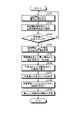
- FIG. 12 is a flow chart showing an example of a procedure of insurance premium determination processing by the server device 20 according to the first embodiment.
- the server device 20 asks about the delivery company 50, which is the customer of the insurance company 30, the type of vehicle 10 owned by the delivery company 50, the year, and the currently applied vehicle 10. It is assumed that vehicle information such as insurance premium amount, type, grade, and discount service has been acquired, and the acquired vehicle information has been stored in the vehicle information storage unit 129a.
- the receiving unit 121 of the server device 20 receives travel history information collected about the running vehicle 10 from the information terminal 501 of the delivery company 50 . Further, the receiving unit 121 receives battery information generated by the BMU 101 from the vehicle control system 110 of the predetermined vehicle 10 (step S101).
- the receiving unit 121 stores the received travel history information and battery information in the history information storage unit 129b and the battery information storage unit 129c, respectively (step S102).
- the reception unit 121 continues the processing of steps S101 and S102 until the premium determination unit 125 determines the premium (step S103: No).
- the map generation unit 122 acquires vehicle information related to the vehicle 10 for which the insurance premium is to be determined from the vehicle information storage unit 129a. Further, according to the acquired vehicle information, the map generation unit 122 acquires the corresponding travel history information and battery information from the history information storage unit 129b and the battery information storage unit 129c (step S104).
- the map generator 122 generates power consumption maps MPc, MPm, MPt, and MPe that associate the acquired travel history information and battery information (step S105).
- the generated power consumption maps MPc, MPm, MPt, MPe are stored in the map storage unit 129d.
- the degree-of-risk calculation unit 123 selects at least one of the generated power consumption maps MPc, MPm, MPt, and MPe to calculate a predicted value of power consumption until the vehicle 10 reaches a predetermined destination, The arrival probability of the vehicle 10 to the predetermined destination is calculated from the predicted value, and the degree of danger is further calculated from the arrival probability (step S106).
- the risk determination unit 124 applies the degree of risk calculated by the degree of risk calculation unit 123 to the correlation stored in the correlation storage unit 129e, and estimates the possibility that the vehicle 10 runs out of power while the vehicle is running. Based on the obtained possibility of power failure, the risk of power failure of the vehicle 10 is determined (step S107).
- the insurance premium determination unit 125 acquires an insurance premium amount table according to the vehicle type and year of the vehicle information on the vehicle 10 for which the insurance premium is to be set from the insurance premium amount storage unit 129f, and determines the grade and risk indicated by the vehicle information. 124 determines the insurance premium (step S108).
- the transmission unit 126 transmits information including the insurance premium determined by the insurance premium determination unit 125 to the information terminal 301 of the insurance company 30 (step S109).
- Electric vehicles such as electric vehicles are often charged with an amount of electric power necessary for running in order to prolong the battery life.
- the amount of electric power consumed during running may fluctuate depending on road conditions, weather, driver's skill, and the like, resulting in an insufficient amount of charge. Insufficient charging may cause delays due to the need to recharge the battery in the middle. It becomes impossible to run. Therefore, there is a demand for a technique for accurately predicting power consumption during running.
- the predicted value of the power consumption is calculated based on the information about the power consumption of the battery 130 mounted on the vehicle 10, and the predetermined destination of the vehicle 10 is determined based on the predicted value.
- a probability of reaching to is calculated, and a degree of danger is calculated by indexing the risk of the vehicle 10 running out of electricity based on the probability of reaching. This makes it possible to accurately calculate the possibility of an electric shortage.
- the risk of power shortage is calculated as an index based on the information about the power consumption of the battery 130 mounted on the vehicle 10, and insurance is provided according to the risk. determine the fee.
- the insurance premium can be appropriately set according to the risk that the vehicle 10 will run out of power during the delivery service.
- the probability of arrival is corrected based on the battery information including the information indicating the characteristics of the battery 130 and the usage environment. As a result, it is possible to properly determine the risk that the vehicle 10 will run out of electricity during the delivery service.
- the risk of power failure is determined based on the correlation between the degree of risk and the possibility of power failure, and the insurance premium is determined based on this determination result.
- the insurance premium is determined based on the degree of risk indexed so as to have a high correlation with the possibility that the vehicle 10 will run out of power while driving, the procedure for determining the insurance premium can be made more versatile. It is possible to determine insurance premiums appropriately.
- the power consumption maps MPc, MPm, MPt, MPe are generated by the mesh method.
- the power consumption map generation method is not limited to the mesh method.
- FIG. 13 shows an example of a power consumption map generation method using the link method as an example of a power consumption map generation method using another method.
- FIG. 13 is a diagram showing an example of the reference map MPk used by the server device according to the modification of the first embodiment to generate the power consumption map.
- the map generating unit of the server device of the modification generates a plurality of points P1 to P16 on the delivery route RT of the vehicle included in the map information based on the map information collected by the information terminal of the delivery company. to generate a reference map MPk.
- the delivery route RT of the reference map MPk is divided into a plurality of links P1-P2, P2-P3, P3-P4, P4-P5 . . . P15-P16, P16-P1.
- the map generating unit of the modified example associates power consumption with each link P1-P2 .
- Links P1-P2 . . . P16-P1 are associated.
- a power consumption map for each type of travel history information is obtained.
- the link method When the link method is used to generate the power consumption map, the amount of data required to generate the power consumption map is larger than that of the mesh method, but it enables more precise data analysis.
- a power consumption map can be generated with a small number of data, so that information can be collected in a shorter period of time to set insurance premiums that reflect the risk of electrical failure of the vehicle 10 and the like.
- Embodiment 2 will be described with reference to the drawings.
- the server device of the second embodiment differs from the above-described first embodiment in that information regarding the handling of the battery by the driver is also reflected in the insurance premium.
- FIG. 14 is an overall diagram showing an example of the configuration of the insurance premium determination system 2 according to the second embodiment.
- the vehicle control system 110 mounted on the vehicle 10
- the information terminal 321 of the insurance company 30 the information terminal 401 of the driver 40
- the information terminal 501 of the delivery company 50 the server placed on the cloud.
- a device 220 is provided.
- Vehicle control system 110 communicates with server device 220 via a wireless or wired network.
- the information terminal 501 of the delivery company 50 has the same configuration as in the first embodiment described above.
- Information terminal 501 communicates with server device 220 via a wireless or wired network.
- the information terminal 401 of the driver 40 who is an employee of the delivery company 50 is, for example, a smart phone, a mobile phone, a tablet, a PC, or the like.
- Information terminal 401 is connected to server device 220 via a wireless or wired network, and can access information about battery 130 stored in server device 220 .
- the server device 220 as an information processing device receives battery information regarding the battery 130 transmitted from each vehicle 10 and travel history information regarding the vehicle 10 transmitted from the information terminal 501 of the delivery company 50, and stores the information. It has a function of determining the insurance premium set for each vehicle 10 based on. At this time, server device 220 also refers to information regarding handling of battery 130 by driver 40 . In addition, the server device 220 transmits the determined insurance premium information to the information terminal 321 of the insurance company 30 .
- the server device 220 acquires information to be presented to at least one of the delivery company 50 and the specific driver 40 from the information terminal 321 of the insurance company 30, for example. In addition, the server device 220 presents the acquired information to the delivery company 50 or the driver 40 to be presented.
- the information terminal 321 owned by the insurance company 30 is connected to the server device 220 wirelessly or by wire, and receives information on insurance premiums determined by the server device 220 from the server device 220 .
- the information terminal 321 also generates information to be presented to at least one of the delivery company 50 and the specific driver 40 and transmits the information to the server device 220 .
- FIG. 15 is a block diagram showing an example of the functional configuration of the server device 220 according to the second embodiment.
- the server device 220 includes a receiving unit 221, a map generating unit 222, a risk calculating unit 223, a risk determining unit 224, a handling determining unit 227, an insurance premium determining unit 225, a transmitting unit 226, and an information presenting unit. 228, a vehicle information storage unit 229a, a history information storage unit 229b, a battery information storage unit 229c, a map storage unit 229d, a correlation storage unit 229e, an insurance premium amount storage unit 229f, and a presentation information storage unit 229g.
- the server device 220 is, for example, a computer equipped with a microcomputer including a processor, RAM, and ROM.
- a microcomputer may include an input/output circuit, a storage device, and the like.
- the processor reads out and executes a program stored in a ROM or the like, thereby realizing the functions corresponding to the above units.
- the program executed by the server device 220 is recorded in a computer-readable recording medium such as a CD-ROM, a flexible disk, a CD-R, or a DVD as an installable or executable file. may be configured to
- the program executed by the server device 220 may be stored on a computer connected to a network such as the Internet, and downloaded or executed via the network.
- the receiving unit 221 receives the vehicle information from the information terminal 321 of the insurance company 30, receives the travel history information of the vehicle 10 from the information terminal 501 of the delivery company 50, and receives the travel history information of the vehicle 10 from the information terminal 501 of the delivery company 50. It receives battery information about the battery 130 collected by the BMU 101 of the vehicle control system 110 .
- the receiving unit 221 stores the received vehicle information, travel history information, and battery information in the vehicle information storage unit 229a, the history information storage unit 229b, and the battery information storage unit 229c, respectively.
- an insured person ID that can uniquely identify the delivery company 50 is attached to the travel history information.
- the battery information is attached with a driver ID as identification information that can uniquely identify the driver 40 of the delivery company 50 .
- the receiving unit 221 receives information presented to the delivery company 50 from the information terminal 321 of the insurance company 30 .
- the information terminal 321 of the insurance company 30 attaches the above-mentioned insured person ID that can uniquely identify the delivery company 50 to information desired to be presented to the delivery company 50 and transmits the information to the server device 220 .
- the receiving unit 221 receives information presented to a specific driver 40 such as an employee of the delivery company 50 from the information terminal 321 of the insurance company 30 .
- the information terminal 321 of the insurance company 30 attaches the above-described driver ID capable of uniquely identifying the driver 40 to information desired to be presented to the specific driver 40 and transmits the information to the server device 220 .
- the reception unit 221 stores the presentation information received from the information terminal 321 of the insurance company 30 in the presentation information storage unit 229g.
- the presentation information intended to be presented to the delivery company 50 or the driver 40 who is the employee of the delivery company 50 is the information of the delivery company 50 which is the customer of the insurance company 30 or the driver 40 who is the employee of the delivery company 50.
- Each of them is generated by, for example, the information terminal 321 of the insurance company 30 , attached with an insured person ID or a driver ID, and transmitted to the server device 220 .
- the presentation information addressed to the delivery company 50 includes information such as a password for permitting access to the server device 220 from the information terminal 501 of the delivery company 50 or the like. Further, when information to be presented to the delivery company 50 is newly transmitted from the information terminal 321 of the insurance company 30 or the like, the information is added to the stored presentation information.
- the presentation information addressed to a specific driver includes information such as a password for permitting access to the server device 220 from the information terminal 401 of the driver 40 . Further, when information to be presented to a specific driver 40 is newly transmitted from the information terminal 321 of the insurance company 30 or the like, the information is added to the stored presentation information.
- the map generation unit 222, the risk calculation unit 223, the risk determination unit 224, the map storage unit 229d, and the correlation storage unit 229e are similar to the map generation unit 122, the risk calculation unit 123, and the risk determination unit 124 of the first embodiment. , map storage unit 129d, and correlation storage unit 129e.
- the handling determination unit 227 acquires travel history information that matches the insured person ID to be determined from multiple pieces of travel history information stored in the history information storage unit 229b. The handling determination unit 227 also extracts information that determines the degree of risk from the acquired travel history information, and determines whether the handling of the battery 130 by the delivery company 50 is appropriate.
- the handling determination unit 227 extracts, for example, the method of formulating the delivery plan, the relationship between the delivery route and the amount of charge in advance, and the like. For example, if the delivery plan is formulated within the capacity of the battery 130, or if the battery is charged with an appropriate amount of charge before traveling on the delivery route, the risk is low for the delivery company 50. can be said to be trending.
- the handling determination unit 227 determines whether the delivery company 50 is committed to avoiding power loss while the vehicle 10 is traveling, or determines whether the battery 130 is used in such a way as to increase the risk of power failure. It is determined whether or not handling has been performed.
- the handling determination unit 227 acquires battery information matching the driver ID to be determined from a plurality of pieces of battery information stored in the battery information storage unit 229c.
- the handling determination unit 227 also extracts information about the handling state of the battery 130 from the acquired battery information, and determines whether the handling of the battery 130 by the driver 40 is appropriate.
- the handling determination unit 227 extracts, for example, the history of changes in the SOC value, the history of temperature changes in the battery 130, the frequency of use of sudden acceleration and sudden braking, and the like.
- the battery 130 such as a lithium-ion battery is preferably used with a median SOC of around 50%. For example, if the battery 130 is left at a high SOC for a long time, the deterioration of the battery 130 progresses. There is fear. It is also undesirable for the battery 130 to be left at a high temperature above a predetermined temperature for a long period of time. Also, when the battery 130 is in a low temperature state below a predetermined temperature, repeated charging and discharging or repeated rapid acceleration may also damage the battery 130 .
- the handling determination unit 227 determines whether the handling of the battery 130 by the driver 40 is appropriate, or whether the handling of the battery 130 is likely to damage it. judge.
- the insurance premium determination unit 225 refers to the insurance amount table stored in the insurance premium amount storage unit 229f, and determines the determination result and handling of the risk determination unit 224 while taking into account the grade of the delivery company 50 that owns the vehicle 10. An insurance premium to be set for the vehicle 10 is determined based on the determination result of the determination unit 227 . Note that the grade of the delivery company 50 may be set based on the accident history, violation history, etc. of the delivery company 50 as usual.
- the insurance premium amount storage unit 229f stores a plurality of insurance premium amount tables according to vehicle type, year, and the like. In each insurance premium amount table, an insurance premium amount is set according to the grade of the delivery company 50 as the insured person, the electrical shortage risk of the vehicle 10, and the determination result of the handling determination unit 227. FIG. Further, the insurance premium amount storage section 229f may store information on the insurance premium discount system according to the determination result of the handling determination section 227. FIG.
- the insurance premium determination unit 225 determines whether or not the delivery company 50 can be subject to the discount system stored in the insurance premium amount storage unit 229f, and the delivery company 50 that is trying to avoid the risk of power shortage, and A discount system may be applied to a delivery company 50 that has many drivers 40 who handle batteries 130 appropriately.
- the insurance premium determination unit 225 compares the finally determined insurance premium with the premium before renewal. If the insurance premium determined this time has increased by more than a predetermined percentage compared to the insurance premium before renewal, the insurance premium determination unit 225 includes that information in the insurance premium information transmitted to the insurance company 30. .
- the transmission unit 226 attaches the vehicle ID and the insured person ID or driver ID to the insurance premium information determined by the insurance premium determination unit 225 and transmits the information to the information terminal 321 of the insurance company 30 . If the insurance premium determination unit 225 has added information to the insurance premium information to the effect that the insurance premium determined this time has increased by more than a predetermined percentage from the previous insurance premium, the transmission unit 226 , along with information about premium increases.
- the information terminal 321 of the insurance company 30 sends information to at least one of the delivery company 50 and the driver 40. As the information to be presented, information regarding the handling of the battery 130 by the delivery company 50 or the driver 40 is generated and transmitted to the server device 220 .
- the handling of the battery 130 by the delivery company 50 is not appropriate, and the risk of the vehicle 10 running out of electricity is high. It is possible that it is in a state By presenting the information on the handling of the battery 130 to the delivery company 50, the delivery company 50 can notice that the risk of power shortage is high.
- the handling of the battery 130 by the driver 40 is not appropriate, and the deterioration of the battery 130 has progressed more than usual. It is conceivable that it is in an unfavorable state such as By presenting the information about the handling of the battery 130 to the driver 40, the driver 40 can notice that the handling of the battery 130 is not appropriate.
- the information terminal 321 may transmit to the server device 220, as information to be presented to the delivery company 50, a guideline describing an appropriate delivery plan formulating method, an appropriate charging amount for a predetermined delivery route, and the like.
- the delivery company 50 can be coached on methods for avoiding power failure, and the delivery company 50 can reduce the risk of power failure.
- the information terminal 321 may transmit to the server device 220, as information to be presented to the driver 40, a guideline describing an appropriate handling method for the battery 130, or the like.
- the driver 40 can be coached on how to handle the battery 130 correctly, and the driver 40 can handle the battery 130 properly.
- the information for the delivery company 50 or the driver 40 transmitted from the information terminal 321 to the server device 220 is received by the receiving section 221 and stored in the presentation information storage section 229g.
- the information presentation unit 228 accepts access to the server device 220 from the information terminal 501 of the delivery company 50 or the like.
- the delivery company 50 can access the server device 220 from the information terminal 501 or the like by inputting, for example, the insured person ID and password.
- the information presentation unit 228 refers to the presentation information storage unit 229g and determines whether or not there is presentation information matching the insured person ID and password input from the information terminal 501 of the delivery company 50 or the like.
- the information presentation unit 228 permits the delivery company 50 to access the server device 220 when there is presented information that matches the input insured person ID and password. If the presentation information matching the input insured person ID and password includes information to be presented to the delivery company 50, the information is displayed on the information terminal 501 of the delivery company 50 or the like.
- the delivery company 50 can confirm the information from the insurance company 30 via the server device 220.
- the information presentation unit 228 also accepts access to the server device 220 from the information terminal 401 of the driver 40 .
- the driver 40 can access the server device 220 by inputting, for example, the driver ID and password from the information terminal 401 owned by the driver 40 .
- the information presentation unit 228 refers to the presentation information storage unit 229g and determines whether or not there is presentation information matching the driver ID and password input from the information terminal 401 of the driver 40 .
- the information presentation unit 228 permits the driver 40 to access the server device 220 when there is presented information that matches the entered driver ID and password. If the presentation information that matches the input driver ID and password includes information to be presented to the driver 40, the information is displayed on the information terminal 401 of the driver 40. FIG.
- the driver 40 can confirm the information from the insurance company 30 via the server device 220.
- the delivery company 50 tries to avoid running out of power while the vehicle 10 is running and encourages the employee who is the driver to drive in a way that does not damage the battery 130, the insurance premium at the time of renewal rate of price increase will be kept low. In this way, the delivery company 50, which is the insured person, can obtain benefits corresponding to such consideration.
- FIG. 16 is a flow chart showing an example of a procedure of insurance premium determination processing by the server device 220 according to the second embodiment.
- the server device 220 sends information regarding the delivery company 50, which is a customer of the insurance company 30, to the following: It is assumed that basic information such as class and discount service has already been acquired, and that the acquired vehicle information has been stored in the vehicle information storage unit 229a.
- steps S201 to S207 is the same as the processing from steps S101 to S107 shown in FIG. 12 of the first embodiment.
- the handling determination unit 227 acquires the travel history information and the battery information of the vehicle 10 for which the insurance premium is to be determined from the history information storage unit 229b and the battery information storage unit 229c, respectively. Appropriateness of handling of battery 130 is determined, and appropriateness of handling of battery 130 by driver 40 is determined from the acquired battery information (step S208).
- the insurance premium determination unit 225 determines the insurance premium to be set for the target vehicle 10 based on the determination result of the handling determination unit 227 and the determination result of the risk determination unit 224 (step S209).
- the insurance premium determination unit 225 can apply to the target vehicle 10 from various discount systems stored in the insurance premium amount storage unit 229f. It is determined whether or not there is a special discount system (step S210).
- Step S210 Yes
- the insurance premium determination unit 225 discounts the insurance premium determined by applying the discount system (step S211).
- step S210 If there is no applicable discount system (step S210: No), the insurance premium determination unit 225 proceeds to the next step S212 without discounting.
- the insurance premium determination unit 225 determines whether the insurance premium determined this time has increased by more than a predetermined percentage compared to the premium before renewal (step S212). If the current insurance premium has increased by more than a predetermined percentage from the insurance premium before renewal (step S212: Yes), the insurance premium determination unit 225 adds information on the increase in the insurance premium and calculates the premium. is generated (step S213).
- the premium determining unit 225 determines the premium without adding additional information. generate information about
- the transmission unit 226 transmits the information on insurance premiums generated by the insurance premium determination unit 225 to the information terminal 321 of the insurance company 30 (step S214).
- the receiving unit 221 receives from the information terminal 321 of the insurance company 30 information to be presented to the delivery company 50 or the driver 40 whose current insurance premium has increased by more than a predetermined percentage from the insurance premium before renewal. (step S215).
- step S215 When the receiving unit 221 receives the information to be presented to the delivery company 50 or the driver 40 from the information terminal 321 (step S215: Yes), the information is added to the corresponding presentation information and stored as the presentation information. Stored in section 229g (step S216).
- the information presentation unit 228 waits for access to the server device 220 from the information terminals 501 and 401 of the delivery company 50 or the driver 40 (step S217).
- the information presentation unit 228 refers to the presentation information storage unit 229g. Then, the entered insured person ID or driver ID and password are checked (step S218).
- step S218 If the entered insured person ID or driver ID and password do not match (step S218: No), the information presenting unit 228 does not permit the information terminal 501 or 401 to access the server device 220. , continue waiting for access from the information terminals 501 and 401 (step S217).
- step S218 If the input insured person ID or driver ID and password are successfully authenticated (step S218: Yes), the information presentation unit 228 permits access to the server device 220 from the information terminal 501 or 401. (Step S219).
- the information presentation unit 228 determines whether or not there is information to be presented to the delivery company 50 or the driver 40 having the information terminals 501, 401 to which access is permitted (step S220). If there is presentation information (step S220: Yes), the information presentation unit 228 causes the information terminals 501 and 401 to display the information (step S221).
- step S220 If there is no presentation information (step S220: No), the information presentation unit 228 terminates the process without causing the information terminals 501 and 401 to display the information.
- Power outages that occur in electric-powered vehicles may be caused by the delivery company, such as when the delivery company does not make efforts to avoid power outages, as described above.
- the current insurance system does not provide services such as different premiums for delivery companies that are proactive in avoiding power outages and delivery companies that are not. For this reason, there is a risk that delivery companies that try to avoid power outages will feel unfair.
- the deterioration of the battery that occurs in electric vehicles can be caused by the driver, such as when the battery is used inappropriately, as described above, or by the driver, such as a manufacturing defect.
- the driver such as when the battery is used inappropriately, as described above, or by the driver, such as a manufacturing defect.
- premiums are not determined according to how the driver uses the battery and the condition of the battery at the time of purchase. For this reason, the delivery company 50, which has many drivers who use batteries appropriately, may feel unfair.
- the insurance premium is determined based on at least one of the risk of power shortage applied to the delivery company 50 and the information on the handling of the battery 130 by the driver 40 .
- the insurance premium can be appropriately set according to the risk of electric shortage and the state of the battery 130 .
- there are merits such as low insurance premiums being applied to the vehicles 10 of the delivery company 50 that actively avoids power outages and the vehicles 10 of the delivery company 50 that have many drivers 40 who handle the batteries 130 appropriately. Therefore, the feeling of unfairness of the delivery company 50, who is the insured person, can be alleviated.
- the information regarding the handling of the battery 130 includes history of at least one of the SOC of the battery 130 and the temperature of the battery 130 . As a result, how the driver 40 handles the battery 130 can be accurately determined.
- the server device 220 of the second embodiment it is determined whether or not to apply the insurance premium discount system based on at least one of the risk of power shortage and the information regarding the handling of the battery 130 .
- the insurance premiums of the delivery company 50 that is proactive in avoiding power outages and the delivery company 50 that has many drivers 40 who properly handle the battery 130 are discounted. feeling of unfairness is alleviated.
- the insurance premium determined using the information on the risk of power shortage and the handling of the battery 130 has increased by more than a predetermined percentage compared to the insurance premium before renewal.
- the delivery company 50 is notified that there is a high risk of power outage, and information about the state of the battery 130 is presented to the driver 40 .
- the delivery company 50 can be made to recognize that there is a high risk of power shortage, and the driver 40 can be made to recognize that the handling of his battery 130 is inappropriate. And the driver 40 can be urged to improve the handling and the like. Therefore, shortage of electricity can be avoided and deterioration of the battery 130 can be suppressed.
- the delivery company 50 is presented with information on methods for avoiding the risk of power outages, and the driver 40 is presented with information on how to handle the battery 130 .
- the delivery company 50 can know how to avoid power failure, and the driver 40 can know how to properly handle the battery 130, so that the risk of power failure and deterioration of the battery 130 can be reduced.
- the insurance premium determination unit 225 calculates the rate of increase in insurance premiums this time,
- the information presentation part 228 decided to present information.
- the handling determination unit may periodically or irregularly extract delivery companies and drivers whose battery handling is inappropriate, and information may be presented to these delivery companies and drivers.
- the delivery company 50 and the driver 40 use the information terminals 501 and 401 to access the server device 220 and check the information addressed to themselves.
- the method of presenting information to the delivery company 50 or the specific driver 40 is not limited to this.
- the server device has the mail address information of the delivery company or the driver in the presentation information etc. and acquires the information to be presented to the delivery company or the specific driver from the information terminal 321 of the insurance company 30,
- the information may be sent to the relevant shipping company or insured person's email address.
- the insurance company 30 has obtained prior consent from the delivery company and the driver regarding the use of the delivery company's or driver's e-mail address.
- the information terminal 321 of the insurance company 30 generates information to be presented to the delivery company 50 or the driver 40 and transmits it to the server device 220 .
- the server device may generate information for delivery companies or drivers.
- the server device may transmit the generated information to the information terminal of the insurance company 30, or after obtaining approval from the insurance company 30, the delivery company or the driver who has accessed the server device Information may be presented on an information terminal, or information may be sent to a delivery company or driver's information terminal.
- Modification 1 Next, a server device of Modification 1 of Embodiment 2 will be described.
- the server device of Modification 1 differs from that of Embodiment 2 described above in that it determines the insurance premium set for the insured person.
- the insured person ID as the identification information of the insured person and the information regarding the handling of the battery by the insured person are linked and managed. .
- the insurance premium determination unit provided in the server device of Modification 1 determines the premium to be set for the insured person based on information regarding the status of the insured person's avoidance of electric shortage and the handling of the battery.
- the insured person may be a corporation, organization, group, etc. such as a delivery company, or the driver himself/herself who is an employee of the delivery company.
- the insurance covered by the server device of Modification 1 may be driver insurance or the like applied to the driver himself/herself when driving a vehicle assigned by a delivery company or the like.
- the vehicle covered by the insurance contract may be, for example, a vehicle used for physical distribution such as a delivery service.
- the insured person ID that can uniquely identify the insured person and the information regarding the avoidance of electric shortage and the handling of the battery are linked and managed, and the server device determines the insurance premium. is set for the insured person.
- insurance premiums can be determined in consideration of driver insurance and the like, improving the convenience of the insured.
- Modification 2 Next, a server device of Modification 2 of Embodiment 2 will be described. To the server device of Modified Example 2, a system of adding insurance premiums according to the state of avoiding electric shortage and the state of handling of the battery is applied.
- the insurance premium amount storage section of Modification 2 stores various types of information similar to the insurance premium amount storage section 229f of Embodiment 2 described above.
- the insurance premium amount storage unit of Modification 2 may store information relating to an insurance premium addition system according to the state of avoiding electric shortage and the handling state of the battery.
- the insurance premium determination unit of Modification 2 determines whether or not each insured person can be subject to the addition system stored in the insurance premium amount storage unit, and avoids electricity shortage.
- the addition system may be applied to an insured person who neglects to do so or treats the battery roughly.
- the insurance premium is not set according to the power failure avoidance situation and battery handling status. Even if the vehicle is used in a battery-friendly manner, the vehicle insurance is set uniformly, and such an insured person has a sense of unfairness.
- the insurance premium reflects the power failure avoidance status and battery handling status, and the insurance premium can be set higher depending on the insured person.
- insurance premiums will be higher for insured persons who neglect to avoid electricity shortages and are at high risk of electricity shortages, and for insured persons who handle the batteries roughly and tend to deteriorate.
- insurance premiums are reduced for insured persons who do not handle the battery roughly and do not easily deteriorate the battery.
- the insurance premium for the insured person is set according to the situation of avoiding power failure and the handling situation of the battery, so the insured person's sense of fairness regarding insurance premiums is enhanced.
- the insured person who handles the vehicle roughly, increases the risk of power failure, and uses the battery in a way that is likely to damage it. Therefore, such an insured person becomes active in avoiding the shortage of electricity, and also changes the way of using the battery in a friendly manner, so that the avoidance of the shortage of electricity and the extension of the life of the battery can be achieved. In addition, it is possible to improve the convenience of the insured person.
- the functional configuration of the server device and the functional configuration of the BMU 101 in Embodiments 1 and 2 and Modifications 1 and 2 thereof are merely examples, and the server device and the BMU 101 have all the functional configurations described above. may be omitted, or may have other functional configurations in addition to the functional configurations described above. Further, the ECU or BMU may have a part or all of the functional configuration of the server device, or the server device may have a part or all of the functional configuration of the BMU. That is, the information processing device of the present disclosure may be an ECU, a BMU, or the like, in addition to the server devices of the above-described first and second embodiments and modified examples 1 and 2 thereof.
Landscapes
- Engineering & Computer Science (AREA)
- Business, Economics & Management (AREA)
- Accounting & Taxation (AREA)
- Finance (AREA)
- Economics (AREA)
- General Business, Economics & Management (AREA)
- General Physics & Mathematics (AREA)
- Development Economics (AREA)
- Physics & Mathematics (AREA)
- Power Engineering (AREA)
- Mechanical Engineering (AREA)
- Transportation (AREA)
- Computing Systems (AREA)
- Theoretical Computer Science (AREA)
- Marketing (AREA)
- Strategic Management (AREA)
- Technology Law (AREA)
- Sustainable Energy (AREA)
- Life Sciences & Earth Sciences (AREA)
- Sustainable Development (AREA)
- Health & Medical Sciences (AREA)
- General Health & Medical Sciences (AREA)
- Operations Research (AREA)
- Biomedical Technology (AREA)
- Human Resources & Organizations (AREA)
- Primary Health Care (AREA)
- Tourism & Hospitality (AREA)
- Electric Propulsion And Braking For Vehicles (AREA)
- Traffic Control Systems (AREA)
- Financial Or Insurance-Related Operations Such As Payment And Settlement (AREA)
Abstract
Description
実施形態1について図面を用いて説明する。
図1は、実施形態1にかかる保険料決定システム1の構成の一例を示す全体図である。図1に示すように、保険料決定システム1は、車両10に搭載された車両制御システム110、クラウド上に置かれたサーバ装置20、保険会社30の情報端末301及び配送会社50の情報端末501を備える。
図2は、実施形態1にかかるBMU101、CMU131a~131n及びバッテリ130a~130nの構成の一例を示す図である。
図3は、実施形態1にかかるBMU101の機能構成の一例を示すブロック図である。図3に示すように、BMU101は、取得部111、演算部112、判定部113及び出力部114を備える。
図5は、実施形態1にかかる情報端末501の機能構成の一例を示すブロック図である。図5に示すように、情報端末501は、経路決定部151、特性情報収集部152、地図情報収集部153、交通情報収集部154、環境情報収集部155及び送信部156を備える。
図7は、実施形態1にかかるサーバ装置20の機能構成の一例を示すブロック図である。図7に示すように、サーバ装置20は、受信部121、マップ生成部122、危険度算出部123、リスク判定部124、保険料決定部125、送信部126、車両情報格納部129a、履歴情報格納部129b、電池情報格納部129c、マップ格納部129d、相関関係格納部129e及び保険料額格納部129fを備える。
次に、図8~図11を用いて、実施形態1のサーバ装置20における消費電力マップの生成例及び消費電力マップに基づく危険度の算出例について説明する。
図12は、実施形態1にかかるサーバ装置20による保険料決定処理の手順の一例を示すフロー図である。図12に示す処理を開始するにあたって、サーバ装置20は、保険会社30の顧客である配送会社50に関し、配送会社50の所有する車両10の車種、年度、並びに現在その車両10に適用されている保険の保険料額、タイプ、等級、及び割引サービス等の車両情報を取得済みであり、取得した車両情報を車両情報格納部129aに格納済みであるものとする。
電気自動車をはじめとする電動車両では、バッテリの長寿命化のために、走行に必要な電力量の分だけ充電が行われる場合が多い。このような場合には、道路状況、天候、及び運転者の技量等によって走行時の電力消費量が変動し、充電量不足となる恐れがある。充電量不足の場合には、途中充電が必要となって遅れが生じたり、消費電力を抑制する制御によって運転支援システム等の精度が低下したり、最悪の場合、電欠状態に陥って車両の走行ができない状態となってしまう。このため、走行時の電力消費量を精度よく予測する技術が求められている。
上述の実施形態1では、例えば、メッシュ方式によって消費電力マップMPc,MPm,MPt,MPeを生成することとした。しかし、消費電力マップの生成方式はメッシュ方式に限られない。
実施形態2について図面を用いて説明する。実施形態2のサーバ装置は、運転者によるバッテリの取り扱いに関する情報も保険料に反映させる点が、上述の実施形態1とは異なる。
図14は、実施形態2にかかる保険料決定システム2の構成の一例を示す全体図である。図14に示すように、車両10に搭載された車両制御システム110、保険会社30の情報端末321、運転者40の情報端末401、配送会社50の情報端末501、及びクラウド上に置かれたサーバ装置220を備える。
図15は、実施形態2にかかるサーバ装置220の機能構成の一例を示すブロック図である。図15に示すように、サーバ装置220は、受信部221、マップ生成部222、危険度算出部223、リスク判定部224、取扱い判定部227、保険料決定部225、送信部226、情報提示部228、車両情報格納部229a、履歴情報格納部229b、電池情報格納部229c、マップ格納部229d、相関関係格納部229e、保険料額格納部229f、及び提示情報格納部229gを備える。
図16は、実施形態2にかかるサーバ装置220による保険料決定処理の手順の一例を示すフロー図である。図15に示す処理を開始するにあたって、サーバ装置220は、保険会社30の顧客である配送会社50に関し、パスワード、車種、年度、並びに現在その車両に適用されている保険の保険料額、タイプ、等級、及び割引サービス等の基本的な情報を取得済みであり、取得した車両情報を車両情報格納部229aに格納済みであるものとする。
電動車両で発生する電欠には、上述のように、配送会社が電欠の回避に努めていない場合のように配送会社に原因がある場合がある。しかしながら、現行の保険制度では、電欠の回避に対して積極的な配送会社と、そうではない配送会社とで掛け金を異ならせるなどのサービスがなされていない。このため、電欠の回避を心がけている配送会社が不公平感を抱く恐れがある。
次に、実施形態2の変形例1のサーバ装置について説明する。変形例1のサーバ装置は、被保険者に対して設定される保険料を決定する点が、上述の実施形態2とは異なる。
次に、実施形態2の変形例2のサーバ装置について説明する。変形例2のサーバ装置には、電欠回避状況及びバッテリの取り扱い状況に応じた保険料の加算制度が適用される。
10 車両
20,220 サーバ装置
30 保険会社
40 運転者
50 配送会社
101 BMU
110 車両制御システム
130a~130n バッテリ
121,221 受信部
122,222 マップ生成部
123,223 危険度算出部
124,224 リスク判定部
125,225 保険料決定部
126,226 送信部
227 取扱い判定部
228 情報提示部
129a 車両情報格納部
129b,229b 履歴情報格納部
129c,229c 電池情報格納部
129d,229d マップ格納部
129e,229e 相関関係格納部
129f,229f 保険料額格納部
229g 提示情報格納部
301,321 情報端末
401 情報端末
501 情報端末
Claims (20)
- 移動体に搭載される電池の電力消費量に関する情報に基づいて前記電池の充電量が前記移動体の走行中に所定量未満となる危険性が指標化された危険度を算出する危険度算出部と、
前記危険度に応じて保険料を決定する保険料決定部と、を備える、
情報処理装置。 - 前記危険度算出部は、
前記情報に基づいて前記電池の前記電力消費量の予測値を算出し、
前記予測値に基づいて前記移動体が所定の目的地に到達できる確率を示す到達確率を算出し、
前記到達確率に基づいて前記危険度を算出する、
請求項1に記載の情報処理装置。 - 前記情報は前記移動体の走行履歴に関する走行履歴情報を含み、
前記危険度算出部は、
前記走行履歴情報に基づいて前記到達確率を算出する、
請求項2に記載の情報処理装置。 - 前記情報は、
前記電池の特性を示す情報、及び前記電池の使用環境を示す情報を含み、
前記危険度算出部は、
前記電池の前記情報によって前記到達確率を補正する、
請求項2または請求項3に記載の情報処理装置。 - 前記危険度と前記電池の前記充電量が前記移動体の走行中に所定量未満となる可能性との相関関係に基づいて前記電池の前記充電量が前記所定量未満となるリスクを判定するリスク判定部を更に備え、
前記保険料決定部は、
前記リスクの判定結果に基づいて前記保険料を決定する、
請求項1乃至請求項4のいずれか1項に記載の情報処理装置。 - 前記保険料決定部は、
前記移動体の運転を行う運転者による前記電池の取り扱いに関する情報に基づいて前記保険料を決定する、
請求項1乃至請求項5のいずれか1項に記載の情報処理装置。 - 前記電池の取り扱いに関する情報は、
前記電池の満充電容量に対する残容量の割合である充電状態、及び前記電池の温度の少なくともいずれかの履歴を含む、
請求項6に記載の情報処理装置。 - 前記保険料決定部は、
前記危険度及び前記電池の取り扱いに関する情報の少なくともいずれかに基づいて前記保険料の割引制度を適用するか否かを決定する、
請求項6または請求項7に記載の情報処理装置。 - 前記危険度及び前記電池の取り扱いに関する情報の少なくともいずれかを用いて決定した保険料が、更新前の保険料に比べて所定の割合を超えて増加していた場合に、前記危険度及び前記電池の状態についての情報の少なくともいずれかを被保険者または前記運転者に提示する情報提示部を更に備える、
請求項6乃至請求項8のいずれか1項に記載の情報処理装置。 - 前記情報提示部は、
提示対象の前記被保険者に前記危険度を低減する方法についての情報を提示し、
提示対象の前記運転者に前記電池の取り扱い方法についての情報を提示する、
請求項9に記載の情報処理装置。 - 前記運転者を一意に識別可能な識別情報が、前記電池の取り扱いに関する情報と紐づけられており、
前記保険料は前記運転者に対して設定される、
請求項6乃至請求項10のいずれか1項に記載の情報処理装置。 - 前記保険料は前記移動体に対して設定される、
請求項1乃至請求項10のいずれか1項に記載の情報処理装置。 - 前記移動体は、被保険者が加入する保険の契約対象の移動体である、
請求項1乃至請求項12のいずれか1項に記載の情報処理装置。 - 前記情報処理装置はサーバ装置である、
請求項1乃至請求項13のいずれか1項に記載の情報処理装置。 - 移動体に搭載される電池の電力消費量に関する情報に基づいて前記電池の前記電力消費量の予測値を算出し、
前記予測値に基づいて前記移動体が所定の目的地に到達できる確率を示す到達確率を算出し、
前記到達確率に基づいて前記電池の充電量が前記移動体の走行中に所定量未満となる危険性が指標化された危険度を算出する、
情報処理装置。 - 前記情報は前記移動体の走行履歴に関する走行履歴情報を含み、
前記走行履歴情報に基づいて前記到達確率を算出する、
請求項15に記載の情報処理装置。 - 前記情報は、前記電池の特性を示す情報、及び前記電池の使用環境を示す情報を含み、
前記電池の前記情報によって前記到達確率を補正する、
請求項15または請求項16に記載の情報処理装置。 - 前記危険度と前記電池の前記充電量が前記移動体の走行中に所定量未満となる可能性との相関関係に基づいて前記電池の前記充電量が前記所定量未満となるリスクを判定するリスク判定部を更に備える、
請求項15乃至請求項17のいずれか1項に記載の情報処理装置。 - 移動体に搭載される電池の電力消費量に関する情報に基づいて前記電池の充電量が前記移動体の走行中に所定量未満となる危険性が指標化された危険度を算出し、
前記危険度に応じて保険料を決定する、
保険料決定方法。 - 移動体の走行履歴に関する走行履歴情報を生成する第1の情報生成部と、
前記移動体に搭載される電池における電圧変化及び電流変化に基づいて、前記電池の電力消費量に関する情報を生成する第2の情報生成部と、
前記走行履歴情報及び前記電池の電力消費量に関する情報に基づいて前記電池の充電量が前記移動体の走行中に所定量未満となる危険性が指標化された危険度を算出する危険度算出部と、
前記危険度に応じて保険料を決定する保険料決定部と、を備える、
システム。
Priority Applications (3)
| Application Number | Priority Date | Filing Date | Title |
|---|---|---|---|
| CN202280024308.2A CN117063193A (zh) | 2021-03-26 | 2022-01-28 | 信息处理装置、保险费决定方法以及系统 |
| EP22774661.7A EP4318363A4 (en) | 2021-03-26 | 2022-01-28 | INFORMATION PROCESSING DEVICE, METHOD FOR DETERMINING PAYABLE RIGHTS AND SYSTEM |
| US18/371,946 US20240013313A1 (en) | 2021-03-26 | 2023-09-22 | Information processing device, insurance premium determination method, and system |
Applications Claiming Priority (2)
| Application Number | Priority Date | Filing Date | Title |
|---|---|---|---|
| JP2021-052554 | 2021-03-26 | ||
| JP2021052554A JP7649092B2 (ja) | 2021-03-26 | 2021-03-26 | 情報処理装置、保険料決定方法、及びシステム |
Related Child Applications (1)
| Application Number | Title | Priority Date | Filing Date |
|---|---|---|---|
| US18/371,946 Continuation US20240013313A1 (en) | 2021-03-26 | 2023-09-22 | Information processing device, insurance premium determination method, and system |
Publications (1)
| Publication Number | Publication Date |
|---|---|
| WO2022201859A1 true WO2022201859A1 (ja) | 2022-09-29 |
Family
ID=83396833
Family Applications (1)
| Application Number | Title | Priority Date | Filing Date |
|---|---|---|---|
| PCT/JP2022/003434 Ceased WO2022201859A1 (ja) | 2021-03-26 | 2022-01-28 | 情報処理装置、保険料決定方法及びシステム |
Country Status (5)
| Country | Link |
|---|---|
| US (1) | US20240013313A1 (ja) |
| EP (1) | EP4318363A4 (ja) |
| JP (1) | JP7649092B2 (ja) |
| CN (1) | CN117063193A (ja) |
| WO (1) | WO2022201859A1 (ja) |
Families Citing this family (2)
| Publication number | Priority date | Publication date | Assignee | Title |
|---|---|---|---|---|
| EP4424549B1 (en) * | 2020-03-24 | 2025-11-12 | LG Energy Solution, Ltd. | Battery performance management method and electric vehicle charging station forming part of battery performance management system |
| US12548808B2 (en) * | 2022-05-25 | 2026-02-10 | State Farm Mutual Automobile Insurance Company | Computer-implemented systems for battery monitoring, battery replacement, and fleet management |
Citations (3)
| Publication number | Priority date | Publication date | Assignee | Title |
|---|---|---|---|---|
| US20120259665A1 (en) * | 2011-04-05 | 2012-10-11 | Pandhi Rohini H | Systems and methods associated with insurance for electric vehicles |
| WO2014049878A1 (ja) | 2012-09-28 | 2014-04-03 | パイオニア株式会社 | 消費エネルギー推定装置、消費エネルギー推定方法、消費エネルギー推定プログラムおよび記録媒体 |
| JP2018060247A (ja) * | 2016-09-30 | 2018-04-12 | 本田技研工業株式会社 | 移動体保険料算出方法、移動体保険料算出装置、移動体保険料算出プログラム及び移動体 |
Family Cites Families (18)
| Publication number | Priority date | Publication date | Assignee | Title |
|---|---|---|---|---|
| US8140358B1 (en) * | 1996-01-29 | 2012-03-20 | Progressive Casualty Insurance Company | Vehicle monitoring system |
| JP2001180538A (ja) * | 1999-12-21 | 2001-07-03 | Omega:Kk | 走行状況記録装置 |
| JP3726024B2 (ja) * | 2001-02-05 | 2005-12-14 | 株式会社損害保険ジャパン | 保険料決定装置、保険料決定方法および保険料決定プログラム |
| JP4252909B2 (ja) * | 2004-02-13 | 2009-04-08 | 株式会社日立製作所 | 車両診断システム |
| EP2562514B1 (en) * | 2010-04-19 | 2019-02-27 | Nissan Motor Co., Ltd | Information provision device and information provision method |
| JP5505519B2 (ja) * | 2011-09-06 | 2014-05-28 | トヨタ自動車株式会社 | 車両用ナビゲーション装置 |
| WO2014033944A1 (ja) * | 2012-09-03 | 2014-03-06 | 株式会社日立製作所 | 電気自動車の充電支援システムおよび充電支援方法 |
| US9713963B2 (en) * | 2013-02-18 | 2017-07-25 | Ford Global Technologies, Llc | Method and apparatus for route completion likelihood display |
| KR20140105060A (ko) * | 2013-02-21 | 2014-09-01 | 주식회사 케이티 | 전기차 배터리 관리 서비스 제공 방법 및 이를 위한 전기차 배터리 관리 서비스 제공 시스템 |
| JP2015047912A (ja) * | 2013-08-30 | 2015-03-16 | パナソニック株式会社 | 車両管理システム、情報取得装置、情報表示装置及び端末装置 |
| US11170446B1 (en) * | 2014-10-28 | 2021-11-09 | State Farm Mutual Automobile Insurance Company | Systems and methods for communicating with an electric vehicle |
| WO2016100919A1 (en) * | 2014-12-19 | 2016-06-23 | California Institute Of Technology | Improved systems and methods for management and monitoring of energy storage and distribution |
| JP2016119004A (ja) * | 2014-12-22 | 2016-06-30 | Jxエネルギー株式会社 | 保険料予測装置及び保険料予測方法 |
| JP6361984B2 (ja) * | 2016-02-22 | 2018-07-25 | パナソニックIpマネジメント株式会社 | 安全運転支援装置、および、制御方法 |
| DE112016006782T5 (de) * | 2016-05-25 | 2019-01-24 | Ford Global Technologies, Llc | Verfahren und Vorrichtungen zum Aufladen von Elektrofahrzeugen |
| US11427094B2 (en) * | 2020-03-26 | 2022-08-30 | Kyndryl, Inc. | Prioritization for charging electric vehicles while driving on the road |
| JP7024815B2 (ja) * | 2020-04-03 | 2022-02-24 | 東京電力ホールディングス株式会社 | 無人飛翔体情報収集装置、無人飛翔体情報収集方法、およびプログラム |
| JP7035106B2 (ja) * | 2020-04-06 | 2022-03-14 | 株式会社東芝 | 電気自動車の走行支援装置及び走行支援方法 |
-
2021
- 2021-03-26 JP JP2021052554A patent/JP7649092B2/ja active Active
-
2022
- 2022-01-28 EP EP22774661.7A patent/EP4318363A4/en not_active Withdrawn
- 2022-01-28 WO PCT/JP2022/003434 patent/WO2022201859A1/ja not_active Ceased
- 2022-01-28 CN CN202280024308.2A patent/CN117063193A/zh active Pending
-
2023
- 2023-09-22 US US18/371,946 patent/US20240013313A1/en active Pending
Patent Citations (3)
| Publication number | Priority date | Publication date | Assignee | Title |
|---|---|---|---|---|
| US20120259665A1 (en) * | 2011-04-05 | 2012-10-11 | Pandhi Rohini H | Systems and methods associated with insurance for electric vehicles |
| WO2014049878A1 (ja) | 2012-09-28 | 2014-04-03 | パイオニア株式会社 | 消費エネルギー推定装置、消費エネルギー推定方法、消費エネルギー推定プログラムおよび記録媒体 |
| JP2018060247A (ja) * | 2016-09-30 | 2018-04-12 | 本田技研工業株式会社 | 移動体保険料算出方法、移動体保険料算出装置、移動体保険料算出プログラム及び移動体 |
Non-Patent Citations (1)
| Title |
|---|
| See also references of EP4318363A4 |
Also Published As
| Publication number | Publication date |
|---|---|
| US20240013313A1 (en) | 2024-01-11 |
| EP4318363A1 (en) | 2024-02-07 |
| CN117063193A (zh) | 2023-11-14 |
| JP2022150107A (ja) | 2022-10-07 |
| JP7649092B2 (ja) | 2025-03-19 |
| EP4318363A4 (en) | 2024-06-26 |
Similar Documents
| Publication | Publication Date | Title |
|---|---|---|
| CN113428048B (zh) | 信息提示系统、服务器、信息提示方法及信息提示装置 | |
| EP3916884B1 (en) | Secondary battery module remaining life diagnosis method and remaining life diagnosis system | |
| Mozafar et al. | Innovative appraisement of smart grid operation considering large-scale integration of electric vehicles enabling V2G and G2V systems | |
| US9409533B2 (en) | System and method for monitoring and controlling energy system | |
| CN108189701B (zh) | 基于电能储存装置热简况调节电动车系统 | |
| US10013678B2 (en) | Battery secondary use management system | |
| US11488087B2 (en) | Remanufacturing support server, battery collecting support server, battery database management server, vendor computer, and user computer | |
| JP2021034320A (ja) | 二次電池モジュールの温度推定方法、劣化状態推定方法及び寿命予測方法、二次電池モジュールの温度推定装置、劣化状態推定装置及び寿命予測装置並びに充電装置 | |
| JP7684089B2 (ja) | 二次電池管理装置、二次電池管理方法およびプログラム | |
| JP2014054083A (ja) | 電池劣化予測システム | |
| Chauhan et al. | Scheduling of electric vehicle’s power in V2G and G2V modes using an improved charge–discharge opportunity-based approach | |
| US20240013313A1 (en) | Information processing device, insurance premium determination method, and system | |
| US20230153915A1 (en) | Information processing device, insurance premium determining method, and system | |
| CN119356080A (zh) | 电池管理系统自适应控制方法及设备 | |
| US20240127327A1 (en) | Method of leasing power storage, computer apparatus, and lease system | |
| JP7740332B2 (ja) | 充放電管理装置、充放電管理方法、及びプログラム | |
| CN121019369A (zh) | 车辆电池能量管理方法及相关设备 | |
| EP4606637A2 (en) | Fleet depot charging systems and methods | |
| KR20200002302A (ko) | 배터리 교체 관리 시스템 | |
| JP2014053173A (ja) | 電池劣化予測システム | |
| US20230311693A1 (en) | Charging management method of electric vehicle | |
| JP2022117137A (ja) | 情報処理装置、情報処理方法及び情報処理システム | |
| KR102957163B1 (ko) | 전기차 배터리 성능평가 및 안전성 진단 시스템 및 방법 | |
| JP7573784B2 (ja) | 環境負荷評価装置、環境負荷評価方法、およびプログラム | |
| JP2024093594A (ja) | 車両管理方法およびサーバ |
Legal Events
| Date | Code | Title | Description |
|---|---|---|---|
| 121 | Ep: the epo has been informed by wipo that ep was designated in this application |
Ref document number: 22774661 Country of ref document: EP Kind code of ref document: A1 |
|
| WWE | Wipo information: entry into national phase |
Ref document number: 202280024308.2 Country of ref document: CN |
|
| WWE | Wipo information: entry into national phase |
Ref document number: 2022774661 Country of ref document: EP |
|
| NENP | Non-entry into the national phase |
Ref country code: DE |
|
| ENP | Entry into the national phase |
Ref document number: 2022774661 Country of ref document: EP Effective date: 20231026 |
|
| WWW | Wipo information: withdrawn in national office |
Ref document number: 2022774661 Country of ref document: EP |