WO2022209733A1 - 感活性光線性又は感放射線性樹脂組成物、レジスト膜、パターン形成方法、電子デバイスの製造方法 - Google Patents
感活性光線性又は感放射線性樹脂組成物、レジスト膜、パターン形成方法、電子デバイスの製造方法 Download PDFInfo
- Publication number
- WO2022209733A1 WO2022209733A1 PCT/JP2022/010808 JP2022010808W WO2022209733A1 WO 2022209733 A1 WO2022209733 A1 WO 2022209733A1 JP 2022010808 W JP2022010808 W JP 2022010808W WO 2022209733 A1 WO2022209733 A1 WO 2022209733A1
- Authority
- WO
- WIPO (PCT)
- Prior art keywords
- group
- formula
- sensitive
- atom
- groups
- Prior art date
- Legal status (The legal status is an assumption and is not a legal conclusion. Google has not performed a legal analysis and makes no representation as to the accuracy of the status listed.)
- Ceased
Links
Classifications
-
- G—PHYSICS
- G03—PHOTOGRAPHY; CINEMATOGRAPHY; ANALOGOUS TECHNIQUES USING WAVES OTHER THAN OPTICAL WAVES; ELECTROGRAPHY; HOLOGRAPHY
- G03F—PHOTOMECHANICAL PRODUCTION OF TEXTURED OR PATTERNED SURFACES, e.g. FOR PRINTING, FOR PROCESSING OF SEMICONDUCTOR DEVICES; MATERIALS THEREFOR; ORIGINALS THEREFOR; APPARATUS SPECIALLY ADAPTED THEREFOR
- G03F7/00—Photomechanical, e.g. photolithographic, production of textured or patterned surfaces, e.g. printing surfaces; Materials therefor, e.g. comprising photoresists; Apparatus specially adapted therefor
- G03F7/004—Photosensitive materials
-
- C—CHEMISTRY; METALLURGY
- C08—ORGANIC MACROMOLECULAR COMPOUNDS; THEIR PREPARATION OR CHEMICAL WORKING-UP; COMPOSITIONS BASED THEREON
- C08F—MACROMOLECULAR COMPOUNDS OBTAINED BY REACTIONS ONLY INVOLVING CARBON-TO-CARBON UNSATURATED BONDS
- C08F212/00—Copolymers of compounds having one or more unsaturated aliphatic radicals, each having only one carbon-to-carbon double bond, and at least one being terminated by an aromatic carbocyclic ring
- C08F212/02—Monomers containing only one unsaturated aliphatic radical
- C08F212/04—Monomers containing only one unsaturated aliphatic radical containing one ring
- C08F212/14—Monomers containing only one unsaturated aliphatic radical containing one ring substituted by heteroatoms or groups containing heteroatoms
-
- C—CHEMISTRY; METALLURGY
- C08—ORGANIC MACROMOLECULAR COMPOUNDS; THEIR PREPARATION OR CHEMICAL WORKING-UP; COMPOSITIONS BASED THEREON
- C08F—MACROMOLECULAR COMPOUNDS OBTAINED BY REACTIONS ONLY INVOLVING CARBON-TO-CARBON UNSATURATED BONDS
- C08F212/00—Copolymers of compounds having one or more unsaturated aliphatic radicals, each having only one carbon-to-carbon double bond, and at least one being terminated by an aromatic carbocyclic ring
- C08F212/02—Monomers containing only one unsaturated aliphatic radical
- C08F212/04—Monomers containing only one unsaturated aliphatic radical containing one ring
- C08F212/14—Monomers containing only one unsaturated aliphatic radical containing one ring substituted by heteroatoms or groups containing heteroatoms
- C08F212/22—Oxygen
- C08F212/24—Phenols or alcohols
-
- C—CHEMISTRY; METALLURGY
- C08—ORGANIC MACROMOLECULAR COMPOUNDS; THEIR PREPARATION OR CHEMICAL WORKING-UP; COMPOSITIONS BASED THEREON
- C08F—MACROMOLECULAR COMPOUNDS OBTAINED BY REACTIONS ONLY INVOLVING CARBON-TO-CARBON UNSATURATED BONDS
- C08F212/00—Copolymers of compounds having one or more unsaturated aliphatic radicals, each having only one carbon-to-carbon double bond, and at least one being terminated by an aromatic carbocyclic ring
- C08F212/02—Monomers containing only one unsaturated aliphatic radical
- C08F212/04—Monomers containing only one unsaturated aliphatic radical containing one ring
- C08F212/14—Monomers containing only one unsaturated aliphatic radical containing one ring substituted by heteroatoms or groups containing heteroatoms
- C08F212/30—Sulfur
-
- C—CHEMISTRY; METALLURGY
- C09—DYES; PAINTS; POLISHES; NATURAL RESINS; ADHESIVES; COMPOSITIONS NOT OTHERWISE PROVIDED FOR; APPLICATIONS OF MATERIALS NOT OTHERWISE PROVIDED FOR
- C09D—COATING COMPOSITIONS, e.g. PAINTS, VARNISHES OR LACQUERS; FILLING PASTES; CHEMICAL PAINT OR INK REMOVERS; INKS; CORRECTING FLUIDS; WOODSTAINS; PASTES OR SOLIDS FOR COLOURING OR PRINTING; USE OF MATERIALS THEREFOR
- C09D125/00—Coating compositions based on homopolymers or copolymers of compounds having one or more unsaturated aliphatic radicals, each having only one carbon-to-carbon double bond, and at least one being terminated by an aromatic carbocyclic ring; Coating compositions based on derivatives of such polymers
- C09D125/18—Homopolymers or copolymers of aromatic monomers containing elements other than carbon and hydrogen
-
- G—PHYSICS
- G03—PHOTOGRAPHY; CINEMATOGRAPHY; ANALOGOUS TECHNIQUES USING WAVES OTHER THAN OPTICAL WAVES; ELECTROGRAPHY; HOLOGRAPHY
- G03F—PHOTOMECHANICAL PRODUCTION OF TEXTURED OR PATTERNED SURFACES, e.g. FOR PRINTING, FOR PROCESSING OF SEMICONDUCTOR DEVICES; MATERIALS THEREFOR; ORIGINALS THEREFOR; APPARATUS SPECIALLY ADAPTED THEREFOR
- G03F7/00—Photomechanical, e.g. photolithographic, production of textured or patterned surfaces, e.g. printing surfaces; Materials therefor, e.g. comprising photoresists; Apparatus specially adapted therefor
- G03F7/004—Photosensitive materials
- G03F7/0045—Photosensitive materials with organic non-macromolecular light-sensitive compounds not otherwise provided for, e.g. dissolution inhibitors
-
- G—PHYSICS
- G03—PHOTOGRAPHY; CINEMATOGRAPHY; ANALOGOUS TECHNIQUES USING WAVES OTHER THAN OPTICAL WAVES; ELECTROGRAPHY; HOLOGRAPHY
- G03F—PHOTOMECHANICAL PRODUCTION OF TEXTURED OR PATTERNED SURFACES, e.g. FOR PRINTING, FOR PROCESSING OF SEMICONDUCTOR DEVICES; MATERIALS THEREFOR; ORIGINALS THEREFOR; APPARATUS SPECIALLY ADAPTED THEREFOR
- G03F7/00—Photomechanical, e.g. photolithographic, production of textured or patterned surfaces, e.g. printing surfaces; Materials therefor, e.g. comprising photoresists; Apparatus specially adapted therefor
- G03F7/004—Photosensitive materials
- G03F7/038—Macromolecular compounds which are rendered insoluble or differentially wettable
-
- G—PHYSICS
- G03—PHOTOGRAPHY; CINEMATOGRAPHY; ANALOGOUS TECHNIQUES USING WAVES OTHER THAN OPTICAL WAVES; ELECTROGRAPHY; HOLOGRAPHY
- G03F—PHOTOMECHANICAL PRODUCTION OF TEXTURED OR PATTERNED SURFACES, e.g. FOR PRINTING, FOR PROCESSING OF SEMICONDUCTOR DEVICES; MATERIALS THEREFOR; ORIGINALS THEREFOR; APPARATUS SPECIALLY ADAPTED THEREFOR
- G03F7/00—Photomechanical, e.g. photolithographic, production of textured or patterned surfaces, e.g. printing surfaces; Materials therefor, e.g. comprising photoresists; Apparatus specially adapted therefor
- G03F7/004—Photosensitive materials
- G03F7/039—Macromolecular compounds which are photodegradable, e.g. positive electron resists
-
- G—PHYSICS
- G03—PHOTOGRAPHY; CINEMATOGRAPHY; ANALOGOUS TECHNIQUES USING WAVES OTHER THAN OPTICAL WAVES; ELECTROGRAPHY; HOLOGRAPHY
- G03F—PHOTOMECHANICAL PRODUCTION OF TEXTURED OR PATTERNED SURFACES, e.g. FOR PRINTING, FOR PROCESSING OF SEMICONDUCTOR DEVICES; MATERIALS THEREFOR; ORIGINALS THEREFOR; APPARATUS SPECIALLY ADAPTED THEREFOR
- G03F7/00—Photomechanical, e.g. photolithographic, production of textured or patterned surfaces, e.g. printing surfaces; Materials therefor, e.g. comprising photoresists; Apparatus specially adapted therefor
- G03F7/004—Photosensitive materials
- G03F7/039—Macromolecular compounds which are photodegradable, e.g. positive electron resists
- G03F7/0392—Macromolecular compounds which are photodegradable, e.g. positive electron resists the macromolecular compound being present in a chemically amplified positive photoresist composition
-
- G—PHYSICS
- G03—PHOTOGRAPHY; CINEMATOGRAPHY; ANALOGOUS TECHNIQUES USING WAVES OTHER THAN OPTICAL WAVES; ELECTROGRAPHY; HOLOGRAPHY
- G03F—PHOTOMECHANICAL PRODUCTION OF TEXTURED OR PATTERNED SURFACES, e.g. FOR PRINTING, FOR PROCESSING OF SEMICONDUCTOR DEVICES; MATERIALS THEREFOR; ORIGINALS THEREFOR; APPARATUS SPECIALLY ADAPTED THEREFOR
- G03F7/00—Photomechanical, e.g. photolithographic, production of textured or patterned surfaces, e.g. printing surfaces; Materials therefor, e.g. comprising photoresists; Apparatus specially adapted therefor
- G03F7/004—Photosensitive materials
- G03F7/039—Macromolecular compounds which are photodegradable, e.g. positive electron resists
- G03F7/0392—Macromolecular compounds which are photodegradable, e.g. positive electron resists the macromolecular compound being present in a chemically amplified positive photoresist composition
- G03F7/0397—Macromolecular compounds which are photodegradable, e.g. positive electron resists the macromolecular compound being present in a chemically amplified positive photoresist composition the macromolecular compound having an alicyclic moiety in a side chain
-
- G—PHYSICS
- G03—PHOTOGRAPHY; CINEMATOGRAPHY; ANALOGOUS TECHNIQUES USING WAVES OTHER THAN OPTICAL WAVES; ELECTROGRAPHY; HOLOGRAPHY
- G03F—PHOTOMECHANICAL PRODUCTION OF TEXTURED OR PATTERNED SURFACES, e.g. FOR PRINTING, FOR PROCESSING OF SEMICONDUCTOR DEVICES; MATERIALS THEREFOR; ORIGINALS THEREFOR; APPARATUS SPECIALLY ADAPTED THEREFOR
- G03F7/00—Photomechanical, e.g. photolithographic, production of textured or patterned surfaces, e.g. printing surfaces; Materials therefor, e.g. comprising photoresists; Apparatus specially adapted therefor
- G03F7/20—Exposure; Apparatus therefor
-
- G—PHYSICS
- G03—PHOTOGRAPHY; CINEMATOGRAPHY; ANALOGOUS TECHNIQUES USING WAVES OTHER THAN OPTICAL WAVES; ELECTROGRAPHY; HOLOGRAPHY
- G03F—PHOTOMECHANICAL PRODUCTION OF TEXTURED OR PATTERNED SURFACES, e.g. FOR PRINTING, FOR PROCESSING OF SEMICONDUCTOR DEVICES; MATERIALS THEREFOR; ORIGINALS THEREFOR; APPARATUS SPECIALLY ADAPTED THEREFOR
- G03F7/00—Photomechanical, e.g. photolithographic, production of textured or patterned surfaces, e.g. printing surfaces; Materials therefor, e.g. comprising photoresists; Apparatus specially adapted therefor
- G03F7/26—Processing photosensitive materials; Apparatus therefor
- G03F7/30—Imagewise removal using liquid means
- G03F7/32—Liquid compositions therefor, e.g. developers
Definitions
- the present invention relates to an actinic ray-sensitive or radiation-sensitive resin composition, a resist film, a pattern forming method, and an electronic device manufacturing method.
- pattern forming methods include the following methods. Actinic ray-sensitive or radiation-sensitive resin film (hereinafter also referred to as “resist film”) formed using an actinic ray-sensitive or radiation-sensitive resin composition (hereinafter also referred to as “resist composition”) to cause a change in the solubility of the resist film in the developer in the region reflecting the exposure pattern. After that, development is performed using a developing solution (for example, an alkaline water-based or organic solvent-based developing solution) to remove the exposed or non-exposed portions of the resist film to obtain a desired pattern.
- a developing solution for example, an alkaline water-based or organic solvent-based developing solution
- Patent Document 1 A polymer having at least one of a repeating unit represented by the following formula (I) and a repeating unit represented by the following formula (II); A radiation-sensitive resin composition characterized by containing a compound (X1) represented by (B1).” is disclosed.
- the present inventors studied the resist composition described in Patent Document 1 and found that it was difficult to achieve both roughness performance (LWR: Line Width Roughness) and resolution of the resulting pattern.
- LWR Line Width Roughness
- an object of the present invention is to provide an actinic ray-sensitive or radiation-sensitive resin composition which is excellent in LWR and provides a pattern excellent in resolution.
- Another object of the present invention is to provide a resist film, a pattern forming method, and an electronic device manufacturing method related to the actinic ray-sensitive or radiation-sensitive resin composition.
- a repeating unit a represented by the formula (1) described later, which has a photoacid-generating group represented by the formula (c) described later in the side chain;
- An actinic ray-sensitive or radiation-sensitive resin composition containing a resin A containing a repeating unit b having a group that is decomposed by the action of an acid to generate a polar group,
- the content of the repeating unit a is 0.40 to 1.50 mmol/g per total solid mass in the composition,
- it contains an acid diffusion control agent that decomposes upon exposure to actinic rays or radiation to generate an acid having a pKa higher than that of the acid generated from the photoacid-generating group by 0.50 or more
- An actinic ray-sensitive or radiation-sensitive resin composition having a Qp determined by the formula (d) described below of 0.40 to 1.00.
- the actinic ray-sensitive or radiation-sensitive resin composition according to any one of [1] to [4], wherein the resin A contains a repeating unit represented by formula (A2) described later.
- a radiation-sensitive resin composition is
- the acid diffusion control agent contains at least one selected from the group consisting of a compound represented by formula (C1) described later and a compound represented by formula (C2) described later.
- Actinic ray-sensitive or radiation-sensitive resin composition according to any one of.
- the present invention it is possible to provide an actinic ray-sensitive or radiation-sensitive resin composition having excellent LWR and excellent resolution.
- the present invention can provide a resist film, a pattern forming method, and an electronic device manufacturing method related to the actinic ray-sensitive or radiation-sensitive resin composition.
- the notation that does not describe substituted or unsubstituted includes groups containing substituents as well as groups that do not have substituents. do.
- an "alkyl group” includes not only an alkyl group having no substituent (unsubstituted alkyl group) but also an alkyl group having a substituent (substituted alkyl group).
- the term "organic group” refers to a group containing at least one carbon atom. As a substituent, a monovalent substituent is preferable unless otherwise specified.
- actinic ray or “radiation” means, for example, the emission line spectrum of a mercury lamp, far ultraviolet rays represented by excimer lasers, extreme ultraviolet rays (EUV light: Extreme Ultraviolet), X-rays and electron beams (EB: Electron Beam).
- light means actinic rays or radiation.
- exposure means, unless otherwise specified, not only exposure by the emission line spectrum of a mercury lamp, far ultraviolet rays represented by excimer lasers, extreme ultraviolet rays, X-rays and EUV light, but also electron beams and It also includes drawing with particle beams such as ion beams.
- the term "to” is used to include the numerical values before and after it as lower and upper limits.
- the bonding direction of the divalent groups indicated is not limited unless otherwise specified.
- Y when Y is -COO-, Y may be -CO-O- or -O-CO- good too. Further, the above compound may be "X—CO—O—Z” or "X—O—CO—Z.”
- (meth)acrylate refers to acrylate and methacrylate
- (meth)acryl refers to acrylic and methacrylic.
- Mw weight average molecular weight
- Mn number average molecular weight
- dispersity hereinafter also referred to as "molecular weight distribution"
- GPC Gel Permeation Chromatography
- HLC-8120GPC by GPC measurement (solvent: tetrahydrofuran, flow rate (sample injection volume): 10 ⁇ L, column: TSK gel Multipore HXL-M manufactured by Tosoh Corporation, column temperature: 40 ° C., flow rate: 1.0 mL / min, detector: It is defined as a polystyrene conversion value obtained by a differential refractive index detector (Refractive Index Detector).
- the acid dissociation constant (pKa) represents the pKa in an aqueous solution. is a calculated value.
- Software Package 1 Advanced Chemistry Development (ACD/Labs) Software V8.14 for Solaris (1994-2007 ACD/Labs).
- pKa can also be determined by molecular orbital calculation.
- H + dissociation free energy can be calculated by, for example, DFT (density functional theory), but various other methods have been reported in literature, etc., and are not limited to this. .
- DFT density functional theory
- Gaussian16 is an example.
- pKa as described above, using software package 1, Hammett's substituent constant and value based on the database of known literature values are obtained by calculation, but by this method pKa cannot be calculated, the value obtained by Gaussian16 based on DFT (Density Functional Theory) shall be adopted.
- pKa indicates "pKa in aqueous solution” as described above, but when pKa in aqueous solution cannot be calculated, “pKa in dimethyl sulfoxide (DMSO) solution” is adopted.
- Solid content means the components that form the resist film and does not include solvent. In addition, as long as it is a component that forms a resist film, it is regarded as a solid content even if its property is liquid.
- the resist composition of the present invention will be described in detail below.
- the resist composition may be a positive resist composition or a negative resist composition. Moreover, it may be a resist composition for alkali development or a resist composition for organic solvent development.
- the resist composition is typically a chemically amplified resist composition. First, various components of the resist composition will be described in detail below.
- a repeating unit a represented by the formula (1) which has a photoacid-generating group represented by the formula (c) described later in its side chain, and a group that decomposes by the action of an acid to generate a polar group (hereinafter referred to as "acid An actinic ray- or radiation-sensitive resin composition comprising a resin A containing a repeating unit b having a degradable group, The content of the repeating unit a is 0.40 to 1.50 mmol/g based on the total solid mass in the composition, and further decomposed by irradiation with actinic rays or radiation to generate from the photoacid-generating group containing an acid diffusion controller (hereinafter also referred to as a “specific acid diffusion controller”) that generates an acid whose pKa is 0.50 or more higher than that of an acid that generates an acid, and Qp obtained by the formula (d) described later is 0.50 or more. 40 to 1.00.
- an acid diffusion controller hereinafter also referred to as
- the present inventors have found that, in the case of the above configuration, the resist film using the resist composition of the present invention has excellent exposure latitude. Therefore, it is presumed that a pattern with excellent LWR and excellent resolution can be obtained.
- more excellent effect of at least one of LWR and resolution is also referred to as "more excellent effect of the present invention”.
- Qp is a value calculated by the formula (d). Each component is as described later.
- X represents the molar amount of the specific acid diffusion control agent in the resist composition.
- Y is the molar amount of the specific acid diffusion controller, the molar amount of the repeating unit a, and other light when the resist composition contains other photoacid generators as other components other than the resin A and the specific acid diffusion controller.
- Qp is [(molar amount of specific acid diffusion controller)/(molar amount of specific acid diffusion controller + molar amount of repeating unit a + other Total molar amount of the molar amount of the photoacid generator)]
- Qp is [(molar amount of the specific acid diffusion controller) / (specific total molar amount of the molar amount of the acid diffusion control agent + the molar amount of the repeating unit a)].
- Qp is from 0.40 to 1.00, preferably from 0.50 to 1.00, more preferably from 0.60 to 1.00, and from 0.70 to 1.00, from the viewpoint of better effects of the present invention. 00 is more preferred.
- each component can be specified by a known method and calculated from the content thereof.
- the resist composition contains resin A.
- Resin A contains repeating unit a and repeating unit b.
- Repeating unit a is a repeating unit represented by formula (1) having a photoacid-generating group represented by formula (c) in a side chain.
- the side chain corresponds to a portion of a monovalent group extending from the main chain portion, which is the carbon chain having the largest number of carbon atoms in the resin.
- a partial structure of "-L a1 -A a1 - Z a1 + " in formula (a1) described later corresponds to the side chain.
- a in formula (1) described later and Y in formula (a2) described later do not correspond to side chains.
- the content of the repeating unit a is 0.40 to 1.50 mmol/g based on the total solid mass in the resist composition, and from the viewpoint that the effect of the present invention is more excellent, the content is 0.60 to 1.50 mmol/g. is preferred, 0.80 to 1.50 mmol/g is more preferred, 1.00 to 1.50 mmol/g is even more preferred, and 1.20 to 1.50 mmol/g is particularly preferred.
- the content of the repeating unit a per total solid mass in the resist composition can be calculated from the content of each component contained in the resist composition, and can be calculated, for example, by the following method.
- the resist composition contains a resin A containing a repeating unit a and a repeating unit b, a specific acid diffusion controller and a solvent, [(molar amount of the repeating unit a)/(total of the resin A and the specific acid diffusion controller Solid content mass)].
- the total solid weight of the resin A and the specific acid diffusion controller corresponds to the total solid weight of the resist composition.
- A represents a group constituting a main chain.
- Tc represents a photoacid-generating group represented by formula ( c ).
- A represents a group constituting the main chain.
- A is preferably a group represented by any one of formulas (a-1) to (a-6), and formulas (a-1), (a-2) and formulas (a-4) to (a -6) is more preferred.
- A preferably does not contain a fluorine atom.
- each Ra independently represents a hydrogen atom, an alkyl group or —CH 2 —O—Ra 2 .
- Ra2 represents a hydrogen atom, an alkyl group or an acyl group. When multiple Ra's are present in the same formula, two Ra's may combine with each other to form a ring.
- the alkyl group may be linear or branched, and preferably has 1 to 6 carbon atoms. Moreover, it is preferable that the alkyl group and the acyl group do not contain a fluorine atom.
- Each W independently represents a methylene group, an oxygen atom or a sulfur atom.
- Each Rc 1 independently represents a hydrogen atom, an alkyl group or an alkoxy group. Moreover, it is preferable that the alkyl group and the alkoxy group do not contain a fluorine atom.
- Y represents a nitrogen atom or a carbon atom.
- m represents 0 or 1; m is 0 when Y is a nitrogen atom and m is 1 when Y is a carbon atom.
- Rc2 represents a hydrogen atom or a substituent. Moreover, it is preferable that the substituent does not contain a fluorine atom.
- Each Rb independently represents an organic group. Moreover, it is preferable that the organic group does not contain a fluorine atom.
- n1 represents an integer of 0 to 3; n2 represents an integer of 0-5.
- l represents 0 or 1; * represents a binding position.
- a in formula (1) is preferably a group consisting only of atoms selected from the group consisting of hydrogen atoms and carbon atoms.
- Tc represents a photoacid-generating group represented by formula ( c ).
- a photoacid-generating group is a group composed of an anionic group and a cation, and is a group that generates an acid upon exposure to actinic rays or radiation.
- As the photoacid-generating group a group that generates an organic acid upon exposure is preferred.
- a ⁇ represents an anionic group.
- Z c + represents an organic cation.
- L c represents a single bond or a divalent linking group containing no fluorine atom. * represents a binding position.
- a ⁇ represents an anionic group.
- Each R independently represents a substituent.
- a ⁇ is preferably a sulfonate anionic group (—SO 3 ⁇ ) or a carboxylate anionic group (—COO ⁇ ), more preferably a sulfonate anionic group (—SO 3 ⁇ ).
- L c represents a single bond or a divalent linking group containing no fluorine atom.
- divalent linking groups include -O-CO-O-, -COO-, -CONH-, -CO-, -O-, -S-, -SO-, -SO 2 -, and fluorine atoms.
- Alkylene groups containing no fluorine atoms (preferably having 1 to 6 carbon atoms), cycloalkylene groups containing no fluorine atoms (preferably having 3 to 15 carbon atoms), alkenylene groups containing no fluorine atoms (preferably having 2 to 6 carbon atoms), fluorine Arylene groups containing no atoms (6 to 12 carbon atoms) and combinations thereof are included.
- the divalent linking group may further have a substituent containing no fluorine atom.
- an iodine atom is preferable.
- the divalent linking group is preferably an alkylene group containing no fluorine atom, a cycloalkylene group containing no fluorine atom or an arylene group containing no fluorine atom, an alkylene group containing an iodine atom or an arylene containing an iodine atom groups are more preferred.
- one hydrogen atom is Groups formed without one are preferred.
- Z c + represents an organic cation.
- the organic cation has, for example, the same definition as M + in other photoacid generators described later, and the preferred embodiments are also the same.
- Z c + may have a fluorine atom.
- the pKa of the acid generated from the photoacid-generating group represented by formula (c) is preferably -5.00 to 5.00, more preferably -3.00 to 3.00, and -3.00 to 2.00. 00 is more preferred.
- a method for measuring the pKa of the acid generated from the photoacid-generating group represented by the formula (c) for example, in the photoacid-generating group represented by "*-L c -A - Z c + ", * Calculated by the above-described pKa calculation method (e.g., software package 1, etc.) using a compound of "HL c -A - H + " by replacing Z c + with H + and replacing with a hydrogen atom. method.
- the pKa of the acid generated from the photoacid-generating group is the pKa of the acid generated from the compound represented by the formula (Q2). means.
- the repeating unit a is preferably at least one selected from the group consisting of repeating units represented by formula (a1) and repeating units represented by formula (a2), and the repeating unit represented by formula (a1) is more preferred.
- R a1 represents a hydrogen atom or a substituent.
- L a1 represents a single bond or a divalent linking group containing no fluorine atom.
- a a1 - represents an anionic group.
- Z a1 + represents an organic cation.
- R a1 represents a hydrogen atom or a substituent.
- substituents include alkyl groups, cycloalkyl groups, halogen atoms, cyano groups, and alkoxycarbonyl groups, with alkyl groups being preferred, and methyl groups being more preferred.
- L a1 represents a single bond or a divalent linking group containing no fluorine atom.
- the divalent linking group not containing a fluorine atom includes a divalent linking group not containing a fluorine atom that can be taken by Lc in the above formula ( c ).
- a a1 - and Z a1 + have the same meanings as A - and Z c + in formula (c) above, and preferred embodiments are also the same.
- Y a2 represents a cyclic group.
- La2 represents a single bond or a divalent linking group containing no fluorine atom.
- a a2 - represents an anionic group.
- Z a2 + represents an organic cation.
- Y a2 represents a ring group.
- Y a2 is a cyclic group containing 2 or more carbon atoms.
- the ring constituting the cyclic group includes an alicyclic ring, an aromatic ring, and a ring in which these are combined. Moreover, it may be either monocyclic or polycyclic.
- the number of ring member atoms in the above ring is preferably 5-20.
- the ring member atoms of the aromatic ring group may have one or more (eg, 1 to 5) heteroatoms (eg, oxygen atom, sulfur atom, nitrogen atom, etc.).
- the number of rings constituting the ring group is preferably 1-5, more preferably 1-3.
- alicyclic ring examples include monocyclic alicyclic rings such as cycloalkane rings (cyclopentane ring, cyclohexane ring, etc.) and cycloalkene rings, and bicycloundecane ring, decahydronaphthalene ring, norbornene ring, norbornadiene ring and adamantane ring. and polycyclic alicyclic rings such as Examples of the aromatic ring include aromatic monocycles such as a benzene ring, a naphthalene ring and anthracene ring, and aromatic heterocycles such as a thiazole ring such as benzothiazole.
- monocyclic alicyclic rings such as cycloalkane rings (cyclopentane ring, cyclohexane ring, etc.) and cycloalkene rings, and bicycloundecane ring, decahydronaphthalene ring, norbornene
- a ring or naphthalene ring is more preferred.
- a benzocyclobutane ring, an indane ring, or an acenaphthene ring is preferable as the ring in which an alicyclic ring and an aromatic ring are combined.
- the cyclic group may further have a substituent.
- an alkyl group is preferable.
- a cyclic group containing no fluorine atom is preferable.
- La2 represents a single bond or a divalent linking group containing no fluorine atom.
- the divalent linking group not containing a fluorine atom includes a divalent linking group not containing a fluorine atom that can be taken by Lc in the above formula ( c ).
- La2 is preferably a single bond.
- a a2 - and Z a2 + have the same meanings as A a1 - and Z a1 + in formula (a1), respectively, and the preferred embodiments are also the same.
- the content of the repeating unit a is preferably 1 mol% or more, more preferably 5 mol% or more, and still more preferably 10 mol% or more, relative to the total repeating units in the resin A.
- the upper limit is preferably 50 mol % or less, more preferably 40 mol % or less, and even more preferably 30 mol % or less, relative to all repeating units in Resin A.
- Repeating unit b is a repeating unit having an acid-decomposable group.
- a positive pattern is preferably formed, and when an organic developer is used as the developer, a negative pattern is preferably formed.
- the repeating unit having an acid-decomposable group is preferable in addition to the repeating unit having an acid-decomposable group described later.
- An acid-decomposable group is a group that is decomposed by the action of an acid to form a polar group.
- the acid-decomposable group preferably has a structure in which the polar group is protected with a leaving group that leaves under the action of an acid.
- a resin containing a repeating unit having an acid-decomposable group increases in polarity under the action of an acid, increases in solubility in an alkaline developer, and decreases in solubility in an organic solvent.
- the polar group is preferably an alkali-soluble group such as a carboxy group, a phenolic hydroxyl group, a fluorinated alcohol group, a sulfonic acid group, a phosphoric acid group, a sulfonamide group, a sulfonylimide group, (alkylsulfonyl)(alkylcarbonyl)methylene group, (alkylsulfonyl)(alkylcarbonyl)imide group, bis(alkylcarbonyl)methylene group, bis(alkylcarbonyl)imide group, bis(alkylsulfonyl)methylene group, bis(alkylsulfonyl)imide group, tris(alkylcarbonyl) Methylene groups, acidic groups such as tris(alkylsulfonyl)methylene groups, and alcoholic hydroxyl groups are included.
- alkali-soluble group such as a carboxy group, a phenolic hydroxy
- the polar group is preferably a carboxy group, a phenolic hydroxyl group, a fluorinated alcohol group (preferably a hexafluoroisopropanol group) or a sulfonic acid group.
- Examples of the leaving group that leaves by the action of an acid include groups represented by formulas (Y1) to (Y4).
- Formula (Y1) -C(Rx 1 )(Rx 2 )(Rx 3 )
- Formula (Y3) —C(R 36 )(R 37 )(OR 38 )
- Rx 1 to Rx 3 each independently represent an alkyl group (linear or branched), a cycloalkyl group (monocyclic or polycyclic), an alkenyl group (linear or branched chain) or an aryl group (monocyclic or polycyclic).
- Rx 1 to Rx 3 are alkyl groups (linear or branched)
- at least two of Rx 1 to Rx 3 are preferably methyl groups.
- Rx 1 to Rx 3 preferably each independently represent a linear or branched alkyl group, and Rx 1 to Rx 3 each independently represent a linear alkyl group. is more preferred.
- Rx 1 to Rx 3 may combine to form a monocyclic or polycyclic ring.
- Preferred alkyl groups for Rx 1 to Rx 3 are alkyl groups having 1 to 5 carbon atoms such as methyl, ethyl, n-propyl, isopropyl, n-butyl, isobutyl and t-butyl.
- the cycloalkyl groups represented by Rx 1 to Rx 3 include monocyclic cycloalkyl groups such as cyclopentyl group and cyclohexyl group, and polycyclic cycloalkyl groups such as norbornyl group, tetracyclodecanyl group, tetracyclododecanyl group and adamantyl group. groups are preferred.
- the aryl group represented by Rx 1 to Rx 3 is preferably an aryl group having 6 to 10 carbon atoms, such as phenyl group, naphthyl group and anthryl group.
- a vinyl group is preferable as the alkenyl group for Rx 1 to Rx 3 .
- the ring formed by combining two of Rx 1 to Rx 3 is preferably a cycloalkyl group.
- the cycloalkyl group formed by combining two of Rx 1 to Rx 3 includes a monocyclic cycloalkyl group such as a cyclopentyl group or a cyclohexyl group, a norbornyl group, a tetracyclodecanyl group, a tetracyclododecanyl group, or an adamantyl group.
- a polycyclic cycloalkyl group such as a group is preferred, and a monocyclic cycloalkyl group having 5 to 6 carbon atoms is more preferred.
- cycloalkyl group formed by combining two of Rx 1 to Rx 3 one of the methylene groups constituting the ring is replaced with a heteroatom such as an oxygen atom, a group containing a heteroatom such as a carbonyl group, or a vinylidene group.
- a heteroatom such as an oxygen atom
- a group containing a heteroatom such as a carbonyl group
- a vinylidene group may be In these cycloalkyl groups, one or more ethylene groups constituting the cycloalkane ring may be replaced with a vinylene group.
- Rx 1 is a methyl group or an ethyl group, and Rx 2 and Rx 3 combine to form the above-described cycloalkyl group. is preferred.
- the resist composition is a resist composition for EUV exposure
- two of alkyl groups, cycloalkyl groups, alkenyl groups, aryl groups and Rx 1 to Rx 3 represented by Rx 1 to Rx 3 are bonded
- the ring to be formed preferably further has a fluorine atom or an iodine atom as a substituent.
- R 36 to R 38 each independently represent a hydrogen atom or a monovalent organic group.
- R 37 and R 38 may combine with each other to form a ring.
- Monovalent organic groups include, for example, alkyl groups, cycloalkyl groups, aryl groups, aralkyl groups and alkenyl groups.
- R 36 is also preferably a hydrogen atom.
- the above alkyl group, cycloalkyl group, aryl group and aralkyl group may contain a heteroatom such as an oxygen atom and/or a group containing a heteroatom such as a carbonyl group.
- one or more methylene groups may be replaced with a heteroatom such as an oxygen atom and/or a group containing a heteroatom such as a carbonyl group.
- R 38 may combine with another substituent of the main chain of the repeating unit to form a ring.
- the group formed by bonding R 38 and another substituent of the main chain of the repeating unit to each other is preferably an alkylene group such as a methylene group.
- the monovalent organic groups represented by R 36 to R 38 and the ring formed by combining R 37 and R 38 are further , and preferably have a fluorine atom or an iodine atom as a substituent.
- a group represented by formula (Y3-1) is preferable as formula (Y3).
- L 1 and L 2 are each independently a hydrogen atom, an alkyl group, a cycloalkyl group, an aryl group, or a group combining these (e.g., a group combining an alkyl group and an aryl group ).
- M represents a single bond or a divalent linking group.
- Q is an alkyl group optionally containing a heteroatom, a cycloalkyl group optionally containing a heteroatom, an aryl group optionally containing a heteroatom, an amino group, an ammonium group, a mercapto group, a cyano group, an aldehyde group or a group combining these (for example, a group combining an alkyl group and a cycloalkyl group).
- Alkyl and cycloalkyl groups may, for example, have one methylene group replaced by a heteroatom such as an oxygen atom or a group containing a heteroatom such as a carbonyl group.
- L 1 and L 2 is preferably a hydrogen atom, and the other is preferably an alkyl group, a cycloalkyl group, an aryl group, or a group in which an alkylene group and an aryl group are combined. At least two of Q, M and L1 may combine to form a ring (preferably a 5- or 6-membered ring).
- L2 is preferably a secondary or tertiary alkyl group, more preferably a tertiary alkyl group.
- Secondary alkyl groups include isopropyl, cyclohexyl and norbornyl groups, and tertiary alkyl groups include tert-butyl and adamantane groups.
- the Tg (glass transition temperature) and the activation energy are increased, so that the film strength can be ensured and fogging can be suppressed.
- an alkyl group, a cycloalkyl group, an aryl group, or a group combining these represented by L 1 and L 2 preferably further has a fluorine atom or an iodine atom as a substituent.
- the alkyl group, cycloalkyl group, aryl group and aralkyl group contain a hetero atom such as an oxygen atom in addition to the fluorine atom and the iodine atom (that is, the alkyl group, cycloalkyl group, aryl group and aralkyl groups, for example, one of the methylene groups is replaced by a heteroatom such as an oxygen atom or a group containing a heteroatom such as a carbonyl group.
- an alkyl group represented by Q which may contain a heteroatom
- a cycloalkyl group which may contain a heteroatom an aryl group which may contain a heteroatom, an amino group, an ammonium group, a mercapto group
- the heteroatom is also preferably a heteroatom selected from the group consisting of a fluorine atom, an iodine atom, and an oxygen atom.
- Ar represents an aromatic ring group.
- Rn represents an alkyl group, a cycloalkyl group or an aryl group.
- Rn and Ar may combine with each other to form a non-aromatic ring.
- Ar is preferably an aryl group.
- the aromatic ring group represented by Ar and the alkyl group, cycloalkyl group and aryl group represented by Rn also preferably have a fluorine atom or an iodine atom as a substituent.
- the polar group in the non-aromatic ring do not have halogen atoms such as fluorine atoms as substituents.
- the leaving group that leaves by the action of an acid also includes a 2-cyclopentenyl group having a substituent (such as an alkyl group) such as a 3-methyl-2-cyclopentenyl group, and a 1,1,4,4 It may be a cyclohexyl group having a substituent (such as an alkyl group) such as a -tetramethylcyclohexyl group.
- the repeating unit b having an acid-decomposable group is preferably a repeating unit represented by any one of formulas (3) to (7), and more preferably a repeating unit represented by any one of formulas (6) to (7). Preferred is a repeating unit represented by formula (6).
- R 5 to R 7 are each independently a hydrogen atom, an alkyl group (which may be linear or branched; for example, 1 to 6 carbon atoms), a cycloalkyl group (monocyclic or polycyclic ., 3 to 15 ring members), a halogen atom, a cyano group, or an alkoxycarbonyl group (eg, 2 to 7 carbon atoms; the alkyl group portion may be linear or branched).
- R5 is preferably a hydrogen atom or an alkyl group.
- R 6 to R 7 are each independently preferably a hydrogen atom.
- L2 represents a single bond or a divalent linking group.
- divalent linking group examples include -CO-, -NR-, -CO-, -O-, -S-, -SO-, -SO 2 -, an alkylene group (preferably having 1 to 6 carbon atoms), .It may be linear or branched), a cycloalkylene group (preferably having 3 to 15 carbon atoms), an alkenylene group (preferably having 2 to 6 carbon atoms), a divalent aliphatic heterocyclic group (preferably at least 1 a nitrogen atom, an oxygen atom, a sulfur atom, or a ring having 5 to 10 ring-member atoms having a selenium atom as a ring-member atom), a divalent aromatic heterocyclic group (preferably at least one nitrogen atom, oxygen atom, sulfur atom, or ring having 5 to 10 ring members having a selenium atom as a ring member atom), a divalent aromatic hydrocarbon ring group (preferably a ring having 6 to 10 ring members),
- R in -NR- above represents a hydrogen atom or an organic group.
- the organic group is preferably an alkyl group (eg, 1 to 6 carbon atoms).
- R 8 to R 10 each independently represent an alkyl group, a cycloalkyl group, an aryl group, an aralkyl group, or an alkenyl group.
- the alkyl group, cycloalkyl group, aryl group, aralkyl group and alkenyl group represented by R 8 to R 10 in formula (3) include Rx 1 to Rx 1 to
- the groups described as the alkyl group, cycloalkyl group, aryl group, aralkyl group, and alkenyl group represented by Rx 3 are similarly exemplified.
- Two of R 8 to R 10 may combine with each other to form a ring.
- the ring formed by combining two of R 8 to R 10 in formula (3) is formed by combining two of Rx 1 to Rx 3 in formula (Y1) and formula (Y2) above.
- R 11 to R 14 each independently represent a hydrogen atom or an organic group (preferably having 1 to 6 carbon atoms). However, at least one of R 11 and R 12 represents an organic group.
- X 1 represents -CO-, -SO- or -SO 2 -.
- Y 1 represents -O-, -S-, -SO-, -SO 2 -, or -NR 34 -.
- R34 represents a hydrogen atom or an organic group.
- the organic group is preferably an alkyl group (eg, 1 to 6 carbon atoms).
- L3 represents a single bond or a divalent linking group.
- Examples of the divalent linking group represented by L3 in formula (4) include the same groups as the divalent linking group represented by L2 in formula ( 3 ) above.
- R 15 to R 17 each independently represent an alkyl group, a cycloalkyl group, an aryl group, an aralkyl group, or an alkenyl group.
- the alkyl group, cycloalkyl group, aryl group, aralkyl group and alkenyl group represented by R 15 to R 17 in formula (4) include Rx 1 to The groups described as the alkyl group, cycloalkyl group, aryl group, aralkyl group, and alkenyl group represented by Rx 3 are similarly exemplified.
- Two of R 15 to R 17 may combine with each other to form a ring.
- the ring formed by combining two of R 15 to R 17 in formula (4) is formed by combining two of Rx 1 to Rx 3 in formula (Y1) and formula (Y2) above.
- R 18 and R 19 each independently represent a hydrogen atom or an organic group (preferably having 1 to 6 carbon atoms).
- R 20 and R 21 each independently represent a hydrogen atom, an alkyl group, a cycloalkyl group, an aryl group, an aralkyl group, or an alkenyl group.
- the alkyl group, cycloalkyl group, aryl group, aralkyl group, and alkenyl group represented by R 20 and R 21 in formula (5) include Rx 1 to The groups described as the alkyl group, cycloalkyl group, aryl group, aralkyl group, and alkenyl group represented by Rx 3 are similarly exemplified.
- R 20 and R 21 may combine with each other to form a ring.
- the ring formed by combining R 20 and R 21 in formula (5) is a ring formed by combining two of Rx 1 to Rx 3 in formula (Y1) and formula (Y2) above. Also included are the rings described as
- R 22 to R 24 are each independently a hydrogen atom, an alkyl group (which may be linear or branched, for example, having 1 to 6 carbon atoms), a cycloalkyl group (monocyclic or polycyclic ., 3 to 15 ring members), a halogen atom, a cyano group, or an alkoxycarbonyl group (eg, 2 to 7 carbon atoms; the alkyl group portion may be linear or branched).
- L4 represents a single bond or a divalent linking group. Examples of the divalent linking group represented by L4 in formula (6) include the same groups as those described above as the divalent linking group represented by L2 in formula ( 3 ).
- Ar 1 represents an aromatic ring group.
- the aromatic ring group may be monocyclic or polycyclic, and may or may not have one or more (eg, 1 to 3) heteroatoms as ring member atoms.
- the number of ring member atoms of the aromatic ring group is preferably 5-15.
- Ar 1 is preferably a benzene ring group.
- R 25 to R 27 each independently represent a hydrogen atom, an alkyl group, a cycloalkyl group, an aryl group, an aralkyl group, or an alkenyl group.
- the alkyl group, cycloalkyl group, aryl group, aralkyl group, and alkenyl group represented by R 25 to R 27 in formula (6) include Rx 1 to Rx 1 to The groups described as the alkyl group, cycloalkyl group, aryl group, aralkyl group, and alkenyl group represented by Rx 3 are similarly exemplified.
- R 26 and R 27 may combine with each other to form a ring. When R 26 and R 27 in formula (6) combine with each other to form a ring, R 26 and R 27 preferably combine to form one divalent linking group.
- Examples of such a divalent linking group include the groups described as the divalent linking group represented by L 2 in formula (3), and an alkylene group is preferred.
- R24 or R25 may be bound to Ar1 .
- R 24 When R 24 is bonded to Ar 1 , R 24 preferably becomes a single bond or a divalent linking group and bonds to a ring member atom of the aromatic ring group represented by Ar 1 .
- Examples of such a divalent linking group include the groups described as the divalent linking group represented by L 2 in formula (3), and an alkylene group is preferred.
- R 25 when R 25 is bonded to Ar 1 , it is preferable that R 25 becomes a divalent linking group and bonds to the ring member atoms of the aromatic ring group represented by Ar 1 .
- Examples of such a divalent linking group include the groups described as the divalent linking group represented by L 2 in formula (3), and an alkylene group is preferred.
- each of R 28 to R 30 is independently a hydrogen atom, an alkyl group (which may be linear or branched; for example, 1 to 6 carbon atoms), a cycloalkyl group (monocyclic or polycyclic ., 3 to 15 ring members), a halogen atom, a cyano group, or an alkoxycarbonyl group (eg, 2 to 7 carbon atoms; the alkyl group portion may be linear or branched).
- L5 represents a single bond or a divalent linking group. Examples of the divalent linking group represented by L5 in formula (7) include the groups described as the divalent linking group represented by L2 in formula ( 3 ) above.
- R 31 and R 32 each independently represent a hydrogen atom, an alkyl group, a cycloalkyl group, an aryl group, an aralkyl group, or an alkenyl group.
- R33 represents an alkyl group, a cycloalkyl group, an aryl group, an aralkyl group, or an alkenyl group.
- the alkyl group, cycloalkyl group, aryl group, aralkyl group and alkenyl group represented by R 31 to R 33 in formula (7) include Rx 1 to Rx 1 to
- the groups described as the alkyl group, cycloalkyl group, aryl group, aralkyl group, and alkenyl group represented by Rx 3 are similarly exemplified.
- R 32 and R 33 may combine with each other to form a ring.
- R 32 and R 33 in formula (7) combine with each other to form a ring R 32 and R 33 preferably combine to form one divalent linking group. Examples of such a divalent linking group include the groups described as the divalent linking group represented by L 2 in formula (3), and an alkylene group is preferred.
- repeating unit b having an acid-decomposable group a repeating unit represented by formula (A) is also preferred.
- L 1 represents a divalent linking group.
- R 1 represents a hydrogen atom or an alkyl group.
- R2 represents a leaving group that leaves under the action of an acid.
- L 1 represents a divalent linking group.
- Divalent linking groups include -CO-, -O-, -S-, -SO-, -SO 2 -, hydrocarbon groups (eg, alkylene groups, cycloalkylene groups, alkenylene groups, arylene groups, etc.) and A linking group in which a plurality of these are linked is exemplified.
- L 1 is preferably an alkylene group, --COO--, an arylene group, or a combination thereof.
- a phenylene group is preferred as the arylene group.
- the alkylene group may be linear or branched.
- the number of carbon atoms in the alkylene group is preferably 1-10, more preferably 1-3.
- the divalent linking group may further have a substituent.
- the substituent is preferably a halogen atom, more preferably a fluorine atom or an iodine atom.
- R 1 represents a hydrogen atom or an alkyl group.
- Alkyl groups may be straight or branched.
- the number of carbon atoms in the alkyl group is preferably 1-10, more preferably 1-3.
- the above alkyl group may further have a substituent.
- the substituent is preferably a halogen atom, more preferably a fluorine atom or an iodine atom.
- R2 represents a leaving group that leaves under the action of an acid.
- the leaving group the groups represented by the above formulas (Y1) to (Y4) are preferred.
- Resin A may have a repeating unit having an acid-decomposable group containing an unsaturated bond as the repeating unit having an acid-decomposable group.
- a repeating unit represented by formula (B) is preferable.
- Xb represents a hydrogen atom, a halogen atom, or an optionally substituted alkyl group.
- L represents a single bond or a divalent linking group which may have a substituent.
- Ry 1 to Ry 3 each independently represent a linear or branched alkyl group, a monocyclic or polycyclic cycloalkyl group, an alkenyl group, an alkynyl group or a monocyclic or polycyclic aryl group. However, at least one of Ry 1 to Ry 3 represents an alkenyl group, an alkynyl group, a monocyclic or polycyclic cycloalkenyl group, or a monocyclic or polycyclic aryl group. Two of Ry 1 to Ry 3 may combine to form a monocyclic or polycyclic ring (a monocyclic or polycyclic cycloalkyl group, cycloalkenyl group, etc.).
- the optionally substituted alkyl group represented by Xb includes, for example, a methyl group and a group represented by —CH 2 —R 11 .
- R 11 represents a halogen atom (such as a fluorine atom), a hydroxyl group, or a monovalent organic group, for example, an alkyl group having 5 or less carbon atoms which may be substituted with a halogen atom, or an alkyl group which may be substituted with a halogen atom Examples include acyl groups having 5 or less carbon atoms and alkoxy groups having 5 or less carbon atoms which may be substituted with halogen atoms, preferably alkyl groups having 3 or less carbon atoms, and more preferably methyl groups.
- Xb is preferably a hydrogen atom, a fluorine atom, a methyl group, a trifluoromethyl group or a hydroxymethyl group.
- Rt represents an alkylene group, a cycloalkylene group or an aromatic ring group, preferably an aromatic ring group.
- L is preferably -Rt-, -CO-, -COO-Rt-CO- or -Rt-CO-.
- Rt may have substituents such as halogen atoms, hydroxyl groups, and alkoxy groups. Aromatic groups are preferred.
- the alkyl groups represented by Ry 1 to Ry 3 are preferably alkyl groups having 1 to 4 carbon atoms such as methyl group, ethyl group, n-propyl group, isopropyl group, n-butyl group, isobutyl group and t-butyl group.
- Cycloalkyl groups represented by Ry 1 to Ry 3 include monocyclic cycloalkyl groups such as cyclopentyl group and cyclohexyl group, or polycyclic cycloalkyl groups such as norbornyl group, tetracyclodecanyl group, tetracyclododecanyl group and adamantyl group. groups are preferred.
- the aryl group represented by Ry 1 to Ry 3 is preferably an aryl group having 6 to 10 carbon atoms, such as phenyl group, naphthyl group and anthryl group.
- a vinyl group is preferable as the alkenyl group for Ry 1 to Ry 3 .
- An ethynyl group is preferred as the alkynyl group for Ry 1 to Ry 3 .
- cycloalkenyl groups represented by Ry 1 to Ry 3 monocyclic cycloalkyl groups such as cyclopentyl and cyclohexyl preferably have a structure partially containing a double bond.
- the cycloalkyl group formed by combining two of Ry 1 to Ry 3 includes monocyclic cycloalkyl groups such as cyclopentyl group and cyclohexyl group, norbornyl group, tetracyclodecanyl group, tetracyclododecanyl group and adamantyl group.
- Monocyclic cycloalkyl groups such as groups are preferred. Among them, a monocyclic cycloalkyl group having 5 to 6 carbon atoms is more preferable.
- the cycloalkyl group or cycloalkenyl group formed by combining two of Ry 1 to Ry 3 is, for example, one of the methylene groups constituting the ring is a hetero atom such as an oxygen atom, a carbonyl group, a —SO 2 — group and a heteroatom-containing group such as —SO 3 — group, a vinylidene group, or a combination thereof.
- one or more ethylene groups constituting the cycloalkane ring or cycloalkene ring may be replaced with a vinylene group.
- Ry 1 is a methyl group, an ethyl group, a vinyl group, an allyl group or an aryl group
- Ry 2 and Rx 3 are combined to form the above cycloalkyl group or An aspect in which a cycloalkenyl group is formed is preferred.
- substituents include an alkyl group (having 1 to 4 carbon atoms), a halogen atom, a hydroxyl group, an alkoxy group (having 1 to 4 carbon atoms), a carboxy group and an alkoxycarbonyl group (having carbon 2 to 6).
- the number of carbon atoms in the substituent is preferably 8 or less.
- repeating units having an acid-decomposable group are shown below.
- Xa 1 represents any one of H, CH 3 , CF 3 and CH 2 OH
- Rxa and Rxb each independently represent a linear or branched chain having 1 to 5 carbon atoms. represents an alkyl group (methyl group, ethyl group, n-propyl group, isopropyl group, n-butyl group, isobutyl group, t-butyl group, etc.).
- the content of repeating units having an acid-decomposable group is preferably 15 mol% or more, more preferably 20 mol% or more, still more preferably 30 mol% or more, and 40 mol% of the total repeating units in Resin A.
- the above are particularly preferred.
- the upper limit is preferably 90 mol % or less, more preferably 80 mol % or less, even more preferably 70 mol % or less, and particularly preferably 60 mol % or less, based on all repeating units in Resin A.
- Resin A may contain at least one repeating unit selected from the group consisting of Group A below and/or at least one repeating unit selected from the group consisting of Group B below. Among others, it is preferable to contain a repeating unit having an acid group. In addition, the repeating units of Group A or Group B are preferably different from the repeating units described above. Group A: A group consisting of the following repeating units (20) to (28).
- the resin A preferably has an acid group, and preferably contains a repeating unit having an acid group, as described later.
- the definition of the acid group will be explained later along with preferred embodiments of repeating units having an acid group.
- the resin A When the resist composition is used as an actinic ray-sensitive or radiation-sensitive resin composition for EUV, the resin A preferably has at least one repeating unit selected from the above group A. Moreover, when the resist composition is used as an actinic ray-sensitive or radiation-sensitive resin composition for EUV, the resin A preferably contains at least one of a fluorine atom and an iodine atom. When resin A contains both a fluorine atom and an iodine atom, resin A may have one repeating unit containing both a fluorine atom and an iodine atom, or resin A may contain a repeating unit having a fluorine atom. and a repeating unit containing an iodine atom.
- the resin A when the resist composition is used as an actinic ray-sensitive or radiation-sensitive resin composition for EUV, the resin A preferably has a repeating unit having an aromatic group.
- resin A when the resist composition is used as an actinic ray-sensitive or radiation-sensitive resin composition for ArF, resin A preferably has at least one repeating unit selected from the group consisting of Group B above.
- the resin A when the resist composition is used as an actinic ray-sensitive or radiation-sensitive resin composition for ArF, the resin A preferably contains neither fluorine atoms nor silicon atoms.
- the resin A when the resist composition is used as an actinic ray-sensitive or radiation-sensitive resin composition for ArF, the resin A preferably does not have an aromatic group.
- Resin A may have a repeating unit having an acid group.
- an acid group having a pKa of 13 or less is preferable.
- the acid dissociation constant (pKa) of the acid group is preferably 13 or less, more preferably 3-13, even more preferably 5-10.
- the content of acid groups in Resin A is often 0.2 to 6.0 mmol/g. Among them, 0.8 to 6.0 mmol/g is preferable, 1.2 to 5.0 mmol/g is more preferable, and 1.6 to 4.0 mmol/g is even more preferable.
- the acid group is preferably a carboxy group, a phenolic hydroxyl group, a fluorinated alcohol group (preferably a hexafluoroisopropanol group), a sulfonic acid group, a sulfonamide group or an isopropanol group.
- a fluorinated alcohol group preferably a hexafluoroisopropanol group
- a sulfonic acid group preferably a sulfonamide group or an isopropanol group.
- a sulfonamide group or an isopropanol group.
- one or more (preferably 1 to 2) fluorine atoms may be substituted with a group other than a fluorine atom (such as an alkoxycarbonyl group).
- the acid group is -C(CF 3 )(OH)-CF 2 - thus formed.
- one or more of the fluorine atoms may be substituted with a group other than a fluorine atom to form a ring containing -C(CF 3 )(OH)-CF 2 -.
- the repeating unit having an acid group is different from the repeating unit having a structure in which the polar group is protected by a leaving group that leaves under the action of an acid and the repeating unit having a lactone group, a sultone group, or a carbonate group, which will be described later. It is preferably a repeating unit.
- a repeating unit having an acid group may have a fluorine atom or an iodine atom.
- the repeating unit having an acid group is preferably a repeating unit represented by formula (A2), and resin A preferably has a repeating unit represented by formula (A2).
- the repeating unit represented by formula (A2) is a repeating unit having an aromatic hydroxyl group (phenolic hydroxyl group) as an acid group.
- R 101 , R 102 and R 103 are each independently a hydrogen atom, an alkyl group (which may be linear or branched, for example, having 1 to 6 carbon atoms), a cycloalkyl group ( monocyclic or polycyclic (eg, 3 to 15 ring members), a halogen atom, a cyano group, or an alkoxycarbonyl group (eg, 2 to 7 carbon atoms; the alkyl group portion may be linear or branched); show.
- an alkyl group which may be linear or branched, for example, having 1 to 6 carbon atoms
- a cycloalkyl group monocyclic or polycyclic (eg, 3 to 15 ring members)
- a halogen atom eg, a cyano group
- an alkoxycarbonyl group eg, 2 to 7 carbon atoms; the alkyl group portion may be linear or branched
- LA represents a single bond or a divalent linking group.
- Examples of the divalent linking group represented by L A in formula (A2) include the groups described as the divalent linking group represented by L2 in formula (3) above.
- Ar A represents an aromatic ring group (such as a benzene ring group).
- the aromatic ring group may be monocyclic or polycyclic, and may or may not have one or more (eg, 1 to 3) heteroatoms as ring member atoms.
- the number of ring member atoms of the aromatic ring group is preferably 5-15.
- Ar A is preferably a benzene ring group.
- k represents an integer of 1-5.
- R 102 may be bonded to Ar 2 A , in which case R 102 represents a single bond or an alkylene group (either linear or branched, having 1 to 6 carbon atoms, for example).
- R 102 represents a single bond or an alkylene group (either linear or branched, having 1 to 6 carbon atoms, for example).
- the aromatic ring group represented by Ar 1 A is bonded to the carbon atom constituting the main chain (the carbon atom to which R 101 is bonded) via the above single bond or the above alkylene group.
- repeating units having an acid group include the following repeating units.
- repeating units having an acid group examples include 1 or 2.
- R represents a hydrogen atom or a methyl group
- a represents 2 or 3.
- the content of repeating units having an acid group is preferably 10 mol% or more, more preferably 15 mol% or more, and still more preferably 20 mol% or more, relative to all repeating units in resin A.
- the upper limit is preferably 70 mol % or less, more preferably 65 mol % or less, and even more preferably 60 mol % or less, based on all repeating units in Resin A.
- Resin A does not have an acid-decomposable group or an acid group, and contains a fluorine atom, a bromine atom, or an iodine atom. It may have a repeating unit having an atom (hereinafter also referred to as unit X).
- the ⁇ repeating unit having neither an acid-decomposable group nor an acid group and having a fluorine atom, a bromine atom or an iodine atom> referred to herein is a ⁇ repeating unit having a lactone group, a sultone group or a carbonate group, which will be described later. > and ⁇ Repeating unit having a photoacid-generating group>.
- a repeating unit represented by formula (C) is preferable.
- L5 represents a single bond or an ester group.
- R9 represents a hydrogen atom or an alkyl group optionally having a fluorine atom or an iodine atom.
- R 10 may have a hydrogen atom, an alkyl group optionally having a fluorine atom or an iodine atom, a cycloalkyl group optionally having a fluorine atom or an iodine atom, a fluorine atom or an iodine atom It represents an aryl group or a group combining these.
- repeating units having a fluorine atom or an iodine atom are shown below.
- the content of the unit X is preferably 0 mol% or more, more preferably 5 mol% or more, and still more preferably 10 mol% or more, relative to the total repeating units of the resin A.
- the upper limit is preferably 50 mol % or less, more preferably 45 mol % or less, and even more preferably 40 mol % or less, relative to all repeating units of Resin A.
- the total content of repeating units containing at least one of a fluorine atom, a bromine atom and an iodine atom is preferably 10 mol% or more, more preferably 20 mol%, based on the total repeating units of Resin A.
- the above is more preferable, 30 mol % or more is still more preferable, and 40 mol % or more is particularly preferable.
- the upper limit is, for example, 100 mol % or less with respect to all repeating units of Resin A.
- the repeating unit containing at least one of a fluorine atom, a bromine atom and an iodine atom includes, for example, a repeating unit having a fluorine atom, a bromine atom or an iodine atom and having an acid-decomposable group, a fluorine atom, a bromine or iodine atom, and repeating units having an acid group and repeating units having a fluorine atom, a bromine atom, or an iodine atom.
- Resin A may have a repeating unit (hereinafter also referred to as “unit Y”) having at least one selected from the group consisting of a lactone group, a sultone group and a carbonate group.
- Unit Y is also preferably free of acid groups such as hydroxyl groups and hexafluoropropanol groups.
- the lactone group or sultone group may have a lactone structure or sultone structure.
- the lactone structure or sultone structure is preferably a 5- to 7-membered ring lactone structure or a 5- to 7-membered ring sultone structure.
- a 5- to 7-membered lactone structure in which a bicyclo structure or a spiro structure is formed and another ring structure is condensed with another ring structure or a 5- to 7-membered sultone structure in which a bicyclo structure or a spiro structure is formed. is more preferably condensed with another ring structure.
- Resin A is a ring member of a lactone structure represented by any one of formulas (LC1-1) to (LC1-21) or a sultone structure represented by any one of formulas (SL1-1) to (SL1-3). It is preferable to have a repeating unit having a lactone group or a sultone group obtained by abstracting one or more hydrogen atoms from an atom. Also, a lactone group or a sultone group may be directly bonded to the main chain. For example, ring member atoms of a lactone group or a sultone group may constitute the main chain of resin A.
- the lactone structure or sultone structure may have a substituent (Rb 2 ).
- Preferred substituents (Rb 2 ) include an alkyl group having 1 to 8 carbon atoms, a cycloalkyl group having 4 to 7 carbon atoms, an alkoxy group having 1 to 8 carbon atoms, an alkoxycarbonyl group having 1 to 8 carbon atoms, and a carboxy group. , halogen atoms, cyano groups and acid-labile groups.
- n2 represents an integer of 0-4. When n2 is 2 or more, multiple Rb 2 may be different, and multiple Rb 2 may combine to form a ring.
- Examples include repeating units represented by formula (AI).
- Rb 0 represents a hydrogen atom, a halogen atom or an alkyl group having 1 to 4 carbon atoms. Preferred substituents that the alkyl group of Rb 0 may have include a hydroxyl group and a halogen atom.
- Halogen atoms for Rb 0 include fluorine, chlorine, bromine and iodine atoms.
- Rb 0 is preferably a hydrogen atom or a methyl group.
- Ab is a single bond, an alkylene group, a divalent linking group having a monocyclic or polycyclic alicyclic hydrocarbon structure, an ether group, an ester group, a carbonyl group, a carboxy group, or a divalent group combining these show.
- Ab is preferably a single bond or a linking group represented by -Ab 1 -CO 2 -.
- Ab 1 is a linear or branched alkylene group or a monocyclic or polycyclic cycloalkylene group, preferably a methylene group, ethylene group, cyclohexylene group, adamantylene group or norbornylene group.
- V is a group obtained by removing one hydrogen atom from a ring member atom of a lactone structure represented by any one of formulas (LC1-1) to (LC1-21) or formulas (SL1-1) to (SL1-3) ) represents a group obtained by removing one hydrogen atom from a ring member atom of a sultone structure represented by any one of
- any optical isomer may be used.
- one kind of optical isomer may be used alone, or a plurality of optical isomers may be mixed and used.
- its optical purity (ee) is preferably 90 or more, more preferably 95 or more.
- a cyclic carbonate group is preferred.
- a repeating unit having a cyclic carbonate group a repeating unit represented by formula (A-1) is preferable.
- R A 1 represents a hydrogen atom, a halogen atom or a monovalent organic group (preferably a methyl group).
- n represents an integer of 0 or more.
- R A 2 represents a substituent. When n is 2 or more, a plurality of R A 2 may be the same or different.
- A represents a single bond or a divalent linking group.
- the divalent linking group includes an alkylene group, a divalent linking group having a monocyclic or polycyclic alicyclic hydrocarbon structure, an ether group, an ester group, a carbonyl group, a carboxy group, or a combination of these. is preferred.
- Z represents an atomic group forming a monocyclic or polycyclic ring together with the group represented by -O-CO-O- in the formula.
- the unit Y is exemplified below.
- the content of the unit Y is preferably 1 mol% or more, more preferably 10 mol% or more, relative to the total repeating units of the resin A. Moreover, the upper limit thereof is preferably 85 mol % or less, more preferably 80 mol % or less, still more preferably 70 mol % or less, and particularly preferably 60 mol % or less, based on the total repeating units of Resin A.
- Resin A may have a repeating unit represented by formula (V-1) or a repeating unit represented by formula (V-2).
- the repeating unit represented by formula (V-1) and the repeating unit represented by formula (V-2) are preferably different repeating units from the repeating units described above.
- R 6 and R 7 each independently represent a hydrogen atom, a hydroxyl group, an alkyl group, an alkoxy group, an acyloxy group, a cyano group, a nitro group, an amino group, a halogen atom, an ester group (-OCOR or -COOR: R is the number of carbon atoms; 1 to 6 alkyl groups or fluorinated alkyl groups) or a carboxy group.
- the alkyl group is preferably a linear, branched or cyclic alkyl group having 1 to 10 carbon atoms.
- n3 represents an integer of 0-6.
- n4 represents an integer of 0-4.
- X4 is a methylene group, an oxygen atom or a sulfur atom.
- the repeating unit represented by formula (V-1) or the repeating unit represented by formula (V-2) is exemplified below. Examples of the repeating unit represented by formula (V-1) or the repeating unit represented by (V-2) include repeating units described in paragraph [0100] of WO 2018/193954. .
- Resin A preferably has a high glass transition temperature (Tg) from the viewpoint of suppressing excessive diffusion of generated acid or pattern collapse during development.
- Tg is preferably greater than 90°C, more preferably greater than 100°C, even more preferably greater than 110°C, and particularly preferably greater than 125°C.
- the Tg is preferably 400° C. or less, more preferably 350° C. or less, from the viewpoint of excellent dissolution rate in the developer.
- the glass transition temperature (Tg) of a polymer such as Resin A (hereinafter also referred to as "Tg of repeating unit”) is calculated by the following method.
- the Tg of a homopolymer consisting only of each repeating unit contained in the polymer is calculated by the Bicerano method.
- the mass ratio (%) of each repeating unit to all repeating units in the polymer is calculated.
- the Tg at each mass ratio is calculated using Fox's formula (described in Materials Letters 62 (2008) 3152, etc.), and these are totaled to obtain the Tg (° C.) of the polymer.
- the Bicerano method is described in Prediction of polymer properties, Marcel Dekker Inc, New York (1993).
- calculation of Tg by the Bicerano method can be performed using a polymer property estimation software MDL Polymer (MDL Information Systems, Inc.).
- Methods for reducing the mobility of the main chain of resin A include the following methods (a) to (e).
- (a) Introduction of bulky substituents into the main chain (b) Introduction of multiple substituents into the main chain (c) Introduction of substituents that induce interaction between resin A into the vicinity of the main chain (d) Main Chain Formation in Cyclic Structure (e) Linking of Cyclic Structure to Main Chain
- the resin A preferably has a repeating unit exhibiting a homopolymer Tg of 130° C. or higher. The repeating unit having a homopolymer Tg of 130° C.
- repeating unit or higher may be a repeating unit having a homopolymer Tg of 130° C. or higher as calculated by the Bicerano method.
- these repeating units are homopolymer Tg of 130° C. or higher.
- a specific example of means for achieving (a) above is a method of introducing a repeating unit represented by formula (A) into resin A.
- RA represents a group containing a polycyclic structure.
- R x represents a hydrogen atom, a methyl group or an ethyl group.
- a group containing a polycyclic structure is a group containing multiple ring structures, and the multiple ring structures may or may not be condensed. Examples of the repeating unit represented by formula (A) include those described in paragraphs [0107] to [0119] of WO2018/193954.
- a specific example of means for achieving (b) above is a method of introducing a repeating unit represented by formula (B) into resin A.
- R b1 to R b4 each independently represent a hydrogen atom or an organic group, and at least two or more of R b1 to R b4 represent an organic group.
- the type of the other organic group is not particularly limited.
- at least two of the organic groups have three or more constituent atoms excluding hydrogen atoms. is a substituent. Examples of the repeating unit represented by formula (B) include those described in paragraphs [0113] to [0115] of WO2018/193954.
- a specific example of means for achieving (c) above is a method of introducing a repeating unit represented by formula (C) into resin A.
- R c1 to R c4 each independently represent a hydrogen atom or an organic group, and at least one of R c1 to R c4 is hydrogen bonding hydrogen within 3 atoms from the main chain carbon It is a group containing atoms.
- R c1 to R c4 is hydrogen bonding hydrogen within 3 atoms from the main chain carbon It is a group containing atoms.
- Examples of the repeating unit represented by formula (C) include those described in paragraphs [0119] to [0121] of WO 2018/193954.
- a specific example of means for achieving (d) above is a method of introducing a repeating unit represented by formula (D) into resin A.
- cylic represents a group forming a main chain with a cyclic structure.
- the number of constituent atoms of the ring is not particularly limited.
- Examples of the repeating unit represented by formula (D) include those described in paragraphs [0126] to [0127] of WO2018/193954.
- a specific example of means for achieving (e) above is a method of introducing a repeating unit represented by formula (E) into resin A.
- each Re independently represents a hydrogen atom or an organic group.
- organic groups include alkyl groups, cycloalkyl groups, aryl groups, aralkyl groups and alkenyl groups which may have substituents.
- a "cylic” is a cyclic group containing main chain carbon atoms. The number of atoms contained in the cyclic group is not particularly limited. Examples of the repeating unit represented by formula (E) include those described in paragraphs [0131] to [0133] of WO2018/193954.
- Resin A may have a repeating unit having at least one group selected from a lactone group, a sultone group, a carbonate group, a hydroxyl group, a cyano group and an alkali-soluble group.
- the repeating unit having a lactone group, sultone group or carbonate group which the resin A has include the repeating units described in the above ⁇ Repeating unit having a lactone group, sultone group or carbonate group>.
- the preferable content is also as described in ⁇ Repeating unit having lactone group, sultone group or carbonate group>.
- Resin A may have a repeating unit having a hydroxyl group or a cyano group. This improves the adhesion to the substrate and the compatibility with the developer.
- a repeating unit having a hydroxyl group or a cyano group is preferably a repeating unit having an alicyclic hydrocarbon structure substituted with a hydroxyl group or a cyano group.
- a repeating unit having a hydroxyl group or a cyano group preferably does not have an acid-decomposable group. Examples of repeating units having a hydroxyl group or a cyano group include those described in paragraphs [0081] to [0084] of JP-A-2014-098921.
- Resin A may have a repeating unit having an alkali-soluble group.
- the alkali-soluble group include a carboxy group, a sulfonamide group, a sulfonylimide group, a bissulsulfonylimide group, and an aliphatic alcohol substituted with an electron-withdrawing group at the ⁇ -position (e.g., a hexafluoroisopropanol group). groups are preferred.
- the resin A contains a repeating unit having an alkali-soluble group, the resolution for contact holes is increased. Repeating units having an alkali-soluble group include those described in paragraphs [0085] and [0086] of JP-A-2014-098921.
- Resin A may have a repeating unit that has an alicyclic hydrocarbon structure and does not exhibit acid decomposability. This can reduce the elution of low-molecular-weight components from the resist film into the immersion liquid during immersion exposure.
- Such repeating units include, for example, repeating units derived from 1-adamantyl (meth)acrylate, diamantyl (meth)acrylate, tricyclodecanyl (meth)acrylate and cyclohexyl (meth)acrylate.
- Resin A may have a repeating unit represented by formula (III) that has neither a hydroxyl group nor a cyano group.
- R5 represents a hydrocarbon group having at least one cyclic structure and having neither a hydroxyl group nor a cyano group.
- Ra represents a hydrogen atom, an alkyl group or a --CH 2 --O--Ra 2 group.
- Ra2 represents a hydrogen atom, an alkyl group or an acyl group. Examples of the repeating unit represented by formula (III) having neither a hydroxyl group nor a cyano group include those described in paragraphs [0087] to [0094] of JP-A-2014-098921.
- Resin A may have repeating units other than the repeating units described above.
- Resin A has repeating units selected from the group consisting of repeating units having an oxathian ring group, repeating units having an oxazolone ring group, repeating units having a dioxane ring group, and repeating units having a hydantoin ring group. good too.
- Such repeating units are exemplified below.
- resin A has various repeating structural units for the purpose of adjusting dry etching resistance, suitability for standard developer, substrate adhesion, resist profile, resolution, heat resistance, sensitivity, and the like. may be
- all of the repeating units are composed of repeating units derived from a compound having an ethylenically unsaturated bond (especially when the composition is used as an actinic ray-sensitive or radiation-sensitive resin composition for ArF). preferably.
- all of the repeating units are composed of (meth)acrylate repeating units.
- all repeating units may be methacrylate repeating units, all repeating units may be acrylate repeating units, or all repeating units may be methacrylate repeating units and acrylate repeating units. It is preferable that the acrylate type repeating unit is 50 mol % or less of the total repeating units.
- Resin A can be synthesized according to a conventional method (for example, radical polymerization).
- the weight average molecular weight of Resin A is preferably 30,000 or less, more preferably 1,000 to 30,000, still more preferably 3,000 to 30,000, and even more preferably 5,000 to 15, as a polystyrene equivalent value by GPC method. ,000 is particularly preferred.
- the degree of dispersion (molecular weight distribution) of Resin A is preferably 1 to 5, more preferably 1 to 3, even more preferably 1.2 to 3.0, and particularly preferably 1.2 to 2.0. The smaller the degree of dispersion, the better the resolution and resist shape, the smoother the side walls of the resist pattern, and the better the roughness.
- Resin A may be used alone or in combination of two or more.
- the content of resin A is preferably 40.0 to 99.9% by mass, more preferably 60.0 to 98.0% by mass, based on the total solid content of the resist composition.
- the resist composition may contain another photoacid generator (B).
- the other photoacid generator (B) is a component other than the resin A and the specific acid diffusion controller described later, and is a compound that generates an acid upon exposure to actinic rays or radiation.
- Other photoacid generators (B) may have a fluorine atom.
- the molecular weight of the other photoacid generator (B) is preferably 3,000 or less, more preferably 2,000 or less, and even more preferably 1,000 or less. As a lower limit, 100 or more is preferable.
- photoacid generators (B) include, for example, compounds (onium salts) represented by “M + X ⁇ ”, and compounds that generate an organic acid upon exposure are preferred.
- organic acid include sulfonic acid (aliphatic sulfonic acid, aromatic sulfonic acid, camphorsulfonic acid, etc.), carboxylic acid (aliphatic carboxylic acid, aromatic carboxylic acid, aralkylcarboxylic acid, etc.), carbonylsulfonylimidic acid, Bis(alkylsulfonyl)imidic acids and tris(alkylsulfonyl)methide acids are included.
- M + represents an organic cation.
- a cation represented by the formula (ZaI) hereinafter also referred to as “cation (ZaI)" or a cation represented by the formula (ZaII) (hereinafter also referred to as “cation (ZaII)”).
- ZaI cation represented by the formula (ZaI)
- ZaII cation represented by the formula (ZaII)
- R 201 , R 202 and R 203 each independently represent an organic group.
- the number of carbon atoms in the organic group as R 201 , R 202 and R 203 is preferably 1-30, more preferably 1-20.
- two of R 201 to R 203 may combine to form a ring structure, and the ring may contain an oxygen atom, a sulfur atom, an ester group, an amide group or a carbonyl group.
- Examples of the group formed by combining two of R 201 to R 203 include an alkylene group (eg, a butylene group and a pentylene group) and —CH 2 —CH 2 —O—CH 2 —CH 2 —. be done.
- Preferred embodiments of the organic cation in formula (ZaI) include cation (ZaI-1), cation (ZaI-2), and organic cations represented by formula (ZaI-3b) (cation (ZaI-3b) ) and an organic cation represented by the formula (ZaI-4b) (cation (ZaI-4b)).
- Cation (ZaI-1) is an arylsulfonium cation in which at least one of R 201 to R 203 in formula (ZaI) above is an aryl group.
- R 201 to R 203 may be aryl groups, or part of R 201 to R 203 may be aryl groups and the rest may be alkyl groups or cycloalkyl groups.
- one of R 201 to R 203 may be an aryl group, and the remaining two of R 201 to R 203 may combine to form a ring structure, in which an oxygen atom, a sulfur atom, It may contain an ester group, an amide group or a carbonyl group.
- the group formed by bonding two of R 201 to R 203 includes, for example, one or more methylene groups substituted with an oxygen atom, a sulfur atom, an ester group, an amide group and/or a carbonyl group.
- Good alkylene groups eg, butylene group, pentylene group and —CH 2 —CH 2 —O—CH 2 —CH 2 —) can be mentioned.
- Arylsulfonium cations include triarylsulfonium cations, diarylalkylsulfonium cations, aryldialkylsulfonium cations, diarylcycloalkylsulfonium cations and aryldicycloalkylsulfonium cations.
- the aryl group contained in the arylsulfonium cation is preferably a phenyl group or a naphthyl group, more preferably a phenyl group.
- the aryl group may be an aryl group having a heterocyclic structure having an oxygen atom, a nitrogen atom, a sulfur atom, or the like. Heterocyclic structures include pyrrole, furan, thiophene, indole, benzofuran and benzothiophene residues.
- the arylsulfonium cation has two or more aryl groups, the two or more aryl groups may be the same or different.
- the alkyl group or cycloalkyl group optionally possessed by the arylsulfonium cation is a linear alkyl group having 1 to 15 carbon atoms, a branched alkyl group having 3 to 15 carbon atoms, or a branched alkyl group having 3 to 15 carbon atoms.
- a cycloalkyl group is preferred, and a methyl group, ethyl group, propyl group, n-butyl group, sec-butyl group, t-butyl group, cyclopropyl group, cyclobutyl group or cyclohexyl group is more preferred.
- substituents that the aryl group, alkyl group and cycloalkyl group of R 201 to R 203 may have include an alkyl group (eg, 1 to 15 carbon atoms), a cycloalkyl group (eg, 3 to 15 carbon atoms).
- an aryl group eg, 6 to 14 carbon atoms
- an alkoxy group eg, 1 to 15 carbon atoms
- a cycloalkylalkoxy group eg, 1 to 15 carbon atoms
- a halogen atom eg, fluorine and iodine
- a hydroxyl group, a carboxyl group, an ester group, a sulfinyl group, a sulfonyl group, an alkylthio group or a phenylthio group are preferred.
- the substituent may further have a substituent, and the alkyl group preferably has a halogen atom as a substituent to form a halogenated alkyl group such as a trifluoromethyl group.
- the above substituents form an acid-decomposable group by any combination.
- the acid-decomposable group is intended to be a group that is decomposed by the action of an acid to generate a polar group, and preferably has a structure in which the polar group is protected by a leaving group that is eliminated by the action of an acid.
- the polar group and leaving group are as described above.
- Cation (ZaI-2) is a cation in which R 201 to R 203 in formula (ZaI) each independently represents an organic group having no aromatic ring.
- Aromatic rings also include aromatic rings containing heteroatoms.
- the number of carbon atoms in the organic group having no aromatic ring as R 201 to R 203 is preferably 1-30, more preferably 1-20.
- R 201 to R 203 are each independently preferably an alkyl group, a cycloalkyl group, an allyl group or a vinyl group, and a linear or branched 2-oxoalkyl group, 2-oxocycloalkyl group or alkoxycarbonyl A methyl group is more preferred, and a linear or branched 2-oxoalkyl group is even more preferred.
- the alkyl groups and cycloalkyl groups of R 201 to R 203 are, for example, linear alkyl groups having 1 to 10 carbon atoms or branched alkyl groups having 3 to 10 carbon atoms (e.g., methyl group, ethyl group, propyl group, , butyl group and pentyl group) and cycloalkyl groups having 3 to 10 carbon atoms (eg, cyclopentyl group, cyclohexyl group and norbornyl group).
- R 201 to R 203 may be further substituted with a halogen atom, an alkoxy group (eg, 1-5 carbon atoms), a hydroxyl group, a cyano group or a nitro group. It is also preferred that the substituents of R 201 to R 203 each independently form an acid-decomposable group by any combination of substituents.
- Cation (ZaI-3b) is a cation represented by formula (ZaI-3b).
- R 1c to R 5c each independently represent a hydrogen atom, an alkyl group, a cycloalkyl group, an aryl group, an alkoxy group, an aryloxy group, an alkoxycarbonyl group, an alkylcarbonyloxy group, a cycloalkylcarbonyloxy group, a halogen atom, or a hydroxyl group , represents a nitro group, an alkylthio group or an arylthio group.
- R 6c and R 7c each independently represent a hydrogen atom, an alkyl group (eg, t-butyl group), a cycloalkyl group, a halogen atom, a cyano group or an aryl group.
- R x and R y each independently represent an alkyl group, cycloalkyl group, 2-oxoalkyl group, 2-oxocycloalkyl group, alkoxycarbonylalkyl group, allyl group or vinyl group. It is also preferred that the substituents of R 1c to R 7c , R x and R y independently form an acid-decomposable group by any combination of substituents.
- R 1c to R 5c , R 5c and R 6c , R 6c and R 7c , R 5c and R x , and R x and R y may be bonded to each other to form a ring.
- the rings may each independently contain an oxygen atom, a sulfur atom, a ketone group, an ester bond or an amide bond.
- the ring include aromatic or non-aromatic hydrocarbon rings, aromatic or non-aromatic hetero rings, and polycyclic condensed rings in which two or more of these rings are combined.
- the ring includes a 3- to 10-membered ring, preferably a 4- to 8-membered ring, more preferably a 5- or 6-membered ring.
- Examples of groups formed by bonding two or more of R 1c to R 5c , R 6c and R 7c and R x and R y include alkylene groups such as butylene and pentylene. A methylene group in this alkylene group may be substituted with a heteroatom such as an oxygen atom.
- the group formed by combining R5c and R6c and R5c and Rx is preferably a single bond or an alkylene group.
- Alkylene groups include methylene and ethylene groups.
- the ring formed by combining x and Ry with each other may have a substituent.
- Cation (ZaI-4b) is a cation represented by formula (ZaI-4b).
- l is. Represents an integer from 0 to 2.
- r represents an integer from 0 to 8;
- R 13 is a hydrogen atom, a halogen atom (e.g., fluorine atom, iodine atom, etc.), a hydroxyl group, an alkyl group, a halogenated alkyl group, an alkoxy group, a carboxy group, an alkoxycarbonyl group, or a group containing a cycloalkyl group (cycloalkyl group may be itself, or may be a group partially containing a cycloalkyl group). These groups may have a substituent.
- a halogen atom e.g., fluorine atom, iodine atom, etc.
- R 14 is a hydroxyl group, a halogen atom (e.g., fluorine atom, iodine atom, etc.), an alkyl group, a halogenated alkyl group, an alkoxy group, an alkoxycarbonyl group, an alkylcarbonyl group, an alkylsulfonyl group, a cycloalkylsulfonyl group, or a cycloalkyl group (may be a cycloalkyl group itself, or may be a group partially containing a cycloalkyl group). These groups may have a substituent. When there are a plurality of R 14 , each independently represents the above group such as a hydroxyl group.
- a halogen atom e.g., fluorine atom, iodine atom, etc.
- Each R 15 independently represents an alkyl group, a cycloalkyl group or a naphthyl group. Two R 15 may be joined together to form a ring. When two R 15 are combined to form a ring, the ring skeleton may contain a heteroatom such as an oxygen atom or a nitrogen atom. In one aspect, two R 15 are alkylene groups, preferably joined together to form a ring structure. The ring formed by combining the above alkyl group, the above cycloalkyl group, the above naphthyl group and two R 15 groups may have a substituent.
- the alkyl groups of R 13 , R 14 and R 15 may be linear or branched.
- the number of carbon atoms in the alkyl group is preferably 1-10.
- the alkyl group is preferably methyl, ethyl, n-butyl or t-butyl. It is also preferred that each of the substituents of R 13 to R 15 and R x and R y independently forms an acid-decomposable group by any combination of substituents.
- R 204 and R 205 each independently represent an aryl group, an alkyl group or a cycloalkyl group.
- the aryl group for R 204 and R 205 is preferably a phenyl group or a naphthyl group, more preferably a phenyl group.
- the aryl group for R 204 and R 205 may be an aryl group having a heterocyclic ring having an oxygen atom, a nitrogen atom, a sulfur atom, or the like.
- Skeletons of heterocyclic aryl groups include, for example, pyrrole, furan, thiophene, indole, benzofuran and benzothiophene.
- the alkyl group and cycloalkyl group for R 204 and R 205 include a linear alkyl group having 1 to 10 carbon atoms or a branched alkyl group having 3 to 10 carbon atoms (e.g., methyl group, ethyl group, propyl group, butyl group, pentyl group, etc.) or a cycloalkyl group having 3 to 10 carbon atoms (eg, cyclopentyl group, cyclohexyl group, norbornyl group, etc.) is preferred.
- the aryl group, alkyl group and cycloalkyl group of R 204 and R 205 may each independently have a substituent.
- substituents that the aryl group, alkyl group and cycloalkyl group of R 204 and R 205 may have include an alkyl group (eg, 1 to 15 carbon atoms) and a cycloalkyl group (eg, 3 carbon atoms). to 15), aryl groups (eg, 6 to 15 carbon atoms), alkoxy groups (eg, 1 to 15 carbon atoms), halogen atoms, hydroxyl groups and phenylthio groups. It is also preferred that the substituents of R 204 and R 205 each independently form an acid-decomposable group by any combination of substituents.
- X ⁇ represents an organic anion.
- the organic anion an anion having a significantly low ability to cause a nucleophilic reaction is preferred, and a non-nucleophilic anion is more preferred.
- non-nucleophilic anions examples include sulfonate anions (aliphatic sulfonate anions, aromatic sulfonate anions and camphorsulfonate anions), carboxylate anions (aliphatic carboxylate anions, aromatic carboxylate anions and aralkyl carboxylate anions, etc.), sulfonylimide anions, bis(alkylsulfonyl)imide anions and tris(alkylsulfonyl)methide anions.
- sulfonate anions aliphatic sulfonate anions, aromatic sulfonate anions and camphorsulfonate anions
- carboxylate anions aliphatic carboxylate anions, aromatic carboxylate anions and aralkyl carboxylate anions, etc.
- sulfonylimide anions bis(alkylsulfonyl)imide anions and tris(alkylsulfony
- the aliphatic moiety in the aliphatic sulfonate anion and the aliphatic carboxylate anion may be a linear or branched alkyl group or a cycloalkyl group, and may be a straight chain having 1 to 30 carbon atoms. Alternatively, a branched alkyl group or a cycloalkyl group having 3 to 30 carbon atoms is preferred.
- the alkyl group may be, for example, a fluoroalkyl group (which may have a substituent other than a fluorine atom, or may be a perfluoroalkyl group).
- the aryl group in the aromatic sulfonate anion and the aromatic carboxylate anion is preferably an aryl group having 6 to 14 carbon atoms, such as a phenyl group, a tolyl group and a naphthyl group.
- alkyl group, cycloalkyl group and aryl group listed above may have a substituent.
- Substituents include, for example, a nitro group, a halogen atom such as a fluorine atom and a chlorine atom, a carboxy group, a hydroxyl group, an amino group, a cyano group, an alkoxy group (preferably having 1 to 15 carbon atoms), an alkyl group (having 1 to 15 carbon atoms, 10 is preferred), cycloalkyl groups (preferably having 3 to 15 carbon atoms), aryl groups (preferably having 6 to 14 carbon atoms), alkoxycarbonyl groups (preferably having 2 to 7 carbon atoms), acyl groups (preferably having 2 to 7 carbon atoms).
- alkoxycarbonyloxy group preferably having 2 to 7 carbon atoms
- alkylthio group preferably having 1 to 15 carbon atoms
- alkylsulfonyl group preferably having 1 to 15 carbon atoms
- alkyliminosulfonyl group preferably having 1 to 15 carbon atoms 1 to 15
- aryloxysulfonyl groups preferably 6 to 20 carbon atoms
- aralkyl group in the aralkylcarboxylate anion an aralkyl group having 7 to 14 carbon atoms is preferred.
- Aralkyl groups having 7 to 14 carbon atoms include, for example, benzyl group, phenethyl group, naphthylmethyl group, naphthylethyl group and naphthylbutyl group.
- Sulfonylimide anions include, for example, saccharin anions.
- alkyl group in the bis(alkylsulfonyl)imide anion and the tris(alkylsulfonyl)methide anion an alkyl group having 1 to 5 carbon atoms is preferable.
- substituents of these alkyl groups include halogen atoms, halogen-substituted alkyl groups, alkoxy groups, alkylthio groups, alkyloxysulfonyl groups, aryloxysulfonyl groups and cycloalkylaryloxysulfonyl groups, and fluorine atoms.
- an alkyl group substituted with a fluorine atom is preferred.
- the alkyl groups in the bis(alkylsulfonyl)imide anion may combine with each other to form a ring structure. This increases the acid strength.
- non-nucleophilic anions include, for example, phosphorous fluorides (eg PF 6 ⁇ ), boron fluorides (eg BF 4 ⁇ ) and antimony fluorides (eg SbF 6 ⁇ ).
- non-nucleophilic anions include aliphatic sulfonate anions in which at least the ⁇ -position of sulfonic acid is substituted with fluorine atoms, aromatic sulfonate anions in which fluorine atoms or groups having fluorine atoms are substituted, and alkyl groups in which fluorine atoms are present.
- a bis(alkylsulfonyl)imide anion substituted with or a tris(alkylsulfonyl)methide anion in which the alkyl group is substituted with a fluorine atom is preferred.
- perfluoroaliphatic sulfonate anions preferably having 4 to 8 carbon atoms
- benzenesulfonate anions having a fluorine atom are more preferable, nonafluorobutanesulfonate anions, perfluorooctanesulfonate anions, pentafluorobenzenesulfonates.
- Acid anions or 3,5-bis(trifluoromethyl)benzenesulfonate anions are more preferred.
- an anion represented by formula (AN1) is also preferable.
- R 1 and R 2 each independently represent a hydrogen atom or a substituent.
- the substituent is preferably a group that is not an electron-withdrawing group.
- groups that are not electron withdrawing groups include hydrocarbon groups, hydroxyl groups, oxyhydrocarbon groups, oxycarbonyl hydrocarbon groups, amino groups, hydrocarbon-substituted amino groups and hydrocarbon-substituted amide groups.
- the groups that are not electron-withdrawing groups are preferably -R', -OH, -OR', -OCOR', -NH 2 , -NR' 2 , -NHR' or -NHCOR', each independently.
- R' is a monovalent hydrocarbon group.
- Examples of the monovalent hydrocarbon group represented by R′ include alkyl groups such as methyl, ethyl, propyl and butyl; alkenyl groups such as ethenyl, propenyl and butenyl; ethynyl; monovalent linear or branched hydrocarbon groups such as alkynyl groups such as propynyl and butynyl; cycloalkyl groups such as cyclopropyl, cyclobutyl, cyclopentyl, cyclohexyl, norbornyl and adamantyl; Monovalent alicyclic hydrocarbon groups such as cycloalkenyl groups such as cyclopropenyl group, cyclobutenyl group, cyclopentenyl group and norbornenyl group; phenyl group, tolyl group, xylyl group, mesityl group, naphthyl group, methylnaphthyl group, anthryl group and aryl
- L represents a divalent linking group.
- divalent linking groups include -O-CO-O-, -COO-, -CONH-, -CO-, -O-, -S-, -SO-, -SO 2 -, alkylene groups ( preferably 1 to 6 carbon atoms), a cycloalkylene group (preferably 3 to 15 carbon atoms), an alkenylene group (preferably 2 to 6 carbon atoms), and a divalent linking group comprising a combination thereof.
- the divalent linking group includes -O-CO-O-, -COO-, -CONH-, -CO-, -O-, -SO 2 -, and -O-CO-O-alkylene group- , -COO-alkylene group- or -CONH-alkylene group- is preferred, and -O-CO-O-, -O-CO-O-alkylene group-, -COO-, -CONH-, -SO 2 - or - COO-alkylene group- is more preferred.
- a group represented by formula (AN1-1) is preferable. * a - (CR 2a 2 ) X - Q- (CR 2b 2 ) Y - * b (AN1-1)
- * a represents the bonding position with R3 in formula ( AN1).
- * b represents the bonding position with -C(R 1 )(R 2 )- in formula (AN1).
- X and Y each independently represent an integer of 0-10, preferably an integer of 0-3.
- R 2a and R 2b each independently represent a hydrogen atom or a substituent. When multiple R 2a and R 2b are present, the multiple R 2a and R 2b may be the same or different. However, when Y is 1 or more, R 2b in CR 2b 2 directly bonded to —C(R 1 )(R 2 )— in formula (AN1) is other than a fluorine atom.
- Q is * A -O-CO-O-* B , * A -CO-* B , * A -CO-O-* B , * A -O-CO-* B , * A -O-* B , * A -S-* B or * A - SO2-* B .
- Q is * A —O—CO - O - * B , * A - represents CO-* B , * A -O-CO-* B , * A -O-* B , * A -S-* B or * A - SO2-* B .
- * A represents the bonding position on the R 3 side in formula (AN1)
- * B represents the bonding position on the —SO 3 — side in formula (AN1).
- R3 represents an organic group.
- the organic group is not particularly limited as long as it has 1 or more carbon atoms. branched chain alkyl group) or a cyclic group.
- the organic group may or may not have a substituent.
- the organic group may or may not have heteroatoms (oxygen, sulfur and/or nitrogen atoms, etc.).
- R 3 is preferably an organic group having a cyclic structure.
- the cyclic structure may be monocyclic or polycyclic, and may have a substituent.
- the ring in the organic group containing a cyclic structure is preferably directly bonded to L in formula (AN1).
- the organic group having a cyclic structure may or may not have a heteroatom (oxygen atom, sulfur atom and/or nitrogen atom, etc.), for example. Heteroatoms may replace one or more of the carbon atoms that form the ring structure.
- the organic group having a cyclic structure is preferably, for example, a hydrocarbon group having a cyclic structure, a lactone ring group or a sultone ring group.
- the organic group having a cyclic structure is preferably a hydrocarbon group having a cyclic structure.
- the above hydrocarbon group having a cyclic structure is preferably a monocyclic or polycyclic cycloalkyl group. These groups may have a substituent.
- the cycloalkyl group may be monocyclic (such as cyclohexyl group) or polycyclic (such as adamantyl group), and preferably has 5 to 12 carbon atoms.
- lactone group and sultone group for example, any of the structures represented by the formulas (LC1-1) to (LC1-21) and the structures represented by the formulas (SL1-1) to (SL1-3) In (1) above, a group obtained by removing one hydrogen atom from a ring member atom constituting a lactone structure or a sultone structure is preferable.
- the non-nucleophilic anion may be a benzenesulfonate anion, preferably a benzenesulfonate anion substituted with a branched alkyl group or cycloalkyl group.
- an anion represented by formula (AN2) is also preferred.
- o represents an integer of 1-3.
- p represents an integer from 0 to 10;
- q represents an integer from 0 to 10;
- Xf represents a hydrogen atom, a fluorine atom, an alkyl group substituted with at least one fluorine atom, or an organic group containing no fluorine atom.
- the number of carbon atoms in this alkyl group is preferably 1-10, more preferably 1-4.
- a perfluoroalkyl group is preferable as the alkyl group substituted with at least one fluorine atom.
- Xf is preferably a fluorine atom or a perfluoroalkyl group having 1 to 4 carbon atoms, more preferably a fluorine atom or CF 3 , and even more preferably both Xf are fluorine atoms.
- R4 and R5 each independently represent a hydrogen atom, a fluorine atom, an alkyl group, or an alkyl group substituted with at least one fluorine atom. When multiple R 4 and R 5 are present, each of R 4 and R 5 may be the same or different.
- the alkyl groups represented by R 4 and R 5 preferably have 1 to 4 carbon atoms. The above alkyl group may have a substituent. Hydrogen atoms are preferred as R 4 and R 5 .
- L represents a divalent linking group.
- the definition of L is synonymous with L in formula (AN1).
- W represents an organic group containing a cyclic structure.
- a cyclic organic group is preferable.
- Cyclic organic groups include, for example, alicyclic groups, aryl groups and heterocyclic groups.
- the alicyclic group may be monocyclic or polycyclic.
- Monocyclic alicyclic groups include, for example, monocyclic cycloalkyl groups such as a cyclopentyl group, a cyclohexyl group and a cyclooctyl group.
- polycyclic alicyclic groups include polycyclic cycloalkyl groups such as norbornyl, tricyclodecanyl, tetracyclodecanyl, tetracyclododecanyl and adamantyl groups. Among them, alicyclic groups having a bulky structure with 7 or more carbon atoms such as norbornyl, tricyclodecanyl, tetracyclodecanyl, tetracyclododecanyl and adamantyl groups are preferred.
- Aryl groups may be monocyclic or polycyclic.
- the aryl group include phenyl group, naphthyl group, phenanthryl group and anthryl group.
- a heterocyclic group may be monocyclic or polycyclic. Especially, when it is a polycyclic heterocyclic group, diffusion of acid can be further suppressed. Moreover, the heterocyclic group may or may not have aromaticity. Heterocyclic rings having aromaticity include, for example, furan ring, thiophene ring, benzofuran ring, benzothiophene ring, dibenzofuran ring, dibenzothiophene ring and pyridine ring.
- Non-aromatic heterocycles include, for example, tetrahydropyran, lactone, sultone and decahydroisoquinoline rings.
- the heterocyclic ring in the heterocyclic group is preferably a furan ring, a thiophene ring, a pyridine ring or a decahydroisoquinoline ring.
- the cyclic organic group may have a substituent.
- substituents include alkyl groups (either linear or branched, preferably having 1 to 12 carbon atoms), cycloalkyl groups (monocyclic, polycyclic and spirocyclic). preferably having 3 to 20 carbon atoms), an aryl group (preferably having 6 to 14 carbon atoms), a hydroxyl group, an alkoxy group, an ester group, an amide group, a urethane group, a ureido group, a thioether group, a sulfonamide group, and A sulfonic acid ester group is mentioned.
- carbonyl carbon may be sufficient as carbon (carbon which contributes to ring formation) which comprises a cyclic
- Examples of anions represented by formula (AN2) include SO 3 ⁇ —CF 2 —CH 2 —OCO-(L) q′ —W, SO 3 ⁇ —CF 2 —CHF—CH 2 —OCO-(L) q ' -W, SO 3 - -CF 2 -COO-(L) q' -W, SO 3 - -CF 2 -CF 2 -CH 2 -CH 2 -(L) q -W or SO 3 - -CF 2 -CH(CF 3 )-OCO-(L) q' -W is preferred.
- L, q and W are the same as in formula (AN2).
- q' represents an integer from 0 to 10;
- an aromatic sulfonate anion represented by formula (AN3) is also preferred.
- Ar represents an aryl group (such as a phenyl group) and may further have a substituent other than the sulfonate anion and -(D-B) group.
- Substituents which may be further included include, for example, a fluorine atom and a hydroxyl group.
- n represents an integer of 0 or more. n is preferably 1 to 4, more preferably 2 to 3, and still more preferably 3.
- D represents a single bond or a divalent linking group.
- divalent linking groups include ether groups, thioether groups, carbonyl groups, sulfoxide groups, sulfone groups, sulfonate ester groups, ester groups, and groups consisting of combinations of two or more thereof.
- B represents a hydrocarbon group.
- B is preferably an aliphatic hydrocarbon group, more preferably an isopropyl group, a cyclohexyl group, or an optionally substituted aryl group (such as a tricyclohexylphenyl group).
- Disulfonamide anions are also preferred as non-nucleophilic anions.
- a disulfonamide anion is, for example, an anion represented by N ⁇ (SO 2 —R q ) 2 .
- R q represents an optionally substituted alkyl group, preferably a fluoroalkyl group, more preferably a perfluoroalkyl group. Two R q may combine with each other to form a ring.
- the group formed by bonding two R q together is preferably an optionally substituted alkylene group, preferably a fluoroalkylene group, more preferably a perfluoroalkylene group.
- the alkylene group preferably has 2 to 4 carbon atoms.
- Non-nucleophilic anions also include anions represented by formulas (d1-1) to (d1-4).
- R 51 represents a hydrocarbon group (eg, an aryl group such as a phenyl group) optionally having a substituent (eg, hydroxyl group).
- Z 2c represents an optionally substituted hydrocarbon group having 1 to 30 carbon atoms (provided that the carbon atom adjacent to S is not substituted with a fluorine atom).
- the above hydrocarbon group for Z 2c may be linear or branched, and may have a cyclic structure.
- the carbon atom in the hydrocarbon group (preferably the carbon atom that is a ring member atom when the hydrocarbon group has a cyclic structure) may be carbonyl carbon (--CO-).
- Examples of the hydrocarbon group include a group having an optionally substituted norbornyl group.
- a carbon atom forming the norbornyl group may be a carbonyl carbon.
- Z 2c -SO 3 - " in formula (d1-2) is preferably different from the anions represented by formulas (AN1) to (AN3) above.
- Z 2c is preferably other than an aryl group.
- atoms at the ⁇ - and ⁇ -positions with respect to —SO 3 — in Z 2c are preferably atoms other than carbon atoms having a fluorine atom as a substituent.
- the ⁇ -position atom and/or the ⁇ -position atom with respect to —SO 3 — is preferably a ring member atom in a cyclic group.
- R 52 represents an organic group (preferably a hydrocarbon group having a fluorine atom)
- Y 3 represents a linear, branched or cyclic alkylene group, arylene group or carbonyl group.
- Rf represent a hydrocarbon group.
- R 53 and R 54 each independently represent an organic group (preferably a hydrocarbon group having a fluorine atom). R 53 and R 54 may combine with each other to form a ring.
- photoacid generators may be compounds having two or more anion sites and one or more cation sites in the molecule.
- Said other photoacid generators include, for example, paragraphs [0055] to [0124] of WO2020/262134, the contents of which are incorporated herein.
- the content of the other photo-acid generator (B) is adjusted from the viewpoint of making the cross-sectional shape of the pattern formed more rectangular. 0.5% by mass or more is preferable, and 1.0% by mass or more is more preferable with respect to the total solid content.
- the upper limit is preferably 50.0% by mass or less, more preferably 30.0% by mass or less, and even more preferably 10.0% by mass or less, relative to the total solid content of the resist composition.
- the resist composition contains a specific acid diffusion control agent.
- the specific acid diffusion control agent is a compound that decomposes upon exposure to actinic rays or radiation to generate an acid having a pKa higher than that of the acid generated from the photoacid-generating group represented by the above formula (c) by 0.50 or more. be.
- the specific acid diffusion control agent traps the acid generated from the photoacid generator or the like during exposure, and acts as a quencher that suppresses the reaction of the acid-decomposable resin in the unexposed area due to excess generated acid.
- the specific acid diffusion control agent is a compound that generates an acid having a pKa higher than that of the acid generated from the photoacid-generating group represented by the above formula (c) by 0.50 or more, and from the viewpoint that the effect of the present invention is more excellent.
- a compound that generates an acid having a pKa higher than that of the acid generated from the photoacid-generating group represented by the above formula (c) by 1.00 or more is preferable, and is generated from the photoacid-generating group represented by the above formula (c).
- a compound that generates an acid with a pKa 1.20 or more higher than the acid that generates the acid is more preferable, and generates an acid with a pKa that is 5.00 or more higher than the acid generated from the photoacid-generating group represented by the above formula (c).
- a compound is more preferred, and a compound that generates an acid having a pKa higher than that of the acid generated from the photoacid-generating group represented by formula (c) by 7.00 or more is particularly preferred.
- the upper limit is preferably 10.00 or less, more preferably 8.00 or less.
- the pKa of the specific acid diffusion controller is preferably 0.01 or higher, more preferably 1.00 or higher, and even more preferably 3.00 or higher.
- the upper limit is preferably 10.0 or less, more preferably 8.00 or less.
- Examples of the method for measuring the pKa of the specific acid diffusion control agent include the above-described pKa calculation method (for example, software package 1, etc.) using the corresponding compound.
- the specific acid diffusion controller is not particularly limited as long as it is a compound that generates an acid with a pKa higher than that of the acid generated from the photoacid-generating group by 0.50 or more.
- the specific acid diffusion controller preferably contains at least one selected from the group consisting of the compound represented by formula (C1) and the compound represented by formula (C2).
- R C1a ⁇ A C1 ⁇ M C1 + (C1)
- a C1 - represents -COO - , -O - or -N - -SO 2 -R C1b .
- R C1a and R C1b each independently represent an organic group.
- R C1a and R C1b may combine with each other to form a ring.
- M C1 + represents a sulfonium or iodonium cation.
- R C1a and R C1b each independently represent an organic group.
- R C1a and R C1b may combine with each other to form a ring.
- the organic group include an optionally substituted alkyl group, cycloalkyl group, aryl group, alkyloxycarbonyl group, cycloalkyloxycarbonyl group, aryloxycarbonyl group, alkylaminocarbonyl group, cyclo Alkylaminocarbonyl groups, aldehyde groups and arylaminocarbonyl groups are included.
- an aldehyde group, an optionally substituted alkyl group, or an optionally substituted aryl group is preferable.
- the number of carbon atoms in the organic group is preferably 1-30, more preferably 1-20, and even more preferably 6-12.
- substituents include halogen atoms (preferably fluorine atoms) and hydroxyl groups.
- the ring formed by combining R C1a and R C1b may be either monocyclic or polycyclic.
- M C1 + represents a sulfonium or iodonium cation.
- M C1 + is preferably a cation represented by the above formula (ZaI) or a cation represented by the above formula (ZaII).
- a C2 ⁇ ⁇ L C2 ⁇ M C2 + (C2)
- a C2 - represents -COO - , -O - or -N - -SO 2 -R C2 .
- L C2 represents a single bond or a divalent linking group.
- M C2 + represents -S + R C3 R C4 or -I + R C5 .
- R C2 to R C5 each independently represent an organic group.
- R C2 to R C5 each independently represent an organic group.
- R C2 to R C5 include the organic groups represented by R C1a and R C1b in formula (C1) above.
- L C2 represents a single bond or a divalent linking group.
- divalent linking groups include linear or branched alkylene groups, cycloalkylene groups, arylene groups (preferably having 6 to 15 carbon atoms), carbonyl groups, ether bonds, ester bonds, amide bonds, urethane Bonds, urea bonds, and combinations thereof are included.
- an alkylene group, an arylene group, an ether bond, an ester bond, or a group formed by combining two or more of these is preferred, an arylene group is more preferred, and a phenyl group is even more preferred.
- Specific acid diffusion control agents include, for example, a basic compound (CA) (hereinafter also referred to as “compound (CA)”), a basic compound (CB) whose basicity is reduced or lost by irradiation with actinic rays or radiation. (hereinafter also referred to as “compound (CB)”), or a low-molecular-weight compound (CD) having a nitrogen atom and a group that leaves under the action of an acid (hereinafter also referred to as “compound (CD)”). ) and the like can be used as an acid diffusion control agent. Above all, it is preferable that the composition contains a basic compound (CB) whose basicity is reduced or lost by exposure to actinic rays or radiation.
- CA basic compound
- CB basic compound having a nitrogen atom and a group that leaves under the action of an acid
- Compounds (CA) are preferably compounds having structures represented by formulas (A) to (E).
- R 200 , R 201 and R 202 may be the same or different and each independently represents a hydrogen atom, an alkyl group (preferably having 1 to 20 carbon atoms), or a cycloalkyl group (preferably having 3 to 20 carbon atoms) or represents an aryl group (preferably having 6 to 20 carbon atoms).
- R 201 and R 202 may combine with each other to form a ring.
- R 203 , R 204 , R 205 and R 206 may be the same or different and each independently represents an alkyl group having 1 to 20 carbon atoms.
- the alkyl groups in formulas (A) and (E) may be substituted or unsubstituted.
- the substituted alkyl group is preferably an aminoalkyl group having 1 to 20 carbon atoms, a hydroxyalkyl group having 1 to 20 carbon atoms, or a cyanoalkyl group having 1 to 20 carbon atoms. More preferably, the alkyl groups in formulas (A) and (E) are unsubstituted.
- guanidine aminopyrrolidine, pyrazole, pyrazoline, piperazine, aminomorpholine, aminoalkylmorpholine, or piperidine is preferable, and imidazole structure, diazabicyclo structure, onium hydroxide structure, onium carboxylate structure, trialkyl
- imidazole structure diazabicyclo structure, onium hydroxide structure, onium carboxylate structure, trialkyl
- a compound having an amine structure, an aniline structure or a pyridine structure, an alkylamine derivative having a hydroxyl group and/or an ether group, or an aniline derivative having a hydroxyl group and/or an ether group are more preferred.
- the compound (CB) is a compound that is decomposed by irradiation (exposure) with actinic rays or radiation to generate a compound (acid) with reduced basicity.
- the compound with reduced basicity is, for example, the conjugate acid of compound (CB).
- the pka of the acid generated from the compound (CB) is, for example, preferably greater than 0.5, more preferably greater than 1.0, and even more preferably greater than 1.5.
- the pka of the acid generated from the compound (CB) is preferably more than -11.0, for example. .
- Compound (CB) also preferably has, for example, a proton-accepting functional group.
- a proton-accepting functional group is a group that can electrostatically interact with protons or a functional group that has electrons, for example, a functional group that has a macrocyclic structure such as a cyclic polyether and contributes to ⁇ conjugation.
- a functional group having a nitrogen atom with an unshared electron pair for example, a nitrogen atom having a partial structure represented by the following formula.
- the partial structure of the proton acceptor functional group is preferably a crown ether structure, an azacrown ether structure, a primary to tertiary amine structure, a pyridine structure, an imidazole structure, and a pyrazine structure.
- Compound (CB) is preferably decomposed by exposure to actinic rays or radiation to reduce or eliminate proton acceptor properties, or to generate a compound whose proton acceptor properties have changed to acidic.
- the decrease or disappearance of proton acceptor property, or the change from proton acceptor property to acidity is a change in proton acceptor property caused by the addition of protons to the proton acceptor functional group.
- the compound (CB) is preferably an onium salt compound consisting of an anion and a cation.
- Such onium salt compounds include, for example, compounds composed of combinations of anions and cations described below.
- anion examples include the anions possessed by the other photoacid generators, and the anions represented by the above formulas (d1-1) to (d1-4) are preferred. Anions represented by formula (d1-5) are also preferred.
- Ar d5 represents an aryl group which may have a substituent.
- the aryl group may be monocyclic or polycyclic.
- the substituent is preferably a halogen atom or an alkyl group, more preferably a halogen atom, and still more preferably a fluorine atom.
- the aryl group preferably has 6 to 20 carbon atoms, more preferably 6 to 12 carbon atoms.
- the aryl group is preferably a phenyl group or a naphthyl group, more preferably a phenyl group.
- compound (CB) which is an onium salt compound consisting of an anion and a cation
- an anion represented by formula (c-1) is also preferred. That is, compound (CB) is also preferably a compound having an anion represented by formula (c-1).
- Q represents -SO 3 - , -CO 2 - , or -W 1 -N - -W 2 R f .
- W 1 and W 2 each independently represent -SO 2 - or -CO-.
- R f represents an optionally substituted alkyl group, an optionally substituted cycloalkyl group, or an optionally substituted aryl group.
- A represents a single bond or a divalent linking group.
- X represents a single bond, —SO 2 —, or —CO—.
- B represents a single bond, an oxygen atom, or -N(R x )R y -.
- R x represents a hydrogen atom or an organic group.
- R y represents a single bond or a divalent organic group.
- R represents a monovalent organic group having a proton acceptor functional group.
- R x may combine with R y to form a ring, or may combine with R to form a ring.
- At least one of W 1 and W 2 is preferably —SO 2 —, more preferably both are —SO 2 —.
- Rf is preferably an alkyl group having 1 to 6 carbon atoms which may have a fluorine atom, more preferably a perfluoroalkyl group having 1 to 6 carbon atoms, and a perfluoroalkyl group having 1 to 3 carbon atoms. Alkyl groups are more preferred.
- the divalent linking group for A is preferably a divalent linking group having 2 to 12 carbon atoms, such as an alkylene group and a phenylene group.
- an alkylene group having at least one fluorine atom is preferable, and the number of carbon atoms is preferably 2-6, more preferably 2-4.
- a linking group such as an oxygen atom or a sulfur atom may be present in the alkylene chain.
- the alkylene group is preferably an alkylene group in which 30 to 100% of the hydrogen atoms are substituted with fluorine atoms, and more preferably the carbon atoms bonded to the Q site have fluorine atoms.
- the divalent linking group for A is preferably a perfluoroalkylene group, more preferably a perfluoroethylene group, a perfluoropropylene group, or a perfluorobutylene group.
- the monovalent organic group for Rx preferably has 2 to 30 carbon atoms, such as an alkyl group, a cycloalkyl group optionally having an oxygen atom in the ring, an aryl group, an aralkyl group, and an alkenyl and the like.
- the alkyl group for Rx may have a substituent, preferably a linear or branched alkyl group having 1 to 20 carbon atoms, and an oxygen atom, a sulfur atom and/or a nitrogen atom in the alkyl chain.
- the alkyl group having a substituent a group in which a linear or branched alkyl group is substituted with a cycloalkyl group (e.g., adamantylmethyl group, adamantylethyl group, cyclohexylethyl group, camphor residue, etc.) are mentioned.
- the cycloalkyl group for Rx may have a substituent, and is preferably a cycloalkyl group having 3 to 20 carbon atoms.
- the cycloalkyl group may have an oxygen atom in the ring.
- the aryl group for Rx may have a substituent, and is preferably an aryl group having 6 to 14 carbon atoms.
- the aralkyl group for Rx may have a substituent, preferably an aralkyl group having 7 to 20 carbon atoms.
- the alkenyl group for Rx may have a substituent, and examples thereof include groups having a double bond at any position of the alkyl group exemplified for Rx.
- the divalent organic group for Ry is preferably an alkylene group.
- the ring structure that can be formed by combining Rx and Ry includes, for example, a 5- to 8-membered ring containing a nitrogen atom, particularly preferably a 6-membered ring.
- R and Rx are bonded to each other to form a ring.
- the ring preferably has 4 to 20 carbon atoms, may be monocyclic or polycyclic, and may contain an oxygen atom, a sulfur atom and/or a nitrogen atom in the ring.
- the monocyclic ring includes a 4-, 5-, 6-, 7-, and 8-membered ring containing a nitrogen atom.
- Such ring structures include, for example, a piperazine ring and a piperidine ring.
- Polycyclic rings include structures consisting of combinations of two or more monocyclic structures.
- Each of the monocyclic and polycyclic rings may have a substituent, such as a halogen atom, a hydroxyl group, a cyano group, a carboxy group, a carbonyl group, a cycloalkyl group (preferably having 3 to 10 carbon atoms), and an aryl group.
- alkoxy groups preferably 1 to 10 carbon atoms
- acyl groups preferably 2 to 15 carbon atoms
- acyloxy groups preferably 2 to 15 carbon atoms
- alkoxycarbonyl groups preferably 2 to 15 carbon atoms
- aminoacyl group preferably 2 to 20 carbon atoms.
- substituents may have further substituents if possible.
- Examples of aryl groups and cycloalkyl groups further having substituents include alkyl groups (preferably having 1 to 15 carbon atoms).
- substituents further possessed by the aminoacyl group include alkyl groups (preferably having 1 to 15 carbon atoms).
- the proton-accepting functional group for R is as described above, and preferred partial structures include, for example, crown ethers, primary to tertiary amines, and nitrogen-containing heterocycles (pyridine, imidazole, pyrazine, etc.). structure.
- a functional group having a nitrogen atom is preferable, and a group having a primary to tertiary amino group or a nitrogen-containing heterocyclic group is more preferable.
- all atoms adjacent to the nitrogen atoms contained in the structure are preferably carbon atoms or hydrogen atoms.
- an electron-withdrawing functional group (carbonyl group, sulfonyl group, cyano group, halogen atom, etc.) is not directly connected to the nitrogen atom.
- the monovalent organic group in such a monovalent organic group (group R) containing a proton-accepting functional group preferably has 2 to 30 carbon atoms, and is an alkyl group, a cycloalkyl group, an aryl group, an aralkyl group. and alkenyl groups, and each group may have a substituent.
- the alkyl group, cycloalkyl group, aryl group, aralkyl group, and alkenyl group in the alkyl group, cycloalkyl group, aryl group, aralkyl group, and alkenyl group containing a proton-accepting functional group in R are , Rx are the same as the alkyl group, cycloalkyl group, aryl group, aralkyl group and alkenyl group.
- substituents that each of the above groups may have include, for example, a halogen atom, a hydroxyl group, a nitro group, a cyano group, a carboxy group, a cycloalkyl group (preferably having 3 to 10 carbon atoms. may be substituted with a group having (such as an ester group)), an aryl group (preferably having 6 to 14 carbon atoms), an alkoxy group (preferably having 1 to 10 carbon atoms), an acyl group (preferably having 2 to 20), acyloxy groups (preferably having 2 to 10 carbon atoms), alkoxycarbonyl groups (preferably having 2 to 20 carbon atoms), and aminoacyl groups (preferably having 2 to 20 carbon atoms).
- substituents possessed by cyclic groups such as aryl groups and cycloalkyl groups include alkyl groups (preferably having 1 to 20 carbon atoms).
- substituents possessed by the aminoacyl group include, for example, 1 or 2 alkyl groups (preferably having 1 to 20 carbon atoms).
- the cation includes organic cations possessed by other photoacid generators, and cations (ZaI) and cations (ZaII) are preferred.
- the cation is preferably a cation having a basic site containing a nitrogen atom. That is, the compound (CB) is also preferably an onium salt compound (CE) having a nitrogen atom in the cation portion.
- the basic moiety is preferably an amino group, more preferably an aliphatic amino group. More preferably all of the atoms adjacent to the nitrogen atom in the basic moiety are hydrogen atoms or carbon atoms.
- an electron-withdrawing functional group carbonyl group, sulfonyl group, cyano group, halogen atom, etc.
- Compound (CB) is a compound having a cationic group and an anionic group in the same molecule, and the cationic group and anionic group are linked by a covalent bond (hereinafter also referred to as “compound (CCA)" ) may be
- the compound (CCA) is preferably a compound represented by any one of formulas (C-1) to (C-3), more preferably a compound represented by formula (C-1).
- R 1 , R 2 and R 3 each independently represent an organic group.
- L 1 represents a divalent linking group or a single bond that links a cationic group (S + , I + or N + ) and -X-.
- —X — represents —COO ⁇ , —SO 3 ⁇ , —SO 2 ⁇ , or —N ⁇ —R 4 .
- the ring formed by combining R 1 and R 2 in formula (C-1) has no heteroatoms other than S + .
- two of R 1 to R 3 together represent one divalent substituent, which may be bonded to the N atom via a double bond.
- Examples of organic groups represented by R 1 to R 3 include alkyl groups, cycloalkyl groups, aryl groups (preferably having 6 to 15 carbon atoms), alkyloxycarbonyl groups, cycloalkyloxycarbonyl groups, aryloxycarbonyl groups, and alkyl groups.
- Examples include aminocarbonyl groups, cycloalkylaminocarbonyl groups, and arylaminocarbonyl groups. Among them, an alkyl group, a cycloalkyl group, or an aryl group is preferable, and an aryl group is more preferable.
- L 1 as a divalent linking group is a linear or branched alkylene group, a cycloalkylene group, an arylene group (preferably having 6 to 15 carbon atoms), a carbonyl group, an ether bond, an ester bond, an amide bond, A urethane bond, a urea bond, and a group formed by combining two or more of these may be mentioned.
- an alkylene group, an arylene group, an ether bond, an ester bond, or a group formed by combining two or more of these is preferred, an arylene group is more preferred, and a phenyl group is even more preferred.
- Compound (CD) As the compound (CD), an amine derivative having a group on a nitrogen atom that is eliminated by the action of an acid is preferred.
- the group that is eliminated by the action of an acid is preferably an acetal group, a carbonate group, a carbamate group, a tertiary ester group, a tertiary hydroxyl group, or a hemiaminal ether group, and a carbamate group or a hemiaminal ether group is preferred. more preferred.
- the molecular weight of the compound (CD) is preferably 100-1000, more preferably 100-700, even more preferably 100-500.
- Compound (CD) may have a carbamate group with a protecting group on the nitrogen atom.
- a group represented by formula (d-1) is preferable.
- Each R b is independently a hydrogen atom, an alkyl group (preferably having 1 to 10 carbon atoms), a cycloalkyl group (preferably having 3 to 30 carbon atoms), an aryl group (preferably having 3 to 30 carbon atoms), an aralkyl group. (preferably having 1 to 10 carbon atoms) or an alkoxyalkyl group (preferably having 1 to 10 carbon atoms).
- R b may be linked together to form a ring.
- Alkyl groups, cycloalkyl groups, aryl groups, and aralkyl groups represented by R b each independently include a functional group such as a hydroxyl group, a cyano group, an amino group, a pyrrolidino group, a piperidino group, a morpholino group, and an oxo group. , an alkoxy group, or a halogen atom. The same applies to the alkoxyalkyl group represented by Rb .
- Rb is preferably a linear or branched alkyl group, cycloalkyl group or aryl group, more preferably a linear or branched alkyl group or cycloalkyl group.
- Examples of the ring formed by connecting two Rb 's to each other include alicyclic hydrocarbons, aromatic hydrocarbons, heterocyclic hydrocarbons and derivatives thereof.
- the compound (CD) preferably has a structure represented by formula (6).
- l represents an integer of 0 to 2
- m represents an integer of 1 to 3
- Ra represents a hydrogen atom, an alkyl group, a cycloalkyl group, an aryl group or an aralkyl group.
- the two R'a's may be the same or different, and the two R'a's may be linked together to form a heterocyclic ring together with the nitrogen atom in the formula.
- This hetero ring may contain a hetero atom other than the nitrogen atom in the formula.
- R b has the same definition as R b in formula (d-1) above, and the preferred embodiments are also the same.
- an alkyl group, a cycloalkyl group, an aryl group, and an aralkyl group as R a are each independently substituted with an alkyl group, a cycloalkyl group, an aryl group, and an aralkyl group as R b . It may be substituted with the same groups as the groups described above as the groups that may be substituted.
- R a Specific examples of the alkyl group, cycloalkyl group, aryl group, and aralkyl group (these groups may be substituted with the above groups ) for R a include the same groups as the specific examples described above for R b is mentioned.
- specific examples of the basic compound (CA) include those described in paragraphs [0132] to [0136] of International Publication No. 2020/066824, and basicity is obtained by irradiation with actinic rays or radiation.
- Specific examples of the basic compound (CB) that decreases or disappears include those described in paragraphs [0137] to [0155] of WO 2020/066824, having a nitrogen atom, and by the action of an acid
- Specific examples of low-molecular-weight compounds (CD) having a leaving group include those described in paragraphs [0156] to [0163] of WO2020/066824, and onium having a nitrogen atom in the cation moiety.
- salt compounds include those described in paragraph [0164] of WO2020/066824. Also included are onium salt compounds (CC) that are relatively weak acids with respect to the photoacid generator, and specific examples are those described in paragraphs [0305] to [0314] of WO 2020/158337. is mentioned.
- paragraphs [0627] to [0664] of US Patent Application Publication No. 2016/0070167A1 paragraphs [0095] to [0187] of US Patent Application Publication No. 2015/0004544A1
- US Patent Application Publication No. 2016/0237190A1 paragraphs [0259] to [0328] of US Patent Application Publication No. 2016/0274458A1 can be suitably used as acid diffusion control agents.
- Specific acid diffusion control agents include the following compounds.
- the specific acid diffusion controller may be used alone or in combination of two or more.
- the content of the specific acid diffusion control agent (the total when there are more than one) is 0.1 to 50.0 with respect to the total solid content of the resist composition. % by mass is preferable, 1.0 to 40.0% by mass is more preferable, and 5.0 to 30.0% by mass is even more preferable.
- the resist composition may further contain a hydrophobic resin different from resin A.
- the hydrophobic resin is preferably designed to be unevenly distributed on the surface of the resist film. may not contribute to Effects of the addition of the hydrophobic resin include the control of the static and dynamic contact angles of the resist film surface with respect to water and the suppression of outgassing.
- the hydrophobic resin preferably has one or more of fluorine atoms, silicon atoms and CH3 partial structures contained in the side chain portion of the resin, and two or more. It is more preferable to have Moreover, the hydrophobic resin preferably has a hydrocarbon group having 5 or more carbon atoms. These groups may be present in the main chain of the resin or may be substituted on the side chain. Hydrophobic resins include, for example, compounds described in paragraphs [0275] to [0279] of WO2020/004306.
- the hydrophobic resin may be used alone or in combination of two or more.
- the content of the hydrophobic resin is preferably 0.01 to 20.0% by mass, more preferably 0.1 to 15.0% by mass, based on the total solid content of the resist composition. % is more preferred.
- the resist composition may contain a surfactant.
- a surfactant is contained, it is possible to form a pattern with excellent adhesion and fewer development defects.
- the surfactant is preferably a fluorine-based and/or silicon-based surfactant, more preferably a silicon-based surfactant from the viewpoint of environmental regulations.
- Fluorinated and/or silicon-based surfactants include, for example, surfactants disclosed in paragraphs [0218] and [0219] of WO2018/19395.
- Surfactants may be used singly or in combination of two or more.
- the content of the surfactant is preferably 0.0001 to 2.0% by mass, and 0.0005 to 1.0% by mass, based on the total solid content of the resist composition. %, more preferably 0.1 to 1.0% by mass.
- the resist composition preferably contains a solvent.
- the solvent is selected from the group consisting of (M1) propylene glycol monoalkyl ether carboxylate and (M2) propylene glycol monoalkyl ether, lactate, acetate, alkoxypropionate, linear ketone, cyclic ketone, lactone and alkylene carbonate. preferably includes at least one of the The solvent may further contain components other than components (M1) and (M2).
- the content of components other than components (M1) and (M2) is preferably 5 to 30% by mass relative to the total mass of the solvent.
- the content of the solvent in the resist composition is preferably determined so that the solid content concentration is 0.5 to 30% by mass, more preferably 1 to 20% by mass. By doing so, the coatability of the resist composition can be further improved.
- the resist composition contains a resin other than resin A, a dissolution inhibiting compound, a dye, a plasticizer, a photosensitizer, a light absorber and/or a compound that promotes solubility in a developer (e.g., a phenol compound having a molecular weight of 1000 or less or An alicyclic or aliphatic compound containing a carboxy group) may further be included.
- a resin other than resin A e.g., a dissolution inhibiting compound, a dye, a plasticizer, a photosensitizer, a light absorber and/or a compound that promotes solubility in a developer (e.g., a phenol compound having a molecular weight of 1000 or less or An alicyclic or aliphatic compound containing a carboxy group) may further be included.
- the resist composition may further contain a dissolution inhibiting compound.
- dissolution inhibiting compound as used herein means a compound having a molecular weight of 3000 or less, which is decomposed by the action of an acid to reduce its solubility in an organic developer.
- the resist composition of the present invention is suitably used as an EUV light resist composition or an EB light resist composition.
- EUV light has a wavelength of 13.5 nm, which is shorter than ArF (wavelength 193 nm) light and the like, so the number of incident photons when exposed with the same sensitivity Less is. Therefore, the effect of "photon shot noise" in which the number of photons stochastically varies is large, and deterioration of LER and bridging defects are likely to occur.
- To reduce the photon shot noise there is a method of increasing the number of incident photons by increasing the amount of exposure, but this is a trade-off with the demand for higher sensitivity.
- the A value obtained by the formula (1) is high, the EUV light and electron beam absorption efficiency of the resist film formed from the resist composition increases, which is effective in reducing photon shot noise.
- the A value represents the absorption efficiency of the EUV light and the electron beam relative to the mass ratio of the resist film.
- A ([H] x 0.04 + [C] x 1.0 + [N] x 2.1 + [O] x 3.6 + [F] x 5.6 + [S] x 1.5 + [I] ⁇ 39.5) / ([H] ⁇ 1 + [C] ⁇ 12 + [N] ⁇ 14 + [O] ⁇ 16 + [F] ⁇ 19 + [S] ⁇ 32 + [I] ⁇ 127)
- the A value is preferably 0.120 or more. As the upper limit, if the A value is too large, the EUV light and electron beam transmittance of the resist film will decrease, the optical image profile in the resist film will deteriorate, and as a result, it will be difficult to obtain a good pattern shape. 0.240 or less is preferable, and 0.220 or less is more preferable.
- [H] represents the molar ratio of hydrogen atoms derived from the total solid content to the total atoms of the total solid content in the actinic ray-sensitive or radiation-sensitive resin composition
- [C] represents the molar ratio of carbon atoms derived from the total solid content to the total atoms of the total solid content in the actinic ray-sensitive or radiation-sensitive resin composition
- [N] is the actinic ray-sensitive or radiation-sensitive resin
- [O] is the total atoms of the total solid content in the actinic ray-sensitive or radiation-sensitive resin composition
- [F] represents the molar ratio of fluorine atoms derived from the total solid content to the total atoms of the total solid content in the actinic ray-sensitive or radiation-sensitive resin
- [S] represents the molar ratio of sulfur atoms derived from the total solid content to the total atoms of the total solid content in the actinic ray-sensitive or radiation-sensitive resin composition
- [I] is the actinic ray-sensitive represents the molar ratio of iodine atoms derived from the total solid content to the total atoms of the total solid content in the curable or radiation-sensitive resin composition.
- the resist composition contains a resin A, another photoacid generator, a specific acid diffusion controller and a solvent
- the resin A, the other photoacid generator and the specific acid diffusion controller correspond to the solid content. do.
- all atoms in the total solid content correspond to the sum of all atoms derived from the resin A, all atoms derived from the other photoacid generator, and all atoms derived from the specific acid diffusion control agent.
- [H] represents the molar ratio of hydrogen atoms derived from the total solid content to the total atoms of the total solid content.
- Hydrogen atoms derived from the resin A, hydrogen atoms derived from the other photo-acid generator and the specific acid diffusion control with respect to the total of all atoms derived from the other photo-acid generator and all atoms derived from the specific acid diffusion control agent will represent the total mole fraction of hydrogen atoms originating from the agent.
- the A value can be calculated by calculating the contained atomic number ratio when the structure and content of the constituent components of the total solid content in the resist composition are known. Further, even if the constituent components are unknown, the constituent atomic number ratio can be calculated by analytical methods such as elemental analysis for the resist film obtained by evaporating the solvent component of the resist composition. .
- the procedure of the pattern forming method using the resist composition preferably includes the following steps.
- Step 1 Step of forming a resist film on the substrate using the resist composition
- Step 2 Step of exposing the resist film
- Step 3 Step of developing the exposed resist film using a developer
- Step 1 is a step of forming a resist film on a substrate using a resist composition.
- the definition of the resist composition is as described above.
- a method of forming a resist film on a substrate using a resist composition includes, for example, a method of coating the substrate with the resist composition.
- the pore size of the filter is preferably 0.1 ⁇ m or less, more preferably 0.05 ⁇ m or less, and even more preferably 0.03 ⁇ m or less. As a lower limit, 0.01 ⁇ m or more is preferable.
- the filter is preferably made of polytetrafluoroethylene, polyethylene or nylon.
- the resist composition can be applied onto substrates such as those used in the manufacture of integrated circuit devices (eg, silicon, silicon dioxide coatings) by a suitable coating method such as a spinner or coater.
- the coating method is preferably spin coating using a spinner.
- the rotation speed for spin coating using a spinner is preferably 1000 to 3000 rpm.
- the substrate may be dried to form a resist film. If necessary, various base films (inorganic film, organic film, antireflection film) may be formed under the resist film.
- Heating can be carried out by means provided in a normal exposure machine and/or developing machine, and may be carried out using a hot plate or the like.
- the heating temperature is preferably 80 to 150°C, more preferably 80 to 140°C, even more preferably 80 to 130°C.
- the heating time is preferably 30 to 1000 seconds, more preferably 60 to 800 seconds, even more preferably 60 to 600 seconds.
- the film thickness of the resist film is preferably 10 to 120 nm from the viewpoint of forming a finer pattern with higher precision.
- the film thickness of the resist film is more preferably 10 to 65 nm, and even more preferably 15 to 50 nm.
- the film thickness of the resist film is more preferably 10 to 120 nm, still more preferably 15 to 90 nm.
- a topcoat composition may be used to form a topcoat on the upper layer of the resist film. It is preferable that the topcoat composition does not mix with the resist film and can be uniformly coated on the upper layer of the resist film.
- the topcoat is not particularly limited, and a conventionally known topcoat can be formed by a conventionally known method. can be formed. For example, it is preferable to form a topcoat containing a basic compound as described in JP-A-2013-61648 on the resist film. Specific examples of basic compounds that the topcoat may contain include basic compounds that the resist composition may contain.
- the topcoat also preferably contains a compound containing at least one group or bond selected from the group consisting of an ether bond, a thioether bond, a hydroxyl group, a thiol group, a carbonyl bond and an ester bond.
- Step 2 is a step of exposing the resist film.
- the exposure method include a method of irradiating the formed resist film with actinic rays or radiation through a predetermined mask.
- Actinic rays or radiation include infrared light, visible light, ultraviolet light, far ultraviolet light, extreme ultraviolet light, X-rays and electron beams, preferably 250 nm or less, more preferably 220 nm or less, particularly preferably 1 to Far ultraviolet light with a wavelength of 200 nm, specifically KrF excimer laser (248 nm), ArF excimer laser (193 nm), F2 excimer laser ( 157 nm), EUV (13 nm), X-rays and electron beams.
- the method of irradiating actinic rays or radiation includes a method using an electron beam, and a method using a single electron beam or multiple electron beams is preferable.
- the exposure step is preferably a step of exposing using a multi-electron beam from the viewpoint of shortening the drawing time and improving the pattern shape (resolution, roughness performance, etc.).
- a drawing apparatus using multiple electron beams for example, JP-A-2020-136289 and JP-A-2020-145401 can be cited.
- baking is preferably performed before development. Baking accelerates the reaction of the exposed area, resulting in better sensitivity and pattern shape.
- the heating temperature is preferably 80 to 150°C, more preferably 80 to 140°C, even more preferably 80 to 130°C.
- the heating time is preferably 10 to 1000 seconds, more preferably 10 to 180 seconds, even more preferably 30 to 120 seconds. Heating can be carried out by a means provided in a normal exposing machine and/or developing machine, and may be carried out using a hot plate or the like. This step is also called post-exposure baking.
- Step 3 is a step of developing the exposed resist film using a developer to form a pattern.
- the developer may be an alkaline developer or a developer containing an organic solvent (hereinafter also referred to as an "organic developer").
- Examples of the development method include a method in which the substrate is immersed in a tank filled with a developer for a certain period of time (dip method), and a method in which the developer is piled up on the surface of the substrate by surface tension and remains stationary for a certain period of time for development (paddle method). ), a method of spraying the developer onto the surface of the substrate (spray method), and a method of continuously ejecting the developer onto the substrate rotating at a constant speed while scanning the developer ejection nozzle at a constant speed (dynamic dispensing method). mentioned. Further, after the step of developing, a step of stopping development may be performed while replacing the solvent with another solvent.
- the development time is not particularly limited as long as the resin in the unexposed area is sufficiently dissolved, and is preferably 10 to 300 seconds, more preferably 20 to 120 seconds.
- the temperature of the developer is preferably 0 to 50°C, more preferably 15 to 35°C.
- alkaline aqueous solution containing alkali As the alkaline developer.
- alkaline aqueous solutions include, for example, aqueous alkaline solutions containing quaternary ammonium salts typified by tetramethylammonium hydroxide, inorganic alkalis, primary amines, secondary amines, tertiary amines, alcohol amines or cyclic amines. .
- the alkaline developer is preferably an aqueous solution of a quaternary ammonium salt represented by tetramethylammonium hydroxide (TMAH). Suitable amounts of alcohols, surfactants and the like may be added to the alkaline developer.
- the alkali concentration of the alkali developer is usually 0.1 to 20 mass %. Further, the pH of the alkaline developer is usually 10.0 to 15.0.
- the organic developer is a developer containing at least one organic solvent selected from the group consisting of ketone solvents, ester solvents, alcohol solvents, amide solvents, ether solvents and hydrocarbon solvents. preferable.
- a plurality of the above solvents may be mixed, or may be mixed with a solvent other than the above or water.
- the water content of the developer as a whole is preferably less than 50% by mass, more preferably less than 20% by mass, even more preferably less than 10% by mass, and particularly preferably substantially free of water.
- the content of the organic solvent in the organic developer is preferably 50 to 100% by mass, more preferably 80 to 100% by mass, still more preferably 90 to 100% by mass, and 95 to 100% by mass, based on the total mass of the developer. % by weight is particularly preferred.
- the pattern forming method preferably includes a step of washing with a rinse after step 3.
- Pure water is an example of the rinse solution used in the rinse step after the step of developing with an alkaline developer.
- An appropriate amount of surfactant may be added to pure water.
- An appropriate amount of surfactant may be added to the rinse solution.
- the rinse solution used in the rinse step after the development step using the organic developer is not particularly limited as long as it does not dissolve the pattern, and a solution containing a general organic solvent can be used.
- the rinse liquid preferably contains at least one organic solvent selected from the group consisting of hydrocarbon solvents, ketone solvents, ester solvents, alcohol solvents, amide solvents and ether solvents.
- the method of the rinsing step is not particularly limited.
- a method of continuously discharging the rinsing liquid onto the substrate rotating at a constant speed (rotation coating method), or a method of immersing the substrate in a tank filled with the rinsing liquid for a certain period of time.
- a method (dip method) and a method of spraying a rinse liquid onto the substrate surface can be mentioned.
- the pattern forming method of the present invention may include a heating step (Post Bake) after the rinsing step. In this step, the developing solution and the rinse solution remaining between the patterns and inside the patterns due to baking are removed.
- the heating step after the rinsing step is usually carried out at 40 to 250° C. (preferably 90 to 200° C.) for 10 seconds to 3 minutes (preferably 30 seconds to 120 seconds).
- the substrate may be etched using the formed pattern as a mask. That is, the pattern formed in step 3 may be used as a mask to process the substrate (or the underlying film and the substrate) to form a pattern on the substrate.
- the method of processing the substrate (or the underlying film and the substrate) is not particularly limited, but the substrate (or the underlying film and the substrate) is dry-etched using the pattern formed in step 3 as a mask to form a pattern on the substrate.
- a method of forming is preferred. Dry etching is preferably oxygen plasma etching.
- Various materials used in the resist composition and the pattern forming method of the present invention are free of impurities such as metals. preferably not included.
- the content of impurities contained in these materials is preferably 1 mass ppm or less, more preferably 10 mass ppb or less, still more preferably 100 mass ppt or less, particularly preferably 10 mass ppt or less, and most preferably 1 mass ppt or less.
- the lower limit is not particularly limited, and is preferably 0 mass ppt or more.
- examples of metal impurities include Na, K, Ca, Fe, Cu, Mg, Al, Li, Cr, Ni, Sn, Ag, As, Au, Ba, Cd, Co, Pb, Ti, V, W and Zn are included.
- a method of reducing impurities such as metals contained in various materials for example, a method of selecting a raw material with a low metal content as a raw material constituting various materials, a method of filtering the raw materials constituting various materials and a method of performing distillation under conditions in which contamination is suppressed as much as possible by, for example, lining the inside of the apparatus with Teflon (registered trademark).
- impurities may be removed with an adsorbent, or filter filtration and adsorbent may be used in combination.
- adsorbent known adsorbents can be used.
- inorganic adsorbents such as silica gel and zeolite, and organic adsorbents such as activated carbon can be used.
- metal impurities such as metals contained in the various materials described above, it is necessary to prevent metal impurities from entering during the manufacturing process. Whether the metal impurities are sufficiently removed from the manufacturing equipment can be confirmed by measuring the content of the metal component contained in the cleaning liquid used for cleaning the manufacturing equipment.
- the content of the metal component contained in the cleaning liquid after use is preferably 100 mass ppt (parts per trillion) or less, more preferably 10 mass ppt or less, and even more preferably 1 mass ppt or less.
- the lower limit is not particularly limited, and is preferably 0 mass ppt or more.
- Conductive compounds are added to organic treatment liquids such as rinsing liquids in order to prevent damage to chemical piping and various parts (filters, O-rings, tubes, etc.) due to electrostatic charging and subsequent electrostatic discharge.
- Conductive compounds include, for example, methanol.
- the amount to be added is preferably 10% by mass or less, more preferably 5% by mass or less, from the viewpoint of maintaining preferable developing properties or rinsing properties.
- the lower limit is not particularly limited, and 0.01% by mass or more is preferable.
- chemical pipe for example, SUS (stainless steel) or various pipes coated with antistatic polyethylene, polypropylene, or fluororesin (polytetrafluoroethylene, perfluoroalkoxy resin, etc.) can be used.
- antistatic treated polyethylene, polypropylene or fluororesin polytetrafluoroethylene, perfluoroalkoxy resin, etc.
- the present invention also relates to an electronic device manufacturing method including the pattern forming method described above and an electronic device manufactured by this manufacturing method.
- a preferred embodiment of the electronic device of the present invention includes a mode in which it is installed in electrical and electronic equipment (household appliances, OA (Office Automation), media-related equipment, optical equipment, communication equipment, etc.).
- Resin A-1 was synthesized by the following synthesis method. Other resins were synthesized with reference to the method for synthesizing resin A-1. In addition, the monomers used for each resin are shown below.
- reaction solution was allowed to cool, it was reprecipitated with 5000 g of ethyl acetate/heptane (mass ratio of 1:9), filtered, and the resulting solid was vacuum-dried to obtain resin A-1 (110 g). got However, all of the above operations were performed under a yellow light.
- the contents of repeating units are molar ratios.
- composition ratio of each repeating unit corresponds to repeating unit 1, repeating unit 2, repeating unit 3, and repeating unit 4 in order from the left of the monomers used in each resin shown above.
- the sensitivity (Eop) was defined as the irradiation energy for resolving a 1:1 line-and-space pattern with a line width of 50 nm.
- ⁇ LWR (roughness performance)> A line-and-space pattern of 20 nm (1:1) resolved at the optimum exposure dose for resolving a line pattern with an average line width of 30 nm was measured with a length-measuring scanning electron microscope (SEM (Co., Ltd.). When observing from above the pattern using S-9380II)) manufactured by Hitachi, the line width was observed at an arbitrary point, and the measurement variation was evaluated by 3 ⁇ (nm). A smaller value indicates better performance.
- the blending amounts and evaluation results are shown in the table below.
- the unit for the content of each component is % by mass.
- the mixing ratio of each solvent in “solvent” is a mass ratio.
- the “solid content concentration” column shows the solid content concentration (% by mass) of the resist composition.
- the "pKa” column of "Resin” indicates the pKa of the photoacid-generating group in the repeating unit a.
- the “pKa” column of "Acid Diffusion Controller” indicates the pKa of the acid diffusion controller.
- the “a content” column shows the content (mmol/g) of the repeating unit a per total solid mass in the resist composition.
- the “ ⁇ pka” column shows values calculated by (pKa of acid diffusion control agent)-(pKa of photoacid-generating group in repeating unit a).
- the effect of the present invention was further excellent (Example 13 and Examples 9, 14, 15, etc.). It was confirmed that the effects of the present invention are more excellent when an acid having a pKa higher than that of the acid generated from the photoacid-generating group represented by formula (c) by 1.00 or more is generated (Example 1 and Example 4, etc.). Further, it was confirmed that the effect of the present invention is further excellent when an acid having a pKa higher than that of the acid generated from the photoacid-generating group represented by the formula (c) by 7.00 or more is generated (Example 2, 3, 6 and Example 1, etc.). Furthermore, it was confirmed that the effects of the present invention are more excellent when other photoacid generators are included (comparison between Examples 9, 14 and 15 and Example 1, etc.).
Landscapes
- Physics & Mathematics (AREA)
- General Physics & Mathematics (AREA)
- Spectroscopy & Molecular Physics (AREA)
- Chemical & Material Sciences (AREA)
- Health & Medical Sciences (AREA)
- Organic Chemistry (AREA)
- Medicinal Chemistry (AREA)
- Polymers & Plastics (AREA)
- Chemical Kinetics & Catalysis (AREA)
- Emergency Medicine (AREA)
- Life Sciences & Earth Sciences (AREA)
- Engineering & Computer Science (AREA)
- Materials Engineering (AREA)
- Wood Science & Technology (AREA)
- Materials For Photolithography (AREA)
- Exposure And Positioning Against Photoresist Photosensitive Materials (AREA)
- Addition Polymer Or Copolymer, Post-Treatments, Or Chemical Modifications (AREA)
Abstract
Description
感活性光線性又は感放射線性樹脂組成物(以下、「レジスト組成物」ともいう。)を用いて形成された感活性光線性又は感放射線性樹脂膜(以下、「レジスト膜」ともいう。)を露光し、露光パターンを反映した領域でレジスト膜に現像液に対する溶解性の変化を生じさせる。その後、現像液(例えば、アルカリ水溶系又は有機溶剤系現像液等)を用いて、現像を行い、レジスト膜における露光部又は非露光部を除去して、所望のパターンを得る。
また、本発明は、上記感活性光線性又は感放射線性樹脂組成物に関する、レジスト膜、パターン形成方法及び電子デバイスの製造方法を提供することを課題とする。
後述する式(c)で表される光酸発生基を側鎖に有する、後述する式(1)で表される繰り返し単位aと、
酸の作用によって分解して極性基を生じる基を有する繰り返し単位bとを含む樹脂Aを含む、感活性光線性又は感放射線性樹脂組成物であって、
上記繰り返し単位aの含有量が、組成物中の全固形分質量当たり、0.40~1.50mmol/gであり、
更に、活性光線又は放射線の照射により分解して、上記光酸発生基から発生する酸よりもpKaが0.50以上高い酸を発生する酸拡散制御剤を含み、
後述する式(d)で求められるQpが、0.40~1.00である、感活性光線性又は感放射線性樹脂組成物。
〔2〕
上記Aが、後述する式(a-1)~(a-6)のいずれかで表される基である、〔1〕に記載の感活性光線性又は感放射線性樹脂組成物。
〔3〕
上記繰り返し単位aが、後述する式(a1)で表される繰り返し単位及び後述する式(a2)で表される繰り返し単位からなる群から選択される少なくとも1つを含む、〔1〕に記載の感活性光線性又は感放射線性樹脂組成物。
〔4〕
上記繰り返し単位aの含有量が、組成物中の全固形分質量当たり、0.60~1.50mmol/gである、〔1〕~〔3〕のいずれか1つに記載の感活性光線性又は感放射線性樹脂組成物。
〔5〕
更に、上記樹脂Aが、後述する式(A2)で表される繰り返し単位を含む、〔1〕~〔4〕のいずれか1つに記載の感活性光線性又は感放射線性樹脂組成物。
〔6〕
上記Qpが、0.50~1.00である、〔1〕~〔5〕のいずれか1つに記載の感活性光線性又は感放射線性樹脂組成物。
〔7〕
上記酸拡散制御剤が、上記光酸発生基から発生する酸よりもpKaが1.00以上高い酸を発生する、〔1〕~〔6〕のいずれか1つに記載の感活性光線性又は感放射線性樹脂組成物。
〔8〕
上記酸拡散制御剤が、後述する式(C1)で表される化合物及び後述する式(C2)で表される化合物からなる群から選択される少なくとも1つを含む、〔1〕~〔7〕のいずれか1つに記載の感活性光線性又は感放射線性樹脂組成物。
〔9〕
更に、上記他の光酸発生剤を含む、〔1〕~〔8〕のいずれか1つに記載の感活性光線性又は感放射線性樹脂組成物。
〔10〕
〔1〕~〔9〕のいずれか1つに記載の感活性光線性又は感放射線性樹脂組成物を用いて形成される、レジスト膜。
〔11〕
〔1〕~〔9〕のいずれか1つに記載の感活性光線性又は感放射線性樹脂組成物を用いて基板上にレジスト膜を形成する工程と、
上記レジスト膜を露光する工程と、
上記露光されたレジスト膜を現像液を用いて現像する工程とを有する、パターン形成方法。
〔12〕
上記露光する工程が、マルチ電子ビームを用いて上記レジスト膜を露光する工程である、〔10〕に記載のパターン形成方法。
〔13〕
〔11〕又は〔12〕に記載のパターン形成方法を含む、電子デバイスの製造方法。
また、本発明は、上記感活性光線性又は感放射線性樹脂組成物に関する、レジスト膜、パターン形成方法及び電子デバイスの製造方法を提供できる。
以下に記載する構成要件の説明は、本発明の代表的な実施態様に基づいてなされる場合があるが、本発明はそのような実施態様に限定されない。
また、本明細書中において、「有機基」とは、少なくとも1つの炭素原子を含む基をいう。
置換基としては、特段の断りがない限り、1価の置換基が好ましい。
本明細書において、「光」とは、活性光線又は放射線を意味する。
本明細書において、「露光」とは、特段の断りがない限り、水銀灯の輝線スペクトル、エキシマレーザーに代表される遠紫外線、極紫外線、X線及びEUV光等による露光のみならず、電子線及びイオンビーム等の粒子線による描画も含む。
本明細書において、「~」とは、その前後に記載される数値を下限及び上限として含む意味で使用される。
本明細書において、重量平均分子量(Mw)、数平均分子量(Mn)及び分散度(以下、「分子量分布」ともいう。)(Mw/Mn)は、GPC(Gel Permeation Chromatography)装置(東ソー社製HLC-8120GPC)によるGPC測定(溶剤:テトラヒドロフラン、流量(サンプル注入量):10μL、カラム:東ソー社製TSK gel Multipore HXL-M、カラム温度:40℃、流速:1.0mL/分、検出器:示差屈折率検出器(Refractive Index Detector))によるポリスチレン換算値として定義される。
ソフトウェアパッケージ1: Advanced Chemistry Development (ACD/Labs) Software V8.14 for Solaris (1994-2007 ACD/Labs)。
また、本明細書中において、pKaは、上述したとおり「水溶液中でのpKa」を示すが、水溶液中でのpKaが算出できない場合、「ジメチルスルホキシド(DMSO)溶液中でのpKa」を採用するものとする。
レジスト組成物は、ポジ型のレジスト組成物であっても、ネガ型のレジスト組成物であってもよい。また、アルカリ現像用のレジスト組成物であっても、有機溶剤現像用のレジスト組成物であってもよい。
レジスト組成物は、典型的には、化学増幅型のレジスト組成物である。
以下、まず、レジスト組成物の各種成分について詳述する。
後述する式(c)で表される光酸発生基を側鎖に有する、式(1)で表される繰り返し単位aと、酸の作用によって分解して極性基を生じる基(以下、「酸分解性基」ともいう。)を有する繰り返し単位bとを含む樹脂Aを含む、感活性光線性又は感放射線性樹脂組成物であって、
繰り返し単位aの含有量が、組成物中の全固形分質量当たり、0.40~1.50mmol/gであり、更に、活性光線又は放射線の照射により分解して、上記光酸発生基から発生する酸よりもpKaが0.50以上高い酸を発生する酸拡散制御剤(以下、「特定酸拡散制御剤」ともいう。)を含み、後述する式(d)で求められるQpが、0.40~1.00である。
以下、LWR及び解像性の少なくとも一方の効果がより優れることを、「本発明の効果がより優れる」ともいう。
Qpは、式(d)で求められる値である。
各成分については、後述するとおりである。
Xは、特定酸拡散制御剤のレジスト組成物中のモル量を表す。
Yは、レジスト組成物が樹脂A及び特定酸拡散制御剤以外の他の成分として他の光酸発生剤を含む場合、特定酸拡散制御剤のモル量、繰り返し単位aのモル量及び他の光酸発生剤のモル量の合計モル量を表し、レジスト組成物が樹脂A及び特定酸拡散制御剤以外の他の成分として他の光酸発生剤を含まない場合、特定酸拡散制御剤のモル量及び繰り返し単位aのモル量の合計モル量を表す。
換言すると、レジスト組成物が上記他の光酸発生剤を含む場合、Qpは〔(特定酸拡散制御剤のモル量)/(特定酸拡散制御剤のモル量+繰り返し単位aのモル量+他の光酸発生剤のモル量の合計モル量)〕で求められ、レジスト組成物が上記他の光酸発生剤を含まない場合、Qpは〔(特定酸拡散制御剤のモル量)/(特定酸拡散制御剤のモル量+繰り返し単位aのモル量の合計モル量)〕で求められる。
Qpの測定方法としては、例えば、各成分を公知の方法で特定し、その含有量から算出できる。
レジスト組成物は、樹脂Aを含む。
樹脂Aは、繰り返し単位aと、繰り返し単位bとを含む。
繰り返し単位aは、式(c)で表される光酸発生基を側鎖に有する、式(1)で表される繰り返し単位である。
側鎖とは、樹脂中、最も炭素数が多い炭素鎖である主鎖部分から伸びる1価の基の部分に該当する。例えば、後述する式(a1)中の「-La1-Aa1 - Za1 +」の部分構造が、側鎖に該当する。また、例えば、後述する式(1)中のA、及び、後述する式(a2)中のYは、側鎖に該当しない。
上記レジスト組成物中の全固形分質量当たりの繰り返し単位aの含有量は、レジスト組成物に含まれる各成分の含有量等から算出でき、例えば、以下の方法で算出できる。
レジスト組成物が、繰り返し単位aと繰り返し単位bとを含む樹脂A、特定酸拡散制御剤及び溶剤を含む場合、〔(繰り返し単位aのモル量)/(樹脂A及び特定酸拡散制御剤の全固形分質量)〕で算出できる。かかる場合、樹脂A及び特定酸拡散制御剤の全固形分質量は、レジスト組成物の全固形分質量に該当する。
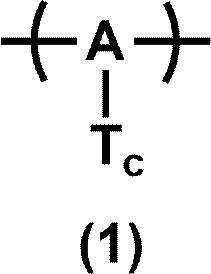
Aとしては、式(a-1)~(a-6)のいずれかで表される基が好ましく、式(a-1)、式(a-2)及び式(a-4)~(a-6)のいずれかで表される基がより好ましい。 Aとしては、フッ素原子を含まないことが好ましい。
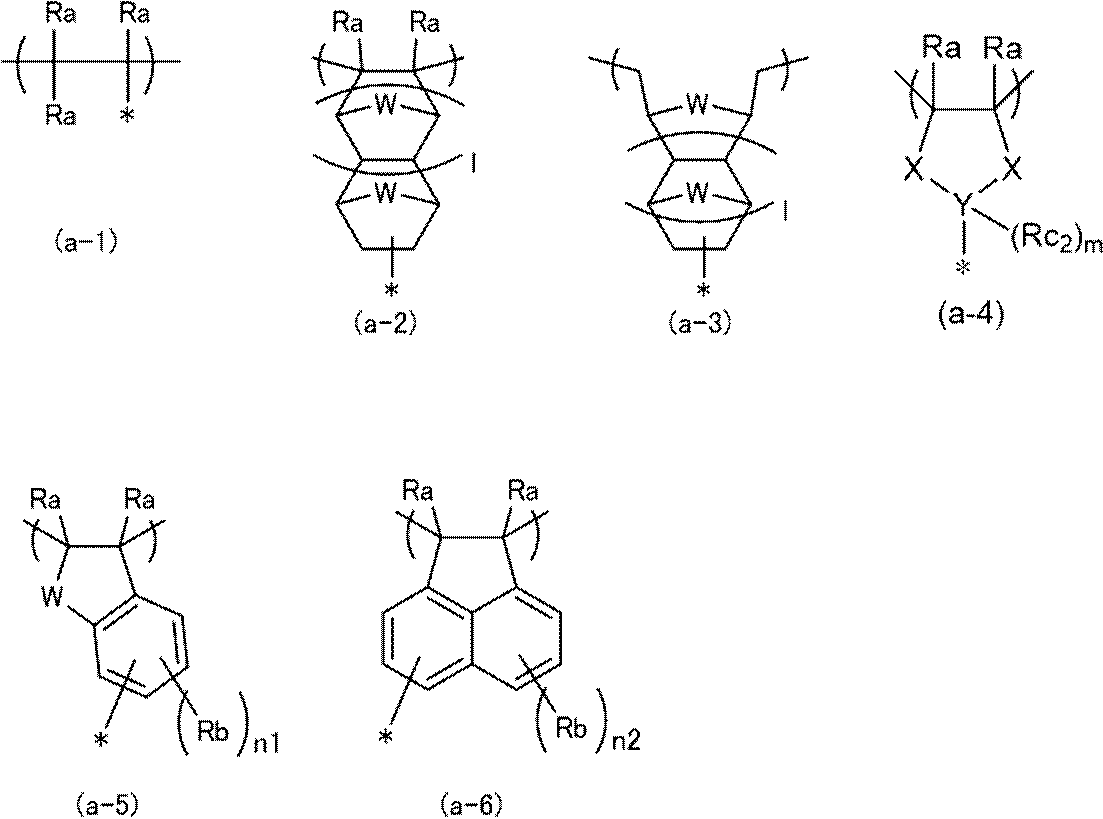
Wは、それぞれ独立に、メチレン基、酸素原子又は硫黄原子を表す。
Xは、それぞれ独立に、-C(Rc1)2-又は-C(=O)-を表す。
Rc1は、それぞれ独立に、水素原子、アルキル基又はアルコキシ基を表す。また、上記アルキル基及び上記アルコキシ基は、フッ素原子を含まないことが好ましい。
Yは、窒素原子又は炭素原子を表す。mは、0又は1を表す。Yが窒素原子の場合、mは0であり、Yが炭素原子の場合、mは1である。
Rc2は、水素原子又は置換基を表す。また、上記置換基は、フッ素原子を含まないことが好ましい。Rbは、それぞれ独立に、有機基を表す。また、上記有機基は、フッ素原子を含まないことが好ましい。n1は、0~3の整数を表す。n2は、0~5の整数を表す。lは、0又は1を表す。*は、結合位置を表す。
光酸発生基は、アニオン性基とカチオンとからなる基であり、活性光線又は放射線の照射により酸を発生させる基である。光酸発生基としては、露光により有機酸を発生する基が好ましい。
式(c)中、A-は、アニオン性基を表す。Zc +は、有機カチオンを表す。Lcは、単結合又はフッ素原子を含まない2価の連結基を表す。*は、結合位置を表す。
A-としては、例えば、スルホン酸アニオン性基(-SO3 -)、カルボン酸アニオン性基、リン酸アニオン性基(-OP(=O)(OH)O-)、硫酸アニオン性基(-OS(=O)2O-)、ホスホン酸アニオン性基(-P(=O)(OH)O-)、ホスフィン酸アニオン性基(-PH(=O)O-)、アミドアニオン性基(-N--R)及びカルボアニオン性基(-C-RR)が挙げられる。Rは、それぞれ独立に、置換基を表す。
A-としては、スルホン酸アニオン性基(-SO3 -)又はカルボン酸アニオン性基(-COO-)が好ましく、スルホン酸アニオン性基(-SO3 -)がより好ましい。
2価の連結基としては、例えば、-O-CO-O-、-COO-、-CONH-、-CO-、-O-、-S-、-SO-、-SO2-、フッ素原子を含まないアルキレン基(炭素数1~6が好ましい)、フッ素原子を含まないシクロアルキレン基(炭素数3~15が好ましい)、フッ素原子を含まないアルケニレン基(炭素数2~6が好ましい)、フッ素原子を含まないアリーレン基(炭素数6~12)及びこれらを組み合わせた基が挙げられる。
上記2価の連結基は、更に、フッ素原子を含まない置換基を有していてもよい。上記置換基としては、ヨウ素原子が好ましい。また、上記2価の連結基としては、フッ素原子を含まないアルキレン基、フッ素原子を含まないシクロアルキレン基又はフッ素原子を含まないアリーレン基が好ましく、ヨウ素原子を含むアルキレン基又はヨウ素原子を含むアリーレン基がより好ましい。
「*-Lc-A-」で表される部分構造としては、後述する他の光酸発生剤のうち、他の光酸発生剤におけるフッ素原子を含まない「X-」から水素原子を1つ除いて形成される基が好ましい。
有機カチオンとしては、例えば、後述する他の光酸発生剤におけるM+と同義であり、好適態様も同じである。Zc +は、フッ素原子を有していてもよい。
式(c)で表される光酸発生基より発生する酸のpKaの測定方法としては、例えば、「*-Lc-A- Zc +」で表される光酸発生基において、*を水素原子に置き換え、かつ、Zc +をH+に置き換えて「H-Lc-A- H+」とした化合物を用いて、上述したpKaの算出方法(例えば、ソフトウェアパッケージ1等)で算出する方法が挙げられる。具体的には、式(Q1)で表される光酸発生基である場合、光酸発生基より発生する酸のpKaとは、式(Q2)で表される化合物より発生する酸のpKaを意味する。
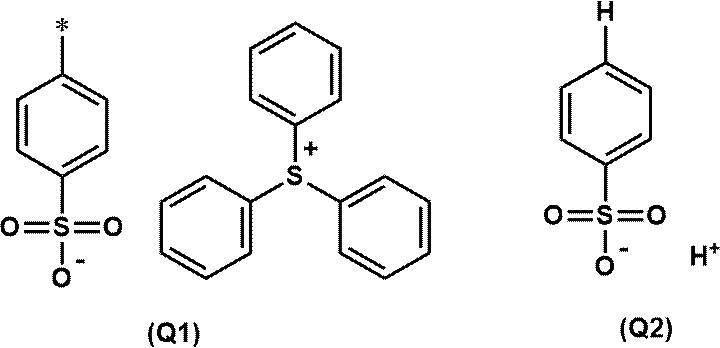
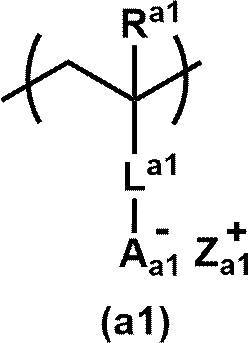
置換基としては、例えば、アルキル基、シクロアルキル基、ハロゲン原子、シアノ基又はアルコキシカルボニル基が挙げられ、アルキル基が好ましく、メチル基がより好ましい。
フッ素原子を含まない2価の連結基としては、上記式(c)中のLcが取り得るフッ素原子を含まない2価の連結基が挙げられる。
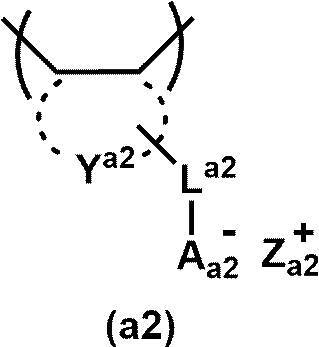
環基を構成する環としては、脂環、芳香環及びこれらを組み合わせた環が挙げられる。また、単環及び多環のいずれであってもよい。
上記環の環員原子数としては、5~20が好ましい。上記芳香環基の環員原子は、1つ以上(例えば、1~5)のヘテロ原子(例えば、酸素原子、硫黄原子及び窒素原子等)を有していてもよい。
環基を構成する環の環数は、1~5が好ましく、1~3がより好ましい。
脂環としては、例えば、シクロアルカン環(シクロペンタン環及びシクロヘキサン環等)及びシクロアルケン環等の単環の脂環、並びに、ビシクロウンデカン環、デカヒドロナフタレン環、ノルボルネン環、ノルボルナジエン環及びアダマンタン環等の多環の脂環が挙げられる。
芳香環としては、例えば、ベンゼン環、ナフタレン環及びアントラセン環等の芳香族単素環、並びに、ベンゾチアゾール等のチアゾール環等の芳香族複素環が挙げられ、芳香族単素環が好ましく、ベンゼン環又はナフタレン環がより好ましい。
脂環及び芳香環を組み合わせた環としては、ベンゾシクロブタン環、インダン環又はアセナフテン環が好ましい。
環基は、更に、置換基を有していてもよい。上記置換基としては、アルキル基が好ましい。
上記環基としては、フッ素原子を含まない環基が好ましい。
フッ素原子を含まない2価の連結基としては、上記式(c)中のLcが取り得るフッ素原子を含まない2価の連結基が挙げられる。
La2としては、単結合が好ましい。
繰り返し単位bは、酸分解性基を有する繰り返し単位である。
本発明のパターン形成方法において、典型的には、現像液としてアルカリ現像液を採用した場合、ポジ型パターンが好適に形成され、現像液として有機系現像液を採用した場合、ネガ型パターンが好適に形成される。
酸分解性基を有する繰り返し単位としては、後述する(酸分解性基を有する繰り返し単位)以外に、(不飽和結合を含む酸分解性基を有する繰り返し単位)が好ましい。
なかでも、極性基としては、カルボキシ基、フェノール性水酸基、フッ素化アルコール基(好ましくはヘキサフルオロイソプロパノール基)又はスルホン酸基が好ましい。
式(Y1):-C(Rx1)(Rx2)(Rx3)
式(Y2):-C(=O)OC(Rx1)(Rx2)(Rx3)
式(Y3):-C(R36)(R37)(OR38)
式(Y4):-C(Rn)(H)(Ar)
なかでも、Rx1~Rx3は、それぞれ独立に、直鎖状又は分岐鎖状のアルキル基を表すことが好ましく、Rx1~Rx3は、それぞれ独立に、直鎖状のアルキル基を表すことがより好ましい。
Rx1~Rx3の2つが結合して、単環又は多環を形成してもよい。
Rx1~Rx3のアルキル基としては、メチル基、エチル基、n-プロピル基、イソプロピル基、n-ブチル基、イソブチル基及びt-ブチル基等の炭素数1~5のアルキル基が好ましい。
Rx1~Rx3のシクロアルキル基としては、シクロペンチル基及びシクロヘキシル基等の単環のシクロアルキル基並びにノルボルニル基、テトラシクロデカニル基、テトラシクロドデカニル基及びアダマンチル基等の多環のシクロアルキル基が好ましい。
Rx1~Rx3のアリール基としては、炭素数6~10のアリール基が好ましく、例えば、フェニル基、ナフチル基及びアントリル基が挙げられる。
Rx1~Rx3のアルケニル基としては、ビニル基が好ましい。
Rx1~Rx3の2つが結合して形成される環としては、シクロアルキル基が好ましい。Rx1~Rx3の2つが結合して形成されるシクロアルキル基としては、シクロペンチル基若しくはシクロヘキシル基等の単環のシクロアルキル基又はノルボルニル基、テトラシクロデカニル基、テトラシクロドデカニル基若しくはアダマンチル基等の多環のシクロアルキル基が好ましく、炭素数5~6の単環のシクロアルキル基がより好ましい。
Rx1~Rx3の2つが結合して形成されるシクロアルキル基は、環を構成するメチレン基の1つが、酸素原子等のヘテロ原子、カルボニル基等のヘテロ原子を含む基又はビニリデン基で置き換わっていてもよい。また、これらのシクロアルキル基は、シクロアルカン環を構成するエチレン基の1つ以上が、ビニレン基で置き換わっていてもよい。
式(Y1)又は式(Y2)で表される基は、例えば、Rx1がメチル基又はエチル基であり、Rx2とRx3とが結合して上述のシクロアルキル基を形成している態様が好ましい。
レジスト組成物が、例えば、EUV露光用レジスト組成物である場合、Rx1~Rx3で表されるアルキル基、シクロアルキル基、アルケニル基、アリール基及びRx1~Rx3の2つが結合して形成される環は、更に、置換基として、フッ素原子又はヨウ素原子を有しているのも好ましい。
なお、上記アルキル基、シクロアルキル基、アリール基及びアラルキル基には、酸素原子等のヘテロ原子及び/又はカルボニル基等のヘテロ原子を含む基が含まれていてもよい。例えば、上記アルキル基、シクロアルキル基、アリール基及びアラルキル基において、メチレン基の1つ以上が、酸素原子等のヘテロ原子及び/又はカルボニル基等のヘテロ原子を含む基で置き換わっていてもよい。
また、R38は、繰り返し単位の主鎖が有する別の置換基と互いに結合して、環を形成してもよい。R38と繰り返し単位の主鎖が有する別の置換基とが互いに結合して形成する基は、メチレン基等のアルキレン基が好ましい。
レジスト組成物が、例えば、EUV露光用レジスト組成物である場合、R36~R38で表される1価の有機基及びR37とR38とが互いに結合して形成される環は、更に、置換基として、フッ素原子又はヨウ素原子を有しているのも好ましい。
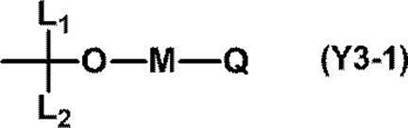
Mは、単結合又は2価の連結基を表す。
Qは、ヘテロ原子を含んでいてもよいアルキル基、ヘテロ原子を含んでいてもよいシクロアルキル基、ヘテロ原子を含んでいてもよいアリール基、アミノ基、アンモニウム基、メルカプト基、シアノ基、アルデヒド基又はこれらを組み合わせた基(例えば、アルキル基とシクロアルキル基とを組み合わせた基)を表す。
アルキル基及びシクロアルキル基は、例えば、メチレン基の1つが、酸素原子等のヘテロ原子又はカルボニル基等のヘテロ原子を含む基で置き換わっていてもよい。
なお、L1及びL2のうち一方は水素原子であり、他方はアルキル基、シクロアルキル基、アリール基又はアルキレン基とアリール基とを組み合わせた基であることが好ましい。
Q、M及びL1の少なくとも2つが結合して環(好ましくは、5員若しくは6員環)を形成してもよい。
パターンの微細化の観点からは、L2が2級又は3級アルキル基であることが好ましく、3級アルキル基であることがより好ましい。2級アルキル基としては、イソプロピル基、シクロヘキシル基及びノルボルニル基が挙げられ、3級アルキル基としては、tert-ブチル基及びアダマンタン基が挙げられる。これらの態様では、Tg(ガラス転移温度)及び活性化エネルギーが高くなるため、膜強度の担保に加え、かぶりの抑制ができる。
また、Qで表されるヘテロ原子を含んでいてもよいアルキル基、ヘテロ原子を含んでいてもよいシクロアルキル基、ヘテロ原子を含んでいてもよいアリール基、アミノ基、アンモニウム基、メルカプト基、シアノ基、アルデヒド基及びこれらを組み合わせた基において、ヘテロ原子としては、フッ素原子、ヨウ素原子及び酸素原子からなる群から選択されるヘテロ原子であることも好ましい。
Arで表される芳香環基並びにRnで表されるアルキル基、シクロアルキル基及びアリール基は、置換基としてフッ素原子又はヨウ素原子を有しているのも好ましい。

なかでも、R5は、水素原子又はアルキル基が好ましい。
R6~R7は、それぞれ独立に、水素原子が好ましい。
式(3)中、L2は、単結合又は2価の連結基を表す。
上記2価の連結基としては、例えば、-CO-、-NR-、-CO-、-O-、-S-、-SO-、-SO2-、アルキレン基(好ましくは炭素数1~6。直鎖状でも分岐鎖状でもよい)、シクロアルキレン基(好ましくは炭素数3~15)、アルケニレン基(好ましくは炭素数2~6)、2価の脂肪族複素環基(好ましくは少なくとも1つの窒素原子、酸素原子、硫黄原子、又は、セレン原子を環員原子として有する環員原子数5~10の環が)、2価の芳香族複素環基(好ましくは少なくとも1つの窒素原子、酸素原子、硫黄原子、又は、セレン原子を環員原子として有する環員原子数5~10の環)、2価の芳香族炭化水素環基(好ましくは環員原子数6~10の環)、及び、これらの複数を組み合わせた2価の連結基が挙げられる。上記-NR-におけるRは、水素原子又は有機基を表す。上記有機基は、アルキル基(例えば炭素数1~6)が好ましい。
式(3)中、R8~R10は、それぞれ独立に、アルキル基、シクロアルキル基、アリール基、アラルキル基、又は、アルケニル基を表す。
式(3)中のR8~R10で表されるアルキル基、シクロアルキル基、アリール基、アラルキル基、及び、アルケニル基としては、上述の式(Y1)及び式(Y2)のRx1~Rx3で表されるアルキル基、シクロアルキル基、アリール基、アラルキル基、及び、アルケニル基として説明した基が同様に挙げられる。
なお、R8~R10のうち2つが互いに結合して環を形成してもよい。
式(3)中のR8~R10のうち2つが互いに結合して形成される環は、上述の式(Y1)及び式(Y2)のRx1~Rx3の2つが結合して形成される環として説明した環が同様に挙げられる。
式(4)中、X1は、-CO-、-SO-、又は、-SO2-を表す。
式(4)中、Y1は、-O-、-S-、-SO-、-SO2-、又は、-NR34-を表す。R34は水素原子又は有機基を表す。上記有機基は、アルキル基(例えば炭素数1~6)が好ましい。
式(4)中、L3は、単結合又は2価の連結基を表す。
式(4)中のL3で表される2価の連結基としては、上述の式(3)中のL2で表される2価の連結基として説明した基が同様に挙げられる。
式(4)中、R15~R17は、各々独立にアルキル基、シクロアルキル基、アリール基、アラルキル基、又は、アルケニル基を表す。
式(4)中のR15~R17で表されるアルキル基、シクロアルキル基、アリール基、アラルキル基、及び、アルケニル基としては、上述の式(Y1)及び式(Y2)のRx1~Rx3で表されるアルキル基、シクロアルキル基、アリール基、アラルキル基、及び、アルケニル基として説明した基が同様に挙げられる。
なお、R15~R17のうち2つが互いに結合して環を形成してもよい。
式(4)中のR15~R17のうち2つが互いに結合して形成される環は、上述の式(Y1)及び式(Y2)のRx1~Rx3の2つが結合して形成される環として説明した環が同様に挙げられる。
式(5)中、R20及びR21は、それぞれ独立に、水素原子、アルキル基、シクロアルキル基、アリール基、アラルキル基、又は、アルケニル基を表す。
式(5)中のR20及びR21で表されるアルキル基、シクロアルキル基、アリール基、アラルキル基、及び、アルケニル基としては、上述の式(Y1)及び式(Y2)のRx1~Rx3で表されるアルキル基、シクロアルキル基、アリール基、アラルキル基、及び、アルケニル基として説明した基が同様に挙げられる。
なお、R20とR21とは互いに結合して環を形成してもよい。
式(5)中のR20とR21とが互いに結合して形成される環は、上述の式(Y1)及び式(Y2)のRx1~Rx3の2つが結合して形成される環として説明した環が同様に挙げられる。
式(6)中、L4は、単結合又は2価の連結基を表す。
式(6)中のL4で表される2価の連結基としては、上述の式(3)中のL2で表される2価の連結基として説明した基が同様に挙げられる。
式(6)中、Ar1は、芳香環基を表す。上記芳香環基は単環でも多環でもよく、環員原子として1以上(例えば1~3)のヘテロ原子を有していても有していなくてもよい。上記芳香環基の環員原子数は、5~15が好ましい。
Ar1は、ベンゼン環基が好ましい。
式(6)中、R25~R27は、各々独立に水素原子、アルキル基、シクロアルキル基、アリール基、アラルキル基、又は、アルケニル基を表す。
式(6)中のR25~R27で表されるアルキル基、シクロアルキル基、アリール基、アラルキル基、及び、アルケニル基としては、上述の式(Y1)及び式(Y2)のRx1~Rx3で表されるアルキル基、シクロアルキル基、アリール基、アラルキル基、及び、アルケニル基として説明した基が同様に挙げられる。
なお、R26とR27とは互いに結合して環を形成してもよい。
式(6)中のR26とR27とが互いに結合して環を形成する場合、R26とR27とが共同して1つの2価の連結基を形成するのが好ましい。このような2価の連結基としては、上述の式(3)中のL2で表される2価の連結基として説明した基が同様に挙げられ、アルキレン基が好ましい。
また、R24又はR25はAr1と結合してもよい。
R24がAr1と結合しする場合、R24が単結合又は2価の連結基となって、Ar1で表される芳香環基の環員原子に結合するのが好ましい。このような2価の連結基としては、上述の式(3)中のL2で表される2価の連結基として説明した基が同様に挙げられ、アルキレン基が好ましい。
また、R25がAr1と結合する場合、R25が2価の連結基となってAr1で表される芳香環基の環員原子に結合するのが好ましい。このような2価の連結基としては、上述の式(3)中のL2で表される2価の連結基として説明した基が同様に挙げられ、アルキレン基が好ましい。
式(7)中、L5は、単結合又は2価の連結基を表す。
式(7)中のL5で表される2価の連結基としては、上述の式(3)中のL2で表される2価の連結基として説明した基が同様に挙げられる。
R31及びR32は、それぞれ独立に、水素原子、アルキル基、シクロアルキル基、アリール基、アラルキル基、又は、アルケニル基を表す。
R33はアルキル基、シクロアルキル基、アリール基、アラルキル基、又は、アルケニル基を表す。
式(7)中のR31~R33で表されるアルキル基、シクロアルキル基、アリール基、アラルキル基、及び、アルケニル基としては、上述の式(Y1)及び式(Y2)のRx1~Rx3で表されるアルキル基、シクロアルキル基、アリール基、アラルキル基、及び、アルケニル基として説明した基が同様に挙げられる。
なお、R32とR33とは互いに結合して環を形成してもよい。
式(7)中のR32とR33とが互いに結合して環を形成する場合、R32とR33とが共同して1つの2価の連結基を形成するのが好ましい。このような2価の連結基としては、上述の式(3)中のL2で表される2価の連結基として説明した基が同様に挙げられ、アルキレン基が好ましい。

2価の連結基としては、-CO-、-O-、-S-、-SO-、-SO2-、炭化水素基(例えば、アルキレン基、シクロアルキレン基、アルケニレン基及びアリーレン基等)及びこれらの複数が連結した連結基が挙げられる。なかでも、L1としては、アルキレン基、-COO-、アリーレン基又はこれらを組み合わせた基が好ましい。
アリーレン基としては、フェニレン基が好ましい。
アルキレン基は、直鎖状及び分岐鎖状のいずれであってもよい。アルキレン基の炭素数は、1~10が好ましく、1~3がより好ましい。
上記2価の連結基は、更に置換基を有していてもよい。置換基としては、ハロゲン原子が好ましく、フッ素原子又はヨウ素原子がより好ましい。
アルキル基は、直鎖状であっても、分岐鎖状であってもよい。アルキル基の炭素数は、1~10が好ましく、1~3がより好ましい。
上記アルキル基は、更に置換基を有していてもよい。置換基としては、ハロゲン原子が好ましく、フッ素原子又はヨウ素原子がより好ましい。
脱離基としては、上述した式(Y1)~(Y4)で表される基が好ましい。
不飽和結合を含む酸分解性基を有する繰り返し単位としては、式(B)で表される繰り返し単位が好ましい。
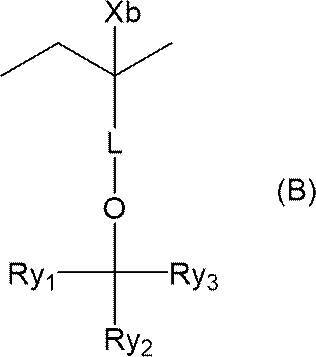
Ry1~Ry3の2つが結合して、単環又は多環(単環又は多環のシクロアルキル基、シクロアルケニル基等)を形成してもよい。
Lとしては、-Rt-基、-CO-基、-COO-Rt-CO-基又は-Rt-CO-基が好ましい。Rtは、ハロゲン原子、水酸基、アルコキシ基等の置換基を有していてもよい。芳香族基が好ましい。
Ry1~Ry3のシクロアルキル基としては、シクロペンチル基及びシクロヘキシル基等の単環のシクロアルキル基又はノルボルニル基、テトラシクロデカニル基、テトラシクロドデカニル基及びアダマンチル基等の多環のシクロアルキル基が好ましい。
Ry1~Ry3のアリール基としては、炭素数6~10のアリール基が好ましく、例えば、フェニル基、ナフチル基及びアントリル基が挙げられる。
Ry1~Ry3のアルケニル基としては、ビニル基が好ましい。
Ry1~Ry3のアルキニル基としては、エチニル基が好ましい。
Ry1~Ry3のシクロアルケニル基としては、シクロペンチル基及びシクロヘキシル基等の単環のシクロアルキル基の一部に二重結合を含む構造が好ましい。
Ry1~Ry3の2つが結合して形成されるシクロアルキル基としては、シクロペンチル基及びシクロヘキシル基等の単環のシクロアルキル基又はノルボルニル基、テトラシクロデカニル基、テトラシクロドデカニル基及びアダマンチル基等の多環のシクロアルキル基が好ましい。なかでも、炭素数5~6の単環のシクロアルキル基がより好ましい。
Ry1~Ry3の2つが結合して形成されるシクロアルキル基又はシクロアルケニル基は、例えば、環を構成するメチレン基の1つが、酸素原子等のヘテロ原子、カルボニル基、-SO2-基及び-SO3-基等のヘテロ原子を含む基、ビニリデン基又はこれらの組み合わせで置き換わっていてもよい。また、これらのシクロアルキル基又はシクロアルケニル基は、シクロアルカン環又はシクロアルケン環を構成するエチレン基の1つ以上が、ビニレン基で置き換わっていてもよい。
式(B)で表される繰り返し単位は、例えば、Ry1がメチル基、エチル基、ビニル基、アリル基又はアリール基であり、Ry2とRx3とが結合して上述のシクロアルキル基又はシクロアルケニル基を形成している態様が好ましい。
なお、以下の式中、Xa1は、H、CH3、CF3、及び、CH2OHのいずれかを表し、Rxa及びRxbは各々独立に炭素数1~5の直鎖状又は分岐鎖状のアルキル基(メチル基、エチル基、n-プロピル基、イソプロピル基、n-ブチル基、イソブチル基、又は、t-ブチル基等)を表す。
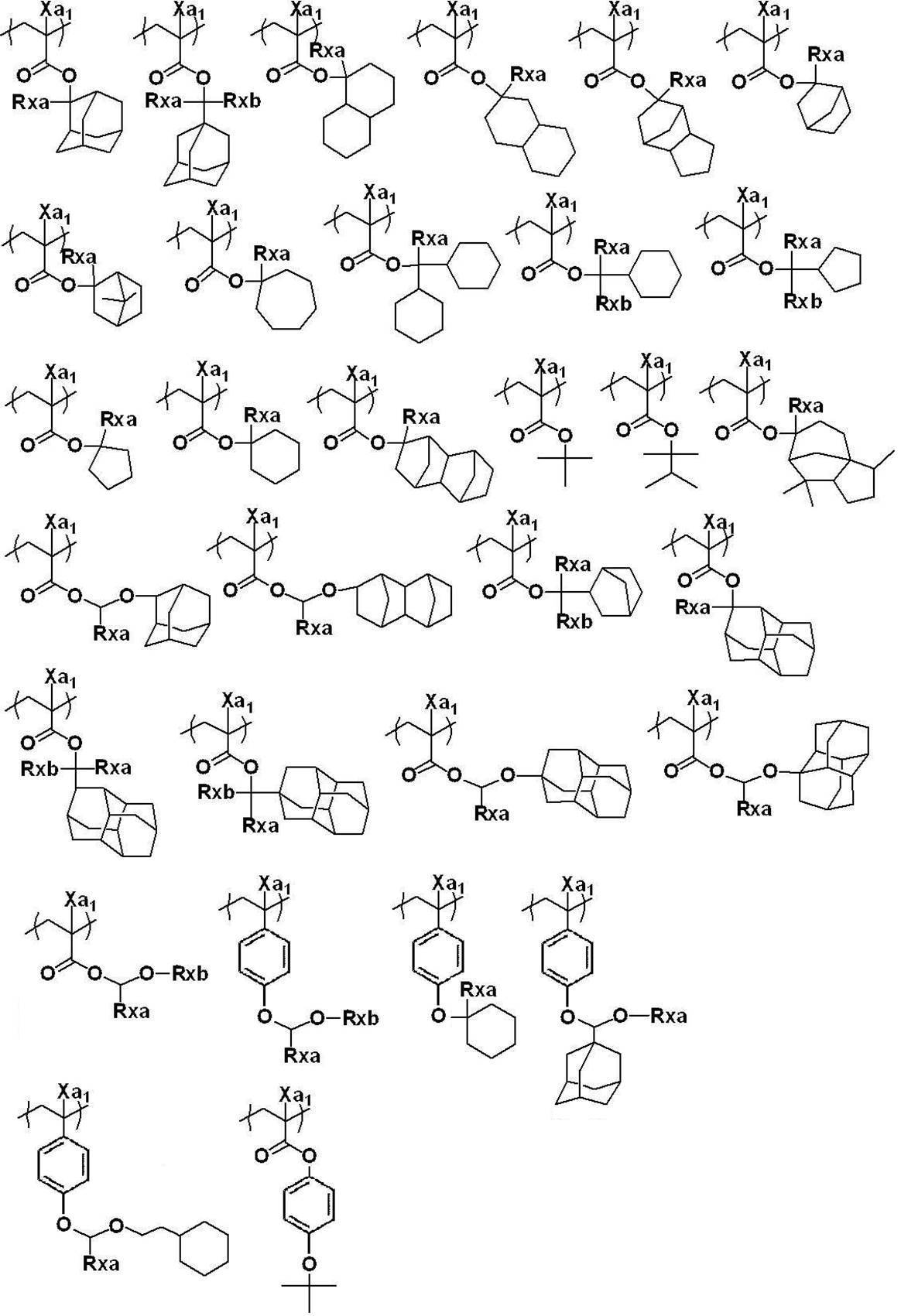
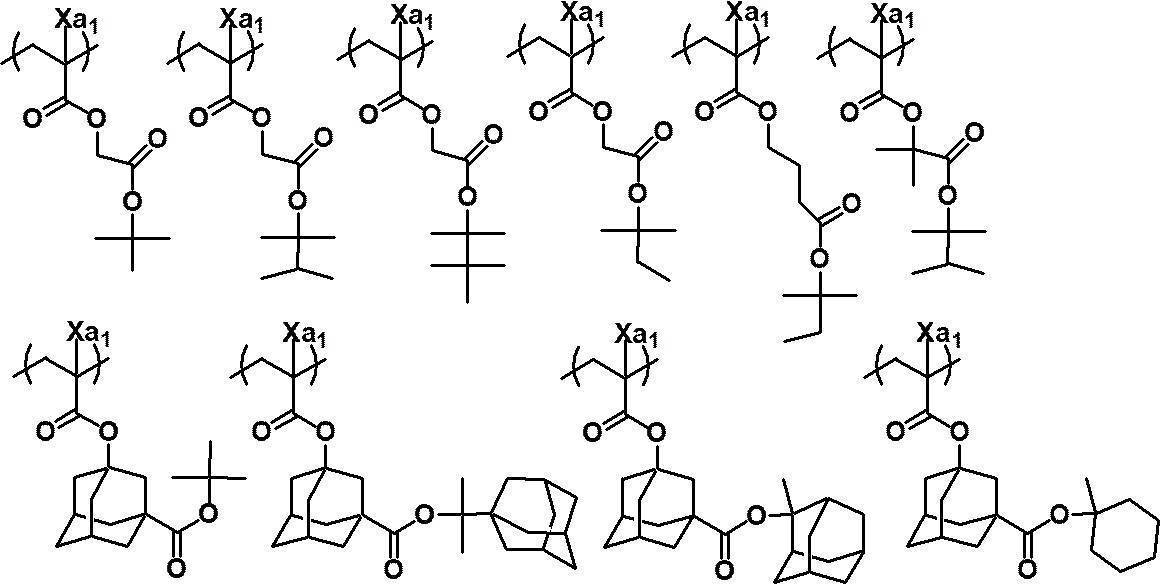
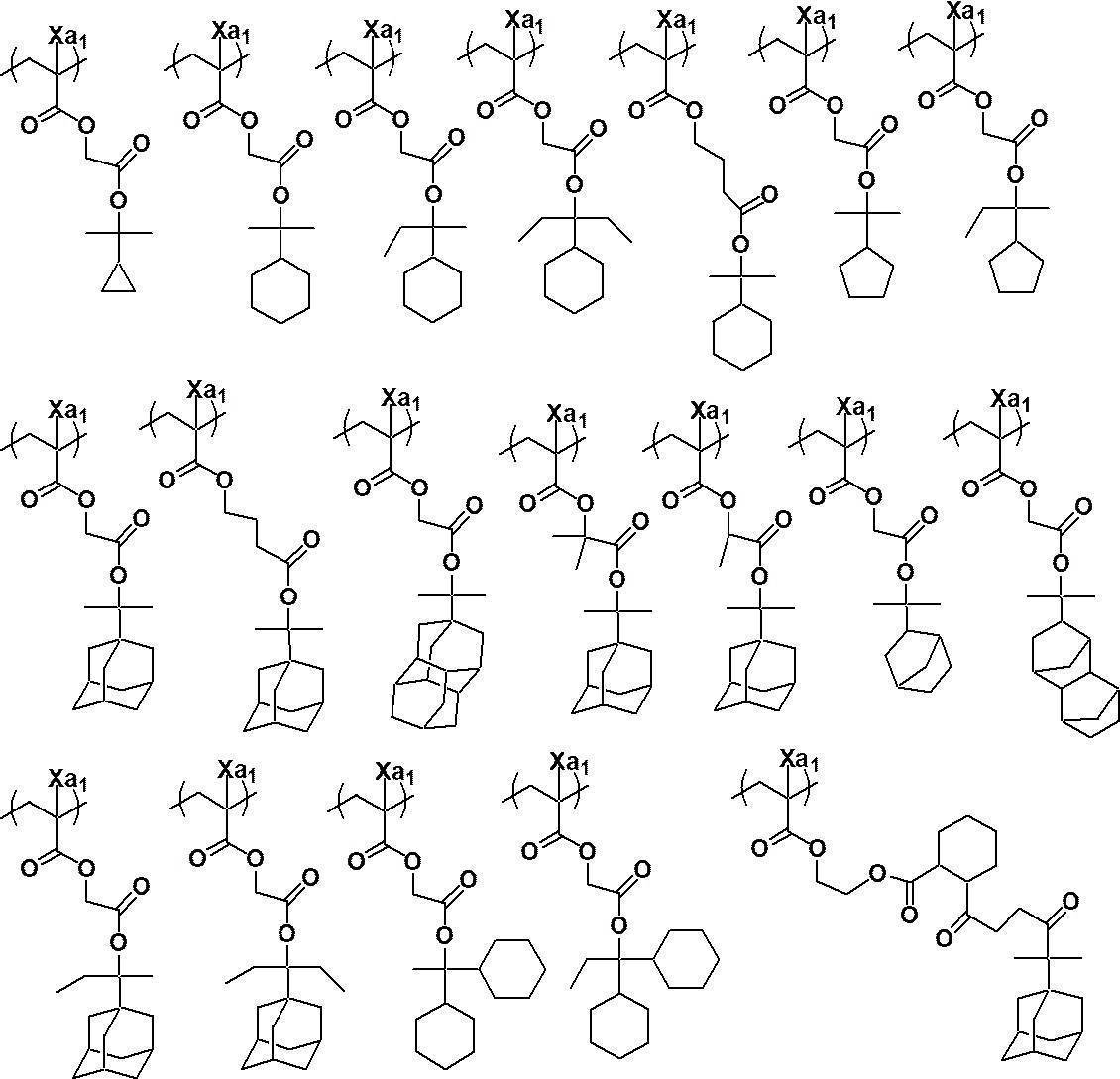
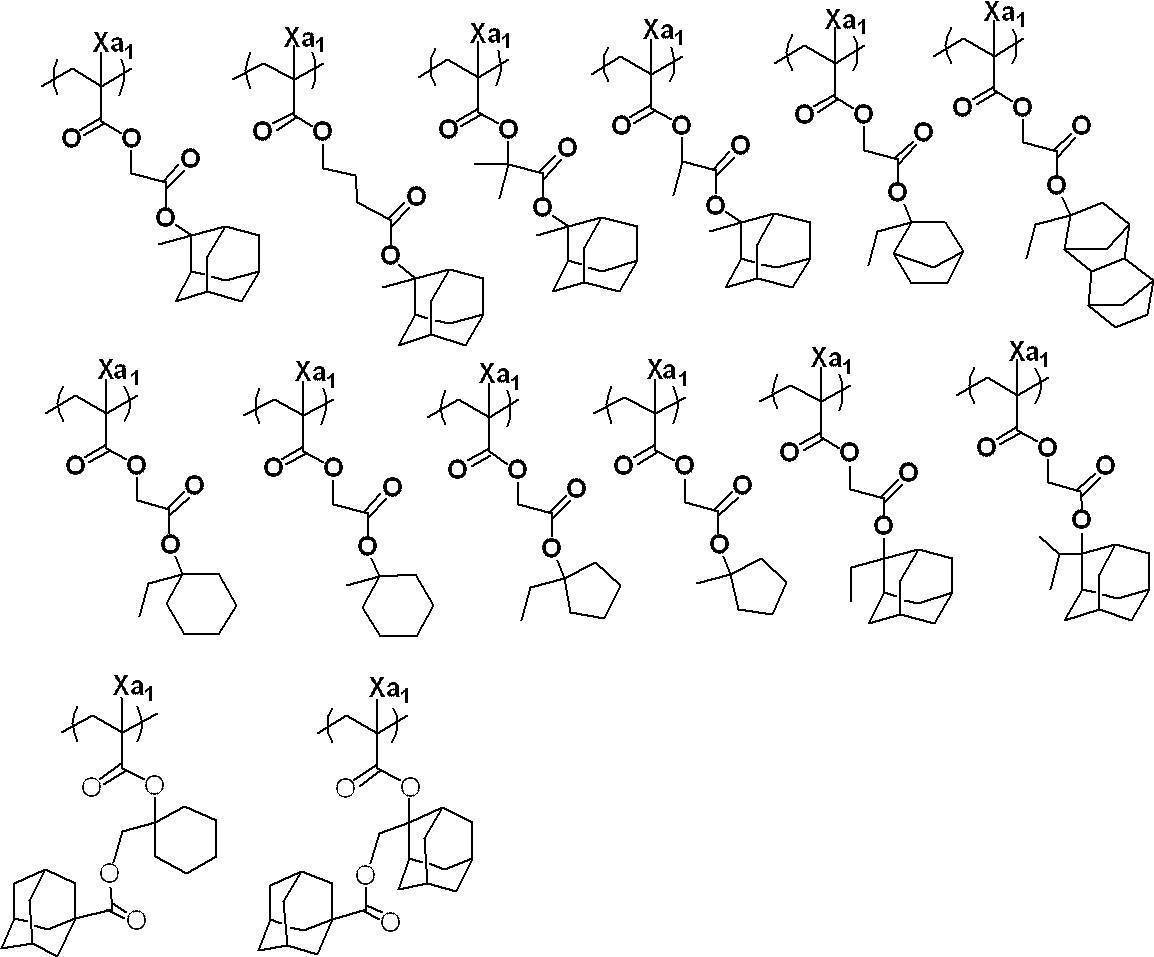
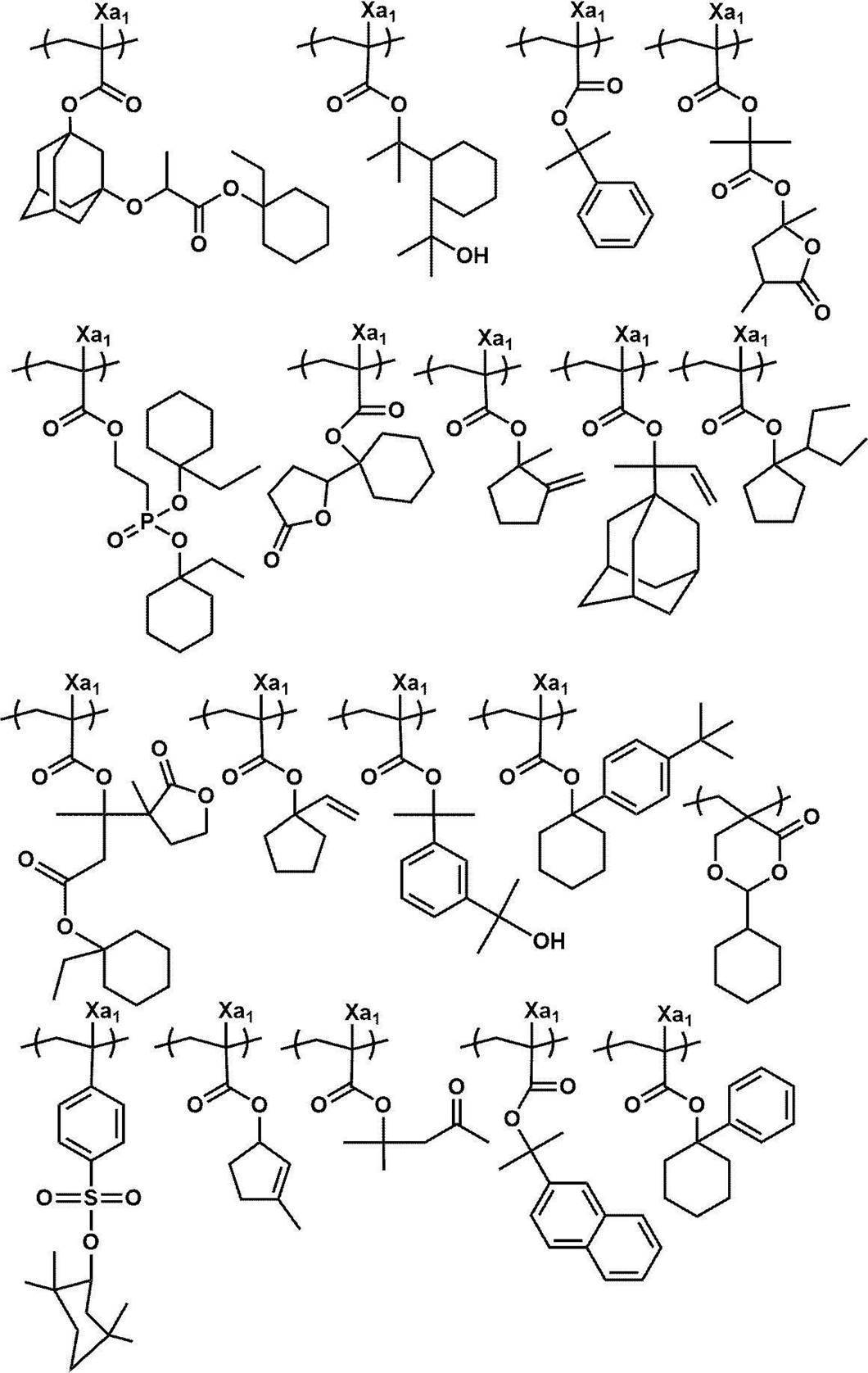

A群:以下の(20)~(28)の繰り返し単位からなる群。
(20)後述する、酸基を有する繰り返し単位
(21)後述する、酸分解性基及び酸基のいずれも有さず、フッ素原子、臭素原子又はヨウ素原子を有する繰り返し単位
(22)後述する、ラクトン基、スルトン基又はカーボネート基を有する繰り返し単位
(23)後述する、式(V-1)又は式(V-2)で表される繰り返し単位
(24)後述する、式(A)で表される繰り返し単位
(25)後述する、式(B)で表される繰り返し単位
(26)後述する、式(C)で表される繰り返し単位
(27)後述する、式(D)で表される繰り返し単位
(28)後述する、式(E)で表される繰り返し単位
B群:以下の(29)~(31)の繰り返し単位からなる群。
(30)後述する、ラクトン基、スルトン基、カーボネート基、水酸基、シアノ基及びアルカリ可溶性基から選ばれる少なくとも1つの基を有する繰り返し単位
(31)後述する、脂環式炭化水素構造を有し、酸分解性を示さない繰り返し単位
(32)後述する、水酸基及びシアノ基のいずれも有さない、式(III)で表される繰り返し単位
また、レジスト組成物がEUV用の感活性光線性又は感放射線性樹脂組成物として用いられる場合、樹脂Aは、フッ素原子及びヨウ素原子の少なくとも一方を含むことが好ましい。樹脂Aがフッ素原子及びヨウ素原子の両方を含む場合、樹脂Aは、フッ素原子及びヨウ素原子の両方を含む1つの繰り返し単位を有していてもよいし、樹脂Aは、フッ素原子を有する繰り返し単位とヨウ素原子を含む繰り返し単位との2種を含んでいてもよい。
また、レジスト組成物がEUV用の感活性光線性又は感放射線性樹脂組成物として用いられる場合、樹脂Aが、芳香族基を有する繰り返し単位を有するのも好ましい。
レジスト組成物がArF用の感活性光線性又は感放射線性樹脂組成物として用いられる場合、樹脂Aは上記B群からなる群から選択される少なくとも1つの繰り返し単位を有することが好ましい。
なお、レジスト組成物がArF用の感活性光線性又は感放射線性樹脂組成物として用いられる場合、樹脂Aは、フッ素原子及び珪素原子のいずれも含まないことが好ましい。
また、レジスト組成物がArF用の感活性光線性又は感放射線性樹脂組成物として用いられる場合、樹脂Aは、芳香族基を有さないことが好ましい。
樹脂Aは、酸基を有する繰り返し単位を有していてもよい。
酸基としては、pKaが13以下の酸基が好ましい。上記酸基の酸解離定数(pKa)は、13以下が好ましく、3~13がより好ましく、5~10が更に好ましい。
樹脂Aが、pKaが13以下の酸基を有する場合、樹脂A中における酸基の含有量は、0.2~6.0mmol/gの場合が多い。なかでも、0.8~6.0mmol/gが好ましく、1.2~5.0mmol/gがより好ましく、1.6~4.0mmol/gが更に好ましい。酸基の含有量が上記範囲内であれば、現像が良好に進行し、形成されるパターン形状に優れ、解像性にも優れる。
酸基としては、カルボキシ基、フェノール性水酸基、フッ素化アルコール基(好ましくはヘキサフルオロイソプロパノール基)、スルホン酸基、スルホンアミド基又はイソプロパノール基が好ましい。
また、上記ヘキサフルオロイソプロパノール基は、フッ素原子の1つ以上(好ましくは1~2つ)が、フッ素原子以外の基(アルコキシカルボニル基等)で置換されてもよい。
酸基としては、このように形成された-C(CF3)(OH)-CF2-も好ましい。また、フッ素原子の1つ以上がフッ素原子以外の基に置換されて、-C(CF3)(OH)-CF2-を含む環を形成してもよい。
酸基を有する繰り返し単位は、上述の酸の作用により脱離する脱離基で極性基が保護された構造を有する繰り返し単位及び後述するラクトン基、スルトン基又はカーボネート基を有する繰り返し単位とは異なる繰り返し単位であることが好ましい。
酸基を有する繰り返し単位は、フッ素原子又はヨウ素原子を有していてもよい。
式(A2)で表される繰り返し単位は、酸基として、芳香族性水酸基(フェノール性水酸基)を有する繰り返し単位である。
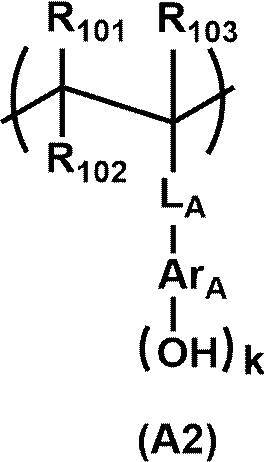
式(A2)中のLAで表される2価の連結基としては、上述の式(3)中のL2で表される2価の連結基として説明した基が同様に挙げられる。
上記芳香環基は単環でも多環でもよく、環員原子として1以上(例えば1~3)のヘテロ原子を有していても有していなくてもよい。上記芳香環基の環員原子数は、5~15が好ましい。
ArAとしては、ベンゼン環基が好ましい。
この場合、ArAで表される芳香環基は、上記単結合又は上記アルキレン基を介して、主鎖を構成する炭素原子(R101が結合する炭素原子)と結合する。

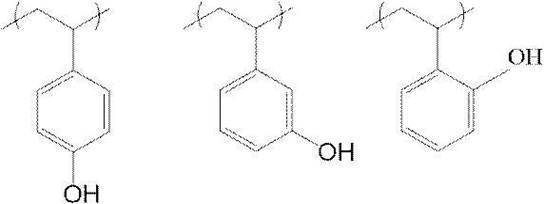

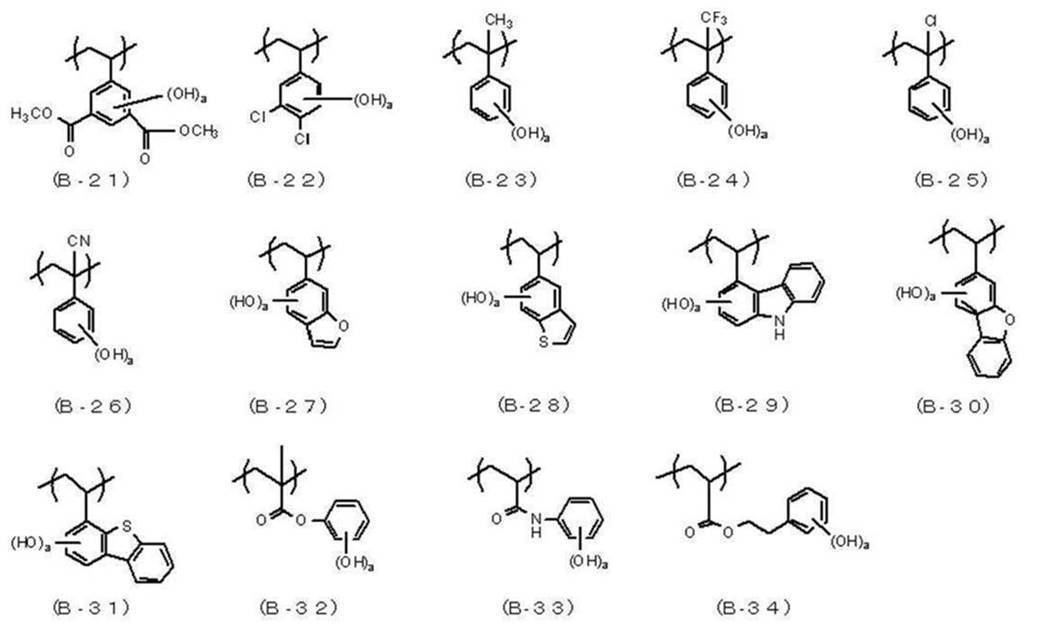
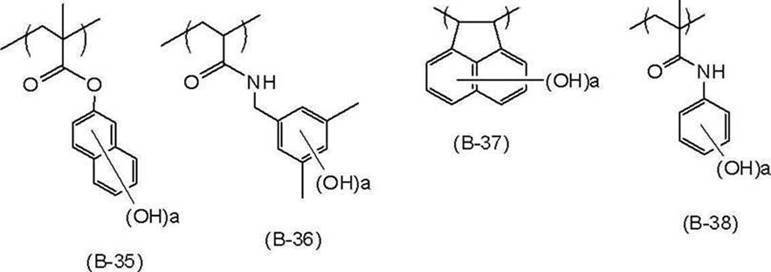

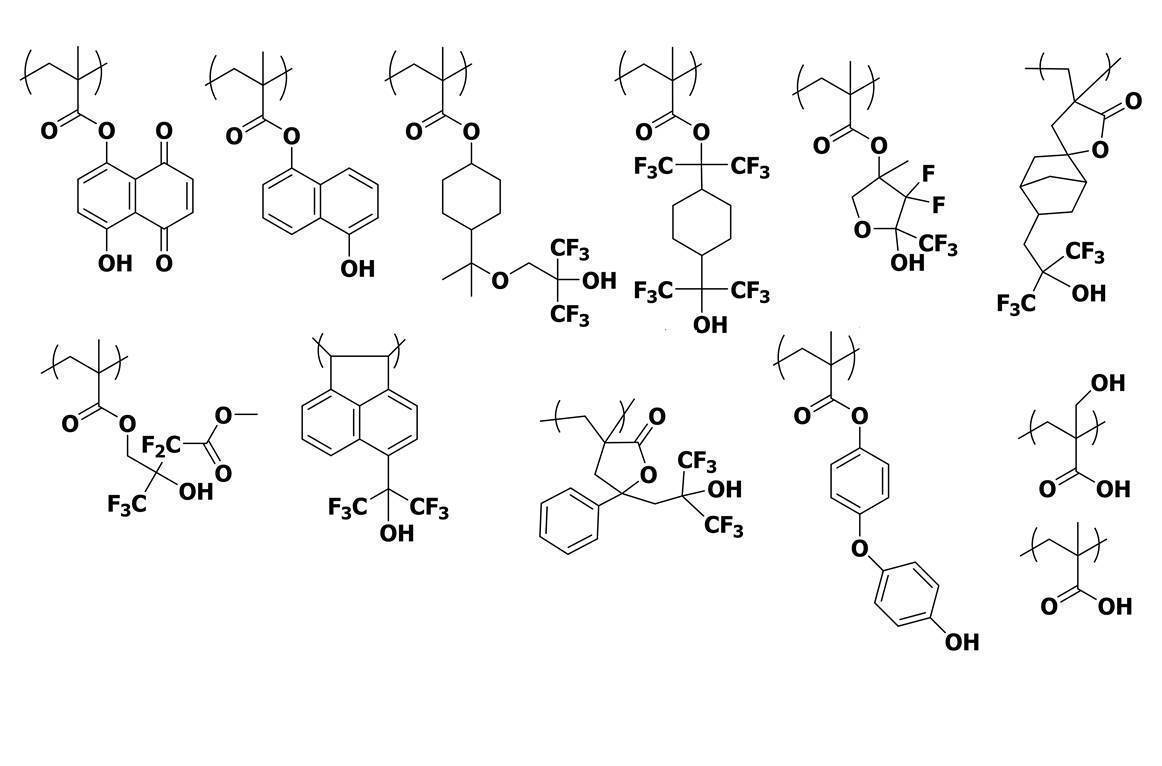
樹脂Aは、上述した<酸分解性基を有する繰り返し単位>及び<酸基を有する繰り返し単位>とは別に、酸分解性基及び酸基のいずれも有さず、フッ素原子、臭素原子又はヨウ素原子を有する繰り返し単位(以下、単位Xともいう。)を有していてもよい。また、ここで言う<酸分解性基及び酸基のいずれも有さず、フッ素原子、臭素原子又はヨウ素原子を有する繰り返し単位>は、後述の<ラクトン基、スルトン基又はカーボネート基を有する繰り返し単位>及び<光酸発生基を有する繰り返し単位>等の、A群に属する他の種類の繰り返し単位とは異なることが好ましい。
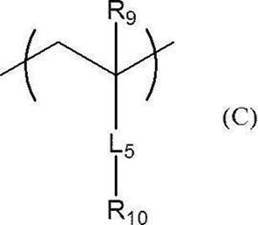
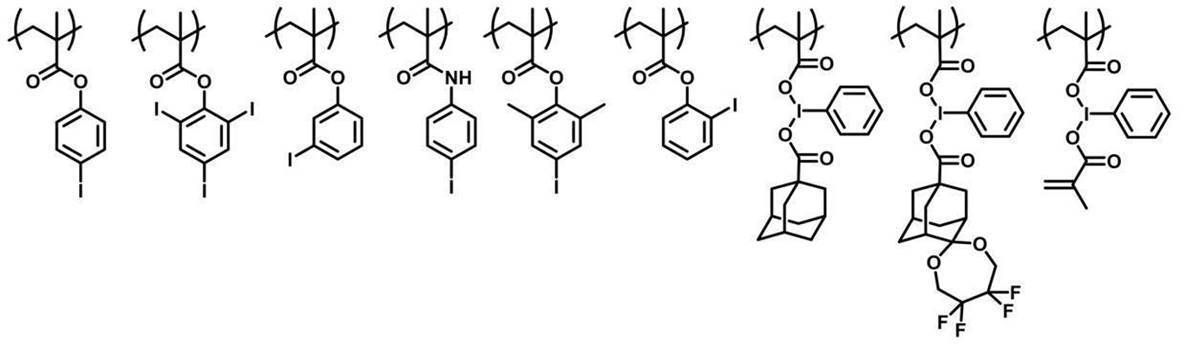
なお、フッ素原子、臭素原子及びヨウ素原子の少なくとも1つを含む繰り返し単位としては、例えば、フッ素原子、臭素原子又はヨウ素原子を有し、かつ、酸分解性基を有する繰り返し単位、フッ素原子、臭素原子又はヨウ素原子を有し、かつ、酸基を有する繰り返し単位及びフッ素原子、臭素原子又はヨウ素原子を有する繰り返し単位が挙げられる。
樹脂Aは、ラクトン基、スルトン基及びカーボネート基からなる群から選択される少なくとも1つを有する繰り返し単位(以下、「単位Y」ともいう。)を有していてもよい。
単位Yは、水酸基及びヘキサフルオロプロパノール基等の酸基を有さないのも好ましい。
樹脂Aは、式(LC1-1)~(LC1-21)のいずれかで表されるラクトン構造又は式(SL1-1)~(SL1-3)のいずれかで表されるスルトン構造の環員原子から、水素原子を1つ以上引き抜いてなるラクトン基又はスルトン基を有する繰り返し単位を有することが好ましい。
また、ラクトン基又はスルトン基が主鎖に直接結合していてもよい。例えば、ラクトン基又はスルトン基の環員原子が、樹脂Aの主鎖を構成してもよい。
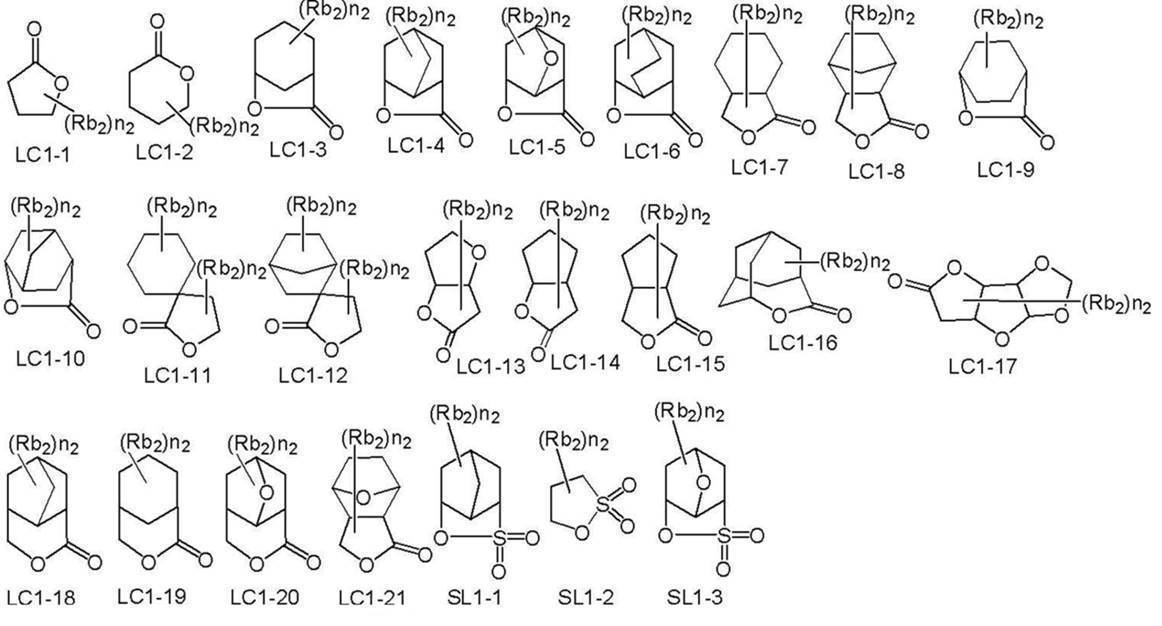
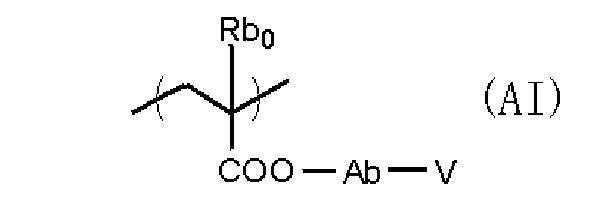
Rb0のハロゲン原子としては、フッ素原子、塩素原子、臭素原子及びヨウ素原子が挙げられる。Rb0は、水素原子又はメチル基が好ましい。
Abは、単結合、アルキレン基、単環又は多環の脂環式炭化水素構造を有する2価の連結基、エーテル基、エステル基、カルボニル基、カルボキシ基又はこれらを組み合わせた2価の基を表す。なかでも、Abとしては、単結合又は-Ab1-CO2-で表される連結基が好ましい。Ab1は、直鎖状若しくは分岐鎖状のアルキレン基又は単環若しくは多環のシクロアルキレン基であり、メチレン基、エチレン基、シクロヘキシレン基、アダマンチレン基又はノルボルニレン基が好ましい。
Vは、式(LC1-1)~(LC1-21)のいずれかで表されるラクトン構造の環員原子から水素原子を1つ引き抜いてなる基又は式(SL1-1)~(SL1-3)のいずれかで表されるスルトン構造の環員原子から水素原子を1つ引き抜いてなる基を表す。
環状炭酸エステル基を有する繰り返し単位としては、式(A-1)で表される繰り返し単位が好ましい。
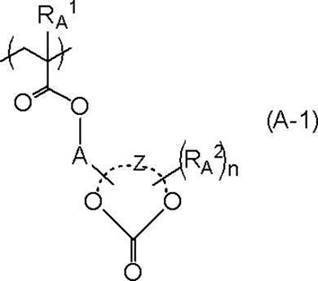

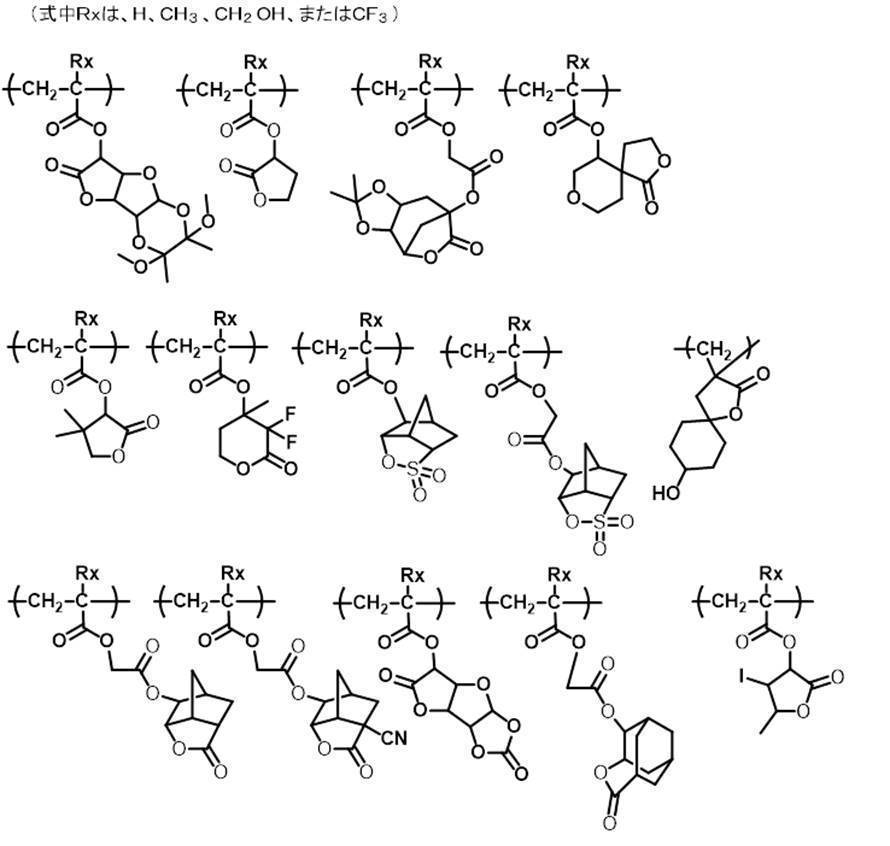

樹脂Aは、式(V-1)で表される繰り返し単位又は式(V-2)で表される繰り返し単位を有していてもよい。
式(V-1)で表される繰り返し単位及び式(V-2)で表される繰り返し単位は、上述の繰り返し単位とは異なる繰り返し単位であることが好ましい。

R6及びR7は、それぞれ独立に、水素原子、水酸基、アルキル基、アルコキシ基、アシロキシ基、シアノ基、ニトロ基、アミノ基、ハロゲン原子、エステル基(-OCOR又は-COOR:Rは炭素数1~6のアルキル基又はフッ素化アルキル基)又はカルボキシ基を表す。アルキル基としては、炭素数1~10の直鎖状、分岐鎖状又は環状のアルキル基が好ましい。
n3は、0~6の整数を表す。
n4は、0~4の整数を表す。
X4は、メチレン基、酸素原子又は硫黄原子である。
式(V-1)で表される繰り返し単位又は(V-2)で表される繰り返し単位を以下に例示する。
式(V-1)で表される繰り返し単位又は(V-2)で表される繰り返し単位としては、例えば、国際公開第2018/193954号の段落[0100]に記載された繰り返し単位が挙げられる。
樹脂Aは、発生酸の過剰な拡散又は現像時のパターン崩壊を抑制できる点から、ガラス転移温度(Tg)が高い方が好ましい。Tgは、90℃より大きいことが好ましく、100℃より大きいことがより好ましく、110℃より大きいことが更に好ましく、125℃より大きいことが特に好ましい。なお、現像液への溶解速度が優れる点から、Tgは400℃以下が好ましく、350℃以下がより好ましい。
なお、本明細書において、樹脂A等のポリマーのガラス転移温度(Tg)(以下、「繰り返し単位のTg」ともいう。)は、以下の方法で算出する。まず、ポリマー中に含まれる各繰り返し単位のみからなるホモポリマーのTgを、Bicerano法によりそれぞれ算出する。次に、ポリマー中の全繰り返し単位に対する、各繰り返し単位の質量割合(%)を算出する。次に、Foxの式(Materials Letters 62(2008)3152等に記載)を用いて各質量割合におけるTgを算出して、これらを総和して、ポリマーのTg(℃)とする。
Bicerano法は、Prediction of polymer properties, Marcel Dekker Inc, New York(1993)に記載されている。また、Bicerano法によるTgの算出は、ポリマーの物性概算ソフトウェアMDL Polymer(MDL Information Systems, Inc.)を用いて行うことができる。
(a)主鎖への嵩高い置換基の導入
(b)主鎖への複数の置換基の導入
(c)主鎖近傍への樹脂A間の相互作用を誘発する置換基の導入
(d)環状構造での主鎖形成
(e)主鎖への環状構造の連結
なお、樹脂Aは、ホモポリマーのTgが130℃以上を示す繰り返し単位を有することが好ましい。
なお、ホモポリマーのTgが130℃以上を示す繰り返し単位の種類は、Bicerano法により算出されるホモポリマーのTgが130℃以上である繰り返し単位であればよい。なお、後述する式(A)~(E)で表される繰り返し単位中の官能基の種類によっては、ホモポリマーのTgが130℃以上を示す繰り返し単位に該当する。
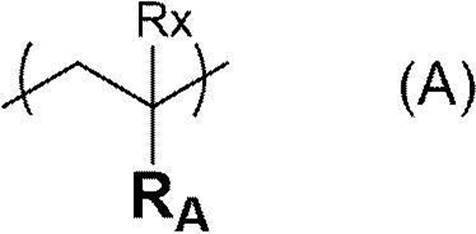
式(A)で表される繰り返し単位としては、例えば、国際公開第2018/193954号の段落[0107]~[0119]に記載のものが挙げられる。
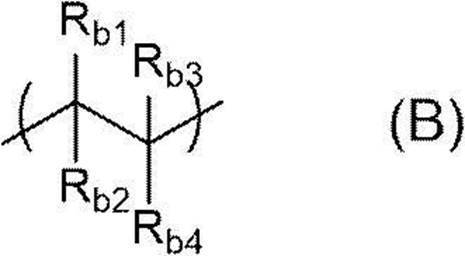
また、有機基の少なくとも1つが、繰り返し単位中の主鎖に直接環構造が連結している基である場合、他の有機基の種類は特に制限されない。
また、有機基のいずれも繰り返し単位中の主鎖に直接環構造が連結している基ではない場合、有機基の少なくとも2つ以上は、水素原子を除く構成原子の数が3つ以上である置換基である。
式(B)で表される繰り返し単位としては、例えば、国際公開第2018/193954号の段落[0113]~[0115]に記載のものが挙げられる。

式(C)で表される繰り返し単位としては、例えば、国際公開第2018/193954号の段落[0119]~[0121]に記載のものが挙げられる。

式(D)で表される繰り返し単位としては、例えば、国際公開第2018/193954号の段落[0126]~[0127]に記載のものが挙げられる。
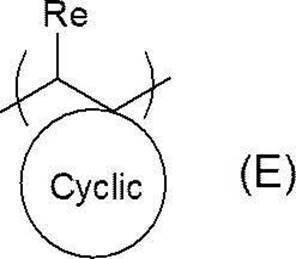
「cylic」は、主鎖の炭素原子を含む環状基である。環状基に含まれる原子数は特に制限されない。
式(E)で表される繰り返し単位としては、例えば、国際公開第2018/193954号の段落[0131]~[0133]に記載のものが挙げられる。
樹脂Aは、ラクトン基、スルトン基、カーボネート基、水酸基、シアノ基及びアルカリ可溶性基から選ばれる少なくとも1つの基を有する繰り返し単位を有していてもよい。
樹脂Aが有するラクトン基、スルトン基又はカーボネート基を有する繰り返し単位としては、上述した<ラクトン基、スルトン基又はカーボネート基を有する繰り返し単位>で説明した繰り返し単位が挙げられる。好ましい含有量も上述した<ラクトン基、スルトン基又はカーボネート基を有する繰り返し単位>で説明したとおりである。
水酸基又はシアノ基を有する繰り返し単位は、水酸基又はシアノ基で置換された脂環式炭化水素構造を有する繰り返し単位であることが好ましい。
水酸基又はシアノ基を有する繰り返し単位は、酸分解性基を有さないことが好ましい。
水酸基又はシアノ基を有する繰り返し単位としては、特開2014-098921号公報の段落[0081]~[0084]に記載のものが挙げられる。
アルカリ可溶性基としては、カルボキシ基、スルホンアミド基、スルホニルイミド基、ビスルスルホニルイミド基及びα位が電子求引性基で置換された脂肪族アルコール(例えば、ヘキサフロロイソプロパノール基)が挙げられ、カルボキシ基が好ましい。樹脂Aがアルカリ可溶性基を有する繰り返し単位を含むことにより、コンタクトホール用途での解像性が増す。アルカリ可溶性基を有する繰り返し単位としては、特開2014-098921号公報の段落[0085]及び[0086]に記載のものが挙げられる。
樹脂Aは、脂環式炭化水素構造を有し、酸分解性を示さない繰り返し単位を有してもよい。これにより液浸露光時にレジスト膜から液浸液への低分子成分の溶出が低減できる。このような繰り返し単位として、例えば、1-アダマンチル(メタ)アクリレート、ジアマンチル(メタ)アクリレート、トリシクロデカニル(メタ)アクリレート及びシクロヘキシル(メタ)アクリレート由来の繰り返し単位が挙げられる。
樹脂Aは、水酸基及びシアノ基のいずれも有さない、式(III)で表される繰り返し単位を有していてもよい。

Raは水素原子、アルキル基又は-CH2-O-Ra2基を表す。式中、Ra2は、水素原子、アルキル基又はアシル基を表す。
水酸基及びシアノ基のいずれも有さない、式(III)で表される繰り返し単位としては、特開2014-098921号公報の段落[0087]~[0094]に記載のものが挙げられる。
更に、樹脂Aは、上述した繰り返し単位以外の繰り返し単位を有してもよい。
例えば樹脂Aは、オキサチアン環基を有する繰り返し単位、オキサゾロン環基を有する繰り返し単位、ジオキサン環基を有する繰り返し単位及びヒダントイン環基を有する繰り返し単位からなる群から選択される繰り返し単位を有していてもよい。
このような繰り返し単位を以下に例示する。
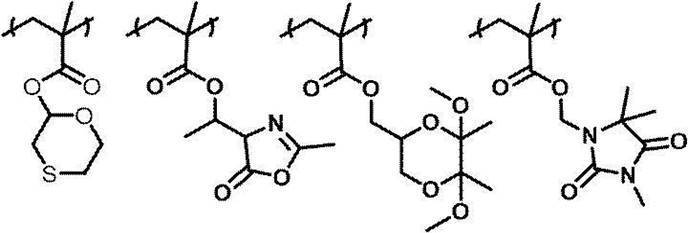
GPC法によりポリスチレン換算値として、樹脂Aの重量平均分子量は、30,000以下が好ましく、1,000~30,000がより好ましく、3,000~30,000が更に好ましく、5,000~15,000が特に好ましい。
樹脂Aの分散度(分子量分布)は、1~5が好ましく、1~3がより好ましく、1.2~3.0が更に好ましく、1.2~2.0が特に好ましい。分散度が小さいものほど、解像度及びレジスト形状がより優れ、更に、レジストパターンの側壁がよりスムーズであり、ラフネス性にもより優れる。
樹脂Aの含有量は、レジスト組成物の全固形分に対して、40.0~99.9質量%が好ましく、60.0~98.0質量%がより好ましい。
レジスト組成物は、他の光酸発生剤(B)を含んでいてもよい。
他の光酸発生剤(B)は、上記樹脂A及び後述する特定酸拡散制御剤以外の成分であり、活性光線又は放射線の照射により酸を発生させる化合物である。
他の光酸発生剤(B)は、フッ素原子を有していてもよい。
他の光酸発生剤(B)の分子量は、3000以下が好ましく、2000以下がより好ましく、1000以下が更に好ましい。下限としては、100以上が好ましい。
上記有機酸として、例えば、スルホン酸(脂肪族スルホン酸、芳香族スルホン酸及びカンファースルホン酸等)、カルボン酸(脂肪族カルボン酸、芳香族カルボン酸及びアラルキルカルボン酸等)、カルボニルスルホニルイミド酸、ビス(アルキルスルホニル)イミド酸及びトリス(アルキルスルホニル)メチド酸が挙げられる。
上記有機カチオンとしては、式(ZaI)で表されるカチオン(以下、「カチオン(ZaI)」ともいう。)又は式(ZaII)で表されるカチオン(以下、「カチオン(ZaII)」ともいう。)が好ましい。
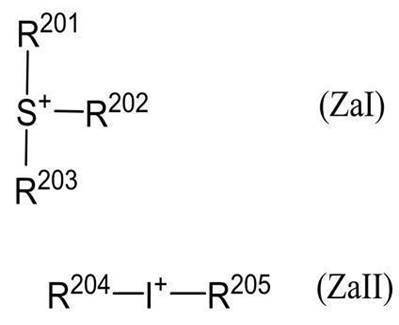
R201、R202及びR203は、それぞれ独立に、有機基を表す。
R201、R202及びR203としての有機基の炭素数は、1~30が好ましく、1~20がより好ましい。また、R201~R203のうち2つが結合して環構造を形成してもよく、環内に酸素原子、硫黄原子、エステル基、アミド基又はカルボニル基を含んでいてもよい。R201~R203の内の2つが結合して形成する基としては、例えば、アルキレン基(例えば、ブチレン基及びペンチレン基)及び-CH2-CH2-O-CH2-CH2-が挙げられる。
カチオン(ZaI-1)は、上記式(ZaI)のR201~R203の少なくとも1つがアリール基である、アリールスルホニウムカチオンである。
アリールスルホニウムカチオンは、R201~R203の全てがアリール基であってもよいし、R201~R203の一部がアリール基であり、残りがアルキル基又はシクロアルキル基であってもよい。
また、R201~R203のうちの1つがアリール基であり、R201~R203のうちの残りの2つが結合して環構造を形成してもよく、環内に酸素原子、硫黄原子、エステル基、アミド基又はカルボニル基を含んでいてもよい。R201~R203のうちの2つが結合して形成する基としては、例えば、1つ以上のメチレン基が酸素原子、硫黄原子、エステル基、アミド基及び/又はカルボニル基で置換されていてもよいアルキレン基(例えば、ブチレン基、ペンチレン基及び-CH2-CH2-O-CH2-CH2-)が挙げられる。
アリールスルホニウムカチオンとしては、トリアリールスルホニウムカチオン、ジアリールアルキルスルホニウムカチオン、アリールジアルキルスルホニウムカチオン、ジアリールシクロアルキルスルホニウムカチオン及びアリールジシクロアルキルスルホニウムカチオンが挙げられる。
アリールスルホニウムカチオンが必要に応じて有しているアルキル基又はシクロアルキル基は、炭素数1~15の直鎖状アルキル基、炭素数3~15の分岐鎖状アルキル基又は炭素数3~15のシクロアルキル基が好ましく、メチル基、エチル基、プロピル基、n-ブチル基、sec-ブチル基、t-ブチル基、シクロプロピル基、シクロブチル基又はシクロヘキシル基がより好ましい。
上記置換基は可能な場合更に置換基を有していてもよく、上記アルキル基が置換基としてハロゲン原子を有して、トリフルオロメチル基等のハロゲン化アルキル基となっていることも好ましい。
また、上記置換基は任意の組み合わせにより、酸分解性基を形成することも好ましい。
なお、酸分解性基とは、酸の作用により分解して極性基を生じる基を意図し、酸の作用により脱離する脱離基で極性基が保護された構造であることが好ましい。上記の極性基及び脱離基としては、上述のとおりである。
カチオン(ZaI-2)は、式(ZaI)におけるR201~R203が、それぞれ独立に、芳香環を有さない有機基を表すカチオンである。芳香環とは、ヘテロ原子を含む芳香環も包含する。
R201~R203としての芳香環を有さない有機基の炭素数は、1~30が好ましく、1~20がより好ましい。
R201~R203としては、それぞれ独立に、アルキル基、シクロアルキル基、アリル基又はビニル基が好ましく、直鎖状若しくは分岐鎖状の2-オキソアルキル基、2-オキソシクロアルキル基又はアルコキシカルボニルメチル基がより好ましく、直鎖状若しくは分岐鎖状の2-オキソアルキル基が更に好ましい。
R201~R203は、ハロゲン原子、アルコキシ基(例えば、炭素数1~5)、水酸基、シアノ基又はニトロ基によって更に置換されていてもよい。
また、R201~R203の置換基は、それぞれ独立に、置換基の任意の組み合わせにより、酸分解性基を形成することも好ましい。
カチオン(ZaI-3b)は、式(ZaI-3b)で表されるカチオンである。

R1c~R5cは、それぞれ独立に、水素原子、アルキル基、シクロアルキル基、アリール基、アルコキシ基、アリールオキシ基、アルコキシカルボニル基、アルキルカルボニルオキシ基、シクロアルキルカルボニルオキシ基、ハロゲン原子、水酸基、ニトロ基、アルキルチオ基又はアリールチオ基を表す。
R6c及びR7cは、それぞれ独立に、水素原子、アルキル基(例えば、t-ブチル基等)、シクロアルキル基、ハロゲン原子、シアノ基又はアリール基を表す。
Rx及びRyは、それぞれ独立に、アルキル基、シクロアルキル基、2-オキソアルキル基、2-オキソシクロアルキル基、アルコキシカルボニルアルキル基、アリル基又はビニル基を表す。
また、R1c~R7c並びにRx及びRyの置換基は、それぞれ独立に、置換基の任意の組み合わせにより、酸分解性基を形成することも好ましい。
上記環としては、芳香族又は非芳香族の炭化水素環、芳香族又は非芳香族のヘテロ環及びこれらの環が2つ以上組み合わされてなる多環縮合環が挙げられる。環としては、3~10員環が挙げられ、4~8員環が好ましく、5又は6員環がより好ましい。
R5cとR6c及びR5cとRxが結合して形成する基としては、単結合又はアルキレン基が好ましい。アルキレン基としては、メチレン基及びエチレン基が挙げられる。
カチオン(ZaI-4b)は、式(ZaI-4b)で表されるカチオンである。
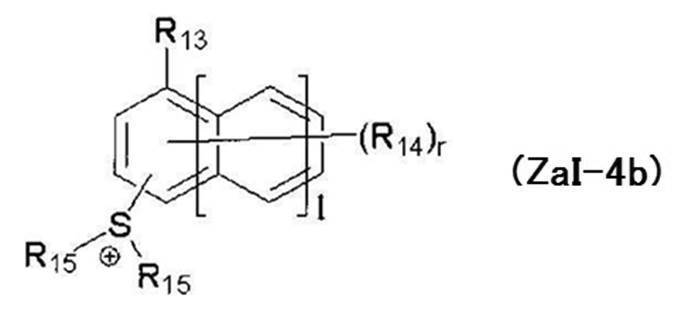
lは。0~2の整数を表す。
rは、0~8の整数を表す。
R13は、水素原子、ハロゲン原子(例えば、フッ素原子及びヨウ素原子等)、水酸基、アルキル基、ハロゲン化アルキル基、アルコキシ基、カルボキシ基、アルコキシカルボニル基又はシクロアルキル基を含む基(シクロアルキル基そのものであってもよく、シクロアルキル基を一部に含む基であってもよい)を表す。これらの基は置換基を有してもよい。
R14は、水酸基、ハロゲン原子(例えば、フッ素原子及びヨウ素原子等)、アルキル基、ハロゲン化アルキル基、アルコキシ基、アルコキシカルボニル基、アルキルカルボニル基、アルキルスルホニル基、シクロアルキルスルホニル基又はシクロアルキル基を含む基(シクロアルキル基そのものであってもよく、シクロアルキル基を一部に含む基であってもよい)を表す。これらの基は置換基を有してもよい。R14は、複数存在する場合、それぞれ独立して、水酸基等の上記基を表す。
R15は、それぞれ独立して、アルキル基、シクロアルキル基又はナフチル基を表す。2つのR15が互いに結合して環を形成してもよい。2つのR15が互いに結合して環を形成するとき、環骨格内に、酸素原子又は窒素原子等のヘテロ原子を含んでいてもよい。
一態様において、2つのR15がアルキレン基であり、互いに結合して環構造を形成することが好ましい。なお、上記アルキル基、上記シクロアルキル基及び上記ナフチル基並びに2つのR15が互いに結合して形成する環は置換基を有してもよい。
また、R13~R15並びにRx及びRyの各置換基は、それぞれ独立に、置換基の任意の組み合わせにより、酸分解性基を形成するのも好ましい。
式(ZaII)中、R204及びR205は、それぞれ独立に、アリール基、アルキル基又はシクロアルキル基を表す。
R204及びR205のアリール基としては、フェニル基又はナフチル基が好ましく、フェニル基がより好ましい。R204及びR205のアリール基は、酸素原子、窒素原子又は硫黄原子等を有するヘテロ環を有するアリール基であってもよい。ヘテロ環を有するアリール基の骨格としては、例えば、ピロール、フラン、チオフェン、インドール、ベンゾフラン及びベンゾチオフェンが挙げられる。
R204及びR205のアルキル基及びシクロアルキル基としては、炭素数1~10の直鎖状アルキル基又は炭素数3~10の分岐鎖状アルキル基(例えば、メチル基、エチル基、プロピル基、ブチル基及びペンチル基等)又は炭素数3~10のシクロアルキル基(例えばシクロペンチル基、シクロヘキシル基及びノルボルニル基等)が好ましい。
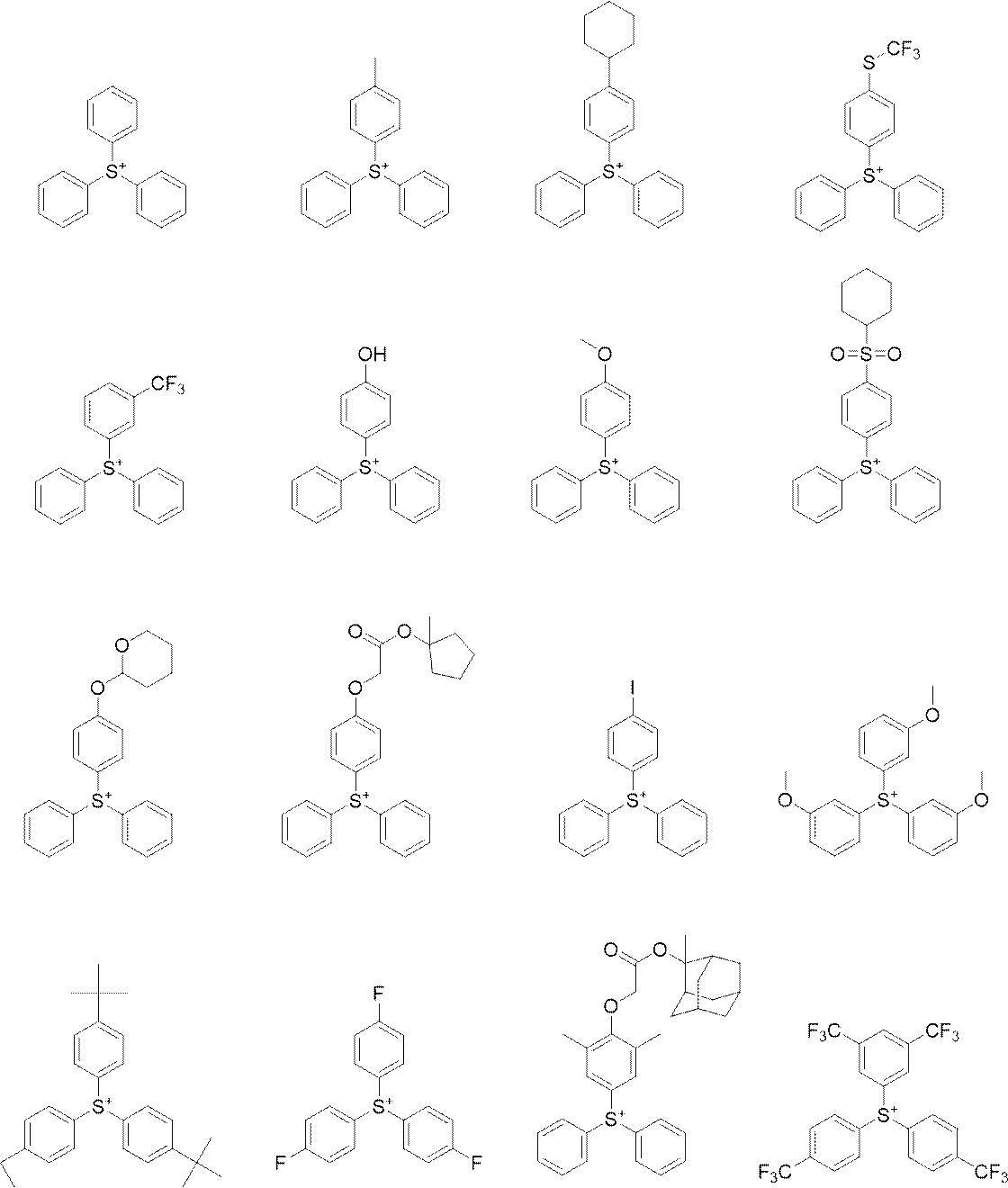
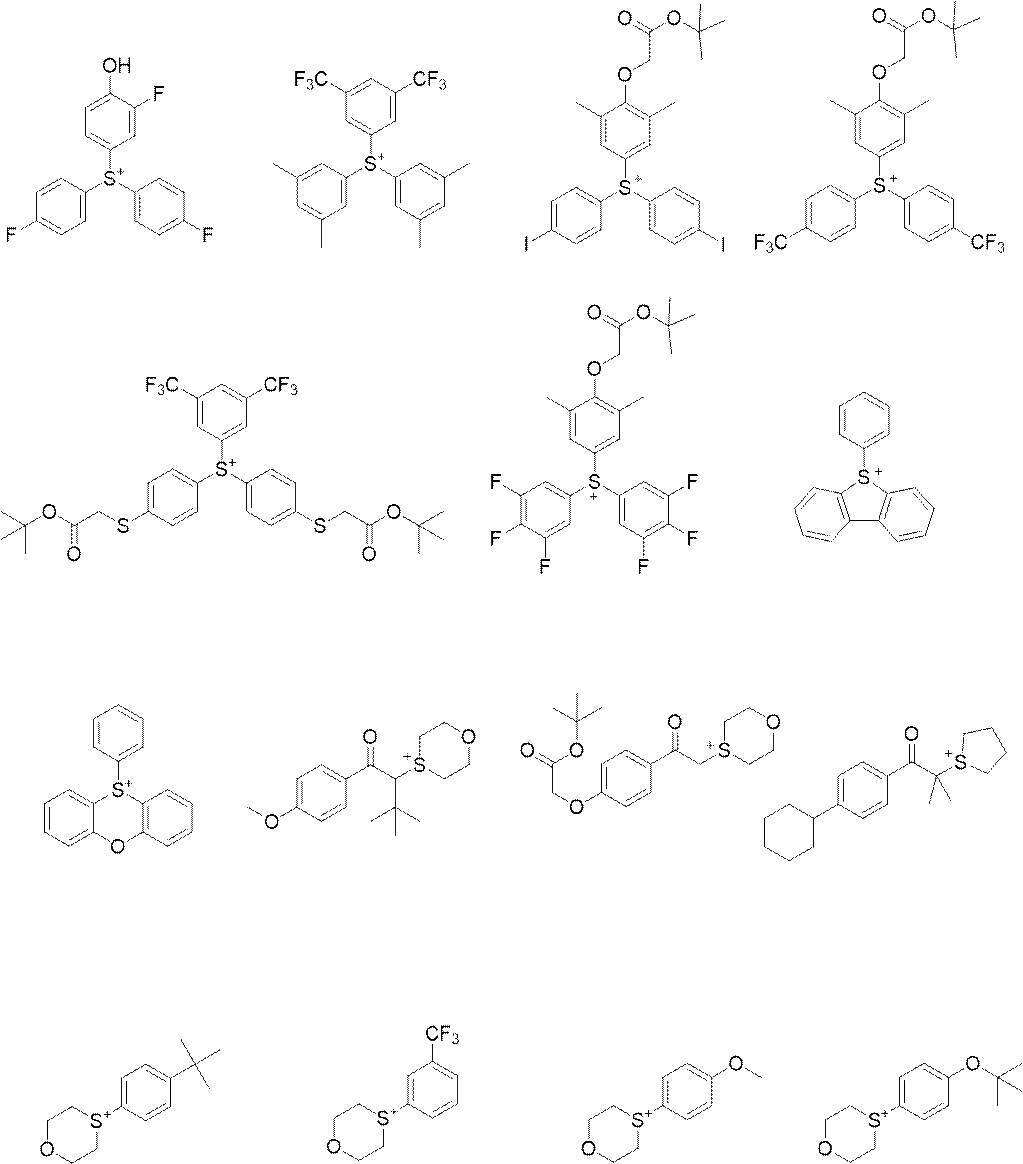
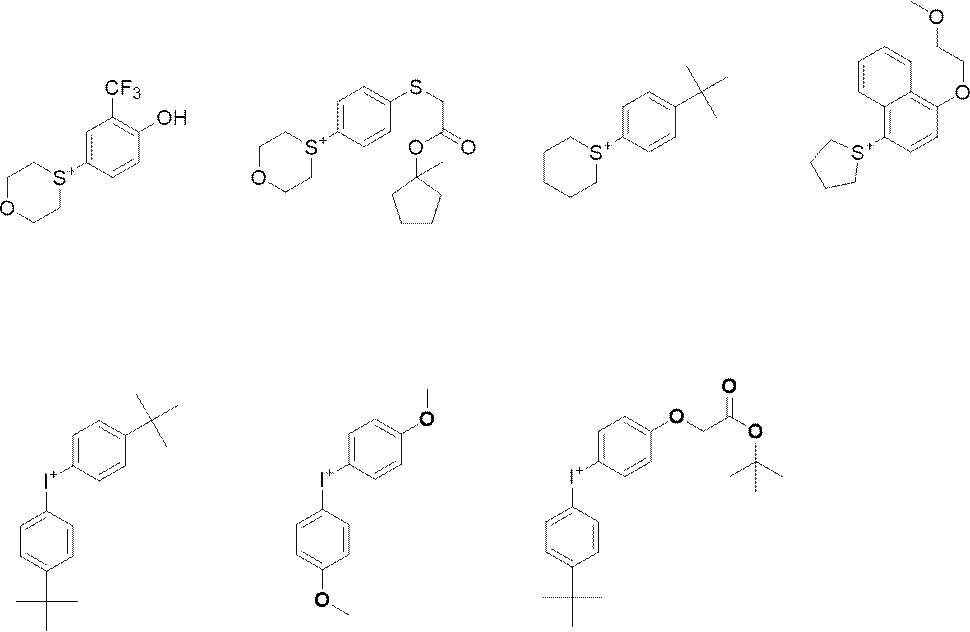
有機アニオンとしては、求核反応を起こす能力が著しく低いアニオンが好ましく、非求核性アニオンがより好ましい。
上記アルキル基は、例えば、フルオロアルキル基(フッ素原子以外の置換基を有していてもよい。パーフルオロアルキル基であってもよい)であってもよい。
炭素数7~14のアラルキル基としては、例えば、ベンジル基、フェネチル基、ナフチルメチル基、ナフチルエチル基及びナフチルブチル基が挙げられる。
また、ビス(アルキルスルホニル)イミドアニオンにおけるアルキル基は、互いに結合して環構造を形成してもよい。これにより、酸強度が増加する。
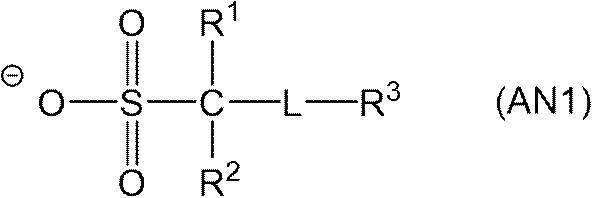
置換基は、電子求引性基ではない基が好ましい。電子求引性基ではない基としては、例えば、炭化水素基、水酸基、オキシ炭化水素基、オキシカルボニル炭化水素基、アミノ基、炭化水素置換アミノ基及び炭化水素置換アミド基が挙げられる。
また、電子求引性基ではない基としては、それぞれ独立に、-R’、-OH、-OR’、-OCOR’、-NH2、-NR’2、-NHR’又は-NHCOR’が好ましい。R’は、1価の炭化水素基である。
なかでも、R1及びR2は、それぞれ独立に、炭化水素基(シクロアルキル基が好ましい)又は水素原子が好ましい。
Lが複数存在する場合、Lは、それぞれ同一でも異なっていてもよい。
2価の連結基としては、例えば、-O-CO-O-、-COO-、-CONH-、-CO-、-O-、-S-、-SO-、-SO2-、アルキレン基(炭素数1~6が好ましい)、シクロアルキレン基(炭素数3~15が好ましい)、アルケニレン基(炭素数2~6が好ましい)及びそれらを組み合わせた基2価の連結基が挙げられる。なかでも、2価の連結基としては、-O-CO-O-、-COO-、-CONH-、-CO-、-O-、-SO2-、-O-CO-O-アルキレン基-、-COO-アルキレン基-又は-CONH-アルキレン基-が好ましく、-O-CO-O-、-O-CO-O-アルキレン基-、-COO-、-CONH-、-SO2-又は-COO-アルキレン基-がより好ましい。
*a-(CR2a 2)X-Q-(CR2b 2)Y-*b (AN1-1)
*bは、式(AN1)における-C(R1)(R2)-との結合位置を表す。
X及びYは、それぞれ独立に、0~10の整数を表し、0~3の整数が好ましい。
R2a及びR2bは、それぞれ独立に、水素原子又は置換基を表す。
R2a及びR2bがそれぞれ複数存在する場合、複数存在するR2a及びR2bは、それぞれ同一でも異なっていてもよい。
ただし、Yが1以上の場合、式(AN1)における-C(R1)(R2)-と直接結合するCR2b 2におけるR2bは、フッ素原子以外である。
Qは、*A-O-CO-O-*B、*A-CO-*B、*A-CO-O-*B、*A-O-CO-*B、*A-O-*B、*A-S-*B又は*A-SO2-*Bを表す。
ただし、式(AN1-1)中のX+Yが1以上、かつ、式(AN1-1)中のR2a及びR2bのいずれもが全て水素原子である場合、Qは、*A-O-CO-O-*B、*A-
CO-*B、*A-O-CO-*B、*A-O-*B、*A-S-*B又は*A-SO2-*Bを表す。
*Aは、式(AN1)におけるR3側の結合位置を表し、*Bは、式(AN1)における-SO3 -側の結合位置を表す。
上記有機基は、炭素原子を1以上有していれば特に制限はなく、直鎖状の基(例えば、直鎖状のアルキル基)でも、分岐鎖状の基(例えば、t-ブチル基等の分岐鎖状のアルキル基)でもよく、環状の基であってもよい。上記有機基は、置換基を有していても、有していなくてもよい。上記有機基は、ヘテロ原子(酸素原子、硫黄原子及び/又は窒素原子等)を有していても、有してなくてもよい。
上記環状構造を有する有機基は、例えば、ヘテロ原子(酸素原子、硫黄原子及び/又は窒素原子等)を有していても、有してなくてもよい。ヘテロ原子は、環状構造を形成する炭素原子の1つ以上と置換していてもよい。
上記環状構造を有する有機基は、例えば、環状構造の炭化水素基、ラクトン環基又はスルトン環基が好ましい。なかでも、上記環状構造を有する有機基は、環状構造の炭化水素基が好ましい。
上記環状構造の炭化水素基は、単環又は多環のシクロアルキル基が好ましい。これらの基は、置換基を有していてもよい。
上記シクロアルキル基は、単環(シクロヘキシル基等)でも多環(アダマンチル基等)でもよく、炭素数は5~12が好ましい。
上記ラクトン基及びスルトン基としては、例えば、上述した式(LC1-1)~(LC1-21)で表される構造及び式(SL1-1)~(SL1-3)で表される構造のいずれかにおいて、ラクトン構造又はスルトン構造を構成する環員原子から、水素原子を1つ除いてなる基が好ましい。

Xfは、フッ素原子又は炭素数1~4のパーフルオロアルキル基であることが好ましく、フッ素原子又はCF3であることがより好ましく、双方のXfがフッ素原子であることが更に好ましい。
R4及びR5で表されるアルキル基は、炭素数1~4が好ましい。上記アルキル基は置換基を有していてもよい。R4及びR5としては、水素原子が好ましい。
環状の有機基としては、例えば、脂環基、アリール基及び複素環基が挙げられる。
脂環基は、単環であってもよく、多環であってもよい。単環の脂環基としては、例えば、シクロペンチル基、シクロヘキシル基及びシクロオクチル基等の単環のシクロアルキル基が挙げられる。多環の脂環基としては、例えば、ノルボルニル基、トリシクロデカニル基、テトラシクロデカニル基、テトラシクロドデカニル基及びアダマンチル基等の多環のシクロアルキル基が挙げられる。なかでも、ノルボルニル基、トリシクロデカニル基、テトラシクロデカニル基、テトラシクロドデカニル基及びアダマンチル基等の炭素数7以上の嵩高い構造を有する脂環基が好ましい。
複素環基は、単環又は多環であってもよい。なかでも、多環の複素環基である場合、より酸の拡散を抑制できる。また、複素環基は、芳香族性を有していてもよいし、芳香族性を有していなくてもよい。芳香族性を有している複素環としては、例えば、フラン環、チオフェン環、ベンゾフラン環、ベンゾチオフェン環、ジベンゾフラン環、ジベンゾチオフェン環及びピリジン環が挙げられる。芳香族性を有していない複素環としては、例えば、テトラヒドロピラン環、ラクトン環、スルトン環及びデカヒドロイソキノリン環が挙げられる。複素環基における複素環としては、フラン環、チオフェン環、ピリジン環又はデカヒドロイソキノリン環が好ましい。

nは、0以上の整数を表す。nとしては、1~4が好ましく、2~3がより好ましく、3が更に好ましい。
Bとしては、脂肪族炭化水素基が好ましく、イソプロピル基、シクロヘキシル基又は更に置換基を有してもよいアリール基(トリシクロヘキシルフェニル基等)がより好ましい。
ジスルホンアミドアニオンは、例えば、N-(SO2-Rq)2で表されるアニオンである。
Rqは置換基を有していてもよいアルキル基を表し、フルオロアルキル基が好ましく、パーフルオロアルキル基がより好ましい。2個のRqは互いに結合して環を形成してもよい。2個のRqが互いに結合して形成される基は、置換基を有していてもよいアルキレン基が好ましく、フルオロアルキレン基が好ましく、パーフルオロアルキレン基が更に好ましい。上記アルキレン基の炭素数は2~4が好ましい。
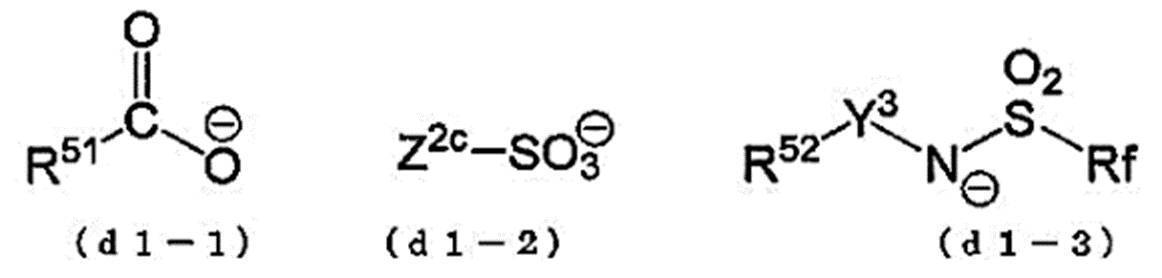

Z2cにおける上記炭化水素基は、直鎖状でも分岐鎖状でもよく、環状構造を有していてもよい。また、上記炭化水素基における炭素原子(好ましくは、上記炭化水素基が環状構造を有する場合における、環員原子である炭素原子)は、カルボニル炭素(-CO-)であってもよい。上記炭化水素基としては、例えば、置換基を有していてもよいノルボルニル基を有する基が挙げられる。上記ノルボルニル基を形成する炭素原子は、カルボニル炭素であってもよい。
また、式(d1-2)中の「Z2c-SO3 -」は、上述の式(AN1)~(AN3)で表されるアニオンとは異なることが好ましい。例えば、Z2cは、アリール基以外が好ましい。また、例えば、Z2cにおける、-SO3 -に対してα位及びβ位の原子は、置換基としてフッ素原子を有する炭素原子以外の原子が好ましい。例えば、Z2cは、-SO3 -に対してα位の原子及び/又はβ位の原子は環状基中の環員原子であることが好ましい。
レジスト組成物が他の光酸発生剤(B)を含む場合、他の光酸発生剤(B)の含有量は、形成されるパターンの断面形状がより矩形化する観点から、レジスト組成物の全固形分に対して、0.5質量%以上が好ましく、1.0質量%以上がより好ましい。上限としては、レジスト組成物の全固形分に対して、50.0質量%以下が好ましく、30.0質量%以下がより好ましく、10.0質量%以下が更に好ましい。
レジスト組成物は、特定酸拡散制御剤を含む。
特定酸拡散制御剤は、活性光線又は放射線の照射により分解して、上記式(c)で表される光酸発生基から発生する酸よりもpKaが0.50以上高い酸を発生する化合物である。
特定酸拡散制御剤は、露光時に光酸発生剤等から発生する酸をトラップし、余分な発生酸による、未露光部における酸分解性樹脂の反応を抑制するクエンチャーとして作用するものである。
上記特定酸拡散制御剤のpKaの測定方法としては、該当する化合物を用いて、上述したpKaの算出方法(例えば、ソフトウェアパッケージ1等)が挙げられる。
特定酸拡散制御剤は、式(C1)で表される化合物及び式(C2)で表される化合物からなる群から選択される少なくとも1つを含むことが好ましい。
式(C1)中、AC1 -は、-COO-、-O-又は-N--SO2-RC1bを表す。RC1a及びRC1bは、それぞれ独立に、有機基を表す。RC1aとRC1bとは、互いに結合して環を形成していてもよい。MC1 +は、スルホニウムカチオン又はヨードニウムカチオンを表す。
上記有機基としては、例えば、置換基を有していてもよい、アルキル基、シクロアルキル基、アリール基、アルキルオキシカルボニル基、シクロアルキルオキシカルボニル基、アリールオキシカルボニル基、アルキルアミノカルボニル基、シクロアルキルアミノカルボニル基、アルデヒド基及びアリールアミノカルボニル基が挙げられる。なかでも、アルデヒド基、置換基を有していてもよいアルキル基又は置換基を有していてもよいアリール基が好ましい。
有機基の炭素数は、1~30が好ましく、1~20がより好ましく、6~12が更に好ましい。
置換基としては、例えば、ハロゲン原子(フッ素原子が好ましい)及び水酸基が挙げられる。
RC1aとRC1bとが互いに結合して形成される環は、単環及び多環のいずれであってもよい。
MC1 +としては、上記式(ZaI)で表されるカチオン又は上記式(ZaII)で表されるカチオンが好ましい。
式(C2)中、AC2 -は、-COO-、-O-又は-N--SO2-RC2を表す。LC2は、単結合又は2価の連結基を表す。MC2 +は、-S+RC3RC4又は-I+RC5を表す。RC2~RC5は、それぞれ独立に、有機基を表す。
2価の連結基としては、例えば、直鎖状又は分岐鎖状のアルキレン基、シクロアルキレン基、アリーレン基(好ましくは炭素数6~15)、カルボニル基、エーテル結合、エステル結合、アミド結合、ウレタン結合、ウレア結合、及び、これらを組み合わせた基が挙げられる。なかでも、アルキレン基、アリーレン基、エーテル結合、エステル結合、又は、これらの2種以上を組み合わせてなる基が好ましく、アリーレン基がより好ましく、フェニル基が更に好ましい。
なかでも、組成物が活性光線又は放射線の照射により塩基性が低下又は消失する塩基性化合物(CB)を含むのが好ましい。
化合物(CA)としては、式(A)~(E)で表される構造を有する化合物が好ましい。

R200、R201、及び、R202は、同一でも異なってもよく、それぞれ独立に、水素原子、アルキル基(好ましくは炭素数1~20)、シクロアルキル基(好ましくは炭素数3~20)又はアリール基(好ましくは炭素数6~20)を表す。R201とR202は、互いに結合して環を形成してもよい。
R203、R204、R205、及び、R206は、同一でも異なってもよく、それぞれ独立に、炭素数1~20個のアルキル基を表す。
上記アルキル基について、置換基を有するアルキル基としては、炭素数1~20のアミノアルキル基、炭素数1~20のヒドロキシアルキル基、又は炭素数1~20のシアノアルキル基が好ましい。
式(A)及び(E)中のアルキル基は、無置換であることがより好ましい。
化合物(CB)は、活性光線又は放射線の照射(露光)により分解して塩基性が低下した化合物(酸)を発生する化合物である。上記塩基性が低下した化合物とは、例えば、化合物(CB)の共役酸である。
化合物(CB)から発生する酸のpkaは、例えば、0.5超が好ましく、1.0超がより好ましく、1.5超が更に好ましい。
また、化合物(DB)が、後述する式(c-1)で表されるアニオンを有する場合は、化合物(CB)から発生する酸のpkaは、例えば、-11.0超であるのも好ましい。
プロトンアクセプター性官能基とは、プロトンと静電的に相互作用し得る基又は電子を有する官能基であって、例えば、環状ポリエーテル等のマクロサイクリック構造を有する官能基及びπ共役に寄与しない非共有電子対をもった窒素原子を有する官能基を意味する。π共役に寄与しない非共有電子対を有する窒素原子とは、例えば、下記式に示す部分構造を有する窒素原子である。

プロトンアクセプター性は、pH測定を行うことによって確認することができる。
アニオンとしては、上記他の光酸発生剤が有するアニオンが挙げられ、上述した式(d1-1)~(d1-4)で表されるアニオンが好ましい。また、式(d1-5)で表されるアニオンも好ましい。
上記アリール基は、単環及び多環のいずれであってもよい。
上記置換基としては、ハロゲン原子又はアルキル基が好ましく、ハロゲン原子がより好ましく、フッ素原子が更に好ましい。
上記アリール基の炭素数は、6~20が好ましく、6~12がより好ましい。
上記アリール基としては、フェニル基又はナフチル基が好ましく、フェニル基がより好ましい。
つまり、化合物(CB)は、式(c-1)で表されるアニオンを有する化合物であるのも好ましい。

Qは、-SO3 -、-CO2 -、又は、-W1-N--W2Rfを表す。W1及びW2は、それぞれ独立に、-SO2-又は-CO-を表す。Rfは、置換基を有していてもよいアルキル基、置換基を有していてもよいシクロアルキル基、又は、置換基を有していてもよいアリール基を表す。
Aは、単結合又は2価の連結基を表す。
Xは、単結合、-SO2-、又は、-CO-を表す。
Bは、単結合、酸素原子、又は、-N(Rx)Ry-を表す。Rxは、水素原子又は有機基を表す。Ryは、単結合又は2価の有機基を表す。
Rは、プロトンアクセプター性官能基を有する1価の有機基を表す。
Rxは、Ryと結合して環を形成していてもよく、Rと結合して環を形成していてもよい。
Rxにおけるアルキル基としては、置換基を有していてもよく、好ましくは炭素数1~20の直鎖及び分岐アルキル基であり、アルキル鎖中に酸素原子、硫黄原子、及び/又は、窒素原子を有していてもよい。
なお、置換基を有するアルキル基として、直鎖状又は分岐鎖状のアルキル基にシクロアルキル基が置換した基(例えば、アダマンチルメチル基、アダマンチルエチル基、シクロヘキシルエチル基、及び、カンファー残基等)が挙げられる。
Rxにおけるシクロアルキル基としては、置換基を有していてもよく、炭素数3~20のシクロアルキル基が好ましい。また、シクロアルキル基の環内に酸素原子を有していてもよい。
Rxにおけるアリール基としては、置換基を有していてもよく、好ましくは炭素数6~14のアリール基である。
Rxにおけるアラルキル基としては、置換基を有していてもよく、好ましくは炭素数7~20のアラルキル基が挙げられる。
Rxにおけるアルケニル基としては、置換基を有していてもよく、例えば、Rxとして挙げたアルキル基の任意の位置に2重結合を有する基が挙げられる。
なお、プロトンアクセプター性官能基としては、窒素原子を有する官能基が好ましく、1~3級アミノ基を有する基、又は、含窒素ヘテロ環基がより好ましい。これら構造においては、構造中に含まれる窒素原子に隣接する原子の全てが、炭素原子又は水素原子であるのが好ましい。また、窒素原子に対して、電子求引性の官能基(カルボニル基、スルホニル基、シアノ基、及び、ハロゲン原子等)が直結していないことが好ましい。
このようなプロトンアクセプター性官能基を含む1価の有機基(基R)における一価の有機基としては、好ましい炭素数は2~30であり、アルキル基、シクロアルキル基、アリール基、アラルキル基、及び、アルケニル基等を挙げられ、各基は置換基を有していてもよい。
カチオンとしては、上記他の光酸発生剤が有する有機カチオンが挙げられ、カチオン(ZaI)又はカチオン(ZaII)が好ましい。
塩基性部位は、アミノ基であることが好ましく、脂肪族アミノ基であることがより好ましい。塩基性部位中の窒素原子に隣接する原子の全てが、水素原子又は炭素原子であることが更に好ましい。また、塩基性向上の観点から、窒素原子に対して、電子求引性の官能基(カルボニル基、スルホニル基、シアノ基、及び、ハロゲン原子等)が直結していないことが好ましい。
化合物(CCA)としては、式(C-1)~(C-3)のいずれかで表される化合物が好ましく、式(C-1)で表される化合物がより好ましい。

R1、R2、及び、R3は、それぞれ独立に、有機基を表す。
L1は、カチオン性基(S+、I+、又は、N+)と-X-とを連結する2価の連結基又は単結合を表す。
-X-は、-COO-、-SO3 -、-SO2 -、又は、-N--R4を表す。
R4は、隣接するN原子との連結部位に、カルボニル基(-CO-)、スルホニル基(-SO2-)、及び、スルフィニル基(-S(=O)-)からなる群から選択される少なくとも1つを有する1価の置換基を表す。
R1~R4及びL1は、互いに結合して環を形成してもよい。ただし、式(C-1)におけるR1とR2とが互いに結合して形成する環は、S+以外にはヘテロ原子を有さない。
また、式(C-3)において、R1~R3のうち2つを合わせて1つの2価の置換基を表し、N原子と2重結合により結合していてもよい。
化合物(CD)としては、酸の作用により脱離する基を窒素原子上に有するアミン誘導体が好ましい。
酸の作用により脱離する基としては、アセタール基、カルボネート基、カルバメート基、3級エステル基、3級水酸基、又は、ヘミアミナールエーテル基が好ましく、カルバメート基、又は、ヘミアミナールエーテル基がより好ましい。
化合物(CD)の分子量は、100~1000が好ましく、100~700がより好ましく、100~500が更に好ましい。
化合物(CD)は、窒素原子上に保護基を有するカルバメート基を有してもよい。カルバメート基を構成する保護基としては、式(d-1)で表される基が好ましい。

Rbは、それぞれ独立に、水素原子、アルキル基(好ましくは炭素数1~10)、シクロアルキル基(好ましくは炭素数3~30)、アリール基(好ましくは炭素数3~30)、アラルキル基(好ましくは炭素数1~10)、又は、アルコキシアルキル基(好ましくは炭素数1~10)を表す。Rbは、相互に連結して環を形成していてもよい。
Rbで表されるアルキル基、シクロアルキル基、アリール基、及び、アラルキル基は、それぞれ独立に、ヒドロキシル基、シアノ基、アミノ基、ピロリジノ基、ピペリジノ基、モルホリノ基、オキソ基等の官能基、アルコキシ基、又は、ハロゲン原子で置換されていてもよい。Rbで表されるアルコキシアルキル基についても同様である。
2つのRbが相互に連結して形成する環としては、脂環式炭化水素、芳香族炭化水素、複素環式炭化水素及びその誘導体等が挙げられる。
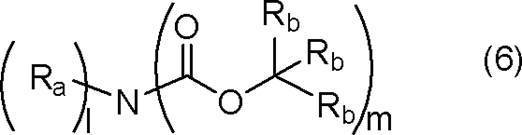
lは0~2の整数を表し、mは1~3の整数を表し、l+m=3を満たす。
Raは、水素原子、アルキル基、シクロアルキル基、アリール基又はアラルキル基を表す。lが2のとき、2つのRaは同じでも異なっていてもよく、2つのRaは相互に連結して式中の窒素原子と共にヘテロ環を形成していてもよい。このヘテロ環には式中の窒素原子以外のヘテロ原子を含んでいてもよい。
Rbは、上記式(d-1)におけるRbと同義であり、好適態様も同じである。
式(6)中、Raとしてのアルキル基、シクロアルキル基、アリール基、及び、アラルキル基は、それぞれ独立に、Rbとしてのアルキル基、シクロアルキル基、アリール基、及び、アラルキル基が置換されていてもよい基として前述した基と同様な基で置換されていてもよい。
また、光酸発生剤に対して相対的に弱酸となるオニウム塩化合物(CC)も挙げられ、具体例としては、国際公開第2020/158337号の段落[0305]~[0314]に記載のものが挙げられる。
上記以外にも、例えば、米国特許出願公開2016/0070167A1号の段落[0627]~[0664]、米国特許出願公開2015/0004544A1号の段落[0095]~[0187]、米国特許出願公開2016/0237190A1号の段落[0403]~[0423]及び米国特許出願公開2016/0274458A1号の段落[0259]~[0328]に開示された公知の化合物を酸拡散制御剤として好適に使用できる。
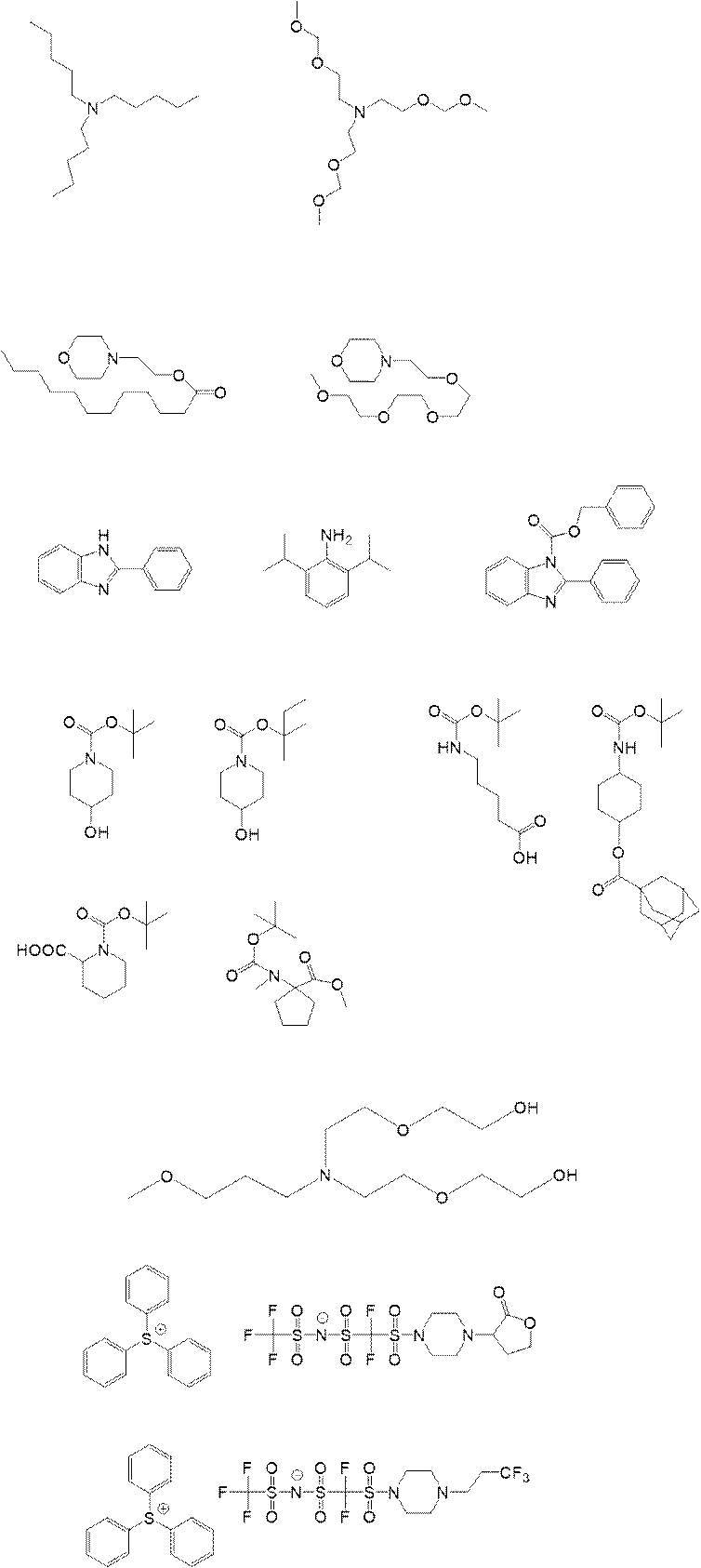
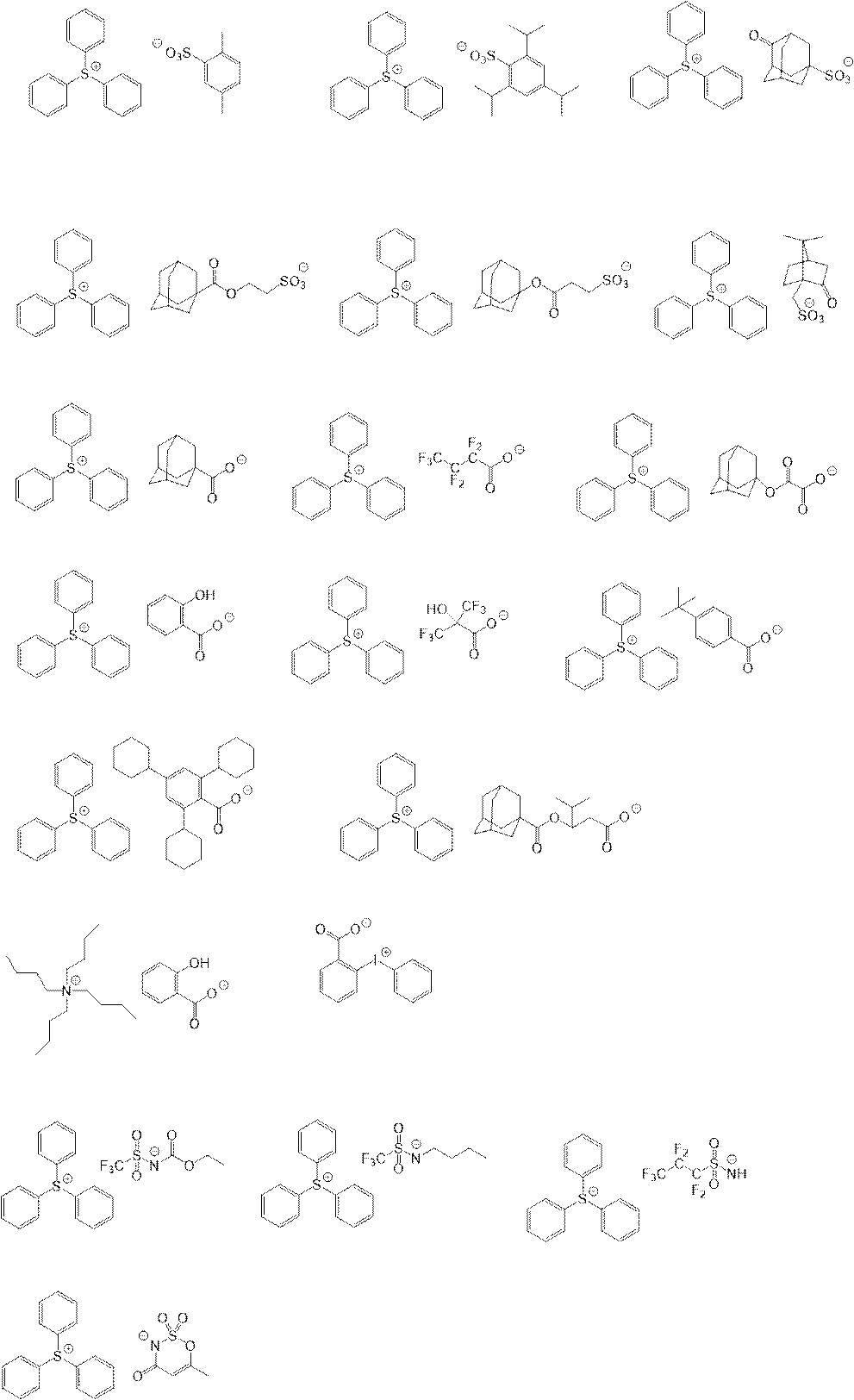
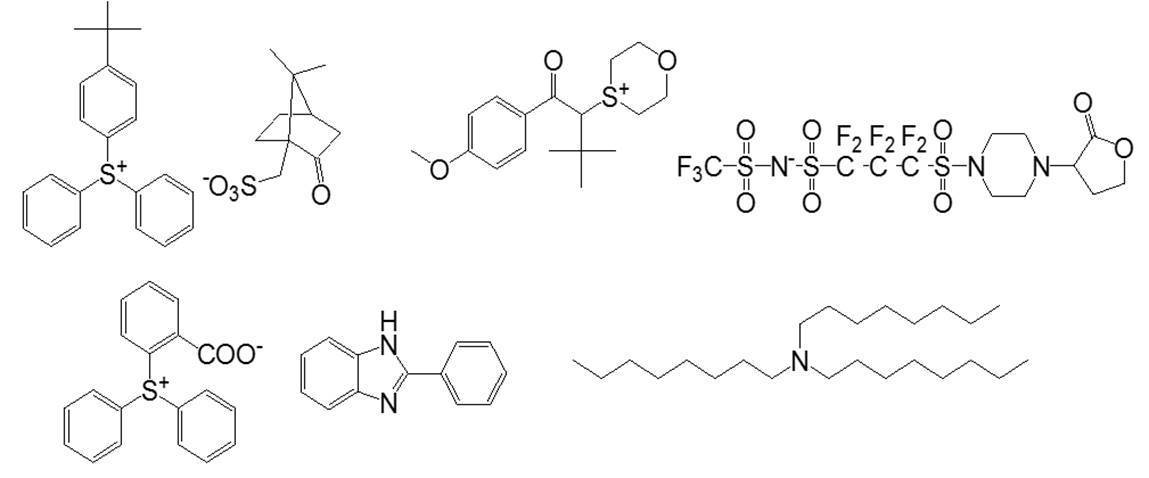
レジスト組成物が特定酸拡散制御剤を含む場合、特定酸拡散制御剤の含有量(複数存在する場合はその合計)は、レジスト組成物の全固形分に対して、0.1~50.0質量%が好ましく、1.0~40.0質量%がより好ましく、5.0~30.0質量%が更に好ましい。
レジスト組成物は、更に、樹脂Aとは異なる疎水性樹脂を含んでいてもよい。
疎水性樹脂はレジスト膜の表面に偏在するように設計されるのが好ましいが、界面活性剤とは異なり、必ずしも分子内に親水基を有する必要はなく、極性物質及び非極性物質の均一な混合に寄与しなくてもよい。
疎水性樹脂の添加による効果として、水に対するレジスト膜表面の静的及び動的な接触角の制御並びにアウトガスの抑制が挙げられる。
疎水性樹脂としては、例えば、国際公開第2020/004306号の段落[0275]~[0279]に記載される化合物が挙げられる。
レジスト組成物が疎水性樹脂を含む場合、疎水性樹脂の含有量は、レジスト組成物の全固形分に対して、0.01~20.0質量%が好ましく、0.1~15.0質量%がより好ましい。
レジスト組成物は、界面活性剤を含んでいてもよい。
界面活性剤を含む場合、密着性により優れ、現像欠陥のより少ないパターンを形成できる。
界面活性剤は、フッ素系及び/又はシリコン系界面活性剤が好ましく、環境規制の観点から、シリコン系界面活性剤がより好ましい。
フッ素系及び/又はシリコン系界面活性剤としては、例えば、国際公開第2018/19395号の段落[0218]及び[0219]に開示された界面活性剤が挙げられる。
レジスト組成物が界面活性剤を含む場合、界面活性剤の含有量は、レジスト組成物の全固形分に対して、0.0001~2.0質量%が好ましく、0.0005~1.0質量%がより好ましく、0.1~1.0質量%が更に好ましい。
レジスト組成物は、溶剤を含むことが好ましい。
溶剤は、(M1)プロピレングリコールモノアルキルエーテルカルボキシレート並びに(M2)プロピレングリコールモノアルキルエーテル、乳酸エステル、酢酸エステル、アルコキシプロピオン酸エステル、鎖状ケトン、環状ケトン、ラクトン及びアルキレンカーボネートからなる群から選択される少なくとも1つの少なくとも一方を含んでいることが好ましい。なお、上記溶剤は、成分(M1)及び(M2)以外の成分を更に含んでいてもよい。
成分(M1)及び成分(M2)の詳細は、国際公開第2020/004306号の段落[0218]~[0226]に記載され、これらの内容は本明細書に組み込まれる。
レジスト組成物は、樹脂A以外の樹脂、溶解阻止化合物、染料、可塑剤、光増感剤、光吸収剤及び/又は現像液に対する溶解性を促進させる化合物(例えば、分子量1000以下のフェノール化合物又はカルボキシ基を含む脂環族若しくは脂肪族化合物)を更に含んでいてもよい。
EUV光用のレジスト組成物である場合、EUV光は波長13.5nmであり、ArF(波長193nm)光等に比べて、より短波長であるため、同じ感度で露光された際の入射フォトン数が少ない。そのため、確率的にフォトンの数がばらつく「フォトンショットノイズ」の影響が大きく、LERの悪化及びブリッジ欠陥が生じやすい。フォトンショットノイズを減らすには、露光量を大きくして入射フォトン数を増やす方法があるが、高感度化の要求とトレードオフとなる。
式(1):A=([H]×0.04+[C]×1.0+[N]×2.1+[O]×3.6+[F]×5.6+[S]×1.5+[I]×39.5)/([H]×1+[C]×12+[N]×14+[O]×16+[F]×19+[S]×32+[I]×127)
A値は0.120以上が好ましい。上限としては、A値が大きすぎる場合、レジスト膜のEUV光及び電子線透過率が低下し、レジスト膜中の光学像プロファイルが劣化し、結果として良好なパターン形状が得られにくくなるため、0.240以下が好ましく、0.220以下がより好ましい。
例えば、レジスト組成物が樹脂A、他の光酸発生剤、特定酸拡散制御剤及び溶剤を含む場合、上記樹脂A、上記他の光酸発生剤及び上記特定酸拡散制御剤が固形分に該当する。つまり、全固形分の全原子とは、上記樹脂A由来の全原子、上記他の光酸発生剤由来の全原子及び上記特定酸拡散制御剤由来の全原子の合計に該当する。
例えば、[H]は、全固形分の全原子に対する、全固形分由来の水素原子のモル比率を表し、上記例に基づいて説明すると、[H]は、上記樹脂A由来の全原子、上記他の光酸発生剤由来の全原子及び上記特定酸拡散制御剤由来の全原子の合計に対する、上記樹脂A由来の水素原子、上記他の光酸発生剤由来の水素原子及び上記特定酸拡散制御剤由来の水素原子の合計のモル比率を表すことになる。
上記レジスト組成物を用いたパターン形成方法の手順は、以下の工程を有することが好ましい。
工程1:レジスト組成物を用いて、基板上にレジスト膜を形成する工程
工程2:レジスト膜を露光する工程
工程3:露光されたレジスト膜を現像液を用いて現像する工程
以下、上記それぞれの工程の手順について詳述する。
工程1は、レジスト組成物を用いて、基板上にレジスト膜を形成する工程である。
レジスト組成物の定義は、上述のとおりである。
なお、塗布前にレジスト組成物を必要に応じてフィルターろ過することが好ましい。フィルターのポアサイズは、0.1μm以下が好ましく、0.05μm以下がより好ましく、0.03μm以下が更に好ましい。下限としては、0.01μm以上が好ましい。また、フィルターは、ポリテトラフルオロエチレン製、ポリエチレン製又はナイロン製が好ましい。
レジスト組成物の塗布後、基板を乾燥し、レジスト膜を形成してもよい。なお、必要により、レジスト膜の下層に、各種下地膜(無機膜、有機膜、反射防止膜)を形成してもよい。
トップコート組成物は、レジスト膜と混合せず、更にレジスト膜上層に均一に塗布できることが好ましい。トップコートは、特に限定されず、従来公知のトップコートを、従来公知の方法によって形成でき、例えば、特開2014-059543号公報の段落[0072]~[0082]の記載に基づいてトップコートを形成できる。
例えば、特開2013-61648号公報に記載されたような塩基性化合物を含むトップコートを、レジスト膜上に形成することが好ましい。トップコートが含み得る塩基性化合物の具体的な例は、レジスト組成物が含んでいてもよい塩基性化合物が挙げられる。
また、トップコートは、エーテル結合、チオエーテル結合、水酸基、チオール基、カルボニル結合及びエステル結合からなる群から選択される基又は結合を少なくとも1つ含む化合物を含むのも好ましい。
工程2は、レジスト膜を露光する工程である。
露光の方法としては、形成したレジスト膜に所定のマスクを通して活性光線又は放射線を照射する方法が挙げられる。
活性光線又は放射線としては、赤外光、可視光、紫外光、遠紫外光、極紫外光、X線及び電子線が挙げられ、好ましくは250nm以下、より好ましくは220nm以下、特に好ましくは1~200nmの波長の遠紫外光、具体的には、KrFエキシマレーザー(248nm)、ArFエキシマレーザー(193nm)、F2エキシマレーザー(157nm)、EUV(13nm)、X線及び電子ビームが挙げられる。
なかでも、描画時間の短縮化及びパターン形状が優れる(解像性及びラフネス性能等)観点から、露光工程は、マルチ電子ビームを用いて露光する工程であることが好ましい。
マルチ電子ビームを用いる描画装置としては、例えば、特開2020-136289号公報及び特開2020-145401号公報が挙げられる。
加熱温度は80~150℃が好ましく、80~140℃がより好ましく、80~130℃が更に好ましい。
加熱時間は10~1000秒が好ましく、10~180秒がより好ましく、30~120秒が更に好ましい。
加熱は通常の露光機及び/又は現像機に備わっている手段で実施でき、ホットプレート等を用いて行ってもよい。この工程を露光後ベークともいう。
工程3は、現像液を用いて、露光されたレジスト膜を現像し、パターンを形成する工程である。
現像液は、アルカリ現像液であっても、有機溶剤を含む現像液(以下、「有機系現像液」ともいう。)であってもよい。
また、現像を行う工程の後に、他の溶剤に置換しながら、現像を停止する工程を実施してもよい。
現像時間は未露光部の樹脂が十分に溶解する時間であれば特に制限はなく、10~300秒が好ましく、20~120秒がより好ましい。
現像液の温度は0~50℃が好ましく、15~35℃がより好ましい。
有機系現像液に対する有機溶剤の含有量は、現像液の全質量に対して、50~100質量%が好ましく、80~100質量%がより好ましく、90~100質量%が更に好ましく、95~100質量%が特に好ましい。
上記パターン形成方法は、工程3の後に、リンス液を用いて洗浄する工程を含むことが好ましい。
リンス液には、界面活性剤を適当量添加してもよい。
また、本発明のパターン形成方法は、リンス工程の後に加熱工程(Post Bake)を含んでいてもよい。本工程により、ベークによりパターン間及びパターン内部に残留した現像液及びリンス液が除去される。また、本工程により、レジストパターンがなまされ、パターンの表面荒れが改善される効果もある。リンス工程の後の加熱工程は、通常40~250℃(好ましくは90~200℃)で、通常10秒間~3分間(好ましくは30秒間~120秒間)行う。
つまり、工程3にて形成されたパターンをマスクとして、基板(又は下層膜及び基板)を加工して、基板にパターンを形成してもよい。
基板(又は下層膜及び基板)の加工方法は特に限定されないが、工程3で形成されたパターンをマスクとして、基板(又は下層膜及び基板)に対してドライエッチングを行うことにより、基板にパターンを形成する方法が好ましい。ドライエッチングは、酸素プラズマエッチングが好ましい。
薬液配管としては、例えば、SUS(ステンレス鋼)又は帯電防止処理の施されたポリエチレン、ポリプロピレン若しくはフッ素樹脂(ポリテトラフルオロエチレン又はパーフロオロアルコキシ樹脂等)で被膜された各種配管を使用できる。フィルター及びO-リングに関しても同様に、帯電防止処理の施されたポリエチレン、ポリプロピレン又はフッ素樹脂(ポリテトラフルオロエチレン又はパーフロオロアルコキシ樹脂等)を使用できる。
また、本発明は、上記したパターン形成方法を含む、電子デバイスの製造方法及びこの製造方法により製造された電子デバイスにも関する。
本発明の電子デバイスの好適態様としては、電気電子機器(家電、OA(Office Automation)、メディア関連機器、光学用機器及び通信機器等)に搭載される態様が挙げられる。
以下の実施例に示す材料、使用量、割合、処理内容及び処理手順等は、本発明の趣旨を逸脱しない限り適宜変更することができる。従って、本発明の範囲は以下に示す実施例により限定的に解釈されるべきものではない。
実施例及び比較例に用いたレジスト組成物に含まれる各成分を以下に示す。
樹脂A-1は、以下の合成方法で合成した。樹脂A-1の合成方法を参照して、他の樹脂を合成した。また、以下に、各樹脂に用いたモノマーを示す。
シクロヘキサノン(70g)を窒素気流下にて85℃に加熱した。この液に攪拌しながら、下記式M-1で表されるモノマー(60.1g)、下記式M-2で表されるモノマー(92.8g)、下記式M-3で表されるモノマー(23.0g)シクロヘキサノン(130g)、及び、2,2’-アゾビスイソ酪酸ジメチル〔V-601、富士フイルム和光純薬社製〕(6.0g)の混合溶液を3時間かけて滴下し、反応液を得た。滴下終了後、反応液を85℃にて更に3時間攪拌した。得られた反応液を放冷後、5000gの酢酸エチル/ヘプタン(質量比1:9)で再沈殿した後、ろ過し、得られた固体を真空乾燥することで、樹脂A-1(110g)を得た。ただし、上記作業は全て黄色灯下で行った。
なお、下記中、繰り返し単位の含有量は、モル比率である。
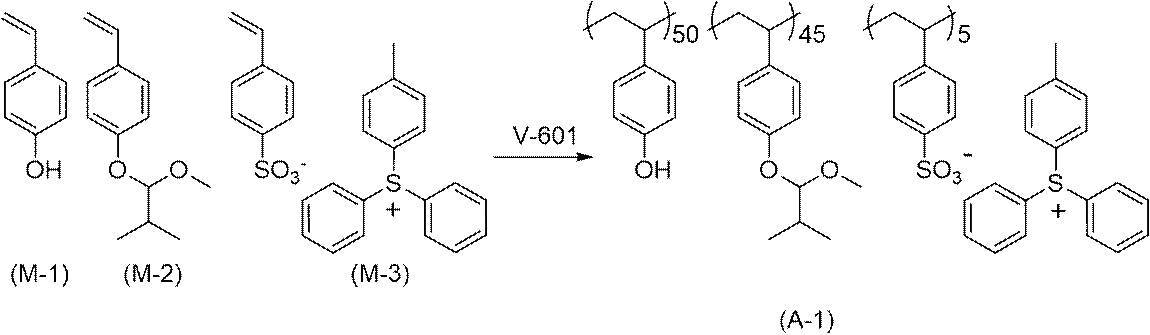
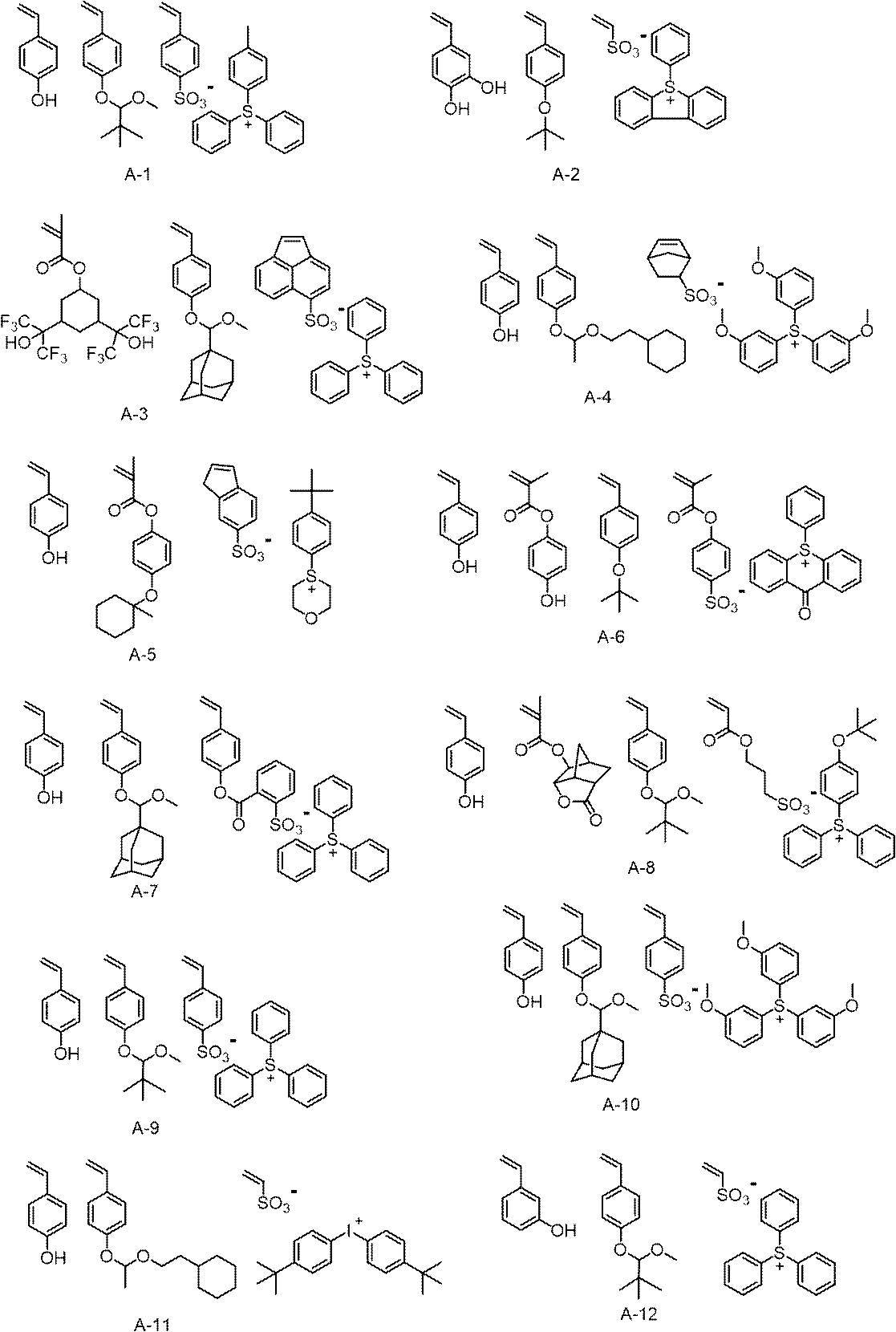


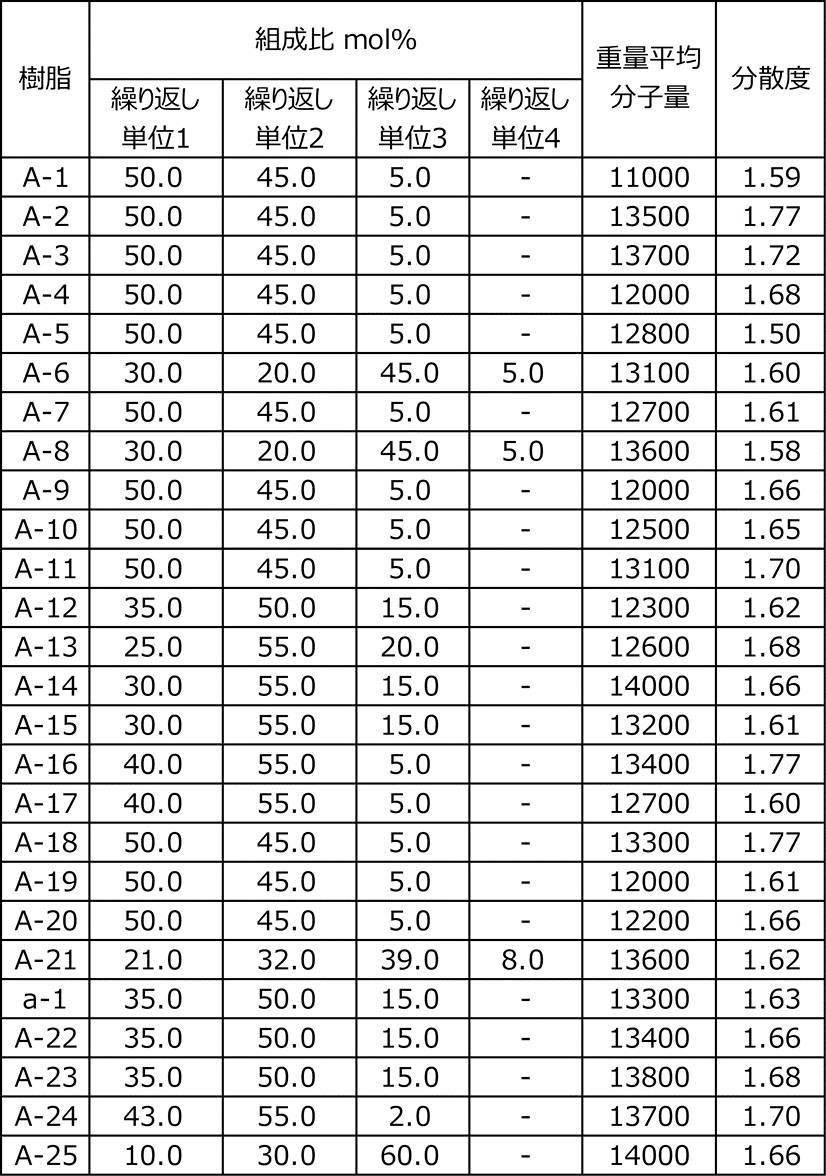
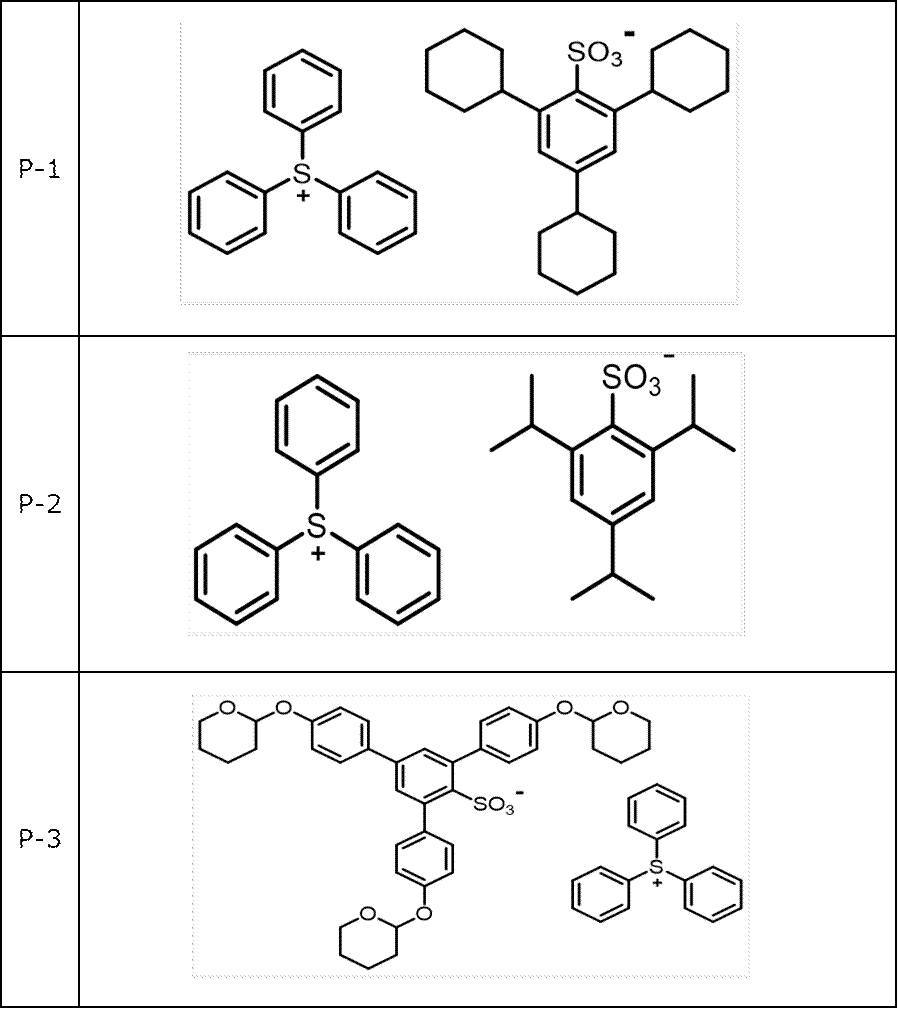

・W-1:メガファックR-41(大日本インキ化学工業社製)
・W-2:PolyFox PF-6320(OMNOVA Solutions 社製;フッ素系)
・EL:乳酸エチル
・PGMEA:プロピレングリコールモノメチルエーテルアセテート
・PGME:プロピレングリコールモノメチルエーテル
・γ-BL:γ-ブチロラクトン
・CyHx:シクロヘキサノン
〔レジスト組成物の塗液調製及び塗設〕
(1)支持体の準備
酸化窒化Crを蒸着した8インチウエハ(通常のフォトマスクブランクスに使用する遮蔽膜処理を施した物)を準備した。
(2)レジスト組成物の調製
下記に示す成分を同表に示す溶剤に溶解させて溶液を調製し、これを0.03μmのポアサイズを有するポリエチレンフィルターで濾過してレジスト組成物を調製した。
(3)レジスト膜の作製
上記8インチウエハ上に東京エレクトロン製スピンコーターMark8を用いてレジスト組成物を塗布し、120℃、600秒間ホットプレート上で乾燥して、膜厚100nmのレジスト膜を得た。1インチとは、25.4mmである。
上記(3)で得られたレジスト膜に電子線描画装置((株)アドバンテスト製;F7000S、加速電圧50KeV)を用いて、パターン照射を行った。照射後に、100℃、600秒ホットプレート上で加熱し、2.38質量%テトラメチルアンモニウムハイドロオキサイド(TMAH)水溶液を用いて60秒間浸漬した後、30秒間、水でリンスして乾燥した。
(5)レジストパタ-ンの評価
得られたパターンを下記の方法で、IS解像性及びラフネス性能(LWR)について評価した。結果を下記表に示す。
まず、線幅50nmの1:1ラインアンドスペースパターンを解像する時の照射エネルギーを感度(Eop)とした。
上記感度(Eop)における孤立スペース(ライン:スペース=100:1)の限界解像力(ラインとスペースが分離解像する最小のスペース幅)を求めた。そして、この値を「IS解像性(nm)」とした。この値が小さいほど、性能が良好であることを示す。
ライン幅が平均30nmのラインパターンを解像する時の最適露光量にて解像した20nm(1:1)のラインアンドスペースのパターンに対して、測長走査型電子顕微鏡(SEM((株)日立製作所S-9380II))を使用してパターン上部から観察する際、線幅を任意のポイントで観測し、その測定ばらつきを3σ(nm)で評価した。この値が小さいほど、良好な性能であることを示す。
表2中、各成分における含有量の単位は、質量%である。
「溶剤」における各溶剤の混合比は、質量比である。
「固形分濃度」欄は、レジスト組成物の固形分濃度(質量%)を示す。
表3中、「樹脂」の「pKa」欄は、繰り返し単位aにおける光酸発生基のpKaを示す。
「酸拡散制御剤」の「pKa」欄は、酸拡散制御剤のpKaを示す。
「a含有量」欄は、レジスト組成物中の全固形分質量当たりの繰り返し単位aの含有量(mmol/g)を示す。
「Δpka」欄は、(酸拡散制御剤のpKa)-(繰り返し単位aにおける光酸発生基のpKa)で算出される値を示す。
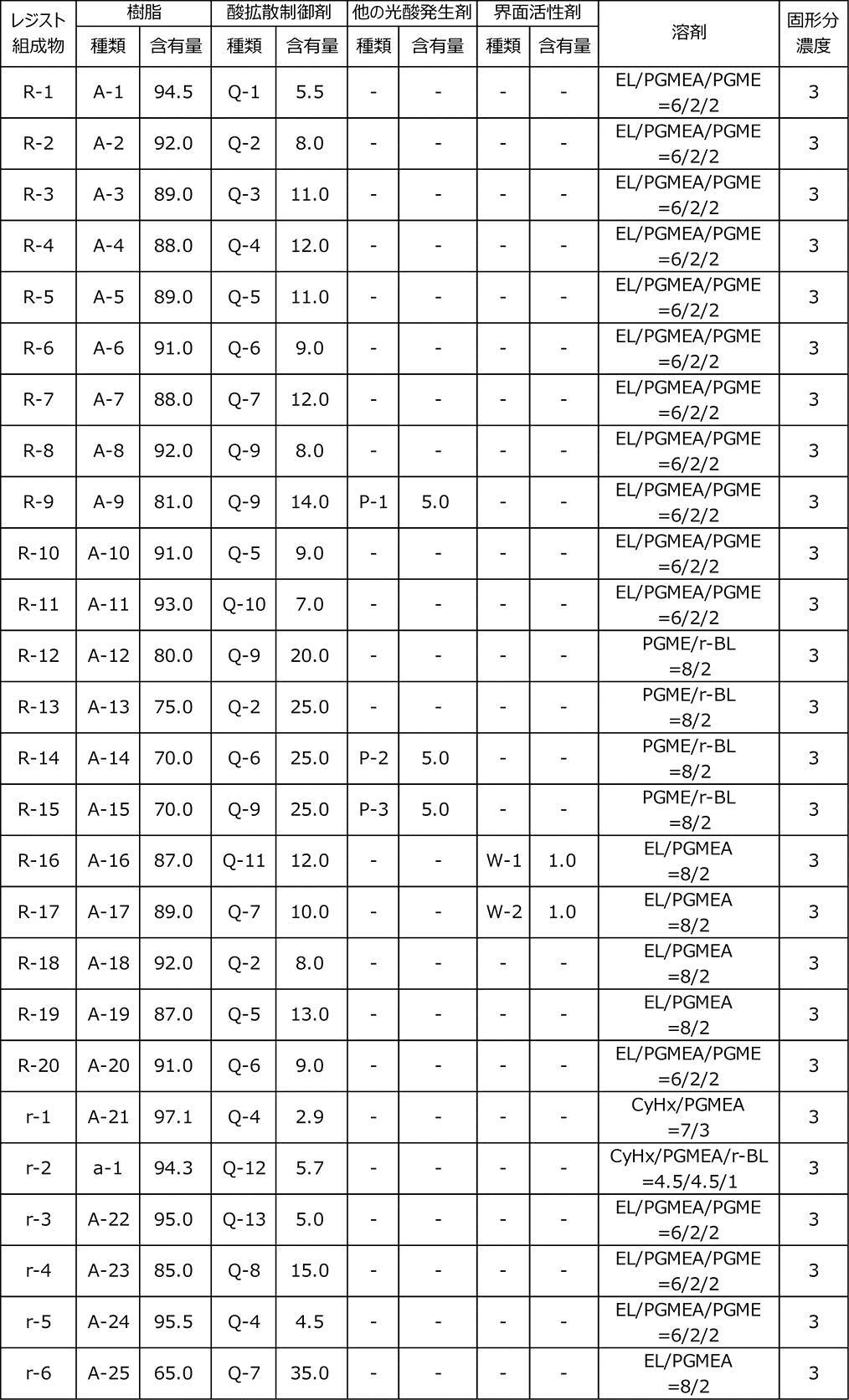
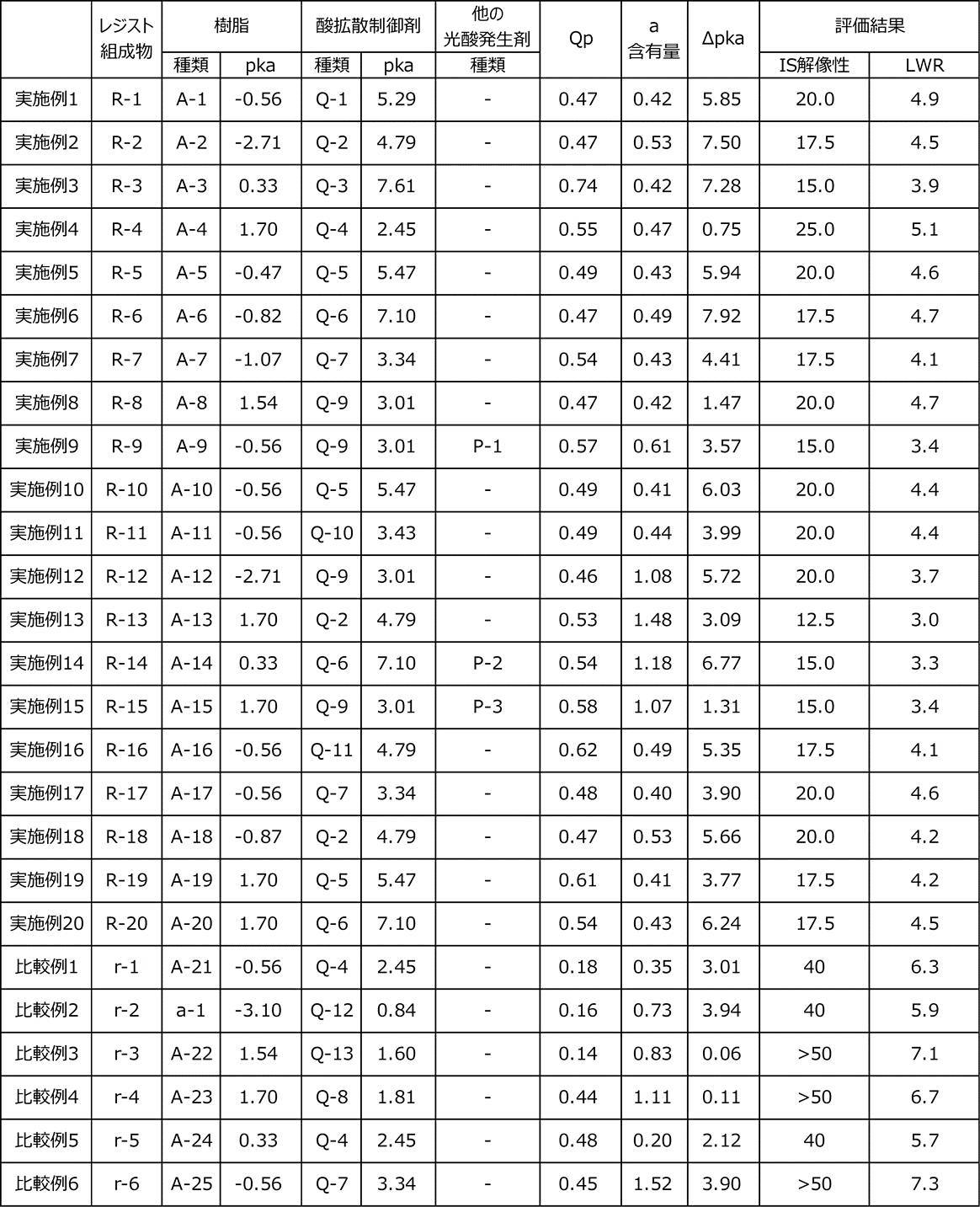
Qpが0.50~1.00である場合、本発明の効果がより優れることが確認された(実施例7、16、19、20と実施例1との比較等)。また、Qpが0.70~1.00である場合、本発明の効果が更に優れることが確認された(実施例3と実施例2との比較等)。
繰り返し単位aの含有量が、レジスト組成物中の全固形分質量当たり、0.60~1.50mmol/gである場合、本発明の効果がより優れることが確認された(実施例9、13~15と実施例7、16との比較等)。また、繰り返し単位aの含有量が、レジスト組成物中の全固形分質量当たり、1.20~1.50mmol/gである場合、本発明の効果が更に優れることが確認された(実施例13と実施例9、14、15との比較等)。
式(c)で表される光酸発生基から発生する酸よりもpKaが1.00以上高い酸を発生する場合、本発明の効果がより優れることが確認された(実施例1と実施例4との比較等)。また、式(c)で表される光酸発生基から発生する酸よりもpKaが7.00以上高い酸を発生する場合、本発明の効果が更に優れることが確認された(実施例2、3、6と実施例1との比較等)。
更に、他の光酸発生剤を含む場合、本発明の効果がより優れることが確認された(実施例9、14、15と実施例1との比較等)。
Claims (13)
- 式(c)で表される光酸発生基を側鎖に有する、式(1)で表される繰り返し単位aと、
酸の作用によって分解して極性基を生じる基を有する繰り返し単位bとを含む樹脂Aを含む、感活性光線性又は感放射線性樹脂組成物であって、
前記繰り返し単位aの含有量が、組成物中の全固形分質量当たり、0.40~1.50mmol/gであり、
更に、活性光線又は放射線の照射により分解して、前記光酸発生基から発生する酸よりもpKaが0.50以上高い酸を発生する酸拡散制御剤を含み、
式(d)で求められるQpが、0.40~1.00である、感活性光線性又は感放射線性樹脂組成物。

式(1)中、Aは、主鎖を構成する基を表す。Tcは、前記式(c)で表される光酸発生基を表す。
*-Lc-A- Zc + (c)
式(c)中、A-は、アニオン性基を表す。Zc +は、有機カチオンを表す。Lcは、単結合又はフッ素原子を含まない2価の連結基を表す。*は、結合位置を表す。
Qp = X/Y (d)
X:前記酸拡散制御剤のモル量を表す。
Y:前記感活性光線性又は感放射線性樹脂組成物が前記樹脂A及び前記酸拡散制御剤以外の他の成分として他の光酸発生剤を含む場合、前記酸拡散制御剤のモル量、前記繰り返し単位aのモル量及び前記他の光酸発生剤のモル量の合計モル量を表し、
前記組成物が前記樹脂A及び前記酸拡散制御剤以外の他の成分として他の光酸発生剤を含まない場合、前記酸拡散制御剤のモル量及び前記繰り返し単位aのモル量の合計モル量を表す。 - 前記Aが、式(a-1)~(a-6)のいずれかで表される基である、請求項1に記載の感活性光線性又は感放射線性樹脂組成物。
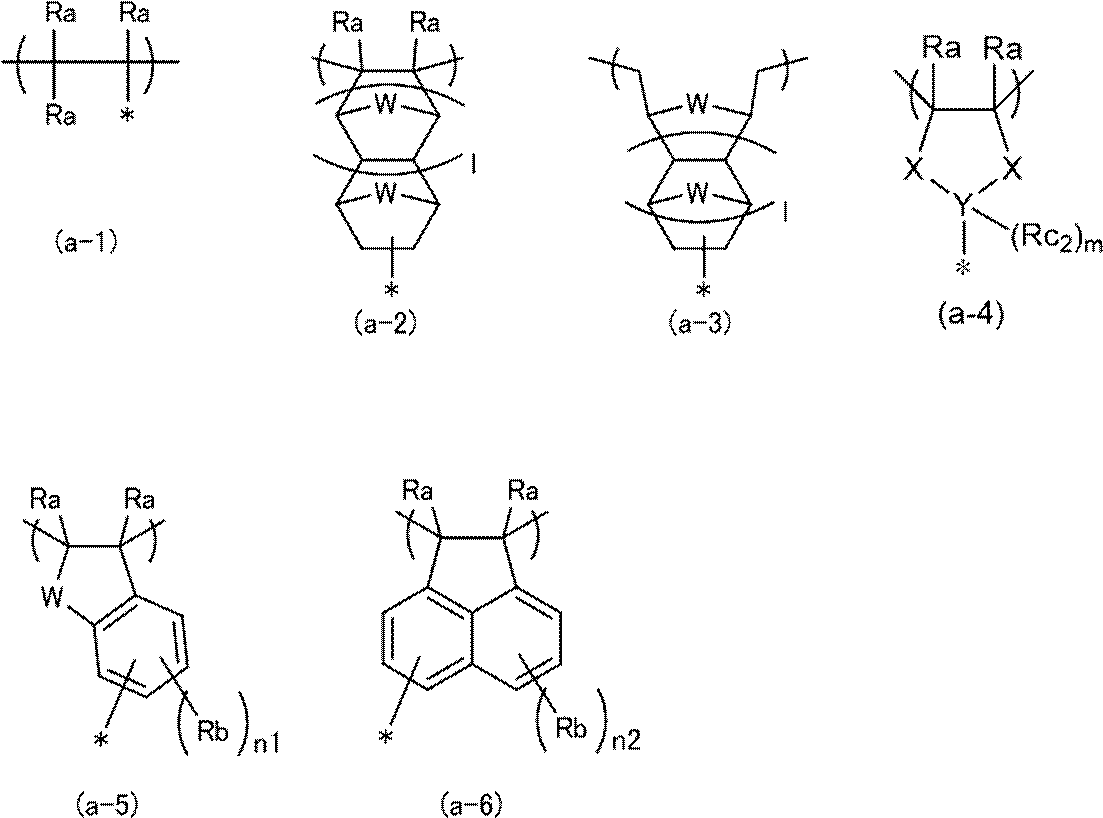
式(a-1)中、Raは、それぞれ独立に、水素原子、アルキル基又は-CH2-O-Ra2を表す。Ra2は、水素原子、アルキル基又はアシル基を表す。*は、結合位置を表す。
式(a-2)中、Raは、それぞれ独立に、水素原子、アルキル基又は-CH2-O-Ra2を表す。Ra2は、水素原子、アルキル基又はアシル基を表す。Wは、それぞれ独立に、メチレン基、酸素原子又は硫黄原子を表す。lは、0又は1を表す。*は、結合位置を表す。
式(a-3)中、Wは、それぞれ独立に、メチレン基、酸素原子又は硫黄原子を表す。lは、0又は1を表す。*は、結合位置を表す。
式(a-4)中、Raは、それぞれ独立に、水素原子、アルキル基又は-CH2-O-Ra2を表す。Ra2は、水素原子、アルキル基又はアシル基を表す。Xは、それぞれ独立に、-C(Rc1)2-又は-C(=O)-を表す。Rc1は、それぞれ独立に、水素原子、アルキル基又はアルコキシ基を表す。Rc2は、それぞれ独立に、水素原子又は置換基を表す。Yは、窒素原子又は炭素原子を表す。mは、0又は1を表す。Yが窒素原子の場合、mは0であり、Yが炭素原子の場合、mは1である。*は、結合位置を表す。
式(a-5)中、Raは、それぞれ独立に、水素原子、アルキル基又は-CH2-O-Ra2を表す。Ra2は、水素原子、アルキル基又はアシル基を表す。Wは、それぞれ独立に、メチレン基、酸素原子又は硫黄原子を表す。Rbは、それぞれ独立に、有機基を表す。n1は、0~3の整数を表す。*は、結合位置を表す。
式(a-6)中、Raは、それぞれ独立に、水素原子、アルキル基又は-CH2-O-Ra2を表す。Ra2は、水素原子、アルキル基又はアシル基を表す。Rbは、それぞれ独立に、有機基を表す。n2は、0~5の整数を表す。*は、結合位置を表す。 - 前記繰り返し単位aが、式(a1)で表される繰り返し単位及び式(a2)で表される繰り返し単位からなる群から選択される少なくとも1つを含む、請求項1に記載の感活性光線性又は感放射線性樹脂組成物。
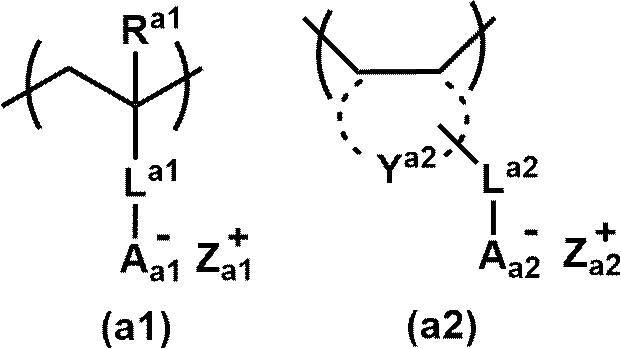
式(a1)中、Ra1は、水素原子又は置換基を表す。La1は、単結合又はフッ素原子を含まない2価の連結基を表す。Aa1 -は、アニオン性基を表す。Za1 +は、有機カチオンを表す。
式(a2)中、Ya2は、環基を表す。La2は、単結合又はフッ素原子を含まない2価の連結基を表す。Aa2 -は、アニオン性基を表す。Za2 +は、有機カチオンを表す。 - 前記繰り返し単位aの含有量が、組成物中の全固形分質量当たり、0.60~1.50mmol/gである、請求項1~3のいずれか1項に記載の感活性光線性又は感放射線性樹脂組成物。
- 更に、前記樹脂Aが、式(A2)で表される繰り返し単位を含む、請求項1~4のいずれか1項に記載の感活性光線性又は感放射線性樹脂組成物。
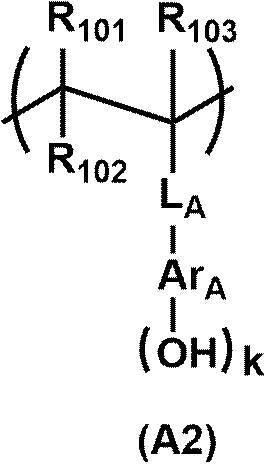
式(A2)中、R101、R102及びR103は、それぞれ独立に、水素原子、アルキル基、シクロアルキル基、ハロゲン原子、シアノ基、又は、アルキルオキシカルボニル基を表す。LAは、単結合又は2価の連結基を表す。ArAは、芳香環基を表す。kは、1~5の整数を表す。ただし、R102はArAと結合してもよく、その場合のR102は単結合又はアルキレン基を表す。 - 前記Qpが、0.50~1.00である、請求項1~5のいずれか1項に記載の感活性光線性又は感放射線性樹脂組成物。
- 前記酸拡散制御剤が、前記光酸発生基から発生する酸よりもpKaが1.00以上高い酸を発生する、請求項1~6のいずれか1項に記載の感活性光線性又は感放射線性樹脂組成物。
- 前記酸拡散制御剤が、式(C1)で表される化合物及び式(C2)で表される化合物からなる群から選択される少なくとも1つを含む、請求項1~7のいずれか1項に記載の感活性光線性又は感放射線性樹脂組成物。
RC1a-AC1 - MC1 + (C1)
式(C1)中、AC1 -は、-COO-、-O-又は-N--SO2-RC1bを表す。RC1a及びRC1bは、それぞれ独立に、有機基を表す。RC1aとRC1bとは、互いに結合して環を形成していてもよい。MC1 +は、スルホニウムカチオン又はヨードニウムカチオンを表す。
AC2 --LC2-MC2 + (C2)
式(C2)中、AC2 -は、-COO-、-O-又は-N--SO2-RC2を表す。LC2は、単結合又は2価の連結基を表す。MC2 +は、-S+RC3RC4又は-I+RC5を表す。RC2~RC5は、それぞれ独立に、有機基を表す。 - 更に、前記他の光酸発生剤を含む、請求項1~8のいずれか1項に記載の感活性光線性又は感放射線性樹脂組成物。
- 請求項1~9のいずれか1項に記載の感活性光線性又は感放射線性樹脂組成物を用いて形成される、レジスト膜。
- 請求項1~9のいずれか1項に記載の感活性光線性又は感放射線性樹脂組成物を用いて基板上にレジスト膜を形成する工程と、
前記レジスト膜を露光する工程と、
前記露光されたレジスト膜を現像液を用いて現像する工程とを有する、パターン形成方法。 - 前記露光する工程が、マルチ電子ビームを用いて前記レジスト膜を露光する工程である、請求項10に記載のパターン形成方法。
- 請求項11又は12に記載のパターン形成方法を含む、電子デバイスの製造方法。
Priority Applications (5)
| Application Number | Priority Date | Filing Date | Title |
|---|---|---|---|
| KR1020237032669A KR102964943B1 (ko) | 2021-03-29 | 2022-03-11 | 감활성광선성 또는 감방사선성 수지 조성물, 레지스트막, 패턴 형성 방법, 전자 디바이스의 제조 방법 |
| EP22779954.1A EP4317217A4 (en) | 2021-03-29 | 2022-03-11 | ACTIVE LIGHT-SENSITIVE OR RADIATION-SENSITIVE RESIN COMPOSITION, RESIST FILM, METHOD FOR FORMING PATTERN, AND METHOD FOR PRODUCING ELECTRONIC DEVICE |
| JP2023510815A JPWO2022209733A1 (ja) | 2021-03-29 | 2022-03-11 | |
| CN202280024094.9A CN117063122A (zh) | 2021-03-29 | 2022-03-11 | 感光化射线性或感放射线性树脂组合物、抗蚀剂膜、图案形成方法、电子器件的制造方法 |
| US18/476,975 US20240027908A1 (en) | 2021-03-29 | 2023-09-28 | Actinic ray-sensitive or radiation-sensitive resin composition, resist film, pattern forming method, and method for manufacturing electronic device |
Applications Claiming Priority (2)
| Application Number | Priority Date | Filing Date | Title |
|---|---|---|---|
| JP2021-055493 | 2021-03-29 | ||
| JP2021055493 | 2021-03-29 |
Related Child Applications (1)
| Application Number | Title | Priority Date | Filing Date |
|---|---|---|---|
| US18/476,975 Continuation US20240027908A1 (en) | 2021-03-29 | 2023-09-28 | Actinic ray-sensitive or radiation-sensitive resin composition, resist film, pattern forming method, and method for manufacturing electronic device |
Publications (1)
| Publication Number | Publication Date |
|---|---|
| WO2022209733A1 true WO2022209733A1 (ja) | 2022-10-06 |
Family
ID=83456119
Family Applications (1)
| Application Number | Title | Priority Date | Filing Date |
|---|---|---|---|
| PCT/JP2022/010808 Ceased WO2022209733A1 (ja) | 2021-03-29 | 2022-03-11 | 感活性光線性又は感放射線性樹脂組成物、レジスト膜、パターン形成方法、電子デバイスの製造方法 |
Country Status (6)
| Country | Link |
|---|---|
| US (1) | US20240027908A1 (ja) |
| EP (1) | EP4317217A4 (ja) |
| JP (1) | JPWO2022209733A1 (ja) |
| CN (1) | CN117063122A (ja) |
| TW (1) | TW202305506A (ja) |
| WO (1) | WO2022209733A1 (ja) |
Cited By (5)
| Publication number | Priority date | Publication date | Assignee | Title |
|---|---|---|---|---|
| WO2023090129A1 (ja) * | 2021-11-22 | 2023-05-25 | Jsr株式会社 | 感放射線性組成物及びレジストパターン形成方法 |
| JP7433394B1 (ja) | 2022-10-05 | 2024-02-19 | 東京応化工業株式会社 | レジスト組成物、レジストパターン形成方法、化合物及び高分子化合物 |
| WO2024106130A1 (ja) * | 2022-11-18 | 2024-05-23 | 富士フイルム株式会社 | 感活性光線性又は感放射線性樹脂組成物、レジスト膜、パターン形成方法、電子デバイスの製造方法 |
| WO2025263561A1 (ja) * | 2024-06-21 | 2025-12-26 | Jsr株式会社 | 感放射線性組成物、パターン形成方法、化合物、及び重合体 |
| EP4700479A1 (en) * | 2024-08-20 | 2026-02-25 | Shin-Etsu Chemical Co., Ltd. | Sulfonium salt, chemically amplified positive resist composition and resist pattern forming process |
Citations (22)
| Publication number | Priority date | Publication date | Assignee | Title |
|---|---|---|---|---|
| JP2012037876A (ja) | 2010-07-14 | 2012-02-23 | Jsr Corp | 感放射線性樹脂組成物 |
| JP2012093737A (ja) * | 2010-09-28 | 2012-05-17 | Fujifilm Corp | 感活性光線性又は感放射線性樹脂組成物、並びに、それを用いた感活性光線性又は感放射線性膜、及び、パターン形成方法 |
| JP2013061648A (ja) | 2011-09-09 | 2013-04-04 | Rohm & Haas Electronic Materials Llc | フォトレジスト上塗り組成物および電子デバイスを形成する方法 |
| JP2013137537A (ja) * | 2011-11-30 | 2013-07-11 | Fujifilm Corp | 感活性光線性又は感放射線性組成物、及び、それを用いた感活性光線性又は感放射線性膜、パターン形成方法、電子デバイスの製造方法、電子デバイス、並びに、樹脂 |
| JP2014059543A (ja) | 2012-08-20 | 2014-04-03 | Fujifilm Corp | パターン形成方法、感電子線性又は感極紫外線性樹脂組成物、及びレジスト膜、並びに、これらを用いた電子デバイスの製造方法、及び電子デバイス |
| JP2014098921A (ja) | 2014-01-06 | 2014-05-29 | Fujifilm Corp | 感活性光線性または感放射線性樹脂組成物及びそれを用いたパターン形成方法 |
| JP2014240942A (ja) * | 2012-09-13 | 2014-12-25 | 富士フイルム株式会社 | 感活性光線性又は感放射線性樹脂組成物、レジスト膜、及び、パターン形成方法、並びに、これらを用いた電子デバイスの製造方法、及び、電子デバイス |
| US20150004544A1 (en) | 2012-03-14 | 2015-01-01 | Jsr Corporation | Photoresist composition, resist pattern-forming method, acid diffusion control agent, and compound |
| JP2015031796A (ja) * | 2013-08-01 | 2015-02-16 | 富士フイルム株式会社 | パターン形成方法、感活性光線性又は感放射線性樹脂組成物、及び、レジスト膜、並びに、これらを用いた電子デバイスの製造方法、及び、電子デバイス |
| JP2015043067A (ja) * | 2013-03-29 | 2015-03-05 | 富士フイルム株式会社 | パターン形成方法、感活性光線性又は感放射線性樹脂組成物、及び、レジスト膜、並びに、これらを用いた電子デバイスの製造方法、及び、電子デバイス |
| JP2015111637A (ja) * | 2013-12-06 | 2015-06-18 | 富士フイルム株式会社 | パターン形成方法、電子デバイスの製造方法、電子デバイス、ブロック共重合体、及び、ブロック共重合体の製造方法 |
| US20160070167A1 (en) | 2013-03-01 | 2016-03-10 | Fujifilm Corporation | Pattern forming method, actinic ray-sensitive or radiation-sensitive resin composition, resist film, manufacturing method of electronic device, electronic device and compound |
| US20160237190A1 (en) | 2015-02-18 | 2016-08-18 | Sumitomo Chemical Company, Limited | Compound, resin and photoresist composition |
| US20160274458A1 (en) | 2015-03-20 | 2016-09-22 | Tokyo Ohka Kogyo Co., Ltd. | Resist composition, method for forming resist pattern, acid generator and compound |
| WO2018019395A1 (en) | 2016-07-27 | 2018-02-01 | Refco Manufacturing Ltd. | Water handling device |
| WO2018193954A1 (ja) | 2017-04-21 | 2018-10-25 | 富士フイルム株式会社 | Euv光用感光性組成物、パターン形成方法、電子デバイスの製造方法 |
| WO2020004306A1 (ja) | 2018-06-28 | 2020-01-02 | 富士フイルム株式会社 | 感活性光線性又は感放射線性樹脂組成物、パターン形成方法、電子デバイスの製造方法、樹脂 |
| WO2020066824A1 (ja) | 2018-09-25 | 2020-04-02 | 富士フイルム株式会社 | 感活性光線性又は感放射線性樹脂組成物、レジスト膜、パターン形成方法、電子デバイスの製造方法 |
| WO2020158337A1 (ja) | 2019-01-28 | 2020-08-06 | 富士フイルム株式会社 | 感活性光線性又は感放射線性樹脂組成物、レジスト膜、パターン形成方法、電子デバイスの製造方法 |
| JP2020136289A (ja) | 2019-02-12 | 2020-08-31 | 株式会社ニューフレアテクノロジー | マルチ荷電粒子ビーム描画装置及びマルチ荷電粒子ビーム描画方法 |
| JP2020145401A (ja) | 2019-02-28 | 2020-09-10 | 株式会社東芝 | マルチ電子ビーム装置 |
| WO2020262134A1 (ja) | 2019-06-28 | 2020-12-30 | 富士フイルム株式会社 | 感活性光線性又は感放射線性樹脂組成物の精製方法、パターン形成方法、電子デバイスの製造方法 |
Family Cites Families (2)
| Publication number | Priority date | Publication date | Assignee | Title |
|---|---|---|---|---|
| JP5841707B2 (ja) * | 2008-09-05 | 2016-01-13 | 富士フイルム株式会社 | ポジ型レジスト組成物、該組成物を用いたパターン形成方法及び該組成物に用いられる樹脂 |
| JP6773006B2 (ja) * | 2016-11-14 | 2020-10-21 | 信越化学工業株式会社 | 化学増幅レジスト材料及びパターン形成方法 |
-
2022
- 2022-03-11 EP EP22779954.1A patent/EP4317217A4/en active Pending
- 2022-03-11 WO PCT/JP2022/010808 patent/WO2022209733A1/ja not_active Ceased
- 2022-03-11 CN CN202280024094.9A patent/CN117063122A/zh active Pending
- 2022-03-11 JP JP2023510815A patent/JPWO2022209733A1/ja active Pending
- 2022-03-24 TW TW111111010A patent/TW202305506A/zh unknown
-
2023
- 2023-09-28 US US18/476,975 patent/US20240027908A1/en active Pending
Patent Citations (22)
| Publication number | Priority date | Publication date | Assignee | Title |
|---|---|---|---|---|
| JP2012037876A (ja) | 2010-07-14 | 2012-02-23 | Jsr Corp | 感放射線性樹脂組成物 |
| JP2012093737A (ja) * | 2010-09-28 | 2012-05-17 | Fujifilm Corp | 感活性光線性又は感放射線性樹脂組成物、並びに、それを用いた感活性光線性又は感放射線性膜、及び、パターン形成方法 |
| JP2013061648A (ja) | 2011-09-09 | 2013-04-04 | Rohm & Haas Electronic Materials Llc | フォトレジスト上塗り組成物および電子デバイスを形成する方法 |
| JP2013137537A (ja) * | 2011-11-30 | 2013-07-11 | Fujifilm Corp | 感活性光線性又は感放射線性組成物、及び、それを用いた感活性光線性又は感放射線性膜、パターン形成方法、電子デバイスの製造方法、電子デバイス、並びに、樹脂 |
| US20150004544A1 (en) | 2012-03-14 | 2015-01-01 | Jsr Corporation | Photoresist composition, resist pattern-forming method, acid diffusion control agent, and compound |
| JP2014059543A (ja) | 2012-08-20 | 2014-04-03 | Fujifilm Corp | パターン形成方法、感電子線性又は感極紫外線性樹脂組成物、及びレジスト膜、並びに、これらを用いた電子デバイスの製造方法、及び電子デバイス |
| JP2014240942A (ja) * | 2012-09-13 | 2014-12-25 | 富士フイルム株式会社 | 感活性光線性又は感放射線性樹脂組成物、レジスト膜、及び、パターン形成方法、並びに、これらを用いた電子デバイスの製造方法、及び、電子デバイス |
| US20160070167A1 (en) | 2013-03-01 | 2016-03-10 | Fujifilm Corporation | Pattern forming method, actinic ray-sensitive or radiation-sensitive resin composition, resist film, manufacturing method of electronic device, electronic device and compound |
| JP2015043067A (ja) * | 2013-03-29 | 2015-03-05 | 富士フイルム株式会社 | パターン形成方法、感活性光線性又は感放射線性樹脂組成物、及び、レジスト膜、並びに、これらを用いた電子デバイスの製造方法、及び、電子デバイス |
| JP2015031796A (ja) * | 2013-08-01 | 2015-02-16 | 富士フイルム株式会社 | パターン形成方法、感活性光線性又は感放射線性樹脂組成物、及び、レジスト膜、並びに、これらを用いた電子デバイスの製造方法、及び、電子デバイス |
| JP2015111637A (ja) * | 2013-12-06 | 2015-06-18 | 富士フイルム株式会社 | パターン形成方法、電子デバイスの製造方法、電子デバイス、ブロック共重合体、及び、ブロック共重合体の製造方法 |
| JP2014098921A (ja) | 2014-01-06 | 2014-05-29 | Fujifilm Corp | 感活性光線性または感放射線性樹脂組成物及びそれを用いたパターン形成方法 |
| US20160237190A1 (en) | 2015-02-18 | 2016-08-18 | Sumitomo Chemical Company, Limited | Compound, resin and photoresist composition |
| US20160274458A1 (en) | 2015-03-20 | 2016-09-22 | Tokyo Ohka Kogyo Co., Ltd. | Resist composition, method for forming resist pattern, acid generator and compound |
| WO2018019395A1 (en) | 2016-07-27 | 2018-02-01 | Refco Manufacturing Ltd. | Water handling device |
| WO2018193954A1 (ja) | 2017-04-21 | 2018-10-25 | 富士フイルム株式会社 | Euv光用感光性組成物、パターン形成方法、電子デバイスの製造方法 |
| WO2020004306A1 (ja) | 2018-06-28 | 2020-01-02 | 富士フイルム株式会社 | 感活性光線性又は感放射線性樹脂組成物、パターン形成方法、電子デバイスの製造方法、樹脂 |
| WO2020066824A1 (ja) | 2018-09-25 | 2020-04-02 | 富士フイルム株式会社 | 感活性光線性又は感放射線性樹脂組成物、レジスト膜、パターン形成方法、電子デバイスの製造方法 |
| WO2020158337A1 (ja) | 2019-01-28 | 2020-08-06 | 富士フイルム株式会社 | 感活性光線性又は感放射線性樹脂組成物、レジスト膜、パターン形成方法、電子デバイスの製造方法 |
| JP2020136289A (ja) | 2019-02-12 | 2020-08-31 | 株式会社ニューフレアテクノロジー | マルチ荷電粒子ビーム描画装置及びマルチ荷電粒子ビーム描画方法 |
| JP2020145401A (ja) | 2019-02-28 | 2020-09-10 | 株式会社東芝 | マルチ電子ビーム装置 |
| WO2020262134A1 (ja) | 2019-06-28 | 2020-12-30 | 富士フイルム株式会社 | 感活性光線性又は感放射線性樹脂組成物の精製方法、パターン形成方法、電子デバイスの製造方法 |
Non-Patent Citations (1)
| Title |
|---|
| See also references of EP4317217A4 |
Cited By (9)
| Publication number | Priority date | Publication date | Assignee | Title |
|---|---|---|---|---|
| WO2023090129A1 (ja) * | 2021-11-22 | 2023-05-25 | Jsr株式会社 | 感放射線性組成物及びレジストパターン形成方法 |
| JPWO2023090129A1 (ja) * | 2021-11-22 | 2023-05-25 | ||
| JP7433394B1 (ja) | 2022-10-05 | 2024-02-19 | 東京応化工業株式会社 | レジスト組成物、レジストパターン形成方法、化合物及び高分子化合物 |
| WO2024075535A1 (ja) * | 2022-10-05 | 2024-04-11 | 東京応化工業株式会社 | レジスト組成物、レジストパターン形成方法、化合物及び高分子化合物 |
| JP2024054477A (ja) * | 2022-10-05 | 2024-04-17 | 東京応化工業株式会社 | レジスト組成物、レジストパターン形成方法、化合物及び高分子化合物 |
| WO2024106130A1 (ja) * | 2022-11-18 | 2024-05-23 | 富士フイルム株式会社 | 感活性光線性又は感放射線性樹脂組成物、レジスト膜、パターン形成方法、電子デバイスの製造方法 |
| KR102932853B1 (ko) | 2022-11-18 | 2026-03-03 | 후지필름 가부시키가이샤 | 감활성광선성 또는 감방사선성 수지 조성물, 레지스트막, 패턴 형성 방법, 전자 디바이스의 제조 방법 |
| WO2025263561A1 (ja) * | 2024-06-21 | 2025-12-26 | Jsr株式会社 | 感放射線性組成物、パターン形成方法、化合物、及び重合体 |
| EP4700479A1 (en) * | 2024-08-20 | 2026-02-25 | Shin-Etsu Chemical Co., Ltd. | Sulfonium salt, chemically amplified positive resist composition and resist pattern forming process |
Also Published As
| Publication number | Publication date |
|---|---|
| CN117063122A (zh) | 2023-11-14 |
| US20240027908A1 (en) | 2024-01-25 |
| JPWO2022209733A1 (ja) | 2022-10-06 |
| TW202305506A (zh) | 2023-02-01 |
| EP4317217A4 (en) | 2024-11-06 |
| EP4317217A1 (en) | 2024-02-07 |
| KR20230148360A (ko) | 2023-10-24 |
Similar Documents
| Publication | Publication Date | Title |
|---|---|---|
| WO2020066824A1 (ja) | 感活性光線性又は感放射線性樹脂組成物、レジスト膜、パターン形成方法、電子デバイスの製造方法 | |
| JP7553643B2 (ja) | 感活性光線性又は感放射線性樹脂組成物、レジスト膜、パターン形成方法、電子デバイスの製造方法 | |
| WO2023120250A1 (ja) | 感活性光線性又は感放射線性樹脂組成物、感活性光線性又は感放射線性膜、パターン形成方法、電子デバイスの製造方法、及び化合物 | |
| JP7124094B2 (ja) | 感活性光線性又は感放射線性樹脂組成物、レジスト膜、パターン形成方法、電子デバイスの製造方法 | |
| WO2022172689A1 (ja) | 感活性光線性又は感放射線性樹脂組成物、レジスト膜、パターン形成方法、電子デバイスの製造方法 | |
| EP4317217A1 (en) | Active light-sensitive or radiation-sensitive resin composition, resist film, method for forming pattern, and method for producing electronic device | |
| WO2023054127A1 (ja) | 感活性光線性又は感放射線性樹脂組成物、レジスト膜、パターン形成方法及び電子デバイスの製造方法 | |
| WO2023286764A1 (ja) | パターン形成方法、電子デバイスの製造方法、感活性光線性又は感放射線性樹脂組成物、レジスト膜 | |
| WO2022220189A1 (ja) | 感活性光線性又は感放射線性樹脂組成物、レジスト膜、パターン形成方法、電子デバイスの製造方法 | |
| WO2023032794A1 (ja) | 感活性光線性又は感放射線性樹脂組成物、感活性光線性又は感放射線性膜、パターン形成方法、電子デバイスの製造方法、及び化合物 | |
| JP7191981B2 (ja) | 感活性光線性又は感放射線性樹脂組成物、レジスト膜、パターン形成方法、及び電子デバイスの製造方法 | |
| JP2023035836A (ja) | 感活性光線性又は感放射線性樹脂組成物の製造方法、パターン形成方法、電子デバイスの製造方法、及びオニウム塩の製造方法 | |
| WO2022172597A1 (ja) | 感活性光線性又は感放射線性樹脂組成物、レジスト膜、ポジ型パターン形成方法、電子デバイスの製造方法 | |
| WO2023145564A1 (ja) | 感活性光線性又は感放射線性樹脂組成物、感活性光線性又は感放射線性膜、パターン形成方法、及び電子デバイスの製造方法 | |
| WO2024048464A1 (ja) | 感活性光線性又は感放射線性樹脂組成物、感活性光線性又は感放射線性膜、パターン形成方法、及び電子デバイスの製造方法 | |
| WO2023145488A1 (ja) | 感活性光線性又は感放射線性樹脂組成物、レジスト膜、パターン形成方法及び電子デバイスの製造方法 | |
| WO2023008127A1 (ja) | 感活性光線性又は感放射線性樹脂組成物、感活性光線性又は感放射線性膜、パターン形成方法、及び電子デバイスの製造方法 | |
| WO2023032797A1 (ja) | 感活性光線性又は感放射線性樹脂組成物、感活性光線性又は感放射線性膜、パターン形成方法、電子デバイスの製造方法、及び化合物 | |
| KR102964943B1 (ko) | 감활성광선성 또는 감방사선성 수지 조성물, 레지스트막, 패턴 형성 방법, 전자 디바이스의 제조 방법 | |
| JP7756117B2 (ja) | 感活性光線性又は感放射線性樹脂組成物、レジスト膜、パターン形成方法、電子デバイスの製造方法 | |
| JP7697126B1 (ja) | 感活性光線性又は感放射線性樹脂組成物、レジスト膜、パターン形成方法、電子デバイスの製造方法、及び化合物 | |
| WO2024171929A1 (ja) | 感活性光線性又は感放射線性樹脂組成物、感活性光線性又は感放射線性膜、パターン形成方法、及び電子デバイスの製造方法 | |
| WO2025057680A1 (ja) | 感活性光線性又は感放射線性樹脂組成物、感活性光線性又は感放射線性膜、パターン形成方法、及び電子デバイスの製造方法 | |
| WO2023157635A1 (ja) | 感活性光線性又は感放射線性樹脂組成物、感活性光線性又は感放射線性膜、パターン形成方法、電子デバイスの製造方法、及び化合物 | |
| WO2023047992A1 (ja) | 感活性光線性又は感放射線性樹脂組成物、感活性光線性又は感放射線性膜、パターン形成方法、及び電子デバイスの製造方法 |
Legal Events
| Date | Code | Title | Description |
|---|---|---|---|
| 121 | Ep: the epo has been informed by wipo that ep was designated in this application |
Ref document number: 22779954 Country of ref document: EP Kind code of ref document: A1 |
|
| ENP | Entry into the national phase |
Ref document number: 20237032669 Country of ref document: KR Kind code of ref document: A |
|
| WWE | Wipo information: entry into national phase |
Ref document number: 202280024094.9 Country of ref document: CN Ref document number: 1020237032669 Country of ref document: KR |
|
| WWE | Wipo information: entry into national phase |
Ref document number: 2023510815 Country of ref document: JP |
|
| WWE | Wipo information: entry into national phase |
Ref document number: 2022779954 Country of ref document: EP |
|
| NENP | Non-entry into the national phase |
Ref country code: DE |
|
| ENP | Entry into the national phase |
Ref document number: 2022779954 Country of ref document: EP Effective date: 20231030 |
|
| WWR | Wipo information: refused in national office |
Ref document number: 1020237032669 Country of ref document: KR |
|
| WWC | Wipo information: continuation of processing after refusal or withdrawal |
Ref document number: 1020237032669 Country of ref document: KR |