WO2022210465A1 - ナノゲル被覆型ワクチン - Google Patents
ナノゲル被覆型ワクチン Download PDFInfo
- Publication number
- WO2022210465A1 WO2022210465A1 PCT/JP2022/014798 JP2022014798W WO2022210465A1 WO 2022210465 A1 WO2022210465 A1 WO 2022210465A1 JP 2022014798 W JP2022014798 W JP 2022014798W WO 2022210465 A1 WO2022210465 A1 WO 2022210465A1
- Authority
- WO
- WIPO (PCT)
- Prior art keywords
- nanogel
- antigen
- vlps
- gii
- coated
- Prior art date
- Legal status (The legal status is an assumption and is not a legal conclusion. Google has not performed a legal analysis and makes no representation as to the accuracy of the status listed.)
- Ceased
Links
Images




Classifications
-
- A—HUMAN NECESSITIES
- A61—MEDICAL OR VETERINARY SCIENCE; HYGIENE
- A61K—PREPARATIONS FOR MEDICAL, DENTAL OR TOILETRY PURPOSES
- A61K39/00—Medicinal preparations containing antigens or antibodies
-
- A—HUMAN NECESSITIES
- A61—MEDICAL OR VETERINARY SCIENCE; HYGIENE
- A61K—PREPARATIONS FOR MEDICAL, DENTAL OR TOILETRY PURPOSES
- A61K39/00—Medicinal preparations containing antigens or antibodies
- A61K39/12—Viral antigens
-
- A—HUMAN NECESSITIES
- A61—MEDICAL OR VETERINARY SCIENCE; HYGIENE
- A61K—PREPARATIONS FOR MEDICAL, DENTAL OR TOILETRY PURPOSES
- A61K39/00—Medicinal preparations containing antigens or antibodies
- A61K39/39—Medicinal preparations containing antigens or antibodies characterised by the immunostimulating additives, e.g. chemical adjuvants
-
- A—HUMAN NECESSITIES
- A61—MEDICAL OR VETERINARY SCIENCE; HYGIENE
- A61P—SPECIFIC THERAPEUTIC ACTIVITY OF CHEMICAL COMPOUNDS OR MEDICINAL PREPARATIONS
- A61P31/00—Antiinfectives, i.e. antibiotics, antiseptics, chemotherapeutics
- A61P31/12—Antivirals
-
- A—HUMAN NECESSITIES
- A61—MEDICAL OR VETERINARY SCIENCE; HYGIENE
- A61P—SPECIFIC THERAPEUTIC ACTIVITY OF CHEMICAL COMPOUNDS OR MEDICINAL PREPARATIONS
- A61P31/00—Antiinfectives, i.e. antibiotics, antiseptics, chemotherapeutics
- A61P31/12—Antivirals
- A61P31/14—Antivirals for RNA viruses
-
- A—HUMAN NECESSITIES
- A61—MEDICAL OR VETERINARY SCIENCE; HYGIENE
- A61P—SPECIFIC THERAPEUTIC ACTIVITY OF CHEMICAL COMPOUNDS OR MEDICINAL PREPARATIONS
- A61P37/00—Drugs for immunological or allergic disorders
- A61P37/02—Immunomodulators
- A61P37/04—Immunostimulants
-
- A—HUMAN NECESSITIES
- A61—MEDICAL OR VETERINARY SCIENCE; HYGIENE
- A61K—PREPARATIONS FOR MEDICAL, DENTAL OR TOILETRY PURPOSES
- A61K39/00—Medicinal preparations containing antigens or antibodies
- A61K2039/54—Medicinal preparations containing antigens or antibodies characterised by the route of administration
- A61K2039/541—Mucosal route
-
- A—HUMAN NECESSITIES
- A61—MEDICAL OR VETERINARY SCIENCE; HYGIENE
- A61K—PREPARATIONS FOR MEDICAL, DENTAL OR TOILETRY PURPOSES
- A61K39/00—Medicinal preparations containing antigens or antibodies
- A61K2039/54—Medicinal preparations containing antigens or antibodies characterised by the route of administration
- A61K2039/541—Mucosal route
- A61K2039/543—Mucosal route intranasal
-
- A—HUMAN NECESSITIES
- A61—MEDICAL OR VETERINARY SCIENCE; HYGIENE
- A61K—PREPARATIONS FOR MEDICAL, DENTAL OR TOILETRY PURPOSES
- A61K39/00—Medicinal preparations containing antigens or antibodies
- A61K2039/555—Medicinal preparations containing antigens or antibodies characterised by a specific combination antigen/adjuvant
- A61K2039/55511—Organic adjuvants
- A61K2039/55555—Liposomes; Vesicles, e.g. nanoparticles; Spheres, e.g. nanospheres; Polymers
-
- A—HUMAN NECESSITIES
- A61—MEDICAL OR VETERINARY SCIENCE; HYGIENE
- A61K—PREPARATIONS FOR MEDICAL, DENTAL OR TOILETRY PURPOSES
- A61K39/00—Medicinal preparations containing antigens or antibodies
- A61K2039/555—Medicinal preparations containing antigens or antibodies characterised by a specific combination antigen/adjuvant
- A61K2039/55511—Organic adjuvants
- A61K2039/55583—Polysaccharides
-
- A—HUMAN NECESSITIES
- A61—MEDICAL OR VETERINARY SCIENCE; HYGIENE
- A61K—PREPARATIONS FOR MEDICAL, DENTAL OR TOILETRY PURPOSES
- A61K39/00—Medicinal preparations containing antigens or antibodies
- A61K2039/57—Medicinal preparations containing antigens or antibodies characterised by the type of response, e.g. Th1, Th2
- A61K2039/575—Medicinal preparations containing antigens or antibodies characterised by the type of response, e.g. Th1, Th2 humoral response
-
- A—HUMAN NECESSITIES
- A61—MEDICAL OR VETERINARY SCIENCE; HYGIENE
- A61K—PREPARATIONS FOR MEDICAL, DENTAL OR TOILETRY PURPOSES
- A61K39/00—Medicinal preparations containing antigens or antibodies
- A61K2039/60—Medicinal preparations containing antigens or antibodies characteristics by the carrier linked to the antigen
- A61K2039/6087—Polysaccharides; Lipopolysaccharides [LPS]
-
- A—HUMAN NECESSITIES
- A61—MEDICAL OR VETERINARY SCIENCE; HYGIENE
- A61K—PREPARATIONS FOR MEDICAL, DENTAL OR TOILETRY PURPOSES
- A61K39/00—Medicinal preparations containing antigens or antibodies
- A61K2039/64—Medicinal preparations containing antigens or antibodies characterised by the architecture of the carrier-antigen complex, e.g. repetition of carrier-antigen units
-
- C—CHEMISTRY; METALLURGY
- C12—BIOCHEMISTRY; BEER; SPIRITS; WINE; VINEGAR; MICROBIOLOGY; ENZYMOLOGY; MUTATION OR GENETIC ENGINEERING
- C12N—MICROORGANISMS OR ENZYMES; COMPOSITIONS THEREOF; PROPAGATING, PRESERVING, OR MAINTAINING MICROORGANISMS; MUTATION OR GENETIC ENGINEERING; CULTURE MEDIA
- C12N2770/00—MICROORGANISMS OR ENZYMES; COMPOSITIONS THEREOF; PROPAGATING, PRESERVING, OR MAINTAINING MICROORGANISMS; MUTATION OR GENETIC ENGINEERING; CULTURE MEDIA ssRNA viruses positive-sense
- C12N2770/00011—Details
- C12N2770/16011—Caliciviridae
- C12N2770/16034—Use of virus or viral component as vaccine, e.g. live-attenuated or inactivated virus, VLP, viral protein
Definitions
- the present invention relates to vaccines using nanogels. More specifically, it relates to a vaccine that is a composite of a vaccine antigen and a nanogel, in which the antigen is coated with the nanogel.
- vaccines are administered by injection.
- Vaccine administration by injection can induce an immune response, including the production of antibodies, in vivo.
- the virus often spreads to other people after infection and before symptoms due to the infection develop. could not.
- vaccines administered to the mucosa such as nasal vaccines, can induce mucosal immunity (mucosal IgA) in the mucosal area where pathogens infect and neutralize pathogens. Infection, or even transmission of pathogens to others, can be suppressed.
- Non-Patent Document 1 cholesteryl group-bearing pullulan
- Nanogels function as artificial chaperones, preventing aggregation and denaturation of antigens and aiding refolding after antigen release.
- the nanogels are effectively negatively charged mucosa. It has the property of adhering to the surface and induces an immune response by continuously releasing antigens and delivering them to antigen-presenting cells (Non-Patent Document 2, Non-Patent Document 3 and Patent Document 2).
- Nanogel-antigen complexes that have been reported so far contain protein antigens inside nanogels consisting of about 4 molecules of cCHP to prevent aggregation and denaturation of antigens, and to release antigens released from inside the nanogels. It promotes folding and induces an efficient immune response (Non-Patent Document 5). Therefore, it was thought that molecules with a molecular weight greater than the nanogel (about 1,000 kDa) could not be encapsulated in the nanogel, and that such macromolecules could not form a complex with the nanogel (Non-Patent Document 5).
- antigens such as viral antigens larger than nanogels (about 30 nm in diameter), VLPs (virus-like particles), and inactivated viruses are complexed with nanogels.
- the body could not be created.
- the problem to be solved by the present invention is to provide a complex of an antigen that is not encapsulated in a nanogel (an antigen that exceeds the size that can be encapsulated in a nanogel) and a nanogel, and a vaccine formulation containing the complex.
- the present inventors have extensively studied a method for forming a complex between an antigen and a nanogel that exceeds the size that can be encapsulated in the nanogel.
- the present inventors attach the nanogel to the surface of the vaccine antigen instead of encapsulating the vaccine antigen in the nanogel, that is, a composite in which the vaccine antigen is coated with the nanogel (hereinafter, such a composite is referred to as "nanogel-coated
- nanogel-coated When an attempt was made to produce a nanogel-coated composite, we succeeded in producing a nanogel-coated composite.
- the present inventors confirmed that nanogel-coated antigens induce effective mucosal immunity.
- the optimal mixing ratio of antigen and nanogel for preparing a conventional nanogel complex encapsulating an antigen is 1 per antigen molecule. ⁇ 2.5 molecules (1 to 10 in terms of CHPNH2 ), preferably 1 molecule (4 in terms of CHPNH2) (Patent Document 2 ).
- the amount of nanogel to be mixed was greatly increased and the nanogel was treated with 18 molecules (72 in terms of CHPNH2 ) or 180 molecules (720 in terms of CHPNH2 ) of the nanogel, VLPs (antigens) were produced relatively uniformly in the nanogel. ) can be coated (see FIGS. 8 and 9).
- the particle size of norovirus VLP is about 30-40 nm, which is an antigen that exceeds the particle size of nanogel (about 30 nm). That is, the present inventors have found that even if the antigen is larger than the nanogel, such as VLP, the antigen is coated with the nanogel (instead of being encapsulated in the nanogel) to form a nanogel-antigen complex. This nanogel-antigen complex effectively induces mucosal immune response for the first time, and completed the present invention.
- the present invention is the following (1) to (7).
- the vaccine antigen is a VLP (virus like particle), an inactivated virus, a large protein molecule of 20 nm or more, or a polymer; Complex as described.
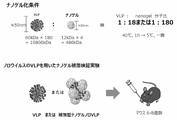
- FIG. 1 shows an overview of experimental conditions for a nanogel-coated nanogel-antigen complex according to an example of the present invention.
- the results of nasal immune responses by nanogel-coated VLPs are shown.
- A shows the results of intranasal administration of nanogel-coated GII.17 VLPs or GII.17 VLPs alone to mice, followed by measurement of serum IgG, nasal wash IgA, and fecal IgA antibody titers.
- B shows the results of measurement of IgG in serum and IgA in nasal washings after transnasal administration of nanogel-coated GII.4 VLPs or GII.4 VLPs alone to mice.
- VLP:nanogel 1:180 in molecular ratio.
- the results of nasal immune response by nanogel-coated VLPs are shown.
- IgG in serum and IgA in nasal washings were measured.
- the results of examining the neutralizing effect of antibodies induced by nanogel-coated VLPs GII.4 VLPs or GII.17 VLPs) are shown.
- A is the result of examining the growth inhibitory effect of norovirus GII.17 by IgG in serum and IgA in nasal washings induced by nanogel-coated GII.17 VLPs.
- B is the result of examining the growth inhibitory effect of norovirus GII.4 by IgG in serum and IgA in nasal wash fluid induced by nanogel-coated GII.4 VLPs.
- Pre is the result of measuring the viral genome copy number in the culture supernatant after treating the norovirus solution with mouse serum or nasal washes prior to nasal immunization, adding it to intestinal epithelial cells.
- cCHP + VLPs were treated with IgG in serum or IgA in nasal washings previously induced by nanogel-coated VLPs, and then added to intestinal epithelial cells to increase the number of viral genome copies in the culture supernatant. These are the results of measurements.
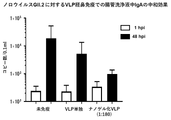
- the results of nasal immune response by nanogel-coated VLPs are shown. After intranasal administration of nanogel-coated GII.2 VLPs or GII.2 VLPs alone to mice, the antibody titers of IgG in serum, IgA in nasal wash, IgA in saliva, and IgA in intestinal wash were measured. is.
- FIG. 3 shows the results of examining the neutralizing effect of IgG in serum induced by nanogel-coated VLPs (GII.2 VLPs).
- Norovirus solutions were treated with mouse serum prior to intranasal immunization (unimmunized), treated with IgG in serum induced by VLPs alone (VLPs alone), or treated with IgG in serum induced by nanogel-coated VLPs. After (nanogelation VLP), it was added to intestinal epithelial cells, and the viral genome copy number in the culture supernatant was measured.
- Fig. 3 shows the results of examining the neutralizing effect of IgG in serum induced by nanogel-coated VLPs (GII.2 VLPs).
- Norovirus solutions were treated with mouse serum prior to intranasal immunization (unimmunized), treated with IgG in serum induced by VLPs alone (VLPs alone), or treated with IgG in serum induced by nanogel-coated VLP
- VLPs intestinal lavage fluid induced by nanogel-coated VLPs
- GII.2 VLPs nanogel-coated VLPs
- Norovirus solutions were treated with IgA in gut washings of mice prior to intranasal immunization (unimmunized), VLPs alone induced (VLPs alone) or nanogel-coated VLPs induced IgA in gut washings. After treatment (nanogelated VLP), it was added to intestinal epithelial cells, and the virus genome copy number in the culture supernatant was measured. An electron microscope image of nanogel-coated VLPs (GII.17 VLPs) is shown.
- A is an electron microscope image of GII.17 VLP
- B is an electron microscope image of nanogel
- C is an electron microscope image of nanogel-coated GII.17 VLP.
- C an image obtained by enlarging the area surrounded by a square in the observed image is also shown.
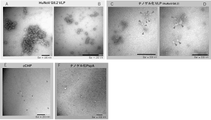
- An electron microscope image of nanogel-coated VLPs (GII.2 VLPs) is shown.
- a and B are electron microscope images of GII.2 VLPs
- C and D are electron microscope images of nanogel-coated GII.2 VLPs
- E is electron microscope images of nanogel (cCHP)
- F is nanogel encapsulating PspA.
- -PspA complex is an electron microscope image.
- Fig. 3 shows the results of a mouse pharmacokinetic study by intranasal administration of indium ( 111 In)-labeled nanogel.
- a first embodiment is a composite of a nanogel and a vaccine antigen (hereinafter also referred to as “nanogel-vaccine antigen (or antigen)”), wherein the vaccine antigen is coated with a nanogel (hereinafter (Also described as “the composite according to the present embodiment”).
- a nanogel is a polymer gel nanoparticle composed of a hydrophilic polysaccharide (for example, pullulan) to which hydrophobic cholesterol is added as a side chain. Nanogels can be produced based on known methods such as the method described in International Publication No. WO00/12564.
- a hydroxyl group-containing hydrocarbon or sterol having 12 to 50 carbon atoms and a dihydrogen represented by OCN-R 1 NCO (wherein R 1 is a hydrocarbon group having 1 to 50 carbon atoms)
- An isocyanate compound is reacted to produce an isocyanate group-containing hydrophobic compound in which one molecule of a hydroxyl group-containing hydrocarbon having 12 to 50 carbon atoms or a sterol is reacted.
- the resulting isocyanate group-containing hydrophobic compound is reacted with a polysaccharide to produce a hydrophobic group-containing polysaccharide containing a hydrocarbon group having 12 to 50 carbon atoms or a steryl group.
- a highly pure hydrophobic group-containing polysaccharide can be produced.
- polysaccharides pullulan, amylopectin, amylose, dextran, hydroxyethyldextran, mannan, levan, inulin, chitin, chitosan, xyloglucan, water-soluble cellulose, and the like can be used, and pullulan is particularly preferred.
- nanogels used in this embodiment include cationic cholesterol-group-bearing pullulan (referred to as cCHP) and derivatives thereof.
- cCHP has a structure in which pullulan having a molecular weight of 30,000 to 200,000, for example, 100,000, is substituted with 1 to 10, preferably 1 to 3, cholesterol per 100 monosaccharides.
- the amount of cCHP used in the present invention may be changed as appropriate depending on the size and degree of hydrophobicity of the antigen.
- an alkyl group (having 10 to 30 carbon atoms, preferably about 15 to 20 carbon atoms) may be added.
- the nanogel used in the present invention has a particle size of 10-50 nm, preferably 20-30 nm. Nanogels are already widely commercially available, and these commercial products may be used.
- the nanogel used in this embodiment is a nanogel into which a positively charged functional group such as an amino group is introduced so that the vaccine can penetrate the negatively charged nasal mucosa surface.
- a method for introducing amino groups into nanogels a method using amino group-added cholesterol pullulan (CHPNH 2 ) can be mentioned. Specifically, CHP dried under reduced pressure is dissolved in dimethylsulfoxide (DMSO), and 1-1′ carbonyldiimidazole is added thereto under a nitrogen stream and reacted at room temperature for several hours. Ethylenediamine is gradually added to the reaction solution and stirred for several hours to several tens of hours. The resulting reaction solution is dialyzed against distilled water for several days. The dialyzed reaction solution is freeze-dried to obtain a milky white solid. The degree of substitution of ethylenediamine can be evaluated using elemental analysis, H-NMR, and the like.
- Nanogel-antigen complexes that have been reported so far are in the form of nanoparticles (nanogels) consisting of about 4 molecules of cationic cholesterol-substituted pullulan, in which the antigen is encapsulated (Yuki et al., Molecular Pharmaceutics, https: http://dx.doi.org/10.1021/acs.molpharmaceut.0c01003 2021).
- the antigen is a substance that exceeds the size that can be encapsulated in the nanogel, the antigen is not encapsulated in the nanogel, and the nanogel is attached to the surface of the antigen (this Such a form is also described as "a form in which an antigen is coated with a nanogel") (see FIGS. 1, 8 and 9).
- the antigen that is not encapsulated in the nanogel is an antigen that is about the same size as the nanogel, or an antigen that is larger than the nanogel.
- a comparison of the sizes of the antigen and the nanogel is performed by, for example, the particle size of the antigen (assuming that the antigen is spherical) calculated by a light scattering method (e.g., dynamic light scattering (DLS) method).
- the diameter of the case can be used as an index, and the nanogel and antigen are observed by electron microscopy to evaluate each size.
- Various methods can be easily selected. More specifically, the particle size of the nanogel is about 30 nm (DLS method) (Yuki et al., Molecular Pharmaceutics, https://dx.doi.org/10.1021/acs.molpharmaceut.0c01003 2021).
- Antigens according to the embodiments preferably have a particle size of about 20 nm or more (e.g., about 20 nm or more and 1,000 nm or less, or about 30 nm or more and 600 nm or less), which is slightly smaller than the particle size of the nanogel as determined by the DLS method, for example.
- Examples of antigens according to this embodiment include inactivated viruses, VLPs (virus-like particles), large protein molecules or polymers of 20 nm or more (e.g., molecules with a molecular weight of 5,000 kDa or more), and the like. However, it is not limited to these. In addition, any virus may be used as the above virus. Viruses (e.g.
- H1N1, H5N1, H7N9 influenza virus coronaviruses (e.g. SARS-CoV, SARS-CoV 2, MERS-CoV, etc.), respiratory syncytial virus (type A, type B), rhinovirus, adenovirus, herpes virus, Human papillomavirus, enterovirus, cytomegalovirus, Ebola virus, West Nile virus, Zika virus, dengue virus, ATL (adult human T cell virus), HIV, hepatitis A virus, chikungunya virus and the like.
- coronaviruses e.g. SARS-CoV, SARS-CoV 2, MERS-CoV, etc.
- respiratory syncytial virus type A, type B
- rhinovirus e.g. SARS-CoV, SARS-CoV 2, MERS-CoV, etc.
- rhinovirus e.g. SARS-CoV 2, SARS-CoV 2, MERS-CoV, etc.
- rhinovirus e
- the complex according to this embodiment can be produced by allowing the nanogel and the vaccine antigen to coexist and interact with each other, and attaching the nanogel to the surface of the antigen.
- the mixing ratio of the nanogel and the vaccine antigen is not particularly limited, and can be easily determined by a person skilled in the art through preliminary experiments.
- a preferable mixing ratio of vaccine antigen and nanogel is vaccine antigen:nanogel in terms of molar ratio or molecular ratio, for example, about 1:10 (40 in terms of CHPNH 2 ) to 1:400 (1,600 in terms of CHPNH 2 ).
- the mixing ratio can be appropriately selected within the range of about 1:15 (60 in terms of CHPNH2 ) to 1: 200 (800 in terms of CHPNH2).
- the complex according to the present embodiment is produced by mixing the nanogel and the vaccine antigen and allowing the mixture to stand at 4°C to 50°C (e.g., 40°C) for 30 minutes to 48 hours (e.g., about 1 hour). be able to.
- the buffer used for forming the nanogel-vaccine antigen complex is not particularly limited, and Tris-HCl buffer and the like can be given as an example.
- the complex according to this embodiment may contain an adjuvant in addition to the nanogel-vaccine antigen complex (this complex is also included in the “composite according to this embodiment”).
- the adjuvant is synonymous with what is called an antigenic reinforcing agent or an immunostimulatory agent, and is used for the purpose of ordinary use of these agents in the art.
- the active ingredient of the adjuvant used in this embodiment is not particularly limited, but examples include STING ligands (e.g., cGAMP, cyclic-di AMP, cyclic-di GMP, cyclic-di AMP, cyclic-di GMP, cyclic- Cyclic dinucleotides such as di CMP, cyclic-di UMP or cyclic-di IMP and xanthenone derivatives such as DMXAA (5,6-dimethylXAA (xanthenone-4-acetic acid), Vadimezan or ASA404), polyIC or CpG ODN and the like can be mentioned.
- the adjuvant may further contain pharmaceutically acceptable carriers and other ingredients such as stabilizers, pH adjusters, preservatives, preservatives and buffers. Pharmaceutically acceptable carriers and other ingredients should be substances that do not adversely affect the health of the vaccinated animal.
- the content of the adjuvant is about 0.01% to 99.99% by weight with respect to 100% by weight of the vaccine formulation (see the second embodiment). It may be, for example, about 0.01 to 10 weights per weight of the vaccine antigen.
- Formation of the complex of this embodiment is performed by mixing nanogel and vaccine antigen, or nanogel, vaccine antigen and adjuvant, at 4°C to 50°C (e.g., 40°C) for 30 minutes to 48 hours (e.g., about 1 hour). ) can be carried out stationary.
- Buffers used for complex formation of nanogel and vaccine antigen, or nanogel, vaccine antigen and adjuvant are not particularly limited, and if exemplified, Tris-HCl buffer and the like can be mentioned.
- the second embodiment is a vaccine preparation (hereinafter referred to as "the present Also described as "a vaccine formulation according to an embodiment”).
- the vaccine formulation according to this embodiment may contain pharmacologically acceptable additives as a composition (vaccine composition according to this embodiment).
- the vaccine formulation according to the present embodiment is suitable for nasal administration, and the dosage form is preferably a form that allows nasal administration, including liquid formulations (nasal drops, injections, etc.).
- the active ingredient is optionally added with a pH adjuster such as hydrochloric acid, sodium hydroxide, lactose, lactic acid, sodium, sodium monohydrogen phosphate and sodium dihydrogen phosphate, and chloride.
- a tonicity agent such as sodium and glucose
- mannitol, dextrin, cyclodextrin and gelatin, etc. and freeze-dry in vacuum.
- the liquid formulation may contain known pharmaceutically acceptable stabilizers, preservatives, antioxidants, etc.
- Stabilizers include, for example, gelatin, dextran and sorbitol, and preservatives include Examples include thimerosal and ⁇ -propiolactone, and antioxidants include ⁇ -tocopherol.
- the vaccine formulation according to the second embodiment that is, a complex of a nanogel and a vaccine antigen, wherein the vaccine antigen is coated with a nanogel, is administered to a patient.
- a method of prophylaxis and/or treatment of disease comprising nasal administration.
- the disease targeted for treatment or prevention in the third embodiment depends on the vaccine antigen used and is not particularly limited, and may be infectious diseases caused by pathogens, cancer, or the like.
- the vaccine formulations of the invention may be administered through the nasal mucosa. Examples of the method include a method of administration into the nasal cavity by spraying, coating, dripping, etc. onto the nasal mucosa.
- the dose of the vaccine formulation according to the second embodiment can be appropriately determined according to the age, weight, etc. of the subject to be administered, and contains a pharmaceutically effective amount of the vaccine antigen.
- a pharmaceutically effective amount refers to the amount of antigen required to induce an immune response to the vaccine antigen.
- the vaccine antigen may be administered at a dose of several ⁇ g to several 10 mg once to several times a day, and may be administered several times in total at intervals of one week to several weeks, for example, about 1 to 5 times.
- VLP Viruses were crudely purified from feces containing HuNoV (human norovirus) provided by Osaka Institute of Public Health, and viral genomes were prepared therefrom. Primers were set outside the VP1 ORF of GII.4, GII.17 or GII.2 on the prepared genome, each ORF region was amplified by PCR, and the nucleotide sequence of the amplified product was determined. Each VP1 ORF was cloned into the pFastBac Dual Expression Vector (Invitrogen).
- the amino acid sequence of GII.4 VP1 and the nucleic acid sequence encoding it are shown in SEQ ID NO: 1 and SEQ ID NO: 2, respectively; In No. 4, the amino acid sequence of GII.2 VP1 and the nucleic acid sequence encoding it are shown in SEQ ID No. 5 and SEQ ID No. 6, respectively.
- Each construct was used to generate a recombinant baculovirus of the Bac-to-Bac expression system (Invitrogen) after confirming that its sequence was correct. High Five cells (Invitrogen) were infected with each recombinant baculovirus at an MOI (multiplicity of infection) of 7 pfu (plaque-forming units)/cell.
- VLPs were suspended in PBS.
- Concentrated VLPs were layered on a 10%-60% sucrose density gradient and purified by ultracentrifugation at 100,000 g for 1 hour.
- VLPs passed through a sucrose density gradient were dialyzed against 2 L of PBS three times to remove sucrose in the samples.
- VLPs were concentrated with an Amicon Ultra 30-kDa centrifugal filter (Millipore).
- Norovirus (GII.4_2012 Sydney, GII.17_2015 Kawasaki and GII.2 OSN201926; provided by Osaka Institute of Health and Safety) solution was basal medium (Advanced DMEM/F12 (Gibco) with 10 mM HEPES (pH 7.3, Gibco), 2 It was diluted with mM Glutamax (Gibco) and 100 units/mL Penicillin plus 100 ⁇ g/mL streptmycin (Gibco)) to 2 ⁇ 10 6 genome copies per 100 ⁇ L. The diluted virus solutions were then mixed with appropriately diluted mouse antisera or nasal washes, or not mixed with mouse antisera, nasal washes, and incubated at 37° C. for 90 minutes before infecting cells. The resulting virus solution was used to infect intestinal epithelial cells.
- 100 ⁇ L of the diluted virus solution was added to the monolayered intestinal epithelial cells to infect the intestinal epithelial cells with the virus, and then incubated at 37° C. under 5% CO 2 conditions for 1 hour or 3 hours. The virus solution was then removed and the cells were washed twice with 150 ⁇ L of basal medium.
- Differentiation medium (1x B-27 base medium, 1.25% calf serum (Biosera), 50 ng/mL mouse EGF, 375 ng/mL mouse R-Spondin1 (R&D Systems), 50 ng in the wells after washing) /mL mouse Noggin (Peprotech) and 500 nM A83-01 was added with 100 ⁇ L of a solution containing 0.03% bile, and the supernatant was collected immediately. Culture supernatants 1 hour or 3 hours after virus infection were used as 1 hpi (1 hour post infection) or 3 hpi samples, respectively.
- cCHP 1% cCHP was used as a stock solution. 5 ⁇ L of the sample was placed on a grid (MAXTAFORM grid HF36 Cu 400 mesh) on which a Formvar support film subjected to carbon vapor deposition and hydrophilization treatment was attached, and stained for 1 minute. After removing the sample solution and negatively staining with a 1% uranium acetate solution (dissolved in distilled water), observation was performed with a transmission electron microscope (JEM-1400, JEOL Ltd.).
- Effective immunity can be induced by encapsulating an antigen in a nanogel and performing transnasal immunization according to a conventionally reported method.
- the optimum mixing ratio of the antigen and the monomeric cCHP is about 1:2 to 1:8 in molecular ratio (antigen:cCHP). Converting this to the ratio of antigen to spherical nanogel (1 molecule of nanogel is formed by 4 molecules of cCHP: Kuroda et al., Langmuir 18: 3780-3786, 2002), the ratio is 1:0.5 to 1:2 (antigen : nanogel).
- nanogel contains one to two molecules of protein antigen (Yuki et al., Molecular Pharmaceutics, https://dx.doi.org/10.1021/acs.molpharmaceut.0c01003 2021 ).
- FIG. 2A Antibody titers induced in all mice immunized with the nanogel-GII.17 VLP complex were about 10-fold or more higher than those immunized with VLPs alone.
- FIG. 2A Antibody titers induced in all mice immunized with the nanogel-GII.17 VLP complex were about 10-fold or more higher than those immunized with VLPs alone.
- FIG. 2B shows the results of intranasal immunization with GII.4 VLP alone or nanogel-GII.4 VLP complex under similar conditions.
- Antibody titers induced in all mice immunized with the nanogel-GII.4 VLP complex were about 10-fold higher than those immunized with VLPs alone.
- FIG. 5 shows antigen-specific antibody titers of IgG in serum, IgA in nasal wash, IgA in saliva and IgA in intestinal wash after one week.
- Antibody titers induced in all mice immunized with nanogel-GII.2 VLP complexes were approximately 10- to 100-fold higher than those immunized with VLPs alone.
- the increase in the antibody titer in intestinal washings was remarkable.
- FIG. 8A shows an electron microscopic image of a GII.17 VLP alone sample.
- VLPs which are regular icosahedral hollow particles with a particle size of about 38 nm, were observed.
- the size (particle size) of the nanogel in the sample containing only 1% cCHP was about 20-40 nm, and was observed as a series of white particles with slightly weak contrast (Fig. 8B).
- VLPs and nanogels were observed, and VLPs forming complexes with nanogels were observed (indicated by arrows in the enlarged view of FIG. 5C).
- VLPs forming a complex with a nanogel appeared as a white disk overall because the surface was covered with cCHP (nanogel).
- cCHP nanogel
- FIG. 9A and B show observation images of GII.2 VLP alone samples.
- GII.2 VLPs which are regular icosahedral hollow particles with a diameter of about 30-40 nm, were observed.
- this GII.2 VLP is made up of 180 VP1 molecules with a molecular weight of 60,000, giving a molecular weight of approximately 10 million.
- Fig. 1 In the observation images of nanogelated GII.2 VLPs (Fig.
- non-nanogelated VLPs and cCHP can be seen, and the surface of the particles thought to be nanogelated is covered with cCHP, so the entire surface is White to light gray three-dimensional spheres were observed (arrows in the figure), and it was thought that nanogels with a size slightly larger than VLPs were coated nanogels. Similar to the above nanogel-coated GII.17 VLP, it is thought that the spherical particles were observed as slightly darker through the hollow of the VLP because the center was recessed in the vacuum state. be done. On the other hand, the size of the 1% cCHP alone sample (Fig. 9E) was slightly widened from about 15 to 40 nm, and was observed as hollow particles.
- cCHP nanogel had a particle size (DH) of 52 nm and a polydispersity index (PDI) of 0.394.
- PDI polydispersity index
- GII.2 VLP has a particle size of 70 nm and a PDI of 0.345, which is larger than the TEM observation image. it is conceivable that.
- the nanogel-coated VLP had a particle size of 109 nm and a PDI of 0.308.
- nanogel-coated antigen according to the present embodiment can be clinically applied as an intranasal vaccine without adding an adjuvant.
- These results are related to past intranasal influenza vaccines and E. coli heat-labile toxin adjuvants that translocated into the brain (Mutsch et al., N. Enlg. J Med 350: 896-903, 2004). It can be said that this is a very important result.
- the present inventors have so far reported the results of a pharmacokinetic test that denies migration of the antigen portion into the brain for a nanogel nasal vaccine (Yuki et al., J.
- the radioactivity of 111 In in various organs was measured (Fig. 10).
- cCHP nanogel which is a formulation additive, does not migrate into the olfactory bulb and the brain, confirming the safety of the nanogel itself.
- 111 In labeling was performed based on a previous report (Yuki et al., J. Immunol 185: 5436-5443, 2010).
- the present invention provides a nanogel vaccine formulation containing large antigen molecules, which has been difficult to formulate, and is expected to be used in the medical field.
Landscapes
- Health & Medical Sciences (AREA)
- Life Sciences & Earth Sciences (AREA)
- Chemical & Material Sciences (AREA)
- Public Health (AREA)
- Medicinal Chemistry (AREA)
- Pharmacology & Pharmacy (AREA)
- Veterinary Medicine (AREA)
- Animal Behavior & Ethology (AREA)
- General Health & Medical Sciences (AREA)
- Immunology (AREA)
- Virology (AREA)
- Mycology (AREA)
- Microbiology (AREA)
- Epidemiology (AREA)
- General Chemical & Material Sciences (AREA)
- Chemical Kinetics & Catalysis (AREA)
- Organic Chemistry (AREA)
- Nuclear Medicine, Radiotherapy & Molecular Imaging (AREA)
- Communicable Diseases (AREA)
- Oncology (AREA)
- Molecular Biology (AREA)
- Engineering & Computer Science (AREA)
- Bioinformatics & Cheminformatics (AREA)
- Medicinal Preparation (AREA)
- Medicines Containing Antibodies Or Antigens For Use As Internal Diagnostic Agents (AREA)
Abstract
Description
本発明者らは、ワクチン抗原をナノゲル内に内包するのではなく、ワクチン抗原の表面にナノゲルを付着させる、すなわち、ワクチン抗原をナノゲルで被覆した複合体(以下このような複合体を「ナノゲル被覆型」複合体とも記載する)の作製を試みたところ、首尾良くナノゲル被覆型の複合体の作製に成功した。本発明者らは、ナノゲル被覆型抗原が有効な粘膜免疫を誘導することを確認した。
具体的には、従来の抗原を内包するナノゲル複合体(以下「抗原内包型複合体」とも記載する)を調製するための抗原とナノゲルとの最適な混合比は、抗原1分子に対し、1~2.5分子(CHPNH2換算で1~10)、好ましくは1分子(CHPNH2換算で4)とされていた(特許文献2)ところ、本発明者らは、1分子のノロウイルスVLP(抗原)に対して混合するナノゲルの量を大幅に増加させ、ナノゲルを18分子(CHPNH2換算で72)または180分子(CHPNH2換算で720)のナノゲルで処理したところ、ナノゲルで比較的均一にVLP(抗原)を被覆できることを初めて見出した(図8および図9を参照)。得られたナノゲル被覆型VLPをマウスに経鼻投与すると、VLP単独投与に比して10倍以上高い粘膜免疫応答を誘導できることを確認した。ノロウイルスのVLPの粒径は約30-40nmでナノゲルの粒径(約30nm)を超える抗原である。
すなわち、本発明者らは、VLPのようにナノゲルよりも大きな抗原であっても、ナノゲルで抗原を被覆する(ナノゲルに内包化するのではなく)ことで、ナノゲルと抗原との複合体を形成することが可能であり、このナノゲル-抗原複合体は粘膜免疫応答を効果的に誘導することを初めて見出し、本発明を完成させた。
(1)ナノゲルおよびワクチン抗原の複合体であって、該ワクチン抗原がナノゲルで被覆されている、複合体。
(2)前記ワクチン抗原の粒径が、20 nm以上であることを特徴とする上記(1)に記載の複合体。
(3)前記ワクチン抗原が、ナノゲルよりも大きな物質であることを特徴とする上記(1)または(2)に記載の複合体。
(4)前記ワクチン抗原が、VLP(virus like particle)、不活性化ウイルス、20 nm以上の巨大タンパク分子または重合体であることを特徴とする上記(1)から(3)までのいずれかに記載の複合体。
(5)前記ワクチン抗原とナノゲルが、1:15~1:200のモル比で複合化されることを特徴とする上記(1)から(4)までのいずれかに記載の複合体。
(6)アジュバントをさらに含むことを特徴とする上記(1)から(5)までのいずれかに記載の複合体。
(7)上記(1)から(6)までのいずれかに記載の複合体を含むワクチン製剤。
なお、本明細書において「~」の符号は、その左右の値を含む数値範囲を示す。
本実施形態において、ナノゲルとは、疎水性のコレステロールが側鎖として付加された親水性の多糖(例えば、プルラン)からなる、高分子ゲルナノ粒子のことである。ナノゲルは公知の方法、例えば、国際公開第WO00/12564号公報に記載された方法などに基づいて製造することができる。
具体的には、まず、炭素数12~50の水酸基含有炭化水素またはステロールと、OCN-R1 NCO(式中、R1は炭素数1~50の炭化水素基である)で表されるジイソシアナート化合物を反応させて、炭素数12~50の水酸基含有炭化水素またはステロールが1分子反応したイソシアナート基含有疎水性化合物を製造する。得られたイソシアナート基含有疎水性化合物と多糖類とを反応させ、炭素数12~50の炭化水素基またはステリル基を含有する疎水性基含有多糖類を製造する。次に、得られた生成物をケトン系の溶媒で精製することにより、純度の高い疎水性基含有多糖類を製造することができる。
ここで、多糖類としては、プルラン、アミロペクチン、アミロース、デキストラン、ヒドロキシエチルデキストラン、マンナン、レバン、イヌリン、キチン、キトサン、キシログルカンまたは水溶性セルロース等が利用可能であり、特に、プルランが好ましい。
本実施形態にかかる複合体の製造は、ナノゲルおよびワクチン抗原を混合し、4℃から50℃(例えば、40℃)にて、30分から48時間(例えば、1時間程度)静置して実施することができる。ナノゲル-ワクチン抗原の複合体形成に使用するバッファーは、特に限定されず、あえて例示するならば、Tris-HCl緩衝液などが挙げられる。
ここで、アジュバントとは、抗原性補強剤または免疫賦活化剤などと称されるものと同義で、当該分野において、これらの剤の通常の使用目的に用いられるものである。本実施形態で使用されるアジュバントの有効成分は、特に限定はしないが、例えば、STING(stimulator of interferon genes)を活性化するSTINGリガンド(例えばcGAMP、cyclic-di AMP、cyclic-di GMP、cyclic-di CMP、cyclic-di UMPまたはcyclic-di IMPなどの環状ジヌクレオチドやDMXAA(5,6-dimethylXAA (xanthenone-4- acetic acid)、VadimezanまたはASA404)などのキサンテノン(Xanthenone)誘導体)、polyICまたはCpG ODNなどを挙げることができる。当該アジュバントは、さらに、医薬上許容される担体やその他の成分(例えば、安定化剤、pH調整剤、保存剤、防腐剤および緩衝剤など)を含んでいてもよい。医薬上許容される担体およびその他の成分は、ワクチン投与される動物の健康に悪影響を及ぼさない物質であることが必要である。
本実施形態にかかるワクチン製剤は、組成物(本実施形態にかかるワクチン組成物)として、薬理学上許容された添加剤を含んでいてもよい。本実施形態にかかるワクチン製剤は経鼻投与に適したものであり、剤形としても、経鼻投与が可能な形体が望ましく、液体製剤(点鼻剤および注射剤など)などが挙げられる。
本実施形態にかかるワクチン製剤が液体製剤の場合、有効成分を必要に応じて塩酸、水酸化ナトリウム、乳糖、乳酸、ナトリウム、リン酸一水素ナトリウムおよびリン酸二水素ナトリウムなどのpH調整剤、塩化ナトリウムおよびブドウ糖などの等張化剤と共に製剤用蒸留水に溶解し、無菌濾過してアンプルに充填するか、さらに、マンニトール、デキストリン、シクロデキストリンおよびゼラチンなどを加えて真空凍結乾燥し、用事溶解型の製剤としてもよい。当該液体製剤には、薬学的に許容できる公知の安定剤、防腐剤、酸化防止剤等が含まれていても良く、安定剤としては、例えば、ゼラチン、デキストランおよびソルビトール等が、防腐剤としては、例えば、チメロサールおよびβプロピオラクトン等が、酸化防止剤としては、例えば、αトコフェロール等が挙げられる。
第3の実施形態の治療または予防の対象疾患は、使用するワクチン抗原に依存し、特に限定はされず、病原体による感染症の他、がんなどであってもよい。
本発明のワクチン製剤は、鼻粘膜を介して投与してもよい。その方法としては、例えば、鼻粘膜への噴霧、塗布、滴下等により鼻腔内へ投与する方法が挙げられる。
以下に実施例を示してさらに本発明の説明を行うが、実施例は、あくまでも本発明の実施形態の例示にすぎず、本発明の範囲を限定するものではない。
1-1.VLPの調製
地方独立行政法人大阪健康安全基盤研究所から分与されたHuNoV(human norovirus)を含む糞便からウイルスを粗精製し、そこからウイルスゲノムを調製した。調製したゲノム上のGII.4、GII.17またはGII.2のVP1 ORFの外側にプライマーを設定して各ORF領域をPCRで増幅し、その増幅産物のヌクレオチド配列を決定した。各VP1のORFは、pFastBac Dual Expression Vector(Invitrogen)にクローニングした。GII.4 VP1のアミノ酸配列およびこれをコードする核酸配列を、各々、配列番号1および配列番号2に、GII.17 VP1のアミノ酸配列およびこれをコードする核酸配列を、各々、配列番号3よび配列番号4に、GII.2 VP1のアミノ酸配列およびこれをコードする核酸配列を、各々、配列番号5よび配列番号6に示す。各コンストラクトは、その配列が正しいことを確認した後、Bac-to-Bac expression system(Invitrogen)の組換バキュロウイルスの作製に使用した。High Five細胞(Invitrogen)に対して各組換バキュロウイルスをMOI(multiplicity of infection)、7 pfu(plaque-forming units)/細胞で感染させた。感染から6日後、培養上清を回収し、20,000gで1時間遠心した。得られた上清を100,000gで2時間超遠心し、沈殿したVLPをPBSに懸濁した。濃縮したVLPは、10%-60%スクロース密度勾配に重層し、100,000gで1時間超遠心を行い、精製した。スクロース密度勾配を通したVLPを2 LのPBSに対して3回透析し、サンプル中のスクロースを除去した。VLPはAmiconUltra 30-kDa centrifugal filter (Millipore)で濃縮した。
cCHPナノゲルは、既報(Ayameら, Bioconjugate Chem 19:882-890, 2008)の方法に従って調製した。調製したナノゲル(4分子のcCHPが1分子のナノゲルを形成するとして種々の算定を行った;Kurodaら, Langmuir 18, 3780-3786, 2002)と精製したノロウイルスVLP(virus like particle)(VP1(60kDa)分子が180個で1分子のVLPを形成するとして種々の算定を行った;Glassら, N. Engl. J. Med 361, 1776-1785, 2009)を分子比(VLP:ナノゲル)、1:18または1:180で混合し、40℃のヒートブロックで1時間インキュベートした後、4℃で一晩静置した。
ナノゲル-VLP複合体またはVLP(複合体を形成していないVLP、以下同じ)、Balb/cマウスの7週齢メスに経鼻的に投与した。投与抗原量は、1匹一回あたりVLPタンパク質に換算して5μgを投与した。経鼻免疫は1週間隔で計3回実施した。最終免疫から1週間後に、血清、鼻洗浄液、腸管洗浄液、糞便を採取した。糞便は100 mg/mLのPBSに懸濁後、その上清を検体とした。
抗原特異的な抗体応答について、ELISA法により解析を行った(Kongら, Infect Immun 81 :1625-1634, 2013を参照)。PBS中、1μg/mLの VLPを4℃で一晩、96ウェルプレートにコートした。1% BSAを含むPBS-Tweenでブロッキングをした後、10倍に連続希釈したサンプルを添加し、室温で2時間インキュベートした。洗浄後、HRP結合ヤギ抗マウスIgG(Southern Biotech社)またはHRP結合ヤギ抗マウスIgA(Southern Biotech社)を1:4,000に希釈し、ウェルに添加後、室温で1時間30分インキュベートした。インキュベート後、TMB Microwell Peroxidase Substrate System(XPL社)で発色させた。エンドポイントタイターは、ネガティブコントロールよりもOD450の値が0.1以上高い最終希釈倍率について、対数表示した(reciprocal log10 titer)で表示した。
ヒトiPS細胞株から誘導した腸管オルガノイドのMatrigel(Corning)上での培養、および単層化の方法、ならびにそれらを用いた抗VLP抗体によるノロウイルスの増殖の中和活性測定は、既報(Satoら, Cell Mol Gastroenterol Hepatol 7: 686-688, 2019)に記載の方法に従って行った。ノロウイルス(GII.4_2012 Sydney、GII.17_2015 KawasakiおよびGII.2 OSN201926;大阪健康安全基盤研究所から供与)溶液は基本培地(Advanced DMEM/F12(Gibco)に10 mM HEPES(pH 7.3、Gibco)、2 mM Glutamax(Gibco)および100 units/mL Penicillin plus 100μg/mL streptmycin(Gibco)を添加したもの)で 100μLあたり2×10⁶ゲノムコピーになるように希釈した。その後、細胞に感染させる前に希釈したウイルス溶液を適当に希釈したマウス抗血清もしくは鼻洗浄液と混合し、またはマウス抗血清、鼻洗浄液と混合せずに、37℃で90分間インキュベートした。得られたウイルス溶液を腸管上皮細胞への感染に使用した。
GII.17 VLPとcCHPをモル比1:18の割合で、あるいは、GII.2 VLPとcCHPをモル比1:180の割合でナノゲル化し、観察用サンプルとした。また、すでに報告のあるナノゲル内包型のナノゲル-抗原複合体として、PspAとcCHPをモル比1:1の割合でナノゲル化した。GII.17 VLPはPBS(-)で0.5 mg/mLに希釈し、GII.2 VLPはGII.2 VLPはPBS(-)で0.1 mg/mLに希釈した。cCHPは、1% cCHPを原液で使用した。カーボン蒸着と親水化処理を施したフォルムバール支持膜を貼ったグリッド(MAXTAFORMグリッド HF36 Cu 400メッシュ)にサンプルを5μL載せ、1分間染色した。サンプル液を除いて1%酢酸ウラニウム溶液(蒸留水に溶解)で負染色した後、透過型電子顕微鏡(JEM-1400、日本電子株式会社)にて観察を行った。
2-1.本実施例の概略
従来報告されている方法により、抗原をナノゲルに内包化して経鼻免疫することで効果的な免疫を誘導することができる。この場合、抗原とモノマーであるcCHPの最適な混合比率は、分子比(抗原:cCHP)で1:2から1:8程度である。これを抗原と球状のナノゲル(4分子のcCHPで1分子のナノゲルが形成される:Kurodaら, Langmuir 18: 3780-3786, 2002)との比率に換算すると、1:0.5から1:2(抗原:ナノゲル)となる。従って、1分子のナノゲルに、1分子から2分子程度の蛋白質抗原が内包されていることになる(Yukiら, Molecular Pharmaceutics, https://dx.doi.org/10.1021/acs.molpharmaceut.0c01003 2021)。
抗原分子に対するナノゲルの分子数が大過剰の状態、すなわち、ノロウイルスVLPに対するナノゲルの分子比を1:180とし、ノロウイルスVLP(GII.17 およびGII.4)とナノゲルとの複合体を形成させた。GII.17 VLPのみまたはナノゲル-GII.17 VLP複合体で、マウスを1週間おき3回経鼻免疫した。1週間後の抗原特異的な血清IgG、鼻腔洗浄液中IgAおよび糞便中IgAの抗体価を図2Aに示す。ナノゲル-GII.17 VLP複合体で免疫したすべてのマウスにおいて誘導された抗体価は、VLPのみで免疫した場合の抗体価と比較して、約10倍以上の上昇が認められた。
図2Bは、同様の条件での、GII.4 VLPのみまたはナノゲル-GII.4 VLP複合体での経鼻免疫の結果を示す。ナノゲル-GII.4 VLP複合体で免疫したすべてのマウスにおいて誘導された抗体価は、VLPのみで免疫した場合の抗体価と比較して、約10倍以上の上昇が認められた。
次に、VLPに対するナノゲルの混合比率を上記2-2の場合の混合比率の1/10にして、すなわち抗原(VLP)に対するナノゲルの分子比(VLP:ナノゲル)を、1:18としてノロウイルスVLP(GII.17)とナノゲルとの複合体を形成させた。GII.17 VLPのみまたはナノゲル-GII.17 VLP複合体で、マウスを1週間おき3回経鼻免疫した。1週間後の抗原特異的な血清IgGおよび鼻腔洗浄液中IgAの抗体価を図3に示す。VLPに対するナノゲルの混合比を下げた場合においても、抗原特異的血清IgGおよび鼻洗浄液IgAの抗体価は、VLPのみで免疫した場合の抗体価に比べて、約10倍以上の上昇が認められた。
次に、ナノゲル被覆型VLP(GII.17 VLPおよびGII.4 VLP)によって誘導された抗体が、中和活性、すなわち、ノロウイルスの腸管上皮細胞中での増殖を抑制する活性を有するかどうかについて検討を行った。ノロウイルスの増殖は、培養上清中のウイルスゲノムのコピー数を指標にして評価した。結果を図4に示す。ナノゲル被覆型VLPの経鼻投与によって誘導された血清IgGおよび鼻洗浄液IgAは、VLPがGII.17 VLP(図4A)およびGII.4 VLP(図4B)のいずれの場合においても、各々、ノロウイルスGII.17およびノロウイルスGII.4の腸管上皮細胞内での増殖を抑制することが確認された。すなわち、ナノゲル被覆型VLPの経鼻免疫によって誘導される抗体は、顕著な中和活性を有している事が分かった。
GII.2 VLPに対するナノゲルの分子比を1:180とし、GII.2 VLPとナノゲルとの複合体を形成させた。GII.2 VLPのみまたはナノゲル-GII.2 VLP複合体で、マウスを1週間おき3回経鼻免疫した。1週間後の抗原特異的な血清中IgG、鼻腔洗浄液中IgA、唾液中IgAおよび腸管洗浄液中IgAの抗体価を図5に示す。ナノゲル-GII.2 VLP複合体で免疫したすべてのマウスにおいて誘導された抗体価は、VLPのみで免疫した場合の抗体価と比較して、約10倍~100倍以上の上昇が認められた。特に、腸管洗浄液中の抗体価の上昇が顕著であった。
ナノゲル被覆型VLPの経鼻投与によって誘導された血清中IgGは、VLPのみを経鼻投与した場合に誘導される血清中IgGと比較して、ノロウイルス(HuNoV GII.2)の腸管上皮細胞内での増殖をより強く抑制することが確認された(図6)。
次に、ナノゲル被覆型VLPの経鼻投与によって誘導された血清中IgGは、VLPのみを経鼻投与した場合に誘導される血清中IgAと比較して、ノロウイルス(HuNoV GII.2)の腸管上皮細胞内での増殖をより強く抑制することが確認された(図7)。
特筆すべきは、本実施例において、ナノゲルで被覆したGII.2 VLPを経鼻免疫すると、GII.2 VLPのみを単独で経鼻免疫した場合よりも、腸管洗浄液中に、HuNoV GII.2特異的IgA抗体が100倍以上多く誘導され、HuNoV GII.2の増殖が非常に効果的に抑制されることを実証できたことである。この結果により、ノロウイルスの経鼻ワクチンの臨床応用に、非常に期待が持てる。すなわち、従来、このような経鼻VLPワクチンでノロウイルスの防御効果を得るためにはアジュバンドが必要とされることが報告されていた(Atmaら, N. Eng. J. Med. 365:2187-87, 2011)。しかしながら、本実施例で示した結果を踏まえると、製剤添加物であるナノゲルで抗原を被覆することで、アジュバンド未添加のノロウイルス経鼻ワクチンの製造が十分可能であると考えられる。
図8Aは、GII.17 VLP単独サンプルの電子顕微鏡観察像を示す。粒径が約38nmで正二十面体の中空粒子であるVLPが観察された。一方、1% cCHPのみのサンプル中におけるナノゲルの大きさ(粒径)は約20-40nmで、コントラストのやや弱い白く抜けた粒子状の連なりとして観察された(図8B)。ナノゲル被覆型VLPの電子顕微鏡観察画像においては、VLP、ナノゲルが見られる他、ナノゲルと複合体を形成しているVLPが観察された(図5Cの拡大図中、矢印で示す)。ナノゲルと複合体を形成しているVLPは、表面がcCHP(ナノゲル)に覆われているために全体的に白い円盤状に見えた。また、真空状態で観察しているためVLPの中央が凹んだ結果、中身が透けてやや暗く見える球状の粒子として観察された。
以上の電子顕微鏡観察の結果から、cCHP(ナノゲル)がVLPの周囲を覆うようにして付着し、被覆化していることが示唆された。
電子顕微鏡による観察に加え、cCHPナノゲル、GII.2 VLPおよびナノゲル被覆型GII.2 VLPの粒径をDLS法で測定し、各々の粒径を比較した(表1)。

本実施形態にかかるナノゲル被覆型抗原(巨大分子の抗原をナノゲルで被覆した複合体)は、アジュバントを添加せずに、経鼻ワクチンとして臨床応用することができる。このような結果は、過去のインフルエンザ経鼻ワクチンと大腸菌易熱性毒素アジュバントの脳内移行関連で経鼻ワクチン開発に失敗した問題(Mutschら, N. Enlg. J Med 350: 896-903, 2004)とも関連し、非常に重要な結果であると言える。本発明者らは、これまでに、ナノゲル経鼻ワクチンに関し、抗原部分の脳内移行を否定する体内動態試験の結果を報告している(Yukiら, J . Immunol. 185:5436-5443 2010;Fukuyamaら, Mucosal Immunol. 8:1144-1153 2015)。この結果に加え、新たに、ナノゲル自体を経鼻投与することによる体内動態への影響に関し、特に脳内移行について、検討したデータをここに示す。図10に示す結果は、mRNAワクチンのDDS (製剤添加物)である脂質系ナノ粒子自体の筋注による安全性に関する体内動態試験と同様に、ナノゲル(製剤添加物としての)自体の経鼻ワクチン製剤としての体内動態試験と考えることができる。
ナノゲルの体内動態を調べるため、まず、ナノゲルを111Inで標識した。111In標識したナノゲルをDEAE Sepharoseカラムを用いて、未反応の111Inと111In標識化ナノゲルと分離し、111In標識化ナノゲルを精製した。精製した111In標識化ナノゲル(ナノゲルとして0.1mg)を、マウス(n=3)に経鼻投与後、0.25時間、1時間、3時間、6時間、12時間、24時間、48時間および72時間に、各種臓器における111Inの放射活性を測定した(図10)。その結果、製剤添加物であるcCHPナノゲルは、嗅球および脳内へは移行しないことが明らかとなり、ナノゲル自体の安全性を確認することができた。なお、111In標識は、既報(Yukiら, J . Immunol 185:5436-5443、2010)基づいて行った
Claims (7)
- ナノゲルおよびワクチン抗原の複合体であって、該ワクチン抗原がナノゲルで被覆されている、前記複合体。
- 前記ワクチン抗原の粒径が、20 nm以上であることを特徴とする請求項1に記載の複合体。
- 前記ワクチン抗原が、ナノゲルよりも大きな物質であることを特徴とする請求項1または請求項2に記載の複合体。
- 前記ワクチン抗原が、VLP(virus like particle)、不活性化ウイルス、20 nm以上の巨大タンパク分子または重合体であることを特徴とする請求項1から請求項3までのいずれか1項に記載の複合体。
- 前記ワクチン抗原とナノゲルが、1:15~1:200のモル比で複合化されることを特徴とする請求項1から請求項4までのいずれか1項に記載の複合体。
- アジュバントをさらに含むことを特徴とする請求項1から請求項5でのいずれか1項に記載の複合体。
- 請求項1から請求項6までのいずれか1項に記載の複合体を含むワクチン製剤。
Priority Applications (7)
| Application Number | Priority Date | Filing Date | Title |
|---|---|---|---|
| JP2023511221A JPWO2022210465A1 (ja) | 2021-03-30 | 2022-03-28 | |
| EP22780676.7A EP4316511A4 (en) | 2021-03-30 | 2022-03-28 | NANOGEL-COATED VACCINE |
| AU2022248775A AU2022248775A1 (en) | 2021-03-30 | 2022-03-28 | Nanogel-coated vaccine |
| US18/285,148 US20240181033A1 (en) | 2021-03-30 | 2022-03-28 | Nanogel-coated vaccine |
| KR1020237035571A KR20230163443A (ko) | 2021-03-30 | 2022-03-28 | 나노겔 피복형 백신 |
| CA3212267A CA3212267A1 (en) | 2021-03-30 | 2022-03-28 | Nanogel-coated vaccine |
| CN202280025674.XA CN117098549A (zh) | 2021-03-30 | 2022-03-28 | 纳米凝胶被覆型疫苗 |
Applications Claiming Priority (2)
| Application Number | Priority Date | Filing Date | Title |
|---|---|---|---|
| JP2021056392 | 2021-03-30 | ||
| JP2021-056392 | 2021-03-30 |
Publications (1)
| Publication Number | Publication Date |
|---|---|
| WO2022210465A1 true WO2022210465A1 (ja) | 2022-10-06 |
Family
ID=83459198
Family Applications (1)
| Application Number | Title | Priority Date | Filing Date |
|---|---|---|---|
| PCT/JP2022/014798 Ceased WO2022210465A1 (ja) | 2021-03-30 | 2022-03-28 | ナノゲル被覆型ワクチン |
Country Status (8)
| Country | Link |
|---|---|
| US (1) | US20240181033A1 (ja) |
| EP (1) | EP4316511A4 (ja) |
| JP (1) | JPWO2022210465A1 (ja) |
| KR (1) | KR20230163443A (ja) |
| CN (1) | CN117098549A (ja) |
| AU (1) | AU2022248775A1 (ja) |
| CA (1) | CA3212267A1 (ja) |
| WO (1) | WO2022210465A1 (ja) |
Citations (3)
| Publication number | Priority date | Publication date | Assignee | Title |
|---|---|---|---|---|
| WO2000012564A1 (en) | 1998-08-31 | 2000-03-09 | Nof Corporation | High-purity polysaccharide containing hydrophobic groups and process for producing the same |
| WO2010050578A1 (ja) * | 2008-10-31 | 2010-05-06 | 国立大学法人東京医科歯科大学 | カチオン性ナノゲルを用いる粘膜ワクチン |
| WO2020027318A1 (ja) * | 2018-08-03 | 2020-02-06 | 国立研究開発法人農業・食品産業技術総合研究機構 | ウシ乳房炎に対する粘膜ワクチン組成物 |
-
2022
- 2022-03-28 KR KR1020237035571A patent/KR20230163443A/ko active Pending
- 2022-03-28 AU AU2022248775A patent/AU2022248775A1/en active Pending
- 2022-03-28 JP JP2023511221A patent/JPWO2022210465A1/ja active Pending
- 2022-03-28 CN CN202280025674.XA patent/CN117098549A/zh active Pending
- 2022-03-28 CA CA3212267A patent/CA3212267A1/en active Pending
- 2022-03-28 EP EP22780676.7A patent/EP4316511A4/en active Pending
- 2022-03-28 US US18/285,148 patent/US20240181033A1/en active Pending
- 2022-03-28 WO PCT/JP2022/014798 patent/WO2022210465A1/ja not_active Ceased
Patent Citations (4)
| Publication number | Priority date | Publication date | Assignee | Title |
|---|---|---|---|---|
| WO2000012564A1 (en) | 1998-08-31 | 2000-03-09 | Nof Corporation | High-purity polysaccharide containing hydrophobic groups and process for producing the same |
| WO2010050578A1 (ja) * | 2008-10-31 | 2010-05-06 | 国立大学法人東京医科歯科大学 | カチオン性ナノゲルを用いる粘膜ワクチン |
| JP2010105968A (ja) | 2008-10-31 | 2010-05-13 | Tokyo Medical & Dental Univ | カチオン性ナノゲルを用いる粘膜ワクチン |
| WO2020027318A1 (ja) * | 2018-08-03 | 2020-02-06 | 国立研究開発法人農業・食品産業技術総合研究機構 | ウシ乳房炎に対する粘膜ワクチン組成物 |
Non-Patent Citations (19)
| Title |
|---|
| ATMA ET AL., N. ENG. J. MED., vol. 365, 2011, pages 2187 - 87 |
| AYAME ET AL., BIOCONJUG CHEM, vol. 19, 2008, pages 882 - 890 |
| AYAME ET AL., BIOCONJUGATE CHEM, vol. 19, 2008, pages 882 - 890 |
| FUKUYAMA ET AL., MUCOSAL IMMUNOL., vol. 8, 2015, pages 1144 - 1153 |
| GLASS ET AL., N. ENGL. J. MED, vol. 361, 2009, pages 1776 - 1785 |
| KONG ET AL., INFECT IMMUN, vol. 81, 2013, pages 1625 - 1634 |
| KURODA ET AL., LANGMUIR, vol. 18, 2002, pages 3780 - 3786 |
| LISSETTE S. VELASQUEZ; SAMANTHA SHIRA; ALICE N. BERTA; JACQUELYN KILBOURNE; BABU M. MEDI; IAN TIZARD; YAWEI NI; CHARLES J. ARNTZEN: "Intranasal delivery of Norwalk virus-like particles formulated in an in situ gelling, dry powder vaccine", VACCINE, ELSEVIER, AMSTERDAM, NL, vol. 29, no. 32, 11 May 2011 (2011-05-11), AMSTERDAM, NL , pages 5221 - 5231, XP028239816, ISSN: 0264-410X, DOI: 10.1016/j.vaccine.2011.05.027 * |
| MUTSCH ET AL., N. ENLG. J MED, vol. 350, 2004, pages 896 - 903 |
| NOCHI ET AL., NAT MATER, vol. 9, 2010, pages 572 - 578 |
| SATO ET AL., CELL MOL GASTROENTEROL HEPATOL, vol. 7, 2019, pages 686 - 688 |
| See also references of EP4316511A4 |
| TANIMOTO, TAKESHI: "Development of nasal absorption influenza vaccine", DRUG DELIVERY SYSTEM., NIHON D D S GAKKAI, JAPAN, vol. 25, no. 1, 1 January 2010 (2010-01-01), Japan , pages 15 - 21, XP009540039, ISSN: 0913-5006 * |
| YUKI ET AL., BIOTECHNOL GENET ENG REV, vol. 29, 2013, pages 61 - 72 |
| YUKI ET AL., J . IMMUNOL, vol. 185, 2010, pages 5436 - 5443 |
| YUKI ET AL., J. IMMUNOL., vol. 185, 2010, pages 5436 - 5443 |
| YUKI ET AL., MOL. PHARMACEUTICS, vol. 18, 2021, pages 1582 - 1592 |
| YUKI ET AL., MOLECULAR PHARMACEUTICS, 2021, Retrieved from the Internet <URL:https://dx.doi.org/10.1021/acs.molpharmaceut.Oc01003> |
| YUKI ET AL., MOLECULAR PHARMACEUTICS, Retrieved from the Internet <URL:https://dx.doi.org/10.1021/acs.molpharmaceut.Oc010032021> |
Also Published As
| Publication number | Publication date |
|---|---|
| AU2022248775A1 (en) | 2023-10-12 |
| US20240181033A1 (en) | 2024-06-06 |
| CN117098549A (zh) | 2023-11-21 |
| JPWO2022210465A1 (ja) | 2022-10-06 |
| CA3212267A1 (en) | 2022-10-06 |
| KR20230163443A (ko) | 2023-11-30 |
| EP4316511A1 (en) | 2024-02-07 |
| EP4316511A4 (en) | 2025-05-21 |
Similar Documents
| Publication | Publication Date | Title |
|---|---|---|
| Li et al. | Enhanced intranasal delivery of mRNA vaccine by overcoming the nasal epithelial barrier via intra-and paracellular pathways | |
| Qiao et al. | Potency of a scalable nanoparticulate subunit vaccine | |
| Sayın et al. | TMC–MCC (N-trimethyl chitosan–mono-N-carboxymethyl chitosan) nanocomplexes for mucosal delivery of vaccines | |
| KR101342641B1 (ko) | 폴리감마글루탐산-키토산 나노입자를 함유하는 면역보강제 조성물 | |
| JP5476544B2 (ja) | ノロウイルスワクチン製剤 | |
| TWI624280B (zh) | 經鼻流感疫苗組成物 | |
| Sokolova et al. | The potential of nanoparticles for the immunization against viral infections | |
| KR102007278B1 (ko) | 바이러스 진단 및 치료를 위한 인지능 물질 및 이의 제조방법 | |
| US10245319B2 (en) | Lymph node-targeting nanoparticles | |
| EP3403671B1 (en) | Vaccine containing immobilized virus particles | |
| Zhao et al. | Dendrigraft poly-L-lysines delivery of DNA vaccine effectively enhances the immunogenic responses against H9N2 avian influenza virus infection in chickens | |
| Iyer et al. | Bioengineering strategies for developing vaccines against respiratory viral diseases | |
| US20210308249A1 (en) | Vlp formulations | |
| Witeof et al. | Atomic-layer deposition processes applied to phage λ and a phage-like particle platform yield thermostable, single-shot vaccines | |
| CN112089834B (zh) | 基于氧化石墨烯的茯苓多糖纳米佐剂及佐剂/抗原共递送疫苗的制备与应用 | |
| US9833407B2 (en) | Nasal vaccine for Streptococcus pneumoniae | |
| US20200306364A1 (en) | Mucoadhesive nanoparticle entrapped influenza virus vaccine delivery system | |
| Xu et al. | Immunoprotective effect of chitosan nanoparticles with different particle sizes against H9N2 avian influenza infection | |
| WO2022210465A1 (ja) | ナノゲル被覆型ワクチン | |
| JP7445897B2 (ja) | 細胞性免疫を誘導する経鼻ワクチン | |
| Rudometova et al. | Intranasal Immunization with Recombinant Hemagglutinin of Influenza A/H5 Virus Complexed with Novochizol Induces Virus-Neutralizing Antibodies and Protects Animals from Lethal Viral Challenge | |
| EP4661878A2 (en) | Adjuvant formulations including low viscosity chitosan or chitosan derivatives | |
| Wang et al. | Advances in Mucosal Adjuvants for Influenza Vaccines | |
| Zhao et al. | M13 Phage-Loaded Quaternized Chitosan Nano-Vaccine Against H9N2 Avian Influenza Virus | |
| KR20170046036A (ko) | 폴리감마글루탐산-키토산 나노입자 및 불활화 엔테로바이러스 71을 함유하는 백신 |
Legal Events
| Date | Code | Title | Description |
|---|---|---|---|
| 121 | Ep: the epo has been informed by wipo that ep was designated in this application |
Ref document number: 22780676 Country of ref document: EP Kind code of ref document: A1 |
|
| WWE | Wipo information: entry into national phase |
Ref document number: 2023511221 Country of ref document: JP |
|
| WWE | Wipo information: entry into national phase |
Ref document number: 3212267 Country of ref document: CA |
|
| WWE | Wipo information: entry into national phase |
Ref document number: 202280025674.X Country of ref document: CN Ref document number: 2022248775 Country of ref document: AU Ref document number: AU2022248775 Country of ref document: AU |
|
| WWE | Wipo information: entry into national phase |
Ref document number: 18285148 Country of ref document: US |
|
| ENP | Entry into the national phase |
Ref document number: 2022248775 Country of ref document: AU Date of ref document: 20220328 Kind code of ref document: A |
|
| ENP | Entry into the national phase |
Ref document number: 20237035571 Country of ref document: KR Kind code of ref document: A |
|
| WWE | Wipo information: entry into national phase |
Ref document number: 2023127769 Country of ref document: RU Ref document number: 2022780676 Country of ref document: EP |
|
| NENP | Non-entry into the national phase |
Ref country code: DE |
|
| ENP | Entry into the national phase |
Ref document number: 2022780676 Country of ref document: EP Effective date: 20231030 |