WO2022211043A1 - 眼鏡レンズ及びその製造方法 - Google Patents
眼鏡レンズ及びその製造方法 Download PDFInfo
- Publication number
- WO2022211043A1 WO2022211043A1 PCT/JP2022/016606 JP2022016606W WO2022211043A1 WO 2022211043 A1 WO2022211043 A1 WO 2022211043A1 JP 2022016606 W JP2022016606 W JP 2022016606W WO 2022211043 A1 WO2022211043 A1 WO 2022211043A1
- Authority
- WO
- WIPO (PCT)
- Prior art keywords
- meth
- mass
- general formula
- spectacle lens
- layer
- Prior art date
- Legal status (The legal status is an assumption and is not a legal conclusion. Google has not performed a legal analysis and makes no representation as to the accuracy of the status listed.)
- Ceased
Links
Classifications
-
- G—PHYSICS
- G02—OPTICS
- G02C—SPECTACLES; SUNGLASSES OR GOGGLES INSOFAR AS THEY HAVE THE SAME FEATURES AS SPECTACLES; CONTACT LENSES
- G02C11/00—Non-optical adjuncts; Attachment thereof
- G02C11/08—Anti-misting means, e.g. ventilating, heating; Wipers
-
- C—CHEMISTRY; METALLURGY
- C09—DYES; PAINTS; POLISHES; NATURAL RESINS; ADHESIVES; COMPOSITIONS NOT OTHERWISE PROVIDED FOR; APPLICATIONS OF MATERIALS NOT OTHERWISE PROVIDED FOR
- C09D—COATING COMPOSITIONS, e.g. PAINTS, VARNISHES OR LACQUERS; FILLING PASTES; CHEMICAL PAINT OR INK REMOVERS; INKS; CORRECTING FLUIDS; WOODSTAINS; PASTES OR SOLIDS FOR COLOURING OR PRINTING; USE OF MATERIALS THEREFOR
- C09D5/00—Coating compositions, e.g. paints, varnishes or lacquers, characterised by their physical nature or the effects produced; Filling pastes
- C09D5/16—Antifouling paints; Underwater paints
- C09D5/1606—Antifouling paints; Underwater paints characterised by the anti-fouling agent
- C09D5/1612—Non-macromolecular compounds
- C09D5/1618—Non-macromolecular compounds inorganic
-
- C—CHEMISTRY; METALLURGY
- C09—DYES; PAINTS; POLISHES; NATURAL RESINS; ADHESIVES; COMPOSITIONS NOT OTHERWISE PROVIDED FOR; APPLICATIONS OF MATERIALS NOT OTHERWISE PROVIDED FOR
- C09D—COATING COMPOSITIONS, e.g. PAINTS, VARNISHES OR LACQUERS; FILLING PASTES; CHEMICAL PAINT OR INK REMOVERS; INKS; CORRECTING FLUIDS; WOODSTAINS; PASTES OR SOLIDS FOR COLOURING OR PRINTING; USE OF MATERIALS THEREFOR
- C09D183/00—Coating compositions based on macromolecular compounds obtained by reactions forming in the main chain of the macromolecule a linkage containing silicon, with or without sulfur, nitrogen, oxygen, or carbon only; Coating compositions based on derivatives of such polymers
- C09D183/10—Block or graft copolymers containing polysiloxane sequences
-
- C—CHEMISTRY; METALLURGY
- C09—DYES; PAINTS; POLISHES; NATURAL RESINS; ADHESIVES; COMPOSITIONS NOT OTHERWISE PROVIDED FOR; APPLICATIONS OF MATERIALS NOT OTHERWISE PROVIDED FOR
- C09D—COATING COMPOSITIONS, e.g. PAINTS, VARNISHES OR LACQUERS; FILLING PASTES; CHEMICAL PAINT OR INK REMOVERS; INKS; CORRECTING FLUIDS; WOODSTAINS; PASTES OR SOLIDS FOR COLOURING OR PRINTING; USE OF MATERIALS THEREFOR
- C09D5/00—Coating compositions, e.g. paints, varnishes or lacquers, characterised by their physical nature or the effects produced; Filling pastes
- C09D5/16—Antifouling paints; Underwater paints
- C09D5/1656—Antifouling paints; Underwater paints characterised by the film-forming substance
- C09D5/1662—Synthetic film-forming substance
- C09D5/1675—Polyorganosiloxane-containing compositions
-
- C—CHEMISTRY; METALLURGY
- C09—DYES; PAINTS; POLISHES; NATURAL RESINS; ADHESIVES; COMPOSITIONS NOT OTHERWISE PROVIDED FOR; APPLICATIONS OF MATERIALS NOT OTHERWISE PROVIDED FOR
- C09D—COATING COMPOSITIONS, e.g. PAINTS, VARNISHES OR LACQUERS; FILLING PASTES; CHEMICAL PAINT OR INK REMOVERS; INKS; CORRECTING FLUIDS; WOODSTAINS; PASTES OR SOLIDS FOR COLOURING OR PRINTING; USE OF MATERIALS THEREFOR
- C09D7/00—Features of coating compositions, not provided for in group C09D5/00; Processes for incorporating ingredients in coating compositions
- C09D7/40—Additives
- C09D7/60—Additives non-macromolecular
- C09D7/61—Additives non-macromolecular inorganic
-
- G—PHYSICS
- G02—OPTICS
- G02B—OPTICAL ELEMENTS, SYSTEMS OR APPARATUS
- G02B1/00—Optical elements characterised by the material of which they are made; Optical coatings for optical elements
- G02B1/10—Optical coatings produced by application to, or surface treatment of, optical elements
- G02B1/18—Coatings for keeping optical surfaces clean, e.g. hydrophobic or photo-catalytic films
-
- G—PHYSICS
- G02—OPTICS
- G02C—SPECTACLES; SUNGLASSES OR GOGGLES INSOFAR AS THEY HAVE THE SAME FEATURES AS SPECTACLES; CONTACT LENSES
- G02C7/00—Optical parts
- G02C7/02—Lenses; Lens systems ; Methods of designing lenses
Definitions
- the present disclosure relates to spectacle lenses and manufacturing methods thereof.
- BACKGROUND ART Techniques for forming an antifogging layer on the surface of a lens substrate for preventing fogging (antifogging) of spectacle lenses are conventionally known. For example, a technique of coating the surface of a lens substrate with a surfactant is known. Also known is a technique for forming a water-absorbent resin layer and a water-repellent layer on the surface of the lens.
- Patent Document 1 a water absorbing layer mainly composed of urethane or acrylic resin having a specific polyoxyethylene chain is formed on the surface of a glass or plastic substrate, and amino-modified silicone or An antifogging optical article having a water-repellent layer containing at least one of mercapto-modified silicones as a main component is described.
- a spectacle lens formed by forming an anti-fogging layer made of a surfactant on the surface of a lens substrate has excellent scratch resistance because the surfactant is easily peeled off from the lens surface when the surfactant is wiped with water. was insufficient.
- the anti-fogging layer described in Patent Document 1 is also superior in scratch resistance to the anti-fogging layer comprising a surfactant, but is still insufficient.
- An object of one embodiment of the present disclosure is to provide a spectacle lens that has anti-fog properties and excellent scratch resistance.
- Embodiments of the present disclosure relate to the following [1] to [9].
- a spectacle lens having a substrate and an anti-fog layer, wherein the anti-fog layer contains a resin and metal oxide particles.
- the anti-fogging layer is a layer formed from a coating composition containing a resin and colloidal metal oxide particles.
- the resin constituting the antifogging layer contains a (meth)acrylic resin.
- the antifogging layer is a cured product of a coating composition containing the following components (A) to (D).
- Component (A) structural units derived from the monomer (a-1) represented by the following general formula (1), structural units derived from the monomer (a-2) represented by the following general formula (2), hydroxy A (meth)acrylic resin (A) having a structural unit derived from an alkyl (meth)acrylate (a-3) and a structural unit derived from a monomer (a-4) represented by the following general formula (3)
- Component (C) polyfunctional isocyanate compound (C)
- Component (D) Metal oxide colloidal particles (D)
- R 1 is a hydrogen atom or a methyl group
- R 2 and R 3 are each independently a hydrogen atom or an alkyl group having 1 to 3 carbon atoms, and R 2 and R 3 may be the same or different.
- R 4 is a hydrogen atom or a methyl group, and n is an integer of 1 to 5.
- R 5 is a hydrogen atom or a methyl group
- R 6 is a divalent organic group
- n is an integer of 0 or 1 or more.
- composition contains the following components (A) to (D).
- Component (A) structural units derived from the monomer (a-1) represented by the following general formula (1), structural units derived from the monomer (a-2) represented by the following general formula (2), hydroxy A (meth)acrylic resin (A) having a structural unit derived from an alkyl (meth)acrylate (a-3) and a structural unit derived from a monomer (a-4) represented by the following general formula (3)
- Component (C) polyfunctional isocyanate compound (C)
- Component (D) Metal oxide colloidal particles (D)
- R 1 is a hydrogen atom or a methyl group
- R 2 and R 3 are each independently a hydrogen atom or an alkyl group having 1 to 3 carbon atoms, and R 2 and R 3 may be the same or different.
- R 4 is a hydrogen atom or a methyl group, and n is an integer of 1 to 5.
- R 5 is a hydrogen atom or a methyl group
- R 6 is a divalent organic group
- n is an integer of 0 or 1 or more.
- a spectacle lens that has anti-fog properties and excellent scratch resistance.
- alkyl group includes an alkyl group having no substituent (unsubstituted alkyl group) and an alkyl group having a substituent (substituted alkyl group).
- (meth)acryl used herein represents a concept that includes both acryl and methacryl. The same applies to similar notations such as "(meth)acrylate”.
- the structural unit derived from the monomer (a-1) is “structural unit (a-1)”
- the structural unit derived from the monomer (a-2) is “structural unit (a-2)”
- the monomer A structural unit derived from (a-3) may be referred to as “structural unit (a-3)”
- a structural unit derived from monomer (a-4) may be referred to as “structural unit (a-4)".
- the “solid content” in the coating composition means the amount of components other than the solvent.
- the “carbon number” of a group having a substituent means the carbon number of the portion excluding the substituent.
- a spectacle lens according to an embodiment of the present disclosure is a spectacle lens having a base material and an antifogging layer, the antifogging layer containing a resin and metal oxide particles.
- the spectacle lens according to the embodiment of the present disclosure has excellent scratch resistance because the antifogging layer contains metal oxide particles.
- Resins made from various kinds of raw materials can be used as the base material.
- resins that form the substrate include polycarbonate resins, urethane urea resins, (thio)urethane resins, polysulfide resins, polyamide resins, polyester resins, and acrylic allyl resins.
- (Thio)urethane resin means at least one selected from thiourethane resins and urethane resins. Among these, (thio)urethane resins and polysulfide resins are preferred.
- the substrate used for the spectacle lens of the present embodiment preferably has a refractive index of 1.50 or more, and more preferably a plastic substrate having a refractive index of 1.60 or more.
- plastic substrates include allyl polycarbonate plastic lens "HILUX 1.50" (manufactured by HOYA Corporation, refractive index 1.50), thiourethane plastic lens “MERIA” (manufactured by HOYA Corporation, refractive index 1.60), thiourethane plastic lens "EYAS” (manufactured by HOYA Corporation, refractive index 1.60), thiourethane plastic lens "EYNOA” (manufactured by HOYA Corporation, refractive index 1.67), polysulfide plastic Lens “EYRY” (manufactured by HOYA Corporation, refractive index 1.70), polysulfide plastic lens "EYVIA” (manufactured by HOYA Corporation, refractive index 1.74), and the like.
- the thickness and diameter of the base material are not particularly limited, but the thickness is usually about 0.5 to 30 mm, such as 1 to 30 mm, and the diameter is usually about 50 to 100 mm.
- the substrate may be either a finished lens or a semi-finished lens.
- the surface shape of the substrate is not particularly limited, and may be flat, convex, concave, or the like.
- the spectacle lens of the present disclosure may be any of a monofocal lens, a multifocal lens, a progressive power lens, and the like.
- the progressive power lens the near portion region (near portion) and the progressive portion region (intermediate portion) are usually included in the aforementioned lower region, and the distance portion region (far portion) is included in the upper region.
- the antifogging layer contains resin and metal oxide particles. Since the antifogging layer contains the metal oxide particles in this manner, the antifogging layer has excellent scratch resistance.
- the anti-fogging layer preferably has water absorbability from the viewpoint of obtaining a spectacle lens with excellent anti-fogging properties.
- water absorption refers to the ability of a material to absorb moisture. Whether or not a spectacle lens having an anti-fog layer has water absorbency can also be judged by whether or not the time required from exposure to a moist atmosphere to the start of fogging is longer than that of a spectacle lens without an anti-fog layer. can.
- the anti-fogging layer is preferably provided as the outermost layer of the spectacle lens from the viewpoint of sufficiently exhibiting the anti-fogging property.
- the antifogging layer may be provided only on one of the principal surfaces, or may be provided on both surfaces.
- the antifogging layer is preferably provided directly on the substrate from the viewpoint of antifogging durability. That is, the spectacle lens according to this embodiment preferably has an anti-fogging layer directly on the substrate.
- the thickness of the antifogging layer is preferably 1 to 100 ⁇ m, more preferably 3 to 60 ⁇ m, even more preferably 6 to 50 ⁇ m, even more preferably 8 to 40 ⁇ m, still more preferably 10 to 30 ⁇ m, from the viewpoint of ease of production. is.
- the thickness of the antifogging layer is preferably 1 ⁇ m or more, more preferably 3 ⁇ m or more, still more preferably 6 ⁇ m or more, still more preferably 8 ⁇ m or more, and even more preferably 10 ⁇ m or more, from the viewpoint of improving antifogging properties. From the viewpoint of ease of production, the thickness is preferably 100 ⁇ m or less, more preferably 60 ⁇ m or less, even more preferably 30 ⁇ m or less, even more preferably 20 ⁇ m or less, and even more preferably 15 ⁇ m or less.
- the antifogging layer preferably has water repellency. Thereby, the anti-fogging performance is further improved.
- the resin constituting the antifogging layer preferably contains a (meth)acrylic resin. Thereby, the anti-fogging property is further improved.
- the type of metal oxide particles is not particularly limited as long as it improves scratch resistance, but silica, alumina, zirconia, titania, zinc oxide, strontium titanate, iron oxide, tungsten oxide, iron titanate, oxide Bismuth, zinc oxide, silver oxide, copper oxide, cobalt oxide, nickel oxide and the like can be mentioned, with silica and zirconia being preferred, and silica being more preferred.
- the average primary particle size of the metal oxide is preferably 5-300 nm.
- the content of the metal oxide particles in the antifogging layer is preferably 5 to 50% by mass, more preferably 10 to 40% by mass, still more preferably 15 to 50% by mass, from the viewpoint of achieving both antifogging properties and scratch resistance. 35% by mass.
- the content of the resin in the antifogging layer is preferably 50 to 95% by mass, more preferably 60 to 90% by mass, and still more preferably 65 to 85% by mass, from the viewpoint of achieving both antifogging properties and scratch resistance. is. From the same viewpoint, the content of the (meth)acrylic resin in the antifogging layer is preferably 50 to 95% by mass, more preferably 60 to 90% by mass, still more preferably 65 to 85% by mass.
- the antifogging layer is preferably a layer formed from a coating composition containing resin and metal oxide colloidal particles. Since the metal oxide is colloidal particles having a small particle size, the metal oxide is well dispersed in the antifogging layer, resulting in improved scratch resistance.
- the antifogging layer is preferably a cured film of a coating composition containing a (meth)acrylic resin having structural units derived from a siloxane compound and structural units derived from acrylamide, and colloidal metal oxide particles. Since the antifogging layer contains metal oxide particles derived from metal oxide colloidal particles, it has excellent scratch resistance. Since the antifogging layer has a siloxane bond derived from a siloxane compound, the slipperiness of the antifogging layer is improved, and as a result, the scratch resistance of the antifogging layer is further improved. Since the antifogging layer has an amide group derived from acrylamide, the hydrophilicity of the antifogging layer increases, thereby improving the water absorption performance, and as a result, the antifogging property is improved.
- the antifogging layer preferably comprises a cured film of a coating composition containing the following components (A) to (D).
- Component (A) structural units derived from the monomer (a-1) represented by the following general formula (1), structural units derived from the monomer (a-2) represented by the following general formula (2), hydroxy A (meth)acrylic resin (A) having a structural unit derived from an alkyl (meth)acrylate (a-3) and a structural unit derived from a monomer (a-4) represented by the following general formula (3)
- Component (C) polyfunctional isocyanate compound (C)
- Component (D) Metal oxide colloidal particles (D)
- R 1 is a hydrogen atom or a methyl group
- R 2 and R 3 are each independently a hydrogen atom or a linear or branched alkyl group having 1 to 3 carbon atoms.
- R 4 is a hydrogen atom or a methyl group, and n is an integer of 1 to 5.
- R 5 is a hydrogen atom or a methyl group
- R 6 is a divalent organic group
- n is an integer of 0 or 1 or more.
- the structural unit (a-1) contained in component (A) (also referred to as (meth)acrylic resin) has an amide group, is highly hydrophilic, and easily holds moisture. For this reason, it is thought that the moisture adhering to the surface of the antifogging layer obtained by curing the coating composition is likely to be absorbed into the cured interior.
- the polyol compound (B) it is believed that by blending the polyol compound (B), it is possible to maintain the cross-linking density necessary for the antifogging layer and to create gaps through which water is sufficiently absorbed. For these reasons, it is believed that anti-fog properties are imparted.
- the structural unit (a-2) contained in component (A) is a structural unit having a polycaprolactone structure, and its flexible chemical skeleton contributes to improving the flexibility and elasticity of the antifogging layer.
- the inclusion of the structural unit (a-3) that is more rigid than the structural unit (a-2) ensures a balance between flexibility and elasticity.
- the polydimethylsiloxane chain possessed by the structural unit (a-4) contributes to improving the slipperiness of the antifogging layer.
- the anti-fogging layer when an external force is applied to the anti-fogging layer, the flexibility and elasticity of the anti-fogging layer absorb the external force, while the slipperiness allows the external force to escape to the outside of the anti-fogging layer. It is thought that the anti-fogging layer is less likely to be scratched as a result of synergistic expression.
- the ratio of structural units derived from the monomer (a-1) is 20% by mass or more and 65% by mass or less with respect to 100% by mass of all the structural units constituting the component (A), and the monomer (a-2)
- the ratio of structural units derived from is 10% by mass or more and 40% by mass or less, and the ratio of structural units derived from monomer (a-4) is 1% by mass or more and 10% by mass or less, and is included in component (C)
- the ratio of the number of isocyanate groups (NCO) to the total amount (OH) obtained by adding the number of hydroxyl groups contained in component (A) and the number of hydroxyl groups contained in component (B) (NCO)/(OH) is It is preferably 0.15 or more and 0.55 or less.
- the equivalent ratio (NCO /OH) is set to a specific range of less than 1, and it is believed that the hardness of the antifogging layer can be increased to such an extent that the frictional resistance is improved.
- a specific equivalent ratio (NCO/OH) of less than 1 while maintaining the structural balance of the structural unit (a-2) and the structural unit (a-3) having a hydroxyl group in the component (A) is set in the range of , the cross-linking density of the anti-fogging layer is increased, and the solvent resistance of the anti-fogging layer is considered to be improved.
- the coating composition of the present embodiment comprises a (meth)acrylic resin as component (A), that is, structural units derived from the monomer (a-1) represented by the following general formula (1), the following general formula ( 2) a structural unit derived from the monomer (a-2) represented by, a structural unit derived from the hydroxyalkyl (meth)acrylate (a-3), and a monomer (a) represented by the following general formula (3) -4) preferably contains a (meth)acrylic resin having a structural unit derived from.
- component (A) that is, structural units derived from the monomer (a-1) represented by the following general formula (1), the following general formula ( 2) a structural unit derived from the monomer (a-2) represented by, a structural unit derived from the hydroxyalkyl (meth)acrylate (a-3), and a monomer (a) represented by the following general formula (3) -4) preferably contains a (meth)acrylic resin having a structural unit derived from.
- a (meth)acrylic resin can typically be obtained by polymerizing a monomer (a-1), a monomer (a-2), a monomer (a-3) and a monomer (a-4). Details of the polymerization method will be described later.
- 100% of the structural units constituting the (meth)acrylic resin may not be structural units derived from (meth)acrylic monomers. That is, the (meth)acrylic resin may partially (but not entirely) contain structural units derived from non-(meth)acrylic monomers.
- 50% by mass or more of the total structural units of the (meth)acrylic resin are structural units derived from (meth)acrylic monomers. is preferably More preferably, 80% by mass or more of the total structural units of the (meth)acrylic resin are structural units derived from (meth)acrylic monomers. More preferably, all (100%) structural units of the (meth)acrylic resin are structural units derived from (meth)acrylic monomers.
- the monomer (a-1) is not particularly limited as long as it has the structure of general formula (1) above. Specifically, (meth)acrylamide, N-methylacrylamide, N,N-dimethyl(meth)acrylamide, N-ethyl(meth)acrylamide, N,N-diethyl(meth)acrylamide, Nn-propyl (meth) ) acrylamide, N-isopropyl(meth)acrylamide and the like.
- At least one type of the monomer (a-1) may be used, or two or more types may be used in combination.
- a (meth)acrylic resin may be obtained by performing a polymerization reaction using two or more of the monomers listed above.
- the monomer (a-1) particularly preferably contains N,N-dimethyl(meth)acrylamide and N,N-diethyl(meth)acrylamide.
- the structural unit derived from the monomer (a-1) in the (meth)acrylic resin is contained in an amount of 20 to 65% by mass based on the total structural units of the component. More preferably 35 to 60% by mass, still more preferably 40 to 55% by mass.
- the structural unit derived from the monomer (a-1) is 20% by mass or more, it becomes easy to form an antifogging layer exhibiting antifogging performance suitable for practical use. A decrease in the ratio of structural units derived from other monomers is avoided, and the balance of the composition as a whole can be easily maintained.
- the monomer (a-2) is not particularly limited as long as it has the structure of general formula (2) above.
- the (meth)acrylic resin preferably contains 10 to 40% by mass, more preferably 20 to 38% by mass of structural units derived from the monomer (a-2), based on the total structural units of the resin. % by mass, more preferably 25 to 35% by mass.
- the (meth)acrylic resin may contain a plurality of repeating units derived from the monomer (a-2).
- Monomer (a-3) is a hydroxyalkyl (meth)acrylate. Specific examples thereof include hydroxyethyl (meth)acrylate, hydroxypropyl (meth)acrylate, hydroxybutyl (meth)acrylate and the like. Among these, hydroxyethyl (meth)acrylate is preferred in the present embodiment.
- the structural unit derived from the monomer (a-3) in the (meth)acrylic resin is preferably 1 to 30% by mass, more preferably 1 to 30% by mass, based on the total structural units of the (meth)acrylic resin. is contained in an amount of 2 to 20% by mass, more preferably 3 to 15% by mass.
- the monomer (a-3) has a hydroxyl group like the monomer (a-2) and undergoes a cross-linking reaction with a polyfunctional isocyanate compound described later to form an antifogging layer.
- the monomer (a-2) alone is not used to cause a cross-linking reaction to form an anti-fogging layer. It can be an antifogging layer having the physical properties of
- the (meth)acrylic resin contains structural units derived from the monomer (a-2) and the monomer (a-3), so it has hydroxyl groups as a whole, that is, it has a hydroxyl value. Therefore, it can react with a polyfunctional isocyanate compound described later together with a polyol compound described later to form a crosslinked structure.
- the (meth)acrylic resin preferably has a hydroxyl value of 40 to 150 mgKOH/g, more preferably 70 to 140 mgKOH/g, even more preferably 90 to 130 mgKOH/g.
- a polyfunctional isocyanate compound (described later) together with a polyol compound (described later)
- the crosslinked structure is easily controlled appropriately. Therefore, it is possible to harden the antifogging layer while maintaining the flexibility and elasticity of the antifogging layer. Therefore, it becomes easier to achieve a higher degree of compatibility between the scratch resistance of the antifogging layer, the reduction in frictional resistance, and the solvent resistance.
- the hydroxyl value means mg of potassium hydroxide required to neutralize acetic acid bound to hydroxyl groups when 1 g of sample is acetylated.
- the monomer (a-4) is not particularly limited as long as it has the structure of general formula (3) above.
- the (meth)acrylic resin may contain a plurality of repeating units derived from the monomer (a-4).
- a (meth)acrylic resin may be obtained by performing a polymerization reaction using two or more of the monomers listed above.
- the structural unit derived from the monomer (a-4) in the (meth)acrylic resin is preferably 1 to 10% by mass, more preferably 2 to 8% by mass, more preferably 3 to 7% by mass.
- the structural unit derived from the monomer (a-4) is 1% by mass or more, it becomes easier to obtain an antifogging layer that satisfies scratch resistance. If it is 10% by mass or less, it becomes easier to synthesize a homogeneous (meth)acrylic resin.
- any structural unit may or may not be included.
- Examples of the structural unit (a-5) include structural units derived from the monomers shown below.
- R is a hydrogen atom or a methyl group
- R' is an alkyl group, a monocyclic or polycyclic cycloalkyl group
- a constitutional unit derived from a monomer that is an aryl group or an aralkyl group can be mentioned.
- this monomer examples include methyl (meth) acrylate, ethyl (meth) acrylate, n-butyl (meth) acrylate, isobutyl (meth) acrylate, tert-butyl (meth) acrylate, 2-ethylhexyl (meth) Acrylate, isodecyl (meth)acrylate, n-lauryl (meth)acrylate, n-stearyl (meth)acrylate, phenyl (meth)acrylate, benzyl (meth)acrylate and the like.
- R' is an alkyl group having 1 to 8 carbon atoms are preferable, those in which R' is an alkyl group having 1 to 6 carbon atoms are more preferable, and those in which R' is an alkyl group having 1 to 4 carbon atoms are more preferable. More preferred.
- the (meth)acrylic resin may contain a plurality of repeating units corresponding to the structural unit (a-5).
- a (meth)acrylic resin may be obtained by performing a polymerization reaction using two or more of the monomers listed as specific examples above.
- the (meth)acrylic resin contains the structural unit (a-5)
- its content is preferably 1 to 40% by mass, more preferably 3 to 40% by mass, based on the total structural units of the (meth)acrylic resin. 30% by mass, more preferably 5 to 20% by mass.
- the mass average molecular weight (Mw) of the (meth)acrylic resin is not particularly limited, but is preferably from 10,000 to 100,000, more preferably from 20,000 to 70,000. 000 to 60,000 is more preferred. If the weight average molecular weight is 10,000 or more, the desired anti-fogging performance tends to be obtained, and if it is 100,000 or less, there is a tendency for excellent coating suitability when coating an object to be coated such as a spectacle lens.
- the polydispersity (Mw/Mn) of the (meth)acrylic resin is not particularly limited, but is preferably 1.0 to 6.0, more preferably 2.0 to 5.0. More preferably 3.0 to 4.0.
- the mass average molecular weight can be determined by gel permeation chromatography (GPC) using polystyrene as a standard substance.
- the glass transition temperature of the (meth)acrylic resin is not particularly limited, it is preferably 20 to 120°C, more preferably 30 to 110°C, and still more preferably 35 to 100°C.
- the glass transition temperature of the (meth)acrylic resin (the glass transition temperature of the (meth)acrylic resin alone, not the glass transition temperature of the antifogging layer) is the glass transition temperature obtained based on the above formula. means temperature.
- the glass transition temperatures are determined using only monomers with known glass transition temperatures.
- (Meth)acrylic resins can typically be obtained through a polymerization reaction.
- various methods such as radical polymerization, cationic polymerization, and anionic polymerization may be used, and among these, radical polymerization is preferred.
- the polymerization may be any of solution polymerization, suspension polymerization, emulsion polymerization, and the like. Of these, solution polymerization is preferred from the viewpoint of precise control of polymerization.
- a known polymerization initiator can be used as the polymerization initiator for radical polymerization.
- 1,1′-azobis(cyclohexane-1-carbonitrile, azobisisobutyronitrile, 2,2-azobis(2-methylbutyronitrile), 2,2-azobis(2-methylpropionitrile) and azo initiators such as 2,2-azobis(2,4-dimethylvaleronitrile), benzoyl peroxide, t-butyl peroxyoctanoate, diisobutyl peroxide, di(2-ethylhexyl) peroxypivalate , decanoyl peroxide, t-butyl peroxy-2-ethylhexanoate, and t-butyl peroxybenzoate, hydrogen peroxide and iron(II) salts, persulfates and sulfites
- redox initiators such as sodium hydride, which are a combination of an oxidizing agent and a reducing
- the polymerization reaction may be carried out in one step or in two or more steps.
- the temperature of the polymerization reaction is not particularly limited, it is typically in the range of 50°C to 200°C, preferably 80°C to 150°C.
- the coating composition of the present embodiment preferably contains a polyol compound.
- a polyol compound By containing a polyol compound, it becomes possible to form an anti-fogging layer having more excellent anti-fogging durability by reacting with a polyfunctional isocyanate compound described below together with the (meth)acrylic resin.
- the number of hydroxyl groups in one molecule of the polyol compound is 2 or more, preferably 2-6, more preferably 2-4.
- the polyol compound preferably contains at least one or more polyol compounds selected from the group consisting of polycaprolactone polyols, polycarbonate polyols, and polyether polyols. These chemical structures are moderately flexible and elastic. Therefore, the flexibility and elasticity of the cured film can be further enhanced.
- Polycaprolactone polyol can be used without any particular restrictions as long as it is a compound that has an open ring structure of caprolactone and two or more hydroxyl groups in one molecule.
- Polycarbonate polyols can be used without particular limitation as long as they are compounds having a carbonate group represented by —O—(C ⁇ O)—O— and two or more hydroxyl groups in one molecule.
- Polycarbonate polyol can be obtained by reacting one or more polyol raw materials (polyhydric alcohol) with carbonic acid ester or phosgene.
- Polyol raw materials are not particularly limited, and examples thereof include aliphatic polyols, polyols having an alicyclic structure, and aromatic polyols. In the present embodiment, an aliphatic polyol having no alicyclic structure is preferred from the viewpoint of the flexibility of the cured film.
- Carbonic acid esters include, for example, aliphatic carbonic acid esters such as dimethyl carbonate and diethyl carbonate, aromatic carbonic acid esters such as diphenyl carbonate, and cyclic carbonic acid esters such as ethylene carbonate. Of these, aliphatic carbonates are preferred, and dimethyl carbonate is particularly preferred, because of their availability and ease of production.
- any compound having an ether bond (--O--) and two or more hydroxyl groups in one molecule can be used as the polyether polyol without any particular limitation.
- Specific compounds include, for example, ethylene glycol, 1,2-propanediol, 1,3-propanediol, 1,2-butanediol, 1,3-butanediol, 1,4-butanediol, 1,5 - pentanediol, 1,6-hexanediol, 1,8-octanediol, 1,9-nonanediol, 3-methyl-1,5-pentanediol, 3,3-dimethylolheptane, diethylene glycol, dipropylene glycol, Neopentyl glycol, cyclohexane-1,4-diol, cyclohexane-1,4-dimethanol, dimer acid diol, bisphenol A, bis( ⁇ -hydroxyeth
- polyether polyols obtained by addition polymerization of alkylene oxides such as ethylene oxide, propylene oxide and butylene oxide using compounds as initiators, alkyl glycidyl ethers such as methyl glycidyl ether, and aryls such as phenyl glycidyl ether Examples include polyether polyols obtained by ring-opening polymerization of cyclic ether monomers such as glycidyl ethers and tetrahydrofuran.
- the polyol compound may be a compound corresponding to a plurality of polycaprolactone polyols, polycarbonate polyols, and polyether polyols.
- the polyol compound may be a polyether polyester polyol or the like having an ether bond and an ester bond.
- the polyol compound may contain more than one of polycaprolactone polyol, polycarbonate polyol, and polyether polyol.
- the hydroxyl value of the polyol compound is preferably 50-500 mgKOH/g, more preferably 100-350 mgKOH/g, still more preferably 150-250 mgKOH/g.
- the mass average molecular weight (Mw) of the polyol compound is preferably 450-2,500, more preferably 500-1,500, still more preferably 500-700.
- the content of the polyol compound in the coating composition is preferably 5 to 200 parts by mass, more preferably 15 to 180 parts by mass, and still more preferably 20 to 150 parts by mass with respect to 100 parts by mass of the (meth)acrylic resin. , Still more preferably 20 to 100 parts by mass, still more preferably 20 to 50 parts by mass, still more preferably 20 to 40 parts by mass. By setting it as this numerical range, it becomes easy to obtain the performance derived from a polyol compound, and it becomes easy to balance with other components.
- the polyol compound preferably contains polycaprolactone polyol among the above-described polycaprolactone polyol, polycarbonate polyol, and polyether polyol.
- polycaprolactone polyols polycaprolactone diol (having a caprolactone structure and , a compound having two hydroxyl groups).
- the (meth)acrylic resin, which is the component (A) has the structure of the general formula (2) described above, that is, the caprolactone structure, so that the polyol compound tends to have good compatibility with the resin.
- the antifogging performance tends to be improved without excessively increasing the crosslink density.
- Component (C) polyfunctional isocyanate compound
- the coating composition of the present embodiment preferably contains a polyfunctional isocyanate compound as component (C).
- a polyfunctional isocyanate compound By including a polyfunctional isocyanate compound in the coating composition, the hydroxyl groups of the structural units (a-2) and structural units (a-3) contained in the (meth)acrylic resin that is component (A), and the component
- the hydroxyl group of the polyol compound (B) and the polyfunctional isocyanate compound undergo a cross-linking reaction to form an anti-fogging layer having excellent anti-fogging durability.
- a polyfunctional isocyanate compound is a compound having two or more isocyanate groups (including an isocyanate group protected by a leaving group) in one molecule.
- the polyfunctional isocyanate compound has 2 to 6 functional groups per molecule, and still more preferably 2 to 4 functional groups per molecule.
- Polyfunctional isocyanate compounds include aliphatic diisocyanates such as lysine isocyanate, hexamethylene diisocyanate and trimethylhexane diisocyanate, hydrogenated xylylene diisocyanate, isophorone diisocyanate, methylcyclohexane-2,4-(or 2,6)-diisocyanate, 4, Cycloaliphatic diisocyanates such as 4′-methylenebis(cyclohexyl isocyanate) and 1,3-(isocyanatomethyl)cyclohexane, and isocyanates having a functionality of 3 or more such as lysine triisocyanate.
- aliphatic diisocyanates such as lysine isocyanate, hexamethylene diisocyanate and trimethylhexane diisocyanate, hydrogenated xylylene diisocyanate, isophorone diisocyanate, methylcyclohexane-2,4-(
- polyfunctional isocyanate compound as component (C) in addition to the above compounds, polymers thereof such as biuret type, isocyanurate type, and adduct type may be used. Among them, a biuret-type polyfunctional isocyanate compound having appropriate rigidity is preferable.
- the content of the polyfunctional isocyanate compound in the coating composition is not particularly limited as long as it is blended according to the equivalent ratio (NCO) / (OH) described later, but usually (meth)acrylic resin 100 5 to 100 parts by mass, preferably 7 to 75 parts by mass, more preferably 10 to 60 parts by mass, still more preferably 10 to 50 parts by mass, even more preferably 15 to 40 parts by mass, still more preferably is 20 to 30 parts by mass. It is considered that the necessary and sufficient cross-linking is achieved within the cured film by setting the value within this numerical range.
- the molar amount of the isocyanate groups (including blocked isocyanate groups) contained in the polyfunctional isocyanate compound relative to the hydroxyl groups possessed by the (meth)acrylic resin and the polyol compound is preferably It ranges from 0.15 to 0.55. When the equivalent ratio (NCO)/(OH) is within this range, the crosslink density is sufficiently high, and as a result, functions such as anti-fogging properties and solvent resistance as a cured film are sufficient. From this point of view, the equivalent ratio (NCO)/(OH) is preferably 0.25 to 0.50, more preferably 0.35 to 0.45.
- the content of the polyfunctional isocyanate compound in the coating composition is preferably 5 to 200 parts by mass, more preferably 15 to 180 parts by mass, and still more preferably 20 to 150 parts by mass with respect to 100 parts by mass of the (meth)acrylic resin. Parts by mass, more preferably 20 to 100 parts by mass, still more preferably 20 to 30 parts by mass, still more preferably 20 to 25 parts by mass. By setting it as this numerical range, it becomes easy to obtain the performance derived from a polyfunctional isocyanate compound, and it becomes easy to balance with other components.
- Component (D) Metal oxide colloidal particles (D))
- the type of metal oxide colloidal particles is not particularly limited as long as it improves scratch resistance, but silica, alumina, zirconia, titania, zinc oxide, strontium titanate, iron oxide, tungsten oxide, iron titanate, Bismuth oxide, zinc oxide, silver oxide, copper oxide, cobalt oxide, nickel oxide, etc., preferably silica.
- the average primary particle size of the metal oxide is preferably 5 to 300 nm, more preferably 5 to 100 nm, still more preferably 10 to 80 nm, from the viewpoint of improving scratch resistance and improving surface smoothness. Even more preferably 10 to 50 nm, still more preferably 10 to 20 nm.
- the metal oxide colloidal particles (D) may be surface-treated.
- the metal oxide colloidal particles (D) are preferably surface-modified with (meth)acryloyloxy groups. This further improves the scratch resistance. Although the reason for this is unknown, the metal oxide colloidal particles (D) surface-modified with the (meth)acryloyloxy group have high compatibility with the (meth)acrylic resin (A), resulting in resistance to It is presumed that the abrasion resistance is improved.
- sol containing the surface-modified silica particles examples include MEK-AC-2140Z, MEK-AC-4130Y, MEK-AC-5140Z, PGM-AC-2140Y, PGM-AC-4130Y, MIBK-AC-2140Z, MIBK-SD-L (manufactured by Nissan Chemical Industries, Ltd.) and ELCOM V-8802 and V-8804 (manufactured by Nikki Shokubai Kasei Co., Ltd.) can be employed.
- the metal oxide colloidal particles (D) can be prepared as a sol dispersed in an organic solvent.
- organic solvents include aromatic hydrocarbon solvents such as toluene and xylene; alcohol solvents such as methanol, ethanol, isopropyl alcohol, n-butanol, t-butanol, isobutanol and diacetone alcohol; acetone, methyl ethyl ketone, methyl ketone solvents such as isobutyl ketone and cyclohexanone; ester solvents such as ethyl acetate, propyl acetate, butyl acetate, and isobutyl acetate; glycol ether solvents such as propylene glycol monomethyl acetate, propylene glycol monomethyl ether, and propylene glycol monomethyl ether acetate.
- t-butanol, diacetone alcohol, methyl ethyl ketone, methyl isobutyl ketone, ethyl acetate, and propylene glycol monomethyl ether acetate are preferred from the viewpoints of low reactivity with isocyanate, solubility and drying properties.
- the content of the metal oxide colloid particles (D) in 100% by mass of the coating composition is preferably 1 to 40% by mass, more preferably 2 to 30% by mass, still more preferably 3 to 25% by mass, and still more It is preferably 5 to 20% by mass.
- the coating composition of the present embodiment may be of a one-liquid type, that is, in a state in which all components other than the solvent are substantially uniformly mixed (dissolved or dispersed) in the solvent.
- a one-liquid type is preferred.
- the coating composition of the present embodiment may be of a two-liquid type. By adopting a two-liquid type, the storage stability of the coating composition can be enhanced.
- the coating composition of the present embodiment includes (1) liquid A containing a (meth)acrylic resin and/or polyol compound and not containing a polyfunctional isocyanate compound, and (2) a polyfunctional isocyanate compound, ( It consists of a meth)acrylic resin and a liquid B that does not contain a polyol compound, the liquids A and B are stored in separate containers, and the liquids A and B are mixed immediately before use (coating). good too.
- the metal oxide particles may be added to either liquid A or liquid B, may be in the form of a sol as liquid C, or may be mixed with liquid A and liquid B immediately before use (coating). There may be.
- the polyfunctional isocyanate compound is not a blocked isocyanate (that is, when the isocyanate group exists in the form of —NCO in the system)
- the coating composition is preferably a two-component type.
- the coating composition of this embodiment may contain a solvent.
- a solvent facilitates adjustment of the viscosity and solid content of the coating composition.
- solvents include aromatic hydrocarbon solvents such as toluene and xylene, alcohol solvents such as methanol, ethanol, isopropyl alcohol, n-butanol, t-butanol, isobutanol, and diacetone alcohol, acetone, methyl ethyl ketone, and methyl isobutyl.
- ketone-based solvents such as ketones and cyclohexanone
- ester-based solvents such as ethyl acetate, propyl acetate, butyl acetate, and isobutyl acetate
- glycol ether-based solvents such as propylene glycol monomethyl acetate, propylene glycol monomethyl ether, and propylene glycol monomethyl ether acetate; is mentioned.
- t-butanol, diacetone alcohol, methyl ethyl ketone, methyl isobutyl ketone, ethyl acetate, and propylene glycol monomethyl ether acetate are preferred from the viewpoints of low reactivity with isocyanate, solubility and drying properties.
- the content of the solvent in the coating composition is preferably 40 to 90% by mass, more preferably 50 to 85% by mass, still more preferably 55 to 80% by mass, from the viewpoint of controlling the thickness of the antifogging layer. .
- the solid content of the coating composition is preferably 10% by mass or more, more preferably 15% by mass or more, and still more preferably 20% by mass or more from the viewpoint of obtaining spectacle lenses having excellent scratch resistance, and is excellent in antifogging properties. From the viewpoint of obtaining spectacle lenses, the content is preferably 60% by mass or less, more preferably 50% by mass or less, and even more preferably 45% by mass or less. From this point of view, the solid content of the coating composition is preferably 10 to 60% by mass, more preferably 15 to 50% by mass, still more preferably 20 to 45% by mass.
- the total content of components (A), (B), (C), and (D) in the solid content of the coating composition is preferably 60% by mass from the viewpoint of improving antifogging properties and scratch resistance. Above, more preferably 80% by mass or more, still more preferably 90% by mass or more, still more preferably 95% by mass or more, and preferably 100% by mass or less, for example 100% by mass.
- the total content of components (A), (B) and (C) in the solid content of the coating composition is preferably 50 to 95% by mass, more preferably 50 to 95% by mass, from the viewpoint of achieving both antifogging properties and scratch resistance. is 60 to 90% by mass, more preferably 65 to 85% by mass.
- the content of the (meth)acrylic resin in the antifogging layer is preferably 50 to 95% by mass, more preferably 60 to 90% by mass, still more preferably 65 to 85% by mass.
- the content of component (D) in the antifogging layer is preferably 5 to 50% by mass, more preferably 10 to 40% by mass, still more preferably 15 to 50% by mass, from the viewpoint of achieving both antifogging properties and scratch resistance. 35% by mass.
- the coating composition may optionally contain additives such as curing catalysts, ultraviolet absorbers, light stabilizers, surfactants, leveling agents, antifoaming agents and the like.
- additives such as curing catalysts, ultraviolet absorbers, light stabilizers, surfactants, leveling agents, antifoaming agents and the like.
- the content of the additive is, for example, preferably 0.001 to 5% by mass, more preferably 0.01 to 4% by mass, still more preferably 0.1 to 3% by mass, relative to the total mass of the coating composition. is.
- the coating composition can be prepared by dissolving or dispersing each of the above-described components used as necessary in a solvent. Each component can be dissolved or dispersed in the solvent simultaneously or sequentially in any order. There are no particular restrictions on the specific dissolving or dispersing method, and known methods can be employed without any restrictions.
- the spectacle lens may be provided with a functional layer other than the anti-fogging layer.
- the functional layer include a hard coat layer, an antireflection layer, a primer layer, and the like.
- the functional layer may be provided on the first main surface of the lens substrate, may be provided on the second main surface of the lens substrate, or may be provided on the first main surface of the lens substrate and It may be provided on both of the second main surfaces.
- the antifogging layer may be provided on the functional layer after providing the functional layer on the lens substrate, or the functional layer may be provided after providing the antifogging layer on the lens substrate. .
- the method for manufacturing a spectacle lens according to this embodiment has a curing step of curing a coating composition containing a curable resin and colloidal metal oxide particles on a substrate.
- the spectacle lens according to this embodiment can be easily manufactured by the manufacturing method.
- a coating composition for coating is prepared by dissolving or dispersing each of the components described above, which are used as necessary, in a solvent.
- the obtained coating composition 1 is used to form an antifogging layer (curing step).
- the coating composition is applied onto the substrate or another layer formed on the substrate, followed by preferably 70 to 120°C, more preferably 75 to 110°C, further preferably 80 to 120°C.
- Precuring is preferably carried out at 100° C. for preferably 10 to 60 minutes, more preferably 15 to 50 minutes, still more preferably 20 to 40 minutes.
- the method of coating the antifogging layer is not particularly limited, and examples thereof include an air spray method, an airless spray method, an electrostatic coating method, a roll coater method, a flow coater method, a spin coat method, and a dipping method. From the viewpoint of productivity, the dipping method is preferred.
- a dipping method is used as the coating method, the film thickness of the part that is first pulled up from the dipping tank (coating composition tank) is usually thinner, and the film thickness of the part that is pulled up from the dipping tank the latest is thicker. . Therefore, when applying the coating composition 2, it is preferable to rotate the base material vertically by 180° C. and then dip it. By doing so, it becomes easier to obtain a spectacle lens in which the film thickness of the anti-fogging layer is uniform.
- the antifogging layer After forming the antifogging layer, it is preferably dried and cured at 20 to 160° C. for 10 to 140 minutes, preferably 60 to 130° C. for 20 to 150 minutes. The temperature and time for drying and curing may be appropriately adjusted in consideration of the type of solvent, the heat resistance of the lens substrate, and the like. Further, if necessary, after providing the above functional layers (hard coat layer, primer layer, antireflection layer, etc.) on the lens substrate, an antifogging layer may be provided on the functional layer. After providing the antifogging layer on the material, the functional layer may be provided on the antifogging layer.
- the film thickness of the antifogging layer of the obtained spectacle lens was measured using a non-contact film thickness measurement system FF8 manufactured by System Road Co., Ltd.
- DMAA dimethylacrylamide
- PLAXEL FA2D polycaprolactone-modified hydroxyethyl acrylate
- HEMA 2-hydroxyethyl methacrylate
- one end methacrylate-modified poly Dimethylsiloxane manufactured by JNC Co., Ltd., Silaplane FM-0721, molecular weight 5000
- methyl methacrylate 25 parts by mass and 1,1'-azobis (cyclohexane-1-carbonitrile) (Wako Pure Chemical Industries, Ltd.) 1 part by mass of V-40 (manufactured by the company) was mixed.
- This mixed monomer was added dropwise to the 500 ml flask over 2 hours while stirring, and reacted for 5 hours. The heating was stopped and the mixture was cooled to room temperature to obtain a resin solution containing a (meth)acrylic resin (solid content ratio: 40% by mass).
- the resulting (meth)acrylic resin had a hydroxyl value of 57 mgKOH/g, a number average molecular weight (Mn) of 12,000, a mass average molecular weight (Mw) of 44,000, and a polydispersity (Mw /Mn) was 3.67. Further, the glass transition temperature (Tg) of the (meth)acrylic resin calculated from the compounding ratio of the monomers used was 32.8° C. based on the aforementioned Fox formula.
- a resin composition 1 was prepared by mixing the following components. Propylene glycol monomethyl ether acetate: 29% by mass Diacetone alcohol: 18% by mass Methyl ethyl ketone: 13% by mass t-butanol: 8% by mass Ethyl acetate: 8% by mass Resin: 24% by mass
- the above resin has the following composition.
- (Meth) acrylic resin obtained above 100 parts by mass Polycaprolactone diol (manufactured by Daicel Corporation, Praxel 205U, molecular weight 530, hydroxyl value 207 to 217 mgKOH / g) 30 parts by mass Polyfunctional isocyanate compound (manufactured by Asahi Kasei Corporation, 24A-100, biuret type of hexamethylene diisocyanate, isocyanate group content 23.5% by mass, solid content 100% by mass): 23.5 parts by mass
- the amount of (meth)acrylic resin is the resin solution (solid content : % by mass), but represents the amount of resin (solid content) contained in the resin solution, and the amount of the polyfunctional isocyanate compound also represents the amount as solid content. Further, when the (meth)acrylic resin and the polyol compound were uniformly mixed in the above amounts, the hydroxyl value of the mixture was measured to be 93 mgKOH/g.
- Example 1 A thiourethane-based plastic lens MERIA (refractive index 1.60, degree S-4.00D, thickness 1.0 mm, diameter 75 mm) was used as a substrate, and the obtained coating composition 1 was applied onto this substrate by a dipping method. (Pull-up speed: 5 mm/sec), heated at a temperature of 83° C. for 20 minutes, and then allowed to cool. After that, it was heated at 120° C. for 120 minutes to manufacture a spectacle lens having an antifogging layer on the base material. Table 1 shows the evaluation results of the obtained spectacle lenses.
- Example 2 A spectacle lens was produced in the same manner as in Example 1, except that Coating Composition 2 was used instead of Coating Composition 1. Table 1 shows the evaluation results of the obtained spectacle lenses.
- a spectacle lens that is an embodiment of the present disclosure is a spectacle lens that has a base material and an anti-fog layer, the anti-fog layer containing a resin and metal oxide particles. According to the embodiment described above, it is possible to provide a spectacle lens that has anti-fogging properties and excellent scratch resistance.
Landscapes
- Chemical & Material Sciences (AREA)
- Physics & Mathematics (AREA)
- Organic Chemistry (AREA)
- Engineering & Computer Science (AREA)
- Materials Engineering (AREA)
- Wood Science & Technology (AREA)
- Life Sciences & Earth Sciences (AREA)
- General Physics & Mathematics (AREA)
- Optics & Photonics (AREA)
- Chemical Kinetics & Catalysis (AREA)
- Health & Medical Sciences (AREA)
- Ophthalmology & Optometry (AREA)
- Inorganic Chemistry (AREA)
- General Health & Medical Sciences (AREA)
- Paints Or Removers (AREA)
Abstract
Description
例えば、レンズ基材の表面に、界面活性剤を被覆する技術が知られている。
また、レンズ記載の表面に吸水性樹脂層及び撥水層を形成する技術も知られている。例えば、特許文献1には、ガラス又はプラスチック基材の表面に、特定のポリオキシエチレン鎖を有するウレタン又はアクリル樹脂を主成分とする吸水層を形成し、同吸水層の表面にアミノ変性シリコーン又はメルカプト変性シリコーンの少なくとも一方を主成分とする撥水層を形成する防曇性光学物品が記載されている。
また、特許文献1に記載の防曇層も、界面活性剤からなる防曇層よりは耐擦傷性に優れているが、依然として十分ではなかった。
本開示の一実施形態は、防曇性を有し、耐擦傷性に優れる眼鏡レンズを提供することを課題とする。
[1]基材と、防曇層とを有する眼鏡レンズであって、前記防曇層は、樹脂及び金属酸化物粒子を含む、眼鏡レンズ。
[2]前記防曇層は、樹脂及び金属酸化物コロイド粒子を含む塗布組成物から形成された層である、上記[1]に記載の眼鏡レンズ。
[3]前記防曇層を構成する樹脂が、(メタ)アクリル系樹脂を含む、上記[1]又は[2]に記載の眼鏡レンズ。
成分(A):下記一般式(1)で表されるモノマー(a-1)に由来する構成単位、下記一般式(2)で表されるモノマー(a-2)に由来する構成単位、ヒドロキシアルキル(メタ)アクリレート(a-3)に由来する構成単位、及び、下記一般式(3)で表されるモノマー(a-4)に由来する構成単位を有する(メタ)アクリル系樹脂(A)
成分(B):ポリオール化合物(B)
成分(C):多官能イソシアネート化合物(C)
成分(D):金属酸化物コロイド粒子(D)
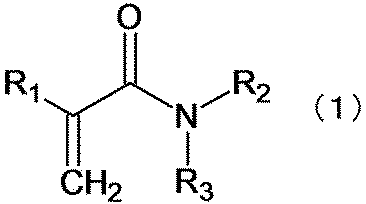
[一般式(1)中、R1は、水素原子又はメチル基であり、R2及びR3は、それぞれ独立して、水素原子又は炭素数1~3のアルキル基であり、R2及びR3は同一でも、異なっていてもよい。]
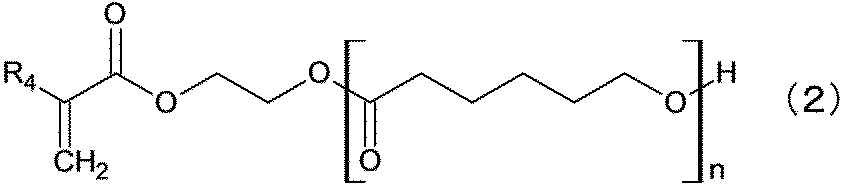
[一般式(2)中、R4は水素原子又はメチル基であり、nは1~5の整数である。]
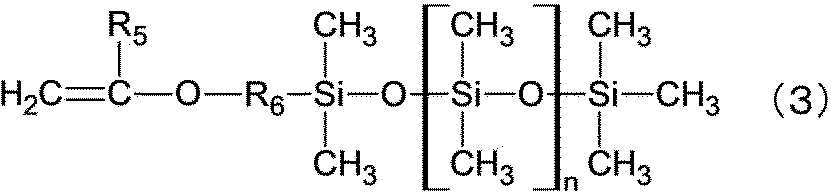
[一般式(3)中、R5は水素原子又はメチル基であり、R6は2価の有機基であり、nは0又は1以上の整数である。]
[6]前記基材と前記防曇層とが直接に積層されている、上記[1]~[4]のいずれかに記載の眼鏡レンズ。
[7]前記防曇層が最外層である、上記[1]~[6]のいずれかに記載の眼鏡レンズ。
[8]基材上において、硬化性樹脂及び金属酸化物コロイド粒子を含む塗布組成物を硬化させる硬化工程を有する、上記[1]~[7]のいずれかに記載の眼鏡レンズの製造方法。
成分(A):下記一般式(1)で表されるモノマー(a-1)に由来する構成単位、下記一般式(2)で表されるモノマー(a-2)に由来する構成単位、ヒドロキシアルキル(メタ)アクリレート(a-3)に由来する構成単位、及び、下記一般式(3)で表されるモノマー(a-4)に由来する構成単位を有する(メタ)アクリル系樹脂(A)
成分(B):ポリオール化合物(B)
成分(C):多官能イソシアネート化合物(C)
成分(D):金属酸化物コロイド粒子(D)

[一般式(1)中、R1は、水素原子又はメチル基であり、R2及びR3は、それぞれ独立して、水素原子又は炭素数1~3のアルキル基であり、R2及びR3は同一でも、異なっていてもよい。]

[一般式(2)中、R4は水素原子又はメチル基であり、nは1~5の整数である。]
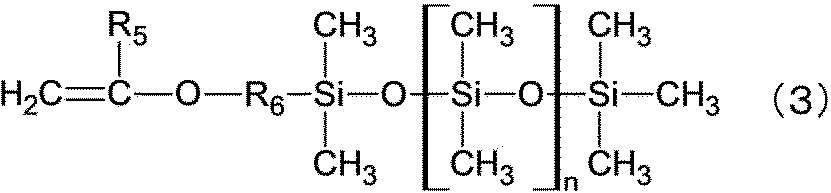
[一般式(3)中、R5は水素原子又はメチル基であり、R6は2価の有機基であり、nは0又は1以上の整数である。]
本明細書における「(メタ)アクリル」との表記は、アクリルとメタアクリルの両方を包含する概念を表す。「(メタ)アクリレート」等の類似の表記についても同様である。
本明細書中、モノマー(a-1)に由来する構成単位を「構成単位(a-1)」、モノマー(a-2)に由来する構成単位を「構成単位(a-2)」、モノマー(a-3)に由来する構成単位を「構成単位(a-3)」、モノマー(a-4)に由来する構成単位を「構成単位(a-4)」と称することがある。
置換基を有する基についての「炭素数」とは、該置換基を除く部分の炭素数をいうものとする。
本開示の実施形態に係る眼鏡レンズは、基材と、防曇層とを有する眼鏡レンズであって、前記防曇層は、樹脂及び金属酸化物粒子を含むものである。
本開示の実施形態に係る眼鏡レンズは、防曇層が金属酸化物粒子を含んでいるため、耐擦傷性に優れている。
基材としては、様々な種類の原料からなる樹脂を用いることができる。
基材を形成する樹脂としては、例えば、ポリカーボネート樹脂、ウレタンウレア樹脂、(チオ)ウレタン樹脂、ポリスルフィド樹脂、ポリアミド樹脂、ポリエステル樹脂、アクリルアリル樹脂等が挙げられる。(チオ)ウレタン樹脂とは、チオウレタン樹脂、及びウレタン樹脂から選ばれる少なくとも1種を意味する。これらの中でも(チオ)ウレタン樹脂、ポリスルフィド樹脂が好ましい。
好ましいプラスチック製基材の市販品としては、アリルポリカーボネート系プラスチックレンズ「HILUX1.50」(HOYA株式会社製、屈折率1.50)、チオウレタン系プラスチックレンズ「MERIA」(HOYA株式会社製、屈折率1.60)、チオウレタン系プラスチックレンズ「EYAS」(HOYA株式会社製、屈折率1.60)、チオウレタン系プラスチックレンズ「EYNOA」(HOYA株式会社製、屈折率1.67)、ポリスルフィド系プラスチックレンズ「EYRY」(HOYA株式会社製、屈折率1.70)、ポリスルフィド系プラスチックレンズ「EYVIA」(HOYA株式会社製、屈折率1.74)等が挙げられる。
基材としては、フィニッシュレンズ、セミフィニッシュレンズのいずれであってもよい。
基材の表面形状は特に限定されず、平面、凸面、凹面等のいずれであってもよい。
本開示の眼鏡レンズは、単焦点レンズ、多焦点レンズ、累進屈折力レンズ等のいずれであってもよい。累進屈折力レンズについては、通常、近用部領域(近用部)及び累進部領域(中間領域)が、前述の下方領域に含まれ、遠用部領域(遠用部)が上方領域に含まれる。
本開示の眼鏡レンズにおいて、防曇層は、樹脂及び金属酸化物粒子を含む。このように防曇層が金属酸化物粒子を含んでいるため、防曇層が耐擦傷性に優れている。
防曇層は、防曇性に優れる眼鏡レンズを得る観点から、吸水性を有することが好ましい。ここで吸水性とは、材料が水分を取り込む特性を示す。防曇層を有する眼鏡レンズの吸水性の有無は、湿潤雰囲気に晒されてから曇り始めるまでの所要時間が、防曇層を有しない眼鏡レンズと比べて長いか否かによっても判断することができる。
防曇層は、防曇性を十分に発揮する観点から、眼鏡レンズの最外層として設けられることが好ましい。
防曇層はいずれか一方の主面のみに設けられていてもよく、両面に設けられていてもよい。
本実施形態に係る一態様として、防曇耐久性の観点から、防曇層は、基材上に直接設けられることが好ましい。すなわち、本実施形態に係る眼鏡レンズは、基材上に直接防曇層を有することが好ましい。
防曇層を構成する樹脂は、(メタ)アクリル系樹脂を含むことが好ましい。これにより、防曇性がより向上する。
金属酸化物の平均一次粒子径は、好ましくは5~300nmである。
防曇層中における樹脂の含有量は、防曇性と耐擦傷性とを両立させる観点から、好ましくは50~95質量%、より好ましくは60~90質量%、更に好ましくは65~85質量%である。防曇層中における(メタ)アクリル系樹脂の含有量は、同様の観点から、好ましくは50~95質量%、より好ましくは60~90質量%、更に好ましくは65~85質量%である。
防曇層は、樹脂及び金属酸化物コロイド粒子を含む塗布組成物から形成された層であることが好ましい。このように金属酸化物が粒子径の小さいコロイド粒子であることにより、金属酸化物が防曇層内に良好に分散する結果、耐擦傷性が向上する。
防曇層が金属酸化物コロイド粒子に由来する金属酸化物粒子を含んでいるため、耐擦傷性に優れる。防曇層がシロキサン化合物に由来するシロキサン結合を有することにより、防曇層の滑り性が向上し、その結果、防曇層の耐擦傷性がより向上する。防曇層がアクリルアミドに由来するアミド基を有することにより、防曇層の親水性が大きくなり、これにより吸水性能が向上し、その結果、防曇性が向上する。
成分(A):下記一般式(1)で表されるモノマー(a-1)に由来する構成単位、下記一般式(2)で表されるモノマー(a-2)に由来する構成単位、ヒドロキシアルキル(メタ)アクリレート(a-3)に由来する構成単位、及び、下記一般式(3)で表されるモノマー(a-4)に由来する構成単位を有する(メタ)アクリル系樹脂(A)
成分(B):ポリオール化合物(B)
成分(C):多官能イソシアネート化合物(C)
成分(D):金属酸化物コロイド粒子(D)
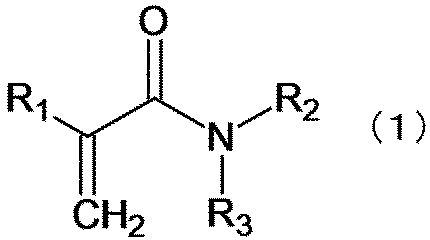
[一般式(1)中、R1は水素原子又はメチル基であり、R2及びR3はそれぞれ独立に水素原子又は炭素数1~3の直鎖もしくは分岐のアルキル基である。]
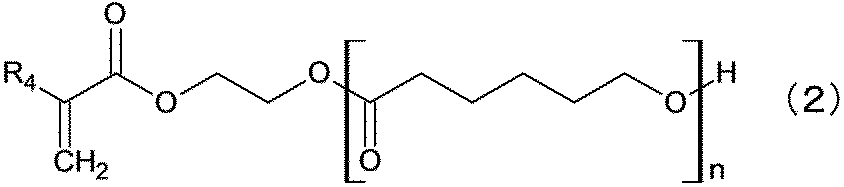
[一般式(2)中、R4は水素原子又はメチル基であり、nは1~5の整数である。]
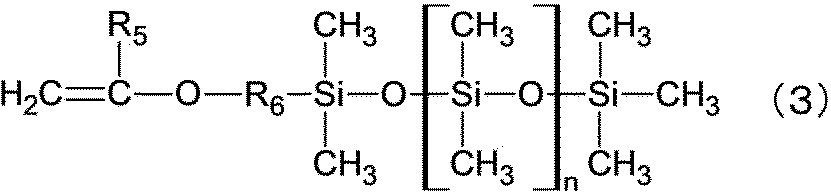
[一般式(3)中、R5は水素原子又はメチル基であり、R6は2価の有機基であり、nは0又は1以上の整数である。]
塗布組成物の組成をこのようにすると、成分(A)中の、水酸基を有する構成単位(a-2)及び構成単位(a-3)のバランス(量比)を取りつつ、当量比(NCO/OH)が1よりも小さい特定の範囲に設定され、摩擦抵抗が向上する程度にまで防曇層の硬さを高めることができると考えられる。加えて、成分(A)中の、水酸基を有する構成単位(a-2)及び構成単位(a-3)の構成バランスを取りつつ、かつ、当量比(NCO/OH)が1よりも小さい特定の範囲に設定され、防曇層の架橋密度が高くなり、防曇層の耐溶剤性が向上すると考えられる。
(成分(A):(メタ)アクリル系樹脂)
本実施形態の塗布組成物は、成分(A)である(メタ)アクリル系樹脂、すなわち、下記一般式(1)で表されるモノマー(a-1)に由来する構成単位、下記一般式(2)で表されるモノマー(a-2)に由来する構成単位、ヒドロキシアルキル(メタ)アクリレート(a-3)に由来する構成単位、及び、下記一般式(3)で表されるモノマー(a-4)に由来する構成単位を有する(メタ)アクリル樹脂を含むことが好ましい。
(メタ)アクリル系樹脂は、典型的には、モノマー(a-1)、モノマー(a-2)、モノマー(a-3)及びモノマー(a-4)を重合させることで得ることができる。重合方法の詳細については後に述べる。
(メタ)アクリル構造に由来する効果を十二分に得るためには、(メタ)アクリル系樹脂は、全構成単位中の50質量%以上が、(メタ)アクリル系のモノマーに由来する構成単位であることが好ましい。より好ましくは、(メタ)アクリル系樹脂の全構成単位中の80質量%以上が、(メタ)アクリル系のモノマーに由来する構成単位である。更に好ましくは、(メタ)アクリル系樹脂の全て(100%)の構成単位が、(メタ)アクリル系のモノマーに由来する構成単位である。
本実施形態において、(メタ)アクリル系樹脂は、モノマー(a-2)に由来する構成単位を、当該樹脂の全構成単位に対して、好ましくは10~40質量%、より好ましくは20~38質量%、更に好ましくは25~35質量%含む。
(メタ)アクリル系樹脂は、モノマー(a-2)に由来する繰り返し単位を複数種含んでいてもよい。
本実施形態において、(メタ)アクリル系樹脂中のモノマー(a-3)に由来する構成単位は、(メタ)アクリル系樹脂の全構成単位に対して、好ましくは1~30質量%、より好ましくは2~20質量%、更に好ましくは3~15質量%含まれる。
本実施形態においては、モノマー(a-2)だけで架橋反応を生じさせ、防曇層を形成するのではなく、モノマー(a-3)とともに多官能イソシアネート化合物と架橋反応を生じさせることで種々の物性を兼ね備えた防曇層とすることができる。
この数値範囲とすることで、ポリオール化合物(後述)とともに、多官能イソシアネート化合物(後述)と反応し、架橋構造が適切に制御されやすくなる。そのため、防曇層の柔軟性・弾力性を維持しつつ、防曇層を硬くすることが可能となる。よって、防曇層の耐擦傷性、摩擦抵抗の低減、及び耐溶剤性とのより高度な両立を図りやすくなる。
なお、水酸基価とは、試料1gをアセチル化させたとき、水酸基と結合した酢酸を中和するのに必要とする水酸化カリウムのmg数を意味する。
本実施形態において、(メタ)アクリル系樹脂中のモノマー(a-4)に由来する構成単位は、当該成分(A)の全構成単位に対して、好ましくは1~10質量%、より好ましくは2~8質量%、更に好ましくは3~7質量%含まれる。
このモノマーの具体例としては、例えば、メチル(メタ)アクリレート、エチル(メタ)アクリレート、n-ブチル(メタ)アクリレート、イソブチル(メタ)アクリレート、tert-ブチル(メタ)アクリレート、2-エチルヘキシル(メタ)アクリレート、イソデシル(メタ)アクリレート、n-ラウリル(メタ)アクリレート、n-ステアリル(メタ)アクリレート、フェニル(メタ)アクリレート、ベンジル(メタ)アクリレート等が挙げられる。
これらの中でも、R’が炭素数1~8のアルキル基であるものが好ましく、R’が1~6のアルキル基であるものがより好ましく、R’が1~4のアルキル基であるものが更に好ましい。
(メタ)アクリル系樹脂が構成単位(a-5)を含む場合、その含有量は、(メタ)アクリル系樹脂の全構成単位に対して、好ましくは1~40質量%、より好ましくは3~30質量%、更に好ましくは5~20質量%である。
(メタ)アクリル系樹脂の多分散度(Mw/Mn)は、特に限定はされないが、1.0~6.0であることが好ましく、2.0~5.0であることがより好ましく、3.0~4.0であることが更に好ましい。
なお、質量平均分子量は、ゲルパーミエーションクロマトグラフィー(GPC)により、標準物質としてポリスチレンを用いることで求めることができる。
1/Tg=(W1/Tg1)+(W2/Tg2)+(W3/Tg3)+・・・+(Wn/Tgn)
〔式中、Tgは、(メタ)アクリル系樹脂のガラス転移温度(K)、W1、W2、W3・・・Wnは、それぞれのモノマーの質量分率、Tg1、Tg2、Tg3・・・Tgnは、それぞれ各モノマーの質量分率に対応するモノマーからなる単独重合体のガラス転移温度(K)を示す。〕
重合開始剤の配合量は、特に限定されないが、重合するモノマーの混合液全体を100質量部とした場合に0.001~10質量部とすることが好ましい。
本実施形態の塗布組成物は、ポリオール化合物を含むことが好ましい。ポリオール化合物を含むことにより、(メタ)アクリル系樹脂とともに後述の多官能イソシアネート化合物と反応し、より防曇耐久性に優れた防曇層を形成することが可能となる。ポリオール化合物が1分子中に有する水酸基の個数は2以上で、好ましくは2~6、より好ましくは2~4である。
ポリオール原料としては、特に制限されないが、例えば、脂肪族ポリオール、脂環構造を有するポリオール、芳香族ポリオール等が挙げられる。本実施形態においては、硬化膜の柔軟性の観点から、脂環構脂を有しない脂肪族ポリオールが好ましい。
炭酸エステルとしては、例えば、ジメチルカーボネート、ジエチルカーボネート等の脂肪族炭酸エステル、ジフェニルカーボネート等の芳香族炭酸エステル、エチレンカーボネート等の環状炭酸エステルが挙げられる。中でも、入手や製造のしやすさから、脂肪族炭酸エステルが好ましく、ジメチルカーボネートが特に好ましい。
具体的な化合物としては、例えば、エチレングリコール、1,2-プロパンジオール、1,3-プロパンジオール、1,2-ブタンジオール、1,3-ブタンジオール、1,4-ブタンジオール、1,5-ペンタンジオール、1,6-ヘキサンジオール、1,8-オクタンジオール、1,9-ノナンジオール、3-メチル-1,5-ペンタンジオール、3,3-ジメチロールヘプタン、ジエチレングリコール、ジプロピレングリコール、ネオペンチルグリコール、シクロヘキサン-1,4-ジオール、シクロヘキサン-1,4-ジメタノール、ダイマー酸ジオール、ビスフェノールA、ビス(β-ヒドロキシエチル)ベンゼン、キシリレングリコール、グリセリン、トリメチロールプロパン、ペンタエリスリトール等の低分子ポリオール類、又はエチレンジアミン、プロピレンジアミン、トルエンジアミン、メタフェニレンジアミン、ジフェニルメタンジアミン、キシリレンジアミン等の低分子ポリアミン類等のような活性水素基を2個以上、好ましくは2~3個有する化合物を開始剤として、エチレンオキサイド、プロピレンオキサイド、ブチレンオキサイド等のようなアルキレンオキサイド類を付加重合させることによって得られるポリエーテルポリオール、或いはメチルグリシジルエーテル等のアルキルグリシジルエーテル類、フェニルグリシジルエーテル等のアリールグリシジルエーテル類、テトラヒドロフラン等の環状エーテルモノマーを開環重合することで得られるポリエーテルポリオールを挙げることができる。
また、ポリオール化合物は、ポリカプロラクトンポリオール、ポリカーボネートポリオール、及びポリエーテルポリオールのうち、複数種を含んでいてもよい。
これは、成分(A)である(メタ)アクリル系樹脂が前述の一般式(2)の構造、すなわちカプロラクトン構造を持つため、ポリオール化合物としては当該樹脂との相溶性が良好となりやすい傾向があるということと、架橋密度を上げ過ぎずに防曇性能を向上させやすい傾向があるためである。
本実施形態の塗布組成物は、成分(C)として、多官能イソシアネート化合物を含むことが好ましい。塗布組成物が、多官能イソシアネート化合物を含むことにより、成分(A)である(メタ)アクリル系樹脂に含まれる構成単位(a-2)及び構成単位(a-3)が有する水酸基、並びに成分(B)であるポリオール化合物の水酸基と多官能イソシアネート化合物が架橋反応を起こし、防曇耐久性に優れる防曇層となる。
多官能イソシアネート化合物は、1分子中に2個以上のイソシアネート基(脱離性基で保護されたイソシアネート基を含む)を有する化合物である。好ましくは、多官能イソシアネート化合物は、その官能基数は、より好ましくは1分子あたり2~6個、更に好ましくは1分子あたり2~4個である。
当該観点から、当該当量比(NCO)/(OH)は、好ましくは0.25~0.50、より好ましくは0.35~0.45である。
金属酸化物コロイド粒子の種類は、耐擦傷性を向上させるものであれば特に限定は無いが、シリカ、アルミナ、ジルコニア、チタニア、酸化亜鉛、チタン酸ストロンチウム、酸化鉄、酸化タングステン、チタン酸鉄、酸化ビスマス、酸化亜鉛、酸化銀、酸化銅、酸化コバルト、酸化ニッケル等が挙げられ、好ましくはシリカである。
一次粒子径は、窒素ガス吸着法(BET法)によって測定された比表面積Sm2/gと、金属酸化物コロイド粒子の密度ρとから、下記式によって計算される一次粒子径である。
一次粒子径=6/(ρ・S)
金属酸化物コロイド粒子(D)は、(メタ)アクリロイルオキシ基で表面修飾されていることが好ましい。これにより、耐擦傷性がより向上する。その理由は不明であるが、当該(メタ)アクリロイルオキシ基で表面修飾された金属酸化物コロイド粒子(D)は、(メタ)アクリル系樹脂(A)との相溶性が高くなり、その結果耐擦傷性が向上するものと推測される。
前記表面修飾されたシリカ粒子を含むゾルとして、例えば、MEK-AC-2140Z、MEK-AC-4130Y、MEK-AC-5140Z、PGM-AC-2140Y、PGM-AC-4130Y、MIBK-AC-2140Z、MIBK-SD-L(以上、日産化学(株)製)、及びELCOM(登録商標)V-8802、同V-8804(以上、日揮触媒化成(株)製)を採用することができる。
有機溶媒としては、トルエン、及びキシレン等の芳香族炭化水素系溶剤、メタノール、エタノール、イソプロピルアルコール、n-ブタノール、t-ブタノール、イソブタノール、ジアセトンアルコール等のアルコール系溶剤、アセトン、メチルエチルケトン、メチルイソブチルケトン、及びシクロヘキサノン等のケトン系溶剤、酢酸エチル、酢酸プロピル、酢酸ブチル、及び酢酸イソブチル等のエステル系溶剤、プロピレングリコールモノメチルアセテート、プロピレングリコールモノメチルエーテル、プロピレングリコールモノメチルエーテルアセテート等のグリコールエーテル系溶剤等が挙げられる。
これらの中でも、イソシアネートとの反応性が低く、溶解性及び乾燥性等の観点から、t-ブタノール、ジアセトンアルコール、メチルエチルケトン、メチルイソブチルケトン、酢酸エチル、及びプロピレングリコールモノメチルエーテルアセテートが好ましい。
本実施形態の塗布組成物は、1液型、すなわち、溶剤以外の全成分が、溶剤に実質的に均一に混合(溶解又は分散)された状態であってよい。多官能イソシアネート化合物がブロックイソシアネートである場合には、1液型が好ましい。
また、別の態様として、本実施形態の塗布組成物は、2液型であってもよい。2液型にすることで、塗布組成物の保存性を高めることができる。
例えば、本実施形態の塗布組成物は、(1)(メタ)アクリル系樹脂及び/又はポリオール化合物を含み、多官能イソシアネート化合物を含まないA液と、(2)多官能イソシアネート化合物を含み、(メタ)アクリル系樹脂及びポリオール化合物を含まないB液とから構成され、A液とB液は別々の容器で保存され、使用(塗工)直前にA液とB液を混合する形態であってもよい。なお、金属酸化物粒子は、A液及びB液のいずれに添加しても良く、またC液としてゾルの形態で良いし、使用(塗工)直前にA液及びB液と混合する形態であってもよい。
この場合、(メタ)アクリル系樹脂、ポリオール化合物、多官能イソシアネート化合物及び金属酸化物粒子以外の成分(添加剤等)は、A液に含まれていても、B液に含まれていても、あるいはその他の容器で準備されていてもよい。
特に、多官能イソシアネート化合物が、ブロックイソシアネートではない場合(すなわち、系中でイソシアネート基が-NCOの形で存在している場合)には、塗布組成物は2液型であることが好ましい。
本実施形態の塗布組成物は、溶剤を含んでもよい。溶剤を用いることにより、塗布組成物の粘度及び固形分量の調整が容易となる。
溶剤としては、トルエン、及びキシレン等の芳香族炭化水素系溶剤、メタノール、エタノール、イソプロピルアルコール、n-ブタノール、t-ブタノール、イソブタノール、ジアセトンアルコール等のアルコール系溶剤、アセトン、メチルエチルケトン、メチルイソブチルケトン、及びシクロヘキサノン等のケトン系溶剤、酢酸エチル、酢酸プロピル、酢酸ブチル、及び酢酸イソブチル等のエステル系溶剤、プロピレングリコールモノメチルアセテート、プロピレングリコールモノメチルエーテル、プロピレングリコールモノメチルエーテルアセテート等のグリコールエーテル系溶剤等が挙げられる。
これらの中でも、イソシアネートとの反応性が低く、溶解性及び乾燥性等の観点から、t-ブタノール、ジアセトンアルコール、メチルエチルケトン、メチルイソブチルケトン、酢酸エチル、及びプロピレングリコールモノメチルエーテルアセテートが好ましい。
塗布組成物の固形分中における、成分(A)、(B)、(C)、及び(D)の合計含有量は、防曇性及び耐擦傷性を向上させる観点から、好ましくは60質量%以上、より好ましくは80質量%以上、更に好ましくは90質量%以上、より更に好ましくは95質量%以上であり、好ましくは100質量%以下であり、例えば100質量%である。
防曇層中における成分(D)の含有量は、防曇性と耐擦傷性とを両立させる観点から、好ましくは5~50質量%、より好ましくは10~40質量%、更に好ましくは15~35質量%である。
塗布組成物は、必要に応じて、硬化触媒、紫外線吸収剤、光安定剤、界面活性剤、レベリング剤、消泡剤等の添加剤を含んでもよい。
添加剤の含有量は、例えば、塗布組成物の全質量に対して、好ましくは0.001~5質量%、より好ましくは0.01~4質量%、更に好ましくは0.1~3質量%である。
各成分は、同時に、又は、任意の順序で順次、溶媒に溶解又は分散させることすることができる。具体的な溶解又は分散させる方法には、特に制限はなく、公知の方法を何ら制限なく採用することができる。
眼鏡レンズには、防曇層以外の機能層が設けられていてもよい。
上記機能層としては、ハードコート層、反射防止層、プライマー層等が挙げられる。
上記機能層は、レンズ基材の第1主面上に設けられていてもよいし、レンズ基材の第2主面上に設けられていてもよいし、レンズ基材の第1主面及び第2主面の両方の上に設けられていてもよい。また、レンズ基材上に上記機能層を設けた後、上記機能層上に防曇層を設けてもよく、レンズ基材上に防曇層を設けた後に、上記機能層を設けてもよい。
本実施形態に係る眼鏡レンズの製造方法は、基材上において、硬化性樹脂及び金属酸化物コロイド粒子を含む塗布組成物を硬化させる硬化工程を有する。当該製造方法により本実施形態に係る眼鏡レンズを容易に製造することができる。
一態様において、まず、必要に応じて用いられる上記各成分を、溶媒に溶解又は分散させることにより、塗布用塗布組成物を調製する。
続いて、得られた塗布組成物1を用いて、防曇層を形成する(硬化工程)。硬化工程は、塗布組成物を基材もしくは基材上に形成された他の層上に塗工し、続いて、好ましくは70~120℃、より好ましくは75~110℃、さらに好ましくは80~100℃で、好ましくは10~60分、より好ましくは15~50分、さらに好ましくは20~40分、プレキュアを行うことが好ましい。
塗工方法としてディッピング法を用いる場合、通常、ディッピング槽(塗布組成物槽)から、先に引き上げられた部分の膜厚は薄くなり、最も遅くディッピング槽から引き上げられた部分の膜厚は厚くなる。したがって、塗布組成物2を塗工する際には、塗布組成物1を塗工する際とは、基材の上下方向を180℃回転させてディッピングすることが好ましい。このようにすることで、防曇層の膜厚が均一な眼鏡レンズを得られ易くなる。
また、必要に応じて、上述した機能層(ハードコート層、プライマー層、反射防止層等)を、レンズ基材上に設けた後、機能層上に防曇層を設けてもよく、レンズ基材上に防曇層を設けた後、防曇層上に機能層を設けてもよい。
また、実施例に記載した組成に対し、発明の詳細な説明に記載した組成に調整を行えば、クレームした組成範囲全域にわたって実施例と同様に発明を実施することができる。
また、実施例に記載した組成に対し、発明の詳細な説明に記載した組成に調整を行えば、クレームした組成範囲全域にわたって実施例と同様に発明を実施することができる。
以下の実施例及び比較例で得られた塗布組成物と眼鏡レンズについて、以下の項目の測定評価を行った。これらの測定評価結果を表1に示す。
JIS K 0070:1992「化学製品の酸価,けん化価,エステル価,よう素価,水酸基価及び不けん化物の試験方法」の、「7.1 中和滴定法」に規定された方法に準じて測定及び算出した。
なお、水酸基価の算出に用いる酸価の値は、上記JIS規格の「3.1 中和滴定法」に規定された方法に準じて測定及び算出した。
ゲルパーミエーションクロマトグラフィー(GPC)により測定、算出した。用いた装置、条件等は以下の通りである。
・使用機器:HLC8220GPC(株式会社東ソー製)
使用カラム:TSKgel SuperHZM-M、TSKgel GMHXL-H、TSKgel G2500HXL、TSKgel G5000HXL(株式会社東ソー製)
・カラム温度:40℃
・標準物質:TSKgel 標準ポリスチレンA1000、A2500、A5000、F1、F2、F4、F10(株式会社東ソー製)
・検出器:RI(示差屈折)検出器
・溶離液:テトラヒドロフラン
・流速:1ml/min
得られた眼鏡レンズの防曇層の膜厚は株式会社システムロード製 非接触膜厚測定システムFF8を用いて測定した。
室温25℃、湿度40%の条件下で、得られた眼鏡レンズの防曇層表面に、10秒間呼気を吹きかけた。呼気を吹きかけ始めから、吹きかけ終わるまでの防曇層の状態について目視観察を行い、以下の評価基準に従って評価を行なった。
A:曇りが全く認められない(防曇性に優れる)
B:曇りが認められ、曇りが解消されるのに10秒以上かかる(防曇性に劣る)
(耐擦傷性評価)
スチールウール#0000(日本スチールウール株式会社製)により荷重500g重で、表面を20往復摩擦して、傷の付き難さを目視にて判定した。基準は下記の通りとした。
5:ほとんど傷がつかない
4:1~10本の傷が入る
3:11本~30本の傷が入る
2:表面が曇る
1:ハードコート層が剥離する
撹拌器、温度計、コンデンサーおよび窒素ガス同入管を備えた500ml形のフラスコにプロピレングリコールモノメチルアセテート(PGMAC)150質量部を仕込み、110℃まで昇温した。
これとは別に、ジメチルアクリルアミド(DMAA)25質量部、ポリカプロラクトン変性ヒドロキシエチルアクリレート(株式会社ダイセル製、プラクセルFA2D)35質量部、2-ヒドロキシルエチルメタクリレート(HEMA)10質量部、片末端メタクリレート変性ポリジメチルシロキサン(JNC株式会社製、サイラプレーンFM-0721、分子量5000)5質量部、メタクリル酸メチル25質量部、及び、1,1’-アゾビス(シクロヘキサン-1-カルボニトリル)(和光純薬工業株式会社製、V-40)1質量部を混合した。この混合モノマーを撹拌しながら2時間かけて、上記の500ml形のフラスコに滴下し、5時間反応させた。
加熱を止めて室温まで冷却し、(メタ)アクリル系樹脂を含む樹脂溶液(固形分比率:40質量%)を得た。
得られた(メタ)アクリル系樹脂の水酸基価は57mgKOH/gであり、数平均分子量(Mn)は12,000であり、質量平均分子量(Mw)は44,000であり、多分散度(Mw/Mn)は3.67であった。また、前述のフォックス(Fox)の式に基づいて、使用したモノマーの配合比から計算した(メタ)アクリル系樹脂のガラス転移温度(Tg)は32.8℃であった。
下記成分を混合して、樹脂組成物1を調製した。
プロピレングリコールモノメチルエーテルアセテート:29質量%
ジアセトンアルコール:18質量%
メチルエチルケトン :13質量%
t-ブタノール :8質量%
酢酸エチル :8質量%
樹脂 :24質量%
上記樹脂は、下記組成を有する。
上記で得た(メタ)アクリル系樹脂:100質量部
ポリカプロラクトンジオール(株式会社ダイセル製、プラクセル205U、分子量530、水酸基価207~217mgKOH/g)30質量部
多官能イソシアネート化合物(旭化成株式会社製、24A-100、ヘキサメチレンジイソシアネートのビウレットタイプ、イソシアネート基含有率23.5質量%、固形分100質量%):23.5質量部
なお、(メタ)アクリル系樹脂の量は、樹脂溶液(固形分量:質量%)としての量ではなく、樹脂溶液中に含まれる樹脂(固形分)の量を表し、多官能イソシアネート化合物の量も固形分としての量を表している。
また、上記(メタ)アクリル系樹脂とポリオール化合物とを、上記の量で均一に混合したときの混合物の水酸基価の測定値は93mgKOH/gであった。
当該樹脂組成物1に対して、オルガノシリカゾル「PGM-AC-2140Y」(日産化学株式会社製、固形分濃度42質量%、平均一次粒子径12nm)を添加して、塗布組成物1を得た。
この際、塗布組成物1の総量100質量%中におけるシリカ粒子の含有量が5質量%となるように、当該樹脂組成物1に対して当該オルガノシリカゾルを添加した。
塗布組成物1中における樹脂組成物1の含有量は、表1に示すとおりである。
当該樹脂組成物1に対して、オルガノシリカゾル「PGM-AC-2140Y」(日産化学株式会社製、固形分濃度42質量%、平均一次粒子径12nm)を添加して、塗布組成物2を得た。
この際、塗布組成物1の総量100質量%中におけるシリカ粒子の含有量が、10質量%(塗布組成物2)となるように、当該樹脂組成物1に対して当該オルガノシリカゾルを添加した。
塗布組成物2中における樹脂組成物1の含有量は、表1に示すとおりである。
上記樹脂組成物1を、塗布組成物3として用いた。
チオウレタン系プラスチックレンズMERIA(屈折率1.60、度数S-4.00D、厚さ1.0mm、直径75mm)を基材として用い、得られた塗布組成物1をこの基材上にディッピング法(引き上げ速度:5mm/秒)を用いて塗布した後、温度83℃で20分加熱し、その後に放冷した。
その後、120℃で120分加熱し、上記基材上に防曇層を有する眼鏡レンズを製造した。得られた眼鏡レンズの評価結果を表1に示す。
実施例1において、塗布組成物1に代えて、各々塗布組成物2に変更したこと以外は同様の操作により、眼鏡レンズを製造した。得られた眼鏡レンズの評価結果を表1に示す。
実施例1において、塗布組成物1に代えて、塗布組成物3に変更したこと以外は同様の操作により、眼鏡レンズを製造した。得られた眼鏡レンズの評価結果を表1に示す。

本開示の実施の形態である眼鏡レンズは、基材と、防曇層とを有する眼鏡レンズであって、前記防曇層は、樹脂及び金属酸化物粒子を含む、眼鏡レンズである。
上述した実施の態様によれば防曇性を有し、耐擦傷性に優れる眼鏡レンズを提供することができる。
本開示は、上記各成分の例、含有量、各種物性については、発明の詳細な説明に例示又は好ましい範囲として記載された事項を任意に組み合わせてもよい。
また、実施例に記載した組成に対し、発明の詳細な説明に記載した組成となるように調整を行えば、クレームした組成範囲全域にわたって実施例と同様に開示の実施の形態を実施することができる。
Claims (9)
- 基材と、防曇層とを有する眼鏡レンズであって、
前記防曇層は、樹脂及び金属酸化物粒子を含む、眼鏡レンズ。 - 前記防曇層は、樹脂及び金属酸化物コロイド粒子を含む塗布組成物から形成された層である、請求項1に記載の眼鏡レンズ。
- 前記防曇層を構成する樹脂が、(メタ)アクリル系樹脂を含む、請求項1又は2に記載の眼鏡レンズ。
- 前記防曇層が、下記の成分(A)~(D)を含む塗布組成物の硬化物である、請求項1~3のいずれか1項に記載の眼鏡レンズ。
成分(A):下記一般式(1)で表されるモノマー(a-1)に由来する構成単位、下記一般式(2)で表されるモノマー(a-2)に由来する構成単位、ヒドロキシアルキル(メタ)アクリレート(a-3)に由来する構成単位、及び、下記一般式(3)で表されるモノマー(a-4)に由来する構成単位を有する(メタ)アクリル系樹脂(A)
成分(B):ポリオール化合物(B)
成分(C):多官能イソシアネート化合物(C)
成分(D):金属酸化物コロイド粒子(D)

[一般式(1)中、R1は、水素原子又はメチル基であり、R2及びR3は、それぞれ独立して、水素原子又は炭素数1~3のアルキル基であり、R2及びR3は同一でも、異なっていてもよい。]
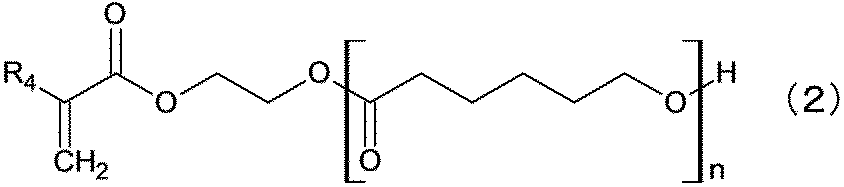
[一般式(2)中、R4は水素原子又はメチル基であり、nは1~5の整数である。]
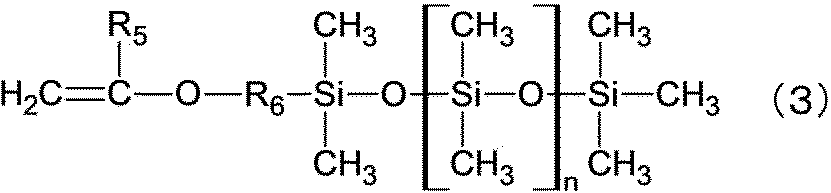
[一般式(3)中、R5は水素原子又はメチル基であり、R6は2価の有機基であり、nは0又は1以上の整数である。] - 前記金属酸化物粒子がシリカ粒子である、請求項1~4のいずれか1項に記載の眼鏡レンズ。
- 前記基材と前記防曇層とが直接に積層されている、請求項1~5のいずれか1項に記載の眼鏡レンズ。
- 前記防曇層が最外層である、請求項1~6のいずれか1項に記載の眼鏡レンズ。
- 基材上において、硬化性樹脂及び金属酸化物コロイド粒子を含む塗布組成物を硬化させる硬化工程を有する、請求項1~7のいずれか1項に記載の眼鏡レンズの製造方法。
- 前記塗布組成物は、下記の成分(A)~(D)を含む、請求項8に記載の眼鏡レンズの製造方法。
成分(A):下記一般式(1)で表されるモノマー(a-1)に由来する構成単位、下記一般式(2)で表されるモノマー(a-2)に由来する構成単位、ヒドロキシアルキル(メタ)アクリレート(a-3)に由来する構成単位、及び、下記一般式(3)で表されるモノマー(a-4)に由来する構成単位を有する(メタ)アクリル系樹脂(A)
成分(B):ポリオール化合物(B)
成分(C):多官能イソシアネート化合物(C)
成分(D):金属酸化物コロイド粒子(D)
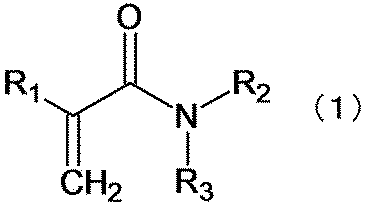
[一般式(1)中、R1は、水素原子又はメチル基であり、R2及びR3は、それぞれ独立して、水素原子又は炭素数1~3のアルキル基であり、R2及びR3は同一でも、異なっていてもよい。]
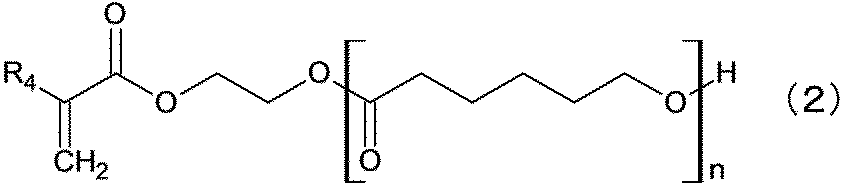
[一般式(2)中、R4は水素原子又はメチル基であり、nは1~5の整数である。]
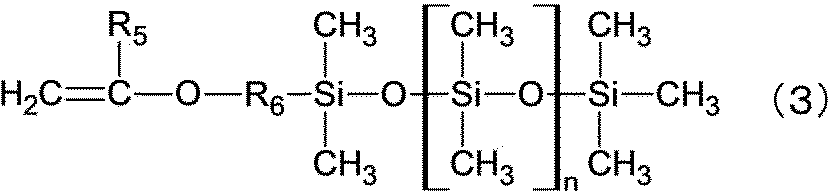
[一般式(3)中、R5は水素原子又はメチル基であり、R6は2価の有機基であり、nは0又は1以上の整数である。]
Priority Applications (4)
| Application Number | Priority Date | Filing Date | Title |
|---|---|---|---|
| EP22781253.4A EP4318098A4 (en) | 2021-03-31 | 2022-03-31 | SPECTACLE LENS AND METHOD FOR MANUFACTURING SAME |
| US18/284,937 US20240199890A1 (en) | 2021-03-31 | 2022-03-31 | Spectacle lens and method for producing spectacle lens |
| CN202280026491.XA CN117099037A (zh) | 2021-03-31 | 2022-03-31 | 眼镜镜片及其制造方法 |
| JP2023511719A JP7742402B2 (ja) | 2021-03-31 | 2022-03-31 | 眼鏡レンズ及びその製造方法 |
Applications Claiming Priority (2)
| Application Number | Priority Date | Filing Date | Title |
|---|---|---|---|
| JP2021061663 | 2021-03-31 | ||
| JP2021-061663 | 2021-03-31 |
Publications (1)
| Publication Number | Publication Date |
|---|---|
| WO2022211043A1 true WO2022211043A1 (ja) | 2022-10-06 |
Family
ID=83456548
Family Applications (1)
| Application Number | Title | Priority Date | Filing Date |
|---|---|---|---|
| PCT/JP2022/016606 Ceased WO2022211043A1 (ja) | 2021-03-31 | 2022-03-31 | 眼鏡レンズ及びその製造方法 |
Country Status (5)
| Country | Link |
|---|---|
| US (1) | US20240199890A1 (ja) |
| EP (1) | EP4318098A4 (ja) |
| JP (1) | JP7742402B2 (ja) |
| CN (1) | CN117099037A (ja) |
| WO (1) | WO2022211043A1 (ja) |
Citations (4)
| Publication number | Priority date | Publication date | Assignee | Title |
|---|---|---|---|---|
| JP2000503050A (ja) * | 1995-12-21 | 2000-03-14 | ミネソタ・マイニング・アンド・マニュファクチャリング・カンパニー | 抗反射性および防曇特性を有するコーティング組成物 |
| WO2013005710A1 (ja) | 2011-07-06 | 2013-01-10 | 東海光学株式会社 | 防曇性光学物品及びその製造方法 |
| JP2019094468A (ja) * | 2017-11-28 | 2019-06-20 | ナトコ株式会社 | 塗料組成物、硬化膜、硬化膜を備えた物品 |
| WO2019217384A1 (en) * | 2018-05-07 | 2019-11-14 | Swimc Llc | Corrosion-resistant primer and topcoat composition |
Family Cites Families (6)
| Publication number | Priority date | Publication date | Assignee | Title |
|---|---|---|---|---|
| US4478909A (en) * | 1980-10-24 | 1984-10-23 | Toray Industries, Inc. | Anti-fogging coating film |
| WO1996018691A2 (en) * | 1994-12-12 | 1996-06-20 | Minnesota Mining And Manufacturing Company | Coating composition having anti-reflective and anti-fogging properties |
| US20100035039A1 (en) * | 2008-08-07 | 2010-02-11 | 3M Innovative Properties Company | Acicular silica coating for enhanced hydrophilicity/transmittivity |
| US8709582B2 (en) * | 2010-07-30 | 2014-04-29 | Essilor International | Optical article including an antireflecting coating having antifog properties and process for making same |
| JP2014148042A (ja) * | 2011-05-26 | 2014-08-21 | Asahi Glass Co Ltd | 防曇性物品およびその製造方法 |
| CN113583493B (zh) | 2021-08-01 | 2022-12-16 | 杭州氢源素生物科技有限公司 | 一种长效耐磨的纳米防雾剂及其制备方法和应用 |
-
2022
- 2022-03-31 EP EP22781253.4A patent/EP4318098A4/en active Pending
- 2022-03-31 JP JP2023511719A patent/JP7742402B2/ja active Active
- 2022-03-31 WO PCT/JP2022/016606 patent/WO2022211043A1/ja not_active Ceased
- 2022-03-31 US US18/284,937 patent/US20240199890A1/en active Pending
- 2022-03-31 CN CN202280026491.XA patent/CN117099037A/zh active Pending
Patent Citations (4)
| Publication number | Priority date | Publication date | Assignee | Title |
|---|---|---|---|---|
| JP2000503050A (ja) * | 1995-12-21 | 2000-03-14 | ミネソタ・マイニング・アンド・マニュファクチャリング・カンパニー | 抗反射性および防曇特性を有するコーティング組成物 |
| WO2013005710A1 (ja) | 2011-07-06 | 2013-01-10 | 東海光学株式会社 | 防曇性光学物品及びその製造方法 |
| JP2019094468A (ja) * | 2017-11-28 | 2019-06-20 | ナトコ株式会社 | 塗料組成物、硬化膜、硬化膜を備えた物品 |
| WO2019217384A1 (en) * | 2018-05-07 | 2019-11-14 | Swimc Llc | Corrosion-resistant primer and topcoat composition |
Non-Patent Citations (1)
| Title |
|---|
| See also references of EP4318098A4 |
Also Published As
| Publication number | Publication date |
|---|---|
| JPWO2022211043A1 (ja) | 2022-10-06 |
| EP4318098A4 (en) | 2025-03-26 |
| US20240199890A1 (en) | 2024-06-20 |
| CN117099037A (zh) | 2023-11-21 |
| JP7742402B2 (ja) | 2025-09-19 |
| EP4318098A1 (en) | 2024-02-07 |
Similar Documents
| Publication | Publication Date | Title |
|---|---|---|
| JP6340539B1 (ja) | 塗料組成物、硬化膜、硬化膜を備えた物品 | |
| JP7742402B2 (ja) | 眼鏡レンズ及びその製造方法 | |
| JP7648741B2 (ja) | 眼鏡レンズ防曇膜用組成物及び眼鏡レンズ | |
| WO2022211032A1 (ja) | 眼鏡レンズ | |
| WO2022211019A1 (ja) | 眼鏡レンズの製造方法及び眼鏡レンズ | |
| WO2022211044A1 (ja) | 眼鏡レンズ | |
| US20240166913A1 (en) | Method for producing spectacle lens | |
| JP7812911B2 (ja) | 眼鏡レンズ及びその製造方法 | |
| WO2022211022A1 (ja) | 着色眼鏡レンズ | |
| JP7499404B2 (ja) | 眼鏡レンズ | |
| WO2023058561A1 (ja) | 防曇性プラスチック眼鏡レンズ |
Legal Events
| Date | Code | Title | Description |
|---|---|---|---|
| 121 | Ep: the epo has been informed by wipo that ep was designated in this application |
Ref document number: 22781253 Country of ref document: EP Kind code of ref document: A1 |
|
| ENP | Entry into the national phase |
Ref document number: 2023511719 Country of ref document: JP Kind code of ref document: A |
|
| WWE | Wipo information: entry into national phase |
Ref document number: 202280026491.X Country of ref document: CN |
|
| WWE | Wipo information: entry into national phase |
Ref document number: 18284937 Country of ref document: US |
|
| WWE | Wipo information: entry into national phase |
Ref document number: 2022781253 Country of ref document: EP |
|
| ENP | Entry into the national phase |
Ref document number: 2022781253 Country of ref document: EP Effective date: 20231031 |
|
| NENP | Non-entry into the national phase |
Ref country code: DE |