WO2022215749A1 - 分析方法および前処理装置 - Google Patents
分析方法および前処理装置 Download PDFInfo
- Publication number
- WO2022215749A1 WO2022215749A1 PCT/JP2022/017358 JP2022017358W WO2022215749A1 WO 2022215749 A1 WO2022215749 A1 WO 2022215749A1 JP 2022017358 W JP2022017358 W JP 2022017358W WO 2022215749 A1 WO2022215749 A1 WO 2022215749A1
- Authority
- WO
- WIPO (PCT)
- Prior art keywords
- sample
- mass spectrometer
- liquid chromatograph
- unit
- reagent
- Prior art date
- Legal status (The legal status is an assumption and is not a legal conclusion. Google has not performed a legal analysis and makes no representation as to the accuracy of the status listed.)
- Ceased
Links
Images




Classifications
-
- G—PHYSICS
- G01—MEASURING; TESTING
- G01N—INVESTIGATING OR ANALYSING MATERIALS BY DETERMINING THEIR CHEMICAL OR PHYSICAL PROPERTIES
- G01N30/00—Investigating or analysing materials by separation into components using adsorption, absorption or similar phenomena or using ion-exchange, e.g. chromatography or field flow fractionation
- G01N30/02—Column chromatography
- G01N30/88—Integrated analysis systems specially adapted therefor, not covered by a single one of the groups G01N30/04 - G01N30/86
-
- G—PHYSICS
- G01—MEASURING; TESTING
- G01N—INVESTIGATING OR ANALYSING MATERIALS BY DETERMINING THEIR CHEMICAL OR PHYSICAL PROPERTIES
- G01N30/00—Investigating or analysing materials by separation into components using adsorption, absorption or similar phenomena or using ion-exchange, e.g. chromatography or field flow fractionation
- G01N30/02—Column chromatography
- G01N30/04—Preparation or injection of sample to be analysed
- G01N30/06—Preparation
-
- G—PHYSICS
- G01—MEASURING; TESTING
- G01N—INVESTIGATING OR ANALYSING MATERIALS BY DETERMINING THEIR CHEMICAL OR PHYSICAL PROPERTIES
- G01N33/00—Investigating or analysing materials by specific methods not covered by groups G01N1/00 - G01N31/00
- G01N33/48—Biological material, e.g. blood, urine; Haemocytometers
- G01N33/50—Chemical analysis of biological material, e.g. blood, urine; Testing involving biospecific ligand binding methods; Immunological testing
- G01N33/68—Chemical analysis of biological material, e.g. blood, urine; Testing involving biospecific ligand binding methods; Immunological testing involving proteins, peptides or amino acids
- G01N33/6893—Chemical analysis of biological material, e.g. blood, urine; Testing involving biospecific ligand binding methods; Immunological testing involving proteins, peptides or amino acids related to diseases not provided for elsewhere
-
- G—PHYSICS
- G01—MEASURING; TESTING
- G01N—INVESTIGATING OR ANALYSING MATERIALS BY DETERMINING THEIR CHEMICAL OR PHYSICAL PROPERTIES
- G01N30/00—Investigating or analysing materials by separation into components using adsorption, absorption or similar phenomena or using ion-exchange, e.g. chromatography or field flow fractionation
- G01N30/02—Column chromatography
- G01N30/04—Preparation or injection of sample to be analysed
- G01N30/06—Preparation
- G01N2030/067—Preparation by reaction, e.g. derivatising the sample
-
- G—PHYSICS
- G01—MEASURING; TESTING
- G01N—INVESTIGATING OR ANALYSING MATERIALS BY DETERMINING THEIR CHEMICAL OR PHYSICAL PROPERTIES
- G01N30/00—Investigating or analysing materials by separation into components using adsorption, absorption or similar phenomena or using ion-exchange, e.g. chromatography or field flow fractionation
- G01N30/02—Column chromatography
- G01N30/88—Integrated analysis systems specially adapted therefor, not covered by a single one of the groups G01N30/04 - G01N30/86
- G01N2030/8809—Integrated analysis systems specially adapted therefor, not covered by a single one of the groups G01N30/04 - G01N30/86 analysis specially adapted for the sample
- G01N2030/8813—Integrated analysis systems specially adapted therefor, not covered by a single one of the groups G01N30/04 - G01N30/86 analysis specially adapted for the sample biological materials
-
- G—PHYSICS
- G01—MEASURING; TESTING
- G01N—INVESTIGATING OR ANALYSING MATERIALS BY DETERMINING THEIR CHEMICAL OR PHYSICAL PROPERTIES
- G01N2560/00—Chemical aspects of mass spectrometric analysis of biological material
-
- G—PHYSICS
- G01—MEASURING; TESTING
- G01N—INVESTIGATING OR ANALYSING MATERIALS BY DETERMINING THEIR CHEMICAL OR PHYSICAL PROPERTIES
- G01N2800/00—Detection or diagnosis of diseases
- G01N2800/04—Endocrine or metabolic disorders
-
- G—PHYSICS
- G01—MEASURING; TESTING
- G01N—INVESTIGATING OR ANALYSING MATERIALS BY DETERMINING THEIR CHEMICAL OR PHYSICAL PROPERTIES
- G01N30/00—Investigating or analysing materials by separation into components using adsorption, absorption or similar phenomena or using ion-exchange, e.g. chromatography or field flow fractionation
- G01N30/02—Column chromatography
- G01N30/62—Detectors specially adapted therefor
- G01N30/72—Mass spectrometers
Definitions
- the present invention relates to the analysis of samples related to metabolic disorders.
- the present invention was conceived in view of such circumstances, and its purpose is to provide a technique for performing a precise examination for metabolic disorders in a short time.
- a method of analysis according to one aspect of the present disclosure is a method of analyzing a sample for a metabolic disorder, comprising derivatizing a metabolite-based sample of a subject by reacting it with a reagent comprising 3-nitrophenylhydrazine; introducing a derivatized sample into a liquid chromatograph-mass spectrometer; and analyzing the derivatized sample with the liquid chromatograph-mass spectrometer.
- a method of analysis according to another aspect of the present disclosure is a method of analyzing a sample for a metabolic disorder, comprising: receiving an input of a type of analysis; analyzing the sample based on the metabolites of the subject using a liquid chromatograph-mass spectrometer according to a first stream; and analyzing according to the flow using a liquid chromatograph mass spectrometer.
- the first stream is derivatizing the reagent by reacting it with a reagent comprising 3-nitrophenylhydrazine; introducing the derivatized sample into a liquid chromatograph mass spectrometer; analyzing the derivatized sample by a mass spectrometer, the second stream introducing the sample into the liquid chromatograph mass spectrometer without derivatization; and analyzing the sample by.
- a method of analysis according to yet another aspect of the present disclosure is a method of analyzing a sample for a metabolic disorder, comprising the steps of adding alcohol to a metabolite-based sample of a subject and filtering the alcohol-added sample. derivatizing the filtered sample by reacting it with a reagent; introducing the derivatized sample into a liquid chromatograph mass spectrometer; and analyzing the sample.
- a pretreatment device is a pretreatment device that performs pretreatment of a sample for a metabolic disorder, wherein the metabolite-based sample of a subject is reacted with a reagent containing 3-nitrophenylhydrazine. and a transfer unit for introducing the derivatized sample into the liquid chromatograph mass spectrometer.
- a pretreatment device is a pretreatment device that performs pretreatment of a sample for metabolic disorders, and includes an input unit that receives input of the type of analysis, and a sample containing 3-nitrophenylhydrazine. It comprises a derivatization section that performs derivatization by reacting with a reagent, and a transport section that introduces the sample into the liquid chromatograph mass spectrometer.
- the derivatization unit derivatizes the subject's metabolite-based sample by reacting it with a reagent, and the transport unit derivatizes the sample derivatized by the derivatization unit, It is introduced into a liquid chromatograph mass spectrometer. If the input is of the second type, the transport section introduces a sample that has not been derivatized by the derivatization section into the liquid chromatograph mass spectrometer.
- a pretreatment device for performing pretreatment of a sample for metabolic disorders, comprising: an addition unit for adding alcohol to a sample based on metabolites of a subject; A filtration unit that filters the filtered sample, a derivatization unit that derivatizes the filtered sample by reacting it with a reagent, a transfer unit that introduces the derivatized sample into the liquid chromatograph mass spectrometer, Prepare.
- the organic acid contained in the sample is derivatized by reacting with a reagent containing 3-nitrophenylhydrazine, whereby the is derivatized with
- a liquid chromatograph-mass spectrometer is used for both confirmatory analysis and simple test analysis. Also, in confirmatory assays, organic acids contained in a sample are derivatized by reacting with a reagent containing 3-nitrophenylhydrazine, thereby derivatizing in a short time.
- the derivatization does not require drying of the organic solvent, thereby derivatizing the organic acid contained in the sample in a short time.
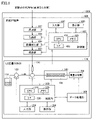
- FIG. 1 is a schematic configuration diagram of an analysis system 1000 according to one embodiment of the present disclosure; FIG. It is a figure which shows the classification of 25 types of diseases.
- FIG. 2 is a diagram showing a specific example of an organic acid that is a measurement target in analysis system 1000 for determining the presence or absence of a disease.
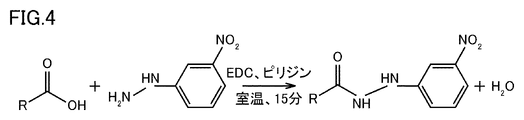
- 4 is an example of a chemical reaction formula showing a derivatization reaction in a derivatization unit 406.
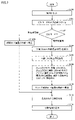
- FIG. 4 is a flow chart showing an example of a method of analyzing a sample for metabolic disorder by the analysis system 1000.
- FIG. It is a figure which shows an example of each recovery rate of 23 types of organic acids.
- FIG. 6 is a flow chart showing a modification of the analysis method shown in FIG. 5; FIG.
- FIG. 1 is a schematic configuration diagram of an analysis system 1000 according to one embodiment of the present disclosure.
- analysis system 1000 includes liquid chromatograph mass spectrometer 100 (hereinafter referred to as “LC mass spectrometer 100 ”) and pretreatment device 400 .
- LC mass spectrometer 100 liquid chromatograph mass spectrometer 100
- pretreatment device 400 pretreatment device 400 .
- the LC mass spectrometer 100 includes a solvent container 110 containing a mobile phase, a liquid pump 120, an injector 130, a column oven 140, a mass spectrometer 150, a controller 200, and a data processor 300. .
- the control unit 200 includes a CPU (Central Processing Unit) 210 , a memory 220 and an interface (I/F) 230 .
- the control unit 200 controls the operations of elements (liquid feed pump 120, mass spectrometer 150, data processing unit 300, display unit 260, etc.) in the LC mass spectrometer 100.
- FIG. Control unit 200 is connected via I/F 230 to input unit 250 and display unit 260 which are user interfaces. Connections may be wired or wireless.
- the input unit 250 is, for example, a keyboard and/or pointing device (mouse, etc.), and receives input from a user (for example, an analyst).
- Display unit 260 is configured by, for example, a liquid crystal panel, and displays information to the user. When a touch panel is used as the user interface, the input section 250 and the display section 260 are integrally formed.
- the liquid-sending pump 120 sucks the liquid mobile phase from the solvent container 110 and supplies the liquid toward the column 145 at a constant flow rate.
- the injector 130 injects the sample to be analyzed into the mobile phase supplied by the liquid-sending pump 120 .
- the injector 130 injects the sample to be analyzed into the mobile phase at the timing based on the command from the controller 200 .
- the injected sample is fed to the column 145 along with the flow of the mobile phase fed by the liquid feeding pump 120 .
- Injector 130 includes, for example, an autosampler.
- a sample may be introduced from the pretreatment device 400 into the injector 130 .
- the column oven 140 accommodates the column 145 .
- the control unit 200 adjusts the ambient temperature of the column 145 to a predetermined temperature in the column oven 140 .
- the sample injected into the injector 130 is introduced into the column 145 together with the mobile phase liquid.
- Column 145 separates the various components in the sample.
- the mass spectrometer 150 extracts the target component to be detected as ions and measures the ions to detect the concentration (and/or amount) of the target component.
- the mass spectrometer 150 outputs data indicating detected values to the data processing section 300 .
- the target component is, for example, each of the 23 types of organic acids shown in FIG. 3, which will be described later.
- the mass spectrometer 150 may identify the concentration of the target component according to the internal standard method.
- the internal standard method is a method of determining the concentration of a target component based on the relationship between the peak area ratio and the concentration ratio of each of the target component and internal standard substance.
- the data processing unit 300 generates a chromatogram by processing data indicating detection values.
- Data processing unit 300 is embodied, for example, by running dedicated software installed in a computer on the computer.
- the data processing unit 300 stores data output from the mass spectrometer 150 as chromatogram data based on commands from the control unit 200, and creates a chromatogram based on the obtained chromatogram data.
- the created chromatogram is stored in memory 220 in control unit 200 .
- the control unit 200 displays the chromatogram on the display unit 260 in response to a request from the user.
- the control unit 200 also transmits the chromatogram to the pretreatment device 400 in response to a command from the pretreatment device 400 .
- [metabolic disorder] Analysis system 1000 analyzes the subject's metabolites and outputs data for determining the presence or absence of metabolic disorder in the subject.
- the subject's metabolites are, for example, liquids, typically serum, plasma or urine.
- the subject's metabolite may be whole blood.
- Analysis system 1000 can further output data for determining the type of metabolic disorder.
- metabolic disorders may be congenital metabolic disorders, also referred to as "disease".
- FIG. 2 is a diagram showing 25 types of diseases. As shown in the example of FIG. 2, diseases are roughly classified into amino acid metabolism disorders, organic acid metabolism disorders, and fatty acid metabolism disorders.
- the amino acid metabolism disorder includes phenylketonosis (identification number 1).
- Organic acid metabolism disorders include methylmalonic acidemia (identification number 9).
- Disorders of fatty acid metabolism include tricephalic enzyme deficiency (identification number 19).
- FIG. 3 is a diagram showing specific examples of organic acids to be measured in the analysis system 1000 for determining the presence or absence of diseases.
- FIG. 3 shows 23 compounds.
- "hydroxy" indicating a hydroxyl group is indicated by "OH”.
- the organic acids contained in the metabolites are 3-hydroxypropionic acid (identification number 1), methylmalonic acid (identification number 2), isovalerylglycine (identification number 3), and 3- isovaleric acid (identification number 4), 3-methylcrotonylglycine (identification number 5), 3-hydroxy-3-methylglutaric acid (identification number 6), and 2-methyl-3-hydroxybutyric acid (identification number 7), glutaric acid (identification number 8), 3-methylglutaconic acid (identification number 9), 3-methylglutaric acid (identification number 10), 3-hydroxyglutaric acid (identification number 11), 2-hydroxyglutaric acid (identification number 12), 3-hydroxybutyric acid (identification number 13), pyruvic acid (identification number 14), lactic acid (identification number 15), and 3-hydroxyisobutyric acid (identification number 16 ), ethylmalonic acid (identification number 17), methylsuccinic acid (identification number 18), adipic acid (identification number
- the mass spectrometer 150 derives the detected value (for example, the concentration in the sample) of the organic acid (target component).
- Analysis system 1000 may output the detected value of each organic acid as an analysis result.
- a doctor can determine the presence or absence of a disease corresponding to each organic acid and the type of the disease based on whether the detected value of each organic acid falls within a predetermined normal range for each organic acid.
- the subject's disease is propionic acid It is determined to be hemorrhagic (identification number 10 in FIG. 2).
- the doctor determines that the detection value of methylmalonic acid (identification number 2 in FIG. 3) among the organic acids contained in the subject's metabolites does not belong to the normal range, the subject's disease is methylmalonic acid It is determined that there is blood (identification number 9 in FIG. 2).
- the pretreatment device 400 includes a control section 401 , an addition section 402 , a filtration section 404 , a derivatization section 406 and a transport section 408 .
- the control unit 401 includes a CPU 410, a memory 420, and an I/F 430.
- the control unit 401 controls the operations of elements (the addition unit 402, the filtration unit 404, the derivatization unit 406, the transport unit 408, the display unit 460, etc.) in the pretreatment device 400.
- Control unit 401 is connected to input unit 450 and display unit 460 via I/F 430 . Connections may be wired or wireless.
- Input unit 450 is, for example, a keyboard and/or pointing device (such as a mouse), and receives input from the user.
- Display unit 460 is configured by, for example, a liquid crystal panel, and displays information to the user. When a touch panel is used as the user interface, the input section 450 and the display section 460 are integrally formed.
- the control unit 401 comprehensively controls the analysis system 1000 . That is, the control unit 401 is connected to the control unit 200 of the LC mass spectrometer 100 via the I/F 430 and the I/F 230 and transmits commands to the control unit 200 . Connections may be wired or wireless.
- the pretreatment device 400 receives a sample based on the subject's metabolites (serum, plasma or urine).
- the metabolite-based sample may be blood obtained from Dried Blood Sample, the metabolite itself collected from a subject, or a filter blood sample. .
- the addition unit 402 adds a protein removal solution to the sample.
- the addition unit 402 includes a mechanism for adding (dispensing) the protein removal solution to the sample.
- the solution contains a solvent and an internal standard corresponding to the organic acid to be measured.
- Solvents are, for example, alcohols.
- An internal standard substance is, for example, 2-Ethylbutyric Acid.
- Filtration unit 404 includes, for example, a mechanism for performing suction filtration using a Teflon (registered trademark) filter with a thickness of 0.45 ⁇ m.
- the sample from which proteins have been removed is derivatized by the derivatization unit 406 . More specifically, the derivatization unit 406 derivatizes the carboxyl groups of the organic acids contained in the sample by reacting the reagent with the sample from which proteins have been removed.
- Derivatization portion 406 includes, for example, a mechanism for dispensing the reagents described above into the sample. This derivatization can improve the ionization efficiency in the mass spectrometer 150 . Moreover, derivatization can increase the molar mass of the organic acid, thereby improving the analysis accuracy of the mass spectrometer 150 .
- the reagent is produced by mixing the first substance and the same amount of the second substance as the first substance.
- the first substance is, for example, a substance obtained by dissolving 3-nitrophenylhydrazine (hereinafter also referred to as "3-NPH") in 75% methanol and adjusting the concentration of 3-NPH to 200 mM.
- 3-NPH 3-nitrophenylhydrazine
- the second substance was prepared by dissolving 1-ethyl-3-(3-dimethylaminopropyl) carbodiimide (hereinafter also referred to as “EDC”) and pyridine in 75% methanol to make the EDC concentration 200 mM and pyridine It is a substance with a concentration of 9%.
- EDC 1-ethyl-3-(3-dimethylaminopropyl) carbodiimide
- methanol 75% methanol is produced, for example, by mixing methanol with water.
- M represents molarity (moles/liter).
- % which is the concentration of pyridine, represents weight concentration (weight/volume).
- FIG. 4 is an example of a chemical reaction formula showing the derivatization reaction in the derivatization unit 406.
- the first term on the left side of the chemical reaction formula in FIG. 4 represents the organic acid (carboxylic acid) contained in the sample.
- the second term on the left side represents 3-NPH.
- the right side represents the derivatized organic acid.
- the sample containing the derivatized organic acid is referred to as "derivatized sample”.
- the sample (organic acid) from which proteins have been removed is reacted with the reagent at room temperature (eg, 25 degrees) for 15 minutes. This derivatizes the carboxyl groups of the organic acid.
- EDC and pyridine act as catalysts.
- the NN bond tends to break easily.
- the pretreatment device 400 derivatizes a carboxyl group to generate a substance that is easily ionized (an organic acid after derivatization).
- the molecular weight (molar mass) of the substance after derivatization is greater than the molecular weight (molar mass) of the original organic acid. Therefore, the pretreatment device 400 derivatizes the carboxyl group to generate a substance (derivatized organic acid) having a larger molar mass than the original organic acid.
- the transport unit 408 transports (the container of) the sample in the pretreatment device 400 to the injector 130 of the LC mass spectrometer 100 .
- the sample in pretreatment device 400 may or may not be derivatized before being transported to injector 130 .
- FIG. 5 is a flow chart showing an example of a method of analyzing a sample for metabolic disorder by the analysis system 1000. As shown in FIG. In the example of FIG. 5, 10 ⁇ L of subject's serum is used as an example of the sample.
- the user sets the sample in the pretreatment device 400 .
- the sample may be the subject's metabolites themselves, or may be prepared from the subject's metabolites by the user or the pretreatment device 400 .
- step S104 the addition unit 402 adds a solution containing the above-described solvent and internal standard substance to the sample.
- step S106 the filtering unit 404 removes proteins from the sample by filtering the sample to which the solution has been added in step S104.
- step S108 the derivatization unit 406 derivatizes the sample from which proteins have been removed.
- the derivatization unit 406 adds a reagent to the sample from which proteins have been removed in step S106.
- the reagent consists of 25 ⁇ L of the first substance and 25 ⁇ L of the second substance.
- the first substance may be a substance containing 3-NPH at a concentration of 200 mM.
- the second substance may be a substance comprising EDC at a concentration of 200 mM and pyridine at a concentration of 9%.
- the derivatization unit 406 realizes reaction conditions for derivatization after adding the reagent to the sample. Reaction conditions are, for example, maintaining room temperature (eg, 25° C.) for 15 minutes with stirring.
- the derivatization unit 406 may include a mechanism for agitating the sample container and a mechanism for adjusting the temperature of the region where the sample container is placed.
- step S 110 the transport unit 408 transports 10 ⁇ L of the derivatized sample to the injector 130 of the LC mass spectrometer 100 .
- step S ⁇ b>112 the control unit 401 outputs a sample analysis command to the LC mass spectrometer 100 .
- the controller 200 of the LC mass spectrometer 100 introduces the sample into the mass spectrometer 150 via the column 145 and causes the mass spectrometer 150 to output the analysis result of the sample.
- the control unit 200 transmits the analysis result to the control unit 401 of the pretreatment device 400 .
- the control unit 401 displays the analysis result on the display unit 460.
- the control unit 401 may highlight and display the detection values of the two or more organic acids included in the analysis result that do not fall within the predetermined normal range for each organic acid.
- the control unit 401 selects the name of the metabolic disorder pre-associated with the organic acid (one of the names of 25 types of diseases shown in FIG. 2). may be displayed on the display unit 460 as a reference.
- an LC mass spectrometer analyzes a subject's metabolite-based sample.
- a conventional gas chromatograph-mass spectrometer hereinafter referred to as "GC mass spectrometer”
- the above-described embodiments allow analysis to be performed more easily.
- pretreatment includes a step of extracting an organic acid (methylmalonic acid) using an organic solvent, a step of drying the extracted organic layer, and A derivatization step of dried material has been performed.
- these steps require a lot of time (for example, 5 hours).
- a substance (organic acid) contained in a sample based on a subject's metabolites and used to determine the presence or absence of a metabolic disorder contains a carboxyl group.
- derivatization of an organic acid is performed using a reagent that includes a component that derivatizes carboxyl groups by reacting with the carboxyl groups contained in a sample based on metabolites from a subject as described above.
- the above-described embodiments derivatize organic acids without the need for the lengthy pretreatment (including the step of extracting the organic acid with an organic solvent) conventionally required. be able to.
- the derivatization is performed by the pretreatment device 400 .
- the time required for pretreatment using a conventional GC mass spectrometer was about 5 hours, the time required for pretreatment in the above-described embodiment is about 30 minutes. Therefore, it is possible to shorten the time required for pretreatment for determining metabolic disorders, as compared with the conventional method.
- the pretreatment apparatus 400 of the above-described embodiment can derivatize carboxyl groups in a short time by using a reagent containing 3-NPH, as described in step S108 of FIG. Accordingly, under the reaction conditions for derivatization, a reaction time of about 15 minutes is sufficient.
- the pretreatment device 400 of the above-described embodiment can derivatize the carboxyl groups in a shorter time because the reagent contains EDC and pyridine.
- the pretreatment device 400 of the above-described embodiment uses a first substance (a substance containing 3-NPH at a concentration of 200 mM) and a second substance (a substance containing EDC at a concentration of 200 mM and a concentration of 9%) in derivatization.
- a first substance a substance containing 3-NPH at a concentration of 200 mM
- a second substance a substance containing EDC at a concentration of 200 mM and a concentration of 9%
- the control unit 401 can display the detection values for each of the 23 types of organic acids shown in FIG. 3 as the sample analysis results. That is, in the LC mass spectrometer 100, the mass spectrometer 150 can derive detection values for each of the 23 types of organic acids, and the control unit 200 detects each of the 23 types of organic acids. A value may be sent to the control unit 401 . Thereby, a doctor who visually confirms the analysis result of the sample can determine not only the presence or absence of the metabolic disorder but also the type of the metabolic disorder in the subject.
- alcohol is used as a solvent when removing proteins from the sample.
- the alcohol utilized may be methanol.
- Acetonitrile may be used as the solvent for removing protein from the sample.
- the use of alcohol or acetonitrile eliminates the need to dry the organic layer, which can also reduce the time required for pretreatment.
- FIG. 6 is a diagram showing an example of the recovery rate of each of 23 kinds of organic acids.
- the recovery rate represents the ratio of the concentration of each organic acid in the sample after protein removal to the value before protein removal. For example, when the concentration after protein removal is 50% of the concentration after protein removal, the recovery rate is "0.5".
- the solid line represents recovery when methanol (MeOH) was employed as solvent.
- the dashed line represents recovery when acetonitrile (ACN) was employed as solvent for comparison.
- the control unit 401 of the pretreatment device 400 controls the analysis system 1000 in an integrated manner. That is, the control unit 401 outputs an analysis command to the LC mass spectrometer 100 .
- the control unit 200 of the LC mass spectrometer 100 may control the analysis system 1000 in an integrated manner.
- the control unit 200 instructs the pretreatment device 400 to perform sample pretreatment (protein removal, derivatization, etc.) and transport the pretreated sample to the LC mass spectrometer 100. may be output.
- Control unit 401 may cause addition unit 402, filtration unit 404, and derivatization unit 406 to perform sample pretreatment in accordance with a command from control unit 200, and transport unit 408 to perform sample pretreatment. of the sample to the LC mass spectrometer 100 may be carried out.
- a third device different from the LC mass spectrometer 100 and the pretreatment device 400 may control the analysis system 1000 in an integrated manner.
- FIG. 7 is a flow chart showing a modification of the analysis method shown in FIG. Compared to the analysis method shown in FIG. 5, the analysis method shown in FIG. 7 further includes steps S101 to S103.
- the control unit 401 of the pretreatment device 400 prompts the input of the analysis mode in step S101, for example, while displaying the message "Please enter the analysis mode" on the display unit 460.
- the analysis mode input may be a selection from two modes.
- the two types of modes may be "analysis mode for simple inspection” and “analysis mode for confirmation inspection”.
- step S102 the control unit 401 confirms the input analysis mode type. If the input analysis mode is the "analysis mode for simple examination”, the control unit 401 advances the control to step S103. If the input analysis mode is the "confirmation test analysis mode", the control unit 401 advances the control to step S104.
- step S ⁇ b>103 the transport unit 408 transports the sample to the injector 130 of the LC mass spectrometer 100 . This delivers the non-derivatized sample to the LC mass spectrometer 100 . Then, in step S112, LC mass spectrometer 100 analyzes the non-derivatized sample. In step S ⁇ b>114 , the control unit 401 displays the analysis result of the non-derivatized sample on the display unit 460 .
- step S104 when control proceeds to step S104, the derivatized sample is transported to the LC mass spectrometer 100 as described with reference to FIG. 5 (steps S104 to S110). Then, in step S112, LC mass spectrometer 100 analyzes the derivatized sample. In step S ⁇ b>114 , the control unit 401 displays the analysis result of the derivatized sample on the display unit 460 .
- the control unit 401 of the pretreatment device 400 accepts an analysis mode input.
- the analysis system 1000 receives an input specifying an analysis mode for simple tests, it analyzes the non-derivatized sample and displays the analysis results.
- the analysis system 1000 receives an input specifying an analysis mode for confirmation testing, it analyzes the derivatized sample and displays the analysis results. That is, the analysis system 1000 can use the LC mass spectrometer 100 to output an analysis result for a simple test or output an analysis result for a confirmation test according to the type of input test mode. can also
- a method of analysis is a method of analyzing a sample related to a metabolic disorder, wherein the sample is derivatized based on the subject's metabolites by reacting with a reagent containing 3-nitrophenylhydrazine. introducing the derivatized sample into a liquid chromatograph-mass spectrometer; and analyzing the derivatized sample with the liquid chromatograph-mass spectrometer.
- the organic acid contained in the sample is derivatized by reacting with a reagent containing 3-nitrophenylhydrazine, thereby being derivatized in a short time.
- An analysis method is a sample analysis method for a metabolic disorder, comprising a step of receiving an input of a type of analysis; analyzing the metabolite-based sample using a liquid chromatograph-mass spectrometer according to the first stream; and analyzing using a liquid chromatograph mass spectrometer according to the flow of 2.
- the first stream is derivatizing the reagent by reacting it with a reagent comprising 3-nitrophenylhydrazine; introducing the derivatized sample into a liquid chromatograph mass spectrometer; analyzing the derivatized sample by a mass spectrometer, the second stream introducing the sample into the liquid chromatograph mass spectrometer without derivatization; and analyzing the sample by.
- the liquid chromatograph-mass spectrometer is used for both confirmation test analysis and simple test analysis. Also, in confirmatory assays, organic acids contained in a sample are derivatized by reacting with a reagent containing 3-nitrophenylhydrazine, thereby derivatizing in a short time.
- Section 3 The analysis method described in Section 1 or 2 includes the steps of adding alcohol to the sample and filtering the alcohol-added sample before reacting the sample with the reagent. Prepare more.
- drying of the organic solvent is not required for derivatization, so that the organic acid contained in the sample is derivatized in a short time.
- An analysis method is a sample analysis method for a metabolic disorder, comprising the steps of adding alcohol to a sample based on a subject's metabolites, and filtering the alcohol-added sample. and derivatizing the filtered sample by reacting with a reagent; introducing the derivatized sample into a liquid chromatograph mass spectrometer; and analyzing the sample.
- drying of the organic solvent is not required in the derivatization, so that the organic acid contained in the sample is derivatized in a short time.
- the step of derivatizing the sample includes reacting the sample with a reagent for at least 15 minutes.
- derivatization of the organic acid contained in the sample is performed in as short a time as 15 minutes.
- a pretreatment device is a pretreatment device that performs pretreatment of a sample related to metabolic disorder, wherein metabolites of a subject are treated with a reagent containing 3-nitrophenylhydrazine.
- a derivatization unit that derivatizes a sample based on the method, and a transport unit that introduces the derivatized sample into a liquid chromatograph-mass spectrometer.
- the organic acid contained in the sample is derivatized by reacting with a reagent containing 3-nitrophenylhydrazine, thereby derivatizing in a short time.
- a pretreatment device is a pretreatment device that performs pretreatment of a sample for metabolic disorders, and includes an input unit that receives an input of the type of analysis, and a sample that contains 3-nitrophenylhydrazine.
- a derivatization unit that derivatizes by reacting with a reagent containing and a transport unit that introduces a sample into a liquid chromatograph mass spectrometer.
- the derivatization unit derivatizes the subject's metabolite-based sample by reacting it with a reagent, and the transport unit derivatizes the sample derivatized by the derivatization unit, It is introduced into a liquid chromatograph mass spectrometer. If the input is of the second type, the transport section introduces a sample that has not been derivatized by the derivatization section into the liquid chromatograph mass spectrometer.
- the liquid chromatograph-mass spectrometer is used for both the analysis for confirmation inspection and the analysis for simple inspection. Also, in confirmatory assays, organic acids contained in a sample are derivatized by reacting with a reagent containing 3-nitrophenylhydrazine, thereby derivatizing in a short time.
- the pretreatment device described in Section 7 or 8 includes an addition unit that adds alcohol to the sample and a filtration unit that filters the alcohol-added sample before reacting the sample with the reagent. And further comprising.
- drying of the organic solvent is not required in the derivatization, so that the organic acid contained in the sample is derivatized in a short time.
- a pretreatment device is a pretreatment device that performs pretreatment of a sample for metabolic disorders, and includes an addition unit that adds alcohol to a sample based on metabolites of a subject, and A filtration unit that filters the added sample, a derivatization unit that derivatizes the filtered sample by reacting it with a reagent, and a transport unit that introduces the derivatized sample into the liquid chromatograph mass spectrometer. , provided.
- drying of the organic solvent is not required in the derivatization, whereby the organic acid contained in the sample is derivatized in a short time.
- the derivatization section reacts the sample with the reagent for at least 15 minutes.
- derivatization of the organic acid contained in the sample is carried out in as short a time as 15 minutes.
- the pretreatment device provides the analysis result of the sample obtained by the liquid chromatograph mass spectrometer for metabolic disorders in the sample. It further comprises a display for displaying a predetermined concentration of the compound.
- liquid chromatograph mass spectrometer (LC mass spectrometer), 110 solvent container, 120 liquid transfer pump, 130 injector, 140 column oven, 145 column, 150 mass spectrometer, 200, 401 controller, 220, 420 memory, 250 , 450 input section, 260, 460 display section, 300 data processing section, 400 pretreatment device, 402 addition section, 404 filtration section, 406 derivatization section, 408 transport section, 1000 analysis system.
Landscapes
- Life Sciences & Earth Sciences (AREA)
- Health & Medical Sciences (AREA)
- Chemical & Material Sciences (AREA)
- Immunology (AREA)
- Engineering & Computer Science (AREA)
- Analytical Chemistry (AREA)
- Biochemistry (AREA)
- General Health & Medical Sciences (AREA)
- General Physics & Mathematics (AREA)
- Pathology (AREA)
- Physics & Mathematics (AREA)
- Hematology (AREA)
- Biomedical Technology (AREA)
- Molecular Biology (AREA)
- Urology & Nephrology (AREA)
- Biotechnology (AREA)
- Cell Biology (AREA)
- Proteomics, Peptides & Aminoacids (AREA)
- Microbiology (AREA)
- Food Science & Technology (AREA)
- Medicinal Chemistry (AREA)
- Other Investigation Or Analysis Of Materials By Electrical Means (AREA)
Abstract
Description
図1は、本開示の一実施の形態に従う分析システム1000の概略構成図である。図1を参照して、分析システム1000は、液体クロマトグラフ質量分析計100(以下、「LC質量分析計100」という)と、前処理装置400とを備える。
次に、図1を参照しながら、LC質量分析計100の構成を説明する。LC質量分析計100は、移動相を収容する溶媒容器110と、送液ポンプ120と、インジェクタ130と、カラムオーブン140と、質量分析器150と、制御部200と、データ処理部300とを備える。
分析システム1000は、被験者の代謝物を分析することにより、被験者の代謝異常症の有無を判定するためのデータを出力する。被験者の代謝物は、たとえば、液体であり、典型的には、血清、血漿または尿である。被験者の代謝物は、全血であってもよい。分析システム1000は、さらに、代謝異常症の種別を判定するためのデータを出力することができる。以下、代謝異常症は、先天性代謝異常症であってもよく、「疾患」とも称される。
再び図1を参照しながら、前処理装置400の構成を説明する。前処理装置400は、制御部401と、添加部402と、ろ過部404と、誘導体化部406と、搬送部408とを含む。
図5は、分析システム1000による、代謝異常症に関する試料の分析方法の一例を示すフローチャートである。図5の例では、試料の一例として、被験者の10μLの血清が利用される。
上述の実施の形態では、LC質量分析計が、被験者の代謝物に基づく試料を分析する。従来のガスクロマトグラフ質量分析計(以下、「GC質量分析計」という)を用いた分析と比較して、上述の実施の形態によれば、分析が簡便に実施され得る。
図7は、図5に示された分析方法の変形例を示すフローチャートである。図7に示された分析方法は、図5に示された分析方法と比較して、ステップS101~S103の工程をさらに含む。
上述した複数の例示的な実施形態は、以下の態様の具体例であることが当業者により理解される。
Claims (12)
- 代謝異常症に関する試料の分析方法であって、
3-ニトロフェニルヒドラジンを含む試薬と反応させることにより、被験者の代謝物に基づく試料を誘導体化するステップと、
誘導体化された前記試料を、液体クロマトグラフ質量分析装置に導入するステップと、
前記液体クロマトグラフ質量分析装置によって、誘導体化された前記試料を分析するステップとを備える、分析方法。 - 代謝異常症に関する試料の分析方法であって、
分析の種類の入力を受け付けるステップと、
前記入力が第1の種類の入力である場合に、被験者の代謝物に基づく試料を、第1の流れに従い、液体クロマトグラフ質量分析装置を用いて分析するステップと、
前記入力が第2の種類の入力である場合に、前記被験者の代謝物に基づく試料を、第2の流れに従い、液体クロマトグラフ質量分析装置を用いて分析するステップと、を備え、
前記第1の流れは、
3-ニトロフェニルヒドラジンを含む試薬と反応させることにより、前記試薬を誘導体化することと、
誘導体化された前記試料を、液体クロマトグラフ質量分析装置に導入することと、
前記液体クロマトグラフ質量分析装置によって、誘導体化された前記試料を分析することと、を含み、
前記第2の流れは、
前記試料を誘導体化することなく前記液体クロマトグラフ質量分析装置に導入することと、
前記液体クロマトグラフ質量分析装置によって、前記試料を分析することと、を含む、分析方法。 - 前記試料を前記試薬と反応させる前に、前記試料にアルコールを添加するステップと、
アルコールを添加された前記試料をろ過するステップと、をさらに備える、請求項1または請求項2に記載の分析方法。 - 代謝異常症に関する試料の分析方法であって、
被験者の代謝物に基づく試料にアルコールを添加するステップと、
アルコールを添加された前記試料をろ過するステップと、
試薬と反応させることにより、ろ過された前記試料を誘導体化するステップと、
誘導体化された前記試料を、液体クロマトグラフ質量分析装置に導入するステップと、
前記液体クロマトグラフ質量分析装置によって、誘導体化された前記試料を分析するステップとを備える、分析方法。 - 前記試料を誘導体化するステップは、前記試料を前記試薬と少なくとも15分反応させることを含む、請求項1、請求項2および請求項4のいずれか1項に記載の分析方法。
- 前記液体クロマトグラフ質量分析装置による分析の結果として、前記試料における、代謝異常症に対して予め定められた化合物の濃度を出力するステップをさらに備える、請求項1、請求項2および請求項4のいずれか1項に記載の分析方法。
- 代謝異常症に関する試料の前処理を実施する前処理装置であって、
3-ニトロフェニルヒドラジンを含む試薬と反応させることにより、被験者の代謝物に基づく試料を誘導体化する誘導体化部と、
誘導体化された前記試料を、液体クロマトグラフ質量分析装置に導入する搬送部と、を備える、前処理装置。 - 代謝異常症に関する試料の前処理を実施する前処理装置であって、
分析の種類の入力を受け付ける入力部と、
試料を3-ニトロフェニルヒドラジンを含む試薬と反応させることにより、誘導体化する誘導体化部と、
試料を液体クロマトグラフ質量分析装置に導入する搬送部と、を備え、
前記入力が第1の種類の入力である場合に、
前記誘導体化部は、被験者の代謝物に基づく試料を前記試薬と反応させることによって誘導体化し、
前記搬送部は、前記誘導体化部によって誘導体化された前記試料を、前記液体クロマトグラフ質量分析装置に導入し、
前記入力が第2の種類の入力である場合に、
前記搬送部は、前記誘導体化部によって誘導体化されていない前記試料を、前記液体クロマトグラフ質量分析装置に導入する、前処理装置。 - 前記試料を前記試薬と反応させる前に、前記試料にアルコールを添加する添加部と、
アルコールを添加された前記試料をろ過するろ過部と、をさらに備える、請求項7または請求項8に記載の前処理装置。 - 代謝異常症に関する試料の前処理を実施する前処理装置であって、
被験者の代謝物に基づく試料にアルコールを添加する添加部と、
アルコールを添加された前記試料をろ過するろ過部と、
試薬と反応させることにより、ろ過された前記試料を誘導体化する誘導体化部と、
誘導体化された前記試料を、液体クロマトグラフ質量分析装置に導入する搬送部と、を備える、前処理装置。 - 前記誘導体化部は、前記試料を前記試薬と少なくとも15分反応させる、請求項7、請求項8および請求項10のいずれか1項に記載の前処理装置。
- 前記液体クロマトグラフ質量分析装置において取得された前記試料の分析結果として、前記試料における、代謝異常症に対して予め定められた化合物の濃度を表示する表示部をさらに備える、請求項7、請求項8および請求項10のいずれか1項に記載の前処理装置。
Priority Applications (2)
| Application Number | Priority Date | Filing Date | Title |
|---|---|---|---|
| JP2023513058A JP7703191B2 (ja) | 2021-04-09 | 2022-04-08 | 分析方法および前処理装置 |
| EP22784731.6A EP4321861A4 (en) | 2021-04-09 | 2022-04-08 | ANALYSIS METHOD AND PRETREATMENT APPARATUS |
Applications Claiming Priority (2)
| Application Number | Priority Date | Filing Date | Title |
|---|---|---|---|
| JP2021-066338 | 2021-04-09 | ||
| JP2021066338 | 2021-04-09 |
Publications (1)
| Publication Number | Publication Date |
|---|---|
| WO2022215749A1 true WO2022215749A1 (ja) | 2022-10-13 |
Family
ID=83546181
Family Applications (1)
| Application Number | Title | Priority Date | Filing Date |
|---|---|---|---|
| PCT/JP2022/017358 Ceased WO2022215749A1 (ja) | 2021-04-09 | 2022-04-08 | 分析方法および前処理装置 |
Country Status (3)
| Country | Link |
|---|---|
| EP (1) | EP4321861A4 (ja) |
| JP (1) | JP7703191B2 (ja) |
| WO (1) | WO2022215749A1 (ja) |
Cited By (1)
| Publication number | Priority date | Publication date | Assignee | Title |
|---|---|---|---|---|
| CN116858997A (zh) * | 2023-07-04 | 2023-10-10 | 武汉松石科技股份有限公司 | 双氟代磺酰亚胺锂盐前体衍生分析检测设备及方法 |
Citations (2)
| Publication number | Priority date | Publication date | Assignee | Title |
|---|---|---|---|---|
| US20120295295A1 (en) * | 2007-05-04 | 2012-11-22 | Perkinelmer Las, Inc. | Detecting isomers using differential derivatization mass spectrometry |
| JP2020517929A (ja) * | 2017-04-20 | 2020-06-18 | メタボロン,インコーポレイテッド | 有機酸代謝物を検出かつ定量する質量分析法 |
Family Cites Families (1)
| Publication number | Priority date | Publication date | Assignee | Title |
|---|---|---|---|---|
| CN102812356B (zh) * | 2009-12-11 | 2017-08-08 | 奎斯特诊断投资公司 | 多重样品中的甾族化合物的质谱法 |
-
2022
- 2022-04-08 JP JP2023513058A patent/JP7703191B2/ja active Active
- 2022-04-08 WO PCT/JP2022/017358 patent/WO2022215749A1/ja not_active Ceased
- 2022-04-08 EP EP22784731.6A patent/EP4321861A4/en active Pending
Patent Citations (2)
| Publication number | Priority date | Publication date | Assignee | Title |
|---|---|---|---|---|
| US20120295295A1 (en) * | 2007-05-04 | 2012-11-22 | Perkinelmer Las, Inc. | Detecting isomers using differential derivatization mass spectrometry |
| JP2020517929A (ja) * | 2017-04-20 | 2020-06-18 | メタボロン,インコーポレイテッド | 有機酸代謝物を検出かつ定量する質量分析法 |
Non-Patent Citations (3)
| Title |
|---|
| ANONYMOUS: "Manual for Development of Chemical Substance Analysis Methods Using LC/MS", 1 January 2001 (2001-01-01), pages 79 - 95, XP055975599, Retrieved from the Internet <URL:https://www.env.go.jp/chemi/anzen/lcms/ma05.pdf> [retrieved on 20221027] * |
| See also references of EP4321861A4 |
| TOMIKO KUHARA: "Japanese Journal of Hygiene", vol. 69, 2014, THE JAPANESE SOCIETY FOR HYGIENE, article "Present Status of Expanded Newborn Screening Project for Inborn Errors of Metabolism by Tandem Mass Spectrometry", pages: 60 - 74 |
Cited By (1)
| Publication number | Priority date | Publication date | Assignee | Title |
|---|---|---|---|---|
| CN116858997A (zh) * | 2023-07-04 | 2023-10-10 | 武汉松石科技股份有限公司 | 双氟代磺酰亚胺锂盐前体衍生分析检测设备及方法 |
Also Published As
| Publication number | Publication date |
|---|---|
| JP7703191B2 (ja) | 2025-07-07 |
| EP4321861A4 (en) | 2025-09-03 |
| JPWO2022215749A1 (ja) | 2022-10-13 |
| EP4321861A1 (en) | 2024-02-14 |
Similar Documents
| Publication | Publication Date | Title |
|---|---|---|
| Halket et al. | Deconvolution gas chromatography/mass spectrometry of urinary organic acids–potential for pattern recognition and automated identification of metabolic disorders | |
| JP7199392B2 (ja) | 質量分析によってエストラジオールを検出するための方法 | |
| Duncan et al. | Quantitative matrix-assisted laser desorption/ionization mass spectrometry | |
| CN111307993B (zh) | 检测血液中胆汁酸含量的方法 | |
| JP6151291B2 (ja) | 質量分析によるジヒドロテストステロンの検出法 | |
| WO2024040840A1 (zh) | 肠道微生物相关代谢物质谱数据库的构建方法及其应用 | |
| Božović et al. | Quantitative mass spectrometry-based assay development and validation: From small molecules to proteins | |
| Ramírez Fernández et al. | Validation of an automated solid-phase extraction method for the analysis of 23 opioids, cocaine, and metabolites in urine with ultra-performance liquid chromatography–tandem mass spectrometry | |
| CN112730710B (zh) | 通过引入系列不同同位素标签用于快速实时定量样品中目标分析物的检测方法 | |
| EP3881068A1 (en) | Method for matrix effect correction in quantitative mass spectrometric analysis of analytes in complex matrices | |
| Glassbrook et al. | A systematic approach to biochemical profiling | |
| CN112912736A (zh) | 自动分析装置 | |
| US10359405B2 (en) | Analyzing-device controller | |
| Colletti et al. | Sample multiplexing: increased throughput for quantification of total testosterone in serum by liquid chromatography-tandem mass spectrometry | |
| Al-Salhi et al. | Analytical strategies to profile the internal chemical exposome and the metabolome of human placenta | |
| Deda et al. | GC-MS-based metabolic phenotyping | |
| CN113433234B (zh) | 尿液中18-羟皮质醇的检测方法 | |
| WO2022215749A1 (ja) | 分析方法および前処理装置 | |
| Smith et al. | A new broad-spectrum drug screen for 127 analytes by LC-MS/MS | |
| CN112986433A (zh) | 检测人血清样本中类固醇含量的方法 | |
| CN115389648A (zh) | 一种生物体液中多种甾体激素的检测方法 | |
| C Copeland et al. | The applicability of molecular descriptors for designing an electrospray ionization mass spectrometry compatible library for drug discovery | |
| da Cunha et al. | An optimization protocol of the volatile organic compounds analysis in earwax samples for untargeted volatilomics | |
| La Gioia et al. | Leveraging the potential of 1.0-mm id columns in UHPLC-HRMS-based untargeted metabolomics | |
| CN115508483A (zh) | 一种快速检测血清样本中甲基丙二酸的lc-ms/ms方法 |
Legal Events
| Date | Code | Title | Description |
|---|---|---|---|
| 121 | Ep: the epo has been informed by wipo that ep was designated in this application |
Ref document number: 22784731 Country of ref document: EP Kind code of ref document: A1 |
|
| WWE | Wipo information: entry into national phase |
Ref document number: 2023513058 Country of ref document: JP |
|
| WWE | Wipo information: entry into national phase |
Ref document number: 2022784731 Country of ref document: EP |
|
| NENP | Non-entry into the national phase |
Ref country code: DE |
|
| ENP | Entry into the national phase |
Ref document number: 2022784731 Country of ref document: EP Effective date: 20231109 |