WO2022234814A1 - 環境調整装置の制御方法及び装置、知能環境調整システム - Google Patents
環境調整装置の制御方法及び装置、知能環境調整システム Download PDFInfo
- Publication number
- WO2022234814A1 WO2022234814A1 PCT/JP2022/019291 JP2022019291W WO2022234814A1 WO 2022234814 A1 WO2022234814 A1 WO 2022234814A1 JP 2022019291 W JP2022019291 W JP 2022019291W WO 2022234814 A1 WO2022234814 A1 WO 2022234814A1
- Authority
- WO
- WIPO (PCT)
- Prior art keywords
- environmental
- users
- parameter
- overall
- parameters
- Prior art date
- Legal status (The legal status is an assumption and is not a legal conclusion. Google has not performed a legal analysis and makes no representation as to the accuracy of the status listed.)
- Ceased
Links
Images






Classifications
-
- F—MECHANICAL ENGINEERING; LIGHTING; HEATING; WEAPONS; BLASTING
- F24—HEATING; RANGES; VENTILATING
- F24F—AIR-CONDITIONING; AIR-HUMIDIFICATION; VENTILATION; USE OF AIR CURRENTS FOR SCREENING
- F24F11/00—Control or safety arrangements
- F24F11/62—Control or safety arrangements characterised by the type of control or by internal processing, e.g. using fuzzy logic, adaptive control or estimation of values
- F24F11/63—Electronic processing
-
- H—ELECTRICITY
- H04—ELECTRIC COMMUNICATION TECHNIQUE
- H04L—TRANSMISSION OF DIGITAL INFORMATION, e.g. TELEGRAPHIC COMMUNICATION
- H04L12/00—Data switching networks
- H04L12/28—Data switching networks characterised by path configuration, e.g. LAN [Local Area Networks] or WAN [Wide Area Networks]
- H04L12/2803—Home automation networks
- H04L12/2807—Exchanging configuration information on appliance services in a home automation network
- H04L12/2814—Exchanging control software or macros for controlling appliance services in a home automation network
-
- F—MECHANICAL ENGINEERING; LIGHTING; HEATING; WEAPONS; BLASTING
- F24—HEATING; RANGES; VENTILATING
- F24F—AIR-CONDITIONING; AIR-HUMIDIFICATION; VENTILATION; USE OF AIR CURRENTS FOR SCREENING
- F24F2110/00—Control inputs relating to air properties
-
- F—MECHANICAL ENGINEERING; LIGHTING; HEATING; WEAPONS; BLASTING
- F24—HEATING; RANGES; VENTILATING
- F24F—AIR-CONDITIONING; AIR-HUMIDIFICATION; VENTILATION; USE OF AIR CURRENTS FOR SCREENING
- F24F2120/00—Control inputs relating to users or occupants
- F24F2120/10—Occupancy
- F24F2120/12—Position of occupants
-
- F—MECHANICAL ENGINEERING; LIGHTING; HEATING; WEAPONS; BLASTING
- F24—HEATING; RANGES; VENTILATING
- F24F—AIR-CONDITIONING; AIR-HUMIDIFICATION; VENTILATION; USE OF AIR CURRENTS FOR SCREENING
- F24F2120/00—Control inputs relating to users or occupants
- F24F2120/10—Occupancy
- F24F2120/14—Activity of occupants
Definitions
- the present invention relates to the field of environmental control devices, and more particularly to a control method and apparatus for environmental control devices, and an intelligent environment control system.
- Insensitivity control is a technology that has been researched in recent years. During the execution of the intelligent environment adjustment system, the human involvement is reduced as much as possible, and the user's usage habits and preferences are automatically captured by the system. We reach the goal of merging people and home systems as one.
- Patent Document 1 a human thermal comfort prediction model is constructed for individual users, an optimal indoor air temperature prediction model is obtained by solving the prediction model, and an intelligent environment adjustment system is developed using an online learning method. and continuously fitting the predictive model, adjusting model parameters, predicting the optimal indoor air temperature that meets individual user preferences at different times of the day, and With the optimum indoor air temperature as the air conditioning temperature setting value, non-inductive control of the air conditioning temperature is achieved to intelligently control the indoor air temperature and meet the user's optimal comfort needs.
- a desensitizing control method for air conditioning temperature based on achieving online learning is disclosed.
- Patent Document 1 has the following problems.
- the method can only meet the preferences of individual users within a small spatial area, and cannot ensure the comfort of multiple users in areas with a large number of users and high traffic in large areas.
- the optimum room temperature value output by the method is the final target value and belongs to the ideal room temperature value. Since there is a difference between the temperature and the idealized temperature, if the idealized indoor temperature value is used as the control value, the degree of comfort will be lowered.
- an embodiment of the present invention provides a control method and apparatus for an environment adjustment device, an intelligent environment adjustment system, and an environment parameter distribution model based on multiple environment parameters at different locations. to decide.
- Embodiments of the present invention determine environmental parameters corresponding to multiple user locations based on the environmental parameter distribution model, and accurately determine the environmental conditions of the entire space based on the environmental parameters collected at limited locations. and can easily obtain accurate environmental parameters corresponding to the positions of a plurality of users, thereby obtaining the environmental parameter distribution of the entire space at low cost.
- Embodiments of the present invention can be applied to many large spatial areas such as schools, office locations, department stores, schools, exhibition areas or multifunctional halls, and can also be applied for home use.
- Embodiments of the present invention respectively calculate state parameters of a plurality of users based on accurate environmental parameters corresponding to the locations of the users, and calculate overall state parameter values of the users based on the state parameters of the plurality of users.
- the overall status parameter value reflects the overall status of multiple users.
- a target parameter distribution of an environment adjustment device is obtained by a first prediction model from overall state parameter values that reflect the overall state of a plurality of users. allows for accurate adaptation to the entire Embodiments of the present invention control the device based on the target parameter distribution so that multiple users can all be in a comfortable state, thereby improving device performance and user experience.
- obtaining a plurality of environmental parameters at different locations in a room determining an environmental parameter distribution model based on the plurality of environmental parameters at different locations; determining a plurality of environmental parameters corresponding to the locations of the plurality of users based on a distribution model; and calculating state parameters of the plurality of users based on the plurality of environmental parameters corresponding to the locations of the plurality of users.
- an obtaining unit for obtaining a plurality of environmental parameters at different locations in a room, and a first determining unit for determining an environmental parameter distribution model based on the plurality of environmental parameters at different locations. and a second determining unit for determining a plurality of environmental parameters corresponding to the locations of the users based on the environmental parameter distribution model; and based on the plurality of environmental parameters corresponding to the locations of the users.
- a third determining unit for calculating state parameters of a plurality of users respectively and determining an overall state parameter value of the user based on the state parameters of the plurality of users; and applying the overall state parameter value to a first prediction model.
- a fourth determining unit for inputting and outputting a target parameter distribution for the environmental conditioning device.
- a third aspect of the embodiment of the present invention includes an environment adjusting device that adjusts an indoor environment, and a control device for the environment adjusting device according to the second aspect of the embodiment of the present invention that controls the environment adjusting device.
- One of the beneficial effects of embodiments of the present invention is as follows. Determining an environmental parameter distribution model based on a plurality of environmental parameters at different locations, determining environmental parameters corresponding to the locations of the plurality of users based on the environmental parameter distribution model, and obtaining the environment collected at the limited locations. It is possible to accurately reflect the environmental state of the entire space based on the parameters, and to easily acquire accurate environmental parameters corresponding to the positions of multiple users. It can obtain the environmental parameter distribution of the entire space at a low cost, and can be applied to many large spatial areas such as schools, office locations, department stores, schools, exhibition areas or multi-functional halls, and can be applied for home use.
- the overall status parameter value reflects the overall status of multiple users. Furthermore, by obtaining the target parameter distribution of the environment adjustment device by the first prediction model from the overall state parameter values reflecting the overall state of the plurality of users, the target parameter distribution is accurately obtained for the entire plurality of users. allow to adapt. By controlling the device based on the target parameter distribution, it is possible to reduce the deviation between the actual settings and the ideal settings while all of the users are in a comfortable state, thereby improving the performance of the device. Performance and user experience are improved.
- Feature information described and illustrated by one embodiment may be used in the same or similar form in one or more other embodiments, combined with feature information in other embodiments, or combined with feature information in other embodiments. information can be substituted.
- FIG. 4 is a flowchart of a method for implementing step 101 according to Embodiment 1 of the present invention
- 4 is another flow chart of the method for implementing step 101 according to Embodiment 1 of the present invention
- Fig. 4 is a flowchart of a method for implementing step 102 according to Embodiment 1 of the present invention
- Fig. 4 is a flowchart of a method for implementing step 103 according to Embodiment 1 of the present invention
- Fig. 4 is a flowchart of a method for implementing step 104 according to Embodiment 1 of the present invention
- FIG. 4 is a flowchart of another method for implementing step 106 according to Embodiment 1 of the present invention
- FIG. 4 is a flowchart of another method for implementing step 106 according to Embodiment 1 of the present invention
- FIG. 4 is a flowchart of another method for implementing step 106 according to Embodiment 1 of the present invention
- FIG. 4 is a flowchart of an air conditioning control method according to Embodiment 1 of the present invention; 4 is another flow chart of the control method of the environment adjustment device according to the first embodiment of the present invention; FIG. 4 is a schematic diagram of a correspondence relationship between state parameter overall values and target parameter distributions according to Example 1 of the present invention; It is a schematic diagram of the control device of the environment adjusting device according to the second embodiment of the present invention.
- FIG. 6 is a structural diagram of an intelligent environment adjustment system according to Embodiment 3 of the present invention;
- Example 1 Embodiment 1 of the present invention provides a control method for an environment adjustment device.
- FIG. 1 is a flow chart of a control method for an environment adjustment device according to Embodiment 1 of the present invention.
- the method comprises: a step 101 of obtaining a plurality of environmental parameters at different locations in the room; determining 102 an environmental parameter distribution model based on the plurality of environmental parameters at different locations; determining 103 a plurality of environmental parameters corresponding to locations of a plurality of users based on the environmental parameter distribution model;
- Step 104 calculating state parameters of the plurality of users based on the plurality of environmental parameters corresponding to the locations of the plurality of users, and determining an overall state parameter value of the plurality of users based on the state parameters of the plurality of users;
- step 105 of inputting the overall state parameter value into a first prediction model and outputting a target parameter distribution of the environmental conditioning device; including.
- step 105 after obtaining the target parameter distribution of the environmental control device, the environmental control device can be controlled based on the target parameter distribution of the environmental control device.
- an environmental parameter distribution model is determined based on a plurality of environmental parameters at different positions, environmental parameters corresponding to the positions of a plurality of users are determined based on the environmental parameter distribution model, and at limited positions
- the environmental state of the entire space can be accurately reflected based on the collected environmental parameters, and accurate environmental parameters corresponding to the positions of multiple users can be easily obtained. It can obtain the environmental parameter distribution of the entire space at a low cost, and can be applied to many large spatial areas such as schools, office locations, department stores, schools, exhibition areas or multi-functional halls, and can be applied for home use.
- the state A global parameter value reflects the global state of multiple users.
- By controlling the device based on the target parameter distribution multiple users can all be in a comfortable state, thereby improving device performance and user experience.
- the environmental conditioning device may be various types of environmental conditioning devices.
- the environmental conditioning device is at least one of an air conditioner, an air purifier, a fresh air device, a humidifier, a disinfector, a lighting device and a sound device.
- the climate control device may be used for domestic, commercial or public use.
- the environmental conditioning device may be used in home environments, commercial environments such as offices, office buildings, department stores, or public environments such as schools.
- an air conditioner will be exemplified as an example.
- the air conditioner may be a separate type or multi-type air conditioner, or a central air conditioning system.
- the environmental parameters may be various parameters that characterize the indoor environment.
- the environmental parameters include at least one of temperature, humidity, wind direction, wind volume, sound volume, sound frequency, brightness, color temperature and air quality.
- air quality includes, for example, oxygen content, PM2.5 content, PM10 content and toxic gas (eg VOC) content.
- the environmental parameters may further include physiological parameters of the user, such as body temperature, heart rate, and the like. For example, if the user's sensible temperature is higher than the normal value, an alert or an early warning is issued.
- step 101 acquiring multiple environmental parameters at different locations in the room may be acquired by multiple sensors or may be acquired by one movable sensor.
- the plurality of environmental parameters at different locations are obtained from a plurality of sensors distributed at different locations in the room, and the plurality of sensors can be randomly distributed in the room, or the sensors can move in the room. to obtain the plurality of environmental parameters at different locations.
- one type of environmental parameter can be obtained, and multiple types of environmental parameters can be obtained, such as obtaining multiple temperatures and humidity at different locations in the room for an air conditioner. .
- sensors collecting the corresponding parameters can be provided, for example multiple temperature sensors and multiple humidity sensors placed at different locations in the room.
- the environmental parameters that need to be obtained relate to the parameters that need to be set or adjusted for the environmental adjustment device, for example, if the temperature and humidity of an air conditioner need to be set, Temperature and humidity can be collected.
- Determining which parameters the environmental adjustment device needs to set or adjust can be determined depending on what is being adjusted. For example, when the degree of human comfort is the main concern, the setting of the air conditioner is mainly the setting of temperature, and when the degree of fatigue of the human body is the main concern, the setting of the air conditioner is mainly the setting of humidity.
- a central air-conditioning system in the case of a central air-conditioning system, it may be a system in which one indoor unit is attached to one outdoor unit, or a system in which one outdoor unit is attached to multiple indoor units, for the equipment of the refrigerant system. It can also be a system with multiple indoor units attached to multiple outdoor units. For equipment, a system with multiple indoor unit vents attached to one outdoor unit may be used. In such a case, the total temperature and the air volume of individual vents are preferentially adjusted without adjusting the humidity. be able to.
- data collected by sensors can be collected in a variety of ways. An example of acquiring temperature and humidity will be described below.
- FIG. 2 is a flowchart of a method for implementing step 101 according to Embodiment 1 of the present invention. As shown in FIG. 2, the method comprises: step 201, wherein the sensor acquires its position data, temperature data and humidity data in the spatial domain; step 202, wherein the sensors transmit the acquired location data, temperature data and humidity data to a data management center; obtaining location data, temperature data and humidity data from the data management center, step 203; including.
- FIG. 3 is another flowchart of a method for implementing step 101 according to Embodiment 1 of the present invention.
- the method comprises: step 301, in which the sensor is connected to a positioning base station network in the region in the form of Bluetooth communication (Bluetooth is a registered trademark); the sensors periodically send temperature, humidity and location information to the gateway, step 302; the gateway transmitting the collected data to the IOT cloud with HTTP protocol or MQTT protocol, step 303; obtaining the data from the IOT cloud with HTTP protocol or MQTT protocol, step 304; including.
- Bluetooth Bluetooth is a registered trademark
- step 102 determine an environmental parameter distribution model based on the multiple environmental parameters at different locations.
- FIG. 4 is a flowchart of a method for implementing step 102 according to Embodiment 1 of the present invention. As shown in FIG. 4, the method comprises: establishing a machine learning model, step 401; step 402, inputting and training the machine learning model with the plurality of environmental parameters and location data corresponding to the plurality of environmental parameters; Once training is complete, the environmental parameter distribution model is obtained, step 403; including.
- the machine learning models may be various types of machine learning models, such as support vector machine (SVM) regression models, or neural network-based models.
- SVM support vector machine
- the process of training using the data collected in step 402 is also the process of fitting.
- the environmental parameter distribution model includes a temperature distribution model, a humidity distribution model, a wind direction distribution model, an air volume distribution model, a sound volume distribution model, a sound frequency distribution model, a luminance distribution model, a color temperature distribution model, and an air At least one of quality distribution models can be included.
- the environmental parameters include temperature and humidity
- a temperature distribution model and a humidity distribution model are obtained.
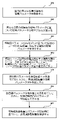
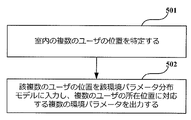
- FIG. 5 is a flowchart of a method for implementing step 103 according to Embodiment 1 of the present invention. As shown in FIG. 5, the method comprises: locating a plurality of users in the room, step 501; inputting the locations of the plurality of users into the environmental parameter distribution model and outputting a plurality of environmental parameters corresponding to the locations of the plurality of users; step 502; including.
- Embodiments of the present invention can locate multiple users in a room in a variety of ways.
- the positions of multiple users in the room can be identified, or by transmitting ultrasonic signals, radar signals, or infrared signals into the room, multiple users in the room can be identified.
- the positions of multiple users in the room are specified by specifying the positions or detecting radio signals transmitted from the terminal devices carried by the multiple users in the room.
- the positions of the plurality of users may be two-dimensional positions without height or three-dimensional positions with height.
- the positions of the plurality of users are represented by two-dimensional coordinates f(x, y) or three-dimensional coordinates f(x, y, z).
- the positions of the users are three-dimensional positions, including heights, then the different heights due to different heights or sitting styles of the users are taken into account.
- the height may be set to a fixed value by user command. For example, the height is 1.5 meters, ie, it is only necessary to obtain the temperature and humidity data of the user's location in a horizontal plane with a height of 1.5 meters.
- the locations of the users may include the users' own locations and locations around the users. In this way, since the position around the user is included, the environmental parameter data obtained based on the position data can be more complete, and the user's comfort level after control can be further improved.
- step 502 input the locations of the users into the environmental parameter distribution model, and output the environmental parameters corresponding to the locations of the users, i.e., in the environmental parameter distribution model, the locations and the environmental parameters are Since there is a specific correspondence relationship, it is possible to obtain a plurality of environmental parameters corresponding to the locations of the plurality of users based on the locations of the plurality of users.
- step 104 determines the states of the plurality of users based on the plurality of environmental parameters corresponding to the plurality of users' locations. Each parameter is calculated, and an overall state parameter value of the user is determined based on the state parameters of the plurality of users.
- the user's condition parameter may be various parameters for representing the user's condition, such as comfort level and fatigue level.
- FIG. 6 is a flowchart of a method for implementing step 104 according to Embodiment 1 of the present invention. As shown in FIG. 6, the method comprises: step 601, calculating the comfort level and/or the fatigue level of the plurality of users based on the temperature and humidity corresponding to the locations of the plurality of users; Step 602, calculating an overall comfort level value and/or an overall fatigue level value of the user based on the comfort level and fatigue level of the plurality of users; including.
- calculating user comfort and/or fatigue based on temperature and humidity can be obtained by a model.
- a multi-layer perceptron regression model is trained based on, for example, temperature and humidity training data, and the output is user comfort and/or fatigue. Also, a model can be further trained based on the user's gender and applied to obtain the comfort and/or fatigue levels of users of different genders.
- step 602 for example, calculating the sum, mean, variance or standard deviation of the comfort level of the plurality of users and/or calculating the sum, mean value, variance or standard deviation of the fatigue level of the plurality of users Calculate to obtain the user's overall comfort level value and/or overall fatigue level value.
- an overall comfort value and/or an overall fatigue value calculated based on desired results may be selected.
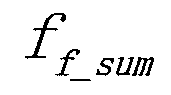
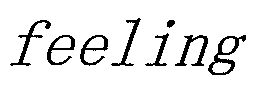
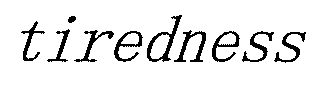
- the method for calculating the overall value is to add the comfort levels and fatigue levels of all users, respectively. If the overall value is small, it indicates that the comfort and fatigue of all users in the entire area is generally low, indicating that the comfort is high and the fatigue is low. Both the comfort level and the fatigue level of all users of are generally large, indicating that the comfort level is low and the fatigue level is high.
- the comfort levels and fatigue levels of all users can be added to obtain an overall comfort level value and an overall fatigue level value.
- the overall comfort value is the sum of the comfort levels of each user, and indicates the comfort level of each user, and indicates that the overall fatigue level is the sum of the fatigue levels of each user, indicates the degree of fatigue of each user, and N is the number of users.
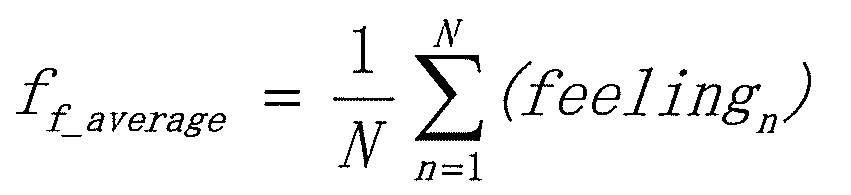
- the method for calculating the overall value is to find the average value of each user's comfort level and fatigue level. If the overall value is small, that is, both the comfort and fatigue levels of all users within the whole area indicate a small balance, and do not exclude the effects of particularly small data. If the overall value is large, it indicates that both the comfort and fatigue levels of all users in the whole area are well balanced, and do not exclude the influence of particularly large data.
- the average values of comfort levels and fatigue levels of all users can be obtained based on the following equations (3) and (4), and used as overall comfort level values and overall fatigue level values.
- the overall comfort value is the average comfort value of each user
- N is the number of users.
- the method for calculating the overall value is It is to obtain the variance or standard deviation for the comfort and fatigue of the human body, respectively. If the overall value is small, it indicates that the difference in comfort level and fatigue level of each user in the region is not large. A large overall value indicates that the comfort level and fatigue level of each user in the region are significantly different.
- the overall comfort value is the variance of each user's comfort level, and indicates the comfort level of each user.
- the fatigue level overall value is the variance of the fatigue level of each user.
- N is the number of users.
- the method comprises: Comparing the calculated overall comfort level and/or fatigue level of the user with a preset optimum comfort level and/or optimum fatigue level, and calculating the calculated overall comfort level and/or fatigue level of the user Determine whether the overall value is equal to or less than the preset optimal comfort level and/or optimal fatigue level, in other words, determine whether the calculated overall value is equal to or less than the preset optimal value Step 603 of determining, if the determination result is "yes", proceed to step 604; , return to step 601 for processing, step 603; Step 604, wherein the calculated overall comfort level value and/or overall fatigue level value of the user is used as the overall state parameter value of the user; can further include
- steps 101 to 104 can be cyclically performed in a constant cycle so as to obtain the optimum overall state parameter value.
- the periodic detection of the sensor allows the user to set the detection period to collect data and process based on the collected data. Not only can it save energy, but it can also ensure that the user is in optimal user conditions in all weather conditions.
- step 105 the overall state parameter value is input to the first prediction model to output the target parameter distribution of the environmental adjustment device.
- the target parameter distribution is the indoor space distribution of the target values of the setting parameters of the environmental adjustment device.
- the parameters correspond to collected environmental parameters.
- the target value is an idealized set point. That is, the target parameters obtained according to embodiments of the present invention are not single target parameters, but target parameters associated with different locations in the room space, ie, target parameters representing the entire room.
- the output target parameter distribution is the target temperature distribution in the indoor space of the temperature target value and the indoor space distribution of the humidity target value. Contains some target humidity distribution.
- the output target parameter distribution includes a target brightness distribution, which is the distribution of brightness target values in the indoor space.
- multiple types of target parameter distributions can be obtained by one first prediction model trained with multiple types of target parameters. .
- multiple first prediction models can be trained respectively based on the type of target parameter. Each first prediction model corresponds to one type of target parameter and outputs one type of target parameter distribution.
- the first prediction model may be a trained multilayer perceptron model or a deep neural network.
- Training data includes, for example, historical data of user state parameter overall values.
- the environmental conditioning device may be controlled based on the target parameter distribution. For example, setting the environmental adjustment device directly based on the target parameter distribution.
- further processing of the target parameter distribution can further improve the accuracy of the setpoint.
- the method comprises: step 106, inputting the target parameter distribution into a second predictive model and outputting parameter settings for the environmental conditioning device; step 107, controlling the environmental conditioning device based on the parameter settings of the environmental conditioning device; can further include
- the target parameter distribution is further input into the second predictive model to obtain parameter settings to control the device
- the characteristics of the device itself and other factors are taken into account to ensure that the parameter settings are the actual environment. Better fit further improves device performance and user experience.
- step 106 the target parameter distribution is input to the second prediction model to output the parameter settings of the environmental conditioning device.
- the target parameter distribution is the ideal setting value of the environmental conditioning device, but it depends on the actual factors of some environmental conditioning device application scenes, such as building, room type and environmental conditioning device. Due to its design, the environmental conditioning device cannot reach the state of the target parameter distribution quickly or accurately.
- the actual parameter settings of the environmental conditioning device which are the environmental conditioning device parameter settings, can be determined based on the target parameter distribution and these actual factors. In this way, taking into account the characteristics of the device itself and other factors, the parameter settings are more suitable for the actual environment, allowing the environment to reach the parameter settings more quickly, thereby improving device performance and user performance. improve the experience.
- the parameter settings correspond to target parameter distributions.
- the target parameter distribution includes a target temperature distribution and a target humidity distribution
- the parameter settings output by the second predictive model include temperature settings and humidity settings.
- multiple types of parameter setting values can be obtained by one second prediction model trained with multiple types of target parameter distributions.
- a plurality of second prediction models can be trained respectively based on the type of target parameter distribution.
- Each second prediction model corresponds to one type of target parameter distribution and outputs one type of parameter set value.
- the second prediction model may be a trained multi-layer perceptron model or a deep neural network
- the training data may be, for example, the historical data of the target parameter distribution and the actual factors of the application scene of the environmental adjustment device. including.
- a time-related environmental parameter can also be input into the second prediction model, both as input data. can.
- FIG. 7 is a flowchart of another method for implementing step 106 according to Embodiment 1 of the present invention.
- the method comprises: obtaining a sequence of time-related environmental parameter distributions based on the output of the environmental parameter distribution model within a period of time prior to a current first time, step 701; inputting the time-related sequence of environmental parameter distributions into a third prediction model to obtain an environmental parameter distribution for a second time after the fixed period of time, step 702; step 703, inputting the second time environmental parameter distribution and the target parameter distribution into a second prediction model and outputting parameter settings for an environmental conditioning device; including.
- the actual environmental parameter distribution in the room When encountering a certain sudden situation, it will change the actual environmental parameter distribution in the room, thereby affecting the actual adjustment by the environmental adjustment device and degrading the user experience.
- an unexpected situation such as a sudden wind blowing outdoors or a broken air conditioner changes the actual temperature distribution in the room, affects the actual adjustment by the air conditioner, and further affects the comfort level accuracy. and degrade the user experience.
- the actual temperature setpoint is calculated based on the temperature distribution and the target temperature distribution at the second time when the prediction is completed.
- the output of the environmental parameter distribution model is further used in step 701 to determine the time-related It is used to obtain a sequence of environmental parameter distributions that
- the environmental parameters include different types of environmental parameters, a sequence of different types of environmental parameter distributions are obtained respectively.
- step 701 obtain a sequence of temperature distribution with respect to time and a sequence of humidity distribution with respect to time, respectively.
- step 702 the sequence of time-related environmental parameter distributions is input into a third prediction model to obtain the environmental parameter distributions of a second time after the certain period of time, i.e. predict the future environmental parameter distributions. do.
- the third predictive model may be a trained deep neural network including a long short term memory (LSTM) structure or a gated regression unit (GRU) structure.
- Training data includes, for example, historical data of environmental parameters acquired at the same time interval.
- step 107 the environment adjustment device is controlled according to the parameter settings of the environment adjustment device.
- the temperature set value of the air conditioner is adjusted to the obtained temperature set value.
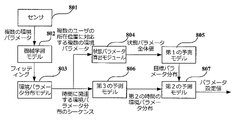
- FIG. 8 is a schematic diagram of the data processing process of the control method for the environment adjusting device according to the first embodiment of the present invention.
- at least one sensor 801 collects and provides a machine learning model 802 with multiple environmental parameters at different locations in the room.
- An environmental parameter distribution model 803 is obtained after fitting.
- the environmental parameter distribution model 803 outputs environmental parameters corresponding to the locations of the users to the state parameter calculation module 804 .
- the state parameter calculation module 804 outputs the overall state parameter values of the user.
- the overall state parameter value is input to the first predictive model 805, and the target parameter distribution of the environmental conditioning device is output.
- the environmental parameter distribution model 803 also outputs a sequence of time-related environmental parameter distributions within a certain time period to the third prediction model 806 .
- a third predictive model 806 outputs environmental parameter distributions for a second time after the fixed period of time. Both the target parameter distribution output from the first prediction model 805 and the second time environmental parameter distribution output from the third prediction model 806 are input to the second prediction model 807, and the Get parameter settings.
- FIG. 9 is a flow chart of an air conditioning control method according to the first embodiment of the present invention.
- the method comprises: obtaining multiple temperatures and humidity at different locations in the room, step 901; determining a temperature distribution model and a humidity distribution model based on a plurality of temperatures and humidity at different locations, step 902; obtaining the positions f(x, y, z) of the plurality of users, step 903; determining a plurality of temperatures and humidity corresponding to a plurality of user locations f(x, y, z) based on the temperature distribution model and the humidity distribution model, step 904; Based on the plurality of temperatures and humidity corresponding to the location f (x, y, z) of the plurality of users, the comfort level and fatigue level of the plurality of users are calculated, and the comfort level and fatigue level of the plurality of users are calculated.
- Step 905 calculating a user's comfort level overall value and fatigue level overall value based on the fatigue level; It is determined whether the calculated overall comfort level value and the calculated overall fatigue level value are equal to or less than the preset optimal comfort level and optimal fatigue level, respectively.
- step 906 it is determined whether the temperature is less than or equal to the value, and if the determination result is "yes", the process proceeds to step 907; processing based on humidity, step 906; Step 907 of setting the calculated overall comfort level value and overall fatigue level value of the user as the overall comfort level value and overall fatigue level value of the user; step 908, inputting the overall comfort level value and the overall fatigue level value into a first prediction model and outputting the target temperature distribution and target humidity distribution for air conditioning; After step 902, obtain a time-related sequence of temperature distribution and a sequence of humidity distribution based on the outputs of the temperature distribution model and the humidity distribution model within a period of time before the current first time; step 909; inputting the time-related sequence of temperature distributions and humidity distributions into a third prediction
- steps 909, 910 and steps 903-908 there is no restriction on the execution order between steps 909, 910 and steps 903-908, and steps 909, 910 and steps 903-908 may be executed independently in parallel or sequentially. may be
- the target parameter distribution of the environmental adjustment device is obtained by inputting the state parameter overall value into the first prediction model, but the present invention obtains the target parameter distribution of the environment adjustment device using the prediction model. It is not limited to the method.
- a lookup table method can also be used to determine the target parameter distribution of the environmental conditioning device.
- FIG. 10 is another flow chart of the control method of the environment adjusting device according to the first embodiment of the present invention.
- the method comprises: step 1001, obtaining a plurality of environmental parameters at different locations in the room; determining an environmental parameter distribution model based on the plurality of environmental parameters at different locations, step 1002; determining a plurality of environmental parameters corresponding to locations of a plurality of users based on the environmental parameter distribution model; Step 1003; calculating state parameters of the plurality of users based on a plurality of environmental parameters corresponding to the locations of the plurality of users, and determining an overall state parameter value of the users based on the state parameters of the plurality of users; 1004 and determining a target parameter distribution of the environmental conditioning device corresponding to the overall state parameter value using a lookup table method, step 1005; including.
- steps 1001 to 1004 are the same as steps 101 to 104, and will not be described repeatedly here.
- step 1005 by substituting the look-up table method for the method of using the first prediction model in step 105, the target parameter distribution of the environmental conditioning device can be determined in a simple manner.
- a correspondence table between overall state parameter values and target parameter distributions can be established in advance.
- the overall condition parameter value may include at least one of an overall comfort value and an overall fatigue value.
- a target parameter distribution table corresponding to the overall comfort value can be established, a target parameter distribution table corresponding to the overall fatigue value can be established, and both the overall comfort value and the overall fatigue value can be established.
- a target parameter distribution table can be established to The target parameter distribution may include temperature distribution and/or humidity distribution.
- FIG. 11 is a schematic diagram of a correspondence relationship between state parameter overall values and target parameter distributions according to the first embodiment of the present invention.
- discomfort can be reduced by reducing humidity within a room temperature range of 26 to 30 ° C. for the overall comfort value, and the overall fatigue value is 28 ° C.
- the feeling of fatigue is clearly reduced, and at humidity of 55% or less, the feeling of fatigue also tends to be reduced. That is, within a certain temperature range, a high overall comfort value corresponds to low humidity, and a low overall fatigue value corresponds to high humidity.
- FIG. 11 is only an example, and does not restrict the correspondence relationship between the state parameter overall value and the target parameter distribution.
- the method includes: determining an environmental conditioning device parameter setting corresponding to the target parameter distribution using a lookup table method, step 1006; Step 1007, controlling the environmental adjustment device based on the parameter settings of the environmental adjustment device; further includes
- step 1006 by substituting the lookup table method for the method of using the second predictive model at step 106, the parameter settings of the climate control device can be determined in a simple manner.
- the target parameter distribution may include temperature distribution and/or humidity distribution.
- the parameter settings may include temperature settings and/or humidity settings.
- Steps 1006 and 1007 are optional steps. Instead of steps 1006 and 1007, steps 105 and 106 may be used.
- an environmental parameter distribution model is determined based on a plurality of environmental parameters at different locations, and environmental parameters corresponding to the locations of a plurality of users are determined based on the environmental parameter distribution model; It is possible to accurately reflect the environmental state of the entire space based on the environmental parameters collected at the selected positions, and to easily obtain accurate environmental parameters corresponding to the positions of a plurality of users. It can obtain the environmental parameter distribution of the entire space at a low cost, and can be applied to many large spatial areas such as schools, office locations, department stores, schools, exhibition areas or multi-functional halls, and can be applied for home use.
- the state A global parameter value can reflect the global state of multiple users. Furthermore, by obtaining the target parameter distribution of the environment adjustment device by the first prediction model from the overall state parameter values reflecting the overall state of the plurality of users, the target parameter distribution is accurately obtained for the entire plurality of users. making it possible to adapt. By controlling the device based on the target parameter distribution, multiple users can all be in a comfortable state, thereby improving device performance and user experience.
- Example 2 Embodiment 2 of the present invention provides a control device for an environment adjustment device corresponding to the control method for an environment adjustment device described in Embodiment 1, and its specific implementation is the implementation of the method described in Embodiment 1. It can be referred to, and the same or related contents will not be described repeatedly.
- FIG. 12 is a schematic diagram of a control device for an environment adjustment device according to Embodiment 2 of the present invention.
- a control device 1200 for an environment adjustment device includes: an acquisition unit 1201 for acquiring multiple environmental parameters at different locations in the room; a first determining unit 1202 for determining an environmental parameter distribution model based on the plurality of environmental parameters at different locations; a second determining unit 1203 for determining environmental parameters corresponding to locations of users based on the environmental parameter distribution model; calculating state parameters of the plurality of users based on a plurality of environmental parameters corresponding to the locations of the plurality of users, and determining overall state parameter values of the users based on the state parameters of the plurality of users; 3 determining unit 1204; a fourth determining unit 1205, which inputs the overall state parameter value into a first prediction model and outputs a target parameter distribution of the environmental conditioning device; including.
- the apparatus 1200 comprises: a fifth decision unit 1206 that inputs the target parameter distribution into a second prediction model and outputs parameter settings for the environmental conditioning device; a control unit 1207 for controlling the environmental conditioning device based on parameter settings of the environmental conditioning device; may further include
- an environmental parameter distribution model is determined based on a plurality of environmental parameters at different locations, and environmental parameters corresponding to the locations of a plurality of users are determined based on the environmental parameter distribution model; It is possible to accurately reflect the environmental state of the entire space based on the environmental parameters collected at the selected positions, and to easily obtain accurate environmental parameters corresponding to the positions of a plurality of users. It can obtain the environmental parameter distribution of the entire space at a low cost, and can be applied to many large spatial areas such as schools, office locations, department stores, schools, exhibition areas or multi-functional halls, and can be applied for home use.
- the state A global parameter value can reflect the global state of multiple users. Furthermore, by obtaining the target parameter distribution of the environment adjustment device by the first prediction model from the overall state parameter values reflecting the overall state of the plurality of users, the target parameter distribution is accurately obtained for the entire plurality of users. allow to adapt. By controlling the device based on the target parameter distribution, multiple users can all be in a comfortable state, thereby improving device performance and user experience.
- Example 3 Embodiment 3 of the present invention provides an intelligent environment adjustment system including the control device of the environment adjustment device described in Embodiment 2, and its specific implementation is the apparatus described in Embodiment 2 and Embodiment 1. can refer to the implementation of the method of , and where the content is the same or related, will not be repeated.
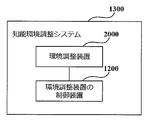
- FIG. 13 is a structural diagram of an intelligent environment adjustment system according to Embodiment 3 of the present invention.
- an intelligent environment adjustment system 1300 includes: an environment adjustment device 2000; an environment adjustment device control device 1200 that controls the environment adjustment device 2000; including.
- the environmental conditioning device controller 1000 may be a separate device or integrated with the environmental conditioning device 2000 .
- the environmental conditioning device may be any type of furniture device, for example, the environmental conditioning device may be an air conditioning device, an air purifier, a fresh air device, a humidification device, a disinfection device, a lighting device and an acoustic device. at least one of the devices.
- the intelligent environment adjustment system 1300 may be used for home, commercial or public use.
- the intelligent environment adjustment system 1300 may be used in home environments, commercial environments such as offices, office buildings, department stores, or public environments such as schools.
- control device 1200 of the environmental conditioning device can refer to the device described in Example 2 and the method described in Example 1, and will be repeated here. do not do.
- control device 1200 of the environmental adjustment device may further include other control functions, such as control of switches, control of timing, and the like.
- an environmental parameter distribution model is determined based on a plurality of environmental parameters at different locations, and environmental parameters corresponding to the locations of a plurality of users are determined based on the environmental parameter distribution model; It is possible to accurately reflect the environmental state of the entire space based on the environmental parameters collected at the selected positions, and to easily obtain accurate environmental parameters corresponding to the positions of a plurality of users. It can obtain the environmental parameter distribution of the entire space at a low cost, and can be applied to many large spatial areas such as schools, office locations, department stores, schools, exhibition areas or multi-functional halls, and can be applied for home use.
- the state A global parameter value can reflect the global state of multiple users. Furthermore, by obtaining the target parameter distribution of the environment adjustment device by the first prediction model from the overall state parameter values reflecting the overall state of the plurality of users, the target parameter distribution is accurately obtained for the entire plurality of users. allow to adapt. By controlling the device based on the target parameter distribution, multiple users can all be in a comfortable state, thereby improving device performance and user experience.
- the above apparatuses and methods according to the embodiments of the present invention may be implemented in hardware or by combining software with hardware.
- the present invention relates to a computer readable program which, when executed by a logic component, can cause the logic component to implement the device or component described above, or cause the logic component to implement the various methods or steps described above. .
- Embodiments of the present invention further relate to storage media, such as hard disks, magnetic disks, optical disks, DVDs, flash memories, etc., for storing the above programs.
- storage media such as hard disks, magnetic disks, optical disks, DVDs, flash memories, etc.
- each step according to the present solution means does not limit the order of steps before and after, on the premise that it does not affect the implementation of the concrete solution means, and the step written before is executed first. It may be performed later, or it may be performed at the same time, and as long as the solution can be implemented, it should be regarded as belonging to the protection scope of the present application.
Landscapes
- Engineering & Computer Science (AREA)
- Signal Processing (AREA)
- Physics & Mathematics (AREA)
- Fuzzy Systems (AREA)
- Mathematical Physics (AREA)
- Chemical & Material Sciences (AREA)
- Combustion & Propulsion (AREA)
- Mechanical Engineering (AREA)
- General Engineering & Computer Science (AREA)
- Automation & Control Theory (AREA)
- Computer Networks & Wireless Communication (AREA)
- Air Conditioning Control Device (AREA)
Abstract
Description
異なる位置の複数の環境パラメータに基づいて環境パラメータ分布モデルを決定するとともに、該環境パラメータ分布モデルに基づいて複数のユーザの位置に対応する環境パラメータを決定し、限られた位置で収集された環境パラメータに基づいて空間全体の環境状態を正確に反映するとともに、複数のユーザの位置に対応する正確な環境パラメータを容易に取得することができる。これにより、低いコストで空間全体の環境パラメータ分布を取得し、学校、オフィス場所、デパート、学校、展示エリアまたは多機能ホールなどの多くの広い空間領域に適用でき、かつ、家庭用に適用することもできる。
そして、複数のユーザの位置に対応する正確な環境パラメータに基づいて複数のユーザの状態パラメータをそれぞれ算出するとともに、複数のユーザの状態パラメータに基づいてユーザの状態パラメータ全体値を決定することによって、該状態パラメータ全体値が複数のユーザの全体的な状態を反映する。
さらに、複数のユーザの全体的な状態を反映した状態パラメータ全体値から第1の予測モデルによって環境調整装置の目標パラメータ分布を取得することで、該目標パラメータ分布を複数のユーザの全体に正確に適応させることを可能にする。該目標パラメータ分布に基づいて装置を制御することで、複数のユーザがいずれも快適な状態にあると同時に、実際の設定と理想的な設定との偏差を減少させることができ、それにより装置の性能及びユーザ体験が向上する。
図面において、
本発明の実施例1は、環境調整装置の制御方法を提供する。図1は、本発明の実施例1に係る環境調整装置の制御方法のフローチャートである。図1に示すように、該方法は、
室内の異なる位置の複数の環境パラメータを取得するステップ101と、
異なる位置の該複数の環境パラメータに基づいて環境パラメータ分布モデルを決定するステップ102と、
該環境パラメータ分布モデルに基づいて複数のユーザの所在位置に対応する複数の環境パラメータを決定するステップ103と、
複数のユーザの所在位置に対応する複数の環境パラメータに基づいて該複数のユーザの状態パラメータをそれぞれ算出するとともに、該複数のユーザの状態パラメータに基づいてユーザの状態パラメータ全体値を決定するステップ104と、
該状態パラメータ全体値を第1の予測モデルに入力し、環境調整装置の目標パラメータ分布を出力するステップ105と、
を含む。
センサが、空間領域内に自身の位置データ、温度データ及び湿度データを取得する、ステップ201と、
センサが、取得した位置データ、温度データ及び湿度データをデータ管理センターに送信する、ステップ202と、
データ管理センターから位置データ、温度データ及び湿度データを取得する、ステップ203と、
を含む。
センサが、ブルートゥース通信(ブルートゥースは登録商標)の形式で領域内の測位基地局ネットワークに接続される、ステップ301と、
センサが、温度、湿度、位置の情報をゲートウェイに定期的に送信する、ステップ302と、
ゲートウェイが、収集されたデータをHTTPプロトコル又はMQTTプロトコルにてIOTクラウドに伝送する、ステップ303と、
IOTクラウドからHTTPプロトコル又はMQTTプロトコルにて上記データを取得する、ステップ304と、
を含む。
機械学習モデルを確立する、ステップ401と、
該複数の環境パラメータ及び該複数の環境パラメータに対応する位置データを該機械学習モデルに入力してトレーニングする、ステップ402と、
トレーニングが完了すると、該環境パラメータ分布モデルが得られる、ステップ403と、
を含む。
室内の複数のユーザの位置を特定する、ステップ501と、
該複数のユーザの位置を該環境パラメータ分布モデルに入力し、複数のユーザの所在位置に対応する複数の環境パラメータを出力する、ステップ502と、
を含む。
複数のユーザの所在位置に対応する温度及び湿度に基づいて、該複数のユーザの快適度及び/又は疲労度をそれぞれ算出する、ステップ601と、
該複数のユーザの快適度及び疲労度に基づいて、ユーザの快適度全体値及び/又は疲労度全体値を算出する、ステップ602と、
を含む。





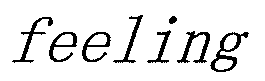
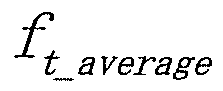
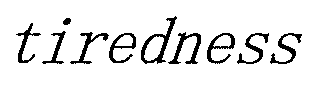


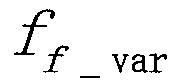


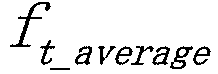
算出されたユーザの快適度全体値及び/又は疲労度全体値を予め設定された最適な快適度及び/又は最適な疲労度と比較し、算出されたユーザの快適度全体値及び/又は疲労度全体値が予め設定された最適な快適度及び/又は最適な疲労度以下であるか否かを判断する、言い換えると、算出された全体値が予め設定された最適値以下であるか否かを判断するステップ603であって、判断結果が「はい」の場合、ステップ604へ進み、判断結果が「いいえ」の場合、次の時刻の複数のユーザの所在位置に対応する温度及び湿度に基づいて、ステップ601に戻って処理を行う、ステップ603と、
算出されたユーザの快適度全体値及び/又は疲労度全体値をユーザの状態パラメータ全体値とする、ステップ604と、
をさらに含むことができる。
該目標パラメータ分布を第2の予測モデルに入力し、環境調整装置のパラメータ設定値を出力する、ステップ106と、
該環境調整装置のパラメータ設定値に基づいて、該環境調整装置を制御する、ステップ107と、
をさらに含むことができる。
環境パラメータ分布モデルの現在の第1の時間前の一定の期間内の出力に基づいて、時間に関連する環境パラメータ分布のシーケンスを取得する、ステップ701と、
該時間に関連する環境パラメータ分布のシーケンスを第3の予測モデルに入力し、該一定の期間後の第2の時間の環境パラメータ分布を取得する、ステップ702と、
該第2の時間の環境パラメータ分布及び該目標パラメータ分布を第2の予測モデルに入力し、環境調整装置のパラメータ設定値を出力する、ステップ703と、
を含む。
室内の異なる位置の複数の温度及び湿度を取得する、ステップ901と、
異なる位置の複数の温度及び湿度に基づいて温度分布モデル及び湿度分布モデルを決定する、ステップ902と、
複数のユーザの位置f(x,y,z)を取得する、ステップ903と、
温度分布モデル及び湿度分布モデルに基づいて複数のユーザの所在位置f(x,y,z)に対応する複数の温度及び湿度を決定する、ステップ904と、
複数のユーザの所在位置f(x,y,z)に対応する複数の温度及び湿度に基づいて、該複数のユーザの快適度及び疲労度をそれぞれ算出するとともに、該複数のユーザの快適度及び疲労度に基づいてユーザの快適度全体値及び疲労度全体値を算出する、ステップ905と、
算出された快適度全体値及び疲労度全体値がそれぞれ予め設定された最適な快適度及び最適疲労度以下であるか否かを判断し、言い換えると、算出された全体値が予め設定された最適値以下であるか否かを判断するステップ906であって、判断結果が「はい」の場合、ステップ907へ進み、判断結果が「いいえ」の場合、ステップ901に戻り、次の時刻の温度及び湿度に基づいて処理する、ステップ906と、
算出されたユーザの快適度全体値及び疲労度全体値を、ユーザの快適度全体値及び疲労度全体値とする、ステップ907と、
該快適度全体値及び疲労度全体値を第1の予測モデルに入力し、空調の目標温度分布及び目標湿度分布を出力する、ステップ908と、
ステップ902の後で、温度分布モデル及び湿度分布モデルの現在の第1の時間の前の一定の期間内の出力に基づいて、時間に関連する温度分布のシーケンス及び湿度分布のシーケンスを取得する、ステップ909と、
時間に関連する温度分布のシーケンス及び湿度分布のシーケンスを第3の予測モデルに入力し、該一定の期間後の第2の時間の温度分布及び湿度分布を取得する、ステップ910と、
目標温度分布と目標湿度分布及び第2の時間の温度分布と湿度分布を第2の予測モデルに入力し、空調の温度設定値及び湿度設定値を出力する、ステップ911と、
空調の温度設定値及び湿度設定値に基づいて、該空調を制御する、ステップ912と、
を含む。
室内の異なる位置の複数の環境パラメータを取得する、ステップ1001と、
異なる位置の該複数の環境パラメータに基づいて環境パラメータ分布モデルを決定する、ステップ1002と、
該環境パラメータ分布モデルに基づいて複数のユーザの所在位置に対応する複数の環境パラメータを決定する、ステップ1003と、
複数のユーザの所在位置に対応する複数の環境パラメータに基づいて該複数のユーザの状態パラメータをそれぞれ算出するとともに、該複数のユーザの状態パラメータに基づいてユーザの状態パラメータ全体値を決定する、ステップ1004と、
ルックアップテーブル法を用いて該状態パラメータ全体値に対応する環境調整装置の目標パラメータ分布を決定する、ステップ1005と、
を含む。
ルックアップテーブル法を用いて該目標パラメータ分布に対応する環境調整装置のパラメータ設定値を決定する、ステップ1006と、
該環境調整装置のパラメータ設定値に基づいて、該環境調整装置を制御する、ステップ1007と、
をさらに含む。
本発明の実施例2は、実施例1に記載の環境調整装置の制御方法に対応する環境調整装置の制御装置を提供し、その具体的な実施は、実施例1に記載の方法の実施を参照することができ、内容が同じ又は関連するところは繰り返して説明しない。
室内の異なる位置の複数の環境パラメータを取得する、取得ユニット1201と、
異なる位置の該複数の環境パラメータに基づいて環境パラメータ分布モデルを決定する、第1の決定ユニット1202と、
該環境パラメータ分布モデルに基づいて複数のユーザの所在位置に対応する複数の環境パラメータを決定する、第2の決定ユニット1203と、
複数のユーザの所在位置に対応する複数の環境パラメータに基づいて該複数のユーザの状態パラメータをそれぞれ算出するとともに、該複数のユーザの状態パラメータに基づいてユーザの状態パラメータ全体値を決定する、第3の決定ユニット1204と、
該状態パラメータ全体値を第1の予測モデルに入力し、環境調整装置の目標パラメータ分布を出力する、第4の決定ユニット1205と、
を含む。
該目標パラメータ分布を第2の予測モデルに入力し、環境調整装置のパラメータ設定値を出力する第5の決定ユニット1206と、
該環境調整装置のパラメータ設定値に基づいて、該環境調整装置を制御する制御ユニット1207と、
をさらに含んでもよい。
本発明の実施例3は、実施例2に記載の環境調整装置の制御装置を含む知能環境調整システムを提供し、その具体的な実施は、実施例2に記載の装置及び実施例1に記載の方法の実施を参照することができ、内容が同じ又は関連するところは、繰り返して説明しない。
環境調整装置2000と、
環境調整装置2000を制御する、環境調整装置の制御装置1200と、
を含む。
Claims (22)
- 室内の異なる位置の複数の環境パラメータを取得するステップと、
異なる位置の前記複数の環境パラメータに基づいて環境パラメータ分布モデルを決定するステップと、
前記環境パラメータ分布モデルに基づいて複数のユーザの所在位置に対応する複数の環境パラメータを決定するステップと、
複数のユーザの所在位置に対応する複数の環境パラメータに基づいて前記複数のユーザの状態パラメータをそれぞれ算出するとともに、前記複数のユーザの状態パラメータに基づいてユーザの状態パラメータ全体値を決定するステップと、
前記状態パラメータ全体値を第1の予測モデルに入力し、環境調整装置の目標パラメータ分布を出力するステップと、
を含む
ことを特徴とする環境調整装置の制御方法。 - 室内の異なる位置の複数の環境パラメータを取得する前記ステップは、
室内の異なる位置に分布する複数のセンサから、異なる位置の前記複数の環境パラメータを取得するステップ、または、
室内を移動可能なセンサから、異なる位置の前記複数の環境パラメータを取得するステップ、
を含む
ことを特徴とする請求項1に記載の環境調整装置の制御方法。 - 前記複数の環境パラメータに基づいて環境パラメータ分布モデルを決定する前記ステップは、
機械学習モデルを確立するステップと、
前記複数の環境パラメータ及び前記複数の環境パラメータに対応する位置データを前記機械学習モデルに入力してトレーニングするステップと、
トレーニングが完了すると、前記環境パラメータ分布モデルを取得するステップと、
を含む
ことを特徴とする請求項1に記載の環境調整装置の制御方法。 - 前記環境パラメータ分布モデルに基づいて複数のユーザの所在位置に対応する複数の環境パラメータを決定する前記ステップは、
室内の複数のユーザの位置を特定するステップと、
前記複数のユーザの位置を前記環境パラメータ分布モデルに入力し、複数のユーザの所在位置に対応する複数の環境パラメータを出力するステップと、
を含む
ことを特徴とする請求項1に記載の環境調整装置の制御方法。 - 室内の複数のユーザの位置を特定する前記ステップは、
室内カメラが撮影した画像を検出することにより、室内の複数のユーザの位置を特定するステップ、または、
室内に超音波信号、レーダ信号又は赤外線信号を発信することにより、室内の複数のユーザの位置を特定するステップ、または、
室内の複数のユーザが携帯する端末装置から送信された無線信号を検出することにより、室内の複数のユーザの位置を特定するステップ、
を含む
ことを特徴とする請求項4に記載の環境調整装置の制御方法。 - 前記複数のユーザの位置は、高さを含まない二次元位置又は高さを含む三次元位置である
ことを特徴とする請求項4に記載の環境調整装置の制御方法。 - 前記複数のユーザの位置は、複数のユーザ自身の位置及び複数のユーザの周囲の位置を含む
ことを特徴とする請求項4に記載の環境調整装置の制御方法。 - 複数のユーザの所在位置に対応する複数の環境パラメータに基づいて前記複数のユーザの状態パラメータをそれぞれ算出するとともに、前記複数のユーザの状態パラメータに基づいてユーザの状態パラメータ全体値を決定する前記ステップは、
複数のユーザの所在位置に対応する温度と湿度に基づいて、前記複数のユーザの快適度および/または疲労度をそれぞれ算出するステップと、
前記複数のユーザの快適度および疲労度に基づいて、ユーザの快適度全体値および/または疲労度全体値を算出するステップと、
を含む
ことを特徴とする請求項1に記載の環境調整装置の制御方法。 - 前記複数のユーザの快適度および/または疲労度に基づいて、ユーザの快適度全体値および/または疲労度全体値を算出する前記ステップは、
前記複数のユーザの快適度の和、平均値、分散又は標準偏差を算出し、及び/又は、前記複数のユーザの疲労度の和、平均値、分散又は標準偏差を算出し、ユーザの快適度全体値及び/又は疲労度全体値を取得するステップ、
を含む
ことを特徴とする請求項8に記載の環境調整装置の制御方法。 - 複数のユーザの所在位置に対応する複数の環境パラメータに基づいて前記複数のユーザの状態パラメータをそれぞれ算出するとともに、前記複数のユーザの状態パラメータに基づいてユーザの状態パラメータ全体値を決定する前記ステップは、
算出されたユーザの快適度全体値及び/又は疲労度全体値を予め設定された最適な快適度及び/又は最適な疲労度と比較するステップと、
算出されたユーザの快適度全体値及び/又は疲労度全体値が予め設定された最適な快適度及び/又は最適な疲労度以下の場合、算出されたユーザの快適度全体値及び/又は疲労度全体値をユーザの状態パラメータ全体値とするステップと、
をさらに含む
ことを特徴とする請求項8に記載の環境調整装置の制御方法。 - 前記目標パラメータ分布を第2の予測モデルに入力し、環境調整装置のパラメータ設定値を出力するステップと、
前記環境調整装置のパラメータ設定値に基づいて、前記環境調整装置を制御するステップと、
をさらに含む
ことを特徴とする請求項1に記載の環境調整装置の制御方法。 - 前記第1の予測モデルおよび前記第2の予測モデルは、トレーニングされた多層パーセプトロンモデル又はディープニューラルネットワークである
ことを特徴とする請求項11に記載の環境調整装置の制御方法。 - 前記目標パラメータ分布を第2の予測モデルに入力し、環境調整装置のパラメータ設定値を出力する前記ステップは、
前記環境パラメータ分布モデルの現在の第1の時間前の一定の期間内の出力に基づいて、時間に関連する環境パラメータ分布のシーケンスを取得するステップと、
前記時間に関連する環境パラメータ分布のシーケンスを第3の予測モデルに入力し、前記一定の期間後の第2の時間の環境パラメータ分布を取得するステップと、
前記第2の時間の環境パラメータ分布及び前記目標パラメータ分布を第2の予測モデルに入力し、環境調整装置のパラメータ設定値を出力するステップと、
を含む
ことを特徴とする請求項11に記載の環境調整装置の制御方法。 - 前記第3の予測モデルは、長短期記憶(LSTM)構造又はゲート付き回帰ユニット(GRU)構造を含むトレーニングされたディープニューラルネットワークである
ことを特徴とする請求項13に記載の環境調整装置の制御方法。 - 前記環境パラメータは、温度、湿度、風向、風量、音量、音声周波数、輝度、色温度及び空気品質のうちの少なくとも一つを含み、
前記環境パラメータ分布モデルは、温度分布モデル、湿度分布モデル、風向分布モデル、風量分布モデル、音量分布モデル、音声周波数分布モデル、輝度分布モデル、色温度分布モデル及び空気品質分布モデルのうちの少なくとも一つを含む
ことを特徴とする請求項1~14のいずれか1項に記載の環境調整装置の制御方法。 - 前記環境調整装置は、空調装置、空気清浄機、新気装置、加湿装置、消毒装置、照明装置及び音響装置のうちの少なくとも一種である
ことを特徴とする請求項1~14のいずれか1項に記載の環境調整装置の制御方法。 - 室内の異なる位置の複数の環境パラメータを取得するステップと、
異なる位置の前記複数の環境パラメータに基づいて環境パラメータ分布モデルを決定するステップと、
前記環境パラメータ分布モデルに基づいて複数のユーザの所在位置に対応する複数の環境パラメータを決定するステップと、
複数のユーザの所在位置に対応する複数の環境パラメータに基づいて前記複数のユーザの状態パラメータをそれぞれ算出するとともに、前記複数のユーザの状態パラメータに基づいてユーザの状態パラメータ全体値を決定するステップと、
ルックアップテーブル法を用いて前記状態パラメータ全体値に対応する環境調整装置の目標パラメータ分布を決定するステップと、
を含む
ことを特徴とする環境調整装置の制御方法。 - ルックアップテーブル法を用いて前記目標パラメータ分布に対応する環境調整装置のパラメータ設定値を決定するステップと、
前記環境調整装置のパラメータ設定値に基づいて、前記環境調整装置を制御するステップと、
をさらに含む
ことを特徴とする請求項17に記載の環境調整装置の制御方法。 - 室内の異なる位置の複数の環境パラメータを取得する取得ユニットと、
異なる位置の前記複数の環境パラメータに基づいて環境パラメータ分布モデルを決定する第1の決定ユニットと、
前記環境パラメータ分布モデルに基づいて複数のユーザの所在位置に対応する複数の環境パラメータを決定する第2の決定ユニットと、
複数のユーザの所在位置に対応する複数の環境パラメータに基づいて前記複数のユーザの状態パラメータをそれぞれ算出するとともに、前記複数のユーザの状態パラメータに基づいてユーザの状態パラメータ全体値を決定する第3の決定ユニットと、
前記状態パラメータ全体値を第1の予測モデルに入力し、環境調整装置の目標パラメータ分布を出力する第4の決定ユニットと、
を含む
ことを特徴とする環境調整装置の制御装置。 - 前記目標パラメータ分布を第2の予測モデルに入力し、環境調整装置のパラメータ設定値を出力する第5の決定ユニットと、
前記環境調整装置のパラメータ設定値に基づいて、前記環境調整装置を制御する制御ユニットと、
をさらに含む
ことを特徴とする請求項19に記載の環境調整装置の制御装置。 - 環境調整装置と、
前記環境調整装置を制御する請求項19または20に記載の環境調整装置の制御装置と、
を含む
ことを特徴とする知能環境調整システム。 - 異なる位置の前記複数の環境パラメータを収集する、室内の異なる位置に分布する複数のセンサまたは室内を移動可能なセンサをさらに含む
ことを特徴とする請求項21に記載の知能環境調整システム。
Priority Applications (3)
| Application Number | Priority Date | Filing Date | Title |
|---|---|---|---|
| EP22798919.1A EP4336784A4 (en) | 2021-05-07 | 2022-04-28 | Method and device for controlling an environmental adaptation device and intelligent environmental adaptation system |
| JP2023518679A JP7648943B2 (ja) | 2021-05-07 | 2022-04-28 | 環境調整装置の制御方法及び装置、知能環境調整システム |
| US18/385,309 US20240060673A1 (en) | 2021-05-07 | 2023-10-30 | Control method and device for environment adjustment device, and intelligent environment adjustment system |
Applications Claiming Priority (4)
| Application Number | Priority Date | Filing Date | Title |
|---|---|---|---|
| CN202110495536.5 | 2021-05-07 | ||
| CN202110495536.5A CN115307281A (zh) | 2021-05-07 | 2021-05-07 | 环境调节设备的控制方法及装置、智能环境调节系统 |
| CN202210157646.5A CN116661527A (zh) | 2022-02-21 | 2022-02-21 | 环境调节设备的控制方法及装置、智能环境调节系统 |
| CN202210157646.5 | 2022-02-21 |
Related Child Applications (1)
| Application Number | Title | Priority Date | Filing Date |
|---|---|---|---|
| US18/385,309 Continuation US20240060673A1 (en) | 2021-05-07 | 2023-10-30 | Control method and device for environment adjustment device, and intelligent environment adjustment system |
Publications (1)
| Publication Number | Publication Date |
|---|---|
| WO2022234814A1 true WO2022234814A1 (ja) | 2022-11-10 |
Family
ID=83932736
Family Applications (1)
| Application Number | Title | Priority Date | Filing Date |
|---|---|---|---|
| PCT/JP2022/019291 Ceased WO2022234814A1 (ja) | 2021-05-07 | 2022-04-28 | 環境調整装置の制御方法及び装置、知能環境調整システム |
Country Status (4)
| Country | Link |
|---|---|
| US (1) | US20240060673A1 (ja) |
| EP (1) | EP4336784A4 (ja) |
| JP (1) | JP7648943B2 (ja) |
| WO (1) | WO2022234814A1 (ja) |
Cited By (1)
| Publication number | Priority date | Publication date | Assignee | Title |
|---|---|---|---|---|
| TWI909918B (zh) * | 2025-01-02 | 2025-12-21 | 財團法人工業技術研究院 | 溫度與氣流預測系統及其方法 |
Families Citing this family (3)
| Publication number | Priority date | Publication date | Assignee | Title |
|---|---|---|---|---|
| CN118383590B (zh) * | 2024-05-09 | 2025-02-11 | 深圳市天元奇境科技有限公司 | 基于智能手环集群的温控方法、装置、设备及存储介质 |
| CN118463348B (zh) * | 2024-07-11 | 2024-11-12 | 格力电器(赣州)有限公司 | 一种基于Prompt的空调控制方法 |
| CN119005008B (zh) * | 2024-10-21 | 2025-02-11 | 浙江微风智能科技有限公司 | 基于分布式架构的楼宇环境自控方法及装置 |
Citations (5)
| Publication number | Priority date | Publication date | Assignee | Title |
|---|---|---|---|---|
| WO2007066493A1 (ja) * | 2005-12-05 | 2007-06-14 | Matsushita Electric Industrial Co., Ltd. | 環境制御装置、環境制御方法、環境制御プログラム及び環境制御システム |
| WO2015122201A1 (ja) * | 2014-02-17 | 2015-08-20 | パナソニック株式会社 | 空気調和機及び熱画像センサシステム |
| JP2015148410A (ja) * | 2014-02-07 | 2015-08-20 | 株式会社東芝 | 空調制御装置、空調制御システム、空調制御方法及びプログラム |
| WO2018179750A1 (ja) * | 2017-03-28 | 2018-10-04 | パナソニックIpマネジメント株式会社 | 環境制御システム、及び、環境制御方法 |
| JP2020148385A (ja) * | 2019-03-13 | 2020-09-17 | ダイキン工業株式会社 | 空調制御システム、及び、空調制御方法 |
Family Cites Families (5)
| Publication number | Priority date | Publication date | Assignee | Title |
|---|---|---|---|---|
| JP2702683B2 (ja) * | 1995-07-20 | 1998-01-21 | 工業技術院長 | 疲労特性評価装置及び疲労計測装置 |
| JP2002065650A (ja) * | 2000-09-04 | 2002-03-05 | Nissan Motor Co Ltd | 疲労度判定装置 |
| CN104022918B (zh) * | 2005-07-10 | 2018-04-10 | 适应性频谱和信号校正股份有限公司 | 数字用户线路dsl系统估计 |
| CA3072045A1 (en) * | 2017-08-02 | 2019-02-07 | Strong Force Iot Portfolio 2016, Llc | Methods and systems for detection in an industrial internet of things data collection environment with large data sets |
| US12437042B2 (en) * | 2019-09-20 | 2025-10-07 | Micron Technology, Inc. | Methods and apparatus for persistent biometric profiling |
-
2022
- 2022-04-28 EP EP22798919.1A patent/EP4336784A4/en not_active Withdrawn
- 2022-04-28 WO PCT/JP2022/019291 patent/WO2022234814A1/ja not_active Ceased
- 2022-04-28 JP JP2023518679A patent/JP7648943B2/ja active Active
-
2023
- 2023-10-30 US US18/385,309 patent/US20240060673A1/en not_active Abandoned
Patent Citations (5)
| Publication number | Priority date | Publication date | Assignee | Title |
|---|---|---|---|---|
| WO2007066493A1 (ja) * | 2005-12-05 | 2007-06-14 | Matsushita Electric Industrial Co., Ltd. | 環境制御装置、環境制御方法、環境制御プログラム及び環境制御システム |
| JP2015148410A (ja) * | 2014-02-07 | 2015-08-20 | 株式会社東芝 | 空調制御装置、空調制御システム、空調制御方法及びプログラム |
| WO2015122201A1 (ja) * | 2014-02-17 | 2015-08-20 | パナソニック株式会社 | 空気調和機及び熱画像センサシステム |
| WO2018179750A1 (ja) * | 2017-03-28 | 2018-10-04 | パナソニックIpマネジメント株式会社 | 環境制御システム、及び、環境制御方法 |
| JP2020148385A (ja) * | 2019-03-13 | 2020-09-17 | ダイキン工業株式会社 | 空調制御システム、及び、空調制御方法 |
Non-Patent Citations (1)
| Title |
|---|
| See also references of EP4336784A4 * |
Cited By (1)
| Publication number | Priority date | Publication date | Assignee | Title |
|---|---|---|---|---|
| TWI909918B (zh) * | 2025-01-02 | 2025-12-21 | 財團法人工業技術研究院 | 溫度與氣流預測系統及其方法 |
Also Published As
| Publication number | Publication date |
|---|---|
| US20240060673A1 (en) | 2024-02-22 |
| EP4336784A4 (en) | 2025-04-30 |
| JPWO2022234814A1 (ja) | 2022-11-10 |
| EP4336784A1 (en) | 2024-03-13 |
| JP7648943B2 (ja) | 2025-03-19 |
Similar Documents
| Publication | Publication Date | Title |
|---|---|---|
| WO2022234814A1 (ja) | 環境調整装置の制御方法及び装置、知能環境調整システム | |
| TWI617200B (zh) | 智能空調控制系統及其智能控制方法 | |
| WO2020077808A1 (zh) | 设备控制方法和装置 | |
| WO2020146315A1 (en) | System and method for controlling indoor air quality | |
| CN118396780A (zh) | 一种基于数字孪生的建筑环境和能源耦合智能调控系统和方法 | |
| CN113418286B (zh) | 自适应热感觉机器人及空调温度调整方法 | |
| CN205281304U (zh) | 一种基于物联网的室内环境智能控制系统 | |
| CN105425602A (zh) | 一种家电设备自动控制方法及装置 | |
| TW201621239A (zh) | 環境舒適度控制系統及其控制方法 | |
| WO2022252672A1 (zh) | 用于空气调节的控制方法及装置、家电设备 | |
| CN106919056A (zh) | 智能家居自动控制方法及装置 | |
| WO2022242143A1 (zh) | 用于空调控制的方法、装置和空调 | |
| CN109883016B (zh) | 一种空气舒适度调节方法和设备 | |
| CN115307281A (zh) | 环境调节设备的控制方法及装置、智能环境调节系统 | |
| CN107490976A (zh) | 智能家居设备的控制方法、装置及可读存储介质 | |
| CN114442697A (zh) | 一种温度控制方法、设备、介质及产品 | |
| CN205405299U (zh) | 一种温湿度传感器支座及室内环境智能控制系统 | |
| CN107490136A (zh) | 一种集中式温湿度智能控制系统 | |
| CN107355946A (zh) | 一种基于用户体验的家居智能舒适节能控制系统及方法 | |
| CN114198887A (zh) | 一种空调调控方法、装置、系统和智能感知开关 | |
| CN116661527A (zh) | 环境调节设备的控制方法及装置、智能环境调节系统 | |
| CN112212481A (zh) | 利用深度强化学习控制环境舒适度的系统及其方法 | |
| CN119573180B (zh) | 室内新风的控制方法及新风设备、存储介质、电子设备 | |
| CN113467263A (zh) | 温度调节方法及相关装置 | |
| CN113760022B (zh) | 一种公共空间热环境空调控制装置及方法 |
Legal Events
| Date | Code | Title | Description |
|---|---|---|---|
| 121 | Ep: the epo has been informed by wipo that ep was designated in this application |
Ref document number: 22798919 Country of ref document: EP Kind code of ref document: A1 |
|
| WWE | Wipo information: entry into national phase |
Ref document number: 2023518679 Country of ref document: JP |
|
| WWE | Wipo information: entry into national phase |
Ref document number: 2022798919 Country of ref document: EP |
|
| NENP | Non-entry into the national phase |
Ref country code: DE |
|
| ENP | Entry into the national phase |
Ref document number: 2022798919 Country of ref document: EP Effective date: 20231207 |
|
| WWW | Wipo information: withdrawn in national office |
Ref document number: 2022798919 Country of ref document: EP |