WO2022239807A1 - 非水電解液及び二次電池 - Google Patents
非水電解液及び二次電池 Download PDFInfo
- Publication number
- WO2022239807A1 WO2022239807A1 PCT/JP2022/019959 JP2022019959W WO2022239807A1 WO 2022239807 A1 WO2022239807 A1 WO 2022239807A1 JP 2022019959 W JP2022019959 W JP 2022019959W WO 2022239807 A1 WO2022239807 A1 WO 2022239807A1
- Authority
- WO
- WIPO (PCT)
- Prior art keywords
- group
- electrolyte
- general formula
- compound
- atom
- Prior art date
- Legal status (The legal status is an assumption and is not a legal conclusion. Google has not performed a legal analysis and makes no representation as to the accuracy of the status listed.)
- Ceased
Links
Images


Classifications
-
- H—ELECTRICITY
- H01—ELECTRIC ELEMENTS
- H01M—PROCESSES OR MEANS, e.g. BATTERIES, FOR THE DIRECT CONVERSION OF CHEMICAL ENERGY INTO ELECTRICAL ENERGY
- H01M10/00—Secondary cells; Manufacture thereof
- H01M10/05—Accumulators with non-aqueous electrolyte
- H01M10/056—Accumulators with non-aqueous electrolyte characterised by the materials used as electrolytes, e.g. mixed inorganic/organic electrolytes
- H01M10/0564—Accumulators with non-aqueous electrolyte characterised by the materials used as electrolytes, e.g. mixed inorganic/organic electrolytes the electrolyte being constituted of organic materials only
- H01M10/0566—Liquid materials
- H01M10/0568—Liquid materials characterised by the solutes
-
- C—CHEMISTRY; METALLURGY
- C07—ORGANIC CHEMISTRY
- C07F—ACYCLIC, CARBOCYCLIC OR HETEROCYCLIC COMPOUNDS CONTAINING ELEMENTS OTHER THAN CARBON, HYDROGEN, HALOGEN, OXYGEN, NITROGEN, SULFUR, SELENIUM OR TELLURIUM
- C07F5/00—Compounds containing elements of Groups 3 or 13 of the Periodic Table
- C07F5/02—Boron compounds
- C07F5/05—Cyclic compounds having at least one ring containing boron but no carbon in the ring
-
- C—CHEMISTRY; METALLURGY
- C07—ORGANIC CHEMISTRY
- C07F—ACYCLIC, CARBOCYCLIC OR HETEROCYCLIC COMPOUNDS CONTAINING ELEMENTS OTHER THAN CARBON, HYDROGEN, HALOGEN, OXYGEN, NITROGEN, SULFUR, SELENIUM OR TELLURIUM
- C07F7/00—Compounds containing elements of Groups 4 or 14 of the Periodic Table
- C07F7/02—Silicon compounds
- C07F7/04—Esters of silicic acids
- C07F7/06—Esters of silicic acids with hydroxyaryl compounds
-
- H—ELECTRICITY
- H01—ELECTRIC ELEMENTS
- H01M—PROCESSES OR MEANS, e.g. BATTERIES, FOR THE DIRECT CONVERSION OF CHEMICAL ENERGY INTO ELECTRICAL ENERGY
- H01M10/00—Secondary cells; Manufacture thereof
- H01M10/05—Accumulators with non-aqueous electrolyte
- H01M10/052—Li-accumulators
-
- H—ELECTRICITY
- H01—ELECTRIC ELEMENTS
- H01M—PROCESSES OR MEANS, e.g. BATTERIES, FOR THE DIRECT CONVERSION OF CHEMICAL ENERGY INTO ELECTRICAL ENERGY
- H01M10/00—Secondary cells; Manufacture thereof
- H01M10/05—Accumulators with non-aqueous electrolyte
- H01M10/052—Li-accumulators
- H01M10/0525—Rocking-chair batteries, i.e. batteries with lithium insertion or intercalation in both electrodes; Lithium-ion batteries
-
- H—ELECTRICITY
- H01—ELECTRIC ELEMENTS
- H01M—PROCESSES OR MEANS, e.g. BATTERIES, FOR THE DIRECT CONVERSION OF CHEMICAL ENERGY INTO ELECTRICAL ENERGY
- H01M10/00—Secondary cells; Manufacture thereof
- H01M10/05—Accumulators with non-aqueous electrolyte
- H01M10/056—Accumulators with non-aqueous electrolyte characterised by the materials used as electrolytes, e.g. mixed inorganic/organic electrolytes
- H01M10/0564—Accumulators with non-aqueous electrolyte characterised by the materials used as electrolytes, e.g. mixed inorganic/organic electrolytes the electrolyte being constituted of organic materials only
- H01M10/0566—Liquid materials
- H01M10/0567—Liquid materials characterised by the additives
-
- H—ELECTRICITY
- H01—ELECTRIC ELEMENTS
- H01M—PROCESSES OR MEANS, e.g. BATTERIES, FOR THE DIRECT CONVERSION OF CHEMICAL ENERGY INTO ELECTRICAL ENERGY
- H01M2300/00—Electrolytes
- H01M2300/0017—Non-aqueous electrolytes
- H01M2300/0025—Organic electrolyte
-
- Y—GENERAL TAGGING OF NEW TECHNOLOGICAL DEVELOPMENTS; GENERAL TAGGING OF CROSS-SECTIONAL TECHNOLOGIES SPANNING OVER SEVERAL SECTIONS OF THE IPC; TECHNICAL SUBJECTS COVERED BY FORMER USPC CROSS-REFERENCE ART COLLECTIONS [XRACs] AND DIGESTS
- Y02—TECHNOLOGIES OR APPLICATIONS FOR MITIGATION OR ADAPTATION AGAINST CLIMATE CHANGE
- Y02E—REDUCTION OF GREENHOUSE GAS [GHG] EMISSIONS, RELATED TO ENERGY GENERATION, TRANSMISSION OR DISTRIBUTION
- Y02E60/00—Enabling technologies; Technologies with a potential or indirect contribution to GHG emissions mitigation
- Y02E60/10—Energy storage using batteries
Definitions
- the present disclosure relates to non-aqueous electrolytes and secondary batteries.
- Patent Document 1 proposes a non-aqueous electrolyte (non-aqueous electrolyte) containing an imide salt such as lithium bis(fluorosulfonylimide), glyme and a fluorinated ether, and further containing lithium nitrate.
- an imide salt such as lithium bis(fluorosulfonylimide), glyme and a fluorinated ether
- US Pat. No. 5,300,003 proposes a non-aqueous electrolyte containing lithium bisfluorosulfonylimide and trimethylsilyl phosphate (TMSPa) additives.
- TMSPa trimethylsilyl phosphate
- Patent Document 3 proposes a non-aqueous electrolytic solution containing lithium hexafluorophosphate and a boroxine compound.
- Non-aqueous solvent; lithium salt; sulfur-containing compound; A compound in which at least one atom is substituted with a trimethylsilyl group or the like has been proposed.
- Patent Document 5 proposes an electrolytic solution additive for non-aqueous electricity storage devices containing a compound containing 2 to 4 P atoms in one molecule and a structural unit represented by a predetermined formula. ing.
- a non-aqueous electrolyte containing a sulfonylimide compound such as lithium bis(fluorosulfonyl)imide as an electrolyte salt improves the high-temperature durability and charge-discharge cycle of lithium ion secondary batteries.
- a battery using a non-aqueous electrolyte containing the sulfonylimide compound is different from a battery using a non-aqueous electrolyte containing only a lithium compound (for example, LiPF 6 , LiBF 4 , etc.) other than the sulfonylimide compound as the electrolyte.
- the present disclosure has been made in view of the above points, and aims to provide a non-aqueous electrolyte containing a sulfonylimide compound that can improve battery performance and the non-aqueous electrolyte.
- An object of the present invention is to provide a secondary battery with an aqueous electrolyte.
- a battery using a non-aqueous electrolyte solution containing a sulfonylimide compound contains a lithium compound other than a sulfonylimide compound (e.g., LiPF 6 , LiBF 4 , etc.) alone as an electrolyte salt.
- a lithium compound other than a sulfonylimide compound e.g., LiPF 6 , LiBF 4 , etc.
- the self-discharge from the fully charged state is large compared to the battery using the non-aqueous electrolyte containing in, and it was found that there is room for improvement in the storage characteristics of the battery.
- the inventors of the present application also found that the addition of lithium nitrate to a non-aqueous electrolyte containing a sulfonylimide compound increases self-discharge during battery storage.
- Patent Document 4 describes that self-discharge of the battery is suppressed by adding tris (trimethylsilyl) phosphate, tris (trimethylsilyl) phosphite, or the like to a non-aqueous electrolyte containing LiPF 6 .
- the charge capacity charged during constant voltage charging at 50° C. and 4.55 V for 240 hours is used as an indicator of self-discharge of the battery.
- the electrolytic solution is oxidatively decomposed at the positive electrode by continuous charging at 50° C., 4.55 V, and 240 hours, and charge consumption due to this side reaction is regarded as self-discharge.
- a specific compound is used in a non-aqueous electrolyte solution containing a sulfonylimide compound to suppress the self-discharge of the battery and increase the charge transfer resistance. (impedance) and battery direct current resistance (DCR).
- the present disclosure is specifically as follows.
- the non-aqueous electrolyte of the present disclosure is LiN(FSO 2 ) 2 (sulfonylimide compound) as an electrolyte, General formula (2) as an additive: Si(R 5 ) 2 (OR 6 ) 2 (2) (In the formula (2), R 5 and R 6 are the same or different, alkyl groups having 1 to 6 carbon atoms (optionally having substituents), fluoroalkyl groups having 1 to 6 carbon atoms (without ), aryl group (optionally having substituents), silyl group (optionally having substituents), alkali metal atom, onium salt or hydrogen atom).
- a boron atom-containing compound represented by General formula (4): C( O)(R5)( OR6 ) ( 4 ) (In formula (4), R 5 and R 6 are the same as above.)
- a carbon atom-containing compound represented by General formula (5): ⁇ S( O) 2 (R 5 ) y ⁇ x (OR 6 ) x(2-y) (5) (In formula (5), R 5 and R 6 are the same as above, x is an integer of 1 or 2, and y is an integer of 0 or 1.
- CO 2 carbon dioxide
- CO carbon monoxide
- HCO 3 ⁇ hydrogen carbonate ion
- CO 3 2 ⁇ carbonate ion
- R 7 is the same or different and is an alkyl group having 1 to 6 carbon atoms (which may have a substituent), a fluoroalkyl group having 1 to 6 carbon atoms (which may have a substituent ) or a cycloalkyl group (which may have a substituent).) and at least one selected from the group consisting of boroxine compounds represented by At least one of carbon dioxide (CO 2 ), carbon monoxide (CO), hydrogen carbonate ion (HCO 3 ⁇ ) and carbonate ion (CO 3 2 ⁇ ) is dissolved.
- CO 2 carbon dioxide
- CO carbon monoxide
- HCO 3 ⁇ hydrogen carbonate ion
- CO 3 2 ⁇ carbonate ion
- the non-aqueous electrolyte has a total dissolved amount of 20 mass of at least one of carbon dioxide (CO 2 ), carbon monoxide (CO), hydrogen carbonate ion (HCO 3 ⁇ ) and carbonate ion (CO 3 2 ⁇ ). ppm or higher.
- the non-aqueous electrolyte is General formula (10): LiPF a (C m F 2m+1 ) 6-a (a: 0 ⁇ a ⁇ 6, m: 1 ⁇ m ⁇ 4) (10) A compound represented by General formula (11): LiBF b (C n F 2n+1 ) 4-b (b: 0 ⁇ b ⁇ 4, n: 1 ⁇ n ⁇ 4) (11) and at least one selected from the group consisting of LiAsF6 .
- the non-aqueous electrolyte is General formula (12): M 1 NO 3 (M 1 represents an alkali metal element.) (12) and a compound represented by general formula (13):
- M 3 B or P
- a f+ metal ion, H or onium ion
- f 1 ⁇ f ⁇ 3, g: 1 ⁇ g ⁇ 3, h: g/f, i: 1 ⁇ h ⁇ 3, j: 0 ⁇ j ⁇ 4, k: 0 or 1
- R 3 alkylene group having 1 to 10 carbon atoms or halogenated alkylene group having 1 to 10 carbon atoms
- R 4 F or carbon number 1 to 10 fluorinated alkyl groups
- T 1 and T 2 each independently represents O or S.
- It may further contain at least one selected from the group consisting of compounds represented by.
- non-aqueous electrolytic solution of the present disclosure includes an electrolyte and at least one selected from the group consisting of ethyl polyphosphate, (triisopropylsilyl) polyphosphate, and [(tert-butyl)dimethylsilyl polyphosphate] as additives. including.
- the secondary battery of the present disclosure uses the non-aqueous electrolyte.
- non-aqueous electrolyte containing a sulfonylimide compound that can improve battery performance
- a secondary battery including the non-aqueous electrolyte
- FIG. 1 shows the 31 P-NMR spectrum of trimethylsilyl polyphosphate (Compound M), a reagent used in Example 5-2 series.
- FIG. 2 shows the 31 P-NMR spectrum of trimethylsilyl polyphosphate (compound M2) synthesized in Example 5-2(2) series.
- FIG. 3 shows the 31 P-NMR spectrum of trimethylsilyl polyphosphate (compound M3) synthesized in Example 5-2(3) series.
- the first non-aqueous electrolytic solution according to this embodiment contains an electrolyte and a specific compound.
- the electrolyte has the general formula (1): [Chemical 3] LiN( R1SO2 ) ( R2SO2 ) ( 1 ) (hereinafter referred to as "sulfonylimide compound (1)", fluorine-containing sulfonylimide salt).
- R 1 and R 2 are the same or different (independently) and represent a fluorine atom, an alkyl group having 1 to 6 carbon atoms, or a fluoroalkyl group having 1 to 6 carbon atoms.
- alkyl groups having 1 to 6 carbon atoms include methyl group, ethyl group, propyl group, isopropyl group, butyl group, pentyl group and hexyl group.
- alkyl groups having 1 to 6 carbon atoms linear or branched alkyl groups having 1 to 6 carbon atoms are preferred, and linear alkyl groups having 1 to 6 carbon atoms are more preferred.
- fluoroalkyl group having 1 to 6 carbon atoms examples include those in which some or all of the hydrogen atoms of an alkyl group having 1 to 6 carbon atoms are substituted with fluorine atoms.
- the fluoroalkyl group having 1 to 6 carbon atoms includes fluoromethyl group, difluoromethyl group, trifluoromethyl group, fluoroethyl group, difluoroethyl group, trifluoroethyl group, pentafluoroethyl group and the like.
- the fluoroalkyl group may be a perfluoroalkyl group.
- the substituents R 1 and R 2 are preferably a fluorine atom and a perfluoroalkyl group (eg, a C 1-6 perfluoroalkyl group such as a trifluoromethyl group, a pentafluoroethyl group, a heptafluoropropyl group, etc.). , a fluorine atom, a trifluoromethyl group and a pentafluoroethyl group are more preferred, a fluorine atom and a trifluoromethyl group are still more preferred, and a fluorine atom is even more preferred.
- the substituents R 1 and R 2 may be the same or different.
- Examples of the sulfonylimide compound (1) include lithium bis(fluorosulfonyl)imide (LiN(FSO 2 ) 2 , hereinafter also referred to as “LiFSI”), lithium bis(trifluoromethylsulfonyl)imide (LiN(CF 3 SO 2 ) 2 , hereinafter also referred to as “LiTFSI”), lithium (fluorosulfonyl) (methylsulfonyl) imide, lithium (fluorosulfonyl) (ethylsulfonyl) imide, lithium (fluorosulfonyl) (trifluoromethylsulfonyl) imide, lithium (fluorosulfonyl ) (pentafluoroethylsulfonyl)imide, lithium (fluorosulfonyl)(heptafluoropropylsulfonyl)imide, lithium bis(pentafluoroeth
- the sulfonylimide compounds (1) may be used alone or in combination of two or more. Moreover, as the sulfonylimide compound (1), a commercially available product may be used, or one synthesized by a conventionally known method may be used.
- LiN(FSO 2 ) 2 and LiN(CF 3 SO 2 ) 2 are preferred from the viewpoint of lowering battery impedance and DCR, and improving low-temperature charge-discharge characteristics and charge-discharge cycle characteristics.
- LiN(FSO 2 ) 2 are more preferred.
- the non-aqueous electrolyte preferably contains at least one of LiN(FSO 2 ) 2 and LiN(CF 3 SO 2 ) 2 , more preferably LiN(FSO 2 ) 2 .
- the electrolyte may contain the sulfonylimide compound (1), but may contain other electrolytes (electrolytes other than the sulfonylimide compound (1)).
- Other electrolytes include imide salts, non-imide salts, and the like.
- imide salt examples include fluorine-containing sulfonylimide salts (hereinafter referred to as "other sulfonylimide compounds") different from the sulfonylimide compound (1).
- Other sulfonylimide compounds include non-lithium salts of fluorine-containing sulfonylimides listed as sulfonylimide compound (1) (for example, salts in which lithium (ion) is substituted with a cation other than lithium ion in sulfonylimide compound (1) ) and the like.
- Salts substituted with cations other than lithium ions include alkali metal salts such as sodium salts, potassium salts, rubidium salts and cesium salts; alkaline earth metal salts such as beryllium salts, magnesium salts, calcium salts, strontium salts and barium salts. aluminum salts; ammonium salts; phosphonium salts and the like.
- alkali metal salts such as sodium salts, potassium salts, rubidium salts and cesium salts
- alkaline earth metal salts such as beryllium salts, magnesium salts, calcium salts, strontium salts and barium salts.
- aluminum salts such as ammonium salts; phosphonium salts and the like.
- Other sulfonylimide compounds may be used alone, respectively, or two or more of them may be used in combination.
- other sulfonylimide compounds may be commercially available products, or may be synthesized by conventionally known methods.
- Non-imide salts include salts of non-imide anions and cations (lithium ions and cations exemplified above).
- general formula (10) [Chemical 4] LiPF a (C m F 2m+1 ) 6-a (a: 0 ⁇ a ⁇ 6, m: 1 ⁇ m ⁇ 4) (10) A compound represented by (hereinafter referred to as "fluorophosphoric acid compound (10)"), general formula (11): [Chemical 5] LiBF b (C n F 2n+1 ) 4-b (b: 0 ⁇ b ⁇ 4, n: 1 ⁇ n ⁇ 4) (11) (hereinafter referred to as "fluoroboric acid compound (11)”), lithium hexafluoroarsenate ( LiAsF6 ), LiSbF6, LiClO4, LiSCN , LiAlF4 , CF3SO3Li , LiC [( CF3 SO 2 ) 3 ], LiN(NO 2 ), LiN[(
- non-imide salts are preferred from the viewpoint of ionic conductivity, cost, etc., and fluorophosphate compound (10), fluoroboric acid compound (11) and LiAsF6 are preferred, and fluorophosphate compound (10) is more preferred.
- LiPF6 LiPF6
- LiPF3 ( CF3 ) 3 LiPF3 ( C2F5 ) 3
- LiPF3 ( C3F7 ) 3 LiPF3 ( C4F9 ) 3 etc.
- fluorophosphoric acid compounds (10) LiPF 6 and LiPF 3 (C 2 F 5 ) 3 are preferred, and LiPF 6 is more preferred.
- Examples of the fluoroboric acid compound (11) include LiBF 4 , LiBF(CF 3 ) 3 , LiBF(C 2 F 5 ) 3 and LiBF(C 3 F 7 ) 3 .
- the fluoroboric acid compounds (11) LiBF 4 and LiBF(CF 3 ) 3 are preferred, and LiBF 4 is more preferred.
- electrolytes sulfonylimide compound (1), other electrolytes, etc.
- electrolytes may exist (contain) in the form of ions in the non-aqueous electrolyte.
- the concentration of the sulfonylimide compound (1) in the non-aqueous electrolyte is preferably 0.01 mol/L or more, more preferably 0.05 mol/L or more, and even more preferably 0, from the viewpoint of battery impedance and DCR reduction. .1 mol/L or more, more preferably 0.2 mol/L or more, and even more preferably 0.5 mol/L or more.
- the concentration is preferably 5 mol/L or less, more preferably 3 mol/L or less, and even more preferably 2 mol/L or less, from the viewpoint of suppressing deterioration in battery performance due to an increase in electrolyte viscosity.
- the content of the sulfonylimide compound (1) in the non-aqueous electrolyte is preferably 10 mol % or more, more preferably 10 mol % or more in total 100 mol % of the electrolyte salt contained in the non-aqueous electrolyte, from the viewpoint of lowering the impedance and DCR of the battery. is 20 mol % or more, more preferably 30 mol % or more, and particularly preferably 50 mol % or more.
- the salt composition of the electrolyte may be an electrolyte salt having a single salt composition of the sulfonylimide compound (1), or an electrolyte salt having a mixed salt composition containing the sulfonylimide compound (1) and another electrolyte.
- an electrolyte salt having a mixed salt composition an electrolyte salt having a mixed salt composition containing the sulfonylimide compound (1) and the fluorophosphoric acid compound (10) is preferable, and LiN(FSO 2 ) 2 and LiN(CF 3 SO 2 ) 2 and LiPF 6 are more preferable, and an electrolyte salt of a mixed salt composition containing LiN(FSO 2 ) 2 and LiPF 6 is particularly preferable.
- each concentration of the other electrolyte in the non-aqueous electrolyte is preferably 0.00, from the viewpoint of lowering the impedance and DCR of the battery. It is 1 mol/L or more, more preferably 0.2 mol/L or more, and still more preferably 0.5 mol/L or more. In addition, the concentration is preferably 1.5 mol/L or less, more preferably 1 mol/L or less, still more preferably 0.8 mol/L or less, from the viewpoint of lowering the impedance and DCR of the battery.
- the total concentration of electrolytes in the non-aqueous electrolyte is preferably 0.8 mol/L or more, more preferably 1 mol/L or more, and still more preferably 1.2 mol/L or more, from the viewpoint of battery impedance and DCR reduction. be.
- the concentration is preferably 5 mol/L or less, more preferably 3 mol/L or less, and even more preferably 2 mol/L or less, from the viewpoint of suppressing deterioration in battery performance due to an increase in electrolyte viscosity.
- Sulfonylimide compound (1) other electrolyte (molar ratio of sulfonylimide compound concentration and other electrolyte concentration) is preferably 1:25 or more, more preferably 1:10 or more, and even more preferably 1:8 or more. , more preferably 1:5 or more, even more preferably 1:2 or more, particularly preferably 1:1 or more, preferably 25:1 or less, more preferably 10:1 or less, even more preferably 5:1 2:1 or less, more preferably 2:1 or less.
- the first non-aqueous electrolyte contains at least one of various specific compounds shown below as an additive together with the sulfonylimide compound (1).
- the first non-aqueous electrolyte is a combination of the sulfonylimide compound (1) and one or more specific compounds, the self-discharge suppression of the battery, the charge transfer resistance (impedance) and the battery direct current It is possible to achieve both resistance (DCR) reduction. That is, it is possible to improve the storage characteristics and battery performance of the battery.
- Silicon atom-containing compound (2) [Chemical 6] Si(R5) 2 ( OR6 ) 2 ( 2 ) A silicon atom-containing compound represented by (hereinafter referred to as "silicon atom-containing compound (2)"), general formula (14): [Chemical 7] Si(R5) 4 ( 14 ) and a silicon atom-containing compound represented by (hereinafter referred to as "silicon atom-containing compound (14)").
- R 5 and R 6 are the same or different (independently from each other) an alkyl group having 1 to 6 carbon atoms (which may have a substituent), a fluoro group having 1 to 6 carbon atoms, Alkyl groups (optionally having substituents), aryl groups (optionally having substituents), silyl groups (optionally having substituents), alkali metal atoms (lithium atom, sodium atom, potassium atom, rubidium atom, etc.), an onium salt or a hydrogen atom.
- R 5 is preferably an aryl group (phenyl group, tolyl group, o-xylyl group, etc.), more preferably a phenyl group.
- R5 are preferably the same group.
- R 6 is preferably a linear or branched alkyl group (which may have a substituent) having 1 to 6 carbon atoms, more preferably It is a 1 to 3 linear alkyl group (which may have a substituent), more preferably a methyl group. R6 are preferably the same group.
- silicon atom-containing compound ( 2 ) examples include diphenylsilanediol ( R5 is a phenyl group and R6 is a hydrogen atom), dimethoxydiphenylsilane ( R5 is a phenyl group and R6 is a methyl group). ) and the like.
- the battery using the electrolyte has reduced impedance and DCR, and the sulfonylimide compound (1) It also suppresses self-discharge, which is a problem peculiar to non-aqueous electrolytes containing Further, by dissolving CO 2 or the like, which will be described later, in the electrolytic solution, the effect of adding the silicon atom-containing compound (2) can be further enhanced. In other words, the combination of the addition of the silicon atom-containing compound (2) and the dissolution of CO 2 or the like provides a synergistic effect of suppressing battery self-discharge and reducing impedance and DCR.
- R 5 is the same as defined above.
- R 5 is preferably a trialkylsilyl group having 1 to 6 carbon atoms (which may have a substituent), more preferably a trialkylsilyl group having 1 to 3 carbon atoms. (which may have a substituent), more preferably a trimethylsilyl group.
- a trialkylsilyl group having 1 to 6 or 1 to 3 carbon atoms means a silyl group in which three alkyl groups having 1 to 6 or 1 to 3 carbon atoms are bonded.
- R5 are preferably the same group.
- silicon atom-containing compound (14) examples include tetrakis(trimethylsilyl)silane ( R5 represents a trimethylsilyl group) and the like.
- the battery using the electrolyte has reduced impedance and DCR, and the sulfonylimide compound (1) It also suppresses self-discharge, which is a problem peculiar to non-aqueous electrolytes containing Further, by dissolving CO 2 or the like, which will be described later, in the electrolytic solution, the effect of adding the silicon atom-containing compound (14) can be further enhanced. In other words, the combined use of the addition of the silicon atom-containing compound (14) and the dissolution of CO 2 or the like yields a synergistic effect of suppressing battery self-discharge and reducing impedance and DCR.
- boron atom-containing compound (3) Specific compounds containing a boron atom as the central atom include general formula (3): [Chemical 8] B (OR 6 ) 3 (3) and a boron atom-containing compound represented by (hereinafter referred to as "boron atom-containing compound (3)").
- R6 is the same as defined above.
- R 6 is preferably a linear or branched alkyl group having 1 to 6 carbon atoms (which may have a substituent), trifluoroalkyl having 1 to 6 carbon atoms.
- a trialkylsilyl group having 1 to 6 carbon atoms (optionally having a substituent) and a trialkylsilyl group having 1 to 6 carbon atoms (optionally having a substituent), more preferably linear alkyl having 1 to 4 carbon atoms group (which may have a substituent), a trifluoroalkyl group having 1 to 4 carbon atoms (which may have a substituent) and a trialkylsilyl group having 1 to 3 carbon atoms (which may have a substituent ), more preferably a methyl group, an ethyl group, a butyl group, a trifluoromethyl group, a trifluoroethyl group and a trimethylsilyl group, and even more preferably a trimethylsilyl group.
- a trialkylsilyl group having 1 to 6 or 1 to 3 carbon atoms means a silyl group in which three alkyl groups having 1 to 6 or 1 to 3 carbon atoms are bonded.
- R6 are preferably the same group.
- boron atom-containing compound (3) examples include trimethyl borate (trimethyl borate; R 6 represents a methyl group), triethyl borate (triethyl borate; R 6 represents an ethyl group), triborate Isopropyl (triisopropyl borate.
- R6 represents an isopropyl group.
- tributyl borate tributyl borate.
- R6 represents a butyl group.
- R6 represents a trifluoroethyl group.
- tris(trimethylsilyl)borate [tris(trimethylsilyl)borate.
- R6 represents a trimethylsilyl group. ] etc. are mentioned.
- the boron atom-containing compound (3) may be used alone or in combination of two or more. Among the boron atom-containing compounds (3), tris(trimethylsilyl)borate is preferred.
- the battery using the electrolyte has reduced impedance and DCR, and the sulfonylimide compound (1) It also suppresses self-discharge, which is a problem peculiar to non-aqueous electrolytes containing Further, by dissolving CO 2 or the like, which will be described later, in the electrolytic solution, the effect of adding the boron atom-containing compound (3) can be further enhanced. In other words, the combined use of the addition of the boron atom-containing compound (3) and the dissolution of CO 2 or the like yields a synergistic effect of suppressing battery self-discharge and reducing impedance and DCR.
- R 5 and R 6 are the same as defined above.
- R 5 is preferably a linear or branched alkyl group having 1 to 6 carbon atoms (which may have a substituent) and a trifluoroalkyl group having 1 to 6 carbon atoms. group (which may have a substituent), more preferably a linear alkyl group having 1 to 3 carbon atoms (which may have a substituent) and a trifluoroalkyl group having 1 to 3 carbon atoms group (which may have a substituent), more preferably a methyl group and a trifluoromethyl group, and still more preferably a trifluoromethyl group.
- R 6 is preferably a trialkylsilyl group having 1 to 6 carbon atoms (which may have a substituent), more preferably a trialkyl group having 1 to 3 carbon atoms. It is a silyl group (which may have a substituent), more preferably a trimethylsilyl group.
- a trialkylsilyl group having 1 to 6 or 1 to 3 carbon atoms means a silyl group in which three alkyl groups having 1 to 6 or 1 to 3 carbon atoms are bonded.
- the carbon atom-containing compound (4) include trimethylsilyl acetate (R 5 represents a methyl group and R 6 represents a trimethylsilyl group), trimethylsilyl trifluoroacetate (trimethylsilyl trifluoroacetate. R 5 represents a trifluoromethyl group, R 6 represents a trimethylsilyl group.) and the like.
- the carbon atom-containing compounds (4) may be used alone, or two or more of them may be used in combination. Among the carbon atom-containing compounds (4), trimethylsilyltrifluoroacetate is preferred.
- the battery using the electrolyte has reduced impedance and DCR, and the sulfonylimide compound (1) It also suppresses self-discharge, which is a problem peculiar to non-aqueous electrolytes containing Further, by dissolving CO 2 or the like, which will be described later, in the electrolytic solution, the effect of adding the carbon atom-containing compound (4) can be further enhanced. In other words, the combined use of the addition of the carbon atom-containing compound (4) and the dissolution of CO 2 or the like yields a synergistic effect of suppressing battery self-discharge and reducing impedance and DCR.
- R 5 and R 6 are the same as defined above.
- x represents an integer of 1 or 2
- y represents an integer of 0 or 1;
- R 5 is preferably a trifluoroalkyl group having 1 to 6 carbon atoms (which may have a substituent), and a trifluoroalkyl group having 1 to 3 carbon atoms. group (which may have a substituent), more preferably a trifluoromethyl group.
- R 6 is preferably a trialkylsilyl group having 1 to 6 carbon atoms (which may have a substituent) and an alkyl group having 1 to 6 carbon atoms (having a substituent).
- a silyl group in which two alkyl groups having 1 to 6 carbon atoms (which may have substituents) having different carbon numbers and structures (chain, cyclic, etc.) are bonded more preferably a trialkylsilyl group having 1 to 4 carbon atoms (which may have a substituent) and an alkyl group having 1 to 2 carbon atoms (which may have a substituent) and the number of carbon atoms
- a C1-6 or C1-4 trialkylsilyl group refers to a silyl group in which three C1-6 or C1-4 alkyl groups are bonded.
- R 6 is preferably a linear or branched dialkylsilyl group having 1 to 6 carbon atoms (which may have a substituent), more preferably 1 1 to 4 linear dialkylsilyl groups (optionally having substituents), more preferably ditertiary (tert-)butylsilyl groups (optionally having substituents).
- a dialkylsilyl group having 1 to 6 or 1 to 4 carbon atoms means a silyl group in which two alkyl groups having 1 to 6 or 1 to 4 carbon atoms are bonded.
- sulfur atom - containing compound ( 5 ) examples include trimethylsilyl trifluoromethanesulfonate (trimethylsilyl trifluoromethanesulfonate). ); bistrimethylsilyl sulfate [bis(trimethylsilyl) sulfate.
- R6 is a trimethylsilyl group, x is 1, and y is 0. ]; ditert-butylsilyl bistrifluoromethanesulfonate [bis(trifluoromethanesulfonic acid) di-tert-butylsilyl.
- R5 represents a trifluoromethyl group and R6 represents a ditertiarybutylsilyl group.
- the sulfur atom-containing compounds (5) may be used alone or in combination of two or more.
- the sulfur atom-containing compounds (5) bistrimethylsilylsulfate and tert-butyldimethylsilyltrifluoromethanesulfonate are preferred.
- the battery using the electrolyte has reduced impedance and DCR, and the sulfonylimide compound (1) It also suppresses self-discharge, which is a problem peculiar to non-aqueous electrolytes containing Further, by dissolving CO 2 or the like, which will be described later, in the electrolytic solution, the effect of adding the sulfur atom-containing compound (5) can be further enhanced. In other words, the combined use of the addition of the sulfur atom-containing compound (5) and the dissolution of CO 2 or the like yields a synergistic effect of suppression of battery self-discharge and reduction of impedance and DCR.
- R 5 , R 6 and y are the same as above.
- the general formula (6) is a polymerizable group (polymer)
- R5 is preferably a hydrogen atom.
- R 6 is preferably a linear alkyl group having 1 to 6 carbon atoms (which may have a substituent), trifluoro Alkyl groups (optionally substituted), C1-6 trialkylsilyl groups (optionally substituted) and C1-6 alkyl groups (optionally substituted) a silyl group in which two C 1-6 alkyl groups (which may have substituents) having different carbon numbers, structures (chain, cyclic, etc.) are bonded , more preferably a linear alkyl group having 1 to 3 carbon atoms (which may have a substituent), a trifluoroalkyl group having 1 to 3 carbon atoms (which may have a substituent), carbon 1 to 4 trialkylsilyl groups (which may have substituents) and C 1 to 4 alkyl groups (which may have substituents), the number of carbon atoms, the structure (chain, cyclic etc.) is a silyl group in which two different alkyl groups having 1 to 6 carbon atoms (which may have a
- a C1-6 or C1-4 trialkylsilyl group refers to a silyl group in which three C1-6 or C1-4 alkyl groups are bonded.
- R 6 is a trialkoxysilyl group in which three alkyl groups (R) having 1 to 6 or 1 to 4 carbon atoms are bonded to a silyl group via an oxygen atom. (—Si(—OR) 3 ).
- the trialkoxysilyl group includes, for example, trimethoxysilyl group, triethoxysilyl group, triisopropoxysilyl group, (tert-butoxy)dimethoxysilyl group, (tert-butoxy)diphenoxysilyl group and the like.
- the three alkyl groups or alkoxy groups may be the same or different.
- R 6 is preferably the same group.
- the phosphorus atom-containing compound (6) include bis(2,2,2-trifluoroethyl) phosphite [in general formula (6), R 5 is a hydrogen atom, R 6 is a trifluoroethyl group, y indicates 1; ], ethyl polyphosphate (in general formula (6a), R 6 represents an ethyl group), trimethylsilyl polyphosphate (TMS, in general formula (6a), R 6 represents a trimethylsilyl group), triethylsilyl polyphosphate (TES, in general formula (6a), R 6 represents a triethylsilyl group), polyphosphoric acid (triisopropylsilyl) [TIPS, in general formula (6a), R 6 represents a triisopropylsilyl group.
- TIPS triisopropylsilyl
- polyphosphoric acid triisopropoxysilyl
- R 6 represents a triisopropoxysilyl group.
- polyphosphate [(tert-butoxy)dimethoxysilyl] [In general formula (6a), R 6 represents a (tert-butoxy)dimethoxysilyl group. ]
- polyphosphate [(tert-butoxy)diphenoxysilyl] [In general formula (6a), R 6 represents a (tert-butoxy)diphenoxysilyl group. ] etc.
- the phosphorus atom-containing compound (6) may be used alone or in combination of two or more. Among the phosphorus atom-containing compounds (6), trimethylsilyl polyphosphate is preferred.
- Trimethylsilyl polyphosphate for example, by 31 P-NMR or the like, by measuring the presence or absence of a peak indicating the bond between the phosphorus atom and its surrounding group and its abundance ratio (integral ratio of each peak), the structural formula (6a- Structures such as a chain structure represented by 1), a cyclic structure represented by structural formula (6a-2), and a branched structure represented by structural formula (6a-3) can be analyzed.
- the measurement conditions of 31 P-NMR include the conditions described in Examples described later.
- TMS trimethylsilyl group
- n the degree of polymerization
- Pt, Pm and Pb represent peaks of phosphorus atoms.
- Pt is a phosphorus atom at the terminal, side chain, etc., specifically a group (hereinafter also referred to as "-O-P group") substituted by another phosphorus atom adjacent to the hydrogen atom of the hydroxy group. Atomic peaks are shown.
- Pm indicates a peak of a phosphorus atom having a linear structure, specifically a phosphorus atom having two "--OP groups”.
- Pb shows a peak of a phosphorus atom with a branched structure, specifically a phosphorus atom having three "--OP groups".
- the presence or absence of a branched structure, its abundance ratio, the degree of polymerization n, etc. can be estimated from the presence or absence of Pt, Pm and Pb and their integral ratio.
- the degree of polymerization n is presumed to be smaller than the above.
- trimethylsilyl polyphosphates those having a Pb peak, that is, containing a branched structure represented by Structural Formula (6a-3) are preferred from the viewpoint of suppressing battery self-discharge and further improving battery performance.
- the battery using the electrolyte has reduced impedance and DCR, and the sulfonylimide compound (1) It also suppresses self-discharge, which is a problem peculiar to non-aqueous electrolytes containing Further, by dissolving CO 2 or the like, which will be described later, in the electrolytic solution, the effect of adding the phosphorus atom-containing compound (6) can be further enhanced. In other words, the combined use of the addition of the phosphorus atom-containing compound (6) and the dissolution of CO 2 or the like yields a synergistic effect of suppression of battery self-discharge and reduction of impedance and DCR.
- R6 is the same as defined above.
- R 6 is preferably a linear or branched alkyl group having 1 to 6 carbon atoms (which may have a substituent) and a trialkylsilyl group having 1 to 6 carbon atoms. (optionally having a substituent), more preferably a linear alkyl group having 1 to 4 carbon atoms (optionally having a substituent) and trialkylsilyl having 1 to 3 carbon atoms group (which may have a substituent), more preferably a methyl group or a trimethylsilyl group, and even more preferably a trimethylsilyl group.
- a trialkylsilyl group having 1 to 6 or 1 to 3 carbon atoms means a silyl group in which three alkyl groups having 1 to 6 or 1 to 3 carbon atoms are bonded.
- R6 are preferably the same group.
- the phosphorus atom-containing compound ( 7 ) include trimethyl phosphite (R6 represents a methyl group) and tris(trimethylsilyl) phosphite [tristrimethylphosphite. R6 represents a trimethylsilyl group. ] etc. are mentioned.
- the phosphorus atom-containing compound (7) may be used alone or in combination of two or more. Among the phosphorus atom-containing compounds (7), tris(trimethylsilyl) phosphite is preferred.
- the battery using the electrolyte has reduced impedance and DCR, and the sulfonylimide compound (1) It also suppresses self-discharge, which is a problem peculiar to non-aqueous electrolytes containing Further, by dissolving CO 2 or the like, which will be described later, in the electrolytic solution, the effect of adding the phosphorus atom-containing compound (7) can be further enhanced. In other words, the combined use of the addition of the phosphorus atom-containing compound (7) and the dissolution of CO 2 or the like yields a synergistic effect of suppressing battery self-discharge and reducing impedance and DCR.
- silicon atom-containing compound (2) boron atom-containing compound (3), carbon atom-containing compound (4), sulfur atom-containing compound (5), phosphorus atom-containing compound (6), phosphorus atom-containing compound (7), etc.
- These compounds may be used alone, respectively, or two or more of them may be used in combination.
- two or more types are used in combination, two or more types of compounds represented by the same general formula may be used, or a plurality of compounds represented by different general formulas may be used in combination.
- the boron atom-containing compound (3), the carbon atom-containing compound (4), the sulfur atom-containing compound (5), the phosphorus atom-containing compound (6) and the phosphorus atom-containing Compound (7) is preferred; trimethyl borate (trimethylborate), triethyl borate (triethylborate), triisopropyl borate, tributyl borate, tris(2,2,2)trifluoroethyl borate, tris(trimethylsilyl) More preferred are borates, trimethylsilyltrifluoroacetate, trimethylsilyltrifluoromethanesulfonate, bistrimethylsilyl sulfate, ditertiarybutylsilylbistrifluoromethanesulfonate, tertiarybutyldimethylsilyltrifluoromethanesulfonate, trimethylsilyl polyphosphate and tris(trimethylsilyl)phos
- Each content of the specific compounds (2) to (7) in the non-aqueous electrolyte is preferably 0 from the viewpoint of suppressing self-discharge of the battery and further improving battery performance.
- 0.01% by mass or more more preferably 0.1% by mass or more, still more preferably 0.2% by mass or more, still more preferably 0.3% by mass or more, and even more preferably 0.5% by mass or more, It is preferably 3% by mass or less, more preferably 2% by mass or less, and even more preferably 1% by mass or less.
- the total content of the specific compounds in the non-aqueous electrolyte is preferably 5 mass from the viewpoint of suppressing self-discharge of the battery and further improving battery performance. % or less, more preferably 3 mass % or less, and still more preferably 2 mass % or less.
- Q1 represents a carbon atom or a silicon atom.
- R 5 and R 6 are the same or different (independently of each other) and are C 1-6 alkyl groups (optionally substituted), C 1-6 fluoroalkyl groups (substituted (optionally having substituents), aryl group (optionally having substituents), silyl group (optionally having substituents), alkali metal atom, onium salt or hydrogen atom.
- R 5 is preferably a linear or branched alkyl group having 1 to 6 carbon atoms (which may have a substituent), trifluoroalkyl having 1 to 6 carbon atoms. group (which may have a substituent) and an aryl group (phenyl group, tolyl group, o-xylyl group, etc.), more preferably a linear alkyl group having 1 to 3 carbon atoms (having a substituent may be substituted), a trifluoroalkyl group having 1 to 3 carbon atoms (which may have a substituent) and a phenyl group, more preferably a methyl group, a trifluoromethyl group and a phenyl group, Even more preferred is a trifluoromethyl group.
- x is 2, that is, when there are two R 5 s, they are preferably the same group.
- R 6 is preferably a linear or branched alkyl group having 1 to 6 carbon atoms (which may have a substituent) and a tri- an alkylsilyl group (which may have a substituent), more preferably a linear alkyl group having 1 to 3 carbon atoms (which may have a substituent) and a tri It is an alkylsilyl group (which may have a substituent), more preferably a methyl group or a trimethylsilyl group, and still more preferably a trimethylsilyl group.
- a trialkylsilyl group having 1 to 6 or 1 to 3 carbon atoms means a silyl group in which three alkyl groups having 1 to 6 or 1 to 3 carbon atoms are bonded.
- R6 are preferably the same group.
- a compound having three oxygen atoms around the central atom has the general formula (30): Q 2 (... OR 6 ) 3 (30)
- Q2 represents a boron atom or a phosphorus atom.
- R6 and "" are the same as above.
- a preferred structure of the O3 - containing compound (30) is the general formula (31) where all "" are single bonds: Q 2 (OR 6 ) 3 (31) etc.
- the general formula (30) is a polymerizable group (polymer)
- R 6 is preferably a linear or branched alkyl group having 1 to 6 carbon atoms (which may have a substituent), trifluoroalkyl having 1 to 6 carbon atoms. group (optionally having a substituent) and a trialkylsilyl group having 1 to 6 carbon atoms (optionally having a substituent), more preferably linear alkyl having 1 to 4 carbon atoms group (which may have a substituent), a trifluoroalkyl group having 1 to 3 carbon atoms (which may have a substituent) and a trialkylsilyl group having 1 to 3 carbon atoms (which may have a substituent and more preferably methyl group, ethyl group, butyl group, trifluoroethyl group and trimethylsilyl group.
- a trialkylsilyl group having 1 to 6 or 1 to 3 carbon atoms means a silyl group in which three alkyl groups having 1 to 6 or 1 to 3 carbon atoms are bonded.
- R6 are preferably the same group.
- O3 - containing compound (30) is tris(trimethylsilyl) phosphite [trimethylphosphite.
- "(...OR 6 ) 3 " is "(-OR 6 ) 3 " and R 6 represents a trimethylsilyl group.
- ethyl polyphosphate in general formula (33), R 6 represents an ethyl group), trimethylsilyl polyphosphate (TMS, in general formula (33), R 6 represents a trimethylsilyl group), triethylsilyl polyphosphate (TES, in general formula (33), R 6 represents a triethylsilyl group), polyphosphoric acid (triisopropylsilyl) [TIPS, in general formula (33), R 6 represents a triisopropylsilyl group. ], polyphosphate [(tert-butyl)dimethylsilyl][TBDMS, general formula (33), R 6 represents a (tert-butyl)dimethylsilyl group.
- R 6 represents a (tert-butyl)diphenylsilyl group. ] trimethoxysilyl polyphosphate (in general formula (33), R 6 represents a trimethoxysilyl group), triethoxysilyl polyphosphate (in general formula (33), R 6 represents a triethoxysilyl group. ), polyphosphoric acid (triisopropoxysilyl) [In general formula (33), R 6 represents a triisopropoxysilyl group.
- R 6 represents a (tert-butoxy)dimethoxysilyl group. ] polyphosphate [(tert-butoxy)diphenoxysilyl] [In general formula (33), R 6 represents a (tert-butoxy)diphenoxysilyl group. ], trimethyl borate (trimethylborate.
- trimethyl phosphite in general formula (30), “(...OR 6 ) 3 ” is “(—OR 6 ) 3 ” and R 6 represents a methyl group), and the like.
- the O3 - containing compound (30) may be used alone or in combination of two or more.
- tris(trimethylsilyl) phosphite, trimethylsilyl polyphosphate, trimethyl borate, triethyl borate, tributyl borate, tris(2,2,2) trifluoroethyl borate and tris (Trimethylsilyl)borate is preferred, tris(trimethylsilyl)phosphite, trimethylsilylpolyphosphate and tris(trimethylsilyl)borate are more preferred, tris(trimethylsilyl)phosphite and trimethylsilylpolyphosphate are more preferred, and trimethylsilylpolyphosphate is even more preferred. .
- Q3 represents a phosphorus atom or a sulfur atom.
- x represents an integer of 1 or 2; R 5 , R 6 and "" are the same as above.
- R 5 is preferably a trifluoroalkyl group having 1 to 6 carbon atoms (which may have a substituent) and a hydrogen atom, more preferably a They are a trifluoroalkyl group (which may have a substituent) and a hydrogen atom, more preferably a trifluoromethyl group and a hydrogen atom.
- R5 are preferably the same group.
- R 6 is a trifluoroalkyl group having 1 to 6 carbon atoms (which may have a substituent) and a trialkylsilyl group having 1 to 6 carbon atoms (having a substituent). ), more preferably a trifluoroalkyl group having 1 to 4 carbon atoms (which may have a substituent) and a trialkylsilyl group having 1 to 4 carbon atoms (having a substituent trifluoroethyl group, trimethylsilyl group and tertiary (tert-)butylsilyl group are more preferred.
- a C1-6 or C1-4 trialkylsilyl group refers to a silyl group in which three C1-6 or C1-4 alkyl groups are bonded.
- R6 are preferably the same group.
- O 3 -containing compound (35) examples include trimethylsilyl trifluoromethanesulfonate (trimethylsilyl trifluoromethanesulfonate).
- R 5 is a trifluoromethyl group, and "(...OR 6 ) 3 " —OR 6 ) and ( ⁇ O) 2 ”, R 6 is a trimethylsilyl group, and x is 1.), ditert-butylsilyl bistrifluoromethanesulfonate [bis(trifluoromethanesulfonate) di-tert-butylsilyl.
- the O 3 -containing compound (35) may be used alone or in combination of two or more.
- the O3 - containing compounds (35) trimethylsilyltrifluoromethanesulfonate, ditertiarybutylsilylbistrifluoromethanesulfonate and tertiarybutyldimethylsilyltrifluoromethanesulfonate are preferred.
- a compound having four oxygen atoms around the central atom has the general formula (40): S (... OR 6 ) 4 (40) and the like (hereinafter also referred to as "O4 - containing compound (40)").
- R6 and "" are the same as above.
- R 6 is preferably a trialkylsilyl group having 1 to 6 carbon atoms (which may have a substituent), more preferably a trialkylsilyl group having 1 to 3 carbon atoms. (which may have a substituent), more preferably a trimethylsilyl group.
- a trialkylsilyl group having 1 to 6 or 1 to 3 carbon atoms means a silyl group in which three alkyl groups having 1 to 6 or 1 to 3 carbon atoms are bonded.
- R6 are preferably the same group.
- O4 - containing compound (40) is bistrimethylsilyl sulfate [bis(trimethylsilyl)sulfate.
- Specific compounds such as the O2 - containing compound (20), the O3 - containing compound (30), the O3 - containing compound (35), and the O4 - containing compound (40) may be used singly or in combination of two or more. They may be used together. When two or more types are used in combination, two or more types of compounds represented by the same general formula may be used, or a plurality of compounds represented by different general formulas may be used in combination.
- the first non-aqueous electrolyte further contains additives different from the specific compounds (2) to (7) in order to improve various battery performances together with the specific compounds (2) to (7). good too.
- fluorooxalato compound (13) fluorooxalato compound (13)
- examples of the alkali metal element represented by M1 include lithium, sodium, potassium, rubidium, and cesium. Among these, lithium is preferred.
- nitrate compound (12) examples include lithium nitrate (LiNO 3 ), sodium nitrate (NaNO 3 ), potassium nitrate (KNO 3 ), and the like.
- the nitric acid compound (12) may be used alone or in combination of two or more.
- lithium nitrate is preferred.
- the inventors of the present application found that by adding the nitric acid compound (12) to the non-aqueous electrolyte containing the sulfonylimide compound (1), the battery using the electrolyte has reduced impedance and DCR. , the self-discharge is large, and there is room for improvement in the storage characteristics of the battery.
- the inventors of the present application added the nitric acid compound (12) to the non-aqueous electrolyte containing the sulfonylimide compound (1) and dissolved CO 2 or the like, which will be described later, to improve the storage characteristics of the battery. found to improve.
- the nitrate compound (12) may be used alone without being used in combination with the specific compounds (2) to (7) when CO 2 is dissolved in the non-aqueous electrolyte.
- the specific compounds (2) to (7) and the nitrate compound (12) are used in combination, a further effect of reducing impedance and DCR can be expected.
- M3 represents B (boron) or P (phosphorus).
- a f+ represents a metal ion, H (hydrogen) or an onium ion.
- metal ions include alkali metal ions, alkaline earth metal ions, and trivalent metal ions. Alkali metals and alkaline earth metals are the same as those mentioned above.
- trivalent metals include boron (B), aluminum (Al), gallium (Ga), indium (In), thallium (Tl), and the like.
- the metal ions Li + , Na + , Mg 2+ and Ca 2+ are preferred, with Li + being more preferred.
- Onium ions include chain quaternary ammonium such as tetraethylammonium, tetrabutylammonium and triethylmethylammonium; chain tertiary ammonium such as triethylammonium, tributylammonium, dibutylmethylammonium and dimethylethylammonium; imidazolium such as 3-methylimidazolium and 1,2,3-trimethylimidazolium; pyrrolidinium such as N,N-dimethylpyrrolidinium and N-ethyl-N-methylpyrrolidinium; Among these, chain quaternary ammonium and imidazolium are preferred, and chain quaternary ammonium is more preferred. That is, f, g and h are preferably 1 in general formula (13).
- R 3 represents an alkylene group having 1 to 10 carbon atoms or a halogenated alkylene group having 1 to 10 carbon atoms.
- alkylene group having 1 to 10 carbon atoms include methylene group, ethylene group, propylene group, butylene group, pentylene group, hexylene group, heptylene group, octylene group, nonylene group and decalene group, which are branched.
- the halogenated alkylene group having 1 to 10 carbon atoms is a group in which some or all of the hydrogen atoms in the alkylene group having 1 to 10 carbon atoms are replaced with F, Cl, Br, or I (among them, F is preferable.
- R 3 an alkylene group having 1 to 4 carbon atoms and a fluorinated alkylene group having 1 to 4 carbon atoms are preferable, and an alkylene group having 1 to 2 carbon atoms and a fluorinated alkylene group having 1 to 2 carbon atoms are more preferable.
- k is 0 or 1, and when k is 0, it represents a direct bond of a carbonyl group, and the compound of general formula (13) is oxalate borate or oxalate phosphonium.
- k is 0.
- R 4 represents F (fluorine) or a fluorinated alkyl group having 1 to 10 carbon atoms.
- fluorinated alkyl group having 1 to 10 carbon atoms include fluoromethyl group, difluoromethyl group, trifluoromethyl group, fluoroethyl group, difluoroethyl group, trifluoroethyl group, tetrafluoroethyl group, perfluoroethyl group, fluoro Examples include propyl group, perfluoropropyl group, perfluorobutyl group, perfluorooctyl group and the like.
- R 4 a fluorinated alkyl group having 1 to 2 carbon atoms and F are preferred, and F is more preferred.
- T 1 and T 2 each independently (same or different) represent O (oxygen) or S (sulfur). Both T 1 and T 2 are preferably O from the viewpoint of availability.
- M3 is B (boron)
- i is preferably 1 or 2
- R4 is more preferably F.
- i is 2, j is 0.
- M 3 is P (phosphorus)
- i is 1 to 3
- i is 1, j is 4, when i is 2, j is 2, and when i is 3 j is 0.
- fluorooxalate compound (13) examples include difluorooxalate borate salts, bisoxalate borate salts, tetrafluorophosphonium salts, difluorobisoxalate phosphonium salts, and trisoxalate phosphonium salts, more specifically.
- lithium bis(oxalato)borate LiBOB
- lithium difluorooxalatoborate LiDFOB
- lithium difluorooxalatophosphanite LIDFOP
- lithium tetrafluorooxalatophosphate LITFOP
- lithium difluorobis(oxalato)phosphate LiDFOP
- lithium salts having an oxalic acid skeleton such as lithium tris(oxalato)phosphate.
- the fluorooxalato compound (13) may be used alone or in combination of two or more.
- the fluorooxalato compounds (13) LiBOB and LiDFOB are preferred, and LiDFOB is more preferred from the viewpoint of lowering battery impedance and DCR.
- Additives such as the nitric acid compound (12) and the fluorooxalato compound (13) may be used alone or in combination of two or more. When two or more types are used in combination, two or more of nitrate compound (12) or fluorooxalato compound (13) may be used, and a plurality of nitrate compounds (12) and fluorooxalato compounds (13) are used in combination. may
- the content of each additive in the non-aqueous electrolyte is preferably 0.01% by mass or more, more preferably 0.01% by mass or more, from the viewpoint of suppressing self-discharge of the battery and further improving battery performance.
- the total content of the additives in the non-aqueous electrolyte is preferably 5% by mass or less, more preferably 3% by mass, from the viewpoint of suppressing self-discharge of the battery and further improving battery performance. 2% by mass or less, and more preferably 2% by mass or less.
- the first non-aqueous electrolyte according to the present embodiment contains other additives (specific compounds (2) to (7) and additives (12) to compound different from (13)).
- Other additives include succinic anhydride, glutaric anhydride, maleic anhydride, citraconic anhydride, glutaconic anhydride, itaconic anhydride, diglycolic anhydride, cyclohexanedicarboxylic anhydride, and cyclopentanetetracarboxylic dianhydride.
- carboxylic acid anhydrides such as phenylsuccinic anhydride
- Sulfur-containing compounds such as trimethylene glycol sulfate
- 1-methyl-2-pyrrolidinone 1-methyl-2-piperidone, 3-methyl-2-oxazolidinone, 1,3-dimethyl-2-imidazolidinone, N-methyl nitrogen-containing compounds such as succinimide
- saturated hydrocarbon compounds such as heptane, octane and cycloheptane
- carbonate compounds such as fluoroethylene carbonate (FEC), trifluoropropylene carbonate, phenylethylene carbonate and erythritan carbonate; H 3 NSO 3 );
- sulfamate alkali metal salts such as lithium salt, sodium salt, potassium salt; alkaline earth metal salts such as calcium salt, strontium salt, barium salt; manganese salt, copper salt, zinc salt, iron salts, other metal salts such as cobalt salts, nickel salts; ammoni
- additives are preferably used in the range of 0.1% by mass or more and 10% by mass or less in 100% by mass of the non-aqueous electrolyte, and more preferably in the range of 0.2% by mass or more and 8% by mass or less. It is preferably used in the range of 0.3% by mass or more and 5% by mass or less.
- the amount of other additives used is too small, it may be difficult to obtain the effects derived from the other additives.
- the viscosity of the non-aqueous electrolyte increases, which may reduce the conductivity.
- the first non-aqueous electrolyte according to the present embodiment contains at least one of carbon dioxide (CO 2 ), carbon monoxide (CO), hydrogen carbonate ion (HCO 3 ⁇ ) and carbonate ion (CO 3 2 ⁇ ) (hereinafter (also referred to as “CO 2 etc.”) may be dissolved.
- the inventors of the present application have found that in batteries using a non-aqueous electrolyte containing the sulfonylimide compound (1), the non-aqueous electrolyte containing the other electrolytes (LiPF 6 , LiBF 4 , etc.) alone It was found that the self-discharge from the fully charged state is greater than that of the battery used. More specifically, it was found that in a battery using a non-aqueous electrolyte containing sulfonylimide compound (1), self-discharge increased depending on the concentration of sulfonylimide compound (1).
- the inventors of the present application found that, in the non-aqueous electrolyte containing the sulfonylimide compound (1), the addition of the specific compounds (2) to (7) suppresses self-discharge. , further enhances the synergistic effect of reducing battery charge transfer resistance and battery DC resistance.
- the non-aqueous electrolyte containing the sulfonylimide compound (1) is more self-reliant than the non-aqueous electrolyte containing LiPF6 alone due to the dissolution of CO2 in the electrolyte.
- various battery performance improvements such as lowering battery DCR and impedance, improving low-temperature charge-discharge characteristics and charge-discharge cycle characteristics Highly effective.
- the dissolution of CO 2 or the like in the non-aqueous electrolyte containing the sulfonylimide compound (1) means intentionally dissolving CO 2 or the like in the non-aqueous electrolyte.
- Dissolution of CO 2 , etc. contained in raw materials of non-aqueous electrolyte such as electrolyte solvent, and CO 2 , etc. inevitably dissolved in non-aqueous electrolyte in the normal manufacturing process of non-aqueous electrolyte or secondary battery does not exclude
- the total dissolved amount of CO 2 and the like described later may include intentionally dissolved CO 2 and the like, as well as CO 2 and the like in the raw material and inevitably dissolved CO 2 and the like.
- the form of CO 2 or the like dissolved in the non-aqueous electrolyte is not particularly limited as long as it exists in the form of at least one of CO 2 , CO, HCO 3 - and CO 3 2- . It may exist in one form or may exist in a plurality of forms.
- the total dissolved amount of CO 2 and the like in the non-aqueous electrolyte is, for example, preferably 20 ppm by mass or more, more preferably 50 ppm by mass or more, still more preferably 100 ppm by mass or more, and still more preferably, in terms of the electrolyte solution ratio. is 150 mass ppm or more, more preferably 200 mass ppm or more, and particularly preferably 250 mass ppm or more.
- the upper limit of the total dissolved amount is not particularly limited, it is, for example, the saturated concentration at 25°C or less.
- the total dissolved amount can be measured by the method described in Examples below, such as gas chromatography.
- the total dissolved amount of CO 2 etc. in the non-aqueous electrolyte is ⁇ In the preparation process of the non - aqueous electrolyte, CO The total dissolved amount of 2 , etc., or the total dissolved amount of CO 2 etc. in the electrolyte extracted from the battery in a nitrogen atmosphere after the aging process of the battery in the manufacturing process of the secondary battery. .
- the aging process includes, for example, the following processes and the conditions described in Examples described later.
- the battery is subjected to high temperature treatment (storage) at 30° C. or higher for 6 hours or longer and 28 days or shorter.
- the method of dissolving CO 2 etc. in the non-aqueous electrolyte is, in other words, containing the sulfonylimide compound (1) and preliminarily dissolving 20 mass ppm or more of CO 2 etc.
- This is a method of using a non-aqueous electrolyte (hereinafter also referred to as "electrolyte solution containing CO 2 dissolved in CO 2 or the like" or “electrolyte solution dissolved in CO 2 ”) and injecting the electrolyte into the secondary battery. Examples of the method of dissolving CO 2 etc.
- solvent process in the non-aqueous electrolyte (dissolving process) include, for example, a method of contacting the non-aqueous electrolyte with a gas containing CO 2 etc. ( wetting process), A method of blowing in a gas containing CO2 (bubbling process), a method of stirring a non-aqueous electrolyte in a gas atmosphere containing CO2 etc. (stirring process), a method of contacting a gas containing high-pressure CO2 etc.
- non-aqueous electrolyte a method of pressurizing a gas containing CO 2 or the like into a non - aqueous electrolyte, a pressurizing step
- bicarbonates, carbonates, dry ice, etc. can be cited as substances that generate gas containing CO 2 and the like.
- a non-aqueous electrolyte is prepared by dissolving the sulfonylimide compound (1) in the electrolyte solvent in which CO2 and the like are dissolved in advance.
- the dissolution step may include at least one of the steps described above, and may combine a plurality of steps.
- the dissolution step preferably includes at least one of a pressurizing step, a liquid contacting step, a bubbling step and a replacement step, and includes at least one of the pressurizing step, the liquid contacting step and the bubbling step. is more preferred, and a pressurizing step and a replacing step (a combination of a pressurizing step and a replacing step) is even more preferred.
- a step of injecting a non-aqueous electrolyte in which CO 2 or the like is dissolved in advance into the battery, or a step after the injection may be performed in a CO 2 atmosphere or an atmosphere containing CO 2 . Further, after the injection of the electrolyte, the battery may be exposed to a high-pressure CO 2 atmosphere.
- the CO 2 dissolved electrolyte used in the method (A) is obtained by the method for producing a non-aqueous electrolyte according to the present embodiment.
- This production method comprises a dissolution step including at least one of the above steps for dissolving 20 mass ppm or more of CO 2 and the like in the non-aqueous electrolyte containing the sulfonylimide compound (1).
- the secondary battery (B) As a method of dissolving CO 2 or the like in the non-aqueous electrolyte, for example, a secondary battery is assembled in a CO 2 atmosphere, and the non-aqueous electrolyte is poured into the battery. method (specifically, the inside of the battery exterior sealed on three sides is filled with CO 2 after making it almost vacuum, and then a non-aqueous electrolyte is injected from one unsealed side to normal pressure. sealing method); after injecting a non-aqueous electrolyte into the secondary battery, a method of substituting CO 2 for the air in the battery, and the like.
- the same method as the method for replacing the air in the container with CO 2 can be used. Specifically, the operation of making the interior of the exterior into which the non-aqueous electrolyte has been poured into a substantially vacuum state and then filling it with CO 2 is repeated multiple times, thereby replacing the air in the interior of the exterior with CO 2 .
- the temperature of the non-aqueous electrolyte changes depending on the temperature of the non-aqueous electrolyte, it is necessary to control the temperature at a constant temperature during the preparation process of the non-aqueous electrolyte and/or the manufacturing process of the secondary battery. preferably.
- the first non-aqueous electrolyte according to this embodiment may contain an electrolyte solvent.
- the electrolyte solvent is not particularly limited as long as it can dissolve and disperse the electrolyte salt.
- Examples of the electrolyte solvent include non-aqueous solvents, media such as polymers and polymer gels used in place of the electrolyte solvent, and the like. Any solvent commonly used in batteries can be used.
- non-aqueous solvent a solvent having a large dielectric constant, a high solubility of the electrolyte salt, a boiling point of 60°C or higher, and a wide electrochemical stability range is suitable. More preferably, it is an organic solvent with a low water content.
- organic solvents examples include ethylene glycol dimethyl ether, ethylene glycol diethyl ether, tetrahydrofuran, 2-methyltetrahydrofuran, 2,6-dimethyltetrahydrofuran, tetrahydropyran, crown ether, triethylene glycol dimethyl ether, tetraethylene glycol dimethyl ether, Ether solvents such as 1,4-dioxane and 1,3-dioxolane; Chain carbonate solvents such as dimethyl carbonate, ethylmethyl carbonate, diethyl carbonate, diphenyl carbonate and methylphenyl carbonate; Ethylene carbonate and propylene carbonate , 2,3-dimethylethylene carbonate, 1,2-butylene carbonate and saturated cyclic carbonate solvents such as erythritan carbonate; vinylene carbonate, methyl vinylene carbonate, ethyl vinylene carbonate, 2-vinyl ethylene carbonate and phenylethylene carbonate;
- carbonate solvents such as linear carbonate solvents, cyclic carbonate solvents, lactone solvents, and ether solvents are preferable, and dimethyl carbonate, ethylmethyl carbonate, diethyl carbonate, ethylene carbonate, and propylene carbonate.
- ⁇ -butyrolactone, ⁇ -valerolactone and the like are more preferable, and carbonate solvents such as dimethyl carbonate, ethylmethyl carbonate, diethyl carbonate, ethylene carbonate and propylene carbonate are more preferable.
- a method in which a solution obtained by dissolving an electrolyte salt in a solvent is added dropwise to a polymer film formed by a conventionally known method to impregnate and support the electrolyte salt and a non-aqueous solvent A method of forming a film after melting and mixing a salt and impregnating the film with a solvent (above, gel electrolyte); A method of forming a film by a casting method or a coating method and volatilizing the organic solvent; A method of melting the polymer and electrolyte salt at a temperature above the melting point of the polymer, mixing and molding (intrinsic polymer electrolyte); .
- Polymers used instead of electrolyte solvents include polyethylene oxide (PEO), which is a homopolymer or copolymer of epoxy compounds (ethylene oxide, propylene oxide, butylene oxide, allyl glycidyl ether, etc.), and polyethers such as polypropylene oxide.
- system polymers methacrylic polymers such as polymethyl methacrylate (PMMA), nitrile polymers such as polyacrylonitrile (PAN), polyvinylidene fluoride (PVdF), fluorine-based polymers such as polyvinylidene fluoride-hexafluoropropylene, and their co- A polymer etc. are mentioned. These polymers may be used alone or in combination of two or more.
- the second non-aqueous electrolytic solution according to the present embodiment contains an electrolyte and a specific compound, and dissolves CO 2 and the like.
- the second non-aqueous electrolyte differs in composition from the above-described first non-aqueous electrolyte in that it contains a specific compound and CO 2 or the like dissolved therein.
- the configuration is the same as that of the above-described first non-aqueous electrolytic solution, and detailed description thereof will be omitted here.
- the electrolyte, additives, other components, electrolyte solvent, amount and method of dissolving CO2 , etc. are all applicable to the second non-aqueous electrolyte. . Also, with respect to specific compounds, detailed descriptions of compounds of the same type are omitted.
- the second non-aqueous electrolyte contains at least one of various specific compounds shown below as an additive together with the sulfonylimide compound (1).
- the second non-aqueous electrolyte is a combination of the sulfonylimide compound (1) and one or more specific compounds, the self-discharge suppression of the battery, the charge transfer resistance (impedance) and the battery direct current It is possible to achieve both resistance (DCR) reduction. That is, it is possible to improve the storage characteristics and battery performance of the battery.
- silicon atom-containing compound (2) silicon atom-containing compound (14), boron atom-containing compound (3), carbon atom-containing compound (4), sulfur atom-containing compound (5), phosphorus
- silicon atom-containing compound (2) silicon atom-containing compound (14), boron atom-containing compound (3), carbon atom-containing compound (4), sulfur atom-containing compound (5), phosphorus
- the compounds shown below can also be used.
- R 6 is the same as defined above.
- the three R 6 are preferably the same trialkylsilyl group having 1 to 6 carbon atoms (which may have a substituent), more preferably the same 1 to 3 trialkylsilyl groups (which may have substituents), more preferably identical trimethylsilyl groups.
- a trialkylsilyl group having 1 to 6 or 1 to 3 carbon atoms means a silyl group in which three alkyl groups having 1 to 6 or 1 to 3 carbon atoms are bonded.
- phosphorus atom-containing compound (8) examples include tris(trimethylsilyl) phosphate [tristrimethylsilyl phosphate] and the like.
- the phosphorus atom-containing compound (8) such as tris(trimethylsilyl) phosphate is added to the non-aqueous electrolyte containing the sulfonylimide compound (1), the effect of suppressing self-discharge is insufficient.
- the phosphorus atom-containing compound (8) and dissolving CO 2 etc. in combination, in addition to the effect of reducing the charge transfer resistance (impedance) and battery direct current resistance (DCR) due to the addition of the phosphorus atom-containing compound (8), the battery An effect of suppressing self-discharge can also be obtained. That is, it is possible to improve the storage characteristics and battery performance of the battery.
- boroxine compound (9) a boroxine compound represented by (hereinafter also referred to as "boroxine compound (9)").
- R 7 is the same or different (independently) an alkyl group having 1 to 6 carbon atoms (which may have a substituent), a fluoroalkyl group having 1 to 6 carbon atoms ( (optionally having a substituent) or a cycloalkyl group (optionally having a substituent).
- R7 may contain halogen, nitrogen, sulfur, oxygen, etc., as required.
- the three R 7 are preferably the same linear or branched alkyl group having 1 to 6 carbon atoms (which may have a substituent), 6 fluoroalkyl groups (which may have substituents) and cycloalkyl groups (which may have substituents), more preferably the same linear or branched groups having 1 to 4 carbon atoms They are a branched alkyl group (optionally having a substituent) and a cycloalkyl group (optionally having a substituent).
- boroxine compound (9) examples include 2,4,6-trimethoxyboroxine (trimethoxycyclotriboroxane), 2,4,6-triisopropoxyboroxine, 2,4,6-triphenyl boroxine and the like.
- the boroxine compound (9) may be used alone or in combination of two or more.
- the boroxine compound ( 9) is added to the non-aqueous electrolyte containing the sulfonylimide compound (1), the effect of suppressing self-discharge is insufficient.
- the effect of suppressing self-discharge of the battery can also be obtained. That is, it is possible to improve the storage characteristics and battery performance of the battery.
- Each content of the specific compounds (2) to (9) in the non-aqueous electrolyte is preferably 0 from the viewpoint of suppressing self-discharge of the battery and further improving battery performance.
- 0.01% by mass or more more preferably 0.1% by mass or more, still more preferably 0.2% by mass or more, still more preferably 0.3% by mass or more, and even more preferably 0.5% by mass or more, It is preferably 3% by mass or less, more preferably 2% by mass or less, and even more preferably 1% by mass or less.
- the total content of the specific compounds in the non-aqueous electrolyte is preferably 5 mass from the viewpoint of suppressing self-discharge of the battery and further improving battery performance. % or less, more preferably 3 mass % or less, and still more preferably 2 mass % or less.
- Specific compounds (2) to (9) can also be classified as follows, depending on the number of oxygen atoms around the central atom. Specifically, together with the O2 - containing compound (20), the O3 - containing compound (30), the O3 - containing compound (35), and the O4 - containing compound (40), the number of oxygen atoms around the central atom is four.
- a compound of the general formula (45): P (... OR 6 ) 4 (45) can be classified according to the compound represented by (hereinafter also referred to as "O4 - containing compound (45)").
- R6 and "" are the same as above.
- R 6 is preferably a trialkylsilyl group having 1 to 6 carbon atoms (which may have a substituent), more preferably a trialkylsilyl group having 1 to 3 carbon atoms. (which may have a substituent), more preferably a trimethylsilyl group.
- R6 are preferably the same group.
- a trialkylsilyl group having 1 to 6 or 1 to 3 carbon atoms means a silyl group in which three alkyl groups having 1 to 6 or 1 to 3 carbon atoms are bonded.
- O4 - containing compound (45) is tris(trimethylsilyl) phosphate [tristrimethylsilyl phosphate.
- O2 - containing compound (20), O3 - containing compound (30), O3 - containing compound (35), O4 - containing compound (40), O4 - containing compound (45) are each used alone. may be used, or two or more types may be used in combination. When two or more types are used in combination, two or more types of compounds represented by the same general formula may be used, or a plurality of compounds represented by different general formulas may be used in combination.
- the third non-aqueous electrolytic solution contains an electrolyte and a specific compound. Specifically, the third non-aqueous electrolytic solution differs from the first or second non-aqueous electrolytic solution in that the type of electrolyte is not specified and the type of specific compound is different. Other points are the same as those of the first or second non-aqueous electrolytic solution described above, so detailed description thereof will be omitted here.
- the electrolyte is not particularly limited, and for example, the electrolyte used in the first or second non-aqueous electrolyte can be used.
- the electrolyte include sulfonylimide compound (1), and electrolytes other than sulfonylimide compound (1) such as imide salts and non-imide salts (fluorophosphoric acid compound (10), fluoroboric acid compound (11), LiAsF6 , etc.) etc.
- the concentration of the electrolyte is also not particularly limited, and the same concentration as that of the first or second non-aqueous electrolytic solution is applied.
- the third non-aqueous electrolytic solution contains at least one of the following specific compounds among the phosphorus atom-containing compounds (6) as an additive together with the electrolyte.
- the third non-aqueous electrolyte is a combination of the above-mentioned electrolyte and one or more specific phosphorus atom-containing compounds (6), the self-discharge suppression of the battery, charge transfer resistance (impedance) and It is possible to achieve both reduction of battery direct current resistance (DCR). That is, it is possible to improve the storage characteristics and battery performance of the battery.
- the third non-aqueous electrolyte contains ethyl polyphosphate, polyphosphate (triisopropylsilyl) [TIPS] and polyphosphate [( tert-butyl)dimethylsilyl][TBDMS].
- the additives, other components, the electrolyte solvent, the amount and method of dissolving CO 2 etc. described in the first or second non-aqueous electrolyte are all included in the third non-aqueous electrolyte. It also applies to electrolytes.
- the third non-aqueous electrolyte may be one in which CO 2 or the like is dissolved.
- the first to third non-aqueous electrolytes configured as described above are, for example, batteries (batteries having a charge/discharge mechanism), storage (electrochemical) devices (or ionic conductor materials constituting these), etc. used for Specifically, the electrolytic solution constitutes, for example, primary batteries, secondary batteries (e.g., lithium (ion) secondary batteries), fuel cells, electrolytic capacitors, electric double layer capacitors, solar cells, electrochromic display elements, and the like. It can be used as an electrolyte for A battery (particularly a secondary battery) will be described below as an example.
- a secondary battery includes a positive electrode, a negative electrode, and a non-aqueous electrolyte.
- the first to third non-aqueous electrolytes described above are used as the non-aqueous electrolyte.
- the positive electrode includes a positive electrode current collector and a positive electrode mixture layer, and the positive electrode mixture layer is formed on the positive electrode current collector and is usually formed into a sheet shape.
- Examples of metals used for positive electrode current collectors include iron, copper, aluminum, nickel, stainless steel, titanium, tantalum, gold, and platinum. Among these, aluminum is preferred.
- the shape and dimensions of the positive electrode current collector are not particularly limited.
- the positive electrode mixture layer is formed of a positive electrode mixture (positive electrode composition).
- the positive electrode mixture contains a positive electrode active material, a conductive aid, a binder, a solvent for dispersing these components, and the like.
- the positive electrode (positive electrode mixture) is preferably LiNi 1/3 Co 1/3 Mn 1/3 O 2 , LiNi 0.5 Co 0.2 Mn 0.3 O Ternary cathode active materials such as LiNi0.6Co0.2Mn0.2O2 , LiNi0.8Co0.1Mn0.1O2 ; LiFePO4 , LiFe0.995Mn0.2 ; An iron phosphate positive electrode active material having an olivine structure such as PO4 can be suitably used. Each of these positive electrode active materials may be used alone, or two or more of them may be used in combination.
- the positive electrode preferably contains at least one of the ternary positive electrode active material and the iron phosphate positive electrode active material described above, but may contain other positive electrode active materials.
- Other positive electrode active materials may be used as long as they can occlude and release various ions (lithium ions, sodium ions, etc.), such as conventionally known secondary batteries (lithium ion secondary batteries and sodium ion secondary batteries).
- the positive electrode active material used in can be used.
- a compound having an olivine fluoride structure; sulfur or the like can be used. Each of these may be used alone, or two or more of them may be used in combination.
- positive electrode active materials used in sodium ion secondary batteries include NaNiO 2 , NaCoO 2 , NaMnO 2 , NaVO 2 , NaFeO 2 , Na(Ni X Mn 1-X )O 2 (0 ⁇ X ⁇ 1). , Na(Fe X Mn 1-X )O 2 (0 ⁇ X ⁇ 1), NaVPO 4 F, Na 2 FePO 4 F, Na 3 V 2 (PO 4 ) 3 and the like. Each of these may be used alone, or two or more of them may be used in combination.
- a positive electrode active material capable of intercalating and deintercalating lithium ions may be preferably used.
- Such a positive electrode active material is used, for example, in a lithium ion secondary battery using a non-aqueous electrolyte.
- Such non-aqueous systems generally have lower ionic conductivity than aqueous systems, but the present disclosure can efficiently improve the discharge capacity even in such cases.
- the content of the positive electrode active material (the total content when multiple positive electrode active materials are included) is 100% by mass of the total amount of components contained in the positive electrode mixture from the viewpoint of improving the output characteristics and electrical characteristics of the secondary battery. On the other hand, it is preferably 75% by mass or more, more preferably 85% by mass or more, still more preferably 90% by mass or more, preferably 99% by mass or less, more preferably 98% by mass or less, further preferably 95% by mass or less. is.
- a conductive agent is used to improve the output of a lithium-ion secondary battery.
- Conductive carbon is mainly used as the conductive aid.
- Examples of conductive carbon include carbon black, fibrous carbon, and graphite. Conductive aids may be used alone, respectively, or two or more of them may be used in combination.
- carbon black is preferred. Examples of carbon black include ketjen black and acetylene black.
- the content of the conductive aid in the non-volatile content of the positive electrode mixture is preferably 1 to 20% by mass, more preferably 1.5 to 10% by mass, from the viewpoint of improving the output characteristics and electrical characteristics of the lithium ion secondary battery. is.
- Binders include fluorine-based resins such as polyvinylidene fluoride and polytetrafluoroethylene; synthetic rubbers such as styrene-butadiene rubber and nitrile-butadiene rubber; polyamide-based resins such as polyamideimide; polyolefin-based resins such as polyethylene and polypropylene.
- poly(meth)acrylic resins polyacrylic acid
- cellulose resins such as carboxymethyl cellulose
- the binders may be used alone or in combination of two or more. Further, the binder may be dissolved in the solvent or dispersed in the solvent when used.
- solvents examples include N-methylpyrrolidone, dimethylformamide, dimethylacetamide, methylethylketone, tetrahydrofuran, acetonitrile, acetone, ethanol, ethyl acetate, and water.
- the solvents may be used alone or in combination of two or more.
- the amount of the solvent to be used is not particularly limited, and may be determined as appropriate according to the manufacturing method and materials to be used.
- non-fluorine-based polymers such as (meth)acrylic polymers, nitrile-based polymers, and diene-based polymers, polymers such as fluorine-based polymers such as polytetrafluoroethylene, Emulsifiers such as anionic emulsifiers, nonionic emulsifiers, and cationic emulsifiers; dispersants such as polymer dispersants such as styrene-maleic acid copolymers and polyvinylpyrrolidone; ), a thickener such as an alkali-soluble (meth)acrylic acid-(meth)acrylic acid ester copolymer, a preservative, and the like.
- the content of other components in the nonvolatile matter of the positive electrode mixture is preferably 0 to 15% by mass, more preferably 0 to 10% by mass.
- the positive electrode mixture can be prepared, for example, by mixing a positive electrode active material, a conductive aid, a binder, a solvent, and optionally other components, and dispersing the mixture using a bead mill, a ball mill, an agitating mixer, or the like. .
- the method of forming the positive electrode is not particularly limited.
- the positive electrode mixture is applied (and dried) to the positive electrode current collector by a conventional coating method (for example, a doctor blade method, etc.).
- a conventional coating method for example, a doctor blade method, etc.
- Examples include a method of transferring to a current collector (positive electrode current collector) and using it as an electrode (positive electrode) without drying.
- the positive electrode mixture layer may be dried or pressurized (pressed) after being formed or coated (applied), if necessary.
- the negative electrode includes a negative electrode current collector and a negative electrode mixture layer, and the negative electrode mixture layer is formed on the negative electrode current collector and is usually formed into a sheet shape.
- Examples of metals used for negative electrode current collectors include iron, copper, aluminum, nickel, stainless steel (SUS), titanium, tantalum, gold, and platinum. Among these, copper is preferred.
- the shape and dimensions of the negative electrode current collector are not particularly limited.
- the negative electrode mixture layer is formed from a negative electrode mixture (negative electrode composition).
- the negative electrode mixture contains a negative electrode active material, a conductive aid, a binder, a solvent for dispersing these components, and the like.
- negative electrode active material conventionally known negative electrode active materials used in various batteries (e.g., lithium secondary batteries) can be used, and various ions (e.g., lithium ions) can be occluded and released. I wish I had.
- Specific negative electrode active materials include graphite materials such as artificial graphite and natural graphite, mesophase fired bodies made from coal and petroleum pitch, carbon materials such as non-graphitizable carbon, Si, Si alloys, Si-based Negative electrode materials, Sn-based negative electrode materials such as Sn alloys, lithium metals, and lithium alloys such as lithium-aluminum alloys can be used.
- the negative electrode active materials may be used alone, or two or more of them may be used in combination.
- the negative electrode mixture may further contain a conductive aid (conductive material), a binder, a solvent, and the like.
- a conductive aid conductive material
- binder a binder
- solvent a solvent
- the same components as those described above can be used.
- usage ratio and the like are the same as those described above.
- the same method as the manufacturing method for the positive electrode may be adopted.
- the secondary battery may have a separator.
- a separator is arranged so as to separate the positive electrode and the negative electrode.
- the separator is not particularly limited, and any conventionally known separator can be used in the present disclosure.
- Specific separators include, for example, a porous sheet made of a polymer capable of absorbing and retaining an electrolytic solution (non-aqueous electrolytic solution) (for example, a polyolefin microporous separator, a cellulose separator, etc.), a non-woven fabric separator, and a porous sheet.
- an electrolytic solution non-aqueous electrolytic solution
- non-aqueous electrolytic solution for example, a polyolefin microporous separator, a cellulose separator, etc.
- non-woven fabric separator for example, a non-woven fabric separator, and a porous sheet.
- a metal object etc. are mentioned.
- Materials for the porous sheet include polyethylene, polypropylene, and laminates having a three-layer structure of polypropylene/polyethylene/polypropylene.
- non-woven fabric separator Materials for the non-woven fabric separator include, for example, cotton, rayon, acetate, nylon, polyester, polypropylene, polyethylene, polyimide, aramid, and glass. It may be used alone or in combination of two or more.
- a battery element comprising a positive electrode, a negative electrode, and a non-aqueous electrolyte (and a separator) is usually housed in a battery outer packaging material to protect the battery element from external impact, environmental deterioration, and the like during battery use.
- the material of the battery exterior material is not particularly limited, and any conventionally known exterior material can be used.
- Expanded metals, fuses, overcurrent protection elements such as PTC elements, lead plates, etc. may be included in the battery exterior material as necessary to prevent pressure increases inside the battery and overcharge/discharge.
- the shape of the battery is not particularly limited. can also be used.
- a high voltage power source severe tens of volts to several hundreds of volts
- a battery module configured by connecting individual batteries in series can also be used. .
- the rated charging voltage of the secondary battery is not particularly limited
- the voltage is 3.6 V or higher, preferably 4.0 V or higher, more preferably 4.1 V or higher, and still more preferably 4.2 V or higher.
- the higher the rated charging voltage the higher the energy density, the rated charging voltage may be 4.6 V or less (for example, 4.5 V or less) from the viewpoint of safety.
- the positive electrode and the negative electrode are laminated (via a separator as necessary), the obtained laminate is placed in the battery outer packaging material, and the non-aqueous electrolyte is placed in the battery outer packaging material. can be easily manufactured by injecting and sealing.
- the non-aqueous electrolyte according to the present embodiment in order to dissolve CO 2 or the like in the non-aqueous electrolyte contained in the secondary battery, as described above, (A) In the preparation process of the non-aqueous electrolyte, CO 2 etc. are dissolved in the non-aqueous electrolyte. Specifically, the non-aqueous electrolyte according to the present embodiment (CO 2 etc. dissolved electrolysis or (B) dissolving CO2 or the like in the non-aqueous electrolyte in the manufacturing process of the secondary battery, specifically, injecting the non-aqueous electrolyte into the battery under a CO2 atmosphere. Alternatively, the air in the battery after the injection of the non-aqueous electrolyte is replaced with CO 2 .
- Ethylene carbonate (EC): Ethyl methyl carbonate (EMC) 3:7 (volume ratio) as an electrolyte solvent mixed solvent (manufactured by Kishida Chemical Co., Ltd.), LiFSI (manufactured by Nippon Shokubai Co., Ltd.) and LiPF 6 (manufactured by Stella Chemifa Co., Ltd.) was dissolved so as to have the concentration shown in Table 1, respectively.
- lithium nitrate LiNO 3 , manufactured by Tokyo Kasei Kogyo Co., Ltd.
- LiNO 3 lithium nitrate
- a non-aqueous electrolytic solution (hereinafter simply referred to as "electrolytic solution") was prepared by filtering the insoluble matter with a membrane filter.
- electrolytic solution contains lithium bis(oxalato)borate (LiBOB, manufactured by Tokyo Chemical Industry Co., Ltd.) as the fluorooxalato compound (13) in the amount shown in Table 1. was added as follows.
- lithium difluorooxalatoborate LiDFOB, manufactured by Tokyo Chemical Industry Co., Ltd.
- LiDFOB lithium difluorooxalatoborate
- reference electrolyte the non-aqueous electrolyte in which CO 2 and the like are intentionally not dissolved.
- This reference electrolytic solution is obtained without going through the dissolution process (before the dissolution process), and may contain CO 2 and the like in the raw material and inevitably dissolved CO 2 and the like.
- Electrolyte solutions were prepared by varying the dissolved amount of CO 2 .
- the amount of CO 2 dissolved in the non-aqueous electrolyte is quantified by the following method using gas chromatography (device: GC-2010 plus, manufactured by Shimadzu Corporation, column: Micropacked ST, manufactured by Shinwa Kako Co., Ltd.). did.
- Gas chromatography measurement conditions When measuring by gas chromatography, the gas chromatography apparatus was purged with nitrogen (under a nitrogen atmosphere) so as not to mix air into the measurement system, and the electrolytic solution was directly introduced into the apparatus. Specific measurement conditions for gas chromatography are as follows.
- LiNi 1/3 Co 1/3 Mn 1/3 O 2 (manufactured by Umicore, product number: MX7h), which is a ternary positive electrode active material, acetylene black (AB, manufactured by Denka Co., Ltd., product name: Denka Black (registered trademark) )), graphite (manufactured by Nippon Graphite Industry Co., Ltd., product number: SP270), and polyvinylidene fluoride (PVdF, manufactured by Kureha Co., Ltd., product number: KF1120) are dispersed in N-methyl-2-pyrrolidone (NMP).
- NMP N-methyl-2-pyrrolidone
- the resulting negative electrode mixture slurry was applied to a copper foil (negative electrode current collector, manufactured by Fukuda Metal Foil & Powder Co., Ltd., thickness 15 ⁇ m) with a coating weight of 9.8 mg/cm 2 after drying.
- a copper foil negative electrode current collector, manufactured by Fukuda Metal Foil & Powder Co., Ltd., thickness 15 ⁇ m
- One side was coated with an applicator so as to have a uniform thickness, and dried on a hot plate at 80° C. for 10 minutes. Furthermore, it was dried in a vacuum drying oven at 100° C. for 12 hours. After that, a sheet-like negative electrode (having a thickness of 90 ⁇ m) was obtained by pressure molding with a roll press until the density reached 1.3 g/cm 3 .
- the battery was pre-charged at 0.2 C (6 mA) for 2 hours in an unsealed state. After that, the battery was vacuum-sealed and left at room temperature for 3 days. After 3 days, charge at 0.5C (15mA) to 4.2V for 5 hours, then charge and discharge at 0.2C (6mA) and 2.75V to finish, tear one piece of laminate, and again vacuum the battery. Degassing was performed by sealing. After degassing, the battery was charged and discharged under the following conditions, and this operation was defined as a conditioning step. As described above, a laminate battery (cell) having a capacity of 4.2 V and a capacity of 30 mAh was produced.
- the cell was subjected to impedance measurement at frequencies from 1 GHz to 1 mHz under conditions of -30°C.
- the real axis resistance (interface resistance) was obtained from the frequency at which the circular arc of the measured value diverges.
- the frequency at which the circular arc diverges means the frequency at which the imaginary axis numerical value reaches a minimum between 10 Hz and 0.001 Hz.
- the cells were stored at 60°C for 4 weeks. After cooling the stored cell at room temperature for 3 hours, the OCV of the cell was measured at room temperature, and this measured value was defined as "post-storage OCV".
- DCR after 4 weeks durability at 60°C After the initial DCR measurement, the cell was charged at 1C (30mA) at room temperature and 0.02C (0.6mA) at 4.2V, and was charged at 60°C in a fully charged state (SOC 100%). The cell stored for a week was subjected to constant current discharge at 1 C (30 mA) and a final voltage of 2.75 V at normal temperature, and the remaining capacity was measured. After that, after performing constant current constant voltage charging at 1C (30mA) at 4.2V, 0.02C (0.6mA) termination at room temperature, performing constant current discharge at 1C (30mA) 2.75V termination, recovery capacity was measured. After measurement of the recovery capacity, the DCR of the cell was measured under the same conditions as the initial DCR measurement, and the measured value was defined as "DCR after 4-week endurance at 60°C".
- a non-aqueous electrolytic solution (reference electrolytic solution) was prepared by dissolving an electrolytic salt having a single salt composition containing only LiPF 6 in the same mixed solvent as above so as to have a concentration shown in Table 1. Subsequently, using the reference electrolytic solution obtained above, the dissolution step was performed in the same manner as described above. Using the obtained CO 2 dissolved electrolyte, a cell was produced in the same manner as described above, and the cell was evaluated. Table 1 shows the results.
- Ethylene carbonate (EC): ethyl methyl carbonate (EMC) 3:7 (volume ratio) composition mixed solvent (manufactured by Kishida Chemical Co., Ltd.) as an electrolyte solvent, LiFSI (manufactured by Nippon Shokubai Co., Ltd.) and LiPF 6 (manufactured by Stella Chemifa Co., Ltd.) was dissolved to the concentration shown in Table 2. Dimethoxydiphenylsilane (compound A, manufactured by Tokyo Chemical Industry Co., Ltd.) as the silicon atom-containing compound (2) represented by the general formula (2) was added to the solution obtained above so that the content shown in Table 2 was obtained.
- Example 5 A non-aqueous electrolyte (reference electrolyte) was prepared in the same manner as described above.
- trimethylsilyltrifluoromethanesulfonate compound I, manufactured by Tokyo Chemical Industry Co., Ltd.
- compound I sulfur atom-containing compound (5) represented by general formula (5). It was further added so that the content shown in 2 was obtained.
- lithium nitrate LiNO 3 , manufactured by Tokyo Kasei Kogyo Co., Ltd.
- LiDFOB lithium difluorooxalatoborate
- LiNO 3 LiNO 3 was added to the solution obtained above so as to have the content shown in Table 2, stirred for one day, and then filtered through a membrane filter to prepare a non-aqueous electrolyte.
- a nonaqueous electrolytic solution was prepared by adding dimethoxydiphenylsilane (compound A) to the solution obtained above so as to have a content shown in Table 2, and stirring the mixture for one day. Subsequently, cells were produced using each of the reference electrolyte solutions obtained above in the same manner as described above, except that the step of dissolving the electrolyte solution was not performed, and the cells were evaluated. Table 2 shows the results.
- a non-aqueous electrolytic solution (reference electrolytic solution) was prepared by dissolving an electrolytic salt having a single salt composition containing only LiPF 6 in the same mixed solvent as above so as to have the concentration shown in Table 2. Subsequently, using the reference electrolytic solution obtained above, the dissolution step was performed in the same manner as described above. Using the obtained CO 2 dissolved electrolyte, a cell was produced in the same manner as described above, and the cell was evaluated. Table 2 shows the results.
- the capacity difference ⁇ C between the initial capacity and the capacity after 200 cycles is converted per 1 g of the positive electrode active material, and this converted value is called “amount of lithium deposited on the negative electrode after low temperature cycle” (electrodeposition amount after low temperature cycle). did.
- the reason for enhancing the effect of adding dimethoxydiphenylsilane is that a film derived from the anion component of LiFSI is formed on the interface between the positive and negative electrodes, and the high solubility of LiFSI reduces the viscosity of the electrolytic solution at low temperatures. Conceivable. ⁇ It was found that the impedance and DCR reduction effect and the self-discharge suppression effect become remarkable when the amount of CO 2 dissolved in the electrolyte exceeds 10 ppm by mass (for example, 20 ppm by mass or more).
- Ethylene carbonate (EC): Ethyl methyl carbonate (EMC) 3:7 (volume ratio) as an electrolyte solvent mixed solvent (manufactured by Kishida Chemical Co., Ltd.), LiFSI (manufactured by Nippon Shokubai Co., Ltd.) and LiPF 6 (manufactured by Stella Chemifa Co., Ltd.) was dissolved so as to have the concentration shown in Table 3.
- Example 12 tris(trimethylsilyl) phosphate (compound N, manufactured by Tokyo Chemical Industry Co., Ltd.) was added to the solution obtained above as the phosphorus atom-containing compound (8) represented by general formula (8). It was further added so that the content shown in 3 was obtained. Subsequently, cells were produced using each of the reference electrolyte solutions obtained above in the same manner as described above, except that the step of dissolving the electrolyte solution was not performed, and the cells were evaluated. Table 3 shows the results.
- Example 5 to 9, 11 A non-aqueous electrolyte (reference electrolyte) was prepared in the same manner as described above.
- lithium nitrate LiNO3 , manufactured by Tokyo Kasei Kogyo Co., Ltd.
- bistrimethylsilylsulfate compound J
- the dissolution step was performed in the same manner as described above.
- a cell was produced in the same manner as described above, and the cell was evaluated. Table 3 shows the results.
- a non-aqueous electrolytic solution (reference electrolytic solution) was prepared by dissolving an electrolytic salt having a single salt composition containing only LiPF 6 in the same mixed solvent as above so as to have the concentration shown in Table 3. Subsequently, using the reference electrolytic solution obtained above, the dissolution step was performed in the same manner as described above. Using the obtained CO 2 dissolved electrolyte, a cell was produced in the same manner as described above, and the cell was evaluated. Table 3 shows the results.
- Example 2-2 series> [Examples 1 to 4, 11, 12] Ethylene carbonate (EC): ethyl methyl carbonate (EMC) 3:7 (volume ratio) composition mixed solvent (manufactured by Kishida Chemical Co., Ltd.) as an electrolyte solvent, LiFSI (manufactured by Nippon Shokubai Co., Ltd.) and LiPF 6 (manufactured by Stella Chemifa Co., Ltd.) was dissolved so as to have the concentration shown in Table 4.
- Example 12 tris(trimethylsilyl) phosphate (compound N, manufactured by Tokyo Chemical Industry Co., Ltd.) was added to the solution obtained above as the phosphorus atom-containing compound (8) represented by general formula (8). It was further added so that the content shown in 4 was obtained. Subsequently, cells were produced using each of the reference electrolyte solutions obtained above in the same manner as described above, except that the step of dissolving the electrolyte solution was not performed, and the cells were evaluated. Table 4 shows the results.
- Example 5 A non-aqueous electrolyte (reference electrolyte) was prepared in the same manner as described above.
- lithium nitrate LiNO 3 , manufactured by Tokyo Kasei Kogyo Co., Ltd.
- LiNO 3 and dimethoxydiphenylsilane compound A as the silicon atom-containing compound (2) represented by the general formula (2) were added to the solution obtained above in the amounts shown in Table 4.
- LiDFOB lithium difluorooxalatoborate
- LiNO 3 LiNO 3 was further added to the solution obtained above so as to have the content shown in Table 4, stirred for one day, and then filtered through a membrane filter to prepare a non-aqueous electrolyte.
- a non-aqueous electrolytic solution (reference electrolytic solution) was prepared by dissolving an electrolytic salt having a single salt composition containing only LiPF 6 in the same mixed solvent as above so as to have the concentration shown in Table 4. Subsequently, using the reference electrolytic solution obtained above, the dissolution step was performed in the same manner as described above. Using the obtained CO 2 dissolved electrolyte, a cell was produced in the same manner as described above, and the cell was evaluated. Table 4 shows the results.
- the addition of tris(trimethylsilyl)borate reduces the amount of electrodeposition after low-temperature cycling and suppresses deterioration of the negative electrode due to low-temperature charging.
- the addition effect of tris(trimethylsilyl)borate is higher in the mixed salt composition containing LiFSI and LiPF6 than in the single salt composition containing only LiPF6 is that the film derived from the anion component of LiFSI is formed at the interface between the positive and negative electrodes. Therefore, the high solubility of LiFSI is thought to reduce the viscosity of the electrolytic solution at low temperatures.
- Ethylene carbonate (EC): ethyl methyl carbonate (EMC) 3:7 (volume ratio) composition mixed solvent (manufactured by Kishida Chemical Co., Ltd.) as an electrolyte solvent, LiFSI (manufactured by Nippon Shokubai Co., Ltd.) and LiPF 6 (manufactured by Stella Chemifa Co., Ltd.) was dissolved so as to have the concentration shown in Table 5.
- Example 5 A non-aqueous electrolyte (reference electrolyte) was prepared in the same manner as described above.
- lithium nitrate LiNO 3 , manufactured by Tokyo Kasei Kogyo Co., Ltd.
- bistrimethylsilylsulfate compound J
- the dissolution step was performed in the same manner as described above.
- a cell was produced in the same manner as described above, and the cell was evaluated. Table 5 shows the results.
- LiDFOB lithium difluorooxalatoborate
- fluorooxalato compound (13) was further added as the fluorooxalato compound (13) to the solution obtained above so as to have the content shown in Table 5. and stirred for one day to prepare a non-aqueous electrolytic solution.
- a non-aqueous electrolyte was prepared by further adding LiNO 3 to the solution obtained above so as to have the content shown in Table 5, stirring for one day, and filtering with a membrane filter.
- a non-aqueous electrolytic solution (reference electrolytic solution) was prepared by dissolving an electrolytic salt having a single salt composition containing only LiPF 6 in the same mixed solvent as above so as to have the concentration shown in Table 5. Subsequently, using the reference electrolytic solution obtained above, the dissolution step was performed in the same manner as described above. Using the obtained CO 2 dissolved electrolyte, a cell was produced in the same manner as described above, and the cell was evaluated. Table 5 shows the results.
- triethyl borate When triethyl borate is added to a simple salt composition containing only LiPF 6 , lithium electrodeposition on the negative electrode increases during low-temperature cycling, indicating that deterioration of the negative electrode progresses due to low-temperature charging. It can be seen that in the mixed salt composition containing LiFSI and LiPF6, the addition of triethyl borate reduces the amount of electrodeposition after low-temperature cycling and suppresses deterioration of the negative electrode due to low-temperature charging.
- Example 3 and Example 10 Comparing Example 3 and Example 10 with the same salt composition (without CO2 dissolved) and Example 5 and Example 11 with the same salt composition (with CO2 dissolved), including triethyl borate It was found that adding bistrimethylsilylsulfate (compound J) to the electrolytic solution further reduced the impedance and DCR.
- compound J bistrimethylsilylsulfate
- the electrolytic solution with the mixed salt composition containing LiFSI and LiPF6 is significantly lower than the LiPF6 single salt composition. It turned out that the DCR increase rate suppression effect is high. The same is true for the DCR increase rate after 300 cycles with the addition of triethyl borate with the same salt composition. The reason for this is also considered to be the formation of LiFSI anion films on the positive and negative electrodes.
- Ethylene carbonate (EC): Ethyl methyl carbonate (EMC) 3:7 (volume ratio) as an electrolyte solvent mixed solvent (manufactured by Kishida Chemical Co., Ltd.), LiFSI (manufactured by Nippon Shokubai Co., Ltd.) and LiPF 6 (manufactured by Stella Chemifa Co., Ltd.) was dissolved to the concentration shown in Table 6.
- Example 5 to 9, 11 A non-aqueous electrolyte (reference electrolyte) was prepared in the same manner as described above.
- lithium nitrate LiNO 3 , manufactured by Tokyo Kasei Kogyo Co., Ltd.
- nitric acid compound (12) was further added as the nitric acid compound (12) to the solution obtained above so that the content shown in Table 6 was obtained.
- the mixture was filtered with a membrane filter.
- trimethylsilyltrifluoromethanesulfonate (compound I) was further added to the solution obtained above so that the content shown in Table 6 was obtained.
- the dissolution step was performed in the same manner as described above.
- Using the obtained CO 2 dissolved electrolyte a cell was produced in the same manner as described above, and the cell was evaluated. Table 6 shows the results.
- Comparative Example 6 lithium difluorooxalatoborate (LiDFOB, manufactured by Tokyo Chemical Industry Co., Ltd.) was further added as the fluorooxalato compound (13) to the solution obtained above so that the content shown in Table 6 was obtained. and stirred for one day to prepare a non-aqueous electrolytic solution.
- a non-aqueous electrolyte was prepared by further adding LiNO 3 to the solution obtained above so as to have the content shown in Table 6, stirring for one day, and filtering with a membrane filter.
- tris(2,2,2)trifluoroethyl borate (compound E) was further added to the solution obtained above so as to have the content shown in Table 6, and the mixture was stirred for one day.
- a non-aqueous electrolyte was prepared by Subsequently, cells were produced using each of the reference electrolyte solutions obtained above in the same manner as described above, except that the step of dissolving the electrolyte solution was not performed, and the cells were evaluated. Table 6 shows the results.
- a non-aqueous electrolytic solution (reference electrolytic solution) was prepared by dissolving an electrolytic salt having a single salt composition containing only LiPF 6 in the same mixed solvent as above so as to have a concentration shown in Table 6. Subsequently, using the reference electrolytic solution obtained above, the dissolution step was performed in the same manner as described above. Using the obtained CO 2 dissolved electrolyte, a cell was produced in the same manner as described above, and the cell was evaluated. Table 6 shows the results.
- Ethylene carbonate (EC): ethyl methyl carbonate (EMC) 3:7 (volume ratio) composition mixed solvent (manufactured by Kishida Chemical Co., Ltd.) as an electrolyte solvent, LiFSI (manufactured by Nippon Shokubai Co., Ltd.) and LiPF 6 (manufactured by Stella Chemifa Co., Ltd.) was dissolved so as to have the concentration shown in Table 7, respectively.
- Example 5 to 9, 11 A non-aqueous electrolyte (reference electrolyte) was prepared in the same manner as described above.
- lithium nitrate LiNO3 , manufactured by Tokyo Kasei Kogyo Co., Ltd.
- bistrimethylsilylsulfate compound J
- the dissolution step was performed in the same manner as described above.
- a cell was produced in the same manner as described above, and the cell was evaluated. Table 7 shows the results.
- LiDFOB lithium difluorooxalatoborate
- fluorooxalato compound (13) was further added as the fluorooxalato compound (13) to the solution obtained above so as to have the content shown in Table 7. and stirred for one day to prepare a non-aqueous electrolytic solution.
- a non-aqueous electrolyte was prepared by further adding LiNO 3 to the solution obtained above so as to have the content shown in Table 7, stirring for one day, and filtering with a membrane filter.
- tributylborate (Compound F) was further added to the solution obtained above so as to have the content shown in Table 7, and the mixture was stirred for one day to prepare a non-aqueous electrolytic solution. Subsequently, cells were produced using each of the reference electrolyte solutions obtained above in the same manner as described above, except that the step of dissolving the electrolyte solution was not performed, and the cells were evaluated. Table 7 shows the results.
- a non-aqueous electrolytic solution (reference electrolytic solution) was prepared by dissolving an electrolytic salt having a single salt composition containing only LiPF 6 in the same mixed solvent as above so as to have a concentration shown in Table 7. Subsequently, using the reference electrolytic solution obtained above, the dissolution step was performed in the same manner as described above. Using the obtained CO 2 dissolved electrolyte, a cell was produced in the same manner as described above, and the cell was evaluated. Table 7 shows the results.
- the addition of borate reduced the OCV difference ( ⁇ V) before and after storage, that is, suppressed self-discharge.
- the mixed salt composition containing LiFSI and LiPF 6 is LiPF 6 It was found that the impedance reduction effect, self-discharge suppression effect, and DCR increase rate suppression effect due to the addition of tributyl borate are higher than those of the single salt composition containing only tributyl borate.
- the addition of tributylborate reduces the amount of electrodeposition after low-temperature cycling and suppresses deterioration of the negative electrode due to low-temperature charging.
- the reason why the addition of tributylborate is more effective in the mixed salt composition containing LiFSI and LiPF6 than in the simple salt composition containing only LiPF6 is that a film derived from the anion component of LiFSI is formed at the interface between the positive electrode and the negative electrode. , and because the solubility of LiFSI is high, the viscosity of the electrolytic solution at low temperatures is reduced.
- dissolving CO 2 in an electrolytic solution containing tributyl borate has the effect of reducing impedance and DCR, suppressing self-discharge, and suppressing low-temperature electrodeposition. It was found that the effect is even higher. Moreover, it was found that these effects become remarkable when the amount of CO 2 dissolved in the electrolytic solution exceeds 10 ppm by mass (for example, 20 ppm by mass or more). ⁇ The reason why these effects are improved by dissolving CO2 is that the lithium ion intercurrent (intercalation reaction) to the positive electrode during storage is suppressed by forming a film derived from CO2 on the positive and negative electrodes.
- Ethylene carbonate (EC): Ethyl methyl carbonate (EMC) 3:7 (volume ratio) as an electrolyte solvent mixed solvent (manufactured by Kishida Chemical Co., Ltd.), LiFSI (manufactured by Nippon Shokubai Co., Ltd.) and LiPF 6 (manufactured by Stella Chemifa Co., Ltd.) was dissolved to the concentration shown in Table 8.
- trimethylsilyl acetate (compound G, manufactured by Tokyo Chemical Industry Co., Ltd.) as the carbon atom-containing compound (4) represented by the general formula (4) is added so that the content shown in Table 8 is obtained.
- a non-aqueous electrolytic solution (reference electrolytic solution) was prepared by adding and stirring for one day. Subsequently, cells were produced using each of the reference electrolyte solutions obtained above in the same manner as described above, except that the step of dissolving the electrolyte solution was not performed, and the cells were evaluated. Table 8 shows the results.
- Example 5 to 8 A non-aqueous electrolyte (reference electrolyte) was prepared in the same manner as described above. Subsequently, using each of the reference electrolyte solutions obtained above, the dissolution step was performed in the same manner as described above. Using the obtained CO 2 dissolved electrolyte, a cell was produced in the same manner as described above, and the cell was evaluated. Table 8 shows the results.
- lithium difluorooxalatoborate LiDFOB, manufactured by Tokyo Kasei Kogyo Co., Ltd.
- fluorooxalato compound (13) was further added as the fluorooxalato compound (13) to the solution obtained above so as to have the content shown in Table 8. and stirred for one day to prepare a non-aqueous electrolytic solution.
- lithium nitrate LiNO 3 , manufactured by Tokyo Kasei Kogyo Co., Ltd.
- nitric acid compound (12) was prepared by filtering with a membrane filter after stirring.
- a non-aqueous electrolytic solution (reference electrolytic solution) was prepared by dissolving an electrolytic salt having a single salt composition containing only LiPF 6 in the same mixed solvent as above so as to have the concentration shown in Table 8. Subsequently, using the reference electrolytic solution obtained above, the dissolution step was performed in the same manner as described above. Using the obtained CO 2 dissolved electrolyte, a cell was produced in the same manner as described above, and the cell was evaluated. Table 8 shows the results.
- Ethylene carbonate (EC): ethyl methyl carbonate (EMC) 3:7 (volume ratio) composition mixed solvent (manufactured by Kishida Chemical Co., Ltd.) as an electrolyte solvent, LiFSI (manufactured by Nippon Shokubai Co., Ltd.) and LiPF 6 (manufactured by Stella Chemifa Co., Ltd.) was dissolved so as to have the concentration shown in Table 9.
- Examples 5 to 8 A non-aqueous electrolyte (reference electrolyte) was prepared in the same manner as described above. Subsequently, using each of the reference electrolyte solutions obtained above, the dissolution step was performed in the same manner as described above. Using the obtained CO 2 dissolved electrolyte, a cell was produced in the same manner as described above, and the cell was evaluated. The results are shown in Table 9.
- lithium difluorooxalatoborate LiDFOB, manufactured by Tokyo Chemical Industry Co., Ltd.
- fluorooxalato compound (13) was further added as the fluorooxalato compound (13) to the solution obtained above so as to have the content shown in Table 9. and stirred for one day to prepare a non-aqueous electrolytic solution.
- lithium nitrate LiNO 3 , manufactured by Tokyo Kasei Kogyo Co., Ltd.
- nitric acid compound (12) was prepared by filtering with a membrane filter after stirring.
- a non-aqueous electrolytic solution (reference electrolytic solution) was prepared by dissolving an electrolytic salt having a single salt composition containing only LiPF 6 in the same mixed solvent as above so as to have a concentration shown in Table 9. Subsequently, using the reference electrolytic solution obtained above, the dissolution step was performed in the same manner as described above. Using the obtained CO 2 dissolved electrolyte, a cell was produced in the same manner as described above, and the cell was evaluated. The results are shown in Table 9.
- the addition of trimethylsilyltrifluoroacetate reduces the amount of electrodeposition after low-temperature cycling and suppresses deterioration of the negative electrode due to low-temperature charging.
- the addition effect of trimethylsilyltrifluoroacetate is higher in the mixed salt composition containing LiFSI and LiPF6 than in the simple salt composition containing only LiPF6 is that a film derived from the anion component of LiFSI is formed at the interface between the positive and negative electrodes. For this reason, the high solubility of LiFSI is thought to reduce the viscosity of the electrolytic solution at low temperatures.
- Ethylene carbonate (EC): ethyl methyl carbonate (EMC) 3:7 (volume ratio) composition mixed solvent (manufactured by Kishida Chemical Co., Ltd.) as an electrolyte solvent, LiFSI (manufactured by Nippon Shokubai Co., Ltd.) and LiPF 6 (manufactured by Stella Chemifa Co., Ltd.) was dissolved to the concentration shown in Table 10.
- Examples 5 to 8 A non-aqueous electrolyte (reference electrolyte) was prepared in the same manner as described above. Subsequently, using each of the reference electrolyte solutions obtained above, the dissolution step was performed in the same manner as described above. Using the obtained CO 2 dissolved electrolyte, a cell was produced in the same manner as described above, and the cell was evaluated. Table 10 shows the results.
- lithium difluorooxalatoborate LiDFOB, manufactured by Tokyo Chemical Industry Co., Ltd.
- fluorooxalato compound (13) was further added as the fluorooxalato compound (13) to the solution obtained above so as to have the content shown in Table 10. and stirred for one day to prepare a non-aqueous electrolytic solution.
- lithium nitrate LiNO 3 , manufactured by Tokyo Kasei Kogyo Co., Ltd.
- nitric acid compound (12) was prepared by filtering with a membrane filter after stirring.
- a non-aqueous electrolytic solution (reference electrolytic solution) was prepared by dissolving an electrolytic salt having a single salt composition containing only LiPF 6 in the same mixed solvent as above so as to have the concentration shown in Table 10. Subsequently, using the reference electrolytic solution obtained above, the dissolution step was performed in the same manner as described above. Using the obtained CO 2 dissolved electrolyte, a cell was produced in the same manner as described above, and the cell was evaluated. Table 10 shows the results.
- Ethylene carbonate (EC): Ethyl methyl carbonate (EMC) 3:7 (volume ratio) as an electrolyte solvent mixed solvent (manufactured by Kishida Chemical Co., Ltd.), LiFSI (manufactured by Nippon Shokubai Co., Ltd.) and LiPF 6 (manufactured by Stella Chemifa Co., Ltd.) was dissolved so as to have the concentration shown in Table 11.
- bistrimethylsilylsulfate compound J, manufactured by Tokyo Chemical Industry Co., Ltd.
- sulfur atom-containing compound (5) represented by the general formula (5) has a content shown in Table 11.
- Example 5 A non-aqueous electrolyte (reference electrolyte) was prepared in the same manner as described above.
- lithium nitrate LiNO 3 , manufactured by Tokyo Kasei Kogyo Co., Ltd.
- LiDFOB lithium difluorooxalatoborate
- lithium difluorooxalatoborate LiDFOB, manufactured by Tokyo Chemical Industry Co., Ltd.
- fluorooxalato compound (13) was further added as the fluorooxalato compound (13) to the solution obtained above so as to have the content shown in Table 11. and stirred for one day to prepare a non-aqueous electrolytic solution.
- lithium nitrate LiNO 3 , manufactured by Tokyo Kasei Kogyo Co., Ltd.
- a non-aqueous electrolyte was prepared by filtering with a membrane filter after stirring.
- a non-aqueous electrolytic solution (reference electrolytic solution) was prepared by dissolving an electrolytic salt having a single salt composition containing only LiPF 6 in the same mixed solvent as above so as to have a concentration shown in Table 11. Subsequently, using the reference electrolytic solution obtained above, the dissolution step was performed in the same manner as described above. Using the obtained CO 2 dissolved electrolyte, a cell was produced in the same manner as described above, and the cell was evaluated. The results are shown in Table 11.
- Ethylene carbonate (EC): Ethyl methyl carbonate (EMC) 3:7 (volume ratio) as an electrolyte solvent mixed solvent (manufactured by Kishida Chemical Co., Ltd.), LiFSI (manufactured by Nippon Shokubai Co., Ltd.) and LiPF 6 (manufactured by Stella Chemifa Co., Ltd.) was dissolved to the concentration shown in Table 12.
- Table 12 shows ditert-butylsilyl bistrifluoromethanesulfonate (compound K, manufactured by Tokyo Chemical Industry Co., Ltd.) as the sulfur atom-containing compound (5) represented by the general formula (5) in the solution obtained above.
- a non-aqueous electrolytic solution (reference electrolytic solution) was prepared by adding so as to obtain the content and stirring for one day. Subsequently, cells were produced using each of the reference electrolyte solutions obtained above in the same manner as described above, except that the step of dissolving the electrolyte solution was not performed, and the cells were evaluated. The results are shown in Table 12.
- Example 5 to 9 A non-aqueous electrolyte (reference electrolyte) was prepared in the same manner as described above.
- lithium nitrate LiNO 3 , manufactured by Tokyo Kasei Kogyo Co., Ltd.
- the dissolution step was performed in the same manner as described above.
- a cell was produced in the same manner as described above, and the cell was evaluated. The results are shown in Table 12.
- lithium difluorooxalatoborate LiDFOB, manufactured by Tokyo Chemical Industry Co., Ltd.
- fluorooxalato compound (13) was further added as the fluorooxalato compound (13) to the solution obtained above so as to have the content shown in Table 12. and stirred for one day to prepare a non-aqueous electrolytic solution.
- lithium nitrate LiNO 3 , manufactured by Tokyo Kasei Kogyo Co., Ltd.
- a non-aqueous electrolyte was prepared by filtering with a membrane filter after stirring.
- a non-aqueous electrolytic solution (reference electrolytic solution) was prepared by dissolving an electrolytic salt having a single salt composition containing only LiPF 6 in the same mixed solvent as above so as to have a concentration shown in Table 12. Subsequently, using the reference electrolytic solution obtained above, the dissolution step was performed in the same manner as described above. Using the obtained CO 2 dissolved electrolyte, a cell was produced in the same manner as described above, and the cell was evaluated. The results are shown in Table 12.
- di-tertiary-butylsilylbistrifluoromethanesulfonate When di-tertiary-butylsilylbistrifluoromethanesulfonate was added to a simple salt composition containing only LiPF 6 , lithium electrodeposition to the negative electrode increased during low-temperature cycling, indicating that deterioration of the negative electrode progressed due to low-temperature charging. It can be seen that in the mixed salt composition containing LiFSI and LiPF 6 , the addition of ditert-butylsilylbistrifluoromethanesulfonate reduces the amount of electrodeposition after low-temperature cycling and suppresses deterioration of the negative electrode due to low-temperature charging.
- the reason why the mixed salt composition containing LiFSI and LiPF6 has a higher effect of adding ditertiarybutylsilylbistrifluoromethanesulfonate than the simple salt composition containing only LiPF6 is that the film derived from the anion component of LiFSI is the positive and negative electrodes. Since it is formed at the interface, the solubility of LiFSI is high, so that the viscosity of the electrolytic solution at low temperatures is reduced.
- Ethylene carbonate (EC): ethyl methyl carbonate (EMC) 3:7 (volume ratio) composition mixed solvent (manufactured by Kishida Chemical Co., Ltd.) as an electrolyte solvent, LiFSI (manufactured by Nippon Shokubai Co., Ltd.) and LiPF 6 (manufactured by Stella Chemifa Co., Ltd.) was dissolved to have the concentration shown in Table 13.
- Table 13 shows tertiary butyldimethylsilyl trifluoromethanesulfonate (compound Z, manufactured by Tokyo Chemical Industry Co., Ltd.) as the sulfur atom-containing compound (5) represented by the general formula (5) in the solution obtained above.
- a non-aqueous electrolytic solution (reference electrolytic solution) was prepared by adding so as to obtain the content and stirring for one day. Subsequently, cells were produced using each of the reference electrolyte solutions obtained above in the same manner as described above, except that the step of dissolving the electrolyte solution was not performed, and the cells were evaluated. The results are shown in Table 13.
- Example 5 A non-aqueous electrolyte (reference electrolyte) was prepared in the same manner as described above.
- lithium nitrate LiNO 3 , manufactured by Tokyo Kasei Kogyo Co., Ltd.
- the nitric acid compound (12) was further added as the nitric acid compound (12) to the solution obtained above so as to have the content shown in Table 13.
- the mixture was filtered with a membrane filter.
- the dissolution step was performed in the same manner as described above.
- Using the obtained CO 2 dissolved electrolyte a cell was produced in the same manner as described above, and the cell was evaluated. The results are shown in Table 13.
- lithium difluorooxalatoborate LiDFOB, manufactured by Tokyo Chemical Industry Co., Ltd.
- fluorooxalato compound (13) was further added as the fluorooxalato compound (13) to the solution obtained above so as to have the content shown in Table 13. and stirred for one day to prepare a non-aqueous electrolytic solution.
- lithium nitrate LiNO 3 , manufactured by Tokyo Kasei Kogyo Co., Ltd.
- a non-aqueous electrolytic solution was prepared by filtering with a membrane filter after stirring.
- tertiary butyldimethylsilyl trifluoromethanesulfonate (compound Z) was further added to the solution obtained above so as to have a content shown in Table 13, and stirred for 1 day to obtain a non-aqueous electrolyte. was prepared. Subsequently, cells were produced using each of the reference electrolyte solutions obtained above in the same manner as described above, except that the step of dissolving the electrolyte solution was not performed, and the cells were evaluated. The results are shown in Table 13.
- a non-aqueous electrolytic solution (reference electrolytic solution) was prepared by dissolving an electrolytic salt having a single salt composition containing only LiPF 6 in the same mixed solvent as above so as to have a concentration shown in Table 13. Subsequently, using the reference electrolytic solution obtained above, the dissolution step was performed in the same manner as described above. Using the obtained CO 2 dissolved electrolyte, a cell was produced in the same manner as described above, and the cell was evaluated. The results are shown in Table 13.
- tert-butyldimethylsilyltrifluoromethanesulfonate When tert-butyldimethylsilyltrifluoromethanesulfonate is added to a simple salt composition containing only LiPF 6 , lithium electrodeposition to the negative electrode increases during low-temperature cycling, indicating that deterioration of the negative electrode progresses due to low-temperature charging. It can be seen that in the mixed salt composition containing LiFSI and LiPF 6 , the addition of tert-butyldimethylsilyltrifluoromethanesulfonate reduces the amount of electrodeposition after low-temperature cycling and suppresses deterioration of the negative electrode due to low-temperature charging.
- the reason why the mixed salt composition containing LiFSI and LiPF6 has a higher effect of adding tert-butyldimethylsilyltrifluoromethanesulfonate than the simple salt composition containing only LiPF6 is that the film derived from the anion component of LiFSI is the positive and negative electrodes. Since it is formed at the interface, the solubility of LiFSI is high, so that the viscosity of the electrolytic solution at low temperatures is reduced.
- Ethylene carbonate (EC): ethyl methyl carbonate (EMC) 3:7 (volume ratio) composition mixed solvent (manufactured by Kishida Chemical Co., Ltd.) as an electrolyte solvent, LiFSI (manufactured by Nippon Shokubai Co., Ltd.) and LiPF 6 (manufactured by Stella Chemifa Co., Ltd.) was dissolved to the concentration shown in Table 14.
- Example 5 to 9 A non-aqueous electrolyte (reference electrolyte) was prepared in the same manner as described above.
- lithium nitrate LiNO 3 , manufactured by Tokyo Kasei Kogyo Co., Ltd.
- the nitric acid compound (12) was further added as the nitric acid compound (12) to the solution obtained above so as to have the content shown in Table 14.
- the mixture was filtered with a membrane filter.
- the dissolution step was performed in the same manner as described above.
- Using the obtained CO 2 dissolved electrolyte a cell was produced in the same manner as described above, and the cell was evaluated. The results are shown in Table 14.
- lithium difluorooxalatoborate LiDFOB, manufactured by Tokyo Chemical Industry Co., Ltd.
- fluorooxalato compound (13) was further added as the fluorooxalato compound (13) to the solution obtained above so as to have the content shown in Table 14. and stirred for one day to prepare a non-aqueous electrolytic solution.
- lithium nitrate LiNO 3 , manufactured by Tokyo Kasei Kogyo Co., Ltd.
- a non-aqueous electrolyte was prepared by filtering with a membrane filter after stirring.
- a non-aqueous electrolytic solution (reference electrolytic solution) was prepared by dissolving an electrolytic salt having a single salt composition containing only LiPF 6 in the same mixed solvent as above so as to have a concentration shown in Table 14. Subsequently, using the reference electrolytic solution obtained above, the dissolution step was performed in the same manner as described above. Using the obtained CO 2 dissolved electrolyte, a cell was produced in the same manner as described above, and the cell was evaluated. The results are shown in Table 14.
- Example 3 ⁇ By comparing Example 3 and Examples 5 to 8, which have the same salt composition, by dissolving CO 2 in an electrolytic solution containing bis(2,2,2-trifluoroethyl)phosphite, impedance and It was found that the DCR reduction effect and the self-discharge suppression effect were further enhanced. Moreover, it was found that these effects become remarkable when the amount of CO 2 dissolved in the electrolytic solution exceeds 10 ppm by mass (for example, 20 ppm by mass or more). ⁇ The reason why these effects are improved by dissolving CO2 is that the lithium ion intercurrent (intercalation reaction) to the positive electrode during storage is suppressed by forming a film derived from CO2 on the positive and negative electrodes.
- Ethylene carbonate (EC): ethyl methyl carbonate (EMC) 3:7 (volume ratio) composition mixed solvent (manufactured by Kishida Chemical Co., Ltd.) as an electrolyte solvent, LiFSI (manufactured by Nippon Shokubai Co., Ltd.) and LiPF 6 (manufactured by Stella Chemifa Co., Ltd.) was dissolved to the concentration shown in Table 15.
- Example 5 to 9 A non-aqueous electrolyte (reference electrolyte) was prepared in the same manner as described above.
- lithium nitrate LiNO 3 , manufactured by Tokyo Kasei Kogyo Co., Ltd.
- the nitric acid compound (12) was further added as the nitric acid compound (12) to the solution obtained above so as to have the content shown in Table 15.
- the mixture was filtered with a membrane filter.
- the dissolution step was performed in the same manner as described above.
- Using the obtained CO 2 dissolved electrolyte a cell was produced in the same manner as described above, and the cell was evaluated. The results are shown in Table 15.
- lithium difluorooxalatoborate LiDFOB, manufactured by Tokyo Chemical Industry Co., Ltd.
- fluorooxalato compound (13) was further added as the fluorooxalato compound (13) to the solution obtained above so as to have the content shown in Table 15. and stirred for one day to prepare a non-aqueous electrolytic solution.
- lithium nitrate LiNO 3 , manufactured by Tokyo Kasei Kogyo Co., Ltd.
- a non-aqueous electrolyte was prepared by filtering with a membrane filter after stirring.
- a non-aqueous electrolytic solution (reference electrolytic solution) was prepared by dissolving an electrolytic salt having a single salt composition containing only LiPF 6 in the same mixed solvent as above so as to have a concentration shown in Table 15. Subsequently, using the reference electrolytic solution obtained above, the dissolution step was performed in the same manner as described above. Using the obtained CO 2 dissolved electrolyte, a cell was produced in the same manner as described above, and the cell was evaluated. The results are shown in Table 15.
- the addition of trimethylsilyl polyphosphate reduces the amount of electrodeposition after low-temperature cycling and suppresses deterioration of the negative electrode due to low-temperature charging.
- the addition effect of trimethylsilyl polyphosphate is higher in the mixed salt composition containing LiFSI and LiPF6 than in the single salt composition containing only LiPF6 is that a film derived from the anion component of LiFSI is formed at the interface between the positive electrode and the negative electrode. For this reason, the high solubility of LiFSI is thought to reduce the viscosity of the electrolytic solution at low temperatures.
- dissolving CO 2 in the electrolytic solution containing trimethylsilyl polyphosphate further enhances the impedance and DCR reduction effect and the self-discharge suppression effect. found to be higher. Moreover, it was found that these effects become remarkable when the amount of CO 2 dissolved in the electrolytic solution exceeds 10 ppm by mass (for example, 20 ppm by mass or more). ⁇ The reason why these effects are improved by dissolving CO2 is that the lithium ion intercurrent (intercalation reaction) to the positive electrode during storage is suppressed by forming a film derived from CO2 on the positive and negative electrodes.
- Ethylene carbonate (EC): ethyl methyl carbonate (EMC) 3:7 (volume ratio) composition mixed solvent (manufactured by Kishida Chemical Co., Ltd.) as an electrolyte solvent, LiFSI (manufactured by Nippon Shokubai Co., Ltd.) and LiPF 6 (manufactured by Stella Chemifa Co., Ltd.) was dissolved to the concentration shown in Table 15-2. To the solution obtained above, trimethylsilyl polyphosphate (compound M2) as the phosphorus atom-containing compound (6) represented by general formula (6) was added so as to have the content shown in Table 15-2, and the mixture was allowed to stand for 1 day.
- a nonaqueous electrolytic solution (reference electrolytic solution) was prepared by stirring. Subsequently, cells were produced using each of the reference electrolyte solutions obtained above in the same manner as described above, except that the step of dissolving the electrolyte solution was not performed, and the cells were evaluated. The results are shown in Table 15-2.
- Examples 5 to 8 A non-aqueous electrolyte (reference electrolyte) was prepared in the same manner as described above. Subsequently, using each of the reference electrolyte solutions obtained above, the dissolution step was performed in the same manner as described above. Using the obtained CO 2 dissolved electrolyte, a cell was produced in the same manner as described above, and the cell was evaluated. The results are shown in Table 15-2.
- trimethylsilyl polyphosphate when added to a simple salt composition containing only LiPF 6 , lithium electrodeposition to the negative electrode increases during low-temperature cycling, and deterioration of the negative electrode progresses due to low-temperature charging. It can be seen that in the mixed salt composition containing LiFSI and LiPF 6 , the addition of trimethylsilyl polyphosphate reduces the amount of electrodeposition after low-temperature cycling and suppresses deterioration of the negative electrode due to low-temperature charging.
- Ethylene carbonate (EC): Ethyl methyl carbonate (EMC) 3:7 (volume ratio) as an electrolyte solvent mixed solvent (manufactured by Kishida Chemical Co., Ltd.), LiFSI (manufactured by Nippon Shokubai Co., Ltd.) and LiPF 6 (manufactured by Stella Chemifa Co., Ltd.) was dissolved to the concentration shown in Table 15-3. To the solution obtained above, trimethylsilyl polyphosphate (compound M3) as the phosphorus atom-containing compound (6) represented by general formula (6) was added so as to have the content shown in Table 15-3, and the mixture was allowed to stand for 1 day.
- a non-aqueous electrolytic solution (reference electrolytic solution) was prepared by stirring. Subsequently, cells were produced using each of the reference electrolyte solutions obtained above in the same manner as described above, except that the step of dissolving the electrolyte solution was not performed, and the cells were evaluated. The results are shown in Table 15-3.
- Examples 5 to 8 A non-aqueous electrolyte (reference electrolyte) was prepared in the same manner as described above. Subsequently, using each of the reference electrolyte solutions obtained above, the dissolution step was performed in the same manner as described above. Using the obtained CO 2 dissolved electrolyte, a cell was produced in the same manner as described above, and the cell was evaluated. The results are shown in Table 15-3.
- trimethylsilyl polyphosphate when added to a simple salt composition containing only LiPF 6 , lithium electrodeposition to the negative electrode increases during low-temperature cycling, and deterioration of the negative electrode progresses due to low-temperature charging. It can be seen that in the mixed salt composition containing LiFSI and LiPF 6 , the addition of trimethylsilyl polyphosphate reduces the amount of electrodeposition after low-temperature cycling and suppresses deterioration of the negative electrode due to low-temperature charging.
- Ethylene carbonate (EC): ethyl methyl carbonate (EMC) 3:7 (volume ratio) composition mixed solvent (manufactured by Kishida Chemical Co., Ltd.) as an electrolyte solvent, LiFSI (manufactured by Nippon Shokubai Co., Ltd.) and LiPF 6 (manufactured by Stella Chemifa Co., Ltd.) was dissolved to the concentration shown in Table 15-4.
- ethyl polyphosphate (compound T) was added as the phosphorus atom-containing compound (6) represented by the general formula (6) so that the content shown in Table 15-4 was obtained, and the mixture was allowed to stand for 1 day.
- a nonaqueous electrolytic solution (reference electrolytic solution) was prepared by stirring. Subsequently, cells were produced using each of the reference electrolyte solutions obtained above in the same manner as described above, except that the step of dissolving the electrolyte solution was not performed, and the cells were evaluated. The results are shown in Table 15-4.
- Examples 5 to 8 A non-aqueous electrolyte (reference electrolyte) was prepared in the same manner as described above. Subsequently, using each of the reference electrolyte solutions obtained above, the dissolution step was performed in the same manner as described above. Using the obtained CO 2 dissolved electrolyte, a cell was produced in the same manner as described above, and the cell was evaluated. The results are shown in Table 15-4.
- Ethylene carbonate (EC): Ethyl methyl carbonate (EMC) 3:7 (volume ratio) as an electrolyte solvent mixed solvent (manufactured by Kishida Chemical Co., Ltd.), LiFSI (manufactured by Nippon Shokubai Co., Ltd.) and LiPF 6 (manufactured by Stella Chemifa Co., Ltd.) was dissolved to the concentration shown in Table 15-5. To the solution obtained above, polyphosphoric acid (triisopropylsilyl) (compound W) as the phosphorus atom-containing compound (6) represented by general formula (6) was added so as to have the content shown in Table 15-5.
- Examples 5 to 8 A non-aqueous electrolyte (reference electrolyte) was prepared in the same manner as described above. Subsequently, using each of the reference electrolyte solutions obtained above, the dissolution step was performed in the same manner as described above. Using the obtained CO 2 dissolved electrolyte, a cell was produced in the same manner as described above, and the cell was evaluated. The results are shown in Table 15-5.
- the electrolyte with the mixed salt composition containing LiFSI and LiPF6 is higher than the LiPF6 single salt composition. It was found to be remarkably low and highly effective in suppressing the DCR increase rate. This is the same for the DCR increase rate after 300 cycles by addition of ethyl polyphosphate with the same salt composition. The reason for this is also considered to be the formation of LiFSI anion films on the positive and negative electrodes.
- Example 5-2 (6) series> Synthesis of polyphosphate [(tert-butyl)dimethylsilyl]
- Example 5-2 (5) series the same procedure as in the synthesis was performed except that the triisopropylsilane used in the synthesis of polyphosphoric acid (triisopropylsilyl) (compound W) was changed to tert-butyldimethylsilane.
- [(tert-butyl)dimethylsilyl]polyphosphate (compound X) was synthesized by performing
- Ethylene carbonate (EC): ethyl methyl carbonate (EMC) 3:7 (volume ratio) composition mixed solvent (manufactured by Kishida Chemical Co., Ltd.) as an electrolyte solvent, LiFSI (manufactured by Nippon Shokubai Co., Ltd.) and LiPF 6 (manufactured by Stella Chemifa Co., Ltd.) was dissolved to the concentration shown in Table 15-6.
- polyphosphate [(tert-butyl)dimethylsilyl] (compound X) as the phosphorus atom-containing compound (6) represented by general formula (6) and the content shown in Table 15-6
- a non-aqueous electrolytic solution (reference electrolytic solution) was prepared by adding so as to become Subsequently, cells were produced using each of the reference electrolyte solutions obtained above in the same manner as described above, except that the step of dissolving the electrolyte solution was not performed, and the cells were evaluated. The results are shown in Table 15-6.
- Examples 5 to 8 A non-aqueous electrolyte (reference electrolyte) was prepared in the same manner as described above. Subsequently, using each of the reference electrolyte solutions obtained above, the dissolution step was performed in the same manner as described above. Using the obtained CO 2 dissolved electrolyte, a cell was produced in the same manner as described above, and the cell was evaluated. The results are shown in Table 15-6.
- a non-aqueous electrolyte was prepared by Subsequently, cells were produced using each of the reference electrolyte solutions obtained above in the same manner as described above, except that the step of dissolving the electrolyte solution was not performed, and the cells were evaluated. The results are shown in Table 15-6.
- the addition of the acid [(tert-butyl)dimethylsilyl] reduced the OCV difference ( ⁇ V) before and after storage, that is, suppressed self-discharge.
- the mixed salt composition containing LiFSI and LiPF 6 is LiPF 6
- the addition of polyphosphate [(tert-butyl)dimethylsilyl] has a higher impedance reduction effect, self-discharge suppression effect, and DCR increase suppression effect than the single salt composition containing only.
- the mixed salt composition containing LiFSI and LiPF 6 is higher than the LiPF 6 single salt composition. It was found that the electrolytic solution is significantly lower, and the effect of suppressing the DCR increase rate is higher. The same is true for the DCR increase rate after 300 cycles by adding polyphosphate [(tert-butyl)dimethylsilyl] with the same salt composition. The reason for this is also considered to be the formation of LiFSI anion films on the positive and negative electrodes.
- Ethylene carbonate (EC): Ethyl methyl carbonate (EMC) 3:7 (volume ratio) as an electrolyte solvent mixed solvent (manufactured by Kishida Chemical Co., Ltd.), LiFSI (manufactured by Nippon Shokubai Co., Ltd.) and LiPF 6 (manufactured by Stella Chemifa Co., Ltd.) was dissolved to the concentration shown in Table 16.
- tris (trimethylsilyl) phosphate (compound N, manufactured by Tokyo Chemical Industry Co., Ltd.) as the phosphorus atom-containing compound (8) represented by the general formula (8) is added in the content shown in Table 16.
- Example 8 lithium nitrate (LiNO 3 , manufactured by Tokyo Chemical Industry Co., Ltd.) was further added as the nitric acid compound (12) to the solution obtained above so that the content shown in Table 16 was obtained. After stirring for one day, the mixture was filtered with a membrane filter. Subsequently, using each of the reference electrolyte solutions obtained above, the dissolution step was performed in the same manner as described above. Using the obtained CO 2 dissolved electrolyte, a cell was produced in the same manner as described above, and the cell was evaluated. The results are shown in Table 16.
- lithium difluorooxalatoborate LiDFOB, manufactured by Tokyo Chemical Industry Co., Ltd.
- fluorooxalato compound (13) was further added as the fluorooxalato compound (13) to the solution obtained above so as to have the content shown in Table 16. and stirred for one day to prepare a non-aqueous electrolytic solution.
- lithium nitrate LiNO 3 , manufactured by Tokyo Kasei Kogyo Co., Ltd.
- a non-aqueous electrolyte was prepared by filtering with a membrane filter after stirring.
- a non-aqueous electrolytic solution (reference electrolytic solution) was prepared by dissolving an electrolytic salt having a single salt composition containing only LiPF 6 in the same mixed solvent as above so as to have a concentration shown in Table 16. Subsequently, using the reference electrolytic solution obtained above, the dissolution step was performed in the same manner as described above. Using the obtained CO 2 dissolved electrolyte, a cell was produced in the same manner as described above, and the cell was evaluated. The results are shown in Table 16.
- the addition of tris(trimethylsilyl) phosphate reduces the amount of electrodeposition after low-temperature cycling and suppresses deterioration of the negative electrode due to low-temperature charging. It is also found that dissolving CO 2 suppresses low-temperature electrodeposition. ⁇ As for the reason why the addition effect of tris(trimethylsilyl) phosphate is higher in the mixed salt composition containing LiFSI and LiPF6 than in the single salt composition containing only LiPF6 , the film derived from the anion component of LiFSI is formed on the positive and negative electrode interfaces.
- Ethylene carbonate (EC): Ethyl methyl carbonate (EMC) 3:7 (volume ratio) as an electrolyte solvent mixed solvent (manufactured by Kishida Chemical Co., Ltd.), LiFSI (manufactured by Nippon Shokubai Co., Ltd.) and LiPF 6 (manufactured by Stella Chemifa Co., Ltd.) was dissolved so as to have the concentration shown in Table 17.
- trimethyl phosphite compound O, manufactured by Tokyo Chemical Industry Co., Ltd.
- the phosphorus atom-containing compound (7) represented by the general formula (7) has a content shown in Table 17.
- Example 10 the solution obtained above contained tris(trimethylsilyl) phosphate (compound N) as the phosphorus atom-containing compound (8) represented by general formula (8) in the amount shown in Table 17. More was added as needed. Subsequently, cells were produced using each of the reference electrolyte solutions obtained above in the same manner as described above, except that the step of dissolving the electrolyte solution was not performed, and the cells were evaluated. The results are shown in Table 17.
- Example 5 to 9, 11 A non-aqueous electrolyte (reference electrolyte) was prepared in the same manner as described above.
- lithium nitrate LiNO 3 , manufactured by Tokyo Kasei Kogyo Co., Ltd.
- nitric acid compound (12) was further added as the nitric acid compound (12) to the solution obtained above so that the content shown in Table 17 was obtained.
- the mixture was filtered with a membrane filter.
- tris(trimethylsilyl) phosphate (compound N) was further added to the solution obtained above so that the content shown in Table 17 was obtained.
- the dissolution step was performed in the same manner as described above.
- Using the obtained CO 2 dissolved electrolyte a cell was produced in the same manner as described above, and the cell was evaluated. The results are shown in Table 17.
- a non-aqueous electrolyte was prepared by In Comparative Example 6, lithium difluorooxalatoborate (LiDFOB, manufactured by Tokyo Chemical Industry Co., Ltd.) was further added as the fluorooxalato compound (13) to the solution obtained above so as to have the content shown in Table 17. and stirred for one day to prepare a non-aqueous electrolytic solution.
- LiDFOB lithium difluorooxalatoborate
- LiDFOB lithium difluorooxalatoborate
- fluorooxalato compound (13) was further added as the fluorooxalato compound (13) to the solution obtained above so as to have the content shown in Table 17. and stirred for one day to prepare a non-aqueous electrolytic solution.
- LiNO 3 lithium nitrate
- a non-aqueous electrolyte was prepared by filtering with a membrane filter after stirring.
- a non-aqueous electrolytic solution (reference electrolytic solution) was prepared by dissolving an electrolytic salt having a single salt composition containing only LiPF 6 in the same mixed solvent as above so as to have a concentration shown in Table 17. Subsequently, using the reference electrolytic solution obtained above, the dissolution step was performed in the same manner as described above. Using the obtained CO 2 dissolved electrolyte, a cell was produced in the same manner as described above, and the cell was evaluated. The results are shown in Table 17.
- Ethylene carbonate (EC): ethyl methyl carbonate (EMC) 3:7 (volume ratio) composition mixed solvent (manufactured by Kishida Chemical Co., Ltd.) as an electrolyte solvent, LiFSI (manufactured by Nippon Shokubai Co., Ltd.) and LiPF 6 (manufactured by Stella Chemifa Co., Ltd.) was dissolved to the concentration shown in Table 18.
- the solution obtained above contains tris(trimethylsilyl) phosphite (compound P, manufactured by Tokyo Chemical Industry Co., Ltd.) as the phosphorus atom-containing compound (7) represented by the general formula (7) as shown in Table 18.
- a non-aqueous electrolytic solution (reference electrolytic solution) was prepared by adding so as to obtain the amount and stirring for one day.
- the solution obtained above contained tris(trimethylsilyl) phosphate (compound N) as the phosphorus atom-containing compound (8) represented by general formula (8) in the amount shown in Table 18. More was added as needed.
- cells were produced using each of the reference electrolyte solutions obtained above in the same manner as described above, except that the step of dissolving the electrolyte solution was not performed, and the cells were evaluated. The results are shown in Table 18.
- Example 5 to 9, 11 A non-aqueous electrolyte (reference electrolyte) was prepared in the same manner as described above.
- lithium nitrate LiNO 3 , manufactured by Tokyo Chemical Industry Co., Ltd.
- nitric acid compound (12) was further added as the nitric acid compound (12) to the solution obtained above so that the content shown in Table 18 was obtained.
- the mixture was filtered with a membrane filter.
- trimethylsilyl polyphosphate (compound M) was further added to the solution obtained above so that the content shown in Table 18 was obtained.
- the dissolution step was performed in the same manner as described above.
- Using the obtained CO 2 dissolved electrolyte a cell was produced in the same manner as described above, and the cell was evaluated. The results are shown in Table 18.
- lithium difluorooxalatoborate LiDFOB, manufactured by Tokyo Kasei Kogyo Co., Ltd.
- fluorooxalato compound (13) was further added as the fluorooxalato compound (13) to the solution obtained above so as to have the content shown in Table 18. and stirred for one day to prepare a non-aqueous electrolytic solution.
- lithium nitrate LiNO 3 , manufactured by Tokyo Kasei Kogyo Co., Ltd.
- nitric acid compound (12) was prepared by filtering with a membrane filter after stirring.
- a non-aqueous electrolytic solution (reference electrolytic solution) was prepared by dissolving an electrolytic salt having a single salt composition containing only LiPF 6 in the same mixed solvent as above so as to have a concentration shown in Table 18. Subsequently, using the reference electrolytic solution obtained above, the dissolution step was performed in the same manner as described above. Using the obtained CO 2 dissolved electrolyte, a cell was produced in the same manner as described above, and the cell was evaluated. The results are shown in Table 18.
- tris(trimethylsilyl) phosphite When tris(trimethylsilyl) phosphite is added to a simple salt composition containing only LiPF 6 , lithium electrodeposition on the negative electrode increases during low-temperature cycling, indicating that deterioration of the negative electrode progresses due to low-temperature charging. It can be seen that in the mixed salt composition containing LiFSI and LiPF 6 , the addition of tris(trimethylsilyl)phosphite reduces the amount of electrodeposition after low-temperature cycling and suppresses deterioration of the negative electrode due to low-temperature charging. It is also found that dissolving CO 2 suppresses low-temperature electrodeposition.
- Ethylene carbonate (EC): ethyl methyl carbonate (EMC) 3:7 (volume ratio) composition mixed solvent (manufactured by Kishida Chemical Co., Ltd.) as an electrolyte solvent, LiFSI (manufactured by Nippon Shokubai Co., Ltd.) and LiPF 6 (manufactured by Stella Chemifa Co., Ltd.) was dissolved to the concentration shown in Table 19. To the solution obtained above was added 2,4,6-trimethoxyboroxine (Bx(OMe) 3 , compound Q, manufactured by Tokyo Chemical Industry Co., Ltd. as the boroxine compound (9) represented by the general formula (9).
- Bx(OMe) 3 2,4,6-trimethoxyboroxine
- Example 8 lithium nitrate (LiNO 3 , manufactured by Tokyo Kasei Kogyo Co., Ltd.) was further added as the nitric acid compound (12) to the solution obtained above so as to have the content shown in Table 19. After stirring for one day, the mixture was filtered with a membrane filter. Subsequently, using each of the reference electrolyte solutions obtained above, the dissolution step was performed in the same manner as described above. Using the obtained CO 2 dissolved electrolyte, a cell was produced in the same manner as described above, and the cell was evaluated. The results are shown in Table 19.
- lithium difluorooxalatoborate LiDFOB, manufactured by Tokyo Chemical Industry Co., Ltd.
- fluorooxalato compound (13) was further added as the fluorooxalato compound (13) to the solution obtained above so as to have the content shown in Table 19. and stirred for one day to prepare a non-aqueous electrolytic solution.
- lithium nitrate LiNO 3 , manufactured by Tokyo Kasei Kogyo Co., Ltd.
- a non-aqueous electrolytic solution was prepared by filtering with a membrane filter after stirring.
- a non-aqueous electrolytic solution (reference electrolytic solution) was prepared by dissolving an electrolytic salt having a single salt composition containing only LiPF 6 in the same mixed solvent as described above so as to have a concentration shown in Table 19. Subsequently, using the reference electrolytic solution obtained above, the dissolution step was performed in the same manner as described above. Using the obtained CO 2 dissolved electrolyte, a cell was produced in the same manner as described above, and the cell was evaluated. The results are shown in Table 19.
- Ethylene carbonate (EC): ethyl methyl carbonate (EMC) 3:7 (volume ratio) composition mixed solvent (manufactured by Kishida Chemical Co., Ltd.) as an electrolyte solvent, LiFSI (manufactured by Nippon Shokubai Co., Ltd.) and LiPF 6 (manufactured by Stella Chemifa Co., Ltd.) was dissolved to the concentration shown in Table 20.
- lithium difluorooxalatoborate LiDFOB, manufactured by Tokyo Chemical Industry Co., Ltd.
- fluorooxalato compound (13) was further added as the fluorooxalato compound (13) to the solution obtained above so as to have the content shown in Table 20. and stirred for one day to prepare a non-aqueous electrolytic solution.
- lithium nitrate LiNO 3 , manufactured by Tokyo Kasei Kogyo Co., Ltd.
- a non-aqueous electrolyte was prepared by filtering with a membrane filter after stirring.
- a non-aqueous electrolytic solution (reference electrolytic solution) was prepared by dissolving an electrolytic salt having a single salt composition containing only LiPF 6 in the same mixed solvent as described above so as to have a concentration shown in Table 19. Subsequently, using the reference electrolytic solution obtained above, the dissolution step was performed in the same manner as described above. Using the obtained CO 2 dissolved electrolyte, a cell was produced in the same manner as described above, and the cell was evaluated. The results are shown in Table 20.
- Ethylene carbonate (EC): ethyl methyl carbonate (EMC) 3:7 (volume ratio) composition mixed solvent (manufactured by Kishida Chemical Co., Ltd.) as an electrolyte solvent, LiFSI (manufactured by Nippon Shokubai Co., Ltd.) and LiPF 6 (manufactured by Stella Chemifa Co., Ltd.) was dissolved so as to have the concentration shown in Table 21. To the solution obtained above was added 2,4,6-triphenylboroxine (Bx(OcHx) 3 , compound S, manufactured by Tokyo Chemical Industry Co., Ltd.
- Bx(OcHx) 3 2,4,6-triphenylboroxine
- Example 8 lithium nitrate (LiNO 3 , manufactured by Tokyo Kasei Kogyo Co., Ltd.) was further added as the nitric acid compound (12) to the solution obtained above so that the content shown in Table 21 was obtained. After stirring for one day, the mixture was filtered with a membrane filter. Subsequently, using each of the reference electrolyte solutions obtained above, the dissolution step was performed in the same manner as described above. Using the obtained CO 2 dissolved electrolyte, a cell was produced in the same manner as described above, and the cell was evaluated. The results are shown in Table 21.
- lithium difluorooxalatoborate LiDFOB, manufactured by Tokyo Chemical Industry Co., Ltd.
- fluorooxalato compound (13) was further added as the fluorooxalato compound (13) to the solution obtained above so as to have the content shown in Table 21. and stirred for one day to prepare a non-aqueous electrolytic solution.
- lithium nitrate LiNO 3 , manufactured by Tokyo Kasei Kogyo Co., Ltd.
- a non-aqueous electrolytic solution was prepared by filtering with a membrane filter after stirring.
- a non-aqueous electrolytic solution (reference electrolytic solution) was prepared by dissolving an electrolytic salt having a single salt composition containing only LiPF 6 in the same mixed solvent as described above so as to have a concentration shown in Table 19. Subsequently, using the reference electrolytic solution obtained above, the dissolution step was performed in the same manner as described above. Using the obtained CO 2 dissolved electrolyte, a cell was produced in the same manner as described above, and the cell was evaluated. The results are shown in Table 21.
- Ethylene carbonate (EC): ethyl methyl carbonate (EMC) 3:7 (volume ratio) composition mixed solvent (manufactured by Kishida Chemical Co., Ltd.) as an electrolyte solvent, LiFSI (manufactured by Nippon Shokubai Co., Ltd.) and LiPF 6 (manufactured by Stella Chemifa Co., Ltd.) was dissolved so as to have the concentration shown in Table 22.
- tetrakis(trimethylsilyl)silane compound Y, manufactured by Tokyo Chemical Industry Co., Ltd.
- the silicon atom-containing compound (14) represented by the general formula (14) was added in the content shown in Table 22.
- a non-aqueous electrolytic solution reference electrolytic solution
- cells were produced using each of the reference electrolyte solutions obtained above in the same manner as described above, except that the step of dissolving the electrolyte solution was not performed, and the cells were evaluated. The results are shown in Table 22.
- Examples 5 to 8 A non-aqueous electrolyte (reference electrolyte) was prepared in the same manner as described above. Subsequently, using each of the reference electrolyte solutions obtained above, the dissolution step was performed in the same manner as described above. Using the obtained CO 2 dissolved electrolyte, a cell was produced in the same manner as described above, and the cell was evaluated. The results are shown in Table 22.
- the present disclosure is suitable for nonaqueous electrolytes used in lithium ion secondary batteries.
Landscapes
- Chemical & Material Sciences (AREA)
- Engineering & Computer Science (AREA)
- Manufacturing & Machinery (AREA)
- Chemical Kinetics & Catalysis (AREA)
- Electrochemistry (AREA)
- General Chemical & Material Sciences (AREA)
- General Physics & Mathematics (AREA)
- Inorganic Chemistry (AREA)
- Condensed Matter Physics & Semiconductors (AREA)
- Physics & Mathematics (AREA)
- Organic Chemistry (AREA)
- Materials Engineering (AREA)
- Secondary Cells (AREA)
Abstract
Description
電解質としてLiN(FSO2)2(スルホニルイミド化合物)と、
添加剤として一般式(2):Si(R5)2(OR6)2 (2)
(式(2)中、R5及びR6は同一又は異なって炭素数1~6のアルキル基(置換基を有していてもよい)、炭素数1~6のフルオロアルキル基(置換基を有していてもよい)、アリール基(置換基を有していてもよい)、シリル基(置換基を有していてもよい)、アルカリ金属原子、オニウム塩又は水素原子を示す。)
で表されるケイ素原子含有化合物、
一般式(14):Si(R5)4 (14)
(式(14)中、R5は前記と同じものを示す。)
で表されるケイ素原子含有化合物、
一般式(3):B(OR6)3 (3)
(式(3)中、R6は前記と同じものを示す。)
で表されるホウ素原子含有化合物、
一般式(4):C(=O)(R5)(OR6) (4)
(式(4)中、R5及びR6は前記と同じものを示す。)
で表される炭素原子含有化合物、
一般式(5):{S(=O)2(R5)y}x(OR6)x(2-y) (5)
(式(5)中、R5及びR6は前記と同じものを示し、xは1又は2の整数を示し、yは0又は1の整数を示す。なお、xが2且つyが1のとき(OR6)2は(-O-R6-O-)であり、式(5)はS(=O)2(R5)-O-R6-O-S(=O)(R5)を示す。)
で表される硫黄原子含有化合物、及び
一般式(6):P(=O)(R5)y(OR6)2 (6)
(式(6)中、R5、R6及びyは前記と同じものを示す。なお、式(6)が重合基の場合、yは0であり、(OR6)のうち1つは(-O-)であり、式(6)は[-P(=O)(OR6)O-]nを示す。)
で表されるリン原子含有化合物からなる群より選択される少なくとも一種とを含む。この非水電解液は、二酸化炭素(CO2)、一酸化炭素(CO)、炭酸水素イオン(HCO3 -)及び炭酸イオン(CO3 2-)の少なくとも一種を溶存していてもよい。
電解質としてLiN(FSO2)2と、
添加剤として前記一般式(2)で表されるケイ素原子含有化合物、
前記一般式(14)で表されるケイ素原子含有化合物、
前記一般式(3)で表されるホウ素原子含有化合物、
前記一般式(4)で表される炭素原子含有化合物、
前記一般式(5)で表される硫黄原子含有化合物、
前記一般式(6)で表されるリン原子含有化合物、
一般式(7):P(OR6)3 (7)
(式(7)中、R6は前記と同じものを示す。)
で表されるリン原子含有化合物、
一般式(8):P(=O)(OR6)3 (8)
(式(8)中、R6は前記と同じものを示す。)
で表されるリン原子含有化合物、及び
一般式(9):

で表されるボロキシン化合物からなる群より選択される少なくとも一種とを含み、
二酸化炭素(CO2)、一酸化炭素(CO)、炭酸水素イオン(HCO3 -)及び炭酸イオン(CO3 2-)の少なくとも一種を溶存している。
一般式(10):LiPFa(CmF2m+1)6-a (a:0≦a≦6、m:1≦m≦4) (10)
で表される化合物、
一般式(11):
LiBFb(CnF2n+1)4-b (b:0≦b≦4、n:1≦n≦4) (11)
で表される化合物、及び
LiAsF6からなる群より選択される少なくとも一種をさらに含んでいてもよい。
一般式(12):M1NO3 (M1:アルカリ金属元素を示す。) (12)
で表される化合物、及び
一般式(13):

で表される化合物からなる群より選択される少なくとも一種をさらに含んでいてもよい。
本実施形態に係る第1の非水電解液は、電解質と特定の化合物とを含む。
電解質は、一般式(1):
[化3]
LiN(R1SO2)(R2SO2) (1)
で表されるスルホニルイミド化合物(以下「スルホニルイミド化合物(1)」という、フッ素含有スルホニルイミド塩)を含む。
[化4]
LiPFa(CmF2m+1)6-a (a:0≦a≦6、m:1≦m≦4) (10)
で表される化合物(以下「フルオロリン酸化合物(10)」という)、一般式(11):
[化5]
LiBFb(CnF2n+1)4-b (b:0≦b≦4、n:1≦n≦4) (11)
で表される化合物(以下「フルオロホウ酸化合物(11)」という)、六フッ化砒酸リチウム(LiAsF6)、LiSbF6、LiClO4、LiSCN、LiAlF4、CF3SO3Li、LiC[(CF3SO2)3]、LiN(NO2)、LiN[(CN)2等のリチウム塩;非リチウム塩(例えば、これらのリチウム塩において、リチウム(イオン)を前記例示のカチオンに置換した塩(例えば、NaBF4、NaPF6、NaPF3(CF3)3等)等が挙げられる。非イミド塩は、それぞれ単独で用いてもよく、2種類以上を併用してもよい。また、非イミド塩は、市販品を使用してもよく、従来公知の方法により合成して得られたものを用いてもよい。
第1の非水電解液は、スルホニルイミド化合物(1)と共に、添加剤として以下に示す種々の特定の化合物の少なくとも一種を含む。このように、第1の非水電解液は、スルホニルイミド化合物(1)と一種以上の特定の化合物とが併用されているため、電池の自己放電抑制と、電荷移動抵抗(インピーダンス)及び電池直流抵抗(DCR)低減とを両立できる。即ち、電池の保存特性及び電池性能の改善を図ることができる。
(ケイ素原子含有化合物)
中心原子としてケイ素原子を含有する特定の化合物としては、一般式(2):
[化6]
Si(R5)2(OR6)2 (2)
で表されるケイ素原子含有化合物(以下「ケイ素原子含有化合物(2)」という)、一般式(14):
[化7]
Si(R5)4 (14)
で表されるケイ素原子含有化合物(以下「ケイ素原子含有化合物(14)」という)等が挙げられる。
中心原子としてホウ素原子を含有する特定の化合物としては、一般式(3):
[化8]
B(OR6)3 (3)
で表されるホウ素原子含有化合物(以下「ホウ素原子含有化合物(3)」という)等が挙げられる。
中心原子として炭素原子を含有する特定の化合物としては、一般式(4):
[化9]
C(=O)(R5)(OR6) (4)
で表される炭素原子含有化合物(以下「炭素原子含有化合物(4)」という)等が挙げられる。
中心原子として硫黄原子を含有する特定の化合物としては、一般式(5):
[化10]
{S(=O)2(R5)y}x(OR6)x(2-y) (5)
で表される硫黄原子含有化合物(以下「硫黄原子含有化合物(5)」という)等が挙げられる。
[化11]
S(=O)2(R5)-O-R6-O-S(=O)(R5) (5a)
でも表される。
中心原子としてリン原子を含有する特定の化合物としては、一般式(6):
[化12]
P(=O)(R5)y(OR6)2 (6)
で表されるリン原子含有化合物(以下「リン原子含有化合物(6)」という)、一般式(7):
[化13]
P(OR6)3 (7)
で表されるリン原子含有化合物(以下「リン原子含有化合物(7)」という)等が挙げられる。
[化14]
[-P(=O)(OR6)O-]n (6a)
でも表される。

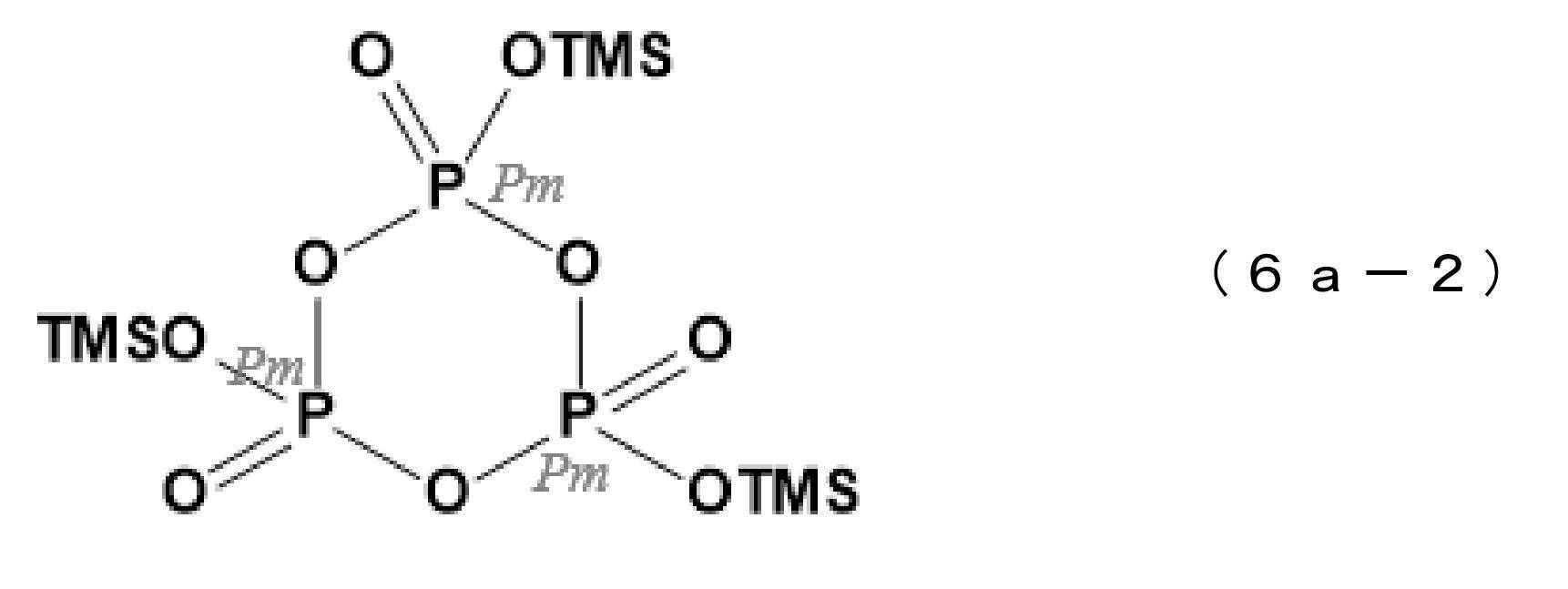
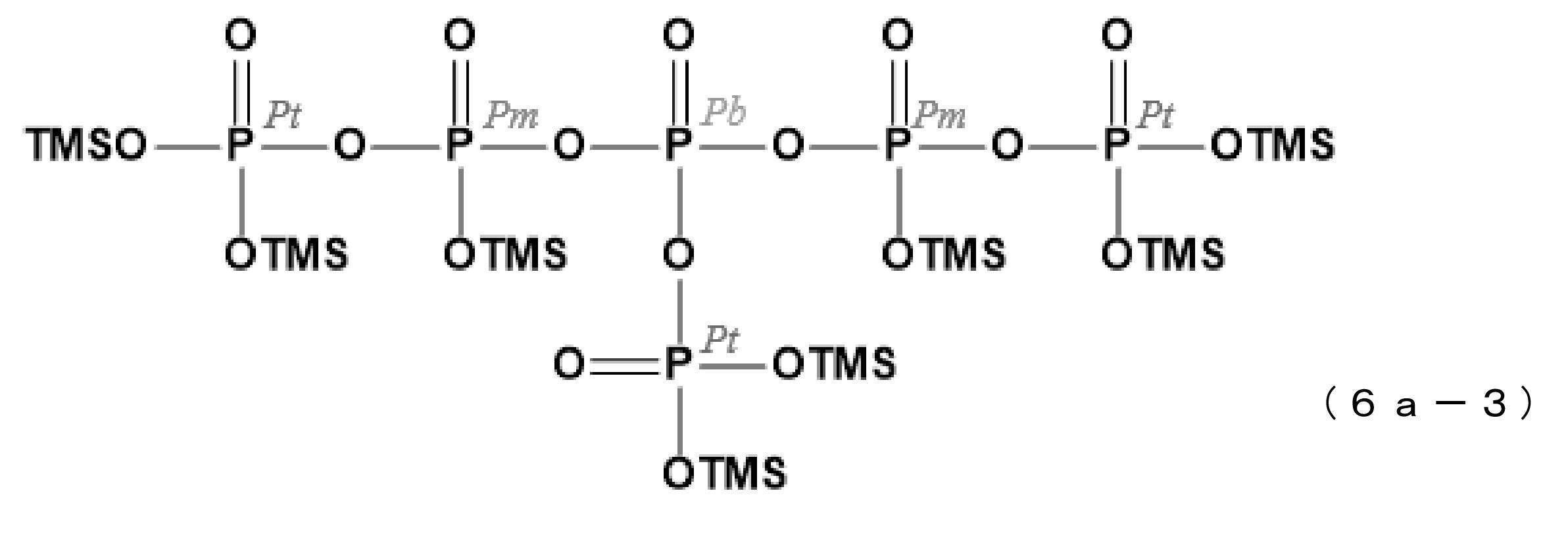
特定の化合物(2)~(7)は、中心原子周囲の酸素原子数によって、以下のようにも分類できる。
中心原子周囲の酸素原子数が2つである化合物としては、一般式(20):
Q1(R5)x(…OR6)2 (20)
で表される化合物(以下「O2含有化合物(20)」ともいう)等が挙げられる。
中心原子周囲の酸素原子数が3つである化合物としては、一般式(30):
Q2(…OR6)3 (30)
で表される化合物(以下「O3含有化合物(30)」ともいう)、一般式(35):
{Q3(R5)}x{(…OR6)3}x (35)
で表される化合物(以下「O3含有化合物(35)」ともいう)等が挙げられる。
Q2(OR6)3 (31)
等が挙げられる。
[-Q2[(…OR6)2]O-]n (32)、
より具体的には、一般式(33):
[-Q2(OR6)(=O)O-]n (33)
等でも表される。
Q3(R5)(…OR6)2-O-R6-O-Q3(R5)(…OR6)2 (36)、
より具体的には、一般式(37):
Q3(R5)(=O)2-O-R6-O-Q3(=O)(OR6)2 (37)
等でも表される。
中心原子周囲の酸素原子数が4つである化合物としては、一般式(40):
S(…OR6)4 (40)
で表される化合物(以下「O4含有化合物(40)」ともいう)等が挙げられる。
第1の非水電解液は、特定の化合物(2)~(7)と共に、各種電池性能を改善するために、特定の化合物(2)~(7)とは異なる添加剤をさらに含んでいてもよい。
[化18]
M1NO3 (12)
で表される化合物(以下「硝酸化合物(12)」ともいう)、一般式(13):

本実施形態に係る第1の非水電解液は、リチウムイオン二次電池の各種特性の向上を目的とする他の添加剤(特定の化合物(2)~(7)及び添加剤(12)~(13)とは異なる化合物)を含んでいてもよい。他の添加剤としては、無水コハク酸、無水グルタル酸、無水マレイン酸、無水シトラコン酸、無水グルタコン酸、無水イタコン酸、無水ジグリコール酸、シクロヘキサンジカルボン酸無水物、シクロペンタンテトラカルボン酸二無水物、フェニルコハク酸無水物等のカルボン酸無水物;エチレンサルファイト、1,3-プロパンスルトン、1,4-ブタンスルトン、メタンスルホン酸メチル、ブサルファン、スルホラン、スルホレン、ジメチルスルホン、テトラメチルチウラムモノスルフィド、トリメチレングリコール硫酸エステル等の含硫黄化合物;1-メチル-2-ピロリジノン、1-メチル-2-ピペリドン、3-メチル-2-オキサゾリジノン、1,3-ジメチル-2-イミダゾリジノン、N-メチルスクシンイミド等の含窒素化合物;ヘプタン、オクタン、シクロヘプタン等の飽和炭化水素化合物;フルオロエチレンカーボネート(FEC)、トリフルオロプロピレンカーボネート、フェニルエチレンカーボネート及びエリスリタンカーボネート等のカーボネート化合物;スルファミン酸(アミド硫酸、H3NSO3);スルファミン酸塩(リチウム塩、ナトリウム塩、カリウム塩等のアルカリ金属塩;カルシウム塩、ストロンチウム塩、バリウム塩等のアルカリ土類金属塩;マンガン塩、銅塩、亜鉛塩、鉄塩、コバルト塩、ニッケル塩等の他の金属塩;アンモニウム塩;グアニジン塩等);モノフルオロリン酸リチウム(Li2PO3F)、ジフルオロリン酸リチウム(LiPO2F2)等のフルオロリン酸化合物;フルオロスルホン酸リチウム(LiFSO3)、フルオロスルホン酸ナトリウム(NaFSO3)、フルオロスルホン酸カリウム(KFSO3)、フルオロスルホン酸マグネシウム(Mg(FSO3)2)等のフルオロスルホン酸化合物等が挙げられる。他の添加剤は、それぞれ単独で用いてもよく、2種類以上を併用してもよい。
本実施形態に係る第1の非水電解液は、二酸化炭素(CO2)、一酸化炭素(CO)、炭酸水素イオン(HCO3 -)及び炭酸イオン(CO3 2-)の少なくとも一種(以下「CO2等」ともいう)を溶存していてもよい。
・非水電解液の調製工程において、電解液の調製後(直後)、若しくは必要に応じてCO2等の溶存量を安定させるための熟成期間(例えば1週間)経過後の電解液中におけるCO2等の合計溶存量、又は
・二次電池の製造工程において、電池のエージング工程を行った後に、例えば窒素雰囲気中で、当該電池から抜き取った電解液中におけるCO2等の合計溶存量をいう。なお、エージング工程としては、例えば以下の工程や、後述する実施例で記載の条件等が挙げられる。
(I)注液後、部分充電を行った後、30℃以上で6時間以上、28日以内の期間、高温
処理する(保存する)。ガス抜き、再封止後、充放電により初期性能に欠陥が無いことを確認した後、充電深度50%で1週間以上保持して自己放電による欠陥が無いことを確認する工程
(II)部分充電の後、高温処理を行わない以外は(I)と同様の工程
(III)高温処理の後、ガス抜きを行わない以外は(I)と同様の工程
スルホニルイミド化合物(1)を含む非水電解液中にCO2等を溶存させる方法としては、例えば、(A)非水電解液の調製工程において、非水電解液にCO2等を溶存させる方法;(B)二次電池の製造工程において、非水電解液にCO2等を溶存させる方法等が挙げられる。
本実施形態に係る第1の非水電解液は電解液溶媒を含んでいてもよい。電解液溶媒は、前記電解質塩を溶解、分散できるものであれば特に限定されない、電解液溶媒としては、非水系溶媒、電解液溶媒に代えて用いられるポリマー及びポリマーゲル等の媒体等が挙げられ、電池に一般に使用される溶媒はいずれも使用できる。
次に、第2の非水電解液について以下に説明する。本実施形態に係る第2の非水電解液は、電解質と特定の化合物とを含み、且つCO2等を溶存している。具体的には、第2の非水電解液は、特定の化合物の種類と、CO2等を溶存している点で、上述の第1の非水電解液とは構成が異なる。その他の点については、上述の第1の非水電解液と同様の構成であるため、ここでは詳しい説明を省略する。つまり、上述の第1の非水電解液において、電解質、添加剤、その他の成分、電解液溶媒、CO2等の溶存量・溶存方法等はすべて第2の非水電解液にも適用される。また、特定の化合物についても、同じ種類の化合物については詳しい説明を省略する。
<中心原子ごとの分類>
第2の非水電解液は、スルホニルイミド化合物(1)と共に、添加剤として以下に示す種々の特定の化合物の少なくとも一種を含む。このように、第2の非水電解液は、スルホニルイミド化合物(1)と一種以上の特定の化合物とが併用されているため、電池の自己放電抑制と、電荷移動抵抗(インピーダンス)及び電池直流抵抗(DCR)低減とを両立できる。即ち、電池の保存特性及び電池性能の改善を図ることができる。第2の非水電解液では、ケイ素原子含有化合物(2)、ケイ素原子含有化合物(14)、ホウ素原子含有化合物(3)、炭素原子含有化合物(4)、硫黄原子含有化合物(5)、リン原子含有化合物(6)、リン原子含有化合物(7)等の他、以下に示す化合物も用いることができる。
中心原子としてリン原子を含有する特定の化合物としては、一般式(8):
[化20]
P(=O)(OR6)3 (8)
で表されるリン原子含有化合物(以下「リン原子含有化合物(8)」ともいう)等が挙げられる。
ボロキシン化合物としては、一般式(9):

特定の化合物(2)~(9)は、中心原子周囲の酸素原子数によって、以下のようにも分類できる。具体的には、前記したO2含有化合物(20)、O3含有化合物(30)、O3含有化合物(35)及びO4含有化合物(40)と共に、中心原子周囲の酸素原子数が4つである化合物としては、一般式(45):
P(…OR6)4 (45)
で表される化合物(以下「O4含有化合物(45)」ともいう)により分類できる。
次に、第3の非水電解液について以下に説明する。本実施形態に係る第3の非水電解液は、電解質と特定の化合物とを含む。具体的には、第3の非水電解液は、電解質の種類が特定されず、特定の化合物の種類が異なる点で、上述の第1又は第2の非水電解液とは構成が異なる。その他の点については、上述の第1又は第2の非水電解液と同様の構成であるため、ここでは詳しい説明を省略する。
電解質は、特に限定されず、例えば第1又は第2の非水電解液に用いられる電解質等を採用できる。電解質の具体例としては、スルホニルイミド化合物(1)、スルホニルイミド化合物(1)以外の電解質としてイミド塩、非イミド塩(フルオロリン酸化合物(10)、フルオロホウ酸化合物(11)、LiAsF6等)等が挙げられる。電解質の濃度も特に限定されず、第1又は第2の非水電解液と同様の濃度が適用される。
第3の非水電解液は、上記電解質と共に、添加剤として上記リン原子含有化合物(6)のうち、以下に示す特定の化合物の少なくとも一種を含む。このように、第3の非水電解液は、上記電解質と一種以上の特定のリン原子含有化合物(6)とが併用されているため、電池の自己放電抑制と、電荷移動抵抗(インピーダンス)及び電池直流抵抗(DCR)低減とを両立できる。即ち、電池の保存特性及び電池性能の改善を図ることができる。
上記の構成以外に、上述の第1又は第2の非水電解液で説明した、添加剤、その他の成分、電解液溶媒、CO2等の溶存量・溶存方法等はすべて第3の非水電解液にも適用される。例えば、第3の非水電解液はCO2等が溶存されたものでもよい。
本実施形態に係る二次電池は、正極、負極及び非水電解液を備えている。この二次電池では、非水電解液として、上述の第1~第3の非水電解液が用いられる。
正極は、正極集電体及び正極合材層を含み、正極合材層が正極集電体上に形成され、通常、シート状に成形されている。
負極は、負極集電体及び負極合材層を含み、負極合材層が負極集電体上に形成され、通常、シート状に成形されている。
二次電池はセパレータを備えていてもよい。セパレータは正極と負極とを隔てるように配置されるものである。セパレータには、特に制限がなく、本開示では、従来公知のセパレータのいずれも使用できる。具体的なセパレータとしては、例えば、電解液(非水電解液)を吸収・保持し得るポリマーからなる多孔性シート(例えば、ポリオレフィン系微多孔質セパレータやセルロース系セパレータなど)、不織布セパレータ、多孔質金属体等が挙げられる。
正極、負極及び非水電解液(さらにはセパレータ)を備えた電池素子は、通常、電池使用時の外部からの衝撃、環境劣化等から電池素子を保護するため電池外装材に収容される。電池外装材の素材は特に限定されず従来公知の外装材はいずれも使用できる。
二次電池が前記した三元系正極活物質を主成分として含む正極を備える場合、3.6V以上、好ましくは4.0V以上、より好ましくは4.1V以上、さらに好ましくは4.2V以上であってもよい。定格充電電圧が高いほど、エネルギー密度を高めることはできるが、安全性などの観点から、定格充電電圧は、4.6V以下(例えば、4.5V以下)等であってもよい。
本実施形態に係る二次電池は、例えば、正極と負極とを(必要に応じてセパレータを介して)重ね合わせ、得られた積層体を電池外装材に入れ、電池外装材に非水電解液を注液して封口することにより、容易に製造できる。
[参考実施例1~10]
〔非水電解液の調製〕
電解液溶媒としてエチレンカーボネート(EC):エチルメチルカーボネート(EMC)=3:7(体積比)組成の混合溶媒(キシダ化学(株)製)に、LiFSI((株)日本触媒製)及びLiPF6(ステラケミファ(株)製)を含む混合塩組成の電解質塩をそれぞれ表1に示す濃度となるように溶解した。続いて、前記で得られた溶液に、硝酸化合物(12)として硝酸リチウム(LiNO3、東京化成工業(株)製)を表1に示す含有量となるように添加し、1日撹拌し、不溶分をメンブレンフィルタでろ過することにより非水電解液(以下単に「電解液」ともいう。)を調製した。なお、参考実施例5では、前記で得られた溶液に、フルオロオキサラト化合物(13)としてリチウムビス(オキサラト)ボレート(LiBOB、東京化成工業(株)製)を表1に示す含有量となるようにさらに添加した。参考実施例6では、前記で得られた溶液に、フルオロオキサラト化合物(13)としてリチウムジフルオロオキサラトボレート(LiDFOB、東京化成工業(株)製)を表1に示す含有量となるようにさらに添加した。
前記で得られた各リファレンス電解液を密閉ボトルに当該ボトルの容積の1/10程度となるように入れた。続いて、オートクレーブ内に、当該ボトルをその開口部が上方に位置するように開封状態で静置した後、CO2で0.5MPaまで加圧した。次いで、リリース弁を半開放してオートクレーブ内圧を0.1MPa(1気圧)まで下げた。この処理を3回繰り返し、オートクレーブ内の空気をCO2に置換した。置換後、再びCO2で0.5MPaまで加圧し、30分間静置した。30分間静置後の電解液をオートクレーブから取り出し、密閉状態にて、常温(25℃程度)でさらに2週間静置した。2週間静置後、0.5MPaでの静置時間を30分間とした電解液(例えば表1中の参考実施例3)の一部を分け取り、同じ塩組成のリファレンス電解液で希釈することにより、CO2溶存量を変化させた電解液(例えば表1中の参考実施例7~10)を調製した。
前記で得られた各CO2溶存電解液をガスクロマトグラフィーで分析し、以下の方法により当該電解液中CO2溶存量(初期CO2溶存量)を定量した。
ガスクロマトグラフィーで測定する際には、測定系に大気が混入しないように、ガスクロマトグラフィー装置を窒素でパージした状態(窒素雰囲気下)で、当該装置に電解液を直接投入した。ガスクロマトグラフィーの具体的な測定条件は以下のとおりである。
・気化室温度:130℃
・検出器温度:300℃(BID)
・キャリアガス:ヘリウム(カラム流量1.33mL/分)
・注入量:1μL(スプリット法、スプリット比:5.0)
(CO2溶存量の定量方法)
CO2混合比が既知の、複数種の標準ヘリウムガスを、上記の注入量(1μL)を1mLに変更したこと以外は上記のガスクロマトグラフィーの測定条件と同様の条件で分析し、得られたCO2ガスのピーク面積から、CO2混合量(溶存量)とCO2ガスのピーク面積との関係を示す検量線を作成した。続いて、各参考実施例で得られた非水電解液をガスクロマトグラフィーで分析した。最後に、外部標準法により、各非水電解液中におけるCO2の溶存量を定量した。
(正極の作製)
三元系正極活物質であるLiNi1/3Co1/3Mn1/3O2(ユミコア製、品番:MX7h)、アセチレンブラック(AB、デンカ(株)製、製品名:デンカブラック(登録商標))、グラファイト(日本黒鉛工業(株)製、品番:SP270)、及びポリフッ化ビニリデン(PVdF、(株)クレハ製、品番:KF1120)をN-メチル-2-ピロリドン(NMP)中に分散させて正極合材スラリー(正極活物質:AB:グラファイト:PVdF=93:2:2:3(固形分質量比))を作製した。続いて、得られた正極合材スラリーをアルミニウム箔(正極集電体、日本製箔(株)製、厚み15μm)に対して、乾燥後の塗工重量が19.4mg/cm2となるようにアプリケーターで片面塗工し、110℃のホットプレート上で10分間乾燥させた。さらに、110℃の真空乾燥炉で12時間乾燥させた。その後、ロールプレス機により密度3.1g/cm3となるまで加圧成形することにより、シート状(厚み83μm)の正極を得た。
負極活物質としてグラファイト(天然黒鉛(日立化成(株)製、品番:SMG):人造黒鉛(TIMCAL製、品番:SFG15)=85:15(固形分質量比))、スチレン-ブタジエンゴム(SBR、結着剤)及びカルボキシメチルセルロース(CMC、結着剤)を、超純水中に分散させて、負極合材スラリー(負極活物質:SBR:CMC=97.3:1.5:1.2(固形分質量比))を作製した。続いて、得られた負極合材スラリーを銅箔(負極集電体、福田金属箔粉工業(株)製、厚み15μm)に対して、乾燥後の塗工重量が9.8mg/cm2となるようにアプリケーターで片面塗工し、80℃のホットプレート上で10分間乾燥させた。さらに、100℃の真空乾燥炉で12時間乾燥させた。その後、ロールプレス機により密度1.3g/cm3となるまで加圧成形することにより、シート状(厚み90μm)の負極を得た。
得られた正極及び負極をそれぞれカットし、極性導出リードを超音波で溶接し、16μmのポリエチレン(PE)セパレータを介して該正極及び負極を対向させ、ラミネート外装で3方を封止することにより、未注液電池を作製した。続いて、未注液電池の未封止の1方より、表1に示す各電解液を700μL添加した。
(コンディショニング条件)
充電:0.5C(15mA)、4.2Vで5時間(25℃)⇒放電:1C(30mA)、2.75V終止(25℃)
〔電池の評価〕
(インピーダンス)
コンディショニング工程後のセルを、充放電試験装置(アスカ電子(株)製、品番:ACD-01、以下同じ)を用い、常温にて4.2V、1C(30mA)で30分の定電流充電をして充電深度(SOC)50%にした。続いて、当該セルを、インピーダンスアナライザ(Bio Logic製、品番:VSP-300)を用い、-30℃の条件下で周波数1GHzから1mHzまでのインピーダンス測定を行った。得られた測定値の円弧が発散する周波数から、実軸抵抗(界面抵抗)を求めた。なお、円弧が発散する周波数とは、周波数10Hz~0.001Hzの間で虚軸数値が極小を迎えた周波数をいう。
インピーダンス測定後のセルを、常温にて1C(30mA)、4.2Vで0.02C(0.6mA)終止の定電流定電圧充電を行い、満充電状態(SOC100%)とした。続いて、満充電状態から、30分間放置後に6mAで10秒間放電し、続いて30分間放置後に30mAで10秒間放電し、さらに30分間放置後に60mAで10秒間放電した。各放電電流を横軸に、各放電電流での放電開始時と10秒後の閉路電圧の差(ΔV)を縦軸にプロットし、そのI-V直線の傾きをセルの「初期DCR」とした。
初期DCR測定後のセルを45℃にて、以下の充放電条件(サイクル条件)で、合計300サイクルのサイクル試験を行った。300サイクル後に25℃満充電状態のDCR(「300サイクル後DCR」)を同様の手法で測定した。
(サイクル条件)
・充電:4.2V、1C(30mA)で定電流定電圧充電、0.02C(0.6mA)終止、10分間休止
・放電:1C(30mA)で定電流(CC)放電、2.75V終止、10分間休止。
また、「初期DCR」及び「300サイクル後DCR」の測定結果を用い、「300サイクル後のDCR上昇率」を以下の数式(1)により求めた。
[数1]
「サイクル後のDCR上昇率」=「300サイクル後DCR」/「初期DCR」 (1)。
コンディショニング工程後のセルを、常温にて1C(30mA)、4.2Vで0.02C(0.6mA)終止の定電流定電圧充電を行い、満充電状態(SOC100%)とした。充電後、常温でセルの開路電圧(OCV:Open Circuit Voltage)
を測定し、この測定値を「初期OCV」とした。
[数2]
「保存前後のOCV差(ΔV)」=「初期OCV」―「保存後OCV」 (2)
なお、「保存前後のOCV差(ΔV)」が小さいほど、つまり「初期OCV」に対して、「保存後OCV」の低下の度合いが小さいほど、電池の自己放電が抑制されていることを意味する。
初期DCR測定後のセルを常温にて1C(30mA)、4.2Vで0.02C(0.6mA)終止の定電流定電圧充電を行い、満充電状態(SOC100%)にて60℃で4週間保存したセルを、常温にて1C(30mA)、終止電圧2.75Vの定電流放電を行い、残存容量を測定した。その後、常温に1C(30mA)で4.2V、0.02C(0.6mA)終止の定電流定電圧充電を行った後、1C(30mA)2.75V終止の定電流放電を行い、回復容量を測定した。回復容量測定後のセルを、初期DCR測定と同条件にてDCRを測定し、この測定値を「60℃4週耐久後DCR」とした。
また、「初期DCR」及び「60℃4週耐久後DCR」の測定結果を用い、「60℃4週耐久後のDCR上昇率」を以下の数式(3)により求めた。
[数3]
「60℃4週耐久後のDCR上昇率」=「60℃4週耐久後DCR」/「初期DCR」 (3)。
コンディショニング工程後のセルをSOC50%、常温で4週間保存した。保存後のセルをアルゴンガス中で解体し、電解液を採取した。採取した電解液を前記と同様の手法によりガスクロマトグラフィーで分析することにより、コンディショニング工程後のCO2溶存電解液中CO2溶存量(「コンディショニング工程後CO2溶存量」)を定量した。
前記と同じ混合溶媒に、LiFSI及びLiPF6を含む混合塩組成の電解質塩、又はLiPF6のみを含む単体塩組成の電解質塩をそれぞれ表1に示す濃度となるように溶解した。参考比較例1~4では、前記で得られた溶液を非水電解液(リファレンス電解液)として用いた。参考比較例5では、前記で得られた溶液に、LiBOBを表1に示す含有量となるようにさらに添加し、1日攪拌することにより非水電解液を調製した。参考比較例6では、前記で得られた溶液に、LiDFOBを表1に示す含有量となるようにさらに添加し、1日攪拌することにより非水電解液を調製した。参考比較例8では、前記で得られた溶液に、LiNO3を表1に示す含有量となるようにさらに添加し、1日攪拌し、メンブレンフィルタでろ過することにより非水電解液を調製した。続いて、電解液の溶存工程を行わなかったこと以外は前記と同様にして、前記で得られた各リファレンス電解液を用いてセルを作製し、セルの評価を行った。その結果を表1に示す。
前記と同じ混合溶媒に、LiPF6のみを含む単体塩組成の電解質塩を表1に示す濃度となるように溶解することにより非水電解液(リファレンス電解液)を調製した。続いて、前記で得られたリファレンス電解液を用い、前記と同様にして溶存工程を行った。得られたCO2溶存電解液を用い、前記と同様にしてセルを作製し、セルの評価を行った。その結果を表1に示す。

・参考実施例1~4(又は参考比較例1~4)の比較により、LiFSIの濃度に依存して、インピーダンス及びDCR(初期DCR、300サイクル後DCR及び60℃4週耐久後DCR)が低減する一方、保存前後のOCV差(ΔV)が大きい、即ち自己放電が増大することが分かった。
・同じ塩組成の参考比較例3と参考比較例8との比較により、電解液にLiNO3を添加することで、インピーダンス及びDCRが顕著に低減し、300サイクル後及び60℃4週耐久後のDCR上昇率も低減する一方、自己放電が増大することが分かった。
・同じ塩組成の参考実施例3,7~10と参考比較例8との比較により、電解液にCO2を溶存させることで、保存前後のOCV差(ΔV)が小さい、即ちLiNO3添加に起因する自己放電が抑制されると共に、インピーダンス及びDCRがさらに低減することが分かった。
・このように、LiNO3添加とCO2溶存とが併用された電解液を用いた電池では、インピーダンス及びDCR低減効果と自己放電抑制効果という相乗効果が得られることが分かった。また、この相乗効果は、電解液中のCO2溶存量が10質量ppm超過(例えば20質量ppm以上)であるときに顕著になることが分かった。
・同じ塩組成の参考実施例3,5,6と参考比較例3,5,6との比較により、LiNO3を含む電解液にLiBOB又はLIDFOBをさらに添加することで、インピーダンス及びDCRが顕著に増大するものの(特にLiBOB)、電解液にLiNO3を添加し且つCO2を溶存させることで、インピーダンス及びDCRの増大が抑制されることが分かった。
・同じ塩組成の参考実施例3,5,6(又は参考比較例3,5,6)の比較により、LiNO3を含む電解液にLiBOB又はLIDFOBをさらに添加することで、300サイクル後のDCR上昇率が小さい、即ち300サイクル後DCRの増大が抑制されること、及び自己放電が抑制されることが分かった。
[実施例1~4]
電解液溶媒としてエチレンカーボネート(EC):エチルメチルカーボネート(EMC)=3:7(体積比)組成の混合溶媒(キシダ化学(株)製)に、LiFSI((株)日本触媒製)及びLiPF6(ステラケミファ(株)製)を含む混合塩組成の電解質塩をそれぞれ表2に示す濃度となるように溶解した。前記で得られた溶液に、一般式(2)で表されるケイ素原子含有化合物(2)としてジメトキシジフェニルシラン(化合物A、東京化成工業(株)製)を表2に示す含有量となるように添加し、1日撹拌することにより非水電解液(リファレンス電解液)を調製した。続いて、電解液の溶存工程を行わなかったこと以外は前記と同様にして、前記で得られた各リファレンス電解液を用いてセルを作製し、セルの評価を行った。その結果を表2に示す。
前記と同様にして非水電解液(リファレンス電解液)を調製した。なお、実施例9では、前記で得られた溶液に、一般式(5)で表される硫黄原子含有化合物(5)としてトリメチルシリルトリフルオロメタンスルホネート(化合物I、東京化成工業(株)製)を表2に示す含有量となるようにさらに添加した。実施例10では、前記で得られた溶液に、硝酸化合物(12)として硝酸リチウム(LiNO3、東京化成工業(株)製)を表2に示す含有量となるようにさらに添加し、1日攪拌後にメンブランフィルタでろ過した。続いて、前記で得られた各リファレンス電解液を用い、前記と同様にして溶存工程を行った。得られたCO2溶存電解液を用い、前記と同様にしてセルを作製し、セルの評価を行った。その結果を表2に示す。
前記と同じ混合溶媒に、LiFSI及びLiPF6を含む混合塩組成の電解質塩、又はLiPF6のみを含む単体塩組成の電解質塩をそれぞれ表2に示す濃度となるように溶解した。比較例1~4では、前記で得られた溶液を非水電解液(リファレンス電解液)として用いた。比較例5では、前記で得られた溶液に、フルオロオキサラト化合物(13)としてリチウムビス(オキサラト)ボレート(LiBOB、東京化成工業(株)製)を表2に示す含有量となるように添加し、1日攪拌することにより非水電解液を調製した。比較例6では、前記で得られた溶液に、フルオロオキサラト化合物(13)としてリチウムジフルオロオキサラトボレート(LiDFOB、東京化成工業(株)製)を表2に示す含有量となるように添加し、1日攪拌することにより非水電解液を調製した。比較例8では、前記で得られた溶液に、LiNO3を表2に示す含有量となるように添加し、1日攪拌後にメンブレンフィルタでろ過することにより非水電解液を調製した。比較例9では、前記で得られた溶液に、ジメトキシジフェニルシラン(化合物A)を表2に示す含有量となるように添加し、1日攪拌することにより非水電解液を調製した。続いて、電解液の溶存工程を行わなかったこと以外は前記と同様にして、前記で得られた各リファレンス電解液を用いてセルを作製し、セルの評価を行った。その結果を表2に示す。
前記と同じ混合溶媒に、LiPF6のみを含む単体塩組成の電解質塩を表2に示す濃度となるように溶解することにより非水電解液(リファレンス電解液)を調製した。続いて、前記で得られたリファレンス電解液を用い、前記と同様にして溶存工程を行った。得られたCO2溶存電解液を用い、前記と同様にしてセルを作製し、セルの評価を行った。その結果を表2に示す。
(同じ塩組成でのDCR上昇率)
同じ塩組成の非水電解液において、特定の化合物添加による「60℃4週耐久後DCR」の上昇率(同じ塩組成でのDCR上昇率)を以下の数式(4)により求めた。なお、「同じ塩組成でのDCR上昇率」は、特定の添加剤を含有する各実施例又は比較例の欄に記載する。
[数4]
「同じ塩組成でのDCR上昇率」=「同じ塩組成且つ特定の化合物を含有する非水電解液の60℃4週耐久後DCR」/「同じ塩組成且つ特定の化合物を含有しない非水電解液の60℃4週耐久後DCR」 (4)
例えば、表2において、「1.2M LiPF6」という同じ塩組成でのDCR上昇率は、「比較例9の60℃4週耐久後DCR」/「比較例1の60℃4週耐久後DCR」により求めることができる。
コンディショニング工程後の各セルを、充放電試験装置を用い、常温にて4.2V、1C(30mA)0.6mA終止の定電流定電圧充電を行った後、0.2C(6mA)、2.75V終止の定電流放電を行い、初期容量を測定した。その後、-10℃の環境下で4.2V、2C(60mA)の定電流充電後1C(30mA)2.75V終止の定電流放電を1サイクルとする条件で200サイクル行った。200サイクル後のセルを常温にて初期容量を測定したときと同条件にて、200サイクル後容量を測定した。初期容量と200サイクル後容量との容量差△Cを正極活物質1gあたりに換算し、この換算値を「低温サイクル後の負極へのリチウム電析量」(低温サイクル後の電析量)とした。

・実施例1~4と比較例2~4との比較により、LiFSIの濃度に依存して、インピーダンス及びDCR(初期DCR、300サイクル後DCR及び60℃4週耐久後DCR)は低減するものの、電解液にジメトキシジフェニルシラン(化合物A)を添加することで、前記の低減効果が顕著になることが分かった。
・同じ塩組成の実施例2~4と比較例2~4との比較及び同じ塩組成の比較例9と比較例1との比較により、LiFSI及びLiPF6を含む混合塩組成は、LiPF6のみを含む単体塩組成よりも、ジメトキシジフェニルシラン添加によるインピーダンス及びDCR低減効果が高いことが分かった。また、300サイクル後及び60℃4週耐久後のDCR上昇率も低いことがわかった。
・実施例1~8の比較により、LiFSIの濃度に依存して、保存前後のOCV差(ΔV)が大きい、即ち自己放電が増大するものの、ジメトキシジフェニルシランを含む電解液にCO2を溶存させることで、保存前後のOCV差(ΔV)が小さい、即ち自己放電が抑制されると共に、インピーダンス及びDCRがさらに低減することが分かった。
・比較例1~4、比較例7、比較例9、実施例2~9を比較すると、LiFSI濃度に依存し、低温サイクル後の電析量が減少しており、低温充電による負極の劣化が抑制されることがわかる。LiPF6のみを含む単体塩組成にジメトキシジフェニルシランを添加すると低温サイクル中に負極へのリチウム電析が増加し、低温充電による負極の劣化が進んでいることがわかる。LiFSI及びLiPF6を含む混合塩組成では、ジメトキシジフェニルシランを添加することで低温サイクル後の電析量が減少し、低温充電による負極の劣化が抑制されていることがわかる。
・実施例1~4、比較例2~4、比較例1、9を比較すると、ジメトキシジフェニルシランの添加による自己放電抑制効果、インピーダンス低減効果及びDCR上昇率抑制効果は、LiPF6のみを含む単体塩組成よりも、LiFSI及びLiPF6を含む混合塩のほうが高いことがわかった。ジメトキシジフェニルシランの添加効果を高める理由としては、LiFSIのアニオン成分由来の被膜が正負極界面に形成されるため、LiFSIの溶解性が高いことから低温での電解液粘度が低減されるため等が考えられる。
・インピーダンス及びDCR低減効果と自己放電抑制効果は、電解液中のCO2溶存量が10質量ppm超過(例えば20質量ppm以上)であるときに顕著になることが分かった。
・CO2溶存による自己放電抑制効果がLiPF6単体塩組成よりもLiFSI及びLiPF6を含む混合塩組成の電解液のほうが高い理由については、充電時に正負極に形成されるFSIのアニオン成分による被膜と、CO2による炭酸リチウム成分による被膜との形成順位などが関係していると考えられる。
・同じ塩組成の実施例5と実施例10との比較により、ジメトキシジフェニルシランを含み且つCO2を溶存した電解液にLiNO3をさらに添加することで、インピーダンス及びDCRが顕著に低減することが分かった。
・同じ塩組成でのジメトキシジフェニルシラン添加による60℃4週耐久後のDCR上昇率を比較すると、LiPF6単体塩組成よりもLiFSI及びLiPF6を含む混合塩組成の電解液のほうが顕著に低く、DCR上昇率抑制効果が高いことが分かった。これは、同じ塩組成でのジメトキシジフェニルシラン添加による300サイクル後のDCR上昇率も同様である。また、DCR上昇率抑制効果は、CO2溶存又はトリメチルシリルトリフルオロメタンスルホネート(化合物I)添加により、さらに高まることが分かった。この理由も正負極へのLiFSIのアニオン被膜が形成されるためと考えられる。
[実施例1~4,10,12]
電解液溶媒としてエチレンカーボネート(EC):エチルメチルカーボネート(EMC)=3:7(体積比)組成の混合溶媒(キシダ化学(株)製)に、LiFSI((株)日本触媒製)及びLiPF6(ステラケミファ(株)製)を含む混合塩組成の電解質塩をそれぞれ表3に示す濃度となるように溶解した。前記で得られた溶液に、一般式(3)で表されるホウ素原子含有化合物(3)としてホウ酸トリメチル(化合物B、東京化成工業(株)製)を表3に示す含有量となるように添加し、1日撹拌することにより非水電解液(リファレンス電解液)を調製した。なお、実施例10では、前記で得られた溶液に、一般式(5)で表される硫黄原子含有化合物(5)としてビストリメチルシリルスルフェート(化合物J、東京化成工業(株)製)を表3に示す含有量となるようにさらに添加した。実施例12では、前記で得られた溶液に、一般式(8)で表されるリン原子含有化合物(8)としてリン酸トリス(トリメチルシリル)(化合物N、東京化成工業(株)製)を表3に示す含有量となるようにさらに添加した。続いて、電解液の溶存工程を行わなかったこと以外は前記と同様にして、前記で得られた各リファレンス電解液を用いてセルを作製し、セルの評価を行った。その結果を表3に示す。
前記と同様にして非水電解液(リファレンス電解液)を調製した。なお、実施例9では、前記で得られた溶液に、硝酸化合物(12)として硝酸リチウム(LiNO3、東京化成工業(株)製)を表3に示す含有量となるようにさらに添加し、1日攪拌後にメンブレンフィルタでろ過した。実施例11では、前記で得られた溶液に、ビストリメチルシリルスルフェート(化合物J)を表3に示す含有量となるようにさらに添加した。続いて、前記で得られた各リファレンス電解液を用い、前記と同様にして溶存工程を行った。得られたCO2溶存電解液を用い、前記と同様にしてセルを作製し、セルの評価を行った。その結果を表3に示す。
前記と同じ混合溶媒に、LiFSI及びLiPF6を含む混合塩組成の電解質塩、又はLiPF6のみを含む単体塩組成の電解質塩をそれぞれ表3に示す濃度となるように溶解した。比較例1~4では、前記で得られた溶液を非水電解液(リファレンス電解液)として用いた。比較例5では、前記で得られた溶液に、フルオロオキサラト化合物(13)としてリチウムビス(オキサラト)ボレート(LiBOB、東京化成工業(株)製)を表3に示す含有量となるようにさらに添加し、1日攪拌することにより非水電解液を調製した。比較例6では、前記で得られた溶液に、フルオロオキサラト化合物(13)としてリチウムジフルオロオキサラトボレート(LiDFOB、東京化成工業(株)製)を表3に示す含有量となるようにさらに添加し、1日攪拌することにより非水電解液を調製した。比較例8では、前記で得られた溶液に、LiNO3を表3に示す含有量となるようにさらに添加し、1日攪拌後にメンブレンフィルタでろ過することにより非水電解液を調製した。比較例9では、前記で得られた溶液に、ホウ酸トリメチル(化合物B)を表3に示す含有量となるようにさらに添加し、1日攪拌することにより非水電解液を調製した。続いて、電解液の溶存工程を行わなかったこと以外は前記と同様にして、前記で得られた各リファレンス電解液を用いてセルを作製し、セルの評価を行った。その結果を表3に示す。
前記と同じ混合溶媒に、LiPF6のみを含む単体塩組成の電解質塩を表3に示す濃度となるように溶解することにより非水電解液(リファレンス電解液)を調製した。続いて、前記で得られたリファレンス電解液を用い、前記と同様にして溶存工程を行った。得られたCO2溶存電解液を用い、前記と同様にしてセルを作製し、セルの評価を行った。その結果を表3に示す。

・実施例1~4と比較例2~4との比較により、LiFSIの濃度に依存して、インピーダンス及びDCR(初期DCR、300サイクル後DCR及び60℃4週耐久後DCR)は低減するものの、電解液にホウ酸トリメチル(化合物B)を添加することで、前記の低減効果が顕著になることが分かった。
・また、実施例1~4と比較例2~4との比較により、LiFSIの濃度に依存して、保存前後のOCV差(ΔV)が大きい、即ち自己放電が増大するものの、電解液にホウ酸トリメチルを添加することで、保存前後のOCV差(ΔV)が小さい、即ち自己放電が抑制されることが分かった。
・同じ塩組成の実施例2~4と比較例2~4との比較、及び同じ塩組成の比較例9と比較例1との比較により、LiFSI及びLiPF6を含む混合塩組成は、LiPF6のみを含む単体塩組成よりも、ホウ酸トリメチル添加によるインピーダンス低減効果、自己放電抑制効果及びDCR上昇率抑制効果が高いことが分かった。
・比較例1~4、比較例7、比較例9、実施例2~9を比較すると、LiFSI濃度に依存し、低温サイクル後の電析量が減少しており、低温充電による負極の劣化が抑制されることがわかる。LiPF6のみを含む単体塩組成にホウ酸トリメチルを添加すると低温サイクル中に負極へのリチウム電析が増加し、低温充電による負極の劣化が進んでいることがわかる。LiFSI及びLiPF6を含む混合塩組成では、ホウ酸トリメチルを添加することで低温サイクル後の電析量が減少し、低温充電による負極の劣化が抑制されていることがわかる。
・これらLiPF6のみを含む単体塩組成よりもLiFSI及びLiPF6を含む混合塩組成のほうがホウ酸トリメチルの添加効果が高い理由については、LiFSIのアニオン成分由来の被膜が正負極界面に形成されることで、これがホウ酸トリメチルの添加効果を高くしていることため、LiFSIの溶解性が高いことから低温での電解液粘度が低減されるため等が考えられる。
・同じ塩組成の実施例3と実施例5~8との比較により、ホウ酸トリメチルを含む電解液に、CO2を溶存させることで、インピーダンス及びDCR低減効果と自己放電抑制効果とがより一層高くなることが分かった。また、これら効果は、電解液中のCO2溶存量が10質量ppm超過(例えば20質量ppm以上)であるときに顕著になることが分かった。
・CO2溶存による自己放電抑制効果がLiPF6単体塩組成よりもLiFSI及びLiPF6を含む混合塩組成の電解液のほうが高い理由については、充電時に正負極に形成されるFSIのアニオン成分による被膜と、CO2による炭酸リチウム成分による被膜との形成順位などが関係していると考えられる。
・同じ塩組成の実施例5,9及び比較例8の比較により、ホウ酸トリメチルを含む電解液に、LiNO3をさらに添加することで、インピーダンス及びDCRが顕著に低減することが分かった。一方、自己放電が増大するものの、当該電解液にCO2を溶存させることで、LiNO3添加に起因する自己放電が抑制されることが分かった。
・同じ塩組成の実施例3と実施例10,12との比較(CO2溶存なし)、及び同じ塩組成の実施例5と実施例11との比較(CO2溶存あり)により、ホウ酸トリメチルを含む電解液に、ビストリメチルシリルスルフェート(化合物J)又はリン酸トリス(トリメチルシリル)(化合物N)をさらに添加することで、インピーダンス及びDCRが顕著に低減することが分かった。
・同じ塩組成でのホウ酸トリメチル添加による60℃4週耐久後のDCR上昇率を比較すると、LiPF6単体塩組成よりもLiFSI及びLiPF6を含む混合塩組成の電解液のほうが顕著に低く、DCR上昇率抑制効果が高いことが分かった。これは、同じ塩組成でのホウ酸トリメチル添加による300サイクル後のDCR上昇率も同様である。この理由も正負極へのLiFSIのアニオン被膜が形成されるためと考えられる。
[実施例1~4,11,12]
電解液溶媒としてエチレンカーボネート(EC):エチルメチルカーボネート(EMC)=3:7(体積比)組成の混合溶媒(キシダ化学(株)製)に、LiFSI((株)日本触媒製)及びLiPF6(ステラケミファ(株)製)を含む混合塩組成の電解質塩をそれぞれ表4に示す濃度となるように溶解した。前記で得られた溶液に、一般式(3)で表されるホウ素原子含有化合物(3)としてトリス(トリメチルシリル)ボレート(化合物C、東京化成工業(株)製)を表4に示す含有量となるように添加し、1日撹拌することにより非水電解液(リファレンス電解液)を調製した。なお、実施例11では、前記で得られた溶液に、一般式(6)で表されるリン原子含有化合物(6)としてポリリン酸トリメチルシリル(化合物M、シグマ アルドリッチ製)を表4に示す含有量となるようにさらに添加した。実施例12では、前記で得られた溶液に、一般式(8)で表されるリン原子含有化合物(8)としてリン酸トリス(トリメチルシリル)(化合物N、東京化成工業(株)製)を表4に示す含有量となるようにさらに添加した。続いて、電解液の溶存工程を行わなかったこと以外は前記と同様にして、前記で得られた各リファレンス電解液を用いてセルを作製し、セルの評価を行った。その結果を表4に示す。
前記と同様にして非水電解液(リファレンス電解液)を調製した。なお、実施例9では、前記で得られた溶液に、硝酸化合物(12)として硝酸リチウム(LiNO3、東京化成工業(株)製)を表4に示す含有量となるようにさらに添加し、1日攪拌後にメンブレンフィルタでろ過した。実施例10では、前記で得られた溶液に、LiNO3と、一般式(2)で表されるケイ素原子含有化合物(2)としてジメトキシジフェニルシラン(化合物A)とをそれぞれ表4に示す含有量となるようにさらに添加し、1日攪拌後にメンブレンフィルタでろ過した。続いて、前記で得られた各リファレンス電解液を用い、前記と同様にして溶存工程を行った。得られたCO2溶存電解液を用い、前記と同様にしてセルを作製し、セルの評価を行った。その結果を表4に示す。
前記と同じ混合溶媒に、LiFSI及びLiPF6を含む混合塩組成の電解質塩、又はLiPF6のみを含む単体塩組成の電解質塩をそれぞれ表4に示す濃度となるように溶解した。比較例1~4では、前記で得られた溶液を非水電解液(リファレンス電解液)として用いた。比較例5では、前記で得られた溶液に、フルオロオキサラト化合物(13)としてリチウムビス(オキサラト)ボレート(LiBOB、東京化成工業(株)製)を表4に示す含有量となるようにさらに添加し、1日攪拌することにより非水電解液を調製した。比較例6では、前記で得られた溶液に、フルオロオキサラト化合物(13)としてリチウムジフルオロオキサラトボレート(LiDFOB、東京化成工業(株)製)を表4に示す含有量となるようにさらに添加し、1日攪拌することにより非水電解液を調製した。比較例8では、前記で得られた溶液に、LiNO3を表4に示す含有量となるようにさらに添加し、1日攪拌後にメンブレンフィルタでろ過することにより非水電解液を調製した。比較例9では、前記で得られた溶液に、トリス(トリメチルシリル)ボレート(化合物C)を表4に示す含有量となるようにさらに添加し、1日攪拌することにより非水電解液を調製した。続いて、電解液の溶存工程を行わなかったこと以外は前記と同様にして、前記で得られた各リファレンス電解液を用いてセルを作製し、セルの評価を行った。その結果を表4に示す。
前記と同じ混合溶媒に、LiPF6のみを含む単体塩組成の電解質塩を表4に示す濃度となるように溶解することにより非水電解液(リファレンス電解液)を調製した。続いて、前記で得られたリファレンス電解液を用い、前記と同様にして溶存工程を行った。得られたCO2溶存電解液を用い、前記と同様にしてセルを作製し、セルの評価を行った。その結果を表4に示す。

・実施例1~4と比較例2~4との比較により、LiFSIの濃度に依存して、インピーダンス及びDCR(初期DCR、300サイクル後DCR及び60℃4週耐久後DCR)は低減するものの、電解液にトリス(トリメチルシリル)ボレート(化合物C)を添加することで、前記の低減効果が顕著になることが分かった。
・また、実施例1~4と比較例2~4との比較により、LiFSIの濃度に依存して、保存前後のOCV差(ΔV)が大きい、即ち自己放電が増大するものの、電解液にトリス(トリメチルシリル)ボレートを添加することで、保存前後のOCV差(ΔV)が小さい、即ち自己放電が抑制されることが分かった。
・同じ塩組成の実施例2~4と比較例2~4との比較、及び同じ塩組成の比較例9と比較例1との比較により、LiFSI及びLiPF6を含む混合塩組成は、LiPF6のみを含む単体塩組成よりも、トリス(トリメチルシリル)ボレート添加による、インピーダンス低減効果、自己放電抑制効果及びDCR上昇率抑制効果が高いことが分かった。
・比較例1~4、比較例7、比較例9、実施例2~9を比較すると、LiFSI濃度に依存し、低温サイクル後の電析量が減少しており、低温充電による負極の劣化が低減することがわかる。LiPF6のみを含む単体塩組成にトリス(トリメチルシリル)ボレートを添加すると低温サイクル中に負極へのリチウム電析が増加し、低温充電による負極の劣化が進んでいることがわかる。LiFSI及びLiPF6を含む混合塩組成では、トリス(トリメチルシリル)ボレートを添加することで低温サイクル後の電析量が減少し、低温充電による負極の劣化が抑制されていることがわかる。
・これらLiPF6のみを含む単体塩組成よりもLiFSI及びLiPF6を含む混合塩組成のほうがトリス(トリメチルシリル)ボレートの添加効果が高い理由については、LiFSIのアニオン成分由来の被膜が正負極界面に形成されるため、LiFSIの溶解性が高いことから低温での電解液粘度が低減されるため等が考えられる。
・同じ塩組成の実施例3と実施例5~8との比較により、トリス(トリメチルシリル)ボレートを含む電解液に、CO2を溶存させることで、インピーダンス及びDCR低減効果、自己放電抑制効果並びに低温電析抑制効果がより一層高くなることが分かった。また、これら効果は、電解液中のCO2溶存量が10質量ppm超過(例えば20質量ppm以上)であるときに顕著になることが分かった。
・CO2溶存によりこれら効果が改善する理由は、正負極にCO2由来の被膜が形成されることで保存中の正極へのリチウムイオンインターカレント(インターカレーション(挿入)反応)が抑制されること、正極での副反応が抑制されること、負極への低温充電受入性が改善されること等が考えられる。
・CO2溶存による自己放電抑制効果がLiPF6単体塩組成よりもLiFSI及びLiPF6を含む混合塩組成の電解液のほうが高い理由については、充電時に正負極に形成されるFSIのアニオン成分による被膜と、CO2による炭酸リチウム成分による被膜との形成順位などが関係していると考えられる。
・同じ塩組成の実施例5,9及び比較例8の比較により、トリス(トリメチルシリル)ボレートを含む電解液に、LiNO3をさらに添加することで、インピーダンス及びDCRが顕著に低減することが分かった。一方、自己放電が増大するものの、当該電解液にCO2を溶存させることで、LiNO3添加に起因する自己放電が抑制されることが分かった。
・同じ塩組成の実施例3と実施例11,12との比較(CO2溶存なし)により、トリス(トリメチルシリル)ボレートを含む電解液に、ポリリン酸トリメチルシリル(化合物M)又はリン酸トリス(トリメチルシリル)(化合物N)をさらに添加することで、インピーダンス及びDCRが低減することが分かった。
・同じ塩組成でのトリス(トリメチルシリル)ボレート添加による60℃4週耐久後のDCR上昇率を比較すると、LiPF6単体塩組成よりもLiFSI及びLiPF6を含む混合塩組成の電解液のほうが顕著に低く、DCR上昇率抑制効果が高いことが分かった。これは、同じ塩組成でのトリス(トリメチルシリル)ボレート添加による300サイクル後のDCR上昇率も同様である。この理由も正負極へのLiFSIのアニオン被膜が形成されるためと考えられる。
[実施例1~4,10]
電解液溶媒としてエチレンカーボネート(EC):エチルメチルカーボネート(EMC)=3:7(体積比)組成の混合溶媒(キシダ化学(株)製)に、LiFSI((株)日本触媒製)及びLiPF6(ステラケミファ(株)製)を含む混合塩組成の電解質塩をそれぞれ表5に示す濃度となるように溶解した。前記で得られた溶液に、一般式(3)で表されるホウ素原子含有化合物(3)としてホウ酸トリエチル(化合物D、東京化成工業(株)製)を表5に示す含有量となるように添加し、1日撹拌することにより非水電解液(リファレンス電解液)を調製した。なお、実施例10では、前記で得られた溶液に、一般式(5)で表される硫黄原子含有化合物(5)としてビストリメチルシリルスルフェート(化合物J、東京化成工業(株)製)を表5に示す含有量となるようにさらに添加した。続いて、電解液の溶存工程を行わなかったこと以外は前記と同様にして、前記で得られた各リファレンス電解液を用いてセルを作製し、セルの評価を行った。その結果を表5に示す。
前記と同様にして非水電解液(リファレンス電解液)を調製した。なお、実施例9では、前記で得られた溶液に、硝酸化合物(12)として硝酸リチウム(LiNO3、東京化成工業(株)製)を表5に示す含有量となるようにさらに添加し、1日攪拌後にメンブレンフィルタでろ過した。実施例11では、前記で得られた溶液に、ビストリメチルシリルスルフェート(化合物J)を表5に示す含有量となるようにさらに添加した。続いて、前記で得られた各リファレンス電解液を用い、前記と同様にして溶存工程を行った。得られたCO2溶存電解液を用い、前記と同様にしてセルを作製し、セルの評価を行った。その結果を表5に示す。
前記と同じ混合溶媒に、LiFSI及びLiPF6を含む混合塩組成の電解質塩、又はLiPF6のみを含む単体塩組成の電解質塩をそれぞれ表5に示す濃度となるように溶解した。比較例1~4では、前記で得られた溶液を非水電解液(リファレンス電解液)として用いた。比較例5では、前記で得られた溶液に、フルオロオキサラト化合物(13)としてリチウムビス(オキサラト)ボレート(LiBOB、東京化成工業(株)製)を表5に示す含有量となるようにさらに添加し、1日攪拌することにより非水電解液を調製した。比較例6では、前記で得られた溶液に、フルオロオキサラト化合物(13)としてリチウムジフルオロオキサラトボレート(LiDFOB、東京化成工業(株)製)を表5に示す含有量となるようにさらに添加し、1日攪拌することにより非水電解液を調製した。比較例8では、前記で得られた溶液に、LiNO3を表5に示す含有量となるようにさらに添加し、1日攪拌後にメンブレンフィルタでろ過することにより非水電解液を調製した。比較例9では、前記で得られた溶液に、ホウ酸トリエチル(化合物D)を表5に示す含有量となるようにさらに添加し、1日攪拌することにより非水電解液を調製した。続いて、電解液の溶存工程を行わなかったこと以外は前記と同様にして、前記で得られた各リファレンス電解液を用いてセルを作製し、セルの評価を行った。その結果を表5に示す。
前記と同じ混合溶媒に、LiPF6のみを含む単体塩組成の電解質塩を表5に示す濃度となるように溶解することにより非水電解液(リファレンス電解液)を調製した。続いて、前記で得られたリファレンス電解液を用い、前記と同様にして溶存工程を行った。得られたCO2溶存電解液を用い、前記と同様にしてセルを作製し、セルの評価を行った。その結果を表5に示す。

・実施例1~4と比較例2~4との比較により、LiFSIの濃度に依存して、インピーダンス及びDCR(初期DCR、300サイクル後DCR及び60℃4週耐久後DCR)は低減するものの、電解液にホウ酸トリエチル(化合物D)を添加することで、前記の低減効果が顕著になることが分かった。
・また、実施例1~4と比較例2~4との比較により、LiFSIの濃度に依存して、保存前後のOCV差(ΔV)が大きい、即ち自己放電が増大するものの、電解液にホウ酸トリエチルを添加することで、保存前後のOCV差(ΔV)が小さい、即ち自己放電が抑制されることが分かった。
・同じ塩組成の実施例2~4と比較例2~4との比較、及び同じ塩組成の比較例9と比較例1との比較により、LiFSI及びLiPF6を含む混合塩組成は、LiPF6のみを含む単体塩組成よりも、ホウ酸トリエチル添加によるインピーダンス低減効果、自己放電抑制効果及びDCR上昇率抑制効果が高いことが分かった。
・比較例1~4、比較例7、比較例9、実施例2~9を比較すると、LiFSI濃度に依存し、低温サイクル後の電析量が減少しており、低温充電による負極の劣化が低減することがわかる。LiPF6のみを含む単体塩組成にホウ酸トリエチルを添加すると低温サイクル中に負極へのリチウム電析が増加し、低温充電により負極の劣化が進んでいることがわかる。LiFSI及びLiPF6を含む混合塩組成では、ホウ酸トリエチルを添加することで低温サイクル後の電析量が減少し、低温充電による負極の劣化が抑制されていることがわかる。
・これらLiPF6のみを含む単体塩組成よりもLiFSI及びLiPF6を含む混合塩組成のほうがホウ酸トリエチルの添加効果が高い理由については、LiFSIのアニオン成分由来の被膜が正負極界面に形成されるため、LiFSIの溶解性が高いことから低温での電解液粘度が低減されるため等が考えられる。
・同じ塩組成の実施例3と実施例5~8との比較により、ホウ酸トリエチルを含む電解液に、CO2を溶存させることで、インピーダンス及びDCR低減効果、自己放電抑制効果並びに低温電析抑制効果がより一層高くなることが分かった。また、これら効果は、電解液中のCO2溶存量が10質量ppm超過(例えば20質量ppm以上)であるときに顕著になることが分かった。
・CO2溶存によりこれら効果が改善する理由は、正負極にCO2由来の被膜が形成されることで保存中の正極へのリチウムイオンインターカレント(インターカレーション(挿入)反応)が抑制されること、正極での副反応が抑制されること、負極への低温充電受入性が改善されること等が考えられる。
・同じ塩組成の実施例5,9及び比較例8の比較により、ホウ酸トリエチルを含む電解液に、LiNO3をさらに添加することで、インピーダンス及びDCRが顕著に低減することが分かった。一方、自己放電が増大するものの、当該電解液にCO2を溶存させることで、LiNO3添加に起因する自己放電が抑制されることが分かった。
・CO2溶存による自己放電抑制効果がLiPF6単体塩組成よりもLiFSI及びLiPF6を含む混合塩組成の電解液のほうが高い理由については、充電時に正負極に形成されるFSIのアニオン成分による被膜と、CO2による炭酸リチウム成分による被膜との形成順位などが関係していると考えられる。
・同じ塩組成の実施例3と実施例10との比較(CO2溶存なし)、及び同じ塩組成の実施例5と実施例11との比較(CO2溶存あり)により、ホウ酸トリエチルを含む電解液に、ビストリメチルシリルスルフェート(化合物J)をさらに添加することで、インピーダンス及びDCRが低減することが分かった。
・同じ塩組成でのホウ酸トリエチル添加による60℃4週耐久後のDCR上昇率を比較すると、LiPF6単体塩組成よりもLiFSI及びLiPF6を含む混合塩組成の電解液のほうが顕著に低く、DCR上昇率抑制効果が高いことが分かった。これは、同じ塩組成でのホウ酸トリエチル添加による300サイクル後のDCR上昇率も同様である。この理由も正負極へのLiFSIのアニオン被膜が形成されるためと考えられる。
[実施例1~4,10]
電解液溶媒としてエチレンカーボネート(EC):エチルメチルカーボネート(EMC)=3:7(体積比)組成の混合溶媒(キシダ化学(株)製)に、LiFSI((株)日本触媒製)及びLiPF6(ステラケミファ(株)製)を含む混合塩組成の電解質塩をそれぞれ表6に示す濃度となるように溶解した。前記で得られた溶液に、一般式(3)で表されるホウ素原子含有化合物(3)としてホウ酸トリス(2,2,2)トリフルオロエチル(化合物E、東京化成工業(株)製)を表6に示す含有量となるように添加し、1日撹拌することにより非水電解液(リファレンス電解液)を調製した。なお、実施例10では、前記で得られた溶液に、一般式(5)で表される硫黄原子含有化合物(5)としてトリメチルシリルトリフルオロメタンスルホネート(化合物I、東京化成工業(株)製)を表6に示す含有量となるようにさらに添加した。続いて、電解液の溶存工程を行わなかったこと以外は前記と同様にして、前記で得られた各リファレンス電解液を用いてセルを作製し、セルの評価を行った。その結果を表6に示す。
前記と同様にして非水電解液(リファレンス電解液)を調製した。なお、実施例9では、前記で得られた溶液に、硝酸化合物(12)として硝酸リチウム(LiNO3、東京化成工業(株)製)を表6に示す含有量となるようにさらに添加し、1日攪拌後にメンブレンフィルタでろ過した。実施例11では、前記で得られた溶液に、トリメチルシリルトリフルオロメタンスルホネート(化合物I)を表6に示す含有量となるようにさらに添加した。続いて、前記で得られた各リファレンス電解液を用い、前記と同様にして溶存工程を行った。得られたCO2溶存電解液を用い、前記と同様にしてセルを作製し、セルの評価を行った。その結果を表6に示す。
前記と同じ混合溶媒に、LiFSI及びLiPF6を含む混合塩組成の電解質塩、又はLiPF6のみを含む単体塩組成の電解質塩をそれぞれ表6に示す濃度となるように溶解した。比較例1~4では、前記で得られた溶液を非水電解液(リファレンス電解液)として用いた。比較例5では、前記で得られた溶液に、フルオロオキサラト化合物(13)としてリチウムビス(オキサラト)ボレート(LiBOB、東京化成工業(株)製)を表6に示す含有量となるようにさらに添加し、1日攪拌することにより非水電解液を調製した。比較例6では、前記で得られた溶液に、フルオロオキサラト化合物(13)としてリチウムジフルオロオキサラトボレート(LiDFOB、東京化成工業(株)製)を表6に示す含有量となるようにさらに添加し、1日攪拌することにより非水電解液を調製した。比較例8では、前記で得られた溶液に、LiNO3を表6に示す含有量となるようにさらに添加し、1日攪拌後にメンブレンフィルタでろ過することにより非水電解液を調製した。比較例9では、前記で得られた溶液に、ホウ酸トリス(2,2,2)トリフルオロエチル(化合物E)を表6に示す含有量となるようにさらに添加し、1日攪拌することにより非水電解液を調製した。続いて、電解液の溶存工程を行わなかったこと以外は前記と同様にして、前記で得られた各リファレンス電解液を用いてセルを作製し、セルの評価を行った。その結果を表6に示す。
前記と同じ混合溶媒に、LiPF6のみを含む単体塩組成の電解質塩を表6に示す濃度となるように溶解することにより非水電解液(リファレンス電解液)を調製した。続いて、前記で得られたリファレンス電解液を用い、前記と同様にして溶存工程を行った。得られたCO2溶存電解液を用い、前記と同様にしてセルを作製し、セルの評価を行った。その結果を表6に示す。

・実施例1~4と比較例2~4との比較により、LiFSIの濃度に依存して、インピーダンス及びDCR(初期DCR及び300サイクル後DCR)は低減するものの、電解液にホウ酸トリス(2,2,2)トリフルオロエチル(化合物E)を添加することで、前記の低減効果が顕著になることが分かった。
・また、実施例1~4と比較例2~4との比較により、LiFSIの濃度に依存して、保存前後のOCV差(ΔV)が大きい、即ち自己放電が増大するものの、電解液にホウ酸トリス(2,2,2)トリフルオロエチルを添加することで、保存前後のOCV差(ΔV)が小さい、即ち自己放電が抑制されることが分かった。
・同じ塩組成の実施例2~4と比較例2~4との比較、及び同じ塩組成の比較例9と比較例1との比較により、LiFSI及びLiPF6を含む混合塩組成は、LiPF6のみを含む単体塩組成よりも、ホウ酸トリス(2,2,2)トリフルオロエチル添加によるインピーダンス低減効果、自己放電抑制効果及びDCR上昇率抑制効果が高いことが分かった。
・比較例1~4、比較例7、比較例9、実施例2~9を比較すると、LiFSI濃度に依存し、低温サイクル後の電析量が減少しており、低温充電による負極の劣化が低減することがわかる。LiPF6のみを含む単体塩組成にホウ酸トリス(2,2,2)トリフルオロエチルを添加すると低温サイクル中に負極へのリチウム電析が増加し、低温充電による負極の劣化が進んでいることがわかる。LiFSI及びLiPF6を含む混合塩組成では、ホウ酸トリス(2,2,2)トリフルオロエチルを添加することで低温サイクル後の電析量が減少し、低温充電による負極の劣化が抑制されていることがわかる。
・これらLiPF6のみを含む単体塩組成よりもLiFSI及びLiPF6を含む混合塩組成のほうがホウ酸トリス(2,2,2)トリフルオロエチルの添加効果が高い理由については、LiFSIのアニオン成分由来の被膜が正負極界面に形成されるため、LiFSIの溶解性が高いことから低温での電解液粘度が低減されるため等が考えられる。
・同じ塩組成の実施例3と実施例5~8との比較により、ホウ酸トリス(2,2,2)トリフルオロエチルを含む電解液に、CO2を溶存させることで、インピーダンス及びDCR低減効果、自己放電抑制効果並びに低温電析抑制効果がより一層高くなることが分かった。また、これら効果は、電解液中のCO2溶存量が10質量ppm超過(例えば20質量ppm以上)であるときに顕著になることが分かった。
・CO2溶存によりこれら効果が改善する理由は、正負極にCO2由来の被膜が形成されることで保存中の正極へのリチウムイオンインターカレント(インターカレーション(挿入)反応)が抑制されること、正極での副反応が抑制されること、負極への低温充電受入性が改善されること等が考えられる。
・同じ塩組成の実施例5,9及び比較例8の比較により、ホウ酸トリス(2,2,2)トリフルオロエチルを含む電解液に、LiNO3をさらに添加することで、インピーダンス及びDCRが顕著に低減することが分かった。一方、自己放電が増大するものの、当該電解液にCO2を溶存させることで、LiNO3添加に起因する自己放電が抑制されることが分かった。
・CO2溶存による自己放電抑制効果がLiPF6単体塩組成よりもLiFSI及びLiPF6を含む混合塩組成の電解液のほうが高い理由については、充電時に正負極に形成されるFSIのアニオン成分による被膜と、CO2による炭酸リチウム成分による被膜との形成順位などが関係していると考えられる。
・同じ塩組成の実施例3と実施例10との比較(CO2溶存なし)、及び同じ塩組成の実施例5と実施例11との比較(CO2溶存あり)により、ホウ酸トリス(2,2,2)トリフルオロエチルを含む電解液に、トリメチルシリルトリフルオロメタンスルホネート(化合物I)をさらに添加することで、インピーダンス及びDCRが低減することが分かった。
・同じ塩組成でのホウ酸トリス(2,2,2)トリフルオロエチル添加による60℃4週耐久後のDCR上昇率を比較すると、LiPF6単体塩組成よりもLiFSI及びLiPF6を含む混合塩組成の電解液のほうが顕著に低く、DCR上昇率抑制効果が高いことが分かった。これは、同じ塩組成でのホウ酸トリス(2,2,2)トリフルオロエチル添加による300サイクル後のDCR上昇率も同様である。この理由も正負極へのLiFSIのアニオン被膜が形成されるためと考えられる。
[実施例1~4,10]
電解液溶媒としてエチレンカーボネート(EC):エチルメチルカーボネート(EMC)=3:7(体積比)組成の混合溶媒(キシダ化学(株)製)に、LiFSI((株)日本触媒製)及びLiPF6(ステラケミファ(株)製)を含む混合塩組成の電解質塩をそれぞれ表7に示す濃度となるように溶解した。前記で得られた溶液に、一般式(3)で表されるホウ素原子含有化合物(3)としてトリブチルボレート(化合物F、東京化成工業(株)製)を表7に示す含有量となるように添加し、1日撹拌することにより非水電解液(リファレンス電解液)を調製した。なお、実施例10では、前記で得られた溶液に、一般式(5)で表される硫黄原子含有化合物(5)としてビストリメチルシリルスルフェート(化合物J、東京化成工業(株)製)を表7に示す含有量となるようにさらに添加した。続いて、電解液の溶存工程を行わなかったこと以外は前記と同様にして、前記で得られた各リファレンス電解液を用いてセルを作製し、セルの評価を行った。その結果を表7に示す。
前記と同様にして非水電解液(リファレンス電解液)を調製した。なお、実施例9では、前記で得られた溶液に、硝酸化合物(12)として硝酸リチウム(LiNO3、東京化成工業(株)製)を表7に示す含有量となるようにさらに添加し、1日攪拌後にメンブレンフィルタでろ過した。実施例11では、前記で得られた溶液に、ビストリメチルシリルスルフェート(化合物J)を表7に示す含有量となるようにさらに添加した。続いて、前記で得られた各リファレンス電解液を用い、前記と同様にして溶存工程を行った。得られたCO2溶存電解液を用い、前記と同様にしてセルを作製し、セルの評価を行った。その結果を表7に示す。
前記と同じ混合溶媒に、LiFSI及びLiPF6を含む混合塩組成の電解質塩、又はLiPF6のみを含む単体塩組成の電解質塩をそれぞれ表7に示す濃度となるように溶解した。比較例1~4では、前記で得られた溶液を非水電解液(リファレンス電解液)として用いた。比較例5では、前記で得られた溶液に、フルオロオキサラト化合物(13)としてリチウムビス(オキサラト)ボレート(LiBOB、東京化成工業(株)製)を表7に示す含有量となるようにさらに添加し、1日攪拌することにより非水電解液を調製した。比較例6では、前記で得られた溶液に、フルオロオキサラト化合物(13)としてリチウムジフルオロオキサラトボレート(LiDFOB、東京化成工業(株)製)を表7に示す含有量となるようにさらに添加し、1日攪拌することにより非水電解液を調製した。比較例8では、前記で得られた溶液に、LiNO3を表7に示す含有量となるようにさらに添加し、1日攪拌後にメンブレンフィルタでろ過することにより非水電解液を調製した。比較例9では、前記で得られた溶液に、トリブチルボレート(化合物F)を表7に示す含有量となるようにさらに添加し、1日攪拌することにより非水電解液を調製した。続いて、電解液の溶存工程を行わなかったこと以外は前記と同様にして、前記で得られた各リファレンス電解液を用いてセルを作製し、セルの評価を行った。その結果を表7に示す。
前記と同じ混合溶媒に、LiPF6のみを含む単体塩組成の電解質塩を表7に示す濃度となるように溶解することにより非水電解液(リファレンス電解液)を調製した。続いて、前記で得られたリファレンス電解液を用い、前記と同様にして溶存工程を行った。得られたCO2溶存電解液を用い、前記と同様にしてセルを作製し、セルの評価を行った。その結果を表7に示す。

・実施例1~4と比較例2~4との比較により、LiFSIの濃度に依存して、インピーダンス及びDCR(初期DCR、300サイクル後DCR及び60℃4週耐久後DCR)は低減するものの、電解液にトリブチルボレート(化合物F)を添加することで、前記の低減効果が顕著になることが分かった。
・また、実施例1~4と比較例2~4との比較により、LiFSIの濃度に依存して、保存前後のOCV差(ΔV)が大きい、即ち自己放電が増大するものの、電解液にトリブチルボレートを添加することで、保存前後のOCV差(ΔV)が小さい、即ち自己放電が抑制されることが分かった。
・同じ塩組成の実施例2~4と比較例2~4との比較、及び同じ塩組成の比較例9と比較例1との比較により、LiFSI及びLiPF6を含む混合塩組成は、LiPF6のみを含む単体塩組成よりも、トリブチルボレート添加によるインピーダンス低減効果、自己放電抑制効果及びDCR上昇率抑制効果が高いことが分かった。
・比較例1~4、比較例7、比較例9、実施例2~9を比較すると、LiFSI濃度に依存し、低温サイクル後の電析量が減少しており、低温充電による負極の劣化が低減することがわかる。LiPF6のみを含む単体塩組成にトリブチルボレートを添加すると低温サイクル中に負極へのリチウム電析が増加し、低温充電による負極の劣化が進んでいることがわかる。LiFSI及びLiPF6を含む混合塩組成では、トリブチルボレートを添加することで低温サイクル後の電析量が減少し、低温充電による負極の劣化が抑制されていることがわかる。
・これらLiPF6のみを含む単体塩組成よりもLiFSI及びLiPF6を含む混合塩組成のほうがトリブチルボレートの添加効果が高い理由については、LiFSIのアニオン成分由来の被膜が正負極界面に形成されるため、LiFSIの溶解性が高いことから低温での電解液粘度が低減されるため等が考えられる。
・同じ塩組成の実施例3と実施例5~8との比較により、トリブチルボレートを含む電解液に、CO2を溶存させることで、インピーダンス及びDCR低減効果、自己放電抑制効果並びに低温電析抑制効果がより一層高くなることが分かった。また、これら効果は、電解液中のCO2溶存量が10質量ppm超過(例えば20質量ppm以上)であるときに顕著になることが分かった。
・CO2溶存によりこれら効果が改善する理由は、正負極にCO2由来の被膜が形成されることで保存中の正極へのリチウムイオンインターカレント(インターカレーション(挿入)反応)が抑制されること、正極での副反応が抑制されること、負極への低温充電受入性が改善されること等が考えられる。
・同じ塩組成の実施例5,9及び比較例8の比較により、トリブチルボレートを含む電解液に、LiNO3をさらに添加することで、インピーダンス及びDCRが顕著に低減することが分かった。一方、自己放電が増大するものの、当該電解液にCO2を溶存させることで、LiNO3添加に起因する自己放電が抑制されることが分かった。
・CO2溶存による自己放電抑制効果がLiPF6単体塩組成よりもLiFSI及びLiPF6を含む混合塩組成の電解液のほうが高い理由については、充電時に正負極に形成されるFSIのアニオン成分による被膜と、CO2による炭酸リチウム成分による被膜との形成順位などが関係していると考えられる。
・同じ塩組成の実施例3と実施例10との比較(CO2溶存なし)、及び同じ塩組成の実施例5と実施例11との比較(CO2溶存あり)により、トリブチルボレートを含む電解液に、ビストリメチルシリルスルフェート(化合物J)をさらに添加することで、インピーダンス及びDCRが低減することが分かった。
・同じ塩組成でのトリブチルボレート添加による60℃4週耐久後のDCR上昇率を比較すると、LiPF6単体塩組成よりもLiFSI及びLiPF6を含む混合塩組成の電解液のほうが顕著に低く、DCR上昇率抑制効果が高いことが分かった。これは、同じ塩組成でのトリブチルボレート添加による300サイクル後のDCR上昇率も同様である。この理由も正負極へのLiFSIのアニオン被膜が形成されるためと考えられる。
[実施例1~4]
電解液溶媒としてエチレンカーボネート(EC):エチルメチルカーボネート(EMC)=3:7(体積比)組成の混合溶媒(キシダ化学(株)製)に、LiFSI((株)日本触媒製)及びLiPF6(ステラケミファ(株)製)を含む混合塩組成の電解質塩をそれぞれ表8に示す濃度となるように溶解した。前記で得られた溶液に、一般式(4)で表される炭素原子含有化合物(4)としてトリメチルシリルアセテート(化合物G、東京化成工業(株)製)を表8に示す含有量となるように添加し、1日撹拌することにより非水電解液(リファレンス電解液)を調製した。続いて、電解液の溶存工程を行わなかったこと以外は前記と同様にして、前記で得られた各リファレンス電解液を用いてセルを作製し、セルの評価を行った。その結果を表8に示す。
前記と同様にして非水電解液(リファレンス電解液)を調製した。続いて、前記で得られた各リファレンス電解液を用い、前記と同様にして溶存工程を行った。得られたCO2溶存電解液を用い、前記と同様にしてセルを作製し、セルの評価を行った。その結果を表8に示す。
前記と同じ混合溶媒に、LiFSI及びLiPF6を含む混合塩組成の電解質塩、又はLiPF6のみを含む単体塩組成の電解質塩をそれぞれ表8に示す濃度となるように溶解した。比較例1~4では、前記で得られた溶液を非水電解液(リファレンス電解液)として用いた。比較例5では、前記で得られた溶液に、フルオロオキサラト化合物(13)としてリチウムビス(オキサラト)ボレート(LiBOB、東京化成工業(株)製)を表8に示す含有量となるようにさらに添加し、1日攪拌することにより非水電解液を調製した。比較例6では、前記で得られた溶液に、フルオロオキサラト化合物(13)としてリチウムジフルオロオキサラトボレート(LiDFOB、東京化成工業(株)製)を表8に示す含有量となるようにさらに添加し、1日攪拌することにより非水電解液を調製した。比較例8では、前記で得られた溶液に、硝酸化合物(12)として硝酸リチウム(LiNO3、東京化成工業(株)製)を表8に示す含有量となるようにさらに添加し、1日攪拌後にメンブレンフィルタでろ過することにより非水電解液を調製した。比較例9では、前記で得られた溶液に、トリメチルシリルアセテート(化合物G)を表8に示す含有量となるようにさらに添加し、1日攪拌することにより非水電解液を調製した。続いて、電解液の溶存工程を行わなかったこと以外は前記と同様にして、前記で得られた各リファレンス電解液を用いてセルを作製し、セルの評価を行った。その結果を表8に示す。
前記と同じ混合溶媒に、LiPF6のみを含む単体塩組成の電解質塩を表8に示す濃度となるように溶解することにより非水電解液(リファレンス電解液)を調製した。続いて、前記で得られたリファレンス電解液を用い、前記と同様にして溶存工程を行った。得られたCO2溶存電解液を用い、前記と同様にしてセルを作製し、セルの評価を行った。その結果を表8に示す。

・実施例1~4と比較例2~4との比較により、LiFSIの濃度に依存して、インピーダンス及びDCR(初期DCR、300サイクル後DCR及び60℃4週耐久後DCR)は低減するものの、電解液にトリメチルシリルアセテート(化合物G)を添加することで、前記の低減効果が顕著になることが分かった。
・また、実施例1~4と比較例2~4との比較により、LiFSIの濃度に依存して、保存前後のOCV差(ΔV)が大きい、即ち自己放電が増大するものの、電解液にトリメチルシリルアセテートを添加することで、保存前後のOCV差(ΔV)が小さい、即ち自己放電が抑制されることが分かった。
・同じ塩組成の実施例2~4と比較例2~4との比較及び同じ塩組成の比較例9と比較例1との比較により、LiFSI及びLiPF6を含む混合塩組成は、LiPF6のみを含む単体塩組成よりも、トリメチルシリルアセテート添加によるインピーダンス低減効果、自己放電抑制効果及びDCR上昇率抑制効果が高いことが分かった。
・比較例1~4、比較例7、比較例9、実施例2~9を比較すると、LiFSI濃度に依存し、低温サイクル後の電析量が減少しており、低温充電による負極の劣化が低減することがわかる。LiPF6のみを含む単体塩組成にトリメチルシリルアセテートを添加すると低温サイクル中に負極へのリチウム電析が増加し、低温充電による負極の劣化が進んでいることがわかる。LiFSI及びLiPF6を含む混合塩組成では、トリメチルシリルアセテートを添加することで低温サイクル後の電析量が減少し、負極の劣化が抑制されていることがわかる。
・これらLiPF6のみを含む単体塩組成よりもLiFSI及びLiPF6を含む混合塩組成のほうがトリメチルシリルアセテートの添加効果が高い理由については、LiFSIのアニオン成分由来の被膜が正負極界面に形成されるため、LiFSIの溶解性が高いことから低温での電解液粘度が低減されるため等が考えられる。
・実施例1~8の比較により、LiFSIの濃度に依存して、保存前後のOCV差(ΔV)が大きい、即ち自己放電が増大するものの、トリメチルシリルアセテートを含む電解液にCO2を溶存させることで、保存前後のOCV差(ΔV)が小さい、即ち自己放電が抑制されると共に、インピーダンス及びDCR、低温電析がさらに低減することが分かった。
・CO2溶存による自己放電抑制効果がLiPF6単体塩組成よりもLiFSI及びLiPF6を含む混合塩組成の電解液のほうが高い理由については、充電時に正負極に形成されるFSIのアニオン成分による被膜と、CO2による炭酸リチウム成分による被膜との形成順位などが関係していると考えられる。
・インピーダンス及びDCR低減効果と自己放電抑制効果は、電解液中のCO2溶存量が10質量ppm超過(例えば20質量ppm以上)であるときに顕著になることが分かった。
・CO2溶存によりこれら効果が改善する理由は、正負極にCO2由来の被膜が形成されることで保存中の正極へのリチウムイオンインターカレント(インターカレーション(挿入)反応)が抑制されること、正極での副反応が抑制されること、負極への低温充電受入性が改善されること等が考えられる。
・同じ塩組成でのトリメチルシリルアセテート添加による60℃4週耐久後のDCR上昇率を比較すると、LiPF6単体塩組成よりもLiFSI及びLiPF6を含む混合塩組成の電解液のほうが顕著に低く、DCR上昇率抑制効果が高いことが分かった。これは、同じ塩組成でのトリメチルシリルアセテート添加による300サイクル後のDCR上昇率も同様である。この理由も正負極へのLiFSIのアニオン被膜が形成されるためと考えられる。
[実施例1~4]
電解液溶媒としてエチレンカーボネート(EC):エチルメチルカーボネート(EMC)=3:7(体積比)組成の混合溶媒(キシダ化学(株)製)に、LiFSI((株)日本触媒製)及びLiPF6(ステラケミファ(株)製)を含む混合塩組成の電解質塩をそれぞれ表9に示す濃度となるように溶解した。前記で得られた溶液に、一般式(4)で表される炭素原子含有化合物(4)としてトリメチルシリルトリフルオロアセテート(化合物H、東京化成工業(株)製)を表9に示す含有量となるように添加し、1日撹拌することにより非水電解液(リファレンス電解液)を調製した。続いて、電解液の溶存工程を行わなかったこと以外は前記と同様にして、前記で得られた各リファレンス電解液を用いてセルを作製し、セルの評価を行った。その結果を表9に示す。
前記と同様にして非水電解液(リファレンス電解液)を調製した。続いて、前記で得られた各リファレンス電解液を用い、前記と同様にして溶存工程を行った。得られたCO2溶存電解液を用い、前記と同様にしてセルを作製し、セルの評価を行った。その結果を表9に示す。
前記と同じ混合溶媒に、LiFSI及びLiPF6を含む混合塩組成の電解質塩、又はLiPF6のみを含む単体塩組成の電解質塩をそれぞれ表9に示す濃度となるように溶解した。比較例1~4では、前記で得られた溶液を非水電解液(リファレンス電解液)として用いた。比較例5では、前記で得られた溶液に、フルオロオキサラト化合物(13)としてリチウムビス(オキサラト)ボレート(LiBOB、東京化成工業(株)製)を表9に示す含有量となるようにさらに添加し、1日攪拌することにより非水電解液を調製した。比較例6では、前記で得られた溶液に、フルオロオキサラト化合物(13)としてリチウムジフルオロオキサラトボレート(LiDFOB、東京化成工業(株)製)を表9に示す含有量となるようにさらに添加し、1日攪拌することにより非水電解液を調製した。比較例8では、前記で得られた溶液に、硝酸化合物(12)として硝酸リチウム(LiNO3、東京化成工業(株)製)を表9に示す含有量となるようにさらに添加し、1日攪拌後にメンブレンフィルタでろ過することにより非水電解液を調製した。比較例9では、前記で得られた溶液に、トリメチルシリルトリフルオロアセテート(化合物H)を表9に示す含有量となるようにさらに添加し、1日攪拌することにより非水電解液を調製した。続いて、電解液の溶存工程を行わなかったこと以外は前記と同様にして、前記で得られた各リファレンス電解液を用いてセルを作製し、セルの評価を行った。その結果を表9に示す。
前記と同じ混合溶媒に、LiPF6のみを含む単体塩組成の電解質塩を表9に示す濃度となるように溶解することにより非水電解液(リファレンス電解液)を調製した。続いて、前記で得られたリファレンス電解液を用い、前記と同様にして溶存工程を行った。得られたCO2溶存電解液を用い、前記と同様にしてセルを作製し、セルの評価を行った。その結果を表9に示す。
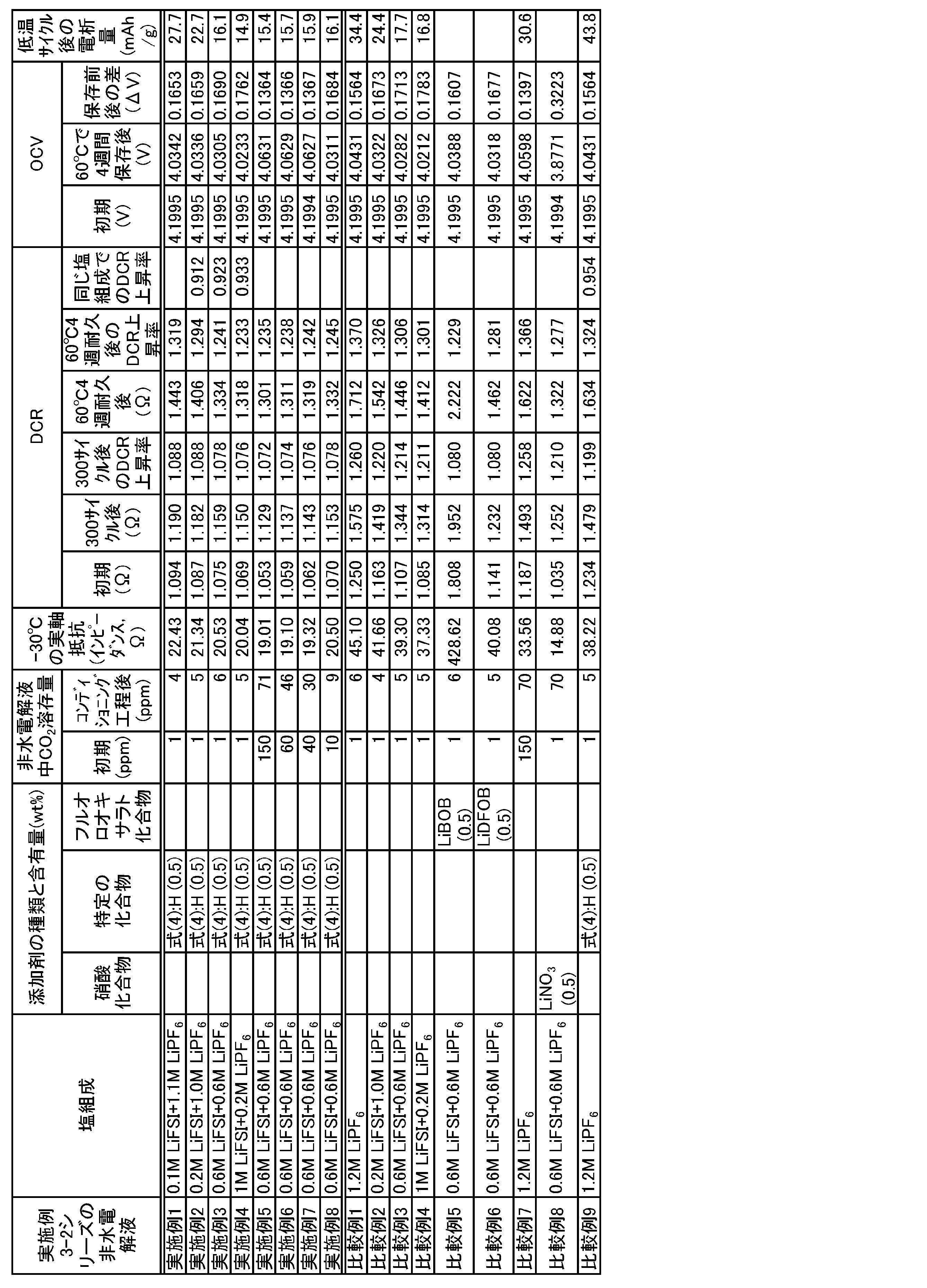
・実施例1~4と比較例2~4との比較により、LiFSIの濃度に依存して、インピーダンス及びDCR(初期DCR、300サイクル後DCR及び60℃4週耐久後DCR)は低減するものの、電解液にトリメチルシリルトリフルオロアセテート(化合物H)を添加することで、前記の低減効果が顕著になることが分かった。
・また、実施例1~4と比較例2~4との比較により、LiFSIの濃度に依存して、保存前後のOCV差(ΔV)が大きい、即ち自己放電が増大するものの、電解液にトリメチルシリルトリフルオロアセテートを添加することで、保存前後のOCV差(ΔV)が小さい、即ち自己放電が抑制されることが分かった。
・同じ塩組成の実施例2~4と比較例2~4との比較及び同じ塩組成の比較例9と比較例1との比較により、LiFSI及びLiPF6を含む混合塩組成は、LiPF6のみを含む単体塩組成よりも、トリメチルシリルトリフルオロアセテート添加によるインピーダンス及び自己放電抑制効果、DCR上昇率低減効果が高いことが分かった。
・比較例1~4、比較例7、比較例9、実施例2~9を比較すると、LiFSI濃度に依存し、低温サイクル後の電析量が減少しており、低温充電による負極の劣化が低減することがわかる。LiPF6のみを含む単体塩組成にトリメチルシリルトリフルオロアセテートを添加すると低温サイクル中に負極へのリチウム電析が増加し、低温充電による負極の劣化が進んでいることがわかる。LiFSI及びLiPF6を含む混合塩組成では、トリメチルシリルトリフルオロアセテートを添加することで低温サイクル後の電析量が減少し、低温充電による負極の劣化が抑制されていることがわかる。
・これらLiPF6のみを含む単体塩組成よりもLiFSI及びLiPF6を含む混合塩組成のほうがトリメチルシリルトリフルオロアセテートの添加効果が高い理由については、LiFSIのアニオン成分由来の被膜が正負極界面に形成されるため、LiFSIの溶解性が高いことから低温での電解液粘度が低減されるため等が考えられる。
・実施例1~8の比較により、LiFSIの濃度に依存して、保存前後のOCV差(ΔV)が大きい、即ち自己放電が増大するものの、トリメチルシリルトリフルオロアセテートを含む電解液にCO2を溶存させることで、保存前後のOCV差(ΔV)が小さい、即ち自己放電が抑制されると共に、インピーダンス及びDCRがさらに低減することが分かった。・CO2溶存による自己放電抑制効果がLiPF6単体塩組成よりもLiFSI及びLiPF6を含む混合塩組成の電解液のほうが高い理由については、充電時に正負極に形成されるFSIのアニオン成分による被膜と、CO2による炭酸リチウム成分による被膜との形成順位などが関係していると考えられる。
・インピーダンス及びDCR低減効果と自己放電抑制効果は、電解液中のCO2溶存量が10質量ppm超過(例えば20質量ppm以上)であるときに顕著になることが分かった。
・CO2溶存によりこれら効果が改善する理由は、正負極にCO2由来の被膜が形成されることで保存中の正極へのリチウムイオンインターカレント(インターカレーション(挿入)反応)が抑制されること、正極での副反応が抑制されること、負極への低温充電受入性が改善されること等が考えられる。
・同じ塩組成でのトリメチルシリルトリフルオロアセテート添加による60℃4週耐久後のDCR上昇率を比較すると、LiPF6単体塩組成よりもLiFSI及びLiPF6を含む混合塩組成の電解液のほうが顕著に低く、DCR上昇率抑制効果が高いことが分かった。これは、同じ塩組成でのトリメチルシリルトリフルオロアセテート添加による300サイクル後のDCR上昇率も同様である。この理由も正負極へのLiFSIのアニオン被膜が形成されるためと考えられる。
[実施例1~4]
電解液溶媒としてエチレンカーボネート(EC):エチルメチルカーボネート(EMC)=3:7(体積比)組成の混合溶媒(キシダ化学(株)製)に、LiFSI((株)日本触媒製)及びLiPF6(ステラケミファ(株)製)を含む混合塩組成の電解質塩をそれぞれ表10に示す濃度となるように溶解した。前記で得られた溶液に、一般式(5)で表される硫黄原子含有化合物(5)としてトリメチルシリルトリフルオロメタンスルホネート(化合物I、東京化成工業(株)製)を表10に示す含有量となるように添加し、1日撹拌することにより非水電解液(リファレンス電解液)を調製した。続いて、電解液の溶存工程を行わなかったこと以外は前記と同様にして、前記で得られた各リファレンス電解液を用いてセルを作製し、セルの評価を行った。その結果を表10に示す。
前記と同様にして非水電解液(リファレンス電解液)を調製した。続いて、前記で得られた各リファレンス電解液を用い、前記と同様にして溶存工程を行った。得られたCO2溶存電解液を用い、前記と同様にしてセルを作製し、セルの評価を行った。その結果を表10に示す。
前記と同じ混合溶媒に、LiFSI及びLiPF6を含む混合塩組成の電解質塩、又はLiPF6のみを含む単体塩組成の電解質塩をそれぞれ表10に示す濃度となるように溶解した。比較例1~4では、前記で得られた溶液を非水電解液(リファレンス電解液)として用いた。比較例5では、前記で得られた溶液に、フルオロオキサラト化合物(13)としてリチウムビス(オキサラト)ボレート(LiBOB、東京化成工業(株)製)を表10に示す含有量となるようにさらに添加し、1日攪拌することにより非水電解液を調製した。比較例6では、前記で得られた溶液に、フルオロオキサラト化合物(13)としてリチウムジフルオロオキサラトボレート(LiDFOB、東京化成工業(株)製)を表10に示す含有量となるようにさらに添加し、1日攪拌することにより非水電解液を調製した。比較例8では、前記で得られた溶液に、硝酸化合物(12)として硝酸リチウム(LiNO3、東京化成工業(株)製)を表10に示す含有量となるようにさらに添加し、1日攪拌後にメンブレンフィルタでろ過することにより非水電解液を調製した。比較例9では、前記で得られた溶液に、トリメチルシリルトリフルオロメタンスルホネート(化合物I)を表10に示す含有量となるようにさらに添加し、1日攪拌することにより非水電解液を調製した。続いて、電解液の溶存工程を行わなかったこと以外は前記と同様にして、前記で得られた各リファレンス電解液を用いてセルを作製し、セルの評価を行った。その結果を表10に示す。
前記と同じ混合溶媒に、LiPF6のみを含む単体塩組成の電解質塩を表10に示す濃度となるように溶解することにより非水電解液(リファレンス電解液)を調製した。続いて、前記で得られたリファレンス電解液を用い、前記と同様にして溶存工程を行った。得られたCO2溶存電解液を用い、前記と同様にしてセルを作製し、セルの評価を行った。その結果を表10に示す。

・実施例1~4と比較例2~4との比較により、LiFSIの濃度に依存して、インピーダンス及びDCR(初期DCR、300サイクル後DCR及び60℃4週耐久後DCR)は低減するものの、電解液にトリメチルシリルトリフルオロメタンスルホネート(化合物I)を添加することで、前記の低減効果が顕著になることが分かった。
・また、実施例1~4と比較例2~4との比較により、LiFSIの濃度に依存して、保存前後のOCV差(ΔV)が大きい、即ち自己放電が増大するものの、電解液にトリメチルシリルトリフルオロメタンスルホネートを添加することで、保存前後のOCV差(ΔV)が小さい、即ち自己放電が抑制されることが分かった。
・同じ塩組成の実施例2~4と比較例2~4との比較及び同じ塩組成の比較例9と比較例1との比較により、LiFSI及びLiPF6を含む混合塩組成は、LiPF6のみを含む単体塩組成よりも、トリメチルシリルトリフルオロメタンスルホネート添加によるインピーダンス及び自己放電抑制効果、DCR上昇抑制効果が高いことが分かった。
・比較例1~4、比較例7、比較例9、実施例2~9を比較すると、LiFSI濃度に依存し、低温サイクル後の電析量が減少しており、低温充電による負極の劣化が低減することがわかる。LiPF6のみを含む単体塩組成にトリメチルシリルトリフルオロメタンスルホネートを添加すると低温サイクル中に負極へのリチウム電析が増加し、低温充電による負極の劣化が進んでいることがわかる。LiFSI及びLiPF6を含む混合塩組成では、トリメチルシリルトリフルオロメタンスルホネートを添加することで低温サイクル後の電析量が減少し、低温充電による負極の劣化が抑制されていることがわかる。
・これらLiPF6のみを含む単体塩組成よりもLiFSI及びLiPF6を含む混合塩組成のほうがトリメチルシリルトリフルオロメタンスルホネートの添加効果が高い理由については、LiFSIのアニオン成分由来の被膜が正負極界面に形成されるため、LiFSIの溶解性が高いことから低温での電解液粘度が低減されるため等が考えられる。
・実施例1~8の比較により、LiFSIの濃度に依存して、保存前後のOCV差(ΔV)が大きい、即ち自己放電が増大するものの、トリメチルシリルトリフルオロメタンスルホネートを含む電解液にCO2を溶存させることで、保存前後のOCV差(ΔV)が小さい、即ち自己放電が抑制されると共に、インピーダンス及びDCRがさらに低減することが分かった。
・CO2溶存による自己放電抑制効果がLiPF6単体塩組成よりもLiFSI及びLiPF6を含む混合塩組成の電解液のほうが高い理由については、充電時に正負極に形成されるFSIのアニオン成分による被膜と、CO2による炭酸リチウム成分による被膜との形成順位などが関係していると考えられる。
・インピーダンス及びDCR低減効果と自己放電抑制効果は、電解液中のCO2溶存量が10質量ppm超過(例えば20質量ppm以上)であるときに顕著になることが分かった。
・CO2溶存によりこれら効果が改善する理由は、正負極にCO2由来の被膜が形成されることで保存中の正極へのリチウムイオンインターカレント(インターカレーション(挿入)反応)が抑制されること、正極での副反応が抑制されること、負極への低温充電受入性が改善されること等が考えられる。
・同じ塩組成でのトリメチルシリルトリフルオロメタンスルホネート添加による60℃4週耐久後のDCR上昇率を比較すると、LiPF6単体塩組成よりもLiFSI及びLiPF6を含む混合塩組成の電解液のほうが顕著に低く、DCR上昇率抑制効果が高いことが分かった。これは、同じ塩組成でのトリメチルシリルトリフルオロメタンスルホネート添加による300サイクル後のDCR上昇率も同様である。この理由も正負極へのLiFSIのアニオン被膜が形成されるためと考えられる。
[実施例1~4]
電解液溶媒としてエチレンカーボネート(EC):エチルメチルカーボネート(EMC)=3:7(体積比)組成の混合溶媒(キシダ化学(株)製)に、LiFSI((株)日本触媒製)及びLiPF6(ステラケミファ(株)製)を含む混合塩組成の電解質塩をそれぞれ表11に示す濃度となるように溶解した。前記で得られた溶液に、一般式(5)で表される硫黄原子含有化合物(5)としてビストリメチルシリルスルフェート(化合物J、東京化成工業(株)製)を表11に示す含有量となるように添加し、1日撹拌することにより非水電解液(リファレンス電解液)を調製した。続いて、電解液の溶存工程を行わなかったこと以外は前記と同様にして、前記で得られた各リファレンス電解液を用いてセルを作製し、セルの評価を行った。その結果を表11に示す。
前記と同様にして非水電解液(リファレンス電解液)を調製した。なお、実施例9では、前記で得られた溶液に、硝酸化合物(12)として硝酸リチウム(LiNO3、東京化成工業(株)製)を表11に示す含有量となるようにさらに添加し、1日攪拌後にメンブレンフィルタでろ過した。また、実施例10では、前記で得られた溶液に、LiNO3及びフルオロオキサラト化合物(13)としてリチウムジフルオロオキサラトボレート(LiDFOB、東京化成工業(株)製)をそれぞれ表11に示す含有量となるようにさらに添加し、1日攪拌後にメンブレンフィルタでろ過した。続いて、前記で得られた各リファレンス電解液を用い、前記と同様にして溶存工程を行った。得られたCO2溶存電解液を用い、前記と同様にしてセルを作製し、セルの評価を行った。その結果を表11に示す。
前記と同じ混合溶媒に、LiFSI及びLiPF6を含む混合塩組成の電解質塩、又はLiPF6のみを含む単体塩組成の電解質塩をそれぞれ表11に示す濃度となるように溶解した。比較例1~4では、前記で得られた溶液を非水電解液(リファレンス電解液)として用いた。比較例5では、前記で得られた溶液に、フルオロオキサラト化合物(13)としてリチウムビス(オキサラト)ボレート(LiBOB、東京化成工業(株)製)を表11に示す含有量となるようにさらに添加し、1日攪拌することにより非水電解液を調製した。比較例6では、前記で得られた溶液に、フルオロオキサラト化合物(13)としてリチウムジフルオロオキサラトボレート(LiDFOB、東京化成工業(株)製)を表11に示す含有量となるようにさらに添加し、1日攪拌することにより非水電解液を調製した。比較例8では、前記で得られた溶液に、硝酸化合物(12)として硝酸リチウム(LiNO3、東京化成工業(株)製)を表11に示す含有量となるようにさらに添加し、1日攪拌後にメンブレンフィルタでろ過することにより非水電解液を調製した。比較例9では、前記で得られた溶液に、ビストリメチルシリルスルフェート(化合物J)を表11に示す含有量となるようにさらに添加し、1日攪拌することにより非水電解液を調製した。続いて、電解液の溶存工程を行わなかったこと以外は前記と同様にして、前記で得られた各リファレンス電解液を用いてセルを作製し、セルの評価を行った。その結果を表11に示す。
前記と同じ混合溶媒に、LiPF6のみを含む単体塩組成の電解質塩を表11に示す濃度となるように溶解することにより非水電解液(リファレンス電解液)を調製した。続いて、前記で得られたリファレンス電解液を用い、前記と同様にして溶存工程を行った。得られたCO2溶存電解液を用い、前記と同様にしてセルを作製し、セルの評価を行った。その結果を表11に示す。

・実施例1~4と比較例2~4との比較により、LiFSIの濃度に依存して、インピーダンス及びDCR(初期DCR、300サイクル後DCR及び60℃4週耐久後DCR)は低減するものの、電解液にビストリメチルシリルスルフェート(化合物J)を添加することで、前記の低減効果が顕著になることが分かった。
・また、実施例1~4と比較例2~4との比較により、LiFSIの濃度に依存して、保存前後のOCV差(ΔV)が大きい、即ち自己放電が増大するものの、電解液にビストリメチルシリルスルフェートを添加することで、保存前後のOCV差(ΔV)が小さい、即ち自己放電が抑制されることが分かった。
・同じ塩組成の実施例2~4と比較例2~4との比較、及び同じ塩組成の比較例9と比較例1との比較により、LiFSI及びLiPF6を含む混合塩組成は、LiPF6のみを含む単体塩組成よりも、ビストリメチルシリルスルフェート添加によるインピーダンス低減効果、自己放電抑制効果及びDCR上昇率抑制効果が高いことが分かった。
・比較例1~4、比較例7、比較例9、実施例2~9を比較すると、LiFSI濃度に依存し、低温サイクル後の電析量が減少しており、負極の劣化が低減することがわかる。LiPF6のみを含む単体塩組成にビストリメチルシリルスルフェートを添加すると低温サイクル中に負極へのリチウム電析が増加し、負極の劣化が進んでいることがわかる。LiFSI及びLiPF6を含む混合塩組成では、ビストリメチルシリルスルフェートを添加することで低温サイクル後の電析量が減少し、負極の劣化が抑制されていることがわかる。
・これらLiPF6のみを含む単体塩組成よりもLiFSI及びLiPF6を含む混合塩組成のほうがビストリメチルシリルスルフェートの添加効果が高い理由については、LiFSIのアニオン成分由来の被膜が正負極界面に形成されるため、LiFSIの溶解性が高いことから低温での電解液粘度が低減されるため等が考えられる。
・同じ塩組成の実施例3と実施例5~8との比較により、ビストリメチルシリルスルフェートを含む電解液に、CO2を溶存させることで、インピーダンス及びDCR低減効果と自己放電抑制効果とがより一層高くなることが分かった。また、これら効果は、電解液中のCO2溶存量が10質量ppm超過(例えば20質量ppm以上)であるときに顕著になることが分かった。
・CO2溶存によりこれら効果が改善する理由は、正負極にCO2由来の被膜が形成されることで保存中の正極へのリチウムイオンインターカレント(インターカレーション(挿入)反応)が抑制されること、正極での副反応が抑制されること、負極への低温充電受入性が改善されること等が考えられる。
・CO2溶存による自己放電抑制効果がLiPF6単体塩組成よりもLiFSI及びLiPF6を含む混合塩組成の電解液のほうが高い理由については、充電時に正負極に形成されるFSIのアニオン成分による被膜と、CO2による炭酸リチウム成分による被膜との形成順位などが関係していると考えられる。
・同じ塩組成の実施例5,9及び比較例8の比較により、ビストリメチルシリルスルフェートを含む電解液に、LiNO3をさらに添加することで、インピーダンス及びDCRが顕著に低減することが分かった。一方、自己放電が増大するものの、当該電解液にCO2を溶存させることで、LiNO3添加に起因する自己放電が抑制されることが分かった。・同じ塩組成でのビストリメチルシリルスルフェート添加による60℃4週耐久後のDCR上昇率を比較すると、LiPF6単体塩組成よりもLiFSI及びLiPF6を含む混合塩組成の電解液のほうが顕著に低く、DCR上昇率抑制効果が高いことが分かった。これは、同じ塩組成でのビストリメチルシリルスルフェート添加による300サイクル後のDCR上昇率も同様である。この理由も正負極へのLiFSIのアニオン被膜が形成されるためと考えられる。
[実施例1~4]
電解液溶媒としてエチレンカーボネート(EC):エチルメチルカーボネート(EMC)=3:7(体積比)組成の混合溶媒(キシダ化学(株)製)に、LiFSI((株)日本触媒製)及びLiPF6(ステラケミファ(株)製)を含む混合塩組成の電解質塩をそれぞれ表12に示す濃度となるように溶解した。前記で得られた溶液に、一般式(5)で表される硫黄原子含有化合物(5)としてジターシャリーブチルシリルビストリフルオロメタンスルホネート(化合物K、東京化成工業(株)製)を表12に示す含有量となるように添加し、1日撹拌することにより非水電解液(リファレンス電解液)を調製した。続いて、電解液の溶存工程を行わなかったこと以外は前記と同様にして、前記で得られた各リファレンス電解液を用いてセルを作製し、セルの評価を行った。その結果を表12に示す。
前記と同様にして非水電解液(リファレンス電解液)を調製した。なお、実施例9では、前記で得られた溶液に、硝酸化合物(12)として硝酸リチウム(LiNO3、東京化成工業(株)製)を表12に示す含有量となるようにさらに添加し、1日攪拌後にメンブレンフィルタでろ過した。続いて、前記で得られた各リファレンス電解液を用い、前記と同様にして溶存工程を行った。得られたCO2溶存電解液を用い、前記と同様にしてセルを作製し、セルの評価を行った。その結果を表12に示す。
前記と同じ混合溶媒に、LiFSI及びLiPF6を含む混合塩組成の電解質塩、又はLiPF6のみを含む単体塩組成の電解質塩をそれぞれ表12に示す濃度となるように溶解した。比較例1~4では、前記で得られた溶液を非水電解液(リファレンス電解液)として用いた。比較例5では、前記で得られた溶液に、フルオロオキサラト化合物(13)としてリチウムビス(オキサラト)ボレート(LiBOB、東京化成工業(株)製)を表12に示す含有量となるようにさらに添加し、1日攪拌することにより非水電解液を調製した。比較例6では、前記で得られた溶液に、フルオロオキサラト化合物(13)としてリチウムジフルオロオキサラトボレート(LiDFOB、東京化成工業(株)製)を表12に示す含有量となるようにさらに添加し、1日攪拌することにより非水電解液を調製した。比較例8では、前記で得られた溶液に、硝酸化合物(12)として硝酸リチウム(LiNO3、東京化成工業(株)製)を表12に示す含有量となるようにさらに添加し、1日攪拌後にメンブレンフィルタでろ過することにより非水電解液を調製した。比較例9では、前記で得られた溶液に、ジターシャリーブチルシリルビストリフルオロメタンスルホネート(化合物K)を表12に示す含有量となるようにさらに添加し、1日攪拌することにより非水電解液を調製した。続いて、電解液の溶存工程を行わなかったこと以外は前記と同様にして、前記で得られた各リファレンス電解液を用いてセルを作製し、セルの評価を行った。その結果を表12に示す。
前記と同じ混合溶媒に、LiPF6のみを含む単体塩組成の電解質塩を表12に示す濃度となるように溶解することにより非水電解液(リファレンス電解液)を調製した。続いて、前記で得られたリファレンス電解液を用い、前記と同様にして溶存工程を行った。得られたCO2溶存電解液を用い、前記と同様にしてセルを作製し、セルの評価を行った。その結果を表12に示す。

・実施例1~4と比較例2~4との比較により、LiFSIの濃度に依存して、インピーダンス及びDCR(初期DCR及び300サイクル後DCR、60℃耐久後のDCR)は低減するものの、電解液にジターシャリーブチルシリルビストリフルオロメタンスルホネート(化合物K)を添加することで、前記の低減効果が顕著になることが分かった。
・また、実施例1~4と比較例2~4との比較により、LiFSIの濃度に依存して、保存前後のOCV差(ΔV)が大きい、即ち自己放電が増大するものの、電解液にジターシャリーブチルシリルビストリフルオロメタンスルホネートを添加することで、保存前後のOCV差(ΔV)が小さい、即ち自己放電が抑制されることが分かった。
・同じ塩組成の実施例2~4と比較例2~4との比較及び同じ塩組成の比較例9と比較例1との比較により、LiFSI及びLiPF6を含む混合塩組成は、LiPF6のみを含む単体塩組成よりも、ジターシャリーブチルシリルビストリフルオロメタンスルホネート添加によるインピーダンス及びDCR低減効果、DCR変動抑制効果が高いことが分かった。
・比較例1~4、比較例7、比較例9、実施例2~9を比較すると、LiFSI濃度に依存し、低温サイクル後の電析量が減少しており、低温充電による負極の劣化が低減することがわかる。LiPF6のみを含む単体塩組成にジターシャリーブチルシリルビストリフルオロメタンスルホネートを添加すると低温サイクル中に負極へのリチウム電析が増加し、低温充電による負極の劣化が進んでいることがわかる。LiFSI及びLiPF6を含む混合塩組成では、ジターシャリーブチルシリルビストリフルオロメタンスルホネートを添加することで低温サイクル後の電析量が減少し、低温充電による負極の劣化が抑制されていることがわかる。
・これらLiPF6のみを含む単体塩組成よりもLiFSI及びLiPF6を含む混合塩組成のほうがジターシャリーブチルシリルビストリフルオロメタンスルホネートの添加効果が高い理由については、LiFSIのアニオン成分由来の被膜が正負極界面に形成されるため、LiFSIの溶解性が高いことから低温での電解液粘度が低減されるため等が考えられる。
・実施例1~8の比較により、LiFSIの濃度に依存して、保存前後のOCV差(ΔV)が大きい、即ち自己放電が増大するものの、ジターシャリーブチルシリルビストリフルオロメタンスルホネートを含む電解液にCO2を溶存させることで、保存前後のOCV差(ΔV)が小さい、即ちさらに自己放電が抑制されると共に、インピーダンス及びDCRがさらに低減することが分かった。
・CO2溶存によりこれら効果が改善する理由は、正負極にCO2由来の被膜が形成されることで保存中の正極へのリチウムイオンインターカレント(インターカレーション(挿入)反応)が抑制されること、正極での副反応が抑制されること、負極への低温充電受入性が改善されること等が考えられる。
・インピーダンス及びDCR低減効果と自己放電抑制効果は、電解液中のCO2溶存量が10質量ppm超過(例えば20質量ppm以上)であるときに顕著になることが分かった。
・CO2溶存による自己放電抑制効果がLiPF6単体塩組成よりもLiFSI及びLiPF6を含む混合塩組成の電解液のほうが高い理由については、充電時に正負極に形成されるFSIのアニオン成分による被膜と、CO2による炭酸リチウム成分による被膜との形成順位などが関係していると考えられる。
・同じ塩組成の実施例5,9及び比較例8の比較により、ジターシャリーブチルシリルビストリフルオロメタンスルホネートを含む電解液に、LiNO3をさらに添加することで、インピーダンス及びDCRが顕著に低減することが分かった。一方、自己放電が増大するものの、当該電解液にCO2を溶存させることで、LiNO3添加に起因する自己放電が抑制されることが分かった。
・同じ塩組成でのジターシャリーブチルシリルビストリフルオロメタンスルホネート添加による60℃4週耐久後のDCR上昇率を比較すると、LiPF6単体塩組成よりもLiFSI及びLiPF6を含む混合塩組成の電解液のほうが顕著に低く、DCR上昇率抑制効果が高いことが分かった。これは、同じ塩組成でのジターシャリーブチルシリルビストリフルオロメタンスルホネート添加による300サイクル後のDCR上昇率も同様である。この理由も正負極へのLiFSIのアニオン被膜が形成されるためと考えられる。
[実施例1~4]
電解液溶媒としてエチレンカーボネート(EC):エチルメチルカーボネート(EMC)=3:7(体積比)組成の混合溶媒(キシダ化学(株)製)に、LiFSI((株)日本触媒製)及びLiPF6(ステラケミファ(株)製)を含む混合塩組成の電解質塩をそれぞれ表13に示す濃度となるように溶解した。前記で得られた溶液に、一般式(5)で表される硫黄原子含有化合物(5)としてターシャリーブチルジメチルシリルトリフルオロメタンスルホネート(化合物Z、東京化成工業(株)製)を表13に示す含有量となるように添加し、1日撹拌することにより非水電解液(リファレンス電解液)を調製した。続いて、電解液の溶存工程を行わなかったこと以外は前記と同様にして、前記で得られた各リファレンス電解液を用いてセルを作製し、セルの評価を行った。その結果を表13に示す。
前記と同様にして非水電解液(リファレンス電解液)を調製した。なお、実施例9では、前記で得られた溶液に、硝酸化合物(12)として硝酸リチウム(LiNO3、東京化成工業(株)製)を表13に示す含有量となるようにさらに添加し、1日攪拌後にメンブレンフィルタでろ過した。続いて、前記で得られた各リファレンス電解液を用い、前記と同様にして溶存工程を行った。得られたCO2溶存電解液を用い、前記と同様にしてセルを作製し、セルの評価を行った。その結果を表13に示す。
前記と同じ混合溶媒に、LiFSI及びLiPF6を含む混合塩組成の電解質塩、又はLiPF6のみを含む単体塩組成の電解質塩をそれぞれ表13に示す濃度となるように溶解した。比較例1~4では、前記で得られた溶液を非水電解液(リファレンス電解液)として用いた。比較例5では、前記で得られた溶液に、フルオロオキサラト化合物(13)としてリチウムビス(オキサラト)ボレート(LiBOB、東京化成工業(株)製)を表13に示す含有量となるようにさらに添加し、1日攪拌することにより非水電解液を調製した。比較例6では、前記で得られた溶液に、フルオロオキサラト化合物(13)としてリチウムジフルオロオキサラトボレート(LiDFOB、東京化成工業(株)製)を表13に示す含有量となるようにさらに添加し、1日攪拌することにより非水電解液を調製した。比較例8では、前記で得られた溶液に、硝酸化合物(12)として硝酸リチウム(LiNO3、東京化成工業(株)製)を表13に示す含有量となるようにさらに添加し、1日攪拌後にメンブレンフィルタでろ過することにより非水電解液を調製した。比較例9では、前記で得られた溶液に、ターシャリーブチルジメチルシリルトリフルオロメタンスルホネート(化合物Z)を表13に示す含有量となるようにさらに添加し、1日攪拌することにより非水電解液を調製した。続いて、電解液の溶存工程を行わなかったこと以外は前記と同様にして、前記で得られた各リファレンス電解液を用いてセルを作製し、セルの評価を行った。その結果を表13に示す。
前記と同じ混合溶媒に、LiPF6のみを含む単体塩組成の電解質塩を表13に示す濃度となるように溶解することにより非水電解液(リファレンス電解液)を調製した。続いて、前記で得られたリファレンス電解液を用い、前記と同様にして溶存工程を行った。得られたCO2溶存電解液を用い、前記と同様にしてセルを作製し、セルの評価を行った。その結果を表13に示す。

・実施例1~4と比較例2~4との比較により、LiFSIの濃度に依存して、インピーダンス及びDCR(初期DCR、300サイクル後DCR及び60℃4週耐久後DCR)は低減するものの、電解液にターシャリーブチルジメチルシリルトリフルオロメタンスルホネート(化合物Z)を添加することで、前記の低減効果が顕著になることが分かった。・また、実施例1~4と比較例2~4との比較により、LiFSIの濃度に依存して、保存前後のOCV差(ΔV)が大きい、即ち自己放電が増大するものの、電解液にターシャリーブチルジメチルシリルトリフルオロメタンスルホネートを添加することで、保存前後のOCV差(ΔV)が小さい、即ち自己放電が抑制されることが分かった。
・同じ塩組成の実施例2~4と比較例2~4との比較及び同じ塩組成の比較例9と比較例1との比較により、LiFSI及びLiPF6を含む混合塩組成は、LiPF6のみを含む単体塩組成よりも、ターシャリーブチルジメチルシリルトリフルオロメタンスルホネート添加によるインピーダンス及びDCR低減効果及びDCR変動抑制効果が高いことが分かった。
・比較例1~4、比較例7、比較例9、実施例2~9を比較すると、LiFSI濃度に依存し、低温サイクル後の電析量が減少しており、低温充電による負極の劣化が低減することがわかる。LiPF6のみを含む単体塩組成にターシャリーブチルジメチルシリルトリフルオロメタンスルホネートを添加すると低温サイクル中に負極へのリチウム電析が増加し、低温充電による負極の劣化が進んでいることがわかる。LiFSI及びLiPF6を含む混合塩組成では、ターシャリーブチルジメチルシリルトリフルオロメタンスルホネートを添加することで低温サイクル後の電析量が減少し、低温充電による負極の劣化が抑制されていることがわかる。
・これらLiPF6のみを含む単体塩組成よりもLiFSI及びLiPF6を含む混合塩組成のほうがターシャリーブチルジメチルシリルトリフルオロメタンスルホネートの添加効果が高い理由については、LiFSIのアニオン成分由来の被膜が正負極界面に形成されるため、LiFSIの溶解性が高いことから低温での電解液粘度が低減されるため等が考えられる。
・実施例1~8の比較により、LiFSIの濃度に依存して、保存前後のOCV差(ΔV)が大きい、即ち自己放電が増大するものの、ターシャリーブチルジメチルシリルトリフルオロメタンスルホネートを含む電解液にCO2を溶存させることで、保存前後のOCV差(ΔV)が小さい、即ちさらに自己放電が抑制されると共に、インピーダンス及びDCRがさらに低減することが分かった。
・CO2溶存によりこれら効果が改善する理由は、正負極にCO2由来の被膜が形成されることで保存中の正極へのリチウムイオンインターカレント(インターカレーション(挿入)反応)が抑制されること、正極での副反応が抑制されること、負極への低温充電受入性が改善されること等が考えられる。
・インピーダンス及びDCR低減効果と自己放電抑制効果は、電解液中のCO2溶存量が10質量ppm超過(例えば20質量ppm以上)であるときに顕著になることが分かった。
・CO2溶存による自己放電抑制効果がLiPF6単体塩組成よりもLiFSI及びLiPF6を含む混合塩組成の電解液のほうが高い理由については、充電時に正負極に形成されるFSIのアニオン成分による被膜と、CO2による炭酸リチウム成分による被膜との形成順位などが関係していると考えられる。
・同じ塩組成の実施例5,9及び比較例8の比較により、ターシャリーブチルジメチルシリルトリフルオロメタンスルホネートを含む電解液に、LiNO3をさらに添加することで、インピーダンス及びDCRが顕著に低減することが分かった。一方、自己放電が増大するものの、当該電解液にCO2を溶存させることで、LiNO3添加に起因する自己放電が抑制されることが分かった。
・同じ塩組成でのターシャリーブチルジメチルシリルトリフルオロメタンスルホネート添加による60℃4週耐久後のDCR上昇率を比較すると、LiPF6単体塩組成よりもLiFSI及びLiPF6を含む混合塩組成の電解液のほうが顕著に低く、DCR上昇率抑制効果が高いことが分かった。これは、同じ塩組成でのターシャリーブチルジメチルシリルトリフルオロメタンスルホネート添加による300サイクル後のDCR上昇率も同様である。この理由も正負極へのLiFSIのアニオン被膜が形成されるためと考えられる。
[実施例1~4]
電解液溶媒としてエチレンカーボネート(EC):エチルメチルカーボネート(EMC)=3:7(体積比)組成の混合溶媒(キシダ化学(株)製)に、LiFSI((株)日本触媒製)及びLiPF6(ステラケミファ(株)製)を含む混合塩組成の電解質塩をそれぞれ表14に示す濃度となるように溶解した。前記で得られた溶液に、一般式(6)で表されるリン原子含有化合物(6)として亜リン酸ビス(2,2,2-トリフルオロエチル)(化合物L、東京化成工業(株)製)を表14に示す含有量となるように添加し、1日撹拌することにより非水電解液(リファレンス電解液)を調製した。続いて、電解液の溶存工程を行わなかったこと以外は前記と同様にして、前記で得られた各リファレンス電解液を用いてセルを作製し、セルの評価を行った。その結果を表14に示す。
前記と同様にして非水電解液(リファレンス電解液)を調製した。なお、実施例9では、前記で得られた溶液に、硝酸化合物(12)として硝酸リチウム(LiNO3、東京化成工業(株)製)を表14に示す含有量となるようにさらに添加し、1日攪拌後にメンブレンフィルタでろ過した。続いて、前記で得られた各リファレンス電解液を用い、前記と同様にして溶存工程を行った。得られたCO2溶存電解液を用い、前記と同様にしてセルを作製し、セルの評価を行った。その結果を表14に示す。
前記と同じ混合溶媒に、LiFSI及びLiPF6を含む混合塩組成の電解質塩、又はLiPF6のみを含む単体塩組成の電解質塩をそれぞれ表14に示す濃度となるように溶解した。比較例1~4では、前記で得られた溶液を非水電解液(リファレンス電解液)として用いた。比較例5では、前記で得られた溶液に、フルオロオキサラト化合物(13)としてリチウムビス(オキサラト)ボレート(LiBOB、東京化成工業(株)製)を表14に示す含有量となるようにさらに添加し、1日攪拌することにより非水電解液を調製した。比較例6では、前記で得られた溶液に、フルオロオキサラト化合物(13)としてリチウムジフルオロオキサラトボレート(LiDFOB、東京化成工業(株)製)を表14に示す含有量となるようにさらに添加し、1日攪拌することにより非水電解液を調製した。比較例8では、前記で得られた溶液に、硝酸化合物(12)として硝酸リチウム(LiNO3、東京化成工業(株)製)を表14に示す含有量となるようにさらに添加し、1日攪拌後にメンブレンフィルタでろ過することにより非水電解液を調製した。比較例9では、前記で得られた溶液に、亜リン酸ビス(2,2,2-トリフルオロエチル)(化合物L)を表14に示す含有量となるようにさらに添加し、1日攪拌することにより非水電解液を調製した。続いて、電解液の溶存工程を行わなかったこと以外は前記と同様にして、前記で得られた各リファレンス電解液を用いてセルを作製し、セルの評価を行った。その結果を表14に示す。
前記と同じ混合溶媒に、LiPF6のみを含む単体塩組成の電解質塩を表14に示す濃度となるように溶解することにより非水電解液(リファレンス電解液)を調製した。続いて、前記で得られたリファレンス電解液を用い、前記と同様にして溶存工程を行った。得られたCO2溶存電解液を用い、前記と同様にしてセルを作製し、セルの評価を行った。その結果を表14に示す。

・実施例1~4と比較例2~4との比較により、LiFSIの濃度に依存して、インピーダンス及びDCR(初期DCR、300サイクル後DCR及び60℃4週耐久後DCR)は低減するものの、電解液に亜リン酸ビス(2,2,2-トリフルオロエチル)(化合物L)を添加することで、前記の低減効果が顕著になることが分かった。
・また、実施例1~4と比較例2~4との比較により、LiFSIの濃度に依存して、保存前後のOCV差(ΔV)が大きい、即ち自己放電が増大するものの、電解液に亜リン酸ビス(2,2,2-トリフルオロエチル)を添加することで、保存前後のOCV差(ΔV)が小さい、即ち自己放電が抑制されることが分かった。
・同じ塩組成の実施例2~4と比較例2~4との比較、及び同じ塩組成の比較例9と比較例1との比較により、LiFSI及びLiPF6を含む混合塩組成は、LiPF6のみを含む単体塩組成よりも、亜リン酸ビス(2,2,2-トリフルオロエチル)添加によるインピーダンス低減効果、自己放電抑制効果及びDCR上昇率抑制効果が高いことが分かった。
・比較例1~4、比較例7、比較例9、実施例2~9を比較すると、LiFSI濃度に依存し、低温サイクル後の電析量が減少しており、低温充電による負極の劣化が低減することがわかる。LiPF6のみを含む単体塩組成に亜リン酸ビス(2,2,2-トリフルオロエチル)を添加すると低温サイクル中に負極へのリチウム電析が増加し、低温充電による負極の劣化が進んでいることがわかる。LiFSI及びLiPF6を含む混合塩組成では、亜リン酸ビス(2,2,2-トリフルオロエチル)を添加することで低温サイクル後の電析量が減少し、低温充電による負極の劣化が抑制されていることがわかる。
・これらLiPF6のみを含む単体塩組成よりもLiFSI及びLiPF6を含む混合塩組成のほうが亜リン酸ビス(2,2,2-トリフルオロエチル)の添加効果が高い理由については、LiFSIのアニオン成分由来の被膜が正負極界面に形成されるため、LiFSIの溶解性が高いことから低温での電解液粘度が低減されるため等が考えられる。
・同じ塩組成の実施例3と実施例5~8との比較により、亜リン酸ビス(2,2,2-トリフルオロエチル)を含む電解液に、CO2を溶存させることで、インピーダンス及びDCR低減効果と自己放電抑制効果とがより一層高くなることが分かった。また、これら効果は、電解液中のCO2溶存量が10質量ppm超過(例えば20質量ppm以上)であるときに顕著になることが分かった。
・CO2溶存によりこれら効果が改善する理由は、正負極にCO2由来の被膜が形成されることで保存中の正極へのリチウムイオンインターカレント(インターカレーション(挿入)反応)が抑制されること、正極での副反応が抑制されること、負極への低温充電受入性が改善されること等が考えられる。
・同じ塩組成の実施例5,9及び比較例8の比較により、亜リン酸ビス(2,2,2-トリフルオロエチル)を含む電解液に、LiNO3をさらに添加することで、インピーダンス及びDCRが顕著に低減することが分かった。一方、自己放電が増大するものの、当該電解液にCO2を溶存させることで、LiNO3添加に起因する自己放電が抑制されることが分かった。
・CO2溶存による自己放電抑制効果がLiPF6単体塩組成よりもLiFSI及びLiPF6を含む混合塩組成の電解液のほうが高い理由については、充電時に正負極に形成されるFSIのアニオン成分による被膜と、CO2による炭酸リチウム成分による被膜との形成順位などが関係していると考えられる。
・同じ塩組成での亜リン酸ビス(2,2,2-トリフルオロエチル)添加による60℃4週耐久後のDCR上昇率を比較すると、LiPF6単体塩組成よりもLiFSI及びLiPF6を含む混合塩組成の電解液のほうが顕著に低く、DCR上昇率抑制効果が高いことが分かった。これは、同じ塩組成での亜リン酸ビス(2,2,2-トリフルオロエチル)添加による300サイクル後のDCR上昇率も同様である。この理由も正負極へのLiFSIのアニオン被膜が形成されるためと考えられる。
[実施例1~4,10]
電解液溶媒としてエチレンカーボネート(EC):エチルメチルカーボネート(EMC)=3:7(体積比)組成の混合溶媒(キシダ化学(株)製)に、LiFSI((株)日本触媒製)及びLiPF6(ステラケミファ(株)製)を含む混合塩組成の電解質塩をそれぞれ表15に示す濃度となるように溶解した。前記で得られた溶液に、一般式(6)で表されるリン原子含有化合物(6)としてポリリン酸トリメチルシリル(化合物M、シグマ アルドリッチ製)を表15に示す含有量となるように添加し、1日撹拌することにより非水電解液(リファレンス電解液)を調製した。続いて、電解液の溶存工程を行わなかったこと以外は前記と同様にして、前記で得られた各リファレンス電解液を用いてセルを作製し、セルの評価を行った。その結果を表15に示す。
上記シグマ アルドリッチ製試薬のポリリン酸トリメチルシリル(化合物M)を31P-NMRで分析したところ、ケミカルシフト-28ppm~-33ppmに出現するピーク(Pt)と、-35ppm~-41ppmに出現するピーク(Pm)との2ピークが確認された。2ピークの積分比はPt:Pm=1.00:1.43であった。一方、-41ppm~-45ppmに出現するピーク(Pb)は確認されなかった。なお、31P-NMR測定は、JEOL(日本電子)製JNM-ECA500を用い、試料管として2重試料管にて測定し、一方の管に加えたH3PO4のリンのピークを0ppmとしてケミカルシフトを決定した。
前記と同様にして非水電解液(リファレンス電解液)を調製した。なお、実施例9では、前記で得られた溶液に、硝酸化合物(12)として硝酸リチウム(LiNO3、東京化成工業(株)製)を表15に示す含有量となるようにさらに添加し、1日攪拌後にメンブレンフィルタでろ過した。続いて、前記で得られた各リファレンス電解液を用い、前記と同様にして溶存工程を行った。得られたCO2溶存電解液を用い、前記と同様にしてセルを作製し、セルの評価を行った。その結果を表15に示す。
前記と同じ混合溶媒に、LiFSI及びLiPF6を含む混合塩組成の電解質塩、又はLiPF6のみを含む単体塩組成の電解質塩をそれぞれ表15に示す濃度となるように溶解した。比較例1~4では、前記で得られた溶液を非水電解液(リファレンス電解液)として用いた。比較例5では、前記で得られた溶液に、フルオロオキサラト化合物(13)としてリチウムビス(オキサラト)ボレート(LiBOB、東京化成工業(株)製)を表15に示す含有量となるようにさらに添加し、1日攪拌することにより非水電解液を調製した。比較例6では、前記で得られた溶液に、フルオロオキサラト化合物(13)としてリチウムジフルオロオキサラトボレート(LiDFOB、東京化成工業(株)製)を表15に示す含有量となるようにさらに添加し、1日攪拌することにより非水電解液を調製した。比較例8では、前記で得られた溶液に、硝酸化合物(12)として硝酸リチウム(LiNO3、東京化成工業(株)製)を表15に示す含有量となるようにさらに添加し、1日攪拌後にメンブレンフィルタでろ過することにより非水電解液を調製した。比較例9では、前記で得られた溶液に、ポリリン酸トリメチルシリル(化合物M)を表15に示す含有量となるようにさらに添加し、1日攪拌することにより非水電解液を調製した。続いて、電解液の溶存工程を行わなかったこと以外は前記と同様にして、前記で得られた各リファレンス電解液を用いてセルを作製し、セルの評価を行った。その結果を表15に示す。
前記と同じ混合溶媒に、LiPF6のみを含む単体塩組成の電解質塩を表15に示す濃度となるように溶解することにより非水電解液(リファレンス電解液)を調製した。続いて、前記で得られたリファレンス電解液を用い、前記と同様にして溶存工程を行った。得られたCO2溶存電解液を用い、前記と同様にしてセルを作製し、セルの評価を行った。その結果を表15に示す。

・実施例1~4と比較例2~4との比較により、LiFSIの濃度に依存して、インピーダンス及びDCR(初期DCR、300サイクル後DCR及び60℃4週耐久後DCR)は低減するものの、電解液にポリリン酸トリメチルシリル(化合物M)を添加することで、前記の低減効果が顕著になることが分かった。
・また、実施例1~4と比較例2~4との比較により、LiFSIの濃度に依存して、保存前後のOCV差(ΔV)が大きい、即ち自己放電が増大するものの、電解液にポリリン酸トリメチルシリルを添加することで、保存前後のOCV差(ΔV)が小さい、即ち自己放電が抑制されることが分かった。
・同じ塩組成の実施例2~4と比較例2~4との比較、及び同じ塩組成の比較例9と比較例1との比較により、LiFSI及びLiPF6を含む混合塩組成は、LiPF6のみを含む単体塩組成よりも、ポリリン酸トリメチルシリル添加によるインピーダンス低減効果、自己放電抑制効果及びDCR上昇抑制効果が高いことが分かった。
・比較例1~4、比較例7、比較例9、実施例2~9を比較すると、LiFSI濃度に依存し、低温サイクル後の電析量が減少しており、低温充電による負極の劣化が低減することがわかる。LiPF6のみを含む単体塩組成にポリリン酸トリメチルシリルを添加すると低温サイクル中に負極へのリチウム電析が増加し、低温充電による負極の劣化が進んでいることがわかる。LiFSI及びLiPF6を含む混合塩組成では、ポリリン酸トリメチルシリルを添加することで低温サイクル後の電析量が減少し、低温充電による負極の劣化が抑制されていることがわかる。
・これらLiPF6のみを含む単体塩組成よりもLiFSI及びLiPF6を含む混合塩組成のほうがポリリン酸トリメチルシリルの添加効果が高い理由については、LiFSIのアニオン成分由来の被膜が正負極界面に形成されるため、LiFSIの溶解性が高いことから低温での電解液粘度が低減されるため等が考えられる。
・同じ塩組成の実施例3と実施例5~8との比較により、ポリリン酸トリメチルシリルを含む電解液に、CO2を溶存させることで、インピーダンス及びDCR低減効果と自己放電抑制効果とがより一層高くなることが分かった。また、これら効果は、電解液中のCO2溶存量が10質量ppm超過(例えば20質量ppm以上)であるときに顕著になることが分かった。
・CO2溶存によりこれら効果が改善する理由は、正負極にCO2由来の被膜が形成されることで保存中の正極へのリチウムイオンインターカレント(インターカレーション(挿入)反応)が抑制されること、正極での副反応が抑制されること、負極への低温充電受入性が改善されること等が考えられる。
・同じ塩組成の実施例5,9及び比較例8の比較により、ポリリン酸トリメチルシリルを含む電解液に、LiNO3をさらに添加することで、インピーダンス及びDCRが顕著に低減することが分かった。一方、自己放電が増大するものの、当該電解液にCO2を溶存させることで、LiNO3添加に起因する自己放電が抑制されることが分かった。
・CO2溶存による自己放電抑制効果がLiPF6単体塩組成よりもLiFSI及びLiPF6を含む混合塩組成の電解液のほうが高い理由については、充電時に正負極に形成されるFSIのアニオン成分による被膜と、CO2による炭酸リチウム成分による被膜との形成順位などが関係していると考えられる。
・同じ塩組成でのポリリン酸トリメチルシリル添加による60℃4週耐久後のDCR上昇率を比較すると、LiPF6単体塩組成よりもLiFSI及びLiPF6を含む混合塩組成の電解液のほうが顕著に低く、DCR上昇率抑制効果が高いことが分かった。これは、同じ塩組成でのポリリン酸トリメチルシリル添加による300サイクル後のDCR上昇率も同様である。この理由も正負極へのLiFSIのアニオン被膜が形成されるためと考えられる。
(ポリリン酸トリメチルシリルの合成)
五酸化二リン1.553gを溶媒の塩化メチレン10mLに分散させ、撹拌しながらヘキサメチレンジシロキサン1.710gを徐々に滴下した後、室温で1日程度撹拌した。その後、溶媒を留去することにより、ポリリン酸トリメチルシリル(化合物M2)を合成した。
合成されたポリリン酸トリメチルシリル(化合物M2)を31P-NMRで前記と同様に分析したところ、ケミカルシフト-28ppm~-33ppmに出現するピーク(Pt)と、-35ppm~-41ppmに出現するピーク(Pm)と、-41ppm~-45ppmに出現するピーク(Pb)との3ピークが確認された。3ピークの積分比はPt:Pm:Pb=1.00:6.73:1.00であった。この分析結果から、化合物M2は、分岐構造(上記構造式(6a-3)で表される分岐構造)が多く含まれるポリリン酸トリメチルシリルであると推定される。
電解液溶媒としてエチレンカーボネート(EC):エチルメチルカーボネート(EMC)=3:7(体積比)組成の混合溶媒(キシダ化学(株)製)に、LiFSI((株)日本触媒製)及びLiPF6(ステラケミファ(株)製)を含む混合塩組成の電解質塩をそれぞれ表15-2に示す濃度となるように溶解した。前記で得られた溶液に、一般式(6)で表されるリン原子含有化合物(6)としてポリリン酸トリメチルシリル(化合物M2)を表15-2に示す含有量となるように添加し、1日撹拌することにより非水電解液(リファレンス電解液)を調製した。続いて、電解液の溶存工程を行わなかったこと以外は前記と同様にして、前記で得られた各リファレンス電解液を用いてセルを作製し、セルの評価を行った。その結果を表15-2に示す。
前記と同様にして非水電解液(リファレンス電解液)を調製した。続いて、前記で得られた各リファレンス電解液を用い、前記と同様にして溶存工程を行った。得られたCO2溶存電解液を用い、前記と同様にしてセルを作製し、セルの評価を行った。その結果を表15-2に示す。
前記と同じ混合溶媒に、LiFSI及びLiPF6を含む混合塩組成の電解質塩、又はLiPF6のみを含む単体塩組成の電解質塩をそれぞれ表15-2に示す濃度となるように溶解した。比較例1~4では、前記で得られた溶液を非水電解液(リファレンス電解液)として用いた。比較例5では、前記で得られた溶液に、ポリリン酸トリメチルシリル(化合物M2)を表15-2に示す含有量となるようにさらに添加し、1日攪拌することにより非水電解液を調製した。続いて、電解液の溶存工程を行わなかったこと以外は前記と同様にして、前記で得られた各リファレンス電解液を用いてセルを作製し、セルの評価を行った。その結果を表15-2に示す。

・実施例1~4と比較例2~4との比較により、LiFSIの濃度に依存して、インピーダンス及びDCR(初期DCR、300サイクル後DCR及び60℃4週耐久後DCR)は低減するものの、電解液にポリリン酸トリメチルシリル(化合物M2)を添加することで、前記の低減効果が顕著になることが分かった。
・また、実施例1~4と比較例2~4との比較により、LiFSIの濃度に依存して、保存前後のOCV差(ΔV)が大きい、即ち自己放電が増大するものの、電解液にポリリン酸トリメチルシリルを添加することで、保存前後のOCV差(ΔV)が小さい、即ち自己放電が抑制されることが分かった。また、理由は不明であるが、ポリリン酸トリメチルシリルの中でも、31P-NMR分析によりPbピークが確認された合成物(化合物M2)は、Pbピークが確認されなかったシグマ アルドリッチ製試薬(化合物M)よりも自己放電がより一層抑制されることが分かった。
・同じ塩組成の実施例2~4と比較例2~4との比較、及び同じ塩組成の比較例5と比較例1との比較により、LiFSI及びLiPF6を含む混合塩組成は、LiPF6のみを含む単体塩組成よりも、ポリリン酸トリメチルシリル添加によるインピーダンス低減効果、自己放電抑制効果及びDCR上昇抑制効果が高いことが分かった。
・比較例1~5、実施例2~8を比較すると、LiFSI濃度に依存し、低温サイクル後の電析量が減少しており、低温充電による負極の劣化が低減することがわかる。LiPF6のみを含む単体塩組成にポリリン酸トリメチルシリルを添加すると低温サイクル中に負極へのリチウム電析が増加し、低温充電による負極の劣化が進んでいることがわかる。LiFSI及びLiPF6を含む混合塩組成では、ポリリン酸トリメチルシリルを添加することで低温サイクル後の電析量が減少し、低温充電による負極の劣化が抑制されていることがわかる。
・これらLiPF6のみを含む単体塩組成よりもLiFSI及びLiPF6を含む混合塩組成のほうがポリリン酸トリメチルシリルの添加効果が高い理由については、LiFSIのアニオン成分由来の被膜が正負極界面に形成されるため、LiFSIの溶解性が高いことから低温での電解液粘度が低減されるため等が考えられる。
・同じ塩組成の実施例3と実施例5~8との比較により、ポリリン酸トリメチルシリルを含む電解液に、CO2を溶存させることで、インピーダンス及びDCR低減効果と自己放電抑制効果とがより一層高くなることが分かった。また、これら効果は、電解液中のCO2溶存量が10質量ppm超過(例えば20質量ppm以上)であるときに顕著になることが分かった。
・CO2溶存によりこれら効果が改善する理由は、正負極にCO2由来の被膜が形成されることで保存中の正極へのリチウムイオンインターカレント(インターカレーション(挿入)反応)が抑制されること、正極での副反応が抑制されること、負極への低温充電受入性が改善されること等が考えられる。
・同じ塩組成でのポリリン酸トリメチルシリル添加による60℃4週耐久後のDCR上昇率を比較すると、LiPF6単体塩組成よりもLiFSI及びLiPF6を含む混合塩組成の電解液のほうが顕著に低く、DCR上昇率抑制効果が高いことが分かった。これは、同じ塩組成でのポリリン酸トリメチルシリル添加による300サイクル後のDCR上昇率も同様である。この理由も正負極へのLiFSIのアニオン被膜が形成されるためと考えられる。
(ポリリン酸トリメチルシリルの合成)
五酸化二リン1.553gを溶媒のトルエン10mLに分散させ、撹拌しながらヘキサメチレンジシロキサン1.710gを徐々に滴下した後、室温で1日程度撹拌した。その後、溶媒を留去することにより、ポリリン酸トリメチルシリル(化合物M3)を合成した。
合成されたポリリン酸トリメチルシリル(化合物M3)を31P―NMRで前記と同様に分析したところ、ケミカルシフト-28ppm~-33ppmに出現するピーク(Pt)と、-35ppm~-41ppmに出現するピーク(Pm)と、-41ppm~-45ppmに出現するピーク(Pb)との3ピークが確認された。3ピークの積分比はPt:Pm:Pb=1.00:6.51:0.81であった。この分析結果から、化合物M3は、分岐構造(上記構造式(6a-3)で表される分岐構造)が多く含まれるポリリン酸トリメチルシリルであると推定される。
電解液溶媒としてエチレンカーボネート(EC):エチルメチルカーボネート(EMC)=3:7(体積比)組成の混合溶媒(キシダ化学(株)製)に、LiFSI((株)日本触媒製)及びLiPF6(ステラケミファ(株)製)を含む混合塩組成の電解質塩をそれぞれ表15-3に示す濃度となるように溶解した。前記で得られた溶液に、一般式(6)で表されるリン原子含有化合物(6)としてポリリン酸トリメチルシリル(化合物M3)を表15-3に示す含有量となるように添加し、1日撹拌することにより非水電解液(リファレンス電解液)を調製した。続いて、電解液の溶存工程を行わなかったこと以外は前記と同様にして、前記で得られた各リファレンス電解液を用いてセルを作製し、セルの評価を行った。その結果を表15-3に示す。
前記と同様にして非水電解液(リファレンス電解液)を調製した。続いて、前記で得られた各リファレンス電解液を用い、前記と同様にして溶存工程を行った。得られたCO2溶存電解液を用い、前記と同様にしてセルを作製し、セルの評価を行った。その結果を表15-3に示す。
前記と同じ混合溶媒に、LiFSI及びLiPF6を含む混合塩組成の電解質塩、又はLiPF6のみを含む単体塩組成の電解質塩をそれぞれ表15-3に示す濃度となるように溶解した。比較例1~4では、前記で得られた溶液を非水電解液(リファレンス電解液)として用いた。比較例5では、前記で得られた溶液に、ポリリン酸トリメチルシリル(化合物M3)を表15-3に示す含有量となるようにさらに添加し、1日攪拌することにより非水電解液を調製した。続いて、電解液の溶存工程を行わなかったこと以外は前記と同様にして、前記で得られた各リファレンス電解液を用いてセルを作製し、セルの評価を行った。その結果を表15-3に示す。

・実施例1~4と比較例2~4との比較により、LiFSIの濃度に依存して、インピーダンス及びDCR(初期DCR、300サイクル後DCR及び60℃4週耐久後DCR)は低減するものの、電解液にポリリン酸トリメチルシリル(化合物M3)を添加することで、前記の低減効果が顕著になることが分かった。
・また、実施例1~4と比較例2~4との比較により、LiFSIの濃度に依存して、保存前後のOCV差(ΔV)が大きい、即ち自己放電が増大するものの、電解液にポリリン酸トリメチルシリルを添加することで、保存前後のOCV差(ΔV)が小さい、即ち自己放電が抑制されることが分かった。また、理由は不明であるが、ポリリン酸トリメチルシリルの中でも、31P-NMR分析によりPbピークが確認された合成物(化合物M3)は、Pbピークが確認されなかったシグマ アルドリッチ製試薬(化合物M)よりも自己放電がより一層抑制されることが分かった。
・同じ塩組成の実施例2~4と比較例2~4との比較、及び同じ塩組成の比較例5と比較例1との比較により、LiFSI及びLiPF6を含む混合塩組成は、LiPF6のみを含む単体塩組成よりも、ポリリン酸トリメチルシリル添加によるインピーダンス低減効果、自己放電抑制効果及びDCR上昇抑制効果が高いことが分かった。
・比較例1~5、実施例2~8を比較すると、LiFSI濃度に依存し、低温サイクル後の電析量が減少しており、低温充電による負極の劣化が低減することがわかる。LiPF6のみを含む単体塩組成にポリリン酸トリメチルシリルを添加すると低温サイクル中に負極へのリチウム電析が増加し、低温充電による負極の劣化が進んでいることがわかる。LiFSI及びLiPF6を含む混合塩組成では、ポリリン酸トリメチルシリルを添加することで低温サイクル後の電析量が減少し、低温充電による負極の劣化が抑制されていることがわかる。
・これらLiPF6のみを含む単体塩組成よりもLiFSI及びLiPF6を含む混合塩組成のほうがポリリン酸トリメチルシリルの添加効果が高い理由については、LiFSIのアニオン成分由来の被膜が正負極界面に形成されるため、LiFSIの溶解性が高いことから低温での電解液粘度が低減されるため等が考えられる。
・同じ塩組成の実施例3と実施例5~8との比較により、ポリリン酸トリメチルシリルを含む電解液に、CO2を溶存させることで、インピーダンス及びDCR低減効果と自己放電抑制効果とがより一層高くなることが分かった。また、これら効果は、電解液中のCO2溶存量が10質量ppm超過(例えば20質量ppm以上)であるときに顕著になることが分かった。
・CO2溶存によりこれら効果が改善する理由は、正負極にCO2由来の被膜が形成されることで保存中の正極へのリチウムイオンインターカレント(インターカレーション(挿入)反応)が抑制されること、正極での副反応が抑制されること、負極への低温充電受入性が改善されること等が考えられる。
・同じ塩組成でのポリリン酸トリメチルシリル添加による60℃4週耐久後のDCR上昇率を比較すると、LiPF6単体塩組成よりもLiFSI及びLiPF6を含む混合塩組成の電解液のほうが顕著に低く、DCR上昇率抑制効果が高いことが分かった。これは、同じ塩組成でのポリリン酸トリメチルシリル添加による300サイクル後のDCR上昇率も同様である。この理由も正負極へのLiFSIのアニオン被膜が形成されるためと考えられる。
(ポリリン酸エチルの合成)
五酸化二リン10g、溶媒のクロロホルム10g及びジエチルエーテル20gを試験管に入れ、3日間、900rpm、35℃で攪拌した。その後、エバポレーターで溶媒を留去し、24時間真空乾燥を行うことにより、ポリリン酸エチル(化合物T)を合成した。
合成されたポリリン酸エチル(化合物T)を31P―NMRで前記と同様に分析したところ、ケミカルシフト-12ppm~-15ppmに出現するピーク(Pt)と、-25ppm~-31ppmに出現するピーク(Pm)と、-39ppm~-46ppmに出現するピーク(Pb)との3ピークが確認された。3ピークの積分比はPt:Pm:Pb=1.00:3.59:0.42であった。この分析結果から、化合物Tは、分岐構造(上記構造式(6a-3)で表される分岐構造)が多く含まれるポリリン酸エチルであると推定される。
電解液溶媒としてエチレンカーボネート(EC):エチルメチルカーボネート(EMC)=3:7(体積比)組成の混合溶媒(キシダ化学(株)製)に、LiFSI((株)日本触媒製)及びLiPF6(ステラケミファ(株)製)を含む混合塩組成の電解質塩をそれぞれ表15-4に示す濃度となるように溶解した。前記で得られた溶液に、一般式(6)で表されるリン原子含有化合物(6)としてポリリン酸エチル(化合物T)を表15-4に示す含有量となるように添加し、1日撹拌することにより非水電解液(リファレンス電解液)を調製した。続いて、電解液の溶存工程を行わなかったこと以外は前記と同様にして、前記で得られた各リファレンス電解液を用いてセルを作製し、セルの評価を行った。その結果を表15-4に示す。
前記と同様にして非水電解液(リファレンス電解液)を調製した。続いて、前記で得られた各リファレンス電解液を用い、前記と同様にして溶存工程を行った。得られたCO2溶存電解液を用い、前記と同様にしてセルを作製し、セルの評価を行った。その結果を表15-4に示す。
前記と同じ混合溶媒に、LiFSI及びLiPF6を含む混合塩組成の電解質塩、又はLiPF6のみを含む単体塩組成の電解質塩をそれぞれ表15-4に示す濃度となるように溶解した。比較例1~4では、前記で得られた溶液を非水電解液(リファレンス電解液)として用いた。比較例5では、前記で得られた溶液に、ポリリン酸エチル(化合物T)を表15-4に示す含有量となるようにさらに添加し、1日攪拌することにより非水電解液を調製した。続いて、電解液の溶存工程を行わなかったこと以外は前記と同様にして、前記で得られた各リファレンス電解液を用いてセルを作製し、セルの評価を行った。その結果を追加表2に示す。

・実施例1~4と比較例2~4との比較により、LiFSIの濃度に依存して、インピーダンス及びDCR(初期DCR、300サイクル後DCR及び60℃4週耐久後DCR)は低減するものの、電解液にポリリン酸エチル(化合物T)を添加することで、前記の低減効果が顕著になることが分かった。
・また、実施例1~4と比較例2~4との比較により、LiFSIの濃度に依存して、保存前後のOCV差(ΔV)が大きい、即ち自己放電が増大するものの、電解液にポリリン酸エチルを添加することで、保存前後のOCV差(ΔV)が小さい、即ち自己放電が抑制されることが分かった。
・同じ塩組成の実施例2~4と比較例2~4との比較、及び同じ塩組成の比較例5と比較例1との比較により、LiFSI及びLiPF6を含む混合塩組成は、LiPF6のみを含む単体塩組成よりも、ポリリン酸エチル添加によるインピーダンス低減効果、自己放電抑制効果及びDCR上昇抑制効果が高いことが分かった。
・これらLiPF6のみを含む単体塩組成よりもLiFSI及びLiPF6を含む混合塩組成のほうがポリリン酸エチルの添加効果が高い理由については、LiFSIのアニオン成分由来の被膜が正負極界面に形成されるため、LiFSIの溶解性が高いことから低温での電解液粘度が低減されるため等が考えられる。
・同じ塩組成の実施例3と実施例5~8との比較により、ポリリン酸エチルを含む電解液に、CO2を溶存させることで、インピーダンス及びDCR低減効果と自己放電抑制効果とがより一層高くなることが分かった。また、これら効果は、電解液中のCO2溶存量が10質量ppm超過(例えば20質量ppm以上)であるときに顕著になることが分かった。
・CO2溶存によりこれら効果が改善する理由は、正負極にCO2由来の被膜が形成されることで保存中の正極へのリチウムイオンインターカレント(インターカレーション(挿入)反応)が抑制されること、正極での副反応が抑制されること、負極への低温充電受入性が改善されること等が考えられる。
・同じ塩組成でのポリリン酸エチル添加による60℃4週耐久後のDCR上昇率を比較すると、LiPF6単体塩組成よりもLiFSI及びLiPF6を含む混合塩組成の電解液のほうが顕著に低く、DCR上昇率抑制効果が高いことが分かった。これは、同じ塩組成でのポリリン酸エチル添加による300サイクル後のDCR上昇率も同様である。この理由も正負極へのLiFSIのアニオン被膜が形成されるためと考えられる。
(ポリリン酸(トリイソプロピルシリル)の合成)
テトラヒドロフラン30mLに臭化インジウム(III)0.53gを溶解させた後にトリイソプロピルシラン4.75gを加え、室温にて1日撹拌し、反応を行った。反応後の溶液にヘキサン30mLを加えて静置すると2層に分離した。分液回収した上層を減圧濃縮して無色の液体であるヘキサイソプロピルジシロキサン4.01gを得た。続いて、ジクロロメタン10mLに五酸化リン1.55gと前記で得られたヘキサイソプロピルジシロキサン1.70gを加え、35℃で3日間撹拌し、反応を行った。反応後の溶液をろ過し、減圧濃縮することにより、粘稠性の液体としてポリリン酸(トリイソプロピルシリル)2.10g(化合物W)を合成した。
電解液溶媒としてエチレンカーボネート(EC):エチルメチルカーボネート(EMC)=3:7(体積比)組成の混合溶媒(キシダ化学(株)製)に、LiFSI((株)日本触媒製)及びLiPF6(ステラケミファ(株)製)を含む混合塩組成の電解質塩をそれぞれ表15-5に示す濃度となるように溶解した。前記で得られた溶液に、一般式(6)で表されるリン原子含有化合物(6)としてポリリン酸(トリイソプロピルシリル)(化合物W)を表15-5に示す含有量となるように添加し、1日撹拌することにより非水電解液(リファレンス電解液)を調製した。続いて、電解液の溶存工程を行わなかったこと以外は前記と同様にして、前記で得られた各リファレンス電解液を用いてセルを作製し、セルの評価を行った。その結果を表15-5に示す。
前記と同様にして非水電解液(リファレンス電解液)を調製した。続いて、前記で得られた各リファレンス電解液を用い、前記と同様にして溶存工程を行った。得られたCO2溶存電解液を用い、前記と同様にしてセルを作製し、セルの評価を行った。その結果を表15-5に示す。
前記と同じ混合溶媒に、LiFSI及びLiPF6を含む混合塩組成の電解質塩、又はLiPF6のみを含む単体塩組成の電解質塩をそれぞれ表15-5に示す濃度となるように溶解した。比較例1~4では、前記で得られた溶液を非水電解液(リファレンス電解液)として用いた。比較例5では、前記で得られた溶液に、ポリリン酸(トリイソプロピルシリル)(化合物W)を表15-5に示す含有量となるようにさらに添加し、1日攪拌することにより非水電解液を調製した。続いて、電解液の溶存工程を行わなかったこと以外は前記と同様にして、前記で得られた各リファレンス電解液を用いてセルを作製し、セルの評価を行った。その結果を表15-5に示す。

・実施例1~4と比較例2~4との比較により、LiFSIの濃度に依存して、インピーダンス及びDCR(初期DCR、300サイクル後DCR及び60℃4週耐久後DCR)は低減するものの、電解液にポリリン酸(トリイソプロピルシリル)(化合物W)を添加することで、前記の低減効果が顕著になることが分かった。
・また、実施例1~4と比較例2~4との比較により、LiFSIの濃度に依存して、保存前後のOCV差(ΔV)が大きい、即ち自己放電が増大するものの、電解液にポリリン酸(トリイソプロピルシリル)を添加することで、保存前後のOCV差(ΔV)が小さい、即ち自己放電が抑制されることが分かった。
・同じ塩組成の実施例2~4と比較例2~4との比較、及び同じ塩組成の比較例5と比較例1との比較により、LiFSI及びLiPF6を含む混合塩組成は、LiPF6のみを含む単体塩組成よりも、ポリリン酸(トリイソプロピルシリル)添加によるインピーダンス低減効果、自己放電抑制効果及びDCR上昇抑制効果が高いことが分かった。
・これらLiPF6のみを含む単体塩組成よりもLiFSI及びLiPF6を含む混合塩組成のほうがポリリン酸エチルの添加効果が高い理由については、LiFSIのアニオン成分由来の被膜が正負極界面に形成されるため、LiFSIの溶解性が高いことから低温での電解液粘度が低減されるため等が考えられる。
・同じ塩組成の実施例3と実施例5~8との比較により、ポリリン酸(トリイソプロピルシリル)を含む電解液に、CO2を溶存させることで、インピーダンス及びDCR低減効果と自己放電抑制効果とがより一層高くなることが分かった。また、これら効果は、電解液中のCO2溶存量が10質量ppm超過(例えば20質量ppm以上)であるときに顕著になることが分かった。
・CO2溶存によりこれら効果が改善する理由は、正負極にCO2由来の被膜が形成されることで保存中の正極へのリチウムイオンインターカレント(インターカレーション(挿入)反応)が抑制されること、正極での副反応が抑制されること、負極への低温充電受入性が改善されること等が考えられる。
・同じ塩組成でのポリリン酸(トリイソプロピルシリル)添加による60℃4週耐久後のDCR上昇率を比較すると、LiPF6単体塩組成よりもLiFSI及びLiPF6を含む混合塩組成の電解液のほうが顕著に低く、DCR上昇率抑制効果が高いことが分かった。これは、同じ塩組成でのポリリン酸エチル添加による300サイクル後のDCR上昇率も同様である。この理由も正負極へのLiFSIのアニオン被膜が形成されるためと考えられる。
(ポリリン酸[(tert-ブチル)ジメチルシリル]の合成)
実施例5-2(5)シリーズにおいて、ポリリン酸(トリイソプロピルシリル)(化合物W)の合成時に用いたトリイソプロピルシランをtert-ブチルジメチルシランに変更したこと以外は当該合成時と同様の手順を行うことにより、ポリリン酸[(tert-ブチル)ジメチルシリル](化合物X)を合成した。
電解液溶媒としてエチレンカーボネート(EC):エチルメチルカーボネート(EMC)=3:7(体積比)組成の混合溶媒(キシダ化学(株)製)に、LiFSI((株)日本触媒製)及びLiPF6(ステラケミファ(株)製)を含む混合塩組成の電解質塩をそれぞれ表15-6に示す濃度となるように溶解した。前記で得られた溶液に、一般式(6)で表されるリン原子含有化合物(6)としてポリリン酸[(tert―ブチル)ジメチルシリル](化合物X)を表15-6に示す含有量となるように添加し、1日撹拌することにより非水電解液(リファレンス電解液)を調製した。続いて、電解液の溶存工程を行わなかったこと以外は前記と同様にして、前記で得られた各リファレンス電解液を用いてセルを作製し、セルの評価を行った。その結果を表15-6に示す。
前記と同様にして非水電解液(リファレンス電解液)を調製した。続いて、前記で得られた各リファレンス電解液を用い、前記と同様にして溶存工程を行った。得られたCO2溶存電解液を用い、前記と同様にしてセルを作製し、セルの評価を行った。その結果を表15-6に示す。
前記と同じ混合溶媒に、LiFSI及びLiPF6を含む混合塩組成の電解質塩、又はLiPF6のみを含む単体塩組成の電解質塩をそれぞれ表15-6に示す濃度となるように溶解した。比較例1~4では、前記で得られた溶液を非水電解液(リファレンス電解液)として用いた。比較例5では、前記で得られた溶液に、ポリリン酸[(tert-ブチル)ジメチルシリル](化合物X)を表15-6に示す含有量となるようにさらに添加し、1日攪拌することにより非水電解液を調製した。続いて、電解液の溶存工程を行わなかったこと以外は前記と同様にして、前記で得られた各リファレンス電解液を用いてセルを作製し、セルの評価を行った。その結果を表15-6に示す。

・実施例1~4と比較例2~4との比較により、LiFSIの濃度に依存して、インピーダンス及びDCR(初期DCR、300サイクル後DCR及び60℃4週耐久後DCR)は低減するものの、電解液にポリリン酸[(tert-ブチル)ジメチルシリル](化合物X)を添加することで、前記の低減効果が顕著になることが分かった。
・また、実施例1~4と比較例2~4との比較により、LiFSIの濃度に依存して、保存前後のOCV差(ΔV)が大きい、即ち自己放電が増大するものの、電解液にポリリン酸[(tert―ブチル)ジメチルシリル]を添加することで、保存前後のOCV差(ΔV)が小さい、即ち自己放電が抑制されることが分かった。
・同じ塩組成の実施例2~4と比較例2~4との比較、及び同じ塩組成の比較例5と比較例1との比較により、LiFSI及びLiPF6を含む混合塩組成は、LiPF6のみを含む単体塩組成よりも、ポリリン酸[(tert-ブチル)ジメチルシリル]添加によるインピーダンス低減効果、自己放電抑制効果及びDCR上昇抑制効果が高いことが分かった。
・これらLiPF6のみを含む単体塩組成よりもLiFSI及びLiPF6を含む混合塩組成のほうがポリリン酸[(tert-ブチル)ジメチルシリル]の添加効果が高い理由については、LiFSIのアニオン成分由来の被膜が正負極界面に形成されるため、LiFSIの溶解性が高いことから低温での電解液粘度が低減されるため等が考えられる。
・同じ塩組成の実施例3と実施例5~8との比較により、ポリリン酸[(tert-ブチル)ジメチルシリル]を含む電解液に、CO2を溶存させることで、インピーダンス及びDCR低減効果と自己放電抑制効果とがより一層高くなることが分かった。また、これら効果は、電解液中のCO2溶存量が10質量ppm超過(例えば20質量ppm以上)であるときに顕著になることが分かった。
・CO2溶存によりこれら効果が改善する理由は、正負極にCO2由来の被膜が形成されることで保存中の正極へのリチウムイオンインターカレント(インターカレーション(挿入)反応)が抑制されること、正極での副反応が抑制されること、負極への低温充電受入性が改善されること等が考えられる。
・同じ塩組成でのポリリン酸[(tert-ブチル)ジメチルシリル]添加による60℃4週耐久後のDCR上昇率を比較すると、LiPF6単体塩組成よりもLiFSI及びLiPF6を含む混合塩組成の電解液のほうが顕著に低く、DCR上昇率抑制効果が高いことが分かった。これは、同じ塩組成でのポリリン酸[(tert-ブチル)ジメチルシリル]添加による300サイクル後のDCR上昇率も同様である。この理由も正負極へのLiFSIのアニオン被膜が形成されるためと考えられる。
[実施例1~8]
電解液溶媒としてエチレンカーボネート(EC):エチルメチルカーボネート(EMC)=3:7(体積比)組成の混合溶媒(キシダ化学(株)製)に、LiFSI((株)日本触媒製)及びLiPF6(ステラケミファ(株)製)を含む混合塩組成の電解質塩をそれぞれ表16に示す濃度となるように溶解した。前記で得られた溶液に、一般式(8)で表されるリン原子含有化合物(8)としてリン酸トリス(トリメチルシリル)(化合物N、東京化成工業(株)製)を表16に示す含有量となるように添加し、1日撹拌することにより非水電解液(リファレンス電解液)を調製した。なお、実施例8では、前記で得られた溶液に、硝酸化合物(12)として硝酸リチウム(LiNO3、東京化成工業(株)製)を表16に示す含有量となるようにさらに添加し、1日攪拌後にメンブレンフィルタでろ過した。続いて、前記で得られた各リファレンス電解液を用い、前記と同様にして溶存工程を行った。得られたCO2溶存電解液を用い、前記と同様にしてセルを作製し、セルの評価を行った。その結果を表16に示す。
前記と同じ混合溶媒に、LiFSI及びLiPF6を含む混合塩組成の電解質塩、又はLiPF6のみを含む単体塩組成の電解質塩をそれぞれ表16に示す濃度となるように溶解した。比較例1~4では、前記で得られた溶液を非水電解液(リファレンス電解液)として用いた。比較例5では、前記で得られた溶液に、フルオロオキサラト化合物(13)としてリチウムビス(オキサラト)ボレート(LiBOB、東京化成工業(株)製)を表16に示す含有量となるようにさらに添加し、1日攪拌することにより非水電解液を調製した。比較例6では、前記で得られた溶液に、フルオロオキサラト化合物(13)としてリチウムジフルオロオキサラトボレート(LiDFOB、東京化成工業(株)製)を表16に示す含有量となるようにさらに添加し、1日攪拌することにより非水電解液を調製した。比較例8では、前記で得られた溶液に、硝酸化合物(12)として硝酸リチウム(LiNO3、東京化成工業(株)製)を表16に示す含有量となるようにさらに添加し、1日攪拌後にメンブレンフィルタでろ過することにより非水電解液を調製した。比較例9~11では、前記で得られた溶液に、リン酸トリス(トリメチルシリル)(化合物N)をそれぞれ表16に示す含有量となるようにさらに添加し、1日攪拌することにより非水電解液を調製した。比較例12では、前記で得られた溶液に、ポリリン酸トリメチルシリル(化合物M)を表16に示す含有量となるようにさらに添加し、1日攪拌することにより非水電解液を調製した。続いて、電解液の溶存工程を行わなかったこと以外は前記と同様にして、前記で得られた各リファレンス電解液を用いてセルを作製し、セルの評価を行った。その結果を表16に示す。
前記と同じ混合溶媒に、LiPF6のみを含む単体塩組成の電解質塩を表16に示す濃度となるように溶解することにより非水電解液(リファレンス電解液)を調製した。続いて、前記で得られたリファレンス電解液を用い、前記と同様にして溶存工程を行った。得られたCO2溶存電解液を用い、前記と同様にしてセルを作製し、セルの評価を行った。その結果を表16に示す。

・同じ塩組成の比較例2~3と比較例10~11との比較により、LiFSIの濃度に依存して、インピーダンス及びDCR(初期DCR、300サイクル後DCR及び60℃4週耐久後DCR)は低減するものの、電解液にリン酸トリス(トリメチルシリル)(化合物N)を添加することで、前記の低減効果が顕著になることが分かった。
・実施例1~7と比較例10~11との比較により、LiFSIの濃度に依存して、保存前後のOCV差(ΔV)が大きい、即ち自己放電が増大するものの、リン酸トリス(トリメチルシリル)を含む電解液にCO2を溶存させることで、保存前後のOCV差(ΔV)が小さい、即ち自己放電が抑制されると共に、インピーダンス及びDCRがさらに低減することが分かった。比較例1~3比較例9~11を比較するとリン酸トリス(トリメチルシリル)のみを添加しても自己放電抑制効果はないことがわかった。
・比較例1~3、比較例9~11、実施例2~7を比較すると、LiFSI濃度に依存し、低温サイクル後の電析量が減少しており、低温充電による負極の劣化が低減することがわかる。LiPF6のみを含む単体塩組成にリン酸トリス(トリメチルシリル)を添加すると低温サイクル中に負極へのリチウム電析が増加し、低温充電による負極の劣化が進んでいることがわかる。LiFSI及びLiPF6を含む混合塩組成では、リン酸トリス(トリメチルシリル)を添加することで低温サイクル後の電析量が減少し、低温充電による負極の劣化が抑制されていることがわかる。またCO2を溶存させると低温電析が抑制されることがわかる。
・これらLiPF6のみを含む単体塩組成よりもLiFSI及びLiPF6を含む混合塩組成のほうがリン酸トリス(トリメチルシリル)の添加効果が高い理由については、LiFSIのアニオン成分由来の被膜が正負極界面に形成されるため、LiFSIの溶解性が高いことから低温での電解液粘度が低減されるため等が考えられる。
・インピーダンス及びDCR低減効果、自己放電抑制効果並びに低温電析抑制効果は、電解液中のCO2溶存量が10質量ppm超過(例えば20質量ppm以上)であるときに顕著になることが分かった。
・CO2溶存によりこれら効果が改善する理由は、正負極にCO2由来の被膜が形成されることで保存中の正極へのリチウムイオンインターカレント(インターカレーション(挿入)反応)が抑制されること、正極での副反応が抑制されること、負極への低温充電受入性が改善されること等が考えられる。
・同じ塩組成の実施例3,8及び比較例8の比較により、リン酸トリス(トリメチルシリル)を含む電解液に、LiNO3をさらに添加することで、インピーダンス及びDCRが顕著に低減することが分かった。一方、自己放電が増大するものの、当該電解液にCO2を溶存させることで、LiNO3添加に起因する自己放電が抑制されることが分かった。・CO2溶存による自己放電抑制効果がLiPF6単体塩組成よりもLiFSI及びLiPF6を含む混合塩組成の電解液のほうが高い理由については、充電時に正負極に形成されるFSIのアニオン成分による被膜と、CO2による炭酸リチウム成分による被膜との形成順位などが関係していると考えられる。
・同じ塩組成の比較例11と比較例12との比較により、リン酸トリス(トリメチルシリル)を含む電解液に、ポリリン酸トリメチルシリル(化合物M)をさらに添加することで、インピーダンス及びDCRが低減し、自己放電も抑制されることが分かった。
・同じ塩組成でのリン酸トリス(トリメチルシリル)添加による60℃4週耐久後のDCR上昇率を比較すると、LiPF6単体塩組成よりもLiFSI及びLiPF6を含む混合塩組成の電解液のほうが顕著に低く、DCR上昇率抑制効果が高いことが分かった。これは、同じ塩組成でのリン酸トリス(トリメチルシリル)添加による300サイクル後のDCR上昇率も同様である。この理由も正負極へのLiFSIのアニオン被膜が形成されるためと考えられる。
[実施例1~4,10]
電解液溶媒としてエチレンカーボネート(EC):エチルメチルカーボネート(EMC)=3:7(体積比)組成の混合溶媒(キシダ化学(株)製)に、LiFSI((株)日本触媒製)及びLiPF6(ステラケミファ(株)製)を含む混合塩組成の電解質塩をそれぞれ表17に示す濃度となるように溶解した。前記で得られた溶液に、一般式(7)で表されるリン原子含有化合物(7)として亜リン酸トリメチル(化合物O、東京化成工業(株)製)を表17に示す含有量となるように添加し、1日撹拌することにより非水電解液(リファレンス電解液)を調製した。なお、実施例10では、前記で得られた溶液に、一般式(8)で表されるリン原子含有化合物(8)としてリン酸トリス(トリメチルシリル)(化合物N)を表17に示す含有量となるようにさらに添加した。続いて、電解液の溶存工程を行わなかったこと以外は前記と同様にして、前記で得られた各リファレンス電解液を用いてセルを作製し、セルの評価を行った。その結果を表17に示す。
前記と同様にして非水電解液(リファレンス電解液)を調製した。なお、実施例9では、前記で得られた溶液に、硝酸化合物(12)として硝酸リチウム(LiNO3、東京化成工業(株)製)を表17に示す含有量となるようにさらに添加し、1日攪拌後にメンブレンフィルタでろ過した。実施例11では、前記で得られた溶液に、リン酸トリス(トリメチルシリル)(化合物N)を表17に示す含有量となるようにさらに添加した。続いて、前記で得られた各リファレンス電解液を用い、前記と同様にして溶存工程を行った。得られたCO2溶存電解液を用い、前記と同様にしてセルを作製し、セルの評価を行った。その結果を表17に示す。
前記と同じ混合溶媒に、LiFSI及びLiPF6を含む混合塩組成の電解質塩、又はLiPF6のみを含む単体塩組成の電解質塩をそれぞれ表17に示す濃度となるように溶解した。比較例1~4では、前記で得られた溶液を非水電解液(リファレンス電解液)として用いた。比較例5では、前記で得られた溶液に、リチウムビス(オキサラト)ボレート(LiBOB、東京化成工業(株)製)を表17に示す含有量となるようにさらに添加し、1日攪拌することにより非水電解液を調製した。比較例6では、前記で得られた溶液に、フルオロオキサラト化合物(13)としてリチウムジフルオロオキサラトボレート(LiDFOB、東京化成工業(株)製)を表17に示す含有量となるようにさらに添加し、1日攪拌することにより非水電解液を調製した。比較例8では、前記で得られた溶液に、硝酸化合物(12)として硝酸リチウム(LiNO3、東京化成工業(株)製)を表17に示す含有量となるようにさらに添加し、1日攪拌後にメンブレンフィルタでろ過することにより非水電解液を調製した。比較例9~11では、前記で得られた溶液に、リン酸トリス(トリメチルシリル)(化合物N)をそれぞれ表17に示す含有量となるようにさらに添加し、1日攪拌することにより非水電解液を調製した。比較例12では、前記で得られた溶液に、亜リン酸トリメチル(化合物O)を表17に示す含有量となるようにさらに添加し、1日攪拌することにより非水電解液を調製した。続いて、電解液の溶存工程を行わなかったこと以外は前記と同様にして、前記で得られた各リファレンス電解液を用いてセルを作製し、セルの評価を行った。その結果を表17に示す。
前記と同じ混合溶媒に、LiPF6のみを含む単体塩組成の電解質塩を表17に示す濃度となるように溶解することにより非水電解液(リファレンス電解液)を調製した。続いて、前記で得られたリファレンス電解液を用い、前記と同様にして溶存工程を行った。得られたCO2溶存電解液を用い、前記と同様にしてセルを作製し、セルの評価を行った。その結果を表17に示す。

・実施例1~4と比較例2~4との比較により、LiFSIの濃度に依存して、インピーダンス及びDCR(初期DCR、300サイクル後DCR及び60℃4週耐久後DCR)は低減するものの、電解液に亜リン酸トリメチル(化合物O)を添加することで、前記の低減効果が顕著になることが分かった。
・また、実施例1~4と比較例2~4との比較により、LiFSIの濃度に依存して、保存前後のOCV差(ΔV)が大きい、即ち自己放電が増大するものの、電解液に亜リン酸トリメチルを添加することで、保存前後のOCV差(ΔV)が小さい、即ち自己放電が抑制されることが分かった。
・同じ塩組成の実施例2~4と比較例2~4との比較、及び同じ塩組成の比較例9と比較例1との比較により、LiFSI及びLiPF6を含む混合塩組成は、LiPF6のみを含む単体塩組成よりも、亜リン酸トリメチル添加によるインピーダンス低減効果、自己放電抑制効果及びDCR上昇抑制効果が高いことが分かった。
・比較例1~3、比較例9、12、実施例2~7を比較すると、LiFSI濃度に依存し、低温サイクル後の電析量が減少しており、負極の劣化が低減することがわかる。LiPF6のみを含む単体塩組成に亜リン酸トリメチルを添加すると低温サイクル中に負極へのリチウム電析が増加し、負極の劣化が進んでいることがわかる。LiFSI及びLiPF6を含む混合塩組成では、亜リン酸トリメチルを添加することで低温サイクル後の電析量が減少し、負極の劣化が抑制されていることがわかる。またCO2を溶存させると低温電析が抑制されることがわかる。
・これらLiPF6のみを含む単体塩組成よりもLiFSI及びLiPF6を含む混合塩組成のほうが亜リン酸トリメチルの添加効果が高い理由については、LiFSIのアニオン成分由来の被膜が正負極界面に形成されるため、LiFSIの溶解性が高いことから低温での電解液粘度が低減されるため等が考えられる。
・同じ塩組成の実施例3と実施例5~8との比較により、亜リン酸トリメチルを含む電解液に、CO2を溶存させることで、インピーダンス及びDCR低減効果と自己放電抑制効果とがより一層高くなることが分かった。また、これら効果は、電解液中のCO2溶存量が10質量ppm超過(例えば20質量ppm以上)であるときに顕著になることが分かった。
・CO2溶存によりこれら効果が改善する理由は、正負極にCO2由来の被膜が形成されることで保存中の正極へのリチウムイオンインターカレント(インターカレーション(挿入)反応)が抑制されること、正極での副反応が抑制されること、負極への低温充電受入性が改善されること等が考えられる。
・同じ塩組成の実施例5,9及び比較例8の比較により、亜リン酸トリメチルを含む電解液に、LiNO3をさらに添加することで、インピーダンス及びDCRが顕著に低減することが分かった。一方、自己放電が増大するものの、当該電解液にCO2を溶存させることで、LiNO3添加に起因する自己放電が抑制されることが分かった。
・CO2溶存による自己放電抑制効果がLiPF6単体塩組成よりもLiFSI及びLiPF6を含む混合塩組成の電解液のほうが高い理由については、充電時に正負極に形成されるFSIのアニオン成分による被膜と、CO2による炭酸リチウム成分による被膜との形成順位などが関係していると考えられる。
・実施例3、5,10,11の比較により、亜リン酸トリメチルを含む電解液に、リン酸トリメチルシリル(化合物N)をさらに添加することで、インピーダンス及びDCRがさらに低減することが分かった。
・同じ塩組成での亜リン酸トリメチル添加による60℃4週耐久後のDCR上昇率を比較すると、LiPF6単体塩組成よりもLiFSI及びLiPF6を含む混合塩組成の電解液のほうが顕著に低く、DCR上昇率抑制効果が高いことが分かった。これは、同じ塩組成での亜リン酸トリメチル添加による300サイクル後のDCR上昇率も同様である。この理由も正負極へのLiFSIのアニオン被膜が形成されるためと考えられる。
[実施例1~4,10]
電解液溶媒としてエチレンカーボネート(EC):エチルメチルカーボネート(EMC)=3:7(体積比)組成の混合溶媒(キシダ化学(株)製)に、LiFSI((株)日本触媒製)及びLiPF6(ステラケミファ(株)製)を含む混合塩組成の電解質塩をそれぞれ表18に示す濃度となるように溶解した。前記で得られた溶液に、一般式(7)で表されるリン原子含有化合物(7)として亜リン酸トリス(トリメチルシリル)(化合物P、東京化成工業(株)製)を表18に示す含有量となるように添加し、1日撹拌することにより非水電解液(リファレンス電解液)を調製した。なお、実施例10では、前記で得られた溶液に、一般式(8)で表されるリン原子含有化合物(8)としてリン酸トリス(トリメチルシリル)(化合物N)を表18に示す含有量となるようにさらに添加した。続いて、電解液の溶存工程を行わなかったこと以外は前記と同様にして、前記で得られた各リファレンス電解液を用いてセルを作製し、セルの評価を行った。その結果を表18に示す。
前記と同様にして非水電解液(リファレンス電解液)を調製した。なお、実施例9では、前記で得られた溶液に、硝酸化合物(12)として硝酸リチウム(LiNO3、東京化成工業(株)製)を表18に示す含有量となるようにさらに添加し、1日攪拌後にメンブレンフィルタでろ過した。実施例11では、前記で得られた溶液に、ポリリン酸トリメチルシリル(化合物M)を表18に示す含有量となるようにさらに添加した。続いて、前記で得られた各リファレンス電解液を用い、前記と同様にして溶存工程を行った。得られたCO2溶存電解液を用い、前記と同様にしてセルを作製し、セルの評価を行った。その結果を表18に示す。
前記と同じ混合溶媒に、LiFSI及びLiPF6を含む混合塩組成の電解質塩、又はLiPF6のみを含む単体塩組成の電解質塩をそれぞれ表18に示す濃度となるように溶解した。比較例1~4では、前記で得られた溶液を非水電解液(リファレンス電解液)として用いた。比較例5では、前記で得られた溶液に、フルオロオキサラト化合物(13)としてリチウムビス(オキサラト)ボレート(LiBOB、東京化成工業(株)製)を表18に示す含有量となるようにさらに添加し、1日攪拌することにより非水電解液を調製した。比較例6では、前記で得られた溶液に、フルオロオキサラト化合物(13)としてリチウムジフルオロオキサラトボレート(LiDFOB、東京化成工業(株)製)を表18に示す含有量となるようにさらに添加し、1日攪拌することにより非水電解液を調製した。比較例8では、前記で得られた溶液に、硝酸化合物(12)として硝酸リチウム(LiNO3、東京化成工業(株)製)を表18に示す含有量となるようにさらに添加し、1日攪拌後にメンブレンフィルタでろ過することにより非水電解液を調製した。比較例9~11では、前記で得られた溶液に、リン酸トリス(トリメチルシリル)(化合物N)をそれぞれ表18に示す含有量となるようにさらに添加し、1日攪拌することにより非水電解液を調製した。比較例12では、前記で得られた溶液に、亜リン酸トリス(トリメチルシリル)(化合物P)を表18に示す含有量となるようにさらに添加し、1日攪拌することにより非水電解液を調製した。続いて、電解液の溶存工程を行わなかったこと以外は前記と同様にして、前記で得られた各リファレンス電解液を用いてセルを作製し、セルの評価を行った。その結果を表18に示す。
前記と同じ混合溶媒に、LiPF6のみを含む単体塩組成の電解質塩を表18に示す濃度となるように溶解することにより非水電解液(リファレンス電解液)を調製した。続いて、前記で得られたリファレンス電解液を用い、前記と同様にして溶存工程を行った。得られたCO2溶存電解液を用い、前記と同様にしてセルを作製し、セルの評価を行った。その結果を表18に示す。
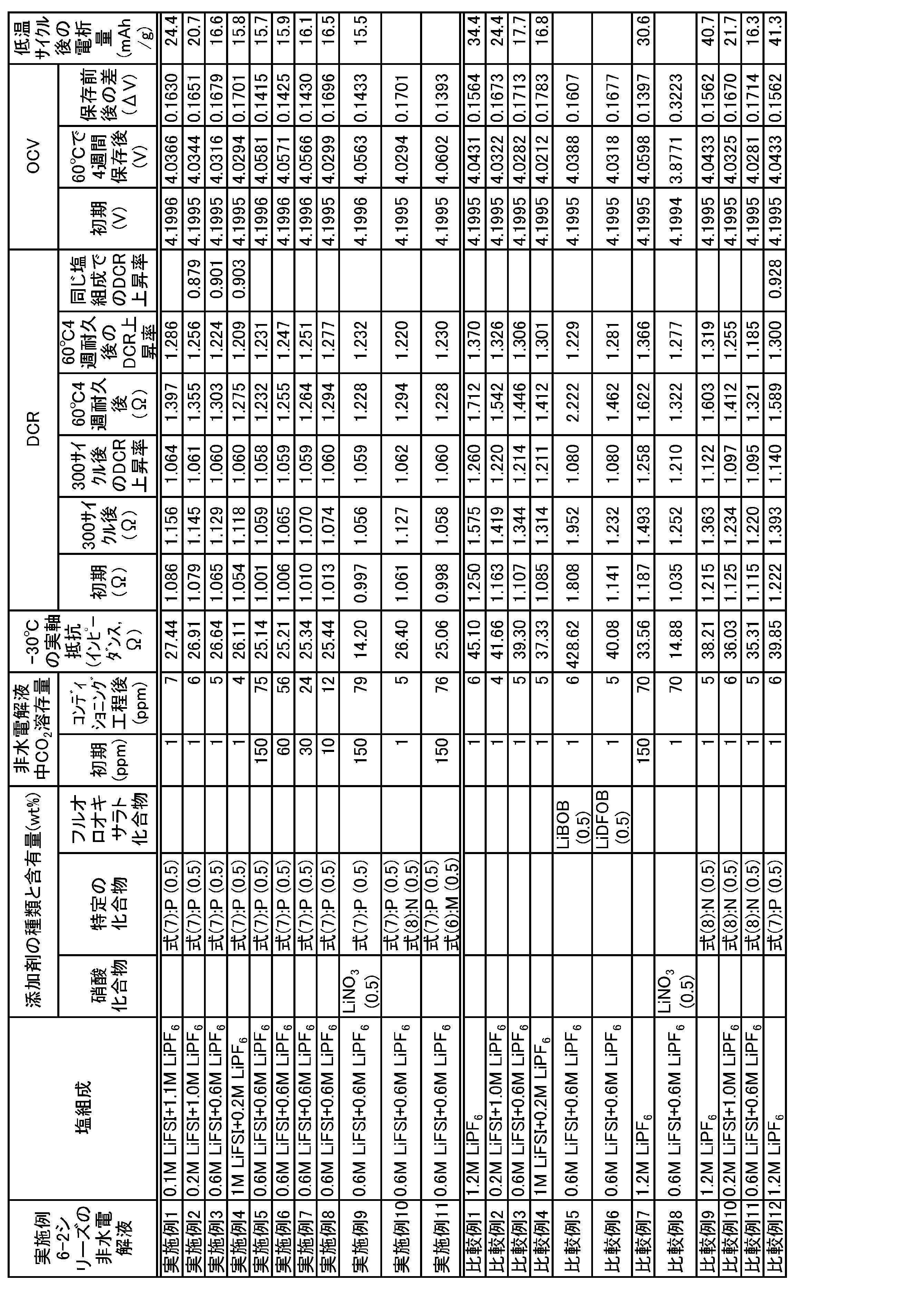
・実施例1~4と比較例2~4との比較により、LiFSIの濃度に依存して、インピーダンス及びDCR(初期DCR、300サイクル後DCR及び60℃4週耐久後DCR)は低減するものの、電解液に亜リン酸トリス(トリメチルシリル)(化合物P)を添加することで、前記の低減効果が顕著になることが分かった。
・また、実施例1~4と比較例2~4との比較により、LiFSIの濃度に依存して、保存前後のOCV差(ΔV)が大きい、即ち自己放電が増大するものの、電解液に亜リン酸トリス(トリメチルシリル)を添加することで、保存前後のOCV差(ΔV)が小さい、即ち自己放電が抑制されることが分かった。
・同じ塩組成の実施例2~4と比較例2~4との比較、及び同じ塩組成の比較例12と比較例1との比較により、LiFSI及びLiPF6を含む混合塩組成は、LiPF6のみを含む単体塩組成よりも、亜リン酸トリス(トリメチルシリル)添加によるインピーダンス低減効果、自己放電抑制効果及びDCR上昇抑制効果が高いことが分かった。
・比較例1~3、比較例9、12、実施例2~7を比較すると、LiFSI濃度に依存し、低温サイクル後の電析量が減少しており、低温充電による負極の劣化が低減することがわかる。LiPF6のみを含む単体塩組成に亜リン酸トリス(トリメチルシリル)を添加すると低温サイクル中に負極へのリチウム電析が増加し、低温充電による負極の劣化が進んでいることがわかる。LiFSI及びLiPF6を含む混合塩組成では、亜リン酸トリス(トリメチルシリル)を添加することで低温サイクル後の電析量が減少し、低温充電による負極の劣化が抑制されていることがわかる。またCO2を溶存させると低温電析が抑制されることがわかる。
・これらLiPF6のみを含む単体塩組成よりもLiFSI及びLiPF6を含む混合塩組成のほうが亜リン酸トリス(トリメチルシリル)の添加効果が高い理由については、LiFSIのアニオン成分由来の被膜が正負極界面に形成されるため、LiFSIの溶解性が高いことから低温での電解液粘度が低減されるため等が考えられる。
・同じ塩組成の実施例3と実施例5~8との比較により、亜リン酸トリス(トリメチルシリル)を含む電解液に、CO2を溶存させることで、インピーダンス及びDCR低減効果と自己放電抑制効果とがより一層高くなることが分かった。また、これら効果は、電解液中のCO2溶存量が10質量ppm超過(例えば20質量ppm以上)であるときに顕著になることが分かった。
・CO2溶存によりこれら効果が改善する理由は、正負極にCO2由来の被膜が形成されることで保存中の正極へのリチウムイオンインターカレント(インターカレーション(挿入)反応)が抑制されること、正極での副反応が抑制されること、負極への低温充電受入性が改善されること等が考えられる。
・実施例3、5,10,11の比較により、亜リン酸トリス(トリメチルシリル)を含む電解液に、リン酸トリメチルシリル(化合物N)又はポリリン酸トリメチルシリル(M)をさらに添加することで、インピーダンス及びDCRがさらに低減することが分かった。・CO2溶存による自己放電抑制効果がLiPF6単体塩組成よりもLiFSI及びLiPF6を含む混合塩組成の電解液のほうが高い理由については、充電時に正負極に形成されるFSIのアニオン成分による被膜と、CO2による炭酸リチウム成分による被膜との形成順位などが関係していると考えられる。
・同じ塩組成の実施例5,9及び比較例8の比較により、亜リン酸トリス(トリメチルシリル)を含む電解液に、LiNO3をさらに添加することで、インピーダンス及びDCRが顕著に低減することが分かった。一方、自己放電が増大するものの、当該電解液にCO2を溶存させることで、LiNO3添加に起因する自己放電が抑制されることが分かった。
・同じ塩組成での亜リン酸トリス(トリメチルシリル)添加による60℃4週耐久後のDCR上昇率を比較すると、LiPF6単体塩組成よりもLiFSI及びLiPF6を含む混合塩組成の電解液のほうが顕著に低く、DCR上昇率抑制効果が高いことが分かった。これは、同じ塩組成での亜リン酸トリス(トリメチルシリル)添加による300サイクル後のDCR上昇率も同様である。この理由も正負極へのLiFSIのアニオン被膜が形成されるためと考えられる。
[実施例1~8]
電解液溶媒としてエチレンカーボネート(EC):エチルメチルカーボネート(EMC)=3:7(体積比)組成の混合溶媒(キシダ化学(株)製)に、LiFSI((株)日本触媒製)及びLiPF6(ステラケミファ(株)製)を含む混合塩組成の電解質塩をそれぞれ表19に示す濃度となるように溶解した。前記で得られた溶液に、一般式(9)で表されるボロキシン化合物(9)として2,4,6-トリメトキシボロキシン(Bx(OMe)3、化合物Q、東京化成工業(株)製)を表19に示す含有量となるように添加し、1日撹拌することにより非水電解液(リファレンス電解液)を調製した。なお、実施例8では、前記で得られた溶液に、硝酸化合物(12)として硝酸リチウム(LiNO3、東京化成工業(株)製)を表19に示す含有量となるようにさらに添加し、1日攪拌後にメンブレンフィルタでろ過した。続いて、前記で得られた各リファレンス電解液を用い、前記と同様にして溶存工程を行った。得られたCO2溶存電解液を用い、前記と同様にしてセルを作製し、セルの評価を行った。その結果を表19に示す。
前記と同じ混合溶媒に、LiFSI及びLiPF6を含む混合塩組成の電解質塩、又はLiPF6のみを含む単体塩組成の電解質塩をそれぞれ表18に示す濃度となるように溶解した。比較例1~4では、前記で得られた溶液を非水電解液(リファレンス電解液)として用いた。比較例5では、前記で得られた溶液に、フルオロオキサラト化合物(13)としてリチウムビス(オキサラト)ボレート(LiBOB、東京化成工業(株)製)を表19に示す含有量となるようにさらに添加し、1日攪拌することにより非水電解液を調製した。比較例6では、前記で得られた溶液に、フルオロオキサラト化合物(13)としてリチウムジフルオロオキサラトボレート(LiDFOB、東京化成工業(株)製)を表19に示す含有量となるようにさらに添加し、1日攪拌することにより非水電解液を調製した。比較例8では、前記で得られた溶液に、硝酸化合物(12)として硝酸リチウム(LiNO3、東京化成工業(株)製)を表19に示す含有量となるようにさらに添加し、1日攪拌後にメンブレンフィルタでろ過することにより非水電解液を調製した。比較例9~11では、前記で得られた溶液に、2,4,6-トリメトキシボロキシン(化合物Q)をそれぞれ表19に示す含有量となるようにさらに添加し、1日攪拌することにより非水電解液を調製した。比較例12では、前記で得られた溶液に、リン酸トリストリメチルシリル(化合物N)を表19に示す含有量となるようにさらに添加し、1日攪拌することにより非水電解液を調製した。続いて、電解液の溶存工程を行わなかったこと以外は前記と同様にして、前記で得られた各リファレンス電解液を用いてセルを作製し、セルの評価を行った。その結果を表19に示す。
前記と同じ混合溶媒に、LiPF6のみを含む単体塩組成の電解質塩を表19に示す濃度となるように溶解することにより非水電解液(リファレンス電解液)を調製した。続いて、前記で得られたリファレンス電解液を用い、前記と同様にして溶存工程を行った。得られたCO2溶存電解液を用い、前記と同様にしてセルを作製し、セルの評価を行った。その結果を表19に示す。

・同じ塩組成の比較例2~3と比較例10~11との比較により、LiFSIの濃度に依存して、インピーダンス及びDCR(初期DCR、300サイクル後DCR及び60℃4週耐久後DCR)は低減するものの、電解液に2,4,6-トリメトキシボロキシン(化合物Q)を添加することで、前記の低減効果が顕著になることが分かった。
・実施例1~7と比較例10~11との比較により、LiFSIの濃度に依存して、保存前後のOCV差(ΔV)が大きい、即ち自己放電が増大するものの、2,4,6-トリメトキシボロキシンを含む電解液にCO2を溶存させることで、保存前後のOCV差(ΔV)が小さい、即ち自己放電が抑制されると共に、インピーダンス及びDCRがさらに低減することが分かった。比較例1~3比較例9~11を比較すると2,4,6-トリメトキシボロキシンのみを添加しても自己放電抑制効果は不十分であることがわかった。
・比較例1~3、比較例9~11、実施例2~7を比較すると、LiFSI濃度に依存し、低温サイクル後の電析量が減少しており、低温充電による負極の劣化が低減することがわかる。LiPF6のみを含む単体塩組成に2,4,6-トリメトキシボロキシンを添加すると低温サイクル中に負極へのリチウム電析が増加し、低温充電による負極の劣化が進んでいることがわかる。LiFSI及びLiPF6を含む混合塩組成では、2,4,6-トリメトキシボロキシンを添加することで低温サイクル後の電析量が減少し、低温充電による負極の劣化が抑制されていることがわかる。またCO2を溶存させるとさらに低温電析が抑制されることがわかる。
・これらLiPF6のみを含む単体塩組成よりもLiFSI及びLiPF6を含む混合塩組成のほうが2,4,6-トリメトキシボロキシンの添加効果が高い理由については、LiFSIのアニオン成分由来の被膜が正負極界面に形成されるため、LiFSIの溶解性が高いことから低温での電解液粘度が低減されるため等が考えられる。
・インピーダンス及びDCR低減効果、自己放電抑制効果並びに低温電析抑制効果は、電解液中のCO2溶存量が10質量ppm超過(例えば20質量ppm以上)であるときに顕著になることが分かった。
・CO2溶存によりこれら効果が改善する理由は、正負極にCO2由来の被膜が形成されることで保存中の正極へのリチウムイオンインターカレント(インターカレーション(挿入)反応)が抑制されること、正極での副反応が抑制されること、負極への低温充電受入性が改善されること等が考えられる。
・同じ塩組成の実施例3,8及び比較例8の比較により、2,4,6トリメトキシボロキシンを含む電解液に、LiNO3をさらに添加することで、インピーダンス及びDCRが顕著に低減することが分かった。一方、自己放電が増大するものの、当該電解液にCO2を溶存させることで、LiNO3添加に起因する自己放電が抑制されることが分かった。・CO2溶存による自己放電抑制効果がLiPF6単体塩組成よりもLiFSI及びLiPF6を含む混合塩組成の電解液のほうが高い理由については、充電時に正負極に形成されるFSIのアニオン成分による被膜と、CO2による炭酸リチウム成分による被膜との形成順位などが関係していると考えられる。
・同じ塩組成の比較例11と比較例12との比較により、2,4,6-トリメトキシボロキシンを含む電解液に、リン酸トリストリメチルシリル(化合物N)をさらに添加することで、インピーダンス及びDCRが低減することが分かった。
・同じ塩組成での2,4,6-トリメトキシボロキシン添加による60℃4週耐久後のDCR上昇率を比較すると、LiPF6単体塩組成よりもLiFSI及びLiPF6を含む混合塩組成の電解液のほうが顕著に低く、DCR上昇率抑制効果が高いことが分かった。これは、同じ塩組成での2,4,6-トリメトキシボロキシン添加による300サイクル後のDCR上昇率も同様である。また、DCR上昇率抑制効果は、CO2溶存により、さらに高まることが分かった。この理由も正負極へのLiFSIのアニオン被膜が形成されるためと考えられる。
[実施例1~8]
電解液溶媒としてエチレンカーボネート(EC):エチルメチルカーボネート(EMC)=3:7(体積比)組成の混合溶媒(キシダ化学(株)製)に、LiFSI((株)日本触媒製)及びLiPF6(ステラケミファ(株)製)を含む混合塩組成の電解質塩をそれぞれ表20に示す濃度となるように溶解した。前記で得られた溶液に、一般式(9)で表されるボロキシン化合物(9)として2,4,6-トリイソプロポキシボロキシン(Bx(OiPr)3、化合物R、京化成工業(株)製)を表20に示す含有量となるように添加し、1日撹拌することにより非水電解液(リファレンス電解液)を調製した。なお、実施例8では、前記で得られた溶液に、硝酸化合物(12)として硝酸リチウム(LiNO3、東京化成工業(株)製)を表20に示す含有量となるようにさらに添加し、1日攪拌後にメンブレンフィルタでろ過した。続いて、前記で得られた各リファレンス電解液を用い、前記と同様にして溶存工程を行った。得られたCO2溶存電解液を用い、前記と同様にしてセルを作製し、セルの評価を行った。その結果を表20に示す。
前記と同じ混合溶媒に、LiFSI及びLiPF6を含む混合塩組成の電解質塩、又はLiPF6のみを含む単体塩組成の電解質塩をそれぞれ表20に示す濃度となるように溶解した。比較例1~4では、前記で得られた溶液を非水電解液(リファレンス電解液)として用いた。比較例5では、前記で得られた溶液に、フルオロオキサラト化合物(13)としてリチウムビス(オキサラト)ボレート(LiBOB、東京化成工業(株)製)を表19に示す含有量となるようにさらに添加し、1日攪拌することにより非水電解液を調製した。比較例6では、前記で得られた溶液に、フルオロオキサラト化合物(13)としてリチウムジフルオロオキサラトボレート(LiDFOB、東京化成工業(株)製)を表20に示す含有量となるようにさらに添加し、1日攪拌することにより非水電解液を調製した。比較例8では、前記で得られた溶液に、硝酸化合物(12)として硝酸リチウム(LiNO3、東京化成工業(株)製)を表20に示す含有量となるようにさらに添加し、1日攪拌後にメンブレンフィルタでろ過することにより非水電解液を調製した。比較例9~11では、前記で得られた溶液に、2,4,6-トリイソプロポキシボロキシン(化合物R)をそれぞれ表20に示す含有量となるようにさらに添加し、1日攪拌することにより非水電解液を調製した。比較例12では、前記で得られた溶液に、リン酸トリストリメチルシリル(化合物N)を表20に示す含有量となるようにさらに添加し、1日攪拌することにより非水電解液を調製した。続いて、電解液の溶存工程を行わなかったこと以外は前記と同様にして、前記で得られた各リファレンス電解液を用いてセルを作製し、セルの評価を行った。その結果を表20に示す。
前記と同じ混合溶媒に、LiPF6のみを含む単体塩組成の電解質塩を表19に示す濃度となるように溶解することにより非水電解液(リファレンス電解液)を調製した。続いて、前記で得られたリファレンス電解液を用い、前記と同様にして溶存工程を行った。得られたCO2溶存電解液を用い、前記と同様にしてセルを作製し、セルの評価を行った。その結果を表20に示す。

・同じ塩組成の比較例2~3と比較例10~11との比較により、LiFSIの濃度に依存して、インピーダンス及びDCR(初期DCR、300サイクル後DCR及び60℃4週耐久後DCR)は低減するものの、電解液に2,4,6-トリイソプロポキシボロキシン(化合物R)を添加することで、前記の低減効果が顕著になることが分かった。
・実施例1~7と比較例10~11との比較により、LiFSIの濃度に依存して、保存前後のOCV差(ΔV)が大きい、即ち自己放電が増大するものの、2,4,6-トリイソプロポキシボロキシンを含む電解液にCO2を溶存させることで、保存前後のOCV差(ΔV)が小さい、即ち自己放電が抑制されると共に、インピーダンス及びDCRがさらに低減することが分かった。比較例1~3比較例9~11を比較すると2,4,6-トリイソプロポキシボロキシンのみを添加しても自己放電抑制効果は不十分であることがわかった。
・比較例1~3、比較例9~11、実施例2~7を比較すると、LiFSI濃度に依存し、低温サイクル後の電析量が減少しており、低温充電による負極の劣化が低減することがわかる。LiPF6のみを含む単体塩組成に2,4,6-トリイソプロポキシボロキシンを添加すると低温サイクル中に負極へのリチウム電析が増加し、低温充電による負極の劣化が進んでいることがわかる。LiFSI及びLiPF6を含む混合塩組成では、2,4,6-トリイソプロポキシボロキシンを添加することで低温サイクル後の電析量が減少し、低温充電による負極の劣化が抑制されていることがわかる。またCO2を溶存させるとさらに低温電析が抑制されることがわかる。
・これらLiPF6のみを含む単体塩組成よりもLiFSI及びLiPF6を含む混合塩組成のほうが2,4,6-トリイソプロポキシボロキシンの添加効果が高い理由については、LiFSIのアニオン成分由来の被膜が正負極界面に形成されるため、LiFSIの溶解性が高いことから低温での電解液粘度が低減されるため等が考えられる。
・インピーダンス及びDCR低減効果、自己放電抑制効果並びに低温電析抑制効果は、電解液中のCO2溶存量が10質量ppm超過(例えば20質量ppm以上)であるときに顕著になることが分かった。
・CO2溶存によりこれら効果が改善する理由は、正負極にCO2由来の被膜が形成されることで保存中の正極へのリチウムイオンインターカレント(インターカレーション(挿入)反応)が抑制されること、正極での副反応が抑制されること、負極への低温充電受入性が改善されること等が考えられる。
・CO2溶存による自己放電抑制効果がLiPF6単体塩組成よりもLiFSI及びLiPF6を含む混合塩組成の電解液のほうが高い理由については、充電時に正負極に形成されるFSIのアニオン成分による被膜と、CO2による炭酸リチウム成分による被膜との形成順位などが関係していると考えられる。
・同じ塩組成の実施例3,8及び比較例8の比較により、2,4,6-トリイソプロポキシボロキシンを含む電解液に、LiNO3をさらに添加することで、インピーダンス及びDCRが顕著に低減することが分かった。一方、自己放電が増大するものの、当該電解液にCO2を溶存させることで、LiNO3添加に起因する自己放電が抑制されることが分かった。
・同じ塩組成の比較例11と比較例12との比較により、2,4,6-トリイソプロポキシボロキシンを含む電解液に、リン酸トリストリメチルシリルをさらに添加することで、インピーダンス及びDCRが低減することが分かった。
・同じ塩組成での2,4,6-トリイソプロポキシボロキシン添加による60℃4週耐久後のDCR上昇率を比較すると、LiPF6単体塩組成よりもLiFSI及びLiPF6を含む混合塩組成の電解液のほうが顕著に低く、DCR上昇率抑制効果が高いことが分かった。これは、同じ塩組成での2,4,6-トリイソプロポキシボロキシン添加による300サイクル後のDCR上昇率も同様である。また、DCR上昇率抑制効果は、CO2溶存により、さらに高まることが分かった。この理由も正負極へのLiFSIのアニオン被膜が形成されるためと考えられる。
[実施例1~8]
電解液溶媒としてエチレンカーボネート(EC):エチルメチルカーボネート(EMC)=3:7(体積比)組成の混合溶媒(キシダ化学(株)製)に、LiFSI((株)日本触媒製)及びLiPF6(ステラケミファ(株)製)を含む混合塩組成の電解質塩をそれぞれ表21に示す濃度となるように溶解した。前記で得られた溶液に、一般式(9)で表されるボロキシン化合物(9)として2,4,6-トリフェニルボロキシン(Bx(OcHx)3、化合物S、東京化成工業(株)製)を表21に示す含有量となるように添加し、1日撹拌することにより非水電解液(リファレンス電解液)を調製した。なお、実施例8では、前記で得られた溶液に、硝酸化合物(12)として硝酸リチウム(LiNO3、東京化成工業(株)製)を表21に示す含有量となるようにさらに添加し、1日攪拌後にメンブレンフィルタでろ過した。続いて、前記で得られた各リファレンス電解液を用い、前記と同様にして溶存工程を行った。得られたCO2溶存電解液を用い、前記と同様にしてセルを作製し、セルの評価を行った。その結果を表21に示す。
前記と同じ混合溶媒に、LiFSI及びLiPF6を含む混合塩組成の電解質塩、又はLiPF6のみを含む単体塩組成の電解質塩をそれぞれ表21に示す濃度となるように溶解した。比較例1~4では、前記で得られた溶液を非水電解液(リファレンス電解液)として用いた。比較例5では、前記で得られた溶液に、フルオロオキサラト化合物(13)としてリチウムビス(オキサラト)ボレート(LiBOB、東京化成工業(株)製)を表19に示す含有量となるようにさらに添加し、1日攪拌することにより非水電解液を調製した。比較例6では、前記で得られた溶液に、フルオロオキサラト化合物(13)としてリチウムジフルオロオキサラトボレート(LiDFOB、東京化成工業(株)製)を表21に示す含有量となるようにさらに添加し、1日攪拌することにより非水電解液を調製した。比較例8では、前記で得られた溶液に、硝酸化合物(12)として硝酸リチウム(LiNO3、東京化成工業(株)製)を表21に示す含有量となるようにさらに添加し、1日攪拌後にメンブレンフィルタでろ過することにより非水電解液を調製した。比較例9~11では、前記で得られた溶液に、2,4,6-トリフェニルボロキシン(化合物S)をそれぞれ表21に示す含有量となるようにさらに添加し、1日攪拌することにより非水電解液を調製した。比較例12では、前記で得られた溶液に、リン酸トリストリメチルシリル(化合物N)を表21に示す含有量となるようにさらに添加し、1日攪拌することにより非水電解液を調製した。続いて、電解液の溶存工程を行わなかったこと以外は前記と同様にして、前記で得られた各リファレンス電解液を用いてセルを作製し、セルの評価を行った。その結果を表21に示す。
前記と同じ混合溶媒に、LiPF6のみを含む単体塩組成の電解質塩を表19に示す濃度となるように溶解することにより非水電解液(リファレンス電解液)を調製した。続いて、前記で得られたリファレンス電解液を用い、前記と同様にして溶存工程を行った。得られたCO2溶存電解液を用い、前記と同様にしてセルを作製し、セルの評価を行った。その結果を表21に示す。
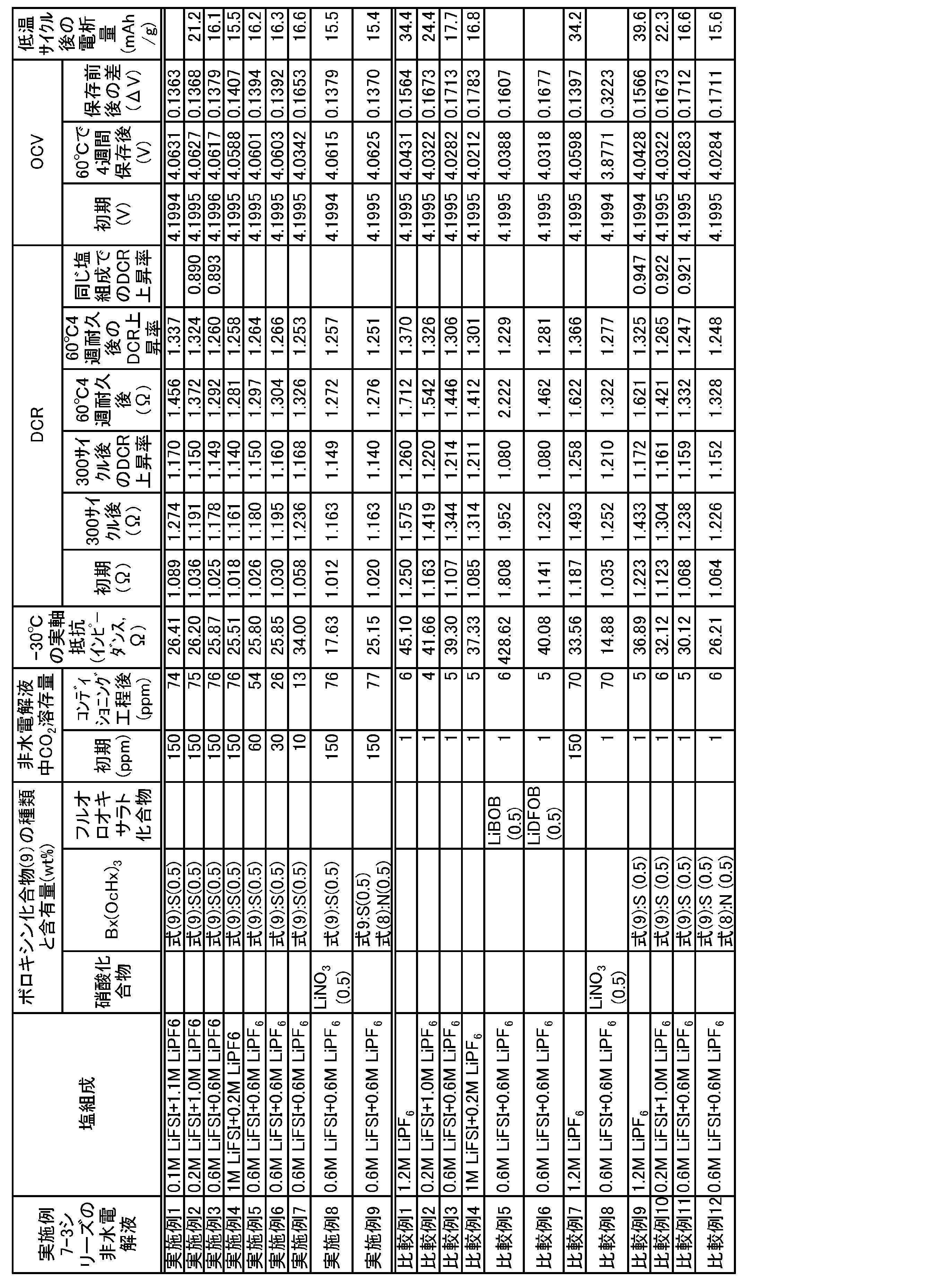
・同じ塩組成の比較例2~3と比較例10~11との比較により、LiFSIの濃度に依存して、インピーダンス及びDCR(初期DCR、300サイクル後DCR及び60℃4週耐久後DCR)は低減するものの、電解液に2,4,6-トリフェニルボロキシン(化合物S)を添加することで、前記の低減効果が顕著になることが分かった。
・実施例1~7と比較例10~11との比較により、LiFSIの濃度に依存して、保存前後のOCV差(ΔV)が大きい、即ち自己放電が増大するものの、2,4,6-トリフェニルボロキシンを含む電解液にCO2を溶存させることで、保存前後のOCV差(ΔV)が小さい、即ち自己放電が抑制されると共に、インピーダンス及びDCRがさらに低減することが分かった。比較例1~3比較例9~11を比較すると2,4,6-トリフェニルボロキシンのみを添加しても自己放電抑制効果は不十分であることがわかった。
・比較例1~3、比較例9~11、実施例2~7を比較すると、LiFSI濃度に依存し、低温サイクル後の電析量が減少しており、低温充電による負極の劣化が低減することがわかる。LiPF6のみを含む単体塩組成に2,4,6-トリフェニルボロキシンを添加すると低温サイクル中に負極へのリチウム電析が増加し、低温充電により負極の劣化が進んでいることがわかる。LiFSI及びLiPF6を含む混合塩組成では、2,4,6-トリフェニルボロキシンを添加することで低温サイクル後の電析量が減少し、低温充電による負極の劣化が抑制されていることがわかる。またCO2を溶存させるとさらに低温電析が抑制されることがわかる。
・これらLiPF6のみを含む単体塩組成よりもLiFSI及びLiPF6を含む混合塩組成のほうが2,4,6-トリフェニルボロキシンの添加効果が高い理由については、LiFSIのアニオン成分由来の被膜が正負極界面に形成されるため、LiFSIの溶解性が高いことから低温での電解液粘度が低減されるため等が考えられる。
・インピーダンス及びDCR低減効果、自己放電抑制効果並びに低温電析抑制効果は、電解液中のCO2溶存量が10質量ppm超過(例えば20質量ppm以上)であるときに顕著になることが分かった。
・CO2溶存によりこれら効果が改善する理由は、正負極にCO2由来の被膜が形成されることで保存中の正極へのリチウムイオンインターカレント(インターカレーション(挿入)反応)が抑制されること、正極での副反応が抑制されること、負極への低温充電受入性が改善されること等が考えられる。
・CO2溶存による自己放電抑制効果がLiPF6単体塩組成よりもLiFSI及びLiPF6を含む混合塩組成の電解液のほうが高い理由については、充電時に正負極に形成されるFSIのアニオン成分による被膜と、CO2による炭酸リチウム成分による被膜との形成順位などが関係していると考えられる。
・同じ塩組成の実施例3,8及び比較例8の比較により、2,4,6トリフェニルボロキシンを含む電解液に、LiNO3をさらに添加することで、インピーダンス及びDCRが顕著に低減することが分かった。一方、自己放電が増大するものの、当該電解液にCO2を溶存させることで、LiNO3添加に起因する自己放電が抑制されることが分かった。・同じ塩組成の比較例11と比較例12との比較により、2,4,6-トリフェニルボロキシンを含む電解液に、リン酸トリストリメチルシリル(化合物N)をさらに添加することで、インピーダンス及びDCRが低減することが分かった。
・同じ塩組成での2,4,6-トリフェニルボロキシン添加による60℃4週耐久後のDCR上昇率を比較すると、LiPF6単体塩組成よりもLiFSI及びLiPF6を含む混合塩組成の電解液のほうが顕著に低く、DCR上昇率抑制効果が高いことが分かった。これは、同じ塩組成での2,4,6-トリフェニルボロキシン添加による300サイクル後のDCR上昇率も同様である。また、DCR上昇率抑制効果は、CO2溶存により、さらに高まることが分かった。この理由も正負極へのLiFSIのアニオン被膜が形成されるためと考えられる。
[実施例1~4]
電解液溶媒としてエチレンカーボネート(EC):エチルメチルカーボネート(EMC)=3:7(体積比)組成の混合溶媒(キシダ化学(株)製)に、LiFSI((株)日本触媒製)及びLiPF6(ステラケミファ(株)製)を含む混合塩組成の電解質塩をそれぞれ表22に示す濃度となるように溶解した。前記で得られた溶液に、一般式(14)で表されるケイ素原子含有化合物(14)としてテトラキス(トリメチルシリル)シラン(化合物Y、東京化成工業(株)製)を表22に示す含有量となるように添加し、1日撹拌し、不溶分をろ過することにより非水電解液(リファレンス電解液)を調製した。続いて、電解液の溶存工程を行わなかったこと以外は前記と同様にして、前記で得られた各リファレンス電解液を用いてセルを作製し、セルの評価を行った。その結果を表22に示す。
前記と同様にして非水電解液(リファレンス電解液)を調製した。続いて、前記で得られた各リファレンス電解液を用い、前記と同様にして溶存工程を行った。得られたCO2溶存電解液を用い、前記と同様にしてセルを作製し、セルの評価を行った。その結果を表22に示す。
前記と同じ混合溶媒に、LiFSI及びLiPF6を含む混合塩組成の電解質塩、又はLiPF6のみを含む単体塩組成の電解質塩をそれぞれ表22に示す濃度となるように溶解した。比較例1~4では、前記で得られた溶液を非水電解液(リファレンス電解液)として用いた。比較例5では、前記で得られた溶液に、テトラキス(トリメチルシリル)シラン(化合物Y)を表22に示す含有量となるようにさらに添加し、1日攪拌することにより非水電解液を調製した。続いて、電解液の溶存工程を行わなかったこと以外は前記と同様にして、前記で得られた各リファレンス電解液を用いてセルを作製し、セルの評価を行った。その結果を表22に示す。

・実施例1~4と比較例2~4との比較により、LiFSIの濃度に依存して、インピーダンス及びDCR(初期DCR、300サイクル後DCR及び60℃4週耐久後DCR)は低減するものの、電解液にテトラキス(トリメチルシリル)シラン(化合物Y)を添加することで、前記の低減効果が顕著になることが分かった。
・また、実施例1~4と比較例2~4との比較により、LiFSIの濃度に依存して、保存前後のOCV差(ΔV)が大きい、即ち自己放電が増大するものの、電解液にテトラキス(トリメチルシリル)シランを添加することで、保存前後のOCV差(ΔV)が小さい、即ち自己放電が抑制されることが分かった。
・同じ塩組成の実施例2~4と比較例2~4との比較、及び同じ塩組成の比較例5と比較例1との比較により、LiFSI及びLiPF6を含む混合塩組成は、LiPF6のみを含む単体塩組成よりも、テトラキス(トリメチルシリル)シラン添加によるインピーダンス低減効果、自己放電抑制効果及びDCR上昇抑制効果が高いことが分かった。
・比較例1~5、実施例2~8を比較すると、LiFSI濃度に依存し、低温サイクル後の電析量が減少しており、低温充電による負極の劣化が低減することがわかる。LiPF6のみを含む単体塩組成にテトラキス(トリメチルシリル)シランを添加すると低温サイクル中に負極へのリチウム電析が増加し、低温充電による負極の劣化が進んでいることがわかる。LiFSI及びLiPF6を含む混合塩組成では、テトラキス(トリメチルシリル)シランを添加することで低温サイクル後の電析量が減少し、低温充電による負極の劣化が抑制されていることがわかる。
・これらLiPF6のみを含む単体塩組成よりもLiFSI及びLiPF6を含む混合塩組成のほうがテトラキス(トリメチルシリル)シランの添加効果が高い理由については、LiFSIのアニオン成分由来の被膜が正負極界面に形成されるため、LiFSIの溶解性が高いことから低温での電解液粘度が低減されるため等が考えられる。
・同じ塩組成の実施例3と実施例5~8との比較により、テトラキス(トリメチルシリル)シランを含む電解液に、CO2を溶存させることで、インピーダンス及びDCR低減効果と自己放電抑制効果とがより一層高くなることが分かった。また、これら効果は、電解液中のCO2溶存量が10質量ppm超過(例えば20質量ppm以上)であるときに顕著になることが分かった。
・CO2溶存によりこれら効果が改善する理由は、正負極にCO2由来の被膜が形成されることで保存中の正極へのリチウムイオンインターカレント(インターカレーション(挿入)反応)が抑制されること、正極での副反応が抑制されること、負極への低温充電受入性が改善されること等が考えられる。
・同じ塩組成でのテトラキス(トリメチルシリル)シラン添加による60℃4週耐久後のDCR上昇率を比較すると、LiPF6単体塩組成よりもLiFSI及びLiPF6を含む混合塩組成の電解液のほうが顕著に低く、DCR上昇率抑制効果が高いことが分かった。これは、同じ塩組成でのテトラキス(トリメチルシリル)シラン添加による300サイクル後のDCR上昇率も同様である。この理由も正負極へのLiFSIのアニオン被膜が形成されるためと考えられる。
Claims (8)
- 電解質としてLiN(FSO2)2と、
添加剤として一般式(2)で表されるケイ素原子含有化合物、一般式(14)で表されるケイ素原子含有化合物、一般式(3)で表されるホウ素原子含有化合物、一般式(4)で表される炭素原子含有化合物、一般式(5)で表される硫黄原子含有化合物、及び一般式(6)で表されるリン原子含有化合物からなる群より選択される少なくとも一種とを含む、非水電解液。
Si(R5)2(OR6)2 (2)
(式(2)中、R5及びR6は同一又は異なって炭素数1~6のアルキル基(置換基を有していてもよい)、炭素数1~6のフルオロアルキル基(置換基を有していてもよい)、アリール基(置換基を有していてもよい)、シリル基(置換基を有していてもよい)、アルカリ金属原子、オニウム塩又は水素原子を示す。)
Si(R5)4 (14)
(式(14)中、R5は前記と同じものを示す。)
B(OR6)3 (3)
(式(3)中、R6は前記と同じものを示す。)
C(=O)(R5)(OR6) (4)
(式(4)中、R5及びR6は前記と同じものを示す。)
{S(=O)2(R5)y}x(OR6)x(2-y) (5)
(式(5)中、R5及びR6は前記と同じものを示し、xは1又は2の整数を示し、yは0又は1の整数を示す。なお、xが2且つyが1のとき(OR6)2は(-O-R6-O-)であり、式(5)はS(=O)2(R5)-O-R6-O-S(=O)(R5)を示す。)
P(=O)(R5)y(OR6)2 (6)
(式(6)中、R5、R6及びyは前記と同じものを示す。なお、式(6)が重合基の場合、yは0であり、(OR6)のうち1つは(-O-)であり、式(6)は[-P(=O)(OR6)O-]nを示す。) - 二酸化炭素(CO2)、一酸化炭素(CO)、炭酸水素イオン(HCO3 -)及び炭酸イオン(CO3 2-)の少なくとも一種を溶存している、請求項1に記載の非水電解液。
- 電解質としてLiN(FSO2)2と、
添加剤として一般式(2)で表されるケイ素原子含有化合物、一般式(14)で表されるケイ素原子含有化合物、一般式(3)で表されるホウ素原子含有化合物、一般式(4)で表される炭素原子含有化合物、一般式(5)で表される硫黄原子含有化合物、一般式(6)で表されるリン原子含有化合物、一般式(7)で表されるリン原子含有化合物、一般式(8)で表されるリン原子含有化合物、及び一般式(9)で表されるボロキシン化合物からなる群より選択される少なくとも一種とを含み、
二酸化炭素(CO2)、一酸化炭素(CO)、炭酸水素イオン(HCO3 -)及び炭酸イオン(CO3 2-)の少なくとも一種を溶存している、非水電解液。
Si(R5)2(OR6)2 (2)
(式(2)中、R5及びR6は同一又は異なって炭素数1~6のアルキル基(置換基を有していてもよい)、炭素数1~6のフルオロアルキル基(置換基を有していてもよい)、アリール基(置換基を有していてもよい)、シリル基(置換基を有していてもよい)、アルカリ金属原子、オニウム塩又は水素原子を示す。)
Si(R5)4 (14)
(式(14)中、R5は前記と同じものを示す。)
B(OR6)3 (3)
(式(3)中、R6は前記と同じものを示す。)
C(=O)(R5)(OR6) (4)
(式(4)中、R5及びR6は前記と同じものを示す。)
{S(=O)2(R5)y}x(OR6)x(2-y) (5)
(式(5)中、R5及びR6は前記と同じものを示し、xは1又は2の整数を示し、yは0又は1の整数を示す。なお、xが2且つyが1のとき(OR6)2は(-O-R6-O-)であり、式(5)はS(=O)2(R5)-O-R6-O-S(=O)(R5)を示す。)
P(=O)(R5)y(OR6)2 (6)
(式(6)中、R5、R6及びyは前記と同じものを示す。なお、式(6)が重合基の場合、yは0であり、(OR6)のうち1つは(-O-)であり、式(6)は[-P(=O)(OR6)O-]nを示す。)
P(OR6)3 (7)
(式(7)中、R6は前記と同じものを示す。)
P(=O)(OR6)3 (8)
(式(8)中、R6は前記と同じものを示す。)

(式(9)中、R7は同一又は異なって炭素数1~6のアルキル基(置換基を有していてもよい)、炭素数1~6のフルオロアルキル基(置換基を有していてもよい)又はシクロアルキル基(置換基を有していてもよい)を示す。) - 前記二酸化炭素(CO2)、一酸化炭素(CO)、炭酸水素イオン(HCO3 -)及び炭酸イオン(CO3 2-)の少なくとも一種の合計溶存量が20質量ppm以上である、請求項2又は3に記載の非水電解液。
- 前記電解質が、一般式(10)で表される化合物、一般式(11)で表される化合物及びLiAsF6からなる群より選択される少なくとも一種をさらに含む、請求項1~4のいずれか一項に記載の非水電解液。
LiPFa(CmF2m+1)6-a (a:0≦a≦6、m:1≦m≦4) (10)
LiBFb(CnF2n+1)4-b (b:0≦b≦4、n:1≦n≦4) (11) - 一般式(12)で表される化合物及び一般式(13)で表される化合物からなる群より選択される少なくとも一種をさらに含む、請求項1~5のいずれか一項に記載の非水電解液。
M1NO3 (M1:アルカリ金属元素を示す。) (12)

(一般式(13)中、M3:B又はP、Af+:金属イオン、H又はオニウムイオン、f:1≦f≦3、g:1≦g≦3、h:g/f、i:1≦h≦3、j:0≦j≦4、k:0又
は1、R3:炭素数1~10のアルキレン基又は炭素数1~10のハロゲン化アルキレン
基、R4:F又は炭素数1~10のフッ素化アルキル基、T1、T2:それぞれ独立にO
又はSを示す。) - 電解質と、
添加剤としてポリリン酸エチル、ポリリン酸(トリイソプロピルシリル)及びポリリン酸[(tert-ブチル)ジメチルシリル]からなる群より選択される少なくとも一種とを含む、非水電解液。 - 請求項1~7のいずれか一項に記載の非水電解液が用いられてなる二次電池。
Priority Applications (5)
| Application Number | Priority Date | Filing Date | Title |
|---|---|---|---|
| JP2023521226A JP7791882B2 (ja) | 2021-05-14 | 2022-05-11 | 非水電解液及び二次電池 |
| EP22807506.5A EP4329036A4 (en) | 2021-05-14 | 2022-05-11 | NON-AQUEOUS ELECTROLYTIC SOLUTION AND SECONDARY BATTERY |
| CN202280034844.0A CN117321824A (zh) | 2021-05-14 | 2022-05-11 | 非水电解液及二次电池 |
| KR1020237043052A KR20240008897A (ko) | 2021-05-14 | 2022-05-11 | 비수전해액 및 2차전지 |
| US18/389,137 US20240105996A1 (en) | 2021-05-14 | 2023-11-13 | Non-aqueous electrolytic solution and secondary battery |
Applications Claiming Priority (2)
| Application Number | Priority Date | Filing Date | Title |
|---|---|---|---|
| JP2021-082508 | 2021-05-14 | ||
| JP2021082508 | 2021-05-14 |
Related Child Applications (1)
| Application Number | Title | Priority Date | Filing Date |
|---|---|---|---|
| US18/389,137 Continuation US20240105996A1 (en) | 2021-05-14 | 2023-11-13 | Non-aqueous electrolytic solution and secondary battery |
Publications (1)
| Publication Number | Publication Date |
|---|---|
| WO2022239807A1 true WO2022239807A1 (ja) | 2022-11-17 |
Family
ID=84029695
Family Applications (1)
| Application Number | Title | Priority Date | Filing Date |
|---|---|---|---|
| PCT/JP2022/019959 Ceased WO2022239807A1 (ja) | 2021-05-14 | 2022-05-11 | 非水電解液及び二次電池 |
Country Status (6)
| Country | Link |
|---|---|
| US (1) | US20240105996A1 (ja) |
| EP (1) | EP4329036A4 (ja) |
| JP (1) | JP7791882B2 (ja) |
| KR (1) | KR20240008897A (ja) |
| CN (1) | CN117321824A (ja) |
| WO (1) | WO2022239807A1 (ja) |
Cited By (5)
| Publication number | Priority date | Publication date | Assignee | Title |
|---|---|---|---|---|
| WO2024106166A1 (ja) * | 2022-11-16 | 2024-05-23 | 株式会社日本触媒 | 非水電解液二次電池 |
| WO2024106165A1 (ja) * | 2022-11-16 | 2024-05-23 | 株式会社日本触媒 | 非水電解液二次電池 |
| EP4379885A1 (en) * | 2022-11-29 | 2024-06-05 | Prime Planet Energy & Solutions, Inc. | Nonaqueous electrolyte solution and electricity storage device including the same |
| JPWO2024116931A1 (ja) * | 2022-11-29 | 2024-06-06 | ||
| WO2026048415A1 (ja) * | 2024-09-02 | 2026-03-05 | Tdk株式会社 | 非水電解質溶液及びリチウムイオン二次電池 |
Families Citing this family (2)
| Publication number | Priority date | Publication date | Assignee | Title |
|---|---|---|---|---|
| KR20230045406A (ko) * | 2021-09-28 | 2023-04-04 | 에스케이온 주식회사 | 리튬 이차 전지용 전해질 및 이를 포함하는 리튬 이차 전지 |
| CN118738554B (zh) * | 2024-06-24 | 2025-07-04 | 湖北能源集团新能源发展有限公司 | 一种高压锂离子电池电解液、制备方法和锂离子储能电池 |
Citations (11)
| Publication number | Priority date | Publication date | Assignee | Title |
|---|---|---|---|---|
| JPH10247519A (ja) * | 1997-03-03 | 1998-09-14 | Sanyo Electric Co Ltd | リチウム二次電池 |
| JP2007234336A (ja) * | 2006-02-28 | 2007-09-13 | Sanyo Electric Co Ltd | リチウム二次電池 |
| JP2015156372A (ja) | 2014-01-15 | 2015-08-27 | 旭化成株式会社 | 非水蓄電デバイス用電解液及びリチウムイオン二次電池 |
| JP2015213015A (ja) * | 2014-05-02 | 2015-11-26 | ソニー株式会社 | 電池、電池パック、バッテリモジュール、電子機器、電動車両、蓄電装置および電力システム |
| JP2016152140A (ja) | 2015-02-18 | 2016-08-22 | 株式会社日立製作所 | リチウム二次電池、リチウム二次電池用電解液、及び、リチウム二次電池の電解液用添加剤 |
| JP2016192401A (ja) | 2015-03-30 | 2016-11-10 | 旭化成株式会社 | 非水蓄電デバイス用電解液添加剤、非水蓄電デバイス用電解液、及びリチウムイオン二次電池 |
| JP2017162793A (ja) * | 2016-03-08 | 2017-09-14 | 株式会社日本触媒 | 非水電解液およびそれを用いた非水電解液二次電池 |
| JP2017529671A (ja) | 2014-09-26 | 2017-10-05 | エルジー・ケム・リミテッド | 非水性電解液及びこれを含むリチウム二次電池 |
| JP2018067501A (ja) | 2016-10-21 | 2018-04-26 | 株式会社Gsユアサ | 非水電解質蓄電素子 |
| WO2020241161A1 (ja) * | 2019-05-31 | 2020-12-03 | 株式会社日本触媒 | 電解質組成物、溶媒組成物、非水電解液及びその用途 |
| JP2021077608A (ja) * | 2019-11-13 | 2021-05-20 | 株式会社Gsユアサ | 非水電解質、非水電解質蓄電素子及び非水電解質蓄電素子の製造方法 |
Family Cites Families (10)
| Publication number | Priority date | Publication date | Assignee | Title |
|---|---|---|---|---|
| JP6065367B2 (ja) * | 2011-06-07 | 2017-01-25 | ソニー株式会社 | 非水電解質電池、電池パック、電子機器、電動車両、蓄電装置および電力システム |
| JP2015213014A (ja) * | 2014-05-02 | 2015-11-26 | ソニー株式会社 | 電池、電池パック、バッテリモジュール、電子機器、電動車両、蓄電装置および電力システム |
| WO2015166620A1 (ja) * | 2014-05-02 | 2015-11-05 | ソニー株式会社 | 電池、電池パック、バッテリモジュール、電子機器、電動車両、蓄電装置および電力システム |
| CN105655638B (zh) * | 2014-11-14 | 2019-12-13 | 宁德时代新能源科技股份有限公司 | 锂金属电池及其电解液 |
| JP2016186910A (ja) * | 2015-03-27 | 2016-10-27 | 旭化成株式会社 | 電解液及びリチウムイオン二次電池 |
| KR102453271B1 (ko) * | 2017-03-17 | 2022-10-12 | 주식회사 엘지에너지솔루션 | 리튬 이차전지용 전해질 및 이를 포함하는 리튬 이차전지 |
| CN117790904A (zh) * | 2017-09-22 | 2024-03-29 | 三菱化学株式会社 | 非水系电解液、非水系电解液二次电池及能源装置 |
| PL3709427T3 (pl) * | 2017-12-01 | 2024-11-25 | Daikin Industries, Ltd. | Elektrolit, urządzenie elektrochemiczne, akumulator litowo-jonowy oraz moduł |
| KR20190080040A (ko) * | 2017-12-28 | 2019-07-08 | 파낙스 이텍(주) | 이차전지용 비수성 전해액 및 이를 포함하는 이차전지 |
| CN110854435B (zh) * | 2019-11-22 | 2022-07-19 | 四川新敏雅电池科技有限公司 | 锂电池电解液及锂电池 |
-
2022
- 2022-05-11 WO PCT/JP2022/019959 patent/WO2022239807A1/ja not_active Ceased
- 2022-05-11 KR KR1020237043052A patent/KR20240008897A/ko active Pending
- 2022-05-11 CN CN202280034844.0A patent/CN117321824A/zh active Pending
- 2022-05-11 JP JP2023521226A patent/JP7791882B2/ja active Active
- 2022-05-11 EP EP22807506.5A patent/EP4329036A4/en active Pending
-
2023
- 2023-11-13 US US18/389,137 patent/US20240105996A1/en active Pending
Patent Citations (11)
| Publication number | Priority date | Publication date | Assignee | Title |
|---|---|---|---|---|
| JPH10247519A (ja) * | 1997-03-03 | 1998-09-14 | Sanyo Electric Co Ltd | リチウム二次電池 |
| JP2007234336A (ja) * | 2006-02-28 | 2007-09-13 | Sanyo Electric Co Ltd | リチウム二次電池 |
| JP2015156372A (ja) | 2014-01-15 | 2015-08-27 | 旭化成株式会社 | 非水蓄電デバイス用電解液及びリチウムイオン二次電池 |
| JP2015213015A (ja) * | 2014-05-02 | 2015-11-26 | ソニー株式会社 | 電池、電池パック、バッテリモジュール、電子機器、電動車両、蓄電装置および電力システム |
| JP2017529671A (ja) | 2014-09-26 | 2017-10-05 | エルジー・ケム・リミテッド | 非水性電解液及びこれを含むリチウム二次電池 |
| JP2016152140A (ja) | 2015-02-18 | 2016-08-22 | 株式会社日立製作所 | リチウム二次電池、リチウム二次電池用電解液、及び、リチウム二次電池の電解液用添加剤 |
| JP2016192401A (ja) | 2015-03-30 | 2016-11-10 | 旭化成株式会社 | 非水蓄電デバイス用電解液添加剤、非水蓄電デバイス用電解液、及びリチウムイオン二次電池 |
| JP2017162793A (ja) * | 2016-03-08 | 2017-09-14 | 株式会社日本触媒 | 非水電解液およびそれを用いた非水電解液二次電池 |
| JP2018067501A (ja) | 2016-10-21 | 2018-04-26 | 株式会社Gsユアサ | 非水電解質蓄電素子 |
| WO2020241161A1 (ja) * | 2019-05-31 | 2020-12-03 | 株式会社日本触媒 | 電解質組成物、溶媒組成物、非水電解液及びその用途 |
| JP2021077608A (ja) * | 2019-11-13 | 2021-05-20 | 株式会社Gsユアサ | 非水電解質、非水電解質蓄電素子及び非水電解質蓄電素子の製造方法 |
Non-Patent Citations (1)
| Title |
|---|
| See also references of EP4329036A4 |
Cited By (9)
| Publication number | Priority date | Publication date | Assignee | Title |
|---|---|---|---|---|
| WO2024106166A1 (ja) * | 2022-11-16 | 2024-05-23 | 株式会社日本触媒 | 非水電解液二次電池 |
| JPWO2024106166A1 (ja) * | 2022-11-16 | 2024-05-23 | ||
| WO2024106165A1 (ja) * | 2022-11-16 | 2024-05-23 | 株式会社日本触媒 | 非水電解液二次電池 |
| EP4379885A1 (en) * | 2022-11-29 | 2024-06-05 | Prime Planet Energy & Solutions, Inc. | Nonaqueous electrolyte solution and electricity storage device including the same |
| JPWO2024116931A1 (ja) * | 2022-11-29 | 2024-06-06 | ||
| WO2024116931A1 (ja) * | 2022-11-29 | 2024-06-06 | 株式会社日本触媒 | 非水電解液二次電池 |
| JP2024078148A (ja) * | 2022-11-29 | 2024-06-10 | プライムプラネットエナジー&ソリューションズ株式会社 | 非水電解液、および該非水電解液を備える蓄電デバイス |
| JP7853196B2 (ja) | 2022-11-29 | 2026-04-28 | プライムプラネットエナジー&ソリューションズ株式会社 | 非水電解液、および該非水電解液を備える蓄電デバイス |
| WO2026048415A1 (ja) * | 2024-09-02 | 2026-03-05 | Tdk株式会社 | 非水電解質溶液及びリチウムイオン二次電池 |
Also Published As
| Publication number | Publication date |
|---|---|
| US20240105996A1 (en) | 2024-03-28 |
| JP7791882B2 (ja) | 2025-12-24 |
| JPWO2022239807A1 (ja) | 2022-11-17 |
| EP4329036A1 (en) | 2024-02-28 |
| CN117321824A (zh) | 2023-12-29 |
| EP4329036A4 (en) | 2025-10-15 |
| KR20240008897A (ko) | 2024-01-19 |
Similar Documents
| Publication | Publication Date | Title |
|---|---|---|
| JP7791882B2 (ja) | 非水電解液及び二次電池 | |
| JP5429631B2 (ja) | 非水電解質電池 | |
| CN103250296B (zh) | 非水电解液以及使用了该非水电解液的电化学元件 | |
| JPWO2022239807A5 (ja) | ||
| KR20190057342A (ko) | 포스포네이트계 리튬 착물 | |
| JPWO2018016246A1 (ja) | 電解液、電気化学デバイス、二次電池、及び、モジュール | |
| WO2018016245A1 (ja) | 電解液、電気化学デバイス、二次電池、及び、モジュール | |
| JP7611382B2 (ja) | 非水電解液の保存方法 | |
| WO2017179468A1 (ja) | 電解液、電気化学デバイス、リチウムイオン二次電池、及び、モジュール | |
| JP7682909B2 (ja) | 非水電解液、二次電池及びその製造方法 | |
| JP5848587B2 (ja) | リチウム二次電池 | |
| JP7821905B2 (ja) | 非水電解液二次電池 | |
| JP7735278B2 (ja) | 非水電解液及びそれを用いた蓄電デバイス | |
| CN108352571B (zh) | 二次电池用非水电解液和二次电池 | |
| WO2023149431A1 (ja) | 非水電解液及びそれを用いた蓄電デバイス | |
| JP2013145731A (ja) | リチウム二次電池 | |
| JP7346799B2 (ja) | リン酸ホウ素リチウム化合物、リチウム二次電池用添加剤、リチウム二次電池用非水電解液、リチウム二次電池前駆体、リチウム二次電池の製造方法、及びリチウム二次電池 | |
| JP2012216391A (ja) | 電気化学デバイス及び電気化学デバイス用非水電解液 | |
| JP7821904B2 (ja) | 非水電解液二次電池 | |
| JP7811692B2 (ja) | 非水電解液二次電池 | |
| WO2024116931A1 (ja) | 非水電解液二次電池 | |
| JP2012216387A (ja) | 電気化学デバイス及び電気化学デバイス用非水電解液 | |
| JP2025068892A (ja) | 非水電解液二次電池 | |
| JP2022167362A (ja) | 二次電池の製造方法 | |
| WO2024232276A1 (ja) | 非水電解液二次電池 |
Legal Events
| Date | Code | Title | Description |
|---|---|---|---|
| 121 | Ep: the epo has been informed by wipo that ep was designated in this application |
Ref document number: 22807506 Country of ref document: EP Kind code of ref document: A1 |
|
| WWE | Wipo information: entry into national phase |
Ref document number: 2023521226 Country of ref document: JP |
|
| WWE | Wipo information: entry into national phase |
Ref document number: 202280034844.0 Country of ref document: CN |
|
| WWE | Wipo information: entry into national phase |
Ref document number: 2022807506 Country of ref document: EP |
|
| ENP | Entry into the national phase |
Ref document number: 2022807506 Country of ref document: EP Effective date: 20231122 |
|
| ENP | Entry into the national phase |
Ref document number: 20237043052 Country of ref document: KR Kind code of ref document: A |
|
| WWE | Wipo information: entry into national phase |
Ref document number: 1020237043052 Country of ref document: KR |
|
| NENP | Non-entry into the national phase |
Ref country code: DE |