WO2022239865A1 - 保管支援方法、保管支援装置及びプログラム - Google Patents
保管支援方法、保管支援装置及びプログラム Download PDFInfo
- Publication number
- WO2022239865A1 WO2022239865A1 PCT/JP2022/020232 JP2022020232W WO2022239865A1 WO 2022239865 A1 WO2022239865 A1 WO 2022239865A1 JP 2022020232 W JP2022020232 W JP 2022020232W WO 2022239865 A1 WO2022239865 A1 WO 2022239865A1
- Authority
- WO
- WIPO (PCT)
- Prior art keywords
- amount
- information
- storage agent
- storage
- destination
- Prior art date
- Legal status (The legal status is an assumption and is not a legal conclusion. Google has not performed a legal analysis and makes no representation as to the accuracy of the status listed.)
- Ceased
Links
Images




Classifications
-
- G—PHYSICS
- G06—COMPUTING OR CALCULATING; COUNTING
- G06Q—INFORMATION AND COMMUNICATION TECHNOLOGY [ICT] SPECIALLY ADAPTED FOR ADMINISTRATIVE, COMMERCIAL, FINANCIAL, MANAGERIAL OR SUPERVISORY PURPOSES; SYSTEMS OR METHODS SPECIALLY ADAPTED FOR ADMINISTRATIVE, COMMERCIAL, FINANCIAL, MANAGERIAL OR SUPERVISORY PURPOSES, NOT OTHERWISE PROVIDED FOR
- G06Q10/00—Administration; Management
- G06Q10/08—Logistics, e.g. warehousing, loading or distribution; Inventory or stock management
- G06Q10/083—Shipping
- G06Q10/0832—Special goods or special handling procedures, e.g. handling of hazardous or fragile goods
-
- G—PHYSICS
- G06—COMPUTING OR CALCULATING; COUNTING
- G06Q—INFORMATION AND COMMUNICATION TECHNOLOGY [ICT] SPECIALLY ADAPTED FOR ADMINISTRATIVE, COMMERCIAL, FINANCIAL, MANAGERIAL OR SUPERVISORY PURPOSES; SYSTEMS OR METHODS SPECIALLY ADAPTED FOR ADMINISTRATIVE, COMMERCIAL, FINANCIAL, MANAGERIAL OR SUPERVISORY PURPOSES, NOT OTHERWISE PROVIDED FOR
- G06Q10/00—Administration; Management
- G06Q10/08—Logistics, e.g. warehousing, loading or distribution; Inventory or stock management
- G06Q10/087—Inventory or stock management, e.g. order filling, procurement or balancing against orders
Definitions
- the present invention relates to a storage support method, a storage support device, and a program.
- the present invention has been made in view of such circumstances, and aims to provide a storage support method, a storage support device, and a program for supporting the storage of objects to be transported after they arrive at their destinations.
- a first aspect of the present invention for achieving the above object is a computer-implemented storage support method for supporting storage of transported objects after arrival at a destination, comprising: Acquisition of request information including information on quantity, destination and estimated time of receipt of the object, and position information within the container of a movable member for forming an insulated closed space within the container in which the object is packed Based on the process, the heat transfer area of the container calculated based on the position information, information on the current temperature of the object, and request information, calculate the amount of heat received by the object from arrival at the destination to the scheduled reception time. and the amount of cold storage agent required to store the object under specific storage conditions from arrival at the destination to the scheduled time of receipt based on the amount of heat calculated in the heat amount calculation step. It includes a calculation step and an output step of outputting the amount of cooling storage agent calculated in the step of calculating the amount of cooling storage agent.
- a second aspect of the present invention is a program for causing a computer to execute a method for supporting storage after arrival at a destination of an object to be transported, the method comprising the type of object and Acquisition of request information including information on quantity, destination and estimated time of receipt of the object, and position information within the container of a movable member for forming an insulated closed space within the container in which the object is packed
- the heat transfer area of the container calculated based on the position information, information on the current temperature of the object, and request information, calculate the amount of heat received by the object from arrival at the destination to the scheduled reception time. and the amount of cold storage agent required to store the object under specific storage conditions from arrival at the destination to the scheduled time of receipt based on the amount of heat calculated in the heat amount calculation step. It includes a calculation step and an output step of outputting the amount of cooling storage agent calculated in the step of calculating the amount of cooling storage agent.
- a third aspect of the present invention is a storage support device for supporting storage of objects to be transported after arrival at a destination, comprising: an acquisition unit that acquires request information including information about time and position information in the container of a movable member for forming an insulated closed space in the container in which the object is packed; Based on the information about the heat transfer area of the container, the current temperature of the object, and the request information, the heat amount calculation unit calculates the amount of heat received by the object from the arrival at the destination until the scheduled reception time, and the heat amount calculation unit. Based on the calculated amount of heat, a cold storage agent amount calculation unit calculates the amount of cold storage agent required to store the object under specific storage conditions from arrival at the destination to the scheduled time of receipt. and an output unit for outputting the amount of cold storage agent.
- the heat transfer area of the container calculated based on the positional information in the container of the movable member for forming the heat insulating closed space in the container in which the object is packed, and the object to be transported
- the amount of heat received by the object from the arrival at the destination to the scheduled time is calculated, and the amount of cold storage agent necessary for storing the object under specific storage conditions from arrival at the destination to the scheduled reception time can be calculated based on the amount of heat. Therefore, it is possible to properly store the object under specific storage conditions from the arrival at the destination until the scheduled time of receipt.
- the output step can include a cold storage agent amount notification step of notifying the transporter of the object of the cold storage agent amount calculated in the cold storage agent amount calculation step.
- the transporter in the cool storage agent amount notification step, can be notified of the cool storage agent amount in response to the arrival notification sent from the transporter.
- the storage support method according to the present invention may further include a cool storage agent necessity notification step of notifying a transporter of the object whether or not the cool storage agent needs to be added based on the cool storage agent amount calculated in the cool storage agent amount calculation step. can.
- the storage support apparatus according to the present invention further includes a cold storage agent necessity notification unit that notifies the transporter of the object whether additional cold storage agent is required based on the amount of the cold storage agent calculated by the cold storage agent amount calculation unit. can contain.
- the transporter of the object can quickly know whether or not the additional cold storage agent is necessary, so that the cold storage agent can be arranged at the appropriate timing. Therefore, the transporter can be assisted in storing under suitable storage conditions.
- the storage support method when it is determined that addition of the cold storage agent is necessary based on the amount of the cold storage agent calculated in the step of calculating the amount of the cold storage agent, control for replenishing the cold storage agent that needs to be added.
- a cold storage agent replenishment step of sending a command may be further included.
- the cooling storage agent that needs to be added is replenished. It may further include a cold storage agent replenishing unit that sends a control command for the cooling.
- the storage support method according to the present invention can include a storage condition notification step of notifying the transporter of the object of the storage conditions.
- Such a method would allow the transporter of the object to be notified of the specific storage conditions from arrival at the destination until the expected time of receipt, so that the transporter would be advised of the appropriate storage conditions to meet the notified storage conditions. Action can be taken.
- the storage support method according to the present invention can further include an arrival notification step of notifying the client who requested transportation of the object of the arrival of the object.
- the requester who requested the transportation of the object can know that the object has arrived at the destination, so from that point on, it can be delivered to the destination at any time (even before the scheduled pick-up time). It has the advantage of being able to go to and pick up the object.
- the storage support method according to the present invention can further include an object information notification step of notifying the custodian who stores the object of information on the type and amount of the object.
- the custodian who stores the object can acquire information about the type and amount of the object, so that the amount of the cold storage agent to be transported together with the object can be calculated, The calculated amount of cold storage agent can be handed over to the transporter together with the object.
- the present invention it is possible to provide a storage support method, a storage support device, and a program for supporting storage of objects to be transported after they arrive at their destinations.
- FIG. 1 is a functional block diagram for explaining the functional configuration of a storage support device according to an embodiment of the invention
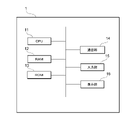
- FIG. 1 is a configuration diagram for explaining the physical configuration of a storage support device according to an embodiment of the present invention
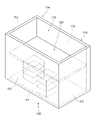
- FIG. 1 is a perspective view of an insulated container used in embodiments of the present invention
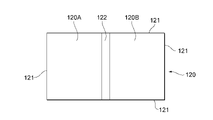
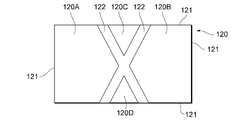
- FIG. 4 is a plan view of the lid of the heat insulating container used in the embodiment of the present invention
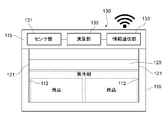
- FIG. 4 is an explanatory diagram for explaining a position information acquisition unit that acquires position information of a lid of the heat insulating container used in the embodiment of the present invention
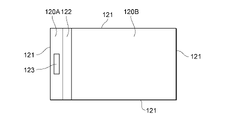
- FIG. 4 is a plan view of a modification of the lid of the heat insulating container used in the embodiment of the present invention
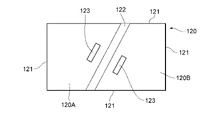
- FIG. 4 is a plan view of a modification of the lid of the heat insulating container used in the embodiment of the present invention
- FIG. 4 is a plan view of a modification of the lid of the heat insulating container used in the embodiment of the present invention
- FIG. 4 is a plan view of a modification of the lid of the heat insulating container used in the embodiment of the present invention
- FIG. 4 is a plan view of a modification of the lid of the heat insulating container used in the embodiment of the present invention
- FIG. 4 is a plan view of a modification of the lid of the heat insulating container used in the embodiment of the present invention
- FIG. 4 is a plan view of a modification of the lid of the heat insulating container used in the embodiment of the present invention
- FIG. 4 is a plan view of a modification of the lid of the heat insulating container used in the embodiment of the present invention
- FIG. 4 is a plan view of a modification of the lid of the heat insulating container used in the embodiment of the present invention
- FIG. 4 is a plan view of a modification of the lid of the heat insulating container used in the embodiment of the present invention
- FIG. 4 is an explanatory view of a case where a partition member is employed instead of the lid body of the heat insulating container used in the embodiment of the present invention
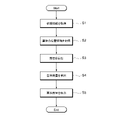
- 4 is a flow chart for explaining each step of the storage support method according to the embodiment of the present invention
- the storage support device 1 is for supporting the storage of objects to be transported in a refrigerated or frozen state after arrival at a destination.
- An information acquisition unit 10 for acquiring various types of information such as request information sent from, etc.; , and various databases 40 (request information database 41, packing information database 42, transportation information database 43) for recording various information.
- the "object” in this embodiment includes frozen foods such as ice cream that are transported in a frozen state, as well as various foods that are transported in a refrigerated state (vegetables, fruits, meat, fresh fish, grains, tea leaves, etc.). , coffee beans, etc.), flowers, medicines, etc.
- an apparatus and method for supporting the storage of objects to be transported in a refrigerated (frozen) state after arriving at the destination will be exemplified. Apparatuses and methods that assist in later archiving are also within the scope of the present invention.
- the information acquisition unit 10 functions to acquire request information sent from the requester C and to receive various types of information input by the user of the storage support apparatus 1.
- the communication unit 14 (see FIG. 2 (described later) and an input unit 15 (described later in FIG. 2).
- the request information is input from the terminal UC owned by the requester C to the information acquisition unit 10 of the storage support apparatus 1 via the communication network N, as shown in FIG.
- As the terminal UC various electronic devices (desktop PC, notebook PC, smart phone, etc.) having an information display section, an information input section, and communication means can be adopted.
- the communication network N is an information communication network capable of interconnecting a plurality of computers, and may be a global information communication network such as the Internet.
- the request information acquired via the information acquisition unit 10 is stored in the request information database 41 .
- Request information includes information on the type and amount of the object (for example, “ice cream (50 kg)”, “meat (100 kg)”, “fruits and vegetables (400 kg)", “medicine (10 kg)”, etc.).
- container information corresponding to the type and amount of the object is recorded in the packaging information database 42, and when the information acquisition unit 10 acquires the request information, the type of the object is stored in the packaging information database 42. and the information of the container corresponding to the amount is read and used for calculating the amount of the cooling agent, etc., which will be described later.
- the request information includes information on the destination to which the object is to be transported (for example, "Setagaya-ku, Tokyo *** ⁇ - ⁇ - ⁇ ", etc.).
- the transport information corresponding to the information about the destination is recorded in the transport information database 43, and when the information acquisition unit 10 acquires the request information, the transport information corresponding to the destination is retrieved from the transport information database 43. is read and used to calculate transportation time and expected arrival time, which will be described later.
- the request information includes information about the scheduled time of receipt of the object (for example, "2021, A, B, C, D, etc.”).
- the information on the scheduled reception time is used for calculating the amount of cooling storage agent, which will be described later.
- the information calculation unit 20 calculates the request information acquired by the information acquisition unit 10, the information (packaging information and transportation information) read from various databases 40 based on the request information, and the current temperature of the object (at the time of arrival at the destination). Based on various information such as the temperature of the object, calculate the amount of cold storage agent required when transporting the object (hereinafter referred to as “amount of cold storage agent during transportation”), and plan to receive after arrival at the destination It functions to calculate the amount of cold storage agent required to cool and store an object under specific storage conditions by the time (hereinafter referred to as “amount of cold storage agent during storage”).
- the information calculation unit 20 calculates the amount of cold storage agent required when transporting the object (the amount of cold storage agent during transportation) according to the following procedure. That is, based on the request information (information on the type/quantity and destination of the object) acquired by the information acquisition unit 10, the information calculation unit 20 retrieves the type and quantity of the object from the packaging information database 42 and the transportation information database 43. Read insulated container information corresponding to quantity and transport information corresponding to its destination. Then, the information calculation unit 20 calculates the transportation time and the estimated arrival time based on the information read from the transportation information database 43, and combines the information on the calculated transportation time and the like with the container information read from the packing information database 42. , to calculate the amount of cooling storage agent during transportation.
- the information of the container is recorded in the packing information database 42, and the information corresponding to the type and amount of the target object acquired by the information acquisition unit 10 is selected and read.
- the object is "ice cream” and the amount thereof is "50 kg”
- a substantially rectangular parallelepiped heat-insulated container with a volume of 0.4 m 3 (50 cm long, 80 cm wide, and 100 cm high) is selected.
- the heat reflux rate K Kcal/(m 2 ⁇ h ⁇ ° C.)
- the heat transfer area A (m 2 ) of the heat insulating container are selected according to the type and amount of the object. .
- the heat reflux rate K of the insulated container is 0.3 (Kcal/(m 2 ⁇ h ⁇ °C)), and the heat transfer The area A is 2.6 (m 2 ).
- the heat insulating container used in this embodiment and a method of calculating the heat transfer area A will be described in detail later.
- the transportation time required to transport an object to its destination depends on the information on the destination included in the request information, as well as the preset initial information (location information of the storage location of the object, specifications of the transportation vehicle, etc.). , etc.), or information on various transportations (transportation route, transportation distance, etc.) set from information on the destination.
- These initial information and information about transportation are recorded in the transportation information database 43 as transportation information. It has become.
- the location information of the storage location of the object is "000-cho, Fukaya-shi, Saitama (Fukaya factory)", and the location information of the destination is " ⁇ , Setagaya-ku, Tokyo (Setagaya store)",
- the transportation route is a "land route”
- the assumed transportation distance can be calculated as "100 km”
- the average cruising speed is assumed to be "50 km/h” based on the specifications of the transportation vehicle. is calculated as "2 hours”.
- the expected arrival time is calculated by adding the transportation time to the departure time.
- the information calculation unit 20 calculates the amount of cooling storage agent during transportation based on the container information read from the packing information database 42 and the information on the calculated transportation time and the like.
- the information calculation unit 20 calculates the amount of cold storage agent (amount of cold storage agent during storage) required to cool and store the object under specific storage conditions from arrival at the destination to the scheduled reception time. It can be calculated based on the amount of heat received by the object until the scheduled reception time and the latent heat of the cold storage agent. The amount of heat described above can be calculated based on the heat transfer area of the heat insulating container, the current temperature of the object, and the cooling time of the object. For example, the information calculation unit 20 calculates the cold storage agent amount X during storage according to the following procedure.
- the information calculation unit 20 first obtains the current temperature of the object (the temperature of the object at the time of arrival at the destination) obtained through a temperature sensor (not shown) attached to the heat insulating container, and acquires information. Based on the request information acquired by the unit 10, the amount of heat Q received by the object by the scheduled reception time is calculated. Specifically, the information calculation unit 20 calculates the heat reflux rate K (Kcal/(m 2 ⁇ h ⁇ ° C.)) and the heat transfer area A (m 2 ) of the heat-insulated container, and the time of arrival at the destination.
- K Kcal/(m 2 ⁇ h ⁇ ° C.
- the information calculation unit 20 divides the calculated heat amount Q by the latent heat H to calculate the storage cold storage agent amount X (kg). can do.
- X Q/H
- Information on the latent heat H of the cold storage agent used is recorded in the packing information database 42 .
- the information on the cold storage agent and its latent heat H corresponding to the type and amount is read from the packing information database 42 and used to calculate the amount X of the cold storage agent. be. That is, the information calculation section 20 also functions as a cold storage agent amount calculation section in the present invention.
- the heat transfer area A of the heat insulating container may be calculated based on information regarding the position of the lid inside the heat insulating container. For example, the effective side area A S of the insulated container obtained by multiplying the distance d from the bottom surface of the insulated container to the lower surface of the lid (information about the position of the lid) by the length L S of the side surface of the insulated container, and the bottom of the insulated container
- the heat transfer area A can be calculated by adding the area AB and the area AL of the lid.
- the volume of the insulated container can be calculated by multiplying the distance d from the bottom surface of the insulated container to the lower surface of the lid (information on the position of the lid) by the bottom area AB of the insulated container.
- Information about the position of the lid can be obtained from the position information obtaining unit 130 or the like attached to at least one of the heat insulating container and the lid, as will be described later.
- the distance d is the depth d 0 of the heat-insulating container (from the bottom surface to the opening).
- the value obtained by subtracting the thickness of the lid from the depth d0 of the insulated container is the maximum value of the distance d from the bottom surface of the insulated container to the bottom surface of the lid.
- the amount X of the cold storage agent during storage may be calculated based on the amount of heat Q received by the object after arriving at the destination until the scheduled reception time, the latent heat H of the cold storage agent, and the heat capacity C inside the heat insulating container. .
- the amount of cold storage agent that satisfies a predetermined condition for the temperature change ⁇ t inside the heat insulating container from the arrival at the destination until the scheduled time of receipt (or the temperature tr inside the heat insulating container at the scheduled time of receipt) is set during storage. It can be calculated as a cold storage agent amount X.
- the heat capacity C inside the insulated container may be calculated from the volume of the insulated container, or may be calculated based on the position of the lid of the insulated volume.
- the cold storage agent amount X during storage can be calculated by the following procedure.
- the information calculation unit 20 calculates the heat reflux rate K (Kcal/(m 2 ⁇ h ⁇ ° C.)) and the heat transfer area A (m 2 ) of the insulated container already described, and the outside air temperature at the time of arrival at the destination.
- t1 (°C) the current temperature of the object t2 (°C)
- the latent heat H Kcal/kg
- ⁇ t ⁇ K ⁇ A ⁇ (t1 ⁇ t2) ⁇ T ⁇ H ⁇ /C (3)
- Qother for example, respiratory heat
- ⁇ t ⁇ K ⁇ A ⁇ (t1 ⁇ t2) ⁇ T ⁇ H+Qother ⁇ /C ... (3′)
- the following formula considering the positive or negative amount of heat Qother (Kcal) (for example, respiratory heat) emitted by the object may be used.
- tr t2+ ⁇ K ⁇ A ⁇ (t1 ⁇ t2) ⁇ T ⁇ H+Qother ⁇ /C ... (4′)
- the information calculation unit 20 determines that ⁇ t calculated by the formula (3) or the formula (3′) or tr calculated by the formula (4) or the formula (4′) satisfies a predetermined condition (for example, a predetermined within a predetermined range, not more than a predetermined upper limit, not less than a predetermined lower limit, etc.).
- a predetermined condition for example, a predetermined within a predetermined range, not more than a predetermined upper limit, not less than a predetermined lower limit, etc.
- the heat reflux rate K used in formulas (1), (3), (3'), (4) and (4') is replaced with (or in addition to) the heat reflux rate K of the entire heat-insulated container. ), it is also possible to use the thermal reflux rate for each member of the insulated vessel.
- a heat reflux rate K S corresponding to the side member of the heat insulating container, a heat reflux rate K B corresponding to the bottom member of the heat insulating container, and a heat reflux rate K L corresponding to the lid member can be used.
- the total value of heat reflux rates of the plurality of members may be used.
- the total value of the thermal reflux rate of the top plate 115 (described later) and the thermal reflux rate of the lid body 120 can be used as the thermal reflux rate KB of the lid member.
- the heat flux for each member is calculated as the K ⁇ A term in the above equations (1), (3), (3′), (4) and (4′).
- a value obtained by obtaining the product of the reflux rate and the heat transfer area and summing them may be used.
- K ⁇ A ⁇ Ki ⁇ Ai (where i is S corresponding to the side, B corresponding to the bottom, and L corresponding to the lid) can be used.
- the information calculation unit 20 calculates the amount of cold storage agent required to store the object under such conditions (the amount of cold storage agent during storage).
- Specific storage conditions can be appropriately set according to the type and amount of the object. Examples include the following specific examples (a) to (f).
- the gas concentration inside the heat insulating container may be taken into account when calculating the amount of cold storage agent during storage.
- Oxygen concentration, carbon dioxide concentration, or the like can be used as the gas concentration.
- the object is "fruits and vegetables"
- there is a correlation between the gas concentration and the respiratory rate that is, when the oxygen concentration is high, the amount of respiration of fruits and vegetables increases (the heat of respiration increases) and the temperature of fruits and vegetables rises, so it is necessary to increase the amount of cold storage agent.
- the oxygen concentration is low, the amount of respiration (breathing heat) of fruits and vegetables is suppressed, and the temperature rise of fruits and vegetables is also suppressed, so the amount of cold storage agent can be reduced.
- the amount of cold storage agent during storage may be calculated in consideration of the respiration heat generated by fruits and vegetables according to the gas concentration. For example, when the oxygen concentration is higher (lower) than a predetermined threshold, the amount of cold storage agent during storage can be increased (decreased) in proportion to the difference from the threshold.
- the information output unit 30 functions to output various types of information such as the amount of cold storage agent calculated by the information calculation unit 20 to the transporter D and the like. It is composed of a display unit 16 (described later in FIG. 2). The amount of cold storage agent calculated by the information calculation unit 20 and various information read from various databases 40 and used to calculate the amount of cold storage agent are communicated from the information output unit 30 of the storage support apparatus 1, as shown in FIG. It is output to the terminal UD owned by the transporter D via the network N. As the terminal UD , various electronic devices having an information display section, an information input section, and a communication means can be adopted as in the case of the terminal UC .
- the information output unit 30 When the information output unit 30 in this embodiment acquires the arrival notification sent from the transporter D via the information acquisition unit 10, the information output unit 30 calculates the cold storage agent calculated by the information calculation unit 20 in response to the arrival notification. It is configured to output (notify) the transporter D of the quantity. At this time, the information output section 30 is configured to notify the transporter D of the storage conditions as well.
- the information output unit 30 acquires the request information via the information acquisition unit 10
- the information output unit 30 outputs (notifies) information about the type and amount of the object to the terminal UP of the custodian P who keeps the object.
- the terminal UP various electronic devices having an information display section, an information input section, and a communication means can be adopted, like the terminal UC .
- the information output unit 30 is configured to output (notify) the fact to the terminal UC of the client C when the object has arrived at the destination.
- the information output unit 30 not only notifies the transporter D of the amount X of the cold storage agent calculated by the information calculation unit 20, but also determines whether or not to add the cold storage agent based on the calculated amount X of the cold storage agent. It is also configured to notify the transporter D of the determination result. Specifically, the information output unit 30 compares the pre-calculated cooling storage agent amount during transportation with the currently calculated cooling storage agent amount X (storage cooling storage agent amount), and it is necessary to add the cooling storage agent. If it is determined that the addition is necessary, the transporter D is notified to that effect.
- the information output unit 30 compares the cooling storage agent amount during transportation with the cooling storage agent amount X during storage and determines that the addition of the cooling storage agent is unnecessary, the information output unit 30 also notifies the transporter D to that effect. That is, the information output unit 30 also functions as a cold storage agent necessity notification unit in the present invention.
- the information output unit 30 determines that it is necessary to add the cold storage agent based on the amount X of the cold storage agent calculated by the information calculation unit 20, the information output unit 30 issues a control command to replenish the additional cold storage agent. to send out.
- the information output unit 30 compares the pre-calculated cooling storage agent amount during transportation with the currently calculated cooling storage agent amount X during storage and determines that addition of the cooling storage agent is necessary, , how much (for example, 3 kg) of the cold storage agent should be added is calculated, and the additional (for example, 3 kg) of the cold storage agent is automatically supplied to a cold storage agent replenishing device (not shown). to send a control command.
- the cooling storage agent replenishing device supplies the transporter D with additional cooling storage agent (for example, 3 kg). That is, the information output section 30 also functions as a cold storage agent replenishment section in the present invention.
- the storage support device 1 has a CPU (Central Processing Unit) 11, a RAM (Random Access Memory) 12, a ROM (Read only Memory) 13, a communication section 14, an input section 15 and a display section 16, as shown in FIG. , and these components are connected to each other via a bus so that data can be sent and received.
- the storage support apparatus 1 is composed of one computer will be described, but the storage support apparatus 1 may be composed of a plurality of computers.
- the display unit 16 may be composed of a plurality of displays.
- the configuration shown in FIG. 2 is merely an example, and some of these configurations may be omitted. Additionally, portions of the configuration may be provided at remote locations.
- part of the ROM 13 may be provided at a remote location and configured to be communicable via a communication network.
- the CPU 11 is an arithmetic unit that performs arithmetic processing and the like in this embodiment by executing a computer program or the like recorded in the ROM 13 or the like, and constitutes the information calculation unit 20 .
- the CPU 11 has a processor.
- the CPU 11 receives various information (including process data) from the RAM 12, the ROM 13, the communication unit 14, the input unit 15, etc., and causes the display unit 16 to display the arithmetic processing results and the like, or stores them in the RAM 12 and/or the ROM 13. do.
- the RAM 12 functions as a cache memory, and can form part of the information calculation section 20 .
- the RAM 12 may be composed of volatile semiconductor memory elements such as SRAM and DRAM.
- the ROM 13 functions as a main memory and can constitute part of the information calculation section 20 .
- the ROM 13 may be composed of an electrically rewritable non-volatile semiconductor memory element such as a flash memory, or a magnetically rewritable HDD.
- the ROM 13 can store, for example, computer programs and data for executing various arithmetic processes in this embodiment.
- the RAM 12 and ROM 13 constitute various databases 40 (request information database 41, packing information database 42, transportation information database 43) of the storage support device 1.
- the communication unit 14 is an interface for connecting the storage support device 1 to other devices, and constitutes the information acquisition unit 10 and the information output unit 30 .
- the communication unit 14 is connected to a communication network N such as the Internet.
- the input unit 15 receives input of data from the user of the storage support device 1, and can constitute a part of the information acquisition unit 10.
- the input unit 15 may include, for example, a keyboard or touch panel.
- the display unit 16 visually displays the calculation result by the CPU 11 and can constitute a part of the information output unit 30 .
- the display unit 16 may be composed of, for example, an LCD (Liquid Crystal Display).
- the storage support device 1 may be configured by a tablet terminal. By configuring the storage support device 1 with a tablet terminal, the storage support device 1 can be carried around, for example, the storage support device 1 can be operated while moving.
- the heat-insulated container 100 includes a container body 110 and a lid 120, in which an object such as frozen food is stored together with a cooling agent for transportation and storage. It is provided.
- the container main body 110 has a substantially rectangular parallelepiped shape having a bottom wall 111 that is substantially rectangular in plan view and four side walls 112 that are connected to rise from each side of the bottom wall 111 . It is configured.
- a substantially rectangular parallelepiped storage space 113 is formed by the bottom wall 111 and side walls 112 of the container body 110, and an opening 114 is formed in the upper part of the storage space 113 so as to communicate with it.
- Both the bottom wall 111 and the side walls 112 of the container body 110 are composed of heat insulating material panels having a predetermined thickness and having a substantially rectangular shape in a plan view.
- a heat insulating panel for example, a heat insulating panel made of a heat insulating material having a thermal resistance of 50 m 2 ⁇ Kl/W or less and a bending strength of 0.15 N/mm 2 or more can be adopted.
- the vertical and horizontal dimensions and thickness of the heat insulating material panels that constitute the bottom wall 111 and the side walls 112 can be appropriately set according to the type of objects to be stored in the heat insulating container 100 .
- the cover 120 is a deformable plate-like member, and when inserted into the storage space 113 from the opening 114 of the container body 110, the cover 120 is at least partially deformed so that the peripheral edge 121 of the container body 110 is deformed. It is configured to closely fit the inner surface of side wall 112 of 110 .
- the lid body 120 in this embodiment is divided into a plurality of parts (a first part 120A and a second part 120B), and the first part 120A and the second part 120B are connected by a connecting elastic part 122.
- the planar shape thereof is substantially rectangular so as to correspond to the planar shape of the opening 114 of the container body 110 .
- the term “projection area” refers to the area of a shadow that is formed when light is applied from directly above the projection target (for example, the lid 120).
- Both the first portion 120A and the second portion 120B that constitute the lid 120 are made of heat insulating material panels having a predetermined thickness and a substantially rectangular shape in plan view, like the bottom wall 111 and the side walls 112 of the container body 110. can be done.
- a bellows structure composed of polyurethane sponge and aluminum-deposited PET (polyethylene terephthalate) can be employed. A combination of the air layer contained in the polyurethane sponge and the highly airtight aluminum-deposited PET can provide high heat insulation performance.
- the vertical and horizontal dimensions and thickness of the heat insulating panels forming the portions 120A and 120B of the lid body 120 and the thickness of the connecting elastic portion 22 when compressed and released are appropriately set according to the size of the opening 114 of the container body 110. be able to.
- the first portion 120A and the second portion are arranged such that the projected area of the lid 120 in the state where the connecting elastic portion 122 is not compressed is slightly larger than the projected area of the opening 114 of the container body 110.
- the vertical and horizontal dimensions of 120B and the thickness of the connecting elastic portion 122 when compressed and released are set.
- the lid 120 is inserted into the storage space 113 from the opening 114 of the container body 110 , and at least a portion of the lid 120 is deformed, so that the peripheral edge 121 of the lid 120 becomes the side wall of the container body 110 . It is configured to be in close contact with the inner surface of 112 . For this reason, an adiabatic closed space composed of the bottom wall 111 of the container body 110, a portion of the side wall 112 of the container body 110 (the portion near the bottom wall 111), and the lid 120 is formed inside the storage space 113. An object can be accommodated in this heat insulating closed space for transportation or the like.
- the lid body 120 in this embodiment corresponds to the movable member in the present invention.
- the position of the lid 120 is shifted toward the bottom wall 111 of the container body 110, and the peripheral edge 121 of the lid 120 is brought into close contact with the side wall 112 of the container body 110. to form a relatively small volume thermally insulated enclosed space.
- the volume of the adiabatic closed space can be changed accordingly, and the presence of air with a high specific heat in the adiabatic closed space can be suppressed. It becomes possible to suppress a decrease in efficiency.
- positional information acquisition for detecting the position of the lid 120 inside the container body 110 (the position where the peripheral edge portion 121 of the lid 120 and the side wall 112 of the container body 110 are in close contact) is performed.
- 130 is provided on top plate 115 fixed to opening 114 of container body 110 , and information on the position of lid body 120 detected by position information acquisition unit 130 is sent to information acquisition unit 10 of storage support apparatus 1 .
- the position information acquisition unit 130 includes a sensor unit 131 that measures the distance from the bottom surface of the top plate 115 to the top surface of the lid 120, and the distance measured by the sensor unit 131 and the height of the side wall 112.
- a calculation unit 132 that calculates the distance from the upper surface of the bottom wall 111 of the container body 110 to the lower surface of the lid 120 based on the thickness of the lid 120, and information about the distance calculated by the calculation unit 132 (that is, the thickness of the lid 120). and an information communication unit 133 that sends information about the location) to the information acquisition unit 10 of the storage support apparatus 1 .
- the calculation unit 132 is provided inside the storage support apparatus 1 instead of being provided on the top board 115, and the information regarding the distance measured by the sensor unit 131 is sent to the storage support apparatus 1 by the information communication unit 133.
- the position information of the lid 120 may be calculated by the device 1 .
- the method of acquiring the position information of the lid 120 is not limited to the above calculation method.
- the calculation unit 132 is omitted and the sensor unit 131 is provided in the lid 120, and the position information of the lid 120 measured by the sensor unit 131 (from the top surface of the bottom wall 111 of the container body 110 to the bottom surface of the lid 120) distance) is sent to the information communication unit 133 provided on the top plate 115 by wire or wirelessly.
- rails for locking the lid body 120 are provided on the inner surface of the side wall 112 of the container body 110 in a plurality of stages in the vertical direction at predetermined intervals, and a sensor section 131 is provided near each rail.
- a configuration may be adopted in which the sensor unit 131 detects whether the lid 120 is positioned at the position of the sensor unit 131 and the detected positional information is sent to the information communication unit 133 by wire or wirelessly.
- the upper and lower inner surfaces of the side wall 112 of the container body 110 may be colored differently (for example, the upper 1/4 region of the side wall 112 of the container body 110 may be colored red, while the lower 3/4 region may be colored blue). ), the sensor unit 131 detects in which color area the lid 120 is located, and the detected positional information is sent to the information communication unit 133 by wire or wirelessly.
- the sensor unit 131 detects in which color area the lid 120 is located, and the detected positional information is sent to the information communication unit 133 by wire or wirelessly.
- the storage support device 1 calculates the heat transfer area A and volume of the heat insulating container 100 using the information about the position of the lid 120 acquired by the information acquisition unit 10, and uses these heat transfer area A and volume to calculate cold storage.
- a dose X is calculated.
- a temperature sensor (not shown) is provided so that information about the temperature of the stored object can be detected in real time and sent to the information acquisition unit 10 of the storage support apparatus 1 .
- the configuration of the heat insulating container 100 does not necessarily have to be as described above, and the position of the lid (peripheral edge of the lid and side wall of the container main body) may be determined according to the volume of the object to be stored. It is sufficient if the volume of the heat insulating closed space can be changed by changing the position where the two are in close contact with each other.
- FIGS. 6 to 13 show modifications of the heat insulating container 100 in this embodiment.
- the planar shapes of the first portion 120A and the second portion 120B that constitute the lid 120 may not necessarily be the same. For example, as shown in FIG. can be increased. Further, the planar shape of the first portion 120A and the second portion 120B that constitute the lid 120 may not necessarily be rectangular. For example, as shown in FIG.
- the lid body 120 having a substantially rectangular shape in a plan view may be configured by combining these shapes. At least one portion of the lid 120 (only the first portion 120A in FIG. 6, the first portion 120A and the second portion 120B in FIG. 7) may be provided with a grip portion 123 that is gripped by the user.
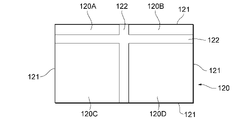
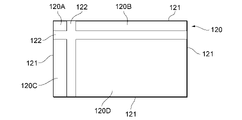
- the parts that constitute the lid body 120 are not necessarily two. For example, as shown in FIGS. ) and these four portions may be connected by the connecting elastic portion 122 .
- FIG. 8 shows a modification in which all four parts have the same plane shape and the same area
- FIG. 9 shows a case in which two of the four parts have smaller areas and the remaining two have larger areas.
- FIG. 10 is a modification in which all four portions have different planar shapes and areas. 8 to 10 show modifications in which the planar shapes of the four portions are all rectangular (rectangular). While the shape is pentagonal, the remaining two planar shapes can also be triangular.
- the planar shape of the lid 120 is substantially rectangular so as to correspond to the planar shape of the opening 114 of the container body 110 .
- first part 120A, second part 120B, third part 120C are connected by a connecting elastic part 122 to form a substantially rectangular lid body 120 in plan view.
- a connecting elastic part 122 to form a substantially rectangular lid body 120 in plan view.
- portions with relatively small areas are arranged at both ends in the longitudinal direction of the lid body 120
- portions with relatively large areas are arranged at the central portion in the longitudinal direction.
- two portions are provided with grip portions 123 on their surfaces.
- FIG. 13 is a variation in which all three parts have different planar shapes and areas.
- the planar shape of the lid 120 is substantially rectangular so as to correspond to the planar shape of the opening 114 of the container body 110 .
- the member (movable member) for changing the volume of the heat insulating closed space of the heat insulating container 100 is not limited to the lid 120.
- the position of the partition member 140 inside the container body 110 (the position where the peripheral edge of the partition member 140 and the bottom wall 111 and the top plate 115 of the container body 110 are in close contact) is determined by the position information acquisition unit 130 as shown in FIG. can be detected using and sent to the storage support apparatus 1 and used to calculate the heat transfer area A of the heat insulating container 100 and the like.
- Storage support method Next, the storage support method according to this embodiment will be described using the flowchart of FIG. 15 .
- This method is executed by a computer (storage support device 1) to support storage of objects transported in a refrigerated or frozen state after arrival at a destination.
- the information acquisition unit 10 of the storage support device 1 acquires request information sent from the terminal UC owned by the client C via the communication network N (request information acquisition step: S1).
- the request information acquired in the request information acquisition step S1 includes information on the type and amount of the object, information on the destination to which the object is transported, and information on the scheduled time of receipt of the object. and are included.
- the information acquisition unit 10 of the storage support device 1 obtains the position information of the lid body (movable member) 120 for forming an insulated closed space in the insulated container 100 for packing the target object in the insulated container 100.
- 100 is obtained through the position information obtaining unit 130 provided on the top board 115 (position information obtaining step: S2).
- the request information obtaining step S1 and the position information obtaining step S2 constitute the obtaining step in the present invention.
- the information calculation unit 20 of the storage support device 1 calculates the transmission of the heat insulating container 100 based on the request information acquired in the request information acquisition step S1 and the position information of the lid body 120 acquired in the position information acquisition step S2. Based on the thermal area A and information on the current temperature of the object (the temperature of the object at the time of arrival at the destination) obtained through the temperature sensor attached to the insulated container 100, after arriving at the destination Calculate the amount of heat Q received by the object by the scheduled time (heat amount calculation step: S3).
- the specific methods for calculating the heat transfer area A and the heat quantity Q are as described above.
- the information calculation unit 20 of the storage support device 1 calculates the amount of heat required to cool and store the object under specific storage conditions from arrival at the destination to the scheduled reception time, based on the heat quantity Q calculated in the heat quantity calculation step S3.
- cool storage agent amount (cool storage agent amount during storage) X cool storage agent amount calculation step: S4).
- the specific method for calculating the cold storage agent amount X during storage is as described above.
- the information output unit 30 of the storage support device 1 outputs (notifies) the cold storage agent amount X calculated in the cold storage agent amount calculation step S2 to the terminal UD owned by the transporter D via the communication network N ( Cold storage agent amount output step: S5).
- the information output unit 30 sends the storage conditions and the amount of cold storage agent X to the terminal UD of the transporter D in response to the arrival notification sent from the transporter D via the terminal UD. Output (notify).
- the information output unit 30 notifies the transporter D whether or not the cooling storage agent needs to be added, based on the cooling storage agent amount X calculated in the cooling storage agent amount calculation step S4. That is, the cold storage agent amount output step S5 includes the cold storage agent amount notification step, the storage condition notification step, and the cold storage agent necessity notification step in the present invention.
- the transporter D who has been notified of the amount of cold storage agent X, the storage conditions, and whether or not the amount of cold storage agent is required, can adjust the amount of cold storage agent X as appropriate according to the information. For example, if the amount of cooling storage agent during storage exceeds the amount of cooling storage agent during transportation, the required amount of cooling storage agent is added to the amount of cooling storage agent during transportation to obtain the amount of cooling storage agent during storage. On the other hand, if the amount of cold storage agent during storage is less than the amount of cold storage agent during transportation (that is, the amount of cooling storage agent was supercooled during transportation), the required amount of cooling storage agent is removed from the amount of cooling storage agent during transportation to obtain the amount of cooling storage agent during storage. .
- the information output unit 30 When the information output unit 30 acquires the request information via the information acquisition unit 10, the information output unit 30 outputs (notifies) information about the type and amount of the object to the terminal UP of the custodian P who keeps the object. At the same time, when the object arrives at the destination, the fact is output (notified) to the client C 's terminal UC. That is, the information output unit 30 performs the object information notification step and the arrival notification step in the present invention. Further, when it is determined that the addition of the cooling storage agent is necessary based on the cooling storage agent amount X calculated in the cooling storage agent amount calculation step S4, the information output unit 30 supplies the cooling storage agent that needs to be added. Control commands can also be sent to a cold storage agent replenishment device (not shown). Upon receiving such a control command, the cooling storage agent replenishing device can supply the transporter D with the cooling storage agent to be added. That is, the information output unit 30 can carry out the cold storage agent replenishment process of the present invention.
- the position of the lid body 120 for forming an insulated closed space in the insulated container 100 for packing the object is calculated based on the positional information in the insulated container 100.
- the heat transfer area A of 100, the current temperature of the object to be transported in a refrigerated or frozen state, and the request information (information on the type and amount of the object, the destination, the scheduled time to receive the object, etc.) Based on , the amount of heat Q received by the object from arrival at the destination to the scheduled reception time is calculated, and based on this amount of heat Q, the object is stored under specific storage conditions from arrival at the destination to the scheduled reception time. It is possible to calculate the amount of cold storage agent required for cold storage (amount of cold storage agent during storage) X. Therefore, it is possible to appropriately cool and store the object under specific storage conditions from the arrival at the destination until the scheduled time of receipt.
- the calculated amount of the cold storage agent can be notified to the transporter D of the object. Therefore, the object can be properly stored under specific storage conditions from the arrival at the destination until the scheduled time of receipt.
- the transporter D in response to the arrival notification sent from the transporter D (that is, when the transporter D notifies that the object has arrived at the destination), The transporter D can be notified of the amount of cold storage agent. Therefore, the information on the amount of the cold storage agent can be notified to the transporter D who has arrived at the destination and is waiting for the information. be able to.
- the transporter D of the object can quickly know whether or not the cooling storage agent needs to be added, and can arrange the cooling storage agent at an appropriate timing.
- the additional cooling storage agent is replenished. Since the control command can be sent, it is possible to efficiently assist the transporter D of the object in arranging the cold storage agent.
- the client C since the requester C who requested the transport of the object can know that the object has arrived at the destination, the client C can know that the object has arrived at the destination. ) has the advantage of being able to go to the destination and pick up the object.
- the custodian P who stores the object can obtain information about the type and amount of the object, the cold storage agent transported together with the object can be calculated, and the calculated amount of cold storage agent can be delivered to the transporter D together with the object.
- the present invention is not limited to the above embodiments, and any design modifications made by those skilled in the art to such embodiments are also included in the scope of the present invention as long as they have the features of the present invention. . That is, each element provided in the embodiment and its arrangement, material, condition, shape, size, etc. are not limited to those illustrated and can be changed as appropriate. In addition, each element provided in the above embodiment can be combined as long as it is technically possible, and a combination of these is also included in the scope of the present invention as long as it includes the features of the present invention.
Landscapes
- Business, Economics & Management (AREA)
- Economics (AREA)
- Engineering & Computer Science (AREA)
- Marketing (AREA)
- Quality & Reliability (AREA)
- Theoretical Computer Science (AREA)
- Entrepreneurship & Innovation (AREA)
- Human Resources & Organizations (AREA)
- General Physics & Mathematics (AREA)
- Operations Research (AREA)
- Development Economics (AREA)
- Strategic Management (AREA)
- Tourism & Hospitality (AREA)
- Physics & Mathematics (AREA)
- General Business, Economics & Management (AREA)
- Accounting & Taxation (AREA)
- Finance (AREA)
- Management, Administration, Business Operations System, And Electronic Commerce (AREA)
- Devices That Are Associated With Refrigeration Equipment (AREA)
Abstract
Description
まず、図1を用いて、本発明の実施形態に係る保管支援装置1の機能的構成について説明する。
Q=K×A×(t1-t2)×T … (1)
X= Q/H … (2)
使用される蓄冷剤の潜熱Hに関する情報は、梱包情報データベース42に記録されている。情報取得部10により対象物の種類及び量が取得されると、その種類及び量に応じた蓄冷剤及びその潜熱Hに関する情報が梱包情報データベース42から読み込まれ、蓄冷剤量Xの算出に使用される。すなわち、情報算出部20は、本発明における蓄冷剤量算出部としても機能するものである。
Δt={K×A×(t1-t2)×T-H}/C … (3)
なお、対象物が発する正又は負の熱量Qother(Kcal)(例えば、呼吸熱)を考慮した下記の式を用いてもよい。
Δt={K×A×(t1-t2)×T-H+Qother}/C … (3′)
tr=t2+{K×A×(t1-t2)×T-H}/C … (4)
なお、対象物が発する正又は負の熱量Qother(Kcal)(例えば、呼吸熱)を考慮した下記の式を用いてもよい。
tr=t2+{K×A×(t1-t2)×T-H+Qother}/C … (4′)
ΣKi×Ai (iは側面に対応するS、底面に対応するB、および蓋に対応するL)
を用いることができる。具体的には、例えば式(1)を
Q=(ΣKi×Ai)×(t1-t2)×T
=(KS×AS+KB×AB+KL×AL)×(t1-t2)×T …(1′)
と修正したものを用いることができる。
(a)保管環境(外気温t1):27℃、保冷時間T:8時間、設定温度(保冷時間経過後の対象物の温度):-18℃以下
(b) 保管環境(外気温t1):5℃、保冷時間T:10時間、設定温度(保冷時間経過後の対象物の温度):-18℃以下
(c) 保管環境(外気温t1):25℃、保冷時間T:7時間、対象物の現在温度:20℃、対象物の温度変化:±2℃以内
(d) 保管環境(外気温t1):25℃、保冷時間T:7時間、対象物の現在温度:5℃、対象物の温度変化:±2℃以内
(e) 保管環境(外気温t1):25℃、保冷時間T:数日、対象物の現在温度:5℃、対象物の温度変化:±3℃以内
(f) 保管環境(外気温t1):実測値、保冷時間T:3時間、対象物の現在温度:実測値、対象物の温度変化:±2℃以内
具体例(f)は、市場に到着した青果(対象物)が土間に荷降ろしされるケースを想定しており、外気温t1や青果の現在温度はそのときの状況によって種々変化し得るが、何れにしても、青果を荷降ろししてから3時間経過した後の温度変化を現在温度から±2℃以内にする、という条件である。
次に、図3~図14を用いて、本実施形態で用いられる断熱容器100の構成について説明する。本実施形態に係る断熱容器100は、図3に示すように、容器本体110と蓋体120とを備えており、その内部に冷凍食品等の対象物を蓄冷剤とともに収納して輸送及び保管に供されるものである。
続いて、図15のフローチャートを用いて、本実施形態に係る保管支援方法について説明する。本方法は、冷蔵又は冷凍された状態で輸送される対象物の目的地到着後の保管を支援するために、コンピュータ(保管支援装置1)によって実行されるものである。
10…情報取得部
20…情報算出部(熱量算出部、蓄冷剤量算出部)
30…情報出力部(蓄冷剤要否通知部、蓄冷剤補充部)
100…断熱容器
120…蓋体(可動部材)
140…仕切部材(可動部材)
S1…依頼情報取得工程
S2…位置情報取得工程
S3…熱量算出工程
S4…蓄冷剤量算出工程
S5…蓄冷剤量出力工程(蓄冷剤要否通知工程、蓄冷剤補充工程)
Claims (13)
- 輸送される対象物の目的地到着後の保管を支援するためにコンピュータによって実行される保管支援方法であって、
前記対象物の種類及び量と前記目的地と前記対象物の受取予定時刻とに関する情報を含む依頼情報と、前記対象物を梱包する容器内に断熱閉鎖空間を形成するための可動部材の前記容器内における位置情報と、を取得する取得工程と、
前記位置情報に基づいて算出された前記容器の伝熱面積と、前記対象物の現在温度に関する情報と、前記依頼情報と、に基づいて、前記目的地到着後から前記受取予定時刻までに前記対象物が受け取る熱量を算出する熱量算出工程と、
前記熱量算出工程で算出した熱量に基づいて、前記目的地到着後から前記受取予定時刻までに前記対象物を特定の保管条件で保管するために必要な蓄冷剤量を算出する蓄冷剤量算出工程と、
前記蓄冷剤量算出工程で算出した前記蓄冷剤量を出力する出力工程と、
を含む、保管支援方法。 - 前記出力工程は、前記蓄冷剤量算出工程で算出した前記蓄冷剤量を前記対象物の輸送者に通知する蓄冷剤量通知工程を含む、請求項1に記載の保管支援方法。
- 前記蓄冷剤量通知工程では、前記輸送者から送られた到着通知に対応して前記蓄冷剤量を前記輸送者に通知する、請求項2に記載の保管支援方法。
- 前記蓄冷剤量算出工程で算出した前記蓄冷剤量に基づいて、蓄冷剤の追加要否を前記対象物の輸送者に通知する蓄冷剤要否通知工程をさらに含む、請求項1に記載の保管支援方法。
- 前記蓄冷剤量算出工程で算出した前記蓄冷剤量に基づいて蓄冷剤の追加が必要であると判定された場合に、追加が必要な蓄冷剤を補充するための制御指令を送出する蓄冷剤補充工程をさらに含む、請求項1に記載の保管支援方法。
- 前記対象物の輸送者に前記保管条件を通知する保管条件通知工程をさらに含む、請求項1に記載の保管支援方法。
- 前記依頼情報は、前記対象物の輸送を依頼する依頼者から送られたものである、請求項1に記載の保管支援方法。
- 前記対象物の到着を、前記依頼者に通知する到着通知工程をさらに含む、請求項7に記載の保管支援方法。
- 前記対象物の種類及び量に関する情報を、前記対象物を保管する保管者に通知する対象物情報通知工程をさらに含む、請求項1に記載の保管支援方法。
- 輸送される対象物の目的地到着後の保管を支援するための方法をコンピュータに実行させるためのプログラムであって、前記方法は、
前記対象物の種類及び量と前記目的地と前記対象物の受取予定時刻とに関する情報を含む依頼情報と、前記対象物を梱包する容器内に断熱閉鎖空間を形成するための可動部材の前記容器内における位置情報と、を取得する取得工程と、
前記位置情報に基づいて算出された前記容器の伝熱面積と、前記対象物の現在温度に関する情報と、前記依頼情報と、に基づいて、前記目的地到着後から前記受取予定時刻までに前記対象物が受け取る熱量を算出する熱量算出工程と、
前記熱量算出工程で算出した熱量に基づいて、前記目的地到着後から前記受取予定時刻までに前記対象物を特定の保管条件で保管するために必要な蓄冷剤量を算出する蓄冷剤量算出工程と、
前記蓄冷剤量算出工程で算出した前記蓄冷剤量を出力する出力工程と、
を含む、プログラム。 - 輸送される対象物の目的地到着後の保管を支援するための保管支援装置であって、
前記対象物の種類及び量と前記目的地と前記対象物の受取予定時刻とに関する情報を含む依頼情報と、前記対象物を梱包する容器内に断熱閉鎖空間を形成するための可動部材の前記容器内における位置情報と、を取得する取得部と、
前記位置情報に基づいて算出された前記容器の伝熱面積と、前記対象物の現在温度に関する情報と、前記依頼情報と、に基づいて、前記目的地到着後から前記受取予定時刻までに前記対象物が受け取る熱量を算出する熱量算出部と、
前記熱量算出部で算出した熱量に基づいて、前記目的地到着後から前記受取予定時刻までに前記対象物を特定の保管条件で保管するために必要な蓄冷剤量を算出する蓄冷剤量算出部と、
前記蓄冷剤量算出部で算出した前記蓄冷剤量を出力する出力部と、
を備える、保管支援装置。 - 前記蓄冷剤量算出部で算出した前記蓄冷剤量に基づいて、蓄冷剤の追加要否を前記対象物の輸送者に通知する蓄冷剤要否通知部をさらに含む、請求項11に記載の保管支援装置。
- 前記蓄冷剤量算出部で算出した前記蓄冷剤量に基づいて蓄冷剤の追加が必要であると判定された場合に、追加が必要な蓄冷剤を補充する蓄冷剤補充部をさらに含む、請求項11に記載の保管支援装置。
Priority Applications (4)
| Application Number | Priority Date | Filing Date | Title |
|---|---|---|---|
| CN202280025069.2A CN117083624A (zh) | 2021-05-13 | 2022-05-13 | 保管辅助方法、保管辅助装置以及程序 |
| US18/290,154 US20240265335A1 (en) | 2021-05-13 | 2022-05-13 | Storage Assisting Method, Storage Assisting Device, and Program |
| JP2023521266A JP7556141B2 (ja) | 2021-05-13 | 2022-05-13 | 保管支援方法、保管支援装置及びプログラム |
| EP22807563.6A EP4339862A4 (en) | 2021-05-13 | 2022-05-13 | STORAGE ASSISTANCE METHOD, STORAGE ASSISTANCE DEVICE, AND PROGRAM |
Applications Claiming Priority (2)
| Application Number | Priority Date | Filing Date | Title |
|---|---|---|---|
| JP2021081737 | 2021-05-13 | ||
| JP2021-081737 | 2021-05-13 |
Publications (1)
| Publication Number | Publication Date |
|---|---|
| WO2022239865A1 true WO2022239865A1 (ja) | 2022-11-17 |
Family
ID=84028384
Family Applications (1)
| Application Number | Title | Priority Date | Filing Date |
|---|---|---|---|
| PCT/JP2022/020232 Ceased WO2022239865A1 (ja) | 2021-05-13 | 2022-05-13 | 保管支援方法、保管支援装置及びプログラム |
Country Status (5)
| Country | Link |
|---|---|
| US (1) | US20240265335A1 (ja) |
| EP (1) | EP4339862A4 (ja) |
| JP (1) | JP7556141B2 (ja) |
| CN (1) | CN117083624A (ja) |
| WO (1) | WO2022239865A1 (ja) |
Cited By (1)
| Publication number | Priority date | Publication date | Assignee | Title |
|---|---|---|---|---|
| JP2024145519A (ja) * | 2023-03-31 | 2024-10-15 | アイ・ティ・イー株式会社 | 保冷システム |
Citations (6)
| Publication number | Priority date | Publication date | Assignee | Title |
|---|---|---|---|---|
| JP2012131546A (ja) * | 2010-12-22 | 2012-07-12 | Globeride Inc | 保冷容器、及び保冷容器用の中蓋 |
| JP2014126320A (ja) * | 2012-12-27 | 2014-07-07 | Globeride Inc | 保冷用落とし蓋および保冷箱 |
| JP2016170494A (ja) * | 2015-03-11 | 2016-09-23 | パナソニックIpマネジメント株式会社 | 商品提供管理装置、商品提供管理システムおよび商品提供管理方法 |
| JP2018040500A (ja) * | 2016-09-05 | 2018-03-15 | パナソニックIpマネジメント株式会社 | 保冷庫 |
| JP2018136705A (ja) | 2017-02-21 | 2018-08-30 | 大日本印刷株式会社 | 情報表示体 |
| CN108876238A (zh) * | 2018-06-05 | 2018-11-23 | 圆通速递有限公司 | 基于物联网的冷链包装智能匹配系统和方法 |
Family Cites Families (10)
| Publication number | Priority date | Publication date | Assignee | Title |
|---|---|---|---|---|
| US20020178074A1 (en) * | 2001-05-24 | 2002-11-28 | Gregg Bloom | Method and apparatus for efficient package delivery and storage |
| WO2008030575A2 (en) * | 2006-09-07 | 2008-03-13 | Xerxes K Aghassipour | System and method for optimization of an analysis of insulated systems |
| US8489472B2 (en) * | 2008-05-08 | 2013-07-16 | United Parcel Service Of America, Inc. | Proactive monitoring and intervention capabilities in a package delivery system |
| US20110291828A1 (en) * | 2010-06-01 | 2011-12-01 | Walker Timothy A | Embedded communication system for refrigerated transportation containers |
| US9400966B2 (en) * | 2013-03-12 | 2016-07-26 | Saak Dertadian | Monitoring temperature-sensitive cargo with automated generation of regulatory qualification |
| US8696151B1 (en) * | 2013-03-12 | 2014-04-15 | Tcp Reliable, Inc. | Monitoring shipment of biological products to determine remaining refrigerant quantity |
| US10430750B2 (en) * | 2013-08-09 | 2019-10-01 | Klatu Networks, Inc. | System-independent data logging |
| US10909492B1 (en) * | 2014-02-24 | 2021-02-02 | Express Scripts Strategic Development, Inc. | Methods and systems for prescription drug shipping selection |
| CA2991038A1 (en) * | 2015-06-29 | 2017-01-05 | Wal-Mart Stores, Inc. | Refrigerating home deliveries |
| EP3664000A1 (en) * | 2018-12-04 | 2020-06-10 | L'Air Liquide Société Anonyme pour l'Etude et l'Exploitation des Procédés Georges Claude | Cold chain management |
-
2022
- 2022-05-13 EP EP22807563.6A patent/EP4339862A4/en not_active Withdrawn
- 2022-05-13 US US18/290,154 patent/US20240265335A1/en not_active Abandoned
- 2022-05-13 JP JP2023521266A patent/JP7556141B2/ja active Active
- 2022-05-13 WO PCT/JP2022/020232 patent/WO2022239865A1/ja not_active Ceased
- 2022-05-13 CN CN202280025069.2A patent/CN117083624A/zh not_active Withdrawn
Patent Citations (6)
| Publication number | Priority date | Publication date | Assignee | Title |
|---|---|---|---|---|
| JP2012131546A (ja) * | 2010-12-22 | 2012-07-12 | Globeride Inc | 保冷容器、及び保冷容器用の中蓋 |
| JP2014126320A (ja) * | 2012-12-27 | 2014-07-07 | Globeride Inc | 保冷用落とし蓋および保冷箱 |
| JP2016170494A (ja) * | 2015-03-11 | 2016-09-23 | パナソニックIpマネジメント株式会社 | 商品提供管理装置、商品提供管理システムおよび商品提供管理方法 |
| JP2018040500A (ja) * | 2016-09-05 | 2018-03-15 | パナソニックIpマネジメント株式会社 | 保冷庫 |
| JP2018136705A (ja) | 2017-02-21 | 2018-08-30 | 大日本印刷株式会社 | 情報表示体 |
| CN108876238A (zh) * | 2018-06-05 | 2018-11-23 | 圆通速递有限公司 | 基于物联网的冷链包装智能匹配系统和方法 |
Non-Patent Citations (1)
| Title |
|---|
| See also references of EP4339862A4 |
Cited By (1)
| Publication number | Priority date | Publication date | Assignee | Title |
|---|---|---|---|---|
| JP2024145519A (ja) * | 2023-03-31 | 2024-10-15 | アイ・ティ・イー株式会社 | 保冷システム |
Also Published As
| Publication number | Publication date |
|---|---|
| US20240265335A1 (en) | 2024-08-08 |
| EP4339862A4 (en) | 2024-11-13 |
| CN117083624A (zh) | 2023-11-17 |
| JPWO2022239865A1 (ja) | 2022-11-17 |
| JP7556141B2 (ja) | 2024-09-25 |
| EP4339862A1 (en) | 2024-03-20 |
Similar Documents
| Publication | Publication Date | Title |
|---|---|---|
| US10240846B2 (en) | Systems and methods for delivering perishable items | |
| US8371140B2 (en) | Refrigerated container for super frozen temperatures | |
| US11162716B2 (en) | Portable cooler | |
| US10837692B2 (en) | Modular cryogenic shipping system | |
| US8600903B2 (en) | Containers for transferring products and methods for their transfer | |
| US20200408452A1 (en) | Portable cooler | |
| EP3635306B1 (en) | Actively cooled device for small scale delivery | |
| CN109850327B (zh) | 一种保温箱保温期的预测方法 | |
| JP2021502537A (ja) | 断熱輸送ボックスおよび断熱輸送ボックスの構造体 | |
| JP7556141B2 (ja) | 保管支援方法、保管支援装置及びプログラム | |
| US20230175753A1 (en) | System and method for package construction | |
| CN107953821A (zh) | 一种双温控区间医药运输车 | |
| CN110539948A (zh) | 冷链物流方法 | |
| US12236387B2 (en) | Systems and methods for fulfilling product orders | |
| WO2021140834A1 (ja) | 保冷材、情報管理装置、保冷材管理システム、および凍結庫制御システム | |
| CN113396116A (zh) | 低温物流系统 | |
| JP7237180B2 (ja) | 輸送方法、輸送支援方法、輸送支援装置及びプログラム | |
| KR102649154B1 (ko) | 보냉을 지원하는 보관 장치 | |
| JP7581027B2 (ja) | 医薬品の輸送方法 | |
| CN220519036U (zh) | 血液恒温运输箱 | |
| CN120013374A (zh) | 确定包装耗材与冷媒的方法、装置、电子设备和介质 | |
| JP2023161364A (ja) | 食品配送セット及び食品配送システム | |
| JP2021165147A (ja) | 保冷具包材、梱包容器及び保冷対象物の輸送方法 | |
| WO2017208346A1 (ja) | 保冷装置 | |
| TWM514847U (zh) | 可攜式幹細胞安瓶恆溫運送盒 |
Legal Events
| Date | Code | Title | Description |
|---|---|---|---|
| 121 | Ep: the epo has been informed by wipo that ep was designated in this application |
Ref document number: 22807563 Country of ref document: EP Kind code of ref document: A1 |
|
| WWE | Wipo information: entry into national phase |
Ref document number: 202280025069.2 Country of ref document: CN |
|
| WWE | Wipo information: entry into national phase |
Ref document number: 2023521266 Country of ref document: JP |
|
| WWE | Wipo information: entry into national phase |
Ref document number: 202347076264 Country of ref document: IN |
|
| WWE | Wipo information: entry into national phase |
Ref document number: 18290154 Country of ref document: US Ref document number: 2301007380 Country of ref document: TH |
|
| WWE | Wipo information: entry into national phase |
Ref document number: 2022807563 Country of ref document: EP |
|
| NENP | Non-entry into the national phase |
Ref country code: DE |
|
| ENP | Entry into the national phase |
Ref document number: 2022807563 Country of ref document: EP Effective date: 20231213 |