WO2022241383A1 - Liquid chemical sterilization chemistry - Google Patents
Liquid chemical sterilization chemistry Download PDFInfo
- Publication number
- WO2022241383A1 WO2022241383A1 PCT/US2022/072126 US2022072126W WO2022241383A1 WO 2022241383 A1 WO2022241383 A1 WO 2022241383A1 US 2022072126 W US2022072126 W US 2022072126W WO 2022241383 A1 WO2022241383 A1 WO 2022241383A1
- Authority
- WO
- WIPO (PCT)
- Prior art keywords
- present
- range
- composition
- sterilant
- liquid composition
- Prior art date
- Legal status (The legal status is an assumption and is not a legal conclusion. Google has not performed a legal analysis and makes no representation as to the accuracy of the status listed.)
- Ceased
Links
Classifications
-
- A—HUMAN NECESSITIES
- A01—AGRICULTURE; FORESTRY; ANIMAL HUSBANDRY; HUNTING; TRAPPING; FISHING
- A01P—BIOCIDAL, PEST REPELLANT, PEST ATTRACTANT OR PLANT GROWTH REGULATORY ACTIVITY OF CHEMICAL COMPOUNDS OR PREPARATIONS
- A01P1/00—Disinfectants; Antimicrobial compounds or mixtures thereof
-
- A—HUMAN NECESSITIES
- A01—AGRICULTURE; FORESTRY; ANIMAL HUSBANDRY; HUNTING; TRAPPING; FISHING
- A01N—PRESERVATION OF BODIES OF HUMANS OR ANIMALS OR PLANTS OR PARTS THEREOF; BIOCIDES, e.g. AS DISINFECTANTS, AS PESTICIDES OR AS HERBICIDES; PEST REPELLANTS OR ATTRACTANTS; PLANT GROWTH REGULATORS
- A01N25/00—Biocides, pest repellants or attractants, or plant growth regulators, characterised by their forms, or by their non-active ingredients or by their methods of application, e.g. seed treatment or sequential application; Substances for reducing the noxious effect of the active ingredients to organisms other than pests
- A01N25/02—Biocides, pest repellants or attractants, or plant growth regulators, characterised by their forms, or by their non-active ingredients or by their methods of application, e.g. seed treatment or sequential application; Substances for reducing the noxious effect of the active ingredients to organisms other than pests containing liquids as carriers, diluents or solvents
-
- A—HUMAN NECESSITIES
- A01—AGRICULTURE; FORESTRY; ANIMAL HUSBANDRY; HUNTING; TRAPPING; FISHING
- A01N—PRESERVATION OF BODIES OF HUMANS OR ANIMALS OR PLANTS OR PARTS THEREOF; BIOCIDES, e.g. AS DISINFECTANTS, AS PESTICIDES OR AS HERBICIDES; PEST REPELLANTS OR ATTRACTANTS; PLANT GROWTH REGULATORS
- A01N25/00—Biocides, pest repellants or attractants, or plant growth regulators, characterised by their forms, or by their non-active ingredients or by their methods of application, e.g. seed treatment or sequential application; Substances for reducing the noxious effect of the active ingredients to organisms other than pests
- A01N25/22—Biocides, pest repellants or attractants, or plant growth regulators, characterised by their forms, or by their non-active ingredients or by their methods of application, e.g. seed treatment or sequential application; Substances for reducing the noxious effect of the active ingredients to organisms other than pests containing ingredients stabilising the active ingredients
-
- A—HUMAN NECESSITIES
- A01—AGRICULTURE; FORESTRY; ANIMAL HUSBANDRY; HUNTING; TRAPPING; FISHING
- A01N—PRESERVATION OF BODIES OF HUMANS OR ANIMALS OR PLANTS OR PARTS THEREOF; BIOCIDES, e.g. AS DISINFECTANTS, AS PESTICIDES OR AS HERBICIDES; PEST REPELLANTS OR ATTRACTANTS; PLANT GROWTH REGULATORS
- A01N37/00—Biocides, pest repellants or attractants, or plant growth regulators containing organic compounds containing a carbon atom having three bonds to hetero atoms with at the most two bonds to halogen, e.g. carboxylic acids
- A01N37/02—Saturated carboxylic acids or thio analogues thereof; Derivatives thereof
-
- A—HUMAN NECESSITIES
- A01—AGRICULTURE; FORESTRY; ANIMAL HUSBANDRY; HUNTING; TRAPPING; FISHING
- A01N—PRESERVATION OF BODIES OF HUMANS OR ANIMALS OR PLANTS OR PARTS THEREOF; BIOCIDES, e.g. AS DISINFECTANTS, AS PESTICIDES OR AS HERBICIDES; PEST REPELLANTS OR ATTRACTANTS; PLANT GROWTH REGULATORS
- A01N37/00—Biocides, pest repellants or attractants, or plant growth regulators containing organic compounds containing a carbon atom having three bonds to hetero atoms with at the most two bonds to halogen, e.g. carboxylic acids
- A01N37/16—Biocides, pest repellants or attractants, or plant growth regulators containing organic compounds containing a carbon atom having three bonds to hetero atoms with at the most two bonds to halogen, e.g. carboxylic acids containing the group; Thio analogues thereof
-
- A—HUMAN NECESSITIES
- A01—AGRICULTURE; FORESTRY; ANIMAL HUSBANDRY; HUNTING; TRAPPING; FISHING
- A01N—PRESERVATION OF BODIES OF HUMANS OR ANIMALS OR PLANTS OR PARTS THEREOF; BIOCIDES, e.g. AS DISINFECTANTS, AS PESTICIDES OR AS HERBICIDES; PEST REPELLANTS OR ATTRACTANTS; PLANT GROWTH REGULATORS
- A01N59/00—Biocides, pest repellants or attractants, or plant growth regulators containing elements or inorganic compounds
-
- A—HUMAN NECESSITIES
- A61—MEDICAL OR VETERINARY SCIENCE; HYGIENE
- A61L—METHODS OR APPARATUS FOR STERILISING MATERIALS OR OBJECTS IN GENERAL; DISINFECTION, STERILISATION OR DEODORISATION OF AIR; CHEMICAL ASPECTS OF BANDAGES, DRESSINGS, ABSORBENT PADS OR SURGICAL ARTICLES; MATERIALS FOR BANDAGES, DRESSINGS, ABSORBENT PADS OR SURGICAL ARTICLES
- A61L2/00—Disinfection or sterilisation of materials or objects, in general; Accessories therefor
- A61L2/16—Disinfection or sterilisation of materials or objects, in general; Accessories therefor using chemical substances
- A61L2/18—Liquid substances
- A61L2/186—Peroxide solutions
-
- A—HUMAN NECESSITIES
- A61—MEDICAL OR VETERINARY SCIENCE; HYGIENE
- A61L—METHODS OR APPARATUS FOR STERILISING MATERIALS OR OBJECTS IN GENERAL; DISINFECTION, STERILISATION OR DEODORISATION OF AIR; CHEMICAL ASPECTS OF BANDAGES, DRESSINGS, ABSORBENT PADS OR SURGICAL ARTICLES; MATERIALS FOR BANDAGES, DRESSINGS, ABSORBENT PADS OR SURGICAL ARTICLES
- A61L2/00—Disinfection or sterilisation of materials or objects, in general; Accessories therefor
- A61L2/16—Disinfection or sterilisation of materials or objects, in general; Accessories therefor using chemical substances
- A61L2/22—Phase substances, e.g. smokes or aerosols
Definitions
- the invention relates generally to a two part liquid composition that includes components (A) and (B), when mixed yield an aqueous disinfecting composition.
- Component (A) includes hydrogen peroxide, acetic acid and/or peracetic acid and a stabilizer.
- Component (B) includes a buffer, an anticorrosive agent, a solubilizer and a cleaner. Combining component (A) and component (B) provides a liquid sterilant.
- a perfect disinfectant would offer complete and full microbiological sterilization, without harming humans and useful forms of life, be inexpensive, and non-corrosive. However, ideal disinfectants do not exist. Most disinfectants are also, by nature, potentially harmful (even toxic) to humans or animals.
- disinfectant The choice of disinfectant to be used depends on the particular situation. Some disinfectants have a wide spectrum (kill many different types of microorganisms), while others kill a smaller range of disease-causing organisms but are preferred for other properties (they may be non-corrosive, non-toxic, or inexpensive). Peracetic acid and hydrogen peroxide compositions have been used to disinfect various surfaces including surfaces of instruments. However, contamination of the peracetic acid/hydrogen peroxide composition is commonplace by a user. Contamination of the peracetic acid/hydrogen peroxide composition causes degradation and instability of the composition.
- the present embodiments surprisingly provide a mild method to cleanse, disinfect and/or sterilize medical devices that are soiled with bodily fluids and/or waste.
- the mild cleansing conditions include with a two part to a two part liquid composition that includes components (A) and (B), when mixed yield an aqueous disinfecting/sterilization composition.
- Component (A) includes hydrogen peroxide, acetic acid and/or peracetic acid and a stabilizer.
- Component (B) includes a buffer, an anticorrosive agent, a solubilizer and a cleaner.
- Combining component (A) and component (B) provides a liquid sterilant which is used to treat the soiled medical device or surface.
- the cleansing conditions are effective at ambient temperature, or at elevated temperatures of from about 20°C to about 50°C. Bacteria, microorganisms and viruses, for example, are eliminated upon treatment with the sterilant and the surface or medical device is rendered disinfected and/or sterilized.
- kits that include: (a) enclosed containers that include removable closures; (b) the components (A) and (B) of the liquid sterilant as described herein, located inside the enclosed containers, and (c) printed indicia located on the enclosed containers.
- the present embodiments also provide for a method of reducing the number of microbes located upon a substrate.
- the method includes contacting the substrate with an effective amount of the liquid sterilant described herein, for a sufficient period of time, effective to reduce the number of microbes located upon the substrate.
- the present embodiments also provide for a method of disinfecting or sterilizing a substrate.
- the method includes contacting the substrate with an effective amount of the liquid sterilant described herein, for a sufficient period of time, effective to disinfect or sterilize the substrate.
- the present embodiments also provide for a method of disinfecting or sterilizing a medical device.
- a method of disinfecting or sterilizing an endoscopic device is achieved with the use of the liquid sterilant described herein. 2 [011]
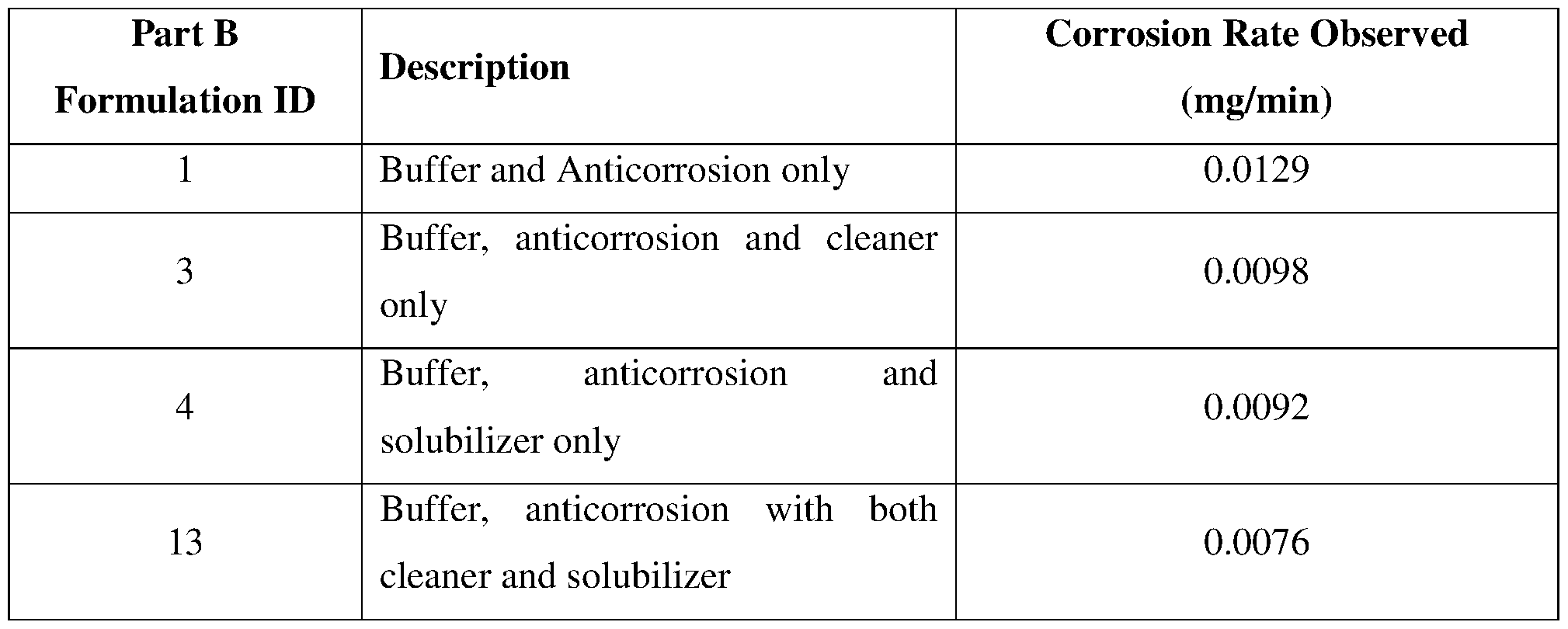
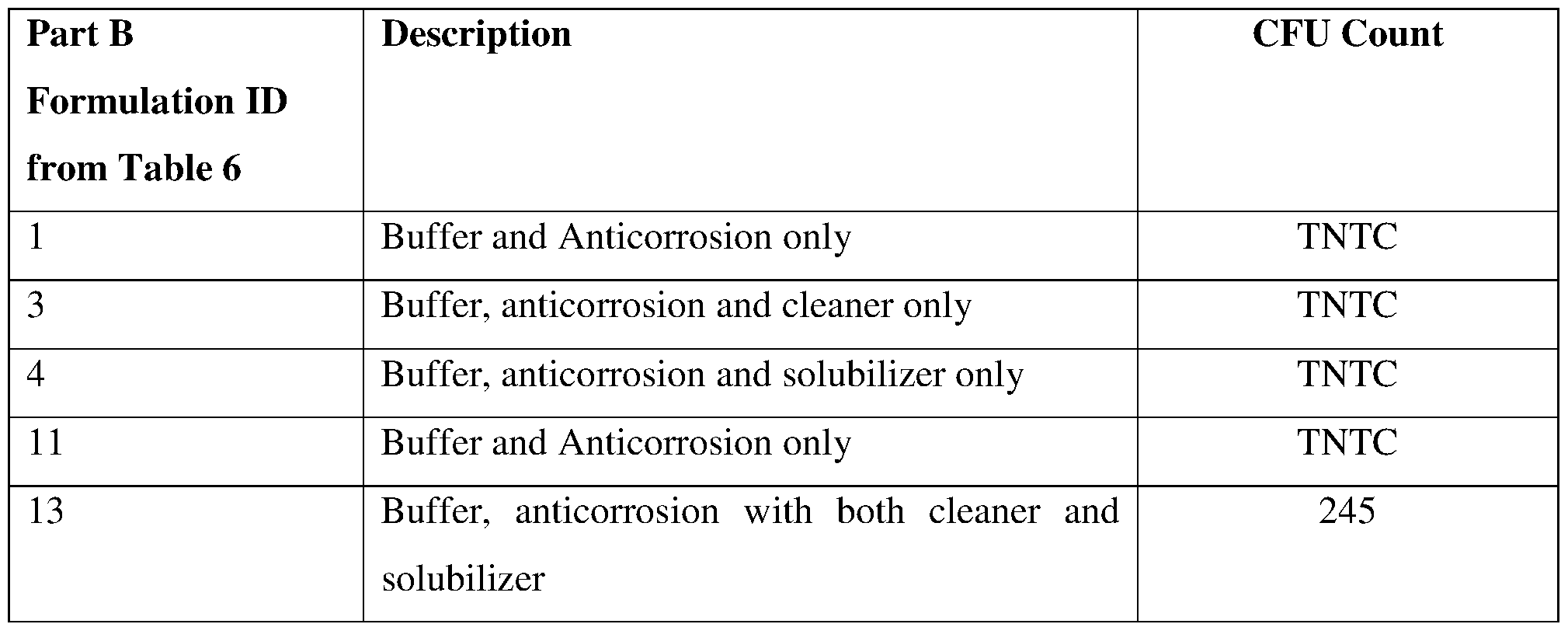
- a solubilizer and a cleaner had improved cleansing effects and anticorrosive properties than when one of the components was not present in the ultimate liquid sterilant.
- Figure 1 shows the PAA stability data for the stability study of Part A.
- Figure 2 shows the hydrogen peroxide stability data for the stability study of Part A.
- Figure 3 shows the acetic acid stability data for the stability study of Part A.
- liquid compositions that include components (A) and (B).
- components (A) and (B) When components (A) and (B) are combined, they provide a liquid disinfecting/sterilization composition termed “liquid sterilant”.
- Component (A) of the liquid sterilant includes hydrogen peroxide, acetic acid and/or peracetic acid and a stabilizer.
- Component (B) of the liquid sterilant includes a buffer, an anticorrosive agent, a solubilizer and a cleaner.
- Combining component (A) and component (B) provides the liquid sterilant which is used to treat soiled medical devices or surfaces.
- the cleansing conditions are effective at ambient temperature, or at elevated temperatures of from about 20°C to about 50°C.
- the term "about” can allow for a degree of variability in a value or range, for example, within 10%, within 5%, or within 1% of a stated value or of a stated limit of a range.
- room temperature refers to a temperature of about 15°C to 28°C.
- hydrogen peroxide refers to the compound chemically designated as dihydrogen dioxide, having the CAS Reg. No. 7722-84-1.
- the hydrogen peroxide includes water.
- the hydrogen peroxide is 50% wt. % hydrogen peroxide in water.
- the hydrogen peroxide can be present in the composition, in any suitable and effective amount.
- organic acid refers to an organic compound with acidic properties.
- the most common organic acids are the carboxylic acids, whose acidity is associated with their carboxyl group — COOH.
- Sulfonic acids, containing the group — SO2OH are relatively stronger acids.
- the 4 relative stability of the conjugate base of the acid determines its acidity.
- Other groups can also confer acidity, usually weakly: —OH, — SH, the enol group, and the phenol group.
- Organic compounds containing these groups are generally referred to as organic acids.
- An example of an organic acid is acetic acid.
- acetic acid or “ethanoic acid” refers to an organic compound with the chemical formula CH 3 CO 2 H (also written as CH 3 COOH), having the CAS Reg. No. 64-19-7.
- glacial acetic acid refers to undiluted and relatively concentrated, water-free (anhydrous) acetic acid
- EDTA ethylenediaminetetraacetic acid
- chelator refers to a compound that forms soluble, complex molecules with certain metal ions, inactivating the metal ions (or to some extent, countering the effects of the metal ions), so that they cannot normally react with other compounds, elements or ions.
- the chelator effectively chelates transition metals.
- One suitable type of chelator is/are sulfonic acids, more particularly, polymers or solid supports which contain sulfonic acid functionality.
- the chelator will effectively chelate any transition metals and/or alkaline earth metals present in any of the components of the liquid sterilant.
- the chelator can be a sulfonic acid group that is incorporated into a polymer.
- the polymer can be styrene based that is functionalized with sulfonic acid groups.
- the styrenic polymer can be a copolymer, such as styrene/divinylbenzene. The polymer may further be crosslinked.
- sulfonic acid functionalized polymers examples include those such as Dowex ® 50WX4-200, Dowex ® DR2030, Amberlite IR120 Na, Amberlite IRN99, Amberlyst 15 hydrogen (CAS Number 39389-20-3) and Amberlite strong acidic cation exchange sodium form available from Dow Chemical Company, which are styrene- divinylbenzene copolymers.
- Aquivion ® PFSA (perfluoro sulfonic acid) ionomers available from Solvay, are based on this copolymer or 5 tetrafluoroethylene-perfluoro(3-oxa-4-pentenesulfonic acid) copolymers (c.g.,
- the perfluorosulfonic acid pellets can be extruded/coextruded with other polymers to form films or shaped into a container to hold the remaining components of the embodiments.
- Suitable extrusion polymers include, for example, polyethylenes, e.g., (high density polyethylene, HDPE) and polypropylenes.
- the polymer can be derived from 2-acrylamido-2-methylpropane sulfonic acid (AMPS). Additionally, AMPS can be used to coat the lining of a container and then be polymerized to the surface of the container as a protective/chelating coating.
- AMPS 2-acrylamido-2-methylpropane sulfonic acid
- the polymeric resin chelator can be added to the liquid sterilants described herein. Alternatively, components (A) and (B) of the liquid sterilant can be passed through the polymeric resin chelator.
- the polymeric resin chelator can be in the form of a membrane and the membrane is in contact and remains in contact with the composition.
- the polymeric resin chelator is incorporated into a container which hold the compositions described herein.
- the polymer resin chelator is coated onto the interior of a container that is used to store the compositions described herein.
- the polymeric chelator can be placed within a “mesh pouch” or other containment system that can be placed into a container with the compositions described herein.
- One advantage of utilizing the polymeric resin chelator is that users of the compositions often contaminate the composition in between uses. That is, an individual may place a used wipe, sponge, or rag, medical device, instrument, etc. against or within the container that houses the composition, thus transferring contaminants to the container.
- the polymeric resin chelators described herein help to stabilize the peracetic acid/hydrogen peroxide compositions by complexing with/removing the undesired contaminants, such as metal ions. 6
- one advantage of the polymeric resin chelator is that it does not dissolve in the embodiments described herein. That is, the polymer resin remains in the solution but does not become homogeneous with the remaining components.
- the polymeric resin chelator provides surface contact with the components of the composition and removes metallic contaminants from the solution to stabilize the composition.
- the components of the composition e.g., the hydrogen peroxide and/or the peracetic acid
- the polymeric resin chelator does not cause a residue to remain on a treated surface after the surface has been treated with the compositions described herein.
- anticorrosive agent or "corrosion inhibitor” refers to a compound that, when added to a liquid or gas, decreases the corrosion rate of a material, typically a metal or an alloy.
- Suitable anticorrosive agents include, e.g., benzotriazole and sodium dodecyl sulfate (SDS).
- benzotriazole or "BTA” refers to the compound lH-benzotriazole or 1,2,3- benzotriazole, having the CAS Reg. No. 95-14-7.
- surfactant refers to a compound capable of lowering the surface tension of a liquid, the interfacial tension between two liquids, or that between a liquid and a solid. Surfactants may act as detergents, wetting agents, emulsifiers, foaming agents, and/or dispersants.
- the surfactant can be non-ionic, anionic or cationic. Additionally, the surfactant can include one or more non-ionic surfactants, one or more anionic surfactants, and/or one or more cationic surfactants.
- non-ionic surfactant or “nonionic surfactant” refers to a surfactant, in which the total number of electrons is equal to the total number of protons, giving it a net neutral or zero electrical charge.
- One suitable class of non-ionic surfactants includes the Pluronic ® poloxamers.
- Poloxamers are nonionic triblock copolymers composed of a central hydrophobic chain of polyoxypropylene (poly(propylene oxide)) flanked by two hydrophilic chains of polyoxyethylene (poly(ethylene oxide)). Poloxamers are also known by the trade name Pluronics ® .
- Pluronic ® 10R5 surfactant block copolymer refers to polyoxypropylene- polyoxyethylene block copolymer, having the CAS Reg. No. 9003-11-6.
- nonionic surfactants include, but are not limited to, fatty alcohols, polyoxyethylene glycol alkyl ethers (Brij), polyoxypropylene glycol alkyl ethers, glucoside alkyl ethers, polyoxyethylene glycol octylphenol ethers, polyoxyethylene glycol alkylphenol ethers, glycerol alkyl esters, polyoxyethylene glycol sorbitan alkyl esters, sorbitan alkyl esters, cocamide MEAs, cocamide DEAs, dodecyl dimethylamine oxides, block copolymers of polyethylene glycol and polypropylene glycols.
- Brij polyoxyethylene glycol alkyl ethers
- Polyoxypropylene glycol alkyl ethers glucoside alkyl ethers
- polyoxyethylene glycol octylphenol ethers polyoxyethylene glycol alkylphenol ethers
- glycerol alkyl esters polyoxyethylene glycol
- Suitable fatty alcohols include, but are not limited to, cetyl alcohol, stearyl alcohol, cetostearyl alcohol (consisting predominantly of cetyl and stearyl alcohols) and oleyl alcohol.
- Suitable polyoxyethylene glycol alkyl ethers include but are not limited to (Brij), for example CH 3 -(CH 2 )io-i 6 -(0-C 2 H 4 )i- 25 -OH, or octaethylene glycol monododecyl ether or pentaethylene glycol monododecyl ether.
- Suitable polyoxypropylene glycol alkyl ethers include CH 3 -(CH2)io-i 6 -(0-C 3 H 6 )i- 25 -OH.
- Suitable glucoside alkyl ethers include CH 3 -(CH 2 )io-i 6 -(0-Glucoside)i- 3 -OH, and, for example, include decyl glucoside, lauryl glucoside, and octyl glucoside.
- Suitable polyoxyethylene glycol octylphenol ethers include CsHi 7 -(C 6 H 4 )-(0-C 2 H 4)i-25 - OH.
- One exemplary material is TRITON X-100.
- Suitable polyoxyethylene glycol alkylphenol ethers include C 9 Hi 9 -(C 6 H 4 )-(0-C 2 H 4 )i- 25 - OH.
- One example is Nonoxynol-9.
- a suitable glycerol alkyl ester is glyceryl laurate. 8 [053] In another aspect, a suitable polyoxyethylene glycol sorbitan alkyl ester is polysorbate. [054] In still another aspect, suitable sorbitan alkyl esters are referred to as SPAN, e.g., SPAN- 20, sorbitan monolaurate.
- cationic surfactant refers to a surfactant, in which the total number of electrons is less than the total number of protons, giving it a net positive electrical charge.
- One kind of cationic surfactant is typically based on pH-dependent primary, secondary or tertiary amines.
- the primary amines become positively charged at a pH ⁇ 10
- the secondary amines become charged at a pH ⁇ 4.
- One example is octenidine dihydrochloride.
- quaternary ammonium cations such as alkyltrimethylammonium salts. These include but are not limited to cetyl trimethylammonium bromide (CTAB), hexadecyl trimethyl ammonium bromide, cetyl trimethylammonium chloride (CTAC), cetylpyridinium chloride (CPC), polyethoxylated tallow amine (POEA), benzalkonium chloride (BAC), benzethonium chloride (BZT), 5-Bromo-5-nitro- 1,3-dioxane, dimethyldioctadecylammonium chloride and dioctadecyldimethylammonium bromide (DODAB).
- CTAB cetyl trimethylammonium bromide
- CAC cetyl trimethylammonium chloride
- CPC cetylpyridinium chloride
- POEA polyethoxylated tallow amine
- BAC benzalkonium
- anionic surfactant refers to a surfactant in which the total number of electrons is greater than the total number of protons, giving it a net negative electrical charge.
- anionic surfactant is sodium lauryl sulfate.
- Anionic surfactants have a permanent anion, such as a sulfate, sulfonate or phosphate anion associated with the surfactant or has a pH-dependent anion, for example, a carboxylate.
- Sulfates can be alkyl sulfate or alkyl ether sulfates.
- Suitable alkyl sulfates include, but are not limited to, ammonium lauryl sulfate or sodium lauryl sulfate (SDS).
- Suitable alkyl ether sulfates include, but are not limited to, sodium laureth sulfate, also known as sodium lauryl ether sulfate (SLES) or sodium myreth sulfate.
- Suitable sulfonates include, but are not limited to, docusate (dioctyl sodium sulfosuccinate), fluorosurfactants that are sulfonated and alkyl benzene sulfonates.
- Typical sulfonated fluorosurfactants include, but are not limited to, perfluorooctanesulfonate (PFOS) or perfluorobutanesulfonate.
- Phosphates are typically alkyl aryl ether phosphates or alkyl ether phosphates.
- Carboxylates are typically alkyl carboxylates, such as fatty acid salts (soaps), such as for example, sodium stearate.
- the carboxylate can be, but is not limited to, sodium 9 lauryl sarcosinate.
- the carboxylate includes but is not limited to a carboxylated fluorosurfactant, such as perfluorononanoate, or perfluorooctanoate (PFOA or PFO).
- Zwitterionic (amphoteric) surfactant is based on primary, secondary or tertiary amines or quaternary ammonium cation also having a sulfonate, carboxylate or a phosphate.
- Suitable zwitterionic surfactants include, but are not limited to, CHAPS (3-[(3- Cholamidopropyl)dimethylammonio]-l-propanesulfonate) or a sultaine.
- the sultaine is typically cocamidopropyl hydroxy sultaine.
- the carboxylate cation is an amino acid, imino acid or betaine.
- the betaine is typically cocamidopropyl betaine.
- lecithin is often chosen as the counterion.
- SDS sodium dodecyl sulfate
- NaDS sodium lauryl sulfate
- SLS sodium dodecyl sulfate
- the term “solubilizer” is intended to include surfactants but more specifically low molar mass surfactants such as propylene glycol (propane- 1, 2-diol).
- Low molar mass surfactants are those having a molar mass of a range of from about 80 to about 300 g/mol, for example an agent having a molar mass of 250 g/mol or less, preferably with a molar mass of 200 g/mol or less, a molar mass of 150 g/mol or less, a molar mass of 100 g/mol or less and/or a molar mass of 80 g/mol or less and mixtures thereof.
- These low molar mass surfactants include one or more hydroxyl groups, preferably two hydroxyl groups or more.
- the term “cleaner” is intended to include surfactants but more specifically low molar mass surfactants that include an ethoxy (ether) portion such as 2-(2-ethoxyethoxy)ethanol (propylene glycol).
- Low molar mass ethoxy surfactants are those having a molar mass of a range of from about 75 to about 300 g/mol, for example an agent having a molar mass of 250 g/mol or less, preferably with a molar mass of 200 g/mol or less, a molar mass of 150 g/mol or less, a molar mass of 140 g/mol or less, a molar mass of 100 g/mol or less and/or a molar of 80 g/mol or 10 less and mixtures thereof.
- These low molar mass surfactants include one or more ether (ethoxy) groups, preferably two ethoxy groups or more.
- the term "disinfectant” refers to a substance that when applied to non-living objects, destroys microorganisms that are living on the objects.
- the term “disinfect” refers to the process of destruction or prevention of biological contaminants. Disinfection does not necessarily kill all microorganisms, especially nonresistant bacterial spores; it is less effective than sterilization, which is an extreme physical and/or chemical process that kills all types of life.
- Disinfectants are different from other antimicrobial agents such as antibiotics, which destroy microorganisms within the body, and antiseptics, which destroy microorganisms on living tissue. Disinfectants are also different from biocides. The latter are intended to destroy all forms of life, not just microorganisms. Sanitizers are substances that simultaneously clean and disinfect.
- sterilization refers to a substance that when applied to non living objects, destroys all viable forms of microbial life, when used according to labeling.
- CFU refers colony forming units and is a measure of viable cells in which a colony represents an aggregate of cells derived from a single progenitor cell.
- the liquid sterilant includes: (a) hydrogen peroxide; (b) an organic acid; (c) a chelator that is not Dequest ® 2010 (l-hydroxyethylidene-l,l,-diphosphonic acid), in particular a sulfonic acid containing polymer, copolymer or a support functionalized with sulfonic acid groups ; and (d) surfactant.
- a chelator that is not Dequest ® 2010 (l-hydroxyethylidene-l,l,-diphosphonic acid), in particular a sulfonic acid containing polymer, copolymer or a support functionalized with sulfonic acid groups ; and (d) surfactant.
- liquid sterilants and methods do not leave a residue on a treated surface after use of the liquid sterilant to treat the surface.
- liquid sterilant when a liquid sterilant includes more than one component, the liquid sterilant may also include additional components formed as a product of the reaction between the components in the liquid sterilant.
- additional components formed as a product of the reaction between the components in the liquid sterilant.
- a liquid sterilant including hydrogen peroxide (H 2 O 2 ) and acetic acid (CH 3 CO 2 H) also includes the oxidized product of acetic acid, peracetic acid (CH 3 CO 3 H).
- liquid sterilant including hydrogen peroxide (H 2 O 2 ) and acetic acid (CH 3 CO 2 H)
- H2O2 hydrogen peroxide
- CH3CO2H acetic acid
- a liquid sterilant of acetic acid and hydrogen peroxide will include significant and appreciable amounts of peracetic acid formed from the reaction of acetic acid with hydrogen peroxide. Further, it is appreciated that those of ordinary skill in the art fully understand and appreciate that an equilibrium exists between hydrogen peroxide and acetic acid, and peracetic acid.
- peracetic acid is present in about 1 wt. % to about 15 wt. % of the liquid sterilant. In some embodiments, peracetic acid is present in about 2-14 wt. %, 3-12 wt. %, 4-11 wt. %, 5-9 wt. %, about 6-8 wt. %, or about 1 wt. %, 2 wt. %, 3 wt. %, 4 wt. %, 5 wt. %, 6 wt. %, 7 wt. %, 8 wt. %, 9 wt. %, 10 wt. %, 11 wt.
- peracetic acid is present in about 8 wt. % to about 13 wt. % of the liquid sterilant.
- hydrogen peroxide is present in about 10 wt. % to about 50 wt. % of the liquid sterilant. In some embodiments (e.g., before equilibration and formation of PAA), the hydrogen peroxide is present in about 15-45 wt. %, 20-35 wt. %, or about 25-30 wt. % of the liquid sterilant. In some embodiments (e.g., after equilibration and formation of PAA), the hydrogen peroxide is present in about 10-40 wt. %, 15-35 wt. %, 18-30 wt. % or about 20-26 wt. % of the liquid sterilant.
- the hydrogen peroxide is present in about 16 wt. %, 18 wt. %, 20 wt. %, 21 wt. %, 22 wt. %, 23 wt. %, 24 wt. %, 25 wt. %, 26 wt. %, 27 wt. %, 28 wt. %, 29 wt. %, 30 wt. %, 31 wt. %, 32 wt. %, 34 wt. %, or about 36 wt. %.
- the hydrogen peroxide is about 35 wt. % in water, present in about 18 wt. % to about 32 wt.
- hydrogen peroxide is about 35 wt. % in water, present in about 28 wt. % of the liquid sterilant. In some embodiments, hydrogen peroxide is about 35 wt. % in water, present in about 17 wt. % to about 26 wt. % of the liquid sterilant.
- the organic acid includes acetic acid.
- the organic acid comprises glacial acetic acid.
- the organic acid includes acetic acid, present in at least about 3 wt. % of the liquid sterilant.
- the organic acid includes acetic acid, present in about 1-50 wt. %, 2-45 wt. %, 3-40 wt. %, 4-35 wt. %, 6-30 wt. %, 8-24 wt. %, 10-22 wt. %, 12- 20 wt. %, about 14-18 wt. %, or about 4 wt.
- the organic acid includes acetic acid, present in about 1-20 wt. %, 2-18 wt. %, 3-17 wt. %, 4-16 wt. %, 5-15 wt. %, 6-14 wt. %, 7-13 wt. %, 8-12 wt. %, or about 9-11 wt. % of the liquid sterilant.
- the organic acid includes acetic acid, present in about 13 wt. % to about 17 wt. % of the liquid sterilant.
- the organic acid comprises acetic acid, present in about 16 wt. % of the liquid sterilant.
- the liquid sterilant can be formulated as, can exist as, and can be commercially available as a liquid concentrate disinfectant or sterilant.
- liquid concentrate refers to a composition that is relatively undiluted and concentrated, having a low content of carrier, e.g., water. Having the composition be commercially available as a liquid concentrate will typically save costs associated with the manufacturing, shipping, and/or storage of the product.
- the concentrate can subsequently be diluted with an appropriate amount of carrier (e.g., water) prior to use.
- carrier e.g., water
- a discrete and finite amount of carrier e.g., water
- the liquid sterilant can be formulated for application, depending upon the user's preference as well as the ultimate application of the liquid sterilant.
- the liquid sterilant can be formulated for use in a sprayable composition, atomized liquid sprayer, or liquid applicator.
- Such formulations can include at least one of a spray bottle, motorized sprayer, wipe, cloth, sponge, non-woven fabric, and woven fabric.
- Such formulations may be particularly suitable for applying the liquid sterilant to a surface of a hospital, physician's office, medical clinic, medical facility, dental office, dental facility, airport, school, pet store, zoo, children's day care, elderly nursing home, museum, movie theatre, athletic facility, sporting arena, gymnasium, rest room, bathroom, shopping center, amusement park, church, synagogue, mosque, temple, restaurant, food processing facility, food manufacturing facility, pharmaceutical company, hot- tub, sauna, and/or clean room. 13 [086] Such liquid formulations may be particularly suitable for applying the liquid sterilant to metal, plastic, natural rubber, synthetic rubber, glass, stone, grout, fiberglass, wood, concrete, construction products, and/or building products.
- the liquid sterilant can be configured for use in contacting at least one of medical equipment, medical device (e.g., reusable medical device or instrument, such as an endoscope), surface in the medical industry, dental equipment, dental device, and surface in the dental industry.
- medical device e.g., reusable medical device or instrument, such as an endoscope
- the liquid sterilant may be used in the reconditioning of a soiled endoscopic device.
- the liquid sterilants are useful during the disinfection step or sterilization step of the high level disinfection cleaning process following use of the endoscope in a medical procedure.
- the term "endoscopic device” includes a plurality of minimally invasive surgical devices (e.g., scopes) that have been developed for specific uses. For example, upper and lower endoscopes are utilized for accessing the esophagus/stomach and the colon, respectively, angioscopes are utilized for examining blood vessels, and laparoscopes are utilized for examining the peritoneal cavity.
- catalysts for the formation of peracetic acid from hydrogen peroxide and acetic acid are employed.
- Suitable catalysts include, for example, inorganic acids, such as sulfuric acid (H 2 SO 4 ), hydrochloric acid (HC1), phosphoric acid (H 3 PO 4 ), and nitric acid (HNO3).
- the liquid sterilant can be non-corrosive.
- non-corrosive or “noncorrosive” refers to a substance that will not destroy or irreversibly damage another surface or substance with which it comes into contact.
- the main hazards to people include damage to the eyes, the skin, and the tissue under the skin; inhalation or ingestion of a corrosive substance can damage the respiratory and gastrointestinal tracts. Exposure results in chemical burn.
- Having the liquid sterilant be relatively non-corrosive will allow the user to employ the liquid sterilant over a wider range of uses, exposing the liquid sterilant to a wider range of substrates.
- having the liquid sterilant be relatively non-corrosive will allow the user to employ the liquid sterilant as a disinfectant or sterilant with certain medical devices that are highly sensitive to corrosive substances.
- the liquid sterilant can be non-toxic.
- non-toxic refers to a substance that has a relatively low degree to which it can damage a living or non living organism. Toxicity can refer to the effect on a whole organism, such as an animal, 14 bacterium, or plant, as well as the effect on a substructure of the organism, such as a cell (cytotoxicity) or an organ (organotoxicity), such as the liver (hepatotoxicity).
- cytotoxicity cytotoxicity
- organotoxicity organ
- a central concept of toxicology is that effects are dose-dependent; even water can lead to water intoxication when taken in large enough doses, whereas for even a very toxic substance such as snake venom there is a dose below which there is no detectable toxic effect. Having the liquid sterilant be relatively non-toxic will allow a wider range of users be able to safely handle the liquid sterilant, without serious safety concerns or risks.
- the liquid sterilant can be stable over extended periods of time (i.e., has a long-term stability).
- long-term stability refers to a substance undergoing little or no physical and/or chemical decomposition or degradation, over extended periods of time.
- the liquid sterilant components (A) and (B) can be stable over extended periods of time, such that at about 1 atm and about 19°C, less than about 20 wt. %, e.g., 15 wt. %, 10 wt. %, or 5 wt. %, of each component independently degrades over about one year.
- the liquid sterilant components (A) and (B), as described herein can be stable over extended periods of time, such that at about 1 atm and about 19°C, at least about 80 wt. % of each component, e.g., 85 wt. %, 90 wt. %, 95 wt. %, is independently present after about one year.
- the liquid sterilant of the present includes a buffer.
- buffer refers to a weak acid or base used to maintain the acidity (pH) of a solution at a chosen value.
- the function of a buffering agent is to 15 prevent a rapid change in pH when acids or bases are added to the solution. Buffering agents have variable properties— some are more soluble than others; some are acidic while others are basic.
- a suitable buffering mixture includes a metal hydroxide, such as sodium hydroxide and a metal phosphate dibasic or tribasic, such as potassium phosphate dibasic, e.g., NaOH/KiHPC , K3HPO4, NaOH and NasPC , KOH with a phosphate, etc.
- the buffer (or its components) can be present in the liquid sterilant in an amount of 4% to about 21% based on the total weight percent of the liquid sterilant.
- the liquid sterilant can be essentially free of transition metals. In further specific embodiments, the liquid sterilant can include less than about 0.001 wt. % transition metals. In further specific embodiments, the liquid sterilant can include less than about 0.0001 wt. % transition metals. In further specific embodiments, the liquid sterilant can include less than about 0.00001 wt. % transition metals. Having the liquid sterilant include a minimal amount of transition metals decreases the likelihood that the transition metals will cause degradation and/or decomposition of the components (A) and (B) of the liquid sterilant, over the extended periods of time associates with the manufacturing, shipping, and storage of the components.
- transition metal refers to an element whose atom has an incomplete d sub-shell, or which can give rise to cations with an incomplete d sub-shell.
- Transition metals include scandium (Sc), titanium (Ti), vanadium (V), chromium (Cr), manganese (Mn), iron (Fe), cobalt (Co), nickel (Ni), copper (Cu), zinc (Zn), yttrium (Y), zirconium (Zr), niobium (Nb), molybdenum (Mo), technetium (Tc), ruthenium (Ru), rhodium (Rh), palladium (Pd), silver (Ag), cadmium (Cd), hafnium (Hf), tantalum (Ta), tungsten (W), rhenium (Re), osmium (Os), iridium (Ir), platinum (Pt), gold (Au), mercury (H
- the transition metal can be naturally occurring.
- Naturally occurring transition metals include scandium (Sc), titanium (Ti), vanadium (V), chromium (Cr), manganese (Mn), iron (Fe), cobalt (Co), nickel (Ni), copper (Cu), zinc (Zn), yttrium (Y), zirconium (Zr), niobium (Nb), molybdenum (Mo), technetium (Tc), ruthenium (Ru), rhodium (Rh), palladium (Pd), silver (Ag), cadmium (Cd), hafnium (Hf), tantalum (Ta), tungsten (W), rhenium (Re), osmium (Os), iridium (Ir), platinum (Pt), gold (Au), and mercury (Hg).
- the liquid sterilant can be essentially free of heavy metals. In further specific embodiments, the liquid sterilant can include less than about 0.001 wt. % heavy metals. In further specific embodiments, the liquid sterilant can include less than about 0.0001 wt. % heavy metals. In further specific embodiments, the liquid sterilant can include less than about 0.00001 wt. % heavy metals. Having the liquid sterilant include a minimal amount of heavy metals decreases the likelihood that the transition metals will cause degradation and/or decomposition of components (A) and (B) of the liquid sterilant, over the extended periods of time associates with the manufacturing, shipping, and storage of the composition.
- the term "heavy metal,” “heavy metals” or “toxic metal” refers to metals that are relatively toxic, and mainly include the transition metals, some metalloids, lanthanides, and actinides.
- Examples of toxic metals include, e.g., iron (Fe), cobalt (Co), copper (Cu), manganese (Mn), molybdenum (Mo), zinc (Zn), mercury (Hg), plutonium (Pu), lead (Pb), vanadium (V), tungsten (W), cadmium (Cd), aluminium (Al), beryllium (Be), and arsenic (As).
- kits that include: (a) enclosed containers that include removable closures; (b) the components (A) and (B) of the liquid sterilant as described herein, which are located inside the enclosed containers; and (c) printed indicia located on the enclosed containers.
- the enclosed container can be opaque.
- the enclosed container can be manufactured from high density polyethylene (HDPE), thereby providing the requisite opacity. Having the enclosed container be manufactured from high density polyethylene (HDPE) will decrease the likelihood that components (A) and (B) will degrade and/or decompose over extended periods of time, due to excessive exposure to direct sunlight.
- HDPE high density polyethylene
- high-density polyethylene or "HDPE” refers to a polyethylene thermoplastic made from petroleum.
- the mass density of high-density polyethylene can range from 0.93 to 0.97 g/cm 3 .
- HDPE has little branching, giving it stronger intermolecular forces and tensile strength than LDPE.
- the difference in strength exceeds the difference in density, giving HDPE a higher specific strength. It is also harder and more opaque and can withstand somewhat higher temperatures (120°C/248°F for short periods, 110°C/230°F continuously).
- HDPE is resistant to many different solvents.
- solvent refers to a liquid that can dissolve a solid, liquid, or gas.
- solvents are silicones, organic compounds, water, alcohols, ionic liquids, and supercritical fluids.
- the term "opaque” refers to an object that is neither transparent (allowing all light to pass through) nor translucent (allowing some light to pass through). When light strikes an interface between two substances, in general some may be reflected, some absorbed, some scattered, and the rest transmitted (also see refraction). Reflection can be diffuse, for example light reflecting off a white wall, or specular, for example light reflecting off a mirror. An opaque substance transmits no light, and therefore reflects, scatters, or absorbs all of it. Both mirrors and carbon black are opaque. Opacity depends on the frequency of the light being considered. For instance, some kinds of glass, while transparent in the visual range, are largely opaque to ultraviolet light. More extreme frequency-dependence is visible in the absorption lines of cold gases.
- components (A) and (B) of the liquid sterilant should avoid, when feasible: excessive exposure to direct sunlight, excessive heat and/or elevated temperatures.
- the enclosed container of the kit can include printed indicia, with instructions to avoid excessive heat, elevated temperatures, direct sunlight, or a combination thereof.
- the enclosed containers includes a head space, pressure valve, or combination thereof.
- the enclosed container includes a pressure valve, configured to release excessive gas from within the enclosed container. The presence of a head space and pressure valve in the container will allow for the escape of gas (e.g., oxygen) from the enclosed container, without the likelihood that the container will explode from the elevated pressure that would otherwise develop.
- gas e.g., oxygen
- head space refers to a portion of the inside of a container that is not occupied by the liquid contents of the container.
- a head space can be present in the container such that a portion of the inside of the container does not include liquid composition, but instead includes a gas or vacuum.
- the head space can include oxygen (O2), peracetic acid and/or acetic acid vapor.
- the head space can be present in up to about 20% (v/v) of the inside of the enclosed container.
- pressure valve refers to a mechanical device that will permit for the passage of gas and not fluid, preferably in one direction only, for example, exiting a container housing the pressure valve, and not entering the container.
- the liquid sterilant can be used to effectively reduce the number of microbes located upon a substrate.
- the liquid sterilant can effectively kill and/or inhibit a microorganism (e.g., virus, fungus, mold, slime mold, algae, yeast, mushroom and/or bacterium), thereby disinfecting or sterilizing the substrate.
- a microorganism e.g., virus, fungus, mold, slime mold, algae, yeast, mushroom and/or bacterium
- the liquid sterilant can effectively sanitize a substrate, thereby simultaneously cleaning and disinfecting and/or sterilizing the substrate.
- the liquid sterilant can effectively kill or inhibit all forms of life, not just microorganisms, thereby acting as a biocide.
- the liquid sterilant can effectively disinfect or sterilize a substrate. In further specific embodiments, the liquid sterilant can effectively disinfect or sterilize the surface of a substrate. In additional specific embodiments, the liquid sterilant can effectively sterilize a substrate. In further specific embodiments, the liquid sterilant can effectively sterilize the surface of a substrate.
- microbe refers to a microscopic organism that comprises either a single cell (unicellular), cell clusters, or no cell at all (acellular). Microorganisms are very diverse; they include bacteria, fungi, archaea, and protists; microscopic plants (green algae); and animals such as plankton and the planarian. Some microbiologists also include viruses, but others consider these as non-living.
- microorganisms are unicellular (single-celled), but this is not universal, since some multicellular organisms are microscopic, while some unicellular protists and bacteria, like Thiomargarita namibiensis, are macroscopic and visible to the naked eye.
- Vims refers to a small infectious agent that can replicate only inside the living cells of organisms.
- Vims particles consist of two or three parts: the genetic material made from either DNA or RNA, long molecules that carry genetic information; a protein coat that protects these genes; and in some cases an envelope of lipids that surrounds the 19 protein coat when they are outside a cell.
- the shapes of viruses range from simple helical and icosahedral forms to more complex structures. The average virus is about one one-hundredth the size of the average bacterium.
- An enormous variety of genomic structures can be seen among viral species; as a group they contain more structural genomic diversity than plants, animals, archaea, or bacteria.
- viruses There are millions of different types of viruses, although only about 5,000 of them have been described in detail.
- a virus has either DNA or RNA genes and is called a DNA virus or a RNA vims respectively.
- the vast majority of viruses have RNA genomes. Plant viruses tend to have single- stranded RNA genomes and bacteriophages tend to have double- stranded DNA genomes.
- fungi refers to a large and diverse group of eucaryotic microorganisms whose cells contain a nucleus, vacuoles, and mitochondria. Fungi include algae, molds, yeasts, mushrooms, and slime molds. See, Biology of Microorganisms, T. Brock and M. Madigan, 6th Ed., 1991, Prentice Hill (Englewood Cliffs, N.J.).
- Exemplary fungi include Ascomycetes (e.g., Neurospora, Saccharomyces, Morchella), Basidiomycetes (e.g., Amanita, Agaricus), Zygomycetes (e.g., Mucor, Rhizopus), Oomycetes (e.g., Allomyces), and Deuteromycetes (e.g., Penicillium, Aspergillus).
- Ascomycetes e.g., Neurospora, Saccharomyces, Morchella
- Basidiomycetes e.g., Amanita, Agaricus
- Zygomycetes e.g., Mucor, Rhizopus
- Oomycetes e.g., Allomyces
- Deuteromycetes e.g., Penicillium, Aspergillus
- mold refers to a filamentous fungus, generally a circular colony that may be cottony, wooly, etc. or glabrous, but with filaments not organized into large fruiting bodies, such as mushrooms. See, e.g., Stedman's Medical Dictionary, 25th Ed., Williams & Wilkins, 1990 (Baltimore, Md.).
- Basidiomycetes Two types of wood-rotting fungi are the white rot and the brown rot.
- An ecological activity of many fungi, especially members of the Basidiomycetes is the decomposition of wood, paper, cloth, and other products derived from natural sources.
- Basidiomycetes that attack these products are able to utilize cellulose or lignin as carbon and energy sources.
- Lignin is a complex polymer in which the building blocks are phenolic compounds. It is an important constituent of woody plants. The decomposition of lignin in nature occurs almost exclusively through the agency of these wood- rotting fungi. Brown rot attacks and decomposes the cellulose and the lignin is left unchanged. White rot attacks and decomposes both cellulose and lignin. See, Biology of Microorganisms, T. Brock and M. Madigan, 6th Ed., 1991, Prentice Hill (Englewood Cliffs, N.J.).
- the term "slime molds” refers to nonphototrophic eucaryotic microorganisms that have some similarity to both fungi and protozoa.
- the slime molds can be divided into two groups, the 20 cellular slime molds, whose vegetative forms are composed of single amoeba like cells, and the acellular slime molds, whose vegetative forms are naked masses of protoplasms of indefinite size and shape called plasmodia.
- Slime molds live primarily on decaying plant matter, such as wood, paper, and cloth. See, Biology of Microorganisms, T. Brock and M. Madigan, 6th Ed., 1991, Prentice Hill (Englewood Cliffs, N.J.).
- algae refers to a large and diverse assemblage of eucaryotic organisms that contain chlorophyll and carry out oxygenic photosynthesis. See, Biology of Microorganisms, T. Brock and M. Madigan, 6th Ed., 1991, Prentice Hill (Englewood Cliffs, N.J.).
- Exemplary algae include Green Algae (e.g., Chlamydomonas), Euglenids (e.g., Euglena), Golden Brown Algae (e.g., Navicula), Brown Algae (e.g., Laminaria), Dinoflagellates (e.g., Gonyaulax), and Red Algae (e.g., Polisiphonia).
- Green Algae e.g., Chlamydomonas
- Euglenids e.g., Euglena
- Golden Brown Algae e.g., Navicula
- Brown Algae e.g., Laminaria
- Dinoflagellates e.g., Gonyaulax
- Red Algae e.g., Polisiphonia
- yeast refers to unicellular fungi, most of which are classified with the Ascomytes. See, Biology of Microorganisms, T. Brock and M. Madigan, 6th Ed., 1991, Prentice Hill (Englewood Cliffs, N.J.).
- muscles refer to filamentous fungi that are typically from large structures called fruiting bodies, the edible part of the mushroom. See, Biology of Microorganisms, T. Brock and M. Madigan, 6th Ed., 1991, Prentice Hill (Englewood Cliffs, N.J.).
- bacteria refers to a large domain of prokaryotic microorganisms. Typically a few micrometers in length, bacteria have a wide range of shapes, ranging from spheres to rods and spirals. Bacteria are present in most habitats on Earth, growing in soil, acidic hot springs, radioactive waste, water, and deep in the Earth's crust, as well as in organic matter and the live bodies of plants and animals, providing outstanding examples of mutualism in the digestive tracts of humans, termites and cockroaches.
- P. aeruginosa or "Pseudomonas aeruginosa” refers to a common bacterium that can cause disease in animals, including humans. It is found in soil, water, skin flora, and most man-made environments throughout the world.
- S. aureus or "Staphylococcus aureus” refers to a facultative anaerobic Gram positive bacterium. It is frequently found as part of the normal skin flora on the skin and nasal passages. It is estimated that 20% of the human population are long-term carriers of S. aureus. S. aureus is the most common species of staphylococci to cause Staph infections. The reasons S. aureus is a successful pathogen are a combination host and bacterial immuno-evasive strategies. One of these strategies is the production of carotenoid pigment staphyloxanthin which is responsible for the characteristic golden color of S. aureus colonies.
- This pigment acts as a virulence factor, primarily being a bacterial antioxidant which helps the microbe evade the host’s immune system in the form of reactive oxygen species which the host uses to kill pathogens.
- S. aureus can cause a range of illnesses from minor skin infections, such as pimples, impetigo, boils (furuncles), cellulitis folliculitis, carbuncles, scalded skin syndrome, and abscesses, to life-threatening diseases such as pneumonia, meningitis, osteomyelitis, endocarditis, toxic shock syndrome (TSS), bacteremia, and sepsis. Its incidence is from skin, soft tissue, respiratory, bone, joint, endovascular to wound infections. It is still one of the five most common causes of nosocomial infections, often causing postsurgical wound infections. Each year, some 500,000 patients in American hospitals contract a staphylococcal infection.
- MRS A Methicillin-resistant S. aureus
- mer-sa in North America
- E. hirae or "Enterococcus hirae” refers to a species of Enterococcus.
- M. terrae or “Mycobacterium terrae” refers to a slow-growing species of Mycobacterium. It is an ungrouped member of the third Runyon (nonchromatogenic mycobacteria). It is known to cause serious skin infections, which are relatively resistant to antibiotic therapy 22
- Mycobacterium avium complex refers to a group of genetically related bacteria belonging to the genus Mycobacterium. It includes Mycobacterium avium and Mycobacterium intracellulare.
- M. avium or “mycobacterium avium” refers to a species of Mycobacterium.
- M. intracellulare or “mycobacterium intracellulare” refers to a species of Mycobacterium.
- the present invention provides a two part liquid sterilant composition
- a two part liquid sterilant composition comprising components (A) and (B) to be mixed to yield an aqueous composition, wherein component (A) comprises hydrogen peroxide, acetic acid and/or peracetic acid and a stabilizer; and component (B) comprises a buffer, an anticorrosive agent, a solubilizer and a cleaner, wherein when component (A) and component (B) are combined, form a liquid sterilant.
- [0160] 27 A method to clean and disinfect or sterilize a substrate contaminated with microorganisms using the two part liquid composition according to any of paragraphs 1 through 26, comprising the step: 25 [0161] contacting the substrate with the liquid sterilant to clean and disinfect or sterilize the substrate.
- a kit comprising:
- Part A and Part B were added to water, mixed and used within 8 hours.
- the chemistry was used within 4-6 hours to ensure that the PAA concentration were within the desired range of 2000-2100 ppm PAA at 30 ⁇ 2°C.
- the chemistry in the examples was designed to work at 30-40°C temperature range and can be used in an automated endoscope reprocess (AER) which mixes the Part A and Part B with water and typically uses it within 5-15 minutes (which is the contact time of the chemistry). Nominal PAA concentrations were achieved using the dilution ratio of 1:1:48 (Part A to Part B to water).
- AER automated endoscope reprocess
- Table 1 shows the formulation for Part A. Note: The information provided in the table below defines the range of chemistry at each stage of the chemistry life.
- Figures 1 to 3 show the stability of the three different lots.
- Figure 1 shows the PAA stability data for the stability study of Part A. The data showed that after 653 days at ambient conditions, the PAA concentration of all three lots were still greater than the criteria of 9.3% PAA.
- Figure 2 shows the hydrogen peroxide stability data for the stability study of Part A. The results showed that after 653 days at ambient conditions, the chemistry still had greater than 20% hydrogen peroxide for all three lots.
- Figure 3 shows the acetic acid stability data for the stability study of Part A. The results showed that over the lifetime of the stability study at ambient conditions, the acetic acid maintained the concentration above 13%.
- Table 2 shows the abbreviations used for chemical components listed in the Formulation List for Part B in Table 3 and 6.
- Corrosion Test Procedure For the corrosion test study, ASTM G31-72: Standard Practice for Laboratory Immersion Corrosion Testing of Metals was used. For the testing done in the chemistry development process, the method was simplified to the following procedure for faster test time while still allowing sufficient sensitivity in the data for comparison of different formulation: ASTM Method: G31-72 (Reapproved 2004): Standard Practice for Laboratory Immersion Corrosion Testing of Metals was followed utilizing stainless steel (SS316) 316 and brass coupons. The metal coupons were cleaned with acetone and allowed to dry. The coupons were weighed and placed in test tubes. The solutions to be tested were placed in the test tubes. RapicideTM PA available from Medivators, Inc. was used as a comparison. DI water was used as a control.
- the coupons were soaked in the test tube for 5 hours at room temperature. After soaking, the solutions were poured out and the coupons were rinsed with DI water. The brass coupons were sonicated in 10% v/v of sulfuric acid for 2 minutes, then rinsed with DI water again. The coupons were then allowed to air dry for 24 hours. Using a 1 kg weigh, the coupons were rubbed with a scrubber utilizing a horizontal force 10 times back and forth on both sides. The coupons were then cleaned with acetone and allowed to dry. The coupons were then reweighed to determine the weight loss per minute for corrosion rate (unit in mg/min or pg/min depending on the need of the experiment).
- Suspension Test Procedure Prior to testing, the germicide was equilibrated at 30° C by placing the respective bottles in a water bath. The temperature of the germicide was measured by placing a bottle of DI water with the same volume as the germicide into the water bath at the same time as the germicide. A thermometer was placed into the DI water to check for the moment when the temperature stabilized. 1.0 ml of inoculum and 0.5 mL of fetal bovine serum (FBS) was pipetted into a test tube and immediately placed in the water bath at 30° C for 2 minutes ⁇ 10 seconds.
- FBS fetal bovine serum
- AO AC Carrier Test Procedure The procedure was done following the guideline AO AC Official Method 966.04 but was slightly modified to adapt to the 30°C contact time with 120 carriers per test for preliminary/feasibility testing.
- Table 3 lists the initial Part B formulations.
- Table 6 shows the Part B formulations with microbiological efficacy testing. For the components listed in Tables 3 and 6, the abbreviation for the component listed can be found in Table 2.
- Table 3 shows the formulations for Part B Note: The composition listed are defined in weight percent.
- Table 5 shows the effect of different concentration of benzotriazole and the presence of EDTA on corrosive properties.
- the results of the corrosion tests on Use Solutions utilizing the various Part B formulations from Table 3 are shown in Table 5.
- Formulations for Part B were then developed based on the corrosion test results for Use Solutions based on the Part B formulations from Table 3 and were generated with microbiological efficacy testing for the formulation selection. Table 6 shows those formulations. Note: The compounds used in each category are listed in the formulation detail with the concentration listed in weight percent.
- Table 8 shows the suspension test results for Use Solutions of 2 part chemistry based on Part B formulations from Table 6 against B. subtilis.
- Table 11 shows the AO AC carrier results for Use Solutions having Part B formulations from Table 6 against B. subtilis loop
- Table 12 shows the AOAC carrier results for the 2 part chemistry Use Solution using Formula 14 for Part B from Table 6. 37 Table 12.
- Results showed that Formulas 13 and 14 had almost total kill. A pH less than 6 showed better micro efficacy against AO AC carrier testing.
- Table 14 shows that for a desired MRC of PAA of 2000-2200 ppm, the Use Solution can be for up to 22.5 hours after mixing.
- Table 15 shows the corrosion rate of 2 part chemistry Use solutions with solubilizer and cleaner addition. Note: For formulation composition of Part B, please refer to Table 6.
- Table 16 shows the microbiological efficacy suspension test against B. subtilis for the 2 part chemistry.
- Table 17 shows the microbiological efficacy suspension test against B. subtilis for the different buffer and anticorrosion formulation.
- Table 18 shows the AO AC carrier test results for 2 Part Chemistry with Part B Formulation ID 13 from Table 6.
- Table 18 shows there were 0 survivors of the carriers.
- the 2 part chemistry was subjected to viricidal testing to determine the contact time needed for sterilization.
- a film of virus, dried on a glass surface was exposed to a 2.00 mL aliquot of the Use Solution for both a 5 minute and 10 minute exposure time at 30°C.
- the virucidal and cytotoxic activities were removed from the virus test substance mixtures utilizing a Sephadex gel column, and the mixtures were assayed for viral infectivity by an accepted assay method. Appropriate virus, test substance cytotoxicity, and neutralization controls were run concurrently.
- Table 19 shows the virucidal test results for 2 part chemistry Use Solution with Formulation ID 13 from Table 6 for part B. 41 Table 19
Landscapes
- Life Sciences & Earth Sciences (AREA)
- Health & Medical Sciences (AREA)
- General Health & Medical Sciences (AREA)
- Environmental Sciences (AREA)
- Wood Science & Technology (AREA)
- Plant Pathology (AREA)
- Zoology (AREA)
- Engineering & Computer Science (AREA)
- Pest Control & Pesticides (AREA)
- Agronomy & Crop Science (AREA)
- Dentistry (AREA)
- Chemical & Material Sciences (AREA)
- Toxicology (AREA)
- Inorganic Chemistry (AREA)
- Chemical Kinetics & Catalysis (AREA)
- General Chemical & Material Sciences (AREA)
- Agricultural Chemicals And Associated Chemicals (AREA)
- Food Preservation Except Freezing, Refrigeration, And Drying (AREA)
Abstract
Description




Claims
Priority Applications (3)
| Application Number | Priority Date | Filing Date | Title |
|---|---|---|---|
| US18/558,394 US20240224996A1 (en) | 2021-05-10 | 2022-05-05 | Liquid chemical sterilization chemistry |
| AU2022272259A AU2022272259A1 (en) | 2021-05-10 | 2022-05-05 | Liquid chemical sterilization chemistry |
| EP22808502.3A EP4337010A4 (en) | 2021-05-10 | 2022-05-05 | Chemical sterilization chemistry with liquids |
Applications Claiming Priority (2)
| Application Number | Priority Date | Filing Date | Title |
|---|---|---|---|
| US202163186429P | 2021-05-10 | 2021-05-10 | |
| US63/186,429 | 2021-05-10 |
Publications (1)
| Publication Number | Publication Date |
|---|---|
| WO2022241383A1 true WO2022241383A1 (en) | 2022-11-17 |
Family
ID=84028593
Family Applications (1)
| Application Number | Title | Priority Date | Filing Date |
|---|---|---|---|
| PCT/US2022/072126 Ceased WO2022241383A1 (en) | 2021-05-10 | 2022-05-05 | Liquid chemical sterilization chemistry |
Country Status (4)
| Country | Link |
|---|---|
| US (1) | US20240224996A1 (en) |
| EP (1) | EP4337010A4 (en) |
| AU (1) | AU2022272259A1 (en) |
| WO (1) | WO2022241383A1 (en) |
Cited By (2)
| Publication number | Priority date | Publication date | Assignee | Title |
|---|---|---|---|---|
| WO2024211187A1 (en) * | 2023-04-03 | 2024-10-10 | Medivators Inc. | Decontaminant composition and uses thereof |
| WO2024227847A1 (en) * | 2023-05-03 | 2024-11-07 | Nunhems B.V. | Seed disinfectant agent and method |
Citations (6)
| Publication number | Priority date | Publication date | Assignee | Title |
|---|---|---|---|---|
| US5508046A (en) * | 1991-07-15 | 1996-04-16 | Minntech Corporation | Stable, anticorrosive peracetic/peroxide sterilant |
| US6632397B1 (en) * | 1998-10-01 | 2003-10-14 | Minntech Corporation | Multi-part anti-microbial concentrate system, activated solution, use-dilution solution, method of making same, and method of sterilizing with the use-dilution solution |
| US6803057B2 (en) * | 1998-12-14 | 2004-10-12 | Virox Technologies Inc. | Hydrogen peroxide disinfectant with increased activity |
| US20100120913A1 (en) * | 2008-11-12 | 2010-05-13 | Larson Brian G | Resin catalyzed and stabilized peracid compositions and associated methods |
| US20160074549A1 (en) * | 2014-09-17 | 2016-03-17 | Lonza, Inc. | Activated disinfectant hydrogen peroxide compositions |
| US9693675B2 (en) * | 2014-12-20 | 2017-07-04 | Medivators Inc. | Cleaning composition |
Family Cites Families (2)
| Publication number | Priority date | Publication date | Assignee | Title |
|---|---|---|---|---|
| US10183087B2 (en) * | 2015-11-10 | 2019-01-22 | American Sterilizer Company | Cleaning and disinfecting composition |
| CN111631217A (en) * | 2020-07-11 | 2020-09-08 | 山东利尔康医疗科技股份有限公司 | Low-odor low-corrosivity neutral peroxyacetic acid disinfectant and preparation method thereof |
-
2022
- 2022-05-05 AU AU2022272259A patent/AU2022272259A1/en active Pending
- 2022-05-05 EP EP22808502.3A patent/EP4337010A4/en active Pending
- 2022-05-05 WO PCT/US2022/072126 patent/WO2022241383A1/en not_active Ceased
- 2022-05-05 US US18/558,394 patent/US20240224996A1/en active Pending
Patent Citations (6)
| Publication number | Priority date | Publication date | Assignee | Title |
|---|---|---|---|---|
| US5508046A (en) * | 1991-07-15 | 1996-04-16 | Minntech Corporation | Stable, anticorrosive peracetic/peroxide sterilant |
| US6632397B1 (en) * | 1998-10-01 | 2003-10-14 | Minntech Corporation | Multi-part anti-microbial concentrate system, activated solution, use-dilution solution, method of making same, and method of sterilizing with the use-dilution solution |
| US6803057B2 (en) * | 1998-12-14 | 2004-10-12 | Virox Technologies Inc. | Hydrogen peroxide disinfectant with increased activity |
| US20100120913A1 (en) * | 2008-11-12 | 2010-05-13 | Larson Brian G | Resin catalyzed and stabilized peracid compositions and associated methods |
| US20160074549A1 (en) * | 2014-09-17 | 2016-03-17 | Lonza, Inc. | Activated disinfectant hydrogen peroxide compositions |
| US9693675B2 (en) * | 2014-12-20 | 2017-07-04 | Medivators Inc. | Cleaning composition |
Non-Patent Citations (1)
| Title |
|---|
| See also references of EP4337010A4 * |
Cited By (2)
| Publication number | Priority date | Publication date | Assignee | Title |
|---|---|---|---|---|
| WO2024211187A1 (en) * | 2023-04-03 | 2024-10-10 | Medivators Inc. | Decontaminant composition and uses thereof |
| WO2024227847A1 (en) * | 2023-05-03 | 2024-11-07 | Nunhems B.V. | Seed disinfectant agent and method |
Also Published As
| Publication number | Publication date |
|---|---|
| US20240224996A1 (en) | 2024-07-11 |
| EP4337010A4 (en) | 2025-03-19 |
| AU2022272259A1 (en) | 2023-11-30 |
| EP4337010A1 (en) | 2024-03-20 |
Similar Documents
| Publication | Publication Date | Title |
|---|---|---|
| WO2016100818A1 (en) | Disinfectant peracetic acid solutions | |
| US20140328941A1 (en) | Non-corrosive stable peracetic acid concentrate solution | |
| US20240315252A1 (en) | Peracetic acid stabilized compositions with stable lining | |
| US20160073628A1 (en) | High Osmolarity Antimicrobial Composition Containing One or More Organic Solvents | |
| AU2012362306A1 (en) | Low pH disinfectant composition | |
| US11723361B2 (en) | Antimicrobial composition having efficacy against endospores | |
| US20240224996A1 (en) | Liquid chemical sterilization chemistry | |
| US11118143B2 (en) | Antimicrobial composition having efficacy against endospores | |
| US20240230610A1 (en) | Peracetic acid test strips | |
| US20220071201A1 (en) | Peracetic acid stabilized compositions with polymeric resins chelators | |
| US20230076686A1 (en) | Low odor high level disinfectant | |
| AU2022282532B2 (en) | Peracetic acid test strips | |
| AU2012358311B2 (en) | Non-corrosive stable peracetic acid concentrate solution | |
| US11690504B2 (en) | Automated endoscope reprocessing unit with in-line peracetic acid sensor | |
| WO2020214499A1 (en) | Improved endoscope flushing aid |
Legal Events
| Date | Code | Title | Description |
|---|---|---|---|
| 121 | Ep: the epo has been informed by wipo that ep was designated in this application |
Ref document number: 22808502 Country of ref document: EP Kind code of ref document: A1 |
|
| WWE | Wipo information: entry into national phase |
Ref document number: 18558394 Country of ref document: US |
|
| WWE | Wipo information: entry into national phase |
Ref document number: 2022272259 Country of ref document: AU Ref document number: AU2022272259 Country of ref document: AU |
|
| ENP | Entry into the national phase |
Ref document number: 2022272259 Country of ref document: AU Date of ref document: 20220505 Kind code of ref document: A |
|
| WWE | Wipo information: entry into national phase |
Ref document number: 2022808502 Country of ref document: EP |
|
| NENP | Non-entry into the national phase |
Ref country code: DE |
|
| ENP | Entry into the national phase |
Ref document number: 2022808502 Country of ref document: EP Effective date: 20231211 |