WO2022242579A1 - 兼容储能充电桩的电动运载工具电量路径规划方法 - Google Patents
兼容储能充电桩的电动运载工具电量路径规划方法 Download PDFInfo
- Publication number
- WO2022242579A1 WO2022242579A1 PCT/CN2022/092902 CN2022092902W WO2022242579A1 WO 2022242579 A1 WO2022242579 A1 WO 2022242579A1 CN 2022092902 W CN2022092902 W CN 2022092902W WO 2022242579 A1 WO2022242579 A1 WO 2022242579A1
- Authority
- WO
- WIPO (PCT)
- Prior art keywords
- charging
- charging pile
- power
- electric vehicle
- time
- Prior art date
- Legal status (The legal status is an assumption and is not a legal conclusion. Google has not performed a legal analysis and makes no representation as to the accuracy of the status listed.)
- Ceased
Links
Images


Classifications
-
- G—PHYSICS
- G06—COMPUTING OR CALCULATING; COUNTING
- G06Q—INFORMATION AND COMMUNICATION TECHNOLOGY [ICT] SPECIALLY ADAPTED FOR ADMINISTRATIVE, COMMERCIAL, FINANCIAL, MANAGERIAL OR SUPERVISORY PURPOSES; SYSTEMS OR METHODS SPECIALLY ADAPTED FOR ADMINISTRATIVE, COMMERCIAL, FINANCIAL, MANAGERIAL OR SUPERVISORY PURPOSES, NOT OTHERWISE PROVIDED FOR
- G06Q10/00—Administration; Management
- G06Q10/02—Reservations, e.g. for tickets, services or events
-
- G—PHYSICS
- G01—MEASURING; TESTING
- G01C—MEASURING DISTANCES, LEVELS OR BEARINGS; SURVEYING; NAVIGATION; GYROSCOPIC INSTRUMENTS; PHOTOGRAMMETRY OR VIDEOGRAMMETRY
- G01C21/00—Navigation; Navigational instruments not provided for in groups G01C1/00 - G01C19/00
- G01C21/26—Navigation; Navigational instruments not provided for in groups G01C1/00 - G01C19/00 specially adapted for navigation in a road network
- G01C21/34—Route searching; Route guidance
- G01C21/3453—Special cost functions, i.e. other than distance or default speed limit of road segments
- G01C21/3469—Fuel consumption; Energy use; Emission aspects
-
- G—PHYSICS
- G06—COMPUTING OR CALCULATING; COUNTING
- G06Q—INFORMATION AND COMMUNICATION TECHNOLOGY [ICT] SPECIALLY ADAPTED FOR ADMINISTRATIVE, COMMERCIAL, FINANCIAL, MANAGERIAL OR SUPERVISORY PURPOSES; SYSTEMS OR METHODS SPECIALLY ADAPTED FOR ADMINISTRATIVE, COMMERCIAL, FINANCIAL, MANAGERIAL OR SUPERVISORY PURPOSES, NOT OTHERWISE PROVIDED FOR
- G06Q10/00—Administration; Management
- G06Q10/02—Reservations, e.g. for tickets, services or events
- G06Q10/027—Changing the assignment of an existing reservation
-
- G—PHYSICS
- G06—COMPUTING OR CALCULATING; COUNTING
- G06Q—INFORMATION AND COMMUNICATION TECHNOLOGY [ICT] SPECIALLY ADAPTED FOR ADMINISTRATIVE, COMMERCIAL, FINANCIAL, MANAGERIAL OR SUPERVISORY PURPOSES; SYSTEMS OR METHODS SPECIALLY ADAPTED FOR ADMINISTRATIVE, COMMERCIAL, FINANCIAL, MANAGERIAL OR SUPERVISORY PURPOSES, NOT OTHERWISE PROVIDED FOR
- G06Q10/00—Administration; Management
- G06Q10/04—Forecasting or optimisation specially adapted for administrative or management purposes, e.g. linear programming or "cutting stock problem"
- G06Q10/047—Optimisation of routes or paths, e.g. travelling salesman problem
-
- G—PHYSICS
- G06—COMPUTING OR CALCULATING; COUNTING
- G06Q—INFORMATION AND COMMUNICATION TECHNOLOGY [ICT] SPECIALLY ADAPTED FOR ADMINISTRATIVE, COMMERCIAL, FINANCIAL, MANAGERIAL OR SUPERVISORY PURPOSES; SYSTEMS OR METHODS SPECIALLY ADAPTED FOR ADMINISTRATIVE, COMMERCIAL, FINANCIAL, MANAGERIAL OR SUPERVISORY PURPOSES, NOT OTHERWISE PROVIDED FOR
- G06Q10/00—Administration; Management
- G06Q10/06—Resources, workflows, human or project management; Enterprise or organisation planning; Enterprise or organisation modelling
- G06Q10/063—Operations research, analysis or management
- G06Q10/0631—Resource planning, allocation, distributing or scheduling for enterprises or organisations
- G06Q10/06312—Adjustment or analysis of established resource schedule, e.g. resource or task levelling, or dynamic rescheduling
-
- G—PHYSICS
- G06—COMPUTING OR CALCULATING; COUNTING
- G06Q—INFORMATION AND COMMUNICATION TECHNOLOGY [ICT] SPECIALLY ADAPTED FOR ADMINISTRATIVE, COMMERCIAL, FINANCIAL, MANAGERIAL OR SUPERVISORY PURPOSES; SYSTEMS OR METHODS SPECIALLY ADAPTED FOR ADMINISTRATIVE, COMMERCIAL, FINANCIAL, MANAGERIAL OR SUPERVISORY PURPOSES, NOT OTHERWISE PROVIDED FOR
- G06Q50/00—Information and communication technology [ICT] specially adapted for implementation of business processes of specific business sectors, e.g. utilities or tourism
- G06Q50/06—Energy or water supply
-
- G—PHYSICS
- G06—COMPUTING OR CALCULATING; COUNTING
- G06Q—INFORMATION AND COMMUNICATION TECHNOLOGY [ICT] SPECIALLY ADAPTED FOR ADMINISTRATIVE, COMMERCIAL, FINANCIAL, MANAGERIAL OR SUPERVISORY PURPOSES; SYSTEMS OR METHODS SPECIALLY ADAPTED FOR ADMINISTRATIVE, COMMERCIAL, FINANCIAL, MANAGERIAL OR SUPERVISORY PURPOSES, NOT OTHERWISE PROVIDED FOR
- G06Q50/00—Information and communication technology [ICT] specially adapted for implementation of business processes of specific business sectors, e.g. utilities or tourism
- G06Q50/40—Business processes related to the transportation industry
-
- Y—GENERAL TAGGING OF NEW TECHNOLOGICAL DEVELOPMENTS; GENERAL TAGGING OF CROSS-SECTIONAL TECHNOLOGIES SPANNING OVER SEVERAL SECTIONS OF THE IPC; TECHNICAL SUBJECTS COVERED BY FORMER USPC CROSS-REFERENCE ART COLLECTIONS [XRACs] AND DIGESTS
- Y02—TECHNOLOGIES OR APPLICATIONS FOR MITIGATION OR ADAPTATION AGAINST CLIMATE CHANGE
- Y02T—CLIMATE CHANGE MITIGATION TECHNOLOGIES RELATED TO TRANSPORTATION
- Y02T10/00—Road transport of goods or passengers
- Y02T10/60—Other road transportation technologies with climate change mitigation effect
- Y02T10/70—Energy storage systems for electromobility, e.g. batteries
-
- Y—GENERAL TAGGING OF NEW TECHNOLOGICAL DEVELOPMENTS; GENERAL TAGGING OF CROSS-SECTIONAL TECHNOLOGIES SPANNING OVER SEVERAL SECTIONS OF THE IPC; TECHNICAL SUBJECTS COVERED BY FORMER USPC CROSS-REFERENCE ART COLLECTIONS [XRACs] AND DIGESTS
- Y02—TECHNOLOGIES OR APPLICATIONS FOR MITIGATION OR ADAPTATION AGAINST CLIMATE CHANGE
- Y02T—CLIMATE CHANGE MITIGATION TECHNOLOGIES RELATED TO TRANSPORTATION
- Y02T10/00—Road transport of goods or passengers
- Y02T10/60—Other road transportation technologies with climate change mitigation effect
- Y02T10/7072—Electromobility specific charging systems or methods for batteries, ultracapacitors, supercapacitors or double-layer capacitors
-
- Y—GENERAL TAGGING OF NEW TECHNOLOGICAL DEVELOPMENTS; GENERAL TAGGING OF CROSS-SECTIONAL TECHNOLOGIES SPANNING OVER SEVERAL SECTIONS OF THE IPC; TECHNICAL SUBJECTS COVERED BY FORMER USPC CROSS-REFERENCE ART COLLECTIONS [XRACs] AND DIGESTS
- Y02—TECHNOLOGIES OR APPLICATIONS FOR MITIGATION OR ADAPTATION AGAINST CLIMATE CHANGE
- Y02T—CLIMATE CHANGE MITIGATION TECHNOLOGIES RELATED TO TRANSPORTATION
- Y02T90/00—Enabling technologies or technologies with a potential or indirect contribution to GHG emissions mitigation
- Y02T90/10—Technologies relating to charging of electric vehicles
- Y02T90/12—Electric charging stations
Definitions
- the invention belongs to the field of power path planning methods for electric vehicles, in particular to a power path planning method for electric vehicles compatible with energy storage and charging piles.
- the present invention provides a power path planning method for electric vehicles compatible with energy storage charging piles, which uses arrival time matching and energy time differentiation to realize the integrated use of energy storage charging piles and grid charging piles, and at the same time through
- the scheduling system platform schedules the charging of the vehicles to realize the full utilization of the charging pile resources of the whole network, especially the energy storage power of the energy storage charging piles.
- Another object of the present invention is to provide a power reservation method of an energy storage charging pile, which realizes multi-user reservation of the power of the energy storage charging pile.
- the energy storage and charging pile power supply source is new energy generation or complementary energy storage that purchases electricity from the grid, including the following steps:
- All the charging piles in the whole network submit the status information of the charging piles to the dispatching system platform respectively, and the electric vehicle user submits an electric power application reservation from the departure point O to the destination D to the dispatching system platform through the network connection before departure, and the The power application reservation includes the following information: electric vehicle model, vehicle load quality, departure time, departure place O, destination D and the remaining power of the electric vehicle power battery at the departure time;
- the dispatching system platform judges when the electric vehicle selects one or more charging piles along the shortest path lz according to the status information of the piles submitted by each charging pile and the power reservation application submitted by the electric vehicle user. Scheduled charging, whether the scheduled distribution of electricity at each scheduled charging pile meets the battery life requirements of the electric vehicle from the departure point O to the destination D; if "Yes”, then perform step 4), if "No", then go to the execution step 5);
- the dispatching system platform generates a whole-process reservation plan for the electric vehicle, and the whole-process reservation plan includes assigning each reserved charging pile on the shortest path lz and the corresponding reserved power distribution for the electric vehicle, and returns the reservation Successful information is sent to the electric vehicle user, and the reservation is ended; when the electric vehicle departs from the starting point O, the dispatching system platform guides the electric vehicle to travel and charge according to the full reservation plan;
- the electric vehicle selects one or more charging piles along the shortest path lz to reserve charging respectively, and the selection method is as follows: suppose there are n charging piles distributed along the shortest path lz , then the There are charging pile combinations for electric vehicles to choose to charge choose any combination of charging piles or reserve the combination of charging piles with the fewest number of charging piles for reserved charging.
- step 3 it is judged that when the electric vehicle is reserved for charging at one or more charging piles along the shortest path lz , whether the reserved power distribution at each reserved charging pile meets the requirements of the electric vehicle from the starting point O
- the cruising requirements for driving to destination D the specific judgment method is as follows:
- RE i (t w ) is the estimated remaining power of the electric vehicle at the time t w when it arrives at the charging pile j w
- TP w represents the reserved power distribution of the electric vehicle at the charging pile j w
- EC w ,w+1 represents the estimated energy consumption of the electric vehicle from the current charging pile j w to the next charging pile j w+1
- bat_cap str is the initial remaining power of the power battery at the departure time t 0 of the electric vehicle
- EC 0,n+1 represents the estimated electric vehicle from the starting point O along the
- t 0 represents the departure time of the electric vehicle
- t 0,w represents the estimated driving time of the electric vehicle from the departure point O to the charging pile j w along the shortest path l z
- the sum of refers to the estimated charging time accumulative value of the scheduled charging time at other charging piles along the way when the electric vehicle arrives at the charging pile j w along the shortest path lz from the starting point O; It refers to the cumulative value of waiting time for charging at other charging piles along the way when the electric vehicle is estimated to arrive at the charging pile jw along the shortest path lz from the departure point O.
- bat_cap str is the initial remaining power of the electric vehicle when it departs; the sum of the previously reserved allocated power refers to the time t w when the electric vehicle arrives at the charging pile j w along the shortest path l z from the starting point O , the cumulative value of reserved allocated electricity that has been reserved at other charging piles along the way; EC 0,w represents the estimated energy consumption of the electric vehicle traveling from the starting point O to the charging pile j w along the shortest path l z .
- the reserved distribution power TP w of the electric vehicle at the charging pile j w when the charging pile j w is an energy storage charging pile, the specific steps of the method for estimating the reserved distribution power TP w are as follows:
- Equation 10-2 The constraints of Equation 10-2 are as follows:
- the electric vehicle i is in the charging pile j w
- the scheduled distribution power TP w within is estimated according to formula 10-3:
- the charging pile j w corresponds to the scheduled charging start time has a remaining charge of
- the charging pile j w corresponds to the scheduled charging end time has a remaining charge of
- Step (10-1-3) The variables of the above formulas are uniformly defined as follows: t w is the estimated time when electric vehicle i arrives at charging pile j w ; For the charging pile j w in Distributable electricity within; It corresponds to the scheduled charging end time of the vehicle in front i 1
- the remaining power of the charging pile j w ; p storage (t) is to predict the energy storage power of the charging pile j w corresponding to the time t, which is obtained through the prior art prediction method; is the constant output power of the charging pile j w ; the amount E is the rated power of the energy storage battery of the charging pile j w ; the amount t is the The moment when the energy storage of the internal charging pile j w reaches the rated power E; bat_cap i is the rated power of the power battery of the electric vehicle i, and RE i (t w ) is the estimated remaining power of the electric vehicle i at the moment t w when it arrives at the charging pile j w
- the scheduled power distribution and the scheduled charging start and end time of the other vehicles in front of the rear charging that is, it is first necessary to ensure that the vehicle in front i 2 is in the scheduled charging period
- the scheduled distribution power TP 2 remains unchanged, that is to say, the following formula 10-5 must be satisfied:
- Equation 10-5 From Equation 10-5 and its constraints, it can be calculated that the charging pile j w allows electric vehicle i to jump in the queue and make an appointment for charging. The latest charging end time of electric vehicle i Then the charging pile j w in the idle period of the distributable power of allocable power Estimated according to the following equation group 10-6:
- the charging pile j w will The preconditions for allowing the electric vehicle i to jump in line for scheduled charging, except that the vehicle i 2 in front must be guaranteed to be in the scheduled charging time
- the scheduled distribution power TP 2 remains unchanged, and it is also necessary to ensure that the scheduled start and end times and reserved distribution power of all other vehicles in front remain unchanged.
- the charging pile j w corresponds to the scheduled charging start time has a remaining charge of
- the charging pile j w corresponds to the scheduled charging end time has a remaining charge of
- Step (10-1-4) The variables of the above types are uniformly defined as follows: TP 2 means that the preceding vehicle i 2 is in the scheduled charging period The scheduled distribution of electricity; It corresponds to the scheduled charging end time of the vehicle in front i 1
- the remaining power of the charging pile j w ; p storage (t) is to predict the energy storage power of the charging pile j w corresponding to the time t, which is obtained through the prior art prediction method; is the constant output power of charging pile j w ; t w is the estimated time when electric vehicle i arrives at charging pile j w ; E is the rated power of the energy storage battery of charging pile j w ;
- the latest charging end time of electric vehicle i when charging pile j w allows electric vehicle i to jump in line to reserve charging; It is estimated that the charging pile j w is in The distributable electricity within; t amount is estimated in The moment when the energy storage of the internal charging pile j w reaches the rated power E; bat_cap
- the reserved distribution power TP w of the electric vehicle at the charging pile j w when the charging pile j w is a charging pile directly supplied by the grid, the specific steps of the method for estimating the reserved distribution power TP w are as follows:
- bat_cap i is the rated power of the power battery of electric vehicle i
- RE i (t w ) is the estimated remaining power of electric vehicle i when it reaches the charging pile j w at time t w ;
- the scheduled charging time in is the constant output power of charging pile j w ;
- bat_cap i is the rated power of the power battery of electric vehicle i
- RE i (t w ) is the estimated remaining power of electric vehicle i when it reaches the charging pile j w at time t w
- the appointment starts charging time
- the described method for electric vehicle power path planning compatible with energy storage charging piles also includes a method for adjusting the vehicle in front as follows:
- a method for making an electric quantity reservation for an energy storage charging pile includes the following steps:
- the energy storage charging pile establishes and stores the reserved service list of the pile.
- the fields of the reserved service list include the user name of the electric vehicle, the plate number of the electric vehicle, the model, the time when the charging is scheduled to start, and the remaining power of the charging pile corresponding to this moment , The scheduled charging end time and the remaining power of the charging pile corresponding to this time, the reserved allocated power, the reserved charging time, the type of idle time period and the corresponding distributable power;
- the energy storage charging pile announces the type of each idle time period of the pile and the corresponding distributable electricity under the condition that the vehicle in front has reserved charging time and the reserved power distribution at this pile;
- the vehicle-mounted terminal of the electric vehicle is connected to the energy storage charging pile through the wireless network, and obtains the type of the idle time period announced in step (2) and the corresponding distributable power.
- the terminal makes an appointment to charge the energy storage charging pile;
- the energy storage charging pile updates the pile's reservation service list according to the reservation result of step (3).
- the energy storage charging pile announces the type of each idle time period of the pile and the corresponding distributable power.
- the specific method is as follows:
- the idle time period is divided into two types: the energy storage period of the energy storage charging pile jw and the idle period of the distributable power; look up the energy storage charging pile jw appointment service list, and there is an idle time period
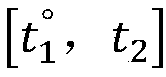
- Both front and rear cars have already reserved charging, if there is a car in front i 1 is already in Scheduled charging in the time slot, and the scheduled allocated power is There is a front car i 2 already in Scheduled charging in the time slot, and the scheduled allocated power is where t 1 , Corresponding to the scheduled charging start time and scheduled charging end time of the preceding vehicle i 1 respectively, t 2 , Respectively, the scheduled charging start time and the scheduled charging end time corresponding to the preceding vehicle i 2 ; E(t 1 ), E(t 2 ), One-to-one correspondence is estimated at t 1 , t 2 , The remaining power of the energy storage charging pile j w at any time;
- Equation 9-1 E amount is the rated power of the energy storage battery of the energy storage charging pile j w ; p storage (t) is the predicted energy storage power of the energy storage charging pile j w at the time t, which is predicted by the prior art method;
- the energy storage period of the energy storage charging pile j w can only be used for the energy storage of the pile, that is, the corresponding distributable power is 0;
- the rest is the distributable power idle time period of the energy storage charging pile j w ;
- the idle period of the distributable power is divided according to a fixed duration ⁇ , where ⁇ is a self-defined constant, and the idle period is set Is the idle period of allocatable power, which can be divided into At several time points, it is also assumed that the scheduled start charging time of the electric vehicle in the idle period of the allocatable power is time point; then the idle period of the distributable power of the energy storage charging pile j w must satisfy the following formula 9-2:
- Equation 9-2 p storage (t) is the energy storage power of the energy storage charging pile j w predicted at time t, which is predicted by the prior art method; is the constant output power of the energy storage charging pile j w , and E is the rated power of the energy storage battery of the energy storage charging pile j w ; The latest charging end time for electric vehicles;
- the latest charging end time of electric vehicles can be obtained from formula 9-2 and its constraints is the energy storage period of the energy storage charging pile j w ;
- the energy storage charging pile j w is in the idle time period of the distributable power Inside
- the corresponding distributable power Q w (t) at the time point is estimated according to the following equation group 9-3:
- Equation 9-3 The amount of t represents the moment when the energy storage and charging pile j w reaches the rated power, and the definition of other variables is the same as that of formula 9-2 and its constraints;
- the type announcement method also includes: every time ⁇ t passes, the dispatching system platform re-estimates the comprehensive energy storage power of the charging pile j w in Equation 9-1 And re-estimate and publish according to formula 9-1, and update the reservation service list of charging pile j w .
- the dispatching system platform re-estimates the comprehensive energy storage power of the charging pile j w in formula 9-2 and And re-evaluate and publish according to Formula 9-2 and its constraints, and Formula 9-3, and update the reservation service list of charging pile j w .
- the multi-user charging behavior of the energy storage charging pile and the discharge behavior of the energy storage charging pile have realized a unified calculation in the time dimension, and realized the multi-user charging behavior of the energy storage charging pile. User appointment.
- FIG. 1 is a schematic diagram of embodiment 5 of the present invention according to Method 9, which announces that the idle time period of the energy storage charging pile is the energy storage period of the energy storage charging pile.
- the vertical axis E represents the remaining power of the energy storage charging pile
- the horizontal axis t Indicates time
- t 1 Corresponding to the scheduled charging start time and scheduled charging end time of the preceding vehicle i 1 respectively, t 2 , are respectively the scheduled charging start time and the scheduled charging end time corresponding to the preceding vehicle i 2
- TP 2 indicates that the preceding vehicle i 2 is already in The scheduled allocated electricity for scheduled charging in the time period
- E amount is the rated electricity of the energy storage battery of the energy storage charging pile
- E(t 1 ), E(t 2 ) one-to-one correspondence is at t 1 , The remaining power of the energy storage and charging pile j w at time t2 .
- Fig. 2 is the embodiment 2 of the present invention according to the method ten when the charging pile j w is in the limited idle period of distributable power Schematic diagram of allowing electric vehicle i to jump in line and reserve charging; in the figure, the vertical axis E represents the remaining power of the energy storage charging pile, and the horizontal axis t represents the time, t 1 , Corresponding to the scheduled charging start time and scheduled charging end time of the preceding vehicle i 1 respectively, t 2 , Respectively, the scheduled charging start time and scheduled charging end time of the preceding vehicle i 2 , t w is the estimated time when the electric vehicle i arrives at the charging pile j w , When charging pile j w allows electric vehicle i to jump in queue and reserve charging, when the latest charging of electric vehicle i ends, t 4 , Corresponding to the scheduled charging start time and scheduled charging end time of the preceding vehicle i 4 respectively, the amount E is the rated power of the energy storage battery of the energy storage charging pile.
- the dispatching system platform obtains all the charging piles distributed along the path lz according to the received position coordinates of the charging piles. Assuming that there are n charging piles, the directed sequence of the n charging piles from the starting point O along the path lz The matrix is expressed as (j 1 ,j 2 ,...j n ) T . Use (j 0 ,j 1 ,...,j n ,j n+1 ) T to represent the directed sequence of segmentation points of the path l z with the departure point O, n charging piles distributed along the way, and destination D as the segmentation point matrix, where j 0 corresponds to the departure point O, and j n+1 corresponds to the destination D.
- the dispatching system platform obtains (j 0 ,j 1 ,...,j n ,j n+1 ) path distances between two adjacent segment points of T from the existing map respectively, and obtains the directed sequence of segment path distances
- Matrix (dist 0,1 ,dist 1,2 ,...dist n-1,n ,dist n,n+1 ) T represents, where dist 0,1 represents the path from the starting point O to the first charging pile j 1 Distance, dist 1, 2 means the path distance from the first charging pile j 1 to the second charging pile j 2 , and so on, dist n, n+1 means from the nth charging pile j n to the destination D path distance.
- dist w-1,w represents the path distance from segment point j w-1 to segment point j w obtained by method 1, Indicates the average speed of electric vehicle i from segment point j w-1 to segment point j w , It can be extracted from the historical traffic big data and the average speed of the electric vehicle i passing through dist w-1,w in the historical statistical time period, or it can be extracted from the traffic historical big data and pass through dist w in the historical statistical time period -1, the average speed of all vehicles in w , the value of the historical statistical time period is user-defined.
- the segmented path travel time t w-1,w of electric vehicle i can also be obtained directly from the existing GIS map.
- Method 3 The method of estimating the energy consumption of the segmented path of electric vehicle i can choose one of the following two methods:
- Equation 3-1 EC w-1,w represents the estimated energy consumption of electric vehicle i from segment point j w-1 to segment point j w , and segment point j w-1 and segment point j w are determined by Obtained by method 1, dist w-1,w are defined as in formula 2-1, and Aver is the power consumption per unit mileage of electric vehicle i.
- the power consumption Aver per unit mileage is calculated according to formula 3-2:
- Equation 3-2 m car is the body weight of electric car i, and m negative is the on-board mass of electric car i. Extract the historical specific energy consumption coefficient of electric vehicle i from the traffic historical big data for the dispatching system platform; if it is the first reserved model, calculate the specific energy consumption coefficient according to formula 3-3
- Equation 3-3 S max is the maximum cruising range of the model of electric vehicle i provided by the manufacturer, bat_cap i is the rated power of the power battery of electric vehicle i, and the definition of m car is the same as in Equation 3-2.
- Method 2 Estimate the segmental path energy consumption EC w-1,w of electric vehicle i according to the following formula 3-4:
- Method 4 Estimate the charging time of electric vehicle i at charging pile j w according to the following formula 4-1
- Method 5 According to the following formula 5-1, estimate the charging time of electric vehicle i at charging pile j w
- t w is the time when electric vehicle i arrives at the charging pile j w estimated by method 6.
- t 0 represents the departure time of electric vehicle i
- t 0,w represents the driving time of electric vehicle i from the departure point O to the charging pile j w along the path l z
- t 0,w is estimated by method 2 It is obtained by accumulating the travel time of each sub-route from the departure point O along the path lz to the charging pile jw
- the sum of the previously reserved charging time refers to the electric vehicle i arriving at the charging pile along the path lz from the departure point O
- the sum of the charging time that has been reserved for charging at other charging piles along the way, and the charging time of other charging piles along the way are respectively obtained by using method 4
- the path l z arrives at the charging pile j w
- the sum of the waiting time for charging at other charging piles along the way, and the waiting time for charging at other charging piles along the way are respectively obtained by method 5.
- Method 7 Estimate the remaining power RE i (t w ) of electric vehicle i at the time t w when it arrives at the charging pile j w according to the following formula 7-1:
- bat_cap str is the initial remaining power of electric vehicle i; the sum of previously reserved and distributed power means that electric vehicle i has already reserved and allocated at other charging piles along the way when electric vehicle i arrives at charging pile j w along path l z from departure point O
- the total amount of electricity, and the reserved distribution electricity of other charging piles along the way are respectively estimated by method ten;
- EC 0,w represents the energy consumption from electric vehicle i from the starting point O to the charging pile j w along the path l z ,
- EC 0,w is Method 3 is used to estimate the segmental path energy consumption of electric vehicle i and then accumulate it.
- the power supply source of the energy storage charging pile is crescent energy power generation, including one or more of solar power generation and wind power generation, and may also include electricity purchased from the grid. Complementary energy storage.
- the comprehensive energy storage power E(t 2 -t 1 ) of the charging pile j w is expressed by the following formula 8-1:
- Constraints of formula 8-1 E(t 2 -t 1 ) ⁇ E amount ; where E amount is the rated power of the charging pile j w energy storage battery; t 1 is the start time of energy storage; t 2 is the end time of energy storage ; p storage (t) is the energy storage power of the energy storage charging pile j w at the predicted time t; if the power source of the energy storage charging pile is solar power generation, then p storage (t) is the output power of the solar power generation at the predicted time t, It is predicted by the existing technical method; if the power source of the energy storage charging pile is wind power generation, then p storage (t) is the output power of the wind power generation at the predicted time t, which is predicted by the existing technical method; if the energy storage charging The power source of the pile power supply is complementary energy storage that purchases electricity from the grid, then p storage (t) is the constant output power of the grid; if the power supply source of the energy storage charging pile is solar power generation, wind power generation or complementary energy
- the dispatching system platform re-estimates the comprehensive energy storage power E(t 2 -t 1 ) of the charging pile j w every time ⁇ t passes .
- Method 9 The method of announcing the type of the idle time period of the energy storage charging pile j w and the corresponding distributable power, the steps are as follows:
- the energy storage charging pile jw establishes and stores the reserved service list, and the field content of the reserved service list includes the user name of the electric vehicle, the plate number of the electric vehicle, the model, the time when the charging is scheduled to start, and the remaining power of the charging pile corresponding to this moment, The scheduled charging end time and the remaining power of the charging pile corresponding to this time, the reserved allocated power, the charging time, the type of idle time period and the corresponding distributable power;
- the idle time period is divided into two types: the energy storage period of the energy storage charging pile j w and the idle period of the distributable electricity, and the type of the idle time period and the corresponding distributable power are announced according to step (9.3) or step (9.4). electricity.
- the energy storage period of the energy storage charging pile j w refers to: in order not to affect the charging amount of other cars that have been reserved for charging after the energy storage period and the scheduled charging start and end time, the idle time period cannot be arranged for electric vehicle charging only as the pile
- the energy storage period, the energy storage period of the energy storage charging pile jw includes the energy storage start time and the energy storage end time;
- the distributable power idle time period is the remaining idle time period after the energy storage charging pile jw excludes the energy storage time period from all idle time periods in the reserved service list, including the electric vehicle charging start time and charging end time of the distributable power idle time period ;
- publish is the energy storage period of the energy storage charging pile j w , and no vehicle can be scheduled for charging or charging during this energy storage period. At this time, is the energy storage start time of the energy storage charging pile j w , and t2 is the energy storage end time of the energy storage charging pile j w .
- Equation 9-1 the E amount is the rated power of the energy storage battery of the energy storage charging pile j w ; p storage (t) is the predicted energy storage power of the energy storage charging pile j w at time t, such as method 8 by the prior art method Prediction obtained;
- the dispatching system platform re-estimates the comprehensive energy storage power of the charging pile j w in Equation 9-1 And re-estimate and publish according to formula 9-1, and update the reservation service list of charging pile j w .
- the idle period of allocatable power can be divided into several points in time. It is also assumed that the scheduled start charging time of the electric vehicle in the idle period of the allocatable power is Time point, if the power idle time period can be allocated Both front and rear cars have already reserved charging, if there is a car in front i 1 is already in Scheduled charging in the time slot, and the scheduled allocated power is There are other cars ahead i 2 already in Scheduled charging in the time slot, and the scheduled allocated power is where t 1 , Corresponding to the scheduled charging start time and scheduled charging end time of the preceding vehicle i 1 respectively, t 2 , Respectively, the scheduled charging start time and the scheduled charging end time corresponding to the other vehicle i 2 in front; One-to-one correspondence is estimated at t 1 , t 2 , The remaining power of the energy storage charging pile j w at all times. Then the idle period of distributable power announced by the energy storage charging pile j w must satisfy the following formula 9-2:
- p storage (t) is the energy storage power of the energy storage and charging pile j w at the time t predicted, as in Method 8, which is predicted by the existing technical method; is the constant output power of the energy storage charging pile j w , and E is the rated power of the energy storage battery of the energy storage charging pile j w .
- the latest charging end time of electric vehicles can be obtained from formula 9-2 and its constraints is the energy storage period of the energy storage charging pile j w .
- the energy storage charging pile j w is in the idle time period of the distributable power Inside
- the corresponding distributable power Q w (t) at the time point is estimated according to the following equation group 9-3:
- Equation 9-3 The amount of t indicates the moment when the energy storage charging pile j w reaches the rated power, and the definition of other variables is the same as that of formula 9-2 and its constraints.
- the dispatching system platform re-estimates the comprehensive energy storage power of the charging pile j w in Equation 9-2 and And according to formula 9-2 and its constraint conditions, formula 9-3 re-estimate and publish, update the reservation service list of charging pile j w .
- Method 10 Estimate respectively the distributable power Q w (i) that charging pile j w can provide to electric vehicle i, and the scheduled start charging time of electric vehicle i at charging pile j w The scheduled charging time of electric vehicle i at charging pile j w and electric vehicle i’s reserved distribution power TP w at charging pile j w :
- Estimation method 1 When the charging pile j w is an energy storage charging pile, the specific steps of the estimation method are as follows:
- the charging pile j w is in the idle period of the distributable power Distributable power within Estimated according to the following equation set 10-2:
- Equation 10-2 The constraints of Equation 10-2 are as follows:
- the time period when electric vehicle i is in charging pile j w The scheduled distribution power TP w within is estimated according to formula 10-3:
- the charging pile j w corresponds to the scheduled charging start time has a remaining charge of
- the charging pile j w corresponds to the scheduled charging end time has a remaining charge of
- Step (10-1-3) The variables of the above formulas are uniformly defined as follows: t w is the estimated time when electric vehicle i arrives at charging pile j w ; It is estimated that the charging pile j w is in Distributable electricity within; To estimate the scheduled charging end time corresponding to the preceding vehicle i 1 The remaining power of the charging pile j w ; p storage (t) is to predict the energy storage power of the charging pile j w corresponding to the time t, such as method 8 obtained by the prior art prediction method; Indicates that the prediction of charging pile j w in the time period as in Method 8 comprehensive energy storage capacity; is the constant output power of the charging pile j w ; the amount E is the rated power of the energy storage battery of the charging pile j w ; the amount t is the The moment when the energy storage of the internal charging pile j w reaches the rated power E; bat_cap i is the rated power of the power battery of the electric vehicle i, and RE i (t w
- the front vehicle i 1 is already in Scheduled charging at the charging pile j w during the time period, and the reserved power distribution is TP 1 ;
- the vehicle in front i 2 is already in Scheduled charging at the charging pile j w during the time period, and the scheduled allocated power is TP 2 ;
- t 1 Corresponding to the scheduled charging start time and scheduled charging end time of the preceding vehicle i 1 respectively, t 2 , Respectively correspond to the scheduled charging start time and scheduled charging end time of the preceding vehicle i 2 ;
- One-to-one correspondence is estimated at t 1 ,
- the remaining power of the charging pile j w at any time is obtained by checking the reservation service list of the charging pile j w .
- the charging pile j w is in the idle period of the distributable power
- the prerequisite for allowing electric vehicles to jump in the queue to reserve charging is that it cannot affect the time slot that has already been reserved.
- the scheduled power distribution and the scheduled charging start and end time of the other vehicles in front of the rear charging; compare method 9, that is, the charging pile j w is in the scheduled charging period The charging and discharging must first satisfy the following formula 10-5:
- the charging pile j w allows the electric vehicle i to
- the conditions for jumping in line to make an appointment for charging are to ensure that the car in front i 2 is in the scheduled charging time
- the scheduled distribution power TP 2 remains unchanged, and it is also necessary to ensure that the scheduled start and end times and reserved distribution power of all other vehicles in front remain unchanged.
- the charging pile j w corresponds to the scheduled charging start time has a remaining charge of
- the charging pile j w corresponds to the scheduled charging end time has a remaining charge of
- Step (10-1-4) The variables of the above types are uniformly defined as follows: TP 2 means that the preceding vehicle i 2 is in the scheduled charging period The scheduled distribution of electricity; It corresponds to the scheduled charging end time of the vehicle in front i 1
- the remaining power of the charging pile j w ; p storage (t) is to predict the energy storage power of the charging pile j w corresponding to the time t, which is obtained through the prior art prediction method; is the constant output power of charging pile j w ; t w is the estimated time when electric vehicle i arrives at charging pile j w ; E is the rated power of the energy storage battery of charging pile j w ;
- the latest charging end time of electric vehicle i when charging pile j w allows electric vehicle i to jump in line to reserve charging; It is estimated that the charging pile j w is in The distributable electricity within; t amount is estimated in The moment when the energy storage of the internal charging pile j w reaches the rated power E; bat_cap
- step (10-1-5) every time ⁇ t passes, the dispatching system platform starts to execute from step (10-1-2) to step (10-1-4) according to the re-updated reservation service list of charging pile j w , Re-estimate the scheduled distribution power TP w .
- bat_cap i is the rated power of the power battery of electric vehicle i
- RE i (t w ) is the estimated remaining power of electric vehicle i when it reaches the charging pile j w at time t w ;
- the idle time period is limited That is, the vehicle i 1 in front is already in Scheduled charging at the charging pile j w during the time period, and the reserved power distribution is TP 1 ; the vehicle in front i 2 is already in Scheduled charging at the charging pile j w during the time period, and the scheduled allocated power is TP 2 ; where t 1 , Corresponding to the scheduled charging start time and scheduled charging end time of the preceding vehicle i 1 respectively, t 2 , Respectively, the scheduled charging start time and the scheduled charging end time of the preceding vehicle i 2 ;
- the idle time period of the charging pile directly supplied by the grid is the time period when the electric vehicle can be charged, so the distributable power Q w that the charging pile j w can provide to the electric vehicle i (i)
- the charging time period of the charging pile j w replace.
- bat_cap i is the rated power of the power battery of electric vehicle i
- RE i (t w ) is the estimated remaining power of electric vehicle i when it reaches the charging pile j w at time t w
- the reserved service list may not consider the remaining power of the charging pile j w corresponding to each time.
- This method uses arrival time matching and energy time differentiation to realize the integrated use of energy storage charging piles and grid direct supply charging piles, which improves the integrity of the charging pile network and lays the foundation for fast charging networks.
- the types of charging piles in the entire road network in this embodiment include existing energy storage charging piles, and may also include existing grid-directly-supplied charging piles that are directly provided by the grid to charge electric vehicles.
- the power supply source of the energy storage charging pile can be one or more of new energy power generation or complementary energy storage that purchases electricity from the grid. New energy power generation includes solar power generation and wind power generation.
- the DC charging of the electric vehicle through the energy storage charging pile is referred to as fast charging; the energy storage charging pile has a control module that automatically switches the working mode. When an electric vehicle is connected to the charging pile for charging, the control module controls the switching to the charging pile discharge work. mode; when no electric vehicle is connected for charging, the control module controls to automatically switch to the charging pile energy storage working mode.
- a method for planning a power path of an electric vehicle compatible with an energy storage charging pile is an electric vehicle, and includes the following steps:
- All charging piles in the whole network are respectively connected to the dispatching system platform through a wireless communication network or a wired communication network, and submit the status information of the charging pile to the dispatching system platform, including: the location of the charging pile, the type of the charging pile, The rated power E of the energy storage battery of the charging pile, if it is an energy storage charging pile, submit the real-time energy storage power of the charging pile, and the real-time occupancy status of the charging pile.
- the electric vehicle user connects to the dispatching system platform through a wireless communication network or a wired communication network, and submits an electric quantity application reservation from the departure point O to the destination D to the dispatching system platform.
- the electric quantity application reservation includes the following information: electric vehicle Vehicle type, departure time t 0 , departure place O, destination D and the initial remaining power bat_cap str of the power battery of the electric vehicle at the departure time, and the rated power bat_cap i of the power battery of the electric vehicle i .
- the dispatching system platform judges when the electric vehicle selects one or more charging piles along the shortest path lz according to the status information of the piles submitted by each charging pile and the power reservation application submitted by the electric vehicle user. Scheduled charging, whether the scheduled distribution of electricity at each scheduled charging pile meets the battery life requirements of the electric vehicle from the departure point O to the destination D; if "Yes”, then perform step 4), if "No", then go to the execution step 5);
- the dispatching system platform generates a whole-process reservation plan for the electric vehicle, and the whole-process reservation plan includes assigning the electric vehicle to each reserved charging pile on the shortest path lz and the corresponding reserved power distribution, scheduled charging start and stop time, and return the reservation success information to the electric vehicle user, and end this reservation; when the electric vehicle departs from the starting point O, the dispatching system platform guides the electric vehicle to travel and Charge;
- step 3 if the reserved power distribution of each reserved charging pile along the route cannot meet the cruising requirements of the electric vehicle from the departure point O to the destination D, send a mobile charging vehicle to the The route supplements the reserved allocated power of the electric vehicle until the battery life requirement of the electric vehicle traveling from the origin O to the destination D is met.
- the method of finding the shortest path can also be calculated by using various traditional algorithms such as the Dijkstra algorithm.
- the present electronic navigation map also provides the fastest arrival path after considering the road conditions, and the alternative of the shortest path can also be checked and calculated by the present invention.
- the shortest path planned according to the method of this embodiment meets the requirements of saving energy consumption, and also meets the needs of users and low-carbon society.
- the charging piles of the whole road network in this embodiment are the same as those in Embodiment 1.
- a method for planning a power path of an electric vehicle compatible with an energy storage charging pile is an electric vehicle, and includes the following steps:
- All charging piles in the road network are connected to the dispatching system platform through a wireless communication network or a wired communication network, and the electric vehicle client is connected to the dispatching system platform through a wireless communication network or a wired communication network;
- All the charging piles on the road network submit their status information to the dispatching system platform, including: the location of the charging pile, the type of the charging pile, the rated power E of the energy storage battery of the charging pile, the real-time occupancy status of the charging pile, if it is a storage
- the energy charging pile submits the real-time energy storage power of the charging pile.
- the electric vehicle client of electric vehicle i submits an appointment application to the dispatching system platform, and the appointment application includes the following information: electric vehicle user name, electric vehicle license plate, model, departure time t 0 , departure place O, Destination D and the initial remaining power bat_cap str of the power battery of the electric vehicle at the departure time, the rated power bat_cap i of the power battery of the electric vehicle i ;
- the dispatching system platform establishes and stores the reservation service list for each charging pile, and the field content of the reservation service list Including electric vehicle user name, electric vehicle license plate, model, scheduled charging start time and corresponding remaining power of charging pile, scheduled charging end time and corresponding remaining power of charging pile, reserved allocated power, charging duration, type of idle time period and corresponding charging pile Distributable electricity;
- the electric vehicle i arrives at each segment point in (j x0 , j x1 , j x2 ,...j xk , j xk+1 ) T along the path l z from the starting point O, the electric vehicle i is estimated according to the above method three respectively.
- bat_cap str is the initial remaining power of the power battery at the departure time t 0 of the electric vehicle i; Indicates the sum of the reserved power distribution of all reserved charging piles for electric vehicle i in the charging pile combination (j x1 ,j x2 ,...j xk ) T ; EC 0,n+1 means that electric vehicle i follows the shortest path l from the starting point O z The energy consumption of the whole journey to the destination D is accumulated after estimating the energy consumption of the segmented path of the electric vehicle i using the above method three.
- the full-course reservation plan includes assigning the charging pile combinations (j x1 ,j x2 ,... j xk ) distributed along the shortest path l z i reserve charging in sequence, corresponding to (TP x1 ,TP x2 ,...TP xk ) T , and the scheduled charging start and end times of each reserved charging pile in one-to-one correspondence. And update (j x1 , j x2 ,...j xk ) the reservation service list of each charging pile j w in T according to the full-course reservation plan and the result obtained in step 4).
- the dispatching system platform guides the electric vehicle to travel and charge according to the full reservation plan.
- step 3) Exclude the charging pile combination (j x1 ,j x2 ,...j xk ) T from the charging pile combination that can be selected for electric vehicle i, if step 3) All the charging pile combinations that can be selected for charging of electric vehicle i have been ruled out, it means that the path l z does not meet the requirements of the full battery life, and go to step 7); otherwise, from Excluding the charging pile combination (j x1 , j x2 ,...j xk ) T , select another combination from the remaining combinations, go to step 4) and execute in a loop to step 6).
- the charging on the way is the rest stop point, which can be divided into several time points to select the charging pile, and in step (3)
- One combination selects the combination of charging piles that include the mandatory scheduled charging, and the rest of the methods and steps remain unchanged.
- step (2) considering that the logistics electric vehicle has a designated operation point, and if the designated operation point has a charging pile, it will be used as a charging pile for the logistics electric vehicle to be reserved for charging.
- step (3) only the charging pile can be selected.
- step (3) This kind of combination can only be replaced by the combination of the charging pile that contains the required scheduled charging, and the rest of the methods and steps remain unchanged.
- the dispatching system platform republishes the idle time of each energy storage charging pile j w in the charging pile combination (j x1 , j x2 ,...j xk ) T according to method nine
- update the scheduled service list of each energy storage charging pile j w ; re-estimate the scheduled distribution power TP w of each energy storage charging pile j w according to method 10, and re-predict according to method 6
- the electric vehicle i can reserve different charging piles for charging in one charging station.
- connection structure between some DC charging piles and the power supply is as follows: the AC generated by the wind generator is rectified and then converted into DC and transmitted to the shared DC bus, and the DC generated by photovoltaic power generation is transmitted to the shared DC bus through a transformer, or Including that the mains power is converted into DC after rectification and transmitted to the shared DC bus, and the DC generated by the energy storage battery of the charging pile is transmitted to the shared DC bus through a transformer, and the shared DC bus is connected to the electric vehicle.
- the energy storage battery of the charging pile is insufficient, photovoltaic power generation, wind power or city power can simultaneously charge the energy storage battery and the electric vehicle.
- the electric vehicle is slow charging, which is equivalent to the charging pile directly supplied by the grid;
- the electric vehicle is charged through the energy storage battery of the charging pile.
- the electric vehicle is fast charged, which is equivalent to an energy storage charging pile.
- the method of this embodiment is also applicable.
- the charging piles of the whole road network in this embodiment are the same as those in Embodiment 1.
- the electric vehicle in this embodiment is an electric vehicle, and also includes a method for adjusting the vehicle in front, the steps are as follows:
- the vehicle in front of this embodiment refers to: a charging pile that has at least one shared charging pile with the electric vehicle i, referred to as a shared pile, including a car that has been reserved but has not yet set off when the electric vehicle i is expected to arrive at the shared pile; it also includes a reservation After departure, but when the electric car i is expected to arrive at the shared pile, the car that has not yet traveled to the shared pile.
- the shortest path l z in a ⁇ when it is executed to step 6) and it is concluded that the shortest path l z does not meet the requirements of the whole journey, then adjust the vehicle in front according to the following step 3;
- the charging pile combinations that can be selected for charging in the shortest path l z electric vehicle i are Choose any combination of charging piles for scheduled charging, assuming (j x1 ,j x2 ,...j xk ) T , when step 5 is executed, electric vehicle i reserves power at charging pile j w but cannot satisfy Equation 2
- -1-1 that is, the electric vehicle i reserves power at the charging pile j w but cannot drive to the next segment point j w+1
- both j w and j w+1 are (j x0 ,j x1 ,j x2 , ...j xk , j xk+1 ) segment point in T ; then adjust the whole reservation plan for the vehicle in front. It can be a full reservation plan for adjusting the front vehicle for any one shared pile or multiple shared piles. Adjustment methods include but are not limited to the following:
- Adjustment method 1) cancel the reserved power distribution of the vehicle in front at one or more shared piles, and recombine the canceled reserved power distribution into the remaining power of the respective corresponding charging piles, and then follow steps 3) to 6) of Example 2 method, respectively judge whether the shortest path l z of the electric vehicle i and the path of the original full reservation plan of the preceding vehicle meet the battery life requirements of the electric vehicle i and the preceding vehicle, and if so, the dispatching system platform will generate for the electric vehicle i
- the full-course reservation plan generates a new full-course reservation plan for the vehicle in front, and the adjustment is successful; if the battery life requirements of the electric vehicle i or the vehicle in front are not met, the vehicle in front cannot be adjusted and the original full-course reservation plan of the vehicle in front is restored.
- Adjustment method 2 reduce the reserved power distribution of the preceding vehicle at one or more shared piles, and the sum of the reduced reserved power distribution of the preceding vehicle is greater than or equal to electric vehicle i driving to the next segment point j w after the electric vehicle i has reserved power at the charging pile j w +1 is estimated to be still missing power ⁇ TP i , ⁇ TP i is estimated according to formula 3-1-1:
- EC w,w+1 represents the energy consumption of electric vehicle i from the current charging pile j w to the next segment point
- t w is the estimated time when electric vehicle i reaches the charging pile j w
- RE i (t w ) In order to estimate the remaining power of electric vehicle i at the time t w when it arrives at charging pile j w , TP w is the reserved power allocation of electric vehicle i at charging pile j w .
- the reserved and distributed electric quantity reduced by each shared pile is re-merged and included in their respective remaining electric quantities, and then according to the method of steps 3) to 6) of embodiment 2, the shortest path l z of the electric vehicle i and the original full-course reservation plan of the front car are respectively calculated determine whether the battery life requirements of the electric vehicle i and the vehicle in front are satisfied respectively, and if both are satisfied, the dispatching system platform generates a full-course reservation plan for the electric vehicle i, generates a new full-course reservation plan for the vehicle in front, and the adjustment is successful; If the battery life requirements of the electric vehicle i or the vehicle in front are not met, the vehicle in front cannot be adjusted, and the original full reservation plan of the vehicle in front cannot be restored.
- Carry out charging scheduling for vehicles through the dispatching system platform upgrade the original unordered reservations designated by users based on pile positions to unified planning and allocation based on the energy demand of users in the entire network and charging pile resources by the dispatching platform, and give instructions to users Flexible scheduling maximizes the utilization of resources and meets the driving needs of more vehicles.
- the charging piles of the whole road network in this embodiment are the same as those in Embodiment 1.
- the electric vehicle in this embodiment is an electric vehicle, and the correction method is also included as follows:
- the electric vehicle generates a full reservation plan according to the electric vehicle power path planning method compatible with the energy storage charging pile in embodiment 2 or 3.
- Correction method 1 If before the departure of the electric vehicle, the determined parameters include the departure time, vehicle weight m , and the initial remaining power of the electric vehicle power battery are different from the information submitted when applying for an appointment, then re-submit to the dispatching system platform according to the determined parameters , the dispatching system platform adopts the power path planning method of embodiment 2 or embodiment 3 to regenerate the full-course reservation plan according to the determined parameters.
- the scheme guides the travel and charging of the electric vehicle. If the power path planning method in Embodiment 2 or Embodiment 3 cannot generate a new full reservation plan, the reservation fails.
- Correction method 2 After the electric vehicle starts, after driving for a period of time or distance, the electric vehicle calculates the average driving speed, average energy consumption and vehicle load according to the actual driving parameters including the remaining power of the electric vehicle power battery and the change of mileage. , submit again to the dispatching system platform, and the dispatching system platform adopts the power path planning method of embodiment 2 or embodiment 3 according to the actual parameters to regenerate the whole reservation plan to guide the travel and charging of electric vehicles.
- the actual parameters can be obtained through the electric vehicle's own detection and reported to the dispatching system platform through the wireless network or the driver's phone or vehicle terminal voice, or can be reported to the dispatching system platform after the driver estimates based on the experience value.
- Correction method 3 Whenever the dispatching system platform generates a full reservation plan for an electric vehicle, or the electric vehicle implements charging actions according to the full reservation plan, the dispatching system platform will update the service list content of the corresponding reserved charging pile.
- the full reservation plan for electric vehicles includes the estimated time of arrival at charging pile j w as t w , the estimated allocated power TP w of electric vehicles at charging pile j w , and the charging time of electric vehicles at charging pile j w
- the electric car starts charging at the appointment of the charging pile j w And the remaining power of the corresponding charging pile Scheduled charging end time And the remaining power of the corresponding charging pile
- the map software on the car After the electric car is on the road, the map software on the car provides real-time current location P a , current time t a , distance D aw to the nearest scheduled charging pile j w , and travel time t aw from P a to j w during driving;
- the electric vehicle user applies to the dispatching system platform to modify the reservation at the charging pile j w , and the dispatching system platform Query the reservation service list of charging pile j w , if there is an idle time period ⁇ charging time after (t a +t aw ) time And the distributable power corresponding to the idle time period ⁇ the scheduled distribution power TP w , then the idle time period is allocated to the electric vehicle, and the estimated time of arrival at the charging pile j w and the scheduled start time of charging are modified to be (t a +t aw ), the reserved charging time and reserved power distribution at charging pile j w remain unchanged, and the full reservation plan for electric vehicles is updated; at the same time, the original reservation of electric vehicles at charging pile j w is canceled, and the reservation service list of charging pile j w is updated .
- the dispatching system platform informs the user that the reservation at the charging pile j w cannot be modified, and the electric vehicle should apply to the dispatching system platform for the current time and location according to the implementation
- the electric vehicle power path planning method compatible with energy storage charging piles in Example 2 or 3 replans a new power path.
- the method of power reserve for energy storage charging piles the steps are as follows:
- the energy storage charging pile establishes and stores the reserved service list of the pile.
- the fields of the reserved service list include the user name of the electric vehicle, the plate number of the electric vehicle, the model, the time when the charging is scheduled to start, and the remaining power of the charging pile corresponding to this moment , The scheduled charging end time and the remaining power of the charging pile corresponding to this time, the reserved allocated power, the charging time, the type of idle time period and the corresponding distributable power;
- the vehicle-mounted electric vehicle terminal connects to the energy storage and charging pile through the wireless network, obtains the type of idle time period announced in step (2) and the corresponding distributable power, and the electric vehicle user selects a suitable idle time period according to the needs through the vehicle-mounted electric vehicle terminal Scheduled charging to the energy storage charging pile.
- the energy storage charging pile updates the pile's reservation service list according to the reservation result of step (3).
- the energy storage charging pile is connected to the dispatching system platform through wireless or wired connection without affecting the reservation service list of the pile, the same as other energy storage charging piles in the whole network, according to Embodiment 2 Or 3 or 4 power path planning methods to participate in the overall management of the dispatching system platform.
- the whole network energy storage charging piles in Embodiment 2 or 3 or 4 can provide power reservations for electric vehicles according to the above-mentioned energy storage charging pile power reservation method in Embodiment 5 without affecting their respective reservation service lists.
- the multi-user charging behavior of the energy storage charging pile and the discharge behavior of the energy storage pile are realized in the time dimension on the basis of the prediction of the storage of the energy storage charging pile, and the power of the energy storage charging pile is realized. Multi-user appointment.
- Embodiment 1 to Embodiment 5 of the present invention are not only applicable to electric vehicles, but also applicable to electric aircraft or electric boats. After considering the airworthy area and weather conditions, the reservation and power path planning are performed.
Landscapes
- Business, Economics & Management (AREA)
- Engineering & Computer Science (AREA)
- Human Resources & Organizations (AREA)
- Economics (AREA)
- Strategic Management (AREA)
- General Physics & Mathematics (AREA)
- Physics & Mathematics (AREA)
- Tourism & Hospitality (AREA)
- Theoretical Computer Science (AREA)
- Marketing (AREA)
- General Business, Economics & Management (AREA)
- Entrepreneurship & Innovation (AREA)
- Radar, Positioning & Navigation (AREA)
- Remote Sensing (AREA)
- Operations Research (AREA)
- Development Economics (AREA)
- Quality & Reliability (AREA)
- Health & Medical Sciences (AREA)
- Game Theory and Decision Science (AREA)
- Primary Health Care (AREA)
- General Health & Medical Sciences (AREA)
- Water Supply & Treatment (AREA)
- Public Health (AREA)
- Automation & Control Theory (AREA)
- Educational Administration (AREA)
- Charge And Discharge Circuits For Batteries Or The Like (AREA)
- Navigation (AREA)
Abstract
Description







Claims (14)
- 兼容储能充电桩的电动运载工具电量路径规划方法,储能充电桩供电来源为新能源发电或向电网购电的互补式储能,其特征在于:包括以下步骤:1)、全网所有的充电桩分别向调度系统平台提交本桩状态信息,电动汽车用户出发前通过网络连接向所述调度系统平台提出从出发地O到目的地D的电量申请预约,所述电量申请预约包括以下信息:电动汽车车型、汽车负载质量、出发时刻、出发地O、目的地D及出发时刻电动汽车动力电池的剩余电量;2)、所述调度系统平台在现有地图上寻找从出发地O到目的地D的最短路径l z,z=1;3)所述调度系统平台根据各充电桩提交的本桩状态信息,以及电动汽车用户提交的电量预约申请,判断当所述电动汽车选择在所述最短路径l z沿途一个或多个充电桩分别预约充电,在各预约充电桩的预约分配电量是否满足所述电动汽车从出发地O行驶至目的地D的续航要求;若“是”则执行步骤4),若“否”则转去执行步骤5);4)所述调度系统平台为所述电动汽车生成全程预约方案,所述全程预约方案包括为所述电动汽车指派所述最短路径l z上各预约充电桩及对应的预约分配电量,且返回预约成功的信息给所述电动汽车用户,结束本次预约;当所述电动汽车从出发地O出发后,所述调度系统平台按所述全程预约方案引导所述电动汽车出行及充电;5)、所述调度系统平台排除所述最短路径l z,z=z+1,从出发地O到目的地D的剩余路径中再寻找新的最短路径l z,如果找到新的最短路径l z则循环执行步骤3)至5),如果找不到新的最短路径l z则返回预约失败的信息给所述电动汽车用户。
- 如权利要求1所述的兼容储能充电桩的电动运载工具电量路径规划方法,其特征在于,所述步骤3)中,所述电动汽车选择在所述最短路径l z沿途一个或多个充电桩分别预约充电,选择方法如下:设最短路径l z沿途分布有n个充电桩,则所述电动汽车可选择充电的充电桩组合有种,从中选择任意一种充电桩组合或预约使用充电桩数量最少的充电桩组合进行预约充电。

- 如权利要求1所述的兼容储能充电桩的电动运载工具电量路径规划方法,其特征在于,所述步骤3)中,判断当所述电动汽车在所述最短路径l z沿途一个或多个充电桩分别预约充电,在各预约充电桩的预约分配电量是否满足所述电动汽车从出发地O行驶至目的地D的续航要求,具体判断方法如下:设所述电动汽车在最短路径l z沿途依序预约充电的充电桩组合为(j x1,j x2,…j xk) T,依序判断其中的每个充电桩j w,对应的预约分配电量是否满足不等式组2-1-1,如果都满足则 所述最短路径l z满足所述电动汽车从出发地O行驶至目的地D的续航要求;否则所述最短路径l z不满足所述电动汽车从出发地O行驶至目的地D的续航要求;
 不等式组2-1-1中,RE i(t w)为预估电动汽车在到达充电桩j w时刻t w的剩余电量,TP w表示电动汽车在充电桩j w的预约分配电量,EC w,w+1表示预估电动汽车从当前充电桩j w到下一个充电桩j w+1的耗能,如果充电桩j w为最短路径l z最后一个充电桩,则EC w,w+1表示预估电动汽车从当前充电桩j w到目的地D的能耗;bat_cap str为电动汽车出发时刻t 0动力电池的初始剩余电量;表示电动汽车在充电桩组合(j x1,j x2,…j xk) T中的所有预约充电桩的预约分配电量总和;EC 0,n+1表示预估电动汽车从出发地O沿最短路径l z到达目的地D的全程能耗。
- 如权利要求3所述的兼容储能充电桩的电动运载工具电量路径规划方法,其特征在于,所述电动汽车到达充电桩j w时刻t w,按下式6-1预估:t w=t 0+在先预约充电时长的总和+在先排队等待充电时长的总和+t 0,w 6-1式6-1中,t 0表示所述电动汽车出发时刻;t 0,w表示预估所述电动汽车从出发地O沿最短路径l z到达充电桩j w的行驶时长;在先预约充电时长的总和指的是预估所述电动汽车从出发地O沿最短路径l z到达充电桩j w时,已经在沿途其他充电桩预约充电的预约充电时长累计值;在先排队等待充电时长的总和指的是预估所述电动汽车从出发地O沿最短路径l z到达充电桩j w时,已经在沿途其他充电桩预约充电的排队等待充电时长累计值。
- 如权利要求3所述的兼容储能充电桩的电动运载工具电量路径规划方法,其特征在于,所述电动汽车在到达充电桩j w时刻t w的剩余电量RE i(t w),按下式7-1的预估:RE i(t w)=bat_cap str+在先预约分配电量总和-EC 0,w 7-1式7-1中,bat_cap str为所述电动汽车出发时的初始剩余电量;在先预约分配电量总和是指截止所述电动汽车从出发地O沿最短路径l z到达充电桩j w时刻t w,已经在沿途其他充电桩预约的预约分配电量累计值;EC 0,w表示预估所述电动汽车从出发地O沿最短路径l z行驶到充电桩j w的能耗。
- 如权利要求3所述的兼容储能充电桩的电动运载工具电量路径规划方法,其特征在于,所述电动汽车在充电桩j w的预约分配电量TP w,当充电桩j w为储能式充电桩时,预约分配电量 TP w的预估方法具体步骤如下:(10-1-1)、设所述电动汽车为电动汽车i,首先预设电动汽车i到达充电桩j w的时刻t w之后的排队等待时限σ,σ为自定义时长值;(10-1-2)、根据充电桩j w的预约服务列表,查在t w至t w+σ之间充电桩j w的空闲时间段类型,如果查到的空闲时间段类型都为储能时段,则充电桩j w不能让电动汽车i预约充电,即预约分配电量TP w=0;如果查到的空闲时间段类型是可分配电量空闲时段则转去执行步骤(10-1-3);(10-1-3)、查充电桩j w预约服务列表,如果在t w至t w+σ之间充电桩j w的空闲时间段为表示在
 之后尚无任何车预约充电,即
 为可分配电量空闲时段且为无限长;如果在t w至t w+σ之间充电桩j w的空闲时间段不是无限长则转去执行步骤(10-1-4);设有前车i 1已经在
 时间段预约充电,其中t 1、
 分别对应为前车i 1的预约开始充电时刻和预约充电结束时刻,E(t 1)、
 一一对应为预估在t 1、
 时刻充电桩j w的剩余电量,前车i 1的预约分配电量为
 电动汽车i在充电桩j w的预约开始充电时刻按下式10-1估算:
 充电桩j w在内的可分配电量
 按以下方程组10-2估算:
 方程组10-2的约束条件如下:
 电动汽车i在充电桩j w的内的预约分配电量TP w按式10-3估算:
 电动汽车i在充电桩j w的预约充电时长按式10-4估算:
 充电桩j w对应预约开始充电时刻的剩余电量为
 充电桩j w对应预约充电结束时刻
 的剩余电量为
 步骤(10-1-3)以上各式的变量统一定义如下:为电动汽车i在充电桩j w的预约开始充电时刻;t w为预估电动汽车i到达充电桩j w的时刻;
 为充电桩j w在
 内的可分配电量;
 为对应前车i 1的预约充电结束时刻
 充电桩j w的剩余电量;p 蓄(t)为预测对应t时刻充电桩j w的储能功率,通过现有技术预测方法获得;
 为充电桩j w的恒定输出功率;E 额为充电桩j w储能电池的额定电量;t 额为在
 内充电桩j w储能达到额定电量E 额的时刻;bat_cap i为电动汽车i动力电池的额定电量,RE i(t w)为预估电动汽车i在到达充电桩j w时刻t w的剩余电量;TP w为电动汽车i在充电桩j w的
 内的预约分配电量;
 为电动汽车i在充电桩j w的预约充电时长;
 (10-1-4)、如果在t w至t w+σ之间充电桩j w的空闲时间段为可分配电量空闲时段且为有限长,设前车i 1已经在时间段在充电桩j w预约充电,预约分配电量为
 有前车i 2已经在
 时间段在充电桩j w预约充电,预约分配电量为
 其中t 1、
 分别对应为前车i 1的预约开始充电时刻和预约充电结束时刻,t 2、
 分别为前车i 2的预约开始充电时刻和预约充电结束时刻;
 E(t 1)、
 E(t 2)、
 一一对应为预估在t 1、
 t 2、
t 2、 时刻充电桩j w的剩余电量;
 为所述的可分配电量空闲时段,充电桩j w在可分配电量空闲时段
 允许电动汽车i插队预约充电的前提条件,是不能影响已经预约在该时间段
 后充电的其他前车的预约分配电量和预约充电起止时刻,即首先须保证前车i 2在预约充电时段
 的预约分配电量TP 2不变,也即须满足下式10-5:
 式10-5的约束条件:
 由式10-5及其约束条件可推算得充电桩j w允许电动汽车i插队预约充电时电动汽车i的最晚充电结束时刻则充电桩j w在该可分配电量空闲时段
 的可分配电量
 按如下方程组10-6预估:
 上式10-5和式10-6中,电动汽车i在充电桩j w的预约开始充电时刻按下式10-7估算:
 根据式10-6所得电动汽车i在充电桩j w的
 内的预约分配电量TP w按下式10-8估算:
 由式10-8所得TP w,电动汽车i在充电桩j w的预约充电时长按下式10-9估算:
 如果还有其他前车比电动汽车i先在充电桩j w预约充电,但是预约充电的时间在前车i 2预约充电时段之后,则充电桩j w在可分配电量空闲时段
 允许电动汽车i插队预约充电的前提条件,除了须保证前车i 2在预约充电时段
 的预约分配电量TP 2不变,还要保证所有所述的其他前车的预约起止时间和预约分配电量不变,具体方法如下:
 设还有其他前车i 4比电动汽车i先预约在时间段充电,预约分配电量为TP 4,其中
 则TP w还要满足以下公式10-10:
 如果TP w不满足式10-10,则减少TP w,相应的按式10-9推算也减少,直到满足式10-10;
 如果前车i 4的预约充电时段之后依次还有其他前车i 5、i 6……均比电动汽车i先在充电桩j w预约充电,则分别比照前车i 4的方法处理;直到TP w能保证所有所述的其他前车的预约起止时间和预约分配电量不变;如果TP w减少到预设的阀值,但均不能保证所有所述的其他前车的预约起止时间和预约分配电量不变,则充电桩j w不允许电动汽车i在空闲时间段
 插队预约充电,即令预约分配电量TP w=0;
 如果最终所得的TP w≠0,则充电桩j w对应预约开始充电时刻的剩余电量为
 充电桩j w对应预约充电结束时刻
 的剩余电量为
 步骤(10-1-4)以上各式的变量统一定义如下:TP 2为前车i 2在预约充电时段的预约分配电量;
 为对应前车i 1的预约充电结束时刻
 充电桩j w的剩余电量;p 蓄(t)为预测对应t时刻充电桩j w的储能功率,通过现有技术预测方法获得;
 为充电桩j w的恒定输出功率;
 为电动汽车i在充电桩j w的预约开始充电时刻;t w为预估电动汽车i到达充电桩j w的时刻;E 额为充电桩j w储能电池的额定电量;
 为充电桩j w允许电动汽车i插队预约充电时电动汽车i的最晚充电结束时刻;
 为预估充电桩j w在
 内的可分配电量;t 额为预估在
 内充电桩j w储能达到额定电量E 额的时刻;bat_cap i为电动汽车i动力电池的额定电量,RE i(t w)为预估电动汽车i在到达充电桩j w时刻t w的剩余电量;TP w为电动汽车i在充电桩j w的
 内的预约分配电量;
 为电动汽车i在充电桩j w的预约充电时长;TP 4为前车i 4在
 时间段的预约分配电量。
- 如权利要求6所述的兼容储能充电桩的电动运载工具电量路径规划方法,其特征在于,还包括步骤(10-1-5):每经过一个Δt时间,调度系统平台根据重新更新的充电桩j w的预约 服务列表,从步骤(10-1-2)开始执行至步骤(10-1-4),重新预估预约分配电量TP w。
- 如权利要求3所述的兼容储能充电桩的电动运载工具电量路径规划方法,其特征在于,所述电动汽车在充电桩j w的预约分配电量TP w,当充电桩j w为电网直供充电桩时,预约分配电量TP w的预估方法具体步骤如下:(10-2-1)、设所述电动汽车为电动汽车i,首先设置电动汽车i到达充电桩j w的时刻t w之后的排队等待时限σ,σ为自定义时长值;(10-2-2)、根据充电桩j w的预约服务列表查找电动汽车i到达充电桩j w的时刻t w至t w+σ之间是否有空闲时间段;如果没有空闲时间段,则预估充电桩j w能提供给电动汽车i的可分配电量Q w(i)=0;电动汽车i在充电桩j w的预约分配电量TP w=0;如果有空闲时间段则转去执行步骤(10-2-3);(10-2-3)、如果空闲时间段为无限长,记为其中
 对应为前车i 1的预约充电结束时刻且
 之后无其他前车预约充电;则电动汽车i在充电桩j w的预约分配电量TP w按式10-11估算:
 TP w=bat_cap i-RE i(t w) 10-11式10-11中,bat_cap i为电动汽车i动力电池的额定电量,RE i(t w)为预估电动汽车i在到达充电桩j w时刻t w的剩余电量;电动汽车i在充电桩j w的预约开始充电时刻其中t w为预估电动汽车i在到达充电桩j w时刻;
 由式10-11所得的TP w,预约充电时长其中
 为充电桩j w的恒定输出功率;
 (10-2-4)、如果空闲时间段是有限长,即设前车i 1已经在时间段在充电桩j w预约充电;有前车i 2已经在
 时间段在充电桩j w预约充电;其中t 1、
 分别对应为前车i 1的预约开始充电时刻和预约充电结束时刻,t 2、
 分别为前车i 2的预约开始充电时刻和预约充电结束时刻;
 则按以下式10-12估算电动汽车i在充电桩j w的预约分配电量TP w:
 式10-12中,bat_cap i为电动汽车i动力电池的额定电量,RE i(t w)为预估电动汽车i在到 达充电桩j w时刻t w的剩余电量;为充电桩j w的恒定输出功率;
 为电动汽车i在充电桩j w的预约开始充电时刻,
 电动汽车i在充电桩j w的预约充电时长
- 如权利要求6或8所述的兼容储能充电桩的电动运载工具电量路径规划方法,其特征在于,所述电动汽车在到达充电桩j w时刻t w,用t w-θ或t w+θ代替,其中θ为自定义时长值。
- 如权利要求1至8之一所述的兼容储能充电桩的电动运载工具电量路径规划方法,其特征在于,还包括调整前车的方法如下:设在电动汽车i预约前已有前车各自预约充电且分别生成各自的全程预约方案;当电动汽车i按所述的兼容储能充电桩的电动运载工具电量路径规划方法进行预约充电,当所选择的从出发地O到目的地D的路径集合L={l 1,…,l a}中的最短路径l z不满足全程续航要求时,则调整前车的全程预约方案,包括取消或减少前车在一个或多个共用桩的预约分配电量,再分别对电动汽车i的最短路径l z、前车原全程预约方案的路径进行判断是否各自满足电动汽车i、前车的全程续航要求,若都满足则调度系统平台为所述电动汽车i生成全程预约方案,为所述前车生成新的全程预约方案,调整成功;若有任一车不满足全程续航要求,则无法调整前车,恢复前车的原全程预约方案。
- 储能充电桩的电量预约方法,其特征在于,包括以下步骤:(1)、储能充电桩建立并存储本桩的预约服务列表,预约服务列表的字段内容包括电动汽车用户名、电动汽车牌号、车型、预约开始充电时刻及对应于此时刻的充电桩剩余电量、预约充电结束时刻及对应于此时刻的充电桩剩余电量、预约分配电量、预约充电时长、空闲时间段的类型及对应的可分配电量;(2)储能充电桩在不影响前车在本桩已经预约充电的时间段和预约分配电量的条件下,公布本桩每一段空闲时间段的类型及对应的可分配电量;(3)电动汽车车载终端通过无线网络连接储能充电桩,获取步骤(2)公布的空闲时间段的类型及对应的可分配电量,电动汽车用户根据需要选择适合的空闲时间段通过电动汽车车载终端向储能充电桩进行预约充电;(4)所述电动汽车预约后,储能充电桩根据步骤(3)的预约结果更新本桩的预约服务列表。
- 如权利要求11所述的储能充电桩的电量预约方法,其特征在于,所述步骤(2)储 能充电桩公布本桩每一段空闲时间段的类型及对应的可分配电量,具体方法如下:空闲时间段分为储能充电桩j w的储能时段和可分配电量空闲时段两种类型;查找储能充电桩j w预约服务列表,设有空闲时间段前后均已经有车预约充电,如有前车i 1已经在
 时间段预约充电,预约分配电量为
 有前车i 2已经在
 时间段预约充电,预约分配电量为
 其中t 1、
 分别对应为前车i 1的预约开始充电时刻和预约充电结束时刻,t 2、
 分别为对应前车i 2的预约开始充电时刻和预约充电结束时刻;
 E(t 1)、
 E(t 2)、
 一一对应为预估在t 1、
 t 2、
t 2、 时刻储能充电桩j w的剩余电量;
 (A)、空闲时间段的类型公布方法如下:
 当满足下式9-1时,公布为储能充电桩j w的储能时段;
 式9-1中,E 额为储能充电桩j w储能电池的额定电量;p 蓄(t)为预测t时刻储能充电桩j w的储能功率,由现有技术方法预测获得;储能充电桩j w的储能时段只能用于本桩储能,即对应的可分配电量为0;(B)、储能充电桩j w的可分配电量空闲时段的公布方法如下:在储能充电桩j w的所有空闲时间段中,排除步骤(A)公布的储能充电桩j w的储能时段后,余下即为储能充电桩j w的可分配电量空闲时段;对可分配电量空闲时段按一固定时长ρ进行时点的划分,ρ为自定义的常量,设空闲时间段为可分配电量空闲时段,可划分为
 若干个时点,又设电动汽车在可分配电量空闲时段的预约开始充电时刻为
 时点;则储能充电桩j w的可分配电量空闲时段须满足下式9-2:
 式9-2的约束条件:
 式9-2及其约束条件中,p 蓄(t)为预测t时刻储能充电桩j w的储能功率,由现有技术方法预测获得;为储能充电桩j w的恒定输出功率,E 额为储能充电桩j w储能电池的额定电量;
 为电动汽车最晚充电结束时间;
 由式9-2及其约束条件可求得电动汽车最晚充电结束时间为储能充电桩j w储能时段;
 储能充电桩j w在可分配电量空闲时间段内
 时点的对应可分配电量Q w(t)按以下方程组9-3估算:
 方程组9-3中,t 额表示如果储能充电桩j w储能达到额定电量的时刻,其余变量的定义同式9-2及其约束条件;
 在储能充电桩j w的预约服务列表中公布该可分配电量空闲时段内
 时点的对应可分配电量Q w(t);其余时点比照
 时点公布。
时点公布。
- 如权利要求12所述的储能充电桩的电量预约方法,其特征在于,在所述空闲时间段的类型公布方法中,还包括:每经过一个Δt时间,调度系统平台重新预估式9-1中充电桩j w的综合储能电量
 并按式9-1重新估算和公布,更新充电桩j w的预约服务列表。
- 如权利要求12所述的储能充电桩的电量预约方法,其特征在于,在所述储能充电桩j w的可分配电量空闲时段的公布方法中,还包括:每经过一个Δt时间,调度系统平台分别重 新预估式9-2中充电桩j w的综合储能电量和
 并分别按式9-2及其约束条件、式9-3重新估算和公布,更新充电桩j w的预约服务列表。
Priority Applications (4)
| Application Number | Priority Date | Filing Date | Title |
|---|---|---|---|
| US18/560,967 US20240265316A1 (en) | 2021-05-15 | 2022-05-14 | Electric-Quantity-Based Path Planning Method For Electric Vehicle Compatible With Energy Storage Charging Pile |
| EP22803901.2A EP4354368A4 (en) | 2021-05-15 | 2022-05-14 | Electric-size-based path planning method for electric vehicles compatible with an energy-storing charging pole |
| AU2022279109A AU2022279109B2 (en) | 2021-05-15 | 2022-05-14 | Electric-quantity-based path planning method for electric vehicle compatible with energy storage charging pile |
| SA523451537A SA523451537B1 (ar) | 2021-05-15 | 2023-11-15 | طريقة تخطيط مسار أساسه الكمية الكهربائية لمركبة كهربائية متوافقة مع عمود شحن لتخزين الطاقة |
Applications Claiming Priority (2)
| Application Number | Priority Date | Filing Date | Title |
|---|---|---|---|
| CN202110530786.8A CN113283623A (zh) | 2021-05-15 | 2021-05-15 | 兼容储能充电桩的电动运载工具电量路径规划方法 |
| CN202110530786.8 | 2021-05-15 |
Publications (1)
| Publication Number | Publication Date |
|---|---|
| WO2022242579A1 true WO2022242579A1 (zh) | 2022-11-24 |
Family
ID=77279309
Family Applications (1)
| Application Number | Title | Priority Date | Filing Date |
|---|---|---|---|
| PCT/CN2022/092902 Ceased WO2022242579A1 (zh) | 2021-05-15 | 2022-05-14 | 兼容储能充电桩的电动运载工具电量路径规划方法 |
Country Status (6)
| Country | Link |
|---|---|
| US (1) | US20240265316A1 (zh) |
| EP (1) | EP4354368A4 (zh) |
| CN (2) | CN113283623A (zh) |
| AU (1) | AU2022279109B2 (zh) |
| SA (1) | SA523451537B1 (zh) |
| WO (1) | WO2022242579A1 (zh) |
Cited By (7)
| Publication number | Priority date | Publication date | Assignee | Title |
|---|---|---|---|---|
| CN112418592A (zh) * | 2020-09-22 | 2021-02-26 | 南京林洋电力科技有限公司 | 一种充电桩故障识别与管理办法 |
| CN116039576A (zh) * | 2023-03-22 | 2023-05-02 | 杭州禾美汽车科技有限公司 | 新能源汽车电池智能更换系统 |
| CN117002296A (zh) * | 2023-09-18 | 2023-11-07 | 广东天枢新能源科技有限公司 | 一种充电桩用液冷变流量控制方法及系统 |
| CN117128966A (zh) * | 2023-08-02 | 2023-11-28 | 山东科技大学 | 一种基于多因素耦合的车辆充电路径规划方法及设备 |
| CN117151255A (zh) * | 2023-10-30 | 2023-12-01 | 速源芯(东莞)能源科技有限公司 | 一种模块化储能电池充放电调度管理系统 |
| CN117539519A (zh) * | 2024-01-09 | 2024-02-09 | 成都智邦科技有限公司 | 一种充电桩的程序批量升级方法 |
| CN117575284A (zh) * | 2023-12-18 | 2024-02-20 | 北京新技发科技有限公司 | 一种充电桩智能控制平台 |
Families Citing this family (9)
| Publication number | Priority date | Publication date | Assignee | Title |
|---|---|---|---|---|
| CN113283623A (zh) * | 2021-05-15 | 2021-08-20 | 韦涛 | 兼容储能充电桩的电动运载工具电量路径规划方法 |
| CN114611811B (zh) * | 2022-03-21 | 2022-10-25 | 特斯联科技集团有限公司 | 基于ev负荷参与度的低碳园区优化调度方法及系统 |
| CN114841435B (zh) * | 2022-05-05 | 2025-04-04 | 苏州真趣信息科技有限公司 | 一种导航路径规划方法、系统 |
| CN115800407B (zh) * | 2023-02-09 | 2023-05-12 | 国文电气股份有限公司 | 一种光储充荷一体化低碳微电网系统 |
| CN116311657A (zh) * | 2023-03-22 | 2023-06-23 | 南京奥拓电子科技有限公司 | 基于提醒叫号器的业务办理网点排队叫号方法及系统 |
| CN116843136A (zh) * | 2023-06-21 | 2023-10-03 | 众瑞充(江苏)新能源科技有限公司 | 充电桩智能管理系统及管理方法 |
| CN116526535B (zh) * | 2023-07-03 | 2023-09-01 | 国网辽宁省电力有限公司沈阳供电公司 | 一种用于电动汽车充电站的储能方法及系统 |
| CN117922354B (zh) * | 2024-03-21 | 2024-07-12 | 国广顺能(上海)能源科技有限公司 | 一种可移动供电车回充电控制方法、电子设备及存储介质 |
| CN120215512B (zh) * | 2025-05-27 | 2025-08-15 | 中国海洋大学 | 无人船自适应路径跟踪控制方法及装置 |
Citations (4)
| Publication number | Priority date | Publication date | Assignee | Title |
|---|---|---|---|---|
| CN106989752A (zh) * | 2016-01-20 | 2017-07-28 | 马亨德拉雷瓦电动汽车有限公司 | 对具有有限的车载能量的车辆规划旅程的方法和系统 |
| US20170343366A1 (en) * | 2016-05-26 | 2017-11-30 | Hyundai Motor Company | Vehicle system and navigation path selecting method of the same |
| CN108162771A (zh) * | 2017-11-09 | 2018-06-15 | 贵州电网有限责任公司电力科学研究院 | 一种电动汽车智能充电导航方法 |
| CN113283623A (zh) * | 2021-05-15 | 2021-08-20 | 韦涛 | 兼容储能充电桩的电动运载工具电量路径规划方法 |
Family Cites Families (11)
| Publication number | Priority date | Publication date | Assignee | Title |
|---|---|---|---|---|
| JP2012128633A (ja) * | 2010-12-15 | 2012-07-05 | Aisin Seiki Co Ltd | 電気自動車の充電予約方法および充電予約装置 |
| WO2014074722A1 (en) * | 2012-11-07 | 2014-05-15 | Intertrust Technologies Corporation | Vehicle charging path optimization systems and methods |
| JP6235036B2 (ja) * | 2013-10-31 | 2017-11-22 | パナソニック インテレクチュアル プロパティ コーポレーション オブ アメリカPanasonic Intellectual Property Corporation of America | 制御方法、プログラム、情報処理装置、および予約システム |
| CN106163862B (zh) * | 2014-04-04 | 2019-07-05 | 特斯拉公司 | 用于行程规划的方法和计算机可读存储介质 |
| CN104864883B (zh) * | 2015-05-22 | 2017-09-22 | 清华大学 | 基于云平台的电动汽车路径规划方法 |
| CN105160428B (zh) * | 2015-08-19 | 2018-04-06 | 天津大学 | 高速公路电动汽车快速充电站的规划方法 |
| US20180143029A1 (en) * | 2016-06-28 | 2018-05-24 | Faraday&Future Inc. | Intelligent system and method for route planning |
| CN107323300B (zh) * | 2017-07-26 | 2019-05-24 | 河海大学 | 一种基于路-站-车联合模型的电动汽车预约充电方法 |
| CA3088914C (en) * | 2017-12-28 | 2023-10-03 | Tao Wei | Navigation method and system for electric vehicles based on electricity quantity guidance of energy-storage charging piles |
| CN107953798B (zh) * | 2017-12-28 | 2020-07-24 | 北京万开天盛科技有限公司 | 基于蓄能充电桩电量引导的电动运载工具导航方法及系统 |
| CN110081900A (zh) * | 2019-03-27 | 2019-08-02 | 苏州市黑甲智能科技有限公司 | 一种充电桩智能推荐方法、装置、服务终端和存储介质 |
-
2021
- 2021-05-15 CN CN202110530786.8A patent/CN113283623A/zh active Pending
-
2022
- 2022-05-14 CN CN202210525147.7A patent/CN114897199B/zh active Active
- 2022-05-14 WO PCT/CN2022/092902 patent/WO2022242579A1/zh not_active Ceased
- 2022-05-14 US US18/560,967 patent/US20240265316A1/en active Pending
- 2022-05-14 AU AU2022279109A patent/AU2022279109B2/en active Active
- 2022-05-14 EP EP22803901.2A patent/EP4354368A4/en active Pending
-
2023
- 2023-11-15 SA SA523451537A patent/SA523451537B1/ar unknown
Patent Citations (4)
| Publication number | Priority date | Publication date | Assignee | Title |
|---|---|---|---|---|
| CN106989752A (zh) * | 2016-01-20 | 2017-07-28 | 马亨德拉雷瓦电动汽车有限公司 | 对具有有限的车载能量的车辆规划旅程的方法和系统 |
| US20170343366A1 (en) * | 2016-05-26 | 2017-11-30 | Hyundai Motor Company | Vehicle system and navigation path selecting method of the same |
| CN108162771A (zh) * | 2017-11-09 | 2018-06-15 | 贵州电网有限责任公司电力科学研究院 | 一种电动汽车智能充电导航方法 |
| CN113283623A (zh) * | 2021-05-15 | 2021-08-20 | 韦涛 | 兼容储能充电桩的电动运载工具电量路径规划方法 |
Non-Patent Citations (1)
| Title |
|---|
| See also references of EP4354368A4 * |
Cited By (14)
| Publication number | Priority date | Publication date | Assignee | Title |
|---|---|---|---|---|
| CN112418592B (zh) * | 2020-09-22 | 2024-03-15 | 南京林洋电力科技有限公司 | 一种充电桩故障识别与管理办法 |
| CN112418592A (zh) * | 2020-09-22 | 2021-02-26 | 南京林洋电力科技有限公司 | 一种充电桩故障识别与管理办法 |
| CN116039576A (zh) * | 2023-03-22 | 2023-05-02 | 杭州禾美汽车科技有限公司 | 新能源汽车电池智能更换系统 |
| CN116039576B (zh) * | 2023-03-22 | 2023-08-08 | 宁波禾旭汽车科技有限公司 | 新能源汽车电池智能更换系统 |
| CN117128966A (zh) * | 2023-08-02 | 2023-11-28 | 山东科技大学 | 一种基于多因素耦合的车辆充电路径规划方法及设备 |
| CN117128966B (zh) * | 2023-08-02 | 2024-04-02 | 山东科技大学 | 一种基于多因素耦合的车辆充电路径规划方法及设备 |
| CN117002296A (zh) * | 2023-09-18 | 2023-11-07 | 广东天枢新能源科技有限公司 | 一种充电桩用液冷变流量控制方法及系统 |
| CN117002296B (zh) * | 2023-09-18 | 2024-04-12 | 广东天枢新能源科技有限公司 | 一种充电桩用液冷变流量控制方法及系统 |
| CN117151255B (zh) * | 2023-10-30 | 2024-01-26 | 速源芯(东莞)能源科技有限公司 | 一种模块化储能电池充放电调度管理系统 |
| CN117151255A (zh) * | 2023-10-30 | 2023-12-01 | 速源芯(东莞)能源科技有限公司 | 一种模块化储能电池充放电调度管理系统 |
| CN117575284A (zh) * | 2023-12-18 | 2024-02-20 | 北京新技发科技有限公司 | 一种充电桩智能控制平台 |
| CN117575284B (zh) * | 2023-12-18 | 2024-05-28 | 北京京西速电新能源科技有限公司 | 一种充电桩智能控制平台 |
| CN117539519A (zh) * | 2024-01-09 | 2024-02-09 | 成都智邦科技有限公司 | 一种充电桩的程序批量升级方法 |
| CN117539519B (zh) * | 2024-01-09 | 2024-04-02 | 成都智邦科技有限公司 | 一种充电桩的程序批量升级方法 |
Also Published As
| Publication number | Publication date |
|---|---|
| CN114897199A (zh) | 2022-08-12 |
| AU2022279109A1 (en) | 2024-01-04 |
| EP4354368A4 (en) | 2025-06-11 |
| EP4354368A1 (en) | 2024-04-17 |
| CN114897199B (zh) | 2024-12-24 |
| US20240265316A1 (en) | 2024-08-08 |
| CN113283623A (zh) | 2021-08-20 |
| AU2022279109B2 (en) | 2025-09-18 |
| SA523451537B1 (ar) | 2025-06-08 |
Similar Documents
| Publication | Publication Date | Title |
|---|---|---|
| CN114897199B (zh) | 兼容储能充电桩的电动运载工具电量路径规划方法 | |
| JP5776017B2 (ja) | 蓄電池充電計画支援システム | |
| EP2760696B1 (en) | Method and system for charging electric vehicles | |
| CN109177802B (zh) | 一种基于无线通信的电动汽车有序充电系统及其方法 | |
| CN112729324B (zh) | 基于互助出行系统的电动汽车充电引导和路径规划方法 | |
| WO2015041366A1 (en) | Operation plan creation device and operation plan creation method | |
| CN104864883B (zh) | 基于云平台的电动汽车路径规划方法 | |
| CN108955711A (zh) | 一种应用于电动汽车智能充放电的导航方法 | |
| CN112418610A (zh) | 基于soc信息与路网电网信息融合的充电优化方法 | |
| CN103956041A (zh) | 一种公交调度系统及其控制方法 | |
| CN107392336A (zh) | 智能交通中基于预约的分布式电动汽车充电调度方法 | |
| CN114402344B (zh) | 应用于电动汽车的订单管理的方法和装置 | |
| CN104615850A (zh) | 公交充电调度方法与系统 | |
| CN109670674A (zh) | 一种考虑交通网-配电网耦合的电动汽车时空分布充电调度方法 | |
| CN119975081A (zh) | 一种基于智能排队的电动汽车充电站有序充电方法 | |
| CN106096793A (zh) | 基于拥塞感知的周期性优化的电动汽车充电决策方法 | |
| CN112330203A (zh) | 一种纯电动出租车电能补给的管理方法 | |
| Zhang et al. | Online joint ride-sharing and dynamic vehicle-to-grid coordination for connected electric vehicle system | |
| WO2024114141A1 (zh) | 车辆充电的方法及电子设备 | |
| Qureshi et al. | Scheduling and routing of mobile charging stations to charge electric vehicles in a smart-city | |
| Liu et al. | EV charging recommendation concerning preemptive service and charging urgency policy | |
| CN114091911A (zh) | 一种基于充电紧急指标的电动车预约充电调度方法 | |
| CN120725366A (zh) | 用于电动汽车的移动充电桩路径规划方法及系统 | |
| JP2022156628A (ja) | 運用計画作成装置、充電計画作成装置、充電システム、運用計画作成方法および運用計画作成プログラム | |
| CN115663867B (zh) | 基于智能充电网络系统的电动汽车充电调度方法 |
Legal Events
| Date | Code | Title | Description |
|---|---|---|---|
| 121 | Ep: the epo has been informed by wipo that ep was designated in this application |
Ref document number: 22803901 Country of ref document: EP Kind code of ref document: A1 |
|
| WWE | Wipo information: entry into national phase |
Ref document number: 140250140003005634 Country of ref document: IR |
|
| WWE | Wipo information: entry into national phase |
Ref document number: 18560967 Country of ref document: US Ref document number: P6002962/2023 Country of ref document: AE |
|
| WWE | Wipo information: entry into national phase |
Ref document number: 12023553390 Country of ref document: PH Ref document number: 202393230 Country of ref document: EA |
|
| WWE | Wipo information: entry into national phase |
Ref document number: 2022279109 Country of ref document: AU Ref document number: AU2022279109 Country of ref document: AU |
|
| WWE | Wipo information: entry into national phase |
Ref document number: 202317085649 Country of ref document: IN Ref document number: 2022803901 Country of ref document: EP |
|
| NENP | Non-entry into the national phase |
Ref country code: DE |
|
| ENP | Entry into the national phase |
Ref document number: 2022803901 Country of ref document: EP Effective date: 20231215 |
|
| ENP | Entry into the national phase |
Ref document number: 2022279109 Country of ref document: AU Date of ref document: 20220514 Kind code of ref document: A |
|
| WWE | Wipo information: entry into national phase |
Ref document number: 523451537 Country of ref document: SA |
|
| WWE | Wipo information: entry into national phase |
Ref document number: 523451537 Country of ref document: SA |
|
| WWE | Wipo information: entry into national phase |
Ref document number: 523451537 Country of ref document: SA |
|
| WWG | Wipo information: grant in national office |
Ref document number: 523451537 Country of ref document: SA |