WO2022250165A1 - 藻類を培養するための組成物および藻類の培養方法 - Google Patents
藻類を培養するための組成物および藻類の培養方法 Download PDFInfo
- Publication number
- WO2022250165A1 WO2022250165A1 PCT/JP2022/021843 JP2022021843W WO2022250165A1 WO 2022250165 A1 WO2022250165 A1 WO 2022250165A1 JP 2022021843 W JP2022021843 W JP 2022021843W WO 2022250165 A1 WO2022250165 A1 WO 2022250165A1
- Authority
- WO
- WIPO (PCT)
- Prior art keywords
- medium
- algae
- microalgae
- culturing
- composition
- Prior art date
- Legal status (The legal status is an assumption and is not a legal conclusion. Google has not performed a legal analysis and makes no representation as to the accuracy of the status listed.)
- Ceased
Links
Images



Classifications
-
- C—CHEMISTRY; METALLURGY
- C12—BIOCHEMISTRY; BEER; SPIRITS; WINE; VINEGAR; MICROBIOLOGY; ENZYMOLOGY; MUTATION OR GENETIC ENGINEERING
- C12N—MICROORGANISMS OR ENZYMES; COMPOSITIONS THEREOF; PROPAGATING, PRESERVING, OR MAINTAINING MICROORGANISMS; MUTATION OR GENETIC ENGINEERING; CULTURE MEDIA
- C12N1/00—Microorganisms; Compositions thereof; Processes of propagating, maintaining or preserving microorganisms or compositions thereof; Processes of preparing or isolating a composition containing a microorganism; Culture media therefor
- C12N1/12—Unicellular algae; Culture media therefor
-
- A—HUMAN NECESSITIES
- A01—AGRICULTURE; FORESTRY; ANIMAL HUSBANDRY; HUNTING; TRAPPING; FISHING
- A01G—HORTICULTURE; CULTIVATION OF VEGETABLES, FLOWERS, RICE, FRUIT, VINES, HOPS OR SEAWEED; FORESTRY; WATERING
- A01G33/00—Cultivation of seaweed or algae
-
- C—CHEMISTRY; METALLURGY
- C12—BIOCHEMISTRY; BEER; SPIRITS; WINE; VINEGAR; MICROBIOLOGY; ENZYMOLOGY; MUTATION OR GENETIC ENGINEERING
- C12N—MICROORGANISMS OR ENZYMES; COMPOSITIONS THEREOF; PROPAGATING, PRESERVING, OR MAINTAINING MICROORGANISMS; MUTATION OR GENETIC ENGINEERING; CULTURE MEDIA
- C12N5/00—Undifferentiated human, animal or plant cells, e.g. cell lines; Tissues; Cultivation or maintenance thereof; Culture media therefor
- C12N5/06—Animal cells or tissues; Human cells or tissues
- C12N5/0602—Vertebrate cells
- C12N5/0652—Cells of skeletal and connective tissues; Mesenchyme
- C12N5/0658—Skeletal muscle cells, e.g. myocytes, myotubes, myoblasts
-
- C—CHEMISTRY; METALLURGY
- C12—BIOCHEMISTRY; BEER; SPIRITS; WINE; VINEGAR; MICROBIOLOGY; ENZYMOLOGY; MUTATION OR GENETIC ENGINEERING
- C12N—MICROORGANISMS OR ENZYMES; COMPOSITIONS THEREOF; PROPAGATING, PRESERVING, OR MAINTAINING MICROORGANISMS; MUTATION OR GENETIC ENGINEERING; CULTURE MEDIA
- C12N5/00—Undifferentiated human, animal or plant cells, e.g. cell lines; Tissues; Cultivation or maintenance thereof; Culture media therefor
- C12N5/06—Animal cells or tissues; Human cells or tissues
- C12N5/0602—Vertebrate cells
- C12N5/067—Hepatocytes
-
- C—CHEMISTRY; METALLURGY
- C12—BIOCHEMISTRY; BEER; SPIRITS; WINE; VINEGAR; MICROBIOLOGY; ENZYMOLOGY; MUTATION OR GENETIC ENGINEERING
- C12N—MICROORGANISMS OR ENZYMES; COMPOSITIONS THEREOF; PROPAGATING, PRESERVING, OR MAINTAINING MICROORGANISMS; MUTATION OR GENETIC ENGINEERING; CULTURE MEDIA
- C12N2500/00—Specific components of cell culture medium
- C12N2500/70—Undefined extracts
-
- C—CHEMISTRY; METALLURGY
- C12—BIOCHEMISTRY; BEER; SPIRITS; WINE; VINEGAR; MICROBIOLOGY; ENZYMOLOGY; MUTATION OR GENETIC ENGINEERING
- C12R—INDEXING SCHEME ASSOCIATED WITH SUBCLASSES C12C - C12Q, RELATING TO MICROORGANISMS
- C12R2001/00—Microorganisms ; Processes using microorganisms
- C12R2001/89—Algae ; Processes using algae
Definitions
- the present invention relates to a composition for culturing algae and a method for culturing algae.
- the present invention also provides a recycling culture method for algae and animal cells.
- the Food and Agriculture Organization predicts that the demand for meat will increase by 100% between 1999 and 2050 due to the global population explosion. This demand raises concerns about global food shortages and rising food costs. Furthermore, it is expected that there will be a shortage of protein supply leading to a global "protein crisis”.
- cultured foods are considered one way to solve these global food-related problems, and the production of cultured foods is considered environmentally friendly (Non-Patent Documents 1, 2).
- cultured foods refer to the in vitro cultivation of animal cells in a medium of defined composition followed by processing of the animal cells to produce a protein-rich food alternative to meat.
- the greatest advantage of cultured foods is their high efficiency in nutrient production.
- the protein content of cultured mammalian cells is approximately 75% (dry weight), which is higher than the protein content of animal muscle tissue (43% dry weight).
- the social implementation of cultured foods is expected to substantially reduce the environmental burden from the livestock industry.
- Non-Patent Document 2 The global cultured food market in 2040 is estimated to exceed US$600 billion.
- the high demand for cultured food necessitates the consumption of huge amounts of media by large-scale production of animal cells.
- Approximately 5 ⁇ 10 10 cells and 50 L of culture medium are required per 1 kg of cultured food produced (Non-Patent Document 2). Therefore, as the consumption of cultured food increases, the production of the cultured food is expected to increase as well.
- Waste media containing nitrogen- and phosphorus-containing nutrients can lead to eutrophication of water bodies.
- the eutrophication resulting from cultured food production is assumed to be equivalent to that resulting from poultry production.
- Microalgae that grow in freshwater, seawater, or both.
- Microalgae such as Chlorococcums and Chlorellas are used in the production of petroleum alternatives/biodiesel, bioethanol, fine chemicals, biopharmaceuticals, edible vaccines, and hydrogen (Non-Patent Documents 3-9).
- Chlorococcum littorale which has extremely high CO 2 tolerance, is expected to be used for effective fixation of CO 2 (Non-Patent Documents 10-12).
- active research is being conducted on microalgae/microbial fuel cells that convert light energy into electricity through the metabolic reaction of microalgae.
- microalgae including Chlorella vulgaris
- cyanobacteria Arthorospira and the green microalgae Chlorella are cultivated for the production of health foods (dry weight: 3,000 t and 2,000 t respectively).
- Microalgae culture requires large amounts of media containing inorganic salts, including nitrogen and phosphorus containing compounds. Reportedly, C.I. Microalgae, including vulgaris, can prevent eutrophication of water bodies caused by domestic, agricultural, and industrial wastewaters (13-15).
- Dialysis drainage generated by peritoneal dialysis is known as one type of drainage.
- Peritoneal dialysis is a convenient, less restrictive, and beneficial treatment that allows patients with chronic renal failure to self-manage by exchanging dialysate at home or at work.
- a large amount of dialysis wastewater is generated during peritoneal dialysis, and its disposal has been a problem.
- a method of using them for culturing Euglenoid algae has been reported (Patent Document 1).
- the purpose of the present invention is to establish a new method to reduce the environmental load and the risk of environmental change caused by discarded animal cell culture medium.
- microalgae for various purposes has been previously reported, but it is unknown to use microalgae to treat media after culturing animal cells.
- the present inventors discovered that waste medium discharged after culturing animal cells can be used for culturing microalgae, and have completed the present invention. That is, the present invention includes the following aspects.
- a method for culturing algae wherein a composition containing cultured animal cells is used as a culture medium.
- the method according to Item 1 wherein the animal cell is a vertebrate cell.
- the method according to item 1 or 2 wherein the animal cells are muscle or liver cells.
- the method according to any one of items 1 to 3 wherein the algae are microalgae.
- the method according to any one of items 1 to 4 wherein the algae are marine and/or broadhaline microalgae.
- a composition for culturing algae containing a culture medium after culturing animal cells.
- the composition according to item 13, wherein the animal cell is a vertebrate cell.
- the composition according to item 13 or 14, wherein the animal cells are muscle or liver cells.
- composition according to any one of items 13 to 18, wherein the osmotic pressure of the composition is adjusted to be equal to or within ⁇ 10% of the osmotic pressure of a standard medium for algae culture. thing.
- the inorganic salts are one or more selected from the group consisting of sodium salts, potassium salts, magnesium salts, and calcium salts.
- the concentration of ammonia in the composition is 0.5 mM or higher.
- animal cells produced in large quantities in the animal cell culturing process in the fields of regenerative medicine or biopharmaceuticals, and the field of cultured foods, which is expected to expand in the future, are cultured.
- the discarded medium after the treatment can be utilized for culturing algae (for example, microalgae).
- culturing algae for example, microalgae
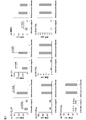
- Nutrients (a: glucose; b: glutamine; c: total amount of all 14 amino acids excluding glutamine contained in Dulbecco's Modified Eagle Medium (DMEM); d: pyruvic acid), vitamins (e: vitamins B1, B2, B6 , total amount of folic acid), and inorganic salts (f: sodium; g: potassium; h: calcium; i: magnesium; j: phosphorus; k: ammonia) in C2C12 myoblasts without (-) or with (+ ) in DMEM supplemented with 10% fetal bovine serum and 1% penicillin/streptomycin and analyzed after 3 days of culture.
- DMEM Dulbecco's Modified Eagle Medium
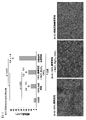
- FIG. 2 shows the variation of nitrogen- and phosphorus-containing compounds and inorganic salts in media in which microalgae were cultured.
- Ammonia (a) and phosphorus (b), sodium in the medium when cultured without microalgae (-) or with microalgae (+) using waste medium after culturing C2C12 myoblasts for 3 days (c), showing variations in potassium (d), calcium (e), and magnesium (f). Data are shown as mean ⁇ standard deviation (n 4).
- Cell growth of Chlorella vulgaris (ai) in either microalgal standard media or animal cell culture waste media. Chlorella vulgaris was cultured for 7 days in either microalgal standard medium or discarded medium after 3 days of C2C12 myoblast culture. Data are shown as mean ⁇ standard deviation (n 4).
- Waste medium was used undiluted (100% waste medium, micrograph: a-ii) or diluted 1/10 with pure water (10% waste medium, a-iii). Scale bar: 50 ⁇ m.
- Microalgae Media Cell growth of Chlorococcum littorale (bi) in either microalgae standard media or animal cell culture waste media. Chlorococcum littorale was cultured for 7 days in either standard microalgal medium or in discarded medium after 3 days of culture of C2C12 myoblasts. Data are shown as mean ⁇ standard deviation (n 4).
- FIG. 5 shows the results of culturing algae (Synechococcus) using the animal cell discarded medium.
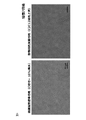
- FIG. 6 shows the result (micrograph) of culturing algae (Synechococcus) using the animal cell discarded medium.
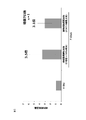
- FIG. 7 shows the results of culturing animal cells using algae extracts extracted from algae cultured using animal cell waste media.
- the present invention provides a composition for culturing algae containing a medium after culturing animal cells. Moreover, in one embodiment, the present invention provides a method for culturing algae using as a medium a composition containing a medium after culturing animal cells. In one embodiment, the present invention also provides methods for recycling algae and animal cells. According to the present invention, the medium after culturing animal cells that have been produced in large amounts in the animal cell culture process in the field of regenerative medicine or biopharmaceuticals and the field of cultured foods and had to be discarded is algae (e.g., Microalgae) can be utilized for culturing. This contributes to the reduction of environmental load.
- algae e.g., Microalgae
- the medium for animal cells before culturing animal cells that can be applied to the present invention is not limited as long as it is known, but examples include Eagle's medium, Dulbecco's modified Eagle's medium (DMEM), DMEM: F12 medium, Glasgow minimum essential medium, Grace's insect medium, Ham medium, Iscove's modified Eagle medium, RPMI-1640 medium, L-15 medium, McCoy's 5A medium, M199 medium, etc., and a medium capable of culturing animal cells. can be used if
- animal cells refer to cells of vertebrates (mammals (also referred to as “mammals”), birds, amphibians, reptiles or fish), or invertebrates (e.g., sea squirts, arthropods (crustaceans) (e.g., shrimp, crab, etc.), insects, etc.), echinoderms (e.g., sea urchin, sea cucumber, starfish, etc.), mollusks (e.g., shellfish, squid, octopus, etc.), etc.).
- vertebrates mamammals
- invertebrates e.g., sea squirts, arthropods (crustaceans) (e.g., shrimp, crab, etc.), insects, etc.
- echinoderms e.g., sea urchin, sea cucumber, starfish, etc.
- mollusks e.g., shellfish, squid, octopus, etc
- the animal cell is a mammal such as a vertebrate (e.g., human, monkey, bovine, whale, bear, deer, horse, pig, boar, sheep, rabbit, rat, mouse, hamster, goat, dog, or cat).
- a vertebrate e.g., human, monkey, bovine, whale, bear, deer, horse, pig, boar, sheep, rabbit, rat, mouse, hamster, goat, dog, or cat.
- Animals birds such as chickens, ducks, geese, quails, ducks, pheasants, amphibians such as frogs, salamanders, newts, reptiles such as crocodiles, lizards, snakes, turtles, soft-shelled turtles, tuna, salmon, trout, carp, sharks, eels , puffer fish) cells, invertebrates (e.g., sea squirts, arthropods (crustaceans (e.g., shrimp, crabs, etc.), insects, etc.), echinoderms (sea urchins, sea cucumbers, starfish, etc.), mollusks (e.g., shellfish, squid, octopus, etc.)) cells, or primary cells, established cells, pluripotent stem cells derived therefrom (e.g., ES cells, ntES cells, Muse cells, iPS cells), or tissue stem cells
- animal cells in living tissue is, for example, muscle system (e.g., myoblasts), skin system (e.g., fibroblasts, keratinocytes), liver system (e.g., hepatocytes), renal system (e.g., kidney cells (e.g., HEK293)), cardiac system (e.g., cardiomyocytes), digestive system (e.g., oral mucosal cells, intestinal epithelial cells, parietal cells), hematopoietic system (e.g., hematopoietic stem cells), reproductive tissue system (e.g., , ovarian cells (e.g., CHO cells), sperm cells, uterine epithelial cells), mucosal cells (e.g., epithelial cells), bone tissue systems (e.g., osteoblasts, chondrocytes), and the like. It may be derived from tissue.
- muscle system e.g., myoblasts
- skin system e.g
- the method for culturing animal cells to supply the waste medium applicable to the present invention is not particularly limited and may follow a known culture method (eg, 37° C., saturated steam, 5% CO 2 humidified atmosphere).
- algae is a general term for organisms that produce oxygen through photosynthesis, excluding bryophytes, fern plants, and seed plants that live mainly on the ground. If the environment necessary for photosynthesis is prepared, algae can produce oxygen and nutrients (for example, glucose and amino acids) by themselves and grow.
- algae to which the present invention can be applied may be "microalgae (also referred to as "unicellular algae”).
- microalgae refers to algae, among algae, in which individuals consist of a single cell, and a plurality of microalgae individuals gather to form colonies.
- narrow-haline or broad-haline microalgae For example, green algae with chlorophyll a and b as main pigments in chloroplasts, unicellular cyanobacteria with chlorophyll d as main pigments, and unicellular red algae with chlorophyll a and phycobilin protein as main pigments.
- microalgae examples include: To give a more detailed example, in green algae, Chlamydomonas reinhardtii (Japanese name: Chlamydomonas) (freshwater) of the order Chlamydomonas order, and Dunaliella salina (Japanese name: Donaliella salina) of the order Donaliella ) (marine), Volvox carteri (Japanese name: Volvox) (freshwater), Chlorococcum littorale (marine), Chlorococcum littorale (marine), Hydrodictyon reticulatum) (Japanese name: Amimidoro) (produced in freshwater), Pediastrum duplex (Japanese name: Kunshoumo) (produced in freshwater), Scenedesmus dimorphus (Japanese name: Ikadamo) (produced in freshwater) ), Chlorella sp.
- Chlorella of the order Trebouxia algal order Chlorella (for example, Chlorella vulgaris (freshwater), Chlorella pyrenoidosa (freshwater), Chlorella ⁇ Elpsoidea (Chlorella ellipsoidea) (freshwater), Chlorella regularis (freshwater)), Euglena gracilis and Euglena proxima ( Japanese name: euglena (freshwater), etc.
- Chlorella of the order Trebouxia algal order Chlorella
- Chlorella vulgaris freshwater
- Chlorella pyrenoidosa freshwater
- Chlorella ⁇ Elpsoidea Chlorella ellipsoidea
- Chlorella regularis freshwater
- Euglena gracilis Japanese name: euglena (freshwater)
- Japanese name: euglena (freshwater) Japanese name: euglena (freshwater), etc.
- the Cyanobacteria phylum Acaryochloris marina marine
- Cyanidium caldarium (Freshwater) of Cyanidium caldarium (Freshwater) of the order Rhophyta or Galdieria partita ( freshwater) and the like.
- unicellular charophytes include the genus Stichococcus (Freshwater) of the order Charophyta Krebsormedium of the phylum Chlorophyta.
- Filamentous-ulvophyte which is a unicellular Algae of Ulva Algae.
- the algae to which the present invention can be applied may be the algae mentioned above, genetically modified organisms thereof, or algae other than the above.
- algae to which the present invention can be applied may be freshwater or marine, and/or narrow- or broad-haline microalgae, but preferably marine and/or broad-haline microalgae. , for example, Chlorococcum littorale, Synechococcus algae, etc., but not limited thereto.
- Algae to which the present invention can be applied may be natural algae or algae grown by a known culture method.
- a composition containing a culture medium for animal cells used for culturing algae may optionally be a standard medium normally used for culturing the algae of interest, such as a medium for freshwater algae.
- a standard medium normally used for culturing the algae of interest such as a medium for freshwater algae.
- medium AF6 medium, C medium, URO medium, VT medium, etc.
- an osmotic pressure equal to or ⁇ 10% (preferably ⁇ 5%, more preferably ⁇ 3%) as the osmotic pressure of the standard microalgae medium can be used.
- the osmotic pressure is adjusted by measuring the osmotic pressure by a known method before culturing the algae, and if necessary, for example, the osmotic pressure of the standard medium normally used for culturing the algae of interest ⁇ 10% (preferably ⁇ 5%, more preferably ⁇ 3%), it may be adjusted.
- the osmotic pressure value is monitored during the cultivation of the algae, and if necessary, for example, the osmotic pressure of the standard medium normally used for culturing the algae of interest ⁇ 10% (preferably ⁇ 5%, more preferably is outside the range of ⁇ 3%), it may be adjusted. This can further enhance the algae growth effect.
- the method of adjusting the osmotic pressure may be according to a known method, and when the osmotic pressure is high, for example, dilute with a hypotonic medium such as water (e.g., distilled water, ion-exchanged water, sterilized water), or If the osmotic pressure is low, sodium salts (e.g., sodium chloride, sodium hydroxide, sodium carbonate, etc.), potassium salts (e.g., potassium chloride, potassium carbonate, potassium hydrogen carbonate, potassium phosphate, etc.), magnesium salts (e.g., Magnesium chloride, magnesium oxide, etc.) and/or calcium salts (eg, calcium chloride, calcium carbonate, calcium hydroxide, etc.) may be added to adjust the osmotic pressure. For example, when the target algae to be cultured is Chlorococcum littorale, the osmotic pressure of the resulting composition is may be adjusted.
- a hypotonic medium such as water (e.
- the composition provided by the present invention is for culturing microalgae, for example, freshwater or marine, or narrow- or broad-halal microalgae.
- the microalgae to which the present invention can be applied are preferably marine and/or broadhaline microalgae, such as Chlorococcum littorale and Synechococcus sp.
- Algae culture conditions depend on the type of algae to be cultured, and the temperature is 5 to 40° C., preferably 10 to 35° C., more preferably 10 to 30° C., usually for 1 to 10 days, preferably 3 to 7 days.
- the culture is carried out for a day and can be carried out by aeration or anaerobic stirring culture, shaking culture or static culture.
- the concentration of ammonia in the composition used for culturing algae is 0.5 mM or higher, which enables efficient culturing of algae using ammonia as a nitrogen source.
- the upper limit of the concentration of ammonia in the composition used for culturing algae is not particularly limited, since it contains a culture medium after culturing animal cells, it can be provided at a concentration that allows culturing of animal cells.
- the concentration of ammonia in compositions used to culture algae can be provided, for example, from 0.5 mM to 10 mM, from 0.5 mM to 5 mM, from 0.5 mM to 3 mM.
- Ammonia can be a source of nitrogen in the cultivation of algae, so if consumed by the cultivation, ammonia may be added as a nitrogen source, and alternatively or additionally nitrates may be added.
- the present invention can provide recycling culture methods for algae and animal cells.
- the method is (1) recovering the algae cultured by the method described in (1) above; (2) degrading the algae to obtain an algae extract; and (3) culturing animal cells using an animal cell culture medium containing the algae extract.
- the step (2) is, for example, referring to the method described in WO 2021/066113 and obtaining an algal extract from algae by performing some or all of the steps described therein.
- only acid hydrolysis treatment may be performed, only alkaline hydrolysis treatment may be performed, or both acid hydrolysis treatment and alkaline hydrolysis treatment are performed to obtain the algae extract.
- acid hydrolysis treatment and alkali hydrolysis treatment are carried out, the acid hydrolysis treatment may be followed by alkali hydrolysis treatment, or the alkali hydrolysis treatment may be followed by acid hydrolysis treatment.
- a neutralization treatment may be performed between the acid hydrolysis treatment and the alkaline hydrolysis treatment.
- the algae used in the above step (2a-1) may be subjected to drying treatment before being subjected to acid hydrolysis treatment and/or alkaline hydrolysis treatment.
- the hydrolyzate is neutralized by performing the step of neutralizing the hydrolyzate obtained in the above step (2-1) (step (2-2)), and the cell culture An algae extract is obtained which can be used for
- a basic substance or an aqueous solution thereof e.g., sodium hydroxide, potassium hydroxide or an aqueous solution thereof
- an acidic substance e.g., sodium hydroxide, potassium hydroxide, etc.
- an aqueous solution thereof hydroochloric acid, sulfuric acid, trifluoroacetic acid, p - toluenesulfonic acid, methanesulfonic acid, etc.
- the step of (2) decomposing the algae to obtain an algal extract may be (2b) decomposing the algae with ultrasonic waves to obtain an algal extract.
- a known method may be used, for example, Prabakaran et al. 53(2) 150-154 (2011)).
- an algal extract can be obtained by crushing algae on ice for 10 minutes at 200 W using a known ultrasonicator (eg, Bioruptor UCD-200TM (Cosmo Bio, Japan)).
- the step (2) above may be a combination of (2b) and (2a-1) and (2a-2) above.
- step (2) above may be carried out under pressure.
- under pressure refers to atmospheric pressure, that is, pressure conditions higher than 1 atmosphere, for example, 1.1 atmosphere or more, 1.5 atmosphere or more, 1.8 atmosphere or more, or 2 atmosphere or more may be implemented in For example, it may be 1.1 to 300 atmospheres, 1.5 to 200 atmospheres, 1.8 to 100 atmospheres, 2 to 50 atmospheres, such as 2 to 20 atmospheres.
- Pressurization conditions may be implemented by any device or method, and for example, pressurization conditions can be achieved by using an autoclave.
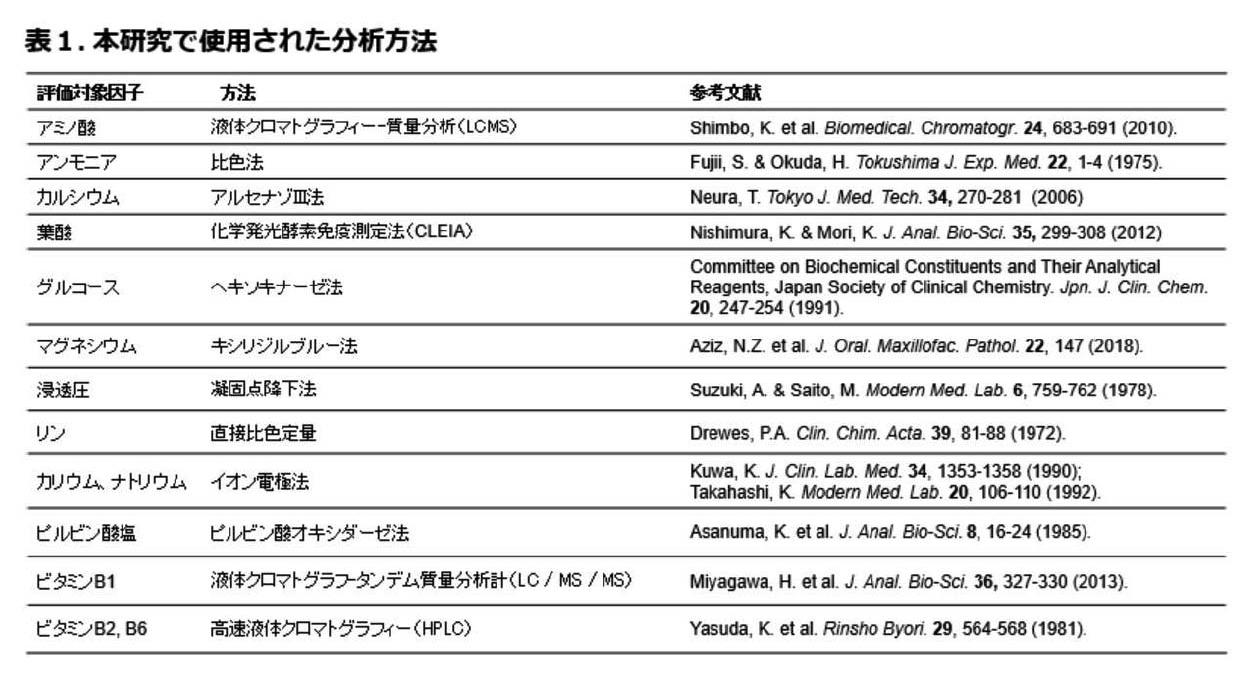
- Example 1 Materials and methods 1-1. Animal Myoblast Culture C2C12 mouse myoblasts (ATCC® CRL-1772TM) were cultured in 10% fetal bovine serum (FBS, Thermo Fisher Scientific, MA, USA) and 1% penicillin/streptomycin ( PS, Invitrogen, Carlsbad, Calif., USA) supplemented with DMEM (Sigma-Aldrich, St. Louis, Mo., USA) at 37° C. in a humidified atmosphere containing 5% CO 2 37 . 2 ⁇ 10 5 C2C12 cells were seeded in 100 mm culture dishes (Greiner Bio-One, Kremsmunster, Austria), cultured overnight and the spent medium was replaced with 10 ml fresh medium. After 3 days of culture, medium with/without cells was harvested. After centrifugation (1,700 ⁇ g, 5 min), each factor in the collected culture supernatant (waste medium) was outsourced for further analysis (SRL, Tokyo, Japan) (Table 1).
- FBS fetal bovine
- Daigo IMK medium manufactured by Nihon Pharmaceutical (Tokyo, Japan); sold by FUJIFILM Wako Pure Chemical (Osaka, Japan)
- Daigo Artificial Seawater SP manufactured by Nihon Pharmaceutical (Tokyo, Japan); sold by FUJIFILM Wako Pure Chemical ( Osaka, Japan)
- PPFD photosynthetic photon flux density
- a microalgae standard medium is a medium commonly used for culturing the algae of interest. For example, in the above case, a mixture of C medium, Daigo IMK medium and Daigo artificial seawater SP corresponds.
- the medium was recovered by centrifugation (1,700 xg, 5 minutes) and each factor in the culture supernatant was analyzed (Table 1). Nitrate was detected using a nitrate meter (LAQUAtwin, AS ONE Co., Ltd., Osaka, Japan).
- C.I. C medium was used as the microalgae standard medium for Vulgaris.
- C.I. The mixture of Daigo IMK medium and Daigo artificial seawater SP used above as the littorale microalgae standard medium is Daigo artificial seawater SP (Fujifilm Wako Pure Chemical (Osaka, Japan), product code: 395-01343) 36 g, Daigo IMK medium (Fujifilm Wako Pure Chemical (Osaka, Japan), product code: 392-01331) was prepared by dissolving 252 mg in 1 L of Milli-Q water and autoclaving.
- Factor consumption was calculated by dividing the value after culturing without myoblasts/microalgae by the value after culturing with myoblasts/microalgae. Pure water (Merck Millipore, Burlington, MA, USA) or sodium chloride (Fujifilm Wako Pure Chemical Co., Ltd., Osaka, Japan), magnesium chloride ( Fuji Film Wako Pure Chemical) and calcium chloride (Fuji Film Wako Pure Chemical Co., Ltd., Osaka, Japan) were used, respectively.
- C.I. littorale or C.I. vulgaris was seeded at 5 ⁇ 10 6 in 35 mm culture dishes (Greiner Bio-One) and the microalgae were cultured for 7 days at 30° C. in a humidified atmosphere containing 5% CO 2 as described above.
- each microalgae standard medium or the discarded medium after culturing C2C12 cells for 3 days was used.
- the microalgae concentration was measured with a hemocytometer (Waken Bee Tech Co., Ltd., Kyoto, Japan), and the medium volume was measured using a micropipette (MS Equipment Co., Ltd., Osaka, Japan). Cell numbers were calculated based on cell concentration and medium volume.
- Microalgae images were recorded by microscope (ECLIPSE TS2, Nikon, Tokyo, Japan) using NIS-Elements BR software (Nikon).
- Microalgae Cultivation Microalgae were cultured in normal medium for 3 days and analyzed for variation of factors in the medium. Microalgae contain ammonia (C. vulgaris: 39%; C. littorale: 100%) (Fig. 2a), phosphorus (C. vulgaris: 100%; C. littorale: 100%) (Fig. 2b), nitrates (C. vulgaris: 67%; C. littorale: 17%) (Fig. 2c). However, negligible changes occurred in the amounts of sodium (Fig. 2d), potassium (Fig. 2e), calcium (Fig. 2f), and magnesium (Fig. 2g).
- C. littorale is C.I. Ingested more ammonia than C. vulgaris (C. littorale; 80%, C. vulgaris; 26%). Both microalgae consumed phosphorus (C. littorale; 16%, C. vulgaris; 15%).
- sodium (Fig. 3c), potassium (Fig. 3d) and calcium (Fig. 3e) levels changed little, and magnesium levels were lower than C.I. Although it increased in the case of littorale, C.I. There was little change in the case of vulgaris (Fig. 3f).
- littorale grew 6.8-fold in the microalgae standard medium, but further grew 2.2-fold in the discarded medium after 7 days of culture (Fig. 4-2).
- C. Sodium, magnesium and calcium concentrations in the medium of littorale were significantly higher than those in the waste medium (FIGS. 1 and 2), so sodium chloride, magnesium chloride and calcium chloride were added to adjust the concentrations.
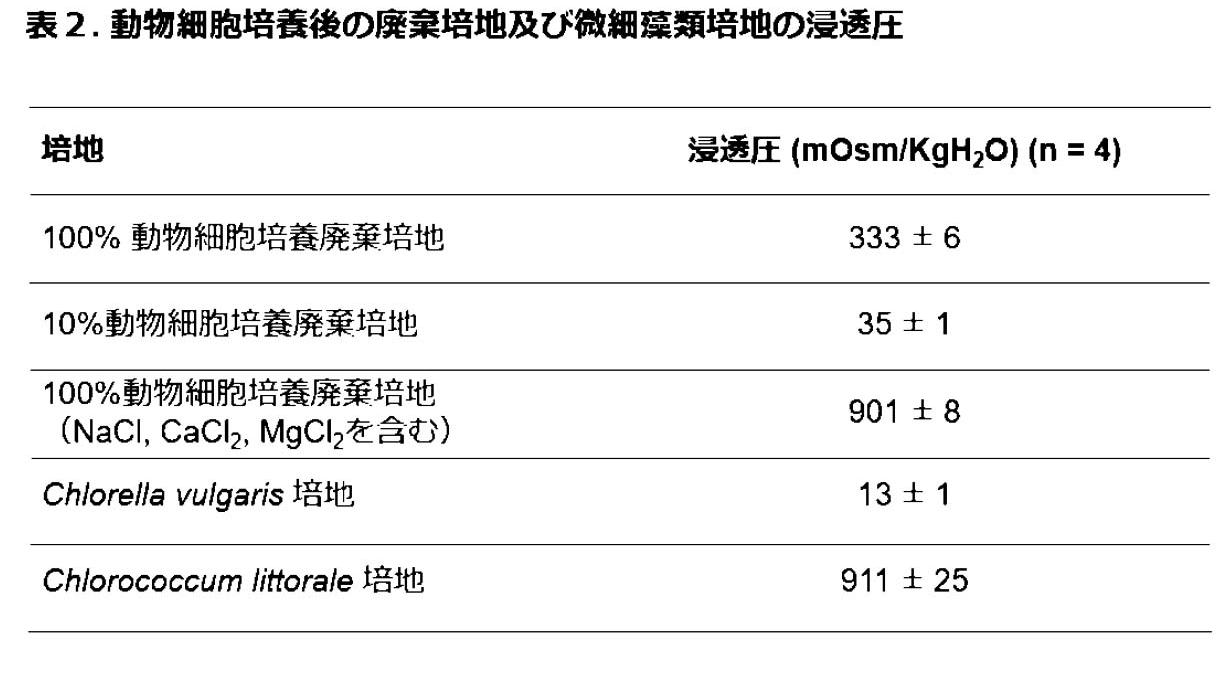
- the final osmotic pressure of the discarded medium was approximately equal to that of the microalgal standard medium (Table 2).
- C. littorale cell proliferation was enhanced 3.2-fold by adjusting the salt concentration of the discarded medium (Fig. 4-2).
- littorale prefers ammonia as a nitrogen source
- C. littorale prefers ammonia as a nitrogen source
- vulgaris is thought to be due to the fact that it prefers nitrates.
- Ammonia is the major nitrogen source in cultured cell waste media; littorale in discarded medium. It grows faster than C. vulgaris and also C. vulgaris. This may be one reason why the growth of L. littorale was slower in waste media than in normal microalgae standard media (Fig. 4-2). Both post-myoblast culture waste media and microalgae standard media contained ammonia and phosphorus, but only microalgae standard media contained nitrates (FIGS. 2 and 3). C.
- littorale's standard medium contains significantly more nitrate than ammonia (Figs. 2a and 2c).
- the amount of ammonia contained in the waste medium may not be sufficient for high density and long-term cultivation of microalgae for more than a week.
- Optimization of medium components and selection of microalgal strains, such as brackish water-derived microalgae 28 , ammonia-preferring microalgae or microalgae capable of fixing nitrogen 29 are topics of future research.
- Establishment of microalgae culture system by using waste medium from animal cell culture is caused by (1) preservation of fresh water and inorganic salts including ammonia and phosphorus in microalgae culture, and (2) disposal of waste medium. Contributes to the prevention of eutrophication of water bodies.
- Glucose is the primary carbon source for cell biosynthesis and energy production and is essential for cell culture 30 .
- Glutamine constitutes approximately 5% of all amino acid residues in the human proteome 31 .
- glutamine is closely associated with the biosynthesis of non-essential amino acids and purine and pyrimidine base -31 .
- glutamine serves as a biosynthetic precursor for the tricarboxylic acid (TCA) cycle.
- TCA tricarboxylic acid
- C2C12 myoblasts prefer glucose over pyruvate, in contrast to primary bovine muscle tissue-derived cells, which prefer both glucose and pyruvate. Since essential nutrients are highly cell-type dependent, media preparation by cell-type metabolism provides a more efficient cultured food production system. Additionally, recycling of glucose, pyruvate, amino acids, vitamins, and mineral salts in the waste medium is required.
- microalgae synthesize nutrients most efficiently with little residue35 .
- C.I. littorale and C.I. Although animal cell culture systems have been established using nutrients obtained from B. vulgaris, these do not compete with food production and efficiently synthesize the nutrients needed by animal cells 36 .
- animal cells can grow using nutrients produced by microalgae, and microalgae can grow by recycling waste media from animal cell cultures.
- C.I. Littorale is also expected to be efficient in immobilizing carbon dioxide gas discharged from thermal power plants and steel plants.
- a recycling cell culture system using animal cells and microalgae would establish a sustainable energy, nutrition, environment and resource saving solution.
- the waste medium used for culturing Synechococcus after culturing animal cells was prepared in the same manner as in Example 1.
- Fig. 5 shows the results of microalgae observation after 7 days of culturing, showing the culture density of microalgae and the morphology and appearance of cells in both cases of culturing using waste medium after culturing animal cells and culturing using microalgae standard medium. This indicates that no change was observed in .
- Example 3 The RL34 mouse hepatocyte line and the bovine muscle tissue-derived cells were cultured for 3 days under the same conditions as in Example 1. littorale was cultured and could be cultured with any of the discarded media.
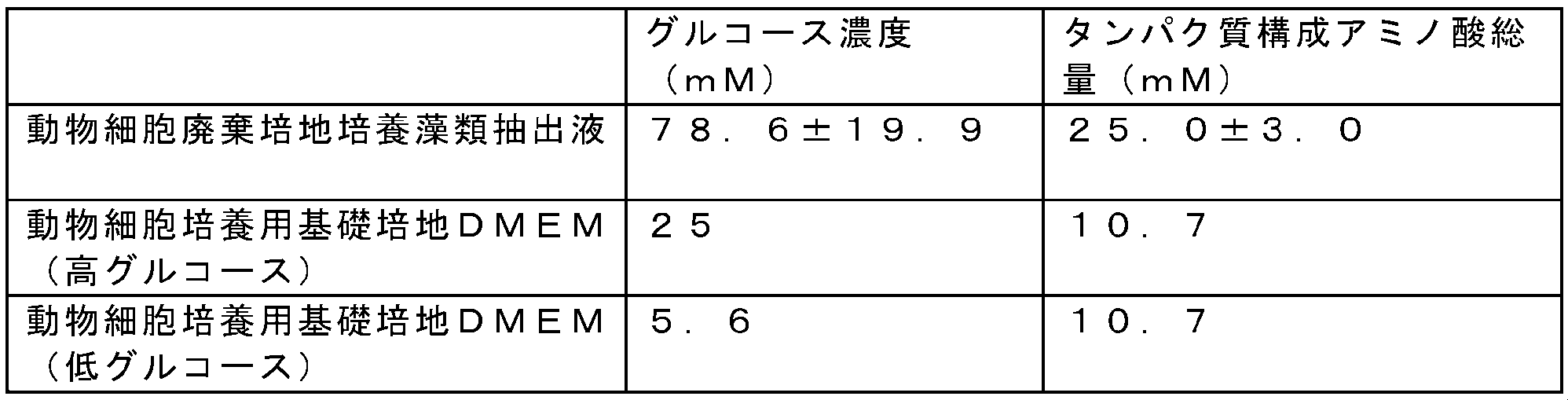
- Nutrients were extracted from algae (C. littorale) cultured for 7 days in a waste medium of animal muscle cells (C2C12 cells) by acid treatment (0.5N HCl, 100°C, 24 hours treatment). After acid treatment, neutralization with NaOH (Fujifilm Wako Pure Chemical Industries, Osaka, Japan) followed by centrifugation (12,500 ⁇ g, 5 minutes) and the supernatant was used as an algae extract.
- Each nutritional component of the algae extract and the animal cell basal medium was extracted by the following method: - Glucose analysis method: Hexokinase method ⁇ Amino acid analysis method: Liquid chromatography-mass spectrometry (LCMS) were analyzed and compared.
- - Glucose analysis method Hexokinase method
- Amino acid analysis method Liquid chromatography-mass spectrometry (LCMS) were analyzed and compared.
- Example 5 Cultivation of animal cells using nutrients (algae extract) extracted from algae cultured using animal cell waste medium (demonstration of recycling culture)
- the inorganic salt medium of (2) above has the following composition.
Landscapes
- Health & Medical Sciences (AREA)
- Engineering & Computer Science (AREA)
- Life Sciences & Earth Sciences (AREA)
- Chemical & Material Sciences (AREA)
- Biotechnology (AREA)
- Biomedical Technology (AREA)
- Wood Science & Technology (AREA)
- Zoology (AREA)
- Organic Chemistry (AREA)
- Bioinformatics & Cheminformatics (AREA)
- Genetics & Genomics (AREA)
- Biochemistry (AREA)
- General Health & Medical Sciences (AREA)
- Microbiology (AREA)
- Cell Biology (AREA)
- General Engineering & Computer Science (AREA)
- Rheumatology (AREA)
- Medicinal Chemistry (AREA)
- Botany (AREA)
- Tropical Medicine & Parasitology (AREA)
- Virology (AREA)
- Gastroenterology & Hepatology (AREA)
- Marine Sciences & Fisheries (AREA)
- Environmental Sciences (AREA)
- Micro-Organisms Or Cultivation Processes Thereof (AREA)
Abstract
Description
[2] 前記動物細胞が、脊椎動物の細胞である、項目1に記載の方法。
[3] 前記動物細胞が、筋肉系又は肝臓系の細胞である、項目1または2に記載の方法。
[4] 前記藻類が、微細藻類である、項目1~3のいずれか1項に記載の方法。
[5] 前記藻類が、海産および/または広塩性の微細藻類である、項目1~4のいずれか1項に記載の方法。
[6] 前記藻類が、クロロコックム・リトラレ(Chlorococcum littorale)またはシネココッカス属である、項目1~5のいずれか1項に記載の方法。
[7] 前記組成物の浸透圧を、必要に応じて藻類培養用の標準培地の浸透圧と同等または±10%の範囲の浸透圧に調節して用いる、項目1~6のいずれか1項に記載の方法。
[8] 前記組成物に、さらに無機塩類を添加する、項目1~7のいずれか1項に記載の方法。
[9] 前記無機塩類は、ナトリウム塩、カリウム塩、マグネシウム塩、およびカルシウム塩からなる群より一つ以上選択される、項目8に記載の方法。
[10] 前記組成物におけるアンモニアの濃度を0.5mM以上とする、項目1~9のいずれか1項に記載の方法。
[11] (1)項目1~10のいずれか1項に記載の方法により培養した前記藻類を回収する工程、
(2)前記藻類を分解処理し、藻類抽出物を得る工程、及び
(3)前記藻類抽出物を含む培地を用い、動物細胞を培養する工程を含む、藻類及び動物細胞のリサイクル培養方法。
[12] 前記工程(3)の後に、さらに、項目1~10のいずれか1項に記載の方法を実施する、項目11に記載の方法。
[14] 前記動物細胞が、脊椎動物の細胞である、項目13に記載の組成物。
[15] 前記動物細胞が、筋肉系又は肝臓系の細胞である、項目13または14に記載の組成物。
[16] 前記組成物が、微細藻類培養用の組成物である、項目13~15のいずれか1項に記載の組成物。
[17] 前記組成物が、海産および/または広塩性の微細藻類用の組成物である、項目13~16のいずれか1項に記載の組成物。
[18] 前記組成物が、クロロコックム・リトラレ(Chlorococcum littorale)またはシネココッカス属の培養に用いられる、項目13~17のいずれか1項に記載の組成物。
[19] 前記組成物の浸透圧が、藻類培養用の標準培地の浸透圧と同等または±10%の範囲の浸透圧に調節されている、項目13~18のいずれか1項に記載の組成物。
[20] 無機塩類がさらに添加されている、項目13~19のいずれか1項に記載の組成物。
[21] 前記無機塩類は、ナトリウム塩、カリウム塩、マグネシウム塩、およびカルシウム塩からなる群より一つ以上選択される、項目20に記載の組成物。
[22] 前記組成物におけるアンモニアの濃度が0.5mM以上である、項目13~21のいずれか1項に記載の組成物。
(1)上記の方法によりに記載の方法により培養した前記藻類を回収する工程、
(2)前記藻類を分解処理し、藻類抽出物を得る工程、及び
(3)前記藻類抽出物を含む動物細胞培養用培地を用い、動物細胞を培養する工程
を含み得る。
(2a-1)藻類を、酸加水分解処理及び/又はアルカリ加水分解処理に供する工程;及び
(2a-2)前記工程(2a-1)により得られる加水分解産物を中和し、藻類抽出物を得る工程。
であってもよい。超音波によって分解処理する方法は、公知の方法を用いればよく、例えば、Prabakaranらの文献(P. Prabakaran, A.D. Ravindran, A comparative study on effective cell disruption methods for lipid extraction from microalgae. Letters in Applied Microbiology, 53(2) 150-154 (2011))に記載の方法を参考に実施することが可能である。例えば、公知の超音波破砕装置(例えば、Bioruptor UCD-200TM(コスモバイオ、日本))を用い、200W、10分間、氷上において藻類を破砕することによって藻類抽出物を得ることも可能である。
1.材料と方法
1-1.動物の筋芽細胞の培養
C2C12マウス筋芽細胞(ATCC(登録商標)CRL-1772(商標))を、10%ウシ胎児血清(FBS、Thermo Fisher Scientific、MA、USA)および1%ペニシリン/ストレプトマイシン(PS、Invitrogen、Carlsbad、CA、USA)を補充したDMEM(Sigma-Aldrich、StLouis,MO、USA)中、37℃で、5% CO2を含む加湿大気中で培養した37。2×10⁵個のC2C12細胞を100mm培養皿(Greiner Bio-One、Kremsmunster、Austria)に播種した後、一晩培養し、使用済み培地を10mlの新鮮な培地と交換した。3日間の培養後、細胞を含む/含まない培地を回収した。遠心分離(1,700×g、5分)後、採取した培養上清(廃棄培地)中の各因子をさらなる分析のために外部委託した(SRL、東京、日本)(表1)。
淡水緑藻植物 C. vulgaris(NIES-2170、国立環境研究所、茨城、日本)および海水緑藻植物 C. littorale(NBRC 102761、製品評価技術基盤機構、東京、日本)を、それぞれC培地(国立環境研究所、茨城、日本)(参考:「https://mcc.nies.go.jp/medium/ja/c.pdf」;Ichimura, T. 1971 Sexual cell division and conjugation-papilla formation in sexual reproduction of Closterium strigosum. In Proceedings of the Seventh International Seaweed Symposium, University of Tokyo Press, Tokyo, p. 208-214.)またはダイゴIMK培地(製造:日本製薬(東京、日本);販売:富士フイルム和光純薬(大阪、日本))およびダイゴ人工海水SP(製造:日本製薬(東京、日本);販売:富士フイルム和光純薬(大阪、日本))の混合物中で連続光(光合成光子束密度、PPFD: 12±1μmol/m2/s、n=5)36,38下で、培養した。PPFDは、量子光度計(オガワ精機株式会社、東京、日本)を用いて測定した。2×108 C. vulgarisまたは10×18 C. littorale細胞を100mm培養皿(Greiner Bio-One)に播種した後、細胞を、30℃の連続光下、5% CO2を含む加湿大気中で、連続光下で3日間培養した(PPFD:15±1μmol/m2/s、n=6)39。培養のために、各微細藻類標準培地またはC2C12細胞を3日間培養した後の廃棄培地を、微細藻類を伴う/伴わない培養の3日後のもので、分析に供した。微細藻類標準培地とは、目的とする藻類の培養に通常用いられる培地のことである。例えば、上記の場合C培地、ダイゴIMK培地及びダイゴ人工海水SPの混合物が該当する。遠心分離(1,700×g、5分)により培地を回収し、培養上清中の各因子を分析した(表1)。硝酸塩は、硝酸塩計(LAQUAtwin、アズワン株式会社、大阪、日本)を用いて検出した。
対応のないスチューデントのt検定またはpost-hoc TukeyのHSD検定による一元配置分散分析により、それぞれ2群または多群間比較を行った。
2-1.動物筋芽細胞培養
C2C12筋芽細胞を3日間培養した後、培地中の因子の変動を分析した。筋芽細胞はグルコース(99%)(図1a)およびグルタミン(69%)(図1b)を活発に消費した。しかしながら、グルタミンを除く基礎培地(ダルベッコ改変イーグル培地、DMEM)中の14アミノ酸の量は、わずか26%減少しか減少していなかった(図1c)。さらに、培地中のピルビン酸塩(図1d)およびビタミンB1、B2、B6および葉酸(図1e)の量は、わずかに減少していた。さらに、培地中のナトリウム(図1f)、カリウム(図1g)、カルシウム(図1h)、およびマグネシウム(図1i)の量はほとんど変化しなかった。しかしながら、細胞は培養培地中のリンを16%消費していた(図1j)。アンモニアは、アミノ酸、とりわけグルタミンの分解によって産生されるので27、培養前でも培養培地中に存在した(データは示さず)。培地中のアンモニアは、細胞の培養中に増加する傾向があった(図1k)。
微細藻類を通常の培地中で3日間培養し、培地中の因子の変動を分析した。微細藻類は、アンモニア(C. vulgaris:39%; C. littorale:100%)(図2a)、リン(C. vulgaris:100%; C. littorale:100%)(図2b)、硝酸塩(C. vulgaris:67%; C. littorale:17%)を積極的に消費した(図2c)。しかし、ナトリウム(図2d)、カリウム(図2e)、カルシウム(図2f)、およびマグネシウム(図2g)の量は無視できる変化しか生じなかった。
報告によれば、C. vulgarisを含む淡水微細藻類は、家庭、農業、および産業廃水の処理に役立ち得る24-26。反対に、海水微細藻類は動物細胞培養廃棄培地を効率的に処理できることが観察された(図3、図4-1および図4-2)。本発明者らは2つの微細藻類間の差異が無機塩の最適濃度に関連し、微細藻類が窒素含有化合物に対して異なる優先性を示していると推定する。C. littoraleは硝酸塩よりもアンモニアを優先的に消費したが、C. vulgarisはアンモニアよりも硝酸塩を優先的に消費した(図2aおよび2c)。アンモニア消費の違いは、おそらくC. littoraleが窒素源としてアンモニアを好むのに対し、C. vulgarisは硝酸塩を好むという事実によるものと考えられる。アンモニアは培養細胞廃棄培地中の主要な窒素源であり、C. littoraleが廃棄培地中でC. vulgarisよりも速く増殖し、またC. littoraleの増殖が通常の微細藻類標準培地よりも廃棄培地中で遅かった理由の1つの理由であるものと考えられる(図4-2)。筋芽細胞培養後の廃棄培地および微細藻類標準培地はいずれもアンモニアおよびリンを含有していたが、微細藻類標準培地のみが硝酸塩を含有していた(図2および3)。C. littoraleの標準培地は、アンモニアよりも有意に多くの硝酸塩を含んでいる(図2aおよび2c)。廃棄培地中に含まれるアンモニアの量は、微細藻類の高密度かつ1週間以上の長期培養の場合には十分ではないかもしれない。培地成分の最適化および微細藻類株、例えば、汽水由来の微細藻類28、アンモニアを好むか、または窒素29を固定することができる微細藻類の選択が、将来の研究のトピックスである。動物細胞培養からの廃棄培地を用いることによる微細藻類の培養系の確立は、(1)微細藻類培養における淡水およびアンモニアおよびリンを含む無機塩の保存、ならびに(2)廃棄培地の処分によって引き起こされる水体の富栄養化の防止に寄与する。
広塩性の微細藻類として知られているシネココッカス属(Synechococcus sp.)の微細藻類(以下、「シネココッカス」という。)が、動物細胞の培養後の廃棄培地によって培養可能であるかどうかを調べた。
実施例1と同じ条件で、RL34マウス肝細胞株、及びウシ筋組織由来細胞を3日間培養し、それぞれの廃棄培地を用いて、C. littoraleを培養したところ、いずれの廃棄培地によっても培養可能であった。
動物細胞廃棄培地を用いて培養した藻類からの栄養素抽出
・グルコース解析法:Hexokinase method
・アミノ酸解析法:Liquid chromatography-mass spectrometry (LCMS)
により解析して比較を行った。
動物細胞廃棄培地を用いて培養した藻類から抽出した栄養素(藻類抽出物)を用いた動物細胞の培養(リサイクル培養の実証)
(1)動物細胞培養用基礎培地DMEM(Sigma-Aldrich、StLouis,MO、USA)
(2)(1)の基礎培地に含まれる無機塩のみの培地(無機塩培地)
(3)(2)の無機塩培地+実施例3で得られた藻類抽出液(5%(v/v))
を用いて動物筋細胞(C2C12細胞)を2日間培養し、相対生細胞数をXTTアッセイによって測定し、比較した(図7)。
(i)糖質
・グルコース:0mg/L
(ii)アミノ酸
・L-アルギニン:0mg/L
・L-シスチン:0mg/L
・L-グルタミン:0mg/L
・グリシン:0mg/L
・L-ヒスチジン:0mg/L
・L-イソロイシン:0mg/L
・L-ロイシン:0mg/L
・L-リジン:0mg/L
・L-メチオニン:0mg/L
・L-フェニルアラニン:0mg/L
・L-セリン:0mg/L
・L-トレオニン:0mg/L
・L-トリプトファン:0mg/L
・L-チロシン:0mg/L
・L-バリン:0mg/L
(iii)ビタミン
・パントテン酸:0mg/L
・塩化コリン:0mg/L
・葉酸:0mg/L
・i-イノシトール:0mg/L
・ナイアシンアミド:0mg/L
・ピリドキシン:0mg/L
・リボフラビン:0mg/L
・チアミン:0mg/L
(iv)ミネラル
・CaCl2:200mg/L
・KCl:400mg/L
・Fe(NO3)3・9H2O:0.10mg/L
・MgSO4:98mg/L
・NaCl:6400mg/L
・NaHCO3:3700mg/L
・NaH2PO4:109mg/L
・フェノールレッド:15mg/L
1. FAO. World Livestock 2011-Livestock in Food Security (FAO, 2011).
2. Tuomisto, H. L. & de Mattos, M. J. Environmental impacts of cultured meat production. Environ. Sci. Technol. 45, 6117-6123 (2011).
3. Post, M.J. An alternative animal protein source: cultured beef. Ann. N Y Acad. Sci. 1328, 29-33 (2014).
4. Lodish, H. et al. Molecular Cell Biology, 3rd edition, Ch. 5 (W. H. Freeman and Company, 1995).
5. Spolaore, P., Joannis-Cassan, C., Duran, E. & Isambert, A. Commercial applications of microalgae. J. Biosci. Bioeng. 101, 87-96 (2006).
6. Gerhardt, C. et al. How will cultured meat and meat alternatives disrupt the agricultural and food industry? Ind. Biotechnol. 16, 2020 (2020).
7. Mattick, C. S., Landis, A. E., Allenby, B. R. & Genovese, N. J. Anticipatory life cycle analysis of in vitro biomass culture for cultured meat production in the United States. Environ. Sci. Technol. 49, 11941-11949 (2015).
8. Chisti, Y. Biodiesel from microalgae. Biotechnol. Adv. 25, 294-306 (2007).
9. Ajjawi, I. et al. Lipid production in Nannochloropsis gaditana is doubled by decreasing expression of a single transcriptional regulator. Nat. Biotechnol. 35, 647-652 (2017).
10. Ho, S.H. et al. Bioethanol production using carbohydrate-rich microalgae biomass as feedstock. Bioresour. Technol. 135, 191-198 (2013).
11. Harun, R. et al. Algal biomass conversion to bioethanol - a step-by-step assessment. Biotechnol. J. 9, 73-86 (2014).
12. Norsker, N. H., Barbosa, M. J., Vermue, M. H. & Wijffels, R. H. Microalgal production-a close look at the economics. Biotechnol. Adv. 29, 24-27 (2011).
13. Rasala, B. A. et al. Production of therapeutic proteins in algae, analysis of expression of seven human proteins in the chloroplast of Chlamydomonas reinhardtii. Plant Biotechnol. J. 8, 719-733 (2010).
14. Gregory, J. A., Topol, A. B., Doerner, D. Z. & Mayfield, S. Alga-produced cholera toxin-Pfs25 fusion proteins as oral vaccines. Appl. Environ. Microbiol. 79, 3917-3925 (2013).
15. Specht, E. A. & Mayfield, S. P. Algae-based oral recombinant vaccines. Front. Microbiol. 5, 60 (2014).
16. Osanai, T. et al. Pleiotropic effect of sigE over-expression on cell morphology, photosynthesis and hydrogen production in Synechocystis sp. PCC 6803. Plant J. 76, 456-465 (2013).
17. Satoh, A., Kurano, N., Harayama, S. & Miyachi, S. Effects of chloramphenicol on photosynthesis, protein profiles and transketolase activity under extremely high CO2 concentration in an extremely-high-CO2-tolerant green microalga, Chlorococcum littorale. Plant Cell Physiol. 45, 1857-1862 (2004).
18. Rossi, F., Olguin, E. J., Diels, L. & De Philippis, R. Microbial fixation of CO2 in water bodies and in drylands to combat climate change, soil loss and desertification. N. Biotechnol. 32, 109-120 (2015).
19. Cheng, J., Zhu, Y., Zhang, Z. & Yang, W. Modification and improvement of microalgae strains for strengthening CO2 fixation from coal-fired flue gas in power plants. Bioresour. Technol. 291, 121850 (2019).
20. Lee, D. J., Chang, J. S. & Lai, J. Y. Microalgae-microbial fuel cell: A mini review. Bioresour. Technol. 198, 891-895 (2015).
21. McCusker, S., Buff, P. R., Yu, Z. & Fascetti, A. J. Amino acid content of selected plant, algae and insect species: a search for alternative protein sources for use in pet foods. J. Nutr. Sci. 3, e39 (2014).
22. Gutierrez-Salmean, G., Fabila-Castillo, L. & Chamorro-Cevallos, G. Nutritional and toxicological aspects of Spirulina (Arthrospira). Nutr. Hosp. 32, 34-40 (2015).
23. Alori, E. T. & Babalola, O. O. Microbial inoculants for improving crop quality and human health in Africa. Front. Microbiol. 9, 2213 (2018).
24. Wang, L. et al. Culture of green algae Chlorella sp. in different wastewaters from municipal wastewater treatment plant. Appl. Biochem. Biotechnol. 162, 1174-1186 (2010).
25. Chiu, S. Y. et al. Culture of microalgal Chlorella for biomass and lipid production using wastewater as nutrient resource. Bioresour. Technol. 184, 179-189 (2015).
26. Wang, J. H. et al. Microalgae-based advanced municipal wastewater treatment for reuse in water bodies. Appl. Microbiol. Biotechnol. 101, 2659-2675 (2017).
27. Schneider, M., Marison, I. W. & von Stockar, U. The importance of ammonia in mammalian cell culture. J. Biotechnol. 46, 161-185 (1996).
28. Tanabe, Y., Hodoki, Y., Sano, T., Tada, K. & Watanabe, M. M. Adaptation of the freshwater bloom-forming cyanobacterium Microcystis aerguinosa to brackish water is driven by recent horizontal transfer of sucrose genes. Front. Microb. 9, 1150 (2018).
29. Tsujimoto, R. et al. Functional expression of an oxygen-labile nitrogenase in an oxygenic photosynthetic organism. Sci. Rep. 8, 7380 (2018).
30. Mulukutla, B. C., Yongky, A., Le, T., Mashek, D. G. & Hu, W. S. Regulation of glucose metabolism - A perspective from cell bioprocessing. Trends Biotechnol. 34, 638-651 (2016).
31. Zhang, J., Pavlova, N. N. & Thompson, C. B. Cancer cell metabolism: the essential role of the nonessential amino acid, glutamine. EMBO J. 36, 1302-1315 (2017).
32. Ye, Y. et al. A critical review on ammonium recovery from wastewater for sustainable wastewater management. Bioresour. Technol. 268, 749-758 (2018).
33. Song, Y. et al. A physical catalyst for the electrolysis of nitrogen to ammonia. Sci. Adv. 4, e1700336 (2018).
34. Tarayre, C. et al. New perspectives for the design of sustainable bioprocesses for phosphorus recovery from waste. Bioresour. Technol. 206, 264-274 (2016).
35. Singh, A. K. & Singh, M. P. Importance of algae as a potential source of biofuel. Cell Mol. Biol. 60, 106-109 (2014).
36. Okamoto, Y., Haraguchi, Y., Sawamura, N., Asahi, T. & Shimizu, T. Mammalian cell culture using nutrients extracted from microalgae. Biotechnol. Prog. 36, e2941 (2020).
37. Haraguchi, Y., et al. Fabrication of functional three-dimensional tissues by stacking cell sheets in vitro. Nat. Protoc. 7, 850-858 (2012).
38. Haraguchi, Y., et al. Thicker three-dimensional tissue from a "symbiotic recycling system" combining mammalian cells and algae. Sci. Rep. 7, 41594 (2017).
39. Haraguchi, Y. & Shimizu, T. Three-dimensional tissue fabrication system by co-culture of microalgae and animal cells for production of thicker and healthy cultured food. Biotechnol. Lett. in press. doi: 10.1007/s10529-021-03106-0.
Claims (16)
- 動物細胞の培養後の培地を含有する組成物を培地として用いる、藻類の培養方法。
- 前記藻類が、微細藻類である、請求項1に記載の方法。
- 前記藻類が、海産および/または広塩性の微細藻類である、請求項1または2に記載の方法。
- 前記組成物の浸透圧を、必要に応じて藻類培養用の標準培地の浸透圧と同等または±10%の範囲の浸透圧に調節して用いる、請求項1~3のいずれか1項に記載の方法。
- 前記組成物に、さらに無機塩類を添加する、請求項1~4のいずれか1項に記載の方法。
- 前記無機塩類は、ナトリウム塩、カリウム塩、マグネシウム塩、およびカルシウム塩からなる群より一つ以上選択される、請求項5に記載の方法。
- 前記組成物におけるアンモニアの濃度を0.5mM以上とする、請求項1~6のいずれか1項に記載の方法。
- (1)請求項1~7のいずれか1項に記載の方法により培養した前記藻類を回収する工程、
(2)前記藻類を分解処理し、藻類抽出物を得る工程、及び
(3)前記藻類抽出物を含む培地を用い、動物細胞を培養する工程を含む、藻類及び動物細胞のリサイクル培養方法。 - 前記工程(3)の後に、さらに、請求項1~7のいずれか1項に記載の方法を実施する、請求項8に記載の方法。
- 動物細胞の培養後の培地を含有する藻類培養用の組成物。
- 前記組成物が、微細藻類培養用の組成物である、請求項10に記載の組成物。
- 前記組成物が、海産および/または広塩性の微細藻類用の組成物である、請求項10または11に記載の組成物。
- 前記組成物の浸透圧が、藻類培養用の標準培地の浸透圧と同等または±10%の範囲の浸透圧に調節されている、請求項10~12のいずれか1項に記載の組成物。
- 無機塩類がさらに添加されている、請求項10~13のいずれか1項に記載の組成物。
- 前記無機塩類は、ナトリウム塩、カリウム塩、マグネシウム塩、およびカルシウム塩からなる群より一つ以上選択される、請求項14に記載の組成物。
- 前記組成物におけるアンモニアの濃度が0.5mM以上である、請求項10~15のいずれか1項に記載の組成物。
Priority Applications (4)
| Application Number | Priority Date | Filing Date | Title |
|---|---|---|---|
| EP22811433.6A EP4349959A4 (en) | 2021-05-28 | 2022-05-27 | Composition for seaweed cultivation and seaweed cultivation process |
| JP2022549200A JP7288725B2 (ja) | 2021-05-28 | 2022-05-27 | 藻類を培養するための組成物および藻類の培養方法 |
| US18/564,864 US20240384224A1 (en) | 2021-05-28 | 2022-05-27 | Composition for culturing algae and algae culturing method |
| IL308891A IL308891A (en) | 2021-05-28 | 2022-05-27 | Composition for culturing algae and algae culturing method |
Applications Claiming Priority (2)
| Application Number | Priority Date | Filing Date | Title |
|---|---|---|---|
| JP2021090672 | 2021-05-28 | ||
| JP2021-090672 | 2021-05-28 |
Publications (1)
| Publication Number | Publication Date |
|---|---|
| WO2022250165A1 true WO2022250165A1 (ja) | 2022-12-01 |
Family
ID=84228967
Family Applications (1)
| Application Number | Title | Priority Date | Filing Date |
|---|---|---|---|
| PCT/JP2022/021843 Ceased WO2022250165A1 (ja) | 2021-05-28 | 2022-05-27 | 藻類を培養するための組成物および藻類の培養方法 |
Country Status (5)
| Country | Link |
|---|---|
| US (1) | US20240384224A1 (ja) |
| EP (1) | EP4349959A4 (ja) |
| JP (1) | JP7288725B2 (ja) |
| IL (1) | IL308891A (ja) |
| WO (1) | WO2022250165A1 (ja) |
Cited By (1)
| Publication number | Priority date | Publication date | Assignee | Title |
|---|---|---|---|---|
| WO2023106300A1 (ja) * | 2021-12-07 | 2023-06-15 | 国立大学法人神戸大学 | L-乳酸資化性を有する生物、およびそれを利用した資源循環方法 |
Citations (3)
| Publication number | Priority date | Publication date | Assignee | Title |
|---|---|---|---|---|
| JP2014108101A (ja) * | 2012-12-04 | 2014-06-12 | Univ Of Tsukuba | 透析排水を培地として使用する藻類の培養方法 |
| WO2020003243A1 (en) * | 2018-06-29 | 2020-01-02 | Noblegen Inc. | Methods for heterotrophically culturing euglena in hybrid media |
| WO2021066113A1 (ja) | 2019-10-01 | 2021-04-08 | 学校法人東京女子医科大学 | 細胞培養用組成物の製造方法、それにより得られる細胞培養用組成物及びそれを用いた細胞培養方法 |
-
2022
- 2022-05-27 US US18/564,864 patent/US20240384224A1/en active Pending
- 2022-05-27 WO PCT/JP2022/021843 patent/WO2022250165A1/ja not_active Ceased
- 2022-05-27 IL IL308891A patent/IL308891A/en unknown
- 2022-05-27 JP JP2022549200A patent/JP7288725B2/ja active Active
- 2022-05-27 EP EP22811433.6A patent/EP4349959A4/en active Pending
Patent Citations (4)
| Publication number | Priority date | Publication date | Assignee | Title |
|---|---|---|---|---|
| JP2014108101A (ja) * | 2012-12-04 | 2014-06-12 | Univ Of Tsukuba | 透析排水を培地として使用する藻類の培養方法 |
| JP6128510B2 (ja) | 2012-12-04 | 2017-05-17 | 学校法人杏林学園 | 透析排水を培地として使用する藻類の培養方法 |
| WO2020003243A1 (en) * | 2018-06-29 | 2020-01-02 | Noblegen Inc. | Methods for heterotrophically culturing euglena in hybrid media |
| WO2021066113A1 (ja) | 2019-10-01 | 2021-04-08 | 学校法人東京女子医科大学 | 細胞培養用組成物の製造方法、それにより得られる細胞培養用組成物及びそれを用いた細胞培養方法 |
Non-Patent Citations (47)
| Title |
|---|
| AJJAWI, I. ET AL.: "Lipid production in Nannochloropsis gaditana is doubled by decreasing expression of a single transcriptional regulator", NAT. BIOTECHNOL., vol. 35, 2017, pages 647 - 652, XP055540971, DOI: 10.1038/nbt.3865 |
| ALORI, E. T.BABALOLA, O. O.: "Microbial inoculants for improving crop quality and human health in Africa", FRONT. MICROBIOL., vol. 9, 2018, pages 2213 |
| CHENG, J.ZHU, YZHANG, Z.YANG, W.: "Modification and improvement of microalgae strains for strengthening CO2 fixation from coal-fired flue gas in power plants", BIORESOUR. TECHNOL., vol. 291, 2019, pages 121850, XP085800026, DOI: 10.1016/j.biortech.2019.121850 |
| CHISTI, Y: "Biodiesel from microalgae", BIOTECHNOL. ADV., vol. 25, 2007, pages 294 - 306, XP022014882, DOI: 10.1016/j.biotechadv.2007.02.001 |
| CHIU, S. Y ET AL.: "Culture of microalgal Chlorella for biomass and lipid production using wastewater as nutrient resource", BIORESOUR. TECHNOL., vol. 184, 2015, pages 179 - 189 |
| FAO, WORLD LIVESTOCK 2011 -LIVESTOCK IN FOOD SECURITY, 2011 |
| GERHARDT, C. ET AL.: "How will cultured meat and meat alternatives disrupt the agricultural and food industry?", IND. BIOTECHNOL., vol. 16, 2020, pages 2020 |
| GREGORY, J. A.TOPOL, A. B.DOERNER, D. Z.MAYFIELD, S.: "Alga-produced cholera toxin-Pfs25 fusion proteins as oral vaccines", APPL. ENVIRON. MICROBIOL., vol. 79, 2013, pages 3917 - 3925, XP055391362, DOI: 10.1128/AEM.00714-13 |
| GUTIERREZ-SALMEAN, G.FABILA-CASTILLO, L.CHAMORRO-CEVALLOS, G.: "Nutritional and toxicological aspects of Spirulina (Arthrospira", NUTR. HOSP., vol. 32, 2015, pages 34 - 40 |
| HARAGUCHI YUJI; SHIMIZU TATSUYA: "Microalgal culture in animal cell waste medium for sustainable ‘cultured food’ production", ARCHIVES OF MICROBIOLOGY, vol. 203, no. 9, 23 August 2021 (2021-08-23), Berlin/Heidelberg, pages 5525 - 5532, XP037585213, ISSN: 0302-8933, DOI: 10.1007/s00203-021-02509-x * |
| HARAGUCHI, Y ET AL.: "Fabrication of functional three-dimensional tissues by stacking cell sheets in vitro", NAT. PROTOC., vol. 7, 2012, pages 850 - 858, XP037555977, DOI: 10.1038/nprot.2012.027 |
| HARAGUCHI, Y ET AL.: "Thicker three-dimensional tissue from a ''symbiotic recycling system'' combining mammalian cells and algae", SCI. REP., vol. 7, 2017, pages 41594, XP055530164, DOI: 10.1038/srep41594 |
| HARAGUCHI, YSHIMIZU, T.: "Three-dimensional tissue fabrication system by co-culture of microalgae and animal cells for production of thicker and healthy cultured food", BIOTECHNOL. LETT. |
| HARUN, R. ET AL.: "Algal biomass conversion to bioethanol - a step-by-step assessment", BIOTECHNOL. J., vol. 9, 2014, pages 73 - 86 |
| HARUN, R. ET AL.: "Algal biomass conversion to bioethanol- a step-by-step assessment.", BIOTECHNOL. J., vol. 9, 2014, pages 73 - 86 |
| HO, S.H. ET AL.: "Bioethanol production using carbohydrate-rich microalgae biomass as feedstock", BIORESOUR. TECHNOL., vol. 135, 2013, pages 191 - 198, XP028579618, DOI: 10.1016/j.biortech.2012.10.015 |
| HO, S.H. ET AL.: "Bioethanol production using carbohydrate-rich microalgae biomass as feedstock. Bioresour", TECHNOL., vol. 135, 2013, pages 191 - 198, XP028579618, DOI: 10.1016/j.biortech.2012.10.015 |
| ICHIMURA, T.: "Sexual cell division and conjugation-papilla formation in sexual reproduction of Closterium strigosum", THE SEVENTH INTERNATIONAL SEAWEED SYMPOSIUM, 1971, pages 208 - 214, Retrieved from the Internet <URL:https://mcc.nies.go.jp/medium/ja/c.pdf> |
| LEE, D. J.CHANG, J. S.LAI, J.: "Y Microalgae-microbial fuel cell: A mini review", BIORESOUR. TECHNOL., vol. 198, 2015, pages 891 - 895 |
| LODISH, H. ET AL.: "Molecular Cell Biology", 1995, W. H. FREEMAN AND COMPANY |
| LOWREY JOSHUA; ARMENTA ROBERTO E.; BROOKS MARIANNE S.: "Nutrient and media recycling in heterotrophic microalgae cultures", APPLIED MICROBIOLOGY AND BIOTECHNOLOGY, vol. 100, no. 3, 16 November 2015 (2015-11-16), Berlin/Heidelberg, pages 1061 - 1075, XP035608318, ISSN: 0175-7598, DOI: 10.1007/s00253-015-7138-4 * |
| MATTICK, C. S.LANDIS, A. E.ALLENBY, B. R.GENOVESE, N. J.: "Anticipatory life cycle analysis of in vitro biomass culture for cultured meat production in the United States", ENVIRON. SCI. TECHNOL., vol. 49, 2015, pages 11941 - 11949 |
| MCCUSKER, S.BUFF, P. R.YU, Z.FASCETTI, A. J.: "Amino acid content of selected plant, algae and insect species: a search for alternative protein sources for use in pet foods", J. NUTR. SCI., vol. 3, 2014, pages 39 |
| MULUKUTLA, B. C.YONGKY, A.LE, T.MASHEK, D. G.HU, W. S.: "Regulation of glucose metabolism - A perspective from cell bioprocessing", TRENDS BIOTECHNOL., vol. 34, 2016, pages 638 - 651, XP029649843, DOI: 10.1016/j.tibtech.2016.04.012 |
| NORSKER, N. H.BARBOSA, M. J.VERMUE, M. H.WIJFFELS, R. H.: "Microalgal production-a close look at the economics", BIOTECHNOL. ADV., vol. 29, 2011, pages 24 - 27 |
| OKAMOTO YUTA, HARAGUCHI YUJI, SAWAMURA NAOYA, ASAHI TORU, SHIMIZU TATSUYA: "Mammalian cell cultivation using nutrients extracted from microalgae", BIOTECHNOLOGY PROGRESS, vol. 36, no. 2, 1 March 2020 (2020-03-01), pages 1 - 9, XP093007555, ISSN: 8756-7938, DOI: 10.1002/btpr.2941 * |
| OKAMOTO, YHARAGUCHI, YSAWAMURA, N.ASAHI, T.SHIMIZU, T.: "Mammalian cell culture using nutrients extracted from microalgae", BIOTECHNOL. PROG., vol. 36, 2020, pages 2941 |
| OSANAI, T. ET AL.: "Pleiotropic effect of sigE over-expression on cell morphology, photosynthesis and hydrogen production in Synechocystis sp. PCC 6803", PLANT J., vol. 76, 2013, pages 456 - 465 |
| P. PRABAKARANA.D. RAVINDRAN: "A comparative study on effective cell disruption methods for lipid extraction from microalgae", LETTERS IN APPLIED MICROBIOLOGY, vol. 53, no. 2, 2011, pages 150 - 154 |
| POST, M.J.: "An alternative animal protein source: cultured beef", ANN. N Y ACAD. SCI., vol. 1328, 2014, pages 29 - 33, XP055495721, DOI: 10.1111/nyas.12569 |
| RASALA, B. A. ET AL.: "Production of therapeutic proteins in algae, analysis of expression of seven human proteins in the chloroplast of Chlamydomonas reinhardtii", PLANT BIOTECHNOL. J., vol. 8, 2010, pages 719 - 733, XP055144378, DOI: 10.1111/j.1467-7652.2010.00503.x |
| ROSSI, F.OLGUIN, E. J.DIELS, L.DE PHILIPPIS, R.: "Microbial fixation of CO2 in water bodies and in drylands to combat climate change, soil loss and desertification", N. BIOTECHNOL., vol. 32, 2015, pages 109 - 120 |
| SATOH, A.KURANO, N.HARAYAMA, S.MIYACHI, S.: "Effects of chloramphenicol on photosynthesis, protein profiles and transketolase activity under extremely high CO2 concentration in an extremely-high-CO2-tolerant green microalga, Chlorococcum littorale", PLANT CELL PHYSIOL., vol. 45, 2004, pages 1857 - 1862 |
| SCHNEIDER, M.MARISON, I. W.VON STOCKAR, U.: "The importance of ammonia in mammalian cell culture", J. BIOTECHNOL., vol. 46, 1996, pages 161 - 185, XP004036787, DOI: 10.1016/0168-1656(95)00196-4 |
| See also references of EP4349959A4 |
| SINGH, A. K.SINGH, M. P.: "Importance of algae as a potential source of biofuel", CELL MOL. BIOL., vol. 60, 2014, pages 106 - 109 |
| SONG, Y ET AL.: "A physical catalyst for the electrolysis of nitrogen to ammonia", SCI. ADV., vol. 4, 2018, pages 1700336 |
| SPECHT, E. A.MAYFIELD, S. P.: "Algae-based oral recombinant vaccines", FRONT. MICROBIOL., vol. 5, 2014, pages 60 |
| SPOLAORE, P.JOANNIS-CASSAN, C.DURAN, E.ISAMBERT, A.: "Commercial applications of microalgae", J. BIOSCI. BIOENG., vol. 101, 2006, pages 87 - 96, XP028042249, DOI: 10.1263/jbb.101.87 |
| TANABE, YHODOKI, YSANO, T.TADA, K.WATANABE, M. M.: "Adaptation of the freshwater bloom-forming cyanobacterium Microcystis aerguinosa to brackish water is driven by recent horizontal transfer of sucrose genes", FRONT. MICROB., vol. 9, 2018, pages 1150 |
| TARAYRE, C. ET AL.: "New perspectives for the design of sustainable bioprocesses for phosphorus recovery from waste", BIORESOUR. TECHNOL., vol. 206, 2016, pages 264 - 274, XP029437741, DOI: 10.1016/j.biortech.2016.01.091 |
| TSUJIMOTO, R. ET AL.: "Functional expression of an oxygen-labile nitrogenase in an oxygenic photosynthetic organism", SCI. REP., vol. 8, 2018, pages 7380 |
| TUOMISTO, H. L.DE MATTOS, M. J.: "Environmental impacts of cultured meat production", ENVIRON. SCI. TECHNOL., vol. 45, 2011, pages 6117 - 6123 |
| WANG, J. H. ET AL.: "Microalgae-based advanced municipal wastewater treatment for reuse in water bodies", APPL. MICROBIOL. BIOTECHNOL., vol. 101, 2017, pages 2659 - 2675, XP036189889, DOI: 10.1007/s00253-017-8184-x |
| WANG, L. ET AL.: "Culture of green algae Chlorella sp. in different wastewaters from municipal wastewater treatment plant", APPL. BIOCHEM. BIOTECHNOL., vol. 162, 2010, pages 1174 - 1186 |
| YE, Y ET AL.: "A critical review on ammonium recovery from wastewater for sustainable wastewater management", BIORESOUR. TECHNOL., vol. 268, 2018, pages 749 - 758 |
| ZHANG, J.PAVLOVA, N. N.THOMPSON, C. B.: "Cancer cell metabolism: the essential role of the nonessential amino acid, glutamine", EMBO J., vol. 36, 2017, pages 1302 - 1315 |
Cited By (1)
| Publication number | Priority date | Publication date | Assignee | Title |
|---|---|---|---|---|
| WO2023106300A1 (ja) * | 2021-12-07 | 2023-06-15 | 国立大学法人神戸大学 | L-乳酸資化性を有する生物、およびそれを利用した資源循環方法 |
Also Published As
| Publication number | Publication date |
|---|---|
| IL308891A (en) | 2024-01-01 |
| JP7288725B2 (ja) | 2023-06-08 |
| US20240384224A1 (en) | 2024-11-21 |
| EP4349959A1 (en) | 2024-04-10 |
| JPWO2022250165A1 (ja) | 2022-12-01 |
| EP4349959A4 (en) | 2025-12-10 |
Similar Documents
| Publication | Publication Date | Title |
|---|---|---|
| JP7248349B2 (ja) | 細胞培養用組成物の製造方法、それにより得られる細胞培養用組成物及びそれを用いた細胞培養方法 | |
| Fagiri et al. | Influence of chemical and environmental factors on the growth performance of Spirulina platensis strain SZ100 | |
| Pleissner et al. | Heterotrophic growth of Galdieria sulphuraria on residues from aquaculture and fish processing industries | |
| Teng et al. | Towards high-level protein, beta-carotene, and lutein production from Chlorella sorokiniana using aminobutyric acid and pseudo seawater | |
| CN106520559B (zh) | 一种小球藻高效率光自养培养方法 | |
| JP7288725B2 (ja) | 藻類を培養するための組成物および藻類の培養方法 | |
| Abdulsamad et al. | Effects of fish silage on growth and biochemical characteristics of fresh water microalga Scenedesmus sp. MB 23 | |
| Hegazi et al. | Salinity lessens the impact of high stocking densities and metabolic cost in white muscle and liver of Nile tilapia fingerlings | |
| KR101323957B1 (ko) | 저온에서 성장 가능한 신균주 클로렐라 불가리스 및 이의 용도 | |
| Soedibya et al. | Tofu wastewater industry with urea fertilizer as a cultivation medium for the microalga Spirulina plantensis | |
| JP7496175B2 (ja) | 動物細胞培養用組成物の製造方法、それにより得られる動物細胞培養用組成物及びそれを用いた動物細胞の培養方法 | |
| Castro-Mejia et al. | Population density comparison of Ceriodapnia dubia fed with bacteria obtained from Biofloc system | |
| Khumngern et al. | Optimizing growth and pigment content of promising green microalgae and application of living microalgal cells as a sole practical diet for white shrimp larvae | |
| Sakomoto et al. | Feed utilisation of Chlorella vulgaris cultivated with aquaculture effluent | |
| KR101323873B1 (ko) | 성장률이 우수한 나노클로롭시스 속 신균주 및 이의 용도 | |
| Theerapisit et al. | The effect of light intensity and nutrient formula on the growth of Chlorella ellipsoidea in batch cultivation | |
| Liu et al. | Spirulina subsalsa powder produced from seawater-wastewater: a nutrient-rich and safe alternative for aquaculture feed | |
| Castro et al. | Density comparison of Moina macrocopa (Straus, 1820) cultured at different temperature conditions (19, 23 and 25 C) fed with bacteria obtained from Biofloc system | |
| KR101322973B1 (ko) | 로도박터 스페로이드의 변이균주 추출물을 포함하는 성장촉진용 배지조성물 및 그 제조방법 | |
| Cadena-Roac et al. | Padina caulescens and Schizochytrium sp. as supplemented feed in the nursery production of Penaeus vannamei post larvae reared in biofloc systems | |
| Yongyod et al. | Effects of Glucose and Lime Levels on the Growth and Water Quality of Chlorella ellipsoidea Cultivation: 10.32526/ennrj/23/20240243 | |
| Oladeji et al. | Balancing Planetary Health and Protein Demand: Sustainable Approach to Global Protein Production | |
| Ghosh et al. | A Perspective of Process Parameters on Algal Biomass Generation | |
| Jin et al. | Effects of storage temperature and duration on cell composition and growth performance of microalga Auxenochlorella pyrenoidosa | |
| Esteves | Co-Cultivation of Fish Cells and Microalgae: Towards the Development of Culture Strategies and Nutritional Assessment |
Legal Events
| Date | Code | Title | Description |
|---|---|---|---|
| ENP | Entry into the national phase |
Ref document number: 2022549200 Country of ref document: JP Kind code of ref document: A |
|
| 121 | Ep: the epo has been informed by wipo that ep was designated in this application |
Ref document number: 22811433 Country of ref document: EP Kind code of ref document: A1 |
|
| WWE | Wipo information: entry into national phase |
Ref document number: 308891 Country of ref document: IL |
|
| WWE | Wipo information: entry into national phase |
Ref document number: 18564864 Country of ref document: US |
|
| WWE | Wipo information: entry into national phase |
Ref document number: 202317087177 Country of ref document: IN |
|
| NENP | Non-entry into the national phase |
Ref country code: DE |
|
| WWE | Wipo information: entry into national phase |
Ref document number: 2022811433 Country of ref document: EP |
|
| ENP | Entry into the national phase |
Ref document number: 2022811433 Country of ref document: EP Effective date: 20240102 |