WO2022264605A1 - リスク管理システムおよび方法 - Google Patents
リスク管理システムおよび方法 Download PDFInfo
- Publication number
- WO2022264605A1 WO2022264605A1 PCT/JP2022/013891 JP2022013891W WO2022264605A1 WO 2022264605 A1 WO2022264605 A1 WO 2022264605A1 JP 2022013891 W JP2022013891 W JP 2022013891W WO 2022264605 A1 WO2022264605 A1 WO 2022264605A1
- Authority
- WO
- WIPO (PCT)
- Prior art keywords
- risk
- information
- measure
- prediction
- management system
- Prior art date
- Legal status (The legal status is an assumption and is not a legal conclusion. Google has not performed a legal analysis and makes no representation as to the accuracy of the status listed.)
- Ceased
Links
Images






Classifications
-
- G—PHYSICS
- G06—COMPUTING OR CALCULATING; COUNTING
- G06Q—INFORMATION AND COMMUNICATION TECHNOLOGY [ICT] SPECIALLY ADAPTED FOR ADMINISTRATIVE, COMMERCIAL, FINANCIAL, MANAGERIAL OR SUPERVISORY PURPOSES; SYSTEMS OR METHODS SPECIALLY ADAPTED FOR ADMINISTRATIVE, COMMERCIAL, FINANCIAL, MANAGERIAL OR SUPERVISORY PURPOSES, NOT OTHERWISE PROVIDED FOR
- G06Q10/00—Administration; Management
- G06Q10/06—Resources, workflows, human or project management; Enterprise or organisation planning; Enterprise or organisation modelling
- G06Q10/063—Operations research, analysis or management
- G06Q10/0635—Risk analysis of enterprise or organisation activities
-
- G—PHYSICS
- G06—COMPUTING OR CALCULATING; COUNTING
- G06Q—INFORMATION AND COMMUNICATION TECHNOLOGY [ICT] SPECIALLY ADAPTED FOR ADMINISTRATIVE, COMMERCIAL, FINANCIAL, MANAGERIAL OR SUPERVISORY PURPOSES; SYSTEMS OR METHODS SPECIALLY ADAPTED FOR ADMINISTRATIVE, COMMERCIAL, FINANCIAL, MANAGERIAL OR SUPERVISORY PURPOSES, NOT OTHERWISE PROVIDED FOR
- G06Q10/00—Administration; Management
- G06Q10/20—Administration of product repair or maintenance
Definitions
- This disclosure relates to technology for managing risks such as facilities.
- Patent Document 1 discloses means for calculating the current risk value using a risk model and generating an optimal countermeasure plan.
- Patent Document 1 discloses a technique for predicting a risk value using a risk model.
- the technique described in Patent Literature 1 does not evaluate naturally occurring risks such as equipment deterioration, but rather evaluates risks associated with performing work using a risk model. Therefore, the technique of Patent Literature 1 cannot be said to be a suitable technique for planning what kind of work is to be done in maintenance or operation.
- One purpose of this disclosure is to provide technology that assists in assessing risks and planning appropriate countermeasures.
- a risk management system is a risk management system that supports risk management of a managed object including a plurality of components, and includes a relationship between each of a plurality of risk types and countermeasures for the risk types. and a plurality of risk models that define a process for predicting a risk value at each point in time in the future and determining a countermeasure corresponding to each of the plurality of risk types; selecting a risk model corresponding to a risk type for each of the elements from among the plurality of risk models, giving performance information to the selected risk model to predict a future risk value of each of the constituent elements, and a risk prediction unit that extracts a countermeasure corresponding to the risk type based on the countermeasure information according to the model; and risk structure information that defines a threshold for application, and based on the risk value of each of the components predicted by the risk prediction unit 11 and the threshold, the implementation time to apply the countermeasure is determined. and a integrator that determines.
- a risk management method for supporting risk management of a managed object including a plurality of components by a risk management system, comprising: and a plurality of risk models that define processes for predicting risk values at respective future points in time and determining countermeasures corresponding to each of the plurality of risk types. selecting from among the plurality of risk models a risk model corresponding to the type of risk for each of the components, and providing performance information to the selected risk model to predict future risk values for each of the components. a risk prediction step of extracting a countermeasure corresponding to the risk type based on the countermeasure information according to the risk model; and a countermeasure for the managed object based on the structural relationship between the managed object and the component. Equipped with risk structure information that defines a threshold for applying the countermeasure, and applying the countermeasure based on the risk value of each of the components predicted by the risk prediction unit 11 and the threshold and an integration step of determining when to implement.
- FIG. 1 is a block diagram showing a configuration example of an optimization system according to this embodiment
- FIG. 4 is a flowchart showing an example of overall processing of the optimization system
- It is a figure which shows an example of risk model template information.
- It is a figure which shows an example of apparatus information.
- It is a figure which shows an example of individual prediction information.
- 8 is a flowchart illustrating an example of processing of a prediction calculation initialization unit; It is a figure which shows an example of risk structure information. It is a figure which shows an example of schedule information.
- FIG. 7 is a flow chart showing an example of processing of an optimization calculation executing unit; 8 is a flowchart illustrating an example of processing of an integrated calculation execution unit; 8 is a flowchart illustrating an example of processing of a prediction calculation execution unit; It is a figure which shows an example of the information output by an output part. It is a flowchart which shows an example of a process of a maintenance operation plan output part. It is a flow chart which shows an example of processing of an insurance plan output part.
- FIG. 1 is a block diagram showing a configuration example of an optimization system 1 according to this embodiment.
- the optimization system 1 is an example of a risk management system, and supports risk management of a management target that includes multiple components.
- a substation is assumed to be a managed object, and the substation is assumed to be a transformer as a component.
- managed objects and components are not limited to these.
- the managed object may be read as a facility, and the component may be read as a device that constitutes the facility.
- the optimization system 1 is composed of a computer including a processor 15, an input/output device 16, and a memory 17.
- the memory 17 stores software programs and data for realizing the functions provided by the optimization system 1.
- the memory 17 is, for example, ROM (Read-Only Memory), RAM (Random Access Memory), flash memory, or a combination thereof.
- the input/output device 16 is a device (interface) for connecting the disk 2, the network 3, the display device 4, etc. to the optimization system 1.
- the disk 2 is composed of, for example, a HDD (Hard Disk Drive), SSD (Solid State Drive), flash memory, or a combination thereof.
- the disks 2 may be configured as RAID (Redundant Arrays of Inexpensive Disks).
- Examples of the network 3 include a power communication network 3, a LAN (Local Area Network), the Internet, a cellular network, and the like.
- Examples of the display device 4 include a liquid crystal display, an organic EL display, a PC, a smart phone, a tablet terminal, and the like.
- the processor 15 reads and processes software programs or data from the memory 17, disk 2, network 3, or the like.
- the processor 15 writes data or information generated by various processes to the memory 17 or the disk 2, transmits the data via the network 3, or displays the data on the display device 4.
- FIG. The processor 15 executes the software program read from the memory 17 to implement the risk prediction unit 11, integration unit 12, and output unit 13.
- FIG. 1
- the risk prediction unit 11 stores countermeasure information indicating the relationship between each of a plurality of risk types and countermeasures for the risk type, and predicts risk values at respective future points in time corresponding to each of the plurality of risk types. and selecting a risk model corresponding to the type of risk for each of the components from among a plurality of risk models, giving the selected risk model performance information to determine the future risk of each of the components Predict the value, and calculate the new risk value when the countermeasure is executed based on the countermeasure information and the cost required for the countermeasure execution.
- the integration unit 12 has risk structure information that defines a countermeasure for the managed object based on the structural relationship between the managed object and the component and a threshold value that serves as a judgment criterion for whether or not to apply the countermeasure, and performs risk prediction. Based on the risk value and threshold value of each of the components predicted by the unit 11, the implementation timing for applying countermeasures is determined.
- the optimization system 1 prepares a risk model in advance for each risk type, selects an appropriate risk model for each component, evaluates the risk value, and calculates the risk value and risk structure information of each component. Based on this, a countermeasure plan for the management object is determined, so it is possible to support the appropriate risk assessment and planning of appropriate countermeasures for the management object including the constituent elements.
- Countermeasure information consists of, for each risk type, preventive measures to prevent the occurrence of the risk in advance and preventive measure information indicating the relationship with the cost required for the preventive measures, the risk type, and management when the risk of the risk type occurs It may also include recovery measure information indicating a relationship between recovery measures to restore the object to its original state and costs required for the recovery measures. This can assist in properly assessing risks and planning appropriate preventive and recovery actions.
- Risk types include equipment deterioration risk, which indicates the risk of deterioration in the state of the equipment included in the management target, natural disaster risk, which indicates the risk of the impact of natural disasters on the management target, and cyberattack, which indicates the risk of cyberattacks on the management target.
- equipment deterioration risk which indicates the risk of deterioration in the state of the equipment included in the management target
- natural disaster risk which indicates the risk of the impact of natural disasters on the management target
- cyberattack which indicates the risk of cyberattacks on the management target.
- risk of equipment degradation, natural disasters, or cyberattacks can be accurately evaluated using a risk model suitable for the nature of the risk.
- the output unit 13 classifies and outputs the countermeasures determined by the integration unit 12 according to the attributes in the countermeasure information. For example, if the attribute can have two values of "maintenance” and "operation", the output unit 13 outputs two tables with the attributes "maintenance” and "operation", each of which contains the content and implementation time of the countermeasure. written down. This allows the user to know when the countermeasures should be applied and what preventative or remedial actions should be taken.
- the output unit 13 outputs the total risk value of the managed object calculated using the risk model in association with the information indicating whether or not the insurance determined based on the total risk value should be applied. .
- the user can know the magnitude of the risk in the entire managed object, and can use it as a basis for determining whether insurance should be applied to the managed object.
- the risk prediction unit 11 may include a prediction calculation initialization unit 110 and a prediction calculation execution unit 111 as processes.
- the risk prediction unit 11 may include risk model template information 115, device information 116, and individual prediction information 117 as information.
- the prediction calculation initialization unit 110 initializes the prediction calculation. Details of the processing of the prediction calculation initialization unit 110 will be described later (see FIG. 6).
- the prediction calculation execution unit 111 executes prediction calculation. Details of the processing of the prediction calculation execution unit 111 will be described later (see FIG. 11).
- the risk model template information 115 includes information that serves as a template when constructing a risk model. Details of the risk model template information 115 will be described later (see FIG. 3).
- the device information 116 includes information about devices. Details of the device information 116 will be described later (see FIG. 4).
- the individual prediction information 117 includes information that predicts the risk of failure of individual devices. Details of the individual prediction information 117 will be described later (see FIG. 5).
- the integration unit 12 may include an integration calculation execution unit 120 and an optimization calculation execution unit 121 as processes.
- the integration unit 12 may include risk structure information 125 and schedule information 126 as information.
- the integrated calculation execution unit 120 executes integrated calculation. Details of the processing of the integrated calculation execution unit 120 will be described later (see FIG. 10).
- the optimization calculation execution unit 121 executes optimization calculations. Details of the processing of the optimization calculation execution unit 121 will be described later (see FIG. 9).
- the risk structure information 125 is information indicating the risk structure of devices and devices. Details of the risk structure information 125 will be described later (see FIG. 7).
- the schedule information 126 is information indicating a schedule regarding risks that change over time and costs incurred to prevent or recover from the risks. Details of the schedule information 126 will be described later (see FIG. 8).
- the output unit 13 may include a maintenance operation plan output unit 130 and an insurance plan output unit 131 as processes.
- the output unit 13 may include maintenance plan information 136, operation plan information 137, and insurance plan information 138 as information.
- the maintenance operation plan output unit 130 plans maintenance and operation, and generates and outputs maintenance plan information 136 and operation plan information 137 . Details of the processing of the maintenance operation plan output unit 130 will be described later (see FIG. 13). Details of the maintenance plan information 136 and the operation plan information 137 will be described later (see FIG. 12).
- the insurance plan output unit 131 plans insurance coverage and generates and outputs insurance plan information 138 . Details of the insurance plan output unit 131 will be described later (see FIG. 14).
- FIG. 2 is a flow chart showing an example of overall processing of the optimization system 1. As shown in FIG.
- the optimization system 1 (processor 15) starts the next process (S101).
- the optimization system 1 activates the prediction calculation initialization unit 110 (S102). Details of the processing performed by the prediction calculation initialization unit 110 will be described later (see FIG. 6).
- the optimization system 1 activates the optimization calculation execution unit 121 (S103). Details of the processing performed by the optimization calculation execution unit 121 will be described later (see FIG. 9).
- the optimization system 1 activates the maintenance operation plan output unit 130 (S104). Details of the processing performed by the maintenance operation plan output unit 130 will be described later (see FIG. 13).
- the optimization system 1 activates the insurance plan output unit 131 (S105). Details of the processing performed by the insurance plan output unit 131 will be described later (see FIG. 14).
- the optimization system 1 ends this process (S106).
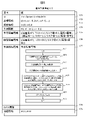
- FIG. 3 is a diagram showing an example of the risk model template information 115.
- FIG. 3 is a diagram showing an example of the risk model template information 115.
- the risk model template information 115 is information used as a template when creating a risk model. Risk model template information 115 is created, for example, by a user.
- the risk model template information 115 has risk model ID 1151, performance information 1152, current information 1153, prediction function 1154, preventive action information 1155, recovery action information 1156, and prediction processing information 1157 as items.
- Information including the preventive action information 1155 and the recovery action information 1156 may be referred to as countermeasure information.
- the individual prediction information 117 is obtained by setting the information of individual devices in the risk model template information 115 .
- the risk model ID 1151 is information for identifying risk model template information. For example, "Model A" is entered as the value of the risk model ID 1151.
- the performance information 1152 is a storage area for storing the history of the risk value specific to the device when specific device information is set in the risk model template and used as individual prediction information.
- performance information may be empty.
- the current information 1153 is a storage area that holds the current elapsed time t and risk value v when specific equipment information is set in the risk model template and used as individual prediction information.
- initial values such as 0 may be input for the elapsed time t and the risk value v.
- the prediction function 1154 is information indicating a function for predicting the risk value v at the future elapsed time t.
- the preventive measure information 1155 is information indicating the relationship between risk types, preventive measures to prevent occurrence of the risks of the risk types in advance, and costs required for the preventive measures.
- preventive measures may include maintenance of components (eg, transformers) or maintenance replacement of components. This can assist in properly assessing risks and planning appropriate maintenance inspections and replacements.
- Preventive measures may also include how components operate to mitigate risk. This mode of operation can be, for example, a reduced load operation in which the maximum allowable load of a component is reduced according to the elapsed time from the start of use, or a change in the power transmission route to allow inspection or repair of the component, for example. It is an operation that puts some equipment in a temporary stop state. As a result, it is possible to support appropriately evaluating risks and planning appropriate load reduction operations.
- the recovery measure information 1156 is information indicating the relationship between the risk type, the recovery measure for restoring the managed object to its original state when the risk of the risk type occurs, and the cost required for the recovery measure. Note that remedial actions may include repair of components (eg, transformers) and replacement of components. This makes it possible to assist in evaluating the cost of recovering from the failure and planning appropriate repairs and replacements when the risk prediction is wrong and actually leads to failure.
- components eg, transformers
- the prediction processing information 1157 is information indicating the method of processing risk prediction by the risk model. For example, the risk is predicted by the following process.
- the prediction calculation execution unit 111 starts the next process (S571).
- the prediction calculation execution unit 111 receives the preventive action name P and the recovery action name R from other processes (eg, the process of S1114 in FIG. 11). Then, the prediction calculation execution unit 111 initializes the variable C to 0 (S572).
- the prediction calculation execution unit 111 uses the performance information 1172 (see FIG. 5) to correct the elapsed time t and the risk value v of the current information 1173 (see FIG. 5) (S573).
- the prediction calculation execution unit 111 corrects the elapsed time t and the risk value v of the current information 1173 using the prediction function 1174 (see FIG. 5) (S574).
- the prediction calculation execution unit 111 detects a set of action names that match the preventive device name P input in S572 from the preventive action information 1175 (see FIG. 5).
- the risk value v of the information 1173 is set, and the cost of that set is added to the variable C (S575).
- the prediction calculation execution unit 111 detects a set of action names that match the recovery action name R input in S572 from the recovery action information 1176 (see FIG. 5).
- the risk value v of the information 1173 is set, and the cost of that set is added to the variable C (S576).
- the prediction calculation execution unit 111 outputs the variable C as the cost (S577), and terminates this process (S578).
- FIG. 4 is a diagram showing an example of the device information 116.
- FIG. 4 is a diagram showing an example of the device information 116.
- the device information 116 has device ID 1161, risk model ID 1162, initial information 1163, performance information 1164, and threshold information 1165 as items.
- the device ID 1161 is information for identifying a device that is an example of a component.
- the risk model ID 1162 is information for identifying risk model template information. Risk model ID 1162 corresponds to risk model ID 1151 in FIG.
- the initial information 1163 is information indicating the initial value of the current information 1153 of the risk model template information indicated by the risk model ID 1162.
- the performance information 1164 is information indicating a performance value corresponding to the performance information 1152 of the risk model template information indicated by the risk model ID 1162.
- the threshold information 1165 is information indicating a threshold for determining whether preventive measures should be taken and a threshold for determining whether recovery measures should be taken.
- one device can have multiple risk models (ModelA, ModelB).
- the device information 116 may be used when generating individual prediction information 117, which will be described later.
- FIG. 5 is a diagram showing an example of the individual prediction information 117.
- FIG. 5 is a diagram showing an example of the individual prediction information 117.
- the individual prediction information 117 has ID 1171, performance information 1172, current information 1173, prediction function 1174, preventive action information 1175, recovery action information 1176, prediction processing information 1177, cost information 1178, and threshold information 1179 as items.
- the ID 1171 is information for identifying the individual prediction information 117.
- the ID 1171 may include the device ID 1161 and the risk model ID 1162 in the device information 116 .
- the performance information 1172 the performance information 1164 of the device information 116 specified by the device ID 1161 indicated by the ID 1171 and the risk model ID 1162 are set.
- the current information 1173 is set with current information specified based on the risk model indicated by the risk model ID 1162 indicated by the ID 1171 .
- the prediction function 1174 is set with the prediction function 1154 of the risk model template information 115 identified by the risk model ID 1162 indicated by the ID 1171 .
- the preventive measure information 1175 the preventive measure information 1155 of the risk model template information 115 identified by the risk model ID 1162 indicated by the ID 1171 is set.
- the recovery measure information 1176 the recovery measure information 1156 of the risk model template information 115 identified by the risk model ID 1162 indicated by the ID 1171 is set.
- the prediction processing information 1177 is set with the prediction processing information 1157 of the risk model template information 115 identified by the risk model ID 1162 indicated by the ID 1171 .
- the cost information 1178 the cost for taking preventive measures or referral measures indicated by the risk model ID 1162 for the device ID 1161 indicated by the ID 1171 is set.
- the threshold information 1179 is set with the threshold information 1165 of the device information 116 identified by the device ID 1161 indicated by the ID 1171 and the risk model ID 1162 .
- FIG. 6 is a flowchart showing an example of processing of the prediction calculation initialization unit 110.
- the prediction calculation initialization unit 110 starts the following processing (S1101).
- the prediction calculation initialization unit 110 initializes the individual prediction information 117 to be empty (S1102).
- the prediction calculation initialization unit 110 determines whether or not all rows of the device information 116 have been processed (S1103).
- the prediction calculation initialization unit 110 ends this processing (S1109).
- the prediction calculation initialization unit 110 extracts one unprocessed line from the device information 116 (S1104).
- one line taken out here is expressed as a line L.
- the predictive calculation initialization unit 110 collates the risk model ID 1162 of row L with the risk model ID 1151 of the risk model template information 115, and selects the risk model template information 115 with the matching risk model ID (S1105).
- the individual prediction information 117 generated based on the risk model template information 115 selected here will be referred to as information T below.
- the prediction calculation initialization unit 110 sets the initial information 1163 of the row L to the current information 1173 of the information T, sets the performance information 1164 of the row L to the performance information 1172 of the information T, and sets the threshold information 1179 of the information T to the threshold information 1179 of the information T.
- L threshold information 1165 is set (S1106).
- the prediction calculation initialization unit 110 sets a value including the device ID 1161 and the risk model ID 1162 of the row L to the ID 1172 of the information T (S1107).
- the prediction calculation initialization unit 110 generates the information T set in S1106 and S1107 as the individual prediction information 117 (S1108). Then, the prediction calculation initialization unit 110 returns the processing to S1103. As a result, initial individual prediction information 117 is generated as shown in FIG. 5, which will be described later.
- FIG. 7 is a diagram showing an example of the risk structure information 125.
- the risk structure information 125 has ID 1251, subordinate list 1252, current information 1253, aggregation function 1254, preventive action execution information 1255, recovery action execution information 1256, cost information 1257, and threshold information 1258 as items.
- the ID 1251 indicates a value for identifying the risk structure information 125.
- the ID 1251 includes, for example, a managed ID and a risk model ID.
- the subordinate list 1252 shows a list of IDs of the individual prediction information 117 managed by the risk structure information 125 as subordinates.
- the current information 1253 indicates the current elapsed time and risk value of the management target indicated by the ID 1251.
- the aggregation function 1254 indicates a function used to aggregate the risk values of the individual prediction information 117 included in the subordinate list 1252.
- the preventive measure execution information 1255 indicates information about preventive measures that are recommended to be executed for the managed object indicated by the ID 1251.
- the recovery action execution information 1256 indicates information on recovery actions that are recommended to be executed for the management target indicated by the ID 1251.
- the cost information 1257 indicates the amount of cost incurred when executing at least one of the preventive device and the recovery action for the managed object indicated by the ID 1251.
- the threshold information 1258 indicates a threshold for determining whether preventive measures should be taken and a threshold for determining whether recovery measures should be taken.
- the risk structure information 125 is used when it is desired to evaluate the overall risk of Substation 1 (substation 1) including Transformer 1 (transformer 1) and Transformer 2 (transformer 2) for the risk predicted by Model A.
- two IDs 1171 included in the individual prediction information 117 are "Transformer1+ModelA” and “Transformer1+ModelA”, and one risk value is obtained.
- Max (child[1:2]) shown in the aggregation function 1254 means to select the one with the greater risk from the first and second (that is, all) of the subordinate list 1252. In other words, the risk of the substation is considered to be the risk of the transformer with the higher risk.
- All instances of individual forecast information 117 may be subordinate to at least one piece of risk structure information 125. However, the risk structure information 125 may have only one individual prediction information 117 in the subordinate list 1252 .
- the individual forecast information 117 is included in the list 1252 subordinate to the risk structure information 125.
- another risk structure information 125 may be added to form a multistage layer.
- FIG. 8 is a diagram showing an example of the schedule information 126.
- FIG. 8 is a diagram showing an example of the schedule information 126.
- the schedule information 126 has elapsed period W1261, risk structure information ID1262, preventive action parameter P1263, recovery action parameter R1264, cost 1265, and risk value 1266 as items.
- the elapsed period W1261 indicates the elapsed period from when the managed object (for example, substation) started to be used.
- the unit of the elapsed period W shown in FIG. 8 is "week".
- the unit of the elapsed period W1261 is not limited to “weeks”, and may be hours, days, or the like.
- the risk structure information ID 1262 indicates the ID 1251 of the risk structure information 125.
- the preventive measure parameter P1263 is a parameter that indicates whether to take preventive measures.
- "1" indicates taking preventive measures
- "0" indicates not taking preventive measures.
- this definition of "1” and "0” is an example, and the value of the parameter indicating whether to take preventive measures may be defined in any way.
- the recovery measure parameter R1264 is a parameter that indicates whether or not to take recovery measures.
- "1" indicates that recovery measures are taken, and "0" indicates that recovery measures are not taken.
- this definition of "1” and "0” is just an example, and the value of the parameter indicating whether to take recovery measures may be defined in any way.
- Cost 1265" indicates the size of the cost incurred when taking preventive or recovery measures.
- the risk value 1266 indicates the magnitude of the risk that remains to be managed when preventive measures or recovery measures are taken.
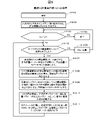
- FIG. 9 is a flowchart showing an example of processing of the optimization calculation execution unit 121.
- the optimization calculation execution unit 121 starts the next process (S12101).
- the optimization calculation execution unit 121 receives the input predicted number of time steps N (N is an integer equal to or greater than 1), and initializes the elapsed period W to zero (S12102). Note that the predicted number of time steps N may be input by the user or may be input from another process.
- the optimization calculation execution unit 121 determines whether or not the elapsed period W is smaller than the predicted number of time steps N (that is, W ⁇ N) (S12103).
- the optimization calculation execution unit 121 determines whether or not processing has been completed for all risk structure information 125 (S12105).
- the optimization calculation execution unit 121 adds 1 to the elapsed period W (S12106) and returns the processing to S12103.
- the optimization calculation execution unit 121 extracts one unprocessed risk structure information 125. In the description of FIG. 9, this extracted risk structure information 125 is expressed as risk structure information S. FIG. In addition, the optimization calculation execution unit 121 initializes the preventive measure parameter P to 0 and the recovery measure parameter R to 0 (S12107).
- the optimization calculation execution unit 121 sets the recovery measure parameter R to 1 (S12108).
- the optimization calculation execution unit 121 sets the prevention action parameter P to 1. (S12109).
- the optimization calculation execution unit 121 activates the integrated calculation execution unit 120 using the risk structure information S, the preventive action parameter P, and the recovery action parameter R as input parameters (S12110).
- the details of the processing of the integrated calculation executing unit 120 will be described later (see FIG. 10), but through this processing, the values of the current information and the cost information in the risk structure information S are obtained.
- the optimization calculation execution unit 121 calculates the elapsed period W, the ID 1251 of the risk structure information S, the preventive action parameter P, the recovery action parameter R, the cost information 1257 of the risk structure information S, and the risk value v of the current information 1253 of the risk structure information S. is stored in each item of the schedule information 126 (S12111). As a result, one line of the schedule information 126 shown in FIG. 8 is obtained. Integrated calculation execution unit 120 then returns the process to step S12105.
- the schedule information 126 shown in FIG. 8 is generated.
- FIG. 10 is a flow chart showing an example of processing of the integrated calculation execution unit 120.
- FIG. The integrated calculation executing unit 120 is activated at S12110 in FIG.
- the integrated calculation execution unit 120 starts the next process (S12001).
- the integrated calculation execution unit 120 receives the risk structure information 125 (hereinafter referred to as risk structure information E), the preventive measure parameter P, and the recovery measure parameter R as input parameters from S12110 in FIG. 9 (S12002 ).
- the integrated calculation execution unit 120 initializes the current value list V with an empty set, and initializes the cost information 1257 of the risk structure information E with 0 (S12003).
- the integrated calculation execution unit 120 determines whether or not all the individual prediction information 117 included in the subordinate list 1252 of the risk structure information E have been processed (S12004).
- step S12011 When the processing for all the individual prediction information 117 included in the subordinate list 1252 has been completed (S12004: YES), the integrated calculation execution unit 120 advances the processing to step S12011, which will be described later.
- the integrated calculation execution unit 120 extracts one unprocessed individual prediction information 117 from the subordinate list 1252 (S12005).
- the extracted individual prediction information 117 will be referred to as individual prediction information F hereinafter.
- the integrated calculation execution unit 120 uses the preventive measure execution information 1255 of the risk structure information E to calculate the preventive measure information in the individual prediction information F P' (1175) is obtained (S12006).
- the integrated calculation execution unit 120 uses the recovery measure execution information 1256 to obtain the recovery measure information R′ (1176) in the individual prediction information F. (S12007).
- the integrated calculation execution unit 120 calls the prediction calculation execution unit 111 using the individual prediction information F, preventive measure information P', and recovery measure information R' as input parameters (S12008). Details of the processing of the prediction calculation execution unit 111 will be described later (see FIG. 11), but through this processing, the values of the current information and the cost information in the individual prediction information F can be obtained.
- the integrated calculation execution unit 120 receives the risk value d and the cost c from the prediction calculation execution unit 111 (S12009).
- the integrated calculation execution unit 120 adds the risk value d to the current value list V and adds the cost c to the cost information of the risk structure information E (S12010). Integrated calculation execution unit 120 then returns the process to step S12004.
- step S12011 the integrated calculation executing unit 120 inputs the current value list V to the aggregation function 1254 of the risk structure information E, and stores the output of the aggregation function 1254 in the current information 1253 of the risk structure information E (S12011 ).
- the integrated calculation executing unit 120 then ends this process (S12012).
- the risk value of the device with the highest risk among the devices indicated by the individual prediction information 117 included in the subordinate list 1252 is registered in the current information 1253 of the risk structure information E.
- the risk value of the transformer with the highest risk is the current It is registered in information 1253 .
- FIG. 11 is a flow chart showing an example of processing of the prediction calculation execution unit 111.
- FIG. The prediction calculation execution unit 111 is called at S12008 in FIG.
- the prediction calculation execution unit 111 starts the next process (S1111).
- the prediction calculation execution unit 111 receives the individual prediction information 117, preventive action information 1175, and recovery action information 1176 as input parameters (S1112). 11, the input individual prediction information 117 will be referred to as individual prediction information A, the input preventive measure information 1175 will be referred to as preventive measure information P, and the input recovery measure information 1176 will be referred to as recovery measure information R. .
- the prediction calculation execution unit 111 initializes the cost information 1178 of the individual prediction information A to 0 (S1113).
- the prediction calculation execution unit 111 uses the action name of the preventive action information P and the action name of the recovery action information R as input parameters to start the process indicated by the prediction processing information (see FIGS. 5 and 3) of the individual prediction information A. (S1114).
- the prediction calculation execution unit 111 receives the cost C as the execution result of the processing indicated in the prediction processing information 1177 of the individual prediction information A (S1115).
- the prediction calculation execution unit 111 writes the cost C received in step S1115 into the cost information 1178 of the individual prediction information A (S1116).
- the prediction calculation execution unit 111 outputs the risk value v of the current information 1173 of the individual prediction information A and the cost of the cost information 1178 (S1117).
- the output risk value v and cost are received as risk value d and cost c in S12008 of FIG. Then, the prediction calculation execution unit 111 terminates this process (S1118).
- FIG. 12 is a diagram showing an example of information output by the output unit 13.
- FIG. Information output by the output unit 13 includes maintenance plan information 136 , operation plan information 137 , and insurance plan information 138 .
- the maintenance plan information 136 has an elapsed period W 1361, an individual forecast information ID 1362, and a measure name 1363 as items.
- the elapsed period W1361 and individual prediction information ID11362 are as described above.
- the measure name 1363 indicates the preventive measure name or recovery measure name.
- the second line of the maintenance plan information 136 indicates that the recovery action with the action name "R1" is recommended in the 10th week (W) as the maintenance plan by the individual prediction information ID "Transformer1+ModelB".
- the operation plan information 137 has an elapsed period W 1371, an individual prediction information ID 1372, and a measure name 1373 as items. These items are as described above.
- the first line of the operation plan information 137 indicates that, as an operation plan, preventive action with the action name "P1" is recommended in the tenth week (W) by the individual prediction information ID "Transformer1+ModelA”.
- the insurance plan information 138 has individual prediction information ID 1381, total risk value 1382, and insurance necessity flag 1383 as items.
- the individual prediction information ID 1381 is as explained above.
- the total risk value 1382 indicates the total risk value of each component (for example, transformer) that constitutes the object of management (for example, substation) indicated by the individual prediction information ID 1381.
- the insurance necessity flag 1383 is a flag indicating whether insurance is necessary for the management target indicated by the individual prediction information ID 1381. For example, “Yes” indicates that insurance is required, and “No” indicates that insurance is not required.
- FIG. 13 is a flow chart showing an example of the processing of the maintenance operation plan output unit 130.
- the maintenance operation plan output unit 130 starts the next process (S13001).
- the maintenance operation plan output unit 130 determines whether or not all rows of the schedule information 126 have been processed (S13002).
- the maintenance operation plan output unit 130 extracts the unprocessed first line from the schedule information 126 (S13004). In the description of FIG. 13, this fetched top row is referred to as row L.
- the maintenance operation plan output unit 130 determines whether the preventive action parameter P1263 of row L is 1 (S13005).
- the maintenance operation plan output unit 130 advances the process to S13009, which will be described later.
- the maintenance operation plan output unit 130 searches for the risk structure information 125 that matches the risk structure information ID 1262 of row L, and uses it as risk structure information E. (S13006).
- the maintenance operation plan output unit 130 identifies the preventive measure information 1175 of the individual prediction information 117 indicated by the subordinate list 1252 of the risk structure information E and the preventive measure execution information 1255 (S13007).
- the maintenance operation plan output unit 130 adds the elapsed period W1261 of the row L and the individual prediction information ID 1171 of the individual prediction information 117 specified in the previous step to the maintenance plan information 136. and the action name indicated by the preventive action information 1175 are added.
- the attribute of the preventive measure information 1175 is "operation”
- the maintenance operation plan output unit 130 adds the elapsed period W1261 of the row L and the individual prediction information ID 1171 of the individual prediction information 117 specified in the previous step to the operation plan information 137. and the action name indicated by the preventive action information 1175 are added (S13008).
- the maintenance operation plan output unit 130 determines whether the recovery action parameter R1264 of row L is 1 (S13009).
- the maintenance operation plan output unit 130 advances the process to step S13011, which will be described later.
- the maintenance operation plan output unit 130 performs the same processing as S13006 to S13008 on the recovery action information 1176, and 137, information on the recovery measure information 1176 is added (S13010).
- the maintenance operation plan output unit 130 selects a row having an individual prediction information ID 1381 that matches the risk structure information ID 1262 of row L from the insurance plan information 138, and adds the risk value 1266 of row L to the total risk value 1382 of that row. is added (S13011). Then, the maintenance operation plan output unit 130 returns the process to S13002.
- maintenance plan information 136 and operation plan information 137 are generated. Additionally, a total risk value 1382 for the individual forecast information ID 1381 of the insurance plan information 138 is generated.
- FIG. 14 is a flowchart showing an example of the processing of the insurance plan output unit 131.
- the insurance plan output unit 131 starts the next process (S13101).
- the insurance plan output unit 131 determines whether or not all rows of the insurance plan information 138 have been processed (S13102).
- the insurance plan output unit 131 extracts the unprocessed first line from the insurance plan information 138. (S13104). In the description of FIG. 14, this fetched top row is referred to as row L.
- the insurance plan output unit 131 sets the insurance necessity flag 1383 of the row L to Yes, and the total risk value 1382 of the row L If it is less than the threshold, the insurance necessity flag 1383 of row L is set to No (S13105). Then, the insurance plan output unit 131 returns the process to S13102.
- the insurance necessity flag 1383 of the insurance plan information 138 is set.
- Reference Signs List 1 optimization system 2 disk 3 network 4 display device 11 risk prediction unit 12 integration unit 13 output unit 15 processor 16 input/output device 17 memory 110 Prediction calculation initialization unit 111 Prediction calculation execution unit 115 Risk model template information 116 Equipment information 117 Individual prediction information 120 Integrated calculation execution unit 121 Optimization calculation execution unit 125 Risk Structural information 126 Schedule information 130 Maintenance operation plan output unit 131 Insurance plan output unit 136 Maintenance plan information 137 Operation plan information 138 Insurance plan information 1151 Risk model ID 1152 Results Information 1153 Current information 1154 Prediction function 1155 Precautionary action information 1155 Prediction processing information 1156 Recovery action information 1157 Prediction processing information 1161 Device ID 1162 Risk model ID 1163 Initial Information, 1164...Result information, 1165...Threshold information, 1171...ID, 1172...Result information, 1173...Current information, 1174...Prediction function, 1175...Precautionary action information, 1176...Recovery action information, 1177...Prediction processing information, 1178 ...
Landscapes
- Business, Economics & Management (AREA)
- Human Resources & Organizations (AREA)
- Engineering & Computer Science (AREA)
- Strategic Management (AREA)
- Economics (AREA)
- Entrepreneurship & Innovation (AREA)
- Physics & Mathematics (AREA)
- Quality & Reliability (AREA)
- Operations Research (AREA)
- Tourism & Hospitality (AREA)
- Marketing (AREA)
- General Business, Economics & Management (AREA)
- General Physics & Mathematics (AREA)
- Theoretical Computer Science (AREA)
- Development Economics (AREA)
- Educational Administration (AREA)
- Game Theory and Decision Science (AREA)
- Management, Administration, Business Operations System, And Electronic Commerce (AREA)
Abstract
Description
図1を参照して、最適化システムの構成について説明する。図1は、本実施の形態に係る最適化システム1の構成例を示すブロック図である。
)。
図2を参照して、最適化システム1の全体処理について説明する。図2は、最適化システム1の全体処理の一例を示すフローチャートである。
次に、リスク予測部11について詳細に説明する。
次に、統合部12について詳細に説明する。
次に、出力部13について詳細に説明する。
Claims (10)
- 複数の構成要素を含む管理対象のリスク管理を支援するリスク管理システムであって、
複数のリスク種別のそれぞれと当該リスク種別に対する対応策との関係を示す対応策情報と、前記複数のリスク種別のそれぞれに対応する、将来の各時点のリスク値を予測するリスクモデルと、を備え、前記構成要素のそれぞれに対するリスク種別に対応するリスクモデルを前記複数のリスクモデルの中から選択し、該選択したリスクモデルに実績情報を与えて前記構成要素のそれぞれの将来のリスク値を予測するリスク予測部と、
前記管理対象と前記構成要素との構造関係に基づいて前記管理対象に対する対応策を定めたリスク構造情報を備え、前記リスク予測部にて予測された前記構成要素のそれぞれのリスク値に基づき、前記対応策を適用すべき実施時期を決定する統合部と、
を有するリスク管理システム。 - 前記対応策情報は、
前記リスク種別と、前記リスク種別のリスクの発生を予め防止する予防措置および該予防措置に要するコストとの関係を示す予防措置情報と、
前記リスク種別と、前記リスク種別のリスクが発生した場合に前記管理対象を元の状態に回復する回復措置および該回復措置に要するコストとの関係を示す回復措置情報と、を含む、
請求項1に記載のリスク管理システム。 - 前記予防措置には、前記構成要素の保守点検または前記構成要素の保守交換が含まれる、
請求項2に記載のリスク管理システム。 - 前記予防措置には、送電経路の調整または前記構成要素の負荷を調整する運用が含まれる、
請求項2に記載のリスク管理システム。 - 前記回復措置には、前記構成要素の修理と、前記構成要素の交換とが含まれる、
請求項2に記載のリスク管理システム。 - 前記リスク種別には、前記管理対象に含まれる機器の状態劣化によるリスクを示す機器劣化リスクと、前記管理対象に対する自然災害の影響によるリスクを示す自然災害リスクと、前記管理対象に対するサイバー攻撃によるリスクを示すサイバー攻撃リスクと、の1つ以上が含まれる、
請求項1に記載のリスク管理システム。 - 前記統合部は、各時点について、前記管理対象に含まれる前記構成要素の全てについてリスク値を閾値と比較し、前記リスク値が前記閾値を超えた構成要素について、リスク値を閾値以下に収めるための対応策を決定し、スケジュール情報として記録する、
請求項1に記載のリスク管理システム。 - 前記統合部によって決定された前記対応策を適用すべき実施時期と、当該実施時期に行うべき前記予防措置又は前記回復措置とを対応付けて出力する出力部、をさらに有する、
請求項2に記載のリスク管理システム。 - 前記リスクモデルを用いて前記管理対象におけるリスク値を計算し、前記リスク値に基づいて判定された保険を適用すべきか否かを示す情報を出力する出力部、をさらに有する、
請求項1に記載のリスク管理システム。 - リスク管理システムによって複数の構成要素を含む管理対象のリスク管理を支援するリスク管理方法であって、
複数のリスク種別のそれぞれと当該リスク種別に対する対応策との関係を示す対応策情報と、前記複数のリスク種別のそれぞれに対応する、将来の各時点のリスク値を予測して対応策を決定するための処理を規定する複数のリスクモデルと、を備え、前記構成要素のそれぞれに対するリスク種別に対応するリスクモデルを前記複数のリスクモデルの中から選択し、該選択したリスクモデルに実績情報を与えて前記構成要素のそれぞれの将来のリスク値を予測し、前記リスクモデルに従って、前記対応策情報に基づき前記リスク種別に対応する対応策を抽出し、
前記管理対象と前記構成要素との構造関係に基づいて前記管理対象に対する対応策と該対応策を適用するための閾値とを定めたリスク構造情報を備え、予測された前記構成要素のそれぞれのリスク値と前記閾値とに基づき、前記対応策を適用すべき実施時期を決定する、
ことをコンピュータが実行するリスク管理方法。
Priority Applications (2)
| Application Number | Priority Date | Filing Date | Title |
|---|---|---|---|
| US18/569,664 US20240289719A1 (en) | 2021-06-17 | 2022-03-24 | Risk management system and method |
| EP22824601.3A EP4357990A4 (en) | 2021-06-17 | 2022-03-24 | RISK MANAGEMENT SYSTEM AND METHOD |
Applications Claiming Priority (2)
| Application Number | Priority Date | Filing Date | Title |
|---|---|---|---|
| JP2021100837A JP7624354B2 (ja) | 2021-06-17 | 2021-06-17 | リスク管理システムおよび方法 |
| JP2021-100837 | 2021-06-17 |
Publications (1)
| Publication Number | Publication Date |
|---|---|
| WO2022264605A1 true WO2022264605A1 (ja) | 2022-12-22 |
Family
ID=84527035
Family Applications (1)
| Application Number | Title | Priority Date | Filing Date |
|---|---|---|---|
| PCT/JP2022/013891 Ceased WO2022264605A1 (ja) | 2021-06-17 | 2022-03-24 | リスク管理システムおよび方法 |
Country Status (4)
| Country | Link |
|---|---|
| US (1) | US20240289719A1 (ja) |
| EP (1) | EP4357990A4 (ja) |
| JP (1) | JP7624354B2 (ja) |
| WO (1) | WO2022264605A1 (ja) |
Families Citing this family (2)
| Publication number | Priority date | Publication date | Assignee | Title |
|---|---|---|---|---|
| CN119379294A (zh) * | 2024-09-30 | 2025-01-28 | 百富计算机技术(深圳)有限公司 | 风险分析间隔确定方法、电子设备及计算机可读存储介质 |
| CN121169134A (zh) * | 2025-09-15 | 2025-12-19 | 北京易链科技有限公司 | 一种基于合同风险智能决策的方法、装置及电子设备 |
Citations (2)
| Publication number | Priority date | Publication date | Assignee | Title |
|---|---|---|---|---|
| JP2019212143A (ja) * | 2018-06-07 | 2019-12-12 | 株式会社日立製作所 | 損害予測方法、損害予測システム及びプログラム |
| WO2020195775A1 (ja) * | 2019-03-25 | 2020-10-01 | 日本電信電話株式会社 | 提示装置、提示方法および提示プログラム |
Family Cites Families (7)
| Publication number | Priority date | Publication date | Assignee | Title |
|---|---|---|---|---|
| JP5125069B2 (ja) * | 2006-11-16 | 2013-01-23 | 日本電気株式会社 | セキュリティリスク管理システム、セキュリティリスク管理方法およびセキュリティリスク管理用プログラム |
| US8972067B2 (en) * | 2011-05-11 | 2015-03-03 | General Electric Company | System and method for optimizing plant operations |
| US10026049B2 (en) * | 2013-05-09 | 2018-07-17 | Rockwell Automation Technologies, Inc. | Risk assessment for industrial systems using big data |
| JP6298680B2 (ja) * | 2014-03-28 | 2018-03-20 | 株式会社日立製作所 | セキュリティ対処支援システム |
| US10354332B2 (en) * | 2015-09-30 | 2019-07-16 | Sensormatic Electronics, LLC | Sensor based system and method for drift analysis to predict equipment failure |
| US10698760B2 (en) * | 2017-02-28 | 2020-06-30 | Gas Technology Institute | System and method for automated and intelligent quantitative risk assessment of infrastructure systems |
| US20200175439A1 (en) * | 2018-10-31 | 2020-06-04 | X-Act Science, Inc. | Predictive Risk Assessment In Multi-System Modeling |
-
2021
- 2021-06-17 JP JP2021100837A patent/JP7624354B2/ja active Active
-
2022
- 2022-03-24 US US18/569,664 patent/US20240289719A1/en active Pending
- 2022-03-24 WO PCT/JP2022/013891 patent/WO2022264605A1/ja not_active Ceased
- 2022-03-24 EP EP22824601.3A patent/EP4357990A4/en active Pending
Patent Citations (2)
| Publication number | Priority date | Publication date | Assignee | Title |
|---|---|---|---|---|
| JP2019212143A (ja) * | 2018-06-07 | 2019-12-12 | 株式会社日立製作所 | 損害予測方法、損害予測システム及びプログラム |
| WO2020195775A1 (ja) * | 2019-03-25 | 2020-10-01 | 日本電信電話株式会社 | 提示装置、提示方法および提示プログラム |
Non-Patent Citations (1)
| Title |
|---|
| See also references of EP4357990A4 * |
Also Published As
| Publication number | Publication date |
|---|---|
| US20240289719A1 (en) | 2024-08-29 |
| EP4357990A4 (en) | 2025-04-30 |
| JP7624354B2 (ja) | 2025-01-30 |
| JP2023000175A (ja) | 2023-01-04 |
| EP4357990A1 (en) | 2024-04-24 |
Similar Documents
| Publication | Publication Date | Title |
|---|---|---|
| LaGrange | Developing a digital twin: The roadmap for oil and gas optimization | |
| Sharma et al. | A literature review and future perspectives on maintenance optimization | |
| Schmitt et al. | Quantifying supply chain disruption risk using Monte Carlo and discrete-event simulation | |
| Zhang et al. | Construction small-projects rework reduction for capital facilities | |
| US9904540B2 (en) | Method and system to automate the maintenance of data-driven analytic models | |
| CN109933934B (zh) | 一种设备维护管理方法及系统、计算机可读存储介质 | |
| Seif et al. | Component based life cycle costing in replacement decisions | |
| JP6192545B2 (ja) | 保守作業計画作成システム | |
| JP4486657B2 (ja) | 要員配置最適化プログラム、要員配置最適化方法および要員配置最適化装置 | |
| WO2022264605A1 (ja) | リスク管理システムおよび方法 | |
| JP2016126404A (ja) | 最適化システム、最適化方法および最適化プログラム | |
| JP5093990B2 (ja) | バグ管理システム | |
| Lindhard et al. | Impact of activity sequencing on reducing variability | |
| Lopes et al. | Delay-time inspection model with dimensioning maintenance teams: A study of a company leasing construction equipment | |
| JP5468282B2 (ja) | プロジェクト管理支援装置 | |
| JP7466429B2 (ja) | 計算機システム及び計画評価方法 | |
| JP2012203702A (ja) | 業務システム変更支援システム、業務システム変更支援プログラム、および業務システム変更支援方法 | |
| JP5351841B2 (ja) | 交換効果評価装置、交換効果評価方法および交換効果評価プログラム | |
| JP2006244006A (ja) | 設備保全管理装置及び設備保全管理方法ならびにそのプログラム、記録媒体 | |
| Fouladirad et al. | Monitoring and condition-based maintenance with abrupt change in a system’s deterioration rate | |
| WO2016143037A1 (ja) | ロジスティクス計画生成方法およびシステム | |
| Tommelein et al. | No single takt planning method fits all projects | |
| JP5970505B2 (ja) | 復旧曲線作成システム、復旧曲線作成方法、及びプログラム | |
| JP2023035417A (ja) | 保守支援システム | |
| JP2003263217A (ja) | 生産リスク管理方法及びそのシステム並びに製品の製造方法 |
Legal Events
| Date | Code | Title | Description |
|---|---|---|---|
| 121 | Ep: the epo has been informed by wipo that ep was designated in this application |
Ref document number: 22824601 Country of ref document: EP Kind code of ref document: A1 |
|
| WWE | Wipo information: entry into national phase |
Ref document number: 18569664 Country of ref document: US |
|
| WWE | Wipo information: entry into national phase |
Ref document number: 2022824601 Country of ref document: EP |
|
| NENP | Non-entry into the national phase |
Ref country code: DE |
|
| ENP | Entry into the national phase |
Ref document number: 2022824601 Country of ref document: EP Effective date: 20240117 |