WO2022265117A1 - 血小板産生能が増強された多核化巨核球細胞の製造方法、血小板の製造方法、血小板製剤の製造方法、および血液製剤の製造方法 - Google Patents
血小板産生能が増強された多核化巨核球細胞の製造方法、血小板の製造方法、血小板製剤の製造方法、および血液製剤の製造方法 Download PDFInfo
- Publication number
- WO2022265117A1 WO2022265117A1 PCT/JP2022/024432 JP2022024432W WO2022265117A1 WO 2022265117 A1 WO2022265117 A1 WO 2022265117A1 JP 2022024432 W JP2022024432 W JP 2022024432W WO 2022265117 A1 WO2022265117 A1 WO 2022265117A1
- Authority
- WO
- WIPO (PCT)
- Prior art keywords
- multinucleated
- cells
- megakaryocyte
- megakaryocytes
- cell population
- Prior art date
- Legal status (The legal status is an assumption and is not a legal conclusion. Google has not performed a legal analysis and makes no representation as to the accuracy of the status listed.)
- Ceased
Links
Images





Classifications
-
- A—HUMAN NECESSITIES
- A61—MEDICAL OR VETERINARY SCIENCE; HYGIENE
- A61P—SPECIFIC THERAPEUTIC ACTIVITY OF CHEMICAL COMPOUNDS OR MEDICINAL PREPARATIONS
- A61P7/00—Drugs for disorders of the blood or the extracellular fluid
- A61P7/04—Antihaemorrhagics; Procoagulants; Haemostatic agents; Antifibrinolytic agents
-
- C—CHEMISTRY; METALLURGY
- C12—BIOCHEMISTRY; BEER; SPIRITS; WINE; VINEGAR; MICROBIOLOGY; ENZYMOLOGY; MUTATION OR GENETIC ENGINEERING
- C12N—MICROORGANISMS OR ENZYMES; COMPOSITIONS THEREOF; PROPAGATING, PRESERVING, OR MAINTAINING MICROORGANISMS; MUTATION OR GENETIC ENGINEERING; CULTURE MEDIA
- C12N5/00—Undifferentiated human, animal or plant cells, e.g. cell lines; Tissues; Cultivation or maintenance thereof; Culture media therefor
- C12N5/06—Animal cells or tissues; Human cells or tissues
- C12N5/0602—Vertebrate cells
- C12N5/0634—Cells from the blood or the immune system
- C12N5/0644—Platelets; Megakaryocytes
-
- A—HUMAN NECESSITIES
- A61—MEDICAL OR VETERINARY SCIENCE; HYGIENE
- A61K—PREPARATIONS FOR MEDICAL, DENTAL OR TOILETRY PURPOSES
- A61K35/00—Medicinal preparations containing materials or reaction products thereof with undetermined constitution
- A61K35/12—Materials from mammals; Compositions comprising non-specified tissues or cells; Compositions comprising non-embryonic stem cells; Genetically modified cells
- A61K35/14—Blood; Artificial blood
- A61K35/19—Platelets; Megacaryocytes
-
- C—CHEMISTRY; METALLURGY
- C12—BIOCHEMISTRY; BEER; SPIRITS; WINE; VINEGAR; MICROBIOLOGY; ENZYMOLOGY; MUTATION OR GENETIC ENGINEERING
- C12N—MICROORGANISMS OR ENZYMES; COMPOSITIONS THEREOF; PROPAGATING, PRESERVING, OR MAINTAINING MICROORGANISMS; MUTATION OR GENETIC ENGINEERING; CULTURE MEDIA
- C12N2500/00—Specific components of cell culture medium
- C12N2500/30—Organic components
- C12N2500/36—Lipids
-
- C—CHEMISTRY; METALLURGY
- C12—BIOCHEMISTRY; BEER; SPIRITS; WINE; VINEGAR; MICROBIOLOGY; ENZYMOLOGY; MUTATION OR GENETIC ENGINEERING
- C12N—MICROORGANISMS OR ENZYMES; COMPOSITIONS THEREOF; PROPAGATING, PRESERVING, OR MAINTAINING MICROORGANISMS; MUTATION OR GENETIC ENGINEERING; CULTURE MEDIA
- C12N2501/00—Active agents used in cell culture processes, e.g. differentation
- C12N2501/10—Growth factors
- C12N2501/145—Thrombopoietin [TPO]
-
- C—CHEMISTRY; METALLURGY
- C12—BIOCHEMISTRY; BEER; SPIRITS; WINE; VINEGAR; MICROBIOLOGY; ENZYMOLOGY; MUTATION OR GENETIC ENGINEERING
- C12N—MICROORGANISMS OR ENZYMES; COMPOSITIONS THEREOF; PROPAGATING, PRESERVING, OR MAINTAINING MICROORGANISMS; MUTATION OR GENETIC ENGINEERING; CULTURE MEDIA
- C12N2501/00—Active agents used in cell culture processes, e.g. differentation
- C12N2501/10—Growth factors
- C12N2501/16—Activin; Inhibin; Mullerian inhibiting substance
-
- C—CHEMISTRY; METALLURGY
- C12—BIOCHEMISTRY; BEER; SPIRITS; WINE; VINEGAR; MICROBIOLOGY; ENZYMOLOGY; MUTATION OR GENETIC ENGINEERING
- C12N—MICROORGANISMS OR ENZYMES; COMPOSITIONS THEREOF; PROPAGATING, PRESERVING, OR MAINTAINING MICROORGANISMS; MUTATION OR GENETIC ENGINEERING; CULTURE MEDIA
- C12N2501/00—Active agents used in cell culture processes, e.g. differentation
- C12N2501/10—Growth factors
- C12N2501/165—Vascular endothelial growth factor [VEGF]
-
- C—CHEMISTRY; METALLURGY
- C12—BIOCHEMISTRY; BEER; SPIRITS; WINE; VINEGAR; MICROBIOLOGY; ENZYMOLOGY; MUTATION OR GENETIC ENGINEERING
- C12N—MICROORGANISMS OR ENZYMES; COMPOSITIONS THEREOF; PROPAGATING, PRESERVING, OR MAINTAINING MICROORGANISMS; MUTATION OR GENETIC ENGINEERING; CULTURE MEDIA
- C12N2501/00—Active agents used in cell culture processes, e.g. differentation
- C12N2501/70—Enzymes
- C12N2501/72—Transferases [EC 2.]
- C12N2501/727—Kinases (EC 2.7.)
-
- C—CHEMISTRY; METALLURGY
- C12—BIOCHEMISTRY; BEER; SPIRITS; WINE; VINEGAR; MICROBIOLOGY; ENZYMOLOGY; MUTATION OR GENETIC ENGINEERING
- C12N—MICROORGANISMS OR ENZYMES; COMPOSITIONS THEREOF; PROPAGATING, PRESERVING, OR MAINTAINING MICROORGANISMS; MUTATION OR GENETIC ENGINEERING; CULTURE MEDIA
- C12N2501/00—Active agents used in cell culture processes, e.g. differentation
- C12N2501/998—Proteins not provided for elsewhere
-
- C—CHEMISTRY; METALLURGY
- C12—BIOCHEMISTRY; BEER; SPIRITS; WINE; VINEGAR; MICROBIOLOGY; ENZYMOLOGY; MUTATION OR GENETIC ENGINEERING
- C12N—MICROORGANISMS OR ENZYMES; COMPOSITIONS THEREOF; PROPAGATING, PRESERVING, OR MAINTAINING MICROORGANISMS; MUTATION OR GENETIC ENGINEERING; CULTURE MEDIA
- C12N2501/00—Active agents used in cell culture processes, e.g. differentation
- C12N2501/999—Small molecules not provided for elsewhere
-
- C—CHEMISTRY; METALLURGY
- C12—BIOCHEMISTRY; BEER; SPIRITS; WINE; VINEGAR; MICROBIOLOGY; ENZYMOLOGY; MUTATION OR GENETIC ENGINEERING
- C12N—MICROORGANISMS OR ENZYMES; COMPOSITIONS THEREOF; PROPAGATING, PRESERVING, OR MAINTAINING MICROORGANISMS; MUTATION OR GENETIC ENGINEERING; CULTURE MEDIA
- C12N2506/00—Differentiation of animal cells from one lineage to another; Differentiation of pluripotent cells
- C12N2506/45—Differentiation of animal cells from one lineage to another; Differentiation of pluripotent cells from artificially induced pluripotent stem cells
-
- C—CHEMISTRY; METALLURGY
- C12—BIOCHEMISTRY; BEER; SPIRITS; WINE; VINEGAR; MICROBIOLOGY; ENZYMOLOGY; MUTATION OR GENETIC ENGINEERING
- C12N—MICROORGANISMS OR ENZYMES; COMPOSITIONS THEREOF; PROPAGATING, PRESERVING, OR MAINTAINING MICROORGANISMS; MUTATION OR GENETIC ENGINEERING; CULTURE MEDIA
- C12N2510/00—Genetically modified cells
- C12N2510/04—Immortalised cells
-
- C—CHEMISTRY; METALLURGY
- C12—BIOCHEMISTRY; BEER; SPIRITS; WINE; VINEGAR; MICROBIOLOGY; ENZYMOLOGY; MUTATION OR GENETIC ENGINEERING
- C12N—MICROORGANISMS OR ENZYMES; COMPOSITIONS THEREOF; PROPAGATING, PRESERVING, OR MAINTAINING MICROORGANISMS; MUTATION OR GENETIC ENGINEERING; CULTURE MEDIA
- C12N2533/00—Supports or coatings for cell culture, characterised by material
- C12N2533/50—Proteins
- C12N2533/52—Fibronectin; Laminin
Definitions
- the present invention relates to a method for producing multinucleated megakaryocyte cells with enhanced platelet-producing ability, a method for producing platelets, a method for producing platelet products, and a method for producing blood products.
- Platelet preparations are administered to patients with bleeding due to surgery, injury, etc., and other patients with a decrease in platelets. Platelets are currently manufactured from donated blood. However, due to demographic changes, there are concerns that the amount of donated blood will decrease and platelet products will become scarce.
- Non-Patent Document 1 a method for producing platelets in vitro has been developed.
- Non-Patent Document 1 when the method of Non-Patent Document 1 is used to produce the amount of platelets normally administered to humans at one time, there is a problem that a huge production tank is required.
- Pre-multinucleated megakaryocyte cells produce platelets after multinucleation. Specifically, multinucleated promegakaryocytes enlarge the cytoplasm by multinucleating. Then, platelets are generated in the obtained multinucleated megakaryocyte cells (hereinafter also referred to as "multinucleated megakaryocytes") by rupture of the hypertrophied cytoplasm. Therefore, the present inventors attempted to improve the platelet-producing ability of megakaryocyte cells before multinucleation by promoting multinucleation and accompanying hypertrophy.
- the purpose of the present invention is to provide a method for producing multinucleated megakaryocytes with enhanced platelet-producing ability.
- the production method of the present invention is a method for producing multinucleated megakaryocyte cells with enhanced platelet-producing ability
- the megakaryocyte cells or progenitor cells thereof before multinucleation are multinucleated, including a multinucleation step of inducing multinucleated megakaryocyte cells, at least one activity selected from the group consisting of aromatic hydrocarbon receptor (AhR), Rho-binding kinase (ROCK), dual-specificity tyrosine phosphorylation-regulated kinase (DYRK), and myosin-2, in said polynucleating step Suppress and, in the presence of harmine (Harmine), multinucleated megakaryocyte cells before the multinucleated, to induce multinucleated megakaryocyte cells.
- AhR aromatic hydrocarbon receptor
- ROCK Rho-binding kinase
- DYRK dual-specificity tyrosine phosphorylation-regulated kinase
- the method for producing platelets of the present invention includes a multinucleation step of inducing multinucleated megakaryocyte cells from megakaryocyte cells before multinucleation, A platelet production step of producing platelets from the multinucleated megakaryocyte cells, The multinucleated step is performed by the method for producing multinucleated megakaryocyte cells of the present invention.
- the method for producing a platelet preparation of the present invention includes a preparation step of producing a platelet preparation from platelets, The platelets are obtained by the method for producing platelets of the present invention.
- the method for producing a blood product of the present invention includes a blood product step of producing a blood product by mixing platelets with other components, The platelets are obtained by the method for producing platelets of the present invention.
- the cell population of the present invention is a cell population containing multinucleated megakaryocytes
- the multinucleated megakaryocyte includes a multinucleated megakaryocyte with a nuclear phase of 16N or more,
- the proportion (number of cells) of the 16N or higher multinucleated megakaryocytes is 20% or more.
- the cell population of the present invention is a cell population containing multinucleated megakaryocytes
- the multinucleated megakaryocyte includes a multinucleated megakaryocyte with a nuclear phase of 32N or more,
- the proportion (number of cells) of the 32n or more multinucleated megakaryocytes is 5 to 50%.
- multinucleated megakaryocytes with enhanced platelet production ability can be produced.
- FIG. 1 is a graph showing the degree of polynucleation in Example 1.
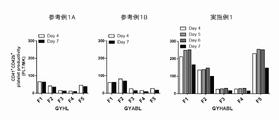
- FIG. 2 is a graph showing platelet production per megakaryocyte in Example 1.
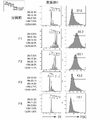
- FIG. 3A is a graph showing the degree of multinucleation and cell size in Reference Example 1A.
- FIG. 3B is a graph showing the degree of multinucleation and cell size in Reference Example 1B.
- 3C is a graph showing the degree of multinucleation and cell size in Example 1.
- FIG. 4 is a photograph showing a phase-contrast image of cells in the F1 fraction in Example 1.
- FIG. 5 is a graph showing platelet production per megakaryocyte in Example 1.
- FIG. 6 is a graph showing platelet production per megakaryocyte in Example 2.
- FIG. 7 is a graph showing the nuclear phase of multinucleated megakaryocytes in Example 3.
- the method for producing multinucleated megakaryocytes of the present invention is, as described above, a method for producing multinucleated megakaryocyte cells with enhanced platelet-producing ability, in the presence of a growth factor for megakaryocyte cells before multinucleation, Multinucleated megakaryocyte cells or progenitor cells thereof before multinucleated, comprising a multinucleated step of inducing multinucleated megakaryocyte cells, in the multinucleated step, aromatic hydrocarbon receptor (AhR), Rho-binding kinase ( ROCK), dual specificity tyrosine phosphorylation-regulated kinase (DYRK), and suppressing at least one activity selected from the group consisting of myosin 2, and in the presence of harmine, megakaryocytes before multinucleation It induces multinucleated cells and induces multinucleated megakaryocyte cells.
- AhR aromatic hydrocarbon receptor
- ROCK Rho-binding kin
- At least one activity selected from the group consisting of AhR, ROCK, DYRK, and myosin 2 is suppressed, and in the presence of harmine, the megakaryocyte cells before multinucleation are multinucleated.
- the method for producing multinucleated megakaryocyte cells with enhanced platelet-producing ability of the present invention can also be said to be, for example, a method for producing multinucleated megakaryocyte cells with advanced differentiation or enhanced maturity.
- the method for producing multinucleated megakaryocyte cells of the present invention since it is possible to promote multinucleation of megakaryocytes, it can also be said to be a method for promoting multinucleation of megakaryocyte cells or a method for enhancing the nuclear phase of megakaryocyte cells.
- the "enhancement” means that the desired parameter is significantly increased compared to the control group.
- said enhancement can also be referred to as, for example, an increase, an improvement, or an enhancement.
- the method for producing multinucleated megakaryocytes of the present invention can enhance the ability to produce platelets, and as a result, for example, since it is possible to enhance the production of platelets, for example, a method for enhancing platelet production or platelet production , a method for improving platelet production or the amount of platelets produced, a method for improving platelet production or the amount of platelets produced, and the like.
- the method for producing multinucleated megakaryocytes of the present invention is, for example, a method performed in vitro .
- megakaryocyte is the largest cell present in the bone marrow in vivo, cells that can release platelets, cells that release platelets and cells with equivalent functions means.
- the cell having the equivalent function means a cell having platelet-producing ability.
- megakaryocytes may be megakaryocytes before polynucleation (polyploidization), that is, immature megakaryocytes or megakaryocytes in the growth phase, or megakaryocytes after multinucleation (polynucleated megakaryocytes) It's okay.
- the megakaryocyte may be, for example, any of promegakaryoblast, megakaryoblast, promegakaryocyte, and mature megakaryocyte.
- the number of chromosome sets (nuclear phase: N) possessed by the megakaryocyte after multinucleation may exceed 2 sets, and specific examples are 4 to 64 sets (4N to 64N), 4 to 32 sets (4N to 32N). , 8-64 sets (8-64N), 16-32 sets (16-32N), or 16-64 sets (16-64N).
- the origin of the megakaryocytes is not particularly limited, but examples include humans and non-human animals.
- the non-human animals include primates such as monkeys, gorillas, chimpanzees and marmosets, mice, rats, dogs, cats, rabbits, sheep, horses and guinea pigs.
- the megakaryocytes can be identified by cell surface markers.
- the cell surface markers include CD41a, CD42a and CD42b. That is, the megakaryocyte is a cell positive for CD41a, CD42a and CD42b.
- the cell surface marker is, for example, at least one selected from the group consisting of CD9, CD61, CD62p, CD42c, CD42d, CD49f, CD51, CD110, CD123, CD131, and CD203c There may be.
- the pre-multinucleated megakaryocyte and the multinucleated megakaryocyte can be specified, for example, by the number of sets of chromosomes.
- the number of sets of chromosomes (N) is less than 8N, and the megakaryocyte cells of the subject can be evaluated as megakaryocytes before multinucleation.
- the number of sets of chromosomes (N) is 8N or more, preferably, the target megakaryocyte cells with 16N or more can be evaluated as multinucleated megakaryocytes.
- the set number of chromosomes (nuclear phase) can be evaluated according to Example 1 (3) described later.
- the target megakaryocyte cells are plural, i.e., when the target megakaryocyte cell population (cell population), in the target megakaryocyte cell population, the set number of chromosomes (N) is 8N or more When the percentage of cells is less than 10%, the target megakaryocyte cell population can be evaluated as a megakaryocyte population before multinucleation.
- the percentage of cells with a chromosome set number (N) of 8N or more is 20% or more, 21% or more, 22% or more, 23% or more, 24% or more, 25% or more , 26% or more, 27% or more, 28% or more, 29% or more, 30% or more, 35% or more, 40% or more, 45% or more, or 50% or more, the population of megakaryocyte cells of the subject, It can be evaluated as a population containing multinucleated megakaryocytes.
- the target megakaryocyte cell population is, for example, 1 ⁇ 10 5 to 1 ⁇ 10 6 cells.
- the "platelet production capacity" can be evaluated, for example, as the number of platelets based on the number of megakaryocyte cells used for platelet production.
- the megakaryocyte cells include pre-multinucleated megakaryocytes, multinucleated megakaryocytes, and mature megakaryocytes.
- the "platelet production capacity" can be comparatively examined, for example, by culturing approximately the same number of megakaryocyte cells using megakaryocyte cells at approximately the same stage of differentiation, maturation or culture.
- the "platelet production capacity" is, for example, the ratio of the number of platelets (P) after the platelet production step to the number of multinucleated megakaryocytes (M) at the start of platelet production (P / M ratio).
- P the ratio of the number of platelets
- M multinucleated megakaryocytes
- the improvement of the platelet-producing ability of the multinucleated megakaryocytes does not suppress the activity of AhR, ROCK, DYRK, and myosin 2, and in the absence of harmin, the megakaryocyte cells before multinucleation It means that the P/M ratio of multinucleated multinucleated megakaryocytes is significantly high.
- the number of multinucleated megakaryocytes at the start of platelet production is the number of immortalized megakaryocytes when forced expression of the gene is released.
- the above description of the P/M ratio can be used in place of the number of spheres (M).
- platelet is one of the cell components in blood and means a cell component positive for CD41a and CD42b.
- the platelets for example, do not have cell nuclei and are small in size compared to the megakaryocytes. Therefore, the platelets and the megakaryocytes can be distinguished, for example, by the presence or absence and/or size of cell nuclei.
- the platelets are known to play an important role in thrombus formation and hemostasis, as well as being involved in post-injury tissue regeneration and the pathophysiology of inflammation.
- integrin ⁇ IIB ⁇ 3 glycoprotein IIb/IIIa; complex of CD41a and CD61
- the platelets aggregate with each other, and fibrin is coagulated by various blood coagulation factors released from the platelets, thereby forming a thrombus and promoting hemostasis.
- the origin of the platelets is the same as the origin of the megakaryocytes.
- the physiological activity of platelets can be evaluated by a known method.
- the physiological activity of platelets can be evaluated, for example, by using an antibody against PAC-1 that specifically binds to integrin ⁇ IIB ⁇ 3 on activated platelet membranes, and the amount of activated platelets.
- the platelet physiological activity may be evaluated by, for example, detecting CD62p (P-selectin), which is a platelet activation marker, with an antibody and evaluating the amount of activated platelets.
- CD62p P-selectin
- the platelet physiological activity is measured by, for example, flow cytometry, gating with an antibody against the activation-independent platelet marker CD61 or CD41, and then detecting the binding of an anti-PAC-1 antibody or an anti-CD62p antibody. It may be implemented by These platelet physiological activity assessments may be performed in the presence of adenosine diphosphate (ADP).
- ADP adenosine diphosphate
- the physiological activity of platelets may be evaluated, for example, by looking at whether or not they bind to fibrinogen in the presence of ADP. Binding of the platelets to fibrinogen results in the activation of integrins required early in thrombus formation. Furthermore, the physiological activity of platelets may be performed by a method of visualizing and observing in vivo thrombus forming ability, for example, as shown in FIG. 6 of WO2011/034073.
- high functionality means, for example, that the physiological activity of platelets measured by any of the above methods is significantly higher than that of platelets obtained by conventional methods. , tend to be higher, or have a physiological activity equivalent to that of platelets isolated from living organisms.
- high functionality means, for example, that the physiological activity of platelets measured by any of the methods described above is 50% or more, 60% or more compared to the physiological activity of platelets isolated from a living body. , 70% or more, 80% or more, or 90% or more.
- the platelets for example, when the platelet CD42b expression rate is low, or when the annexin V positive rate is low, it can be evaluated as degraded or abnormal (hereinafter also referred to as "deterioration"). That is, the physiological activity of the platelets can be evaluated as low. Therefore, the lower the ratio of degraded platelets in the produced platelets, the higher the physiological activity of the produced platelets. In addition, degraded platelets, for example, do not have sufficient thrombus forming function (blood coagulation function) and hemostatic function, and are of low clinical utility.
- the "platelet deterioration” refers to, for example, a decrease in CD42b (GPIb ⁇ ) on the platelet surface. That is, degraded platelets include, for example, platelets with decreased expression of CD42b and platelets in which the extracellular region of CD42b has been cleaved by the shedding reaction. Without CD42b on the platelet surface, the platelets are unable to associate with, for example, von Willebrand factor (VWF), resulting in loss of the platelets' blood clotting function. Deterioration of the platelets can be evaluated, for example, using the CD42b negative rate (or CD42b negative particle count) relative to the CD42b positive rate (or CD42b positive particle count) in the platelet fraction as an index.
- VWF von Willebrand factor
- the platelets can be evaluated as degraded.
- the CD42b positive rate means the rate of platelets to which an anti-CD42b antibody can bind among the platelets contained in the platelet fraction.
- the CD42b negative rate means the ratio of platelets to which anti-CD42b antibody does not bind among the platelets contained in the platelet fraction.
- Abnormal platelets in the present invention refer to platelets in which, for example, phosphatidylserine, which is a negatively charged phospholipid, is exposed from the inside to the outside of the lipid bilayer. It is known that in vivo, phosphatidylserine is exposed on the surface of platelets upon platelet activation, and many blood coagulation factors bind to the surface, thereby amplifying the blood coagulation cascade reaction. On the other hand, in the abnormal platelets, for example, a large amount of phosphatidylserine is always exposed on the surface. Serious conditions such as coagulation syndrome may be induced.
- the phosphatidylserine on the platelet surface can be detected using a flow cytometer, for example, using the amount of fluorescence-labeled annexin V bound as an index. Therefore, the amount of abnormal platelets can be evaluated, for example, by the annexin V positive rate in the platelet fraction, ie, the percentage or number of platelets to which annexin V binds. As a specific example, the higher the annexin V positive rate or the higher the number of annexin V particles, the more abnormal platelets can be evaluated.
- the pre-multinucleated megakaryocytes can be induced, for example, from cells that are less differentiated than megakaryocytes (also referred to as "progenitor cells of pre-multinucleated megakaryocytes"). Therefore, the method for producing multinucleated megakaryocytes of the present invention may include, for example, a megakaryocyte induction step of inducing pre-multinucleated megakaryocytes from cells undifferentiated from megakaryocytes prior to the multinucleation step. For the medium, culture conditions, etc. used in the megakaryocyte induction step, for example, the description of the polynucleation step described later can be used.
- the "cells that are undifferentiated from megakaryocytes” mean cells that have the ability to differentiate into megakaryocytes.
- the cells undifferentiated from the megakaryocytes for example, hematopoietic stem cells, hematopoietic progenitor cells, CD34-positive cells, megakaryocyte-erythroid progenitor (MEP), megakaryocyte progenitor cells, etc. can give.
- Cells undifferentiated from megakaryocytes may be isolated from bone marrow, umbilical cord blood, peripheral blood, etc., ES cells (embryonic stem cells, embryonic stem cells), induced pluripotent stem cells , iPS cells), nuclear transplanted ES cells (ntES cells), germinal stem cells, somatic stem cells, embryonic tumor cells, and other pluripotent cells or pluripotent stem cells.
- ES cells embryonic stem cells
- iPS cells induced pluripotent stem cells
- ntES cells nuclear transplanted ES cells
- germinal stem cells somatic stem cells
- embryonic tumor cells embryonic tumor cells
- other pluripotent cells or pluripotent stem cells pluripotent stem cells.
- the megakaryocyte induction method is not particularly limited, and can be performed by a known induction method.
- Specific examples of the method for inducing megakaryocytes include, for example, the methods described in International Publication No. 2011/034073, International Publication No. 2012/157586, and the like.
- in the megakaryocyte induction step for example, cells undifferentiated from the megakaryocyte may be forced to express an oncogene and a polycomb gene.
- the megakaryocyte induction step for example, infinitely proliferating immortalized megakaryocytes corresponding to megakaryocytes before multinucleation can be obtained.
- the immortalized megakaryocytes can be induced to become multinucleated megakaryocytes and platelets can be produced. Therefore, the immortalized megakaryocytes correspond to megakaryocytes before multinucleation.
- an apoptosis suppressor gene may be forcedly expressed in the megakaryocyte progenitor cells. Thereby, the immortalized megakaryocytes can be obtained in the megakaryocyte induction step.
- the platelet production step described later for example, by canceling the forced expression of the immortalized megakaryocytes, the immortalized megakaryocytes mature and the platelets are produced.
- the oncogene, the polycomb gene, and the apoptosis suppressor gene may be forcedly expressed.
- the forced expression of the oncogene, the polycomb gene, and the apoptosis-suppressing gene may be performed simultaneously or separately.
- the megakaryocyte induction step after forced expression of the oncogene and the polycomb gene, the forced expression is canceled, and then the apoptosis suppressor gene may be forcedly expressed, or the oncogene,
- the Polycomb gene and the apoptosis-suppressing gene may be forcibly expressed, or the oncogene and the Polycomb gene may be forcibly expressed, and the apoptosis-suppressing gene may be further expressed.
- the immortalized megakaryocytes can be obtained in the megakaryocyte induction step.
- the platelet production step described later for example, by canceling the forced expression of the immortalized megakaryocytes, the immortalized megakaryocytes mature and the platelets are produced.
- a first expression step of forcibly expressing an oncogene and a polycomb gene in a cell undifferentiated from the megakaryocyte, and the undifferentiated cell preferably comprises a second expression step of forcibly expressing an apoptosis-suppressing gene such as the Bcl-xL gene, and a canceling step of canceling all of the forced expression.
- the release step can also be referred to as a platelet production step, which will be described later.
- Forced expression of each gene and cancellation of forced expression are known methods such as those described in, for example, WO 2011/034073, WO 2012/157586, WO 2014/123242, or Reference 1 below. or a method equivalent thereto.
- forced expression of each gene and cancellation of forced expression can be performed using, for example, a drug-responsive gene expression induction system.
- the gene expression induction system include the Tet-on (registered trademark) system and the Tet-off (registered trademark) system.
- oncogene means a gene capable of inducing canceration of cells in vivo. family genes, RAF family genes, c-kit (CD117), PDGFR (platelet growth factor receptor), Abl (Abelson murine leukemia viral oncogene homolog) and other protein kinase family genes.
- Polycomb gene means a gene known to negatively regulate CDKN2a (cyclin-dependent kinase inhibitory 2A, INK4a/ARF) and function to avoid cell senescence (see below 2-4).
- the polycomb gene includes, for example, BMI1 (polycomb complex protein BMI-1, polycomb group RING finger protein 4 (PCGF4), RING finger protein 51 (RNF51)), Mel18 (polycomb group RING finger protein 2), Ring (Ring Finger Protein) 1a/b, Phc (Polyhomeotic Homolog) 1/2/3, Cbx (Chromobox) 2/4/6/7/8, Ezh2 (Enhancer Of Zeste 2 Polycomb Repressive Complex 2 Subunit), Eed (Embryonic Development), Suz12 (SUZ12 Polycomb Repressive Complex 2 Subunit), HADC (Histone deacetylases), Dnmt (DNA (cytosine-5)-methyltransferase) 1/3a/3b and the like
- apoptosis suppressor gene means a gene having a function capable of suppressing cell apoptosis, for example, BCL2 (B-cell lymphoma 2), Bcl-xL (B-cell lymphoma-extra large), Survivin (Baculoviral IAP Repeat Containing 5), MCL1 (BCL2 Family Apoptosis Regulator) and the like.
- the method for producing multinucleated megakaryocytes of the present invention may include a growth step of growing the megakaryocyte cells before multinucleation in the presence of a growth factor for the megakaryocyte cells before multinucleation.
- the pre-multinucleated megakaryocyte cells are grown without inhibiting the activities of AhR, ROCK, DYRK and myosin 2 and in the absence of harmine.
- the proliferation step the pre-multinucleated megakaryocyte cells can be proliferated while maintaining the pre-multinucleated state.
- pre-multinucleated megakaryocytes are cultured in the presence of a growth factor for megakaryocyte cells before multinucleated to proliferate the pre-multinucleated megakaryocytes.
- the growth factor for the pre-multinucleated megakaryocyte may be present in the culture medium or may be present in the pre-multinucleated megakaryocyte.
- neither a substance that inhibits the activities of AhR, ROCK, DYRK, or myosin 2 nor harmine is added to the culture solution, so that the activities of AhR, ROCK, DYRK, and myosin 2 are not suppressed, and harmine is added. Growth can be performed in its absence.
- culture conditions and the like used in the proliferation step for example, the description of the polynucleation step described later can be used.
- growth factors for megakaryocyte cells before multinucleation include stem cell factor (SCF) and thrombopoietin (TPO).
- SCF stem cell factor
- TPO thrombopoietin
- the concentration of the megakaryocyte cell growth factor before multinucleation is not particularly limited, and can be set as appropriate, for example, according to the type and effective concentration of the growth factor.
- the concentration of the growth factor is, for example, 0.1-1000 ng/ml, or 1-200 ng/ml.
- the culture period of the proliferation step can be, for example, the period until the desired number of multinucleated pre-megakaryocytes is obtained.
- the culture period of the proliferation step is, for example, 1 day or longer, and specific examples include 1 to 20 days, 1 to 15 days, 1 to 10 days, 1 to 5 days, 2 to 5 days, Or 2-4 days.
- the immortalized megakaryocyte When the immortalized megakaryocyte is used as the multinucleated pre-megakaryocyte, the immortalized megakaryocyte expresses the oncogene and the polycomb gene, or the oncogene, the polycomb gene, and the apoptosis suppressor gene. When there is, the immortalized megakaryocyte proliferates while maintaining the state before multinucleation. Therefore, when the immortalized megakaryocytes are used, the first expression step and/or the second expression step can be called a proliferation step.
- the protein encoded by the oncogene, the Polycomb gene, and/or the apoptosis-suppressing gene that is, the protein expressed from the oncogene, the Polycomb gene, and/or the apoptosis-suppressing gene is It can also be called a growth factor for megakaryocyte cells.
- the growth step can use the description of the megakaryocyte induction step for the immortalized megakaryocytes.
- multinucleated megakaryocytes in the multinucleation step, in the presence of a growth factor for megakaryocyte cells before multinucleation, multinucleated megakaryocytes from the megakaryocyte cells before multinucleation Induce. Further, in the multinucleation step, at least one activity selected from the group consisting of AhR, ROCK, DYRK and myosin 2 is suppressed, and in the presence of harmin, the megakaryocyte cells before multinucleation are multinucleated, Induces multinucleated megakaryocyte cells.
- the megakaryocyte cell growth factor before multinucleation AhR activity suppressing substance, ROCK activity suppressing substance, DYRK activity suppressing substance, and myosin 2 activity suppressing substance
- the multinucleated pre-megakaryocytes are cultured to induce the multinucleated megakaryocytes.
- the growth factor for the pre-multinucleated megakaryocyte may be present in the culture medium or may be present in the pre-multinucleated megakaryocyte.
- the AhR activity-suppressing substance, the ROCK activity-suppressing substance, the DYRK activity-suppressing substance, the myosin 2 activity-suppressing substance, and/or harmin, for example, are contained in the multinucleated promegakaryocyte medium. .
- hypertrophy of megakaryocytes since hypertrophy of megakaryocytes is induced, it can also be referred to as a hypertrophy step, for example.
- the megakaryocyte cell growth factor before multinucleation, the AhR activity-suppressing substance, the ROCK activity-suppressing substance, the DYRK activity-suppressing substance, and/or the myosin 2 activity-suppressing substance are proteins or nucleic acid molecules.
- it may be introduced into the pre-multinucleated megakaryocyte by lipofection, electroporation, or the like.
- the activity of any one of AhR, ROCK, DYRK, and myosin 2 may be suppressed, or the activities of two or more may be suppressed.
- the combination of targets for which the activity is to be suppressed can be any combination, and is preferably a combination of AhR and myosin 2, AhR, ROCK, and A combination of myosin-2, a combination of AhR, DYRK and myosin-2, or a combination of AhR, ROCK, DYRK and myosin-2.
- the multinucleation step is preferably performed in the presence of harmine while inhibiting the activities of AhR and myosin 2, or in the presence of harmine while inhibiting the activities of AhR, ROCK, and myosin 2. , inhibits the activity of AhR, DYRK and myosin 2 and is performed in the presence of harmine, or inhibits the activity of AhR, ROCK, DYRK and myosin 2 and is performed in the presence of harmine.
- AhR means an aromatic hydrocarbon receptor (Aryl Hydrocarbon Receptor).
- Aryl Hydrocarbon Receptor Aryl Hydrocarbon Receptor
- suppression of AhR activity means that AhR activity is reduced compared to the absence of the AhR activity-suppressing substance.
- the AhR activity can be measured, for example, using AhR nuclear translocation as an index.
- the AhR activity can be measured using, for example, a commercially available AhR protein activity measurement kit, and specific examples thereof include a nuclear receptor assay kit (manufactured by PURACYP).
- the suppression of activity can also be referred to as, for example, inhibition of activity, reduction of activity, suppression of activation, prevention of activation, and the like.
- the AhR is a transcription factor belonging to the Per/ARNT/SIM (PAS) family.
- AhR for example, is inactive in the unliganded state and translocates into the nucleus when an aromatic hydrocarbon compound is bound as a ligand. Then, after the translocation into the nucleus, the AhR forms, for example, a heterodimer with ARNT (Ahr Nuclear Translocator), binds to a foreign substance response element (Xenobiotic Responsive Element (XRE), also referred to as DRE), and initiates transcription. Activate.
- the AhR inhibitor is not particularly limited, and examples thereof include AhR antagonists and expression-suppressing nucleic acid molecules capable of suppressing AhR expression.
- Said AhR antagonist is not particularly limited, for example 4-(2-(2-(Benzo[b]thiophen-3-yl)-9-isopropyl-9H-purin-6-ylamino)ethyl)phenol (SR1) , alpha-naphthoflavone (CAS 604-59-1), 1,4-dihydrocyanoquinone, 1,5-dihydrocyanoquinone, 1,8-dihydrocyanoquinone, galangin (CAS 548-83-4), resvera torol, 2-methyl-2H-pyrazole-3-carboxylic acid (2-methyl-4-o-tolylazo-phenyl)-amide (CH-223191), N-(2-(3H-Indol-3-yl)ethyl )-9-isopropyl-2-(5-methyl-3-pyr
- the AhR antagonist may be, for example, a compound described as an AhR antagonist in WO2012/015914.
- Examples of the AhR expression-suppressing nucleic acid molecule include expression-suppressing nucleic acid molecules such as siRNA and miRNA that target the AhR-encoding mRNA.
- the expression-suppressing nucleic acid molecule for AhR can be appropriately set, for example, based on the nucleotide sequence of AhR mRNA registered in a database.
- a specific example of human AhR mRNA is a polynucleotide consisting of a nucleotide sequence registered in Genbank under accession number: NM_001621.
- the AhR activity-suppressing substances may be used singly or in combination of two or more.
- the concentration of the AhR inhibitor is not particularly limited, and can be appropriately determined according to the type of compound and its effective concentration.
- Concentrations of the AhR inhibitor include, for example, the following concentrations. SR1: 200 nmol/L or more and less than 1000 nmol/L CH-223191: 0.2 ⁇ mol/l or more and less than 4 ⁇ mol/l
- GNF351 20 nmol/l to less than 300 nmol/l, 20 nmol/l to less than 1000 nmol/l TMF: 2.5 ⁇ mol/l or more and less than 40 ⁇ mol/l
- DMF 2.5 ⁇ mol/l or more and less than 40 ⁇ mol/l
- the ROCK means Rho-associated coiled-coil forming kinase (ROCK).
- suppression of ROCK activity means that the ROCK activity is reduced, for example, compared to the absence of the ROCK activity-suppressing substance.
- the ROCK activity can be measured, for example, using substrate phosphorylation by ROCK as an index.
- the ROCK activity can be measured using, for example, a commercially available ROCK protein activity assay kit, and specific examples thereof include a ROCK activity assay kit (96-Well ROCK Activity Assay Kit, manufactured by Cell Bioloabs).
- the suppression of activity can also be referred to as, for example, inhibition of activity, reduction of activity, suppression of activation, prevention of activation, and the like.
- ROCK inhibitor examples include ROCK antagonists and expression-suppressing nucleic acid molecules capable of suppressing ROCK expression.
- the ROCK inhibitor is, for example, (R)-(+)-trans-N-(4-pyridyl)-4-(1-aminoethyl)-cyclohexanecarboxamide (Y-27632), 4-[(1R)-1- aminoethyl]-N-(1H-pyrrolo[2,3-b]pyridin-4-yl)benzamide (Y-39983), Fasudil (HA1077) hydrochloride, 4-fluoro-5-[[(2S )-hexahydro-2-methyl-1H-1,4-diazepin-1-yl]sulfonyl]-isoquinoline (Ripasudil), 2-(3-(4-((1H-indazol-5-yl)amino)quinazolin- 2-yl)phenoxy)-N-isopropylacetamide
- ROCK expression-suppressing nucleic acid molecule examples include expression-suppressing nucleic acid molecules such as siRNA and miRNA that target the ROCK-encoding mRNA.
- the ROCK expression-suppressing nucleic acid molecule can be appropriately set, for example, based on the base sequence of ROCK mRNA registered in a database.
- a specific example of human ROCK1 mRNA is a polynucleotide consisting of a base sequence registered in Genbank under accession number: NM_005406.
- human ROCK2 mRNA includes, for example, a polynucleotide consisting of a nucleotide sequence registered in Genbank under accession number: NM_004850.
- the ROCK activity-suppressing substances may be used singly or in combination of two or more.
- the concentration of the ROCK inhibitor is not particularly limited, and can be appropriately determined according to the type of compound and its effective concentration.
- the concentration of the ROCK activity-suppressing substance is, for example, 1 ⁇ 10 ⁇ 8 to 1 ⁇ 10 ⁇ 3 mol/l, preferably 1 ⁇ 10 ⁇ 7 ⁇ 1 ⁇ 10 ⁇ 5 mol/l.
- the DYRK means Dual Specificity Tyrosine Phosphorylation Regulated Kinase.
- the target DYRK includes, for example, DYRK1A, DYRK1B, DYRK2, etc., preferably DYRK1A.
- DYRK1A the case of inhibiting DYRK1A activity will be described below.
- Suppression of the DYRK1A activity in the multinucleation step means that the DYRK1A activity is reduced compared to the absence of the DYRK1A activity inhibitor.
- the DYRK1A activity can be measured, for example, by a measurement system using the DYRK1A protein and a substrate, and by using substrate phosphorylation as an index.
- a commercially available DYRK1A protein activity assay kit can be used, and specific examples thereof include DYRK1A Kinase Enzyme System (manufactured by Promega, Cat. No. VA7423, VA7424).
- Reference 5 below can be referred to.
- the suppression of activity can also be referred to as, for example, inhibition of activity, reduction of activity, suppression of activation, prevention of activation, and the like.
- Reference 5 Isao Kii et.al., “Selective inhibition of the kinase DYRK1A by targeting its folding process”, Nat. Commun., 2016, vol. 7, article number 11391
- the substance that suppresses the activity of DYRK1A is not particularly limited, and examples thereof include compounds, proteins, nucleic acid molecules, etc. that suppress the activity or expression of DYRK1A.
- the DYRK1A activity-suppressing compound for example, a known DYRK1A activity-suppressing compound (DYRK1A inhibitor) can be used.
- the DYRK1A activity-suppressing compound (DYRK1A antagonist) is, for example, Harmine (harmine, 7-Methoxy-1-methyl-9H-pyrido[3,4-b]indole, Cas No.
- AZ191 N-[2-Methoxy-4-(4-methyl-1-piperazinyl)phenyl]-4-(1-methyl-1H-pyrrolo[2,3-c]pyridin) -3-yl)-2-pyrimidinamine, Cas No. 1594092-37-1
- Mrik-IN-1 T-S 7004, N-[2-Chloro-5-[[[(3-chlorophenyl)methyl] amino]carbonyl]phenyl]-7,8-dihydro-2-methoxy-7-oxopyrido[2,3-d]pyrimidine-6-carbboxamide, Cas No.
- EHT5372 methyl 9-(( 2,4-dichlorophenyl)amino)thiazolo[5,4-f]quinazoline-2-carbimidate, Cas No. 1425945-60-3
- GNF4877 ((R)-1-(3-(3-Amino-6- (2-fluoro-5-isopropoxyphenyl)pyrazine-2-carbboxamido)pyridin-4-yl)piperidine-3-carboxylic acid, Cas No.
- protein kinase inhibitor 1 (E)-5-((2-Oxo-6'-(piperazin-1-yl )-1,2-dihydro-[3,3'-bipyridin]-5-yl)methylene)thiazolidine-2,4-dione hydrochloride, Cas No. 1365986-44-2), Leucettine L41 ((5Z)-5 -(1,3-benzodioxol-5-ylmethylene)-3,5-dihydro-2-(phenylamino)-4H-imidazol-4-one, Cas No. 1112978-84-3) and the like.
- the DYRK1A activity-suppressing compound may exclude, for example, Harmine.
- the polynucleation step is performed in the presence of harmine. Therefore, in addition to harmine, the DYRK1A activity-suppressing compound is preferably a compound other than harmine, and a specific example thereof is AZ191.
- the DYRK1A activity-suppressing protein include a dominant negative form (DN) protein of DYRK1A.
- DN dominant negative form
- a specific example of the human DYRK1A DN protein is a mutant protein in which lysine (K) at position 188 is substituted with arginine (R).
- Examples of the DYRK1A expression-suppressing nucleic acid molecule include expression-suppressing nucleic acid molecules such as siRNA and miRNA that target the DYRK1A-encoding mRNA.
- the expression-suppressing nucleic acid molecule for DYRK1A can be appropriately set, for example, based on the nucleotide sequence of DYRK1A mRNA registered in a database.
- DYRK1A mRNA is a polynucleotide consisting of a nucleotide sequence registered in Genbank under accession numbers: NM_001396, NM_101395, NM_130436, NM_130437, NM_130438, NM_001347721, NM_001347722 or NM_001347723.
- the DYRK1A activity-suppressing substances may be used singly or in combination of two or more.
- the concentration of the DYRK1A activity-suppressing substance is not particularly limited, and can be appropriately set, for example, according to the type and effective concentration of the DYRK1A activity-suppressing substance.
- the concentration of the DYRK1A activity-suppressing substance is, for example, 1 ⁇ 10 ⁇ 8 to 1 ⁇ 10 ⁇ 3 mol/l, preferably 1 ⁇ 10 ⁇ 6 to 1 ⁇ 10 ⁇ 3 mol/l. ⁇ 10 ⁇ 4 mol/l.
- the concentration of the DYRK1A activity-suppressing substance is, for example, 1 ⁇ 10 ⁇ 9 to 1 ⁇ 10 ⁇ 3 mol/l, preferably 1 ⁇ 10 ⁇ 7 to 1 ⁇ 10 ⁇ 3 mol/l. ⁇ 10 ⁇ 5 mol/l.
- Myosin 2 is a protein that moves on actin with ATPase activity, and means a complex composed of two heavy chains and two light chains attached to each heavy chain (four in total). do.
- suppression of myosin 2 activity means that the ATPase activity of myosin 2 is reduced compared to the absence of the myosin 2 activity inhibitor.
- the activity of myosin 2 can be measured using, for example, phosphoric acid released from myosin 2 as an indicator.
- the myosin 2 activity can be measured using, for example, a commercially available myosin 2 protein activity measurement kit.
- the suppression of activity can also be referred to as, for example, inhibition of activity, reduction of activity, suppression of activation, prevention of activation, and the like.
- myosin 2 inhibitors examples include myosin 2 antagonists, expression-suppressing nucleic acid molecules capable of suppressing the expression of myosin 2, and myosin light chain kinase (MLCK) inhibitors.
- the myosin 2 inhibitors include, for example, 3a-Hydroxy-6-methyl-1-phenyl-2,3-dihydropyrrolo[2,3-b]quinolin-4-one (Blebistatin), CK1122534, Omecamtiv mecarbil (methyl 4- [[2-fluoro-3-[(6-methylpyridin-3-yl)carbamoylamino]phenyl]methyl]piperazine-1-carboxylate), Ammosamides A&B, CTK2018448, Manassantin B ((1R,2R)-1-(1, 3-benzodioxol-5-yl)-2-[4-[(2S,3R,4R,5S)-5-[4-[(1R
- the MLCK inhibitors are, for example, ML7 (Hexahydro-1-[(5-iodo-1-naphthalenyl)sulfonyl]-1H-1,4-diazepine), ML9 (1-(5-chloronaphthalene-1-sulfonyl)- 1H-hexahydro-1,4-diazepine) and the like.
- the myosin 2 expression-suppressing nucleic acid molecule include expression-suppressing nucleic acid molecules such as siRNA and miRNA that target the mRNA encoding myosin 2 or myosin light chain kinase.
- the expression-suppressing nucleic acid molecule for myosin 2 can be appropriately set, for example, based on the nucleotide sequence of the heavy chain or light chain constituting myosin 2 registered in a database, or the mRNA of myosin light chain kinase. ⁇ 2 ⁇ mRNA ⁇ Genbank ⁇ :NM_005963 ⁇ NM_001100112 ⁇ NM_017534 ⁇ NM_002470 ⁇ NM_017533 ⁇ NM_002147 ⁇ NM_002471 ⁇ NM_000257 ⁇ NM_002472 ⁇ NM_002473 ⁇ NM_001256012 ⁇ NM_002474 ⁇ NM_001382347 ⁇ A polynucleotide consisting of the nucleotide sequence registered under NM_003802, NM_001145809, or NM_014981 is mentioned.
- the light chain mRNA that constitutes human myosin 2 is, for example, accession number: NM_079420, NM_000432, NM_000258, NM_002476, NM_001363650, NM_021019, NM_021223, NM_006097, NM_138403, or NM_001324458. is given.
- Human myosin light chain kinase mRNA is, for example, a polynucleotide consisting of a nucleotide sequence registered in Genbank under accession numbers: NM_001321309, NM_053025, NM_053026, NM_053027, NM_053028, NM_053031, NM_053032, NM_033118, NM_053032, or NM_18249. .
- the myosin-2 activity-suppressing substances may be used singly or in combination of two or more.
- the concentration of the myosin-2 inhibitor is not particularly limited, and can be appropriately determined according to the type of compound and its effective concentration.
- the concentration of the myosin 2 activity-suppressing substance is, for example, 1 ⁇ 10 ⁇ 8 to 1 ⁇ 10 ⁇ 3 mol/l, preferably 1 ⁇ 10 ⁇ 6 ⁇ 1 ⁇ 10 ⁇ 4 mol/l.
- the harmine concentration is, for example, 1 ⁇ 10 ⁇ 8 to 1 ⁇ 10 ⁇ 3 mol/l, preferably 1 ⁇ 10 ⁇ 6 to 1 ⁇ 10 ⁇ 4 mol/l. .
- suppression of AhR, ROCK, DYRK and/or myosin 2 activity and coexistence with harmine may be performed at the same time or at different times, but they should be performed at the same time. is preferred. That is, the induction from the multinucleated pre-megakaryocyte to the multinucleated megakaryocyte suppressed the activity of at least one selected from the group consisting of AhR, ROCK, DYRK and myosin 2, and coexisted with harmin. It is preferable to carry out in the state.
- the multinucleation step can be performed, for example, as follows. Specifically, the protein expressed from the oncogene, the Polycomb gene, and/or the apoptosis suppressor gene functions as a growth factor for megakaryocyte cells before multinucleation in the immortalized megakaryocyte, as described above.
- the immortalized megakaryocytes when using the immortalized megakaryocytes, the immortalized megakaryocytes, for example, maintain forced expression of the oncogene, the Polycomb gene, and / or the apoptosis inhibitor gene, AhR, ROCK, DYRK and myosin 2 Induce multinucleated megakaryocytes by suppressing the activity of at least one selected from the group consisting of and culturing in the presence of harmine.
- a medium containing the immortalized megakaryocytes for example, the AhR inhibitor, the ROCK inhibitor, the DYRK inhibitor, and the myosin 2 At least one selected from the group consisting of inhibitors, replaced with a medium containing harmin, or the medium containing the immortalized megakaryocytes the AhR inhibitor, the ROCK inhibitor, the DYRK inhibitor, and the myosin 2 inhibitor and harmine.
- the addition or replacement may be performed, for example, once or twice or more.
- the medium in the multinucleation step is, for example, not particularly limited, and examples thereof include known medium suitable for producing platelets from the megakaryocyte or megakaryocyte and a medium based thereon.
- the medium can be prepared using, for example, a medium used for culturing animal cells as a basal medium.
- the basal medium is, for example, IMDM medium, Medium 199 medium, Eagle's Minimum Essential Medium (EMEM) medium, ⁇ MEM medium, Dulbecco's modified Eagle's Medium (DMEM), Ham's F12 medium, RPMI1640 medium, Fischer's medium, Neurobasal (registered trademark) Medium (manufactured by Thermo Fisher Scientific) or a mixed medium thereof.
- the medium may contain, for example, serum or plasma, or may be a serum-free medium without these, but a serum-free medium is preferred.
- a serum-free medium as the medium for the multinucleation step, the method for producing multinucleated megakaryocytes of the present invention, for example, improves the degree of multinucleation of multinucleated megakaryocytes from the pre-multinucleated megakaryocytes.
- the serum-free medium include StemSpan ACF (manufactured by StemCell Technologies, Cat.No.:9855), Stemline 2 (manufactured by Sigma Aldrich, Cat.No.:S0192), and the like.
- the serum and plasma are preferably derived from the same sources as the megakaryocytes.
- the serum and plasma are each preferably human-derived.
- the medium may contain other components, for example.
- the other components are not particularly limited, and examples include albumin, insulin, transferrin, selenium, fatty acids, trace elements, 2-mercaptoethanol, thiolglycerol, monothioglycerol (MTG), lipids, amino acids (eg, L-glutamine ), ascorbic acid, heparin, non-essential amino acids, vitamins, growth factors, low molecular weight compounds, antibiotics, antioxidants, pyruvic acid, buffers, inorganic salts, cytokines and the like.
- the other component may be, for example, one type or two or more types.
- the cytokine is, for example, a substance that promotes the differentiation of blood cells, and specific examples thereof include vascular endothelial growth factor (VEGF), thrombopoietin (TPO), various TPO-like active substances, Stem Cell Factor (SCF), and ITS. (insulin-transferrin-selenite) supplements, ADAM inhibitors, FLT inhibitors, WNT inhibitors, and the like.
- the medium is preferably IMDM medium containing, for example, serum, insulin, transferrin, serine, thiolglycerol, ascorbic acid, TPO.
- the medium may, for example, further contain SCF and may further contain heparin.
- concentrations of the other components are not particularly limited.
- the concentration of TPO is, for example, about 10 ng/ml to about 200 ng/ml, about 50 ng/ml to about 100 ng/ml.
- the concentration of said SCF is, for example, about 10 ng/ml to about 200 ng/ml, about 50 ng/ml.
- the heparin concentration is, for example, about 10 U/ml to about 100 U/ml, about 25 U/ml.
- Said medium may, for example, further comprise phorbol esters (eg phorbol-12-myristate-13-acetate; PMA).
- the megakaryocyte cell density before multinucleation at the start is not particularly limited.
- the lower limit of the cell density is, for example, 1 ⁇ 10 5 cells/ml, 2 ⁇ 10 5 cells/ml, 3 ⁇ 10 5 cells/ml, 4 ⁇ 10 5 cells/ml.
- the upper limit of the cell density is not particularly limited, and is, for example, 4 ⁇ 10 5 cells/ml, 6 ⁇ 10 5 cells/ml, 8 ⁇ 10 5 cells/ml.
- the cell density range is, for example, 1 ⁇ 10 5 cells/ml to 8 ⁇ 10 5 cells/ml, 1 ⁇ 10 5 cells/ml to 8 ⁇ 10 5 cells/ml, 1 ⁇ 10 5 cells/ml to 5 ⁇ 10 5 cells/ml, 2 ⁇ 10 5 cells/ml to 8 ⁇ 10 5 cells/ml, 3 ⁇ 10 5 cells/ml to 6 ⁇ 10 5 cells/ml, 4 ⁇ 10 5 cells/ml to 6 ⁇ 10 5 cells/ml, and can promote multinucleation or improve platelet production, so it is preferably 1 ⁇ 10 5 cells/ml to 8 ⁇ 10 5 cells/ml, or 1 ⁇ 10 5 cells/ml to 5 ⁇ 10 5 cells/ml.
- the cell density can be calculated by, for example, dividing the cell number of megakaryocytes before multinucleation by the volume of the medium in which the megakaryocytes before multinucleation are suspended.
- Culture conditions in the multinucleation step are not particularly limited, and normal culture conditions for the megakaryocytes can be employed.
- the culture temperature is, for example, about 35 to about 42°C, about 36 to about 40°C, and about 37 to about 39°C.
- CO 2 concentration is, for example, about 5 to about 15%.
- the O 2 concentration is, for example, about 15 to about 25%, about 20%.
- the culture period of the multinucleation step can be set, for example, as a period until the megakaryocytes before multinucleation are multinucleated.
- the culture period of the multinucleated step may be appropriately set according to the ratio of multinucleated megakaryocytes to the megakaryocytes being cultured.
- the culture period of the multinucleation step is, for example, the proportion of 8N or more multinucleated megakaryocytes in megakaryocytes in culture is 15% or more, 16% or more, 17% or more, 18% or more, 19% or more, 20 % or more, 21% or more, 22% or more, 23% or more, 24% or more, 25% or more, 26% or more, 27% or more, 28% or more, 29% or more, 30% or more, 35% or more, 40% or more , 45% or more, 50% or more, 55% or more, or 60% or more.
- the culture period for the multinucleation step is, for example, 0 to 20 days and 1 to 15 days.
- the ratio of multinucleated megakaryocytes to the megakaryocytes can be calculated, for example, by extracting a portion of the megakaryocytes in culture and following Example 1 (3) described below.
- the megakaryocyte culture before the multinucleation may be performed on feeder cells or without feeder cells, for example.
- the megakaryocytes before multinucleation can be cultured without the feeder cells, for example, because they can be cultured in suspension.
- the feeder cell means a cell that is co-cultured with the target cell in order to prepare an environment necessary for culturing the target cell (target cell) to be proliferated or differentiated.
- the feeder cells may be cells that can be distinguished from the target cells, and may be cells of the same or different origin as the target cells.
- the feeder cells may be cells that have been treated, for example, with antibiotics, anticancer agents, ⁇ -ray irradiation, or the like so as not to proliferate.
- the production method of the present invention contains multinucleated megakaryocytes.
- the multinucleated megakaryocytes after the multinucleated step may be composed of, for example, only multinucleated megakaryocytes or may contain other cells. In the latter case, the multinucleated megakaryocytes after the multinucleated step can also be said to be, for example, a cell population containing multinucleated megakaryocytes.
- the multinucleated megakaryocyte may be, for example, an 8N or higher multinucleated megakaryocyte, a 16N or higher multinucleated megakaryocyte, or a 32N or higher multinucleated megakaryocyte.
- the multinucleated megakaryocytes after the multinucleation step include, for example, the 8N or more multinucleated megakaryocytes, the 16N or more multinucleated megakaryocytes, and/or the 32N or more multinucleated megakaryocytes.
- the ratio of the 16N or higher multinucleated megakaryocytes and the 32N or higher multinucleated megakaryocytes can be enhanced.
- the lower limit of the ratio (number of cells) of the multinucleated megakaryocytes with 8N or more is, for example, 15% or more. , 16% or more, 17% or more, 18% or more, 19% or more, 20% or more, 21% or more, 22% or more, 23% or more, 24% or more, 25% or more, 26% or more, 27% or more, 28 % or more, 29% or more, 30% or more, 35% or more, 40% or more, 45% or more, 50% or more, 55% or more, or 60% or more.
- the upper limit of the ratio (number of cells) of the 8N or more multinucleated megakaryocytes is, for example, 90% or less, 85% or less, 80% or less, 75% or less, 70% or less, 65% or less, 60% or less, 59% or less, 58% or less, 57% or less, 56% or less, 55% or less, 54% or less, 53% or less, 52% or less, 51% or less, 50% or less, 49% or less, 48% 47% or less, or 46% or less.
- the proportion of the 8N or more multinucleated megakaryocytes is, for example, 15 to 90%, 20 to 90%, 25 to 90%, 30 to 90%, 35 to 90%, 40 to 90%, 45 to 90%, 50-90%, 55-90%, 60-90%, 15-85%, 15-80%, 15-75%, 15-70%, 15-65%, 16-60%, 17- 59%, 18-58%, 19-57%, 20-56%, 21-55%, 22-54%, 23-54%, 24-53%, 25-51%, 26-50%, 27- 49%, 28-48%, 29-47%, or 30-46%.
- the ratio (number of cells) is, for example, after sufficient suspension of the target cell population, a part of the obtained cell suspension is fractionated, and a set of chromosomes according to Example 1 (3) described below It can be measured by the number (nuclear phase) measurement method (hereinafter the same).
- the ratio of the 16N or more multinucleated megakaryocytes (number of cells)
- the lower limit is, for example, 15% or more. , 16% or more, 17% or more, 18% or more, 19% or more, 20% or more, 21% or more, 22% or more, 23% or more, 24% or more, or 25% or more.
- the upper limit of the ratio of the 16N or higher multinucleated megakaryocytes is, for example, 90% or less, 85% or less, 80% or less, 75% or less, 70% or less, 65% or less, 60% or less, 55% or less, 54% or less, 53% or less, 52% or less, 51% or less, 50% or less, 49% or less, 48% or less, 47% or less, 46% or less, 45% or less, 44% or less, or 43% or less.
- the proportion of the 16N or more multinucleated megakaryocytes is, for example, 15 to 90%, 15 to 85%, 15 to 80%, 15 to 75%, 15 to 70%, 15 to 65%, 15 to 60%, 16-55%, 17-54%, 18-53%, 19-52%, 20-51%, 21-50%, 22-49%, 23-48%, 24-47%, 25- 46%, 25-45%, 25-44%, or 25-43%.
- the ratio of the multinucleated megakaryocytes of 32N or more (number of cells)
- the lower limit is, for example, 5% or more. , 6% or more, 7% or more, 8% or more, 9% or more, 10% or more, 11% or more, 12% or more, 13% or more, 14% or more, or 15% or more.
- the upper limit of the proportion of 32N or more multinucleated megakaryocytes is, for example, 50% or less, 49% or less, 48% or less, 47% or less, 46% or less, 45% or less, 44% or less, 43% or less, 42% or less, 41% or less, 40% or less, 39% or less, 38% or less, 37% or less, 36% or less, 35% or less, 34% or less, 33% or less, 32% 31% or less, or 30% or less.
- the percentage of 32N or more multinucleated megakaryocytes is, for example, 5 to 50%, 5 to 49%, 5 to 48%, 5 to 47%, 5 to 46%, 5 to 45%, 5 to 44%, 5-43%, 5-42%, 5-41%, 5-40%, 6-39%, 7-38%, 8-37%, 9-36%, 10-35%, 11- 34%, 12-33%, 13-32%, 14-31%, 15-31%, or 15-30%.
- the method for producing multinucleated megakaryocytes of the present invention can produce megakaryocytes with enhanced platelet-producing ability.
- the method for producing multinucleated megakaryocytes of the present invention it is possible to obtain a cell population enriched with multinucleated megakaryocytes with enhanced nuclear phases, particularly multinucleated megakaryocytes with nuclear phases of 16N and 32N. can. Therefore, according to the method for producing multinucleated megakaryocytes of the present invention, multinucleated megakaryocytes with excellent platelet-producing ability can be obtained. Therefore, the multinucleated megakaryocyte has excellent platelet-producing ability. Therefore, according to the method for producing multinucleated megakaryocytes of the present invention, for example, multinucleated megakaryocytes capable of improving the production of platelets can be prepared.
- the present invention provides a cell population comprising multinucleated megakaryocytes with enhanced platelet production.
- the cell population of the present invention is a cell population containing multinucleated megakaryocytes, wherein the multinucleated megakaryocytes include multinucleated megakaryocytes having a nuclear phase of 16N or more, and in the cell population, the multinucleation of 16N or more.
- the percentage of megakaryocytes (number of cells) is 15% or more.
- the cell population of the present invention is a cell population containing multinucleated megakaryocytes, wherein the multinucleated megakaryocytes include multinucleated megakaryocytes having a nuclear phase of 32N or more, and in the cell population, The percentage of multinucleated megakaryocytes (number of cells) is 5-50%.
- the multinucleated megakaryocytes may contain 8N or more multinucleated megakaryocytes.
- the 8N or higher multinucleated megakaryocytes the 16N or higher multinucleated megakaryocytes, and the 32N or higher multinucleated megakaryocytes, for example, the above examples can be used.
- the cell population of the present invention is characterized by containing a certain amount of multinucleated megakaryocytes having a predetermined nuclear phase, and other configurations and conditions are not particularly limited.
- the cell population of the present invention for example, the description of the method for producing multinucleated megakaryocytes of the present invention can be used.
- the cell population of the present invention is enriched with multinucleated megakaryocytes with a high nuclear phase.
- the cytoplasm becomes relatively large and the platelet-producing ability improves.
- the cell population of the present invention is enriched for multinucleated megakaryocytes (for example, 16N or more or 32N or more) with a particularly high nuclear phase. Therefore, the cell population of the present invention has enhanced platelet-producing ability, for example.
- the multinucleated pre-megakaryocyte cell is, for example, a cell derived from a pluripotent cell, preferably a cell induced in vitro from a pluripotent cell.
- the multinucleated pre-megakaryocyte is preferably an immortalized megakaryocyte.
- the immortalized megakaryocytes can be prepared, for example, by introducing the oncogene, the Polycomb gene, and/or the apoptosis suppressor gene, as described above. Therefore, the pre-multinucleated megakaryocyte and the multinucleated megakaryocyte contain, for example, exogenous oncogenes, polycomb genes, and/or apoptosis-suppressing genes.
- Said oncogene is preferably the c-MYC gene.
- Said Polycomb gene is preferably the BMI1 gene.
- Said apoptosis-suppressing gene is preferably the BCL-xL gene.
- the pre-multinucleated megakaryocytes and the multinucleated megakaryocytes express exogenous oncogenes, polycomb genes, and/or apoptosis-suppressing genes, for example.
- the cell population of the present invention can be produced, for example, by the method for producing multinucleated megakaryocytes of the present invention. Further, the cell population of the present invention, for example, a cell population containing multinucleated megakaryocytes is fractionated using a serum albumin solution according to Example 1 (5) described later to enrich multinucleated megakaryocytes. It may be prepared as a cell population that has been isolated.
- the invention provides a method of producing platelets.
- the method for producing platelets of the present invention comprises an induction step of inducing multinucleated megakaryocyte cells from megakaryocyte cells before multinucleation, and a platelet production step of producing platelets from the multinucleated megakaryocyte cells. Including, the inducing step is carried out by the method for producing multinucleated megakaryocytes of the present invention.
- the method for producing platelets of the present invention is characterized in that the induction step is performed by the method for producing multinucleated megakaryocytes of the present invention, and other steps and conditions are not particularly limited.
- the explanation of the method for producing multinucleated megakaryocytes of the present invention can be used. According to the method for producing platelets of the present invention, the production of platelets is improved.
- multinucleated megakaryocyte cells are induced from pre-multinucleated megakaryocyte cells.
- the induction step can be performed in the same manner as the multinucleation step of the method for producing multinucleated megakaryocytes of the present invention.
- platelets are produced from the multinucleated megakaryocytes in the platelet production step (hereinafter also referred to as "production step"), as described above.
- the production step can be performed, for example, by culturing the multinucleated megakaryocytes in the presence of a medium.
- the culture of the multinucleated megakaryocytes may be performed on, for example, feeder cells or without feeder cells.
- the period for producing platelets from the multinucleated megakaryocytes is not particularly limited, and is, for example, 1 to 10 days, 3 to 6 days.
- the production step may be carried out in the presence of an AhR inhibitor, for example, because it can improve the physiological activity of produced platelets.
- the production step is performed, for example, in the presence of a medium containing an AhR inhibitor.
- the production step for example, the medium containing the megakaryocytes, for example, replace the medium containing an AhR inhibitor, or the medium containing the megakaryocytes, can be carried out by adding an AhR inhibitor.
- the period of culture in the presence of the AhR inhibitor is not particularly limited, and can be determined as appropriate according to, for example, the number of platelets produced, physiological activity, and the like. Said AhR inhibitor is, for example, present during all or part of said production process.
- the AhR inhibitor is SR1
- platelets with particularly high functionality can be obtained, so the culture period is preferably about 5 days.
- the concentration of the AhR inhibitor is not particularly limited, and can be appropriately determined according to the type of compound and its effective concentration.
- the concentration of the AhR antagonist can, for example, further improve the physiological activity of produced platelets, and thus the following concentrations are given as an example.
- SR1 200 nmol/L or more and less than 1000 nmol/L CH-223191: 0.2 ⁇ mol/L or more and less than 4 ⁇ mol/L
- GNF351 20 nmol/L or more and less than 300 nmol/L TMF: 2.5 ⁇ mol/L or more and less than 40 ⁇ mol/L
- DMF 2.5 ⁇ mol/L or more and less than 40 ⁇ mol/L
- the production step may be carried out in the presence of a ROCK inhibitor, for example, because it can improve the physiological activity of the produced platelets.
- the production step is performed, for example, in the presence of a medium containing a ROCK inhibitor.
- the ROCK inhibitor and the AhR inhibitor in combination, since platelets with enhanced functionality can be obtained.
- the production step can be performed, for example, by replacing the medium containing the megakaryocytes with a medium containing a ROCK inhibitor, or by adding a ROCK inhibitor to the medium containing the megakaryocytes.
- the ROCK inhibitor and the AhR inhibitor may be added or replaced simultaneously, or may be added or replaced separately, for example.
- the cell density of multinucleated megakaryocytes at the start of platelet production is not particularly limited.
- the lower limit of the cell density is, for example, 1 ⁇ 10 5 cells/ml, 2 ⁇ 10 5 cells/ml, 3 ⁇ 10 5 cells/ml, 4 ⁇ 10 5 cells/ml.
- the upper limit of the cell density is not particularly limited, and is, for example, 4 ⁇ 10 5 cells/ml, 6 ⁇ 10 5 cells/ml, 8 ⁇ 10 5 cells/ml.
- the cell density range is, for example, 1 ⁇ 10 5 cells/ml to 8 ⁇ 10 5 cells/ml, 2 ⁇ 10 5 cells/ml to 8 ⁇ 10 5 cells/ml, 3 ⁇ 10 5 cells/ml to 6 ⁇ 10 5 cells/ml, 4 ⁇ 10 5 cells/ml to 6 ⁇ 10 5 cells/ml.
- the cell density can be calculated by, for example, dividing the cell number of the multinucleated megakaryocyte cells by the volume of the medium in which the multinucleated megakaryocyte cells are suspended.
- culture conditions for the megakaryocytes are not particularly limited, and normal culture conditions for the megakaryocytes can be employed.
- the culture temperature is, for example, about 35 to about 42°C, about 36 to about 40°C, and about 37 to about 39°C.
- CO 2 concentration is, for example, about 5 to about 15%.
- the O 2 concentration is, for example, about 15 to about 25%, about 20%.
- the medium after the production step contains, for example, the platelets.
- the method for producing platelets of the present invention may include, for example, a purification step of purifying the platelets obtained in the production step.
- the method for purifying the platelets is not particularly limited, and can be carried out, for example, by a known method such as a purification method using a separation means such as a hollow fiber membrane or a purification method by centrifugation.
- the platelets of the present invention are characterized by being obtained by the method for producing platelets of the present invention.
- the platelets of the present invention are characterized by being obtained by the method for producing platelets of the present invention, and other steps and conditions are not particularly limited.
- the description of the method for producing platelets of the present invention can be used.
- the method for producing a platelet preparation of the present invention includes a preparation step of producing a platelet preparation from platelets, and the platelets are obtained by the method for producing platelets of the present invention.
- the platelet preparation method of the present invention is characterized in that the platelets are obtained by the platelet manufacturing method of the present invention, and other steps and conditions are not particularly limited.
- the explanation of the method for producing platelets of the present invention can be used.
- other ingredients may be added.
- the other components include pharmaceutically acceptable additives such as stabilizers for cells such as platelets, carriers, and the like.
- the method for producing a platelet preparation of the present invention may include a platelet production step of producing platelets by the method for producing platelets of the present invention prior to the preparation step.
- a platelet production step for example, the explanation of the platelet production method of the present invention can be used.
- the platelet preparation of the present invention is characterized by being obtained by the method for producing a platelet preparation of the present invention.
- the platelet preparation of the present invention is characterized by being obtained by the method for producing a platelet preparation of the present invention, and other steps and conditions are not particularly limited.
- the description of the method for producing platelets and the method for producing a platelet preparation of the present invention can be referred to.
- the method for producing a blood product of the present invention includes a blood product step of producing a blood product by mixing platelets with other components, and the platelets are produced by the method for producing platelets of the present invention. It is characterized by being obtained by The method for producing a blood product of the present invention is characterized in that the platelets are obtained by the method for producing platelets of the present invention, and other steps and conditions are not particularly limited. For the method for producing a blood product of the present invention, the explanation of the method for producing platelets of the present invention can be used.
- the other components are not particularly limited, and include, for example, cells such as other blood cells such as erythrocytes; additives such as cell stabilizers such as platelets;
- the blood product manufacturing method of the present invention may include a platelet manufacturing step of manufacturing platelets by the platelet manufacturing method of the present invention prior to the blood product step.
- a platelet manufacturing step for example, the explanation of the platelet production method of the present invention can be used.
- the blood product of the present invention is characterized by being obtained by the method for producing a blood product of the present invention.
- the blood product of the present invention is characterized by being obtained by the method for producing a blood product of the present invention, and other steps and conditions are not particularly limited.
- the description of the method for producing platelets and the method for producing a blood product of the present invention can be referred to.
- the present invention provides an inducer of multinucleated megakaryocytes with enhanced platelet production ability.
- the inducer of the present invention is an inducer of multinucleated megakaryocytes with enhanced platelet-producing ability, and includes an AhR activity suppressing substance, a ROCK activity suppressing substance, a DYRK activity suppressing substance, and a myosin 2 activity suppressing substance. at least one selected from the group consisting of and harmine.
- the inducer of the present invention is characterized by containing at least one selected from the group consisting of AhR activity-suppressing substances, ROCK activity-suppressing substances, DYRK activity-suppressing substances, and myosin 2 activity-suppressing substances, and harmine. and other configurations and conditions are not particularly limited.
- the inducer of the present invention for example, the description of the method for producing multinucleated megakaryocytes of the present invention can be used.
- the inducer of the present invention can also be said to be, for example, an inducer for mature megakaryocytes or multinucleated megakaryocytes with improved platelet-producing ability.
- the inducer of the present invention can also be said to be, for example, an agent for promoting multinucleation of megakaryocyte cells or an agent for enhancing the nuclear phase of megakaryocyte cells.
- the present invention is for the induction of multinucleated megakaryocytes with enhanced platelet-producing ability, from the group consisting of AhR activity-suppressing substances, ROCK activity-suppressing substances, DYRK activity-suppressing substances, and myosin 2 activity-suppressing substances. At least one selected and use with harmine.
- the present invention provides AhR activity-suppressing substances, ROCK activity-suppressing substances, DYRK activity-suppressing substances, and myosin 2 activity suppression substances for use in promoting multinucleation of megakaryocyte cells or enhancing the nuclear phase of megakaryocyte cells. Use of at least one selected from the group consisting of substances and harmine.
- the description of the method for producing multinucleated megakaryocytes of the present invention can be used.
- Example 1 By culturing multinucleated promegakaryocytes in the presence of AhR inhibitors, ROCK inhibitors, DYRK inhibitors, and myosin 2 inhibitors, and harmin, it was confirmed that the platelet production ability could be enhanced.
- (1-2) Gene Transfer System A lentiviral vector system was used as the gene transfer system. Tetracycline-regulated Tet-on (registered trademark) gene expression induction system vector was used as the lentiviral vector.
- the vector is a vector in which c-MYC, BMI1, or BCL-xL is introduced under the TRE promoter, and each vector is EN-TRE-c-Myc-Ubc-rtTA-KR, EN- Configured with TRE-BMI1-Ubc-rtTA-KR and EN-TRE-BCL-xL-Ubc-rtTA-KR.
- viruses containing c-MYC, BMI1, and BCL-xL vectors were prepared by transfecting the lentiviral vectors into 293T cells (Reference 1 above and Reference 8 below). Then, by infecting the target cells with the obtained virus, the c-MYC, BMI1, and BCL-xL genes can be introduced into the genome sequences of the target cells. Also, once the c-MYC, BMI1, and BCL-xL genes have been stably introduced into the genomic sequence in the resulting cells, the cells can be induced by adding doxycycline (clontech#631311) to the medium. - Forced expression of MYC, BMI1, and BCL-xL genes. Reference 8: Yamaguchi et al., “Development of an All-in-One Inducible Lentiviral Vector for Gene Specific Analysis of Reprogramming.” PLoS ONE, 2012, vol.7 (7) e41007
- Example 1 (1-3) induction of megakaryocyte cell lines by introducing three genes into hematopoietic progenitor cells to the HPC prepared in Example 1 (1-1), three types prepared in Example 1 (1-2) was infected with lentivirus to induce megakaryocyte progenitor cells.
- anti-human CD41a-APC antibody manufactured by BioLegend
- anti-human CD42b-PE antibody manufactured by eBioscience
- anti-human CD235ab-Pacific Blue Anti-CD235ab-PB; manufactured by BioLegend
- Anti-CD235ab-PB manufactured by BioLegend
- MKCL immortalized megakaryocyte cell line
- Example 2 Induction of multinucleation of immortalized megakaryocytes
- the immortalized megakaryocyte cell line obtained in Example 1 (1) was suspended in the following multinucleation medium at 3.0 ⁇ 10 5 cells/ml. Then, 2 ml/well or 25 ml/flask of 125 mL Erlenmeyer Flask was seeded in a 6-well dish, and cultured with shaking at 100 rpm for 3 days. Culture conditions were 37° C., 5% CO 2 .
- the cell suspension was collected, and the number of sets of chromosomes and cell size in the cell suspension were measured using a flow cytometer. Specifically, the cell suspension was fixed with cold 100% ethanol at a final concentration of 70% at -20°C for 30 minutes, and then washed with PBS(-). Next, staining was performed using a nuclear staining solution. Each staining solution contains 1 mg/ml PI (Propidium Iodide, Sigma Aldrich #P4864-10ML) at a final concentration of 10 ⁇ g/mL and 100 mg/mL RNase (NIPPON GENE #318-06391) at a final concentration of 20 ⁇ g/mL. was added to PBS to prepare.
- PI Propidium Iodide, Sigma Aldrich #P4864-10ML
- Example 1 The stained samples were measured with a flow cytometer.
- Example 2 the set number of chromosomes containing megakaryocytes (N) and cell size were analyzed (Example 1).
- Control 1 was performed in the same manner except that the growth medium was used instead of the multinucleation medium.
- Control 2 was added to the growth medium instead of the multinucleation medium so that Harmine was added to 10 ⁇ mol/l. It was carried out in the same manner, except that the culture medium was used.
- Fig. 1 is a graph showing the degree of polynucleation.
- the horizontal axis indicates the PI staining intensity
- the vertical axis indicates the count number
- the numerical values in the figure indicate the percentage of cells in the set number of each chromosome.
- Example 1 multinucleated megakaryocytes progressed further, and not only 32N multinucleated megakaryocytes but also 64N and 128N multinucleated megakaryocytes were detected. From these results, it was found that according to the method for producing multinucleated megakaryocytes of the present invention, multinucleated megakaryocytes with a higher degree of multinucleation can be obtained.
- platelets were produced from multinucleated megakaryocytes by culturing in the following production medium in which DOX-free IMDM was added with the following components. Specifically, the multinucleated megakaryocytes obtained in Example 1 (2) above were washed twice with PBS (-) and suspended in the following production medium at a concentration of 1.0 ⁇ 10 5 cells/ml. did. Then, they were seeded in a 6-well dish at 2 ml/well and cultured for 6 days.
- the platelet concentration in the cell suspension containing platelets was measured using a flow cytometer. Specifically, 180 ⁇ L of Tyrode's Buffer was added to a 5 mL FACS tube, and 20 ⁇ L of the cell suspension was added and mixed. Next, the following labeled antibody was added to each tube and allowed to stand for 15 minutes for staining. After staining, 400 ⁇ L of PBS(-) was added to each tube and mixed, 500 ⁇ L of which was added to Trucount Tube (trademark), mixed and measured with a flow cytometer.
- the ratio of the CD41 + CD42b + fraction was determined and calculated from the count number of Trucount beads.
- the platelet concentration was calculated based on the measured liquid volume.
- the platelet production per megakaryocyte was calculated from the total number of platelets and the number of seeded multinucleated megakaryocytes (Example 1). .
- Control was performed in the same manner as in Example 1(2) except that the growth medium was used instead of the multinucleation medium.
- Fig. 2 is a graph showing the platelet production amount per megakaryocyte.
- the horizontal axis indicates the type of sample, and the vertical axis indicates the platelet production amount per megakaryocyte.
- the amount of platelets produced was enhanced to about 4 times that of the control. From these results, it was found that the method for producing multinucleated megakaryocytes of the present invention can enhance the production of platelets.
- Example 1 (1) The immortalized megakaryocyte cell line obtained in Example 1 (1) was cultured in the same manner as in Example 1 (2) to induce multinucleation.
- the resulting multinucleated megakaryocytes were fractionated according to the size of the multinucleated megakaryocytes using bovine serum albumin. Specifically, a three-way stopcock was attached to a 50 ml injection syringe from which the pusher was removed, and the syringe was fixed with a clamp with the barrel tip facing downward.
- a 30% (w/v) albumin solution (bovine serum-derived fatty acid-free, Fujifilm Wako Pure Chemical #017-22231) was diluted with 1 ⁇ HBSS (ThermoFisher #14175095) to prepare 2%, 4%, and 16% 16% (10 ml), 4% (4 ml), 2% (4 ml), and 0% (2 ml) were layered in the syringe in this order.
- HBSS ThermoFisher #14175095
- the cell population containing the multinucleated megakaryocytes was fractionated into fractions 1 to 4 (F1 to F4).
- the number of chromosome sets (N) was analyzed in the same manner as in Example 1 (3) (Example 1).
- Reference Example 1A is the same except that Harmine, AZ191, and Blebbistatin are not added in place of the multinucleation medium, and Harmine is added in place of the multinucleation medium in Reference Example 1B. It was carried out in the same manner, except that a multinucleation medium was used.
- platelets were produced from multinucleated megakaryocytes by culturing in the production medium excluding DOX. Specifically, F1 to F4 multinucleated megakaryocytes were each washed twice with PBS(-) and suspended in the production medium at 1.0 ⁇ 10 5 cells/ml. Then, they were seeded in a 6-well dish at 2 ml/well and cultured for 4-7 days (total 7-10 days). On the first day of culture in the production medium, cells in each well were observed using a phase-contrast microscope (ECLIPSE TS100, manufactured by Nikon Instech). After the culture, the platelet production amount per megakaryocyte was calculated for the cell suspension containing platelets in the same manner as in Example 1 (4). These results are shown in FIGS. 3-5.
- FIGS. 3A to 3C are graphs showing the degree of multinucleation and cell size.
- FIG. 3A shows the results of Reference Example 1A
- FIG. 3B shows the results of Reference Example 1B
- FIG. 3C shows the results of Example 1.
- the horizontal axis indicates the PI staining intensity or cell size (FSC)
- the vertical axis indicates the count number
- the numerical values in the figure indicate the percentage of cells in each set of chromosomes. show.
- F1 is enriched with the largest cells, and as it progresses from F2 to F4, the cell size decreases. I was able to confirm what was happening.
- the cell sizes were almost the same in all of F1 to F4.
- FIG. 4 is a photograph showing a phase-contrast image of cells in the F1 fraction.
- (A) is the result of Reference Example 1A
- (B) is the result of Reference Example 1B
- (C) is the result of Example 1.
- FIGS. 4(A) to 4(C) addition of AZ191 and Blebbistatin to inhibit DYRK and myosin 2 was found to promote hypertrophy of multinucleated megakaryocytes.
- FIGS. 4(B) to 4(C) it was found that the addition of Harmine did not affect the hypertrophy of multinucleated megakaryocytes.
- Fig. 5 is a graph showing the platelet production amount per megakaryocyte.
- the horizontal axis indicates sample types and fractions
- the vertical axis indicates platelet production per megakaryocyte.
- Example 1 has a platelet production rate of 2 to 2 as compared with Reference Example 1A and Reference Example 1B. It was increased about 3 times. Therefore, it was found that the method for producing multinucleated megakaryocytes of the present invention yields multinucleated megakaryocytes with enhanced platelet-producing ability.
- the multinucleated megakaryocytes of Example 1 and the multinucleated megakaryocytes of Reference Example 1B have approximately the same size. Therefore, the multinucleated megakaryocytes of Example 1 and the multinucleated megakaryocytes of Reference Example 1B are the maximum platelet production capacity of platelets, that is, the number of platelets that can be released when all cytoplasm is released as platelets is about the same. is estimated to be However, as shown in FIG. 5, the multinucleated megakaryocytes of Example 1 and the multinucleated megakaryocytes of Reference Example 1B differ greatly in the amount of platelet production, so the multinucleated megakaryocytes of Example 1 are the reference examples.
- the platelets can be efficiently released, that is, the platelet productivity is enhanced.
- the enhancement of the platelet production capacity is presumed to be due to the promotion of differentiation or maturity of megakaryocyte cells in the multinucleated megakaryocytes of Example 1 compared to the multinucleated megakaryocytes of Reference Example 1B. was done.
- Example 2 Using the inhibitors used in Example 1, molecules that specifically contribute to multinucleation were identified.
- G Aromatic hydrocarbon receptor (AhR) inhibitor GNF351 (Calbiochem #182707) 500 nmol/l (Y) ROCK inhibitor Y-39983 (Medchemexpress #MCH-HY-13300-10) 500 nmol/l (H) Harmine (Sigma Aldrich #286044-1G) 5 ⁇ mol/l (A) DYRK inhibitor AZ191 (Medchem Express #HY-12277) 1 ⁇ mol/l (B) Myosin 2 inhibitor (-)-Blebistatin (Medchem Express #HY-13441) 10 ⁇ mol/l
- Fig. 6 is a graph showing the platelet production amount per megakaryocyte.
- the horizontal axis indicates the type of sample, and the vertical axis indicates the platelet production amount per megakaryocyte.
- platelet production did not decrease in the case where AZ191 was not added (A(-)) compared to the case where all inhibitors were added (GYHAB).
- GYHAB AZ191 and Y-39983 were not added
- the platelet production was did not decrease.
- platelet production decreased compared to when all inhibitors (GYHAB) were added.
- the nuclear phase of multinucleated megakaryocytes obtained by the method for producing multinucleated megakaryocytes of the present invention was examined.
- the immortalized megakaryocyte cell line obtained in Example 1 (1) was suspended in the multinucleation medium containing 15% FBS at 2.0 to 3.0 ⁇ 10 5 cells/ml.
- the culture was carried out in the same manner as in Example 2(2) except that The resulting cell population containing multinucleated megakaryocytes was measured with a flow cytometer in the same manner as in Example 1 (3).
- FIG. 7 is a graph showing the nuclear phase of multinucleated megakaryocytes.
- the horizontal axis indicates the percentage of the cell population, and the vertical axis indicates the platelet production amount per megakaryocyte.
- (A) shows the percentage of multinucleated megakaryocytes with a nuclear phase of 8N or more in the cell population
- (B) shows the percentage of multinucleated megakaryocytes with a nuclear phase of 16N or more in the cell population
- C shows the percentage of multinucleated megakaryocytes with a nuclear phase of 32N or more in the cell population.
- the proportion of multinucleated megakaryocytes with a nuclear phase of 8N or more is 28.2 to 56.7%, and the nuclear phase of multinucleated megakaryocytes with a nuclear phase of 16N or more
- the percentage was 20.2-45.9%, and the percentage of multinucleated megakaryocytes with a nuclear phase of 32N or more was 9.15-30.7%.
- a cell population with a high content of multinucleated megakaryocytes with a nuclear phase of 16N or more and a multinucleated megakaryocyte with a nuclear phase of 32N or more It was found that it can be prepared, that is, the multinucleation of megakaryocytes is promoted.
- Appendix 1 A method for producing multinucleated megakaryocyte cells with enhanced platelet-producing ability, In the presence of a growth factor for megakaryocyte cells before multinucleation, the megakaryocyte cells or progenitor cells thereof before multinucleation are multinucleated, including a multinucleation step of inducing multinucleated megakaryocyte cells, at least one activity selected from the group consisting of aromatic hydrocarbon receptor (AhR), Rho-binding kinase (ROCK), dual-specificity tyrosine phosphorylation-regulated kinase (DYRK), and myosin-2, in said polynucleating step Suppressing and in the presence of harmine, the pre-multinucleated megakaryocyte cells
- the multinucleated megakaryocyte cell is a cell population containing the multinucleated megakaryocyte cell,
- the multinucleated megakaryocyte cells include multinucleated megakaryocyte cells with a nuclear phase of 16N or more, 14.
- Appendix 15 The production method according to appendix 14, wherein the proportion (number of cells) of the 16N or more multinucleated megakaryocyte cells in the cell population is 20 to 90%.
- the multinucleated megakaryocyte cell is a cell population containing the multinucleated megakaryocyte cell, The multinucleated megakaryocyte cells include multinucleated megakaryocyte cells with a nuclear phase of 8N or more, 17.
- the production method according to appendix 16 wherein the proportion (number of cells) of the 8N or more multinucleated megakaryocytes in the cell population is 25 to 60%.
- the multinucleated megakaryocyte cell is a cell population containing the multinucleated megakaryocyte cell,
- the multinucleated megakaryocyte cells include multinucleated megakaryocytes with a nuclear phase of 32N or more, 18.
- the multinucleated megakaryocyte cells include multinucleated megakaryocytes with a nuclear phase of 32N or more, The production method according to appendix 19, wherein the proportion (number of cells) of the 32N or higher multinucleated megakaryocytes in the cell population is 5 to 35%.
- Appendix 21 21.
- Appendix 22 22.
- Appendix 23 23.
- Appendix 24 The production method according to Appendix 23, wherein the pluripotent cells are induced pluripotent stem cells.
- Appendix 25 25.
- ⁇ Method for producing platelets> (Appendix 26) A multinucleated step of inducing multinucleated megakaryocyte cells from megakaryocyte cells before multinucleation, A platelet production step of producing platelets from the multinucleated megakaryocyte cells, A method for producing platelets, wherein the multinucleating step is performed by the method for producing multinucleated megakaryocyte cells according to any one of Appendices 1 to 25.
- ⁇ Method for producing platelet preparation> (Appendix 27) Including the formulation process of manufacturing platelet products from platelets, A method for producing a platelet product, wherein the platelets are obtained by the method for producing platelets according to appendix 26.
- ⁇ Method for producing blood products> (Appendix 28) A blood product process that manufactures a blood product by mixing platelets with other components, A method for producing a blood product, wherein the platelets are obtained by the method for producing platelets according to appendix 26.
- ⁇ Cell population containing multinucleated megakaryocyte cells> (Appendix 29) A cell population containing multinucleated megakaryocytes, The multinucleated megakaryocyte includes a multinucleated megakaryocyte with a nuclear phase of 16N or more, A cell population, wherein the ratio (number of cells) of the multinucleated megakaryocytes of 16N or more in the cell population is 20% or more. (Appendix 30) 29.
- (Appendix 32) The multinucleated megakaryocyte includes a multinucleated megakaryocyte with a nuclear phase of 8N or more, 32.
- the multinucleated megakaryocyte includes a multinucleated megakaryocyte with a nuclear phase of 32N or more, 34.
- the multinucleated megakaryocyte includes a multinucleated megakaryocyte with a nuclear phase of 32N or more, 35.
- the cell population according to appendix 34 wherein the proportion (number of cells) of the 32N or higher multinucleated megakaryocytes in the cell population is 5 to 35%.
- Appendix 36 A cell population containing multinucleated megakaryocytes, The multinucleated megakaryocyte includes a multinucleated megakaryocyte with a nuclear phase of 32N or more, A cell population, wherein the proportion (number of cells) of the 32N or higher multinucleated megakaryocytes in the cell population is 5 to 50%.
- the multinucleated megakaryocyte includes a multinucleated megakaryocyte with a nuclear phase of 32N or more, 37.
- the cell population according to appendix 36 wherein the proportion (number of cells) of the 32N or higher multinucleated megakaryocytes in the cell population is 5 to 35%.
- the multinucleated megakaryocyte includes a multinucleated megakaryocyte with a nuclear phase of 8N or more, 38.
- the cell population according to appendix 36 or 37 wherein the proportion (number of cells) of the 8N or more multinucleated megakaryocytes in the cell population is 20 to 70%.
- Appendix 39 38.
- the cell population according to appendix 38, wherein the proportion (number of cells) of the 8N or more multinucleated megakaryocytes in the cell population is 25 to 60%.
- (Appendix 40) 39 The cell population according to any one of Appendices 29 to 39, wherein the megakaryocyte cells before multinucleation are immortalized megakaryocytes.
- (Appendix 41) 41 The cell population according to any one of Appendices 29 to 40, wherein the pre-multinucleated megakaryocyte cells are derived from pluripotent cells.
- (Appendix 42) 42 The cell population according to any one of appendices 29 to 41, wherein the pre-multinucleated megakaryocyte cells contain exogenous oncogenes, polycomb genes, and/or apoptosis inhibitor genes.
- multinucleated megakaryocytes with enhanced platelet production ability can be obtained. Therefore, according to the present invention, for example, platelet production can be improved. Therefore, the present invention is extremely useful in, for example, the field of cell medicine using platelets, the medical field, and the like.
Landscapes
- Health & Medical Sciences (AREA)
- Engineering & Computer Science (AREA)
- Life Sciences & Earth Sciences (AREA)
- Hematology (AREA)
- Biomedical Technology (AREA)
- Chemical & Material Sciences (AREA)
- Organic Chemistry (AREA)
- Bioinformatics & Cheminformatics (AREA)
- Zoology (AREA)
- Biotechnology (AREA)
- Wood Science & Technology (AREA)
- Genetics & Genomics (AREA)
- General Health & Medical Sciences (AREA)
- Immunology (AREA)
- Cell Biology (AREA)
- Microbiology (AREA)
- Public Health (AREA)
- Veterinary Medicine (AREA)
- Pharmacology & Pharmacy (AREA)
- Animal Behavior & Ethology (AREA)
- General Engineering & Computer Science (AREA)
- Medicinal Chemistry (AREA)
- Biochemistry (AREA)
- Nuclear Medicine, Radiotherapy & Molecular Imaging (AREA)
- Chemical Kinetics & Catalysis (AREA)
- General Chemical & Material Sciences (AREA)
- Diabetes (AREA)
- Epidemiology (AREA)
- Virology (AREA)
- Developmental Biology & Embryology (AREA)
- Micro-Organisms Or Cultivation Processes Thereof (AREA)
Abstract
Description
多核化前の巨核球細胞の増殖因子の存在下、多核化前の巨核球細胞またはその前駆細胞を多核化させ、多核化巨核球細胞を誘導する多核化工程を含み、
前記多核化工程において、芳香族炭化水素受容体(AhR)、Rho結合キナーゼ(ROCK)、二重特異性チロシンリン酸化調節キナーゼ(DYRK)、およびミオシン2からなる群から選択された少なくとも1つの活性を抑制し、かつハルミン(Harmine)の存在下、前記多核化前の巨核球細胞を多核化させ、多核化巨核球細胞を誘導する。
前記多核化巨核球細胞から血小板を産生する血小板産生工程とを含み、
前記多核化工程は、前記本発明の多核化巨核球細胞の製造方法により実施される。
前記血小板は、前記本発明の血小板の製造方法で得られたことを特徴とする。
前記血小板は、前記本発明の血小板の製造方法で得られたことを特徴とする。
前記多核化巨核球は、核相が16N以上の多核化巨核球を含み、
前記細胞集団において、前記16N以上の多核化巨核球の割合(細胞数)は、20%以上である。
前記多核化巨核球は、核相が32N以上の多核化巨核球を含み、
前記細胞集団において、前記32n以上の多核化巨核球の割合(細胞数)は、5~50%である。
本発明の多核化巨核球の製造方法は、前述のように、血小板産生能が増強された多核化巨核球細胞の製造方法であって、多核化前の巨核球細胞の増殖因子の存在下、多核化前の巨核球細胞またはその前駆細胞を多核化させ、多核化巨核球細胞を誘導する多核化工程を含み、前記多核化工程において、芳香族炭化水素受容体(AhR)、Rho結合キナーゼ(ROCK)、二重特異性チロシンリン酸化調節キナーゼ(DYRK)、およびミオシン2からなる群から選択された少なくとも1つの活性を抑制し、かつハルミン(Harmine)の存在下、前記多核化前の巨核球細胞を多核化させ、多核化巨核球細胞を誘導する。本発明によれば、AhR、ROCK、DYRK、およびミオシン2からなる群から選択された少なくとも1つの活性を抑制し、かつハルミン(Harmine)の存在下、前記多核化前の巨核球細胞を多核化させることにより、得られた多核化巨核球の血小板の産生能を増強できる。
参考文献1:Nakamura S et al, “Expandable megakaryocyte cell lines enable clinically applicable generation of platelets from human induced pluripotent stem cells.”, Cell Stem Cell, 2014, vol.14, No.4, pages 535-548
参考文献2:小黒秀行ら、「ポリコーム群蛋白複合体による幹細胞の老化制御」、再生医療、2007年、第6巻、第4号、26-32頁
参考文献3:Jesus Gil et.al, “Regulation of the INK4b-ARF-INK4a tumour suppressor locus: all for one or one for all”, Nature Reviews Molecular Cell Biology, 2007, vol.7, pages 667-677
参考文献4:Soo-Hyun Kim et.al., “ Absence of p16INK4a and truncation of ARF tumor suppressors in chickens”, PNAS, 2003, vol.100, No.1, pages 211-216
SR1:200nmmol/L以上1000mmol/L未満
CH-223191:0.2μmol/l以上4μmol/l未満
GNF351:20nmol/l以上300nmol/l未満、20nmol/l以上1000nmol/l未満
TMF:2.5μmol/l以上40μmol/l未満
DMF:2.5μmol/l以上40μmol/l未満
参考文献5:Isao Kii et.al., “Selective inhibition of the kinase DYRK1A by targeting its folding process”, Nat. Commun., 2016, vol. 7, article number 11391
別の態様において、本発明は、血小板産生能が増強された多核化巨核球を含む細胞集団を提供する。本発明の細胞集団は、多核化巨核球を含む細胞集団であって、前記多核化巨核球は、核相が16N以上の多核化巨核球を含み、前記細胞集団において、前記16N以上の多核化巨核球の割合(細胞数)は、15%以上である。
別の態様において、本発明は、血小板の製造方法を提供する。本発明の血小板の製造方法は、前述のように、多核化前の巨核球細胞から多核化巨核球細胞を誘導する誘導工程と、前記多核化巨核球細胞から血小板を産生する血小板産生工程とを含み、前記誘導工程は、前記本発明の多核化巨核球の製造方法により実施される。本発明の血小板の製造方法は、前記誘導工程が、前記本発明の多核化巨核球の製造方法により実施されることが特徴であり、その他の工程および条件は、特に制限されない。本発明の血小板の製造方法は、例えば、本発明の多核化巨核球の製造方法の説明を援用できる。本発明の血小板の製造方法によれば、血小板の産生量が向上する。
SR1:200nmmol/L以上1000mmol/L未満
CH-223191:0.2μmol/L以上4μmol/L未満
GNF351:20nmol/L以上300nmol/L未満
TMF:2.5μmol/L以上40μmol/L未満
DMF:2.5μmol/L以上40μmol/L未満
本発明の血小板は、前記本発明の血小板の製造方法により得られたことを特徴とする。本発明の血小板は、前記本発明の血小板の製造方法により得られたことが特徴であり、その他の工程および条件は、特に制限されない。本発明の血小板は、例えば、前記本発明の血小板の製造方法の説明を援用できる。
本発明の血小板製剤の製造方法は、前述のように、血小板から血小板製剤を製造する製剤工程を含み、前記血小板は、前記本発明の血小板の製造方法で得られたことを特徴とする。本発明の血小板製剤の製造方法は、前記血小板が、前記本発明の血小板の製造方法で得られたことを特徴とし、その他の工程および条件は、特に制限されない。本発明の血小板製剤の製造方法は、前記本発明の血小板の製造方法の説明を援用できる。
本発明の血小板製剤は、前記本発明の血小板製剤の製造方法により得られたことを特徴とする。本発明の血小板製剤は、前記本発明の血小板製剤の製造方法により得られたことが特徴であり、その他の工程および条件は、特に制限されない。本発明の血小板製剤は、例えば、前記本発明の血小板の製造方法および血小板製剤の製造方法の説明を援用できる。
本発明の血液製剤の製造方法は、前述のように、血小板と他の成分とを混合することにより、血液製剤を製造する血液製剤工程を含み、前記血小板は、前記本発明の血小板の製造方法で得られたことを特徴とする。本発明の血液製剤の製造方法は、前記血小板が、前記本発明の血小板の製造方法で得られたことを特徴とし、その他の工程および条件は、特に制限されない。本発明の血液製剤の製造方法は、前記本発明の血小板の製造方法の説明を援用できる。
本発明の血液製剤は、前記本発明の血液製剤の製造方法により得られたことを特徴とする。本発明の血液製剤は、前記本発明の血液製剤の製造方法により得られたことが特徴であり、その他の工程および条件は、特に制限されない。本発明の血液製剤は、例えば、前記本発明の血小板の製造方法および血液製剤の製造方法の説明を援用できる。
別の態様において、本発明は、血小板産生能が増強された多核化巨核球の誘導剤を提供する。本発明の誘導剤は、血小板産生能が増強された多核化巨核球の誘導剤であって、AhRの活性抑制物質、ROCKの活性抑制物質、DYRKの活性抑制物質、およびミオシン2の活性抑制物質からなる群から選択された少なくとも1つと、ハルミンとを含む。本発明の誘導剤は、AhRの活性抑制物質、ROCKの活性抑制物質、DYRKの活性抑制物質、およびミオシン2の活性抑制物質からなる群から選択された少なくとも1つと、ハルミンとを含むことが特徴であり、その他の構成および条件は、特に制限されない。本発明の誘導剤は、例えば、前記本発明の多核化巨核球の製造方法の説明を援用できる。本発明の誘導剤は、例えば、血小板の産生能が向上された成熟巨核球または多核化巨核球細胞の誘導剤ということもできる。また、本発明の誘導剤は、例えば、巨核球細胞の多核化促進剤または巨核球細胞の核相の増強剤ということもできる。
本発明は、血小板産生能が増強された多核化巨核球の誘導のための、AhRの活性抑制物質、ROCKの活性抑制物質、DYRKの活性抑制物質、およびミオシン2の活性抑制物質からなる群から選択された少なくとも1つと、ハルミンとの使用である。また、本発明は、巨核球細胞の多核化促進または巨核球細胞の核相の増強に用いるためのAhRの活性抑制物質、ROCKの活性抑制物質、DYRKの活性抑制物質、およびミオシン2の活性抑制物質からなる群から選択された少なくとも1つと、ハルミンとの使用である。本発明は、例えば、前記本発明の多核化巨核球の製造方法の説明を援用できる。
多核化前巨核球を、AhR阻害剤、ROCK阻害剤、DYRK阻害剤、およびミオシン2阻害剤と、ハルミンとの存在下で培養することにより、血小板の産生能を増強できることを確認した。
多核化前巨核球としては、不死化巨核球を用いた。前記不死化巨核球は、以下の手順で作製した。
ヒトiPS細胞から、下記参考文献7に記載の方法に従って、血球細胞への分化培養を実施した。具体的には、ラミニン511-E8(ニッピ)上で維持したヒトiPS細胞コロニーを50 ng/ml アクチビンA(WAKO)、3μM CHIR99021(WAKO)存在下で一晩培養したのち、20ng/mL VEGF(R&D SYSTEMS社製)存在下でC3H10T1/2フィーダ細胞と14日間共培養して造血前駆細胞(Hematopoietic Progenitor Cells:HPC)を作製した。培養条件は、iPS細胞の維持と、HPC誘導の前半7日間とは、37℃、5%O2、5%CO2とし、その後は、37℃、20%O2、5%CO2で実施した。
参考文献7:Takayama N. et al., “Transient activation of c-MYC expression is critical for efficient platelet generation from human induced pluripotent stem cells”, J. Exp. Med., 2010, vo.13, pages 2817-2830
遺伝子導入システムは、レンチウイルスベクターシステムを利用した。レンチウイルスベクターは、Tetracycline制御性のTet-on(登録商標)遺伝子発現誘導システムベクターを用いた。前記ベクターは、TREプロモーターの下に、c-MYC、BMI1、またはBCL-xLが導入されたベクターとし、各べクターは、それぞれ、EN-TRE-c-Myc-Ubc-rtTA-KR、EN-TRE-BMI1-Ubc-rtTA-KR、およびEN-TRE-BCL-xL-Ubc-rtTA-KRと構成した。つぎに、c-MYC、BMI1、およびBCL-xLのベクターを含むウイルスは、前記レンチウイルスベクターを293T細胞に遺伝子導入することにより調製した(前記参考文献1および下記参考文献8)。そして、得られたウイルスを目的の細胞に感染させることによって、c-MYC、BMI1、およびBCL-xL遺伝子を、目的の細胞のゲノム配列に導入できる。また、得られた細胞において、c-MYC、BMI1、およびBCL-xL遺伝子が、安定的にゲノム配列に導入されると、前記細胞は、培地にドキシサイクリン(clontech#631311)を加えることによって、c-MYC、BMI1、およびBCL-xL遺伝子を強制発現できる。
参考文献8: Yamaguchi et al., “Development of an All-in-One Inducible Lentiviral Vector for Gene Specific Analysis of Reprogramming.” PLoS ONE, 2012, vol.7 (7) e41007
前記実施例1(1-1)で作製したHPCに、前記実施例1(1-2)で作製した3種類のレンチウィルスを感染させ、巨核球前駆細胞を誘導した。前記感染から約25日後に十分な増殖能を有している株について、抗ヒトCD41a-APC抗体(BioLegend社製)、抗ヒトCD42b-PE抗体(eBioscience社製)、および抗ヒトCD235ab-Pacific Blue(Anti-CD235ab-PB; BioLegend社製)抗体を用いて、免疫染色した後にFACS Verse(商標)を用いて解析した。CD41a陽性率、CD42b陽性率がともに50%以上である株を不死化巨核球細胞株(MKCL、多核化前の巨核球細胞に相当)とし、以後の検討に用いた。
得られたMKCLの増殖培養は、10cmディッシュ(10ml/ディッシュ)または125 ml振とうフラスコで行なった。培地は、IMDM(Sigma Aldrich #I3390)を基本培地として、以下の成分を加えた(濃度は終濃度、増殖培地)。培養条件は、37℃、5%CO2、振とう時の振とう速度は、回転直径19 mmのシェイカーにて100 rpmに設定した。
FBS(Hyclone #SH30071.03、ウシ胎仔血清)15%
Glutamax(GIBCO #3505-061) 2mmol/l
ITS-G (Gibco #41400-045) 100倍希釈
MTG (monothioglycerol,富士フィルム和光純薬 #195-157) 450μmol/l
アスコルビン酸(NIPRO #49871900040329) 50μg/ml
SCF (AGC #MEGAKARYON-SCF) 50ng/ml
TPO様作用物質200ng/mL
Doxycycline (DOX)(clontech #631311) 1μg/ml
つぎに、DOXに加えて、AhR阻害剤、ROCK阻害剤、DYRK阻害剤、およびミオシン2阻害剤と、ハルミンとを添加した培地で培養することにより、不死化巨核球の多核化を誘導した。具体的には、前記実施例1(1)で得た不死化巨核球細胞株を、以下の多核化培地に、3.0×10⁵ cells/mlとなるように懸濁した。そして、6ウェルディッシュに、2ml/ウェル、または、125mL容のErlenmeyer Flaskに25ml/フラスコで播種し、3日間100rpmで振とう培養した。培養条件は、37℃、5%CO2とした。
FBS(Hyclone #SH30071.03)15%
Glutamax (GIBCO #3505-061) 2mmol/L
ITS-G (Gibco #41400-045) 100倍希釈
MTG (monothioglycerol, 富士フィルム和光純薬 #195-157) 450μmol/l
アスコルビン酸 (NIPRO #49871900040329) 50μg/ml
脂質混合液1 既知組成(Sigma Aldrich #L0288-100ML)0.75%
SCF (AGC #MEGAKARYON-SCF) 50ng/ml
TPO様作用物質200ng/ml
Doxycycline(clontech #631311) 1μg/ml
芳香族炭化水素受容体(AhR)阻害剤 GNF351(Calbiochem #182707) 500nmol/l
ROCK阻害剤 Y-39983(Medchemexpress #MCH-HY-13300-10)500nmol/l
Harmine (Sigma Aldrich #286044-1G)5μmol/l
DYRK阻害剤 AZ191(Medchem Express #HY-12277)1μmol/l
ミオシン2阻害剤 (-)-Blebbistatin(Medchem Express #HY-13441)10μmol/l
前記培養後の細胞懸濁液を回収し、前記細胞懸濁液中の染色体のセット数および細胞の大きさを、フローサイトメーターを用いて測定した。具体的には、細胞懸濁液について、冷却した100%エタノールを用いて、終濃度70%、-20℃で30分間の固定処理後、PBS(-)で洗浄した。ついで、核染色液を用いて染色した。前記各染色液は、1mg/mlのPI(Propidium Iodide、Sigma Aldrich #P4864-10ML)を終濃度10μg/mL、100mg/mL RNase(NIPPON GENE #318-06391)を終濃度20μg/mLになるようにPBSに添加して調製した。染色後サンプルについて、フローサイトメーターで測定した。得られた結果について、FSCおよびPIの染色強度に基づき、巨核球が含有する染色体のセット数(N)および細胞の大きさを解析した(実施例1)。コントロール1は、前記多核化培地に代えて、前記増殖培地を用いた以外は同様にして、コントロール2は、前記多核化培地に代えて、前記増殖培地に、Harmine 10μmol/lとなるように添加した培地を用いた以外は、同様にして実施した。これらの結果を、図1に示す。
つぎに、DOXを除いたIMDMに以下の成分を添加した下記産生培地で培養することにより、多核化巨核球から血小板を産生させた。具体的には、前記実施例1(2)で得た多核化巨核球を、PBS(-)で2度洗浄し、以下の産生培地に、1.0×10⁵ cells/mlとなるように懸濁した。そして、6ウェルディッシュに、2ml/ウェルで播種し、6日間培養した。
ヒトAB血清10%(AccessBiologicals)
Glutamax (GIBCO #3505-061) 2mmol/L
ITS-G (Gibco #41400-045) 100倍希釈
MTG (monothioglycerol, 富士フィルム和光純薬 #195-157) 450μmol/L
アスコルビン酸 (NIPRO #49871900040329) 50μg/mL
SCF (AGC #MEGAKARYON-SCF) 50ng/mL
TPO様作用物質200ng/mL
芳香族炭化水素受容体(AhR)阻害剤 GNF351(Calbiochem #182707) 500nmol/L
ROCK阻害剤 Y-39983(Medchemexpress #MCH-HY-13300-10)500nmol/L
エノキサパリン(Sanofi)1U/mL
・血小板濃度の測定
0.5μL抗CD41抗体APC標識(BioLegend、Cat.No.:303710)
0.5μL抗CD42b抗体PE標識(BioLegend、Cat.No.:303906)
前記実施例1(1)で得た不死化巨核球細胞株を、前記実施例1(2)と同様に培養することにより、多核化を誘導した。得られた多核化巨核球について、ウシ血清アルブミンを用いて、多核化巨核球の大きさにより分画した。具体的には、押子を外した50ml注射シリンジに三方活栓を装着し、筒先を下にしてクランプで固定した。30%(w/v)アルブミン溶液(ウシ血清由来 脂肪酸フリー、富士フィルム和光純薬#017-22231)を、1×HBSS(ThermoFisher #14175095)で希釈して調製し、2%、4%、16%のBSA溶液を調製後、前記シリンジ内に、16%(10ml)、4%(4ml)、2%(4ml)、および0%(2ml)の順に重層した。つぎに、2mlのHBSSで調製した75×105細胞の多核化巨核球を含む細胞懸濁液をアプライした後、50分間静置して細胞を自然重力下で沈降させた。そして、前記三方活栓を緩め、滴下にて細胞を回収した。これにより、前記多核化巨核球を含む細胞集団をフラクション1~4(F1~F4)に分画した。各画分の多核化巨核球について、前記実施例1(3)と同様にして、染色体のセット数(N)を解析した(実施例1)。参考例1Aは、前記多核化培地に代えて、Harmine、AZ191、およびBlebbistatinを添加しない多核化培地を用いた以外は同様にして、参考例1Bは、前記多核化培地に代えて、Harmineを添加しない多核化培地を用いた以外は同様にして実施した。
実施例1で用いた阻害剤を用いて、多核化に特に寄与する分子を確認した。
(1-1)不死化巨核球の多核化の誘導
不死化巨核球の多核化の誘導に用いたAhR阻害剤、ROCK阻害剤、およびミオシン2阻害剤と、ハルミンの5種類の添加剤の中で、血小板産生数を増加させるのに寄与する添加剤について、検討を行った。前記検討は、具体的には、実施例1(1)で得た不死化巨核球細胞株を、以下の多核化培地に、3.0×10⁵ cells/mlとなるように懸濁した。そして、6ウェルディッシュに、2ml/ウェル、または、125mL容のErlenmeyer Flaskに25ml/フラスコで播種し、3日間100rpmで振とう培養した。培養条件は、37℃、5%CO2とした。前記多核化培地において、(1)全ての下記阻害剤(GYHAB)、(2)AZ191以外の下記阻害剤(A(-))、(3)GNF351以外の下記阻害剤(G(-))、(4)Y-39983以外の下記阻害剤(Y(-))、(5)Harmine以外の下記阻害剤(H(-))、(6)Blebbistatin以外の下記阻害剤(B(-))、(7)AZ191およびY-39983以外の下記阻害剤(GHB)を添加した。
FBS(Hyclone #SH30071.03)15%
Glutamax (GIBCO #3505-061) 2mmol/L
ITS-G (Gibco #41400-045) 100倍希釈
MTG (monothioglycerol, 富士フィルム和光純薬 #195-157) 450μmol/l
アスコルビン酸 (NIPRO #49871900040329) 50μg/ml
SCF (AGC #MEGAKARYON-SCF) 50ng/ml
TPO様作用物質200ng/ml
Doxycycline(clontech #631311) 1μg/ml
(G)芳香族炭化水素受容体(AhR)阻害剤 GNF351(Calbiochem #182707) 500nmol/l
(Y)ROCK阻害剤 Y-39983(Medchemexpress #MCH-HY-13300-10)500nmol/l
(H)Harmine (Sigma Aldrich #286044-1G)5μmol/l
(A)DYRK阻害剤 AZ191(Medchem Express #HY-12277)1μmol/l
(B)ミオシン2阻害剤 (-)-Blebbistatin(Medchem Express #HY-13441)10μmol/l
前記培養後の細胞懸濁液を回収し、前記細胞懸濁液中の染色体のセット数および細胞の大きさを、フローサイトメーターを用いて測定した。具体的には、実施例1(3)と同様の方法で行った。得られた結果について、FSCおよびPIの染色強度に基づき、巨核球が含有する染色体のセット数(N)および細胞の大きさを解析した。これらの結果を、図6に示す。
本発明の多核化巨核球の製造方法において、巨核球の多核化が促進されていることを確認した。
上記の実施形態および実施例の一部または全部は、以下の付記のように記載されうるが、以下には限られない。
<多核化巨核球細胞の製造方法>
(付記1)
血小板産生能が増強された多核化巨核球細胞の製造方法であって、
多核化前の巨核球細胞の増殖因子の存在下、多核化前の巨核球細胞またはその前駆細胞を多核化させ、多核化巨核球細胞を誘導する多核化工程を含み、
前記多核化工程において、芳香族炭化水素受容体(AhR)、Rho結合キナーゼ(ROCK)、二重特異性チロシンリン酸化調節キナーゼ(DYRK)、およびミオシン2からなる群から選択された少なくとも1つの活性を抑制し、かつハルミン(Harmine)の存在下、前記多核化前の巨核球細胞を多核化させ、多核化巨核球細胞を誘導する、製造方法。
(付記2)
前記多核化工程において、AhR阻害剤、ROCK阻害剤、DYRK阻害剤、およびミオシン2阻害剤からなる群から選択された少なくとも1つの阻害剤と、ハルミンとの存在下、前記多核化前の巨核球細胞またはその前駆細胞を培養して多核化させ、多核化巨核球細胞を誘導する、付記1に記載の製造方法。
(付記3)
前記多核化工程において、前記AhR阻害剤、前記ミオシン2阻害剤およびハルミンの存在下、前記多核化前の巨核球細胞またはその前駆細胞を培養して多核化させ、多核化巨核球細胞を誘導する、付記2に記載の製造方法。
(付記4)
前記多核化前の巨核球細胞の増殖因子の存在下、前記多核化前の巨核球細胞を増殖させる増殖工程を含み、
前記増殖工程では、AhR、ROCK、DYRK、およびミオシン2の活性を抑制せず、かつハルミン(Harmine)の非存在下、前記多核化前の巨核球細胞を増殖させる、付記1から3のいずれかに記載の製造方法。
(付記5)
前記増殖工程後に、前記多核化工程を実施する、付記4に記載の製造方法。
(付記6)
前記多核化工程において、AhR阻害剤を用いて、前記AhRの活性を阻害する、付記1から5のいずれかに記載の製造方法。
(付記7)
前記AhR阻害剤は、GNF351を含む、付記2、3、および6のいずれかに記載の製造方法。
(付記8)
前記多核化工程において、ROCK阻害剤を用いて、前記ROCKの活性を阻害する、付記1から7のいずれかに記載の製造方法。
(付記9)
前記ROCK阻害剤は、Y-39983を含む、付記2、3、および8のいずれかに記載の製造方法。
(付記10)
前記多核化工程において、DYRK阻害剤を用いて、前記DYRKの活性を阻害する、付記1から9のいずれかに記載の製造方法。
(付記11)
前記DYRK阻害剤は、AZ191を含む、付記2、3、および10のいずれかに記載の製造方法。
(付記12)
前記多核化工程において、ミオシン2阻害剤を用いて、前記ミオシン2の活性を阻害する、付記1から11のいずれかに記載の製造方法。
(付記13)
前記ミオシン2阻害剤は、ブレビスタチン(Blebbistatin)を含む、付記2、3、および12のいずれかに記載の製造方法。
(付記14)
前記多核化巨核球細胞は、前記多核化巨核球細胞を含む細胞集団であり、
前記多核化巨核球細胞は、核相が16N以上の多核化巨核球細胞を含み、
前記多核化巨核球細胞を含む細胞集団において、前記16N以上の多核化巨核球細胞の割合(細胞数)は、20%以上である、付記1から13のいずれかに記載の製造方法。
(付記15)
前記細胞集団において、前記16N以上の多核化巨核球細胞の割合(細胞数)は、20~90%である、付記14に記載の製造方法。
(付記16)
前記細胞集団において、前記16N以上の多核化巨核球細胞の割合(細胞数)は、20~70%である、付記15に記載の製造方法。
(付記17)
前記多核化巨核球細胞は、前記多核化巨核球細胞を含む細胞集団であり、
前記多核化巨核球細胞は、核相が8N以上の多核化巨核球細胞を含み、
前記細胞集団において、前記8N以上の多核化巨核球細胞の割合(細胞数)は、20~90%である、付記1から16のいずれかに記載の製造方法。
(付記18)
前記細胞集団において、前記8N以上の多核化巨核球の割合(細胞数)は、25~60%である、付記16に記載の製造方法。
(付記19)
前記多核化巨核球細胞は、前記多核化巨核球細胞を含む細胞集団であり、
前記多核化巨核球細胞は、核相が32N以上の多核化巨核球を含み、
前記細胞集団において、前記32N以上の多核化巨核球の割合(細胞数)は、5~50%である、付記1から17のいずれかに記載の製造方法。
(付記20)
前記多核化巨核球細胞は、核相が32N以上の多核化巨核球を含み、
前記細胞集団において、前記32N以上の多核化巨核球の割合(細胞数)は、5~35%である、付記19に記載の製造方法。
(付記21)
前記多核化前の巨核球細胞の増殖因子は、癌遺伝子、ポリコーム遺伝子、および/またはアポトーシス抑制遺伝子がコードするタンパク質である、付記1から20のいずれかに記載の製造方法。
(付記22)
前記多核化前の巨核球細胞は、不死化巨核球である、付記1から21のいずれかに記載の製造方法。
(付記23)
前記多核化前の巨核球細胞は、多能性細胞に由来する、付記1から22のいずれかに記載の製造方法。
(付記24)
前記多能性細胞は、人工多能性幹細胞である、付記23に記載の製造方法。
(付記25)
前記多核化前の巨核球細胞は、ヒト由来である、付記1から24のいずれかに記載の製造方法。
<血小板の製造方法>
(付記26)
多核化前の巨核球細胞から多核化巨核球細胞を誘導する多核化工程と、
前記多核化巨核球細胞から血小板を産生する血小板産生工程とを含み、
前記多核化工程は、付記1から25のいずれかに記載の多核化巨核球細胞の製造方法により実施される、血小板の製造方法。
<血小板製剤の製造方法>
(付記27)
血小板から血小板製剤を製造する製剤工程を含み、
前記血小板は、付記26に記載の血小板の製造方法で得られたことを特徴とする、血小板製剤の製造方法。
<血液製剤の製造方法>
(付記28)
血小板と他の成分とを混合することにより、血液製剤を製造する血液製剤工程を含み、
前記血小板は、付記26に記載の血小板の製造方法で得られたことを特徴とする、血液製剤の製造方法。
<多核化巨核球細胞を含む細胞集団>
(付記29)
多核化巨核球を含む細胞集団であって、
前記多核化巨核球は、核相が16N以上の多核化巨核球を含み、
前記細胞集団において、前記16N以上の多核化巨核球の割合(細胞数)は、20%以上である、細胞集団。
(付記30)
前記細胞集団において、前記16N以上の多核化巨核球の割合(細胞数)は、20~90%である、付記29に記載の細胞集団。
(付記31)
前記細胞集団において、前記16N以上の多核化巨核球の割合(細胞数)は、20~70%である、付記30に記載の細胞集団。
(付記32)
前記多核化巨核球は、核相が8N以上の多核化巨核球を含み、
前記細胞集団において、前記8N以上の多核化巨核球の割合(細胞数)は、20~90%である、付記29から31のいずれかに記載の細胞集団。
(付記33)
前記細胞集団において、前記8N以上の多核化巨核球の割合(細胞数)は、25~60%である、付記32に記載の細胞集団。
(付記34)
前記多核化巨核球は、核相が32N以上の多核化巨核球を含み、
前記細胞集団において、前記32N以上の多核化巨核球の割合(細胞数)は、5~50%である、付記29から33のいずれかに記載の細胞集団。
(付記35)
前記多核化巨核球は、核相が32N以上の多核化巨核球を含み、
前記細胞集団において、前記32N以上の多核化巨核球の割合(細胞数)は、5~35%である、付記34に記載の細胞集団。
(付記36)
多核化巨核球を含む細胞集団であって、
前記多核化巨核球は、核相が32N以上の多核化巨核球を含み、
前記細胞集団において、前記32N以上の多核化巨核球の割合(細胞数)は、5~50%である、細胞集団。
(付記37)
前記多核化巨核球は、核相が32N以上の多核化巨核球を含み、
前記細胞集団において、前記32N以上の多核化巨核球の割合(細胞数)は、5~35%である、付記36に記載の細胞集団。
(付記38)
前記多核化巨核球は、核相が8N以上の多核化巨核球を含み、
前記細胞集団において、前記8N以上の多核化巨核球の割合(細胞数)は、20~70%である、付記36または37に記載の細胞集団。
(付記39)
前記細胞集団において、前記8N以上の多核化巨核球の割合(細胞数)は、25~60%である、付記38に記載の細胞集団。
(付記40)
前記多核化前の巨核球細胞は、不死化巨核球である、付記29から39のいずれかに記載の細胞集団。
(付記41)
前記多核化前の巨核球細胞は、多能性細胞に由来する、付記29から40のいずれかに記載の細胞集団。
(付記42)
前記多核化前の巨核球細胞は、外来性の癌遺伝子、ポリコーム遺伝子、および/またはアポトーシス抑制遺伝子を含む、付記29から41のいずれかに記載の細胞集団。
Claims (30)
- 血小板産生能が増強された多核化巨核球細胞の製造方法であって、
多核化前の巨核球細胞の増殖因子の存在下、多核化前の巨核球細胞またはその前駆細胞を多核化させ、多核化巨核球細胞を誘導する多核化工程を含み、
前記多核化工程において、芳香族炭化水素受容体(AhR)、Rho結合キナーゼ(ROCK)、二重特異性チロシンリン酸化調節キナーゼ(DYRK)、およびミオシン2からなる群から選択された少なくとも1つの活性を抑制し、かつハルミン(Harmine)の存在下、前記多核化前の巨核球細胞を多核化させ、多核化巨核球細胞を誘導する、製造方法。 - 前記多核化工程において、AhR阻害剤、ROCK阻害剤、DYRK阻害剤、およびミオシン2阻害剤からなる群から選択された少なくとも1つの阻害剤と、ハルミンとの存在下、前記多核化前の巨核球細胞またはその前駆細胞を培養して多核化させ、多核化巨核球細胞を誘導する、請求項1に記載の製造方法。
- 前記多核化工程において、前記AhR阻害剤、前記ミオシン2阻害剤およびハルミンの存在下、前記多核化前の巨核球細胞またはその前駆細胞を培養して多核化させ、多核化巨核球細胞を誘導する、請求項2に記載の製造方法。
- 前記多核化前の巨核球細胞の増殖因子の存在下、前記多核化前の巨核球細胞を増殖させる増殖工程を含み、
前記増殖工程では、AhR、ROCK、DYRK、およびミオシン2の活性を抑制せず、かつハルミン(Harmine)の非存在下、前記多核化前の巨核球細胞を増殖させる、請求項1から3のいずれか一項に記載の製造方法。 - 前記増殖工程後に、前記多核化工程を実施する、請求項4に記載の製造方法。
- 前記多核化工程において、AhR阻害剤を用いて、前記AhRの活性を阻害する、請求項1から5のいずれか一項に記載の製造方法。
- 前記AhR阻害剤は、GNF351を含む、請求項2、3、および6のいずれか一項に記載の製造方法。
- 前記多核化工程において、ROCK阻害剤を用いて、前記ROCKの活性を阻害する、請求項1から7のいずれか一項に記載の製造方法。
- 前記ROCK阻害剤は、Y-39983を含む、請求項2、3、および8のいずれか一項に記載の製造方法。
- 前記多核化工程において、ミオシン2阻害剤を用いて、前記ミオシン2の活性を阻害する、請求項1から9のいずれか一項に記載の製造方法。
- 前記ミオシン2阻害剤は、ブレビスタチン(Blebbistatin)を含む、請求項2、3、および10のいずれか一項に記載の製造方法。
- 前記多核化巨核球細胞は、前記多核化巨核球細胞を含む細胞集団であり、
前記多核化巨核球細胞は、核相が16N以上の多核化巨核球細胞を含み、
前記多核化巨核球細胞を含む細胞集団において、前記16N以上の多核化巨核球細胞の割合(細胞数)は、20%以上である、請求項1から11のいずれか一項に記載の製造方法。 - 前記細胞集団において、前記16N以上の多核化巨核球細胞の割合(細胞数)は、20~90%である、請求項12に記載の製造方法。
- 前記細胞集団において、前記16N以上の多核化巨核球細胞の割合(細胞数)は、20~70%である、請求項13に記載の製造方法。
- 前記多核化巨核球細胞は、前記多核化巨核球細胞を含む細胞集団であり、
前記多核化巨核球細胞は、核相が32N以上の多核化巨核球を含み、
前記細胞集団において、前記32N以上の多核化巨核球の割合(細胞数)は、5~50%である、請求項1から14のいずれか一項に記載の製造方法。 - 前記多核化巨核球細胞は、核相が32N以上の多核化巨核球を含み、
前記細胞集団において、前記32N以上の多核化巨核球の割合(細胞数)は、5~35%である、請求項15に記載の製造方法。 - 前記多核化前の巨核球細胞の増殖因子は、癌遺伝子、ポリコーム遺伝子、および/またはアポトーシス抑制遺伝子がコードするタンパク質である、請求項1から16のいずれか一項に記載の製造方法。
- 前記多核化前の巨核球細胞は、不死化巨核球である、請求項1から17のいずれか一項に記載の製造方法。
- 多核化前の巨核球細胞から多核化巨核球細胞を誘導する多核化工程と、
前記多核化巨核球細胞から血小板を産生する血小板産生工程とを含み、
前記多核化工程は、請求項1から18のいずれか一項に記載の多核化巨核球細胞の製造方法により実施される、血小板の製造方法。 - 血小板から血小板製剤を製造する製剤工程を含み、
前記血小板は、請求項19に記載の血小板の製造方法で得られたことを特徴とする、血小板製剤の製造方法。 - 血小板と他の成分とを混合することにより、血液製剤を製造する血液製剤工程を含み、
前記血小板は、請求項19に記載の血小板の製造方法で得られたことを特徴とする、血液製剤の製造方法。 - 多核化巨核球を含む細胞集団であって、
前記多核化巨核球は、核相が16N以上の多核化巨核球を含み、
前記細胞集団において、前記16N以上の多核化巨核球の割合(細胞数)は、20%以上である、細胞集団。 - 前記細胞集団において、前記16N以上の多核化巨核球の割合(細胞数)は、20~90%である、請求項22に記載の細胞集団。
- 前記細胞集団において、前記16N以上の多核化巨核球の割合(細胞数)は、20~70%である、請求項23に記載の細胞集団。
- 前記多核化巨核球は、核相が8N以上の多核化巨核球を含み、
前記細胞集団において、前記8N以上の多核化巨核球の割合(細胞数)は、20~90%である、請求項22から24のいずれか一項に記載の細胞集団。 - 前記細胞集団において、前記8N以上の多核化巨核球の割合(細胞数)は、25~60%である、請求項25に記載の細胞集団。
- 前記多核化巨核球は、核相が32N以上の多核化巨核球を含み、
前記細胞集団において、前記32N以上の多核化巨核球の割合(細胞数)は、5~50%である、請求項22から26のいずれか一項に記載の細胞集団。 - 前記多核化巨核球は、核相が32N以上の多核化巨核球を含み、
前記細胞集団において、前記32N以上の多核化巨核球の割合(細胞数)は、5~35%である、請求項27に記載の細胞集団。 - 前記多核化前の巨核球細胞は、不死化巨核球である、請求項22から28のいずれか一項に記載の細胞集団。
- 前記多核化前の巨核球細胞は、外来性の癌遺伝子、ポリコーム遺伝子、および/またはアポトーシス抑制遺伝子を含む、請求項22から29のいずれか一項に記載の細胞集団。
Priority Applications (6)
| Application Number | Priority Date | Filing Date | Title |
|---|---|---|---|
| KR1020247000938A KR20240019327A (ko) | 2021-06-18 | 2022-06-17 | 혈소판 산생능이 증강된 다핵화 거핵구 세포의 제조 방법, 혈소판의 제조 방법, 혈소판 제제의 제조 방법 및 혈액 제제의 제조 방법 |
| JP2023530446A JPWO2022265117A1 (ja) | 2021-06-18 | 2022-06-17 | |
| EP22825104.7A EP4342982A4 (en) | 2021-06-18 | 2022-06-17 | Method for producing multinucleated megakaryocytes with increased platelet production capacity, platelet production method, and blood preparation production method |
| CN202280043236.6A CN117500913A (zh) | 2021-06-18 | 2022-06-17 | 血小板产生能力得到增强的多核化巨核细胞的制造方法、血小板的制造方法、血小板制剂的制造方法及血液制剂的制造方法 |
| AU2022292342A AU2022292342A1 (en) | 2021-06-18 | 2022-06-17 | Method for producing multinucleated megakaryocyte with enhanced platelet production capability, method for producing platelets, method for producing platelet preparation, and method for producing blood preparation |
| US18/571,568 US20240352418A1 (en) | 2021-06-18 | 2022-06-17 | Method for producing multinucleated megakaryocyte with enhanced platelet production capability, method for producing platelets, method for producing platelet preparation, and method for producing blood preparation |
Applications Claiming Priority (2)
| Application Number | Priority Date | Filing Date | Title |
|---|---|---|---|
| JP2021102068 | 2021-06-18 | ||
| JP2021-102068 | 2021-06-18 |
Publications (1)
| Publication Number | Publication Date |
|---|---|
| WO2022265117A1 true WO2022265117A1 (ja) | 2022-12-22 |
Family
ID=84526546
Family Applications (1)
| Application Number | Title | Priority Date | Filing Date |
|---|---|---|---|
| PCT/JP2022/024432 Ceased WO2022265117A1 (ja) | 2021-06-18 | 2022-06-17 | 血小板産生能が増強された多核化巨核球細胞の製造方法、血小板の製造方法、血小板製剤の製造方法、および血液製剤の製造方法 |
Country Status (7)
| Country | Link |
|---|---|
| US (1) | US20240352418A1 (ja) |
| EP (1) | EP4342982A4 (ja) |
| JP (1) | JPWO2022265117A1 (ja) |
| KR (1) | KR20240019327A (ja) |
| CN (1) | CN117500913A (ja) |
| AU (1) | AU2022292342A1 (ja) |
| WO (1) | WO2022265117A1 (ja) |
Cited By (1)
| Publication number | Priority date | Publication date | Assignee | Title |
|---|---|---|---|---|
| WO2025173790A1 (ja) * | 2024-02-14 | 2025-08-21 | 国立大学法人 長崎大学 | 骨形成組成物 |
Families Citing this family (1)
| Publication number | Priority date | Publication date | Assignee | Title |
|---|---|---|---|---|
| WO2026022217A1 (en) * | 2024-07-23 | 2026-01-29 | Institut Gustave Roussy | Method for the production of polyploid megakaryocytes, and method for the production of ipsc-derived platelet-like particles using the same |
Citations (9)
| Publication number | Priority date | Publication date | Assignee | Title |
|---|---|---|---|---|
| WO2011034073A1 (ja) | 2009-09-15 | 2011-03-24 | 国立大学法人東京大学 | 分化細胞の新規製造法 |
| WO2012015914A2 (en) | 2010-07-27 | 2012-02-02 | Trustees Of Boston University | Aryl hydrocarbon receptor (ahr) modifiers as novel cancer therapeutics |
| WO2012157586A1 (ja) | 2011-05-13 | 2012-11-22 | 国立大学法人東京大学 | 多核化巨核球細胞、及び血小板の製造方法 |
| WO2014123242A1 (ja) | 2013-02-08 | 2014-08-14 | 国立大学法人京都大学 | 巨核球及び血小板の製造方法 |
| JP2019026591A (ja) * | 2017-07-28 | 2019-02-21 | 国立大学法人京都大学 | AhRアンタゴニストを含む血小板産生促進剤及びそれを用いた血小板の製造方法 |
| WO2021075568A1 (ja) * | 2019-10-17 | 2021-04-22 | 国立大学法人千葉大学 | 巨核球前駆細胞又は巨核球細胞の製造方法 |
| WO2021117886A1 (ja) * | 2019-12-12 | 2021-06-17 | 国立大学法人千葉大学 | 巨核球および血小板を含む凍結乾燥製剤 |
| WO2021117900A1 (ja) * | 2019-12-13 | 2021-06-17 | 株式会社メガカリオン | 組成物およびその用途 |
| JP2021102068A (ja) | 2019-05-21 | 2021-07-15 | 株式会社ミクシィ | 情報処理装置及びプログラム |
Family Cites Families (3)
| Publication number | Priority date | Publication date | Assignee | Title |
|---|---|---|---|---|
| DK3312270T3 (da) * | 2015-06-16 | 2020-10-12 | Univ Kyoto | Fremgangsmåde til fremstilling af plader med høj ydeevne |
| WO2018164040A1 (ja) * | 2017-03-06 | 2018-09-13 | 国立大学法人京都大学 | 血小板の製造方法 |
| WO2019009364A1 (ja) * | 2017-07-07 | 2019-01-10 | 国立大学法人京都大学 | 血小板の製造方法および製造装置、ならびに血小板の製造装置における運転条件の決定方法 |
-
2022
- 2022-06-17 US US18/571,568 patent/US20240352418A1/en active Pending
- 2022-06-17 KR KR1020247000938A patent/KR20240019327A/ko active Pending
- 2022-06-17 EP EP22825104.7A patent/EP4342982A4/en active Pending
- 2022-06-17 JP JP2023530446A patent/JPWO2022265117A1/ja active Pending
- 2022-06-17 CN CN202280043236.6A patent/CN117500913A/zh active Pending
- 2022-06-17 WO PCT/JP2022/024432 patent/WO2022265117A1/ja not_active Ceased
- 2022-06-17 AU AU2022292342A patent/AU2022292342A1/en active Pending
Patent Citations (9)
| Publication number | Priority date | Publication date | Assignee | Title |
|---|---|---|---|---|
| WO2011034073A1 (ja) | 2009-09-15 | 2011-03-24 | 国立大学法人東京大学 | 分化細胞の新規製造法 |
| WO2012015914A2 (en) | 2010-07-27 | 2012-02-02 | Trustees Of Boston University | Aryl hydrocarbon receptor (ahr) modifiers as novel cancer therapeutics |
| WO2012157586A1 (ja) | 2011-05-13 | 2012-11-22 | 国立大学法人東京大学 | 多核化巨核球細胞、及び血小板の製造方法 |
| WO2014123242A1 (ja) | 2013-02-08 | 2014-08-14 | 国立大学法人京都大学 | 巨核球及び血小板の製造方法 |
| JP2019026591A (ja) * | 2017-07-28 | 2019-02-21 | 国立大学法人京都大学 | AhRアンタゴニストを含む血小板産生促進剤及びそれを用いた血小板の製造方法 |
| JP2021102068A (ja) | 2019-05-21 | 2021-07-15 | 株式会社ミクシィ | 情報処理装置及びプログラム |
| WO2021075568A1 (ja) * | 2019-10-17 | 2021-04-22 | 国立大学法人千葉大学 | 巨核球前駆細胞又は巨核球細胞の製造方法 |
| WO2021117886A1 (ja) * | 2019-12-12 | 2021-06-17 | 国立大学法人千葉大学 | 巨核球および血小板を含む凍結乾燥製剤 |
| WO2021117900A1 (ja) * | 2019-12-13 | 2021-06-17 | 株式会社メガカリオン | 組成物およびその用途 |
Non-Patent Citations (11)
| Title |
|---|
| "Genbank", Database accession no. NM_001321309 |
| ELAGIB KAMALELDIN E; BROCK ASHTON; MOSOYAN GOAR; CLEMENTELLI CARA; DELEHANTY LORRIE L; PACHECO-BENICHOU ALEXANDRA; FRUIT CORINNE; : "Harnessing a Novel Dyrk1a-Ablim2-MKL1 Regulatory Module in Megakaryocyte Morphogenesis to Enable Scalable Platelet "Pharming"", BLOOD, AMERICAN SOCIETY OF HEMATOLOGY, US, vol. 134, 13 November 2019 (2019-11-13), US , pages 3250, XP086666689, ISSN: 0006-4971, DOI: 10.1182/blood-2019-129049 * |
| HIDEYUKI OGURO ET AL.: "Senescence and Ageing of Stem Cells Regulated by Polycomb Complexes", REGENERATIVE MEDICINE, vol. 6, no. 4, 2007, pages 26 - 32 |
| ISAO KII ET AL.: "Selective inhibition of the kinase DYRKIAby targeting its folding process", NAT. COMMUN., vol. 7, no. 11391, 2016, XP055937382, DOI: 10.1038/ncomms11391 |
| JESUS GIL ET AL.: "Regulation of the INK4b-ARF-INK4a tumour suppressor locus: all for one or one for all", NATURE REVIEWS MOLECULAR CELL BIOLOGY, vol. 7, 2007, pages 667 - 677, XP037922534, DOI: 10.1038/nrm1987 |
| NAKAMURA S ET AL.: "Expandable megakaryocyte cell lines enable clinically applicable generation of platelets from human induced pluripotent stem cells", CELL STEM CELL, vol. 14, no. 4, 2014, pages 535 - 548, XP055567214, DOI: 10.1016/j.stem.2014.01.011 |
| See also references of EP4342982A4 |
| SOO-HYUN KIM ET AL.: "Absence of pl6INK4a and truncation of ARF tumor suppressors in chickens", PNAS, vol. 100, no. 1, 2003, pages 211 - 216 |
| TAKAYAMA N. ET AL.: "Transient activation of c-MYC expression is critical for efficient platelet generation from human induced pluripotent stem cells", J. EXP. MED., vol. 13, no. NM_001145809, 2010, pages 2817 - 2830 |
| TAKAYAMA N: "Generation of functional platelets from human embryonic stem cells in vitro via ES-sacs, VEGF-promoted structures that concentrate hematopoietic progenitors", BLOOD, vol. 111, no. 11, 2008, pages 5298 - 5306 |
| YAMAGUCHI ET AL.: "Development of an All-in-One Inducible Lentiviral Vector for Gene Specific Analysis of Reprogramming", PLOS ONE, vol. 7, no. 7, 2012, pages 41007 |
Cited By (1)
| Publication number | Priority date | Publication date | Assignee | Title |
|---|---|---|---|---|
| WO2025173790A1 (ja) * | 2024-02-14 | 2025-08-21 | 国立大学法人 長崎大学 | 骨形成組成物 |
Also Published As
| Publication number | Publication date |
|---|---|
| AU2022292342A1 (en) | 2024-01-18 |
| EP4342982A4 (en) | 2025-05-28 |
| US20240352418A1 (en) | 2024-10-24 |
| JPWO2022265117A1 (ja) | 2022-12-22 |
| CN117500913A (zh) | 2024-02-02 |
| EP4342982A1 (en) | 2024-03-27 |
| KR20240019327A (ko) | 2024-02-14 |
Similar Documents
| Publication | Publication Date | Title |
|---|---|---|
| KR102600772B1 (ko) | 고기능성 혈소판의 제조 방법 | |
| JP7297203B2 (ja) | 血小板の製造方法 | |
| US20240352418A1 (en) | Method for producing multinucleated megakaryocyte with enhanced platelet production capability, method for producing platelets, method for producing platelet preparation, and method for producing blood preparation | |
| WO2023048275A1 (ja) | T細胞の製造方法 | |
| US20260109949A1 (en) | T cell production method | |
| JP6879511B2 (ja) | 血小板産生促進剤及びそれを用いた血小板の製造方法 | |
| JP7002720B2 (ja) | AhRアンタゴニストを含む血小板産生促進剤及びそれを用いた血小板の製造方法 | |
| JP7160353B2 (ja) | 血小板の製造方法、血小板製剤の製造方法、および血液製剤の製造方法 | |
| AU2022355700A1 (en) | Cell aggregate including pituitary hormone-producing cells and method for producing same | |
| WO2025173790A1 (ja) | 骨形成組成物 | |
| CN120051562A (zh) | 用于产生心肌的方法 |
Legal Events
| Date | Code | Title | Description |
|---|---|---|---|
| 121 | Ep: the epo has been informed by wipo that ep was designated in this application |
Ref document number: 22825104 Country of ref document: EP Kind code of ref document: A1 |
|
| WWE | Wipo information: entry into national phase |
Ref document number: 2023530446 Country of ref document: JP |
|
| WWE | Wipo information: entry into national phase |
Ref document number: 18571568 Country of ref document: US Ref document number: 202280043236.6 Country of ref document: CN |
|
| WWE | Wipo information: entry into national phase |
Ref document number: 2022825104 Country of ref document: EP Ref document number: 2022292342 Country of ref document: AU Ref document number: AU2022292342 Country of ref document: AU |
|
| ENP | Entry into the national phase |
Ref document number: 20247000938 Country of ref document: KR Kind code of ref document: A |
|
| WWE | Wipo information: entry into national phase |
Ref document number: 1020247000938 Country of ref document: KR |
|
| ENP | Entry into the national phase |
Ref document number: 2022292342 Country of ref document: AU Date of ref document: 20220617 Kind code of ref document: A |
|
| NENP | Non-entry into the national phase |
Ref country code: DE |
|
| ENP | Entry into the national phase |
Ref document number: 2022825104 Country of ref document: EP Effective date: 20231221 |