WO2023008298A1 - 生分解性バイオポリマーを含む接着性組成物、接着剤及び接着剤の接着強度を変化させる方法 - Google Patents
生分解性バイオポリマーを含む接着性組成物、接着剤及び接着剤の接着強度を変化させる方法 Download PDFInfo
- Publication number
- WO2023008298A1 WO2023008298A1 PCT/JP2022/028306 JP2022028306W WO2023008298A1 WO 2023008298 A1 WO2023008298 A1 WO 2023008298A1 JP 2022028306 W JP2022028306 W JP 2022028306W WO 2023008298 A1 WO2023008298 A1 WO 2023008298A1
- Authority
- WO
- WIPO (PCT)
- Prior art keywords
- acid
- adhesive
- pha
- polyhydroxyalkanoic
- adhesive composition
- Prior art date
- Legal status (The legal status is an assumption and is not a legal conclusion. Google has not performed a legal analysis and makes no representation as to the accuracy of the status listed.)
- Ceased
Links
Classifications
-
- C—CHEMISTRY; METALLURGY
- C09—DYES; PAINTS; POLISHES; NATURAL RESINS; ADHESIVES; COMPOSITIONS NOT OTHERWISE PROVIDED FOR; APPLICATIONS OF MATERIALS NOT OTHERWISE PROVIDED FOR
- C09J—ADHESIVES; NON-MECHANICAL ASPECTS OF ADHESIVE PROCESSES IN GENERAL; ADHESIVE PROCESSES NOT PROVIDED FOR ELSEWHERE; USE OF MATERIALS AS ADHESIVES
- C09J167/00—Adhesives based on polyesters obtained by reactions forming a carboxylic ester link in the main chain; Adhesives based on derivatives of such polymers
- C09J167/04—Polyesters derived from hydroxycarboxylic acids, e.g. lactones
-
- C—CHEMISTRY; METALLURGY
- C08—ORGANIC MACROMOLECULAR COMPOUNDS; THEIR PREPARATION OR CHEMICAL WORKING-UP; COMPOSITIONS BASED THEREON
- C08G—MACROMOLECULAR COMPOUNDS OBTAINED OTHERWISE THAN BY REACTIONS ONLY INVOLVING UNSATURATED CARBON-TO-CARBON BONDS
- C08G63/00—Macromolecular compounds obtained by reactions forming a carboxylic ester link in the main chain of the macromolecule
- C08G63/02—Polyesters derived from hydroxycarboxylic acids or from polycarboxylic acids and polyhydroxy compounds
- C08G63/06—Polyesters derived from hydroxycarboxylic acids or from polycarboxylic acids and polyhydroxy compounds derived from hydroxycarboxylic acids
-
- C—CHEMISTRY; METALLURGY
- C09—DYES; PAINTS; POLISHES; NATURAL RESINS; ADHESIVES; COMPOSITIONS NOT OTHERWISE PROVIDED FOR; APPLICATIONS OF MATERIALS NOT OTHERWISE PROVIDED FOR
- C09J—ADHESIVES; NON-MECHANICAL ASPECTS OF ADHESIVE PROCESSES IN GENERAL; ADHESIVE PROCESSES NOT PROVIDED FOR ELSEWHERE; USE OF MATERIALS AS ADHESIVES
- C09J2301/00—Additional features of adhesives in the form of films or foils
- C09J2301/30—Additional features of adhesives in the form of films or foils characterized by the chemical, physicochemical or physical properties of the adhesive or the carrier
- C09J2301/304—Additional features of adhesives in the form of films or foils characterized by the chemical, physicochemical or physical properties of the adhesive or the carrier the adhesive being heat-activatable, i.e. not tacky at temperatures inferior to 30°C
Definitions
- the present invention provides a composition comprising a biodegradable biopolymer, polyhydroxyalkanoic acid (PHA), wherein the repeating units of the polyhydroxyalkanoic acid (PHA) are substantially 3-hydroxybutanoic acid (3-HB ) and 3-hydroxyhexanoic acid (3-HH), adhesive compositions containing such adhesive compositions, and 3-hydroxybutanoic acid and 3 in adhesive compositions contained in such adhesives.
- PHA polyhydroxyalkanoic acid
- 3-HH 3-hydroxyhexanoic acid
- Adhesives made from synthetic resins also have the traditional problem of unstable supply of raw materials due to fluctuations in the price of oil, which is a raw material.
- adhesives pass through wastewater treatment plants, or the final product collapses, is dumped, or is discarded and flows into rivers, oceans, etc., causing various environmental problems.
- microplastic pollution in the ocean has become a problem.
- plastic waste when plastic waste is pulverized by waves or ultraviolet rays, it becomes microplastics with a length of 5 mm or less, and microplastics accumulate in fish bodies. It is estimated that the amount of plastic waste in the sea will exceed the total weight of fish in 50 years, and reducing plastic waste has become an urgent issue for humankind. Therefore, even in industrial fields where the use of adhesives made of synthetic resins is essential, there is an urgent need to switch from conventionally used synthetic resins as raw materials from the viewpoint of reducing contamination caused by adhesives.
- Adhesives/sealants or bonding techniques are already in great demand in the medical field as essential product technical elements in drug delivery means, hemostatic means, and the like.
- adhesives using raw materials derived from animals and plants are also used from the viewpoint of safety, but further improvements in safety and performance are required. Therefore, as an adhesive, sealing material, or adhesive technology in the medical field, it has more useful physical properties and performance while satisfying the conditions such as biocompatibility and biodegradability in order to enable safe use in vivo. It is mandatory to have Furthermore, since the fields in which adhesives, sealing materials, and adhesion technologies are applied are wide-ranging, not only high adhesive strength is required, but also suitable adhesive strength and easy-to-open properties are required. For example, the fact that the adhesive strength is variable according to the application is also becoming an important technical factor to be studied in adhesives/sealing materials or adhesion technology.
- Patent Document 1 discloses a method of bonding articles using an adhesive composition comprising a copolymer of hydroxybutyric acid and hydroxyvaleric acid as the polyhydroxyalkanoate, wherein the polyhydroxyalkanoate particles are applied as a latex in water to form an article.
- a joining method is described in which pressure is applied to cure the adhesive.
- Patent Document 2 describes hot melt adhesion using a copolymer of 3-hydroxybutyrate, 3-hydroxyvalerate, and 3-hydroxy-4-methylvalerate as a plastic product containing a biodegradable polyhydroxyalkanoate copolymer. drug is described.
- Patent Document 3 describes a medical pressure-sensitive adhesive resin composition containing polyhydroxyalkanoic acid and having excellent biocompatibility and low skin irritation.
- Patent Document 4 discloses an adhesive composition using 3-hydroxybutyrate and 4-hydroxybutyrate having a specific glass transition temperature as polyhydroxyalkanoic acid, wherein the adhesive composition is defined by the surface tack time. things are described.
- US Pat. No. 5,300,000 describes hot melt adhesive compositions comprising lactic acid oligomers/polymers, polylactic acid, aliphatic amides, terpene resins as tackifying resins and polyvinyl acetate.
- Patent Document 6 discloses a biodegradable adhesive containing at least one resin selected from the group consisting of polybutylene succinate and polybutylene succinate adipate and polylactic acid, which is formed by a lamination method.
- Non-Patent Document 1 which is a general document, broadly describes the necessity and direction of future development of biopolymer-based adhesives.
- desired physical properties that make full use of the characteristics of biodegradable materials and that can be applied to a wide range of applications as adhesives and adhesion techniques are found. Practical application and provision of an adhesive composition having such properties have not yet been achieved.
- polyhydroxyalkanoic acid which is a biodegradable biopolymer
- environmental problems in the manufacturing process of the adhesive and the treatment process after use as a product can be solved. It has been demanded to provide an adhesive composition that meets the requirements and is suitable for various adhesive functions required in a wide range of applications including medical applications.
- the present inventors have found that: preparing a microorganism that produces polyhydroxyalkanoic acid (PHA); growing the microorganism in a medium; Polyhydroxyalkanoic acid (PHA) with excellent melt flowability is produced by a method for producing polyhydroxyalkanoic acid (PHA), which includes the step of ingesting and the step of recovering polyhydroxyalkanoic acid (PHA) from the excrement of the animal.
- poly(polyhydroxyalkanoic acid) consisting essentially of 3-hydroxybutanoic acid (3-HB) and 3-hydroxyhexanoic acid (3-HH) as repeating units of such polyhydroxyalkanoic acid (PHA)
- a composition containing hydroxyalkanoic acid was found to have desirable physical properties as an adhesive composition, and furthermore, the combination of 3-hydroxybutanoic acid and 3-hydroxyhexanoic acid (3-HH) in such an adhesive composition was found.
- the melting point of the polyhydroxyalkanoic acid is set in the desired range, and the adhesive strength of the adhesive composition containing the copolymer was found to change, leading to the completion of the present invention.
- an adhesive composition comprising a polyhydroxyalkanoic acid (PHA), wherein the polyhydroxyalkanoic acid (PHA) is substantially 3-hydroxybutanoic acid (3-HB) and 3-hydroxyhexanoic acid as repeating units thereof.
- PHA polyhydroxyalkanoic acid
- An adhesive composition consisting only of (3-HH) has desired physical properties, and the content ratio of 3-hydroxybutanoic acid and 3-hydroxyhexanoic acid (3-HH) in the adhesive composition is varied.
- the inventors have confirmed that the adhesive strength of an adhesive containing an adhesive composition changes, and have completed the present invention.
- the present invention is as defined by the following specifics.
- the adhesive according to (3) is a hot-melt adhesive.
- an adhesive composition comprising polyhydroxyalkanoic acid (PHA) comprises substantially 3-hydroxybutanoic acid (3-HB) and 3-hydroxyhexane as repeating units of polyhydroxyalkanoic acid (PHA).
- PHA polyhydroxyalkanoic acid
- an adhesive composition that can be used as a hot-melt adhesive with excellent workability.
- a polyhydroxyalkanoic acid consisting essentially of only 3-hydroxybutanoic acid (3-HB) and 3-hydroxyhexanoic acid (3-HH) as repeating units of polyhydroxyalkanoic acid (PHA)
- the adhesive strength of the adhesive can be changed, so a wider range
- an adhesive composition and an adhesive containing a polyhydroxyalkanoic acid (PHA) that is biodegradable, biocompatible has excellent processability, and has physical properties that can be used in a wide range of applications.
- the adhesive composition according to the present invention can be provided as an adhesive composition with excellent biodegradability in the natural environment, it can contribute to solving problems such as marine pollution and microplastics. In addition, as disposal, instead of incineration, biodegradation treatment is possible, so an effect of reducing the burden on the environment can be expected. Furthermore, the adhesive composition and adhesive according to the present invention can be used in a wide range of applications by changing the adhesive strength in addition to the biocompatibility and biodegradability of polyhydroxyalkanoic acid (PHA). Therefore, in addition to the use as an adhesive so far, it has the possibility of being widely used in medical applications.
- PHA polyhydroxyalkanoic acid
- Polyhydroxyalkanoic acid (PHA) is a polyester of hydroxyalkanoic acid exemplified by the following chemical formula (1), and is a biodegradable polymer.
- R represents an alkyl group.
- PHA polyhydroxyalkanoic acid
- 3-hydroxyalkanoic acid represented by the following chemical formula (2) and 4-hydroxyalkanoic acid represented by the following chemical formula (3) are known.
- R represents an alkyl group.
- the 3-hydroxyalkanoic acid unit (3-HA) includes, as the alkyl group (R), a methyl group, an ethyl group, a propyl group, a butyl group, a pentyl group, a hexyl group, a heptyl group, an octyl group, a nonyl group, and a decyl group. , undecyl group, dodecyl group, tridecyl group and the like.
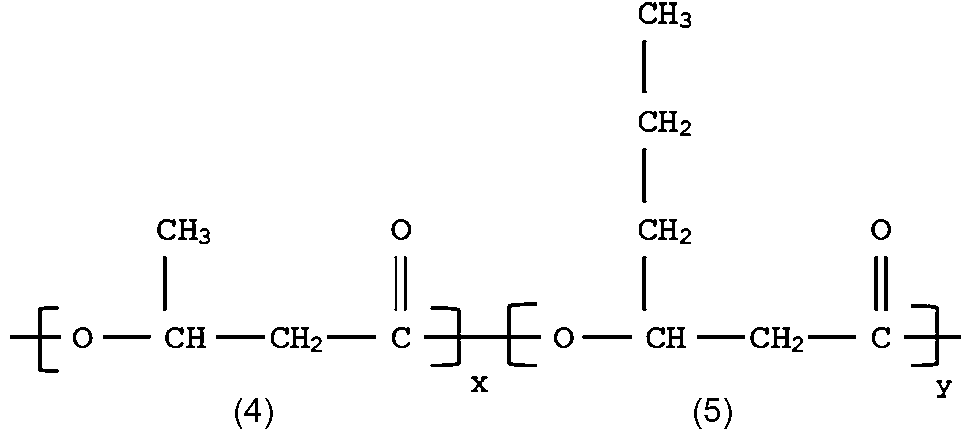
- the polyhydroxyalkanoic acid (PHA) according to the present invention has, as its repeating unit, 3-hydroxybutanoic acid (3- HB) and 3-hydroxyhexanoic acid (3-HH) in which the alkyl group in the 3-hydroxyalkanoic acid unit represented by the following chemical formula (5) is a propyl group.
- the polyhydroxyalkanoic acid (PHA) according to the present invention contains 3-hydroxybutanoic acid units (3-HB) and 3-hydroxyheptanoic acid units (3-HH) as repeating units, the following 3 -hydroxybutanoic acid (3-HB) and 3-hydroxyhexanoic acid (3-HH) as a copolymer (P(3-HB-co-3-HH)).
- the adhesive composition according to the present invention consists essentially of 3-hydroxybutanoic acid and 3-hydroxyhexanoic acid as repeating units of polyhydroxyalkanoic acid, and the polyhydroxyalkanoic acid (PHA ), the content of 3-hydroxyhexanoic acid (3-HH) in the repeating units of polyhydroxyalkanoic acid (PHA) is preferably 20% or more, preferably 27% by weight, relative to the total amount of repeating units of polyhydroxyalkanoic acid (PHA). It is below.
- the adhesive strength as polyhydroxyalkanoic acid can be changed, and 3-hydroxyhexanoic acid ( 3-HH) is less than 20% by weight with respect to the total amount of repeating units of the polyhydroxyalkanoic acid, there is a possibility that sufficient adhesiveness of the polyhydroxyalkanoic acid cannot be obtained.
- the weight ratio of the repeating units of polyhydroxyalkanoic acid (PHA) is 27% or more with respect to the total amount of repeating units, the viscosity of the composition containing polyhydroxyalkanoic acid increases, making it difficult to prepare an adhesive. It can be difficult.
- the polyhydroxyalkanoic acid (PHA) according to the present invention is not particularly limited as a method for producing the polyhydroxyalkanoic acid (PHA), as described in the following [Method for producing polyhydroxyalkanoic acid (PHA)].
- the manufacturing method utilized is an effective manufacturing method.
- 3-hydroxyalkanoic acid other than 3-hydroxybutanoic acid and 3-hydroxyhexanoic acid and 4-hydroxyalkanoic acid and 4-hydroxy Alkanoic acid may be mixed as a contaminant, but by adjusting the culture solution and culture conditions, it is possible to obtain a 3-hydroxy It is possible to prepare polyhydroxyalkanoic acids according to the invention containing only butanoic acid and 3-hydroxyhexanoic acid. Therefore, the polyhydroalkanoic acid "containing substantially only 3-hydroxybutanoic acid and 3-hydroxyhexanoic acid" in the present invention refers to the production method using microorganisms by adjusting the culture solution and culture conditions. The obtained polyhydroxyalkanoic acid contains no contaminants or only a very small amount of contaminants.
- the polyhydroxyalkanoic acid (PHA) has a weight average molecular weight of 1.0 ⁇ 10 5 to 13.0 ⁇ 10 5 g/mol, It is preferably 3.0 ⁇ 10 5 to 10.0 ⁇ 10 5 g/mol, more preferably 3.0 ⁇ 10 5 to 8.0 ⁇ 10 5 g/mol.
- the weight-average molecular weight of polyhydroxyalkanoic acid (PHA) is within the above range, it is possible to provide polyhydroxyalkanoic acid (PHA) capable of controlling solubility in solvents, heat resistance, and durability. Although it can be done, if it deviates from the above range, there is a possibility that such an effect cannot be obtained.
- the content of 3-hydroxyhexanoic acid (3-HH) in the repeating unit of the polyhydroxyalkanoic acid (PHA) according to the present invention is The weight ratio of the repeating units of the hydroxyalkanoic acid (PHA) is 20% or more and 27% or less, so that the melting point of the polyhydroxyalkanoic acid (PHA) is 60°C or more and 90°C or less. can be done.
- the melting point of polyhydroxyalkanoic acid (PHA) may be measured by any method, but can be measured by DSC analysis, for example.
- the method for producing the polyhydroxyalkanoic acid (PHA) according to the present invention may be any method as long as the polyhydroxyalkanoic acid (PHA) having the characteristics of the polyhydroxyalkanoic acid according to the present invention can be obtained. It is not particularly limited.
- one embodiment of the method for producing polyhydroxyalkanoic acid (PHA) of the present invention can include the following steps. Step 1: preparing a microorganism that produces polyhydroxyalkanoic acid (PHA); Step 2: growing the microorganisms of step 1 in a medium; Step 3: A step of ingesting the grown microorganisms into an animal, and Step 4: A step of recovering and purifying polyhydroxyalkanoic acid (PHA) from the excreta of the animal in Step 3.
- the polyhydroxyalkanoic acid (PHA) according to the present invention is preferably produced using microorganisms.
- microorganisms include microorganisms capable of producing polyhydroxyalkanoic acid, such as Bacillus megaterium, Cupriavidus necator, Ralstonia eutropha, and Alcaligenes latus. .
- Capriavidus necator is particularly preferred.
- the microorganism is preferably a microorganism in which a gene involved in the synthesis of polyhydroxyalkanoic acid (PHA) has been deleted or introduced.
- PHA polyhydroxyalkanoic acid
- the content of 3-hydroxyhexanoic acid units (3-HH) contained in the polyhydroxyalkanoic acid can be increased.
- to produce a copolymer P (3HB-co-3HH) composed of 3-hydroxybutanoic acid (3-HB) and 3-hydroxyhexanoic acid (3-HH) which has high melt fluidity and excellent processability. can be done.
- the medium used for culturing microorganisms is not particularly limited as long as the microorganisms grow.
- carbon sources include alcohols such as methanol, ethanol and butanol;
- a medium containing fatty acids such as unsaturated fatty acids, sugars such as glucose and fructose, organic acids such as lactic acid, and oils and fats containing a large amount of saturated/unsaturated fatty acids having 10 or more carbon atoms.
- oils and fats include vegetable oils such as coconut oil, palm kernel oil, palm oil, palm olein, rapeseed oil, soybean oil, rice oil and sesame oil, animal oils such as lard and beef tallow, and fish oils.
- oils and fats unrefined oils and waste cooking oils can also be used. Palm kernel oil or coconut oil containing lauric acid is preferable as fats and oils added to the medium as a carbon source.
- the content of polyhydroxyalkanoic acid (PHA) can be increased by including palm kernel oil or coconut oil.
- Aerobic conditions are preferred as conditions for culturing microorganisms for producing the polyhydroxyalkanoic acid (PHA) according to the present invention.
- a nitrogen source or an inorganic substance may be added.
- Nitrogen sources include ammonia, ammonium salts such as ammonium chloride, ammonium sulfate and ammonium phosphate.
- examples of inorganic substances include monopotassium phosphate, dipotassium phosphate, magnesium phosphate, magnesium sulfate, and sodium chloride.
- the culture temperature is preferably 20°C to 40°C, more preferably 25°C to 35°C. Although the culture time is not particularly limited, it is preferably 48 to 72 hours.
- 3-hydroxybutanoic acid (3-HB) and 3-hydroxyhexanoic acid (3-HH) content of 3-hydroxyhexanoic acid (3-HH) can be controlled.
- 3-hydroxybutanoic acid (3-HB) and 3-hydroxyhexanoic acid (3-hydroxybutanoic acid (3-HB) and 3-hydroxyhexanoic acid ( 3-HH) it is possible to control the content of 3-hydroxyhexanoic acid (3-HH).
- the method for recovering and purifying polyhydroxyalkanoic acid is not particularly limited, but a method of recovering from the medium by centrifugation and extracting with a solvent or the like, or a method of digesting and absorbing the above-mentioned microorganisms by animals and recovering them as excrement. etc.
- a method of digesting and absorbing microorganisms by animals and recovering granular polyhydroxyalkanoic acid (PHA) contained in excrement is preferable.
- the above animals include animals such as rodents, goats, sheep, cattle, and birds, aquatic organisms, beetles, insects, and the like.
- larvae of beetles such as mealworms are preferable, and 35-day-old housefly larvae (Tenebrio molitor) are more preferable.
- fecal pellets are collected, sieved using a mesh, washed with water and a base such as sodium hydroxide, and dried to obtain polyhydroxyalkanes.
- Acid (PHA) can be recovered.
- the adhesive composition according to the present invention may use only polyhydroxyalkanoic acid (PHA), but may contain a solvent in addition to polyhydroxyalkanoic acid (PHA).
- the content of the solvent can be appropriately selected, for example, within the range of 5 to 90% by weight.
- solvents include organic solvents, and organic solvents include, but are not limited to, methanol, ethanol, ethyl acetate, dimethyl acetate, chloroform, acetonitrile, hexane, and the like. can be used as a mixed solvent.
- the adhesive composition according to the present invention can also be mixed with other additives to form an adhesive composition.
- resins other than the polyhydroxyalkanoic acid (PHA) of the present invention resins other than the polyhydroxyalkanoic acid (PHA) of the present invention, tackifiers, plasticizers, inorganic fillers, etc. can be used depending on the intended use. .
- resins other than polyhydroxyalkanoic acid (PHA) used in the adhesive composition according to the present invention include thermoplastic resins, thermosetting resins, etc.
- Polyolefin resins such as polyethylene and polypropylene, polyimides, Polyamide, polyphenylene ether, polyether ketone, polyether ketone ketone, polybutadiene, polystyrene, polyester, polylactic acid, phenol resin, poly(meth)acrylic acid, norbornene resin and the like.
- biodegradable polymer polyhydroxyalkanoic acid
- other resins added to the adhesive composition include biodegradable polymers such as polylactic acid. Resins are preferred.
- tackifiers used in the adhesive composition of the present invention include terpene type resins, rosin/rosin derivatives, and chroman/indene resins.
- plasticizers include phthalates, lanolin, mineral oils, and the like.
- additives commonly used in adhesive compositions such as calcium carbonate and zinc oxide, can be used depending on the application of the adhesive composition.
- the ratio of components constituting the adhesive composition according to the present invention in an embodiment in which polyhydroxyalkanoic acid (PHA) is dissolved in a solvent, the ratio of dissolved polyhydroxyalkanoic acid (PHA) is at most about 50% by weight, considering the viscosity of the solution and the like.
- Adhesive containing adhesive composition containing polyhydroxyalkanoic acid include solution adhesives, aqueous latexes in which polyhydroxyalkanoic acid (PHA) is emulsified and dispersed in water, and water-dispersed adhesives. It can be used as both a solvent-based adhesive and a solid-based adhesive. Among them, hot-melt adhesives are non-flammable and do not contain water or solvents, so they are excellent from an environmental point of view. Adhesive compositions containing polyhydroxyalkanoic acid (PHA), a biodegradable polymer The effect of using is large.
- the adhesive according to the present invention can be produced by ordinary means using the adhesive composition according to the present invention, and the means for producing the adhesive is not particularly limited.
- the content ratio of 3-hydroxyhexanoic acid (3-HH) to the total amount of repeating units of polyhydroxyalkanoic acid (PHA) is 27% by weight
- 3-hydroxybutanoic acid (3-HB) and 3-hydroxyhexanoic acid (3-HH) were confirmed to exist in a copolymer with the structure P(3HB-co-3HH).
- the melting point of the resulting polyhydroxyalkanoic acid containing 27% 3-hydroxyhexanoic acid (3-HH) was 81.21°C.
- Adhesive strength measurements were carried out as follows using the resulting adhesive composition containing the copolymer of P(3-HB-co-3-HH) structure.
- JIS K 6850 tensile shear bond strength
- a copolymer powder having a structure of P (3-HB-co-3-HH) was used as a hot-melt adhesive without solvent, and the adhesive strength was measured.
- the sample was cut into a size of 25 mm in width and 100 mm in length and used.
- 0.02 g of adhesive was used per sample, and the adhesive was evenly applied over the entire width of the sample in the range of 12.5 mm from the end of the sample.
- the 12.5 mm end adhesive portion of the above sample and the other sample were overlapped and fixed with double clips, and placed in an oven at 90°C for 2 hours.
- the samples used for adhesion evaluation are as follows. Glass: transparent glass with a thickness of 2.1 mm Iron (steel): thickness of 0.25 mm Aluminum: 1mm thick Stainless steel: thickness 0.3mm Polystyrene: thickness 1.2 mm Polypropylene: thickness 0.8mm Acrylic: 1 mm thick Polyvinyl chloride: 1 mm thick Plywood: thickness 2.6mm 5)
- the tensile shear bond strength was measured with a Tensilon universal tester RTC-1325 manufactured by Orientec Co., Ltd.
- the lap tensile shear strength of the adhesive bond between rigid adherends is measured by applying a tensile force parallel to the main axis of the bonded portion of the test piece to the adherend, Measured by applying a load.
- the tensile speed was set to 1 mm per minute in the above tester, and the measurement was performed.
- the measurement results were as follows. Glass: 1.14 N/ mm2 Iron (steel plate): 0.83 N/mm 2 Aluminum: 1.20N/ mm2 Stainless steel: 1.07N/ mm2 Polystyrene: 0.52 N/mm 2 Polypropylene: 0.30 N/mm 2 Acrylic: 0.87N/ mm2 Polyvinyl chloride: 0.78 N/mm 2 Wood plywood: 0.65 N/mm 2
- Example 2 Measurement of adhesion of adhesive composition containing polyhydroxyalkanoic acid containing 20% 3-hydroxyhexanoic acid (3-HH) 3-hydroxybutanoic acid and 3-hydroxyheptane in polyhydroxyalkanoic acid
- polyhydroxyalkanoic acid (PHA) with a ratio of 3-hydroxyhexanoic acid (3-HH) to the total amount of repeating units of 20% by weight Hydroxyalkanoic acid (PHA) was produced according to the production method described in Example 1.
- the adhesive composition according to the present invention whose repeating units consist essentially of 3-hydroxybutanoic acid and 3-hydroxyhexanoic acid, as polyhydroxyalkanoic acid, is suitable for glass, iron (steel plate), Since it showed good adhesiveness to aluminum, stainless steel, polystyrene, polypropylene, acrylic, polyvinyl chloride and wood chips, the adhesive composition containing polyalkanoic acid according to the present invention can be used in a wide range of applications as an adhesive. It was confirmed that it is applicable. As for the adhesive strength, it was confirmed that the tensile shear adhesive strength was equivalent to that of a commercially available hot melt stick type.
- the adhesive according to the present invention by changing the content ratio of 3-hydroxybutanoic acid and 3-hydroxyhexanoic acid in the adhesive composition, the melting point of polyhydroxyalkanoic acid (PHA) can be lowered from 60°C to Since it was possible to set the temperature in the range of 90° C., it was confirmed that it can be used as a hot-melt adhesive with excellent workability. Furthermore, the adhesive according to the present invention can be confirmed to change the adhesive strength by changing the blending ratio of 3-hydroxybutanoic acid and 3-hydroxyhexanoic acid as repeating units of polyhydroxyalkanoic acid. Since it was confirmed that the adhesive strength can be adjusted depending on the object, it can be applied according to various usage environments and applications.
- the adhesive composition and adhesive containing polyhydroxyalkanoic acid (PHA) according to the present invention are excellent in biodegradability, biocompatibility, biodegradability, etc. in the natural environment, and have adhesive strength, Moreover, since the adhesive strength can be adjusted, it can be used in many industrial and medical applications.
Landscapes
- Chemical & Material Sciences (AREA)
- Chemical Kinetics & Catalysis (AREA)
- Organic Chemistry (AREA)
- Health & Medical Sciences (AREA)
- Medicinal Chemistry (AREA)
- Polymers & Plastics (AREA)
- Polyesters Or Polycarbonates (AREA)
- Biological Depolymerization Polymers (AREA)
Abstract
Description
一方、これからの新たな材料の開発を含めた製品技術の開発は、製品開発を取り巻く状況を見れば、環境に対する負荷が最小になる形で発展していくものと考えられている。合成樹脂からなる接着剤についても、原料となる石油価格が変動し、原料供給が一定しないといった従来からの問題に加え、環境へのマイナスの影響として、製造過程において温室効果ガスを排出するだけでなく、製造過程においてあるいは製品として使用された後、排水処理場を通り抜け、あるいは最終製品が崩壊、投棄あるいは廃棄され河川・海洋などに流入することにより、様々な環境問題を生じるなど、接着剤の原料としての合成樹脂について世界的規模での解決が迫られている。
さらに、接着剤・封止材あるいは接着技術を適用する分野は広範にわたることから、接着強度についても、必ずしも高いことだけが求められているわけではなく、適当な接着強度とともに易開封性が求められるなど、適用する用途に応じて接着強度が可変であることも、また、接着剤・封止材あるいは接着技術において、検討するべき重要な技術的要素となってきている。
さらに、一般文献である非特許文献1には、バイオポリマーに基づく接着剤の今後の開発の必要性・方向などが広く記載されている。
しかしながら、これらの先行技術文献に記載された技術的事項からは、生分解性材料の特徴を十分に生かし、かつ接着剤及び接着技術として広範な用途への適用が可能となる、所望の物性を有する接着性組成物の実用化・提供には至っていない。
すなわち、ポリヒドロキシアルカン酸(PHA)を含む接着性組成物であって、ポリヒドロキシアルカン酸(PHA)がその繰り返し単位として実質的に3-ヒドロキシブタン酸(3-HB)及び3-ヒドロキシヘキサン酸(3-HH)のみからなる接着性組成物が所望の物性を有すると共に、かかる接着性組成物におけ3-ヒドロキシブタン酸と3-ヒドロキシヘキサン酸(3-HH)との含有割合を変化させることにより、接着性組成物を含む接着剤の接着強度が変化することを確認し、本発明を完成するに至った。
本発明は、以下の特定事項により特定されるとおりのものである。
(2)ポリヒドロキシアルカン酸が、3-ヒドロキシブタン酸と3-ヒドロキシヘキサン酸とのコポリマー(P(3-HB-co-3-HH))として含まれる(1)に記載の接着性組成物。
(3)(1)または(2)に記載の接着性組成物を含む接着剤。
(4)(3)に記載の接着剤が、ホットメルト接着剤であることを特徴とする接着剤。
(5)(3)または(4)に記載の接着剤において、前記接着剤に含まれる接着性組成物中の3-ヒドロキシブタン酸と3-ヒドロキシヘキサン酸との含有割合を変化させることにより、接着剤の接着強度を変化させる方法。
したがって、本発明によれば、生分解性であり、生体適合性を備え、加工性に優れ、広い用途で使用可能な物性を有するポリヒドロキシアルカン酸(PHA)を含む接着性組成物、接着剤及び接着剤の接着強度を変化させる方法を提供することができる。
そして、本発明に係る接着組成物は、自然環境下での生分解性に優れた接着性組成物として提供することができることから、海洋汚染やマイクロプラスチック問題の解消等に寄与することができる。また、廃棄処分として、焼却処理に変えて、生分解処理が可能となるため、環境への負荷を低減するという効果も期待できる。さらに、本発明に係る接着組成物及び接着剤は、ポリヒドロキシアルカン酸(PHA)の有する生体適合性や生体内分解性に加えて、接着強度を変化させることにより広範囲な用途に使用可能となることから、これまでの接着剤としての用途に加えて、医療用途において幅広く使用できる可能性を有するものである。
ポリヒドロキシアルカン酸(PHA)は、下記化学式(1)で例示されるヒドロキシアルカン酸のポリエステルであり、生分解性の重合体である。


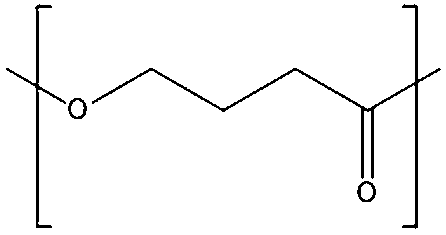
本発明に係るポリヒドロキシアルカン酸(PHA)はその繰り返し単位として、実質的に下記化学式(4)で示される3-ヒドロキシアルカン酸単位におけるアルキル基がメチル基である3-ヒドロキシブタン酸(3-HB)、及び下記化学式(5)で示される3-ヒドロキシアルカン酸単位におけるアルキル基がプロピル基である3-ヒドロキシヘキサン酸(3-HH)のみを含有することを特徴とするものである。本発明に係るポリヒドロキシアルカン酸(PHA)がその繰り返し単位として、3-ヒドロキシブタン酸単位(3-HB)と3-ヒドロキシヘプタン酸単位(3-HH)とを含む場合、以下に例示する3-ヒドロキシブタン酸(3-HB)と3-ヒドロキシヘキサン酸(3-HH)とのコポリマー(P(3-HB-co-3-HH))として含まれることが好ましい。
本発明に係るポリヒドロキシアルカン酸(PHA)の製造方法は、本発明に係るポリヒドロキシアルカン酸の特徴を備えるポリヒドロキシアルカン酸(PHA)が得られるのであれば、どのような製造方法でもよく、特に制限されるものではない。
工程1:ポリヒドロキシアルカン酸(PHA)を産生する微生物を準備する工程、
工程2:工程1の微生物を培地内で増殖する工程、
工程3:増殖した微生物を動物に摂取させる工程、及び
工程4:工程3の動物の排泄物からポリヒドロキシアルカン酸(PHA)を回収・精製する工程
培養温度は20℃~40℃が好ましく、より好ましくは25℃~35℃である。培養時間は特に限定されないが、好ましくは48~72時間である。
また、炭素源の残存量の制御や、培養液における無機成分濃度の調整、酸素の通気量及び培養時間を調整することでも、3-ヒドロキシブタン酸(3-HB)と3-ヒドロキシヘキサン酸(3-HH)とのコポリマーにおける3―ヒドロキシヘキサン酸(3-HH)の含有量を制御することが可能である。
上記動物としては、げっ歯類、ヤギ、ヒツジ、ウシ、トリ等の動物、水生生物、甲虫、虫等が挙げられる。中でもミールワーム等の甲虫の幼虫が好ましく、35日齢のイエバエの虫食い(ダニカムシの幼虫、Tenebrio molitor)がより好ましい。
ミールワーム等の幼虫に上記微生物を餌として与えた後に、糞便ペレットを回収し、メッシュを用いて篩い分けした後、水、水酸化ナトリウム等の塩基で洗浄、乾燥を行うことで、ポリヒドロキシアルカン酸(PHA)を回収することができる。
(1)P(3-HB-co-3-HH)の製造方法
(ア)P(3HB-co-3HH)製造のためのミネラル培地調製
P(3HB-co-3HH)製造のためのミネラル培地は、4.0g/LのNaH2PO4、4.6g/LのNa2HPO4、0.45g/LのK2SO4、0.39g/LのMgSO4、62mg/LのCaCl2、1mL/Lの微量元素溶液(微量元素溶液は0.1MのHClに溶解した15g/LのFeSO4・7H2O、2.4g/LのMnSO4・H2O、2.4g/LのZnSO4・7H2Oおよび0.48g/LのCuSO4・5H2Oを含む。)からなり、オートクレーブにより滅菌する前に、培地のpHを7.0に調整した。
(イ)13L発酵槽を用いたP(3HB-co-3HH)の生合成
P(3HB-co-3HH)の生合成は、ポリヒドロキシアルカン酸シンターゼ遺伝子を導入したカプリアビダス・ネカトールを用いて行った。
まず、ポリヒドロキシアルカン酸シンターゼをコードする遺伝子を導入したカプリアビダス・ネカトールを寒天プレート上に画線し、30℃で24時間培養した。次に、前培養として、50mLの培養液に白金耳を用いて2回前記カプリアビダス・ネカトールを接種し、30℃のインキュベーターシェーカーで、培養液のOD600nmが4になるまで8時間振とうした。尿素0.54g/L、MgSO40.39g/L、CaCl262mg/L、微量元素溶液1mL/L及び粗パーム核油1質量%となるように添加されたミネラル培地100mLに対して、前記培養液約3mLを接種した。粗パーム核油はミネラル培地へ添加する前に、オートクレーブ処理を行った。さらに、このミネラル培地を、18時間培養して、6Lの発酵槽に接種した。接種された前記カプリアビダス・ネカトールの形態を、発酵槽に移す前にチェックした(10%v/v)。培養培地の温度は30℃に維持しつつ、培地のpHについては3MのNaOH及び3MのH3PO4の添加により7.0±0.1に設定した。攪拌は、Rushtonタービンを用いて200~900rpm攪拌速度で攪拌を行った。フィルターカートリッジ(Sartorius stedim、Germany)を通して、1vvm(空気体積/発酵槽の作業体積/分)で空気を供給し、溶存酸素濃度を40%以上に維持した。MgSO4・7H2Oは培養後18時間目に、尿素は6時間ごとに添加した。微量元素は植え付けの間及び培養の18時間目に1mLを添加した。粗パーム核油は、微生物による油の消費に応じて、6時間ごとに10g/L~20g/Lの濃度で供給した。細菌培養物の残留油分、湿潤細胞重量および光学密度を決定するために、サンプリングを6時間ごとに行った。培養時間は、細菌の増殖に応じて48時間から72時間の範囲であった。
(ウ)P(3HB-co-3HH)の生物学的回収
35日齢のミールワーム(ダニカムシの幼虫、Tenebrio molitor)を周囲温度(約25℃)でプラスチック容器で飼育した。前記飼育したミールワーム100gに対して、上記P(3HB-co-3HHx)を含む乾燥微生物を給した。
給された微生物の量は、ミールワームの体重に基づいて供給した(体重の1日あたり5%)。新しいバッチの微生物を供給する前に、ミールワームの糞便ペレットを回収し、0.50mmおよび0.25mmのサイズのメッシュを用いて篩い分けした。二重ふるい分けを行うことにより、他の不純物を取り除き、その後の洗浄工程を容易にすることができた。
(エ)蒸留水を用いたP(3HB-co-3HH)の精製
約10%(w/v)の糞便ペレットに水道水を加え、100g/Lの濃度とした。糞便ペレット懸濁液を数回すすぎ、上清を捨てる前に沈降させた。上清を除去し、回収したP(3HB-co-3HH)を一定質量になるまで50℃のオーブンで乾燥させた。
さらに、前記乾燥させたP(3HB-co-3HH)を0.25M NaOH中で1時間すすぎ、混合物を沈降させ、上清を除去し、回収したペレットをpHが9.5未満に低下するまで水道水中でさらに1時間撹拌した。次いで、回収されたP(3HB-co-3HH)顆粒を50℃のオーブンで一定質量になるまで乾燥させ、目的とするP(3HB-co-3HH)を回収した。
本発明に係る接着性組成物は、ポリヒドロキシアルカン酸(PHA)のみを用いてもよいが、ポリヒドロキシアルカン酸(PHA)に加えて、溶媒を含むことができる。溶媒の含有量は例えば、5~90重量%の範囲で、適宜選択できる。溶媒の例としては、有機溶媒が挙げられ、有機溶媒としてはメタノール、エタノール、酢酸エチル、酢酸ジメチル、クロロホルム、アセトニトリル、ヘキサンなど挙げられるが、これらに限定されるものではなく、また、2種類以上の溶媒を混合溶媒として用いることも可能である。
ポリヒドロキシアルカン酸(PHA)を含有する接着性組成物は、溶液系接着剤、ポリヒドロキシアルカン酸(PHA)を乳化して水に分散させた水中ラテックス系を含めた水分散系接着剤、無溶媒系接着剤、及び固体系接着剤のいずれの形態の接着剤としても使用することが可能である。中でもホットメルト接着剤は、不燃性でしかも水分や溶媒が含まれていないことから、環境面からも優れており、生分解性ポリマーであるポリヒドロキシアルカン酸(PHA)を含有する接着性組成物を用いることの効果は大きい。本発明に係る接着剤は、本発明に係る接着性組成物を用い、通常の手段により、製造することができるものであり、接着剤を製造する手段は特に制限されるものではない。
ポリヒドロキシアルカン酸(PHA)の繰り返し単位として、3-ヒドロキシブタン酸(3-HB)と3-ヒドロキシヘキサン酸(3-HH)とのみからなるポリヒドロキシアルカン酸を上記したポリヒドロキシアルカン酸(PHA)の製造方法により製造した。
製造したポリヒドロキシアルカン酸について、ポリヒドロキシアルカン酸(PHA)の繰り返し単位の全量に対する3-ヒドロキシヘキサン酸(3-HH)の含有割合が重量比で27%であり、また、3-ヒドロキシブタン酸(3-HB)と3ヒドロキシヘキサン酸(3-HH)とは、P(3HB-co-3HH)の構造であるコポリマーで存在することを確認した。得られた3-ヒドロキシヘキサン酸(3-HH)を27%含むポリヒドロキシアルカン酸の融点は81.21℃であった。
得られたP(3-HB-co-3-HH)の構造であるコポリマーを含有する接着組成物を用いて接着強度測定を、以下のとおり行った。
1)JIS K 6850(引張せん断接着強さ)に準拠して、以下の金属板、ガラス、樹脂及び木材をサンプルとして、P(3-HB-co-3-HH)の構造であるコポリマーの紛体のみを、溶媒を使用せずホットメルト接着剤として使用し、接着強度を測定した。
2)サンプルはJIS K 6850に従い、幅25mm長さ100mmの寸法にカットして、用いた。
3)接着剤は1サンプル当たり0.02g使用し、接着剤をサンプルの端部から12.5mmの範囲に全幅均等に塗布した。
4)上記サンプルの12.5mmの端部の接着部ともう一方のサンプルを重ね合わせダブルクリップで固定し、90℃のオーブンの中に2時間置いた。
接着評価に用いたサンプルは以下のとおりである。
ガラス:厚さ2.1mmの透明ガラス
鉄(鋼鈑):厚さ0.25mm
アルミ:厚さ1mm
ステンレス:厚さ0.3mm
ポリスチレン:厚さ1.2mm
ポリプロピレン:厚さ0.8mm
アクリル:厚さ1mm
ポリ塩化ビニル:厚さ1mm
合板:厚さ2.6mm
5)引張せん断接着強さは、株式会社オリエンテック製テンシロン万能試験機RTC-1325で測定した。剛性被着材相互の接着接合物の重ね合わせ引張せん断強さの測定は、試験片の接着部分と主軸に平行な引張力を被着材に与え、剛性被着材間における単純重ね合せ部分に負荷を与えることによって測定した。前記の試験機で引張速度は毎分1mmの速さに設定して、測定した。測定結果は以下のとおりであった。
ガラス:1.14N/mm2
鉄(鋼鈑):0.83N/mm2
アルミ:1.20N/mm2
ステンレス:1.07N/mm2
ポリスチレン:0.52N/mm2
ポリプロピレン:0.30N/mm2
アクリル:0.87N/mm2
ポリ塩化ビニル:0.78N/mm2
木材合板:0.65N/mm2
ポリヒドロキシアルカン酸中の3-ヒドロキシブタン酸と3-ヒドロキシヘプタン酸との含有割合の接着強度に与える影響を調べるために、ポリヒドロキシアルカン酸(PHA)の繰り返し単位の全量に対する3-ヒドロキシヘキサン酸(3-HH)の割合が重量比で20%であるポリヒドロキシアルカン酸(PHA)を実施例1に記載した製造方法に準じて、製造した。得られたポリヒドロキシアルカン酸の繰り返し単位の全量に対する3-ヒドロキシヘキサン酸(3-HH)の割合が重量比で20%であることを確認し、また、3-ヒドロキシブタン酸(3-HB)と3ヒドロキシヘキサン酸(3-HH)とは、P(3HB-co-3HH)の構造であるコポリマーで存在することを確認した。得られた3-ヒドロキシヘキサン酸(3-HH)を20%含むポリヒドロキシアルカン酸の融点は75.82℃であった。
実施例1の測定条件と同一の測定条件で測定し、サンプルとしては実施例1に用いたアクリルとポリ塩化ビニルとを使用した。
引張せん断接着強さの測定結果は以下のとおりであった。
アクリル:0.41N/mm2
ポリ塩化ビニル:1.08N/mm2
Claims (5)
- ポリヒドロキシアルカン酸を含む接着性組成物であって、ポリヒドロキシアルカン酸の繰り返し単位が、実質的に3-ヒドロキシブタン酸及び3-ヒドロキシヘキサン酸のみからなる接着性組成物。
- ポリヒドロキシアルカン酸が、3-ヒドロキシブタン酸と3-ヒドロキシヘキサン酸とのコポリマー(P(3-HB-co-3-HH))として含まれる請求項1に記載の接着性組成物。
- 請求項1または2に記載の接着性組成物を含む接着剤。
- 請求項3に記載の接着剤が、ホットメルト接着剤であることを特徴とする接着剤。
- 請求項3または4に記載の接着剤において、前記接着剤に含まれる接着性組成物中の3-ヒドロキシブタン酸と3-ヒドロキシヘキサン酸との含有割合を変化させることにより、接着剤の接着強度を変化させる方法。
Priority Applications (5)
| Application Number | Priority Date | Filing Date | Title |
|---|---|---|---|
| EP22849360.7A EP4379012A4 (en) | 2021-07-26 | 2022-07-21 | ADHESIVE COMPOSITION CONTAINING A BIODEGRADABLE BIOPOLYMER, ADHESIVE AGENT AND METHOD FOR MODIFYING THE ADHESIVE STRENGTH OF AN ADHESIVE AGENT |
| KR1020247000842A KR20240037230A (ko) | 2021-07-26 | 2022-07-21 | 생분해성 바이오폴리머를 포함하는 접착성 조성물, 접착제 및 접착제의 접착강도를 변화시키는 방법 |
| US18/291,191 US20240360348A1 (en) | 2021-07-26 | 2022-07-21 | Adhesive composition containing biodegradable bio-polymer, adhesive agent, and method for changing adhesive strength of adhesive agent |
| CN202280050322.XA CN117651748A (zh) | 2021-07-26 | 2022-07-21 | 包含生物降解性生物聚合物的粘接性组合物、粘接剂以及改变粘接剂的粘接强度的方法 |
| JP2023538476A JPWO2023008298A1 (ja) | 2021-07-26 | 2022-07-21 |
Applications Claiming Priority (2)
| Application Number | Priority Date | Filing Date | Title |
|---|---|---|---|
| JP2021-121217 | 2021-07-26 | ||
| JP2021121217 | 2021-07-26 |
Publications (1)
| Publication Number | Publication Date |
|---|---|
| WO2023008298A1 true WO2023008298A1 (ja) | 2023-02-02 |
Family
ID=85086897
Family Applications (1)
| Application Number | Title | Priority Date | Filing Date |
|---|---|---|---|
| PCT/JP2022/028306 Ceased WO2023008298A1 (ja) | 2021-07-26 | 2022-07-21 | 生分解性バイオポリマーを含む接着性組成物、接着剤及び接着剤の接着強度を変化させる方法 |
Country Status (6)
| Country | Link |
|---|---|
| US (1) | US20240360348A1 (ja) |
| EP (1) | EP4379012A4 (ja) |
| JP (1) | JPWO2023008298A1 (ja) |
| KR (1) | KR20240037230A (ja) |
| CN (1) | CN117651748A (ja) |
| WO (1) | WO2023008298A1 (ja) |
Cited By (1)
| Publication number | Priority date | Publication date | Assignee | Title |
|---|---|---|---|---|
| WO2024157708A1 (ja) * | 2023-01-27 | 2024-08-02 | 株式会社カネカ | ホットメルト接着剤用組成物および積層体の製造方法 |
Families Citing this family (1)
| Publication number | Priority date | Publication date | Assignee | Title |
|---|---|---|---|---|
| EP4678365A1 (en) * | 2024-07-12 | 2026-01-14 | Bostik SA | Process implementing a polyhydroxyalkanoate |
Citations (10)
| Publication number | Priority date | Publication date | Assignee | Title |
|---|---|---|---|---|
| JPH09508424A (ja) * | 1994-01-28 | 1997-08-26 | ザ、プロクター、エンド、ギャンブル、カンパニー | 生分解性コポリマー及び3−ヒドロキシヘキサノエートの生分解性コポリマーを含んでなるプラスチック物品 |
| JP2002532618A (ja) | 1998-12-21 | 2002-10-02 | ザ プロクター アンド ギャンブル カンパニー | 生分解性phaコポリマーを含むプラスチック製品 |
| JP2004512419A (ja) * | 2000-10-27 | 2004-04-22 | メタボリックス・インコーポレーテッド | 低分子量ポリヒドロキシアルカノエート含有組成物およびその使用方法 |
| JP2006518799A (ja) * | 2003-02-21 | 2006-08-17 | メタボリックス インコーポレイティッド | Phaブレンド |
| JP2010017361A (ja) | 2008-07-10 | 2010-01-28 | Hitachi Chem Co Ltd | 医療用粘着剤樹脂組成物及び医療用テープ |
| CN102867459A (zh) * | 2011-11-07 | 2013-01-09 | 中国印刷科学技术研究所 | 可生物降解不干胶标签 |
| WO2014074115A1 (en) | 2012-11-09 | 2014-05-15 | Danimer Scientific, Llc | Hot melt adhesives |
| JP2019086889A (ja) | 2017-11-02 | 2019-06-06 | オムロン株式会社 | 評価装置、評価システム、車両、およびプログラム |
| JP2020176230A (ja) | 2019-04-22 | 2020-10-29 | 東洋インキScホールディングス株式会社 | 生分解性接着剤及びシート |
| WO2021153250A1 (ja) * | 2020-01-29 | 2021-08-05 | 株式会社カネカ | 生分解性ポリエステル溶液およびその利用 |
Family Cites Families (4)
| Publication number | Priority date | Publication date | Assignee | Title |
|---|---|---|---|---|
| JPS5327456Y2 (ja) | 1973-11-21 | 1978-07-12 | ||
| GB9314577D0 (en) | 1993-07-14 | 1993-08-25 | Zeneca Ltd | Adhesion process |
| CN101538454A (zh) * | 2008-03-18 | 2009-09-23 | 天津国韵生物材料有限公司 | 一种胶粘剂及其制备方法 |
| KR101439358B1 (ko) | 2012-12-07 | 2014-09-11 | 전남과학대학교 산학협력단 | 잔디 메움장치 |
-
2022
- 2022-07-21 WO PCT/JP2022/028306 patent/WO2023008298A1/ja not_active Ceased
- 2022-07-21 CN CN202280050322.XA patent/CN117651748A/zh active Pending
- 2022-07-21 KR KR1020247000842A patent/KR20240037230A/ko active Pending
- 2022-07-21 US US18/291,191 patent/US20240360348A1/en active Pending
- 2022-07-21 EP EP22849360.7A patent/EP4379012A4/en active Pending
- 2022-07-21 JP JP2023538476A patent/JPWO2023008298A1/ja active Pending
Patent Citations (12)
| Publication number | Priority date | Publication date | Assignee | Title |
|---|---|---|---|---|
| JPH09508424A (ja) * | 1994-01-28 | 1997-08-26 | ザ、プロクター、エンド、ギャンブル、カンパニー | 生分解性コポリマー及び3−ヒドロキシヘキサノエートの生分解性コポリマーを含んでなるプラスチック物品 |
| JP2002532618A (ja) | 1998-12-21 | 2002-10-02 | ザ プロクター アンド ギャンブル カンパニー | 生分解性phaコポリマーを含むプラスチック製品 |
| JP2004512419A (ja) * | 2000-10-27 | 2004-04-22 | メタボリックス・インコーポレーテッド | 低分子量ポリヒドロキシアルカノエート含有組成物およびその使用方法 |
| JP2006518799A (ja) * | 2003-02-21 | 2006-08-17 | メタボリックス インコーポレイティッド | Phaブレンド |
| JP2006519293A (ja) * | 2003-02-21 | 2006-08-24 | メタボリックス インコーポレイティッド | Pha接着組成物 |
| JP5079321B2 (ja) | 2003-02-21 | 2012-11-21 | メタボリックス インコーポレイティッド | Pha接着組成物 |
| JP2010017361A (ja) | 2008-07-10 | 2010-01-28 | Hitachi Chem Co Ltd | 医療用粘着剤樹脂組成物及び医療用テープ |
| CN102867459A (zh) * | 2011-11-07 | 2013-01-09 | 中国印刷科学技术研究所 | 可生物降解不干胶标签 |
| WO2014074115A1 (en) | 2012-11-09 | 2014-05-15 | Danimer Scientific, Llc | Hot melt adhesives |
| JP2019086889A (ja) | 2017-11-02 | 2019-06-06 | オムロン株式会社 | 評価装置、評価システム、車両、およびプログラム |
| JP2020176230A (ja) | 2019-04-22 | 2020-10-29 | 東洋インキScホールディングス株式会社 | 生分解性接着剤及びシート |
| WO2021153250A1 (ja) * | 2020-01-29 | 2021-08-05 | 株式会社カネカ | 生分解性ポリエステル溶液およびその利用 |
Non-Patent Citations (3)
| Title |
|---|
| BRIEF OVERVIEW ON BIO-BASED ADHESIVES AND SEALANTS POLYMERS, vol. 11, no. 10, 2019, pages 1685 |
| JIAN, J. ; LI, Z.J. ; YE, H.M. ; YUAN, M.Q. ; CHEN, G.Q.: "Metabolic engineering for microbial production of polyhydroxyalkanoates consisting of high 3-hydroxyhexanoate content by recombinant Aeromonas hydrophila", BIORESOURCE TECHNOLOGY, ELSEVIER, AMSTERDAM, NL, vol. 101, no. 15, 1 August 2010 (2010-08-01), AMSTERDAM, NL , pages 6096 - 6102, XP027018554, ISSN: 0960-8524 * |
| See also references of EP4379012A4 |
Cited By (1)
| Publication number | Priority date | Publication date | Assignee | Title |
|---|---|---|---|---|
| WO2024157708A1 (ja) * | 2023-01-27 | 2024-08-02 | 株式会社カネカ | ホットメルト接着剤用組成物および積層体の製造方法 |
Also Published As
| Publication number | Publication date |
|---|---|
| CN117651748A (zh) | 2024-03-05 |
| EP4379012A1 (en) | 2024-06-05 |
| KR20240037230A (ko) | 2024-03-21 |
| EP4379012A4 (en) | 2025-07-30 |
| JPWO2023008298A1 (ja) | 2023-02-02 |
| US20240360348A1 (en) | 2024-10-31 |
Similar Documents
| Publication | Publication Date | Title |
|---|---|---|
| JP6015748B2 (ja) | 生分解性ポリエステル樹脂組成物 | |
| CN1070879C (zh) | 可生物降解的聚合物、其制备方法及其用于生产可生物降解模制品的应用 | |
| JP7063513B2 (ja) | ポリヒドロキシアルカン酸及びその製造方法 | |
| JP6220340B2 (ja) | ポリエステル樹脂組成物およびその製造方法 | |
| Liu et al. | Bioplastic production from wastewater sludge and application | |
| Chouhan et al. | Production of polyhydroxyalkanoate (PHA) biopolymer from crop residue using bacteria as an alternative to plastics: a review | |
| EP3124544A1 (en) | Polyester resin composition, compact formed from such resin composition, and method for manufacturing such compact | |
| KR20170082519A (ko) | 바이오폴리머 매트릭스 복합체의 제조 방법 | |
| KR20240037230A (ko) | 생분해성 바이오폴리머를 포함하는 접착성 조성물, 접착제 및 접착제의 접착강도를 변화시키는 방법 | |
| Du et al. | High-efficiency production of bioplastics from biodegradable organic solids | |
| Salmiati et al. | Intracellular biopolymer productions using mixed microbial cultures from fermented POME | |
| JP2015029484A (ja) | 低分子量ポリヒドロキシアルカン酸の製造方法 | |
| Holt et al. | Blends of Poly (butylene glutarate) and Poly (lactic acid) with Enhanced Ductility and Composting Performance | |
| Chua et al. | Production of biodegradable plastics from chemical wastewater—a novel method to reduce excess activated sludge generated from industrial wastewater treatment | |
| JP2005080529A (ja) | 生分解性重合体の製造方法 | |
| Ferreira et al. | Aerobic and anaerobic degradation pathways of PHA | |
| Ramachandran et al. | Superlative short chain length and medium chain length polyhydroxyalkanoates microbial producers isolated from Malaysian environment | |
| WO2009156950A2 (en) | Methods for producing medium chain polyhydroxyalkanoates (pha) using vegetable oils as carbon source | |
| JP7527579B2 (ja) | アスパラギン酸組成物、ポリスクシンイミド組成物、ポリアスパラギン酸組成物、及び架橋ポリアスパラギン酸組成物 | |
| Javaid et al. | Biodegradable plastics as a solution to the challenging situation of plastic waste management | |
| WO2016114128A1 (ja) | ポリエステル樹脂組成物およびポリエステル樹脂成形体 | |
| CN116925506A (zh) | 一种全自然域可降解材料及其制备方法和应用 | |
| JP6976540B1 (ja) | 海洋生分解促進添加剤及びこれを含む海洋生分解性樹脂組成物 | |
| US20020031812A1 (en) | Process for production of biopolymer | |
| Samantaray et al. | Cyanobacterial polyhydroxyalkanoates: an alternative source for plastics |
Legal Events
| Date | Code | Title | Description |
|---|---|---|---|
| 121 | Ep: the epo has been informed by wipo that ep was designated in this application |
Ref document number: 22849360 Country of ref document: EP Kind code of ref document: A1 |
|
| WWE | Wipo information: entry into national phase |
Ref document number: 202280050322.X Country of ref document: CN |
|
| WWE | Wipo information: entry into national phase |
Ref document number: 2023538476 Country of ref document: JP |
|
| WWE | Wipo information: entry into national phase |
Ref document number: 202417012604 Country of ref document: IN |
|
| WWE | Wipo information: entry into national phase |
Ref document number: 2022849360 Country of ref document: EP |
|
| NENP | Non-entry into the national phase |
Ref country code: DE |
|
| ENP | Entry into the national phase |
Ref document number: 2022849360 Country of ref document: EP Effective date: 20240226 |