WO2023008530A1 - 新型コロナウイルス感染症治療剤 - Google Patents
新型コロナウイルス感染症治療剤 Download PDFInfo
- Publication number
- WO2023008530A1 WO2023008530A1 PCT/JP2022/029139 JP2022029139W WO2023008530A1 WO 2023008530 A1 WO2023008530 A1 WO 2023008530A1 JP 2022029139 W JP2022029139 W JP 2022029139W WO 2023008530 A1 WO2023008530 A1 WO 2023008530A1
- Authority
- WO
- WIPO (PCT)
- Prior art keywords
- day
- patients
- novel coronavirus
- therapeutic agent
- compound
- Prior art date
- Legal status (The legal status is an assumption and is not a legal conclusion. Google has not performed a legal analysis and makes no representation as to the accuracy of the status listed.)
- Ceased
Links
Images


Classifications
-
- A—HUMAN NECESSITIES
- A61—MEDICAL OR VETERINARY SCIENCE; HYGIENE
- A61P—SPECIFIC THERAPEUTIC ACTIVITY OF CHEMICAL COMPOUNDS OR MEDICINAL PREPARATIONS
- A61P11/00—Drugs for disorders of the respiratory system
-
- A—HUMAN NECESSITIES
- A61—MEDICAL OR VETERINARY SCIENCE; HYGIENE
- A61K—PREPARATIONS FOR MEDICAL, DENTAL OR TOILETRY PURPOSES
- A61K31/00—Medicinal preparations containing organic active ingredients
- A61K31/33—Heterocyclic compounds
- A61K31/395—Heterocyclic compounds having nitrogen as a ring hetero atom, e.g. guanethidine or rifamycins
- A61K31/495—Heterocyclic compounds having nitrogen as a ring hetero atom, e.g. guanethidine or rifamycins having six-membered rings with two or more nitrogen atoms as the only ring heteroatoms, e.g. piperazine or tetrazines
- A61K31/4965—Non-condensed pyrazines
-
- A—HUMAN NECESSITIES
- A61—MEDICAL OR VETERINARY SCIENCE; HYGIENE
- A61P—SPECIFIC THERAPEUTIC ACTIVITY OF CHEMICAL COMPOUNDS OR MEDICINAL PREPARATIONS
- A61P31/00—Antiinfectives, i.e. antibiotics, antiseptics, chemotherapeutics
- A61P31/12—Antivirals
- A61P31/14—Antivirals for RNA viruses
-
- C—CHEMISTRY; METALLURGY
- C07—ORGANIC CHEMISTRY
- C07D—HETEROCYCLIC COMPOUNDS
- C07D241/00—Heterocyclic compounds containing 1,4-diazine or hydrogenated 1,4-diazine rings
- C07D241/02—Heterocyclic compounds containing 1,4-diazine or hydrogenated 1,4-diazine rings not condensed with other rings
- C07D241/10—Heterocyclic compounds containing 1,4-diazine or hydrogenated 1,4-diazine rings not condensed with other rings having three double bonds between ring members or between ring members and non-ring members
- C07D241/14—Heterocyclic compounds containing 1,4-diazine or hydrogenated 1,4-diazine rings not condensed with other rings having three double bonds between ring members or between ring members and non-ring members with hetero atoms or with carbon atoms having three bonds to hetero atoms with at the most one bond to halogen, e.g. ester or nitrile radicals, directly attached to ring carbon atoms
- C07D241/24—Carbon atoms having three bonds to hetero atoms with at the most one bond to halogen, e.g. ester or nitrile radicals
Definitions
- the present invention relates to a therapeutic agent for novel coronavirus infection containing 6-fluoro-3-hydroxy-2-pyrazinecarboxamide (generic name: favipiravir; hereinafter referred to as Compound A) or a salt thereof as an active ingredient.
- Compound A 6-fluoro-3-hydroxy-2-pyrazinecarboxamide
- Non-Patent Document 1 The new coronavirus (SARS-CoV-2) (Non-Patent Document 1), which was first reported in China at the end of 2019, is an RNA virus belonging to the family Coronaviridae of the order Nidoviridae (Non-Patent Document 2). Infection with this virus is accompanied by acute respiratory symptoms such as fever, cough, and dyspnea, and when exacerbated, pneumonia develops.
- Non-Patent Document 3 Compound A has been reported as a substance that may be effective in treating novel coronavirus infections.
- the primary endpoints were body temperature, percutaneous arterial oxygen saturation (SpO 2 ), The time to resolution of chest imaging findings and negative SARS-CoV-2 was approximately 3 days shorter in the Compound A group than in the control group, indicating that Compound A should be administered to COVID-19 patients with non-serious pneumonia. It has been shown with a statistically significant difference that symptoms can be improved at an early stage (Non-Patent Document 4).
- the effect of therapeutic drugs can depend on the patient's background.
- the detailed relationship between the therapeutic effect of compound A and patient background is unknown for novel coronavirus infection.
- An object of the present invention is to provide a therapeutic agent for novel coronavirus infection and a method for treating novel coronavirus infection.
- compound A can be used more effectively for novel coronavirus infection patients with low antibody titers against the novel coronavirus, and have completed the present invention.
- the following inventions are provided.
- the present invention also provides the following inventions.
- a pharmaceutical composition containing compound A or a salt thereof for treating novel coronavirus infection wherein either or both of an IgG antibody against the novel coronavirus and an IgA antibody against the novel coronavirus is A pharmaceutical composition administered to a patient who is negative.
- Compound A or a salt thereof for treating novel coronavirus infection administered to patients who are negative for either or both of IgG antibody against novel coronavirus and IgA antibody against novel coronavirus Compound A or a salt thereof.
- IgG antibody to the new coronavirus and IgA antibody to the new coronavirus are negative by administering compound A or a salt thereof to patients with the new coronavirus infection to treat the new coronavirus infection be able to.
- the numerical range indicated using “to” means the range including the numerical values before and after “to” as the minimum and maximum values, respectively.
- Compound A means 6-fluoro-3-hydroxy-2-pyrazinecarboxamide.
- salts in basic groups include, for example, salts with mineral acids such as hydrochloric, hydrobromic, nitric and sulfuric acids; formic, acetic, citric, oxalic, fumaric, maleic, succinic, malic, salts with organic carboxylic acids such as tartaric acid, aspartic acid, trichloroacetic acid and trifluoroacetic acid; and salts with sulfonic acids such as methanesulfonic acid, benzenesulfonic acid, p-toluenesulfonic acid, mesitylenesulfonic acid and naphthalenesulfonic acid. mentioned.
- Salts in acidic groups include, for example, salts with alkali metals such as sodium and potassium; salts with alkaline earth metals such as calcium and magnesium; ammonium salts; and trimethylamine, triethylamine, tributylamine, pyridine, N, N- Nitrogen-containing compounds such as dimethylaniline, N-methylpiperidine, N-methylmorpholine, diethylamine, dicyclohexylamine, procaine, dibenzylamine, N-benzyl- ⁇ -phenethylamine, 1-ephenamine, N,N'-dibenzylethylenediamine and meglumine Examples include salts with organic bases.
- preferred salts include pharmacologically acceptable salts, and more preferred salts include salts with sodium or meglumine.
- compound A or a salt thereof has isomers (e.g., optical isomers, geometric isomers, tautomers, etc.)
- the present invention includes all isomers thereof, and hydrates, It includes solvates and all crystalline forms.
- coronavirus used herein is an RNA virus belonging to the family Coronaviridae of the order Nidoviridae.
- a “novel coronavirus” is a newly identified and reported novel coronavirus among coronaviruses, for example, SARS-CoV-2, which was reported at the end of 2019.
- a novel coronavirus infection is an infectious disease caused by a novel coronavirus.
- the infectious disease caused by SARS-CoV-2 is also called COVID-19.
- Novel coronavirus naturally includes known novel coronavirus variants and strains.
- SARS-CoV-2 variants include VOC-202012/01, 501Y.V2, 501Y.V3, GRY (former GR/501Y.V1), G/478K.V1, GH/452R.V1, GR/484K. V2, G/484K.V3, GR/1092K.V1, GH/253G.V1, G/452R.V3, GR/452Q.V1, GR.
- Treatment means reducing or ameliorating one or more symptoms resulting from a particular disease that a subject is suffering from, as well as delaying the progression of that disease.
- treatment means suppressing aggravation or reducing or improving symptoms such as fever, cough, pneumonia, etc., for example, in patients with novel coronavirus infection.
- it means improvement in body temperature, percutaneous arterial oxygen saturation (SpO2) and chest imaging findings, or negative conversion of novel coronavirus.
- SpO2 percutaneous arterial oxygen saturation
- aggravation means that the novel coronavirus infection patient becomes in a state requiring some form of oxygen administration or dies.
- Patients who are administered compound A or a salt thereof have a better relative therapeutic effect when compared to cases where compound A or a salt thereof is not administered.
- Patients with low antibody titers against the new coronavirus preferable.
- patients who are negative for either or both of IgG antibodies to the new coronavirus and IgA antibodies to the new coronavirus are preferable, and IgG antibodies to the new coronavirus and IgA antibodies to the new coronavirus , patients who are both negative are more preferred.
- IgG antibody and IgA antibody mean immunoglobulin G and immunoglobulin A, respectively.
- IgG antibodies against novel coronavirus and IgA antibodies against novel coronavirus mean IgG antibodies and IgA antibodies produced in the body following novel coronavirus infection or novel coronavirus vaccination.
- Negative IgG antibodies to the new coronavirus means, for example, that IgG antibodies in serum are below the detection limit in an antibody test.
- non-severe pneumonia means pneumonia to the extent that hypoxemia that requires oxygen therapy is not observed.
- Compound A or a salt thereof used in the present invention can be produced by a method known per se or by appropriately combining them. For example, it can be produced by the method described in International Publication No. 00/10569 pamphlet.
- Compound A has a tautomer, 6-fluoro-3-oxo-3,4-dihydro-2-pyrazinecarboxamide.
- Compound A or a salt thereof used in the present invention includes excipients, binders, disintegrants, disintegration inhibitors, anti-caking/adhering agents, lubricants, absorption/adsorption carriers, solvents, extenders, isotonic agents, solubilizers, emulsifiers, suspending agents, thickeners, coating agents, absorption accelerators, gelling/coagulation accelerators, light stabilizers, preservatives, moisture-proof agents, emulsifying/suspending/dispersing stabilizers
- Various pharmaceutical additives such as agents, anti-coloring agents, deoxidizers/antioxidants, flavoring/flavoring agents, coloring agents, foaming agents, anti-foaming agents, soothing agents, antistatic agents, buffers/pH adjusters, etc.
- oral formulations tablettes, powders, granules, fine granules, pills, suspensions, emulsions, liquid formulations, syrups, etc.
- injections, eye drops, transnasal formulations or transdermal formulations It can be a pharmaceutical preparation such as
- the dosage formulation for patients with novel coronavirus infection is preferably an oral formulation or an injection, more preferably an oral formulation, and even more preferably a tablet.
- the above drugs are formulated by conventional methods.
- the administration method of compound A is not particularly limited, but is appropriately determined according to the form of the preparation, age, sex and other conditions of the patient, and the degree of symptoms of the patient.
- the 50% effective concentration (EC50) of Compound A against SARS-CoV-2 using Vero E6 cells was 61.88 ⁇ M (Wang M, Cao R, Zhang L, Yang X, Liu J, Xu M, et al. Remdesivir and chloroquine effectively inhibit the recently emerging novel coronavirus (2019-nCoV) in vitro. Cell Res. 2020;30:269-71.). This corresponds to 9.72 ⁇ g/mL.
- the effects of administration to actual patients could not be predicted.
- the dose of compound A is appropriately selected depending on the usage, patient age, sex, disease form, and other conditions. ⁇ 2400 mg may be administered once or divided into several times daily. Compound A may be administered in multiple doses or in a single dose until the desired therapeutic effect is achieved. Administration is typically monitored and can be repeated as necessary. In the present invention, 1000 to 2400 mg of compound A may be administered to adults twice a day (first day) and 400 to 1200 mg twice a day (second day onwards).
- the administration interval of twice a day it is preferable to administer the second dose with an interval of at least 4 hours from the first dose, and it is more preferable to administer the second dose with an interval of 6 hours or more.
- the administration period is appropriately determined depending on the progression of symptoms, for example, up to 5 days, 6 days, 7 days, 8 days, 9 days, 10 days, 11 days, 12 days, 13 days, 14 days, 15 days, You can choose from 16 days, 17 days, 18 days, 19 days, 20 days, 21 days and 22 days. A maximum of 10 days, 13 days, 14 days, 22 days is preferred, and a maximum of 13 days, 14 days is more preferred.
- administration of compound A or a salt thereof can include concomitant drugs and/or concomitant therapies.
- it can include standard treatment for pneumonia.
- standard treatment for pneumonia refers to the “New Coronavirus Infectious Disease (COVID-19) Medical Treatment Guideline No. 1” announced by the Ministry of Health, Labor and Welfare of Japan Edition”, specifically, “In patients with suspected infection who are clinically diagnosed with pneumonia, empiric antibiotics should be started without waiting for the results of the pathogen diagnosis. Care should be taken not to overdo fluid infusion, and oxygen inhalation should be started as necessary (omitted) Even after a definitive diagnosis of COVID-19, if a complication of a bacterial infection is suspected Administer an appropriate antibacterial drug.” or equivalent measures.
- drugs having antiviral activity against the novel coronavirus include the following drugs a) to e). a) hydroxychloroquine sulfate, chloroquine phosphate b) Lopinavir/ritonavir combination drug c) ciclesonide d) Nafamostat mesylate e) Camostat mesylate
- Study Example 1 An Adaptive, Single-Blind, Randomized, Multicenter Study Evaluating the Efficacy and Safety of Compound A in COVID-19 Patients with Non-Serious Pneumonia [Methods] 1. Study design 1.1 Study type Confirmatory study (Phase III)
- Target number of patients The number of enrolled patients is 96 (64 in the compound A group, 32 in the control group).
- Subject 2.1 Subject COVID-19 patients with non-serious pneumonia
- Investigational drug tablet A 1 tablet contains 200 mg as compound A (administered to compound A group)
- Tablet B same appearance as tablet A but does not contain compound A (administered to control group)
- Dosage form pale yellow film-coated tablet Tablets A and B used in this test are manufactured by the method described in WO 2010/104170 pamphlet, the method known per se, or a suitable combination thereof.
- Dosage and administration period 4.1 Dosage and administration (1) Dosage In addition to the standard treatment, the following doses of the investigational drug will be administered to each treatment group.
- Compound A group Compound A 1800 mg x 2 times/day x 1 day + 800 mg x 2 times/day x 13 days (maximum)
- Control group Compound A placebo 9 tablets x 2 times/day x 1 day + 4 tablets x 2 times/day x 13 days (maximum)
- Tablet A (containing 200 mg of compound A) is orally administered twice a day, 9 tablets on the first day, and 4 tablets twice a day on and after the second day, for up to 13 days.
- Tablet B (placebo without compound A) is orally administered twice a day with 9 tablets on day 1 and 4 tablets twice a day from day 2 onward for up to 13 days. On Day 1, the second dose should be given at least 4 hours after the first dose of study drug.
- the administration period shall be up to 14 days.
- Clinical Trial Implementation Procedures The clinical trials will be conducted according to the following procedures. (1) Confirmation of inclusion/exclusion criteria, explanation of the clinical trial, acquisition of informed consent, implementation of observation/examination before starting administration (2) Registration of patients (trial enrollment) (3) Assignment to treatment (4) Prescription of investigational drug, start of administration (5) Prescribed observation/examination, evaluation/judgment (6)
- Efficacy Criteria 1 Criteria for the Primary Endpoint , the time to SARS-CoV-2 'negative' 48 hours later will be assessed as the primary endpoint. Body temperature, SpO2, and chest imaging findings are considered "resolved” when all of the following conditions a) to c) are maintained for at least 2 days (approximately at least 48 hours). defined as In addition, SARS-CoV-2 “negative conversion” is defined as SARS-CoV-2 reaching the state of d) below and maintaining it for more than 12 hours.
- Criteria for secondary endpoints a) Time to disappearance of SARS-CoV-2 Evaluate as time. b ) Duration of each symptom/finding of body temperature, SpO2, and chest imaging findings The duration of each symptom/finding is evaluated as the time from reaching the condition to maintaining it for at least 2 days (approximately at least 48 hours). c) NEWS classification From the clinical symptoms/findings (state of consciousness) and vital signs (SpO 2 , body temperature, blood pressure, pulse rate, respiratory rate) recorded by the investigator or subinvestigator, scores for each parameter of the NEWS classification are calculated. Derive and calculate the total value.
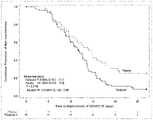
- IgG antibodies to the new coronavirus and IgA antibodies to the new coronavirus were measured in patients, and subgroup analysis was performed. The results are shown in FIG. In the subgroup negative for both IgG and IgA antibodies, the median time to remission was about 5 days faster in the compound A group than in the control group.
- the adjusted hazard ratio (compound A vs. control) was 2.07 (95% confidence interval 1.19-3.60). This result shows that compound A can be used more effectively in patients with low antibody titers against the new coronavirus.
Landscapes
- Health & Medical Sciences (AREA)
- Life Sciences & Earth Sciences (AREA)
- Veterinary Medicine (AREA)
- Public Health (AREA)
- General Health & Medical Sciences (AREA)
- Chemical & Material Sciences (AREA)
- Animal Behavior & Ethology (AREA)
- Pharmacology & Pharmacy (AREA)
- Medicinal Chemistry (AREA)
- Virology (AREA)
- Nuclear Medicine, Radiotherapy & Molecular Imaging (AREA)
- Organic Chemistry (AREA)
- General Chemical & Material Sciences (AREA)
- Chemical Kinetics & Catalysis (AREA)
- Oncology (AREA)
- Communicable Diseases (AREA)
- Molecular Biology (AREA)
- Epidemiology (AREA)
- Engineering & Computer Science (AREA)
- Bioinformatics & Cheminformatics (AREA)
- Pulmonology (AREA)
- Pharmaceuticals Containing Other Organic And Inorganic Compounds (AREA)
- Medicines Containing Antibodies Or Antigens For Use As Internal Diagnostic Agents (AREA)
Abstract
Description
[1]
新型コロナウイルスに対するIgG抗体と、新型コロナウイルスに対するIgA抗体の、いずれか又は両方が陰性である新型コロナウイルス感染症患者に対して投与される、6-フルオロ-3-ヒドロキシ-2-ピラジンカルボキサミド又はその塩を有効成分として含有する新型コロナウイルス感染症治療剤。
[2]
新型コロナウイルスに対するIgG抗体と、新型コロナウイルスに対するIgA抗体の、両方が陰性である患者に対して投与される、[1]に記載のコロナウイルス感染症治療剤。
[3]
患者が、非重篤な肺炎を合併した患者である、[1]又は[2]に記載のコロナウイルス感染症治療剤。
[4]
患者が、以下(1)及び(2)の基準をすべて満たす患者である、[1]~[3]いずれかに記載の新型コロナウイルス感染症治療剤。
(1)胸部画像で肺病変を認める
(2)37.5℃以上の発熱を認める
[5]
6-フルオロ-3-ヒドロキシ-2-ピラジンカルボキサミドとして、1000~2400mgが1日2回(1日目)、400~1200mgが1日2回(2日目以降)投与される、[1]~[4]いずれかに記載の新型コロナウイルス感染症治療剤。
[6]
6-フルオロ-3-ヒドロキシ-2-ピラジンカルボキサミドとして、1800mgを1日2回(1日目)、800mgが1日2回(2日目以降)投与される、[1]~[4]いずれかに記載の新型コロナウイルス感染症治療剤。
[7]
14日間投与される、[1]~[6]いずれかに記載の新型コロナウイルス感染症治療剤。
(a)新型コロナウイルス感染症を治療するための、化合物A又はその塩を含有する医薬組成物であって、新型コロナウイルスに対するIgG抗体と、新型コロナウイルスに対するIgA抗体の、いずれか又は両方が陰性である患者に投与される、医薬組成物。
(b)新型コロナウイルス感染症を治療するための、化合物A又はその塩であって、新型コロナウイルスに対するIgG抗体と、新型コロナウイルスに対するIgA抗体の、いずれか又は両方が陰性である患者に投与される、化合物A又はその塩。
(c)化合物A又はその塩を投与する新型コロナウイルス感染症の治療方法であって、新型コロナウイルスに対するIgG抗体と、新型コロナウイルスに対するIgA抗体の、いずれか又は両方が陰性である患者に投与する、新型コロナウイルス感染症の治療方法。
(d)新型コロナウイルスに対するIgG抗体と、新型コロナウイルスに対するIgA抗体の、いずれか又は両方が陰性である患者に投与される新型コロナウイルス感染症治療剤の製造のための、化合物A又はその塩の使用。
本明細書において特に断らない限り、各用語は次の意味を有する。
塩基性基における塩としては、たとえば、塩酸、臭化水素酸、硝酸及び硫酸などの鉱酸との塩;ギ酸、酢酸、クエン酸、シュウ酸、フマル酸、マレイン酸、コハク酸、リンゴ酸、酒石酸、アスパラギン酸、トリクロロ酢酸及びトリフルオロ酢酸などの有機カルボン酸との塩;ならびにメタンスルホン酸、ベンゼンスルホン酸、p-トルエンスルホン酸、メシチレンスルホン酸及びナフタレンスルホン酸などのスルホン酸との塩が挙げられる。
上記薬剤は、通常の方法により製剤化される。
Vero E6細胞を用いたSARS-CoV-2に対する化合物Aの50%効果濃度(EC50)は61.88 μMであった(Wang M、 Cao R、 Zhang L、 Yang X、 Liu J、 Xu M、 et al. Remdesivir and chloroquine effectively inhibit the recently emerged novel coronavirus (2019-nCoV) in vitro. Cell Res. 2020;30:269-71.)。これは9.72 μg/mLに相当する。けれども、前記文献の公開当時には、実際の患者に投与した場合における効果は予想できなかった。
化合物Aの投与量は、用法、患者の年齢、性別、疾患の形態、その他の条件などに応じて適宜選択されるが、例えば、成人に対して、化合物Aとして、10~5000mg又は好ましくは200~2400mgが1日1回又は数回に分割して投与され得る。化合物Aは、所望の治療効果が達成されるまで複数回の投薬又は単回で投与され得る。投与は、典型的には監視され、必要に応じて繰り返し投与することができる。
本発明においては、成人に対して、化合物Aとして1000~2400mgを1日2回(1日目)、400~1200mgを1日2回(2日目以降)投与すればよい。成人に対して、化合物Aとして1600mgを1日2回(1日目)、600mgを1日2回(2日目以降)投与すること、成人に対して、化合物Aとして1800mgを1日2回(1日目)、800mgを1日2回(2日目以降)投与すること、及び成人に対して、化合物Aとして1800mgを1日2回(1日目)、1000mgを1日2回(2日目以降)投与することが好ましく、化合物Aとして1800mgを1日2回(1日目)、800mgを1日2回(2日目以降)投与することがより好ましい。
1日2回の投与間隔は、1回目の投与から少なくとも4時間以上の間隔を空けて2回目を投与することが好ましく、6時間以上の間隔を空けて2回目を投与することがより好ましい。
投与期間は、症状の推移により適宜決定されるが、例えば、最長5日間、6日間、7日間、8日間、9日間、10日間、11日間、12日間、13日間、14日間、15日間、16日間、17日間、18日間、19日間、20日間、21日間及び22日間から選択できる。最長10日間、13日間、14日間、22日間が好ましく、最長13日間、14日間がより好ましい。
a)ヒドロキシクロロキン硫酸塩、リン酸クロロキン
b)ロピナビル・リトナビル配合剤
c)シクレソニド
d)ナファモスタットメシル酸塩
e)カモスタットメシル酸塩
[方法]
1. 治験デザイン
1.1 治験の種類
検証的試験(第III相)
アダプティブ、単盲検、ランダム化、多施設共同比較試験
[化合物A群]
標準治療+化合物A1800mg × 2回/日 × 1日間 + 800mg × 2回/日 × 13日間(最長)
[コントロール群]
標準治療+化合物Aプラセボ9錠 × 2回/日 × 1日間 + 4錠 × 2回/日 × 13日間(最長)
1.4.1 有効性の主要評価項目
体温、SpO2、胸部画像所見の軽快及びSARS-CoV-2が陰性化するまでの時間
(1)7ポイントスケールによる患者状態の推移
(2)SARS-CoV-2ゲノム量の推移
(3)SARS-CoV-2消失までの時間
(4)体温、SpO2及び胸部画像所見の各症状・所見別持続時間
(5)臨床症状・所見の推移
(6)バイタルサインの推移
(7)National Early Warning Score(NEWS)の推移
(8)Day 4、7、10、13、16、19、22、25、28の胸部画像所見の軽快率
(9)補助的酸素療法を必要とした患者の割合及び平均施行期間
(10)機械的換気療法を必要とした患者の割合及び平均施行期間
(11)白血球数、ヘモグロビン、血小板数、クレアチニン、血糖、総ビリルビン、ALT及びASTの経時推移
(1)有害事象
(2)臨床検査値
(3)バイタルサイン
(4)12誘導心電図
組入れ患者数として96名(化合物A群64名、コントロール群32名)
2.1 対象
非重篤な肺炎を合併したCOVID-19患者
(1)年齢:20~74歳(同意取得時)
(2)性別:不問
(3)外来・入院:入院
(4)患者の登録時に、下記1)、2)、3)の基準をすべて満たす患者
1) 鼻咽頭ぬぐい液、鼻腔吸引液、気道吸引液などの気道からの検体からRT-PCR(reverse transcription-polymerase chain reaction)検査などでSARS-CoV-2陽性となった患者
2) 胸部画像で肺病変を認める患者
3) 37.5℃以上の発熱を認める患者
(5)妊娠可能な女性患者を対象とする場合、治験薬投与開始前の妊娠検査で陰性を確認した患者
(6)本治験の内容を理解し、本人から文書同意取得が可能な患者
(1)発熱(37.5℃以上)後10日以上経過した患者
(2)発熱(37.5℃以上)後9日以内に、インターフェロンアルファ製剤、SARS-CoV-2に対して抗ウイルス作用が報告されている薬剤(ヒドロキシクロロキン硫酸塩、リン酸クロロキン、ロピナビル・リトナビル配合剤、シクレソニド、ナファモスタットメシル酸塩、カモスタットメシル酸塩)を使用した患者
(3)本感染エピソードがSARS-CoV-2感染の再発又は再感染の患者
(4)酸素療法なしの状態でSpO2が95%未満の患者
(5)治験薬投与開始前のプロカルシトニン値が上昇し、細菌感染症の合併が疑われる患者
(6)治験薬投与開始前の(1→3)-β-D-グルカン値が異常値を示し、真菌感染症の合併が疑われる患者
(7)治験薬投与開始前のNT-proBNP(N-terminal pro-brain natriuretic peptide)値が400 pg/mL以上(又はBNP値が100 pg/mL以上)の、うっ血性心不全の合併が疑われる患者
(8)Child-Pugh分類でグレードCに相当する重度肝機能障害を有する患者
(9)透析を必要とする腎機能障害患者
(10)見当識障害などの意識障害を認める患者
(11)妊婦又は妊娠している可能性のある患者
(12)治験薬投与開始から終了7日後までの間に、経口避妊薬、子宮内装具又はバリア法(ペッサリー、コンドーム)などの機械的避妊具を使用、及びそれらを組み合わせるなどの方法で避妊することに同意できない女性患者
(13)上記(12)に記載した避妊法を用いて避妊することに同意できないパートナーがいる男性患者
(14)治験薬投与開始から終了7日後までの間に、コンドームを使用することに同意できない患者
(15)遺伝性キサンチン尿症の患者
(16)低尿酸症(1 mg/dL未満)又はキサンチン尿路結石と診断されたことがある患者
(17)痛風の既往又は痛風あるいは高尿酸血症の治療中の患者
(18)免疫抑制剤を服用中の患者
(19)過去に化合物Aの投与を受けた患者
(20)その他、治験責任医師又は治験分担医師が不適格と判断した患者
錠剤A:1錠中に化合物Aとして200mgを含有する(化合物A群に投与)
錠剤B:錠剤Aと概観が同じで化合物Aを含有しない(コントロール群に投与)
剤形:淡黄色フィルムコーティング錠
本試験に使用される錠剤A及び錠剤Bは、国際公開第2010/104170号パンフレットに記載の方法、自体公知の方法又はそれらを適宜組み合わせることによりにより製造する。
4.1 用法・用量
(1)投与量
投与群ごとに、標準治療に加えて以下用量の治験薬を投与する。
[化合物A群]
化合物A1800mg × 2回/日 × 1日間 + 800mg × 2回/日 × 13日間(最長)
[コントロール群]
化合物Aプラセボ9錠 × 2回/日 × 1日間 + 4錠 × 2回/日 × 13日間(最長)
[化合物A群]
錠剤A(化合物A200mgを含有)を、1日目は1回9錠を2回、2日目以降は1回4錠を1日2回、最長13日間、経口投与する。
[コントロール群]
錠剤B(化合物Aを含有しないプラセボ)を、1日目は1回9錠を2回、2日目以降は1回4錠を1日2回、最長13日間、経口投与する。
Day 1は、1回目の治験薬投与から少なくとも4時間以上の間隔を空けて2回目を投与する。
投与期間は最長14日間とする。
5.1 治験実施手順
以下の手順に従って本治験を行う。
(1)選択・除外基準の確認、治験の説明、同意の取得、投与開始前の観察・検査の実施
(2)患者の登録(治験組入れ)
(3)治療への割付け
(4)治験薬の処方、投与開始
(5)所定の観察・検査実施、評価・判定
(6)追跡調査
5.2.1 有効性の評価基準
(1)有効性の判定基準
1) 主要評価項目の判定基準
治験薬投与開始から、体温、SpO2及び胸部画像所見が「軽快」し、その48時間後にSARS-CoV-2が「陰性化」した時点までの時間を、主要評価項目として評価する。
体温、SpO2及び胸部画像所見の「軽快」は、体温、SpO2及び胸部画像所見のすべてが、以下a)~c)の状態に達して2日間以上(48時間以上を目安)維持した場合と定義する。また、SARS-CoV-2の「陰性化」は、SARS-CoV-2が以下d)の状態に達して12時間以上それを維持した場合と定義する。
a) 体温:37.4℃以下(解熱鎮痛薬の使用後4時間以内の測定値は使用しない)
b) SpO2:96%以上(酸素療法なしの条件下)
c) 胸部画像所見:最悪時からの改善
d) SARS-CoV-2:RT-PCR(定性)検査で陰性化
a) SARS-CoV-2消失までの時間
治験薬投与開始から、SARS-CoV-2が「陰性化」するまでの時間を、SARS-CoV-2消失までの時間として評価する。
b) 体温、SpO2及び胸部画像所見の各症状・所見別持続時間
体温、SpO2及び胸部画像所見のそれぞれの症状・所見ごとに、治験薬投与開始から、上記1) a)~c)の状態に達して2日間以上(48時間以上を目安)維持した時点までの時間を、各症状・所見別持続時間として評価する。
c) NEWS分類
治験責任医師又は治験分担医師が記録した臨床症状・所見(意識状態)及びバイタルサイン(SpO2、体温、血圧、脈拍数、呼吸数)などから、NEWS分類の各パラメータのスコアを導出し、合計値を算出する。
治験責任医師又は治験分担医師は、治験中に発現した有害事象の程度及び因果関係を判定する。
試験例1に記載の方法に基づき、COVID-19患者156名(化合物A群107名、コントロール群49名)を対象に、化合物Aの有効性及び安全性を評価した。患者の内訳を図1に示す。COVID-19患者の状態を推し量る指標として、体温、SpO2、胸部画像所見の軽快及びSARS-CoV-2の陰性化を評価項目に設定し、治験薬投与開始から体温、SpO2、胸部画像所見がすべて軽快し、その後にSARS-CoV-2陰性化が確認されるまでの時間を評価した。効果不十分により治験、又は治験薬の投与を中止した患者は28日で打ち切りとした。結果を表1及び図2に示す。軽快するまでの時間は、化合物A群がコントロール群に比べて中央値で約3日早まった。

Claims (7)
- 新型コロナウイルスに対するIgG抗体と、新型コロナウイルスに対するIgA抗体の、いずれか又は両方が陰性である新型コロナウイルス感染症患者に対して投与される、6-フルオロ-3-ヒドロキシ-2-ピラジンカルボキサミド又はその塩を有効成分として含有する新型コロナウイルス感染症治療剤。
- 新型コロナウイルスに対するIgG抗体と、新型コロナウイルスに対するIgA抗体の、両方が陰性である患者に対して投与される、請求項1に記載のコロナウイルス感染症治療剤。
- 患者が、非重篤な肺炎を合併した患者である、請求項1又は2に記載のコロナウイルス感染症治療剤。
- 患者が、以下(1)及び(2)の基準をすべて満たす患者である、請求項1~3いずれか1項に記載の新型コロナウイルス感染症治療剤。
(1)胸部画像で肺病変を認める
(2)37.5℃以上の発熱を認める - 6-フルオロ-3-ヒドロキシ-2-ピラジンカルボキサミドとして、1000~2400mgが1日2回(1日目)、400~1200mgが1日2回(2日目以降)投与される、請求項1~4いずれか1項に記載の新型コロナウイルス感染症治療剤。
- 6-フルオロ-3-ヒドロキシ-2-ピラジンカルボキサミドとして、1800mgを1日2回(1日目)、800mgが1日2回(2日目以降)投与される、請求項1~4いずれか1項に記載の新型コロナウイルス感染症治療剤。
- 14日間投与される、請求項1~6いずれか1項に記載の新型コロナウイルス感染症治療剤。
Priority Applications (3)
| Application Number | Priority Date | Filing Date | Title |
|---|---|---|---|
| US18/292,972 US20240325386A1 (en) | 2021-07-30 | 2022-07-28 | Therapeutic agent for covid-19 |
| EP22849591.7A EP4378462A4 (en) | 2021-07-30 | 2022-07-28 | THERAPEUTICAL FOR COVID-19 |
| JP2023538622A JPWO2023008530A1 (ja) | 2021-07-30 | 2022-07-28 |
Applications Claiming Priority (2)
| Application Number | Priority Date | Filing Date | Title |
|---|---|---|---|
| JP2021125337 | 2021-07-30 | ||
| JP2021-125337 | 2021-07-30 |
Publications (1)
| Publication Number | Publication Date |
|---|---|
| WO2023008530A1 true WO2023008530A1 (ja) | 2023-02-02 |
Family
ID=85086833
Family Applications (1)
| Application Number | Title | Priority Date | Filing Date |
|---|---|---|---|
| PCT/JP2022/029139 Ceased WO2023008530A1 (ja) | 2021-07-30 | 2022-07-28 | 新型コロナウイルス感染症治療剤 |
Country Status (5)
| Country | Link |
|---|---|
| US (1) | US20240325386A1 (ja) |
| EP (1) | EP4378462A4 (ja) |
| JP (1) | JPWO2023008530A1 (ja) |
| TW (1) | TW202320778A (ja) |
| WO (1) | WO2023008530A1 (ja) |
Cited By (2)
| Publication number | Priority date | Publication date | Assignee | Title |
|---|---|---|---|---|
| US11963967B2 (en) | 2020-10-16 | 2024-04-23 | Gilead Sciences, Inc. | Phospholipid compounds and uses thereof |
| US12030904B2 (en) | 2020-08-24 | 2024-07-09 | Gilead Sciences, Inc. | Phospholipid compounds and uses thereof |
Citations (2)
| Publication number | Priority date | Publication date | Assignee | Title |
|---|---|---|---|---|
| WO2000010569A1 (en) | 1998-08-20 | 2000-03-02 | Toyama Chemical Co., Ltd. | Nitrogenous heterocyclic carboxamide derivatives or salts thereof and antiviral agents containing both |
| WO2010104170A1 (ja) | 2009-03-13 | 2010-09-16 | 富山化学工業株式会社 | 6-フルオロ-3-ヒドロキシ-2-ピラジンカルボキサミド含有錠剤および造粒末 |
Family Cites Families (2)
| Publication number | Priority date | Publication date | Assignee | Title |
|---|---|---|---|---|
| CN111265528A (zh) * | 2020-01-21 | 2020-06-12 | 中国人民解放军军事科学院军事医学研究院 | 法匹拉韦在治疗冠状病毒感染方面的应用 |
| JPWO2021200651A1 (ja) * | 2020-03-30 | 2021-10-07 |
-
2022
- 2022-07-28 WO PCT/JP2022/029139 patent/WO2023008530A1/ja not_active Ceased
- 2022-07-28 JP JP2023538622A patent/JPWO2023008530A1/ja active Pending
- 2022-07-28 EP EP22849591.7A patent/EP4378462A4/en not_active Withdrawn
- 2022-07-28 US US18/292,972 patent/US20240325386A1/en active Pending
- 2022-07-29 TW TW111128525A patent/TW202320778A/zh unknown
Patent Citations (2)
| Publication number | Priority date | Publication date | Assignee | Title |
|---|---|---|---|---|
| WO2000010569A1 (en) | 1998-08-20 | 2000-03-02 | Toyama Chemical Co., Ltd. | Nitrogenous heterocyclic carboxamide derivatives or salts thereof and antiviral agents containing both |
| WO2010104170A1 (ja) | 2009-03-13 | 2010-09-16 | 富山化学工業株式会社 | 6-フルオロ-3-ヒドロキシ-2-ピラジンカルボキサミド含有錠剤および造粒末 |
Non-Patent Citations (12)
| Title |
|---|
| "3 Treatment'' of the ''Guidance for Clinical Practice of Novel Coronavirus Infection (COVID-19) First Edition", NOVEL CORONAVIRUS INFECTION MEASURES PROMOTION DIVISION |
| "Nat Microbiol", 2 March 2020, CORONAVIRIDAE STUDY GROUP OF THE INTERNATIONAL COMMITTEE, article "The species Severe acute respiratory syndrome-related coronavirus: classifying 2019-nCoV and naming it SARS-CoV-2" |
| "The primary endpoint was achieved in a Japanese clinical phase III study in patients with novel coronavirus infection", 23 September 2020, FUJIFILM CO |
| ACS CENTRAL SCIENCE, vol. 6, no. 3, 2020, pages 315 - 331 |
| DRIOUICH JEAN-SÉLIM, COCHIN MAXIME, LINGAS GUILLAUME, MOUREAU GRÉGORY, TOURET FRANCK, PETIT PAUL-RÉMI, PIORKOWSKI GÉRALDINE, BARTH: "Favipiravir antiviral efficacy against SARS-CoV-2 in a hamster model", NATURE COMMUNICATIONS, vol. 12, no. 1, XP093004799, DOI: 10.1038/s41467-021-21992-w * |
| FINBERG ROBERT W, ASHRAF MADIHA, JULG BORIS, AYOADE FOLUSAKIN, MARATHE JAI G, ISSA NICOLAS C, WANG JENNIFER P, JAIJAKUL SIRAYA, BA: "US201 Study: A Phase 2, Randomized Proof-of-Concept Trial of Favipiravir for the Treatment of COVID-19", OPEN FORUM INFECTIOUS DISEASES, vol. 8, no. 12, 1 December 2021 (2021-12-01), XP093028907, DOI: 10.1093/ofid/ofab563 * |
| FUJII SATOSHI, IBE YUTA, ISHIGO TOMOYUKI, INAMURA HIROTOSHI, KUNIMOTO YUSUKE, FUJIYA YOSHIHIRO, KURONUMA KOJI, NAKATA HIROMASA, FU: "Early favipiravir treatment was associated with early defervescence in non-severe COVID-19 patients", JOURNAL OF INFECTION AND CHEMOTHERAPY, CHURCHILL LIVINGSTONE, TOKYO,, JP, vol. 27, no. 7, 1 July 2021 (2021-07-01), JP , pages 1051 - 1057, XP055975828, ISSN: 1341-321X, DOI: 10.1016/j.jiac.2021.04.013 * |
| INOUE HIDEKI; JINNO MEGUMI; OHTA SHIN; KISHINO YASUNARI; KAWAHARA TOMOKO; MIKUNI HATSUKO; SATO HARUNA; YAMAMOTO MAYUMI; SATO YOKO;: "Combination treatment of short-course systemic corticosteroid and favipiravir in a successfully treated case of critically ill COVID-19 pneumonia with COPD", RESPIRATORY MEDICINE CME, ELSEVIER, AMSTERDAM, NL, vol. 31, 1 January 2020 (2020-01-01), AMSTERDAM, NL , XP086413001, ISSN: 2213-0071, DOI: 10.1016/j.rmcr.2020.101200 * |
| KURANO MAKOTO, YATOMI YUTAKA: "Novel coronavirus IgM, IgG, IgA in Japanese", EXPERT MEETING, 18 December 2020 (2020-12-18), XP093028905, Retrieved from the Internet <URL:https://www.covid19-jma-medical-expert-meeting.jp/topic/3891> [retrieved on 20230303] * |
| See also references of EP4378462A4 |
| WANG CHORBY PWHAYDEN FGGAO GF: "A novel coronavirus outbreak of global health concern", LANCET, vol. 395, 2020, pages 470 - 3, XP086050316, DOI: 10.1016/S0140-6736(20)30185-9 |
| WANG MCAO RZHANG LYANG XLIU JXU M ET AL.: "Remdesivir and chloroquine effectively inhibit the recently emerged novel coronavirus (2019-nCoV) in vitro", CELL RES, vol. 30, 2020, pages 269 - 71, XP037049320, DOI: 10.1038/s41422-020-0282-0 |
Cited By (4)
| Publication number | Priority date | Publication date | Assignee | Title |
|---|---|---|---|---|
| US12030904B2 (en) | 2020-08-24 | 2024-07-09 | Gilead Sciences, Inc. | Phospholipid compounds and uses thereof |
| US12473314B2 (en) | 2020-08-24 | 2025-11-18 | Gilead Sciences, Inc. | Phospholipid compounds and uses thereof |
| US11963967B2 (en) | 2020-10-16 | 2024-04-23 | Gilead Sciences, Inc. | Phospholipid compounds and uses thereof |
| US12208110B2 (en) | 2020-10-16 | 2025-01-28 | Gilead Sciences, Inc. | Phospholipid compounds and uses thereof |
Also Published As
| Publication number | Publication date |
|---|---|
| US20240325386A1 (en) | 2024-10-03 |
| EP4378462A4 (en) | 2025-06-11 |
| EP4378462A1 (en) | 2024-06-05 |
| JPWO2023008530A1 (ja) | 2023-02-02 |
| TW202320778A (zh) | 2023-06-01 |
Similar Documents
| Publication | Publication Date | Title |
|---|---|---|
| US11364227B2 (en) | Sphingosine kinase 2 inhibitor for treating coronavirus infection | |
| CN116133657A (zh) | 治疗covid-19疾病的新组合物和方法 | |
| WO2023008530A1 (ja) | 新型コロナウイルス感染症治療剤 | |
| CN115605201A (zh) | 血管紧张素ii 2型受体激动剂的新用途 | |
| WO2021200651A1 (ja) | コロナウイルス感染症治療剤 | |
| US20240189305A1 (en) | Therapeutic agent for coronavirus infection | |
| US12042503B2 (en) | Compositions and methods for treating coronavirus infections | |
| US12472197B2 (en) | Methods, compositions, and dosing regimens for treatment of SARS-CoV-2 infections | |
| US20230285347A1 (en) | Preterm Labour with Prostaglandin E2 Receptor Agonists | |
| US12115150B2 (en) | Biomarkers of coronavirus pneumonia | |
| TW202245799A (zh) | 治療冠狀病毒感染及由其導致之發炎所誘發的肺損傷之方法 | |
| JP2021172601A (ja) | コロナウイルス感染症治療・予防剤 | |
| Wang et al. | Case study of tocilizumab in the treatment of dermatomyositis-associated interstitial lung disease | |
| JP2025530672A (ja) | Il-33軸アンタゴニストによる処置のために患者を選択する方法 | |
| WO2021207051A1 (en) | Methods of treating acute respiratory disorders | |
| JP2023016055A (ja) | インフルエンザおよび重篤なインフルエンザ状態を有する対象者における、置換された多環性ピリドン誘導体およびそのプロドラッグを使用したインフルエンザの治療 |
Legal Events
| Date | Code | Title | Description |
|---|---|---|---|
| 121 | Ep: the epo has been informed by wipo that ep was designated in this application |
Ref document number: 22849591 Country of ref document: EP Kind code of ref document: A1 |
|
| WWE | Wipo information: entry into national phase |
Ref document number: 2023538622 Country of ref document: JP |
|
| WWE | Wipo information: entry into national phase |
Ref document number: 18292972 Country of ref document: US |
|
| WWE | Wipo information: entry into national phase |
Ref document number: 2022849591 Country of ref document: EP |
|
| NENP | Non-entry into the national phase |
Ref country code: DE |
|
| ENP | Entry into the national phase |
Ref document number: 2022849591 Country of ref document: EP Effective date: 20240229 |
|
| WWW | Wipo information: withdrawn in national office |
Ref document number: 2022849591 Country of ref document: EP |