WO2023009882A1 - Systems and methods for reducing pollutants, including carbon in public utilities, agriculture and manufacturing - Google Patents
Systems and methods for reducing pollutants, including carbon in public utilities, agriculture and manufacturing Download PDFInfo
- Publication number
- WO2023009882A1 WO2023009882A1 PCT/US2022/038978 US2022038978W WO2023009882A1 WO 2023009882 A1 WO2023009882 A1 WO 2023009882A1 US 2022038978 W US2022038978 W US 2022038978W WO 2023009882 A1 WO2023009882 A1 WO 2023009882A1
- Authority
- WO
- WIPO (PCT)
- Prior art keywords
- flow rate
- forgoing
- reduced
- wastewater
- treating
- Prior art date
- Legal status (The legal status is an assumption and is not a legal conclusion. Google has not performed a legal analysis and makes no representation as to the accuracy of the status listed.)
- Ceased
Links
Classifications
-
- C—CHEMISTRY; METALLURGY
- C02—TREATMENT OF WATER, WASTE WATER, SEWAGE, OR SLUDGE
- C02F—TREATMENT OF WATER, WASTE WATER, SEWAGE, OR SLUDGE
- C02F3/00—Biological treatment of water, waste water, or sewage
- C02F3/34—Biological treatment of water, waste water, or sewage characterised by the microorganisms used
- C02F3/341—Consortia of bacteria
-
- C—CHEMISTRY; METALLURGY
- C02—TREATMENT OF WATER, WASTE WATER, SEWAGE, OR SLUDGE
- C02F—TREATMENT OF WATER, WASTE WATER, SEWAGE, OR SLUDGE
- C02F3/00—Biological treatment of water, waste water, or sewage
- C02F3/006—Regulation methods for biological treatment
-
- C—CHEMISTRY; METALLURGY
- C02—TREATMENT OF WATER, WASTE WATER, SEWAGE, OR SLUDGE
- C02F—TREATMENT OF WATER, WASTE WATER, SEWAGE, OR SLUDGE
- C02F3/00—Biological treatment of water, waste water, or sewage
- C02F3/30—Aerobic and anaerobic processes
- C02F3/302—Nitrification and denitrification treatment
-
- C—CHEMISTRY; METALLURGY
- C02—TREATMENT OF WATER, WASTE WATER, SEWAGE, OR SLUDGE
- C02F—TREATMENT OF WATER, WASTE WATER, SEWAGE, OR SLUDGE
- C02F3/00—Biological treatment of water, waste water, or sewage
- C02F3/34—Biological treatment of water, waste water, or sewage characterised by the microorganisms used
- C02F3/343—Biological treatment of water, waste water, or sewage characterised by the microorganisms used for digestion of grease, fat, oil
-
- C—CHEMISTRY; METALLURGY
- C02—TREATMENT OF WATER, WASTE WATER, SEWAGE, OR SLUDGE
- C02F—TREATMENT OF WATER, WASTE WATER, SEWAGE, OR SLUDGE
- C02F2101/00—Nature of the contaminant
- C02F2101/10—Inorganic compounds
- C02F2101/105—Phosphorus compounds
-
- C—CHEMISTRY; METALLURGY
- C02—TREATMENT OF WATER, WASTE WATER, SEWAGE, OR SLUDGE
- C02F—TREATMENT OF WATER, WASTE WATER, SEWAGE, OR SLUDGE
- C02F2101/00—Nature of the contaminant
- C02F2101/10—Inorganic compounds
- C02F2101/16—Nitrogen compounds, e.g. ammonia
-
- C—CHEMISTRY; METALLURGY
- C02—TREATMENT OF WATER, WASTE WATER, SEWAGE, OR SLUDGE
- C02F—TREATMENT OF WATER, WASTE WATER, SEWAGE, OR SLUDGE
- C02F2101/00—Nature of the contaminant
- C02F2101/30—Organic compounds
- C02F2101/32—Hydrocarbons, e.g. oil
-
- C—CHEMISTRY; METALLURGY
- C02—TREATMENT OF WATER, WASTE WATER, SEWAGE, OR SLUDGE
- C02F—TREATMENT OF WATER, WASTE WATER, SEWAGE, OR SLUDGE
- C02F2103/00—Nature of the water, waste water, sewage or sludge to be treated
- C02F2103/10—Nature of the water, waste water, sewage or sludge to be treated from quarries or from mining activities
-
- C—CHEMISTRY; METALLURGY
- C02—TREATMENT OF WATER, WASTE WATER, SEWAGE, OR SLUDGE
- C02F—TREATMENT OF WATER, WASTE WATER, SEWAGE, OR SLUDGE
- C02F2103/00—Nature of the water, waste water, sewage or sludge to be treated
- C02F2103/20—Nature of the water, waste water, sewage or sludge to be treated from animal husbandry
-
- C—CHEMISTRY; METALLURGY
- C02—TREATMENT OF WATER, WASTE WATER, SEWAGE, OR SLUDGE
- C02F—TREATMENT OF WATER, WASTE WATER, SEWAGE, OR SLUDGE
- C02F2103/00—Nature of the water, waste water, sewage or sludge to be treated
- C02F2103/26—Nature of the water, waste water, sewage or sludge to be treated from the processing of plants or parts thereof
- C02F2103/28—Nature of the water, waste water, sewage or sludge to be treated from the processing of plants or parts thereof from the paper or cellulose industry
-
- C—CHEMISTRY; METALLURGY
- C02—TREATMENT OF WATER, WASTE WATER, SEWAGE, OR SLUDGE
- C02F—TREATMENT OF WATER, WASTE WATER, SEWAGE, OR SLUDGE
- C02F2209/00—Controlling or monitoring parameters in water treatment
- C02F2209/40—Liquid flow rate
-
- C—CHEMISTRY; METALLURGY
- C02—TREATMENT OF WATER, WASTE WATER, SEWAGE, OR SLUDGE
- C02F—TREATMENT OF WATER, WASTE WATER, SEWAGE, OR SLUDGE
- C02F3/00—Biological treatment of water, waste water, or sewage
- C02F3/02—Aerobic processes
- C02F3/04—Aerobic processes using trickle filters
-
- C—CHEMISTRY; METALLURGY
- C02—TREATMENT OF WATER, WASTE WATER, SEWAGE, OR SLUDGE
- C02F—TREATMENT OF WATER, WASTE WATER, SEWAGE, OR SLUDGE
- C02F3/00—Biological treatment of water, waste water, or sewage
- C02F3/02—Aerobic processes
- C02F3/06—Aerobic processes using submerged filters
-
- C—CHEMISTRY; METALLURGY
- C02—TREATMENT OF WATER, WASTE WATER, SEWAGE, OR SLUDGE
- C02F—TREATMENT OF WATER, WASTE WATER, SEWAGE, OR SLUDGE
- C02F3/00—Biological treatment of water, waste water, or sewage
- C02F3/02—Aerobic processes
- C02F3/08—Aerobic processes using moving contact bodies
- C02F3/082—Rotating biological contactors
-
- C—CHEMISTRY; METALLURGY
- C02—TREATMENT OF WATER, WASTE WATER, SEWAGE, OR SLUDGE
- C02F—TREATMENT OF WATER, WASTE WATER, SEWAGE, OR SLUDGE
- C02F3/00—Biological treatment of water, waste water, or sewage
- C02F3/02—Aerobic processes
- C02F3/12—Activated sludge processes
- C02F3/1236—Particular type of activated sludge installations
- C02F3/1263—Sequencing batch reactors [SBR]
-
- Y—GENERAL TAGGING OF NEW TECHNOLOGICAL DEVELOPMENTS; GENERAL TAGGING OF CROSS-SECTIONAL TECHNOLOGIES SPANNING OVER SEVERAL SECTIONS OF THE IPC; TECHNICAL SUBJECTS COVERED BY FORMER USPC CROSS-REFERENCE ART COLLECTIONS [XRACs] AND DIGESTS
- Y02—TECHNOLOGIES OR APPLICATIONS FOR MITIGATION OR ADAPTATION AGAINST CLIMATE CHANGE
- Y02W—CLIMATE CHANGE MITIGATION TECHNOLOGIES RELATED TO WASTEWATER TREATMENT OR WASTE MANAGEMENT
- Y02W10/00—Technologies for wastewater treatment
- Y02W10/10—Biological treatment of water, waste water, or sewage
Definitions
- the present inventions relate to novel and unique application and uses for bioremediation and waste materials, including municipal and manufacturing waste materials, including water streams.
- wastewater treatment systems handle effluent from municipalities, industrial sites, factories, storm drainage systems and other locations where water that has been contaminated with undesirable materials is present.
- the term “wastewater treatment system”, “wastewater treatment facility”, “treatment facility”, and similar such terms should be given its broadest possible meaning and would include: industrial and municipal systems having primary treatment, secondary treatment or tertiary treatment and combinations and variations of these; aerobic, facultative, or anaerobic biological wastewater systems; aerobic processes include, for example, activated sludge systems, aerobic stabilization basins (ASB), aerated lagoons, single pass lagoon systems, stabilization ponds, rotating biological contactors, and trickling filters; facultative processes include, for example, facultative lagoons; anaerobic processes include, for example, anaerobic ponds, anaerobic digesters, anaerobic filters or contactors, and anaerobic treatment systems; systems having clarifiers, settling tanks, digesters, activated
- Wastewater treatment plants can range from small volumes per day, measures in flow per day, i.e., gallons per day (GPD) to large volumes measured in flows of million (1 ,000,000) gallons per day (MGD).
- the flow can be 10s, 100s, 1,000s, 10,000s, and 100,000s of GPD.
- the flow of wastewater is about 0.01 MGD and greater, about 0.1 MGD and greater, about 1 MGD and greater, about 2 MGD and greater, from 0.01 MGD to 100 MGD, from 0.05 MGD to 50 MGD, from 0.1 MGD to 2 MGD, from about 1 MGD to about 15 MGD, from about 5 MGD to about 25 MGD, from about 10 MGD to about 40 MGD, from about 20 MGD to about 100 MGD, from about 25 MGD to about 60 MGD, from about 200 MGD to about 300 MGD, about 300 MGD and greater, about 350 MGD and greater and greater and smaller, flows as well as, all flows within these ranges.
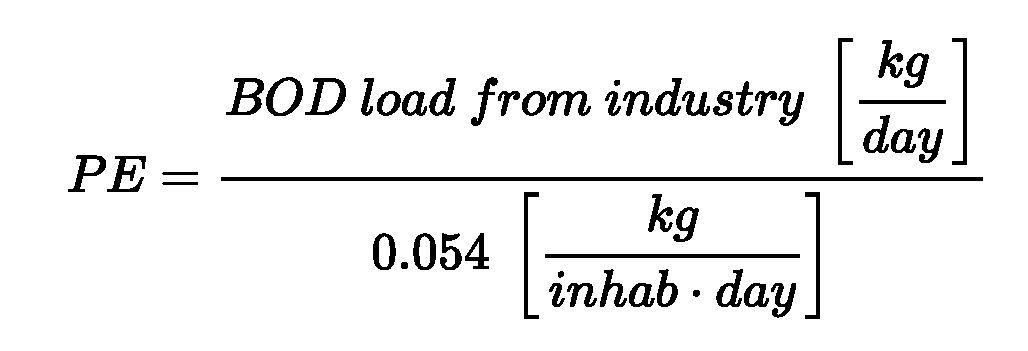
- PE Population Equivalent
- one unit of PE is equal to 54 grams of BOD per 24 hours.
- a unit of PE equates to 50 gallons per person per day or 200 liters per person per day.
- Wastewater treatment plants can have capacities of 10,000 to 200,000 PE, 50,000 to 100,000 PE, 50,000 to 500,000 PE, 100,000 PE to 2,000,000 (2mm) PE, 1mm PE to 4mm PE, 150 mm PE and greater, 200mm PE and greater, and about a 300mm PE and all capacities within these ranges, and greater and smaller capacities.
- the plants can be sized larger than their PE to address storm surges.
- wastewater should be given it broadest possible meaning, and refers to wastewater or other liquid — raw (untreated) or partially treated — flowing into a device, system, apparatus, reservoir, basin, treatment process treatment system, treatment device, tank, or treatment plant or treatment facility.
- sludge should be given its broadest possible meaning, and would include the material that is removed from wastewater by a wastewater treatment plant.
- sludge can have from about 0.2% to about 80% solids, about 1% to about 60% solids, about 0.25% to 0.5% solids, about 2% to about 4% solids, about 50% to about 99% solids, about 5% to about 25% solids, about 5% solids, about 10 % solids, about 1% solids, about 10% solids, about 15% solids, greater than about 0.5% solids, greater than about 2% solids, greater than about 5% solids, and combinations and variations of these as well as all values within these ranges.
- floc forming microbes As used herein, unless specifically stated otherwise, the terms “floc forming microbes”, “floc formers” , floc forming, and similar such terms should be given their broadest possible meaning, including a generic group of microbes that cause floc formation or flocculate resulting in large clumps or communities of bacteria working together; including: floc forming bacteria, Achromobacter, Flavobacterium, Alcaligenes, Arthrobacter, Zooglea, Acinetobacter, Citromonas; predators: protozoa, rotifers, nematodes Vorticella, Aspicidica, Paramecium; Phosphate accumulating organisms (PAO), algae (lagoons).
- Phosphate accumulating organisms Phosphate accumulating organisms (PAO), algae (lagoons).
- the term “greenhouse gas” and similar such terms include any gas that contributes to global warming or temperature raise when in the atmosphere. Such gases would include carbon dioxide (CO 2 ), methane (CH4) and Nitrous Oxide (N2O). N2O has about a 300 times more determinantal effect of global warming than CO 2 . Equivalent.
- room temperature is 25° C.
- standard temperature and pressure is 25° C and 1 atmosphere.
- the present inventions provide surprising new uses for, applications for, and configurations of, active treatment batch methodologies and technologies, e.g., Biofermentation® methodologies and technologies, which, among other things: reduce the carbon-footprint of wastewater treatment plants; increase the purity of wastewater effluent without increasing the production of greenhouse gasses; breaking the paradigm linking increased effluent purity with increased carbon-footprint and increased greenhouse gas production; as well as, other benefits and advantages set for in this Specification.
- active treatment batch methodologies and technologies e.g., Biofermentation® methodologies and technologies, which, among other things: reduce the carbon-footprint of wastewater treatment plants; increase the purity of wastewater effluent without increasing the production of greenhouse gasses; breaking the paradigm linking increased effluent purity with increased carbon-footprint and increased greenhouse gas production; as well as, other benefits and advantages set for in this Specification.
- a method of increasing a capacity of a wastewater treatment facility, while maintaining the quality of the effluent, and without increasing a carbon footprint of the wastewater treatment plant comprising: determining an initial flow rate of a wastewater treatment facility; the wastewater treatment facility having an embodied carbon footprint; wherein the initial flow rate is at a capacity of the embodied carbon footprint to maintain the pollutants in an effluent from the wastewater treatment plant at or below a first level of pollutants; and, increasing the flow rate of the wastewater treatment facility to provide an increased flow rate, wherein the increased flow rate is at least 25% greater than the initial flow rate; wherein the level of pollutants in the effluent are maintained at or below the first level of pollutants at the increased flow rate; and, wherein, the embodied carbon footprint of the wastewater treatment facility remains the same.
- a method of operating a wastewater treatment facility to reduce the production of greenhouse gasses associated with the treatment of the wastewater, while maintaining the quality of the effluent, and without reducing the capacity of the wastewater treatment plant, the method comprising: the wastewater treatment facility producing a first amount of greenhouse gasses for the treatment and disposal of sludge having for an initial flow rate of the wastewater treatment; wherein the pollutants in an effluent from the wastewater treatment plant are maintained at or below a first level of pollutants; and, reducing the first amount of greenhouse gasses produced by at least 25%, while maintaining the level of pollutants in the effluent at or below the first level of pollutants.
- FIG. 1 is a chart showing the impact of an embodiment of an activated active treatment batch approach on embodied carbon footprint of a an embodiment of a design or proposed treatment facility in accordance with the present inventions.
- FIG. 2 is a chart showing the impact of an embodiment of an activated active treatment batch approach on embodied carbon vs operating carbon in accordance with the present inventions.
- FIG. 3 is a chart showing the impact of an embodiment of an activated active treatment batch approach on total carbon footprint in accordance with the present inventions.
- FIG. 4 is a chart showing the impact of an embodiment of an activated active treatment batch approach on land application practices in accordance with the present inventions.
- FIG. 5 is a chart showing the impact of an embodiment of an activated active treatment batch approach on incineration practices in accordance with the present inventions.
- FIG. 6 is a chart showing the impact of an embodiment of an activated active treatment batch approach on increasing phosphorous removal in accordance with the present inventions.
- FIG. 7 is a chart showing the impact of an embodiment of an activated active treatment batch approach on increased capacity and hydraulic throughput in accordance with the present inventions.
- FIG. 8 is a chart showing the impact of an embodiment of an activated active treatment batch approach on improving ammonia-nitrogen removal in accordance with the present inventions.
- FIGS. 9A and 9B are charts showing the impact of an embodiment of an activated active treatment batch approach on improved settleability an control of filamentous growth in accordance with the present inventions.
- FIGS. 10A and 10B are charts showing the impact of an embodiment of an activated active treatment batch approach on recovery of alkalinity via improved denitrification in accordance with the present inventions.
- FIG. 11 is a chart showing electrical consumption per activity in an embodiment of a wastewater treatment facility.
- FIG. 12 is a chart showing embodiments of carbon contributions by process in an embodiment to a wastewater treatment facility.
- FIG. 13 is a chart showing an embodiment of improvements in energy usage reduction in accordance with the present inventions.
- the present inventions relate to systems, apparatus and processes for treating wastewater and waste materials to reduce the amount of pollutants, including greenhouse gases that are present and in particular that are released into the environment.
- embodiments of the present inventions relate to the treatment of wastewater and waste materials with biological materials, systems and methods for preforming such treatments, and the production from wastewater of useful, safe and environmentally acceptable materials, including liquids.
- Apparatus, equipment, systems, treatments and biofermentation methods of the type taught and disclosed in US Publ. No 2020/0087183, the entire disclosure of which is incorporated by reference, can be used in the present inventions to provide the benefits and advantages of the present inventions,
- Embodiments of the present systems and methods set forth in this specification find use, applicability and provide benefits to industrial waste water treatment plants, such as those in the pulp and paper industries, mining industries, and commercial (factory) farming and livestock facilities.
- Embodiments of the present systems, devices and methods are capable of obtaining low greenhouse gas (e.g., CO 2 N2O and CH 4 ) production and generation, and are capable of operating in a net carbon neutral manner.
- low greenhouse gas e.g., CO 2 N2O and CH 4
- Embodiments of the present inventions are able to provide increased purity of effluent streams, without increasing the greenhouse gas production, associated with the treat facility.
- embodiments of the present inventions provide increased effluent purity, i.e., reduced pollutants, without increasing the production of greenhouse gases, and preferably with a reduction of greenhouse gasses.
- embodiments of the present inventions provide for the construction of a new treatment facility that can be built having the same or better through put capacity and effluent quality with a significant reduction in carbon-footprint as shown in FIG. 1.
- a treatment facility constructed to use an active treatment batch approach can conservatively increase capacity 25%, thereby reducing embodied carbon of design and new construction by at least 25%.
- FIG. 2 an example of saving in carbon-footprint is further illustrated by FIG. 2 by eliminating the need for construction yet increase capacity by 25%.
- the largest challenge for a treatment facility having 200-300 MGP flow is to increase capacity of the treatment facility by 25% in the next 25 years, which means all or most of the planned capital expenditure for expansion or embodied carbon could be simply eliminated.
- embodied carbon represents 6.4 to 14 years of operating carbon emissions for plant treating a PE of 14,500 to 300.
- Embodiments of the present invention provide for increased capacity of the treatment facility, over extend periods of time, e.g., next 10 years, next 20 years, next 25 years, without increasing the embodied carbon footprint.
- Such increases in capacity can be 25% or more, 30% or more, and 50% or more.
- This invention does not limit its claim to only increasing capacity by 25%, this is merely an example.
- These operational configurations and methods of increasing capacity without increasing the carbon footprint can be implemented in wastewater treatment plants having capacities of 10,000 to 200,000 PE, 50,000 to 100,000 PE, 50,000 to 500,000 PE, 100,000 PE to 2mm PE, 1mm PE to 4mm PE, 150 mm PE and greater, 200mm PE and greater, and about a 300mm PE, and all values within these ranges.
- Embodiments of the present invention provide for increased capacity of the treatment facility, over extend periods of time, e.g., next 10 years, next 20 years, next 25 years, without increasing the embodied carbon footprint.
- Such increases in capacity can be 25% or more, 30% or more, and 50% or more.
- This invention does not limit its claim to only increasing capacity by 25%, this is merely an example.
- These operational configurations and methods of increasing capacity without increasing the carbon footprint can be implemented in wastewater treatment plants having wastewater flow rates of about 0.01 MGD and greater, about 0.1 MGD and greater, about 1 MGD and greater, about 2 MGD and greater, from 0.01 MGD to 100 MGD, from 0.05 MGD to 50 MGD, from 0.1 MGD to 2 MGD, from about 1 MGD to about 15 MGD, from about 5 MGD to about 25 MGD, from about 10 MGD to about 40 MGD, from about 20 MGD to about 100 MGD, from about 25 MGD to about 60 MGD, from about 200 MGD to about 300 MGD, about 300 MGD and greater, about 350 MGD and greater and greater and smaller, flows as well as, all flows within these ranges.
- embodiments of the present invention relate to wastewater treatment facilities that use and optimize active treatment batch methodologies and technologies and thus and eliminate significant embodied carbon emissions
- the embodied carbon footprint of such a facility is 4 magnitudes less than engineering solutions (e.g., added size and processes need to obtain same quality and throughput)
- the operating carbon footprint of such systems is 3 magnitudes less, and better, than engineering solutions.
- the implementation, operation and benefits of such a facility are further shown in FIG. 3.
- embodiments of the present inventions relate to land fill design and operation that reduce greenhouse gases.
- active treatment batch methodologies and technologies reduce sludge production by at least 44% which would proportionally impact (e.g., reduce) release of NOX and methane from landfill applications that are used as the disposal route.
- the implementation, operation and benefits of such a facility are further shown in FIG. 4.
- embodiments of the present inventions relate to sludge incineration operation that reduce greenhouse gases.
- active treatment batch methodologies and technologies reduce sludge production by at least 44% which would proportionally impact (e.g., reduce) release of CO 2 and NOX from sludge incineration applications that are used as the disposal route.
- the implementation, operation and benefits of such a facility are further shown in FIG. 5.
- embodiments of the present invention relate to methods of reduced greenhouse gas emission in the treatment of wastewater and the disposal of sludge produced from this treatment.
- embodiments of the present inventions provide a total, i.e., start to finish, reduction in greenhouse gasses for the treatment of wastewater, and in particular the treatment of municipal wastewater.
- embodiments of the present inventions relate to embodiments of wastewater management utilizing active treatment batch methodologies and technologies to provide a solution for utilities and operators to reduce greenhouse gas emissions, and meet national, regional and global regulatory and organizational zero, or low, carbon guidelines, rules or standards, from existing facilities, as well as, newly constructed facilities, among other benefits.
- embodiments of the present inventions relate to a wastewater treatment facility configured, built, retrofitted, operated, and combinations and variations of these, for implementation of treatment batches of active microbes grown on-site, or provided on-site.
- the active microbes in the treatment batch it is theorized function in a synergistic manner, similar to probiotics in the gut of a mammal
- the treatment batch can be grown on site at the treatment facility or at a location near to the treatment facility, so that a liquid treatment batch containing living, active microbes is provided into the wastewater in the facility at one or more application points.
- liquid active treatment batch approaches e.g., systems, methods, methodologies and technologies
- a particularly preferred type of active treatment batch approaches are Biofermentation® approaches, which are taught and disclosed in US Patent Nos. 11,155,484, 9,409,803 and 7,879,593.
- Liquid active treatment batch approaches utilize a reactor, method and process for growing microbial cultures either on-site as a side stream reactor or at a nearby off-site facility, to provide the liquid treatment batch.
- these approaches avoid a freeze-drying or preservation step prior to addition of the microbial culture to the reactor to grow the treatment batch, which can have a very high kill rate, probably 99.9%.
- the microbes in the liquid treatment batch can be any useful microbe for the treatment of wastewater, and preferably are selected from one or more of the floc forming microbes.
- the liquid treatment batch can be added to one or more locations in the wastewater treatment facility including: activated sludge systems, aerobic stabilization basins (ASB), aerated lagoons, single pass lagoon systems, stabilization ponds, rotating biological contactors, and trickling filters; facultative processes include, for example, facultative lagoons; anaerobic processes include, for example, anaerobic ponds, anaerobic digesters, anaerobic filters or contactors, and anaerobic treatment systems; systems having clarifiers, settling tanks, digesters, activated sludge systems, lagoons, single pass lagoons, and combinations and variations of these; systems such as activated sludge systems, rotating disc systems, submerged aerated filter, suspended media filters, sequencing batch reactors non-electric filters and trickling filters; and combinations and
- the microbes in the liquid treatment batch for use in the present embodiments can be one or more strain, type or species of microbe.
- the term microbe, as used herein, include fungus, yeast, bacteria, and other biodegrading small unicellular organisms.
- the microbes can be floc forming microbes.
- microbes that may be used in the liquid treatment batch, include Bacillus, Bacillus subtilis, Pseudomonas , e.g., Pseudomonas putida, and Nocardia strains, as well as other strains for the biodegradation of hydrocarbons that are documented in "Developments in Biodegradation of Hydrocarbons-1" by Watkinson, Applied Science Publishers, 1978 ISBN: 0-85334-751-4, which is incorporated herein by reference. Chloroorganics biodegradation using White Rot Fungus is well documented in U.S. Pat. No. 4,554,075, which is incorporated herein by reference.
- the liquid treatment batch as initially grown can have a concentration of microbes from about 10 7 - 10 10 colony forming units per milliliter (cfu/ml), about 10 8 - 10 9 cfu/ml, about 10 7 cfu and greater, about 10® cfu and greater.
- these treatment batches can be directly added to the wastewater.
- These treatment batches can further be concentrated, in a manner that keeps the microbes alive and active, and then supplied to the wastewater in the treatment plant.
- the concentration of these treatment batched can be 2x to 400x greater, about 4x greater, about 20x greater, about 40x greater, about 100x greater, about 200x greater, about 10x to 100x greater, and about 300x to about 400x greater than the liquid treatment batch as initially grow (i.e., about 10® - 10® cfu/ml) and all value within these ranges.
- These liquid concentrated treatment batches are then added to the wastewater within 24 hours of manufacture, within up to 48 hours of manufacture, within up to 72 hours of manufacture or within one week of manufacture or variations thereof.
- the volume of a treatment batch added to a particular treatment system is dependent on factors such on flow, PE, both organic and hydraulic loading rate, the rapidity or response required, the challenges faced, industrial discharges at municipal plants severely increased apparent load, the presence of toxicity or toxic compounds killing the existing biology, results desired and the concentration of liquid being applied and the type of plant.
- a treatment batch can be applied weekly, whereas a single pass lagoon should be added continuously for best results, while a trickling filter would preferably be added daily.
- concentration of a treatment batch can vary from 1x, to 400x and so volumes can vary accordingly.
- the volumes for treating 1MGD of flow would be between 100 and 400 gallons per week of the liquid treatment batdch.
- a dosing rate of between 1 ,500-5,000 litres per week at 4X is effective.
- a treatment plant having a PE of 14,500 is treated at 3,000 litre per week at 4x treatment batch concentration.
- a 6 GPM is treated with 200 gallon per week, at 4x treatment batch concentration.
- the dosage rates for a 4x concentration can range for about 50 gallons per week to 400 gallons per week, from about 100 gallons per week to about 300 gallons per week, from about 200 gallons per week to 400 gallons per week, about 50 gallons per week or more, about 100 gallons per week or more, about 150 gallons per week or more, about 500 gallons per week or more, about 1,000 gallons per week (e.g, for 10-50 MGD plant) or more, and all values within these ranges, as well as greater and small amounts.
- dosage rate e.g., amount per week
- dosage rate of the liquid treatment batch will increase.
- Advanced Digestion involves embodiments of the present inventions which relate to embodiments of the present active treatment batch approach to an aerobic digester to increase microbial viability during the death phase or reduction in sludge, which involves breakdown of the sludge/existing biology. This results in release of ammonia, which aerobically converted to nitrate by Nitrifying bacteria.
- the decant from aerobic digesters is normally returned to the head of the wastewater treatment facility adding a nitrogen load of ammonia and/or nitrate.
- Advanced Digestion cycles the air on/off in the digester to allow for facultative or anoxic conditions to occur in which nitrate is used by bacteria to breakdown more sludge.
- nitrate used by bacteria to breakdown more sludge.
- anaerobic phase which can be sued to breakdown more sludge to release more ammonia or the aeration can be switched back on to start the nitrification/denitrification cycle again.
- the carbon footprint of aeration is reduced by between 30-70% depending on the nature of the sludge and aerobic, anoxic and anaerobic phases the digester is cycled through.
- embodiments of the present inventions relate to embodiments of the present active treatment batch approach and treatment facilities, can be configured to and operated under one or more of the parameters in Table 2.
- embodiments of the present inventions provide one or more of, the following:
- Hydraulic throughput more through the same equipment - we have demonstrated 200+% more.
- embodiments of the present inventions can provide one or more of, the following:
- the microbiology population of a wastewater treatment system is controlled through the use of an active treatment batch approach, e.g., Biofermentation®, adding a liquid treatment batch of living microbials (e.g., floc forming microbes, Pseudomonas, Pseudomonas putida, Bacillus, Bacillus subtilis, Bacillus, Bacillus subtilis, Pseudomonas , e.g., Pseudomonas putida, Nocardia, etc.) to the wastewater systems at any number of addition points, and thereby control and predetermine the living consortium of microbes (e.g., bacteria) that removes biological oxygen demand (BOD) and nutrients such as nitrogen (N) and phosphorus (P).
- BOD biological oxygen demand
- N nitrogen
- P phosphorus
- This use of an active treatment batch approach significantly improves biomass settleability allowing a wastewater treatment plant to minimize effluent turbidity, minimize total-P, and maximize Mean Cell Residence Time (MCRT), which results in more stable phosphorus removal.
- This embodiment reduces the pollutants in the effluent, while not increasing the carbon-footprint of the facility.
- This breakthrough provides a paradigm shift, breaking the prior paradigm of increasing effluent purity being tied to increasing greenhouse gas production.
- This shift which is provided by the present inventions, meets a longstanding need of wastewater facilities, in order to respond to current regulatory and funding limitations the industry faces today and to help achieve national, regional and global regulatory and organizational zero, or low, carbon guidelines, rules or standards.
- the active treatment batch approach process grows microbes on-site using, a side-stream reactor which routinely injects these microbes directly into the aeration basin, RAS (return activated sludge) line, anoxic zone of the wastewater plant, and combinations and variations of these.
- RAS return activated sludge
- the treatment batch is delivered to site as a liquid which can be concentrated to reduce volume for delivery up to 2X, up to 5X, up to 10X, up to 20X, up to 40X or up to 400X or combinations thereof.
- This liquid or concentrate is then added as described above within 24 hours of manufacture, within up to 48 hours of manufacture, within up to 72 hours of manufacture or within one week of manufacture or variations thereof. This significantly improves biomass settleability and phosphorus uptake, allowing the wastewater system to reach its full, healthy potential.
- FIG. 6 there is shown the reduction in P.
- This active treatment batch approach provides a revenue positive solution with no increased CAPEX, no increased OPEX.
- the active treatment batch approach provides significant carbon dioxide (CO 2 ) savings by eliminating capital expansion costs and secondly by reducing biosolids production by 25% or more, 50% or more 60% or more, from about 25% to about 70%, about 40%, about 50%, about 60% in-situ, while still retaining the phosphorus in the residual biosolids.
- CO 2 carbon dioxide
- This reduction in biosolids and reduction in P are achieved in conjunction with at least a 20% lower, at least a 40% lower, at least a 100% lower, at least a 50% lower, and a 40% to 70% lower carbon-footprint when compared to prior approaches that would have to be added to and operated (i.e., additional energy usage) to even approach the above reduction in biosolids production (e.g., 60+% reduction) and reduction in P that the active treatment batch approach obtains.
- the microbiology population of a wastewater treatment system is controlled through the use of an active treatment batch approach, e.g., Biofermentation®, adding a liquid treatment batch of living microbials (e.g., floc forming microbes, Pseudomonas, Pseudomonas putida, Bacillus, Bacillus subtilis, Bacillus, Bacillus subtilis, Pseudomonas , e.g., Pseudomonas putida, Nocardia, etc.) to the wastewater systems at any number of addition points, and thereby control and predetermine the living consortium of microbes (e.g., bacteria) that removes biological oxygen demand (BOD) and excess biological solids.
- an active treatment batch approach e.g., Biofermentation®
- adding a liquid treatment batch of living microbials e.g., floc forming microbes, Pseudomonas, Pseudomonas puti
- This use of an active treatment batch approach significantly controls filamentous growth and improves floc structure allowing a wastewater treatment facility to maximize Mean Cell Residence Time (MCRT) and hence process more organic load and flow per unit volume.
- MCRT Mean Cell Residence Time
- This embodiment provides this improved through put and maintains the required low levels of pollutants in the effluent, while not increasing the carbon-footprint of the facility.
- This breakthrough provides a paradigm shift, breaking the prior paradigm of increasing effluent purity being tied to increasing greenhouse gas production.
- This shift which is provided by the present inventions, meets a longstanding need of wastewater facilities, in order to respond to current regulatory and funding limitations the industry faces today and to help meet national, regional and global regulatory and organizational zero, or low, carbon guidelines, rules or standards.
- the active treatment batch approach process grows microbes on-site using, a side-stream reactor which routinely injects these microbes directly in to the aeration basin, RAS (return activated sludge) line, anoxic zone of the wastewater plant, and combinations and variations of these. This significantly improves biomass settleability allowing the wastewater system to reach its full, healthy potential by treating 125+% of design capacity and hydraulically 150+% surges.
- RAS return activated sludge
- FIG. 7 there is shown this increase in capacity and hydraulic through put.
- This active treatment batch approach provides a revenue positive solution with no increased CAPEX, no increased OPEX.
- the active treatment batch approach provides significant carbon dioxide (CO 2 ) savings by eliminating capital expansion costs and secondly by reducing biosolids production by 25% or more, 50% or more 60% or more, from about 25% to about 70%, about 40%, about 50%, about 60% in-situ, while increasing capacity and hydraulic throughput.
- CO 2 carbon dioxide
- This reduction in biosolids and increased throughputs are achieved in conjunction with at least a 20% lower, at least a 40% lower, at least a 100% lower, at least a 50% lower, and a 40% to 70% lower carbon-footprint when compared to prior approaches that would have to be added to and operated (i.e., additional energy usage) to even approach the above reduction in biosolids production (e.g., 60+% reduction) and increases in capacity and hydraulic throughput that the active treatment batch approach obtains.
- the microbiology population of a wastewater treatment system is controlled through the use of an active treatment batch approach, e.g., Biofermentation®, adding a liquid treatment batch of living microbials (e.g., floc forming microbes, Pseudomonas, Pseudomonas putida, Bacillus, Bacillus subtilis, Bacillus, Bacillus subtilis, Pseudomonas , e.g., Pseudomonas putida, Nocardia, etc.) to the wastewater systems at any number of addition points, and thereby control and predetermine the living consortium of microbes (e.g., bacteria) that removes biological oxygen demand (BOD) and excess biological solids.
- an active treatment batch approach e.g., Biofermentation®
- adding a liquid treatment batch of living microbials e.g., floc forming microbes, Pseudomonas, Pseudomonas puti
- This use of an active treatment batch approach controls filamentous growth allowing nitrification where the minimum Mean Cell Residence Time (MCRT) of 8 days for nitrification may not be attainable due to poor settleability.
- MCRT Mean Cell Residence Time
- the MCRT can be increased to offset low growth rates of nitrifying organisms allowing a stable nitrification process.
- This embodiment provides this improved nitrification and denitrification, while not increasing the carbon-footprint of the facility.
- This breakthrough provides a paradigm shift, breaking the prior paradigm of increasing effluent purity being tied to increasing greenhouse gas production.
- This shift which is provided by the present inventions, meets a longstanding need of wastewater facilities, in order to respond to current regulatory and funding limitations the industry faces today and to help meet national, regional and global regulatory and organizational zero, or low, carbon guidelines, rules or standards.
- the active treatment batch approach process grows microbes on-site using, a side-stream reactor which routinely injects these microbes directly in to the aeration basin, RAS (return activated sludge) line, anoxic zone of the wastewater plant, and combinations and variations of these. This significantly improves biomass settleability and nitrification and denitrification, allowing the wastewater system to reach its full, healthy potential.
- RAS return activated sludge
- FIG. 8 there is shown this improved ammonianitrogen removal.
- This active treatment batch approach provides a revenue positive solution with no increased CAPEX, no increased OPEX.
- the active treatment batch approach provides significant carbon dioxide (CO 2 ) savings by eliminating capital expansion costs and secondly by reducing biosolids production by 25% or more, 50% or more 60% or more, from about 25% to about 70%, about 40%, about 50%, about 60% in-situ, while obtaining the improvements in ammonia-nitrogen removal.
- CO 2 carbon dioxide
- This reduction in biosolids and improved ammonia-nitrogen removal are achieved in conjunction with at least a 20% lower, at least a 40% lower, at least a 100% lower, at least a 50% lower, and a 40% to 70% lower carbon-footprint when compared to prior approaches that would have to be added to and operated (i.e., additional energy usage) to even approach the above reduction in biosolids production (e.g., 60+% reduction) and improved ammonia-nitrogen removal that the active treatment batch approach obtains.
- the microbiology population of a wastewater treatment system is controlled through the use of an active treatment batch approach, e.g., Biofermentation®, adding a liquid treatment batch of living microbials (e.g., floc forming microbes, Pseudomonas, Pseudomonas putida, Bacillus, Bacillus subtilis, Bacillus, Bacillus subtilis, Pseudomonas , e.g., Pseudomonas putida, Nocardia, etc.) to the wastewater systems at any number of addition points, and thereby control and predetermine the living consortium of microbes (e.g., bacteria) that removes biological oxygen demand (BOD) and excess biological solids.
- an active treatment batch approach e.g., Biofermentation®
- adding a liquid treatment batch of living microbials e.g., floc forming microbes, Pseudomonas, Pseudomonas puti
- This use of an active treatment batch approach improves floc structure allowing a wastewater plant to maximize Mean Cell Residence Time (MCRT) and hence process more organic loading rate and flow per unit volume.
- This embodiment provides this improved organic load and flow per unit volume, while not increasing the carbon-footprint of the facility.
- This breakthrough provides a paradigm shift, breaking the prior paradigm of increasing effluent purity being tied to increasing greenhouse gas production.
- This shift which is provided by the present inventions, meets a longstanding need of wastewater facilities, in order to respond to current regulatory and funding limitations the industry faces today and to help meet national, regional and global regulatory and organizational zero, or low, carbon guidelines, rules or standards.
- the active treatment batch approach process grows microbes on-site using, a side-stream reactor which routinely injects these microbes directly in to the aeration basin, RAS (return activated sludge) line, anoxic zone of the wastewater plant, and combinations and variations of these. This significantly improves biomass settleability and organic load and flow per unit volume, allowing the wastewater system to reach its full, healthy potential.
- RAS return activated sludge
- FIGS 9A (untreated) and 9B (active treatment batch application) there is shown this improved settleability and floc structure allowing maximization of MCRT and hence increase organic loading rate and flow per unit volume.
- This active treatment batch approach provides a revenue positive solution with no increased CAPEX, no increased OPEX.
- the active treatment batch approach provides significant carbon dioxide (CO 2 ) savings by eliminating capital expansion costs and secondly by reducing biosolids production by 25% or more, 50% or more 60% or more, from about 25% to about 70%, about 40%, about 50%, about 60% in-situ, while obtaining the improvements in ammonia-nitrogen removal.
- CO 2 carbon dioxide
- This reduction in biosolids and improved organic load and flow per unit volume are achieved in conjunction with at least a 20% lower, at least a 40% lower, at least a 100% lower, at least a 50% lower, and a 40% to 70% lower, carbon-footprint when compared to prior approaches that would have to be added to and operated (i.e., additional energy usage) to even approach the above reduction in biosolids production (e.g., 60+% reduction) and improved organic load and flow per unit volume that the active treatment batch approach obtains.
- the microbiology population of a wastewater treatment system is controlled through the use of an active treatment batch approach, e.g., Biofermentation®, adding a liquid treatment batch of living microbials (e.g., floc forming microbes, Pseudomonas, Pseudomonas putida, Bacillus, Bacillus subtilis, Bacillus, Bacillus subtilis, Pseudomonas , e.g., Pseudomonas putida, Nocardia, etc.) to the wastewater systems at any number of addition points, and thereby control and predetermine the living consortium of microbes (e.g., bacteria) that removes biological oxygen demand (BOD) and excess biological solids.
- an active treatment batch approach e.g., Biofermentation®
- adding a liquid treatment batch of living microbials e.g., floc forming microbes, Pseudomonas, Pseudomonas puti
- This use of an active treatment batch approach improves recovery of alkalinity (3- 3.6 mg/mg Nitrate) from denitrification in the anoxic zone or aeration basin.
- Alkalinity is often limited, but necessary for full nitrification to occur (7.14 mg CaCOs per mg ammonia oxidized).
- SND simultaneous nitrification and denitrification
- This breakthrough provides a paradigm shift, breaking the prior paradigm of increasing effluent purity being tied to increasing greenhouse gas production.
- This shift which is provided by the present inventions, meets a longstanding need of wastewater facilities, in order to respond to current regulatory and funding limitations the industry faces today and to help meet national, regional and global regulatory and organizational zero, or low, carbon guidelines, rules or standards.
- the active treatment batch approach process grows microbes on-site using, a side-stream reactor which routinely injects these microbes directly in to the aeration basin, RAS (return activated sludge) line, anoxic zone of the wastewater plant, and combinations and variations of these. This significantly improves nitrate-nitrogen removal, allowing the wastewater system to reach its full, healthy potential.
- RAS return activated sludge
- FIGS. 10A and 10B there is shown this improved nitrate-nitrogen removal with concomitant recovery of alkalinity.
- This active treatment batch approach provides a revenue positive solution with no increased CAPEX, no increased OPEX.
- the active treatment batch approach provides significant carbon dioxide (CO 2 ) savings by eliminating capital expansion costs and secondly by reducing biosolids production by 25% or more, 50% or more 60% or more, from about 25% to about 70%, about 40%, about 50%, about 60% in-situ, while obtaining the improvements in nitrate-nitrogen removal.
- CO 2 carbon dioxide
- This reduction in biosolids and improved nitrate-nitrogen removal are achieved in conjunction with at least a 20% lower, at least a 40% lower, at least a 100% lower, at least a 50% lower, and a 40% to 70% lower, carbon-footprint when compared to prior approaches that would have to be added to and operated (i.e., additional energy usage) to even approach the above reduction in biosolids production (e.g., 60+% reduction) and improved nitrate-nitrogen removal that the active treatment batch approach obtains.
- the microbiology population of a wastewater treatment system is controlled through the use of an active treatment batch approach, e.g., Biofermentation®, adding a liquid treatment batch of living microbials (e.g., floc forming microbes, Pseudomonas, Pseudomonas putida, Bacillus, Bacillus subtilis, Bacillus, Bacillus subtilis, Pseudomonas , e.g., Pseudomonas putida, Nocardia, etc.) to the wastewater systems at any number of addition points, and thereby control and predetermine the living consortium of microbes (e.g., bacteria) that removes biological oxygen demand (BOD) and excess biological solids.
- an active treatment batch approach e.g., Biofermentation®
- adding a liquid treatment batch of living microbials e.g., floc forming microbes, Pseudomonas, Pseudomonas puti
- This use of an active treatment batch approach reduces FOG and odors in the collection system.
- the liquid treatment batch is applied twice daily at wet wells and lift stations in the collection network using a dedicated feed system.
- This embodiment provides this improved organic load and flow per unit volume, while not increasing the carbon-footprint of the facility.
- This breakthrough provides a paradigm shift, breaking the prior paradigm of increasing effluent purity being tied to increasing greenhouse gas production.
- This shift which is provided by the present inventions, meets a longstanding need of wastewater facilities, in order to respond to current regulatory and funding limitations the industry faces today and to help meet national, regional and global regulatory and organizational zero, or low, carbon guidelines, rules or standards.
- the active treatment batch approach process grows microbes on-site using, a side-stream reactor which routinely injects these microbes directly in to the aeration basin, RAS (retur activated sludge) line, anoxic zone of the wastewater plant, and combinations and variations of these. This significantly improves FOG and odor reduction, allowing the wastewater system to reach its full, healthy potential.
- RAS retur activated sludge
- This active treatment batch approach provides a revenue positive solution with no increased CAPEX, no increased OPEX.
- the active treatment batch approach provides significant carbon dioxide (CO 2 ) savings by eliminating capital expansion costs while obtaining the improvements in FOG and odor reduction .
- This improvements in FOG and odor reduction are achieved in conjunction with at least a 20% lower, at least a 40% lower, at least a 100% lower, at least a 50% lower, and a 40% to 70% lower, carbon-footprint when compared to prior approaches that would have to be added to and operated (i.e., additional energy usage) to even approach the above improvements in FOG and odor reduction that the active treatment batch approach obtains.
- the microbiology population of a wastewater treatment system is controlled through the use of an active treatment batch approach, e.g., Biofermentation®, adding a liquid treatment batch of living microbials (e.g., floc forming microbes, Pseudomonas, Pseudomonas putida, Bacillus, Bacillus subtilis, Bacillus, Bacillus subtilis, Pseudomonas , e.g., Pseudomonas putida, Nocardia, etc.) to the wastewater systems at any number of addition points, and thereby control and predetermine the living consortium of microbes (e.g., bacteria) that removes biological oxygen demand (BOD) and excess biological solids.
- an active treatment batch approach e.g., Biofermentation®
- adding a liquid treatment batch of living microbials e.g., floc forming microbes, Pseudomonas, Pseudomonas puti
- This use of an active treatment batch approach provides one or more, and preferably all of biomass settleability, increase in capacity and hydraulic throughput, improve removal of nitrogen and phosphorus, reduce the burden of dewatering, processing, and disposing of biosolids by creating USA Class A/AA residuals or International equivalent standards.
- This embodiment provides these improved operation parameters, while not increasing the carbon-footprint of the facility.
- This breakthrough provides a paradigm shift, breaking the prior paradigm of increasing effluent purity being tied to increasing greenhouse gas production.
- This shift which is provided by the present inventions, meets a long- standing need of wastewater facilities, in order to respond to current regulatory and funding limitations the industry faces today and to help meet national, regional and global regulatory and organizational zero, or low, carbon guidelines, rules or standards.
- the active treatment batch approach process grows microbes on-site using, a side-stream reactor which routinely injects these microbes directly in to the aeration basin, RAS (return activated sludge) line, anoxic zone of the wastewater plant, and combinations and variations of these. This provides these improved operation parameters, allowing the wastewater system to reach its full, healthy potential.
- RAS return activated sludge
- This active treatment batch approach provides a revenue positive solution with no increased CAPEX, no increased OPEX.
- the active treatment batch approach provides significant carbon dioxide (CO 2 ) savings by eliminating capital expansion costs and providing these improved operation parameters.
- CO 2 carbon dioxide
- These improved operation parameters are achieved with a 25%+ (i.e., 25% or more) lower, carbon-footprint when compared to prior approaches that would have to be added to and operated (i.e., additional energy usage) to even approach the above improved operation parameters that the active treatment batch approach obtains.
- the breakout of energy consumption by process for a wastewater treatment plan (about 100+ MG) is showing in FIG. 11. It can be seen that aeration for biodegradation of soluble organics is 53% (180.2GWh/year) of the total energy consumption. The handling of residual biosolids by anaerobic digestion and belt presses is about another 19% (64.6GWh/year).
- the volume of a treatment batch added to a particular treatment system is dependent on flow, PE, both organic and hydraulic loading rate, the rapidity or response required, the challenges faced, industrial discharges at municipal plants severely increased apparent load, the presence of toxicity or toxic compounds killing the existing biology, results desired and the concentration of liquid being applied and the type of plant.
- activated sludge plants with MCRT’s of greater than 7 days the treatment batch can be applied weekly, whereas a single pass lagoon should be added continuously for best results, while a trickling filter would need to be added daily.
- the concentration of a treatment batch can vary from 1x, to 400x and so volumes can vary accordingly. In general, using 4x as a basis the volumes for treating 1 MGD of flow would be between 100 and 400 gallons per week. For a PE of 14,500 a dosing rate of between 1,500-5,000 litres per week at 4x is effective.
- power consumption for aeration can be reduced by 25% (45GWh/year) and power consumption for biosolids processing handling can be reduced by 60% (38.7GWh/year), lowering electrical consumption by 83.7 GWh/year or 25% of overall electrical consumption, and thus reducing the greenhouse gasses for the generation of this electricity.
- the overall processing, handling, and disposal of biosolids can represent as much as 30- 40% of the operating budget of a utility.
- the present inventions address these problems and reduce the carbon footprint for all these processes from 20% to 60%, and potentially more, as well as reducing the need for new capital investment.
- the embodiments provide the ability to eliminate all CAPX without no increase in Carbon footprint [00102] These embodiments can reduce carbon footprint and Nitrous Oxide (NOX), as shown in FIG. 12. Using the total carbon footprint of all 11 traditional processes and disposal methods compared in FIG. 12, the average carbon footprint is approximately 32,000-ton CO 2 emissions per year. Thus, the embodiment of this example would reduce CO 2 emissions per year comparable to 11 ,509 SUVs off the road annually.
- NOX Nitrous Oxide
- a wastewater treatment facility can be constructed to operate, or an existing wastewater facility can be operated under the conditions of one or more and preferably all of Examples 1 to 9.
Landscapes
- Life Sciences & Earth Sciences (AREA)
- Microbiology (AREA)
- Chemical & Material Sciences (AREA)
- Water Supply & Treatment (AREA)
- Biodiversity & Conservation Biology (AREA)
- Hydrology & Water Resources (AREA)
- Engineering & Computer Science (AREA)
- Environmental & Geological Engineering (AREA)
- Organic Chemistry (AREA)
- Oil, Petroleum & Natural Gas (AREA)
- Health & Medical Sciences (AREA)
- Molecular Biology (AREA)
- Purification Treatments By Anaerobic Or Anaerobic And Aerobic Bacteria Or Animals (AREA)
- Activated Sludge Processes (AREA)
- Micro-Organisms Or Cultivation Processes Thereof (AREA)
- Biological Treatment Of Waste Water (AREA)
Abstract
Description


Claims
Priority Applications (4)
| Application Number | Priority Date | Filing Date | Title |
|---|---|---|---|
| EP22850407.2A EP4377265A4 (en) | 2021-07-30 | 2022-07-30 | SYSTEMS AND METHODS FOR POLLUTANT REDUCTION, INCLUDING CARBON IN PUBLIC UTILITIES, AGRICULTURE AND MANUFACTURING |
| JP2024505386A JP2024528089A (en) | 2021-07-30 | 2022-07-30 | Systems and methods for reducing carbon-containing pollutants in public works, agriculture and manufacturing - Patents.com |
| CA3225934A CA3225934A1 (en) | 2021-07-30 | 2022-07-30 | Systems and methods for reducing pollutants, including carbon in public utilities, agriculture and manufacturing |
| KR1020247006336A KR20240041968A (en) | 2021-07-30 | 2022-07-30 | Systems and methods for reducing pollutants, including carbon, in public facilities, agriculture and manufacturing |
Applications Claiming Priority (2)
| Application Number | Priority Date | Filing Date | Title |
|---|---|---|---|
| US202163227979P | 2021-07-30 | 2021-07-30 | |
| US63/227,979 | 2021-07-30 |
Publications (2)
| Publication Number | Publication Date |
|---|---|
| WO2023009882A1 true WO2023009882A1 (en) | 2023-02-02 |
| WO2023009882A9 WO2023009882A9 (en) | 2024-02-15 |
Family
ID=85087262
Family Applications (1)
| Application Number | Title | Priority Date | Filing Date |
|---|---|---|---|
| PCT/US2022/038978 Ceased WO2023009882A1 (en) | 2021-07-30 | 2022-07-30 | Systems and methods for reducing pollutants, including carbon in public utilities, agriculture and manufacturing |
Country Status (6)
| Country | Link |
|---|---|
| US (1) | US20230174400A1 (en) |
| EP (1) | EP4377265A4 (en) |
| JP (1) | JP2024528089A (en) |
| KR (1) | KR20240041968A (en) |
| CA (1) | CA3225934A1 (en) |
| WO (1) | WO2023009882A1 (en) |
Families Citing this family (1)
| Publication number | Priority date | Publication date | Assignee | Title |
|---|---|---|---|---|
| CN117844716B (en) * | 2024-03-07 | 2024-06-11 | 山东和田旺生物科技有限公司 | Microbial agent for improving organic matter conversion of compost and preparation method thereof |
Citations (6)
| Publication number | Priority date | Publication date | Assignee | Title |
|---|---|---|---|---|
| US4192742A (en) * | 1977-05-10 | 1980-03-11 | Degremont S.A. | Process and apparatus for the biological treatment of waste water |
| US20040159366A1 (en) * | 2003-02-12 | 2004-08-19 | Tsangaris Andreas V. | Multiple plasma generator hazardous waste processing system |
| US8999170B2 (en) * | 2009-12-18 | 2015-04-07 | Ovivo Luxembourg S.Å.R.L. | Peak flow management in wastewater treatment using direct membrane filtration |
| US20150298998A1 (en) * | 2012-12-03 | 2015-10-22 | Axine Water Technologies Inc. | Efficient treatment of wastewater using electrochemical cell |
| US20190194036A1 (en) * | 2012-07-20 | 2019-06-27 | Evoqua Water Technologies Llc | System and method for the treatment of wastewater |
| US20210107811A1 (en) * | 2017-04-20 | 2021-04-15 | Axine Water Technologies Inc. | Electrochemical cell for wastewater treatment with improved electrical protection |
Family Cites Families (2)
| Publication number | Priority date | Publication date | Assignee | Title |
|---|---|---|---|---|
| US9409803B2 (en) * | 2010-01-29 | 2016-08-09 | Robert Whiteman | Systems and methods for reducing sludges produced by wastewater treatment facilities |
| WO2019204798A1 (en) * | 2018-04-20 | 2019-10-24 | Advanced Biological Services, Inc. | Systems and methods for treating wastewater and providing class a sludge |
-
2022
- 2022-07-30 EP EP22850407.2A patent/EP4377265A4/en active Pending
- 2022-07-30 WO PCT/US2022/038978 patent/WO2023009882A1/en not_active Ceased
- 2022-07-30 KR KR1020247006336A patent/KR20240041968A/en active Pending
- 2022-07-30 JP JP2024505386A patent/JP2024528089A/en active Pending
- 2022-07-30 US US17/877,941 patent/US20230174400A1/en active Pending
- 2022-07-30 CA CA3225934A patent/CA3225934A1/en active Pending
Patent Citations (6)
| Publication number | Priority date | Publication date | Assignee | Title |
|---|---|---|---|---|
| US4192742A (en) * | 1977-05-10 | 1980-03-11 | Degremont S.A. | Process and apparatus for the biological treatment of waste water |
| US20040159366A1 (en) * | 2003-02-12 | 2004-08-19 | Tsangaris Andreas V. | Multiple plasma generator hazardous waste processing system |
| US8999170B2 (en) * | 2009-12-18 | 2015-04-07 | Ovivo Luxembourg S.Å.R.L. | Peak flow management in wastewater treatment using direct membrane filtration |
| US20190194036A1 (en) * | 2012-07-20 | 2019-06-27 | Evoqua Water Technologies Llc | System and method for the treatment of wastewater |
| US20150298998A1 (en) * | 2012-12-03 | 2015-10-22 | Axine Water Technologies Inc. | Efficient treatment of wastewater using electrochemical cell |
| US20210107811A1 (en) * | 2017-04-20 | 2021-04-15 | Axine Water Technologies Inc. | Electrochemical cell for wastewater treatment with improved electrical protection |
Non-Patent Citations (1)
| Title |
|---|
| See also references of EP4377265A4 * |
Also Published As
| Publication number | Publication date |
|---|---|
| CA3225934A1 (en) | 2023-02-02 |
| KR20240041968A (en) | 2024-04-01 |
| WO2023009882A9 (en) | 2024-02-15 |
| JP2024528089A (en) | 2024-07-26 |
| US20230174400A1 (en) | 2023-06-08 |
| EP4377265A1 (en) | 2024-06-05 |
| EP4377265A4 (en) | 2026-01-14 |
Similar Documents
| Publication | Publication Date | Title |
|---|---|---|
| US12037274B2 (en) | Systems and methods for treating wastewater and providing class A sludge | |
| Sabliy et al. | New approaches in biological wastewater treatment aimed at removal of organic matter and nutrients | |
| US20130277302A1 (en) | Water treatment system | |
| Bansah et al. | Sewage treatment by waste stabilization pond systems | |
| KR20140021953A (en) | Systems and methods for reducing sludges produced by wastewater treatment facilities | |
| Pawęska et al. | Wastewater treatment in submerged aerated biofilter under condition of high ammonium concentration | |
| Kasmuri et al. | Application of water hyacinth in phytoremediation of wastewater | |
| US20230174400A1 (en) | Systems and Methods for Reducing Pollutants, Including Carbon in Public Utilities, Agriculture and Manufacturing | |
| Jassal et al. | Sustainable waste water treatment: opportunities and challenges | |
| KR100229237B1 (en) | Advanced method of manure and its device | |
| KR102607197B1 (en) | High-concentration landfill leachate, livestock wastewater, manure, food wastewater, industrial wastewater and low-concentration wastewater treatment system using an upflow complex bioreactor | |
| Travieso et al. | Evaluation of a laboratory-scale stabilization pond for tertiary treatment of distillery waste previously treated by a combined anaerobic filter–aerobic trickling system | |
| Pawęska et al. | Activated sludge technology combined with hydroponic lagoon as a technology suitable for treatment of wastewater delivered by slurry tanks | |
| KR100361453B1 (en) | Naturalized wastewater treatment method using various sludges | |
| US20250154038A1 (en) | Systems and methods for treating wastewater and providing class a sludge | |
| US20240109797A1 (en) | Systems and Methods for Systems and Methods Using Thermophilic Microbes for the Treatment of Wastewater | |
| Tonhato Junior et al. | Study of the operation of a continuous modular bioreactor used for treatment of wastewater from a recycling industry of by-products from slaughterhouses | |
| Sager | Experimental studies of simultaneous nitrification denitrification and phosphorus removal at falkenburg advanced wastewater treatment plant | |
| CA2221407A1 (en) | Aerobic bioreactor for treating aqueous wastes at high organic and solids loadings | |
| Chrobak et al. | Comparison of anaerobic treatment alternatives for brandy distillery process water | |
| Mostovaya et al. | Sewage treatment of wineries | |
| Mostova et al. | Sewage treatment of wineries | |
| KR19980082124A (en) | Oxidation spherical natural purification treatment method | |
| HK40044144A (en) | Systems and methods for treating wastewater and providing class a sludge | |
| Motlagh et al. | A Study on the Absorption Well Sludge Potential in Promotion of Denitrification Process in Extended Aeration Reactor |
Legal Events
| Date | Code | Title | Description |
|---|---|---|---|
| 121 | Ep: the epo has been informed by wipo that ep was designated in this application |
Ref document number: 22850407 Country of ref document: EP Kind code of ref document: A1 |
|
| WWE | Wipo information: entry into national phase |
Ref document number: 3225934 Country of ref document: CA |
|
| ENP | Entry into the national phase |
Ref document number: 2024505386 Country of ref document: JP Kind code of ref document: A |
|
| WWE | Wipo information: entry into national phase |
Ref document number: 2022850407 Country of ref document: EP |
|
| NENP | Non-entry into the national phase |
Ref country code: DE |
|
| ENP | Entry into the national phase |
Ref document number: 2022850407 Country of ref document: EP Effective date: 20240229 |