WO2023013076A1 - ネットワークノード及び通信方法 - Google Patents
ネットワークノード及び通信方法 Download PDFInfo
- Publication number
- WO2023013076A1 WO2023013076A1 PCT/JP2021/029442 JP2021029442W WO2023013076A1 WO 2023013076 A1 WO2023013076 A1 WO 2023013076A1 JP 2021029442 W JP2021029442 W JP 2021029442W WO 2023013076 A1 WO2023013076 A1 WO 2023013076A1
- Authority
- WO
- WIPO (PCT)
- Prior art keywords
- network node
- sepp
- network
- connection
- control signal
- Prior art date
- Legal status (The legal status is an assumption and is not a legal conclusion. Google has not performed a legal analysis and makes no representation as to the accuracy of the status listed.)
- Ceased
Links
Images



Classifications
-
- H—ELECTRICITY
- H04—ELECTRIC COMMUNICATION TECHNIQUE
- H04W—WIRELESS COMMUNICATION NETWORKS
- H04W8/00—Network data management
- H04W8/02—Processing of mobility data, e.g. registration information at HLR [Home Location Register] or VLR [Visitor Location Register]; Transfer of mobility data, e.g. between HLR, VLR or external networks
- H04W8/08—Mobility data transfer
- H04W8/12—Mobility data transfer between location registers or mobility servers
-
- H—ELECTRICITY
- H04—ELECTRIC COMMUNICATION TECHNIQUE
- H04W—WIRELESS COMMUNICATION NETWORKS
- H04W12/00—Security arrangements; Authentication; Protecting privacy or anonymity
- H04W12/08—Access security
-
- H—ELECTRICITY
- H04—ELECTRIC COMMUNICATION TECHNIQUE
- H04W—WIRELESS COMMUNICATION NETWORKS
- H04W76/00—Connection management
- H04W76/10—Connection setup
-
- H—ELECTRICITY
- H04—ELECTRIC COMMUNICATION TECHNIQUE
- H04W—WIRELESS COMMUNICATION NETWORKS
- H04W92/00—Interfaces specially adapted for wireless communication networks
- H04W92/16—Interfaces between hierarchically similar devices
-
- H—ELECTRICITY
- H04—ELECTRIC COMMUNICATION TECHNIQUE
- H04W—WIRELESS COMMUNICATION NETWORKS
- H04W92/00—Interfaces specially adapted for wireless communication networks
- H04W92/16—Interfaces between hierarchically similar devices
- H04W92/24—Interfaces between hierarchically similar devices between backbone network devices
Definitions
- the present disclosure relates to network nodes and communication methods.
- 5G or NR New Radio
- NR New Radio
- 5G A wireless communication system called “5G” (hereinafter, the wireless communication system is referred to as “5G” or "NR”) is under study.
- 5G various radio technologies are being studied in order to meet the requirements of realizing a throughput of 10 Gbps or more and keeping the delay in the radio section to 1 ms or less.
- 5GC 5G Core Network
- EPC Evolved Packet Core
- LTE Long Term Evolution
- E-UTRAN Radio Access Network
- NG-RAN Next Generation-Radio Access Network
- Evolved Universal Terrestrial Radio Access Network A network architecture including NG-RAN (Next Generation-Radio Access Network) corresponding to Evolved Universal Terrestrial Radio Access Network
- N32 is defined (see Non-Patent Document 1).
- the N32 interface can be logically considered as the following two different interfaces (see Non-Patent Document 2).
- - N32-c Control plane interface between SEPPs (Security Edge Protection Proxy) to perform initial connection establishment (Handshake) and negotiate parameters that apply to actual N32 message transfer
- - N32-f Application-level Transport interface between SEPPs used to transport signals between service consumers and service producers after applying security protection
- Interconnect Interconnection
- SBA Service Based Architecture
- N32 Under current regulations, the use of N32 is limited to roaming, so SEPP can determine whether N32 can be connected only according to the presence or absence of a Roaming Relationship.
- N32 can be used for purposes other than Roaming such as Interconnect.
- One aspect of the present disclosure provides a network node and communication method that can appropriately determine whether N32 connection is possible even when N32 is used for multiple purposes.
- a network node is a network node that connects with another network node via a reference point, and sends a first control signal including information indicating the purpose of connection requested by the other network node.
- a receiving unit for receiving; a control unit for determining whether or not the connection is possible according to the application; and a transmitting unit for transmitting a second control signal including information indicating the result of the determination to the other network node.
- a communication method is a communication method between a first network node and a second network node via a reference point, wherein the first network node requests connection usage to the second network node, the second network node determines whether or not the connection is possible according to the usage, and the second network node determines whether the A second control signal is sent to the first network node including information indicative of the result of the determination.
- FIG. 1 is a diagram for explaining an example of a communication system according to an embodiment of the present disclosure
- FIG. FIG. 4 is a diagram for explaining another example of a communication system according to an embodiment of the present disclosure
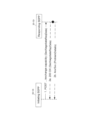
- FIG. FIG. 4 is a sequence diagram for explaining a procedure of negotiation between SEPPs of the communication system according to the embodiment of the present disclosure
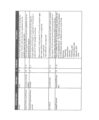
- FIG. 4 is a diagram showing the definition of SecNegotiationReqData according to an embodiment of the present disclosure
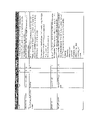
- FIG. FIG. 4 is a diagram showing the definition of SecNegotiationRspData according to an embodiment of the present disclosure
- FIG. 10 is a diagram showing an example of defining the use of N32 by ENUM type according to an embodiment of the present disclosure
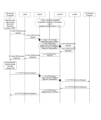
- FIG. 4 is a sequence diagram for explaining procedures for signal transfer between an NF service consumer and an NF service producer according to an embodiment of the present disclosure
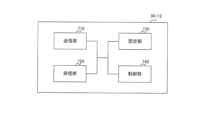
- 2 is a diagram illustrating an example of a functional configuration of SEPP according to an embodiment of the present disclosure
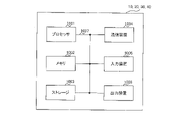
- FIG. 2 is a diagram illustrating an example of hardware configuration of a terminal, base station, data hub access support device, or other network node according to an embodiment of the present disclosure
- FIG. 4 is a sequence diagram for explaining procedures for signal transfer between an NF service consumer and an NF service producer according to an embodiment of the present disclosure
- 2 is a diagram illustrating an example of a functional configuration of SEPP according to an embodiment of the present disclosure
- FIG. 2 is a diagram illustrating an example of hardware configuration of a terminal, base station, data hub access support device, or other network node according to an embodiment of the present disclosure
- existing technology may be used as appropriate.
- the existing technology is, for example, existing LTE or existing 5G, but is not limited to existing LTE or existing 5G.
- node names, signal names, etc. described in the 5G standard are currently used, but node names and signal names having the same functions as these are used. Names, etc. may be called by names different from these.
- SS Synchronization Signal
- PSS Primary SS
- SSS Secondary SS
- PBCH Physical Broadcast Channel
- PRACH Physical Random Access Channel
- PDCCH Physical Downlink Control Channel
- PDSCH Physical Downlink Shared Channel
- PUCCH Physical Uplink Control Channel
- PUSCH Physical Uplink Shared Channel
- FIG. 1 shows the configuration of a communication system in the form of roaming.
- the communication system 1 includes, for example, a communication terminal used by a user, UE 10 (User Equipment: may also be called a (user) terminal), a plurality of network nodes 20, 30-1 to 30-12 (NF (Network Function)) and 40.
- UE 10 User Equipment: may also be called a (user) terminal
- NF Network Function
- one network node corresponds to each function, but one network node may implement a plurality of functions, or a plurality of network nodes may implement one function.
- the "connection" described below may be a logical connection or a physical connection.
- the communication system 1 is a system included in the 5G network system, and is a system that provides network services to the UE 10 through data communication.
- Network services refer to services using network resources, such as communication services (dedicated line services, etc.) and application services (video distribution, services using sensor devices such as embedded devices).
- the UE 10 is in a roaming environment. That the UE 10 is in a roaming environment means that the user of the UE 10 accesses and communicates with the VPLMN, which is the network in which the UE 10 resides (visited network), unlike the HPLMN, which is the network (home network) of the carrier with which the user of the UE 10 has a contract. Indicates that it is in progress.
- the VPLMN is the first network and the HPLMN is the second network.
- VPLMN of communication system 1 includes UE 10, (R) AN ((Radio) Access Network) 20, AMF (Access and Mobility Management Function) 30-1, SMF (Session Management function) 30-2, NSSF (Network Slice Selection Function ) 30-3, NEF (Network Exposure Function) 30-4, NRF (Network Repository Function) 30-5, PCF (Policy Control Function) 30-8, NSACF (Network Slice Admission Control Function) 30-10, SEPP (Security Edge Protection Proxy) 30-12 and UPF (User Plane Function) 40.
- R Radio
- AMF Access and Mobility Management Function
- SMF Session Management function
- NSSF Network Slice Selection Function
- NEF Network Exposure Function
- PCF Policy Control Function
- NSACF Network Slice Admission Control Function
- SEPP Security Edge Protection Proxy
- UPF User Plane Function
- the HPLMN of the communication system 1 includes SMF 30-2, NSSF 30-3, NEF 30-4, NRF 30-5, UDM (Unified Data Management) 30-6, AUSF (Authentication Server Function) 30-7, PCF 30-8, AF (Application Function) 30-9, NSACF 30-10, NSSAAF (Network Slice Specific Authentication and Authorization Function) 30-11, SEPP 30-12, and UPF 40.
- the (R)AN 20 is a network node having radio access functionality, and may be, for example, a gNB (next generation Node B) (which may also be called a base station) 20 .
- gNB next generation Node B
- base station 20 .
- the AMF 30-1 is a network node having functions such as RAN interface termination, NAS (Non-Access Stratum) termination, registration management, connection management, reachability management, and mobility management.
- RAN interface termination NAS (Non-Access Stratum) termination
- registration management registration management
- connection management reachability management
- mobility management mobility management
- the SMF 30-2 is a network node that has functions such as session management, UE IP (Internet Protocol) address assignment and management, DHCP (Dynamic Host Configuration Protocol) function, ARP (Address Resolution Protocol) proxy, and roaming function.
- UE IP Internet Protocol
- DHCP Dynamic Host Configuration Protocol
- ARP Address Resolution Protocol
- NSSF 30-3 is a network node that has functions such as selecting a network slice to which the UE connects, determining the allowed NSSAI (Network Slice Selection Assistance Information), determining the NSSAI to be set, and determining the AMF set to which the UE connects. is.
- NSSAI Network Slice Selection Assistance Information
- the NEF 30-4 is a network node that has the function of notifying other NFs of capabilities and events.
- the NRF 30-5 is a network node that has the function of discovering NF instances that provide services.
- the UDM 30-6 is a network node that manages subscriber data and authentication data.
- the UDM 30-6 is connected to a UDR (User Data Repository) holding the data.
- UDR User Data Repository
- the AUSF 30-7 is a network node that authenticates the subscriber/UE 10 against the subscriber data held in the UDR.
- the PCF 30-8 is a network node that has the function of performing network policy control.
- AF30-9 is a network node that has the function of controlling the application server.
- the NSACF 30-10 is a network node that has the function of controlling authorization of network slices.
- the NSSAAF 30-11 is a network node that has the function of controlling network slice authentication/authorization.
- SEPP 30-12 is a network node with a proxy that controls message filtering and policy restrictions in inter-operator control plane exchanges.
- the SEPP 30-12 on the VPLMN side is described as vSEPP30-12v
- the SEPP 30-12 on the HPLMN side is described as hSEPP30-12h.
- vSEPP 30-12v and hSEPP 30-12h provide functions related to security and integrity of messages (HTTP Request, HTTP Response, etc.) sent and received between VPLMN and HPLMN.
- the UPF 40 is a network node that has functions such as a PDU (Protocol Data Unit) session point to the outside, packet routing and forwarding, and user plane QoS (Quality of Service) handling.
- PDU Protocol Data Unit
- QoS Quality of Service
- N1, N2, N3, N4, and N9 are reference points between network nodes. Also, N32 between vSEPP30-12v and hSEPP30-12h is a reference point at the connection point between VPLMN and HPLMN.
- (R)AN 20 is connected to UE 10, AMF 30-1 and UPF 40.
- NSACF 30-10 have respective service-based interfaces Namf, Nsmf, Nnssf, Nnef, Nnrf, Npcf, are connected to each other via Nsacf respectively.
- SMF30-2, NSSF30-3, NEF30-4, NRF30-5, UDM30-6, AUSF30-7, PCF30-8, AF30-9, NSACF30-10, NSSAAF30-11 are interfaces based on each service. are interconnected via Nsmf, Nnssf, Nnef, Nnrf, Nudm, Nausf, Npcf, Naf, Nsacf, and Nnssaaf, respectively.
- vSEPP30-12v connects with VPLMN's AMF30-1, SMF30-2, NSSF30-3, NEF30-4, NRF30-5, PCF30-8 and NSACF30-10, and connects with hSEPP30-12h via N32.
- hSEPP30-12h connects with HPLMN SMF30-2, NSSF30-3, NEF30-4, NRF30-5, UDM30-6, AUSF30-7, PCF30-8, AF30-9, NSACF30-10 and NSSAAF30-11. , N32 to vSEPP30-12v.
- the UPF 40 on the VPLMN side interconnects with (R)AN 20, SMF 30-2 and UPF 40 on the HPLMN side.
- UPF 40 of HPLMN interconnects with SMF 30 - 2 and DN (Data Network) 50 .
- a communication system in the form of Interconnect has the configuration shown in FIG.
- SEPP cSEPP
- SEPP pSEPP
- rSEPP30 of Roaming Fig. 1
- -12r rSEPP
- negotiation between SEPPs is performed according to the following procedure.
- the initiating SEPP 30-12i sends an HTTP POST request including SecNegotiateReqData to the responding SEPP 30-12r.
- the SEPP 30-12r on the responding side determines whether the request is successful or unsuccessful, that is, whether the N32 connection can be established, by the determination process described later. Note that in FIG. 3, the determination process performed by the SEPP 30-12r on the response side is represented by ⁇ .
- FIG. 4 is a diagram showing the definition of the control signal SecNegotiationReqData.
- FIG. 5 is a diagram showing the definition of the control signal SecNegotiationRsqData.
- the definition of SecNegotiationReqData shown in Fig. 4 is obtained by adding a new attribute, usagePurpose, to the Definition of type SecNegotiationReqData described in Table 6.1.5.2.2-1 of Non-Patent Document 2.
- the SEPP 30-12i on the initiating side designates the usage of the connection by usagePurpose.
- N32 may be defined in an ENUM type (enumeration type) table as shown in FIG.
- Connection uses include Roaming, Interconnect (interconnection), General (general inquiries, etc.), Roaming test, Interconnect test, General test, etc.
- Roaming is the exchange of necessary signals from the VPLMN to the HPLMN, such as subscriber information acquisition, authentication, location registration, and session establishment for communication via the Home network.
- Interconnect is the exchange of signals to provide services between users of different operators.
- General refers to uses other than Roaming and Interconnect, such as access to the NRF such as device discovery (NF Discovery), status notifications from the NRF and other NF Producers, etc.
- access to the NRF such as device discovery (NF Discovery), status notifications from the NRF and other NF Producers, etc.
- a roaming test is an exchange of identification signals to test the normality of whether or not a connection is possible before the start of roaming.
- Interconnect test is the exchange of identification signals to test the normality of whether connection is possible or not before the start of Interconnect.
- a general test is an exchange of identification signals to test the normality of whether or not a connection is possible before starting general.
- the SEPP 30-12r on the responding side determines whether the connection according to the requested usage is possible according to the agreement (policy) between the operators.
- the responder SEPP 30-12r specifies the usagePurpose of SecNegotiationRspData and sends a "200 OK" status code including SecNegotiationRspData to the initiator SEPP 30-12i (Fig. 3 step 2a).
- the SEPP 30-12r on the responding side sends the SEPP 30-12i on the initiating side a "4xx/5xx" status code and ProblemDetails indicating the reason for refusal (procedure 2b in FIG. 3). ).
- a new attribute usagePurpose that clearly indicates the usage is added to SecNegotiationReqData and SecNegotiationRsqData. Then, in initial connection establishment, the initiating SEPP 30-12i sends SecNegotiationReqData including usagePurpose to the responding SEPP 30-12r via N32. The SEPP 30-12r on the responding side determines whether connection is possible according to the purpose indicated by usagePurpose of SecNegotiationReqData.
- a parameter for confirming the application is added to the control signal from the SEPP 30-12i on the initiating side.
- the SEPP 30-12r can appropriately determine whether N32 is connectable.
- signal transfer between the NF service consumer on the side of using the NF service and the NF service producer on the side of providing the NF service is performed by the following procedure.
- SEPP (c-SEPP) on the NF service consumer side and SEPP (p-SEPP) on the NF service producer side negotiate security functions.
- SEPP uses TLS (Transport Layer Security) as a security policy.
- TLS Transport Layer Security
- a TLS connection is set up between the c-SEPP and the p-SEPP for the N32-f transfer.
- NF service consumer transfers Nnrf_NF Discovery request to c-NRF.
- c-SEPP sets up a TLS tunnel with the authoritative server in p-SEPP.
- c-SEPP sets apiRoot of Request URI to apiRoot of p-SEPP, inserts 3gpp-Sbi-Target-apiRoot header (Custom header) set to apiRoot of p-NRF, p- Send Nnrf_NF Discovery request to SEPP.
- Step 11 The NF service consumer initiates an HTTP message and forwards the HTTP/2 Service request to c-SEPP using a URI of "http" scheme.
- c-SEPP forwards the HTTP/2 Service request to p-SEPP within the TLS tunnel.
- the NF service producer transfers the HTTP/2 Service response to p-SEPP.
- p-SEPP forwards the HTTP/2 Service response to c-SEPP within the TLS tunnel.
- the NF service consumer sets a Custom header to at least one of the Nnrf_NF Discovery request and HTTP/2 Service request, which are signals addressed to other networks, and writes information indicating the usage therein.
- c-SEPP or p-SEPP is the use written in Nnrf_NF Discovery request or HTTP/2 Service request (hereinafter referred to as "request use”) is the use (purpose) of N32 established in the initial connection, that is, the opposite operator It is determined whether or not the connection with is included in the permitted uses (hereinafter referred to as “permissible uses”).
- request use is the use written in Nnrf_NF Discovery request or HTTP/2 Service request
- the c-SEPP or p-SEPP performs signal transfer when the request usage is included in the permitted usage (procedures 6 and 13 in FIG. 7).
- the c-SEPP or p-SEPP does not transfer the signal and returns an error response including information indicating that the signal transfer is not possible to the NF service consumer.
- the NF service consumer writes the request usage in at least one of Nnrf_NF Discovery request and HTTP/2 Service request. Then, the c-SEPP or p-SEPP determines whether or not the requested usage is included in the permitted usages.
- a parameter for confirming the application is added to the control signal from the NF service consumer. connection propriety can be determined appropriately.
- the NF service consumer can grasp the reason for the error, which cannot be determined from the HTTP response code alone.
- FIG. 8 is a diagram showing an example of the functional configuration of SEPP 30-12 according to an embodiment of the present disclosure.
- SEPP 30-12 includes a transmitter 710, a receiver 720, a setter 730, and a controller 740.
- FIG. The functional configuration shown in FIG. 8 is merely an example. As long as the operation according to the embodiment of the present disclosure can be executed, the functional division and the name of the functional unit may be anything.
- the transmission unit 710 includes a function of generating a signal to be transmitted and transmitting the generated signal to the network.
- the receiving unit 720 includes a function of receiving various signals and acquiring, for example, higher layer information from the received signals.
- the setting unit 730 stores preset information and setting information set in advance in a storage device (storage unit), and reads preset information and setting information from the storage device as needed. Note that the setting unit 730 may be included in the control unit 740 .
- the control unit 740 controls the entire SEPP 30-12.
- a functional unit related to signal transmission in control unit 740 may be included in transmitting unit 710
- a functional unit related to signal reception in control unit 740 may be included in receiving unit 720 .
- each functional block may be implemented using one device that is physically or logically coupled, or directly or indirectly using two or more devices that are physically or logically separated (e.g. , wired, wireless, etc.) and may be implemented using these multiple devices.
- a functional block may be implemented by combining software in the one device or the plurality of devices.
- Functions include judging, determining, determining, calculating, calculating, processing, deriving, investigating, searching, checking, receiving, transmitting, outputting, accessing, resolving, selecting, choosing, establishing, comparing, assuming, expecting, assuming, Broadcasting, notifying, communicating, forwarding, configuring, reconfiguring, allocating, mapping, assigning, etc. can't
- a functional block (component) that performs transmission is called a transmitting unit or transmitter.
- the implementation method is not particularly limited.
- a base station, a terminal, etc. may function as a computer that performs processing of the wireless communication method of the present disclosure.
- FIG. 9 is a diagram illustrating an example of hardware configurations of a terminal, base station, data hub access support, and other network nodes according to an embodiment of the present disclosure;
- the terminal 10, base station 20, and other network nodes 30-1 to 30-12 and 40 described above physically include a processor 1001, a memory 1002, a storage 1003, a communication device 1004, an input device 1005, an output device 1006, It may be configured as a computer device including a bus 1007 and the like.
- the term "apparatus” can be read as a circuit, device, unit, or the like.
- the hardware configuration of the terminal 10, base station 20, and other network nodes 30-1 to 30-12, 40 may be configured to include one or more of each device shown in the figure, or may be configured without the device of
- Each function in terminal 10, base station 20 and other network nodes 30-1 to 30-12, 40 is implemented by loading predetermined software (program) onto hardware such as processor 1001 and memory 1002. performs calculations, controls communication by the communication device 1004, and controls at least one of reading and writing data in the memory 1002 and the storage 1003.
- predetermined software program
- the processor 1001 for example, operates an operating system and controls the entire computer.
- the processor 1001 may be configured by a central processing unit (CPU) including an interface with peripheral devices, a control device, an arithmetic device, registers, and the like.
- CPU central processing unit
- the control unit 740 and the like described above may be implemented by the processor 1001 .
- the processor 1001 reads programs (program codes), software modules, data, etc. from at least one of the storage 1003 and the communication device 1004 to the memory 1002, and executes various processes according to them.
- programs program codes
- software modules software modules
- data etc.
- the control unit 740 may be implemented by a control program stored in the memory 1002 and running on the processor 1001, and other functional blocks may be similarly implemented.
- FIG. Processor 1001 may be implemented by one or more chips.
- the program may be transmitted from a network via an electric communication line.
- the memory 1002 is a computer-readable recording medium, and is composed of at least one of, for example, ROM (Read Only Memory), EPROM (Erasable Programmable ROM), EEPROM (Electrically Erasable Programmable ROM), RAM (Random Access Memory), etc. may be
- ROM Read Only Memory
- EPROM Erasable Programmable ROM
- EEPROM Electrical Erasable Programmable ROM
- RAM Random Access Memory
- the memory 1002 may also be called a register, cache, main memory (main storage device), or the like.
- the memory 1002 can store executable programs (program code), software modules, etc. for implementing a wireless communication method according to an embodiment of the present disclosure.
- the storage 1003 is a computer-readable recording medium, for example, an optical disk such as a CD-ROM (Compact Disc ROM), a hard disk drive, a flexible disk, a magneto-optical disk (for example, a compact disk, a digital versatile disk, a Blu-ray disk), smart card, flash memory (eg, card, stick, key drive), floppy disk, magnetic strip, and/or the like.
- Storage 1003 may also be called an auxiliary storage device.
- the storage medium described above may be, for example, a database, server, or other suitable medium including at least one of memory 1002 and storage 1003 .
- the communication device 1004 is hardware (transmitting/receiving device) for communicating between computers via at least one of a wired network and a wireless network, and is also called a network device, a network controller, a network card, a communication module, or the like.
- the communication device 1004 includes a high-frequency switch, a duplexer, a filter, a frequency synthesizer, etc., in order to realize at least one of, for example, frequency division duplex (FDD) and time division duplex (TDD). may consist of
- FDD frequency division duplex
- TDD time division duplex
- the transmitting unit 710 , the receiving unit 720 , etc. described above may be implemented by the communication device 1004 .
- the input device 1005 is an input device (for example, keyboard, mouse, microphone, switch, button, sensor, etc.) that receives input from the outside.
- the output device 1006 is an output device (eg, display, speaker, LED lamp, etc.) that outputs to the outside. Note that the input device 1005 and the output device 1006 may be integrated (for example, a touch panel).
- Each device such as the processor 1001 and the memory 1002 is connected by a bus 1007 for communicating information.
- the bus 1007 may be configured using a single bus, or may be configured using different buses between devices.
- terminal 10, the base station 20, and other network nodes 30-1 to 30-12, 40 include microprocessors, digital signal processors (DSPs), ASICs (Application Specific Integrated Circuits), PLDs (Programmable Logic Device), FPGA (Field Programmable Gate Array), etc., may be included, and part or all of each functional block may be realized by the hardware.
- processor 1001 may be implemented using at least one of these pieces of hardware.
- notification of information includes physical layer signaling (e.g., DCI (Downlink Control Information), UCI (Uplink Control Information)), higher layer signaling (e.g., RRC (Radio Resource Control) signaling, MAC (Medium Access Control) signaling, It may be implemented by broadcast information (MIB (Master Information Block), SIB (System Information Block)), other signals, or a combination thereof.
- RRC signaling may also be called an RRC message, and may be, for example, an RRC connection setup message, an RRC connection reconfiguration message, or the like.
- Each aspect/embodiment described in the present disclosure includes LTE (Long Term Evolution), LTE-A (LTE-Advanced), SUPER 3G, IMT-Advanced, 4G (4th generation mobile communication system), 5G (5th generation mobile communication system), FRA (Future Radio Access), NR (New Radio), W-CDMA (registered trademark), GSM (registered trademark), CDMA2000, UMB (Ultra Mobile Broadband), IEEE 802.11 (Wi-Fi (registered trademark) )), IEEE 802.16 (WiMAX®), IEEE 802.20, UWB (Ultra-WideBand), Bluetooth®, and other suitable systems and extended It may be applied to at least one of the next generation systems. Also, a plurality of systems may be applied in combination (for example, a combination of at least one of LTE and LTE-A and 5G, etc.).
- Base station operation Certain operations that are described in this disclosure as being performed by a base station may also be performed by its upper node in some cases.
- various operations performed for communication with a terminal may be performed by the base station and other network nodes other than the base station (e.g. MME or S-GW, etc. (including but not limited to).
- MME or S-GW network nodes other than the base station
- the case where there is one network node other than the base station is exemplified above, it may be a combination of a plurality of other network nodes (for example, MME and S-GW).
- (input/output direction) Information and the like can be output from the upper layer (or lower layer) to the lower layer (or higher layer). It may be input and output via multiple network nodes.
- Input/output information and the like may be stored in a specific location (for example, memory), or may be managed using a management table. Input/output information and the like can be overwritten, updated, or appended. The output information and the like may be deleted. The entered information and the like may be transmitted to another device.
- the determination may be made by a value represented by one bit (0 or 1), by a true/false value (Boolean: true or false), or by numerical comparison (for example, a predetermined value).
- Software whether referred to as software, firmware, middleware, microcode, hardware description language or otherwise, includes instructions, instruction sets, code, code segments, program code, programs, subprograms, and software modules. , applications, software applications, software packages, routines, subroutines, objects, executables, threads of execution, procedures, functions, and the like.
- software, instructions, information, etc. may be transmitted and received via a transmission medium.
- the software uses at least one of wired technology (coaxial cable, fiber optic cable, twisted pair, digital subscriber line (DSL), etc.) and wireless technology (infrared, microwave, etc.) to website, Wired and/or wireless technologies are included within the definition of transmission medium when sent from a server or other remote source.
- wired technology coaxial cable, fiber optic cable, twisted pair, digital subscriber line (DSL), etc.
- wireless technology infrared, microwave, etc.
- Information, signal Information, signals, etc. described in this disclosure may be represented using any of a variety of different technologies.
- data, instructions, commands, information, signals, bits, symbols, chips, etc. may refer to voltages, currents, electromagnetic waves, magnetic fields or magnetic particles, light fields or photons, or any of these. may be represented by a combination of
- the channel and/or symbols may be signaling.
- a signal may also be a message.
- a component carrier may also be called a carrier frequency, a cell, a frequency carrier, or the like.
- system As used in this disclosure, the terms “system” and “network” are used interchangeably.
- radio resources may be indexed.
- Base station wireless base station
- base station radio base station
- radio base station fixed station
- NodeB nodeB
- eNodeB eNodeB
- gNodeB gNodeB
- a base station may also be referred to by terms such as macrocell, small cell, femtocell, picocell, and the like.
- a base station can accommodate one or more (eg, three) cells.
- the overall coverage area of the base station can be partitioned into multiple smaller areas, each smaller area being associated with a base station subsystem (e.g., an indoor small base station (RRH: Communication services can also be provided by Remote Radio Head)).
- RRH indoor small base station
- the terms "cell” or “sector” refer to part or all of the coverage area of at least one of the base stations and base station subsystems that serve communication within such coverage.
- terminal In this disclosure, terms such as “Mobile Station (MS),” “user terminal,” “User Equipment (UE),” “terminal,” etc. may be used interchangeably. .
- a mobile station is defined by those skilled in the art as a subscriber station, mobile unit, subscriber unit, wireless unit, remote unit, mobile device, wireless device, wireless communication device, remote device, mobile subscriber station, access terminal, mobile terminal, wireless It may also be called a terminal, remote terminal, handset, user agent, mobile client, client, or some other suitable term.
- At least one of a base station and a mobile station may be called a transmitter, a receiver, a communication device, and the like. At least one of the base station and the mobile station may be a device mounted on a mobile object, the mobile object itself, or the like.
- the mobile object may be a vehicle (e.g., car, airplane, etc.), an unmanned mobile object (e.g., drone, self-driving car, etc.), or a robot (manned or unmanned ).
- at least one of the base station and the mobile station includes devices that do not necessarily move during communication operations.
- at least one of the base station and the mobile station may be an IoT (Internet of Things) device such as a sensor.
- IoT Internet of Things
- the base station in the present disclosure may be read as a user terminal.
- communication between a base station and a user terminal is replaced with communication between multiple user terminals (for example, D2D (Device-to-Device), V2X (Vehicle-to-Everything), etc.)
- the terminal 10 may have the functions of the base station 20 described above.
- words such as "up” and “down” may be replaced with words corresponding to inter-terminal communication (for example, "side”).
- uplink channels, downlink channels, etc. may be read as side channels.
- a terminal in the present disclosure may be read as a base station.
- the base station 20 may have the functions of the terminal 10 described above.
- determining may encompass a wide variety of actions.
- “Judgement”, “determining” are, for example, judging, calculating, computing, processing, deriving, investigating, looking up, searching, inquiring (eg, lookup in a table, database, or other data structure), ascertaining as “judged” or “determined”, and the like.
- "judgment” and “decision” are used for receiving (e.g., receiving information), transmitting (e.g., transmitting information), input, output, access (accessing) (for example, accessing data in memory) may include deeming that something has been "determined” or “decided”.
- judgment and “decision” are considered to be “judgment” and “decision” by resolving, selecting, choosing, establishing, comparing, etc. can contain.
- judgment and “decision” may include considering that some action is “judgment” and “decision”.
- judgment (decision) may be read as “assuming”, “expecting”, “considering”, or the like.
- connection means any direct or indirect connection or connection between two or more elements, It can include the presence of one or more intermediate elements between two elements being “connected” or “coupled.” Couplings or connections between elements may be physical, logical, or a combination thereof. For example, “connection” may be read as "access”.
- two elements are defined using at least one of one or more wires, cables, and printed electrical connections and, as some non-limiting and non-exhaustive examples, in the radio frequency domain. , electromagnetic energy having wavelengths in the microwave and optical (both visible and invisible) regions, and the like.
- the reference signal may be abbreviated as RS (Reference Signal), or may be referred to as Pilot according to the applicable standard.
- a radio frame may consist of one or more frames in the time domain. Each frame or frames in the time domain may be referred to as a subframe. A subframe may also consist of one or more slots in the time domain. A subframe may be a fixed time length (eg, 1 ms) independent of numerology.
- a numerology may be a communication parameter that applies to the transmission and/or reception of a signal or channel. Numerology, for example, subcarrier spacing (SCS), bandwidth, symbol length, cyclic prefix length, transmission time interval (TTI), number of symbols per TTI, radio frame configuration, transmission and reception specific filtering operations performed by the receiver in the frequency domain, specific windowing operations performed by the transceiver in the time domain, and/or the like.
- SCS subcarrier spacing
- TTI transmission time interval
- radio frame configuration for example, transmission and reception specific filtering operations performed by the receiver in the frequency domain, specific windowing operations performed by the transceiver in the time domain, and/or the like.
- a slot may consist of one or more symbols (OFDM (Orthogonal Frequency Division Multiplexing) symbol, SC-FDMA (Single Carrier Frequency Division Multiple Access) symbol, etc.) in the time domain.
- a slot may be a unit of time based on numerology.
- a slot may contain multiple mini-slots. Each minislot may consist of one or more symbols in the time domain. A minislot may also be referred to as a subslot. A minislot may consist of fewer symbols than a slot.
- PDSCH (or PUSCH) transmitted in time units larger than minislots may be referred to as PDSCH (or PUSCH) mapping type A.
- PDSCH (or PUSCH) transmitted using minislots may be referred to as PDSCH (or PUSCH) mapping type B.
- Radio frames, subframes, slots, minislots and symbols all represent time units when transmitting signals. Radio frames, subframes, slots, minislots and symbols may be referred to by other corresponding designations.
- one subframe may be called a Transmission Time Interval (TTI)
- TTI Transmission Time Interval
- TTI Transmission Time Interval
- TTI Transmission Time Interval
- one slot or one minislot may be called a TTI.
- TTI Transmission Time Interval
- at least one of the subframe and TTI may be a subframe (1 ms) in existing LTE, a period shorter than 1 ms (eg, 1-13 symbols), or a period longer than 1 ms may be Note that the unit representing the TTI may be called a slot, mini-slot, or the like instead of a subframe.
- TTI refers to, for example, the minimum scheduling time unit in wireless communication.
- a base station performs scheduling to allocate radio resources (frequency bandwidth, transmission power, etc. that can be used by each user terminal) to each user terminal on a TTI basis.
- radio resources frequency bandwidth, transmission power, etc. that can be used by each user terminal
- a TTI may be a transmission time unit such as a channel-encoded data packet (transport block), code block, or codeword, or may be a processing unit such as scheduling and link adaptation. Note that when a TTI is given, the time interval (for example, the number of symbols) in which transport blocks, code blocks, codewords, etc. are actually mapped may be shorter than the TTI.
- one or more TTIs may be the minimum scheduling time unit. Also, the number of slots (the number of mini-slots) constituting the minimum time unit of the scheduling may be controlled.
- a TTI having a time length of 1 ms may be called a normal TTI (TTI in LTE Rel. 8-12), normal TTI, long TTI, normal subframe, normal subframe, long subframe, slot, or the like.
- a TTI that is shorter than a normal TTI may be called a shortened TTI, a short TTI, a partial or fractional TTI, a shortened subframe, a short subframe, a minislot, a subslot, a slot, and the like.
- the long TTI (e.g., normal TTI, subframe, etc.) may be replaced with a TTI having a time length exceeding 1 ms
- the short TTI e.g., shortened TTI, etc.
- a TTI having the above TTI length may be read instead.
- a resource block is a resource allocation unit in the time domain and the frequency domain, and may include one or more consecutive subcarriers in the frequency domain.
- the number of subcarriers included in the RB may be the same regardless of the neumerology, eg twelve.
- the number of subcarriers included in an RB may be determined based on neumerology.
- the time domain of an RB may include one or more symbols and may be 1 slot, 1 minislot, 1 subframe, or 1 TTI long.
- One TTI, one subframe, etc. may each consist of one or more resource blocks.
- One or more RBs are physical resource blocks (PRBs), sub-carrier groups (SCGs), resource element groups (REGs), PRB pairs, RB pairs, etc. may be called.
- PRBs physical resource blocks
- SCGs sub-carrier groups
- REGs resource element groups
- PRB pairs RB pairs, etc. may be called.
- a resource block may be composed of one or more resource elements (RE: Resource Element).
- RE Resource Element
- 1 RE may be a radio resource region of 1 subcarrier and 1 symbol.
- a bandwidth part (which may also be called a bandwidth part) represents a subset of contiguous common resource blocks (RBs) for a certain numerology in a certain carrier. good.
- the common RB may be identified by an RB index based on the common reference point of the carrier.
- PRBs may be defined in a BWP and numbered within that BWP.
- the BWP may include a BWP for UL (UL BWP) and a BWP for DL (DL BWP).
- UL BWP UL BWP
- DL BWP DL BWP
- One or multiple BWPs may be configured for a UE within one carrier.
- At least one of the configured BWPs may be active, and the UE may not expect to transmit or receive a given signal/channel outside the active BWP.
- BWP bitmap
- radio frames, subframes, slots, minislots and symbols described above are only examples.
- the number of subframes contained in a radio frame the number of slots per subframe or radio frame, the number of minislots contained within a slot, the number of symbols and RBs contained in a slot or minislot, the number of Configurations such as the number of subcarriers, the number of symbols in a TTI, the symbol length, the cyclic prefix (CP) length, etc.
- CP cyclic prefix
- a and B are different may mean “A and B are different from each other.”
- the term may also mean that "A and B are different from C”.
- Terms such as “separate,” “coupled,” etc. may also be interpreted in the same manner as “different.”
- notification of predetermined information is not limited to being performed explicitly, but may be performed implicitly (for example, not notifying the predetermined information). good too.
- One aspect of the present disclosure is useful for mobile communication systems.
Landscapes
- Engineering & Computer Science (AREA)
- Databases & Information Systems (AREA)
- Computer Networks & Wireless Communication (AREA)
- Signal Processing (AREA)
- Mobile Radio Communication Systems (AREA)
Abstract
Description
-N32-c:初期接続確立(Handshake)を行い、実際のN32メッセージ転送に適用するパラメータをネゴシエートするための、SEPP(Security Edge Protection Proxy)間の制御プレーンのインタフェース
-N32-f:アプリケーションレベルのセキュリティ保護を適用した後に、サービスコンシューマとサービスプロデューサの間の信号を転送するために使用される、SEPP間の転送インタフェース
次に、本開示の一実施の形態に係る通信システム1について図1を用いて説明する。なお、図1は、Roamingの形態の通信システムの構成を示している。
次に、本実施の形態に係る、事業者間の接続の用途を考慮したN32の初期接続確立(Handshake)可否の判定処理について図3乃至図5を用いて説明する。
次に、初期接続確立後の、NFサービスコンシューマ(NF Service Consumer)とNFサービスプロデューサ(NF Service Producer)の間の信号の転送の可否の判定処理について図7を用いて説明する。
図8は、本開示の一実施の形態に係るSEPP30-12の機能構成の一例を示す図である。図8に示すように、SEPP30-12は、送信部710と、受信部720と、設定部730と、制御部740と、を備える。図8に示す機能構成は一例に過ぎない。本開示の実施の形態に係る動作を実行できるのであれば、機能区分及び機能部の名称はどのようなものでもよい。
なお、上記実施形態の説明に用いたブロック図は、機能単位のブロックを示している。これらの機能ブロック(構成部)は、ハードウェア及びソフトウェアの少なくとも一方の任意の組み合わせによって実現される。また、各機能ブロックの実現方法は特に限定されない。すなわち、各機能ブロックは、物理的又は論理的に結合した1つの装置を用いて実現されてもよいし、物理的又は論理的に分離した2つ以上の装置を直接的又は間接的に(例えば、有線、無線などを用いて)接続し、これら複数の装置を用いて実現されてもよい。機能ブロックは、上記1つの装置又は上記複数の装置にソフトウェアを組み合わせて実現されてもよい。
情報の通知は、本開示において説明した態様/実施形態に限られず、他の方法を用いて行われてもよい。例えば、情報の通知は、物理レイヤシグナリング(例えば、DCI(Downlink Control Information)、UCI(Uplink Control Information))、上位レイヤシグナリング(例えば、RRC(Radio Resource Control)シグナリング、MAC(Medium Access Control)シグナリング、報知情報(MIB(Master Information Block)、SIB(System Information Block)))、その他の信号又はこれらの組み合わせによって実施されてもよい。また、RRCシグナリングは、RRCメッセージと呼ばれてもよく、例えば、RRC接続セットアップ(RRC Connection Setup)メッセージ、RRC接続再構成(RRC Connection Reconfiguration)メッセージなどであってもよい。
本開示において説明した各態様/実施形態は、LTE(Long Term Evolution)、LTE-A(LTE-Advanced)、SUPER 3G、IMT-Advanced、4G(4th generation mobile communication system)、5G(5th generation mobile communication system)、FRA(Future Radio Access)、NR(New Radio)、W-CDMA(登録商標)、GSM(登録商標)、CDMA2000、UMB(Ultra Mobile Broadband)、IEEE 802.11(Wi-Fi(登録商標))、IEEE 802.16(WiMAX(登録商標))、IEEE 802.20、UWB(Ultra-WideBand)、Bluetooth(登録商標)、その他の適切なシステムを利用するシステム及びこれらに基づいて拡張された次世代システムの少なくとも一つに適用されてもよい。また、複数のシステムが組み合わされて(例えば、LTE及びLTE-Aの少なくとも一方と5Gとの組み合わせ等)適用されてもよい。
本開示において説明した各態様/実施形態の処理手順、シーケンス、フローチャートなどは、矛盾の無い限り、順序を入れ替えてもよい。例えば、本開示において説明した方法については、例示的な順序を用いて様々なステップの要素を提示しており、提示した特定の順序に限定されない。
本開示において基地局によって行われるとした特定動作は、場合によってはその上位ノード(upper node)によって行われることもある。基地局を有する1つ又は複数のネットワークノード(network nodes)からなるネットワークにおいて、端末との通信のために行われる様々な動作は、基地局及び基地局以外の他のネットワークノード(例えば、MME又はS-GWなどが考えられるが、これらに限られない)の少なくとも1つによって行われ得ることは明らかである。上記において基地局以外の他のネットワークノードが1つである場合を例示したが、複数の他のネットワークノードの組み合わせ(例えば、MME及びS-GW)であってもよい。
情報等(※「情報、信号」の項目参照)は、上位レイヤ(又は下位レイヤ)から下位レイヤ(又は上位レイヤ)へ出力され得る。複数のネットワークノードを介して入出力されてもよい。
入出力された情報等は特定の場所(例えば、メモリ)に保存されてもよいし、管理テーブルを用いて管理してもよい。入出力される情報等は、上書き、更新、又は追記され得る。出力された情報等は削除されてもよい。入力された情報等は他の装置へ送信されてもよい。
判定は、1ビットで表される値(0か1か)によって行われてもよいし、真偽値(Boolean:true又はfalse)によって行われてもよいし、数値の比較(例えば、所定の値との比較)によって行われてもよい。
ソフトウェアは、ソフトウェア、ファームウェア、ミドルウェア、マイクロコード、ハードウェア記述言語と呼ばれるか、他の名称で呼ばれるかを問わず、命令、命令セット、コード、コードセグメント、プログラムコード、プログラム、サブプログラム、ソフトウェアモジュール、アプリケーション、ソフトウェアアプリケーション、ソフトウェアパッケージ、ルーチン、サブルーチン、オブジェクト、実行可能ファイル、実行スレッド、手順、機能などを意味するよう広く解釈されるべきである。
本開示において説明した情報、信号などは、様々な異なる技術のいずれかを使用して表されてもよい。例えば、上記の説明全体に渡って言及され得るデータ、命令、コマンド、情報、信号、ビット、シンボル、チップなどは、電圧、電流、電磁波、磁界若しくは磁性粒子、光場若しくは光子、又はこれらの任意の組み合わせによって表されてもよい。
本開示において使用する「システム」及び「ネットワーク」という用語は、互換的に使用される。
また、本開示において説明した情報、パラメータなどは、絶対値を用いて表されてもよいし、所定の値からの相対値を用いて表されてもよいし、対応する別の情報を用いて表されてもよい。例えば、無線リソースはインデックスによって指示されるものであってもよい。
本開示においては、「基地局(BS:Base Station)」、「無線基地局」、「固定局(fixed station)」、「NodeB」、「eNodeB(eNB)」、「gNodeB(gNB)」、「アクセスポイント(access point)」、「送信ポイント(transmission point)」、「受信ポイント(reception point)」、「送受信ポイント(transmission/reception point)」、「セル」、「セクタ」、「セルグループ」、「キャリア」、「コンポーネントキャリア」などの用語は、互換的に使用され得る。基地局は、マクロセル、スモールセル、フェムトセル、ピコセルなどの用語で呼ばれる場合もある。
本開示においては、「移動局(MS:Mobile Station)」、「ユーザ端末(user terminal)」、「ユーザ装置(UE:User Equipment)」、「端末」などの用語は、互換的に使用され得る。
基地局及び移動局の少なくとも一方は、送信装置、受信装置、通信装置などと呼ばれてもよい。なお、基地局及び移動局の少なくとも一方は、移動体に搭載されたデバイス、移動体自体などであってもよい。当該移動体は、乗り物(例えば、車、飛行機など)であってもよいし、無人で動く移動体(例えば、ドローン、自動運転車など)であってもよいし、ロボット(有人型又は無人型)であってもよい。なお、基地局及び移動局の少なくとも一方は、必ずしも通信動作時に移動しない装置も含む。例えば、基地局及び移動局の少なくとも一方は、センサなどのIoT(Internet of Things)機器であってもよい。
本開示で使用する「判断(determining)」、「決定(determining)」という用語は、多種多様な動作を包含する場合がある。「判断」、「決定」は、例えば、判定(judging)、計算(calculating)、算出(computing)、処理(processing)、導出(deriving)、調査(investigating)、探索(looking up、search、inquiry)(例えば、テーブル、データベース又は別のデータ構造での探索)、確認(ascertaining)した事を「判断」「決定」したとみなす事などを含み得る。また、「判断」、「決定」は、受信(receiving)(例えば、情報を受信すること)、送信(transmitting)(例えば、情報を送信すること)、入力(input)、出力(output)、アクセス(accessing)(例えば、メモリ中のデータにアクセスすること)した事を「判断」「決定」したとみなす事などを含み得る。また、「判断」、「決定」は、解決(resolving)、選択(selecting)、選定(choosing)、確立(establishing)、比較(comparing)などした事を「判断」「決定」したとみなす事を含み得る。つまり、「判断」「決定」は、何らかの動作を「判断」「決定」したとみなす事を含み得る。また、「判断(決定)」は、「想定する(assuming)」、「期待する(expecting)」、「みなす(considering)」などで読み替えられてもよい。
参照信号は、RS(Reference Signal)と略称することもでき、適用される標準によってパイロット(Pilot)と呼ばれてもよい。
本開示において使用する「に基づいて」という記載は、別段に明記されていない限り、「のみに基づいて」を意味しない。言い換えれば、「に基づいて」という記載は、「のみに基づいて」と「に少なくとも基づいて」の両方を意味する。
本開示において使用する「第1の」、「第2の」などの呼称を使用した要素へのいかなる参照も、それらの要素の量又は順序を全般的に限定しない。これらの呼称は、2つ以上の要素間を区別する便利な方法として本開示において使用され得る。したがって、第1及び第2の要素への参照は、2つの要素のみが採用され得ること、又は何らかの形で第1の要素が第2の要素に先行しなければならないことを意味しない。
上記の各装置の構成における「部」を、「手段」、「回路」、「デバイス」等に置き換えてもよい。
本開示において、「含む(include)」、「含んでいる(including)」及びそれらの変形が使用されている場合、これらの用語は、用語「備える(comprising)」と同様に、包括的であることが意図される。さらに、本開示において使用されている用語「又は(or)」は、排他的論理和ではないことが意図される。
無線フレームは時間領域において1つ又は複数のフレームによって構成されてもよい。時間領域において1つ又は複数の各フレームはサブフレームと呼ばれてもよい。サブフレームは更に時間領域において1つ又は複数のスロットによって構成されてもよい。サブフレームは、ニューメロロジー(numerology)に依存しない固定の時間長(例えば、1ms)であってもよい。
本開示において説明した各態様/実施形態は単独で用いてもよいし、組み合わせて用いてもよいし、実行に伴って切り替えて用いてもよい。また、所定の情報の通知(例えば、「Xであること」の通知)は、明示的に行うものに限られず、暗黙的(例えば、当該所定の情報の通知を行わない)ことによって行われてもよい。
20 (R)AN
30-12 SEPP
30-12v vSEPP
30-12h hSEPP
30-12i 起動側SEPP
30-12r 応答側SEPP
710 送信部
720 受信部
730 設定部
740 制御部
Claims (5)
- リファレンスポイントを介して他のネットワークノードと接続するネットワークノードであって、
前記他のネットワークノードがリクエストした接続の用途を示す情報を含む第1制御信号を受信する受信部と、
前記用途による接続が可能か否かを判定する制御部と、
前記判定の結果を示す情報を含む第2制御信号を前記他のネットワークノードに送信する送信部と、
を備えるネットワークノード。 - 前記制御部は、事業者間の協定に基づいて前記用途による接続が可能か否かを判定する、
請求項1に記載のネットワークノード。 - 前記ネットワークノードは、Home Public Land Mobile Network(HPLMN)側あるいは着信側のPLMNのSecurity Edge Protection Proxy(SEPP)であり、
前記他のネットワークノードは、Visited Public Land Mobile Network(VPLMN)側あるいは発信側のPLMNのSEPPであり、
前記リファレンスポイントは、N32である、
請求項1に記載のネットワークノード。 - リファレンスポイントを介して他のネットワークノードと接続するネットワークノードであって、
リクエストする接続の用途を示す情報を含む第1制御信号を前記他のネットワークノードに送信する送信部と、
前記他のネットワークノードにおいて判定された、前記用途による接続が可能か否かの結果を示す情報を含む第2制御信号を前記他のネットワークノードから受信する受信部と、
を備えるネットワークノード。 - リファレンスポイントを介した第1のネットワークノードと第2のネットワークノードとの間の通信方法であって、
前記第1のネットワークノードが、リクエストする接続の用途を示す情報を含む第1制御信号を前記第2のネットワークノードに送信し、
前記第2のネットワークノードが、前記用途による接続が可能か否かを判定し、
前記第2のネットワークノードが、前記判定の結果を示す情報を含む第2制御信号を前記第1のネットワークノードに送信する、
通信方法。
Priority Applications (4)
| Application Number | Priority Date | Filing Date | Title |
|---|---|---|---|
| EP21952899.9A EP4383822A4 (en) | 2021-08-06 | 2021-08-06 | NETWORK NODE AND COMMUNICATION METHOD |
| JP2023539587A JP7671353B2 (ja) | 2021-08-06 | 2021-08-06 | ネットワークノード及び通信方法 |
| PCT/JP2021/029442 WO2023013076A1 (ja) | 2021-08-06 | 2021-08-06 | ネットワークノード及び通信方法 |
| CN202180101292.6A CN117751626A (zh) | 2021-08-06 | 2021-08-06 | 网络节点以及通信方法 |
Applications Claiming Priority (1)
| Application Number | Priority Date | Filing Date | Title |
|---|---|---|---|
| PCT/JP2021/029442 WO2023013076A1 (ja) | 2021-08-06 | 2021-08-06 | ネットワークノード及び通信方法 |
Publications (1)
| Publication Number | Publication Date |
|---|---|
| WO2023013076A1 true WO2023013076A1 (ja) | 2023-02-09 |
Family
ID=85155496
Family Applications (1)
| Application Number | Title | Priority Date | Filing Date |
|---|---|---|---|
| PCT/JP2021/029442 Ceased WO2023013076A1 (ja) | 2021-08-06 | 2021-08-06 | ネットワークノード及び通信方法 |
Country Status (4)
| Country | Link |
|---|---|
| EP (1) | EP4383822A4 (ja) |
| JP (1) | JP7671353B2 (ja) |
| CN (1) | CN117751626A (ja) |
| WO (1) | WO2023013076A1 (ja) |
Families Citing this family (1)
| Publication number | Priority date | Publication date | Assignee | Title |
|---|---|---|---|---|
| JPWO2023152847A1 (ja) * | 2022-02-09 | 2023-08-17 |
Citations (1)
| Publication number | Priority date | Publication date | Assignee | Title |
|---|---|---|---|---|
| WO2020020474A1 (en) * | 2018-07-27 | 2020-01-30 | Telefonaktiebolaget Lm Ericsson (Publ) | Transparent network function discovery and addressing |
Family Cites Families (1)
| Publication number | Priority date | Publication date | Assignee | Title |
|---|---|---|---|---|
| GB2541247A (en) | 2015-08-14 | 2017-02-15 | Nec Corp | Communication system |
-
2021
- 2021-08-06 WO PCT/JP2021/029442 patent/WO2023013076A1/ja not_active Ceased
- 2021-08-06 JP JP2023539587A patent/JP7671353B2/ja active Active
- 2021-08-06 EP EP21952899.9A patent/EP4383822A4/en active Pending
- 2021-08-06 CN CN202180101292.6A patent/CN117751626A/zh active Pending
Patent Citations (1)
| Publication number | Priority date | Publication date | Assignee | Title |
|---|---|---|---|---|
| WO2020020474A1 (en) * | 2018-07-27 | 2020-01-30 | Telefonaktiebolaget Lm Ericsson (Publ) | Transparent network function discovery and addressing |
Also Published As
| Publication number | Publication date |
|---|---|
| CN117751626A (zh) | 2024-03-22 |
| JP7671353B2 (ja) | 2025-05-01 |
| EP4383822A4 (en) | 2025-05-21 |
| EP4383822A1 (en) | 2024-06-12 |
| JPWO2023013076A1 (ja) | 2023-02-09 |
Similar Documents
| Publication | Publication Date | Title |
|---|---|---|
| JP7245266B2 (ja) | ネットワークノード、ネットワークシステム及び通知方法 | |
| JP7412419B2 (ja) | ネットワークノード | |
| EP3681204B1 (en) | User equipment, network node, and communication system | |
| JP7169827B2 (ja) | 端末及び通信方法 | |
| JP7204403B2 (ja) | ネットワークノード | |
| JP7698048B2 (ja) | 認証サーバ及び通信方法 | |
| WO2023152847A1 (ja) | ネットワークノード及び通信方法 | |
| CN112690039B (zh) | 网络节点 | |
| WO2020217532A1 (ja) | セッション管理装置、ユーザプレーン装置、及び通信方法 | |
| JP7445673B2 (ja) | 端末 | |
| WO2022113370A1 (ja) | ネットワークノード及び通信方法 | |
| JP7834785B2 (ja) | ネットワークノード及び通信方法 | |
| JP7313423B2 (ja) | 基地局、通信方法、及び無線通信システム | |
| WO2020255686A1 (ja) | 基地局装置、及びユーザプレーン装置 | |
| JP7671354B2 (ja) | ネットワークノード及び通信方法 | |
| JP7671353B2 (ja) | ネットワークノード及び通信方法 | |
| JP7345565B2 (ja) | 通信装置及び通信方法 | |
| WO2023007611A1 (ja) | ネットワークノード及び通信方法 | |
| WO2022239242A1 (ja) | 基地局、ネットワークノード及び無線通信方法 | |
| WO2022234665A1 (ja) | 端末、通信システム、および、制御方法 | |
| WO2021053827A1 (ja) | 端末 | |
| WO2023007614A1 (ja) | ネットワークノード及び通信方法 | |
| WO2020144856A1 (ja) | 通信管理装置、及びデータ管理装置 | |
| WO2022157899A1 (ja) | ネットワークノード、無線通信システム及び通信方法 | |
| WO2023002545A1 (ja) | 基地局、無線通信システム、及び通信方法 |
Legal Events
| Date | Code | Title | Description |
|---|---|---|---|
| 121 | Ep: the epo has been informed by wipo that ep was designated in this application |
Ref document number: 21952899 Country of ref document: EP Kind code of ref document: A1 |
|
| WWE | Wipo information: entry into national phase |
Ref document number: 2023539587 Country of ref document: JP |
|
| WWE | Wipo information: entry into national phase |
Ref document number: 202180101292.6 Country of ref document: CN |
|
| NENP | Non-entry into the national phase |
Ref country code: DE |
|
| ENP | Entry into the national phase |
Ref document number: 2021952899 Country of ref document: EP Effective date: 20240306 |