WO2023017848A1 - 腎間質前駆細胞の製造方法並びにエリスロポエチン産生細胞、およびレニン産生細胞の製造方法 - Google Patents
腎間質前駆細胞の製造方法並びにエリスロポエチン産生細胞、およびレニン産生細胞の製造方法 Download PDFInfo
- Publication number
- WO2023017848A1 WO2023017848A1 PCT/JP2022/030664 JP2022030664W WO2023017848A1 WO 2023017848 A1 WO2023017848 A1 WO 2023017848A1 JP 2022030664 W JP2022030664 W JP 2022030664W WO 2023017848 A1 WO2023017848 A1 WO 2023017848A1
- Authority
- WO
- WIPO (PCT)
- Prior art keywords
- cells
- producing
- inhibitor
- renal
- progenitor cells
- Prior art date
- Legal status (The legal status is an assumption and is not a legal conclusion. Google has not performed a legal analysis and makes no representation as to the accuracy of the status listed.)
- Ceased
Links
Images






Classifications
-
- C—CHEMISTRY; METALLURGY
- C12—BIOCHEMISTRY; BEER; SPIRITS; WINE; VINEGAR; MICROBIOLOGY; ENZYMOLOGY; MUTATION OR GENETIC ENGINEERING
- C12N—MICROORGANISMS OR ENZYMES; COMPOSITIONS THEREOF; PROPAGATING, PRESERVING, OR MAINTAINING MICROORGANISMS; MUTATION OR GENETIC ENGINEERING; CULTURE MEDIA
- C12N5/00—Undifferentiated human, animal or plant cells, e.g. cell lines; Tissues; Cultivation or maintenance thereof; Culture media therefor
- C12N5/06—Animal cells or tissues; Human cells or tissues
- C12N5/0602—Vertebrate cells
- C12N5/0684—Cells of the urinary tract or kidneys
- C12N5/0687—Renal stem cells; Renal progenitors
-
- C—CHEMISTRY; METALLURGY
- C12—BIOCHEMISTRY; BEER; SPIRITS; WINE; VINEGAR; MICROBIOLOGY; ENZYMOLOGY; MUTATION OR GENETIC ENGINEERING
- C12N—MICROORGANISMS OR ENZYMES; COMPOSITIONS THEREOF; PROPAGATING, PRESERVING, OR MAINTAINING MICROORGANISMS; MUTATION OR GENETIC ENGINEERING; CULTURE MEDIA
- C12N2500/00—Specific components of cell culture medium
- C12N2500/30—Organic components
- C12N2500/38—Vitamins
-
- C—CHEMISTRY; METALLURGY
- C12—BIOCHEMISTRY; BEER; SPIRITS; WINE; VINEGAR; MICROBIOLOGY; ENZYMOLOGY; MUTATION OR GENETIC ENGINEERING
- C12N—MICROORGANISMS OR ENZYMES; COMPOSITIONS THEREOF; PROPAGATING, PRESERVING, OR MAINTAINING MICROORGANISMS; MUTATION OR GENETIC ENGINEERING; CULTURE MEDIA
- C12N2501/00—Active agents used in cell culture processes, e.g. differentation
- C12N2501/10—Growth factors
- C12N2501/115—Basic fibroblast growth factor (bFGF, FGF-2)
-
- C—CHEMISTRY; METALLURGY
- C12—BIOCHEMISTRY; BEER; SPIRITS; WINE; VINEGAR; MICROBIOLOGY; ENZYMOLOGY; MUTATION OR GENETIC ENGINEERING
- C12N—MICROORGANISMS OR ENZYMES; COMPOSITIONS THEREOF; PROPAGATING, PRESERVING, OR MAINTAINING MICROORGANISMS; MUTATION OR GENETIC ENGINEERING; CULTURE MEDIA
- C12N2501/00—Active agents used in cell culture processes, e.g. differentation
- C12N2501/10—Growth factors
- C12N2501/15—Transforming growth factor beta (TGF-β)
-
- C—CHEMISTRY; METALLURGY
- C12—BIOCHEMISTRY; BEER; SPIRITS; WINE; VINEGAR; MICROBIOLOGY; ENZYMOLOGY; MUTATION OR GENETIC ENGINEERING
- C12N—MICROORGANISMS OR ENZYMES; COMPOSITIONS THEREOF; PROPAGATING, PRESERVING, OR MAINTAINING MICROORGANISMS; MUTATION OR GENETIC ENGINEERING; CULTURE MEDIA
- C12N2501/00—Active agents used in cell culture processes, e.g. differentation
- C12N2501/10—Growth factors
- C12N2501/155—Bone morphogenic proteins [BMP]; Osteogenins; Osteogenic factor; Bone inducing factor
-
- C—CHEMISTRY; METALLURGY
- C12—BIOCHEMISTRY; BEER; SPIRITS; WINE; VINEGAR; MICROBIOLOGY; ENZYMOLOGY; MUTATION OR GENETIC ENGINEERING
- C12N—MICROORGANISMS OR ENZYMES; COMPOSITIONS THEREOF; PROPAGATING, PRESERVING, OR MAINTAINING MICROORGANISMS; MUTATION OR GENETIC ENGINEERING; CULTURE MEDIA
- C12N2501/00—Active agents used in cell culture processes, e.g. differentation
- C12N2501/10—Growth factors
- C12N2501/16—Activin; Inhibin; Mullerian inhibiting substance
-
- C—CHEMISTRY; METALLURGY
- C12—BIOCHEMISTRY; BEER; SPIRITS; WINE; VINEGAR; MICROBIOLOGY; ENZYMOLOGY; MUTATION OR GENETIC ENGINEERING
- C12N—MICROORGANISMS OR ENZYMES; COMPOSITIONS THEREOF; PROPAGATING, PRESERVING, OR MAINTAINING MICROORGANISMS; MUTATION OR GENETIC ENGINEERING; CULTURE MEDIA
- C12N2501/00—Active agents used in cell culture processes, e.g. differentation
- C12N2501/10—Growth factors
- C12N2501/165—Vascular endothelial growth factor [VEGF]
-
- C—CHEMISTRY; METALLURGY
- C12—BIOCHEMISTRY; BEER; SPIRITS; WINE; VINEGAR; MICROBIOLOGY; ENZYMOLOGY; MUTATION OR GENETIC ENGINEERING
- C12N—MICROORGANISMS OR ENZYMES; COMPOSITIONS THEREOF; PROPAGATING, PRESERVING, OR MAINTAINING MICROORGANISMS; MUTATION OR GENETIC ENGINEERING; CULTURE MEDIA
- C12N2501/00—Active agents used in cell culture processes, e.g. differentation
- C12N2501/20—Cytokines; Chemokines
- C12N2501/23—Interleukins [IL]
- C12N2501/2301—Interleukin-1 (IL-1)
-
- C—CHEMISTRY; METALLURGY
- C12—BIOCHEMISTRY; BEER; SPIRITS; WINE; VINEGAR; MICROBIOLOGY; ENZYMOLOGY; MUTATION OR GENETIC ENGINEERING
- C12N—MICROORGANISMS OR ENZYMES; COMPOSITIONS THEREOF; PROPAGATING, PRESERVING, OR MAINTAINING MICROORGANISMS; MUTATION OR GENETIC ENGINEERING; CULTURE MEDIA
- C12N2501/00—Active agents used in cell culture processes, e.g. differentation
- C12N2501/30—Hormones
- C12N2501/38—Hormones with nuclear receptors
- C12N2501/385—Hormones with nuclear receptors of the family of the retinoic acid recptor, e.g. RAR, RXR; Peroxisome proliferator-activated receptor [PPAR]
-
- C—CHEMISTRY; METALLURGY
- C12—BIOCHEMISTRY; BEER; SPIRITS; WINE; VINEGAR; MICROBIOLOGY; ENZYMOLOGY; MUTATION OR GENETIC ENGINEERING
- C12N—MICROORGANISMS OR ENZYMES; COMPOSITIONS THEREOF; PROPAGATING, PRESERVING, OR MAINTAINING MICROORGANISMS; MUTATION OR GENETIC ENGINEERING; CULTURE MEDIA
- C12N2501/00—Active agents used in cell culture processes, e.g. differentation
- C12N2501/30—Hormones
- C12N2501/38—Hormones with nuclear receptors
- C12N2501/39—Steroid hormones
- C12N2501/392—Sexual steroids
-
- C—CHEMISTRY; METALLURGY
- C12—BIOCHEMISTRY; BEER; SPIRITS; WINE; VINEGAR; MICROBIOLOGY; ENZYMOLOGY; MUTATION OR GENETIC ENGINEERING
- C12N—MICROORGANISMS OR ENZYMES; COMPOSITIONS THEREOF; PROPAGATING, PRESERVING, OR MAINTAINING MICROORGANISMS; MUTATION OR GENETIC ENGINEERING; CULTURE MEDIA
- C12N2501/00—Active agents used in cell culture processes, e.g. differentation
- C12N2501/40—Regulators of development
- C12N2501/41—Hedgehog proteins; Cyclopamine (inhibitor)
-
- C—CHEMISTRY; METALLURGY
- C12—BIOCHEMISTRY; BEER; SPIRITS; WINE; VINEGAR; MICROBIOLOGY; ENZYMOLOGY; MUTATION OR GENETIC ENGINEERING
- C12N—MICROORGANISMS OR ENZYMES; COMPOSITIONS THEREOF; PROPAGATING, PRESERVING, OR MAINTAINING MICROORGANISMS; MUTATION OR GENETIC ENGINEERING; CULTURE MEDIA
- C12N2501/00—Active agents used in cell culture processes, e.g. differentation
- C12N2501/40—Regulators of development
- C12N2501/415—Wnt; Frizzeled
-
- C—CHEMISTRY; METALLURGY
- C12—BIOCHEMISTRY; BEER; SPIRITS; WINE; VINEGAR; MICROBIOLOGY; ENZYMOLOGY; MUTATION OR GENETIC ENGINEERING
- C12N—MICROORGANISMS OR ENZYMES; COMPOSITIONS THEREOF; PROPAGATING, PRESERVING, OR MAINTAINING MICROORGANISMS; MUTATION OR GENETIC ENGINEERING; CULTURE MEDIA
- C12N2501/00—Active agents used in cell culture processes, e.g. differentation
- C12N2501/70—Enzymes
- C12N2501/72—Transferases [EC 2.]
- C12N2501/727—Kinases (EC 2.7.)
-
- C—CHEMISTRY; METALLURGY
- C12—BIOCHEMISTRY; BEER; SPIRITS; WINE; VINEGAR; MICROBIOLOGY; ENZYMOLOGY; MUTATION OR GENETIC ENGINEERING
- C12N—MICROORGANISMS OR ENZYMES; COMPOSITIONS THEREOF; PROPAGATING, PRESERVING, OR MAINTAINING MICROORGANISMS; MUTATION OR GENETIC ENGINEERING; CULTURE MEDIA
- C12N2506/00—Differentiation of animal cells from one lineage to another; Differentiation of pluripotent cells
- C12N2506/45—Differentiation of animal cells from one lineage to another; Differentiation of pluripotent cells from artificially induced pluripotent stem cells
-
- C—CHEMISTRY; METALLURGY
- C12—BIOCHEMISTRY; BEER; SPIRITS; WINE; VINEGAR; MICROBIOLOGY; ENZYMOLOGY; MUTATION OR GENETIC ENGINEERING
- C12N—MICROORGANISMS OR ENZYMES; COMPOSITIONS THEREOF; PROPAGATING, PRESERVING, OR MAINTAINING MICROORGANISMS; MUTATION OR GENETIC ENGINEERING; CULTURE MEDIA
- C12N2513/00—3D culture
Definitions
- the present invention relates to a method for inducing the differentiation of HOXC10-positive cells into renal interstitial progenitor cells.
- the present invention also relates to methods for inducing the differentiation of renal stromal progenitor cells into renin-producing cells such as renal erythropoietin-producing cells, mesangial cells and juxtaglomerular cells.
- kidney transplantation is one of the radical treatments for chronic kidney disease, including end-stage chronic renal failure, but supply cannot keep up with demand due to the severe shortage of donor organs.
- the kidney is derived from the intermediate mesoderm, a tissue in the early embryonic period. In vertebrates, three kidneys, the pronephros, mesonephros, and metanephros, are formed from the intermediate mesoderm, and in mammals, the metanephros become the adult kidneys.
- the metanephros are composed of two tissues: one is the mesenchyme, a tissue that will differentiate into the nephron and interstitium of the adult kidney, and the other is the ureteric bud, a tissue that will differentiate from the collecting duct of the adult kidney to the lower renal pelvis, ureter, etc. Occurs in tissue interaction.
- pluripotent stem cells such as induced pluripotent stem (iPS) cells and embryonic stem (ES) cells
- iPS induced pluripotent stem
- ES embryonic stem
- Patent Documents 1 and 2 The group of the present inventors reported a method for inducing the differentiation of nephron progenitor cells from pluripotent stem cells.
- Non-Patent Document 1 Non-Patent Document 1
- selective induction of renal stromal progenitor cells from human pluripotent stem cells has not been realized.
- an object of the present invention is to provide a method for efficiently inducing differentiation of renal interstitial progenitor cells.
- Another object of the present invention is to provide a method for inducing the differentiation of renal interstitial progenitor cells into renal EPO-producing cells and renin-producing cells such as mesangial cells and juxtaglomerular cells.
- kidney interstitial progenitor cells were generated by culturing HOXC10-positive cells in medium containing GSK-3 ⁇ inhibitor and TGF ⁇ inhibitor, preferably further SHH signal activator, IL-1 ⁇ and retinoic acid. It was found that differentiation can be induced selectively. When the induced IPCs and nephron progenitor cells (NPCs) were mixed and transplanted in vivo, a mesangial-like structure was formed.
- the present invention has the following features: [1] HOXC10-positive cells were cultured in a medium containing GSK (glycogen synthase kinase)-3 ⁇ inhibitor, SHH (Sonic Hedgehog) signal activator and TGF (Transforming growth factor) ⁇ inhibitor to form renal stromal progenitor cells.
- a method for producing renal interstitial progenitor cells comprising the step of inducing to [2]
- IL Interleukin
- the GSK-3 ⁇ inhibitor is CHIR99021
- the SHH signal activator is SHH protein
- Purmorphamine or SAG Smoothened Agonist
- the TGF ⁇ inhibitor is SB431542, A83-01 or LDN193189
- HOXC10-positive cells are HOXC10-positive cells produced by a method comprising the following steps (i) to (iv).
- bFGF basic fibroblast growth factor
- BMP bone morphogenetic protein 4
- GSK-3 ⁇ inhibitor and retinoic acid or a derivative thereof culturing the cells obtained in step (i) in a medium containing bFGF, a GSK-3 ⁇ inhibitor and BMP7
- the pluripotent stem cells are induced pluripotent stem (iPS )
- Renal interstitial progenitor cells produced by the method according to any one of [1] to [9].
- a pharmaceutical composition comprising the renal interstitial progenitor cells of [10].
- a method for producing renin-producing cells comprising the step of producing renin-producing cells by culturing renal stromal progenitor cells in a medium containing a GSK3 ⁇ inhibitor and a TGF ⁇ inhibitor but not containing an SHH signal activator.
- renal interstitial progenitor cells can be selectively obtained. Renal EPO-producing cells and renin-producing cells such as mesangial and juxtaglomerular cells can also be obtained by further culturing renal stromal progenitor cells.
- the renal interstitial progenitor cells, renal EPO-producing cells, and renin-producing cells such as mesangial cells and juxtaglomerular cells obtained by the method of the present invention are useful as cell preparations for regenerative medicine that can be applied to chronic kidney disease and the like. .
- renal interstitial progenitor cells by mixing renal interstitial progenitor cells with nephron progenitor cells to reconstruct the kidney, a highly functional cell preparation for regenerative medicine can be obtained.
- renal interstitial progenitor cells, renal EPO-producing cells, and renin-producing cells such as mesangial cells and juxtaglomerular cells obtained by the method of the present invention are also useful for preparing renal disease models. Renal disease models are also useful in terms of treatment methods and drug discovery for renal diseases.
- the concentrations are CHIR99021 (CHIR) 1 ⁇ M, SB431542 (SB) 10 ⁇ M, retinoic acid (RA) 100 nM, FGF9 200 ng/ml, Noggin 25 ng/ml.
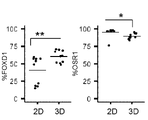
- 11 shows the results of flow cytometry analysis (FOXD1 and OSR1) of cells cultured in two-dimensional adherent culture (2D) or three-dimensional suspension culture (3D) on day 11.
- FIG. The dots and lines in the middle of the scatter plots represent experimental data and mean values, respectively. * indicates p ⁇ 0.05, ** indicates p ⁇ 0.01 (Student's t-test).
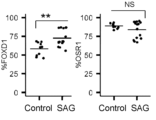
- the concentrations are CHIR 1 ⁇ M, Wnt3a 10%, RSPO1 (R-Spondin-1) 200 ng/ml, SAG 500 nM, IL-1 ⁇ 10 ng/ml, Estradiol 50 ng/ml, TGF ⁇ 1 10 ng/ml.
- SB431542 is 1 or 10 ⁇ M
- A83-01 is 1 or 10 ⁇ M
- LDN193189 is 10 or 100 nM.
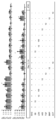
- the lower figure is an enlarged image of the frame in the upper figure. 11-14 days after obtaining renal interstitial progenitor cells, qRT-PCR analysis of EPO and renin was performed, and the results of comparing the effects of combinations of renal EPO-producing cells or renin-producing cell differentiation-inducing candidate factors are shown.
- the concentration of SAG is 500 nM
- the concentration unit of SB and CHIR is ⁇ M.
- BMP4, BMP5 or BMP7 (10 ng/mL or 100 ng/mL) in the presence of CHIR99021, RA and FG-4592 (CFR) was examined under SB431542 (1 ⁇ M) treated or untreated conditions.
- Units for SB are ⁇ M; units for TGF ⁇ 1, ACT are ng/mL.
- Fig. 4 shows the results of qRT-PCR analysis of markers for JG (renin and GJA4), mesangial cells (EBF1, GJA5, ITGA8 and GATA3) and VEGFA in cells treated with minus FG-4592).
- Renal stromal progenitor cells are preferably of mammalian origin, more preferably of primate or rodent origin, preferably of human or mouse origin. Therefore, renin-producing cells such as HOXC10-positive cells used to produce renal stromal progenitor cells, renal EPO-producing cells, mesangial cells and juxtaglomerular cells obtained from renal stromal progenitor cells are used herein. Cells are also preferably of mammalian origin, more preferably of primate or rodent origin, preferably of human or mouse origin.
- Renal stromal progenitor cells are cells that can differentiate in vitro into renin-producing cells such as renal stromal cells, renal EPO-producing cells, mesangial cells and juxtaglomerular cells, and are defined by FOXD1 (Forkhead Box D1) positivity. be attached. Furthermore, it may be OSR1 positive. Furthermore, it may be PDGFRB (platelet-derived growth factor receptor ⁇ ) positive. In this specification, marker-positiveness can be confirmed by immunostaining using a marker-specific antibody, RT-PCR using a marker-specific primer, or the like.
- a method for producing renal interstitial progenitor cells comprises: A step of inducing renal stromal progenitor cells by culturing HOXC10-positive cells in a medium containing a GSK-3 ⁇ inhibitor and a TGF ⁇ inhibitor (hereinafter sometimes referred to as renal stromal progenitor cell differentiation-inducing step).
- the medium preferably further contains an SHH signal activator.
- the medium further contains IL-1 ⁇ .
- the medium further contains retinoic acid.
- a medium comprising a GSK-3 ⁇ inhibitor and a TGF ⁇ inhibitor and optionally comprising retinoic acid A medium comprising a GSK-3 ⁇ inhibitor, a TGF ⁇ inhibitor and an SHH signal activator and optionally comprising retinoic acid A GSK-3 ⁇ inhibitor, A medium comprising a TGF ⁇ inhibitor and IL-1 ⁇ and optionally comprising retinoic acid A medium comprising a GSK-3 ⁇ inhibitor, a TGF ⁇ inhibitor, an SHH signal activator and IL-1 ⁇ and optionally comprising retinoic acid
- HOXC10-positive cells are not particularly limited as long as these markers are positive cells.
- CITED1 Cbp/P300 Interacting Transactivator With Glu/Asp Rich Carboxy-Terminal Domain 1
- HOXD11 and BRACHYURY(T) may also be positive.
- HOXC10-positive cells include Posterior Primitive Streak cells, neural mesoderm progenitor cells, posterior immature mesoderm, and the like.
- HOXC10-positive cells The origin of HOXC10-positive cells is not particularly limited, but HOXC10-positive cells obtained by inducing differentiation from pluripotent stem cells are preferred.
- the method for inducing differentiation from pluripotent stem cells to HOXC10-positive cells is not particularly limited, for example, a method for inducing differentiation from pluripotent stem cells to HOXC10-positive cells, which will be described later, can be used.
- the HOXC10-positive cells to be subjected to the step of inducing renal stromal progenitor cell differentiation may be cell populations containing other cell types, or may be purified HOXC10-positive cells.
- a cell population containing 10% or more, 20% or more, 30% or more, 40% or more, 50% or more, 60%, 70%, 80% or more of HOXC10 positive cells is renal stromal progenitor cell differentiation induction step served to
- the culture in the renal interstitial progenitor cell differentiation-inducing step may be performed by either adherent culture or suspension culture, preferably by suspension culture.
- the suspension culture means that the cells are cultured in a non-adhesive state to the culture substrate.
- adherent culture means that cells are cultured in a state of being adhered to a culture substrate, for example, cultured in a coated culture dish.
- the coating agent is preferably an extracellular matrix, such as collagen, proteoglycan, fibronectin, hyaluronic acid, tenascin, entactin, elastin, fibrin and laminin, or fragments thereof.
- the medium used in the step of inducing differentiation of renal stromal progenitor cells consists of the basal medium used for culturing animal cells, a GSK-3 ⁇ inhibitor and a TGF ⁇ inhibitor, and, if necessary, an SHH signal stimulator, IL-1 ⁇ and retinoin. It can be prepared with the addition of one or more acids.
- basal media include IMDM medium, Medium 199 medium, Eagle's Minimum Essential Medium (EMEM) medium, ⁇ MEM medium, Dulbecco's Modified Eagle's Medium (DMEM) medium, Ham's F12 (F12) medium, RPMI 1640. Medium, Fischer's medium, mixed medium of these and the like are included.
- the medium may contain serum (eg, fetal bovine serum (FBS)) or may be serum-free.
- serum eg, fetal bovine serum (FBS)
- albumin, transferrin, knockout serum replacement (KSR) serum replacement during ES cell culture
- N2 supplement Invitrogen
- B27 supplement Invitrogen
- fatty acid insulin, collagen precursor , trace elements
- 2-mercaptoethanol 3′-thioglycerol
- lipids amino acids, L-glutamine, GlutaMAX (Invitrogen), non-essential amino acids (NEAA), vitamins , growth factors, antibiotics, antioxidants, pyruvate, buffers, inorganic salts, and the like.
- a medium optimized for stem cell culture in advance such as ReproFF2 (Reprocell) or Stem Fit AK02N medium (Ajinomoto Healthy Supply), may be used.
- the GSK-3 ⁇ inhibitor is not particularly limited as long as it can inhibit the function of GSK-3 ⁇ , for example, kinase activity.
- rubin-3′-oxime maleimide derivative SB216763 (3-(2,4-dichlorophenyl)-4-(1-methyl-1H-indol-3-yl)-1H-pyrrole-2,5-dione)
- GSK-3 ⁇ inhibitor VII ⁇ ,4-dibromoacetophenone
- a phenyl- ⁇ -bromomethyl ketone compound L803-mts
- a cell-permeable phosphorylated peptide also known as GSK-3 ⁇ peptide inhibitor; Myr- N-GKEAPPAPPQSpP-NH 2
- CHIR99021 with high selectivity Nature (2008) 453:519-523.
- GSK-3 ⁇ inhibitors for use in this step is CHIR99021.
- concentration of the GSK-3 ⁇ inhibitor in the medium can be appropriately selected by those skilled in the art depending on the GSK-3 ⁇ inhibitor to be used. More preferably from 0.5 ⁇ M to 1.5 ⁇ M.
- a TGF ⁇ inhibitor is a substance that inhibits the signal transduction from the binding of TGF ⁇ to a receptor to SMAD, a substance that inhibits the binding of TGF ⁇ to the ALK family of receptors, or the phosphorylation of SMAD by the ALK family.
- ALK inhibitors for example, Lefty-1 (as NCBI Accession No., mouse: NM_010094, human: NM_020997 are exemplified), SB431542, SB202190 (above, RKLindemann et al.
- the TGF ⁇ inhibitor may preferably be SB431542.
- concentration of the TGF ⁇ inhibitor in the medium can be appropriately selected by those skilled in the art depending on the TGF ⁇ inhibitor to be used.
- A83-01 is 0.1 ⁇ M to 100 ⁇ M, preferably 0.5 ⁇ M to 50 ⁇ M, more preferably 1 ⁇ M to 10 ⁇ M, LDN193189 is 0.01 ⁇ M to 1 ⁇ M, preferably 0.05 ⁇ M to 0 ⁇ M. .5 ⁇ M, more preferably 0.05 ⁇ M to 0.2 ⁇ M.
- SHH Sonic hedgehog signal stimulator
- SHH Sonic hedgehog signal stimulator
- Smo Smoothened
- Ptch1 Patched
- Gli2 activation e.g., Gli2 activation
- SAG Smoothened Agonist
- PMA Purmorphamine
- PMA 9-cyclohexyl-N-[4-(4-morpholinyl)phenyl]-2-(1-nagtal
- SHH signal activators preferably include SHH protein, Purmorphamine, and SAG. Preferred concentrations in the medium are 10-1000 nM, preferably 100-1000 nM for SAG, 10-1000 ng/ml, preferably 50-200 ng/ml for SHH protein, and Purmophamine. is preferably 0.1 to 10 ⁇ M, preferably 0.5 to 5 ⁇ M.
- retinoic acid includes not only retinoic acid itself, but also retinoic acid derivatives that retain the differentiation-inducing function of natural retinoic acid.
- retinoic acid derivatives include 3-dehydroretinoic acid, 4-[[(5,6,7,8-tetrahydro-5,5,8,8-tetramethyl-2-naphthalenyl)carbonyl]amino]-benzoic acid ( AM580) (Tamura K, et al., Cell Differ. Dev.
- retinoic acid in the medium is, for example, 1 nM to 1000 nM, preferably 10 nM to 500 nM, more preferably 50 nM to 250 nM.
- IL-1 ⁇ is not particularly limited, but human IL-1 ⁇ is preferred.
- human IL-1 ⁇ include proteins having the amino acid sequence of NCBI (National Center for Biotechnology Information) accession number: 1TOO_A.
- IL-1 ⁇ includes fragments and functional variants thereof as long as they have differentiation-inducing activity.
- Commercially available IL-1 ⁇ may be used, or proteins purified from cells or proteins produced by genetic recombination may be used.
- the concentration of IL-1 ⁇ in the medium is, for example, 1 ng/ml to 500 ng/ml, 1 ng/ml to 100 ng/ml, 5 ng/ml to 50 ng/ml, or 5 ng/ml to 25 ng/ml.
- the step of inducing renal interstitial progenitor cells from HOXC10-positive cells may be performed in the following two steps. 1) step of culturing HOXC10-positive cells in a medium containing a GSK-3 ⁇ inhibitor, a TGF ⁇ inhibitor, an SHH signal activator and IL-1 ⁇ , and optionally containing retinoic acid; 2) A step of culturing the cells (posterior unsegmented mesoderm cells) obtained in step 1) in a medium containing a GSK-3 ⁇ inhibitor, a TGF ⁇ inhibitor and an SHH signal activator and optionally containing retinoic acid.
- the efficiency of differentiation induction of renal interstitial progenitor cells can be improved by carrying out in two steps and removing IL-1 ⁇ in step 2).
- the culture days in the renal interstitial progenitor cell differentiation-inducing step are, for example, 2 days or longer, 3 days or longer, 4 days or longer, and 5 days or longer. There is no upper limit because long-term culture does not particularly affect the production efficiency of renal interstitial progenitor cells, but it is, for example, 30 days or less.
- the culture conditions are not particularly limited as long as renal interstitial progenitor cells can be obtained. concentration (eg 15-25%, preferably about 20%) and the CO 2 concentration is preferably about 2-5%.
- the resulting renal stromal progenitor cells may be isolated or enriched. Isolation or concentration can be performed, for example, by flow cytometry using an antibody against PDGFRB.
- renin-producing cells such as renal EPO-producing cells, mesangial cells, and juxtaglomerular cells can be obtained.
- One aspect of the present invention relates to a method of producing renal EPO-producing cells from renal interstitial progenitor cells. That is, in one aspect of the present invention, a step of culturing renal stromal progenitor cells in a medium containing a GSK3 ⁇ inhibitor, an SHH signal activator and a HIF inhibitor to produce renal EPO-producing cells (hereinafter sometimes referred to as renal EPO-producing cell differentiation induction step); A method for producing renal EPO-producing cells is provided, comprising: Preferably, the medium further contains a TGF ⁇ inhibitor. Preferably, the medium further contains retinoic acid.
- the following media are exemplified.
- Medium containing GSK3 ⁇ inhibitor, SHH signal activator and HIF inhibitor and optionally containing retinoic acid Medium containing GSK3 ⁇ inhibitor, SHH signal activator, HIF inhibitor and TGF ⁇ inhibitor and optionally containing retinoic acid
- the origin of renal interstitial progenitor cells is not particularly limited, and any renal interstitial progenitor cells can be used as long as they are FOXD1-positive cells.
- the renal interstitial progenitor cells obtained by the method can be used.
- Renal EPO-producing cells are characterized by the expression and/or production of EPO.
- the culture in the renal EPO-producing cell differentiation induction step may be performed by either adherent culture or suspension culture, preferably suspension culture.
- the medium used in the renal EPO-producing cell differentiation step is a basal medium used for culturing animal cells containing a GSK3 ⁇ inhibitor, an SHH signal activator and an HIF inhibitor, and, if necessary, a TGF ⁇ inhibitor and/or It can be prepared by adding retinoic acid.
- the basal medium include the medium exemplified in the renal interstitial progenitor cell differentiation induction step.
- the GSK-3 ⁇ inhibitor As the GSK-3 ⁇ inhibitor, the GSK-3 ⁇ inhibitor (CHIR99021, etc.) described in the renal stromal progenitor cell differentiation-inducing step above can be used, and the preferred concentration range is also the same.
- the SHH signal activator As the SHH signal activator, the SHH signal activator (SAG, SHH protein, Purmorphamine, etc.) described in the renal interstitial progenitor cell differentiation-inducing step can be used, and the preferred concentration range is the same.
- the HIF (hypoxia-inducible factor) inhibitor is not particularly limited as long as it is a substance that exhibits a function as a HIF inhibitor, and known HIF inhibitors can be used.
- the concentration of the HIF inhibitor may be any concentration that is effective in inducing differentiation of renal EPO-producing cells, and is, for example, 0.5 ⁇ M to 100 ⁇ M, preferably 1 ⁇ M to 50 ⁇ M, more preferably 5 ⁇ M to 25 ⁇ M.
- the TGF ⁇ inhibitor As the TGF ⁇ inhibitor, the TGF ⁇ inhibitor (SB431542, A83-01, LDN193189, etc.) described in the renal interstitial progenitor cell differentiation-inducing step can be used, and the preferred concentration range is the same.
- Retinoic acid may be a derivative thereof as described in the step of inducing differentiation of renal interstitial progenitor cells, and the preferred concentration range is the same.
- the culture temperature is, but not limited to, about 30 to 40°C, preferably about 37°C.
- culture may be performed at normal oxygen concentration (for example, 15 to 25%, preferably about 20%), but is preferably performed under hypoxic conditions.
- the cells are cultured at an oxygen concentration of 10%, preferably 3% to 8%, more preferably 4% to 6%, particularly preferably 5%.
- the CO 2 concentration is preferably about 2-5%.
- One aspect of the present invention relates to a method for producing renin-producing cells from renal interstitial progenitor cells. That is, in one aspect of the present invention, A step of culturing renal stromal progenitor cells in a medium containing a GSK3 ⁇ inhibitor and a TGF ⁇ inhibitor but not containing an SHH signal activator to produce renin-producing cells (hereinafter sometimes referred to as renin-producing cell differentiation induction step) , A method for producing renin-producing cells is provided, comprising: Preferably, the medium further contains BMP. Preferably, the medium further contains VEGF. Preferably, the medium further contains retinoic acid. Preferably, the medium contains a HIF inhibitor.
- renal stromal progenitor cells used in the step of inducing renin-producing cell differentiation is not particularly limited, and any renal stromal progenitor cells can be used as long as they are FOXD1-positive cells.
- Renal interstitial progenitor cells obtained by a method for producing renal interstitial progenitor cells can be used.
- renin-producing cells examples include mesangial cells and juxtaglomerular (JG) cells. Both of these cells produce renin, but juxtaglomerular cells express more renin.
- Mesangial cells express GJA5 (Gap junction alpha-5) and EBF1 (EBF transcription factor 1).
- Juxtaglomerular cells express GJA4 (Gap junction alpha-4).
- Cultivation in the renin-producing cell differentiation induction step may be performed by either adherent culture or suspension culture, preferably suspension culture.
- the medium used in the renin-producing cell differentiation induction process is the basal medium used for culturing animal cells with GSK3 ⁇ inhibitor, TGF ⁇ inhibitor, and, if necessary, BMP, VEGF, HIF inhibitor, retinoic acid, etc. can be prepared by Examples of the basal medium include the medium exemplified in the renal interstitial progenitor cell differentiation induction step.
- the GSK-3 ⁇ inhibitor As the GSK-3 ⁇ inhibitor, the GSK-3 ⁇ inhibitor (CHIR99021, etc.) described in the renal stromal progenitor cell differentiation-inducing step above can be used, and the preferred concentration range is also the same.
- the TGF ⁇ inhibitor As the TGF ⁇ inhibitor, the TGF ⁇ inhibitor (SB431542, A83-01, LDN193189, etc.) described in the renal interstitial progenitor cell differentiation-inducing step can be used, and the preferred concentration range is the same.
- Retinoic acid may be a derivative thereof as described in the step of inducing differentiation of renal interstitial progenitor cells, and the preferred concentration range is the same.
- BMP includes BMP4, BMP5, BMP7, etc., but BMP7 is more preferable.
- BMP is preferably human BMP, and human BMP7 includes, for example, a protein having an amino acid sequence from 293 to 431 of NCBI (National Center for Biotechnology Information) accession number: NP_001710.1.
- BMPs include fragments and functional variants thereof as long as they have renin-producing cell differentiation-inducing activity.
- a commercially available BMP may be used, or a protein purified from cells or a protein produced by genetic recombination may be used.
- the concentration of BMP used in this step is 1 ng/mL to 500 ng/mL, preferably 5 ng/mL to 200 ng/mL, more preferably 10 g/mL to 100 ng/mL.
- VEGF is not particularly limited, but human VEGF is preferred.
- human VEGF include proteins having the amino acid sequence of NCBI (National Center for Biotechnology Information) accession number: AAK95847.
- VEGF includes fragments and functional variants thereof as long as they have renin-producing cell differentiation-inducing activity.
- a commercially available VEGF may be used, or a protein purified from cells or a protein produced by genetic recombination may be used.
- the concentration of VEGF used in this step is 1 ng/mL to 500 ng/mL, preferably 10 ng/mL to 200 ng/mL, more preferably 50 ng/mL to 150 ng/mL.
- the HIF inhibitor As the HIF inhibitor, the HIF inhibitor (FG-4592, etc.) explained in the renal EPO-producing cell differentiation induction step can be used, and the preferred concentration range is the same.
- the number of days of culturing in the renin-producing cell differentiation induction step is sufficient as long as it is a period sufficient to generate renin-producing cells, and there is no upper limit because long-term culturing does not particularly affect the production efficiency of renin-producing cells. , 2 days or more, 3 days or more, 4 days or more, 5 days or more.
- the culture conditions are not limited to the following, but the culture temperature is about 30-40° C., preferably about 37° C., and the CO 2 concentration is preferably about 2-5%.
- the oxygen concentration may be a normal oxygen concentration (eg 15-25%, preferably about 20%), but a low oxygen concentration (1%-10%, preferably 3%-8%, more preferably 4%-6% , particularly preferably 5%).
- the medium preferably contains a HIF inhibitor.
- Preferred embodiments of the method for producing mesangial cells are described below as examples of the method for producing renin-producing cells.
- One aspect of the present invention relates to a method of producing mesangial cells from renal interstitial progenitor cells. That is, in a preferred embodiment, A step of producing mesangial cells by culturing renal stromal progenitor cells in a medium containing a GSK3 ⁇ inhibitor, a TGF ⁇ inhibitor, BMP and VEGF but not containing an SHH signal activator (hereinafter referred to as a mesangial cell differentiation induction step) be), A method for producing mesangial cells is provided, comprising: Preferably, the medium further contains retinoic acid.
- the origin of the renal stromal progenitor cells used in the step of inducing mesangial cell differentiation is not particularly limited, and any renal stromal progenitor cells can be used. Renal stromal progenitor cells obtained by the cell manufacturing method can be used.
- the culture in the mesangial cell differentiation induction step may be performed by either adherent culture or suspension culture, preferably by suspension culture.
- the medium used in the mesangial cell differentiation induction step can be prepared by adding a GSK3 ⁇ inhibitor, a TGF ⁇ inhibitor, BMP, VEGF, and, if necessary, retinoic acid to the basal medium used for culturing animal cells.
- a GSK3 ⁇ inhibitor a TGF ⁇ inhibitor
- BMP a TGF ⁇ inhibitor
- VEGF vascular endothelial growth factor
- retinoic acid retinoic acid
- Examples of the basal medium include the medium exemplified in the renal interstitial progenitor cell differentiation induction step.
- GSK-3 ⁇ inhibitor TGF ⁇ inhibitor
- retinoic acid BMP, and VEGF
- preferred substances and concentration ranges are also as described above.
- the number of culture days in the mesangial cell differentiation induction step is sufficient as long as it is a period sufficient to generate mesangial cells, and there is no upper limit because long-term culture does not particularly affect the production efficiency of mesangial cells, but for example, 2 days. Above, 3 days or more, 4 days or more, 5 days or more.
- the culture conditions are not limited to the following, but the culture temperature is about 30 to 40° C., preferably about 37° C., and the oxygen concentration is normal oxygen concentration (for example, 15 to 25%, preferably about 20%) or low oxygen concentration (1% to 10%, preferably 3% to 8%, more preferably 4% to 6%, particularly preferably 5 %) and a CO concentration of preferably about 2 ⁇ 5%.
- the oxygen concentration is normal oxygen concentration (for example, 15 to 25%, preferably about 20%) or low oxygen concentration (1% to 10%, preferably 3% to 8%, more preferably 4% to 6%, particularly preferably 5 %) and a CO concentration of preferably about 2 ⁇ 5%.
- One aspect of the present invention relates to a method of producing juxtaglomerular (JG) cells from renal interstitial progenitor cells. That is, in a preferred embodiment, A step of culturing renal stromal progenitor cells in a medium containing a GSK3 ⁇ inhibitor, a TGF ⁇ inhibitor, a HIF inhibitor, BMP and VEGF to produce juxtaglomerular cells (hereinafter sometimes referred to as juxtaglomerular cell differentiation induction step ), A method for producing juxtaglomerular cells is provided, comprising: Preferably, the medium further contains retinoic acid.
- the origin of the renal stromal progenitor cells used in the juxtaglomerular cell differentiation induction step is not particularly limited, and any renal stromal progenitor cells can be used. Renal stromal progenitor cells obtained by the method for producing stromal progenitor cells can be used.
- the culture in the juxtaglomerular cell differentiation induction step may be performed by either adherent culture or suspension culture, preferably by suspension culture.
- the medium used for juxtaglomerular cell differentiation induction step is the basal medium used for culturing animal cells with GSK3 ⁇ inhibitor, TGF ⁇ inhibitor, HIF inhibitor, BMP, VEGF, and, if necessary, retinoic acid.
- the basal medium include the medium exemplified in the renal interstitial progenitor cell differentiation induction step.
- GSK-3 ⁇ inhibitor TGF ⁇ inhibitor
- HIF inhibitor HIF inhibitor
- BMP VEGF inhibitor
- VEGF vascular endothelial growth factor
- retinoic acid is as described above, and preferred substances and concentration ranges are also as described above.
- the number of days of culture in the juxtaglomerular cell differentiation induction step is sufficient as long as it is a period sufficient to generate juxtaglomerular cells, and there is no upper limit because long-term culture does not particularly affect the production efficiency of juxtaglomerular cells. However, for example, 2 days or more, 3 days or more, 4 days or more, or 5 days or more.
- the culture temperature is, but not limited to, about 30 to 40°C, preferably about 37°C.
- the culture may be performed at normal oxygen concentration, but is preferably performed under hypoxic conditions, for example, 1% to 10%, preferably 3% to 8%, more preferably 4% to Cultivation is carried out at an oxygen concentration of 6%, particularly preferably 5%.
- the CO 2 concentration is preferably about 2-5%.
- the HOXC10-positive cells are HOXC10-positive cells derived from pluripotent stem cells.
- HOXC10-positive cells derived from pluripotent stem cells renal stromal progenitor cells, renal EPO-producing cells, renin-producing cells (mesangial cells, juxtaglomerular cells, etc.) can be obtained from pluripotent stem cells. be able to.
- Pluripotent stem cells are stem cells that have pluripotency that can be differentiated into many cells existing in the body, and that also have proliferative potential. Any cell that is derived into a production cell is included.
- pluripotent stem cells include, but are not limited to, embryonic stem (ES) cells, cloned embryo-derived embryonic stem (ntES) cells obtained by nuclear transfer, spermatogonial stem cells (“GS cells”), embryonic Included are germ cells (“EG cells”), induced pluripotent stem (iPS) cells, cultured fibroblasts, and pluripotent cells derived from bone marrow stem cells (Muse cells).
- ES embryonic stem
- ntES cloned embryo-derived embryonic stem
- GS cells spermatogonial stem cells
- EG cells germ cells
- iPS induced pluripotent stem
- Muse cells pluripotent stem cells derived from bone marrow stem cells
- the initialization factor is, for example, Oct3/4, Sox2, Sox1, Sox3, Sox15, Sox17, Klf4, Klf2, c-Myc, N-Myc, L-Myc, Nanog, Lin28, Fbx15, ERAs, ECAT15 -2, Tcl1, beta-catenin, Lin28b, Sall1, Sall4, Esrrb, Nr5a2, Tbx3 or Glis1 genes or gene products are exemplified, and these reprogramming factors may be used alone or in combination Also good.
- Somatic cells include, but are not limited to, fetal (pup) somatic cells, neonatal (pup) somatic cells, and mature healthy or diseased somatic cells, as well as primary cultured cells. , passaged cells, and cell lines are all included.
- somatic cells are, for example, (1) tissue stem cells (somatic stem cells) such as neural stem cells, hematopoietic stem cells, mesenchymal stem cells, dental pulp stem cells, (2) tissue progenitor cells, (3) blood cells (peripheral blood cells, umbilical cord blood cells, etc.), lymphocytes, epithelial cells, endothelial cells, muscle cells, fibroblasts (skin cells, etc.), hair cells, hepatocytes, gastric mucosa cells, enterocytes, splenocytes, pancreatic cells (pancreatic exocrine cells) etc.), differentiated cells such as brain cells, lung cells, kidney cells and adipocytes.
- tissue stem cells such as neural stem cells, hematopoietic stem cells, mesenchymal stem cells, dental pulp stem cells
- tissue progenitor cells such as lymphocytes, epithelial cells, endothelial cells, muscle cells, fibroblasts (skin cells, etc.), hair cells, he
- somatic cells when iPS cells are used as a material for cells for transplantation, it is desirable to use somatic cells that have the same or substantially the same HLA genotype as the recipient individual from the viewpoint of avoiding rejection.
- substantially identical means that the HLA genotype matches the transplanted cells to the extent that an immunosuppressive agent can suppress an immune reaction. and HLA-DR 3 loci or HLA-C plus 4 loci have matching HLA types.
- a method including the following steps can be used.
- the cells are cryopreserved. After thawing, the cells can be subjected to differentiation induction of renal interstitial progenitor cells and the like.
- pluripotent stem cells are and preferably cultured by adherent culture.
- Methods for separating pluripotent stem cells include, for example, mechanical separation and separation solutions having protease activity and collagenase activity (for example, Accutase (TM) and Accumax (TM) (Innovative Cell Technologies, Inc)). Alternatively, separation using a separation solution having only collagenase activity can be mentioned. A mixture of TrypLE Select Enzyme (Thermo Fisher Scientific) and EDTA/PBS may also be used.
- colonies cultured to 70% to 80% confluency in the dish used are preferably used.
- the medium used in step (i) can be prepared by adding bFGF, BMP4, a GSK-3 ⁇ inhibitor and retinoic acid or a derivative thereof to a basal medium used for culturing animal cells.
- a basal medium used for culturing animal cells.
- the basal medium include the medium exemplified in the renal interstitial progenitor cell differentiation induction step.
- the GSK-3 ⁇ inhibitor used in step (i) the GSK-3 ⁇ inhibitor (CHIR99021, etc.) described in the step of inducing differentiation of renal stromal progenitor cells can be used, and the concentration range is also the same. Adjustable range.
- the bFGF (basic FGF) used in step (i) is preferably human bFGF, and human bFGF is, for example, a protein having an amino acid sequence of NCBI (National Center for Biotechnology Information) accession number: ABO43041.1. mentioned. bFGF includes fragments and functional variants thereof as long as they have differentiation-inducing activity Commercially available bFGF may be used, or proteins purified from cells or proteins produced by genetic recombination may be used. You may The concentration of bFGF used in this step is 1 ng/mL to 1000 ng/mL, preferably 10 ng/mL to 500 ng/mL, more preferably 50 ng/mL to 250 ng/mL.
- the BMP4 used in step (i) is preferably human BMP4, and examples of human BMP4 include proteins having the amino acid sequence of NCBI (National Center for Biotechnology Information) accession number: AAH20546.1. BMP4 includes fragments and functional variants thereof as long as they have differentiation-inducing activity. Commercially available BMP4 may be used, or proteins purified from cells or proteins produced by genetic recombination may be used. You may The concentration of BMP4 used in this step is 0.1 ng/mL to 100 ng/mL, preferably 0.5 ng/mL to 50 ng/mL, more preferably 0.5 ng/mL to 5 ng/mL.
- the retinoic acid used in step (i) may be a derivative thereof as described in the step of inducing differentiation of renal stromal progenitor cells, and the preferred concentration range is 1 nM to 50 nM.
- the culture conditions are not limited to the following, but the culture temperature is about 30-40° C., preferably about 37° C., and the oxygen concentration is normal oxygen concentration (for example, 15-25%, preferably about 20%) and the CO 2 concentration is preferably about 2-5%.
- the culture time in step (i) is, for example, 1 to 2 days, preferably 1 day.
- step (ii) culturing the cells obtained in step (i) in a medium containing bFGF, a GSK-3 ⁇ inhibitor and BMP7.
- a cell population may be isolated and adherently cultured in a separately prepared coated culture dish, or the cells obtained by adherent culture in step (i) may be cultured as they are by exchanging the medium.
- the medium used in step (ii) can be prepared by adding bFGF, a GSK-3 ⁇ inhibitor and BMP7 to a basal medium used for culturing animal cells.
- a basal medium used for culturing animal cells.
- the basal medium include the medium exemplified in the renal interstitial progenitor cell differentiation induction step.
- step (ii) The bFGF used in step (ii) is the same as that described in step (i), and its preferred concentration range is also the same.
- the GSK-3 ⁇ inhibitor used in step (ii) the GSK-3 ⁇ inhibitor (CHIR99021, etc.) described in the step of inducing differentiation of renal stromal progenitor cells can be used, and the concentration range is also the same. Adjustable range.
- BMP7 used in step (ii) is preferably human BMP7, and examples of human BMP7 include proteins having the amino acid sequence of NCBI (National Center for Biotechnology Information) accession number: NM_001719.2. BMP7 includes fragments and functional variants thereof as long as they have a differentiation-inducing activity. Commercially available BMP7 may be used, or proteins purified from cells or proteins produced by genetic recombination may be used. You may The concentration of BMP7 used in this step is 0.1 ng/mL to 100 ng/mL, preferably 0.5 ng/mL to 50 ng/mL, more preferably 0.5 ng/mL to 5 ng/mL.
- the culture conditions are not limited to the following, but the culture temperature is about 30-40° C., preferably about 37° C., and the oxygen concentration is normal oxygen concentration (for example, 15-25%, preferably about 20%) and the CO 2 concentration is preferably about 2-5%.
- the culture time in step (ii) is, for example, 10 hours to 2 days, or 1 to 2 days, preferably 0.5 to 1 day.
- step (iii) culturing the cells obtained in step (ii) in a medium containing a GSK-3 ⁇ inhibitor and a TGF ⁇ inhibitor;
- a cell population may be isolated and adherently cultured in a separately prepared coated culture dish, or the cells obtained by adherent culture in step (ii) may be continued to be cultured by exchanging the medium.
- the medium used in step (iii) can be prepared by adding a GSK-3 ⁇ inhibitor and a TGF ⁇ inhibitor to a basal medium used for culturing animal cells.
- the medium may further contain BMP7.
- Examples of the basal medium include the medium exemplified in the renal interstitial progenitor cell differentiation induction step.
- the GSK-3 ⁇ inhibitor used in step (iii) the GSK-3 ⁇ inhibitor (CHIR99021, etc.) described in the step of inducing differentiation of renal stromal progenitor cells can be used, and the concentration range is also the same. Adjustable range. Also, when BMP7 is added, BMP7 is the same as in step (ii) and its preferred concentration range is also the same.
- TGF ⁇ inhibitor used in step (iii) one or more of the TGF ⁇ inhibitors (SB431542, A83-01, LDN193189, etc.) described in the renal stromal progenitor cell differentiation-inducing step above may be used. and the preferred concentration range is also as explained above.
- the culture conditions are not limited to the following, but the culture temperature is about 30-40° C., preferably about 37° C., and the oxygen concentration is normal oxygen concentration (for example, 15-25%, preferably about 20%) and the CO 2 concentration is preferably about 2-5%.
- the culture time in step (iii) is, for example, 0.5 to 3 days of culture, preferably about 1 day.
- step (iv) culturing the cells obtained in step (iii) in a medium containing bFGF, a GSK-3 ⁇ inhibitor, activin and a ROCK inhibitor
- HOXC10-positive posterior primitive streak cells (late metanephric lineage primitive streak) is induced.
- the cells can be cryopreserved, and after thawing, they can be subjected to differentiation induction of renal interstitial progenitor cells and the like.
- step (iv) the cell population obtained in step (iii) above may be isolated and adherently cultured in a separately prepared coated culture dish, or obtained by adherent culture in step (iii).
- the culture of the obtained cells may be continued by exchanging the medium.
- the medium used in step (iv) can be prepared by adding bFGF, a GSK-3 ⁇ inhibitor, activin and a ROCK inhibitor to a basal medium used for culturing animal cells.
- the basal medium include the medium exemplified in the renal interstitial progenitor cell differentiation induction step.
- the GSK-3 ⁇ inhibitor used in step (iv) the GSK-3 ⁇ inhibitor (CHIR99021, etc.) described in the step of inducing differentiation of renal stromal progenitor cells can be used, and the concentration range is the same. Adjustable range. bFGF is the same as in step (i), and so is its preferred concentration range.
- Activin used in step (iv) includes activin derived from humans and other animals, and functional variants thereof, and commercially available products such as R & D Systems can be used.
- the concentration of activin used in step (iv) is 1 ng/mL to 100 ng/mL, preferably 5 ng/mL to 50 ng/mL, more preferably 5 ng/mL to 25 ng/mL.
- the ROCK inhibitor used in step (iv) is not particularly limited as long as it can suppress the function of Rho-kinase (ROCK). 57, 976-983 (2000); see Narumiya et al., Methods Enzymol. , H-1152 (e.g., Sasaki et al., Pharmacol. Ther. 93: 225-232 (2002)), Wf-536 (e.g., Nakajima et al., Cancer Chemother Pharmacol. 52(4): 319-324 (2003)) and derivatives thereof, as well as antisense nucleic acids against ROCK, RNA interference-inducing nucleic acids (eg, siRNA), dominant-negative mutants, and expression vectors thereof.
- RNA interference-inducing nucleic acids eg, siRNA
- ROCK inhibitors e.g., US Patent Application Publication Nos. 2005/0209261, 2005/0192304, 2004/0014755, 2004/0002508,. , WO 2004/0002507, WO 2003/0125344, WO 2003/0087919, and WO 2003/062227, WO 2003/059913, WO 2003/062225, WO 2002/076976. No. 2004/039796).
- One or more ROCK inhibitors may be used.
- Preferred ROCK inhibitors include Y-27632.
- the concentration of the ROCK inhibitor used in step (iv) can be appropriately selected by those skilled in the art depending on the ROCK inhibitor used. is between 5 ⁇ M and 50 ⁇ M.
- the culture conditions are not limited to the following, but the culture temperature is about 30-40° C., preferably about 37° C., and the oxygen concentration is normal oxygen concentration (for example, 15-25%, preferably about 20%) and the CO 2 concentration is preferably about 2-5%.
- the culture time in step (iv) may be a period sufficient to induce the differentiation of HOXC10-positive posterior primitive streak cells, for example, culture for 1 to 5 days, preferably 3 days.
- the present invention also provides cell preparations comprising renal stromal progenitor cells, renal EPO-producing cells, renin-producing cells (mesangial cells, juxtaglomerular cells, etc.) obtained by the methods described above, or a combination thereof. Such cell preparations can be used as pharmaceutical compositions for treating renal diseases and the like.
- cells capable of reconstituting renal tissue by mixing renal stromal progenitor cells with nephron progenitor cells (OSR1-positive cells, preferably further HOXD11, WT1, SIX2 and SALL1-positive cells) as disclosed in Patent Document 2 A formulation can be provided.
- the ratio of renal interstitial progenitor cells to nephron progenitor cells is preferably in the range of 1:2 to 2:1, more preferably about 1:1.
- Such cell preparations may further include renal EPO-producing cells, renin-producing cells (mesangial cells, juxtaglomerular cells, etc.).
- Renal stromal progenitor cells and nephron progenitor cells may be mixed prior to formation of renal organoids.
- renal interstitial progenitor cells and nephron progenitor cells obtained by the above method are cultured to prepare cell aggregates, which are then combined with feeder cells such as 3T3-Wnt4 cells, mouse fetal spinal cord cells, or mouse fetal kidney cells. It can be obtained by co-culturing or semi-gas phase culture using a basal medium containing a GSK-3 ⁇ inhibitor.
- Methods of administering cell preparations to patients who require treatment include, for example, a method in which cells are formed into a sheet and attached to the patient's kidney, a cell suspension in which cells are suspended in physiological saline or the like, or a tertiary method.
- Examples include a method of directly transplanting the obtained cell mass from the original culture into the patient's kidney, a method of three-dimensional culturing on a scaffold made of Matrigel or the like, and a method of transplanting the obtained cell mass.
- the transplantation site is not particularly limited as long as it is within the kidney, but is preferably under the renal capsule.
- renal disease include acute renal failure, chronic renal failure, and chronic renal disease that does not lead to chronic renal failure.
- the number of cells such as renal interstitial progenitor cells contained in the cell preparation is not particularly limited as long as the graft can survive after administration, and may be prepared by appropriately increasing or decreasing according to the size of the affected area and body size.
- the renal interstitial progenitor cells, renal EPO-producing cells, and renin-producing cells are used for screening and evaluation of therapeutic drug candidates for renal diseases, hypertension, etc. You can also
- hiPSCs Human iPS cells (17K6:OSR1-GFP/FOXD1-tdTomato double knock-in hiPSCs) were first treated with a 1:1 mixture of TrypLE Select Enzyme (Thermo Fisher Scientific) and 0.5 mM EDTA/PBS for 5 minutes. , and washed with PBS(-). Then, detach using a cell scraper, dissociate into single cells by gentle pipetting, and add Stem Fit AK02N (Ajinomoto Healthy Supply) and 0.5 mL were seeded in a 24-well plate (Corning) at a density of 1.3 ⁇ 10 4 cells/cm 2 .
- basal medium serum-free differentiation medium
- Basal medium consisting of DMEM/F12 Glutamax (Thermo Fisher Scientific), B27 supplement minus vitamin A (Thermo Fisher Scientific), and 0.5x Penicillin/Streptomycin.
- Culturing was initiated by adding CHIR99021 (Wako), 10 nM RA (Sigma), 1 ng/mL BMP4 (Peprotech) and 100 ng/mL bFGF (Wako).
- basal medium consisting of DMEM/F12 Glutamax (Thermo Fisher Scientific), B27 supplement minus vitamin A (Thermo Fisher Scientific), and 0.5x Penicillin/Streptomycin.
- Culturing was initiated by adding CHIR99021 (Wako), 10 nM RA (Sigma), 1 ng/mL BMP4 (Peprotech) and 100 ng/mL bFGF (Wako).
- basal medium consisting of DMEM/F12 Glutamax (Thermo
- the medium was switched to basal medium containing 5 ⁇ M CHIR99021, 1 ng/mL BMP7 and 10 ⁇ M A83-01 (Wako).
- the medium was switched to basal medium containing 5 ⁇ M CHIR99021, 30 ng/mL bFGF, 10 ng/mL activin A (R&D Systems) and 30 ⁇ M Y-27632 (Wako).
- cells were washed with PBS(-), treated with Accumax (Innovative Cell Technologies), dissociated into single cells by gentle pipetting, and plated at 1.05 x 10⁵ cells/cm in 24-well plates (CORNING).
- FIG. 2 shows the results of immunohistochemical staining of PPS cells induced to differentiate from human iPS cells.
- IPC renal interstitial progenitor
- the IPC differentiation induction conditions were CHIR99021 + SB431542 + RA, and cultured in floating (3D) culture on days 4 to 11. Compared to adherent (2D) culture, FOXD1-positive cell induction efficiency was higher. (Fig. 4).
- IPA analysis suggested increased expression of WNT/Ca 2+ pathway, estrogen receptor signal, liver fibrosis, and IL-1 signal. Therefore, when WNT3a and RSPO1, ⁇ -Estradiol, TGF ⁇ 1, IL-1 ⁇ were added on days 6-8 and 8-11, respectively, IL-1 ⁇ and SAG addition on days 6-8 resulted in It was confirmed that the induction efficiency of OSR1-positive FOXD1-positive cells was improved (Fig. 6).
- IPC markers could be similarly induced by using various ALK inhibitors instead of SB431542 on days 6-11 (Fig. 7).
- Nephron progenitor cells were differentiated from iPS cells according to the method described in Patent Document 2.
- the IPC and NPC aggregates obtained above on day 11 of differentiation induction were incubated in Accumax (Innovative Cell Technologies) at 37°C for 5 minutes and dissociated into single cells by gentle pipetting.
- Dissociated cells were mixed and resuspended in basal medium containing 10 ⁇ M Y-27632, 10 ng/mL bFGF, 1 ⁇ M CHIR99021 and 0.1 ⁇ M RA and plated at 5.0 ⁇ 10 4 NPCs/well in 96-well low cell binding U-bottom plates.
- the wells were seeded at a density of 5.0 ⁇ 10 4 IPC/well to allow aggregate formation.
- mixed renal progenitor cell aggregates were harvested and transplanted.
- VEGF receptor inhibitor VEGF receptor inhibitor
Landscapes
- Health & Medical Sciences (AREA)
- Engineering & Computer Science (AREA)
- Life Sciences & Earth Sciences (AREA)
- Biomedical Technology (AREA)
- Genetics & Genomics (AREA)
- Zoology (AREA)
- Organic Chemistry (AREA)
- Bioinformatics & Cheminformatics (AREA)
- Urology & Nephrology (AREA)
- Chemical & Material Sciences (AREA)
- Wood Science & Technology (AREA)
- Biotechnology (AREA)
- Microbiology (AREA)
- Biochemistry (AREA)
- General Engineering & Computer Science (AREA)
- General Health & Medical Sciences (AREA)
- Cell Biology (AREA)
- Micro-Organisms Or Cultivation Processes Thereof (AREA)
Abstract
Description
したがって、本発明の課題は、腎間質前駆細胞を効率よく分化誘導する方法を提供することにある。また、腎間質前駆細胞から腎EPO産生細胞、ならびにメサンギウム細胞および傍糸球体細胞などのレニン産生細胞を分化誘導する方法を提供することにある。
[1]HOXC10陽性細胞をGSK(グリコーゲン合成酵素キナーゼ)-3β阻害剤、SHH(Sonic Hedgehog)シグナル活性化剤およびTGF(Transforming growth factor)β阻害剤を含む培地で培養して腎間質前駆細胞へと誘導する工程を含む腎間質前駆細胞の製造方法。
[2]前記培地は、さらにIL(Interleukin)-1βを含む、[1]に記載の腎間質前駆細胞の製造方法。
[3]下記の工程1)、2)を含む、[2]に記載の腎間質前駆細胞の製造方法。
1)HOXC10陽性細胞をGSK-3β阻害剤、SHHシグナル活性化剤、TGFβ阻害剤およびIL-1βを含む培地で培養する工程、次いで
2)GSK-3β阻害剤、SHHシグナル活性化剤およびTGFβ阻害剤を含む培地で培養する工程
[4]前記培地は、さらにレチノイン酸を含む、[1]~[3]のいずれかに記載の腎間質前駆細胞の製造方法。
[5]前記培養は浮遊培養で行われる、[1]~[4]のいずれかに記載の腎間質前駆細胞の製造方法。
[6]GSK-3β阻害剤がCHIR99021であり、SHHシグナル活性化剤がSHHタンパク質、PurmorphamineまたはSAG(Smoothened Agonist)であり、TGFβ阻害剤がSB431542、A83-01またはLDN193189である、[1]~[5]のいずれかに記載の腎間質前駆細胞の製造方法。
[7]HOXC10陽性細胞が多能性幹細胞から分化誘導されたHOXC10陽性細胞である、[1]~[6]のいずれかに記載の腎間質前駆細胞の製造方法。
[8]前記HOXC10陽性細胞が、以下の工程(i)~(iv)を含む方法で製造されたHOXC10陽性細胞である、[7]に記載の方法。
(i)多能性幹細胞を、bFGF(塩基性線維芽細胞増殖因子)、BMP(骨形成タンパク質)4、GSK-3β阻害剤およびレチノイン酸またはその誘導体を含む培地で培養する工程;
(ii)工程(i)で得られた細胞を、bFGF、GSK-3β阻害剤およびBMP7を含む培地で培養する工程;
(iii)工程(ii)で得られた細胞を、GSK-3β阻害剤およびTGFβ阻害剤を含む培地で培養する工程;
(iv)工程(iii)で得られた細胞を、bFGF、GSK-3β阻害剤、アクチビンおよびROCK阻害剤を含む培地で培養する工程
[9]前記多能性幹細胞が人工多能性幹(iPS)細胞である、[7]または[8]に記載の方法。
[10][1]~[9]のいずれかに記載の方法で製造された、腎間質前駆細胞。
[11][10]に記載の腎間質前駆細胞を含む、医薬組成物。
[12]さらにネフロン前駆細胞を含む、[11]に記載の医薬組成物。
[13]腎間質前駆細胞をGSK3β阻害剤、SHHシグナル活性化剤およびHIF(低酸素誘導因子)阻害剤を含む培地で培養して腎EPO(エリスロポエチン)産生細胞を製造する工程、を含む、腎EPO産生細胞の製造法。
[14]前記培地はさらにTGFβ阻害剤および/またはレチノイン酸を含む、[13]に記載の腎EPO産生細胞の製造方法。
[15]腎間質前駆細胞が[1]~[9]のいずれかに記載の方法で得られた腎間質前駆細胞である、[13]または[14]に記載の腎EPO産生細胞の製造方法。
[16]腎間質前駆細胞をGSK3β阻害剤およびTGFβ阻害剤を含み、SHHシグナル活性化剤を含まない培地で培養してレニン産生細胞を製造する工程、を含む、レニン産生細胞の製造法。
[17]レニン産生細胞がメサンギウム細胞または傍糸球体細胞である、[16]に記載のレニン産生細胞の製造方法。
[18]前記培地はさらにBMP、VEGF(血管内皮細胞増殖因子)および/またはレチノイン酸を含む、[16]または[17]に記載のレニン産生細胞の製造方法。
[19]前記培地はさらにHIF阻害剤を含む、[16]~[18]のいずれかに記載のレニン産生細胞の製造方法。
[20]腎間質前駆細胞が[1]~[9]のいずれかに記載の方法で得られた腎間質前駆細胞である、[16]~[19]のいずれかに記載のレニン産生細胞の製造方法。
また、腎間質前駆細胞をさらに培養することによって、腎EPO産生細胞、ならびにメサンギウム細胞および傍糸球体細胞などのレニン産生細胞を得ることもできる。
本発明の方法で得られる腎間質前駆細胞、腎EPO産生細胞、ならびにメサンギウム細胞および傍糸球体細胞などのレニン産生細胞は慢性腎臓病等に適用しうる再生医療用の細胞製剤として有用である。また、腎間質前駆細胞をネフロン前駆細胞と混合して腎臓を再構築することで、高機能の再生医療用の細胞製剤を得ることができる。
また、本発明の方法で得られる腎間質前駆細胞、腎EPO産生細胞、ならびにメサンギウム細胞および傍糸球体細胞などのレニン産生細胞は腎疾患モデル作製においても有用である。腎疾患モデルは腎疾患に対する治療方法や治療薬探索の観点においても有用である。
腎間質前駆細胞は、好ましくは哺乳動物由来であり、より好ましくは霊長類またはげっ歯類由来であり、好ましくはヒトまたはマウス由来である。したがって、本明細書においては、腎間質前駆細胞を製造するために使用されるHOXC10陽性細胞や、腎間質前駆細胞から得られる腎EPO産生細胞、メサンギウム細胞および傍糸球体細胞などのレニン産生細胞も好ましくは哺乳動物由来であり、より好ましくは霊長類またはげっ歯類由来であり、好ましくはヒトまたはマウス由来である。
本発明の一態様にかかる腎間質前駆細胞の製造方法は、
HOXC10陽性細胞をGSK-3β阻害剤およびTGFβ阻害剤を含む培地で培養して腎間質前駆細胞を誘導する工程(以下、腎間質前駆細胞分化誘導工程と呼ぶことがある)、を含む。
ここで、培地はさらにSHHシグナル活性化剤を含むことが好ましい。
培地はさらにIL-1βを含むことが好ましい。
培地はさらにレチノイン酸を含むことが好ましい。
以下のような培地が例示される。
GSK-3β阻害剤およびTGFβ阻害剤を含み、レチノイン酸を含んでもよい培地
GSK-3β阻害剤、TGFβ阻害剤およびSHHシグナル活性化剤を含み、レチノイン酸を含んでもよい培地
GSK-3β阻害剤、TGFβ阻害剤およびIL-1βを含み、レチノイン酸を含んでもよい培地
GSK-3β阻害剤、TGFβ阻害剤、SHHシグナル活性化剤およびIL-1βを含み、レチノイン酸を含んでもよい培地
ここで、浮遊培養とは細胞が培養基材に非接着の状態で培養されることを意味し、例えば、低細胞接着性の培養器を用いて培養する態様が例示される。
ここで、接着培養とは細胞が培養基材に接着した状態で培養されることを意味し、例えば、コーティング処理された培養皿にて培養することを意味する。コーティング剤としては、細胞外基質が好ましく、例えば、コラーゲン、プロテオグリカン、フィブロネクチン、ヒアルロン酸、テネイシン、エンタクチン、エラスチン、フィブリンおよびラミニンといった物質またはこれらの断片が挙げられる。
GSK-3β阻害剤は、GSK-3βの機能、例えば、キナーゼ活性を阻害できるものである限り特に限定されず、例えば、インジルビン誘導体であるBIO(別名、GSK-3β阻害剤IX;6-ブロモインジルビン-3’-オキシム)、マレイミド誘導体であるSB216763(3-(2,4-ジクロロフェニル)-4-(1-メチル-1H-インドール-3-イル)-1H-ピロール-2,5-ジオン)、フェニル-α-ブロモメチルケトン化合物であるGSK-3β阻害剤VII(α,4-ジブロモアセトフェノン)、細胞膜透過型のリン酸化ペプチドであるL803-mts(別名、GSK-3βペプチド阻害剤;Myr-N-GKEAPPAPPQSpP-NH2)および高い選択性を有するCHIR99021(Nature(2008)453:519-523)が挙げられる。これらの化合物は、例えば、Stemgent社、Calbiochem社、Biomol社等から入手可能であり、また自ら作製してもよい。本工程で用いる好ましいGSK-3β阻害剤としては、CHIR99021が挙げられる。培地中のGSK-3β阻害剤の濃度は、使用するGSK-3β阻害剤に応じて当業者に適宜選択可能であるが、例えば、0.1μMから10μM、好ましくは0.5μMから3μMであり、さらに好ましくは0.5μMから1.5μMである。
TGFβ阻害剤は、TGFβの受容体への結合からSMADへと続くシグナル伝達を阻害する物質であり、受容体であるALKファミリーへのTGFβの結合を阻害する物質、またはALKファミリーによるSMADのリン酸化を阻害する物質(ALK阻害剤とも呼ぶ)が挙げられ、例えば、Lefty-1(NCBI Accession No.として、マウス:NM_010094、ヒト:NM_020997が例示される)、SB431542、SB202190(以上、R.K.Lindemann et al., Mol. Cancer, 2003, 2:20)、SB505124 (GlaxoSmithKline)、 NPC30345、SD093、SD908、SD208 (Scios)、LY2109761、LY364947、 LY580276 (Lilly Research Laboratories)、A83-01(WO2009146408)、LDN193189およびこれらの誘導体などが例示される。TGFβ阻害剤は、好ましくは、SB431542であり得る。
培地中におけるTGFβ阻害剤の濃度は、使用するTGFβ阻害剤に応じて当業者に適宜選択可能であるが、例えば、SB431542は0.5μMから100μM、好ましくは、1μMから50μM、さらに好ましくは、5μMから25μMであり、A83-01は0.1μMから100μM、好ましくは、0.5μMから50μM、さらに好ましくは、1μMから10μMであり、LDN193189は0.01μMから1μM、好ましくは、0.05μMから0.5μM、さらに好ましくは、0.05μMから0.2μMである。
SHH(Sonic hedgehog;ソニック・ヘッジホッグ)シグナル刺激剤とは、SHHがその受容体であるPatched (Ptch1)に結合して引き起こされるSmoothened (Smo)の脱抑制およびさらに続くGli2の活性化を引き起こす物質として定義され、例えば、Hedgehogファミリーに属するタンパク質、具体的にはSHHタンパク質(例えばGenBankアクセッション番号:NM_000193、NP_000184)もしくはIHH(Indian Hedgehog;インディアン・ヘッジホッグ)、SHH受容体、SHH受容体アゴニスト、Hh-Ag1.5 (Li, X., et al., Nature Biotechnology, 23, 215~ 221 (2005).)、Smoothened Agonist(SAG)(N-Methyl-N’-(3-pyridinylbenzyl)-N’-(3-chlorobenzo[b]thiophene-2-carbonyl)-1,4-diaminocyclohexane;N-メチル-N'-(3-ピリジニルベンジル)-N'-(3-クロロベンゾ[b]チオフェン-2-カルボニル)-1,4-ジアミノシクロヘキサン)、20a-hydroxycholesterol、Purmorphamine(PMA;9-シクロヘキシル-N-[4-(4-モルホリニル)フェニル]-2-(1-ナグタレニルオキシ)-9H-プリン-6-アミン)およびこれらの誘導体などが例示される(Stanton BZ, Peng LF., Mol Biosyst. 6:44-54, 2010)。SHHシグナル活性化剤として、これら一種または二種以上を適宜選択して使用してもよい。SHHシグナル活性化剤として、好ましくは、SHHタンパク質、Purmorphamine、SAGが挙げられる。
培地中の好ましい濃度は、SAGの場合、10~1000nMであり、好ましくは100~1000nMであり、SHHタンパク質の場合、10~1000ng/mlであり、好ましくは50~200ng/mlであり、Purmophamineの場合、好ましくは0.1~10μMであり、好ましくは0.5~5μMである。
本明細書において、レチノイン酸の定義には、レチノイン酸そのものだけではなく、天然のレチノイン酸が有する分化誘導機能を保持するレチノイン酸誘導体も含まれる。レチノイン酸誘導体として、例えば、3-デヒドロレチノイン酸、4-[[(5,6,7,8-tetrahydro-5,5,8,8-tetramethyl-2-naphthalenyl)carbonyl]amino]-Benzoic acid(AM580)(Tamura K,et al.,Cell Differ.Dev.32:17-26(1990))、4-[(1E)-2-(5,6,7,8-tetrahydro-5,5,8,8-tetramethyl-2-naphthalenyl)-1-propen-1-yl]-Benzoic acid(TTNPB)(Strickland S,et al.,Cancer Res.43:5268-5272(1983))、およびTanenaga,K.et al.,Cancer Res.40:914-919(1980)に記載されている化合物、パルミチン酸レチノール、レチノール、レチナール、3-デヒドロレチノール、3-デヒドロレチナール等が挙げられる。
培地中のレチノイン酸の濃度は、例えば、1nMから1000nM、好ましくは、10nMから500nM、より好ましくは、50nMから250nMである。
IL-1βは特に制限されないがヒトIL-1βが好ましく、ヒトIL-1βとしては、例えば、NCBI(National Center for Biotechnology Information)のアクセッション番号:1TOO_Aのアミノ酸配列を有するタンパク質が挙げられる。IL-1βは分化誘導活性を有する限りその断片及び機能的改変体が包含される。IL-1βは市販されているものを使用してもよいし、細胞から精製されたタンパク質や遺伝子組み換えで生産されたタンパク質を使用してもよい。培地中のIL-1βの濃度は、例えば、1ng/mlから500ng/ml、1ng/mlから100ng/ml、5ng/mlから50ng/ml、または5ng/mlから25ng/mlである。
1)HOXC10陽性細胞をGSK-3β阻害剤、TGFβ阻害剤、SHHシグナル活性化剤およびIL-1βを含み、レチノイン酸を含んでもよい培地で培養する工程、
2)工程1)で得られた細胞(後方未分節中胚葉細胞)をGSK-3β阻害剤、TGFβ阻害剤およびSHHシグナル活性化剤を含む、レチノイン酸を含んでもよい培地で培養する工程
このように2段階で行い、工程2)でIL-1βを除くことで、腎間質前駆細胞の分化誘導効率を向上させることができる。
本発明の一態様は、腎間質前駆細胞から腎EPO産生細胞を製造する方法に関する。
すなわち、本発明の一態様においては、
腎間質前駆細胞をGSK3β阻害剤、SHHシグナル活性化剤およびHIF阻害剤を含む培地で培養して腎EPO産生細胞を製造する工程(以下、腎EPO産生細胞分化誘導工程ということがある)、
を含む、腎EPO産生細胞の製造法が提供される。
培地はさらにTGFβ阻害剤を含むことが好ましい。
培地はさらにレチノイン酸を含むことが好ましい。
GSK3β阻害剤、SHHシグナル活性化剤およびHIF阻害剤を含み、レチノイン酸を含んでもよい培地
GSK3β阻害剤、SHHシグナル活性化剤、HIF阻害剤およびTGFβ阻害剤を含み、レチノイン酸を含んでもよい培地
HIF阻害剤の濃度は腎EPO産生細胞の分化誘導に効果を有する濃度であればよいが、例えば、0.5μMから100μM、好ましくは、1μMから50μM、さらに好ましくは、5μMから25μMである。
本発明の一態様は、腎間質前駆細胞からレニン産生細胞を製造する方法に関する。
すなわち、本発明の一態様においては、
腎間質前駆細胞をGSK3β阻害剤およびTGFβ阻害剤を含み、SHHシグナル活性化剤を含まない培地で培養してレニン産生細胞を製造する工程(以下、レニン産生細胞分化誘導工程ということがある)、
を含む、レニン産生細胞の製造法が提供される。
培地はさらにBMPを含むことが好ましい。
培地はさらにVEGFを含むことが好ましい。
培地はさらにレチノイン酸を含むことが好ましい。
培地はHIF阻害剤を含むことが好ましい。
GSK3β阻害剤およびTGFβ阻害剤を含み、SHHシグナル活性化剤を含まず、レチノイン酸を含んでもよい培地
GSK3β阻害剤、TGFβ阻害剤およびBMPを含み、SHHシグナル活性化剤を含まず、レチノイン酸を含んでもよい培地
GSK3β阻害剤、TGFβ阻害剤およびVEGFを含み、SHHシグナル活性化剤を含まず、レチノイン酸を含んでもよい培地
GSK3β阻害剤、TGFβ阻害剤およびHIF阻害剤を含み、SHHシグナル活性化剤を含まず、レチノイン酸を含んでもよい培地
GSK3β阻害剤、TGFβ阻害剤、BMPおよびVEGFを含み、SHHシグナル活性化剤を含まず、レチノイン酸を含んでもよい培地
GSK3β阻害剤、TGFβ阻害剤、BMPおよびHIF阻害剤を含み、SHHシグナル活性化剤を含まず、レチノイン酸を含んでもよい培地
GSK3β阻害剤、TGFβ阻害剤、HIF阻害剤およびVEGFを含み、SHHシグナル活性化剤を含まず、レチノイン酸を含んでもよい培地
GSK3β阻害剤、TGFβ阻害剤、BMP、HIF阻害剤およびVEGFを含み、SHHシグナル活性化剤を含まず、レチノイン酸を含んでもよい培地
酸素濃度は通常の酸素濃度(例えば15~25%、好ましくは約20%)でもよいが、低酸素濃度(1%~10%、好ましくは3%~8%、より好ましくは4%~6%、特に好ましくは5%)であることが好ましい。低酸素培養条件では培地はHIF阻害剤を含むことが好ましい。
本発明の一態様は、腎間質前駆細胞からメサンギウム細胞を製造する方法に関する。
すなわち、好ましい一態様においては、
腎間質前駆細胞をGSK3β阻害剤、TGFβ阻害剤、BMPおよびVEGFを含み、SHHシグナル活性化剤を含まない培地で培養してメサンギウム細胞を製造する工程(以下、メサンギウム細胞分化誘導工程ということがある)、
を含む、メサンギウム細胞の製造法が提供される。
培地はさらにレチノイン酸を含むことが好ましい。
また、メサンギウム細胞分化誘導工程における培養は、接着培養と浮遊培養のいずれで行われてもよいが、好ましくは浮遊培養で行われる。
本発明の一態様は、腎間質前駆細胞から傍糸球体(juxtaglomerular:JG)細胞を製造する方法に関する。
すなわち、好ましい一態様においては、
腎間質前駆細胞をGSK3β阻害剤、TGFβ阻害剤、HIF阻害剤、BMPおよびVEGFを含む培地で培養して傍糸球体細胞を製造する工程(以下、傍糸球体細胞分化誘導工程ということがある)、
を含む、傍糸球体細胞の製造法が提供される。
培地はさらにレチノイン酸を含むことが好ましい。
また、傍糸球体細胞分化誘導工程における培養は、接着培養と浮遊培養のいずれで行われてもよいが、好ましくは浮遊培養で行われる。
本発明の1つの実施形態において、上記のHOXC10陽性細胞は、多能性幹細胞から誘導されたHOXC10陽性細胞である。多能性幹細胞からから誘導されたHOXC10陽性細胞を用いることで、多能性幹細胞から腎間質前駆細胞、さらには腎EPO産生細胞、レニン産生細胞(メサンギウム細胞、傍糸球体細胞等)を得ることができる。
(i)多能性幹細胞を、bFGF、BMP(骨形成タンパク質)4、GSK-3β阻害剤およびレチノイン酸を含む培地で培養する工程;
(ii)工程(i)で得られた細胞を、bFGF、GSK-3β阻害剤およびBMP7を含む培地で培養する工程;
(iii)工程(ii)で得られた細胞を、GSK-3β阻害剤およびTGFβ阻害剤を含む培地で培養する工程;
(iv)工程(iii)で得られた細胞を、bFGF、GSK-3β阻害剤、アクチビンおよびROCK阻害剤を含む培地で培養する工程
なお、工程(iv)の途中または終わりに、細胞を凍結保存することができ、解凍後、腎間質前駆細胞等の分化誘導に供することができる。
工程(i)では、多能性幹細胞を当該分野で公知の任意の方法で分離し、好ましくは接着培養により培養する。
多能性幹細胞の分離の方法としては、例えば、力学的分離や、プロテアーゼ活性とコラゲナーゼ活性を有する分離溶液(例えば、Accutase(TM)およびAccumax(TM)(Innovative Cell Technologies,Inc)が挙げられる)またはコラゲナーゼ活性のみを有する分離溶液を用いた分離が挙げられる。TrypLE Select Enzyme(Thermo Fisher Scientific)とEDTA/PBSの混合液でもよい。工程(i)で用いるヒト多能性幹細胞としては、使用したディッシュに対して70%~80%コンフルエントになるまで培養されたコロニーを用いることが好ましい。
工程(ii)では、前述の工程(i)で得られた細胞集団を単離し、別途用意したコーティング処理された培養皿にて接着培養してもよいし、工程(i)で接着培養により得られた細胞をそのまま培地の交換により培養を続けてもよい。
工程(iii)では、前述の工程(ii)で得られた細胞集団を単離し、別途用意したコーティング処理された培養皿にて接着培養してもよいし、工程(ii)で接着培養により得られた細胞をそのまま培地の交換により培養を続けてもよい。
この工程により、HOXC10陽性の後方原始線条細胞(後腎系譜後期原始線条)が誘導される。なお、工程(iv)の途中または終わりに、細胞を凍結保存することができ、解凍後、腎間質前駆細胞等の分化誘導に供することができる。
本発明はまた、上述した方法により得られた腎間質前駆細胞、腎EPO産生細胞、レニン産生細胞(メサンギウム細胞、傍糸球体細胞等)またはこれらの複数の組み合わせを含む細胞製剤を提供する。このような細胞製剤は腎疾患などを治療するための医薬組成物として使用することができる。
また、腎間質前駆細胞を特許文献2に開示されたようなネフロン前駆細胞(OSR1陽性細胞、好ましくはさらにHOXD11、WT1、SIX2およびSALL1陽性細胞)と混合することで腎組織を再構成できる細胞製剤を提供することができる。腎間質前駆細胞とネフロン前駆細胞の割合は1:2~2:1の範囲が好ましく、約1:1がより好ましい。このような細胞製剤はさらに腎EPO産生細胞、レニン産生細胞(メサンギウム細胞、傍糸球体細胞等)を含んでもよい。
腎間質前駆細胞とネフロン前駆細胞を混合したのち、腎臓オルガノイドを形成させてもよい。
例えば、上記方法で得られた腎間質前駆細胞とネフロン前駆細胞を培養して細胞塊を作製し、それを、3T3-Wnt4細胞などのフィーダー細胞、マウス胎仔脊髄細胞、またはマウス胎仔腎細胞と共培養すること、またはGSK-3β阻害剤を含む基礎培地を使用した半気相培養によって得ることができる。
細胞製剤に含まれる腎間質前駆細胞等の細胞数は、移植片が投与後に生着できれば特に限定されなく、患部の大きさや体躯の大きさに合わせて適宜増減して調製されてもよい。
ヒトiPS細胞(hiPSC)(17K6:OSR1-GFP/ FOXD1-tdTomato double knock-in hiPSC)をまずTrypLE Select Enzyme(Thermo Fisher Scientific)と0.5 mM EDTA/PBSの1:1混合液で5分間酵素処理し、PBS(-)で洗浄した。その後、セルスクレーパーを用いて剥離し、穏やかにピペッティングして単細胞に解離させ、分化開始1日前に10 μM Y-27632と2.4 μL/mL iMatrix-511(Matrixome) を添加したStem Fit AK02N(味の素ヘルシーサプライ) 0.5 mLとともに24穴プレート(コーニング)に 1.3 × 10⁴cells/cm2 の密度で播種した。24時間後(0日目)、DMEM/F12 Glutamax(Thermo Fisher Scientific)、B27 supplement minus vitamin A(Thermo Fisher Scientific)、0.5×Penicillin/Streptomycinからなる無血清分化培地(以下、基礎培地という)に5μM CHIR99021(Wako)、10 nM RA(Sigma)、1 ng/mL BMP4 (Peprotech) および100 ng/mL bFGF (Wako) を添加して培養を開始した。さらに24時間後(1日目)、5μM CHIR99021、100 ng/mL bFGFおよび1 ng/mL BMP7(R&D Systems)を含む基礎培地で培養した。2日目に、培地を5μM CHIR99021、1 ng/mL BMP7および10μM A83-01(Wako)を含む基礎培地に切り替えた。3日目に、培地を5μM CHIR99021、30 ng/mL bFGF、10 ng/mL activin A(R&D Systems)および30 μM Y-27632(Wako)を含む基礎培地に切り替えた。4日目に、細胞をPBS(-)で洗浄し、Accumax(Innovative Cell Technologies)で処理し、穏やかにピペッティングして単細胞に解離し、24ウェルプレート(CORNING)に1.05×10⁵細胞/cm2の密度で播種(2D培養)または96ウェル低細胞付着プレート(Thermo Fisher Scientific)に2.0×10⁴細胞/cm2の密度で播種(3D培養)した。 培地は5μM CHIR99021、30 ng/mL bFGF、10 ng/mL activin A、30 μM Y-27632を含む基礎培地(2D培養時はさらに1. 2μL/ウェルiMatrix-511またはlaminin-E8断片ライブラリを含む)を用いて48時間培養した。これにより、HOXC10およびCITED1陽性のPPS細胞が誘導された。
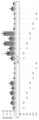
ヒトiPS細胞から分化誘導されたPPS細胞の免疫組織染色の結果を図2に示す。
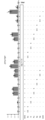
図1の培養プロトコールの6日目のPPS細胞に対し、各種因子を組み合わせていくつかの分化誘導条件をテストした。その結果、GSK-3β阻害剤CHIR99021、ALK阻害剤SB431542、レチノイン酸(RA)を組み合わせて5日間処理するとFOXD1陽性細胞を誘導することができた(図3)。誘導されたIPC細胞とPPS細胞をRNA-seqで比較すると、11日目のIPC細胞ではIPCマーカー遺伝子の発現が上昇し、原始線条マーカー遺伝子がダウンレギュレートしていた。
ネフロン前駆細胞(NPC)は特許文献2に記載の方法に準じてiPS細胞から分化誘導した。
上記で得た分化誘導11日目のIPCとNPC凝集塊をAccumax(Innovative Cell Technologies)で37℃で5分間インキュベートし、穏やかにピペッティングすることにより単細胞に解離させた。解離した細胞を混合し、10 μM Y-27632、10 ng/mL bFGF、1 μM CHIR99021および0.1 μM RAを含む基礎培地に再懸濁し、96ウェル低細胞結合U底プレートに5.0×10⁴NPC/ウェルおよび5.0×104 IPC/ウェルの密度で播種して凝集体を形成させた。24時間後、混合腎前駆細胞凝集体を採取し、移植を行った。
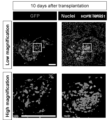
移植10日後、免疫染色分析により解析したところ、NPHS1(+)ポドサイトを含むhiPSC由来の糸球体がマウス血管と一体化し、さらにHOPX(+)メサンギウム様構造を含むことが示された(図8)。
次に、誘導されたIPCがin vitroでレニン産生細胞や腎EPO産生細胞に分化できるかどうかを検討した。
まず、11日目のIPCを用い、FG-4592(N-[(4-hydroxy-1-methyl-7-phenoxy-3-isoquinolinyl)carbonyl]-glycine)とRAを含む5%O2低酸素条件下に各種因子を添加して培養し、EPOとレニンの発現を測定することにより、レニン産生細胞や腎EPO産生細胞の誘導因子のスクリーニングを行った。
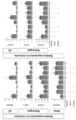
その結果、CHIR99021とSB431542との組み合わせはSAG非存在下でレニンの発現を上昇させ、SB431542とSAGの組み合わせはEPOの発現を上昇させることがわかった(図9)。
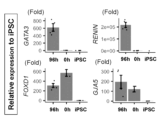
qRT-PCRの結果、EPO発現が約96時間でピークに達し、免疫染色分析によってEPO陽性細胞が生成することも確認された。これらの結果は、我々の誘導したIPCがSHH活性化によりEPO産生細胞に分化することを示唆している。
Claims (20)
- HOXC10陽性細胞をGSK(グリコーゲン合成酵素キナーゼ)-3β阻害剤、SHH(Sonic Hedgehog)シグナル活性化剤およびTGF(Transforming growth factor)β阻害剤を含む培地で培養して腎間質前駆細胞へと誘導する工程を含む腎間質前駆細胞の製造方法。
- 前記培地は、さらにIL(Interleukin)-1βを含む、請求項1に記載の腎間質前駆細胞の製造方法。
- 下記の工程1)、2)を含む、請求項2に記載の腎間質前駆細胞の製造方法。
1)HOXC10陽性細胞をGSK-3β阻害剤、SHHシグナル活性化剤、TGFβ阻害剤およびIL-1βを含む培地で培養する工程、次いで
2)GSK-3β阻害剤、SHHシグナル活性化剤およびTGFβ阻害剤を含む培地で培養する工程 - 前記培地は、さらにレチノイン酸を含む、請求項1~3のいずれか一項に記載の腎間質前駆細胞の製造方法。
- 前記培養は浮遊培養で行われる、請求項1~4のいずれか一項に記載の腎間質前駆細胞の製造方法。
- GSK-3β阻害剤がCHIR99021であり、SHHシグナル活性化剤がSHHタンパク質、PurmorphamineまたはSAG(Smoothened Agonist)であり、TGFβ阻害剤がSB431542、A83-01またはLDN193189である、請求項1~5のいずれか一項に記載の腎間質前駆細胞の製造方法。
- HOXC10陽性細胞が多能性幹細胞から分化誘導されたHOXC10陽性細胞である、請求項1~6のいずれか一項に記載の腎間質前駆細胞の製造方法。
- 前記HOXC10陽性細胞が、以下の工程(i)~(iv)を含む方法で製造されたHOXC10陽性細胞である、請求項7に記載の方法。
(i)多能性幹細胞を、bFGF(塩基性線維芽細胞増殖因子)、BMP(骨形成タンパク質)4、GSK-3β阻害剤およびレチノイン酸またはその誘導体を含む培地で培養する工程;
(ii)工程(i)で得られた細胞を、bFGF、GSK-3β阻害剤およびBMP7を含む培地で培養する工程;
(iii)工程(ii)で得られた細胞を、GSK-3β阻害剤およびTGFβ阻害剤を含む培地で培養する工程;
(iv)工程(iii)で得られた細胞を、bFGF、GSK-3β阻害剤、アクチビンおよびROCK阻害剤を含む培地で培養する工程 - 前記多能性幹細胞が人工多能性幹(iPS)細胞である、請求項7または8に記載の方法。
- 請求項1~9のいずれかに記載の方法で製造された、腎間質前駆細胞。
- 請求項10に記載の腎間質前駆細胞を含む、医薬組成物。
- さらにネフロン前駆細胞を含む、請求項11に記載の医薬組成物。
- 腎間質前駆細胞をGSK3β阻害剤、SHHシグナル活性化剤およびHIF(低酸素誘導因子)阻害剤を含む培地で培養して腎EPO(エリスロポエチン)産生細胞を製造する工程、を含む、腎EPO産生細胞の製造法。
- 前記培地はさらにTGFβ阻害剤および/またはレチノイン酸を含む、請求項13に記載の腎EPO産生細胞の製造方法。
- 腎間質前駆細胞が請求項1~9のいずれか一項に記載の方法で得られた腎間質前駆細胞である、請求項13または14に記載の腎EPO産生細胞の製造方法。
- 腎間質前駆細胞をGSK3β阻害剤およびTGFβ阻害剤を含み、SHHシグナル活性化剤を含まない培地で培養してレニン産生細胞を製造する工程、を含む、レニン産生細胞の製造法。
- レニン産生細胞がメサンギウム細胞または傍糸球体細胞である、請求項16に記載のレニン産生細胞の製造方法。
- 前記培地はさらにBMP、VEGF(血管内皮細胞増殖因子)および/またはレチノイン酸を含む、請求項16または17に記載のレニン産生細胞の製造方法。
- 前記培地はさらにHIF阻害剤を含む、請求項16~18のいずれか一項に記載のレニン産生細胞の製造方法。
- 腎間質前駆細胞が請求項1~9のいずれか一項に記載の方法で得られた腎間質前駆細胞である、請求項16~19のいずれか一項に記載のレニン産生細胞の製造方法。
Priority Applications (4)
| Application Number | Priority Date | Filing Date | Title |
|---|---|---|---|
| US18/682,870 US20240318142A1 (en) | 2021-08-11 | 2022-08-10 | Method for producing renal interstitial progenitor cells, erythropoietin-producing cells, and method for producing renin-producing cells |
| EP22855910.0A EP4386083A4 (en) | 2021-08-11 | 2022-08-10 | METHOD FOR PRODUCING RENAL INTERSTITIAL PROGENITOR CELLS, ERYTHROPOIETIN-PRODUCING CELLS AND METHOD FOR PRODUCING RENIIN-PRODUCING CELLS |
| CN202280055965.3A CN117836404A (zh) | 2021-08-11 | 2022-08-10 | 肾间质前体细胞的制造方法及促红细胞生成素产生细胞和肾素产生细胞的制造方法 |
| JP2023541468A JPWO2023017848A1 (ja) | 2021-08-11 | 2022-08-10 |
Applications Claiming Priority (4)
| Application Number | Priority Date | Filing Date | Title |
|---|---|---|---|
| US202163232102P | 2021-08-11 | 2021-08-11 | |
| US63/232,102 | 2021-08-11 | ||
| US202263362846P | 2022-04-12 | 2022-04-12 | |
| US63/362,846 | 2022-04-12 |
Publications (1)
| Publication Number | Publication Date |
|---|---|
| WO2023017848A1 true WO2023017848A1 (ja) | 2023-02-16 |
Family
ID=85200682
Family Applications (1)
| Application Number | Title | Priority Date | Filing Date |
|---|---|---|---|
| PCT/JP2022/030664 Ceased WO2023017848A1 (ja) | 2021-08-11 | 2022-08-10 | 腎間質前駆細胞の製造方法並びにエリスロポエチン産生細胞、およびレニン産生細胞の製造方法 |
Country Status (4)
| Country | Link |
|---|---|
| US (1) | US20240318142A1 (ja) |
| EP (1) | EP4386083A4 (ja) |
| JP (1) | JPWO2023017848A1 (ja) |
| WO (1) | WO2023017848A1 (ja) |
Cited By (1)
| Publication number | Priority date | Publication date | Assignee | Title |
|---|---|---|---|---|
| WO2023238932A1 (ja) | 2022-06-10 | 2023-12-14 | 国立大学法人京都大学 | 未分化多能性幹細胞の検出方法および検出試薬 |
Citations (42)
| Publication number | Priority date | Publication date | Assignee | Title |
|---|---|---|---|---|
| WO2002076976A2 (en) | 2001-03-23 | 2002-10-03 | Bayer Corporation | Rho-kinase inhibitors |
| US20030087919A1 (en) | 2001-03-23 | 2003-05-08 | Bayer Corporation | Rho-kinase inhibitors |
| WO2003059913A1 (en) | 2002-01-10 | 2003-07-24 | Bayer Healthcare Ag | Roh-kinase inhibitors |
| WO2003062227A1 (en) | 2002-01-23 | 2003-07-31 | Bayer Pharmaceuticals Corporation | Rho-kinase inhibitors |
| WO2003062225A1 (en) | 2002-01-23 | 2003-07-31 | Bayer Pharmaceuticals Corporation | Pyrimidine derivatives as rho-kinase inhibitors |
| WO2004039796A1 (de) | 2002-10-28 | 2004-05-13 | Bayer Healthcare Ag | Heteroaryloxy-substituierte phenylaminopyrimidine als rho-kinaseinhibitoren |
| WO2007069666A1 (ja) | 2005-12-13 | 2007-06-21 | Kyoto University | 核初期化因子 |
| WO2008118820A2 (en) | 2007-03-23 | 2008-10-02 | Wisconsin Alumni Research Foundation | Somatic cell reprogramming |
| WO2009007852A2 (en) | 2007-06-15 | 2009-01-15 | Izumi Bio, Inc | Multipotent/pluripotent cells and methods |
| WO2009032194A1 (en) | 2007-08-31 | 2009-03-12 | Whitehead Institute For Biomedical Research | Wnt pathway stimulation in reprogramming somatic cells |
| WO2009058413A1 (en) | 2007-10-29 | 2009-05-07 | Shi-Lung Lin | Generation of human embryonic stem-like cells using intronic rna |
| WO2009057831A1 (ja) | 2007-10-31 | 2009-05-07 | Kyoto University | 核初期化方法 |
| WO2009075119A1 (ja) | 2007-12-10 | 2009-06-18 | Kyoto University | 効率的な核初期化方法 |
| WO2009079007A1 (en) | 2007-12-17 | 2009-06-25 | Gliamed, Inc. | Stem-like cells and method for reprogramming adult mammalian somatic cells |
| WO2009091659A2 (en) | 2008-01-16 | 2009-07-23 | Shi-Lung Lin | Generation of tumor-free embryonic stem-like pluripotent cells using inducible recombinant rna agents |
| WO2009101407A2 (en) | 2008-02-11 | 2009-08-20 | Cambridge Enterprise Limited | Improved reprogramming of mammalian cells, and the cells obtained |
| WO2009102983A2 (en) | 2008-02-15 | 2009-08-20 | President And Fellows Of Harvard College | Efficient induction of pluripotent stem cells using small molecule compounds |
| WO2009101084A1 (en) | 2008-02-13 | 2009-08-20 | Fondazione Telethon | Method for reprogramming differentiated cells |
| WO2009114949A1 (en) | 2008-03-20 | 2009-09-24 | UNIVERSITé LAVAL | Methods for deprogramming somatic cells and uses thereof |
| WO2009117439A2 (en) | 2008-03-17 | 2009-09-24 | The Scripps Research Institute | Combined chemical and genetic approaches for generation of induced pluripotent stem cells |
| WO2009126251A2 (en) | 2008-04-07 | 2009-10-15 | Nupotential, Inc. | Reprogramming a cell by inducing a pluripotent gene through use of an hdac modulator |
| WO2009146408A1 (en) | 2008-05-30 | 2009-12-03 | Summa Health Systems Llc | Methods for using tgf-b receptor inhibitors or activin-like kinase (alk) 5 inhibitors a-83-01 and sb-431542 to treat eye disease and wound healing conditions |
| WO2009157593A1 (en) | 2008-06-27 | 2009-12-30 | Kyoto University | Method of efficiently establishing induced pluripotent stem cells |
| WO2010009015A2 (en) | 2008-07-14 | 2010-01-21 | Oklahoma Medical Research Foundation | Production of pluripotent cells through inhibition of bright/arid3a function |
| WO2010033920A2 (en) | 2008-09-19 | 2010-03-25 | Whitehead Institute For Biomedical Research | Compositions and methods for enhancing cell reprogramming |
| WO2010033906A2 (en) | 2008-09-19 | 2010-03-25 | President And Fellows Of Harvard College | Efficient induction of pluripotent stem cells using small molecule compounds |
| WO2010042800A1 (en) | 2008-10-10 | 2010-04-15 | Nevada Cancer Institute | Methods of reprogramming somatic cells and methods of use for such cells |
| WO2010050626A1 (en) | 2008-10-30 | 2010-05-06 | Kyoto University | Method for producing induced pluripotent stem cells |
| WO2010056831A2 (en) | 2008-11-12 | 2010-05-20 | Nupotential, Inc. | Reprogramming a cell by inducing a pluripotent gene through use of an hdac modulator |
| WO2010068955A2 (en) | 2008-12-13 | 2010-06-17 | Dna Microarray | MICROENVIRONMENT NICHE ASSAY FOR CiPS SCREENING |
| WO2010098419A1 (en) | 2009-02-27 | 2010-09-02 | Kyoto University | Novel nuclear reprogramming substance |
| WO2010102267A2 (en) | 2009-03-06 | 2010-09-10 | Ipierian, Inc. | Tgf-beta pathway inhibitors for enhancement of cellular reprogramming of human cells |
| WO2010111422A2 (en) | 2009-03-25 | 2010-09-30 | The Salk Institute For Biological Studies | Induced pluripotent stem cell generation using two factors and p53 inactivation |
| WO2010111409A2 (en) | 2009-03-25 | 2010-09-30 | The Salk Institute For Biological Studies | Pluripotent stem cells |
| WO2010115050A2 (en) | 2009-04-01 | 2010-10-07 | The Regents Of The University Of California | Embryonic stem cell specific micrornas promote induced pluripotency |
| WO2010124290A2 (en) | 2009-04-24 | 2010-10-28 | Whitehead Institute For Biomedical Research | Compositions and methods for deriving or culturing pluripotent cells |
| WO2010147612A1 (en) | 2009-06-18 | 2010-12-23 | Lixte Biotechnology, Inc. | Methods of modulating cell regulation by inhibiting p53 |
| WO2010147395A2 (en) | 2009-06-16 | 2010-12-23 | Korea Research Institute Of Bioscience And Biotechnology | Medium composition comprising neuropeptide y for the generation, maintenance, prologned undifferentiated growth of pluripotent stem cells and method of culturing pluripotent stem cell using the same |
| WO2014200115A1 (ja) | 2013-06-11 | 2014-12-18 | 国立大学法人京都大学 | 腎前駆細胞の製造方法及び腎前駆細胞を含む医薬 |
| WO2018216743A1 (ja) | 2017-05-25 | 2018-11-29 | 国立大学法人京都大学 | 中間中胚葉細胞から腎前駆細胞への分化誘導方法、および多能性幹細胞から腎前駆細胞への分化誘導方法 |
| WO2020022261A1 (ja) * | 2018-07-23 | 2020-01-30 | 国立大学法人京都大学 | 新規腎前駆細胞マーカーおよびそれを利用した腎前駆細胞の濃縮方法 |
| WO2020250913A1 (ja) * | 2019-06-11 | 2020-12-17 | 国立大学法人京都大学 | 腎間質細胞の製造方法 |
-
2022
- 2022-08-10 EP EP22855910.0A patent/EP4386083A4/en active Pending
- 2022-08-10 JP JP2023541468A patent/JPWO2023017848A1/ja active Pending
- 2022-08-10 WO PCT/JP2022/030664 patent/WO2023017848A1/ja not_active Ceased
- 2022-08-10 US US18/682,870 patent/US20240318142A1/en active Pending
Patent Citations (50)
| Publication number | Priority date | Publication date | Assignee | Title |
|---|---|---|---|---|
| WO2002076976A2 (en) | 2001-03-23 | 2002-10-03 | Bayer Corporation | Rho-kinase inhibitors |
| US20030087919A1 (en) | 2001-03-23 | 2003-05-08 | Bayer Corporation | Rho-kinase inhibitors |
| US20030125344A1 (en) | 2001-03-23 | 2003-07-03 | Bayer Corporation | Rho-kinase inhibitors |
| WO2003059913A1 (en) | 2002-01-10 | 2003-07-24 | Bayer Healthcare Ag | Roh-kinase inhibitors |
| US20040014755A1 (en) | 2002-01-10 | 2004-01-22 | Dhanapalan Nagarathnam | Rho-kinase inhibitors |
| WO2003062227A1 (en) | 2002-01-23 | 2003-07-31 | Bayer Pharmaceuticals Corporation | Rho-kinase inhibitors |
| WO2003062225A1 (en) | 2002-01-23 | 2003-07-31 | Bayer Pharmaceuticals Corporation | Pyrimidine derivatives as rho-kinase inhibitors |
| US20040002508A1 (en) | 2002-01-23 | 2004-01-01 | Bayer Corporation | Rho-kinase inhibitors |
| US20040002507A1 (en) | 2002-01-23 | 2004-01-01 | Bayer Corporation | Rho-kinase inhibitors |
| US20050192304A1 (en) | 2002-01-23 | 2005-09-01 | Dhanapalan Nagarathnam | Rho-kinase inhibitors |
| US20050209261A1 (en) | 2002-01-23 | 2005-09-22 | Dhanapalan Nagarathnam | Rho-kinase inhibitors |
| WO2004039796A1 (de) | 2002-10-28 | 2004-05-13 | Bayer Healthcare Ag | Heteroaryloxy-substituierte phenylaminopyrimidine als rho-kinaseinhibitoren |
| WO2007069666A1 (ja) | 2005-12-13 | 2007-06-21 | Kyoto University | 核初期化因子 |
| WO2008118820A2 (en) | 2007-03-23 | 2008-10-02 | Wisconsin Alumni Research Foundation | Somatic cell reprogramming |
| WO2009007852A2 (en) | 2007-06-15 | 2009-01-15 | Izumi Bio, Inc | Multipotent/pluripotent cells and methods |
| WO2009032194A1 (en) | 2007-08-31 | 2009-03-12 | Whitehead Institute For Biomedical Research | Wnt pathway stimulation in reprogramming somatic cells |
| WO2009058413A1 (en) | 2007-10-29 | 2009-05-07 | Shi-Lung Lin | Generation of human embryonic stem-like cells using intronic rna |
| WO2009057831A1 (ja) | 2007-10-31 | 2009-05-07 | Kyoto University | 核初期化方法 |
| WO2009075119A1 (ja) | 2007-12-10 | 2009-06-18 | Kyoto University | 効率的な核初期化方法 |
| WO2009079007A1 (en) | 2007-12-17 | 2009-06-25 | Gliamed, Inc. | Stem-like cells and method for reprogramming adult mammalian somatic cells |
| WO2009091659A2 (en) | 2008-01-16 | 2009-07-23 | Shi-Lung Lin | Generation of tumor-free embryonic stem-like pluripotent cells using inducible recombinant rna agents |
| WO2009101407A2 (en) | 2008-02-11 | 2009-08-20 | Cambridge Enterprise Limited | Improved reprogramming of mammalian cells, and the cells obtained |
| WO2009101084A1 (en) | 2008-02-13 | 2009-08-20 | Fondazione Telethon | Method for reprogramming differentiated cells |
| WO2009102983A2 (en) | 2008-02-15 | 2009-08-20 | President And Fellows Of Harvard College | Efficient induction of pluripotent stem cells using small molecule compounds |
| WO2009117439A2 (en) | 2008-03-17 | 2009-09-24 | The Scripps Research Institute | Combined chemical and genetic approaches for generation of induced pluripotent stem cells |
| WO2009114949A1 (en) | 2008-03-20 | 2009-09-24 | UNIVERSITé LAVAL | Methods for deprogramming somatic cells and uses thereof |
| WO2009126251A2 (en) | 2008-04-07 | 2009-10-15 | Nupotential, Inc. | Reprogramming a cell by inducing a pluripotent gene through use of an hdac modulator |
| WO2009126250A2 (en) | 2008-04-07 | 2009-10-15 | Nupotential, Inc. | Reprogramming a cell by inducing a pluripotent gene through rna interference |
| WO2009126655A2 (en) | 2008-04-07 | 2009-10-15 | Nupotential, Inc. | Reprogramming a cell by inducing a pluripotent gene through use of a small molecule modulator |
| WO2009146408A1 (en) | 2008-05-30 | 2009-12-03 | Summa Health Systems Llc | Methods for using tgf-b receptor inhibitors or activin-like kinase (alk) 5 inhibitors a-83-01 and sb-431542 to treat eye disease and wound healing conditions |
| WO2009157593A1 (en) | 2008-06-27 | 2009-12-30 | Kyoto University | Method of efficiently establishing induced pluripotent stem cells |
| WO2010009015A2 (en) | 2008-07-14 | 2010-01-21 | Oklahoma Medical Research Foundation | Production of pluripotent cells through inhibition of bright/arid3a function |
| WO2010033920A2 (en) | 2008-09-19 | 2010-03-25 | Whitehead Institute For Biomedical Research | Compositions and methods for enhancing cell reprogramming |
| WO2010033906A2 (en) | 2008-09-19 | 2010-03-25 | President And Fellows Of Harvard College | Efficient induction of pluripotent stem cells using small molecule compounds |
| WO2010042800A1 (en) | 2008-10-10 | 2010-04-15 | Nevada Cancer Institute | Methods of reprogramming somatic cells and methods of use for such cells |
| WO2010050626A1 (en) | 2008-10-30 | 2010-05-06 | Kyoto University | Method for producing induced pluripotent stem cells |
| WO2010056831A2 (en) | 2008-11-12 | 2010-05-20 | Nupotential, Inc. | Reprogramming a cell by inducing a pluripotent gene through use of an hdac modulator |
| WO2010068955A2 (en) | 2008-12-13 | 2010-06-17 | Dna Microarray | MICROENVIRONMENT NICHE ASSAY FOR CiPS SCREENING |
| WO2010098419A1 (en) | 2009-02-27 | 2010-09-02 | Kyoto University | Novel nuclear reprogramming substance |
| WO2010102267A2 (en) | 2009-03-06 | 2010-09-10 | Ipierian, Inc. | Tgf-beta pathway inhibitors for enhancement of cellular reprogramming of human cells |
| WO2010111422A2 (en) | 2009-03-25 | 2010-09-30 | The Salk Institute For Biological Studies | Induced pluripotent stem cell generation using two factors and p53 inactivation |
| WO2010111409A2 (en) | 2009-03-25 | 2010-09-30 | The Salk Institute For Biological Studies | Pluripotent stem cells |
| WO2010115050A2 (en) | 2009-04-01 | 2010-10-07 | The Regents Of The University Of California | Embryonic stem cell specific micrornas promote induced pluripotency |
| WO2010124290A2 (en) | 2009-04-24 | 2010-10-28 | Whitehead Institute For Biomedical Research | Compositions and methods for deriving or culturing pluripotent cells |
| WO2010147395A2 (en) | 2009-06-16 | 2010-12-23 | Korea Research Institute Of Bioscience And Biotechnology | Medium composition comprising neuropeptide y for the generation, maintenance, prologned undifferentiated growth of pluripotent stem cells and method of culturing pluripotent stem cell using the same |
| WO2010147612A1 (en) | 2009-06-18 | 2010-12-23 | Lixte Biotechnology, Inc. | Methods of modulating cell regulation by inhibiting p53 |
| WO2014200115A1 (ja) | 2013-06-11 | 2014-12-18 | 国立大学法人京都大学 | 腎前駆細胞の製造方法及び腎前駆細胞を含む医薬 |
| WO2018216743A1 (ja) | 2017-05-25 | 2018-11-29 | 国立大学法人京都大学 | 中間中胚葉細胞から腎前駆細胞への分化誘導方法、および多能性幹細胞から腎前駆細胞への分化誘導方法 |
| WO2020022261A1 (ja) * | 2018-07-23 | 2020-01-30 | 国立大学法人京都大学 | 新規腎前駆細胞マーカーおよびそれを利用した腎前駆細胞の濃縮方法 |
| WO2020250913A1 (ja) * | 2019-06-11 | 2020-12-17 | 国立大学法人京都大学 | 腎間質細胞の製造方法 |
Non-Patent Citations (30)
| Title |
|---|
| "GenBank", Database accession no. NP 000184 |
| "NCBI", Database accession no. NM 001719.2 |
| EMINLI S ET AL., STEM CELLS, vol. 26, 2008, pages 2467 - 2474 |
| FENG B, NAT. CELL BIOL., vol. 11, 2009, pages 197 - 203 |
| HAN J ET AL., NATURE, vol. 463, 2010, pages 1096 - 100 |
| HENG JC ET AL., CELL STEM CELL, vol. 6, 2010, pages 167 - 74 |
| HUANGFU D ET AL., NAT. BIOTECHNOL., vol. 26, 2008, pages 1269 - 1275 |
| ICHIDA JK ET AL., CELL STEM CELL, vol. 5, 2009, pages 491 - 503 |
| ISHIZAKI ET AL., MOL. PHARMACOL., vol. 57, 2000, pages 976 - 983 |
| KIM JB ET AL., NATURE, vol. 461, 2009, pages 649 - 643 |
| LI, X. ET AL., NATURE BIOTECHNOLOGY, vol. 23, 2005, pages 215 - 221 |
| LYSSIOTIS CA ET AL., PROC NATL ACAD SCI U S A., vol. 106, 2009, pages 8912 - 8917 |
| MAEKAWA M, NATURE, vol. 474, 2011, pages 225 - 9 |
| MALI P ET AL., STEM CELLS, vol. 28, 2010, pages 713 - 720 |
| MATSUMOTO, KEI ET AL. : "Erythropoietin and regenerative medicine", NEPHROLOGY, vol. 13, no. 6, 28 May 2021 (2021-05-28), pages 667 - 675, XP009543339, ISSN: 2435-1903 * |
| NAKAJIMA ET AL., CANCER CHEMOTHER PHARMACOL, vol. 52, no. 4, 2003, pages 319 - 324 |
| NARUMIYA ET AL., METHODS ENZYMOL., vol. 325, 2000, pages 273 - 284 |
| NATURE, vol. 453, 2008, pages 519 - 523 |
| R. K. LINDEMANN ET AL., MOL. CANCER, vol. 2, 2003, pages 20 |
| R. L. JUDSON ET AL., NAT. BIOTECHNOL., vol. 27, 2009, pages 459 - 461 |
| SAITO, YATSUMU: "O-31-2 Regeneration to Stroma Cell Lineages, Including Mesangial Cells, from Adventitial Kidney Stroma Cells Using Fetal Nephrogenesis Signals", 19TH ANNUAL MEETING OF THE JAPANESE SOCIETY OF REGENERATIVE MEDICINE; MARCH 12-14, 2020, JAPANESE SOCIETY OF REGENERATIVE MEDICINE, JP, vol. 19, 1 January 2020 (2020-01-01) - 14 March 2020 (2020-03-14), JP, pages 581, XP009543344 * |
| SASAKI ET AL., PHARMACOL. THER., vol. 93, 2002, pages 225 - 232 |
| See also references of EP4386083A4 |
| STANTON BZPENG LF., MOL BIOSYST, vol. 6, 2010, pages 44 - 54 |
| STRICKLAND S ET AL., CANCER RES., vol. 43, 1983, pages 5268 - 5272 |
| TAMURA K ET AL., CELL DIFFER. DEV., vol. 32, 1990, pages 17 - 26 |
| TANENAGA, K ET AL., CANCER RES., vol. 40, 1980, pages 914 - 919 |
| UCHIMURA ET AL., CELL REP, vol. 33, no. 11, 15 December 2020 (2020-12-15), pages 108514 |
| UENATA ET AL., NATURE, vol. 389, 1997, pages 990 - 994 |
| ZHAO Y ET AL., CELL STEM CELL, vol. 3, 2008, pages 132 - 135 |
Cited By (1)
| Publication number | Priority date | Publication date | Assignee | Title |
|---|---|---|---|---|
| WO2023238932A1 (ja) | 2022-06-10 | 2023-12-14 | 国立大学法人京都大学 | 未分化多能性幹細胞の検出方法および検出試薬 |
Also Published As
| Publication number | Publication date |
|---|---|
| US20240318142A1 (en) | 2024-09-26 |
| EP4386083A1 (en) | 2024-06-19 |
| JPWO2023017848A1 (ja) | 2023-02-16 |
| EP4386083A4 (en) | 2025-11-12 |
Similar Documents
| Publication | Publication Date | Title |
|---|---|---|
| JP7795814B2 (ja) | 中間中胚葉細胞から腎前駆細胞への分化誘導方法、および多能性幹細胞から腎前駆細胞への分化誘導方法 | |
| JP7600165B2 (ja) | 多能性細胞を分化させるための方法 | |
| EP3149156B1 (en) | Methods and systems for converting precursor cells into gastric tissues through directed differentiation | |
| EP3059308B1 (en) | Method of inducing kidney from pluripotent stem cells | |
| EP3020803B1 (en) | Method for producing renal precursor cells | |
| EP3882342A1 (en) | Method for producing brain organoids | |
| CN112585262B (zh) | 肠神经前体细胞的制造方法 | |
| JP7357369B2 (ja) | 新規腎前駆細胞マーカーおよびそれを利用した腎前駆細胞の濃縮方法 | |
| WO2023017848A1 (ja) | 腎間質前駆細胞の製造方法並びにエリスロポエチン産生細胞、およびレニン産生細胞の製造方法 | |
| WO2024070494A1 (ja) | 膵内胚葉細胞の製造方法 | |
| CN117836404A (zh) | 肾间质前体细胞的制造方法及促红细胞生成素产生细胞和肾素产生细胞的制造方法 | |
| EP4678737A1 (en) | Method for producing primed pluripotent stem cells | |
| CA3284533A1 (en) | Method for producing primed pluripotent stem cells | |
| JP2025523218A (ja) | 間質細胞または周皮細胞を分化させる方法 | |
| HK40046926A (en) | Method for producing intestinal tract nerve precursor cell |
Legal Events
| Date | Code | Title | Description |
|---|---|---|---|
| 121 | Ep: the epo has been informed by wipo that ep was designated in this application |
Ref document number: 22855910 Country of ref document: EP Kind code of ref document: A1 |
|
| WWE | Wipo information: entry into national phase |
Ref document number: 2023541468 Country of ref document: JP |
|
| WWE | Wipo information: entry into national phase |
Ref document number: 202280055965.3 Country of ref document: CN |
|
| NENP | Non-entry into the national phase |
Ref country code: DE |
|
| ENP | Entry into the national phase |
Ref document number: 2022855910 Country of ref document: EP Effective date: 20240311 |