WO2023032809A1 - 特性予測装置、特性予測方法、及びプログラム - Google Patents
特性予測装置、特性予測方法、及びプログラム Download PDFInfo
- Publication number
- WO2023032809A1 WO2023032809A1 PCT/JP2022/032048 JP2022032048W WO2023032809A1 WO 2023032809 A1 WO2023032809 A1 WO 2023032809A1 JP 2022032048 W JP2022032048 W JP 2022032048W WO 2023032809 A1 WO2023032809 A1 WO 2023032809A1
- Authority
- WO
- WIPO (PCT)
- Prior art keywords
- raw material
- prediction
- classification
- composite material
- properties
- Prior art date
- Legal status (The legal status is an assumption and is not a legal conclusion. Google has not performed a legal analysis and makes no representation as to the accuracy of the status listed.)
- Ceased
Links
Images








Classifications
-
- G—PHYSICS
- G16—INFORMATION AND COMMUNICATION TECHNOLOGY [ICT] SPECIALLY ADAPTED FOR SPECIFIC APPLICATION FIELDS
- G16C—COMPUTATIONAL CHEMISTRY; CHEMOINFORMATICS; COMPUTATIONAL MATERIALS SCIENCE
- G16C60/00—Computational materials science, i.e. ICT specially adapted for investigating the physical or chemical properties of materials or phenomena associated with their design, synthesis, processing, characterisation or utilisation
-
- G—PHYSICS
- G06—COMPUTING OR CALCULATING; COUNTING
- G06F—ELECTRIC DIGITAL DATA PROCESSING
- G06F30/00—Computer-aided design [CAD]
- G06F30/20—Design optimisation, verification or simulation
- G06F30/27—Design optimisation, verification or simulation using machine learning, e.g. artificial intelligence, neural networks, support vector machines [SVM] or training a model
-
- G—PHYSICS
- G16—INFORMATION AND COMMUNICATION TECHNOLOGY [ICT] SPECIALLY ADAPTED FOR SPECIFIC APPLICATION FIELDS
- G16C—COMPUTATIONAL CHEMISTRY; CHEMOINFORMATICS; COMPUTATIONAL MATERIALS SCIENCE
- G16C20/00—Chemoinformatics, i.e. ICT specially adapted for the handling of physicochemical or structural data of chemical particles, elements, compounds or mixtures
- G16C20/30—Prediction of properties of chemical compounds, compositions or mixtures
-
- G—PHYSICS
- G16—INFORMATION AND COMMUNICATION TECHNOLOGY [ICT] SPECIALLY ADAPTED FOR SPECIFIC APPLICATION FIELDS
- G16C—COMPUTATIONAL CHEMISTRY; CHEMOINFORMATICS; COMPUTATIONAL MATERIALS SCIENCE
- G16C20/00—Chemoinformatics, i.e. ICT specially adapted for the handling of physicochemical or structural data of chemical particles, elements, compounds or mixtures
- G16C20/70—Machine learning, data mining or chemometrics
Definitions
- the present disclosure relates to a property prediction device, a property prediction method, and a program.
- Patent Document 1 learning data including composition data and property data is used to execute learning processing of a model that outputs recommended composition data in response to input of target property data, and input target properties to the model.
- a method of outputting a composition for producing a photosensitive resin composition having target properties is described.
- the composition indicated by the composition data may be the presence or absence of a raw material capable of producing a photosensitive resin composition, or a compound contained in the raw material (for example, a specific It is described that it may be the name or structural formula of a typical compound) or the content ratio of the compound contained in the raw material.
- Patent Document 2 a regression model for predicting physical property values is constructed using experimental values of polymer physical properties and the number density of the partial structure of the polymer, and using the regression model, the input polymer structure A method for predicting physical property values corresponding to is described.
- the purpose of the present disclosure is to provide a property prediction device, a property prediction method, and a program that can accurately predict the effects of a specific raw material classification on the properties of a composite material composed of multiple raw material classes.
- the present disclosure has the configuration shown below.
- a property prediction device for predicting properties of a composite material composed of a plurality of raw material classes, Using a composite material learning data set that includes a material type of the first raw material classification and a material type of the second raw material classification, the characteristics of the composite material that is the objective variable and the explanatory variable
- a prediction model creation unit that creates a prediction model by machine-learning the correspondence relationship between the compounding amount of the material type of the first raw material classification and the weighted feature amount of the material type of the second raw material classification;
- the compounding amount of the material type of the first raw material class and the weighted feature amount of the material type of the second raw material class, which are created from the prediction data of the composite material whose properties are to be predicted, are input to the prediction model as explanatory variables.
- a prediction unit that predicts the properties of the composite material corresponding to the prediction data;
- a characteristic prediction device having
- the explanatory variables include information on the blending amount of one or more raw materials included in the material type of the first raw material classification, and information on the blending amount of one or more raw materials contained in the material type of the second raw material classification.
- the characteristic prediction device further comprising: information on the weighted feature amount, which is a product of each feature amount and the blending amount of the raw material.
- the prediction model creation unit sets the raw material classification of the raw material to be searched for optimization among the plurality of raw material classifications constituting the composite material as the second raw material classification, and sets the raw material classification of the raw material to be searched.
- the characteristic prediction device according to [1] or [2], characterized in that the first raw material classification is other than the above.
- the prediction unit searches for a combination of one or more raw materials included in the material type of the second raw material classification to be optimized, and changes the blending amount of one or more raw materials included in the combination. and predicting the properties of the composite material while performing , and the combination of the raw materials in which the predicted properties are close to the target properties of the composite material corresponding to the data for prediction, and one included in the combination.
- the characteristic prediction device according to [3], characterized in that the blending amount of the above raw materials is specified.
- the prediction model creation unit an objective variable identifying unit that identifies properties of the composite material as objective variables from the learning data set; a design condition identifying unit that identifies design conditions for the composite material from the learning data set; a feature quantity creation unit that creates a feature quantity for each of one or more raw materials included in the material type of the second raw material classification from the design conditions; The blending amount of one or more raw materials contained in the material type of the first raw material classification and the weighted feature amount of each of the one or more raw materials contained in the material type of the second raw material classification are used as explanatory variables.
- the characteristic prediction device according to any one of [1] to [4].
- the composite material includes a main raw material that is a material type of the first raw material classification, and an additive that is a material type of the second raw material classification that is smaller in amount than the main raw material.
- the characteristic prediction device according to any one of [1] to [5], which is made of a resin composite material.
- the raw material classification is a monomer, an oligomer, a polymer, a filler, a catalyst, a polymerization initiator, a polymerization inhibitor, a cross-linking agent, or a curing agent.
- the characteristic prediction device according to any one of [1] to [6].
- the feature amount is information described by a dummy variable representing the brand or model number of the material type of the second raw material classification with "0" and "1", which is any of [1] to [7]. 1.
- the characteristic prediction device according to item 1.
- the compounding amount of the material type of the first raw material class and the weighted feature amount of the material type of the second raw material class, which are created from the prediction data of the composite material whose properties are to be predicted, are input to the prediction model as explanatory variables. , predicting properties of the composite material corresponding to the predictive data;
- Property prediction methods including
- a computer that predicts the properties of a composite material composed of multiple raw material classes, Using a composite material learning data set that includes a material type of the first raw material classification and a material type of the second raw material classification, the characteristics of the composite material that is the objective variable and the explanatory variable A step of creating a prediction model by machine-learning the correspondence relationship between the blending amount of the material type of the first raw material classification and the weighted feature amount of the material type of the second raw material classification; The compounding amount of the material type of the first raw material class and the weighted feature amount of the material type of the second raw material class, which are created from the prediction data of the composite material whose properties are to be predicted, are input to the prediction model as explanatory variables. , predicting properties of the composite material corresponding to the prediction data; program to run the
- FIG. 1 is a configuration diagram of an example of an information processing system according to an embodiment
- FIG. 1 is a hardware configuration diagram of an example of a computer according to the embodiment
- FIG. 1 is a functional configuration diagram of an example of an information processing system according to an embodiment
- FIG. 1 is a configuration diagram of an example of design conditions for a resin composite material
- FIG. 4 is a configuration diagram of an example of weighted feature amounts of a resin composite material
- FIG. 4 is a configuration diagram of an example of weighted feature amounts of a resin composite material
- FIG. 4 is a configuration diagram of an example of weighted feature amounts of a resin composite material
- FIG. 4 is a configuration diagram of an example of weighted feature amounts of a resin composite material
- FIG. 4 is a configuration diagram of an example of weighted feature amounts of a resin composite material
- FIG. 3 is a configuration diagram of an example of the blending amount of the main raw material of the resin composite material and the weighted feature amount of the additive.
- FIG. 3 is a configuration diagram of an example of the blending amount of the main raw material of the resin composite material and the weighted feature amount of the additive.
- FIG. 3 is a configuration diagram of an example of the blending amount of the main raw material of the resin composite material and the weighted feature amount of the additive.
- 1 is an explanatory diagram of an example showing an overview of a characteristic prediction method for an information processing system according to the present embodiment;
- FIG. FIG. 4 is a configuration diagram of an example of design conditions;
- FIG. 4 is an explanatory diagram of an example of processing for creating a weighted feature amount of an additive;
- FIG. 4 is an explanatory diagram of an example of processing for creating a weighted feature amount of an additive
- FIG. 10 is an explanatory diagram of an example of created explanatory variables
- 6 is a flowchart of an example of processing in a learning stage of the information processing system according to the embodiment
- FIG. 10 is an image diagram of an example of a screen for selecting materials to be searched
- FIG. 4 is a configuration diagram of an example of explanatory variables
- 6 is a flow chart of an example of processing in a prediction stage of the information processing system according to the present embodiment
- a resin composite material will be described as an example of a composite material composed of a plurality of raw material classifications.
- Multiple raw material classes include monomers, oligomers, polymers, fillers, catalysts, polymerization initiators, polymerization inhibitors, crosslinkers, and curing agents.
- Monomers, oligomers, and polymers are examples of primary raw materials.
- Fillers, catalysts, polymerization initiators, polymerization inhibitors, cross-linking agents, and curing agents are examples of additives.
- FIG. 1 is a configuration diagram of an example of an information processing system according to this embodiment.
- the information processing system 1 of FIG. 1 has a characteristic prediction device 10 and a user terminal 12 .
- the characteristic prediction device 10 and the user terminal 12 are connected for data communication via a communication network 18 such as a local area network (LAN) or the Internet.
- LAN local area network
- the user terminal 12 is an information processing terminal operated by the user, such as a PC, tablet terminal, or smart phone.
- the user terminal 12 accepts input from the user of information necessary for predicting the properties of the resin composite material composed of a plurality of raw material classes, and causes the property prediction device 10 to predict the properties of the resin composite material. Further, the user terminal 12 receives information such as the properties of the resin composite material predicted by the property prediction device 10, and displays the information on a display device for confirmation by the user.
- the property prediction device 10 is an information processing device such as a PC or work station that predicts the properties of resin composite materials.
- the characteristic prediction device 10 creates a prediction model by performing machine learning as described later using the learning data set.
- the property prediction device 10 receives the information necessary for predicting the property of the resin composite material from the user terminal 12, it predicts the property of the resin composite material using a prediction model.
- the property prediction device 10 transmits information such as predicted properties of the resin composite material to the user terminal 12 .
- the characteristic prediction device 10 may be realized by a plurality of computers, or may be realized as a cloud computing service.
- the information processing system 1 of FIG. 1 may be realized by a stand-alone computer.
- the characteristic prediction device 10 and the user terminal 12 in FIG. 1 are implemented by, for example, a computer 500 having the hardware configuration shown in FIG.
- FIG. 2 is a hardware configuration diagram of an example of a computer according to this embodiment.
- a computer 500 in FIG. 2 includes an input device 501, a display device 502, an external I/F 503, a RAM 504, a ROM 505, a CPU 506, a communication I/F 507, an HDD 508, and the like, which are interconnected via a bus B. .
- the input device 501 and the display device 502 may be connected and used.
- the input device 501 is a touch panel, operation keys, buttons, keyboard, mouse, etc. used by the user to input various signals.
- the display device 502 includes a display such as liquid crystal or organic EL for displaying a screen, a speaker for outputting sound data such as voice or sound, and the like.
- a communication I/F 507 is an interface for the computer 500 to perform data communication.
- the HDD 508 is an example of a non-volatile storage device that stores programs and data.
- the stored programs and data include an OS, which is basic software that controls the entire computer 500, and applications that provide various functions on the OS.
- the computer 500 may use a drive device (for example, solid state drive: SSD, etc.) using flash memory as a storage medium instead of the HDD 508 .
- the external I/F 503 is an interface with an external device.
- the external device includes a recording medium 503a and the like. Thereby, the computer 500 can read and/or write the recording medium 503a through the external I/F 503.
- the recording medium 503a includes a flexible disk, CD, DVD, SD memory card, USB memory, and the like.
- the ROM 505 is an example of a nonvolatile semiconductor memory (storage device) that can retain programs and data even when the power is turned off.
- the ROM 505 stores programs and data such as the BIOS, OS settings, and network settings that are executed when the computer 500 is started.
- a RAM 504 is an example of a volatile semiconductor memory (storage device) that temporarily holds programs and data.
- the CPU 506 is an arithmetic unit that implements the overall control and functions of the computer 500 by reading programs and data from storage devices such as the ROM 505 and HDD 508 onto the RAM 504 and executing processing.
- the computer 500 according to the present embodiment can realize various functions of the characteristic prediction device 10 and the user terminal 12, which will be described later, by executing programs.
- the program may be read from the recording medium 503a storing the program via the external I/F 503 and executed.
- FIG. 3 is a functional configuration diagram of an example of an information processing system according to this embodiment. Note that the configuration diagram of FIG. 3 omits portions that are not necessary for the description of the present embodiment as appropriate.
- the characteristic prediction device 10 of the information processing system 1 shown in FIG. also, the user terminal 12 has an information display section 20 , an operation reception section 22 , a request transmission section 24 and a response reception section 26 .
- the information display unit 20 of the user terminal 12 displays information for the user to confirm on the display device 502 .
- the operation reception unit 22 receives various operations from the user, such as input of information necessary for predicting the properties of the resin composite material.
- the request transmission unit 24 transmits a request for processing such as prediction of properties of the resin composite material to the property prediction device 10 .
- the response receiving unit 26 receives a response to the request for processing such as prediction of the properties of the resin composite material transmitted by the request transmitting unit 24 .
- the learning data set storage unit 40 of the property prediction device 10 stores a learning data set of a resin composite material as described later.
- the prediction model creation unit 30 creates a prediction model by machine learning, which will be described later, using the learning data set stored in the learning data set storage unit 40 .
- the prediction model storage unit 42 stores the created prediction model.
- the prediction unit 32 uses prediction data (described later), which is information necessary for predicting the properties of the resin composite material received from the user terminal 12, and a prediction model stored in the prediction model storage unit 42, as described later. to predict the properties of the resin composite material corresponding to the prediction data.
- the output unit 34 transmits the property of the resin composite material predicted by the prediction unit 32 as a response to the request for prediction of the property of the resin composite material from the user terminal 12 .
- the predictive model creation unit 30 in FIG. 3 is configured to include an objective variable specification unit 50, a design condition specification unit 52, a feature quantity creation unit 54, an explanatory variable creation unit 56, and a learning processing unit 58.
- the objective variable specifying unit 50 specifies properties of the resin composite material as objective variables from the learning data set stored in the learning data set storage unit 40 .
- the design condition specifying unit 52 specifies design conditions for the resin composite material from the learning data set stored in the learning data set storage unit 40 .
- the feature quantity creation unit 54 identifies information about the additive from the design conditions of the resin composite material and creates the feature quantity of the additive.
- the feature quantity is information obtained by quantifying structural characteristics of a molecule or information obtained by quantifying chemical characteristics of a molecule.
- the feature amount of the additive the brand or model number of the additive may be described as a feature amount by using a dummy variable representing "0" and "1".
- ECFP Extended Circular FingerPrints
- SMILES Simplified Molecular Input Line Entry System
- ECFP for example, by inputting additive information expressed in SMILES notation into an existing library, structural characteristics of a molecule can be calculated.
- Another example of a technique for quantifying structural features of molecules is a graph convolutional neural network. In the graph convolutional neural network, for example, by inputting additive information expressed in SMILES notation into an existing library, structural characteristics of a molecule can be calculated.
- the physical property information of the molecule is extracted and represented as a vector (column: physical property information; value: numerical value).
- the chemical characteristics of molecules can be calculated by, for example, inputting additive information expressed in SMILES notation into an existing library.
- Molecular physical property information includes, for example, molecular weight, number of valence electrons, partial charge, number of amino groups, number of hydroxy groups, and the like.
- the physical property information of the molecule includes physical property values that can be calculated with quantum chemical calculation software such as HOMO, LUMO, charge, refractive index, or frequency, and physical property values that can be measured by experiments such as melting point, viscosity, or specific surface area. There may be.
- the explanatory variable creation unit 56 identifies the information of the main raw material from the design conditions of the resin composite material, and identifies the compounding amount for each main raw material. In addition, the explanatory variable creation unit 56 calculates the product of each feature amount of the additive created by the feature amount creation unit 54 and the compounding amount of the additive. The product of the additive feature amount and the blending amount is an example of the weighted feature amount. The explanatory variable creating unit 56 creates an explanatory variable by combining the compounding amount of each main raw material and the weighted feature amount of the additive.
- the learning processing unit 58 creates a prediction model by machine-learning the correspondence between the objective variable and the explanatory variable.
- the learning processing unit 58 stores the created prediction model in the prediction model storage unit 42 .
- the prediction unit 32 identifies the design conditions of the resin composite material from the prediction data (to be described later), which is information necessary for predicting the properties of the resin composite material received from the user terminal 12 .
- the prediction unit 32 similarly to the explanatory variable creation unit 56, the prediction unit 32 creates explanatory variables from the specified design conditions of the resin composite material, and inputs the explanatory variables to the prediction model to obtain the resin composite corresponding to the prediction data. Predict material properties.
- the output unit 34 transmits the properties of the resin composite material corresponding to the prediction data predicted by the prediction unit 32 as a response to the request for prediction of the properties of the resin composite material from the user terminal 12 .
- the configuration diagram of FIG. 3 is an example. Various configurations can be considered for the information processing system 1 according to the present embodiment.
- FIG. 4 is a configuration diagram of an example of design conditions for a resin composite material.
- the design condition is that the blending amount of each raw material such as "resin 1", “resin 2", “resin 3", "catalyst 1" and "additive 1" included in the material type of the resin composite material is set. It is assumed that “additive ⁇ ” to “additive ⁇ ” of the design conditions in FIG. 4 are unlearned additives.
- the characteristics of resin composite materials composed of multiple raw material categories can be predicted from the weighted feature values of main raw materials and additives.
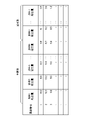
- 5A to 5C are configuration diagrams of examples of weighted feature amounts of resin composite materials.
- the weighted feature amount is information obtained by weighting each of the feature amounts of the main raw material and the additive by the blending amount (or blending ratio).
- the overall blending ratio (100%) is the total amount of ingredients blended.
- the characteristic amount of the resin composite material is calculated by summing the weighted characteristic amounts of all raw materials.
- the blending amount of the additive (Z) is smaller than that of the main raw material (A), and the weighted feature amount of the additive (Z) is smaller than that of the main raw material (A). .
- the weighted feature amount of the additive (Z) is smaller than the weighted feature amount of the main raw material (A)
- part of the partial structure of the main raw material (A) and the additive (Z) is common.
- the change in the weighted feature amount of the additive (Z) is buried. Therefore, the change in the weighted feature amount of the additive (Z) is difficult to be reflected in the feature amount of the resin composite material, and the influence of the additive (Z) on the properties of the resin composite material cannot be accurately predicted.
- the properties of a resin composite material composed of a plurality of raw material classes are predicted from the blending amount of the main raw material and the weighted feature amount of the additive.
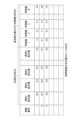
- 6A to 6C are configuration diagrams of an example of the compounding amount of the main raw material of the resin composite material and the weighted feature amount of the additive. In the examples of FIGS. 6A to 6C, the blending amount is used instead of the feature amount of the main raw material.
- FIG. 7 is an explanatory diagram of an example showing an overview of the characteristic prediction method of the information processing system according to this embodiment.
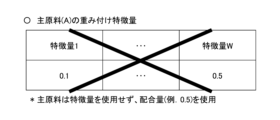
- W dimension the weighted feature amount of raw material class Z
- FIG. 7 is an example of explanatory variables when searching for additives of material category (Z).
- FIG. 7 can also be considered as an explanatory variable when the main raw material of raw material category A is not searched.
- FIG. 7 is an explanation created from the compounding amount of N types of raw materials of raw material category A, which is the main raw material, and the weighted feature amount of W types of raw material category Z, which is an additive (value of each feature amount ⁇ compounding amount). represents a variable.
- the blending amount can be expressed using a molar ratio, and may be expressed using a weight ratio.
- the explanatory variables created as shown in FIG. 7 are used, and the correspondence relationship between the characteristics of the resin composite material, which is the objective variable, and the explanatory variables shown in FIG. We create a prediction model that can predict the properties of resin composite materials through machine learning.
- FIG. 8 is a configuration diagram of an example of design conditions.
- the example of FIG. 8 is an example of design conditions that include, as information, the compounding amounts of N kinds of raw materials that are the main raw materials and the compounding amounts of the additives "raw material O" to "raw material T".
- the compounding amount is an explanatory variable element as shown in the following formula (1).
- the weighted feature value calculated as shown in the following formula (2) is an element of the explanatory variable.
- FIGS. 9A and 9B are explanatory diagrams of an example of processing for creating weighted feature quantities of additives.
- the feature amount can be represented for each experiment number i by a matrix of j (type of additive) ⁇ w (type of feature amount).
- j type of additive
- w type of feature amount
- FIG. 9B is an example of calculating the weighted feature amount of the additive from the design conditions of "experiment 1" of experiment number "1".
- weighted feature amounts of “feature amount 1" to “feature amount W” are calculated.
- “Feature amount 1 of experiment 1” in FIG. It is calculated by the sum of the weighted feature amounts, which are the products of the feature amounts "3" to "1" of "O” to "raw material T”.
- feature amount 2 of experiment 1 to “feature amount W of experiment 1" in FIG. 9B are calculated in the same manner as “feature amount 1 of experiment 1".
- the weighted feature amount of the additive is calculated for the design conditions after experiment number "2" in FIG. 8 in the same manner as the design condition for experiment number "1".
- explanatory variables as shown in FIG. 10 can be created.
- FIG. 10 is an explanatory diagram of an example of created explanatory variables. As shown in FIG. 10, the number of dimensions of explanatory variables is N+W.
- FIG. 11 is a flowchart of an example of processing in the learning stage of the information processing system according to this embodiment.
- the prediction model creation unit 30 of the characteristic prediction device 10 accepts the setting of the learning data set.
- the setting of the learning data set in step S10 may be performed by selecting from one or more learning data sets stored in the learning data set storage unit 40 . Further, the setting of the learning data set in step S10 may be a process of storing one learning data set whose setting is received from the user in the learning data set storage unit 40 .
- step S12 the objective variable identification unit 50 of the prediction model creation unit 30 identifies a sequence of characteristics (objective variables) to be predicted from the learning data set set in step S10. Further, the design condition identifying unit 52 identifies a sequence of design conditions (explanatory variables) such as those shown in FIG. 8, for example, from the learning data set set in step S10.
- step S14 the explanatory variable creation unit 56 identifies the row of main raw materials from the row of design conditions identified in step S12.
- the feature value creation unit 54 identifies a row of additives from the row of design conditions identified in step S12.
- step S16 the feature amount creating unit 54 creates feature amounts such as those shown in FIG. 9A for the row of additives specified in step S14.
- step S18 the explanatory variable creation unit 56, from the product of the feature quantity of the additive as shown in FIG. 9A created by the feature quantity creation unit 54 in step S16 and the blending amount of the additive as shown in FIG. A weighted feature amount of the additive as shown in FIG. 9B is calculated.
- step S20 the explanatory variable creation unit 56 combines the column of the compounding amount of the main raw material specified in step S14 and the column of the weighted feature amount of the additive calculated in step S18 to obtain a value as shown in FIG. Create explanatory variables.
- step S22 the learning processing unit 58 machine-learns the correspondence relationship between the objective variable identified in step S12 and the explanatory variable created in step S20 to create a prediction model.
- the created prediction model is stored in the prediction model storage unit 42 .
- FIG. 12 is an image diagram of an example of a screen for selecting materials to be searched.
- a screen 1000 in FIG. 12 shows a GUI (graphical user interface) for selecting a raw material classification to be searched from resin composite materials composed of a plurality of raw material classifications as a raw material classification to be optimized.
- the user selects a raw material category to be optimized from the raw material categories displayed on the screen 1000, such as alcohol raw materials, incyanate raw materials, cross-linking agents, curing agents, and catalysts.
- FIG. 12 shows an example in which "curing agent" is selected as a raw material classification to be optimized.
- the prediction model creation unit 30 of the characteristic prediction device 10 can create explanatory variables as shown in FIG. 13, for example, according to the procedure of the flowchart of FIG.
- FIG. 13 is a configuration diagram of an example of explanatory variables.
- the explanatory variables in FIG. 13 are the weighted feature amount of the “curing agent” selected as the raw material classification to be optimized on the screen 1000 in FIG. 12 and the compounding amount of the raw material classification not selected as the raw material classification to be optimized. Created by combining.
- the information processing system 1 according to the present embodiment weights the elements representing the blending amounts of raw materials that were not selected as the raw material classification desired to be optimized and the raw materials selected as the raw material classification desired to be optimized. It can be used for machine learning by creating an explanatory variable that combines elements represented by feature values.
- the raw material classification desired to be optimized is the additive, but the raw material classification desired to be optimized may be the main raw material as shown in the screen 1000 of FIG.
- the screen 1000 of FIG. 12 when "incyanate raw material” is selected as the raw material category to be optimized, the weighted feature amount of "incyanate raw material” and the blending amounts of the alcohol raw material, the cross-linking agent, the curing agent, and the catalyst and are combined to create explanatory variables.
- the screen 1000 of FIG. 12 shows an example of selecting one classification of raw materials to be optimized, multiple selections may be possible.
- FIG. 14 is a flow chart of an example of processing in the prediction stage of the information processing system according to this embodiment.
- the prediction unit 32 of the characteristic prediction device 10 receives setting of prediction data.
- the prediction unit 32 identifies a sequence of design conditions as shown in FIG. 8, for example, from the prediction data set in step S30.
- step S34 the prediction unit 32 identifies the main raw material column and the additive column from the design condition column identified in step S32.
- step S36 the prediction unit 32 creates a feature amount as shown in FIG. 9A, for example, for the row of additives identified in step S34.
- step S38 the prediction unit 32 calculates the product of the feature amount of the additive as shown in FIG. 9A created in step S36 and the blending amount of the additive as shown in FIG. A weighted feature amount of the additive is calculated.
- step S40 the prediction unit 32 combines the column of the compounding amount of the main raw material specified in step S34 and the column of the weighted feature amount of the additive calculated in step S38 to obtain explanatory variables as shown in FIG. to create
- step S42 the prediction unit 32 inputs the explanatory variables created in step S40 to the prediction model, thereby predicting the properties of the resin composite material corresponding to the prediction data.
- the processing of the flow chart of FIG. 14 is performed until the predicted properties of the resin composite material achieve the target properties of the resin composite material, or until the set number of calculations (for example, 10,000 times) is completed. and changing the blending amount of the raw materials contained in the combination are repeated.
- the prediction unit 32 predicts the properties of the resin composite material using combinations of raw materials for additives and blending amounts of raw materials included in the combinations as exhaustive search points.
- Exhaustive search points can be generated, for example, by generating the compounding amounts of raw materials included in the combination randomly within a predetermined range or in predetermined increments. Based on the exhaustive search points at which the predicted properties of the resin composite material approximate the target properties, the prediction unit 32 determines a combination of additive raw materials that approximates the target properties of the resin composite material, and the blending amount of the raw materials contained in the combination. can be identified.
- the properties of the resin composite material predicted by the property prediction device 10 according to the present embodiment are, for example, a composite material composition design device or composition design support device configured from a plurality of raw material classifications, and the composition design device or composition design support device. It can be applied to a program to be realized.
- the property prediction device 10 according to the present embodiment supplies design conditions in which the predicted properties are close to target properties to the manufacturing apparatus of the resin composite material, so that the manufacturing apparatus can generate the resin composite material. good.
- the weighted feature amount is calculated from raw materials of a specific raw material classification, and the blending amount of raw materials of other raw material classifications is calculated.
- the information processing system 1 it is possible to accurately predict the change in the properties of the composite material when the molecular structure of the additive (additive) whose compounding amount is smaller than that of the main raw material is changed. It becomes possible. In addition, it becomes possible to screen additives that should be used to satisfy desired properties.
- the information processing system 1 according to this embodiment is particularly effective when the additive and the main raw material have a partial structure in common.
Landscapes
- Engineering & Computer Science (AREA)
- Theoretical Computer Science (AREA)
- Physics & Mathematics (AREA)
- Evolutionary Computation (AREA)
- Geometry (AREA)
- Software Systems (AREA)
- Medical Informatics (AREA)
- Computer Hardware Design (AREA)
- Computer Vision & Pattern Recognition (AREA)
- General Engineering & Computer Science (AREA)
- General Physics & Mathematics (AREA)
- Artificial Intelligence (AREA)
- Computing Systems (AREA)
- Life Sciences & Earth Sciences (AREA)
- Bioinformatics & Cheminformatics (AREA)
- Bioinformatics & Computational Biology (AREA)
- Management, Administration, Business Operations System, And Electronic Commerce (AREA)
Abstract
Description
第1の原料分類の材料種及び第2の原料分類の材料種を含んだ構成である複合材料の学習用データセットを用いて、目的変数である前記複合材料の特性と、説明変数である前記第1の原料分類の材料種の配合量及び第2の原料分類の材料種の重み付け特徴量と、の対応関係を機械学習した予測モデルを作成する予測モデル作成部と、
特性を予測する複合材料の予測用データから作成した前記第1の原料分類の材料種の配合量及び前記第2の原料分類の材料種の重み付け特徴量を説明変数として前記予測モデルに入力して、前記予測用データに対応する前記複合材料の特性を予測する予測部と、
を有する特性予測装置。
を特徴とする[1]記載の特性予測装置。
を特徴とする[1]又は[2]記載の特性予測装置。
を特徴とする[3]記載の特性予測装置。
前記学習用データセットから目的変数として前記複合材料の特性を特定する目的変数特定部と、
前記学習用データセットから前記複合材料の設計条件を特定する設計条件特定部と、
前記設計条件から前記第2の原料分類の材料種に含まれる1つ以上の原料ごとに特徴量を作成する特徴量作成部と、
前記第1の原料分類の材料種に含まれる1つ以上の原料の配合量、及び前記第2の原料分類の材料種に含まれる1つ以上の原料のそれぞれの前記重み付け特徴量を説明変数として作成する説明変数作成部と、
前記目的変数及び前記説明変数の対応関係を機械学習して予測モデルを作成する学習処理部と、
を有する[1]乃至[4]の何れか一項に記載の特性予測装置。
を特徴とする[1]乃至[5]の何れか一項に記載の特性予測装置。
[1]乃至[6]の何れか一項に記載の特性予測装置。
[1]乃至[7]の何れか一項に記載の特性予測装置。
[1]乃至[7]の何れか一項に記載の特性予測装置。
第1の原料分類の材料種及び第2の原料分類の材料種を含んだ構成である複合材料の学習用データセットを用いて、目的変数である前記複合材料の特性と、説明変数である前記第1の原料分類の材料種の配合量及び第2の原料分類の材料種の重み付け特徴量と、の対応関係を機械学習した予測モデルを作成するステップと、
特性を予測する複合材料の予測用データから作成した前記第1の原料分類の材料種の配合量及び前記第2の原料分類の材料種の重み付け特徴量を説明変数として前記予測モデルに入力して、前記予測用データに対応する前記複合材料の特性を予測するステップと、
を含む特性予測方法。
第1の原料分類の材料種及び第2の原料分類の材料種を含んだ構成である複合材料の学習用データセットを用いて、目的変数である前記複合材料の特性と、説明変数である前記第1の原料分類の材料種の配合量及び第2の原料分類の材料種の重み付け特徴量と、の対応関係を機械学習した予測モデルを作成するステップ、
特性を予測する複合材料の予測用データから作成した前記第1の原料分類の材料種の配合量及び前記第2の原料分類の材料種の重み付け特徴量を説明変数として前記予測モデルに入力して、前記予測用データに対応する前記複合材料の特性を予測するステップ、
を実行させるためのプログラム。
<システム構成>
図1は、本実施形態に係る情報処理システムの一例の構成図である。図1の情報処理システム1は、特性予測装置10、及びユーザ端末12を有している。特性予測装置10及びユーザ端末12はローカルエリアネットワーク(LAN)又はインターネットなどの通信ネットワーク18を介してデータ通信可能に接続されている。
図1の特性予測装置10及びユーザ端末12は、例えば図2に示すハードウェア構成のコンピュータ500により実現する。
本実施形態に係る情報処理システム1の構成について説明する。図3は本実施形態に係る情報処理システムの一例の機能構成図である。なお、図3の構成図は、本実施形態の説明に不要な部分について適宜省略している。
複数の原料分類から構成される樹脂複合材料の特性は、例えば主原料及び添加剤の名称と、その有無から、樹脂複合材料の特性の予測を行うことができる。図4は、樹脂複合材料の設計条件の一例の構成図である。図4に示すように、設計条件は、樹脂複合材料の材料種に含まれる「樹脂1」「樹脂2」「樹脂3」「触媒1」及び「添加物1」などの原料ごとに配合量が設定されている。図4の設計条件の「添加剤α」~「添加剤ε」は未学習の添加剤であるものとする。主原料及び添加剤の名称と、その有無を、物理化学的な特性を直接的には示さない情報、例えば、主原料及び添加剤の銘柄や型番などを「0」と「1」とで表すダミー変数で記述して用いてもよい。
以下、本実施形態に係る情報処理システム1が、複数の原料分類から構成される樹脂複合材料の特性を予測する処理の詳細について説明する。


本実施形態に係る特性予測装置10が予測した樹脂複合材料の特性は、例えば複数の原料分類から構成される複合材料の配合設計装置又は配合設計支援装置、その配合設計装置又は配合設計支援装置を実現するプログラムなどに適用できる。また、本実施形態に係る特性予測装置10は、予測した特性が目標とする特性に近い設計条件を、樹脂複合材料の製造装置に供給することで、製造装置に樹脂複合材料を生成させてもよい。
10 特性予測装置
12 ユーザ端末
18 通信ネットワーク
20 情報表示部
22 操作受付部
24 要求送信部
26 応答受信部
30 予測モデル作成部
32 予測部
34 出力部
40 学習用データセット記憶部
42 予測モデル記憶部
50 目的変数特定部
52 設計条件特定部
54 特徴量作成部
56 説明変数作成部
58 学習処理部
Claims (11)
- 複数の原料分類から構成される複合材料の特性を予測する特性予測装置であって、
第1の原料分類の材料種及び第2の原料分類の材料種を含んだ構成である複合材料の学習用データセットを用いて、目的変数である前記複合材料の特性と、説明変数である前記第1の原料分類の材料種の配合量及び第2の原料分類の材料種の重み付け特徴量と、の対応関係を機械学習した予測モデルを作成する予測モデル作成部と、
特性を予測する複合材料の予測用データから作成した前記第1の原料分類の材料種の配合量及び前記第2の原料分類の材料種の重み付け特徴量を説明変数として前記予測モデルに入力して、前記予測用データに対応する前記複合材料の特性を予測する予測部と、
を有する特性予測装置。 - 前記説明変数は、前記第1の原料分類の材料種に含まれる1つ以上の原料の配合量の情報と、前記第2の原料分類の材料種に含まれる1つ以上の原料のそれぞれの特徴量及び前記原料の配合量の積である前記重み付け特徴量の情報と、を含むこと
を特徴とする請求項1記載の特性予測装置。 - 前記予測モデル作成部は、前記複合材料を構成する複数の原料分類のうち、最適化のために探索する原料の原料分類を前記第2の原料分類とし、前記探索する原料の原料分類以外を前記第1の原料分類とすること
を特徴とする請求項1又は2記載の特性予測装置。 - 前記予測部は、最適化する前記第2の原料分類の材料種に含まれる1つ以上の原料の組み合わせの探索と、前記組み合わせに含まれる1つ以上の原料の配合量の変更と、を行いながら前記複合材料の特性を予測し、予測した前記特性が前記予測用データに対応する前記複合材料の目標特性に近似している、前記原料の組み合わせ、及び前記組み合わせに含まれる1つ以上の原料の配合量を特定すること
を特徴とする請求項3記載の特性予測装置。 - 前記予測モデル作成部は、
前記学習用データセットから目的変数として前記複合材料の特性を特定する目的変数特定部と、
前記学習用データセットから前記複合材料の設計条件を特定する設計条件特定部と、
前記設計条件から前記第2の原料分類の材料種に含まれる1つ以上の原料ごとに特徴量を作成する特徴量作成部と、
前記第1の原料分類の材料種に含まれる1つ以上の原料の配合量、及び前記第2の原料分類の材料種に含まれる1つ以上の原料のそれぞれの前記重み付け特徴量を説明変数として作成する説明変数作成部と、
前記目的変数及び前記説明変数の対応関係を機械学習して予測モデルを作成する学習処理部と、
を有する請求項1乃至4の何れか一項に記載の特性予測装置。 - 前記複合材料は、前記第1の原料分類の材料種である主原料と、前記主原料に比べて配合量が小さい前記第2の原料分類の材料種である添加剤と、を含む樹脂複合材料であること
を特徴とする請求項1乃至5の何れか一項に記載の特性予測装置。 - 前記原料分類は、モノマー、オリゴマー、ポリマー、フィラー、触媒、重合開始剤、重合禁止剤、架橋剤、又は硬化剤である、
請求項1乃至6の何れか一項に記載の特性予測装置。 - 前記特徴量は、分子の構造的特徴を数値化した情報、又は分子の化学的特徴を数値化した情報である
請求項1乃至7の何れか一項に記載の特性予測装置。 - 前記特徴量は、前記第2の原料分類の材料種の銘柄又は型番を「0」と「1」とで表すダミー変数で記述した情報である
請求項1乃至7の何れか一項に記載の特性予測装置。 - コンピュータが、複数の原料分類から構成される複合材料の特性を予測する特性予測方法であって、
第1の原料分類の材料種及び第2の原料分類の材料種を含んだ構成である複合材料の学習用データセットを用いて、目的変数である前記複合材料の特性と、説明変数である前記第1の原料分類の材料種の配合量及び第2の原料分類の材料種の重み付け特徴量と、の対応関係を機械学習した予測モデルを作成するステップと、
特性を予測する複合材料の予測用データから作成した前記第1の原料分類の材料種の配合量及び前記第2の原料分類の材料種の重み付け特徴量を説明変数として前記予測モデルに入力して、前記予測用データに対応する前記複合材料の特性を予測するステップと、
を含む特性予測方法。 - 複数の原料分類から構成される複合材料の特性を予測するコンピュータに、
第1の原料分類の材料種及び第2の原料分類の材料種を含んだ構成である複合材料の学習用データセットを用いて、目的変数である前記複合材料の特性と、説明変数である前記第1の原料分類の材料種の配合量及び第2の原料分類の材料種の重み付け特徴量と、の対応関係を機械学習した予測モデルを作成するステップ、
特性を予測する複合材料の予測用データから作成した前記第1の原料分類の材料種の配合量及び前記第2の原料分類の材料種の重み付け特徴量を説明変数として前記予測モデルに入力して、前記予測用データに対応する前記複合材料の特性を予測するステップ、
を実行させるためのプログラム。
Priority Applications (5)
| Application Number | Priority Date | Filing Date | Title |
|---|---|---|---|
| EP22864393.8A EP4398257A4 (en) | 2021-08-31 | 2022-08-25 | PROPERTY PREDICTION DEVICE, PROPERTY PREDICTION METHOD, AND PROGRAM |
| JP2023545511A JP7726280B2 (ja) | 2021-08-31 | 2022-08-25 | 特性予測装置、特性予測方法、及びプログラム |
| CN202280057085.XA CN117836861A (zh) | 2021-08-31 | 2022-08-25 | 特性预测装置、特性预测方法和程序 |
| US18/685,039 US20240378355A1 (en) | 2021-08-31 | 2022-08-25 | Property prediction device, property prediction method, and program |
| JP2025126051A JP2025148606A (ja) | 2021-08-31 | 2025-07-29 | 複合材料の製造方法 |
Applications Claiming Priority (2)
| Application Number | Priority Date | Filing Date | Title |
|---|---|---|---|
| JP2021-140833 | 2021-08-31 | ||
| JP2021140833 | 2021-08-31 |
Publications (1)
| Publication Number | Publication Date |
|---|---|
| WO2023032809A1 true WO2023032809A1 (ja) | 2023-03-09 |
Family
ID=85412668
Family Applications (1)
| Application Number | Title | Priority Date | Filing Date |
|---|---|---|---|
| PCT/JP2022/032048 Ceased WO2023032809A1 (ja) | 2021-08-31 | 2022-08-25 | 特性予測装置、特性予測方法、及びプログラム |
Country Status (5)
| Country | Link |
|---|---|
| US (1) | US20240378355A1 (ja) |
| EP (1) | EP4398257A4 (ja) |
| JP (2) | JP7726280B2 (ja) |
| CN (1) | CN117836861A (ja) |
| WO (1) | WO2023032809A1 (ja) |
Cited By (1)
| Publication number | Priority date | Publication date | Assignee | Title |
|---|---|---|---|---|
| WO2024201849A1 (ja) * | 2023-03-29 | 2024-10-03 | 株式会社レゾナック | バイオマス利用支援装置、方法、及びプログラム |
Families Citing this family (3)
| Publication number | Priority date | Publication date | Assignee | Title |
|---|---|---|---|---|
| KR102673710B1 (ko) * | 2023-08-23 | 2024-06-10 | 희래 주식회사 | 인공지능 기반의 포뮬레이션 데이터베이스를 구축하기 위한 전자 장치 및 그 동작 방법 |
| JP7550337B1 (ja) | 2024-05-01 | 2024-09-12 | 株式会社ブリヂストン | 情報処理装置、情報処理方法、及び情報処理プログラム |
| CN119830765B (zh) * | 2025-03-05 | 2025-11-11 | 北京理工大学 | 一种复合材料渗漏特性快速预测方法及系统 |
Citations (4)
| Publication number | Priority date | Publication date | Assignee | Title |
|---|---|---|---|---|
| JP6633820B1 (ja) | 2018-03-09 | 2020-01-22 | 昭和電工株式会社 | ポリマーの物性予測装置、プログラム、及び方法 |
| JP2020077346A (ja) | 2018-11-09 | 2020-05-21 | 旭化成株式会社 | 装置、方法、プログラム、感光性樹脂組成物の製造方法および感光性樹脂積層体の製造方法 |
| WO2021079985A1 (ja) * | 2019-10-25 | 2021-04-29 | コニカミノルタ株式会社 | 特性予測装置 |
| JP2021140833A (ja) | 2017-09-05 | 2021-09-16 | 富士フイルムビジネスイノベーション株式会社 | 情報処理装置、画像形成装置、プログラム、および、システム |
Family Cites Families (1)
| Publication number | Priority date | Publication date | Assignee | Title |
|---|---|---|---|---|
| JP7139782B2 (ja) * | 2018-08-23 | 2022-09-21 | 横浜ゴム株式会社 | ゴム材料設計方法、ゴム材料設計装置、及びプログラム |
-
2022
- 2022-08-25 EP EP22864393.8A patent/EP4398257A4/en active Pending
- 2022-08-25 JP JP2023545511A patent/JP7726280B2/ja active Active
- 2022-08-25 WO PCT/JP2022/032048 patent/WO2023032809A1/ja not_active Ceased
- 2022-08-25 CN CN202280057085.XA patent/CN117836861A/zh active Pending
- 2022-08-25 US US18/685,039 patent/US20240378355A1/en active Pending
-
2025
- 2025-07-29 JP JP2025126051A patent/JP2025148606A/ja active Pending
Patent Citations (4)
| Publication number | Priority date | Publication date | Assignee | Title |
|---|---|---|---|---|
| JP2021140833A (ja) | 2017-09-05 | 2021-09-16 | 富士フイルムビジネスイノベーション株式会社 | 情報処理装置、画像形成装置、プログラム、および、システム |
| JP6633820B1 (ja) | 2018-03-09 | 2020-01-22 | 昭和電工株式会社 | ポリマーの物性予測装置、プログラム、及び方法 |
| JP2020077346A (ja) | 2018-11-09 | 2020-05-21 | 旭化成株式会社 | 装置、方法、プログラム、感光性樹脂組成物の製造方法および感光性樹脂積層体の製造方法 |
| WO2021079985A1 (ja) * | 2019-10-25 | 2021-04-29 | コニカミノルタ株式会社 | 特性予測装置 |
Non-Patent Citations (1)
| Title |
|---|
| See also references of EP4398257A4 |
Cited By (1)
| Publication number | Priority date | Publication date | Assignee | Title |
|---|---|---|---|---|
| WO2024201849A1 (ja) * | 2023-03-29 | 2024-10-03 | 株式会社レゾナック | バイオマス利用支援装置、方法、及びプログラム |
Also Published As
| Publication number | Publication date |
|---|---|
| JPWO2023032809A1 (ja) | 2023-03-09 |
| US20240378355A1 (en) | 2024-11-14 |
| CN117836861A (zh) | 2024-04-05 |
| JP2025148606A (ja) | 2025-10-07 |
| JP7726280B2 (ja) | 2025-08-20 |
| EP4398257A1 (en) | 2024-07-10 |
| EP4398257A4 (en) | 2025-08-20 |
Similar Documents
| Publication | Publication Date | Title |
|---|---|---|
| WO2023032809A1 (ja) | 特性予測装置、特性予測方法、及びプログラム | |
| Schiff et al. | Caduceus: Bi-directional equivariant long-range dna sequence modeling | |
| EP3869362A1 (en) | Information processing method, information processing system, and program | |
| CN112434398A (zh) | 组合优化设备、组合优化方法以及计算机可读记录介质 | |
| CN113254362A (zh) | 存储设备和存储器控制器的操作方法 | |
| WO2021045058A1 (ja) | 材料設計装置、材料設計方法、及び材料設計プログラム | |
| JP7613547B2 (ja) | 樹脂組成物の物性予測装置及び方法 | |
| Partin et al. | Learning curves for drug response prediction in cancer cell lines | |
| Benmeziane et al. | Multi-objective hardware-aware neural architecture search with Pareto rank-preserving surrogate models | |
| Shapovalov et al. | Multifaceted analysis of training and testing convolutional neural networks for protein secondary structure prediction | |
| WO2024009893A1 (ja) | 情報処理装置、情報処理システム、プログラム、及びイジングモデル作成支援方法 | |
| JP2025028938A (ja) | 材料組成探索方法を用いる混合材料の生成方法 | |
| Komodromos et al. | Variational Bayes for high-dimensional proportional hazards models with applications within gene expression | |
| JP7219374B1 (ja) | 物性予測装置、物性予測方法、及びプログラム | |
| US20250046403A1 (en) | Design support device, design support method, and program | |
| JP2024111336A (ja) | 物質の製造方法 | |
| US20240319991A1 (en) | Generating review likelihoods for sets of code | |
| WO2025004836A1 (ja) | 感光性樹脂組成物、フィルム状樹脂及び樹脂シート | |
| US20230281496A1 (en) | Equilibrium solution searching method and information processing apparatus | |
| US20230060812A1 (en) | Information processing system, information processing method, and storage medium | |
| KR102945071B1 (ko) | 인공지능 기반의 화학 포뮬레이션 데이터 자동수집, 생성 및 품질관리를 위한 전자 장치 및 그 동작방법 | |
| JP7819776B2 (ja) | メタ学習方法、メタ学習装置及びプログラム | |
| CN117916751A (zh) | 程序、条件探索装置和条件探索方法 | |
| WO2024202078A1 (ja) | 付加重合反応に係る予測を行う方法、情報処理装置、及びプログラム | |
| WO2022260030A1 (ja) | 情報処理システム、材料組成探索方法、材料組成探索装置、及びプログラム |
Legal Events
| Date | Code | Title | Description |
|---|---|---|---|
| 121 | Ep: the epo has been informed by wipo that ep was designated in this application |
Ref document number: 22864393 Country of ref document: EP Kind code of ref document: A1 |
|
| WWE | Wipo information: entry into national phase |
Ref document number: 2023545511 Country of ref document: JP |
|
| WWE | Wipo information: entry into national phase |
Ref document number: 18685039 Country of ref document: US |
|
| WWE | Wipo information: entry into national phase |
Ref document number: 202280057085.X Country of ref document: CN |
|
| WWE | Wipo information: entry into national phase |
Ref document number: 2022864393 Country of ref document: EP |
|
| NENP | Non-entry into the national phase |
Ref country code: DE |
|
| ENP | Entry into the national phase |
Ref document number: 2022864393 Country of ref document: EP Effective date: 20240402 |