WO2023053016A1 - Ionizable cationic compound - Google Patents
Ionizable cationic compound Download PDFInfo
- Publication number
- WO2023053016A1 WO2023053016A1 PCT/IB2022/059215 IB2022059215W WO2023053016A1 WO 2023053016 A1 WO2023053016 A1 WO 2023053016A1 IB 2022059215 W IB2022059215 W IB 2022059215W WO 2023053016 A1 WO2023053016 A1 WO 2023053016A1
- Authority
- WO
- WIPO (PCT)
- Prior art keywords
- protein
- compound
- formula
- lipid
- glycero
- Prior art date
- Legal status (The legal status is an assumption and is not a legal conclusion. Google has not performed a legal analysis and makes no representation as to the accuracy of the status listed.)
- Ceased
Links
Classifications
-
- A—HUMAN NECESSITIES
- A61—MEDICAL OR VETERINARY SCIENCE; HYGIENE
- A61K—PREPARATIONS FOR MEDICAL, DENTAL OR TOILETRY PURPOSES
- A61K39/00—Medicinal preparations containing antigens or antibodies
- A61K39/12—Viral antigens
- A61K39/145—Orthomyxoviridae, e.g. influenza virus
-
- A—HUMAN NECESSITIES
- A61—MEDICAL OR VETERINARY SCIENCE; HYGIENE
- A61K—PREPARATIONS FOR MEDICAL, DENTAL OR TOILETRY PURPOSES
- A61K45/00—Medicinal preparations containing active ingredients not provided for in groups A61K31/00 - A61K41/00
- A61K45/06—Mixtures of active ingredients without chemical characterisation, e.g. antiphlogistics and cardiaca
-
- A—HUMAN NECESSITIES
- A61—MEDICAL OR VETERINARY SCIENCE; HYGIENE
- A61K—PREPARATIONS FOR MEDICAL, DENTAL OR TOILETRY PURPOSES
- A61K39/00—Medicinal preparations containing antigens or antibodies
- A61K39/12—Viral antigens
-
- A—HUMAN NECESSITIES
- A61—MEDICAL OR VETERINARY SCIENCE; HYGIENE
- A61K—PREPARATIONS FOR MEDICAL, DENTAL OR TOILETRY PURPOSES
- A61K48/00—Medicinal preparations containing genetic material which is inserted into cells of the living body to treat genetic diseases; Gene therapy
- A61K48/0008—Medicinal preparations containing genetic material which is inserted into cells of the living body to treat genetic diseases; Gene therapy characterised by an aspect of the 'non-active' part of the composition delivered, e.g. wherein such 'non-active' part is not delivered simultaneously with the 'active' part of the composition
- A61K48/0025—Medicinal preparations containing genetic material which is inserted into cells of the living body to treat genetic diseases; Gene therapy characterised by an aspect of the 'non-active' part of the composition delivered, e.g. wherein such 'non-active' part is not delivered simultaneously with the 'active' part of the composition wherein the non-active part clearly interacts with the delivered nucleic acid
- A61K48/0041—Medicinal preparations containing genetic material which is inserted into cells of the living body to treat genetic diseases; Gene therapy characterised by an aspect of the 'non-active' part of the composition delivered, e.g. wherein such 'non-active' part is not delivered simultaneously with the 'active' part of the composition wherein the non-active part clearly interacts with the delivered nucleic acid the non-active part being polymeric
-
- A—HUMAN NECESSITIES
- A61—MEDICAL OR VETERINARY SCIENCE; HYGIENE
- A61K—PREPARATIONS FOR MEDICAL, DENTAL OR TOILETRY PURPOSES
- A61K9/00—Medicinal preparations characterised by special physical form
- A61K9/10—Dispersions; Emulsions
- A61K9/127—Synthetic bilayered vehicles, e.g. liposomes or liposomes with cholesterol as the only non-phosphatidyl surfactant
- A61K9/1271—Non-conventional liposomes, e.g. PEGylated liposomes or liposomes coated or grafted with polymers
- A61K9/1272—Non-conventional liposomes, e.g. PEGylated liposomes or liposomes coated or grafted with polymers comprising non-phosphatidyl surfactants as bilayer-forming substances, e.g. cationic lipids or non-phosphatidyl liposomes coated or grafted with polymers
-
- A—HUMAN NECESSITIES
- A61—MEDICAL OR VETERINARY SCIENCE; HYGIENE
- A61K—PREPARATIONS FOR MEDICAL, DENTAL OR TOILETRY PURPOSES
- A61K9/00—Medicinal preparations characterised by special physical form
- A61K9/48—Preparations in capsules, e.g. of gelatin, of chocolate
- A61K9/50—Microcapsules having a gas, liquid or semi-solid filling; Solid microparticles or pellets surrounded by a distinct coating layer, e.g. coated microspheres, coated drug crystals
- A61K9/51—Nanocapsules; Nanoparticles
- A61K9/5107—Excipients; Inactive ingredients
- A61K9/5123—Organic compounds, e.g. fats, sugars
-
- A—HUMAN NECESSITIES
- A61—MEDICAL OR VETERINARY SCIENCE; HYGIENE
- A61P—SPECIFIC THERAPEUTIC ACTIVITY OF CHEMICAL COMPOUNDS OR MEDICINAL PREPARATIONS
- A61P31/00—Antiinfectives, i.e. antibiotics, antiseptics, chemotherapeutics
- A61P31/12—Antivirals
- A61P31/14—Antivirals for RNA viruses
- A61P31/16—Antivirals for RNA viruses for influenza or rhinoviruses
-
- C—CHEMISTRY; METALLURGY
- C07—ORGANIC CHEMISTRY
- C07C—ACYCLIC OR CARBOCYCLIC COMPOUNDS
- C07C211/00—Compounds containing amino groups bound to a carbon skeleton
- C07C211/01—Compounds containing amino groups bound to a carbon skeleton having amino groups bound to acyclic carbon atoms
- C07C211/02—Compounds containing amino groups bound to a carbon skeleton having amino groups bound to acyclic carbon atoms of an acyclic saturated carbon skeleton
- C07C211/03—Monoamines
- C07C211/08—Monoamines containing alkyl groups having a different number of carbon atoms
-
- C—CHEMISTRY; METALLURGY
- C07—ORGANIC CHEMISTRY
- C07C—ACYCLIC OR CARBOCYCLIC COMPOUNDS
- C07C219/00—Compounds containing amino and esterified hydroxy groups bound to the same carbon skeleton
- C07C219/02—Compounds containing amino and esterified hydroxy groups bound to the same carbon skeleton having esterified hydroxy groups and amino groups bound to acyclic carbon atoms of the same carbon skeleton
- C07C219/04—Compounds containing amino and esterified hydroxy groups bound to the same carbon skeleton having esterified hydroxy groups and amino groups bound to acyclic carbon atoms of the same carbon skeleton the carbon skeleton being acyclic and saturated
- C07C219/06—Compounds containing amino and esterified hydroxy groups bound to the same carbon skeleton having esterified hydroxy groups and amino groups bound to acyclic carbon atoms of the same carbon skeleton the carbon skeleton being acyclic and saturated having the hydroxy groups esterified by carboxylic acids having the esterifying carboxyl groups bound to hydrogen atoms or to acyclic carbon atoms of an acyclic saturated carbon skeleton
-
- C—CHEMISTRY; METALLURGY
- C07—ORGANIC CHEMISTRY
- C07C—ACYCLIC OR CARBOCYCLIC COMPOUNDS
- C07C229/00—Compounds containing amino and carboxyl groups bound to the same carbon skeleton
- C07C229/02—Compounds containing amino and carboxyl groups bound to the same carbon skeleton having amino and carboxyl groups bound to acyclic carbon atoms of the same carbon skeleton
- C07C229/04—Compounds containing amino and carboxyl groups bound to the same carbon skeleton having amino and carboxyl groups bound to acyclic carbon atoms of the same carbon skeleton the carbon skeleton being acyclic and saturated
- C07C229/06—Compounds containing amino and carboxyl groups bound to the same carbon skeleton having amino and carboxyl groups bound to acyclic carbon atoms of the same carbon skeleton the carbon skeleton being acyclic and saturated having only one amino and one carboxyl group bound to the carbon skeleton
- C07C229/10—Compounds containing amino and carboxyl groups bound to the same carbon skeleton having amino and carboxyl groups bound to acyclic carbon atoms of the same carbon skeleton the carbon skeleton being acyclic and saturated having only one amino and one carboxyl group bound to the carbon skeleton the nitrogen atom of the amino group being further bound to acyclic carbon atoms or to carbon atoms of rings other than six-membered aromatic rings
- C07C229/12—Compounds containing amino and carboxyl groups bound to the same carbon skeleton having amino and carboxyl groups bound to acyclic carbon atoms of the same carbon skeleton the carbon skeleton being acyclic and saturated having only one amino and one carboxyl group bound to the carbon skeleton the nitrogen atom of the amino group being further bound to acyclic carbon atoms or to carbon atoms of rings other than six-membered aromatic rings to carbon atoms of acyclic carbon skeletons
-
- C—CHEMISTRY; METALLURGY
- C07—ORGANIC CHEMISTRY
- C07D—HETEROCYCLIC COMPOUNDS
- C07D211/00—Heterocyclic compounds containing hydrogenated pyridine rings, not condensed with other rings
- C07D211/04—Heterocyclic compounds containing hydrogenated pyridine rings, not condensed with other rings with only hydrogen or carbon atoms directly attached to the ring nitrogen atom
- C07D211/06—Heterocyclic compounds containing hydrogenated pyridine rings, not condensed with other rings with only hydrogen or carbon atoms directly attached to the ring nitrogen atom having no double bonds between ring members or between ring members and non-ring members
- C07D211/08—Heterocyclic compounds containing hydrogenated pyridine rings, not condensed with other rings with only hydrogen or carbon atoms directly attached to the ring nitrogen atom having no double bonds between ring members or between ring members and non-ring members with hydrocarbon or substituted hydrocarbon radicals directly attached to ring carbon atoms
- C07D211/18—Heterocyclic compounds containing hydrogenated pyridine rings, not condensed with other rings with only hydrogen or carbon atoms directly attached to the ring nitrogen atom having no double bonds between ring members or between ring members and non-ring members with hydrocarbon or substituted hydrocarbon radicals directly attached to ring carbon atoms with substituted hydrocarbon radicals attached to ring carbon atoms
- C07D211/34—Heterocyclic compounds containing hydrogenated pyridine rings, not condensed with other rings with only hydrogen or carbon atoms directly attached to the ring nitrogen atom having no double bonds between ring members or between ring members and non-ring members with hydrocarbon or substituted hydrocarbon radicals directly attached to ring carbon atoms with substituted hydrocarbon radicals attached to ring carbon atoms with hydrocarbon radicals, substituted by carbon atoms having three bonds to hetero atoms with at the most one bond to halogen, e.g. ester or nitrile radicals
-
- C—CHEMISTRY; METALLURGY
- C07—ORGANIC CHEMISTRY
- C07D—HETEROCYCLIC COMPOUNDS
- C07D211/00—Heterocyclic compounds containing hydrogenated pyridine rings, not condensed with other rings
- C07D211/04—Heterocyclic compounds containing hydrogenated pyridine rings, not condensed with other rings with only hydrogen or carbon atoms directly attached to the ring nitrogen atom
- C07D211/06—Heterocyclic compounds containing hydrogenated pyridine rings, not condensed with other rings with only hydrogen or carbon atoms directly attached to the ring nitrogen atom having no double bonds between ring members or between ring members and non-ring members
- C07D211/36—Heterocyclic compounds containing hydrogenated pyridine rings, not condensed with other rings with only hydrogen or carbon atoms directly attached to the ring nitrogen atom having no double bonds between ring members or between ring members and non-ring members with hetero atoms or with carbon atoms having three bonds to hetero atoms with at the most one bond to halogen, e.g. ester or nitrile radicals, directly attached to ring carbon atoms
- C07D211/40—Oxygen atoms
- C07D211/44—Oxygen atoms attached in position 4
- C07D211/46—Oxygen atoms attached in position 4 having a hydrogen atom as the second substituent in position 4
-
- C—CHEMISTRY; METALLURGY
- C07—ORGANIC CHEMISTRY
- C07D—HETEROCYCLIC COMPOUNDS
- C07D211/00—Heterocyclic compounds containing hydrogenated pyridine rings, not condensed with other rings
- C07D211/04—Heterocyclic compounds containing hydrogenated pyridine rings, not condensed with other rings with only hydrogen or carbon atoms directly attached to the ring nitrogen atom
- C07D211/06—Heterocyclic compounds containing hydrogenated pyridine rings, not condensed with other rings with only hydrogen or carbon atoms directly attached to the ring nitrogen atom having no double bonds between ring members or between ring members and non-ring members
- C07D211/36—Heterocyclic compounds containing hydrogenated pyridine rings, not condensed with other rings with only hydrogen or carbon atoms directly attached to the ring nitrogen atom having no double bonds between ring members or between ring members and non-ring members with hetero atoms or with carbon atoms having three bonds to hetero atoms with at the most one bond to halogen, e.g. ester or nitrile radicals, directly attached to ring carbon atoms
- C07D211/40—Oxygen atoms
- C07D211/44—Oxygen atoms attached in position 4
- C07D211/48—Oxygen atoms attached in position 4 having an acyclic carbon atom attached in position 4
-
- C—CHEMISTRY; METALLURGY
- C07—ORGANIC CHEMISTRY
- C07D—HETEROCYCLIC COMPOUNDS
- C07D211/00—Heterocyclic compounds containing hydrogenated pyridine rings, not condensed with other rings
- C07D211/04—Heterocyclic compounds containing hydrogenated pyridine rings, not condensed with other rings with only hydrogen or carbon atoms directly attached to the ring nitrogen atom
- C07D211/06—Heterocyclic compounds containing hydrogenated pyridine rings, not condensed with other rings with only hydrogen or carbon atoms directly attached to the ring nitrogen atom having no double bonds between ring members or between ring members and non-ring members
- C07D211/36—Heterocyclic compounds containing hydrogenated pyridine rings, not condensed with other rings with only hydrogen or carbon atoms directly attached to the ring nitrogen atom having no double bonds between ring members or between ring members and non-ring members with hetero atoms or with carbon atoms having three bonds to hetero atoms with at the most one bond to halogen, e.g. ester or nitrile radicals, directly attached to ring carbon atoms
- C07D211/60—Carbon atoms having three bonds to hetero atoms with at the most one bond to halogen, e.g. ester or nitrile radicals
-
- C—CHEMISTRY; METALLURGY
- C07—ORGANIC CHEMISTRY
- C07D—HETEROCYCLIC COMPOUNDS
- C07D211/00—Heterocyclic compounds containing hydrogenated pyridine rings, not condensed with other rings
- C07D211/04—Heterocyclic compounds containing hydrogenated pyridine rings, not condensed with other rings with only hydrogen or carbon atoms directly attached to the ring nitrogen atom
- C07D211/06—Heterocyclic compounds containing hydrogenated pyridine rings, not condensed with other rings with only hydrogen or carbon atoms directly attached to the ring nitrogen atom having no double bonds between ring members or between ring members and non-ring members
- C07D211/36—Heterocyclic compounds containing hydrogenated pyridine rings, not condensed with other rings with only hydrogen or carbon atoms directly attached to the ring nitrogen atom having no double bonds between ring members or between ring members and non-ring members with hetero atoms or with carbon atoms having three bonds to hetero atoms with at the most one bond to halogen, e.g. ester or nitrile radicals, directly attached to ring carbon atoms
- C07D211/60—Carbon atoms having three bonds to hetero atoms with at the most one bond to halogen, e.g. ester or nitrile radicals
- C07D211/62—Carbon atoms having three bonds to hetero atoms with at the most one bond to halogen, e.g. ester or nitrile radicals attached in position 4
-
- C—CHEMISTRY; METALLURGY
- C07—ORGANIC CHEMISTRY
- C07D—HETEROCYCLIC COMPOUNDS
- C07D223/00—Heterocyclic compounds containing seven-membered rings having one nitrogen atom as the only ring hetero atom
- C07D223/02—Heterocyclic compounds containing seven-membered rings having one nitrogen atom as the only ring hetero atom not condensed with other rings
- C07D223/04—Heterocyclic compounds containing seven-membered rings having one nitrogen atom as the only ring hetero atom not condensed with other rings with only hydrogen atoms, halogen atoms, hydrocarbon or substituted hydrocarbon radicals, directly attached to ring carbon atoms
-
- C—CHEMISTRY; METALLURGY
- C07—ORGANIC CHEMISTRY
- C07D—HETEROCYCLIC COMPOUNDS
- C07D295/00—Heterocyclic compounds containing polymethylene-imine rings with at least five ring members, 3-azabicyclo [3.2.2] nonane, piperazine, morpholine or thiomorpholine rings, having only hydrogen atoms directly attached to the ring carbon atoms
- C07D295/04—Heterocyclic compounds containing polymethylene-imine rings with at least five ring members, 3-azabicyclo [3.2.2] nonane, piperazine, morpholine or thiomorpholine rings, having only hydrogen atoms directly attached to the ring carbon atoms with substituted hydrocarbon radicals attached to ring nitrogen atoms
- C07D295/14—Heterocyclic compounds containing polymethylene-imine rings with at least five ring members, 3-azabicyclo [3.2.2] nonane, piperazine, morpholine or thiomorpholine rings, having only hydrogen atoms directly attached to the ring carbon atoms with substituted hydrocarbon radicals attached to ring nitrogen atoms substituted by carbon atoms having three bonds to hetero atoms with at the most one bond to halogen, e.g. ester or nitrile radicals
- C07D295/145—Heterocyclic compounds containing polymethylene-imine rings with at least five ring members, 3-azabicyclo [3.2.2] nonane, piperazine, morpholine or thiomorpholine rings, having only hydrogen atoms directly attached to the ring carbon atoms with substituted hydrocarbon radicals attached to ring nitrogen atoms substituted by carbon atoms having three bonds to hetero atoms with at the most one bond to halogen, e.g. ester or nitrile radicals with the ring nitrogen atoms and the carbon atoms with three bonds to hetero atoms attached to the same carbon chain, which is not interrupted by carbocyclic rings
- C07D295/15—Heterocyclic compounds containing polymethylene-imine rings with at least five ring members, 3-azabicyclo [3.2.2] nonane, piperazine, morpholine or thiomorpholine rings, having only hydrogen atoms directly attached to the ring carbon atoms with substituted hydrocarbon radicals attached to ring nitrogen atoms substituted by carbon atoms having three bonds to hetero atoms with at the most one bond to halogen, e.g. ester or nitrile radicals with the ring nitrogen atoms and the carbon atoms with three bonds to hetero atoms attached to the same carbon chain, which is not interrupted by carbocyclic rings to an acyclic saturated chain
-
- C—CHEMISTRY; METALLURGY
- C12—BIOCHEMISTRY; BEER; SPIRITS; WINE; VINEGAR; MICROBIOLOGY; ENZYMOLOGY; MUTATION OR GENETIC ENGINEERING
- C12N—MICROORGANISMS OR ENZYMES; COMPOSITIONS THEREOF; PROPAGATING, PRESERVING, OR MAINTAINING MICROORGANISMS; MUTATION OR GENETIC ENGINEERING; CULTURE MEDIA
- C12N15/00—Mutation or genetic engineering; DNA or RNA concerning genetic engineering, vectors, e.g. plasmids, or their isolation, preparation or purification; Use of hosts therefor
- C12N15/09—Recombinant DNA-technology
- C12N15/87—Introduction of foreign genetic material using processes not otherwise provided for, e.g. co-transformation
- C12N15/88—Introduction of foreign genetic material using processes not otherwise provided for, e.g. co-transformation using microencapsulation, e.g. using amphiphile liposome vesicle
-
- A—HUMAN NECESSITIES
- A61—MEDICAL OR VETERINARY SCIENCE; HYGIENE
- A61K—PREPARATIONS FOR MEDICAL, DENTAL OR TOILETRY PURPOSES
- A61K39/00—Medicinal preparations containing antigens or antibodies
- A61K2039/51—Medicinal preparations containing antigens or antibodies comprising whole cells, viruses or DNA/RNA
- A61K2039/525—Virus
- A61K2039/5252—Virus inactivated (killed)
-
- A—HUMAN NECESSITIES
- A61—MEDICAL OR VETERINARY SCIENCE; HYGIENE
- A61K—PREPARATIONS FOR MEDICAL, DENTAL OR TOILETRY PURPOSES
- A61K39/00—Medicinal preparations containing antigens or antibodies
- A61K2039/51—Medicinal preparations containing antigens or antibodies comprising whole cells, viruses or DNA/RNA
- A61K2039/53—DNA (RNA) vaccination
-
- A—HUMAN NECESSITIES
- A61—MEDICAL OR VETERINARY SCIENCE; HYGIENE
- A61K—PREPARATIONS FOR MEDICAL, DENTAL OR TOILETRY PURPOSES
- A61K39/00—Medicinal preparations containing antigens or antibodies
- A61K2039/555—Medicinal preparations containing antigens or antibodies characterised by a specific combination antigen/adjuvant
- A61K2039/55511—Organic adjuvants
- A61K2039/55555—Liposomes; Vesicles, e.g. nanoparticles; Spheres, e.g. nanospheres; Polymers
-
- A—HUMAN NECESSITIES
- A61—MEDICAL OR VETERINARY SCIENCE; HYGIENE
- A61K—PREPARATIONS FOR MEDICAL, DENTAL OR TOILETRY PURPOSES
- A61K39/00—Medicinal preparations containing antigens or antibodies
- A61K2039/555—Medicinal preparations containing antigens or antibodies characterised by a specific combination antigen/adjuvant
- A61K2039/55511—Organic adjuvants
- A61K2039/55566—Emulsions, e.g. Freund's adjuvant, MF59
-
- A—HUMAN NECESSITIES
- A61—MEDICAL OR VETERINARY SCIENCE; HYGIENE
- A61K—PREPARATIONS FOR MEDICAL, DENTAL OR TOILETRY PURPOSES
- A61K39/00—Medicinal preparations containing antigens or antibodies
- A61K2039/57—Medicinal preparations containing antigens or antibodies characterised by the type of response, e.g. Th1, Th2
- A61K2039/572—Medicinal preparations containing antigens or antibodies characterised by the type of response, e.g. Th1, Th2 cytotoxic response
-
- A—HUMAN NECESSITIES
- A61—MEDICAL OR VETERINARY SCIENCE; HYGIENE
- A61K—PREPARATIONS FOR MEDICAL, DENTAL OR TOILETRY PURPOSES
- A61K39/00—Medicinal preparations containing antigens or antibodies
- A61K2039/57—Medicinal preparations containing antigens or antibodies characterised by the type of response, e.g. Th1, Th2
- A61K2039/575—Medicinal preparations containing antigens or antibodies characterised by the type of response, e.g. Th1, Th2 humoral response
-
- B—PERFORMING OPERATIONS; TRANSPORTING
- B82—NANOTECHNOLOGY
- B82Y—SPECIFIC USES OR APPLICATIONS OF NANOSTRUCTURES; MEASUREMENT OR ANALYSIS OF NANOSTRUCTURES; MANUFACTURE OR TREATMENT OF NANOSTRUCTURES
- B82Y5/00—Nanobiotechnology or nanomedicine, e.g. protein engineering or drug delivery
-
- C—CHEMISTRY; METALLURGY
- C12—BIOCHEMISTRY; BEER; SPIRITS; WINE; VINEGAR; MICROBIOLOGY; ENZYMOLOGY; MUTATION OR GENETIC ENGINEERING
- C12N—MICROORGANISMS OR ENZYMES; COMPOSITIONS THEREOF; PROPAGATING, PRESERVING, OR MAINTAINING MICROORGANISMS; MUTATION OR GENETIC ENGINEERING; CULTURE MEDIA
- C12N2760/00—MICROORGANISMS OR ENZYMES; COMPOSITIONS THEREOF; PROPAGATING, PRESERVING, OR MAINTAINING MICROORGANISMS; MUTATION OR GENETIC ENGINEERING; CULTURE MEDIA ssRNA viruses negative-sense
- C12N2760/00011—Details
- C12N2760/16011—Orthomyxoviridae
- C12N2760/16111—Influenzavirus A, i.e. influenza A virus
- C12N2760/16134—Use of virus or viral component as vaccine, e.g. live-attenuated or inactivated virus, VLP, viral protein
Definitions
- the present disclosure relates to cationic and/or ionizable lipid compounds that can be used, in combination with other lipid molecules, to form lipid nanoparticles for delivery of a polynucleotide to a subject.
- Nucleic acid-based therapies have shown substantial promise in a range of therapeutic applications.
- the delivery of polynucleotides such as messenger RNA (mRNA), small interfering RNA (siRNA), antisense oligonucleotides, plasmids, DNA and the like does, however, present a number of challenges.
- Free nucleic acids, such as RNAs are subject to rapid enzymatic degradation and so generally do not persist systemically. Additionally, due to their negative charge the nucleic acids may not be able to effectively cross the cellular barriers to enter the necessary intracellular compartment, for example, for translation or to otherwise achieve their effect.
- LNPs lipid nanoparticles
- Ionizable cationic lipids are amphiphilic molecules having a lipophilic region containing one or more hydrocarbon groups and a hydrophilic region containing at least one positively charged or ionizable polar head group. Such cationic lipids are ionized at an appropriate pH and can then form a positively charged complex with nucleic acids, making it easier for the nucleic acids to pass through the plasma membrane of the cell and enter the cytoplasm.
- siRNA therapeutics to be approved, Onpattro (patisiran), entered the market just a few years ago for treatment of hereditary amyloidogenic transthyretin (TTR) amyloidosis.
- Patisiran s therapeutic effect relies on siRNA-mediated TTR gene silencing, preventing mutant protein production to at least prevent disease progression.
- the efficient delivery of the siRNA depends upon the LNP technology.
- nucleic acid vaccines have emerged as a promising approach to the treatment and prevention of various diseases, including against the severe acute respiratory syndrome coronavirus 2 (SARS-CoV-2) responsible for causing the on-going worldwide pandemic of the severely infectious coronavirus disease 2019 (COVID-19).
- SARS-CoV-2 severe acute respiratory syndrome coronavirus 2
- mRNA vaccines rely on the delivery of the mRNA into the cytoplasm of host cells, where it is transcribed into antigenic proteins to trigger the production of an immune response.
- the large size and negative charge of mRNA prevents cellular uptake and so LNPs are again necessary for appropriate delivery.
- Different ionizable cationic lipids may present not only different physicochemical profiles, including their acid dissociation constant (pKa) value, thereby affecting their ability to complex with the nucleic acid, but also different toxicity profiles in vivo and so it will be apparent to the skilled person that there is an on-going need for improved ionizable cationic lipid compounds which are suitable to form lipid particles, such as LNPs, for delivery of nucleic acids and polynucleotides.
- pKa acid dissociation constant
- Embodiments of the present invention provide for novel ionizable cationic lipid compounds, and pharmaceutically acceptable salts, prodrugs and stereoisomers thereof, which can form lipid particles, for example LNPs, in the presence of additional lipids including one or more of neutral lipids, charged lipids, structural lipids, PEGylated lipids and analogs thereof, and which can be used for the delivery of a polynucleotide.
- Compositions comprising such lipid particles, methods of forming the lipid particles, their use in delivering a polynucleotide and methods of using the lipid particles in the treatment of a range of diseases, disorders and conditions are provided.
- the present disclosure provides for a compound of Formula I:
- Ri is selected from the group consisting of: wherein the dashed line represents the bond to Li;
- lipid nanoparticles are provided which comprise a compound of Formula I.
- the LNPs further comprise a polynucleotide.
- a pharmaceutical composition comprising such LNPs and at least one pharmaceutically acceptable carrier, diluent or excipient is provided.
- a method of delivering a polynucleotide, within the foregoing LNPs, to a cell is provided.
- a method of producing a polypeptide of interest in a cell is provided.
- a method of treating a disease, disorder or condition in a subject is provided by administering one or more of the foregoing LNPs comprising a polynucleotide, or a pharmaceutical composition comprising same, to a subject in need of such treatment.
- the LNPs comprising a polynucleotide, or a pharmaceutical composition comprising same may be delivered to the subject as a component of a vaccine.
- FIG. 1 shows the intensity values plotted as a function of pH using
- FIG. 2 shows that SL02 LNPs are able to transfect BHK-V cells in vitro based on antigen-specific antibody staining detected by flow cytometry.
- FIG. 3 shows LNPs containing lipids SL16, SL17, SL18, and SL21 that encapsulate saRNA expressing the antigens H5 and N1 are able to transfect BHK-21 cells in vitro.
- SL16 LNP, SL17 LNP, and SL18 LNP were formulated using a flow-rate ratio of 2 : 1.
- SL 17 LNP2, SL 18 LNP2, and SL21 were formulated using a flow-rate ratio of 3:l.
- FIG. 4 shows SL02 LNPs encapsulating saRNA expressing influenza antigens H5 and N1 led to high levels of neutralizing antibodies in mice as measured by a hemagglutination inhibition (HAI) assay following a prime-boost vaccination schedule in Balb/c mice.
- HAI hemagglutination inhibition
- FIG. 5 shows SL02 LNPs encapsulating saRNA expressing influenza antigens H5 and N1 led to high levels of neutralizing antibodies in mice as measured by a pseudovirus microneutralization (MN) assay following a prime-boost vaccination schedule in Balb/c mice.
- MN pseudovirus microneutralization
- FIG. 6 shows SL02 LNPs encapsulating saRNA expressing influenza antigens H5 and N1 led to measurable levels of activated antigen-specific CD8 T cells following a prime-boost vaccination schedule in contrast to an inactivated virus vaccine adjuvanted with MF59 in Balb/c mice.
- the present disclosure is based on the use of certain novel biodegradable lipid compounds as a component of an LNP for the delivery of a polynucleotide.
- the novel lipid compounds present biodegradable groups which may assist in reducing toxicity or improving clearance, in vivo.
- the LNP may be a component of a vaccine although the therapeutic use of the compounds described herein, and the use of LNPs which they form a component of, is not so limited.
- the LNPs formed may be suitable for the delivery of messenger RNA (mRNA).
- mRNA messenger RNA
- the LNPs formed may be suitable for the delivery of mRNA as a component of a mRNA vaccine.
- composition of matter, group of steps or group of compositions of matter shall be taken to encompass one and a plurality (i.e. one or more) of those steps, compositions of matter, groups of steps or groups of compositions of matter.
- any recombinant protein, cell culture, and immunological techniques utilized in the present disclosure are standard procedures, well known to those skilled in the art. Such techniques are described and explained throughout the literature in sources such as, J. Perbal, A Practical Guide to Molecular Cloning, John Wiley and Sons (1984), J. Sambrook et al. Molecular Cloning: A Laboratory Manual, Cold Spring Harbor Laboratory Press (1989), T.A. Brown (editor), Essential Molecular Biology: A Practical Approach, Volumes 1 and 2, IRL Press (1991), D.M. Glover and B.D. Hames (editors), DNA Cloning: A Practical Approach, Volumes 1-4, IRL Press (1995 and 1996), and F.M. Ausubel et al.
- lipid particle As used herein, the terms “lipid particle”, “lipid nanoparticle” or “LNP” shall be understood to refer to lipid-based particles having at least one dimension on the order of nanometers (e.g., 1-1,000 nm) and which comprises a compound of any formulae described herein.
- LNPs are formulated in a composition for delivery of a polynucleotide to a desired target such as a cell, tissue, organ, tumor, and the like.
- the LNPs generally comprise an ionizable cationic compound of the present disclosure and one or more of a neutral lipid, charged lipid, sterol and PEGylated lipid.
- the lipid particle or LNP may be selected from liposomes or vesicles, where an aqueous volume is encapsulated by amphipathic lipid bilayers (e.g., single; unilamellar or multiple; multilamellar), micelle-like lipid nanoparticles having a nonaqueous core and solid lipid nanoparticles.
- the lipid nanoparticle or LNP may have a structure that includes a single monolayer or bilayer of lipids that encapsulates a solid phase.
- the lipid nanoparticle or LNP does not have an aqueous phase or other liquid phase in its interior.
- a "cationic compound”, “ionizable cationic compound”, “cationic lipid compound”, “ionizable cationic lipid compound”, or like terms refer to a lipid compound of any structural formulae described herein and which is capable of bearing a positive charge.
- Ionizable cationic lipids disclosed herein include one or more nitrogencontaining groups which may bear the positive charge. They are ionizable such that they can exist in a positively charged or neutral form, depending on pH. The ionization of the cationic lipid affects the surface charge of the lipid nanoparticle under different pH conditions.
- neutral lipid refers to any of a number of lipid species that exist either in an uncharged or neutral zwitterionic form at a selected pH.
- lipids include, but are not limited to, phosphotidylcholines such as 1,2-Distearoyl- sn-glycero-3 -phosphocholine (DSPC), l,2-Dipalmitoyl-sn-glycero-3 -phosphocholine (DPPC), l,2-Dimyristoyl-sn-glycero-3-phosphocholine (DMPC), l-Palmitoyl-2-oleoyl- sn-glycero-3 -phosphocholine (POPC), 1 ,2-dioleoyl-sn-glycero-3 -phosphocholine (DOPC), and phophatidylethanolamines such as l,2-Dioleoyl-sn-glycero-3-phosphocholine (DOPC), and phop
- charged lipid refers to any of a number of lipid species that exist in either a positively charged or negatively charged form independent of the pH within a useful physiological range e.g. pH ⁇ 3 to pH ⁇ 9.
- charged lipids include phosphatidylserines, phosphatidic acids, phosphatidylglycerols, phosphatidylinositols, sterol hemi succinates, dialkyl trimethylammonium-propanes, (including DOTAP and DOTMA), dialkyl dimethylaminopropanes, ethyl phosphocholines, and dimethylaminoethane carbamoyl sterols.
- polynucleotide refers to a polymer containing at least two deoxyribonucleotides or ribonucleotides in either single- or double-stranded form and includes DNA, RNA, and hybrids thereof.
- DNA may be in the form of antisense molecules, plasmid DNA, cDNA, PCR products, or vectors.
- RNA may be in the form of small hairpin RNA (shRNA), messenger RNA (mRNA), self-amplifying RNA (saRNA), antisense RNA, miRNA, micRNA, multivalent RNA, dicer substrate RNA or viral RNA (vRNA), and combinations thereof.
- Polynucleotides include those containing known nucleotide analogs or modified backbone residues or linkages, which are synthetic, naturally occurring, and non-naturally occurring, and which have similar binding properties as the reference polynucleotide.
- analogs include, without limitation, phosphorothioates, phosphoramidates, methyl phosphonates, chiral-methyl phosphonates, 2'-O-methyl ribonucleotides, and peptide-nucleic acids (PNAs).
- PNAs peptide-nucleic acids
- the term encompasses polynucleotides containing known analogues of natural nucleotides that have similar binding properties as the reference polynucleotide.
- nucleic acid sequence also implicitly encompasses conservatively modified variants thereof (e.g., degenerate codon substitutions), alleles, orthologs, single nucleotide polymorphisms, and complementary sequences as well as the sequence explicitly indicated.
- degenerate codon substitutions may be achieved by generating sequences in which the third position of one or more selected (or all) codons is substituted with mixed-base and/or deoxyinosine residues (Batzer et al., Nucleic Acid Res., 19:5081 (1991); Ohtsuka et al., J. Biol. Chem., 260:2605-2608 (1985); Rossolini et al., Mol. Cell. Probes, 8:91-98 (1994)).
- an "effective amount” or “therapeutically effective amount” of a therapeutic polynucleotide is an amount sufficient to produce the desired effect, such as an increase or inhibition of expression of a target sequence in comparison to the normal expression level detected in the absence of the polynucleotide.
- Suitable assays for measuring expression of a target gene or target sequence include, examination of protein or RNA levels using techniques known to those of skill in the art such as dot blots, northern blots, in situ hybridization, ELISA, immunoprecipitation, enzyme function, fluorescence or luminescence of suitable reporter proteins, as well as phenotypic assays.
- prodrug is meant to indicate a compound that may be converted under physiological conditions or by solvolysis to a compound of any one or more of the formulae described herein.
- prodrug refers to a metabolic precursor of such a compound that is pharmaceutically acceptable.
- a prodrug may be inactive when administered to a subject in need thereof, but is converted in vivo to an active form.
- the term may also include any covalently bonded carriers, which release the active compound in vivo when such prodrug is administered to a mammalian subject.
- Prodrugs of a compound of formula I, or other formulae described herein may be prepared by modifying functional groups present in the compound in such a way that the modifications are cleaved, either in routine manipulation or in vivo, to the parent compound.
- “Pharmaceutically acceptable carrier, diluent or excipient”, or like terms refers to any ingredient other than the compounds described herein (for example, a vehicle capable of suspending, complexing, or dissolving the active compound) and having the properties of being substantially nontoxic and non-inflammatory in a patient.
- Excipients may include, for example: anti-adherents, antioxidants, binders, coatings, compression aids, disintegrants, dyes (colors), emollients, emulsifiers, fillers (diluents), film formers or coatings, flavors, fragrances, glidants (flow enhancers), lubricants, preservatives, printing inks, sorbents, suspending or dispersing agents, sweeteners, and waters of hydration.
- anti-adherents antioxidants, binders, coatings, compression aids, disintegrants, dyes (colors), emollients, emulsifiers, fillers (diluents), film formers or coatings, flavors, fragrances, glidants (flow enhancers), lubricants, preservatives, printing inks, sorbents, suspending or dispersing agents, sweeteners, and waters of hydration.
- excipients include, but are not limited to: butylated hydroxy toluene (BHT), calcium carbonate, calcium phosphate (dibasic), calcium stearate, croscarmellose, crosslinked polyvinyl pyrrolidone, citric acid, crospovidone, cysteine, ethylcellulose, gelatin, hydroxypropyl cellulose, hydroxypropyl methylcellulose, lactose, magnesium stearate, maltitol, mannitol, methionine, methylcellulose, methyl paraben, microcrystalline cellulose, polyethylene glycol, polyvinyl pyrrolidone, povidone, pregelatinized starch, propyl paraben, retinyl palmitate, shellac, silicon dioxide, sodium carboxymethyl cellulose, sodium citrate, sodium starch glycolate, sorbitol, starch (com), stearic acid, sucrose, talc, titanium dioxide, vitamin A, vitamin E (alpha-
- “Pharmaceutically acceptable salt” includes both acid and base addition salts. Lists of suitable salts may be found in Remington ’s Pharmaceutical Sciences, 18th ed., Mack Publishing Company, Easton, PA, 1990, p. 1445, and Journal of Pharmaceutical Science, 66, 2-19 (1977).
- Acid addition salts are those which retain the biological effectiveness and properties of the free bases, which are not biologically or otherwise undesirable, and which are formed with inorganic acids such as, but are not limited to, hydrochloric acid, hydrobromic acid, sulfuric acid, nitric acid, phosphoric acid and the like, and organic acids such as, but not limited to, acetic acid, 2,2-dichloroacetic acid, adipic acid, alginic acid, ascorbic acid, aspartic acid, benzenesulfonic acid, benzoic acid, 4-acetamidobenzoic acid, camphoric acid, camphor- 10-sulfonic acid, capric acid, caproic acid, caprylic acid, carbonic acid, cinnamic acid, citric acid, cyclamic acid, dodecylsulfuric acid, ethane- 1,2-disulfonic acid, ethanesulfonic acid, 2- hydroxyethanesulfonic acid, formic acid, fumaric acid
- Base addition salts are those which retain the biological effectiveness and properties of the free acids, which are not biologically or otherwise undesirable. These salts are prepared from addition of an inorganic base or an organic base to the free acid. Salts derived from inorganic bases include, but are not limited to, the sodium, potassium, lithium, ammonium, calcium, magnesium, iron, zinc, copper, manganese, aluminum salts and the like. Preferred inorganic salts are the ammonium, sodium, potassium, calcium, and magnesium salts.
- Salts derived from organic bases include, but are not limited to, salts of primary, secondary, and tertiary amines, substituted amines including naturally occurring substituted amines, cyclic amines and basic ion exchange resins, such as ammonia, isopropylamine, trimethylamine, diethylamine, triethylamine, tripropylamine, diethanolamine, ethanolamine, deanol, 2-dimethylaminoethanol, 2-diethylaminoethanol, dicyclohexylamine, lysine, arginine, histidine, caffeine, procaine, hydrabamine, choline, betaine, benethamine, benzathine, ethylenediamine, glucosamine, methylglucamine, theobromine, triethanolamine, tromethamine, purines, piperazine, piperidine, N- ethylpiperidine, polyamine resins and the like.
- basic ion exchange resins such
- stereoisomer refers to a compound made up of the same atoms bonded by the same bonds but having different three-dimensional structures, which are not interchangeable.
- the present invention contemplates various stereoisomers and mixtures thereof and includes “enantiomers”, which refers to two stereoisomers whose molecules are nonsuperimposeable mirror images of one another.
- biodegradable group is a group that may facilitate faster metabolism of a lipid in a mammal.
- An ester is a suitable biodegradable group and compounds of the present disclosure present two such groups for improved in vivo biodegradability.
- encapsulation efficiency refers to the amount of a polynucleotide that becomes part of an LNP composition, relative to the initial total amount of polynucleotide used in the preparation of the LNP composition. For example, if 92 mg of polynucleotides are encapsulated in an LNP composition out of a total 100 mg of polynucleotide initially provided to the composition, the encapsulation efficiency may be given as 92%. As used herein, “encapsulation” may refer to complete, substantial, or partial enclosure, confinement, surrounding, or encasement. [0048] As used herein, the term “subject” shall be taken to mean any animal, such as a mammal, and including humans. Exemplary subjects include but are not limited to humans and non-human primates. For example, the subject is a human.
- mammal includes humans and both domestic animals such as laboratory animals and household pets (e.g., cats, dogs, swine, cattle, sheep, goats, horses, rabbits), and non-domestic animals such as wildlife and the like.
- the compounds of the present disclosure may provide for advantages over other select prior art ionizable cationic lipid compounds including one or more of: improved complexation with a polynucleotide; beneficial pKa properties; improved encapsulation efficiency as part of an LNP; reduced toxicity; improved biodegradability; improved in vivo clearance; desirable N:P ratio when complexed with a polynucleotide; desirable polydispersity index for the LNPs comprising them; and improved LNP formation.
- the present disclosure provides for a compound of
- Ri is selected from the group consisting of: wherein the dashed line represents the bond to Li;
- the compound of Formula I may be a compound of
- Ri is selected from the group consisting of: wherein the dashed line represents the bond to Li;
- the compound of Formula I or II may be a compound of
- the total alkylene chain length between the nitrogen heterocycle and the carbonyl carbon is a 1 to 3 carbon chain.
- the compound of Formula I and/or Formula II may be a compound of Formula II-B, wherein the integers m, n, o, p, and q are as defined for any embodiment of Formula I and II:
- the total alkylene chain length between the heterocycle and the carbonyl carbon is a 1 to 3 carbon chain.
- the compound of Formula I and/or Formula II may be a compound of Formula II-C, wherein the integers m, n, o, p, and q are as defined for any embodiment of Formula I and II:
- the total alkylene chain length between the heterocycle and the carbonyl carbon is a 1 to 3 carbon chain.
- the compound of Formula I and/or Formula II may be a compound of Formula II-D, wherein the integers m, n, o, p, and q are as defined for any embodiment of Formula I and II:
- the total alkylene chain length between the heterocycle and the carbonyl carbon is a 1 to 3 carbon chain.
- the compound of Formula I may be a compound of Formula II-E, wherein the integers m, n, o, p, and q are as defined for any embodiment of Formula I:
- the alkylene chain between the nitrogen of the heterocycle and the terminal hydroxyl group is three or four carbons long.
- the compound of Formula I and/or Formula II may be a compound of Formula II-F, wherein the integers m, n, o, p, and q are as defined for any embodiment of Formula I and II:
- the alkylene chain between the oxygen atom which is adjacent the N-methyl piperidine ring, and its adjacent carbonyl carbon is absent. That is, the number next to the parentheses is zero.
- the alkylene chain length between the oxygen atom which is adjacent the N-methyl piperidine ring, and its adjacent carbonyl carbon is a 2 carbon chain.
- the alkylene chain length between the oxygen of the head group and its adjacent carbonyl carbon is not a 1 carbon chain.
- the compound of Formula I and/or Formula II may be a compound of Formula II-G, wherein the integers m, n, o, p, and q are as defined for any embodiment of Formula I and II:
- the total alkylene chain length between the heterocycle and the adjacent carbonyl carbon is a 1 to 3 carbon chain. That is, the carbon number next to the parentheses is 1-3.
- the compound of Formula I and/or Formula II may be a compound of Formula II-H, wherein the integers m, n, o, p, and q are as defined for any embodiment of Formula I and II:
- the compound of Formula I may be a compound of
- the total alkylene chain length between the nitrogen of the dimethylamino head group and its adjacent carbonyl carbon is a 2 to 7, a 2 to 6, a 2 to 5 or a 2 to 4 carbon chain.
- the compound of Formula I and/or Formula II may be a compound of Formula II- J, wherein the integers m, n, o, p, and q are as defined for any embodiment of Formula I and II:
- the total alkylene chain length between the nitrogen of the head group and its adjacent carbonyl carbon is a 2 to 7, a 2 to 6, a 2 to 5 or a 2 to 4 carbon chain.
- q is an integer from 0 to 3.
- the compound of Formula I and/or Formula II may be a compound of Formula II-K, wherein the integers m, n, o, p, and q are as defined for any embodiment of Formula I and II:
- the total alkylene chain length between the nitrogen of the head group and its adjacent carbonyl carbon is a 2 to 7, a 2 to 6, a 2 to 5 or a 2 to 4 carbon chain.
- the total alkylene chain length between the nitrogen of the head group and hydroxyl group of the head group is a 2 to 5 or a 2 to 4 carbon chain.
- the compound of Formula II-K may be Formula II-K1, wherein the integers m, n, o, p, and q are as defined for any embodiment of Formula I and II:
- the compound of Formula I and/or Formula II may be a compound of Formula II-L, wherein the integers m, n, o, p, and q are as defined for any embodiment of Formula I and II:
- the total alkylene chain length between the nitrogen of the head group and the oxygen of the carbonate group is a 2 to 7, a 2 to 6, a 2 to 5 or a 2 to 4 carbon chain.
- the compound of Formula I and/or Formula II may be a compound of Formula II-M, wherein the integers m, n, o, p, and q are as defined for any embodiment of Formula I and II:
- the total alkylene chain length between the nitrogen of the head group and the oxygen of the carbonate group is a 2 to 7, a 2 to 6, a 2 to 5 or a 2 to 4 carbon chain.
- the total alkylene chain length between the nitrogen of the head group and the hydroxyl group of the head group is a 2 to 5 or 2 to 4 carbon chain.
- the compound of Formula II-M may be a compound of Formula II-M1, wherein the integers m, n, o, p, and q are as defined for any embodiment of Formula I and II:
- a spacer group between the functional group containing the nitrogen atom of the head group and the adjacent ester or carbonate moiety may provide for advantages in operation of the compounds to complex with a polynucleotide and/or to form an LNP and/or in improved biodegradability.
- m may be an integer from 2 to 9; an integer from 2 to 8; an integer from 2 to 7; an integer from 2 to 6; an integer from 2 to 5; an integer from 3 to 9; an integer from 3 to 8; an integer from 3 to 7; an integer from 3 to 6; an integer from 4 to 9; an integer from 4 to 8; an integer from 4 to 7; or an integer from 4 to 6.
- m may be an integer selected from 2, 3, 4, 5, 6, 7, 8, and 9.
- m may be an integer selected from 4, 5, and 6.
- n may be an integer from 0 to 6; an integer from 0 to 5; an integer from 0 to 4; an integer from 0 to 3; an integer from 0 to 2; an integer from 1 to 6; an integer from 1 to 5; an integer from 1 to 4; an integer from 1 to 3; an integer from 2 to 6; an integer from 2 to 5; or an integer from 2 to 4.
- n may be an integer selected from 0, 1, 2, 3, 4, 5, and 6.
- n may be an integer selected from 0, 1 and 2.
- o may be an integer from 1 to 8; an integer from 1 to 7; an integer from 1 to 6; an integer from 1 to 5; an integer from 1 to 4; an integer from 1 to 3; an integer from 2 to 8; an integer from 2 to 7; an integer from 2 to 6; an integer from 2 to 5; an integer from 2 to 4; an integer from 3 to 8; an integer from 3 to 7; an integer from 3 to 6; an integer from 3 to 5; an integer from 4 to 8; an integer from 4 to 7; an integer from 4 to 6; an integer from 5 to 8; or an integer from 5 to 7.
- o may be an integer selected from 1, 2, 3, 4, 5, 6, 7, and 8.
- o may be an integer selected from 1, 2, 3 and 4.
- p may be an integer from 0 to 9; an integer from 0 to 8; an integer from 0 to 7; an integer from 0 to 6; an integer from 0 to 5; an integer from 0 to 4; an integer from 1 to 9; an integer from 1 to 8; an integer from 1 to 7; an integer from 1 to 6; an integer from 1 to 5; an integer from 1 to 4; an integer from 2 to 9; an integer from 2 to 8; an integer from 2 to 7; an integer from 2 to 6; an integer from 2 to 5; an integer from 2 to 4; an integer from 3 to 9; an integer from 3 to 8; an integer from 3 to 7; an integer from 3 to 6; an integer from 3 to 5; an integer from 4 to 9; an integer from 4 to 8; an integer from 4 to 7; or an integer from 4 to 6.
- p may be an integer selected from 0, 1, 2, 3, 4, 5, 6, 7, 8, and 9.
- p may be an integer selected from 0, 1, 2, 3, 4, and 5.
- q may be an integer from 0 to 8; an integer from 0 to 7; an integer from 0 to 6; an integer from 0 to 5; an integer from 0 to 4; an integer from 0 to 3; an integer from 1 to 8; an integer from 1 to 7; an integer from 1 to 6; an integer from 1 to 5; an integer from 1 to 4; an integer from 1 to 3; an integer from 2 to 8; an integer from 2 to 7; an integer from 2 to 6; an integer from 2 to 5; an integer from 2 to 4; an integer from 3 to 8; an integer from 3 to 7; an integer from 3 to 6; an integer from 3 to 5; an integer from 4 to 8; an integer from 4 to 7; an integer from 4 to 6; an integer from 5 to 8; or an integer from 5 to 7.
- q may be an integer selected from 0, 1, 2, 3, 4, 5, 6, 7, and 8. [0100] In embodiments of the compound of Formula I and/or Formula II and/or any one or more of Formula II-A to II-M, and/or Formula II-K1 and/or Formula II-M1,, q may be an integer selected from 2, 3, 4 and 5.
- m is an integer from 3 to 7; n is an integer from 0 to 3; o is an integer from 1 to 4; p is an integer from 2 to 5; and q is an integer from 2 to 5.
- Ri is not selected from the group
- the compound of Formula I and/or Formula II is selected from the group consisting of: [0104] In embodiments, the compound of Formula I and/or Formula II is selected from the group consisting of:
- the compound of Formula I is selected from the group consisting of: [0108]
- each of the compounds of Formula I, II, II- A to II-M, II-K1 or II-M1 may be protonated at physiological pH.
- the compounds may therefore, at such a pH, have a positive or partial positive charge and may be referred to as cationic or ionizable cationic lipid compounds.
- the compounds may also be zwitterionic, i.e., neutral molecules having both a positive and a negative charge.
- the compounds of Formula I, II, II- A to II-M, II-K1 or II-M1 may demonstrate pKa values in the range from 5 to 7. In embodiments, the compounds of Formula I, II, II-A to II-M, II-K1 or II-M1 may demonstrate pKa values in the range from 5.5 to 7 or 6 to 7. Preferred compounds of Formula I, II, II-A to II-M, II-K1 or II-M1 may demonstrate pKa values from about 6.2 to about 6.9.
- pKa values in this range are particularly beneficial in polynucleotide LNP formulation and efficient delivery.
- the present disclosure provides for an LNP for delivery of a polynucleotide, such as an RNA, wherein the LNP comprises a compound of the present disclosure.
- the LNPs have a mean diameter of from about 30 nm to about 160 nm, from about 40 nm to about 160 nm, from about 50 nm to about 160 nm, from about 60 nm to about 160 nm, from about 70 nm to about 160 nm, from about 50 nm to about 140 nm, from about 60 nm to about 130 nm, from about 70 nm to about 120 nm, from about 80 nm to about 120 nm, from about 90 nm to about 120 nm, from about 70 to about 110 nm, from about 80 nm to about 110 nm, or about 40 nm, 45 nm, 50 nm, 55 nm, 60 nm, 65 nm, 70 nm, 75 nm, 80 nm, 85 nm, 90 nm, 95 nm, 100 nm, 105 nm, 110 nm, 115 nm,
- the LNPs may be relatively homogenous.
- a poly dispersity index may be used to indicate the homogeneity of the LNPs.
- a small, for example less than 0.3 or less than 0.2, poly dispersity index generally indicates a narrow particle size distribution.
- a composition of the LNPs described herein may have a poly dispersity index from about 0 to about 0.25, such as 0.01, 0.02, 0.03, 0.04, 0.05, 0.06, 0.07, 0.08, 0.09, 0.10, 0.11, 0.12, 0.13, 0.14, 0.15, 0.16, 0.17, 0.18, 0.19, 0.20, 0.21, 0.22, 0.23, 0.24, or 0.25.
- the poly dispersity index of the LNP composition may be from about 0 to about 0.20 or 0.05 to 0.20.
- the LNP may comprise more than one compound of Formula I or II, as appropriate.
- the inclusion of more than one such compound may, for example, be employed to achieve a desired pKa profile.
- the LNP may comprise a compound of Formula I, II, ILA to ILM, ILK1 or II-M1 and an additional cationic and/or ionizable lipid, for example a cationic and/or ionizable lipid comprising a cyclic or non-cyclic amine.
- additional cationic and/or ionizable lipids may be selected from the non-limiting group consisting of:
- DMA 1 ,2-dioleyloxy-N,N-dimethylaminopropane (DODMA),
- the LNP additionally comprises one or more of a PEG- lipid, a sterol structural lipid and/or a neutral lipid.
- the present disclosure provides an LNP comprising a compound of the present disclosure and a PEGylated lipid.
- PEGylated lipid is a lipid that has been modified with polyethylene glycol.
- exemplary PEGylated lipids include, but are not limited to, PEG-modified phosphatidylethanolamines, PEG-modified phosphatidic acids, PEG-modified ceramides, PEG-modified dialkylamines, PEG- modified diacylglycerols, and PEG-modified dialkylglycerols.
- a PEG lipid includes PEG-c-DOMG, PEG-DMG, PEG-DLPE, PEG-DMPE, PEG-DPPC, a PEG-DSPE lipid and combinations thereof.
- the present disclosure provides an LNP comprising a compound of the present disclosure and a neutral lipid.
- Suitable neutral or zwitterionic lipids for use in the present disclosure will be apparent to the skilled person and include, in embodiments, 1,2-distearoyl-sn-glycero- 3 -phosphocholine (DSPC), l,2-dioleoyl-sn-glycero-3 -phosphoethanolamine (DOPE),
- DSPC 1,2-distearoyl-sn-glycero- 3 -phosphocholine
- DOPE l,2-dioleoyl-sn-glycero-3 -phosphoethanolamine
- DLPC 1,2-dimyristoyl-sn-glycero- phosphocholine
- DOPC 1,2-dioleoyl-sn-glycero-3 -phosphocholine
- DPPC 1,2- dipalmitoyl-sn-glycero-3 -phosphocholine
- DUPC 1,2-diundecanoyl-sn-glycero- phosphocholine
- POPC l-palmitoyl-2-oleoyl-sn-glycero-3 -phosphocholine
- lipids can be saturated or unsaturated.
- the present disclosure provides an LNP comprising a compound of the present disclosure and a structural lipid.
- Exemplary structural lipids include, but are not limited to, cholesterol fecosterol, sitosterol, campesterol, stigmasterol, brassicasterol, ergosterol, tomatidine, tomatine, ursolic acid and alpha-tocopherol.
- the structural lipid is a sterol. In embodiments, the structural lipid is cholesterol. In another embodiment, the structural lipid is campesterol.
- the LNPs comprise an ionizable cationic lipid compound of the present disclosure; a neutral lipid; a sterol such as cholesterol; and a PEGylated lipid.
- the LNPs are formulated with a polynucleotide to be delivered to a subject.
- the compounds of the present disclosure may form complexes with, and so be formulated into LNPs with, a range of polynucleotides including, but not limited to, mRNA, siRNA, antisense oligonucleotide, plasmid DNA, microRNA (miRNA), miRNA inhibitors (antagomirs/antimirs), messenger-RNA-interfering complementary RNA (micRNA), DNA, multivalent RNA, dicer substrate RNA, complementary DNA (cDNA), and the like.
- polynucleotides including, but not limited to, mRNA, siRNA, antisense oligonucleotide, plasmid DNA, microRNA (miRNA), miRNA inhibitors (antagomirs/antimirs), messenger-RNA-interfering complementary RNA (micRNA), DNA, multivalent RNA, dicer substrate RNA, complementary DNA (cDNA), and the like.
- the LNPs and compositions may, in some embodiments, be used to induce expression of a desired protein both in vitro and in vivo by contacting cells with an LNP comprising one or more novel compounds of the present disclosure, wherein the LNP encapsulates or is associated with a polynucleotide that is expressed to produce the desired protein, such as a mRNA or plasmid encoding the desired protein.
- the LNPs and compositions may be used to decrease the expression of target genes and proteins in vitro or in vivo by contacting cells with an LNP comprising one or more novel compounds of the present disclosure, wherein the LNP encapsulates or is associated with a polynucleotide that reduces target gene expression, such as an antisense oligonucleotide or siRNA.
- the polynucleotide is a mRNA encoding a polypeptide of interest, including any naturally or non-naturally occurring or otherwise modified polypeptide.
- a polypeptide encoded by an mRNA may be of any size and may have any secondary structure or activity.
- a polypeptide encoded by an mRNA may have a therapeutic effect when expressed in a cell.
- the polynucleotide is a siRNA capable of selectively knocking down or down regulating expression of a gene of interest.
- an siRNA could be selected to silence a gene associated with a particular disease, disorder, or condition upon administration to a subject in need thereof of an LNP composition comprising the siRNA.
- a siRNA may comprise a sequence that is complementary to an mRNA sequence that encodes a gene or protein of interest.
- the siRNA may be an immunomodulatory siRNA.
- the polynucleotide is a shRNA or a vector or plasmid encoding the same.
- a shRNA may be produced inside a target cell upon delivery of an appropriate construct to the nucleus. Constructs and mechanisms relating to shRNA are well-known in the relevant arts.
- Polynucleotides useful for formulation with the LNPs incorporating an ionizable cationic compound of the present disclosure may include a first region of linked nucleosides encoding a polypeptide of interest (e.g., a coding region), a first flanking region located at the 5'-terminus of the first region (e.g., a 5'-UTR), a second flanking region located at the 3'-terminus of the first region (e.g., a 3'-UTR), at least one 5'-cap region, and a 3 '-stabilizing region.
- a polypeptide of interest e.g., a coding region
- a first flanking region located at the 5'-terminus of the first region
- a second flanking region located at the 3'-terminus of the first region
- at least one 5'-cap region e.g., a 3'-UTR
- a polynucleotide further includes a poly-A region or a Kozak sequence (e.g., in the 5'-UTR).
- polynucleotides may contain one or more intronic sequences capable of being excised from the polynucleotide.
- a polynucleotide e.g., an mRNA
- a polynucleotide may include a 5' cap structure, a chain terminating nucleotide, a stem loop, a poly A sequence, and/or a polyadenylation signal. Any one of the regions of a polynucleotide may include one or more alternative components (e.g., an alternative nucleoside).
- the 3 '-stabilizing region may contain an alternative nucleoside such as an L-nucleoside, an inverted thymidine, or a 2'-O-methyl nucleoside and/or the coding region, 5'-UTR, 3'- UTR, or cap region may include an alternative nucleoside such as a 5-substituted uridine (e.g., 5-methoxy uridine), a 1-substituted pseudouridine (e.g., 1-methyl-pseudouridine or 1-ethyl-pseudouridine), and/or a 5-substituted cytidine (e.g., 5-methyl-cytidine).
- a 5-substituted uridine e.g., 5-methoxy uridine
- a 1-substituted pseudouridine e.g., 1-methyl-pseudouridine or 1-ethyl-pseudouridine
- An exemplary polynucleotides useful for formulation with the LNPs incorporating an ionizable cationic compound of the present disclosure include a first region of linked nucleosides encoding an antigenic polypeptide, a first flanking region located at the 5'-terminus of the first region (e.g., a 5'-UTR), a second flanking region located at the 3'-terminus of the first region (e.g., a 3'-UTR), at least one 5'-cap region, and a 3 '-stabilizing region.
- Polynucleotides suitable for use with the present LNPs may include one or more naturally occurring components, including any of the canonical nucleotides A (adenosine), G (guanosine), C (cytosine), U (uridine), or T (thymidine).
- nucleotides comprising (a) the 5'-UTR, (b) the open reading frame (ORF), (c) the 3'-UTR, (d) the poly A tail, and any combination of (a, b, c, or d above) comprise naturally occurring canonical nucleotides A (adenosine), G (guanosine), C (cytosine), U (uridine), or T (thymidine).
- polynucleotides may include one or more alternative components, as described herein, which impart useful properties including increased stability and/or the lack of a substantial induction of the innate immune response of a cell into which the polynucleotide is introduced.
- an alternative polynucleotide exhibits reduced degradation in a cell into which the polynucleotide is introduced, relative to a corresponding unaltered polynucleotide.
- These alternative species may enhance the efficiency of protein production, intracellular retention of the polynucleotides, and/or viability of contacted cells, as well as possess reduced immunogenicity.
- Polynucleotides may be naturally or non-naturally occurring. Polynucleotides may include one or more modified (e.g., altered or alternative) nucleobases, nucleosides, nucleotides, or combinations thereof. The polynucleotides may include any useful modification or alteration, such as to the nucleobase, the sugar, or the internucleoside linkage (e.g., to a linking phosphate / to a phosphodiester linkage / to the phosphodiester backbone). In some embodiments, one or more alterations are present in each of the nucleobase, the sugar, and the internucleoside linkage.
- Polynucleotides may or may not be uniformly altered along the entire length of the molecule.
- one or more or all types of nucleotide e.g., purine or pyrimidine, or any one or more or all of A, G, U, C
- nucleotide analogs or other alteration(s) may be located at any position(s) of a polynucleotide such that the function of the polynucleotide is not substantially decreased.
- An alteration may also be a 5'- or 3 '-terminal alteration.
- the polynucleotide includes an alteration at the 3 '-terminus.
- the alternative nucleosides and nucleotides can include an alternative nucleobase.
- a nucleobase of a polynucleotide is an organic base such as a purine or pyrimidine or a derivative thereof.
- a nucleobase may be a canonical base (e.g., adenine, guanine, uracil, thymine, and cytosine). These nucleobases can be altered or wholly replaced to provide polynucleotide molecules having enhanced properties, e.g., increased stability such as resistance to nucleases.
- Non-canonical or modified bases may include, for example, one or more substitutions or modifications including but not limited to alkyl, aryl, halo, oxo, hydroxyl, alkyloxy, and/or thio substitutions; one or more fused or open rings; oxidation; and/or reduction.
- Alternative nucleotide base pairing encompasses not only the standard adenine-thymine, adenine-uracil, or guanine-cytosine base pairs, but also base pairs formed between nucleotides and/or alternative nucleotides including non-standard or alternative bases, wherein the arrangement of hydrogen bond donors and hydrogen bond acceptors permits hydrogen bonding between a non-standard base and a standard base or between two complementary non-standard base structures.
- nonstandard base pairing is the base pairing between the alternative nucleotide inosine and adenine, cytosine, or uracil.
- the nucleobase is an alternative uracil.
- Exemplary nucleobases and nucleosides having an alternative uracil include pseudouridine (y), pyridin-4-one ribonucleoside, 5-aza-uracil, 6-aza-uracil, 2-thio-5-aza-uracil, 2-thio- uracil (s2U), 4-thio-uracil (s4U), 4-thio-pseudouridine, 2-thio-pseudouridine, 5- hydroxy-uracil (ho5U), 5-aminoallyl-uracil, 5-halo-uracil (e.g., 5-iodo-uracil or 5- bromo-uracil), 3-methyl-uracil (m3U), 5 -methoxy -uracil (mo5U), uracil 5-oxyacetic acid (cmo5U), uracil 5-oxyacetic acid methyl ester (mcm
- 2-thio- 1 -methyl-pseudouridine 1 -methyl- 1 -deaza-pseudouridine, 2-thio- 1 -methyl- 1 - deaza-pseudouridine, dihydrouracil (D), dihydropseudouridine, 5,6-dihydrouracil, 5- methyl-dihydrouracil (m5D), 2-thio-dihydrouracil, 2-thio-dihydropseudouridine, 2- methoxy-uracil, 2-methoxy-4-thio-uracil, 4-methoxy-pseudouridine, 4-methoxy-2-thio- pseudouridine, N1 -methyl-pseudouridine, 3-(3-amino-3-carboxypropyl)uracil (acp3U),
- the nucleobase is an alternative cytosine.
- Exemplary nucleobases and nucleosides having an alternative cytosine include 5 -aza-cytosine, 6- aza-cytosine, pseudoisocytidine, 3-methyl-cytosine (m3C), N4-acetyl-cytosine (ac4C), 5-formyl-cytosine (f5C), N4-methyl-cytosine (m4C), 5-methyl-cytosine (m5C), 5-halo- cytosine (e.g., 5-iodo-cytosine), 5-hydroxymethyl-cytosine (hm5C), 1-methyl- pseudoisocytidine, pyrrolo-cytosine, pyrrolo-pseudoisocytidine, 2-thio-cytosine (s2C),
- the nucleobase is an alternative adenine.
- Exemplary nucleobases and nucleosides having an alternative adenine include 2-amino-purine, 2,6- diaminopurine, 2-amino-6-halo-purine (e.g., 2-amino-6-chloro-purine), 6-halo-purine (e.g., 6-chloro-purine), 2-amino-6-methyl-purine, 8-azido-adenine, 7-deaza-adenine, 7- deaza-8-aza-adenine, 7-deaza-2-amino-purine, 7-deaza-8-aza-2-amino-purine, 7-deaza- 2,6-diaminopurine, 7-deaza-8-aza-2,6-diaminopurine, 1-methyl-adenine (mlA), 2- methyl-adenine (m2A), N6-methyl-adenine (m6A), 2-amino-6-hal
- the nucleobase is an alternative guanine.
- Exemplary nucleobases and nucleosides having an alternative guanine include inosine (I), 1 -methylinosine (mil), wyosine (imG), methylwyosine (mimG), 4-demethyl-wyosine (imG-14), isowyosine (imG2), wybutosine (yW), peroxy wybutosine (o2yW), hydroxy wybutosine (OHyW), undermodified hydroxywybutosine (OHyW*), 7-deaza-guanine, queuosine (Q), epoxyqueuosine (oQ), galactosyl-queuosine (galQ), mannosyl-queuosine (manQ),
- the alternative nucleobase of a nucleotide can be independently a purine, a pyrimidine, a purine or pyrimidine analog.
- the nucleobase can be an alternative to adenine, cytosine, guanine, uracil, or hypoxanthine.
- the nucleobase can also include, for example, naturally-occurring and synthetic derivatives of a base, including pyrazolo[3,4-d]pyrimidines, 5-methylcytosine (5-me-C), 5 -hydroxymethyl cytosine, xanthine, hypoxanthine, 2-aminoadenine, 6- methyl and other alkyl derivatives of adenine and guanine, 2-propyl and other alkyl derivatives of adenine and guanine, 2-thiouracil, 2-thiothymine and 2-thiocytosine, 5- propynyl uracil and cytosine, 6-azo uracil, cytosine and thymine, 5-uracil (pseudouracil), 4-thiouracil, 8-halo (e.g., 8-bromo), 8-amino, 8-thiol, 8-thioalkyl, 8-hydroxy and other
- 8-substituted adenines and guanines 5-halo particularly 5-bromo, 5-trifiuoromethyl and other 5-substituted uracils and cytosines, 7-methylguanine and 7-methyladenine, 8- azaguanine and 8-azaadenine, deazaguanine, 7-deazaguanine, 3 -deazaguanine, deazaadenine, 7- deazaadenine, 3 -deazaadenine, pyrazolo[3,4-d]pyrimidine, imidazo[l,5-a] 1,3,5 triazinones, 9-deazapurines, imidazo[4,5-d]pyrazines, thiazolo[4,5- d]pyrimidines, pyrazin-2-ones, 1,2,4-triazine, pyridazine; or 1,3,5 triazine.
- Polynucleotides for formulation with LNPs comprising a compound of the present disclosure may be prepared according to any available technique known in the art.
- mRNA may be prepared by, for example, enzymatic synthesis which provides a process of template-directed synthesis of RNA molecules from an engineered DNA template comprised of an upstream bacteriophage promoter sequence linked to a downstream sequence encoding the gene of interest.
- Template DNA can be prepared for in vitro transcription from a number of sources with appropriate techniques which are well-known in the art including, but not limited to, plasmid DNA and polymerase chain reaction amplification (see Linpinsel, J.L and Conn, G.L., General protocols for preparation of plasmid DNA template and Bowman, J.C., Azizi, B., Lenz, T.K., Ray, P., and Williams, L.D. in RNA in vitro transcription and RNA purification by denaturing PAGE in Recombinant and in vitro RNA syntheses Methods v. 941 Conn G.L. (ed), New York, N.Y. Humana Press, 2012)
- RNA polymerase adenosine, guanosine, uridine and cytidine ribonucleoside triphosphates (rNTPs) under conditions that support polymerase activity while minimizing potential degradation of the resultant mRNA transcripts.
- rNTPs ribonucleoside triphosphates
- In vitro transcription can be performed using a variety of commercially available kits including, but not limited to RiboMax Large Scale RNA Production System (Promega), MegaScript Transcription kits (Life Technologies) as well as with commercially available reagents including RNA polymerases and rNTPs.
- the methodology for in vitro transcription of mRNA is well-known in the art.
- the desired in vitro transcribed mRNA is then purified from the undesired components of the transcription or associated reactions.
- Techniques for the isolation of the mRNA transcripts are well known in the art and include phenol/chloroform extraction or precipitation with either alcohol in the presence of monovalent cations or lithium chloride. Lipid Nanoparticle Formation
- LNPs comprising a compound of the present disclosure can be made using approaches which are well-known in the art of formulation.
- suitable LNPs can be formed using mixing processes such as microfluidics, including herringbone micromixing, and T-junction mixing of two fluid streams, one of which contains the polynucleotide, typically in an aqueous solution, and the other of which has the various required lipid components, typically in ethanol.
- the LNPs may then be prepared by combining a compound of Formula I or II or II-A to II-M or II-K1 or II-M1, a phospholipid (such as DOPE or DSPC, which may be purchased from commercial sources including Avanti Polar Lipids, Alabaster, AL), a PEGylated lipid (such as 1,2-dimyristoyl-sn-glycerol methoxypoly ethylene glycol, also known as PEG-DMG, which may be purchased from commercial sources including Avanti Polar Lipids, Alabaster, AL), and a structural lipid / sterol (such as cholesterol, which may be purchased from commercial sources including Sigma- Aldrich), at concentrations of, for example, about 50 mM in ethanol.
- a phospholipid such as DOPE or DSPC, which may be purchased from commercial sources including Avanti Polar Lipids, Alabaster, AL
- PEGylated lipid such as 1,2-dimyristoyl-sn-glycerol methoxy
- Solutions should be refrigerated during storage at, for example, -20° C.
- the various lipids may be combined to yield the desired molar ratios and diluted with water and ethanol to a final desired lipid concentration of, for example, between about 5.5 mM and about 25 mM.
- An LNP composition comprising a polynucleotide is prepared (as set out in the examples) by combining the above lipid solution with a solution including the polynucleotide at, for example, a lipid component to polynucleotide wt:wt ratio from about 5: 1 to about 50: 1.
- the lipid solution may be rapidly injected using a NanoAssemblr microfluidic system at flow rates between about 3 ml/min and about 18 ml/min into the polynucleotide solution to produce a suspension with a water to ethanol ratio between about 1 : 1 and about 4: 1, or between about 2: 1 and about 4:1.
- LNP compositions including a RNA solutions of the RNA at concentrations of 1.0 mg/ml in deionized water may be diluted in 50 mM sodium citrate buffer at a pH between 3 and 6 to form a stock solution.
- LNP compositions may be further processed, as is known in the art, in one example by 10-fold dilution into 50 mM citrate buffer at pH 6 and subjected to tangential flow filtration (TFF) using a 300k molecular weight cut-off membrane (mPES) until concentrated to the original volume.
- TMF tangential flow filtration
- mPES 300k molecular weight cut-off membrane
- the citrate buffer may be replaced with a buffer containing 20 mM Tris buffer at pH 7.5, 80 mM sodium chloride, and 3% sucrose using diafiltration with a 10-fold volume of the new buffer.
- the LNP solution may be concentrated to a volume of between 5-10 mL, filtered using a 0.2 micron PES syringe filter, aliquoted into vials, and frozen at l°C/min using a Corning® CoolCell® LX Cell Freezing Container until the samples reach -80°C. Samples may be stored at - 80°C until required.
- the lipid component of the LNP formulation comprises about 25 mol % to about 60 mol % compound of Formula I, II, ILA to ILM, II-K1 or ILM1, about 2 mol % to about 25 mol % phospholipid (neutral lipid), about 18.5 mol % to about 60 mol % structural lipid (sterol), and about 0.2 mol % to about 10 mol % of PEGylated lipid, provided that the total mol % does not exceed 100%.
- the lipid component of the LNP formulation comprises about 30 mol % to about 50 mol % compound of Formula I, II, II-A to ILM, ILK1 or ILM1, about 5 mol % to about 20 mol % phospholipid, about 30 mol % to about 55 mol % structural lipid, and about 1 mol % to about 5 mol % of PEGylated lipid.
- the lipid component includes about 40 mol % compound of the present disclosure, about 10 mol % phospholipid, about 48 mol % structural lipid, and about 2.0 mol % of PEG lipid.
- the phospholipid may be DOPE or DSPC.
- the PEG lipid may be PEG-DMG and/or the structural lipid may be cholesterol.
- the efficiency of encapsulation of the polynucleotide within the LNPs comprising a compound of the present disclosure may be at least 50%, for example about 50%, 55%, 60%, 65%, 70%, 75%, 80%, 85%, 90%, 91%, 92%, 93%, 94%, 95%, 96%, 97%, 98%, or 99%.
- the encapsulation efficiency may be at least 80%. In certain embodiments, the encapsulation efficiency may be at least 90%.
- the LNPs comprising a compound of the present disclosure and a polynucleotide can be formulated for administration via any accepted mode of administration of lipid particles including LNPs, liposomes, lipid vesicles and like lipid- based particles.
- the pharmaceutical compositions of the invention may be formulated into preparations in solid, semi-solid, liquid or gaseous forms, such as tablets, capsules, powders, granules, ointments, solutions, suspensions, suppositories, injections, inhalants, gels, microspheres, and aerosols.
- Typical routes of administering such pharmaceutical LNP compositions include, without limitation, oral, topical, transdermal, inhalation, parenteral, sublingual, buccal, rectal, vaginal, and intranasal.
- parenteral as used herein includes subcutaneous injections, intravenous, intramuscular, intradermal, intrasternal injection or infusion techniques.
- the compositions administered to a subject may be in the form of one or more dosage units, where for example, a tablet or injectable liquid volume may be a single dosage unit.
- Actual methods of preparing such dosage forms are known, or will be apparent, to those skilled in this art; for example, see Remington: The Science and Practice of Pharmacy, 20th Edition (Philadelphia College of Pharmacy and Science, 2000).
- one embodiment of the present disclosure provides a composition (such as a pharmaceutical composition) comprising an LNP, which comprises a compound of the present disclosure, combined with a pharmaceutically acceptable carrier.
- carrier is meant a solid or liquid filler, binder, diluent, encapsulating substance, emulsifier, wetting agent, solvent, suspending agent, coating or lubricant that may be safely administered to any subject, e.g., a human.
- carrier a variety of acceptable carriers, known in the art may be used, as for embodiment described in Remington's Pharmaceutical Sciences (Mack Publishing Co. N.J. USA, 1991).
- An LNP is useful for parenteral, topical, oral, or local administration, intramuscular administration, aerosol administration, or transdermal administration, for prophylactic or for therapeutic treatment.
- the LNP is administered parenterally, such as intramuscularly, subcutaneously or intravenously.
- the LNP is administered intramuscularly.
- Formulation of LNPs to be administered will vary according to the route of administration and formulation (e.g., solution, emulsion, capsule) selected.
- An appropriate pharmaceutical composition comprising an LNP to be administered can be prepared in a physiologically acceptable carrier.
- suitable carriers include, for embodiment, aqueous or alcoholic/aqueous solutions, emulsions or suspensions, including saline and buffered media.
- Parenteral vehicles can include sodium chloride solution, Ringer's dextrose, dextrose and sodium chloride, lactated Ringer's or fixed oils.
- aqueous carriers include water, buffered water, buffered saline, polyols (e.g., glycerol, propylene glycol, liquid polyethylene glycol), dextrose solution and glycine.
- Intravenous vehicles can include various additives, preservatives, or fluid, nutrient or electrolyte replenishers (See, generally, Remington's Pharmaceutical Science, 16th Edition, Mack, Ed. 1980).
- the compositions can optionally contain pharmaceutically acceptable auxiliary substances as required to approximate physiological conditions such as pH adjusting and buffering agents and toxicity adjusting agents, for embodiment, sodium acetate, sodium chloride, potassium chloride, calcium chloride and sodium lactate.
- the LNPs can be stored in the liquid stage or can be lyophilized for storage and reconstituted in a suitable carrier prior to use according to art-known lyophilization and reconstitution techniques.
- the carrier may be water, typically pyrogen-free water; isotonic saline or buffered (aqueous) solutions, e.g phosphate, citrate etc. buffered solutions.
- water or preferably a buffer, more preferably an aqueous buffer may be used, containing a sodium salt, preferably at least 50mM of a sodium salt, a calcium salt, preferably at least O.OlmM of a calcium salt, and optionally a potassium salt, such as at least 3mM of a potassium salt.
- the sodium, calcium and, optionally, potassium salts may be present as their chlorides, iodides, or bromides, or in the form of their hydroxides, carbonates, hydrogen carbonates, or sulfates, etc.
- Non-limiting examples of sodium salts include e.g. NaCI, Nal, NaBr, Na2CCh, NaHCCh, Na2SO4, examples of the optional potassium salts include e.g. KC1, KI, KBr, K2CO3, KHCO3, K2SO4, and examples of calcium salts include e.g. CaCh, Cab, CaBn, CaCCh, CaSCU, Ca(OH)2.
- organic anions of the aforementioned cations may be contained in the buffer.
- the buffer suitable for injection purposes may contain salts selected from sodium chloride (NaCI), calcium chloride (CaCh) and optionally potassium chloride (KC1), wherein further anions may be present additional to the chlorides.
- the salts in the injection buffer are present in a concentration of at least 50mM sodium chloride (NaCI), at least 3mM potassium chloride (KCI) and at least O.OlmM calcium chloride (CaCI2).
- the injection buffer may be hypertonic, isotonic or hypotonic with reference to the specific reference medium.
- one or more compatible solid or liquid fillers or diluents or encapsulating compounds may be employed which are suitable for administration to a person.
- Pharmaceutically acceptable carriers, fillers and diluents will have sufficiently high purity and sufficiently low toxicity to make them suitable for administration to a subject.
- Some examples of compounds which can be used as pharmaceutically acceptable carriers, fillers or constituents thereof are sugars, such as, for example, lactose, glucose, trehalose and sucrose; starches, such as, for example, com starch or potato starch; dextrose; cellulose and its derivatives, such as, for example, sodium carboxymethylcellulose, ethylcellulose, cellulose acetate; powdered tragacanth; malt; gelatin; tallow; solid glidants, such as, for example, stearic acid, magnesium stearate; calcium sulfate; vegetable oils, such as, for example, groundnut oil, cottonseed oil, sesame oil, olive oil, corn oil and oil from theobroma; polyols, such as, for example, polypropylene glycol, glycerol, sorbitol, mannitol and polyethylene glycol; and alginic acid.
- sugars such as, for example, lactose, glucose, tre
- the LNP composition when the LNP composition is a vaccine composition it may further comprise one or more pharmaceutically acceptable adjuvants to enhance the immunostimulatory properties of the composition.
- the adjuvant may be any compound, which is suitable to support administration and delivery of the LNP composition and which may initiate or increase an immune response of the innate immune system, i.e. a non-specific immune response.
- Such an adjuvant may be selected from any adjuvant known to a skilled person and suitable for the particular nature of the vaccine, i.e. for induction of a suitable immune response in a mammal.
- the adjuvant may be selected from the group consisting of: MF59® (squalene-water emulsion), TDM, MDP, muramyl dipeptide, pluronics, alum solution, aluminium hydroxide, ADJUMERTM (polyphosphazene); aluminium phosphate gel; glucans from algae; algammulin; aluminium hydroxide gel (alum); highly protein-adsorbing aluminium hydroxide gel; low viscosity aluminium hydroxide gel; AF or SPT (emulsion of squalane (5%), Tween 80 (0.2%), Pluronic L121 (1.25%), phosphate-buffered saline, pH 7.4); AVRIDINETM (propanediamine); BAY R1005TM ((N-(2-deoxy-2-L-leucylamino-b-D-glucopyranosyl)- N-octadecyl-dodecanoyl-amide hydroa
- compositions of the present disclosure will be administered in a manner compatible with the dosage formulation and in such amount as is therapeutically/prophylactically effective.
- the dosage ranges for the administration of the LNPs are those large enough to produce the desired effect.
- the composition comprises an effective amount of the encapsulated or associated RNA, e.g., the mRNA or self-replicating RNA.
- the composition comprises a therapeutically effective amount of the RNA.
- the composition comprises a prophylactically effective amount of the RNA.
- the dosage should not be so large as to cause adverse side effects. Generally, the dosage will vary with the age, condition, sex and extent of the disease in the patient and can be determined by one of skill in the art. The dosage can be adjusted by the individual physician in the event of any complication.
- Diseases, disorders, and/or conditions which may be a result of or related to aberrant protein or polypeptide may be treated by the present LNPs comprising a compound of the present disclosure and a polynucleotide and may include, but are not limited to, rare diseases, infectious diseases, cancer and proliferative diseases, genetic diseases, autoimmune diseases, diabetes, neurodegenerative diseases, cardio- and renovascular diseases, and metabolic diseases.
- LNP compositions may be formulated in dosage unit form.
- the therapeutically effective or prophylactically effective dose for any particular patient will depend upon a variety of factors including the severity and identify of a disorder being treated; the specific composition employed; the age, body weight, general health, sex, and diet of the patient; the time of administration, route of administration, and rate of excretion of the specific pharmaceutical composition employed; the duration of the treatment; drugs used in combination or coincidental with the specific pharmaceutical composition employed; and like factors well known in the medical arts.
- LNP compositions described herein may be used in combination with one or more other therapeutic, prophylactic, diagnostic, or imaging agents. They may be administered together in a single composition or administered separately in different compositions.
- the present disclosure provides methods of producing a polypeptide of interest in a mammalian cell.
- Methods of producing polypeptides involve contacting a cell with an LNP composition, as described herein, including an mRNA encoding the polypeptide of interest.
- the mRNA may be taken up and translated in the cell to produce the polypeptide of interest.
- the step of contacting an LNP composition including an mRNA with a cell may involve or cause transfection.
- a phospholipid including in the lipid component of the LNP composition may facilitate transfection and/or increase transfection efficiency, for example, by interacting and/or fusing with a cellular or intracellular membrane. Transfection may allow for the translation of the mRNA within the cell.
- the LNP compositions described herein may be used therapeutically.
- an mRNA included in the LNP composition may encode a therapeutic polypeptide (e.g., in a translatable region) and produce the therapeutic polypeptide upon contacting and/or entry (e.g., transfection) into a cell.
- an mRNA included in the LNP composition may encode a polypeptide that may improve or increase the immunity of a subject.
- an mRNA included in an LNP composition may encode a recombinant polypeptide that may replace one or more polypeptides that may be substantially absent in a cell contacted with the LNP composition.
- the one or more substantially absent polypeptides may be lacking due to a genetic mutation of the encoding gene or a regulatory pathway thereof.
- a recombinant polypeptide produced by translation of the mRNA may antagonize the activity of an endogenous protein present in, on the surface of, or secreted from the cell.
- An antagonistic recombinant polypeptide may be desirable to combat deleterious effects caused by activities of the endogenous protein, such as altered activities or localization caused by mutation.
- a recombinant polypeptide produced by translation of the mRNA may indirectly or directly antagonize the activity of a biological moiety present in, on the surface of, or secreted from the cell.
- Antagonized biological moieties may include, but are not limited to, lipids (e.g., cholesterol), lipoproteins (e.g., low density lipoprotein), nucleic acids, carbohydrates, and small molecule toxins.
- Recombinant polypeptides produced by translation of the mRNA may be engineered for localization within the cell, such as within a specific compartment such as the nucleus, or may be engineered for secretion from the cell or for translocation to the plasma membrane of the cell.
- contacting a cell with an LNP composition including an mRNA may reduce the innate immune response of a cell to an exogenous polynucleotide.
- a cell may be contacted with a first LNP composition including a first amount of a first exogenous mRNA including a translatable region and the level of the innate immune response of the cell to the first exogenous mRNA may be determined.
- the cell may be contacted with a second LNP composition including a second amount of the first exogenous mRNA, the second amount being a lesser amount of the first exogenous mRNA compared to the first amount.
- the second composition may include a first amount of a second exogenous mRNA that is different from the first exogenous mRNA.
- the steps of contacting the cell with the first and second LNP compositions may be repeated one or more times. Additionally, efficiency of polypeptide production (e.g., translation) in the cell may be optionally determined, and the cell may be re-contacted with the first and/or second composition repeatedly until a target protein production efficiency is achieved.
- the present disclosure provides for the use of the LNPs comprising a compound of the present disclosure and a polynucleotide in the manufacture of a medicament for the treatment of a disease, disorder or condition.
- the disease, disorder or condition may be as described in any one or more embodiments herein.
- the medicament may be for the prevention or treatment of a cancer, an infectious disease, an allergy, or an autoimmune disease.
- the medicament is a vaccine.
- the vaccine may be a tumor vaccine, an influenza vaccine, or a SARS-CoV-2 vaccine.
- the LNP comprising a compound of the present disclosure and a polynucleotide may be a component of a vaccine.
- Vaccines include compounds and preparations that are capable of providing immunity against one or more conditions related to infectious diseases and so may include mRNAs encoding infectious disease derived antigens and/or epitopes.
- Vaccines also include compounds and preparations that direct an immune response against cancer cells and can include mRNAs encoding tumor cell derived antigens, epitopes, and/or neoepitopes.
- Compounds eliciting immune responses may include vaccines, corticosteroids (e.g., dexamethasone), and other species.
- the vaccine may be an mRNA vaccine and so the LNP comprising a compound of the present disclosure encapsulates or is associated with an mRNA molecule which comprises an mRNA sequence encoding an antigenic peptide or protein, or a fragment, variant or derivative thereof.
- the antigenic peptides or proteins may be pathogenic antigens, tumour antigens, allergenic antigens or autoimmune self-antigens.
- pathogenic antigens may be those derived from pathogenic organisms, in particular bacterial, viral or protozoological (multicellular) pathogenic organisms, which evoke an immunological reaction in a mammalian subject, such as a human.
- Pathogenic antigens may be surface antigens, for example proteins or fragments thereof, located at the surface of the virus or the bacterial or protozoological organism.
- Pathogenic antigens of interest may include those derived from one or more of: Acinetobacter baumannii, Anaplasma genus, Anaplasma phagocytophilum, Ancylostoma braziliense, Ancylostoma duodenale, Area nobacteri urn haemolyticum, Ascaris lumbricoides, Aspergillus genus, Astroviridae, Babesia genus, Bacillus anthracis, Bacillus cereus, Bartonella henselae, BK virus, Blastocysts hominis, Blastomyces dermatitidis, Bordetella pertussis, Borrelia burgdorferi, Borrelia genus, Borrelia spp, Brucella genus, Brugia malayi, Bunyaviridae family, Burkholderia cepacia and other Burkholderia species, Burkholderia mallei, Burkholderia pseudo
- relevant antigens may be derived from the pathogens selected from: Severe Acute Respiratory Syndrome (SARS), Severe Acute Respiratory Syndrome Coronavirus and Severe Acute Respiratory Syndrome Coronavirus 2 (SARS-CoV-1 and SARS-CoV-2), Influenza virus, respiratory syncytial virus (RSV), Herpes simplex virus (HSV), human Papilloma virus (HPV), Human immunodeficiency virus (HIV), Plasmodium, Staphylococcus aureus, Dengue virus, Chlamydia trachomatis, Cytomegalovirus (CMV), Hepatitis B virus (HBV), Mycobacterium tuberculosis, Rabies virus, and Yellow Fever Virus.
- SARS Severe Acute Respiratory Syndrome
- Coronavirus 2 Severe Acute Respiratory Syndrome Coronavirus 2
- SARS-CoV-1 and SARS-CoV-2 Severe Acute Respiratory Syndrome Coronavirus 2
- Influenza virus sy
- the relevant pathogenic antigen may be selected from: Outer membrane protein A OmpA, biofilm associated protein Bap, transport protein MucK (Acinetobacter baumannii, Acinetobacter infections)); variable surface glycoprotein VSG, microtubule-associated protein MAPP15, trans-sialidase TSA (Trypanosoma brucei, African sleeping sickness (African trypanosomiasis)); HIV p24 antigen, HIV envelope proteins (Gpl20, Gp41, Gpl60), polyprotein GAG, negative factor protein Nef, trans-activator of transcription Tat (HIV (Human immunodeficiency virus), AIDS (Acquired immunodeficiency syndrome)); galactose-inhibitable adherence protein GIAP, 29 kDa antigen Eh29, Gal/GalNAc lectin, protein CRT, 125 kDa immunodominant antigen, protein M17, adhesin ADH112, protein STIRP (Ent
- antigen Ss-IR antigen Ss-IR
- antigen NIE strongylastacin
- Na+-K+ ATPase Sseat-6 tropomysin SsTmy-1, protein LEC-5, 41 kDa antigen P5, 41-kDa larval protein, 31-kDa larval protein, 28-kDa larval protein (Strongyloides stercoralis, Strongyloidiasis); glycerophosphodiester phosphodiesterase GlpQ (Gpd), outer membrane protein TmpB, protein Tp92, antigen TpFl, repeat protein Tpr, repeat protein F TprF, repeat protein G TprG, repeat protein I Tprl, repeat protein J TprJ, repeat protein K TprK, treponemal membrane protein A TmpA, lipoprotein, 15 kDa Tppl5, 47 kDa membrane antigen, miniferritin TpFl, adhesin Tp0751
- the mRNA molecule may have a coding region encoding at least one antigenic peptide or protein derived from hemagglutinin (HA), neuraminidase (NA), nucleoprotein (NP), matrix protein 1 (Ml), matrix protein 2 (M2), non- structural protein 1 (NS1), non- structural protein 2 (NS2), nuclear export protein (NEP), polymerase acidic protein (PA), polymerase basic protein PB1, PB1-F2, or polymerase basic protein 2 (PB2) of an influenza virus or a fragment or variant thereof.
- HA hemagglutinin
- NA nucleoprotein
- Ml matrix protein 1
- M2 matrix protein 2
- NEP nuclear export protein
- PA polymerase acidic protein
- PB1-F2 polymerase basic protein 2
- PB2 polymerase basic protein 2
- the coding region encodes at least one antigenic peptide or protein derived from hemagglutinin (HA) and/or neuraminidase (NA) of an influenza virus or a fragment or variant thereof.
- HA hemagglutinin
- NA neuraminidase
- the HA and/or NA may, independently, be derived from an influenza A virus or an influenza B virus or a fragment of either.
- the mRNA molecule may have a coding region encoding at least one antigenic peptide or protein derived from Spike (S) protein.
- Scheme 1 Synthetic scheme to access SL-01 and SL-02.
- Other compounds of the present disclosure can be accessed via the same or a similar synthetic route.
- Steps 1 to 4 were followed as outlined above.
- Step 5 Synthesis of SL-01 5 SL01
- reaction solution was quenched by NaHCOs (aq.) (100 mL) at 25 °C, and the resulting solution was extracted with EtOAc (100 mLx3). Dried over Na2SO4 and concentrated under reduced pressure to give a residue. The combined organic layer was concentrated in vacuum to give compound 2-2 (4.9 g, crude) as yellow oil.
- Step 1 Horner- Wadsworth-Emmons reaction . q
- Step 2A Preparation of Grignard reagent
- Step 3 Deprotection 2 ,
- Step 4B Preparation of Grignard reagent
- Example 4 Formulation of Compound into LNPs with an RNA
- each new ionizable cationic lipid was used to formulate an saRNA LNP.
- the specifics for each lipid are listed in Table 1.
- the ionizable cationic lipid (see table 1), l,2-distearoyl-sn-glycero-3-phosphocholine (DSPC), cholesterol, and l,2-dimyristoyl-rac-glycero-3-methylpolyoxyethylene (DMG- PEG) were combined in a 40: 10:48:2 molar ratio in ethanol at a concentration of 3.2 mM (for 0.5 mg saRNA scale) or 6.4 mM (for 1.5 mg saRNA scale).
- a solution of saRNA expressing the antigen of interest in 50 mM citrate buffer at pH 6 with 10 mM Tris (2- carboxyethyl) phosphine (TCEP) was prepared at 0.025 mg/mL (for 0.5 mg saRNA scale) or 0.050 mg/mL (for 1.5 mg saRNA scale).
- the lipid solution in ethanol was then rapidly mixed with the saRNA solution using a staggered herringbone micromixer chip using a Nanoassemblr benchtop instrument (Precision Nanosystems) at a total flow rate (TFR) of 12 mL/min and a flow rate ratio (FRR) of either 2: 1 or 3: 1 aqueous buffer to ethanol.
- TFR total flow rate
- FRR flow rate ratio
- This mixing ratio results in an 8: 1 molar ratio of ionizable cationic lipid (see table 1) to saRNA phosphate groups and a total lipid to saRNA mass ratio of 37: 1.
- the resulting mixed solution was then diluted 10-fold into 50 mM citrate buffer at pH 6 with 10 mM TCEP and subjected to tangential flow filtration (TFF) using a 300k molecular weight cut-off membrane (mPES) until concentrated to the original volume. Subsequently, the citrate buffer was replaced with a buffer containing 20 mM Tris buffer at pH 7.5, 80 mM sodium chloride, and 3% sucrose using diafiltration with 10 diavolumes.
- the LNP solution was concentrated to a volume between 4-10 mL, filtered using a 0.2 micron PES syringe filter, aliquoted into vials, and frozen at l°C/min using a Corning® CoolCell® LX Cell Freezing Container until the samples reached -80°C. Samples were stored at -80°C and thawed on wet ice before analysis or use. The total RNA concentration, the percentage of input RNA recovered (% recovery), and the encapsulation efficiency (%EE) were determined using a Ribogreen assay, which is described elsewhere.
- the Z-avg diameter (nm) and poly dispersity index (PDI) were measured using dynamic light scattering (Malvern Zetasizer) following a 1 : 100 dilution in phosphate buffered saline (PBS).
- Table 1 Example formulations with SL-02, SL-14, SL-16, SL-17, SL-18 and SL-21. (Citrate buffer pH was pH 6 and antigen expressed by saRNA was H5, Nl; in all 13 formulations)
- the messenger RNA-containing LNP composition was characterized using analytical methods to determine the loading of messenger RNA, the percentage of messenger RNA that is encapsulated, and the size of the particles.
- the total amount of messenger RNA contained in the sample and the percentage of that messenger RNA that is encapsulated was determined using a fluorescence assay employing Ribogreen, a dye that becomes more emissive upon binding messenger RNA.
- the total amount of messenger RNA was determined by disrupting the LNP with lwt% Triton-X 100 to expose the encapsulated messenger RNA, adding the dye, and comparing the emission intensity against a standard curve prepared using ribosomal RNA.
- the amount of unencapsulated messenger RNA was measured in a similar manner with the detergent disruption of the LNP is omitted. With the total amount of messenger RNA known and the amount of unencapsulated messenger RNA known, the percent encapsulated messenger RNA was calculated thus:
- RNATOTAL (( NATOTAL - NAUNENCAPSULATED)/ RNATOTAL) X 100 where RNATOTAL and RNAUNENCAPSULATED are, respectively, the concentrations of total messenger RNA and unencapsulated messenger RNA.
- the total messenger RNA content varied based on formulation, but generally fell in the range of 0.030-0.200 mg/mL.
- the size of LNP was measured using dynamic light scattering of a sample diluted 1 : 100 in PBS buffer.
- RNA 2 pg/mL total RNA
- Buffers between pH 4 to 7.6 were prepared from disodium phosphate and citric acid. Buffers from 7.8 to 9.5 were prepared by titrating tris buffer with 10 N sodium hydroxide.
- TMS 6-(p-Toluidino)-2-naphthalenesulfonic acid sodium salt
- the intensity values were plotted as a function of pH using GraphPad Prism and were fit with a sigmoidal dose response curve.
- the apparent pKa was determined as the EC50 of this curve where half of the ionizable amines are expected to be protonated (see FIG 1).
- Table 2 pKa values for representative saRNA-LNPs.
- saRNA-LNPs The ability of the saRNA-LNPs to transfect cultured cells was characterized using an in vitro assay based on the percentage of cells expressing the antigen of interest. Specifically for SL02 LNPs, 1 million BHK-V cells were co-incubated with saRNA- LNP of varying concentration (highest 50 ng per well, lowest 0.39 ng per well) in 0.3 mL of media for 17-19 hours at 37°C with 5% CO2.
- the cells were scraped from the dish to form a single-cell suspension, fixed and permeabilized (BD Cytofix/Perm kit), and then stained with fluorophore-labeled antigen-specific antibodies against H5 and N1 (for saRNA expressing both H5 and Nl). Luciferase expression was not measured for saRNA expressing both H5 and luciferase.
- the percentage of single or double antigen positive cells was quantified using a BD Accuri flow cytometer. The natural log of the fraction of cells that did not express antigen was plotted against the mass (ng) of RNA added and linear portion was fit to a straight line using a linear regression.
- SL16 LNP, SL17 LNP, and SL18 LNP were formulated using a flow-rate ratio of 2 : 1.
- SL 17 LNP2, SL 18 LNP2, and SL21 were formulated using a flow-rate ratio of 3 : 1 (FIG 3).
- mRNA-LNPs The ability of mRNA-LNPs to act as a vaccine was evaluated by measuring the antibody- and cell-based immune response following a prime-boost vaccination schedule.
- a priming vaccination given on Day 0 via intramuscular injection (i.m.) was followed 21 days later with a boosting vaccination.
- the mice were sacrificed and relevant tissues, such as serum, the spleen, or lymph nodes, were collected for further analysis. Serum was analyzed using an ELISA to determine the antigen-specific antibody response.
- Splenocytes were analyzed for antigen-specific cytokine production, for example by using flow cytometry. Taken together, these in vivo assays demonstrated that the mRNA-LNP is able to induce protein expression of the antigen of interest that initiates a productive antigen-specific immune response required for effective vaccination.
- SL02 LNPs encapsulating saRNA expressing influenza antigens H5 and N1 led to high levels of neutralizing antibodies in mice as measured by a hemagglutination inhibition (HAI) assay and a pseudovirus microneutralization (MN) assay following a prime-boost vaccination schedule in Balb/c mice.
- HAI hemagglutination inhibition
- MN pseudovirus microneutralization
- the SL02 LNP functional antibody responses was comparable to those elicited by an inactivated virus vaccine adjuvanted with MF59 (FIGs 4 and 5).
- CD8 T cell response in mice was also evaluated. As shown in FIG 6, SL02 LNPs encapsulating saRNA expressing influenza antigens H5 and N1 led to measurable levels of activated antigen-specific CD8 T cells following a prime-boost vaccination schedule in contrast to an inactivated virus vaccine adjuvanted with MF59 in Balb/c mice. Characterization of the in vivo transfection efficiency of LNPs
- a second approach to evaluate the in vivo potency of mRNA-LNPs will be performed as follows. To quantify the location, relative amount, and the duration of protein expression, LNPs formulated with a mRNA expressing luciferase will be injected into mice, for example intramuscularly in the hind leg. At defined time points, such as daily, the mice will be administered luciferin and the bioluminescence will be imaged and quantified.
- a standard test battery for prediction of genotoxic potential (damage of DNA) will be used, as no single test can detect all genotoxic mechanisms leading to tumorigenicity.
- genotoxic potential damage of DNA
- Novel ionisable cationic lipids will be screened for potential toxicity and mutagenicity using commercially available computational toxicology assessment products and/or services to satisfy International “Council for Harmonisation of Technical Requirements for Pharmaceuticals for Human Use (ICH) M7(R1) Assessment and Control of DNA Reactive (Mutagenic) Impurities in Pharmaceuticals To Limit Potential Carcinogenic Risk”.
- ICH International “Council for Harmonisation of Technical Requirements for Pharmaceuticals for Human Use
- M7(R1) Assessment and Control of DNA Reactive (Mutagenic) Impurities in Pharmaceuticals To Limit Potential Carcinogenic Risk”.
- Q Quantitative
- Classification will be based on Class 1 to 5 with respect to mutagenic and carcinogenic potential from known mutagenic carcinogen (Class 1) to lack of mutagenicity or carcinogenicity (Class 5).
- Class 1 known mutagenic carcinogen
- Class 5 lack of mutagenicity or carcinogenicity
- Novel lipids would be assessed first for mutagenicity in bacterial reverse gene mutation test (Ames), which detects relevant genetic changes and most genotoxic rodent and human carcinogens and then for genotoxicity in vitro micronucleus (MN) assay using mammalian cells:
- Ames assay would follow Organization for Economic Co-operation and Development (OECD) Guidelines for the Testing of Chemicals No. 471 Bacterial Reverse Mutation Test and S2(R1) Genotoxicity Testing and Data Interpretation for Pharmaceuticals Intended for Human Use to assess mutagenic potential. At least five strains of bacteria Salmonella typhimurium TA98, TA100, TA1537, TA1535 and TA102 or E. coli WP2 will be exposed to test substance in the presence and absence of metabolic activation system rat liver metabolizing system (S-9).
- S-9 metabolic activation system rat liver metabolizing system
- Novel lipids would be assessed in vivo in either acute or repeat-dose rat study, as some agents are mutagenic in vivo but not in vitro.
- the choice of analysis will be micronuclei in erythrocytes (in blood or bone marrow) or chromosome aberrations in metaphase cells in bone marrow.
- Novel lipids will be screened for enzymatic biodegradation using enzyme-containing solutions prepared from relevant species, such as human, mouse, and rat. Lipids will be screened both in their neat form (unformulated) and when incorporated into LNPs that do or do not contain RNA. For example, a novel ionizable cationic lipid will be diluted at an approximate concentration of 1.0 to 0.001 mg/mL in an aqueous solution of human or rat liver microsomes and incubated at temperatures in the range 25-37 °C for durations from 0.1-24 hours.
- LC liquid chromatography
- ELS evaporative light scattering
- MS mass spectrometry
- Lipid pharmacokinetics in plasma will be evaluated with qualified LS- MS/MS.
- mice or rats The tolerability of novel lipids will be evaluated in appropriate species, such as mice or rats.
- groups of Sprague-Dawley rats will be administered novel- lipid-containing RNA LNP vaccines at doses ranging from 0.1 to 30 pg total RNA per animal via intramuscular injection.
- Each animal will be given between 1-3 injections and the effect of treatment on weight loss, food intake, and body temperature will be measured.
- the injection site will be monitored using the Draize dermal irritation scoring system.
- serum will be collected to evaluate the vaccine immune response using ELISA and functional antibody assays.
- the complete blood count, blood chemistry, and blood coagulation will be assessed at one or more timepoint during the study.
- RNA LNP vaccines that maintain high immunogenicity while causing the least undesired responses, such as weight loss, fever, or injection site reactogenicity, will be considered more promising candidates over lipids with a less attractive tolerability profile.
- RNA/LNP vaccines that maintain high immunogenicity with improved reactogenicity/tolerability profiles will be considered for further development.
- Ri is selected from the group consisting of: wherein the dashed line represents a bond to Li;
- Formula II or a pharmaceutically acceptable salt, prodrug or stereoisomer thereof, wherein m, n, o, p, and q are as defined in claim 1 and wherein Ri is selected from the group consisting of:
- Formula II-M1 wherein, m, n, o, p, and q are as defined in claim 1. ompound of any one of the preceding items wherein: m is an integer from 3 to 7; n is an integer from 0 to 3; o is an integer from 1 to 4; p is an integer from 2 to 5; and q is an integer from 2 to 5.
- a lipid nanoparticle (LNP) comprising a lipid component comprising a compound of any one of item 1 to item 8.
- lipid nanoparticle of item 9 wherein the lipid component further comprises one or more of a neutral lipid, a structural lipid and a PEGylated lipid.
- PEG-c-DOMG PEG-DMG, PEG-DLPE, PEG-DMPE, PEG-DPPC, and PEG-DSPE.
- RNA messenger RNA
- siRNA small interfering RNA
- miRNA miRNA inhibitors
- miRNA messenger-RNA-interfering complementary RNA
- shRNA short hairpin RNA
- multivalent RNA dicer substrate RNA, an antisense oligonucleotide, plasmid DNA, DNA, and complementary DNA (cDNA).
- RNA ribonucleic acid
- a pharmaceutical composition comprising a plurality of lipid nanoparticles of any one of item 9 to item 19, and a pharmaceutically acceptable carrier.
- a method of delivering a polynucleotide to a mammalian cell including administering the lipid nanoparticle of any one of item 9 to item 19, or the pharmaceutical composition of item 20, to a subj ect to thereby contact the cell with the lipid nanoparticle or pharmaceutical composition and deliver the polynucleotide to the cell.
- the method of item 21 wherein the cell is a cell of a human subject.
- 23. A method of producing a polypeptide of interest in a mammalian cell, including the step of contacting the cell with a lipid nanoparticle of any one of item 9 to item 19, or the pharmaceutical composition of item 20, wherein the lipid nanoparticle comprises a mRNA or self-amplifying mRNA encoding the polypeptide.
- a method of treating a disease, disorder or condition in a subject in need of such treatment comprising administering a lipid nanoparticle of any one of item 9 to item 19, or the pharmaceutical composition of item 20, to the subject to thereby treat the disease, disorder or condition.
- the disease, disorder or condition is selected from the group consisting of a rare disease, an infectious disease, cancer, a proliferative disease, a genetic disease, an autoimmune disease, diabetes, a neurodegenerative disease, a cardiovascular disease, a reno-vascular disease and a metabolic disease.
- a vaccine comprising a lipid nanoparticle of any one of item 9 to item 19, or the pharmaceutical composition of item 20 and a mRNA encoding a polypeptide.
Landscapes
- Chemical & Material Sciences (AREA)
- Organic Chemistry (AREA)
- Health & Medical Sciences (AREA)
- Life Sciences & Earth Sciences (AREA)
- Engineering & Computer Science (AREA)
- General Health & Medical Sciences (AREA)
- Genetics & Genomics (AREA)
- Veterinary Medicine (AREA)
- Bioinformatics & Cheminformatics (AREA)
- Pharmacology & Pharmacy (AREA)
- Medicinal Chemistry (AREA)
- Animal Behavior & Ethology (AREA)
- Public Health (AREA)
- Epidemiology (AREA)
- Virology (AREA)
- Biomedical Technology (AREA)
- Molecular Biology (AREA)
- Biotechnology (AREA)
- Microbiology (AREA)
- Zoology (AREA)
- Wood Science & Technology (AREA)
- General Engineering & Computer Science (AREA)
- Physics & Mathematics (AREA)
- Biophysics (AREA)
- Biochemistry (AREA)
- Pulmonology (AREA)
- Optics & Photonics (AREA)
- Immunology (AREA)
- Nanotechnology (AREA)
- Plant Pathology (AREA)
- Mycology (AREA)
- Communicable Diseases (AREA)
- Chemical Kinetics & Catalysis (AREA)
- General Chemical & Material Sciences (AREA)
- Nuclear Medicine, Radiotherapy & Molecular Imaging (AREA)
- Oncology (AREA)
- Dispersion Chemistry (AREA)
- Pharmaceuticals Containing Other Organic And Inorganic Compounds (AREA)
- Medicines That Contain Protein Lipid Enzymes And Other Medicines (AREA)
- Organic Low-Molecular-Weight Compounds And Preparation Thereof (AREA)
Abstract
Description


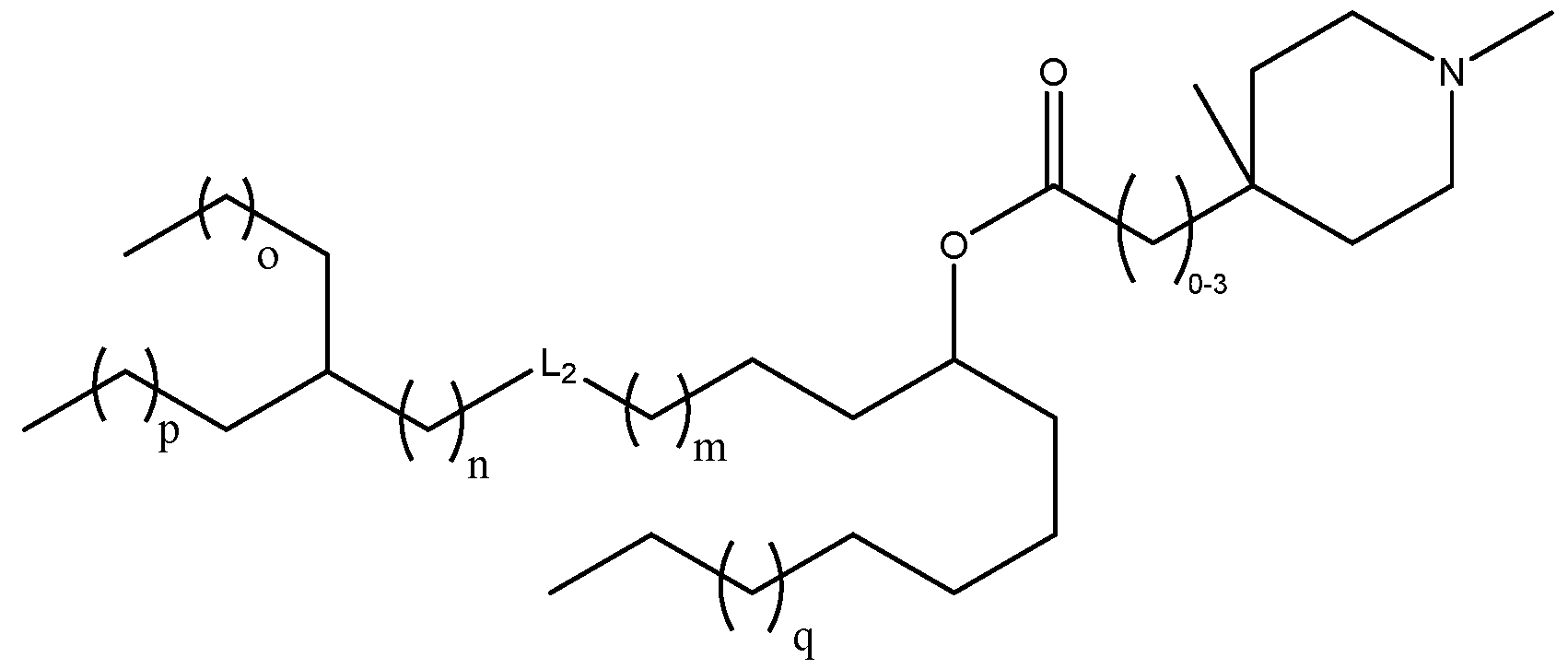
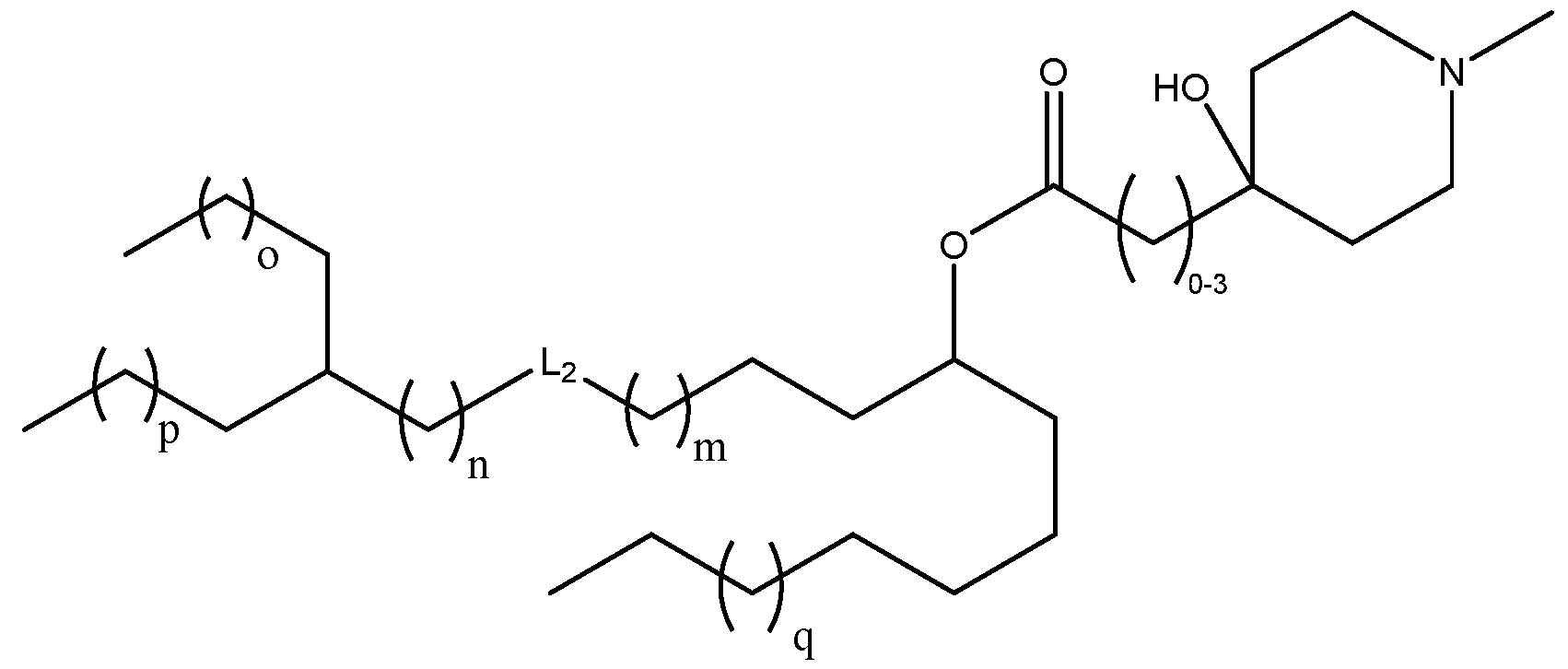


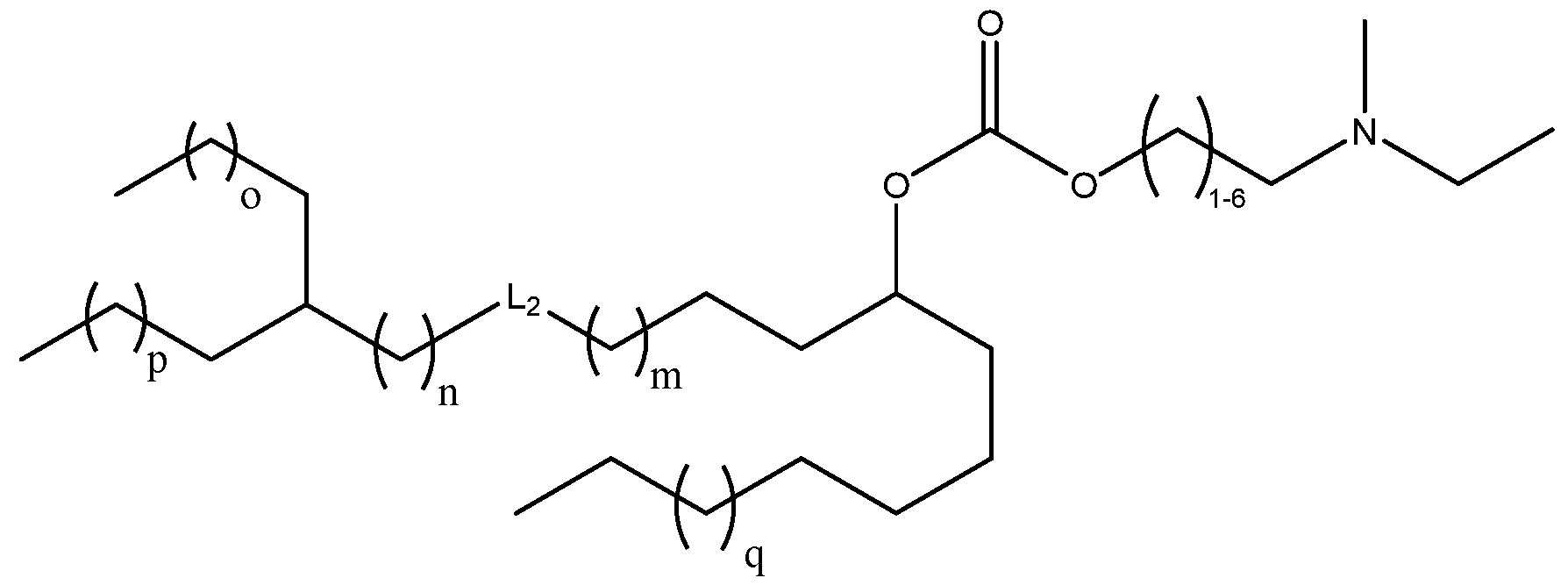


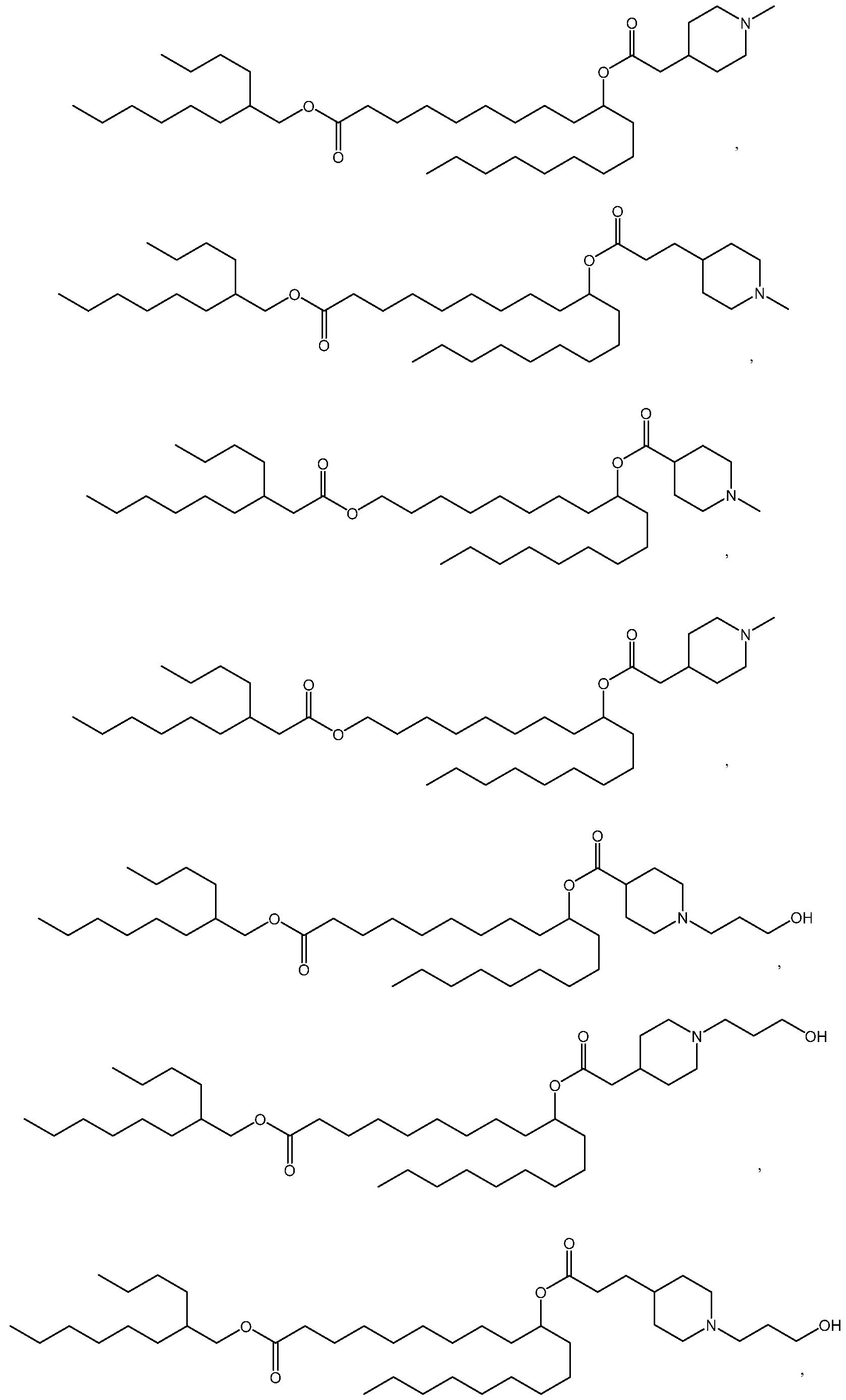













Claims


Priority Applications (4)
| Application Number | Priority Date | Filing Date | Title |
|---|---|---|---|
| US18/695,909 US20250281596A1 (en) | 2021-09-28 | 2022-09-28 | Ionizable cationic compound |
| EP22875290.3A EP4409002A4 (en) | 2021-09-28 | 2022-09-28 | IONIZABLE CATIONIC COMPOUND |
| JP2024518835A JP2024538582A (en) | 2021-09-28 | 2022-09-28 | Ionizable cationic compounds |
| AU2022358609A AU2022358609A1 (en) | 2021-09-28 | 2022-09-28 | Ionizable cationic compound |
Applications Claiming Priority (2)
| Application Number | Priority Date | Filing Date | Title |
|---|---|---|---|
| US202163249135P | 2021-09-28 | 2021-09-28 | |
| US63/249,135 | 2021-09-28 |
Publications (1)
| Publication Number | Publication Date |
|---|---|
| WO2023053016A1 true WO2023053016A1 (en) | 2023-04-06 |
Family
ID=85781432
Family Applications (1)
| Application Number | Title | Priority Date | Filing Date |
|---|---|---|---|
| PCT/IB2022/059215 Ceased WO2023053016A1 (en) | 2021-09-28 | 2022-09-28 | Ionizable cationic compound |
Country Status (5)
| Country | Link |
|---|---|
| US (1) | US20250281596A1 (en) |
| EP (1) | EP4409002A4 (en) |
| JP (1) | JP2024538582A (en) |
| AU (1) | AU2022358609A1 (en) |
| WO (1) | WO2023053016A1 (en) |
Cited By (3)
| Publication number | Priority date | Publication date | Assignee | Title |
|---|---|---|---|---|
| WO2024165973A3 (en) * | 2023-02-09 | 2024-11-07 | Seqirus Inc. | Ionizable cationic compound |
| WO2025126113A1 (en) * | 2023-12-15 | 2025-06-19 | Pfizer Inc. | Lipid compounds and uses thereof |
| EP4408425A4 (en) * | 2021-09-28 | 2025-08-06 | Seqirus Inc | IONIZABLE CATIONIC COMPOUNDS FOR MRNA DELIVERY |
Citations (3)
| Publication number | Priority date | Publication date | Assignee | Title |
|---|---|---|---|---|
| US20150273068A1 (en) * | 2011-12-07 | 2015-10-01 | Alnylam Pharmaceuticals, Inc. | Biodegradable lipids for the delivery of active agents |
| US20170334852A1 (en) * | 2014-12-26 | 2017-11-23 | Eisai R&D Management Co., Ltd. | Cationic lipid |
| US20190218180A1 (en) * | 2016-06-24 | 2019-07-18 | Eisai R&D Management Co., Ltd. | Cationic Lipid |
Family Cites Families (3)
| Publication number | Priority date | Publication date | Assignee | Title |
|---|---|---|---|---|
| US10426737B2 (en) * | 2013-12-19 | 2019-10-01 | Novartis Ag | Lipids and lipid compositions for the delivery of active agents |
| AU2021307952A1 (en) * | 2020-07-17 | 2023-03-02 | Generation Bio Co. | Methods for encapsulating polynucleotides into reduced sizes of Lipid nanoparticles and novel formulation thereof |
| US20240180954A1 (en) * | 2021-02-04 | 2024-06-06 | Shionogi & Co., Ltd. | Cationic lipid |
-
2022
- 2022-09-28 US US18/695,909 patent/US20250281596A1/en active Pending
- 2022-09-28 WO PCT/IB2022/059215 patent/WO2023053016A1/en not_active Ceased
- 2022-09-28 EP EP22875290.3A patent/EP4409002A4/en active Pending
- 2022-09-28 AU AU2022358609A patent/AU2022358609A1/en active Pending
- 2022-09-28 JP JP2024518835A patent/JP2024538582A/en active Pending
Patent Citations (3)
| Publication number | Priority date | Publication date | Assignee | Title |
|---|---|---|---|---|
| US20150273068A1 (en) * | 2011-12-07 | 2015-10-01 | Alnylam Pharmaceuticals, Inc. | Biodegradable lipids for the delivery of active agents |
| US20170334852A1 (en) * | 2014-12-26 | 2017-11-23 | Eisai R&D Management Co., Ltd. | Cationic lipid |
| US20190218180A1 (en) * | 2016-06-24 | 2019-07-18 | Eisai R&D Management Co., Ltd. | Cationic Lipid |
Non-Patent Citations (1)
| Title |
|---|
| See also references of EP4409002A4 * |
Cited By (3)
| Publication number | Priority date | Publication date | Assignee | Title |
|---|---|---|---|---|
| EP4408425A4 (en) * | 2021-09-28 | 2025-08-06 | Seqirus Inc | IONIZABLE CATIONIC COMPOUNDS FOR MRNA DELIVERY |
| WO2024165973A3 (en) * | 2023-02-09 | 2024-11-07 | Seqirus Inc. | Ionizable cationic compound |
| WO2025126113A1 (en) * | 2023-12-15 | 2025-06-19 | Pfizer Inc. | Lipid compounds and uses thereof |
Also Published As
| Publication number | Publication date |
|---|---|
| EP4409002A1 (en) | 2024-08-07 |
| US20250281596A1 (en) | 2025-09-11 |
| AU2022358609A1 (en) | 2024-05-02 |
| JP2024538582A (en) | 2024-10-23 |
| EP4409002A4 (en) | 2025-10-29 |
Similar Documents
| Publication | Publication Date | Title |
|---|---|---|
| US20250281596A1 (en) | Ionizable cationic compound | |
| US20190336608A1 (en) | Cationic carriers for nucleic acid delivery | |
| US20250114311A1 (en) | Ionizable cationic compounds for messenger rna delivery | |
| US20240425454A1 (en) | Ionizable cationic compound | |
| AU2024218499A1 (en) | Ionizable cationic compound | |
| US20240415772A1 (en) | Ionizable cationic lipid for messenger rna delivery | |
| AU2024217713A1 (en) | Ionizable cationic compound | |
| EP4637787A2 (en) | Lipid nanoparticle composition | |
| US20250360199A1 (en) | Immunogens and methods for inducing an immune response | |
| WO2026009141A1 (en) | Ionizable cationic compound | |
| TW202606644A (en) | Ionizable cationic compound | |
| WO2024134512A1 (en) | Lipid nanoparticle composition | |
| US20250339517A1 (en) | Lipid nanocarrier vaccine |
Legal Events
| Date | Code | Title | Description |
|---|---|---|---|
| 121 | Ep: the epo has been informed by wipo that ep was designated in this application |
Ref document number: 22875290 Country of ref document: EP Kind code of ref document: A1 |
|
| DPE1 | Request for preliminary examination filed after expiration of 19th month from priority date (pct application filed from 20040101) | ||
| ENP | Entry into the national phase |
Ref document number: 2024518835 Country of ref document: JP Kind code of ref document: A |
|
| WWE | Wipo information: entry into national phase |
Ref document number: AU2022358609 Country of ref document: AU |
|
| NENP | Non-entry into the national phase |
Ref country code: DE |
|
| ENP | Entry into the national phase |
Ref document number: 2022358609 Country of ref document: AU Date of ref document: 20220928 Kind code of ref document: A |
|
| ENP | Entry into the national phase |
Ref document number: 2022875290 Country of ref document: EP Effective date: 20240429 |
|
| WWP | Wipo information: published in national office |
Ref document number: 18695909 Country of ref document: US |