WO2023053938A1 - 装置及び方法 - Google Patents
装置及び方法 Download PDFInfo
- Publication number
- WO2023053938A1 WO2023053938A1 PCT/JP2022/034194 JP2022034194W WO2023053938A1 WO 2023053938 A1 WO2023053938 A1 WO 2023053938A1 JP 2022034194 W JP2022034194 W JP 2022034194W WO 2023053938 A1 WO2023053938 A1 WO 2023053938A1
- Authority
- WO
- WIPO (PCT)
- Prior art keywords
- information
- list
- message
- network
- network node
- Prior art date
- Legal status (The legal status is an assumption and is not a legal conclusion. Google has not performed a legal analysis and makes no representation as to the accuracy of the status listed.)
- Ceased
Links
Images




Classifications
-
- H—ELECTRICITY
- H04—ELECTRIC COMMUNICATION TECHNIQUE
- H04W—WIRELESS COMMUNICATION NETWORKS
- H04W76/00—Connection management
- H04W76/20—Manipulation of established connections
-
- H—ELECTRICITY
- H04—ELECTRIC COMMUNICATION TECHNIQUE
- H04W—WIRELESS COMMUNICATION NETWORKS
- H04W8/00—Network data management
- H04W8/02—Processing of mobility data, e.g. registration information at HLR [Home Location Register] or VLR [Visitor Location Register]; Transfer of mobility data, e.g. between HLR, VLR or external networks
-
- H—ELECTRICITY
- H04—ELECTRIC COMMUNICATION TECHNIQUE
- H04W—WIRELESS COMMUNICATION NETWORKS
- H04W48/00—Access restriction; Network selection; Access point selection
- H04W48/16—Discovering, processing access restriction or access information
-
- H—ELECTRICITY
- H04—ELECTRIC COMMUNICATION TECHNIQUE
- H04W—WIRELESS COMMUNICATION NETWORKS
- H04W60/00—Affiliation to network, e.g. registration; Terminating affiliation with the network, e.g. de-registration
-
- H—ELECTRICITY
- H04—ELECTRIC COMMUNICATION TECHNIQUE
- H04W—WIRELESS COMMUNICATION NETWORKS
- H04W60/00—Affiliation to network, e.g. registration; Terminating affiliation with the network, e.g. de-registration
- H04W60/04—Affiliation to network, e.g. registration; Terminating affiliation with the network, e.g. de-registration using triggered events
-
- H—ELECTRICITY
- H04—ELECTRIC COMMUNICATION TECHNIQUE
- H04W—WIRELESS COMMUNICATION NETWORKS
- H04W72/00—Local resource management
- H04W72/04—Wireless resource allocation
-
- H—ELECTRICITY
- H04—ELECTRIC COMMUNICATION TECHNIQUE
- H04W—WIRELESS COMMUNICATION NETWORKS
- H04W76/00—Connection management
- H04W76/10—Connection setup
- H04W76/19—Connection re-establishment
Definitions
- the present disclosure relates to devices and methods.
- Non-Patent Document 1 In Release 15 of 3GPP (3rd Generation Partnership Project) (registered trademark), some functions for UAV (Unmanned Aerial Vehicle) as user equipment (UE) are provided as LTE (Long Term Evolution) work items. It is discussed and specified (Non-Patent Document 1).
- Flight Path function the UAV's flight path is reported from the UAV to the network in response to a request from the network. This is expected to be useful for control of handover, beamforming, etc. based on the UAV movement plan on the network side (Non-Patent Document 2).
- a TA Tracking Area managed as information indicating the location of the UE is defined in the TS.
- a TA is composed of one or more cells.
- the UE receives from the network a TA list indicating one or more such TAs configured for the UE. Specifically, the UE receives a RegistrationAccept message including the TA list from the network by sending a RegistrationRequest message to the network.
- the TAU Track Area Update
- the UE executes the TAU Procedure to the network.
- 3GPP TS 36.331 V15.14.0 (2021-06), "3rd Generation Partnership Project; Technical Specification Group Radio Access Network; Evolved Universal Terrestrial Radio Access (E-UTRA); Radio Resource Control (RRC); protocol specification (Release 15)" 3GPP TSG-RAN WG2 Meeting #101bis Sanya, China, 16 - 20 Apr 2018, R2-1805125, Huawei, Hi Silicon, CMCC, Fraunhofer, Nokia, Nokia Shanghai Bell, Lenovo, Motorola Mobility, InterDigital, KDDI, "Discussion on flight path information" 3GPP TSG RAN - RAN-Rel-18 Workshop, Online, 2021-06-28 - 2021-07-02, RWS-210190, Ericsson, "Motivation for Rel-18 UAV" 3GPP TSG RAN Rel-18 workshop, Electronic Meeting, June 28 - July 2, 2021, RWS-210254, Lenovo, Motorola Mobility, "Discussion on UAV Swarm Support in NR RAN for Rel-18" 3GPP TSG RAN
- An object of the present disclosure is to provide a device and method that can suppress an increase in signaling related to updating or setting a TA list.
- a device (100) receives from a network (200, 300) a message including time information regarding permission to transmit provided information used for setting a TA (Tracking Area) list for the device.
- a device (300) includes an information acquisition unit (331) that acquires time information regarding permission to transmit provided information used for setting a TA (Tracking Area) list for the communication device (100); and a communication processing unit (335) for transmitting a message including the time information to the communication device, wherein the provided information relates to a moving route of the communication device.
- an information acquisition unit (331) that acquires time information regarding permission to transmit provided information used for setting a TA (Tracking Area) list for the communication device (100); and a communication processing unit (335) for transmitting a message including the time information to the communication device, wherein the provided information relates to a moving route of the communication device.
- a method performed by a device (100) sends a message including time information regarding permission to transmit provided information used for setting a TA (Tracking Area) list for the device to a network (200, 300). ), and obtaining the time information contained in the message, wherein the provided information relates to the travel route of the device.
- TA Tracking Area
- a method performed by a device (300) includes obtaining time information regarding permission to transmit provided information used for setting a TA (Tracking Area) list for a communication device (100); sending a message containing the time information to the communication device, wherein the provided information relates to a travel route of the communication device.
- TA Tracking Area
- the present disclosure it is possible to suppress an increase in signaling related to updating or setting the TA list. It should be noted that the present disclosure may provide other effects instead of or in addition to the above effects.
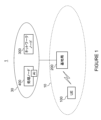
- FIG. 1 is an explanatory diagram showing an example of a schematic configuration of a system according to an embodiment of the present disclosure
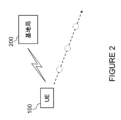
- FIG. FIG. 4 is an explanatory diagram for explaining an example of communication control based on the moving route of the user equipment according to the embodiment of the present disclosure
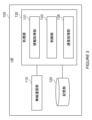
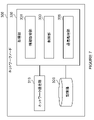
- 2 is a block diagram showing an example of a schematic functional configuration of a user device according to an embodiment of the present disclosure
- FIG. 2 is a block diagram showing an example of a schematic hardware configuration of a user device according to an embodiment of the present disclosure
- FIG. 2 is a block diagram showing an example of a schematic functional configuration of a base station according to an embodiment of the present disclosure
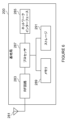
- FIG. 2 is a block diagram showing an example of a schematic hardware configuration of a base station according to an embodiment of the present disclosure
- FIG. 1 is an explanatory diagram showing an example of a schematic configuration of a system according to an embodiment of the present disclosure
- FIG. FIG. 4 is an explanatory diagram for explaining an example of communication control based on the moving route of the user equipment
- FIG. 3 is a block diagram showing an example of a schematic functional configuration of a network node according to an embodiment of the present disclosure
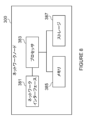
- FIG. 1 is a block diagram showing an example of a schematic hardware configuration of a network node according to an embodiment of the present disclosure
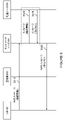
- FIG. FIG. 4 is a sequence diagram for explaining an example of a schematic flow of processing according to the first embodiment of the present disclosure
- FIG. 10 is an explanatory diagram for explaining a setting example of a conventional TA list
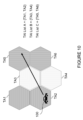
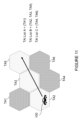
- FIG. 4 is an explanatory diagram for explaining a setting example of a TA list according to the first embodiment of the present disclosure
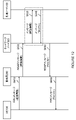
- FIG. FIG. 11 is a sequence diagram for explaining an example of a schematic flow of processing according to a modification of the first embodiment of the present disclosure
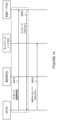
- FIG. 11 is a sequence diagram for explaining another example of the schematic flow of processing according to the modification of the first embodiment of the present disclosure
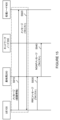
- FIG. 11 is a sequence diagram for explaining an example of a schematic flow of processing according to the second embodiment of the present disclosure
- FIG. 11 is a sequence diagram for explaining an example of a schematic flow of processing according to a modification of the second embodiment of the present disclosure
- FIG. 12 is an explanatory diagram for explaining an example of time information according to the third embodiment of the present disclosure
- FIG. FIG. 11 is an explanatory diagram for explaining another example of time information according to the third embodiment of the present disclosure
- FIG. 12 is a sequence diagram for explaining an example of a schematic flow of processing according to the third embodiment of the present disclosure
- FIG. 20 is an explanatory diagram for explaining an example of time information according to the first modification of the third embodiment of the present disclosure
- FIG. FIG. 14 is a sequence diagram for explaining an example of a schematic flow of processing according to the second modification of the third embodiment of the present disclosure;
- System configuration 2 Configuration of User Equipment 3 .
- Configuration of base station 4 Configuration of network nodes5.
- Configuration of processing nodes6 1st embodiment (providing route information) 7.
- Second embodiment provisioning TA list
- Third Embodiment Provided Information Transmission Timer
- system 1 includes user equipment (communication device) 100 , base station 200 and core network 30 .
- Core network 30 includes network nodes 300 and processing nodes 400 .
- System 1 is a system that complies with the 3GPP Technical Specification (TS). More specifically, for example, the system 1 is a system conforming to 5G or NR (New Radio) TS. Naturally, the system 1 is not limited to this example.
- the system 1 may be any other TS compliant system of 3GPP.
- the system 1 may be a system conforming to LTE, LTE-A (LTE Advanced) or 4G TS, and the base station 200 may be an eNB (evolved Node B).
- base station 200 may be an ng-eNB.
- system 1 may be a 3G TS-compliant system and base station 200 may be a NodeB.
- the system 1 may be a next generation (eg, 6G) TS compliant system.
- system 1 may be a TS-compliant system of another standards body for mobile communications.
- UE 100 UE 100 communicates with a base station.
- UE 100 communicates with base station 200 when located within coverage area 10 of base station 200 .
- the UE 100 communicates with a base station (eg, base station 200) using a radio access network (RAN) protocol stack.
- RAN radio access network
- the protocol stack includes RRC (Radio Resource Control), SDAP (Service Data Adaptation Protocol), PDCP (Packet Data Convergence Protocol), RLC (Radio Link Control), MAC (Medium Access Control), and Physical: PHY) layer protocol.
- the protocol stack may not include all of these protocols, but some of these protocols.
- the UE 100 communicates with a network node (eg, network node 300) using NAS (Non Access Stratum) protocol. For example, UE 100 transmits a NAS message to base station 200 . NAS messages are sent from the base station 200 to the network node 300 .
- NAS Non Access Stratum
- the UE 100 is mounted on a mobile object.
- the mobile object may be an aircraft such as a UAV, or a vehicle such as an autonomous vehicle or a manually operated vehicle with navigation capabilities.
- a moving path may be set in advance for the moving object.
- the UE 100 can benefit from communication control based on the movement route by reporting the movement route to the network (that is, the base station 200).
- the movement route reporting may be supported by, for example, the Flight Path mechanism, or may be supported by another movement route reporting mechanism.
- the UE 100 reports the set moving route to the base station 200.
- Base station 200 performs processing for handover or beamforming in advance, for example, based on the future position of UE 100 estimated from the reported moving path. This makes it possible to perform communication control suitable for the position at the timing when the UE 100 reaches the estimated position.
- the UE 100 is configured with a TA list for location management.
- the TA list is a TAI (Tracking Area Identity) list.
- the TA list is set by network node 300 .
- UE 100 receives the configured TA list from network node 300 .
- the UE 100 does not execute the TAU Procedure (hereinafter referred to as TAU) when located within the TA indicated by the TA list.
- TAU TAU Procedure
- the TAU updates the TA list, and the UE 100 receives the updated TA list from the network node 300 .
- Base station 200 The base station 200 is a node of the RAN and communicates with UEs (eg, UE 100) located within the coverage area 10 of the base station 200.
- the base station 200 communicates with the UE (eg, UE 100) using the above protocol stack.
- the UE eg, UE 100
- the base station 200 communicates with nodes located within the core network 30 (eg, network node 300, processing node 400).
- nodes located within the core network 30 eg, network node 300, processing node 400.
- the base station 200 communicates with nodes located within the core network 30 (eg, network node 300, processing node 400) using NGAP (NG Application Protocol).
- NGAP NG Application Protocol
- the base station 200 is a gNB.
- a gNB is a node that provides NR user plane and control plane protocol terminations towards the UE and is connected to the 5GC (5G Core Network) via the NG interface.
- base station 200 may be an en-gNB.
- An en-gNB is a node that provides NR user plane and control plane protocol termination for UEs and acts as a secondary node in EN-DC (E-UTRA-NR Dual Connectivity).
- the base station 200 may include multiple nodes.
- the plurality of nodes may include a first node that hosts a higher layer included in the protocol stack and a second node that hosts a lower layer included in the protocol stack. good.
- the upper layers may include RRC, SDAP and PDCP, and the lower layers may include RLC, MAC and PHY layers.
- the first node may be a CU (central unit), and the second node may be a DU (Distributed Unit).
- the plurality of nodes may include a third node that performs lower-level processing of the PHY layer, and the second node may perform higher-level processing of the PHY layer.
- the third node may be an RU (Radio Unit).
- the base station 200 may be one of the plurality of nodes, or may be connected to another unit of the plurality of nodes.
- the base station 200 may be an IAB (Integrated Access and Backhaul) donor or an IAB node.
- IAB Integrated Access and Backhaul
- Network node 300 is a network function of core network 30 .
- the network node 300 is an AMF (Access and Mobility Management Function).
- a network node 300 communicates with a UE (eg, UE 100) via a base station (eg, base station 200). For example, network node 300 communicates with base station 200 using NGAP. Also, the network node 300 communicates with the UE 100 using the NAS protocol.
- the network node 300 sets the TA list. Specifically, in response to a request from the UE 100, a TA list made up of one or more TAs is set based on the cell in which the UE 100 is located. Network node 300 transmits the configured TA list to UE 100 . Also, the network node 300 updates the TA list in the TAU and transmits the updated TA list to the UE 100.
- the processing node 400 is a network function that performs processing using AI (Artificial Intelligence). Also, the AI can be trained by ML (Machine Learning). 3GPP Release 18 discusses the use of AI or ML in communication systems (see, eg, TR 22.874).
- the processing node 400 can be one form of utilization of the AI or ML.
- the processing node 400 may be implemented in the form of a server, but the implementation of the processing node 400 is not limited to this.
- processing node 400 is located in the core network 30 as shown in FIG. Note that the processing node 400 may be arranged outside the core network. For example, processing node 400 may be located in an external network such as the Internet or a radio access network.
- the processing node 400 communicates with a UE (eg, UE 100), a base station (eg, base station 200), and a network node (eg, network node 300).
- a communication method according to the arrangement of the processing nodes 400 may be used for the communication of the processing nodes 400 .
- processing node 400 may communicate with base station 200 using NGAP. In that case, the processing node 400 may communicate with the UE 100 using the NAS protocol. It should be noted that protocols defined for communication of processing nodes 400 may be used instead of or in conjunction with the existing protocols described above.
- the UE 100 includes a wireless communication unit 110, a storage unit 120 and a processing unit .
- the wireless communication unit 110 wirelessly transmits and receives signals.
- the wireless communication unit 110 receives signals from base stations and transmits signals to the base stations.
- the radio communication unit 110 receives signals from other UEs and transmits signals to other UEs.
- the storage unit 120 stores various information for the UE 100.
- the processing unit 130 provides various functions of the UE 100.
- the processing unit 130 includes an information acquisition unit 131 , a control unit 133 and a communication processing unit 135 .
- the processing unit 130 may further include components other than these components. That is, the processing unit 130 can perform operations other than those of these components. Specific operations of the information acquisition unit 131, the control unit 133, and the communication processing unit 135 will be described in detail later.
- the processing unit 130 communicates with a base station (for example, the base station 200) or another UE via the wireless communication unit 110. Also, the processing unit 130 (communication processing unit 135) communicates with a core network (eg, network node 300) via a base station.
- a base station for example, the base station 200
- a core network eg, network node 300
- UE 100 comprises antenna 181 , RF (radio frequency) circuitry 183 , processor 185 , memory 187 and storage 189 .
- RF radio frequency
- Antenna 181 converts a signal into radio waves and radiates the radio waves into space. Also, the antenna 181 receives radio waves in space and converts the radio waves into signals.
- Antenna 181 may include a transmit antenna and a receive antenna, or may be a single antenna for transmission and reception.
- Antenna 181 may be a directional antenna and may include multiple antenna elements.
- the RF circuit 183 performs analog processing of signals transmitted and received via the antenna 181 .
- RF circuitry 183 may include high frequency filters, amplifiers, modulators, low pass filters, and the like.
- the processor 185 performs digital processing of signals transmitted and received via the antenna 181 and the RF circuit 183.
- the digital processing includes processing of the protocol stack of the RAN.
- Processor 185 may include multiple processors or may be a single processor.
- the multiple processors may include a baseband processor that performs the digital processing and one or more processors that perform other processing.
- the memory 187 stores programs executed by the processor 185, parameters related to the programs, and various other information.
- the memory 187 may include at least one of ROM (Read Only Memory), EPROM (Erasable Programmable Read Only Memory), EEPROM (Electrically Erasable Programmable Read Only Memory), RAM (Random Access Memory), and flash memory. All or part of memory 187 may be included within processor 185 .
- the storage 189 stores various information.
- the storage 189 may include at least one of SSD (Solid State Drive) and HDD (Hard Disc Drive).
- the wireless communication unit 110 may be implemented by an antenna 181 and an RF circuit 183.
- Storage unit 120 may be implemented by storage 189 .
- Processing unit 130 may be implemented by processor 185 and memory 187 .
- the processing unit 130 may be implemented by an SoC (System on Chip) including a processor 185 and a memory 187.
- SoC System on Chip
- the SoC may include RF circuitry 183 and the wireless communication unit 110 may also be implemented by the SoC.
- the UE 100 may include a memory that stores the program (ie, memory 187) and one or more processors that can execute the program (ie, processor 185).
- One or more processors may execute the programs described above to perform the operations of the processing unit 130 .
- the program may be a program for causing the processor to execute the operation of the processing unit 130 .
- the base station 200 includes a wireless communication unit 210, a network communication unit 220, a storage unit 230 and a processing unit 240.
- FIG. 5 An example of the functional configuration of the base station 200 according to the embodiment of the present disclosure will be described with reference to FIG. Referring to FIG. 5, the base station 200 includes a wireless communication unit 210, a network communication unit 220, a storage unit 230 and a processing unit 240.
- the wireless communication unit 210 wirelessly transmits and receives signals.
- the radio communication unit 210 receives signals from UEs and transmits signals to the UEs.
- the network communication unit 220 receives signals from the network and transmits signals to the network.
- the storage unit 230 stores various information for the base station 200.
- the processing unit 240 provides various functions of the base station 200.
- the processing unit 240 includes an information acquisition unit 241 , a first communication processing unit 243 and a second communication processing unit 245 .
- the processing unit 240 may further include other components other than these components. That is, the processing unit 240 can perform operations other than those of these components. Specific operations of the information acquisition unit 241, the first communication processing unit 243, and the second communication processing unit 245 will be described in detail later.
- the processing unit 240 (first communication processing unit 243) communicates with the UE (eg, UE 100) via the wireless communication unit 210.
- the processing unit 240 (second communication processing unit 245) communicates with other nodes (for example, the network node 300, the processing node 400, or other base stations in the core network 30) via the network communication unit 220.
- base station 200 comprises antenna 281 , RF circuitry 283 , network interface 285 , processor 287 , memory 289 and storage 291 .
- the antenna 281 converts the signal into radio waves and radiates the radio waves into space. Also, the antenna 281 receives radio waves in space and converts the radio waves into signals.
- Antenna 281 may include a transmit antenna and a receive antenna, or may be a single antenna for transmission and reception. Antenna 281 may be a directional antenna and may include multiple antenna elements.
- the RF circuit 283 performs analog processing of signals transmitted and received via the antenna 281 .
- RF circuitry 283 may include high frequency filters, amplifiers, modulators, low pass filters, and the like.
- the network interface 285 is, for example, a network adapter, which transmits signals to and receives signals from the network.
- the processor 287 performs digital processing of signals transmitted and received via the antenna 281 and the RF circuit 283.
- the digital processing includes processing of the protocol stack of the RAN.
- Processor 287 also processes signals sent and received via network interface 285 .
- Processor 287 may include multiple processors or may be a single processor.
- the multiple processors may include a baseband processor that performs the digital processing and one or more processors that perform other processing.
- the memory 289 stores programs executed by the processor 287, parameters related to the programs, and various other information.
- Memory 289 may include at least one of ROM, EPROM, EEPROM, RAM, and flash memory. All or part of memory 289 may be included within processor 287 .
- the storage 291 stores various information.
- the storage 291 may include at least one of SSD and HDD.
- the wireless communication unit 210 may be implemented by an antenna 281 and an RF circuit 283.
- Network communication unit 220 may be implemented by network interface 285 .
- Storage unit 230 may be implemented by storage 291 .
- Processing unit 240 may be implemented by processor 287 and memory 289 .
- a part or all of the processing unit 240 may be virtualized. In other words, part or all of the processing unit 240 may be implemented as a virtual machine. In this case, part or all of the processing unit 240 may operate as a virtual machine on a physical machine (that is, hardware) including a processor, memory, etc. and a hypervisor.
- the base station 200 may include a memory for storing programs (ie, memory 289) and one or more processors (ie, processor 287) capable of executing the programs.
- the one or more processors may execute the program to perform the operation of the processing unit 240 .
- the program may be a program for causing the processor to execute the operation of the processing unit 240 .
- Network node configuration An example configuration of the network node 300 according to the embodiment of the present disclosure will be described with reference to FIGS. 7 and 8.
- FIG. 7 An example configuration of the network node 300 according to the embodiment of the present disclosure will be described with reference to FIGS. 7 and 8.
- FIG. 7 An example configuration of the network node 300 according to the embodiment of the present disclosure will be described with reference to FIGS. 7 and 8.
- FIG. 7 An example configuration of the network node 300 according to the embodiment of the present disclosure will be described with reference to FIGS. 7 and 8.
- network node 300 comprises network communication unit 310 , storage unit 320 and processing unit 330 .
- the network communication unit 310 receives signals from the network and transmits signals to the network.
- the storage unit 320 stores various information for the network node 300.
- the processing unit 330 provides various functions of the network node 300.
- the processing unit 330 includes an information acquisition unit 331 , a control unit 333 and a communication processing unit 335 .
- the processing unit 330 may further include components other than these components. That is, the processing unit 330 may perform operations other than those of these components. Specific operations of the information acquisition unit 331, the control unit 333, and the communication processing unit 335 will be described in detail later.
- the processing unit 330 communicates with the base station (eg, base station 200) via the network communication unit 310.
- the processing unit 330 (communication processing unit 335) communicates with the UE (eg, UE 100) via the network communication unit 310 and the base station (eg, base station 200).
- network node 300 comprises network interface 381 , processor 383 , memory 385 and storage 387 .
- the network interface 381 is, for example, a network adapter, which transmits signals to and receives signals from the network.
- the processor 383 processes signals transmitted and received via the network interface 381 .
- Processor 383 may include multiple processors or may be a single processor.
- the memory 385 stores programs executed by the processor 383, parameters related to the programs, and various other information.
- Memory 385 may include at least one of ROM, EPROM, EEPROM, RAM, and flash memory. All or part of memory 385 may be included within processor 383 .
- the storage 387 stores various information.
- Storage 387 may include at least one of SSD and HDD.
- the network communication unit 310 may be implemented by the network interface 381.
- Storage unit 320 may be implemented by storage 387 .
- Processing unit 330 may be implemented by processor 383 and memory 385
- a part or all of the processing unit 330 may be virtualized. In other words, part or all of the processing unit 330 may be implemented as a virtual machine. In this case, part or all of the processing unit 330 may operate as a virtual machine on a physical machine (that is, hardware) including a processor, memory, etc. and a hypervisor.
- the network node 300 may include a memory (ie, memory 385) for storing programs and one or more processors (ie, processors 383) capable of executing the programs. , the one or more processors may execute the program to perform the operation of the processing unit 330 .
- the program may be a program for causing the processor to execute the operation of the processing unit 330 .
- the processing node 400 comprises a network communication unit 410 , a storage unit 420 and a processing unit 430 .
- the processing unit 430 includes an information acquisition unit 431 , a control unit 433 and a communication processing unit 435 .
- Processing node 400 comprises network interface 481 , processor 483 , memory 485 and storage 487 .
- route information is transmitted from the UE 100 to the network node 300 via the base station 200 as the provided information. Further, route information is provided from the network node 300 to the processing node 400, and the route information is converted into a TA list by the processing node 400.
- FIG. 1 A first embodiment of the present disclosure will be described.
- route information is transmitted from the UE 100 to the network node 300 via the base station 200 as the provided information. Further, route information is provided from the network node 300 to the processing node 400, and the route information is converted into a TA list by the processing node 400.
- UE 100 transmits route information to network node 300 .
- UE 100 receives the TA list from network node 300 as a response to the route information. The operation of the UE 100 and related information will be described in detail below.
- the UE 100 acquires provision information related to the movement route of the UE 100, which is information used for setting a TA list for the UE 100 concerned.
- the provided information is route information indicating at least the movement route of the UE 100 .
- the UE 100 acquires route information.
- the UE 100 acquires route information from an application.
- the NAS layer of the UE 100 acquires route information from a higher layer (eg, application layer) of the NAS layer.
- the travel route is a scheduled (ie planned) travel route.
- the application may be a navigation application.
- the route information may be flightPathInfoReport or equivalent information.
- the UE 100 transmits the acquired route information to the network. Specifically, the UE 100 (communication processing unit 135) transmits a message including route information as provided information to the network.
- the network that is the destination of the message is the network node 300 within the core network 30 .
- the UE 100 transmits a NAS message including route information to the network node 300, AMF.
- the NAS message is sent to network node 300 via base station 200 .
- a NAS message containing route information may be a RegistrationRequest message or a ServiceRequest message.
- the existing signaling between the UE and the network can be used to transmit the route information as the provided information used for setting the TA list to the network node 300 for setting the TA list. Therefore, addition of new signaling can be prevented.
- the NAS message containing the route information may be an additionally defined NAS message and may be a NAS message for transmitting route information.
- routing information can be sent to the network node 300 without changing existing NAS messages.
- the UE 100 After transmitting the provision information, the UE 100 receives a message including the TA list from the network. Specifically, the UE 100 (communication processing unit 135) receives a message including the TA list from the network as a response to the route information as the provided information. The TA list is based on routing information.
- UE 100 receives a NAS message including the TA list set in UE 100 from AMF, which is network node 300, via base station 200 as a response to the NAS message including route information.
- AMF Access Management Function
- the TA list can be transmitted from the network node 300 to the UE 100 without changing the operation of lower layers.
- the NAS message containing the TA list may be a RegistrationAccept message responding to a RegistrationRequest message or a ServiceAccept message responding to a ServiceRequest message.
- the message containing the TA list is an additionally defined message, and may be a message for transmitting the TA list.
- the TA list can be received from the network without modifying existing messages.
- the base station 200 transfers the route information received from the UE 100 to the network node 300 . Also, the base station 200 transfers the TA list received from the network node 300 to the UE 100 .
- the operation of the base station 200 and related information will be described in detail below. In addition, detailed description of the contents that are substantially the same as the description of the operation of the UE 100 will be omitted.
- the base station 200 transfers route information received from the UE 100 to the network node 300 .
- the base station 200 (first communication processing unit 243) receives from the UE 100 a message including route information as provided information.
- the base station 200 (second communication processing unit 245 ) transmits a message including the route information to the network node 300 .
- the base station 200 receives a NAS message including route information as provided information from the UE 100.
- the base station 200 (second communication processing unit 245) transmits the NAS message to the AMF, which is the network node 300.
- Base station 200 transfers the TA list received from network node 300 to UE 100 .
- the base station 200 (second communication processing unit 245) receives a message including the TA list from the network node 300.
- FIG. The base station 200 (first communication processing unit 243) transmits a message including the TA list to the UE100.
- the base station 200 receives the NAS message including the TA list from the network node 300, AMF.
- the base station 200 (first communication processing unit 243) transmits the NAS message to the UE100.
- the network node 300 receives route information from the UE 100 .
- the network node 300 acquires the TA list based on the route information.
- Network node 300 transmits the TA list to UE 100 .
- the operation of the network node 300 and related information are described in detail below. In addition, detailed description of the contents that are substantially the same as the description of the operation of the UE 100 or the base station 200 will be omitted.
- the network node 300 receives route information from the UE 100 via the base station 200 . Specifically, the network node 300 (communication processing unit 335) receives from the UE 100 a message including route information as provided information. The network node 300 (information acquisition unit 331) acquires the route information included in the message.
- the network node 300 receives a NAS message including route information from the UE 100 via the base station 200.
- the network node 300 acquires routing information included in the received NAS message.
- network node 300 receives a RegistrationRequest message or a ServiceRequest message containing route information.
- the network node 300 acquires a TA list based on route information. Specifically, the network node 300 (communication processing unit 335) transmits a message including route information to a processing function that performs TA list conversion processing, and receives a message including the TA list from the processing function. The network node 300 (information acquisition unit 331) acquires the TA list included in the message received from the processing function.
- the processing function is, for example, the processing node 400 .
- the network node 300 transmits to the processing node 400 a message containing the route information received from the UE 100, and receives from the processing node 400 a message containing the TA list obtained based on the route information.
- the protocols and messages used for communication between the network node 300 and the processing node 400 may be existing protocols and messages, or may be newly defined.
- the network node 300 uses the processing node 400 to obtain the TA list based on the route information.
- the computation cost in the network node 300 can be reduced compared to the case where the network node 300 calculates the TA list from the route information.
- more computational resources are used for the TA list conversion processing than in the case where the TA list conversion processing is performed in the network node 300 which performs various other processing such as AMF. be able to. Therefore, the accuracy of calculation results can be improved.
- Network node 300 transmits the TA list to UE 100 . Specifically, network node 300 (communication processing unit 335 ) transmits a message including the acquired TA list to UE 100 .
- the network node 300 transmits a NAS message including the TA list to the UE 100 via the base station 200. For example, if the received NAS message containing routing information is a RegistrationRequest message, the network node 300 sends a RegistrationAccept message containing the TA list to the UE 100 . Also, if the received NAS message containing the route information is a ServiceRequest message, the network node 300 transmits a ServiceAccept message containing the TA list to the UE 100 .
- processing node 400 converts the route information received from the network node 300 into a TA list. Processing node 400 transmits the converted TA list to network node 300 .
- the operation of processing node 400 and related information is described in detail below. In addition, the detailed description of the contents that are substantially the same as the description of the operation of the network node 300 will be omitted.
- the processing node 400 receives route information from the network node 300 . Specifically, processing node 400 (communication processing unit 435 ) receives a message including route information from network node 300 . The processing node 400 (information acquisition unit 431) acquires the route information included in the message.
- the processing node 400 acquires a TA list based on route information. Specifically, the processing node 400 (information acquisition unit 431) acquires a TA list through TA list conversion processing based on route information. The processing node 400 performs TA list conversion processing using AI.
- the processing node 400 inputs the received route information to an AI that performs TA list conversion processing, and acquires the TA list output by the AI.
- the AI is a computational model.
- the AI may be trained by ML using the route information.
- the AI is a trained ML model.
- Processing node 400 transmits the TA list to network node 300 . Specifically, processing node 400 (communication processing unit 435 ) transmits to network node 300 a message including the TA list acquired by the TA list conversion process.
- the message including the TA list may be a response message to the message including the route information received from the network node 300.
- the UE 100 transmits a NAS message including route information to the network node 300 via the base station 200 (S510). For example, UE 100 transmits a NAS message including route information to base station 200 . Base station 200 forwards the NAS message to network node 300 .
- the network node 300 transmits a message containing route information to the processing node 400 (S520). For example, the network node 300 sends the routing information included in the NAS message received from the UE 100 to the processing node 400 .
- the processing node 400 transmits a message containing the TA list to the network node 300 (S530). For example, the processing node 400 obtains the TA list by inputting route information received from the network node 300 into an AI (eg, machine learning model). Processing node 400 sends a message to network node 300 containing the obtained TA list.
- AI eg, machine learning model
- the network node 300 transmits a message including the TA list to the UE 100 via the base station 200 (S540). For example, network node 300 sends a NAS message to base station 200 including the TA list included in the message received from processing node 400 . Base station 200 transfers the NAS message to UE 100 .
- the information used for setting the TA list for the UE 100 is sent from the UE 100 to the network. sent.
- This allows the network side to set a TA list for the UE 100 in consideration of the movement route of the UE 100 .
- the provided information includes route information.
- the network that sets the TA list can generate a TA list suitable for the travel route. For example, by generating the TA list in a network with more computational resources than the UE 100, it is possible to reduce the generation time and improve the accuracy of the generation result compared to generating the TA list in the UE 100.
- a TA is composed of one or more cells, and a TA list composed of multiple TAs is set.
- TA1 to TA6 are set, TA list A consisting of TA1 and TA2, TA list B consisting of TA3 and T4, and TA list C consisting of TA5 and TA6 are set.
- the moving route of the UE 100 is not taken into consideration when setting the TA list. Therefore, the TA list A is set for the UE 100 located at TA2. However, when the UE 100 moves along the arrow-like route shown in FIG. 10, the UE 100 moves from TA2 to TA3. Since TA2 and TA3 belong to different TA lists, a TAU occurs. Similarly, moving from TA3 to TA5 also generates a TAU. Therefore, TAU occurs frequently. That is, the signaling associated with updating the TA list is increased.
- TA1 to TA6 are set as in FIG.
- the TA list A consisting of TA1
- the TA list B consisting of TA2, TA3 and T5
- a TA list C consisting of TA4 and TA6 is established.
- a TA list B is set for the UE 100 located in TA2. Therefore, even if the UE 100 moves along the arrow-like route shown in FIG. 11, the UE 100 passes through TA3 and T5 indicated by the TA list B. In this way, since the UE 100 does not move to a TA outside the TA list B, no TAU occurs. Therefore, according to the first embodiment of the present disclosure, it is possible to suppress the occurrence of TAU. That is, it is possible to suppress an increase in signaling related to updating the TA list.
- the processing node 400 performs TA list conversion processing.
- the subject of the TA conversion process according to the first embodiment of the present disclosure is not limited to this example.
- the network node 300 may perform TA list conversion processing.
- the network node 300 (control unit 333) performs TA list conversion processing based on the route information.
- the network node 300 (information acquisition unit 331) acquires the TA list through the TA list conversion process. For example, upon receiving route information from the UE 100, the network node 300 performs TA list conversion processing based on the route information. A TA list based on the route information is obtained by the TA list conversion process. Note that an AI held by the network node 300 may be used for the TA list conversion process.
- the network node 300 instead of the processing of S520 and S530 surrounded by dashed lines shown in FIG. 9, the network node 300 performs TA list conversion processing.
- the TA list conversion process may be performed in the network node 300 also in the second modified example described later.
- the TA list conversion process may be performed in the network node 300 instead of the processes of S630 and S640 and S750 and S760 surrounded by dashed lines shown in FIGS.
- the network node 300 can acquire the TA list based on the route information without communication with the processing node 400. Therefore, signaling can be reduced. That is, communication resources and power consumption related to signaling can be reduced.
- Second Modification Transmitting Routing Information and TA List Using RRC and NGAP
- the NAS protocol is used to transmit routing information and a TA list.
- the communication protocol used for transmitting the route information and the TA list according to the first embodiment of the present disclosure is not limited to this example.
- the RRC protocol and NGAP may be used for transmitting routing information and TA lists.
- the UE 100 transmits an RRC message including route information to the base station 200.
- the base station 200 receives the RRC message from the UE100.
- the base station 200 acquires the route information from the RRC message.
- the base station 200 (second communication processing unit 245 ) transmits an NGAP message including the route information to the network node 300 .
- an RRC message containing route information may be a UEInformationResponse message or a UEAssistanceInformation message.
- routing information as provision information can be transmitted from the UE 100 to the network node 300 using existing signaling between the UE and the base station and existing signaling between the base station and the network node. Therefore, addition of new signaling can be prevented.
- the RRC message including route information may be an additionally defined RRC message and may be an RRC message for transmitting route information.
- route information can be transmitted to the base station 200 without changing the existing RRC message.
- the network node 300 (communication processing unit 335) transmits an NGAP message including the TA list to the base station 200.
- the base station 200 receives the NGAP message from the network node 300 .
- the base station 200 (information acquisition unit 241) acquires the TA list from the NGAP message.
- the base station 200 (first communication processing unit 243) transmits an RRC message including the TA list to the UE100.
- the RRC message containing the TA list may be an RRCReconfiguration message.
- the RRC message containing the TA list may be an RRC message such as RRCSetup, RRCReestablishment, or RRCResume.
- the UE 100 transmits an RRC message including route information to the base station 200 (S610). For example, UE 100 transmits a UEInformationResponse message or a UEAssistanceInformation message including route information to base station 200 .
- the base station 200 transmits an NGAP message containing route information to the network node 300 (S620). For example, the base station 200 sends an NGAP message containing the route information received from the UE 100 to the network node 300 .
- the network node 300 transmits a message containing route information to the processing node 400 (S630).
- Processing node 400 sends a message containing the TA list to network node 300 (S640).
- the network node 300 transmits an NGAP message including the TA list to the base station 200 (S650). For example, network node 300 transmits an NGAP message to base station 200 including the TA list received from processing node 400 .
- the base station 200 transmits an RCC message including the TA list to the UE 100 (S660). For example, base station 200 transmits an RRCReconfiguration message including the TA list received from network node 300 to UE 100 . Note that the TA list may be transmitted to the UE 100 using a downlink RRC message corresponding to each procedure at the timing when a procedure such as RRCSetup, RRCReestablishment, or RRCResume occurs.
- the existing Release 15 Flight Path mechanism may be used.
- An example of processing when the existing Flight Path mechanism is used will be described with reference to FIG. Note that the description of the processing that is substantially the same as in FIGS. 9 and 12 will be omitted.
- the UE 100 transmits an RRC message including information indicating availability of route information to the base station 200 (S710).
- the UE 100 transmits an RRC message including flightPathInfoAvailable or equivalent information to the base station 200 .
- the RRC message may be an RRC message (eg, RRCSetupComp, RRCReestablishmentComp, RRCResumeComp, RRCReconfigurationComp) as a response to an RRC message from the base station.
- the base station 200 transmits an RRC message including route request information to the UE 100 (S720). For example, when the received RRC message contains information indicating the availability of route information, the base station 200 transmits to the UE 100 a flightPathInfoReq or a UEInformationRequest message containing corresponding route request information.
- the UE 100 transmits an RRC message including route information to the base station 200 (S730). For example, when the received UEInformationRequest message contains route request information, the UE 100 transmits a flightPathInfoReport or a UEInformationResponse message containing corresponding route information to the base station 200 .
- processing after S740 is substantially the same as the processing after S620 in FIG. 12, so description thereof will be omitted.
- the information provided from the UE 100 to the network node 300 is Route information can be sent or a TA list can be sent from the network node 300 to the UE 100 .
- route information is transmitted from the network node 300 to the processing node 400 .
- the information transmitted to the processing node 400 according to the first embodiment of the present disclosure is not limited to this example.
- intermediate information (in other words, intermediate product) obtained by processing route information may be transmitted from the network node 300 to the processing node 400.
- the network node 300 (control unit 333) performs part of the TA list conversion process based on the route information.
- the network node 300 (information acquisition unit 331) acquires intermediate information through part of the TA list conversion process.
- Network node 300 (communication processing unit 335 ) transmits a message including the intermediate information to processing node 400 .
- the processing node 400 receives a message including the intermediate information from the network node 300.
- the processing node 400 (control unit 433) performs the rest of the TA list conversion processing based on the intermediate information.
- the processing node 400 (information acquisition unit 431) acquires the TA list from the remainder of the TA list conversion process.
- Processing node 400 (communication processing unit 435 ) transmits a message including the TA list to network node 300 .
- the intermediate information may be the output of an AI that performs part of the TA list conversion process.
- the AI may be part of the AI that performs the TA list conversion process.
- the AI may also be transmitted from processing node 400 or other nodes to network node 300 .
- part of the TA list conversion processing is performed in the network node 300, thereby reducing the computation cost or processing load of the processing node 400. can do.
- the network node 300 and the processing node 400 can distribute the calculation cost or processing load of the processing.
- the network node 300 selects whether to transmit the intermediate information or the route information according to the processing load of the processing node 400 . For example, the network node 300 transmits intermediate information when the processing load of the processing node 400 is high, and transmits route information otherwise. Further, whether to transmit the intermediate information or the route information may be selected according to the state of the processing load of the network node 300 . For example, when the processing load of the network node 300 is high, the intermediate information is transmitted, otherwise the route information is transmitted.
- a TA list is transmitted from the UE 100 to the network node 300 via the base station 200 as provision information. Further, route information is provided from the UE 100 to the processing node 400, and the route information is converted into a TA list by the processing node 400.
- the UE 100 acquires a TA list as provided information. Specifically, the UE 100 (information acquisition unit 131) acquires a TA list based on route information.
- the UE 100 transmits a message including the route information to the processing node 400.
- UE 100 receives a message including the TA list from processing node 400 .
- the UE 100 transmits a message including the route information to the processing node 400 .
- UE 100 receives a message including a TA list based on the route information from processing node 400 .
- the protocols and messages used for communication between the UE 100 and the processing node 400 may be existing protocols and messages, or may be newly defined.
- the UE 100 uses the processing node 400 to obtain the TA list based on the route information.
- the calculation cost in the UE 100 can be reduced compared to the case where the UE 100 calculates the TA list from the route information.
- by performing the TA list conversion process in the processing node 400 it is possible to improve the accuracy of the calculation result compared to the case where the TA list conversion process is performed in the UE 100, which does not have abundant calculation resources.
- (1-2) Transmission of TA list UE 100 transmits the TA list to network node 300 .
- UE 100 (communication processing unit 135 ) transmits a message including a TA list as provided information to network node 300 .
- the UE 100 transmits a NAS message including a TA list based on route information to the network node 300, AMF.
- the NAS message is sent to network node 300 via base station 200 .
- the NAS message containing the TA list may be a RegistrationRequest message or a ServiceRequest message.
- the NAS message containing the TA list may be an additionally defined NAS message and may be a NAS message for transmitting the TA list.
- the TA list can be sent to the network node 300 without changing existing NAS messages.
- Base station 200 transfers the TA list received from UE 100 to network node 300 .
- the operation of the base station 200 and related information will be described in detail below. In addition, detailed description of the contents that are substantially the same as the description of the operation of the UE 100 will be omitted.
- Base station 200 transfers the TA list received from UE 100 to network node 300 .
- the base station 200 (first communication processing unit 243) receives from the UE 100 a message including the TA list as the provided information.
- Base station 200 (second communication processing unit 245 ) transmits a message including the TA list to network node 300 .
- the base station 200 receives the NAS message including the TA list from the UE 100.
- the base station 200 (second communication processing unit 245) transmits the NAS message to the AMF, which is the network node 300.
- the network node 300 receives the TA list from the UE 100 and sets the TA list.
- the operation of the network node 300 and related information are described in detail below. In addition, detailed description of the contents that are substantially the same as the description of the operation of the UE 100 or the base station 200 will be omitted.
- the network node 300 receives the TA list from the UE 100 via the base station 200 . Specifically, the network node 300 (communication processing unit 335) receives from the UE 100 a message including a TA list as provided information. The network node 300 (information acquisition unit 331) acquires the TA list included in the message.
- the network node 300 receives a NAS message including a TA list from the UE 100 via the base station 200.
- Network node 300 obtains the TA list included in the received NAS message.
- network node 300 receives a RegistrationRequest or ServiceRequest message containing a TA list.
- the network node 300 sets the received TA list for the UE100. Note that if a TA list has already been set in the UE 100, the TA list set in the received TA list is updated.
- processing node 400 converts the route information received from the UE 100 into a TA list. Processing node 400 transmits the converted TA list to UE 100 .
- the operation of processing node 400 and related information is described in detail below. In addition, detailed description of the contents that are substantially the same as the description of the operation of the UE 100 will be omitted.
- the processing node 400 receives route information from the UE 100 . Specifically, processing node 400 (communication processing unit 435 ) receives a message including route information from UE 100 . The processing node 400 (information acquisition unit 431) acquires the route information included in the message.
- the processing node 400 acquires a TA list based on route information. Note that the TA list conversion process is substantially the same as the process of the first embodiment, so detailed description thereof will be omitted.
- Processing node 400 transmits the TA list to UE 100 . Specifically, processing node 400 (communication processing unit 435) transmits to UE 100 a message including the TA list acquired by the TA list conversion process.
- the message containing the TA list may be a response message to the message containing the route information received from the UE 100.
- the UE 100 transmits a message including route information to the processing node 400 (S810).
- UE 100 transmits a message including route information to processing node 400 via base station 200 .
- the message between the UE 100 and the base station 200 may be an RRC message.
- the processing node 400 transmits a message including the TA list to the UE 100 (S820). For example, the processing node 400 obtains the TA list by inputting route information received from the UE 100 into an AI (eg, machine learning model). Processing node 400 transmits a message including the obtained TA list to UE 100 via base station 200 .
- AI eg, machine learning model
- the UE 100 transmits a message including the TA list to the network node 300 via the base station 200 (S830). For example, UE 100 transmits to base station 200 a NAS message including the TA list included in the message received from processing node 400 . Base station 200 forwards the NAS message to network node 300 .
- the provided information includes a TA list based on route information.
- a TA list that considers the movement route can be set without generating a TA list on the network side. That is, it is possible to set a TA list suitable for the movement route while suppressing an increase in the processing load of the network node 300 .
- the processing node 400 performs TA list conversion processing.
- the subject of the TA conversion process according to the second embodiment of the present disclosure is not limited to this example.
- the UE 100 may perform TA list conversion processing.
- the UE 100 (control unit 133) performs TA list conversion processing based on the route information.
- the UE 100 (information acquisition unit 131) acquires the TA list through the TA list conversion process. For example, when the UE 100 acquires route information from an upper layer, the UE 100 performs TA list conversion processing based on the route information. A TA list based on the route information is obtained by the TA list conversion process. Note that an AI held by the UE 100 may be used for the TA list conversion process.
- the UE 100 instead of the processing of S810 and S820 surrounded by dashed lines shown in FIG. 14, the UE 100 performs TA list conversion processing.
- the TA list conversion process may be performed in the UE 100 also in the second modified example described later.
- the TA list conversion process may be performed in the UE 100 instead of the processes of S910 and S920 surrounded by dashed lines shown in FIG.
- the UE 100 can acquire a TA list based on route information without communication with the processing node 400. Therefore, signaling can be reduced. That is, communication resources and power consumption related to signaling can be reduced.
- Second Modification Transmitting TA List with RRC and NGAP
- the TA list is transmitted using the NAS protocol.
- the communication protocol used for transmitting the TA list according to the second embodiment of the present disclosure is not limited to this example.
- the RRC protocol and NGAP may be used for TA list transmission.
- the UE 100 transmits an RRC message including the TA list to the base station 200.
- the base station 200 receives the RRC message from the UE100.
- the base station 200 acquires the TA list from the RRC message.
- the base station 200 (second communication processing unit 245) transmits an NGAP message including the TA list to the network node 300.
- the RRC message containing the TA list may be a UEInformationResponse message or a UEAssistanceInformation message.
- the RRC message including the TA list may be an additionally defined RRC message and may be an RRC message for transmitting the TA list.
- the TA list can be transmitted to the base station 200 without changing the existing RRC message.
- the UE 100 transmits a message including route information to the processing node 400 (S910).
- the processing node 400 sends a message containing the TA list to the UE 100 (S920).
- UE 100 transmits an RRC message including the TA list to base station 200 (S930). For example, UE 100 transmits a UEInformationResponse message or a UEAssistanceInformation message including the TA list to base station 200 .
- the base station 200 transmits an NGAP message including the TA list to the network node 300 (S940). For example, base station 200 sends an NGAP message to network node 300 including the TA list received from UE 100 .
- the information provided from the UE 100 to the network node 300 is A TA list can be sent.
- route information is transmitted from UE 100 to processing node 400 .
- the information transmitted to the processing node 400 according to the second embodiment of the present disclosure is not limited to this example.
- intermediate information obtained by processing route information may be transmitted from the UE 100 to the processing node 400.
- the UE 100 (control unit 133) performs part of the TA list conversion process based on the route information.
- the UE 100 (information acquisition unit 131) acquires intermediate information through part of the TA list conversion process.
- UE 100 (communication processing unit 135 ) transmits a message including the intermediate information to processing node 400 .
- the processing node 400 receives a message including the intermediate information from the UE 100.
- the processing node 400 (control unit 433) performs the rest of the TA list conversion processing based on the intermediate information.
- the processing node 400 (information acquisition unit 431) acquires the TA list from the remainder of the TA list conversion process.
- Processing node 400 (communication processing unit 435 ) transmits a message including the TA list to UE 100 .
- the intermediate information may be the output of an AI that performs part of the TA list conversion process.
- the AI may be part of the AI that performs the TA list conversion process.
- the AI may be transmitted to the UE 100 from the processing node 400 or another node.
- part of the TA conversion processing is performed in the UE 100, thereby reducing the computation cost or processing load of the processing node 400. can.
- the calculation cost or processing load of the processing can be distributed between the UE 100 and the processing node 400 .
- Time Information Regarding Transmission of Provided Information The above-described provided information is transmitted based on time information regarding permission to transmit the provided information. Specifically, the time information indicates a time when transmission of the provided information is not permitted.
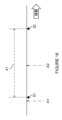
- the time information may indicate the transmission standby time for each piece of provided information. For example, as shown in FIG. 16, when the provided information is transmitted at time 51, the transmission of the provided information is not permitted until the transmission waiting time 41 indicated by the time information has elapsed. After the transmission waiting time 41 has elapsed, the next provided information is transmitted at time 52 .
- the time information may indicate the transmission standby time for multiple pieces of provided information.
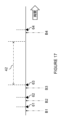
- the number of pieces of provision information may be set in the network. For example, as shown in FIG. 17, the provided information is transmitted at times 61, 62 and 63, respectively. That is, the provided information is transmitted three times. The transmission of the additional information is not permitted until the transmission waiting time 42 indicated by the time information has elapsed from the time point 63 of the third transmission. After the transmission standby time 42 has elapsed, the next provided information is transmitted at time 64 . Note that the set number of transmissions of the provided information is arbitrary. Information indicating the number of transmission times of the provided information may be included in the time information, or may be transmitted separately from the time information.
- the time information is notified from the network to the UE 100 .
- UE 100 (communication processing unit 135) receives a message including time information from the network.
- UE 100 (information acquisition unit 131) acquires the time information included in the message. More specifically, UE 100 receives a NAS message including time information from network node 300 via base station 200 .
- the network node 300 acquires time information.
- the network node 300 (communication processing unit 335) transmits a message including the time information to the UE 100. More specifically, network node 300 transmits a NAS message including time information to UE 100 via base station 200 .
- the base station 200 receives a message including time information from the network node 300 .
- the base station 200 (first communication processing unit 243) transmits a message including the time information to the UE100. More specifically, the base station 200 forwards NAS messages containing time information from the network node 300 to the UE 100 .
- time information can be transmitted from the network node 300 to the UE 100 without changing the operation of lower layers.
- a NAS message containing time information may be a response message to a message received from the UE 100.
- the NAS message may be a RegistrationAccept message or a ServiceAccept message.
- the NAS message may be a message spontaneously sent from the network node 300 .
- the NAS message may be a ConfigurationUpdateCommand message.
- the message containing time information is an additionally defined message, and may be a message for transmitting time information.
- time information can be sent from the network to the UE 100 without changing existing messages.
- the time information may be requested from the network by the UE 100.
- the UE 100 (communication processing unit 135) transmits a message including request information indicating a request for time information to the network, and receives a message including time information from the network as a response to the request information.
- Network node 300 (communication processing unit 335 ) transmits a message including time information to UE 100 as a response to the message including the request information received from UE 100 .
- the message containing the request information may be a NAS message.
- the NAS message may be a RegistrationRequest message or a ServiceRequest message.
- the network can notify the UE 100 of the time information according to the need for the time information in the UE 100 .
- the time information can be notified according to the presence or absence of the time information in the UE 100, the elapsed time from the previous acquisition, or the like. Therefore, it is possible to reduce signaling by suppressing transmission of unnecessary time information.
- the UE 100 transmits provided information based on time information. Specifically, the UE 100 (communication processing unit 135) transmits a message including provided information to the network based on the time information.
- the UE 100 transmits a message including provision information to the network according to the transmission waiting time indicated by the time information. For example, referring to FIG. 16, the UE 100 transmits the provided information at a time point 51 and sets a timer for the transmission waiting time 41 when the transmission request A1 for the provided information is generated. The UE 100 does not transmit the provided information during the time of the timer even if the next transmission request A2 for the provided information is generated. At time 52 after the timer has elapsed, the UE 100 transmits provision information for the transmission request A2.
- the UE 100 transmits the provided information at times 61, 62 and 63, respectively, when transmission requests B1, B2 and B3 for the provided information are generated. After transmitting the provisioning information at time point 63 , UE 100 sets a timer for transmission waiting time 42 . The UE 100 does not transmit the provided information during the time of the timer even if a transmission request is generated. After the time of the timer has elapsed, the UE 100 transmits the provision information for the transmission request B4 at time 64 in response to the generated transmission request B4.
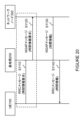
- the UE 100 transmits a message including request information indicating a request for time information to the network (S1010).
- UE 100 transmits a NAS message including request information to network node 300 via base station 200 . Note that the process of S1010 surrounded by a dashed line may be omitted.
- the network node 300 transmits a message including time information to the UE 100 (S1020). For example, network node 300 transmits a NAS message including time information to UE 100 via base station 200 . If the requested information is received, a NAS message containing time information is sent in response to the requested information. Henceforth, UE100 transmits provision information based on the received time information.
- a message including time information regarding permission to transmit provided information is transmitted from the network to the UE 100.
- a message including the provided information is transmitted from the UE 100 to the network based on the time information.
- This allows the network (in other words, system 1) to control the number of transmissions of the provided information. Therefore, by controlling the number of transmissions of the provided information, it is possible to suppress an increase in signaling caused by the transmission of the provided information.
- the transmission of provision information updates the TA list according to the route, and TAU signaling can be reduced.
- route changes occur frequently, there is a risk that the reduction in signaling due to updating the TA list according to the route may be offset by the increased amount of signaling due to the transmission of provision information, which increases due to frequent route changes. be.
- the above time information indicates the time when transmission of the provided information is not permitted. Thereby, it is possible to secure a time during which the provided information is not transmitted. Therefore, an increase in signaling can be reliably suppressed.
- the time information indicates the transmission standby time of one or more pieces of provided information.
- the transmission waiting time can contribute to suppressing the transmission of the additional information, which may be wasteful, until the frequent route changes converge.
- the transmission waiting time for a plurality of pieces of provided information can suppress the transmission of provided information for the rest of the route change while permitting the transmission of the provided information for part of the route change. Therefore, it is possible to suppress an increase in signaling while increasing opportunities to transmit provided information.
- time information indicates a time when transmission of provided information is not permitted.
- the time information according to the third embodiment of the present disclosure is not limited to this example.
- the time information may indicate the time when transmission of the provided information is permitted.
- the time information includes information indicating the time during which transmission of the provided information is permitted, and information indicating the number of transmissions of the provided information during that time.
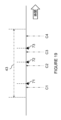
- the provided information is transmitted within the time 43 as the transmission permitted time indicated by the time information.
- the provided information corresponding to the transmission requests C1, C2 and C3 is transmitted at times 71, 72 and 73, respectively.
- the provided information in response to the transmission request C4 is not sent within the time 43 .
- the information to be provided in response to the transmission request C4 is transmitted at the next transmission permitted time.
- Information indicating the number of transmissions may be transmitted separately from the time information. Also, the number of times of transmission may not be set, and information indicating the number of times of transmission may not be transmitted.
- the time information indicates the time when transmission of the provided information is permitted. This makes it possible to control the time at which the provided information is transmitted. Therefore, it is possible to suppress an increase in signaling while securing opportunities to transmit provided information.
- the time information includes frequency information indicating the number of transmission times of the provided information during the time when the transmission of the provided information is permitted. This makes it possible to control the number of transmissions of the provided information per predetermined period of time. Therefore, by controlling the number of transmissions, it is possible to more finely suppress signaling.
- time information may be notified using RRC messages and NGAP messages.
- the UE 100 receives an RRC message including time information from the base station 200.
- the base station 200 receives the NGAP message including the time information from the network node 300.
- FIG. The base station 200 (first communication processing unit 243) transmits an RRC message including the time information to the UE100.
- the network node 300 (communication processing unit 335) transmits an NGAP message including the time information to the base station 200.
- the RRC message including the time information may be an RRCReconfiguration message, RRCSetup message, RRCReestablishment message, or RRCResume message.
- the RRC message including time information may be an additionally defined RRC message and may be an RRC message for transmitting time information.
- time information can be transmitted from the base station 200 to the UE 100 without changing the existing RRC message.
- the request information indicating the request for time information described in the third embodiment may be transmitted using the RRC message and the NGAP message.
- UE 100 (communication processing unit 135 ) transmits an RRC message including the request information to base station 200 .
- the base station 200 receives the RRC message including the request information.
- the base station 200 (second communication processing unit 245 ) transmits an NGAP message including the request information to the network node 300 .
- the network node 300 receives the NGAP message including the request information from the base station 200 .
- the RRC message containing the request information may be an RRCSetupRequest message, an RRCReestablishmentRequest message, or a RRCResumeRequest message.
- time information is transmitted from the network node 300 to the UE 100 even if communication is not directly established between the UE and the network node. can do.
- steps in the processes described in this specification do not necessarily have to be executed in chronological order according to the order described in the flowcharts or sequence diagrams.
- steps in a process may be performed in an order different from that depicted in a flowchart or sequence diagram, or in parallel.
- some of the steps in the process may be deleted and additional steps may be added to the process.
- a method may be provided that includes the operation of one or more components of the apparatus described herein, and a program may be provided for causing a computer to perform the operation of the components. Further, a computer-readable non-transitional tangible recording medium recording the program may be provided.
- a method may be provided that includes the operation of one or more components of the apparatus described herein, and a program may be provided for causing a computer to perform the operation of the components.
- a computer-readable non-transitional tangible recording medium recording the program may be provided.
- such methods, programs, and computer-readable non-transitory tangible computer-readable storage mediums are also included in the present disclosure.
- user equipment refers to a mobile station, mobile terminal, mobile device, mobile unit, subscriber station, subscriber terminal, subscriber equipment, subscriber unit, wireless It may also be called a station, a wireless terminal, a wireless device, a wireless unit, a remote station, a remote terminal, a remote device, a remote unit, or the like.
- transmit may mean performing at least one layer of processing within the protocol stack used for transmission, or physically transmitting a signal wirelessly or by wire. It may mean sending to Alternatively, “transmitting” may mean a combination of performing the at least one layer of processing and physically transmitting the signal wirelessly or by wire.
- recipient may mean processing at least one layer in the protocol stack used for reception, or physically receiving a signal wirelessly or by wire. may mean that Alternatively, “receiving” may mean a combination of performing the at least one layer of processing and physically receiving the signal wirelessly or by wire.
- the at least one layer may also be translated as at least one protocol.
- “obtain/acquire” may mean obtaining information among stored information, obtaining information among information received from other nodes. or to obtain the information by generating the information.
- the terms “include” and “comprise” do not mean to include only the recited items, but may include only the recited items, or may include only the recited items. It means that further items may be included in addition to the
- a communication device (100), a communication processing unit (135) that receives from a network (200, 300) a message containing time information regarding permission to transmit provided information used for setting a TA (Tracking Area) list for the communication device; an information acquisition unit (131) for acquiring the time information included in the message; with The communication device, wherein the provided information relates to a moving route of the communication device.
- a communication processing unit (135) that receives from a network (200, 300) a message containing time information regarding permission to transmit provided information used for setting a TA (Tracking Area) list for the communication device; an information acquisition unit (131) for acquiring the time information included in the message; with The communication device, wherein the provided information relates to a moving route of the communication device.
- (Feature 2) The communication device according to feature 1, wherein the time information indicates a time (41, 42) during which transmission of the provided information is not permitted.
- Feature 6 said network comprising a network node (300) in a core network;
- the communication device according to any one of features 1 to 5, wherein the message including the time information includes a NAS (Non Access Stratum) message.
- NAS Non Access Stratum
- NAS message is a RegistrationAccept message, a ServiceAccept message or a ConfigurationUpdateCommand message.
- Feature 8 said network comprising a base station (200) of a radio access network;
- the communication device according to any one of features 1 to 7, wherein the message including the time information includes an RRC (Radio Resource Control) message.
- RRC Radio Resource Control
- the communication processing unit transmits a message including request information indicating a request for the time information to the network,
- the communication device according to any one of the features 1 to 9, wherein a message including the time information is received from the network as a response to the request information.
- Feature 14 said network comprising a network node (300) in a core network;
- the communication device according to any one of features 11 to 13, wherein the message including the provided information includes a NAS (Non Access Stratum) message.
- NAS Non Access Stratum
- Feature 16 said network comprising a base station (200) of a radio access network;
- the communication device according to any one of features 11 to 15, wherein the message including the provision information includes an RRC (Radio Resource Control) message.
- RRC Radio Resource Control
- a second communication processing unit (245) that receives from the network node (300) a message containing time information regarding permission to transmit provided information used for setting a TA (Tracking Area) list for the communication device (100); a first communication processing unit (243) that transmits a message including the time information to the communication device; with The provided information relates to a moving route of the communication device.
- a method performed by a communication device comprising: Receiving from a network (200, 300) a message including time information regarding permission to transmit provided information used for setting a TA (Tracking Area) list for the communication device; obtaining the time information included in the message; including The provided information relates to a moving route of the communication device.
- a network 200, 300
- TA Track Area
- TA Tracking Area
- a network node 300
- time information regarding permission to transmit provided information used for setting a TA (Tracking Area) list for a communication device (100)
- sending a message containing the time information to the communication device including, The provided information relates to a moving route of the communication device.
- a computer-readable non-transitional tangible recording medium recording a program that causes a computer to execute The provided information is a non-transitional substantive recording medium relating to a moving route of the communication device.
- a computer-readable non-transitional tangible recording medium recording a program that causes a computer to execute The provided information is a non-transitional substantive recording medium relating to a moving route of the communication device.
- a computer-readable non-transitional tangible recording medium recording a program that causes a computer to execute The provided information is a non-transitional substantive recording medium relating to a moving route of the communication device.
Landscapes
- Engineering & Computer Science (AREA)
- Computer Networks & Wireless Communication (AREA)
- Signal Processing (AREA)
- Computer Security & Cryptography (AREA)
- Databases & Information Systems (AREA)
- Mobile Radio Communication Systems (AREA)
Abstract
Description
1.システムの構成
2.ユーザ機器の構成
3.基地局の構成
4.ネットワークノードの構成
5.処理ノードの構成
6.第1の実施形態(経路情報を提供)
7.第2の実施形態(TAリストを提供)
8.第3の実施形態(提供情報の送信タイマ)
図1を参照して、本開示の実施形態に係るシステム1の構成の例を説明する。図1を参照すると、システム1は、ユーザ機器(通信装置)100、基地局200及びコアネットワーク30を含む。コアネットワーク30は、ネットワークノード300及び処理ノード400を含む。
UE100は、基地局と通信する。例えば、UE100は、基地局200のカバレッジエリア10内に位置する場合に、基地局200と通信する。
(2)基地局200
基地局200は、RANのノードであり、基地局200のカバレッジエリア10内に位置するUE(例えば、UE100)と通信する。
ネットワークノード300は、コアネットワーク30のネットワーク機能である。例えば、ネットワークノード300は、AMF(Access and Mobility Management Function)である。
処理ノード400は、AI(Artificial Intelligence)を用いて処理を行うネットワーク機能である。また、当該AIは、ML(Machine Learning)により訓練され得る。3GPPのRelease 18では、通信システムにおいてAI又はMLを活用することが議論されている(例えば、TR 22.874参照)。処理ノード400は、当該AI又はMLの活用の一形態となり得る。例えば、処理ノード400は、サーバという形態で実装され得るが、処理ノード400の実装形態はこれに限定されない。
図3及び図4を参照して、本開示の実施形態に係るUE100の構成の例を説明する。
まず、図3を参照して、本開示の実施形態に係るUE100の機能構成の例を説明する。図3を参照すると、UE100は、無線通信部110、記憶部120及び処理部130を備える。
次に、図4を参照して、本開示の実施形態に係るUE100のハードウェア構成の例を説明する。図4を参照すると、UE100は、アンテナ181、RF(radio frequency)回路183、プロセッサ185、メモリ187及びストレージ189を備える。
図5及び図6を参照して、本開示の実施形態に係る基地局200の構成の例を説明する。
まず、図5を参照して、本開示の実施形態に係る基地局200の機能構成の例を説明する。図5を参照すると、基地局200は、無線通信部210、ネットワーク通信部220、記憶部230及び処理部240を備える。
次に、図6を参照して、本開示の実施形態に係る基地局200のハードウェア構成の例を説明する。図6を参照すると、基地局200は、アンテナ281、RF回路283、ネットワークインターフェース285、プロセッサ287、メモリ289及びストレージ291を備える。
図7及び図8を参照して、本開示の実施形態に係るネットワークノード300の構成の例を説明する。
まず、図7を参照して、本開示の実施形態に係るネットワークノード300の機能構成の例を説明する。図7を参照すると、ネットワークノード300は、ネットワーク通信部310、記憶部320及び処理部330を備える。
次に、図8を参照して、本開示の実施形態に係るネットワークノード300のハードウェア構成の例を説明する。図8を参照すると、ネットワークノード300は、ネットワークインターフェース381、プロセッサ383、メモリ385及びストレージ387を備える。
<5.処理ノードの構成>
本開示の実施形態に係る処理ノード400の構成の例を説明する。なお、処理ノード400の機能構成及びハードウェア構成は、それぞれネットワークノード300の同じ名称の構成と実質的に同一であるため、図示及び詳細な説明を省略する。
まず、本開示の実施形態に係る処理ノード400の機能構成の例を説明する。処理ノード400は、ネットワーク通信部410、記憶部420及び処理部430を備える。処理部430は、情報取得部431、制御部433及び通信処理部435を含む。
次に、本開示の実施形態に係る処理ノード400のハードウェア構成の例を説明する。処理ノード400は、ネットワークインターフェース481、プロセッサ483、メモリ485及びストレージ487を備える。
本開示の第1の実施形態について説明する。第1の実施形態では、提供情報として経路情報がUE100から基地局200を経由してネットワークノード300へ送信される。また、ネットワークノード300から処理ノード400へ経路情報が提供され、処理ノード400により経路情報がTAリストに変換される。
図9を参照して、本開示の第1の実施形態に係るUE100、基地局200、ネットワークノード300及び処理ノード400の動作及び関係する情報の例について説明する。
UE100は、経路情報をネットワークノード300へ送信する。UE100は、当該経路情報への応答として、TAリストをネットワークノード300から受信する。以下、UE100の動作及び関係する情報について詳細に説明する。
UE100は、当該UE100についてのTAリストの設定に用いられる情報であって、UE100の移動経路に関する提供情報を取得する。例えば、提供情報は、UE100の移動経路を少なくとも示す経路情報である。
UE100は、取得された経路情報をネットワークへ送信する。具体的には、UE100(通信処理部135)は、提供情報としての経路情報を含むメッセージをネットワークへ送信する。
UE100は、提供情報の送信後に、TAリストを含むメッセージをネットワークから受信する。具体的には、UE100(通信処理部135)は、提供情報としての経路情報への応答として、TAリストを含むメッセージをネットワークから受信する。当該TAリストは、経路情報に基づく。
基地局200は、UE100から受信した経路情報をネットワークノード300へ転送する。また、基地局200は、ネットワークノード300から受信したTAリストをUE100へ転送する。以下、基地局200の動作及び関係する情報について詳細に説明する。なお、UE100の動作における説明と実質的に同一である内容については詳細な説明を省略する。
基地局200は、UE100から受信した経路情報をネットワークノード300へ転送する。具体的には、基地局200(第1通信処理部243)は、提供情報としての経路情報を含むメッセージをUE100から受信する。基地局200(第2通信処理部245)は、当該経路情報を含むメッセージをネットワークノード300へ送信する。
基地局200は、ネットワークノード300から受信したTAリストをUE100へ転送する。具体的には、基地局200(第2通信処理部245)は、TAリストを含むメッセージをネットワークノード300から受信する。基地局200(第1通信処理部243)は、当該TAリストを含むメッセージをUE100へ送信する。
ネットワークノード300は、経路情報をUE100から受信する。ネットワークノード300は、当該経路情報に基づきTAリストを取得する。ネットワークノード300は、当該TAリストをUE100へ送信する。以下、ネットワークノード300の動作及び関係する情報について詳細に説明する。なお、UE100又は基地局200の動作における説明と実質的に同一である内容については詳細な説明を省略する。
ネットワークノード300は、経路情報を基地局200経由でUE100から受信する。具体的には、ネットワークノード300(通信処理部335)は、提供情報としての経路情報を含むメッセージをUE100から受信する。ネットワークノード300(情報取得部331)は、当該メッセージに含まれる経路情報を取得する。
ネットワークノード300は、経路情報に基づくTAリストを取得する。具体的には、ネットワークノード300(通信処理部335)は、経路情報を含むメッセージをTAリスト変換処理を行う処理機能へ送信し、当該TAリストを含むメッセージを当該処理機能から受信する。ネットワークノード300(情報取得部331)は、当該処理機能から受信されたメッセージに含まれるTAリストを取得する。当該処理機能は、例えば処理ノード400である。
ネットワークノード300は、TAリストをUE100へ送信する。具体的には、ネットワークノード300(通信処理部335)は、取得されたTAリストを含むメッセージをUE100へ送信する。
処理ノード400は、ネットワークノード300から受信した経路情報をTAリストに変換する。処理ノード400は、変換されたTAリストをネットワークノード300へ送信する。以下、処理ノード400の動作及び関係する情報について詳細に説明する。なお、ネットワークノード300の動作における説明と実質的に同一である内容については詳細な説明を省略する。
処理ノード400は、経路情報をネットワークノード300から受信する。具体的には、処理ノード400(通信処理部435)は、経路情報を含むメッセージをネットワークノード300から受信する。処理ノード400(情報取得部431)は、当該メッセージに含まれる経路情報を取得する。
処理ノード400は、経路情報に基づきTAリストを取得する。具体的には、処理ノード400(情報取得部431)は、経路情報に基づくTAリスト変換処理によりTAリストを取得する。処理ノード400は、AIを用いてTAリスト変換処理を行う。
処理ノード400は、TAリストをネットワークノード300へ送信する。具体的には、処理ノード400(通信処理部435)は、TAリスト変換処理により取得されたTAリストを含むメッセージをネットワークノード300へ送信する。
図9を参照して、本開示の第1の実施形態に係る処理の例を説明する。
このように、本開示の第1の実施形態によれば、UE100についてのTAリストの設定に用いられる情報であって、UE100の移動経路に関する提供情報を含むメッセージがUE100からネットワークへ送信される。これにより、UE100の移動経路を考慮した当該UE100についてのTAリストをネットワーク側で設定することができる。具体的には、UE100がTAリストの示すTA外に移動する可能性を低下させることができる。そのため、TAリストの更新の発生が抑制される。したがって、TAリストの更新に係るシグナリングの増大を抑制することが可能となる。ひいては、無線リソース及び電力の消費を抑制することができる。
図12及び図13を参照して、本開示の第1の実施形態に係る第1~第3の変形例を説明する。なお、これらの変形例のうちの2つ以上が組み合わせられてもよい。
上述した本開示の第1の実施形態では、処理ノード400がTAリスト変換処理を行う。しかし、本開示の第1の実施形態に係るTA変換処理の主体は、この例に限定されない。
上述した本開示の第1の実施形態では、NASプロトコルを用いて経路情報及びTAリストが送信される。しかし、本開示の第1の実施形態に係る経路情報及びTAリストの送信に用いられる通信プロトコルは、この例に限定されない。
具体的には、経路情報を含むRRCメッセージがUE100からRANの基地局200へ送信され、当該経路情報を含むNGAPメッセージが基地局200からネットワークノード300へ送信される。
また、TAリストを含むNGAPメッセージがネットワークノード300から基地局200へ送信され、当該TAリストを含むRRCメッセージが基地局200からUE100へ送信される。
図12を参照して、本開示の第1の実施形態の第2の変形例に係る処理の例を説明する。なお、図9と実質的に同一である処理について説明を省略する。
上述した本開示の第1の実施形態では、経路情報がネットワークノード300から処理ノード400へ送信される。しかし、本開示の第1の実施形態に係る処理ノード400へ送信される情報は、この例に限定されない。
続いて、本開示の第2の実施形態について説明する。第2の実施形態では、提供情報としてTAリストがUE100から基地局200を経由してネットワークノード300へ送信される。また、UE100から処理ノード400へ経路情報が提供され、処理ノード400により経路情報がTAリストに変換される。
図14を参照して、本開示の第2の実施形態に係るUE100、基地局200、ネットワークノード300及び処理ノード400の動作及び関係する情報の例について説明する。なお、第1の実施形態における説明と実質的に同一である内容については詳細な説明を省略する。
UE100は、TAリストをネットワークノード300へ送信する。以下、UE100の動作及び関係する情報について詳細に説明する。
UE100は、提供情報としてTAリストを取得する。具体的には、UE100(情報取得部131)は、経路情報に基づくTAリストを取得する。
UE100は、TAリストをネットワークノード300へ送信する。具体的には、UE100(通信処理部135)は、提供情報としてのTAリストを含むメッセージをネットワークノード300へ送信する。
基地局200は、UE100から受信したTAリストをネットワークノード300へ転送する。以下、基地局200の動作及び関係する情報について詳細に説明する。なお、UE100の動作における説明と実質的に同一である内容については詳細な説明を省略する。
基地局200は、UE100から受信したTAリストをネットワークノード300へ転送する。具体的には、基地局200(第1通信処理部243)は、提供情報としてのTAリストを含むメッセージをUE100から受信する。基地局200(第2通信処理部245)は、当該TAリストを含むメッセージをネットワークノード300へ送信する。
ネットワークノード300は、TAリストをUE100から受信し、当該TAリストを設定する。以下、ネットワークノード300の動作及び関係する情報について詳細に説明する。なお、UE100又は基地局200の動作における説明と実質的に同一である内容については詳細な説明を省略する。
ネットワークノード300は、TAリストを基地局200経由でUE100から受信する。具体的には、ネットワークノード300(通信処理部335)は、提供情報としてのTAリストを含むメッセージをUE100から受信する。ネットワークノード300(情報取得部331)は、当該メッセージに含まれるTAリストを取得する。
処理ノード400は、UE100から受信した経路情報をTAリストに変換する。処理ノード400は、変換されたTAリストをUE100へ送信する。以下、処理ノード400の動作及び関係する情報について詳細に説明する。なお、UE100の動作における説明と実質的に同一である内容については詳細な説明を省略する。
処理ノード400は、経路情報をUE100から受信する。具体的には、処理ノード400(通信処理部435)は、経路情報を含むメッセージをUE100から受信する。処理ノード400(情報取得部431)は、当該メッセージに含まれる経路情報を取得する。
処理ノード400は、経路情報に基づきTAリストを取得する。なお、TAリスト変換処理は、第1の実施形態の処理と実質的に同一であるため詳細な説明を省略する。
処理ノード400は、TAリストをUE100へ送信する。具体的には、処理ノード400(通信処理部435)は、TAリスト変換処理により取得されたTAリストを含むメッセージをUE100へ送信する。
図14を参照して、本開示の第2の実施形態に係る処理の例を説明する。
このように、本開示の第2の実施形態によれば、第1の実施形態と同様に、TAリストの更新に係るシグナリングの増大を抑制することが可能となる。ひいては、無線リソース及び電力の消費を抑制することができる。なお、第1の実施形態と同様に、図11を参照して説明したような効果が生じる。
図15を参照して、本開示の第2の実施形態に係る第1~第3の変形例を説明する。なお、これらの変形例のうちの2つ以上が組み合わせられてもよい。
上述した本開示の第2の実施形態では、処理ノード400がTAリスト変換処理を行う。しかし、本開示の第2の実施形態に係るTA変換処理の主体は、この例に限定されない。
上述した本開示の第2の実施形態では、NASプロトコルを用いてTAリストが送信される。しかし、本開示の第2の実施形態に係るTAリストの送信に用いられる通信プロトコルは、この例に限定されない。
具体的には、TAリストを含むRRCメッセージがUE100からRANの基地局200へ送信され、当該TAリストを含むNGAPメッセージが基地局200からネットワークノード300へ送信される。
図15を参照して、本開示の第2の実施形態の第2の変形例に係る処理の例を説明する。なお、図14と実質的に同一である処理について説明を省略する。
上述した本開示の第2の実施形態では、経路情報がUE100から処理ノード400へ送信される。しかし、本開示の第2の実施形態に係る処理ノード400へ送信される情報は、この例に限定されない。
本開示の第3の実施形態について説明する。上述した提供情報は、当該提供情報の送信の許可に関する時間情報に基づいて、UE100から基地局200を経由してネットワークノード300へ送信される。なお、提供情報及び提供情報の送信のためのメッセージは、上述の第1又は第2の実施形態と実質的に同一であるため詳細な説明を省略する。
図16~図18を参照して、本開示の第3の実施形態に係るUE100、基地局200、ネットワークノード300及び処理ノード400の動作及び関係する情報の例について説明する。
上述の提供情報は、当該提供情報の送信の許可に関する時間情報に基づいて送信される。 具体的には、当該時間情報は、提供情報の送信が許可されない時間を示す。
上記時間情報は、ネットワークからUE100へ通知される。具体的には、UE100(通信処理部135)は、時間情報を含むメッセージをネットワークから受信する。UE100(情報取得部131)は、当該メッセージに含まれる当該時間情報を取得する。より具体的には、UE100は、時間情報を含むNASメッセージを基地局200経由でネットワークノード300から受信する。
UE100は、時間情報に基づき提供情報を送信する。具体的には、UE100(通信処理部135)は、時間情報に基づいて提供情報を含むメッセージをネットワークへ送信する。
図18を参照して、本開示の第3の実施形態に係る処理の例を説明する。
ここで、本開示の第1又は第2の実施形態のようにTAリストの設定のために提供情報が送信される場合、TAリストの設定に係るシグナリングの増大を抑制する効果が発揮され得る。さらに、提供情報の送信回数を工夫することでシグナリング抑制効果を向上させることができると考えられる。
本開示の第3の実施形態に係る第1及び第2の変形例を説明する。なお、これらの変形例のうちの2つ以上が組み合わせられてもよい。
上述した本開示の第3の実施形態では、時間情報は提供情報の送信が許可されない時間を示す。しかし、本開示の第3の実施形態に係る時間情報は、この例に限定されない。
上述した本開示の第3の実施形態では、時間情報はNASメッセージを用いて通知される。しかし、本開示の第3の実施形態に係る時間情報の通知に用いられるメッセージは、この例に限定されない。
通信装置(100)であって、
前記通信装置についてのTA(Tracking Area)リストの設定に用いられる提供情報の送信の許可に関する時間情報を含むメッセージをネットワーク(200、300)から受信する通信処理部(135)と、
前記メッセージに含まれる前記時間情報を取得する情報取得部(131)と、
を備え、
前記提供情報は、前記通信装置の移動経路に関する
通信装置。
前記時間情報は、前記提供情報の送信が許可されない時間(41、42)を示す
特徴1に記載の通信装置。
前記時間情報は、1つ又は複数の前記提供情報についての送信待機時間(41、42)を示す
特徴2に記載の通信装置。
前記時間情報は、前記提供情報の送信が許可される時間(43)を示す
特徴1に記載の通信装置。
前記時間情報は、前記提供情報の送信が許可される時間における前記提供情報の送信回数を示す回数情報を含む
特徴4に記載の通信装置。
前記ネットワークは、コアネットワーク内のネットワークノード(300)を含み、
前記時間情報を含むメッセージは、NAS(Non Access Stratum)メッセージを含む
特徴1~5のいずれか1項に記載の通信装置。
前記NASメッセージは、RegistrationAcceptメッセージ、ServiceAcceptメッセージ又はConfigurationUpdateCommandメッセージである
特徴6に記載の通信装置。
前記ネットワークは、無線アクセスネットワークの基地局(200)を含み、
前記時間情報を含むメッセージは、RRC(Radio Resource Control)メッセージを含む
特徴1~7のいずれか1項に記載の通信装置。
前記RRCメッセージは、RRCReconfigurationメッセージ、RRCSetupメッセージ、RRCReestablishmentメッセージ、又はRRCResumeメッセージである
特徴8に記載の通信装置。
前記通信処理部は、前記時間情報の要求を示す要求情報を含むメッセージを前記ネットワークへ送信し、
前記要求情報への応答として、前記時間情報を含むメッセージを前記ネットワークから受信する
特徴1~9のいずれか1項に記載の通信装置。
前記通信処理部は、前記時間情報に基づいて前記提供情報を含むメッセージを前記ネットワークへ送信する
特徴1~10のいずれか1項に記載の通信装置。
前記提供情報は、前記通信装置の移動経路を少なくとも示す経路情報を含む
特徴1~11のいずれか1項に記載の通信装置。
前記提供情報は、前記通信装置の移動経路を少なくとも示す経路情報に基づく前記TAリストを含む
特徴1~12のいずれか1項に記載の通信装置。
前記ネットワークは、コアネットワーク内のネットワークノード(300)を含み、
前記提供情報を含むメッセージは、NAS(Non Access Stratum)メッセージを含む
特徴11~13のいずれか1項に記載の通信装置。
前記NASメッセージは、RegistrationRequestメッセージ又はServiceRequestメッセージである
特徴14に記載の通信装置。
前記ネットワークは、無線アクセスネットワークの基地局(200)を含み、
前記提供情報を含むメッセージは、RRC(Radio Resource Control)メッセージを含む
特徴11~15のいずれか1項に記載の通信装置。
前記RRCメッセージは、UEInformationResponseメッセージ又はUEAssistanceInformationメッセージである
特徴16に記載の通信装置。
通信装置(100)についてのTA(Tracking Area)リストの設定に用いられる提供情報の送信の許可に関する時間情報を取得する情報取得部(331)と、
前記時間情報を含むメッセージを前記通信装置へ送信する通信処理部(335)と、
を備え、
前記提供情報は、前記通信装置の移動経路に関する
ネットワークノード(300)。
通信装置(100)についてのTA(Tracking Area)リストの設定に用いられる提供情報の送信の許可に関する時間情報を含むメッセージをネットワークノード(300)から受信する第2通信処理部(245)と、
前記時間情報を含むメッセージを前記通信装置へ送信する第1通信処理部(243)と、
を備え、
前記提供情報は、前記通信装置の移動経路に関する
基地局(200)。
通信装置(100)により行われる方法であって、
前記通信装置についてのTA(Tracking Area)リストの設定に用いられる提供情報の送信の許可に関する時間情報を含むメッセージをネットワーク(200、300)から受信することと、
前記メッセージに含まれる前記時間情報を取得することと、
を含み、
前記提供情報は、前記通信装置の移動経路に関する
方法。
ネットワークノード(300)により行われる方法であって、
通信装置(100)についてのTA(Tracking Area)リストの設定に用いられる提供情報の送信の許可に関する時間情報を取得することと、
前記時間情報を含むメッセージを前記通信装置へ送信することと、
を含み、
前記提供情報は、前記通信装置の移動経路に関する
方法。
基地局(200)により行われる方法であって、
通信装置(100)についてのTA(Tracking Area)リストの設定に用いられる提供情報の送信の許可に関する時間情報を含むメッセージをネットワークノード(300)から受信することと、
前記時間情報を含むメッセージを前記通信装置へ送信することと、
を含む、
前記提供情報は、前記通信装置の移動経路に関する
方法。
通信装置(100)についてのTA(Tracking Area)リストの設定に用いられる提供情報の送信の許可に関する時間情報を含むメッセージをネットワーク(200、300)から受信することと、
前記メッセージに含まれる前記時間情報を取得することと、
をコンピュータに実行させるプログラムであって、
前記提供情報は、前記通信装置の移動経路に関する
プログラム。
通信装置(100)についてのTA(Tracking Area)リストの設定に用いられる提供情報の送信の許可に関する時間情報を取得することと、
前記時間情報を含むメッセージを前記通信装置へ送信することと、
をコンピュータに実行させるプログラムであって、
前記提供情報は、前記通信装置の移動経路に関する
プログラム。
通信装置(100)についてのTA(Tracking Area)リストの設定に用いられる提供情報の送信の許可に関する時間情報を含むメッセージをネットワークノード(300)から受信することと、
前記時間情報を含むメッセージを前記通信装置へ送信することと、
をコンピュータに実行させるプログラムであって、
前記提供情報は、前記通信装置の移動経路に関する
プログラム。
通信装置(100)についてのTA(Tracking Area)リストの設定に用いられる提供情報の送信の許可に関する時間情報を含むメッセージをネットワーク(200、300)から受信することと、
前記メッセージに含まれる前記時間情報を取得することと、
をコンピュータに実行させるプログラムを記録したコンピュータに読み取り可能な非遷移的実体的記録媒体であって、
前記提供情報は、前記通信装置の移動経路に関する
非遷移的実体的記録媒体。
通信装置(100)についてのTA(Tracking Area)リストの設定に用いられる提供情報の送信の許可に関する時間情報を取得することと、
前記時間情報を含むメッセージを前記通信装置へ送信することと、
をコンピュータに実行させるプログラムを記録したコンピュータに読み取り可能な非遷移的実体的記録媒体であって、
前記提供情報は、前記通信装置の移動経路に関する
非遷移的実体的記録媒体。
通信装置(100)についてのTA(Tracking Area)リストの設定に用いられる提供情報の送信の許可に関する時間情報を含むメッセージをネットワークノード(300)から受信することと、
前記時間情報を含むメッセージを前記通信装置へ送信することと、
をコンピュータに実行させるプログラムを記録したコンピュータに読み取り可能な非遷移的実体的記録媒体であって、
前記提供情報は、前記通信装置の移動経路に関する
非遷移的実体的記録媒体。
Claims (14)
- 装置(100)であって、
前記装置についてのTA(Tracking Area)リストの設定に用いられる提供情報の送信の許可に関する時間情報を含むメッセージをネットワーク(200、300)から受信する通信処理部(135)と、
前記メッセージに含まれる前記時間情報を取得する情報取得部(131)と、
を備え、
前記提供情報は、前記装置の移動経路に関する
装置。 - 前記時間情報は、前記提供情報の送信が許可されない時間(41、42)を示す
請求項1に記載の装置。 - 前記時間情報は、1つ又は複数の前記提供情報についての送信待機時間(41、42)を示す
請求項2に記載の装置。 - 前記時間情報は、前記提供情報の送信が許可される時間(43)を示す
請求項1に記載の装置。 - 前記時間情報は、前記提供情報の送信が許可される時間における前記提供情報の送信回数を示す回数情報を含む
請求項4に記載の装置。 - 前記ネットワークは、コアネットワーク内のネットワークノード(300)を含み、
前記時間情報を含むメッセージは、NAS(Non Access Stratum)メッセージを含む
請求項1~5のいずれか1項に記載の装置。 - 前記ネットワークは、無線アクセスネットワークの基地局(200)を含み、
前記時間情報を含むメッセージは、RRC(Radio Resource Control)メッセージを含む
請求項1~6のいずれか1項に記載の装置。 - 前記通信処理部は、前記時間情報の要求を示す要求情報を含むメッセージを前記ネットワークへ送信し、
前記要求情報への応答として、前記時間情報を含むメッセージを前記ネットワークから受信する
請求項1~7のいずれか1項に記載の装置。 - 前記通信処理部は、前記時間情報に基づいて前記提供情報を含むメッセージを前記ネットワークへ送信する
請求項1~8のいずれか1項に記載の装置。 - 前記提供情報は、前記装置の移動経路を少なくとも示す経路情報を含む
請求項1~9のいずれか1項に記載の装置。 - 前記提供情報は、前記装置の移動経路を少なくとも示す経路情報に基づく前記TAリストを含む
請求項1~10のいずれか1項に記載の装置。 - 通信装置(100)についてのTA(Tracking Area)リストの設定に用いられる提供情報の送信の許可に関する時間情報を取得する情報取得部(331)と、
前記時間情報を含むメッセージを前記通信装置へ送信する通信処理部(335)と、
を備え、
前記提供情報は、前記通信装置の移動経路に関する
装置(300)。 - 装置(100)により行われる方法であって、
前記装置についてのTA(Tracking Area)リストの設定に用いられる提供情報の送信の許可に関する時間情報を含むメッセージをネットワーク(200、300)から受信することと、
前記メッセージに含まれる前記時間情報を取得することと、
を含み、
前記提供情報は、前記装置の移動経路に関する
方法。 - 装置(300)により行われる方法であって、
通信装置(100)についてのTA(Tracking Area)リストの設定に用いられる提供情報の送信の許可に関する時間情報を取得することと、
前記時間情報を含むメッセージを前記通信装置へ送信することと、
を含み、
前記提供情報は、前記通信装置の移動経路に関する
方法。
Priority Applications (4)
| Application Number | Priority Date | Filing Date | Title |
|---|---|---|---|
| EP22875810.8A EP4412266A4 (en) | 2021-09-30 | 2022-09-13 | Device and method |
| JP2023551280A JP7623514B2 (ja) | 2021-09-30 | 2022-09-13 | 装置及び方法 |
| CN202280065766.0A CN118104259A (zh) | 2021-09-30 | 2022-09-13 | 装置以及方法 |
| US18/619,483 US20240244704A1 (en) | 2021-09-30 | 2024-03-28 | Communication apparatus, network node and method |
Applications Claiming Priority (2)
| Application Number | Priority Date | Filing Date | Title |
|---|---|---|---|
| JP2021162064 | 2021-09-30 | ||
| JP2021-162064 | 2021-09-30 |
Related Child Applications (1)
| Application Number | Title | Priority Date | Filing Date |
|---|---|---|---|
| US18/619,483 Continuation US20240244704A1 (en) | 2021-09-30 | 2024-03-28 | Communication apparatus, network node and method |
Publications (1)
| Publication Number | Publication Date |
|---|---|
| WO2023053938A1 true WO2023053938A1 (ja) | 2023-04-06 |
Family
ID=85782439
Family Applications (1)
| Application Number | Title | Priority Date | Filing Date |
|---|---|---|---|
| PCT/JP2022/034194 Ceased WO2023053938A1 (ja) | 2021-09-30 | 2022-09-13 | 装置及び方法 |
Country Status (5)
| Country | Link |
|---|---|
| US (1) | US20240244704A1 (ja) |
| EP (1) | EP4412266A4 (ja) |
| JP (1) | JP7623514B2 (ja) |
| CN (1) | CN118104259A (ja) |
| WO (1) | WO2023053938A1 (ja) |
Cited By (1)
| Publication number | Priority date | Publication date | Assignee | Title |
|---|---|---|---|---|
| WO2026047785A1 (ja) * | 2024-08-26 | 2026-03-05 | 株式会社Nttドコモ | 情報処理装置 |
Citations (4)
| Publication number | Priority date | Publication date | Assignee | Title |
|---|---|---|---|---|
| JP2020506566A (ja) * | 2017-03-23 | 2020-02-27 | フラウンホーファー−ゲゼルシャフト・ツール・フェルデルング・デル・アンゲヴァンテン・フォルシュング・アインゲトラーゲネル・フェライン | ハンドオーバの先行準備およびトラッキング/ページングエリアハンドリングならびにセルラネットワーク内のインテリジェントルート選択 |
| JP2020511900A (ja) * | 2017-03-24 | 2020-04-16 | テレフオンアクチーボラゲット エルエム エリクソン(パブル) | 二重接続通信を提供する方法、関連するネットワークノードおよび無線端末 |
| WO2021152702A1 (ja) * | 2020-01-28 | 2021-08-05 | 株式会社Nttドコモ | 端末、無線通信方法及び基地局 |
| JP2021162064A (ja) | 2020-03-31 | 2021-10-11 | 株式会社フジキン | 流体制御バルブ及びこの流体制御バルブの開度を調整する方法 |
Family Cites Families (5)
| Publication number | Priority date | Publication date | Assignee | Title |
|---|---|---|---|---|
| CN104105118A (zh) * | 2014-07-25 | 2014-10-15 | 中国科学院计算技术研究所 | Lte网络中跟踪区列表配置方法及系统 |
| CN108282812A (zh) * | 2017-01-06 | 2018-07-13 | 深圳市金立通信设备有限公司 | 一种位置信息上报方法及相关设备 |
| EP3804395B1 (en) * | 2018-06-04 | 2025-01-08 | Telefonaktiebolaget LM Ericsson (publ) | Flight path information availability and change indication |
| CN110719569B (zh) * | 2019-10-21 | 2021-01-01 | 北京邮电大学 | 一种基于用户频繁移动模式的跟踪区列表管理方法及装置 |
| WO2021097855A1 (zh) * | 2019-11-22 | 2021-05-27 | 华为技术有限公司 | 用户设备定位信息上报的方法、用户设备及网络设备 |
-
2022
- 2022-09-13 WO PCT/JP2022/034194 patent/WO2023053938A1/ja not_active Ceased
- 2022-09-13 EP EP22875810.8A patent/EP4412266A4/en active Pending
- 2022-09-13 CN CN202280065766.0A patent/CN118104259A/zh active Pending
- 2022-09-13 JP JP2023551280A patent/JP7623514B2/ja active Active
-
2024
- 2024-03-28 US US18/619,483 patent/US20240244704A1/en active Pending
Patent Citations (4)
| Publication number | Priority date | Publication date | Assignee | Title |
|---|---|---|---|---|
| JP2020506566A (ja) * | 2017-03-23 | 2020-02-27 | フラウンホーファー−ゲゼルシャフト・ツール・フェルデルング・デル・アンゲヴァンテン・フォルシュング・アインゲトラーゲネル・フェライン | ハンドオーバの先行準備およびトラッキング/ページングエリアハンドリングならびにセルラネットワーク内のインテリジェントルート選択 |
| JP2020511900A (ja) * | 2017-03-24 | 2020-04-16 | テレフオンアクチーボラゲット エルエム エリクソン(パブル) | 二重接続通信を提供する方法、関連するネットワークノードおよび無線端末 |
| WO2021152702A1 (ja) * | 2020-01-28 | 2021-08-05 | 株式会社Nttドコモ | 端末、無線通信方法及び基地局 |
| JP2021162064A (ja) | 2020-03-31 | 2021-10-11 | 株式会社フジキン | 流体制御バルブ及びこの流体制御バルブの開度を調整する方法 |
Non-Patent Citations (8)
| Title |
|---|
| "3rd Generation Partnership Project; Technical Specification Group Radio Access Network; Evolved Universal Terrestrial Radio Access (E-UTRA); Radio Resource Control (RRC); protocol specification (Release 15", 3GPP TS 36.331, June 2021 (2021-06-01) |
| ERICSSON: "Motivation for Rel-18 UAV", 3GPP TSG RAN - RAN-REL-18 WORKSHOP, 28 June 2021 (2021-06-28) |
| HUAWEIHISILICONCMCCFRAUNHOFERNOKIANOKIA SHANGHAI BELLLENOVOMOTOROLA MOBILITYINTERDIGITALKDDI: "Discussion on flight path information", 3GPP TSG-RAN WG2 MEETING #101BIS SANYA, CHINA, 16 - 20 APR 2018 |
| INTEL CORPORATION: "Further Enhancements of NR Mobility", 3GPP DRAFT; RWS-210369, 3RD GENERATION PARTNERSHIP PROJECT (3GPP), MOBILE COMPETENCE CENTRE ; 650, ROUTE DES LUCIOLES ; F-06921 SOPHIA-ANTIPOLIS CEDEX ; FRANCE, vol. TSG RAN, no. 20210628 - 20210702, 7 June 2021 (2021-06-07), Mobile Competence Centre ; 650, route des Lucioles ; F-06921 Sophia-Antipolis Cedex ; France , XP052025922 * |
| LENOVOMOTOROLA MOBILITY: "Discussion on UAV Swarm Support in NR RAN for Rel-18", 3GPP TSG RAN REL-18 WORKSHOP, ELECTRONIC MEETING, JUNE 28 - JULY 2, 2021 |
| QUALCOMM: "On Aerial Support in NR", 3GPP DRAFT; RWS-210014, 3RD GENERATION PARTNERSHIP PROJECT (3GPP), MOBILE COMPETENCE CENTRE ; 650, ROUTE DES LUCIOLES ; F-06921 SOPHIA-ANTIPOLIS CEDEX ; FRANCE, vol. TSG RAN, no. Electronic Meeting; 20210628 - 20210702, 7 June 2021 (2021-06-07), Mobile Competence Centre ; 650, route des Lucioles ; F-06921 Sophia-Antipolis Cedex ; France , XP052025583 * |
| See also references of EP4412266A4 |
| ZTESANECHIPS: "Support of UAV for 5G Advanced", 3GPP TSG RAN REL-18 WORKSHOP, ELECTRONIC MEETING, JUNE 28- JULY 2, 2021 |
Cited By (1)
| Publication number | Priority date | Publication date | Assignee | Title |
|---|---|---|---|---|
| WO2026047785A1 (ja) * | 2024-08-26 | 2026-03-05 | 株式会社Nttドコモ | 情報処理装置 |
Also Published As
| Publication number | Publication date |
|---|---|
| EP4412266A1 (en) | 2024-08-07 |
| US20240244704A1 (en) | 2024-07-18 |
| JPWO2023053938A1 (ja) | 2023-04-06 |
| JP7623514B2 (ja) | 2025-01-28 |
| EP4412266A4 (en) | 2025-03-26 |
| CN118104259A (zh) | 2024-05-28 |
Similar Documents
| Publication | Publication Date | Title |
|---|---|---|
| JP7667816B2 (ja) | 5gネットワークでのローカルエリアデータネットワーク(ladn)への接続を管理する方法 | |
| EP3855787A1 (en) | Network slice selection in cellular system | |
| WO2019148389A1 (zh) | 无人驾驶飞行器uav能力信息传输方法、装置及系统 | |
| JP2023524790A (ja) | 電子機器及び無線通信方法 | |
| CN117768998A (zh) | 网络注册方法及装置 | |
| JP7623514B2 (ja) | 装置及び方法 | |
| WO2023179231A1 (zh) | 小区信息的配置方法、装置、可读存储介质及芯片系统 | |
| JP7833470B2 (ja) | 第1の装置、第2の装置及び方法 | |
| US20230254931A1 (en) | Apparatus, methods, and computer programs | |
| JP7712375B2 (ja) | 装置及び方法 | |
| WO2023053936A1 (ja) | 装置及び方法 | |
| JP7667864B2 (ja) | 装置及び方法 | |
| CN117796067A (zh) | 小区身份确定 | |
| JP7781165B2 (ja) | 装置及び方法 | |
| EP4654740A1 (en) | Edge application server selection method and apparatus | |
| JP7764481B2 (ja) | 装置及び方法 | |
| JP7764482B2 (ja) | 装置及び方法 | |
| EP4694341A1 (en) | Communication method, apparatus and system, and storage medium | |
| EP4593448A1 (en) | Federated learning with e2 node | |
| CN120021289A (zh) | 一种通信方法及装置 | |
| WO2025246373A1 (zh) | 信息传输方法以及相关装置 | |
| WO2026032367A1 (zh) | 通信方法及通信装置 | |
| CN120730414A (zh) | 通信方法和通信装置 | |
| CN121420611A (zh) | 无线电资源控制连接释放 | |
| WO2024208048A1 (zh) | 通信方法和通信装置 |
Legal Events
| Date | Code | Title | Description |
|---|---|---|---|
| 121 | Ep: the epo has been informed by wipo that ep was designated in this application |
Ref document number: 22875810 Country of ref document: EP Kind code of ref document: A1 |
|
| WWE | Wipo information: entry into national phase |
Ref document number: 2023551280 Country of ref document: JP |
|
| WWE | Wipo information: entry into national phase |
Ref document number: 202280065766.0 Country of ref document: CN |
|
| NENP | Non-entry into the national phase |
Ref country code: DE |
|
| ENP | Entry into the national phase |
Ref document number: 2022875810 Country of ref document: EP Effective date: 20240430 |