WO2023057870A1 - Nematode vaccine - Google Patents
Nematode vaccine Download PDFInfo
- Publication number
- WO2023057870A1 WO2023057870A1 PCT/IB2022/059394 IB2022059394W WO2023057870A1 WO 2023057870 A1 WO2023057870 A1 WO 2023057870A1 IB 2022059394 W IB2022059394 W IB 2022059394W WO 2023057870 A1 WO2023057870 A1 WO 2023057870A1
- Authority
- WO
- WIPO (PCT)
- Prior art keywords
- composition
- vaccine
- antigens
- contortus
- animal
- Prior art date
- Legal status (The legal status is an assumption and is not a legal conclusion. Google has not performed a legal analysis and makes no representation as to the accuracy of the status listed.)
- Ceased
Links
Classifications
-
- A—HUMAN NECESSITIES
- A61—MEDICAL OR VETERINARY SCIENCE; HYGIENE
- A61K—PREPARATIONS FOR MEDICAL, DENTAL OR TOILETRY PURPOSES
- A61K39/00—Medicinal preparations containing antigens or antibodies
- A61K39/0003—Invertebrate antigens
-
- C—CHEMISTRY; METALLURGY
- C07—ORGANIC CHEMISTRY
- C07K—PEPTIDES
- C07K14/00—Peptides having more than 20 amino acids; Gastrins; Somatostatins; Melanotropins; Derivatives thereof
- C07K14/435—Peptides having more than 20 amino acids; Gastrins; Somatostatins; Melanotropins; Derivatives thereof from animals; from humans
- C07K14/43504—Peptides having more than 20 amino acids; Gastrins; Somatostatins; Melanotropins; Derivatives thereof from animals; from humans from invertebrates
- C07K14/43536—Peptides having more than 20 amino acids; Gastrins; Somatostatins; Melanotropins; Derivatives thereof from animals; from humans from invertebrates from worms
- C07K14/4354—Peptides having more than 20 amino acids; Gastrins; Somatostatins; Melanotropins; Derivatives thereof from animals; from humans from invertebrates from worms from nematodes
-
- A—HUMAN NECESSITIES
- A61—MEDICAL OR VETERINARY SCIENCE; HYGIENE
- A61K—PREPARATIONS FOR MEDICAL, DENTAL OR TOILETRY PURPOSES
- A61K39/00—Medicinal preparations containing antigens or antibodies
- A61K39/385—Haptens or antigens, bound to carriers
-
- A—HUMAN NECESSITIES
- A61—MEDICAL OR VETERINARY SCIENCE; HYGIENE
- A61P—SPECIFIC THERAPEUTIC ACTIVITY OF CHEMICAL COMPOUNDS OR MEDICINAL PREPARATIONS
- A61P33/00—Antiparasitic agents
- A61P33/10—Anthelmintics
-
- C—CHEMISTRY; METALLURGY
- C12—BIOCHEMISTRY; BEER; SPIRITS; WINE; VINEGAR; MICROBIOLOGY; ENZYMOLOGY; MUTATION OR GENETIC ENGINEERING
- C12N—MICROORGANISMS OR ENZYMES; COMPOSITIONS THEREOF; PROPAGATING, PRESERVING, OR MAINTAINING MICROORGANISMS; MUTATION OR GENETIC ENGINEERING; CULTURE MEDIA
- C12N15/00—Mutation or genetic engineering; DNA or RNA concerning genetic engineering, vectors, e.g. plasmids, or their isolation, preparation or purification; Use of hosts therefor
- C12N15/09—Recombinant DNA-technology
- C12N15/63—Introduction of foreign genetic material using vectors; Vectors; Use of hosts therefor; Regulation of expression
- C12N15/70—Vectors or expression systems specially adapted for E. coli
-
- C—CHEMISTRY; METALLURGY
- C12—BIOCHEMISTRY; BEER; SPIRITS; WINE; VINEGAR; MICROBIOLOGY; ENZYMOLOGY; MUTATION OR GENETIC ENGINEERING
- C12N—MICROORGANISMS OR ENZYMES; COMPOSITIONS THEREOF; PROPAGATING, PRESERVING, OR MAINTAINING MICROORGANISMS; MUTATION OR GENETIC ENGINEERING; CULTURE MEDIA
- C12N9/00—Enzymes; Proenzymes; Compositions thereof; Processes for preparing, activating, inhibiting, separating or purifying enzymes
- C12N9/10—Transferases (2.)
- C12N9/12—Transferases (2.) transferring phosphorus containing groups, e.g. kinases (2.7)
- C12N9/1223—Phosphotransferases with a nitrogenous group as acceptor (2.7.3)
-
- C—CHEMISTRY; METALLURGY
- C12—BIOCHEMISTRY; BEER; SPIRITS; WINE; VINEGAR; MICROBIOLOGY; ENZYMOLOGY; MUTATION OR GENETIC ENGINEERING
- C12N—MICROORGANISMS OR ENZYMES; COMPOSITIONS THEREOF; PROPAGATING, PRESERVING, OR MAINTAINING MICROORGANISMS; MUTATION OR GENETIC ENGINEERING; CULTURE MEDIA
- C12N9/00—Enzymes; Proenzymes; Compositions thereof; Processes for preparing, activating, inhibiting, separating or purifying enzymes
- C12N9/88—Lyases (4.)
-
- C—CHEMISTRY; METALLURGY
- C12—BIOCHEMISTRY; BEER; SPIRITS; WINE; VINEGAR; MICROBIOLOGY; ENZYMOLOGY; MUTATION OR GENETIC ENGINEERING
- C12Y—ENZYMES
- C12Y207/00—Transferases transferring phosphorus-containing groups (2.7)
- C12Y207/03—Phosphotransferases with a nitrogenous group as acceptor (2.7.3)
- C12Y207/03003—Arginine kinase (2.7.3.3)
-
- C—CHEMISTRY; METALLURGY
- C12—BIOCHEMISTRY; BEER; SPIRITS; WINE; VINEGAR; MICROBIOLOGY; ENZYMOLOGY; MUTATION OR GENETIC ENGINEERING
- C12Y—ENZYMES
- C12Y401/00—Carbon-carbon lyases (4.1)
- C12Y401/01—Carboxy-lyases (4.1.1)
- C12Y401/01017—Ornithine decarboxylase (4.1.1.17)
-
- C—CHEMISTRY; METALLURGY
- C12—BIOCHEMISTRY; BEER; SPIRITS; WINE; VINEGAR; MICROBIOLOGY; ENZYMOLOGY; MUTATION OR GENETIC ENGINEERING
- C12Y—ENZYMES
- C12Y402/00—Carbon-oxygen lyases (4.2)
- C12Y402/01—Hydro-lyases (4.2.1)
- C12Y402/01011—Phosphopyruvate hydratase (4.2.1.11), i.e. enolase
-
- A—HUMAN NECESSITIES
- A61—MEDICAL OR VETERINARY SCIENCE; HYGIENE
- A61K—PREPARATIONS FOR MEDICAL, DENTAL OR TOILETRY PURPOSES
- A61K39/00—Medicinal preparations containing antigens or antibodies
- A61K2039/55—Medicinal preparations containing antigens or antibodies characterised by the host/recipient, e.g. newborn with maternal antibodies
- A61K2039/552—Veterinary vaccine
-
- A—HUMAN NECESSITIES
- A61—MEDICAL OR VETERINARY SCIENCE; HYGIENE
- A61K—PREPARATIONS FOR MEDICAL, DENTAL OR TOILETRY PURPOSES
- A61K39/00—Medicinal preparations containing antigens or antibodies
- A61K2039/555—Medicinal preparations containing antigens or antibodies characterised by a specific combination antigen/adjuvant
- A61K2039/55505—Inorganic adjuvants
-
- A—HUMAN NECESSITIES
- A61—MEDICAL OR VETERINARY SCIENCE; HYGIENE
- A61K—PREPARATIONS FOR MEDICAL, DENTAL OR TOILETRY PURPOSES
- A61K39/00—Medicinal preparations containing antigens or antibodies
- A61K2039/555—Medicinal preparations containing antigens or antibodies characterised by a specific combination antigen/adjuvant
- A61K2039/55511—Organic adjuvants
- A61K2039/5555—Muramyl dipeptides
-
- A—HUMAN NECESSITIES
- A61—MEDICAL OR VETERINARY SCIENCE; HYGIENE
- A61K—PREPARATIONS FOR MEDICAL, DENTAL OR TOILETRY PURPOSES
- A61K39/00—Medicinal preparations containing antigens or antibodies
- A61K2039/555—Medicinal preparations containing antigens or antibodies characterised by a specific combination antigen/adjuvant
- A61K2039/55511—Organic adjuvants
- A61K2039/55566—Emulsions, e.g. Freund's adjuvant, MF59
-
- A—HUMAN NECESSITIES
- A61—MEDICAL OR VETERINARY SCIENCE; HYGIENE
- A61K—PREPARATIONS FOR MEDICAL, DENTAL OR TOILETRY PURPOSES
- A61K39/00—Medicinal preparations containing antigens or antibodies
- A61K2039/555—Medicinal preparations containing antigens or antibodies characterised by a specific combination antigen/adjuvant
- A61K2039/55511—Organic adjuvants
- A61K2039/55572—Lipopolysaccharides; Lipid A; Monophosphoryl lipid A
-
- A—HUMAN NECESSITIES
- A61—MEDICAL OR VETERINARY SCIENCE; HYGIENE
- A61K—PREPARATIONS FOR MEDICAL, DENTAL OR TOILETRY PURPOSES
- A61K39/00—Medicinal preparations containing antigens or antibodies
- A61K2039/555—Medicinal preparations containing antigens or antibodies characterised by a specific combination antigen/adjuvant
- A61K2039/55511—Organic adjuvants
- A61K2039/55577—Saponins; Quil A; QS21; ISCOMS
-
- A—HUMAN NECESSITIES
- A61—MEDICAL OR VETERINARY SCIENCE; HYGIENE
- A61K—PREPARATIONS FOR MEDICAL, DENTAL OR TOILETRY PURPOSES
- A61K39/00—Medicinal preparations containing antigens or antibodies
- A61K2039/555—Medicinal preparations containing antigens or antibodies characterised by a specific combination antigen/adjuvant
- A61K2039/55588—Adjuvants of undefined constitution
- A61K2039/55594—Adjuvants of undefined constitution from bacteria
-
- A—HUMAN NECESSITIES
- A61—MEDICAL OR VETERINARY SCIENCE; HYGIENE
- A61K—PREPARATIONS FOR MEDICAL, DENTAL OR TOILETRY PURPOSES
- A61K39/00—Medicinal preparations containing antigens or antibodies
- A61K2039/57—Medicinal preparations containing antigens or antibodies characterised by the type of response, e.g. Th1, Th2
- A61K2039/575—Medicinal preparations containing antigens or antibodies characterised by the type of response, e.g. Th1, Th2 humoral response
Definitions
- the present invention relates to a vaccine comprising antigens which stimulate or boost acquired immunity against infection by parasitic nematodes, particularly in farmed or wild ruminants such as sheep, cattle, goats, deer, buffalo, bison, camelids, llamas, etc.
- Parasitic nematode worm infection is one of the biggest health problems for farmed ruminants worldwide.
- Parasitic worm infections are harmful to a host animal for many reasons. For example, they deprive the host of food, damage internal tissues and organs, cause anaemia, weight loss, diarrhoea, dehydration and loss of appetite.
- Such parasitic infections cause costly production losses and if left untreated, animals can die causing further economic loss to farmers.
- anthelmintic agents such as benzimidazoles, levamisole, morantel, monepantel, oxfendazole or ivermectin
- resistance of parasites to one or more of these agents is now widespread. Indeed, recent industry-funded surveys in New Zealand found that 64% of sheep farms and 94% of beef farms now have parasites that are resistant to at least one of these anthelmintics.
- Vaccination with antigens comprising such metabolic enzymes would in theory generate circulating host antibodies which would bind to and disrupt the function of the essential parasitic metabolic enzymes, hopefully leading to a substantially reduced worm burden and faecal egg count (FEC).
- FEC faecal egg count
- a vaccine (Barbervax) based on an extract of adult H. contortus has recently been released commercially in Australia. While the vaccine is effective in protecting sheep against infection, there are a number of real or potential issues with its use. First, the vaccine does not provide any long-term protection against infection, and as a result needs to be applied on several occasions over the period of risk. Second, there is significant risk of degradation of the native antigen should it be subjected to high temperatures in the field. Third, as the antigen is extracted from worms derived from donor sheep, there may be a risk of cross-contamination with infectious agents such as viruses.
- the present invention is directed to a vaccine comprising recombinant antigens derived from the parasitic nematode Haemonchus contortus, which will raise an immune response in farmed and wild ruminants that are susceptible or predisposed to infection by one or more nematode worm species.
- the recombinant antigens used in the invention are conserved among species of nematode worms so that the vaccine will provide protection against multiple types of nematode worms.
- the invention provides a composition or vaccine composition comprising the recombinant H. contortus antigens:
- composition or vaccine composition may further comprise one or more recombinant H. contortus antigens selected from the group consisting of:
- MIF-2 macrophage migration inhibitory factor 2
- the composition or vaccine composition comprises at least one, at least two, at least three, at least four, at least five, at least six, at least seven, at least eight, or at least nine, of the antigens (iv) to (xii), above.
- the invention provides a composition or vaccine composition comprising the H. contortus recombinant antigens:
- AK arginine kinase
- MIF-2 macrophage migration inhibitory factor 2
- NAD P
- H-dependant oxidoreductase F36A2-3
- ERS-2 glutamyl tRNA synthetase
- composition or vaccine composition may further comprise an adjuvant, such as: alum, Quil A, Freund's complete adjuvant, Freund's incomplete adjuvant, lipopolysacharride, monophosphoryl lipid A, montanide, lipovant, bacterial flagellin, adjuvant 65, gamma inulin, algammulin, imiquimod, guardiquimod, murimyl dipeptide, etc.
- an adjuvant such as: alum, Quil A, Freund's complete adjuvant, Freund's incomplete adjuvant, lipopolysacharride, monophosphoryl lipid A, montanide, lipovant, bacterial flagellin, adjuvant 65, gamma inulin, algammulin, imiquimod, guardiquimod, murimyl dipeptide, etc.
- composition or vaccine composition may further comprise a carrier such as: a chitin-based slow release compound (sol-gel), hollow mesoporous silicon nanoparticles (HMSNs), poly(d,l-lactide-co-glycolide) (PGC) nanoparticles, poly(d,l- lactic-coglycolic acid) (PGCA) nanoparticles, liposomes, virosomes, cochleate delivery vehicles, etc.
- a carrier such as: a chitin-based slow release compound (sol-gel), hollow mesoporous silicon nanoparticles (HMSNs), poly(d,l-lactide-co-glycolide) (PGC) nanoparticles, poly(d,l- lactic-coglycolic acid) (PGCA) nanoparticles, liposomes, virosomes, cochleate delivery vehicles, etc.
- a carrier such as: a chitin-based slow release compound (sol-gel), hollow
- the invention provides a method of reducing parasitic nematode worm burden in a farmed or wild ruminant animal, said method comprising administering an effective amount of the composition or vaccine composition of the invention to said ruminant animal on one or more occasions, whereby parasitic worm burden reduction is measured by a reduced faecal egg count (FEC), and/or an increase in expulsion of larvae and/or adult nematode worms.
- FEC reduced faecal egg count
- the invention provides a method of inducing an immune response in a farmed or wild ruminant animal to treat or protect said animal against infection by parasitic nematodes, said method comprising administering an effective amount of the composition or vaccine composition of the invention to said animal on one or more occasions, wherein induction of an immune response is measured by the presence of protective antibodies against one or more specific antigens present in said composition or vaccine composition.
- the invention provides a method of stimulating or boosting acquired immunity in a farmed or wild ruminant animal to treat or protect said animal against infection by parasitic nematodes, said method comprising administering an effective amount of the composition or vaccine composition of the invention to said animal on one or more occasions, wherein stimulation or a boost of said acquired immunity is measured by one or more of: the presence of protective antibodies against one or more specific antigens present in said composition or vaccine composition; an increased level of cytokines; a reduced FEC; and/or expulsion of larvae and/or adult nematodes.
- the invention provides a method of treating or preventing a nematode infection in a farmed or wild ruminant animal comprising administering an effective amount of said composition or vaccine composition to said animal.
- the invention provides a use of the recombinant H. contortus antigens (i) enolase (EN), (ii) arginine kinase (AK), and (iii) ornithine decarboxylase (ODC), or antigenic fragments thereof, in the manufacture of a composition or vaccine composition for reducing nematode parasitic worm burden in a farmed or wild ruminant animal.
- H. contortus antigens i) enolase (EN), (ii) arginine kinase (AK), and (iii) ornithine decarboxylase (ODC), or antigenic fragments thereof, in the manufacture of a composition or vaccine composition for reducing nematode parasitic worm burden in a farmed or wild ruminant animal.
- the invention provides a use of the recombinant H. contortus antigens (i) enolase (EN), (ii) arginine kinase (AK), and (iii) ornithine decarboxylase (ODC), or antigenic fragments thereof in the manufacture of a composition or vaccine composition for stimulating or boosting acquired immunity in a farmed or wild ruminant animal to treat or protect said animal against infection by parasitic nematodes.
- enolase e.
- AK arginine kinase
- ODC ornithine decarboxylase
- the invention provides a use of the recombinant H. contortus antigens (i) enolase (EN), (ii) arginine kinase (AK), and (iii) ornithine decarboxylase (ODC), or antigenic fragments thereof, in the manufacture of a composition or vaccine composition for treating or preventing a nematode infection in a farmed or wild ruminant animal.
- H. contortus antigens i) enolase (EN), (ii) arginine kinase (AK), and (iii) ornithine decarboxylase (ODC), or antigenic fragments thereof, in the manufacture of a composition or vaccine composition for treating or preventing a nematode infection in a farmed or wild ruminant animal.
- composition or vaccine composition used in these embodiments of the invention may further comprise one or more of antigens (iv)-(xii), above.
- the farmed or wild ruminant animal is selected from the group consisting of sheep, cattle, goat, deer, buffalo, bison, camelids, llamas etc.
- the farmed or wild ruminant animals are preferably young animals, less than one year old, i.e. lambs, calves, kid goats etc. In one aspect, the farmed or wild ruminant animal is less than 6 months old. In a further aspect, the farmed or wild ruminant animal is at least 3 months old.
- the parasitic nematodes treatable by the methods of this invention include Trichostrongylus colubriformis, Haemonchus contortus, Haemonchus placei, Ostertagia (Teladorsagia) circumcincta, Cooperia curticei, Nematodirus spathiger, Trichostrongylus axi, Trichostrongylus vitrinus, Ostertagia ostertagia, Cooperia oncophera, Nematodirus brasiliensis, Dictyocaulus eckerti, Strongylus vulgaris, Toxascaris vitolorum, Nematodirus filicollis, Ashworthius sidemi, Mecistocirrus digitatus, Bunostomum trigonocephalum, Trichuris discolor, Toxacara vitulorum, etc.
- Figures la-c shows the degree of homology of the metabolic enzymes AK (Figure la), EN ( Figure lb) and ODC ( Figure 1c) across nematode species as follows:
- Figure la shows comparison of predicted arginine kinase amino acid sequences from the members of the Strongylida: Haemonchus contortus (Genebank Accession No. AFT82971), Teladorsagia circumcincta (AFT82970), Necator americanius (ETN81593) and Ancylostoma ceylanicum (EYC23758; EYC23757; EYB91576), and from members of the Rhabditidae: Caenorhabditis elegans (CAB00062; NP509217; NP507054; CCD73398; CCD79398), Caenorhabditis briggsae (CAP24981; CAP24932), Caenorhabditis brenneri (EGT52941; EGT41918) and Caenorhabditis remanei (EFP12066; EFO86450; EFO82749);
- Figure lb shows comparison of predicted enolase amino acid sequences from members of the Strongylida: Haemonchus contortus (Genebank Accession No. AGC24386; ADK47524; CDJ96217), Teladorsagia circumcincta (deduced from T.
- Figure 1c shows comparison of predicted ornithine decarboxylase amino acid sequences from members of the Strongylida: Haemonchus contortus (Genebank Accession No. AAC27893), Teladorsagia circumcincta (AGH70348) and Ancylostoma ceylanicum (EYC11973; EYC11971; EYC11970), and from members of the Rhabditidae: Caenorhabditis elegans (P41931), Caenorhabditis briggsae (CAP36352), Caenorhabditis brenneri (EGT47038) and Caenorhabditis remanei (EFP05480).
- Figure 2 shows antibody response against recombinant AK, EN and ODC in sheep when Quil A was used as adjuvant;
- Figure 3 shows antibody response against recombinant AK, EN and ODC in sheep when alum was used as adjuvant;
- Figure 4 shows the eggs per gram (EPG) in response to the Quil A and alum vaccines of a first sheep trial
- Figure 5 shows the EPG of a second sheep trial in response to a vaccine comprising 3 antigens (recombinant AK, EN and ODC 3AgV) or 12 antigens (recombinant AK, EN, ODC, SRS-2, MIF-2, FASN-1, F36A2-3, ERS-2, DRS-1, SGK-1, VHA-12 and CBP-1 (12AgV)).
- 3 antigens recombinant AK, EN and ODC 3AgV
- 12 antigens recombinant AK, EN, ODC, SRS-2, MIF-2, FASN-1, F36A2-3, ERS-2, DRS-1, SGK-1, VHA-12 and CBP-1 (12AgV)
- Figure 6 shows the worm burden of sheep treated with 3AgV and 12AgV compared to controls
- Figure 7 shows the haematocrit values of sheep from 5 to 8 weeks after vaccination with 3AgV or 12AgV compared to controls;
- Figure 8 shows the live weight of sheep in response to vaccination with 3AgV or 12AgV compared to control
- Figure 9 shows the antibody response to each antigen in pooled serum of sheep vaccinated with 3AgV at day 0 and again at day 34;
- Figure 10 shows the antibody response to each antigen in pooled serum of sheep vaccinated with 12AgV at day 0 and again at day 34;
- Figure 11 shows faecal egg counts of sheep in the third trial for 3AgV, 7AgV and HAgV and control groups;
- Figure 12 shows male, female and total adult worm counts in vaccine and control groups. Data was log transformed for analysis. 3AgV, 7AgV and HAgV were significantly different from PosCt and AdjCt.
- Figure 13 shows mean weight gains of treatment and control groups through the course of the trial.
- X-axis represent days post-first vaccination whereas the Y-axis represent weight in kgs. There were no statistical differences amongst any groups;
- Figure 14 shows that vaccination reduces the decline of haematocrit levels during challenge with H. contortus;
- Figure 15 shows the EPG of a calf trial in response to a vaccine comprising 3AgV and HAgV, compared to control calf group;
- Figure 16 shows total adult worm count in vaccine and control groups. Data were log- transformed for analysis. 3AgVac and HAgVac were significantly different from control calf group.
- Figure 17 shows vaccination reduced the decline of haematocrit levels during challenge with H. contortus in 3AgV and HAgV treated calves compared to control calves:
- Figure 18 shows antibody responses (IgG) in serum samples against HAgV.
- Antibody levels of the vaccine solid line
- mean of control dotted line
- Antibody levels were measured by ELISA on sera diluted 1:4000 at optical density 450 nm;
- Figure 19 shows antibody responses (IgG) in goat kid serum samples against HAgV. Antibody levels were measured by ELISA on sera diluted 1 :4000 at an optical density of 450 nm. Antibody levels of the vaccine (dotted line) and control (solid line) groups animals from week 1 to week 14. Arrow heads indicate the week of vaccination.
- Nematode worm infestation of farmed and wild ruminants is a major problem around the world and Haemonchus contortus is the most damaging of these nematode worms.
- the present invention provides for the first time an effective vaccine against nematode worm infestation in farmed and wild ruminants comprising a mixture of recombinant antigens.
- the recombinant antigens correspond to H. contortus metabolic enzymes that are obligatory for worm survival.
- the term "antigen" used herein means a molecule that provokes an immune response involving antibody production.
- antibodies produced as a result of immunisation with the vaccine composition of the invention act in two main ways. Firstly, for blood sucking nematodes, the antibodies will be ingested by the parasitic nematode worms in the host blood during feeding. Ingested antibodies will bind to target antigens, in this case, essential metabolic enzymes present in the intestinal wall of the nematode or secreted into the intestine cavity, thereby inhibiting their activity resulting in weakness of the worms which are then removed from the gut of the host animal by peristalsis.
- target antigens in this case, essential metabolic enzymes present in the intestinal wall of the nematode or secreted into the intestine cavity, thereby inhibiting their activity resulting in weakness of the worms which are then removed from the gut of the host animal by peristalsis.
- the antibodies generated by the vaccine composition of the invention include antibodies directed against antigens found in worm somatic tissue and/or secretory/excretory products affecting the worms ability to survive in the host intestine. The worms become weak and are expelled.
- Efficacy of the vaccine composition of the invention can be measured by an increase in expulsion of larvae and/or adult nematodes, and/or by a reduced faecal egg count (FEC), as well as by the presence of one or more protective antibodies targeted by the antigens present in the vaccine composition.
- FEC reduced faecal egg count
- the antigens present in the composition or vaccine composition of the present invention comprise (i) recombinant H. contortus enolase (EN), (ii) recombinant H. contortus arginine kinase (AK), and (iii) recombinant H. contortus ornithine decarboxylase (ODC), or antigenic fragments thereof.
- EN recombinant H. contortus enolase
- AK recombinant H. contortus arginine kinase
- ODC recombinant H. contortus ornithine decarboxylase
- Enolase is an enzyme involved in the glycolytic pathway and is a secreted enzyme forming part of the excretory/secretory (ES) complex. Enolase plays a vital role in the metabolism of nematode worms (Han et al, 2012). Arginine kinase is thought to be present in the cells lining the parasite gut and plays a vital role in the maintenance of ATP levels. Inhibition of these enzymes by antibodies raised in response to inoculation of the vaccine of the present invention is shown for the first time to result in a significant reduction in faecal egg count (FEC), worm burden and other symptoms of H. contortus infestation in sheep.
- FEC faecal egg count
- Enolase and arginine kinase are highly conserved enzymes across nematode worm species so that the vaccine of the present invention is anticipated to be effective against a host of nematodes that infect farmed and wild ruminants including Bunostomum, Strongylus, Trichostrongylus, Haemonchus, Ostertagia, Toxascaris, Nematodirus, Trichuris, Dictyocaulus, Toxocara, Strongyloides, Cooperia, Ashworthius and Mecistrocirrus.
- H. contortus antigens will raise antibodies that will recognise EN and AK of other nematode species and work in the same way to block enzyme activity and so impact detrimentally on worm survival.
- Table 1 The % of identical amino acid residues shared with Haemonchus contortus arginine kinase (H. contortus AK; GenBank Accession No. AFT82871), Haemonchus contortus enolase (H. contortus #1; AGC24386) and Haemonchus contortus ornithine decarboxylase (H.
- Examples of specific nematode worm species that the vaccine of the present invention can be used to target include Trichostrongylus colubriformis, Haemonchus contortus, Haemonchus placei, Ostertagia (Teladorsagia) circumcincta, Cooperia curticei, Nematodirus spathiger, Trichostrongylus axei, Trichostrongylus vitrinus, Ostertagia ostertagia, Cooperia oncophera, Nematodirus brasiliensis, Dictyocaulus viviparus, Dictyocaulus eckerti, Strongylus vulgaris, Taxascaris vitulorum, Nematodirus filicollis, Ashworthius sidemi, Mecistocirrus digitatus, Bunostomum trigonocephalum, Trichuris discolor, Toxacara vitulorum, etc.
- the parasitic nematode is Haemonchus contortus or Haemonchus placei.
- composition or vaccine composition of the present invention can further comprise one or more recombinant H. contortus antigens selected from the group consisting of:
- MIF-2 macrophage migration inhibitory factor 2
- composition or vaccine composition of the invention further comprises at least one, at least two, at least three, at least four, at least five, at least six, at least seven, at least eight, or all nine, of the antigens (iv)-(xii), above.
- composition or vaccine composition of the invention having additional antigens to (i) EN (ii) AK and (iii) ODC, above, will result in a stronger immunogenic response and improved reduction in FEC and worm burden due to at least an additive effect of each individual antigen.
- the FEC was reduced by 80% using a vaccine composition comprising all twelve antigens compared to about 50% using a vaccine composition comprising three antigens in sheep (see figure 5), and by 100% using a vaccine comprising eleven antigens compared to about 50% using a vaccine comprising three antigens in calves (see figure 15), discussed below.
- a 50% reduction of FEC is still considered to be a significant reduction and proves efficacy of the 3AgV vaccine composition of the invention.
- Worm burden was also reduced with increasing antigens in the vaccine compositions of the present invention.
- Total adult worms as well as total male and female worms were significantly reduced as a result of vaccination in sheep with three, seven and eleven antigens as compared to the control groups.
- the eleven antigen vaccine group showed the greatest reduction in the adult worms compared with control groups and the overall adult worm reduction was just over 60% (see figure 12).
- This finding was repeated in calves where an eleven antigen vaccine surprising reduced worms in calves by 100% compared to 75% using a vaccine comprising three antigens (figure 16).
- the reduction in adult worm count with the vaccine compositions of the invention was significant and sufficient to prove efficacy of a vaccine composition comprising from three to eleven antigens.
- the vaccine composition of the present invention will also be effective using antigenic fragments of H. contortus EN, AK and ODC as would be understood by a skilled worker.
- Antigenic fragments of the optional recombinant antigens (iv)-(xii), above, may also be used in the vaccine composition of the invention.
- An antigenic fragment is understood to mean a fragment of any one or more of antigens (i)-(xii) that will have effective antigenic properties, i.e. will result in the generation of antibodies that will recognise and bind to the corresponding worm proteins.
- a skilled worker is easily able to test fragments of antigens (i)-(xii) to determine antigenicity, i.e. antibody response, by performing enzyme-linked immunosorbent assay (ELISA) against immune or naive sheep saliva and serum using standard procedures.
- ELISA enzyme-linked immunosorbent assay
- contortus antigens can be used that have at least 70%, at least 75%, at least 80%, at least 85%, at least 90%, at least 95%, at least 98%, or at least 99% sequence identity thereto as would be understood by a skilled worker.
- Such recombinant homologs can be identified and produced using known technology.
- native antigens can be used in place of or together with the recombinant antigens disclosed herein, as would be understood by a skilled worker, bearing in mind the problems associated with native antigens, as discussed in the background section.
- composition or vaccine composition of the invention comprises the recombinant H. contortus antigens (i) EN of SEQ ID NO: 1, (ii) AK of SEQ ID NO:2, and (iii) ODC of SEQ ID NO:3; or antigenic fragments thereof, together with a veterinary acceptable carrier or diluents.
- composition or vaccine composition may further comprise one or more of the recombinant H. contortus antigens selected from the group consisting of:
- composition or vaccine composition of the invention may comprises antigens comprising at least 70-99% sequence identity to SEQ ID NOS: 1- Table 2 Haemonchus contortus Antigen Protein Sequences
- AK Haemonchus contortus arginine kinase
- ODC Haemonchus contortus ornithine decarboxylase
- SRS-2 Haemonchus contortus seryl tRNA synthetase (SRS-2) protein sequence (SEQ ID NO:4)
- MIF-2 Haemonchus contortus macrophage migration inhibitory factor 2 (MIF-2) protein sequence (SEQ ID NO:5)
- FSN-1 Haemonchus contortus fatty acid synthetase thioesterase domain
- ERS-2 Haemonchus contortus glutamyl tRNA synthetase (ERS-2) protein sequence (SEQ ID NO:8)
- CBP-1 Haemonchus contortus transcriptional co-activator histone acetyltransferase domain (CBP-1) protein sequence (SEQ ID NO:10)
- composition or vaccine composition of the invention optionally includes an adjuvant.
- adjuvant refers to an agent used to enhance the immune response of the immunised host to the immunising composition.
- Suitable adjuvants for the vaccination of farmed or wild ruminant animals include but are not limited to oil emulsions such as Freund's complete adjuvant, Freund's incomplete adjuvant, squalane or squalene; mineral gels such as aluminium hydroxide, aluminium phosphate, calcium phosphate, calcium phosphate and alum; surfactants such as hexadecylamine, lysolecithin and methoxyhexadecylglcerol; polyanions such as dextron sulphate and carbopol; peptides such as muramyl dipeptide and dimethylglycine; or other adjuvants including QuilA, lipopolysaccharide, montanide, lipovant, bacterial flagellin, adjuvant 65, imiquimod, gamma inulin, guardiquimod, etc.
- oil emulsions such as Freund's complete adjuvant, Freund's incomplete adjuvant, squalane or
- a preferred adjuvant is Quil A.
- composition or vaccine composition of the invention optionally includes a carrier.
- composition or vaccine composition of the invention may include a carrier selected from, but not limited to, solgel (a chitin based slow release compound), hollow mesoporous silicon nanoparticles (HMSNs), poly(d,l-lactide-co-glycolide) (PGC) nanoparticles, poly(d,l-lactic-coglycolic acid) (PGCA) nanoparticles, liposomes, virosomes, cochleate delivery vehicles, etc.
- solgel a chitin based slow release compound
- HMSNs hollow mesoporous silicon nanoparticles
- PLC poly(d,l-lactide-co-glycolide)
- PGCA poly(d,l-lactic-coglycolic acid)
- composition or vaccine composition of the present invention can be given to an animal before any infection is detected to act as a preventative, or can be given as a treatment to infected animals.
- composition or vaccine composition of the present invention is preferably in a form for administering to an animal via subcutaneous or intramuscular injection.
- composition or vaccine composition of the present invention will be formulated for subcutaneous or intramuscular administration as a parenterally acceptable aqueous solution which is pyrogen-free and has a suitable pH, isotonicity and stability.
- composition or vaccine composition may contain salts, buffers, adjuvants or other substances which are desirable for improving the efficacy of the composition as would be understood by a skilled worker.
- composition or vaccine composition of the invention will be administered to an animal in a therapeutically effective amount, i.e. an amount that results in an immunologic response such as the production of desirable antibodies.
- a therapeutically effective amount i.e. an amount that results in an immunologic response such as the production of desirable antibodies.
- sustained antibody responses to vaccines comprising three, eleven and twelve antigens has been demonstrated in sheep, calves and goats (see figures 9, 10, 18 and 19). These antibody responses correlated with reduced worm burden in sheep and calves (see figures 6 and 16) evidencing the efficacy of the vaccines.
- the goat trial was a proof of concept trial aimed at detecting an antibody response only. However, based on the results, it is expected that the vaccine would be efficacious in goats and other ruminants.
- the amount of antigens administered to an animal is between about 30pg-250pg of each antigen, preferably between about 50pg-200pg, more preferably between about 75pg-150pg of each antigen, most preferably between 75pg-100pg of each antigen.
- composition or vaccine composition of the invention can be administered as a single or multiple dose of a therapeutically effective amount.
- the composition or vaccine composition is administered twice, with a primary immunisation given followed by a booster 2-8 weeks later, preferably 3-4 weeks later.
- a second booster may be required around 4- 8 weeks after the first booster depending on antibody levels.
- Additional doses can be administered as required to treat or prevent infection as would be understood by a skilled worker.
- composition or vaccine composition of the invention can be administered with anthelmintic agents such as levamisole, morantel, oxfendozole, monepantel and/or ivermectin to increase the overall FEC reduction rates and worm burden of the treated animals at the time of vaccination.
- anthelmintic agents such as levamisole, morantel, oxfendozole, monepantel and/or ivermectin to increase the overall FEC reduction rates and worm burden of the treated animals at the time of vaccination.
- composition or vaccine composition of the invention can also be administered with other vaccine treatments commonly administered to ruminants such as clostridial diseases (including pulpy kidney, tetanus, malignant oedema, black disease and black leg); bovine viral diarrhoea (BVD); footrot; leptospirosis; salmonella; scabby mouth, etc.
- clostridial diseases including pulpy kidney, tetanus, malignant oedema, black disease and black leg
- BBD bovine viral diarrhoea
- footrot leptospirosis
- salmonella scabby mouth, etc.
- composition or vaccine composition of the present invention is formulated to treat or prevent nematode worm infection in farmed or wild ruminants, particularly in sheep, cattle, goats, deer, buffalo, bison, camelids and llamas.
- composition or vaccine composition of the invention is formulated to treat or prevent nematode worm infection in farmed animals including cattle, sheep, goats and deer, especially in young animals, less than one year old.
- the animal may be less than 6 months old.
- the animal is at least 3 months old.
- This invention may also be used to broadly consist in the parts, elements and features referred to or indicated in the specification of the application, individually or collectively, and any or all combinations of any two or more said parts, elements or features, and where specific integers are mentioned herein which have been equivalents in the art to which this invention relates, such known elements are deemed to be incorporated herein as if individually set forth.
- Immunisation of sheep with a vaccine composition comprising recombinant H. contortus enolase (EN), arginine kinase (AK) and ornithine decarboxylase (ODC).
- EN H. contortus enolase
- AK arginine kinase
- ODC ornithine decarboxylase
- Recombinant AK, EN and ODC were purified as described (Han et al., 2012; Umair et al 2013 a, b). Proteins were individually identified on gels stained with Coomassie Blue to confirm size and solubility.
- mucosal and systemic antibody responses against recombinant AK, EN and ODC were evaluated by performing enzyme-linked immunosorbent assay (ELISA) against immune or naive sheep saliva and serum using standard procedures.
- ELISA enzyme-linked immunosorbent assay
- Group 2 Alum control group (alum only)
- Group 3 Vaccine in alum
- Each animal in the vaccinated groups received 150 pg of each antigen SC and 500 pg orally in 1 mg/ ml adjuvant. A final volume of 2.5 ml was given orally and 1 ml given SC.
- Groups 2 and 3 received vaccine or adjuvant only 3 times with 2 weeks interval whereas, animals of groups 4 and 5 were vaccinated only 2 times with 2 weeks interval.
- One animal from group 5 died soon after the trial commenced because of a clostridial infection. All other animals were then vaccinated with covexin 10 (anti- clostridial vaccine, MSD Animal Health) and no other animal died afterwards.
- covexin 10 anti- clostridial vaccine, MSD Animal Health
- EPG Eggs per gram faeces
- McMaster method in which each egg counted represented 50 eggs per gram faeces (Lyndal-Murphy, 1993).
- Adult worms were recovered from the abomasa in a volume of 7 litres and 10% was used to measure worm counts, male to female ratio and worm lengths. Worm lengths were performed using ImageJ software.
- AK, EN or ODC Purified recombinant AK, EN or ODC were incubated in immune serum from animals of Quil A vaccine group at 25 °C for an hour and enzyme assays were performed to determine if antibodies in serum can inhibit the function of these enzymes. Recombinant enzymes were also incubated in naive serum to serve as controls. AK, EN and ODC assays were performed according to the protocol described (Umair et al., 2013a; Han et al., 2013; Umair et al., 2013b).
- the serum IgG antibody response against recombinant AK, EN and ODC was measured by ELISA. Enzyme specific IgG levels were significantly higher in Quil A and alum vaccine groups compared to their respective control groups ( Figures 2 and 3). The Quil A vaccine group had a much higher and faster developing antibody response compared to the alum group.
- Figure 2 shows antibody responses in the Quil A groups with serum dilutions of 1 :20,000. Serum samples from the alum group were tested at a dilution of 1:4000 (Fig. 3).
- Mean EPG faeces among various groups are shown in Figure 4.
- Mean egg counts were about 30% less in vaccinated groups than in their respective controls. It was interesting to note that mean egg counts were smaller in the control Quil A group than in the control alum group. It is possible that sol gel carrier mixed in Quil A might have some anti-parasitic activity on its own.
- the total number of worms and male:female ratio was also measured and compared between groups.
- One animal of Quil A vaccine group died which made it difficult to analyse the results.
- the experiment was designed to test if vaccination with a combination of three nematode antigens (AK, EN, ODC) is effective in reducing the egg output and worm burdens; and to test whether or not the inclusion of additional antigens would have an additive effect and improve efficacy.
- Animals were divided into following groups:
- ODC Ornithine decarboxylase
- the vaccine comprised the three antigens used above, namely:
- Recombinant proteins were expressed in E. coli (see Appendix 2). 150 pg of each antigen was formulated in 1 mg/mL Quil A as adjuvant and Solgel carrier for slow release.
- PCV cell volumes
- Serum antibody responses to vaccination were measured two weeks after the second vaccination by ELISA.
- a specific protocol was developed for each of the 12 vaccine antigens. Briefly, plates were coated with recombinant proteins, blocked and then incubated with a serial dilution of serum. Colour was developed with TMB and data expressed as OD.
- EPG Eggs per gram faeces
- the serum IgG antibody response against 12 recombinant proteins was measured by ELISA. Enzyme-specific IgG levels significantly increased from prevaccination levels to those observed at Day 34 post-vaccination ( Figure 9 and Figure 10). This demonstrates that two vaccinations induced a high serum antibody response to each individual antigen that was included in the respective vaccine. Discussion
- the present vaccine comprising multiple recombinant antigens resulted in a prototype vaccine that showed efficacy in young lambs under stringent field conditions.
- the experiment was designed to test if vaccination with a combination of three nematode antigens (AK, EN, ODC) is effective in reducing the egg output and worm burdens; and to test whether or not the inclusion of additional antigens would have an additive effect and improve efficacy.
- Animals were divided into following groups: Table 5 Treatment groups
- Recombinant AK, EN and ODC were purified as described before (Han, Xu et al. 2012; Umair, Knight et al. 2013 a, b). Proteins were individually identified on gels stained with Coomassie Blue and size and solubility confirmed.
- the vaccine comprised the three antigens used above, namely:
- FASN-1 fatty acid synthetase
- F36A2-3 NAD (P)H-dependant oxidoreductase
- HgV Eleven antigen vaccine
- the vaccine comprised the three antigens used above, namely:
- Recombinant proteins were expressed in E. coli (see Appendix 2). 150 pg of each antigen was formulated in 1 mg/mL Quil A as adjuvant and Solgel carrier for slow release.
- Adjuvant Quil A formulated in Solgel, a chitosan based slow release
- Adjuvant control group received only the adjuvant whereas the positive control group did not receive any treatment.
- Solgel is liquid at cool temperatures and forms a gel once inside the body which helps in the slow release of the vaccine.
- each animal except the negative control group, was orally dosed with around 2,000 L3 Haemonchus contortus larvae daily for three days. A total of 6,000 L3 H. contortus larvae were given. All animals were weighed and bled weekly throughout the course of the trial, saliva sampled once every 4 weeks, faecal sampled monthly before the parasite challenge and twice weekly from day 16 post-infection. Weekly packed cell volume test was carried out for each animal to monitor the blood loss as the result of the infection, also the eye conjuctiva was checked weekly for anaemia. All animals were killed 10 weeks post second vaccination and the abomasa collected for parasitology.
- Blood samples were processed and ELISA performed to compare the antibody levels between the vaccine and the control groups.
- the faecal egg output in all the treatment groups from day 18 to day 48 postinfection is shown in Figure 11.
- the egg output of animals of all three vaccine groups was significantly less than either of the positive control groups.
- HAgV group had significantly less egg output at every sampling time point whereas the 3AgV and HAgV groups had significant reduction at 9 sampling time points.
- Animals of the negative control group did not get the parasite challenge, hence, did not have any faecal egg output.
- Vaccinated animals had on average higher weight gains compared to that of the non-vaccinated animals.
- the HAgV group had on average 3 kg higher weight gain compared to AdjCt group, it was, however, statistically not significant (Figure 13).
- Vaccination induced significantly higher serum antibody response in all the treatment groups compared to that of PosCt and AdjCt.
- Serum samples collected on weekly basis through the trial were tested against all 11 antigens and serum antibody responses to vaccination were measured in individual samples.
- the serum samples were diluted 1 :2000,1:8000 and 1 :32000 and significantly higher antibodies were measured in all the treatment animals at all three dilutions.
- Saliva samples from individual animals were collected prior to the start of the trial and assayed for antibodies to the CarLA to access the level of pre-existing exposure to parasite infections.
- the CarLA levels in most of the animals were low to medium.
- the animals were divided into various control and treatment groups based on the weight and the CarLA level.
- the present vaccine comprising the three antigen vaccine (3AgV) with or without additional multiple recombinant antigens resulted in a prototype vaccine that showed efficacy in young lambs under stringent field conditions.
- the experiment was designed to test if vaccination with a combination of three nematode antigens (AK, EN, ODC) is effective in reducing the egg output and worm burdens; and to test whether or not the inclusion of additional antigens would have an additive effect and improve efficacy.
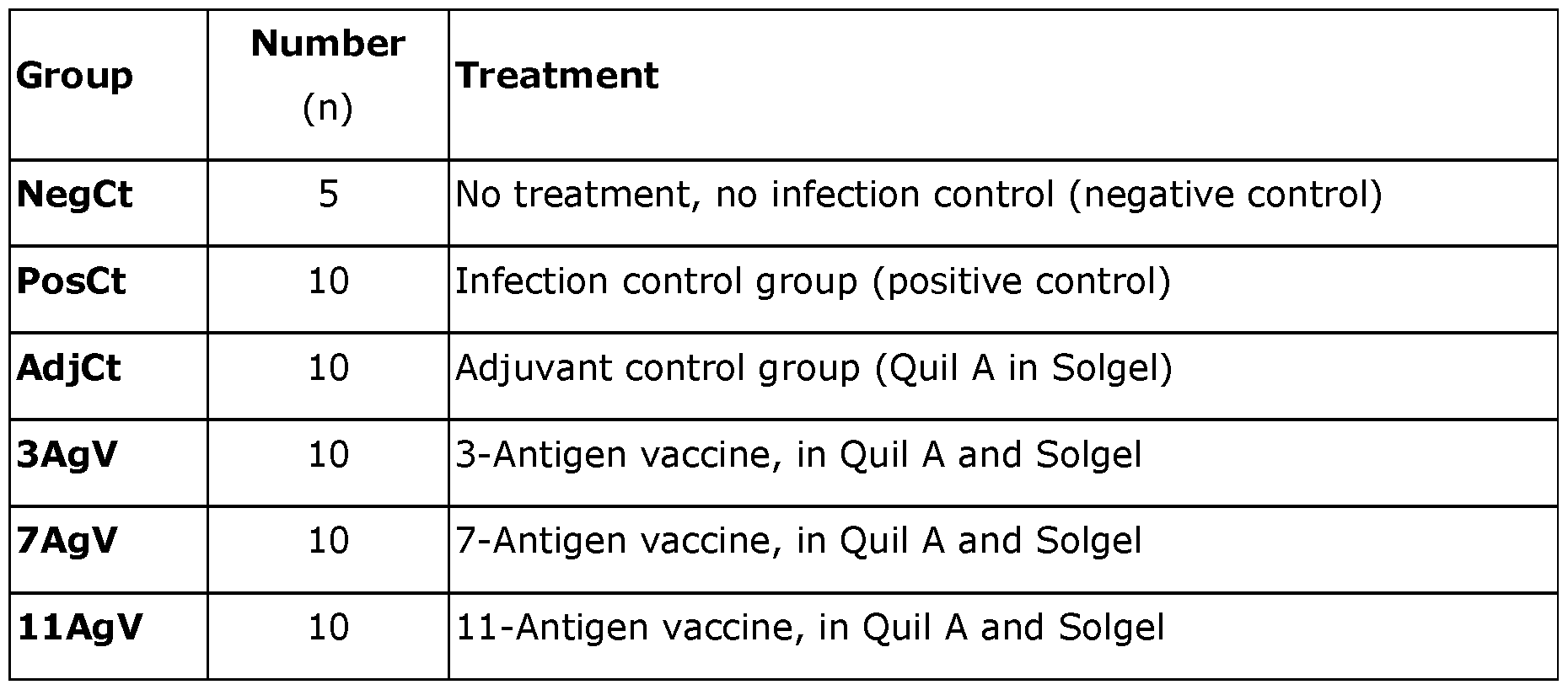
- the animals were divided into the following groups: Vaccine antigens and formulations
- Recombinant AK, EN and ODC were purified as described before (Han, Xu et al. 2012; Umair, Knight et al. 2013 a, b). Proteins were individually identified on gels stained with Coomassie Blue and size and solubility confirmed.
- HgV 11 antigen vaccine
- the vaccine comprised the three antigens used above, namely:
- Recombinant proteins were expressed in E. coli (see Appendix 2). 100 pg of each antigen was formulated in 1 mg/mL Quil A as adjuvant and Solgel carrier for slow release. Sol-gel is liquid at cool temperatures and forms a gel once inside the body, acting as a depot which helps in the slow release of the vaccine.
- Vaccination Trial 100 pg of each antigen was formulated in 1 mg/mL Quil A as adjuvant and Solgel carrier for slow release. Sol-gel is liquid at cool temperatures and forms a gel once inside the body, acting as a depot which helps in the slow release of the vaccine.
- NegCt consisted of three animals used as tracer calves to detect the level of pasture contamination.
- the other three groups consisted of 8 animals each, as set out in the table above.
- the vaccine groups consisted of either 3 or 11 antigens (100 pg of each antigen) with the adjuvant (Quil A formulated in Solgel, a slow-release). Sol-gel is liquid at cool temperatures and forms a gel once inside the body, acting as a depot which helps in the slow release of the vaccine.
- Each of the 3AgV and HAgV animals was vaccinated twice at four weeks intervals. Two weeks after the second vaccination, each calf (except NegCt) was orally dosed with 18000 L3 H. contortus, given as equal doses over four consecutive days.
- the faecal egg output of animals of the vaccinated groups from day 21 to day 38 post-infection was significantly lower than either of the positive control groups (figure 15).
- the HAgV group had significantly lower egg output at every sampling time point, whereas the 3AgV group was significantly reduced at most sampling time points.
- Animals of the negative control group did not get the parasite challenge, hence, had zero faecal egg output.
- Vaccination also reduced the decline in haematocrit levels compared to the controls (figure 17). All the treatment animals were healthier, and none developed anaemia.
- Serum samples collected weekly through the trial were tested against all 11 antigens, and serum antibody responses to vaccination were measured in individual samples.
- the serum samples were diluted at 1 : 1000, 1 :4000 and 1 : 16000, and significantly higher antibodies were measured in all the treatment animals at all three dilutions.
- Saliva samples from individual animals were collected before the trial and assayed for antibodies to the CarLA to access the level of pre-existing exposure to parasite infections. The animals were divided into control and treatment groups based on weight and the CarLA level. The CarLA levels in most of the animals were very low. Vaccination induced significantly higher serum antibody response in both treatment groups than the control group (PosCt) (figure 18).
- the present vaccine comprising the three core antigens (3AgV) with or without additional multiple recombinant antigens resulted in a prototype vaccine that showed efficacy in young calves under stringent field conditions.
- the vaccine comprised the following eleven antigens:
- MIF-2 macrophage migration inhibitory factor 2
- FSN-1 fatty acid synthetase
- Recombinant proteins were expressed in E. coli (see Appendix 2). 75 pg of each antigen was formulated in 1 mg/mL Quil A as adjuvant and Solgel carrier for slow release.
- the two groups consisted of 4 animals each, as set out in the table above.
- the vaccine groups consisted of 11 antigens (75 pg of each antigen) with the adjuvant (Quil A formulated in Solgel, a slow-release). Sol-gel is liquid at cool temperatures and forms a gel once inside the body, acting as a depot which helps in the slow release of the vaccine.
- Each of the HAgV animals was vaccinated twice at seven weeks intervals. As this was only an antibody measurement trial, animals were not artificially infected with parasites. All animals were weighed fortnightly and weekly bleed for antibody titres. Serum samples were stored at -20°C before antibody titres were measured by ELISA with the plates coated with all 11 antigens. All animals were killed ten weeks post-second vaccination and deeply buried as there was no tissue collection at slaughter.
- the anthelmintic vaccine of the present invention comprising three core recombinant antigens (AK, EN, ODC) (3AgV), and up to eight additional recombinant antigens (7AgV; HAgV; and 12AgV) has shown surprising efficacy in a number of young ruminant animals (sheep, calves and goats).
- This recombinant Haemonchus vaccine has repeatedly shown a significant reduction in egg output, in the vaccinated animals. Vaccinated animals had less blood loss compared with the control animals.
- the recombinant Haemonchus vaccine is effective against the young ruminants and significantly reduces the number of adult worms, especially females who are metabolically more active than males because of their size and the number of eggs they produce. Although the vaccine removes around 80% of the adult worms, the remaining parasites help the animal develop immunity against the parasite. Generally, an animal becomes immune to a parasite after repeated exposure to the infection. The recombinant Haemonchus vaccine helps the animal to increase immunity against the infection. Without wishing to be bound by theory, it is believed that a small number of remaining worms within an animal will assist in the process of acquired immunity. Additionally, small numbers of parasites can easily be managed through good feeding practices. This vaccine will play a significant role in reducing the worm numbers in the areas where anthelmintic resistance is common and problematic. Appendix 1.
- Nematode Parasite Haemonchus contortus
- RNAi screen of Caenorhabditis elegans aimed specifically at uncovering genes with acute lethal or developmental arrest phenotypes was performed.
- a C. elegans RNAi library was produced from fragmented C. elegans genomic DNA in the dual T7 vector pL4440. More than 16,000 individual clones were screened for RNAi phenotype by performing an RNAi feeding assay. Of the screened clones 111 produced an RNAi phenotype (hit).
- a hit was defined as death or developmental arrest of worms during development from 1 st stage (LI) to adult while feeding on E. coli that expressed a single RNAi clone.
- RNAi phenotypes were sequenced, identified by BLAST against C. elegans genome sequence and functionally annotated.
- the construction method used for the RNAi clone library resulted in a large number of chimeric clones where the insert consisted of two or more unrelated gene fragments due to insert-to-insert ligation. Where a chimeric insert was found C. elegans RNAi phenotypes from the Nematode Information Resource (Wormbase http://www.wormbase.org) were examined to determine those with a lethal or developmental arrest phenotypes.
- C. elegans RNAi screen (for example mif-2 and vha-12) that had lethal or developmental delay C. elegans RNAi phenotypes.
- H. contortus orthologue either as an EST or a fragment of genomic sequence.
- H. contortus gene fragments for RNAi were cloned using available sequence for primer design.
- H. contortus RNAi was carried out by in vitro transcription of the RNAi clone followed by electroporation of the dsRNA into freshly hatched H. contortus Lis. Following electroporation, the larvae were cultured to infective third stage larvae (L3) in association with E. coli. The RNAi phenotype was scored at day 6. Control cultures should reach mature L3 stage by day 6.
- elegans was carried out for some targets as a surrogate method by which a requirement for the target in adult worms could be assessed.
- a summary of C. elegans RNAi phenotypes, both reported in Wormbase and in some instances acute and H. contortus RNAi phenotypes are tabulated below (Table 5).
- Full length cDNA of selected genes were cloned, usually by 3' and 5' RACE, for expression in E. coli.
- Targets that met the criteria above were selected for full-length cDNA cloning, usually by 3' and 5' RACE, for expression in E. coli.
- Full length cDNAs were cloned into E. coli expression vectors.
- lac promoter vectors with N- terminal 6xHis tags Invitrogen
- alternative vectors which utilise more stringent promoters an arabinose promoter, and a lambda phage heat shock promoter
- His-tagged recombinant proteins were purified by Ni-affinity chromatography. Wherever possible, commercially available assays with known positive controls were used (this requirement was part of the target selection process). In some cases, no commercial kit or positive control was available.
- RNAi C.elegans acute RNAi H. contortus H. contortus
- HAT activity is essential for CBP_l-dependent transcription and differentiation in Caenorhabditis elegans. EMBO Reports 3, 50-55.
Landscapes
- Health & Medical Sciences (AREA)
- Life Sciences & Earth Sciences (AREA)
- Chemical & Material Sciences (AREA)
- Organic Chemistry (AREA)
- General Health & Medical Sciences (AREA)
- Genetics & Genomics (AREA)
- Zoology (AREA)
- Engineering & Computer Science (AREA)
- Medicinal Chemistry (AREA)
- Wood Science & Technology (AREA)
- Bioinformatics & Cheminformatics (AREA)
- Veterinary Medicine (AREA)
- Biochemistry (AREA)
- Microbiology (AREA)
- General Engineering & Computer Science (AREA)
- Animal Behavior & Ethology (AREA)
- Pharmacology & Pharmacy (AREA)
- Public Health (AREA)
- Tropical Medicine & Parasitology (AREA)
- Molecular Biology (AREA)
- Biotechnology (AREA)
- Biomedical Technology (AREA)
- Epidemiology (AREA)
- Mycology (AREA)
- Immunology (AREA)
- Nuclear Medicine, Radiotherapy & Molecular Imaging (AREA)
- Chemical Kinetics & Catalysis (AREA)
- General Chemical & Material Sciences (AREA)
- Biophysics (AREA)
- Toxicology (AREA)
- Gastroenterology & Hepatology (AREA)
- Proteomics, Peptides & Aminoacids (AREA)
- Physics & Mathematics (AREA)
- Plant Pathology (AREA)
- Medicines Containing Antibodies Or Antigens For Use As Internal Diagnostic Agents (AREA)
- Enzymes And Modification Thereof (AREA)
Abstract
Description




Claims
Priority Applications (6)
| Application Number | Priority Date | Filing Date | Title |
|---|---|---|---|
| EP22878045.8A EP4412709A4 (en) | 2021-10-04 | 2022-10-03 | NEMATODES VACCINE |
| CN202280071640.4A CN118265539A (en) | 2021-10-04 | 2022-10-03 | Nematode vaccine |
| AU2022361743A AU2022361743A1 (en) | 2021-10-04 | 2022-10-03 | Nematode vaccine |
| CA3232981A CA3232981A1 (en) | 2021-10-04 | 2022-10-03 | Nematode vaccine |
| US18/697,123 US20240398915A1 (en) | 2021-10-04 | 2022-10-03 | Nematode vaccine |
| MX2024004078A MX2024004078A (en) | 2021-10-04 | 2022-10-03 | VACCINE AGAINST NEMATODES. |
Applications Claiming Priority (2)
| Application Number | Priority Date | Filing Date | Title |
|---|---|---|---|
| NZ78091721 | 2021-10-04 | ||
| NZ780917 | 2021-10-04 |
Publications (1)
| Publication Number | Publication Date |
|---|---|
| WO2023057870A1 true WO2023057870A1 (en) | 2023-04-13 |
Family
ID=85803209
Family Applications (1)
| Application Number | Title | Priority Date | Filing Date |
|---|---|---|---|
| PCT/IB2022/059394 Ceased WO2023057870A1 (en) | 2021-10-04 | 2022-10-03 | Nematode vaccine |
Country Status (8)
| Country | Link |
|---|---|
| US (1) | US20240398915A1 (en) |
| EP (1) | EP4412709A4 (en) |
| CN (1) | CN118265539A (en) |
| AR (1) | AR127248A1 (en) |
| AU (1) | AU2022361743A1 (en) |
| CA (1) | CA3232981A1 (en) |
| MX (1) | MX2024004078A (en) |
| WO (1) | WO2023057870A1 (en) |
Cited By (1)
| Publication number | Priority date | Publication date | Assignee | Title |
|---|---|---|---|---|
| WO2024205421A1 (en) * | 2023-03-27 | 2024-10-03 | Agresearch Limited | Nematode vaccine |
Families Citing this family (1)
| Publication number | Priority date | Publication date | Assignee | Title |
|---|---|---|---|---|
| CN119193455B (en) * | 2024-11-27 | 2025-03-25 | 浙江大学 | An interfering engineering bacterium for blocking early infection of animal parasitic nematodes and its application |
Citations (2)
| Publication number | Priority date | Publication date | Assignee | Title |
|---|---|---|---|---|
| CN101818153A (en) * | 2009-02-26 | 2010-09-01 | 中国农业科学院植物保护研究所 | Anti-insect blood cell immunity protein and gene sequence |
| US20180355002A1 (en) * | 2014-02-11 | 2018-12-13 | The University Of Liverpool | Filarial nematode vaccines, polypeptides, and nucleic acids |
Family Cites Families (1)
| Publication number | Priority date | Publication date | Assignee | Title |
|---|---|---|---|---|
| BRPI0922132A2 (en) * | 2008-12-03 | 2018-10-23 | Protea Vaccine Tech Ltd | glutamyl trna synthetase fragments (gts). |
-
2022
- 2022-10-03 EP EP22878045.8A patent/EP4412709A4/en active Pending
- 2022-10-03 CA CA3232981A patent/CA3232981A1/en active Pending
- 2022-10-03 MX MX2024004078A patent/MX2024004078A/en unknown
- 2022-10-03 US US18/697,123 patent/US20240398915A1/en active Pending
- 2022-10-03 AU AU2022361743A patent/AU2022361743A1/en active Pending
- 2022-10-03 WO PCT/IB2022/059394 patent/WO2023057870A1/en not_active Ceased
- 2022-10-03 CN CN202280071640.4A patent/CN118265539A/en active Pending
- 2022-10-04 AR ARP220102683A patent/AR127248A1/en unknown
Patent Citations (2)
| Publication number | Priority date | Publication date | Assignee | Title |
|---|---|---|---|---|
| CN101818153A (en) * | 2009-02-26 | 2010-09-01 | 中国农业科学院植物保护研究所 | Anti-insect blood cell immunity protein and gene sequence |
| US20180355002A1 (en) * | 2014-02-11 | 2018-12-13 | The University Of Liverpool | Filarial nematode vaccines, polypeptides, and nucleic acids |
Non-Patent Citations (4)
| Title |
|---|
| ANJU VARGHESE , OPINDER K RAINA , DINESH CHANDRA , BIJAY R MIRDHA , NARESH H KELAWALA , JAYESH B SOLANKI , NIRANJAN KUMAR , REGHU : "Sero-detection of Toxocara cams infection in human with T. cams recombinant arginine kinase, cathepsin L-1 and TES-26 antigens", ACTA PARASITOLOGICA, vol. 62, no. 4, 1 October 2017 (2017-10-01), PL , pages 775 - 778, XP009545744, ISSN: 1230-2821, DOI: 10.1515/ap-2017-0093 * |
| HASAN MUHAMMAD WAQQAS, HASEEB MUHAMMAD, EHSAN MUHAMMAD, GADAHI JAVAID ALI, WANG QIANGQIANG, MEMON MUHAMMAD ALI, ALEEM MUHAMMAD TAH: "The immunogenic maturation of goat monocyte-derived dendritic cells and upregulation of toll-like receptors by five antigens of Haemonchus contortus in-vitro", RESEARCH IN VETERINARY SCIENCE, BRITISH VETERINARY ASSOCIATION, LONDON., GB, vol. 136, 1 May 2021 (2021-05-01), GB , pages 247 - 258, XP093060901, ISSN: 0034-5288, DOI: 10.1016/j.rvsc.2021.03.007 * |
| See also references of EP4412709A4 * |
| T. NAKADA ; I. NAGANO ; Z. WU ; Y. TAKAHASHI: "Molecular cloning and functional expression of enolase from Trichinella spiralis", PARASITOLOGY RESEARCH ; FOUNDED AS ZEITSCHRIFT FÜR PARASITENKUNDE, SPRINGER, BERLIN, DE, vol. 96, no. 6, 1 August 2005 (2005-08-01), Berlin, DE , pages 354 - 360, XP019345641, ISSN: 1432-1955, DOI: 10.1007/s00436-005-1365-z * |
Cited By (1)
| Publication number | Priority date | Publication date | Assignee | Title |
|---|---|---|---|---|
| WO2024205421A1 (en) * | 2023-03-27 | 2024-10-03 | Agresearch Limited | Nematode vaccine |
Also Published As
| Publication number | Publication date |
|---|---|
| AR127248A1 (en) | 2024-01-03 |
| AU2022361743A1 (en) | 2024-05-02 |
| US20240398915A1 (en) | 2024-12-05 |
| MX2024004078A (en) | 2024-04-18 |
| CA3232981A1 (en) | 2023-04-13 |
| EP4412709A1 (en) | 2024-08-14 |
| EP4412709A4 (en) | 2025-08-13 |
| CN118265539A (en) | 2024-06-28 |
Similar Documents
| Publication | Publication Date | Title |
|---|---|---|
| Spithill et al. | 11 Development of Vaccines Against Fasciola hepatica | |
| US8257713B2 (en) | Vaccine | |
| US20240398915A1 (en) | Nematode vaccine | |
| Subramanian et al. | Cloning, expression and evaluation of the efficacy of a recombinant Eimeria tenella sporozoite antigen in birds | |
| Spithill et al. | Vaccines for Fasciola: new thinking for an old problem. | |
| US8501927B2 (en) | Vaccine produced using optimized immobilization antigen cDNA of cryptocaryon irritans and producing method and use thereof | |
| Yan et al. | DNA vaccine encoding Haemonchus contortus actin induces partial protection in goats | |
| Xie et al. | Potential of recombinant inorganic pyrophosphatase antigen as a new vaccine candidate against Baylisascaris schroederi in mice | |
| Senevirathne et al. | Prospective lipid-A altered live attenuated Salmonella Gallinarum confers protectivity, DIVA capability, safety and low endotoxicity against fowl typhoid | |
| JP2015519305A (en) | Histophilus somni outer membrane protein and method | |
| Buffoni et al. | Immunization with the recombinant myosin regulatory light chain (FhrMRLC) in Adjuplex® adjuvant elicits a Th1-biased immune response and a reduction of parasite burden in Fasciola hepatica infected rats | |
| EP2729158B1 (en) | Vaccines for chlamydia | |
| Ziomko et al. | Prevention of broiler chick coccidiosis using the inactivated subunit vaccine CoxAbic® | |
| Wang et al. | Cloning, expression and evaluation of the efficacy of a recombinant Baylisascaris schroederi Bs-Ag3 antigen in mice | |
| Zhao et al. | Molecular characterization and protective efficacy of a new conserved hypothetical protein of Eimeria tenella | |
| US20090028892A1 (en) | Ostertagia Vaccine | |
| Yan et al. | Construction of Toxoplasma gondii SRS29C nucleic acid vaccine and comparative immunoprotective study of an SRS29C and SAG1 combination | |
| EP4687961A1 (en) | Nematode vaccine | |
| US20230190909A1 (en) | Infectious bronchitis (ib) virus variants and related compositions, uses and method | |
| US9078841B2 (en) | Parasite vaccine | |
| Watanabe et al. | Vaccine development against Cryptocaryoniasis: a review | |
| KR101085667B1 (en) | Method for producing yolk powder containing immune antibody against duck disease and egg yolk powder accordingly | |
| US8821886B2 (en) | Recombinant antigen | |
| Pernthaner et al. | Parasite Vaccines | |
| US20150040251A1 (en) | Sheep nematode vaccine |
Legal Events
| Date | Code | Title | Description |
|---|---|---|---|
| 121 | Ep: the epo has been informed by wipo that ep was designated in this application |
Ref document number: 22878045 Country of ref document: EP Kind code of ref document: A1 |
|
| WWE | Wipo information: entry into national phase |
Ref document number: 3232981 Country of ref document: CA |
|
| WWE | Wipo information: entry into national phase |
Ref document number: 809822 Country of ref document: NZ Ref document number: AU2022361743 Country of ref document: AU |
|
| REG | Reference to national code |
Ref country code: BR Ref legal event code: B01A Ref document number: 112024006585 Country of ref document: BR |
|
| WWE | Wipo information: entry into national phase |
Ref document number: 202280071640.4 Country of ref document: CN |
|
| WWE | Wipo information: entry into national phase |
Ref document number: 202417033481 Country of ref document: IN |
|
| ENP | Entry into the national phase |
Ref document number: 2022361743 Country of ref document: AU Date of ref document: 20221003 Kind code of ref document: A |
|
| WWE | Wipo information: entry into national phase |
Ref document number: 2022878045 Country of ref document: EP |
|
| NENP | Non-entry into the national phase |
Ref country code: DE |
|
| ENP | Entry into the national phase |
Ref document number: 2022878045 Country of ref document: EP Effective date: 20240506 |
|
| REG | Reference to national code |
Ref country code: BR Ref legal event code: B01E Ref document number: 112024006585 Country of ref document: BR Free format text: FAVOR EFETUAR, EM ATE 60 (SESSENTA) DIAS, O PAGAMENTO DE GRU CODIGO DE SERVICO 260 PARA A REGULARIZACAO DO PEDIDO, CONFORME ART 2O 1O DA RESOLUCAO 189/2017 E NOTA DE ESCLARECIMENTO PUBLICADA NA RPI 2421 DE 30/05/2017, UMA VEZ QUE A PETICAO NO 870240046907 DE 03/06/2024 APRESENTA DOCUMENTOS REFERENTES A 02 SERVICOS DIVERSOS (COMPLEMENTO DO PEDIDO E APRESENTACAO DO INSTRUMENTO DE PROCURACAO) TENDO SIDO PAGA SOMENTE 01 RETRIBUICAO. DEVERA SER PAGA MAIS 01 (UMA) GRU CODIGO DE SERVICO 260 E A GRU CODIGO DE SERVICO 207 REFERENTE A RESPOSTA DESTA EXIGENCIA. |
|
| REG | Reference to national code |
Ref country code: BR Ref legal event code: B01E Ref document number: 112024006585 Country of ref document: BR Free format text: APRESENTAR, EM ATE 60 (SESSENTA) DIAS, NOVA FOLHA DO RESUMO OU PAGINA 1 DO RELATORIO DESCRITIVO ADAPTADA AO ART. 22 INCISO I DA INSTRUCAO NORMATIVA 31/2013 UMA VEZ QUE O TITULO DO RESUMO APRESENTADO NA PETICAO NO 870240046907 DE 03/06/2024 E DIVERGENTE DO TITULO DO RELATORIO DESCRITIVO ENVIADO NA MESMA PETICAO. |
|
| ENP | Entry into the national phase |
Ref document number: 112024006585 Country of ref document: BR Kind code of ref document: A2 Effective date: 20240404 |