WO2023074347A1 - タオル生地及びその製造方法 - Google Patents
タオル生地及びその製造方法 Download PDFInfo
- Publication number
- WO2023074347A1 WO2023074347A1 PCT/JP2022/037844 JP2022037844W WO2023074347A1 WO 2023074347 A1 WO2023074347 A1 WO 2023074347A1 JP 2022037844 W JP2022037844 W JP 2022037844W WO 2023074347 A1 WO2023074347 A1 WO 2023074347A1
- Authority
- WO
- WIPO (PCT)
- Prior art keywords
- yarn
- warp
- towel
- fiber
- towel fabric
- Prior art date
- Legal status (The legal status is an assumption and is not a legal conclusion. Google has not performed a legal analysis and makes no representation as to the accuracy of the status listed.)
- Ceased
Links
Images





Classifications
-
- D—TEXTILES; PAPER
- D03—WEAVING
- D03D—WOVEN FABRICS; METHODS OF WEAVING; LOOMS
- D03D1/00—Woven fabrics designed to make specified articles
-
- A—HUMAN NECESSITIES
- A47—FURNITURE; DOMESTIC ARTICLES OR APPLIANCES; COFFEE MILLS; SPICE MILLS; SUCTION CLEANERS IN GENERAL
- A47K—SANITARY EQUIPMENT; ACCESSORIES THEREFOR, e.g. TOILET ACCESSORIES
- A47K10/00—Body-drying implements; Toilet paper; Holders therefor
- A47K10/02—Towels
-
- D—TEXTILES; PAPER
- D03—WEAVING
- D03D—WOVEN FABRICS; METHODS OF WEAVING; LOOMS
- D03D1/00—Woven fabrics designed to make specified articles
- D03D1/0017—Woven household fabrics
-
- D—TEXTILES; PAPER
- D03—WEAVING
- D03D—WOVEN FABRICS; METHODS OF WEAVING; LOOMS
- D03D13/00—Woven fabrics characterised by the special disposition of the warp or weft threads, e.g. with curved weft threads, with discontinuous warp threads, with diagonal warp or weft
- D03D13/008—Woven fabrics characterised by the special disposition of the warp or weft threads, e.g. with curved weft threads, with discontinuous warp threads, with diagonal warp or weft characterised by weave density or surface weight
-
- D—TEXTILES; PAPER
- D03—WEAVING
- D03D—WOVEN FABRICS; METHODS OF WEAVING; LOOMS
- D03D15/00—Woven fabrics characterised by the material, structure or properties of the fibres, filaments, yarns, threads or other warp or weft elements used
- D03D15/20—Woven fabrics characterised by the material, structure or properties of the fibres, filaments, yarns, threads or other warp or weft elements used characterised by the material of the fibres or filaments constituting the yarns or threads
- D03D15/208—Woven fabrics characterised by the material, structure or properties of the fibres, filaments, yarns, threads or other warp or weft elements used characterised by the material of the fibres or filaments constituting the yarns or threads cellulose-based
- D03D15/217—Woven fabrics characterised by the material, structure or properties of the fibres, filaments, yarns, threads or other warp or weft elements used characterised by the material of the fibres or filaments constituting the yarns or threads cellulose-based natural from plants, e.g. cotton
-
- D—TEXTILES; PAPER
- D03—WEAVING
- D03D—WOVEN FABRICS; METHODS OF WEAVING; LOOMS
- D03D15/00—Woven fabrics characterised by the material, structure or properties of the fibres, filaments, yarns, threads or other warp or weft elements used
- D03D15/20—Woven fabrics characterised by the material, structure or properties of the fibres, filaments, yarns, threads or other warp or weft elements used characterised by the material of the fibres or filaments constituting the yarns or threads
- D03D15/283—Woven fabrics characterised by the material, structure or properties of the fibres, filaments, yarns, threads or other warp or weft elements used characterised by the material of the fibres or filaments constituting the yarns or threads synthetic polymer-based, e.g. polyamide or polyester fibres
-
- D—TEXTILES; PAPER
- D03—WEAVING
- D03D—WOVEN FABRICS; METHODS OF WEAVING; LOOMS
- D03D15/00—Woven fabrics characterised by the material, structure or properties of the fibres, filaments, yarns, threads or other warp or weft elements used
- D03D15/40—Woven fabrics characterised by the material, structure or properties of the fibres, filaments, yarns, threads or other warp or weft elements used characterised by the structure of the yarns or threads
- D03D15/44—Woven fabrics characterised by the material, structure or properties of the fibres, filaments, yarns, threads or other warp or weft elements used characterised by the structure of the yarns or threads with specific cross-section or surface shape
-
- D—TEXTILES; PAPER
- D03—WEAVING
- D03D—WOVEN FABRICS; METHODS OF WEAVING; LOOMS
- D03D15/00—Woven fabrics characterised by the material, structure or properties of the fibres, filaments, yarns, threads or other warp or weft elements used
- D03D15/40—Woven fabrics characterised by the material, structure or properties of the fibres, filaments, yarns, threads or other warp or weft elements used characterised by the structure of the yarns or threads
- D03D15/47—Woven fabrics characterised by the material, structure or properties of the fibres, filaments, yarns, threads or other warp or weft elements used characterised by the structure of the yarns or threads multicomponent, e.g. blended yarns or threads
-
- D—TEXTILES; PAPER
- D03—WEAVING
- D03D—WOVEN FABRICS; METHODS OF WEAVING; LOOMS
- D03D27/00—Woven pile fabrics
- D03D27/02—Woven pile fabrics wherein the pile is formed by warp or weft
- D03D27/06—Warp pile fabrics
-
- D—TEXTILES; PAPER
- D03—WEAVING
- D03D—WOVEN FABRICS; METHODS OF WEAVING; LOOMS
- D03D27/00—Woven pile fabrics
- D03D27/02—Woven pile fabrics wherein the pile is formed by warp or weft
- D03D27/06—Warp pile fabrics
- D03D27/08—Terry fabrics
-
- D—TEXTILES; PAPER
- D03—WEAVING
- D03D—WOVEN FABRICS; METHODS OF WEAVING; LOOMS
- D03D39/00—Pile-fabric looms
- D03D39/22—Terry looms
-
- D—TEXTILES; PAPER
- D10—INDEXING SCHEME ASSOCIATED WITH SUBLASSES OF SECTION D, RELATING TO TEXTILES
- D10B—INDEXING SCHEME ASSOCIATED WITH SUBLASSES OF SECTION D, RELATING TO TEXTILES
- D10B2201/00—Cellulose-based fibres, e.g. vegetable fibres
- D10B2201/01—Natural vegetable fibres
- D10B2201/02—Cotton
-
- D—TEXTILES; PAPER
- D10—INDEXING SCHEME ASSOCIATED WITH SUBLASSES OF SECTION D, RELATING TO TEXTILES
- D10B—INDEXING SCHEME ASSOCIATED WITH SUBLASSES OF SECTION D, RELATING TO TEXTILES
- D10B2331/00—Fibres made from polymers obtained otherwise than by reactions only involving carbon-to-carbon unsaturated bonds, e.g. polycondensation products
- D10B2331/04—Fibres made from polymers obtained otherwise than by reactions only involving carbon-to-carbon unsaturated bonds, e.g. polycondensation products polyesters, e.g. polyethylene terephthalate [PET]
-
- D—TEXTILES; PAPER
- D10—INDEXING SCHEME ASSOCIATED WITH SUBLASSES OF SECTION D, RELATING TO TEXTILES
- D10B—INDEXING SCHEME ASSOCIATED WITH SUBLASSES OF SECTION D, RELATING TO TEXTILES
- D10B2503/00—Domestic or personal
Definitions
- the present invention relates to towel cloth and a method for manufacturing the same.
- towel fabrics are basically pile fabrics using warp pile yarn, warp ground yarn, and weft ground yarn.
- the warp yarn and warp pile yarn are warped and wound around a beam (rough winding beam). Glued.
- the warp yarns and warp pile yarns are passed through a heddle and a reed, and the weft yarns are driven into the woven fabric.
- the warp yarns and warp pile yarns are easily damaged by friction when passing through the heddles and reeds, resulting in increased fluffing and falling fibers.
- Patent Documents 1 and 2 propose sizing warp pile yarns and warp ground yarns.
- Patent document 3 proposes a binding spinning device.
- the sizing thread of the prior art needs to remove the sizing after making the fabric, and requires a desizing agent (amylase), a surfactant, other chemical agents, water, etc., resulting in high cost. Even a small amount of paste often remains even after washing, and there were quality problems due to deterioration of texture and water absorption.
- the present invention provides a towel fabric that does not require sizing during weaving, and a method for producing the same.
- the towel fabric of the present invention is a towel fabric composed of warp pile yarn, warp ground yarn, and weft ground yarn, wherein the warp pile yarn is a core-sheath composite spun yarn, and the core component fiber is a polyester multifilament.
- the thread and the sheath component fiber are cotton fibers, and a part of the surface layer fibers of the sheath component fiber are wound in one direction to bundle the whole.
- the towel cloth manufacturing method of the present invention is the towel cloth manufacturing method described above, wherein warp pile yarns, warp ground yarns, and weft ground yarns are all starchless, and the towel cloth is woven using a loom. characterized by
- the warp pile yarn is a core-sheath composite spun yarn
- the core component fiber is polyester multifilament yarn
- the sheath component fiber is cotton fiber
- the surface layer fiber of a part of the sheath component fiber is uniform.
- FIG. 1A is a schematic side view of warp pile yarn in one embodiment of the present invention
- FIG. 1B is a schematic cross-sectional view of the same
- FIG. 2 is a schematic illustration of the towel cloth of the same.
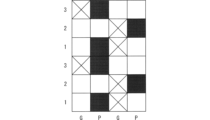
- FIG. 3 is a weave structure diagram of the same towel cloth.
- FIG. 4A is an explanatory diagram showing a manufacturing process of a conventional white towel
- FIG. 4B is an explanatory diagram showing a manufacturing process of a white towel according to one embodiment of the present invention.
- FIG. 5A is a conventional towel manufacturing process for a piece-dyed product
- FIG. 5B is an explanatory view showing the same process according to an embodiment of the present invention.
- FIG. 6A is a conventional towel manufacturing process of yarn-dyed yarn
- FIG. 6A is a conventional towel manufacturing process of yarn-dyed yarn
- FIG. 6B is an explanatory diagram showing the same process according to one embodiment of the present invention.
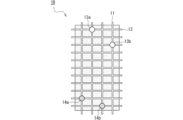
- FIG. 7 is a schematic plan view showing the measurement points of the bulkiness test and compression test of the towel cloth.
- FIG. 8 is a graph for obtaining WC values for compression tests used in the examples of the present invention.
- the towel fabric of one embodiment of the present invention is composed of warp pile yarns, warp ground yarns, and weft ground yarns.
- the warp yarn and the weft yarn form the ground structure, and the warp pile yarn forms the pile (loop).
- Warp pile yarn is a core-sheath composite spun yarn
- the core component fiber is polyester multifilament yarn
- the sheath component fiber is cotton fiber
- a part of the surface layer fiber of the sheath component fiber is wound in one direction to bundle the whole.
- the warp pile yarn is preferably a bundle spun yarn.
- the bundled spun yarn is a uniform yarn with a small number of fluffs, has a strong yarn structure, is strong against ironing, and can be used as a towel cloth without starch.
- the yarn speed is 300 to 450 m/min, and the productivity is about 10 to 20 times higher than that of the ring spinning machine.
- This spinning machine is, for example, manufactured by Murata Machinery Co., Ltd. and sold under the trade name "MURATA VORTEX SPINNER".
- the blend ratio of cotton fiber in the warp pile yarn is preferably 70 to 90% by mass, and the blend ratio of polyester multifilament yarn is preferably 30 to 10% by mass. More preferably, 75 to 90% by mass of cotton fiber and 25 to 10% by mass of polyester multifilament yarn. This makes it possible to balance the water absorbency and hygroscopicity of the cotton fiber with the strength of the polyester multifilament yarn.
- the polyester multifilament yarn is preferably raw silk (raw yarn).
- the raw silk is straight and easily enters inside the long and short composite spun yarn.
- the warp yarns are preferably two-ply yarns made of 100% by mass of cotton fibers. If it is a two-ply yarn, fluffing is suppressed, and a loop pile towel fabric can be woven without starch.
- the warp yarn is preferably a two-ply yarn obtained by twisting two single yarns of ring-spun yarn or binding-spun yarn.
- the weft yarn is preferably a single yarn of 100% by mass of cotton fiber.
- the weft yarns are preferably single yarns of ring-spun yarns or tie-spun yarns.
- the blending ratio of cotton fiber is 75 to 95% by mass and the blending ratio of polyester multifilament yarn is 25 to 5% by mass. This makes it possible to balance the water absorbency and hygroscopicity of the cotton fiber with the strength of the polyester multifilament yarn.
- the weight per unit area (basis weight) of the towel cloth of one embodiment of the present invention is preferably in the range of 100 to 600 g/m 2 . If it is the said range, it will be easy to use as towel cloth.
- the warp pile threads, the warp ground threads, and the weft ground threads are all starchless, and the towel fabric is woven using a loom.
- the looms include air jet looms, water jet looms, shuttle looms, rapier looms, etc. Air jet looms are preferred because of their highest efficiency.
- the air loom can weave at a loom speed of 300 to 500 r.p.m.
- the pile yarn of one embodiment of the present invention preferably has a cotton count (S, single yarn) in the range of 10 to 50S (118 to 591decitex). Within this range, the towel fabric has a good texture.
- FIG. 1A is a schematic side view of warp pile yarn 1 in one embodiment of the present invention
- FIG. 1B is a schematic cross-sectional view of the same.
- the warp pile yarn 1 is a bundled spun yarn
- the core component fiber 2 is polyester multifilament yarn
- the sheath component fiber 5 is cotton fiber.
- the sheath component fiber 5 includes an inner layer of untwisted fibers 3 and a surface layer of wound fibers 4 .
- the wound fibers 4 of the surface layer are in a real-twisted form, twisted in one direction, and bundle the whole.
- one direction refers to S-twisted fibers or Z-twisted fibers, and does not mean that the twist angles are the same.
- S-twist wound fibers or Z-twist wound fibers are determined by the direction of the pneumatic swirl flow of the spinner of the tie spinner.
- the untwisted fibers 3 of the inner layer and the wound fibers 4 of the surface layer may be separate fibers, or one fiber may be replaced by migration.
- This warp pile yarn (bundle spun yarn) 1 has a three-layer structure of a core component fiber 2, non-twisted inner layer fibers 3 of the sheath component fibers 5, and winding fibers 4 of the surface layer. Due to this yarn structure, the yarn strength is high and it is difficult to remove cotton. In addition, since cotton fibers are arranged on the surface of the warp pile yarn (bundle spun yarn) 1, the water absorption and texture are good, and the core component fiber is a polyester multifilament yarn, so that the drying speed is fast.
- FIG. 2 is a schematic illustration of the towel cloth 6 of one embodiment of the present invention.
- the towel fabric 6 is composed of warp pile yarns 7, warp ground yarns 8, and weft ground yarns 9, and the warp pile yarns 7 are fixed to a ground structure composed of the warp ground yarns 8 and the weft ground yarns 9. While forming a loop pile.
- the obtained towel cloth 6 is cut into a predetermined size and the edges are treated to form a towel.
- FIG. 3 is a weave texture diagram of the towel fabric of one embodiment of the present invention.
- This fabric weave is a three weft towel weave (three-pick terry motion weave).
- the warp pile yarn crosses once every three weft ground yarns.
- the warp yarn G and the warp pile yarn P are arranged alternately. Numbers 1 to 3 of the weft indicate the order.
- black and x indicate floating threads, and white indicate sinking threads.
- FIG. 4A is an explanatory diagram showing the manufacturing process of a conventional white towel
- FIG. 4B is an explanatory diagram showing the manufacturing process of a white towel according to one embodiment of the present invention.
- the sizing process and desizing process are unnecessary.
- FIG. 5A is a conventional towel manufacturing process for a piece-dyed product
- FIG. 5B is an explanatory view showing the same process according to an embodiment of the present invention.
- the sizing process and desizing process are unnecessary.
- FIG. 6A is a conventional towel manufacturing process of yarn-dyed yarn
- FIG. 6B is an explanatory diagram showing the same process according to one embodiment of the present invention.
- the gluing process and the desizing process are unnecessary.
- Larose index ⁇ Surface water absorption method (Larose index)> It was measured according to the JIS L 1907 method.
- the Larose index (water absorption evaluation index) was calculated according to the following formula.
- Larose index (water absorption evaluation index) 2545 x water absorption rate (ml/s) + water absorption amount (ml) + 79 ⁇ Compression test>
- KES Kerbata Evaluation System
- the measurement data includes WC (compression work), LC (compression straightness), and RC (compression recovery).
- WC compression work
- LC compression straightness
- RC compression recovery
- B is the start point
- A is the maximum point of pushing
- C is the maximum distance of pushing
- p is the load-distance curve at the time of pushing (actual data)
- q is the load-distance curve at the time of recovery (actual data).
- S1 is the load-distance curve p at the time of pushing and the area between BC and AC
- S2 is the load-distance curve q at the time of recovery and the area between BC and AC.
- WC compression work
- WC is the total area of the area S1 at the time of pushing and the area S2 at the time of recovery, and is obtained by the following formula.
- WC S1+S2 ⁇ Bulkiness test> JIS L 1096.8.5 (textile, knitting test method) and ISO 10012-1
- a thickness measuring instrument manufactured by Intec, model TH-2
- a presser foot with a diameter of 50.5 mm, 0 A load of 0.7 KPa was applied, and the values were measured after 10 seconds.
- Example 1 Fibers used (1) Warp pile yarn Polyethylene terephthalate (PET) multifilament raw yarn (total fineness 56 decitex, 48 yarns) was used as the core component fiber. 100% combed cotton with a sliver thickness of 320 Gr/6 yd was used as the sheath component fiber.
- PET Polyethylene terephthalate
- 100% combed cotton with a sliver thickness of 320 Gr/6 yd was used as the sheath component fiber.
- a spinning machine manufactured by Murata Machinery Co., Ltd. under the trade name of "MURATA VORTEX SPINNER” is used to supply PET multifilament raw silk as the core component to the upstream side of the front roller of the draft device, and combed as the sheath component.
- a long and short composite spun yarn with a cotton count of 16S was obtained at a spinning speed of 400 m/min.
- This long and short composite spun yarn had a single filament tenacity of 546.3 cN, an elongation of 7.55%, a cotton blend ratio of 85% by mass, and a polyester blend ratio of 15% by mass.
- Weft Yarn A ring-spun yarn of 100% by mass of cotton fiber, cotton count 20S single yarn (295decitex) was used (20S/1). 2.
- the warp pile yarn, the warp ground yarn and the weft ground yarn were made without sizing (no sizing), and the loop pile fabric shown in Figs. .
- the supply ratio of the warp pile yarn was set to 7.5 times that of the warp base yarn.
- a double-faced pile fabric with a warp density of 60/2 inch, a weft density of 42/inch and a pile length of 1.06 cm was produced.
- the pile fabric was subjected to heat treatment in a tenter for finishing.
- the mass per unit area (basis weight) of this dough was 417 g/m 2 .
- Example 2 The same procedure as in Example 1 was repeated except that the spinning speed was 440 m/min, the single yarn strength of the long and short composite spun yarn was 534.3 cN, and the elongation was 4.35%.
- Example 1 A towel was woven and desized in the same manner as in Example 1, except that 100% cotton ring-spun yarn and 16S cotton count single yarn were used as the warp pile yarn, and sizing was performed. Table 1 shows the above results.
- Examples 1 and 2 could be woven without sizing all the constituent threads, and the size removal process was not required after making the fabric, and the cost could be reduced accordingly.
- Examples 1 and 2 were superior to Comparative Example 1 in terms of fluff removal property, drying property, pile retention, water absorbency, KES compression, and bulkiness. Since warp pile yarn has a strong yarn structure, it was also confirmed that the towel is difficult to remove cotton. Furthermore, sensory evaluation revealed that the fabric had the original water absorbency of cotton fibers and had a soft and fluffy texture.
- Examples 1 and 2 white towels were produced by the steps shown in FIG. 4B.
- Electricity, natural gas cost: about 17%
- water consumption about 9%
- the towel fabric of the present invention is also suitable for fabrics such as bath towels, face towels, towel handkerchiefs, sports towels, bathrobes, towel blankets, clothing, socks, rugs, and bedding.
Landscapes
- Engineering & Computer Science (AREA)
- Textile Engineering (AREA)
- Life Sciences & Earth Sciences (AREA)
- Botany (AREA)
- Health & Medical Sciences (AREA)
- Public Health (AREA)
- Woven Fabrics (AREA)
- Yarns And Mechanical Finishing Of Yarns Or Ropes (AREA)
- Looms (AREA)
Abstract
Description
図5Aは後染め品の従来のタオル製造工程、図5Bは本発明の一実施形態の同工程を示す説明図である。本発明の一実施形態のタオル製造工程においては、サイジング工程及び糊抜き工程が不要となる。 図6Aは先染め糸の従来のタオル製造工程、図6Bは本発明の一実施形態の同工程を示す説明図である。本発明の一実施形態のタオル製造工程においては、糊付け工程及び糊抜き工程が不要となる。
本発明の実施例、比較例における測定方法は下記のとおりであり、記載していない測定方法は業界規格にしたがった。
<脱毛率>
脱毛率はJIS L 0217 103法に準じて測定した。
<乾燥試験>
・条件:試験実施は標準状態環境下、温度20±4℃、相対湿度65±4%RHで実施した。
・浸漬する水は、常温20℃±15℃(5~35℃)を使用した。
・温度・湿度コントロールのために、エアコンと除加湿機使用を適宜判断して使用した。・干す場所は一定とした。
・寸法、重量は実際に計測値した。
・時間はストップウォッチを使用して計った。
・操作
1.検体1枚ずつを常温の水を入れたバケツに、タオル全体が完全に水に浸っていることを確認してから浸漬2分間とした。
2.浸漬2分間後、30秒間持ち上げて自然水切りをした。
3.その後、脱水4分間とした。
4.脱水後、試験実施スタートまでの間はチャック付きの袋に検体毎入れて保管した。5.所定時間毎に検体の重量を測定した。
6.重量測定と同時刻の「温度、相対湿度」を記録した。
7.水分残留率が10%を切るまで、重量測定を所定時間毎に記録した。
<パイル保持性>
JIS L 1075 B法に準じて測定した。
<表面吸水法(ラローズ指数)>
JIS L 1907法に準じて測定した。ラローズ指数(吸水評価指数)は、下記の式に従って算出した。
ラローズ指数(吸水評価指数)=2545×吸水速度(ml/s)+吸水量(ml)+79
<圧縮試験>
Kato Tech社の圧縮試験機KES(Kawabata Evaluation System)-G5を使用し、20cm2の圧縮子、上限荷重は50gf/cm2、圧縮スピードは0.5mm/secで測定した。測定箇所は図7に示すように、タオル生地10の経糸11と緯糸12が交差しない位置とし、表面測定箇所13a,13bと裏面測定箇所14a,14bを測定した。
測定データには、WC(圧縮仕事量)、LC(圧縮直進性)、RC(圧縮回復性)がある。このうちWC値はタオルのやわらかさを示すことが官能試験で判明している。WC値は、図8のグラフにあるS1の面積である。WC値が大きいほど圧縮されやすい。すなわち、やわらかさがあることになる。図8において、Bはスタート時点、Aは押し込みの最大点、Cは押し込みの最大距離、pは押し込み時の荷重-距離曲線(実測データ)、qは回復時の荷重-距離曲線(実測データ)、S1は押し込み時の荷重-距離曲線pとB-CとA-C間の面積、S2は回復時の荷重-距離曲線qとB-CとA-C間の面積である。WC(圧縮仕事量)は押し込み時の面積S1と回復時の面積S2の合計面積であり、次の式によって求める。
WC=S1+S2
<かさ高性試験>
JIS L 1096.8.5(織物、編み物試験方法)及びISO 10012-1に規定されている厚み測定器(インテック社製、型式TH-2)を使用し、直径50.5mmのプレッサーフット、0.7KPaの荷重をかけ、10秒後の数値を測定した。測定箇所は図7に示すように、タオル生地10の経糸11と緯糸12が交差しない位置とし、表面測定箇所13a,13bと裏面測定箇所14a,14bを測定した。
また次の式で算出した。
Bu=(t/Sm)×1000
但し、Bu:かさ高性(cm3/g)
Sm:標準状態における単位面積当たりの質量(g/m2)
t:厚さ(mm)
1.使用繊維
(1)経パイル糸
芯成分繊維として、ポリエチレンテレフタレート(PET)のマルチフィラメント生糸(トータル繊度56decitex,48本)を使用した。
鞘成分繊維としてコーマ綿100%、スライバー太さ320Gr/6ydを使用した。
以上の繊維を使用して村田機械社製、商品名"MURATA VORTEX SPINNER"の紡績機を使用し、ドラフト装置のフロントローラの上流側に芯成分のPETマルチフィラメント生糸を供給し、鞘成分のコーマ綿100%の繊維束と合体させ、紡績速度400m/minで綿番手16Sの長短複合紡績糸を得た。この長短複合紡績糸は、単糸強力546.3cN、伸度7.55%、コットン混率85質量%、ポリエステル混率15質量%であった。
(2)経地糸
コットン繊維100質量%のリング紡績糸、綿番手30S双糸(394decitex)を使用した(30S/2)。
(3)緯地糸
コットン繊維100質量%のリング紡績糸、綿番手20S単糸(295decitex)を使用した(20S/1)。
2.タオル生地の製織
経パイル糸、経地糸及び緯地糸は無糊(ノーサイジング)とし、エアー織機に掛け、400r.p.m.で図2及び図3に示すループパイル生地織物を製造した。経パイル糸の供給倍率は経地糸の7.5倍とした。このようにして経糸密度60本/2インチ、緯糸密度42本/インチ、パイル長1.06cmの両面パイル生地を製造した。このパイル織物生地を精練漂白した後(糊抜きは不要)、テンターにかけて熱処理し、仕上げをした。この生地の単位面積当たりの質量(目付)は417g/m2であった。
紡績速度440m/min、長短複合紡績糸の単糸強力534.3cN、伸度4.35%とした以外は実施例1と同様に実施した。
経パイル糸として、コットン100%使いのリング紡績糸、綿番手16Sの単糸を使用し、サイジングをした以外は実施例1と同様にタオルを製織し、糊抜きした。
以上の結果を表1に示す。

また、図5Aに示す後染め糸の際の従来のタオル製造工程と、図5Bの本発明の一実施形態のタオル製造工程を比較すると、使用糸:450kg、3200本、長さ約6000m/本の条件で、使用水量:約9%、エネルギー(電力、天然ガス)代:約15%、CO2排出量(kg/KWh):約15%、それぞれ削減できた。
2 芯成分繊維
3 無撚り状繊維
4 巻き付き繊維
5 鞘成分繊維
6,10 タオル生地
8 経地糸
9 緯地糸
11 経糸
12 緯糸
13a,13b 表面測定箇所
14a,14b 裏面測定箇所
Claims (9)
- 経パイル糸と経地糸、及び緯地糸で構成されるタオル生地であって、
前記経パイル糸は芯鞘状複合紡績糸であり、芯成分繊維がポリエステルマルチフィラメント糸、鞘成分繊維がコットン繊維であり、前記鞘成分繊維の一部の表層繊維が一方向に巻き付いて全体を束ねていることを特徴とするタオル生地。 - 前記経パイル糸は、結束紡績糸である請求項1に記載のタオル生地。
- 前記経パイル糸を100質量%としたとき、前記経パイル糸のコットン繊維の混率は70~90質量%、ポリエステルマルチフィラメント糸の混率は30~10質量%である請求項1又は2に記載のタオル生地。
- 前記ポリエステルマルチフィラメント糸は生糸である請求項1~3のいずれか1項に記載のタオル生地。
- 前記経地糸は、コットン繊維100質量%の双糸である請求項1~4のいずれか1項に記載のタオル生地。
- 前記緯地糸は、コットン繊維100質量%の単糸である請求項1~5のいずれか1項に記載のタオル生地。
- 前記タオル生地を100質量%としたとき、コットン繊維の混率は75~95質量%、ポリエステルマルチフィラメント糸の混率は25~5質量%である請求項1~6のいずれかに記載のタオル生地。
- 請求項1~7のいずれか1項に記載のタオル生地の製造方法であって、
経パイル糸と経地糸及び緯地糸はいずれも無糊とし、織機を使用してタオル生地を製織することを特徴とするタオル生地の製造方法。 - 前記織機がエアージェット織機である請求項8に記載のタオル生地の製造方法。
Priority Applications (2)
| Application Number | Priority Date | Filing Date | Title |
|---|---|---|---|
| EP22886677.8A EP4424892A4 (en) | 2021-10-25 | 2022-10-11 | Towel fabric and method for producing same |
| US18/565,958 US12344968B2 (en) | 2021-10-25 | 2022-10-11 | Towel cloth and method of producing the same |
Applications Claiming Priority (2)
| Application Number | Priority Date | Filing Date | Title |
|---|---|---|---|
| JP2021173731A JP7141770B1 (ja) | 2021-10-25 | 2021-10-25 | タオル生地及びその製造方法 |
| JP2021-173731 | 2021-10-25 |
Publications (1)
| Publication Number | Publication Date |
|---|---|
| WO2023074347A1 true WO2023074347A1 (ja) | 2023-05-04 |
Family
ID=83400866
Family Applications (1)
| Application Number | Title | Priority Date | Filing Date |
|---|---|---|---|
| PCT/JP2022/037844 Ceased WO2023074347A1 (ja) | 2021-10-25 | 2022-10-11 | タオル生地及びその製造方法 |
Country Status (4)
| Country | Link |
|---|---|
| US (1) | US12344968B2 (ja) |
| EP (1) | EP4424892A4 (ja) |
| JP (1) | JP7141770B1 (ja) |
| WO (1) | WO2023074347A1 (ja) |
Cited By (1)
| Publication number | Priority date | Publication date | Assignee | Title |
|---|---|---|---|---|
| JP7540807B1 (ja) | 2024-05-31 | 2024-08-27 | 伊澤タオル株式会社 | タオル生地用パイル糸とその製造方法及びタオル生地とその製造方法 |
Families Citing this family (3)
| Publication number | Priority date | Publication date | Assignee | Title |
|---|---|---|---|---|
| WO2023119701A1 (ja) * | 2021-12-20 | 2023-06-29 | 日本毛織株式会社 | 多層構造紡績糸、その製造方法、生地及び衣類 |
| JP7303507B1 (ja) | 2022-12-15 | 2023-07-05 | 青島紗支紡織科技有限公司 | コアヤーン、その製造方法、布帛、ニット、及び繊維製品 |
| WO2025210686A1 (en) * | 2024-04-05 | 2025-10-09 | Welspun Living Limited | A method of preparing ultra-soft fabric by low twist |
Citations (8)
| Publication number | Priority date | Publication date | Assignee | Title |
|---|---|---|---|---|
| JPH0674530B2 (ja) | 1991-07-30 | 1994-09-21 | 村田機械株式会社 | 紡績装置 |
| JPH07126947A (ja) * | 1993-11-02 | 1995-05-16 | Toyobo Co Ltd | 速乾性に優れた紡績糸 |
| JP2006028668A (ja) * | 2004-07-14 | 2006-02-02 | Fujix Ltd | 製品染め用高伸度ミシン糸 |
| JP2018057499A (ja) | 2016-10-03 | 2018-04-12 | 西川産業株式会社 | タオルケット、タオルケットの製造方法、及びタオル |
| JP2018188783A (ja) | 2017-05-11 | 2018-11-29 | 上海全科企業発展有限公司 | 超微細柔軟タオルにおける平滑端の製織方法及びタオル |
| CN111270381A (zh) * | 2020-03-04 | 2020-06-12 | 魏桥纺织股份有限公司 | 一种短纤维包覆短纤维超柔纱线及生产工艺 |
| JP2021050462A (ja) * | 2020-12-23 | 2021-04-01 | 伊澤タオル株式会社 | タオル地 |
| JP2021177026A (ja) * | 2021-07-30 | 2021-11-11 | 伊澤タオル株式会社 | タオル地 |
Family Cites Families (9)
| Publication number | Priority date | Publication date | Assignee | Title |
|---|---|---|---|---|
| JPH0674350B2 (ja) | 1987-09-10 | 1994-09-21 | 昭和電工株式会社 | 高熱伝導性ゴム・プラスチック組成物 |
| US7081423B2 (en) * | 2000-09-05 | 2006-07-25 | Celanese Acetate Llc | Nonwoven absorbent materials made with cellulose ester containing bicomponent fibers |
| US7799968B2 (en) * | 2001-12-21 | 2010-09-21 | Kimberly-Clark Worldwide, Inc. | Sponge-like pad comprising paper layers and method of manufacture |
| EP1614790B1 (en) * | 2004-07-09 | 2008-10-08 | JOHNSON & JOHNSON GmbH | An absorbent personal care product for cosmetic and/or dermatological applications comprising at least one absorbent sheet |
| KR20100059802A (ko) * | 2007-07-17 | 2010-06-04 | 인비스타 테크놀러지스 에스.에이.알.엘. | 개선된 열 방호 성질을 갖는 편직물 및 그로부터 제조된 기초복 |
| EP2492390B1 (en) * | 2009-10-20 | 2018-06-06 | Teijin Frontier Co., Ltd. | Polyester fibers, process for production of the polyester fibers, cloth, and fiber product |
| WO2018182567A1 (en) | 2017-03-27 | 2018-10-04 | Sysco Guest Supply, Llc | Terry towels comprising core spun yarns and associated methods for manufacture |
| US11486065B2 (en) * | 2017-06-06 | 2022-11-01 | Welspun India Limited | Hygro terry structures, articles, and related processes |
| US11383479B2 (en) * | 2020-03-24 | 2022-07-12 | The Procter And Gamble Company | Hair cleaning implement |
-
2021
- 2021-10-25 JP JP2021173731A patent/JP7141770B1/ja active Active
-
2022
- 2022-10-11 EP EP22886677.8A patent/EP4424892A4/en active Pending
- 2022-10-11 WO PCT/JP2022/037844 patent/WO2023074347A1/ja not_active Ceased
- 2022-10-11 US US18/565,958 patent/US12344968B2/en active Active
Patent Citations (8)
| Publication number | Priority date | Publication date | Assignee | Title |
|---|---|---|---|---|
| JPH0674530B2 (ja) | 1991-07-30 | 1994-09-21 | 村田機械株式会社 | 紡績装置 |
| JPH07126947A (ja) * | 1993-11-02 | 1995-05-16 | Toyobo Co Ltd | 速乾性に優れた紡績糸 |
| JP2006028668A (ja) * | 2004-07-14 | 2006-02-02 | Fujix Ltd | 製品染め用高伸度ミシン糸 |
| JP2018057499A (ja) | 2016-10-03 | 2018-04-12 | 西川産業株式会社 | タオルケット、タオルケットの製造方法、及びタオル |
| JP2018188783A (ja) | 2017-05-11 | 2018-11-29 | 上海全科企業発展有限公司 | 超微細柔軟タオルにおける平滑端の製織方法及びタオル |
| CN111270381A (zh) * | 2020-03-04 | 2020-06-12 | 魏桥纺织股份有限公司 | 一种短纤维包覆短纤维超柔纱线及生产工艺 |
| JP2021050462A (ja) * | 2020-12-23 | 2021-04-01 | 伊澤タオル株式会社 | タオル地 |
| JP2021177026A (ja) * | 2021-07-30 | 2021-11-11 | 伊澤タオル株式会社 | タオル地 |
Non-Patent Citations (1)
| Title |
|---|
| See also references of EP4424892A4 |
Cited By (3)
| Publication number | Priority date | Publication date | Assignee | Title |
|---|---|---|---|---|
| JP7540807B1 (ja) | 2024-05-31 | 2024-08-27 | 伊澤タオル株式会社 | タオル生地用パイル糸とその製造方法及びタオル生地とその製造方法 |
| WO2025248801A1 (ja) * | 2024-05-31 | 2025-12-04 | 伊澤タオル株式会社 | タオル生地用パイル糸とその製造方法及びタオル生地とその製造方法 |
| JP2025181494A (ja) * | 2024-05-31 | 2025-12-11 | 伊澤タオル株式会社 | タオル生地用パイル糸とその製造方法及びタオル生地とその製造方法 |
Also Published As
| Publication number | Publication date |
|---|---|
| JP2023063743A (ja) | 2023-05-10 |
| EP4424892A1 (en) | 2024-09-04 |
| JP7141770B1 (ja) | 2022-09-26 |
| EP4424892A4 (en) | 2025-04-02 |
| US12344968B2 (en) | 2025-07-01 |
| US20240263366A1 (en) | 2024-08-08 |
Similar Documents
| Publication | Publication Date | Title |
|---|---|---|
| JP7141770B1 (ja) | タオル生地及びその製造方法 | |
| EP2240632B1 (en) | An article comprising a stretch woven fabric and method for making such an article | |
| US10196763B2 (en) | Air rich yarn and fabric and its method of manufacturing | |
| JP5623563B2 (ja) | スパンデックスおよび硬質糸を含む弾性シャツ布地の製造方法 | |
| US8910461B2 (en) | Size-covered composite yarns and method for making same | |
| CN103132211B (zh) | 一种超薄纯无捻纱织物及其制造方法 | |
| CN105189841A (zh) | 具有多种弹性纱线的拉伸纱线和织物 | |
| JP2025523642A (ja) | 耐久性がドロップエリアにある平織布製寝具、及び関連プロセス | |
| US20250109531A1 (en) | Towel cloth and manufacturing method thereof | |
| WO2017051396A1 (en) | Chambray fabric, bedding articles, and related manufacturing methods | |
| WO2026083756A1 (ja) | ループパイル用紡績糸とその製造方法及びこれを用いたループパイルタオルとその製造方法 | |
| JP2026070570A (ja) | ループパイル用紡績糸とその製造方法及びこれを用いたループパイルタオルとその製造方法 | |
| JP2008280626A (ja) | スパンデックスおよび硬質糸を含む弾性布地の製造方法 | |
| JP6254802B2 (ja) | ハンカチ用布帛及びハンカチ | |
| JP3605764B2 (ja) | 経糸には絹を用い緯糸には綿を用いた浴衣地 | |
| JP2008214845A (ja) | 紡績糸、布帛およびそれを用いた衣料 | |
| JP7540807B1 (ja) | タオル生地用パイル糸とその製造方法及びタオル生地とその製造方法 | |
| JP7553171B1 (ja) | タオル生地及びその製造方法 | |
| US20250188654A1 (en) | Terry structure with selectively composite twist in pile and process of manufacturing | |
| WO2025186832A1 (en) | Method for producing fabric products with superior bulk and absorbency | |
| JP2024008295A (ja) | タオル生地及びその製造方法 | |
| JP2025542531A (ja) | 新型の機織物 | |
| TR202020515A2 (tr) | Halı Üretiminde Boyut Stabilizesi Sağlayan Yöntem | |
| Hann | 5. FABRIC FORMATION. | |
| JP2007517144A (ja) | ほとんど撚られていない糸から形成される布 |
Legal Events
| Date | Code | Title | Description |
|---|---|---|---|
| 121 | Ep: the epo has been informed by wipo that ep was designated in this application |
Ref document number: 22886677 Country of ref document: EP Kind code of ref document: A1 |
|
| WWE | Wipo information: entry into national phase |
Ref document number: 2022886677 Country of ref document: EP |
|
| NENP | Non-entry into the national phase |
Ref country code: DE |
|
| ENP | Entry into the national phase |
Ref document number: 2022886677 Country of ref document: EP Effective date: 20240527 |
|
| WWG | Wipo information: grant in national office |
Ref document number: 18565958 Country of ref document: US |