WO2023084847A1 - 情報出力方法、プログラム、及び情報出力システム - Google Patents
情報出力方法、プログラム、及び情報出力システム Download PDFInfo
- Publication number
- WO2023084847A1 WO2023084847A1 PCT/JP2022/027538 JP2022027538W WO2023084847A1 WO 2023084847 A1 WO2023084847 A1 WO 2023084847A1 JP 2022027538 W JP2022027538 W JP 2022027538W WO 2023084847 A1 WO2023084847 A1 WO 2023084847A1
- Authority
- WO
- WIPO (PCT)
- Prior art keywords
- information
- service
- evaluation
- information output
- safety
- Prior art date
- Legal status (The legal status is an assumption and is not a legal conclusion. Google has not performed a legal analysis and makes no representation as to the accuracy of the status listed.)
- Ceased
Links
Images




Classifications
-
- G—PHYSICS
- G06—COMPUTING OR CALCULATING; COUNTING
- G06Q—INFORMATION AND COMMUNICATION TECHNOLOGY [ICT] SPECIALLY ADAPTED FOR ADMINISTRATIVE, COMMERCIAL, FINANCIAL, MANAGERIAL OR SUPERVISORY PURPOSES; SYSTEMS OR METHODS SPECIALLY ADAPTED FOR ADMINISTRATIVE, COMMERCIAL, FINANCIAL, MANAGERIAL OR SUPERVISORY PURPOSES, NOT OTHERWISE PROVIDED FOR
- G06Q50/00—Information and communication technology [ICT] specially adapted for implementation of business processes of specific business sectors, e.g. utilities or tourism
- G06Q50/10—Services
- G06Q50/26—Government or public services
- G06Q50/265—Personal security, identity or safety
-
- G—PHYSICS
- G06—COMPUTING OR CALCULATING; COUNTING
- G06Q—INFORMATION AND COMMUNICATION TECHNOLOGY [ICT] SPECIALLY ADAPTED FOR ADMINISTRATIVE, COMMERCIAL, FINANCIAL, MANAGERIAL OR SUPERVISORY PURPOSES; SYSTEMS OR METHODS SPECIALLY ADAPTED FOR ADMINISTRATIVE, COMMERCIAL, FINANCIAL, MANAGERIAL OR SUPERVISORY PURPOSES, NOT OTHERWISE PROVIDED FOR
- G06Q10/00—Administration; Management
- G06Q10/06—Resources, workflows, human or project management; Enterprise or organisation planning; Enterprise or organisation modelling
- G06Q10/063—Operations research, analysis or management
- G06Q10/0635—Risk analysis of enterprise or organisation activities
-
- G—PHYSICS
- G06—COMPUTING OR CALCULATING; COUNTING
- G06Q—INFORMATION AND COMMUNICATION TECHNOLOGY [ICT] SPECIALLY ADAPTED FOR ADMINISTRATIVE, COMMERCIAL, FINANCIAL, MANAGERIAL OR SUPERVISORY PURPOSES; SYSTEMS OR METHODS SPECIALLY ADAPTED FOR ADMINISTRATIVE, COMMERCIAL, FINANCIAL, MANAGERIAL OR SUPERVISORY PURPOSES, NOT OTHERWISE PROVIDED FOR
- G06Q10/00—Administration; Management
- G06Q10/08—Logistics, e.g. warehousing, loading or distribution; Inventory or stock management
-
- G—PHYSICS
- G06—COMPUTING OR CALCULATING; COUNTING
- G06Q—INFORMATION AND COMMUNICATION TECHNOLOGY [ICT] SPECIALLY ADAPTED FOR ADMINISTRATIVE, COMMERCIAL, FINANCIAL, MANAGERIAL OR SUPERVISORY PURPOSES; SYSTEMS OR METHODS SPECIALLY ADAPTED FOR ADMINISTRATIVE, COMMERCIAL, FINANCIAL, MANAGERIAL OR SUPERVISORY PURPOSES, NOT OTHERWISE PROVIDED FOR
- G06Q50/00—Information and communication technology [ICT] specially adapted for implementation of business processes of specific business sectors, e.g. utilities or tourism
- G06Q50/10—Services
-
- G—PHYSICS
- G06—COMPUTING OR CALCULATING; COUNTING
- G06T—IMAGE DATA PROCESSING OR GENERATION, IN GENERAL
- G06T13/00—Animation
-
- G—PHYSICS
- G08—SIGNALLING
- G08G—TRAFFIC CONTROL SYSTEMS
- G08G1/00—Traffic control systems for road vehicles
-
- G—PHYSICS
- G08—SIGNALLING
- G08G—TRAFFIC CONTROL SYSTEMS
- G08G1/00—Traffic control systems for road vehicles
- G08G1/16—Anti-collision systems
Definitions
- the present disclosure relates to an information output method, a program, and an information output system for outputting mobility service evaluations.
- Patent Document 1 discloses a transportation system optimization device.
- This traffic system optimization device includes an optimization condition setting unit and an optimization execution unit.
- the optimization condition setting unit has a function of specifying the conditions for optimizing the specifications of the transportation system as a range on the map.
- the optimization execution unit optimizes the specifications of the transportation system by simulation using a computer under the optimization conditions set by the optimization condition setting unit.
- Patent Literature 1 exemplifies a railway system as a transportation system to be optimized by this transportation system optimization device.
- Patent Document 1 attempts to optimize the specifications of the railway system as a transportation system, it is not sufficient to optimize mobility services. That is, in Patent Document 1, objects such as people or other moving bodies are prohibited from entering the moving route of a train, which is a moving object, in principle, so it is not assumed that an object will enter the moving route. . For this reason, the technique disclosed in Patent Document 1 has a problem that it is not possible to conduct a preliminary study of mobility services in consideration of safety in an area where objects are allowed to enter the moving route.
- the present disclosure provides an information output method and the like that enable advance consideration of mobility services in consideration of safety in areas where objects are permitted to enter the movement path of mobile objects.
- An information output method is an information output method executed by a computer, in which at least area information regarding a target area for performing a service using a mobile body on which a person or a delivery item is placed, and mobile body information regarding the mobile body obtained as input information, and based on the input information, a simulation of the movement of the moving body and the movement of the object existing in the target area is performed, and the result of the simulation is used to find an optimal solution of the objective function. and outputting evaluation information regarding the evaluation of the service, including at least safety information regarding the safety of the service, wherein the safety information includes the moving object and the object in the area of interest. Includes the degree of interference with objects.
- the information output method and the like it is possible to conduct a preliminary review of mobility services in consideration of safety in areas where objects are permitted to enter the moving route of the moving object.
- FIG. 1 is a block diagram showing an example of an information output system according to an embodiment.
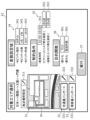
- FIG. 2 is a diagram showing a basic example of an input screen in the information output system according to the embodiment.
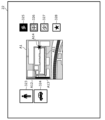
- FIG. 3 is a diagram showing an example of an input screen for the traffic volume of objects in the information output system according to the embodiment.
- FIG. 4 is a diagram showing an example of the relationship between service evaluation indexes and parameters acquired as input information.
- FIG. 5 is a diagram showing a basic example of an output screen in the information output system according to the embodiment.
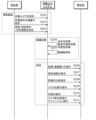
- FIG. 6 is a sequence diagram showing a usage example of the information output system according to the embodiment.
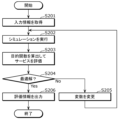
- FIG. 7 is a flow chart showing an operation example of the information output system according to the embodiment.
- FIG. 1 is a block diagram showing an example of an information output system according to an embodiment.
- FIG. 2 is a diagram showing a basic example of an input screen in the information output system according to the embodiment.
- FIG. 3 is a diagram showing an example of an input screen for
- FIG. 8 is a diagram showing a first example of an output screen in the information output system according to the embodiment.
- FIG. 9 is a diagram showing a second example of the output screen in the information output system according to the embodiment.
- FIG. 10 is a diagram showing a third example of the output screen in the information output system according to the embodiment.
- FIG. 11 is a diagram showing a fourth example of the output screen in the information output system according to the embodiment.
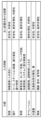
- FIG. 12 is a diagram illustrating an example of the correlation between the type of service evaluation presentation destination and the output content.
- An information output method is an information output method executed by a computer, and includes area information related to a target area for performing services using a mobile body on which a person or an item to be delivered is placed, and movement related to the mobile body.
- a person who conducts a preliminary review before operating a service can, by checking the evaluation information, , it is possible to conduct a preliminary study of mobility services in consideration of safety.
- the mobile body may be remotely operable, and the safety information may include the degree of intervention by remote control of the mobile body.
- the area information may include information about the traffic volume of the object in the target area.
- the moving body information may include information about the type of the moving body, the speed of the moving body, and the number of the moving bodies operated in the target area.
- the evaluation information may be output by visualizing the risk occurrence mode regarding the safety of the service in the target area and displaying it on the display unit.
- the occurrence mode of the risk may be displayed in animation on the display unit.
- the evaluation information may be output by visualizing the position where the risk of the safety of the service occurs in the target area and displaying it on the display unit.
- those who conduct a preliminary review when operating the service can visually grasp the location of the occurrence of the risk, making it easier to consider countermeasures against the risk.
- the evaluation information may be output by emphasizing the evaluation of the service at the time of occurrence of the risk and displaying it on the display unit.
- countermeasure information indicating countermeasures against risks regarding the safety of the service in the target area may be further output.
- the evaluation information may further include economic rationality information regarding the economic rationality of the service.
- the economic rationality information may further include the total initial cost and operating cost of the service.
- the evaluation information may further include convenience information regarding the convenience of the service.
- the evaluation information may include information about a plurality of search processes of the simulation that have been performed until the optimum solution of the objective function is calculated.
- those who conduct a preliminary review before operating the service can refer to the information on the search process to easily review the various parameters used in the simulation.
- the evaluation information may be output by displaying a plurality of evaluations respectively calculated in the plurality of search processes on the display unit in a comparable manner.
- the evaluation information may include content corresponding to the type of presentation destination of the evaluation of the service.
- the type of presentation destination may include a decision maker regarding adoption of the service, a plan designer of the service, a plan designer of a business using the service, or an operator of the service. good.
- information for designating the objective function may be further acquired as the input information.
- a program according to one aspect of the present disclosure causes a computer to execute the above information output method.
- a person who conducts a preliminary review before operating a service can, by checking the evaluation information, , it is possible to conduct a preliminary study of mobility services in consideration of safety.
- An information output system includes an acquisition unit, an execution unit, an evaluation unit, and an output unit.
- the acquisition unit acquires, as input information, at least area information about a target area for service using a mobile body on which a person or a delivery item is placed, and mobile body information about the mobile body.
- the execution unit simulates the movement of the moving body and the movement of the target object existing in the target area based on the input information acquired by the acquisition unit.
- the evaluation unit evaluates the service by calculating the optimum solution of the objective function using the execution result of the simulation by the execution unit.
- the output unit outputs evaluation information regarding the evaluation of the service by the evaluation unit, including at least safety information regarding the safety of the service.
- the safety information includes the degree of interference between the moving object and the object in the target area.
- a person who conducts a preliminary review before operating a service can, by checking the evaluation information, , it is possible to conduct a preliminary study of mobility services in consideration of safety.
- FIG. 1 is a block diagram showing an example of an information output system 100 according to an embodiment.
- the information output system 100 is a system for executing a simulation of a service using the mobile object 1 (see FIG. 8), that is, a mobility service, and outputting an evaluation of the mobility service based on the execution result of the simulation.
- Mobility services include services that deliver deliveries to clients, such as home delivery or food delivery. Mobility services also include, for example, services that transport people to their destination.
- the mobile object 1 is, for example, a vehicle such as an automobile or a motorcycle, but may be a mobile object other than a vehicle such as an autonomous robot. Also, the moving body 1 may be of a manual operation type, a semi-automatic operation type, or a fully automatic operation type.
- the information output system 100 is an example of a computer that executes the information output method.
- the components that make up the information output system 100 may be provided in one housing, or may be distributed. When the components constituting the information output system 100 are distributed and arranged, the information output method may be executed by a plurality of computers.
- the information output system 100 is realized by, for example, a personal computer, a server device, or the like. In the embodiment, information output system 100 is realized by a personal computer. Moreover, in the embodiment, at least part of the information required for the simulation executed by the information output system 100 is acquired from the information terminal 200 owned by the user. A user here is a user of the information output system 100 .
- the information terminal 200 is a portable terminal such as a smartphone or tablet, and includes an input unit 21 and a display unit 22 .
- the input unit 21 receives a user's operation input by an input device such as a mouse or a keyboard, or an operation input by a user's finger.
- the display unit 22 is, for example, a liquid crystal display, and displays an input screen used when inputting input information to be described later, an output screen for displaying evaluation information to be described later, or the like.
- the display unit 22 is composed of a touch panel display. Therefore, in the embodiment, the display section 22 also serves as the input section 21 .
- the information output system 100 may be installed in the information terminal 200 as one function of the information terminal 200 .
- the information terminal 200 may be installed in the information output system 100 as one function of the information output system 100 . That is, the information output system 100 and the information terminal 200 may be integrally implemented as one device.
- the information output system 100 includes an acquisition unit 11, an execution unit 12, an evaluation unit 13, and an output unit 14, as shown in FIG.
- the information output system 100 is a computer including a processor, communication interface, memory, and the like.
- the memory is ROM (Read Only Memory), RAM (Random Access Memory), etc., and can store programs executed by the processor.
- the acquisition unit 11, the execution unit 12, the evaluation unit 13, and the output unit 14 are implemented by a processor that executes programs stored in memory, a communication interface, and the like.
- the acquisition unit 11 acquires input information, which are various parameters used for simulation by the execution unit 12 .
- the acquisition unit 11 acquires at least area information and mobile information as input information.
- the area information is information relating to the target area in which the service using the moving body 1 on which the person or the article to be delivered is placed is performed.
- the area information includes map data of the target area, data indicating the moving route of the moving body 1 in the target area, and the like.
- the mobile body information is information about the mobile body 1, and includes data indicating the type of the mobile body 1, the speed of the mobile body 1, the number of the mobile bodies 1 operated in the target area, and the like.
- the acquisition unit 11 acquires information input by the user through the input unit 21 of the information terminal 200 as input information. Specifically, while looking at the input screen displayed on the display unit 22 of the information terminal 200 , the user inputs various parameters used in the simulation by the execution unit 12 . Thereby, the acquisition unit 11 acquires the input information input by the input unit 21 .
- FIG. 2 is a diagram showing a basic example of an input screen in the information output system 100 according to the embodiment.
- the information input here is acquired by the acquisition unit 11 .
- the input screen displayed on the display unit 22 includes an area 31 for inputting the target area of the area information and the traffic volume of the target object 2 (see FIG. 8) of the area information.
- An area 32 for input and an area 33 for inputting the amount of demand generated in the target area among the area information are included. That is, in the embodiment, the area information includes information about the traffic volume of the object 2 in the target area.
- the amount of demand referred to here refers to the amount of requests for transportation of people or delivery of goods from service users in the target area.
- the input screen also includes an area 34 for inputting variables among various parameters used in the simulation such as mobile body information, and an area 35 for inputting constraint conditions for executing the simulation.
- the input screen includes an area 36 for inputting an objective function calculated using simulation execution results, and an icon 37 for starting simulation execution. When the user makes an input to select icon 37, the simulation is started.
- the object 2 is an object existing in the target area. Furthermore, the target object 2 is an object that exists in the target area and can enter the movement path (here, road) of the mobile object 1 .
- the target object 2 may include, for example, a living body such as a person, and a vehicle such as an automobile. In addition, the target object 2 may also include other moving bodies when the simulation is performed focusing on the arbitrary moving body 1 .
- a character string "target area selection” is displayed, an icon 311 for inputting a target area including the character string "base location setting", and a map indicating the input target area. A1 and are displayed.
- the user can perform an input to specify the range of the target area while viewing map data provided by an external service that handles map data, or input the area name of the target area. , it is possible to enter the target area.
- the map A1 includes, as metadata, data indicating routes that the mobile body 1 can move, features of the routes such as intersections, and places that the mobile body 1 cannot enter. It should be noted that if the metadata is not included in the map A1, the information output system 100 may generate the metadata by executing appropriate image analysis processing on the map A1.
- an icon 321 containing a character string "traffic volume import” and an icon 322 containing a fountain pen image are displayed.
- the user can cause the information output system 100 to read the existing performance data of the past traffic volume of the target object 2 in the target area prepared in advance by the user.
- the user can appropriately customize the traffic volume of the object 2 in the target area by selecting the icon 322 .
- FIG. 3 is a diagram showing an example of an input screen for the traffic volume of the object 2 in the information output system 100 according to the embodiment.
- the input screen shown in FIG. 2 On the left side of the input screen, an icon 323 for designating a "person” as the object 2 and an icon 324 for designating a "car” as the object 2 are displayed.
- a map A1 of the target area is displayed in the center of the input screen.
- icons 325 to 327 for designating the traffic volume of the designated object 2 and locations where there is a high possibility of interference between the moving object 1 and the object 2 are designated.
- An icon 328 for doing is displayed.
- the user selects one of the icons 323 and 324 to specify the object 2, and selects one of the icons 325 to 327 to specify the object in the target area.
- the user selects the icon 324 and selects the icon 325, it becomes possible to designate a place with heavy traffic volume on the map A1.
- the user can specify a specific area by drawing a line on the map A1, thereby setting the traffic volume of automobiles in the specific area.
- lines A11 to A13 all represent the traffic volume of automobiles in the target area.
- the traffic volume of automobiles is low in the area of line A11 and high in the area of line A13.
- the user when the user selects the icon 328, it becomes possible to specify a location on the map A1 where there is a high possibility that the mobile body 1 and the target object 2 will interfere with each other. In this state, the user can place a star marker A14 on the map to set a location where risk is likely to occur in the target area.
- an icon 331 containing the character string "Import demand" and an icon 332 containing the image of a fountain pen are displayed.
- the user can cause the information output system 100 to read the existing performance data of the demand that occurred in the past in the target area prepared in advance by the user.
- the user can appropriately customize the amount of demand that can occur in the target area.
- a character string "variable setting area” is displayed, and a text box 341 for inputting the type of mobility (that is, moving body 1) and the number of mobilities operated in the target area. and a text box 343 for entering the speed per hour (that is, speed) of the mobility are displayed.
- the user can input a variable (here, moving body information) by inputting a desired character string in the text box 341 and inputting desired numerical values in each of the text boxes 342 and 343. be.
- the variables that can be input in the area 34 are not limited to mobile body information, and other variables may be input. Other variables are described below.
- a character string "constraint" is displayed, and a text box 351 for inputting business hours (that is, service provision time) and the occurrence frequency of near-miss risks allowed by the service (
- a text box 352 for inputting the number of occurrences of near-miss risks in one day) and the frequency of occurrence of remote intervention risks allowed by the service (here, the number of occurrences of remote intervention risks in one day). is displayed. Near misses and remote intervention will be discussed later.
- the user can input constraints by inputting a desired time period in the text box 351 and inputting desired numerical values in each of the text boxes 352 and 353 .
- a drop-down list may be displayed in the area 35 instead of the text boxes 351-353.
- Constraints that can be input in the area 35 are not limited to these, and other constraints may be input. Other constraints will be described later.
- a text box 361 for inputting an objective function to be minimized, a text box 362 for inputting an objective function to be maximized, and a text box 362 for inputting an objective function to be maximized, is displayed.
- a user can specify an objective function by inputting a desired character string into each of text boxes 361 and 362 . That is, in the embodiment, the acquisition unit 11 further acquires information for designating the objective function as input information.
- a drop-down list may be displayed in the area 36 instead of the text boxes 361 and 362.
- the number of objective functions displayed in the area 36 that is, the number of specifiable objective functions is not limited to two, and may be one or three or more.
- the information output system 100 may use an objective function specified in advance, and in this case, there is no need for specifications for acquiring information for specifying the objective function as input information.
- the execution unit 12 executes a simulation of the motion of the moving body 1 and the motion of the target object 2 existing in the target area. Specifically, the execution unit 12 simulates the movement of one or more moving bodies 1 according to the demand amount and constraint conditions in the target area by referring to the area information and the moving body information. In parallel with simulating the movement of one or more moving objects 1, the execution unit 12 simulates the movement of one or more objects 2 by referring to the area information.
- the evaluation unit 13 evaluates the service by calculating the optimum solution of the objective function using the execution result of the simulation by the execution unit 12.
- the evaluation unit 13 evaluates the execution result of the simulation using three indicators of service safety (Risk), service economic rationality (Cost), and service convenience (Value).
- the index of safety is an index that comprehensively indicates risks such as the approach of the moving object 1 and the object 2 during operation of the service, for example.
- the index of economic rationality is an index that comprehensively indicates, for example, the price of the mobile unit 1, the fuel cost, and the cost of operating the service.
- the index of convenience is, for example, an index that comprehensively indicates the number of transports of people or the number of deliveries of deliveries that the service can provide per day.
- FIG. Figure 4 shows, for example, (1) information on demand such as movement demand (flow of people) can affect safety and economic rationality, and (2) information on operations such as course, station arrangement, operating speed, and operating time. can affect safety, economic rationality, and convenience. That is, the evaluation by the evaluation unit 13 of the execution result of the simulation by the execution unit 12 is based on the relationship shown in FIG. done.
- each service evaluation index may have a trade-off relationship, for example, if priority is given to safety, economic rationality is lowered, and if priority is given to economic rationality, safety is lowered.
- the input information can be a parameter used when calculating one or more of the safety, economic rationality, and convenience evaluation indexes depending on the item. In other words, in the simulation of service evaluation, safety, economic A search for an optimum solution is performed such that each evaluation index of rationality and convenience as a whole satisfies a predetermined condition.
- the evaluation unit 13 defines levels of safety, economic rationality, and convenience based on the input information.
- the level is information corresponding to the degree of detail (resolution) of each index of safety, economic rationality, and convenience.
- the evaluation unit 13 includes (1) parameters related to the performance of the mobile object 1, (2) a function of complementing the performance of the mobile object 1 by remote, infrastructure, or human,
- the level of security is defined by any of the parameters related to environmental conditions.
- the parameters related to the performance of the moving body 1 are, for example, items such as braking accuracy (acceleration and braking reaction or resolution), steering control accuracy (reaction speed or resolution), weight and size of the moving body 1. is mentioned.
- functions that complement the performance of the mobile object 1 by remote, infrastructure, or human include, for example, functions complemented by function monitoring and parameters that affect the performance.
- Functions complemented by function monitoring and parameters that influence their performance include, for example, the presence or absence of a function to remotely detect images or sensing from the moving body 1, a function to provide emergency operational support from a remote location, and so on.
- the time required for emergency operational support by the function (in other words, the time required for the instruction from the center to arrive at the moving body 1), and whether or not the remote system has an assist function can be mentioned.
- the assist function provided by the remote system is, for example, the viewing angle that can be confirmed remotely, or the state of the moving body 1 (speed, route prediction, sensor failure state, etc.).
- Another example of the function that complements the performance of the mobile object 1 by remote, infrastructure, or human is the function and performance complemented by infrastructure.
- the blind spots of the moving body 1 or object approach information from a distance notified from the traveling road, the state of the traffic light, the amount of information notified from the traveling road (speed, object, direction/predicted route, arrival prediction, etc.), granularity of information notified from the road (whether pedestrians, bicycles, cars, trucks, etc. can be identified, etc.).
- Another example of the function of complementing the performance of the mobile object 1 by remote, infrastructure, or human is the function of complementing by human.
- Functions to be supplemented by humans include, for example, items such as the level of skill of a person who remotely monitors danger and the level of skill of a person when operating remotely.
- the safety level As an example of defining the safety level by the parameters related to the performance of the moving body 1 (1) above, if the moving body 1 considers the presence or absence of an emergency brake, the level is A, and the moving body 1 determines the effectiveness of the emergency brake. If calculation is to be made according to the weather, it is defined as level B. By defining the safety level in this way, it is possible to judge the risk with higher accuracy at level B.
- the recovery time of the moving body 1 by remote control changes, and the efficiency (convenience) also changes accordingly. For example, if the remote operator has been trained, the recovery time of the moving body 1 will be shortened, thereby improving efficiency (convenience).
- AI Artificial Intelligence
- the evaluation unit 13 determines (1) costs related to sensors and control devices related to the automatic driving performance of the mobile body 1, (2) costs of remote and infrastructure systems and personnel expenses for managing the mobile body 1, and (3) service
- the level of economic rationality is defined by one of the costs of the number of mobile units 1 required to enable For example, if only the price of the mobile unit 1 and the price of the remote system are considered as cost-related parameters, level A is considered, and the failure rate of the mobile unit 1 due to weather or regional characteristics (for example, salt damage near the coast) is considered. Level B is defined when fluctuations in maintenance costs are also taken into account.
- the evaluation unit 13 defines the level of convenience based on the amount of people and goods transported by automatic driving or robots, correct arrival rate, frequency, boarding and alighting, and loading and unloading.
- the evaluation unit 13 evaluates the performance of the moving body 1 and the trade-off relationship between the cost and the function complemented by the infrastructure and the trade-off relationship between the function and the cost necessary for it, and the level of safety and economy. and outputs a usability index.
- the cost can be determined from the type/performance or the number of sensors mounted on the moving body 1 .
- the level of economic rationality is defined by the type, performance, and number of sensors provided in the mobile body 1, and the level of safety is defined from the security of safety (for example, the range of recognition of the surroundings).
- the level of convenience is defined from the per-unit transportation efficiency, etc., and the trade-off relationship is calculated.
- the evaluation unit 13 calculates the specified objective function using the execution result of the simulation by referring to the input information. Then, the evaluation unit 13 executes the simulation and calculates the objective function while sequentially changing the variables until the optimum solution of the designated objective function is obtained. In other words, the evaluation unit 13 searches for the optimum solution for the specified objective function. For example, when minimization of TCO (Total Cost of Ownership) as the objective function and maximization of the number of deliveries as the objective function are specified, the evaluation unit 13 minimizes the TCO and maximizes the number of deliveries. The execution of the simulation and the calculation of the objective function are repeated until both are satisfied. Note that TCO represents the total amount of the initial cost required to introduce a service and the total operating cost required to operate the service.
- TCO Total Cost of Ownership
- the output unit 14 outputs evaluation information regarding service evaluation by the evaluation unit 13 .
- the evaluation information includes at least safety information regarding the safety of the service.
- the safety information includes the degree of interference between the moving object 1 and the object 2 in the target area.
- the interference between the moving body 1 and the target object 2 here may include, for example, a state in which the moving body 1 and the target object 2 may collide, that is, a near miss. Further, interference between the moving body 1 and the target object 2 may include a state requiring mediation when the moving body 1 and the other moving body face each other, for example, if the target object 2 is another moving body. .
- the safety information includes, in addition to the degree of occurrence of interference between the moving body 1 and the target object 2, the degree of occurrence of intervention by remote control with respect to the moving body 1.
- Intervention by remote control for the moving body 1 here that is, remote intervention, means that, for example, when the moving body 1 becomes unable to travel autonomously due to the occurrence of an unforeseen situation, an operator belonging to the service operator It means that the mobile body 1 is returned to a state in which it can travel autonomously by remotely controlling the mobile body 1 with the remote control.
- the evaluation unit 13 evaluates the execution result of the simulation by the execution unit 12 as an index indicating the economic rationality of the service and the convenience of the service, in addition to the index indicating the safety of the service. It is also evaluated as an indicator of Therefore, the output unit 14 outputs the economic rationality information and the convenience information as the evaluation information in addition to the safety information.
- the evaluation information includes economic rationality information regarding the economic rationality of the service and convenience information regarding the convenience of the service.
- the output unit 14 outputs evaluation information by displaying an output screen on the display unit 22 of the information terminal 200, for example, as shown in FIG.
- FIG. 5 is a diagram showing a basic example of an output screen in the information output system 100 according to the embodiment.
- the output screen displayed on the display unit 22 includes an area 41 for presenting safety information, an area 42 for displaying economic rationality information, an area 43 for displaying convenience information, An area 44 displaying the specifications of the service and an area 45 displaying the risks to the security of the service are included.
- a character string "safety (Risk)” is displayed, and the frequency of occurrence of near-miss risk in one day and the frequency of occurrence of remote intervention risk in one day are displayed as safety information.
- a character string "economic rationality (Cost)” is displayed, and TCO is displayed as economic rationality information. That is, the economic rationale information includes total initial and operating costs for the service.
- the character string "Convenience (Value)” is displayed, and the number of deliveries and the average delivery time per day are displayed as convenience information.
- a character string "service specification” is displayed, and the number of robots operated in the target area and the speed per hour of the robots (here, the average speed per hour) are displayed.
- a character string "risk map” is displayed, and a map A1 indicating the target area and one or more (here, three) markers B1 indicating the risk occurrence positions are displayed. It is In the example shown in FIG. 5, the rightmost marker B1 is selected by the user, and in the state in which the marker B1 is selected in this way, the outline of the risk occurring at the position of the marker B1 is shown. A balloon B11 shown is further displayed. In other words, the output unit 14 outputs the evaluation information by visualizing the location of occurrence of the risk regarding the security of the service in the target area and displaying it on the display unit 22 .
- the output screen further displays an icon 46 including an image of three lines and an icon 47 including an image of a rightward arrow.
- the icon 46 for example, the user can select an arbitrary output screen from a list of other output screen candidates and display it on the display unit 22 . Further, the user can display other output screens in order on the display unit 22 by selecting the icon 47, for example. Examples of other output screens will be described later.
- FIG. 6 is a sequence diagram showing a usage example of the information output system 100 according to the embodiment.
- settings in steps S101 to S103 are performed by a setter such as a service designer (in other words, a user).
- the setting person sets various parameters used for the simulation while looking at the input screen displayed on the display unit 22 of the information terminal 200, for example.
- the setter sets the target area (S101), sets the traffic volume of the object 2 in the target area (S102), and sets variables, constraints, and objective functions (S103).
- the evaluation unit 13 does not need to refer to all of the other variables and other constraints listed below, but may refer to one or more other variables or one or more other constraints to determine the service in more detail. can be evaluated.
- Other variables used to evaluate service safety may include the acceleration and deceleration performance of the mobile object 1, the weight of the mobile object 1, and the like.
- Other constraints used to evaluate the security of the service may include the communication bandwidth used during service operation, and the like.
- variables used to assess the economic rationality and convenience of a service include the cost per unit of mobile 1, the performance of the sensors equipped on mobile 1, the failure rate of mobile 1, or the 1 fuel consumption, etc. may be included. Also, such other variables may include the number of personnel involved in the service, labor costs, or the like. Other constraints used to evaluate the economic rationality and convenience of the service may include the communication band used during service operation, communication plans, and the like.
- the information output system 100 executes the evaluation calculation processing in steps S104 and S105. Specifically, the information output system 100 acquires information preset by a configurator, ie, input information, and executes a simulation based on the acquired input information. Then, the information output system 100 uses the execution results of the simulation to calculate an evaluation of the safety of the service, an evaluation of the economic rationality of the service, and an evaluation of the convenience of the service (S104). The information output system 100 also calculates the objective function specified by the acquired input information, and searches for the optimum solution of the objective function (S105).
- a configurator ie, input information
- the information output system 100 uses the execution results of the simulation to calculate an evaluation of the safety of the service, an evaluation of the economic rationality of the service, and an evaluation of the convenience of the service (S104).
- the information output system 100 also calculates the objective function specified by the acquired input information, and searches for the optimum solution of the objective function (S105).
- the presentation destination may be the same as the configurator, or may be a different person from the configurator.
- the output unit 14 does not need to output all of the evaluation items listed below as evaluation information, but the more types of evaluation items that are output, the more detailed the evaluation of the service to be grasped by the presentation destination. becomes possible.
- Service safety evaluation items may include the location and frequency of near-miss risks, the location and frequency of remote intervention risks, and the location and frequency of mediation risks.
- the evaluation items include the number of times the object 2 approaches within x cm (x can be set as appropriate) of the moving body 1, the number of times the object 2 approaches within x cm in front of the moving body 1, or TTC (Time To Collision) and the like can be included.
- the evaluation items for the economic rationality of the service may include the initial cost of introducing the service, the operating cost of the service, or income from the operation of the service.
- the initial cost includes the purchase/procurement cost of the mobile unit 1, the cost of the sensors installed in the mobile unit 1, the infrastructure development cost in the target area, the initial verification cost of the service, and the remote control for remote management of the mobile unit 1.
- the cost of building the center or the cost of building the software used to operate the service may be included.
- Operational costs may include fuel costs for the mobile unit 1, labor costs for service personnel, software operation costs, service maintenance costs, communication costs, real estate costs used for service operations, and the like.
- Income may include usage fees from merchants who use the service, or usage fees from individuals who use the service.
- Service convenience evaluation items include, if the service transports the user to the destination, the number of transports, the user's waiting time, and the reduction in the time required to reach the destination compared to existing transportation means. , or a correct arrival rate or the like that indicates the degree of correct arrival of the moving body 1 at the destination.
- the evaluation items include the number of deliveries, the waiting time from the time the requester places an order until the delivery items arrive, or whether the items are delivered correctly to the requester.
- a correct arrival rate or the like that indicates the degree of success may be included.
- the information output system 100 presents the execution result of the simulation when the optimum solution of the objective function is obtained (S106).
- Step S106 corresponds to processing for displaying the output screen shown in FIG. 5 on the display unit 22, for example.
- the information output system 100 presents a process of searching for the optimum solution of the objective function (S107).
- Step S107 will be described in detail in a third example of the output screen (see FIG. 10), which will be described later.
- the information output system 100 presents a plurality of evaluations obtained in a plurality of processes of searching for the optimum solution of the objective function in a comparable manner (S108).
- Step S108 will be described in detail in a fourth example of the output screen (see FIG. 11), which will be described later.
- the information output system 100 presents the risk occurrence position in the target area (S109).
- Step S109 corresponds to processing for displaying marker B1 on map A1 on the output screen shown in FIG. 5, for example.
- the information output system 100 presents countermeasures against risks that may occur in the target area (S110).
- Step S110 will be described in detail in a first example of the output screen (see FIG. 8), which will be described later.
- the information output system 100 presents an animation of the occurrence of risk in the target area (S111). Step S111 will be described in detail in a first example of the output screen (see FIG. 8), which will be described later.
- the setting person does not have to perform all steps S101 to S103, and it is optional whether or not to perform step S102, for example.
- the information output system 100 does not have to execute all steps S104 to S111. For example, it is optional whether or not to execute steps S107 to S111.
- the information output system 100 needs to calculate at least the evaluation of the safety of the service in step S104, and it is arbitrary whether or not to calculate the evaluation of the economic rationality of the service and the evaluation of the convenience of the service.
- FIG. 7 is a flow chart showing an operation example of the information output system 100 according to the embodiment.
- the acquisition unit 11 of the information output system 100 acquires, as input information, various parameters input by the user at the information terminal 200, for example (S201).
- the execution unit 12 executes a simulation of the motion of the moving body 1 and the motion of the target object 2 based on the input information acquired by the acquisition unit 11 (S202).
- the evaluation unit 13 calculates an objective function using the execution result of the simulation by the execution unit 12, and evaluates the service (S203).
- the evaluation unit 13 changes the variables used in the simulation (S205) and causes the execution unit 12 to perform the simulation again. Thereafter, steps S202 to S205 are repeated until the calculated objective function becomes the optimum solution. Then, when the calculated objective function is the optimum solution (S204: Yes), the output unit 14 outputs evaluation information regarding the evaluation of the service by the evaluation unit 13 (S206).
- FIG. 8 is a diagram showing a first example of an output screen in the information output system 100 according to the embodiment.
- the output screen displayed on the display unit 22 includes an area 45 for displaying details of the risk occurrence mode.
- a character string "risk map” is displayed, and a map A1 indicating the target area and one or more (here, three) markers B1 indicating the risk occurrence positions are displayed.
- the rightmost marker B1 is selected by the user.
- the risk generated at the position of the marker B1 is summarized.
- a balloon B11 shown is further displayed.
- a character string outlining the risk and two images B112 are displayed in the balloon B11.
- the image B112 on the left side of the two images B112 depicts a moving object 1 (here, a car) turning left at an intersection and an object 2 (here, a person) approaching a pedestrian crossing. .
- a state in which the moving object 1 and the target object 2 approach each other to the extent of contact is drawn. That is, in the first example, the output unit 14 outputs the evaluation information by visualizing the risk occurrence mode regarding the safety of the service in the target area and displaying it on the display unit 22 .
- the two images B112 are still images, but these images B112 may be moving images (that is, animation).
- the risk occurrence mode may be displayed on the display unit 22 as an animation.
- a character string B113 indicating a countermeasure against the risk is further displayed in the balloon B11.
- the output unit 14 further outputs countermeasure information indicating countermeasures against risks regarding service safety in the target area.
- the target area is privately owned by the user or an organization to which the user belongs, the user can take measures such as installing countermeasures according to the countermeasure information.
- the target area is public land, the user can respond by proposing the installation of countermeasures according to the countermeasure information to the local government or the like having ownership of the public land.
- FIG. 9 is a diagram showing a second example of the output screen in the information output system 100 according to the embodiment.
- the output screen displayed on the display unit 22 includes an area 5 that displays chronological changes in risk occurrence positions and service evaluations by animation.
- the output unit 14 displays the output screen of the second example on the display unit 22 after executing the simulation. good too.
- the area 5 includes a map A2 showing the target area and an image 51 showing the service evaluation.
- the image 51 is composed of three display columns arranged vertically.
- a score indicating the evaluation of the safety (Risk) of the service is displayed in the upper display column. The smaller the score, the higher the safety of the service.
- the display column for interruption displays a score indicating the evaluation of the economic rationality (Cost) of the service. The smaller the score, the higher the economic rationality of the service.
- a score indicating the evaluation of the convenience (Value) of the service is displayed in the lower display column. The higher the score, the higher the convenience of the service.
- a circular marker B2 indicating the position where the risk occurs is displayed.
- the score indicating the evaluation of the safety of the service is a relatively large numerical value, and the display column is displayed in a different color from the other display columns.
- the output unit 14 outputs the evaluation information by emphasizing the evaluation of the service (here, the evaluation of the safety of the service) at the time of risk occurrence and displaying it on the display unit 22 .
- the trigger for emphasizing and displaying the evaluation of the service is, for example, that the score exceeds (or falls below) a threshold.
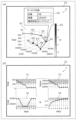
- FIG. 10 is a diagram showing a third example of the output screen in the information output system 100 according to the embodiment.
- the evaluation information includes information about a plurality of simulation search processes that have been carried out until the optimum solution of the objective function is calculated.
- the third example shows the results of a simulation performed so as to maximize the evaluation of service safety as an objective function.
- An area 61 displays a three-dimensional graph whose axes are the evaluation of the safety of the service (Risk), the evaluation of the economic rationality of the service (Cost), and the evaluation of the convenience of the service (Value). Also, in the area 62, a bar is displayed that indicates the comprehensive evaluation (M) of the service in shades. Points P1 to P9 are plotted on the three-dimensional graph to indicate service evaluation results for each simulation. That is, the simulation is executed in the order of points P1, P2, . The coordinates of points P1-P9 represent evaluations of service safety, economic rationality, and convenience. The gradation of points P1 to P9 represents the comprehensive evaluation of the service. The higher the density of the points P1 to P9, the higher the comprehensive evaluation of the service.
- a balloon 63 is further displayed when the user selects one of the points P1 to P9.
- points selected by the user that is, service specifications (here, the number of mobile units 1, the speed of the mobile units 1, and the operation mode of the service) when the simulation selected by the user is executed are displayed. Is displayed.
- the output screen shown in (b) of FIG. 10 includes an area 7 that individually displays changes in service safety evaluation, economic rationality evaluation, convenience evaluation, and overall evaluation.
- Area 7 includes an area 71 indicating the transition of the evaluation of the safety of the service, an area 72 indicating the transition of the evaluation of the economic rationality of the service, an area 73 indicating the transition of the evaluation of the convenience of the service, and an area 73 indicating the transition of the evaluation of the convenience of the service. and an area 74 indicating the transition of the comprehensive evaluation.
- the vertical axis represents the evaluation
- the horizontal axis represents the order (step) of executing the simulation.
- the user performs a predetermined operation (for example, selects the area 61, etc.) while the output screen shown in (a) of FIG. ) to make a transition.
- FIG. 11 is a diagram showing a fourth example of the output screen in the information output system according to the embodiment.
- the output screen displayed on the display unit 22 includes an area 8 for displaying a list of service evaluations for each simulation that have been performed until the optimum solution of the objective function is calculated.
- the output unit 14 outputs evaluation information by displaying multiple evaluations calculated in multiple search processes on the display unit 22 in a comparable manner.
- a first area 81 showing the service evaluation result when the first simulation is executed and a second area 82 showing the service evaluation result when the second simulation is executed are displayed.
- Areas 81 and 82 display bar graphs indicating the evaluation of the safety of the service, the evaluation of the economic rationality of the service, and the evaluation of the convenience of the service, respectively, and the score indicating the overall evaluation of the service. .
- an area showing service evaluation results when the third and subsequent simulations are executed can be displayed on the display unit 22 by the user performing a predetermined operation. be.
- the information output method and information output system 100 simulate the movement of the moving object 1 in the target area and the movement of the target object 2 existing in the target area. Then, the safety of the service is evaluated using the execution result of the simulation, and evaluation information including the evaluation is output. For this reason, a person who conducts a preliminary study in operating the service checks the evaluation information, and in an area (target area) where an object (target object 2) is allowed to enter the movement route of the mobile object 1 , it is possible to conduct a preliminary study of mobility services in consideration of safety. As a result, for example, it is possible to reduce the cost and time required for service design. In addition, this makes it possible to facilitate service design, for example.
- the evaluation information may include content corresponding to the type of service evaluation presentation destination.
- the output unit 14 may change the content to be output according to the presentation destination of the service evaluation.
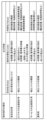
- FIG. 12 is a diagram illustrating an example of the correlation between the type of service evaluation presentation destination and the output content.
- the type of the presentation destination (“type of presentation partner" in FIG. 12) includes a decision maker regarding service adoption, a service planning designer, a business planning designer using the service, or the operator of the service.
- the information necessary for deciding whether or not to adopt the service will be output from the output unit 14 as evaluation information.
- the "risk of occurrence of a serious accident” that can occur during service operation is used as safety information
- the "total initial cost/operation cost” in operating the service is used as economic rationality information.
- ', 'prospect of income' from the operation of the service, and 'summary of the value provided by the service' as convenience information are output from the output unit 14 as the evaluation information.
- the contents of the evaluation information output by the output unit 14 may be appropriately customized by the user according to the type of presentation destination, or may be automatically determined by the information output system 100 . In the latter case, the user performs an input specifying, for example, the type of presentation destination. Then, the information output system 100 may determine the output content of the evaluation information by collating the presentation destination type as the input information with the data as shown in FIG. 12 . Moreover, the levels of safety, economic rationality, and convenience described above may be appropriately set according to the type of presentation destination.
- the evaluation information includes safety information, economic rationality information, and convenience information, but is not limited to this.
- the evaluation information may contain only safety information.
- the evaluation unit 13 may fix the parameters related to the economic rationality of the service and the parameters related to the convenience of the service, search the variable setting range of the parameters related to safety, and evaluate the safety. .
- the information output system 100 is constructed as a dedicated system for each type of service, but is not limited to this.
- the information output system 100 may be constructed as a general-purpose system in which the type of service can be selected as part of the constraints.
- the information output system 100 operates according to the type of service selected by the user. Specifically, when the user conducts a preliminary examination of a service for transporting a person to a destination, the user selects that service as the type of service. Then, the information output system 100 operates as a system for outputting evaluation information about services for transporting people to their destinations.
- the present disclosure can be implemented as a program for causing a processor to execute the steps included in the information output method.
- the present disclosure can be implemented as a non-temporary computer-readable recording medium such as a CD-ROM recording the program.
- each step is executed by executing the program using hardware resources such as the CPU, memory, and input/output circuits of the computer.
- hardware resources such as the CPU, memory, and input/output circuits of the computer.
- each step is executed by the CPU acquiring data from a memory, an input/output circuit, or the like, performing an operation, or outputting the operation result to the memory, an input/output circuit, or the like.
- each component included in the information output system 100 may be configured with dedicated hardware or implemented by executing a software program suitable for each component.
- Each component may be realized by reading and executing a software program recorded in a recording medium such as a hard disk or a semiconductor memory by a program execution unit such as a CPU or processor.
- a part or all of the functions of the information output system 100 according to the above embodiment are typically realized as an LSI, which is an integrated circuit. These may be made into one chip individually, or may be made into one chip so as to include part or all of them. Further, circuit integration is not limited to LSIs, and may be realized by dedicated circuits or general-purpose processors.
- An FPGA Field Programmable Gate Array
- a reconfigurable processor that can reconfigure the connections and settings of the circuit cells inside the LSI may be used.
- the present disclosure also includes various modifications in which a person skilled in the art makes modifications to each embodiment of the present disclosure, as long as they do not deviate from the gist of the present disclosure.
- the present disclosure can be applied to systems that provide mobility services.
Landscapes
- Business, Economics & Management (AREA)
- Engineering & Computer Science (AREA)
- Human Resources & Organizations (AREA)
- Physics & Mathematics (AREA)
- Tourism & Hospitality (AREA)
- Economics (AREA)
- General Physics & Mathematics (AREA)
- Strategic Management (AREA)
- Theoretical Computer Science (AREA)
- General Business, Economics & Management (AREA)
- Marketing (AREA)
- Development Economics (AREA)
- Entrepreneurship & Innovation (AREA)
- Educational Administration (AREA)
- Health & Medical Sciences (AREA)
- Primary Health Care (AREA)
- General Health & Medical Sciences (AREA)
- Operations Research (AREA)
- Quality & Reliability (AREA)
- Game Theory and Decision Science (AREA)
- Computer Security & Cryptography (AREA)
- Management, Administration, Business Operations System, And Electronic Commerce (AREA)
- Traffic Control Systems (AREA)
Abstract
Description
以下、実施の形態に係る情報出力システム及び情報出力方法について説明する。
以上、本開示の一つ又は複数の態様に係る情報出力方法及び情報出力システム100について、実施の形態に基づいて説明したが、本開示は、これらの実施の形態に限定されるものではない。本開示の趣旨を逸脱しない限り、当業者が思いつく各種変形を各実施の形態に施したものや、異なる実施の形態における構成要素を組み合わせて構築される形態も、本開示の一つ又は複数の態様の範囲内に含まれてもよい。
2 対象物
100 情報出力システム
11 取得部
12 実行部
13 評価部
14 出力部
22 表示部
Claims (19)
- コンピュータにより実行される情報出力方法であって、
人又は配送物が載る移動体を用いたサービスを行う対象エリアに関するエリア情報、及び前記移動体に関する移動体情報を少なくとも入力情報として取得し、
前記入力情報に基づいて、前記移動体の動き、及び前記対象エリアに存在する対象物の動きのシミュレーションを実行し、
前記シミュレーションの実行結果を用いて目的関数の最適解を算出することにより前記サービスを評価し、
少なくとも前記サービスの安全性に関する安全性情報を含む、前記サービスの評価に関する評価情報を出力し、
前記安全性情報は、前記対象エリアにおける前記移動体と前記対象物との干渉の発生度合いを含む、
情報出力方法。 - 前記移動体は、遠隔操作可能であって、
前記安全性情報は、前記移動体に対する遠隔操作による介入の発生度合いを含む、
請求項1に記載の情報出力方法。 - 前記エリア情報は、前記対象エリアにおける前記対象物の交通量に関する情報を含む、
請求項1又は2に記載の情報出力方法。 - 前記移動体情報は、前記移動体の種類、前記移動体の速度、及び前記対象エリアで運用される前記移動体の台数についての情報を含む、
請求項1又は2に記載の情報出力方法。 - 前記対象エリアにおける前記サービスの安全性についてのリスクの発生態様を視覚化して表示部に表示することで、前記評価情報を出力する、
請求項1又は2に記載の情報出力方法。 - 前記リスクの発生態様は、アニメーションで前記表示部に表示される、
請求項5に記載の情報出力方法。 - 前記対象エリアにおける前記サービスの安全性についてのリスクの発生位置を視覚化して表示部に表示することで、前記評価情報を出力する、
請求項1又は2に記載の情報出力方法。 - 前記リスクの発生時における前記サービスの評価を強調して前記表示部に表示することで、前記評価情報を出力する、
請求項7に記載の情報出力方法。 - 前記対象エリアにおける前記サービスの安全性についてのリスクへの対策を示す対策情報を更に出力する、
請求項1又は2に記載の情報出力方法。 - 前記評価情報は、前記サービスの経済合理性に関する経済合理性情報を更に含む、
請求項1又は2に記載の情報出力方法。 - 前記経済合理性情報は、前記サービスについての初期費用及び運用費用の総計を含む、
請求項10に記載の情報出力方法。 - 前記評価情報は、前記サービスの利便性に関する利便性情報を更に含む、
請求項1又は2に記載の情報出力方法。 - 前記評価情報は、前記目的関数の最適解を算出するまでに経た前記シミュレーションの複数の探索過程についての情報を含む、
請求項1又は2に記載の情報出力方法。 - 前記複数の探索過程でそれぞれ算出された複数の評価を比較可能な態様で表示部に表示することで、前記評価情報を出力する、
請求項13に記載の情報出力方法。 - 前記評価情報は、前記サービスの評価の提示先の種別に対応する内容を含む、
請求項1又は2に記載の情報出力方法。 - 前記提示先の種別は、前記サービスの採用についての意思決定者、前記サービスの企画設計者、前記サービスを用いたビジネスの企画設計者、又は前記サービスの運用者を含む、
請求項15に記載の情報出力方法。 - 前記目的関数を指定するための情報を前記入力情報として更に取得する、
請求項1又は2に記載の情報出力方法。 - コンピュータに、
請求項1又は2に記載の情報出力方法を実行させる、
プログラム。 - 人又は配送物が載る移動体を用いたサービスを行う対象エリアに関するエリア情報、及び前記移動体に関する移動体情報を少なくとも入力情報として取得する取得部と、
前記取得部が取得した前記入力情報に基づいて、前記移動体の動き、及び前記対象エリアに存在する対象物の動きのシミュレーションを実行する実行部と、
前記実行部による前記シミュレーションの実行結果を用いて目的関数の最適解を算出することにより前記サービスを評価する評価部と、
少なくとも前記サービスの安全性に関する安全性情報を含む、前記評価部による前記サービスの評価に関する評価情報を出力する出力部と、を備え、
前記安全性情報は、前記対象エリアにおける前記移動体と前記対象物との干渉の発生度合いを含む、
情報出力システム。
Priority Applications (4)
| Application Number | Priority Date | Filing Date | Title |
|---|---|---|---|
| CN202280071783.5A CN118159989A (zh) | 2021-11-12 | 2022-07-13 | 信息输出方法、程序及信息输出系统 |
| JP2023559424A JPWO2023084847A1 (ja) | 2021-11-12 | 2022-07-13 | |
| EP22892350.4A EP4432183A4 (en) | 2021-11-12 | 2022-07-13 | INFORMATION PROVIDING METHOD, PROGRAM, AND INFORMATION PROVIDING SYSTEM |
| US18/647,392 US20240273440A1 (en) | 2021-11-12 | 2024-04-26 | Information output method, recording medium, and information output system |
Applications Claiming Priority (2)
| Application Number | Priority Date | Filing Date | Title |
|---|---|---|---|
| JP2021184960 | 2021-11-12 | ||
| JP2021-184960 | 2021-11-12 |
Related Child Applications (1)
| Application Number | Title | Priority Date | Filing Date |
|---|---|---|---|
| US18/647,392 Continuation US20240273440A1 (en) | 2021-11-12 | 2024-04-26 | Information output method, recording medium, and information output system |
Publications (1)
| Publication Number | Publication Date |
|---|---|
| WO2023084847A1 true WO2023084847A1 (ja) | 2023-05-19 |
Family
ID=86335517
Family Applications (1)
| Application Number | Title | Priority Date | Filing Date |
|---|---|---|---|
| PCT/JP2022/027538 Ceased WO2023084847A1 (ja) | 2021-11-12 | 2022-07-13 | 情報出力方法、プログラム、及び情報出力システム |
Country Status (5)
| Country | Link |
|---|---|
| US (1) | US20240273440A1 (ja) |
| EP (1) | EP4432183A4 (ja) |
| JP (1) | JPWO2023084847A1 (ja) |
| CN (1) | CN118159989A (ja) |
| WO (1) | WO2023084847A1 (ja) |
Cited By (2)
| Publication number | Priority date | Publication date | Assignee | Title |
|---|---|---|---|---|
| WO2025022952A1 (ja) * | 2023-07-27 | 2025-01-30 | 株式会社日立製作所 | システム導入支援装置、システム導入支援方法、及びシステム導入支援プログラム |
| JP7660773B1 (ja) * | 2024-01-25 | 2025-04-11 | 三菱電機株式会社 | 情報処理装置、情報処理システム、ルート評価方法およびプログラム |
Citations (5)
| Publication number | Priority date | Publication date | Assignee | Title |
|---|---|---|---|---|
| JP2006039978A (ja) * | 2004-07-28 | 2006-02-09 | Hitachi Ltd | 交通情報提供装置,交通情報提供方法 |
| JP2010086070A (ja) * | 2008-09-29 | 2010-04-15 | Toshiba Corp | 道路交通情報提供システム及び方法 |
| JP6201040B2 (ja) | 2014-04-21 | 2017-09-20 | 株式会社日立製作所 | 交通システム最適化装置 |
| JP2020500341A (ja) * | 2017-06-19 | 2020-01-09 | ベイジン ディディ インフィニティ テクノロジー アンド ディベロップメント カンパニー リミティッド | 輸送サービス安全評価のためのシステムおよび方法 |
| JP2020136685A (ja) * | 2019-02-12 | 2020-08-31 | 株式会社日立製作所 | 無線構成の評価方法及び無線設計支援シミュレータ |
Family Cites Families (10)
| Publication number | Priority date | Publication date | Assignee | Title |
|---|---|---|---|---|
| JP5215740B2 (ja) * | 2008-06-09 | 2013-06-19 | 株式会社日立製作所 | 移動ロボットシステム |
| US20100036599A1 (en) * | 2008-08-11 | 2010-02-11 | RM Acquisition, LLC d/b/a/ Rand McNally | Safest transportation routing |
| JP6962926B2 (ja) * | 2015-11-04 | 2021-11-05 | ズークス インコーポレイテッド | 自律車両の軌道修正のための遠隔操作システムおよび方法 |
| US10627831B2 (en) * | 2016-08-25 | 2020-04-21 | Allstate Insurance Company | Fleet vehicle feature activation |
| JP6922978B2 (ja) * | 2017-05-18 | 2021-08-18 | 三菱電機株式会社 | 自律移動体の業務計画装置 |
| WO2018216502A1 (ja) * | 2017-05-26 | 2018-11-29 | ソニー株式会社 | 配送管理装置、荷物配送システムおよびプログラム |
| US20220126864A1 (en) * | 2019-03-29 | 2022-04-28 | Intel Corporation | Autonomous vehicle system |
| JP2021071909A (ja) * | 2019-10-30 | 2021-05-06 | 株式会社日立製作所 | 遠隔管制システム |
| JP7474612B2 (ja) * | 2020-03-19 | 2024-04-25 | 本田技研工業株式会社 | 車両管理装置およびプログラム |
| CN114450733A (zh) * | 2020-04-01 | 2022-05-06 | 松下知识产权经营株式会社 | 信息处理装置以及信息处理方法 |
-
2022
- 2022-07-13 WO PCT/JP2022/027538 patent/WO2023084847A1/ja not_active Ceased
- 2022-07-13 EP EP22892350.4A patent/EP4432183A4/en not_active Withdrawn
- 2022-07-13 CN CN202280071783.5A patent/CN118159989A/zh active Pending
- 2022-07-13 JP JP2023559424A patent/JPWO2023084847A1/ja active Pending
-
2024
- 2024-04-26 US US18/647,392 patent/US20240273440A1/en active Pending
Patent Citations (5)
| Publication number | Priority date | Publication date | Assignee | Title |
|---|---|---|---|---|
| JP2006039978A (ja) * | 2004-07-28 | 2006-02-09 | Hitachi Ltd | 交通情報提供装置,交通情報提供方法 |
| JP2010086070A (ja) * | 2008-09-29 | 2010-04-15 | Toshiba Corp | 道路交通情報提供システム及び方法 |
| JP6201040B2 (ja) | 2014-04-21 | 2017-09-20 | 株式会社日立製作所 | 交通システム最適化装置 |
| JP2020500341A (ja) * | 2017-06-19 | 2020-01-09 | ベイジン ディディ インフィニティ テクノロジー アンド ディベロップメント カンパニー リミティッド | 輸送サービス安全評価のためのシステムおよび方法 |
| JP2020136685A (ja) * | 2019-02-12 | 2020-08-31 | 株式会社日立製作所 | 無線構成の評価方法及び無線設計支援シミュレータ |
Non-Patent Citations (1)
| Title |
|---|
| See also references of EP4432183A4 |
Cited By (2)
| Publication number | Priority date | Publication date | Assignee | Title |
|---|---|---|---|---|
| WO2025022952A1 (ja) * | 2023-07-27 | 2025-01-30 | 株式会社日立製作所 | システム導入支援装置、システム導入支援方法、及びシステム導入支援プログラム |
| JP7660773B1 (ja) * | 2024-01-25 | 2025-04-11 | 三菱電機株式会社 | 情報処理装置、情報処理システム、ルート評価方法およびプログラム |
Also Published As
| Publication number | Publication date |
|---|---|
| EP4432183A4 (en) | 2025-02-26 |
| US20240273440A1 (en) | 2024-08-15 |
| JPWO2023084847A1 (ja) | 2023-05-19 |
| EP4432183A1 (en) | 2024-09-18 |
| CN118159989A (zh) | 2024-06-07 |
Similar Documents
| Publication | Publication Date | Title |
|---|---|---|
| KR102580095B1 (ko) | 시나리오 기반 거동 명세 및 검증 | |
| US12014424B2 (en) | Autonomous vehicle premium computation using predictive models | |
| US11067988B1 (en) | Interactive autonomous vehicle agent | |
| US11131993B2 (en) | Methods and systems for trajectory forecasting with recurrent neural networks using inertial behavioral rollout | |
| US11960292B2 (en) | Method and system for developing autonomous vehicle training simulations | |
| JP7316789B2 (ja) | 物理的環境の変化に応答して自律車両をナビゲートするための適応マッピング | |
| CN114822008B (zh) | 派遣和维护自主车辆的车队的协调 | |
| US9513134B1 (en) | Management of evacuation with mobile objects | |
| Galar et al. | Robots, drones, UAVs and UGVs for operation and maintenance | |
| JP2020529080A (ja) | ロボット車両のリモート操作のためのシステムおよび方法 | |
| Gabsalikhova et al. | Connected Vehicles Fleet Expanding Problems. | |
| US11884268B2 (en) | Motion planning in curvilinear coordinates for autonomous vehicles | |
| US20240273440A1 (en) | Information output method, recording medium, and information output system | |
| US20240375684A1 (en) | Pull-over location selection using machine learning | |
| US20240262385A1 (en) | Spatio-temporal pose/object database | |
| US20250087094A1 (en) | Testing a scheduling system for autonomous vehicles using simulations | |
| Dhaliwal | Towards AI-driven transport and logistics | |
| US20230030474A1 (en) | Method and system for developing autonomous vehicle training simulations | |
| US20240160799A1 (en) | Information processing method, information processing device, and recording medium | |
| Gaur et al. | Explainable AI in ITS: Ethical concerns | |
| Subbiah et al. | A Comprehensive Review on Enhancing Urban Efficiency in Klang Valley through Smart Sensor-Based Road Management | |
| Moghaddam et al. | Transportation and Traffic Management | |
| Kong | Systematic evaluation and integration of ai-driven zelos autonomous driving vehicles: enhancing safety on simulation platforms | |
| Vilà Muñoz | Safety evaluation of autonomous vehicles in real traffic | |
| WO2024171617A1 (ja) | 情報処理方法、プログラム、及び情報処理端末 |
Legal Events
| Date | Code | Title | Description |
|---|---|---|---|
| 121 | Ep: the epo has been informed by wipo that ep was designated in this application |
Ref document number: 22892350 Country of ref document: EP Kind code of ref document: A1 |
|
| WWE | Wipo information: entry into national phase |
Ref document number: 202280071783.5 Country of ref document: CN |
|
| ENP | Entry into the national phase |
Ref document number: 2023559424 Country of ref document: JP Kind code of ref document: A |
|
| WWE | Wipo information: entry into national phase |
Ref document number: 2022892350 Country of ref document: EP |
|
| NENP | Non-entry into the national phase |
Ref country code: DE |
|
| ENP | Entry into the national phase |
Ref document number: 2022892350 Country of ref document: EP Effective date: 20240612 |
|
| WWW | Wipo information: withdrawn in national office |
Ref document number: 2022892350 Country of ref document: EP |