WO2023089979A1 - 通信装置、通信方法、およびプログラム - Google Patents
通信装置、通信方法、およびプログラム Download PDFInfo
- Publication number
- WO2023089979A1 WO2023089979A1 PCT/JP2022/037408 JP2022037408W WO2023089979A1 WO 2023089979 A1 WO2023089979 A1 WO 2023089979A1 JP 2022037408 W JP2022037408 W JP 2022037408W WO 2023089979 A1 WO2023089979 A1 WO 2023089979A1
- Authority
- WO
- WIPO (PCT)
- Prior art keywords
- packet
- communication device
- iab
- bap
- network
- Prior art date
- Legal status (The legal status is an assumption and is not a legal conclusion. Google has not performed a legal analysis and makes no representation as to the accuracy of the status listed.)
- Ceased
Links
Images




Classifications
-
- H—ELECTRICITY
- H04—ELECTRIC COMMUNICATION TECHNIQUE
- H04W—WIRELESS COMMUNICATION NETWORKS
- H04W28/00—Network traffic management; Network resource management
- H04W28/02—Traffic management, e.g. flow control or congestion control
- H04W28/0273—Traffic management, e.g. flow control or congestion control adapting protocols for flow control or congestion control to wireless environment, e.g. adapting transmission control protocol [TCP]
-
- H—ELECTRICITY
- H04—ELECTRIC COMMUNICATION TECHNIQUE
- H04L—TRANSMISSION OF DIGITAL INFORMATION, e.g. TELEGRAPHIC COMMUNICATION
- H04L41/00—Arrangements for maintenance, administration or management of data switching networks, e.g. of packet switching networks
- H04L41/08—Configuration management of networks or network elements
- H04L41/085—Retrieval of network configuration; Tracking network configuration history
-
- H—ELECTRICITY
- H04—ELECTRIC COMMUNICATION TECHNIQUE
- H04L—TRANSMISSION OF DIGITAL INFORMATION, e.g. TELEGRAPHIC COMMUNICATION
- H04L41/00—Arrangements for maintenance, administration or management of data switching networks, e.g. of packet switching networks
- H04L41/08—Configuration management of networks or network elements
- H04L41/0895—Configuration of virtualised networks or elements, e.g. virtualised network function or OpenFlow elements
-
- H—ELECTRICITY
- H04—ELECTRIC COMMUNICATION TECHNIQUE
- H04L—TRANSMISSION OF DIGITAL INFORMATION, e.g. TELEGRAPHIC COMMUNICATION
- H04L41/00—Arrangements for maintenance, administration or management of data switching networks, e.g. of packet switching networks
- H04L41/12—Discovery or management of network topologies
- H04L41/122—Discovery or management of network topologies of virtualised topologies, e.g. software-defined networks [SDN] or network function virtualisation [NFV]
-
- H—ELECTRICITY
- H04—ELECTRIC COMMUNICATION TECHNIQUE
- H04L—TRANSMISSION OF DIGITAL INFORMATION, e.g. TELEGRAPHIC COMMUNICATION
- H04L45/00—Routing or path finding of packets in data switching networks
- H04L45/74—Address processing for routing
-
- H—ELECTRICITY
- H04—ELECTRIC COMMUNICATION TECHNIQUE
- H04L—TRANSMISSION OF DIGITAL INFORMATION, e.g. TELEGRAPHIC COMMUNICATION
- H04L45/00—Routing or path finding of packets in data switching networks
- H04L45/76—Routing in software-defined topologies, e.g. routing between virtual machines
-
- H—ELECTRICITY
- H04—ELECTRIC COMMUNICATION TECHNIQUE
- H04L—TRANSMISSION OF DIGITAL INFORMATION, e.g. TELEGRAPHIC COMMUNICATION
- H04L45/00—Routing or path finding of packets in data switching networks
- H04L45/80—Ingress point selection by the source endpoint, e.g. selection of ISP or POP
- H04L45/85—Selection among different networks
-
- H—ELECTRICITY
- H04—ELECTRIC COMMUNICATION TECHNIQUE
- H04L—TRANSMISSION OF DIGITAL INFORMATION, e.g. TELEGRAPHIC COMMUNICATION
- H04L49/00—Packet switching elements
- H04L49/30—Peripheral units, e.g. input or output ports
- H04L49/3009—Header conversion, routing tables or routing tags
-
- H—ELECTRICITY
- H04—ELECTRIC COMMUNICATION TECHNIQUE
- H04W—WIRELESS COMMUNICATION NETWORKS
- H04W40/00—Communication routing or communication path finding
- H04W40/02—Communication route or path selection, e.g. power-based or shortest path routing
- H04W40/22—Communication route or path selection, e.g. power-based or shortest path routing using selective relaying for reaching a BTS [Base Transceiver Station] or an access point
-
- H—ELECTRICITY
- H04—ELECTRIC COMMUNICATION TECHNIQUE
- H04W—WIRELESS COMMUNICATION NETWORKS
- H04W40/00—Communication routing or communication path finding
- H04W40/24—Connectivity information management, e.g. connectivity discovery or connectivity update
-
- H—ELECTRICITY
- H04—ELECTRIC COMMUNICATION TECHNIQUE
- H04W—WIRELESS COMMUNICATION NETWORKS
- H04W40/00—Communication routing or communication path finding
- H04W40/24—Connectivity information management, e.g. connectivity discovery or connectivity update
- H04W40/248—Connectivity information update
-
- H—ELECTRICITY
- H04—ELECTRIC COMMUNICATION TECHNIQUE
- H04W—WIRELESS COMMUNICATION NETWORKS
- H04W48/00—Access restriction; Network selection; Access point selection
- H04W48/18—Selecting a network or a communication service
-
- H—ELECTRICITY
- H04—ELECTRIC COMMUNICATION TECHNIQUE
- H04W—WIRELESS COMMUNICATION NETWORKS
- H04W60/00—Affiliation to network, e.g. registration; Terminating affiliation with the network, e.g. de-registration
-
- H—ELECTRICITY
- H04—ELECTRIC COMMUNICATION TECHNIQUE
- H04W—WIRELESS COMMUNICATION NETWORKS
- H04W88/00—Devices specially adapted for wireless communication networks, e.g. terminals, base stations or access point devices
- H04W88/08—Access point devices
Definitions
- the present invention relates to a communication device, communication method, and program.
- the IAB technology is a technology that uses millimeter wave wireless communication such as the 28 GHz band used for access communication between a base station and user equipment (UE) as backhaul communication (Patent Document 1).
- a relay device In a backhaul communication network using IAB technology (hereinafter referred to as the IAB network), a relay device called an IAB node relays communication from an IAB donor, which corresponds to a conventional base station, to the destination UE.
- IAB network in preparation for deterioration of wireless communication conditions between IAB donors and IAB nodes, it is possible to restore and improve communication conditions by switching communication paths and forming multiple communication paths (hereinafter referred to as multipath). being considered.
- multipath multiple communication paths
- the IAB donor and the IAB node, and between the IAB nodes communicate using BAP (Backhaul Adaptation Protocol).
- BAP Backhaul Adaptation Protocol
- BAP Backhaul Adaptation Protocol
- eMBB High-speed large-capacity
- URLLC low-delay
- mMTC simultaneous multiple access
- eMBB is an abbreviation for enhanced mobile broadband
- URLLC is an abbreviation for Ultra-Reliable and Low Latency Communication
- mMTC is an abbreviation for Massive Machine Type Communication.
- packets may be routed by communication devices that do not support slice requests for relayed packets, and communication that satisfies slice requests may not be possible.
- the present invention has been made in view of the above problems, and aims to provide a technique for communicating on a route that supports slice requests in a network that communicates using BAP.
- a communication device is a network communication device that communicates using BAP (Backhaul Adaptation Protocol), a first specifying means for specifying, based on the received first packet, a slice type to be supported by another communication device in the network that transfers the first packet; a second identifying means for identifying other communication devices that support the slice type identified by the first identifying means based on slice types supported by other communication devices in the network; the second packet, which is communicated using the BAP generated based on the first packet, the second packet having a header set according to the identification result of the second identification means, the second packet being the second identification; a transmitting means for transmitting to the other communication device specified by the means; characterized by comprising BAP (Backhaul Adaptation Protocol), a first specifying means for specifying, based on the received first packet, a slice type to be supported by another communication device in the network that transfers the first packet; a second identifying means for identifying other communication devices that support the slice type identified by the first identifying means based on slice types supported by other communication devices
- FIG. 1 is a diagram showing an example of an IAB network.
- FIG. 2 is a hardware functional block diagram of the communication device.
- FIG. 3 is a software functional block diagram of the communication device.
- FIG. 4 is a diagram showing an example of path IDs within the IAB network 100.
- FIG. 5 is a flow chart showing the communication method of the communication device.
- FIG. 6 is a diagram showing an example of the routing list of the IAB donor 101.
- FIG. 7 is a sequence diagram showing routing operations according to slice types.
- FIG. 8 is a diagram showing an example of the routing list of the IAB node 105.
- FIG. 9 is a flow chart showing the communication method of the communication device.
- FIG. 1 is a diagram showing an example of an IAB network in the present invention.
- the IAB network 100 shown in FIG. 1 includes an IAB donor 101 and IAB nodes 102 to 105 (hereinafter sometimes referred to as IAB nodes without distinction).
- IAB donor 101 provides connectivity to CN 130 .
- NR New Radio
- the IAB donor 101 forms an IAB network (NR backhaul network) including IAB nodes.
- CN is an abbreviation for Core Network, and is responsible for various processes such as authentication of user equipment UE 110 to 118 (hereinafter sometimes referred to as UE without distinction) and usage registration of network slices (slices). .
- the IAB donor 101 is an example of a base station device that controls each IAB node and forms an area covered by its own station. It is also assumed that the IAB donor 101 assigns each IAB node a type of network slice that can be supported by each IAB node. Furthermore, it is assumed that the IAB donor 101 manages slice information supported by each IAB node as a list of NSSAI.
- NSSAI is an abbreviation for Network Slice Selection Assistance Information.
- the IAB donor 101 and the IAB node function as communication devices as described below, and in the following description the communication device is either the IAB donor 101 or the IAB node.
- IAB network 100 when each UE is served by CN 130, packets from CN 130 are downlink transmitted to each UE via IAB donor 101. On the uplink, on the other hand, packets from each UE are similarly transmitted to CN 130 via IAB donor 101 .
- packets conforming to the BAP data PDU (Protocol Data Unit) format are transmitted.
- IP Internet Protocol
- the forwarded BAP data packets are relayed by IAB nodes 102 to 105 , converted again to IP packets by IAB node 105 , and delivered to destination UE 118 .
- IP packets from UE 118 are also converted to BAP data packets by IAB node 105 , converted again to IP packets by IAB donor 101 via IAB network 100 , and transferred to CN 130 .
- the IAB donor 101 transfers packets addressed to the UE 118, it is necessary to select either the IAB node 102 or 103 communication path. Similarly, multiple paths are formed from the IAB node 102 to the IAB node 105, and it is necessary to select a route for transferring the BAP data packet.
- the IAB nodes can differ in the type of network slice (slice type) that satisfies the communication requirements, that is, the slice type they support.
- IAB node 102 may support eMBB and URLLC as slice types for IP packets, while IAB node 104 may support only mMTC.
- forwarding a BAP data packet based on an IP packet whose slice type is eMBB to UE 118 on path P1 will not satisfy the slice type request (slice request) because IAB node 104 does not support eMBB. can't
- FIG. 2 is a hardware block diagram of the communication device according to this embodiment.
- the communication device includes a control section 201 , a storage section 202 , a wireless communication section 203 and an antenna control section 204 .
- the control unit 201 controls the entire communication device by executing a control program stored in the storage unit 202.
- the control unit 201 includes a processor that develops a control program in a memory and executes it.
- the storage unit 202 stores control programs executed by the control unit 201 .
- Storage unit 202 also stores information used in the IAB network, such as the BAP address of its own station, NSSAIs to support, information on connected UEs, and routing information on IAB nodes 102-105.
- the BAP address is an address that can identify the IAB donor 101 or the IAB nodes 102 to 105 in the IAB network, and is used in the destination field of the BAP data packet header.
- the storage unit 202 stores information that can identify the communication route of BAP data packets that have been communicated in the IAB network 100 in the past. For example, for BAP data packets that have been communicated in the past, information that can identify a communication route in association with a source BAP address and a destination BAP address can be stored.
- the wireless communication unit 203 is a wireless communication unit for performing cellular network communication such as LTE (Long Term Evolution) and 5G (5th generation mobile communication system) conforming to the 3GPP standards.
- Antenna control section 204 controls an antenna used for wireless communication performed in wireless communication section 203 .
- a plurality of control units 201 to 204 may be arranged.
- the communication device may include a configuration normally included in the base station device, such as a wired communication unit.
- FIG. 3 is a software block diagram of the communication device according to this embodiment.
- Software blocks of the communication device are implemented by causing the communication device to execute a program stored in the storage unit 202 in the control unit 201 .
- Software blocks of the communication device include a transmission/reception unit 301 , a storage unit 302 , a connection control unit 303 , a slice request identification unit 304 , a route identification unit 305 , a notification unit 306 and a slice management unit 307 .
- the transmitting/receiving unit 301 controls the wireless communication unit 203 via the control unit 201, executes cellular network communication such as LTE, 5G, etc., conforming to the 3GPP standard between the communication device and the UE, and transmits/receives IP packets. Also, the transmission/reception unit 301 transmits and receives BAP data packets within the IAB network 100 .
- the connection control unit 303 controls the antenna control unit 204 via the control unit 201 during wireless communication.
- the storage unit 302 controls and manages the storage unit 202, and stores programs executed by the control unit 201, such as the operating system of the communication device. Further, the storage unit 302 stores and holds the network topology of the IAB network 100, the communication path, the BAP address of the communication device, information on the UE, and the like.
- the slice management unit 307 stores and manages NSSAI information supported by each IAB node.
- the NSSAI information is collected by, for example, BAP data packets or packets conforming to various BAP control PDUs (hereinafter referred to as BAP control packets), but may be collected by other means.
- the slice request identification unit 304 identifies the slice requested by the packet received by the communication device. For example, if IAB donor 101 receives an IP packet from CN 130, it identifies a slice request based on the IP packet. Also, if the IAB node receives a BAP data packet from a UE or other communication device, it may identify a slice request based on the received BAP data packet.
- the route identifying unit 305 identifies a communication route (path) configured by at least one of the IAB donor 101 and IAB nodes 102 to 105 that supports the slice type of the received packet.
- the communication device stores in the storage unit 302 a correspondence list (hereinafter referred to as a routing list) between identifiers (path IDs) of paths set in the IAB network 100 and supportable slice types.
- the route identification unit 305 identifies a communication route by selecting a path that satisfies the slice required by the communication packet based on the routing list.
- a path selection method will be described later.
- Information that can identify the communication path identified by the path identification unit 305 is set in the path field of the BAP data packet as a path parameter.
- the notification unit 306 cannot satisfy the slice request by using a BAP data message or a BAP control message toward the destination UEs 110 to 118 or CN 130. be notified.
- the PDU type field of the BAP control message may indicate that the slice request has not been fulfilled.
- the route parameters are communication route information including the BAP addresses of the IAB donor 101 and the IAB nodes 102-105 and the path ID.
- a path ID is information for identifying a route formed by a combination of a series of relay IAB nodes from the IAB donor 101 to the destination IAB node of the BAP data packet.
- FIG. 4 is a diagram for explaining paths in the IAB network 100 according to the first embodiment.
- the IAB network 100 will be described as an example of the path ID included in the route parameter set in the BAP data packet.
- IAB donor 101, IAB node 102, and IAB node 105 support slice types 1, 2, and 3;
- the IAB node 103 supports slice types 2 and 3
- the IAB node 104 supports slice types 1 and 3.
- Path P 1 is the path ID connecting from IAB donor 101 to IAB node 105 via radio sections 400 , 403 , 405 .
- P2 is the path ID connecting from IAB donor 101 to IAB node 105 via sections 400, 402, and 404;
- P3 is the path ID connecting from IAB donor 101 to IAB node 105 via sections 401 and 404 .
- only three paths are described, but other paths such as paths connecting to the IAB node 105 via sections 401, 402, 403, and 405, or It may be set alternatively.
- the communication device identifies a slice request based on an IP packet, identifies a route based on the identified slice request, and sets a BAP in which a route parameter capable of identifying the identified route is set. Generate data packets.
- a communication path within the IAB network 100 can be specified when converting an IP packet into a BAP data packet.
- the IAB nodes 102 to 105 that relay the BAP data packet can identify the route for forwarding the packet based on the route parameters included in the BAP data packet.
- FIG. 5 is a flowchart showing a method of generating an IP packet into a BAP data packet and transmitting the IP packet according to the first processing example.
- IAB donor 101 receives IP packets from CN 130, generates BAP data packets and transmits them to IAB nodes.
- the IAB donor 101 receives IP packets from the CN130.
- the IAB donor 101 identifies the BAP address of the IAB nodes 102 to 105 to which the BAP data packet is to be transferred from the destination IP address (UE IP address) of the received IP packet, and adds set. For example, when the destination is the UE 118, the BAP address set in the destination field of the BAP data packet is the BAP address of the IAB node 105.
- the requested slice type is specified by analyzing the destination IP address of the received IP packet or the application header. For example, if the IP address usage range is determined as a subnet for each slice in the IAB network 100, the required slice type can be specified only by the destination IP address. For example, for each slice type of UE, UE requesting slice type eMBB is "192.168.1.*", URLLC is "192.168.2.*”, and mMTC is "192.168.3.*". IP addresses can be assigned from a predetermined range as follows. where * is an integer from 0 to 255. In this case, the IAB donor 101 can identify slice requests based on the address range of the destination IP address.
- the IAB donor 101 may specify a slice request based on the NIC or virtual NIC that received the IP packet.
- NIC network interface
- the processing of S503 to S505 is repeated for each pass.
- the path ID is combined with the destination BAP address determined in S501 and used as a route parameter for specifying the route to the destination IAB node.
- S504 it is determined whether a path with a path ID of Pn (n is an integer from 1 to the number of paths) satisfies the slice request.
- the routing list is consulted to determine whether the path satisfies the slice requirement only for the IAB node 105 to which the destination UE 118 connects. If Pn satisfies the slice in S504, S507 is processed; otherwise, determination is made for the next path ID in S506. If there is no path that satisfies the slice request for all path IDs, the process exits from S503 to S505 and proceeds to S509.
- Pn is set as the path ID that satisfies the slice request in the path ID field of the BAP data packet according to the path identification result.
- the generated BAP data packet is transmitted, and the processing shown in FIG. 5 ends.
- the IAB donor 101 In S509, the IAB donor 101 generates a BAP control packet notifying that the slice request is not satisfied, transmits it to the IAB nodes 102-105 connected to the destination UEs 110-118, and ends the processing shown in FIG. do.
- an IP packet or the like may be used to notify the CN 130, which is the source, that the IAB donor 101 does not satisfy the required slices.
- IP packets are used to communicate between the CN 130 and the UEs 110 to 118, but routes for other destinations can be specified in the same way. Also, in this embodiment, the process of transferring an IP packet as a BAP data packet has been described, but communication packets of other protocols can also be processed in the same manner.
- the path specifying unit 305 selects a path that satisfies the slice request to the IAB node to which the destination UE is connected, and sets the path field in the header of the BAP data packet to route the packet so as to satisfy the slice request. can be transferred.
- FIG. 6 shows an example of the routing list of the IAB donor 101 according to this embodiment.
- IAB nodes 102 and 105 support eMBB, URLLC, and mMTC
- IAB node 103 supports URLLC and mMTC
- IAB node 104 supports eMBB and URLLC in the network configuration of FIG. .
- the routing list 601 is a routing list managed by the IAB donor 101 and consists of BAP addresses, path IDs, and support slice types.
- the routing list 601 associates BAP addresses as addresses of other communication devices, path IDs as route information configured by communication devices in the network, and slice types supported by the communication devices.
- the slice type corresponds to SST (Slice Service Type).
- SST Selice Service Type
- the BAP addresses are "0001" for the IAB node 102, "0002" for the IAB node 103, "0003" for the IAB node 104, and "0004" for the IAB node 105.
- Path IDs are P1 to P3 described with reference to FIG.
- the IAB donor 101 identifies the destination BAP address based on the destination of the IP packet. Since UE 118 is connected to IAB node 105, IAB donor 101 identifies the destination BAP address of the BAP data packet as "0004" and sets the destination address of the BAP data packet to "0004".
- the path IDs for the BAP address "0004" are P1, P2, and P3, and the path ID that can support eMBB in S503-S505 is P1. Accordingly, IAB donor 101 sets the path field of the BAP data packet to transfer the BAP data packet using path P1. As a result, the IAB nodes 102, 104, and 105 that receive the BAP data packet refer to the path field and relay the packet, so that the communication device that satisfies the slice request can relay the BAP data packet.
- the IAB donor 101 forwards a communication packet requesting URLLC addressed to the UE 117
- the BAP address is "0004"
- the path ID where the packet is forwarded by a communication device that supports URLLC is P2. and specify.
- the IAB donor 101 creates the routing list, but another node such as the CN 130 may create the routing list and send the routing list to the IAB donor 101 .
- an IAB node may create a routing list in a similar manner. That is, the communication device may create the routing list based on the slice types and paths supported by other communication devices, or the communication device may receive the routing list from the other communication device or the CN 130 .
- the IAB donor 101 has the identifiers of the IAB nodes through which the path IDs P1, P2, and P3 pass, and the slice types supported by each IAB node.
- IAB donor 101 has information that can identify that path ID P1 passes through IAB nodes 102, 104, and IAB node 105.
- path ID whether the path is used in downlink communication or in uplink communication may be associated.
- IAB donor 101 can also specify that IAB node 102 supports slice types 1, 2 and 3, IAB node 104 supports slice types 1 and 3, and IAB node 105 supports slice types 1, 2 and 3. have information.
- slice types 1, 2, and 3 are supported for the IAB node 102 through which the path ID P1 passes first.
- the IAB donor 101 registers data 611 indicating that slice types 1, 2, and 3 are supported at BAP address 0001 (IAB node 102) for path ID P1.
- slice types 1 and 3 are supported at BAP address 0003 (IAB node 104).
- Slice types 1, 2, and 3 are supported on the path P1 to the IAB node 102 connected to the IAB node 104 . Therefore, the IAB donor 101 supports a slice type common to the slice types supported by the path up to the BAP address 0003 and the slice types 1 and 3 supported by the BAP address 0003 on the path P1 up to the BAP address 0003. judge. Therefore, the IAB donor 101 registers data 612 indicating that slice types 1 and 3 are supported at BAP address 0003 (IAB node 104) for path ID P1.
- slice types 1, 2, and 3 are supported at BAP address 0004 (IAB node 105).
- Slice types 1 and 3 are supported on the path P1 to the IAB node 104 connected to the IAB node 105 . Therefore, the IAB donor 101 supports slices common to the slice types supported by the path up to the BAP address 0004 and the slice types 1, 2, and 3 supported by the BAP address 0004 on the path P1 up to the BAP address 0004. Then judge. Therefore, the IAB donor 101 registers data 613 indicating that slice types 1 and 3 are supported at BAP address 0004 (IAB node 105) for path ID P1.
- the supported slice types can be determined in association with the path IDs and the nodes located on the paths.
- FIG. 7 is a sequence diagram showing processing for identifying a route according to the slice type according to this embodiment.
- an RRC (Radio Resource Control) link is established in the IAB network 100, and a path ID is assigned by the IAB donor 101.
- RRC has functions such as connection establishment in IAB nodes 102-105 and UEs 110-119, admission control, RRC state management, neighboring cell information and access control notification.
- the IAB donor 101 collects NSSAI, which is slice support information for each IAB node 102-105.
- NSSAI is slice support information for each IAB node 102-105.
- the UE 118 transmits a Registration request to the CN 130 to request use of the eMBB slice.
- the CN 130 transmits a Registration accept permitting the UE 118 to use the slice.
- each UE requests the CN 130 for a network slice that it wishes to use.
- the IAB donor 101 stores the IP addresses of the UEs 117 and 118 and the slice types permitted to be used by each. This is to identify the requested slice when IP packets for each UE 117, 118 are received from the CN 130.
- FIG. it is assumed that when an IP packet is received from the CN 130, the requested slice is specified based on the destination address of the IP packet. may be specified.
- an IAB routing list is created from the path ID and BAP address assigned by the IAB donor 101 at S700 and the slice support information of each IAB node collected at S701.
- the CN 130 transmits an IP packet requesting an eMBB addressed to the UE 118.
- the IAB donor 101 identifies the requested slice of the received IP packet from the destination IP address.
- the BAP address of the IAB node 105 is identified from the IP address of the UE 118, and P1 is identified as the path ID that satisfies the eMBB from the routing list.
- the IAB donor 101 also generates BAP data packets based on IP packets. Also, the IAB donor 101 sets the BAP address and path ID in the header of the BAP data packet and transmits it to the IAB node 105 .
- the IAB nodes 102 and 104 forward the BAP data packet according to P1 set in the path ID.
- the destination BAP address IAB node 105 receives the BAP data packet, converts it again to an IP packet and sends it to the UE 118 for forwarding to the UE 118.
- the UE 118 receives the IP packet forwarded through the route that satisfies the eMBB requirements.
- CN 130 transmits an IP packet requesting URLLC addressed to UE 117.
- the IAB donor 101 identifies the requested slice of the received IP packet.
- the BAP address of the IAB node 105 is identified from the IP address of the UE 117, P2 is selected from the routing list as the path ID that satisfies the URLLC, and a BAP data packet is generated and transmitted to the IAB node 105.
- the IAB nodes 102 and 103 forward the BAP data packet according to P2 set in the path ID.
- the IAB node 105 receives the BAP data packets, converts them to IP packets and transmits them to the UE 117 .
- the UE 117 receives an IP packet that satisfies the request of URLLC.
- the IAB donor 101 when the IAB donor 101 receives an IP packet, it generates and transmits a BAP data packet in which a path parameter that satisfies a slice request is set in the header. As a result, in the IAB network 100 in which multipaths are formed, it becomes possible to relay the BAP data packet to the destination UE on a communication path configured by a communication device in the network that satisfies the slicing requirements.
- processing example 2 In processing example 1, downlink transmission has been described in which IP packets from CN 130 are transmitted from IAB donor 101 through IAB network 100 to destination UEs 117 and 118 .
- Processing example 2 describes uplink operation in which a packet requesting a particular slice from UE 118 is transmitted from IAB node 105 to CN 130 via IAB network 100 .
- the IAB node 105 When the IAB node 105 receives an IP packet addressed to the CN 130 from the UE 118, the IAB node 105 converts it into a BAP data packet and transmits it, in the same way as in process example 1. At this time, the address of the IAB donor 101 is set as the BAP address. Also, the path ID is selected by referring to the routing list.
- the routing list in the IAB node 105 is created from the path ID in the IAB network 100, the BAP addresses of the IAB donor 101 and each IAB node 102-105, and the supporting NSSAIs, in the same manner as in process example 1.
- the IAB nodes 102 to 105 according to the processing example 2 may each create a routing list, or may receive a routing list created by the IAB donor 101 or CN 130 .
- FIG. 8 shows an example of the routing list of the IAB node 105 according to this embodiment.
- the BAP address "0000" in the routing list 801 is the address of the IAB donor 101.
- the IAB node 103 supports URLLC and mMTC
- the IAB node 104 supports eMBB and URLLC.
- the IAB nodes 102 and 105 shall support eMBB, URLLC, and mMTC.
- the IAB node 105 uses the routing list 801, the IAB node 105 transfers a packet requesting eMBB from the UE 118 as an example to describe the process of identifying the route for transferring the BAP data packet in FIG.
- the IAB node 105 receives an IP packet whose slice type is eMBB from the UE118. Since CN 130 is connected to IAB donor 101, the destination BAP address of the BAP data packet will be "0000". Therefore, in S502, the IAB node 105 identifies that the destination BAP address of the IP packet received from the UE 118 is "0000", and sets the destination BAP address "0000" in the BAP data packet.
- the path ID that can support eMBB (slice type 1) is P1. Therefore, in S507, the IAB node 105 sets P1 in the path field of the header of the BAP data packet, and transmits the BAP data packet in S508.
- the IAB node 105 transfers a URLLC packet from the source UE 117
- the BAP address is "0000”
- the path through which the packet is transferred by a communication device that supports URLLC is P2. or P3. Therefore, the header of the BAP data packet is set and transmitted based on the path previously determined to support URLLC.
- the loop processing of S503 to S505 is terminated when a path that satisfies the slice request is found.
- the communication device may select a path that satisfies the slice request and proceed to the processing of S507 to S508. In this case, multiple passes may be used in sequence if multiple passes support the slice type.
- the communication device receives an IP packet, identifies the slice type and communication path that should be supported by the communication device that transfers the BAP data packet, and sets the header of the BAP data packet for transfer. explained.
- the slice type of the IP packet received by the communication apparatus is transmitted to the first other communication apparatus that supports the slice type along with information that can specify the slice type.
- a first other communication device that receives the BAP data packet from the communication device identifies the slice type, identifies a second other communication device that supports the slice type, and forwards the BAP data packet.
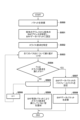
- a communication method executed by the communication device according to the present embodiment will be described with reference to FIG.
- the processing shown in FIG. 9 is executed by the control unit 201 of the communication device.
- the communication device receives a packet.
- IAB donor 101 receives IP packets from CN 130
- IAB nodes receive IP packets from UEs
- IAB nodes receive BAP packets from other IAB nodes.
- the communication device identifies the slice type to be supported by the communication device that transfers the BAP data packet based on the received packet.
- the slice type may be identified based on the destination IP address or address range as described above. Also, when an IAB node receives a BAP packet from another IAB node, the slice type may be identified based on the header of the BAP data packet.
- the communication device determines whether or not another directly connected communication device (adjacent node) supports the slice type identified in S901. For example, in the topology of FIG. 4, when the IAB node 102 receives a BAP data packet from the IAB donor 101, the slice types supported by the IAB nodes 103 and 104 are determined. If any adjacent node determines that it supports the slice request (Yes in S903), the communication device advances the process to S906. In S906, a BAP data packet with NEXT HOP set in the path field is generated based on the information of the adjacent node that satisfies the slice request specified in S902 to S904.
- the communication device transmits the generated BAP data packet to the identified adjacent node (S907). If the communication device receives a BAP data packet at S900, it may update only the path field of the BAP data packet. If the communication device receives an IP packet in S900, it generates a BAP data packet based on the IP packet and sets a value indicating the specified slice request in the packet header. In one example, the SST value is assigned to reserved bits in the packet header.
- S907 and S908 are the same as that of S508 and S509 in FIG. 5, so the explanation is omitted.
- the communication device when relaying a BAP data packet, specifies another communication device that supports the slice type, creates and transmits the BAP data packet. As a result, if each communication device can identify the slice type supported by the adjacent node, the IAB donor 101 can route the BAP data packet through a communication path that satisfies the slice request without creating a routing list.
- the communication device acquires information related to communication history, such as addresses and paths of other communication devices, included in the headers of BAP data packets that have been transmitted and received in the network in the past, and based on the acquisition result, the BAP data packet to identify the destination of the This makes it possible to identify other communication devices that transmit BAP data packets based on the packets that the communication device has transmitted and received in the past.
- the IAB nodes 102 to 105 use the routing list to determine the path ID.
- Another example is to store the path ID and UE IP address of previously received BAP data packets from the IAB donor 101, and convert the IP packets from the UE to the uplink corresponding to the same path or the downlink path. You can set the path and send it.
- the forwarding destination may not be found as a result of forwarding the packet depending on whether or not the adjacent node supports the slice type of the BAP data packet.
- a communication device that receives a notification that it has failed to identify another communication device that supports the slice type can forward the BAP data packet to a neighboring node in a different network than the neighboring node to which it previously sent.
- the present invention supplies a program that implements one or more functions of the above-described embodiments to a system or apparatus via a network or a storage medium, and one or more processors in the computer of the system or apparatus reads and executes the program. It can also be realized by processing to It can also be implemented by a circuit (for example, ASIC) that implements one or more functions.
- a circuit for example, ASIC
- IAB network 101 IAB donor, 102 to 105 IAB nodes, 110 to 118 UE, 201 control unit, 202 storage unit, 203 wireless communication unit, 204 antenna control unit, 301 transmission/reception unit, 302 storage unit, 303 connection control unit, 304 slice request identification unit, 305 route identification unit, 306 notification unit, 307 slice management unit
Landscapes
- Engineering & Computer Science (AREA)
- Computer Networks & Wireless Communication (AREA)
- Signal Processing (AREA)
- Computer Security & Cryptography (AREA)
- Data Exchanges In Wide-Area Networks (AREA)
- Mobile Radio Communication Systems (AREA)
Abstract
Description
受信した第1パケットに基づいて、前記第1パケットの転送を行う前記ネットワーク内の他の通信装置がサポートすべきスライス種別を特定する第1特定手段と、
前記ネットワーク内の他の通信装置がサポートするスライス種別に基づいて前記第1特定手段で特定した前記スライス種別をサポートする他の通信装置を特定する第2特定手段と、
前記第1パケットに基づいて生成されたBAPを使用して通信される第2パケットであって、前記第2特定手段の特定結果に応じてヘッダが設定された第2パケットを、前記第2特定手段で特定した前記他の通信装置に送信する送信手段と、
を備えることを特徴とする。
図1は本発明におけるIABネットワークの一例を示す図である。図1に示すIABネットワーク100は、IABドナー101、IABノード102~105(以下、区別せずIABノードと呼ぶ場合がある)を含む。IABドナー101は、CN130への接続を提供する。IABネットワーク100では、ネットワーク内でのバックホールリンクおよびアクセスリンクの双方でNR(New Radio)通信が用いられる。IABドナー101は、IABノードを含むIABネットワーク(NRバックホールネットワーク)を形成している。ここで、CNはCore Networkの略であり、ユーザ装置であるUE110~118(以下、区別せずUEと呼ぶ場合がある)の認証やネットワークスライス(スライス)の利用登録等の様々な処理を担う。
図5は処理例1に係る通信装置が、IPパケットをBAPデータパケットに生成して送信する方法を示したフローチャートである。以下の説明では、IABドナー101がCN130からIPパケットを受信し、BAPデータパケットを生成してIABノードに送信するものとして説明する。
ここで、図6を参照して、ルーティングリストを作成する処理について説明する。
処理例1では、CN130からのIPパケットをIABドナー101からIABネットワーク100を介して宛先UE117、118へ送信するダウンリンク送信について説明を行った。処理例2では、UE118からの特定のスライスを要求するパケットをIABノード105からIABネットワーク100を介してCN130へ送信するアップリンクの動作について説明を行う。
実施形態1では、通信装置がIPパケットを受信し、BAPデータパケットの転送を行う通信装置がサポートすべきスライス種別と通信経路とを特定し、BAPデータパケットのヘッダを設定して転送を行う処理について説明した。
また、一例では、通信装置は、ネットワーク内の過去に送受信したBAPデータパケットのヘッダに含まれる、他の通信装置のアドレスやパスなど通信履歴に関する情報を取得し、取得結果に基づいてBAPデータパケットの送信先を特定する。これによって、通信装置が過去に送受信したパケットに基づいてBAPデータパケットを送信する他の通信装置を特定することができる。
Claims (14)
- BAP(Backhaul Adaptation Protocol)を使用して通信するネットワークの通信装置であって、
受信した第1パケットに基づいて、前記第1パケットの転送を行う前記ネットワーク内の他の通信装置がサポートすべきスライス種別を特定する第1特定手段と、
前記ネットワーク内の他の通信装置がサポートするスライス種別に基づいて前記第1特定手段で特定した前記スライス種別をサポートする他の通信装置を特定する第2特定手段と、
前記第1パケットに基づいて生成されたBAPを使用して通信される第2パケットであって、前記第2特定手段の特定結果に応じてヘッダが設定された第2パケットを、前記第2特定手段で特定した前記他の通信装置に送信する送信手段と、
を備えることを特徴とする通信装置。 - 前記第2特定手段は、前記スライス種別をサポートする前記他の通信装置として前記スライス種別をサポートする通信経路を特定し、
前記第2パケットのヘッダは、前記通信装置から前記第2パケットの宛先の他の通信装置までの通信経路の識別子を含むことを特徴とする請求項1に記載の通信装置。 - 前記ネットワーク内でパケットを転送するための通信経路の識別子と、前記ネットワークにおける他の通信装置のアドレスと、他の通信装置がサポートするスライス種別とを関連付けたルーティングリストを格納する格納手段をさらに有し、
前記第2特定手段は、前記ルーティングリストに基づいて前記第1特定手段で特定した前記スライス種別をサポートする通信経路に含まれる他の通信装置を特定することを特徴とする請求項2に記載の通信装置。 - 前記ルーティングリストを作成する作成手段をさらに有することを特徴とする請求項3に記載の通信装置。
- 前記通信経路の前記識別子は、前記第2パケットのパスフィールドに設定されることを特徴とする請求項2から4のいずれか1項に記載の通信装置。
- 前記第2特定手段は、前記スライス種別をサポートし、前記通信装置から直接接続される他の通信装置を特定し、
前記第2パケットのヘッダは、NEXT HOPとして前記他の通信装置のBAPアドレスを含むことを特徴とする請求項1に記載の通信装置。 - 前記通信装置は、前記ネットワーク内でバックホールリンクおよびアクセスリンクの双方にNR(New Radio)通信を用いるIAB(Integrated Access Backhaul)ノードまたは前記IABノードを統括制御するIABドナーであることを特徴とする請求項1から6のいずれか1項に記載の通信装置。
- 前記第1特定手段は、前記第1パケットの宛先アドレスまたは前記第1パケットのアプリヘッダに基づいて前記スライス種別を特定することを特徴とする請求項1から7のいずれか1項に記載の通信装置。
- 前記第1特定手段で特定した前記スライス種別をサポートする他の通信装置が前記第2特定手段によって特定できない場合に、特定に失敗したことを通知する通知手段をさらに備えることを特徴とする請求項1から8のいずれか1項に記載の通信装置。
- 前記ネットワークにおいて過去に送受信された第2パケットのヘッダに関する情報を取得する第2取得手段をさらに有し、
前記第2特定手段は、前記第1特定手段によって特定された前記スライス種別をサポートする他の通信装置を前記第2取得手段の取得結果に基づいて特定することを特徴とする請求項1から9のいずれか1項に記載の通信装置。 - 前記第1パケットはIP(Internet Protocol)パケットであり、前記通信装置は前記第1パケットをCN(Core Network)ノードまたはユーザ装置(UE)から受信することを特徴とする請求項1から10のいずれか1項に記載の通信装置。
- 前記第1パケットはBAPデータパケットであり、前記通信装置は前記第1パケットをIABドナーまたはIABノードから受信することを特徴とする請求項1から10のいずれか1項に記載の通信装置。
- BAP(Backhaul Adaptation Protocol)を使用して通信するネットワークの通信装置の通信方法であって、
受信した第1パケットに基づいて、前記第1パケットの転送を行う前記ネットワーク内の他の通信装置がサポートすべきスライス種別を特定することと、
前記ネットワーク内の他の通信装置がサポートするスライス種別に基づいて、特定した前記スライス種別をサポートする他の通信装置を特定することと、
前記第1パケットに基づいて生成されたBAPを使用して通信される第2パケットであって、特定結果に応じてヘッダが設定された第2パケットを、特定した前記他の通信装置に送信することと、
を含むことを特徴とする通信方法。 - BAP(Backhaul Adaptation Protocol)を使用して通信するネットワークの通信装置により実行されるプログラムであって、
受信した第1パケットに基づいて、前記第1パケットの転送を行う前記ネットワーク内の他の通信装置がサポートすべきスライス種別を特定する第1特定工程と、
前記ネットワーク内の他の通信装置がサポートするスライス種別に基づいて、前記第1特定工程において特定した前記スライス種別をサポートする他の通信装置を特定する第2特定工程と、
前記第1パケットに基づいて生成されたBAPを使用して通信される第2パケットであって、前記第2特定工程の特定結果に応じてヘッダが設定された第2パケットを、前記第2特定工程で特定した前記他の通信装置に送信する送信工程と、
を実行させることを特徴とするプログラム。
Priority Applications (4)
| Application Number | Priority Date | Filing Date | Title |
|---|---|---|---|
| CN202280076331.6A CN118251877A (zh) | 2021-11-18 | 2022-10-06 | 通信设备、通信方法和程序 |
| EP22895265.1A EP4436129A4 (en) | 2021-11-18 | 2022-10-06 | COMMUNICATION DEVICE, COMMUNICATION METHOD, AND PROGRAM |
| KR1020247019038A KR102860842B1 (ko) | 2021-11-18 | 2022-10-06 | 통신 장치, 통신 방법, 및 비일시적 컴퓨터-판독가능한 저장 매체 |
| US18/659,071 US20240292267A1 (en) | 2021-11-18 | 2024-05-09 | Communication apparatus, communication method, and non-transitory computer-readable storage medium |
Applications Claiming Priority (2)
| Application Number | Priority Date | Filing Date | Title |
|---|---|---|---|
| JP2021188072A JP7701859B2 (ja) | 2021-11-18 | 2021-11-18 | 通信装置、通信方法、およびプログラム |
| JP2021-188072 | 2021-11-18 |
Related Child Applications (1)
| Application Number | Title | Priority Date | Filing Date |
|---|---|---|---|
| US18/659,071 Continuation US20240292267A1 (en) | 2021-11-18 | 2024-05-09 | Communication apparatus, communication method, and non-transitory computer-readable storage medium |
Publications (1)
| Publication Number | Publication Date |
|---|---|
| WO2023089979A1 true WO2023089979A1 (ja) | 2023-05-25 |
Family
ID=86396722
Family Applications (1)
| Application Number | Title | Priority Date | Filing Date |
|---|---|---|---|
| PCT/JP2022/037408 Ceased WO2023089979A1 (ja) | 2021-11-18 | 2022-10-06 | 通信装置、通信方法、およびプログラム |
Country Status (6)
| Country | Link |
|---|---|
| US (1) | US20240292267A1 (ja) |
| EP (1) | EP4436129A4 (ja) |
| JP (1) | JP7701859B2 (ja) |
| KR (1) | KR102860842B1 (ja) |
| CN (1) | CN118251877A (ja) |
| WO (1) | WO2023089979A1 (ja) |
Families Citing this family (1)
| Publication number | Priority date | Publication date | Assignee | Title |
|---|---|---|---|---|
| US12426000B2 (en) * | 2022-09-12 | 2025-09-23 | Verizon Patent And Licensing Inc. | Systems and methods for providing a radio access network fallback for multimedia priority services |
Citations (6)
| Publication number | Priority date | Publication date | Assignee | Title |
|---|---|---|---|---|
| JP2019534625A (ja) | 2016-09-29 | 2019-11-28 | エイ・ティ・アンド・ティ インテレクチュアル プロパティ アイ,エル.ピー. | アクセス・バックホール統合(iab)無線ネットワークの初期アクセス及び無線リソース管理 |
| WO2020080044A1 (ja) * | 2018-10-16 | 2020-04-23 | ソニー株式会社 | 通信制御装置、通信装置、通信制御方法、通信方法、通信制御プログラム、通信プログラム、及び通信システム |
| US20200351930A1 (en) * | 2019-05-01 | 2020-11-05 | Qualcomm Incorporated | In-advance scheduling for low-latency traffic |
| WO2021006691A1 (en) * | 2019-07-10 | 2021-01-14 | Samsung Electronics Co., Ltd. | Method and device for routing data packet, and method and device for controlling data packet transmission |
| US20210314811A1 (en) * | 2020-04-06 | 2021-10-07 | Cisco Technology, Inc. | Secure creation of application containers for fifth generation cellular network slices |
| JP2021188072A (ja) | 2020-05-27 | 2021-12-13 | 株式会社神戸製鋼所 | 粉末冶金用鉄基混合物、成形体及び焼結体 |
-
2021
- 2021-11-18 JP JP2021188072A patent/JP7701859B2/ja active Active
-
2022
- 2022-10-06 CN CN202280076331.6A patent/CN118251877A/zh active Pending
- 2022-10-06 KR KR1020247019038A patent/KR102860842B1/ko active Active
- 2022-10-06 EP EP22895265.1A patent/EP4436129A4/en active Pending
- 2022-10-06 WO PCT/JP2022/037408 patent/WO2023089979A1/ja not_active Ceased
-
2024
- 2024-05-09 US US18/659,071 patent/US20240292267A1/en active Pending
Patent Citations (6)
| Publication number | Priority date | Publication date | Assignee | Title |
|---|---|---|---|---|
| JP2019534625A (ja) | 2016-09-29 | 2019-11-28 | エイ・ティ・アンド・ティ インテレクチュアル プロパティ アイ,エル.ピー. | アクセス・バックホール統合(iab)無線ネットワークの初期アクセス及び無線リソース管理 |
| WO2020080044A1 (ja) * | 2018-10-16 | 2020-04-23 | ソニー株式会社 | 通信制御装置、通信装置、通信制御方法、通信方法、通信制御プログラム、通信プログラム、及び通信システム |
| US20200351930A1 (en) * | 2019-05-01 | 2020-11-05 | Qualcomm Incorporated | In-advance scheduling for low-latency traffic |
| WO2021006691A1 (en) * | 2019-07-10 | 2021-01-14 | Samsung Electronics Co., Ltd. | Method and device for routing data packet, and method and device for controlling data packet transmission |
| US20210314811A1 (en) * | 2020-04-06 | 2021-10-07 | Cisco Technology, Inc. | Secure creation of application containers for fifth generation cellular network slices |
| JP2021188072A (ja) | 2020-05-27 | 2021-12-13 | 株式会社神戸製鋼所 | 粉末冶金用鉄基混合物、成形体及び焼結体 |
Non-Patent Citations (1)
| Title |
|---|
| See also references of EP4436129A4 |
Also Published As
| Publication number | Publication date |
|---|---|
| CN118251877A (zh) | 2024-06-25 |
| EP4436129A1 (en) | 2024-09-25 |
| KR20240099446A (ko) | 2024-06-28 |
| US20240292267A1 (en) | 2024-08-29 |
| JP2023074895A (ja) | 2023-05-30 |
| EP4436129A4 (en) | 2025-10-22 |
| JP7701859B2 (ja) | 2025-07-02 |
| KR102860842B1 (ko) | 2025-09-17 |
Similar Documents
| Publication | Publication Date | Title |
|---|---|---|
| JP4733190B2 (ja) | エンド・ノードが割り当てられた近隣発見のための方法および装置 | |
| JP5185450B2 (ja) | 物理接続ポイント識別子を用いる通信方法および装置 | |
| JP5134136B2 (ja) | デュアル通信リンクをサポートする物理接続ポイント識別子を用いる通信方法および装置 | |
| CN101657016B (zh) | 无线lan中继装置、无线lan中继方法及计算机程序 | |
| JP7677445B2 (ja) | 情報送受信方法、データ送信方法及び装置 | |
| WO2020204776A1 (en) | Resource alignement at a child node and at a parent node of an integrated access and backhaul network | |
| JP7701859B2 (ja) | 通信装置、通信方法、およびプログラム | |
| US20230209439A1 (en) | Route discovery in a mesh network | |
| JP7209854B2 (ja) | デバイスツーデバイス間相互接続のローカルエリアネットワークのための方法および装置 | |
| EP4513968A1 (en) | Communication control device, communication device control method, and program | |
| WO2021029291A1 (ja) | 経路指定された信号を転送する中継装置、制御方法、及びプログラム | |
| GB2593499A (en) | Cellular telecommunications network | |
| CN118140587A (zh) | 无线路由方法及装置 | |
| EP4128863A1 (en) | Cellular telecommunications network | |
| JP7835283B2 (ja) | ルーティング方法、装置及びシステム | |
| JP7712786B2 (ja) | 通信装置、通信装置の制御方法、プログラム | |
| JP2020088574A (ja) | 中継装置、ネットワークシステム、中継方法およびプログラム | |
| JP7405530B2 (ja) | 経路指定された信号を転送する中継装置、制御方法、及びプログラム | |
| JP2025511943A (ja) | 情報構成方法、装置及び通信システム | |
| CN118556424A (zh) | Iab宿主设备以及传输迁移管理方法 | |
| GB2611233A (en) | Cellular telecommunications network |
Legal Events
| Date | Code | Title | Description |
|---|---|---|---|
| 121 | Ep: the epo has been informed by wipo that ep was designated in this application |
Ref document number: 22895265 Country of ref document: EP Kind code of ref document: A1 |
|
| WWE | Wipo information: entry into national phase |
Ref document number: 202280076331.6 Country of ref document: CN |
|
| WWE | Wipo information: entry into national phase |
Ref document number: 1020247019038 Country of ref document: KR |
|
| WWE | Wipo information: entry into national phase |
Ref document number: 2022895265 Country of ref document: EP |
|
| ENP | Entry into the national phase |
Ref document number: 2022895265 Country of ref document: EP Effective date: 20240618 |