WO2023112442A1 - 生体成分濃度測定試薬、測定方法およびセンサ - Google Patents
生体成分濃度測定試薬、測定方法およびセンサ Download PDFInfo
- Publication number
- WO2023112442A1 WO2023112442A1 PCT/JP2022/037473 JP2022037473W WO2023112442A1 WO 2023112442 A1 WO2023112442 A1 WO 2023112442A1 JP 2022037473 W JP2022037473 W JP 2022037473W WO 2023112442 A1 WO2023112442 A1 WO 2023112442A1
- Authority
- WO
- WIPO (PCT)
- Prior art keywords
- reagent
- biological component
- sensor
- group
- blood
- Prior art date
- Legal status (The legal status is an assumption and is not a legal conclusion. Google has not performed a legal analysis and makes no representation as to the accuracy of the status listed.)
- Ceased
Links
Images



Classifications
-
- G—PHYSICS
- G01—MEASURING; TESTING
- G01N—INVESTIGATING OR ANALYSING MATERIALS BY DETERMINING THEIR CHEMICAL OR PHYSICAL PROPERTIES
- G01N21/00—Investigating or analysing materials by the use of optical means, i.e. using sub-millimetre waves, infrared, visible or ultraviolet light
- G01N21/75—Systems in which material is subjected to a chemical reaction, the progress or the result of the reaction being investigated
- G01N21/77—Systems in which material is subjected to a chemical reaction, the progress or the result of the reaction being investigated by observing the effect on a chemical indicator
- G01N21/78—Systems in which material is subjected to a chemical reaction, the progress or the result of the reaction being investigated by observing the effect on a chemical indicator producing a change of colour
-
- C—CHEMISTRY; METALLURGY
- C12—BIOCHEMISTRY; BEER; SPIRITS; WINE; VINEGAR; MICROBIOLOGY; ENZYMOLOGY; MUTATION OR GENETIC ENGINEERING
- C12Q—MEASURING OR TESTING PROCESSES INVOLVING ENZYMES, NUCLEIC ACIDS OR MICROORGANISMS; COMPOSITIONS OR TEST PAPERS THEREFOR; PROCESSES OF PREPARING SUCH COMPOSITIONS; CONDITION-RESPONSIVE CONTROL IN MICROBIOLOGICAL OR ENZYMOLOGICAL PROCESSES
- C12Q1/00—Measuring or testing processes involving enzymes, nucleic acids or microorganisms; Compositions therefor; Processes of preparing such compositions
- C12Q1/26—Measuring or testing processes involving enzymes, nucleic acids or microorganisms; Compositions therefor; Processes of preparing such compositions involving oxidoreductase
-
- C—CHEMISTRY; METALLURGY
- C12—BIOCHEMISTRY; BEER; SPIRITS; WINE; VINEGAR; MICROBIOLOGY; ENZYMOLOGY; MUTATION OR GENETIC ENGINEERING
- C12Q—MEASURING OR TESTING PROCESSES INVOLVING ENZYMES, NUCLEIC ACIDS OR MICROORGANISMS; COMPOSITIONS OR TEST PAPERS THEREFOR; PROCESSES OF PREPARING SUCH COMPOSITIONS; CONDITION-RESPONSIVE CONTROL IN MICROBIOLOGICAL OR ENZYMOLOGICAL PROCESSES
- C12Q1/00—Measuring or testing processes involving enzymes, nucleic acids or microorganisms; Compositions therefor; Processes of preparing such compositions
- C12Q1/26—Measuring or testing processes involving enzymes, nucleic acids or microorganisms; Compositions therefor; Processes of preparing such compositions involving oxidoreductase
- C12Q1/32—Measuring or testing processes involving enzymes, nucleic acids or microorganisms; Compositions therefor; Processes of preparing such compositions involving oxidoreductase involving dehydrogenase
-
- C—CHEMISTRY; METALLURGY
- C12—BIOCHEMISTRY; BEER; SPIRITS; WINE; VINEGAR; MICROBIOLOGY; ENZYMOLOGY; MUTATION OR GENETIC ENGINEERING
- C12Q—MEASURING OR TESTING PROCESSES INVOLVING ENZYMES, NUCLEIC ACIDS OR MICROORGANISMS; COMPOSITIONS OR TEST PAPERS THEREFOR; PROCESSES OF PREPARING SUCH COMPOSITIONS; CONDITION-RESPONSIVE CONTROL IN MICROBIOLOGICAL OR ENZYMOLOGICAL PROCESSES
- C12Q1/00—Measuring or testing processes involving enzymes, nucleic acids or microorganisms; Compositions therefor; Processes of preparing such compositions
- C12Q1/54—Measuring or testing processes involving enzymes, nucleic acids or microorganisms; Compositions therefor; Processes of preparing such compositions involving glucose or galactose
-
- G—PHYSICS
- G01—MEASURING; TESTING
- G01N—INVESTIGATING OR ANALYSING MATERIALS BY DETERMINING THEIR CHEMICAL OR PHYSICAL PROPERTIES
- G01N33/00—Investigating or analysing materials by specific methods not covered by groups G01N1/00 - G01N31/00
- G01N33/48—Biological material, e.g. blood, urine; Haemocytometers
- G01N33/50—Chemical analysis of biological material, e.g. blood, urine; Testing involving biospecific ligand binding methods; Immunological testing
- G01N33/52—Use of compounds or compositions for colorimetric, spectrophotometric or fluorometric investigation, e.g. use of reagent paper and including single- and multilayer analytical elements
Definitions
- the present invention relates to a biocomponent concentration measuring reagent, a biocomponent concentration measuring method, and a sensor.
- the present invention relates to biocomponent concentration measuring reagents, biocomponent concentration measuring methods and sensors used to measure the concentration of an analyte such as glucose contained in a whole blood sample.
- the biological component measurement reagents described above are often used as solid reagents (dry reagents) that are dried after being coated with a reagent solution in order to be incorporated into a sensor or the like.
- the dry reagent contains a low-molecular-weight salt compound such as nitrite, there is a problem in speeding up the detection reaction.
- an object of the present invention is to provide a means for rapidly measuring biocomponent concentrations even in hemolyzed whole blood samples.
- a biological component concentration measuring reagent comprising a chromogenic dye, an oxidoreductase, a hemolytic agent, and a low-molecular-weight salt compound, and further comprising sucralose.
- the salt compound is at least one selected from the group consisting of transition metal salts and inorganic salts; 3. The biological component concentration measurement reagent according to .
- the inorganic salt is a nitrite; 3.
- the biological component concentration measurement reagent according to .
- the content mass ratio of the sucralose to the low-molecular-weight salt compound is 1 to 10; ⁇ 3.
- the biocomponent concentration measuring reagent according to any one of 1.
- the sugar alcohol is at least one selected from the group consisting of lactitol, erythritol, sorbitol, xylitol, and mannitol; 3.
- the biological component concentration measurement reagent according to .
- the molar ratio of the sugar alcohol to the sucralose is 10% or more; or 6. 3. The biological component concentration measurement reagent according to .
- a whole blood sample was prepared as follows:1. ⁇ 7. contacting with the biological component concentration measuring reagent according to any one of 1, measuring the amount of color development, and quantifying the concentration of the biological component in the whole blood sample based on the amount of color development. Measuring method.
- the biocomponent is glucose, cholesterol, triglyceride, nicotinamide adenine dinucleotide phosphate (NADPH), nicotinamide adenine dinucleotide (NADH), or uric acid; The method described in .
- a sensor for measuring biocomponent concentration in a whole blood sample comprising a reaction portion, the reaction portion comprising:1. ⁇ 7.
- a sensor comprising the biological component concentration measurement reagent according to any one of 1.
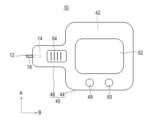
- FIG. 1 is a plan view schematically showing a blood glucose meter (component measuring device) equipped with a measurement sensor according to the present embodiment.
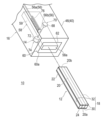
- FIG. 2 is an enlarged perspective view showing the sensor and the photometric portion of the apparatus main body shown in FIG.
- FIG. 3 is a top view showing the measuring sensor of FIG. 1.
- FIG. 4A is a first plan view showing the mounting operation of the measuring sensor and the apparatus main body of FIG. 1.
- FIG. 4B is a second cross-sectional plan view showing the mounting operation following FIG. 4A.
- FIG. 5A is a schematic diagram of a blood glucose meter sensor used in Examples.
- FIG. 5B is a diagram for explaining the length, width, and thickness of the inner surface of the blood glucose meter sensor of FIG. 5A.
- FIG. 6A is a photograph showing an image of the dried reagent and a developed image.
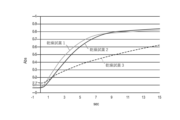
- FIG. 6B is a graph showing changes in color absorbance over time.
- FIG. 7 is a graph showing the relationship between the glucose concentration and the absorbance of the formazan and Zn 2+ chelate compounds when an aqueous glucose solution is applied to a blood glucose meter sensor (blood glucose level measuring sensor) to which tetrazolium salt 1 is applied.
- a first aspect of the present disclosure is a biological component concentration measuring reagent containing a coloring dye, an oxidoreductase, a hemolytic agent, and a low-molecular-weight salt compound, and further containing sucralose.
- a whole blood sample is brought into contact with the biological component concentration measuring reagent according to the first aspect of the present disclosure, the amount of color development is measured, and based on the amount of color development, A method of measuring biocomponent concentration comprising quantifying the concentration of a biocomponent.
- a third aspect of the present disclosure is a sensor for measuring a biological component concentration in a whole blood sample, having a reaction portion, wherein the reaction portion is the biological component concentration measurement sensor according to the first aspect of the present disclosure.
- a sensor containing a reagent is a sensor for measuring a biological component concentration in a whole blood sample, having a reaction portion, wherein the reaction portion is the biological component concentration measurement sensor according to the first aspect of the present disclosure.
- the concentration of biocomponents (that is, contained in both blood cells and plasma) can be rapidly measured for hemolyzed whole blood samples.
- biological component concentration measurement reagent is also simply referred to as “reagent” or “reagent of the present disclosure”.
- X to Y includes X and Y and means “X or more and Y or less”.
- M means mol/L.
- operations and measurements of physical properties are performed under the conditions of room temperature (20 to 25° C.)/relative humidity of 40 to 50% RH.
- a first aspect of the present disclosure is a biological component concentration measuring reagent comprising a chromogenic dye, an oxidoreductase, a hemolyzing agent, and a low-molecular-weight salt compound, and further comprising sucralose.
- a biological component concentration measuring reagent comprising a chromogenic dye, an oxidoreductase, a hemolyzing agent, and a low-molecular-weight salt compound, and further comprising sucralose.
- low-molecular-weight salt compound Small molecules specifically refer to compounds with a molecular weight of less than 1000, preferably less than 500, more preferably less than 300. Although the lower limit of the molecular weight of the low-molecular-weight salt compound is not particularly limited, it is usually 30 or more. The low-molecular-weight salt compounds do not contain color-developing dyes.
- the salt compound is a hydrate, the compound itself, excluding water, is the salt compound. That is, when calculating the molecular weight, the molecular weight excluding the molecular weight of water is the molecular weight of the salt compound, and the content of the salt compound is the content excluding the content of water.
- a preferred embodiment of the low-molecular-weight salt compound is at least one selected from the group consisting of transition metal salts and inorganic salts.
- the low-molecular-weight salt compounds may be used singly or in combination of two or more.
- the formazan produced by the reduction reaction of the tetrazolium salt has a maximum absorption wavelength on the long wavelength side.
- the tetrazolium salt of the following formula (1) can further shift the maximum absorption wavelength to the longer wavelength side by forming a chelate compound with transition metal ions.
- the reagents of the present disclosure preferably contain transition metal salts. That is, in a preferred form of the invention, the reagent further contains a transition metal salt.
- the biological component concentration measuring reagent contains a tetrazolium salt (especially a tetrazolium salt of formula (1) below) as a coloring dye, and further contains a transition metal salt.
- the biological component concentration measuring reagent contains a tetrazolium salt (especially a tetrazolium salt of formula (1) below) as a coloring dye, and further contains an oxidoreductase and a transition metal salt.
- formazan has a maximum absorption wavelength in a wavelength region (600 nm or more) that does not overlap with the main absorption band of hemoglobin, even when measuring the biocomponent concentration in a whole blood sample. Therefore, it is possible to further improve the measurement sensitivity of the biological component concentration even for a biological sample, particularly a whole blood sample.
- the transition metal salt (also referred to as transition metal compound) is not particularly limited. Specifically, compounds capable of generating transition metal ions such as nickel ions (Ni 2+ ), cobalt ions (Co 2+ ), zinc ions (Zn 2+ ), and copper ions (Cu 2+ ) can be used. With such ions, the maximum absorption wavelength of formazan can be shifted to longer wavelengths. Among these, compounds capable of generating nickel ions or zinc ions are preferred as transition metal salts. In particular, zinc ions are more preferable because time-dependent structural changes are less likely to occur when they react with tetrazolium salts.
- the transition metal salt is a zinc salt.
- the compound that generates transition metal ions is not particularly limited, but is preferably one that generates ions in an aqueous liquid (eg, water, buffer solution, blood, body fluid). Examples thereof include transition metal salts such as chlorides, bromides, sulfates and acetates of the above transition metals.
- the above transition metal salts may be used singly or in combination of two or more.
- the content of the transition metal salt is not particularly limited.
- the coloring dye is a tetrazolium salt, it can be appropriately selected according to the desired maximum absorption wavelength of the formazan compound.
- the content of the transition metal salt is preferably 0.1 to 10 mol, more preferably 0.5 to 4 mol, particularly The amount is preferably more than 1 mol and less than 3 mol.
- the content of the transition metal salt (in terms of solid content) is preferably 5 to 30 parts by mass, more preferably 5 to 15 parts by mass, and particularly The amount is preferably more than 5 parts by weight and less than 12 parts by weight. With such an amount, the maximum absorption wavelength of the formazan compound can be shifted to a desired wavelength range. In addition, with such an amount, it is possible to further suppress changes in wavelength characteristics due to structural changes over time.
- the content of the transition metal salt is substantially the same as the proportion of the transition metal salt charged in preparing the reagent.
- the content of the transition metal salts means the total amount of the transition metal salts to be blended.
- inorganic salts include salts of inorganic acids such as hydrochloric acid, nitric acid, nitrous acid, sulfuric acid, sulfurous acid, thiosulfuric acid, phosphonic acid, phosphoric acid, phosphomolybdic acid, phosphotungstic acid, and vanadic acid.
- inorganic salts include inorganic salts such as lithium, sodium, potassium, calcium, magnesium and ammonium salts.
- inorganic salts include sodium nitrate, potassium nitrate, ammonium nitrate, magnesium nitrate, calcium nitrate, sodium nitrite, potassium nitrite, ammonium nitrite, sodium sulfate, potassium sulfate, ammonium sulfate, calcium sulfate, magnesium sulfate, sodium sulfite, Potassium sulfite, calcium sulfite, magnesium sulfite, potassium thiosulfate, lithium sulfate, magnesium sulfate, sodium thiosulfate, sodium bisulfite, sodium bisulfate, potassium bisulfate, disodium glutarate, lithium fluoride, sodium fluoride, fluoride Potassium, calcium fluoride, ammonium fluoride, potassium chloride, sodium chloride, ammonium chloride, calcium chloride, potassium bromide, sodium bromide, ammonium bromide, calcium bromide, sodium
- a preferred aspect of the inorganic salt is nitrite.
- Hemoglobin (Fe(II)) is liberated from red blood cells when a hemolyzed whole blood sample is subjected.
- a tetrazolium salt is used as a color-developing dye, non-enzymatic reduction of the tetrazolium salt by hemoglobin produces colored formazan, resulting in false color development.
- nitrite which may be included in the reagents of the present disclosure, acts as a mattifying agent that oxidizes the core divalent iron ions (Fe 2+ ) in hemoglobin to trivalent iron ions (Fe 3+ ).
- nitrous acid takes electrons from hemoglobin released from red blood cells before the coloring dye, thereby suppressing non-enzymatic reduction (false coloring) of the coloring dye.
- nitrites for example, sodium nitrite, potassium nitrite, calcium nitrite, ammonium nitrite, etc. can be used.
- Sodium nitrite and potassium nitrite are preferable, and sodium nitrite is more preferable, from the viewpoints of further improving the effect of the present invention, stability and versatility.
- Nitrite may be used individually by 1 type, or may be used in combination of 2 or more type.
- the content of nitrite in the reagent is, for example, 0.8 to 10.0 parts by mass, preferably 1.5 to 7.5 parts by mass with respect to 100 parts by mass of the total amount (solid content) of the reagent, More preferably, it is 2.0 parts by mass or more and less than 5.0 parts by mass. With such an amount, false coloring can be suppressed more effectively. Therefore, analyte concentrations (eg, glucose concentrations) can be measured with greater accuracy even for hemolyzed whole blood samples. Also, analyte concentrations (eg, glucose concentrations) in whole blood samples can be measured with greater sensitivity.
- the nitrite content is substantially the same as the proportion of the nitrite charged in preparing the reagent. Moreover, when the reagent contains two or more nitrites, the content of the above nitrites means the total amount of the nitrites to be blended.
- the content of nitrite is preferably 50 mol or less per 1 mol of the coloring dye. That is, in a preferred embodiment of the present invention, the nitrite is contained in a ratio of 50 mol or less per 1 mol of the coloring dye.
- the nitrite competes with the coloring pigment, inhibiting the reaction between the coloring pigment and the enzyme (coloration inhibition).
- the coloring dye is a tetrazolium salt and the reagent further contains an oxidoreductase
- the nitrite takes electrons from the formazan produced from the tetrazolium salt, making it impossible to obtain a coloring amount corresponding to the object to be measured.
- the content of nitrite is more preferably less than 10 mol, still more preferably less than 5 mol, particularly preferably 3.0 mol, per 1 mol of the coloring dye when converted to nitrite ion (NO 2 ⁇ ). is less than
- the nitrite content is preferably 0.2 mol or more, more preferably more than 0.5 mol, and particularly preferably more than 1.0 mol, per 1 mol of the coloring dye. Within such a range, non-enzymatic coloring and inhibition of coloring can be more effectively suppressed. In addition, it is possible to secure a sufficient amount of coloring by the coloring dye for measurement of the object to be measured.
- the chromogenic dye is a tetrazolium salt and the reagent further contains an oxidoreductase (e.g., glucose dehydrogenase)
- the chromogenic dye can steal electrons from the oxidoreductase in preference to nitrite, so nitrite Suppresses inhibition of color development by (salt) (color development reaction can proceed more efficiently). Therefore, analyte concentrations can be measured with greater accuracy even for hemolyzed whole blood samples. That is, according to a preferred embodiment of the present disclosure, nitrous acid or a salt thereof is contained at a ratio of 0.2 mol or more and less than 10 mol with respect to 1 mol of the coloring dye.
- the nitrite is contained in a ratio of more than 0.5 mol and less than 5 mol per 1 mol of the coloring dye.
- nitrous acid or a salt thereof is contained in a ratio of more than 1.0 mol and less than 3.0 mol with respect to 1 mol of the coloring dye.
- the above nitrite content is substantially equivalent to the ratio of the total charged amount (mol) of nitrite to the total charged amount (mol) of color-developing dye in preparing the reagent.
- the content of nitrite is obtained by dividing the total amount (mol) of nitrite charged by the total amount (mol) of coloring dye when preparing the reagent, obtained to the second decimal place, and rounded off. Use the value calculated to the first decimal place.
- the reagents of the present disclosure contain both transition metal salts and nitrites.
- Reagents of the present disclosure include disaccharides or derivatives thereof.
- precipitation of low-molecular-weight salt compounds such as nitrites and transition metal salts can be suppressed, and the reagent can be made transparent. More specifically, the dry reagent can be made amorphous by suppressing precipitation of salt compounds.
- the dissolution of the reagent in blood can be accelerated compared to when the disaccharide or derivative thereof is not included. Therefore, the analyte (biological component) concentration can be measured more rapidly even when salt compounds are included.
- the biological component concentration measuring reagent contains a tetrazolium salt (especially a tetrazolium salt of the following formula (1)) as a coloring dye, and further sucralose (1′,4,6′-trichlorogalactosucrose), sucrose , trehalose.
- the biological component concentration measuring reagent contains a tetrazolium salt (particularly the tetrazolium salt of formula (1)) as a coloring dye, and further contains sucralose, an oxidoreductase and a transition metal salt.
- the content of the disaccharide or derivative thereof in the reagent of the present disclosure is not particularly limited, but can be appropriately selected according to the composition of the reagent.
- the content of the disaccharide or its derivative is preferably 10 to 50 parts by mass, more preferably 15 to 45 parts by mass, and particularly preferably 15 parts by mass with respect to 100 parts by mass of the total amount (solid content) of the reagent. parts and less than 40 parts by mass. With such an amount, precipitation of low-molecular-weight salt compounds can be more effectively suppressed, and the reagent can be made amorphous. Amorphized reagents have transparency. Therefore, analyte (biological component) concentrations can be measured much more quickly.
- the content mass ratio of the disaccharide or derivative thereof to the low-molecular salt compound is preferably 1 to 10, more preferably more than 1 and 5 or less, and 1.5 to 5. Even more preferred. With such a content mass ratio, precipitation of low-molecular-weight salt compounds can be more effectively suppressed, and the transparency of the reagent can be more effectively achieved (false coloring can be further suppressed and prevented). Therefore, the analyte (biological component) concentration can be measured with even higher accuracy. Also, the content mass ratio of sucralose to the low-molecular-weight salt compound is preferably 1 to 10, more preferably more than 1 and 5 or less, and even more preferably 1.5 to 5.
- precipitation of low-molecular-weight salt compounds can be more effectively suppressed, and the transparency of the reagent can be more effectively achieved (false coloring can be further suppressed and prevented). Therefore, the analyte (biological component) concentration can be measured with even higher accuracy.
- the reagents of the present disclosure preferably contain sugar alcohols. Thereby, wettability can be improved. Therefore, since the analyte (biological component) spreads quickly over the entire reaction section (good spreadability), the analyte (biological component) can react in the entire reaction section. Therefore, the analyte (biological component) concentration can be measured with higher accuracy. That is, in a preferred embodiment of the present invention, the biological component concentration measuring reagent further contains a sugar alcohol. In a more preferred embodiment of the present invention, the biological component concentration measuring reagent contains a tetrazolium salt (especially a tetrazolium salt of the following formula (1)) as a coloring dye, and further contains a sugar alcohol.
- a tetrazolium salt especially a tetrazolium salt of the following formula (1)
- the biological component concentration measuring reagent contains a tetrazolium salt (especially a tetrazolium salt of the following formula (1)) as a coloring dye, and further comprises a sugar alcohol, an oxidoreductase, a transition metal salt, an inorganic salt and a Contains sugars or derivatives thereof. Furthermore, in a particularly preferred embodiment of the present invention, the biological component concentration measuring reagent contains a tetrazolium salt (especially a tetrazolium salt of the following formula (1)) as a coloring dye, and further comprises sugar alcohol, oxidoreductase, transition metal salt, and inorganic salt. and sucralose.
- a tetrazolium salt especially a tetrazolium salt of the following formula (1)
- sugar alcohols examples include lactitol, erythritol, sorbitol, xylitol, mannitol, and maltitol.
- lactitol, erythritol, sorbitol, xylitol, and mannitol are preferred from the viewpoint of suppressing false coloring of coloring dyes, and erythritol, sorbitol, xylitol, and mannitol are more preferred from the viewpoint of further improving wettability, and sorbitol is preferred. Especially preferred.
- the sugar alcohol content is not particularly limited, but can be appropriately selected according to the composition of the reagent.
- the content of the sugar alcohol is preferably 0.1 to 15 parts by mass, more preferably 0.5 to 15 parts by mass, particularly preferably 1 part by mass, based on 100 parts by mass of the total amount (solid content) of the reagent. It is an amount that exceeds parts by mass and is less than 10 parts by mass. With such an amount, the wettability of the dry reagent can be more effectively improved. Therefore, the analyte (biological component) spreads throughout the dry reagent more quickly. Therefore, the analyte (biological component) can more reliably react with the whole dry reagent, so that the concentration of the target substance can be measured with higher accuracy.
- the sugar alcohols used here do not include sucralose.
- the reagent of the present disclosure comprises a disaccharide or derivative thereof (particularly sucralose) and a sugar alcohol
- the molar ratio of sugar alcohol to disaccharide or derivative thereof (particularly sucralose) is 10% or more. % or more is more preferable.
- the blood expandability is further improved.
- the molar ratio of sugar alcohol to disaccharides or derivatives thereof (especially sucralose) is preferably 200% or less, more preferably 150% or less, and from the viewpoint of transparency. Therefore, it is more preferably 100% or less, and from the viewpoint of high temperature deterioration, it is more preferably 50% or less, and particularly preferably 30% or less.
- the value obtained using each molar concentration obtained to the first decimal place is adopted.
- Hemolytic agent Reagents of the present disclosure include hemolytic agents.
- red blood cells hematocrit value
- the amount of erythrocytes is usually determined by the amount of hemoglobin in erythrocytes.
- the actual amount of red blood cells and the amount of hemoglobin may not match.
- a special measurement method may be required for measuring the amount of red blood cells.
- red blood cells usually contain the same amount of analyte (eg, glucose) as is contained in plasma. Therefore, according to the reagent of the present disclosure, the amount of hemoglobin can be corrected by a simpler method, and the analyte (biological component) (eg, glucose) in plasma and blood cells (ie, whole blood sample) Concentration can be measured (ie, the analyte concentration in a whole blood sample can be known). Also, no operations or devices (eg, centrifugation, filtration, porous membranes) to separate red blood cells from whole blood are required. Since there is no need to separate the plasma, less sample volume is required.
- the hemolytic agent may be used singly or in combination of two or more.
- nonionic surfactants for example, amphoteric surfactants, anionic surfactants, etc. can be used.
- Nonionic surfactants are preferred because they do not inhibit enzyme activity.
- the nonionic surfactant preferably has an HLB value of 11 or more and 15 or less (more preferably 12 or more and 14 or less) from the viewpoint of erythrocyte membrane disruption or water solubility.
- nonionic surfactants include polyoxyethylene alkyl ethers and nonylphenyl polyethylenes having an average added mole number of oxyethylene groups of 1 to 150 and alkyl groups of 1 to 18 carbon atoms. glycol and the like. Such nonionic surfactants may be synthesized or obtained commercially.
- Amphoteric surfactants may also be synthesized or commercially available products may be used.
- Commercially available products include CHAPS (3-(3-cholamidepropyl)dimethylammonio-1-propanesulphonate), alkylpolyaminoethylglycine chloride; sodium dodecylsulfate, and the like.
- the composition (content) of the hemolytic agent in the reagent can be appropriately selected according to the sample volume (whole blood volume).
- the composition (content) (solid content conversion) of the hemolytic agent in the reagent is, for example, 1 to 10% by volume with respect to a 1.0 ⁇ L whole blood sample.
- the content of the hemolytic agent in the sensor shape is 10 to 50% by mass, preferably 20 to 40% by mass, relative to the total amount (solid content) of the reagent. With such an amount, for example, a sensor capable of sufficiently hemolyzing a whole blood sample with a hematocrit of 20 to 70% can be obtained.
- the content of the hemolytic agent is substantially the same as the proportion of the hemolytic agent charged in preparing the reagent.
- the content of the hemolytic agents is intended to be the total amount of the hemolytic agents to be blended.
- Reagents of the present disclosure include chromogenic dyes.
- the coloring dye is preferably a tetrazolium salt, such as 2-benzothiazolyl-3-(4-carboxy-2-methoxyphenyl)-5-[4-(2-sulfoethyl Carbamoyl)phenyl]-2H-tetrazolium (2-Benzothiazolyl-3-(4-carboxy-2-methoxyphenyl)-5-[4-(2-sulfoethylcarbamoyl)phenyl]-2H-tetrazolium), WO 2018/051822 Tetrazolium salts described in pamphlets are more preferred, and tetrazolium salts described in WO 2018/051822 are particularly preferred.
- a tetrazolium salt such as 2-benzothiazolyl-3-(4-carboxy-2-methoxyphenyl)-5-[4-(2-sulfoethyl Carbamoyl)phenyl]-2H-tetrazolium
- the coloring dye is a tetrazolium salt.
- the chromogenic dye is 2-benzothiazolyl-3-(4-carboxy-2-methoxyphenyl)-5-[4-(2-sulfoethylcarbamoyl)phenyl]-2H-tetrazolium and It is at least one selected from the group consisting of tetrazolium salts represented by formula (1).
- the coloring dye is a tetrazolium salt represented by formula (1) below.
- R 1 is any one selected from the group consisting of a hydrogen atom, a hydroxyl group, a methoxy group, and an ethoxy group
- R 2 is a nitro group, —OR 4 , and a carboxyl group.
- R3 is a hydrogen atom, a methyl group or an ethyl group, at least one is a methyl group or an ethyl group, R4 is a methyl group or an ethyl group where m is the number of sulfo groups (—SO 3 ⁇ ) bonded to the phenyl group at the 5-position of the tetrazole skeleton and is 1 or 2 ; is the number of bonds and is an integer of 0 to 2, p is the number of bonds of the sulfo group (—SO 3 ⁇ ) to the phenyl group at the 3-position of the tetrazole skeleton, 0 or 1, and n+p is 1 above, q is 1 or 2, and when q is 2, each OR 3 is arranged adjacently, at this time, each OR 3 may form a ring with each other, and X is a hydrogen atom or Represents an alkali metal.
- a substituted benzothiazolyl group exists at the 2-position of the tetrazole skeleton.
- the presence of a benzothiazolyl group at the 2-position of the tetrazole ring allows efficient and rapid formation of a chelate compound with a transition metal compound (the maximum absorption wavelength of the formazan compound can be shifted to a longer wavelength region).
- the maximum absorption wavelength at the time of chelation between the generated formazan and transition metal ions such as Zn 2+ becomes longer. shift to the side.
- q is 1 or 2.
- R3 is a methyl group or an ethyl group, preferably a methyl group from the viewpoint of water solubility.
- R 3 is an alkyl group having 3 or more carbon atoms, the tetrazolium salt and the formazan produced from the tetrazolium salt are not preferable because of their poor water solubility.
- At least one of —OR 3 of the substituted benzothiazolyl group present at the 2-position of the tetrazole skeleton is preferably bonded to the 6-position of the benzothiazolyl group. According to this embodiment, the maximum absorption wavelength at the time of chelation with transition metal ions such as Zn 2+ can be shifted to the long wavelength side.
- the substitution position of —OR 3 which is a substituent of the benzothiazolyl group present at the 2-position of the tetrazole skeleton, is not particularly limited, and may be any of the 4-, 5-, 6- and 7-positions. may be
- the substituted position of —OR 3 is preferably bonded to the 6-position of the benzothiazolyl group. That is, in a preferred form of the invention, it is preferred that q is 1 and -OR 3 is attached to the 6-position of the benzothiazolyl group.
- the maximum absorption wavelength at the time of chelation with transition metal ions such as Zn 2+ can be shifted to the long wavelength side.
- R3 is a hydrogen atom, a methyl group or an ethyl group, and at least one is a methyl group or an ethyl group.
- each OR 3 may be placed adjacently and each OR 3 may form a ring with each other.
- preferred combinations for R 3 are a combination of a hydrogen atom and a methyl group, and a combination of a methyl group and a methyl group.
- the substitution position of —OR 3 which is a substituent of the benzothiazolyl group present at the 2-position of the tetrazole skeleton, is not particularly limited as long as two —OR 3 are arranged adjacent to each other.
- At least one substituted position of —OR 3 is preferably bonded to the 6-position of the benzothiazolyl group. That is, the substitution positions of two —OR 3 are preferably 5,6-positions or 6,7-positions.
- the substituted benzothiazolyl group present at the 2-position of the tetrazole skeleton is preferably any one of the following substituents.
- the substituted benzothiazolyl group present at the 2-position of the tetrazole skeleton is any of the above substituents
- the substituted sulfonated phenyl group present at the 3-position of the tetrazole skeleton is 4-methoxy
- a -5-sulfophenyl group is preferable from the viewpoint of the effect of shifting the maximum absorption wavelength to the longer wavelength side when chelating with transition metal ions such as Zn 2+ .
- R 1 is any one selected from the group consisting of a hydrogen atom, a hydroxyl group, a methoxy group and an ethoxy group
- R 2 is a nitro group, -OR 4 , and a carboxyl group
- at least one R 2 is a —OR 4 group
- R 3 is a hydrogen atom, a methyl group, or an ethyl group, and at least one is a methyl group or an ethyl group
- R 4 is a methyl group or an ethyl group
- m is the number of sulfo groups (—SO 3 ⁇ ) bonded to the phenyl group at the 5-position of the tetrazole skeleton, and 1 or 2
- n is the number of R 2 bonded to the phenyl group at the 3-position of the tetrazole skeleton and is 1 or 2
- p is the sulfo group (—SO
- each OR 3 is placed adjacently, wherein each OR 3 may form a ring with each other, and when each OR 3 forms a ring with each other, the substituted benzothiazolyl group present at the 2-position of the tetrazole skeleton is any of the substituents represented below,
- X represents a hydrogen atom or an alkali metal; It is a tetrazolium salt represented by the above formula (1).
- R1 which is a substituent of the sulfonated phenyl group, is any one selected from the group consisting of a hydrogen atom, a hydroxyl group, a methoxy group and an ethoxy group.
- R 1 is preferably a hydrogen atom or a hydroxyl group, since it can stably form a chelate with a transition metal ion in a wide pH range.
- R 1 are more preferably hydrogen atoms.
- R 1 is a hydroxyl group, a methoxy group or an ethoxy group, the substitution position is not particularly limited, but the 4-position is preferred.
- m is the number of sulfo groups (—SO 3 ⁇ ) bonded to the phenyl group at the 5-position of the tetrazole skeleton, and is 1 or 2.
- the sulfo group is at the 2- or 4-position, or at the 2- and 4-positions, the water solubility can be further improved.
- the sulfo groups are at the 2,4-positions, it is advantageous in that it is easy to synthesize a building block for synthesis. It is highly water-soluble, and can stably form a chelate compound with a transition metal ion over a wide pH range, or improves water-solubility. and more preferably R 1 is a hydrogen atom.
- p which is the number of sulfo groups (—SO 3 ⁇ ) bonded to the 3-position phenyl group of the tetrazole skeleton, is preferably 1.
- the bonding position of the sulfo group (—SO 3 ⁇ ) to the 5-position phenyl group of the tetrazole skeleton is not particularly limited. Tetrazolium salts and water-solubility of formazan produced from tetrazolium salts can be further improved, and the maximum absorption wavelength can be shifted to the longer wavelength side . , 2,4- and 3,5-positions of the phenyl group. It is particularly preferable that sulfo groups are present at the 2 and 4-positions of the phenyl group, and a tetrazolium salt compound that does not precipitate even in the presence of a high concentration of transition metal ions can be obtained.
- the phenyl group at the 5-position of the tetrazole skeleton is preferably a phenyl group having sulfo groups ( --SO.sub.3.sup.- ) at the 2- and 4-positions.
- a substituted phenyl group exists at the 3-position of the tetrazole skeleton. Since the phenyl group is obligatory substituted, n+p is 1 or more.
- R 2 as a substituent of the 3-position phenyl group of the tetrazole skeleton is any one selected from the group consisting of a nitro group, —OR 4 and a carboxyl group.
- R 2 is preferably a nitro group or —OR 4 from the viewpoint of chelate formation between formazan and transition metal ions, and preferably a carboxyl group from the viewpoint of water solubility.
- n is the number of R 2 bonds to the 3-position phenyl group of the tetrazole skeleton, and is an integer of 0-2.
- n 1 or 2
- R 2 is a —OR 4 group.
- n 1 or 2
- R 2 is a —OR 4 group.
- the —OR 4 group is preferably a methoxy group.
- R4 is a methyl group or an ethyl group, preferably a methyl group from the viewpoint of water solubility.
- R 4 is an alkyl group having 3 or more carbon atoms, the tetrazolium salt and the formazan produced from the tetrazolium salt are not preferable because of their poor water solubility.
- the substitution position of R 2 is not particularly limited, but it may be the 2-, 3-, 4-, 5- or 6-position of the phenyl group present at the 3-position of the tetrazole skeleton.
- at least one R2 is in the 2- or 4-position, preferably in the 2- and/or 4-position.
- Such a structure can improve the water solubility and improve the stability of the tetrazolium salt and the formazan produced from the tetrazolium salt.
- the sulfo group is an electron-withdrawing group, so the presence of other electron-withdrawing groups (e.g., nitro group) destabilizes the cationic charge of the nitrogen atom on the tetrazolium ring, May reduce compound stability.
- the substitution position of the sulfo group (—SO 3 ⁇ ) substituting the 3-position phenyl group of the tetrazole skeleton is not particularly limited, but the 3-position or 5-position is preferred. By substituting this position with a sulfo group, the stability of the tetrazolium salt and the formazan produced from the tetrazolium salt can be more effectively improved.
- the substituent present at the 3-position of the tetrazole skeleton is a 4-methoxy-3-sulfophenyl group, a 2-methoxy-5-sulfophenyl group, a 2-methoxy-4-nitro-5- sulfophenyl group, 2-methoxy-4-nitrophenyl group, 4-sulfophenyl group, 4-carboxy-2-methoxyphenyl group, 5-carboxy-2-methoxyphenyl group, 3-carboxy-4-methoxyphenyl group, Or 4-methoxy-5-sulfophenyl group is preferred, 4-methoxy-3-sulfophenyl group, 2-methoxy-5-sulfophenyl group, 3-carboxy-4-methoxyphenyl group, or 4-methoxy-5- A sulfophenyl group is more preferred, and a 4-methoxy-3-sulfophenyl group, a 4-methoxy-5-s
- the phenyl group present at the 3-position of the tetrazole skeleton is particularly preferably a 4-methoxy-3-sulfophenyl group, since the maximum absorption wavelength of the formazan compound itself can be made longer.
- X represents a hydrogen atom or an alkali metal.
- X exists to neutralize the anion (sulfo group (--SO 3 ⁇ )). Therefore, the type of alkali metal is not particularly limited, and may be lithium, sodium, potassium, rubidium, or cesium.
- Preferred examples of tetrazolium salts include those having the following structures.
- X represents an alkali metal.
- a particularly preferred example of the tetrazolium salt is the following structure. That is, in a preferred form of the present invention, the coloring dye has the following structure.
- the coloring pigment may be synthesized or a commercially available product may be used.
- 2-benzothiazolyl-3-(4-carboxy-2-methoxyphenyl)-5-[4-(2-sulfoethylcarbamoyl)phenyl]-2H-tetrazolium 2-Benzothiazolyl-3 -(4-carboxy-2-methoxyphenyl)-5-[4-(2-sulfoethylcarbamoyl)phenyl]-2H-tetrazolium
- WST-4 trade name
- the tetrazolium salt of the above formula (1) preferably used in the present disclosure is not limited to the following, but can be produced, for example, by the method described in International Publication No. 2018/051822, or by appropriately modifying the method. .
- a hydrazone is synthesized by dehydration condensation of an aldehyde and a hydrazine, and then the corresponding diazonium salt is reacted in an aqueous solvent under basic conditions to obtain a formazan.
- sodium hydroxide, potassium hydroxide and the like are used as the basifying agent.
- the resulting formazan is then oxidized in an alcohol solvent (e.g., methanol, ethanol) using an oxidizing agent such as ethyl nitrite, butyl nitrite or sodium hypochlorite to obtain the tetrazolium salt of formula (1).
- an alcohol solvent e.g., methanol, ethanol
- an oxidizing agent such as ethyl nitrite, butyl nitrite or sodium hypochlorite
- benzenediazonium chloride compound having The hydrazone compound obtained above and the benzenediazonium chloride compound are reacted under basic conditions (for example, in the presence of sodium hydroxide or potassium hydroxide) to give the following structure:
- the formazan compound thus obtained is oxidized in an alcoholic solvent (e.g., methanol, ethanol) using an oxidizing agent (e.g., nitrite such as sodium nitrite, ethyl nitrite, butyl nitrite).
- an oxidizing agent e.g., nitrite such as sodium nitrite, ethyl nitrite, butyl nitrite.
- the composition (content) (solid content conversion) of the coloring dye in the reagent is, for example, 10 to 40 parts by mass, preferably 15 to 35 parts by mass, with respect to 100 parts by mass of the total amount of the reagent (solid content), More preferably, it is more than 15 parts by mass and less than 30 parts by mass.
- the coloring dye eg, tetrazolium salt
- the analyte concentration eg, glucose concentration
- the content of the color-developing dye is substantially the same as the proportion of the amount of the color-developing dye charged in preparing the reagent.
- the content of the coloring dyes means the total amount of the coloring dyes to be blended.
- the formazan produced from the tetrazolium salt of formula (1) above, or a chelate compound of formazan and a transition metal ion, alone or by forming a chelate compound with a transition metal compound, does not overlap the main absorption bands of hemoglobin. It has a large absorption wavelength band in the wavelength range (600 nm or more). Moreover, the tetrazolium salt of the above formula (1) has high water solubility. Therefore, by using the tetrazolium salt of the above formula (1), the biocomponent concentration can be measured with high sensitivity even for a hemolyzed whole blood sample.
- Formazan having such absorption or a chelate compound of formazan and a transition metal ion is less susceptible to blood absorption, and the biocomponent concentration can be determined more accurately. and can be measured with good sensitivity.
- the maximum absorption wavelength ( ⁇ max) of the chelate compound of formazan and transition metal ion is the value measured according to the following method.
- the biological component concentration measuring reagent contains a tetrazolium salt (especially the tetrazolium salt of formula (1) above) as a coloring dye, and further contains an oxidoreductase that specifically reacts with the analyte.
- the oxidoreductase is not particularly limited and can be appropriately selected depending on the type of biological component to be measured. Specifically, glucose dehydrogenase (GDH), glucose dehydrogenase (PQQ-GDH) with pyrroloquinoline quinone (PQQ) as a coenzyme, glucose dehydrogenase (FAD-GDH) with flavin adenine dinucleotide (FAD) as a coenzyme, Glucose dehydrogenases (GDH), such as nicotinamide adenine dinucleotide (NAD) coenzyme glucose dehydrogenase (NAD-GDH) and nicotinamide adenine dinucleotide phosphate (NADP) coenzyme (NADP-GDH), glucose Oxidase (GOD), lactate dehydrogenase (LDH), cholesterol dehydrogenase, cholesterol oxidase, urate dehydrogenas
- the oxidoreductases may be used singly or in combination of two or more.
- the oxidoreductase is preferably glucose dehydrogenase or glucose oxidase.
- the oxidoreductase is preferably cholesterol dehydrogenase or cholesterol oxidase.
- the biological component concentration measurement reagent contains an oxidoreductase, the content of the oxidoreductase is not particularly limited, and can be appropriately selected according to the amount of the tetrazolium salt.
- the reagents of the present disclosure essentially contain chromogenic dyes, oxidoreductases, hemolytic agents, low-molecular-weight salt compounds and disaccharides or derivatives thereof (particularly sucralose).
- the reagents of the present disclosure may contain other components in addition to the above.
- a component that is normally appropriately selected according to the type of biological component to be measured and added to measure the concentration of the biological component can be similarly used. Specific examples include transition metal compounds, electron mediators, pH buffers, and the like.
- each of the above other components may be used alone or in combination of two or more.
- each of the other components may be used alone or in combination of two or more.
- the reagent of the present disclosure preferably does not contain surfactants other than the hemolyzing agent.
- the electron carrier is not particularly limited, and known electron carriers may be used. Specifically, diaphorase, phenazine methylsulfate (PMS), 1-methoxy-5-methylphenazinium methylsulfate (1-Methoxy PMS or m-PMS), nicotinamide adenine dinucleotide phosphate (NADPH), nicotinamide adenine dinucleotide (NADH) and the like.
- the electron carriers may be used singly or in combination of two or more.
- the biological component concentration measuring reagent contains an electron carrier
- the content of the electron carrier is not particularly limited, and can be appropriately selected according to the amount of the tetrazolium salt.
- the form of use of the reagent is not particularly limited, and may be solid, gel, sol, or liquid.
- the reagents are preferably used in a solid (dry state), ie the reagents of the present disclosure are preferably dry reagents.
- the dry reagent is usually formed by applying a coating liquid for forming the dry reagent onto the base material.
- the coating liquid may contain water, a buffer (pH buffer) and the like from the viewpoint of formability.
- the buffer is not particularly limited, and buffers generally used for measuring biocomponent concentrations can be used in the same way.
- Tris-HCl buffer Tris
- the concentration of the buffer is not particularly limited, it is preferably 0.01 to 1.0M.
- the buffer concentration refers to the concentration (M, mol/L) of the buffer contained in the coating liquid.
- the pH of the buffer solution is preferably near neutral, eg, about 5.0 to 8.0.
- the concentration of the tetrazolium salt in the coating solution is not particularly limited as long as the concentration of the desired biological component can be measured.
- the concentration of the tetrazolium salt in the coating solution is preferably 0.01 to 0.2 mol/L, more preferably 0.05 to 0.1 mol/L. be. With such an amount, the tetrazolium salt is substantially all contained in the biological sample (for example, 95 mol% or more, preferably 98 mol% or more, particularly preferably 100 mol%). to react. Therefore, the desired biocomponent concentration can be measured accurately and quickly with good sensitivity.
- the concentration of a specific biological component contained in a whole blood sample can be measured with high accuracy.
- the concentrations of biocomponents can be measured with high accuracy in hemolyzed whole blood samples (that is, contained in both blood cells and plasma).
- a whole blood sample is brought into contact with the biological component concentration measuring reagent of the present disclosure, the amount of color development is measured, and the concentration of the biological component in the whole blood sample is quantified based on the amount of color development.
- a method for measuring biocomponent concentration comprising:
- the sample to be measured is whole blood.
- a sensor containing the biological component concentration measuring reagent or dye of the present disclosure or a sensor attached to a component measuring device e.g., a blood glucose meter
- a component measuring device e.g., a blood glucose meter
- the biological component is not particularly limited, and a biological component that is usually measured by a colorimetric method or an electrode method can be similarly used. Specific examples include glucose, cholesterol, neutral fat, nicotinamide adenine dinucleotide phosphate (NADPH), nicotinamide adenine dinucleotide (NADH), uric acid and the like.
- the reagents of the present disclosure contain glucose, cholesterol, triglycerides, nicotinamide adenine dinucleotide phosphate (NADPH), nicotinamide adenine dinucleotide (NADH) or uric acid in whole blood.
- the biocomponent is glucose, cholesterol, neutral fat, nicotinamide adenine dinucleotide phosphate (NADPH), nicotinamide adenine dinucleotide (NADH) or uric acid.
- the measurement method is not particularly limited, and can be appropriately selected according to the type of biological component to be measured.
- the coloring dye is a tetrazolium salt
- the biological component is ⁇ -D-glucose
- the oxidoreductase is glucose dehydrogenase (GDH)
- glucose is oxidized by GDH to produce gluconic acid.
- the coenzyme or electron transfer substance of GDH is reduced at that time, specifically the resulting reduced tetrazolium salt (hence formazan or chelate compound of formazan and transition metal ion) Coloring degree
- a method of optical measurement colorimetric method
- a method of measuring current generated by oxidation-reduction reaction electrode method
- the blood sugar level measurement by the colorimetric method has advantages such as easy correction using the hematocrit value when calculating the blood sugar level and a simple manufacturing process. Therefore, the biological component concentration measuring reagent can be suitably used for the colorimetric method.
- Colorimetric methods are preferably used, particularly when measuring glucose concentrations in whole blood samples.
- the reagent of the present disclosure may be used for measuring biocomponent concentrations in a form in which each component is mixed, but may be incorporated in a sensor (whole blood component concentration measurement sensor) in a dry state. That is, the present invention provides a sensor for measuring biocomponent concentration in a whole blood sample, which has a reaction portion, wherein the reaction portion contains the biocomponent concentration measurement reagent of the present disclosure (hereinafter referred to as Also referred to simply as a "sensor").
- the reagents and methods of the present disclosure can be incorporated into automatic analyzers, measurement kits, simple blood glucose meters, and the like, and can be used for routine clinical examinations. It is also possible to incorporate the reagents of the present disclosure into commercially available biosensors.
- the content of the reagent per sensor is not particularly limited, and the amount normally used in the field can be similarly employed.
- the tetrazolium salt of formula (1)) is preferably included in an amount sufficient for the amount of the desired biocomponent present.
- the concentration of the coloring dye is preferably 3 to 50 nmol, more preferably 10 to 30 nmol per sensor. In such amounts, the chromogenic dye will react in proportion to the amounts of substantially all biological components contained in the whole blood sample. Therefore, the desired biocomponent concentration can be measured accurately and quickly with good sensitivity.
- the measurement sensor colorimetric blood glucose meter
- the present invention is characterized by using the biological component concentration measuring reagent of the present disclosure, and the structure of the sensor is not particularly limited.
- the biological component concentration measuring reagent of the present disclosure can be used with commercially available measurement sensors and sensors described in publications such as WO 2016/051930, WO 2018/51822, and WO 2020/137532. may be applied to Similarly, in the following embodiments, specific forms of sensors for the purpose of measuring blood sugar levels will be described, but the sensors for measurement are not limited to this application, and may be similarly or appropriately applied to other applications. Can be applied with modification.
- FIG. 1 is a plan view schematically showing a blood glucose meter used for detecting glucose (blood sugar) using a measurement sensor according to this embodiment.
- the blood glucose meter 10 is configured as a device for measuring glucose (blood sugar) in a whole blood sample.
- This blood glucose meter 10 can be mainly used for personal use operated by a user (subject). Users can also monitor their blood sugar by measuring blood sugar before meals.
- the blood glucose meter 10 can also be used by a medical professional to evaluate the health condition of the subject. In this case, the blood glucose meter 10 may be modified as appropriate and installed in medical facilities.
- the blood glucose meter 10 employs the colorimetric principle of optically measuring the glucose content (blood glucose level) contained in a whole blood sample.
- the blood glucose meter 10 performs blood glucose measurement using a transmissive measurement unit 14 that emits measurement light of a predetermined wavelength and receives light that has passed through the measurement area of the measurement sensor 12 .
- the blood glucose meter 10 is attached with the measurement sensor 12 that has taken blood, or with the measurement sensor 12 attached, the blood is introduced into the measurement sensor 12, and the measurement unit 14 detects glucose.
- the measurement sensor 12 may be configured as a disposable type that is discarded after each measurement.
- the blood glucose meter 10 is preferably configured as a portable and robust instrument so that the user can easily repeat the measurements.
- the measurement sensor 12 includes a plate-shaped sensor main body 18 and a cavity 20 (liquid cavity) extending in the planar direction of the plate surface inside the sensor main body 18 . Prepare.
- the sensor main body 18 has a long side 22 in the direction of insertion and withdrawal of the blood glucose meter 10 (the distal and proximal directions of the blood glucose meter 10, that is, direction B) and a short side in the A direction. 24 is formed in a rectangular shape.
- the length of the long side 22 of the sensor main body 18 is preferably set to be twice or more the length of the short side 24 . As a result, a sufficient amount of insertion of the measurement sensor 12 into the blood glucose meter 10 is ensured.
- the thickness of the sensor main body 18 is formed to be extremely small (thin) compared to the side surfaces formed in a rectangular shape (in FIG. 2, it is intentionally illustrated as having a sufficient thickness).
- the thickness of the sensor main body 18 is preferably set to 1/10 or less of the short side 24 described above.
- the thickness of the sensor main body 18 may be appropriately designed according to the shape of the insertion hole 58 of the blood glucose meter 10 .
- the measuring sensor 12 has a sensor main body 18 with a pair of plate pieces 30 and a pair of spacers 32 so as to have a hollow portion 20 .
- FIG. 3 is a top view showing the measurement sensor of FIG.
- the sensor main body 18 has sharp corners, but the corners may be rounded, for example.
- the sensor main body 18 is not limited to a thin plate shape, and the shape may be freely designed.
- the sensor main body 18 may be formed in a square shape, another polygonal shape, a circular shape (including an elliptical shape), or the like when viewed from above.
- the hollow portion 20 provided inside the sensor main body portion 18 is located at the intermediate position in the short axis direction of the sensor main body portion 18 and is formed linearly along the longitudinal direction of the sensor main body portion 18 .
- the hollow portion 20 is connected to a distal opening 20a formed on a distal side 24a of the sensor main body 18 and a proximal opening 20b formed on a proximal side 24b of the sensor main body 18, and communicates with the outside of the sensor main body 18.
- the cavity 20 can cause the blood to flow along the extension direction based on capillary action. A small amount of blood flows through the cavity 20, and even if it moves to the proximal opening 20b, the tension prevents leakage.
- An absorbing portion (for example, a spacer 32 described later that is porous only on the proximal side) may be provided on the proximal side 24b side of the sensor main body 18 to absorb blood.
- a reagent (coloring reagent) 26 that develops a color corresponding to the concentration of glucose (blood sugar) in blood is applied, and a measurement target portion 28 to be measured by the blood glucose meter 10 is set.
- the blood flowing in the cavity 20 in the proximal direction comes into contact with the reagent 26 applied to the part to be measured 28, and the blood reacts with the reagent 26 to develop a color.
- the application position of the reagent 26 and the measurement target portion 28 may be offset from each other in the longitudinal direction of the hollow portion 20.
- the reaction portion coated with the reagent 26 may be positioned upstream of the measurement target portion 28 in the blood flow direction. may be provided.
- the measuring sensor 12 includes a pair of plate pieces 30 and a pair of spacers 32 to form the sensor main body 18 so as to have the cavity 20 described above.
- the pair of plate pieces 30 are each formed in the above-described rectangular shape when viewed from the side, and are arranged in the stacking direction. That is, the pair of plate pieces 30 constitute both side surfaces (upper surface and lower surface) of the sensor main body 18 .
- the plate thickness of each plate piece 30 is very small, and is preferably set to the same dimension of about 5 to 50 ⁇ m, for example. The thickness of the two (a set of) plate pieces 30 may be different from each other.
- the pair of plate pieces 30 has the strength to maintain the plate shape and not undergo plastic deformation even if a certain amount of pressing force is applied from the direction perpendicular to the surface direction. Further, each plate piece 30 has a transparent portion or a translucent portion so that the measurement light can pass therethrough. Furthermore, each plate piece 30 is preferably formed on a flat plate surface having moderate hydrophilicity so that blood can flow in cavity 20 .
- each plate piece 30 is not particularly limited, but thermoplastic resin material, glass, quartz, or the like may be applied.
- thermoplastic resin materials include polyolefins (e.g., polyethylene, polypropylene, etc.), cycloolefin polymers, polyesters (e.g., polyethylene terephthalate (PET), polyethylene naphthalate, etc.), polyvinyl chloride, polystyrene, ABS resins, Polymer materials such as acrylic resins, polyamides, fluorine resins, or mixtures thereof can be used.
- each spacer 32 is a member that forms the hollow portion 20 between the pair of plate pieces 30 and the pair of spacers 32 themselves by being arranged between the pair of plate pieces 30 so as to separate them.
- one spacer 32 is arranged to contact the upper long side 22a of the sensor main body 18 in FIG. 3 and extend in the distal and proximal directions along the upper long side 22a.
- the other spacer 32 is arranged to contact the lower long side 22b of the sensor main body 18 in FIG. 3 and extend in the distal and proximal directions along the lower long side 22b.
- the material (base material) forming the pair of spacers 32 is not particularly limited, but examples thereof include styrene, polyolefin, polyurethane, polyester, polyamide, polybutadiene, transpolyisoprene, and fluororubber. and various thermoplastic elastomers such as chlorinated polyethylene. Alternatively, in addition to the thermoplastic elastomer, various elastically deformable materials may be applied, and a structural body such as an elastically deformable porous body (for example, sponge) may be applied. Furthermore, the spacers 32 having an adhesive on one or both sides of the substrate may be applied to adhere the plate pieces 30 to each other by being cured or semi-cured between the pair of plate pieces 30 . Further, the spacer 32 may contain the reagent 26 to elute the reagent 26 into the cavity 20 .
- the plate piece 30 and the spacer 32 may be hydrophilized.
- a method of hydrophilization for example, an aqueous solution containing hydrophilic polymers such as surfactants, polyethylene glycol, polypropylene glycol, hydroxypropylcellulose, water-soluble silicone, polyacrylic acid, polyvinylpyrrolidone, and polyacrylamide is immersed.
- hydrophilic polymers such as surfactants, polyethylene glycol, polypropylene glycol, hydroxypropylcellulose, water-soluble silicone, polyacrylic acid, polyvinylpyrrolidone, and polyacrylamide is immersed.
- method, spray method, and the like plasma irradiation, glow discharge, corona discharge, ultraviolet irradiation (eg, excimer light irradiation), and the like, and these methods may be used alone or in combination.
- the blood glucose meter 10 has a housing 40 that constitutes its appearance.
- the housing 40 includes a box body portion 44 that is sized to be easily gripped by the user and accommodates the controller 42 of the blood glucose meter 10 therein, and a box body portion 44 that protrudes in the distal direction from one side (the distal end side) of the box body portion 44 and has a and a cylindrical photometry section 46 that accommodates the measurement section 14 of the optical system.
- a power button 48 , an operation button 50 and a display 52 are provided on the upper surface of the box portion 44 , and an eject lever 54 is provided on the upper surface of the photometry portion 46 .
- the power button 48 switches between activation and deactivation of the blood glucose meter 10 under user's operation.
- the operation button 50 functions as an operation unit for measuring and displaying the blood glucose level, switching display of measurement results (including past measurement results), etc., based on the user's operation in the activated blood glucose meter 10 . do.
- the display 52 is composed of a liquid crystal, an organic EL, or the like, and displays information provided to the user during the measurement operation, such as measurement result display and error display.
- the ejection lever 54 is provided movably in the distal and proximal directions, unlocks an ejection pin (not shown) provided in the photometry unit 46, and enables the ejection pin to advance in the distal direction.
- the photometry part 46 of the device main body 16 extends long in the tip direction from the box part 44 in order to press the tip against the user's finger or the like.
- the photometry section 46 is provided with a sensor mounting section 60 having an insertion hole 58 and a measurement section 14 for optically detecting glucose (blood sugar) in the blood.
- the sensor mounting portion 60 is made of a material having high hardness (rigidity) (for example, stainless steel), and has a flange portion 60a protruding outward from the distal end side, and is formed in a cylindrical shape having a predetermined length in the axial direction. .
- the sensor mounting portion 60 is positioned and fixed over the tip surface and the axial center portion (central portion) of the photometry portion 46 made of a resin material. As shown in FIG. 4A, a fixing wall 46a is formed on the inner surface of the photometry section 46 so as to firmly fix the sensor mounting section 60 thereon.
- Materials constituting the sensor mounting portion 60 include, for example, metals such as stainless steel and titanium, aluminum treated with anodized aluminum, liquid crystal polymers, plastics with added fillers such as glass and mica, nickel-plated surfaces with hardened films, and the like. Materials such as plastics, carbon fibers, fine ceramics, etc., which are hard, do not easily change in dimension, are resistant to wear even when the sensor for measurement is repeatedly inserted and removed, and can be processed with high dimensional accuracy. Among these materials, if a metal material is used, the insertion hole 58 can be easily formed with high dimensional accuracy when the sensor mounting portion 60 is manufactured (injection molding, press molding, or the like). Note that the device main body 16 may integrally form the sensor mounting section 60 by forming the photometry section 46 itself from a hard material (for example, a metal material).
- An insertion hole 58 is provided in the axial center portion of the sensor mounting portion 60 by being surrounded by the wall portion 62 of the sensor mounting portion 60 .
- the insertion hole 58 is formed in a rectangular cross-section that is long in the insertion direction (B direction) and short in the horizontal width direction (A direction).
- the insertion hole 58 has a predetermined depth from the distal end surface toward the inner portion (in the proximal direction) in a state where the sensor mounting portion 60 is fixed to the photometry portion 46 .
- An insertion opening 58a is formed on the distal end side of the sensor mounting portion 60 so as to continue to the insertion hole 58 and to communicate with the outside.
- the dimension of the insertion opening 58a in the direction of insertion (direction B) matches the dimension of the short side 24 of the measuring sensor 12 (length in direction A).
- the dimension of the insertion opening 58a in the lateral width direction that is, the interval between the pair of wall portions 62 forming the side surfaces of the insertion hole 58 is the thickness of the measuring sensor 12 in the stacking direction (FIG. 4A Tall in).
- the sensor mounting portion 60 forms a pair of element housing spaces 64 in cooperation with the fixed wall 46a of the photometry portion 46 at a midway position along which the insertion hole 58 (the measurement hole portion 59) extends.
- a pair of element housing spaces 64 are part of the measurement section 14 and are provided at opposite positions with the insertion hole 58 interposed therebetween. 59.
- the measurement unit 14 includes a light emitting unit 70 by accommodating a light emitting element 68 in one element accommodating space 64 , and a light receiving unit 74 by accommodating a light receiving element 72 in the other element accommodating space 64 .
- the light guide portion 66 of the sensor mounting portion 60 is formed into a circular hole having an appropriate diameter, thereby serving as a so-called aperture.
- the light-emitting element 68 of the light-emitting unit 70 includes a first light-emitting element 68a that irradiates the measurement sensor 12 with measurement light having a first wavelength, and a measurement light that has a second wavelength different from the first wavelength. and a second light emitting element 68b that irradiates the sensor 12 (illustration is omitted in FIG. 2).
- the first light-emitting element 68 a and the second light-emitting element 68 b are arranged side by side at a position facing the light guide section 66 of the element housing space 64 .
- the light emitting elements 68 may be composed of light emitting diodes (LEDs).
- the first wavelength is a wavelength for detecting the color density of the reagent 26 corresponding to the amount of blood sugar, and is, for example, 600 nm to 680 nm.
- the second wavelength is a wavelength for detecting red blood cell concentration in blood, and is, for example, 510 nm to 540 nm.
- the controller 42 in the box 44 supplies drive currents to cause the first and second light emitting elements 68a and 68b to emit light at predetermined timings.
- the blood glucose level obtained from the color concentration is corrected using the hematocrit value obtained from the red blood cell concentration to determine the blood glucose level. It should be noted that noise caused by blood cells may be corrected by measuring at another measurement wavelength.
- the light receiving section 74 is configured by arranging one light receiving element 72 at a position facing the light guide section 66 in the element housing space 64 .
- the light receiving section 74 receives the transmitted light from the measurement sensor 12, and may be composed of, for example, a photodiode (PD).
- PD photodiode
- an eject pin 56 (eject portion) connected to the eject lever 54 is provided at the bottom (base end surface) of the insertion hole 58 .
- the eject pin 56 includes a rod portion 56a extending along the axial direction of the photometric portion 46, and a receiving portion 56b having a large diameter radially outward at the tip portion of the rod portion 56a.
- the base end side 24b of the measuring sensor 12 inserted into the insertion hole 58 contacts the receiving portion 56b.
- a coil spring 76 surrounding the eject pin 56 in a non-contact manner is provided between the bottom of the insertion hole 58 and the receiving portion 56b of the eject pin 56. As shown in FIG. The coil spring 76 elastically supports the receiving portion 56 b of the eject pin 56 .
- the measurement target portion 28 of the measurement sensor 12 is arranged at a position overlapping the light guide portion 66 as shown in FIG. 4B.
- the eject pin 56 is displaced in the proximal direction by pushing the receiving portion 56 b as the user inserts the measurement sensor 12 , and is locked (fixed) by a locking mechanism (not shown) provided inside the housing 40 .
- the coil spring 76 elastically contracts according to the displacement of the receiving portion 56b.
- the locking mechanism is unlocked and the elastic restoring force of the coil spring 76 causes the eject pin 56 to slide in the distal direction.
- the measuring sensor 12 is pushed out by the eject pin 56 and removed from the insertion hole 58 .
- control unit 42 of the device main body 16 is configured by, for example, a control circuit having a calculation unit, a storage unit, and an input/output unit (not shown).
- a well-known computer can be applied to this control unit 42 .
- the control unit 42 drives and controls the measurement unit 14 to detect and calculate glucose in the blood under the user's operation of the operation button 50 , and displays the calculated blood glucose level on the display 52 .
- the control unit 42 based on the Beer-Lambert law shown in the following equation (A): Calculate the measurement result.
- l0 is the intensity of light before entering the whole blood sample
- l1 is the intensity of light after it is emitted from the whole blood sample
- ⁇ is the extinction coefficient
- L is the distance through which the measurement light passes. (cell length).
- hydrazone compound 1 Disodium 4-Formylbenzene-1,3-disulfonate (manufactured by Tokyo Chemical Industry Co., Ltd.) 1.59 g and (6-methoxybenzothiazole-2) 1.0 g of 2-Hydrazino-6-methoxy-1,3-benzothiazole (manufactured by Santa Cruz Biotechnology) was suspended in 60 mL of RO water. This suspension was heated and stirred in a water bath at 60° C. for 2 hours under the acidity of acetic acid. After completion of heating and stirring, the solvent was removed. After washing the residue with isopropanol, the precipitate was filtered off. The precipitate was dried in a fume hood to obtain hydrazone compound 1.
- the solvent of the collected fraction was removed, 15 mL of methanol, 250 ⁇ L of 9.6N HCl, and 5 mL of 15% ethyl nitrite (CH 3 CH 2 NO 2 )-ethanol solution were added to the obtained solid component, and the mixture was kept at room temperature ( 25° C.) The mixture was stirred in the dark.
- Test strip assembly First layer: 100 ⁇ m PET film (no reagent), second layer: 45 ⁇ m space layer (double-sided tape), third layer: 188 ⁇ m PET film (dry reagent), a test paper was assembled.
- Evaluation method 1 transmittance measurement2. The transmittance was measured by transmission spectroscopy (900 nm) using the test paper assembled in . Further, each dried reagent was image-observed using a shape measuring machine (Keyence Corporation, VR-3200). The results are shown in Table 2 below. Moreover, the result of image observation is shown to FIG. 6A.
- the dry reagents 1 and 2 coated with the coating liquids 1 and 2 had a transmittance of more than 61% and were transparent in appearance, whereas the dry reagent 3 coated with the coating liquid 3 was opaque. Met. From the above results, it was found that the addition of sucralose yielded a highly transparent dried reagent and made it possible to make the dried reagent amorphous.
- the transmittance of the dry reagent having a thickness of 3 to 14 ⁇ m is preferably 68 to 74%.
- the thickness of the dried reagent means that after drying the applied reagent solution, the thickness from the surface of the PET film to the surface of the dried reagent near the center of the application area is measured with a shape measuring machine (Keyence Corporation, LS -1100).
- ⁇ Test Example 2 Color development reaction evaluation>
- a blood sample plasma 400 mg/dL
- Absorbance at 605 nm was measured using a fiber spectrophotometer for 15 seconds after the blood sample reached the reagent zone.
- FIG. 6A shows a reagent image after color development.
- dry reagents 1 and 2 containing sucralose show a high color development rate. Therefore, it can be seen that the addition of sucralose speeds up the detection reaction. As seen above, this is thought to be based on the fact that the addition of sucralose enabled clarification (amorphization) and improved the dissolution rate of whole blood in the dry reagent.
- Evaluation Method 1 Contact Angle The contact angle was measured in the same manner as in Test Example 1. The results are also shown in Table 3 below.
- Evaluation method 2 Transmittance was measured in the same manner as in Test Example 1. The results are also shown in Table 3 below. The transmittance of the sensor to which no reagent was applied was 76%.
- the contact angle with water is preferably less than 40°, more preferably 23-29°.
- Test Solution A test solution having the composition shown in Table 4-1 below was prepared.
- test solutions 16 to 20 with added sugar alcohol, test solution 22 with trehalose, and test solution 23 with sucrose did not cause false color development after 3 hours.
- Test Liquid 21 to which disodium succinate, which is not a sugar alcohol, was added a white precipitate was formed immediately after production.
- a blood glucose meter sensor (blood glucose measurement sensor) shown in FIG. 5 was produced as follows. First, on a polyethylene terephthalate (PET) film (manufacturer name: Toray Industries, Inc., product name: Lumirror T60, thickness 188 ⁇ m, 8 mm ⁇ 80 mm) placed on a stage (“reagent coating surface 3” in FIG. 5A) side), 3.15 ⁇ L of each of the prepared coating solutions 1, 7, 14, and 24 to 33 is inkjet (Labojet-500Bio manufactured by Microjet) using a patterning accuracy within ⁇ 5 to 8 ⁇ m and 1 pL to 1000 pL. and dried at 25° C.
- PET polyethylene terephthalate
- a film piece (“film piece 2” in FIG. 5A) was prepared by cutting the reagent layer-attached PET into a predetermined size (8 mm ⁇ 1.6 mm). Each film piece was coated with 0.063 ⁇ L of the coating liquid.
- the reagent mass (0.063 ⁇ L as coating liquid) per blood glucose level measurement sensor is determined by the composition (mass) of each reagent component added when preparing the coating liquid and the final volume of the prepared reagent liquid (731.3 ⁇ L ) and the number of film pieces 2 made from PET with a reagent layer.
- each piece of film coated with coating liquid 1 contains 2.4 ⁇ g of tetrazolium salt 1 (color-developing dye), 0.7 ⁇ g of zinc acetate (transition metal compound), 0.3 ⁇ g of sodium nitrite, 2. 9 ⁇ g sucralose, 0.2 ⁇ g sorbitol (sugar alcohol), 0.7 ⁇ g FAD-GDH (oxidoreductase), 2.6 ⁇ g Nonidet (hemolytic agent) in the form of dry reagent.
- tetrazolium salt 1 color-developing dye
- zinc acetate transition metal compound
- sodium nitrite 2. 9 ⁇ g sucralose, 0.2 ⁇ g sorbitol (sugar alcohol), 0.7 ⁇ g FAD-GDH (oxidoreductase)
- Nonidet hemolytic agent
- a double-sided tape (manufacturer name: Nitto Denko, trade name: 5605BN, thickness: 50 ⁇ m) (“Double-sided tape 4” in FIG. 5A) was provided as a spacer and an adhesive portion (sensor base).
- the film piece (“film piece 2” in FIG. 5A) prepared above is placed so that the reagent layer (“reagent coating surface 3” in FIG. 5A) faces the sensor base and the flow path (“Flow channel 6” in FIG. 5A).
- the film piece it was pressed so that the film piece was embedded in the double-sided tape by a predetermined amount.
- a double-sided tape manufactured by 3M Company, trade name: polyester film substrate, double-sided adhesive tape 9965, thickness: 80 ⁇ m
- a film piece (“polyester film 7” in FIG. 5A) was covered to prepare a blood glucose meter sensor (blood glucose level measuring sensor).
- the manufactured blood glucose meter sensor (blood glucose level measurement sensor) has a flow path portion and a measurement portion (reagent portion).
- the channel portion in FIG. 5B the channel length (“L1” in FIG. 5B) is 9 mm
- the width (“W” in FIG. 5B) is 1.1 mm
- the thickness ( "t1") was 0.13 mm.
- the reagent length (“L2” in FIG. 5B) is 1.6 mm
- the width (“W” in FIG. 5B) is 1.1 mm
- the thickness (“L2” in FIG. 5B) is 1.1 mm.
- "t2") was 0.05 mm.
- the length L1 in the direction orthogonal to the sensor thickness direction (channel longitudinal direction) in the channel portion is not particularly limited and can be appropriately selected depending on the purpose, but is preferably 5 to 10 mm. .
- the length L1 is long, it is advantageous in that it is easy to attach (insert) to the component measuring device and that disturbance light entering the optical measuring section is reduced.
- a short length L1 is advantageous in that the amount of specimen can be reduced. Therefore, the upper and lower limits of the length L1 are determined in consideration of the ease of attachment (insertion) to the component measuring device, the influence of ambient light, and the balance of the sample amount.
- the length L2 of the flow channel in the reagent part in the direction orthogonal to the sensor thickness direction is not particularly limited and can be appropriately selected depending on the purpose, but is preferably 1 to 4 mm. .
- the longer the length L2 the larger the area of the irradiation spot can be obtained in the longitudinal direction, which is advantageous in that accurate measurement can be performed. Become. Therefore, the upper limit and lower limit of the length L2 are determined in consideration of the balance between the measurement accuracy and the sample amount.
- Evaluation method-2 (degradation test) After the prepared blood glucose level measuring sensor was placed in an aluminum package, it was stored in a constant temperature and humidity chamber (manufactured by Yamato Scientific Co., Ltd.) at 60°C ⁇ 1°C. After 3 days had passed, the blood glucose level measuring sensor was taken out from the thermo-hygrostat, and false coloring and coloring of the dried reagent were evaluated. The evaluation was made by measuring the absorbance at a wavelength of 605 nm and evaluating the increase in absorbance relative to the blood glucose level measuring sensor (blank value) stored at 25°C for 3 days.
- the dry reagent 14 using the coating liquid 14 and the dry reagent 7 using the coating liquid 7 By comparing the dry reagent 14 using the coating liquid 14 and the dry reagent 7 using the coating liquid 7, it can be seen that the addition of the sugar alcohol improves the blood spreadability. This is believed to be due to the improved wettability of whole blood, as confirmed above. Further, by comparing the coating liquids 28 and 29, the dry reagent 28 using the coating liquid 28 having a sugar alcohol ratio to sucralose of 14% or more has better blood spreadability than the dry reagent 29 using the coating liquid 29. It turns out that it is good.
- FIG. 7 is a graph showing the relationship between the glucose concentration and the absorbance at the maximum absorption wavelength (605 nm) of the chelate compounds of formazan and Ni 2+ when each sample was measured with a blood glucose level measuring sensor.
- the absorbance and glucose concentration exhibit a linear relationship (proportional relationship). It is thus contemplated that the sensors of the present disclosure can be used to accurately measure blood glucose levels based on absorbance.
- a hemolyzed sample of whole blood is applied to the reagent (blood glucose level measurement sensor) of the present disclosure, the amount of color development is measured, and a calibration curve is prepared based on the amount of color development. Concentrations of biological components can be calculated accurately.
- reagent ribbon 1 reagent ribbon, 2 film strips, 3 reagent application surface, 4 double-sided tape, 5 polyester film, 6 channels, 7 polyester film, 10 blood glucose meter, 12 measuring sensor, 14 measuring unit, 16 device body, 18 sensor body, 20 cavities, 20a tip opening, 20b proximal mouth, 22 long side, 22a upper long side, 22b lower long side, 24 short side, 24a tip side, 24b proximal side, 26 reagents, 28 part to be measured, 30 plate pieces, 32 spacers, 40 housing, 42 control unit, 44 box body, 46 photometric unit, 48 power button, 50 operation buttons, 52 display, 54 eject lever, 56 eject pin, 56a bar, 56b receiving part, 58 insertion hole, 58a insertion opening; 59 measurement hole, 60 sensor mounting part, 60a flange portion, 62 wall, 64 element housing space, 66 light guide, 68 light-emitting element, 70 light emitting unit, 72 light receiving element, 74 light receiving unit, 76 coil spring.
Landscapes
- Chemical & Material Sciences (AREA)
- Life Sciences & Earth Sciences (AREA)
- Health & Medical Sciences (AREA)
- Engineering & Computer Science (AREA)
- Organic Chemistry (AREA)
- Immunology (AREA)
- Physics & Mathematics (AREA)
- Zoology (AREA)
- Wood Science & Technology (AREA)
- Proteomics, Peptides & Aminoacids (AREA)
- Biochemistry (AREA)
- Molecular Biology (AREA)
- General Health & Medical Sciences (AREA)
- Analytical Chemistry (AREA)
- Microbiology (AREA)
- Biotechnology (AREA)
- Bioinformatics & Cheminformatics (AREA)
- General Engineering & Computer Science (AREA)
- Biophysics (AREA)
- Genetics & Genomics (AREA)
- Hematology (AREA)
- General Physics & Mathematics (AREA)
- Biomedical Technology (AREA)
- Pathology (AREA)
- Urology & Nephrology (AREA)
- Emergency Medicine (AREA)
- Medicinal Chemistry (AREA)
- Food Science & Technology (AREA)
- Cell Biology (AREA)
- Chemical Kinetics & Catalysis (AREA)
- Plasma & Fusion (AREA)
- Investigating Or Analysing Biological Materials (AREA)
- Measuring Or Testing Involving Enzymes Or Micro-Organisms (AREA)
Abstract
Description
本開示の第1の態様は、発色色素、酸化還元酵素、溶血剤、および低分子の塩化合物を含み、さらに、スクラロースを含む、生体成分濃度測定試薬である。以下、試薬を構成する各成分について詳細に説明する。
低分子とは、具体的には分子量が1000未満の化合物を指し、好ましくは分子量が500未満、より好ましくは300未満である。低分子の塩化合物の分子量の下限は特に限定されないが、通常30以上となる。なお、低分子の塩化合物に発色色素は含まない。また、塩化合物が水和物の場合には、水を除外した、化合物自体を塩化合物とする。すなわち、分子量の計算の際には、水の分子量を除外した分子量を塩化合物の分子量とし、塩化合物の含有量は、水の含有量を除外した含有量を塩化合物の含有量とする。
本開示の試薬は、二糖類またはその誘導体を含む。これにより、亜硝酸塩や遷移金属塩などの低分子の塩化合物の析出を抑え、試薬の透明化を図ることができる。より具体的には、塩化合物の析出を抑制することで乾燥試薬を非晶質とすることができる。二糖類またはその誘導体を含まない場合と比べて、血液に対する試薬の溶解を促進できる。ゆえに、塩化合物を含んだ場合であっても分析対象物(生体成分)濃度をより迅速に測定できる。
本開示の試薬は、糖アルコールを含むことが好ましい。これにより、濡れ性を向上できる。ゆえに、分析対象物(生体成分)が素早く反応部全体にいきわたる(展開性がよい)ため、分析対象物(生体成分)は反応部全体で反応できる。このため、分析対象物(生体成分)濃度をより高精度で測定できる。すなわち、本発明の好ましい形態では、生体成分濃度測定試薬は、さらに糖アルコールを含む。また、本発明のより好ましい形態では、生体成分濃度測定試薬は、発色色素としてテトラゾリウム塩(特に下記式(1)のテトラゾリウム塩)を含み、さらに糖アルコールを含む。本発明の特に好ましい形態では、生体成分濃度測定試薬は、発色色素としてテトラゾリウム塩(特に下記式(1)のテトラゾリウム塩)を含み、さらに糖アルコール、酸化還元酵素、遷移金属塩、無機塩および二糖類またはその誘導体を含む。さらに、本発明の特に好ましい形態では、生体成分濃度測定試薬は、発色色素としてテトラゾリウム塩(特に下記式(1)のテトラゾリウム塩)を含み、さらに糖アルコール、酸化還元酵素、遷移金属塩、無機塩およびスクラロースを含む。ここで、糖アルコールとしては、例えば、ラクチトール、エリスリトール、ソルビトール、キシリトール、マンニトール、マルチトールなどが挙げられる。上記糖アルコールは、1種を単独で使用しても、または2種以上を併用してもよい。これらのうち、発色色素の偽発色抑制などの観点から、ラクチトール、エリスリトール、ソルビトール、キシリトール、マンニトールが好ましく、濡れ性のさらなる向上などの観点から、エリスリトール、ソルビトール、キシリトール、マンニトールがより好ましく、ソルビトールが特に好ましい。本形態において、糖アルコールの含有量は、特に制限されないが、試薬の組成などに応じて適切に選択できる。具体的には、糖アルコールの含有量は、試薬全量(固形分) 100質量部に対して、好ましくは0.1~15質量部、より好ましくは0.5~15質量部、特に好ましくは1質量部を超えて10質量部未満となるような量である。このような量であれば、乾燥試薬の濡れ性をより効果的に向上できる。ゆえに、分析対象物(生体成分)は、より素早く乾燥試薬全体にいきわたる。このため、分析対象物(生体成分)は乾燥試薬全体とより確実に反応できるため、目的物質の濃度をさらに高精度で測定できる。なお、ここでいう糖アルコールにスクラロースは含まない。
本開示の試薬は、溶血剤を含む。一般に血漿中のグルコース濃度を測定する場合には、赤血球量(ヘマトクリット値)を考慮する必要がある。通常、光学的な測定の場合、赤血球量は、赤血球中の血色素量で判断する。しかし、血色素量を光学的に正確に測定することは難しい。また、実際の赤血球量と血色素量が一致しないことがある。また、赤血球による光錯乱により、赤血球量の測定自体に特別な測定手法が必要な場合がある。これに対して、本開示の試薬は、赤血球を溶血させるので、特に分析対象物がグルコースである場合には、赤血球による光散乱の影響を考慮する必要がない。このため、より簡易な手法で、より正確な血色素量(ヘモグロビン値)を得ることができる。また、通常、赤血球内には、血漿中に含まれるのと同量程度の分析対象物(例えば、グルコース)が存在している。このため、本開示の試薬によれば、より簡便な方法で血色素量を補正することができ、血漿および血球(すなわち、全血試料)中の分析対象物(生体成分)(例えば、グルコース)の濃度を測定できる(すなわち、全血試料中の分析対象物濃度を把握できる)。また、全血から赤血球を分離する操作や装置(例えば、遠心分離、濾過、多孔質膜)を必要としない。血漿を分離する必要がないため、サンプル量が少なくて済む。
本開示の試薬は、発色色素を含む。
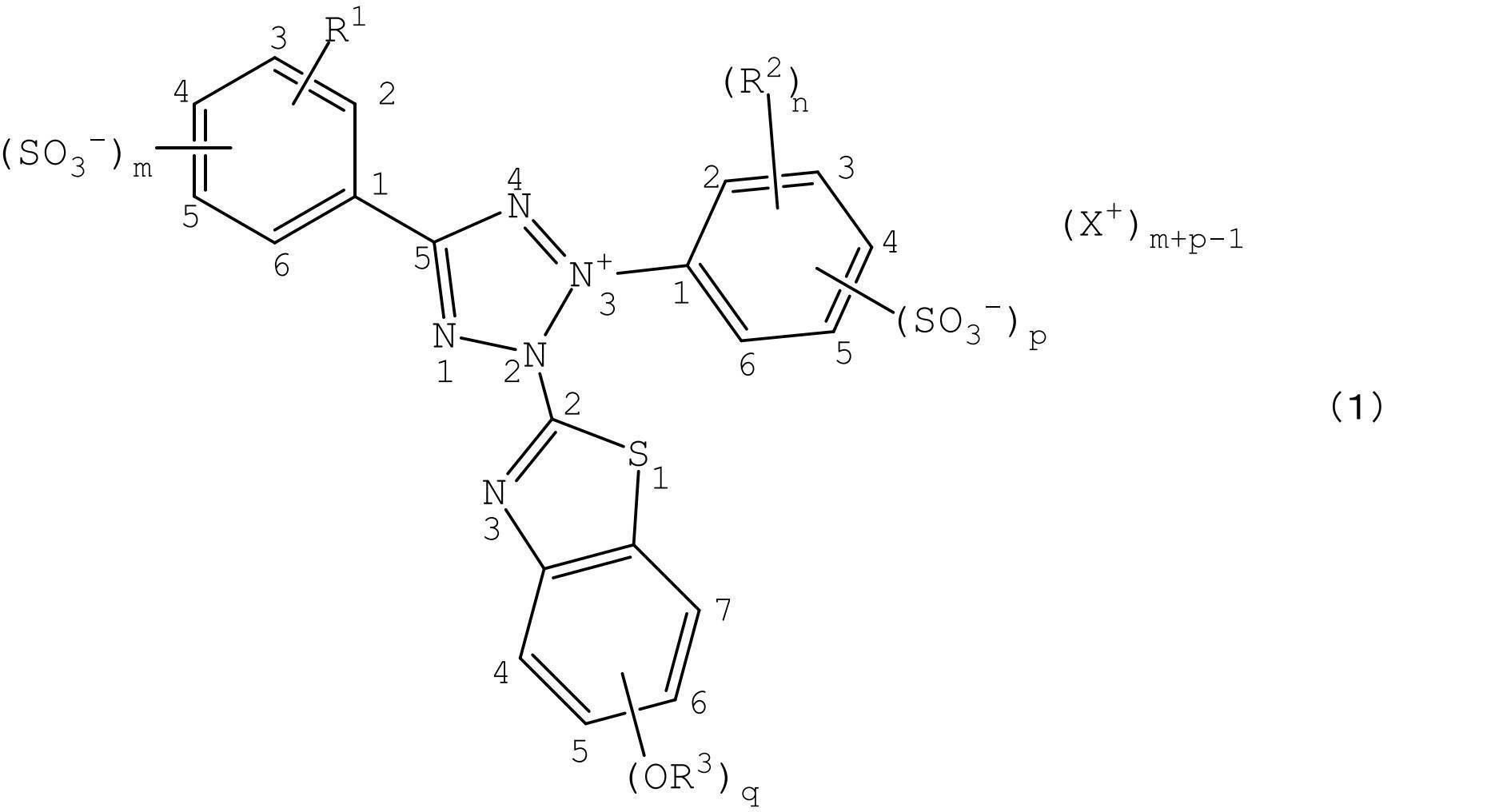


上記式(1)で示されるテトラゾリウム塩である。

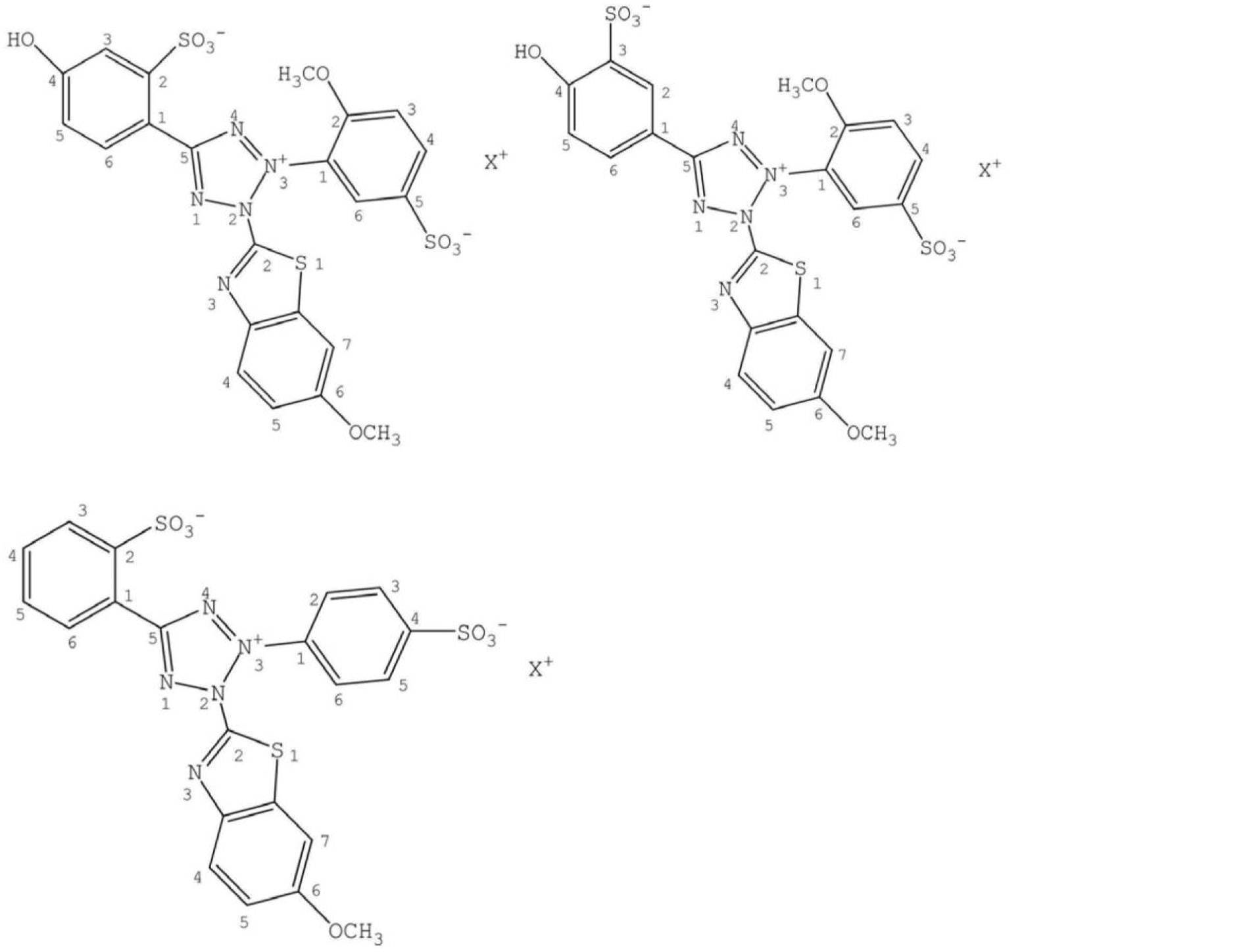

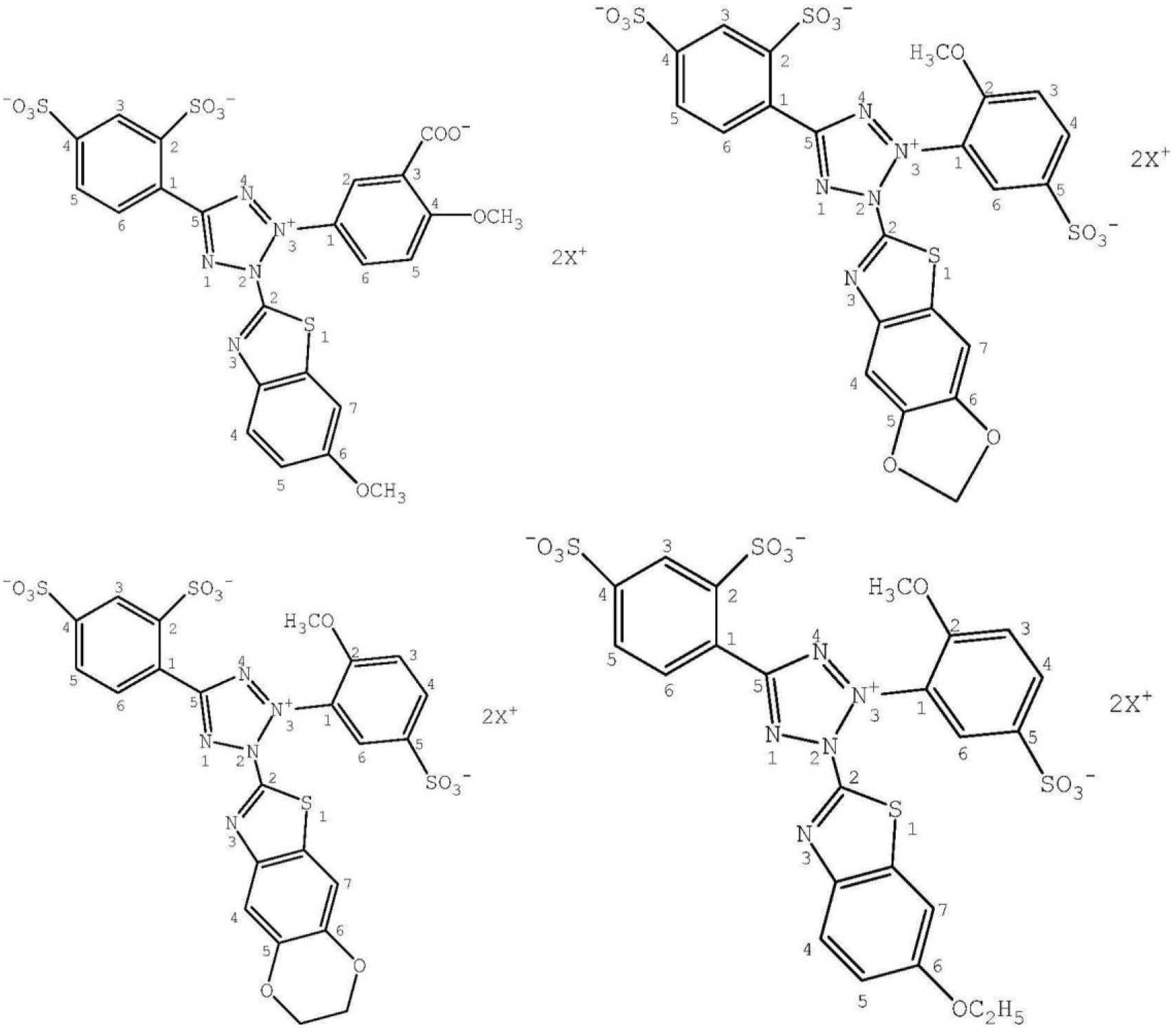
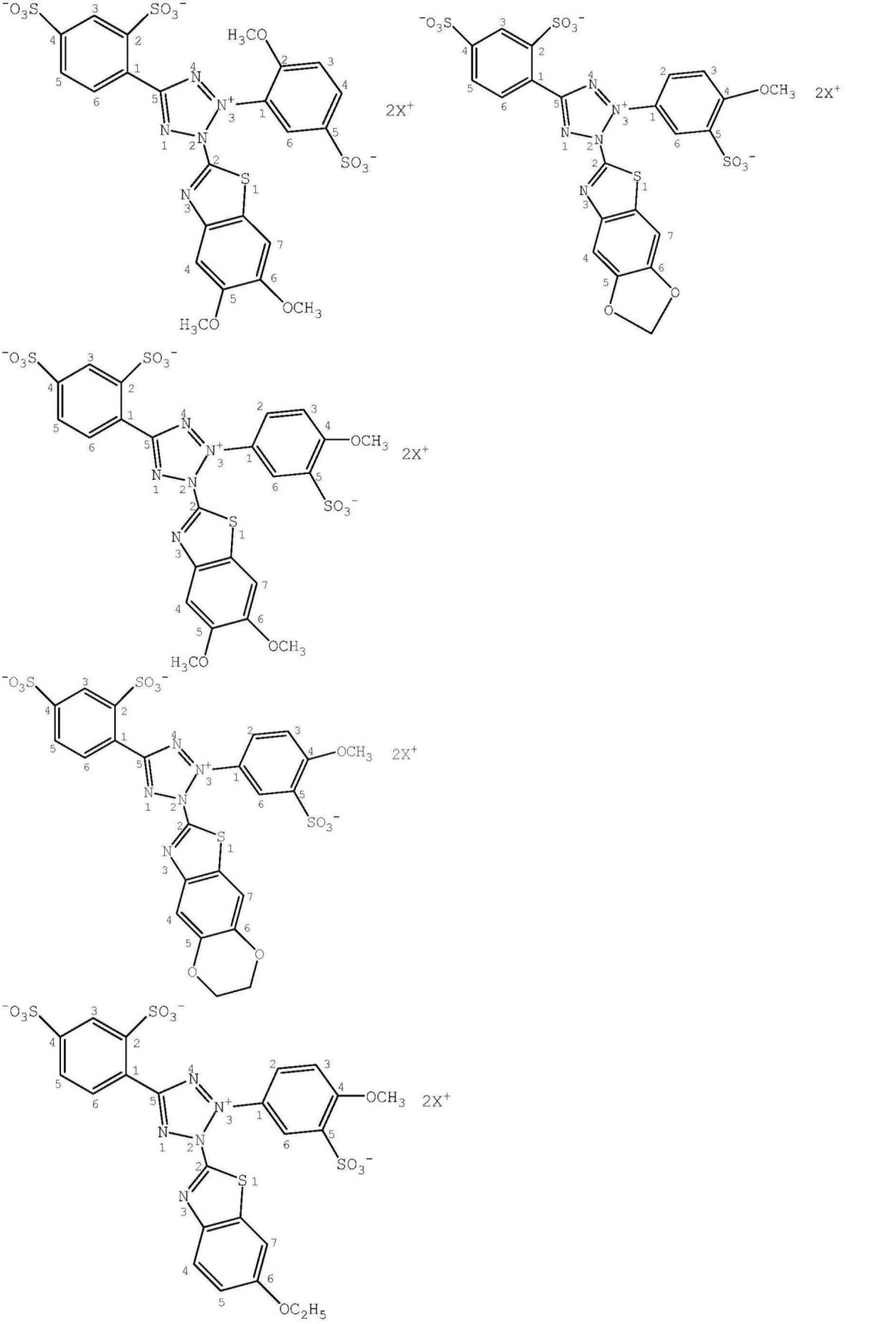


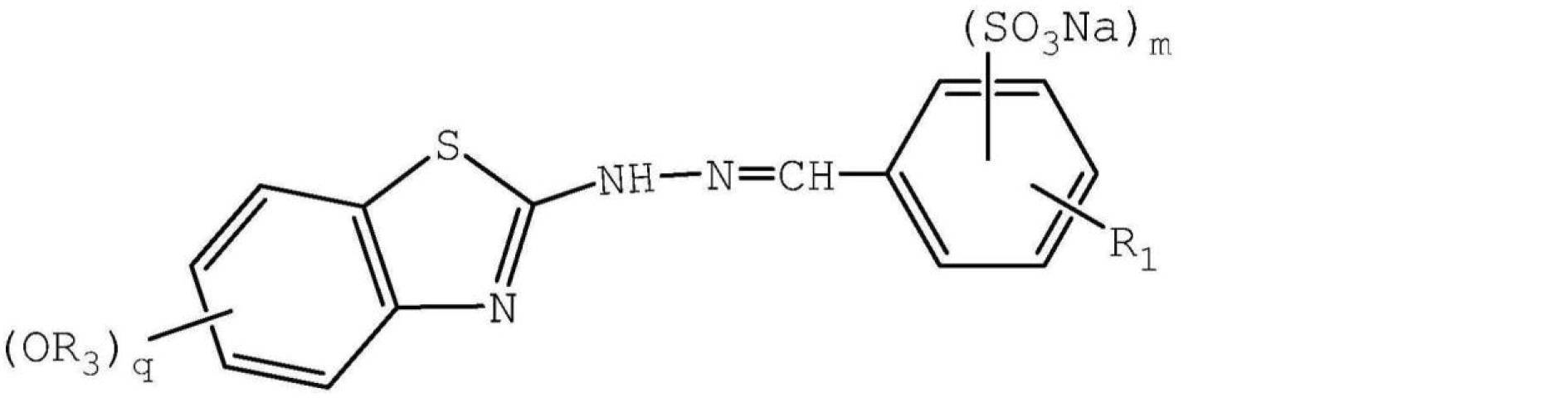



ホルマザン化合物の終濃度が50~200mMとなるように、10mM MOPS水溶液を加えて、試料を作製する。別途、1Mの遷移金属イオン(例えば、ニッケルイオン)を含む水溶液を作製する。
本開示の試薬は、酸化還元酵素を含む。本発明のより好ましい形態では、生体成分濃度測定試薬は、発色色素としてテトラゾリウム塩(特に上記式(1)のテトラゾリウム塩)を含み、さらに分析対象物と特異的に反応する酸化還元酵素を含む。
本開示の試薬は、発色色素、酸化還元酵素、溶血剤、低分子の塩化合物および二糖類またはその誘導体(特にはスクラロース)を必須に含む。本開示の試薬は、上記に加えて、他の成分を含んでもよい。ここで、他の成分としては、通常、測定対象である生体成分の種類に応じて適切に選択され、生体成分濃度を測定するために添加される成分が同様にして使用できる。具体的には、遷移金属化合物、電子伝達体、pH緩衝剤などが挙げられる。ここで、上記他の成分は、それぞれ、1種を単独で使用しても、または2種以上を組み合わせて使用してもよい。また、上記他の成分のそれぞれは、1種を単独で使用しても、または2種以上を併用してもよい。なお、本開示の試薬は、溶血剤以外の界面活性剤は含まないことが好ましい。

下記方法に従って、下記構造を有する化合物(テトラゾリウム塩1)を合成した。

4-ホルミルベンゼン-1,3-ジスルホン酸二ナトリウム(Disodium 4-Formylbenzene-1,3-disulfonate)(東京化成工業株式会社製)1.59g及び(6-メトキシベンゾチアゾール-2-イル)ヒドラジン(2-Hydrazino-6-methoxy-1,3-benzothiazole)(Santa Cruz Biotechnology社製)1.0gをRO水60mLに懸濁させた。この懸濁液を、酢酸酸性下、ウォーターバスにて60℃で2時間、加熱・攪拌した。加熱攪拌終了後、溶媒を除去した。この残渣をイソプロパノールで洗浄した後、沈殿を濾別した。この沈殿をドラフト中で乾燥させて、ヒドラゾン化合物1を得た。
上記1.のヒドラゾン化合物1 0.76gをRO水10mLおよびDMF10mLの混合液に溶解して、ヒドラゾン化合物1溶液を調製した。p-アニシジン-3-スルホン酸(p-anisidin-3-sulfonic acid)(東京化成工業株式会社製)0.264gをRO水4.09mLに懸濁させ、10N NaOH 130μLを加え溶解させた。この溶液を0℃に保持しつつ、9.6N HCl 280μLを加え、亜硝酸ナトリウム溶液を滴下し、ジアゾ化を行った。このジアゾ化溶液を-20℃に保持し、ヒドラゾン化合物1溶液に滴下した。滴下終了後、10N NaOH300μLを滴下し、2時間室温(25℃)で攪拌して、ホルマザン化合物1を含む溶液(ホルマザン化合物1溶液)を調製した。このホルマザン化合物1溶液を、9.6N HClにてpHを中性に調整し、溶媒を除去した。得られた残渣をイソプロパノールで洗浄した後、沈殿を濾別した。この沈殿を乾燥させ、ホルマザン化合物1を得た。
上記2.のホルマザン化合物1をRO水10mLに溶解して、ホルマザン化合物1溶液を調製した。ディスポーザブルカラム(大きさ:20cm×5cm)に、カラムクロマトグラフィー用充填剤(ナカライテスク株式会社製、COSMOSIL 40C18-PREP)を充填し、カラム分取システム(日本ビュッヒ社製、商品名:セパコア)にセットした。このカラムシステムを用いて、ホルマザン化合物1溶液を精製した。採取したフラクションの溶媒を除去し、得られた固形成分にメタノール15mL、9.6N HCl 250μL、15%亜硝酸エチル(CH3CH2NO2)-エタノール溶液5mLを加えて、72時間、室温(25℃)遮光にて攪拌した。
上記3.の反応溶液に対し、ジエチルエーテル加えて、テトラゾリウム塩1を沈殿させた。この沈殿を遠心分離し、上澄みを除去後、さらにジエチルエーテルで洗浄した。得られた沈殿をドラフト内で乾燥させ、テトラゾリウム塩1を得た。
1.塗布液の調製
(1)塗布液1の調製
1M 酢酸亜鉛水溶液(1M=183.48g/L) 46.8μL(遷移金属化合物としての酢酸亜鉛=8.6mg相当)およびRO水 339.6μL(339.6mg)を混合して、混合液1を調製した。次に、この混合液1に、亜硝酸ナトリウム(1M=68.995g/L) 3.6mgを加えて、混合液2を調製した。次に、この混合液2に、スクラロース(1M=397.64g/L) 33.4mgを加えて、混合液3を調製した。次に、この混合液3に、糖アルコールとしてのソルビトール(1M=182.17g/L) 2.5mgを加えて、混合液4を調製した。次に、この混合液4に、発色色素としての合成例1のテトラゾリウム塩1(1M=693g/L) 28.1mgを加えて、混合液5を調製した。
塗布液1の組成において、スクラロース(1M=397.64g/L)の添加量を16.7mg(57.5mM)に変更した以外は、塗布液1と同様にして塗布液2を作製した。
塗布液1の組成において、スクラロース(1M=397.64g/L)を添加しなかったこと以外は、塗布液1と同様にして塗布液3を作製した。
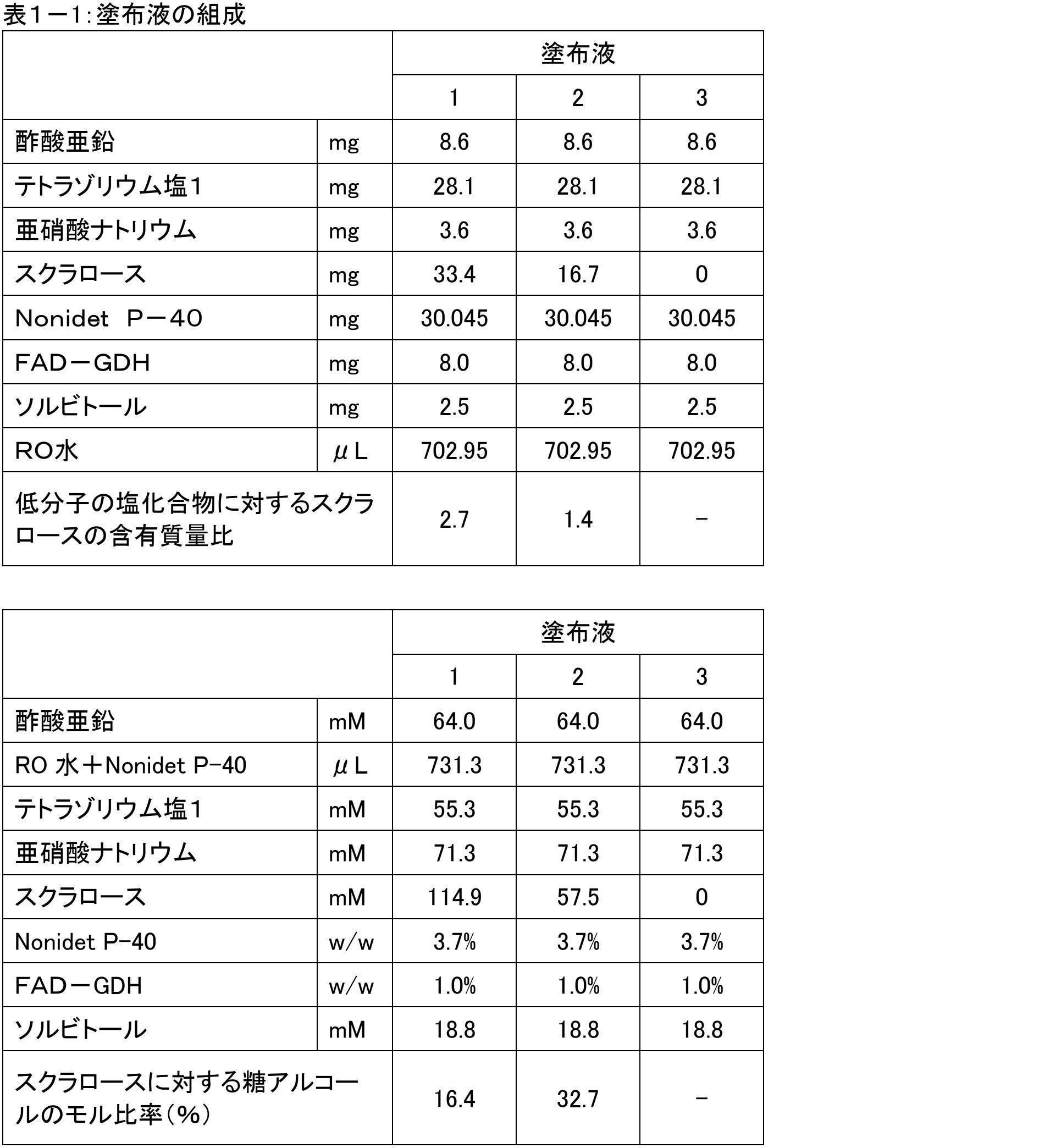
(1)試薬塗布:ポリエチレンテレフタレート(PET)フィルム(厚さ:188μm)上に幅1.1mm×長さ75mmの範囲で、塗布液6.5μLを塗布し、室温にて12時間保管し、乾燥試薬を得た。塗布液1を塗布した乾燥試薬を乾燥試薬1と、塗布液2を塗布した乾燥試薬を乾燥試薬2と、塗布液3を塗布した乾燥試薬を乾燥試薬3とする。
1層目:PETフィルム100μm(試薬無し)、2層目:空間層45μm(両面テープ)、3層目:PETフィルム188μm(乾燥試薬)の3部材で試験紙を組み立てた。
2.で組み立てた試験紙を用いて、透過式分光法(900nm)で透過率を計測した。また、各乾燥試薬を形状測定機(株式会社キーエンス、VR-3200)を用いて画像観察した。結果を下記表2に示す。また、画像観察の結果を図6Aに示す。
測定装置として、協和界面科学株式会社製接触角計(DM301)を用いた。接触角の解析は全て、θ/2法にて行った。まず、接触角計に先端が下向き方向で取り付けられたシリンジから、超純水を吐出し、シリンジ先端に1μLの超純水液滴を作製した。次に、このシリンジを垂直に下ろしていき、乾燥試薬の試薬塗布部に液滴を接触させて、表面に超純水1μLを滴下した。このときの表面に広がった液滴を真横から撮影し、装置付属の解析ソフトであるFAMASを用いて、超純水に対する接触角を求めた。

試験例1で作製した乾燥試薬1~3について、測定センサの流路入口に、血液試料(血漿400mg/dL)をアプライした。血液試料が試薬部に到達してから15秒間、ファイバー分光光度計を用いて、605nmにおける吸光度を測定した。
1.塗布液の調製
下記表3に記載の組成の塗布液4~14を塗布液1と同様の手順で作製した。
試験例1と同様にして1.で作製した塗布液4~14を用いて乾燥試薬4~14を作製した。
試験例1と同様にして接触角を測定した。結果を下記表3に併せて示す。
試験例1と同様にして透過率を測定した。結果を下記表3に併せて示す。なお、試薬を塗布していないセンサでの透過率は76%であった。

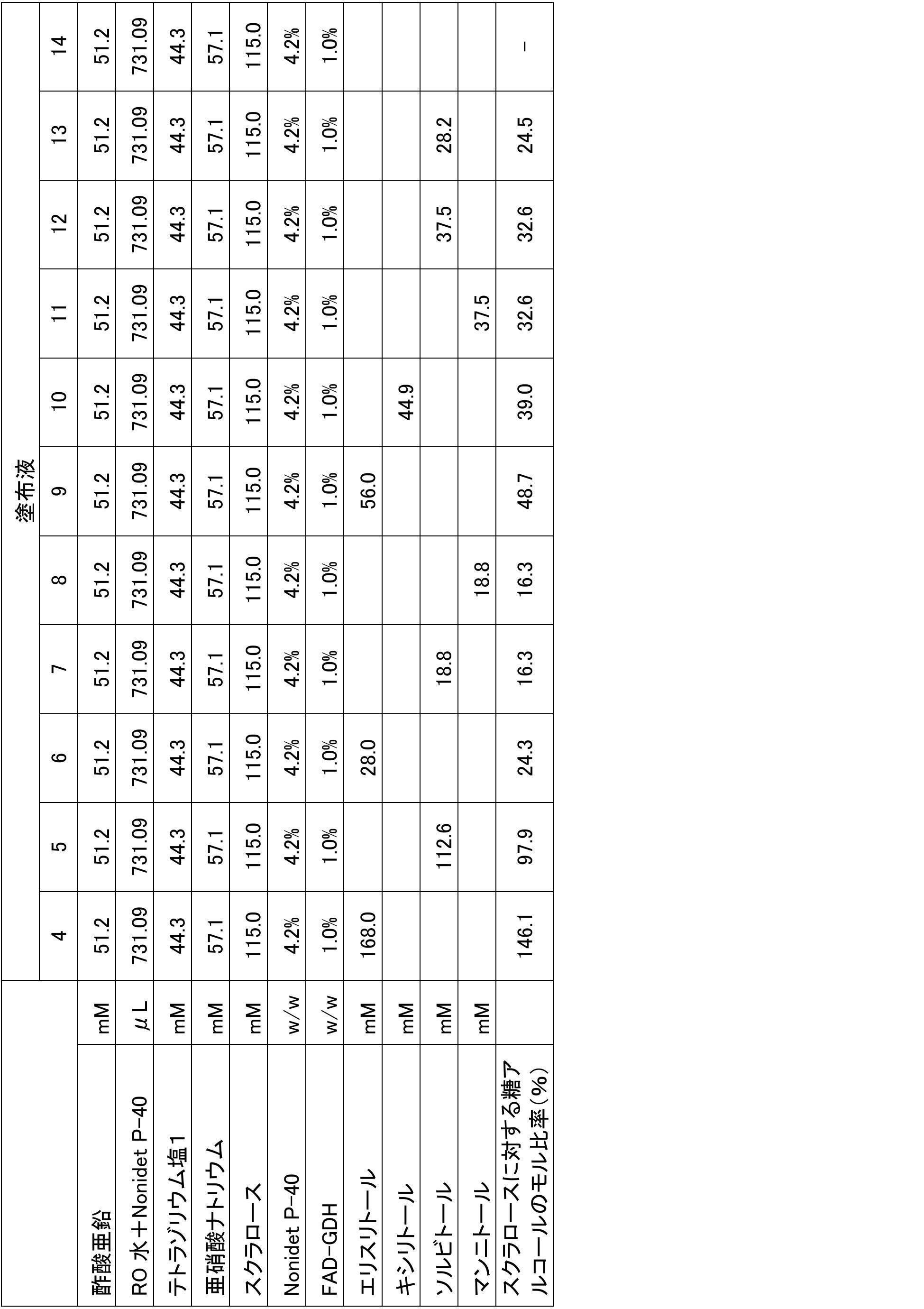

発色色素を用いた検出方法において、検出精度向上の観点から、偽発色は少ないほうが好ましい。そこで、スクラロースおよび糖アルコールを添加した場合の偽発色について評価した。
下記表4-1に示す組成の試験液を調製した。

上記試験液を60℃オーブンで保管した。3時間後、60時間後の発色を目視で確認した。

1.塗布液および乾燥試薬の調製
下記組成の塗布液24~31を塗布液1の調製と同様にして調製した。
「血液展開性」とは、血糖値測定センサ内において、試薬層の第一端部側から第二端部側に向かって流入する血液が、試薬の上部に存在する空間に流入して、血液と血糖値測定試薬とが均一に混合・溶解することを指す。更には、「血糖値測定センサに流入した血液の展開性が良い」とは、流路を第一端部側から第二端部側に向かって流動する血液と、血糖値測定試薬とが混合・溶解する際に、血液の流動状態が乱れたりせず、所定の範囲内の速度で血糖値測定試薬と溶解しながら第二端部まで進むことをいう。「血液の流動状態が乱れない」とは、流路断面において、流入する血液の先端が均一に流路内を進むことを含む。
以下のようにして図5に示される血糖計センサ(血糖値測定センサ)を作製した。まず、ステージ上に載置されたポリエチレンテレフタレート(PET)フィルム(製造会社名:東レ株式会社、商品名:ルミラーT60、厚み188μm、8mm×80mm)上に(図5A中の「試薬塗布面3」側に)、調製した塗布液1、7、14および24~33のそれぞれ3.15μLをインクジェット(マイクロジェット社製、Labojet-500Bio)を用いて、±5~8μm以内のパターニング精度および1pL~1000pLの吐出液量のヘッドで塗布し、25℃で10分間乾燥することにより、試薬層をPETフィルムに形成した(試薬層付PET)。この試薬層付PETを所定の大きさ(8mm×1.6mm)に切り出してフィルム片(図5A中の「フィルム片2」)を作製した。このフィルム片には、1個あたり0.063μLの塗布液が塗布されていた。血糖値測定センサ1個あたりの試薬質量(塗布液として0.063μL)は、塗布液を調製する際に添加した各試薬成分の組成(質量)と、調製した試薬液の最終容量(731.3μL)及び、試薬層付PETから作成したフィルム片2の個数から、算出できる。例えば、塗布液1を塗布したフィルム片は、1個あたり、2.4μgのテトラゾリウム塩1(発色色素)、0.7μgの酢酸亜鉛(遷移金属化合物)、0.3μgの亜硝酸ナトリウム、2.9μgのスクラロース、0.2μgのソルビトール(糖アルコール)、0.7μgのFAD-GDH(酸化還元酵素)、2.6μgのNonidet(溶血剤)を乾燥試薬の形態で含む。
調製した血液(全血、ヘマトクリット値(Ht)60)1mm3を、作製した血糖値測定センサに点着し、目視で下記評価基準により血液展開性評価を行った。なお、環境温度は25℃で行った。
◎:全領域にすぐに血液検体が広がった、
○:中央の測定範囲にはすぐに広がったが、全領域に広がるのにやや時間がかかった。
△:中央の測定範囲にはすぐに広がったが、全領域に広がるのに時間がかかった。
作成した血糖値測定センサをアルミ包装に収めた後、60℃±1℃の恒温恒湿槽(ヤマト科学社製)に保存した。3日間経過後、血糖値測定センサを恒温恒湿槽から取り出し、乾燥試薬の偽発色および着色を評価した。評価は、605nmの波長における吸光度を測定し、25℃で3日間保存した血糖値測定センサ(ブランク値)に対する吸光度上昇で評価した。
◎:60℃保存後の吸光度は、ブランク値に対して0.03未満
〇:60℃保存後の吸光度は、ブランク値に対して0.03以上0.07未満
△:60℃保存後の吸光度は、ブランク値に対して0.07以上0.15未満
×:60℃保存後の吸光度は、ブランク値に対して0.15を超える


血液(全血、ヘマトクリット値(Ht)40)に、高濃度のグルコース溶液(40g/dL)を添加して、グルコース濃度(BG)が100mg/dLの血液検体(BG100)、200mg/dLの血液検体(BG200)、400mg/dLの血液検体(BG400)および550mg/dLの血液検体(BG550)を調製した。また、対照として、血液(全血、ヘマトクリット値(Ht)40)に、グルコース分解酵素を添加して、グルコース濃度(BG)が0mg/dLの血液検体(BG0)を調製した。
2 フィルム片、
3 試薬塗布面、
4 両面テープ、
5 ポリエステルフィルム、
6 流路、
7 ポリエステルフィルム、
10 血糖計、
12 測定用センサ、
14 測定部、
16 装置本体、
18 センサ本体部、
20 空洞部、
20a 先端口部、
20b 基端口部、
22 長辺、
22a 上側長辺、
22b 下側長辺、
24 短辺、
24a 先端辺、
24b 基端辺、
26 試薬、
28 測定対象部、
30 板片、
32 スペーサ、
40 筺体、
42 制御部、
44 箱体部、
46 測光部、
48 電源ボタン、
50 操作ボタン、
52 ディスプレイ、
54 イジェクトレバー、
56 イジェクトピン、
56a 棒部、
56b 受部、
58 挿入孔、
58a 挿入開口部、
59 測定用孔部、
60 センサ装着部、
60a フランジ部、
62 壁部、
64 素子収容空間、
66 導光部、
68 発光素子、
70 発光部、
72 受光素子、
74 受光部、
76 コイルバネ。
Claims (10)
- 発色色素、酸化還元酵素、溶血剤、および低分子の塩化合物を含み、
さらに、スクラロースを含む、生体成分濃度測定試薬。 - 前記塩化合物が遷移金属塩および無機塩からなる群から選択される少なくとも1種である、請求項1に記載の生体成分濃度測定試薬。
- 前記無機塩が亜硝酸塩である、請求項2に記載の生体成分濃度測定試薬。
- 前記低分子の塩化合物に対する前記スクラロースの含有質量比が、1~10である、請求項1または2に記載の生体成分濃度測定試薬。
- さらに糖アルコールを含む、請求項1または2に記載の生体成分濃度測定試薬。
- 前記糖アルコールは、ラクチトール、エリスリトール、ソルビトール、キシリトール、およびマンニトールからなる群から選択される少なくとも1種である、請求項5に記載の生体成分濃度測定試薬。
- 前記スクラロースに対する前記糖アルコールのモル比率が10%以上である、請求項5に記載の生体成分濃度測定試薬。
- 全血試料を、請求項1または2に記載の生体成分濃度測定試薬と接触させて、発色量を測定し、当該発色量に基づいて前記全血試料中の生体成分の濃度を定量することを有する、生体成分濃度の測定方法。
- 前記生体成分が、グルコース、コレステロール、中性脂肪、ニコチンアミドアデニンジヌクレオチドリン酸(NADPH)、ニコチンアミドアデニンジヌクレオチド(NADH)、または尿酸である、請求項8に記載の方法。
- 反応部を有する、全血試料中の生体成分濃度を測定するためのセンサであって、
前記反応部は、請求項1または2に記載の生体成分濃度測定試薬を含む、センサ。
Priority Applications (3)
| Application Number | Priority Date | Filing Date | Title |
|---|---|---|---|
| EP22906977.8A EP4428532A4 (en) | 2021-12-13 | 2022-10-06 | Reagent for measuring the concentration of biological components, measuring method and sensor |
| JP2023567559A JPWO2023112442A1 (ja) | 2021-12-13 | 2022-10-06 | |
| CN202280073555.1A CN118176419A (zh) | 2021-12-13 | 2022-10-06 | 生物体成分浓度测定试剂、测定方法和传感器 |
Applications Claiming Priority (2)
| Application Number | Priority Date | Filing Date | Title |
|---|---|---|---|
| JP2021201646 | 2021-12-13 | ||
| JP2021-201646 | 2021-12-13 |
Publications (1)
| Publication Number | Publication Date |
|---|---|
| WO2023112442A1 true WO2023112442A1 (ja) | 2023-06-22 |
Family
ID=86774344
Family Applications (1)
| Application Number | Title | Priority Date | Filing Date |
|---|---|---|---|
| PCT/JP2022/037473 Ceased WO2023112442A1 (ja) | 2021-12-13 | 2022-10-06 | 生体成分濃度測定試薬、測定方法およびセンサ |
Country Status (4)
| Country | Link |
|---|---|
| EP (1) | EP4428532A4 (ja) |
| JP (1) | JPWO2023112442A1 (ja) |
| CN (1) | CN118176419A (ja) |
| WO (1) | WO2023112442A1 (ja) |
Cited By (1)
| Publication number | Priority date | Publication date | Assignee | Title |
|---|---|---|---|---|
| WO2024202448A1 (ja) * | 2023-03-27 | 2024-10-03 | テルモ株式会社 | 生体成分濃度測定試薬、測定方法およびセンサ |
Citations (14)
| Publication number | Priority date | Publication date | Assignee | Title |
|---|---|---|---|---|
| US5077199A (en) * | 1984-01-27 | 1991-12-31 | A. Menarini S.A.S. | Ready to use liquid reagent for determining the glucose content in blood |
| US5902731A (en) | 1998-09-28 | 1999-05-11 | Lifescan, Inc. | Diagnostics based on tetrazolium compounds |
| JP2001292795A (ja) * | 2000-02-25 | 2001-10-23 | Lifescan Inc | テトラゾリウム化合物に基づく診断 |
| WO2002027331A1 (fr) * | 2000-09-28 | 2002-04-04 | Arkray, Inc. | Methode d'analyse utilisant une reaction d'oxydo-reduction |
| JP2003521246A (ja) * | 2000-02-02 | 2003-07-15 | ライフスキャン・インコーポレイテッド | 検体測定用の試薬試験ストリップ |
| JP2015509361A (ja) * | 2012-02-10 | 2015-03-30 | アイ−センス インコーポレイテッドI−Sens,Inc. | 酵素法を利用したヘモグロビンA1c定量分析のための溶血試薬組成物 |
| JP2015119729A (ja) * | 2012-03-30 | 2015-07-02 | 積水メディカル株式会社 | 血液試料中の物質の測定法 |
| WO2016051930A1 (ja) | 2014-09-29 | 2016-04-07 | テルモ株式会社 | 成分測定装置及び測定用チップ |
| WO2018051822A1 (ja) | 2016-09-14 | 2018-03-22 | テルモ株式会社 | 2-置換ベンゾチアゾリル-3-置換フェニル-5-置換スルホ化フェニル-2h-テトラゾリウム塩、ならびに当該塩を含む生体成分濃度測定用試薬および当該塩を用いる生体成分濃度の測定方法 |
| WO2018061484A1 (ja) * | 2016-09-28 | 2018-04-05 | テルモ株式会社 | 血液サンプル中の分析対象物を検出するための、方法、組成物およびチップ |
| WO2019171731A1 (ja) * | 2018-03-07 | 2019-09-12 | テルモ株式会社 | 生体試料中の分析対象物濃度を測定するための、方法、試薬およびチップ |
| WO2020137532A1 (ja) | 2018-12-28 | 2020-07-02 | テルモ株式会社 | テストストリップ及び成分測定システム |
| US20210025904A1 (en) * | 2019-07-22 | 2021-01-28 | Ortho-Clinical Diagnostics, Inc. | Glycated hemoglobin measurement |
| CN112710656A (zh) * | 2020-12-23 | 2021-04-27 | 中生北控生物科技股份有限公司 | 一种测定葡萄糖含量的试剂盒及其应用 |
Family Cites Families (2)
| Publication number | Priority date | Publication date | Assignee | Title |
|---|---|---|---|---|
| EP2319937B1 (en) * | 2008-07-23 | 2016-01-27 | Nippon Kayaku Kabushiki Kaisha | Blood component measurement method utilizing hemolyzed whole blood, and kit for the method |
| JP5812701B2 (ja) * | 2010-06-23 | 2015-11-17 | アークレイ株式会社 | 血漿グルコース測定方法 |
-
2022
- 2022-10-06 EP EP22906977.8A patent/EP4428532A4/en active Pending
- 2022-10-06 CN CN202280073555.1A patent/CN118176419A/zh active Pending
- 2022-10-06 JP JP2023567559A patent/JPWO2023112442A1/ja active Pending
- 2022-10-06 WO PCT/JP2022/037473 patent/WO2023112442A1/ja not_active Ceased
Patent Citations (15)
| Publication number | Priority date | Publication date | Assignee | Title |
|---|---|---|---|---|
| US5077199A (en) * | 1984-01-27 | 1991-12-31 | A. Menarini S.A.S. | Ready to use liquid reagent for determining the glucose content in blood |
| US5902731A (en) | 1998-09-28 | 1999-05-11 | Lifescan, Inc. | Diagnostics based on tetrazolium compounds |
| JP2000093198A (ja) | 1998-09-28 | 2000-04-04 | Lifescan Inc | テトラゾリウム化合物に基づく診断法 |
| JP2003521246A (ja) * | 2000-02-02 | 2003-07-15 | ライフスキャン・インコーポレイテッド | 検体測定用の試薬試験ストリップ |
| JP2001292795A (ja) * | 2000-02-25 | 2001-10-23 | Lifescan Inc | テトラゾリウム化合物に基づく診断 |
| WO2002027331A1 (fr) * | 2000-09-28 | 2002-04-04 | Arkray, Inc. | Methode d'analyse utilisant une reaction d'oxydo-reduction |
| JP2015509361A (ja) * | 2012-02-10 | 2015-03-30 | アイ−センス インコーポレイテッドI−Sens,Inc. | 酵素法を利用したヘモグロビンA1c定量分析のための溶血試薬組成物 |
| JP2015119729A (ja) * | 2012-03-30 | 2015-07-02 | 積水メディカル株式会社 | 血液試料中の物質の測定法 |
| WO2016051930A1 (ja) | 2014-09-29 | 2016-04-07 | テルモ株式会社 | 成分測定装置及び測定用チップ |
| WO2018051822A1 (ja) | 2016-09-14 | 2018-03-22 | テルモ株式会社 | 2-置換ベンゾチアゾリル-3-置換フェニル-5-置換スルホ化フェニル-2h-テトラゾリウム塩、ならびに当該塩を含む生体成分濃度測定用試薬および当該塩を用いる生体成分濃度の測定方法 |
| WO2018061484A1 (ja) * | 2016-09-28 | 2018-04-05 | テルモ株式会社 | 血液サンプル中の分析対象物を検出するための、方法、組成物およびチップ |
| WO2019171731A1 (ja) * | 2018-03-07 | 2019-09-12 | テルモ株式会社 | 生体試料中の分析対象物濃度を測定するための、方法、試薬およびチップ |
| WO2020137532A1 (ja) | 2018-12-28 | 2020-07-02 | テルモ株式会社 | テストストリップ及び成分測定システム |
| US20210025904A1 (en) * | 2019-07-22 | 2021-01-28 | Ortho-Clinical Diagnostics, Inc. | Glycated hemoglobin measurement |
| CN112710656A (zh) * | 2020-12-23 | 2021-04-27 | 中生北控生物科技股份有限公司 | 一种测定葡萄糖含量的试剂盒及其应用 |
Non-Patent Citations (1)
| Title |
|---|
| See also references of EP4428532A4 |
Cited By (1)
| Publication number | Priority date | Publication date | Assignee | Title |
|---|---|---|---|---|
| WO2024202448A1 (ja) * | 2023-03-27 | 2024-10-03 | テルモ株式会社 | 生体成分濃度測定試薬、測定方法およびセンサ |
Also Published As
| Publication number | Publication date |
|---|---|
| EP4428532A1 (en) | 2024-09-11 |
| EP4428532A4 (en) | 2025-03-12 |
| CN118176419A (zh) | 2024-06-11 |
| JPWO2023112442A1 (ja) | 2023-06-22 |
Similar Documents
| Publication | Publication Date | Title |
|---|---|---|
| US11656182B2 (en) | Method, composition, and chip for detecting analyte in blood sample | |
| CN108368472B (zh) | 血糖值测定试剂、血糖值测定芯片和血糖值测定装置套组 | |
| JP7208219B2 (ja) | 生体試料中の分析対象物濃度を測定するための、方法、試薬およびチップ | |
| US11739083B2 (en) | Disposable sensor chip with reagent including 2-substituted benzothiazolyl-3-substituted phenyl-5-substituted sulfonated phenyl-2H-tetrazolium salt | |
| WO2023112442A1 (ja) | 生体成分濃度測定試薬、測定方法およびセンサ | |
| JP7731784B2 (ja) | 生体成分濃度測定試薬、測定方法およびセンサ | |
| JP2023087327A (ja) | 生体成分濃度測定試薬、測定方法およびセンサ | |
| JP7184770B2 (ja) | 血糖値測定チップ及び血糖値測定装置セット | |
| JP6893215B2 (ja) | 2−置換チアゾリル−3−置換フェニル−5−スルホ化フェニル−2h−テトラゾリウム塩、ならびに当該塩を含む生体成分濃度測定用試薬および当該塩を用いる生体成分濃度の測定方法 | |
| WO2024202448A1 (ja) | 生体成分濃度測定試薬、測定方法およびセンサ | |
| JP7372310B2 (ja) | 血糖値算出プログラム、血糖値算出方法及び血糖値測定装置 | |
| HK40030244B (zh) | 用於测定生物试样中的分析对象物浓度的方法、试剂和芯片 | |
| HK40004461B (en) | Method, composition, and chip for detecting analysis object in blood sample | |
| HK40030244A (en) | Method, reagent, and chip, for measuring analyte concentration in biological sample | |
| HK40004461A (en) | Method, composition, and chip for detecting analysis object in blood sample | |
| HK40006543B (en) | 2-substituted benzothiazolyl-3-substituted phenyl-5-substituted sulfonated phenyl-2h-tetrazolium salt | |
| HK40006543A (en) | 2-substituted benzothiazolyl-3-substituted phenyl-5-substituted sulfonated phenyl-2h-tetrazolium salt | |
| HK40012315A (en) | Blood sugar level measurement chip and blood sugar level measurement device set | |
| HK1257848B (en) | Blood-sugar-level measurement reagent, blood-sugar-level measurement chip, and blood-sugar-level measurement device set |
Legal Events
| Date | Code | Title | Description |
|---|---|---|---|
| 121 | Ep: the epo has been informed by wipo that ep was designated in this application |
Ref document number: 22906977 Country of ref document: EP Kind code of ref document: A1 |
|
| ENP | Entry into the national phase |
Ref document number: 2023567559 Country of ref document: JP Kind code of ref document: A |
|
| WWE | Wipo information: entry into national phase |
Ref document number: 202280073555.1 Country of ref document: CN |
|
| WWE | Wipo information: entry into national phase |
Ref document number: 2022906977 Country of ref document: EP |
|
| ENP | Entry into the national phase |
Ref document number: 2022906977 Country of ref document: EP Effective date: 20240604 |
|
| NENP | Non-entry into the national phase |
Ref country code: DE |