WO2023122600A1 - Piperazine indazole glucocorticoid receptor antagonists - Google Patents

Piperazine indazole glucocorticoid receptor antagonists Download PDF

Info

Publication number
WO2023122600A1
WO2023122600A1 PCT/US2022/082034 US2022082034W WO2023122600A1 WO 2023122600 A1 WO2023122600 A1 WO 2023122600A1 US 2022082034 W US2022082034 W US 2022082034W WO 2023122600 A1 WO2023122600 A1 WO 2023122600A1
Authority
WO
WIPO (PCT)
Prior art keywords
alkyl
independently
heterocycloalkyl
heteroaryl
compound
Prior art date
Legal status (The legal status is an assumption and is not a legal conclusion. Google has not performed a legal analysis and makes no representation as to the accuracy of the status listed.)
Ceased
Application number
PCT/US2022/082034
Other languages
French (fr)
Inventor
Mark Mills
Andrew William Phillips
Bohdan Waszkowycz
Hazel Joan HUNT
Angus Morrison
Angelo PUGLIESE
Jonathan Gillespie
Euan FORDYCE
Current Assignee (The listed assignees may be inaccurate. Google has not performed a legal analysis and makes no representation or warranty as to the accuracy of the list.)
Corcept Therapeutics Inc
Original Assignee
Corcept Therapeutics Inc
Priority date (The priority date is an assumption and is not a legal conclusion. Google has not performed a legal analysis and makes no representation as to the accuracy of the date listed.)
Filing date
Publication date
Priority to EP22912660.2A priority Critical patent/EP4452969A4/en
Priority to IL313663A priority patent/IL313663A/en
Priority to CA3243549A priority patent/CA3243549A1/en
Priority to KR1020247023849A priority patent/KR20240137134A/en
Priority to MX2024007590A priority patent/MX2024007590A/en
Priority to JP2024537094A priority patent/JP2025500318A/en
Application filed by Corcept Therapeutics Inc filed Critical Corcept Therapeutics Inc
Priority to AU2022417485A priority patent/AU2022417485A1/en
Priority to CN202280091898.0A priority patent/CN118715217A/en
Publication of WO2023122600A1 publication Critical patent/WO2023122600A1/en
Anticipated expiration legal-status Critical
Priority to CONC2024/0009429A priority patent/CO2024009429A2/en
Ceased legal-status Critical Current

Links

Classifications

    • CCHEMISTRY; METALLURGY
    • C07ORGANIC CHEMISTRY
    • C07DHETEROCYCLIC COMPOUNDS
    • C07D403/00Heterocyclic compounds containing two or more hetero rings, having nitrogen atoms as the only ring hetero atoms, not provided for by group C07D401/00
    • C07D403/02Heterocyclic compounds containing two or more hetero rings, having nitrogen atoms as the only ring hetero atoms, not provided for by group C07D401/00 containing two hetero rings
    • C07D403/12Heterocyclic compounds containing two or more hetero rings, having nitrogen atoms as the only ring hetero atoms, not provided for by group C07D401/00 containing two hetero rings linked by a chain containing hetero atoms as chain links
    • CCHEMISTRY; METALLURGY
    • C07ORGANIC CHEMISTRY
    • C07DHETEROCYCLIC COMPOUNDS
    • C07D403/00Heterocyclic compounds containing two or more hetero rings, having nitrogen atoms as the only ring hetero atoms, not provided for by group C07D401/00
    • C07D403/14Heterocyclic compounds containing two or more hetero rings, having nitrogen atoms as the only ring hetero atoms, not provided for by group C07D401/00 containing three or more hetero rings
    • AHUMAN NECESSITIES
    • A61MEDICAL OR VETERINARY SCIENCE; HYGIENE
    • A61KPREPARATIONS FOR MEDICAL, DENTAL OR TOILETRY PURPOSES
    • A61K31/00Medicinal preparations containing organic active ingredients
    • A61K31/33Heterocyclic compounds
    • A61K31/395Heterocyclic compounds having nitrogen as a ring hetero atom, e.g. guanethidine or rifamycins
    • A61K31/495Heterocyclic compounds having nitrogen as a ring hetero atom, e.g. guanethidine or rifamycins having six-membered rings with two or more nitrogen atoms as the only ring heteroatoms, e.g. piperazine or tetrazines
    • A61K31/496Non-condensed piperazines containing further heterocyclic rings, e.g. rifampin, thiothixene or sparfloxacin
    • AHUMAN NECESSITIES
    • A61MEDICAL OR VETERINARY SCIENCE; HYGIENE
    • A61PSPECIFIC THERAPEUTIC ACTIVITY OF CHEMICAL COMPOUNDS OR MEDICINAL PREPARATIONS
    • A61P1/00Drugs for disorders of the alimentary tract or the digestive system
    • A61P1/16Drugs for disorders of the alimentary tract or the digestive system for liver or gallbladder disorders, e.g. hepatoprotective agents, cholagogues, litholytics
    • AHUMAN NECESSITIES
    • A61MEDICAL OR VETERINARY SCIENCE; HYGIENE
    • A61PSPECIFIC THERAPEUTIC ACTIVITY OF CHEMICAL COMPOUNDS OR MEDICINAL PREPARATIONS
    • A61P25/00Drugs for disorders of the nervous system
    • A61P25/24Antidepressants
    • AHUMAN NECESSITIES
    • A61MEDICAL OR VETERINARY SCIENCE; HYGIENE
    • A61PSPECIFIC THERAPEUTIC ACTIVITY OF CHEMICAL COMPOUNDS OR MEDICINAL PREPARATIONS
    • A61P25/00Drugs for disorders of the nervous system
    • A61P25/28Drugs for disorders of the nervous system for treating neurodegenerative disorders of the central nervous system, e.g. nootropic agents, cognition enhancers, drugs for treating Alzheimer's disease or other forms of dementia
    • AHUMAN NECESSITIES
    • A61MEDICAL OR VETERINARY SCIENCE; HYGIENE
    • A61PSPECIFIC THERAPEUTIC ACTIVITY OF CHEMICAL COMPOUNDS OR MEDICINAL PREPARATIONS
    • A61P3/00Drugs for disorders of the metabolism
    • A61P3/04Anorexiants; Antiobesity agents
    • AHUMAN NECESSITIES
    • A61MEDICAL OR VETERINARY SCIENCE; HYGIENE
    • A61PSPECIFIC THERAPEUTIC ACTIVITY OF CHEMICAL COMPOUNDS OR MEDICINAL PREPARATIONS
    • A61P35/00Antineoplastic agents
    • AHUMAN NECESSITIES
    • A61MEDICAL OR VETERINARY SCIENCE; HYGIENE
    • A61PSPECIFIC THERAPEUTIC ACTIVITY OF CHEMICAL COMPOUNDS OR MEDICINAL PREPARATIONS
    • A61P43/00Drugs for specific purposes, not provided for in groups A61P1/00-A61P41/00
    • AHUMAN NECESSITIES
    • A61MEDICAL OR VETERINARY SCIENCE; HYGIENE
    • A61PSPECIFIC THERAPEUTIC ACTIVITY OF CHEMICAL COMPOUNDS OR MEDICINAL PREPARATIONS
    • A61P5/00Drugs for disorders of the endocrine system
    • A61P5/38Drugs for disorders of the endocrine system of the suprarenal hormones
    • CCHEMISTRY; METALLURGY
    • C07ORGANIC CHEMISTRY
    • C07DHETEROCYCLIC COMPOUNDS
    • C07D401/00Heterocyclic compounds containing two or more hetero rings, having nitrogen atoms as the only ring hetero atoms, at least one ring being a six-membered ring with only one nitrogen atom
    • C07D401/14Heterocyclic compounds containing two or more hetero rings, having nitrogen atoms as the only ring hetero atoms, at least one ring being a six-membered ring with only one nitrogen atom containing three or more hetero rings
    • CCHEMISTRY; METALLURGY
    • C07ORGANIC CHEMISTRY
    • C07DHETEROCYCLIC COMPOUNDS
    • C07D403/00Heterocyclic compounds containing two or more hetero rings, having nitrogen atoms as the only ring hetero atoms, not provided for by group C07D401/00
    • C07D403/02Heterocyclic compounds containing two or more hetero rings, having nitrogen atoms as the only ring hetero atoms, not provided for by group C07D401/00 containing two hetero rings
    • C07D403/04Heterocyclic compounds containing two or more hetero rings, having nitrogen atoms as the only ring hetero atoms, not provided for by group C07D401/00 containing two hetero rings directly linked by a ring-member-to-ring-member bond
    • CCHEMISTRY; METALLURGY
    • C07ORGANIC CHEMISTRY
    • C07DHETEROCYCLIC COMPOUNDS
    • C07D405/00Heterocyclic compounds containing both one or more hetero rings having oxygen atoms as the only ring hetero atoms, and one or more rings having nitrogen as the only ring hetero atom
    • C07D405/14Heterocyclic compounds containing both one or more hetero rings having oxygen atoms as the only ring hetero atoms, and one or more rings having nitrogen as the only ring hetero atom containing three or more hetero rings
    • CCHEMISTRY; METALLURGY
    • C07ORGANIC CHEMISTRY
    • C07DHETEROCYCLIC COMPOUNDS
    • C07D413/00Heterocyclic compounds containing two or more hetero rings, at least one ring having nitrogen and oxygen atoms as the only ring hetero atoms
    • C07D413/14Heterocyclic compounds containing two or more hetero rings, at least one ring having nitrogen and oxygen atoms as the only ring hetero atoms containing three or more hetero rings
    • CCHEMISTRY; METALLURGY
    • C07ORGANIC CHEMISTRY
    • C07DHETEROCYCLIC COMPOUNDS
    • C07D417/00Heterocyclic compounds containing two or more hetero rings, at least one ring having nitrogen and sulfur atoms as the only ring hetero atoms, not provided for by group C07D415/00
    • C07D417/14Heterocyclic compounds containing two or more hetero rings, at least one ring having nitrogen and sulfur atoms as the only ring hetero atoms, not provided for by group C07D415/00 containing three or more hetero rings
    • CCHEMISTRY; METALLURGY
    • C07ORGANIC CHEMISTRY
    • C07DHETEROCYCLIC COMPOUNDS
    • C07D471/00Heterocyclic compounds containing nitrogen atoms as the only ring hetero atoms in the condensed system, at least one ring being a six-membered ring with one nitrogen atom, not provided for by groups C07D451/00 - C07D463/00
    • C07D471/02Heterocyclic compounds containing nitrogen atoms as the only ring hetero atoms in the condensed system, at least one ring being a six-membered ring with one nitrogen atom, not provided for by groups C07D451/00 - C07D463/00 in which the condensed system contains two hetero rings
    • C07D471/04Ortho-condensed systems
    • CCHEMISTRY; METALLURGY
    • C07ORGANIC CHEMISTRY
    • C07DHETEROCYCLIC COMPOUNDS
    • C07D487/00Heterocyclic compounds containing nitrogen atoms as the only ring hetero atoms in the condensed system, not provided for by groups C07D451/00 - C07D477/00
    • C07D487/02Heterocyclic compounds containing nitrogen atoms as the only ring hetero atoms in the condensed system, not provided for by groups C07D451/00 - C07D477/00 in which the condensed system contains two hetero rings
    • C07D487/04Ortho-condensed systems
    • CCHEMISTRY; METALLURGY
    • C07ORGANIC CHEMISTRY
    • C07DHETEROCYCLIC COMPOUNDS
    • C07D519/00Heterocyclic compounds containing more than one system of two or more relevant hetero rings condensed among themselves or condensed with a common carbocyclic ring system not provided for in groups C07D453/00 or C07D455/00

Definitions

  • Glucocorticoids are secreted in response to ACTH (corticotropin), which shows both circadian rhythm variation and elevations in response to stress and food. Cortisol levels are responsive within minutes to many physical and psychological stresses, including trauma, surgery, exercise, anxiety and depression. Cortisol is a steroid and acts by binding to an intracellular, glucocorticoid receptor (GR). In man, glucocorticoid receptors are present in 15 two forms: a ligand-binding GR-alpha of 777 amino acids; and, a GR-beta isoform which lacks the 50 carboxy terminal residues.
  • ACTH corticotropin
  • GR-beta is unable to bind the natural ligand, and is constitutively localized in the nucleus.
  • the biologic effects of cortisol can be 20 modulated at the GR level using receptor modulators, such as agonists, partial agonists and antagonists.
  • receptor modulators such as agonists, partial agonists and antagonists.
  • agonists such as agonists, partial agonists and antagonists.
  • antagonists include compositions which, by binding to GR, inhibit the ability of an agonist to effectively bind to and/or activate the GR.
  • mifepristone has been found to be an effective anti-glucocorticoid 25 agent in humans (Bertagna (1984) J. Clin. Endocrinol. Metab.59:25). Mifepristone binds to the GR with high affinity, with a dissociation constant (K d ) of 10 -9 M (Cadepond (1997) Annu. Rev. Med.48:129).
  • K d dissociation constant
  • Cortisol and corticosterone
  • Cortisol also bind to the mineralocorticoid receptor, MR. Cortisol has higher affinity for MR than it does for GR, and MR is usually considered to be 30 fully occupied under normal physiological conditions.
  • the present invention invention provides a compound of Formula J: (R 6) R 5 m N J) 15 or a pharmace
  • R 1 is heterocycloalkyl having 3 to 12 ring members and 1 to 4 heteroatoms each N, O or S, phenyl or heteroaryl having 5 to 10 ring members and 1 to 5 heteroatoms each N, O or S, each independently substituted with 0 to 5 R 1a groups
  • each R 1a is independently C1-6 alkyl, C1-6 alkoxy, C1-6 alkoxyalkyl, C1-6 hydroxyalkyl, 20 halogen, C 1-6 haloalkyl, C 1-6 haloalkoxy, -OH, oxo, -CN, -C(O)N(R 1b )(R 1c ), C3-10
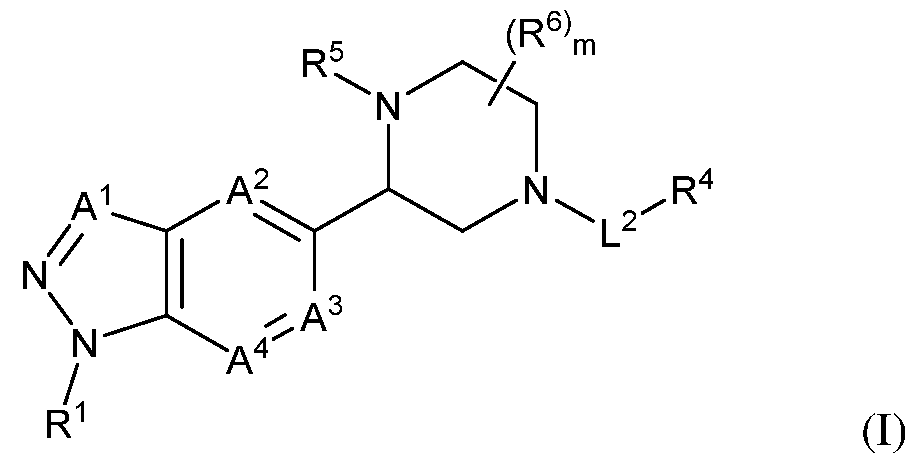
  • the present invention invention provides a compound of Formula I: I) or a pharmace
  • R 1 is heterocycloalkyl having 3 to 12 ring members and 1 to 4 heteroatoms each N, O 20 or S, phenyl or heteroaryl having 5 to 10 ring members and 1 to 5 heteroatoms each N, O or S, each independently substituted with 0 to 5 R 1a groups
  • each R 1a is independently C1-6 alkyl, C1-6 alkoxy, C1-6 alkoxyalkyl, C1-6 hydroxyalkyl, halogen, C 1-6 haloalkyl, C 1-6 haloalkoxy, -OH, oxo, -CN, -C(O)N(R 1b )(R 1c ), C3-10 cycloalkyl, or heterocycloalkyl having 3 to 12 ring members and 1 to 4 25 heteroatoms each N, O or S; each R 1b and R 1c is independently hydrogen, C1-6 alkyl or a 3 to
  • the present invention provides a compound of Formula I: I) or a pharmace 20
  • R 1 is heterocycloalkyl having 3 to 12 ring members and 1 to 4 heteroatoms each N, O or S, phenyl or heteroaryl having 5 to 10 ring members and 1 to 5 heteroatoms each N, O or S, each independently substituted with 0 to 5 R 1a groups
  • each R 1a is independently C 1-6 alkyl, C 1-6 alkoxy, C 1-6 alkoxyalkyl, C 1-6 hydroxyalkyl, halogen, C1-6 haloalkyl, C1-6 haloalkoxy, -OH, oxo, -CN, -C(O)N(R 1b )(R 1c ), 25 C 3-10 cycloalkyl, or heterocycloalkyl having 3 to 12 ring members and 1 to 4 heteroatoms each N, O or S; each R 1b and R 1c is independently hydrogen, C 1-6 alkyl or a 3
  • the present invention provides a pharmaceutical composition comprising a compound of the present invention and a pharmaceutically acceptable excipient.
  • the present invention provides a method of treating a disorder or condition through modulating a glucocorticoid receptor, the method comprising 20 administering to a subject in need of such treatment, a therapeutically effective amount of a compound or a pharmaceutical composition of the present invention, thereby treating the disorder or condition.
  • the present invention provides a method of treating a disorder or condition through antagonizing a glucocorticoid receptor, the method comprising 25 administering to a subject in need of such treatment, an effective amount of the compound or a pharmaceutical composition of the present invention.
  • the present invention provides a compound or pharmaceutical composition for use in a method of treating a disorder or condition through modulating a glucocorticoid receptor.
  • the present invention provides a compound or pharmaceutical composition for use in a method of treating a disorder or condition through antagonizing the glucocorticoid receptor. 11 Mintz Docket No.: 052691-510001WO
  • the present invention provides use of a compound or pharmaceutical composition of the present invention in the manufacture of a medicament for treating a disorder or condition through modulating a glucocorticoid receptor.
  • the present invention provides a use of a compound or 5 pharmaceutical composition of the present invention in the manufacture of a medicament for treating a disorder or condition through antagonizing a glucocorticoid receptor.
  • DETAILED DESCRIPTION OF THE INVENTION I. GENERAL 10 [0016]
  • the present invention provides compounds of Formula J, I, Ia, Ib, Ib-1, Ib-2, Ic or Id capable of modulating and/or antagonizing a glucocorticoid receptor, and thereby providing beneficial therapeutic effects.
  • the present invention also provides methods of treating disorders and conditions by modulating a glucocorticoid receptor or by antagonizing a glucocorticoid receptor.
  • the present invention also provides use of a compound of the 15 present invention in the manufacture of a medicament for treating a disorder or condition through modulating a glucocorticoid receptor, agonizing a glucocorticoid receptor or antagonizing a glucocorticoid receptor.
  • “A,” “an,” or “the” as used herein not only include aspects with one member, but 25 also include aspects with more than one member.
  • the singular forms “a,” “an,” and “the” include plural referents unless the context clearly dictates otherwise.
  • reference to “a cell” includes a plurality of such cells and reference to “the agent” includes reference to one or more agents known to those skilled in the art, and so forth.
  • Alkyl refers to a straight or branched, saturated, aliphatic radical having the 30 number of carbon atoms indicated.
  • Alkyl can include any number of carbons, such as C 1-2 , 12 Mintz Docket No.: 052691-510001WO C1-3, C1-4, C1-5, C1-6, C1-7, C1-8, C1-9, C1-10, C2-3, C2-4, C2-5, C2-6, C3-4, C3-5, C3-6, C4-5, C4-6 and C 5-6 .
  • C 1-6 alkyl includes, but is not limited to, methyl, ethyl, propyl, isopropyl, butyl, isobutyl, sec-butyl, tert-butyl, pentyl, isopentyl, hexyl, etc.
  • Alkyl can also refer to alkyl groups having up to 20 carbons atoms, such as, but not limited to heptyl, octyl, nonyl, 5 decyl, etc. Alkyl groups can be substituted or unsubstituted.
  • Alkylene refers to a straight or branched, saturated, aliphatic radical having the number of carbon atoms indicated (i.e., C 1-6 means one to six carbons), and linking at least two other groups, i.e., a divalent hydrocarbon radical. The two moieties linked to the alkylene can be linked to the same atom or different atoms of the alkylene group.
  • a straight chain alkylene can be the bivalent radical of -(CH2)n-, where n is 1, 2, 3, 4, 5 or 6.
  • Representative C 1-4 alkylene groups include, but are not limited to, methylene, ethylene, propylene, isopropylene, butylene, isobutylene, and sec-butylene.
  • Alkenyl refers to a straight chain or branched hydrocarbon having at least 2 carbon atoms and at least one double bond.
  • Alkenyl can include any number of carbons, such 15 as C2, C2-3, C2-4, C2-5, C2-6, C2-7, C2-8, C2-9, C2-10, C3, C3-4, C3-5, C3-6, C4, C4-5, C4-6, C5, C5-6, and C 6 .
  • Alkenyl groups can have any suitable number of double bonds, including, but not limited to, 1, 2, 3, 4, 5 or more.
  • alkenyl groups include, but are not limited to, vinyl (ethenyl), propenyl, isopropenyl, 1-butenyl, 2-butenyl, isobutenyl, butadienyl, 1-pentenyl, 2-pentenyl, isopentenyl, 1,3-pentadienyl, 1,4-pentadienyl, 1-hexenyl, 2-hexenyl, 20 3-hexenyl, 1,3-hexadienyl, 1,4-hexadienyl, 1,5-hexadienyl, 2,4-hexadienyl, or 1,3,5-hexatrienyl.
  • Alkenyl groups can be substituted or unsubstituted.
  • Alkynyl refers to either a straight chain or branched hydrocarbon having at least 2 carbon atoms and at least one triple bond. Alkynyl can include any number of carbons, such as C2, C2-3, C2-4, C2-5, C2-6, C2-7, C2-8, C2-9, C2-10, C3, C3-4, C3-5, C3-6, C4, C4-5, C4-6, C5, C5-6, 25 and C 6 .
  • alkynyl groups include, but are not limited to, acetylenyl, propynyl, 1-butynyl, 2-butynyl, butadiynyl, 1-pentynyl, 2-pentynyl, isopentynyl, 1,3-pentadiynyl, 1,4-pentadiynyl, 1-hexynyl, 2-hexynyl, 3-hexynyl, 1,3-hexadiynyl, 1,4-hexadiynyl, 1,5-hexadiynyl, 2,4-hexadiynyl, or 1,3,5-hexatriynyl.
  • Alkynyl groups can be substituted or unsubstituted.
  • “Deuteroalkyl” refers to an alkyl group, as defined above, where at least one of the hydrogen atoms is replaced with a deuterium.
  • deuteroalkyl groups can have any suitable number of carbon atoms, such as C 1 - 6 .
  • Exemplary C 1-4 deuteroalkyl 13 Mintz Docket No.: 052691-510001WO groups include, but are not limited to, -CH2D, -CHD2, -CD3, -CH2CH2D, -CH2CHD2, - CH 2 CD 3 , and the like.
  • Alkoxy refers to an alkyl group having an oxygen atom that connects the alkyl group to the point of attachment: alkyl-O-.
  • alkyl groups can have any 5 suitable number of carbon atoms, such as C 1-6 .
  • Alkoxy groups include, for example, methoxy, ethoxy, propoxy, iso-propoxy, butoxy, 2-butoxy, iso-butoxy, sec-butoxy, tert-butoxy, pentoxy, hexoxy, etc.
  • the alkoxy groups can be further substituted with a variety of substituents described within. Alkoxy groups can be substituted or unsubstituted.
  • Alkoxyalkyl refers to a radical having an alkyl component and an alkoxy 10 component, where the alkyl component links the alkoxy component to the point of attachment.
  • the alkyl component is as defined above, except that the alkyl component is at least divalent, an alkylene, to link to the alkoxy component and to the point of attachment.
  • the alkyl component can include any number of carbons, such as C1-6, C1-2, C1-3, C1-4, C1-5, C 1-6 , C 2-3 , C 2-4 , C 2-5 , C 2-6 , C 3-4 , C 3-5 , C 3-6 , C 4-5 , C 4-6 and C 5-6 .
  • the alkoxy component is as15 defined above.
  • alkyl-alkoxy group examples include, but are not limited to, 2-ethoxy- ethyl and methoxymethyl.
  • “Hydroxyalkyl” or “alkylhydroxy” refers to an alkyl group, as defined above, where at least one of the hydrogen atoms is replaced with a hydroxy group.
  • hydroxyalkyl or alkylhydroxy groups can have any suitable number of carbon atoms, such as 20 C1-6.
  • Exemplary C1-4 hydroxyalkyl groups include, but are not limited to, hydroxymethyl, hydroxyethyl (where the hydroxy is in the 1- or 2-position), hydroxypropyl (where the hydroxy is in the 1-, 2- or 3-position), hydroxybutyl (where the hydroxy is in the 1-, 2-, 3- or 4-position), 1,2-dihydroxyethyl, and the like.
  • “Halogen” refers to fluorine, chlorine, bromine and iodine.
  • Haloalkyl refers to alkyl, as defined above, where some or all of the hydrogen atoms are replaced with halogen atoms.
  • haloalkyl groups can have any suitable number of carbon atoms, such as C 1-6 .
  • haloalkyl includes trifluoromethyl, fluoromethyl, etc.
  • perfluoro can be used to define a compound or radical where all the hydrogens are replaced with fluorine.
  • perfluoromethyl refers to 1,1,1-trifluoromethyl.
  • Haloalkoxy refers to an alkoxy group where some or all of the hydrogen atoms are substituted with halogen atoms.
  • haloalkoxy groups can have any suitable number of carbon atoms, such as C1-6.
  • the alkoxy groups can be substituted with 1, 2, 3, or more halogens. When all the hydrogens are replaced with a halogen, for example by 5 fluorine, the compounds are per-substituted, for example, perfluorinated.
  • Haloalkoxy includes, but is not limited to, trifluoromethoxy, 2,2,2,-trifluoroethoxy, perfluoroethoxy, etc.
  • Amino refers to an -N(R) 2 group where the R groups can be hydrogen, alkyl, alkenyl, alkynyl, cycloalkyl, heterocycloalkyl, aryl, or heteroaryl, among others.
  • the R groups can be the same or different.
  • the amino groups can be primary (each R is hydrogen), 10 secondary (one R is hydrogen) or tertiary (each R is other than hydrogen).
  • Cycloalkyl refers to a saturated or partially unsaturated, monocyclic, fused bicyclic or bridged polycyclic ring assembly containing from 3 to 12 ring atoms, or the number of atoms indicated. Cycloalkyl can include any number of carbons, such as C3-6, 15 C 4-6 , C 5-6 , C 3-8 , C 4-8 , C 5-8 , C 6-8 , C 3-9 , C 3-10 , C 3-11 , and C 3-12 .
  • Saturated monocyclic cycloalkyl rings include, for example, cyclopropyl, cyclobutyl, cyclopentyl, cyclohexyl, and cyclooctyl.
  • Saturated bicyclic and polycyclic cycloalkyl rings include, for example, norbornane, [2.2.2] bicyclooctane, decahydronaphthalene and adamantane. Cycloalkyl groups can also be partially unsaturated, having one or more double or triple bonds in the ring.
  • Representative 20 cycloalkyl groups that are partially unsaturated include, but are not limited to, cyclobutene, cyclopentene, cyclohexene, cyclohexadiene (1,3- and 1,4-isomers), cycloheptene, cycloheptadiene, cyclooctene, cyclooctadiene (1,3-, 1,4- and 1,5-isomers), norbornene, and norbornadiene.
  • exemplary groups include, but are not limited to cyclopropyl, cyclobutyl, cyclopentyl, cyclohexyl, cycloheptyl 25 and cyclooctyl.
  • exemplary groups include, but are not limited to cyclopropyl, cyclobutyl, cyclopentyl, and cyclohexyl. Cycloalkyl groups can be substituted or unsubstituted.
  • Alkyl-cycloalkyl refers to a radical having an alkyl component and a cycloalkyl component, where the alkyl component links the cycloalkyl component to the point of 30 attachment.
  • the alkyl component is as defined above, except that the alkyl component is at least divalent, an alkylene, to link to the cycloalkyl component and to the point of attachment.
  • the alkyl component can include any number of carbons, such as C 1-6 , C 1-2 , C 1-3 , C 1-4 , C 1-5 , 15 Mintz Docket No.: 052691-510001WO C2-3, C2-4, C2-5, C2-6, C3-4, C3-5, C3-6, C4-5, C4-6 and C5-6.
  • the cycloalkyl component is as defined within.
  • Exemplary alkyl-cycloalkyl groups include, but are not limited to, methyl- cyclopropyl, methyl-cyclobutyl, methyl-cyclopentyl and methyl-cyclohexyl.
  • Heterocycloalkyl refers to a saturated ring system having from 5 3 to 12 ring members and from 1 to 5 heteroatoms of N, O and S.
  • the heteroatoms can also be oxidized, such as, but not limited to, -S(O)- and -S(O)2-.
  • Heterocycloalkyl groups can include any number of ring atoms, such as, 3 to 6, 4 to 6, 5 to 6, 3 to 8, 4 to 8, 5 to 8, 6 to 8, 3 to 9, 3 to 10, 3 to 11, or 3 to 12 ring members.
  • heterocycloalkyl groups any suitable number of heteroatoms can be included in the heterocycloalkyl groups, such as 1, 2, 3, 4, or 5, or 1 to 2, 1 to 3, 1 to 4, 1 to 5, 10 2 to 3, 2 to 4, 2 to 5, 3 to 4 or 3 to 5.
  • the heterocycloalkyl group can include any number of carbons, such as C 3-6 , C 4-6 , C 5-6 , C 3-8 , C 4-8 , C 5-8 , C 6-8 , C 3-9 , C 3-10 , C 3-11 , and C 3-12 .
  • the heterocycloalkyl group can include groups such as aziridine, azetidine, pyrrolidine, piperidine, azepane, diazepane, azocane, quinuclidine, pyrazolidine, imidazolidine, piperazine (1,2-, 1,3- and 1,4-isomers), oxirane, oxetane, tetrahydrofuran, oxane 15 (tetrahydropyran), oxepane, thiirane, thietane, thiolane (tetrahydrothiophene), thiane (tetrahydrothiopyran), oxazolidine, isoxazolidine, thiazolidine, isothiazolidine, dioxolane, dithiolane, morpholine, thiomorpholine, dioxane, or dithiane.
  • groups such as aziridine, azetidine, pyrrolidine
  • the heterocycloalkyl groups can also be fused to aromatic or non-aromatic ring systems to form members including, but not limited to, indoline.
  • the heterocycloalkyl groups can also form spiro structures such as, 20 but not limited to, diazabicycloheptane, diazabicyclooctane, diazaspirooctane or diazaspirononane.
  • Heterocycloalkyl groups can be unsubstituted or substituted.
  • Heterocycloalkyl groups can also include a double bond or a triple bond, such as, but not limited to dihydropyridine or 1,2,3,6-tetrahydropyridine. 25 [0035] The heterocycloalkyl groups can be linked via any position on the ring.
  • aziridine can be 1- or 2-aziridine
  • azetidine can be 1- or 2- azetidine
  • pyrrolidine can be 1-, 2- or 3-pyrrolidine
  • piperidine can be 1-, 2-, 3- or 4-piperidine
  • pyrazolidine can be 1-, 2-, 3-, or 4-pyrazolidine
  • imidazolidine can be 1-, 2-, 3- or 4-imidazolidine
  • piperazine can be 1-, 2-, 3- or 4-piperazine
  • tetrahydrofuran can be 1- or 2-tetrahydrofuran
  • oxazolidine can be 30 2-, 3-, 4- or 5-oxazolidine
  • isoxazolidine can be 2-, 3-, 4- or 5-isoxazolidine
  • thiazolidine can be 2-, 3-, 4- or 5-thiazolidine
  • isothiazolidine can be 2-, 3-, 4- or 5- isothiazolidine
  • morpholine can be 2-, 3- or 4-morpholine.
  • heterocycloalkyl includes 3 to 8 ring members and 1 to 3 heteroatoms
  • representative members include, but are not limited to, pyrrolidine, piperidine, tetrahydrofuran, oxane, tetrahydrothiophene, thiane, pyrazolidine, imidazolidine, piperazine, oxazolidine, isoxzoalidine, thiazolidine, isothiazolidine, morpholine, thiomorpholine, dioxane 5 and dithiane.
  • Heterocycloalkyl can also form a ring having 5 to 6 ring members and 1 to 2 heteroatoms, with representative members including, but not limited to, pyrrolidine, piperidine, tetrahydrofuran, tetrahydrothiophene, pyrazolidine, imidazolidine, piperazine, oxazolidine, isoxazolidine, thiazolidine, isothiazolidine, and morpholine.
  • Alkyl-heterocycloalkyl refers to a radical having an alkyl component and a 10 heterocycloalkyl component, where the alkyl component links the heterocycloalkyl component to the point of attachment.
  • the alkyl component is as defined above, except that the alkyl component is at least divalent, an alkylene, to link to the heterocycloalkyl component and to the point of attachment.
  • the alkyl component can include any number of carbons, such as C0-6, C1-2, C1-3, C1-4, C1-5, C1-6, C2-3, C2-4, C2-5, C2-6, C3-4, C3-5, C3-6, C4-5, C4-6 15 and C 5-6 .
  • the heterocycloalkyl component is as defined above. Alkyl-heterocycloalkyl groups can be substituted or unsubstituted. [0038] “Aryl” refers to an aromatic ring system having any suitable number of ring atoms and any suitable number of rings.
  • Aryl groups can include any suitable number of ring atoms, such as, 6, 7, 8, 9, 10, 11, 12, 13, 14, 15 or 16 ring atoms, as well as from 6 to 10, 6 to 20 12, or 6 to 14 ring members.
  • Aryl groups can be monocyclic, fused to form bicyclic or tricyclic groups, or linked by a bond to form a biaryl group.
  • Representative aryl groups include phenyl, naphthyl and biphenyl.
  • Other aryl groups include benzyl, having a methylene linking group.
  • Some aryl groups have from 6 to 12 ring members, such as phenyl, naphthyl or biphenyl.
  • aryl groups have from 6 to 10 ring members, such as phenyl or naphthyl. 25 Some other aryl groups have 6 ring members, such as phenyl.
  • Aryl groups can be substituted or unsubstituted.
  • Alkyl-aryl refers to a radical having an alkyl component and an aryl component, where the alkyl component links the aryl component to the point of attachment.
  • the alkyl component is as defined above, except that the alkyl component is at least divalent, an 30 alkylene, to link to the aryl component and to the point of attachment.
  • the alkyl component can include any number of carbons, such as C 0-6 , C 1-2 , C 1-3 , C 1-4 , C 1-5 , C 1-6 , C 2-3 , C 2-4 , C 2-5 , C2-6, C3-4, C3-5, C3-6, C4-5, C4-6 and C5-6.
  • the aryl component is as defined above. Examples 17 Mintz Docket No.: 052691-510001WO of alkyl-aryl groups include, but are not limited to, benzyl and ethyl-benzene. Alkyl-aryl groups can be substituted or unsubstituted.
  • Heteroaryl refers to a monocyclic or fused bicyclic or tricyclic aromatic ring assembly containing 5 to 16 ring atoms, where from 1 to 5 of the ring atoms are a heteroatom 5 such as N, O or S.
  • the heteroatoms can also be oxidized, such as, but not limited to, -N(O)- , -S(O)- and -S(O)2-.
  • Heteroaryl groups can include any number of ring atoms, such as, 5 to 6, 3 to 8, 4 to 8, 5 to 8, 6 to 8, 3 to 9, 3 to 10, 3 to 11, or 3 to 12 ring members.
  • heteroaryl groups can include 1, 2, 3, 4, or 5, or 1 to 2, 1 to 3, 1 to 4, 1 to 5, 2 to 3, 2 to 4, 2 to 5, 3 to 4, or 3 to 5.
  • Heteroaryl groups can 10 have from 5 to 8 ring members and from 1 to 4 heteroatoms, or from 5 to 8 ring members and from 1 to 3 heteroatoms, or from 5 to 6 ring members and from 1 to 4 heteroatoms, or from 5 to 6 ring members and from 1 to 3 heteroatoms.
  • the heteroaryl group can include groups such as pyrrole, pyridine, imidazole, pyrazole, triazole, tetrazole, pyrazine, pyrimidine, pyridazine, triazine (1,2,3-, 1,2,4- and 1,3,5-isomers), thiophene, furan, thiazole, isothiazole, 15 oxazole, and isoxazole.
  • heteroaryl groups can also be fused to aromatic ring systems, such as a phenyl ring, to form members including, but not limited to, benzopyrroles such as indole and isoindole, benzopyridines such as quinoline and isoquinoline, benzopyrazine (quinoxaline), benzopyrimidine (quinazoline), benzopyridazines such as phthalazine and cinnoline, benzothiophene, and benzofuran.
  • Other heteroaryl groups include heteroaryl rings 20 linked by a bond, such as bipyridine. Heteroaryl groups can be substituted or unsubstituted.
  • the heteroaryl groups can be linked via any position on the ring.
  • pyrrole includes 1-, 2- and 3-pyrrole
  • pyridine includes 2-, 3- and 4-pyridine
  • imidazole includes 1-, 2-, 4- and 5-imidazole
  • pyrazole includes 1-, 3-, 4- and 5-pyrazole
  • triazole includes 1-, 4- and 5-triazole
  • tetrazole includes 1- and 5-tetrazole
  • pyrimidine includes 2-, 4-, 25 5- and 6- pyrimidine
  • pyridazine includes 3- and 4-pyridazine
  • 1,2,3-triazine includes 4- and 5-triazine
  • 1,2,4-triazine includes 3-, 5- and 6-triazine
  • 1,3,5-triazine includes 2-triazine
  • thiophene includes 2- and 3-thiophene
  • furan includes 2- and 3-furan
  • thiazole includes 2-, 4- and 5-thiazole
  • isothiazole includes 3-, 4- and
  • heteroaryl groups include those having from 5 to 10 ring members and from 1 to 3 ring atoms including N, O or S, such as pyrrole, pyridine, imidazole, pyrazole, triazole, pyrazine, pyrimidine, pyridazine, triazine (1,2,3-, 1,2,4- and 1,3,5-isomers), thiophene, furan, thiazole, isothiazole, oxazole, isoxazole, indole, isoindole, quinoline, isoquinoline, 5 quinoxaline, quinazoline, phthalazine, cinnoline, benzothiophene, and benzofuran.
  • N, O or S such as pyrrole, pyridine, imidazole, pyrazole, triazole, pyrazine, pyrimidine, pyridazine, triazine (1,2,3-, 1,2,4- and
  • heteroaryl groups include those having from 5 to 8 ring members and from 1 to 3 heteroatoms, such as pyrrole, pyridine, imidazole, pyrazole, triazole, pyrazine, pyrimidine, pyridazine, triazine (1,2,3-, 1,2,4- and 1,3,5-isomers), thiophene, furan, thiazole, isothiazole, oxazole, and isoxazole.
  • heteroatoms such as pyrrole, pyridine, imidazole, pyrazole, triazole, pyrazine, pyrimidine, pyridazine, triazine (1,2,3-, 1,2,4- and 1,3,5-isomers), thiophene, furan, thiazole, isothiazole, oxazole, and isoxazole.
  • heteroaryl groups include those having from 9 to 12 ring 10 members and from 1 to 3 heteroatoms, such as indole, isoindole, quinoline, isoquinoline, quinoxaline, quinazoline, phthalazine, cinnoline, benzothiophene, benzofuran and bipyridine.
  • heteroaryl groups include those having from 5 to 6 ring members and from 1 to 2 ring atoms including N, O or S, such as pyrrole, pyridine, imidazole, pyrazole, pyrazine, pyrimidine, pyridazine, thiophene, furan, thiazole, isothiazole, oxazole, and isoxazole.
  • Alkyl-heteroaryl refers to a radical having an alkyl component and a heteroaryl component, where the alkyl component links the heteroaryl component to the point of attachment.
  • the alkyl component is as defined above, except that the alkyl component is at least divalent, an alkylene, to link to the heteroaryl component and to the point of attachment.
  • the alkyl component can include any number of carbons, such as C 0-6 , C 1-2 , C 1-3 , C 1-4 , C 1-5 , 20 C1-6, C2-3, C2-4, C2-5, C2-6, C3-4, C3-5, C3-6, C4-5, C4-6 and C5-6.
  • the heteroaryl component is as defined within. Alkyl-heteroaryl groups can be substituted or unsubstituted.
  • “Pharmaceutically acceptable excipient” refers to a substance that aids the administration of an active agent to and absorption by a subject.
  • compositions useful in the present invention include, but are not limited to, binders, fillers, disintegrants, 25 lubricants, surfactants, coatings, sweeteners, flavors and colors.
  • Treat”, “treating” and “treatment” refer to any indicia of success in the treatment or amelioration of an injury, pathology or condition, including any objective or subjective parameter such as abatement; remission; diminishing of symptoms or making the injury, 30 pathology or condition more tolerable to the patient; slowing in the rate of degeneration or decline; making the final point of degeneration less debilitating; improving a patient's physical or mental well-being.
  • administering refers to oral administration, administration as a suppository, topical contact, parenteral, intravenous, intraperitoneal, intramuscular, intralesional, 5 intranasal or subcutaneous administration, intrathecal administration, or the implantation of a slow-release device e.g., a mini-osmotic pump, to the subject.
  • Therapeutically effective amount refers to a dose that produces therapeutic effects for which it is administered.
  • the exact dose will depend on the purpose of the treatment, and will be ascertainable by one skilled in the art using known techniques (see, e.g., Lieberman, 10 Pharmaceutical Dosage Forms (vols.1-3, 1992); Lloyd, The Art, Science and Technology of Pharmaceutical Compounding (1999); Pickar, Dosage Calculations (1999); and Remington: The Science and Practice of Pharmacy, 20th Edition, 2003, Gennaro, Ed., Lippincott, Williams & Wilkins).
  • the therapeutically effective dose can often be lower than the conventional therapeutically effective dose for non-sensitized cells.
  • Glucocorticoid receptor refers to one of the family of intracellular receptors which specifically bind to cortisol and/or cortisol analogs such as dexamethasone (See, e.g., Turner & Muller, J. Mol. Endocrinol. October 1, 200535283-292).
  • the glucocorticoid receptor is also referred to as the cortisol receptor.
  • the term includes isoforms of GR, recombinant GR and mutated GR.
  • a cortisol receptor is a glucocorticoid receptor (GR), specifically the type II GR, which specifically binds cortisol and/or cortisol analogs such as dexamethasone (See, e.g., Turner & Muller, J. Mol. Endocrinol. October 1, 200535283-292).
  • MR Mineralocorticoid receptor
  • GR I type I glucocorticoid receptor
  • Glucocorticoid receptor modulator refers to any compound which modulates any biological response associated with the binding of a glucocorticoid receptor to an agonist.
  • the glucocorticoid receptor may be GR.
  • a GRM that acts as an agonist such as dexamethasone, increases the activity of tyrosine aminotransferase (TAT) in HepG2 cells (a human liver hepatocellular carcinoma cell 30 line; ECACC, UK).
  • TAT tyrosine aminotransferase
  • GRM that acts as an antagonist, such as mifepristone, inhibits the agonist-induced increase in the activity of tyrosine aminotransferase (TAT) in HepG2 cells.
  • TAT tyrosine aminotransferase
  • 20 Mintz Docket No.: 052691-510001WO TAT activity can be measured as outlined in the literature by A. Ali et al., J. Med. Chem., 2004, 47, 2441-2452.
  • Glucocorticoid receptor antagonist refers to any compound which inhibits any biological response associated with the binding of a glucocorticoid receptor to an agonist. 5 As used herein, with respect to a GRA, the glucocorticoid receptor may be GR.
  • GR antagonists can be identified by measuring the ability of a compound to inhibit the effect of dexamethasone. TAT activity can be measured as outlined in the literature by A. Ali et al., J. Med. Chem., 2004, 47, 2441-2452. An inhibitor is a compound with an IC50 (half maximal inhibition concentration) of less than 10 micromolar. See Example 1 of U.S. Patent 10 8,685,973, the entire contents of which is hereby incorporated by reference in its entirety. [0053] “Modulate” and “modulating” are used in accordance with its plain ordinary meaning and refer to the act of changing or varying one or more properties. “Modulation” refers to the process of changing or varying one or more properties.
  • to modulate means to change by increasing 15 or decreasing a property or function of the target molecule or the amount of the target molecule.
  • Modulator refers to a composition that increases or decreases the level of a target molecule or the function of a target molecule or the physical state of the target of the molecule.
  • Antagonizing refer to inhibiting the binding of an agonist at a receptor molecule or to inhibiting the signal produced by a receptor-agonist. A receptor antagonist inhibits or dampens agonist-mediated responses, such as gene expression.
  • “Antagonist” refers to a substance capable of detectably lowering expression or activity of a given gene or protein.
  • the antagonist can inhibit expression or activity 10%, 25 20%, 30%, 40%, 50%, 60%, 70%, 80%, 90%, 100% or less in comparison to a control in the absence of the antagonist. In some embodiments, the inhibition is 1.5-fold, 2-fold, 3-fold, 4- fold, 5-fold, 10-fold, or more than the expression or activity in the absence of the antagonist.
  • “Inhibition”, “inhibits” and “inhibitor” refer to a compound that prohibits or a method of prohibiting, a specific action or function.
  • disorders or conditions refers to a state of being or health status of a patient or subject capable of being treated with the glucocorticoid receptor modulators of the present 21 Mintz Docket No.: 052691-510001WO invention.
  • disorders or conditions include, but are not limited to, Alzheimer's disease, amyotrophic lateral sclerosis (ALS), antipsychotic induced weight gain, cancer, Cushing Disease, Cushing's Syndrome, major psychotic depression, Nonalcoholic steatohepatitis, and obesity.
  • the disorders or conditions 5 include nonalcoholic liver disease and/or nonalcoholic steatohepatitis.
  • the disorders or conditions include cancer.
  • “Medicament” refers to a composition or substance used for treatment of a disease or condition.
  • “Subject” refers to a living organism suffering from or prone to a disease or 10 condition that can be treated by administration of a pharmaceutical composition as provided herein. Non-limiting examples include humans, other mammals, bovines, rats, mice, dogs, monkeys, goat, sheep, cows, deer, horse, and other non-mammalian animals. In some embodiments, the patient is human. III. COMPOUNDS 15 [0061] The present invention provides compounds of Formula J, I, Ia, Ib, Ib-1, Ib-2, Ic, and Id, or a pharmacuetically acceptable salt thereof.
  • the present invention invention provides a compound of Formula J: ( 6) 5 R R m N J) or a pharmace 20
  • R 1 is heterocycloalkyl having 3 to 12 ring members and 1 to 4 heteroatoms each N, O or S, phenyl or heteroaryl having 5 to 10 ring members and 1 to 5 heteroatoms each N, O or S, each independently substituted with 0 to 5 R 1a groups
  • each R 1a is independently C1-6 alkyl, C1-6 alkoxy, C1-6 alkoxyalkyl, C1-6 hydroxyalkyl, halogen, C1-6 haloalkyl, C1-6 haloalkoxy, -OH, oxo, -CN, -C(O)N(R 1b )(R 1c ), 25 C3-10 cycloalkyl, or heterocycloalkyl having 3 to 12 ring members and 1 to 4 heteroatoms each N, O or S; 22 Mintz Docket No.: 052691-510001WO each R 1
  • the present invention invention provides a compound of Formula I: I) or a pharmace
  • R 1 is heterocycloalkyl having 3 to 12 ring members and 1 to 4 heteroatoms each N, O 25 or S, phenyl or heteroaryl having 5 to 10 ring members and 1 to 5 heteroatoms each N, O or S, each independently substituted with 0 to 5 R 1a groups
  • the present invention invention provides a compound of Formula I: I) 25 or a pharmace
  • R 1 is heterocycloalkyl having 3 to 12 ring members and 1 to 4 heteroatoms each N, O or S, phenyl or heteroaryl having 5 to 10 ring members and 1 to 5 heteroatoms each N, O or S, each independently substituted with 0 to 5 R 1a groups
  • each R 1a is independently C1-6 alkyl, C1-6 alkoxy, C1-6 alkoxyalkyl, C1-6 hydroxyalkyl, halogen, C 1-6 haloalkyl, C 1-6 haloalkoxy, -OH, oxo, -CN, -C(O)N(R 1b )(R 1c ), C3-10 cycloalkyl, or heterocycloalkyl having 3 to 12 ring members and 1 to 4 heteroatoms each N, O or S; 5 each R 1b and
  • the compound of Formula J, I, Ia, Ib, Ib-1, Ib-2, Ic, or Id, or the pharmaceutically acceptable salt thereof is the compound wherein R 1 is heterocycloalkyl having 3 to 12 ring members and 1 to 4 heteroatoms each N, O or S, phenyl or heteroaryl having 5 to 10 ring members and 1 to 5 heteroatoms each N, O or S, each independently 25 substituted with 0 to 5 R 1a groups; each R 1a is independently C1-6 alkyl, C1-6 alkoxy, C1-6 alkoxyalkyl, C 1-6 hydroxyalkyl, halogen, C 1-6 haloalkyl, C 1-6 haloalkoxy, -OH, oxo, -CN, - C(O)N(R 1b )(R 1c ), C3-10 cycloalkyl, or heterocycloalkyl having 3 to 12 ring members and 1 to 4 heteroatoms each N, O or S;
  • the compound of Formula J, I, Ia, Ib, Ib-1, Ib-2, Ic, or Id, or the pharmaceutically acceptable salt thereof is the compound wherein R 1 is phenyl or heteroaryl having 5 to 6 ring members and 1 to 3 heteroatoms each N, each independently substituted with 0 to 3 R 1a groups; each R 1a is independently C1-6 alkyl, C1-6 alkoxy, C1-6 31 Mintz Docket No.: 052691-510001WO hydroxyalkyl, halogen, C1-6 haloalkyl, -OH, oxo, or -CN; and each R 1b and R 1c is independently hydrogen or C 1-6 alkyl .
  • the compound of Formula J, I, Ia, Ib, Ib-1, Ib-2, Ic, or Id, or the pharmaceutically acceptable salt thereof is the compound wherein R 1 is phenyl, pyrrole, pyrazole, imidazole, pyridine, pyrazine, pyrimdine, or 5 pyridazine, each independently substituted with 0 to 3 R 1a groups; and each R 1a is independently methyl, ethyl, n-propyl, isopropyl, -OMe, -CH 2 OH, fluoro, chloro, bromo, - CHF2, -OH, oxo, or -CN.
  • the compound of Formula J, I, Ia, Ib, Ib-1, Ib-2, Ic, or Id, or the pharmaceutically acceptable salt thereof is the compound wherein R 1 is phenyl, substituted with 0 to 2 R 1a groups each independently methyl, -CH2OH, fluoro, - 10 CHF 2 , or –CN, pyridyl, substituted with 0 to 3 R 1a groups each independently methyl, -OMe, F, -OH or oxo, pyrazole, substituted with 1 to 2 R 1a groups each independently methyl, pyridazine, substitued with 1 to 3 R 1a groups each independently methyl or oxo, or pyrazine, substituted with 1 to 2 R 1a groups each methyl.
  • the compound of Formula J, I, Ia, Ib, Ib-1, Ib-2, Ic, or Id, or the pharmaceutically acceptable salt thereof is the 15 compound wherein R 1 is or [0 , p , , , , , , , or 20 the pharmaceutically acceptable salt thereof, is the compound wherein R 1 is phenyl or heteroaryl having 5 to 6 ring members and 1 to 3 heteroatoms each N, each independently substituted with 0 to 3 R 1a groups; and each R 1a is independently C 1-6 alkyl, halogen, -OH, oxo, or -CN.
  • the compound of Formula J, I, Ia, Ib, Ib-1, Ib-2, Ic, or Id, or the pharmaceutically acceptable salt thereof is the compound wherein R 1 is phenyl, 25 pyrrole, pyrazole, imidazole, pyridine, pyrazine, pyrimdine, or pyridazine, each independently substituted with 0 to 3 R 1a groups; and each R 1a is independently methyl, ethyl, 32 Mintz Docket No.: 052691-510001WO n-propyl, isopropyl, fluoro, chloro, bromo, -OH, oxo, or -CN.
  • the compound of Formula J, I, Ia, Ib, Ib-1, Ib-2, Ic, or Id, or the pharmaceutically acceptable salt thereof is the compound wherein R 1 is phenyl, substituted with 1 to 2 R 1a groups each independently fluoro or –CN, pyridyl, substituted with 0 to 3 R 1a groups each independently 5 methyl, -OH or oxo, or pyrazole, substituted with 1 to 2 R 1a groups each independently methyl.
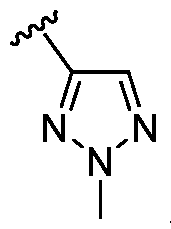
  • the compound of Formula J, I, Ia, Ib, Ib-1, Ib-2, Ic, or Id, or the pharmaceutically acceptable salt thereof is the compound wherein R 1 is .
  • Ia, Ib, Ib-1, Ib-2, Ic, or Id, or 10 the pharmaceutically acceptable salt thereof, is the compound wherein R 1 is .
  • Ia, Ib, Ib-1, Ib-2, Ic, or Id, or the pharmaceutically acceptable salt thereof is the compound wherein R 1 is phenyl substituted with halogen.
  • the compound of Formula J, I, Ia, Ib, Ib-1, 15 Ib-2, Ic, or Id, or the pharmaceutically acceptable salt thereof is the compound wherein R 1 is .
  • the compound of Formula J, I, or the pharmaceutically acceptable salt 33 Mintz Docket No.: 052691-510001WO thereof is the compound wherein at least one R 2 is C1-6 alkyl, C1-6 alkoxy, C2-6 alkoxyalkyl, halogen, C 1-6 haloalkyl, C 1-6 haloalkoxy, hydroxy or -CN.
  • the compound of Formula J, I, Ia, Ib, Ib-1, Ib-2, Ic, or Id, or the pharmaceutically acceptable salt thereof is the compound wherein each R 2 is 5 independently hydrogen, C 1-6 alkyl, C 1-6 alkoxy, halogen or C 1-6 haloalkyl.
  • the compound of Formula J, I, Ia, Ib, Ib-1, Ib-2, Ic, or Id, or the pharmaceutically acceptable salt thereof is the compound wherein each R 2 is independently hydrogen, C1-6 alkyl, C1-6 alkoxy or halogen.
  • the compound of Formula J, I, Ia, Ib, Ib-1, Ib-2, Ic, or Id, or the pharmaceutically acceptable salt thereof is the 10 compound wherein each R 2 is independently hydrogen, methyl, ethyl, n-propyl, iso-propyl, methoxy, ethoxy, n-propoxy, iso-propoxy, fluoro, chloro, bromo, -CH 2 F, -CHF 2 , -CF 3 , - CH2CH2F, -CH2CHF2, or -CH2CF3.
  • the compound of Formula J, I, Ia, Ib, Ib-1, Ib-2, Ic, or Id, or the pharmaceutically acceptable salt thereof is the compound wherein each R 2 is independently hydrogen, methyl, ethyl, n-propyl, iso-propyl, methoxy, 15 ethoxy, n-propoxy, iso-propoxy, fluoro, chloro or bromo.
  • the compound of Formula J, I, Ia, Ib, Ib-1, Ib-2, Ic, or Id, or the pharmaceutically acceptable salt thereof is the compound wherein each R 2 is independently hydrogen, methyl, methoxy, fluoro, chloro, or CF3.
  • the compound of Formula J, I, Ia, Ib, Ib-1, Ib- 2, Ic, or Id, or the pharmaceutically acceptable salt thereof is the compound wherein each R 2 20 is independently hydrogen, methyl, methoxy, or chloro.
  • the compound of Formula J, I, Ia, Ib, Ib-1, Ib-2, Ic, or Id, or the pharmaceutically acceptable salt thereof is the compound wherein each R 2 is hydrogen or methyl.
  • the compound of Formula J, I, Ia, Ib, Ib-1, Ib-2, Ic, or Id, or the pharmaceutically acceptable salt thereof is the compound wherein R 2 is hydrogen or 25 methyl.
  • the compound of Formula J, I, Ia, Ib, Ib-1, Ib-2, Ic, or Id, or the pharmaceutically acceptable salt thereof is the compound wherein R 2 is methyl.
  • Each embodiment of A 1 , A 2 , A 3 , A 4 and R 2 described herein can be combined with each embodiment of R 1 described herein.
  • the compound of Formula J, I, Ia, Ib, Ib-1, Ib-2, Ic, or Id, or the pharmaceutically acceptable salt thereof is the compound wherein subscript n is 2.
  • the compound of Formula J, I, Ia, Ib, Ib-1, Ib-2, Ic, or Id, or the pharmaceutically acceptable salt thereof is the compound wherein subscript n is 1.
  • Each embodiment of subscript n described herein can be combined with each 10 embodiment of R 1 , A 1 , A 2 , A 3 , A 4 , and R 2 described herein.
  • the compound of Formula J, I, or the pharmaceutically acceptable salt thereof is the compound having the structure of Formula Ia: a) .
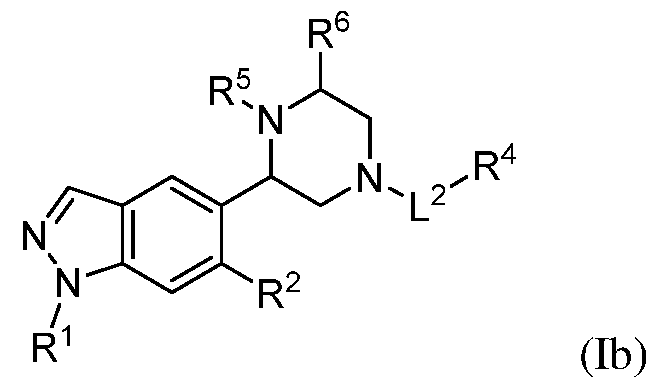
  • the compound having the structure of Formula Ib: b) is the compound having the structure of Formula Ib- 1: 35 Mintz Docket No.: 052691-510001WO (Ib-1) .
  • e co pou o ormula J, I, Ia, or Ib, or the pharmaceutically acceptable salt thereof is the compound having the structure of Formula Ib- 2: 5 (Ib-2) .
  • emodim e s, e co pou o o mula J, I, Ia, Ib, Ib-1, or Ib-2, or the pharmaceutically acceptable salt thereof is the compound wherein L 2 is -C(O)-, -C(O)O-, - C(O)N(R 3 )-, -S(O)2- or -S(O)2N(R 3 )-; and R 3 is hydrogen, or C1-6 alkyl.
  • the compound of Formula J, I, Ia, Ib, Ib-1, or Ib-2, or the pharmaceutically 10 acceptable salt thereof is the compound wherein L 2 is -C(O)-, -S(O)2- or -S(O)2N(R 3 )-; and R 3 is C 1-6 alkyl.
  • the compound of Formula J, I, Ia, Ib, Ib-1, or Ib-2, or the pharmaceutically acceptable salt thereof is the compound wherein L 2 is -C(O)-, -S(O)2- or -S(O) 2 N(Me)-.
  • the compound of Formula J, I, Ia, Ib, Ib-1, or Ib-2, or the pharmaceutically acceptable salt thereof is the compound wherein L 2 is -C(O)-, or - 15 S(O) 2 -.
  • the compound of Formula J, I, Ia, Ib, Ib-1, or Ib-2, or the pharmaceutically acceptable salt thereof is the compound wherein L 2 is -S(O)2-.
  • the compound of Formula J, I, Ia, or Ib, or the 20 pharmaceutically acceptable salt thereof is the compound having the structure of Formula Ic or Formula Id: 36 Mintz Docket No.: 052691-510001WO (Ic), or (Id).
  • p rmula J, I, Ia, or Ib, or the pharmaceutically acceptable salt thereof is the compound having the structure of Formula Ic: 5 c) .
  • R 4 is C1-6 alkyl, C2-6 alkoxyalkyl, C1-6 hydroxyalkyl, C1-6 haloalkyl, C3-8 cycloalkyl, C1-6 alkyl-C 3-8 cycloalkyl, heterocycloalkyl, C 1-6 alkyl-heterocycloalkyl, C 6-12 aryl, C 1-6 alkyl-C 6-12 10 aryl, heteroaryl, or C1-6 alkyl-heteroaryl, wherein each heterocycloalkyl independently has 3 to 6 ring members and 1 to 3 heteroatoms each independently N, O or S, wherein each heteroaryl independently has 5 to 6 ring members and 1 to 4 heteroatoms each independently N, O or S, and wherein the cycloalkyl, heterocycloalkyl, aryl and heteroary
  • the compound of Formula J, I, Ia, Ib, Ib-1, Ib-2, Ic or Id, or the pharmaceutically acceptable salt thereof is the compound wherein R 4 is C 1-6 alkyl, C 2-6 alkoxyalkyl, C 1-6 hydroxyalkyl, C 3-8 cycloalkyl, C 1-6 alkyl-C 3-8 cycloalkyl, heterocycloalkyl, C1-6 alkyl-heterocycloalkyl, C6-12 aryl, C1-6 alkyl-C6-12 aryl, heteroaryl, or C 1-6 alkyl-heteroaryl, wherein each heterocycloalkyl independently has 3 to 6 10 ring members and 1 to 3 heteroatoms each independently N, O or S, wherein each heteroaryl independently has 5 to 6 ring members and 1 to 4 heteroatoms each independently N, O or S, and wherein the cycloalkyl, heterocycloalkyl, aryl and hetero
  • the compound of Formula J, I, Ia, Ib, Ib-1, Ib-2, Ic, or Id, or 25 the pharmaceutically acceptable salt thereof is the compound wherein R 4 is C 1-6 alkyl, C 2-3 alkoxyalkyl, C 1-3 hydroxyalkyl, C 1-6 haloalkyl, C 3-6 cycloalkyl, C 1-2 alkyl-C3-6 cycloalkyl, heterocycloalkyl, C1-2 alkyl-heterocycloalkyl, C6-12 aryl, C1-2 alkyl-aryl, heteroaryl, or C 1-2 alkyl-heteroaryl, wherein each heterocycloalkyl independently has 5 to 6 ring members and 1 to 3 heteroatoms each independently N or O , wherein each heteroaryl 30 independently has 5 to 6 ring members and 1 to 3 heteroatoms each independently N, O or S, and wherein the cycloalkyl, heterocycloalkyl, aryl,
  • the compound of Formula J, I, Ia, Ib, Ib-1, Ib-2, Ic or Id, or the pharmaceutically acceptable salt thereof is the compound wherein 5 R 4 is C 1-6 alkyl, C 2-3 alkoxyalkyl, C 1-3 hydroxyalkyl, C 3-6 cycloalkyl, C 1-2 alkyl-C 3-6 cycloalkyl, heterocycloalkyl, or heteroaryl, wherein each heterocycloalkyl independently has 5 to 6 ring members and 1 to 3 heteroatoms each independently N or O , wherein each heteroaryl independently has 5 to 6 ring members and 1 to 3 heteroatoms each independently N, O or S, and wherein the cycloalkyl, heterocycloalkyl, and heteroaryl are each 10 independently substituted with 0 to 2 R 4a groups; and each R 4a is independently C 1-3 alkyl, C 2-3 alkoxyalkyl, halogen, C 1-3 haloalkyl
  • the compound of Formula J, I, Ia, Ib, Ib-1, Ib-2, Ic, or Id, or 15 the pharmaceutically acceptable salt thereof is the compound wherein R 4 is methyl, ethyl, n-propyl, iso-propyl, n-butyl, iso-butyl, sec-butyl, methoxymethyl, methoxyethyl, isopropoxyethyl, hydroxymethyl, 1-hydroxyethyl, 2-hydroxyethyl, -CH2F, - CHF 2 , -CF 3 , -CH 2 CH 2 F, -CH 2 CHF 2 , -CH 2 CF 3 , C 3-6 cycloalkyl, C 1-2 alkyl-C 3-6 cycloalkyl, heterocycloalkyl, , C1-2 alkyl-heterocycloalkyl, C6-12 aryl, C1-2 alkyl-C6-12 aryl, or
  • the compound of Formula J, I, Ia, Ib, Ib-1, Ib-2, Ic or Id, or the pharmaceutically acceptable salt thereof is the compound wherein R 4 is methyl, ethyl, n-propyl, iso-propyl, n-butyl, iso-butyl, sec-butyl, methoxymethyl, methoxyethyl, hydroxymethyl, 1-hydroxyethyl, 2-hydroxyethyl, C 3-6 cycloalkyl, C 1-2 alkyl- 5 C3-6 cycloalkyl, heterocycloalkyl, or heteroaryl, wherein each cycloalkyl is cyclopropyl, cyclobutyl, cyclopentyl, or cyclohexyl, where each heterocycloalkyl is tetrahydrofuran, pyrrolidine, tetrahydro
  • the compound of Formula J, I, Ia, Ib, Ib-1, Ib-2, Ic, or Id, or the pharmaceutically acceptable salt thereof is the compound wherein R 4 is methyl, n-propyl, iso-butyl, -CH(OH)CH3, methoxyethyl, isopropoxyethyl, CH2CF3, C3- 6 cycloalkyl, C 1-2 alkyl-C 3-6 cycloalkyl, heterocycloalkyl, C 1-2 alkyl-heterocycloalkyl, C 6-12 20 aryl, C1-2 alkyl-C6-12 aryl, or heteroaryl, wherein each cycloalkyl is cyclopropyl or cyclobutyl, where each heterocycloalkyl is oxetane, tetrahydrofuran or morpholine, wherein each aryl is phenyl, wherein each heteroaryl is pyridine,
  • the compound of Formula J, I, Ia, Ib, Ib-1, Ib-2, Ic or Id, or the pharmaceutically acceptable salt thereof is the compound wherein 30 R 4 is methyl, n-propyl, iso-butyl, -CH(OH)CH 3 , methoxyethyl, C 3-6 cycloalkyl, C 1-2 alkyl-C 3- 6 cycloalkyl, heterocycloalkyl, or heteroaryl, wherein each cycloalkyl is cyclopropyl, where each heterocycloalkyl is tetrahydrofuran or morpholine, 40 Mintz Docket No.: 052691-510001WO wherein each heteroaryl is pyridine, pyrazole, isoxazole, thiazole, or triazole, wherein the heteroaryl is substituted with 0 to 2 R 4a groups; and each R 4a is independently methyl, ethyl,
  • the compound of Formula J, I, Ia, Ib, Ib-1, Ib-2, Ic, or Id, or the pharmaceutically acceptable salt thereof is the compound wherein R 4 is pyridine, pyrazole, thiazole, or triazole, each substituted with 0 to 2 R 4a groups; and each R 4a is independently methyl, ethyl, n-propyl, iso-propyl, methoxy, methoxyethyl, fluoro, -CHF2, - CF 3 , -CH 2 CHF 2 , -CH 2 CF 3 , -CN, or tetrahydropyran.
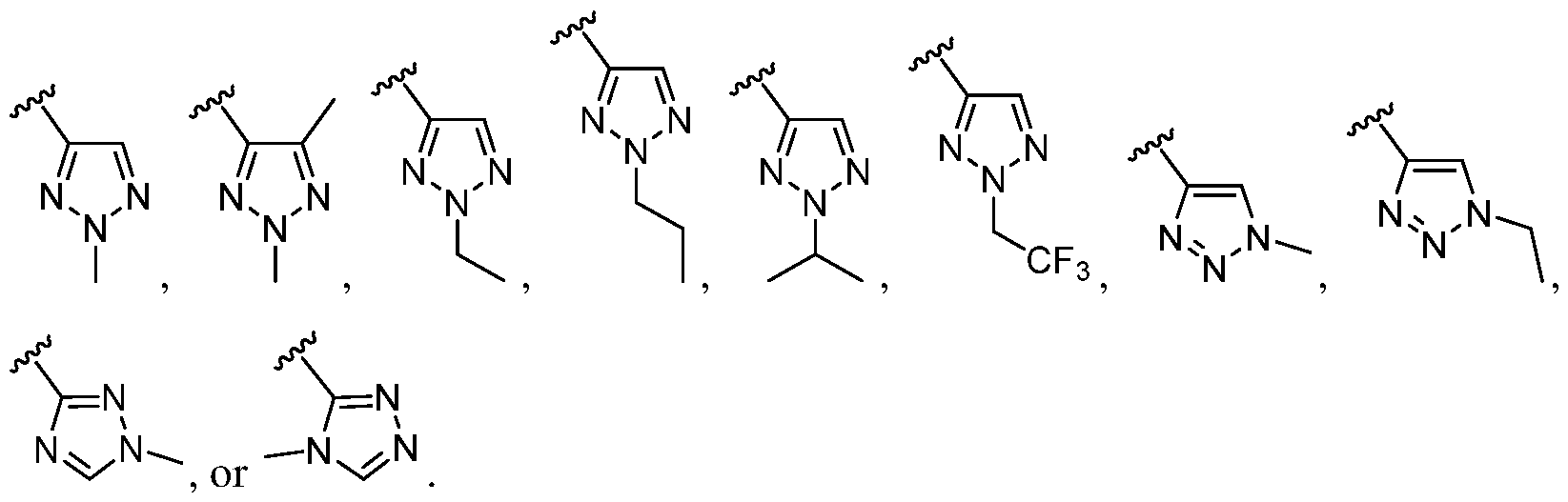
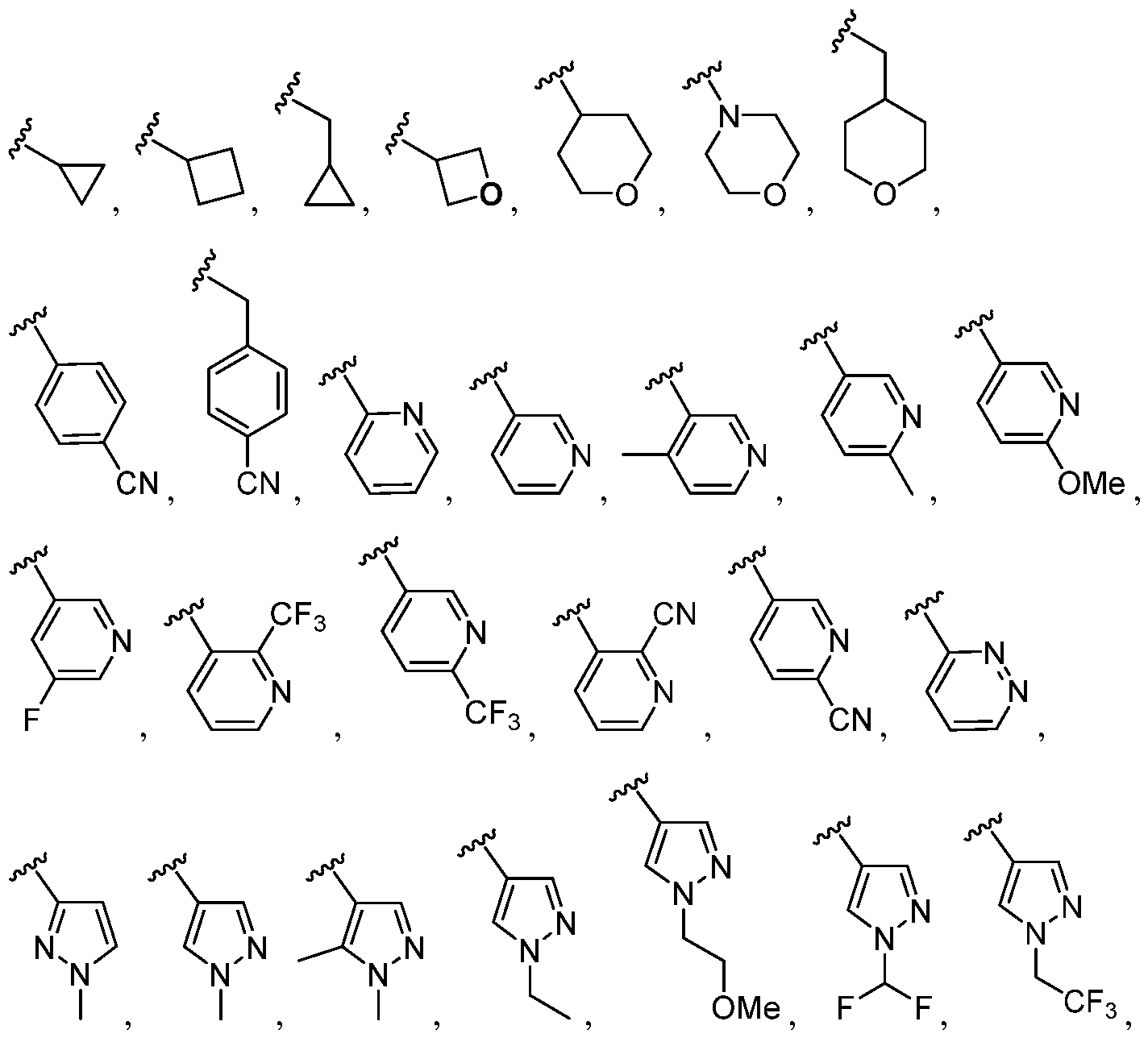
  • the compound of Formula J, I, Ia, Ib, Ib-1, Ib-2, Ic, or Id, or the pharmaceutically acceptable salt thereof is the compound wherein R 4 is methyl, n-propyl, iso-butyl, -CH(OH)CH 3 , methoxyethyl, isopropoxyethyl, CH 2 CF 3 , , 15 , 41 Mintz Docket No.: 052691-510001WO , , , , , , , , or Id, or the pharmaceutically acceptable salt thereof, is the compound wherein 5 R 4 is methyl, n-propyl, iso-butyl, -CH(OH)CH 3 , methoxyethyl, isopropoxyethyl, CH 2 CF 3 , , 10 42 Mintz Docket No.: 052691-510001WO , , , , , , , , , , ,
  • the compound of Formula J, I, Ia, Ib, Ib-1, Ib-2, or Id, or the pharmaceutically acceptable salt thereof is the compound wherein L 2 is –C(O)-; and R 4 is methyl, -CH(OH)CH3, or 15 .
  • the compound of Formula J, I, Ia, Ib, Ib-1, Ib-2, Ic, or Id, or the pharmaceutically acceptable salt thereof is the compound wherein L 2 is –S(O)2-; and R 4 is methyl, n-propyl, iso-butyl, -methoxyethyl, isopropoxyethyl, CH 2 CF 3 , 5 , , 10 , , , , , , , , , or the pharmaceutically acceptable salt thereof, is the compound wherein 44 Mintz Docket No.: 052691-510001WO L 2 is –S(O)2-; and R 4 is methyl, n-propyl, iso-butyl, -CH 2 CH 2 OCH 3 , , 5 , , , , , , , , , , pharmaceutically acceptable salt thereof, is the compound wherein L 2 is –S(O)2-; and R 4 is methyl, n-propyl
  • the compound of Formula J, I, Ia, Ib, Ib-1, Ib-2, Ic, or Id, or the pharmaceutically acceptable salt thereof is the compound wherein R 5 is C1-6 alkyl, C2-6 alkenyl, C2-6 alkynyl, C2-6 alkoxyalkyl, C1-6 hydroxyalkyl, C1-6 haloalkyl, -C(O)R 5a , C 1-6 alkyl-C(O)R 5a , -S(O) 2 R 5a , C 3-8 cycloalkyl, C 1-6 alkyl-C 3-8 cycloalkyl, 15 heterocycloalkyl, C1-6 alkyl-heterocycloalkyl, C6-12 aryl, C1-6 alkyl-C6-12 aryl, heteroaryl, or C 1-6 alkyl-heteroaryl, wherein each heterocycloalkyl independently has 3 to 6 ring members and 1 to 3 heteroatoms
  • the compound of Formula J, I, Ia, Ib, Ib-1, Ib-2, Ic or Id, or the pharmaceutically acceptable salt thereof is the compound wherein R 5 is C 1-6 alkyl, C 2-6 alkenyl, C 2-6 alkynyl, C 2-6 alkoxyalkyl, C 1-6 hydroxyalkyl, C 1-6 haloalkyl, -C(O)R 5a , -S(O)2R 5a , C3-8 cycloalkyl, C1-6 alkyl-C3-8 cycloalkyl, heterocycloalkyl, C1-6 alkyl- heterocycloalkyl, C 6-12 aryl, C 1-6 alkyl-C 6-12 aryl, heteroaryl, or C 1-6 alkyl-heteroaryl, wherein 10 each heterocycloalkyl independently has 3 to 6 ring members and 1 to 3 heteroatoms each independently N, O or S, wherein each heterocycloalkyl independently has 3 to 6 ring members
  • the compound of Formula J, I, Ia, Ib, Ib-1, Ib-2, Ic, or Id, or the pharmaceutically acceptable salt thereof is the compound wherein R 5 is C1-6 alkyl, C2-6 alkenyl, C1-6 hydroxyalkyl, C1-6 haloalkyl, -C(O)R 5a , C1-2 alkyl-C(O)R 5a , C 3-6 cycloalkyl, C 1-2 alkyl-C 3-6 cycloalkyl, heterocycloalkyl, C 1-2 alkyl-heterocycloalkyl, C 6-12 25 aryl, C1-2 alkyl-C6-12 aryl, or C1-2 alkyl-heteroaryl, wherein each heterocycloalkyl independently has 3 to 6 ring members and 1 to 2 heteroatoms each independently N or O, wherein each heteroaryl independently has 5 to 6 ring members and 1 to 3 heteroatoms each independently N, O or S, and
  • the compound of Formula J, I, Ia, Ib, Ib-1, Ib-2, Ic or Id, or the pharmaceutically acceptable salt thereof is the compound wherein R 5 is C1-6 alkyl, C2-6 alkenyl, C1-6 hydroxyalkyl, C1-6 haloalkyl, -C(O)R 5a , C3-6 cycloalkyl, C1-2 alkyl-C 3-6 cycloalkyl, heterocycloalkyl, C 1-2 alkyl-heterocycloalkyl, C 6-12 aryl, C 1-2 alkyl-C 6-12 5 aryl, or C1-2 alkyl-heteroaryl, wherein each heterocycloalkyl independently has 3 to 6 ring members and 1 to 2 heteroatoms each independently N or O, wherein each heteroaryl independently has 5 to 6 ring members and 1 to 3 heteroatoms each independently N, O or
  • the compound of Formula J, I, Ia, Ib, Ib-1, Ib-2, Ic, or Id, or the pharmaceutically acceptable salt thereof is the compound wherein R 5 is C 1-6 alkyl, C 1-6 haloalkyl, or C1-2 alkyl-C3-6 cycloalkyl, wherein each cycloalkyl is independently substituted 15 with 0 to 2 R 5c groups; and each R 5c is independently C 1-3 alkyl, C 1-3 alkoxy, halogen, C 1-3 haloalkyl, –CN, oxo or -OH.
  • the compound of Formula J, I, Ia, Ib, Ib- 1, Ib-2, Ic, or Id, or the pharmaceutically acceptable salt thereof is the compound wherein R 5 is C1-6 alkyl. In some embodiments, the compound of Formula J, I, Ia, Ib, Ib-1, Ib-2, Ic, or Id, or the pharmaceutically acceptable salt thereof, is the compound wherein R 5 is C 1-6 haloalkyl.
  • the compound of Formula J, I, Ia, Ib, Ib-1, Ib-2, Ic, or Id, or the pharmaceutically acceptable salt thereof is the compound wherein R 5 is C 1-2 alkyl-C 3-6 cycloalkyl, wherein each cycloalkyl is independently substituted with 0 to 2 R 5c groups; and each R 5c is independently C 1-3 alkyl, C 1-3 alkoxy, halogen, C 1-3 haloalkyl, –CN, oxo or -OH.
  • the compound of Formula J, I, Ia, Ib, Ib-1, Ib-2, Ic, or Id, or 25 the pharmaceutically acceptable salt thereof is the compound wherein R 5 is methyl, ethyl, n-propyl, iso-propyl, n-butyl, iso-butyl, sec-butyl, C 4-6 alkenyl, C 4-6 hydroxyalkyl, -CH2F, -CHF2, -CF3, -CH2CH2F, -CH2CHF2, -CH2CF3, -CH2CHFCH3, - CH 2 CF 2 CH 3 , -CH 2 CH 2 CF 3 , -CH 2 CF(CH 3 ) 2 , -CH 2 CH 2 CH 2 CF 3 , -CH 2 CH(CH 3 )(CF 3 ), -CH 2 C(CH3)2(CF3), -C(O)R 5a , C1-2 alkyl-C(
  • the compound of Formula J, I, Ia, Ib, Ib-1, Ib-2, Ic or Id, or 10 the pharmaceutically acceptable salt thereof is the compound wherein R 5 is methyl, ethyl, n-propyl, iso-propyl, n-butyl, iso-butyl, sec-butyl, C 4-6 alkenyl, C 4-6 hydroxyalkyl, -CH2F, -CHF2, -CF3, -CH2CF3, -CH2CH2CF3, -CH2CH2CH2CF3, - CH 2 CH(CH 3 )(CF 3 ), -C(O)R 5a , C 3-6 cycloalkyl, C 1-2 alkyl-C 3-6 cycloalkyl, heterocycloalkyl, C1-2 alkyl-heterocycloalkyl, C6-12 aryl, C1-2 alkyl-C6-12 aryl, or C1-2 alkyl
  • the compound of Formula J, I, Ia, Ib, Ib-1, Ib-2, Ic, or Id, or the pharmaceutically acceptable salt thereof is the compound wherein R 5 is ethyl, iso-propyl, iso-butyl, , 48 Mintz Docket No.: 052691-510001WO , 5 . , , , , , , r Id, or the pharmaceutically acceptable salt thereof, is the compound wherein R 5 is ethyl, iso-propyl, iso-butyl, 10 , 49 Mintz Docket No.: 052691-510001WO .
  • the compound of Formula J, I, Ia, Ib, Ib-1, Ib-2, Ic, or Id, or the pharmaceutically acceptable salt thereof is the compound wherein R 6 is hydrogen, C1-6 alkyl or oxo; and subscript m is 0, 1 or 2.
  • the compound of Formula J, I, Ia, Ib, Ib-1, Ib-2, Ic or Id, or the pharmaceutically acceptable salt thereof is the compound 10 wherein R 6 is hydrogen or C 1-6 alkyl; and subscript m is 0 or 1.
  • the compound of Formula J, I, Ia, Ib, Ib-1, Ib-2, Ic or Id, or the pharmaceutically acceptable salt thereof is the compound wherein R 6 is hydrogen or methyl; and subscript m is 0 or 1.
  • the compound of Formula J, I, Ia, Ib, Ib-1, Ib-2, Ic, or Id, or the pharmaceutically acceptable salt thereof is the compound wherein R 6 is hydrogen, methyl, or 15 oxo; and subscript m is 0, 1 or 2.
  • the compound of Formula J, I, Ia, Ib, Ib-1, Ib-2, Ic or Id, or the pharmaceutically acceptable salt thereof is the compound wherein subscript m is 0.
  • R 6 and subscript m described herein can be combined with each embodiment of R 1 , A 1 , A 2 , A 3 , A 4 , R 2 , subscript n, L 2 , R 3 , R 4 , R 4a , R 4b , R 4c , R 5 , R 5a , R 5b , 20 R 5c , R 5c1 , R 5c2 , and R 5d described herein.
  • the compound of Formula J, I, Ia, Ib, Ib-1, Ib-2, Ic or Id, or the pharmaceutically acceptable salt thereof is the compound wherein R 1 is 10 , 15 , 61 Mintz Docket No.: 052691-510001WO ; iso-butyl, , 5 subscript m is 0 or 1.
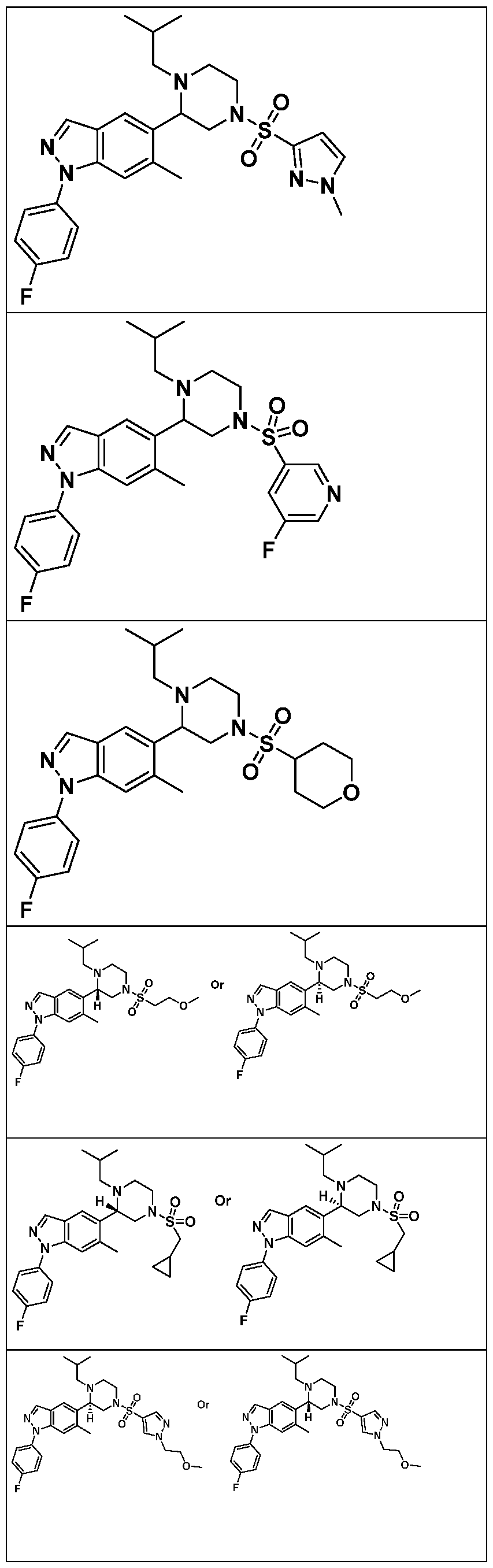
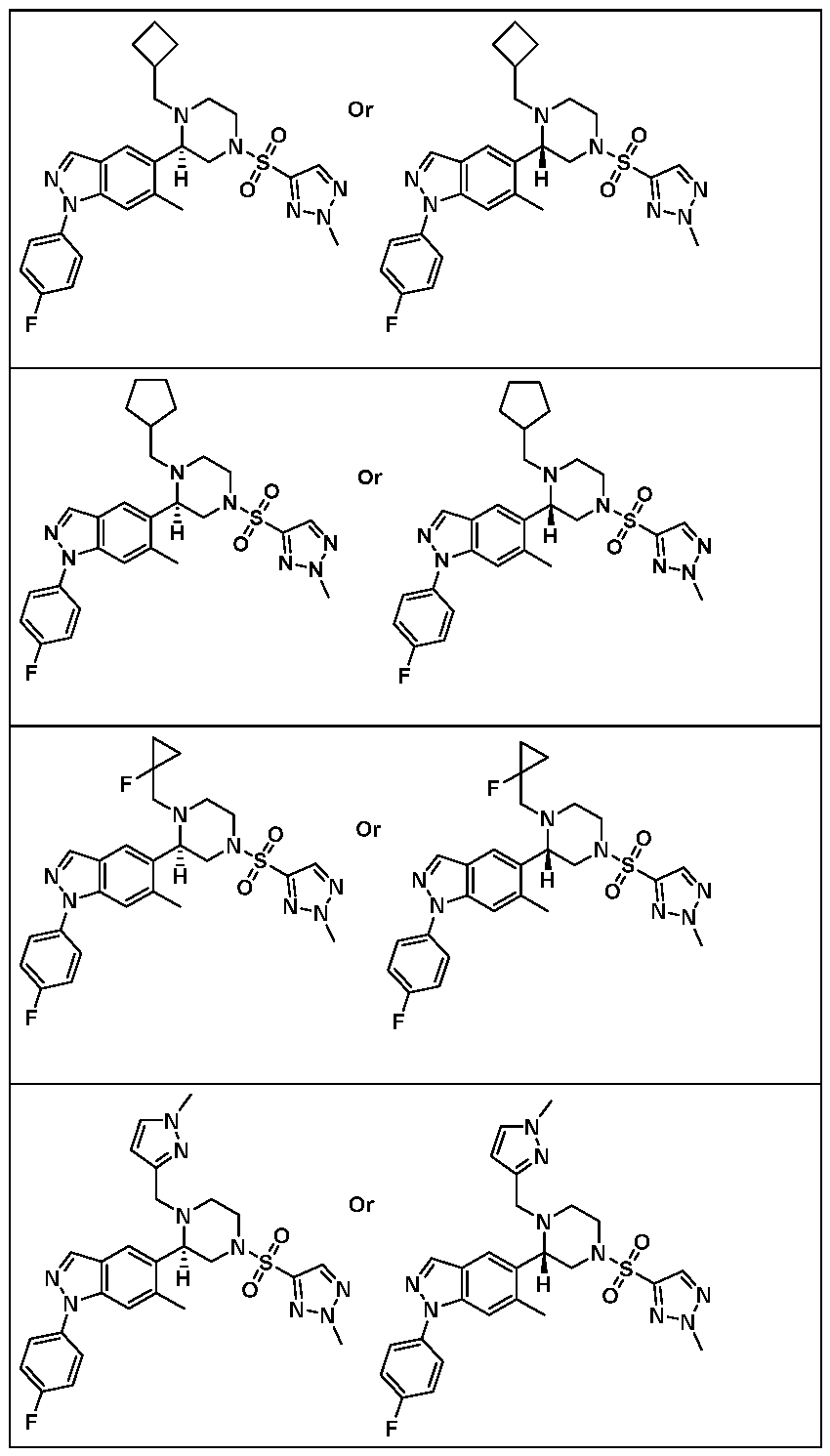
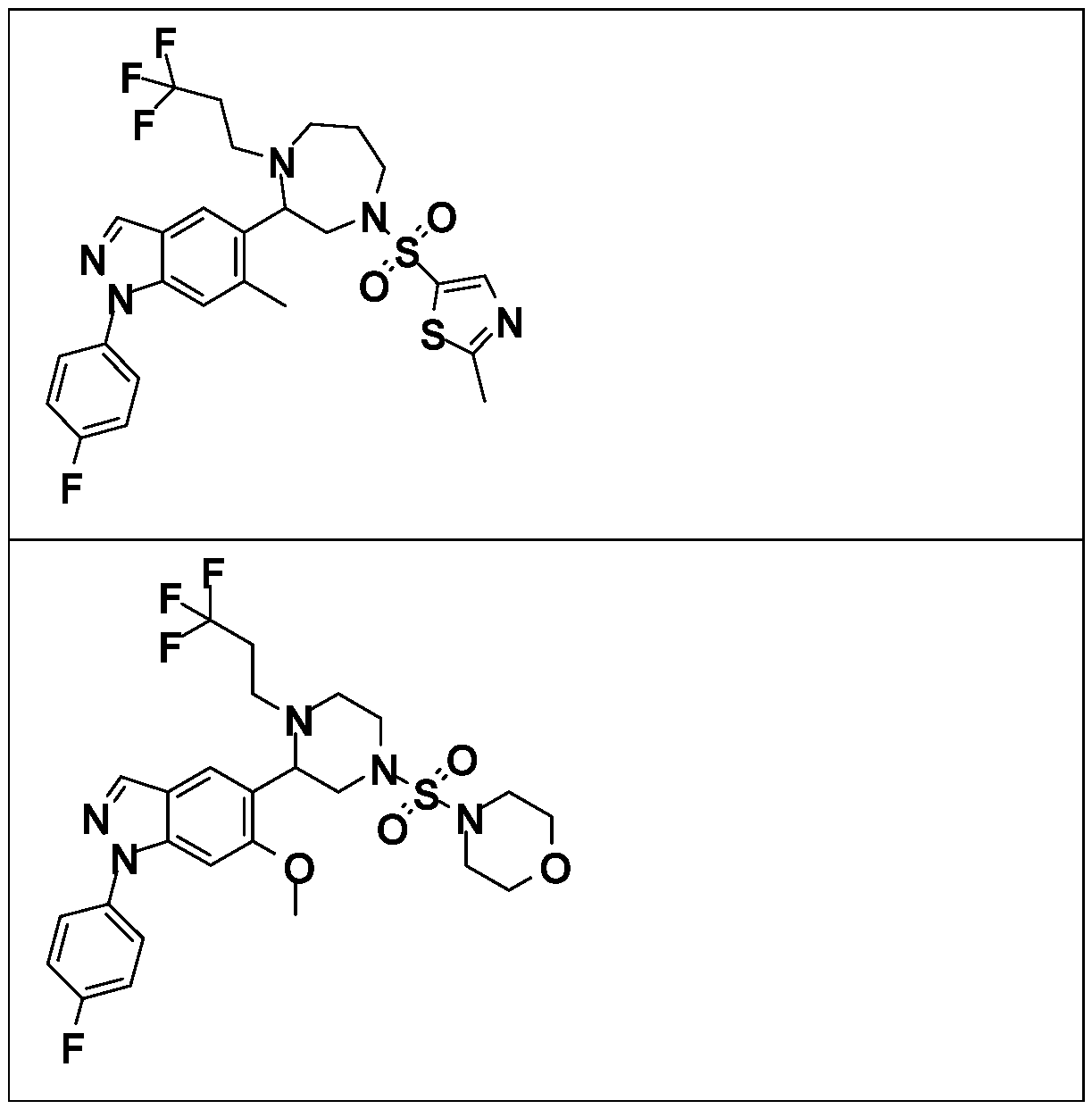
  • the compound of Formula J, I, Ia, Ib, Ib-1, Ib-2, Ic or Id, or 10 the pharmaceutically acceptable salt thereof is a compound of Table 1A. Table 1A.
  • the compound of Formula J, I, Ia, Ib, Ib-1, Ib-2, Ic or Id, or the pharmaceutically acceptable salt thereof is a compound of Table 1B. Table 1B.
  • the compound of Formula J, I, Ia, Ib, Ib-1, Ib-2, Ic or Id, or the pharmaceutically acceptable salt thereof is a compound of Table 1C. Table 1C.
  • the compound of Formula J, I, Ia, Ib, Ib-1, Ib-2, Ic or Id, or the pharmaceutically acceptable salt thereof is a compound of Table 1D. 73 Mintz Docket No.: 052691-510001WO Table 1D.
  • the compound of Formula J, I, Ia, Ib, Ib-1, Ib-2, Ic or Id, or the pharmaceutically acceptable salt thereof is a compound of Table 1E. Table 1E.
  • the compound of Formula J, I, Ia, Ib, Ib-1, Ib-2, Ic or Id, or the pharmaceutically acceptable salt thereof is a compound of Table 1F.
  • the compound of Formula J, I, Ia, Ib, Ib-1, Ib-2, Ic or Id, or the pharmaceutically acceptable salt thereof is a compound of Table 1H. 87 Mintz Docket No.: 052691-510001WO Table 1H.
  • the compound of Formula J, I, Ia, Ib, Ib-1, Ib-2, Ic or Id, or the pharmaceutically acceptable salt thereof is a compound of Table 1I. 92 Mintz Docket No.: 052691-510001WO Table 1I.
  • the compound of Formula J, I, Ia, Ib, Ib-1, Ib-2, Ic or Id, or the pharmaceutically acceptable salt thereof is a compound of Table 1J. Table 1J.
  • the compound of Formula J, I, Ia, Ib, Ib-1, Ib-2, Ic or Id, or the pharmaceutically acceptable salt thereof is a compound of Table 1K. Table 1K.
  • the compound of Formula J, I, Ia, Ib, Ib-1, Ib-2, Ic or Id, or the pharmaceutically acceptable salt thereof is a compound of Table 1A, Table 1B, Table 1C, Table 1D, Table 1E, Table 1F, Table 1G, Table 1H, Table 1I, Table 1J, or Table 1K.
  • the compound of Formula J, I, Ia, Ib, Ib-1, Ib-2, Ic or Id, or the pharmaceutically acceptable salt thereof is a compound of Table 1A, Table 1B, Table 1C, Table 1D, Table 1E, Table 1F, Table 1G, Table 1H, or Table 1I.
  • the compound of Formula J, I, Ia, Ib, Ib-1, Ib-2, Ic or Id, or the pharmaceutically acceptable salt thereof is a compound of Table 1A, Table 1B, Table 1C, Table 1D or Table 1E.
  • the compound of Formula J, I, Ia, Ib, Ib-1, Ib-2, Ic or Id, or the pharmaceutically acceptable salt thereof is a compound of Table 1F, Table 1G, Table 1H, or Table 1I.
  • the compound of Formula J, I, Ia, Ib, Ib-1, Ib-2, Ic or Id, or the pharmaceutically acceptable salt thereof is a compound of Table 1J, or Table 1K.
  • the compound of Formula J, I, Ia, Ib, Ib-1, Ib-2, Ic or Id, or the 15 pharmaceutically acceptable salt thereof is a compound of Table 1A.
  • the compound of Formula J, I, Ia, Ib, Ib-1, Ib-2, Ic or Id, or the pharmaceutically acceptable salt thereof is a compound of Table 1B.
  • the compound of Formula J, I, Ia, Ib, Ib-1, Ib-2, Ic or Id, or the pharmaceutically acceptable salt thereof is a compound of Table 1C.
  • the compound of Formula J, I, Ia, Ib, Ib-1, Ib-2, Ic or Id, or 20 the pharmaceutically acceptable salt thereof is a compound of Table 1D.
  • the compound of Formula J, I, Ia, Ib, Ib-1, Ib-2, Ic or Id, or the pharmaceutically acceptable salt thereof is a compound of Table 1E.
  • the compound of Formula J, I, Ia, Ib, Ib-1, Ib-2, Ic or Id, or the pharmaceutically acceptable salt thereof is a compound of Table 1F.
  • the compound of Formula J, 25 I, Ia, Ib, Ib-1, Ib-2, Ic or Id, or the pharmaceutically acceptable salt thereof is a compound of Table 1G.
  • the compound of Formula J, I, Ia, Ib, Ib-1, Ib-2, Ic or Id, or the pharmaceutically acceptable salt thereof is a compound of Table 1H.
  • the compound of Formula J, I, Ia, Ib, Ib-1, Ib-2, Ic or Id, or the pharmaceutically acceptable salt thereof is a compound of Table 1I.
  • the compound of Formula J, I, Ia, Ib, Ib-1, Ib-2, Ic or Id, or the pharmaceutically acceptable salt thereof is a compound of Table 1J.
  • the compound of Formula J, 5 I, Ia, Ib, Ib-1, Ib-2, Ic or Id, or the pharmaceutically acceptable salt thereof is a compound of Table 1K.
  • the compound of Formula J, I, Ia, Ib, Ib-1, Ib-2, Ic or Id is a compound of Table 1A, Table 1B, Table 1C, Table 1D, Table 1E, Table 1F, Table 1G, Table 1H, Table 1I, Table 1J, or Table 1K.
  • the compound of Formula J, I, 10 Ia, Ib, Ib-1, Ib-2, Ic or Id is a compound of Table 1A, Table 1B, Table 1C, Table 1D, Table 1E, Table 1F, Table 1G, Table 1H, or Table 1I.
  • the compound of Formula J, I, Ia, Ib, Ib-1, Ib-2, Ic or Id is a compound of Table 1A, Table 1B, Table 1C, Table 1D or Table 1E.
  • the compound of Formula J, I, Ia, Ib, Ib-1, Ib-2, Ic or Id is a compound of Table 1F, Table 1G, Table 1H, or Table 1I.
  • the 15 compound of Formula J, I, Ia, Ib, Ib-1, Ib-2, Ic or Id is a compound of Table 1J, or Table 1K.
  • the compound of Formula J, I, Ia, Ib, Ib-1, Ib-2, Ic or Id is a compound of Table 1A.
  • the compound of Formula J, I, Ia, Ib, Ib-1, Ib-2, Ic or Id is a compound of Table 1B.
  • the compound of Formula J, I, Ia, Ib, Ib-1, Ib-2, Ic or Id is a compound of Table 1C.
  • the compound 20 of Formula J, I, Ia, Ib, Ib-1, Ib-2, Ic or Id is a compound of Table 1D. In some embodiments, the compound of Formula J, I, Ia, Ib, Ib-1, Ib-2, Ic or Id is a compound of Table 1E. In some embodiments, the compound of Formula J, I, Ia, Ib, Ib-1, Ib-2, Ic or Id is a compound of Table 1F. In some embodiments, the compound of Formula J, I, Ia, Ib, Ib-1, Ib-2, Ic or Id is a compound of Table 1G.
  • the compound of Formula J, I, Ia, Ib, Ib-1, 25 Ib-2, Ic or Id is a compound of Table 1H. In some embodiments, the compound of Formula J, I, Ia, Ib, Ib-1, Ib-2, Ic or Id is a compound of Table 1I. In some embodiments, the compound of Formula J, I, Ia, Ib, Ib-1, Ib-2, Ic or Id, is a compound of Table 1J. In some embodiments, the compound of Formula J, I, Ia, Ib, Ib-1, Ib-2, Ic or Id, is a compound of Table 1K.
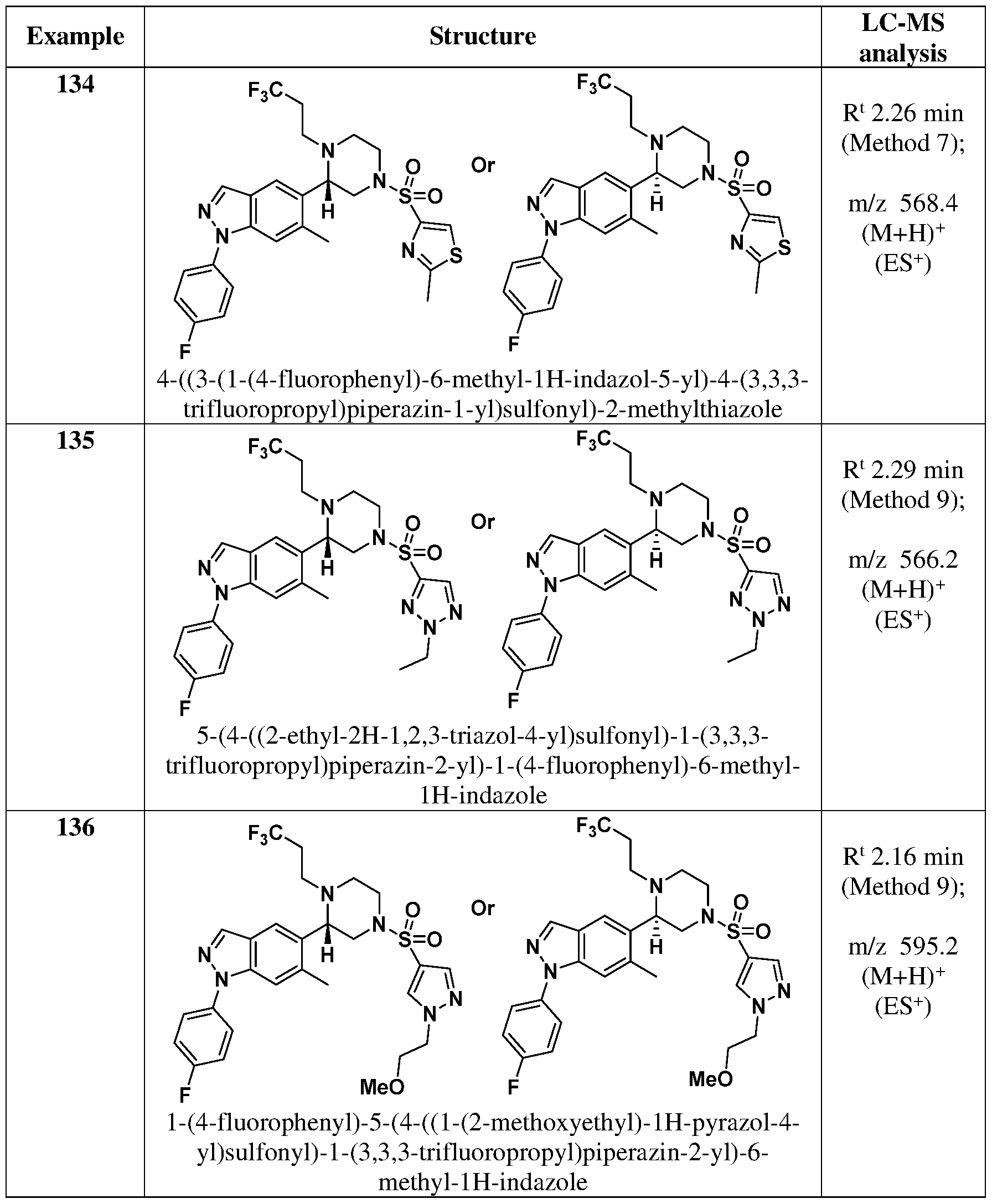
  • the compound of Formula J, I, Ia, Ib, Ib-1, Ib-2, Ic or Id, or the pharmaceutically acceptable salt thereof is the compound having the structure: 110 Mintz Docket No.: 052691-510001WO , N , 111 Mintz Docket No.: 052691-510001WO , , , 112 Mintz Docket No.: 052691-510001WO , O , , 113 Mintz Docket No.: 052691-510001WO or [0140 Ib, Ib-1, Ib-2, Ic or Id, or the pharmaceutically acceptable salt thereof, is the compound having the sturucture CF 3 CF 3 N 5 .
  • Ib-2, Ic or Id, or the pharmaceutically acceptable salt thereof is the compound having the sturucture .
  • the compound of Formula J, I, Ia, Ib, Ib-1, Ib-2, Ic or Id, or the pharmaceutically acceptable salt thereof is the compound having the sturucture .
  • b-1, Ib-2, Ic or Id, or 5 the pharmaceutically acceptable salt thereof is the compound having the sturucture .
  • ompound of Formula J, I, Ia, Ib, Ib-1, Ib-2, Ic or Id, or the pharmaceutically acceptable salt thereof is the compound having the sturucture .
  • Ib, Ib-1, Ib-2, Ic or Id, or the pharmaceutically acceptable salt thereof is the compound having the sturucture 115 Mintz Docket No.: 052691-510001WO .
  • [0146 a, Ib, Ib-1, Ib-2, Ic or Id, or the pharmaceutically acceptable salt thereof, is the compound having the sturucture .
  • 5 [0147 , Ia, Ib, Ib-1, Ib-2, Ic or Id, or the pharmaceutically acceptable salt thereof, is the compound having the sturucture F F O .
  • the compound of Formula J, I, Ia, Ib, Ib-1, Ib-2, Ic or Id, or the pharmaceutically acceptable salt thereof is the compound having the sturucture .
  • Ia, Ib, Ib-1, Ib-2, Ic or Id, or 5 the pharmaceutically acceptable salt thereof is the compound having the sturucture .
  • Ia, Ib, Ib-1, Ib-2, Ic or Id, or the pharmaceutically acceptable salt thereof is the compound having the sturucture .
  • 10 [0151 resent invention may exist as salts. The present invention includes such salts, which can be pharmaceutically acceptable salts.
  • Examples of applicable salt forms include hydrochlorides, hydrobromides, sulfates, methanesulfonates, nitrates, maleates, acetates, citrates, fumarates, tartrates (eg (+)-tartrates, (-)-tartrates or mixtures thereof including racemic mixtures, succinates, benzoates and salts with amino acids such as 117 Mintz Docket No.: 052691-510001WO glutamic acid. These salts may be prepared by methods known to those skilled in art. Also included are base addition salts such as sodium, potassium, calcium, ammonium, organic amino, or magnesium salt, or a similar salt.
  • acid addition salts can be obtained by contacting the 5 neutral form of such compounds with a sufficient amount of the desired acid, either neat or in a suitable inert solvent.
  • acceptable acid addition salts include those derived from inorganic acids like hydrochloric, hydrobromic, nitric, carbonic, monohydrogencarbonic, phosphoric, monohydrogenphosphoric, dihydrogenphosphoric, sulfuric, monohydrogensulfuric, hydriodic, or phosphorous acids and the like, as well as the 10 salts derived organic acids like acetic, propionic, isobutyric, maleic, malonic, benzoic, succinic, suberic, fumaric, lactic, mandelic, phthalic, benzenesulfonic, p-tolylsulfonic, citric, tartaric, methanesulfonic, and the like.
  • salts of amino acids such as arginate and the like, and salts of organic acids like glucuronic or galactunoric acids and the like.
  • Certain specific compounds of the present invention contain both basic and acidic 15 functionalities that allow the compounds to be converted into either base or acid addition salts.
  • Other salts include acid or base salts of the compounds used in the methods of the present invention.
  • Illustrative examples of pharmaceutically acceptable salts are mineral acid (hydrochloric acid, hydrobromic acid, phosphoric acid, and the like) salts, organic acid 20 (acetic acid, propionic acid, glutamic acid, citric acid and the like) salts, and quaternary ammonium (methyl iodide, ethyl iodide, and the like) salts. It is understood that the pharmaceutically acceptable salts are non-toxic. Additional information on suitable pharmaceutically acceptable salts can be found in Remington's Pharmaceutical Sciences, 17th ed., Mack Publishing Company, Easton, Pa., 1985, which is incorporated herein by reference.
  • Pharmaceutically acceptable salts includes salts of the active compounds which are prepared with relatively nontoxic acids or bases, depending on the particular substituents found on the compounds described herein.
  • base addition salts can be obtained by contacting the neutral form of such compounds with a sufficient amount of the desired base, either neat or in 30 a suitable inert solvent.
  • Examples of pharmaceutically acceptable base addition salts include sodium, potassium, calcium, ammonium, organic amino, or magnesium salt, or a similar salt.
  • acid addition salts can be obtained by contacting the neutral form of such compounds with a 118 Mintz Docket No.: 052691-510001WO sufficient amount of the desired acid, either neat or in a suitable inert solvent.
  • Examples of pharmaceutically acceptable acid addition salts include those derived from inorganic acids like hydrochloric, hydrobromic, nitric, carbonic, monohydrogencarbonic, phosphoric, monohydrogenphosphoric, dihydrogenphosphoric, sulfuric, monohydrogensulfuric, 5 hydriodic, or phosphorous acids and the like, as well as the salts derived from relatively nontoxic organic acids like acetic, propionic, isobutyric, maleic, malonic, benzoic, succinic, suberic, fumaric, lactic, mandelic, phthalic, benzenesulfonic, p-tolylsulfonic, citric, tartaric, methanesulfonic, and the like.
  • inorganic acids like hydrochloric, hydrobromic, nitric, carbonic, monohydrogencarbonic, phosphoric, monohydrogenphosphoric, dihydrogenphosphoric, sulfuric, monohydrogensulfuric, 5 hydriodic, or phosphorous
  • salts of amino acids such as arginate and the like, and salts of organic acids like glucuronic or galactunoric acids and the like (see, for 10 example, Berge et al., "Pharmaceutical Salts", Journal of Pharmaceutical Science, 1977, 66, 1-19).
  • Certain specific compounds of the present invention contain both basic and acidic functionalities that allow the compounds to be converted into either base or acid addition salts.
  • the neutral forms of the compounds are preferably regenerated by contacting the 15 salt with a base or acid and isolating the parent compound in the conventional manner.
  • the parent form of the compound differs from the various salt forms in certain physical properties, such as solubility in polar solvents.
  • Certain compounds of the present invention can exist in unsolvated forms as well as solvated forms, including hydrated forms. In general, the solvated forms are equivalent to 20 unsolvated forms and are encompassed within the scope of the present invention. Certain compounds of the present invention may exist in multiple crystalline or amorphous forms. [0156] Certain compounds of the present invention possess asymmetric carbon atoms (optical centers) or double bonds; the enantiomers, racemates, diastereomers, tautomers, geometric isomers, stereoisometric forms that may be defined, in terms of absolute 25 stereochemistry, as (R)-or (S)- or, as (D)- or (L)- for amino acids, and individual isomers are encompassed within the scope of the present invention.
  • the compounds of the present invention do not include those which are known in art to be too unstable to synthesize and/or isolate.
  • the present invention is meant to include compounds in racemic and optically pure forms.
  • Optically active (R)- and (S)-, or (D)- and (L)-isomers may be prepared using chiral 30 synthons or chiral reagents, or resolved using conventional techniques.
  • Isomers include compounds having the same number and kind of atoms, and hence the same molecular weight, but differing in respect to the structural arrangement or configuration of the atoms.
  • structures depicted herein are also meant to include all 5 stereochemical forms of the structure; i.e., the R and S configurations for each asymmetric center. Therefore, single stereochemical isomers as well as enantiomeric and diastereomeric mixtures of the present compounds are within the scope of the invention.
  • the compounds of the present invention may also contain unnatural proportions of atomic isotopes at one or more of the atoms that constitute such 10 compounds.
  • the compounds of the present invention may be labeled with radioactive or stable isotopes, such as for example deuterium ( 2 H), tritium ( 3 H), iodine-125 ( 125 I), fluorine-18 ( 18 F), nitrogen-15 ( 15 N), oxygen-17 ( 17 O), oxygen-18 ( 18 O), carbon-13 ( 13 C), or carbon-14 ( 14 C). All isotopic variations of the compounds of the present invention, whether radioactive or not, are encompassed within the scope of the present invention. 15 [0160] In addition to salt forms, the present invention provides compounds, which are in a prodrug form. Prodrugs of the compounds described herein are those compounds that readily undergo chemical changes under physiological conditions to provide the compounds of the present invention.
  • prodrugs can be converted to the compounds of the present invention by chemical or biochemical methods in an ex vivo environment.
  • 20 prodrugs can be slowly converted to the compounds of the present invention when placed in a transdermal patch reservoir with a suitable enzyme or chemical reagent.
  • IV. COMPOSITIONS [0161]
  • the present invention provides a pharmaceutical composition comprising a compound of any one of the compounds of the present invention and a 25 pharmaceutically acceptable excipient.
  • the compounds of the present invention can be prepared and administered in a wide variety of oral, parenteral and topical dosage forms.
  • Oral preparations include tablets, pills, powder, dragees, capsules, liquids, lozenges, gels, syrups, slurries, suspensions, etc., suitable for ingestion by the patient.
  • the compounds of the present invention can also be 30 administered by injection, that is, intravenously, intramuscularly, intracutaneously, subcutaneously, intraduodenally, or intraperitoneally.
  • the compounds described herein 120 Mintz Docket No.: 052691-510001WO can be administered by inhalation, for example, intranasally. Additionally, the compounds of the present invention can be administered transdermally.
  • the compounds of Formula J, I, Ia, Ib, Ib-1, Ib-2, Ic and Id of this invention can also be administered by in intraocular, intravaginal, and intrarectal routes including suppositories, insufflation, powders and aerosol 5 formulations (for examples of steroid inhalants, see Rohatagi, J. Clin. Pharmacol.35:1187- 1193, 1995; Tjwa, Ann. Allergy Asthma Immunol.75:107-111, 1995).
  • compositions including one or more pharmaceutically acceptable carriers and/or excipients and either a compound of Formula J, I, Ia, Ib, Ib-1, Ib-2, Ic and Id, or a pharmaceutically acceptable salt thereof.
  • pharmaceutically acceptable carriers can be either solid or liquid. Solid form preparations include powders, tablets, pills, capsules, cachets, suppositories, and dispersible granules.
  • a solid carrier can be one or more substances, which may also act as diluents, flavoring agents, surfactants, binders, preservatives, tablet disintegrating agents, or an 15 encapsulating material.
  • the carrier is a finely divided solid, which is in a mixture with the finely divided active component.
  • the active component is mixed with the carrier having 20 the necessary binding properties and additional excipients as required in suitable proportions and compacted in the shape and size desired.
  • the powders, capsules and tablets preferably contain from 5% or 10% to 70% of the active compound.
  • Suitable carriers are magnesium carbonate, magnesium stearate, talc, sugar, lactose, pectin, dextrin, starch, gelatin, tragacanth, methylcellulose, sodium 25 carboxymethylcellulose, a low melting wax, cocoa butter, and the like.
  • preparation is intended to include the formulation of the active compound with encapsulating material as a carrier providing a capsule in which the active component with or without other excipients, is surrounded by a carrier, which is thus in association with it.
  • cachets and lozenges are included. Tablets, powders, capsules, pills, cachets, and 30 lozenges can be used as solid dosage forms suitable for oral administration.
  • Suitable solid excipients are carbohydrate or protein fillers including, but not limited to sugars, including lactose, sucrose, mannitol, or sorbitol; starch from corn, wheat, 121 Mintz Docket No.: 052691-510001WO rice, potato, or other plants; cellulose such as methyl cellulose, hydroxypropylmethyl- cellulose, or sodium carboxymethylcellulose; and gums including arabic and tragacanth; as well as proteins such as gelatin and collagen.
  • disintegrating or solubilizing agents may be added, such as the cross-linked polyvinyl pyrrolidone, agar, alginic acid, or a salt 5 thereof, such as sodium alginate.
  • Dragee cores are provided with suitable coatings such as concentrated sugar solutions, which may also contain gum arabic, talc, polyvinylpyrrolidone, carbopol gel, polyethylene glycol, and/or titanium dioxide, lacquer solutions, and suitable organic solvents or solvent mixtures.
  • Dyestuffs or pigments may be added to the tablets or dragee coatings for 10 product identification or to characterize the quantity of active compound (i.e., dosage).
  • Pharmaceutical preparations of the invention can also be used orally using, for example, push-fit capsules made of gelatin, as well as soft, sealed capsules made of gelatin and a coating such as glycerol or sorbitol.
  • Push-fit capsules can contain the compounds of Formula J, I, Ia, Ib, Ib-1, Ib-2, Ic and Id mixed with a filler or binders such as lactose or starches, 15 lubricants such as talc or magnesium stearate, and, optionally, stabilizers.
  • a filler or binders such as lactose or starches
  • 15 lubricants such as talc or magnesium stearate
  • stabilizers optionally, stabilizers.
  • the compounds of Formula J, I, Ia, Ib, Ib-1, Ib-2, Ic and Id may be dissolved or suspended in suitable liquids, such as fatty oils, liquid paraffin, or liquid polyethylene glycol with or without stabilizers.
  • a low melting wax such as a mixture of fatty acid 20 glycerides or cocoa butter
  • the active component is dispersed homogeneously therein, as by stirring.
  • the molten homogeneous mixture is then poured into convenient sized molds, allowed to cool, and thereby to solidify.
  • Liquid form preparations include solutions, suspensions, and emulsions, for example, water or water/propylene glycol solutions.
  • liquid 25 preparations can be formulated in solution in aqueous polyethylene glycol solution.
  • Aqueous solutions suitable for oral use can be prepared by dissolving the active component in water and adding suitable colorants, flavors, stabilizers, and thickening agents as desired.
  • Aqueous suspensions suitable for oral use can be made by dispersing the finely divided active component in water with viscous material, such as natural or synthetic gums, 30 resins, methylcellulose, sodium carboxymethylcellulose, hydroxypropylmethylcellulose, sodium alginate, polyvinylpyrrolidone, gum tragacanth and gum acacia, and dispersing or wetting agents such as a naturally occurring phosphatide (e.g., lecithin), a condensation 122 Mintz Docket No.: 052691-510001WO product of an alkylene oxide with a fatty acid (e.g., polyoxyethylene stearate), a condensation product of ethylene oxide with a long chain aliphatic alcohol (e.g., heptadecaethylene oxycetanol), a condensation product of ethylene oxide with
  • the aqueous suspension can also contain one or more preservatives such as ethyl or n-propyl p-hydroxybenzoate, one or more coloring agents, one or more flavoring agents and one or more sweetening agents, such as sucrose, aspartame or saccharin.
  • preservatives such as ethyl or n-propyl p-hydroxybenzoate
  • coloring agents such as ethyl or n-propyl p-hydroxybenzoate
  • flavoring agents such as sucrose, aspartame or saccharin.
  • sweetening agents such as sucrose, aspartame or saccharin.
  • Formulations can be adjusted for osmolarity.
  • solid form preparations which are intended to be converted, shortly before use, to liquid form preparations for oral administration.
  • Such liquid forms include solutions, suspensions, and emulsions.
  • These preparations may contain, in addition to the active component, colorants, flavors, stabilizers, buffers, artificial and natural sweet
  • Oil suspensions can be formulated by suspending the compound of Formula J, I, Ia, Ib, Ib-1, Ib-2, Ic and Id in a vegetable oil, such as arachis oil, olive oil, sesame oil or coconut oil, or in a mineral oil such as liquid paraffin; or a mixture of these.
  • the oil suspensions can contain a thickening agent, such as beeswax, hard paraffin or cetyl alcohol.
  • Sweetening agents can be added to provide a palatable oral preparation, such as glycerol, sorbitol or 20 sucrose.
  • These formulations can be preserved by the addition of an antioxidant such as ascorbic acid.
  • an injectable oil vehicle see Minto, J. Pharmacol. Exp.
  • the pharmaceutical formulations of the invention can also be in the form of oil-in-water emulsions.
  • the oily phase can be a vegetable oil or a mineral oil, described above, or a mixture of these.
  • Suitable emulsifying agents include naturally- 25 occurring gums, such as gum acacia and gum tragacanth, naturally occurring phosphatides, such as soybean lecithin, esters or partial esters derived from fatty acids and hexitol anhydrides, such as sorbitan mono-oleate, and condensation products of these partial esters with ethylene oxide, such as polyoxyethylene sorbitan mono-oleate.
  • the emulsion can also contain sweetening agents and flavoring agents, as in the formulation of syrups and elixirs. 30 Such formulations can also contain a demulcent, a preservative, or a coloring agent.
  • 123 Mintz Docket No.: 052691-510001WO [0173]
  • the compounds of Formula J, I, Ia, Ib, Ib-1, Ib-2, Ic and Id of the invention can be delivered by transdermally, by a topical route, formulated as applicator sticks, solutions, suspensions, emulsions, gels, creams, ointments, pastes, jellies, paints, powders, and aerosols.
  • microspheres can be administered via intradermal injection of drug -containing microspheres, which slowly release subcutaneously (see Rao, J. Biomater Sci. Polym. Ed.7:623-645, 1995; as biodegradable and injectable gel formulations (see, e.g., Gao Pharm. Res.12:857-863, 1995); or, as microspheres for oral administration (see, e.g., Eyles, J. Pharm. Pharmacol. 10 49:669-674, 1997).
  • the pharmaceutical formulations of the compounds of Formula J, I, Ia, Ib, Ib-1, Ib- 2, Ic and Id of the invention can be provided as a salt and can be formed with many acids, including but not limited to hydrochloric, sulfuric, acetic, lactic, tartaric, malic, succinic, etc. 15 Salts tend to be more soluble in aqueous or other protonic solvents that are the corresponding free base forms.
  • the preparation may be a lyophilized powder in 1 mM-50 mM histidine, 0.1%-2% sucrose, 2%-7% mannitol at a pH range of 4.5 to 5.5, that is combined with buffer prior to use.
  • the pharmaceutical formulations of the compounds of Formula J, I, Ia, Ib, Ib-1, Ib- 20 2, Ic and Id of the invention can be provided as a salt and can be formed with bases, namely cationic salts such as alkali and alkaline earth metal salts, such as sodium, lithium, potassium, calcium, magnesium, as well as ammonium salts, such as ammonium, trimethyl-ammonium, diethylammonium, and tris-(hydroxymethyl)-methyl-ammonium salts.
  • bases namely cationic salts such as alkali and alkaline earth metal salts, such as sodium, lithium, potassium, calcium, magnesium, as well as ammonium salts, such as ammonium, trimethyl-ammonium, diethylammonium, and tris-(hydroxymethyl)-methyl-ammonium salts.
  • the formulations of the compounds of Formula J, I, Ia, Ib, Ib- 25 1, Ib-2, Ic and Id of the invention can be delivered by the use of liposomes which fuse with the cellular membrane or are endocytosed, i.e., by employing ligands attached to the liposome, or attached directly to the oligonucleotide, that bind to surface membrane protein receptors of the cell resulting in endocytosis.
  • liposomes particularly where the liposome surface carries ligands specific for target cells, or are otherwise preferentially 30 directed to a specific organ, one can focus the delivery of the GR modulator into the target cells in vivo.
  • the pharmaceutical preparation is preferably in unit dosage form. In such form the preparation is subdivided into unit doses containing appropriate quantities of the active component.
  • the unit dosage form can be a packaged preparation, the package containing discrete quantities of preparation, such as packeted tablets, capsules, and powders in vials or 5 ampoules.
  • the unit dosage form can be a capsule, tablet, cachet, or lozenge itself, or it can be the appropriate number of any of these in packaged form.
  • the quantity of active component in a unit dose preparation may be varied or adjusted from 0.1 mg to 10000 mg, more typically 1.0 mg to 1000 mg, most typically 10 mg to 500 mg, according to the particular application and the potency of the active component. 10
  • the composition can, if desired, also contain other compatible therapeutic agents.
  • the dosage regimen also takes into consideration pharmacokinetics parameters well known in the art, i.e., the rate of absorption, bioavailability, metabolism, clearance, and the like (see, e.g., Hidalgo-Aragones (1996) J. Steroid Biochem. Mol.
  • the pharmaceutical formulations should provide a sufficient quantity of active agent to effectively treat the disease state.
  • the pharmaceutical formulations for oral administration of the compound of Formula J, I, Ia, Ib, Ib-1, Ib-2, Ic and Id is in a daily amount of between about 0.5 to about 30 mg per kilogram of 25 body weight per day.
  • dosages are from about 1 mg to about 20 mg per kg of body weight per patient per day are used.
  • Lower dosages can be used, particularly when the drug is administered to an anatomically secluded site, such as the cerebral spinal fluid (CSF) space, in contrast to administration orally, into the blood stream, into a body cavity or into a lumen of an organ.
  • Substantially higher dosages can be used in 30 topical administration.
  • co-administration includes administering one active agent within 0.5, 1, 2, 4, 6, 8, 10, 12, 16, 20, or 24 hours of a second active agent.
  • Co- administration includes administering two active agents simultaneously, approximately 10 simultaneously (e.g., within about 1, 5, 10, 15, 20, or 30 minutes of each other), or sequentially in any order.
  • co-administration can be accomplished by co-formulation, i.e., preparing a single pharmaceutical composition including both active agents.
  • the active agents can be formulated separately. In some embodiments, the active and/or adjunctive agents may be linked or conjugated to one 15 another. [0184] After a pharmaceutical composition including a compound of Formula J, I, Ia, Ib, Ib-1, Ib-2, Ic and Id of the invention has been formulated in one or more acceptable carriers, it can be placed in an appropriate container and labeled for treatment of an indicated condition. For administration of the compounds of Formula J, I, Ia, Ib, Ib-1, Ib-2, Ic and Id, 20 such labeling would include, e.g., instructions concerning the amount, frequency and method of administration.
  • the compositions of the present invention are useful for parenteral administration, such as intravenous (IV) administration or administration into a body cavity or lumen of an organ.
  • the formulations for administration will commonly 25 comprise a solution of the compositions of the present invention dissolved in one or more pharmaceutically acceptable carriers.
  • pharmaceutically acceptable carriers include water and Ringer's solution, an isotonic sodium chloride.
  • sterile fixed oils can conventionally be employed as a solvent or suspending medium.
  • any bland fixed oil can be employed including synthetic mono- or diglycerides.
  • fatty acids such as oleic acid can likewise be used in the preparation of injectables. These solutions are sterile and generally free of undesirable matter.
  • compositions of the present invention may be sterilized by conventional, well known sterilization techniques.
  • the formulations may 126 Mintz Docket No.: 052691-510001WO contain pharmaceutically acceptable auxiliary substances as required to approximate physiological conditions such as pH adjusting and buffering agents, tonicity adjusting agents, e.g., sodium acetate, sodium chloride, potassium chloride, calcium chloride, sodium lactate and the like.
  • the concentration of the compositions of the present invention in these 5 formulations can vary widely, and will be selected primarily based on fluid volumes, viscosities, body weight, and the like, in accordance with the particular mode of administration selected and the patient's needs.
  • the formulation can be a sterile injectable preparation, such as a sterile injectable aqueous or oleaginous suspension.
  • This suspension can be formulated according to the known art using those suitable dispersing 10 or wetting agents and suspending agents.
  • the sterile injectable preparation can also be a sterile injectable solution or suspension in a nontoxic parenterally-acceptable diluent or solvent, such as a solution of 1,3-butanediol. V.
  • the present invention provides a method of treating a 15 disorder or condition through modulating a glucocorticoid receptor, the method comprising administering to a subject in need of such treatment, a therapeutically effective amount of any one of the compounds of the present invention, or a pharmaceutical composition of the present invention, thereby treating the disorder or condition.
  • the GR modulator is an antagonist of GR activity 20 (also referred to herein as "a glucocorticoid receptor antagonist").
  • a glucocorticoid receptor antagonist refers to any composition or compound which partially or completely inhibits (antagonizes) the binding of a glucocorticoid receptor (GR) agonist (e.g. cortisol and synthetic or natural cortisol analog) to a GR thereby inhibiting any biological response associated with the binding of a GR to the agonist.
  • GR glucocorticoid receptor
  • the GR modulator is a specific glucocorticoid receptor antagonist.
  • a specific glucocorticoid receptor antagonist refers to a composition or compound which inhibits any biological response associated with the binding of a GR to an agonist by preferentially binding to the GR rather than another nuclear receptor (NR).
  • the specific glucocorticoid receptor antagonist binds 30 preferentially to GR rather than the mineralocorticoid receptor (MR), aldosterone receptor (AR) or progesterone receptor (PR).
  • the specific glucocorticoid receptor antagonist binds preferentially to GR rather than the 127 Mintz Docket No.: 052691-510001WO mineralocorticoid receptor (MR).
  • the specific glucocorticoid receptor antagonist binds preferentially to GR rather than the progesterone receptor (PR). In another exemplary embodiment, the specific glucocorticoid antagonist binds preferentially to GR rather than to the aldosterone receptor (AR). 5 [0189] In some embodiments, the specific glucocorticoid receptor antagonist binds to the GR with an association constant (Kd) that is at least 10-fold less than the Kd for any other NR. In some embodiments, the specific glucocorticoid receptor antagonist binds to the GR with an association constant (Kd) that is at least 100-fold less than the Kd for any other NR.
  • Kd association constant
  • the specific glucocorticoid receptor antagonist binds to the GR with an 10 association constant (Kd) that is at least 1000-fold less than the Kd for any other NR.
  • Kd 10 association constant
  • the present invention provides a method of treating a disorder or condition through antagonizing a glucocorticoid receptor, the method comprising administering to a subject in need of such treatment, an effective amount of any one of the compounds of the present invention, or a pharmaceutical composition of the present 15 invention.
  • the disorder or condition is selected from the group consisting of Alzheimer's disease, amyotrophic lateral sclerosis (ALS), antipsychotic induced weight gain, cancer, Cushing Disease, Cushing's Syndrome, major psychotic depression, Nonalcoholic steatohepatitis, and obesity.
  • the disorder or condition 20 can be ovarian cancer, breast cancer, non-small cell lung cancer or prostate cancer.
  • the method includes administering one or more second agents (e.g. therapeutic agents). In some embodiments, the method includes administering one or more second agents (e.g. therapeutic agents) in a therapeutically effective amount.
  • the second agent is an agent known to be useful in modulating a 25 glucocorticoid receptor.
  • the second agent is an agent for treating Alzheimer's disease, amyotrophic lateral sclerosis (ALS), antipsychotic induced weight gain, cancer, Cushing Disease, Cushing's Syndrome, major psychotic depression, Nonalcoholic steatohepatitis, and obesity.
  • the second agent is an agent for treating major psychotic depression, stress disorders or antipsychotic induced weight gain.
  • the second agent is an agent for treating nonalcoholic fatty liver disease and/or nonalcoholic steatohepatitis.
  • the second agent is an agent for treating 128 Mintz Docket No.: 052691-510001WO cancer. In some embodiments, the second agent is an anti-cancer agent. In some embodiments, the second agent is a chemotherapeutic. [0193] In some embodiments, any one of the compounds of the present invention, or a pharmaceutical composition of the present invention can be used for a method of treating a 5 disorder or condition through modulating a glucocorticoid receptor. [0194] In some embodiments, any one of the compounds of the present invention, or a pharmaceutical composition of the present invention can be used for a method of treating a disorder or condition through antagonizing a glucocorticoid receptor.
  • any one of the compounds of the present invention, or a 10 pharmaceutical composition of the present invention can be used in the manufacture of a medicament for treating a disorder or condition through modulating a glucocorticoid receptor.
  • any one of the compounds of the present invention, or a pharmaceutical composition of the present invention can be used in the manufacture of a medicament for treating a disorder or condition through antagonizing a glucocorticoid 15 receptor.
  • reaction mixture to be purified was 30 first diluted with MeOH and made acidic with a few drops of AcOH. This solution was 129 Mintz Docket No.: 052691-510001WO loaded directly onto the SCX and washed with MeOH. The desired material was then eluted by washing with 1% NH 3 in MeOH or 0.7 M NH 3 in MeOH. [0199] Preparative Reverse Phase High Performance Liquid Chromatography.
  • Prep HPLC was performed using UV detection at 215 and 254 nm with either a Waters X-Select Prep- 5 C18, 5 ⁇ m, 19x50 mm column eluting with a H 2 O-MeCN gradient containing 0.1% v/v formic acid over 10 min (Method A), or a Waters X-Bridge Prep-C18, 5 ⁇ m, 19x50 mm column eluting with a H 2 O-MeCN gradient containing 0.1% ammonium bicarbonate over 10 min (Method B).
  • Methods A Waters X-Select Prep- 5 C18, 5 ⁇ m, 19x50 mm column eluting with a H 2 O-MeCN gradient containing 0.1% ammonium bicarbonate over 10 min
  • Methodhod B Preparative Reverse phase High Performance Liquid Chromatography.
  • Preparative10 HPLC was carried out on a Teledyne ACCQPrep HP150 Prep HPLC System with 200- 400nm UV variable wavelength detector, ACCQPrep HP150 AS 2x2 – AutoSampler using a Waters XBridge BEH C18 OBD Prep column, 5 ⁇ M 19 mm x 50 mm i.d. column and a flow rate of 24 mL/minute eluting with H2O / MeCN containing 0.1% NH4OH (Method AA) or 0.1% formic acid (Method BB) over 10 minutes using UV detection at 254 nm.
  • Method AA NH4OH
  • Methodhod BB 0.1% formic acid
  • 2-methyl-2H-1,2,3-triazole-4-sulfonyl chloride [0202] Preparation of 2-methyl-2H- , , e-4-sulfonyl chloride was performed 25 according to the procedure described for Intermediate 5A in USPN 10,047,082, which is incorporated herein in its entirety for all purposes. 130 Mintz Docket No.: 052691-510001WO 4-(benzylthio)-2-isopropyl-2H-1,2,3-triazole [0203] Preparation of 4-(benzylthi H-1,2,3-triazole was performed according to the procedure described for Example 2 in USPN 10,494,349, which is 5 incorporated herein in its entirety for all purposes.
  • Method 1 Waters XSelect CSH UPLC C181.7 ⁇ m (2.1 x 30 mm) at 40°C; flow rate 0.77 mL.min -1 eluted with a H2O-MeCN gradient containing 0.1% v/v formic acid over 3 min employing UV detection 15 between 210 and 400 nm.
  • Method 11 Phenomenex Luna® C182.5 ⁇ m (2.0 x 50 mm) at 45 °C; flow rate 1.0 mL.min -1 eluted with a H2O-MeCN gradient containing 0.1% v/v formic acid over 5.50 min employing UV detection at 254 nm.
  • Method 12 Phenomenex Luna® C182.5 ⁇ m (2.0 x 50 mm) at 45 °C; flow rate 1.0 mL.min -1 eluted with a H2O-MeCN gradient containing 0.1% v/v formic acid over 3.75 min 5 employing UV detection at 254 nm.
  • NMR spectra were recorded using either a Bruker Avance III HD 500 MHz 10 instrument or a Bruker Avance Neo 400 MHz, using either residual non-deuterated solvent, or tetra-methylsilane as reference or Varian Y 400 MHz instrument, using tetra-methylsilane as reference, or a QOne AS400400 MHz spectrometer using either residual non-deuterated solvent, or tetra-methylsilane as reference. [0217] All chemical names have been generated using ChemDraw.
  • the reaction mixture was stirred at 20 °C for 21 hours.
  • the reaction mixture was concentrated under reduced pressure, redissolved in EtOAc (500 mL) and washed with water (200 mL), 1N HCl (200 mL), 20 saturated sodium hydrogen carbonate (2 x 200 mL) and brine (100 mL).
  • the organic layer was concentrated, dried using MgSO 4 , filtered, and the filtrate was concentrated under reduced pressure.
  • 5-bromo-1-(4-fluorophenyl)-6-methyl-1H-indazole can be prepared according to the method for Intermediate C in PCT Publication No. WO2021/262587.
  • Tetrakis(triphenylphosphine 10 palladium(0)) (1.51 g,1.31 mmol) was then added and the reaction mixture stirred at 90 °C for 18 hours. Tetrakis(triphenylphosphine palladium(0)) (604 mg, 523 ⁇ mol) was added and the reaction mixture stirred at 90 °C for 4 days. The reaction mixture was cooled to rt and concentrated in vacuo. The crude product was purified by chromatography on silica gel (220g cartridge, 0-100% EtOAc/isohexane) to afford the product as a pale yellow solid.
  • the crude product was purified by chromatography on silica gel (80 g cartridge, 0-10% (0.7 M Ammonia/MeOH)/DCM, then isocratic 10% (0.7 M Ammonia/MeOH)/DCM) to afford 1-(4-fluorophenyl)-6-methyl-5- (piperazin-2-yl)-1H-indazole (2.63 g, 8.3 mmol, 63 %) as a white solid; R t 0.25 min (Method 10 4); m/z 311.2 (M+H) + (ES + ).
  • the column was a Phenomenex Lux® 5 ⁇ M Cellulose-4, LC Column 250 x 21 mm, AXIATM packed ⁇ flow rate 65 mL/ min of 45 %, 55 % CO 2. to give the separated stereoisomers 1-(4-fluorophenyl)-6-methyl-5-(piperazin-2-yl)-1H-indazole (1.45g, isomer 1) (Intermediate C). and 1-(4-fluorophenyl)-6-methyl-5-(piperazin-2-yl)-1H-indazole (1.48g isomer 2) (Intermediate D). Data identical to Intermediate B.
  • Example 1 1-(4-fluorophenyl)-5-(1-isobutyl-4-((1-methyl-1H-pyrazol-3- yl)sulfonyl)piperazin-2-yl)-6-methyl-1H-indazole 20 yl)sulfonyl)piperazin-2-yl)-1H-indazole (153 mg, 337 ⁇ mol) in DCM (4.00 mL) were added isobutyraldehyde (36.4 mg, 46 ⁇ L, 505 ⁇ mol) and acetic acid.
  • reaction mixture was stirred at rt for 45 mins before the addition of sodium triacetoxyborohydride (214 mg, 1.01 137 Mintz Docket No.: 052691-510001WO mmol).
  • the reaction mixture was then stirred for a further 3 days at rt before being quenched with sat. aqueous NaHCO 3 (6 mL).
  • the layers were separated, and the aqueous layer extracted with DCM (3 x 5 mL). The combined organic extracts were dried over MgSO4 and concentrated in vacuo.
  • Examples 2 -22 Table 2 The examples shown in the table below were prepared by similar methods to 15 those described for Example 1 E xample Structure LC-MS analysis 138 Mintz Docket No.: 052691-510001WO E xample Structure LC-MS analysis 139 Mintz Docket No.: 052691-510001WO E xample Structure LC-MS analysis 140 Mintz Docket No.: 052691-510001WO E xample Structure LC-MS analysis 141 Mintz Docket No.: 052691-510001WO E xample Structure LC-MS analysis 142 Mintz Docket No.: 052691-510001WO E xample Structure LC-MS analysis 143 Mintz Docket No.: 052691-510001WO E xample Structure LC-MS analysis 144 Mintz Docket No.: 052691-510001WO Example 23: 1-(4-fluorophenyl)-6-methyl-5-((2R)-4-(
  • reaction mixture was quenched with MeOH (30 mL) and sat. aq. NaHCO 3 (200 mL).
  • the molecular sieves were filtered off and the layers separated.
  • the aqueous layer was extracted with DCM (3 x 100 mL). Combined organic extracts were dried 15 over MgSO4 and concentrated in vacuo.
  • At-column dilution pump gives 2 mL min-1 Methanol over the entire method, which is included in the following MeCN percentages.
  • Example 34 1-(2-(1-(4-fluorophenyl)-6-methyl-1H-indazol-5-yl)-4-((2-methyl-2H-1,2,3- triazol-4-yl)sulfonyl)piperazin-1-yl)ethan-1-one Mintz Docket No.: 052691-510001WO [0227] To a solution of 1-(4-fluorophenyl)-6-methyl-5-(4-((2-methyl-2H-1,2,3-triazol-4- yl)sulfonyl)piperazin-2-yl)-1H-indazole (25 mg, 55 ⁇ mol) in DCM (1.00 mL) were added N- ethyl-N-isopropylpropan-2-amine (35 mg, 48 ⁇ L, 0.27 mmol) and acetyl chloride (8.6 mg, 7.8 ⁇ L, 0.11 mmol).
  • reaction mixture was stirred for 45 mins at rt before being quenched 5 with sat. aqueous NaHCO3 (3 mL).
  • the organics were extracted with DCM (3 x 3 mL), with the aid of a phase separator and then concentrated onto silica gel.
  • Example 35 1-(2-(1-(4-fluorophenyl)-6-methyl-1H-indazol-5-yl)-4-((2-methyl-2H-1,2,3- triazol-4-yl)sulfonyl)piperazin-1-yl)-2-methylpropan-1-one [0228] The compound was prep s to those described for Example 34; Rt 1.97 min (Method 1); m/z 526.4 (M+H)+ (ES+).
  • Example 36 1-(4-fluorophenyl)-5-(1-isobutyl-4-((1-(tetrahydro-2H-pyran-4-yl)-1H- 25 pyrazol-4-yl)sulfonyl)piperazin-2-yl)-6-methyl-1H-indazole 150 Mintz Docket No.: 052691-510001WO Intermediate F: tert-butyl 3-(1-(4-fluorophenyl)-6-methyl-1H-indazol-5-yl)piperazine-1- carboxylate [0229] To a -indazole (3.30 5 g, 10.6 mmol) [Intermediate B] in DCM (100 mL) were added triethylamine (1.29 g, 1.77 mL, 12.8 mmol) and di-tert-butyl dicarbonate (2.32 g, 10.6 mmol) and the reaction mixture stirred at rt overnight.
  • reaction mixture was stirred at 130°C for 3hr (if alkyl bromide or chloride, sodium iodide was used as an additive. Reaction temperature and time ranged from 80°C to 140°C and 2 – 24 hrs respectively). After cooling to rt, the reaction mixture was partitioned between water (3 mL) and DCM (3 mL) and the layers separated. The aqueous layer was extracted with DCM (3 x 3 mL). Combined organic extracts were 10 dried over MgSO4 and concentrated in vacuo.
  • the reaction mixture was cooled to 0 o C and a solution of 2-methyl-2H-1,2,3-triazole-4-sulfonyl chloride (212 g, 1.17 mol) in DCM (750 ml) was added at a controlled rate and following complete addition the resultant mixture was stirred for at least 2 h at 0 o C.
  • the reaction mixture was then 10 quenched by the addition of sat. aq. NaHCO3 (1500 ml).
  • the phases were separated and the aqueous phase extracted with DCM (2 x 750 ml).
  • Example 84 1-(4-fluorophenyl)-6-methyl-5-(4-((2-methyl-2H-1,2,3-triazol-4- yl)sulfonyl)-1-(3,3,3-trifluoropropyl)piperazin-2-yl)-1H-indazole [ zol- 5 4-yl)sulfonyl)piperazin-2-yl)-1H-indazole (2.50 g, 1 Eq, 5.49 mmol) in MeCN (10.0 mL) were added 1,1,1-trifluoro-3-iodopropane (9.83 g, 8 Eq, 43.9 mmol) and N-ethyl-N- isopropylpropan-2-amine (7.09 g, 10 Eq, 54.9 mmol).
  • the reaction mixture was heated in the microwave at 150oC for 3hrs. Power 150; Pressure 125.
  • the reaction was concentrated under vacuum and partitioned between water (40 mL) and DCM (2 x 100 mL) the combined 10 organic layers were dried using sodium sulfate and concentrated under vacuum to give a tan gum.
  • Example 85 1-(4-fluorophenyl)-6-methyl-5-(4-((2-methyl-2H-1,2,3-triazol-4- yl)sulfonyl)-1-((tetrahydrofuran-3-yl)methyl)piperazin-2-yl)-1H-indazole
  • Table 7 The example shown in the table below were prepared by similar methods to those described in Example 68.
  • Example 86 1-(4-fluorophenyl)-6-methyl-5-(4-((2-methyl-2H-1,2,3-triazol-4- yl)sulfonyl)-1-phenylpiperazin-2-yl)-1H-indazole
  • a solution of 1-(4-fluorophenyl)-6-methyl-5-(4-( iazol-4- 10 yl)sulfonyl)piperazin-2-yl)-1H-indazole 50 mg, 0.11 mmol
  • bromobenzene 34 mg, 23 ⁇ L, 0.22 mmol
  • 1,4-dioxane (1.50 mL
  • RuPhos G3 Precatalyst (9.2 mg, 11 ⁇ mol) and sodium tert-butoxide (2M in THF) (63 mg, 0.33 mL, 2 molar, 0.66 mmol) were then added and the reaction mixture stirred at 90 °C for 3 hours before being left to stand at rt overnight. 15 After cooling to rt, the reaction mixture was quenched with MeOH (1 mL) and filtered through celite, washing with DCM (10 mL). The filtrate was then concentrated in vacuo.
  • Example 87 1-(4-fluorophenyl)-5-(1-isobutyl-6-methyl-4-((2-methyl-2H-1,2,3-triazol-4- 10 yl)sulfonyl)piperazin-2-yl)-6-methyl-1H-indazole
  • Intermediate I 1-(4-fluorophenyl)-6-methyl-5-(6-methylpyrazin-2-yl)-1H-indazole
  • Example 87 1-(4-fluorophenyl)-5-(1-isobutyl-6-methyl-4-((2-methyl-2H-1,2,3-triazol-4- yl)sulfonyl)piperazin-2-yl)-6-methyl-1H-indazole [0238 -1,2,3- 5 triazol-4-yl)sulfonyl)piperazin-2-yl)-1H-indazole (50 mg, 0.11 mmol) (prepared using a similar method to those described for Example 1) in DMF (1 mL) were added cesium carbonate (0.28 g, 0.85 mmol) and 1-bromo-2-methylpropane (567 mg, 450 ⁇ L, 4.14 mmol).
  • reaction mixture was stirred at 90 °C for 6 days. After cooling to rt, the reaction mixture was quenched with water (3 mL) and DCM (3 mL) and the layers separated. The aqueous 10 was extracted with further DCM (3 x 3 mL). Combined organic extracts were washed with half-saturated brine (2 x 5 mL), dried over MgSO 4, and concentrated in vacuo.
  • the reaction mixture was stirred 20 °C for 48 hours.
  • the reaction mixture was diluted with EtOAc (50 mL) and transferred into a separating funnel.
  • the organic layer was extracted.
  • the aqueous layer was washed with EtOAc (1 x 100 mL).
  • the combined organic layers were 5 collected, washed with brine (100ml), dried over magnesium sulfate, filtered and adsorbed onto silica in vacuo.
  • Example 92 1-(4-fluorophenyl)-5-(1-isobutyl-4-((1-methyl-1H-1,2,4-triazol-3- yl)sulfonyl)piperazin-2-yl)-6-methyl-1H-indazole 15
  • Intermediate J (0.28 g, 1.2 mmol) in DCM (4.00 mL) and water (1.00 mL) was added Cl2 gas, generated by the dropwise addition of 2M H 2 SO 4 (2.3 g, 1.3 mL, 24 mmol) into sodium hypochlorite (15 g, 12 mL, 12% Wt, 24 mmol).
  • At- column dilution pump gives 2 mL min-1 methanol over the entire method, which is included in the following MeCN percentages.
  • the clean fractions were 20 evaporated in a Genevac and azeotropically dried with acetonitrile.
  • Example 93 5-(4-((2,5-dimethyl-2H-1,2,3-triazol-4-yl)sulfonyl)-1-isobutylpiperazin-2- yl)-1-(4-fluorophenyl)-6-methyl-1H-indazole
  • Intermediate K 4-(benzylthio)-2,5-dimethyl-2H-1,2,3-triazole 5 [0242] , phenylmethanethiol (0.28 g, 0.27 mL, 2.3 mmol) and DIPEA (0.29 g, 0.40 mL, 2.3 mmol) in 1,4-dioxane (2.3 mL)was prepared and added to xantphos-Pd-G4 (0.10 g, 0.11 mmol) in a vial that was sealed and sparged for 5 min prior to being heated to 90 °C and stirred for 16 hours.
  • Example 94 1-(4-fluorophenyl)-5-(1-isobutyl-4-((4-methyl-4H-1,2,4-triazol-3- 5 yl)sulfonyl)piperazin-2-yl)-6-methyl-1H-indazole
  • Table 10 The example shown in the table below was prepared by similar methods to those described in Example 93
  • Example 95 1-(4-fluorophenyl)-5-(1-isobutyl-4-((2-(2,2,2-trifluoroethyl)-2H-1,2,3- triazol-4-yl)sulfonyl)piperazin-2-yl)-6-methyl-1H-indazole
  • Intermediate M 4-(benzylthio)-2H-1,2,3-triazole 5 [0244] To a 40.3 mmol) in dry
  • the column was a Chiralpak IH, 5 ⁇ M, 21 mm X 250 mm; flow rate 65 mL/ min of 25 % MeOH (no buffer), 75% CO 2 .
  • the clean fractions were pooled, rinsed with methanol and concentrated to dryness using a rotary evaporator. The residues were re-dissolved in methanol transferred into final vials and evaporated on a Biotage V10.
  • Example 128 1-(4-fluorophenyl)-6-methyl-5-(4-((1-methyl-1H-pyrazol-4-yl)sulfonyl)-1- (3,3,3-trifluoropropyl)piperazin-2-yl)-1H-indazole 190 Mintz Docket No.: 052691-510001WO Intermediate O: tert-butyl 3-(1-(4-fluorophenyl)-6-methyl-1H-indazol-5-yl)piperazine- 1-carboxylate 5 3.22 mmol) in MeCN (10.0 mL) was cooled to 0 °C and treated with N-ethyl-N- isopropylpropan-2-amine (833 mg, 1.12 mL, 6.44 mmol) and (bromomethyl)benzene (661 mg, 459 ⁇ L, 3.87 mmol).
  • the reaction was warmed to RT and stirred for 48 hrs.
  • the reaction was quenched with water (10 mL), diluted with EtOAc (2 x 30mL) and the phases separated.
  • the bulked organic extracts were dried using sodium sulfate and concentrated under vacuum.
  • the reaction was quenched with water (15 mL) and the organics extracted with DCM (2 x 15 mL) through a phase separator cartridge and concentrated in vacuo.
  • the crude product was purified by chromatography on silica gel (24 g cartridge, 0-5% (0.7 M ammonia/MeOH)/DCM) to afford the product as a brown solid.
  • Example 128 1-(4-fluorophenyl)-6-methyl-5-(4-((1-methyl-1H-pyrazol-4-yl)sulfonyl)-1- (3,3,3-trifluoropropyl)piperazin-2-yl)-1H-indazole 20 2-yl)-1H-indazole Intermediate Q (15.0 mg, 36.9 ⁇ mol) in DCM (1.00 mL) were added N- ethyl-N-isopropylpropan-2-amine (14.3 mg, 19.2 ⁇ L, 111 ⁇ mol) and 1-methyl-1H-pyrazole- 192 Mintz Docket No.: 052691-510001WO 4-sulfonyl chloride (9.33 mg, 51,7 ⁇ mol).
  • reaction mixture was 10 stirred at rt for 45 mins before the addition of sodium triacetoxyhydroborate (794 mg, 3.75 mmol). The reaction mixture was then stirred for a further 2 days at rt before being quenched with sat. aq. NaHCO3 (8 mL). The layers were separated, and the aqueous layer extracted with DCM (3 x 15 mL). Combined organic extracts were dried over MgSO4 and concentrated in vacuo.
  • Example 141 1-(4-fluorophenyl)-6-methyl-5-(4-((1-methyl-1H-pyrazol-4-yl)sulfonyl)-1- (3,3,3-trifluoro-2-methylpropyl)piperazin-2-yl)-1H-indazole 15 methylpropyl)piperazin-2-yl)-1H-indazole
  • Intermediate S (15.0 mg, 35.7 ⁇ mol) in DCM (1.00 mL) were added N-ethyl-N-isopropylpropan-2-amine (13.8 mg, 18.6 ⁇ L, 107 ⁇ mol) and 1-methyl-1H-pyrazole-4-sulfonyl chloride (9.02 mg, 49.9 ⁇ mol).
  • the reaction mixture 20 was stirred for 2 hours at rt before being quenched with sat. aq. NaHCO3 (1mL) and passed through a phase separator cartridge. The organics were removed in vacuo.
  • the crude product was purified by chromatography on silica gel (4 g cartridge, 0-100% EtOAc/isohexane) to afford 1-(4-fluorophenyl)-6-methyl-5-(4-((1-methyl-1H-pyrazol-4-yl)sulfonyl)-1-(3,3,3- 198 Mintz Docket No.: 052691-510001WO trifluoro-2-methylpropyl)piperazin-2-yl)-1H-indazole
  • Examples 142 - 151 Table 16 The examples shown in the table below were prepared by similar methods to 5 those described for Example 141 E xample Structure LC-MS analysis 199 Mintz Docket No.: 052691-510001WO E xample Structure LC-MS analysis 200 Mintz Docket No.: 052691-510001WO E xample Structure LC-MS analysis 201 Mintz Docket No.: 052691-510001WO E xample Structure LC-MS analysis
  • Example 152 3-(1-(4-fluorophenyl)-6-methyl-1H-indazol-5-yl)-4-isobutyl-1-((2-methyl- 2H-1,2,3-triazol-4-yl)sulfonyl)piperazin-2-one Intermediate T: 1-(4-fluorophenyl)-5-(3-methoxypyrazin-2-yl)-6-methyl-1H-indazole 5 [0255] , , ,
  • reaction mixture was then concentrated in vacuo before being redissolved in THF (5 mL) and 1 M HCl (aq., 5 mL) added. The mixture was stirred overnight and then quenched with sat. aq. NaHCO3 (15 mL). DCM (10 mL) was added, and the layers separated. The aqueous 10 was extracted with DCM (3 x 5 mL). Combined organic extracts were dried over MgSO 4 and concentrated in vacuo.
  • reaction mixture was stirred at 100 °C for 2 hours. 5 After cooling to rt, the reaction mixture was quenched with water (10 mL) and brine (10 mL) and the organics extracted with EtOAc (3 x 8 mL). Combined organics were dried over MgSO4 and concentrated in vacuo.
  • Example 152 3-(1-(4-fluorophenyl)-6-methyl-1H-indazol-5-yl)-4-isobutyl-1-((2-methyl- 2H-1,2,3-triazol-4-yl)sulfonyl)piperazin-2-one
  • isobutylpiperazin-2-one Intermediate V (28.0 mg, 46% Wt, 33.9 ⁇ mol) in THF (1.00 mL) at -78 °C was added LiHMDS (1 M in THF) (17.0 mg, 102 ⁇ L, 1.00 molar, 102 ⁇ mol) and the reaction mixture stirred for 30 mins at -78 °C.
  • 2-Methyl-2H-1,2,3-triazole-4-sulfonyl chloride (18.4 mg, 102 ⁇ mol) (as a solution in THF (0.30 mL) was then added and the reaction mixture stirred for 90 mins, warming to rt.
  • Example 153 3-(1-(4-fluorophenyl)-6-methyl-1H-indazol-5-yl)-4-isobutyl-1-((2-methyl- 2H-1,2,3-triazol-4-yl)sulfinyl)piperazin-2-one
  • Intermediate W 1-(4-fluorophenyl)-5-(6-methoxypyrazin-2-yl)-6-methyl-1H-indazole 10 [0259] , , , , , , dioxaborolan-2-yl)-1H-indazole (0.80 g, 2.3 mmol), 2-bromo-6-methoxypyrazine (0.52 g, 2.7 mmol) and potassium carbonate (0.47 g, 3.4 mmol) in 1,4-dioxane (20 mL) and water (5 mL) was degassed (bubbling N2) for 20 mins.
  • reaction mixture was stirred at 0 °C for 20 mins before the addition of (bromomethyl)benzene (42.3 mg, 29.4 ⁇ L, 247 ⁇ mol). The reaction mixture was then stirred 20 at 60 °C for 3 hours. After cooling to rt, the reaction mixture was quenched with sat. aqueous NH4Cl (5 mL) and diluted with EtOAc (5 mL). The layers were separated, and the aqueous layer extracted with EtOAc (3 x 5 mL). Combined organic extracts were dried over MgSO 4 and concentrated in vacuo.
  • the reaction mixture was stirred at rt for 4 hours, before being quenched with sat. aq. NaHCO3 (2 mL).
  • the mixture was transferred to a phase separator and extracted with DCM (5 mL). Combined organic extracts 10 were concentrated in vacuo.
  • the crude product was purified by chromatography on silica gel (4 g cartridge, 0-100% EtOAc/isohexane) to afford the product at ⁇ 88% purity.
  • Example 154 3-((2-(1-(4-fluorophenyl)-6-methyl-1H-indazol-5-yl)-4-((2-methyl-2H- 20 1,2,3-triazol-4-yl)sulfonyl)piperazin-1-yl)methyl)cyclobutan-1-ol 209 Mintz Docket No.: 052691-510001WO
  • Intermediate AB (2-(1-(4-fluorophenyl)-6-methyl-1H-indazol-5-yl)-4-((2-methyl-2H- 1,2,3-triazol-4-yl)sulfonyl)piperazin-1-yl)(3-hydroxycyclobutyl)methanone [02 , ) in 5 DCM (3.00 mL) were added N-ethyl-N-isopropylpropan-2-amine (85.1 mg, 114 ⁇ L, 659 ⁇ mol) and 2-(3H-[1,2,3]triazolo[4,5
  • reaction mixture was stirred for 10 mins before the addition of 1-(4-fluorophenyl)-6-methyl-5-(4-((2-methyl-2H-1,2,3-triazol-4- yl)sulfonyl)piperazin-2-yl)-1H-indazole (100 mg, 220 ⁇ mol).
  • the reaction mixture was then 10 stirred at rt for 16 hours.
  • the reaction mixture was then quenched with 1 M aq HCl (5 mL).
  • the mixture was transferred to a phase separator and the aqueous layer extracted with DCM 210 Mintz Docket No.: 052691-510001WO (2 x 4 mL). Combined organics were concentrated in vacuo.
  • reaction mixture was 5 stirred at 40 °C for 3 hours. Additional borane-methyl sulfide complex (2M in THF) (45.6 mg, 300 ⁇ L, 2.00 molar, 600 ⁇ mol) was then added and the reaction mixture stirred at 40 °C for a further 2 hours. After cooling to rt, the reaction mixture was quenched with MeOH (1 mL), water (1 mL) and sat. aq. NH 4 Cl (2 mL). DCM (5 mL) was added, and the layers separated. The aqueous layer was extracted with DCM (2 x 3 mL). Combined organic 10 extracts were dried over MgSO 4 and concentrated in vacuo.
  • 2M in THF 45.6 mg, 300 ⁇ L, 2.00 molar, 600 ⁇ mol
  • Example 155 1-(4-fluorophenyl)-5-(1-((3-methoxycyclobutyl)methyl)-4-((2-methyl-2H- 1,2,3-triazol-4-yl)sulfonyl)piperazin-2-yl)-6-methyl-1H-indazole 213 Mintz Docket No.: 052691-510001WO [0266] To a solution of 3-((2-(1-(4-fluorophenyl)-6-methyl-1H-indazol-5-yl)-4-((2-methyl- 2H-1,2,3-triazol-4-yl)sulfonyl)piperazin-1-yl)methyl)cyclobutan-1-ol
  • Example 154 (32.0 mg, 59.3 ⁇ mol) in THF (1.00 mL) at 0 °C was added sodium hydride (60 wt% in mineral oil) (4.7 mg, 60% Wt, 119 ⁇ mol) and
  • iodomethane (25.3 5 mg, 11.1 ⁇ L, 178 ⁇ mol) was then added and the reaction mixture stirred at rt for 18 hours. Additional sodium hydride (24 mg, 60% Wt, 593 ⁇ mol) and iodomethane (126 mg, 55.4 ⁇ L, 889 ⁇ mol) were added and the reaction mixture stirred for a further 30 mins before being quenched with MeOH (1 mL) and sat. aq. NH 4 Cl (2 mL).
  • Example 156 5-(1-((3-fluorocyclobutyl)methyl)-4-((2-methyl-2H-1,2,3-triazol-4- yl)sulfonyl)piperazin-2-yl)-1-(4-fluorophenyl)-6-methyl-1H-indazole 214 Mintz Docket No.: 052691-510001WO O H OH [02 ethyl- 2H-1,2,3-triazol-4-yl)sulfonyl)piperazin-1-yl)methyl)cyclobutan-1-ol (15.0 mg, 27.8 ⁇ mol) in DCM (0.30 mL) at -78 °C was added DAST (8.96 mg, 7.35 ⁇ L, 55.6 ⁇ mol).
  • reaction 5 mixture was stirred for 2 hours, warming to rt, before being quenched with sat. aq. NaHCO 3 (1 mL) and diluted with DCM (1 mL). The layers were separated, and the aqueous layer extracted with DCM (3 x 1 mL). Combined organic extracts were dried over MgSO 4 and concentrated in vacuo to an orange solid.
  • Example 157 5-(1-(2,2-difluoropropyl)-4-((2-methyl-2H-1,2,3-triazol-4- yl)sulfonyl)piperazin-2-yl)-1-(4-fluorophenyl)-6-methyl-1H-indazole [02 yl)-4- 10 ((2-methyl-2H-1,2,3-triazol-4-yl)sulfonyl)piperazin-1-yl)propan-2-one (75.0 mg, 1 Eq, 147 ⁇ mol)
  • Example 125 in dry DCM (1.00 mL) under a nitrogen atmosphere at -20 °C was added DAST (122 mg, 100 ⁇ L, 5.16 Eq, 757 ⁇ mol).
  • reaction mixture was stirred for 30 minutes and then raised to 20 °C for 2 days.
  • the reaction mixture was quenched with 2M NaOH (2mL) and transferred to a phase separator.
  • the DCM layer was drawn off and 15 adsorbed onto silica gel.
  • Example 158 1-(4-fluorophenyl)-5-(1-(2-fluoropropyl)-4-((2-methyl-2H-1,2,3-triazol-4- 5 yl)sulfonyl)piperazin-2-yl)-6-methyl-1H-indazole
  • Intermediate AC 1-(2-(1-(4-fluorophenyl)-6-methyl-1H-indazol-5-yl)-4-((2-methyl-2H- 1,2,3-triazol-4-yl)sulfonyl)piperazin-1-yl)propan-2-ol 10 2H-1,2,3-triazol-4-yl)sulfonyl)piperazin-1-yl)propan-2-one
  • Example 125 (50.0 mg, 97.7 ⁇ mol) in MeOH (977 ⁇ L) and DCM (977 ⁇ L) was added LiBH 4 (4.26 mg, 48.9 ⁇ L, 4.00 molar in THF, 195 ⁇
  • reaction mixture was stirred at 20 °C for 1 hour and then the volatiles were removed in vacuo.
  • the residue was dissolved in DCM (2 mL) and transferred into a phase separator.
  • the organic layer was washed with sat NH4Cl (1 x 2 mL), water (215 mL) and then brine (2 mL).
  • reaction mixture was stirred for 30 minutes and then raised to 20 °C and held for 18 hours.
  • the reaction mixture was quenched with 2M NaOH (2 mL) and transferred into a phase separator.
  • the organic layer was 10 extracted and washed with brine. The organic layer was then adsorbed onto silica gel.
  • Example 159 6-fluoro-1-(4-fluorophenyl)-5-(1-isobutyl-4-((2-methyl-2H-1,2,3-triazol-4- yl)sulfonyl)piperazin-2-yl)-1H-indazole
  • Table 17 The example shown in the table below was prepared by similar methods to those described in Example 1 E xample Structure LC-MS analysis 5 219 Mintz Docket No.: 052691-510001WO
  • Example 160 5-(1-((2,2-difluorocyclopropyl)methyl)-4-((2-methyl-2H-1,2,3-triazol-4- yl)sulfonyl)piperazin-2-yl)-1-(4-fluorophenyl)-6-methyl-1H-indazole
  • Intermediate AD (2,2-difluorocyclopropyl)(2-(1-(4-fluorophen
  • reaction mixture was stirred for 3 hours at rt 10 before being quenched with sat. aq. NaHCO3 (5 mL).
  • the layers were separated, and the aqueous layer extracted with DCM (3 x 5 mL). Combined organic extracts were washed with brine (10 mL), dried over MgSO4 and concentrated in vacuo.
  • reaction mixture was stirred at rt for 16 hours.
  • the reaction mixture was quenched with NaHCO3 (3 mL) and the mixture transferred to a phase separator, where the aqueous was further extracted with DCM (2 x 3 mL). Combined 15 organics were concentrated in vacuo.
  • Example 161 1-(4-fluorophenyl)-6-methyl-5-(4-((2-methyl-2H-1,2,3-triazol-4- yl)sulfonyl)-1-neopentylpiperazin-2-yl)-1H-indazole 10 ⁇ mol) in THF (0.20 mL) was added zinc(II) chloride (0.5 M in THF) (13.6 mg, 200 ⁇ L, 0.50 molar, 100 ⁇ mol).
  • Example 162 1-(2-(1-(4-fluorophenyl)-6-methyl-1H-indazol-5-yl)-4-((2-methyl-2H- 1,2,3-triazol-4-yl)sulfonyl)piperazin-1-yl)-2-methylpropan-2-ol
  • Table 19 The example shown in the table below was prepared by similar methods to those described in Example 161 E xample Structure LC-MS analysis 5
  • Example 162a 5-(1-(2-fluoro-2-methylpropyl)-4-((2-methyl-2H-1,2,3-triazol-4- yl)sulfonyl)piperazin-2-yl)-1-(4-fluorophenyl)-6-methyl-1H-indazole
  • Intermediate AF 2-fluoro-1-(2-(1-(4-fluorophenyl)-6-methyl-1H-indazol-5-yl)-4-(
  • Table 20 The example shown in the table below was prepared by similar methods to those described in Example 154 using Intermediate AF E xample Structure LC-MS analysis
  • Example 163 1-(4-fluorophenyl)-6-methyl-5-(4-((2-methyl-2H-1,2,3-triazol-4- yl)sulfonyl)-1-(3,3,3-trifluoro-2,2-dimethylpropyl)piperazin-2-yl)-1H-indazole 15
  • Intermediate AG 3,3,3-trifluoro-1-(2-(1-(4-fluorophenyl)-6-methyl-1H-indazol-5-yl)-4- ((2-methyl-2H-1,2,3-triazol-4-yl)sulfonyl)piperazin-1-yl)-2,2-dimethylpropan-1-one 224 Mintz Docket No.: 052691-510001WO [0275] To a solution of 3,3,3-trifluoro-2,2-d
  • reaction mixture was stirred for 5 min at rt.1-(4- 5 fluorophenyl)-6-methyl-5-(4-((2-methyl-2H-1,2,3-triazol-4-yl)sulfonyl)piperazin-2-yl)-1H- indazole (100 mg, 220 ⁇ mol) was then added and the reaction mixture heated in the microwave (150W) at 100 °C for 10 hours.
  • the reaction mixture was diluted with DCM (2 mL) and transferred into a phase separator.
  • the organic layer was washed with 2M NaOH (1 x 2 mL).
  • the combined organic layers were collected and adsorbed onto silica gel.
  • Example 163 1-(4-fluorophenyl)-6-methyl-5-(4-((2-methyl-2H-1,2,3-triazol-4- yl)sulfonyl)-1-(3,3,3-trifluoro-2,2-dimethylpropyl)piperazin-2-yl)-1H-indazole yl)-4-((2-methyl-2H-1,2,3-triazol-4-yl)sulfonyl)piperazin-1-yl)-2,2-dimethylpropan-1-one 20
  • Intermediate AG (40.0 mg, 67.4 ⁇ mol) was dosed with borane tetrahydrofuran complex (57.9 mg, 674 ⁇ L, 1.00 molar, 674 ⁇ mol)and the reaction mixture heated to 65 °C for 18 hours.
  • the concentrate was dissolved in 1.4 mL with DMSO, filtered and purified by reversed phase preparative HPLC (Waters 2767 Sample Manager, Waters 2545 Binary Gradient Module, Waters Systems Fluidics Organiser, Waters 515 ACD pump, 225 Mintz Docket No.: 052691-510001WO Waters 515 Makeup pump, Waters 2998 Photodiode Array Detector, Waters QDa) on a Waters X-Select CSH C18 ODB prep column, 130 ⁇ , 5 ⁇ m, 30 mm X 100 mm, flow rate 40 mL min-1 eluting with a 0.1% formic acid in water-MeCN gradient over 12.5 mins using UV across all wavelengths with PDA as well as a QDA and ELS detector.
  • reversed phase preparative HPLC Waters 2767 Sample Manager, Waters 2545 Binary Gradient Module, Waters Systems Fluidics Organiser, Waters 515 ACD pump, 225 Mintz Docket No.: 05
  • At-column dilution 5 pump gives 2 mL min-1 methanol over the entire method, which is included in the following MeCN percentages.
  • Example 164 1-(4-fluorophenyl)-5-(1-isobutyl-4-((2-methyl-2H-1,2,3-triazol-4- yl)sulfonyl)piperazin-2-yl)-6-(trifluoromethyl)-1H-indazole 15
  • Intermediate AH 5-nitro-6-(trifluoromethyl)-1H-indazole [0277] 6-(Tr , pended in sulfuric acid (27.82 g, 15.12 mL, 50% Wt, 141.8 mmol) and the mixture was stirred for 5 mins before the addition of sodium nitrate (2.813 g, 33.09 mmol).
  • the 10 resulting solution was cooled to 0 °C and treated dropwise with a solution of sodium nitrite (1.800 g, 6.09 mmol) in water (68.0 mL). The reaction was stirred at 0°C for 15mins. This solution was then added dropwise into a stirring solution of copper(I) bromide (10.21 g, 3 Eq, 71.14 mmol) in HBr (50.7 g, 34.0 mL, 48% Wt, 12.7 Eq, 301 mmol) and water (70.0 mL) at room temperature and the reaction stirred overnight. The reaction was cooled to 0 °C and 15 basified using concentrated ammonium hydroxide.
  • reaction 25 mixture was absorbed onto silica and the crude product was purified by chromatography on 227 Mintz Docket No.: 052691-510001WO silica gel (220 g cartridge, 5-30% EtOAc/isohexane) to afford 5-bromo-1-(4-fluorophenyl)-6- (trifluoromethyl)-1H-indazole (5.01 g, 12 mmol, 64 %) as a cream solid; Rt 2.32 min (Method 7); m/z 359.2/361.0 (M+H)+ (ES+).
  • Table 21 The example shown in the table below was prepared by similar methods to those described in Example 1 using Intermediate AK E xample Structure LC-MS analysis
  • Example 165 1-methyl-5-(6-methyl-5-(4-((2-methyl-2H-1,2,3-triazol-4-yl)sulfonyl)-1- (3,3,3-trifluoropropyl)piperazin-2-yl)-1H-indazol-1-yl)pyridin-2(1H)-one 10
  • Intermediate AL 5-bromo-6-methyl-1-(tetrahydro-2H-pyran-2-yl)-1H-indazole [0281] To ol) and dihydropyran (19.93 g, 21.5 mL, 236.9 mmol) in chloroform (400 mL) was added p- toluenesulfonic acid monohydrate (2.50 g, 13.1 mmol).
  • reaction 10 The reaction 10 mixture was stirred for 18 hours at 90 °C.
  • the reaction mixture was filtered and the filtrate was concentrated in vacuo.
  • the residue was taken up in EtOAc (400 mL).
  • the solution was washed with 1:1 brine : distilled water (500 mL) and the organic layer extracted.
  • the organic layer was washed with NaHCO3 (1 x 500 mL).
  • the reaction mixture was 229 Mintz Docket No.: 052691-510001WO sparged for 5 mins with N2 prior to the addition of Pd(dppf)Cl2.DCM (6.20 g, 0.1 Eq, 7.60 mmol).
  • the reaction mixture was then heated to 90 °C and stirred for 16 hours.
  • the reaction mixture was concentrated in vacuo and partitioned between DCM (400 mL) and water (400 mL).
  • the DCM layer was drawn off and washed twice more with brine (2 x 400 mL).
  • the 5 organic layer was then concentrated in vacuo to afford 52g of crude brown oil.
  • reaction mixture was stirred for 1 hour.
  • reaction 15 mixture was quenched with sat. NaHCO3 (50 mL) and transferred into a separating funnel.
  • the organic layer was extracted, and the aqueous layer washed with DCM (25 mL).
  • the combined organic layers were collected, dried over magnesium sulfate, filtered and adsorbed onto silica in vacuo.
  • reaction mixture was then stirred at 150 °C for 1 hour in a CEM microwave (Pressure 300 psi, Power 150 W). Partial conversion was observed and so reaction was continued for an additional 5 hours at 10 150 °C.
  • the reaction mixture was diluted with EtOAc (25 mL) and transferred into a separating funnel. The organic layer was washed with distilled water (1 x 50 mL) and then brine (1 x 50 mL) and then extracted. The combined aqueous layers were then back-extracted with EtOAc (1 x 50 mL). The combined organic layers were dried over magnesium sulfate, filtered and concentrated in vacuo.
  • the reaction mixture was stirred at 20 °C for 16 hours prior to 5 being loaded onto an SCX column.
  • the crude product was loaded onto a column of SCX (25 g) in MeOH.
  • the column was washed with MeOH and then the product was eluted with 0.7 M ammonia in MeOH.
  • the resultant mixture was concentrated in vacuo to afford 1.6 g material that was concentrated, dissolved in 10 vol% MeOH/DCM and loaded onto silica gel.
  • Example 165 1-methyl-5-(6-methyl-5-(4-((2-methyl-2H-1,2,3-triazol-4-yl)sulfonyl)-1- (3,3,3-trifluoropropyl)piperazin-2-yl)-1H-indazol-1-yl)pyridin-2(1H)-one [0288 1-(3,3,3- trifluoropropyl)piperazin-2-yl)-1H-indazole Intermediate AR (75.0 mg, 90% Wt, 148 20 ⁇ mol), 5-bromo-1-methylpyridin-2(1H)-one (41.6 mg, 221 ⁇ mol), copper(I) iodide (14.1 mg, 73.8 ⁇ mol) and potassium phosphate (62.6 mg, 295 ⁇ mol) was degassed under vacuum 3 times prior to being suspended in DMF (1.50 mL) and (1R,2R)-cyclohexane-1,2-diamine (16.8 mg, 17.7 ⁇ L, 148
  • the suspension was sparged with N2 for 2 mins and the reaction mixture was then heated to 120 °C for 24 hours.
  • the filtrate mixture was 25 diluted with EtOAc (10 mL) and transferred into a separating funnel. The layer was washed with 5 wt% LiCl (3 x 25 mL). The organic layer was collected, dried over magnesium sulfate, filtered and concentrated in vacuo.
  • the concentrate was dissolved in DMSO (2.1 mL), 233 Mintz Docket No.: 052691-510001WO filtered and purified by reversed phase preparative HPLC (Waters 2767 Sample Manager, Waters 2545 Binary Gradient Module, Waters Systems Fluidics Organiser, Waters 515 ACD pump, Waters 515 Makeup pump, Waters 2998 Photodiode Array Detector, Waters QDa) on a Waters XBridge BEH C18 ODB prep column, 130 ⁇ , 5 ⁇ m, 30 mm X 100 mm, flow rate 40 5 mL min-1 eluting with a 0.3% ammonia in water-MeCN gradient over 12.5 mins using UV across all wavelengths with PDA as well as a QDA and ELS detector.
  • reversed phase preparative HPLC Waters 2767 Sample Manager, Waters 2545 Binary Gradient Module, Waters Systems Fluidics Organiser, Waters 515 ACD pump, Waters 515 Makeup pump, Waters 2998 Photod
  • At-column dilution pump gives 2 mL min-1 methanol over the entire method, which is included in the following MeCN percentages.
  • Examples 166 - 170 Table 22: The examples shown in the table below were prepared by similar methods to 20 those described in Example 165 using Intermediate AR E xample Structure LC-MS analysis 234 Mintz Docket No.: 052691-510001WO E xample Structure LC-MS analysis 235 Mintz Docket No.: 052691-510001WO E xample Structure LC-MS analysis Examples 171 - 172 Intermediate AS: (4-benzyl-2-(1-(4-fluorophenyl)-6-methyl-1H-indazol-5-yl)piperazin-1- yl)-3-methoxycyclobutyl)methanone 5 mmol) in DCM (12.0 mL) were added DIPEA (968 mg, 1.30 mL, 7.49 mmol) and HATU (1.14 g, 1.2 Eq, 3.00 mmol).
  • reaction mixture was stirred at rt for 20 mins before the addition of 5-(4-benzylpiperazin-2-yl)-1-(4-fluorophenyl)-6-methyl-1H-indazole (1.00 g, 10 2.50 mmol) (as a solution in DCM (12.0 mL)).
  • the reaction mixture was stirred for a further 16 hours at rt, before being quenched with water (20 mL) and sat. aq. NaHCO3 (20 mL).
  • the layers were separated, and the aqueous layer extracted with DCM (3 x 20 mL). Combined organic extracts were dried over MgSO4 and concentrated in vacuo.
  • Table 23 The examples shown in the table below were prepared by similar methods to 15 those described in Example 36 using Intermediate AU E xample Structure LC-MS analysis 238 Mintz Docket No.: 052691-510001WO E xample Structure LC-MS analysis
  • Example 173 1-(4-fluorophenyl)-6-methyl-5-(4-(2-methyltriazol-4-yl)sulfonyl-1-(3,3,3- trifluoropropyl)-1,4-diazepan-2-yl)indazole
  • Intermediate BA tert-butyl 3-(1-(4-fluorophenyl)-6-methyl-indazol-5-yl)-1,4-diazepane- 5 1-carboxylate [0292] To de (245 mg, 0.960 mmol) in DCM (5.0 mL) at rt was added tert-butyl N-(3-aminopropyl)-N- (tributylst
  • Example 173 1-(4-fluorophenyl)-6-methyl-5-(4-(2-methyltriazol-4-yl)sulfonyl-1-(3,3,3- trifluoropropyl)-1,4-diazepan-2-yl)indazole 15
  • -1,4- diazepan-2-yl)indazole hydrochloride (54.0 mg, 0.120 mmol) and DIPEA (82 ⁇ L, 0.470 mmol) in DCM (2.0 mL) at rt was added 2-methyltriazole-4-sulfonyl chloride (25.8 mg, 0.140 mmol) dropwise.
  • Example 174 5-(5-(4-(1-ethylpyrazol-4-yl)sulfonyl-1-(3,3,3-trifluoropropyl)piperazin-2- 10 yl)-6-methyl-indazol-1-yl)-1,3-dimethyl-pyridin-2-one
  • Intermediate CA 6-methyl-1-tetrahydropyran-2-yl-indazole-5-carbaldehyde [0296] To a sus mg, 5.87 mmol) in THF:DCM (1:1, 20 mL) at rt was added 3,4-dihydro-2H-pyran (1.61 mL, 17.6 mmol) and 15 PTSA monohydrate (223 mg, 1.17 mmol).
  • the resulting mixture was maintained at rt for 4 hours, then diluted with further DCM (60.0 mL). Simultaneously, Cu(OTf)2 (1.47 g, 4.05 mmol) and 2,6-lutidine (472 ⁇ L, 4.05 mmol) were stirred in HFIP (16.6 mL) for 4 hours. To the resulting homogeneous 10 suspension was added the pre-formed solution of imine at rt and the mixture was maintained at rt for 72 hours. The crude mixture was diluted with DCM (20.0 mL) and 10% aq NH3:brine (1:1, 60.0 mL) and vigorously stirred for 15 minutes.
  • the resulting mixture was degassed for a further 5 minutes and then heated at 120 0C for 18 10 hours. Further (1R,2R)-cyclohexane-1,2-diamine (18.4 mg, 0.160 mmol), CuI (15.2 mg, 0.0797 mmol) and K3PO4 (67.7 mg, 0.319 mmol) were added, and the reaction mixture heated at 120 0C for 4 hours. After cooling to rt the mixture was diluted with EtOAc and filtered through a pad celite. The filtrate was partitioned with water and the phases separated. The aqueous layer was diluted with brine and extracted with further EtOAc (x3).
  • Example 175 2,4-dimethyl-6-(6-methyl-5-(4-(2-methyltriazol-4-yl)sulfonyl-1-(3,3,3- 20 trifluoropropyl)piperazin-2-yl)indazol-1-yl)pyridazin-3-one 247 Mintz Docket No.: 052691-510001WO [0303] A suspension of 6-methyl-5-(4-(2-methyltriazol-4-yl)sulfonyl-1-(3,3,3- trifluoropropyl) piperazin-2-yl)-1H-indazole (50.0 mg, 0.109 mmol), 6-chloro-2,4-dimethyl- pyridazin-3-one (17.3 mg, 0.109 mmol), Pd2(dba)3 (3.14 mg, 0.00550 mmol), t BuXPhos (4.64 mg, 0.0109 mmol) and Cs 2 CO 3 (53.4 mg, 0.164 mmol) in
  • Example 176 1-(4-fluorophenyl)-6-methyl-5-(4-pyridazin-3-ylsulfonyl-1-(3,3,3-trifluoro propyl)piperazin-2-yl)indazole (Route D) F F F F F F F F F F F O F F F F F F S N N N .7 mL) at 0 0C was added a solution of 1-(4-fluorophenyl)-6-methyl-5-[1-(3,3,3-trifluoropropyl) 25 piperazin-2-yl]indazole (67.5 mg, 0.166 mmol) in THF (0.3 mL).
  • the resulting mixture was warmed to rt and maintained at this temperature for 48 hours, then partitioned between water (2 mL) and DCM (5 mL). The layers were separated and the aqueous extracted with further DCM (2 x 5 mL). The combined organic extracts were dried (phase separator) and evaporated in vacuo.
  • GR Binding Assay [0305] Binding of test compounds to the glucocorticoid receptor (GR) is determined using 5 a fluorescence polarisation (FP) assay utilising a recombinant ligand binding domain (LBD) 261 Mintz Docket No.: 052691-510001WO of GR.
  • FP fluorescence polarisation
  • LBD recombinant ligand binding domain
  • test compounds are assessed by their ability to displace a fluorescently tagged ligand and detection of the resulting decrease in fluorescence polarisation. Fluorescence polarisation values are converted to % inhibition using the high (1% DMSO only) and low (1 ⁇ M) controls and IC 50 values are calculated from non-linear regression curves fitted using 5 Dotmatics software.
  • Example 2 Hep G2 TAT Ki [0306] Glucocorticoid mediated activation of TAT occurs by transactivation of glucocorticoid response elements in the TAT promoter by glucocorticoid receptor–agonist complex.
  • TAT activity was measured as outlined in the literature by A. Ali et al., J. Med. Chem., 2004, 47, 2441-2452. Dexamethasone induced TAT production with an average EC50 value (half-maximal effect) of 20nM.
  • HepG2 cells were cultured using MEME media supplemented with 10% (v/v) foetal bovine serum; 2mM L-glutamine and 1% (v/v) NEAA at 37°C, 5%/95% (v/v) CO 2 /air.
  • the HepG2 cells were counted and adjusted to yield a density of 0.2 x 10 6 cells/ml in RPMI 1640 without phenol red, 10% (v/v) charcoal stripped FBS, 2mM L-glutamine and seeded at 40,000 cells/well in 200 ⁇ l into 96 well, sterile, tissue culture micro titre plates, and incubated 20 at 37oC, 5% CO 2 for 24 hours [0309] Growth media was removed and replaced with assay media ⁇ RPMI 1640 without phenol red, 2mM L-glutamine + 10 ⁇ M forskolin ⁇ . Test compounds were screened against a challenge of 100nM dexamethasone.
  • IC50 values were calculated by plotting % inhibition (normalised to 100nM dexamethasone TAT stimulation) v. [compound] and fitting the data to a 4 parameter logistic 10 equation. IC 50 values were converted to Ki (equilibrium dissociation constant) using the Cheng and Prusoff equation, assuming the antagonists were competitive inhibitors with respect to dexamethasone.
  • Table 25 Activity Data Example No. HepG2 TAT K i (nM) 263 Mintz Docket No.: 052691-510001WO Example No. HepG2 TAT K i (nM) 264 Mintz Docket No.: 052691-510001WO Example No.
  • Glucocorticoid mediated activation of TAT occurs by transactivation of glucocorticoid response elements in the TAT promoter by glucocorticoid receptor/agonist 5 complex.
  • TAT activity was measured as outlined in the literature by A. Ali et al., J. Med. Chem., 2004, 47, 2441-2452. Dexamethasone induced TAT production with an average EC 50 10 value (half-maximal effect) of 20 nM.
  • HepG2 cells were cultured using MEME media supplemented with 10% (v/v) foetal bovine serum, 2 mM L-glutamine, 1% (v/v) NEAA, and 1% (v/v) penstrep, at 37 °C, 5%/95% (v/v) CO2/air.
  • the HepG2 cells were counted and adjusted to yield a density of 0.5 x 10 6 cells/mL in RPMI 1640 without phenol red, 10% (v/v) charcoal stripped FBS, 2 mM L- 15 glutamine, and 1% (v/v) penstrep and seeded at 10,000 cells/well in 20 ⁇ L into a 384 well, sterile, tissue culture micro titre plates, and incubated at 37 oC, 5% CO 2 for 24 hours. [0316] Growth media was removed and replaced with assay media ⁇ RPMI 1640 without phenol red, 2 mM L-glutamine, 1% (v/v) penstrep + 10 ⁇ M forskolin ⁇ .
  • Test compounds were screened against a challenge of 100 nM dexamethasone. Compounds were diluted from20 a 10 mM stock via an Echo Acoustic liquid handler into 10 ⁇ L assay media to generate a 10- point half-log dilution curve. After the compound was dispensed, an additional 30 ⁇ L of assay media was added to give 2x the final compound concentration: this resulted in a final assay compound concentration that ranged from 30 to 0.001 ⁇ M in 0.3% (v/v) dimethylsulfoxide.
  • IC 50 values were calculated by plotting % inhibition (normalised to 100 nM dexamethasone TAT stimulation) v. [compound] and fitting the data to a 4-parameter logistic equation.

Landscapes

  • Chemical & Material Sciences (AREA)
  • Organic Chemistry (AREA)
  • Health & Medical Sciences (AREA)
  • Life Sciences & Earth Sciences (AREA)
  • Veterinary Medicine (AREA)
  • Public Health (AREA)
  • General Health & Medical Sciences (AREA)
  • Medicinal Chemistry (AREA)
  • Animal Behavior & Ethology (AREA)
  • Pharmacology & Pharmacy (AREA)
  • Nuclear Medicine, Radiotherapy & Molecular Imaging (AREA)
  • General Chemical & Material Sciences (AREA)
  • Chemical Kinetics & Catalysis (AREA)
  • Bioinformatics & Cheminformatics (AREA)
  • Engineering & Computer Science (AREA)
  • Neurosurgery (AREA)
  • Neurology (AREA)
  • Biomedical Technology (AREA)
  • Psychiatry (AREA)
  • Diabetes (AREA)
  • Child & Adolescent Psychology (AREA)
  • Pain & Pain Management (AREA)
  • Gastroenterology & Hepatology (AREA)
  • Obesity (AREA)
  • Hematology (AREA)
  • Endocrinology (AREA)
  • Hospice & Palliative Care (AREA)
  • Epidemiology (AREA)
  • Pharmaceuticals Containing Other Organic And Inorganic Compounds (AREA)

Abstract

The present disclosure provides piperazine substituted fused azadecalin compounds of Formula J, I, Ia, Ib, Ib-1, Ib-2, Ic and Id for use in pharmaceutical formulations, and for modulating glucocorticoid receptors.

Description

Mintz Docket No.: 052691-510001WO PIPERAZINE INDAZOLE GLUCOCORTICOID RECEPTOR ANTAGONISTS CROSS-REFERENCES TO RELATED APPLICATIONS [0001] This application claims priority to U.S. Provisional Application Nos.63/368,413, filed July 14, 2022, and 63/292,104, filed December 21, 2021, each of which is incorporated 5 herein in its entirety. BACKGROUND OF THE INVENTION [0002] In most species, including man, the physiological glucocorticoid is cortisol (hydrocortisone). In rodents, the physiological glucocorticoid is corticosterone. 10 Glucocorticoids are secreted in response to ACTH (corticotropin), which shows both circadian rhythm variation and elevations in response to stress and food. Cortisol levels are responsive within minutes to many physical and psychological stresses, including trauma, surgery, exercise, anxiety and depression. Cortisol is a steroid and acts by binding to an intracellular, glucocorticoid receptor (GR). In man, glucocorticoid receptors are present in 15 two forms: a ligand-binding GR-alpha of 777 amino acids; and, a GR-beta isoform which lacks the 50 carboxy terminal residues. Since these residues include the ligand binding domain, GR-beta is unable to bind the natural ligand, and is constitutively localized in the nucleus. [0003] The biologic effects of cortisol, including those caused by hypercortisolemia, can be 20 modulated at the GR level using receptor modulators, such as agonists, partial agonists and antagonists. Several different classes of agents are able to block the physiologic effects of GR-agonist binding. These antagonists include compositions which, by binding to GR, inhibit the ability of an agonist to effectively bind to and/or activate the GR. One such known GR antagonist, mifepristone, has been found to be an effective anti-glucocorticoid 25 agent in humans (Bertagna (1984) J. Clin. Endocrinol. Metab.59:25). Mifepristone binds to the GR with high affinity, with a dissociation constant (Kd) of 10-9 M (Cadepond (1997) Annu. Rev. Med.48:129). [0004] Cortisol (and corticosterone) also bind to the mineralocorticoid receptor, MR. Cortisol has higher affinity for MR than it does for GR, and MR is usually considered to be 30 fully occupied under normal physiological conditions. Under conditions of stress, cortisol concentrations are increased and GR becomes occupied. MR also binds to the 1 Mintz Docket No.: 052691-510001WO mineralocorticoid aldosterone, and aldosterone and cortisol have similar affinity for MR. However, glucocorticoids circulate at roughly 100 times the level of mineralocorticoids. An enzyme (11-β hydroxsteroid dehydrogenase 1), which deactivates cortisol (and corticosterone) exists in mineralocorticoid target tissues to prevent overstimulation by 5 glucocorticoids. [0005] When administered to subjects in need thereof, steroids can provide both intended therapeutic effects as well as negative side effects. What is needed in the art are new compositions and methods for selectively modulating GR. Surprisingly, the present invention meets these and other needs. 10 BRIEF SUMMARY OF THE INVENTION [0006] In one embodiment, the present invention invention provides a compound of Formula J: (R6) R5 m N J) 15 or a pharmace
Figure imgf000003_0001
R1 is heterocycloalkyl having 3 to 12 ring members and 1 to 4 heteroatoms each N, O or S, phenyl or heteroaryl having 5 to 10 ring members and 1 to 5 heteroatoms each N, O or S, each independently substituted with 0 to 5 R1a groups; each R1a is independently C1-6 alkyl, C1-6 alkoxy, C1-6 alkoxyalkyl, C1-6 hydroxyalkyl, 20 halogen, C1-6 haloalkyl, C1-6 haloalkoxy, -OH, oxo, -CN, -C(O)N(R1b)(R1c), C3-10 cycloalkyl, or heterocycloalkyl having 3 to 12 ring members and 1 to 4 heteroatoms each N, O or S; each R1b and R1c is independently hydrogen, C1-6 alkyl or a 3 to 8 membered heterocycloalkyl having 1 to 3 heteroatoms each independently N, O or S; 25 A1, A2, A3 and A4 are each independently =CR2- or =N-; each R2 is independently hydrogen, C1-6 alkyl, C1-6 alkoxy, C2-6 alkoxyalkyl, halogen, C1-6 haloalkyl, C1-6 haloalkoxy, hydroxy or -CN; 2 Mintz Docket No.: 052691-510001WO L2 is -C(O)-, -C(O)O-, -C(O)N(R3)-, -S(O)2- or -S(O)2N(R3)-; R3 is hydrogen, or C1-6 alkyl; R4 is C1-6 alkyl, C2-6 alkenyl, C2-6 alkynyl, C2-6 alkoxyalkyl, C1-6 hydroxyalkyl, C1-6 haloalkyl, C3-8 cycloalkyl, C1-6 alkyl-C3-8 cycloalkyl, heterocycloalkyl, C1-6 5 alkyl-heterocycloalkyl, C6-12 aryl, C1-6 alkyl-C6-12 aryl, -O-C6-12 aryl, heteroaryl, or C1-6 alkyl-heteroaryl, wherein each heterocycloalkyl independently has 3 to 12 ring members and 1 to 3 heteroatoms each independently N, O or S, wherein each heteroaryl independently has 5 to 10 ring members and 1 to 4 10 heteroatoms each independently N, O or S, and wherein the cycloalkyl, heterocycloalkyl, aryl and heteroaryl are each independently substituted with 0 to 5 R4a groups; alternatively, R3 and R4 are combined with the atoms to which they are attached to form a heterocycloalkyl having 3 to 12 ring members and 1 to 3 additional 15 heteroatoms each independently N, O or S, wherein the heterocycloalkyl is substituted with 0, 1 or 2 C1-6 alkyl groups; each R4a is independently C1-6 alkyl, C2-6 alkenyl, C2-6 alkynyl, C1-6 alkoxy, C2-6 alkoxyalkyl, C1-6 hydroxyalkyl, halogen, C1-6 haloalkyl, C1-6 haloalkoxy, -CN, -OH, oxo, -C(O)R4b, -C(O)OR4b, -OC(O)R4b, -OC(O)OR4b, -C(O)N(R4b)(R4c),20 -N(R4b)C(O)R4c, -OC(O)N(R4b)(R4c), -N(R4b)C(O)OR4c, -S(O)2R4b, - S(O)2N(R4b)(R4c), -N(R4b)S(O)2R4c, C3-8 cycloalkyl, C1-6 alkyl-C3-8 cycloalkyl, heterocycloalkyl, C1-6 alkyl-heterocycloalkyl, C6-12 aryl, C1-6 alkyl-C6-12 aryl, - O-C6-12 aryl, heteroaryl, or C1-6 alkyl-heteroaryl, wherein each heterocycloalkyl independently has 3 to 12 ring members and 1 to 3 25 heteroatoms each independently N, O or S, wherein each heteroaryl independently has 5 to 10 ring members and 1 to 4 heteroatoms each independently N, O or S, and wherein each cycloalkyl, heterocycloalkyl, aryl and heteroaryl is substituted with 0, 1 or 2 C1-6 alkyl groups; each R4b and R4c is hydrogen or C1-6 alkyl; 30 R5 is C1-6 alkyl, C2-6 alkenyl, C2-6 alkynyl, C2-6 alkoxyalkyl, C1-6 hydroxyalkyl, C1-6 haloalkyl, C1-6 alkyl-OR5a, -C(O)R5a, C1-6 alkyl-C(O)R5a, -C(O)OR5a, - C(O)N(R5a)(R5b), -S(O)2R5a, -S(O)2N(R5a)(R5b), C3-8 cycloalkyl, C1-6 alkyl-C3-8 cycloalkyl, heterocycloalkyl, C1-6 alkyl-heterocycloalkyl, C6-12 aryl, C1-6 alkyl- C6-12 aryl, heteroaryl, or C1-6 alkyl-heteroaryl, 3 Mintz Docket No.: 052691-510001WO wherein each heterocycloalkyl independently has 3 to 12 ring members and 1 to 3 heteroatoms each independently N, O or S, wherein each heteroaryl independently has 5 to 10 ring members and 1 to 4 heteroatoms each independently N, O or S, and 5 wherein each cycloalkyl, heterocycloalkyl, aryl and heteroaryl is independently substituted with 0 to 4 R5c groups; each R5a and R5b is independently hydrogen, C1-6 alkyl, C2-6 alkenyl, C2-6 alkynyl, C2-6 alkoxyalkyl, hydroxy, C1-6 hydroxyalkyl, C1-6 haloalkyl, C1-6 haloalkoxy, C3-8 cycloalkyl, C1-6 alkyl-C3-8 cycloalkyl, heterocycloalkyl, C1-6 alkyl-10 heterocycloalkyl, C6-12 aryl, C1-6 alkyl-C6-12 aryl, heteroaryl, or C1-6 alkyl- heteroaryl, wherein each heterocycloalkyl independently has 3 to 12 ring members and 1 to 3 heteroatoms each independently N, O or S, wherein each heteroaryl independently has 5 to 10 ring members and 1 to 4 heteroatoms each independently N, O or S, and wherein each cycloalkyl, heterocycloalkyl, 15 aryl and heteroaryl is subsituted with 0 to 4 R5d groups; alternatively, R5a and R5b are combined with the atoms to which they are attached to form a heterocycloalkyl having 3 to 12 ring members and 1 to 3 additional heteroatoms each independently N, O or S, wherein the heterocycloalkyl is substituted with 0, 1 or 2 C1-6 alkyl groups; 20 each R5c is independently C1-6 alkyl, C2-6 alkenyl, C2-6 alkynyl, C1-6 alkoxy, C2-6 alkoxyalkyl, C1-6 hydroxyalkyl, halogen, C1-6 haloalkyl, C1-6 haloalkoxy, -CN, oxo, -OH, -C(O)R5c1, -C(O)OR5c1, -OC(O)R5c1, -OC(O)OR5c1, - C(O)N(R5c1)(R5c2), -N(R5c1)C(O)R5c2, -OC(O)N(R5c1)(R5c2), - N(R5c1)C(O)OR5c2, -S(O)2R5c1, -S(O)2N(R5c1)(R5c2), -N(R5c1)S(O)2R5c2, C3-825 cycloalkyl, C1-6 alkyl-C3-8 cycloalkyl, heterocycloalkyl, C1-6 alkyl- heterocycloalkyl, C6-12 aryl, C1-6 alkyl-C6-12 aryl, heteroaryl, or C1-6 alkyl- heteroaryl, wherein each heterocycloalkyl independently has 3 to 12 ring members and 1 to 3 heteroatoms each independently N, O or S, wherein each heteroaryl independently has 5 to 10 ring members and 1 to 4 heteroatoms 30 each independently N, O or S, and wherein each heterocycloalkyl and heteroaryl is substituted with 0, 1 or 2 C1-6 alkyl groups; each R5c1 and R5c2 is independently hydrogen, C1-6 alkyl, C2-6 alkenyl, C2-6 alkynyl, C2-6 alkoxyalkyl, C1-6 hydroxyalkyl, C1-6 haloalkyl, C3-8 cycloalkyl, C1-6 alkyl- C3-8 cycloalkyl, heterocycloalkyl, C1-6 alkyl-heterocycloalkyl, C6-12 aryl, C1-6 4 Mintz Docket No.: 052691-510001WO alkyl-C6-12 aryl, heteroaryl, or C1-6 alkyl-heteroaryl, wherein each heterocycloalkyl independently has 3 to 12 ring members and 1 to 3 heteroatoms each independently N, O or S, wherein each heteroaryl independently has 5 to 10 ring members and 1 to 4 heteroatoms each 5 independently N, O or S, and wherein each heterocycloalkyl and heteroaryl is substituted with 0, 1 or 2 C1-6 alkyl groups; alternatively, R5c1 and R5c2 are combined with the atoms to which they are attached to form a heterocycloalkyl having 3 to 12 ring members and 1 to 3 heteroatoms each independently N, O or S, wherein the heterocycloalkyl is substituted with 10 0, 1 or 2 C1-6 alkyl groups; each R5d is independently C1-6 alkyl or halogen; each R6 is independently hydrogen, C1-6 alkyl, halogen, C1-6 haloalkyl, or oxo; subscript m is 0, 1, 2, 3, 4, or 5; and subscript n is 1 or 2. 15 [0007] In another embodiment, the present invention invention provides a compound of Formula I: I) or a pharmace
Figure imgf000006_0001
R1 is heterocycloalkyl having 3 to 12 ring members and 1 to 4 heteroatoms each N, O 20 or S, phenyl or heteroaryl having 5 to 10 ring members and 1 to 5 heteroatoms each N, O or S, each independently substituted with 0 to 5 R1a groups; each R1a is independently C1-6 alkyl, C1-6 alkoxy, C1-6 alkoxyalkyl, C1-6 hydroxyalkyl, halogen, C1-6 haloalkyl, C1-6 haloalkoxy, -OH, oxo, -CN, -C(O)N(R1b)(R1c), C3-10 cycloalkyl, or heterocycloalkyl having 3 to 12 ring members and 1 to 4 25 heteroatoms each N, O or S; each R1b and R1c is independently hydrogen, C1-6 alkyl or a 3 to 8 membered heterocycloalkyl having 1 to 3 heteroatoms each independently N, O or S; A1, A2, A3 and A4 are each independently =CR2- or =N-; 5 Mintz Docket No.: 052691-510001WO each R2 is independently hydrogen, C1-6 alkyl, C1-6 alkoxy, C2-6 alkoxyalkyl, halogen, C1-6 haloalkyl, C1-6 haloalkoxy, hydroxy or -CN; L2 is -C(O)-, -C(O)O-, -C(O)N(R3)-, -S(O)2- or -S(O)2N(R3)-; R3 is hydrogen, or C1-6 alkyl; 5 R4 is C1-6 alkyl, C2-6 alkenyl, C2-6 alkynyl, C2-6 alkoxyalkyl, C1-6 hydroxyalkyl, C1-6 haloalkyl, C3-8 cycloalkyl, C1-6 alkyl-C3-8 cycloalkyl, heterocycloalkyl, C1-6 alkyl-heterocycloalkyl, C6-12 aryl, C1-6 alkyl-C6-12 aryl, -O-C6-12 aryl, heteroaryl, or C1-6 alkyl-heteroaryl, wherein each heterocycloalkyl independently has 3 to 12 ring members and 1 10 to 3 heteroatoms each independently N, O or S, wherein each heteroaryl independently has 5 to 10 ring members and 1 to 4 heteroatoms each independently N, O or S, and wherein the cycloalkyl, heterocycloalkyl, aryl and heteroaryl are each independently substituted with 0 to 5 R4a groups; 15 alternatively, R3 and R4 are combined with the atoms to which they are attached to form a heterocycloalkyl having 3 to 12 ring members and 1 to 3 additional heteroatoms each independently N, O or S, wherein the heterocycloalkyl is substituted with 0, 1 or 2 C1-6 alkyl groups; each R4a is independently C1-6 alkyl, C2-6 alkenyl, C2-6 alkynyl, C1-6 alkoxy, C2-6 20 alkoxyalkyl, C1-6 hydroxyalkyl, halogen, C1-6 haloalkyl, C1-6 haloalkoxy, -CN, -OH, oxo, -C(O)R4b, -C(O)OR4b, -OC(O)R4b, -OC(O)OR4b, -C(O)N(R4b)(R4c), -N(R4b)C(O)R4c, -OC(O)N(R4b)(R4c), -N(R4b)C(O)OR4c, -S(O)2R4b, - S(O)2N(R4b)(R4c), -N(R4b)S(O)2R4c, C3-8 cycloalkyl, C1-6 alkyl-C3-8 cycloalkyl, heterocycloalkyl, C1-6 alkyl-heterocycloalkyl, C6-12 aryl, C1-6 alkyl-C6-12 aryl, - 25 O-C6-12 aryl, heteroaryl, or C1-6 alkyl-heteroaryl, wherein each heterocycloalkyl independently has 3 to 12 ring members and 1 to 3 heteroatoms each independently N, O or S, wherein each heteroaryl independently has 5 to 10 ring members and 1 to 4 heteroatoms each independently N, O or S, and wherein each cycloalkyl, heterocycloalkyl, aryl 30 and heteroaryl is substituted with 0, 1 or 2 C1-6 alkyl groups; each R4b and R4c is hydrogen or C1-6 alkyl; R5 is C1-6 alkyl, C2-6 alkenyl, C2-6 alkynyl, C2-6 alkoxyalkyl, C1-6 hydroxyalkyl, C1-6 haloalkyl, C1-6 alkyl-OR5a, -C(O)R5a, C1-6 alkyl-C(O)R5a, -C(O)OR5a, - C(O)N(R5a)(R5b), -S(O)2R5a, -S(O)2N(R5a)(R5b), C3-8 cycloalkyl, C1-6 alkyl-C3-8 6 Mintz Docket No.: 052691-510001WO cycloalkyl, heterocycloalkyl, C1-6 alkyl-heterocycloalkyl, C6-12 aryl, C1-6 alkyl- C6-12 aryl, heteroaryl, or C1-6 alkyl-heteroaryl, wherein each heterocycloalkyl independently has 3 to 12 ring members and 1 to 3 heteroatoms each independently N, O or S, 5 wherein each heteroaryl independently has 5 to 10 ring members and 1 to 4 heteroatoms each independently N, O or S, and wherein each cycloalkyl, heterocycloalkyl, aryl and heteroaryl is independently substituted with 0 to 4 R5c groups; each R5a and R5b is independently hydrogen, C1-6 alkyl, C2-6 alkenyl, C2-6 alkynyl, C2-6 10 alkoxyalkyl, hydroxy, C1-6 hydroxyalkyl, C1-6 haloalkyl, C1-6 haloalkoxy, C3-8 cycloalkyl, C1-6 alkyl-C3-8 cycloalkyl, heterocycloalkyl, C1-6 alkyl- heterocycloalkyl, C6-12 aryl, C1-6 alkyl-C6-12 aryl, heteroaryl, or C1-6 alkyl- heteroaryl, wherein each heterocycloalkyl independently has 3 to 12 ring members and 1 to 3 heteroatoms each independently N, O or S, wherein each 15 heteroaryl independently has 5 to 10 ring members and 1 to 4 heteroatoms each independently N, O or S, and wherein each cycloalkyl, heterocycloalkyl, aryl and heteroaryl is subsituted with 0 to 4 R5d groups; alternatively, R5a and R5b are combined with the atoms to which they are attached to form a heterocycloalkyl having 3 to 12 ring members and 1 to 3 additional 20 heteroatoms each independently N, O or S, wherein the heterocycloalkyl is substituted with 0, 1 or 2 C1-6 alkyl groups; each R5c is independently C1-6 alkyl, C2-6 alkenyl, C2-6 alkynyl, C1-6 alkoxy, C2-6 alkoxyalkyl, C1-6 hydroxyalkyl, halogen, C1-6 haloalkyl, C1-6 haloalkoxy, -CN, oxo, -OH, -C(O)R5c1, -C(O)OR5c1, -OC(O)R5c1, -OC(O)OR5c1, -25 C(O)N(R5c1)(R5c2), -N(R5c1)C(O)R5c2, -OC(O)N(R5c1)(R5c2), - N(R5c1)C(O)OR5c2, -S(O)2R5c1, -S(O)2N(R5c1)(R5c2), -N(R5c1)S(O)2R5c2, C3-8 cycloalkyl, C1-6 alkyl-C3-8 cycloalkyl, heterocycloalkyl, C1-6 alkyl- heterocycloalkyl, C6-12 aryl, C1-6 alkyl-C6-12 aryl, heteroaryl, or C1-6 alkyl- heteroaryl, wherein each heterocycloalkyl independently has 3 to 12 ring 30 members and 1 to 3 heteroatoms each independently N, O or S, wherein each heteroaryl independently has 5 to 10 ring members and 1 to 4 heteroatoms each independently N, O or S, and wherein each heterocycloalkyl and heteroaryl is substituted with 0, 1 or 2 C1-6 alkyl groups; 7 Mintz Docket No.: 052691-510001WO each R5c1 and R5c2 is independently hydrogen, C1-6 alkyl, C2-6 alkenyl, C2-6 alkynyl, C2-6 alkoxyalkyl, C1-6 hydroxyalkyl, C1-6 haloalkyl, C3-8 cycloalkyl, C1-6 alkyl- C3-8 cycloalkyl, heterocycloalkyl, C1-6 alkyl-heterocycloalkyl, C6-12 aryl, C1-6 alkyl-C6-12 aryl, heteroaryl, or C1-6 alkyl-heteroaryl, wherein each 5 heterocycloalkyl independently has 3 to 12 ring members and 1 to 3 heteroatoms each independently N, O or S, wherein each heteroaryl independently has 5 to 10 ring members and 1 to 4 heteroatoms each independently N, O or S, and wherein each heterocycloalkyl and heteroaryl is substituted with 0, 1 or 2 C1-6 alkyl groups; 10 alternatively, R5c1 and R5c2 are combined with the atoms to which they are attached to form a heterocycloalkyl having 3 to 12 ring members and 1 to 3 heteroatoms each independently N, O or S, wherein the heterocycloalkyl is substituted with 0, 1 or 2 C1-6 alkyl groups; each R5d is independently C1-6 alkyl or halogen; 15 each R6 is independently hydrogen, C1-6 alkyl, halogen, C1-6 haloalkyl, or oxo; and subscript m is 0, 1, 2, 3, 4, or 5. [0008] In another embodiment, the present invention provides a compound of Formula I: I) or a pharmace
Figure imgf000009_0001
20 R1 is heterocycloalkyl having 3 to 12 ring members and 1 to 4 heteroatoms each N, O or S, phenyl or heteroaryl having 5 to 10 ring members and 1 to 5 heteroatoms each N, O or S, each independently substituted with 0 to 5 R1a groups; each R1a is independently C1-6 alkyl, C1-6 alkoxy, C1-6 alkoxyalkyl, C1-6 hydroxyalkyl, halogen, C1-6 haloalkyl, C1-6 haloalkoxy, -OH, oxo, -CN, -C(O)N(R1b)(R1c), 25 C3-10 cycloalkyl, or heterocycloalkyl having 3 to 12 ring members and 1 to 4 heteroatoms each N, O or S; each R1b and R1c is independently hydrogen, C1-6 alkyl or a 3 to 8 membered heterocycloalkyl having 1 to 3 heteroatoms each independently N, O or S; 8 Mintz Docket No.: 052691-510001WO A1, A2, A3 and A4 are each independently =CR2- or =N-; each R2 is independently hydrogen, C1-6 alkyl, C1-6 alkoxy, C2-6 alkoxyalkyl, halogen, C1-6 haloalkyl, C1-6 haloalkoxy, hydroxy or -CN; L2 is -C(O)-, -C(O)O-, -C(O)N(R3)-, -S(O)2- or -S(O)2N(R3)-; 5 R3 is hydrogen, or C1-6 alkyl; R4 is C1-6 alkyl, C2-6 alkenyl, C2-6 alkynyl, C2-6 alkoxyalkyl, C1-6 hydroxyalkyl, C1-6 haloalkyl, C3-8 cycloalkyl, C1-6 alkyl-C3-8 cycloalkyl, heterocycloalkyl, C1-6 alkyl-heterocycloalkyl, C6-12 aryl, C1-6 alkyl-C6-12 aryl, -O-C6-12 aryl, heteroaryl, or C1-6 alkyl-heteroaryl, wherein each heterocycloalkyl 10 independently has 3 to 12 ring members and 1 to 3 heteroatoms each independently N, O or S, wherein each heteroaryl independently has 5 to 10 ring members and 1 to 4 heteroatoms each independently N, O or S, and wherein the cycloalkyl, heterocycloalkyl, aryl and heteroaryl are each independently substituted with 0 to 5 R4a groups; 15 alternatively, R3 and R4 are combined with the atoms to which they are attached to form a heterocycloalkyl having 3 to 12 ring members and 1 to 3 additional heteroatoms each independently N, O or S, wherein the heterocycloalkyl is substituted with 0, 1 or 2 C1-6 alkyl groups; each R4a is independently C1-6 alkyl, C2-6 alkenyl, C2-6 alkynyl, C1-6 alkoxy, C2-6 20 alkoxyalkyl, C1-6 hydroxyalkyl, halogen, C1-6 haloalkyl, C1-6 haloalkoxy, -CN, -OH, oxo, -C(O)R4b, -C(O)OR4b, -OC(O)R4b, -OC(O)OR4b, -C(O)N(R4b)(R4c), -N(R4b)C(O)R4c, -OC(O)N(R4b)(R4c), -N(R4b)C(O)OR4c, -S(O)2R4b, - S(O)2N(R4b)(R4c), -N(R4b)S(O)2R4c, C3-8 cycloalkyl, C1-6 alkyl-C3-8 cycloalkyl, heterocycloalkyl, C1-6 alkyl-heterocycloalkyl, C6-12 aryl, C1-6 alkyl-C6-12 aryl, - 25 O-C6-12 aryl, heteroaryl, or C1-6 alkyl-heteroaryl, wherein each heterocycloalkyl independently has 3 to 12 ring members and 1 to 3 heteroatoms each independently N, O or S, wherein each heteroaryl independently has 5 to 10 ring members and 1 to 4 heteroatoms each independently N, O or S, and wherein each cycloalkyl, heterocycloalkyl, aryl 30 and heteroaryl is substituted with 0, 1 or 2 C1-6 alkyl groups; each R4b and R4c is hydrogen or C1-6 alkyl; R5 is C1-6 alkyl, C2-6 alkenyl, C2-6 alkynyl, C2-6 alkoxyalkyl, C1-6 hydroxyalkyl, C1-6 haloalkyl, C1-6 alkyl-OR5a, -C(O)R5a, -C(O)OR5a, -C(O)N(R5a)(R5b), - S(O)2R5a, -S(O)2N(R5a)(R5b), C3-8 cycloalkyl, C1-6 alkyl-C3-8 cycloalkyl, 9 Mintz Docket No.: 052691-510001WO heterocycloalkyl, C1-6 alkyl-heterocycloalkyl, C6-12 aryl, C1-6 alkyl-C6-12 aryl, heteroaryl, or C1-6 alkyl-heteroaryl, wherein each heterocycloalkyl independently has 3 to 12 ring members and 1 to 3 heteroatoms each independently N, O or S, wherein each heteroaryl independently has 5 to 10 5 ring members and 1 to 4 heteroatoms each independently N, O or S, and wherein each cycloalkyl, heterocycloalkyl, aryl and heteroaryl is independently substituted with 0 to 4 R5c groups; each R5a and R5b is independently hydrogen, C1-6 alkyl, C2-6 alkenyl, C2-6 alkynyl, C2-6 alkoxyalkyl, hydroxy, C1-6 hydroxyalkyl, C1-6 haloalkyl, C1-6 haloalkoxy, C3-810 cycloalkyl, C1-6 alkyl-C3-8 cycloalkyl, heterocycloalkyl, C1-6 alkyl- heterocycloalkyl, C6-12 aryl, C1-6 alkyl-C6-12 aryl, heteroaryl, or C1-6 alkyl- heteroaryl, wherein each heterocycloalkyl independently has 3 to 12 ring members and 1 to 3 heteroatoms each independently N, O or S, wherein each heteroaryl independently has 5 to 10 ring members and 1 to 4 heteroatoms 15 each independently N, O or S, and wherein each cycloalkyl, heterocycloalkyl, aryl and heteroaryl is subsituted with 0 to 4 R5d groups; alternatively, R5a and R5b are combined with the atoms to which they are attached to form a heterocycloalkyl having 3 to 12 ring members and 1 to 3 additional heteroatoms each independently N, O or S, wherein the heterocycloalkyl is 20 substituted with 0, 1 or 2 C1-6 alkyl groups; each R5c is independently C1-6 alkyl, C2-6 alkenyl, C2-6 alkynyl, C1-6 alkoxy, C2-6 alkoxyalkyl, C1-6 hydroxyalkyl, halogen, C1-6 haloalkyl, C1-6 haloalkoxy, -CN, oxo, -OH, -C(O)R5c1, -C(O)OR5c1, -OC(O)R5c1, -OC(O)OR5c1, - C(O)N(R5c1)(R5c2), -N(R5c1)C(O)R5c2, -OC(O)N(R5c1)(R5c2), - 25 N(R5c1)C(O)OR5c2, -S(O)2R5c1, -S(O)2N(R5c1)(R5c2), -N(R5c1)S(O)2R5c2, C3-8 cycloalkyl, C1-6 alkyl-C3-8 cycloalkyl, heterocycloalkyl, C1-6 alkyl- heterocycloalkyl, C6-12 aryl, C1-6 alkyl-C6-12 aryl, heteroaryl, or C1-6 alkyl- heteroaryl, wherein each heterocycloalkyl independently has 3 to 12 ring members and 1 to 3 heteroatoms each independently N, O or S, wherein each 30 heteroaryl independently has 5 to 10 ring members and 1 to 4 heteroatoms each independently N, O or S, and wherein each heterocycloalkyl and heteroaryl is substituted with 0, 1 or 2 C1-6 alkyl groups; each R5c1 and R5c2 is independently hydrogen, C1-6 alkyl, C2-6 alkenyl, C2-6 alkynyl, C2-6 alkoxyalkyl, C1-6 hydroxyalkyl, C1-6 haloalkyl, C3-8 cycloalkyl, C1-6 alkyl- 10 Mintz Docket No.: 052691-510001WO C3-8 cycloalkyl, heterocycloalkyl, C1-6 alkyl-heterocycloalkyl, C6-12 aryl, C1-6 alkyl-C6-12 aryl, heteroaryl, or C1-6 alkyl-heteroaryl, wherein each heterocycloalkyl independently has 3 to 12 ring members and 1 to 3 heteroatoms each independently N, O or S, wherein each heteroaryl 5 independently has 5 to 10 ring members and 1 to 4 heteroatoms each independently N, O or S, and wherein each heterocycloalkyl and heteroaryl is substituted with 0, 1 or 2 C1-6 alkyl groups; alternatively, R5c1 and R5c2 are combined with the atoms to which they are attached to form a heterocycloalkyl having 3 to 12 ring members and 1 to 3 heteroatoms 10 each independently N, O or S, wherein the heterocycloalkyl is substituted with 0, 1 or 2 C1-6 alkyl groups; each R5d is independently C1-6 alkyl or halogen; each R6 is independently hydrogen, C1-6 alkyl, halogen, C1-6 haloalkyl, or oxo; and subscript m is 0, 1, 2, 3, 4, or 5. 15 [0009] In another embodiment, the present invention provides a pharmaceutical composition comprising a compound of the present invention and a pharmaceutically acceptable excipient. [0010] In another embodiment, the present invention provides a method of treating a disorder or condition through modulating a glucocorticoid receptor, the method comprising 20 administering to a subject in need of such treatment, a therapeutically effective amount of a compound or a pharmaceutical composition of the present invention, thereby treating the disorder or condition. [0011] In another embodiment, the present invention provides a method of treating a disorder or condition through antagonizing a glucocorticoid receptor, the method comprising 25 administering to a subject in need of such treatment, an effective amount of the compound or a pharmaceutical composition of the present invention. [0012] In another embodiment, the present invention provides a compound or pharmaceutical composition for use in a method of treating a disorder or condition through modulating a glucocorticoid receptor. 30 [0013] In another embodiment, the present invention provides a compound or pharmaceutical composition for use in a method of treating a disorder or condition through antagonizing the glucocorticoid receptor. 11 Mintz Docket No.: 052691-510001WO [0014] In another embodiment, the present invention provides use of a compound or pharmaceutical composition of the present invention in the manufacture of a medicament for treating a disorder or condition through modulating a glucocorticoid receptor. [0015] In another embodiment, the present invention provides a use of a compound or 5 pharmaceutical composition of the present invention in the manufacture of a medicament for treating a disorder or condition through antagonizing a glucocorticoid receptor. DETAILED DESCRIPTION OF THE INVENTION I. GENERAL 10 [0016] The present invention provides compounds of Formula J, I, Ia, Ib, Ib-1, Ib-2, Ic or Id capable of modulating and/or antagonizing a glucocorticoid receptor, and thereby providing beneficial therapeutic effects. The present invention also provides methods of treating disorders and conditions by modulating a glucocorticoid receptor or by antagonizing a glucocorticoid receptor. The present invention also provides use of a compound of the 15 present invention in the manufacture of a medicament for treating a disorder or condition through modulating a glucocorticoid receptor, agonizing a glucocorticoid receptor or antagonizing a glucocorticoid receptor. II. DEFINITIONS [0017] Unless specifically indicated otherwise, all technical and scientific terms used 20 herein have the same meaning as commonly understood by those of ordinary skill in the art to which this invention belongs. In addition, any method or material similar or equivalent to a method or material described herein can be used in the practice of the present invention. For purposes of the present invention, the following terms are defined. [0018] “A,” “an,” or “the” as used herein not only include aspects with one member, but 25 also include aspects with more than one member. For instance, the singular forms “a,” “an,” and “the” include plural referents unless the context clearly dictates otherwise. Thus, for example, reference to “a cell” includes a plurality of such cells and reference to “the agent” includes reference to one or more agents known to those skilled in the art, and so forth. [0019] “Alkyl” refers to a straight or branched, saturated, aliphatic radical having the 30 number of carbon atoms indicated. Alkyl can include any number of carbons, such as C1-2, 12 Mintz Docket No.: 052691-510001WO C1-3, C1-4, C1-5, C1-6, C1-7, C1-8, C1-9, C1-10, C2-3, C2-4, C2-5, C2-6, C3-4, C3-5, C3-6, C4-5, C4-6 and C5-6. For example, C1-6 alkyl includes, but is not limited to, methyl, ethyl, propyl, isopropyl, butyl, isobutyl, sec-butyl, tert-butyl, pentyl, isopentyl, hexyl, etc. Alkyl can also refer to alkyl groups having up to 20 carbons atoms, such as, but not limited to heptyl, octyl, nonyl, 5 decyl, etc. Alkyl groups can be substituted or unsubstituted. [0020] “Alkylene” refers to a straight or branched, saturated, aliphatic radical having the number of carbon atoms indicated (i.e., C1-6 means one to six carbons), and linking at least two other groups, i.e., a divalent hydrocarbon radical. The two moieties linked to the alkylene can be linked to the same atom or different atoms of the alkylene group. For 10 instance, a straight chain alkylene can be the bivalent radical of -(CH2)n-, where n is 1, 2, 3, 4, 5 or 6. Representative C1-4 alkylene groups include, but are not limited to, methylene, ethylene, propylene, isopropylene, butylene, isobutylene, and sec-butylene. [0021] “Alkenyl” refers to a straight chain or branched hydrocarbon having at least 2 carbon atoms and at least one double bond. Alkenyl can include any number of carbons, such 15 as C2, C2-3, C2-4, C2-5, C2-6, C2-7, C2-8, C2-9, C2-10, C3, C3-4, C3-5, C3-6, C4, C4-5, C4-6, C5, C5-6, and C6. Alkenyl groups can have any suitable number of double bonds, including, but not limited to, 1, 2, 3, 4, 5 or more. Examples of alkenyl groups include, but are not limited to, vinyl (ethenyl), propenyl, isopropenyl, 1-butenyl, 2-butenyl, isobutenyl, butadienyl, 1-pentenyl, 2-pentenyl, isopentenyl, 1,3-pentadienyl, 1,4-pentadienyl, 1-hexenyl, 2-hexenyl, 20 3-hexenyl, 1,3-hexadienyl, 1,4-hexadienyl, 1,5-hexadienyl, 2,4-hexadienyl, or 1,3,5-hexatrienyl. Alkenyl groups can be substituted or unsubstituted. [0022] “Alkynyl” refers to either a straight chain or branched hydrocarbon having at least 2 carbon atoms and at least one triple bond. Alkynyl can include any number of carbons, such as C2, C2-3, C2-4, C2-5, C2-6, C2-7, C2-8, C2-9, C2-10, C3, C3-4, C3-5, C3-6, C4, C4-5, C4-6, C5, C5-6, 25 and C6. Examples of alkynyl groups include, but are not limited to, acetylenyl, propynyl, 1-butynyl, 2-butynyl, butadiynyl, 1-pentynyl, 2-pentynyl, isopentynyl, 1,3-pentadiynyl, 1,4-pentadiynyl, 1-hexynyl, 2-hexynyl, 3-hexynyl, 1,3-hexadiynyl, 1,4-hexadiynyl, 1,5-hexadiynyl, 2,4-hexadiynyl, or 1,3,5-hexatriynyl. Alkynyl groups can be substituted or unsubstituted. 30 [0023] “Deuteroalkyl” refers to an alkyl group, as defined above, where at least one of the hydrogen atoms is replaced with a deuterium. As for the alkyl group, deuteroalkyl groups can have any suitable number of carbon atoms, such as C1-6. Exemplary C1-4 deuteroalkyl 13 Mintz Docket No.: 052691-510001WO groups include, but are not limited to, -CH2D, -CHD2, -CD3, -CH2CH2D, -CH2CHD2, - CH2CD3, and the like. [0024] “Alkoxy” refers to an alkyl group having an oxygen atom that connects the alkyl group to the point of attachment: alkyl-O-. As for alkyl groups, alkoxy groups can have any 5 suitable number of carbon atoms, such as C1-6. Alkoxy groups include, for example, methoxy, ethoxy, propoxy, iso-propoxy, butoxy, 2-butoxy, iso-butoxy, sec-butoxy, tert-butoxy, pentoxy, hexoxy, etc. The alkoxy groups can be further substituted with a variety of substituents described within. Alkoxy groups can be substituted or unsubstituted. [0025] “Alkoxyalkyl” refers to a radical having an alkyl component and an alkoxy 10 component, where the alkyl component links the alkoxy component to the point of attachment. The alkyl component is as defined above, except that the alkyl component is at least divalent, an alkylene, to link to the alkoxy component and to the point of attachment. The alkyl component can include any number of carbons, such as C1-6, C1-2, C1-3, C1-4, C1-5, C1-6, C2-3, C2-4, C2-5, C2-6, C3-4, C3-5, C3-6, C4-5, C4-6 and C5-6. The alkoxy component is as15 defined above. Examples of the alkyl-alkoxy group include, but are not limited to, 2-ethoxy- ethyl and methoxymethyl. [0026] “Hydroxyalkyl” or “alkylhydroxy” refers to an alkyl group, as defined above, where at least one of the hydrogen atoms is replaced with a hydroxy group. As for the alkyl group, hydroxyalkyl or alkylhydroxy groups can have any suitable number of carbon atoms, such as 20 C1-6. Exemplary C1-4 hydroxyalkyl groups include, but are not limited to, hydroxymethyl, hydroxyethyl (where the hydroxy is in the 1- or 2-position), hydroxypropyl (where the hydroxy is in the 1-, 2- or 3-position), hydroxybutyl (where the hydroxy is in the 1-, 2-, 3- or 4-position), 1,2-dihydroxyethyl, and the like. [0027] “Halogen” refers to fluorine, chlorine, bromine and iodine. 25 [0028] “Haloalkyl” refers to alkyl, as defined above, where some or all of the hydrogen atoms are replaced with halogen atoms. As for alkyl groups, haloalkyl groups can have any suitable number of carbon atoms, such as C1-6. For example, haloalkyl includes trifluoromethyl, fluoromethyl, etc. In some instances, the term “perfluoro” can be used to define a compound or radical where all the hydrogens are replaced with fluorine. For 30 example, perfluoromethyl refers to 1,1,1-trifluoromethyl. 14 Mintz Docket No.: 052691-510001WO [0029] “Haloalkoxy” refers to an alkoxy group where some or all of the hydrogen atoms are substituted with halogen atoms. As for an alkyl group, haloalkoxy groups can have any suitable number of carbon atoms, such as C1-6. The alkoxy groups can be substituted with 1, 2, 3, or more halogens. When all the hydrogens are replaced with a halogen, for example by 5 fluorine, the compounds are per-substituted, for example, perfluorinated. Haloalkoxy includes, but is not limited to, trifluoromethoxy, 2,2,2,-trifluoroethoxy, perfluoroethoxy, etc. [0030] “Amino” refers to an -N(R)2 group where the R groups can be hydrogen, alkyl, alkenyl, alkynyl, cycloalkyl, heterocycloalkyl, aryl, or heteroaryl, among others. The R groups can be the same or different. The amino groups can be primary (each R is hydrogen), 10 secondary (one R is hydrogen) or tertiary (each R is other than hydrogen). [0031] “Oxo” refers to a carbonyl group, =O. [0032] “Cycloalkyl” refers to a saturated or partially unsaturated, monocyclic, fused bicyclic or bridged polycyclic ring assembly containing from 3 to 12 ring atoms, or the number of atoms indicated. Cycloalkyl can include any number of carbons, such as C3-6, 15 C4-6, C5-6, C3-8, C4-8, C5-8, C6-8, C3-9, C3-10, C3-11, and C3-12. Saturated monocyclic cycloalkyl rings include, for example, cyclopropyl, cyclobutyl, cyclopentyl, cyclohexyl, and cyclooctyl. Saturated bicyclic and polycyclic cycloalkyl rings include, for example, norbornane, [2.2.2] bicyclooctane, decahydronaphthalene and adamantane. Cycloalkyl groups can also be partially unsaturated, having one or more double or triple bonds in the ring. Representative 20 cycloalkyl groups that are partially unsaturated include, but are not limited to, cyclobutene, cyclopentene, cyclohexene, cyclohexadiene (1,3- and 1,4-isomers), cycloheptene, cycloheptadiene, cyclooctene, cyclooctadiene (1,3-, 1,4- and 1,5-isomers), norbornene, and norbornadiene. When cycloalkyl is a saturated monocyclic C3-8 cycloalkyl, exemplary groups include, but are not limited to cyclopropyl, cyclobutyl, cyclopentyl, cyclohexyl, cycloheptyl 25 and cyclooctyl. When cycloalkyl is a saturated monocyclic C3-6 cycloalkyl, exemplary groups include, but are not limited to cyclopropyl, cyclobutyl, cyclopentyl, and cyclohexyl. Cycloalkyl groups can be substituted or unsubstituted. [0033] “Alkyl-cycloalkyl” refers to a radical having an alkyl component and a cycloalkyl component, where the alkyl component links the cycloalkyl component to the point of 30 attachment. The alkyl component is as defined above, except that the alkyl component is at least divalent, an alkylene, to link to the cycloalkyl component and to the point of attachment. The alkyl component can include any number of carbons, such as C1-6, C1-2, C1-3, C1-4, C1-5, 15 Mintz Docket No.: 052691-510001WO C2-3, C2-4, C2-5, C2-6, C3-4, C3-5, C3-6, C4-5, C4-6 and C5-6. The cycloalkyl component is as defined within. Exemplary alkyl-cycloalkyl groups include, but are not limited to, methyl- cyclopropyl, methyl-cyclobutyl, methyl-cyclopentyl and methyl-cyclohexyl. [0034] “Heterocycloalkyl” or “heterocyclyl” refers to a saturated ring system having from 5 3 to 12 ring members and from 1 to 5 heteroatoms of N, O and S. The heteroatoms can also be oxidized, such as, but not limited to, -S(O)- and -S(O)2-. Heterocycloalkyl groups can include any number of ring atoms, such as, 3 to 6, 4 to 6, 5 to 6, 3 to 8, 4 to 8, 5 to 8, 6 to 8, 3 to 9, 3 to 10, 3 to 11, or 3 to 12 ring members. Any suitable number of heteroatoms can be included in the heterocycloalkyl groups, such as 1, 2, 3, 4, or 5, or 1 to 2, 1 to 3, 1 to 4, 1 to 5, 10 2 to 3, 2 to 4, 2 to 5, 3 to 4 or 3 to 5. The heterocycloalkyl group can include any number of carbons, such as C3-6, C4-6, C5-6, C3-8, C4-8, C5-8, C6-8, C3-9, C3-10, C3-11, and C3-12. The heterocycloalkyl group can include groups such as aziridine, azetidine, pyrrolidine, piperidine, azepane, diazepane, azocane, quinuclidine, pyrazolidine, imidazolidine, piperazine (1,2-, 1,3- and 1,4-isomers), oxirane, oxetane, tetrahydrofuran, oxane 15 (tetrahydropyran), oxepane, thiirane, thietane, thiolane (tetrahydrothiophene), thiane (tetrahydrothiopyran), oxazolidine, isoxazolidine, thiazolidine, isothiazolidine, dioxolane, dithiolane, morpholine, thiomorpholine, dioxane, or dithiane. The heterocycloalkyl groups can also be fused to aromatic or non-aromatic ring systems to form members including, but not limited to, indoline. The heterocycloalkyl groups can also form spiro structures such as, 20 but not limited to, diazabicycloheptane, diazabicyclooctane, diazaspirooctane or diazaspirononane. Heterocycloalkyl groups can be unsubstituted or substituted. For example, heterocycloalkyl groups can be substituted with C1-6 alkyl or oxo (=O), among many others. Heterocycloalkyl groups can also include a double bond or a triple bond, such as, but not limited to dihydropyridine or 1,2,3,6-tetrahydropyridine. 25 [0035] The heterocycloalkyl groups can be linked via any position on the ring. For example, aziridine can be 1- or 2-aziridine, azetidine can be 1- or 2- azetidine, pyrrolidine can be 1-, 2- or 3-pyrrolidine, piperidine can be 1-, 2-, 3- or 4-piperidine, pyrazolidine can be 1-, 2-, 3-, or 4-pyrazolidine, imidazolidine can be 1-, 2-, 3- or 4-imidazolidine, piperazine can be 1-, 2-, 3- or 4-piperazine, tetrahydrofuran can be 1- or 2-tetrahydrofuran, oxazolidine can be 30 2-, 3-, 4- or 5-oxazolidine, isoxazolidine can be 2-, 3-, 4- or 5-isoxazolidine, thiazolidine can be 2-, 3-, 4- or 5-thiazolidine, isothiazolidine can be 2-, 3-, 4- or 5- isothiazolidine, and morpholine can be 2-, 3- or 4-morpholine. 16 Mintz Docket No.: 052691-510001WO [0036] When heterocycloalkyl includes 3 to 8 ring members and 1 to 3 heteroatoms, representative members include, but are not limited to, pyrrolidine, piperidine, tetrahydrofuran, oxane, tetrahydrothiophene, thiane, pyrazolidine, imidazolidine, piperazine, oxazolidine, isoxzoalidine, thiazolidine, isothiazolidine, morpholine, thiomorpholine, dioxane 5 and dithiane. Heterocycloalkyl can also form a ring having 5 to 6 ring members and 1 to 2 heteroatoms, with representative members including, but not limited to, pyrrolidine, piperidine, tetrahydrofuran, tetrahydrothiophene, pyrazolidine, imidazolidine, piperazine, oxazolidine, isoxazolidine, thiazolidine, isothiazolidine, and morpholine. [0037] “Alkyl-heterocycloalkyl” refers to a radical having an alkyl component and a 10 heterocycloalkyl component, where the alkyl component links the heterocycloalkyl component to the point of attachment. The alkyl component is as defined above, except that the alkyl component is at least divalent, an alkylene, to link to the heterocycloalkyl component and to the point of attachment. The alkyl component can include any number of carbons, such as C0-6, C1-2, C1-3, C1-4, C1-5, C1-6, C2-3, C2-4, C2-5, C2-6, C3-4, C3-5, C3-6, C4-5, C4-6 15 and C5-6. The heterocycloalkyl component is as defined above. Alkyl-heterocycloalkyl groups can be substituted or unsubstituted. [0038] “Aryl” refers to an aromatic ring system having any suitable number of ring atoms and any suitable number of rings. Aryl groups can include any suitable number of ring atoms, such as, 6, 7, 8, 9, 10, 11, 12, 13, 14, 15 or 16 ring atoms, as well as from 6 to 10, 6 to 20 12, or 6 to 14 ring members. Aryl groups can be monocyclic, fused to form bicyclic or tricyclic groups, or linked by a bond to form a biaryl group. Representative aryl groups include phenyl, naphthyl and biphenyl. Other aryl groups include benzyl, having a methylene linking group. Some aryl groups have from 6 to 12 ring members, such as phenyl, naphthyl or biphenyl. Other aryl groups have from 6 to 10 ring members, such as phenyl or naphthyl. 25 Some other aryl groups have 6 ring members, such as phenyl. Aryl groups can be substituted or unsubstituted. [0039] “Alkyl-aryl” refers to a radical having an alkyl component and an aryl component, where the alkyl component links the aryl component to the point of attachment. The alkyl component is as defined above, except that the alkyl component is at least divalent, an 30 alkylene, to link to the aryl component and to the point of attachment. The alkyl component can include any number of carbons, such as C0-6, C1-2, C1-3, C1-4, C1-5, C1-6, C2-3, C2-4, C2-5, C2-6, C3-4, C3-5, C3-6, C4-5, C4-6 and C5-6. The aryl component is as defined above. Examples 17 Mintz Docket No.: 052691-510001WO of alkyl-aryl groups include, but are not limited to, benzyl and ethyl-benzene. Alkyl-aryl groups can be substituted or unsubstituted. [0040] “Heteroaryl” refers to a monocyclic or fused bicyclic or tricyclic aromatic ring assembly containing 5 to 16 ring atoms, where from 1 to 5 of the ring atoms are a heteroatom 5 such as N, O or S. The heteroatoms can also be oxidized, such as, but not limited to, -N(O)- , -S(O)- and -S(O)2-. Heteroaryl groups can include any number of ring atoms, such as, 5 to 6, 3 to 8, 4 to 8, 5 to 8, 6 to 8, 3 to 9, 3 to 10, 3 to 11, or 3 to 12 ring members. Any suitable number of heteroatoms can be included in the heteroaryl groups, such as 1, 2, 3, 4, or 5, or 1 to 2, 1 to 3, 1 to 4, 1 to 5, 2 to 3, 2 to 4, 2 to 5, 3 to 4, or 3 to 5. Heteroaryl groups can 10 have from 5 to 8 ring members and from 1 to 4 heteroatoms, or from 5 to 8 ring members and from 1 to 3 heteroatoms, or from 5 to 6 ring members and from 1 to 4 heteroatoms, or from 5 to 6 ring members and from 1 to 3 heteroatoms. The heteroaryl group can include groups such as pyrrole, pyridine, imidazole, pyrazole, triazole, tetrazole, pyrazine, pyrimidine, pyridazine, triazine (1,2,3-, 1,2,4- and 1,3,5-isomers), thiophene, furan, thiazole, isothiazole, 15 oxazole, and isoxazole. The heteroaryl groups can also be fused to aromatic ring systems, such as a phenyl ring, to form members including, but not limited to, benzopyrroles such as indole and isoindole, benzopyridines such as quinoline and isoquinoline, benzopyrazine (quinoxaline), benzopyrimidine (quinazoline), benzopyridazines such as phthalazine and cinnoline, benzothiophene, and benzofuran. Other heteroaryl groups include heteroaryl rings 20 linked by a bond, such as bipyridine. Heteroaryl groups can be substituted or unsubstituted. [0041] The heteroaryl groups can be linked via any position on the ring. For example, pyrrole includes 1-, 2- and 3-pyrrole, pyridine includes 2-, 3- and 4-pyridine, imidazole includes 1-, 2-, 4- and 5-imidazole, pyrazole includes 1-, 3-, 4- and 5-pyrazole, triazole includes 1-, 4- and 5-triazole, tetrazole includes 1- and 5-tetrazole, pyrimidine includes 2-, 4-, 25 5- and 6- pyrimidine, pyridazine includes 3- and 4-pyridazine, 1,2,3-triazine includes 4- and 5-triazine, 1,2,4-triazine includes 3-, 5- and 6-triazine, 1,3,5-triazine includes 2-triazine, thiophene includes 2- and 3-thiophene, furan includes 2- and 3-furan, thiazole includes 2-, 4- and 5-thiazole, isothiazole includes 3-, 4- and 5-isothiazole, oxazole includes 2-, 4- and 5- oxazole, isoxazole includes 3-, 4- and 5-isoxazole, indole includes 1-, 2- and 3-indole, 30 isoindole includes 1- and 2-isoindole, quinoline includes 2-, 3- and 4-quinoline, isoquinoline includes 1-, 3- and 4-isoquinoline, quinazoline includes 2- and 4-quinoazoline, cinnoline includes 3- and 4-cinnoline, benzothiophene includes 2- and 3-benzothiophene, and benzofuran includes 2- and 3-benzofuran. 18 Mintz Docket No.: 052691-510001WO [0042] Some heteroaryl groups include those having from 5 to 10 ring members and from 1 to 3 ring atoms including N, O or S, such as pyrrole, pyridine, imidazole, pyrazole, triazole, pyrazine, pyrimidine, pyridazine, triazine (1,2,3-, 1,2,4- and 1,3,5-isomers), thiophene, furan, thiazole, isothiazole, oxazole, isoxazole, indole, isoindole, quinoline, isoquinoline, 5 quinoxaline, quinazoline, phthalazine, cinnoline, benzothiophene, and benzofuran. Other heteroaryl groups include those having from 5 to 8 ring members and from 1 to 3 heteroatoms, such as pyrrole, pyridine, imidazole, pyrazole, triazole, pyrazine, pyrimidine, pyridazine, triazine (1,2,3-, 1,2,4- and 1,3,5-isomers), thiophene, furan, thiazole, isothiazole, oxazole, and isoxazole. Some other heteroaryl groups include those having from 9 to 12 ring 10 members and from 1 to 3 heteroatoms, such as indole, isoindole, quinoline, isoquinoline, quinoxaline, quinazoline, phthalazine, cinnoline, benzothiophene, benzofuran and bipyridine. Still other heteroaryl groups include those having from 5 to 6 ring members and from 1 to 2 ring atoms including N, O or S, such as pyrrole, pyridine, imidazole, pyrazole, pyrazine, pyrimidine, pyridazine, thiophene, furan, thiazole, isothiazole, oxazole, and isoxazole. 15 [0043] “Alkyl-heteroaryl” refers to a radical having an alkyl component and a heteroaryl component, where the alkyl component links the heteroaryl component to the point of attachment. The alkyl component is as defined above, except that the alkyl component is at least divalent, an alkylene, to link to the heteroaryl component and to the point of attachment. The alkyl component can include any number of carbons, such as C0-6, C1-2, C1-3, C1-4, C1-5, 20 C1-6, C2-3, C2-4, C2-5, C2-6, C3-4, C3-5, C3-6, C4-5, C4-6 and C5-6. The heteroaryl component is as defined within. Alkyl-heteroaryl groups can be substituted or unsubstituted. [0044] “Pharmaceutically acceptable excipient” refers to a substance that aids the administration of an active agent to and absorption by a subject. Pharmaceutical excipients useful in the present invention include, but are not limited to, binders, fillers, disintegrants, 25 lubricants, surfactants, coatings, sweeteners, flavors and colors. One of skill in the art will recognize that other pharmaceutical excipients are useful in the present invention. [0045] “Treat”, “treating” and “treatment” refer to any indicia of success in the treatment or amelioration of an injury, pathology or condition, including any objective or subjective parameter such as abatement; remission; diminishing of symptoms or making the injury, 30 pathology or condition more tolerable to the patient; slowing in the rate of degeneration or decline; making the final point of degeneration less debilitating; improving a patient's physical or mental well-being. The treatment or amelioration of symptoms can be based on 19 Mintz Docket No.: 052691-510001WO objective or subjective parameters; including the results of a physical examination, neuropsychiatric exams, and/or a psychiatric evaluation. [0046] “Administering” refers to oral administration, administration as a suppository, topical contact, parenteral, intravenous, intraperitoneal, intramuscular, intralesional, 5 intranasal or subcutaneous administration, intrathecal administration, or the implantation of a slow-release device e.g., a mini-osmotic pump, to the subject. [0047] “Therapeutically effective amount” refers to a dose that produces therapeutic effects for which it is administered. The exact dose will depend on the purpose of the treatment, and will be ascertainable by one skilled in the art using known techniques (see, e.g., Lieberman, 10 Pharmaceutical Dosage Forms (vols.1-3, 1992); Lloyd, The Art, Science and Technology of Pharmaceutical Compounding (1999); Pickar, Dosage Calculations (1999); and Remington: The Science and Practice of Pharmacy, 20th Edition, 2003, Gennaro, Ed., Lippincott, Williams & Wilkins). In sensitized cells, the therapeutically effective dose can often be lower than the conventional therapeutically effective dose for non-sensitized cells. 15 [0048] “Glucocorticoid receptor” (“GR”) refers to one of the family of intracellular receptors which specifically bind to cortisol and/or cortisol analogs such as dexamethasone (See, e.g., Turner & Muller, J. Mol. Endocrinol. October 1, 200535283-292). The glucocorticoid receptor is also referred to as the cortisol receptor. The term includes isoforms of GR, recombinant GR and mutated GR. 20 [0049] A cortisol receptor is a glucocorticoid receptor (GR), specifically the type II GR, which specifically binds cortisol and/or cortisol analogs such as dexamethasone (See, e.g., Turner & Muller, J. Mol. Endocrinol. October 1, 200535283-292). [0050] “Mineralocorticoid receptor” (MR) refers to a type I glucocorticoid receptor (GR I), which is activated by aldosterone in humans. 25 [0051] “Glucocorticoid receptor modulator” (GRM) refers to any compound which modulates any biological response associated with the binding of a glucocorticoid receptor to an agonist. As used herein, with respect to a GRM, the glucocorticoid receptor may be GR. For example, a GRM that acts as an agonist, such as dexamethasone, increases the activity of tyrosine aminotransferase (TAT) in HepG2 cells (a human liver hepatocellular carcinoma cell 30 line; ECACC, UK). A GRM that acts as an antagonist, such as mifepristone, inhibits the agonist-induced increase in the activity of tyrosine aminotransferase (TAT) in HepG2 cells. 20 Mintz Docket No.: 052691-510001WO TAT activity can be measured as outlined in the literature by A. Ali et al., J. Med. Chem., 2004, 47, 2441-2452. [0052] “Glucocorticoid receptor antagonist” (GRA) refers to any compound which inhibits any biological response associated with the binding of a glucocorticoid receptor to an agonist. 5 As used herein, with respect to a GRA, the glucocorticoid receptor may be GR. Accordingly, GR antagonists can be identified by measuring the ability of a compound to inhibit the effect of dexamethasone. TAT activity can be measured as outlined in the literature by A. Ali et al., J. Med. Chem., 2004, 47, 2441-2452. An inhibitor is a compound with an IC50 (half maximal inhibition concentration) of less than 10 micromolar. See Example 1 of U.S. Patent 10 8,685,973, the entire contents of which is hereby incorporated by reference in its entirety. [0053] “Modulate” and “modulating” are used in accordance with its plain ordinary meaning and refer to the act of changing or varying one or more properties. “Modulation” refers to the process of changing or varying one or more properties. For example, as applied to the effects of a modulator on a target protein, to modulate means to change by increasing 15 or decreasing a property or function of the target molecule or the amount of the target molecule. [0054] “Modulator” refers to a composition that increases or decreases the level of a target molecule or the function of a target molecule or the physical state of the target of the molecule. 20 [0055] “Antagonize’ and “antagonizing” refer to inhibiting the binding of an agonist at a receptor molecule or to inhibiting the signal produced by a receptor-agonist. A receptor antagonist inhibits or dampens agonist-mediated responses, such as gene expression. [0056] “Antagonist” refers to a substance capable of detectably lowering expression or activity of a given gene or protein. The antagonist can inhibit expression or activity 10%, 25 20%, 30%, 40%, 50%, 60%, 70%, 80%, 90%, 100% or less in comparison to a control in the absence of the antagonist. In some embodiments, the inhibition is 1.5-fold, 2-fold, 3-fold, 4- fold, 5-fold, 10-fold, or more than the expression or activity in the absence of the antagonist. [0057] “Inhibition”, “inhibits” and “inhibitor” refer to a compound that prohibits or a method of prohibiting, a specific action or function. 30 [0058] “Disorder” or “condition” refers to a state of being or health status of a patient or subject capable of being treated with the glucocorticoid receptor modulators of the present 21 Mintz Docket No.: 052691-510001WO invention. In some embodiments, examples of disorders or conditions include, but are not limited to, Alzheimer's disease, amyotrophic lateral sclerosis (ALS), antipsychotic induced weight gain, cancer, Cushing Disease, Cushing's Syndrome, major psychotic depression, Nonalcoholic steatohepatitis, and obesity. In some embodiments, the disorders or conditions 5 include nonalcoholic liver disease and/or nonalcoholic steatohepatitis. In some embodiments, the disorders or conditions include cancer. [0059] “Medicament” refers to a composition or substance used for treatment of a disease or condition. [0060] “Subject” refers to a living organism suffering from or prone to a disease or 10 condition that can be treated by administration of a pharmaceutical composition as provided herein. Non-limiting examples include humans, other mammals, bovines, rats, mice, dogs, monkeys, goat, sheep, cows, deer, horse, and other non-mammalian animals. In some embodiments, the patient is human. III. COMPOUNDS 15 [0061] The present invention provides compounds of Formula J, I, Ia, Ib, Ib-1, Ib-2, Ic, and Id, or a pharmacuetically acceptable salt thereof. In some embodiments, the present invention invention provides a compound of Formula J: ( 6) 5 R R m N J) or a pharmace
Figure imgf000023_0001
20 R1 is heterocycloalkyl having 3 to 12 ring members and 1 to 4 heteroatoms each N, O or S, phenyl or heteroaryl having 5 to 10 ring members and 1 to 5 heteroatoms each N, O or S, each independently substituted with 0 to 5 R1a groups; each R1a is independently C1-6 alkyl, C1-6 alkoxy, C1-6 alkoxyalkyl, C1-6 hydroxyalkyl, halogen, C1-6 haloalkyl, C1-6 haloalkoxy, -OH, oxo, -CN, -C(O)N(R1b)(R1c), 25 C3-10 cycloalkyl, or heterocycloalkyl having 3 to 12 ring members and 1 to 4 heteroatoms each N, O or S; 22 Mintz Docket No.: 052691-510001WO each R1b and R1c is independently hydrogen, C1-6 alkyl or a 3 to 8 membered heterocycloalkyl having 1 to 3 heteroatoms each independently N, O or S; A1, A2, A3 and A4 are each independently =CR2- or =N-; each R2 is independently hydrogen, C1-6 alkyl, C1-6 alkoxy, C2-6 alkoxyalkyl, halogen, 5 C1-6 haloalkyl, C1-6 haloalkoxy, hydroxy or -CN; L2 is -C(O)-, -C(O)O-, -C(O)N(R3)-, -S(O)2- or -S(O)2N(R3)-; R3 is hydrogen, or C1-6 alkyl; R4 is C1-6 alkyl, C2-6 alkenyl, C2-6 alkynyl, C2-6 alkoxyalkyl, C1-6 hydroxyalkyl, C1-6 haloalkyl, C3-8 cycloalkyl, C1-6 alkyl-C3-8 cycloalkyl, heterocycloalkyl, C1-6 10 alkyl-heterocycloalkyl, C6-12 aryl, C1-6 alkyl-C6-12 aryl, -O-C6-12 aryl, heteroaryl, or C1-6 alkyl-heteroaryl, wherein each heterocycloalkyl independently has 3 to 12 ring members and 1 to 3 heteroatoms each independently N, O or S, wherein each heteroaryl independently has 5 to 10 ring members and 1 to 4 15 heteroatoms each independently N, O or S, and wherein the cycloalkyl, heterocycloalkyl, aryl and heteroaryl are each independently substituted with 0 to 5 R4a groups; alternatively, R3 and R4 are combined with the atoms to which they are attached to form a heterocycloalkyl having 3 to 12 ring members and 1 to 3 additional 20 heteroatoms each independently N, O or S, wherein the heterocycloalkyl is substituted with 0, 1 or 2 C1-6 alkyl groups; each R4a is independently C1-6 alkyl, C2-6 alkenyl, C2-6 alkynyl, C1-6 alkoxy, C2-6 alkoxyalkyl, C1-6 hydroxyalkyl, halogen, C1-6 haloalkyl, C1-6 haloalkoxy, -CN, -OH, oxo, -C(O)R4b, -C(O)OR4b, -OC(O)R4b, -OC(O)OR4b, -C(O)N(R4b)(R4c),25 -N(R4b)C(O)R4c, -OC(O)N(R4b)(R4c), -N(R4b)C(O)OR4c, -S(O)2R4b, - S(O)2N(R4b)(R4c), -N(R4b)S(O)2R4c, C3-8 cycloalkyl, C1-6 alkyl-C3-8 cycloalkyl, heterocycloalkyl, C1-6 alkyl-heterocycloalkyl, C6-12 aryl, C1-6 alkyl-C6-12 aryl, - O-C6-12 aryl, heteroaryl, or C1-6 alkyl-heteroaryl, wherein each heterocycloalkyl independently has 3 to 12 ring members and 1 to 3 30 heteroatoms each independently N, O or S, wherein each heteroaryl independently has 5 to 10 ring members and 1 to 4 heteroatoms each independently N, O or S, and wherein each cycloalkyl, heterocycloalkyl, aryl and heteroaryl is substituted with 0, 1 or 2 C1-6 alkyl groups; each R4b and R4c is hydrogen or C1-6 alkyl; 23 Mintz Docket No.: 052691-510001WO R5 is C1-6 alkyl, C2-6 alkenyl, C2-6 alkynyl, C2-6 alkoxyalkyl, C1-6 hydroxyalkyl, C1-6 haloalkyl, C1-6 alkyl-OR5a, -C(O)R5a, C1-6 alkyl-C(O)R5a, -C(O)OR5a, - C(O)N(R5a)(R5b), -S(O)2R5a, -S(O)2N(R5a)(R5b), C3-8 cycloalkyl, C1-6 alkyl-C3-8 cycloalkyl, heterocycloalkyl, C1-6 alkyl-heterocycloalkyl, C6-12 aryl, C1-6 alkyl- 5 C6-12 aryl, heteroaryl, or C1-6 alkyl-heteroaryl, wherein each heterocycloalkyl independently has 3 to 12 ring members and 1 to 3 heteroatoms each independently N, O or S, wherein each heteroaryl independently has 5 to 10 ring members and 1 to 4 heteroatoms each independently N, O or S, and 10 wherein each cycloalkyl, heterocycloalkyl, aryl and heteroaryl is independently substituted with 0 to 4 R5c groups; each R5a and R5b is independently hydrogen, C1-6 alkyl, C2-6 alkenyl, C2-6 alkynyl, C2-6 alkoxyalkyl, hydroxy, C1-6 hydroxyalkyl, C1-6 haloalkyl, C1-6 haloalkoxy, C3-8 cycloalkyl, C1-6 alkyl-C3-8 cycloalkyl, heterocycloalkyl, C1-6 alkyl-15 heterocycloalkyl, C6-12 aryl, C1-6 alkyl-C6-12 aryl, heteroaryl, or C1-6 alkyl- heteroaryl, wherein each heterocycloalkyl independently has 3 to 12 ring members and 1 to 3 heteroatoms each independently N, O or S, wherein each heteroaryl independently has 5 to 10 ring members and 1 to 4 heteroatoms each independently N, O or S, and wherein each cycloalkyl, heterocycloalkyl, 20 aryl and heteroaryl is subsituted with 0 to 4 R5d groups; alternatively, R5a and R5b are combined with the atoms to which they are attached to form a heterocycloalkyl having 3 to 12 ring members and 1 to 3 additional heteroatoms each independently N, O or S, wherein the heterocycloalkyl is substituted with 0, 1 or 2 C1-6 alkyl groups; 25 each R5c is independently C1-6 alkyl, C2-6 alkenyl, C2-6 alkynyl, C1-6 alkoxy, C2-6 alkoxyalkyl, C1-6 hydroxyalkyl, halogen, C1-6 haloalkyl, C1-6 haloalkoxy, -CN, oxo, -OH, -C(O)R5c1, -C(O)OR5c1, -OC(O)R5c1, -OC(O)OR5c1, - C(O)N(R5c1)(R5c2), -N(R5c1)C(O)R5c2, -OC(O)N(R5c1)(R5c2), - N(R5c1)C(O)OR5c2, -S(O)2R5c1, -S(O)2N(R5c1)(R5c2), -N(R5c1)S(O)2R5c2, C3-830 cycloalkyl, C1-6 alkyl-C3-8 cycloalkyl, heterocycloalkyl, C1-6 alkyl- heterocycloalkyl, C6-12 aryl, C1-6 alkyl-C6-12 aryl, heteroaryl, or C1-6 alkyl- heteroaryl, wherein each heterocycloalkyl independently has 3 to 12 ring members and 1 to 3 heteroatoms each independently N, O or S, wherein each heteroaryl independently has 5 to 10 ring members and 1 to 4 heteroatoms 24 Mintz Docket No.: 052691-510001WO each independently N, O or S, and wherein each heterocycloalkyl and heteroaryl is substituted with 0, 1 or 2 C1-6 alkyl groups; each R5c1 and R5c2 is independently hydrogen, C1-6 alkyl, C2-6 alkenyl, C2-6 alkynyl, C2-6 alkoxyalkyl, C1-6 hydroxyalkyl, C1-6 haloalkyl, C3-8 cycloalkyl, C1-6 alkyl- 5 C3-8 cycloalkyl, heterocycloalkyl, C1-6 alkyl-heterocycloalkyl, C6-12 aryl, C1-6 alkyl-C6-12 aryl, heteroaryl, or C1-6 alkyl-heteroaryl, wherein each heterocycloalkyl independently has 3 to 12 ring members and 1 to 3 heteroatoms each independently N, O or S, wherein each heteroaryl independently has 5 to 10 ring members and 1 to 4 heteroatoms each 10 independently N, O or S, and wherein each heterocycloalkyl and heteroaryl is substituted with 0, 1 or 2 C1-6 alkyl groups; alternatively, R5c1 and R5c2 are combined with the atoms to which they are attached to form a heterocycloalkyl having 3 to 12 ring members and 1 to 3 heteroatoms each independently N, O or S, wherein the heterocycloalkyl is substituted with 15 0, 1 or 2 C1-6 alkyl groups; each R5d is independently C1-6 alkyl or halogen; each R6 is independently hydrogen, C1-6 alkyl, halogen, C1-6 haloalkyl, or oxo; subscript m is 0, 1, 2, 3, 4, or 5; and subscript n is 1 or 2. 20 [0062] In some embodiments, the present invention invention provides a compound of Formula I: I) or a pharmace
Figure imgf000026_0001
R1 is heterocycloalkyl having 3 to 12 ring members and 1 to 4 heteroatoms each N, O 25 or S, phenyl or heteroaryl having 5 to 10 ring members and 1 to 5 heteroatoms each N, O or S, each independently substituted with 0 to 5 R1a groups; each R1a is independently C1-6 alkyl, C1-6 alkoxy, C1-6 alkoxyalkyl, C1-6 hydroxyalkyl, halogen, C1-6 haloalkyl, C1-6 haloalkoxy, -OH, oxo, -CN, -C(O)N(R1b)(R1c), 25 Mintz Docket No.: 052691-510001WO C3-10 cycloalkyl, or heterocycloalkyl having 3 to 12 ring members and 1 to 4 heteroatoms each N, O or S; each R1b and R1c is independently hydrogen, C1-6 alkyl or a 3 to 8 membered heterocycloalkyl having 1 to 3 heteroatoms each independently N, O or S; 5 A1, A2, A3 and A4 are each independently =CR2- or =N-; each R2 is independently hydrogen, C1-6 alkyl, C1-6 alkoxy, C2-6 alkoxyalkyl, halogen, C1-6 haloalkyl, C1-6 haloalkoxy, hydroxy or -CN; L2 is -C(O)-, -C(O)O-, -C(O)N(R3)-, -S(O)2- or -S(O)2N(R3)-; R3 is hydrogen, or C1-6 alkyl; 10 R4 is C1-6 alkyl, C2-6 alkenyl, C2-6 alkynyl, C2-6 alkoxyalkyl, C1-6 hydroxyalkyl, C1-6 haloalkyl, C3-8 cycloalkyl, C1-6 alkyl-C3-8 cycloalkyl, heterocycloalkyl, C1-6 alkyl-heterocycloalkyl, C6-12 aryl, C1-6 alkyl-C6-12 aryl, -O-C6-12 aryl, heteroaryl, or C1-6 alkyl-heteroaryl, wherein each heterocycloalkyl independently has 3 to 12 ring members and 1 15 to 3 heteroatoms each independently N, O or S, wherein each heteroaryl independently has 5 to 10 ring members and 1 to 4 heteroatoms each independently N, O or S, and wherein the cycloalkyl, heterocycloalkyl, aryl and heteroaryl are each independently substituted with 0 to 5 R4a groups; 20 alternatively, R3 and R4 are combined with the atoms to which they are attached to form a heterocycloalkyl having 3 to 12 ring members and 1 to 3 additional heteroatoms each independently N, O or S, wherein the heterocycloalkyl is substituted with 0, 1 or 2 C1-6 alkyl groups; each R4a is independently C1-6 alkyl, C2-6 alkenyl, C2-6 alkynyl, C1-6 alkoxy, C2-6 25 alkoxyalkyl, C1-6 hydroxyalkyl, halogen, C1-6 haloalkyl, C1-6 haloalkoxy, -CN, -OH, oxo, -C(O)R4b, -C(O)OR4b, -OC(O)R4b, -OC(O)OR4b, -C(O)N(R4b)(R4c), -N(R4b)C(O)R4c, -OC(O)N(R4b)(R4c), -N(R4b)C(O)OR4c, -S(O)2R4b, - S(O)2N(R4b)(R4c), -N(R4b)S(O)2R4c, C3-8 cycloalkyl, C1-6 alkyl-C3-8 cycloalkyl, heterocycloalkyl, C1-6 alkyl-heterocycloalkyl, C6-12 aryl, C1-6 alkyl-C6-12 aryl, - 30 O-C6-12 aryl, heteroaryl, or C1-6 alkyl-heteroaryl, wherein each heterocycloalkyl independently has 3 to 12 ring members and 1 to 3 heteroatoms each independently N, O or S, wherein each heteroaryl independently has 5 to 10 ring members and 1 to 4 heteroatoms each 26 Mintz Docket No.: 052691-510001WO independently N, O or S, and wherein each cycloalkyl, heterocycloalkyl, aryl and heteroaryl is substituted with 0, 1 or 2 C1-6 alkyl groups; each R4b and R4c is hydrogen or C1-6 alkyl; R5 is C1-6 alkyl, C2-6 alkenyl, C2-6 alkynyl, C2-6 alkoxyalkyl, C1-6 hydroxyalkyl, C1-6 5 haloalkyl, C1-6 alkyl-OR5a, -C(O)R5a, C1-6 alkyl-C(O)R5a, -C(O)OR5a, - C(O)N(R5a)(R5b), -S(O)2R5a, -S(O)2N(R5a)(R5b), C3-8 cycloalkyl, C1-6 alkyl-C3-8 cycloalkyl, heterocycloalkyl, C1-6 alkyl-heterocycloalkyl, C6-12 aryl, C1-6 alkyl- C6-12 aryl, heteroaryl, or C1-6 alkyl-heteroaryl, wherein each heterocycloalkyl independently has 3 to 12 ring members and 1 10 to 3 heteroatoms each independently N, O or S, wherein each heteroaryl independently has 5 to 10 ring members and 1 to 4 heteroatoms each independently N, O or S, and wherein each cycloalkyl, heterocycloalkyl, aryl and heteroaryl is independently substituted with 0 to 4 R5c groups; 15 each R5a and R5b is independently hydrogen, C1-6 alkyl, C2-6 alkenyl, C2-6 alkynyl, C2-6 alkoxyalkyl, hydroxy, C1-6 hydroxyalkyl, C1-6 haloalkyl, C1-6 haloalkoxy, C3-8 cycloalkyl, C1-6 alkyl-C3-8 cycloalkyl, heterocycloalkyl, C1-6 alkyl- heterocycloalkyl, C6-12 aryl, C1-6 alkyl-C6-12 aryl, heteroaryl, or C1-6 alkyl- heteroaryl, wherein each heterocycloalkyl independently has 3 to 12 ring 20 members and 1 to 3 heteroatoms each independently N, O or S, wherein each heteroaryl independently has 5 to 10 ring members and 1 to 4 heteroatoms each independently N, O or S, and wherein each cycloalkyl, heterocycloalkyl, aryl and heteroaryl is subsituted with 0 to 4 R5d groups; alternatively, R5a and R5b are combined with the atoms to which they are attached to 25 form a heterocycloalkyl having 3 to 12 ring members and 1 to 3 additional heteroatoms each independently N, O or S, wherein the heterocycloalkyl is substituted with 0, 1 or 2 C1-6 alkyl groups; each R5c is independently C1-6 alkyl, C2-6 alkenyl, C2-6 alkynyl, C1-6 alkoxy, C2-6 alkoxyalkyl, C1-6 hydroxyalkyl, halogen, C1-6 haloalkyl, C1-6 haloalkoxy, -CN,30 oxo, -OH, -C(O)R5c1, -C(O)OR5c1, -OC(O)R5c1, -OC(O)OR5c1, - C(O)N(R5c1)(R5c2), -N(R5c1)C(O)R5c2, -OC(O)N(R5c1)(R5c2), - N(R5c1)C(O)OR5c2, -S(O)2R5c1, -S(O)2N(R5c1)(R5c2), -N(R5c1)S(O)2R5c2, C3-8 cycloalkyl, C1-6 alkyl-C3-8 cycloalkyl, heterocycloalkyl, C1-6 alkyl- heterocycloalkyl, C6-12 aryl, C1-6 alkyl-C6-12 aryl, heteroaryl, or C1-6 alkyl- 27 Mintz Docket No.: 052691-510001WO heteroaryl, wherein each heterocycloalkyl independently has 3 to 12 ring members and 1 to 3 heteroatoms each independently N, O or S, wherein each heteroaryl independently has 5 to 10 ring members and 1 to 4 heteroatoms each independently N, O or S, and wherein each heterocycloalkyl and 5 heteroaryl is substituted with 0, 1 or 2 C1-6 alkyl groups; each R5c1 and R5c2 is independently hydrogen, C1-6 alkyl, C2-6 alkenyl, C2-6 alkynyl, C2-6 alkoxyalkyl, C1-6 hydroxyalkyl, C1-6 haloalkyl, C3-8 cycloalkyl, C1-6 alkyl- C3-8 cycloalkyl, heterocycloalkyl, C1-6 alkyl-heterocycloalkyl, C6-12 aryl, C1-6 alkyl-C6-12 aryl, heteroaryl, or C1-6 alkyl-heteroaryl, wherein each 10 heterocycloalkyl independently has 3 to 12 ring members and 1 to 3 heteroatoms each independently N, O or S, wherein each heteroaryl independently has 5 to 10 ring members and 1 to 4 heteroatoms each independently N, O or S, and wherein each heterocycloalkyl and heteroaryl is substituted with 0, 1 or 2 C1-6 alkyl groups; 15 alternatively, R5c1 and R5c2 are combined with the atoms to which they are attached to form a heterocycloalkyl having 3 to 12 ring members and 1 to 3 heteroatoms each independently N, O or S, wherein the heterocycloalkyl is substituted with 0, 1 or 2 C1-6 alkyl groups; each R5d is independently C1-6 alkyl or halogen; 20 each R6 is independently hydrogen, C1-6 alkyl, halogen, C1-6 haloalkyl, or oxo; and subscript m is 0, 1, 2, 3, 4, or 5. [0063] In some embodiments, the present invention invention provides a compound of Formula I: I) 25 or a pharmace
Figure imgf000029_0001
R1 is heterocycloalkyl having 3 to 12 ring members and 1 to 4 heteroatoms each N, O or S, phenyl or heteroaryl having 5 to 10 ring members and 1 to 5 heteroatoms each N, O or S, each independently substituted with 0 to 5 R1a groups; 28 Mintz Docket No.: 052691-510001WO each R1a is independently C1-6 alkyl, C1-6 alkoxy, C1-6 alkoxyalkyl, C1-6 hydroxyalkyl, halogen, C1-6 haloalkyl, C1-6 haloalkoxy, -OH, oxo, -CN, -C(O)N(R1b)(R1c), C3-10 cycloalkyl, or heterocycloalkyl having 3 to 12 ring members and 1 to 4 heteroatoms each N, O or S; 5 each R1b and R1c is independently hydrogen, C1-6 alkyl or a 3 to 8 membered heterocycloalkyl having 1 to 3 heteroatoms each independently N, O or S; A1, A2, A3 and A4 are each independently =CR2- or =N-; each R2 is independently hydrogen, C1-6 alkyl, C1-6 alkoxy, C2-6 alkoxyalkyl, halogen, C1-6 haloalkyl, C1-6 haloalkoxy, hydroxy or -CN; 10 L2 is -C(O)-, -C(O)O-, -C(O)N(R3)-, -S(O)2- or -S(O)2N(R3)-; R3 is hydrogen, or C1-6 alkyl; R4 is C1-6 alkyl, C2-6 alkenyl, C2-6 alkynyl, C2-6 alkoxyalkyl, C1-6 hydroxyalkyl, C1-6 haloalkyl, C3-8 cycloalkyl, C1-6 alkyl-C3-8 cycloalkyl, heterocycloalkyl, C1-6 alkyl-heterocycloalkyl, C6-12 aryl, C1-6 alkyl-C6-12 aryl, -O-C6-12 aryl, 15 heteroaryl, or C1-6 alkyl-heteroaryl, wherein each heterocycloalkyl independently has 3 to 12 ring members and 1 to 3 heteroatoms each independently N, O or S, wherein each heteroaryl independently has 5 to 10 ring members and 1 to 4 heteroatoms each independently N, O or S, and wherein the cycloalkyl, heterocycloalkyl, aryl and heteroaryl are each 20 independently substituted with 0 to 5 R4a groups; alternatively, R3 and R4 are combined with the atoms to which they are attached to form a heterocycloalkyl having 3 to 12 ring members and 1 to 3 additional heteroatoms each independently N, O or S, wherein the heterocycloalkyl is substituted with 0, 1 or 2 C1-6 alkyl groups; 25 each R4a is independently C1-6 alkyl, C2-6 alkenyl, C2-6 alkynyl, C1-6 alkoxy, C2-6 alkoxyalkyl, C1-6 hydroxyalkyl, halogen, C1-6 haloalkyl, C1-6 haloalkoxy, -CN, -OH, oxo, -C(O)R4b, -C(O)OR4b, -OC(O)R4b, -OC(O)OR4b, -C(O)N(R4b)(R4c), -N(R4b)C(O)R4c, -OC(O)N(R4b)(R4c), -N(R4b)C(O)OR4c, -S(O)2R4b, - S(O)2N(R4b)(R4c), -N(R4b)S(O)2R4c, C3-8 cycloalkyl, C1-6 alkyl-C3-8 cycloalkyl,30 heterocycloalkyl, C1-6 alkyl-heterocycloalkyl, C6-12 aryl, C1-6 alkyl-C6-12 aryl, - O-C6-12 aryl, heteroaryl, or C1-6 alkyl-heteroaryl, wherein each heterocycloalkyl independently has 3 to 12 ring members and 1 to 3 heteroatoms each independently N, O or S, wherein each heteroaryl independently has 5 to 10 ring members and 1 to 4 heteroatoms each 29 Mintz Docket No.: 052691-510001WO independently N, O or S, and wherein each cycloalkyl, heterocycloalkyl, aryl and heteroaryl is substituted with 0, 1 or 2 C1-6 alkyl groups; each R4b and R4c is hydrogen or C1-6 alkyl; R5 is C1-6 alkyl, C2-6 alkenyl, C2-6 alkynyl, C2-6 alkoxyalkyl, C1-6 hydroxyalkyl, C1-6 5 haloalkyl, C1-6 alkyl-OR5a, -C(O)R5a, -C(O)OR5a, -C(O)N(R5a)(R5b), - S(O)2R5a, -S(O)2N(R5a)(R5b), C3-8 cycloalkyl, C1-6 alkyl-C3-8 cycloalkyl, heterocycloalkyl, C1-6 alkyl-heterocycloalkyl, C6-12 aryl, C1-6 alkyl-C6-12 aryl, heteroaryl, or C1-6 alkyl-heteroaryl, wherein each heterocycloalkyl independently has 3 to 12 ring members and 1 to 3 heteroatoms each 10 independently N, O or S, wherein each heteroaryl independently has 5 to 10 ring members and 1 to 4 heteroatoms each independently N, O or S, and wherein each cycloalkyl, heterocycloalkyl, aryl and heteroaryl is independently substituted with 0 to 4 R5c groups; each R5a and R5b is independently hydrogen, C1-6 alkyl, C2-6 alkenyl, C2-6 alkynyl, C2-6 15 alkoxyalkyl, hydroxy, C1-6 hydroxyalkyl, C1-6 haloalkyl, C1-6 haloalkoxy, C3-8 cycloalkyl, C1-6 alkyl-C3-8 cycloalkyl, heterocycloalkyl, C1-6 alkyl- heterocycloalkyl, C6-12 aryl, C1-6 alkyl-C6-12 aryl, heteroaryl, or C1-6 alkyl- heteroaryl, wherein each heterocycloalkyl independently has 3 to 12 ring members and 1 to 3 heteroatoms each independently N, O or S, wherein each 20 heteroaryl independently has 5 to 10 ring members and 1 to 4 heteroatoms each independently N, O or S, and wherein each cycloalkyl, heterocycloalkyl, aryl and heteroaryl is subsituted with 0 to 4 R5d groups; alternatively, R5a and R5b are combined with the atoms to which they are attached to form a heterocycloalkyl having 3 to 12 ring members and 1 to 3 additional 25 heteroatoms each independently N, O or S, wherein the heterocycloalkyl is substituted with 0, 1 or 2 C1-6 alkyl groups; each R5c is independently C1-6 alkyl, C2-6 alkenyl, C2-6 alkynyl, C1-6 alkoxy, C2-6 alkoxyalkyl, C1-6 hydroxyalkyl, halogen, C1-6 haloalkyl, C1-6 haloalkoxy, -CN, oxo, -OH, -C(O)R5c1, -C(O)OR5c1, -OC(O)R5c1, -OC(O)OR5c1, -30 C(O)N(R5c1)(R5c2), -N(R5c1)C(O)R5c2, -OC(O)N(R5c1)(R5c2), - N(R5c1)C(O)OR5c2, -S(O)2R5c1, -S(O)2N(R5c1)(R5c2), -N(R5c1)S(O)2R5c2, C3-8 cycloalkyl, C1-6 alkyl-C3-8 cycloalkyl, heterocycloalkyl, C1-6 alkyl- heterocycloalkyl, C6-12 aryl, C1-6 alkyl-C6-12 aryl, heteroaryl, or C1-6 alkyl- heteroaryl, wherein each heterocycloalkyl independently has 3 to 12 ring 30 Mintz Docket No.: 052691-510001WO members and 1 to 3 heteroatoms each independently N, O or S, wherein each heteroaryl independently has 5 to 10 ring members and 1 to 4 heteroatoms each independently N, O or S, and wherein each heterocycloalkyl and heteroaryl is substituted with 0, 1 or 2 C1-6 alkyl groups; 5 each R5c1 and R5c2 is independently hydrogen, C1-6 alkyl, C2-6 alkenyl, C2-6 alkynyl, C2-6 alkoxyalkyl, C1-6 hydroxyalkyl, C1-6 haloalkyl, C3-8 cycloalkyl, C1-6 alkyl- C3-8 cycloalkyl, heterocycloalkyl, C1-6 alkyl-heterocycloalkyl, C6-12 aryl, C1-6 alkyl-C6-12 aryl, heteroaryl, or C1-6 alkyl-heteroaryl, wherein each heterocycloalkyl independently has 3 to 12 ring members and 1 to 3 10 heteroatoms each independently N, O or S, wherein each heteroaryl independently has 5 to 10 ring members and 1 to 4 heteroatoms each independently N, O or S, and wherein each heterocycloalkyl and heteroaryl is substituted with 0, 1 or 2 C1-6 alkyl groups; alternatively, R5c1 and R5c2 are combined with the atoms to which they are attached to 15 form a heterocycloalkyl having 3 to 12 ring members and 1 to 3 heteroatoms each independently N, O or S, wherein the heterocycloalkyl is substituted with 0, 1 or 2 C1-6 alkyl groups; each R5d is independently C1-6 alkyl or halogen; each R6 is independently hydrogen, C1-6 alkyl, halogen, C1-6 haloalkyl, or oxo; and 20 subscript m is 0, 1, 2, 3, 4, or 5. [0064] In some embodiments, the compound of Formula J, I, Ia, Ib, Ib-1, Ib-2, Ic, or Id, or the pharmaceutically acceptable salt thereof, is the compound wherein R1 is heterocycloalkyl having 3 to 12 ring members and 1 to 4 heteroatoms each N, O or S, phenyl or heteroaryl having 5 to 10 ring members and 1 to 5 heteroatoms each N, O or S, each independently 25 substituted with 0 to 5 R1a groups; each R1a is independently C1-6 alkyl, C1-6 alkoxy, C1-6 alkoxyalkyl, C1-6 hydroxyalkyl, halogen, C1-6 haloalkyl, C1-6 haloalkoxy, -OH, oxo, -CN, - C(O)N(R1b)(R1c), C3-10 cycloalkyl, or heterocycloalkyl having 3 to 12 ring members and 1 to 4 heteroatoms each N, O or S; and each R1b and R1c is independently hydrogen, C1-6 alkyl or a 3 to 8 membered heterocycloalkyl having 1 to 3 heteroatoms each independently N, O or S. 30 [0065] In some embodiments, the compound of Formula J, I, Ia, Ib, Ib-1, Ib-2, Ic, or Id, or the pharmaceutically acceptable salt thereof, is the compound wherein R1 is phenyl or heteroaryl having 5 to 6 ring members and 1 to 3 heteroatoms each N, each independently substituted with 0 to 3 R1a groups; each R1a is independently C1-6 alkyl, C1-6 alkoxy, C1-6 31 Mintz Docket No.: 052691-510001WO hydroxyalkyl, halogen, C1-6 haloalkyl, -OH, oxo, or -CN; and each R1b and R1c is independently hydrogen or C1-6 alkyl . In some embodiments, the compound of Formula J, I, Ia, Ib, Ib-1, Ib-2, Ic, or Id, or the pharmaceutically acceptable salt thereof, is the compound wherein R1 is phenyl, pyrrole, pyrazole, imidazole, pyridine, pyrazine, pyrimdine, or 5 pyridazine, each independently substituted with 0 to 3 R1a groups; and each R1a is independently methyl, ethyl, n-propyl, isopropyl, -OMe, -CH2OH, fluoro, chloro, bromo, - CHF2, -OH, oxo, or -CN. In some embodiments, the compound of Formula J, I, Ia, Ib, Ib-1, Ib-2, Ic, or Id, or the pharmaceutically acceptable salt thereof, is the compound wherein R1 is phenyl, substituted with 0 to 2 R1a groups each independently methyl, -CH2OH, fluoro, - 10 CHF2, or –CN, pyridyl, substituted with 0 to 3 R1a groups each independently methyl, -OMe, F, -OH or oxo, pyrazole, substituted with 1 to 2 R1a groups each independently methyl, pyridazine, substitued with 1 to 3 R1a groups each independently methyl or oxo, or pyrazine, substituted with 1 to 2 R1a groups each methyl. In some embodiments, the compound of Formula J, I, Ia, Ib, Ib-1, Ib-2, Ic, or Id, or the pharmaceutically acceptable salt thereof, is the 15 compound wherein R1 is or [0
Figure imgf000033_0001
, p , , , , , , , , or 20 the pharmaceutically acceptable salt thereof, is the compound wherein R1 is phenyl or heteroaryl having 5 to 6 ring members and 1 to 3 heteroatoms each N, each independently substituted with 0 to 3 R1a groups; and each R1a is independently C1-6 alkyl, halogen, -OH, oxo, or -CN. In some embodiments, the compound of Formula J, I, Ia, Ib, Ib-1, Ib-2, Ic, or Id, or the pharmaceutically acceptable salt thereof, is the compound wherein R1 is phenyl, 25 pyrrole, pyrazole, imidazole, pyridine, pyrazine, pyrimdine, or pyridazine, each independently substituted with 0 to 3 R1a groups; and each R1a is independently methyl, ethyl, 32 Mintz Docket No.: 052691-510001WO n-propyl, isopropyl, fluoro, chloro, bromo, -OH, oxo, or -CN. In some embodiments, the compound of Formula J, I, Ia, Ib, Ib-1, Ib-2, Ic, or Id, or the pharmaceutically acceptable salt thereof, is the compound wherein R1 is phenyl, substituted with 1 to 2 R1a groups each independently fluoro or –CN, pyridyl, substituted with 0 to 3 R1a groups each independently 5 methyl, -OH or oxo, or pyrazole, substituted with 1 to 2 R1a groups each independently methyl. In some embodiments, the compound of Formula J, I, Ia, Ib, Ib-1, Ib-2, Ic, or Id, or the pharmaceutically acceptable salt thereof, is the compound wherein R1 is . [0067] In s
Figure imgf000034_0001
-2, Ic, or Id, or 10 the pharmaceutically acceptable salt thereof, is the compound wherein R1 is . [0068] In some embodime
Figure imgf000034_0002
, Ia, Ib, Ib-1, Ib-2, Ic, or Id, or the pharmaceutically acceptable salt thereof, is the compound wherein R1 is phenyl substituted with halogen. In some embodiments, the compound of Formula J, I, Ia, Ib, Ib-1, 15 Ib-2, Ic, or Id, or the pharmaceutically acceptable salt thereof, is the compound wherein R1 is . [0069] In some embodiments, the co
Figure imgf000034_0003
p d of Formula J, I, or the pharmaceutically acceptable salt thereof, is the compound wherein A1, A2, A3 and A4 are each independently =CR2- or =N-; and each R2 is independently hydrogen, C1-6 alkyl, C1-6 alkoxy, C2-6 20 alkoxyalkyl, halogen, C1-6 haloalkyl, C1-6 haloalkoxy, hydroxy or –CN. [0070] In some embodiments, the compound of Formula J, I, or the pharmaceutically acceptable salt thereof, is the compound wherein each of A1, A2, A3, and A4 is =CR2-. In some embodiments, the compound of Formula J, I, or the pharmaceutically acceptable salt 33 Mintz Docket No.: 052691-510001WO thereof, is the compound wherein at least one R2 is C1-6 alkyl, C1-6 alkoxy, C2-6 alkoxyalkyl, halogen, C1-6 haloalkyl, C1-6 haloalkoxy, hydroxy or -CN. [0071] In some embodiments, the compound of Formula J, I, Ia, Ib, Ib-1, Ib-2, Ic, or Id, or the pharmaceutically acceptable salt thereof, is the compound wherein each R2 is 5 independently hydrogen, C1-6 alkyl, C1-6 alkoxy, halogen or C1-6 haloalkyl. In some embodiments, the compound of Formula J, I, Ia, Ib, Ib-1, Ib-2, Ic, or Id, or the pharmaceutically acceptable salt thereof, is the compound wherein each R2 is independently hydrogen, C1-6 alkyl, C1-6 alkoxy or halogen. In some embodiments, the compound of Formula J, I, Ia, Ib, Ib-1, Ib-2, Ic, or Id, or the pharmaceutically acceptable salt thereof, is the 10 compound wherein each R2 is independently hydrogen, methyl, ethyl, n-propyl, iso-propyl, methoxy, ethoxy, n-propoxy, iso-propoxy, fluoro, chloro, bromo, -CH2F, -CHF2, -CF3, - CH2CH2F, -CH2CHF2, or -CH2CF3. In some embodiments, the compound of Formula J, I, Ia, Ib, Ib-1, Ib-2, Ic, or Id, or the pharmaceutically acceptable salt thereof, is the compound wherein each R2 is independently hydrogen, methyl, ethyl, n-propyl, iso-propyl, methoxy, 15 ethoxy, n-propoxy, iso-propoxy, fluoro, chloro or bromo. In some embodiments, the compound of Formula J, I, Ia, Ib, Ib-1, Ib-2, Ic, or Id, or the pharmaceutically acceptable salt thereof, is the compound wherein each R2 is independently hydrogen, methyl, methoxy, fluoro, chloro, or CF3. In some embodiments, the compound of Formula J, I, Ia, Ib, Ib-1, Ib- 2, Ic, or Id, or the pharmaceutically acceptable salt thereof, is the compound wherein each R2 20 is independently hydrogen, methyl, methoxy, or chloro. In some embodiments, the compound of Formula J, I, Ia, Ib, Ib-1, Ib-2, Ic, or Id, or the pharmaceutically acceptable salt thereof, is the compound wherein each R2 is hydrogen or methyl. [0072] In some emodiments, the compound of Formula J, I, Ia, Ib, Ib-1, Ib-2, Ic, or Id, or the pharmaceutically acceptable salt thereof, is the compound wherein R2 is hydrogen or 25 methyl. In some emodiments, the compound of Formula J, I, Ia, Ib, Ib-1, Ib-2, Ic, or Id, or the pharmaceutically acceptable salt thereof, is the compound wherein R2 is methyl. [0073] In some embodiments, the compound of Formula J, I, Ia, Ib, Ib-1, Ib-2, Ic, or Id, or the pharmaceutically acceptable salt thereof, is the compound wherein A1, A2 and A4 are each =CH-; and A3 is =C(Me)-, =C(OMe)-, =C(F)-, =C(Cl)-, or =C(CF3)-. In some embodiments, 30 the compound of Formula J, I, or the pharmaceutically acceptable salt thereof, is the compound wherein A1, A2 and A4 are each =CH-; and A3 is =C(Me)-, =C(OMe)- or =C(Cl)-. 34 Mintz Docket No.: 052691-510001WO In some embodiments, the compound of Formula J, I, or the pharmaceutically acceptable salt thereof, is the compound wherein A1, A2 and A4 are each =CH-; and A3 is =C(Me)-. [0074] Each embodiment of A1, A2, A3, A4 and R2 described herein can be combined with each embodiment of R1 described herein. 5 [0075] In some embodiments, the compound of Formula J, I, Ia, Ib, Ib-1, Ib-2, Ic, or Id, or the pharmaceutically acceptable salt thereof, is the compound wherein subscript n is 2. In some embodiments, the compound of Formula J, I, Ia, Ib, Ib-1, Ib-2, Ic, or Id, or the pharmaceutically acceptable salt thereof, is the compound wherein subscript n is 1. [0076] Each embodiment of subscript n described herein can be combined with each 10 embodiment of R1, A1, A2, A3, A4, and R2 described herein. [0077] In some embodiments, the compound of Formula J, I, or the pharmaceutically acceptable salt thereof, is the compound having the structure of Formula Ia: a) . [0078] In some embodi
Figure imgf000036_0001
J, I, or Ia, or the pharmaceutically 15 acceptable salt thereof, is the compound having the structure of Formula Ib: b) . [0079] In some embodi
Figure imgf000036_0002
J, I, Ia, or Ib, or the pharmaceutically acceptable salt thereof, is the compound having the structure of Formula Ib- 1: 35 Mintz Docket No.: 052691-510001WO (Ib-1) . [0080] In some embodim
Figure imgf000037_0001
e s, e co pou o ormula J, I, Ia, or Ib, or the pharmaceutically acceptable salt thereof, is the compound having the structure of Formula Ib- 2: 5 (Ib-2) . [0081] In some emodim
Figure imgf000037_0002
e s, e co pou o o mula J, I, Ia, Ib, Ib-1, or Ib-2, or the pharmaceutically acceptable salt thereof, is the compound wherein L2 is -C(O)-, -C(O)O-, - C(O)N(R3)-, -S(O)2- or -S(O)2N(R3)-; and R3 is hydrogen, or C1-6 alkyl. In some emodiments, the compound of Formula J, I, Ia, Ib, Ib-1, or Ib-2, or the pharmaceutically 10 acceptable salt thereof, is the compound wherein L2 is -C(O)-, -S(O)2- or -S(O)2N(R3)-; and R3 is C1-6 alkyl. In some emodiments, the compound of Formula J, I, Ia, Ib, Ib-1, or Ib-2, or the pharmaceutically acceptable salt thereof, is the compound wherein L2 is -C(O)-, -S(O)2- or -S(O)2N(Me)-. In some emodiments, the compound of Formula J, I, Ia, Ib, Ib-1, or Ib-2, or the pharmaceutically acceptable salt thereof, is the compound wherein L2 is -C(O)-, or - 15 S(O)2-. In some emodiments, the compound of Formula J, I, Ia, Ib, Ib-1, or Ib-2, or the pharmaceutically acceptable salt thereof, is the compound wherein L2 is -S(O)2-. [0082] Each embodiment of L2 and R3 described herein can be combined with each embodiment of R1, A1, A2, A3, A4, R2 and subscript n described herein. [0083] In some emodiments, the compound of Formula J, I, Ia, or Ib, or the 20 pharmaceutically acceptable salt thereof, is the compound having the structure of Formula Ic or Formula Id: 36 Mintz Docket No.: 052691-510001WO (Ic), or (Id). [0084] In some emodime
Figure imgf000038_0001
, p rmula J, I, Ia, or Ib, or the pharmaceutically acceptable salt thereof, is the compound having the structure of Formula Ic: 5 c) . [0085] In some embodi
Figure imgf000038_0002
J, I, Ia, Ib, Ib-1, Ib-2, Ic, or Id, or the pharmaceutically acceptable salt thereof, is the compound wherein R4 is C1-6 alkyl, C2-6 alkoxyalkyl, C1-6 hydroxyalkyl, C1-6 haloalkyl, C3-8 cycloalkyl, C1-6 alkyl-C3-8 cycloalkyl, heterocycloalkyl, C1-6 alkyl-heterocycloalkyl, C6-12 aryl, C1-6 alkyl-C6-12 10 aryl, heteroaryl, or C1-6 alkyl-heteroaryl, wherein each heterocycloalkyl independently has 3 to 6 ring members and 1 to 3 heteroatoms each independently N, O or S, wherein each heteroaryl independently has 5 to 6 ring members and 1 to 4 heteroatoms each independently N, O or S, and wherein the cycloalkyl, heterocycloalkyl, aryl and heteroaryl are each independently substituted with 0 to 5 R4a groups; 15 alternatively, R3 and R4 are combined with the atoms to which they are attached to form a heterocycloalkyl having 5 to 6 ring members and 1 additional heteroatom N, O or S; and each R4a is independently C1-6 alkyl, C1-6 alkoxy, C2-6 alkoxyalkyl, C1-6 hydroxyalkyl, halogen, C1-6 haloalkyl, C1-6 haloalkoxy, -CN, C3-8 cycloalkyl, C1-6 alkyl-C3-8 cycloalkyl, heterocycloalkyl, C1-6 alkyl-heterocycloalkyl, C6-12 aryl, C1-6 alkyl-C6-12 aryl, heteroaryl, or 20 C1-6 alkyl-heteroaryl, wherein each heterocycloalkyl independently has 3 to 6 ring members 37 Mintz Docket No.: 052691-510001WO and 1 to 3 heteroatoms each independently N, O or S, wherein each heteroaryl independently has 5 to 6 ring members and 1 to 4 heteroatoms each independently N, O or S, and wherein each cycloalkyl, heterocycloalkyl, aryl and heteroaryl is substituted with 0, 1 or 2 C1-6 alkyl groups. 5 [0086] In some emodiments, the compound of Formula J, I, Ia, Ib, Ib-1, Ib-2, Ic or Id, or the pharmaceutically acceptable salt thereof, is the compound wherein R4 is C1-6 alkyl, C2-6 alkoxyalkyl, C1-6 hydroxyalkyl, C3-8 cycloalkyl, C1-6 alkyl-C3-8 cycloalkyl, heterocycloalkyl, C1-6 alkyl-heterocycloalkyl, C6-12 aryl, C1-6 alkyl-C6-12 aryl, heteroaryl, or C1-6 alkyl-heteroaryl, wherein each heterocycloalkyl independently has 3 to 6 10 ring members and 1 to 3 heteroatoms each independently N, O or S, wherein each heteroaryl independently has 5 to 6 ring members and 1 to 4 heteroatoms each independently N, O or S, and wherein the cycloalkyl, heterocycloalkyl, aryl and heteroaryl are each independently substituted with 0 to 5 R4a groups; alternatively, R3 and R4 are combined with the atoms to which they are attached to form a 15 heterocycloalkyl having 5 to 6 ring members and 1 additional heteroatom N, O or S; and each R4a is independently C1-6 alkyl, C1-6 alkoxy, C2-6 alkoxyalkyl, C1-6 hydroxyalkyl, halogen, C1-6 haloalkyl, C1-6 haloalkoxy, C3-8 cycloalkyl, C1-6 alkyl-C3-8 cycloalkyl, heterocycloalkyl, C1-6 alkyl-heterocycloalkyl, C6-12 aryl, C1-6 alkyl-C6-12 aryl, heteroaryl, or C1-6 alkyl-heteroaryl, wherein each heterocycloalkyl independently has 3 to 6 ring members 20 and 1 to 3 heteroatoms each independently N, O or S, wherein each heteroaryl independently has 5 to 6 ring members and 1 to 4 heteroatoms each independently N, O or S, and wherein each cycloalkyl, heterocycloalkyl, aryl and heteroaryl is substituted with 0, 1 or 2 C1-6 alkyl groups. [0087] In some embodiments, the compound of Formula J, I, Ia, Ib, Ib-1, Ib-2, Ic, or Id, or 25 the pharmaceutically acceptable salt thereof, is the compound wherein R4 is C1-6 alkyl, C2-3 alkoxyalkyl, C1-3 hydroxyalkyl, C1-6 haloalkyl, C3-6 cycloalkyl, C1-2 alkyl-C3-6 cycloalkyl, heterocycloalkyl, C1-2 alkyl-heterocycloalkyl, C6-12 aryl, C1-2 alkyl-aryl, heteroaryl, or C1-2 alkyl-heteroaryl, wherein each heterocycloalkyl independently has 5 to 6 ring members and 1 to 3 heteroatoms each independently N or O , wherein each heteroaryl 30 independently has 5 to 6 ring members and 1 to 3 heteroatoms each independently N, O or S, and wherein the cycloalkyl, heterocycloalkyl, aryl, and heteroaryl are each independently substituted with 0 to 3 R4a groups; and each R4a is independently C1-3 alkyl, C1-3 alkoxy, C2-3 alkoxyalkyl, halogen, C1-3 haloalkyl, - 38 Mintz Docket No.: 052691-510001WO CN, or heterocycloalkyl, wherein each heterocycloalkyl independently has 5 to 6 ring members and 1 to 2 heteroatoms each independently N or O. [0088] In some emodiments, the compound of Formula J, I, Ia, Ib, Ib-1, Ib-2, Ic or Id, or the pharmaceutically acceptable salt thereof, is the compound wherein 5 R4 is C1-6 alkyl, C2-3 alkoxyalkyl, C1-3 hydroxyalkyl, C3-6 cycloalkyl, C1-2 alkyl-C3-6 cycloalkyl, heterocycloalkyl, or heteroaryl, wherein each heterocycloalkyl independently has 5 to 6 ring members and 1 to 3 heteroatoms each independently N or O , wherein each heteroaryl independently has 5 to 6 ring members and 1 to 3 heteroatoms each independently N, O or S, and wherein the cycloalkyl, heterocycloalkyl, and heteroaryl are each 10 independently substituted with 0 to 2 R4a groups; and each R4a is independently C1-3 alkyl, C2-3 alkoxyalkyl, halogen, C1-3 haloalkyl, or heterocycloalkyl, wherein each heterocycloalkyl independently has 5 to 6 ring members and 1 to 2 heteroatoms each independently N or O. [0089] In some embodiments, the compound of Formula J, I, Ia, Ib, Ib-1, Ib-2, Ic, or Id, or 15 the pharmaceutically acceptable salt thereof, is the compound wherein R4 is methyl, ethyl, n-propyl, iso-propyl, n-butyl, iso-butyl, sec-butyl, methoxymethyl, methoxyethyl, isopropoxyethyl, hydroxymethyl, 1-hydroxyethyl, 2-hydroxyethyl, -CH2F, - CHF2, -CF3, -CH2CH2F, -CH2CHF2, -CH2CF3, C3-6 cycloalkyl, C1-2 alkyl-C3-6 cycloalkyl, heterocycloalkyl, , C1-2 alkyl-heterocycloalkyl, C6-12 aryl, C1-2 alkyl-C6-12 aryl, or heteroaryl, 20 wherein each cycloalkyl is cyclopropyl, cyclobutyl, cyclopentyl, or cyclohexyl, where each heterocycloalkyl is oxetane, tetrahydrofuran, pyrrolidine, tetrahydropyran, piperidine, or morpholine, wherein each aryl is phenyl, wherein each heteroaryl is pyrrole, pyridine, pyrazole, imidazole, pyridazine, pyrimidine, 25 pyrazine, isoxazole, oxazole, isothiazole, thiazole, or triazole, and wherein the cycloalkyl, heterocycloalkyl, aryl, and heteroaryl are each independently substituted with 0 to 3 R4a groups; and R4a is independently methyl, ethyl, n-propyl, iso-propyl, methoxy, ethoxy, isopropoxy, methoxymethyl, methoxyethyl, ethoxymethyl, fluoro, chloro, bromo, -CH2F, -CHF2, -CF3, - 30 CH2CH2F, -CH2CHF2, -CH2CF3, -CN, tetrahydrofuran, pyrrolidine, tetrahydropyran, piperidine, or morpholine. 39 Mintz Docket No.: 052691-510001WO [0090] In some emodiments, the compound of Formula J, I, Ia, Ib, Ib-1, Ib-2, Ic or Id, or the pharmaceutically acceptable salt thereof, is the compound wherein R4 is methyl, ethyl, n-propyl, iso-propyl, n-butyl, iso-butyl, sec-butyl, methoxymethyl, methoxyethyl, hydroxymethyl, 1-hydroxyethyl, 2-hydroxyethyl, C3-6 cycloalkyl, C1-2 alkyl- 5 C3-6 cycloalkyl, heterocycloalkyl, or heteroaryl, wherein each cycloalkyl is cyclopropyl, cyclobutyl, cyclopentyl, or cyclohexyl, where each heterocycloalkyl is tetrahydrofuran, pyrrolidine, tetrahydropyran, piperidine, or morpholine, wherein each heteroaryl is pyrrole, pyridine, pyrazole, imidazole, pyridazine, pyrimidine, 10 pyrazine, isoxazole, oxazole, isothiazole, thiazole, or triazole, and wherein the cycloalkyl, heterocycloalkyl, and heteroaryl are each independently substituted with 0 to 2 R4a groups; and each R4a is independently methyl, ethyl, n-propyl, iso-propyl, methoxymethyl, methoxyethyl, ethoxymethyl, fluoro, chloro, bromo, -CH2F, -CHF2, -CF3, -CH2CF3, tetrahydrofuran, 15 pyrrolidine, tetrahydropyran, piperidine, or morpholine. [0091] In some embodiments, the compound of Formula J, I, Ia, Ib, Ib-1, Ib-2, Ic, or Id, or the pharmaceutically acceptable salt thereof, is the compound wherein R4 is methyl, n-propyl, iso-butyl, -CH(OH)CH3, methoxyethyl, isopropoxyethyl, CH2CF3, C3- 6 cycloalkyl, C1-2 alkyl-C3-6 cycloalkyl, heterocycloalkyl, C1-2 alkyl-heterocycloalkyl, C6-12 20 aryl, C1-2 alkyl-C6-12 aryl, or heteroaryl, wherein each cycloalkyl is cyclopropyl or cyclobutyl, where each heterocycloalkyl is oxetane, tetrahydrofuran or morpholine, wherein each aryl is phenyl, wherein each heteroaryl is pyridine, pyrazole, isoxazole, thiazole, or triazole, wherein the 25 heteroaryl is substituted with 0 to 2 R4a groups; and each R4a is independently methyl, ethyl, n-propyl, iso-propyl, methoxy, methoxyethyl, fluoro, -CHF2, -CF3, -CH2CHF2, -CH2CF3, -CN, or tetrahydropyran. [0092] In some emodiments, the compound of Formula J, I, Ia, Ib, Ib-1, Ib-2, Ic or Id, or the pharmaceutically acceptable salt thereof, is the compound wherein 30 R4 is methyl, n-propyl, iso-butyl, -CH(OH)CH3, methoxyethyl, C3-6 cycloalkyl, C1-2 alkyl-C3- 6 cycloalkyl, heterocycloalkyl, or heteroaryl, wherein each cycloalkyl is cyclopropyl, where each heterocycloalkyl is tetrahydrofuran or morpholine, 40 Mintz Docket No.: 052691-510001WO wherein each heteroaryl is pyridine, pyrazole, isoxazole, thiazole, or triazole, wherein the heteroaryl is substituted with 0 to 2 R4a groups; and each R4a is independently methyl, ethyl, n-propyl, iso-propyl, methoxyethyl, fluoro, -CHF2, or tetrahydropyran. 5 [0093] In some embodiments, the compound of Formula J, I, Ia, Ib, Ib-1, Ib-2, Ic, or Id, or the pharmaceutically acceptable salt thereof, is the compound wherein R4 is pyridine, pyrazole, thiazole, or triazole, each substituted with 0 to 2 R4a groups; and each R4a is independently methyl, ethyl, n-propyl, iso-propyl, methoxy, methoxyethyl, fluoro, -CHF2, - CF3, -CH2CHF2, -CH2CF3, -CN, or tetrahydropyran. 10 [0094] In some embodiments, the compound of Formula J, I, Ia, Ib, Ib-1, Ib-2, Ic, or Id, or the pharmaceutically acceptable salt thereof, is the compound wherein R4 is methyl, n-propyl, iso-butyl, -CH(OH)CH3, methoxyethyl, isopropoxyethyl, CH2CF3, , 15 ,
Figure imgf000042_0001
41 Mintz Docket No.: 052691-510001WO ,
Figure imgf000043_0001
, , , , , , , , or Id, or the pharmaceutically acceptable salt thereof, is the compound wherein 5 R4 is methyl, n-propyl, iso-butyl, -CH(OH)CH3, methoxyethyl, isopropoxyethyl, CH2CF3, , , 10
Figure imgf000043_0002
42 Mintz Docket No.: 052691-510001WO ,
Figure imgf000044_0001
, , , , , , , Id, or the pharmaceutically acceptable salt thereof, is the compound wherein 5 R4 is methyl, n-propyl, iso-butyl, -CH(OH)CH3, methoxyethyl, , ,
Figure imgf000044_0002
, , , h 10 each embodiment of R1, A1, A2, A3, A4, R2, subscript n, L2 and R3 described herein. [0098] In some emodiments, the compound of Formula J, I, Ia, Ib, Ib-1, Ib-2, or Id, or the pharmaceutically acceptable salt thereof, is the compound wherein L2 is –C(O)-; and R4 is methyl, -CH(OH)CH3, or 15 .
Figure imgf000044_0003
43 Mintz Docket No.: 052691-510001WO [0099] In some embodiments, the compound of Formula J, I, Ia, Ib, Ib-1, Ib-2, Ic, or Id, or the pharmaceutically acceptable salt thereof, is the compound wherein L2 is –S(O)2-; and R4 is methyl, n-propyl, iso-butyl, -methoxyethyl, isopropoxyethyl, CH2CF3, 5 , , 10 ,
Figure imgf000045_0001
, , , , , , , , or the pharmaceutically acceptable salt thereof, is the compound wherein 44 Mintz Docket No.: 052691-510001WO L2 is –S(O)2-; and R4 is methyl, n-propyl, iso-butyl, -CH2CH2OCH3 , , 5
Figure imgf000046_0001
, , , , , , , pharmaceutically acceptable salt thereof, is the compound wherein L2 is –S(O)N(Me)-; and R4 is methyl, or 10 .
Figure imgf000046_0002
[0102] In some embodiments, the compound of Formula J, I, Ia, Ib, Ib-1, Ib-2, Ic, or Id, or the pharmaceutically acceptable salt thereof, is the compound wherein R5 is C1-6 alkyl, C2-6 alkenyl, C2-6 alkynyl, C2-6 alkoxyalkyl, C1-6 hydroxyalkyl, C1-6 haloalkyl, -C(O)R5a, C1-6 alkyl-C(O)R5a, -S(O)2R5a, C3-8 cycloalkyl, C1-6 alkyl-C3-8 cycloalkyl, 15 heterocycloalkyl, C1-6 alkyl-heterocycloalkyl, C6-12 aryl, C1-6 alkyl-C6-12 aryl, heteroaryl, or C1-6 alkyl-heteroaryl, wherein each heterocycloalkyl independently has 3 to 6 ring members and 1 to 3 heteroatoms each independently N, O or S, wherein each heteroaryl independently has 5 to 6 ring members and 1 to 4 heteroatoms each independently N, O or S, and wherein each cycloalkyl, heterocycloalkyl, aryl and heteroaryl is independently substituted with 0 to 4 20 R5c groups; each R5a and R5b is independently hydrogen or C1-6 alkyl; alternatively, R5a and R5b are combined with the atoms to which they are attached to form a heterocycloalkyl having 3 to 12 ring members and 1 to 3 additional heteroatoms each 45 Mintz Docket No.: 052691-510001WO independently N, O or S, wherein the heterocycloalkyl is substituted with 0, 1 or 2 C1-6 alkyl groups; and each R5c is independently C1-6 alkyl, C1-6 alkoxy, C2-6 alkoxyalkyl, hydroxy, C1-6 hydroxyalkyl, halogen, C1-6 haloalkyl, C1-6 haloalkoxy, –CN, oxo or -OH. 5 [0103] In some emodiments, the compound of Formula J, I, Ia, Ib, Ib-1, Ib-2, Ic or Id, or the pharmaceutically acceptable salt thereof, is the compound wherein R5 is C1-6 alkyl, C2-6 alkenyl, C2-6 alkynyl, C2-6 alkoxyalkyl, C1-6 hydroxyalkyl, C1-6 haloalkyl, -C(O)R5a, -S(O)2R5a, C3-8 cycloalkyl, C1-6 alkyl-C3-8 cycloalkyl, heterocycloalkyl, C1-6 alkyl- heterocycloalkyl, C6-12 aryl, C1-6 alkyl-C6-12 aryl, heteroaryl, or C1-6 alkyl-heteroaryl, wherein 10 each heterocycloalkyl independently has 3 to 6 ring members and 1 to 3 heteroatoms each independently N, O or S, wherein each heteroaryl independently has 5 to 6 ring members and 1 to 4 heteroatoms each independently N, O or S, and wherein each cycloalkyl, heterocycloalkyl, aryl and heteroaryl is independently substituted with 0 to 4 R5c groups; each R5a and R5b is independently hydrogen or C1-6 alkyl; 15 alternatively, R5a and R5b are combined with the atoms to which they are attached to form a heterocycloalkyl having 3 to 12 ring members and 1 to 3 additional heteroatoms each independently N, O or S, wherein the heterocycloalkyl is substituted with 0, 1 or 2 C1-6 alkyl groups; and each R5c is independently C1-6 alkyl, C1-6 alkoxy, C2-6 alkoxyalkyl, hydroxy, C1-6 20 hydroxyalkyl, halogen, C1-6 haloalkyl, C1-6 haloalkoxy, or –CN. [0104] In some embodiments, the compound of Formula J, I, Ia, Ib, Ib-1, Ib-2, Ic, or Id, or the pharmaceutically acceptable salt thereof, is the compound wherein R5 is C1-6 alkyl, C2-6 alkenyl, C1-6 hydroxyalkyl, C1-6 haloalkyl, -C(O)R5a, C1-2 alkyl-C(O)R5a, C3-6 cycloalkyl, C1-2 alkyl-C3-6 cycloalkyl, heterocycloalkyl, C1-2 alkyl-heterocycloalkyl, C6-12 25 aryl, C1-2 alkyl-C6-12 aryl, or C1-2 alkyl-heteroaryl, wherein each heterocycloalkyl independently has 3 to 6 ring members and 1 to 2 heteroatoms each independently N or O, wherein each heteroaryl independently has 5 to 6 ring members and 1 to 3 heteroatoms each independently N, O or S, and wherein each cycloalkyl, heterocycloalkyl, aryl and heteroaryl is independently substituted with 0 to 2 R5c groups; 30 each R5a is independently C1-6 alkyl; and each R5c is independently C1-3 alkyl, C1-3 alkoxy, halogen, C1-3 haloalkyl, –CN, oxo or -OH. 46 Mintz Docket No.: 052691-510001WO [0105] In some emodiments, the compound of Formula J, I, Ia, Ib, Ib-1, Ib-2, Ic or Id, or the pharmaceutically acceptable salt thereof, is the compound wherein R5 is C1-6 alkyl, C2-6 alkenyl, C1-6 hydroxyalkyl, C1-6 haloalkyl, -C(O)R5a, C3-6 cycloalkyl, C1-2 alkyl-C3-6 cycloalkyl, heterocycloalkyl, C1-2 alkyl-heterocycloalkyl, C6-12 aryl, C1-2 alkyl-C6-12 5 aryl, or C1-2 alkyl-heteroaryl, wherein each heterocycloalkyl independently has 3 to 6 ring members and 1 to 2 heteroatoms each independently N or O, wherein each heteroaryl independently has 5 to 6 ring members and 1 to 3 heteroatoms each independently N, O or S, and wherein each cycloalkyl, heterocycloalkyl, aryl and heteroaryl is independently substituted with 0 to 2 R5c groups; 10 each R5a is independently C1-6 alkyl; and each R5c is independently C1-3 alkyl, C1-3 alkoxy, halogen, C1-3 haloalkyl, or –CN. [0106] In some embodiments, the compound of Formula J, I, Ia, Ib, Ib-1, Ib-2, Ic, or Id, or the pharmaceutically acceptable salt thereof, is the compound wherein R5 is C1-6 alkyl, C1-6 haloalkyl, or C1-2 alkyl-C3-6 cycloalkyl, wherein each cycloalkyl is independently substituted 15 with 0 to 2 R5c groups; and each R5c is independently C1-3 alkyl, C1-3 alkoxy, halogen, C1-3 haloalkyl, –CN, oxo or -OH. In some embodiments, the compound of Formula J, I, Ia, Ib, Ib- 1, Ib-2, Ic, or Id, or the pharmaceutically acceptable salt thereof, is the compound wherein R5 is C1-6 alkyl. In some embodiments, the compound of Formula J, I, Ia, Ib, Ib-1, Ib-2, Ic, or Id, or the pharmaceutically acceptable salt thereof, is the compound wherein R5 is C1-6 haloalkyl. 20 In some embodiments, the compound of Formula J, I, Ia, Ib, Ib-1, Ib-2, Ic, or Id, or the pharmaceutically acceptable salt thereof, is the compound wherein R5 is C1-2 alkyl-C3-6 cycloalkyl, wherein each cycloalkyl is independently substituted with 0 to 2 R5c groups; and each R5c is independently C1-3 alkyl, C1-3 alkoxy, halogen, C1-3 haloalkyl, –CN, oxo or -OH. [0107] In some embodiments, the compound of Formula J, I, Ia, Ib, Ib-1, Ib-2, Ic, or Id, or 25 the pharmaceutically acceptable salt thereof, is the compound wherein R5 is methyl, ethyl, n-propyl, iso-propyl, n-butyl, iso-butyl, sec-butyl, C4-6 alkenyl, C4-6 hydroxyalkyl, -CH2F, -CHF2, -CF3, -CH2CH2F, -CH2CHF2, -CH2CF3, -CH2CHFCH3, - CH2CF2CH3, -CH2CH2CF3, -CH2CF(CH3)2, -CH2CH2CH2CF3, -CH2CH(CH3)(CF3), - CH2C(CH3)2(CF3), -C(O)R5a, C1-2 alkyl-C(O)R5a, C3-6 cycloalkyl, C1-2 alkyl-C3-6 cycloalkyl,30 heterocycloalkyl, C1-2 alkyl-heterocycloalkyl, C6-12 aryl, C1-2 alkyl-C6-12 aryl, or C1-2 alkyl- heteroaryl, wherein each cycloalkyl is cyclopropyl, cyclobutyl, cyclopentyl, or cyclohexyl, wherein each heterocycloalkyl is oxetane, tetrahydrofuran, or tetrahydropyran, 47 Mintz Docket No.: 052691-510001WO wherein each aryl is phenyl, wherein each heteroaryl is pyrrole, pyridine, pyrazole, imidazole, pyridazine, pyrimidine, pyrazine, isoxazole, oxazole, isothiazole, thiazole, or triazole, and wherein each cycloalkyl, aryl and heteroaryl is independently substituted with 0 to 2 R5c 5 groups; each R5a is independently methyl, ethyl, n-propyl or iso-propyl; and each R5c is independently methyl, ethyl, n-propyl, iso-propyl, methoxy, ethoxy, n-propoxy, iso-propoxy, fluoro, chloro, bromo, -CH2F, -CHF2, -CF3, -CH2CF3, –CN, oxo or -OH. [0108] In some emodiments, the compound of Formula J, I, Ia, Ib, Ib-1, Ib-2, Ic or Id, or 10 the pharmaceutically acceptable salt thereof, is the compound wherein R5 is methyl, ethyl, n-propyl, iso-propyl, n-butyl, iso-butyl, sec-butyl, C4-6 alkenyl, C4-6 hydroxyalkyl, -CH2F, -CHF2, -CF3, -CH2CF3, -CH2CH2CF3, -CH2CH2CH2CF3, - CH2CH(CH3)(CF3), -C(O)R5a, C3-6 cycloalkyl, C1-2 alkyl-C3-6 cycloalkyl, heterocycloalkyl, C1-2 alkyl-heterocycloalkyl, C6-12 aryl, C1-2 alkyl-C6-12 aryl, or C1-2 alkyl-heteroaryl, 15 wherein each cycloalkyl is cyclopropyl, cyclobutyl, cyclopentyl, or cyclohexyl, wherein each heterocycloalkyl is oxetane, tetrahydrofuran, or tetrahydropyran, wherein each aryl is phenyl, wherein each heteroaryl is pyrrole, pyridine, pyrazole, imidazole, pyridazine, pyrimidine, pyrazine, isoxazole, oxazole, isothiazole, thiazole, or triazole, and 20 wherein each cycloalkyl, aryl and heteroaryl is independently substituted with 0 to 2 R5c groups; each R5a is independently methyl, ethyl, n-propyl or iso-propyl; and each R5c is independently methyl, ethyl, n-propyl, iso-propyl, methoxy, ethoxy, n-propoxy, iso-propoxy, fluoro, chloro, bromo, -CH2F, -CHF2, -CF3, -CH2CF3, or -CN. 25 [0109] In some embodiments, the compound of Formula J, I, Ia, Ib, Ib-1, Ib-2, Ic, or Id, or the pharmaceutically acceptable salt thereof, is the compound wherein R5 is ethyl, iso-propyl, iso-butyl, ,
Figure imgf000049_0001
48 Mintz Docket No.: 052691-510001WO , 5 .
Figure imgf000050_0001
, , , , , , , r Id, or the pharmaceutically acceptable salt thereof, is the compound wherein R5 is ethyl, iso-propyl, iso-butyl, 10 ,
Figure imgf000050_0002
49 Mintz Docket No.: 052691-510001WO .
Figure imgf000051_0001
, , , , , , R5d described herein can be combined with each embodiment of R1, A1, A2, A3, A4, R2, subscript n, L2, R3, R4, R4a, R4b, 5 and R4c described herein. [0112] In some embodiments, the compound of Formula J, I, Ia, Ib, Ib-1, Ib-2, Ic, or Id, or the pharmaceutically acceptable salt thereof, is the compound wherein R6 is hydrogen, C1-6 alkyl or oxo; and subscript m is 0, 1 or 2. In some emodiments, the compound of Formula J, I, Ia, Ib, Ib-1, Ib-2, Ic or Id, or the pharmaceutically acceptable salt thereof, is the compound 10 wherein R6 is hydrogen or C1-6 alkyl; and subscript m is 0 or 1. In some emodiments, the compound of Formula J, I, Ia, Ib, Ib-1, Ib-2, Ic or Id, or the pharmaceutically acceptable salt thereof, is the compound wherein R6 is hydrogen or methyl; and subscript m is 0 or 1. In some embodiments, the compound of Formula J, I, Ia, Ib, Ib-1, Ib-2, Ic, or Id, or the pharmaceutically acceptable salt thereof, is the compound wherein R6 is hydrogen, methyl, or 15 oxo; and subscript m is 0, 1 or 2. In some emodiments, the compound of Formula J, I, Ia, Ib, Ib-1, Ib-2, Ic or Id, or the pharmaceutically acceptable salt thereof, is the compound wherein subscript m is 0. [0113] Each embodiment of R6 and subscript m described herein can be combined with each embodiment of R1, A1, A2, A3, A4, R2, subscript n, L2, R3, R4, R4a, R4b, R4c, R5, R5a, R5b, 20 R5c, R5c1, R5c2, and R5d described herein. [0114] In some embodiments, the compound of Formula J, I, Ia, Ib, Ib-1, Ib-2, Ic, or Id, or the pharmaceutically acceptable salt thereof, is the compound wherein R1 is phenyl or heteroaryl having 5 to 6 ring members and 1 to 3 heteroatoms each N, each independently substituted with 0 to 3 R1a groups; each R1a is independently C1-6 alkyl, C1-6 25 alkoxy, C1-6 hydroxyalkyl, halogen, C1-6 haloalkyl, -OH, oxo, or –CN; each R1b and R1c is independently hydrogen or C1-6 alkyl; 50 Mintz Docket No.: 052691-510001WO A1, A2 and A4 are each =CH-; A3 is =C(Me)-, =C(OMe)-, =C(F)-, =C(Cl)-, or =C(CF3)-; and subscript n is 1. [0115] In some embodiments, the compound of Formula J, I, Ia, Ib, Ib-1, Ib-2, Ic, or Id, or 5 the pharmaceutically acceptable salt thereof, is the compound wherein R1 is phenyl or heteroaryl having 5 to 6 ring members and 1 to 3 heteroatoms each N, each independently substituted with 0 to 3 R1a groups; each R1a is independently C1-6 alkyl, C1-6 alkoxy, C1-6 hydroxyalkyl, halogen, C1-6 haloalkyl, -OH, oxo, or –CN; each R1b and R1c is independently hydrogen or C1-6 alkyl; 10 A1, A2 and A4 are each =CH-; A3 is =C(Me)-, =C(OMe)-, =C(F)-, =C(Cl)-, or =C(CF3)-; subscript n is 1; L2 is -C(O)-, -S(O)2- or -S(O)2N(R3)-; R3 is C1-6 alkyl; 15 R4 is C1-6 alkyl, C2-3 alkoxyalkyl, C1-3 hydroxyalkyl, C3-6 cycloalkyl, C1-2 alkyl-C3-6 cycloalkyl, heterocycloalkyl, or heteroaryl, wherein each heterocycloalkyl independently has 5 to 6 ring members and 1 to 3 heteroatoms each independently N or O , wherein each heteroaryl independently has 5 to 6 ring members and 1 to 3 heteroatoms each independently N, O or S, and wherein the cycloalkyl, heterocycloalkyl, and heteroaryl are each 20 independently substituted with 0 to 2 R4a groups; and each R4a is independently C1-3 alkyl, C2-3 alkoxyalkyl, halogen, C1-3 haloalkyl, or heterocycloalkyl, wherein each heterocycloalkyl independently has 5 to 6 ring members and 1 to 2 heteroatoms each independently N or O. [0116] In some embodiments, the compound of Formula J, I, Ia, Ib, Ib-1, Ib-2, Ic, or Id, or 25 the pharmaceutically acceptable salt thereof, is the compound wherein R1 is phenyl or heteroaryl having 5 to 6 ring members and 1 to 3 heteroatoms each N, each independently substituted with 0 to 3 R1a groups; each R1a is independently C1-6 alkyl, C1-6 alkoxy, C1-6 hydroxyalkyl, halogen, C1-6 haloalkyl, -OH, oxo, or –CN; each R1b and R1c is independently hydrogen or C1-6 alkyl; 30 A1, A2 and A4 are each =CH-; A3 is =C(Me)-, =C(OMe)-, =C(F)-, =C(Cl)-, or =C(CF3)-; subscript n is 1; L2 is -C(O)-, -S(O)2- or -S(O)2N(R3)-; 51 Mintz Docket No.: 052691-510001WO R3 is C1-6 alkyl; R4 is C1-6 alkyl, C2-3 alkoxyalkyl, C1-3 hydroxyalkyl, C3-6 cycloalkyl, C1-2 alkyl-C3-6 cycloalkyl, heterocycloalkyl, or heteroaryl, wherein each heterocycloalkyl independently has 5 to 6 ring members and 1 to 3 heteroatoms each independently N or O , wherein each 5 heteroaryl independently has 5 to 6 ring members and 1 to 3 heteroatoms each independently N, O or S, and wherein the cycloalkyl, heterocycloalkyl, and heteroaryl are each independently substituted with 0 to 2 R4a groups; each R4a is independently C1-3 alkyl, C2-3 alkoxyalkyl, halogen, C1-3 haloalkyl, or heterocycloalkyl, wherein each heterocycloalkyl independently has 5 to 6 ring members and 10 1 to 2 heteroatoms each independently N or O; R5 is C1-6 alkyl, C2-6 alkenyl, C1-6 hydroxyalkyl, C1-6 haloalkyl, -C(O)R5a, C1-2 alkyl-C(O)R5a, C3-6 cycloalkyl, C1-2 alkyl-C3-6 cycloalkyl, heterocycloalkyl, C1-2 alkyl-heterocycloalkyl, C6-12 aryl, C1-2 alkyl-C6-12 aryl, or C1-2 alkyl-heteroaryl, wherein each heterocycloalkyl independently has 3 to 6 ring members and 1 to 2 heteroatoms each independently N or O, 15 wherein each heteroaryl independently has 5 to 6 ring members and 1 to 3 heteroatoms each independently N, O or S, and wherein each cycloalkyl, heterocycloalkyl, aryl and heteroaryl is independently substituted with 0 to 2 R5c groups; each R5a is independently C1-6 alkyl; each R5c is independently C1-3 alkyl, C1-3 alkoxy, halogen, C1-3 haloalkyl, –CN, oxo or –OH; 20 and subscript m is 0. [0117] In some embodiments, the compound of Formula J, I, Ia, Ib, Ib-1, Ib-2, Ic, or Id, or the pharmaceutically acceptable salt thereof, is the compound wherein R1 is phenyl, substituted with 0 to 2 R1a groups each independently methyl, -CH2OH, fluoro, - 25 CHF2, or –CN, pyridyl, substituted with 0 to 3 R1a groups each independently methyl, -OMe, F, -OH or oxo, pyrazole, substituted with 1 to 2 R1a groups each independently methyl, pyridazine, substitued with 1 to 2 R1a groups each independently methyl or oxo, orpyrazine, substituted with 1 to 2 R1a groups each methyl; A1, A2 and A4 are each =CH-; 30 A3 is =C(Me)-, =C(OMe)-, =C(F)-, =C(Cl)-, or =C(CF3)-; L2 is -C(O)-, -S(O)2- or -S(O)2N(Me)-; R4 is C1-6 alkyl, C2-3 alkoxyalkyl, C1-3 hydroxyalkyl, C1-6 haloalkyl, C3-6 cycloalkyl, C1-2 alkyl-C3-6 cycloalkyl, heterocycloalkyl, C1-2 alkyl-heterocycloalkyl, C6-12 aryl, C1-2 alkyl-aryl, 52 Mintz Docket No.: 052691-510001WO heteroaryl, or C1-2 alkyl-heteroaryl, wherein each heterocycloalkyl independently has 5 to 6 ring members and 1 to 3 heteroatoms each independently N or O , wherein each heteroaryl independently has 5 to 6 ring members and 1 to 3 heteroatoms each independently N, O or S, and wherein the cycloalkyl, heterocycloalkyl, aryl, and heteroaryl are each independently 5 substituted with 0 to 3 R4a groups; each R4a is independently C1-3 alkyl, C1-3 alkoxy, C2-3 alkoxyalkyl, halogen, C1-3 haloalkyl, - CN, or heterocycloalkyl, wherein each heterocycloalkyl independently has 5 to 6 ring members and 1 to 2 heteroatoms each independently N or O; R5 is C1-6 alkyl, C2-6 alkenyl, C1-6 hydroxyalkyl, C1-6 haloalkyl, -C(O)R5a, C1-2 alkyl-C(O)R5a, 10 C3-6 cycloalkyl, C1-2 alkyl-C3-6 cycloalkyl, heterocycloalkyl, C1-2 alkyl-heterocycloalkyl, C6-12 aryl, C1-2 alkyl-C6-12 aryl, or C1-2 alkyl-heteroaryl, wherein each heterocycloalkyl independently has 3 to 6 ring members and 1 to 2 heteroatoms each independently N or O, wherein each heteroaryl independently has 5 to 6 ring members and 1 to 3 heteroatoms each independently N, O or S, and wherein each cycloalkyl, heterocycloalkyl, aryl and heteroaryl 15 is independently substituted with 0 to 2 R5c groups; each R5a is independently C1-6 alkyl; each R5c is independently C1-3 alkyl, C1-3 alkoxy, halogen, C1-3 haloalkyl, –CN, oxo or –OH; R6 is hydrogen, methyl, or oxo; subscript m is 0, 1 or 2; and 20 subscript n is 1. [0118] In some embodiments, the compound of Formula J, I, Ia, Ib, Ib-1, Ib-2, Ic, or Id, or the pharmaceutically acceptable salt thereof, is the compound wherein R1 is phenyl, substituted with 1 to 2 R1a groups each independently fluoro or –CN, pyridyl, substituted with 0 to 3 R1a groups each independently methyl, -OH or oxo, or pyrazole, 25 substituted with 1 to 2 R1a groups each independently methyl; A1, A2 and A4 are each =CH-; A3 is =C(Me)-, =C(OMe)-, =C(F)-, =C(Cl)-, or =C(CF3)-; L2 is -C(O)-, -S(O)2- or -S(O)2N(Me)-; R4 is C1-6 alkyl, C2-3 alkoxyalkyl, C1-3 hydroxyalkyl, C1-6 haloalkyl, C3-6 cycloalkyl, C1-2 30 alkyl-C3-6 cycloalkyl, heterocycloalkyl, C1-2 alkyl-heterocycloalkyl, C6-12 aryl, C1-2 alkyl-aryl, heteroaryl, or C1-2 alkyl-heteroaryl, wherein each heterocycloalkyl independently has 5 to 6 ring members and 1 to 3 heteroatoms each independently N or O , wherein each heteroaryl independently has 5 to 6 ring members and 1 to 3 heteroatoms each independently N, O or S, 53 Mintz Docket No.: 052691-510001WO and wherein the cycloalkyl, heterocycloalkyl, aryl, and heteroaryl are each independently substituted with 0 to 3 R4a groups; each R4a is independently C1-3 alkyl, C1-3 alkoxy, C2-3 alkoxyalkyl, halogen, C1-3 haloalkyl, - CN, or heterocycloalkyl, wherein each heterocycloalkyl independently has 5 to 6 ring 5 members and 1 to 2 heteroatoms each independently N or O; R5 is C1-6 alkyl, C2-6 alkenyl, C1-6 hydroxyalkyl, C1-6 haloalkyl, -C(O)R5a, C1-2 alkyl-C(O)R5a, C3-6 cycloalkyl, C1-2 alkyl-C3-6 cycloalkyl, heterocycloalkyl, C1-2 alkyl-heterocycloalkyl, C6-12 aryl, C1-2 alkyl-C6-12 aryl, or C1-2 alkyl-heteroaryl, wherein each heterocycloalkyl independently has 3 to 6 ring members and 1 to 2 heteroatoms each independently N or O, 10 wherein each heteroaryl independently has 5 to 6 ring members and 1 to 3 heteroatoms each independently N, O or S, and wherein each cycloalkyl, heterocycloalkyl, aryl and heteroaryl is independently substituted with 0 to 2 R5c groups; each R5a is independently C1-6 alkyl; each R5c is independently C1-3 alkyl, C1-3 alkoxy, halogen, C1-3 haloalkyl, –CN, oxo or –OH; 15 R6 is hydrogen, methyl, or oxo; and subscript m is 0, 1 or 2. [0119] In some emodiments, the compound of Formula J, I, Ia, Ib, Ib-1, Ib-2, Ic or Id, or the pharmaceutically acceptable salt thereof, is the compound wherein R1 is phenyl substituted with halogen; 20 A1, A2 and A4 are each =CH-; A3 is =C(Me)-, =C(OMe)- or =C(Cl)-; L2 is -C(O)-, -S(O)2- or -S(O)2N(Me)-; R4 is C1-6 alkyl, C2-3 alkoxyalkyl, C1-3 hydroxyalkyl, C3-6 cycloalkyl, C1-2 alkyl-C3-6 cycloalkyl, heterocycloalkyl, or heteroaryl, wherein each heterocycloalkyl independently has 25 5 to 6 ring members and 1 to 3 heteroatoms each independently N or O , wherein each heteroaryl independently has 5 to 6 ring members and 1 to 3 heteroatoms each independently N, O or S, and wherein the cycloalkyl, heterocycloalkyl, and heteroaryl are each independently substituted with 0 to 2 R4a groups; each R4a is independently C1-3 alkyl, C2-3 alkoxyalkyl, halogen, C1-3 haloalkyl, or 30 heterocycloalkyl, wherein each heterocycloalkyl independently has 5 to 6 ring members and 1 to 2 heteroatoms each independently N or O; R5 is C1-6 alkyl, C2-6 alkenyl, C1-6 hydroxyalkyl, C1-6 haloalkyl, -C(O)R5a, C3-6 cycloalkyl, C1-2 alkyl-C3-6 cycloalkyl, heterocycloalkyl, C1-2 alkyl-heterocycloalkyl, C6-12 aryl, C1-2 alkyl-C6-12 54 Mintz Docket No.: 052691-510001WO aryl, or C1-2 alkyl-heteroaryl, wherein each heterocycloalkyl independently has 3 to 6 ring members and 1 to 2 heteroatoms each independently N or O, wherein each heteroaryl independently has 5 to 6 ring members and 1 to 3 heteroatoms each independently N, O or S, and wherein each cycloalkyl, heterocycloalkyl, aryl and heteroaryl is independently 5 substituted with 0 to 2 R5c groups; each R5a is independently C1-6 alkyl; each R5c is independently C1-3 alkyl, C1-3 alkoxy, halogen, C1-3 haloalkyl, or –CN; R6 is hydrogen or methyl; and subscript m is 0 or 1. 10 [0120] In some embodiments, the compound of Formula J, I, Ia, Ib, Ib-1, Ib-2, Ic, or Id, or the pharmaceutically acceptable salt thereof, is the compound wherein R1 is phenyl or heteroaryl having 5 to 6 ring members and 1 to 3 heteroatoms each N, each independently substituted with 0 to 3 R1a groups; each R1a is independently C1-6 alkyl, C1-6 alkoxy, C1-6 hydroxyalkyl, halogen, C1-6 haloalkyl, - 15 OH, oxo, –CN, or C1-6 alkyl-C(O)N(R1b)(R1c); each R1b and R1c is independently hydrogen or C1-6 alkyl; A1, A2 and A4 are each =CH-; A3 is =C(Me)-, =C(OMe)-, =C(F)-, =C(Cl)-, or =C(CF3)-; R4 is heteroaryl, having 5 to 6 ring members and 1 to 3 heteroatoms each independently N, O 20 or S, and substituted with 0 to 3 R4a groups; each R4a is independently C1-3 alkyl, C1-3 alkoxy, C2-3 alkoxyalkyl, halogen, C1-3 haloalkyl, - CN, or heterocycloalkyl, wherein each heterocycloalkyl independently has 5 to 6 ring members and 1 to 2 heteroatoms each independently N or O; R5 is C1-6 alkyl, C1-6 haloalkyl, or C1-2 alkyl-C3-6 cycloalkyl, wherein each cycloalkyl is 25 independently substituted with 0 to 2 R5c groups; each R5c is independently C1-3 alkyl, C1-3 alkoxy, halogen, C1-3 haloalkyl, –CN, oxo or –OH; subscript m is 0; and subscript n is 1. [0121] In some embodiments, the compound of Formula J, I, Ia, Ib, Ib-1, Ib-2, Ic, or Id, or 30 the pharmaceutically acceptable salt thereof, is the compound wherein 55 Mintz Docket No.: 052691-510001WO R1 is ; A1, A
Figure imgf000057_0001
A3 is =C(Me)-; 5 L2 is -S(O)2-; R4 is pyridine, pyrazole, thiazole, or triazole, each substituted with 0 to 2 R4a groups; each R4a is independently methyl, ethyl, n-propyl, iso-propyl, methoxy, methoxyethyl, fluoro, -CHF2, -CF3, -CH2CHF2, -CH2CF3, -CN, or tetrahydropyran; R5 is C1-6 alkyl, C1-6 haloalkyl, or C1-2 alkyl-C3-6 cycloalkyl, wherein each 10 cycloalkylnis independently substituted with 0 to 2 R5c groups; each R5c is independently C1-3 alkyl, C1-3 alkoxy, halogen, C1-3 haloalkyl, –CN, oxo or –OH; subscript m is 0; and subscript n is 1. 15 [0122] In some embodiments, the compound of Formula J, I, Ia, Ib, Ib-1, Ib-2, Ic, or Id, or the pharmaceutically acceptable salt thereof, is the compound wherein R1 is ;
Figure imgf000057_0002
re each =CH-; 20 A3 is =C(Me)-; L2 is -S(O)2-; R4 is pyrazole or triazole, each substituted with 1 R4a groups; R4a is methyl, ethyl, n-propyl, or iso-propyl; R5 is C1-6 haloalkyl; 25 subscript m is 0; and subscript n is 1. [0123] In some embodiments, the compound of Formula J, I, Ia, Ib, Ib-1, Ib-2, Ic, or Id, or the pharmaceutically acceptable salt thereof, is the compound wherein 56 Mintz Docket No.: 052691-510001WO R1 is , 5 A1, A
Figure imgf000058_0001
A3 is =C(Me)-, =C(OMe)-, =C(F)-, =C(Cl)-, or =C(CF3)-; L2 is –C(O)-, –S(O)2- or –S(O)2N(Me)-; R4 is methyl, n-propyl, iso-butyl, -CH(OH)CH3, methoxyethyl, isopropoxyethyl, CH2CF3, 10 , ,
Figure imgf000058_0002
57 Mintz Docket No.: 052691-510001WO 5 , , , 10
Figure imgf000059_0001
58 Mintz Docket No.: 052691-510001WO or R6 is
Figure imgf000060_0001
5 subscript m is 0, 1 or 2. [0124] In some embodiments, the compound of Formula J, I, Ia, Ib, Ib-1, Ib-2, Ic, or Id, or the pharmaceutically acceptable salt thereof, is the compound wherein R1 is ; 10
Figure imgf000060_0002
A3 is =C(Me)-, =C(OMe)-, =C(F)-, =C(Cl)-, or =C(CF3)-; L2 is –C(O)-, –S(O)2- or –S(O)2N(Me)-; R4 is methyl, n-propyl, iso-butyl, -CH(OH)CH3, methoxyethyl, isopropoxyethyl, CH2CF3, 15 ,
Figure imgf000060_0003
59 Mintz Docket No.: 052691-510001WO , 5 , 10
Figure imgf000061_0001
60 Mintz Docket No.: 052691-510001WO , ;
Figure imgf000062_0001
5 subscript m is 0, 1 or 2. [0125] In some emodiments, the compound of Formula J, I, Ia, Ib, Ib-1, Ib-2, Ic or Id, or the pharmaceutically acceptable salt thereof, is the compound wherein R1 is 10 , 15 ,
Figure imgf000062_0002
61 Mintz Docket No.: 052691-510001WO ;
Figure imgf000063_0001
iso-butyl, , 5
Figure imgf000063_0002
subscript m is 0 or 1. [0126] In some embodiments, the compound of Formula J, I, Ia, Ib, Ib-1, Ib-2, Ic or Id, or 10 the pharmaceutically acceptable salt thereof, is a compound of Table 1A. Table 1A.
Figure imgf000063_0003
62 Mintz Docket No.: 052691-510001WO
Figure imgf000064_0001
63 Mintz Docket No.: 052691-510001WO
Figure imgf000065_0001
64 Mintz Docket No.: 052691-510001WO
Figure imgf000066_0001
65 Mintz Docket No.: 052691-510001WO O
Figure imgf000067_0001
66 Mintz Docket No.: 052691-510001WO [0127] In some embodiments, the compound of Formula J, I, Ia, Ib, Ib-1, Ib-2, Ic or Id, or the pharmaceutically acceptable salt thereof, is a compound of Table 1B. Table 1B.
Figure imgf000068_0001
67 Mintz Docket No.: 052691-510001WO
Figure imgf000069_0001
68 Mintz Docket No.: 052691-510001WO
Figure imgf000070_0001
69 Mintz Docket No.: 052691-510001WO
Figure imgf000071_0001
[0128] In some embodiments, the compound of Formula J, I, Ia, Ib, Ib-1, Ib-2, Ic or Id, or the pharmaceutically acceptable salt thereof, is a compound of Table 1C. Table 1C.
Figure imgf000071_0002
70 Mintz Docket No.: 052691-510001WO
Figure imgf000072_0001
71 Mintz Docket No.: 052691-510001WO
Figure imgf000073_0001
72 Mintz Docket No.: 052691-510001WO
Figure imgf000074_0001
[0129] In some embodiments, the compound of Formula J, I, Ia, Ib, Ib-1, Ib-2, Ic or Id, or the pharmaceutically acceptable salt thereof, is a compound of Table 1D. 73 Mintz Docket No.: 052691-510001WO Table 1D.
Figure imgf000075_0001
74 Mintz Docket No.: 052691-510001WO
Figure imgf000076_0001
75 Mintz Docket No.: 052691-510001WO
Figure imgf000077_0001
76 Mintz Docket No.: 052691-510001WO
Figure imgf000078_0001
[0130] In some embodiments, the compound of Formula J, I, Ia, Ib, Ib-1, Ib-2, Ic or Id, or the pharmaceutically acceptable salt thereof, is a compound of Table 1E. Table 1E.
Figure imgf000078_0002
77 Mintz Docket No.: 052691-510001WO
Figure imgf000079_0001
78 Mintz Docket No.: 052691-510001WO
Figure imgf000080_0001
[0131] In some embodiments, the compound of Formula J, I, Ia, Ib, Ib-1, Ib-2, Ic or Id, or the pharmaceutically acceptable salt thereof, is a compound of Table 1F. Table 1F.
Figure imgf000080_0002
79 Mintz Docket No.: 052691-510001WO
Figure imgf000081_0001
80 Mintz Docket No.: 052691-510001WO
Figure imgf000082_0001
81 Mintz Docket No.: 052691-510001WO
Figure imgf000083_0001
a, Ib, Ib-1, Ib-2, Ic or Id, or the pharmaceutically acceptable salt thereof, is a compound of Table 1G. 82 Mintz Docket No.: 052691-510001WO Table 1G.
Figure imgf000084_0001
83 Mintz Docket No.: 052691-510001WO
Figure imgf000085_0001
84 Mintz Docket No.: 052691-510001WO
Figure imgf000086_0001
85 Mintz Docket No.: 052691-510001WO
Figure imgf000087_0001
86 Mintz Docket No.: 052691-510001WO F3 C F3C
Figure imgf000088_0001
[0133] In some embodiments, the compound of Formula J, I, Ia, Ib, Ib-1, Ib-2, Ic or Id, or the pharmaceutically acceptable salt thereof, is a compound of Table 1H. 87 Mintz Docket No.: 052691-510001WO Table 1H.
Figure imgf000089_0001
88 Mintz Docket No.: 052691-510001WO
Figure imgf000090_0001
89 Mintz Docket No.: 052691-510001WO
Figure imgf000091_0001
90 Mintz Docket No.: 052691-510001WO
Figure imgf000092_0001
91 Mintz Docket No.: 052691-510001WO
Figure imgf000093_0001
[0134] In some embodiments, the compound of Formula J, I, Ia, Ib, Ib-1, Ib-2, Ic or Id, or the pharmaceutically acceptable salt thereof, is a compound of Table 1I. 92 Mintz Docket No.: 052691-510001WO Table 1I.
Figure imgf000094_0001
93 Mintz Docket No.: 052691-510001WO
Figure imgf000095_0001
94 Mintz Docket No.: 052691-510001WO
Figure imgf000096_0001
95 Mintz Docket No.: 052691-510001WO OH OH
Figure imgf000097_0001
96 Mintz Docket No.: 052691-510001WO
Figure imgf000098_0001
97 Mintz Docket No.: 052691-510001WO
Figure imgf000099_0001
[0135] In some embodiments, the compound of Formula J, I, Ia, Ib, Ib-1, Ib-2, Ic or Id, or the pharmaceutically acceptable salt thereof, is a compound of Table 1J. Table 1J.
Figure imgf000099_0002
98 Mintz Docket No.: 052691-510001WO
Figure imgf000100_0001
99 Mintz Docket No.: 052691-510001WO
Figure imgf000101_0001
100 Mintz Docket No.: 052691-510001WO F F F F
Figure imgf000102_0001
101 Mintz Docket No.: 052691-510001WO
Figure imgf000103_0001
102 Mintz Docket No.: 052691-510001WO
Figure imgf000104_0001
[0136] In some embodiments, the compound of Formula J, I, Ia, Ib, Ib-1, Ib-2, Ic or Id, or the pharmaceutically acceptable salt thereof, is a compound of Table 1K. Table 1K.
Figure imgf000104_0002
103 Mintz Docket No.: 052691-510001WO
Figure imgf000105_0001
104 Mintz Docket No.: 052691-510001WO
Figure imgf000106_0001
105 Mintz Docket No.: 052691-510001WO F F
Figure imgf000107_0001
106 Mintz Docket No.: 052691-510001WO
Figure imgf000108_0001
107 Mintz Docket No.: 052691-510001WO
Figure imgf000109_0001
108 Mintz Docket No.: 052691-510001WO
Figure imgf000110_0001
[0137] In some embodiments, the compound of Formula J, I, Ia, Ib, Ib-1, Ib-2, Ic or Id, or the pharmaceutically acceptable salt thereof, is a compound of Table 1A, Table 1B, Table 1C, Table 1D, Table 1E, Table 1F, Table 1G, Table 1H, Table 1I, Table 1J, or Table 1K. In some 5 embodiments, the compound of Formula J, I, Ia, Ib, Ib-1, Ib-2, Ic or Id, or the pharmaceutically acceptable salt thereof, is a compound of Table 1A, Table 1B, Table 1C, Table 1D, Table 1E, Table 1F, Table 1G, Table 1H, or Table 1I. In some embodiments, the compound of Formula J, I, Ia, Ib, Ib-1, Ib-2, Ic or Id, or the pharmaceutically acceptable salt thereof, is a compound of Table 1A, Table 1B, Table 1C, Table 1D or Table 1E. In some 10 embodiments, the compound of Formula J, I, Ia, Ib, Ib-1, Ib-2, Ic or Id, or the pharmaceutically acceptable salt thereof, is a compound of Table 1F, Table 1G, Table 1H, or Table 1I. In some embodiments, the compound of Formula J, I, Ia, Ib, Ib-1, Ib-2, Ic or Id, or the pharmaceutically acceptable salt thereof, is a compound of Table 1J, or Table 1K. In some embodiments, the compound of Formula J, I, Ia, Ib, Ib-1, Ib-2, Ic or Id, or the 15 pharmaceutically acceptable salt thereof, is a compound of Table 1A. In some embodiments, the compound of Formula J, I, Ia, Ib, Ib-1, Ib-2, Ic or Id, or the pharmaceutically acceptable salt thereof, is a compound of Table 1B. In some embodiments, the compound of Formula J, I, Ia, Ib, Ib-1, Ib-2, Ic or Id, or the pharmaceutically acceptable salt thereof, is a compound of Table 1C. In some embodiments, the compound of Formula J, I, Ia, Ib, Ib-1, Ib-2, Ic or Id, or 20 the pharmaceutically acceptable salt thereof, is a compound of Table 1D. In some embodiments, the compound of Formula J, I, Ia, Ib, Ib-1, Ib-2, Ic or Id, or the pharmaceutically acceptable salt thereof, is a compound of Table 1E. In some embodiments, the compound of Formula J, I, Ia, Ib, Ib-1, Ib-2, Ic or Id, or the pharmaceutically acceptable salt thereof, is a compound of Table 1F. In some embodiments, the compound of Formula J, 25 I, Ia, Ib, Ib-1, Ib-2, Ic or Id, or the pharmaceutically acceptable salt thereof, is a compound of Table 1G. In some embodiments, the compound of Formula J, I, Ia, Ib, Ib-1, Ib-2, Ic or Id, or the pharmaceutically acceptable salt thereof, is a compound of Table 1H. In some 109 Mintz Docket No.: 052691-510001WO embodiments, the compound of Formula J, I, Ia, Ib, Ib-1, Ib-2, Ic or Id, or the pharmaceutically acceptable salt thereof, is a compound of Table 1I. In some embodiments, the compound of Formula J, I, Ia, Ib, Ib-1, Ib-2, Ic or Id, or the pharmaceutically acceptable salt thereof, is a compound of Table 1J. In some embodiments, the compound of Formula J, 5 I, Ia, Ib, Ib-1, Ib-2, Ic or Id, or the pharmaceutically acceptable salt thereof, is a compound of Table 1K. [0138] In some embodiments, the compound of Formula J, I, Ia, Ib, Ib-1, Ib-2, Ic or Id, is a compound of Table 1A, Table 1B, Table 1C, Table 1D, Table 1E, Table 1F, Table 1G, Table 1H, Table 1I, Table 1J, or Table 1K. In some embodiments, the compound of Formula J, I, 10 Ia, Ib, Ib-1, Ib-2, Ic or Id is a compound of Table 1A, Table 1B, Table 1C, Table 1D, Table 1E, Table 1F, Table 1G, Table 1H, or Table 1I. In some embodiments, the compound of Formula J, I, Ia, Ib, Ib-1, Ib-2, Ic or Id is a compound of Table 1A, Table 1B, Table 1C, Table 1D or Table 1E. In some embodiments, the compound of Formula J, I, Ia, Ib, Ib-1, Ib-2, Ic or Id is a compound of Table 1F, Table 1G, Table 1H, or Table 1I. In some embodiments, the 15 compound of Formula J, I, Ia, Ib, Ib-1, Ib-2, Ic or Id, is a compound of Table 1J, or Table 1K. In some embodiments, the compound of Formula J, I, Ia, Ib, Ib-1, Ib-2, Ic or Id is a compound of Table 1A. In some embodiments, the compound of Formula J, I, Ia, Ib, Ib-1, Ib-2, Ic or Id is a compound of Table 1B. In some embodiments, the compound of Formula J, I, Ia, Ib, Ib-1, Ib-2, Ic or Id is a compound of Table 1C. In some embodiments, the compound 20 of Formula J, I, Ia, Ib, Ib-1, Ib-2, Ic or Id is a compound of Table 1D. In some embodiments, the compound of Formula J, I, Ia, Ib, Ib-1, Ib-2, Ic or Id is a compound of Table 1E. In some embodiments, the compound of Formula J, I, Ia, Ib, Ib-1, Ib-2, Ic or Id is a compound of Table 1F. In some embodiments, the compound of Formula J, I, Ia, Ib, Ib-1, Ib-2, Ic or Id is a compound of Table 1G. In some embodiments, the compound of Formula J, I, Ia, Ib, Ib-1, 25 Ib-2, Ic or Id is a compound of Table 1H. In some embodiments, the compound of Formula J, I, Ia, Ib, Ib-1, Ib-2, Ic or Id is a compound of Table 1I. In some embodiments, the compound of Formula J, I, Ia, Ib, Ib-1, Ib-2, Ic or Id, is a compound of Table 1J. In some embodiments, the compound of Formula J, I, Ia, Ib, Ib-1, Ib-2, Ic or Id, is a compound of Table 1K. 30 [0139] In some embodiments, the compound of Formula J, I, Ia, Ib, Ib-1, Ib-2, Ic or Id, or the pharmaceutically acceptable salt thereof, is the compound having the structure: 110 Mintz Docket No.: 052691-510001WO , N ,
Figure imgf000112_0001
111 Mintz Docket No.: 052691-510001WO , , ,
Figure imgf000113_0001
112 Mintz Docket No.: 052691-510001WO , O , ,
Figure imgf000114_0001
113 Mintz Docket No.: 052691-510001WO or [0140
Figure imgf000115_0001
Ib, Ib-1, Ib-2, Ic or Id, or the pharmaceutically acceptable salt thereof, is the compound having the sturucture CF3 CF3 N 5 . [0141
Figure imgf000115_0002
Ib-2, Ic or Id, or the pharmaceutically acceptable salt thereof, is the compound having the sturucture .
Figure imgf000115_0003
114 Mintz Docket No.: 052691-510001WO [0142] In some embodiments, the compound of Formula J, I, Ia, Ib, Ib-1, Ib-2, Ic or Id, or the pharmaceutically acceptable salt thereof, is the compound having the sturucture . [0143
Figure imgf000116_0001
b-1, Ib-2, Ic or Id, or 5 the pharmaceutically acceptable salt thereof, is the compound having the sturucture . [0144
Figure imgf000116_0002
ompound of Formula J, I, Ia, Ib, Ib-1, Ib-2, Ic or Id, or the pharmaceutically acceptable salt thereof, is the compound having the sturucture . 10 [0145
Figure imgf000116_0003
Ib, Ib-1, Ib-2, Ic or Id, or the pharmaceutically acceptable salt thereof, is the compound having the sturucture 115 Mintz Docket No.: 052691-510001WO . [0146
Figure imgf000117_0001
a, Ib, Ib-1, Ib-2, Ic or Id, or the pharmaceutically acceptable salt thereof, is the compound having the sturucture . 5 [0147
Figure imgf000117_0002
, Ia, Ib, Ib-1, Ib-2, Ic or Id, or the pharmaceutically acceptable salt thereof, is the compound having the sturucture F F O .
Figure imgf000117_0003
116 Mintz Docket No.: 052691-510001WO [0148] In some embodiments, the compound of Formula J, I, Ia, Ib, Ib-1, Ib-2, Ic or Id, or the pharmaceutically acceptable salt thereof, is the compound having the sturucture . [0149
Figure imgf000118_0001
, Ia, Ib, Ib-1, Ib-2, Ic or Id, or 5 the pharmaceutically acceptable salt thereof, is the compound having the sturucture . [0150
Figure imgf000118_0002
, Ia, Ib, Ib-1, Ib-2, Ic or Id, or the pharmaceutically acceptable salt thereof, is the compound having the sturucture . 10 [0151
Figure imgf000118_0003
resent invention may exist as salts. The present invention includes such salts, which can be pharmaceutically acceptable salts. Examples of applicable salt forms include hydrochlorides, hydrobromides, sulfates, methanesulfonates, nitrates, maleates, acetates, citrates, fumarates, tartrates (eg (+)-tartrates, (-)-tartrates or mixtures thereof including racemic mixtures, succinates, benzoates and salts with amino acids such as 117 Mintz Docket No.: 052691-510001WO glutamic acid. These salts may be prepared by methods known to those skilled in art. Also included are base addition salts such as sodium, potassium, calcium, ammonium, organic amino, or magnesium salt, or a similar salt. When compounds of the present invention contain relatively basic functionalities, acid addition salts can be obtained by contacting the 5 neutral form of such compounds with a sufficient amount of the desired acid, either neat or in a suitable inert solvent. Examples of acceptable acid addition salts include those derived from inorganic acids like hydrochloric, hydrobromic, nitric, carbonic, monohydrogencarbonic, phosphoric, monohydrogenphosphoric, dihydrogenphosphoric, sulfuric, monohydrogensulfuric, hydriodic, or phosphorous acids and the like, as well as the 10 salts derived organic acids like acetic, propionic, isobutyric, maleic, malonic, benzoic, succinic, suberic, fumaric, lactic, mandelic, phthalic, benzenesulfonic, p-tolylsulfonic, citric, tartaric, methanesulfonic, and the like. Also included are salts of amino acids such as arginate and the like, and salts of organic acids like glucuronic or galactunoric acids and the like. Certain specific compounds of the present invention contain both basic and acidic 15 functionalities that allow the compounds to be converted into either base or acid addition salts. [0152] Other salts include acid or base salts of the compounds used in the methods of the present invention. Illustrative examples of pharmaceutically acceptable salts are mineral acid (hydrochloric acid, hydrobromic acid, phosphoric acid, and the like) salts, organic acid 20 (acetic acid, propionic acid, glutamic acid, citric acid and the like) salts, and quaternary ammonium (methyl iodide, ethyl iodide, and the like) salts. It is understood that the pharmaceutically acceptable salts are non-toxic. Additional information on suitable pharmaceutically acceptable salts can be found in Remington's Pharmaceutical Sciences, 17th ed., Mack Publishing Company, Easton, Pa., 1985, which is incorporated herein by reference. 25 [0153] Pharmaceutically acceptable salts includes salts of the active compounds which are prepared with relatively nontoxic acids or bases, depending on the particular substituents found on the compounds described herein. When compounds of the present invention contain relatively acidic functionalities, base addition salts can be obtained by contacting the neutral form of such compounds with a sufficient amount of the desired base, either neat or in 30 a suitable inert solvent. Examples of pharmaceutically acceptable base addition salts include sodium, potassium, calcium, ammonium, organic amino, or magnesium salt, or a similar salt. When compounds of the present invention contain relatively basic functionalities, acid addition salts can be obtained by contacting the neutral form of such compounds with a 118 Mintz Docket No.: 052691-510001WO sufficient amount of the desired acid, either neat or in a suitable inert solvent. Examples of pharmaceutically acceptable acid addition salts include those derived from inorganic acids like hydrochloric, hydrobromic, nitric, carbonic, monohydrogencarbonic, phosphoric, monohydrogenphosphoric, dihydrogenphosphoric, sulfuric, monohydrogensulfuric, 5 hydriodic, or phosphorous acids and the like, as well as the salts derived from relatively nontoxic organic acids like acetic, propionic, isobutyric, maleic, malonic, benzoic, succinic, suberic, fumaric, lactic, mandelic, phthalic, benzenesulfonic, p-tolylsulfonic, citric, tartaric, methanesulfonic, and the like. Also included are salts of amino acids such as arginate and the like, and salts of organic acids like glucuronic or galactunoric acids and the like (see, for 10 example, Berge et al., "Pharmaceutical Salts", Journal of Pharmaceutical Science, 1977, 66, 1-19). Certain specific compounds of the present invention contain both basic and acidic functionalities that allow the compounds to be converted into either base or acid addition salts. [0154] The neutral forms of the compounds are preferably regenerated by contacting the 15 salt with a base or acid and isolating the parent compound in the conventional manner. The parent form of the compound differs from the various salt forms in certain physical properties, such as solubility in polar solvents. [0155] Certain compounds of the present invention can exist in unsolvated forms as well as solvated forms, including hydrated forms. In general, the solvated forms are equivalent to 20 unsolvated forms and are encompassed within the scope of the present invention. Certain compounds of the present invention may exist in multiple crystalline or amorphous forms. [0156] Certain compounds of the present invention possess asymmetric carbon atoms (optical centers) or double bonds; the enantiomers, racemates, diastereomers, tautomers, geometric isomers, stereoisometric forms that may be defined, in terms of absolute 25 stereochemistry, as (R)-or (S)- or, as (D)- or (L)- for amino acids, and individual isomers are encompassed within the scope of the present invention. The compounds of the present invention do not include those which are known in art to be too unstable to synthesize and/or isolate. The present invention is meant to include compounds in racemic and optically pure forms. Optically active (R)- and (S)-, or (D)- and (L)-isomers may be prepared using chiral 30 synthons or chiral reagents, or resolved using conventional techniques. 119 Mintz Docket No.: 052691-510001WO [0157] Isomers include compounds having the same number and kind of atoms, and hence the same molecular weight, but differing in respect to the structural arrangement or configuration of the atoms. [0158] Unless otherwise stated, structures depicted herein are also meant to include all 5 stereochemical forms of the structure; i.e., the R and S configurations for each asymmetric center. Therefore, single stereochemical isomers as well as enantiomeric and diastereomeric mixtures of the present compounds are within the scope of the invention. [0159] Unless otherwise stated, the compounds of the present invention may also contain unnatural proportions of atomic isotopes at one or more of the atoms that constitute such 10 compounds. For example, the compounds of the present invention may be labeled with radioactive or stable isotopes, such as for example deuterium (2H), tritium (3H), iodine-125 (125I), fluorine-18 (18F), nitrogen-15 (15N), oxygen-17 (17O), oxygen-18 (18O), carbon-13 (13C), or carbon-14 (14C). All isotopic variations of the compounds of the present invention, whether radioactive or not, are encompassed within the scope of the present invention. 15 [0160] In addition to salt forms, the present invention provides compounds, which are in a prodrug form. Prodrugs of the compounds described herein are those compounds that readily undergo chemical changes under physiological conditions to provide the compounds of the present invention. Additionally, prodrugs can be converted to the compounds of the present invention by chemical or biochemical methods in an ex vivo environment. For example, 20 prodrugs can be slowly converted to the compounds of the present invention when placed in a transdermal patch reservoir with a suitable enzyme or chemical reagent. IV. COMPOSITIONS [0161] In some embodiments, the present invention provides a pharmaceutical composition comprising a compound of any one of the compounds of the present invention and a 25 pharmaceutically acceptable excipient. [0162] The compounds of the present invention can be prepared and administered in a wide variety of oral, parenteral and topical dosage forms. Oral preparations include tablets, pills, powder, dragees, capsules, liquids, lozenges, gels, syrups, slurries, suspensions, etc., suitable for ingestion by the patient. The compounds of the present invention can also be 30 administered by injection, that is, intravenously, intramuscularly, intracutaneously, subcutaneously, intraduodenally, or intraperitoneally. Also, the compounds described herein 120 Mintz Docket No.: 052691-510001WO can be administered by inhalation, for example, intranasally. Additionally, the compounds of the present invention can be administered transdermally. The compounds of Formula J, I, Ia, Ib, Ib-1, Ib-2, Ic and Id of this invention can also be administered by in intraocular, intravaginal, and intrarectal routes including suppositories, insufflation, powders and aerosol 5 formulations (for examples of steroid inhalants, see Rohatagi, J. Clin. Pharmacol.35:1187- 1193, 1995; Tjwa, Ann. Allergy Asthma Immunol.75:107-111, 1995). Accordingly, the present invention also provides pharmaceutical compositions including one or more pharmaceutically acceptable carriers and/or excipients and either a compound of Formula J, I, Ia, Ib, Ib-1, Ib-2, Ic and Id, or a pharmaceutically acceptable salt thereof. 10 [0163] For preparing pharmaceutical compositions from the compounds of the present invention, pharmaceutically acceptable carriers can be either solid or liquid. Solid form preparations include powders, tablets, pills, capsules, cachets, suppositories, and dispersible granules. A solid carrier can be one or more substances, which may also act as diluents, flavoring agents, surfactants, binders, preservatives, tablet disintegrating agents, or an 15 encapsulating material. Details on techniques for formulation and administration are well described in the scientific and patent literature, see, e.g., the latest edition of Remington's Pharmaceutical Sciences, Maack Publishing Co, Easton PA ("Remington's"). [0164] In powders, the carrier is a finely divided solid, which is in a mixture with the finely divided active component. In tablets, the active component is mixed with the carrier having 20 the necessary binding properties and additional excipients as required in suitable proportions and compacted in the shape and size desired. [0165] The powders, capsules and tablets preferably contain from 5% or 10% to 70% of the active compound. Suitable carriers are magnesium carbonate, magnesium stearate, talc, sugar, lactose, pectin, dextrin, starch, gelatin, tragacanth, methylcellulose, sodium 25 carboxymethylcellulose, a low melting wax, cocoa butter, and the like. The term "preparation" is intended to include the formulation of the active compound with encapsulating material as a carrier providing a capsule in which the active component with or without other excipients, is surrounded by a carrier, which is thus in association with it. Similarly, cachets and lozenges are included. Tablets, powders, capsules, pills, cachets, and 30 lozenges can be used as solid dosage forms suitable for oral administration. [0166] Suitable solid excipients are carbohydrate or protein fillers including, but not limited to sugars, including lactose, sucrose, mannitol, or sorbitol; starch from corn, wheat, 121 Mintz Docket No.: 052691-510001WO rice, potato, or other plants; cellulose such as methyl cellulose, hydroxypropylmethyl- cellulose, or sodium carboxymethylcellulose; and gums including arabic and tragacanth; as well as proteins such as gelatin and collagen. If desired, disintegrating or solubilizing agents may be added, such as the cross-linked polyvinyl pyrrolidone, agar, alginic acid, or a salt 5 thereof, such as sodium alginate. [0167] Dragee cores are provided with suitable coatings such as concentrated sugar solutions, which may also contain gum arabic, talc, polyvinylpyrrolidone, carbopol gel, polyethylene glycol, and/or titanium dioxide, lacquer solutions, and suitable organic solvents or solvent mixtures. Dyestuffs or pigments may be added to the tablets or dragee coatings for 10 product identification or to characterize the quantity of active compound (i.e., dosage). Pharmaceutical preparations of the invention can also be used orally using, for example, push-fit capsules made of gelatin, as well as soft, sealed capsules made of gelatin and a coating such as glycerol or sorbitol. Push-fit capsules can contain the compounds of Formula J, I, Ia, Ib, Ib-1, Ib-2, Ic and Id mixed with a filler or binders such as lactose or starches, 15 lubricants such as talc or magnesium stearate, and, optionally, stabilizers. In soft capsules, the compounds of Formula J, I, Ia, Ib, Ib-1, Ib-2, Ic and Id may be dissolved or suspended in suitable liquids, such as fatty oils, liquid paraffin, or liquid polyethylene glycol with or without stabilizers. [0168] For preparing suppositories, a low melting wax, such as a mixture of fatty acid 20 glycerides or cocoa butter, is first melted and the active component is dispersed homogeneously therein, as by stirring. The molten homogeneous mixture is then poured into convenient sized molds, allowed to cool, and thereby to solidify. [0169] Liquid form preparations include solutions, suspensions, and emulsions, for example, water or water/propylene glycol solutions. For parenteral injection, liquid 25 preparations can be formulated in solution in aqueous polyethylene glycol solution. [0170] Aqueous solutions suitable for oral use can be prepared by dissolving the active component in water and adding suitable colorants, flavors, stabilizers, and thickening agents as desired. Aqueous suspensions suitable for oral use can be made by dispersing the finely divided active component in water with viscous material, such as natural or synthetic gums, 30 resins, methylcellulose, sodium carboxymethylcellulose, hydroxypropylmethylcellulose, sodium alginate, polyvinylpyrrolidone, gum tragacanth and gum acacia, and dispersing or wetting agents such as a naturally occurring phosphatide (e.g., lecithin), a condensation 122 Mintz Docket No.: 052691-510001WO product of an alkylene oxide with a fatty acid (e.g., polyoxyethylene stearate), a condensation product of ethylene oxide with a long chain aliphatic alcohol (e.g., heptadecaethylene oxycetanol), a condensation product of ethylene oxide with a partial ester derived from a fatty acid and a hexitol (e.g., polyoxyethylene sorbitol mono-oleate), or a condensation product of 5 ethylene oxide with a partial ester derived from fatty acid and a hexitol anhydride (e.g., polyoxyethylene sorbitan mono-oleate). The aqueous suspension can also contain one or more preservatives such as ethyl or n-propyl p-hydroxybenzoate, one or more coloring agents, one or more flavoring agents and one or more sweetening agents, such as sucrose, aspartame or saccharin. Formulations can be adjusted for osmolarity. 10 [0171] Also included are solid form preparations, which are intended to be converted, shortly before use, to liquid form preparations for oral administration. Such liquid forms include solutions, suspensions, and emulsions. These preparations may contain, in addition to the active component, colorants, flavors, stabilizers, buffers, artificial and natural sweeteners, dispersants, thickeners, solubilizing agents, and the like. 15 [0172] Oil suspensions can be formulated by suspending the compound of Formula J, I, Ia, Ib, Ib-1, Ib-2, Ic and Id in a vegetable oil, such as arachis oil, olive oil, sesame oil or coconut oil, or in a mineral oil such as liquid paraffin; or a mixture of these. The oil suspensions can contain a thickening agent, such as beeswax, hard paraffin or cetyl alcohol. Sweetening agents can be added to provide a palatable oral preparation, such as glycerol, sorbitol or 20 sucrose. These formulations can be preserved by the addition of an antioxidant such as ascorbic acid. As an example of an injectable oil vehicle, see Minto, J. Pharmacol. Exp. Ther.281:93-102, 1997. The pharmaceutical formulations of the invention can also be in the form of oil-in-water emulsions. The oily phase can be a vegetable oil or a mineral oil, described above, or a mixture of these. Suitable emulsifying agents include naturally- 25 occurring gums, such as gum acacia and gum tragacanth, naturally occurring phosphatides, such as soybean lecithin, esters or partial esters derived from fatty acids and hexitol anhydrides, such as sorbitan mono-oleate, and condensation products of these partial esters with ethylene oxide, such as polyoxyethylene sorbitan mono-oleate. The emulsion can also contain sweetening agents and flavoring agents, as in the formulation of syrups and elixirs. 30 Such formulations can also contain a demulcent, a preservative, or a coloring agent. 123 Mintz Docket No.: 052691-510001WO [0173] The compounds of Formula J, I, Ia, Ib, Ib-1, Ib-2, Ic and Id of the invention can be delivered by transdermally, by a topical route, formulated as applicator sticks, solutions, suspensions, emulsions, gels, creams, ointments, pastes, jellies, paints, powders, and aerosols. [0174] The compounds of Formula J, I, Ia, Ib, Ib-1, Ib-2, Ic and Id and compositions of the 5 invention can also be delivered as microspheres for slow release in the body. For example, microspheres can be administered via intradermal injection of drug -containing microspheres, which slowly release subcutaneously (see Rao, J. Biomater Sci. Polym. Ed.7:623-645, 1995; as biodegradable and injectable gel formulations (see, e.g., Gao Pharm. Res.12:857-863, 1995); or, as microspheres for oral administration (see, e.g., Eyles, J. Pharm. Pharmacol. 10 49:669-674, 1997). Both transdermal and intradermal routes afford constant delivery for weeks or months. [0175] The pharmaceutical formulations of the compounds of Formula J, I, Ia, Ib, Ib-1, Ib- 2, Ic and Id of the invention can be provided as a salt and can be formed with many acids, including but not limited to hydrochloric, sulfuric, acetic, lactic, tartaric, malic, succinic, etc. 15 Salts tend to be more soluble in aqueous or other protonic solvents that are the corresponding free base forms. In other cases, the preparation may be a lyophilized powder in 1 mM-50 mM histidine, 0.1%-2% sucrose, 2%-7% mannitol at a pH range of 4.5 to 5.5, that is combined with buffer prior to use. [0176] The pharmaceutical formulations of the compounds of Formula J, I, Ia, Ib, Ib-1, Ib- 20 2, Ic and Id of the invention can be provided as a salt and can be formed with bases, namely cationic salts such as alkali and alkaline earth metal salts, such as sodium, lithium, potassium, calcium, magnesium, as well as ammonium salts, such as ammonium, trimethyl-ammonium, diethylammonium, and tris-(hydroxymethyl)-methyl-ammonium salts. [0177] In some embodiments, the formulations of the compounds of Formula J, I, Ia, Ib, Ib- 25 1, Ib-2, Ic and Id of the invention can be delivered by the use of liposomes which fuse with the cellular membrane or are endocytosed, i.e., by employing ligands attached to the liposome, or attached directly to the oligonucleotide, that bind to surface membrane protein receptors of the cell resulting in endocytosis. By using liposomes, particularly where the liposome surface carries ligands specific for target cells, or are otherwise preferentially 30 directed to a specific organ, one can focus the delivery of the GR modulator into the target cells in vivo. (See, e.g., Al-Muhammed, J. Microencapsul.13:293-306, 1996; Chonn, Curr. Opin. Biotechnol.6:698-708, 1995; Ostro, Am. J. Hosp. Pharm.46:1576-1587, 1989). 124 Mintz Docket No.: 052691-510001WO [0178] The pharmaceutical preparation is preferably in unit dosage form. In such form the preparation is subdivided into unit doses containing appropriate quantities of the active component. The unit dosage form can be a packaged preparation, the package containing discrete quantities of preparation, such as packeted tablets, capsules, and powders in vials or 5 ampoules. Also, the unit dosage form can be a capsule, tablet, cachet, or lozenge itself, or it can be the appropriate number of any of these in packaged form. [0179] The quantity of active component in a unit dose preparation may be varied or adjusted from 0.1 mg to 10000 mg, more typically 1.0 mg to 1000 mg, most typically 10 mg to 500 mg, according to the particular application and the potency of the active component. 10 The composition can, if desired, also contain other compatible therapeutic agents. [0180] The dosage regimen also takes into consideration pharmacokinetics parameters well known in the art, i.e., the rate of absorption, bioavailability, metabolism, clearance, and the like (see, e.g., Hidalgo-Aragones (1996) J. Steroid Biochem. Mol. Biol.58:611-617; Groning (1996) Pharmazie 51:337-341; Fotherby (1996) Contraception 54:59-69; Johnson (1995) J. 15 Pharm. Sci.84:1144-1146; Rohatagi (1995) Pharmazie 50:610-613; Brophy (1983) Eur. J. Clin. Pharmacol.24:103-108; the latest Remington's, supra). The state of the art allows the clinician to determine the dosage regimen for each individual patient, GR and /or MR modulator and disease or condition treated. [0181] Single or multiple administrations of the compound of Formula J, I, Ia, Ib, Ib-1, Ib- 20 2, Ic and Id formulations can be administered depending on the dosage and frequency as required and tolerated by the patient. The formulations should provide a sufficient quantity of active agent to effectively treat the disease state. Thus, in one embodiment, the pharmaceutical formulations for oral administration of the compound of Formula J, I, Ia, Ib, Ib-1, Ib-2, Ic and Id is in a daily amount of between about 0.5 to about 30 mg per kilogram of 25 body weight per day. In an alternative embodiment, dosages are from about 1 mg to about 20 mg per kg of body weight per patient per day are used. Lower dosages can be used, particularly when the drug is administered to an anatomically secluded site, such as the cerebral spinal fluid (CSF) space, in contrast to administration orally, into the blood stream, into a body cavity or into a lumen of an organ. Substantially higher dosages can be used in 30 topical administration. Actual methods for preparing formulations including the compound of Formula J, I, Ia, Ib, Ib-1, Ib-2, Ic and Id for parenteral administration are known or apparent to those skilled in the art and are described in more detail in such publications as 125 Mintz Docket No.: 052691-510001WO Remington's, supra. See also Nieman, In "Receptor Mediated Antisteroid Action," Agarwal, et al., eds., De Gruyter, New York (1987). [0182] The compounds described herein can be used in combination with one another, with other active agents known to be useful in modulating a glucocorticoid receptor, or with 5 adjunctive agents that may not be effective alone, but may contribute to the efficacy of the active agent. [0183] In some embodiments, co-administration includes administering one active agent within 0.5, 1, 2, 4, 6, 8, 10, 12, 16, 20, or 24 hours of a second active agent. Co- administration includes administering two active agents simultaneously, approximately 10 simultaneously (e.g., within about 1, 5, 10, 15, 20, or 30 minutes of each other), or sequentially in any order. In some embodiments, co-administration can be accomplished by co-formulation, i.e., preparing a single pharmaceutical composition including both active agents. In some embodiments, the active agents can be formulated separately. In some embodiments, the active and/or adjunctive agents may be linked or conjugated to one 15 another. [0184] After a pharmaceutical composition including a compound of Formula J, I, Ia, Ib, Ib-1, Ib-2, Ic and Id of the invention has been formulated in one or more acceptable carriers, it can be placed in an appropriate container and labeled for treatment of an indicated condition. For administration of the compounds of Formula J, I, Ia, Ib, Ib-1, Ib-2, Ic and Id, 20 such labeling would include, e.g., instructions concerning the amount, frequency and method of administration. [0185] In some embodiments, the compositions of the present invention are useful for parenteral administration, such as intravenous (IV) administration or administration into a body cavity or lumen of an organ. The formulations for administration will commonly 25 comprise a solution of the compositions of the present invention dissolved in one or more pharmaceutically acceptable carriers. Among the acceptable vehicles and solvents that can be employed are water and Ringer's solution, an isotonic sodium chloride. In addition, sterile fixed oils can conventionally be employed as a solvent or suspending medium. For this purpose any bland fixed oil can be employed including synthetic mono- or diglycerides. In 30 addition, fatty acids such as oleic acid can likewise be used in the preparation of injectables. These solutions are sterile and generally free of undesirable matter. These formulations may be sterilized by conventional, well known sterilization techniques. The formulations may 126 Mintz Docket No.: 052691-510001WO contain pharmaceutically acceptable auxiliary substances as required to approximate physiological conditions such as pH adjusting and buffering agents, tonicity adjusting agents, e.g., sodium acetate, sodium chloride, potassium chloride, calcium chloride, sodium lactate and the like. The concentration of the compositions of the present invention in these 5 formulations can vary widely, and will be selected primarily based on fluid volumes, viscosities, body weight, and the like, in accordance with the particular mode of administration selected and the patient's needs. For IV administration, the formulation can be a sterile injectable preparation, such as a sterile injectable aqueous or oleaginous suspension. This suspension can be formulated according to the known art using those suitable dispersing 10 or wetting agents and suspending agents. The sterile injectable preparation can also be a sterile injectable solution or suspension in a nontoxic parenterally-acceptable diluent or solvent, such as a solution of 1,3-butanediol. V. METHODS & USE [0186] In some embodiments, the present invention provides a method of treating a 15 disorder or condition through modulating a glucocorticoid receptor, the method comprising administering to a subject in need of such treatment, a therapeutically effective amount of any one of the compounds of the present invention, or a pharmaceutical composition of the present invention, thereby treating the disorder or condition. [0187] In an exemplary embodiment, the GR modulator is an antagonist of GR activity 20 (also referred to herein as "a glucocorticoid receptor antagonist"). A glucocorticoid receptor antagonist, as used herein, refers to any composition or compound which partially or completely inhibits (antagonizes) the binding of a glucocorticoid receptor (GR) agonist (e.g. cortisol and synthetic or natural cortisol analog) to a GR thereby inhibiting any biological response associated with the binding of a GR to the agonist. 25 [0188] In some embodiments, the GR modulator is a specific glucocorticoid receptor antagonist. As used herein, a specific glucocorticoid receptor antagonist refers to a composition or compound which inhibits any biological response associated with the binding of a GR to an agonist by preferentially binding to the GR rather than another nuclear receptor (NR). In some embodiments, the specific glucocorticoid receptor antagonist binds 30 preferentially to GR rather than the mineralocorticoid receptor (MR), aldosterone receptor (AR) or progesterone receptor (PR). In an exemplary embodiment, the specific glucocorticoid receptor antagonist binds preferentially to GR rather than the 127 Mintz Docket No.: 052691-510001WO mineralocorticoid receptor (MR). In another exemplary embodiment, the specific glucocorticoid receptor antagonist binds preferentially to GR rather than the progesterone receptor (PR). In another exemplary embodiment, the specific glucocorticoid antagonist binds preferentially to GR rather than to the aldosterone receptor (AR). 5 [0189] In some embodiments, the specific glucocorticoid receptor antagonist binds to the GR with an association constant (Kd) that is at least 10-fold less than the Kd for any other NR. In some embodiments, the specific glucocorticoid receptor antagonist binds to the GR with an association constant (Kd) that is at least 100-fold less than the Kd for any other NR. In some embodiments, the specific glucocorticoid receptor antagonist binds to the GR with an 10 association constant (Kd) that is at least 1000-fold less than the Kd for any other NR. [0190] In some embodiments, the present invention provides a method of treating a disorder or condition through antagonizing a glucocorticoid receptor, the method comprising administering to a subject in need of such treatment, an effective amount of any one of the compounds of the present invention, or a pharmaceutical composition of the present 15 invention. [0191] In some embodiments, the disorder or condition is selected from the group consisting of Alzheimer's disease, amyotrophic lateral sclerosis (ALS), antipsychotic induced weight gain, cancer, Cushing Disease, Cushing's Syndrome, major psychotic depression, Nonalcoholic steatohepatitis, and obesity. In some embodiments, the disorder or condition 20 can be ovarian cancer, breast cancer, non-small cell lung cancer or prostate cancer. [0192] In some embodiments, the method includes administering one or more second agents (e.g. therapeutic agents). In some embodiments, the method includes administering one or more second agents (e.g. therapeutic agents) in a therapeutically effective amount. In some embodiments, the second agent is an agent known to be useful in modulating a 25 glucocorticoid receptor. In some embodiments, the second agent is an agent for treating Alzheimer's disease, amyotrophic lateral sclerosis (ALS), antipsychotic induced weight gain, cancer, Cushing Disease, Cushing's Syndrome, major psychotic depression, Nonalcoholic steatohepatitis, and obesity. In some embodiments, the second agent is an agent for treating major psychotic depression, stress disorders or antipsychotic induced weight gain. In some 30 embodiments, the second agent is an agent for treating nonalcoholic fatty liver disease and/or nonalcoholic steatohepatitis. In some embodiments, the second agent is an agent for treating 128 Mintz Docket No.: 052691-510001WO cancer. In some embodiments, the second agent is an anti-cancer agent. In some embodiments, the second agent is a chemotherapeutic. [0193] In some embodiments, any one of the compounds of the present invention, or a pharmaceutical composition of the present invention can be used for a method of treating a 5 disorder or condition through modulating a glucocorticoid receptor. [0194] In some embodiments, any one of the compounds of the present invention, or a pharmaceutical composition of the present invention can be used for a method of treating a disorder or condition through antagonizing a glucocorticoid receptor. [0195] In some embodiments, any one of the compounds of the present invention, or a 10 pharmaceutical composition of the present invention, can be used in the manufacture of a medicament for treating a disorder or condition through modulating a glucocorticoid receptor. [0196] In some embodiments, any one of the compounds of the present invention, or a pharmaceutical composition of the present invention, can be used in the manufacture of a medicament for treating a disorder or condition through antagonizing a glucocorticoid 15 receptor. VI. COMPOUND EXAMPLES General Procedures [0197] All starting materials and solvents were obtained either from commercial sources or prepared according to the literature citation. Unless otherwise stated all reactions were stirred. 20 Organic solutions were routinely dried over anhydrous magnesium sulfate. Hydrogenations were performed on a Thales H-cube flow reactor under the conditions stated or under pressure in a gas autoclave (bomb). [0198] Column chromatography was performed on pre-packed silica (230-400 mesh, 40-63 µm) cartridges using the amount indicated. SCX was purchased from Supelco and treated 25 with 1 M hydrochloric acid prior to use. Flash column chromatography was preformed using prepacked Biotage SFär silica columns or RediSep Silver normal-phase silica flash columns using either a Biotage Isolera (Uppsala, Sweden) or CombiFlash NextGen 300+ (Thousand Oaks, California) purification system. SCX was purchased from Supelco and treated with 1M hydrochloric acid prior to use. Unless stated otherwise the reaction mixture to be purified was 30 first diluted with MeOH and made acidic with a few drops of AcOH. This solution was 129 Mintz Docket No.: 052691-510001WO loaded directly onto the SCX and washed with MeOH. The desired material was then eluted by washing with 1% NH3 in MeOH or 0.7 M NH3 in MeOH. [0199] Preparative Reverse Phase High Performance Liquid Chromatography. Prep HPLC was performed using UV detection at 215 and 254 nm with either a Waters X-Select Prep- 5 C18, 5 µm, 19x50 mm column eluting with a H2O-MeCN gradient containing 0.1% v/v formic acid over 10 min (Method A), or a Waters X-Bridge Prep-C18, 5 µm, 19x50 mm column eluting with a H2O-MeCN gradient containing 0.1% ammonium bicarbonate over 10 min (Method B). [0200] Preparative Reverse phase High Performance Liquid Chromatography. Preparative10 HPLC was carried out on a Teledyne ACCQPrep HP150 Prep HPLC System with 200- 400nm UV variable wavelength detector, ACCQPrep HP150 AS 2x2 – AutoSampler using a Waters XBridge BEH C18 OBD Prep column, 5 μM 19 mm x 50 mm i.d. column and a flow rate of 24 mL/minute eluting with H2O / MeCN containing 0.1% NH4OH (Method AA) or 0.1% formic acid (Method BB) over 10 minutes using UV detection at 254 nm. Gradient 15 information: 0.0–1.0 min, 10% MeCN; 1.0–9.0 min, ramped from 10% MeCN to 100% MeCN; 9.0–10.0 min, held at 100% MeCN. 4-(benzylthio)-2-methyl-2H-1,2,3-triazole [0201] Preparation of 4-(benzylthi
Figure imgf000131_0001
1,2,3-triazolewas performed according 20 to the procedure described for Example 1 in USPN 10,494,349, which is incorporated herein in its entirety for all purposes. 2-methyl-2H-1,2,3-triazole-4-sulfonyl chloride [0202] Preparation of 2-methyl-2H-
Figure imgf000131_0002
, , e-4-sulfonyl chloride was performed 25 according to the procedure described for Intermediate 5A in USPN 10,047,082, which is incorporated herein in its entirety for all purposes. 130 Mintz Docket No.: 052691-510001WO 4-(benzylthio)-2-isopropyl-2H-1,2,3-triazole [0203] Preparation of 4-(benzylthi
Figure imgf000132_0001
H-1,2,3-triazole was performed according to the procedure described for Example 2 in USPN 10,494,349, which is 5 incorporated herein in its entirety for all purposes. 2-isopropyl-2H-1,2,3-triazol-4-yl)sulfonyl [0204] Preparation of 2-isopropyl-2
Figure imgf000132_0002
, , le-4-sulfonyl chloride was performed according to the procedure described for Intermediate 5D in USPN 10,494,349, which is 10 incorporated herein in its entirety for all purposes. Analytical Methods [0205] Reverse Phase High Performance Liquid Chromatography. Method 1: Waters XSelect CSH UPLC C181.7 µm (2.1 x 30 mm) at 40°C; flow rate 0.77 mL.min-1 eluted with a H2O-MeCN gradient containing 0.1% v/v formic acid over 3 min employing UV detection 15 between 210 and 400 nm. Gradient information: 0-0.11 min, held at 95% H2O-5% MeCN, 0.11-2.15 min ramped from 95% H2O-5% MeCN to 5% H2O-95% MeCN; 2.15-2.49 min, held at 5% H2O-95% MeCN, 2.49-2.56 min, ramped from 5% H2O-95% MeCN to 95% H2O- 5% MeCN; 2.56-3.00 min, held at 95% H2O-5% MeCN. [0206] Method 2: Apparatus: Agilent 1260; Quaternary Pump, HiP Sampler, Column 20 Compartment, DAD:260+/- 90nm, G6150 MSD: ESI; Column: Waters Cortecs C18, 30 x 2.1 mm, 2.7μm, Temp: 40ºC, Flow: 1.35 mL/min, Gradient: t0 = 5% B, t2.5min = 100% B, t3.0min = 100% B, Eluent A: 0.1% Formic in water, Eluent B: acetonitrile. [0207] Method 3: Apparatus: Agilent 1260; Quaternery Pump, HiP Sampler, Column Compartment, DAD:260+/- 90nm, G6150 MSD: ESI; Column: Waters XBridge C18, 30 x 131 Mintz Docket No.: 052691-510001WO 2.1 mm, 2.5μm, Temp: 40ºC, Flow: 1.35 mL/min, Gradient: t0 = 5% B, t2.5min = 100% B, t3.0min = 100% B, Eluent A: 0.1% NH3 in water, Eluent B: acetonitrile. [0208] Method 4: Apparatus: Agilent 1260; Quaternary Pump, HiP Sampler, Column Compartment, DAD:260+/- 90nm, G6150 MSD: ESI; Column: Waters Cortecs C18, 30 x 2.1 5 mm, 2.7μm, Temp: 40ºC, Flow: 1.35 mL/min, Gradient: t0 = 5% B, t2.5min = 100% B, t3.0min = 100% B, Eluent A: 0.1% Formic in water, Eluent B: Acetonitrile. [0209] Method 5: Apparatus: Waters HClass; Binary Solvent Pump, SM-FTN, CMA, PDA:210-400 nm, QDa: ACQ-QDa ESI; Column: Waters BEH C18, 30 x 2.1 mm, 1.7μm, Temp: 40ºC, Flow: 0.77 mL/min, Gradient: t0 = 2% B, t2.5min = 100% B, t3.0min = 100% 10 B, Eluent A: 0.1% NH3 in water, Eluent B: Acetonitrile. [0210] Method 6: Apparatus: Waters HClass; Quaternary Solvent Pump, SM-FTN, CMA, PDA:210-400 nm, QDa: ACQ-QDa ESI; Column: Waters CSH C18, 30 x 2.1 mm, 1.7μm, Temp: 40ºC, Flow: 0.77 mL/min, Gradient: t0 = 2% B, t2.5min = 100% B, t3.0min = 100% B, Eluent A: 0.1% Formic acid in water, Eluent B: acetonitrile 15 [0211] Method 7: Waters HClass; Quaternary Solvent Pump, SM-FTN, CMA, PDA:210- 400 nm, QDa: ACQ-QDa ESI; Column: Waters CSH C18, 30 x 2.1 mm, 1.7μm, Temp: 40ºC, Flow: 0.77 mL/min, Gradient: t0 = 2% B, t2.5min = 100% B, t3.0min = 100% B, Eluent A: 0.1% Formic acid in water, Eluent B: acetonitrile. [0212] Method 8: UPLC_Basic, Apparatus: Waters HClass; Binary Solvent Pump, SM- 20 FTN, CMA, PDA:210-400 nm, QDa: ACQ-QDa ESI; Column: Waters BEH C18, 30 x 2.1 mm, 1.7μm, Temp: 40ºC, Flow: 0.77 mL/min, Gradient: t0 = 2% B, t2.5min = 100% B, t3.0min = 100% B, Eluent A: 0.1% NH3 in water, Eluent B: Acetonitrile. [0213] Method 9: LCMS_Acidic, Apparatus: Agilent 1260; Binary Pump, HiP Sampler, Column Compartment, DAD:260+/- 90nm, G6150 MSD: ESI; Column: Waters Cortecs C18, 25 30 x 2.1 mm, 2.7μm, Temp: 40ºC, Flow: 1.35 mL/min, Gradient: t0 = 5% B, t2.5min = 100% B, t3.0min = 100% B, Eluent A: 0.1% Formic in water, Eluent B: acetonitrile. [0214] Method 11: Phenomenex Luna® C182.5 µm (2.0 x 50 mm) at 45 °C; flow rate 1.0 mL.min-1 eluted with a H2O-MeCN gradient containing 0.1% v/v formic acid over 5.50 min employing UV detection at 254 nm. Gradient information: 0-0.50 min, held at 99% H2O-1%30 MeCN; 0.50-3.50 min ramped from 99% H2O-1% MeCN to 0% H2O-100% MeCN; 3.50- 132 Mintz Docket No.: 052691-510001WO 4.25 min, held at 0% H2O-100% MeCN; 4.25-5.00 min, ramped from 0% H2O-100% MeCN to 99% H2O-1% MeCN; 5.00-5.50 min, held at 99% H2O-1% MeCN. [0215] Method 12: Phenomenex Luna® C182.5 µm (2.0 x 50 mm) at 45 °C; flow rate 1.0 mL.min-1 eluted with a H2O-MeCN gradient containing 0.1% v/v formic acid over 3.75 min 5 employing UV detection at 254 nm. Gradient information: 0-0.50 min, held at 99% H2O-1% MeCN; 0.50-2.00 min ramped from 99% H2O-1% MeCN to 0% H2O-100% MeCN; 2.00- 3.25 min, held at 0% H2O-100% MeCN; 3.25-3.26 min, ramped from 0% H2O-100% MeCN to 99% H2O-1% MeCN; 3.26-3.75 min, held at 99% H2O-1% MeCN. [0216] NMR spectra were recorded using either a Bruker Avance III HD 500 MHz 10 instrument or a Bruker Avance Neo 400 MHz, using either residual non-deuterated solvent, or tetra-methylsilane as reference or Varian Y 400 MHz instrument, using tetra-methylsilane as reference, or a QOne AS400400 MHz spectrometer using either residual non-deuterated solvent, or tetra-methylsilane as reference. [0217] All chemical names have been generated using ChemDraw. 15 Abbreviations DCM = dichloromethane DIBAL-H – diisobutylaluminium hydride DIPEA = diisopropylethylamine DMF = dimethylformamide 20 DMSO = dimethyl sulfoxide EtOAc = ethyl acetate EtOH = ethanol H, hr, HR, Hr = hours MeCN = acetonitrile 25 MeOH = methanol min = minutes MgSO4 = magnesium sulfate 133 Mintz Docket No.: 052691-510001WO NaHCO3 = sodium hydrogen carbonate NaOH = sodium hydroxide Na2SO4 = sodium sulfate NH4Cl = ammonium chloride 5 RT, rt = room temperature sat. = saturated SFC = supercritical fluid chromatography TBME = t-butylmethylether THF = tetrahydrofuran 10 Wt = weight Example 1: 1-(4-fluorophenyl)-5-(1-isobutyl-4-((1-methyl-1H-pyrazol-3- yl)sulfonyl)piperazin-2-yl)-6-methyl-1H-indazole Intermediate ZA: 5-bromo-1-(4-fluorophenyl)-6-methyl-1H-indazole 15 [0218] P
Figure imgf000135_0001
mo-6- methyl-1H-indazole (25.0 g, 118 mmol), (4-fluorophenyl)boronic acid (33.1 g, 237 mmol) and copper (II) acetate (21.5 g, 118 mmol) in DCM (500 mL). The reaction mixture was stirred at 20 ℃ for 21 hours. The reaction mixture was concentrated under reduced pressure, redissolved in EtOAc (500 mL) and washed with water (200 mL), 1N HCl (200 mL), 20 saturated sodium hydrogen carbonate (2 x 200 mL) and brine (100 mL). The organic layer was concentrated, dried using MgSO4, filtered, and the filtrate was concentrated under reduced pressure. The crude product was purified by chromatography on silica gel (330 g cartridge, 0-10% EtOAc/isohexane) to afford 5-bromo-1-(4-fluorophenyl)-6-methyl-1H- indazole (Intermediate ZA) (34.2 g, 0.11 mol, 81% yield) as a yellow solid; Rt 2.33 min 134 Mintz Docket No.: 052691-510001WO (Method 7); m/z 305.3 and 307.5 (M+H)+ (ES+); δH (DMSO-d6, 400 MHz) δ 8.30 (d, J = 0.9 Hz, 1H), 8.16 (s, 1H), 7.81 (s, 1H), 7.80 – 7.76 (m, 2H), 7.50 – 7.38 (m, 2H), 2.50 (s, 3H). [0219] Alternatively, 5-bromo-1-(4-fluorophenyl)-6-methyl-1H-indazole can be prepared according to the method for Intermediate C in PCT Publication No. WO2021/262587. 5 Intermediate A: 1-(4-fluorophenyl)-6-methyl-5-(pyrazin-2-yl)-1H-indazole [0220
Figure imgf000136_0001
, 6.2 mmol) and 2-(tributylstannyl)pyrazine (10.0 g, 8.55 mL, 27.1 mmol) in 1,4-dioxane (200 mL) was degassed (bubbling nitrogen) for 20 mins. Tetrakis(triphenylphosphine 10 palladium(0)) (1.51 g,1.31 mmol) was then added and the reaction mixture stirred at 90 °C for 18 hours. Tetrakis(triphenylphosphine palladium(0)) (604 mg, 523 µmol) was added and the reaction mixture stirred at 90 °C for 4 days. The reaction mixture was cooled to rt and concentrated in vacuo. The crude product was purified by chromatography on silica gel (220g cartridge, 0-100% EtOAc/isohexane) to afford the product as a pale yellow solid. 15 The solid triturated with EtOAc (3 x 50 mL) to afford 1-(4-fluorophenyl)-6-methyl-5- (pyrazin-2-yl)-1H-indazole (5.20 g, 17.1 mmol, 65.3 %) as an off white solid; Rt 0.19 min (Method 4); m/z 305.0 (M+H)+ (ES+). Intermediate B: 1-(4-fluorophenyl)-6-methyl-5-(piperazin-2-yl)-1H-indazole 20 [0221
Figure imgf000136_0002
, mol) was partially dissolved in MeOH (150 mL) and THF (150 mL) and then treated with acetic acid 135 Mintz Docket No.: 052691-510001WO (7.89 g, 7.81 mL, 131 mmol) and platinum (IV) oxide (149 mg, 657 µmol). The reaction mixture was then stirred at 60 °C for 40 hours under an atmosphere of hydrogen (5 bar). After cooling to rt, the reaction mixture was filtered through a glass microfibre pad, washing with MeOH (20 mL). The filtrate was concentrated in vacuo to a yellow oil, before being taken up 5 in DCM (100 mL) and washed with sat. aqueous NaHCO3 (2 x 80 mL). The organics were dried over MgSO4 and concentrated in vacuo. The crude product was purified by chromatography on silica gel (80 g cartridge, 0-10% (0.7 M Ammonia/MeOH)/DCM, then isocratic 10% (0.7 M Ammonia/MeOH)/DCM) to afford 1-(4-fluorophenyl)-6-methyl-5- (piperazin-2-yl)-1H-indazole (2.63 g, 8.3 mmol, 63 %) as a white solid; Rt 0.25 min (Method 10 4); m/z 311.2 (M+H)+ (ES+). δH NMR (400 MHz, DMSO) δ 8.26 (d, J = 0.9 Hz, 1H), 8.00 (s, 1H), 7.91 – 7.69 (m, 2H), 7.57 (s, 1H), 7.41 (t, J = 8.8 Hz, 2H), 3.87 (dd, J = 9.8, 2.6 Hz, 1H), 2.98 – 2.87 (m, 2H), 2.86 – 2.76 (m, 2H), 2.65 (td, J = 12.2, 3.2 Hz, 1H), 2.48 (s, 3H), 2.34 (dd, J = 12.0, 9.8 Hz, 1H). Intermediate C: 1-(4-fluorophenyl)-6-methyl-5-(piperazin-2-yl)-1H-indazole isomer 1 15 Intermediate D: 1-(4-fluorophenyl)-6-methyl-5-(piperazin-2-yl)-1H-indazole isomer 2 [0222
Figure imgf000137_0001
mol) was dissolved to 100 mg/mL in MeOH, filtered and was then separated by chiral SFC on a Waters prep 100 with UV detection across all wavelengths with PDA as well as a QDA, 40 20 °C, 120 bar. The column was a Phenomenex Lux® 5 µM Cellulose-4, LC Column 250 x 21 mm, AXIA™ packed} flow rate 65 mL/ min of 45 %, 55 % CO2. to give the separated stereoisomers 1-(4-fluorophenyl)-6-methyl-5-(piperazin-2-yl)-1H-indazole (1.45g, isomer 1) (Intermediate C). and 1-(4-fluorophenyl)-6-methyl-5-(piperazin-2-yl)-1H-indazole (1.48g isomer 2) (Intermediate D). Data identical to Intermediate B. 136 Mintz Docket No.: 052691-510001WO Intermediate E: 1-(4-fluorophenyl)-6-methyl-5-(4-((1-methyl-1H-pyrazol-3- yl)sulfonyl)piperazin-2-yl)-1H-indazole
Figure imgf000138_0001
5 mg, 556 µmol) in DCM (6 mL) were added N-ethyl-N-isopropylpropan-2-amine (215 mg, 290 µL, 1.67 mmol) and 1-methyl-1H-pyrazole-3-sulfonyl chloride (110 mg, 611 µmol). The reaction mixture was stirred at rt for 90 mins before being quenched with NaHCO3 (5 mL). The layers were separated, and the aqueous layer extracted with DCM (3 x 5 mL). Combined organic extracts were dried over MgSO4 and concentrated in vacuo. The crude product was 10 purified by chromatography on silica gel (12 g cartridge, 0-10% (0.7 M Ammonia/MeOH)/DCM) to afford 1-(4-fluorophenyl)-6-methyl-5-(4-((1-methyl-1H-pyrazol- 3-yl)sulfonyl)piperazin-2-yl)-1H-indazole (153 mg, 0.32 mmol, 58 %) as a flocculent white solid; Rt 1.31 min (Method 4); m/z 455.0 (M+H)+ (ES+). δH NMR (400 MHz, DMSO) δ 8.26 (d, J = 0.9 Hz, 1H), 7.95 – 7.90 (m, 2H), 7.83 – 7.73 (m, 2H), 7.63 (s, 15 1H), 7.48 – 7.36 (m, 2H), 6.66 (d, J = 2.3 Hz, 1H), 3.99 (d, J = 10.0 Hz, 1H), 3.93 (s, 3H), 3.64 – 3.49 (m, 2H), 3.09 (d, J = 11.9 Hz, 1H), 2.86 (m, 2H), 2.58 – 2.52 (m, 1H), 2.18 (t, J = 10.9 Hz, 1H). Example 1: 1-(4-fluorophenyl)-5-(1-isobutyl-4-((1-methyl-1H-pyrazol-3- yl)sulfonyl)piperazin-2-yl)-6-methyl-1H-indazole 20
Figure imgf000138_0002
yl)sulfonyl)piperazin-2-yl)-1H-indazole (153 mg, 337 µmol) in DCM (4.00 mL) were added isobutyraldehyde (36.4 mg, 46 µL, 505 µmol) and acetic acid. The reaction mixture was stirred at rt for 45 mins before the addition of sodium triacetoxyborohydride (214 mg, 1.01 137 Mintz Docket No.: 052691-510001WO mmol). The reaction mixture was then stirred for a further 3 days at rt before being quenched with sat. aqueous NaHCO3 (6 mL). The layers were separated, and the aqueous layer extracted with DCM (3 x 5 mL). The combined organic extracts were dried over MgSO4 and concentrated in vacuo. The crude product was purified by chromatography on silica gel (12 g 5 cartridge, 0-60% EtOAc/isohexane) to afford 1-(4-fluorophenyl)-5-(1-isobutyl-4-((1-methyl- 1H-pyrazol-3-yl)sulfonyl)piperazin-2-yl)-6-methyl-1H-indazole (122 mg, 0.23 mmol, 67 %) as a white solid; Rt 1.84 min (Method 4); m/z 511.2 (M+H)+ (ES+). δH NMR (400 MHz, DMSO) δ 8.28 (d, J = 0.9 Hz, 1H), 7.94 (d, J = 2.3 Hz, 1H), 7.85 – 7.75 (m, 3H), 7.63 (s, 1H), 7.50 – 7.37 (m, 2H), 6.65 (d, J = 2.3 Hz, 1H), 3.93 (s, 3H), 3.68 (d, J = 11.6 Hz, 1H), 10 3.56 (dd, J = 10.5, 3.2 Hz, 1H), 3.47 – 3.39 (m, 1H), 3.21 (d, J = 11.8 Hz, 1H), 2.73 – 2.63 (m, 1H), 2.48 (s, 3H), 2.33 (m, 1H), 2.19 (t, J = 11.7 Hz, 1H), 2.02 (t, J = 12.2 Hz, 1H), 1.77 (d, J = 10.2 Hz, 2H), 0.80 (d, J = 6.3 Hz, 3H), 0.64 (d, J = 6.3 Hz, 3H). Examples 2 -22 Table 2: The examples shown in the table below were prepared by similar methods to 15 those described for Example 1 Example Structure LC-MS analysis
Figure imgf000139_0001
138 Mintz Docket No.: 052691-510001WO Example Structure LC-MS analysis
Figure imgf000140_0001
139 Mintz Docket No.: 052691-510001WO Example Structure LC-MS analysis
Figure imgf000141_0001
140 Mintz Docket No.: 052691-510001WO Example Structure LC-MS analysis
Figure imgf000142_0001
141 Mintz Docket No.: 052691-510001WO Example Structure LC-MS analysis
Figure imgf000143_0001
142 Mintz Docket No.: 052691-510001WO Example Structure LC-MS analysis
Figure imgf000144_0001
143 Mintz Docket No.: 052691-510001WO Example Structure LC-MS analysis
Figure imgf000145_0001
144 Mintz Docket No.: 052691-510001WO Example 23: 1-(4-fluorophenyl)-6-methyl-5-((2R)-4-((2-methyl-2H-1,2,3-triazol-4- yl)sulfonyl)-1-(3,3,3-trifluoro-2-methylpropyl)piperazin-2-yl)-1H-indazole (Enantiomer of Example 21) 5 [0225] To
Figure imgf000146_0001
, , , , 2.3 mmol) in DCM (120 mL) were added 4 Å MS (activated with heat gun under vacuum for 10 mins) and the mixture stirred for 15 mins at rt. Acetic acid (1.32 g, 1.31 mL, 2 Eq, 22.0 mmol) was then added and the mixture stirred for a further 30 mins. (R)-1-(4-fluorophenyl)-6-methyl-5-(4- ((2-methyl-2H-1,2,3-triazol-4-yl)sulfonyl)piperazin-2-yl)-1H-indazole (5.00 g, 1 Eq, 11.0 10 mmol) was then added and the reaction mixture stirred at rt for 15 hours. Sodium triacetoxyhydroborate (6.98 g, 3 Eq, 32.9 mmol) was then added and the reaction mixture stirred for a further 5 hours. The reaction mixture was quenched with MeOH (30 mL) and sat. aq. NaHCO3 (200 mL). The molecular sieves were filtered off and the layers separated. The aqueous layer was extracted with DCM (3 x 100 mL). Combined organic extracts were dried 15 over MgSO4 and concentrated in vacuo. The crude product was purified by chromatography on silica gel (120 g cartridge, 0-60% EtOAc/isohexane) to afford 1-(4-fluorophenyl)-6- methyl-5-((2R)-4-((2-methyl-2H-1,2,3-triazol-4-yl)sulfonyl)-1-(3,3,3-trifluoro-2- methylpropyl)piperazin-2-yl)-1H-indazole (4.02 g, 7.11 mmol, 64.8 %) as a flocculent white solid. The product was analysed by UPLC (CSH C18 Column, 130Å, 1.7 µm, 2.1 mm x 30 20 mm, 3 min method, 0.1% Formic acid, 2-100% MeCN/water): 3289-390-col, m/z 566.4 (M+H)+ (ES+); no ion (M-H)- (ES-), at 2.313 and 2.342 min, 98.71% purity 210-400nm. 1H NMR in DMSO-d63289-390-rd was consistent with product structure at 98% purity. Indazole CH3 obscured under DMSO.1H NMR (400 MHz, DMSO) δ 8.32 – 8.24 (m, 2H), 7.87 – 7.75 (m, 3H), 7.66 (t, J = 1.6 Hz, 1H), 7.49 – 7.38 (m, 2H), 4.27 (d, J = 1.6 Hz, 3H), 25 3.68 (m, 2H), 3.48 (dd, J = 12.4, 9.7 Hz, 1H), 3.35 - 3.26 (obscured m, 1 H), 2.81 – 2.58 (m, 3H), 2.47 – 1.90 (m, 3H), 0.99 - 0.87 (m 3H). Rt 2.31 and2.34 min (Method 9). 145 Mintz Docket No.: 052691-510001WO Examples 24-31 Table 3: The examples shown in the table below were prepared by similar methods to those described for Example 1 Example Structure LC-MS analysis
Figure imgf000147_0001
146 Mintz Docket No.: 052691-510001WO Example Structure LC-MS analysis
Figure imgf000148_0001
147 Mintz Docket No.: 052691-510001WO Example Structure LC-MS analysis
Figure imgf000149_0002
Example 32: 1-(4-fluorophenyl)-6-methyl-5-(4-((2-methyl-2H-1,2,3-triazol-4- yl)sulfonyl)-1-(3,3,3-trifluoro-2-methylpropyl)piperazin-2-yl)-1H-indazole Example 33: 1-(4-fluorophenyl)-6-methyl-5-(4-((2-methyl-2H-1,2,3-triazol-4- 5 yl)sulfonyl)-1-(3,3,3-trifluoro-2-methylpropyl)piperazin-2-yl)-1H-indazole
Figure imgf000149_0001
(3,3,3-trifluoro-2-methylpropyl)piperazin-2-yl)-1H-indazole (48.8mg, 0.083mmol) was dissolved in 1 mL DMSO, filtered and purified by reversed phase preparative HPLC (Waters 10 2767 Sample Manager, Waters 2545 Binary Gradient Module, Waters Systems Fluidics 148 Organiser, Waters 515 ACD pump, Waters 515 Makeup pump, Waters 2998 Photodiode Array Detector, Waters QDa) on a Waters X-Select CSH C18 ODB prep column, 130Å, 5 µm, 30 mm X 100 mm, flow rate 40 mL min-1 eluting with a 0.1% Formic acid in water- MeCN gradient over 17.5 mins using UV across all wavelengths with PDA as well as a QDA and ELS detector. At-column dilution pump gives 2 mL min-1 Methanol over the entire method, which is included in the following MeCN percentages. Gradient information: 0.0-0.5 min, 55% MeCN; 0.5-21.0 min, ramped from 55% MeCN to 85% MeCN; 21.0-21.2 min, ramped from 85% MeCN to 100% MeCN; 21.2-24.0 min, held at 100% MeCN. The clean fractions were evaporated in a Genevac affording 1-(4-fluorophenyl)-6-methyl-5-((R)-4-((2- methyl-2H-1,2,3-triazol-4-yl)sulfonyl)-1-((R)-3,3,3-trifluoro-2-methylpropyl)piperazin-2-yl)- 1H-indazole (14.2 mg, 24 µmol, 57 %, 95% Purity) (Example 32) as a clear colourless solid; Rt 2.18 min (Method 9); m/z 566.4 (M+H)+ (ES+); δH NMR (400 MHz, MeOD) δ 8.16 (d, J = 0.9 Hz, 1H), 8.05 (s, 1H), 7.92 (s, 1H), 7.84 – 7.71 (m, 2H), 7.59 (s, 1H), 7.36 (t, J = 8.7 Hz, 2H), 4.31 (s, 3H), 3.93 – 3.81 (m, 1H), 3.73 (dd, J = 10.3, 3.2 Hz, 1H), 3.66 (dd, J = 12.0, 2.8 Hz, 1H), 2.90 (td, J = 11.8, 2.8 Hz, 1H), 2.79 (dd, J = 13.4, 8.8 Hz, 1H), 2.70 – 2.35 (m, 7H), 1.99 (dd, J = 13.3, 4.7 Hz, 1H), 0.98 (d, J = 7.0 Hz, 3H), and 1-(4-fluorophenyl)-6- methyl-5-((R)-4-((2-methyl-2H-1,2,3-triazol-4-yl)sulfonyl)-1-((S)-3,3,3-trifluoro-2- methylpropyl)piperazin-2-yl)-1H-indazole (13.8 mg, 23 µmol, 56 %, 95% Purity) (Example 33) as a clear colourless solid; Rt 2.35 min (Method 9); m/z 566.4 (M+H)+ (ES+); δH NMR (400 MHz, MeOD) δ 8.19 (d, J = 0.9 Hz, 1H), 8.05 (s, 1H), 7.93 (s, 1H), 7.82 – 7.72 (m, 2H), 7.64 – 7.57 (m, 1H), 7.36 (dd, J = 9.5, 7.8 Hz, 2H), 4.31 (s, 3H), 3.89 (dd, J = 11.8, 2.7 Hz, 1H), 3.78 (dd, J = 10.5, 3.2 Hz, 1H), 3.71 – 3.64 (m, 1H), 3.28 (d, J = 11.8 Hz, 1H), 2.91 (td, J = 11.9, 2.8 Hz, 1H), 2.74 – 2.51 (m, 5H), 2.50 – 2.29 (m, 2H), 2.22 (dd, J = 12.1, 3.1 Hz, 1H), 1.08 (d, J = 6.8 Hz, 3H). Example 34: 1-(2-(1-(4-fluorophenyl)-6-methyl-1H-indazol-5-yl)-4-((2-methyl-2H-1,2,3- triazol-4-yl)sulfonyl)piperazin-1-yl)ethan-1-one
Figure imgf000150_0001
Mintz Docket No.: 052691-510001WO [0227] To a solution of 1-(4-fluorophenyl)-6-methyl-5-(4-((2-methyl-2H-1,2,3-triazol-4- yl)sulfonyl)piperazin-2-yl)-1H-indazole (25 mg, 55 µmol) in DCM (1.00 mL) were added N- ethyl-N-isopropylpropan-2-amine (35 mg, 48 µL, 0.27 mmol) and acetyl chloride (8.6 mg, 7.8 µL, 0.11 mmol). The reaction mixture was stirred for 45 mins at rt before being quenched 5 with sat. aqueous NaHCO3 (3 mL). The organics were extracted with DCM (3 x 3 mL), with the aid of a phase separator and then concentrated onto silica gel. The crude product was purified by chromatography on silica gel (4 g cartridge, 0-100% 3:1 EtOAc-EtOH/isohexane) to afford 1-(2-(1-(4-fluorophenyl)-6-methyl-1H-indazol-5-yl)-4-((2-methyl-2H-1,2,3-triazol- 4-yl)sulfonyl)piperazin-1-yl)ethan-1-one (24 mg, 46 µmol, 83 %) as a pale yellow solid; Rt 10 1.84 min (Method 4); m/z 511.2 (M+H)+ (ES+); δH NMR (400 MHz, DMSO) δ 8.25 (d, J = 0.9 Hz, 1H), 8.16 (s, 1H), 7.90 (s, 1H), 7.83 – 7.72 (m, 2H), 7.59 (q, J = 1.0 Hz, 1H), 7.44 – 7.35 (m, 2H), 5.57 (t, J = 5.1 Hz, 1H), 4.22 (s, 3H), 4.11 (d, J = 14.0 Hz, 1H), 3.83 (ddd, J = 13.3, 5.1, 1.1 Hz, 1H), 3.78 – 3.57 (m, 2H), 3.42 (dd, J = 13.3, 5.1 Hz, 1H), 3.16 (td, J = 10.9, 4.5 Hz, 1H), 2.47 (d, J = 0.9 Hz, 3H), 1.96 (d, J = 3.3 Hz, 3H). 15 Example 35: 1-(2-(1-(4-fluorophenyl)-6-methyl-1H-indazol-5-yl)-4-((2-methyl-2H-1,2,3- triazol-4-yl)sulfonyl)piperazin-1-yl)-2-methylpropan-1-one [0228] The compound was prep
Figure imgf000151_0001
s to those described for Example 34; Rt 1.97 min (Method 1); m/z 526.4 (M+H)+ (ES+). δH 8.24 (d, J = 0.9 Hz, 1H), 8.16 (s, 20 1H), 7.87 (s, 1H), 7.83 – 7.74 (m, 2H), 7.59 (d, J = 1.3 Hz, 1H), 7.44 – 7.34 (m, 2H), 5.60 (t, J = 5.3 Hz, 1H), 4.21 (s, 3H), 4.17 (d, J = 4.9 Hz, 1H), 3.82 (dd, J = 13.3, 5.5 Hz, 1H), 3.76 – 3.65 (m, 2H), 3.43 (obsc m, 1H), 3.14 (m, 1H), 2.79 (p, J = 6.7 Hz, 1H), 2.46 (d, J = 0.8 Hz, 3H), 0.99 (d, J = 6.7 Hz, 3H), 0.91 (d, J = 6.6 Hz, 3H). Example 36: 1-(4-fluorophenyl)-5-(1-isobutyl-4-((1-(tetrahydro-2H-pyran-4-yl)-1H- 25 pyrazol-4-yl)sulfonyl)piperazin-2-yl)-6-methyl-1H-indazole 150 Mintz Docket No.: 052691-510001WO Intermediate F: tert-butyl 3-(1-(4-fluorophenyl)-6-methyl-1H-indazol-5-yl)piperazine-1- carboxylate [0229] To a
Figure imgf000152_0001
-indazole (3.30 5 g, 10.6 mmol) [Intermediate B] in DCM (100 mL) were added triethylamine (1.29 g, 1.77 mL, 12.8 mmol) and di-tert-butyl dicarbonate (2.32 g, 10.6 mmol) and the reaction mixture stirred at rt overnight. The reaction mixture was quenched with water (40 mL) and the layers separated. The aqueous layer was extracted with DCM (2 x 20 mL). Combined organic extracts were dried over MgSO4 and concentrated in vacuo. The crude product was purified 10 by chromatography on silica gel (80 g cartridge, 0-10% (0.7 M Ammonia/MeOH)/DCM) to afford tert-butyl 3-(1-(4-fluorophenyl)-6-methyl-1H-indazol-5-yl)piperazine-1-carboxylate (3.83 g, 8.9 mmol, 83 %) as a pale yellow solid; Rt 1.41 min (Method 4); m/z 355.2 (M+H)+ (ES+). Intermediate G: tert-butyl 3-(1-(4-fluorophenyl)-6-methyl-1H-indazol-5-yl)-4- 15 isobutylpiperazine-1-carboxylate. [0230
Figure imgf000152_0002
mple 1 to give tert-butyl 3-(1-(4-fluorophenyl)-6-methyl-1H-indazol-5-yl)-4-isobutylpiperazine-1- carboxylate (2.4g, 63 %); Rt 1.82 min (Method 1); m/z 467.2 (M+H)+ (ES+); δH NMR (400 20 MHz, DMSO) δ 8.30 (d, J = 0.9 Hz, 1H), 7.93 (s, 1H), 7.86 – 7.74 (m, 2H), 7.63 (s, 1H), 7.46 – 7.38 (m, 2H), 3.96 (d, J = 13.0 Hz, 1H), 3.77 (s, 1H), 3.13 (d, J = 11.8 Hz, 1H), 3.01 (s, 1H), 2.69 (d, J = 19.9 Hz, 1H), 2.13 – 1.91 (m, 2H), 1.77 (ddd, J = 22.8, 12.0, 5.6 Hz, 2H), 1.40 (s, 9H), 1.24 (s, 2H), 0.94 – 0.79 (m, 4H), 0.65 (d, J = 6.5 Hz, 3H) 151 Mintz Docket No.: 052691-510001WO Intermediate H: 1-(4-fluorophenyl)-5-(1-isobutylpiperazin-2-yl)-6-methyl-1H-indazole [0231]
Figure imgf000153_0001
-yl)-4- isobutylpiperazine-1-carboxylate (350 mg, 750 µmol) in 1,4-dioxane (3.50 mL) was 5 added HCl (4M in dioxane) (547 mg, 3.75 mL, 4 molar, 15.0 mmol) and the reaction mixture stirred at rt for 5 hours. Additional 1,4-dioxane (3.50 mL) and HCl (4M in dioxane) (547 mg, 3.75 mL, 15.0 mmol) were added and the reaction mixture stirred for a further 18 hours. The reaction mixture was then concentrated to a white solid and the residue redissolved in DCM (10 mL). Sat. aqueous NaHCO3 (10 mL) was added, and the layers separated. The aqueous 10 was extracted with DCM (2 x 5 mL). Combined organic extracts were dried over MgSO4 and concentrated in vacuo to afford 1-(4-fluorophenyl)-5-(1-isobutylpiperazin-2-yl)-6-methyl- 1H-indazole (268 mg, 0.69 mmol, 93 %) as a pale tan solid, which was used without further purification; Rt 1.48 min (Method 4); m/z 367.2 (M+H)+ (ES+); δH NMR (400 MHz, DMSO) δ 8.31 – 8.23 (m, 1H), 7.91 (s, 1H), 7.79 (m, 2H), 7.58 (d, J = 3.9 Hz, 1H), 7.42 (m, 15 2H), 3.57 (dd, J = 3.6, 1.6 Hz, 1H), 3.06 (d, J = 11.4 Hz, 1H), 2.93 (d, J = 12.5 Hz, 1H), 2.80 (d, J = 12.4 Hz, 2H), 2.47 (obs s, 4H), 2.00 (t, J = 10.6 Hz, 2H), 1.80 (s, 1H), 1.72 (d, J = 12.1 Hz, 1H), 0.92 – 0.74 (m, 3H), 0.72 – 0.50 (m, 3H). Example 36: 1-(4-fluorophenyl)-5-(1-isobutyl-4-((1-(tetrahydro-2H-pyran-4-yl)-1H- pyrazol-4-yl)sulfonyl)piperazin-2-yl)-6-methyl-1H-indazole 20 [0232] Th
Figure imgf000153_0002
for Example 1; Rt 1.94 min (Method 4); m/z 581.2 (M+H)+ (ES+); δH NMR (400 MHz, DMSO) δ 8.41 (s, 152 Mintz Docket No.: 052691-510001WO 1H), 8.27 (d, J = 0.9 Hz, 1H), 7.89 – 7.73 (m, 4H), 7.64 (s, 1H), 7.50 – 7.35 (m, 2H), 4.48 (tt, J = 10.4, 5.1 Hz, 1H), 3.94 (d, J = 12.2 Hz, 2H), 3.69 – 3.52 (m, 2H), 3.42 (ddd, J = 14.9, 9.2, 3.1 Hz, 3H), 3.23 (d, J = 11.8 Hz, 1H), 2.47 (m, 4H), 2.22 (dd, J = 29.0, 17.1 Hz, 2H), 2.04 – 1.85 (m, 5H), 1.84 – 1.70 (m, 2H), 0.78 (d, J = 6.2 Hz, 3H), 0.64 (d, J = 6.3 Hz, 3H). 5 Examples 37 - 64 Table 4: The examples shown in the table below were prepared by similar methods to those described for Example 36 Example Structure LC-MS analysis
Figure imgf000154_0001
153 Mintz Docket No.: 052691-510001WO Example Structure LC-MS analysis
Figure imgf000155_0001
154 Mintz Docket No.: 052691-510001WO Example Structure LC-MS analysis
Figure imgf000156_0001
155 Mintz Docket No.: 052691-510001WO Example Structure LC-MS analysis
Figure imgf000157_0001
156 Mintz Docket No.: 052691-510001WO Example Structure LC-MS analysis
Figure imgf000158_0001
157 Mintz Docket No.: 052691-510001WO Example Structure LC-MS analysis
Figure imgf000159_0001
158 Mintz Docket No.: 052691-510001WO Example Structure LC-MS analysis
Figure imgf000160_0001
159 Mintz Docket No.: 052691-510001WO Example Structure LC-MS analysis
Figure imgf000161_0001
160 Mintz Docket No.: 052691-510001WO Examples 65 - 67 Table 5: The examples shown in the table below were prepared by similar methods to those described in Example 34 using Intermediate H. Example Structure LC-MS analysis ; ; ; 5
Figure imgf000162_0001
Example 68: 1-(4-fluorophenyl)-6-methyl-5-(4-((2-methyl-2H-1,2,3-triazol-4- yl)sulfonyl)-1-(4,4,4-trifluorobutyl)piperazin-2-yl)-1H-indazole) 161 Mintz Docket No.: 052691-510001WO [0233] To
Figure imgf000163_0001
in MeCN (0.50 mL) were added N-ethyl-N-isopropylpropan-2-amine (85 mg, 0.11 mL, 0.66 mmol) and 1-(4- fluorophenyl)-6-methyl-5-(4-((2-methyl-2H-1,2,3-triazol-4-yl)sulfonyl)piperazin-2-yl)-1H- 5 indazole (30 mg, 66 µmol) . The reaction mixture was stirred at 130°C for 3hr (if alkyl bromide or chloride, sodium iodide was used as an additive. Reaction temperature and time ranged from 80°C to 140°C and 2 – 24 hrs respectively). After cooling to rt, the reaction mixture was partitioned between water (3 mL) and DCM (3 mL) and the layers separated. The aqueous layer was extracted with DCM (3 x 3 mL). Combined organic extracts were 10 dried over MgSO4 and concentrated in vacuo. The crude product was purified by chromatography on silica gel (4 g cartridge, 0-80% EtOAc/isohexane) to afford 1-(4- fluorophenyl)-6-methyl-5-(4-((2-methyl-2H-1,2,3-triazol-4-yl)sulfonyl)-1-(4,4,4- trifluorobutyl)piperazin-2-yl)-1H-indazole (13 mg, 22 µmol, 33 %) as a white solid; Rt 2.21 min (Method 4); m/z 566.4 (M+H)+ (ES+); δH NMR (400 MHz, DMSO) δ 8.28 (d, J = 0.7 15 Hz, 2H), 7.83 (s, 1H), 7.82 – 7.75 (m, 2H), 7.65 (s, 1H), 7.47 – 7.39 (m, 2H), 4.27 (s, 3H), 3.72 (d, J = 11.7 Hz, 1H), 3.66 (dd, J = 10.5, 3.1 Hz, 1H), 3.47 (d, J = 11.8 Hz, 1H), 3.22 (d, J = 11.8 Hz, 1H), 2.82 – 2.70 (m, 1H), 2.43 (m, 1H), 2.38 – 2.10 (m, 2H), 2.10 – 1.87 (m, 2H), 1.67 – 1.43 (m, 2H). 162 Mintz Docket No.: 052691-510001WO Examples 69- 83 Table 6: The examples shown in the table below were prepared by similar methods to those described in Example 68. Example Structure LC-MS analysis ; ; ;
Figure imgf000164_0002
Figure imgf000164_0001
163 Mintz Docket No.: 052691-510001WO Example Structure LC-MS analysis
Figure imgf000165_0001
164 Mintz Docket No.: 052691-510001WO Example Structure LC-MS analysis ; ; ;
Figure imgf000166_0002
Figure imgf000166_0001
165 Mintz Docket No.: 052691-510001WO Example Structure LC-MS analysis
Figure imgf000167_0001
166 Mintz Docket No.: 052691-510001WO Example Structure LC-MS analysis ; ; ;
Figure imgf000168_0002
Figure imgf000168_0001
Example 84: 1-(4-fluorophenyl)-6-methyl-5-(4-((2-methyl-2H-1,2,3-triazol-4- yl)sulfonyl)-1-(3,3,3-trifluoropropyl)piperazin-2-yl)-1H-indazole 167 Mintz Docket No.: 052691-510001WO Intermediate AZ: 1-(4-fluorophenyl)-6-methyl-5-(4-((2-methyl-2H-1,2,3-triazol-4- yl)sulfonyl)piperazin-2-yl)-1H-indazole
Figure imgf000169_0001
5 followed by the addition of 1-(4-fluorophenyl)-6-methyl-5-(piperazin-2-yl)-1H-indazole (120 g, 0.39 mol) and N-ethyl-N-isopropylpropan-2-amine (151 g, 1.17 mol). The reaction mixture was cooled to 0oC and a solution of 2-methyl-2H-1,2,3-triazole-4-sulfonyl chloride (212 g, 1.17 mol) in DCM (750 ml) was added at a controlled rate and following complete addition the resultant mixture was stirred for at least 2 h at 0oC. The reaction mixture was then 10 quenched by the addition of sat. aq. NaHCO3 (1500 ml). The phases were separated and the aqueous phase extracted with DCM (2 x 750 ml). The combined organic phases were concentrated in vacuo and the residue purified by silica chromatography to provide 1-(4- fluorophenyl)-6-methyl-5-(4-((2-methyl-2H-1,2,3-triazol-4-yl)sulfonyl)piperazin-2-yl)-1H- indazole as an off-white solid in 70% yield and a purity of >98% by HPLC. m/z 456.2 15 (M+H)+ (ES+). 168 Mintz Docket No.: 052691-510001WO Example 84: 1-(4-fluorophenyl)-6-methyl-5-(4-((2-methyl-2H-1,2,3-triazol-4- yl)sulfonyl)-1-(3,3,3-trifluoropropyl)piperazin-2-yl)-1H-indazole [
Figure imgf000170_0001
zol- 5 4-yl)sulfonyl)piperazin-2-yl)-1H-indazole (2.50 g, 1 Eq, 5.49 mmol) in MeCN (10.0 mL) were added 1,1,1-trifluoro-3-iodopropane (9.83 g, 8 Eq, 43.9 mmol) and N-ethyl-N- isopropylpropan-2-amine (7.09 g, 10 Eq, 54.9 mmol). The reaction mixture was heated in the microwave at 150oC for 3hrs. Power 150; Pressure 125. The reaction was concentrated under vacuum and partitioned between water (40 mL) and DCM (2 x 100 mL) the combined 10 organic layers were dried using sodium sulfate and concentrated under vacuum to give a tan gum. The crude product was purified by chromatography on silica gel (80 g cartridge, 0-50% EtOAc/isohexane) to afford (R)-1-(4-fluorophenyl)-6-methyl-5-(4-((2-methyl-2H-1,2,3- triazol-4-yl)sulfonyl)-1-(3,3,3-trifluoropropyl)piperazin-2-yl)-1H-indazole (1.98 g, 3.54 mmol, 64.5 %, 98.6% Purity) as a colourless glass. m/z 552.2 (M+H)+ (ES+). δH NMR (300 15 MHz, DMSO) δ 8.31 – 8.28 (m, 2H), 7.87 (s, 1H), 7.84 – 7.78 (m, 2H), 7.68 (s, 1H), 7.48 – 7.39 (m, 2H), 4.29 (s, 3H), 3.77 – 3.74 (m, 2H), 3.54 – 3.50 (m, 1H), 3.35 – 3.28 (m, 1H), 2.79 – 2.65 (m, 2H), 2.51 – 2.34 (m, 4H), 2.27 – 2.12 (m, 1H) - Indazole CH3 obscured by DMSO. Rt 2.35 min (Method 7). 169 Mintz Docket No.: 052691-510001WO Example 85: 1-(4-fluorophenyl)-6-methyl-5-(4-((2-methyl-2H-1,2,3-triazol-4- yl)sulfonyl)-1-((tetrahydrofuran-3-yl)methyl)piperazin-2-yl)-1H-indazole Table 7: The example shown in the table below were prepared by similar methods to those described in Example 68. Example Structure LC-MS analysis 5
Figure imgf000171_0003
Example 86: 1-(4-fluorophenyl)-6-methyl-5-(4-((2-methyl-2H-1,2,3-triazol-4- yl)sulfonyl)-1-phenylpiperazin-2-yl)-1H-indazole
Figure imgf000171_0001
[0236] A solution of 1-(4-fluorophenyl)-6-methyl-5-(4-(
Figure imgf000171_0002
iazol-4- 10 yl)sulfonyl)piperazin-2-yl)-1H-indazole (50 mg, 0.11 mmol) (prepared using similar methods to Example 1) and bromobenzene (34 mg, 23 µL, 0.22 mmol) in 1,4-dioxane (1.50 mL) was degassed with bubbling nitrogen for 10 mins. RuPhos G3 Precatalyst (9.2 mg, 11 µmol) and sodium tert-butoxide (2M in THF) (63 mg, 0.33 mL, 2 molar, 0.66 mmol) were then added and the reaction mixture stirred at 90 °C for 3 hours before being left to stand at rt overnight. 15 After cooling to rt, the reaction mixture was quenched with MeOH (1 mL) and filtered through celite, washing with DCM (10 mL). The filtrate was then concentrated in vacuo. The 170 Mintz Docket No.: 052691-510001WO crude product was purified by chromatography on silica gel (4 g cartridge, 0-100% EtOAc/isohexane) to afford 1-(4-fluorophenyl)-6-methyl-5-(4-((2-methyl-2H-1,2,3-triazol-4- yl)sulfonyl)-1-phenylpiperazin-2-yl)-1H-indazole (27 mg, 48 µmol, 44 %) as a white solid; Rt 2.23 min (Method 4); m/z 532.2 (M+H)+ (ES+); δH NMR (400 MHz, DMSO) δ 8.28 (s, 5 1H), 8.15 (d, J = 0.9 Hz, 1H), 7.78 – 7.69 (m, 3H), 7.59 (s, 1H), 7.45 – 7.35 (m, 2H), 7.16 – 7.06 (m, 2H), 6.93 – 6.84 (m, 2H), 6.82 – 6.73 (m, 1H), 4.69 (dd, J = 8.8, 3.5 Hz, 1H), 4.21 (s, 3H), 3.66 (d, J = 9.7 Hz, 3H), 3.25 (t, J = 9.8 Hz, 1H), 3.15 (t, J = 9.4 Hz, 1H), 2.81 (dd, J = 12.3, 8.8 Hz, 1H), 2.58 (s, 3H). Example 87: 1-(4-fluorophenyl)-5-(1-isobutyl-6-methyl-4-((2-methyl-2H-1,2,3-triazol-4- 10 yl)sulfonyl)piperazin-2-yl)-6-methyl-1H-indazole Intermediate I: 1-(4-fluorophenyl)-6-methyl-5-(6-methylpyrazin-2-yl)-1H-indazole
Figure imgf000172_0002
[0237] A solution of 1-(4-fluorophenyl)-6-methyl-5-(4,4,5,5-
Figure imgf000172_0001
, , dioxaborolan-2-yl)-1H-indazole (1.00 g, 2.84 mmol), 2-bromo-6-methylpyrazine (589 mg, 15 3.41 mmol) and potassium carbonate (589 mg, 4.26 mmol) in 1,4-dioxane (24.0 mL) and water (6.00 mL) was degassed (bubbling nitrogen) for 20 mins. PdCl2(dppf).DCM complex (232 mg, 284 µmol) was then added and the reaction mixture stirred at 90 °C for 4 hours. After cooling to rt, the reaction mixture was partitioned between water (10 mL), brine (10 mL) and EtOAc (20 mL). The layers were separated, and the aqueous layer extracted with 20 EtOAc (3 x 10 mL). Combined organic extracts were dried over MgSO4 and concentrated in vacuo. The crude product was purified by chromatography on silica gel (24 g cartridge, 0- 50% EtOAc/isohexane) to afford 1-(4-fluorophenyl)-6-methyl-5-(6-methylpyrazin-2-yl)-1H- indazole (850 mg, 2.3 mmol, 82 %) as a white solid; Rt 1.96 min (Method 4); m/z 319.2 (M+H)+ (ES+). δH NMR (400 MHz, DMSO) δ 8.66 (s, 1H), 8.55 (s, 1H), 8.39 (d, J = 0.9 Hz, 25 1H), 7.96 (s, 1H), 7.89 – 7.80 (m, 2H), 7.76 (m, 1H), 7.51 – 7.40 (m, 2H), 2.57 (s, 3H), 2.47 (d, J = 0.9 Hz, 3H). 171 Mintz Docket No.: 052691-510001WO Example 87: 1-(4-fluorophenyl)-5-(1-isobutyl-6-methyl-4-((2-methyl-2H-1,2,3-triazol-4- yl)sulfonyl)piperazin-2-yl)-6-methyl-1H-indazole [0238
Figure imgf000173_0001
-1,2,3- 5 triazol-4-yl)sulfonyl)piperazin-2-yl)-1H-indazole (50 mg, 0.11 mmol) (prepared using a similar method to those described for Example 1) in DMF (1 mL) were added cesium carbonate (0.28 g, 0.85 mmol) and 1-bromo-2-methylpropane (567 mg, 450 µL, 4.14 mmol). The reaction mixture was stirred at 90 °C for 6 days. After cooling to rt, the reaction mixture was quenched with water (3 mL) and DCM (3 mL) and the layers separated. The aqueous 10 was extracted with further DCM (3 x 3 mL). Combined organic extracts were washed with half-saturated brine (2 x 5 mL), dried over MgSO4, and concentrated in vacuo. The crude product was purified by chromatography on silica gel (4 g cartridge, 0-100% EtOAc/isohexane) to afford 1-(4-fluorophenyl)-5-(1-isobutyl-6-methyl-4-((2-methyl-2H- 1,2,3-triazol-4-yl)sulfonyl)piperazin-2-yl)-6-methyl-1H-indazole (10 mg, 18 µmol, 17 %) as 15 a white solid; Rt 1.79 min (Method 4); m/z 526.2 (M+H)+ (ES+). δH NMR (400 MHz, DMSO) δ 8.30 (s, 1H), 8.28 (d, J = 0.9 Hz, 1H), 7.84 (s, 1H), 7.81 – 7.75 (m, 2H), 7.64 (s, 1H), 7.46 – 7.38 (m, 2H), 4.29 (s, 3H), 3.97 (dd, J = 10.7, 3.2 Hz, 1H), 3.59 (d, J = 11.6 Hz, 1H), 3.42 (d, J = 12.2 Hz, 1H), 2.82 (m, 1H), 2.62 (t, J = 11.3 Hz, 1H), 2.44 (d, J = 11.1 Hz, 1H), 1.30 (dt, J = 13.4, 6.6 Hz, 1H), 1.13 (d, J = 6.2 Hz, 3H), 0.54 (dd, J = 6.7, 4.6 Hz, 6H). 172 Mintz Docket No.: 052691-510001WO Examples 88 - 89 Table 8: The examples shown in the table below were prepared by similar methods to those described in Example 87 and Example 1. Example Structure LC-MS analysis ; ; 5
Figure imgf000174_0003
Figure imgf000174_0002
Example 92: 1-(4-fluorophenyl)-5-(1-isobutyl-4-((1-methyl-1H-1,2,4-triazol-3- yl)sulfonyl)piperazin-2-yl)-6-methyl-1H-indazole Intermediate J: 3-((4-methoxybenzyl)thio)-1-methyl-1H-1,2,4-triazole [023
Figure imgf000174_0001
, 11.1 10 mmol) and potassium carbonate (4.61 g, 33.4 mmol) in dry DMF (11.1 mL) under a nitrogen 173 Mintz Docket No.: 052691-510001WO atmosphere at 0 °C was added iodomethane (1.97 g, 869 µL, 13.9 mmol) dropwise. The reaction mixture was stirred 20 °C for 48 hours. The reaction mixture was diluted with EtOAc (50 mL) and transferred into a separating funnel. The organic layer was extracted. The aqueous layer was washed with EtOAc (1 x 100 mL). The combined organic layers were 5 collected, washed with brine (100ml), dried over magnesium sulfate, filtered and adsorbed onto silica in vacuo. The crude product was purified by chromatography on silica gel (40 g cartridge, 0-100% EtOAc/isohexane) to afford 3-((4-methoxybenzyl)thio)-1-methyl-1H- 1,2,4-triazole (0.80 g, 3.4 mmol, 31 %) as a clear yellow oil; Rt 1.38 min (Method 7); m/z 236.2 (M+H)+ (ES+). δH (CDCl3, 400 MHz) δ 7.96 (s, 1H), 7.54 – 7.25 (m, 2H), 6.86 – 6.65 10 (m, 2H), 4.31 (s, 2H), 3.86 (d, J = 1.0 Hz, 3H), 3.78 (d, J = 0.8 Hz, 3H). Example 92: 1-(4-fluorophenyl)-5-(1-isobutyl-4-((1-methyl-1H-1,2,4-triazol-3- yl)sulfonyl)piperazin-2-yl)-6-methyl-1H-indazole
Figure imgf000175_0001
15 Intermediate J (0.28 g, 1.2 mmol) in DCM (4.00 mL) and water (1.00 mL) was added Cl2 gas, generated by the dropwise addition of 2M H2SO4 (2.3 g, 1.3 mL, 24 mmol) into sodium hypochlorite (15 g, 12 mL, 12% Wt, 24 mmol). The solution of 3-((4-methoxybenzyl)thio)-1- methyl-1H-1,2,4-triazole (0.28 g, 1.2 mmol) was contacted with Cl2 for 2 min at 20 °C, until the reaction mixture took on a green colour. The reaction mixture was then stirred for an 20 additional 5 min prior to a further charge of distilled water (5 mL) being added and the was 174 Mintz Docket No.: 052691-510001WO reaction transferred to a phase separator. The organic layer was used without further purification or analysis. [0241] To a stirred solution of 1-(4-fluorophenyl)-5-(1-isobutylpiperazin-2-yl)-6-methyl- 1H-indazole (20.0 mg, 54.6 µmol) and DIPEA (742 mg, 1.00 mL, 5.74 mmol) in dry DCM 5 (1.00 mL) under a nitrogen atmosphere at 20 °C was added 1-methyl-1H-1,2,4-triazole-3- sulfonyl chloride as a solution in DCM (39.6 mg, 6.00 mL, 218 µmol). The reaction mixture was stirred at 20 °C for 3 hours. The reaction mixture was diluted with sat. NH4Cl (3 mL) and transferred into a phase separator. The organic layer was washed with NaHCO3 (1 x 2 mL). The organic layers were collected and concentrated in vacuo. The material was dissolved in 2 10 mL DMSO, filtered and purified by reversed phase preparative HPLC (Waters 2767 Sample Manager, Waters 2545 Binary Gradient Module, Waters Systems Fluidics Organiser, Waters 515 ACD pump, Waters 515 Makeup pump, Waters 2998 Photodiode Array Detector, Waters QDa) on a Waters X-Select CSH C18 ODB prep column, 130Å, 5 µm, 30 mm X 100 mm, flow rate 40 mL min-1 eluting with a 0.1% formic acid in water-MeCN gradient over 8.515 mins using UV across all wavelengths with PDA as well as a QDA and ELS detector. At- column dilution pump gives 2 mL min-1 methanol over the entire method, which is included in the following MeCN percentages. Gradient information: 0.0-0.5 min, 42.5% MeCN; 0.5- 5.5 min, ramped from 42.5% MeCN to 72.5% MeCN; 5.5-5.6 min, ramped from 72.5% MeCN to 100% MeCN; 5.6-8.5 min, held at 100% MeCN. The clean fractions were 20 evaporated in a Genevac and azeotropically dried with acetonitrile. to afford 1-(4- fluorophenyl)-5-(1-isobutyl-4-((1-methyl-1H-1,2,4-triazol-3-yl)sulfonyl)piperazin-2-yl)-6- methyl-1H-indazole Example 92 (1.80 mg, 3.3 µmol, 6.1%); Rt 1.80 min (Method 7); m/z 512.4 (M+H)+ (ES+). δH (MeOD, 400 MHz) δ 8.59 (s, 1H), 8.17 (s, 1H), 7.94 (s, 1H), 7.82 – 7.69 (m, 2H), 7.57 (s, 1H), 7.36 (t, J = 8.7 Hz, 2H), 4.04 (s, 3H), 3.90 (d, J = 12.1 Hz, 1H), 25 3.73 – 3.57 (m, 2H), 3.30 (d, J = 11.9 Hz, 1H), 3.08 (td, J = 12.1, 2.8 Hz, 1H), 2.79 (t, J = 11.1 Hz, 1H), 2.56 (s, 3H), 2.35 – 2.22 (m, 1H), 2.13 (t, J = 12.2 Hz, 1H), 1.92 – 1.80 (m, 2H), 0.88 (d, J = 6.3 Hz, 3H), 0.72 (d, J = 6.3 Hz, 3H). 175 Mintz Docket No.: 052691-510001WO Example 93: 5-(4-((2,5-dimethyl-2H-1,2,3-triazol-4-yl)sulfonyl)-1-isobutylpiperazin-2- yl)-1-(4-fluorophenyl)-6-methyl-1H-indazole Intermediate K: 4-(benzylthio)-2,5-dimethyl-2H-1,2,3-triazole 5 [0242]
Figure imgf000177_0001
, phenylmethanethiol (0.28 g, 0.27 mL, 2.3 mmol) and DIPEA (0.29 g, 0.40 mL, 2.3 mmol) in 1,4-dioxane (2.3 mL)was prepared and added to xantphos-Pd-G4 (0.10 g, 0.11 mmol) in a vial that was sealed and sparged for 5 min prior to being heated to 90 °C and stirred for 16 hours. The reaction mixture was then adsorbed onto silica gel. The crude product was 10 purified by chromatography on silica gel (12 g cartridge, 0-100% EtOAc/isohexane) to afford 4-(benzylthio)-2,5-dimethyl-2H-1,2,3-triazole Intermediate K (43.0 mg, 196 µmol, 17 %) as a clear orange oil; Rt 1.76 min (Method 7); m/z 220.1 (M+H)+ (ES+). Intermediate L: 2,5-dimethyl-2H-1,2,3-triazole-4-sulfonyl chloride 15 [0243] To
Figure imgf000177_0002
e (43.0 mg, 196 µmol) in AcOH (1.00 mL) and water (500 µL) under a nitrogen atmosphere at 20 °C was added N-chlorosuccinamide (NCS) (105 mg, 784 µmol). The reaction mixture was then stirred for 1 hour at room temperature. The reaction mixture was diluted with distilled water (2 mL) and transferred into a phase separator. The solution was washed with DCM (1 x 2 20 mL). The DCM layer was then washed with water (2mL) and then NaHCO3 (sat aq, 2mL) to afford 2,5-dimethyl-2H-1,2,3-triazole-4-sulfonyl chloride Intermediate L as a solution in DCM. A sample of the organic layer was then quenched with a 10 vol% morpholine/methanol solution and analysed by LCMS; Rt 1.14 min (Method 7); m/z 247.1 (M+H)+ (ES+) (morpholine adduct). 176 Mintz Docket No.: 052691-510001WO Table 9: The example shown in the table below was prepared by similar methods to those described in Example 36 using Intermediate L. Example Structure LC-MS analysis
Figure imgf000178_0001
Example 94: 1-(4-fluorophenyl)-5-(1-isobutyl-4-((4-methyl-4H-1,2,4-triazol-3- 5 yl)sulfonyl)piperazin-2-yl)-6-methyl-1H-indazole Table 10: The example shown in the table below was prepared by similar methods to those described in Example 93 Example Structure LC-MS analysis
Figure imgf000178_0002
177 Mintz Docket No.: 052691-510001WO Example 95: 1-(4-fluorophenyl)-5-(1-isobutyl-4-((2-(2,2,2-trifluoroethyl)-2H-1,2,3- triazol-4-yl)sulfonyl)piperazin-2-yl)-6-methyl-1H-indazole Intermediate M: 4-(benzylthio)-2H-1,2,3-triazole 5 [0244] To a
Figure imgf000179_0001
40.3 mmol) in dry DMF (30.0 mL) under a nitrogen atmosphere at 20 °C was added benzyl bromide (6.89 g, 4.79 mL, 40.3 mmol). The reaction mixture was stirred for 3 hours. The reaction mixture was quenched into ice water (500mL) producing a slurry that was stirred overnight. Precipitate was collected under vacuum and azeotroped twice with toluene 50 mL to afford 4- 10 (benzylthio)-2H-1,2,3-triazole Intermediate M (6.43 g, 26 mmol, 65 %) as a yellow solid; Rt 1.39 min (Method 7); m/z 192.2 (M+H)+ (ES+). Intermediate N: 4-(benzylthio)-2-(2,2,2-trifluoroethyl)-2H-1,2,3-triazole [0245] To a st
Figure imgf000179_0002
, , , 33.5 mmol) in dry 15 DMF (66.9 mL) under a nitrogen atmosphere at 20 °C was added potassium carbonate (11.6 g, 83.7 mmol) (pulverised) and 1,1,1-trifluoro-2-iodoethane (15.8 g, 7.36 mL, 75.3 mmol). The reaction mixture was stirred for 18 hours, and then at 50 °C for a further 24 hours. The reaction mixture was diluted with EtOAc (100 mL) and transferred into a separating funnel. The organic layer was washed with half saturated brine (100 mL) and the brine layer 20 extracted with EtOAc (2 x 100mL) The combined organic layers were collected, dried over magnesium sulfate, filtered and concentrated in vacuo. The crude product was purified by chromatography on silica gel (120 g cartridge, 10-100% EtOAc/isohexane) to afford 3 main bands. The first band was concentrated in vacuo to afford 4-(benzylthio)-2-(2,2,2- trifluoroethyl)-2H-1,2,3-triazole (2.10 g, 6.5 mmol, 20 %) as an off-white solid; Rt 0.94 min 25 (Method 9); m/z 274.0 (M+H)+ (ES+). 178 Mintz Docket No.: 052691-510001WO Table 11: The example shown in the table below was prepared by similar methods to those described in Example 93 using Intermediate N Example Structure LC-MS analysis
Figure imgf000180_0001
Examples 96 - 117 5 Table 12: The examples shown in the table below were prepared by similar methods to those described in Example 36 Example Structure LC-MS analysis
Figure imgf000180_0002
179 Mintz Docket No.: 052691-510001WO Example Structure LC-MS analysis
Figure imgf000181_0001
180 Mintz Docket No.: 052691-510001WO Example Structure LC-MS analysis 100 5-(4-((1,4-di isobutylpipera 101 1-(4-fluoroph triazol-4-yl)sul 102
Figure imgf000182_0001
1-(4-fluorophenyl)-5-(1-isobutyl-4-((6- (trifluoromethyl)pyridin-3-yl)sulfonyl)piperazin-2-yl)-6- methyl-1H-indazole 181 Mintz Docket No.: 052691-510001WO Example Structure LC-MS analysis
Figure imgf000183_0001
182 Mintz Docket No.: 052691-510001WO Example Structure LC-MS analysis
Figure imgf000184_0001
183 Mintz Docket No.: 052691-510001WO Example Structure LC-MS analysis
Figure imgf000185_0001
184 Mintz Docket No.: 052691-510001WO Example Structure LC-MS analysis
Figure imgf000186_0001
185 Mintz Docket No.: 052691-510001WO Example Structure LC-MS analysis
Figure imgf000187_0001
186 Mintz Docket No.: 052691-510001WO Examples 118 - 125 Table 13: The examples shown in the table below were prepared by similar methods to those described in Example 68 Example Structure LC-MS analysis
Figure imgf000188_0002
Figure imgf000188_0001
187 Mintz Docket No.: 052691-510001WO Example Structure LC-MS analysis
Figure imgf000189_0002
Figure imgf000189_0001
188 Mintz Docket No.: 052691-510001WO Example Structure LC-MS analysis
Figure imgf000190_0002
Figure imgf000190_0001
Example 126 and 127: 1-(4-fluorophenyl)-5-(4-isobutyl-5-methyl-1-((2-methyl-2H-1,2,3- triazol-4-yl)sulfonyl)piperidin-3-yl)-6-methyl-1H-indazole [0246] 1-(4-fluorophenyl)-5-(4-isobutyl-5-methyl-1-((2-methyl-2H-1,2,3-triazol-4- 5 yl)sulfonyl)piperidin-3-yl)-6-methyl-1H-indazole Example 87 was dissolved in MeOH (1.5 ml), filtered and was then separated by chiral SFC on a Waters prep 100 with a PDA and a 189 Mintz Docket No.: 052691-510001WO QDA detectors, 40 °C, 120 bar. The column was a Chiralpak IH, 5 µM, 21 mm X 250 mm; flow rate 65 mL/ min of 25 % MeOH (no buffer), 75% CO2. The clean fractions were pooled, rinsed with methanol and concentrated to dryness using a rotary evaporator. The residues were re-dissolved in methanol transferred into final vials and evaporated on a Biotage V10. 5 The samples were then further dried in a vacuum oven at 30 °C/ 5mbar over night to afford 1- (4-fluorophenyl)-5-(4-isobutyl-5-methyl-1-((2-methyl-2H-1,2,3-triazol-4- yl)sulfonyl)piperidin-3-yl)-6-methyl-1H-indazole Example 126 and 1-(4-fluorophenyl)-5-(4- isobutyl-5-methyl-1-((2-methyl-2H-1,2,3-triazol-4-yl)sulfonyl)piperidin-3-yl)-6-methyl-1H- indazole Example 127 as white solids. 10 Table 14. Examples 126 and 127 Example Structure LC-MS analysis
Figure imgf000191_0002
Figure imgf000191_0001
Example 128: 1-(4-fluorophenyl)-6-methyl-5-(4-((1-methyl-1H-pyrazol-4-yl)sulfonyl)-1- (3,3,3-trifluoropropyl)piperazin-2-yl)-1H-indazole 190 Mintz Docket No.: 052691-510001WO Intermediate O: tert-butyl 3-(1-(4-fluorophenyl)-6-methyl-1H-indazol-5-yl)piperazine- 1-carboxylate
Figure imgf000192_0001
5 3.22 mmol) in MeCN (10.0 mL) was cooled to 0 °C and treated with N-ethyl-N- isopropylpropan-2-amine (833 mg, 1.12 mL, 6.44 mmol) and (bromomethyl)benzene (661 mg, 459 µL, 3.87 mmol). The reaction was warmed to RT and stirred for 48 hrs. The reaction was quenched with water (10 mL), diluted with EtOAc (2 x 30mL) and the phases separated. The bulked organic extracts were dried using sodium sulfate and concentrated under vacuum. 10 [0248] The crude product was purified by chromatography on silica gel (24 g cartridge, 0- 5% (0.7 M Ammonia/MeOH)/DCM) to afford 5-(4-benzylpiperazin-2-yl)-1-(4- fluorophenyl)-6-methyl-1H-indazole Intermediate O (850 mg, 2.12 mmol, 65.9 %) as a tan foam; Rt 1.35 min (Method 7); m/z 401.5 (M+H)+ (ES+). Intermediate P: 5-(4-benzyl-1-(3,3,3-trifluoropropyl)piperazin-2-yl)-1-(4-fluorophenyl)- 15 6-methyl-1H-indazole
Figure imgf000192_0002
indazole (320 mg, 799 µmol) in MeCN (2.00 mL) were added 1,1,1-trifluoro-3-iodopropane (1.79 g, 937 µL, 7.99 mmol) and N-ethyl-N-isopropylpropan-2-amine (1.03 g, 1.39 mL, 7.99 20 mmol). The reaction mixture was heated in the microwave at 150 °C for 2 hrs. The reaction was quenched with water (15 mL) and the organics extracted with DCM (2 x 15 mL) through a phase separator cartridge and concentrated in vacuo. The crude product was purified by chromatography on silica gel (24 g cartridge, 0-5% (0.7 M ammonia/MeOH)/DCM) to afford the product as a brown solid. The crude product was repurified by chromatography on silica 191 Mintz Docket No.: 052691-510001WO gel (12 g cartridge, 0-50% EtOAc/isohexane containing 1% DIPEA) to afford 5-(4-benzyl-1- (3,3,3-trifluoropropyl)piperazin-2-yl)-1-(4-fluorophenyl)-6-methyl-1H-indazole (350 mg, 0.65 mmol, 81 %, 92%) Intermediate P as a clear colourless gum; Rt 1.53 min (Method 7); m/z 497.4 (M+H)+ (ES+). 5 Intermediate Q: 1-(4-fluorophenyl)-6-methyl-5-(1-(3,3,3-trifluoropropyl)piperazin-2-yl)- 1H-indazole
Figure imgf000193_0001
1H-indazole Intermediate P (300 mg, 604 µmol) was dissolved in EtOH (5 mL) and treated 10 with 10% palladium on carbon (12.9 mg, 121 µmol). The mixture was purged with nitrogen (x3) then hydrogen (x3) before being hydrogenated at 5 atm at 40 oC overnight. The catalyst was removed by filtration, washing with MeOH/EtOAc (1:1) (20 mL). The solvent was removed in vacuo. The crude product was purified by chromatography on silica gel (12 g cartridge, 0-100% EtOAc/isohexane containing 1% DIPEA) to afford 1-(4-fluorophenyl)-6- 15 methyl-5-(1-(3,3,3-trifluoropropyl)piperazin-2-yl)-1H-indazole Intermediate Q (170 mg, 0.41 mmol, 68 %) as a clear colourless gum; Rt 1.36 min (Method 7); m/z 407.4 (M+H)+ (ES+). Example 128: 1-(4-fluorophenyl)-6-methyl-5-(4-((1-methyl-1H-pyrazol-4-yl)sulfonyl)-1- (3,3,3-trifluoropropyl)piperazin-2-yl)-1H-indazole 20
Figure imgf000193_0002
2-yl)-1H-indazole Intermediate Q (15.0 mg, 36.9 µmol) in DCM (1.00 mL) were added N- ethyl-N-isopropylpropan-2-amine (14.3 mg, 19.2 µL, 111 µmol) and 1-methyl-1H-pyrazole- 192 Mintz Docket No.: 052691-510001WO 4-sulfonyl chloride (9.33 mg, 51,7 µmol). The reaction mixture was stirred for 2 hours at rt before being quenched with sat. aq. NaHCO3 (1mL) and passed through a phase separator cartridge. The organics were removed in vacuo. The crude product was purified by chromatography on silica gel (4 g cartridge, 0-100% EtOAc/isohexane) to afford 1-(4- 5 fluorophenyl)-6-methyl-5-(4-((1-methyl-1H-pyrazol-4-yl)sulfonyl)-1-(3,3,3- trifluoropropyl)piperazin-2-yl)-1H-indazole (12.5 mg, 21.7 µmol, 58.9 %); Rt 2.14 min (Method 7); m/z 551.4 (M+H)+ (ES+). δH (DMSO-d6, 400 MHz) δ 8.31 (s, 1H), 8.26 (s, 1H), 7.84 – 7.73 (m, 4H), 7.66 (s, 1H), 7.43 (t, J = 8.8 Hz, 2H), 3.88 (s, 3H), 3.80 – 3.70 (m, 1H), 3.62 (d, J = 8.7 Hz, 1H), 3.40 (d, J = 11.6 Hz, 1H), 3.30 – 3.25 (m, 1H), 2.71 – 2.60 (m, 10 1H), 2.51 (s, 3H), 2.43 (m, 4H), 2.20 (dt, J = 12.8, 6.6 Hz, 1H), 2.08 (s, 1H). Indazole Me obscured by DMSO. Examples 129 - 140 Table 15: The examples shown in the table below were prepared by similar methods to those described for Example 128 Example Structure LC-MS analysis
Figure imgf000194_0002
Figure imgf000194_0001
193 Mintz Docket No.: 052691-510001WO Example Structure LC-MS analysis
Figure imgf000195_0001
194 Mintz Docket No.: 052691-510001WO Example Structure LC-MS analysis
Figure imgf000196_0001
195 Mintz Docket No.: 052691-510001WO Example Structure LC-MS analysis
Figure imgf000197_0001
196 Mintz Docket No.: 052691-510001WO Example Structure LC-MS analysis
Figure imgf000198_0002
Example 141: 1-(4-fluorophenyl)-6-methyl-5-(4-((1-methyl-1H-pyrazol-4-yl)sulfonyl)-1- (3,3,3-trifluoro-2-methylpropyl)piperazin-2-yl)-1H-indazole Intermediate R: 5-(4-benzyl-1-(3,3,3-trifluoro-2-methylpropyl)piperazin-2-yl)-1-(4- 5 fluorophenyl)-6-methyl-1H-indazole
Figure imgf000198_0001
le (500 mg, 1.25 mmol) in DCM (5.00 mL) were added 3,3,3-trifluoro-2-methylpropanal (236 mg, 1.87 mmol) and acetic acid (90.0 mg, 85.7 µL, 1.50 mmol). The reaction mixture was 10 stirred at rt for 45 mins before the addition of sodium triacetoxyhydroborate (794 mg, 3.75 mmol). The reaction mixture was then stirred for a further 2 days at rt before being quenched with sat. aq. NaHCO3 (8 mL). The layers were separated, and the aqueous layer extracted with DCM (3 x 15 mL). Combined organic extracts were dried over MgSO4 and concentrated in vacuo. The crude product was purified by chromatography on silica gel (12 g cartridge, 0-15 100% EtOAc/isohexane) to afford 5-(4-benzyl-1-(3,3,3-trifluoro-2-methylpropyl)piperazin-2- yl)-1-(4-fluorophenyl)-6-methyl-1H-indazole Intermediate R (350 mg, 685 µmol, 54.9 %) as a white solid; Rt 1.64 and 1.65 min (Method 7); m/z 511.5 (M+H)+ (ES+). 197 Mintz Docket No.: 052691-510001WO Intermediate S: 1-(4-fluorophenyl)-6-methyl-5-(1-(3,3,3-trifluoro-2- methylpropyl)piperazin-2-yl)-1H-indazole
Figure imgf000199_0001
6- 5 methyl-1H-indazole Intermediate R (350 mg, 685 µmol) was dissolved in EtOH (5 mL) and treated with 10% palladium on carbon (14.6 mg, 137 µmol). The mixture was purged with nitrogen (x3) then hydrogen (x3) before being hydrogenated at 5 atm overnight 40 °C. The catalyst was removed by filtration, washing with MeOH/EtOAc (1:1) (20 mL). The solvent was removed in vacuo to give 1-(4-fluorophenyl)-6-methyl-5-(1-(3,3,3-trifluoro-2- 10 methylpropyl)piperazin-2-yl)-1H-indazole Intermediate S (300 mg, 0.66 mmol, 96 %) as a cloudy glass, which was used without further purification; Rt 1.43 and 1.48 min (Method 7); m/z 421.4 (M+H)+ (ES+). Example 141: 1-(4-fluorophenyl)-6-methyl-5-(4-((1-methyl-1H-pyrazol-4-yl)sulfonyl)-1- (3,3,3-trifluoro-2-methylpropyl)piperazin-2-yl)-1H-indazole 15
Figure imgf000199_0002
methylpropyl)piperazin-2-yl)-1H-indazole Intermediate S (15.0 mg, 35.7 µmol) in DCM (1.00 mL) were added N-ethyl-N-isopropylpropan-2-amine (13.8 mg, 18.6 µL, 107 µmol) and 1-methyl-1H-pyrazole-4-sulfonyl chloride (9.02 mg, 49.9 µmol). The reaction mixture 20 was stirred for 2 hours at rt before being quenched with sat. aq. NaHCO3 (1mL) and passed through a phase separator cartridge. The organics were removed in vacuo.The crude product was purified by chromatography on silica gel (4 g cartridge, 0-100% EtOAc/isohexane) to afford 1-(4-fluorophenyl)-6-methyl-5-(4-((1-methyl-1H-pyrazol-4-yl)sulfonyl)-1-(3,3,3- 198 Mintz Docket No.: 052691-510001WO trifluoro-2-methylpropyl)piperazin-2-yl)-1H-indazole Example 141; Rt 2.22 and 2.26 min (Method 7); m/z 565.5 (M+H)+ (ES+). Examples 142 - 151 Table 16: The examples shown in the table below were prepared by similar methods to 5 those described for Example 141 Example Structure LC-MS analysis
Figure imgf000200_0002
Figure imgf000200_0001
199 Mintz Docket No.: 052691-510001WO Example Structure LC-MS analysis
Figure imgf000201_0002
Figure imgf000201_0001
200 Mintz Docket No.: 052691-510001WO Example Structure LC-MS analysis
Figure imgf000202_0001
201 Mintz Docket No.: 052691-510001WO Example Structure LC-MS analysis
Figure imgf000203_0002
Example 152: 3-(1-(4-fluorophenyl)-6-methyl-1H-indazol-5-yl)-4-isobutyl-1-((2-methyl- 2H-1,2,3-triazol-4-yl)sulfonyl)piperazin-2-one Intermediate T: 1-(4-fluorophenyl)-5-(3-methoxypyrazin-2-yl)-6-methyl-1H-indazole 5 [0255]
Figure imgf000203_0001
, , , , , dioxaborolan-2-yl)-1H-indazole (0.80 g, 2.3 mmol), 2-bromo-3-methoxypyrazine (0.52 g, 2.7 mmol) and potassium carbonate (0.47 g, 3.4 mmol) in 1,4-dioxane (20 mL) and water (5 mL) was degassed (bubbling N2) for 2 mins. PdCl2(dppf).DCM complex (0.19 g, 0.23 mmol) was 10 then added and the reaction mixture stirred at 90 °C for 2 hours. The reaction mixture was diluted with DCM (50 mL) and transferred into a separating funnel. The organic layer was washed with half saturated brine (1 x 50 mL). The combined organic layers were collected, dried over MgSO4, filtered and concentrated in vacuo. The crude product was purified by chromatography on silica gel (12 g cartridge, 5-100 EtOAc/isohexane) to afford 1-(4- 15 fluorophenyl)-5-(3-methoxypyrazin-2-yl)-6-methyl-1H-indazole Intermediate T (0.38 g, 1.1 mmol, 50 %) as a flocculent white solid; Rt 1.98 min (Method 9); m/z 335.0 (M+H)+ (ES+). 202 Mintz Docket No.: 052691-510001WO Intermediate U: 3-(1-(4-fluorophenyl)-6-methyl-1H-indazol-5-yl)piperazin-2-one [0256]
Figure imgf000204_0001
-1H- indazole Intermediate T (150 mg, 449 µmol) in MeOH (10.0 mL) were added HCl (4 M in 5 1,4-dioxane) (327 mg, 2.24 mL, 4 molar, 8.97 mmol) and platinum(IV) oxide (10.2 mg, 44.9 µmol). The reaction mixture was subjected to hydrogenation at 5 bar at 50 °C for 20 hours. The reaction mixture was then concentrated in vacuo before being redissolved in THF (5 mL) and 1 M HCl (aq., 5 mL) added. The mixture was stirred overnight and then quenched with sat. aq. NaHCO3 (15 mL). DCM (10 mL) was added, and the layers separated. The aqueous 10 was extracted with DCM (3 x 5 mL). Combined organic extracts were dried over MgSO4 and concentrated in vacuo. The crude product was purified by chromatography on silica gel (12 g cartridge, 0-10% (0.7 M ammonia/MeOH)/DCM) to afford 3-(1-(4-fluorophenyl)-6-methyl- 1H-indazol-5-yl)piperazin-2-one Intermediate U (52.0 mg, 0.10 mmol, 23 %) as a flocculent white solid; Rt 0.74 min (Method 9); m/z 325.2 (M+H)+ (ES+). δH (DMSO-d6, 400 MHz) δ 15 8.28 (d, J = 0.9 Hz, 1H), 7.85 – 7.75 (m, 3H), 7.71 (s, 1H), 7.58 (s, 1H), 7.42 (t, J = 8.8 Hz, 2H), 4.57 (s, 1H), 3.36 (d, J = 7.8 Hz, 1H), 3.18 (dd, J = 12.7, 7.7 Hz, 1H), 2.98 (s, 1H), 2.88 (s, 2H), 2.52 (s, 3H). Intermediate V: 3-(1-(4-fluorophenyl)-6-methyl-1H-indazol-5-yl)-4-isobutylpiperazin-2- one 20
Figure imgf000204_0002
203 Mintz Docket No.: 052691-510001WO [0257] To a solution of 3-(1-(4-fluorophenyl)-6-methyl-1H-indazol-5-yl)piperazin-2-one Intermediate U (42.0 mg, 129 µmol) in DMF (2.00 mL) were added 1-bromo-2- methylpropane (710 mg, 563 µL, 5.18 mmol), cesium carbonate (338 mg, 1.04 mmol) and sodium iodide (77.6 mg, 518 µmol). The reaction mixture was stirred at 100 °C for 2 hours. 5 After cooling to rt, the reaction mixture was quenched with water (10 mL) and brine (10 mL) and the organics extracted with EtOAc (3 x 8 mL). Combined organics were dried over MgSO4 and concentrated in vacuo. The crude product was purified by chromatography on silica gel (4 g cartridge, 0-100% EtOAc/isohexane) to afford 3-(1-(4-fluorophenyl)-6-methyl- 1H-indazol-5-yl)-4-isobutylpiperazin-2-one Intermediate V (28.0 mg, 34 µmol, 26 %) as an 10 off-white solid; Rt 1.90 min (Method 9); m/z 381.2 (M+H)+ (ES+). Example 152: 3-(1-(4-fluorophenyl)-6-methyl-1H-indazol-5-yl)-4-isobutyl-1-((2-methyl- 2H-1,2,3-triazol-4-yl)sulfonyl)piperazin-2-one [02
Figure imgf000205_0001
15 isobutylpiperazin-2-one Intermediate V (28.0 mg, 46% Wt, 33.9 µmol) in THF (1.00 mL) at -78 °C was added LiHMDS (1 M in THF) (17.0 mg, 102 µL, 1.00 molar, 102 µmol) and the reaction mixture stirred for 30 mins at -78 °C.2-Methyl-2H-1,2,3-triazole-4-sulfonyl chloride (18.4 mg, 102 µmol) (as a solution in THF (0.30 mL)) was then added and the reaction mixture stirred for 90 mins, warming to rt. The reaction mixture was quenched with sat. aq. 20 NaHCO3 (3 mL) and EtOAc (5 mL). The layers were separated, and the aqueous layer extracted with EtOAc (3 x 5 mL). Combined organic extracts were dried over MgSO4 and concentrated in vacuo. The crude product was purified by chromatography on silica gel (4 g cartridge, 0-100% EtOAc/isohexane) to afford the product at ~88%. This material was then submitted for reverse phase purification to afford 3-(1-(4-fluorophenyl)-6-methyl-1H- 25 indazol-5-yl)-4-isobutyl-1-((2-methyl-2H-1,2,3-triazol-4-yl)sulfonyl)piperazin-2-one Example 152 (6.00 mg, 11 µmol, 32 %, 95% Purity) as a white solid; Rt 2.27 min (Method 204 Mintz Docket No.: 052691-510001WO 9); m/z 526.2 (M+H)+ (ES+). δH (DMSO-d6, 400 MHz) δ 8.37 (s, 1H), 8.30 (d, J = 0.9 Hz, 1H), 7.84 – 7.75 (m, 2H), 7.74 (s, 1H), 7.55 (s, 1H), 7.45 – 7.37 (m, 2H), 4.32 (s, 1H), 4.27 (s, 3H), 4.15 (d, J = 11.7 Hz, 1H), 3.91 (td, J = 11.6, 3.7 Hz, 1H), 3.37 (d, J = 12.7 Hz, 1H), 2.61 (t, J = 10.6 Hz, 1H), 2.07 (dd, J = 12.2, 4.0 Hz, 1H), 1.84 (t, J = 11.4 Hz, 1H), 1.68 (d, J 5 = 6.2 Hz, 1H), 0.65 (d, J = 6.5 Hz, 3H), 0.62 (d, J = 6.4 Hz, 3H).3H obscured by DMSO peak. Example 153: 3-(1-(4-fluorophenyl)-6-methyl-1H-indazol-5-yl)-4-isobutyl-1-((2-methyl- 2H-1,2,3-triazol-4-yl)sulfinyl)piperazin-2-one Intermediate W: 1-(4-fluorophenyl)-5-(6-methoxypyrazin-2-yl)-6-methyl-1H-indazole 10 [0259]
Figure imgf000206_0001
, , , , , dioxaborolan-2-yl)-1H-indazole (0.80 g, 2.3 mmol), 2-bromo-6-methoxypyrazine (0.52 g, 2.7 mmol) and potassium carbonate (0.47 g, 3.4 mmol) in 1,4-dioxane (20 mL) and water (5 mL) was degassed (bubbling N2) for 20 mins. PdCl2(dppf).DCM complex (0.19 g, 0.23 mmol) 15 was then added and the reaction mixture stirred at 90 °C for 2 hours. The reaction mixture was diluted with EtOAc (50 mL) and transferred into a separating funnel. The organic layer was washed with half saturated brine (1 x 50 mL). The combined organic layers were collected, dried over MgSO4, filtered and concentrated in vacuo. The crude product was purified by chromatography on silica gel (12 g cartridge, 5-100 EtOAc/isohexane) to afford 20 1-(4-fluorophenyl)-5-(6-methoxypyrazin-2-yl)-6-methyl-1H-indazole Intermediate W (0.46 g, 1.3 mmol, 59 %) as a flocculent white solid; Rt 2.24 min (Method 9); m/z 335.1 (M+H)+ (ES+). 205 Mintz Docket No.: 052691-510001WO Intermediate X: 6-(1-(4-fluorophenyl)-6-methyl-1H-indazol-5-yl)piperazin-2-one To a sus
Figure imgf000207_0001
dazole Intermediate W (410 mg, 1.23 mmol) in MeOH (40 mL) were added HCl (4 M in dioxane) 5 (894 mg, 6.13 mL, 4 molar, 24.5 mmol) and platinum(IV) oxide (27.8 mg, 123 µmol). The reaction mixture was stirred at 50 °C for 16 hours under an atmosphere of H2 (5 bar). After cooling to rt, the reaction mixture was filtered through a glass microfibre pad, washing with EtOAc (50 mL). The filtrate was concentrated in vacuo and redissolved in EtOAc (50 mL). NaHCO3 (100 mL) was added, and the layers separated. The aqueous was extracted with 10 EtOAc (3 x 30 mL). Combined organic extracts were dried over MgSO4 and concentrated in vacuo. The crude product was purified by chromatography on silica gel (12 g cartridge, 0- 10% (0.7 M ammonia/MeOH)/DCM) to afford 6-(1-(4-fluorophenyl)-6-methyl-1H-indazol- 5-yl)piperazin-2-one Intermediate X (220 mg, 0.58 mmol, 47 %, 85%) as a white solid; Rt 0.90 min (Method 9); m/z 325.2 (M+H)+ (ES+). δH (DMSO-d6, 400 MHz) δ 8.33 (d, J = 0.9 15 Hz, 1H), 7.91 (s, 1H), 7.83 – 7.75 (m, 3H), 7.62 (s, 1H), 7.46 – 7.38 (m, 2H), 4.83 (s, 1H), 3.30 (obscured m, 3H), 3.21 – 3.11 (m, 1H), 2.56 (m, 1H), 2.46 (s, 3H). Intermediate Y: [0260]
Figure imgf000207_0002
n-2-one 20 Intermediate X (40.0 mg, 123 µmol) in DCM (1.50 mL) were added triethylamine (21.8 mg, 206 Mintz Docket No.: 052691-510001WO 30.0 µL, 216 µmol) and Boc anhydride (32.3 mg, 34.0 µL, 148 µmol). The reaction mixture was stirred at rt for 1 hour before being quenched with sat. aq. NaHCO3 (2 mL). The layers were separated, and the aqueous layer extracted with DCM (3 x 2 mL). Combined organic extracts were dried over MgSO4 and concentrated in vacuo. The crude product was purified 5 by chromatography on silica gel (4 g cartridge, 0-100% EtOAc/isohexane then isocratic 25% EtOH/EtOAc) to afford tert-butyl 3-(1-(4-fluorophenyl)-6-methyl-1H-indazol-5-yl)-5- oxopiperazine-1-carboxylate Intermediate Y (47.0 mg, 0.11 mmol, 85 %) as a white solid; Rt 1.80 min (Method 9); m/z 425.2 (M+H)+ (ES+). δH (DMSO-d6, 400 MHz) δ 8.40 (d, J = 3.3 Hz, 1H), 8.33 (s, 1H), 7.77 (s, 2H), 7.61 (m, 2H), 7.43 (t, J = 8.6 Hz, 2H), 4.88 (q, J = 3.8 10 Hz, 1H), 4.33 – 4.06 (m, 1H), 3.90 (m, 1H), 3.70 (M, 2H), 1.09 (m, 9H).3H obscured under DMSO peak. Intermediate Z: tert-butyl 4-benzyl-3-(1-(4-fluorophenyl)-6-methyl-1H-indazol-5-yl)-5- oxopiperazine-1-carboxylate 15 [0261]
Figure imgf000208_0001
l)-5- oxopiperazine-1-carboxylate Intermediate Y (35.0 mg, 82.5 µmol) in THF (1.50 mL) at 0 °C was added lithium bis(trimethylsilyl)amide (1 M in toluene) (27.6 mg, 165 µL, 1.00 molar, 165 µmol). The reaction mixture was stirred at 0 °C for 20 mins before the addition of (bromomethyl)benzene (42.3 mg, 29.4 µL, 247 µmol). The reaction mixture was then stirred 20 at 60 °C for 3 hours. After cooling to rt, the reaction mixture was quenched with sat. aqueous NH4Cl (5 mL) and diluted with EtOAc (5 mL). The layers were separated, and the aqueous layer extracted with EtOAc (3 x 5 mL). Combined organic extracts were dried over MgSO4 and concentrated in vacuo. The crude product was purified by chromatography on silica gel (4 g cartridge, 0-100% EtOAc/isohexane) to afford tert-butyl 4-benzyl-3-(1-(4-fluorophenyl)- 25 6-methyl-1H-indazol-5-yl)-5-oxopiperazine-1-carboxylate Intermediate Z (41.0 mg, 53 207 Mintz Docket No.: 052691-510001WO µmol, 53 %) as a pale tan solid; Rt 2.19 min (Method 9); m/z 515.2 (M+H)+ (ES+). δH (DMSO-d6, 400 MHz) δ 8.32 (s, 1H), 7.73 (m, 3H), 7.56 – 7.15 (m, 8H), 5.31 (m, 1H), 4.71 (d, J = 3.1 Hz, 1H), 4.55 (m, 1H), 4.21 – 3.81 (m, 2H), 3.56 (m, 2H), 2.34 (s, 3H), 0.98 (m, 9H). 5 Intermediate AA: 1-benzyl-6-(1-(4-fluorophenyl)-6-methyl-1H-indazol-5-yl)piperazin-2- one [0262]
Figure imgf000209_0001
ndazol-5- yl)-5-oxopiperazine-1-carboxylate Intermediate Z (39.0 mg, 66% Wt, 50.0 µmol) in DCM 10 (1.00 mL) was added 2,2,2-trifluoroacetic acid (149 mg, 100 µL, 1.31 mmol). The reaction mixture was stirred at rt for 2 hours before being diluted with toluene (2 mL) and concentrated in vacuo. The residue was dissolved in DCM (5 mL) and basified with sat. aq. NaHCO3 (5 mL). The mixture was dried through a phase separator and the organics concentrated in vacuo. The crude product was purified by chromatography on silica gel (4 g15 cartridge, 0-10% (0.7 M Ammonia/MeOH)/DCM) to afford 1-benzyl-6-(1-(4-fluorophenyl)- 6-methyl-1H-indazol-5-yl)piperazin-2-one Intermediate AA (15.0 mg, 34 µmol, 69 %) as a flocculent white solid; Rt 1.46 min (Method 9); m/z 415.2 (M+H)+ (ES+). δH (DMSO-d6, 400 MHz) δ 8.34 (d, J = 0.9 Hz, 1H), 7.84 – 7.76 (m, 2H), 7.69 (s, 1H), 7.63 (s, 1H), 7.43 (t, J = 8.8 Hz, 2H), 7.36 – 7.21 (m, 3H), 7.17 – 7.05 (m, 2H), 5.36 (d, J = 15.0 Hz, 1H), 4.62 (t, J 20 = 4.5 Hz, 1H), 3.54 (q, J = 17.1 Hz, 2H), 3.19 (d, J = 13.0 Hz, 1H), 2.80 (d, J = 13.5 Hz, 1H), 2.19 (s, 3H).2H obscured under DMSO. 208 Mintz Docket No.: 052691-510001WO Example 153: 3-(1-(4-fluorophenyl)-6-methyl-1H-indazol-5-yl)-4-isobutyl-1-((2-methyl- 2H-1,2,3-triazol-4-yl)sulfinyl)piperazin-2-one [0263
Figure imgf000210_0001
5 yl)piperazin-2-one Intermediate AA (14.0 mg, 133.8 µmol) in DCM (0.50 mL) were added 2-methyl-2H-1,2,3-triazole-4-sulfonyl chloride (9.20 mg, 50.7 µmol) and N-ethyl-N- isopropylpropan-2-amine (13.1 mg, 17.7 µL, 101 µmol). The reaction mixture was stirred at rt for 4 hours, before being quenched with sat. aq. NaHCO3 (2 mL). The mixture was transferred to a phase separator and extracted with DCM (5 mL). Combined organic extracts 10 were concentrated in vacuo. The crude product was purified by chromatography on silica gel (4 g cartridge, 0-100% EtOAc/isohexane) to afford the product at ~88% purity. This material was then further purified by reverse phase HPLC to afford 1-benzyl-6-(1-(4-fluorophenyl)-6- methyl-1H-indazol-5-yl)-4-((2-methyl-2H-1,2,3-triazol-4-yl)sulfonyl)piperazin-2-one Example 153 (6.20 mg, 11 µmol, 31 %, 95% Purity) as a white solid; Rt 2.07 min (Method 15 9); m/z 560.2 (M+H)+ (ES+). δH (DMSO-d6, 400 MHz) δ 8.36 (s, 1H), 8.25 (s, 1H), 7.82 (dd, J = 8.9, 4.9 Hz, 2H), 7.67 (s, 1H), 7.63 (s, 1H), 7.44 (t, J = 8.6 Hz, 2H), 7.28 (m, 3H), 7.11 (d, J = 7.2 Hz, 2H), 5.24 (m, 1H), 4.77 (s, 1H), 4.19 (m, 4H), 3.89 (d, J = 16.3 Hz, 1H), 3.55 (d, J = 12.6 Hz, 1H), 3.47 (m, 2H), 2.26 (s, 3H). Example 154: 3-((2-(1-(4-fluorophenyl)-6-methyl-1H-indazol-5-yl)-4-((2-methyl-2H- 20 1,2,3-triazol-4-yl)sulfonyl)piperazin-1-yl)methyl)cyclobutan-1-ol 209 Mintz Docket No.: 052691-510001WO Intermediate AB: (2-(1-(4-fluorophenyl)-6-methyl-1H-indazol-5-yl)-4-((2-methyl-2H- 1,2,3-triazol-4-yl)sulfonyl)piperazin-1-yl)(3-hydroxycyclobutyl)methanone [02
Figure imgf000211_0001
, ) in 5 DCM (3.00 mL) were added N-ethyl-N-isopropylpropan-2-amine (85.1 mg, 114 µL, 659 µmol) and 2-(3H-[1,2,3]triazolo[4,5-b]pyridin-3-yl)-1,1,3,3-tetramethylisouronium hexafluorophosphate(V) (125 mg, 329 µmol). The reaction mixture was stirred for 10 mins before the addition of 1-(4-fluorophenyl)-6-methyl-5-(4-((2-methyl-2H-1,2,3-triazol-4- yl)sulfonyl)piperazin-2-yl)-1H-indazole (100 mg, 220 µmol). The reaction mixture was then 10 stirred at rt for 16 hours. The reaction mixture was then quenched with 1 M aq HCl (5 mL). The mixture was transferred to a phase separator and the aqueous layer extracted with DCM 210 Mintz Docket No.: 052691-510001WO (2 x 4 mL). Combined organics were concentrated in vacuo. The crude product was purified by chromatography on silica gel (4 g cartridge, 0-100% EtOAc/isohexane) to afford (2-(1-(4- fluorophenyl)-6-methyl-1H-indazol-5-yl)-4-((2-methyl-2H-1,2,3-triazol-4- yl)sulfonyl)piperazin-1-yl)(3-hydroxycyclobutyl)methanone Intermediate AB (120 mg, 0.13 5 mmol, 59 %, 60%) as a white solid; Rt 1.71 min (Method 9); m/z 554.2 (M+H)+ (ES+). 211 Mintz Docket No.: 052691-510001WO Example 154: 3-((2-(1-(4-fluorophenyl)-6-methyl-1H-indazol-5-yl)-4-((2-methyl-2H- 1,2,3-triazol-4-yl)sulfonyl)piperazin-1-yl)methyl)cyclobutan-1-ol OH OH
Figure imgf000213_0001
212 Mintz Docket No.: 052691-510001WO [0265] To a solution of (2-(1-(4-fluorophenyl)-6-methyl-1H-indazol-5-yl)-4-((2-methyl- 2H-1,2,3-triazol-4-yl)sulfonyl)piperazin-1-yl)(3-hydroxycyclobutyl)methanone Intermediate AB (120 mg, 70% Wt, 152 µmol) in THF (2.00 mL) was added borane-methyl sulfide complex (2M in THF) (69.2 mg, 455 µL, 2.00 molar, 910 µmol). The reaction mixture was 5 stirred at 40 °C for 3 hours. Additional borane-methyl sulfide complex (2M in THF) (45.6 mg, 300 µL, 2.00 molar, 600 µmol) was then added and the reaction mixture stirred at 40 °C for a further 2 hours. After cooling to rt, the reaction mixture was quenched with MeOH (1 mL), water (1 mL) and sat. aq. NH4Cl (2 mL). DCM (5 mL) was added, and the layers separated. The aqueous layer was extracted with DCM (2 x 3 mL). Combined organic 10 extracts were dried over MgSO4 and concentrated in vacuo. The crude product was purified by chromatography on silica gel (2 x 4 g cartridge, 0-100% EtOAc/isohexane) to afford 3- ((2-(1-(4-fluorophenyl)-6-methyl-1H-indazol-5-yl)-4-((2-methyl-2H-1,2,3-triazol-4- yl)sulfonyl)piperazin-1-yl)methyl)cyclobutan-1-ol Example 154 (7.00 mg, 12 µmol, 8.1 %, 95% Purity) as a white solid as an 8:1 mixture of diastereomers; Rt 1.48 and 1.53 min 15 (Method 9); m/z 540.2 (M+H)+ (ES+). δH (DMSO-d6, 400 MHz) δ 8.29 (s, 1H), 8.27 (s, 1H), 7.84 (s, 1H), 7.79 (dd, J = 9.0, 4.8 Hz, 2H), 7.65 (s, 1H), 7.43 (t, J = 8.8 Hz, 2H), 4.79 (d, J = 6.8 Hz, 1H), 4.26 (s, 3H), 3.80 (q, J = 7.4 Hz, 1H), 3.70 (d, J = 11.7 Hz, 1H), 3.60 (dd, J = 10.2, 3.1 Hz, 1H), 3.45 (d, J = 11.9 Hz, 1H), 3.16 (d, J = 11.9 Hz, 1H), 2.68 (d, J = 11.2 Hz, 1H), 2.48 (obscured s, 3H), 2.41 – 2.27 (m, 3H), 2.20 (dq, J = 16.0, 7.5 Hz, 1H), 1.77 (dd, 20 J = 14.8, 8.3 Hz, 2H), 1.17 (td, J = 19.9, 10.1 Hz, 2H). OH proton not observed. Example 155: 1-(4-fluorophenyl)-5-(1-((3-methoxycyclobutyl)methyl)-4-((2-methyl-2H- 1,2,3-triazol-4-yl)sulfonyl)piperazin-2-yl)-6-methyl-1H-indazole
Figure imgf000214_0001
213 Mintz Docket No.: 052691-510001WO [0266] To a solution of 3-((2-(1-(4-fluorophenyl)-6-methyl-1H-indazol-5-yl)-4-((2-methyl- 2H-1,2,3-triazol-4-yl)sulfonyl)piperazin-1-yl)methyl)cyclobutan-1-ol Example 154 (32.0 mg, 59.3 µmol) in THF (1.00 mL) at 0 °C was added sodium hydride (60 wt% in mineral oil) (4.7 mg, 60% Wt, 119 µmol) and the reaction mixture stirred for 30 mins. iodomethane (25.3 5 mg, 11.1 µL, 178 µmol) was then added and the reaction mixture stirred at rt for 18 hours. Additional sodium hydride (24 mg, 60% Wt, 593 µmol) and iodomethane (126 mg, 55.4 µL, 889 µmol) were added and the reaction mixture stirred for a further 30 mins before being quenched with MeOH (1 mL) and sat. aq. NH4Cl (2 mL). The crude product was purified by chromatography on silica gel (4 g cartridge, 0-100% EtOAc/isohexane) to afford 1-(4-10 fluorophenyl)-5-(1-((3-methoxycyclobutyl)methyl)-4-((2-methyl-2H-1,2,3-triazol-4- yl)sulfonyl)piperazin-2-yl)-6-methyl-1H-indazole Example 155 (11.0 mg, 19 µmol, 32 %) as a white solid; Rt 1.72 min (Method 9); m/z 554.2 (M+H)+ (ES+). δH (DMSO-d6, 400 MHz) δ 8.29 (s, 1H), 8.27 (s, 1H), 7.83 (s, 1H), 7.82 – 7.75 (m, 2H), 7.65 (s, 1H), 7.43 (t, J = 8.8 Hz, 2H), 4.26 (s, 3H), 3.70 (d, J = 11.5 Hz, 1H), 3.65 – 3.52 (m, 2H), 3.45 (d, J = 12.0 Hz, 15 1H), 3.17 (d, J = 11.6 Hz, 1H), 2.98 (s, 3H), 2.72 – 2.63 (m, 1H), 2.48 (s, 3H), 2.37 (dd, J = 12.5, 8.6 Hz, 2H), 2.29 – 2.16 (m, 2H), 2.05 (dd, J = 12.6, 5.6 Hz, 1H), 1.92 (t, J = 7.6 Hz, 1H), 1.24 – 1.08 (m, 3H). Example 156: 5-(1-((3-fluorocyclobutyl)methyl)-4-((2-methyl-2H-1,2,3-triazol-4- yl)sulfonyl)piperazin-2-yl)-1-(4-fluorophenyl)-6-methyl-1H-indazole 214 Mintz Docket No.: 052691-510001WO OH OH [02
Figure imgf000216_0001
ethyl- 2H-1,2,3-triazol-4-yl)sulfonyl)piperazin-1-yl)methyl)cyclobutan-1-ol (15.0 mg, 27.8 µmol) in DCM (0.30 mL) at -78 °C was added DAST (8.96 mg, 7.35 µL, 55.6 µmol). The reaction 5 mixture was stirred for 2 hours, warming to rt, before being quenched with sat. aq. NaHCO3 (1 mL) and diluted with DCM (1 mL). The layers were separated, and the aqueous layer extracted with DCM (3 x 1 mL). Combined organic extracts were dried over MgSO4 and concentrated in vacuo to an orange solid. The crude mixture was dissolved in 0.9 mL with DMSO, filtered and purified by reversed phase preparative HPLC (Waters 2767 Sample 10 Manager, Waters 2545 Binary Gradient Module, Waters Systems Fluidics Organiser, Waters 515 ACD pump, Waters 515 Makeup pump, Waters 2998 Photodiode Array Detector, Waters QDa) on a Waters X-Select CSH C18 ODB prep column, 130Å, 5 µm, 30 mm X 100 mm, flow rate 40 mL min-1 eluting with a 0.1% Formic acid in water-MeCN gradient over 12.5 mins using UV across all wavelengths with PDA as well as a QDA and ELS detector. At- 15 column dilution pump gives 2 mL min-1 methanol over the entire method, which is included in the following MeCN percentages. Gradient information: 0.0-0.5 min, 50% MeCN; 0.5- 10.5 min, ramped from 50% MeCN to 80% MeCN; 10.5-10.6 min, ramped from 80% 215 Mintz Docket No.: 052691-510001WO MeCN to 100% MeCN; 10.6-12.5 min, held at 100% MeCN to afford 5-(1-((3- fluorocyclobutyl)methyl)-4-((2-methyl-2H-1,2,3-triazol-4-yl)sulfonyl)piperazin-2-yl)-1-(4- fluorophenyl)-6-methyl-1H-indazole (1.50 mg, 2.6 µmol, 9.5 %, 95% Purity) was isolated as a mixture of isomers as an off-white solid; Rt 2.19, 2.21 and 2.24 min (Method 9); m/z 542.2 5 (M+H)+ (ES+). Example 157: 5-(1-(2,2-difluoropropyl)-4-((2-methyl-2H-1,2,3-triazol-4- yl)sulfonyl)piperazin-2-yl)-1-(4-fluorophenyl)-6-methyl-1H-indazole [02
Figure imgf000217_0001
yl)-4- 10 ((2-methyl-2H-1,2,3-triazol-4-yl)sulfonyl)piperazin-1-yl)propan-2-one (75.0 mg, 1 Eq, 147 µmol) Example 125 in dry DCM (1.00 mL) under a nitrogen atmosphere at -20 °C was added DAST (122 mg, 100 µL, 5.16 Eq, 757 µmol). The reaction mixture was stirred for 30 minutes and then raised to 20 °C for 2 days. The reaction mixture was quenched with 2M NaOH (2mL) and transferred to a phase separator. The DCM layer was drawn off and 15 adsorbed onto silica gel. The crude product was purified by chromatography on silica gel (4 g cartridge, 10-50% EtOAc/isohexane) to afford 5-(1-(2,2-difluoropropyl)-4-((2-methyl-2H- 1,2,3-triazol-4-yl)sulfonyl)piperazin-2-yl)-1-(4-fluorophenyl)-6-methyl-1H-indazole Example 157 (34.0 mg, 61 µmol, 41 %) as a white solid; Rt 2.24 min (Method 7); m/z 534.2 (M+H)+ (ES+). δH (DMSO-d6, 400 MHz) δ 8.36 – 8.18 (m, 2H), 7.88 (s, 1H), 7.83 – 7.74 216 Mintz Docket No.: 052691-510001WO (m, 2H), 7.66 (d, J = 1.1 Hz, 1H), 7.48 – 7.31 (m, 2H), 4.28 (s, 3H), 3.86 (dd, J = 10.4, 3.1 Hz, 1H), 3.70 (d, J = 11.7 Hz, 1H), 3.49 (d, J = 11.8 Hz, 1H), 3.29 (s, 1H), 2.88 – 2.76 (m, 1H), 2.70 – 2.60 (m, 2H), 2.59 – 2.52 (m, 2H), 2.51 (s, 3H), 1.47 (t, J = 19.2 Hz, 3H). Example 158: 1-(4-fluorophenyl)-5-(1-(2-fluoropropyl)-4-((2-methyl-2H-1,2,3-triazol-4- 5 yl)sulfonyl)piperazin-2-yl)-6-methyl-1H-indazole Intermediate AC: 1-(2-(1-(4-fluorophenyl)-6-methyl-1H-indazol-5-yl)-4-((2-methyl-2H- 1,2,3-triazol-4-yl)sulfonyl)piperazin-1-yl)propan-2-ol
Figure imgf000218_0001
10 2H-1,2,3-triazol-4-yl)sulfonyl)piperazin-1-yl)propan-2-one Example 125 (50.0 mg, 97.7 µmol) in MeOH (977 µL) and DCM (977 µL) was added LiBH4 (4.26 mg, 48.9 µL, 4.00 molar in THF, 195 µmol). The reaction mixture was stirred at 20 °C for 1 hour and then the volatiles were removed in vacuo. The residue was dissolved in DCM (2 mL) and transferred into a phase separator. The organic layer was washed with sat NH4Cl (1 x 2 mL), water (215 mL) and then brine (2 mL). The organic layers was concentrated in vacuo to afford 1-(2-(1- (4-fluorophenyl)-6-methyl-1H-indazol-5-yl)-4-((2-methyl-2H-1,2,3-triazol-4- yl)sulfonyl)piperazin-1-yl)propan-2-ol Intermediate AC (46.0 mg, 89.6 µmol, 92 %) as a flocculent white solid; Rt 1.52 min (Method 7); m/z 514.4 (M+H)+ (ES+). 217 Mintz Docket No.: 052691-510001WO Example 158: 1-(4-fluorophenyl)-5-(1-(2-fluoropropyl)-4-((2-methyl-2H-1,2,3-triazol-4- yl)sulfonyl)piperazin-2-yl)-6-methyl-1H-indazole
Figure imgf000219_0001
5 methyl-2H-1,2,3-triazol-4-yl)sulfonyl)piperazin-1-yl)propan-2-ol Intermediate AC (46.0 mg, 89.6 µmol) in dry DCM (1.00 mL) under a nitrogen atmosphere at -10 °C was added deoxofluor (86.7 mg, 100 µL, 50% Wt, 196 µmol). The reaction mixture was stirred for 30 minutes and then raised to 20 °C and held for 18 hours. The reaction mixture was quenched with 2M NaOH (2 mL) and transferred into a phase separator. The organic layer was 10 extracted and washed with brine. The organic layer was then adsorbed onto silica gel. The crude product was purified by chromatography on silica gel (4 g cartridge, 0-100% EtOAc/isohexane) to afford 1-(4-fluorophenyl)-5-(1-(2-fluoropropyl)-4-((2-methyl-2H-1,2,3- triazol-4-yl)sulfonyl)piperazin-2-yl)-6-methyl-1H-indazole Example 158 (15.8 mg, 29 µmol, 33 %) as a white solid; Rt 2.09 and 2.10 min (Method 7); m/z 516.3 (M+H)+ (ES+). 218 Mintz Docket No.: 052691-510001WO Example 159: 6-fluoro-1-(4-fluorophenyl)-5-(1-isobutyl-4-((2-methyl-2H-1,2,3-triazol-4- yl)sulfonyl)piperazin-2-yl)-1H-indazole Table 17: The example shown in the table below was prepared by similar methods to those described in Example 1 Example Structure LC-MS analysis 5
Figure imgf000220_0001
219 Mintz Docket No.: 052691-510001WO Example 160: 5-(1-((2,2-difluorocyclopropyl)methyl)-4-((2-methyl-2H-1,2,3-triazol-4- yl)sulfonyl)piperazin-2-yl)-1-(4-fluorophenyl)-6-methyl-1H-indazole Intermediate AD: (2,2-difluorocyclopropyl)(2-(1-(4-fluorophenyl)-6-methyl-1H-indazol- 5-yl)-4-((2-methyl-2H-1,2,3-triazol-4-yl)sulfonyl)piperazin-1-yl)methanone HN Or HN O O F N N O 5 [02
Figure imgf000221_0001
l-4- yl)sulfonyl)piperazin-2-yl)-1H-indazole (100 mg, 220 µmol) in DCM (3.00 mL) were added 2,2-difluorocyclopropane-1-carboxylic acid (40.2 mg, 329 µmol), DIPEA (85.1 mg, 115 µL, 659 µmol) and HATU (125 mg, 329 µmol). The reaction mixture was stirred for 3 hours at rt 10 before being quenched with sat. aq. NaHCO3 (5 mL). The layers were separated, and the aqueous layer extracted with DCM (3 x 5 mL). Combined organic extracts were washed with brine (10 mL), dried over MgSO4 and concentrated in vacuo. The crude product was purified by chromatography on silica gel (4 g cartridge, 0-100% EtOAc/isohexane) to afford (2,2- difluorocyclopropyl)(2-(1-(4-fluorophenyl)-6-methyl-1H-indazol-5-yl)-4-((2-methyl-2H- 15 1,2,3-triazol-4-yl)sulfonyl)piperazin-1-yl)methanone Intermediate AD (95 mg, 0.15 mmol, 70 %) as a mixture of diastereomers as an off-white solid; Rt 1.96 and 1.99 min (Method 9); m/z 560.2 (M+H)+ (ES+). 220 Mintz Docket No.: 052691-510001WO Table 18: The example shown in the table below was prepared by similar methods to those described in Example 154 using Intermediate AD Example Structure LC-MS analysis
Figure imgf000222_0002
Example 161: 1-(4-fluorophenyl)-6-methyl-5-(4-((2-methyl-2H-1,2,3-triazol-4- 5 yl)sulfonyl)-1-neopentylpiperazin-2-yl)-1H-indazole Intermediate AE: 1-(2-(1-(4-fluorophenyl)-6-methyl-1H-indazol-5-yl)-4-((2-methyl-2H- 1,2,3-triazol-4-yl)sulfonyl)piperazin-1-yl)-2,2-dimethylpropan-1-one
Figure imgf000222_0001
10 yl)sulfonyl)piperazin-2-yl)-1H-indazole (100 mg, 220 µmol) in DCM (2.50 mL) were added N-ethyl-N-isopropylpropan-2-amine (85.1 mg, 114 µL, 659 µmol) and pivaloyl chloride (31.8 mg, 32.4 µL, 263 µmol). The reaction mixture was stirred at rt for 16 hours. The reaction mixture was quenched with NaHCO3 (3 mL) and the mixture transferred to a phase separator, where the aqueous was further extracted with DCM (2 x 3 mL). Combined 15 organics were concentrated in vacuo. The crude product was purified by chromatography on silica gel (4 g cartridge, 0-100% EtOAc/isohexane) to afford 1-(2-(1-(4-fluorophenyl)-6- methyl-1H-indazol-5-yl)-4-((2-methyl-2H-1,2,3-triazol-4-yl)sulfonyl)piperazin-1-yl)-2,2- 221 Mintz Docket No.: 052691-510001WO dimethylpropan-1-one Intermediate AE (89.0 mg, 0.16 mmol, 71 %, 95% Purity) as a flocculent white solid; Rt 2.06 min (Method 9); m/z 540.2 (M+H)+ (ES+). δH (DMSO-d6, 400 MHz) δ 8.33 (s, 1H), 8.31 (d, J = 0.9 Hz, 1H), 7.93 (s, 1H), 7.81 – 7.75 (m, 2H), 7.60 (s, 1H), 7.47 – 7.39 (m, 2H), 5.57 (t, J = 5.6 Hz, 1H), 4.25 (m, 4H), 3.83 (dd, J = 13.4, 6.1 Hz, 5 1H), 3.74 – 3.53 (m, 2H), 3.31 – 3.26 (m, 1H), 3.12 – 2.95 (m, 1H), 2.37 (s, 3H), 1.15 (s, 9H). Example 161: 1-(4-fluorophenyl)-6-methyl-5-(4-((2-methyl-2H-1,2,3-triazol-4- yl)sulfonyl)-1-neopentylpiperazin-2-yl)-1H-indazole
Figure imgf000223_0001
10 µmol) in THF (0.20 mL) was added zinc(II) chloride (0.5 M in THF) (13.6 mg, 200 µL, 0.50 molar, 100 µmol). The suspension was stirred at rt for 15 mins before the addition of 1-(2-(1- (4-fluorophenyl)-6-methyl-1H-indazol-5-yl)-4-((2-methyl-2H-1,2,3-triazol-4- yl)sulfonyl)piperazin-1-yl)-2,2-dimethylpropan-1-one Intermediate AE (20.0 mg, 37.1 µmol) (as a solution in THF (0.50 mL)). The reaction mixture was stirred at rt for 2 hours, at 15 40 °C for 2 hours and then at 50 °C for 18 hours. The reaction mixture was quenched with MeOH (0.5 mL) and water (3 mL). DCM (5 mL) was added, and the mixture transferred to a phase separator. The aqueous was further extracted with DCM (2 x 2 mL). Combined organic extracts were concentrated in vacuo. The crude product was purified by chromatography on silica gel (4 g cartridge, 0-100% EtOAc/isohexane) to afford 1-(4-fluorophenyl)-6-methyl-5- 20 (4-((2-methyl-2H-1,2,3-triazol-4-yl)sulfonyl)-1-neopentylpiperazin-2-yl)-1H-indazole Example 161 (1.60 mg, 2.9 µmol, 7.8 %) as a white solid; Rt 2.12 min (Method 9); m/z 526.2 (M+H)+ (ES+). δH (MeOD, 400 MHz) δ 8.17 (d, J = 0.9 Hz, 1H), 8.05 (s, 1H), 7.93 (s, 1H), 7.81 – 7.71 (m, 2H), 7.58 (s, 1H), 7.36 (t, J = 8.7 Hz, 2H), 4.33 (s, 3H), 3.76 (dd, J = 10.6, 3.3 Hz, 2H), 3.67 – 3.56 (m, 1H), 3.45 (d, J = 12.2 Hz, 1H), 2.94 (td, J = 11.9, 2.7 Hz, 25 1H), 2.77 (dd, J = 11.9, 10.5 Hz, 1H), 2.56 (s, 3H), 2.50 (td, J = 12.1, 3.0 Hz, 1H), 2.25 (d, J = 13.4 Hz, 1H), 1.90 (d, J = 13.4 Hz, 1H), 0.75 (s, 9H). 222 Mintz Docket No.: 052691-510001WO Example 162: 1-(2-(1-(4-fluorophenyl)-6-methyl-1H-indazol-5-yl)-4-((2-methyl-2H- 1,2,3-triazol-4-yl)sulfonyl)piperazin-1-yl)-2-methylpropan-2-ol Table 19: The example shown in the table below was prepared by similar methods to those described in Example 161 Example Structure LC-MS analysis 5
Figure imgf000224_0002
Example 162a: 5-(1-(2-fluoro-2-methylpropyl)-4-((2-methyl-2H-1,2,3-triazol-4- yl)sulfonyl)piperazin-2-yl)-1-(4-fluorophenyl)-6-methyl-1H-indazole Intermediate AF: 2-fluoro-1-(2-(1-(4-fluorophenyl)-6-methyl-1H-indazol-5-yl)-4-((2- methyl-2H-1,2,3-triazol-4-yl)sulfonyl)piperazin-1-yl)-2-methylpropan-1-one 10
Figure imgf000224_0001
(1.00 mL) were added 1-chloro-N,N,2-trimethylprop-1-en-1-amine (88.0 mg, 87.1 µL, 659 µmol) and DMF (2 drops). The reaction mixture was stirred at rt for 2 hours and then at 50 °C for 4 hours before being cooled to rt. In a separate vial, 1-(4-fluorophenyl)-6-methyl-5-(4- 15 ((2-methyl-2H-1,2,3-triazol-4-yl)sulfonyl)piperazin-2-yl)-1H-indazole (30.0 mg, 65.9 µmol) was dissolved in DCM (1.00 mL) and treated with N-ethyl-N-isopropylpropan-2-amine (128 223 Mintz Docket No.: 052691-510001WO mg, 172 µL, 988 µmol). The solution of acid chloride generated was then added dropwise and the reaction mixture stirred at rt for 16 hours. The reaction mixture was then quenched with water (8 mL) and diluted with DCM (5 mL). The layers were separated, and the aqueous layer extracted with DCM (2 x 5 mL). Combined organic extracts were dried over MgSO4 5 and concentrated in vacuo. The crude product was purified by chromatography on silica gel (4 g cartridge, 0-100% EtOAc/isohexane) to afford 2-fluoro-1-(2-(1-(4-fluorophenyl)-6- methyl-1H-indazol-5-yl)-4-((2-methyl-2H-1,2,3-triazol-4-yl)sulfonyl)piperazin-1-yl)-2- methylpropan-1-one Intermediate AF (33.0 mg, 49 µmol, 74 %) as an off-white solid; Rt 2.04 min (Method 9); m/z 544.2 (M+H)+ (ES+). 10 Table 20: The example shown in the table below was prepared by similar methods to those described in Example 154 using Intermediate AF Example Structure LC-MS analysis
Figure imgf000225_0002
Example 163: 1-(4-fluorophenyl)-6-methyl-5-(4-((2-methyl-2H-1,2,3-triazol-4- yl)sulfonyl)-1-(3,3,3-trifluoro-2,2-dimethylpropyl)piperazin-2-yl)-1H-indazole 15 Intermediate AG: 3,3,3-trifluoro-1-(2-(1-(4-fluorophenyl)-6-methyl-1H-indazol-5-yl)-4- ((2-methyl-2H-1,2,3-triazol-4-yl)sulfonyl)piperazin-1-yl)-2,2-dimethylpropan-1-one
Figure imgf000225_0001
224 Mintz Docket No.: 052691-510001WO [0275] To a solution of 3,3,3-trifluoro-2,2-dimethylpropanoic acid (34.3 mg, 220 µmol) in DCM (1.00 mL) were added 1-(chloro(pyrrolidin-1-yl)methylene)pyrrolidin-1-ium hexafluorophosphate(V) (87.6 mg, 263 µmol) and N-ethyl-N-isopropylpropan-2-amine (85.1 mg, 114 µL, 3 Eq, 659 µmol). The reaction mixture was stirred for 5 min at rt.1-(4- 5 fluorophenyl)-6-methyl-5-(4-((2-methyl-2H-1,2,3-triazol-4-yl)sulfonyl)piperazin-2-yl)-1H- indazole (100 mg, 220 µmol) was then added and the reaction mixture heated in the microwave (150W) at 100 °C for 10 hours. The reaction mixture was diluted with DCM (2 mL) and transferred into a phase separator. The organic layer was washed with 2M NaOH (1 x 2 mL). The combined organic layers were collected and adsorbed onto silica gel. The crude 10 product was purified by chromatography on silica gel (4 g cartridge, 25-100% EtOAc/isohexane) to afford 3,3,3-trifluoro-1-(2-(1-(4-fluorophenyl)-6-methyl-1H-indazol-5- yl)-4-((2-methyl-2H-1,2,3-triazol-4-yl)sulfonyl)piperazin-1-yl)-2,2-dimethylpropan-1-one Intermediate AG (100 mg, 0.16 mmol, 71 %) as a clear colourless solid; Rt 2.13 min (Method 7); m/z 594.5 (M+H)+ (ES+). 15 Example 163: 1-(4-fluorophenyl)-6-methyl-5-(4-((2-methyl-2H-1,2,3-triazol-4- yl)sulfonyl)-1-(3,3,3-trifluoro-2,2-dimethylpropyl)piperazin-2-yl)-1H-indazole
Figure imgf000226_0001
yl)-4-((2-methyl-2H-1,2,3-triazol-4-yl)sulfonyl)piperazin-1-yl)-2,2-dimethylpropan-1-one 20 Intermediate AG (40.0 mg, 67.4 µmol) was dosed with borane tetrahydrofuran complex (57.9 mg, 674 µL, 1.00 molar, 674 µmol)and the reaction mixture heated to 65 °C for 18 hours. An additional charge of borane tetrahydrofuran complex (57.9 mg, 674 µL, 1.00 molar, 674 µmol) was made and the reaction mixture heated for a further 5 hours. The reaction mixture was quenched with 2M NaOH and transferred into a phase separator. The 25 cloudy solution was washed with DCM (5 mL). The organic layer was extracted and concentrated in vacuo. The concentrate was dissolved in 1.4 mL with DMSO, filtered and purified by reversed phase preparative HPLC (Waters 2767 Sample Manager, Waters 2545 Binary Gradient Module, Waters Systems Fluidics Organiser, Waters 515 ACD pump, 225 Mintz Docket No.: 052691-510001WO Waters 515 Makeup pump, Waters 2998 Photodiode Array Detector, Waters QDa) on a Waters X-Select CSH C18 ODB prep column, 130Å, 5 µm, 30 mm X 100 mm, flow rate 40 mL min-1 eluting with a 0.1% formic acid in water-MeCN gradient over 12.5 mins using UV across all wavelengths with PDA as well as a QDA and ELS detector. At-column dilution 5 pump gives 2 mL min-1 methanol over the entire method, which is included in the following MeCN percentages. Gradient information: 0.0-0.5 min, 57.5% MeCN; 0.5-10.5 min, ramped from 57.5% MeCN to 87.5% MeCN; 10.5-10.6 min, ramped from 87.5% MeCN to 100% MeCN; 10.6-12.5 min, held at 100% MeCN. The clean fractions were evaporated in a Genevac prior to azeotroping with MeCN to afford 1-(4-fluorophenyl)-6-methyl-5-(4-((2-10 methyl-2H-1,2,3-triazol-4-yl)sulfonyl)-1-(3,3,3-trifluoro-2,2-dimethylpropyl)piperazin-2-yl)- 1H-indazole Example 163 (3.80 mg, 6.2 µmol, 9.2 %) as a white solid; Rt 2.49 min (Method 7); m/z 580.2 (M+H)+ (ES+). Example 164: 1-(4-fluorophenyl)-5-(1-isobutyl-4-((2-methyl-2H-1,2,3-triazol-4- yl)sulfonyl)piperazin-2-yl)-6-(trifluoromethyl)-1H-indazole 15 Intermediate AH: 5-nitro-6-(trifluoromethyl)-1H-indazole [0277] 6-(Tr
Figure imgf000227_0001
, pended in sulfuric acid (27.82 g, 15.12 mL, 50% Wt, 141.8 mmol) and the mixture was stirred for 5 mins before the addition of sodium nitrate (2.813 g, 33.09 mmol). Stirring continued for 60 mins before 20 pouring the reaction mixture over ice and neutralising with 0.88 ammonia. The solid precipitate was collected by filtration, washed with water and dried in vac oven to give 5- nitro-6-(trifluoromethyl)-1H-indazole Intermediate AH (4.20 g, 18.2 mmol, 76.9 %, 100% Purity) as a cream coloured solid; Rt 1.54 min (Method 7); m/z 232.4 (M+H)+ (ES+). Intermediate AI: 6-(trifluoromethyl)-1H-indazol-5-amine 25 [0278] 5-Nit
Figure imgf000227_0002
. g, 19.5 mmol) was dissolved in EtOH (50.0 mL) and treated with palladium on carbon (207 mg, 1.95 mmol). The mixture was purged with nitrogen (x3) then hydrogen (x3) before being hydrogenated at 226 Mintz Docket No.: 052691-510001WO 5 atm overnight at 40 °C. The catalyst was removed by filtration, washing with MeOH (2 x 20 mL). The solvent was removed in vacuo to give a pale yellow solid. The crude product was purified by chromatography on silica gel (120 g cartridge, 0-100% EtOAc/isohexane) to afford 6-(trifluoromethyl)-1H-indazol-5-amine Intermediate AI (3.60 g, 17.2 mmol, 88 %) 5 as an off white solid; Rt 1.03 min (Method 7); m/z 201.8 (M+H)+ (ES+). Intermediate AJ: 5-bromo-6-(trifluoromethyl)-1H-indazole [0279] 6-(Tr
Figure imgf000228_0001
mg, 23.71 mmol) was dissolved in HBr (25.3 g, 17.0 mL, 48% Wt, 150 mmol) and water (54.0 mL). The 10 resulting solution was cooled to 0 °C and treated dropwise with a solution of sodium nitrite (1.800 g, 6.09 mmol) in water (68.0 mL). The reaction was stirred at 0°C for 15mins. This solution was then added dropwise into a stirring solution of copper(I) bromide (10.21 g, 3 Eq, 71.14 mmol) in HBr (50.7 g, 34.0 mL, 48% Wt, 12.7 Eq, 301 mmol) and water (70.0 mL) at room temperature and the reaction stirred overnight. The reaction was cooled to 0 °C and 15 basified using concentrated ammonium hydroxide. The aqueous was extracted with DCM (3 x 100 mL), the bulked organic extracts were dried using sodium sulfate and concentrated in vacuo to give 5-bromo-6-(trifluoromethyl)-1H-indazole Intermediate AJ (5.05 g, 17 mmol, 72 %) as a mustard solid; Rt 1.74 min (Method 7); m/z 264.8/266.7 (M+H)+ (ES+). Intermediate AK: 5-bromo-1-(4-fluorophenyl)-6-(trifluoromethyl)-1H-indazole 20 [0280] Pyr
Figure imgf000228_0002
bromo-6- (trifluoromethyl)-1H-indazole Intermediate AJ (5.00 g, 18.9 mmol), (4- fluorophenyl)boronic acid (5.28 g, 37.7 mmol) and copper (II) acetate (3.43 g, 18.9 mmol) in DCM (50.0 mL). The reaction mixture was stirred at 20 °C for 48 hours. The reaction 25 mixture was absorbed onto silica and the crude product was purified by chromatography on 227 Mintz Docket No.: 052691-510001WO silica gel (220 g cartridge, 5-30% EtOAc/isohexane) to afford 5-bromo-1-(4-fluorophenyl)-6- (trifluoromethyl)-1H-indazole (5.01 g, 12 mmol, 64 %) as a cream solid; Rt 2.32 min (Method 7); m/z 359.2/361.0 (M+H)+ (ES+). δH (DMSO-d6, 400 MHz) δ 8.51 (d, J = 0.9 Hz, 1H), 8.48 (s, 1H), 8.11 (s, 1H), 7.89 – 7.80 (m, 2H), 7.54 – 7.43 (m, 2H). 5 Table 21: The example shown in the table below was prepared by similar methods to those described in Example 1 using Intermediate AK Example Structure LC-MS analysis
Figure imgf000229_0002
Example 165: 1-methyl-5-(6-methyl-5-(4-((2-methyl-2H-1,2,3-triazol-4-yl)sulfonyl)-1- (3,3,3-trifluoropropyl)piperazin-2-yl)-1H-indazol-1-yl)pyridin-2(1H)-one 10 Intermediate AL: 5-bromo-6-methyl-1-(tetrahydro-2H-pyran-2-yl)-1H-indazole [0281] To
Figure imgf000229_0001
ol) and dihydropyran (19.93 g, 21.5 mL, 236.9 mmol) in chloroform (400 mL) was added p- toluenesulfonic acid monohydrate (2.50 g, 13.1 mmol). The brown suspension was stirred at 15 room temperature for 16 hours and then heated at reflux for 2 hours. The reaction mixture was washed with sodium bicarbonate (2 x 200mL) and then brine, (200mL), the organic layer was dried using magnesium sulfate and the solvent was removed under reduced pressure to 228 Mintz Docket No.: 052691-510001WO give 5-bromo-6-methyl-1-(tetrahydro-2H-pyran-2-yl)-1H-indazole Intermediate AL (40.7 g, 0.10 mol, 87 %) as a brown oil; Rt 2.05 min (Method 7); m/z 295.2/297.2 (M+H)+ (ES+). Intermediate AM: 6-methyl-1-(tetrahydro-2H-pyran-2-yl)-5-(4,4,5,5-tetramethyl-1,3,2- dioxaborolan-2-yl)-1H-indazole 5 [0282]
Figure imgf000230_0001
dazole Intermediate AL (40.7 g, 138 mmol), potassium acetate (50.0 g, 509 mmol) and 4,4,4',4',5,5,5',5'-octamethyl-2,2'-bi(1,3,2-dioxaborolane) (53.6 g, 211 mmol) in dry 1,4- dioxane (689 mL) was added PdCl2(dppf)-CH2Cl2adduct (11.3 g, 13.8 mmol). The reaction 10 mixture was stirred for 18 hours at 90 °C. The reaction mixture was filtered and the filtrate was concentrated in vacuo. The residue was taken up in EtOAc (400 mL). The solution was washed with 1:1 brine : distilled water (500 mL) and the organic layer extracted. The organic layer was washed with NaHCO3 (1 x 500 mL). The combined organic layers were collected, dried over magnesium sulfate, filtered and concentrated in vacuo to afford 6-methyl-1- 15 (tetrahydro-2H-pyran-2-yl)-5-(4,4,5,5-tetramethyl-1,3,2-dioxaborolan-2-yl)-1H-indazole Intermediate AM (52.0 g, 0.12 mol, 87 %) as a brown oil; Rt 2.28 min (Method 7); m/z 343.5 (M+H)+ (ES+). Intermediate AN: 6-methyl-5-(pyrazin-2-yl)-1-(tetrahydro-2H-pyran-2-yl)-1H-indazole 20 [0283]
Figure imgf000230_0002
,5- tetramethyl-1,3,2-dioxaborolan-2-yl)-1H-indazole Intermediate AM (52.0 g, 50% Wt, 76.0 mmol) in dry 1,4-dioxane (304 mL) and water (76.0 mL) was added potassium carbonate (21.0 g, 152 mmol) and 2-bromopyrazine (19.5 g, 123 mmol). The reaction mixture was 229 Mintz Docket No.: 052691-510001WO sparged for 5 mins with N2 prior to the addition of Pd(dppf)Cl2.DCM (6.20 g, 0.1 Eq, 7.60 mmol). The reaction mixture was then heated to 90 °C and stirred for 16 hours. The reaction mixture was concentrated in vacuo and partitioned between DCM (400 mL) and water (400 mL). The DCM layer was drawn off and washed twice more with brine (2 x 400 mL). The 5 organic layer was then concentrated in vacuo to afford 52g of crude brown oil. The crude product was purified by chromatography in 2 passes on silica gel (220 g cartridge, 20-100 EtOAc/isohexane) to afford 6-methyl-5-(pyrazin-2-yl)-1-(tetrahydro-2H-pyran-2-yl)-1H- indazole Intermediate AN (8.61 g, 27 mmol, 36 %) as a light yellow solid. The batches were combined for analysis. Rt 1.57 min (Method 7); m/z 295.3 (M+H)+ (ES+). δH (DMSO-d6, 10 400 MHz) δ 8.85 (d, J = 1.5 Hz, 1H), 8.74 (dd, J = 2.6, 1.5 Hz, 1H), 8.64 (d, J = 2.6 Hz, 1H), 8.13 (d, J = 0.9 Hz, 1H), 7.86 (s, 1H), 7.70 (d, J = 1.0 Hz, 1H), 5.87 (dd, J = 9.7, 2.6 Hz, 1H), 4.01 – 3.86 (m, 1H), 3.76 (ddd, J = 13.7, 7.1, 5.0 Hz, 1H), 2.46 (s, 3H), 2.44 – 2.35 (m, 1H), 2.14 – 1.93 (m, 2H), 1.84 – 1.67 (m, 1H), 1.66 – 1.55 (m, 2H). Intermediate AO: 6-methyl-5-(piperazin-2-yl)-1-(tetrahydro-2H-pyran-2-yl)-1H- 15 indazole [0284] T
Figure imgf000231_0001
2-yl)-1H- indazole (4.11 g, 98% Wt, 13.7 mmol) Intermediate AN in EtOH (230 mL) and acetic acid (24.7 g, 23.5 mL, 410 mmol) and EtOAc (50.0 mL) was added platinum(IV) oxide (500 mg, 20 2.20 mmol). The reaction mixture was stirred under an atmosphere of H2 (5 bar) at 60 °C for 3 hours. The reaction mixture was then filtered and concentrated in vacuo. The residue was dissolved in EtOAc (250 mL) and washed with 2M NaOH (100 mL). The organic layer was then washed in brine. The combined aqueous layers were back-extracted with more EtOAc (250mL). Concentration of the organic layers afforded minimal product, which had 25 preferentially partitioned into the aqueous layer. The crude product was loaded onto a column of SCX (50g) in water. The column was washed with distilled water (200mL), MeOH (250mL) and then the product was eluted with 0.7 M ammonia in MeOH. The resultant mixture was concentrated and azeotroped with MeCN in vacuo to afford 6-methyl-5- (piperazin-2-yl)-1-(tetrahydro-2H-pyran-2-yl)-1H-indazole (2.90 g, 8.7 mmol, 63 %, 90% 230 Mintz Docket No.: 052691-510001WO Purity) Intermediate AO as a sticky yellow oil; Rt 0.26 min (Method 7); m/z 301.4 (M+H)+ (ES+). δH (MeOD, 400 MHz) δ 7.99 (s, 1H), 7.85 (s, 1H), 7.51 (s, 1H), 5.77 (dt, J = 9.9, 2.1 Hz, 1H), 4.14 – 4.04 (m, 1H), 4.07 – 3.95 (m, 1H), 3.90 – 3.75 (m, 1H), 3.16 – 3.07 (m, 1H), 3.06 – 2.93 (m, 4H), 2.92 – 2.81 (m, 1H), 2.65 (dd, J = 12.5, 10.4 Hz, 1H), 2.58 (s, 3H), 2.55 5 – 2.47 (m, 1H), 2.18 – 2.08 (m, 1H), 2.05 – 1.97 (m, 1H), 1.91 – 1.76 (m, 1H), 1.76 – 1.62 (m, 2H).1 exchangeable NH not accounted for. Intermediate AP: 6-methyl-5-(4-((2-methyl-2H-1,2,3-triazol-4-yl)sulfonyl)piperazin-2- yl)-1-(tetrahydro-2H-pyran-2-yl)-1H-indazole 10 [0285]
Figure imgf000232_0001
ran-2-yl)- 1H-indazole Intermediate AO (2.90 g, 90% Wt, 8.69 mmol) and DIPEA (3.37 g, 4.54 mL, 26.1 mmol) in dry DCM (86.9 mL) under a nitrogen atmosphere at -3 °C (bath T) was added 2-methyl-2H-1,2,3-triazole-4-sulfonyl chloride (1.66 g, 9.12 mmol) dropwise over 10 minutes, as a DCM solution. The reaction mixture was stirred for 1 hour. The reaction 15 mixture was quenched with sat. NaHCO3 (50 mL) and transferred into a separating funnel. The organic layer was extracted, and the aqueous layer washed with DCM (25 mL). The combined organic layers were collected, dried over magnesium sulfate, filtered and adsorbed onto silica in vacuo. The crude product was purified by chromatography on silica gel (80 g cartridge, 0-50% (0.7 M ammonia/MeOH)/DCM) and the clean fractions azeotroped in20 MeCN twice to afford 6-methyl-5-(4-((2-methyl-2H-1,2,3-triazol-4-yl)sulfonyl)piperazin-2- yl)-1-(tetrahydro-2H-pyran-2-yl)-1H-indazole Intermediate AP (3.55 g, 6.4 mmol, 73 %) as a sticky yellow solid; Rt 1.33 and 1.36 min (Method 7); m/z 446.1 (M+H)+ (ES+). δH (MeOD, 400 MHz) δ 8.05 (d, J = 0.8 Hz, 1H), 7.97 (d, J = 0.9 Hz, 1H), 7.81 (s, 1H), 7.54 (s, 1H), 5.78 (dd, J = 10.0, 2.7 Hz, 1H), 4.29 (s, 3H), 4.15 (dd, J = 10.5, 2.9 Hz, 1H), 4.05 – 3.97 25 (m, 2H), 3.90 – 3.75 (m, 4H), 3.21 (ddd, J = 12.5, 3.3, 1.9 Hz, 1H), 3.12 – 3.00 (m, 1H), 2.90 – 2.70 (m, 1H), 2.50 (ddd, J = 12.0, 8.1, 5.1 Hz, 2H), 2.26 – 2.09 (m, 2H), 2.02 (dd, J = 12.0, 8.9 Hz, 2H), 1.85 – 1.62 (m, 3H). 231 Mintz Docket No.: 052691-510001WO Intermediate AQ: 6-methyl-5-(4-((2-methyl-2H-1,2,3-triazol-4-yl)sulfonyl)-1-(3,3,3- trifluoropropyl)piperazin-2-yl)-1-(tetrahydro-2H-pyran-2-yl)-1H-indazole [028
Figure imgf000233_0001
perazin- 5 2-yl)-1-(tetrahydro-2H-pyran-2-yl)-1H-indazole Intermediate AP (3.55 g, 7.97 mmol) in MeCN (10.0 mL) were added N-ethyl-N-isopropylpropan-2-amine (6.18 g, 8.33 mL, 47.8 mmol) and 1,1,1-trifluoro-3-iodopropane (8.92 g, 4.67 mL, 39.8 mmol). The reaction mixture was then stirred at 150 °C for 1 hour in a CEM microwave (Pressure 300 psi, Power 150 W). Partial conversion was observed and so reaction was continued for an additional 5 hours at 10 150 °C. The reaction mixture was diluted with EtOAc (25 mL) and transferred into a separating funnel. The organic layer was washed with distilled water (1 x 50 mL) and then brine (1 x 50 mL) and then extracted. The combined aqueous layers were then back-extracted with EtOAc (1 x 50 mL). The combined organic layers were dried over magnesium sulfate, filtered and concentrated in vacuo. The crude product was purified by chromatography on15 silica gel (80 g cartridge, 20-100% EtOAc/isohexane) to afford 6-methyl-5-(4-((2-methyl-2H- 1,2,3-triazol-4-yl)sulfonyl)-1-(3,3,3-trifluoropropyl)piperazin-2-yl)-1-(tetrahydro-2H-pyran- 2-yl)-1H-indazole Intermediate AQ (1.66 g, 2.1 mmol, 27 %) as a yellow semi-solid; Rt 2.09 min (Method 7); m/z 458.3 (M+H)+ (ES+). Intermediate AR: 6-methyl-5-(4-((2-methyl-2H-1,2,3-triazol-4-yl)sulfonyl)-1-(3,3,3- 20 trifluoropropyl)piperazin-2-yl)-1H-indazole
Figure imgf000233_0002
232 Mintz Docket No.: 052691-510001WO [0287] To a solution of 6-methyl-5-(4-((2-methyl-2H-1,2,3-triazol-4-yl)sulfonyl)-1-(3,3,3- trifluoropropyl)piperazin-2-yl)-1-(tetrahydro-2H-pyran-2-yl)-1H-indazole Intermediate AQ (1.70 g, 70% Wt, 2.20 mmol) in EtOH (5.00 mL) was added HCl (in dioxane) (10.5 g, 10.0 mL, 4 molar, 40.0 mmol). The reaction mixture was stirred at 20 °C for 16 hours prior to 5 being loaded onto an SCX column. The crude product was loaded onto a column of SCX (25 g) in MeOH. The column was washed with MeOH and then the product was eluted with 0.7 M ammonia in MeOH. The resultant mixture was concentrated in vacuo to afford 1.6 g material that was concentrated, dissolved in 10 vol% MeOH/DCM and loaded onto silica gel. The crude product was purified by chromatography on silica gel (24 g cartridge, 0-20% (0.710 M Ammonia/MeOH)/DCM) to afford 6-methyl-5-(4-((2-methyl-2H-1,2,3-triazol-4- yl)sulfonyl)-1-(3,3,3-trifluoropropyl)piperazin-2-yl)-1H-indazole Intermediate AR (630 mg, 1.2 mmol, 56 %) as a sticky yellow solid; Rt 1.42 min (Method 8); m/z 458.3 (M+H)+ (ES+). δH (DMSO-d6, 400 MHz) δ 8.29 (s, 1H), 7.96 (s, 1H), 7.74 (s, 1H), 7.37 (s, 1H), 4.27 (s, 3H), 3.80 – 3.62 (m, 2H), 3.58 – 3.17 (m, 2H), 2.81 – 2.59 (m, 1H), 2.46 (m, 10H). 15 Example 165: 1-methyl-5-(6-methyl-5-(4-((2-methyl-2H-1,2,3-triazol-4-yl)sulfonyl)-1- (3,3,3-trifluoropropyl)piperazin-2-yl)-1H-indazol-1-yl)pyridin-2(1H)-one [0288
Figure imgf000234_0001
1-(3,3,3- trifluoropropyl)piperazin-2-yl)-1H-indazole Intermediate AR (75.0 mg, 90% Wt, 148 20 µmol), 5-bromo-1-methylpyridin-2(1H)-one (41.6 mg, 221 µmol), copper(I) iodide (14.1 mg, 73.8 µmol) and potassium phosphate (62.6 mg, 295 µmol) was degassed under vacuum 3 times prior to being suspended in DMF (1.50 mL) and (1R,2R)-cyclohexane-1,2-diamine (16.8 mg, 17.7 µL, 148 µmol) being added. The suspension was sparged with N2 for 2 mins and the reaction mixture was then heated to 120 °C for 24 hours. The filtrate mixture was 25 diluted with EtOAc (10 mL) and transferred into a separating funnel. The layer was washed with 5 wt% LiCl (3 x 25 mL). The organic layer was collected, dried over magnesium sulfate, filtered and concentrated in vacuo. The concentrate was dissolved in DMSO (2.1 mL), 233 Mintz Docket No.: 052691-510001WO filtered and purified by reversed phase preparative HPLC (Waters 2767 Sample Manager, Waters 2545 Binary Gradient Module, Waters Systems Fluidics Organiser, Waters 515 ACD pump, Waters 515 Makeup pump, Waters 2998 Photodiode Array Detector, Waters QDa) on a Waters XBridge BEH C18 ODB prep column, 130Å, 5 µm, 30 mm X 100 mm, flow rate 40 5 mL min-1 eluting with a 0.3% ammonia in water-MeCN gradient over 12.5 mins using UV across all wavelengths with PDA as well as a QDA and ELS detector. At-column dilution pump gives 2 mL min-1 methanol over the entire method, which is included in the following MeCN percentages. Gradient information: 0.0-0.5 min, 32.5% MeCN; 0.5-10.5 min, ramped from 32.5% MeCN to 62.5% MeCN; 10.5-10.6 min, ramped from 62.5% MeCN to 100% 10 MeCN; 10.6-12.5 min, held at 100% MeCN. Clean fractions were concentrated in vacuo to give 1-methyl-5-(6-methyl-5-(4-((2-methyl-2H-1,2,3-triazol-4-yl)sulfonyl)-1-(3,3,3- trifluoropropyl)piperazin-2-yl)-1H-indazol-1-yl)pyridin-2(1H)-one Example 165 (23.0 mg, 39 µmol, 26 %) as a yellow solid; Rt 1.71 min (Method 7); m/z 565.5 (M+H)+ (ES+). δH (DMSO-d6, 400 MHz) δ 8.28 (s, 1H), 8.25 – 8.17 (m, 2H), 7.81 (s, 1H), 7.74 (dd, J = 9.6, 3.0 15 Hz, 1H), 7.53 (s, 1H), 6.56 (d, J = 9.6 Hz, 1H), 4.26 (s, 3H), 3.79 – 3.65 (m, 2H), 3.47 (d, J = 11.8 Hz, 1H), 3.28 – 3.11 (m, 1H), 2.78 – 2.60 (m, 2H), 2.49 – 2.47 (m, 5H), 2.46 – 2.31 (m, 5H), 2.28 – 2.14 (m, 1H). Examples 166 - 170 Table 22: The examples shown in the table below were prepared by similar methods to 20 those described in Example 165 using Intermediate AR Example Structure LC-MS analysis
Figure imgf000235_0001
234 Mintz Docket No.: 052691-510001WO Example Structure LC-MS analysis
Figure imgf000236_0001
235 Mintz Docket No.: 052691-510001WO Example Structure LC-MS analysis
Figure imgf000237_0002
Examples 171 - 172 Intermediate AS: (4-benzyl-2-(1-(4-fluorophenyl)-6-methyl-1H-indazol-5-yl)piperazin-1- yl)-3-methoxycyclobutyl)methanone 5
Figure imgf000237_0001
mmol) in DCM (12.0 mL) were added DIPEA (968 mg, 1.30 mL, 7.49 mmol) and HATU (1.14 g, 1.2 Eq, 3.00 mmol). The reaction mixture was stirred at rt for 20 mins before the addition of 5-(4-benzylpiperazin-2-yl)-1-(4-fluorophenyl)-6-methyl-1H-indazole (1.00 g, 10 2.50 mmol) (as a solution in DCM (12.0 mL)). The reaction mixture was stirred for a further 16 hours at rt, before being quenched with water (20 mL) and sat. aq. NaHCO3 (20 mL). The layers were separated, and the aqueous layer extracted with DCM (3 x 20 mL). Combined organic extracts were dried over MgSO4 and concentrated in vacuo. The crude product was purified by chromatography on silica gel (40 g cartridge, 0-100% EtOAc/isohexane) to afford15 (4-benzyl-2-(1-(4-fluorophenyl)-6-methyl-1H-indazol-5-yl)piperazin-1-yl)-3- methoxycyclobutyl)methanone Intermediate AS (1.18 g, 2.1 mmol, 83 %) as a white solid; Rt 1.72 min (Method 9); m/z 513.2 (M+H)+ (ES+). δH (DMSO-d6, 400 MHz) δ 8.57 (s, 1H), 236 Mintz Docket No.: 052691-510001WO 8.35 (d, J = 0.9 Hz, 1H), 7.86 – 7.69 (m, 2H), 7.56 (s, 1H), 7.41 (m, 7H), 5.75 (s, 1H), 3.87 – 3.65 (m, 1H), 3.63 – 3.41 (m, 3H), 3.14 (d, J = 29.9 Hz, 5H), 2.91 (d, J = 11.5 Hz, 2H), 2.44 - 2.29 (m, 6H), 2.04 - 1.88 (s, 3H). Intermediate AT: 5-(4-benzyl-1-((3-methoxycyclobutyl)methyl)piperazin-2-yl)-1-(4- 5 fluorophenyl)-6-methyl-1H-indazole
Figure imgf000238_0001
yl)piperazin-1-yl)-3-methoxycyclobutyl)methanone Intermediate AS (1.18 g, 2.30 mmol) in THF (24.0 mL) was added borane-methyl sulfide complex (2 M in THF) (699 mg, 4.60 mL, 10 2.00 molar, 9.21 mmol) and the reaction mixture stirred at 40 °C for 16 hours. After cooling to rt, the reaction mixture was quenched with MeOH (3 mL) and then sat. aq. NH4Cl (15 mL). EtOAc (30 mL) was added, and the layers separated. The aqueous layer was extracted with EtOAc (3 x 20 mL). Combined organic extracts were washed with water (15 mL) and then brine (5 mL) and then dried over MgSO4 before being concentrated in vacuo. The crude 15 product was purified by chromatography on silica gel (24 g cartridge, 0-100% EtOAc/isohexane), but LCMS of the major fraction showed multiple peaks of the same m/z. This material was dissolved in THF (20 mL) and 1M aq HCl (20 mL) added. The solution was stirred vigorously for 1 hour before being diluted with water (30 mL) and EtOAc (30 mL). The layers were separated, and the aqueous layer extracted with EtOAc (3 x 10 mL). 20 Combined organic extracts were dried over MgSO4 and concentrated in vacuo to afford 5-(4- benzyl-1-((3-methoxycyclobutyl)methyl)piperazin-2-yl)-1-(4-fluorophenyl)-6-methyl-1H- indazole Intermediate AT (502 mg, 0.86 mmol, 37 %) as an off-white solid; Rt 1.63 min (Method 9); m/z 499.2 (M+H)+ (ES+). δH (DMSO-d6, 400 MHz) δ 8.30 (s, 1H), 7.91 (s, 1H), 7.86 – 7.72 (m, 2H), 7.57 (s, 1H), 7.48 – 7.34 (m, 2H), 7.34 – 7.18 (m, 5H), 3.47 (m, 25 3H), 3.11 – 3.02 (m, 1H), 2.99 (s, 3H), 2.83 (d, J = 10.3 Hz, 1H), 2.66 (d, J = 11.4 Hz, 1H), 2.46 – 2.14 (m, 8H), 2.05 – 1.80 (m, 3H), 1.36 (s, 1H), 1.30 – 1.11 (m, 2H). 237 Mintz Docket No.: 052691-510001WO Intermediate AU: 1-(4-fluorophenyl)-5-(1-((3-methoxycyclobutyl)methyl)piperazin-2- yl)-6-methyl-1H-indazole
Figure imgf000239_0001
- 5 fluorophenyl)-6-methyl-1H-indazole Intermediate AT (375 mg, 752 µmol) in EtOH (15.0 mL) was added palladium (120 mg, 10% Wt, 113 µmol) and the reaction mixture stirred at 70 °C for 16 hours. The reaction mixture was filtered through glass microfibre filter pad and concentrated in vacuo. The residue was azeotroped in toluene 3 times to remove residual EtOH to afford 280 mgs of crude material as yellow oil.100 mgs of this material was purified 10 chromatography on silica gel (4 g cartridge, 0-100% 0.7M ammonia in MeOH/DCM) to afford 1-(4-fluorophenyl)-5-(1-((3-methoxycyclobutyl)methyl)piperazin-2-yl)-6-methyl-1H- indazole Intermediate AU (40 mg, 91 µmol, 12%) as a colourless oil; Rt 1.25 min (Method 7); m/z 409.4 (M+H)+ (ES+). Table 23: The examples shown in the table below were prepared by similar methods to 15 those described in Example 36 using Intermediate AU Example Structure LC-MS analysis
Figure imgf000239_0002
238 Mintz Docket No.: 052691-510001WO Example Structure LC-MS analysis
Figure imgf000240_0002
Example 173: 1-(4-fluorophenyl)-6-methyl-5-(4-(2-methyltriazol-4-yl)sulfonyl-1-(3,3,3- trifluoropropyl)-1,4-diazepan-2-yl)indazole Intermediate BA: tert-butyl 3-(1-(4-fluorophenyl)-6-methyl-indazol-5-yl)-1,4-diazepane- 5 1-carboxylate [0292] To
Figure imgf000240_0001
de (245 mg, 0.960 mmol) in DCM (5.0 mL) at rt was added tert-butyl N-(3-aminopropyl)-N- (tributylstannylmethyl)carbamate (460 mg, 0.960 mmol), followed by 4 Å molecular sieves 10 (4 pellets). The resulting mixture was maintained at rt for 4 hours, then diluted with further DCM (16.0 mL). Simultaneously, Cu(OTf)2 (349 mg, 0.960 mmol) and 2,6-lutidine (112 µL, 0.960 mmol) were stirred in hexafluoro isopropanol (HFIP) (4.0 mL) for 4 hours. To the resulting homogeneous suspension was added the pre-formed solution of imine at rt and the mixture was maintained at rt for 60 hours. The crude mixture was diluted with DCM (20.0 15 mL) and 10% aq NH3:brine (1:1, 20.0 mL) and vigorously stirred for 15 minutes. The biphasic mixture that formed was separated, the aqueous phase extracted with further DCM (2 x 20.0 mL) and the combined organic extracts dried (phase separator) and evaporated in 239 Mintz Docket No.: 052691-510001WO vacuo. The residue thus obtained was purified by flash column chromatography (25 g cartridge, 0-2.5% 2 M NH3 in MeOH in DCM) to afford tert-butyl 3-(1-(4-fluorophenyl)-6- methyl-indazol-5-yl)-1,4-diazepane-1-carboxylate (180 mg, 0.420 mmol, 44%) as a yellow gum; Rt 1.48 min (Method 12); m/z 369.2 (M+H-tBu)+ (ES+); δH NMR (400 MHz, 5 Chloroform-d) δ 8.08 (d, J = 6.3 Hz, 1H), 7.94 (d, J = 3.9 Hz, 1H), 7.71 – 7.61 (m, 2H), 7.45 (s, 1H), 7.26 – 7.18 (m, 2H), 4.16 – 3.82 (m, 3H), 3.36 – 3.18 (m, 2H), 2.92 – 2.70 (m, 2H), 2.59 (d, J = 17.2 Hz, 3H), 2.18 – 1.95 (m, 1H), 1.95 – 1.82 (m, 1H), 1.50 (d, J = 1.9 Hz, 9H). NH not observed. Intermediate BB: tert-butyl 3-(1-(4-fluorophenyl)-6-methyl-indazol-5-yl)-4-(3,3,3- 10 trifluoropropyl)-1,4-diazepane-1-carboxylate [0293]
Figure imgf000241_0001
-1,4- diazepane-1-carboxylate (180 mg, 0.420 mmol) in DCM (5.0 mL) at rt was 3,3,3- trifluoropropanal (73 µL, 0.850 mmol), followed by NaBH(OAc)3 (270 mg, 1.27 mmol). The 15 resulting mixture was maintained at rt for 18 hours, then diluted with sat aq NaHCO3 and EtOAc. The biphasic mixture was separated, and the organic extracts washed with further EtOAc. The combined organic layers were washed with further sat aq NaHCO3, dried (Na2SO4) and evaporated in vacuo. The residue thus obtained was purified by flash column chromatography (10 g cartridge, 0-20% EtOAc in heptane) to afford tert-butyl 3-(1-(4- 20 fluorophenyl)-6-methyl-indazol-5-yl)-4-(3,3,3-trifluoropropyl)-1,4-diazepane-1-carboxylate (174 mg, 0.330 mmol, 79%) as a colourless gum; Rt 2.10 min (Method 12); m/z 465.2 (M+H- tBu)+ (ES+); δH NMR (400 MHz, Chloroform-d) δ 8.10 (apparent d, 1H), 7.89 (apparent d, 1H), 7.72 – 7.63 (m, 2H), 7.45 (s, 1H), 7.23 (apparent m, 2H, obscured by solvent), 4.04 – 3.69 (over-lapping m, 3H), 3.25 – 2.94 (over-lapping m, 2.5H), 3.01 (dd, J = 14.8, 10.0 Hz,25 0.5H), 2.84 – 2.65 (m, 2H), 2.65 – 2.48 (over-lapping m + 2 x s, 4H), 2.23 – 1.85 (over- lapping m, 4H), 1.49 (s, 4.5 H), 1.43 (s, 4.5 H). Restricted rotation observed. 240 Mintz Docket No.: 052691-510001WO Intermediate BC: 1-(4-fluorophenyl)-6-methyl-5-(1-(3,3,3-trifluoropropyl)-1,4- diazepan-2-yl)indazole hydrochloride Cl [0294]
Figure imgf000242_0001
)-4-(3,3,3- 5 trifluoropropyl)-1,4-diazepane-1-carboxylate (174 mg, 0.330 mmol) in DCM (1.0 mL) at rt was added HCl (3.7-4.2 N in 1,4-dioxane, 2.0 mL, 0.330 mmol). The resulting mixture was maintained at rt for 4 hours and then evaporated in vacuo. The residue obtained was azeotroped with DCM (x4) and dried in vacuo to give 1-(4-fluorophenyl)-6-methyl-5-(1- (3,3,3-trifluoropropyl)-1,4-diazepan-2-yl)indazole hydrochloride (172 mg) as a white solid; 10 Rt 1.47 min (Method 12); m/z 421.2 (M+H)+ (ES+). This material was used in the subsequent step without further purification. Example 173: 1-(4-fluorophenyl)-6-methyl-5-(4-(2-methyltriazol-4-yl)sulfonyl-1-(3,3,3- trifluoropropyl)-1,4-diazepan-2-yl)indazole 15 [0295]
Figure imgf000242_0002
-1,4- diazepan-2-yl)indazole hydrochloride (54.0 mg, 0.120 mmol) and DIPEA (82 µL, 0.470 mmol) in DCM (2.0 mL) at rt was added 2-methyltriazole-4-sulfonyl chloride (25.8 mg, 0.140 mmol) dropwise. The resulting mixture was maintained at rt for 18 hours and then dry loaded onto silica and purified by flash column chromatography (10 g cartridge, 0-50%20 EtOAc in heptane) to afford 1-(4-fluorophenyl)-6-methyl-5-(4-(2-methyltriazol-4- 241 Mintz Docket No.: 052691-510001WO yl)sulfonyl-1-(3,3,3-trifluoro propyl)-1,4-diazepan-2-yl)indazole (38.7 mg, 0.0700 mmol, 56%) as a white solid; Rt 2.92 min (Method 11); m/z 566.2 (M+H)+ (ES+); δH NMR (400 MHz, DMSO-d6) δ 8.29 (d, J = 0.9 Hz, 1H), 8.25 (s, 1H), 7.92 (s, 1H), 7.83 – 7.77 (m, 2H), 7.65 (q, J = 0.9 Hz, 1H), 7.46 – 7.39 (m, 2H), 4.20 (s, 3H), 4.00 (dd, J = 9.8, 2.8 Hz, 1H), 5 3.57 – 3.52 (m, 1H), 3.48 (dd, J = 15.5, 2.5 Hz, 1H), 3.24 – 3.18 (m, 2H), 3.07 (dt, J = 11.2, 5.2 Hz, 1H), 2.74 (dd, J = 13.9, 8.7 Hz, 1H), 2.66 – 2.57 (m, 1H), 2.54 (d, J = 1.0 Hz, 3H), 2.53 – 2.50 (m, assume 1H, obscured by solvent), 2.40 – 2.24 (m, 2H), 2.14 – 2.01 (m, 1H), 1.98 – 1.87 (m, 1H). Example 174: 5-(5-(4-(1-ethylpyrazol-4-yl)sulfonyl-1-(3,3,3-trifluoropropyl)piperazin-2- 10 yl)-6-methyl-indazol-1-yl)-1,3-dimethyl-pyridin-2-one Intermediate CA: 6-methyl-1-tetrahydropyran-2-yl-indazole-5-carbaldehyde [0296] To a sus
Figure imgf000243_0001
mg, 5.87 mmol) in THF:DCM (1:1, 20 mL) at rt was added 3,4-dihydro-2H-pyran (1.61 mL, 17.6 mmol) and 15 PTSA monohydrate (223 mg, 1.17 mmol). The resulting mixture was maintained at rt for 20 hours and then evaporated in vacuo. The residue thus obtained was purified by flash column chromatography (50 g cartridge, 0-25% EtOAc in heptane) to afford 6-methyl-1- tetrahydropyran-2-yl-indazole-5-carbaldehyde (992 mg, 4.06 mmol, 69%) as an off-white gum; δH NMR (400 MHz, Chloroform-d) δ 10.22 (s, 1H), 8.20 (s, 1H), 8.12 (d, J = 0.9 Hz, 20 1H), 7.41 (s, 1H), 5.72 (dd, J = 9.4, 2.8 Hz, 1H), 4.09 – 4.00 (m, 1H), 3.82 – 3.72 (m, 1H), 2.80 (d, J = 0.9 Hz, 3H), 2.62 – 2.44 (m, 1H), 2.23 – 2.03 (m, 2H), 1.85 – 1.63 (over-lapping m, 3H). 242 Mintz Docket No.: 052691-510001WO Intermediate CB: tert-butyl 3-(6-methyl-1-tetrahydropyran-2-yl-indazol-5-yl)piperazine -1-carboxylate [0297] To
Figure imgf000244_0001
dehyde (0.990 g, 5 4.05 mmol) in DCM (18.0 mL) at rt was added tert-butyl N-(2-aminoethyl)-N- (tributylstannylmethyl)carbamate (1.88 g, 4.05 mmol), followed by 4 Å molecular sieves (20 pellets). The resulting mixture was maintained at rt for 4 hours, then diluted with further DCM (60.0 mL). Simultaneously, Cu(OTf)2 (1.47 g, 4.05 mmol) and 2,6-lutidine (472 µL, 4.05 mmol) were stirred in HFIP (16.6 mL) for 4 hours. To the resulting homogeneous 10 suspension was added the pre-formed solution of imine at rt and the mixture was maintained at rt for 72 hours. The crude mixture was diluted with DCM (20.0 mL) and 10% aq NH3:brine (1:1, 60.0 mL) and vigorously stirred for 15 minutes. The biphasic mixture that formed was separated, the aqueous phase extracted with further DCM (2 x 20.0 mL) and the combined organic extracts dried (Na2SO4) and evaporated in vacuo. The residue thus 15 obtained was purified by flash column chromatography (120 g cartridge, 0-4% 2 M NH3 in MeOH in DCM) to afford tert-butyl 3-(6-methyl-1-tetrahydropyran-2-yl-indazol-5- yl)piperazine-1-carboxylate (0.88 g, 0.208 mmol, 51%) as a light yellow gum; Rt 1.36 min (Method 12); m/z 345.2(M+H-tBu)+ (ES+); δH NMR (400 MHz, Chloroform-d) δ 7.95 (br d, 1H), 7.93 (s, 1H), 7.38 (s, 1H), 5.68 (dt, J = 9.5, 2.5 Hz, 1H), 4.21 – 3.96 (over-lapping br s 20 +dd, 3H), 3.96 – 3.89 (m, 1H), 3.80 – 3.69 (m, 1H), 3.18 – 3.05 (m, 1H), 3.04 – 2.86 (m, 2H), 2.71 – 2.48 (over-lapping m+s, 5H), 2.21 – 2.11 (m, 1H), 2.06 (d, J = 13.6 Hz, 1H), 1.83 – 1.59 (m, 4H), 1.48 (s, 9H). 243 Mintz Docket No.: 052691-510001WO Intermediate CC: tert-butyl 3-(6-methyl-1-tetrahydropyran-2-yl-indazol-5-yl)-4-(3,3,3- trifluoropropyl)piperazine-1-carboxylate [0298]
Figure imgf000245_0001
- 5 yl)piperazine-1-carboxylate (875 mg, 2.18 mmol) in DCM (15.0 mL) at rt was added 3,3,3- trifluoropropanal (377 µL, 4.37 mmol), followed by NaBH(OAc)3 (1.39 g, 6.55 mmol). The resulting mixture was maintained at rt for 18 hours, then diluted with sat aq NaHCO3 and DCM and stirred for 10 minutes. The biphasic mixture was separated, and the organic extracts washed with further DCM. The combined organic layers were dried (Na2SO4) and 10 evaporated in vacuo. The residue thus obtained was purified by flash column chromatography (50 g cartridge, 0-25% EtOAc in heptane) to afford tert-butyl 3-(6-methyl-1-tetrahydropyran- 2-yl-indazol-5-yl)-4-(3,3,3-trifluoropropyl)piperazine-1-carboxylate (803 mg, 1.62 mmol, 74%) as a colourless gum; Rt 2.03 min (Method 12); m/z 441.2 (M+H-tBu)+ (ES+); δH NMR (400 MHz, Chloroform-d) δ 7.95 (s, 1H), 7.84 (s, 1H), 7.39 (s, 1H), 5.74 – 5.60 (m, 1H), 4.2715 – 3.83 (over-lapping m, 3H), 3.83 – 3.71 (m, 1H), 3.52 – 3.34 (m, 1H), 3.19 – 2.89 (over- lapping m, 2H), 2.91 – 2.54 (over-lapping m, 3H), 2.52 (s, 3H), 2.33 – 2.04 (over-lapping m, 6H), 1.85 – 1.60 (over-lapping m, 3H), 1.46 (s, 9H). Intermediate CD: 6-methyl-5-[1-(3,3,3-trifluoropropyl)piperazin-2-yl]-1H-indazole hydrochloride Cl 20 [0299]
Figure imgf000245_0002
)-4-(3,3,3- trifluoropropyl)piperazine-1-carboxylate (802 mg, 1.62 mmol) and HCl (1.25 M in ethanol, 244 Mintz Docket No.: 052691-510001WO 8.0 mL, 10.0 mmol) was stirred at rt for 1 hour. The mixture was heated to 50 ⁰C, maintained at this temperature for 4 hours and then evaporated in vacuo to give 6-methyl-5-(1-(3,3,3- trifluoropropyl)piperazin-2-yl)-1H-indazole hydrochloride (647 mg) as a white solid; Rt 1.19 min (Method 12); m/z 313.2 (M+H)+ (ES+). This material was used in the subsequent step 5 without further purification. Intermediate CE: 5-(4-(1-ethylpyrazol-4-yl)sulfonyl-1-(3,3,3-trifluoropropyl)piperazin- 2-yl)-6-methyl-1H-indazole [0300]
Figure imgf000246_0001
-indazole 10 hydrochloride (69.0 mg, 0.180 mmol) and DIPEA (125 µL, 0.716 mmol) in DCM (2.0 mL) at rt was added a solution of 1-ethylpyrazole-4-sulfonyl chloride (33.1 mg, 0.170 mmol) in DCM (0.5 mL) dropwise. The resulting mixture was maintained at rt for 30 minutes and then diluted with water. The resulting biphasic mixture was separated and the organic extracts dry loaded onto silica and purified by flash column chromatography (12 g cartridge, 0-3% MeOH15 in DCM) to afford 5-(4-(1-ethylpyrazol-4-yl)sulfonyl-1-(3,3,3-trifluoropropyl) piperazin-2- yl)-6-methyl-1H-indazole (75.0 mg, 0.159 mmol, 89%) as a white solid; Rt 1.69 min (Method 12); m/z 471.2 (M+H)+ (ES+); δH NMR (400 MHz, Chloroform-d) δ 9.97 (br s, 1H), 7.99 (s, 1H), 7.75 (br s, J = 17.7 Hz, 1H), 7.71 (s, 1H), 7.68 (d, J = 0.7 Hz, 1H), 7.32 (br s, 1H), 4.20 (q, J = 7.3 Hz, 2H), 3.84 – 3.68 (over-lapping m, 2H), 3.64 – 3.56 (m, 1H), 3.26 – 3.10 (m, 20 1H), 2.91 – 2.72 (m, 1H), 2.68 – 2.46 (over-lapping m+s, 5H), 2.36 – 2.06 (over-lapping m, 4H), 1.51 (t, J = 7.3 Hz, 3H). 245 Mintz Docket No.: 052691-510001WO Example 174: 5-(5-(4-(1-ethylpyrazol-4-yl)sulfonyl-1-(3,3,3-trifluoropropyl)piperazin-2- yl)-6-methyl-indazol-1-yl)-1,3-dimethyl-pyridin-2-one [0
Figure imgf000247_0001
5 trifluoropropyl)piperazin-2-yl)-6-methyl-1H-indazole (75.0 mg, 0.159 mmol), 5-bromo-1,3- dimethyl-pyridin-2-one (48.3 mg, 0.239 mmol), CuI (15.2 mg, 0.0797 mmol) and K3PO4 (67.7 mg, 0.319 mmol) in DMF (2.0 mL) was degassed for 10 minutes and then treated with a solution of (1R,2R)-cyclohexane-1,2-diamine (18.4 mg, 0.160 mmol) in DMF (0.5 mL). The resulting mixture was degassed for a further 5 minutes and then heated at 120 ⁰C for 18 10 hours. Further (1R,2R)-cyclohexane-1,2-diamine (18.4 mg, 0.160 mmol), CuI (15.2 mg, 0.0797 mmol) and K3PO4 (67.7 mg, 0.319 mmol) were added, and the reaction mixture heated at 120 ⁰C for 4 hours. After cooling to rt the mixture was diluted with EtOAc and filtered through a pad celite. The filtrate was partitioned with water and the phases separated. The aqueous layer was diluted with brine and extracted with further EtOAc (x3). 15 The combined organic extracts were washed with brine (x2), dried (Na2SO4), and evaporated in vacuo. The residue thus obtained was purified by flash column chromatography (12 g cartridge, 0-3% MeOH/DCM). Further purification by preparative HPLC (Method AA) afforded 5-(5-(4-(1-ethylpyrazol-4-yl)sulfonyl-1-(3,3,3-trifluoropropyl)piperazin-2-yl)-6- methyl-indazol-1-yl)-1,3-dimethyl-pyridin-2-one (28.1 mg, 0.0467 mmol, 29%) as a white 20 solid; Rt 2.45 min (Method 11); m/z 592.2 (M+H)+ (ES+); δH NMR (400 MHz, DMSO-d6) δ 8.36 (s, 1H), 8.19 (d, J = 1.0 Hz, 1H), 8.06 (dd, J = 3.0, 0.8 Hz, 1H), 7.81 – 7.76 (over- lapping d+s, 2H), 7.68 – 7.58 (m, 1H), 7.52 (s, 1H), 4.18 (q, J = 7.3 Hz, 2H), 3.72 (dd, J = 10.3, 3.0 Hz, 1H), 3.66 – 3.59 (m, 1H), 3.54 (s, 3H), 3.43 – 3.35 (m, 1H), 3.29 – 3.20 (m, 1H), 2.71 – 2.59 (m, 1H), 2.48 (s, 3H), 2.46 – 2.36 (over-lapping m, 4H), 2.24 – 2.06 (over- 25 lapping m+s, 5H), 1.37 (t, J = 7.3 Hz, 3H). 246 Mintz Docket No.: 052691-510001WO Example 175: 2,4-dimethyl-6-(6-methyl-5-(4-(2-methyltriazol-4-yl)sulfonyl-1-(3,3,3- trifluoropropyl)piperazin-2-yl)indazol-1-yl)pyridazin-3-one Intermediate DA: 6-methyl-5-(4-(2-methyltriazol-4-yl)sulfonyl-1-(3,3,3-trifluoropropyl) piperazin-2-yl)-1H-indazole 5 [0302]
Figure imgf000248_0001
-indazole hydrochloride (523 mg, 1.36 mmol) and DIPEA (946 µL, 5.43 mmol) in DCM (13.6 mL) at rt was added a solution of 2-methyltriazole-4-sulfonyl chloride (234 mg, 1.29 mmol) in DCM (2.0 mL) dropwise. The resulting mixture was maintained at rt for 30 minutes and then 10 diluted with water. The resulting biphasic mixture was separated, and the organic extracts evaporated in vacuo. The residue thus obtained was purified by flash column chromatography (24 g cartridge, 0-2% MeOH in DCM) to afford 6-methyl-5-[4-(2-methyltriazol-4- yl)sulfonyl-1-(3,3,3-trifluoropropyl)piperazin-2-yl]-1H-indazole (543 mg, 1.19 mmol, 87%) as a white solid; Rt 1.71 min (Method 12); m/z 458.0 (M+H)+ (ES+); δH NMR (400 MHz, 15 DMSO-d6) δ 12.92 (s, 1H), 8.28 (s, 1H), 7.95 (s, 1H), 7.71 (s, 1H), 7.36 (s, 1H), 4.26 (s, 3H), 3.72 (dd, J = 11.5, 1.9 Hz, 1H), 3.66 (dd, J = 10.4, 3.1 Hz, 1H), 3.46 (dt, J = 11.8, 2.6 Hz, 1H), 3.25 (apparent d, 1H), 2.76 - 2.60 (m, 2H), 2.45 (s, 3H), 2.43 - 2.26 (over-lapping m, 4H), 2.17 (ddd, J = 13.2, 8.2, 5.3 Hz, 1H). Example 175: 2,4-dimethyl-6-(6-methyl-5-(4-(2-methyltriazol-4-yl)sulfonyl-1-(3,3,3- 20 trifluoropropyl)piperazin-2-yl)indazol-1-yl)pyridazin-3-one
Figure imgf000248_0002
247 Mintz Docket No.: 052691-510001WO [0303] A suspension of 6-methyl-5-(4-(2-methyltriazol-4-yl)sulfonyl-1-(3,3,3- trifluoropropyl) piperazin-2-yl)-1H-indazole (50.0 mg, 0.109 mmol), 6-chloro-2,4-dimethyl- pyridazin-3-one (17.3 mg, 0.109 mmol), Pd2(dba)3 (3.14 mg, 0.00550 mmol), tBuXPhos (4.64 mg, 0.0109 mmol) and Cs2CO3 (53.4 mg, 0.164 mmol) in 1,4-dioxane (0.5 mL) was 5 degassed for 5 minutes and then heated at 105 ⁰C for 18 hours. After cooling to rt the mixture was partitioned between water (10 mL) and EtOAc (10 mL). The organic phase was separated, dried (phase separator) and evaporated in vacuo. The residue thus obtained was purified by flash column chromatography (4 g cartridge, 0-80% EtOAc in heptane). The white solid so obtained was taken up into DCM and subjected to SCX capture and release. 10 After evaporation in vacuo the resulting white solid was taken up in DCM (2.0 mL) and washed with water (2.0 mL). The biphasic mixture was passed through a phase separator and the organic extracts evaporated in vacuo to afford 2,4-dimethyl-6-(6-methyl-5-(4-(2- methyltriazol-4-yl)sulfonyl-1-(3,3,3-trifluoropropyl)piperazin-2-yl)indazol-1-yl)pyridazin-3- one (26.0 mg, 0.0426 mmol, 39%) as a white solid; Rt 2.68 min (Method 11); m/z 580.2 15 (M+H)+ (ES+); δH NMR (400 MHz, DMSO-d6) δ 8.35 (d, J = 0.9 Hz, 1H), 8.29 (s, 1H), 8.22 (s, 1H), 8.08 (q, J = 1.2 Hz, 1H), 7.86 (s, 1H), 4.27 (s, 3H), 3.79 (s, 3H), 3.77 - 3.70 (m, 2H), 3.51 (dt, J = 12.0, 2.5 Hz, 1H), 3.27 (apparent d, 1H), 2.73 (td, J = 11.5, 2.6 Hz, 1H), 2.67 - 2.58 (m, 1H), 2.55 (s, 3H), 2.47 - 2.31 (over-lapping m, 4H), 2.22 (d, J = 1.3 Hz, 3H), 2.27 - 2.17 (m, 1H). 20 Example 176: 1-(4-fluorophenyl)-6-methyl-5-(4-pyridazin-3-ylsulfonyl-1-(3,3,3-trifluoro propyl)piperazin-2-yl)indazole (Route D) F F F F F F F F F O F F F F S N N N
Figure imgf000249_0001
.7 mL) at 0 ⁰C was added a solution of 1-(4-fluorophenyl)-6-methyl-5-[1-(3,3,3-trifluoropropyl) 25 piperazin-2-yl]indazole (67.5 mg, 0.166 mmol) in THF (0.3 mL). The resulting mixture was warmed to rt and maintained at this temperature for 48 hours, then partitioned between water (2 mL) and DCM (5 mL). The layers were separated and the aqueous extracted with further DCM (2 x 5 mL). The combined organic extracts were dried (phase separator) and evaporated in vacuo. The residue thus obtained was purified by flash column chromatography 248 Mintz Docket No.: 052691-510001WO (4 g cartridge, 0-4% MeOH in DCM) to afford 1-(4-fluorophenyl)-6-methyl-5-(4-pyridazin- 3-ylsulfonyl-1-(3,3,3-trifluoropropyl)piperazin-2-yl)indazole (34.1 mg, 0.0609 mmol, 46%) as a white solid; Rt 2.81 min (Method 11); m/z 549.0 (M+H)+ (ES+); δH NMR (400 MHz, DMSO-d6) δ 9.50 (dd, J = 5.1, 1.5 Hz, 1H), 8.26 (d, J = 0.9 Hz, 1H), 8.20 (dd, J = 8.6, 1.6 5 Hz, 1H), 8.02 (dd, J = 8.6, 5.1 Hz, 1H), 7.86 (s, 1H), 7.82 - 7.76 (m, 2H), 7.65 (s, 1H), 7.46 - 7.37 (m, 2H), 3.88 (d, J = 12.1 Hz, 1H), 3.72 (dd, J = 10.3, 3.2 Hz, 1H), 3.65 (d, J = 12.4 Hz, 1H), 3.27 (d, J = 12.3 Hz, 1H), 3.06 - 2.97 (m, 1H), 2.77 - 2.60 (m, 2H), 2.47 - 2.31 (m, 3H), 2.24 - 2.12 (m, 1H). Methyl signal obscured by solvent but presence confirmed by 2D NMR. Examples 177 - 215 10 Table 24: The examples shown in the table below were prepared by method in the Example indicated for the synthesis method Ex. Structure LC-MS Synthesis anal sis Method
Figure imgf000250_0001
249 Mintz Docket No.: 052691-510001WO Ex. Structure LC-MS Synthesis anal sis Method
Figure imgf000251_0001
250 Mintz Docket No.: 052691-510001WO Ex. Structure LC-MS Synthesis anal sis Method
Figure imgf000252_0001
251 Mintz Docket No.: 052691-510001WO Ex. Structure LC-MS Synthesis anal sis Method
Figure imgf000253_0001
252 Mintz Docket No.: 052691-510001WO Ex. Structure LC-MS Synthesis anal sis Method
Figure imgf000254_0001
253 Mintz Docket No.: 052691-510001WO Ex. Structure LC-MS Synthesis anal sis Method
Figure imgf000255_0001
254 Mintz Docket No.: 052691-510001WO Ex. Structure LC-MS Synthesis anal sis Method
Figure imgf000256_0001
255 Mintz Docket No.: 052691-510001WO Ex. Structure LC-MS Synthesis anal sis Method
Figure imgf000257_0001
256 Mintz Docket No.: 052691-510001WO Ex. Structure LC-MS Synthesis anal sis Method
Figure imgf000258_0001
257 Mintz Docket No.: 052691-510001WO Ex. Structure LC-MS Synthesis anal sis Method
Figure imgf000259_0001
258 Mintz Docket No.: 052691-510001WO Ex. Structure LC-MS Synthesis anal sis Method
Figure imgf000260_0001
259 Mintz Docket No.: 052691-510001WO Ex. Structure LC-MS Synthesis anal sis Method
Figure imgf000261_0001
260 Mintz Docket No.: 052691-510001WO Ex. Structure LC-MS Synthesis anal sis Method
Figure imgf000262_0001
VII. BIOLOGICAL EXAMPLES Example 1: GR Binding Assay [0305] Binding of test compounds to the glucocorticoid receptor (GR) is determined using 5 a fluorescence polarisation (FP) assay utilising a recombinant ligand binding domain (LBD) 261 Mintz Docket No.: 052691-510001WO of GR. The test compounds are assessed by their ability to displace a fluorescently tagged ligand and detection of the resulting decrease in fluorescence polarisation. Fluorescence polarisation values are converted to % inhibition using the high (1% DMSO only) and low (1 µM) controls and IC50 values are calculated from non-linear regression curves fitted using 5 Dotmatics software. Example 2: Hep G2 TAT Ki [0306] Glucocorticoid mediated activation of TAT occurs by transactivation of glucocorticoid response elements in the TAT promoter by glucocorticoid receptor–agonist complex. The following protocol describes an assay for measuring induction of TAT by 10 dexamethasone in HepG2 cells (a human liver hepatocellular carcinoma cell line; ECACC, UK). [0307] TAT activity was measured as outlined in the literature by A. Ali et al., J. Med. Chem., 2004, 47, 2441-2452. Dexamethasone induced TAT production with an average EC50 value (half-maximal effect) of 20nM. 15 [0308] HepG2 cells were cultured using MEME media supplemented with 10% (v/v) foetal bovine serum; 2mM L-glutamine and 1% (v/v) NEAA at 37°C, 5%/95% (v/v) CO2/air. The HepG2 cells were counted and adjusted to yield a density of 0.2 x 10⁶ cells/ml in RPMI 1640 without phenol red, 10% (v/v) charcoal stripped FBS, 2mM L-glutamine and seeded at 40,000 cells/well in 200μl into 96 well, sterile, tissue culture micro titre plates, and incubated 20 at 37ºC, 5% CO2 for 24 hours [0309] Growth media was removed and replaced with assay media {RPMI 1640 without phenol red, 2mM L-glutamine + 10µM forskolin}. Test compounds were screened against a challenge of 100nM dexamethasone. Compounds were serially half log diluted in 100% (v/v) dimethylsulphoxide from a 10mM stock. Then an 8-point half-log dilution curve was 25 generated followed by a 1:100 dilution into assay media to give a 10x final assay [compound]: this resulted in final assay [compound] that ranged 10 to 0.003µM in 0.1% (v/v) dimethylsulfoxide. [0310] 100 nM of dexamethasone was added to the test compounds which were then subsequently incubated for 18-24 hr at 37ºC, 5/95 (v/v) CO2/air to allow optimal TAT 30 induction. 262 Mintz Docket No.: 052691-510001WO [0311] HepG2 cells were then lysed with 30μl of cell lysis buffer containing a protease inhibitor cocktail for 15 minutes at 4°C. 155μl of substrate mixture was then added containing 5.4mM Tyrosine sodium salt, 10.8mM alpha ketoglutarate and 0.06mM pyridoxal 5’ phosphate in 0.1M potassium phosphate buffer (pH 7.4). After 2 hours incubation at 37ºC 5 the reaction was terminated by the addition of 15μl of 10M aqueous potassium hydroxide solution, and the plates incubated for a further 30 minutes at 37ºC. The TAT activity product was measured by absorbance at λ 340nm. [0312] IC50 values were calculated by plotting % inhibition (normalised to 100nM dexamethasone TAT stimulation) v. [compound] and fitting the data to a 4 parameter logistic 10 equation. IC50 values were converted to Ki (equilibrium dissociation constant) using the Cheng and Prusoff equation, assuming the antagonists were competitive inhibitors with respect to dexamethasone. Table 25: Activity Data Example No. HepG2 TAT Ki (nM)
Figure imgf000264_0001
263 Mintz Docket No.: 052691-510001WO Example No. HepG2 TAT Ki (nM)
Figure imgf000265_0001
264 Mintz Docket No.: 052691-510001WO Example No. HepG2 TAT Ki (nM)
Figure imgf000266_0001
265 Mintz Docket No.: 052691-510001WO Example No. HepG2 TAT Ki (nM)
Figure imgf000267_0001
266 Mintz Docket No.: 052691-510001WO Example No. HepG2 TAT Ki (nM) Example 3: Hep G2 TAT
Figure imgf000268_0001
IC50 [0313] Glucocorticoid mediated activation of TAT occurs by transactivation of glucocorticoid response elements in the TAT promoter by glucocorticoid receptor/agonist 5 complex. The following protocol describes an assay for measuring induction of TAT by dexamethasone in HepG2 cells (a human liver hepatocellular carcinoma cell line; ATCC, cat. HB-8065, UK). [0314] TAT activity was measured as outlined in the literature by A. Ali et al., J. Med. Chem., 2004, 47, 2441-2452. Dexamethasone induced TAT production with an average EC50 10 value (half-maximal effect) of 20 nM. [0315] HepG2 cells were cultured using MEME media supplemented with 10% (v/v) foetal bovine serum, 2 mM L-glutamine, 1% (v/v) NEAA, and 1% (v/v) penstrep, at 37 °C, 5%/95% (v/v) CO2/air. The HepG2 cells were counted and adjusted to yield a density of 0.5 x 10⁶ cells/mL in RPMI 1640 without phenol red, 10% (v/v) charcoal stripped FBS, 2 mM L- 15 glutamine, and 1% (v/v) penstrep and seeded at 10,000 cells/well in 20 µL into a 384 well, sterile, tissue culture micro titre plates, and incubated at 37 ºC, 5% CO2 for 24 hours. [0316] Growth media was removed and replaced with assay media {RPMI 1640 without phenol red, 2 mM L-glutamine, 1% (v/v) penstrep + 10 µM forskolin}. Test compounds were screened against a challenge of 100 nM dexamethasone. Compounds were diluted from20 a 10 mM stock via an Echo Acoustic liquid handler into 10 µL assay media to generate a 10- point half-log dilution curve. After the compound was dispensed, an additional 30 µL of assay media was added to give 2x the final compound concentration: this resulted in a final assay compound concentration that ranged from 30 to 0.001 µM in 0.3% (v/v) dimethylsulfoxide. 267 Mintz Docket No.: 052691-510001WO [0317] 100 nM of dexamethasone was added to the test compounds which were then subsequently incubated for 18-22 hours at 37 ºC, 5/95 (v/v) CO2/air to allow optimal TAT induction. [0318] HepG2 cells were then lysed with 8 µL of cell lysis buffer containing a protease 5 inhibitor cocktail for 15 minutes at 25 ºC.39 µL of substrate mixture was then added, containing 5.4 mM tyrosine sodium salt, 10.8 mM alpha ketoglutarate and 0.06 mM pyridoxal 5’ phosphate in 0.1 M potassium phosphate buffer (pH 7.5). After a 2-hour incubation at 37 ºC the reaction was terminated by the addition of 8 µL of 5 M aqueous potassium hydroxide solution, and the plates incubated for a further 30 minutes at 37 ºC. 10 [0319] IC50 values were calculated by plotting % inhibition (normalised to 100 nM dexamethasone TAT stimulation) v. [compound] and fitting the data to a 4-parameter logistic equation. Table 26: Activity Data Example HepG2 TAT IC50 (nM)
Figure imgf000269_0001
268 Mintz Docket No.: 052691-510001WO Example HepG2 TAT IC50 (nM) [0320] Although the fore
Figure imgf000270_0001
going invention has been described in some detail by way of illustration and Examples for purposes of clarity of understanding, one of skill in the art will appreciate that certain changes and modifications may be practiced within the scope of the 5 appended claims. In addition, each reference provided herein is incorporated by reference in its entirety to the same extent as if each reference was individually incorporated by reference. Where a conflict exists between the instant application and a reference provided herein, the instant application shall dominate. 269

Claims

Mintz Docket No.: 052691-510001WO WHAT IS CLAIMED IS: 1 1. A compound of Formula J: 2 J) 3 or a pharmac
Figure imgf000271_0001
4 R1 is heterocycloalkyl having 3 to 12 ring members and 1 to 4 heteroatoms each N, O 5 or S, phenyl or heteroaryl having 5 to 10 ring members and 1 to 5 heteroatoms 6 each N, O or S, each independently substituted with 0 to 5 R1a groups; 7 each R1a is independently C1-6 alkyl, C1-6 alkoxy, C1-6 alkoxyalkyl, C1-6 hydroxyalkyl, 8 halogen, C1-6 haloalkyl, C1-6 haloalkoxy, -OH, oxo, -CN, -C(O)N(R1b)(R1c), 9 C3-10 cycloalkyl, or heterocycloalkyl having 3 to 12 ring members and 1 to 4 10 heteroatoms each N, O or S; 11 each R1b and R1c is independently hydrogen, C1-6 alkyl or a 3 to 8 membered 12 heterocycloalkyl having 1 to 3 heteroatoms each independently N, O or S; 13 A1, A2, A3 and A4 are each independently =CR2- or =N-; 14 each R2 is independently hydrogen, C1-6 alkyl, C1-6 alkoxy, C2-6 alkoxyalkyl, halogen, 15 C1-6 haloalkyl, C1-6 haloalkoxy, hydroxy or -CN; 16 L2 is -C(O)-, -C(O)O-, -C(O)N(R3)-, -S(O)2- or -S(O)2N(R3)-; 17 R3 is hydrogen, or C1-6 alkyl; 18 R4 is C1-6 alkyl, C2-6 alkenyl, C2-6 alkynyl, C2-6 alkoxyalkyl, C1-6 hydroxyalkyl, C1-6 19 haloalkyl, C3-8 cycloalkyl, C1-6 alkyl-C3-8 cycloalkyl, heterocycloalkyl, C1-6 20 alkyl-heterocycloalkyl, C6-12 aryl, C1-6 alkyl-C6-12 aryl, -O-C6-12 aryl, 21 heteroaryl, or C1-6 alkyl-heteroaryl, 22 wherein each heterocycloalkyl independently has 3 to 12 ring members and 1 23 to 3 heteroatoms each independently N, O or S, 24 wherein each heteroaryl independently has 5 to 10 ring members and 1 to 4 25 heteroatoms each independently N, O or S, and 270 Mintz Docket No.: 052691-510001WO 26 wherein the cycloalkyl, heterocycloalkyl, aryl and heteroaryl are each 27 independently substituted with 0 to 5 R4a groups; 28 alternatively, R3 and R4 are combined with the atoms to which they are attached to 29 form a heterocycloalkyl having 3 to 12 ring members and 1 to 3 additional 30 heteroatoms each independently N, O or S, wherein the heterocycloalkyl is 31 substituted with 0, 1 or 2 C1-6 alkyl groups; 32 each R4a is independently C1-6 alkyl, C2-6 alkenyl, C2-6 alkynyl, C1-6 alkoxy, C2-6 33 alkoxyalkyl, C1-6 hydroxyalkyl, halogen, C1-6 haloalkyl, C1-6 haloalkoxy, -CN, 34 -OH, oxo, -C(O)R4b, -C(O)OR4b, -OC(O)R4b, -OC(O)OR4b, -C(O)N(R4b)(R4c),35 -N(R4b)C(O)R4c, -OC(O)N(R4b)(R4c), -N(R4b)C(O)OR4c, -S(O)2R4b, - 36 S(O)2N(R4b)(R4c), -N(R4b)S(O)2R4c, C3-8 cycloalkyl, C1-6 alkyl-C3-8 cycloalkyl,37 heterocycloalkyl, C1-6 alkyl-heterocycloalkyl, C6-12 aryl, C1-6 alkyl-C6-12 aryl, - 38 O-C6-12 aryl, heteroaryl, or C1-6 alkyl-heteroaryl, wherein each 39 heterocycloalkyl independently has 3 to 12 ring members and 1 to 3 40 heteroatoms each independently N, O or S, wherein each heteroaryl 41 independently has 5 to 10 ring members and 1 to 4 heteroatoms each 42 independently N, O or S, and wherein each cycloalkyl, heterocycloalkyl, aryl 43 and heteroaryl is substituted with 0, 1 or 2 C1-6 alkyl groups; 44 each R4b and R4c is hydrogen or C1-6 alkyl; 45 R5 is C1-6 alkyl, C2-6 alkenyl, C2-6 alkynyl, C2-6 alkoxyalkyl, C1-6 hydroxyalkyl, C1-646 haloalkyl, C1-6 alkyl-OR5a, -C(O)R5a, C1-6 alkyl-C(O)R5a, -C(O)OR5a, - 47 C(O)N(R5a)(R5b), -S(O)2R5a, -S(O)2N(R5a)(R5b), C3-8 cycloalkyl, C1-6 alkyl-C3-848 cycloalkyl, heterocycloalkyl, C1-6 alkyl-heterocycloalkyl, C6-12 aryl, C1-6 alkyl- 49 C6-12 aryl, heteroaryl, or C1-6 alkyl-heteroaryl, 50 wherein each heterocycloalkyl independently has 3 to 12 ring members and 1 51 to 3 heteroatoms each independently N, O or S, 52 wherein each heteroaryl independently has 5 to 10 ring members and 1 to 4 53 heteroatoms each independently N, O or S, and 54 wherein each cycloalkyl, heterocycloalkyl, aryl and heteroaryl is 55 independently substituted with 0 to 4 R5c groups; 56 each R5a and R5b is independently hydrogen, C1-6 alkyl, C2-6 alkenyl, C2-6 alkynyl, C2-6 57 alkoxyalkyl, hydroxy, C1-6 hydroxyalkyl, C1-6 haloalkyl, C1-6 haloalkoxy, C3-858 cycloalkyl, C1-6 alkyl-C3-8 cycloalkyl, heterocycloalkyl, C1-6 alkyl-59 heterocycloalkyl, C6-12 aryl, C1-6 alkyl-C6-12 aryl, heteroaryl, or C1-6 alkyl- 271 Mintz Docket No.: 052691-510001WO 60 heteroaryl, wherein each heterocycloalkyl independently has 3 to 12 ring 61 members and 1 to 3 heteroatoms each independently N, O or S, wherein each 62 heteroaryl independently has 5 to 10 ring members and 1 to 4 heteroatoms 63 each independently N, O or S, and wherein each cycloalkyl, heterocycloalkyl, 64 aryl and heteroaryl is subsituted with 0 to 4 R5d groups; 65 alternatively, R5a and R5b are combined with the atoms to which they are attached to 66 form a heterocycloalkyl having 3 to 12 ring members and 1 to 3 additional 67 heteroatoms each independently N, O or S, wherein the heterocycloalkyl is 68 substituted with 0, 1 or 2 C1-6 alkyl groups; 69 each R5c is independently C1-6 alkyl, C2-6 alkenyl, C2-6 alkynyl, C1-6 alkoxy, C2-6 70 alkoxyalkyl, C1-6 hydroxyalkyl, halogen, C1-6 haloalkyl, C1-6 haloalkoxy, -CN,71 oxo, -OH, -C(O)R5c1, -C(O)OR5c1, -OC(O)R5c1, -OC(O)OR5c1, -72 C(O)N(R5c1)(R5c2), -N(R5c1)C(O)R5c2, -OC(O)N(R5c1)(R5c2), - 73 N(R5c1)C(O)OR5c2, -S(O)2R5c1, -S(O)2N(R5c1)(R5c2), -N(R5c1)S(O)2R5c2, C3-874 cycloalkyl, C1-6 alkyl-C3-8 cycloalkyl, heterocycloalkyl, C1-6 alkyl-75 heterocycloalkyl, C6-12 aryl, C1-6 alkyl-C6-12 aryl, heteroaryl, or C1-6 alkyl- 76 heteroaryl, wherein each heterocycloalkyl independently has 3 to 12 ring 77 members and 1 to 3 heteroatoms each independently N, O or S, wherein each 78 heteroaryl independently has 5 to 10 ring members and 1 to 4 heteroatoms 79 each independently N, O or S, and wherein each heterocycloalkyl and 80 heteroaryl is substituted with 0, 1 or 2 C1-6 alkyl groups; 81 each R5c1 and R5c2 is independently hydrogen, C1-6 alkyl, C2-6 alkenyl, C2-6 alkynyl,82 C2-6 alkoxyalkyl, C1-6 hydroxyalkyl, C1-6 haloalkyl, C3-8 cycloalkyl, C1-6 alkyl- 83 C3-8 cycloalkyl, heterocycloalkyl, C1-6 alkyl-heterocycloalkyl, C6-12 aryl, C1-6 84 alkyl-C6-12 aryl, heteroaryl, or C1-6 alkyl-heteroaryl, wherein each 85 heterocycloalkyl independently has 3 to 12 ring members and 1 to 3 86 heteroatoms each independently N, O or S, wherein each heteroaryl 87 independently has 5 to 10 ring members and 1 to 4 heteroatoms each 88 independently N, O or S, and wherein each heterocycloalkyl and heteroaryl is 89 substituted with 0, 1 or 2 C1-6 alkyl groups; 90 alternatively, R5c1 and R5c2 are combined with the atoms to which they are attached to 91 form a heterocycloalkyl having 3 to 12 ring members and 1 to 3 heteroatoms 92 each independently N, O or S, wherein the heterocycloalkyl is substituted with 93 0, 1 or 2 C1-6 alkyl groups; 272 Mintz Docket No.: 052691-510001WO 94 each R5d is independently C1-6 alkyl or halogen; 95 each R6 is independently hydrogen, C1-6 alkyl, halogen, C1-6 haloalkyl, or oxo; 96 subscript m is 0, 1, 2, 3, 4, or 5; and 97 subscript n is 1 or 2. 1 2. The compound of claim 1, or a pharmaceutically acceptable salt 2 thereof, having the structure of Formula I: 3 I) 4 R1 is heterocy
Figure imgf000274_0001
4 heteroatoms each N, O 5 or S, phenyl or heteroaryl having 5 to 10 ring members and 1 to 5 heteroatoms 6 each N, O or S, each independently substituted with 0 to 5 R1a groups; 7 each R1a is independently C1-6 alkyl, C1-6 alkoxy, C1-6 alkoxyalkyl, C1-6 hydroxyalkyl, 8 halogen, C1-6 haloalkyl, C1-6 haloalkoxy, -OH, oxo, -CN, -C(O)N(R1b)(R1c), 9 C3-10 cycloalkyl, or heterocycloalkyl having 3 to 12 ring members and 1 to 4 10 heteroatoms each N, O or S; 11 each R1b and R1c is independently hydrogen, C1-6 alkyl or a 3 to 8 membered 12 heterocycloalkyl having 1 to 3 heteroatoms each independently N, O or S; 13 A1, A2, A3 and A4 are each independently =CR2- or =N-; 14 each R2 is independently hydrogen, C1-6 alkyl, C1-6 alkoxy, C2-6 alkoxyalkyl, halogen, 15 C1-6 haloalkyl, C1-6 haloalkoxy, hydroxy or -CN; 16 L2 is -C(O)-, -C(O)O-, -C(O)N(R3)-, -S(O)2- or -S(O)2N(R3)-; 17 R3 is hydrogen, or C1-6 alkyl; 18 R4 is C1-6 alkyl, C2-6 alkenyl, C2-6 alkynyl, C2-6 alkoxyalkyl, C1-6 hydroxyalkyl, C1-6 19 haloalkyl, C3-8 cycloalkyl, C1-6 alkyl-C3-8 cycloalkyl, heterocycloalkyl, C1-6 20 alkyl-heterocycloalkyl, C6-12 aryl, C1-6 alkyl-C6-12 aryl, -O-C6-12 aryl, 21 heteroaryl, or C1-6 alkyl-heteroaryl, 22 wherein each heterocycloalkyl independently has 3 to 12 ring members and 1 23 to 3 heteroatoms each independently N, O or S, 273 Mintz Docket No.: 052691-510001WO 24 wherein each heteroaryl independently has 5 to 10 ring members and 1 to 4 25 heteroatoms each independently N, O or S, and 26 wherein the cycloalkyl, heterocycloalkyl, aryl and heteroaryl are each 27 independently substituted with 0 to 5 R4a groups; 28 alternatively, R3 and R4 are combined with the atoms to which they are attached to 29 form a heterocycloalkyl having 3 to 12 ring members and 1 to 3 additional 30 heteroatoms each independently N, O or S, wherein the heterocycloalkyl is 31 substituted with 0, 1 or 2 C1-6 alkyl groups; 32 each R4a is independently C1-6 alkyl, C2-6 alkenyl, C2-6 alkynyl, C1-6 alkoxy, C2-6 33 alkoxyalkyl, C1-6 hydroxyalkyl, halogen, C1-6 haloalkyl, C1-6 haloalkoxy, -CN, 34 -OH, oxo, -C(O)R4b, -C(O)OR4b, -OC(O)R4b, -OC(O)OR4b, -C(O)N(R4b)(R4c),35 -N(R4b)C(O)R4c, -OC(O)N(R4b)(R4c), -N(R4b)C(O)OR4c, -S(O)2R4b, - 36 S(O)2N(R4b)(R4c), -N(R4b)S(O)2R4c, C3-8 cycloalkyl, C1-6 alkyl-C3-8 cycloalkyl,37 heterocycloalkyl, C1-6 alkyl-heterocycloalkyl, C6-12 aryl, C1-6 alkyl-C6-12 aryl, - 38 O-C6-12 aryl, heteroaryl, or C1-6 alkyl-heteroaryl, wherein each 39 heterocycloalkyl independently has 3 to 12 ring members and 1 to 3 40 heteroatoms each independently N, O or S, wherein each heteroaryl 41 independently has 5 to 10 ring members and 1 to 4 heteroatoms each 42 independently N, O or S, and wherein each cycloalkyl, heterocycloalkyl, aryl 43 and heteroaryl is substituted with 0, 1 or 2 C1-6 alkyl groups; 44 each R4b and R4c is hydrogen or C1-6 alkyl; 45 R5 is C1-6 alkyl, C2-6 alkenyl, C2-6 alkynyl, C2-6 alkoxyalkyl, C1-6 hydroxyalkyl, C1-646 haloalkyl, C1-6 alkyl-OR5a, -C(O)R5a, C1-6 alkyl-C(O)R5a, -C(O)OR5a, - 47 C(O)N(R5a)(R5b), -S(O)2R5a, -S(O)2N(R5a)(R5b), C3-8 cycloalkyl, C1-6 alkyl-C3-848 cycloalkyl, heterocycloalkyl, C1-6 alkyl-heterocycloalkyl, C6-12 aryl, C1-6 alkyl- 49 C6-12 aryl, heteroaryl, or C1-6 alkyl-heteroaryl, 50 wherein each heterocycloalkyl independently has 3 to 12 ring members and 1 51 to 3 heteroatoms each independently N, O or S, 52 wherein each heteroaryl independently has 5 to 10 ring members and 1 to 4 53 heteroatoms each independently N, O or S, and 54 wherein each cycloalkyl, heterocycloalkyl, aryl and heteroaryl is 55 independently substituted with 0 to 4 R5c groups; 56 each R5a and R5b is independently hydrogen, C1-6 alkyl, C2-6 alkenyl, C2-6 alkynyl, C2-6 57 alkoxyalkyl, hydroxy, C1-6 hydroxyalkyl, C1-6 haloalkyl, C1-6 haloalkoxy, C3-8 274 Mintz Docket No.: 052691-510001WO 58 cycloalkyl, C1-6 alkyl-C3-8 cycloalkyl, heterocycloalkyl, C1-6 alkyl-59 heterocycloalkyl, C6-12 aryl, C1-6 alkyl-C6-12 aryl, heteroaryl, or C1-6 alkyl- 60 heteroaryl, wherein each heterocycloalkyl independently has 3 to 12 ring 61 members and 1 to 3 heteroatoms each independently N, O or S, wherein each 62 heteroaryl independently has 5 to 10 ring members and 1 to 4 heteroatoms 63 each independently N, O or S, and wherein each cycloalkyl, heterocycloalkyl, 64 aryl and heteroaryl is subsituted with 0 to 4 R5d groups; 65 alternatively, R5a and R5b are combined with the atoms to which they are attached to 66 form a heterocycloalkyl having 3 to 12 ring members and 1 to 3 additional 67 heteroatoms each independently N, O or S, wherein the heterocycloalkyl is 68 substituted with 0, 1 or 2 C1-6 alkyl groups; 69 each R5c is independently C1-6 alkyl, C2-6 alkenyl, C2-6 alkynyl, C1-6 alkoxy, C2-6 70 alkoxyalkyl, C1-6 hydroxyalkyl, halogen, C1-6 haloalkyl, C1-6 haloalkoxy, -CN,71 oxo, -OH, -C(O)R5c1, -C(O)OR5c1, -OC(O)R5c1, -OC(O)OR5c1, -72 C(O)N(R5c1)(R5c2), -N(R5c1)C(O)R5c2, -OC(O)N(R5c1)(R5c2), - 73 N(R5c1)C(O)OR5c2, -S(O)2R5c1, -S(O)2N(R5c1)(R5c2), -N(R5c1)S(O)2R5c2, C3-874 cycloalkyl, C1-6 alkyl-C3-8 cycloalkyl, heterocycloalkyl, C1-6 alkyl-75 heterocycloalkyl, C6-12 aryl, C1-6 alkyl-C6-12 aryl, heteroaryl, or C1-6 alkyl- 76 heteroaryl, wherein each heterocycloalkyl independently has 3 to 12 ring 77 members and 1 to 3 heteroatoms each independently N, O or S, wherein each 78 heteroaryl independently has 5 to 10 ring members and 1 to 4 heteroatoms 79 each independently N, O or S, and wherein each heterocycloalkyl and 80 heteroaryl is substituted with 0, 1 or 2 C1-6 alkyl groups; 81 each R5c1 and R5c2 is independently hydrogen, C1-6 alkyl, C2-6 alkenyl, C2-6 alkynyl,82 C2-6 alkoxyalkyl, C1-6 hydroxyalkyl, C1-6 haloalkyl, C3-8 cycloalkyl, C1-6 alkyl- 83 C3-8 cycloalkyl, heterocycloalkyl, C1-6 alkyl-heterocycloalkyl, C6-12 aryl, C1-6 84 alkyl-C6-12 aryl, heteroaryl, or C1-6 alkyl-heteroaryl, wherein each 85 heterocycloalkyl independently has 3 to 12 ring members and 1 to 3 86 heteroatoms each independently N, O or S, wherein each heteroaryl 87 independently has 5 to 10 ring members and 1 to 4 heteroatoms each 88 independently N, O or S, and wherein each heterocycloalkyl and heteroaryl is 89 substituted with 0, 1 or 2 C1-6 alkyl groups; 90 alternatively, R5c1 and R5c2 are combined with the atoms to which they are attached to 91 form a heterocycloalkyl having 3 to 12 ring members and 1 to 3 heteroatoms 275 Mintz Docket No.: 052691-510001WO 92 each independently N, O or S, wherein the heterocycloalkyl is substituted with 93 0, 1 or 2 C1-6 alkyl groups; 94 each R5d is independently C1-6 alkyl or halogen; 95 each R6 is independently hydrogen, C1-6 alkyl, halogen, C1-6 haloalkyl, or oxo; and 96 subscript m is 0, 1, 2, 3, 4, or 5. 1 3. The compound of claim 1 or 2, or a pharmaceutically acceptable salt 2 thereof, wherein 3 R1 is heterocycloalkyl having 3 to 12 ring members and 1 to 4 heteroatoms each N, O 4 or S, phenyl or heteroaryl having 5 to 10 ring members and 1 to 5 heteroatoms 5 each N, O or S, each independently substituted with 0 to 5 R1a groups; 6 each R1a is independently C1-6 alkyl, C1-6 alkoxy, C1-6 alkoxyalkyl, C1-6 hydroxyalkyl, 7 halogen, C1-6 haloalkyl, C1-6 haloalkoxy, -OH, oxo, -CN, -C(O)N(R1b)(R1c), 8 C3-10 cycloalkyl, or heterocycloalkyl having 3 to 12 ring members and 1 to 4 9 heteroatoms each N, O or S; 10 each R1b and R1c is independently hydrogen, C1-6 alkyl or a 3 to 8 membered 11 heterocycloalkyl having 1 to 3 heteroatoms each independently N, O or S; 12 A1, A2, A3 and A4 are each independently =CR2- or =N-; 13 each R2 is independently hydrogen, C1-6 alkyl, C1-6 alkoxy, C2-6 alkoxyalkyl, halogen, 14 C1-6 haloalkyl, C1-6 haloalkoxy, hydroxy or -CN; 15 L2 is -C(O)-, -C(O)O-, -C(O)N(R3)-, -S(O)2- or -S(O)2N(R3)-; 16 R3 is hydrogen, or C1-6 alkyl; 17 R4 is C1-6 alkyl, C2-6 alkenyl, C2-6 alkynyl, C2-6 alkoxyalkyl, C1-6 hydroxyalkyl, C1-6 18 haloalkyl, C3-8 cycloalkyl, C1-6 alkyl-C3-8 cycloalkyl, heterocycloalkyl, C1-6 19 alkyl-heterocycloalkyl, C6-12 aryl, C1-6 alkyl-C6-12 aryl, -O-C6-12 aryl, 20 heteroaryl, or C1-6 alkyl-heteroaryl, 21 wherein each heterocycloalkyl independently has 3 to 12 ring members and 1 22 to 3 heteroatoms each independently N, O or S, 23 wherein each heteroaryl independently has 5 to 10 ring members and 1 to 4 24 heteroatoms each independently N, O or S, and 25 wherein the cycloalkyl, heterocycloalkyl, aryl and heteroaryl are each 26 independently substituted with 0 to 5 R4a groups; 27 alternatively, R3 and R4 are combined with the atoms to which they are attached to 28 form a heterocycloalkyl having 3 to 12 ring members and 1 to 3 additional 276 Mintz Docket No.: 052691-510001WO 29 heteroatoms each independently N, O or S, wherein the heterocycloalkyl is 30 substituted with 0, 1 or 2 C1-6 alkyl groups; 31 each R4a is independently C1-6 alkyl, C2-6 alkenyl, C2-6 alkynyl, C1-6 alkoxy, C2-6 32 alkoxyalkyl, C1-6 hydroxyalkyl, halogen, C1-6 haloalkyl, C1-6 haloalkoxy, -CN, 33 -OH, oxo, -C(O)R4b, -C(O)OR4b, -OC(O)R4b, -OC(O)OR4b, -C(O)N(R4b)(R4c),34 -N(R4b)C(O)R4c, -OC(O)N(R4b)(R4c), -N(R4b)C(O)OR4c, -S(O)2R4b, - 35 S(O)2N(R4b)(R4c), -N(R4b)S(O)2R4c, C3-8 cycloalkyl, C1-6 alkyl-C3-8 cycloalkyl,36 heterocycloalkyl, C1-6 alkyl-heterocycloalkyl, C6-12 aryl, C1-6 alkyl-C6-12 aryl, - 37 O-C6-12 aryl, heteroaryl, or C1-6 alkyl-heteroaryl, wherein each 38 heterocycloalkyl independently has 3 to 12 ring members and 1 to 3 39 heteroatoms each independently N, O or S, wherein each heteroaryl 40 independently has 5 to 10 ring members and 1 to 4 heteroatoms each 41 independently N, O or S, and wherein each cycloalkyl, heterocycloalkyl, aryl 42 and heteroaryl is substituted with 0, 1 or 2 C1-6 alkyl groups; 43 each R4b and R4c is hydrogen or C1-6 alkyl; 44 R5 is C1-6 alkyl, C2-6 alkenyl, C2-6 alkynyl, C2-6 alkoxyalkyl, C1-6 hydroxyalkyl, C1-645 haloalkyl, C1-6 alkyl-OR5a, -C(O)R5a, -C(O)OR5a, -C(O)N(R5a)(R5b), - 46 S(O)2R5a, -S(O)2N(R5a)(R5b), C3-8 cycloalkyl, C1-6 alkyl-C3-8 cycloalkyl, 47 heterocycloalkyl, C1-6 alkyl-heterocycloalkyl, C6-12 aryl, C1-6 alkyl-C6-12 aryl, 48 heteroaryl, or C1-6 alkyl-heteroaryl, 49 wherein each heterocycloalkyl independently has 3 to 12 ring members and 1 50 to 3 heteroatoms each independently N, O or S, 51 wherein each heteroaryl independently has 5 to 10 ring members and 1 to 4 52 heteroatoms each independently N, O or S, and 53 wherein each cycloalkyl, heterocycloalkyl, aryl and heteroaryl is 54 independently substituted with 0 to 4 R5c groups; 55 each R5a and R5b is independently hydrogen, C1-6 alkyl, C2-6 alkenyl, C2-6 alkynyl, C2-6 56 alkoxyalkyl, hydroxy, C1-6 hydroxyalkyl, C1-6 haloalkyl, C1-6 haloalkoxy, C3-857 cycloalkyl, C1-6 alkyl-C3-8 cycloalkyl, heterocycloalkyl, C1-6 alkyl-58 heterocycloalkyl, C6-12 aryl, C1-6 alkyl-C6-12 aryl, heteroaryl, or C1-6 alkyl- 59 heteroaryl, wherein each heterocycloalkyl independently has 3 to 12 ring 60 members and 1 to 3 heteroatoms each independently N, O or S, wherein each 61 heteroaryl independently has 5 to 10 ring members and 1 to 4 heteroatoms 277 Mintz Docket No.: 052691-510001WO 62 each independently N, O or S, and wherein each cycloalkyl, heterocycloalkyl, 63 aryl and heteroaryl is subsituted with 0 to 4 R5d groups; 64 alternatively, R5a and R5b are combined with the atoms to which they are attached to 65 form a heterocycloalkyl having 3 to 12 ring members and 1 to 3 additional 66 heteroatoms each independently N, O or S, wherein the heterocycloalkyl is 67 substituted with 0, 1 or 2 C1-6 alkyl groups; 68 each R5c is independently C1-6 alkyl, C2-6 alkenyl, C2-6 alkynyl, C1-6 alkoxy, C2-6 69 alkoxyalkyl, C1-6 hydroxyalkyl, halogen, C1-6 haloalkyl, C1-6 haloalkoxy, -CN,70 oxo, -OH, -C(O)R5c1, -C(O)OR5c1, -OC(O)R5c1, -OC(O)OR5c1, -71 C(O)N(R5c1)(R5c2), -N(R5c1)C(O)R5c2, -OC(O)N(R5c1)(R5c2), - 72 N(R5c1)C(O)OR5c2, -S(O)2R5c1, -S(O)2N(R5c1)(R5c2), -N(R5c1)S(O)2R5c2, C3-873 cycloalkyl, C1-6 alkyl-C3-8 cycloalkyl, heterocycloalkyl, C1-6 alkyl-74 heterocycloalkyl, C6-12 aryl, C1-6 alkyl-C6-12 aryl, heteroaryl, or C1-6 alkyl- 75 heteroaryl, wherein each heterocycloalkyl independently has 3 to 12 ring 76 members and 1 to 3 heteroatoms each independently N, O or S, wherein each 77 heteroaryl independently has 5 to 10 ring members and 1 to 4 heteroatoms 78 each independently N, O or S, and wherein each heterocycloalkyl and 79 heteroaryl is substituted with 0, 1 or 2 C1-6 alkyl groups; 80 each R5c1 and R5c2 is independently hydrogen, C1-6 alkyl, C2-6 alkenyl, C2-6 alkynyl,81 C2-6 alkoxyalkyl, C1-6 hydroxyalkyl, C1-6 haloalkyl, C3-8 cycloalkyl, C1-6 alkyl- 82 C3-8 cycloalkyl, heterocycloalkyl, C1-6 alkyl-heterocycloalkyl, C6-12 aryl, C1-6 83 alkyl-C6-12 aryl, heteroaryl, or C1-6 alkyl-heteroaryl, wherein each 84 heterocycloalkyl independently has 3 to 12 ring members and 1 to 3 85 heteroatoms each independently N, O or S, wherein each heteroaryl 86 independently has 5 to 10 ring members and 1 to 4 heteroatoms each 87 independently N, O or S, and wherein each heterocycloalkyl and heteroaryl is 88 substituted with 0, 1 or 2 C1-6 alkyl groups; 89 alternatively, R5c1 and R5c2 are combined with the atoms to which they are attached to 90 form a heterocycloalkyl having 3 to 12 ring members and 1 to 3 heteroatoms 91 each independently N, O or S, wherein the heterocycloalkyl is substituted with 92 0, 1 or 2 C1-6 alkyl groups; 93 each R5d is independently C1-6 alkyl or halogen; 94 each R6 is independently hydrogen, C1-6 alkyl, halogen, C1-6 haloalkyl, or oxo; and 95 subscript m is 0, 1, 2, 3, 4, or 5. 278 Mintz Docket No.: 052691-510001WO 1 4. The compound of any one of claims 1 to 3, or a pharmaceutically 2 acceptable salt thereof, wherein 3 R1 is phenyl or heteroaryl having 5 to 6 ring members and 1 to 3 heteroatoms each N, 4 each independently substituted with 0 to 3 R1a groups; 5 each R1a is independently C1-6 alkyl, C1-6 alkoxy, C1-6 hydroxyalkyl, halogen, C1-6 6 haloalkyl, -OH, oxo, or -CN; and 7 each R1b and R1c is independently hydrogen or C1-6 alkyl . 1 5. The compound of any one of claims 1 to 4, or a pharmaceutically 2 acceptable salt thereof, wherein 3 R1 is phenyl, pyrrole, pyrazole, imidazole, pyridine, pyrazine, pyrimdine, or 4 pyridazine, each independently substituted with 0 to 3 R1a groups; and 5 each R1a is independently methyl, ethyl, n-propyl, isopropyl, -OMe, -CH2OH, fluoro, 6 chloro, bromo, -CHF2, -OH, oxo, or -CN. 1 6. The compound of any one of claims 1 to 5, or a pharmaceutically 2 acceptable salt thereof, wherein R1 is 3 phenyl, substituted with 0 to 2 R1a groups each independently methyl, -CH2OH, 4 fluoro, -CHF2, or –CN, 5 pyridyl, substituted with 0 to 3 R1a groups each independently methyl, -OMe, F, -OH 6 or oxo, 7 pyrazole, substituted with 1 to 2 R1a groups each independently methyl 8 pyridazine, substitued with 1 to 3 R1a groups each independently methyl or oxo, or 9 pyrazine, substituted with 1 to 2 R1a groups each methyl. 1 7. The compound of any one of claims 1 to 6, or a pharmaceutically 2 acceptable salt thereof, wherein R1 is 279 Mintz Docket No.: 052691-510001WO HO 3 4 or 5
Figure imgf000281_0001
1 8. The compound of any one of claims 1 to 6, or a pharmaceutically 2 acceptable salt thereof, wherein R1 is 3 .
Figure imgf000281_0002
1 9. The compound of any one of claims 1 to 7, or a pharmaceutically 2 acceptable salt thereof, wherein R1 is 3 .
Figure imgf000281_0003
1 10. The compound of any one of claims 1 to 9, or a pharmaceutically 2 acceptable salt thereof, wherein each of A1, A2, A3, and A4 is =CR2-. 1 11. The compound of any one of claims 1 to 10, or a pharmaceutically 2 acceptable salt thereof, wherein at least one R2 is C1-6 alkyl, C1-6 alkoxy, C2-6 alkoxyalkyl, 3 halogen, C1-6 haloalkyl, C1-6 haloalkoxy, hydroxy or -CN. 1 12. The compound of any one of claims 1 to 10, or a pharmaceutically 2 acceptable salt thereof, wherein each R2 is independently hydrogen, C1-6 alkyl, C1-6 alkoxy, 3 halogen or C1-6 haloalkyl. 280 Mintz Docket No.: 052691-510001WO 1 13. The compound of any one of claims 1 to 12, or a pharmaceutically 2 acceptable salt thereof, wherein each R2 is independently hydrogen, methyl, ethyl, n-propyl,3 iso-propyl, methoxy, ethoxy, n-propoxy, iso-propoxy, fluoro, chloro, bromo, -CH2F, -CHF2, - 4 CF3, -CH2CH2F, -CH2CHF2, or -CH2CF3. 1 14. The compound of any one of claims 1 to 13, or a pharmaceutically 2 acceptable salt thereof, wherein each R2 is independently hydrogen, methyl, methoxy, fluoro, 3 chloro, or CF3. 1 15. The compound of any one of claims 1 to 14, or a pharmaceutically 2 acceptable salt thereof, wherein each R2 is hydrogen or methyl. 1 16. The compound of any one of claims 1 to 14, or a pharmaceutically 2 acceptable salt thereof, wherein 3 A1, A2 and A4 are each =CH-; and 4 A3 is =C(Me)-, =C(OMe)-, =C(F)-, =C(Cl)-, or =C(CF3)-. 1 17. The compound of any one of claims 1 to 16, or a pharmaceutically 2 acceptable salt thereof, wherein 3 A1, A2 and A4 are each =CH-; and 4 A3 is =C(Me)-. 1 18. The compound of any one of claims 1 to 17, or a pharmaceutically 2 acceptable salt thereof, wherein subscript n is 1. 1 19. The compound of any one of claims 1 to 18, or a pharmaceutically 2 acceptable salt thereof, having the structure of Formula Ia: 3 a) .
Figure imgf000282_0001
1 20. The compound of any one of claims 1 to 19, or a pharmaceutically 2 acceptable salt thereof, having the structure of Formula Ib: 281 Mintz Docket No.: 052691-510001WO 3 b) .
Figure imgf000283_0001
1 21. The compound of any one of claims 1 to 20, or a pharmaceutically 2 acceptable salt thereof, having the structure of Formula Ib-1: 3 (Ib-1) .
Figure imgf000283_0002
1 22. The compound of any one of claims 1 to 20, or a pharmaceutically 2 acceptable salt thereof, having the structure of Formula Ib-2: 3 (Ib-2) .
Figure imgf000283_0003
1 23. The compound of any one of claims 1 to 22, or a pharmaceutically 2 acceptable salt thereof, wherein 3 L2 is -C(O)-, -S(O)2- or -S(O)2N(R3)-; and 4 R3 is C1-6 alkyl. 1 24. The compound of any one of claims 1 to 23, or a pharmaceutically 2 acceptable salt thereof, wherein L2 is -C(O)-, -S(O)2- or -S(O)2N(Me)-. 1 25. The compound of any one of claims 1 to 24, or a pharmaceutically 2 acceptable salt thereof, wherein L2 is -C(O)-, or -S(O)2-. 282 Mintz Docket No.: 052691-510001WO 1 26. The compound of any one of claims 1 to 25, or a pharmaceutically 2 acceptable salt thereof, wherein L2 is -S(O)2-. 1 27. The compound of any one of claims 1 to 25, or a pharmaceutically 2 acceptable salt thereof, having the structure of Formula Ic or Formula Id: 3 (Ic), or 4 (Id).
Figure imgf000284_0001
1 28. The compound of any one of claims 1 to 27, or a pharmaceutically 2 acceptable salt thereof, having the structure of Formula Ic: 3 c) .
Figure imgf000284_0002
1 29. The compound of any one of claims 1 to 28, or a pharmaceutically 2 acceptable salt thereof, wherein 3 R4 is C1-6 alkyl, C2-6 alkoxyalkyl, C1-6 hydroxyalkyl, C1-6 haloalkyl, C3-8 cycloalkyl, 4 C1-6 alkyl-C3-8 cycloalkyl, heterocycloalkyl, C1-6 alkyl-heterocycloalkyl, C6-12 5 aryl, C1-6 alkyl-C6-12 aryl, heteroaryl, or C1-6 alkyl-heteroaryl, wherein each 6 heterocycloalkyl independently has 3 to 6 ring members and 1 to 3 7 heteroatoms each independently N, O or S, wherein each heteroaryl 8 independently has 5 to 6 ring members and 1 to 4 heteroatoms each 283 Mintz Docket No.: 052691-510001WO 9 independently N, O or S, and wherein the cycloalkyl, heterocycloalkyl, aryl 10 and heteroaryl are each independently substituted with 0 to 5 R4a groups; 11 alternatively, R3 and R4 are combined with the atoms to which they are attached to 12 form a heterocycloalkyl having 5 to 6 ring members and 1 additional 13 heteroatom N, O or S; and 14 each R4a is independently C1-6 alkyl, C1-6 alkoxy, C2-6 alkoxyalkyl, C1-6 hydroxyalkyl, 15 halogen, C1-6 haloalkyl, C1-6 haloalkoxy, -CN, C3-8 cycloalkyl, C1-6 alkyl-C3-816 cycloalkyl, heterocycloalkyl, C1-6 alkyl-heterocycloalkyl, C6-12 aryl, C1-6 alkyl- 17 C6-12 aryl, heteroaryl, or C1-6 alkyl-heteroaryl, wherein each heterocycloalkyl 18 independently has 3 to 6 ring members and 1 to 3 heteroatoms each 19 independently N, O or S, wherein each heteroaryl independently has 5 to 6 20 ring members and 1 to 4 heteroatoms each independently N, O or S, and 21 wherein each cycloalkyl, heterocycloalkyl, aryl and heteroaryl is substituted 22 with 0, 1 or 2 C1-6 alkyl groups. 1 30. The compound of any one of claims 1 to 29, or a pharmaceutically 2 acceptable salt thereof, wherein 3 R4 is C1-6 alkyl, C2-3 alkoxyalkyl, C1-3 hydroxyalkyl, C1-6 haloalkyl, C3-6 cycloalkyl, 4 C1-2 alkyl-C3-6 cycloalkyl, heterocycloalkyl, C1-2 alkyl-heterocycloalkyl, C6-12 5 aryl, C1-2 alkyl-aryl, heteroaryl, or C1-2 alkyl-heteroaryl, wherein each 6 heterocycloalkyl independently has 5 to 6 ring members and 1 to 3 7 heteroatoms each independently N or O , wherein each heteroaryl 8 independently has 5 to 6 ring members and 1 to 3 heteroatoms each 9 independently N, O or S, and wherein the cycloalkyl, heterocycloalkyl, aryl, 10 and heteroaryl are each independently substituted with 0 to 3 R4a groups; and 11 each R4a is independently C1-3 alkyl, C1-3 alkoxy, C2-3 alkoxyalkyl, halogen, C1-3 12 haloalkyl, -CN, or heterocycloalkyl, wherein each heterocycloalkyl 13 independently has 5 to 6 ring members and 1 to 2 heteroatoms each 14 independently N or O. 1 31. The compound of any one of claims 1 to 30, or a pharmaceutically 2 acceptable salt thereof, wherein 3 R4 is methyl, ethyl, n-propyl, iso-propyl, n-butyl, iso-butyl, sec-butyl, 4 methoxymethyl, methoxyethyl, isopropoxyethyl, hydroxymethyl, 1- 284 Mintz Docket No.: 052691-510001WO 5 hydroxyethyl, 2-hydroxyethyl, -CH2F, -CHF2, -CF3, -CH2CH2F, -CH2CHF2, - 6 CH2CF3, C3-6 cycloalkyl, C1-2 alkyl-C3-6 cycloalkyl, heterocycloalkyl, , C1-2 7 alkyl-heterocycloalkyl, C6-12 aryl, C1-2 alkyl-C6-12 aryl, or heteroaryl, 8 wherein each cycloalkyl is cyclopropyl, cyclobutyl, cyclopentyl, or 9 cyclohexyl, 10 where each heterocycloalkyl is oxetane, tetrahydrofuran, pyrrolidine, 11 tetrahydropyran, piperidine, or morpholine, 12 wherein each aryl is phenyl, 13 wherein each heteroaryl is pyrrole, pyridine, pyrazole, imidazole, pyridazine, 14 pyrimidine, pyrazine, isoxazole, oxazole, isothiazole, thiazole, or triazole, and 15 wherein the cycloalkyl, heterocycloalkyl, aryl, and heteroaryl are each 16 independently substituted with 0 to 3 R4a groups; and 17 each R4a is independently methyl, ethyl, n-propyl, iso-propyl, methoxy, ethoxy, 18 isopropoxy, methoxymethyl, methoxyethyl, ethoxymethyl, fluoro, chloro, 19 bromo, -CH2F, -CHF2, -CF3, -CH2CH2F, -CH2CHF2, -CH2CF3, -CN, 20 tetrahydrofuran, pyrrolidine, tetrahydropyran, piperidine, or morpholine. 1 32. The compound of any one of claims 1 to 31, or a pharmaceutically 2 acceptable salt thereof, wherein 3 R4 is methyl, n-propyl, iso-butyl, -CH(OH)CH3, methoxyethyl, isopropoxyethyl, 4 CH2CF3, C3-6 cycloalkyl, C1-2 alkyl-C3-6 cycloalkyl, heterocycloalkyl, C1-2 5 alkyl-heterocycloalkyl, C6-12 aryl, C1-2 alkyl-C6-12 aryl, or heteroaryl, 6 wherein each cycloalkyl is cyclopropyl or cyclobutyl, 7 where each heterocycloalkyl is oxetane, tetrahydrofuran or morpholine, 8 wherein each aryl is phenyl, 9 wherein each heteroaryl is pyridine, pyrazole, pyridazine, isoxazole, thiazole, 10 or triazole, wherein the heteroaryl is substituted with 0 to 2 R4a groups; and 11 each R4a is independently methyl, ethyl, n-propyl, iso-propyl, methoxy, methoxyethyl, 12 fluoro, -CHF2, -CF3, -CH2CHF2, -CH2CF3, -CN, or tetrahydropyran. 1 33. The compound of any one of claims 1 to 31, or a pharmaceutically 2 acceptable salt thereof, wherein 3 R4 is pyridine, pyrazole, thiazole, or triazole, each substituted with 0 to 2 R4a groups; 4 and 285 Mintz Docket No.: 052691-510001WO 5 each R4a is independently methyl, ethyl, n-propyl, iso-propyl, methoxy, methoxyethyl, 6 fluoro, -CHF2, -CF3, -CH2CHF2, -CH2CF3, -CN, or tetrahydropyran. 1 34. The compound of any one of claims 1 to 32, or a pharmaceutically 2 acceptable salt thereof, wherein 3 R4 is methyl, n-propyl, iso-butyl, -CH(OH)CH3, methoxyethyl, isopropoxyethyl, 4 CH2CF3, 5 6 , 7 8 , 9
Figure imgf000287_0001
286 Mintz Docket No.: 052691-510001WO 10 , 11 1
Figure imgf000288_0001
35. The compound of any one of claims 1 to 32, or a pharmaceutically 2 acceptable salt thereof, wherein 3 L2 is –C(O)-; and 4 R4 is methyl, -CH(OH)CH3, or 5 .
Figure imgf000288_0002
1 36. The compound of any one of claims 1 to 32, or a pharmaceutically 2 acceptable salt thereof, wherein 3 L2 is –S(O)2-; and 4 R4 is methyl, n-propyl, iso-butyl, -methoxyethyl, isopropoxyethyl, CH2CF3, 5 6 , 7
Figure imgf000288_0003
287 Mintz Docket No.: 052691-510001WO 8 , 9 10 , 11 1
Figure imgf000289_0001
37. T e compound o any one o c a ms 1 to 32, or a p armaceut ca ly 2 acceptable salt thereof, wherein 3 L2 is –S(O)N(Me)-; and 4 R4 is methyl, or 5 .
Figure imgf000289_0002
1 38. The compound of any one of claims 1 to 37, or a pharmaceutically 2 acceptable salt thereof, wherein 3 R5 is C1-6 alkyl, C2-6 alkenyl, C2-6 alkynyl, C2-6 alkoxyalkyl, C1-6 hydroxyalkyl, C1-6 4 haloalkyl, -C(O)R5a, C1-6 alkyl-C(O)R5a, -S(O)2R5a, C3-8 cycloalkyl, C1-6 alkyl- 5 C3-8 cycloalkyl, heterocycloalkyl, C1-6 alkyl-heterocycloalkyl, C6-12 aryl, C1-6 6 alkyl-C6-12 aryl, heteroaryl, or C1-6 alkyl-heteroaryl, wherein each 7 heterocycloalkyl independently has 3 to 6 ring members and 1 to 3 8 heteroatoms each independently N, O or S, wherein each heteroaryl 9 independently has 5 to 6 ring members and 1 to 4 heteroatoms each 288 Mintz Docket No.: 052691-510001WO 10 independently N, O or S, and wherein each cycloalkyl, heterocycloalkyl, aryl 11 and heteroaryl is independently substituted with 0 to 4 R5c groups; 12 each R5a and R5b is independently hydrogen or C1-6 alkyl; 13 alternatively, R5a and R5b are combined with the atoms to which they are attached to 14 form a heterocycloalkyl having 3 to 12 ring members and 1 to 3 additional 15 heteroatoms each independently N, O or S, wherein the heterocycloalkyl is 16 substituted with 0, 1 or 2 C1-6 alkyl groups; and 17 each R5c is independently C1-6 alkyl, C1-6 alkoxy, C2-6 alkoxyalkyl, hydroxy, C1-6 18 hydroxyalkyl, halogen, C1-6 haloalkyl, C1-6 haloalkoxy, –CN, oxo or -OH. 1 39. The compound of any one of claims 1 to 38, or a pharmaceutically 2 acceptable salt thereof, wherein 3 R5 is C1-6 alkyl, C2-6 alkenyl, C1-6 hydroxyalkyl, C1-6 haloalkyl, -C(O)R5a, C1-2 alkyl- 4 C(O)R5a, C3-6 cycloalkyl, C1-2 alkyl-C3-6 cycloalkyl, heterocycloalkyl, C1-2 5 alkyl-heterocycloalkyl, C6-12 aryl, C1-2 alkyl-C6-12 aryl, or C1-2 alkyl-heteroaryl, 6 wherein each heterocycloalkyl independently has 3 to 6 ring members and 1 to 7 2 heteroatoms each independently N or O, wherein each heteroaryl 8 independently has 5 to 6 ring members and 1 to 3 heteroatoms each 9 independently N, O or S, and wherein each cycloalkyl, heterocycloalkyl, aryl 10 and heteroaryl is independently substituted with 0 to 2 R5c groups; 11 each R5a is independently C1-6 alkyl; and 12 each R5c is independently C1-3 alkyl, C1-3 alkoxy, halogen, C1-3 haloalkyl, –CN, oxo or 13 -OH. 1 40. The compound of any one of claims 1 to 38, or a pharmaceutically 2 acceptable salt thereof, wherein 3 R5 is C1-6 alkyl, C1-6 haloalkyl, or C1-2 alkyl-C3-6 cycloalkyl, wherein each cycloalkyl 4 is independently substituted with 0 to 2 R5c groups; and 5 each R5c is independently C1-3 alkyl, C1-3 alkoxy, halogen, C1-3 haloalkyl, –CN, oxo or 6 -OH. 1 41. The compound of any one of claims 1 to 39, or a pharmaceutically 2 acceptable salt thereof, wherein 3 R5 is methyl, ethyl, n-propyl, iso-propyl, n-butyl, iso-butyl, sec-butyl, C4-6 alkenyl, C4- 4 6 hydroxyalkyl, -CH2F, -CHF2, -CF3, -CH2CH2F, -CH2CHF2, -CH2CF3, - 289 Mintz Docket No.: 052691-510001WO 5 CH2CHFCH3, -CH2CF2CH3, -CH2CH2CF3, -CH2CF(CH3)2, -CH2CH2CH2CF3, 6 -CH2CH(CH3)(CF3), -CH2C(CH3)2(CF3), -C(O)R5a, C1-2 alkyl-C(O)R5a, C3-6 7 cycloalkyl, C1-2 alkyl-C3-6 cycloalkyl, heterocycloalkyl, C1-2 alkyl- 8 heterocycloalkyl, C6-12 aryl, C1-2 alkyl-C6-12 aryl, or C1-2 alkyl-heteroaryl, 9 wherein each cycloalkyl is cyclopropyl, cyclobutyl, cyclopentyl, or 10 cyclohexyl, 11 wherein each heterocycloalkyl is oxetane, tetrahydrofuran, or tetrahydropyran, 12 wherein each aryl is phenyl, 13 wherein each heteroaryl is pyrrole, pyridine, pyrazole, imidazole, pyridazine, 14 pyrimidine, pyrazine, isoxazole, oxazole, isothiazole, thiazole, or triazole, and 15 wherein each cycloalkyl, aryl and heteroaryl is independently substituted with 16 0 to 2 R5c groups; 17 each R5a is independently methyl, ethyl, n-propyl or iso-propyl; and 18 each R5c is independently methyl, ethyl, n-propyl, iso-propyl, methoxy, ethoxy, n- 19 propoxy, iso-propoxy, fluoro, chloro, bromo, -CH2F, -CHF2, -CF3, -CH2CF3, 20 –CN, oxo or -OH. 1 42. The compound of any one of claims 1 to 41, or a pharmaceutically 2 acceptable salt thereof, wherein 3 R5 is ethyl, iso-propyl, iso-butyl, 4 5 6 7
Figure imgf000291_0001
290 Mintz Docket No.: 052691-510001WO 8 9 10 11 or 12
Figure imgf000292_0001
1 43. The compound of any one of claims 1 to 42, or a pharmaceutically 2 acceptable salt thereof, wherein 3 R6 is hydrogen, C1-6 alkyl or oxo; and 4 subscript m is 0, 1 or 2. 1 44. The compound of any one of claims 1 to 43, or a pharmaceutically 2 acceptable salt thereof, wherein 3 R6 is hydrogen, methyl, or oxo; and 4 subscript m is 0, 1 or 2. 1 45. The compound of any one of claims 1 to 44, or a pharmaceutically 2 acceptable salt thereof, wherein 3 subscript m is 0. 291 Mintz Docket No.: 052691-510001WO 1 46. The compound of any one of claims 1 to 44, or a pharmaceutically 2 acceptable salt thereof, wherein 3 R1 is 4 ; 5 A1, A
Figure imgf000293_0001
6 A3 is =C(Me)-; 7 L2 is -S(O)2-; 8 R4 is pyridine, pyrazole, thiazole, or triazole, each substituted with 0 to 2 R4a groups; 9 each R4a is independently methyl, ethyl, n-propyl, iso-propyl, methoxy, methoxyethyl, 10 fluoro, -CHF2, -CF3, -CH2CHF2, -CH2CF3, -CN, or tetrahydropyran; 11 R5 is C1-6 alkyl, C1-6 haloalkyl, or C1-2 alkyl-C3-6 cycloalkyl, wherein each 12 cycloalkylnis independently substituted with 0 to 2 R5c groups; 13 each R5c is independently C1-3 alkyl, C1-3 alkoxy, halogen, C1-3 haloalkyl, –CN, oxo or 14 –OH; 15 subscript m is 0; and 16 subscript n is 1. 1 47. The compound of any one of claims 1 to 44, or a pharmaceutically 2 acceptable salt thereof, wherein 3 R1 is 4 ; 5 A1, A
Figure imgf000293_0002
re each =CH-; 6 A3 is =C(Me)-; 7 L2 is -S(O)2-; 8 R4 is pyrazole or triazole, each substituted with 1 R4a groups; 9 R4a is methyl, ethyl, n-propyl, or iso-propyl; 10 R5 is C1-6 haloalkyl; 11 subscript m is 0; and 292 Mintz Docket No.: 052691-510001WO 12 subscript n is 1. 1 48. The compound of any one of claims 1 to 44, or a pharmaceutically 2 acceptable salt thereof, wherein 3 R1 is HO 4 N , 5 6 7 A1, A
Figure imgf000294_0001
8 A3 is =C(Me)-, =C(OMe)-, =C(F)-, =C(Cl)-, or =C(CF3)-; 9 L2 is –C(O)-, –S(O)2- or –S(O)2N(Me)-; 10 R4 is methyl, n-propyl, iso-butyl, -CH(OH)CH3, methoxyethyl, isopropoxyethyl, 11 CH2CF3, 12 13 , 14
Figure imgf000294_0002
293 Mintz Docket No.: 052691-510001WO 15 16 17 18 19 20 21 22 23 24
Figure imgf000295_0001
294 Mintz Docket No.: 052691-510001WO 25 26 27 or 28 29 R6 is
Figure imgf000296_0001
30 subscript m is 0, 1 or 2. 1 49. The compound of any one of claims 1 to 48, or a pharmaceutically 2 acceptable salt thereof, is a compound of Table 1A, Table 1B, Table 1C, Table 1D Table 1E, 3 Table 1F, Table 1G, Table 1H, Table 1I, Table 1J, or Table 1K. 1 50. The compound of any one of claims 1 to 49, or a pharmaceutically 2 acceptable salt thereof, is the compound having the structure: 3 ,
Figure imgf000296_0002
295 Mintz Docket No.: 052691-510001WO CF3 CF3 N ,
Figure imgf000297_0001
,
Figure imgf000297_0002
296 Mintz Docket No.: 052691-510001WO 8 , 9 , 10 , 11
Figure imgf000298_0001
297 Mintz Docket No.: 052691-510001WO F F O 12 ,
Figure imgf000299_0001
13 ,
Figure imgf000299_0002
14 or
Figure imgf000299_0003
298 Mintz Docket No.: 052691-510001WO 15 .
Figure imgf000300_0001
1 51. The compound of any one of claims 1 to 50, or a pharmaceutically 2 acceptable salt thereof, is the compound having the structure CF3 CF3 N 3 .
Figure imgf000300_0002
1 52. The compound of any one of claims 1 to 50, or a pharmaceutically 2 acceptable salt thereof, is the compound having the structure 3 .
Figure imgf000300_0003
1 53. The compound of any one of claims 1 to 50, or a pharmaceutically 2 acceptable salt thereof, is the compound having the structure 299 Mintz Docket No.: 052691-510001WO 3 .
Figure imgf000301_0001
1 54. The compound of any one of claims 1 to 50, or a pharmaceutically 2 acceptable salt thereof, is the compound having the structure 3 .
Figure imgf000301_0002
1 55. The compound of any one of claims 1 to 50, or a pharmaceutically 2 acceptable salt thereof, is the compound having the structure 3 .
Figure imgf000301_0003
1 56. The compound of any one of claims 1 to 50, or a pharmaceutically 2 acceptable salt thereof, is the compound having the structure 300 Mintz Docket No.: 052691-510001WO 3 .
Figure imgf000302_0001
1 57. The compound of any one of claims 1 to 50, or a pharmaceutically 2 acceptable salt thereof, is the compound having the structure 3 .
Figure imgf000302_0002
1 58. The compound of any one of claims 1 to 50, or a pharmaceutically 2 acceptable salt thereof, is the compound having the structure F F O 3 .
Figure imgf000302_0003
301 Mintz Docket No.: 052691-510001WO 1 59. The compound of any one of claims 1 to 50, or a pharmaceutically 2 acceptable salt thereof, is the compound having the structure 3 .
Figure imgf000303_0001
1 60. The compound of any one of claims 1 to 50, or a pharmaceutically 2 acceptable salt thereof, is the compound having the structure 3 .
Figure imgf000303_0002
1 61. The compound of any one of claims 1 to 50, or a pharmaceutically 2 acceptable salt thereof, is the compound having the structure 3 .
Figure imgf000303_0003
1 62. A pharmaceutical composition comprising a compound of any one of 2 claims 1 to 61, or a pharmaceutically acceptable salt thereof, and a pharmaceutically 3 acceptable excipient. 302 Mintz Docket No.: 052691-510001WO 1 63. A method of treating a disorder or condition through modulating a 2 glucocorticoid receptor, the method comprising administering to a subject in need of such 3 treatment, a therapeutically effective amount of a compound of any one of claims 1 to 61, or 4 a pharmaceutically acceptable salt thereof, or a pharmaceutical composition of claim 62,5 thereby treating the disorder or condition. 1 64. A method of treating a disorder or condition through antagonizing a 2 glucocorticoid receptor, the method comprising administering to a subject in need of such 3 treatment, an effective amount of the compound of any of claims 1 to 61, or a 4 pharmaceutically acceptable salt thereof, or a pharmaceutical composition of claim 62. 1 65. The method of claim 63 or 64, wherein the disorder or condition is 2 selected from the group consisting of Alzheimer's disease, amyotrophic lateral sclerosis 3 (ALS), antipsychotic induced weight gain, cancer, Cushing Disease, Cushing's Syndrome, 4 major psychotic depression, Nonalcoholic steatohepatitis, and obesity. 1 66. A compound of any one of claims 1 to 61, or a pharmaceutically 2 acceptable salt thereof, or a pharmaceutical composition of claim 62, for use in a method of 3 treating a disorder or condition through modulating a glucocorticoid receptor. 1 67. A compound of any one of claims 1 to 61, or a pharmaceutically 2 acceptable salt thereof, or a pharmaceutical composition of claim 62, for use in a method of 3 treating a disorder or condition through antagonizing a glucocorticoid receptor. 1 68. Use of a compound of any one of claims 1 to 61, or a pharmaceutically 2 acceptable salt thereof, or a pharmaceutical composition of claim 62, in the manufacture of a 3 medicament for treating a disorder or condition through modulating a glucocorticoid receptor. 1 69. Use of a compound of any one of claims 1 to 61, or a pharmaceutically 2 acceptable salt thereof, or a pharmaceutical composition of claim 62, in the manufacture of a 3 medicament for treating a disorder or condition through antagonizing a glucocorticoid 4 receptor. 303
PCT/US2022/082034 2021-12-21 2022-12-20 Piperazine indazole glucocorticoid receptor antagonists Ceased WO2023122600A1 (en)

Priority Applications (9)

Application Number Priority Date Filing Date Title
IL313663A IL313663A (en) 2021-12-21 2022-12-20 Piperazine indazole glucocorticoid receptor antagonists
CA3243549A CA3243549A1 (en) 2021-12-21 2022-12-20 Piperazine indazole glucocorticoid receptor antagonists
KR1020247023849A KR20240137134A (en) 2021-12-21 2022-12-20 Piperazine indazole glucocorticoid receptor antagonist
MX2024007590A MX2024007590A (en) 2021-12-21 2022-12-20 Piperazine indazole glucocorticoid receptor antagonists.
JP2024537094A JP2025500318A (en) 2021-12-21 2022-12-20 Piperazine indazole glucocorticoid receptor antagonists
EP22912660.2A EP4452969A4 (en) 2021-12-21 2022-12-20 PIPERAZINE-INDAZOLE-GLUCOCORTICOID RECEPTOR ANTAGONISTS
AU2022417485A AU2022417485A1 (en) 2021-12-21 2022-12-20 Piperazine indazole glucocorticoid receptor antagonists
CN202280091898.0A CN118715217A (en) 2021-12-21 2022-12-20 Piperazine indole glucocorticoid receptor antagonist
CONC2024/0009429A CO2024009429A2 (en) 2021-12-21 2024-07-17 Piperazine indazole glucocorticoid receptor antagonists

Applications Claiming Priority (4)

Application Number Priority Date Filing Date Title
US202163292104P 2021-12-21 2021-12-21
US63/292,104 2021-12-21
US202263368413P 2022-07-14 2022-07-14
US63/368,413 2022-07-14

Publications (1)

Publication Number Publication Date
WO2023122600A1 true WO2023122600A1 (en) 2023-06-29

Family

ID=86767390

Family Applications (1)

Application Number Title Priority Date Filing Date
PCT/US2022/082034 Ceased WO2023122600A1 (en) 2021-12-21 2022-12-20 Piperazine indazole glucocorticoid receptor antagonists

Country Status (11)

Country Link
US (2) US12098144B2 (en)
EP (1) EP4452969A4 (en)
JP (1) JP2025500318A (en)
KR (1) KR20240137134A (en)
AU (1) AU2022417485A1 (en)
CA (1) CA3243549A1 (en)
CO (1) CO2024009429A2 (en)
IL (1) IL313663A (en)
MX (1) MX2024007590A (en)
TW (1) TWI835476B (en)
WO (1) WO2023122600A1 (en)

Cited By (2)

* Cited by examiner, † Cited by third party
Publication number Priority date Publication date Assignee Title
US12098141B2 (en) 2021-12-21 2024-09-24 Corcept Therapeutics Incorporated Bicyclic indazole glucocorticoid receptor antagonists
US12180186B2 (en) 2020-06-22 2024-12-31 Corcept Therapeutics Incorporated Quaternary indazole glucocorticoid receptor antagonists

Citations (8)

* Cited by examiner, † Cited by third party
Publication number Priority date Publication date Assignee Title
WO2004074243A2 (en) 2003-02-14 2004-09-02 Wyeth Heterocyclyl-3-sulfonylindazoles as 5-hydroxytryptamine-6 ligands
WO2012129074A1 (en) 2011-03-18 2012-09-27 Corcept Therapeutics, Inc. Pyrimidine cyclohexyl glucocorticoid receptor modulators
WO2017128917A1 (en) 2016-01-29 2017-08-03 北京诺诚健华医药科技有限公司 Parazole condensed-ring derivatives and preparation method thereof and application thereof in treatment of cancers, inflammation and immune diseases
WO2017177836A1 (en) 2016-04-11 2017-10-19 上海勋和医药科技有限公司 2,4-disubstituted pyrimidine derivative as cdk inhibitor and use thereof
WO2018133151A1 (en) 2017-01-20 2018-07-26 成都倍特药业有限公司 Compound used as bruton's tyrosine kinase inhibitor and preparation method and application thereof
US20190185470A1 (en) 2017-12-18 2019-06-20 Gruenenthal Gmbh Substituted Pyrrolidine Amides II
WO2020144375A1 (en) 2019-01-11 2020-07-16 Grünenthal GmbH Substituted pyrrolidine amides iii
WO2021262587A1 (en) 2020-06-22 2021-12-30 Corcept Therapeutics Incorporated Quaternary indazole glucocorticoid receptor antagonists

Family Cites Families (16)

* Cited by examiner, † Cited by third party
Publication number Priority date Publication date Assignee Title
WO2002100833A1 (en) 2001-06-12 2002-12-19 Sumitomo Pharmaceuticals Company, Limited Rho KINASE INHIBITORS
PT1761497E (en) 2004-01-09 2008-09-25 Corcept Therapeutics Inc Azadecalin glucocorticoid receptor modulators
PT1745040E (en) 2004-02-23 2010-03-08 Glaxo Group Ltd Azabicyclo(3.1.0) hexane derivatives useful as modulators of dopamine d3 receptors
AU2005222421B2 (en) 2004-03-09 2010-09-23 Corcept Therapeutics, Inc. Fused ring azadecalin glucocorticoid receptor modulators
AU2007329548A1 (en) 2006-12-06 2008-06-12 Boehringer Ingelheim International Gmbh Glucocorticoid mimetics, methods of making them, pharmaceutical compositions, and uses thereof
CN101977907A (en) 2008-03-20 2011-02-16 弗·哈夫曼-拉罗切有限公司 Pyrrolidinyl derivatives and uses thereof
KR20120106697A (en) 2009-06-26 2012-09-26 파나세아 바이오테크 리미티드 Novel azabicyclohexanes
KR20130106378A (en) 2010-08-27 2013-09-27 코어셉트 쎄라퓨틱스, 잉크. Pyridyl-amine fused azadecalin modulators
US8859774B2 (en) 2012-05-25 2014-10-14 Corcept Therapeutics, Inc. Heteroaryl-ketone fused azadecalin glucocorticoid receptor modulators
FI3848027T3 (en) 2013-11-25 2023-05-04 Corcept Therapeutics Inc Octahydrofused azadecalin glucocorticoid receptor modulators
WO2015155624A1 (en) 2014-04-10 2015-10-15 Pfizer Inc. Dihydropyrrolopyrimidine derivatives
US10201531B2 (en) 2015-08-12 2019-02-12 Mochida Pharmaceutical Co., Ltd. Indazolyl-oxo-isothiazole compounds
RU2019112740A (en) 2016-09-30 2020-11-02 АСАНА БАЙОСАЙЕНСИЗ, ЭлЭлСи P2X3 AND / OR P2X2 / 3 CONNECTIONS AND METHODS
WO2020254552A2 (en) 2019-06-19 2020-12-24 Grünenthal GmbH Substituted pyrrolidine amides v
MX2023003677A (en) 2020-09-30 2023-06-22 Fl2022 001 Inc Hsd17b13 inhibitors and uses thereof.
KR20240125035A (en) 2021-12-21 2024-08-19 코어셉트 쎄라퓨틱스 인코포레이티드 Indazole glucocorticoid receptor antagonist

Patent Citations (9)

* Cited by examiner, † Cited by third party
Publication number Priority date Publication date Assignee Title
WO2004074243A2 (en) 2003-02-14 2004-09-02 Wyeth Heterocyclyl-3-sulfonylindazoles as 5-hydroxytryptamine-6 ligands
WO2012129074A1 (en) 2011-03-18 2012-09-27 Corcept Therapeutics, Inc. Pyrimidine cyclohexyl glucocorticoid receptor modulators
US8685973B2 (en) 2011-03-18 2014-04-01 Corcept Therapeutics, Inc. Pyrimidine cyclohexyl glucocorticoid receptor modulators
WO2017128917A1 (en) 2016-01-29 2017-08-03 北京诺诚健华医药科技有限公司 Parazole condensed-ring derivatives and preparation method thereof and application thereof in treatment of cancers, inflammation and immune diseases
WO2017177836A1 (en) 2016-04-11 2017-10-19 上海勋和医药科技有限公司 2,4-disubstituted pyrimidine derivative as cdk inhibitor and use thereof
WO2018133151A1 (en) 2017-01-20 2018-07-26 成都倍特药业有限公司 Compound used as bruton's tyrosine kinase inhibitor and preparation method and application thereof
US20190185470A1 (en) 2017-12-18 2019-06-20 Gruenenthal Gmbh Substituted Pyrrolidine Amides II
WO2020144375A1 (en) 2019-01-11 2020-07-16 Grünenthal GmbH Substituted pyrrolidine amides iii
WO2021262587A1 (en) 2020-06-22 2021-12-30 Corcept Therapeutics Incorporated Quaternary indazole glucocorticoid receptor antagonists

Non-Patent Citations (26)

* Cited by examiner, † Cited by third party
Title
"Remington: The Science and Practice of Pharmacy", 2003, LIPPINCOTT, WILLIAMS & WILKINS
"Remington's Pharmaceutical Sciences", 1985, MACK PUBLISHING COMPANY
A. ALI ET AL., J. MED. CHEM., vol. 47, 2004, pages 2441 - 2452
AL-MUHAMMED, J., MICROENCAPSUL, vol. 13, 1996, pages 293 - 306
BERGE ET AL.: "Pharmaceutical Salts", JOURNAL OF PHARMACEUTICAL SCIENCE, vol. 66, 1977, pages 1 - 19
BROPHY, EUR. J. CLIN. PHARMACOL., vol. 24, 1983, pages 103 - 108
CADEPOND, ANNU. REV. MED., vol. 48, 1997, pages 129
CHONN, CURR. OPIN. BIOTECHNOL., vol. 6, 1995, pages 698 - 708
EYLES, J., PHARM. PHARMACOL., vol. 49, 1997, pages 669 - 674
FOTHERBY, CONTRACEPTION, vol. 54, 1996, pages 59 - 69
GAO PHARM. RES., vol. 12, 1995, pages 857 - 863
GRONING, PHARMAZIE, vol. 51, 1996, pages 337 - 341
HIDALGO-ARAGONES, J. STEROID BIOCHEM. MOL. BIOL., vol. 58, 1996, pages 611 - 617
JOHNSON, J. PHARM. SCI., vol. 84, 1995, pages 1144 - 1146
LIEBERMAN, PHARMACEUTICAL DOSAGE FORMS, 1992, pages 1 - 3
LLOYD: "The Art", SCIENCE AND TECHNOLOGY OF PHARMACEUTICAL COMPOUNDING, 1999
MINTO, J. PHARMACOL. EXP. THER., vol. 281, 1997, pages 93 - 102
NIEMAN ET AL.: "Receptor Mediated Antisteroid Action", 1987
OSTRO, AM. J. HOSP. PHARM., vol. 46, 1989, pages 1576 - 1587
PICKAR, DOSAGE CALCULATIONS, 1999
RAO, J., BIOMATER SCI. POLYM. ED., vol. 7, 1995, pages 623 - 645
ROHATAGI, J., CLIN. PHARMACOL., vol. 35, 1995, pages 1187 - 1193
ROHATAGI, PHARMAZIE, vol. 50, 1995, pages 610 - 613
See also references of EP4452969A4
TJWA, ANN. ALLERGY ASTHMA IMMUNOL., vol. 75, 1995, pages 107 - 111
TURNER & MULLER, J. MOL. ENDOCRINOL, vol. 35, 1 October 2005 (2005-10-01), pages 283 - 292

Cited By (2)

* Cited by examiner, † Cited by third party
Publication number Priority date Publication date Assignee Title
US12180186B2 (en) 2020-06-22 2024-12-31 Corcept Therapeutics Incorporated Quaternary indazole glucocorticoid receptor antagonists
US12098141B2 (en) 2021-12-21 2024-09-24 Corcept Therapeutics Incorporated Bicyclic indazole glucocorticoid receptor antagonists

Also Published As

Publication number Publication date
MX2024007590A (en) 2024-08-20
US20230192666A1 (en) 2023-06-22
JP2025500318A (en) 2025-01-09
KR20240137134A (en) 2024-09-19
EP4452969A4 (en) 2025-12-10
CO2024009429A2 (en) 2024-08-08
AU2022417485A1 (en) 2024-07-04
TWI835476B (en) 2024-03-11
IL313663A (en) 2024-08-01
CA3243549A1 (en) 2023-06-29
TW202333710A (en) 2023-09-01
US12098144B2 (en) 2024-09-24
US20250092023A1 (en) 2025-03-20
EP4452969A1 (en) 2024-10-30

Similar Documents

Publication Publication Date Title
CA3221390A1 (en) Sulfur-containing heteroaromatic tricyclic kras inhibitors
JP7678954B2 (en) Quaternary indazole glucocorticoid receptor antagonists
EP4206197B1 (en) Preparation method for novel rho-related protein kinase inhibitor and intermediate in preparation method
US11124494B2 (en) Aryl heterocyclic piperidinone formyl peptide 2 receptor and formyl peptide 1 receptor agonists
US12098141B2 (en) Bicyclic indazole glucocorticoid receptor antagonists
KR102589213B1 (en) Pyrimidine cyclohexenyl glucocorticoid receptor modulator
AU2013209586A1 (en) Substituted pyrimidine compounds and their use as SYK inhibitors
US20250092023A1 (en) Piperazine indazole glucocorticoid receptor antagonists
KR20250023339A (en) Phenyl triazole MLL1-WDR5 protein-protein interaction inhibitor
CN118715217A (en) Piperazine indole glucocorticoid receptor antagonist
CN118660879A (en) Bicyclic indole glucocorticoid receptor antagonist

Legal Events

Date Code Title Description
121 Ep: the epo has been informed by wipo that ep was designated in this application

Ref document number: 22912660

Country of ref document: EP

Kind code of ref document: A1

WWE Wipo information: entry into national phase

Ref document number: 313663

Country of ref document: IL

WWE Wipo information: entry into national phase

Ref document number: MX/A/2024/007590

Country of ref document: MX

WWE Wipo information: entry into national phase

Ref document number: 2024537094

Country of ref document: JP

Ref document number: 12024551488

Country of ref document: PH

Ref document number: 2022417485

Country of ref document: AU

Ref document number: 812216

Country of ref document: NZ

Ref document number: AU2022417485

Country of ref document: AU

WWE Wipo information: entry into national phase

Ref document number: 202417047619

Country of ref document: IN

REG Reference to national code

Ref country code: BR

Ref legal event code: B01A

Ref document number: 112024012632

Country of ref document: BR

WWE Wipo information: entry into national phase

Ref document number: NC2024/0009429

Country of ref document: CO

NENP Non-entry into the national phase

Ref country code: DE

ENP Entry into the national phase

Ref document number: 2022912660

Country of ref document: EP

Effective date: 20240722

WWE Wipo information: entry into national phase

Ref document number: 11202404165V

Country of ref document: SG

WWP Wipo information: published in national office

Ref document number: NC2024/0009429

Country of ref document: CO

WWE Wipo information: entry into national phase

Ref document number: 202280091898.0

Country of ref document: CN

ENP Entry into the national phase

Ref document number: 112024012632

Country of ref document: BR

Kind code of ref document: A2

Effective date: 20240620