WO2023127201A1 - 情報処理装置、情報処理方法及びプログラム - Google Patents
情報処理装置、情報処理方法及びプログラム Download PDFInfo
- Publication number
- WO2023127201A1 WO2023127201A1 PCT/JP2022/033731 JP2022033731W WO2023127201A1 WO 2023127201 A1 WO2023127201 A1 WO 2023127201A1 JP 2022033731 W JP2022033731 W JP 2022033731W WO 2023127201 A1 WO2023127201 A1 WO 2023127201A1
- Authority
- WO
- WIPO (PCT)
- Prior art keywords
- information
- aircraft
- route
- output
- acquisition unit
- Prior art date
- Legal status (The legal status is an assumption and is not a legal conclusion. Google has not performed a legal analysis and makes no representation as to the accuracy of the status listed.)
- Ceased
Links
Images







Classifications
-
- G—PHYSICS
- G08—SIGNALLING
- G08G—TRAFFIC CONTROL SYSTEMS
- G08G5/00—Traffic control systems for aircraft
- G08G5/20—Arrangements for acquiring, generating, sharing or displaying traffic information
- G08G5/26—Transmission of traffic-related information between aircraft and ground stations
-
- B—PERFORMING OPERATIONS; TRANSPORTING
- B64—AIRCRAFT; AVIATION; COSMONAUTICS
- B64D—EQUIPMENT FOR FITTING IN OR TO AIRCRAFT; FLIGHT SUITS; PARACHUTES; ARRANGEMENT OR MOUNTING OF POWER PLANTS OR PROPULSION TRANSMISSIONS IN AIRCRAFT
- B64D45/00—Aircraft indicators or protectors not otherwise provided for
-
- G—PHYSICS
- G01—MEASURING; TESTING
- G01C—MEASURING DISTANCES, LEVELS OR BEARINGS; SURVEYING; NAVIGATION; GYROSCOPIC INSTRUMENTS; PHOTOGRAMMETRY OR VIDEOGRAMMETRY
- G01C21/00—Navigation; Navigational instruments not provided for in groups G01C1/00 - G01C19/00
- G01C21/20—Instruments for performing navigational calculations
-
- G—PHYSICS
- G08—SIGNALLING
- G08G—TRAFFIC CONTROL SYSTEMS
- G08G5/00—Traffic control systems for aircraft
- G08G5/20—Arrangements for acquiring, generating, sharing or displaying traffic information
- G08G5/22—Arrangements for acquiring, generating, sharing or displaying traffic information located on the ground
-
- G—PHYSICS
- G08—SIGNALLING
- G08G—TRAFFIC CONTROL SYSTEMS
- G08G5/00—Traffic control systems for aircraft
- G08G5/30—Flight plan management
- G08G5/32—Flight plan management for flight plan preparation
-
- G—PHYSICS
- G08—SIGNALLING
- G08G—TRAFFIC CONTROL SYSTEMS
- G08G5/00—Traffic control systems for aircraft
- G08G5/50—Navigation or guidance aids
- G08G5/56—Navigation or guidance aids for two or more aircraft
-
- G—PHYSICS
- G08—SIGNALLING
- G08G—TRAFFIC CONTROL SYSTEMS
- G08G5/00—Traffic control systems for aircraft
- G08G5/70—Arrangements for monitoring traffic-related situations or conditions
-
- G—PHYSICS
- G08—SIGNALLING
- G08G—TRAFFIC CONTROL SYSTEMS
- G08G5/00—Traffic control systems for aircraft
- G08G5/70—Arrangements for monitoring traffic-related situations or conditions
- G08G5/72—Arrangements for monitoring traffic-related situations or conditions for monitoring traffic
- G08G5/727—Arrangements for monitoring traffic-related situations or conditions for monitoring traffic from a ground station
-
- B—PERFORMING OPERATIONS; TRANSPORTING
- B64—AIRCRAFT; AVIATION; COSMONAUTICS
- B64D—EQUIPMENT FOR FITTING IN OR TO AIRCRAFT; FLIGHT SUITS; PARACHUTES; ARRANGEMENT OR MOUNTING OF POWER PLANTS OR PROPULSION TRANSMISSIONS IN AIRCRAFT
- B64D45/00—Aircraft indicators or protectors not otherwise provided for
- B64D2045/0075—Adaptations for use of electronic flight bags in aircraft; Supports therefor in the cockpit
-
- B—PERFORMING OPERATIONS; TRANSPORTING
- B64—AIRCRAFT; AVIATION; COSMONAUTICS
- B64D—EQUIPMENT FOR FITTING IN OR TO AIRCRAFT; FLIGHT SUITS; PARACHUTES; ARRANGEMENT OR MOUNTING OF POWER PLANTS OR PROPULSION TRANSMISSIONS IN AIRCRAFT
- B64D45/00—Aircraft indicators or protectors not otherwise provided for
- B64D2045/0085—Devices for aircraft health monitoring, e.g. monitoring flutter or vibration
-
- G—PHYSICS
- G01—MEASURING; TESTING
- G01C—MEASURING DISTANCES, LEVELS OR BEARINGS; SURVEYING; NAVIGATION; GYROSCOPIC INSTRUMENTS; PHOTOGRAMMETRY OR VIDEOGRAMMETRY
- G01C23/00—Combined instruments indicating more than one navigational value, e.g. for aircraft; Combined measuring devices for measuring two or more variables of movement, e.g. distance, speed or acceleration
Definitions
- the present invention relates to an information processing device, an information processing method, and a program for outputting information regarding the flight route of an aircraft.
- the flight route of the aircraft is set based on the relationship with other aircraft and restrictions such as laws and regulations.
- Patent Document 1 describes flying with an altitude profile according to the performance envelope of the aircraft under the restrictions of the legal flight level.
- Patent Document 2 a plurality of flight paths that do not interfere with other aircraft are generated in a local area near an airport, and a pilot or the like considers fuel efficiency, speed, and other operational considerations to fly. It is described to enable route selection.
- Patent Document 3 describes the configuration of a system that optimizes flight parameters and fuel consumption for segments of flight phases.
- Patent Documents 4 and 5 below describe outputting a weather forecast by using machine learning based on measurement data.
- Non-Patent Document 1 describes aircraft trajectory prediction technology that takes into account interactions between aircraft using long-short-term memory neural network models.
- An object of the present invention is to provide an information processing device, an information processing method, and a program capable of outputting information useful for the flight of a target aircraft.
- the information processing apparatus of the first aspect of the present invention comprises an own aircraft information acquisition unit that acquires state information related to the state of a target aircraft, a route acquisition unit that acquires a route that the target aircraft can follow, and a route related information based on the state information.
- An information processing apparatus comprising: a relationship information acquisition unit that acquires relationship information; and an output unit that outputs output information based on the relationship information.
- the route acquisition unit acquires a route that the target aircraft can follow based on a route that the aircraft has flown in the past. is.
- the related information acquiring unit acquires the related information based on the information related to the airspace facility usage fee for the route. It is a device.
- the related information acquiring unit inputs learning information corresponding to the information related to the properties of the target aircraft based on the route. By applying the information, acquire the acquired information including the estimation result of the combustor outlet temperature of the engine of the target aircraft, and use the acquired information and the operating time of the engine when flying the route to calculate the maintenance cost of the target aircraft An information processing device that acquires relationship information including information about.
- the route obtaining unit obtains two or more routes that the target aircraft can follow, and the related information obtaining unit Determining whether each route satisfies a predetermined recommendation condition based on the respective values of two or more predetermined factors acquired for each route and designation information designating one or more of the two or more factors. Also, the information processing device acquires related information including information indicating a recommended route for the target aircraft based on the determination result.
- the information processing device of the sixth invention applies the input information to a neural network having a recursive structure to obtain information on another aircraft different from the target aircraft.
- a route prediction unit that acquires position prediction information indicating future positions in time series is provided, and the route prediction unit calculates the state in the neural network used for each of two or more other aircraft that fly at the same time.
- a prediction model including a pooling layer having an attention mechanism for sharing with each other is configured to acquire position prediction information of each of two or more other aircraft, and the related information acquisition unit uses the position prediction information. It is an information processing device configured to obtain relational information from a device.
- the related information acquiring unit is configured to acquire the related information while the target aircraft is in flight, and outputs
- the information includes the location of one or more other aircraft after the first time and the location after the second time, and the location of the subject aircraft after the first time and the location after the second time, together on a map. It is an information processing device which is information for displaying in.
- the related information acquiring unit while the target aircraft is flying, based on the position prediction information, and other aircraft satisfies relational conditions based on the issuance of control instructions in air route control, the information processing device obtains information regarding the change in the route of the target aircraft as relational information. .
- the destination is crowded as a landing destination of the aircraft based on the information of the aircraft heading for the destination of the target aircraft.
- the information processing apparatus includes a congestion information acquisition unit that acquires congestion information about the degree of congestion, and an output unit that outputs output information based on the congestion information.
- the output unit outputs output information corresponding to the timing at which the target aircraft arrives at the destination based on the congestion information and the state information. It is an information processing device that outputs.
- the information processing apparatus of the eleventh invention in contrast to the ninth or tenth invention, comprises an other aircraft information acquisition unit for acquiring other aircraft information related to another aircraft different from the target aircraft,
- the unit is an information processing device that acquires future destination congestion information based on other aircraft information about other aircraft currently in flight.
- the output unit while the target aircraft is in flight, an information processing device for outputting, as output information, information relating to a change in the flight state of the target aircraft.
- the output information visually displays the degree of congestion at the destination for each time zone of aircraft arrival. It is an information processing device including information for performing.
- the information processing apparatus of the fourteenth aspect of the present invention in addition to any one of the first to thirteenth aspects of the invention, further comprises a weather information acquisition unit for acquiring weather information including information on the state of the atmosphere, Based on the weather information, the unit acquires relational information including the prediction result of turbulence intensity in the region corresponding to the route, and the output information is information in which the prediction result of turbulence intensity and the route are associated. It is an information processing device.
- the output information is information for displaying an image in which the prediction result of the turbulence intensity is superimposed on the route, It is an information processing device.
- the information processing apparatus of the sixteenth aspect of the invention in addition to any one of the first to fifteen aspects of the invention, further comprises a weather information acquiring unit for acquiring weather information including information on the state of the atmosphere,
- the part shall combine learning input information, including meteorological information and state information obtained with respect to the flight of an aircraft, and learning output information, including inertia relation information relating to the inertia of the aircraft measured at each point along the flight path of the aircraft.
- Input information including weather information acquired by the weather information acquisition unit and state information related to the state of the target aircraft is applied to learning information configured by machine learning techniques using two or more sets, and the route of the target aircraft is an information processing device that acquires prediction information about inertia at each point of a vehicle, and acquires relationship information based on the prediction information.
- the route acquisition unit acquires two or more routes that the target aircraft can follow
- the related information acquisition unit acquires An information processing device that determines whether or not each route satisfies the recommended conditions based on the obtained prediction information, and acquires related information including information indicating a recommended route for the target aircraft based on the determination result. be.
- the information processing device information processing method, and program according to the present invention, it is possible to output useful output information for aircraft flight.
- FIG. 4 is a diagram for explaining a specific example of acquisition of position prediction information in the same information processing apparatus; A diagram for explaining a specific example of acquisition of atmospheric prediction information in the same information processing device.
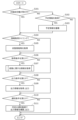
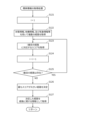
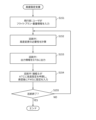
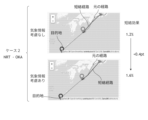
- a diagram showing an example of output information output by the same information processing device Flowchart for explaining an example of the flow of operation of the information processing apparatus 4 is a flowchart for explaining an example of related information acquisition processing of the same information processing apparatus; FIG.
- FIG. 4 is a diagram for explaining a specific example of the operation of the relational information acquisition unit when setting the altitude in the same information processing apparatus; Flowchart for explaining an example of use of the advanced setting support function in the same information processing apparatus
- FIG. 4 is a diagram for explaining a specific example of the operation of the relationship information acquisition unit when setting a short-circuit path in the same information processing apparatus
- 3 is a flow chart for explaining an example of use of a short-circuit path setting support function in the same information processing apparatus
- FIG. 4 is a diagram showing an example of output information regarding short-circuit paths in the same information processing device
- FIG. 4 is a diagram showing an example of output information regarding short-circuit paths in the same information processing device;
- FIG. 4 is a diagram showing an example of output information regarding short-circuit paths in the same information processing device;
- FIG. 1 is a first diagram for explaining the results of using short-circuit paths in the same information processing apparatus; A second diagram for explaining the result of using short-circuit paths in the same information processing apparatus.
- FIG. 1 is a first diagram showing an example of output information regarding turbulence intensity in the same information processing device; A second diagram showing an example of output information on turbulence intensity in the same information processing device A diagram showing an example of a user interface for selecting a recommended route that can be provided by the information processing device.
- a diagram showing an example of a traffic flow visualization screen that can be provided by the information processing device A diagram showing an example of output information based on congestion information that can be provided by the information processing device
- Block diagram of an information processing device according to a modified example of the present embodiment Schematic diagram of a computer system in the above embodiment Block diagram of the same computer system
- An identifier for a certain item is a character, a code, or the like that uniquely indicates the item.
- the identifier is, for example, an ID, but any type of information can be used as long as it can identify the corresponding item. That is, an identifier may be the exact name of what it designates, or it may be a uniquely corresponding combination of codes.
- the route of an aircraft means, for example, an air route, but it can also be understood to mean the process in which an aircraft flies.
- Information about the route may include information specifying the points and routes through which the aircraft should pass, as well as information indicating the speed and attitude of the aircraft.
- the point may be, for example, a position absolutely or relatively specified by information such as latitude and longitude, or may be a position specified by a predetermined waypoint.
- Information indicating points and air routes may or may not include information about altitude.
- a route may include a concept related to a scheduled time to pass a certain point and a passing speed.
- location information related to location refers to a point specified by, for example, latitude and longitude coordinate information and altitude.
- the information specified only by coordinate information may be used.
- it may be information specifying an area or an airspace having a predetermined range.
- it may be information indicating a position relative to a specific point.
- the inertia-related information related to inertia can be said to be information related to stability.
- the inertia-related information is, for example, sway information about the shaking (rolling) of the aircraft, other information about elevation, acceleration/deceleration, and changes in attitude around each axis.
- the motion information is, for example, acceleration information related to vertical acceleration, but is not limited to this.
- the motion information may be information about angular velocity or information including information about angular velocity.
- the acceleration information is a waveform of acceleration, that is, a time-series value of acceleration, but is not limited to this.
- the acceleration information and the angular velocity information may be an instantaneous value of acceleration or the like, a maximum value in a predetermined period, or the like.
- Various values may be included that are indicated for a three-dimensional predetermined coordinate system.
- the motion information may be a score related to inertia, that is, a score related to stability.
- the inertia-related score is, for example, a score representing the magnitude and frequency of shaking of the aircraft body, but is not limited to this.
- Acquisition may include acquisition of items input by a user or the like, or information stored in the own device or another device (it may be pre-stored information, or information stored in the device). may be information generated by performing information processing in ).
- Obtaining information stored in another device may include obtaining information stored in another device via an API or the like, or obtaining a document file provided by another device. It may include obtaining content (including, for example, the content of a web page). It may also include obtaining information in a different format based on the original information, such as obtaining the information by performing optical character reading on the image file.
- the machine learning method can be used as follows. That is, a learning device (learning information) that receives a specific type of input information as an input and outputs a desired type of output information is configured using a machine learning technique. For example, two or more sets of input information and output information are prepared in advance, the two or more sets of information are provided to a module for configuring a learning device for machine learning, a learning device is configured, and the configured learning device is used. Accumulate in storage.
- the learning device can also be called a classifier.
- the machine learning method may be, for example, deep learning, random forest, SVM, or the like. Also, for machine learning, functions in various machine learning frameworks such as scikit-learn, TensorFlow, and PyTorch, and various existing libraries can be used. Acquisition of information using such a learning device is sometimes referred to as acquisition by machine learning.
- the learning device may be, for example, a table showing the correspondence between input vectors based on input information and the like and output information.
- the output information corresponding to the feature vector based on the input information may be obtained from the table, or two or more input vectors in the table and parameters for weighting each input vector may be used for input.
- a vector approximating the feature vector based on the information may be generated, and the output information and parameters corresponding to each input vector used for generation may be used to obtain the final output information. Acquisition of information using such a learning device is sometimes referred to as acquisition using a correspondence relationship.
- the learning device may be, for example, a function representing the relationship between an input vector based on input information or the like and information for generating output information.
- information corresponding to a feature vector based on input information may be obtained by a function, and output information may be obtained using the obtained information. Acquisition of information using such a learning device is sometimes called acquisition using a function.
- Such output information of a learning device may be referred to as acquired information.
- Outputting information means display on a display, projection using a projector, printing on a printer, sound output, transmission to an external device, storage on a recording medium, processing by another processing device or other program, etc.
- This is a concept that includes delivery of results. Specifically, it includes, for example, enabling display of information on a web page, transmitting as e-mail or the like, and outputting information for printing.
- Acceptance of information means acceptance of information input from input devices such as keyboards, mice, touch panels, etc., reception of information sent from other devices via wired or wireless communication lines, optical discs, magnetic discs, semiconductors, etc. This concept includes acceptance of information read from a recording medium such as memory.
- updating means changing the stored information, adding new information to the stored information, or updating the stored information. It is a concept including erasing a part or all of it.
- the information processing device acquires a route that the target aircraft can follow, acquires information regarding the route of the target aircraft based on the state information of the target aircraft, and outputs information based on the information regarding the route. Output. Weather information may be further acquired, and information regarding the route may be acquired using the weather information. The route that the target aircraft can follow may be obtained based on past routes of aircraft. An aircraft operation support system using the information processing device configured as described above will be described below.
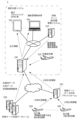
- FIG. 1 is a diagram showing a schematic configuration of an operation support system 1 using an information processing device 100 according to one embodiment of the present invention.
- the flight support system 1 includes an information processing device 100 and an output destination terminal 700 . Further, in the present embodiment, the operation support system 1 is used together with information servers 910 , 920 , 930 inside and outside the operation support system 1 .
- the flight support system 1 is roughly configured to output output information about the target aircraft 810 from the information processing device 100 to a predetermined output destination terminal 700 or the like.
- a pilot of the target aircraft 810 , a flight manager (dispatcher), or the like can use the output information output about the target aircraft 810 to operate the target aircraft 810 such as flight.
- the flight support system 1 can be used by an organization such as an airline company that operates one or more aircraft, for example. Note that the operation support system 1 may be used jointly by a plurality of organizations.
- the operation support system 1 is related to other aircraft 820, 830 different from the target aircraft 810.
- the target aircraft 810 refers to an aircraft that is subject to various information acquisition processes performed by the information processing apparatus 100 as described later.
- Other aircraft that are different from the target aircraft include related aircraft 820 and other aircraft 830 that are also different from related aircraft 820 .
- a related aircraft 820 is, for example, an aircraft related to an organization or the like that operates the operation support system 1 . It can be said that the related aircraft 820 is an aircraft that can be efficiently operated by using the operation support system 1 .
- the related aircraft 820 may correspond to, for example, an aircraft used for the flight of that airline, similar to the target aircraft 810 .
- the airline may mean one company organization, or may mean an airline group including a plurality of company organizations.
- An airline may also include companies affiliated with the companies included therein. That is, the related aircraft 820 may include other aircraft of the same company as the target aircraft 810, aircraft of other companies that form the same group, aircraft of affiliated companies, and the like.
- the information processing device 100 can communicate with devices such as the output destination terminal 700 and the information server 910 in the organization, for example, via a network such as a LAN.
- the network is not limited to this, and may be the Internet or other communication networks.
- the information processing apparatus 100 can also communicate with information servers 920 and 930 outside the organization, for example, via the Internet. Note that the network is not limited to this, and other communication networks may be used.
- the connection mode and communication method between the information processing apparatus 100 and the output destination terminal 700, and the connection mode and communication method between the information processing apparatus 100 and the information servers 910, 920, 930, etc. are not limited to this.
- the information processing device 100 may be an electronic computer or the like mounted on an aircraft.
- the output destination terminal 700 is a device that can serve as an output destination of output information from the information processing device 100 in this embodiment.
- an electronic flight bag (EFB) used in the operation of target aircraft 810 can be output destination terminal 700 .
- a device such as an operation management terminal used by an operation manager or the like when operating target aircraft 810 can be output destination terminal 700 .
- a device different from these may be used as the output destination terminal 700 .
- the target aircraft 810 itself can be regarded as the output destination terminal 700.
- the output destination terminal 700 may not be used, and the output information may be directly output to a device connected to the information processing apparatus 100 and used.
- the computer used for the output destination terminal 700 various devices such as a personal computer, a mobile information terminal device such as a so-called smartphone, and a tablet type information terminal device can be used.
- a so-called personal computer having a keyboard, display, etc. (not shown) is used as the computer used for the output destination terminal 700, but it is not limited to this.
- the information server 910 is, for example, a server device that stores information about the aircraft management system.
- the information server 910 is used, for example, to manage information about one or more aircraft used within an organization that uses the flight support system 1 .
- the information server 910 may store maintenance history of each aircraft, aircraft information, information on flight history, and the like. Each piece of information is stored in association with the identifier of the corresponding aircraft, but is not limited to this.
- the information server 910 is configured to be able to transmit stored information to the information processing apparatus 100 when a predetermined inquiry or access is made from the information processing apparatus 100 .
- the information server 920 is, for example, a server device that stores information on a data supply platform related to weather information.
- the information server 920 accumulates atmospheric measurement information regarding the state of the atmosphere, which is measured in an airplane during flight.
- the atmospheric measurement information is accumulated in association with, for example, position (coordinates such as latitude and longitude), altitude, and measured time (time).
- the atmospheric measurement information includes, for example, one or more measured values of wind speed, wind direction, static temperature, total temperature, and static pressure. Information other than these may be included in the atmospheric measurement information.
- the information server 920 accumulates atmospheric measurement information measured by the related aircraft 820, for example. Information server 920 also accumulates atmospheric measurement information measured by target aircraft 810 when target aircraft 810 has flown. Information server 920 accumulates atmospheric measurement information measured by other aircraft 830 . The accumulation timing of atmospheric measurement information does not matter. In this embodiment, the air measurement information is transmitted from the aircraft immediately after being measured, and is stored in the information server 920 .
- the atmospheric measurement information is, for example, information measured by avionics installed in each aircraft. The atmospheric measurement information accumulated in this way can represent the high-level wind distribution with high accuracy in real time.
- the information server 920 performs processing to anonymize the information, that is, to prevent the inclusion of information that directly indicates the type of aircraft that measured the data.
- the information server 920 is configured to be able to transmit stored atmospheric measurement information to the information processing apparatus 100 when a predetermined inquiry or access is made from another apparatus such as the information processing apparatus 100 .
- the atmospheric measurement information those measured by other aircraft 820 and 830 are called other aircraft measurement information.
- the other-aircraft measurement information can be said to be other-aircraft-obtained information that is information relating to the flight of the other aircraft 820, 830, which is obtained during flight.
- the information server 930 is configured to be able to transmit the information stored therein to the information processing device 100 when, for example, a predetermined inquiry or access is made from the information processing device 100 .
- One of the information servers 930 stores, for example, information indicating past or present traffic flow (hereinafter sometimes simply referred to as traffic flow).
- a traffic flow may be said to be, for example, a history of location information of a fleet of aircraft.
- the information server 930 stores information such as the longitude, latitude, and altitude of each aircraft in association with the date and time and an identifier that can identify the aircraft.
- information server 930 may provide information about the fleet of aircraft present in a given airspace.
- Such an information server 930 is configured, for example, to accumulate information on current and past flight conditions output from each aircraft based on standards such as ADS-B (Automatic Slave Surveillance Broadcast).
- the position of each aircraft is associated with information on the operating state of the actuators used for the flight of the aircraft, and information on shaking, acceleration, etc. obtained by avionics, etc., and accumulated. may be In other words, it can be said that the information server 930 stores state information regarding the past or present state of each aircraft. Among such status information of each aircraft, the other aircraft status information related to the flight of the other aircraft 820 and 830 acquired during flight may be called the other aircraft acquisition information.
- one of the information servers 930 stores, for example, weather forecast information (hereinafter sometimes referred to as weather forecast information) announced by public institutions and other organizations.
- the information server 930 stores, for example, weather forecast information including atmospheric data such as pressure, temperature, wind speed, and turbulence intensity in association with information such as time, latitude, longitude, and altitude.
- weather forecast information including atmospheric data such as pressure, temperature, wind speed, and turbulence intensity in association with information such as time, latitude, longitude, and altitude.
- atmospheric data such as pressure, temperature, wind speed, and turbulence intensity in association with information such as time, latitude, longitude, and altitude.
- NOAA National Oceanic and Atmospheric Administration
- one of the information servers 930 may contain, for example, airspace restriction information.
- Airspace restriction information is, for example, information about airspaces in which aircraft can fly, such as information indicating airspaces in which flight is permitted, information indicating airspaces in which flight is prohibited, information specifying flight restrictions, etc. can be included.
- the airspace restriction information includes, for example, information on altitude restrictions at each airport and information such as the final approach fix (FAF) that specifies the standard instrument departure system (SID) and standard arrival route (STAR) at each airport. is stored in association with an identifier or the like to be used.
- FAF final approach fix
- SID standard instrument departure system
- STAR standard arrival route
- one of the information servers 930 may contain, for example, information on airspace facility usage fees (which may be called transit fees).
- the information on the airspace facility usage fee may be said to be information on various overhead transit fees, for example.
- the information related to the airspace facility usage fee may be referred to as transit fee information.
- transit fee information Such transit charges are charges levied on aircraft flying in a given airspace.
- the transit fee information can include information for identifying airspace, information on the calculation method of the transit fee, and the like. Based on the transit toll information, a transit toll to be charged to the aircraft can be calculated.
- Transit fees are collected, for example, as compensation for the costs required for the development, maintenance and operation of facilities to assist the navigation of aircraft, but the reasons for collection are not limited to this, and are collected for other purposes. There may be.
- the transit fee may be called, for example, a navigation aid facility usage fee, an air transit fee, an airspace transit fee, or the like. It should be noted that the information on the airspace facility usage fee may be considered to be included in the airspace restriction information.
- the computer used for the information servers 910, 920, and 930 in addition to personal computers and server devices, there are various devices such as mobile information terminal devices such as so-called smart phones and tablet type information terminal devices. can be used.
- Each of the information servers 910, 920, and 930 may be configured by one device, may be configured by a plurality of devices that operate in cooperation with each other, or may be configured by built-in devices in other devices. It may be an electronic computer or the like.
- at least part of the roles of the information servers 910, 920, and 930 may be played by the information processing apparatus 100.
- FIG. The roles of two or more of the information servers 910, 920, and 930 may be played by one device or a group of devices.
- the information stored in each of the information servers 910, 920, 930 can be temporarily or permanently accumulated by the other information servers 910, 920, 930 or other devices and then transmitted to the aircraft or the like.
- the server may be a so-called cloud server, an ASP server, or the like, and any type of server may be used.
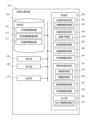
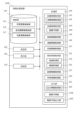
- FIG. 2 is a block diagram of the information processing device 1 according to this embodiment.
- the information processing device 100 includes a storage unit 110 , a reception unit 120 , a reception unit 130 , a processing unit 140 and a transmission unit 170 .
- the information processing device 100 is, for example, a server device.
- the storage unit 110 includes a learning information storage unit 111, an aircraft information storage unit 115, and a weather information storage unit 117.
- Learning information is stored in the learning information storage unit 111 .
- the training information may be called learners, classifiers or trained models.
- the learned information is obtained, for example, by machine learning of the learned information acquisition unit 159 as described later.
- weather learning information for acquiring weather information, route learning information for route prediction, and the like are used as the learning information.
- the type of learning information is not limited to this. Details of the learning information and its use will be described later.
- the aircraft information storage unit 115 stores information about the target aircraft 810 and other aircraft 820 and 830.
- Information about each aircraft is stored, for example, in association with an identifier that can identify the aircraft.
- Information about the aircraft may include, for example, information about the fuselage of target aircraft 810 .
- the information about the aircraft may include status information and other aircraft acquisition information. That is, information about the flight history of the target aircraft 810 and other aircraft 820, 830 may be included.
- the weather information storage unit 117 stores information related to weather.
- the weather information storage unit 117 stores, for example, weather forecast information acquired from the information server 930, weather information acquired by the weather information acquisition unit 145 described later, and the like.
- the weather information storage unit 117 also stores past weather information measured and observed in the past.
- weather-related information is stored, for example, in association with each area and each altitude.
- the receiving unit 120 receives information transmitted from other devices.
- the receiving unit 120 accumulates the received information in the storage unit 110, for example.
- the reception unit 130 receives various input operations on the information processing device 100 performed by the user.
- the reception unit 130 receives, for example, information input using input means (not shown) connected to the information processing apparatus 100, or using a reading device (for example, a code reader) (not shown) connected to the information processing apparatus 100.
- Accepts information entered by input operations performed including, for example, information read by the device).
- the receiving unit 130 may receive information regarding an input operation or the like transmitted via another device connected via a network or the like.
- the accepted information is accumulated in the storage unit 110, for example.
- the processing unit 140 includes an own aircraft information acquisition unit 141, another aircraft information acquisition unit 143, a weather information acquisition unit 145, a congestion information acquisition unit 146, an airspace information acquisition unit 147, a related information acquisition unit 151, a result information acquisition unit 157, a learning An information acquisition unit 159 and an output unit 161 are provided.
- the processing unit 140 performs various types of processing such as processing performed by each unit of the processing unit 140 as follows.
- the own aircraft information acquisition unit 141 acquires state information regarding the state of the target aircraft 810 .
- the status of the target aircraft 810 includes, in addition to information such as the position of the target aircraft 810, for example, the nature of the equipment, operation history, fuel consumption (including predicted values), flight schedule (how the aircraft is scheduled to fly, etc.). ) is a concept that can include
- the state may be a state before flight or a state during flight. Also, the state after flight may be included.
- the own aircraft information acquisition unit 141 accumulates the acquired state information in the aircraft information storage unit 115 .
- the own aircraft information acquisition unit 141 acquires schedule information related to the flight plan of the target aircraft 810, equipment characteristic information indicating characteristics related to the equipment of the target aircraft 810, and operation information of the target aircraft 810. It is configured to acquire state information using operation history information related to the history.
- the device information acquisition unit 141 may be configured to acquire state information using at least one of these pieces of information. Acquiring status information using schedule information, equipment characteristic information, and operation history information means acquiring status information by performing calculations, etc. using information, and using each information as it is as status information. It is a concept that includes acquiring.
- the schedule information may be, for example, information indicating the contents of the flight plan itself, or information obtained from the flight plan.
- the device information acquiring unit 141 can acquire schedule information using, for example, information input to the output destination terminal 700 or information registered in the information server 910 .
- Equipment characteristic information is information that can specify, for example, the model or engine model.
- the device information acquisition unit 141 is configured to be able to acquire device identification information using information registered in the information server 910, for example.
- Operation history information is, for example, information related to maintenance history, flight history, etc.
- the device information acquisition unit 141 is configured to be able to acquire device identification information using information registered in the information server 910, for example.
- the device information acquisition unit 141 may acquire schedule information based on the input operation received by the reception unit 130 . Further, the own aircraft information acquisition unit 141 may acquire information regarding the flight state of the target aircraft 810 . For example, it may be configured to acquire, as status information, information relating to the current or past flight status output from the target aircraft 810 based on standards such as ADS-B. In this case, information about past flight conditions may be regarded as operation history information.
- the own aircraft information acquisition unit 141 acquires motion information related to the inertia of the target aircraft 810 acquired by an inertial measurement device (not shown) or the like provided in the target aircraft 810 as state information.
- the motion information is information about the flight state of the target aircraft 810 .
- the motion information is, for example, time-series information indicating the transition of vertical acceleration, but is not limited to this.
- the motion information may be an instantaneous value such as acceleration of the target aircraft 810 at a predetermined timing, a maximum value such as acceleration during a predetermined period, or the like.
- the motion information may be a score relating to the magnitude of the motion of the target aircraft 810, or information obtained by classifying the magnitude of the motion into predetermined ranks.
- the sway information may be a score that indicates the quality of the sway (eg, the degree to which passengers feel uncomfortable).
- the motion information may be information about the angular velocity of the target aircraft 810 .
- the device information acquisition unit 141 acquires the motion information corresponding to the position information based on the position information corresponding to the terminal information. Corresponding to the location information may be said to correspond to the route of the target aircraft 810 . In other words, it can be said that the own aircraft information acquisition unit 141 acquires sway information at points on the route of the target aircraft 810 .
- the correspondence relationship between the route of target aircraft 810 and its motion information may be clarified based on the correspondence relationship between the route and time of flight of target aircraft 810 and the chronological motion information.
- the position here may be a position indicated by latitude or longitude, a position related to altitude, or a position related to both of them.
- the self-machine information acquisition unit 141 has a consumption information acquisition unit 142 that acquires fuel consumption information regarding the fuel consumption rate.
- the fuel consumption information is information indicating the fuel consumption rate when the target aircraft 810 flies under predetermined weather conditions.
- the consumption information acquisition unit 142 stores the acquired fuel consumption information in the aircraft information storage unit 115 in association with an identifier or the like that identifies the target aircraft 810 .
- the consumption information acquisition unit 142 acquires fuel consumption information using the consumption learning information stored in the learning information storage unit 111. Acquisition of the fuel consumption information by the consumption information acquisition unit 142 can be realized by, for example, acquisition by the above-described machine learning, acquisition using the correspondence, or acquisition using a function.
- acquisition information is fuel consumption information. It should be noted that, as the acquired information, information that enables the acquisition of fuel consumption information may be output by performing calculations using the acquired information or making judgments in light of other criteria.
- the consumption information acquisition unit 142 is preferably configured to acquire fuel consumption information in consideration of weight changes during flight of the aircraft. As a result, it is possible to accurately calculate and evaluate the energy cost associated with ascending and descending during cruising.
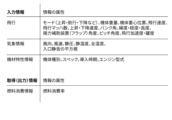
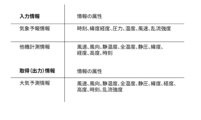
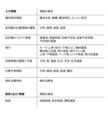
- FIG. 3 is a diagram explaining a specific example of acquisition of fuel consumption information in the information processing device 100.
- FIG. 3 is a diagram explaining a specific example of acquisition of fuel consumption information in the information processing device 100.
- FIG. 3 shows a specific example of input information used for obtaining fuel consumption information by the consumption information obtaining unit 142 and a specific example of obtained information.
- the consumption information acquiring unit 142 can output the attribute value of the acquired information.
- flight information includes mode (climb, sail, descent, etc.), aircraft weight, aircraft center of gravity position, flight speed, flight Mach number, climb/descent speed, bank angle, latitude, longitude, Attribute values such as altitude, lift assist (flap) angle, pitch angle, flight acceleration, and jerk are used. Attribute values such as wind direction, wind speed, static pressure, static temperature, total temperature, and the square root of entrance silence are used as weather information. Attribute values such as aircraft type, specifications, time of introduction, and engine type can be used as equipment characteristic information.
- the fuel consumption information which is the acquired information, includes, for example, the attribute value of the fuel consumption rate.
- the other device information acquisition section 143 includes a route prediction section 144 .
- the other aircraft information acquisition unit 143 acquires other aircraft information about other aircraft 820 and 830 different from the target aircraft 810 .
- the other aircraft information acquisition unit 143 accumulates the acquired other aircraft information in the aircraft information storage unit 115 .
- the other aircraft information acquiring unit 143 acquires other aircraft information in a predetermined airspace related to the own aircraft information acquired by the own aircraft information acquiring unit 141, but the present invention is not limited to this.
- the predetermined airspace related to the own aircraft information is an airspace related to the route of the target aircraft 810, such as an airspace near the route of the target aircraft 810 on the flight plan, but is not limited thereto.
- the other aircraft information acquisition unit 143 acquires other aircraft information regarding the positions of other aircraft 820 and 830, for example.
- the position-related other aircraft information refers to information such as the longitude, latitude, and altitude of the other aircraft 820 and 830 at a certain time. There may be a case where the other aircraft information regarding the position does not include altitude information. Other machine information regarding past or current positions can be obtained based on information stored in the information server 930, for example.
- the other aircraft information acquisition unit 143 obtains a predetermined Other machine information (hereinafter sometimes referred to as position prediction information) regarding the position after the elapse of time is acquired. That is, the other aircraft information may include information regarding the position of each of the one or more other aircraft 820, 830 after a predetermined time has elapsed. In other words, the other aircraft information can be said to be information about future traffic flow including one or more other aircraft 820,830.
- position prediction information a predetermined Other machine information regarding the position after the elapse of time is acquired. That is, the other aircraft information may include information regarding the position of each of the one or more other aircraft 820, 830 after a predetermined time has elapsed. In other words, the other aircraft information can be said to be information about future traffic flow including one or more other aircraft 820,830.
- the other device information acquisition unit 143 uses the route prediction unit 144 to acquire position prediction information.
- the route prediction unit 144 acquires position prediction information using route learning information stored in the learning information storage unit 111, for example. Acquisition of the position prediction information by the route prediction unit 144 can be realized, for example, by the above-described acquisition by machine learning, acquisition using correspondence, or acquisition using a function.
- the input information includes the history of location information of groups of other aircraft 820 and 830 (hereinafter sometimes simply referred to as an aircraft group), flight information of the aircraft group, information about the vicinity of the destination airport, and aircraft of the aircraft group. information, and weather information can be used. As the weather information, past weather information and weather information about future weather are used, but the information is not limited to this.
- a group of time-series position information of the aircraft group can be configured to be output as the position prediction information. That is, for example, the time, latitude, and longitude information for each aircraft can be output. Information about altitude may be included as the acquired information. Further, as the acquired information, information that enables acquisition of position information or the like by performing calculations or judgments in light of other criteria or the like may be output.
- FIG. 4 is a diagram explaining a specific example of acquisition of position prediction information in the information processing apparatus 100.
- FIG. 4 is a diagram explaining a specific example of acquisition of position prediction information in the information processing apparatus 100.
- FIG. 4 shows a specific example of input information used for obtaining position prediction information using the route prediction unit 144 described above and a specific example of obtained information.
- the route prediction unit 144 can output each attribute value of the acquired information.
- attribute values of date and time (time), latitude, longitude, and altitude are used as the history of position information of aircraft groups.
- location information history is, for example, " ⁇ aircraft_id: [[2021-10-08 12:34:56, 35.12345, 136.12345],
- ⁇ can be provided for each aircraft.
- aircraft_id is an aircraft identifier.
- the data format is not limited to this, and can be set as appropriate.
- Attribute values such as call signs, operating airlines, departure/arrival locations, departure/arrival times, scheduled arrival locations, and estimated arrival times can also be used as flight information for aircraft groups.
- attribute values such as the runway used, the airport airspace entrance waypoint, and the number and distance of aircraft approaching the airport airspace waypoint can be used. Further, attribute values such as aircraft names, aircraft types, and aircraft characteristics can be used as the aircraft information of the aircraft group.
- attribute values such as aircraft names, aircraft types, and aircraft characteristics can be used as the aircraft information of the aircraft group.
- weather information each attribute value of date, wind, temperature, pressure, weather, and turbulence intensity can be used.
- the group of position information of the group of aircraft after a certain period of time, which is the acquired information includes, for example, attribute values of date and time, latitude, and longitude.
- the location information group may include altitude.
- a group of position information may be called a traffic flow.
- a set of location information is location prediction information that includes location information corresponding to each of the other aircraft 820, 830 involved.
- the route learning information it is preferable to use learning information using a neural network having a recursive structure using a machine learning method.
- the route prediction unit 144 preferably applies input information to a neural network having a recursive structure to obtain future positions of the other aircraft 820 and 830 different from the target aircraft 810 in chronological order. It is configured to obtain the position prediction information indicated.
- the path predictor 144 includes a pooling layer for sharing states within the neural networks used for each of two or more other aircraft 820, 830 flying at the same time. It is preferably configured to obtain position prediction information for each of two or more other aircraft 820, 830 using route learning information that is a prediction model. This can be realized, for example, as shown in Non-Patent Document 1 mentioned above. As a result, it is possible to obtain the acquisition result of position prediction information that reflects the situation in which two or more other aircraft 820 and 830 flying at the same time affect each other.
- two or more other aircraft 820, 830 that fly at the same time are modeled using an LSTM (Long short-term memory) structure, and the hidden state between the LSTM networks is expressed by multi-head attention. It is preferable to use route learning information that is shared by a pooling layer using a mechanism so that an output based on the spatio-temporal characteristics of aircraft can be obtained. This makes it possible to obtain position prediction information that takes aircraft interactions into consideration.
- LSTM Long short-term memory
- the other aircraft information acquisition unit 143 outputs acquired information using the route learning information for each aircraft whose position prediction information is to be acquired by the route prediction unit 144, and aggregates the acquired acquired information. can obtain the position prediction information of the aircraft group.
- An aircraft's route may be altered in response to a variety of factors, such as those that appear in the input information described above.
- route selection tendencies may differ depending on the model, airline company, flight, section, congestion status, divergence from the scheduled time, and the like.
- the other aircraft information acquisition unit 143 acquires the other aircraft acquisition information related to the flight of the other aircraft 820, 830 during flight as the other aircraft information.
- Such other device acquisition information can be acquired from, for example, the information server 920 or the information server 930, but is not limited to this.
- it may be configured to obtain information by receiving information output from other aircraft 820, 830, or the like.
- the other aircraft information acquisition unit 143 acquires atmospheric measurement information (other aircraft measurement information) regarding the state of the atmosphere measured by the other aircraft 820 and 830 as other aircraft information. . That is, the other aircraft information includes other aircraft measurement information measured by other aircraft 820 and 830 .
- the other device information acquisition unit 143 acquires the other device measurement information stored in the information server 920 and stores it in the weather information storage unit 117 .
- the other-machine information does not include the other-machine measurement information
- the weather information acquisition unit 145 may acquire the other-machine measurement information as the weather information.
- the other aircraft information acquisition unit 143 also provides, for example, information related to the operating state of actuators used for the flight of the other aircraft 820 and 830 in a predetermined position or airspace, and information related to shaking, acceleration, etc. obtained by avionics. It may be configured to acquire and accumulate other device status information including information as the other device information.
- the weather information acquisition unit 145 acquires weather information including information on atmospheric conditions.
- the weather information acquisition unit 145 accumulates the acquired weather information in the weather information storage unit 117 .
- the weather information acquisition unit 145 acquires weather information for each altitude in the airspace related to the route of the target aircraft 810 .
- the airspace to be flown may be referred to as the airspace to be evaluated for the route.
- the airspace related to the route of the target aircraft 810 is, for example, an airspace near the route of the target aircraft 810 on the flight plan acquired by the own aircraft information acquisition unit 141, but is not limited to this.
- the weather information acquisition unit 145 for example, acquires weather forecast information from the information server 930 and accumulates the acquired information as weather information.
- the weather information acquisition unit 145 also acquires past weather information, for example, and accumulates the acquired information as weather information.
- the weather information acquisition unit 145 acquires atmospheric forecast information regarding future atmospheric conditions as weather information.
- the weather information acquisition unit 145 obtains, for example, forecast information on atmospheric conditions related to the airspace in which the target aircraft 810 flies, which is acquired from the information server 930, and other aircraft measurement information related to the airspace stored in the weather information storage unit 117.
- Obtain atmospheric forecast information based on it can be said that the weather information acquisition unit 145 acquires weather information based on the forecast information on the state of the atmosphere for the airspace and the information acquired by other aircraft for the airspace.
- the weather information acquisition unit 145 may acquire weather information using other aircraft state information related to the airspace instead of or in addition to the other aircraft measurement information related to the airspace.
- atmospheric prediction information such as whether or not the airflow is unstable may be acquired using other aircraft state information such as the presence or absence of shaking and the operation status of actuators and the like.
- prediction results regarding turbulence intensity can be acquired as atmospheric prediction information such as whether or not airflow is unstable.
- atmospheric forecast information is obtained using other aircraft status information for each model or aircraft size group. You may do so.
- flight record data called QAR data may be used as teacher data, and atmospheric prediction information may be obtained by performing processing for each model of aircraft or for each size group of aircraft. .
- the weather information acquisition unit 145 acquires atmospheric forecast information, for example, using the weather learning information stored in the learning information storage unit 111 .
- Acquisition of the atmospheric forecast information by the weather information acquisition unit 145 can be realized by, for example, acquisition by the above-described machine learning, acquisition using correspondence, or acquisition using a function.
- the input information weather forecast information and other aircraft measurement information measured by preceding aircraft can be used.
- the acquired information is atmospheric forecast information. It should be noted that, as the acquired information, information that enables acquisition of atmospheric prediction information or the like by performing calculations or judgments in light of other criteria or the like may be output.
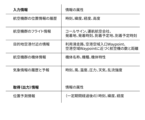
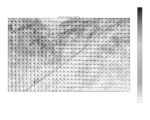
- FIG. 5 is a diagram explaining a specific example of acquisition of atmospheric prediction information in the information processing device 100.
- FIG. 5 is a diagram explaining a specific example of acquisition of atmospheric prediction information in the information processing device 100.
- FIG. 5 shows a specific example of input information used for obtaining atmospheric forecast information and a specific example of obtained information.
- the weather information acquisition unit 145 can output each attribute value of the acquired information.
- attribute values such as time, latitude and longitude, pressure, temperature, wind speed, and turbulence intensity are used as weather forecast information.
- Attribute values such as wind speed, wind direction, static temperature, total temperature, static pressure, latitude, longitude, altitude, and time can also be used as the other machine measurement information.
- the atmospheric prediction information which is the acquired information, includes, for example, attribute values of wind speed, wind direction, static temperature, total temperature, static pressure, latitude, longitude, altitude, time, and turbulence intensity.
- the congestion information acquisition unit 146 acquires congestion information regarding the extent to which the destination is congested as a landing destination for aircraft, based on information on aircraft heading to the destination of the target aircraft 810 .
- the congestion information acquisition unit 146 accumulates the acquired congestion information in the storage unit 110 .
- Congestion information can be stored, for example, in association with an identifier or the like that identifies each destination or each time period.
- the congestion information is not limited to this, and congestion information may be accumulated for each season, day, or day of the week in addition to each destination.
- Acquisition of congestion information can be performed, for example, based on information on aircraft that have arrived at their destination in the past. For example, information on the number of aircraft arriving in the past per unit time (past performance information) can be obtained for each airport serving as the destination of the aircraft.
- the congestion information acquisition unit 146 can acquire, as congestion information, the number of aircraft arrivals per unit time for each time period, for example, using information obtained by statistically processing the acquired past performance information.
- Congestion information is not limited to this. For example, based on the history of position information of aircraft groups that have arrived in the past, information indicating the degree of congestion at the destination in a predetermined situation (for example, time, weather, date and time, etc.) It may be information that is set to
- Congestion information may also be obtained, for example, by predicting the degree of congestion based on other aircraft 820, 830 currently in flight.
- the congestion information acquisition unit 146 may acquire congestion information for future destinations based on other aircraft information related to other aircraft 820 and 830 currently in flight.
- an index indicating the degree of congestion (for example, the number of arrivals per hour, the number of occurrences of vectoring, but not limited to these) is used as output information, and the position information and time of aircraft groups that have arrived in the past Learning information relating to congestion information is configured using the time zone, weather information, etc. as input information.
- Congestion information can be predicted using, for example, weather conditions, season, day of the week, time of day, flight information such as position information and speed of each aircraft heading to the airport, originally planned flight schedule, airspace restriction information, etc. can be
- Information on aircraft departing from the destination may also be used to acquire congestion information. Also, the frequency of aircraft entering and departing from the runway of the destination and its surrounding runways may be calculated using ADS-B information, etc., and congestion information may be acquired based on this. .
- the airspace information acquisition unit 147 acquires airspace information including information on airspace in which aircraft can fly.
- the airspace information acquisition unit 147 accumulates the acquired airspace information in the storage unit 110 .
- the airspace information acquisition unit 147 acquires airspace information about an airspace related to the route of the target aircraft 810, for example. It can be said that the airspace information acquisition unit 147 acquires airspace information, for example, for an airspace near the route of the target aircraft 810 on the flight plan.
- the airspace information acquisition unit 147 may acquire such airspace information from an information server 930 that includes airspace restriction information. Also, the airspace information may be acquired based on the information acquired from the information server 930 . Airspace information may include toll information.
- the airspace information acquisition unit 147 may acquire airspace information indicating airspace in which the course of the aircraft can be changed. That is, it can be said that the airspace information is, for example, information that includes either information that defines flight restricted airspace in which flights are restricted or course changeable airspace in which the course can be changed. Such airspace information may be acquired based on, for example, information provided by the information server 930 or information input by the user and received by the reception unit 130 in advance. Further, the airspace information acquisition unit 147 may acquire, as airspace information, information on airspaces in which flight is possible, which is input in advance by a user such as a pilot or an operation manager.
- the airspace information acquisition unit 147 may acquire, as airspace information, information on airspace in which flight is possible, based on past information on other aircraft, that is, a history of position information of aircraft groups.
- the history of positional information of aircraft groups may be statistically processed to obtain information about airspace determined to be flyable.
- the relationship information acquisition unit 151 includes a route acquisition unit 153 and a route evaluation unit 155.
- the related information acquisition unit 151 acquires related information regarding the route of the target aircraft 810 based on the state information.
- the relationship information acquisition unit 151 may be configured to acquire relationship information using other information.
- the relationship information acquisition unit 151 is configured to acquire relationship information based on other device information and weather information in addition to the state information.
- the related information acquisition unit 151 may be configured to acquire related information based on the state information and the other device information, or to acquire related information based on the state information and the weather information.
- position prediction information of other aircraft 820 and 830 can be used as other aircraft information, but it is not limited to this.
- the relational information is information regarding the route that the target aircraft 810 should follow. It can be said that the relational information is information about the trajectory. Relevant information may include, for example, information about heading, altitude, and speed. That is, the relational information acquisition unit 151 is configured to acquire, as relational information, recommended route information on which the target aircraft 810 is recommended to pass regarding, for example, the direction of travel (course), altitude, and speed. It may be said that the recommended route information is information indicating a route recommended for the target aircraft 810 .
- the related information may be information indicating points, areas, airspaces, etc. that should not be routed through in the operation of the target aircraft 810 .
- the information about the route may not include information about any of course, altitude, and speed, for example. That is, the related information acquisition unit 151 may be configured to acquire recommended route information regarding course, altitude, or speed as information regarding the route.
- the relationship information acquisition unit 151 acquires relationship information about routes that satisfy predetermined recommended conditions. That is, the relationship information acquiring unit 151 acquires relationship information including recommended route information based on whether each route satisfies a predetermined recommendation condition.
- the recommended conditions include conditions related to costs associated with target aircraft 810 . More specifically, the recommended conditions are, for example, conditions set for target aircraft 810 that are related to achievement of goals including cost reduction.
- the costs related to the target aircraft 810 refer to the costs required for maintenance or the costs required to operate the target aircraft 810 . Cost can mean monetary cost, personnel cost, time cost, or risk cost.
- the costs may include, for example, costs related to fuel consumption of the subject aircraft 810 and costs related to tolls, such as airspace facility usage fees, incurred in the flight of the subject aircraft 810 .
- the cost condition may include a fuel consumption condition and a toll condition.
- the recommended conditions may relate to viewpoints different from these viewpoints, or may further include conditions regarding viewpoints different from these viewpoints.
- the recommended conditions may be set so as to relate to the attainment of goals including reduction of flight time, improvement of safety, and the like.
- the recommended conditions may be set so as to relate to achievement of goals in two or more of these aspects.
- a recommended condition may be set such that the score obtained is higher or relatively higher than a predetermined value so that a route that leads to achievement of a goal will have a high score, as will be described later. That is, the recommended conditions may include conditions regarding scores. Note that the score may be obtained so that the score is lower for a route that leads to the achievement of the goal. In this case, it is recommended that the score is lower or relatively lower than a predetermined value. It can be set as a condition.
- the route should be a route that consumes less fuel than the route to be compared, that the maintenance cost is lower, that the toll is lower, and that the flight time is shorter. or a safe route may be set as a recommendation condition. That is, a route that is relatively closer to achieving the target than other routes may be set as a recommendation condition.
- the recommended conditions are not limited to those that lead to cost reduction of the target aircraft 810 or the like.
- a recommendation may be established such that subject aircraft 810 flies a qualifying route leading to the achievement of such goals for associated aircraft 820 .
- the recommended conditions may include at least a condition regarding the cost of one or more predetermined related aircraft 820 different from the target aircraft. Costs associated with associated aircraft 820 refer to costs required to maintain or operate associated aircraft 820 . As a result, it is possible to obtain information on more efficient routes so that the organization using the operation support system 1, including the target aircraft 810 and the related aircraft 820, can generally achieve its goals.
- the value of the cost-related index may be used as the score, and the score-related condition may be set as the cost-related condition.
- the recommendation condition may include that the score is below a predetermined value or is relatively low.
- the relationship information acquisition unit 151 acquires routes that are candidates for recommended routes (can be called “candidates” or "route candidates") by means of the route acquisition unit 153, as will be described later. Then, the relationship information acquiring unit 151 acquires, as recommended route information, those routes that satisfy the recommendation condition among the acquired routes.
- the route acquisition unit 153 acquires two or more routes, and the relationship information acquisition unit 151 acquires one or more pieces of recommended route information from those routes.
- the route acquisition unit 153 is configured to acquire one route
- the relationship information acquisition unit 151 is configured to acquire the route as recommended route information when it is determined that the route satisfies the recommendation conditions. good too.
- the relationship information acquisition unit 151 acquires scores corresponding to each of two or more routes of the target aircraft 810 by the route evaluation unit 155 . Information about one or more routes is then obtained based on the obtained score. For example, the relationship information acquisition unit 151 acquires, as recommended route information, one route that satisfies the highest score (an example of a recommendation condition).
- the related information acquisition unit 151 is configured to be able to acquire related information while the target aircraft 810 is in flight.
- the relationship information acquisition unit 151 acquires relationship information each time a predetermined acquisition condition is satisfied.
- Predetermined acquisition conditions include, for example, being in a predetermined stage in the pre-flight process, reaching a predetermined time, elapse of a predetermined time since the previous acquisition during flight, and flying a predetermined distance. , reaching a predetermined position/altitude, etc. can be set.
- the acquisition condition may be acceptance of a predetermined request from a pilot, other users, or the like.
- predetermined information is received from other aircraft 820 and 830 different from the target aircraft 810 .
- information indicating that the target aircraft 810 is approaching or information indicating that there is an airspace with high turbulence intensity may be sent from other aircraft 820, 830 and received.
- the route acquisition unit 153 may acquire the route and the relationship information acquisition unit 151 acquires the related information.
- the route acquisition unit 153 may be called a candidate information acquisition unit.
- the route acquisition unit 153 acquires a route that the target aircraft 810 can follow based on the state information acquired by the own aircraft information acquisition unit 141 .
- the route acquisition unit 153 acquires the route based on the state information and the other device information when acquiring the route.
- the route acquisition unit 153 acquires the route based on the past flight routes of the aircraft.
- the route acquisition unit 153 acquires a route based on, for example, information related to the flight history of the target aircraft 810 and the other aircraft 820 and 830 acquired in the information processing device 100 and stored in the aircraft information storage unit 115 .
- the route acquisition unit 153 determines the route that the past aircraft has traveled.
- a point or a location is defined as a location that can be routed through.
- a route that can follow points that can be routed through is acquired using a predetermined algorithm or the like as described later.
- waypoints and routes are not limited to those officially determined and used. It may be information indicating a point virtually determined in more detail by the route acquisition unit 153 or the like.
- the route acquisition unit 153 may extract points that can be routed through based on past routes of aircraft that have the same departure point and destination. In addition, based on the information whether or not past aircraft have applied for changes in course and altitude to air traffic control (ATC) and obtained approval, the points through which the route after the change has been made will be identified as such. It may be handled as a position different from the point on the route that flew without performing Treating them as different positions means, for example, lowering the priority of selecting them as transit points or setting them as transit points under certain circumstances.
- ATC air traffic control
- the route acquisition unit 153 may also use the weather information acquired by the weather information acquisition unit 145. Further, the route acquisition unit 153 may be configured to acquire a route using the airspace information acquired by the airspace information acquisition unit 147 . That is, it can be said that the related information acquisition unit 151 acquires the recommended route information of the target aircraft 810 using the airspace information.
- the recommendation condition includes that the route is in a flightable airspace
- the relationship information acquisition unit 151 determines whether the route acquired by the route acquisition unit 153 satisfies the recommendation condition using the airspace information. may be configured to determine
- the route acquisition unit 153 is configured to acquire a route using a known algorithm such as Dijkstra's algorithm.
- the route acquisition unit 153 may acquire candidates according to a predetermined rule using state information, other aircraft information, and weather information.
- the route acquisition unit 153 may acquire a route based on state information such as a flight plan or state information indicating the current position, altitude, and the like.
- the route acquisition unit 153 compares, based on the weather forecast information, routes that are determined to not interfere with other aircraft 820 and 830 based on the other aircraft information, among the routes that can be acquired based on the state information.
- a route determined to be easily flyable may be acquired.
- the route acquisition unit 153 is not limited to this, and may be configured to acquire routes that are candidates for recommended route information, for example, using candidate learning information stored in the learning information storage unit 111. . That is, the acquisition of the route by the route acquisition unit 153 can be realized by, for example, acquisition by the above-described machine learning, acquisition using the correspondence, or acquisition using a function. Here, state information, other aircraft information, weather information, and airspace information can be used as the input information. Acquisition information is information about a route. The route acquisition unit 153 can acquire acquisition information as a candidate using these pieces of input information. A specific example will be described later. It should be noted that, as the acquired information, it is also possible to output information that enables acquisition of information about the route by performing calculations using the acquired information, judgments in light of other criteria, and the like.
- the route acquisition unit 153 may acquire a route using, for example, congestion information or toll information.
- the route evaluation unit 155 acquires a score based on the state information, other aircraft information, and weather information.
- the route evaluation unit 155 is configured to obtain a score using learning information stored in the learning information storage unit 111, for example. That is, the relationship information acquiring unit 151 is configured to acquire relationship information using acquired information obtained by applying input information based on a route to learning information.
- Acquisition of candidates by the route evaluation unit 155 can be realized, for example, by the above-described acquisition by machine learning, acquisition using correspondence, or acquisition using a function.
- route-based information, status information, other aircraft information, and weather information can be used as the input information.
- the acquired information is the score.
- the route evaluation unit 155 can acquire scores as acquisition information using these pieces of input information.
- information that can be used to acquire a score by performing calculation or other methods may be output.
- Airspace information may be included in the input information.
- congestion information and toll information may be included in the input information, and the route evaluation unit 155 may be said to acquire a score based on the congestion information and toll information.
- the learning information used by the route evaluation unit 155 preferably corresponds to information regarding the properties of the target aircraft 810 .
- the information about the nature of the airframe includes, but is not limited to, the individual aircraft, aircraft model, engine type, weight class, size group, or the like.
- the route evaluation unit 155 uses the learning information corresponding to the information on the airframe properties of the target aircraft 810 to achieve higher accuracy. Obtained information can be output.
- the route evaluation unit 155 calculates the score when flying according to each candidate using state information, other aircraft information, weather information, congestion information, toll information, and the like. may be obtained by Any of these pieces of information may not be used.
- the evaluation rule includes, for example, evaluation conditions regarding whether an index related to atmospheric conditions passes through a predetermined point, speed, results of comparison with flight plans, distances to other aircraft 820 and 830, and the like. be able to. For example, for each evaluation condition, if the condition is satisfied, a first predetermined score is reflected in the score, and if not, a second predetermined score is reflected in the score. Score can be obtained. In the tabulation, the score may be calculated using a predetermined calculation formula, such as addition or multiplication by a predetermined method.
- the route evaluation unit 155 may, for example, acquire a score (value of a factor) for each route related to evaluation of whether or not the route is recommended.
- Factors include, for example, the time it takes to fly a route, the amount of fuel consumed when flying a route, the maintenance cost required by flying each route, and the time to fly each route. Aspects such as those related to the tolls involved in flight, and those related to the magnitude of turbulence that may occur when flying on each route can be used. Then, whether or not the recommended conditions are satisfied may be determined based on the score for each factor. That is, the recommended conditions may include conditions for each of two or more factors.
- the unit 151 may acquire the relationship information.
- the relationship information acquisition unit 151 for example, for a route, based on the respective values (scores, etc.) of two or more predetermined factors and designation information designating one or more of these two or more factors, recommends conditions You may make it judge whether satisfy
- the relationship information may be acquired using a recommended condition specified by the user, out of two or more recommended conditions with different criteria regarding scores for each factor.
- the relationship information acquisition unit 151 determines, for example, whether or not the recommended conditions regarding one or more factors specified by the specification information are satisfied based on the values of the factors acquired for the route. It may be said that the designation information is a priority instruction for selecting a factor to be preferentially considered in recommending a route among two or more factors. For example, if a factor related to fuel consumption is specified, it is determined whether or not the recommended conditions related to fuel consumption are satisfied. For example, for a route, it is determined whether or not the fuel consumption is equal to or less than a predetermined value, and recommended route information is acquired according to the determination result.
- the designation information may be received by the receiving unit 130 and acquired.
- receiving unit 130 receives designation information while a graphical user interface used for receiving designation information from the user is being output to the user. That is, the accepting unit 130 accepts an operation of specifying one or more of two or more factors performed by the user using the graphical user interface output to the user, and acquires specification information.
- the graphical user interface may be output to the display of the information processing apparatus 100, or may be transmitted to the output destination terminal 700 used by the user and output by the output destination terminal 700.
- the graphical user interface is configured so that the user can input specified information by, for example, selecting a specified factor from among two or more factors using a drop-down list, but the present invention is not limited to this. By using such a user interface, the user can easily input the specified information.
- the relationship information acquisition unit 151 acquires two or more routes that the target aircraft can follow, and based on whether or not each route satisfies the recommendation conditions, the relationship including the recommended route information. configured to retrieve information. Then, the relationship information acquiring unit 151 determines whether each route sets the recommended condition based on the respective values of the two or more predetermined factors acquired for each route and the designation information designating one or more of the two or more factors. It can be configured to determine whether it satisfies. For example, when a factor for fuel consumption is specified as described above and the corresponding recommended condition is that the fuel consumption is less than the other, among the two or more routes, fuel Information about the route with the lowest consumption is obtained as recommended route information.
- the recommended condition corresponding to this is that the magnitude of agitation that can occur is smaller than others
- two or more Among the routes information on the route that can be said to cause the smallest amount of shaking that may occur is acquired as the recommended route information.
- the recommended conditions to be used can be set by the user, so for example, when short flight time is prioritized, when less shaking is prioritized, or when fuel consumption is prioritized
- Determining whether or not a route satisfies the recommended conditions based on the specified information means determining whether or not the conditions are satisfied by prioritizing factors in the order corresponding to the specified information among the scores of each factor.
- the related information acquisition unit 151 may be configured to acquire related information including information on the maintenance cost of the target aircraft 810 .
- the related information acquiring unit 151 applies the input information based on the route to the learning information corresponding to the information about the properties of the fuselage of the target aircraft 810 to obtain the combustor outlet temperature (Tt4 ).
- the relational information obtaining unit 151 obtains relational information including information about the maintenance cost of the target aircraft 810 using the obtained obtained information and the operating time of the engine when flying the route. For example, combustor exit temperature (Kelvin) multiplied by engine operating time (seconds) provides information on engine usage in the engine maintenance cycle, ie information on the margin to maintenance timing.
- information on maintenance costs can be obtained, for example, as follows. That is, as input information for learning information for estimating the combustor outlet temperature, for example, ambient static temperature, ambient total temperature, compressor pressure and fan pressure ratio, flight Mach number, fuel Information such as flow rate, maximum fuel flow rate, etc. can be used.
- the fuel flow rate may be estimated by separately using learning information or performing calculations.
- the pressure ratio information may be estimated by using the low-pressure system shaft rotation speed (%) of the engine as an intermediate parameter and separately predicting using learning information. It should be noted that inlet total pressure and sound velocity information calculated and estimated based on such parameters may be used.
- the combustor outlet temperature may be multiplied by a constant index for evaluation.
- the related information is not limited to information including recommended route information.
- the relevant information may be, for example, the score obtained for the route, that is, the score obtained by the route evaluation unit 155 .
- the related information may be the destination congestion information itself, or the atmospheric forecast information itself about the airspace related to the route.
- the related information may be information indicating whether or not there is a problem in the future flight route indicated by the flight plan or the like. Problematic may include, for example, passing through airspace with high turbulence intensity in the route, or having a route with a better cost.
- the relational information may be information including prediction results of turbulence intensity in the region corresponding to the route.
- the relational information acquiring unit 151 acquires, as relational information, the prediction result of the turbulence intensity in the region corresponding to the flight route of the target aircraft 810, for example, based on weather information including the prediction result of the turbulence intensity over a relatively wide area. It is possible to
- the relationship information may be, for example, information related to the surrounding environment of the route.
- the positions of other aircraft 820 and 830 that will be approaching on the future flight route indicated by the flight plan or the like may be indicated based on the position prediction information.
- the related information may be information indicating the speed, attitude, etc. for more efficient flight on the future flight route indicated by the flight plan or the like.
- relational information may include information about two or more routes that are recommended to be followed. By displaying information about two or more routes as options, the user can select a more preferable route.
- the related information may be information related to a change in the route of the target aircraft 810.
- the related information may be information indicating that a future flight route indicated by a flight plan or the like may need to be changed in the future. For example, in a situation where a change in route is expected and a predetermined condition is met, information to that effect may be acquired as related information.
- Predetermined conditions are, for example, applicable to, but not limited to, cases in which changes may be required because future routes will pass through airspace with high turbulence intensity.
- the predetermined condition is related to the relationship between the target aircraft 810 and the other aircraft 820, 830 in the future, such as when it is determined that there is a possibility of interference with the route of the other aircraft 820, 830. It may be a predetermined relationship condition. That is, while the target aircraft 810 is in flight, the relationship information acquisition unit 151 determines that the relationship between the target aircraft 810 and the other aircraft 820 and 830 in the future satisfies a predetermined relationship condition based on the position prediction information. If so, it may be configured to acquire information about the change in the route of the target aircraft 810 as related information. The information about the change of the route may be said to be the information about the change of the flight condition.
- the information about the change of the route may be the possibility that the change is necessary, the recommended route information about the route recommended as the route after the change, or the method of changing the route. It may be information to propose. Examples of the change method include, but are not limited to, the need for acceleration/deceleration, the need for altitude adjustment, or an indication of an appropriate descent point.
- the related conditions are conditions based on the results of issuing control instructions in air traffic control.
- the relationship conditions are the relationship between the target aircraft 810 and other aircraft 820, 830 in the future, and the relationship between the aircraft and other nearby aircraft 820 in the past when the aircraft received a control instruction from air traffic control. , 830 in terms of similarity with respect to the position. Whether or not such a predetermined relational condition is satisfied can be determined, for example, based on information on the positional relationship between one aircraft and other nearby aircraft in a specific past scene, and information on the flight status of each of those aircraft. It may be determined using learning information configured as learning output information whether or not the aircraft has received a control instruction from air traffic control as learning input information.
- the learning information is used to acquire the information indicating that the control instruction is to be received, it may be determined that the relational condition is satisfied.
- Acquisition by machine learning, acquisition by a correspondence table, acquisition by a function, or the like can be used for the configuration and use of learning information.
- the target aircraft 810 may receive a control instruction from air traffic control in relation to other aircraft 820, 830, take measures such as changing the route to the recommended route, etc., by avoiding it. be able to. Therefore, it becomes possible to fly the target aircraft 810 more efficiently.
- the result information acquisition unit 157 acquires information about the operation result of the target aircraft 810 based on the output information when the output information based on the recommended route information is output. For example, when the goal is to reduce fuel consumption, the result information acquisition unit 157 calculates the fuel consumption measured by the instrument of the target aircraft 810 as the operation result of the target aircraft 810 based on the output information. get. The result information acquisition unit 157 associates the acquired operation result with an identifier that identifies the target aircraft 810 or an identifier that can identify the flight, and accumulates the result in the storage unit 110 .
- the relationship information acquisition unit 151 may compare the information acquired by the result information acquisition unit 157 with various information predicted based on the recommended route information. Then, when newly acquiring recommended route information, the result information acquisition unit 157 performs correction processing using the comparison result when, for example, evaluating a candidate, and acquires recommended route information based on the result. may be configured to do so. For example, if the target is to reduce fuel consumption as described above, and the fuel consumption is predicted based on the recommended route information, the predicted fuel consumption and the fuel consumption obtained as the operation result You may change the prediction method of the fuel consumption based on recommended route information based on the comparison result with. In such a case, it can be said that the related information acquisition unit 151 acquires information regarding the route of the target aircraft 810 using the information acquired by the result information acquisition unit 157 . Accordingly, information regarding the route of the target aircraft 810 can be obtained more accurately.
- the learning information acquisition unit 159 uses a machine learning technique to generate learning information.
- the use of machine learning techniques can be as described above.
- Learning information acquisition unit 159 stores the configured learning information in learning information storage unit 111 .
- the learning information is, for example, for each aircraft, each aircraft model, each engine type, each weight class, each size group, each flight route, each season, each related area, each landing airport, and each departure airport. It may be prepared for each situation where information is acquired using the learning information, such as every time. In this case, using a set of learning input information and acquired information (output information) for each scene, the learning information acquisition unit 159 may generate learning information for the scene.
- learning information acquisition unit 159 may regenerate learning information using the result when information processing apparatus 100 newly acquires a result of using information acquired using learning information. good. For example, when the output information based on the recommended route information obtained using the learning information is output, the learning information obtaining unit 159 obtains information regarding the operation result of the target aircraft 810 based on the output information. , the operation result may be used to regenerate the learning information.
- the related information acquiring unit 151 may be configured to acquire new recommended route information using the learning information generated using the operation results in this way. In this case, it can be said that the related information acquisition unit 151 acquires the recommended route information for the target aircraft 810 using the operation result acquired by the result information acquisition unit 157 .
- the output unit 161 outputs information by transmitting information to another device using the transmission unit 170 or the like, or outputs information by displaying the information on a display device provided in the information processing device 100, for example. or Note that the output unit 161 may or may not include an output device such as a display or speaker.
- the output unit 161 may be realized by driver software of an output device, or driver software of an output device and an output device.
- the output unit 161 outputs output information to the output destination terminal 700 used by the user on the ground or the output destination terminal 700 which is an electronic flight bag used by the pilot of the target aircraft 810 .
- Ground users are, for example, but not limited to, ground operations managers, pre-departure pilots, airline personnel, and the like. As a result, a pilot or a user on the ground can use the output destination terminal 700 to check the output information and use it for flight operations.
- the output unit 161 includes an output information acquisition unit 163.
- the output unit 161 can output output information based on the information acquired by the relationship information acquisition unit 151 .
- the output part 161 can output the output information based on agitation information.
- the output information is acquired by the output information acquisition unit 163 .
- the output information may be information about the recommended route, that is, the relationship information itself, or the information itself acquired by the relationship information acquisition unit 151 .
- the output information may be information configured by the output information acquisition unit 163 using relationship information or the like.
- the output information may be output by the relationship information acquisition unit 151 passing the output information to other processing performed by the processing unit 140 or the like.
- the output information acquisition unit 163 may acquire, as output information, flight setting information used for flight of the target aircraft 810 according to instrument flight rules.
- the flight setting information is, for example, information for a pilot to perform operations such as input to the target aircraft 810 in order to fly the target aircraft 810 .
- the target aircraft 810 can receive information transmitted from the information processing device 100, the flight setting information transmitted to the target aircraft 810 and reflected in the flight is acquired as the output information.
- the output unit 161 outputs the acquired flight setting information. Note that the output information is not limited to this.
- the output information acquisition unit 163 may acquire different formats of output information using information indicating a route.
- the output unit 161 may be acquired so as to output the information indicating the route as it is as the output information.
- the output information acquisition unit 163 may acquire the output information using evaluation information based on the score acquired by the route evaluation unit 155 corresponding to the information indicating the route.
- the output information may be configured so that information such as an image showing the score and the corresponding rank is displayed together with the information showing the route.
- the output information acquisition unit 163 acquires the future route of the target aircraft 810 as well as the other aircraft It may be configured to obtain output information for displaying the future location of 820, 830 on a map. For example, it may be information about the surrounding environment of the route. In this case, it is preferable that the positions of other aircraft 820 and 830 relatively close to the target aircraft 810 are indicated based on the position prediction information. That is, the output information includes the position of one or more other aircraft 820, 830 after a first time and the position after a second time, and the position of the target aircraft 810 after a first time and a position after a second time.
- the position prediction information may include information indicating the range in which they may be positioned after a predetermined time. In this case, on the map, the positions of the other aircraft 820 and 830 after a predetermined time may be indicated with a width such as a so-called forecast circle.
- the output unit 161 outputs output information based on the information acquired by the related information acquisition unit 151 each time a predetermined output condition is satisfied during the flight of the target aircraft 810 .
- the output condition may be that the relationship information acquisition unit 151 newly acquires information about the route.
- the related information acquisition unit 151 can output output information based on the acquired information regarding the route in real time while the target aircraft 810 is in flight.
- the output conditions may differ from this.
- the output condition may be that the target aircraft 810 is detected to be flying on a route different from the route corresponding to the output information. good. By outputting the output information again when the vehicle is off the route, it is possible to prompt the pilot to change the route.
- the output condition may be that the output information output request from the output destination terminal 700 is accepted. Note that the output unit 161 may acquire the output information so that it is output in a predetermined case regardless of whether the output condition is satisfied.
- the output unit 161 may be configured to output output information based on congestion information when congestion information is acquired as related information. More specifically, for example, the output unit 161 outputs output information corresponding to the arrival timing of the target aircraft 810 at the destination based on the congestion information and the state information of the target aircraft 810 .
- the output information may be, for example, a time slot including the timing of arrival at the destination, or congestion information that is a prediction result of how crowded the destination is in a time slot before or after that time slot. By outputting such congestion information, it is possible to fly to the destination based on the predicted result of the congestion at the time of arrival at the destination. In this case, information regarding changes in the flight state of the target aircraft 810 may be used as the output information.
- information for reducing the speed of the target aircraft 810 or acquiring a slightly detour route so that the target aircraft 810 will arrive at the vicinity of the destination at a time when congestion is expected, depending on the congestion information. may be output as congestion information.
- the output information acquisition unit 163 is configured to acquire output information including information for visually displaying the extent to which a particular destination is crowded. may have been Such information preferably indicates, for example, the degree of congestion for each time slot in which aircraft arrive. By displaying such output information, a user such as a pilot or a manager can more easily check the congestion status of the destination.
- the output unit 161 outputs a predetermined output mode different from an output mode (normal mode) when the notification condition is not satisfied when a predetermined notification condition regarding the information acquired by the route information acquisition unit is satisfied. It may be configured to output the output information in (which may be referred to as a notification mode).
- the condition for notification may be that information about the route is newly acquired by the relationship information acquisition unit 151, or may be different.
- the notification condition may be that there is a predetermined difference between the currently acquired route information and the previously acquired route information, or that the currently acquired route information is the current status of the target aircraft 810.
- a predetermined amount of change in the flight state is required from the flight state of , or the state information of the target aircraft 810 may be in a predetermined state.
- the predetermined difference is, for example, that the difference in speed or the difference in altitude is greater than or equal to a predetermined value, or that the position to be passed is farther than a predetermined distance after a predetermined time has elapsed.
- the change in the flight state by a predetermined amount means, for example, that it is necessary to change the speed, attitude, etc. from the current state by a predetermined amount or more.
- the fact that the state information is in a predetermined state means, for example, that the flight time has passed for a predetermined period of time, the remaining amount of fuel has reached a predetermined amount, or the arrival point or the The distance to a target point such as a waypoint becomes a predetermined value.
- the acceptance of the output information output request from the output destination terminal 700 may be set as the notification condition. Note that the notification condition may be satisfied when the output condition is satisfied.
- the differences between the normal mode and the predetermined notification mode are, for example, as follows. That is, the difference in the output destination terminal 700 that is the output destination, the presence or absence of information such as colors, characters, and predetermined images when displayed on the output destination terminal 700, the presence or absence of audio output, the difference in output means, etc. is.
- the difference in output means may be, for example, that one is display on the screen and the other is sending a message by a predetermined message sending means, or a so-called push notification is sent in conjunction with the output of output information. It may be whether to perform or not.
- the output information is output in an output mode different from normal, so that in a predetermined case, the pilot, the flight manager, etc. can recognize that the output information has been output. easier to recognize.
- the output unit 161 when a plurality of pieces of recommended route information are acquired, the output unit 161 outputs each of the plurality of routes as output information, or It may be configured to output output information about a route corresponding to a selection instruction to select one of them.
- the output unit 161 outputs output information based on the prediction result of the turbulence intensity when the relationship information including the prediction result of the turbulence intensity in the region corresponding to the route is acquired.
- the output information acquisition unit 163 preferably acquires output information in which the prediction result of the turbulence intensity and the route of the target aircraft 810 are associated with each other. This allows flight using information about points on the route where turbulence intensity is expected to be high.
- the output information acquisition unit 163 may acquire, as output information, information for displaying an image in which the prediction result of the turbulence intensity is superimposed on the route.
- a pilot or other user can easily associate each point on the route of the target aircraft 810 with the prediction result of the turbulence intensity. Therefore, for example, when approaching a point where the turbulence intensity is predicted to be high, preparations can be made to cope with the situation, and the route can be easily changed to avoid the point.
- the output information acquisition unit 163 may acquire output information related to motion information in which the transition of the motion information and the position of the aircraft are associated with each other based on the motion information of one aircraft.
- the output information related to the motion information is information in which the route of the aircraft and the transition of the motion information are associated with each other.
- information indicating the magnitude of shaking at each point on the route of the aircraft can be output information.
- information representing such information on a map can be used as the output information.
- the information indicating the route and the magnitude of the shaking on the map can be said to be highly convenient information that makes it easy for the user to intuitively grasp the location where the shaking is large and the location where the shaking is small.
- the output information may be map-related information used for displaying information represented on a map.
- the output information related to the motion information may be information that is output or used in the same form as information called PIREP (onboard weather report, pilot report), for example.
- the output unit 161 is configured to output the output information related to the motion information when it is determined that the output condition is satisfied as described above. It should be noted that the present invention is not limited to this, and regardless of whether or not the above-described output conditions are satisfied, the output information regarding the motion information may be output in a predetermined scene.
- the output information acquisition unit 163 acquires output information based on motion information of each of two or more aircraft 810 that flew in a predetermined time period. For example, the output information acquisition unit 163 acquires motion information corresponding to a flight in a predetermined time period from among the motion information stored in the storage unit 110, and acquires output information based on the acquired motion information. . When two or more aircraft 810 are flying in a predetermined time period, the output information acquisition unit 163 acquires motion information corresponding to the flight of each aircraft 810 . That is, the output information acquisition unit 163 acquires each motion information of the two or more aircraft 810 .
- the output information acquisition unit 163 may be configured to acquire output information based on the motion information of the aircraft 810 when one aircraft 810 is flying in a predetermined time period.
- the predetermined time period may be, for example, a time period specified by the user or a time period specified by the output information acquisition unit 163 .
- the time period specified by the output information acquiring unit 163 may be said to be, for example, a time period specified in relation to a scene in which the output information is used. For example, when acquiring output information, a predetermined time period in the past from that time can be set as a predetermined time period. Further, when an information acquisition request for one aircraft is received, the time period specified based on the route of the aircraft may be set as the predetermined time period.
- a predetermined time period may be specified based on the recommended route information acquired by the related information acquisition unit 151 . Further, for example, according to the scheduled departure time and the scheduled landing time of the aircraft, a predetermined time period may be identified as a time period related to each scheduled time. Further, the output information acquisition unit 163 may specify a predetermined time slot according to information regarding the position of the output destination terminal 700 to which the output information is to be output.
- the output information acquisition unit 163 may acquire output information in a predetermined area based on motion information of each of two or more aircraft that flew in a predetermined time period.
- the predetermined area may be, for example, an area designated by the user, or an area specified by the output information acquisition unit 163 .
- the output information acquisition unit 163 may specify the area related to the route as the predetermined area.
- the output information acquisition unit 163 may be configured to select motion information to be used for acquiring output information according to information about the position of the output destination terminal 700 .
- the output information acquisition unit 163 displays the routes of two or more target aircraft 810 on the map together with changes in the motion information of each target aircraft 810.
- the information is obtained as output information. This allows the user to more intuitively grasp the area where the shaking is likely to occur.
- the output information acquisition unit 163 identifies an area around the route on which the target aircraft 810 is scheduled to fly in the future as the target area, and in the target area, a predetermined time period from the present to the past (for example, , the last hour, etc.) is obtained from the storage unit 110 .
- a predetermined time period from the present to the past for example, , the last hour, etc.
- output information is acquired using the acquired agitation information.
- the output information can be, for example, information for indicating with a pin or the like the location where shaking was confirmed on a map, or for superimposing a heat map corresponding to the strength of the shaking.
- the output information acquisition unit 163 may acquire output information related to the motion information so that the route can be displayed on the map based on the recommended route information.
- output information can be obtained so that weather-related information such as the predicted location of turbulence that causes shaking and the probability of its occurrence can be displayed on the map along with the route. good. That is, the output information acquisition unit 163 may acquire output information based on weather information and motion information. As a result, the user can consider flying avoiding locations where shaking is likely to occur, and can steer on the premise of predicting the occurrence of shaking.
- FIG. 6 is a diagram showing an example of output information output by the information processing device 100.
- FIG. 6 is a diagram showing an example of output information output by the information processing device 100.
- map information including information on the strength of shaking measured during a predetermined period in the past as a heat map is schematically shown.
- map information areas in which shaking is detected are illustrated superimposed on the topography and painted in a color or the like according to the strength of the shaking.
- the position of the target aircraft 810 to fly is indicated by an icon A in the map information.
- a route R which is recommended route information, is indicated by a dashed line. Based on such map information, it is possible to easily grasp the route R of the target aircraft 810 and the information on the magnitude of the shake detected around it.
- the map information may include information about the displayed time zone. An instruction to change the time zone may be accepted, and the content of the displayed output information may be changed accordingly.
- the transmission unit 170 transmits information to other devices that can communicate via a network.
- the transmission unit 170 transmits output information output by the output unit 161, for example.
- the storage unit 110 and the terminal storage unit 610 described above are preferably non-volatile recording media, they can also be realized with volatile recording media.
- Information and the like acquired by each device are stored in these, respectively, but the process of storing information and the like is not limited to this.
- information may be stored via a recording medium, information transmitted via a communication line may be stored, or input may be performed via an input device. The information received may be stored.
- processing unit 140 and the terminal processing unit 640 described above can usually be implemented by an MPU, a memory, or the like.
- the processing procedures of the processing unit 140 and the terminal processing unit 640 are usually realized by software, and the software is recorded in a recording medium such as a ROM. However, it may be realized by hardware (dedicated circuit).
- input means that can be used to input information that can be received by the reception unit 130 or the terminal reception unit 630 may be anything, such as a numeric keypad, a keyboard, a mouse, or a menu screen.
- the reception unit 130 and the terminal reception unit 630 can be realized by device drivers for input means such as numeric keys and keyboards, control software for menu screens, and the like.
- the receiving unit 120 and the terminal receiving unit 620 are usually realized by wireless or wired communication means, but may be realized by means for receiving broadcast.
- the transmission unit 170 and the terminal transmission unit 670 are usually realized by wireless or wired communication means, but may be realized by broadcasting means.
- the information processing apparatus 100 performs various operations as follows, for example. These operations are performed by the processing unit 140 executing control operations and the like while using each unit.
- FIG. 7 is a flowchart explaining an example of the flow of operations of the information processing apparatus 100.
- FIG. 7 is a flowchart explaining an example of the flow of operations of the information processing apparatus 100.
- Step S101 the processing unit 140 determines whether the target aircraft 810 is in flight. If it is in flight, proceed to step S104; otherwise, proceed to step S102.
- Step S102 The processing unit 140 determines whether or not the schedule information for the target aircraft 810 has been acquired. For example, when a flight plan for the next flight is input, the processing unit 140 determines that schedule information has been acquired. If it is determined that the schedule information has been acquired, the process proceeds to step S103; otherwise, the process ends.
- Step S103 The processing unit 140 accumulates the acquired schedule information in the aircraft information storage unit 115. The process proceeds to step S104.
- Step S104 The processing unit 140 determines whether or not the information acquisition timing has arrived. For example, when an instruction is given by the user, when schedule information is acquired, or when a predetermined time has passed since the last acquisition during flight, it is determined that the information acquisition timing has arrived. If it is determined that the information acquisition timing has come, the process proceeds to step S105; otherwise, the process proceeds to step S106.
- Step S105 The processing unit 140 acquires state information and the like. Acquisition of information may be performed, for example, as described above. Other information such as other aircraft information, weather information, congestion information, and airspace information may also be acquired. Moreover, the information regarding an operation result may be acquired. Also, each piece of learning information may be generated or updated. The process proceeds to step S106.
- Step S106 The processing unit 140 determines whether or not the acquisition condition is satisfied. If it is determined that the acquisition condition is satisfied, the process proceeds to step S107; otherwise, the process proceeds to step S108.
- Step S107 The processing unit 140 acquires information about the route. That is, the processing unit 140 performs related information acquisition processing. This process will be specifically described later. The process proceeds to step S108.
- Step S108 The processing unit 140 determines whether or not the output condition is satisfied. If it is determined that the output condition is satisfied, the process proceeds to step S109; otherwise, the process proceeds to step S110.
- Step S109 The processing unit 140 acquires output information based on the relationship information. Then, the processing unit 140 outputs the output information. Proceed to step S110.
- Step S110 The processing unit 140 determines whether or not the notification conditions are satisfied. If it is determined that the notification condition is satisfied, the process proceeds to step S111, otherwise the process ends.
- Step S111 The processing unit 140 constructs and outputs output information using the relationship information. In this case, the processing unit 140 outputs the output information in a predetermined notification mode. After that, the process ends.
- Such processing is started repeatedly on a regular basis. Note that the order of these is not limited to this. Further, for example, when output information has already been configured for a certain flight, it may be used to output again or output in a predetermined notification mode.
- FIG. 8 is a flow chart explaining an example of related information acquisition processing of the information processing apparatus 100 .
- Step S121 The relationship information acquisition unit 151 sets 1 to the counter i.
- the relationship information acquisition unit 151 acquires a plurality of routes by using the route acquisition unit 153 using state information, other aircraft information, weather information, and the like.
- Step S123 The relationship information acquisition unit 151 acquires the score corresponding to the i-th route using the route evaluation unit 155.
- Step S124 The relationship information acquisition unit 151 adds 1 to the counter i.
- Step S125 The relationship information acquisition unit 151 determines whether or not the i-th route exists. If it exists, the process returns to step S123; otherwise, the process proceeds to step S126.
- the relationship information acquisition unit 151 determines the route with the highest score among the routes. In other words, the relationship information acquiring unit 151 acquires a route that satisfies a predetermined condition that the score is the maximum.
- Step S127 The relationship information acquisition unit 151 acquires the determined route as recommended route information. After that, the process returns to the upper process.
- the information processing apparatus 100 can obtain information about the route of the target aircraft 810 and output output information, for example, specifically in the following situations. .
- the information processing device 100 can output output information for optimizing the altitude of the target aircraft 810 in flight.
- the output information may include, for example, recommended route information including altitude setting and speed information when transitioning between altitudes.
- the output information for setting the altitude may be output as follows. That is, the relationship information acquiring unit 151 acquires a route including information on the altitude setting and the speed at which the altitude is changed by the route acquiring unit 153 . Then, the relationship information acquisition unit 151 acquires recommended route information based on the score acquired by the route evaluation unit 155 for each route. The output unit 161 outputs output information based on the acquired recommended route information.
- the route acquisition unit 153 obtains, for example, equipment characteristic information, the history of position information of the target aircraft 810, information about the flight state of the target aircraft 810, flight information of the target aircraft 810, weather information, that is, past weather information and atmospheric forecast information, position Prediction information and fuel consumption information are used as input information. Then, using the input information and the learning information, the route of the recommended route information (information about the trajectory) is obtained as the obtained information. As the obtained information, information that enables the route to be obtained by performing calculations using the obtained information, judgment based on other criteria, or the like may be output.
- FIG. 9 is a diagram explaining a specific example of the operation of the relational information acquisition unit 151 when setting the altitude in the information processing apparatus 100. As shown in FIG.
- FIG. 9 shows a specific example of input information used for obtaining a route when setting an altitude and a specific example of obtained information.
- the relationship information acquisition unit 151 can output each attribute value of the acquired information.
- attribute values such as aircraft name, model, aircraft characteristics, engine model, etc. can be used as equipment characteristic information.
- attribute values such as date and time, latitude, longitude, and altitude can be used.
- Information about the flight state of the target aircraft 810 includes, for example, mode (climb, sail, descend, etc.), aircraft weight, aircraft center-of-gravity position, flight speed, flight Mach number, climb/descent speed, bank angle, pitch angle, and flight acceleration. Attribute values such as can be used.
- attribute values such as departure/arrival locations, departure/arrival times, scheduled arrival locations, estimated arrival times, and scheduled flight routes can be used.
- attribute values such as date and time, wind, temperature, pressure, weather, and turbulence intensity can be used. Attribute values such as date and time, latitude, longitude, and altitude can be used as the position prediction information.
- attribute values such as fuel consumption rate can be used.
- attribute values such as altitude setting and transition speed can be used as the information related to the route, which is the acquired information.
- the user can utilize the information processing device 100 in the following procedure.
- FIG. 10 is a flow chart explaining an example of use of the advanced setting support function in the information processing apparatus 100.
- FIG. 10 is a flow chart explaining an example of use of the advanced setting support function in the information processing apparatus 100.
- Step S151 Before the flight, the user (pilot, flight manager, etc.) inputs information about the flight plan and weight of the target aircraft 810 .
- the device information acquisition unit 141 acquires these.
- Step S152 The related information acquisition unit 151 performs recommended route information acquisition processing for altitude setting, also using information acquired as appropriate during cruising. That is, the need for altitude change is calculated.
- the output information is not output until the output condition or the notification condition is satisfied, but the present invention is not limited to this.
- Step S153 When the output condition or the notification condition is satisfied, the output information is output to the output destination terminal 700.
- the output information is output and displayed on an electronic flight bag that can be checked by the pilot.
- Step S154 The pilot confirms the contents of the output information and determines whether or not to change the altitude.
- the pilot applies for altitude setting to the air traffic control (ATC), and if approval is obtained, sets the altitude to the flight management system (FMS) of the target aircraft 810 .
- ATC air traffic control
- FMS flight management system
- Step S155 During cruising, the flow from step S152 to step S154 is repeated. When the cruise ends, the use of the altitude setting support function is completed.
- the present embodiment Since such an advanced setting support function can be used, the present embodiment has the following specific advantages. That is, considering the traffic volume of the other aircraft 820, 830 in flight, and based on the atmospheric forecast information and the state information of the target aircraft 810, it outputs information on the cruising altitude at which it can operate more efficiently at that stage. be able to. Conventionally, when an aircraft is cruising, it has been difficult to grasp the best route considering the actual traffic flow. In addition, in most cases, the cruising altitude is adjusted only in a limited manner or in a predetermined manner when weather conditions and traffic conditions do not necessitate it.
- the information processing device 100 can output output information (direct-to information) for changing the course of the target aircraft 810 in flight to fly on a short-circuit route.
- the output information in this case may include, for example, recommended route information including information on the short-circuit route, information on the set altitude, and information on the transition speed.
- the output information for flying the short-circuit route may be output, for example, as follows. That is, the relationship information acquisition unit 151 acquires a route including information on the short-circuit route, information on the set altitude, and information on the transition speed by the route acquisition unit 153 . Then, the relationship information acquisition unit 151 acquires recommended route information based on the score acquired by the route evaluation unit 155 for each route. The output unit 161 outputs output information based on the acquired recommended route information.
- the route acquisition unit 153 obtains, for example, equipment characteristic information, history of position information of the target aircraft 810, flight information of the target aircraft 810, information on flight conditions of the target aircraft 810, weather information, that is, past weather information and atmospheric forecast information, position Prediction information and fuel consumption information are used as input information. Then, using the input information and learning information prepared in advance, the route is acquired as acquisition information. As the obtained information, information that enables the route to be obtained by performing calculations using the obtained information, judgment based on other criteria, or the like may be output.
- FIG. 11 is a diagram explaining a specific example of the operation of the relationship information acquisition unit 151 when setting a short-circuit path in the information processing apparatus 100. As shown in FIG.
- FIG. 11 shows a specific example of input information and a specific example of obtained information used for obtaining candidates for flying a short-circuit route.
- the relationship information acquiring unit 151 can output each attribute value of the acquired information.
- attribute values such as aircraft name, model, aircraft characteristics, engine model, etc. can be used as equipment characteristic information.
- attribute values such as departure/arrival locations, departure/arrival times, scheduled arrival locations, estimated arrival times, and scheduled flight routes can be used.
- attribute values such as date and time, latitude, longitude, and altitude can be used.
- Information about the flight state of the target aircraft 810 includes, for example, mode (climb, sail, descend, etc.), aircraft weight, aircraft center-of-gravity position, flight speed, flight Mach number, climb/descent speed, bank angle, pitch angle, and flight acceleration. Attribute values such as can be used.
- attribute values such as date and time, wind, temperature, pressure, weather, and turbulence intensity can be used. Attribute values such as date and time, latitude, longitude, altitude, and equipment can be used as the position prediction information.
- attribute values such as fuel consumption rate can be used.
- attribute values of a short-circuit route, a set altitude, and a transition speed can be used as the information about the candidate, which is the acquired information.
- the route acquisition unit 153 determines the waypoint structure of each segment to the destination, airway structure, controlled airspace, restricted areas, transit fees such as airspace facility usage fees, traffic It is configured to obtain a route including a short-circuit route using various route search algorithms, etc., taking into consideration the situation of the flow (positions of other aircraft 820, 830, position prediction information, etc.) and past flight tracks.
- the relationship information acquiring unit 151 may specify a point candidate for which a Direct-to application (route short-circuit application) can be made based on the acquired route, and output the information to the user.
- the related information acquisition unit 151 recommends a short-circuit route that enables efficient flight by utilizing a tailwind, recommends a short-circuit route that is unlikely to encounter turbulence, or recommends a short-circuit route. It can be configured to acquire information about points suitable for route short-circuit application for flying a route as relational information.
- the user can utilize the information processing device 100 in the following procedure.
- FIG. 12 is a flowchart illustrating an example of use of the short-circuit path setting support function in the information processing apparatus 100.
- FIG. 12 is a flowchart illustrating an example of use of the short-circuit path setting support function in the information processing apparatus 100.
- Step S191 Before the flight, the user inputs the flight plan of the target aircraft 810.
- the own device information acquisition unit 141 acquires the input information.
- Step S192 Before the flight, the information processing device 100 uses the input information and other acquired information to output the output information regarding the short-circuit route to the output destination terminal 700 used by the operation manager or the like.
- the flight manager and the pilot of the target aircraft 810 can use the output information for briefing.
- the output information can be ejected and carried as a probable revision proposal report prior to flight.
- the output information may be information indicating when and where the course should be changed in the form of an illustration on a map, or may be character string information indicating a combination of a waypoint and an airway.
- FIG. 13 is a diagram showing an example of output information regarding short-circuit paths in the information processing apparatus 100.
- FIG. 13 is a diagram showing an example of output information regarding short-circuit paths in the information processing apparatus 100.
- the figure shows an example of output information that can be viewed in tabular format.
- the start waypoint and waypoints to be traversed are indicated by letters for each possible short-circuit route to be flown.
- the values for each factor such as flight time, flight distance, fuel consumption, and tolls, are shown as differences from the original route. A user can use such output information to review the flight of the short circuit path.
- FIG. 14 is a diagram showing an example of output information regarding short-circuit paths in the information processing apparatus 100.
- FIG. 14 is a diagram showing an example of output information regarding short-circuit paths in the information processing apparatus 100.
- the figure shows an example of output information showing altitude information for the recommended route.
- the horizontal axis indicates the distance from the departure point
- the vertical axis indicates the altitude, indicating the transition of the altitude to be flown.
- the airspace in which it cannot fly, and the upper and lower limits of the altitude at which it can fly are shown. A user can easily ascertain what altitude to fly using such output information.
- Step S193 During flight, particularly during cruising, the information processing device 100 acquires position information and the like of the target aircraft 810 . Then, the relationship information acquiring unit 151 acquires short-circuit path candidates and repeats determining whether or not a predetermined condition is satisfied.
- Step S194 When the relationship information acquisition unit 151 acquires a short-circuit route that satisfies a predetermined condition during cruising, the information processing device 100 outputs output information related to the short-circuit route to the output destination terminal 700 .
- the output information is output and displayed on an electronic flight bag that can be checked by the pilot.
- Step S195 The pilot confirms the contents of the output information and determines whether or not to change the course.
- the pilot applies to the ATC for a course change (Direct-to), and changes the route of the target aircraft 810 when approval is obtained.
- Step S196 During cruising, the flow from step S193 to step S195 is repeated. When the cruise ends, the use of the short-circuit route setting support function is completed.
- the present embodiment has the following specific advantages. That is, when possible, it becomes possible to easily apply for a short-circuit route flight, and the target aircraft 810 can be efficiently operated. In the past, it was always possible to apply for a short-circuit route flight according to traffic flow, weather, etc., but doing so at any time in consideration of various factors relied heavily on the experience of individual users. Moreover, flying a short-circuit route based on user experience does not necessarily lead to cost reductions in terms of fuel consumption, flight time, and the like.
- the output information is output when it is possible and efficient to fly the short-circuit route based on the conditions of the aircraft itself, the other aircraft, and the weather.
- a user such as a pilot can easily apply for a suitable short-circuit route flight.
- learning information is generated using information on past flight routes of aircraft and information on past traffic flow in that case, and predetermined conditions are set by analyzing such information. Accordingly, it is possible to recommend flying the short-circuit route in the information processing apparatus 100 at a point or situation where the application is likely to be approved. That is, the information processing apparatus 100 can output useful information for flying a short-circuit route that can effectively utilize weather conditions, based on the traffic flow of each area, the characteristics of ATC, and the like. Therefore, the user can more easily fly the short-circuit path.
- FIG. 15 is a first diagram illustrating the results of using short-circuit paths in the information processing apparatus 100.
- FIG. 16 is a second diagram illustrating the results of using short-circuit paths in the information processing apparatus 100.
- the output information regarding such a short-circuit route preferably includes not only a two-dimensional route (longitude, latitude, etc.) but also a flight trajectory including altitude and speed. Further, it is more preferable to output the turbulence forecast on the flight route and the weather conditions such as the wind distribution together so that the pilot can check them. As a result, it is possible to obtain more information about flight path conditions that were not initially assumed, and to improve visibility. Further, when obtaining the short-circuit route, it is preferable to consider weight changes during flight of the aircraft, as described above.
- the information processing device 100 is capable of outputting output information for superimposing the route of the target aircraft 810 and the obtained result of the turbulence intensity or the predicted result of the turbulence intensity.
- the output information may be configured using, for example, information on wind shear treated in general weather forecasts.
- the output information may be configured taking into consideration other turbulence generating factors such as mountain waves.
- the output information may be displayed on, for example, the output destination terminal 700 used for briefing before a flight or the output destination terminal 700, which is an electronic flight bag, or may be printed out for use.
- FIG. 17 is a first diagram showing an example of output information relating to turbulence intensity in the information processing apparatus 100.
- FIG. FIG. 18 is a second diagram showing an example of output information relating to turbulence intensity in the information processing apparatus 100.
- FIG. 17 is a first diagram showing an example of output information relating to turbulence intensity in the information processing apparatus 100.
- FIG. 18 is a second diagram showing an example of output information relating to turbulence intensity in the information processing apparatus 100.
- FIG. 18 is a second diagram showing an example of output information relating to turbulence intensity in the information processing apparatus 100.
- FIG. 17 the current route of the target aircraft 810 and the recommended route are shown on the map.
- prediction results of turbulence intensity are shown as a heat map, and wind strength in each place is indicated by symbols.
- the horizontal axis is the distance from the departure point, and the vertical axis is the altitude.
- the figure also shows the prediction result of the turbulence intensity as a heat map.
- the user can easily confirm the relationship between the route of the target aircraft 810 and the prediction result of the turbulence intensity.
- Information on whether the aircraft has flown stably is useful information for the flight of the aircraft. For example, such information can be useful for predicting flight stability, which is important in aircraft operations.
- information for predicting the magnitude of shaking that can be caused by turbulent flow may be acquired and included in the output information.
- the routes evaluation unit 155 More specifically, for example, using flight record data called QAR data as training data, various diagnostic quantities (turbulence elements) predetermined for each aircraft model or aircraft size group are evaluated for each altitude. It is possible to acquire using learning information configured using teacher data with a proper blending ratio.
- the teacher data can be created by extracting the vertical acceleration vibration component from the output of an inertial sensor such as an acceleration sensor using a high-pass filter, but the present invention is not limited to this.
- the figure shows an example of output information showing altitude information for the recommended route.
- the horizontal axis indicates the distance from the departure point
- the vertical axis indicates the altitude, indicating the transition of the altitude to be flown.
- the airspace in which it cannot fly, and the upper and lower limits of the altitude at which it can fly are shown. A user can easily ascertain what altitude to fly using such output information.
- the following user interface may be used to support the above-described short-circuit route setting, check weather conditions, and acquire other recommended route information.
- FIG. 19 is a diagram showing an example of a user interface for selecting a recommended route that can be provided by the information processing device 100.
- FIG. 19 is a diagram showing an example of a user interface for selecting a recommended route that can be provided by the information processing device 100.
- the display contents of the display screen of the output destination terminal 700 for setting the short-circuit path are shown (step G110).
- information on the turbulence intensity is shown as a heat map on the map as the weather conditions of the airspace in which the target aircraft 810 flies.
- it may be configured to be able to display wind strength, atmospheric temperature, atmospheric pressure, and the like.
- weather information is configured to be able to display changes in chronological order. It may be possible to display changes in past weather information based on past weather information, or to display prediction results of future changes in weather information based on atmospheric forecast information.
- Candidates for short-circuit routes can be displayed on the display screen.
- the name of the waypoint to which it is short-circuited and the values of factors such as fuel consumption, flight time, and transit fee are shown as differences from the original flight plan.
- a user can select a desired short-circuit path in view of such information. Note that only the most recommended short-circuit path candidates may be displayed.
- two or more route candidates may be displayed. Here, the two or more route candidates are sorted or displayed according to the values of the factors corresponding to the specified information specified by the user among factors such as fuel consumption, flight time, and transit fees.
- the route to be taken may be limited. That is, the route candidates to be preferentially displayed may be changed according to the designation information.
- the designation information may be input by receiving an operation of selecting a predetermined factor (attribute) on the display screen, for example. Also, for example, using a radar chart with each factor as an axis and a slide bar that can set the priority of each factor individually, even if it is configured so that the priority of each factor can be input intuitively good.
- the display screen is provided with an interface for inputting assumptions about the operating environment of the target aircraft 810 . For example, it is possible to input the permissible turbulence intensity (the permissible shaking magnitude) and the tolls permissible when changing the route.
- a designable candidate selection screen is displayed (step G120).
- options for permissible turbulence intensity are displayed. The user can easily select the permissible turbulence intensity by performing an operation to select an option.
- a policy selection screen for selecting a policy regarding the passing fee is displayed (step S130). The user can select the policy to adopt, for example, from options such as "decrease toll,” “allow same toll,” or “allow to increase toll.”
- Such a user interface may be used as long as it can be used in the output destination terminal 700 used for pre-flight briefings, etc., or in the output destination terminal 700 that is an electronic flight bag. Pilots and dispatchers can easily and intuitively use the functions of the information processing device 100 .
- the information processing device 100 can output output information including the route of the target aircraft 810 and position prediction information of other aircraft 820 and 830 in the vicinity.
- the output information is, for example, information for showing the position of each aircraft in chronological order on the same map, but is not limited to this.
- the map itself does not have to be displayed.
- the output information may be displayed on, for example, the output destination terminal 700 used for briefing before a flight or the output destination terminal 700, which is an electronic flight bag, or printed out for use.
- Such output information may be configured, for example, to indicate future position information about other aircraft 820, 830 in the vicinity using frames indicating locations with a high probability of existence.
- the position of each aircraft may be displayed using an aircraft icon or the like. This makes it possible to easily confirm the positional relationship between the target aircraft 810 itself and the other aircraft 820 and 830 .
- information such as model name, flight number, altitude, departure/arrival point, and the like.
- FIG. 20 is a diagram showing an example of a traffic flow visualization screen that can be provided by the information processing device 100.
- FIG. 20 is a diagram showing an example of a traffic flow visualization screen that can be provided by the information processing device 100.
- an icon A representing the target aircraft 810 and icons C and D representing other aircraft 820 and 830 are shown on the map.
- the current route R an icon A2 indicating the position after the first predetermined time has passed
- an icon A3 indicating the position after the second time has passed are shown together.
- a line segment indicating the current traveling direction and speed, a position after the first time has passed, and a position after the second time has passed.
- a prediction circle indicating the position after the prediction and the prediction result are shown.
- the forecast circle may be said to be an area indicating the predicted range of the position after a predetermined time.
- the altitude is indicated by characters for each aircraft at present, its position after the first time has elapsed, and its forecast circle.
- the user can easily know the positional relationship between the current target aircraft 810 and the other aircraft 820 and 830 and the prediction result of the future positional relationship of each aircraft from such a visualization screen of the traffic flow.
- the visualization screen includes a pace display bar S as pace information indicating information about the pace of the target aircraft 810 .
- the pace display bar S is, for example, a display indicating whether or not the current pace of the target aircraft 810 is faster than the ideal pace based on the recommended route of the target aircraft 810 and the current target aircraft 810 . In other words, if you are flying ahead of schedule, or if flying at your current pace could lead to vectoring or holding instructions, for example, if your destination is congested, your pace may change. A prompt is displayed. In this case, a display may be made to the effect that it is necessary to fly with a slight deceleration.
- a display indicating that the pace is slow is displayed.
- a display may be made to the effect that it is necessary to fly with some acceleration (at a higher speed than at present).
- the pace information indicating that the vehicle needs to be accelerated is displayed as the pace display bar S, but the display mode of the pace information is not limited to this.
- information about the pace may be displayed using text or other types of indicators. The user can easily check whether he is flying at an appropriate pace or whether it is necessary to change his pace by using the output information including such pace information.
- the pace information it may be possible to display information indicating whether or not there is a high possibility of receiving vectoring or holding instructions if the aircraft continues to fly. If there is a possibility that the route of the target aircraft 810 and the routes of the other aircraft 820 and 830 will interfere, this fact may be displayed using characters, graphics, or the like. Also, an operation for outputting information about the recommended route may be accepted on the visualization screen. Also, the visualization screen may be a screen displayed using the user interface as described above.
- the information processing device 100 can output output information for the destination of the target aircraft 810 based on the congestion information.
- the output information is information indicating, for example, the degree of congestion due to aircraft arriving at the destination by time zone, using the congestion information acquired as described above.
- the output information may be displayed on, for example, the output destination terminal 700 used for briefing before a flight or the output destination terminal 700, which is an electronic flight bag, or printed out for use.
- FIG. 21 is a diagram showing an example of output information based on congestion information that can be provided by the information processing device 100.
- FIG. 21 is a diagram showing an example of output information based on congestion information that can be provided by the information processing device 100.
- the figure shows the output information based on the congestion information that indicates the prediction result of congestion in the near future for one destination.
- the output information indicates the degree of congestion for each time period (for example, every 10 minutes) as a graph in which the vertical axis indicates the degree of congestion and the horizontal axis indicates time.
- the output information may be updated as appropriate, but it does not have to be updated.
- the result of predicting the degree of congestion using information on the traffic flow of aircraft related to the destination is reflected. It should be noted that the degree of congestion in each time period may be displayed in a manner that allows comparison with past statistical values. It is possible to visualize whether the current situation is upswinging or downswinging.
- the level of congestion which is a guideline for avoidance instructions such as vectoring and holding
- Display of such a guide may be performed by the processing unit 140 based on the past situation.
- the user can grasp whether or not there is a possibility of receiving an instruction such as vectoring or holding according to the standard.
- the output information may include such information that visualizes the prediction result of future congestion in combination with the current situation, as well as information for the target aircraft 810 to avoid congestion.
- Information for avoiding congestion can be displayed, for example, based on recommended route information and congestion information for target aircraft 810 .
- Information for avoiding congestion may include, for example, information indicating the need for active acceleration/deceleration and the need for altitude adjustment. It could also include an indication of the need to proactively adjust take-off times to avoid congestion.
- pilots try to make adjustments so that they can take advantage of their own aircraft while assuming the possibility of receiving ATC instructions as much as possible.
- ATC instructions as much as possible.
- the traffic flow around the target aircraft 810 can be accurately grasped, and future traffic flow can also be predicted with high accuracy. Therefore, it is possible to descend at an appropriate descent timing and to voluntarily adjust the distance to other aircraft 820 and 830 based on the recommended route information that matches the situation in which the aircraft is placed.
- it is possible to accurately predict the future traffic flow including the vicinity of the destination and the future congestion situation at the destination it is possible to prepare for the occurrence of delays and to take measures to mitigate delays. be able to do it effectively. Therefore, it becomes possible to systematically and stably carry out the operation of a large number of aircraft.
- the output information based on the information regarding the route of the aircraft is output, so the output information can be used to fly the aircraft. Since the information about the route that satisfies the predetermined conditions is acquired, the aircraft can be efficiently flown. In other words, the aircraft can be flown in such a way that the intended goal is achieved because information is obtained about the route that satisfies the predetermined conditions.
- the information about the route is obtained using the weather information, so even if the atmospheric conditions change, the aircraft can be efficiently flown according to the output information.
- Weather information may include atmospheric forecast information predicted using atmospheric measurement information measured by preceding aircraft. Atmospheric prediction information, which is likely to be more accurate, can be used to obtain information about the route and output information that allows the aircraft to fly more efficiently.
- highly-accurately predicted fuel consumption information and location prediction information can be used to obtain information about routes. Therefore, it is possible to output more reliable output information for efficient flight of the aircraft.
- Information on the target aircraft and other aircraft under the latest conditions, and based on the latest weather information, obtain highly real-time route information, and output information with a high degree of certainty for efficient aircraft flight. can be output.
- information on routes is obtained using airspace information. Therefore, it is possible to obtain output information about a route that can actually be flown. Even if there are only a limited number of places where it is possible to deviate from the normal standard path, corresponding output information can be obtained.
- the output unit 161 can output output information based on congestion information. By using such output information, it is possible to aim at reducing time loss due to congestion at the destination and achieving efficient flight and smooth arrival at the destination.
- the output unit 161 can output output information using the motion information. Such output information can be said to be useful for subsequent aircraft to increase the possibility of avoiding turbulence and flying.
- the output unit 161 can output output information that can be used for the flight of one aircraft by using the shake information obtained by setting each of a plurality of aircraft as the target aircraft 810 . Such output information can be said to be useful in increasing the possibility of avoiding shaking and flying.
- output information it is possible to output output information that shows the route of each aircraft on a map along with the transition of the aircraft motion information. Therefore, it is possible to output information that is useful for the flight of the aircraft in a form that enables operators, flight managers, etc., to easily grasp sway information that is likely to affect the route of each aircraft.
- the processing in this embodiment may be realized by software. Then, this software may be distributed by software download or the like. Also, this software may be recorded on a recording medium such as an optical disk and distributed.
- the software that implements the information processing apparatus 100 in the present embodiment is the following program.
- this program is a program that is executed by the computer of the information processing device 100, and the computer of the information processing device 100 is followed by the target aircraft to the own aircraft information acquisition unit that acquires the state information regarding the state of the target aircraft.
- the process of acquiring the above-described recommended route information may be performed using two or more pieces of motion information and information on the corresponding position. This may include assisting in setting altitude, assisting in setting continuous climb, continuous descent, and assisting in setting short-circuit paths.
- the route acquisition unit 153 may use the output information related to the motion information when acquiring candidate routes. That is, the route acquisition unit 153 may acquire candidate routes based on the output information regarding the motion information. For example, as the output information related to the shaking information, information relating to the magnitude of the shaking for each predetermined region in a predetermined time period is used. Then, in the area containing the candidate route, if the magnitude of the shaking during a predetermined time period (for example, a time period that includes a predetermined time before the scheduled time of passage) exceeds a threshold, the route is excluded from the candidate. position (discard). As a result, it is possible to prevent a route that is likely to cause large shaking from being acquired as recommended route information.
- a predetermined time period for example, a time period that includes a predetermined time before the scheduled time of passage
- the route evaluation unit 155 may use the output information related to the motion information when acquiring the score for the candidate route. That is, the route evaluation unit 155 may acquire the score of the route based on the output information regarding the motion information. For example, as the output information related to the shaking information, information relating to the magnitude of the shaking for each predetermined region in a predetermined time period is used. Then, in the area including the route, the score of the route is acquired based on the magnitude of the shaking during a predetermined time period. As a result, it is possible to obtain a score for each route according to the possibility that the shaking will increase.
- learning for acquiring prediction information related to inertia such as the magnitude of sway at each point on the route of an aircraft, using motion information (which may be output information related to motion information) Information may be configured.
- the learned information may also be used to obtain predictive information about the inertia of the aircraft's path.
- it is preferable to configure the learning information so as to include weather information as input information.
- FIG. 22 is a block diagram of an information processing device 1100 according to one modification of the present embodiment.
- the information processing apparatus 1100 differs from the information processing apparatus 100 according to the above embodiment in the following points. That is, in the information processing device 1100 , the processing unit 140 further includes a motion prediction unit (an example of a prediction information acquisition unit) 1158 and a motion prediction output unit (an example of a prediction information output unit) 1165 .
- a motion prediction unit an example of a prediction information acquisition unit
- a motion prediction output unit an example of a prediction information output unit
- the learning information acquisition unit 159 uses a machine learning technique to generate learning information related to prediction of aircraft sway.
- the use of machine learning techniques can be as described above. That is, training data for two or more past flights of each aircraft can be used.
- the training data can include weather information about the flight, state information of the aircraft that performed the flight, and information about shaking at each point based on the shaking information acquired for the flight.
- the learning information acquisition unit 159 includes weather information and state information at each point on the route for each flight as learning input information, and information on the magnitude of shaking at each point on the route for the flight (sway information). is used as learning output information, learning information is acquired by a machine learning technique.
- the learning information acquisition unit 159 combines learning input information including weather information and state information acquired regarding the flight of one aircraft and learning output information including sway information at each point on the flight route of the aircraft. are used to acquire the learning information.
- Weather information preferably includes, for example, turbulence intensity.
- the sway prediction unit 1158 receives weather information obtained by the weather information obtaining unit 145 corresponding to each point on the route of the target aircraft 810 to be predicted, and state information regarding the state of the target aircraft 810 as input information. , to the training information constructed as described above. Thereby, the sway prediction unit 1158 acquires sway prediction information regarding the magnitude of sway at each point on the route of the target aircraft 810 .
- the motion prediction information may be said to be prediction information regarding inertia.
- agitation prediction information is the information of the result of having predicted agitation information.
- the route may be, for example, a route related to recommended route information. That is, the route here may be said to be the route that the target aircraft 810 is scheduled to follow.
- the sway prediction information is, for example, information corresponding to the information about the route, that is, the information about the position.
- the motion prediction output unit 1165 outputs prediction output information based on motion prediction information.
- the fluctuation prediction output unit 1165 may be interpreted as being included in the output unit 161 .
- the output of predicted output information may be performed when a predetermined output condition is satisfied, or may be performed in other cases.
- the prediction output information is, for example, the fluctuation prediction information itself, but is not limited to this.
- the prediction output information the maximum value, average value, or the like of the shaking that may occur in a predetermined period or section of the route may be acquired based on the shaking prediction information.
- the predicted output information may be output alone, or may be output together with the output information based on the recommended route information.
- a user such as a pilot or flight manager can confirm information about the route of the aircraft based on the predictive output information, taking into account the shake prediction information and the like.
- Such predicted output information can be said to be useful information for increasing the possibility of avoiding shaking and flying.
- the predicted output information may be used by the route evaluation unit 155 to obtain the score of the route.
- the relational information obtaining unit 151 obtains relational information regarding the route of the target aircraft 810 by determining whether or not the recommended condition is satisfied based on the obtained prediction information, that is, the prediction output information, for the route of the target aircraft 810. It may be configured as The recommended condition may be, for example, that the sway is small.
- the route acquisition unit 153 acquires two or more routes that the target aircraft 810 can follow, and the relationship information acquisition unit 151 determines whether each route satisfies the recommended conditions based on the predicted output information for each route. and obtain recommended route information for the target aircraft 810 based on the determination result. As a result, it is possible to output the output information using the recommended route information for the route that reduces the shaking.
- learning information may be configured without using state information as input information, or fluctuation prediction information may be acquired.
- FIG. 23 is an overview diagram of the computer system 800 in the above embodiment.
- FIG. 24 is a block diagram of the computer system 800. As shown in FIG.
- the computer system 800 includes a computer 801 including an optical disk drive, a keyboard 802, a mouse 803, and a monitor 804.
- the computer 801 includes an optical disk drive (ODD) 8012, an MPU 8013, a bus 8014 connected to the optical disk drive 8012 and the like, a ROM 8015 for storing programs such as a boot-up program, and an application program. and a RAM 8016 for temporarily storing instructions and providing a temporary storage space, and a hard disk (HDD) 8017 for storing application programs, system programs, and data.
- ODD optical disk drive
- MPU 8013 MPU 8013
- bus 8014 connected to the optical disk drive 8012 and the like
- ROM 8015 for storing programs such as a boot-up program
- an application program such as a boot-up program
- RAM 8016 for temporarily storing instructions and providing a temporary storage space
- HDD hard disk
- computer 801 may also include a network card that provides connection to a LAN.
- a program that causes the computer system 800 to execute the functions of the information processing apparatus of the embodiment described above may be stored in the optical disk 8101, inserted into the optical disk drive 8012, and transferred to the hard disk 8017.
- the program may be transmitted to computer 801 via a network (not shown) and stored in hard disk 8017 .
- Programs are loaded into RAM 8016 during execution.
- the program may be loaded directly from the optical disk 8101 or network.
- the program does not necessarily include an operating system (OS) or a third-party program that causes the computer 801 to execute the functions of the information processing apparatus of the embodiment described above.
- a program need only contain those portions of instructions that call the appropriate functions (modules) in a controlled manner to produce the desired result. How the computer system 800 operates is well known and will not be described in detail.
- the transmission step for transmitting information and the reception step for receiving information are performed by hardware. not included).
- the computer that executes the above program may be singular or plural. That is, centralized processing may be performed, or distributed processing may be performed.
- two or more components present in one device may be physically realized in one medium.
- each process may be implemented by centralized processing by a single device (system), or may be implemented by distributed processing by a plurality of devices. (In this case, it is possible to grasp the entire system composed of a plurality of devices that perform distributed processing as one "device").
- information related to processing executed by each component for example, information received, acquired, selected, generated, transmitted, or received by each component
- information such as thresholds, formulas, addresses, etc. used by each component in processing may be stored temporarily or for a long period of time in a recording medium (not shown), even if not specified in the above description.
- each component or an accumulation section may accumulate information in the recording medium (not shown).
- each component or a reading unit may read information from the recording medium (not shown).
- the information used in each component etc. for example, information such as thresholds, addresses and various set values used in processing by each component may be changed by the user, the above The user may or may not be able to change such information as appropriate, even if not explicitly stated in the description.
- the change is realized by, for example, a reception unit (not shown) that receives a change instruction from the user and a change unit (not shown) that changes the information according to the change instruction.
- the reception of the change instruction by the reception unit (not shown) may be, for example, reception from an input device, reception of information transmitted via a communication line, or reception of information read from a predetermined recording medium. .
- information different from the above-mentioned information may be further used in obtaining information such as route information, weather forecast information, location forecast information, fuel consumption information, and sway forecast information. Either information may not be used.
- the various information acquired by the information processing device 100 for outputting the information regarding the route of the target aircraft in the above-described embodiment and its modification may be used for other purposes.
- a provision device may be configured that stores information acquired by the information processing device 100 and provides the stored information for the operation of other aircraft or for other purposes. By using such a providing device, it is possible to provide useful information to others. Specifically, for example, the position prediction information acquired by the other aircraft information acquisition unit 143, the atmospheric prediction information acquired by the weather information acquisition unit 145, and the output information related to the motion information are output to other devices.
- the provider may be configured to be able to
- the information processing apparatus has the effect of being able to output useful information for flight of an aircraft, and is useful as an information processing apparatus or the like.
Landscapes
- Engineering & Computer Science (AREA)
- Physics & Mathematics (AREA)
- General Physics & Mathematics (AREA)
- Aviation & Aerospace Engineering (AREA)
- Radar, Positioning & Navigation (AREA)
- Remote Sensing (AREA)
- Automation & Control Theory (AREA)
- Traffic Control Systems (AREA)
- Navigation (AREA)
Abstract
Description
100、1100 情報処理装置
110 格納部
111 学習情報格納部
115 航空機情報格納部
117 気象情報格納部
120 受信部
130 受付部
140 処理部
141 自機情報取得部
142 消費情報取得部
143 他機情報取得部
144 経路予測部
145 気象情報取得部
146 混雑情報取得部
147 空域情報取得部
151 関係情報取得部
153 経路取得部
155 経路評価部
157 結果情報取得部
159 学習情報取得部
161 出力部
163 出力情報取得部
170 送信部
700 出力先端末
1158 動揺予測部(予測情報取得部の一例)
1165 動揺予測出力部(予測情報出力部の一例)
Claims (19)
- 対象航空機の状態に関する状態情報を取得する自機情報取得部と、
前記対象航空機が辿りうる経路を取得する経路取得部と、
前記状態情報に基づいて、前記経路に関する関係情報を取得する関係情報取得部と、
前記関係情報に基づく出力情報を出力する出力部とを備える、情報処理装置。 - 前記経路取得部は、過去に航空機が飛行した経路に基づいて、前記対象航空機が辿りうる経路を取得する、請求項1に記載の情報処理装置。
- 前記関係情報取得部は、前記経路についての空域施設利用料に関する情報に基づいて、前記関係情報を取得する、請求項1に記載の情報処理装置。
- 前記関係情報取得部は、
前記対象航空機の機体の性質に関する情報に対応する学習情報に前記経路に基づく入力情報を適用することにより前記対象航空機のエンジンの燃焼器出口温度の推定結果を含む取得情報を取得し、
前記取得情報と、前記経路を飛行する場合のエンジンの運用時間とを用いて、前記対象航空機の整備コストに関する情報を含む前記関係情報を取得する、請求項1に記載の情報処理装置。 - 前記経路取得部は、前記対象航空機が辿りうる2以上の経路を取得し、
前記関係情報取得部は、前記各経路について取得した所定の2以上の因子のそれぞれの値と、前記2以上の因子のうち1以上を指定する指定情報とに基づいて、前記各経路が所定の推奨条件を満たすか否かを判断すると共に、判断結果に基づいて前記対象航空機に対して推奨される経路を示す情報を含む前記関係情報を取得する、請求項1に記載の情報処理装置。 - 再帰構造を有するニューラルネットワークに入力情報を適用することにより、前記対象航空機とは異なる他の航空機の将来の位置を時系列で示す位置予測情報を取得する経路予測部を備え、
前記経路予測部は、同時期に飛行を行う2以上の前記他の航空機それぞれに対応して用いられる前記ニューラルネットワーク内の状態を互いに共有するための、アテンション機構を有するプーリング層を含む予測モデルにより、2以上の前記他の航空機それぞれの位置予測情報を取得するように構成されており、
前記関係情報取得部は、前記位置予測情報を用いて、前記関係情報を取得するように構成されている、請求項1に記載の情報処理装置。 - 前記関係情報取得部は、前記対象航空機が飛行している状態において、前記関係情報を取得するように構成されており、
前記出力情報は、1以上の前記他の航空機の第一時間経過後の位置及び第二時間経過後の位置と、前記対象航空機の前記第一時間経過後の位置及び前記第二時間経過後の位置とを共に地図上において表示するための情報である、請求項6に記載の情報処理装置。 - 前記関係情報取得部は、前記対象航空機が飛行している状態において、前記位置予測情報に基づいて、将来における前記対象航空機と前記他の航空機との関係が、航空路管制における管制指示の発出実績に基づく関係条件を満たすと判断した場合に、前記対象航空機の経路の変更に関する情報を前記関係情報として取得する、請求項6に記載の情報処理装置。
- 前記対象航空機の目的地に向かう航空機の情報に基づいて、前記目的地が航空機の着陸先として混み合っている程度に関する混雑情報を取得する混雑情報取得部を備え、
前記出力部は、前記混雑情報に基づく前記出力情報を出力する、請求項1に記載の情報処理装置。 - 前記出力部は、前記混雑情報と前記状態情報とに基づいて、前記対象航空機が前記目的地に到着するタイミングに対応する前記出力情報を出力する、請求項9に記載の情報処理装置。
- 前記対象航空機とは異なる他の航空機に関する他機情報を取得する他機情報取得部を備え、
前記混雑情報取得部は、現在において飛行中の前記他の航空機に関する前記他機情報に基づいて、将来における前記目的地の混雑情報を取得する、請求項9に記載の情報処理装置。 - 前記出力部は、前記対象航空機が飛行している状態において、前記混雑情報と前記状態情報とに基づいて、前記対象航空機の飛行状態の変更に関する情報を前記出力情報として出力する、請求項9に記載の情報処理装置。
- 前記出力情報は、航空機が到着する時間帯別に前記目的地が混み合う程度を視覚的に表示するための情報を含む、請求項9に記載の情報処理装置。
- 大気の状態に関する情報を含む気象情報を取得する気象情報取得部を備え、
前記関係情報取得部は、前記気象情報に基づいて、前記経路に対応する領域における乱流強度の予測結果を含む前記関係情報を取得し、
前記出力情報は、前記乱流強度の予測結果と前記経路とが対応付けられている情報である、請求項1に記載の情報処理装置。 - 前記出力情報は、前記乱流強度の予測結果を前記経路に重ねて図示する画像を表示するための情報である、請求項14に記載の情報処理装置。
- 大気の状態に関する情報を含む気象情報を取得する気象情報取得部を備え、
前記関係情報取得部は、
一の航空機の飛行に関して取得された前記気象情報及び前記状態情報を含む学習入力情報と当該航空機の飛行の経路上の各地点において計測された当該航空機の慣性に関する慣性関係情報を含む学習出力情報との組を2以上用いて機械学習の手法により構成された学習情報に、前記気象情報取得部により取得された気象情報及び前記対象航空機の状態に関する状態情報とを含む入力情報を適用して前記対象航空機の経路上の各地点における慣性に関する予測情報を取得し、
当該予測情報に基づいて前記関係情報を取得する、請求項1に記載の情報処理装置。 - 前記経路取得部は、前記対象航空機が辿りうる2以上の経路を取得し、
前記関係情報取得部は、前記各経路について取得した前記予測情報に基づいて前記各経路が前記推奨条件を満たすか否かを判断し、当該判断結果に基づいて前記対象航空機に対して推奨される経路を示す情報を含む前記関係情報を取得する、請求項16に記載の情報処理装置。 - 自機情報取得部と、経路取得部と、関係情報取得部と、出力部とにより実現される情報処理方法であって、
前記自機情報取得部が、対象航空機の状態に関する状態情報を取得する自機情報取得ステップと、
前記経路取得部が、前記対象航空機が辿りうる経路を取得する経路取得ステップと、
前記関係情報取得部が、前記状態情報に基づいて、前記経路に関する関係情報を取得する関係情報取得ステップと、
前記出力部が、前記関係情報に基づく出力情報を出力する出力ステップとを備える、情報処理方法。 - コンピュータを、
対象航空機の状態に関する状態情報を取得する自機情報取得部と、
前記対象航空機が辿りうる経路を取得する経路取得部と、
前記状態情報に基づいて、前記経路に関する関係情報を取得する関係情報取得部と、
前記関係情報に基づく出力情報を出力する出力部と、として機能させるための、プログラム。
Priority Applications (3)
| Application Number | Priority Date | Filing Date | Title |
|---|---|---|---|
| JP2023570654A JPWO2023127201A1 (ja) | 2021-12-27 | 2022-09-08 | |
| EP22915436.4A EP4459596A4 (en) | 2021-12-27 | 2022-09-08 | INFORMATION PROCESSING DEVICE, INFORMATION PROCESS AND PROGRAM |
| US18/724,602 US20250066036A1 (en) | 2021-12-27 | 2022-09-08 | Information processing device, information processing method, and program |
Applications Claiming Priority (4)
| Application Number | Priority Date | Filing Date | Title |
|---|---|---|---|
| JPPCT/JP2021/048558 | 2021-12-27 | ||
| PCT/JP2021/048558 WO2023127011A1 (ja) | 2021-12-27 | 2021-12-27 | 情報処理装置、情報処理方法及びプログラム |
| JPPCT/JP2022/030889 | 2022-08-15 | ||
| PCT/JP2022/030889 WO2024038489A1 (ja) | 2022-08-15 | 2022-08-15 | 情報処理装置、情報処理方法及びプログラム |
Publications (1)
| Publication Number | Publication Date |
|---|---|
| WO2023127201A1 true WO2023127201A1 (ja) | 2023-07-06 |
Family
ID=86998586
Family Applications (1)
| Application Number | Title | Priority Date | Filing Date |
|---|---|---|---|
| PCT/JP2022/033731 Ceased WO2023127201A1 (ja) | 2021-12-27 | 2022-09-08 | 情報処理装置、情報処理方法及びプログラム |
Country Status (4)
| Country | Link |
|---|---|
| US (1) | US20250066036A1 (ja) |
| EP (1) | EP4459596A4 (ja) |
| JP (1) | JPWO2023127201A1 (ja) |
| WO (1) | WO2023127201A1 (ja) |
Cited By (1)
| Publication number | Priority date | Publication date | Assignee | Title |
|---|---|---|---|---|
| JPWO2025027791A1 (ja) * | 2023-08-01 | 2025-02-06 |
Families Citing this family (2)
| Publication number | Priority date | Publication date | Assignee | Title |
|---|---|---|---|---|
| US20240371279A1 (en) * | 2023-05-03 | 2024-11-07 | Joby Aero, Inc. | Systems and Methods for Dynamic Updating of Skylanes for Aircraft Routing and Travel |
| US20250296707A1 (en) * | 2024-03-20 | 2025-09-25 | Honeywell International Inc. | Systems, apparatuses, methods, and computer program products for aircraft navigation augmentation |
Citations (12)
| Publication number | Priority date | Publication date | Assignee | Title |
|---|---|---|---|---|
| JP2004526258A (ja) * | 2001-04-09 | 2004-08-26 | ベアーズワース、ルイス、ジョン、コールマン | 空港への航空機到着を最適化するスケジュールに基づく管理システム |
| JP2013173522A (ja) | 2012-02-23 | 2013-09-05 | Ge Aviation Systems Llc | 飛行経路に沿って航空機を飛行させる方法 |
| WO2015155202A1 (fr) | 2014-04-10 | 2015-10-15 | Safety Line | Système et procédé de détermination des paramètres de vol et de la consommation en carburant d'au moins une phase de vol d'un avion |
| US20170018196A1 (en) | 2015-07-13 | 2017-01-19 | Double Black Aviation Technology L.L.C. | System and method for optimizing an aircraft trajectory |
| US20170243496A1 (en) * | 2012-12-22 | 2017-08-24 | Telvent Dtn Llc | Dynamic turbulence engine controller apparatuses, methods and systems |
| US20170299772A1 (en) | 2016-04-18 | 2017-10-19 | Yandex Europe Ag | Method of and system for generating a weather forecast |
| JP2018113020A (ja) * | 2016-11-15 | 2018-07-19 | ザ・ボーイング・カンパニーThe Boeing Company | 周囲交通に対する飛行予測 |
| WO2019244168A1 (en) | 2018-06-21 | 2019-12-26 | SULE, Sanand | Systems and methods for forecasting weather by using data analytics and machine learning |
| JP2020107323A (ja) * | 2018-11-28 | 2020-07-09 | ザ・ボーイング・カンパニーThe Boeing Company | 到着時間制約下で巡航垂直プロファイルを最適化するためのシステム及び方法 |
| US20200301406A1 (en) * | 2019-03-21 | 2020-09-24 | United Technologies Corporation | System for forecasting aircraft engine deterioration using recurrent neural networks |
| CN111968415A (zh) * | 2020-08-27 | 2020-11-20 | 中国商用飞机有限责任公司 | 一种飞机空中颠簸提示系统及方法 |
| WO2020261238A1 (en) * | 2019-06-28 | 2020-12-30 | Satavia Limited | System and method for generating an aircraft flight trajectory |
Family Cites Families (11)
| Publication number | Priority date | Publication date | Assignee | Title |
|---|---|---|---|---|
| US7702427B1 (en) * | 2004-07-30 | 2010-04-20 | The United States Of America As Represented By The National Aeronautics And Space Administration (Nasa) | Air traffic management evaluation tool |
| US8140252B2 (en) * | 2008-12-09 | 2012-03-20 | Honeywell International Inc. | System and method for displaying protected airspace associated with a projected trajectory of aircraft in a confidence display |
| US9473367B2 (en) * | 2014-08-19 | 2016-10-18 | Honeywell International Inc. | Aircraft monitoring with improved situational awareness |
| US20210063429A1 (en) * | 2018-08-28 | 2021-03-04 | Ball Aerospace & Technologies Corp. | Optical Wind Lidar-Based Multifunctional Instrument for Enhanced Measurements and Prediction of Clear Air Turbulence and Other Wind-Based Aviation Related Phenomena |
| FR3090174B1 (fr) * | 2018-12-13 | 2021-04-23 | Safety Line | Procede d’optimisation d’un plan de vol |
| US11087631B2 (en) * | 2019-02-15 | 2021-08-10 | The Boeing Company | Aircraft flight route determination systems and methods |
| US20210020049A1 (en) * | 2019-07-17 | 2021-01-21 | Honeywell International Inc. | Methods and systems for modifying flight path around zone of avoidance |
| US20210110444A1 (en) * | 2019-10-09 | 2021-04-15 | The Boeing Company | Flight route options determination systems and methods |
| US20210383706A1 (en) * | 2020-06-05 | 2021-12-09 | Apijet Llc | System and methods for improving aircraft flight planning |
| US12360529B2 (en) * | 2021-06-23 | 2025-07-15 | The Boeing Company | Predictive modeling of aircraft dynamics |
| US12091180B2 (en) * | 2021-12-20 | 2024-09-17 | The Boeing Company | Device and method for operating a hybrid-electric propulsion system by control of equipment dynamics |
-
2022
- 2022-09-08 JP JP2023570654A patent/JPWO2023127201A1/ja active Pending
- 2022-09-08 US US18/724,602 patent/US20250066036A1/en active Pending
- 2022-09-08 WO PCT/JP2022/033731 patent/WO2023127201A1/ja not_active Ceased
- 2022-09-08 EP EP22915436.4A patent/EP4459596A4/en active Pending
Patent Citations (12)
| Publication number | Priority date | Publication date | Assignee | Title |
|---|---|---|---|---|
| JP2004526258A (ja) * | 2001-04-09 | 2004-08-26 | ベアーズワース、ルイス、ジョン、コールマン | 空港への航空機到着を最適化するスケジュールに基づく管理システム |
| JP2013173522A (ja) | 2012-02-23 | 2013-09-05 | Ge Aviation Systems Llc | 飛行経路に沿って航空機を飛行させる方法 |
| US20170243496A1 (en) * | 2012-12-22 | 2017-08-24 | Telvent Dtn Llc | Dynamic turbulence engine controller apparatuses, methods and systems |
| WO2015155202A1 (fr) | 2014-04-10 | 2015-10-15 | Safety Line | Système et procédé de détermination des paramètres de vol et de la consommation en carburant d'au moins une phase de vol d'un avion |
| US20170018196A1 (en) | 2015-07-13 | 2017-01-19 | Double Black Aviation Technology L.L.C. | System and method for optimizing an aircraft trajectory |
| US20170299772A1 (en) | 2016-04-18 | 2017-10-19 | Yandex Europe Ag | Method of and system for generating a weather forecast |
| JP2018113020A (ja) * | 2016-11-15 | 2018-07-19 | ザ・ボーイング・カンパニーThe Boeing Company | 周囲交通に対する飛行予測 |
| WO2019244168A1 (en) | 2018-06-21 | 2019-12-26 | SULE, Sanand | Systems and methods for forecasting weather by using data analytics and machine learning |
| JP2020107323A (ja) * | 2018-11-28 | 2020-07-09 | ザ・ボーイング・カンパニーThe Boeing Company | 到着時間制約下で巡航垂直プロファイルを最適化するためのシステム及び方法 |
| US20200301406A1 (en) * | 2019-03-21 | 2020-09-24 | United Technologies Corporation | System for forecasting aircraft engine deterioration using recurrent neural networks |
| WO2020261238A1 (en) * | 2019-06-28 | 2020-12-30 | Satavia Limited | System and method for generating an aircraft flight trajectory |
| CN111968415A (zh) * | 2020-08-27 | 2020-11-20 | 中国商用飞机有限责任公司 | 一种飞机空中颠簸提示系统及方法 |
Non-Patent Citations (2)
| Title |
|---|
| See also references of EP4459596A4 |
| XU, ZZENG, WCHU, XCAO, P: "Multi-Aircraft Trajectory Collaborative Prediction Based on Social Long Short-Term Memory Network", AEROSPACE, vol. 8, 2021, pages 115, Retrieved from the Internet <URL:https://doi.org/10.3390/aerospace8040115> |
Cited By (3)
| Publication number | Priority date | Publication date | Assignee | Title |
|---|---|---|---|---|
| JPWO2025027791A1 (ja) * | 2023-08-01 | 2025-02-06 | ||
| WO2025027791A1 (ja) * | 2023-08-01 | 2025-02-06 | 三菱電機株式会社 | 管制支援装置 |
| JP7834245B2 (ja) | 2023-08-01 | 2026-03-23 | 三菱電機株式会社 | 管制支援装置 |
Also Published As
| Publication number | Publication date |
|---|---|
| EP4459596A4 (en) | 2025-12-03 |
| US20250066036A1 (en) | 2025-02-27 |
| EP4459596A1 (en) | 2024-11-06 |
| JPWO2023127201A1 (ja) | 2023-07-06 |
Similar Documents
| Publication | Publication Date | Title |
|---|---|---|
| US20250232682A1 (en) | Unmanned Aerial Vehicle Authorization And Geofence Envelope Determination | |
| US11790794B2 (en) | System and method for community provided weather updates for aircraft | |
| US20210383706A1 (en) | System and methods for improving aircraft flight planning | |
| US10551205B2 (en) | Activity based resource management system | |
| WO2023127201A1 (ja) | 情報処理装置、情報処理方法及びプログラム | |
| US8788188B1 (en) | Dynamic weather selection | |
| US9208457B2 (en) | Optimized flight plan management system | |
| CN105531748B (zh) | 降落判断辅助系统、降落判断辅助方法以及降落判断辅助程序 | |
| US10584979B1 (en) | Vertical situation display with interactive speed profile bar | |
| CN110991684B (zh) | 垂直航道优化 | |
| CN106952504A (zh) | 具有增强cpdlc消息管理的飞机系统和方法 | |
| US10497269B2 (en) | Integrated management for airport terminal airspace | |
| CN107014383A (zh) | 飞行器中的气象数据的显示 | |
| US20250182631A1 (en) | System and method for optimising flight efficiency | |
| Li et al. | Urban air mobility: A review and challenges | |
| US10839698B1 (en) | Methods and systems for depicting an energy state of a vehicle | |
| JP7836104B2 (ja) | 情報処理装置、情報処理方法及びプログラム | |
| WO2005079179A1 (en) | Tailored trajectory generation system and method | |
| Rosenow et al. | Multiple Aircraft in a multi-criteria Trajectory Optimization | |
| JP7557864B2 (ja) | 飛行支援装置、飛行支援プログラム及び飛行支援システム | |
| WO2024038489A1 (ja) | 情報処理装置、情報処理方法及びプログラム | |
| Nguyen | Towards Efficient and Sustainable Aviation: Trajectory Optimization and Predictive Modeling in Complex Environments | |
| Alharbi | Airspace analysis for greener operations: towards more adoptability and predictability of continuous descent approach (cda) | |
| Becher et al. | Techniques for Empirical Validation of Flight Modeling Parameters Used in Terminal RNAV Procedure Design | |
| Henderson | Collaborative En Route Airspace Management Considering Stochastic Demand, Capacity, and Weather Conditions |
Legal Events
| Date | Code | Title | Description |
|---|---|---|---|
| 121 | Ep: the epo has been informed by wipo that ep was designated in this application |
Ref document number: 22915436 Country of ref document: EP Kind code of ref document: A1 |
|
| WWE | Wipo information: entry into national phase |
Ref document number: 2023570654 Country of ref document: JP |
|
| WWE | Wipo information: entry into national phase |
Ref document number: 18724602 Country of ref document: US |
|
| NENP | Non-entry into the national phase |
Ref country code: DE |
|
| ENP | Entry into the national phase |
Ref document number: 2022915436 Country of ref document: EP Effective date: 20240729 |
|
| WWP | Wipo information: published in national office |
Ref document number: 18724602 Country of ref document: US |