WO2023132229A1 - 接着剤組成物、積層体、積層体の製造方法、及び加工された基板の製造方法 - Google Patents
接着剤組成物、積層体、積層体の製造方法、及び加工された基板の製造方法 Download PDFInfo
- Publication number
- WO2023132229A1 WO2023132229A1 PCT/JP2022/046833 JP2022046833W WO2023132229A1 WO 2023132229 A1 WO2023132229 A1 WO 2023132229A1 JP 2022046833 W JP2022046833 W JP 2022046833W WO 2023132229 A1 WO2023132229 A1 WO 2023132229A1
- Authority
- WO
- WIPO (PCT)
- Prior art keywords
- group
- substrate
- functional group
- units
- adhesive
- Prior art date
- Legal status (The legal status is an assumption and is not a legal conclusion. Google has not performed a legal analysis and makes no representation as to the accuracy of the status listed.)
- Ceased
Links
Images


Classifications
-
- H—ELECTRICITY
- H10—SEMICONDUCTOR DEVICES; ELECTRIC SOLID-STATE DEVICES NOT OTHERWISE PROVIDED FOR
- H10P—GENERIC PROCESSES OR APPARATUS FOR THE MANUFACTURE OR TREATMENT OF DEVICES COVERED BY CLASS H10
- H10P72/00—Handling or holding of wafers, substrates or devices during manufacture or treatment thereof
- H10P72/70—Handling or holding of wafers, substrates or devices during manufacture or treatment thereof for supporting or gripping
- H10P72/74—Handling or holding of wafers, substrates or devices during manufacture or treatment thereof for supporting or gripping using temporarily an auxiliary support
-
- C—CHEMISTRY; METALLURGY
- C09—DYES; PAINTS; POLISHES; NATURAL RESINS; ADHESIVES; COMPOSITIONS NOT OTHERWISE PROVIDED FOR; APPLICATIONS OF MATERIALS NOT OTHERWISE PROVIDED FOR
- C09J—ADHESIVES; NON-MECHANICAL ASPECTS OF ADHESIVE PROCESSES IN GENERAL; ADHESIVE PROCESSES NOT PROVIDED FOR ELSEWHERE; USE OF MATERIALS AS ADHESIVES
- C09J183/00—Adhesives based on macromolecular compounds obtained by reactions forming in the main chain of the macromolecule a linkage containing silicon, with or without sulfur, nitrogen, oxygen, or carbon only; Adhesives based on derivatives of such polymers
- C09J183/14—Adhesives based on macromolecular compounds obtained by reactions forming in the main chain of the macromolecule a linkage containing silicon, with or without sulfur, nitrogen, oxygen, or carbon only; Adhesives based on derivatives of such polymers in which at least two but not all the silicon atoms are connected by linkages other than oxygen atoms
-
- B—PERFORMING OPERATIONS; TRANSPORTING
- B32—LAYERED PRODUCTS
- B32B—LAYERED PRODUCTS, i.e. PRODUCTS BUILT-UP OF STRATA OF FLAT OR NON-FLAT, e.g. CELLULAR OR HONEYCOMB, FORM
- B32B27/00—Layered products comprising a layer of synthetic resin
-
- B—PERFORMING OPERATIONS; TRANSPORTING
- B32—LAYERED PRODUCTS
- B32B—LAYERED PRODUCTS, i.e. PRODUCTS BUILT-UP OF STRATA OF FLAT OR NON-FLAT, e.g. CELLULAR OR HONEYCOMB, FORM
- B32B7/00—Layered products characterised by the relation between layers; Layered products characterised by the relative orientation of features between layers, or by the relative values of a measurable parameter between layers, i.e. products comprising layers having different physical, chemical or physicochemical properties; Layered products characterised by the interconnection of layers
- B32B7/04—Interconnection of layers
- B32B7/12—Interconnection of layers using interposed adhesives or interposed materials with bonding properties
-
- C—CHEMISTRY; METALLURGY
- C09—DYES; PAINTS; POLISHES; NATURAL RESINS; ADHESIVES; COMPOSITIONS NOT OTHERWISE PROVIDED FOR; APPLICATIONS OF MATERIALS NOT OTHERWISE PROVIDED FOR
- C09J—ADHESIVES; NON-MECHANICAL ASPECTS OF ADHESIVE PROCESSES IN GENERAL; ADHESIVE PROCESSES NOT PROVIDED FOR ELSEWHERE; USE OF MATERIALS AS ADHESIVES
- C09J11/00—Features of adhesives not provided for in group C09J9/00, e.g. additives
- C09J11/02—Non-macromolecular additives
- C09J11/06—Non-macromolecular additives organic
-
- C—CHEMISTRY; METALLURGY
- C09—DYES; PAINTS; POLISHES; NATURAL RESINS; ADHESIVES; COMPOSITIONS NOT OTHERWISE PROVIDED FOR; APPLICATIONS OF MATERIALS NOT OTHERWISE PROVIDED FOR
- C09J—ADHESIVES; NON-MECHANICAL ASPECTS OF ADHESIVE PROCESSES IN GENERAL; ADHESIVE PROCESSES NOT PROVIDED FOR ELSEWHERE; USE OF MATERIALS AS ADHESIVES
- C09J183/00—Adhesives based on macromolecular compounds obtained by reactions forming in the main chain of the macromolecule a linkage containing silicon, with or without sulfur, nitrogen, oxygen, or carbon only; Adhesives based on derivatives of such polymers
- C09J183/04—Polysiloxanes
-
- C—CHEMISTRY; METALLURGY
- C09—DYES; PAINTS; POLISHES; NATURAL RESINS; ADHESIVES; COMPOSITIONS NOT OTHERWISE PROVIDED FOR; APPLICATIONS OF MATERIALS NOT OTHERWISE PROVIDED FOR
- C09J—ADHESIVES; NON-MECHANICAL ASPECTS OF ADHESIVE PROCESSES IN GENERAL; ADHESIVE PROCESSES NOT PROVIDED FOR ELSEWHERE; USE OF MATERIALS AS ADHESIVES
- C09J5/00—Adhesive processes in general; Adhesive processes not provided for elsewhere, e.g. relating to primers
- C09J5/06—Adhesive processes in general; Adhesive processes not provided for elsewhere, e.g. relating to primers involving heating of the applied adhesive
-
- C—CHEMISTRY; METALLURGY
- C09—DYES; PAINTS; POLISHES; NATURAL RESINS; ADHESIVES; COMPOSITIONS NOT OTHERWISE PROVIDED FOR; APPLICATIONS OF MATERIALS NOT OTHERWISE PROVIDED FOR
- C09J—ADHESIVES; NON-MECHANICAL ASPECTS OF ADHESIVE PROCESSES IN GENERAL; ADHESIVE PROCESSES NOT PROVIDED FOR ELSEWHERE; USE OF MATERIALS AS ADHESIVES
- C09J7/00—Adhesives in the form of films or foils
- C09J7/30—Adhesives in the form of films or foils characterised by the adhesive composition
- C09J7/35—Heat-activated
-
- H—ELECTRICITY
- H10—SEMICONDUCTOR DEVICES; ELECTRIC SOLID-STATE DEVICES NOT OTHERWISE PROVIDED FOR
- H10P—GENERIC PROCESSES OR APPARATUS FOR THE MANUFACTURE OR TREATMENT OF DEVICES COVERED BY CLASS H10
- H10P50/00—Etching of wafers, substrates or parts of devices
-
- H—ELECTRICITY
- H10—SEMICONDUCTOR DEVICES; ELECTRIC SOLID-STATE DEVICES NOT OTHERWISE PROVIDED FOR
- H10P—GENERIC PROCESSES OR APPARATUS FOR THE MANUFACTURE OR TREATMENT OF DEVICES COVERED BY CLASS H10
- H10P76/00—Manufacture or treatment of masks on semiconductor bodies, e.g. by lithography or photolithography
- H10P76/20—Manufacture or treatment of masks on semiconductor bodies, e.g. by lithography or photolithography of masks comprising organic materials
- H10P76/204—Manufacture or treatment of masks on semiconductor bodies, e.g. by lithography or photolithography of masks comprising organic materials of organic photoresist masks
- H10P76/2041—Photolithographic processes
-
- C—CHEMISTRY; METALLURGY
- C08—ORGANIC MACROMOLECULAR COMPOUNDS; THEIR PREPARATION OR CHEMICAL WORKING-UP; COMPOSITIONS BASED THEREON
- C08G—MACROMOLECULAR COMPOUNDS OBTAINED OTHERWISE THAN BY REACTIONS ONLY INVOLVING UNSATURATED CARBON-TO-CARBON BONDS
- C08G77/00—Macromolecular compounds obtained by reactions forming a linkage containing silicon with or without sulfur, nitrogen, oxygen or carbon in the main chain of the macromolecule
- C08G77/04—Polysiloxanes
- C08G77/12—Polysiloxanes containing silicon bound to hydrogen
-
- C—CHEMISTRY; METALLURGY
- C08—ORGANIC MACROMOLECULAR COMPOUNDS; THEIR PREPARATION OR CHEMICAL WORKING-UP; COMPOSITIONS BASED THEREON
- C08G—MACROMOLECULAR COMPOUNDS OBTAINED OTHERWISE THAN BY REACTIONS ONLY INVOLVING UNSATURATED CARBON-TO-CARBON BONDS
- C08G77/00—Macromolecular compounds obtained by reactions forming a linkage containing silicon with or without sulfur, nitrogen, oxygen or carbon in the main chain of the macromolecule
- C08G77/04—Polysiloxanes
- C08G77/20—Polysiloxanes containing silicon bound to unsaturated aliphatic groups
-
- C—CHEMISTRY; METALLURGY
- C09—DYES; PAINTS; POLISHES; NATURAL RESINS; ADHESIVES; COMPOSITIONS NOT OTHERWISE PROVIDED FOR; APPLICATIONS OF MATERIALS NOT OTHERWISE PROVIDED FOR
- C09J—ADHESIVES; NON-MECHANICAL ASPECTS OF ADHESIVE PROCESSES IN GENERAL; ADHESIVE PROCESSES NOT PROVIDED FOR ELSEWHERE; USE OF MATERIALS AS ADHESIVES
- C09J2203/00—Applications of adhesives in processes or use of adhesives in the form of films or foils
- C09J2203/326—Applications of adhesives in processes or use of adhesives in the form of films or foils for bonding electronic components such as wafers, chips or semiconductors
-
- C—CHEMISTRY; METALLURGY
- C09—DYES; PAINTS; POLISHES; NATURAL RESINS; ADHESIVES; COMPOSITIONS NOT OTHERWISE PROVIDED FOR; APPLICATIONS OF MATERIALS NOT OTHERWISE PROVIDED FOR
- C09J—ADHESIVES; NON-MECHANICAL ASPECTS OF ADHESIVE PROCESSES IN GENERAL; ADHESIVE PROCESSES NOT PROVIDED FOR ELSEWHERE; USE OF MATERIALS AS ADHESIVES
- C09J2301/00—Additional features of adhesives in the form of films or foils
- C09J2301/50—Additional features of adhesives in the form of films or foils characterized by process specific features
- C09J2301/502—Additional features of adhesives in the form of films or foils characterized by process specific features process for debonding adherents
-
- C—CHEMISTRY; METALLURGY
- C09—DYES; PAINTS; POLISHES; NATURAL RESINS; ADHESIVES; COMPOSITIONS NOT OTHERWISE PROVIDED FOR; APPLICATIONS OF MATERIALS NOT OTHERWISE PROVIDED FOR
- C09J—ADHESIVES; NON-MECHANICAL ASPECTS OF ADHESIVE PROCESSES IN GENERAL; ADHESIVE PROCESSES NOT PROVIDED FOR ELSEWHERE; USE OF MATERIALS AS ADHESIVES
- C09J2461/00—Presence of condensation polymers of aldehydes or ketones
- C09J2461/005—Presence of condensation polymers of aldehydes or ketones in the release coating
-
- C—CHEMISTRY; METALLURGY
- C09—DYES; PAINTS; POLISHES; NATURAL RESINS; ADHESIVES; COMPOSITIONS NOT OTHERWISE PROVIDED FOR; APPLICATIONS OF MATERIALS NOT OTHERWISE PROVIDED FOR
- C09J—ADHESIVES; NON-MECHANICAL ASPECTS OF ADHESIVE PROCESSES IN GENERAL; ADHESIVE PROCESSES NOT PROVIDED FOR ELSEWHERE; USE OF MATERIALS AS ADHESIVES
- C09J2463/00—Presence of epoxy resin
- C09J2463/005—Presence of epoxy resin in the release coating
-
- C—CHEMISTRY; METALLURGY
- C09—DYES; PAINTS; POLISHES; NATURAL RESINS; ADHESIVES; COMPOSITIONS NOT OTHERWISE PROVIDED FOR; APPLICATIONS OF MATERIALS NOT OTHERWISE PROVIDED FOR
- C09J—ADHESIVES; NON-MECHANICAL ASPECTS OF ADHESIVE PROCESSES IN GENERAL; ADHESIVE PROCESSES NOT PROVIDED FOR ELSEWHERE; USE OF MATERIALS AS ADHESIVES
- C09J2479/00—Presence of polyamine or polyimide
- C09J2479/08—Presence of polyamine or polyimide polyimide
- C09J2479/085—Presence of polyamine or polyimide polyimide in the release coating
-
- C—CHEMISTRY; METALLURGY
- C09—DYES; PAINTS; POLISHES; NATURAL RESINS; ADHESIVES; COMPOSITIONS NOT OTHERWISE PROVIDED FOR; APPLICATIONS OF MATERIALS NOT OTHERWISE PROVIDED FOR
- C09J—ADHESIVES; NON-MECHANICAL ASPECTS OF ADHESIVE PROCESSES IN GENERAL; ADHESIVE PROCESSES NOT PROVIDED FOR ELSEWHERE; USE OF MATERIALS AS ADHESIVES
- C09J2483/00—Presence of polysiloxane
-
- H—ELECTRICITY
- H10—SEMICONDUCTOR DEVICES; ELECTRIC SOLID-STATE DEVICES NOT OTHERWISE PROVIDED FOR
- H10P—GENERIC PROCESSES OR APPARATUS FOR THE MANUFACTURE OR TREATMENT OF DEVICES COVERED BY CLASS H10
- H10P50/00—Etching of wafers, substrates or parts of devices
- H10P50/20—Dry etching; Plasma etching; Reactive-ion etching
- H10P50/28—Dry etching; Plasma etching; Reactive-ion etching of insulating materials
- H10P50/282—Dry etching; Plasma etching; Reactive-ion etching of insulating materials of inorganic materials
- H10P50/283—Dry etching; Plasma etching; Reactive-ion etching of insulating materials of inorganic materials by chemical means
-
- H—ELECTRICITY
- H10—SEMICONDUCTOR DEVICES; ELECTRIC SOLID-STATE DEVICES NOT OTHERWISE PROVIDED FOR
- H10P—GENERIC PROCESSES OR APPARATUS FOR THE MANUFACTURE OR TREATMENT OF DEVICES COVERED BY CLASS H10
- H10P70/00—Cleaning of wafers, substrates or parts of devices
- H10P70/20—Cleaning during device manufacture
-
- H—ELECTRICITY
- H10—SEMICONDUCTOR DEVICES; ELECTRIC SOLID-STATE DEVICES NOT OTHERWISE PROVIDED FOR
- H10P—GENERIC PROCESSES OR APPARATUS FOR THE MANUFACTURE OR TREATMENT OF DEVICES COVERED BY CLASS H10
- H10P72/00—Handling or holding of wafers, substrates or devices during manufacture or treatment thereof
- H10P72/70—Handling or holding of wafers, substrates or devices during manufacture or treatment thereof for supporting or gripping
- H10P72/74—Handling or holding of wafers, substrates or devices during manufacture or treatment thereof for supporting or gripping using temporarily an auxiliary support
- H10P72/7416—Handling or holding of wafers, substrates or devices during manufacture or treatment thereof for supporting or gripping using temporarily an auxiliary support used during dicing or grinding
-
- H—ELECTRICITY
- H10—SEMICONDUCTOR DEVICES; ELECTRIC SOLID-STATE DEVICES NOT OTHERWISE PROVIDED FOR
- H10P—GENERIC PROCESSES OR APPARATUS FOR THE MANUFACTURE OR TREATMENT OF DEVICES COVERED BY CLASS H10
- H10P72/00—Handling or holding of wafers, substrates or devices during manufacture or treatment thereof
- H10P72/70—Handling or holding of wafers, substrates or devices during manufacture or treatment thereof for supporting or gripping
- H10P72/74—Handling or holding of wafers, substrates or devices during manufacture or treatment thereof for supporting or gripping using temporarily an auxiliary support
- H10P72/7422—Handling or holding of wafers, substrates or devices during manufacture or treatment thereof for supporting or gripping using temporarily an auxiliary support used to protect an active side of a device or wafer
-
- H—ELECTRICITY
- H10—SEMICONDUCTOR DEVICES; ELECTRIC SOLID-STATE DEVICES NOT OTHERWISE PROVIDED FOR
- H10P—GENERIC PROCESSES OR APPARATUS FOR THE MANUFACTURE OR TREATMENT OF DEVICES COVERED BY CLASS H10
- H10P72/00—Handling or holding of wafers, substrates or devices during manufacture or treatment thereof
- H10P72/70—Handling or holding of wafers, substrates or devices during manufacture or treatment thereof for supporting or gripping
- H10P72/74—Handling or holding of wafers, substrates or devices during manufacture or treatment thereof for supporting or gripping using temporarily an auxiliary support
- H10P72/744—Details of chemical or physical process used for separating the auxiliary support from a device or a wafer
Definitions
- the present invention relates to an adhesive composition, a laminate, a method for producing a laminate, and a method for producing a processed substrate.
- the adhesive coating layer formed from the adhesive composition may protrude from between the two substrates.
- An adhesive coating layer protruding from between the two substrates contaminates the surroundings.
- the molecule contains 1.5 or more polymerizable carbon-carbon double bonds on average and has a number average molecular weight
- B a polymer having an average of 1 or less polymerizable carbon-carbon double bonds in the molecule and having a number average molecular weight (Mn) of 5,000 or more
- a display panel adhesive comprising (C) a photopolymerization initiator and (D) hydrophilic silica having a specific surface area of 200 m 2 /g or more, wherein the component (D) is the component (A) and the component (B).
- a display panel adhesive has been proposed in which the content is 4 parts by weight or more and 20 parts by weight or less with respect to the total of 100 parts by weight of the components, and the maximum coarse particles are 30 ⁇ m or less (Patent Document 3).
- the present invention has been made in view of the above circumstances, and is capable of forming a uniform adhesive layer without voids when bonding two substrates while heating, and furthermore, it is possible to apply an adhesive from between the two substrates.
- the present invention includes the following.
- a liquid cross-linking agent (Y) having the first functional group or the second functional group (however, when the reaction product (X) has the first functional group, the liquid cross-linking agent (Y ) has the second functional group, and when the reaction product (X) has the second functional group, the liquid cross-linking agent (Y) has the first functional group.) and
- the solid polymer (x1) is a solid polyorganosiloxane having the first functional group
- the liquid and chain compound (x2) is a compound having the second functional group at the chain end and a siloxane bond
- the liquid cross-linking agent (Y) is a liquid polyorganosiloxane having the first functional group or the second functional
- the first functional group is an alkenyl group having 2 to 40 carbon atoms, wherein the second functional group is a Si—H group;
- the solid polymer (x1) is a polyorganosiloxane having an alkenyl group having 2 to 40 carbon atoms bonded to a silicon atom;
- the liquid and chain compound (x2) is a compound (x21) having a Si—H group at the chain end and a siloxane bond,
- the liquid cross-linking agent (Y) is a liquid polyorganosiloxane having a Si—H group,
- each R a independently represents a substituted or unsubstituted hydrocarbon group having 1 to 10 carbon atoms and having no aliphatic unsaturated bond.
- n is 0 or more.
- the composition ratio of the solid polymer (x1) and the liquid and chain compound (x2) in the reaction product (X) is the mass ratio (polymer (x1): compound (x2) ), the adhesive composition according to any one of [1] to [5], which is 95:5 to 10:90.
- the mass ratio of the reaction product (X) and the liquid cross-linking agent (Y) is 99:1 to 60:40.
- the laminate according to [8] or [9] wherein the first substrate is a substrate comprising a semiconductor, and the second substrate is a supporting substrate.
- a method of manufacturing a laminate comprising: [12] The method for producing a laminate according to [11], further comprising the step of heating the adhesive coating layer to form the adhesive layer after the bonding step.
- a method for manufacturing a processed substrate comprising: a first step in which the first substrate of the laminate according to any one of [8] to [10] is processed; a second step of separating the first substrate and the second substrate processed in the first step; A method of manufacturing a processed substrate, comprising:
- an adhesive composition that can form a uniform adhesive layer without voids when two substrates are bonded while being heated, and that can suppress the protrusion of the adhesive coating layer from between the two substrates.
- a laminate using the adhesive composition a method for producing the laminate, and a method for producing a processed substrate using the adhesive composition.
- the void means a state in which there is an air bubble between a substrate and a layer of the laminate, between two layers, or in a layer.
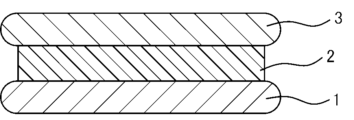
- FIG. 4 is a schematic cross-sectional view of another example of a laminate
- FIG. 4 is a schematic cross-sectional view of another example of a laminate
- the adhesive composition of the present invention contains reaction product (X) and cross-linking agent (Y).
- the reaction product (X) is a reaction product of a solid polymer (x1) and a liquid chain compound (x2).
- a solid polymer (x1) has a first functional group.
- the liquid and chain compound (x2) has a second functional group at the chain end.
- the reaction product (X) has a first functional group or a second functional group.
- the liquid cross-linking agent (Y) has a first functional group or a second functional group.
- the second functional group is capable of reacting with the first functional group.
- the reaction product (X) has the first functional group
- the liquid cross-linking agent (Y) has the second functional group.
- the liquid cross-linking agent (Y) has the first functional group.
- an adhesive composition which contains a solid polymer and a liquid cross-linking agent, and is used by reacting them after film formation.
- the present inventors have found that when two substrates are laminated while being heated using such an adhesive composition, a uniform adhesive layer without voids can be formed, and the adhesive can be applied from between the two substrates. Intensive studies were conducted in order to suppress the protrusion of the layer. In order to suppress the protrusion of the adhesive coating layer from between the two substrates, it is conceivable to increase the content of the solid polymer and increase the viscosity of the adhesive composition. However, in that case, the film formability is low, and the formed film tends to crack.
- the present inventors have investigated using a reaction product obtained by reacting a solid polymer with a liquid chain component instead of the solid polymer.
- voids can be formed when two substrates are bonded while being heated.
- the inventors have found that it is possible to form a uniform adhesive layer free from cracks, and to prevent the adhesive coating layer from protruding from between the two substrates, thus completing the present invention.
- the present inventors have found that by using a reaction product obtained by reacting a solid polymer with a liquid and chain component, uniform adhesion without voids can be achieved when two substrates are laminated while being heated.
- the reason why the layer can be formed and the protrusion of the adhesive coating layer from between the two substrates can be suppressed is considered as follows.
- a solid polymer with a liquid and chain-like component, it is possible to suppress extrusion by improving the viscosity, which is a feature of the solid polymer, and to impart softness by the liquid and chain-like component, making the film easier to crack. It is possible to reduce the thickness and improve the adhesiveness.
- solid state and liquid state are as follows.
- the term “solid” means that it is solid at normal temperature (23° C.) and normal pressure (1 atm).
- the term “liquid” means that it is liquid at normal temperature (23° C.) and normal pressure (1 atm).
- Solid state means a state of substantially no fluidity
- liquid state means a state of substantially fluidity. For example, if it is solid, the viscosity cannot be measured with an E-type viscometer. Viscosity can be measured at a pressure of 3,000 Pa ⁇ s or less.
- adhesive compositions include polysiloxane-based adhesives, acrylic resin-based adhesives, epoxy resin-based adhesives, polyamide-based adhesives, polystyrene-based adhesives, polyimide adhesives, phenolic resin-based adhesives, and the like. but not limited to these. Among these, it exhibits a suitable adhesive ability during processing of a semiconductor substrate, which is an example of the first substrate, and can be suitably peeled off after processing, and has excellent heat resistance, so it can be used as an adhesive composition. is preferably a polysiloxane adhesive.
- Combination (1) A combination of an alkenyl group having 2 to 40 carbon atoms and a Si—H group
- Combination (2) A combination of an epoxy group and an amino group
- Combination (3) A combination of an epoxy group and a carboxy group
- Combination (4) A combination of a hydroxyl group and an optionally blocked isocyanate group
- the combination (1) is preferable, and the following combination (1- 1) is more preferred.
- Combination (1-1) a combination in which the first functional group is an alkenyl group having 2 to 40 carbon atoms and the second functional group is a Si—H group
- the number of first functional groups in the solid polymer (x1) is not particularly limited, but is preferably two or more.
- the number of second functional groups in the liquid chain compound (x2) is not particularly limited, but is preferably two or more.
- the liquid chain compound (x2) has one second functional group at each end, and the liquid chain compound (x2) has two second functional groups. more preferred.
- the number of second functional groups in the liquid cross-linking agent (Y) is not particularly limited, but is preferably two or more.
- the solid polymer (x1) a solid polyorganosiloxane having a first functional group is preferable from the viewpoint of achieving the effects of the present invention with good reproducibility.
- the liquid chain compound (x2) is preferably a compound having a second functional group at the chain end and a siloxane bond.
- the liquid cross-linking agent (Y) from the viewpoint of realizing the effects of the present invention with good reproducibility, a liquid polyorganosiloxane having a second functional group is preferable. Polyorganosiloxanes are more preferred.
- the second functional group may be located at the chain terminal, or may be located at a location other than the chain terminal (for example, side chain).
- the solid polymer (x1) a polyorganosiloxane having an alkenyl group having 2 to 40 carbon atoms bonded to a silicon atom is more preferable from the viewpoint of achieving the effects of the present invention with good reproducibility.
- the liquid and chain compound (x2) is more preferably a compound (x21) having a Si—H group at the chain end and a siloxane bond.
- the liquid cross-linking agent (Y) a liquid polyorganosiloxane having Si—H groups is more preferable from the viewpoint of achieving the effects of the present invention with good reproducibility.
- each R a independently represents a substituted or unsubstituted hydrocarbon group having 1 to 10 carbon atoms and having no aliphatic unsaturated bond.
- n is 0 or more. represents an integer of n represents an integer from 0 to 5000, for example.
- R a preferably includes an alkyl group having 1 to 6 carbon atoms, a cycloalkyl group having 5 to 8 carbon atoms, an aryl group having 6 to 10 carbon atoms, and an aralkyl group having 7 to 10 carbon atoms. More specifically, they are alkyl groups such as methyl group, ethyl group, propyl group and butyl group; cycloalkyl groups such as cyclohexyl group; aryl groups such as phenyl group and tolyl group; and aralkyl groups such as benzyl group.
- some or all of the hydrogen atoms bonded to the carbon atoms of these groups are substituted with a hydroxy group, a cyano group, a halogen atom, an alkoxysilyl group, a polyoxyalkylene group, an epoxy group, a carboxyl group, or the like.
- Examples include monovalent hydrocarbon groups having 1 to 10 carbon atoms. Among these, a methyl group or a phenyl group is preferred, and a methyl group is particularly preferred.
- Solid polymer (x1) can be used individually by 1 type or in combination of 2 or more types.
- the liquid and chain compound (x2) can be used singly or in combination of two or more.
- the liquid cross-linking agent (Y) can be used alone or in combination of two or more.
- the adhesive composition is obtained, for example, by a manufacturing method including the following steps (1A) and (2A).
- the adhesive composition is obtained, for example, by a manufacturing method including the following steps (1B) and (2B).
- reaction product (X) is obtained by reacting the first functional group and the second functional group.
- the composition ratio of the solid polymer (x1) and the liquid and chain compound (x2) in the reaction product (X) is not particularly limited, but from the viewpoint of realizing the effects of the present invention with good reproducibility.
- the mass ratio (polymer (x1): compound (x2)) is preferably 95:5 to 10:90, more preferably 90:10 to 50:50, and particularly preferably 85:15 to 70:30.
- the mass ratio of the reaction product (X) and the liquid cross-linking agent (Y) in the adhesive composition is not particularly limited, but the present invention 99:1 to 60:40 is preferable, 97:3 to 70:30 is more preferable, and 95:5 to 85:15 is particularly preferable from the viewpoint of realizing the effect of (1) with good reproducibility.
- the adhesive composition of the present invention contains a curable component (A) that serves as an adhesive component.
- the curing component (A) contains a reaction product (X) and a liquid crosslinker (Y).
- the adhesive composition of the present invention may contain a component (A) that cures as an adhesive component and a component (B) that does not cause a curing reaction.
- examples of the component (B) that does not cause a curing reaction include polyorganosiloxane.
- "does not cause a curing reaction” does not mean that no curing reaction occurs, but means that the component (A) to be cured does not cause a curing reaction.
- component (A) may be a component that cures by a hydrosilylation reaction or a polyorganosiloxane component (A') that cures by a hydrosilylation reaction.
- component (A) is, for example, as an example of component (A')
- the polyorganosiloxane (a1) corresponds to the reaction product (X).
- Polyorganosiloxane (a2) corresponds to the liquid cross-linking agent (Y).
- the alkenyl group having 2 to 40 carbon atoms may be substituted.
- substituents include halogen atoms, nitro groups, cyano groups, amino groups, hydroxy groups, carboxyl groups, aryl groups, heteroaryl groups and the like.
- the polyorganosiloxane component (A') that cures by a hydrosilylation reaction has siloxane units (Q units) represented by SiO 2 , represented by R 1 R 2 R 3 SiO 1/2 one selected from the group consisting of siloxane units (M units), siloxane units (D units) represented by R 4 R 5 SiO 2/2 and siloxane units (T units) represented by R 6 SiO 3/2
- it contains a polysiloxane (A1) containing two or more units and a platinum group metal-based catalyst (A2).
- Polysiloxane (A1) includes polyorganosiloxane (a1′), which is an example of reaction product (X), and polyorganosiloxane (a2′), which is an example of liquid cross-linking agent (Y).
- Polyorganosiloxane (a1') is, for example, a reaction product of polyorganosiloxane (a1'-1) and a compound represented by formula (x21-1).
- the polyorganosiloxane (a1'-1) includes siloxane units (Q' units) represented by SiO 2 , siloxane units (M' units) represented by R 1 'R 2 'R 3 'SiO 1/2 , one or two selected from the group consisting of siloxane units (D' units) represented by R 4 'R 5 'SiO 2/2 and siloxane units (T' units) represented by R 6 'SiO 3/2 It contains at least one unit selected from the group consisting of M′ units, D′ units and T′ units.
- the polyorganosiloxane (a2′) includes siloxane units (Q′′ units) represented by SiO 2 , siloxane units (M′′ units) represented by R 1 ′′R 2 ′′R 3 ′′SiO 1/2 , and R 4 One or two or more selected from the group consisting of siloxane units represented by "R 5 "SiO 2/2 (D” units) and siloxane units represented by R 6 "SiO 3/2 (T” units) and at least one selected from the group consisting of M′′ units, D′′ units and T′′ units.
- Q′′ units siloxane units represented by SiO 2
- R 4 One or two or more selected from the group consisting of siloxane units represented by "R 5 "SiO 2/2 (D” units) and siloxane units represented by R 6 "SiO 3/2 (T” units) and at least one selected from the group consisting
- R 1 to R 6 are groups or atoms bonded to a silicon atom and each independently represent an optionally substituted alkyl group, an optionally substituted alkenyl group or a hydrogen atom.
- substituents include halogen atoms, nitro groups, cyano groups, amino groups, hydroxy groups, carboxyl groups, aryl groups, heteroaryl groups and the like.
- R 1 ' to R 6 ' are groups bonded to a silicon atom and each independently represents an optionally substituted alkyl group or an optionally substituted alkenyl group, and R 1 ' to R 6 At least one of ' is an optionally substituted alkenyl group.
- substituents include halogen atoms, nitro groups, cyano groups, amino groups, hydroxy groups, carboxyl groups, aryl groups, heteroaryl groups and the like.
- R 1 ′′ to R 6 ′′ are groups or atoms bonded to a silicon atom and each independently represent an optionally substituted alkyl group or hydrogen atom, but at least one of R 1 ′′ to R 6 ′′ One is a hydrogen atom.
- substituents include halogen atoms, nitro groups, cyano groups, amino groups, hydroxy groups, carboxyl groups, aryl groups, heteroaryl groups and the like.
- the alkyl group may be linear, branched or cyclic, but is preferably a linear or branched alkyl group. Yes, preferably 30 or less, more preferably 20 or less, and even more preferably 10 or less.
- optionally substituted linear or branched alkyl groups include methyl, ethyl, n-propyl, i-propyl, n-butyl, i-butyl and s-butyl. group, tertiary butyl group, n-pentyl group, 1-methyl-n-butyl group, 2-methyl-n-butyl group, 3-methyl-n-butyl group, 1,1-dimethyl-n-propyl group, 1,2-dimethyl-n-propyl group, 2,2-dimethyl-n-propyl group, 1-ethyl-n-propyl group, n-hexyl group, 1-methyl-n-pentyl group, 2-methyl-n -pentyl group, 3-methyl-n-pentyl group, 4-methyl-n-pentyl group, 1,1-dimethyl-n-butyl group, 1,2-dimethyl-n-butyl group, 1,3-dimethyl- n-
- optionally substituted cyclic alkyl groups include a cyclopropyl group, a cyclobutyl group, a 1-methyl-cyclopropyl group, a 2-methyl-cyclopropyl group, a cyclopentyl group, a 1-methyl-cyclobutyl group, a 2- methyl-cyclobutyl group, 3-methyl-cyclobutyl group, 1,2-dimethyl-cyclopropyl group, 2,3-dimethyl-cyclopropyl group, 1-ethyl-cyclopropyl group, 2-ethyl-cyclopropyl group, cyclohexyl group , 1-methyl-cyclopentyl group, 2-methyl-cyclopentyl group, 3-methyl-cyclopentyl group, 1-ethyl-cyclobutyl group, 2-ethyl-cyclobutyl group, 3-ethyl-cyclobutyl group, 1,2-dimethyl-cyclobutyl group, 1,3-dimethyl-cycl
- the alkenyl group may be linear or branched, and the number of carbon atoms thereof is not particularly limited, but is usually 2 to 40, preferably 30 or less, more preferably 20 or less, and more preferably 20 or less. It is preferably 10 or less.
- optionally substituted linear or branched alkenyl groups include, but are not limited to, vinyl groups, allyl groups, butenyl groups, pentenyl groups, and the like. 2 to 14, preferably 2 to 10, more preferably 1 to 6. Among them, an ethenyl group and a 2-propenyl group are particularly preferred.
- Specific examples of the optionally substituted cyclic alkenyl group include, but are not limited to, cyclopentenyl, cyclohexenyl and the like, and the number of carbon atoms thereof is usually 4 to 14, preferably 5 to 10, More preferably 5-6.
- polysiloxane (A1) includes polyorganosiloxane (a1′) and polyorganosiloxane (a2′), but the alkenyl groups contained in polyorganosiloxane (a1′) and polyorganosiloxane (a2′) ) and the hydrogen atoms (Si—H groups) contained in ) form a crosslinked structure through a hydrosilylation reaction by the platinum group metal-based catalyst (A2) and are cured. As a result, a cured film is formed.
- Polyorganosiloxane (a1'-1) contains one or more units selected from the group consisting of Q' units, M' units, D' units and T' units, and M' units, D' It contains at least one selected from the group consisting of units and T' units.
- the polyorganosiloxane (a1'-1) two or more polyorganosiloxanes satisfying such conditions may be used in combination.
- Q' units, M' units, D' units and T' units include (Q' unit and M' unit), (D' unit and M' unit), (T' units and M' units), (Q' units and T' units and M' units), but are not limited to these.
- a combination of (Q′ units and M′ units) and (D′ units and M′ units), ( A combination of (T' unit and M' unit) and (D' unit and M' unit), and a combination of (Q' unit, T' unit and M' unit) and (T' unit and M' unit) are preferred. but not limited to these.
- Polyorganosiloxane (a2′) contains one or more units selected from the group consisting of Q′′ units, M′′ units, D′′ units and T′′ units, and M′′ units, D′′ units and It contains at least one selected from the group consisting of T′′ units.
- the polyorganosiloxane (a2′) two or more polyorganosiloxanes satisfying these conditions may be used in combination.
- Preferred combinations of two or more selected from the group consisting of Q′′ units, M′′ units, D′′ units and T′′ units include (M′′ units and D′′ units), (Q′′ units and M′′ units), (Q" units and T" units and M” units).
- Polyorganosiloxane (a1'-1) is composed of siloxane units in which alkyl groups and/or alkenyl groups are bonded to silicon atoms thereof, and all substituents represented by R 1 ' to R 6 '
- the proportion of alkenyl groups in the mixture is preferably 0.1 to 50.0 mol%, more preferably 0.5 to 30.0 mol%, and the remaining R 1 ' to R 6 ' are alkyl groups. can be done.
- Polyorganosiloxane (a2') is composed of siloxane units in which alkyl groups and/or hydrogen atoms are bonded to silicon atoms thereof, and all substituents represented by R 1 ′′ to R 6 ′′ and The ratio of hydrogen atoms in the substituted atoms is preferably 0.1 to 50.0 mol%, more preferably 10.0 to 40.0 mol%, and the remaining R 1 ′′ to R 6 ′′ are alkyl groups and can do.
- component (A) contains (a1) and (a2)
- the alkenyl group contained in polyorganosiloxane (a1) and the Si—H bond contained in polyorganosiloxane (a2) is in the range of 1.0:0.5 to 1.0:0.66.
- the weight-average molecular weight of polysiloxanes such as polyorganosiloxane (a1) and polyorganosiloxane (a2) is not particularly limited, but each is usually 100 to 1,000,000, and the effects of the present invention are realized with good reproducibility. from the point of view that it is preferably 5,000 to 800,000.
- the weight-average molecular weight, number-average molecular weight, and degree of dispersion of the polyorganosiloxane are determined, for example, by a GPC apparatus (manufactured by Tosoh Corporation, HLC-8320GPC) and a GPC column (manufactured by Tosoh Corporation, TSKgel SuperMultiporeHZ-N, TSKgel SuperMultiporeHZ-H), the column temperature was set to 40 ° C., tetrahydrofuran was used as the eluent (elution solvent), the flow rate (flow rate) was set to 0.35 mL / min, and polystyrene (Showa Denko Co., Ltd. Shodex) was used as a standard sample. can be measured using
- the viscosities of polyorganosiloxane (a1) and polyorganosiloxane (a2) are not particularly limited, but each is usually in the range of 10 to 1,000,000 (mPa ⁇ s).
- the viscosity (mPa ⁇ s) of polyorganosiloxane (a1) and polyorganosiloxane (a2) is a value measured at 25°C with an E-type rotational viscometer.
- the viscosities of the polyorganosiloxane (a1) and the polyorganosiloxane (a2) do not necessarily have to fall within this range, and among the polyorganosiloxanes having a complex viscosity value within the predetermined range of the present invention, the Some have viscosities outside the range, and some cannot be measured with an E-type rotational viscometer.
- Polyorganosiloxane (a1) and polyorganosiloxane (a2) react with each other to form a film through a hydrosilylation reaction. Therefore, the curing mechanism differs from that via, for example, silanol groups, and therefore any siloxane need not contain silanol groups or functional groups that form silanol groups upon hydrolysis, such as alkyloxy groups. None.
- the adhesive composition contains a platinum group metal-based catalyst (A2) along with the polyorganosiloxane component (A').
- a platinum-based metal catalyst is a catalyst for promoting the hydrosilylation reaction between the alkenyl groups of the polyorganosiloxane (a1) and the Si—H groups of the polyorganosiloxane (a2).
- platinum-based metal catalysts include platinum black, diplatinum chloride, chloroplatinic acid, reactants of chloroplatinic acid and monohydric alcohols, complexes of chloroplatinic acid and olefins, platinum bisacetoacetate, and the like.
- platinum-based catalysts including, but not limited to: Examples of complexes of platinum and olefins include, but are not limited to, complexes of divinyltetramethyldisiloxane and platinum.
- the amount of platinum group metal-based catalyst (A2) is not particularly limited, but is usually in the range of 1.0 to 50.0 ppm with respect to the total amount of polyorganosiloxane (a1) and polyorganosiloxane (a2). .
- the polyorganosiloxane component (A') may contain a polymerization inhibitor (A3) for the purpose of suppressing the progress of the hydrosilylation reaction.
- the polymerization inhibitor is not particularly limited as long as it can suppress the progress of the hydrosilylation reaction, and specific examples thereof include 1-ethynyl-1-cyclohexanol and 1,1-diphenyl-2-propion-1-ol.
- the amount of the polymerization inhibitor is not particularly limited, it is usually 1000.0 ppm or more with respect to the total amount of the polyorganosiloxane (a1) and the polyorganosiloxane (a2) from the viewpoint of obtaining the effect, and the hydrosilylation reaction It is 10000.0 ppm or less from the viewpoint of preventing excessive suppression of.
- An example of the adhesive composition of the present invention may contain a component (B) that does not undergo a curing reaction together with the component (A). By including such a component (B) in the adhesive composition, it becomes easier to obtain an adhesive composition that satisfies the first condition or the second condition.
- component (B) typically includes non-curable polyorganosiloxanes, specific examples of which include epoxy group-containing polyorganosiloxanes, methyl group-containing polyorganosiloxanes, and phenyl group-containing polyorganosiloxanes. etc., but not limited to these.
- Component (B) also includes non-curable polydimethylsiloxane. The polydimethylsiloxane may be modified.
- polydimethylsiloxane examples include, but are not limited to, epoxy group-containing polydimethylsiloxane, unmodified polydimethylsiloxane, and phenyl group-containing polydimethylsiloxane.
- non-curable polyorganosiloxane that is component (B) include, but are not limited to, epoxy group-containing polyorganosiloxane, methyl group-containing polyorganosiloxane, and phenyl group-containing polyorganosiloxane.
- the weight-average molecular weight of the non-curable polyorganosiloxane, which is the component (B), is not particularly limited, it is usually from 100,000 to 2,000,000, and is preferred from the viewpoint of achieving the effects of the present invention with good reproducibility. is between 150,000 and 1,200,000, more preferably between 200,000 and 800,000.
- the degree of dispersion is not particularly limited, but is usually 1.0 to 10.0, preferably 1.5 to 5.0, more preferably 2.0 to 3.0.
- the viscosity of the non-curable polyorganosiloxane is not particularly limited, but is usually in the range of 10 to 1,000,000 (mPa ⁇ s).
- the viscosity (mPa ⁇ s) of non-curable polyorganosiloxane is a value measured at 25° C. with an E-type rotational viscometer.
- the viscosity of the non-curable polyorganosiloxane does not necessarily have to be within the range, and among the polyorganosiloxanes having a complex viscosity value within the predetermined range of the present invention, there are those having a viscosity outside the range. Also, there are those whose viscosity cannot be measured with an E-type rotational viscometer.
- epoxy group-containing polyorganosiloxanes examples include those containing siloxane units ( D10 units) represented by R 11 R 12 SiO 2/2 .
- R 11 is a group bonded to a silicon atom and represents an alkyl group
- R 12 is a group bonded to a silicon atom and represents an epoxy group or an organic group containing an epoxy group
- specific examples of the alkyl group are , the above examples can be mentioned.
- the epoxy group in the organic group containing an epoxy group may be an independent epoxy group without being condensed with other rings, and forms a condensed ring with other rings such as a 1,2-epoxycyclohexyl group. may be an epoxy group.
- Specific examples of organic groups containing epoxy groups include, but are not limited to, 3-glycidoxypropyl and 2-(3,4-epoxycyclohexyl)ethyl.
- a preferable example of the epoxy group-containing polyorganosiloxane is epoxy group-containing polydimethylsiloxane, but the present invention is not limited thereto.
- the epoxy group-containing polyorganosiloxane contains the siloxane units ( D10 units) described above, but may contain Q units, M units and/or T units in addition to the D10 units.
- specific examples of the epoxy group-containing polyorganosiloxane include a polyorganosiloxane consisting only of D10 units, a polyorganosiloxane containing D10 units and Q units, and a polyorganosiloxane containing D10 units and M units.
- Polyorganosiloxane containing D10 units and T units Polyorganosiloxane containing D10 units, Q units and M units Polyorganosiloxane containing D10 units, M units and T units , polyorganosiloxanes containing D 10 units, Q units, M units and T units.
- Epoxy group-containing polyorganosiloxane is preferably epoxy group-containing polydimethylsiloxane having an epoxy value of 0.1 to 5.
- the weight average molecular weight is not particularly limited, it is usually 1,500 to 500,000, and preferably 100,000 or less from the viewpoint of suppressing precipitation in the composition.
- epoxy group-containing polyorganosiloxanes include those represented by formulas (E1) to (E3), but are not limited to these.
- methyl group-containing polyorganosiloxane for example, one containing a siloxane unit ( D200 unit ) represented by R210R220SiO2 /2 , preferably a siloxane unit represented by R21R21SiO2 /2 (D 20 units).
- R 210 and R 220 are groups bonded to a silicon atom, each independently representing an alkyl group, at least one of which is a methyl group, and specific examples of the alkyl group are the above-mentioned examples.
- R 21 is a group bonded to a silicon atom and represents an alkyl group, and specific examples of the alkyl group include those mentioned above. Among them, R 21 is preferably a methyl group.
- a preferred example of the methyl group-containing polyorganosiloxane is polydimethylsiloxane, but the present invention is not limited thereto.
- Methyl group-containing polyorganosiloxane contains the above-mentioned siloxane units (D 200 units or D 20 units), but in addition to D 200 units and D 20 units, it may contain Q units, M units and / or T units. .
- methyl group-containing polyorganosiloxanes include polyorganosiloxanes consisting of only D 200 units, polyorganosiloxanes containing D 200 units and Q units, and D 200 units and M units. polyorganosiloxane containing D 200 units and T units, polyorganosiloxane containing D 200 units, Q units and M units, polyorganosiloxane containing D 200 units, M units and T units , D 200 units, Q units, M units and T units.
- methyl group-containing polyorganosiloxane examples include polyorganosiloxane consisting only of D20 units, polyorganosiloxane containing D20 units and Q units, and polyorganosiloxane containing D20 units and M units.
- polyorganosiloxane containing D20 units and T units polyorganosiloxane containing D20 units Q units and M units polyorganosiloxane containing D20 units M units T units , D 20 units, Q units, M units and T units.
- methyl group-containing polyorganosiloxane examples include, but are not limited to, those represented by the formula (M1).
- n4 indicates the number of repeating units and is a positive integer.
- phenyl group-containing polyorganosiloxanes examples include those containing siloxane units (D 30 units) represented by R 31 R 32 SiO 2/2 .
- R 31 is a group bonded to a silicon atom and represents a phenyl group or an alkyl group
- R 32 is a group bonded to a silicon atom and represents a phenyl group; can be mentioned, but a methyl group is preferred.
- the phenyl group-containing polyorganosiloxane contains the siloxane units ( D30 units) described above, but may contain Q units, M units and/or T units in addition to the D30 units.
- phenyl group-containing polyorganosiloxane examples include a polyorganosiloxane consisting only of D30 units, a polyorganosiloxane containing D30 units and Q units, and a polyorganosiloxane containing D30 units and M units.
- polyorganosiloxane containing D 30 units and T units polyorganosiloxane containing D 30 units Q units and M units polyorganosiloxane containing D 30 units M units T units , D 30 units, Q units, M units and T units.
- phenyl group-containing polyorganosiloxane examples include, but are not limited to, those represented by formula (P1) or (P2).
- the adhesive composition of the present invention contains a component (B) that does not undergo a curing reaction together with the component (A), and in a more preferred embodiment, the component (B) contains polyorganosiloxane. .
- an example of the adhesive composition of the present invention can contain the component (A) and the component (B) in any ratio, but it is easy to adjust the complex viscosity of the adhesive coating layer to the desired range.
- the ratio of component (A) to component (B) is preferably 90:10 to 10:90, more preferably 80:20 to 20:80 by mass ratio [(A):(B)]. is. That is, when a polyorganosiloxane component (A') that cures by a hydrosilylation reaction is included, the ratio of component (A') and component (B) is the mass ratio [(A'):(B)], It is preferably 90:10 to 10:90, more preferably 80:20 to 20:80.
- the adhesive composition of the present invention may contain a solvent for the purpose of adjusting the viscosity, etc.
- a solvent for the purpose of adjusting the viscosity, etc.
- Specific examples thereof include aliphatic hydrocarbons, aromatic hydrocarbons, ketones, and the like. Not limited.
- the solvent includes hexane, heptane, octane, nonane, decane, undecane, dodecane, isododecane, menthane, limonene, toluene, xylene, mesitylene, cumene, MIBK (methyl isobutyl ketone), butyl acetate, and diisobutyl.
- examples include, but are not limited to, ketones, 2-octanone, 2-nonanone, 5-nonanone, and the like. Such solvents can be used singly or in combination of two or more.
- the adhesive composition of the present invention contains a solvent
- the content thereof is appropriately determined in consideration of the viscosity of the desired composition, the coating method to be employed, the thickness of the film to be produced, etc.
- the composition It is in the range of about 10 to 90% by mass with respect to the entire product.
- An example of the adhesive composition of the present invention can be produced by mixing component (A) with component (B) and a solvent, if used.
- the mixing order is not particularly limited, but an example of a method for easily and reproducibly producing an adhesive composition is a method of dissolving component (A) and component (B) in a solvent, or , dissolving a part of component (A) and component (B) in a solvent, dissolving the rest in a solvent, and mixing the obtained solutions, but not limited to these.
- it may be appropriately heated within a range in which the components are not decomposed or deteriorated.
- the solvent, solution, etc. used may be filtered using a filter or the like during the production of the adhesive composition or after all the components have been mixed.
- the adhesive composition may be used for permanent bonding of two substrates or may be used for temporary bonding of two substrates.
- a permanent bond is one in which an adhesive layer formed from the adhesive composition is interposed between two substrates in the final product. Permanent adhesion is, for example, adhesion between an object to be coated and an object to be bonded in manufacturing a display panel, as described in JP-A-2014-221892.
- Temporary bonding of substrates is temporary bonding of two substrates for processing of one of the two substrates. Therefore, the two substrates temporarily adhered by the adhesive composition are peeled off after one of the substrates is processed.
- temporary adhesion for example, as described in JP-A-2021-14507, temporary adhesion of the substrate to the support substrate of which the back surface should be processed (for example, grinding, TSV processing, processing such as electrode formation). is mentioned. Temporary adhesion may also be temporary adhesion to a support substrate for processing a warped substrate (for example, wafer) as described in Japanese Patent No. 6167984, for example.
- the laminate of the present invention has a first substrate, a second substrate, an adhesive layer, and, if necessary, other layers such as a release layer and an inorganic material layer.
- the first substrate is not particularly limited as long as it forms a laminate together with the second substrate. Moreover, the material, shape, size, and structure of the first substrate are not particularly limited.
- the first substrate may be composed of an organic material, may be composed of an inorganic material, or may be composed of both an organic material and an inorganic material.
- the first substrate is, for example, a substrate including a semiconductor (hereinafter sometimes referred to as “semiconductor substrate”).
- a semiconductor substrate is a substrate having a semiconductor material (e.g., silicon, silicon carbide, compound semiconductor) in the manufacturing process of a semiconductor product (e.g., IC (integrated circuit), LSI (large scale integration), etc.). Examples include a formed semiconductor wafer, a substrate obtained by molding chips obtained by dicing the wafer, and the like.
- the main material that constitutes the entire semiconductor substrate is not particularly limited, but examples thereof include silicon, silicon carbide, compound semiconductors, and the like.
- the shape of the semiconductor substrate is not particularly limited, but is, for example, a disc shape. It should be noted that the disk-shaped semiconductor substrate does not need to have a perfectly circular surface shape. It may have notches.
- the thickness of the disk-shaped semiconductor substrate may be appropriately determined according to the purpose of use of the semiconductor substrate, and is not particularly limited, but is, for example, 500 to 1,000 ⁇ m.
- the diameter of the disk-shaped semiconductor substrate may be appropriately determined according to the purpose of use of the semiconductor substrate, and is not particularly limited, but is, for example, 100 to 1,000 mm.
- the semiconductor substrate may have bumps.
- a bump is a projecting terminal.
- the semiconductor substrate has bumps on the support substrate side.
- bumps are usually formed on the surface on which circuits are formed.
- the circuit may be a single layer or multiple layers.
- the shape of the circuit is not particularly limited.
- the surface opposite to the surface having the bumps (back surface) is a surface to be processed.
- the material, size, shape, structure, and density of the bumps on the semiconductor substrate are not particularly limited. Examples of bumps include ball bumps, printed bumps, stud bumps, and plated bumps.
- the height, diameter and pitch of bumps are appropriately determined from the conditions of a bump height of about 1 to 200 ⁇ m, a bump diameter of 1 to 200 ⁇ m, and a bump pitch of 1 to 500 ⁇ m.
- Materials for the bumps include, for example, low-melting solder, high-melting solder, tin, indium, gold, silver, and copper.
- the bumps may consist of only a single component, or may consist of multiple components. More specifically, Sn-based alloy plating such as SnAg bumps, SnBi bumps, Sn bumps, and AuSn bumps can be used.
- the bump may have a laminated structure including a metal layer composed of at least one of these components.
- An example of a semiconductor substrate is a silicon wafer with a diameter of 300 mm and a thickness of about 770 ⁇ m.
- the second substrate is not particularly limited as long as it forms a laminate together with the first substrate. Further, the material, shape, size and structure of the second substrate are not particularly limited.
- the second substrate may be composed of an organic material, may be composed of an inorganic material, or may be composed of both an organic material and an inorganic material.
- the second substrate is, for example, a support substrate that supports the first substrate when the first substrate is processed.
- the support substrate is not particularly limited as long as it is a member that can support the first substrate when the first substrate is processed. Examples thereof include a glass support substrate and a silicon support substrate.
- the shape of the support substrate is not particularly limited, but for example, a disk shape can be mentioned. It should be noted that the disk-shaped support substrate does not need to have a perfectly circular surface shape. For example, the periphery of the support substrate may have a linear portion called an orientation flat or a notch. It may have notches.
- the thickness of the disk-shaped support substrate may be appropriately determined according to the size of the semiconductor substrate, and is not particularly limited, but is, for example, 500 to 1,000 ⁇ m.
- the diameter of the disk-shaped support substrate may be appropriately determined according to the size of the semiconductor substrate, and is not particularly limited, but is, for example, 100 to 1,000 mm.
- the support substrate is a glass wafer or silicon wafer with a diameter of 300 mm and a thickness of about 700 ⁇ mm.
- the adhesive layer is provided between the first substrate and the second substrate.
- the adhesive layer is a layer formed from the adhesive composition of the present invention.
- the thickness of the adhesive layer is not particularly limited, it is usually 5 to 500 ⁇ m, and from the viewpoint of maintaining the film strength, it is preferably 10 ⁇ m or more, more preferably 20 ⁇ m or more, and still more preferably 30 ⁇ m or more. From the viewpoint of avoiding nonuniformity due to a thick film, the thickness is preferably 200 ⁇ m or less, more preferably 150 ⁇ m or less, even more preferably 120 ⁇ m or less, and even more preferably 70 ⁇ m or less.
- the laminate of the present invention may have a release layer.
- the release layer is provided between the first substrate and the second substrate. If the laminate has a release layer, for example, the release layer can be placed in contact with the second substrate and the adhesive layer.
- the release layer is not particularly limited as long as the release layer can be peeled off by heating, light irradiation, or mechanical force and can contribute to the separation of the first substrate and the second substrate in the laminate.
- a release layer as described below can be used.
- the release layer is a film obtained from a release agent composition containing an organic resin and a solvent. It is a cured film obtained.
- the release agent composition can further include a cross-linking agent, an acid catalyst, and a surfactant.
- the release agent composition contains an organic resin.
- Such an organic resin is preferably one that can exhibit suitable peeling performance.
- the organic resin absorbs light.
- alteration, such as decomposition, necessary for improving the peelability occurs favorably.
- a preferred example of the organic resin is a novolak resin.
- a novolak resin that absorbs light with a wavelength of 190 nm to 600 nm and changes in quality is preferable, and light such as a laser with a wavelength of 308 nm, 343 nm, 355 nm or 365 nm.
- a novolak resin that is modified by irradiation of is more preferable.
- the novolac resin includes units represented by the following formula (C1-1), units represented by the following formula (C1-2), and units represented by the following formula (C1-3). It is a polymer containing one or more selected from the group consisting of units.
- C1 represents a group derived from an aromatic compound containing a nitrogen atom
- C2 is a secondary carbon atom, a quaternary carbon atom and at least one selected from the group consisting of an aromatic ring in the side chain represents a group containing a tertiary carbon atom
- C3 represents a group derived from an aliphatic polycyclic compound
- C4 represents a group derived from phenol, a group derived from bisphenol, a group derived from naphthol, a group derived from biphenyl group or a group derived from biphenol.
- the novolak resin to be contained in the release agent composition and the release layer using the novolak resin, reference can be made to the novolak resin described in WO 2019/088103 and the release layer using the novolak resin.
- a preferred example of the organic resin is a combination of a novolac resin and a (meth)acrylate polymer.
- a (meth)acrylic acid ester-based polymer is a polymer containing a repeating unit derived from a (meth)acrylic acid alkyl ester.
- (Meth)acrylic acid alkyl ester is a general term for acrylic acid alkyl ester and methacrylic acid alkyl ester.
- the number of carbon atoms in the (meth)acrylic acid alkyl ester is not particularly limited, but is preferably 4-20, more preferably 4-10.
- acrylic acid alkyl esters examples include methyl acrylate, ethyl acrylate, n-propyl acrylate, n-butyl acrylate, isobutyl acrylate, n-pentyl acrylate, n-hexyl acrylate, n-octyl acrylate, isooctyl acrylate, and 2-ethylhexyl.
- Methacrylic acid alkyl esters include, for example, methyl methacrylate, ethyl methacrylate, n-propyl methacrylate, n-butyl methacrylate, isobutyl methacrylate, n-pentyl methacrylate, n-hexyl methacrylate, n-octyl methacrylate, isooctyl methacrylate, 2-ethylhexyl methacrylate, dodecyl methacrylate, decyl methacrylate and the like. These can be used individually by 1 type or in combination of 2 or more types. Among these, methyl methacrylate (methyl methacrylate) is preferred.
- the (meth)acrylic acid ester-based polymer may have repeating units other than the repeating unit derived from the (meth)acrylic acid alkyl ester.
- monomers constituting such repeating units include polymerizable unsaturated group-containing monomers other than (meth)acrylic acid ester-based polymers.
- monomers include carboxyl group-containing monomers, hydroxy group-containing monomers, (meth)acrylamide-based monomers, and styrene-based monomers.
- the (meth)acrylate polymer may be a homopolymer or a copolymer.
- the (meth)acrylate polymer preferably contains polymethyl methacrylate (polymethyl methacrylic acid).
- the molar ratio of repeating units derived from (meth)acrylic acid alkyl ester in all repeating units of the (meth)acrylic acid ester polymer is not particularly limited, but is preferably 50 mol% to 100 mol%, and 75 mol% to 100 mol % is more preferred, and 90 mol % to 100 mol % is particularly preferred.
- organic resins include polyimides and polyimide precursors.
- a polyamic acid (polyamic acid) can be mentioned as a polyimide precursor.
- the polyamic acid contains, for example, one or more selected from structural units represented by the following formulas (5) and (6). (In the formula, X 1 and X 2 are each independently a tetravalent organic group having 4 to 32 carbon atoms.)
- polyamic precursors examples include polyimide precursors having an absorbance of 0.1 or more and 0.8 or less at 308 nm when heated at 350° C. for 1 hour to form a polyimide resin film having a thickness of 0.1 ⁇ m. be done.
- polyimide precursors examples include the polyimide precursors described in Japanese Patent No. 6732871.
- the release layer is a film obtained from a release agent composition containing polyorganosiloxane and optionally a solvent.
- the polyorganosiloxane may be a commercial product or a synthesized one.
- Commercially available polyorganosiloxanes include, for example, AK 50 (trade name) manufactured by Wacker Chemie.
- the thickness of the release layer provided in the laminate according to the present invention is appropriately determined in consideration of the type of the release agent component and the desired degree of releasability. It is preferably 10 nm or more, more preferably 50 nm or more, and even more preferably 100 nm or more, from the viewpoint of suppressing deterioration of peelability due to a thin film and obtaining a peeling layer with excellent peelability with good reproducibility. From the viewpoint of avoiding the properties of the film, the thickness is preferably 5,000 nm or less, more preferably 1,000 nm or less, and even more preferably 500 nm or less.
- the release agent composition may contain a cross-linking agent.
- a cross-linking agent By including a cross-linking agent in the release agent composition, depending on the type of the resins contained together, cross-linking between the resins may proceed favorably, making it possible to achieve suitable curing.
- a film that cannot be suitably removed by chemicals (alkali developer, hydrogen peroxide solution, etc.) used in the manufacture of semiconductor devices but can be suitably removed by the cleaning composition can be obtained with good reproducibility.
- Specific examples of such a cross-linking agent are not particularly limited.
- the cross-linking agent contained in the release agent composition usually has two or more cross-linking groups. , preferably 2-10, more preferably 2-6. From the viewpoint of realizing higher heat resistance, the cross-linking agent contained in the release agent composition preferably has an aromatic ring (e.g., benzene ring, naphthalene ring) in the molecule. Typical examples of such a cross-linking agent include include, but are not limited to, phenolic crosslinkers.
- a phenolic cross-linking agent having a cross-linking group is a compound having a cross-linking group bonded to an aromatic ring and at least one of a phenolic hydroxyl group and an alkoxy group derived from a phenolic hydroxyl group.
- alkoxy group derived from a phenolic hydroxyl group include, but are not limited to, a methoxy group, a butoxy group, and the like.
- the aromatic ring to which the bridging group is bonded to the phenolic hydroxyl group and/or the aromatic ring to which the alkoxy group derived from the phenolic hydroxyl group is bonded is not limited to a non-condensed aromatic ring such as a benzene ring, and may be a naphthalene ring. , anthracene, or other condensed aromatic rings.
- the cross-linking group, the phenolic hydroxyl group, and the alkoxy group derived from the phenolic hydroxyl group may be bonded to the same aromatic ring in the molecule, They may be attached to different aromatic rings.
- Aromatic rings to which cross-linking groups, phenolic hydroxyl groups, and alkoxy groups derived from phenolic hydroxyl groups are bonded include alkyl groups such as methyl groups, ethyl groups and butyl groups, hydrocarbon groups such as aryl groups such as phenyl groups, and fluorine groups. It may be further substituted with a halogen atom such as an atom.
- phenol-based cross-linking agents having a cross-linking group include compounds represented by any one of formulas (L1) to (L4).
- each R' independently represents a fluorine atom, an aryl group or an alkyl group
- each R'' independently represents a hydrogen atom or an alkyl group
- L 1 and L 2 each independently represents a single bond, a methylene group or a propane-2,2-diyl group
- L 3 is determined according to q1, a single bond, a methylene group, a propane-2,2-diyl group, a methanetriyl group or represents an ethane-1,1,1-triyl group
- t11, t12 and t13 are integers satisfying 2 ⁇ t11 ⁇ 5, 1 ⁇ t12 ⁇ 4, 0 ⁇ t13 ⁇ 3, and t11 + t12 + t13 ⁇ 6;
- t22 and t23 are integers satisfying 2 ⁇ t21 ⁇ 4, 1 ⁇ t22 ⁇ 3, 0 ⁇ t23 ⁇ 2, and t21+t22+t23 ⁇ 5, and t24, t25 and t
- a melamine-based cross-linking agent having a cross-linking group is a melamine derivative, 2,4-diamino-1,3,5- It is a triazine derivative or a 2-amino-1,3,5-triazine derivative, and the triazine ring may further have a substituent such as an aryl group such as a phenyl group.
- melamine-based cross-linking agents having cross-linking groups include N,N,N',N',N'',N''-hexakis(methoxymethyl)melamine, N,N,N',N',N'' mono-, bis-, tris-, tetrakis-, pentakis- or hexakisalkoxymethyl melamine such as ,N′′-hexakis(butoxymethyl)melamine, N,N,N′,N′-tetrakis(methoxymethyl)benzoguanamine, N,N,N Mono, bis, tris or tetrakisalkoxymethylbenzoguanamines such as ',N'-tetrakis(butoxymethyl)benzoguanamine, and the like, but are not limited to these.
- a urea-based cross-linking agent having a cross-linking group is a derivative of a compound containing a urea bond, and has a structure in which at least one of the hydrogen atoms of the NH groups constituting the urea bond is substituted with a cross-linking group.
- urea-based cross-linking agents having a cross-linking group include 1,3,4,6-tetrakis(methoxymethyl)glycoluril, 1,3,4,6-tetrakis(butoxymethyl)glycoluril, Mono, bis, tris or tetrakisalkoxymethyl urea such as bis, tris or tetrakis alkoxymethyl glycoluril, 1,3-bis(methoxymethyl) urea, 1,1,3,3-tetrakis methoxymethyl urea, etc. , but not limited to.
- a thiourea-based cross-linking agent having a cross-linking group is a derivative of a compound containing a thiourea bond, and has a structure in which at least one hydrogen atom of the NH group constituting the thiourea bond is substituted with a cross-linking group.
- Specific examples of thiourea-based cross-linking agents having a cross-linking group include mono-, bis-, tris-, and tetrakisalkoxy such as 1,3-bis(methoxymethyl)thiourea and 1,1,3,3-tetrakismethoxymethylthiourea. Examples include, but are not limited to, methylthiourea.
- the amount of the cross-linking agent contained in the release agent composition varies depending on the coating method to be employed, the desired film thickness, etc., and cannot be categorically defined. 0.01% by mass or more, more preferably 0.05%, from the viewpoint of realizing suitable curing and obtaining a laminate in which the first substrate and the second substrate can be separated satisfactorily with good reproducibility. % by mass or more, more preferably 0.5% by mass or more, still more preferably 1.0% by mass or more, preferably 50% by mass or less, more preferably 40% by mass or less, and even more preferably 20% by mass or less , more preferably 10% by mass or less.
- the release agent composition may contain an acid generator or an acid.
- acid generators include thermal acid generators and photoacid generators.
- the thermal acid generator is not particularly limited as long as it generates an acid by heat, and specific examples thereof include 2,4,4,6-tetrabromocyclohexadienone, benzoin tosylate, rate, K-PURE® CXC-1612, CXC-1614, TAG-2172, TAG-2179, TAG-2678, TAG2689, TAG2700 (manufactured by King Industries), and SI-45; Examples include, but are not limited to, SI-60, SI-80, SI-100, SI-110, SI-150 (manufactured by Sanshin Chemical Industry Co., Ltd.) and other organic sulfonic acid alkyl esters.
- photoacid generators examples include onium salt compounds, sulfonimide compounds, and disulfonyldiazomethane compounds.
- onium salt compounds include diphenyliodonium hexafluorophosphate, diphenyliodonium trifluoromethanesulfonate, diphenyliodonium nonafluoro-normal butanesulfonate, diphenyliodonium perfluoro-normal octane sulfonate, diphenyliodonium camphorsulfonate, bis(4-tert-butyl Iodonium salt compounds such as phenyl)iodonium camphorsulfonate, bis(4-tert-butylphenyl)iodonium trifluoromethanesulfonate, triphenylsulfonium hexafluoroantimonate, triphenylsulfonium nonafluoron-butanesulfonate, triphenylsulfonium camphorsulfonate, triphenyl Examples include, but are not limited to, sulfon,
- sulfonimide compounds include N-(trifluoromethanesulfonyloxy)succinimide, N-(nonafluoro-normalbutanesulfonyloxy)succinimide, N-(camphorsulfonyloxy)succinimide, and N-(trifluoromethanesulfonyloxy)naphthalimide. etc., but not limited to these.
- disulfonyldiazomethane compounds include bis(trifluoromethylsulfonyl)diazomethane, bis(cyclohexylsulfonyl)diazomethane, bis(phenylsulfonyl)diazomethane, bis(p-toluenesulfonyl)diazomethane, and bis(2,4-dimethylbenzene).
- sulfonyl)diazomethane methylsulfonyl-p-toluenesulfonyldiazomethane, and the like, but are not limited thereto.
- acids include p-toluenesulfonic acid, pyridinium p-toluenesulfonic acid (pyridinium paratoluenesulfonate), pyridinium trifluoromethanesulfonate, pyridinium phenolsulfonic acid, 5-sulfosalicylic acid, 4-phenolsulfonic acid, and 4-chlorobenzene.
- Arylsulfonic acids such as sulfonic acid, benzenedisulfonic acid, 1-naphthalenesulfonic acid, pyridinium salts, etc.
- arylcarboxylic acids such as salicylic acid, benzoic acid, hydroxybenzoic acid, naphthalenecarboxylic acid and salts thereof, trifluoromethanesulfonic acid , linear or cyclic alkylsulfonic acids such as camphorsulfonic acid and salts thereof, linear or cyclic alkylcarboxylic acids such as citric acid and salts thereof, but are not limited thereto.
- the amounts of the acid generator and the acid contained in the release agent composition vary depending on the type of cross-linking agent used together, the heating temperature when forming the film, etc., and therefore cannot be defined unconditionally. It is usually 0.01 to 5% by mass.
- the release agent composition contains a surfactant for the purpose of adjusting the liquid properties of the composition itself and the film properties of the resulting film, and preparing a highly uniform release agent composition with good reproducibility. It's okay.
- surfactants include polyoxyethylene alkyl ethers such as polyoxyethylene lauryl ether, polyoxyethylene stearyl ether, polyoxyethylene cetyl ether, polyoxyethylene oleyl ether, polyoxyethylene octylphenol ether, and polyoxyethylene nonyl ether.
- Polyoxyethylene alkylallyl ethers such as phenol ethers, polyoxyethylene/polyoxypropylene block copolymers, sorbitan monolaurate, sorbitan monopalmitate, sorbitan monostearate, sorbitan monooleate, sorbitan trioleate, sorbitan tristea sorbitan fatty acid esters such as polyoxyethylene sorbitan monolaurate, polyoxyethylene sorbitan monopalmitate, polyoxyethylene sorbitan monostearate, polyoxyethylene sorbitan trioleate, polyoxyethylene sorbitan tristearate, etc.
- Nonionic surfactants such as ethylene sorbitan fatty acid esters, Ftop EF301, EF303, EF352 (manufactured by Tochem Products Co., Ltd., trade names), Megafac F171, F173, R-30, R-30N (DIC Corporation product name), Florado FC430, FC431 (manufactured by Sumitomo 3M Co., Ltd., product name), Asahi Guard AG710, Surflon S-382, SC101, SC102, SC103, SC104, SC105, SC106 (manufactured by Asahi Glass Co., Ltd., product name) No.
- organosiloxane polymer KP341 manufactured by Shin-Etsu Chemical Co., Ltd.
- Surfactants can be used singly or in combination of two or more.
- the amount of surfactant is usually 2% by mass or less based on the film-constituting components of the release agent composition.
- the stripper composition preferably contains a solvent.
- a solvent for example, a highly polar solvent that can satisfactorily dissolve film constituent components such as an organic resin and a cross-linking agent can be used. Low polarity solvents may also be used.
- a low-polar solvent is defined as having a dielectric constant of less than 7 at a frequency of 100 kHz
- a high-polar solvent is defined as having a dielectric constant of 7 or more at a frequency of 100 kHz.
- a solvent can be used individually by 1 type or in combination of 2 or more types.
- highly polar solvents examples include N,N-dimethylformamide, N,N-dimethylacetamide, N,N-dimethylisobutyramide, N-methylpyrrolidone, 1,3-dimethyl-2-imidazolidinone, and the like.
- Amide solvents such as ethyl methyl ketone, isophorone and cyclohexanone; cyano solvents such as acetonitrile and 3-methoxypropionitrile; ethylene glycol, diethylene glycol, triethylene glycol, dipropylene glycol, 1,3-butanediol , polyhydric alcohol solvents such as 2,3-butanediol; Propylene glycol monomethyl ether, diethylene glycol monomethyl ether, diethylene glycol monophenyl ether, triethylene glycol monomethyl ether, dipropylene glycol monomethyl ether, benzyl alcohol, 2-phenoxyethanol, 2-benzyloxyethanol, 3-phenoxybenzyl alcohol, tetrahydrofurfuryl alcohol, etc. monohydric alcohol solvents other than the aliphatic alcohols; sulfoxide solvents such as dimethylsulfoxide;
- low-polarity solvents include chlorine-based solvents such as chloroform and chlorobenzene; aromatic hydrocarbon-based solvents such as toluene, xylene, tetralin, cyclohexylbenzene, and alkylbenzenes such as decylbenzene; Aliphatic alcohol solvents such as decanol; tetrahydrofuran, dioxane, anisole, 4-methoxytoluene, 3-phenoxytoluene, dibenzyl ether, diethylene glycol dimethyl ether, diethylene glycol butyl methyl ether, triethylene glycol dimethyl ether, triethylene glycol butyl methyl ether Ether-based solvents: methyl benzoate, ethyl benzoate, butyl benzoate, isoamyl benzoate, bis(2-ethylhexyl) phthalate, dibutyl maleate, dibutyl oxalate, hexyl
- the content of the solvent is appropriately determined in consideration of the viscosity of the desired composition, the coating method to be employed, the thickness of the film to be produced, etc., but it is 99% by mass or less of the entire composition, preferably , relative to the total composition, 70 to 99% by weight, ie the amount of membrane constituents in that case is 1 to 30% by weight, relative to the total composition.
- the viscosity and surface tension of the release agent composition can be appropriately adjusted by changing the types of solvents used, their ratios, the concentration of film constituents, etc., in consideration of various factors such as the coating method to be used and the desired film thickness. be.
- the stripper composition comprises a glycol-based solvent.
- glycol-based solvent as used herein is a general term for glycols, glycol monoethers, glycol diethers, glycol monoesters, glycol diesters, and glycol ester ethers.
- R G1 each independently represents a linear or branched alkylene group having 2 to 4 carbon atoms
- R G2 and R G3 each independently represent a hydrogen atom, a linear or a branched alkyl group having 1 to 8 carbon atoms, or an alkyl acyl group in which the alkyl portion is a linear or branched alkyl group having 1 to 8 carbon atoms
- n g is an integer of 1 to 6 is.
- linear or branched alkylene groups having 2 to 4 carbon atoms include ethylene, trimethylene, 1-methylethylene, tetramethylene, 2-methylpropane-1,3-diyl, penta Examples include, but are not limited to, methylene group, hexamethylene group, and the like.
- the number of carbon atoms is 2.
- a linear or branched alkylene group having 1 to 3 carbon atoms is preferable, and a linear or branched alkylene group having 3 carbon atoms is more preferable.
- linear or branched C 1-8 alkyl groups include methyl, ethyl, n-propyl, i-propyl, n-butyl, i-butyl, s- butyl group, tertiary butyl group, n-pentyl group, 1-methyl-n-butyl group, 2-methyl-n-butyl group, 3-methyl-n-butyl group, 1,1-dimethyl-n-propyl group , 1,2-dimethyl-n-propyl group, 2,2-dimethyl-n-propyl group, 1-ethyl-n-propyl group, n-hexyl, 1-methyl-n-pentyl group, 2-methyl-n -pentyl group, 3-methyl-n-pentyl group, 4-methyl-n-pentyl group, 1,1-dimethyl-n-butyl group, 1,2-dimethyl-n-butyl group, 1,3-dimethyl- n-but
- linear or branched alkyl group having 1 to 8 carbon atoms in the alkyl acyl group in which the alkyl moiety is a linear or branched alkyl group having 1 to 8 carbon atoms include the above-mentioned specific Examples are the same. Among them, from the viewpoint of reproducibly obtaining a composition with high uniformity, reproducibly obtaining a composition with high storage stability, and reproducibly obtaining a composition that gives a highly uniform film, a methylcarbonyl group , an ethylcarbonyl group is preferred, and a methylcarbonyl group is more preferred.
- ng is preferable from the viewpoint of reproducibly obtaining a highly uniform composition, reproducibly obtaining a composition with high storage stability, and reproducibly obtaining a composition that provides a highly uniform film. is 4 or less, more preferably 3 or less, even more preferably 2 or less, and most preferably 1.
- R G2 and R G3 are a linear or branched alkyl group having 1 to 8 carbon atoms, more preferably one of R G2 and R G3 is a linear one is a straight or branched chain alkyl group having 1 to 8 carbon atoms, and the other is an alkylacyl group in which the alkyl portion is a straight or branched chain alkyl group having 1 to 8 carbon atoms.
- the amount is preferably 50% by mass or more, more preferably 70% by mass or more, even more preferably 80% by mass or more, still more preferably 90% by mass or more, and even more preferably 90% by mass or more, based on the solvent contained in the release agent composition. is 95% by mass or more.
- the membrane constituents are uniformly dispersed or dissolved in the solvent, preferably dissolved.
- the laminate may have an inorganic material layer.
- the inorganic material layer is usually interposed between the release layer and the adhesive layer.
- the inorganic material layer suppresses mixing of the release layer and the adhesive layer.
- the inorganic material layer is not particularly limited as long as it is a layer made of an inorganic material.
- the inorganic material layer is a layer obtained by plasma polymerization of an organosilicon compound.
- the inorganic material layer is formed by, for example, a chemical vapor deposition method (CVD (Chemical Vapor Deposition)).
- Chemical vapor deposition for example, provides a plasma polymerized coating.
- Materials used in plasma polymerized coatings include, for example, organosilicon compounds.
- organosilicon compounds For example, by performing plasma polymerization coating of an organosilicon compound on the release layer or adhesive layer, the raw material gas containing the organosilicon compound is decomposed to form an inorganic thin film containing Si—O bonds on the release layer or adhesive layer.
- a material layer can be formed. It is preferable to mix a gas containing oxygen such as O 2 or N 2 O with the raw material gas containing the organosilicon compound.
- a rare gas such as argon or helium may be used as a carrier gas and blended with the raw material gas.
- the source gas is decomposed by plasma generated under appropriate pressure conditions using a plasma generator.
- a technique of decomposing a raw material gas using plasma to form a film (layer) is generally called a plasma polymerization method.
- organosilicon compounds include siloxane compounds, disilazane compounds, and silane compounds.
- siloxane compounds include 1,1,3,3-tetramethyldisiloxane, pentamethyldisiloxane, hexamethyldisiloxane, 1,1,3,3-tetraphenyl-1,3-dimethyldisiloxane, 1 ,3-divinyltetramethyldisiloxane, 1,1,3,3,5,5-hexamethyltrisiloxane, 1,1,1,3,5,5,5-heptamethyltrisiloxane, octamethyltrisiloxane, 1,1,1,3,5,7,7,7-octamethyltetrasiloxane, decamethyltetrasiloxane, 1,1,5,5-tetraphenyl-1,3,3,5-tetramethyltrisiloxane, etc.
- Disilazane compounds include, for example, 1,1,3,3-tetramethyldisilazane, hexamethyldisilazane, heptamethyldisilazane, hexamethylcyclotrisilazane, 1,1,3,3,5,5,7, 7-octamethylcyclotetrasilazane and the like.
- silane compounds include methylsilane, dimethylsilane, trimethylsilane, tetramethylsilane, trimethoxysilane, triethylsilane, trichloromethylsilane, dichlorodimethylsilane, chlorotrimethylsilane, tetramethoxysilane, trimethoxymethylsilane, and ethyltrimethoxysilane.
- Silane dimethoxydimethylsilane, methoxytrimethylsilane, tetraethoxysilane, triethoxymethylsilane, triethoxyethylsilane, diethoxydimethylsilane, ethoxytrimethylsilane, diethoxymethylsilane, ethoxydimethylsilane, acetoxytrimethylsilane, allyloxytrimethylsilane , allyltrimethylsilane, butoxytrimethylsilane, butyltrimethoxysilane, diacetoxydimethylsilane, dimethoxydiphenylsilane, diethoxydiphenylsilane, dimethoxymethylphenylsilane, ethoxydimethylvinylsilane, diphenylsilanediol, triacetoxymethylsilane, triacetoxyethylsilane , 3-glycidyloxypropyltrimethoxysilane,
- the thickness of the inorganic material layer is not particularly limited, it is usually 1 to 1,000 nm, preferably 100 to 500 nm.
- FIG. 1 is a schematic cross-sectional view of an example of a laminate.
- the laminate of FIG. 1 has a first substrate 1, an adhesive layer 2, and a second substrate 3 in this order.
- An adhesive layer 2 is interposed between the first substrate 1 and the second substrate 3 .
- the adhesive layer 2 is in contact with the first substrate 1 and the second substrate 3 .
- FIG. 2 is a schematic cross-sectional view of another example of the laminate.
- the laminate of FIG. 2 has a first substrate 1, an adhesive layer 2, a release layer 4, and a second substrate 3 in this order.
- An adhesive layer 2 is interposed between the first substrate 1 and the second substrate 3 .
- the adhesive layer 2 is in contact with the first substrate 1 and the release layer 4 .
- a release layer 4 is interposed between the first substrate 1 and the second substrate 3 .
- the release layer 4 is in contact with the adhesive layer 2 and the second substrate 3 .
- Another example of a laminate may have a first substrate 1, a release layer 4, an adhesive layer 2, and a second substrate 3 in this order.
- FIG. 3 is a schematic cross-sectional view of another example of the laminate.
- the laminate of FIG. 3 has a first substrate 1, an adhesive layer 2, an inorganic material layer 5, a release layer 4, and a second substrate 3 in this order.
- An adhesive layer 2 is interposed between the first substrate 1 and the second substrate 3 .
- the adhesive layer 2 is in contact with the first substrate 1 and the inorganic material layer 5 .
- a release layer 4 is interposed between the first substrate 1 and the second substrate 3 .
- the release layer 4 is in contact with the inorganic material layer 5 and the second substrate 3 .
- An inorganic material layer 5 is interposed between the first substrate 1 and the second substrate 3 .
- the inorganic material layer 5 is in contact with the adhesive layer 2 and the release layer 4 .
- Another example of the laminate may have the first substrate 1, the release layer 4, the inorganic material layer 5, the adhesive layer 2, and the second substrate 3 in this order.
- another layer may be provided between at least one of the substrate and the layer and between the layers.
- the laminate of the present invention is suitably produced, for example, by the following method for producing the laminate of the present invention.
- the method for producing a laminate of the present invention includes, for example, an adhesive coating layer forming step and a bonding step, and further optionally, a release agent coating layer forming step, an inorganic material layer forming step, and an adhesive layer forming step. including other steps such as
- the release agent coating layer forming step is a step in which a release agent composition is applied to form a release agent coating layer that provides a release layer. If the release agent composition used does not contain a solvent, for example, by coating the release agent composition on the first substrate or the second substrate, a release agent coating layer is formed, but the layer is softened. For the purpose of improving the adhesion to the substrate, if necessary, heating may be performed during the process of forming the layer. When the release agent composition to be used contains a solvent, for example, the release agent composition is applied onto the first substrate or the second substrate to form a solvent-containing coating layer, and the solvent-containing coating layer is heated to remove the solvent.
- the release agent coating layer is formed by removing the , but the solvent is also removed with the film formation by spinning, so if it is not necessary, it is not necessary to heat it in the process of forming the layer. good.
- the coating method is not particularly limited, spin coating is usually used.
- the heating temperature is appropriately determined according to the boiling point of the solvent and the purpose of heating, but is usually 50 to 250 ° C., and the heating time is appropriately determined according to the heating temperature, but is usually 30 seconds to 1 hour. Heating can be performed, for example, using an oven or a hot plate.
- the inorganic material layer forming step is not particularly limited as long as it is a step of forming an inorganic material layer.
- the adhesive coating layer forming step is not particularly limited as long as it is a step in which the adhesive composition of the present invention is applied to form an adhesive coating layer that provides an adhesive layer.
- an adhesive composition is applied and then heated (pre-heating treatment) to form an adhesive coating layer that is an uncured or incompletely cured adhesive layer. and a process including a method of
- an adhesive coating layer is formed, for example, on a first substrate, a release layer, an inorganic material layer, or a second substrate.
- the coating method is not particularly limited, it is usually a spin coating method.
- a method of separately forming a coating film by a spin coating method or the like and sticking the sheet-like coating film as an adhesive coating layer can be adopted.
- the thickness of the adhesive coating layer is appropriately determined in consideration of the thickness of the adhesive layer in the laminate.
- the applied adhesive composition is usually heated (preheat treatment).
- the heating temperature of the applied adhesive composition varies depending on the type and amount of the adhesive component contained in the adhesive composition, whether or not a solvent is contained, the boiling point of the solvent used, the desired thickness of the adhesive layer, and the like. Therefore, it cannot be defined unconditionally, but it is usually 80 to 150° C. and the heating time is usually 30 seconds to 5 minutes. Heating can be performed using a hot plate, an oven, or the like.
- the adhesive layer forming step is not particularly limited as long as it is a step in which an adhesive coating layer is heated to form an adhesive layer (post-heat treatment). For example, using a first substrate on which an adhesive coating layer is formed and a second substrate on which a release layer is formed, two substrates are used so as to sandwich the two layers (adhesive coating layer and release layer). After disposing (the first substrate and the second substrate) so that the adhesive coating layer and the release layer are brought into contact with each other, heat treatment may be performed.
- first substrate and a second substrate on which a peeling layer and an adhesive coating layer are formed two substrates (second A first substrate and a second substrate) are placed so that the second substrate and the adhesive coating layer are brought into contact with each other, and then heat treatment is performed.
- first substrate on which a release layer is formed and a second substrate on which an adhesive coating layer is formed two layers (a release layer and an adhesive coating layer) are sandwiched between two substrates.
- Heat treatment may be performed after disposing two substrates (a first substrate and a second substrate) so that the separation layer and the adhesive coating layer are in contact with each other.
- the peeling layer, the inorganic material layer, and the adhesive coating layer are sandwiched between a first substrate and a second substrate on which a peeling layer, an inorganic material layer, and an adhesive coating layer are formed.
- heat treatment may be performed.
- the inorganic material layer and the adhesive coating layer are brought into contact with each other, and then subjected to heat treatment.
- the heating temperature and time are not particularly limited as long as the temperature and time are such that the adhesive coating layer is converted into the adhesive layer.
- the heating temperature is preferably 120° C.
- the heating temperature in the adhesive layer forming process is higher than the heating temperature in the bonding process.
- the heating time is preferably 1 minute or more, and more preferably 5 minutes or more, from the viewpoint of realizing suitable bonding of each layer (including the second substrate and the first substrate) constituting the laminate. From the viewpoint of suppressing or avoiding adverse effects on each layer due to excessive heating, the heating time is preferably 180 minutes or less, more preferably 120 minutes or less. Heating can be performed using a hot plate, an oven, or the like. Heating may be performed in stages.
- a bonding step is performed between the adhesive coating layer forming step and the adhesive layer forming step in order to sufficiently bond the first substrate and the second substrate.
- the bonding step is a step of bonding the first substrate and the second substrate under heat and pressure so that they are in contact with each other with the adhesive coating layer interposed therebetween.
- the lamination step includes heating and It is a process of bonding under pressure.
- the bonding step is not particularly limited as long as the substrate and the layer can be bonded together and the substrate and the layer are not damaged. More preferably, heating and applying a load in the thickness direction of the first substrate and the second substrate are performed under reduced pressure. It is a process that takes place.
- the heating temperature is not particularly limited as long as it is normal temperature (25° C.) or higher, but it is usually 50° C. or higher, and from the viewpoint of avoiding excessive heating, it is usually 220° C. or lower. °C or less.
- the load is not particularly limited as long as the substrate and layer can be bonded together and the substrate and layer are not damaged. Also, the pressure during bonding is, for example, 0.1 to 20 N/mm 2 .
- the pressure refers to the force (load) per unit area (mm 2 ) of the substrate in contact with the jig that applies the load.
- the degree of reduced pressure is not particularly limited as long as the substrate and layer can be bonded together and the substrate and layer are not damaged.
- the method for manufacturing a processed substrate of the present invention includes, for example, at least a processing step (first step) and a peeling step (second step), and further includes other steps such as a removal step as necessary. .
- the processing step is not particularly limited as long as it is a step for processing the first substrate in the laminate of the present invention, and includes, for example, polishing processing and through electrode forming processing.
- the polishing process is not particularly limited as long as it is a process for thinning the semiconductor by polishing the surface of the first substrate, which is a substrate including a semiconductor, opposite to the surface on the second substrate side, for example. Examples include physical polishing using abrasives and whetstones.
- the polishing process can be performed using a general polishing apparatus used for polishing semiconductors (for example, silicon wafers).
- the polishing process reduces the thickness of the semiconductor, resulting in a thinned semiconductor to the desired thickness.
- the thickness of the thinned semiconductor is not particularly limited, but may be, for example, 30 to 300 ⁇ m or 30 to 100 ⁇ m.
- the polished semiconductor is formed with through-electrodes for achieving conduction between the thinned semiconductors when stacking a plurality of thinned semiconductors. Therefore, the method for manufacturing the processed substrate may include a through electrode forming process in which through electrodes are formed in the polished semiconductor after the polishing process and before the peeling process.
- a method for forming a through electrode in a semiconductor is not particularly limited, but examples include forming a through hole and filling the formed through hole with a conductive material. Formation of the through holes is performed, for example, by photolithography. Filling of the through holes with the conductive material is performed by, for example, a plating technique.
- the peeling step is not particularly limited as long as it is a step in which the second substrate and the processed first substrate are separated after the processing step.
- solvent peeling peeling by light irradiation (laser light, non-laser light), mechanical peeling using a device having a sharp edge (so-called debonder), manual peeling between the first substrate and the second substrate Examples include, but are not limited to, peeling and the like.
- peeling is carried out after manufacturing the laminate of the present invention and subjecting it to predetermined processing and the like.
- the peeling layer is a peeling layer formed using an organic resin that absorbs light and undergoes a change necessary for improving the peeling performance
- the peeling layer can be peeled off by irradiating laser from the substrate side of 2 .
- the wavelength of the laser light is 190 nm to 400 nm, or ultraviolet light with a wavelength of 190 nm to 600 nm (eg, 308 nm, 355 nm, 532 nm) is used.
- the peeling can be performed by setting the processing energy density of the pulse laser to about 50 to 500 mJ/cm 2 .
- delamination typically occurs within the release layer or at the interface between the release layer and an adjacent substrate or layer (eg, adhesive layer).
- the phrase "peeling occurs inside the release layer” means that the release layer is cleaved.
- the removal step is not particularly limited as long as it is a step in which a layer on the semiconductor substrate and its residue are removed after the peeling step, but examples thereof include dissolution removal. Alternatively, removal may be performed using a removal tape or the like.
- the cleaning composition for example, the first substrate can be immersed in the cleaning composition or sprayed with the cleaning composition.
- a preferred example of the cleaning composition used in the present invention is a cleaning agent containing a quaternary ammonium salt and a solvent. agent compositions.
- the quaternary ammonium salt is composed of a quaternary ammonium cation and an anion, and is not particularly limited as long as it can be used for this type of application.
- Such quaternary ammonium cations typically include tetra(hydrocarbon)ammonium cations.
- hydroxide ions OH ⁇
- halogen ions such as fluorine ions (F ⁇ ), chloride ions (Cl ⁇ ), bromide ions (Br ⁇ ), iodine ions (I ⁇ ), etc.
- tetrafluoroborate ion BF 4 ⁇
- PF 6 ⁇ hexafluorophosphate ion
- the quaternary ammonium salt is preferably a halogen-containing quaternary ammonium salt, more preferably a fluorine-containing quaternary ammonium salt.
- the halogen atom may be contained in the cation or the anion, preferably the anion.
- the fluorine-containing quaternary ammonium salt is tetra(hydrocarbon)ammonium fluoride.
- the hydrocarbon group in the tetra(hydrocarbon)ammonium fluoride include an alkyl group having 1 to 20 carbon atoms, an alkenyl group having 2 to 20 carbon atoms, an alkynyl group having 2 to 20 carbon atoms, and an alkynyl group having 6 to 20 carbon atoms. and the like.
- the tetra(hydrocarbon)ammonium fluoride includes a tetraalkylammonium fluoride.
- tetraalkylammonium fluoride examples include tetramethylammonium fluoride, tetraethylammonium fluoride, tetrapropylammonium fluoride, tetrabutylammonium fluoride (also referred to as tetrabutylammonium fluoride) and the like. Not limited. Among them, tetrabutylammonium fluoride is preferred.
- Quaternary ammonium salts such as tetra(hydrocarbon)ammonium fluoride may be used as hydrates.
- quaternary ammonium salts such as tetra(hydrocarbon)ammonium fluoride may be used singly or in combination of two or more.
- the amount of the quaternary ammonium salt is not particularly limited as long as it dissolves in the solvent contained in the cleaning composition, but is usually 0.1 to 30% by mass of the cleaning composition.
- the solvent contained in the detergent composition is not particularly limited as long as it is used for this type of application and dissolves salts such as the quaternary ammonium salts, but has excellent detergency.
- the cleaning composition preferably contains: containing one or more amide-based solvents.
- a suitable example of the amide-based solvent is an acid amide derivative represented by formula (Z).
- R 0 represents an ethyl group, a propyl group or an isopropyl group, preferably an ethyl group.
- R A and R B each independently represent an alkyl group having 1 to 4 carbon atoms. Alkyl groups having 1 to 4 carbon atoms may be linear, branched, or cyclic, and are specifically methyl, ethyl, propyl, isopropyl, cyclopropyl, n-butyl, and isobutyl groups. , s-butyl group, t-butyl group, cyclobutyl group and the like. Among these, R A and R B are preferably methyl or ethyl groups.
- Examples of acid amide derivatives represented by formula (Z) include N,N-dimethylpropionamide, N,N-diethylpropionamide, N-ethyl-N-methylpropionamide, N,N-dimethylbutyric acid amide, N, N-diethylbutyric acid amide, N-ethyl-N-methylbutyric acid amide, N,N-dimethylisobutyric acid amide, N,N-diethylisobutyric acid amide, N-ethyl-N-methylisobutyric acid amide and the like.
- N,N-dimethylpropionamide is particularly preferred.
- the acid amide derivative represented by formula (Z) may be synthesized by a substitution reaction between a corresponding carboxylic acid ester and an amine, or a commercially available product may be used.
- Another example of a preferable amide-based solvent is a lactam compound represented by formula (Y).
- R 101 represents a hydrogen atom or an alkyl group having 1 to 6 carbon atoms
- R 102 represents an alkylene group having 1 to 6 carbon atoms.
- alkyl groups having 1 to 6 carbon atoms include methyl group, ethyl group, n-propyl group, n-butyl group and the like
- specific examples of alkylene groups having 1 to 6 carbon atoms are methylene groups. , ethylene group, trimethylene group, tetramethylene group, pentamethylene group, hexamethylene group and the like, but are not limited thereto.
- lactam compound represented by the formula (Y) examples include ⁇ -lactam compound, ⁇ -lactam compound, ⁇ -lactam compound, ⁇ -lactam compound and the like, and these may be used singly or Two or more kinds can be used in combination.
- the lactam compound represented by formula (Y) includes 1-alkyl-2-pyrrolidone (N-alkyl- ⁇ -butyrolactam), and in a more preferred embodiment, N-methylpyrrolidone ( NMP) or N-ethylpyrrolidone (NEP), and in an even more preferred embodiment, N-methylpyrrolidone (NMP).
- the cleaning composition may contain one or more other organic solvents different from the amide compounds described above.
- Such other organic solvents are used for this type of application, and are not particularly limited as long as they are compatible with the above-described amide compound.
- Other preferred solvents include, but are not limited to, alkylene glycol dialkyl ethers, aromatic hydrocarbon compounds, cyclic structure-containing ether compounds, and the like.
- the amount of the other organic solvent different from the above-mentioned amide compound is usually about 20 to 20%, as long as the quaternary ammonium salt contained in the cleaning composition does not precipitate or separate and is uniformly mixed with the above-mentioned amide compound. It is appropriately determined at 95% by mass or less in the solvent contained in the detergent composition.
- the cleaning composition may contain water as a solvent, only an organic solvent is usually intentionally used as a solvent from the viewpoint of avoiding substrate corrosion and the like. In this case, it is not denied that the detergent composition contains hydration water of the salt and a trace amount of water contained in the organic solvent.
- the water content of the detergent composition used in the present invention is usually 5% by mass or less.
- the mixture was diluted with 96 g of tetrahydrofuran, and the diluted solution was dropped into methanol to obtain a precipitate.
- the resulting precipitate was filtered, washed with methanol, and dried under reduced pressure at 60° C. to obtain 72.12 g of novolac resin.
- the weight average molecular weight measured by GPC in terms of standard polystyrene was 1,100.
- PCzNA target polymer
- PCzNA has the following repeating units.
- Example 1-1 In a 200 mL glass container with a lid, 96.2 g of a p-menthane solution (concentration 81.7% by mass) of a vinyl group-containing MQ resin (manufactured by Wacker Chemie) and 1,1,3,3-tetramethyldisiloxane (Tokyo Kasei Co., Ltd.
- the 1,1,3,3-tetramethyldisiloxane and the SiH group-containing linear polydimethylsiloxane having a viscosity of 1020 mPa ⁇ s used are liquid and chain compounds having SiH groups at the chain ends.
- the SiH group-containing linear polydimethylsiloxane having a viscosity of 100 mPa ⁇ s used is a cross-linking agent having SiH groups in side chains.
- Example 1-2 In a 200 mL glass container with a lid, 96.2 g of a p-menthane solution (concentration 81.7% by mass) of a vinyl group-containing MQ resin (manufactured by Wacker Chemie), and 1,1,3,3,5,5,7, 7,9,9,11,11-Dodecamethylhexasiloxane (manufactured by Tokyo Kasei Co., Ltd.) 4.62 g and SiH group-containing linear polydimethylsiloxane (manufactured by Wacker Chemi Co., Ltd.) 12.9 g with a viscosity of 1020 mPa s were added, and a stirrer was added.
- a p-menthane solution concentration 81.7% by mass
- a vinyl group-containing MQ resin manufactured by Wacker Chemie
- 1,1,3,3,5,5,7, 7,9,9,11,11-Dodecamethylhexasiloxane manufactured by Tokyo Kasei Co.
- mixture (II) 0.50 g was added to mixture (I) and stirred with stirrer A until the mixture became homogeneous. After that, 14.1 g of SiH group-containing linear polydimethylsiloxane (manufactured by Wacker Chemi Co., Ltd.) having a viscosity of 100 mPa ⁇ s was added, and the mixture was stirred again with the stirrer A until the mixture became uniform to obtain a mixture (III). Finally, the obtained mixture (III) was filtered through a nylon filter 400 mesh to obtain an adhesive composition.
- the obtained adhesive composition contains the reaction product (X) and the cross-linking agent (Y).
- the vinyl group-containing MQ resin used is itself solid.
- the SiH group-containing linear polydimethylsiloxane having a viscosity of 100 mPa ⁇ s used is a cross-linking agent having SiH groups in side chains.
- Example 2-1 Preparation of laminate and evaluation of adhesion
- the adhesive composition obtained in Example 1-1 was spin-coated on a 300 mm silicon wafer (thickness: 770 ⁇ m) as a wafer on the device side, and heated at 90° C. for 3 minutes (preheating treatment). An adhesive coating layer was formed on the wafer surface so that the thickness of the adhesive layer in the finally obtained laminate was about 60 ⁇ m.
- the silicon wafer having the adhesive coating layer and the glass wafer having the release agent coating layer obtained in Production Example 1 are placed in a vacuum heating bonding apparatus so as to sandwich the adhesive coating layer and the release agent coating layer. and heated on a hot plate with the device side wafer down at 200° C. for 10 minutes (post-heat treatment) to prepare a laminate.
- the bonding was performed at a temperature of 120° C. or 130° C., a pressure reduction of 700 Pa, and a load of 15 kN for 180 seconds.
- Example 2-2 A laminate was obtained in the same manner as in Example 2-1 except that the adhesive composition obtained in Example 1-2 was used instead of the adhesive composition obtained in Example 1-1. rice field.
- Example 2-3 A laminate was prepared in the same manner as in Example 2-1, except that the glass wafer with a release agent coating layer obtained in Production Example 2 was used instead of the glass wafer with a release agent coating layer obtained in Production Example 1. got
- Example 2-4 A laminate was prepared in the same manner as in Example 2-2, except that the glass wafer with a release agent coating layer obtained in Production Example 2 was used instead of the glass wafer with a release agent coating layer obtained in Production Example 1. got
- Example 2-5 A laminate was produced in the same manner as in Example 2-1, except that the glass wafer with a release agent coating layer obtained in Production Example 3 was used instead of the glass wafer with a release agent coating layer obtained in Production Example 1. got
- Example 2-6 A laminate was produced in the same manner as in Example 2-2, except that the glass wafer with a release agent coating layer obtained in Production Example 3 was used instead of the glass wafer with a release agent coating layer obtained in Production Example 1. got
- Comparative Example 2-1 A laminate was obtained in the same manner as in Example 2-1 except that the adhesive composition obtained in Comparative Example 1-1 was used instead of the adhesive composition obtained in Example 1-1. rice field.
- Comparative Example 2-2 A laminate was obtained in the same manner as in Example 2-1 except that the adhesive composition obtained in Comparative Example 1-2 was used instead of the adhesive composition obtained in Example 1-1. rice field.
- the adhesion was evaluated by visually confirming the presence or absence of voids from the glass wafer (support) side of the laminate. In addition, protrusion of the adhesive layer from the outer periphery of the wafer was similarly visually confirmed from the glass wafer (support) side. When no voids or protrusion of the adhesive layer was observed, it was judged as good, and when protrusion of the adhesive layer or voids from the outer periphery of the wafer was observed, it was judged as unsatisfactory. Table 1 shows the adhesion evaluation results.
- Examples 1-1 and 1-2 which are the adhesive compositions of the present invention, the amount of protrusion is lower than that of the adhesive compositions of Comparative Examples 1-1 and 1-2. It was confirmed that it was hard to come out and showed good adhesiveness.
- the adhesive composition of the present invention can form a uniform adhesive layer without voids when two substrates are laminated while being heated, and the adhesive composition can form a uniform adhesive layer from between the two substrates. can be suppressed, it is useful for bonding two substrates under an environment where contamination should be avoided.
Landscapes
- Chemical & Material Sciences (AREA)
- Organic Chemistry (AREA)
- Chemical Kinetics & Catalysis (AREA)
- Adhesives Or Adhesive Processes (AREA)
- Silicon Polymers (AREA)
- Laminated Bodies (AREA)
Abstract
Description
層が2つの基板の間からはみ出してしまうことがある。2つの基板の間からはみ出した接着剤塗布層は、周辺を汚染する。
ところで、2つの基板を貼り合せる際には、ボイドのない均一な接着層の形成が必要である。
[1] 第1の官能基を有する固体状のポリマー(x1)と、前記第1の官能基と反応可能な第2の官能基を鎖末端に有する液状かつ鎖状の化合物(x2)との反応生成物(X)であって、前記第1の官能基又は前記第2の官能基を有する反応生成物(X)と、
前記第1の官能基又は前記第2の官能基を有する液状の架橋剤(Y)(ただし、前記反応生成物(X)が前記第1の官能基を有する場合、前記液状の架橋剤(Y)は前記第2の官能基を有し、前記反応生成物(X)が前記第2の官能基を有する場合、前記液状の架橋剤(Y)は前記第1の官能基を有する。)と、
を含有する接着剤組成物。
[2] 前記固体状のポリマー(x1)が、前記第1の官能基を有する固体状のポリオルガノシロキサンであり、
前記液状かつ鎖状の化合物(x2)が、前記第2の官能基を鎖末端に有し、かつシロキサン結合を有する化合物であり、
前記液状の架橋剤(Y)が、前記第1の官能基又は前記第2の官能基を有する液状のポリオルガノシロキサンである、
[1]に記載の接着剤組成物。
[3] 前記第1の官能基が、炭素数2~40のアルケニル基であり、
前記第2の官能基が、Si-H基である、
[1]又は[2]に記載の接着剤組成物。
[4] 前記固体状のポリマー(x1)が、ケイ素原子に結合した炭素数2~40のアルケニル基を有するポリオルガノシロキサンであり、
前記液状かつ鎖状の化合物(x2)が、Si-H基を鎖末端に有し、かつシロキサン結合を有する化合物(x21)であり、
前記液状の架橋剤(Y)が、Si-H基を有する液状のポリオルガノシロキサンである、
[1]~[3]のいずれかに記載の接着剤組成物。
[5] 前記化合物(x21)が、下記式(x21-1)で表される、[4]に記載の接着剤組成物。

[6] 前記反応生成物(X)における、前記固体状のポリマー(x1)と、前記液状かつ鎖状の化合物(x2)との構成割合が、質量割合(ポリマー(x1):化合物(x2))として、95:5~10:90である、[1]~[5]のいずれかに記載の接着剤組成物。
[7] 前記反応生成物(X)と前記液状の架橋剤(Y)との質量割合(反応生成物(X):液状の架橋剤(Y))が、99:1~60:40である、[1]~[6]のいずれかに記載の接着剤組成物。
[8] 第1の基板と、第2の基板と、前記第1の基板と前記第2の基板との間に設けられた接着層とを有し、
前記接着層が、[1]~[7]のいずれかに記載の接着剤組成物から形成される層である、積層体。
[9] 前記第1の基板と前記第2の基板との間に設けられた剥離層を更に有する、[8]に記載の積層体。
[10] 前記第1の基板が半導体を備える基板であり、前記第2の基板が支持基板である、[8]又は[9]に記載の積層体。
[11] [1]~[7]のいずれかに記載の接着剤組成物が塗布され、接着層を与える接着剤塗布層が形成される工程と、
第1の基板及び第2の基板が、前記接着剤塗布層を介在して接するように、加熱及び加圧下で貼り合せられる工程と、
を含む、積層体の製造方法。
[12] 前記貼り合せられる工程の後に、前記接着剤塗布層が加熱され、前記接着層が形成される工程を更に含む、[11]に記載の積層体の製造方法。
[13] 剥離剤組成物が塗布され、剥離層を与える剥離剤塗布層が形成される工程を含み、
前記貼り合せられる工程が、第1の基板及び第2の基板が、前記剥離剤塗布層及び前記接着剤塗布層を介在して接するように、加熱及び加圧下で貼り合せられる工程である、[11]又は[12]に記載の積層体の製造方法。
[14] 前記第1の基板が半導体を備える基板であり、前記第2の基板が支持基板である、[11]~[13]のいずれかに記載の積層体の製造方法。
[15] 加工された基板の製造方法であって、
[8]~[10]のいずれかに記載の積層体の前記第1の基板が加工される第1工程と、
前記第1工程によって加工された前記第1の基板と前記第2の基板とが分離される第2工程と、
を含む、加工された基板の製造方法。
なお、ボイドとは、積層体の基板と層の間、2つの層の間又は層中に気泡がある状態を意味し、望ましくない気泡があるこのような状態では、積層体に製造上必要な圧力等の負荷をかけた際に負荷に偏りが生じてTTV(total thickness variation)が悪化すること、半導体基板の加工工程(バックグラインド)におけるウエハー厚さの不均一性が発生すること、剥離工程(デボンド時)で掛かる圧力の偏りを原因としたウエハーへのダメージや接着層残渣が発生することなどの懸念があり、再現性のよい、良好な半導体素子の製造を期待できない。
本発明の接着剤組成物は、反応生成物(X)と、架橋剤(Y)とを含有する。
反応生成物(X)は、固体状のポリマー(x1)と、液状かつ鎖状の化合物(x2)との反応生成物である。
固体状のポリマー(x1)は、第1の官能基を有する。
液状かつ鎖状の化合物(x2)は、第2の官能基を鎖末端に有する。
反応生成物(X)は、第1の官能基又は第2の官能基を有する。
液状の架橋剤(Y)は、第1の官能基又は第2の官能基を有する。
第2の官能基は、第1の官能基と反応可能である。
なお、反応生成物(X)が第1の官能基を有する場合、液状の架橋剤(Y)は第2の官能基を有する。反応生成物(X)が第2の官能基を有する場合、液状の架橋剤(Y)は第1の官能基を有する。
本発明者らは、このような接着剤組成物を用いて2つの基板を加熱しながら貼り合せる際に、ボイドのない均一な接着層を形成でき、かつ2つの基板の間からの接着剤塗布層のはみ出しを抑制するために、鋭意検討を行った。
2つの基板の間からの接着剤塗布層のはみ出しを抑制するためには、固体状のポリマーの含有量を多くし、接着剤組成物の粘度を上げることが考えられる。しかし、その場合、成膜性が低く、形成した膜が割れやすくなる。
そこで、本発明者らは、固体状のポリマーに替えて、固体状のポリマーと液状かつ鎖状の成分とを反応させて得られる反応生成物を用いることを検討した。
その結果、固体状のポリマーに替えて、固体状のポリマーと液状かつ鎖状の成分とを反応させて得られる反応生成物を用いることで、2つの基板を加熱しながら貼り合せる際に、ボイドのない均一な接着層を形成でき、かつ2つの基板の間からの接着剤塗布層のはみ出しを抑制できることを見出し、本発明の完成に至った。
本発明者らは、固体状のポリマーと液状かつ鎖状の成分とを反応させて得られる反応生成物を用いることで、2つの基板を加熱しながら貼り合せる際に、ボイドのない均一な接着層を形成でき、かつ2つの基板の間からの接着剤塗布層のはみ出しを抑制できる理由について、以下のように考えている。
つまり、固体状のポリマーと液状かつ鎖状の成分とを反応させることで、固体状のポリマーの特徴である粘度向上によるはみ出し抑制および液状かつ鎖状の成分による柔らかさの付与によって膜の割れ易さの低減と接着性の向上が可能となった。
固体状とは常温(23℃)かつ常圧(1気圧)で固体状であることを言う。
液状とは常温(23℃)かつ常圧(1気圧)で液状であることをいう。
固体状とは、実質的に流動性を有さない状態を意味し、液状とは、実質的に流動性を有する状態を意味する。例えば、固体状であると、E型粘度計において粘度測定ができない。なお、3,000Pa・s以下であれば、粘度測定が可能である。
これらの中でも、第1の基板の一例である半導体基板等の加工時は好適な接着能を示し、加工の後は好適に剥離可能であり、更に耐熱性にも優れるため、接着剤組成物としては、ポリシロキサン系接着剤が好ましい。
組み合わせ(1):炭素数2~40のアルケニル基と、Si-H基との組み合わせ
組み合わせ(2):エポキシ基と、アミノ基との組み合わせ
組み合わせ(3):エポキシ基と、カルボキシ基との組み合わせ
組み合わせ(4):水酸基と、ブロック化されていてもよいイソシアネート基との組み合わせ
これらの中でも、本発明の効果を再現性よく実現する観点から、組み合わせ(1)が好ましく、以下の組み合わせ(1-1)がより好ましい。
組み合わせ(1-1):第1の官能基が炭素数2~40のアルケニル基であり、第2の官能基がSi-H基である組み合わせ
液状かつ鎖状の化合物(x2)は、両末端に1つずつ第2の官能基を有し、液状かつ鎖状の化合物(x2)における第2の官能基の数は2つであることがより好ましい。
液状かつ鎖状の化合物(x2)としては、本発明の効果を再現性よく実現する観点から、第2の官能基を鎖末端に有し、かつシロキサン結合を有する化合物が好ましい。
液状の架橋剤(Y)としては、本発明の効果を再現性よく実現する観点から、第2の官能基を有する液状のポリオルガノシロキサンが好ましく、第2の官能基を有する液状かつ鎖状のポリオルガノシロキサンがより好ましい。液状かつ鎖状のポリオルガノシロキサンにおいて、第2の官能基は、鎖末端に位置していてもよいし、鎖末端以外の箇所(例えば、側鎖)に位置していてもよい。
液状かつ鎖状の化合物(x2)としては、本発明の効果を再現性よく実現する観点から、Si-H基を鎖末端に有し、かつシロキサン結合を有する化合物(x21)がより好ましい。
液状の架橋剤(Y)としては、本発明の効果を再現性よく実現する観点から、Si-H基を有する液状のポリオルガノシロキサンがより好ましい。

nは、例えば、0~5000の整数を表す。
より詳細には、メチル基、エチル基、プロピル基、ブチル基等のアルキル基;シクロヘキシル基等のシクロアルキル基;フェニル基、トリル基等のアリール基;及びベンジル基等のアラルキル基である。又は、これらの基の炭素原子に結合している水素原子の一部又は全部をヒドロキシ基、シアノ基、ハロゲン原子、アルコキシシリル基、ポリオキシアルキレン基、エポキシ基、又はカルボキシル基等で置換した、炭素数1~10の1価炭化水素基が挙げられる。
これらの中でも、メチル基又はフェニル基が好ましく、特にメチル基が好ましい。
液状かつ鎖状の化合物(x2)は、1種を単独で又は2種以上を組み合わせて使用することができる。
液状の架橋剤(Y)は、1種を単独で又は2種以上を組み合わせて使用することができる。
工程(1A):第1の官能基を有する固体状のポリマー(x1)と、第1の官能基と反応可能な第2の官能基を鎖末端に有する液状かつ鎖状の化合物(x2)とを反応させて、第1の官能基を有する反応生成物(X)を得る工程、
工程(2A):第1の官能基を有する反応生成物(X)と、第2の官能基を有する液状の架橋剤(Y)とを混合する工程
工程(1B):第1の官能基を有する固体状のポリマー(x1)と、第1の官能基と反応可能な第2の官能基を鎖末端に有する液状かつ鎖状の化合物(x2)とを反応させて、第2の官能基を有する反応生成物(X)を得る工程、
工程(2B):第2の官能基を有する反応生成物(X)と、第1の官能基を有する液状の架橋剤(Y)とを混合する工程
例えば、硬化する成分(A)は、反応生成物(X)と、液状の架橋剤(Y)とを含有する。
本発明の接着剤組成物は、接着剤成分となる硬化する成分(A)と、硬化反応を起こさない成分(B)とを含有してもよい。ここで、硬化反応を起こさない成分(B)としては、例えば、ポリオルガノシロキサンが挙げられる。なお、本発明において「硬化反応を起こさない」とは、あらゆる硬化反応を起こさないことを意味するのではなく、硬化する成分(A)に生じる硬化反応を起こさないことを意味する。
他の好ましい態様においては、成分(A)は、ヒドロシリル化反応によって硬化する成分であってもよいし、ヒドロシリル化反応によって硬化するポリオルガノシロキサン成分(A’)であってもよい。
ケイ素原子に結合した炭素数2~40のアルケニル基を有するポリオルガノシロキサン(a1)と、
Si-H基を有するポリオルガノシロキサン(a2)と、
白金族金属系触媒(A2)と、
を含有する。
ここで、ポリオルガノシロキサン(a1)は、反応生成物(X)に相当する。
ポリオルガノシロキサン(a2)は、液状の架橋剤(Y)に相当する。
ポリシロキサン(A1)は、反応生成物(X)の一例であるポリオルガノシロキサン(a1’)と、液状の架橋剤(Y)の一例であるポリオルガノシロキサン(a2’)とを含む。
ポリオルガノシロキサン(a1’)は、例えば、ポリオルガノシロキサン(a1’-1)と、式(x21-1)で表される化合物との反応生成物である。
ポリオルガノシロキサン(a1’-1)は、SiO2で表されるシロキサン単位(Q’単位)、R1’R2’R3’SiO1/2で表されるシロキサン単位(M’単位)、R4’R5’SiO2/2で表されるシロキサン単位(D’単位)及びR6’SiO3/2で表されるシロキサン単位(T’単位)からなる群より選ばれる1種又は2種以上の単位を含むとともに、M’単位、D’単位及びT’単位からなる群より選ばれる少なくとも1種を含む。
ポリオルガノシロキサン(a2’)は、SiO2で表されるシロキサン単位(Q”単位)、R1”R2”R3”SiO1/2で表されるシロキサン単位(M”単位)、R4”R5”SiO2/2で表されるシロキサン単位(D”単位)及びR6”SiO3/2で表されるシロキサン単位(T”単位)からなる群より選ばれる1種又は2種以上の単位を含むとともに、M”単位、D”単位及びT”単位からなる群より選ばれる少なくとも1種を含む。
なお、(a1’)は、(a1)の一例であり、(a2’)は、(a2)の一例である。
置換されていてもよい環状アルケニル基の具体例としては、シクロペンテニル、シクロヘキセニル等が挙げられるが、これらに限定されず、その炭素数は、通常4~14であり、好ましくは5~10、より好ましくは5~6である。
なお、本発明において、ポリオルガノシロキサンの重量平均分子量及び数平均分子量並びに分散度は、例えば、GPC装置(東ソー(株)製 HLC-8320GPC)及びGPCカラム(東ソー(株)TSKgel SuperMultiporeHZ-N, TSKgel SuperMultiporeHZ-H)を用い、カラム温度を40℃とし、溶離液(溶出溶媒)としてテトラヒドロフランを用い、流量(流速)を0.35mL/分とし、標準試料としてポリスチレン(昭和電工(株)Shodex)を用いて、測定することができる。
但し、ポリオルガノシロキサン(a1)及びポリオルガノシロキサン(a2)の粘度は、必ずしも当該範囲に含まれる必要はなく、本発明所定の範囲の複素粘度の値を有するポリオルガノシロキサンの中には、当該範囲外の粘度を有するものや、E型回転粘度計で粘度を測定できないものもある。
このような白金系の金属触媒は、ポリオルガノシロキサン(a1)のアルケニル基とポリオルガノシロキサン(a2)のSi-H基とのヒドロシリル化反応を促進するための触媒である。
白金とオレフィン類との錯体としては、例えばジビニルテトラメチルジシロキサンと白金との錯体が挙げられるが、これに限定されない。
白金族金属系触媒(A2)の量は、特に限定されないが、通常、ポリオルガノシロキサン(a1)及びポリオルガノシロキサン(a2)の合計量に対して、1.0~50.0ppmの範囲である。
重合抑制剤は、ヒドロシリル化反応の進行を抑制できる限り特に限定されるものではなく、その具体例としては、1-エチニル-1-シクロヘキサノール、1,1-ジフェニル-2-プロピオン-1-オール等のアルキニルアルコール等が挙げられる。
重合抑制剤の量は、特に限定されないが、ポリオルガノシロキサン(a1)及びポリオルガノシロキサン(a2)の合計量に対して、通常、その効果を得る観点から1000.0ppm以上であり、ヒドロシリル化反応の過度な抑制を防止する観点から10000.0ppm以下である。
このような成分(B)として、典型的には、非硬化性ポリオルガノシロキサンが挙げられ、その具体例としては、エポキシ基含有ポリオルガノシロキサン、メチル基含有ポリオルガノシロキサン、フェニル基含有ポリオルガノシロキサン等が挙げられるが、これらに限定されない。
また、成分(B)としては、非硬化性ポリジメチルシロキサンが挙げられる。当該ポリジメチルシロキサンは変性されていてもよい。変性されていてもよいポリジメチルシロキサンとしては、例えば、エポキシ基含有ポリジメチルシロキサン、無変性のポリジメチルシロキサン、フェニル基含有ポリジメチルシロキサン等が挙げられるが、これらに限定されない。
但し、非硬化性ポリオルガノシロキサンの粘度は、必ずしも当該範囲に含まれる必要はなく、本発明所定の範囲の複素粘度の値を有するポリオルガノシロキサンの中には、当該範囲外の粘度を有するものや、E型回転粘度計で粘度を測定できないものもある。
エポキシ基を含む有機基におけるエポキシ基は、その他の環と縮合せずに、独立したエポキシ基であってもよく、1,2-エポキシシクロヘキシル基のように、その他の環と縮合環を形成しているエポキシ基であってもよい。
エポキシ基を含む有機基の具体例としては、3-グリシドキシプロピル、2-(3,4-エポキシシクロヘキシル)エチルが挙げられるが、これらに限定されない。
本発明において、エポキシ基含有ポリオルガノシロキサンの好ましい一例としては、エポキシ基含有ポリジメチルシロキサンを挙げることができるが、これに限定されない。
本発明の好ましい態様においては、エポキシ基含有ポリオルガノシロキサンの具体例としては、D10単位のみからなるポリオルガノシロキサン、D10単位とQ単位とを含むポリオルガノシロキサン、D10単位とM単位とを含むポリオルガノシロキサン、D10単位とT単位とを含むポリオルガノシロキサン、D10単位とQ単位とM単位とを含むポリオルガノシロキサン、D10単位とM単位とT単位とを含むポリオルガノシロキサン、D10単位とQ単位とM単位とT単位とを含むポリオルガノシロキサン等が挙げられる。

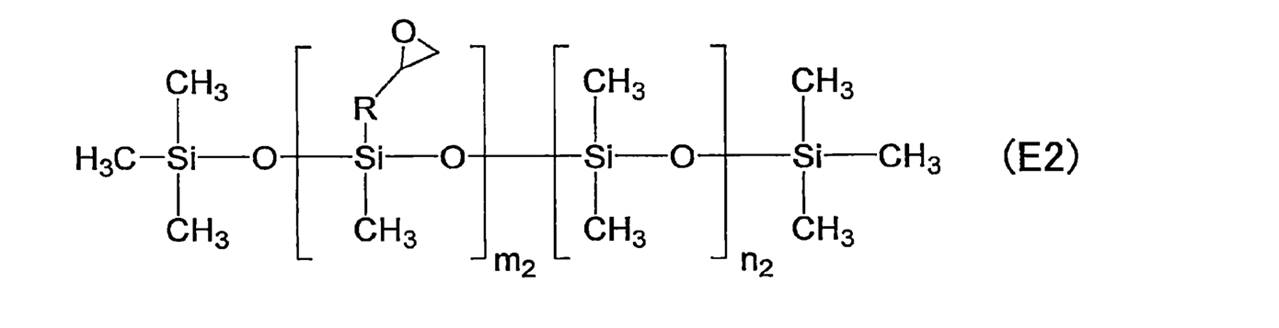

R21は、ケイ素原子に結合する基であり、アルキル基を表し、アルキル基の具体例としては、上述の例示を挙げることができる。中でも、R21としては、メチル基が好ましい。
本発明において、メチル基含有ポリオルガノシロキサンの好ましい一例としては、ポリジメチルシロキサンを挙げることができるが、これに限定されない。
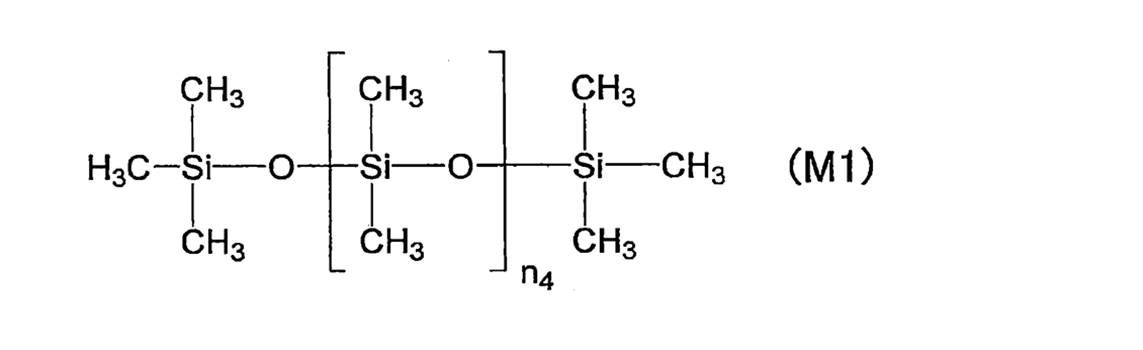


すなわち、ヒドロシリル化反応によって硬化するポリオルガノシロキサン成分(A’)が含まれる場合、成分(A’)と成分(B)との比率は、質量比〔(A’):(B)〕で、好ましくは90:10~10:90、より好ましくは80:20~20:80である。
その混合順序は特に限定されるものではないが、容易にかつ再現性よく接着剤組成物を製造できる方法の一例としては、例えば、成分(A)と成分(B)を溶媒に溶解させる方法や、成分(A)と成分(B)の一部を溶媒に溶解させ、残りを溶媒に溶解させ、得られた溶液を混合する方法が挙げられるが、これらに限定されない。なお、接着剤組成物を調製する際、成分が分解したり変質したりしない範囲で、適宜加熱してもよい。
本発明においては、異物を除去する目的で、接着剤組成物を製造する途中で又は全ての成分を混合した後に、用いる溶媒や溶液等をフィルター等を用いてろ過してもよい。
永久接着とは、接着剤組成物から形成される接着層が最終製品において2つの基板に間に介在して存在するような接着である。永久接着は、例えば、特開2014-221892号公報に記載されているような、表示パネルの製造における被塗布体と被接合体との接着である。
基板の仮接着とは、2つの基板のうちの一方の基板の加工のための一時的な2つの基板の接着である。そのため、接着剤組成物により仮接着された2つの基板は、一方の基板の加工がされた後に、剥離される。仮接着としては、例えば、特開2021-14507号公報に記載されているような、裏面を加工(例えば、研削加工、TSV加工、電極形成などの加工)すべき基板の支持基板への仮接着が挙げられる。また、仮接着は、例えば、特許6167984号公報に記載されているような、反りのある基板(例えば、ウエハー)の加工のための支持基板への仮接着であってもよい。
本発明の積層体は、第1の基板と、第2の基板と、接着層とを有し、更に必要に応じて、剥離層、無機材料層などのその他の層を有する。
第1の基板としては、第2の基板と共に積層体を構成する基板であれば、特に限定されない。
また、第1の基板の材質、形状、大きさ、構造としては、特に限定されない。
第1の基板は、有機材料から構成されていてもよいし、無機材料から構成されていてもよいし、有機材料と無機材料との両方から構成されていてもよい。
半導体基板とは、半導体製品(例えば、IC(integrated circuit)、LSI(large scale integration)等)の製造過程における半導体材料(例えば、シリコン、シリコンカーバイド、化合物半導体)を有する基板であり、例えば、回路形成された半導体ウエハー、当該ウエハーがダイシングされて得られるチップが樹脂でモールドされてなる基板などが挙げられる。
半導体基板全体を構成する主な材質としては、特に限定されないが、例えば、シリコン、シリコンカーバイド、化合物半導体などが挙げられる。
半導体基板の形状は、特に限定されないが、例えば、円盤状である。なお、円盤状の半導体基板は、その面の形状が完全な円形である必要はなく、例えば、半導体基板の外周は、オリエンテーション・フラットと呼ばれる直線部を有していてもよいし、ノッチと呼ばれる切込みを有していてもよい。
円盤状の半導体基板の厚さとしては、半導体基板の使用目的などに応じて適宜定めればよく、特に限定されないが、例えば、500~1,000μmである。
円盤状の半導体基板の直径としては、半導体基板の使用目的などに応じて適宜定めればよく、特に限定されないが、例えば、100~1,000mmである。
積層体において、半導体基板がバンプを有する場合、半導体基板は、支持基板側にバンプを有する。
半導体基板において、バンプは、通常、回路が形成された面上に形成されている。回路は、単層であってもよし、多層であってもよい。回路の形状としては特に制限されない。
半導体基板において、バンプを有する面と反対側の面(裏面)は、加工に供される面である。
半導体基板が有するバンプの材質、大きさ、形状、構造、密度としては、特に限定されない。
バンプとしては、例えば、ボールバンプ、印刷バンプ、スタッドバンプ、めっきバンプなどが挙げられる。
通常、バンプ高さ1~200μm程度、バンプ直径1~200μm、バンプピッチ1~500μmという条件からバンプの高さ、直径及びピッチは適宜決定される。
バンプの材質としては、例えば、低融点はんだ、高融点はんだ、スズ、インジウム、金、銀、銅などが挙げられる。バンプは、単一の成分のみで構成されていてもよいし、複数の成分から構成されていてもよい。より具体的には、SnAgバンプ、SnBiバンプ、Snバンプ、AuSnバンプ等のSnを主体とした合金めっき等が挙げられる。
また、バンプは、これらの成分の少なくともいずれかからなる金属層を含む積層構造を有してもよい。
第2の基板としては、第1の基板と共に積層体を構成する基板であれば、特に限定されない。
また、第2の基板の材質、形状、大きさ、構造としては、特に限定されない。
第2の基板は、有機材料から構成されていてもよいし、無機材料から構成されていてもよいし、有機材料と無機材料との両方から構成されていてもよい。
支持基板としては、第1の基板が加工される際に、第1の基板を支持できる部材であれば、特に限定されないが、例えば、ガラス製支持基板、シリコン製支持基板などが挙げられる。
円盤状の支持基板の厚さは、半導体基板の大きさなどに応じて適宜定めればよく、特に限定されないが、例えば、500~1,000μmである。
円盤状の支持基板の直径は、半導体基板の大きさなどに応じて適宜定めればよく、特に限定されないが、例えば、100~1,000mmである。
接着層は、第1の基板と、第2の基板との間に設けられている。
接着層は、本発明の接着剤組成物から形成される層である。
本発明の積層体は、剥離層を備えていてもよい。
積層体が剥離層を有する場合、剥離層は、第1の基板と第2の基板との間に設けられている。
積層体が剥離層を有する場合、例えば、剥離層は、第2の基板及び接着層に接するように配することができる。
剥離剤組成物は、更に、架橋剤、酸触媒、界面活性剤を含むことができる。
剥離剤組成物は、有機樹脂を含む。このような有機樹脂は、好適な剥離能を発揮できるものが好ましく、剥離層に対する光照射によって第1の基板と第2の基板との分離を行う場合には、当該有機樹脂は、光を吸収して剥離能向上に必要な変質、例えば分解が好適に生じるものである。
本発明の積層体が備える剥離層に光を照射して剥離をする場合、波長190nm~600nmの光を吸収し変質するノボラック樹脂が好ましく、波長が308nm、343nm、355nm又は365nmのレーザー等の光の照射によって変質するノボラック樹脂がより好ましい。

剥離剤組成物に含有させるノボラック樹脂、及びノボラック樹脂を用いた剥離層については、国際公開第2019/088103号に記載のノボラック樹脂及び該ノボラック樹脂を用いた剥離層を参酌することができる。
(メタ)アクリル酸アルキルエステルとは、アクリル酸アルキルエステル及びメタクリル酸アルキルエステルの総称である。
(メタ)アクリル酸アルキルエステルの炭素数としては、特に制限されないが、4~20が好ましく、4~10がより好ましい。
アクリル酸アルキルエステルとしては、例えば、メチルアクリレート、エチルアクリレート、n-プロピルアクリレート、n-ブチルアクリレート、イソブチルアクリレート、n-ペンチルアクリレート、n-ヘキシルアクリレート、n-オクチルアクリレート、イソオクチルアクリレート、2-エチルヘキシルアクリレート、ドデシルアクリレート、デシルアクリレートなどが挙げられる。
メタクリル酸アルキルエステルとしては、例えば、メチルメタクリレート、エチルメタクリレート、n-プロピルメタクリレート、n-ブチルメタクリレート、イソブチルメタクリレート、n-ペンチルメタクリレート、n-ヘキシルメタクリレート、n-オクチルメタクリレート、イソオクチルメタクリレート、2-エチルヘキシルメタクリレート、ドデシルメタクリレート、デシルメタクリレートなどが挙げられる。
これらは、1種を単独で又は2種以上を組み合わせて使用することができる。
これらの中でも、メチルメタクリレート(メタクリル酸メチル)が好ましい。
(メタ)アクリル酸エステル系ポリマーとしては、ポリメチルメタクリレート(ポリメチルメタクリル酸)を含むことが好ましい。
ポリアミック酸は、例えば、下記式(5)及び式(6)のそれぞれで示される構造単位から選択される1種以上を含む。

ポリオルガノシロキサンの市販品としては、例えば、ワッカーケミ社製の商品名AK 50などが挙げられる。
剥離剤組成物は、架橋剤を含んでもよい。剥離剤組成物が架橋剤を含むことによって、ともに含まれる樹脂の種類によっては、樹脂同士の架橋が好適に進行し、好適な硬化を実現することが可能となり、その結果、有機溶媒、酸及び半導体素子の製造で用いられる薬液(アルカリ現像液、過酸化水素水等)によって好適に除去できないが、洗浄剤組成物によって好適に除去できる膜を再現性よく得ることができる。
このような架橋剤の具体例としては、特に限定されるものではないが、典型的には、ヒドロキシメチル基、メトキシメチル基、ブトキシメチル基等のアルコキシメチル基等の架橋形成基を分子内に有する、フェノール系架橋剤、メラミン系架橋剤、尿素系架橋剤、チオ尿素系架橋剤等が挙げられ、これらは低分子化合物であっても、高分子化合物であってもよい。
剥離剤組成物が含む架橋剤は、通常、2個以上の架橋形成基を有するが、より好適な硬化を再現性よく実現する観点から、架橋剤である化合物に含まれる架橋形成基の数は、好ましくは2~10、より好ましくは2~6である。
剥離剤組成物が含む架橋剤は、より高い耐熱性を実現する観点からは、好ましくは分子内に芳香環(例えば、ベンゼン環、ナフタレン環)を有し、そのような架橋剤の典型例としては、これに限定されるものではないが、フェノール系架橋剤が挙げられる。
架橋形成基が結合する芳香環とフェノール性水酸基及び/又はフェノール性水酸基から誘導されるアルコキシ基が結合する芳香環はいずれも、ベンゼン環等の非縮環型芳香族環に限られず、ナフタレン環、アントラセン等の縮環型芳香族環であってもよい。
フェノール系架橋剤の分子内に芳香環が複数存在する場合、架橋形成基とフェノール性水酸基及びフェノール性水酸基から誘導されるアルコキシ基とは、分子内の同じ芳香環に結合していてもよく、異なる芳香環に結合していてもよい。
架橋形成基やフェノール性水酸基及びフェノール性水酸基から誘導されるアルコキシ基が結合する芳香環は、メチル基、エチル基、ブチル基等のアルキル基、フェニル基等のアリール基等の炭化水素基、フッ素原子等のハロゲン原子等で更に置換されていてもよい。


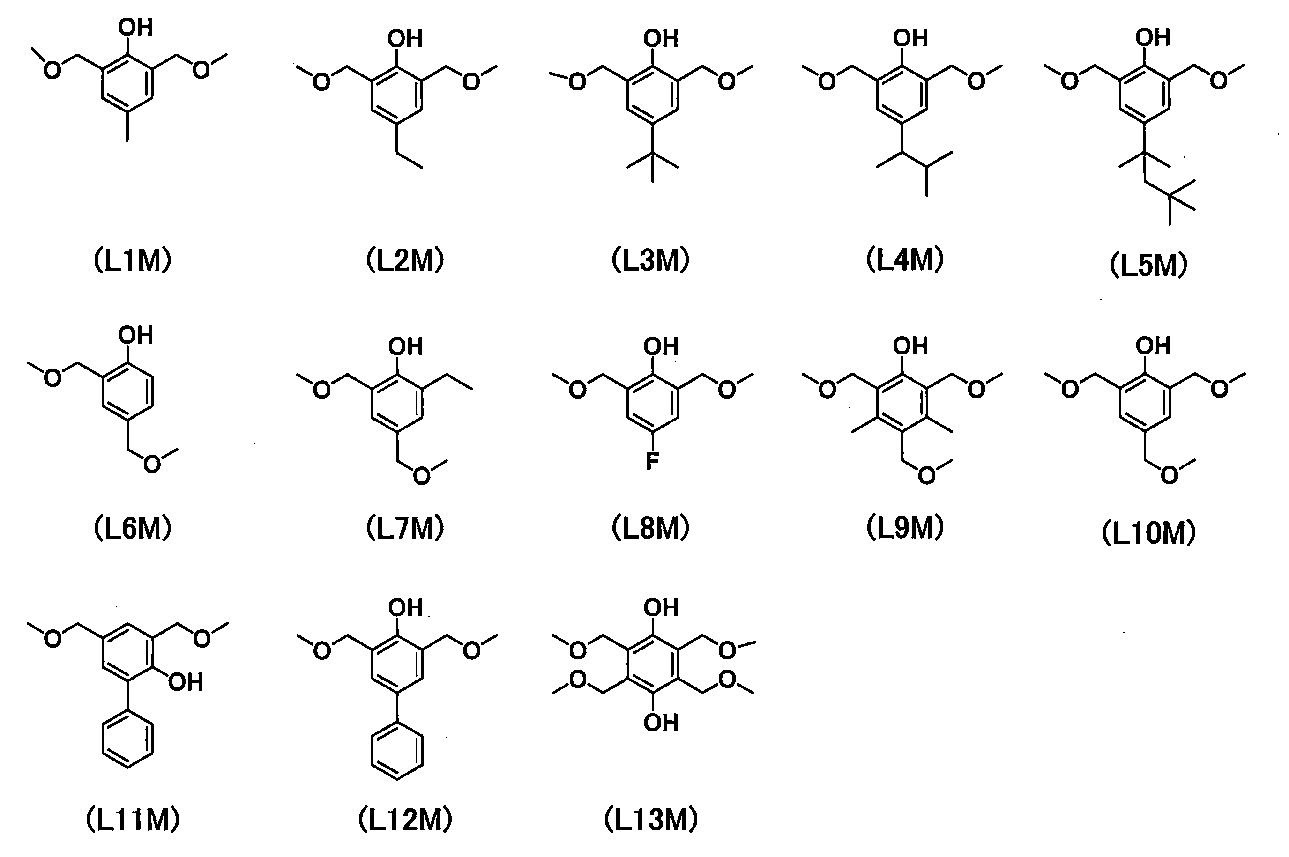
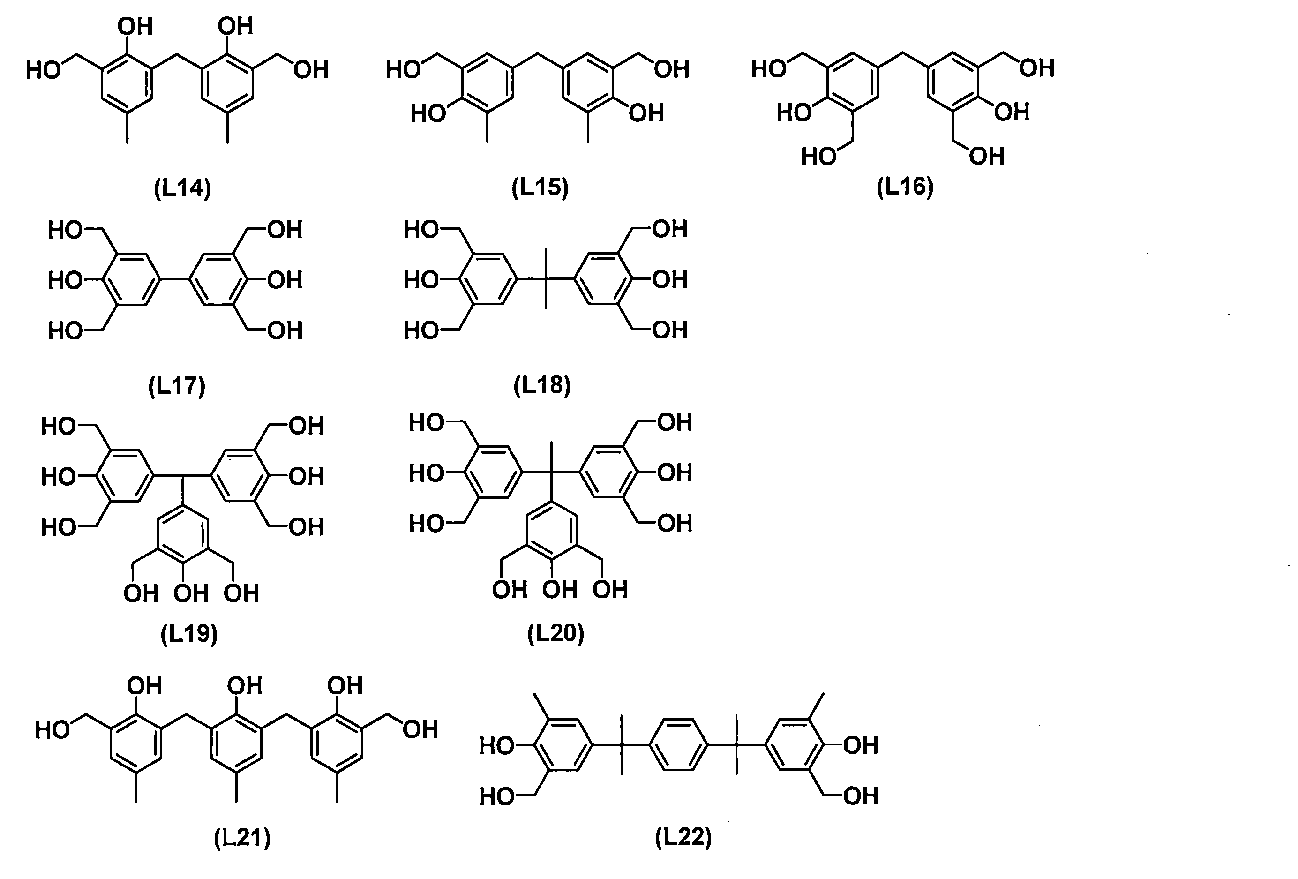
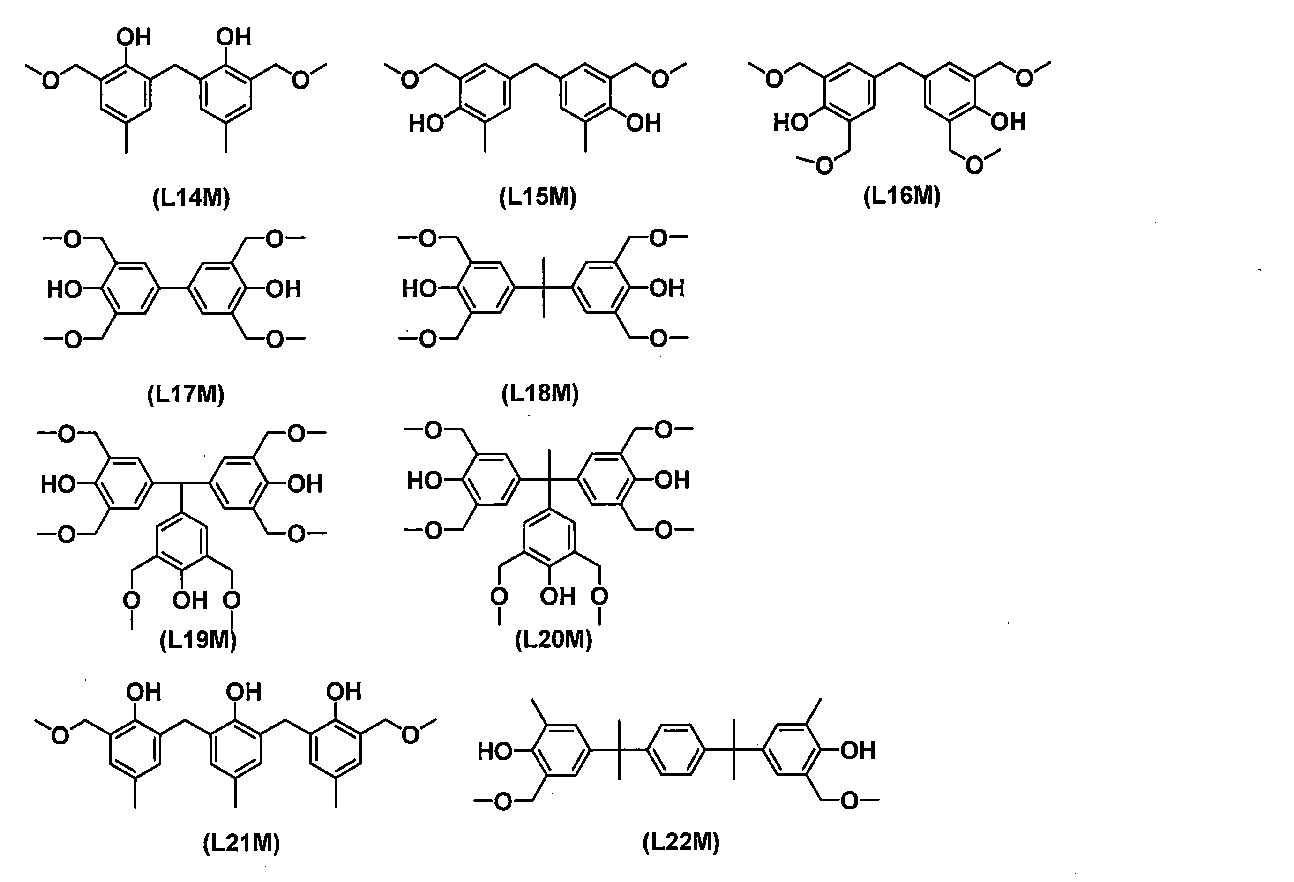
架橋形成基を有するメラミン系架橋剤の具体例としては、N,N,N’,N’,N”,N”-ヘキサキス(メトキシメチル)メラミン、N,N,N’,N’,N”,N”-ヘキサキス(ブトキシメチル)メラミン等のモノ、ビス、トリス、テトラキス、ペンタキス又はヘキサキスアルコキシメチルメラミン、N,N,N’,N’-テトラキス(メトキシメチル)ベンゾグアナミン、N,N,N’,N’-テトラキス(ブトキシメチル)ベンゾグアナミン等のモノ、ビス、トリス又はテトラキスアルコキシメチルベンゾグアナミン等が挙げられるが、これらに限定されない。
架橋形成基を有する尿素系架橋剤の具体例としては、1,3,4,6-テトラキス(メトキシメチル)グリコールウリル、1,3,4,6-テトラキス(ブトキシメチル)グリコールウリル等のモノ、ビス、トリス又はテトラキスアルコキシメチルグリコールウリル、1,3-ビス(メトキシメチル)尿素、1,1,3,3-テトラキスメトキシメチル尿素等のモノ、ビス、トリス又はテトラキスアルコキシメチル尿素等が挙げられるが、これらに限定されない。
架橋形成基を有するチオ尿素系架橋剤の具体例としては、1,3-ビス(メトキシメチル)チオ尿素、1,1,3,3-テトラキスメトキシメチルチオ尿素等のモノ、ビス、トリス又はテトラキスアルコキシメチルチオ尿素等が挙げられるが、これらに限定されない。
架橋反応の促進等を目的として、剥離剤組成物は、酸発生剤や酸を含んでもよい。
熱酸発生剤は、熱により酸を発生する限り特に限定されるものではなく、その具体例としては、2,4,4,6-テトラブロモシクロヘキサジエノン、ベンゾイントシレート、2-ニトロベンジルトシレート、K-PURE〔登録商標〕CXC-1612、同CXC-1614、同TAG-2172、同TAG-2179、同TAG-2678、同TAG2689、同TAG2700(King Industries社製)、及びSI-45、SI-60、SI-80、SI-100、SI-110、SI-150(三新化学工業(株)製)その他有機スルホン酸アルキルエステル等が挙げられるが、これらに限定されない。
剥離剤組成物は、組成物自体の液物性や得られる膜の膜物性を調整することや、均一性の高い剥離剤組成物を再現性よく調製すること等を目的として、界面活性剤を含んでもよい。
界面活性剤としては、例えばポリオキシエチレンラウリルエーテル、ポリオキシエチレンステアリルエーテル、ポリオキシエチレンセチルエーテル、ポリオキシエチレンオレイルエーテル等のポリオキシエチレンアルキルエーテル類、ポリオキシエチレンオクチルフエノールエーテル、ポリオキシエチレンノニルフエノールエーテル等のポリオキシエチレンアルキルアリルエーテル類、ポリオキシエチレン・ポリオキシプロピレンブロツクコポリマー類、ソルビタンモノラウレート、ソルビタンモノパルミテート、ソルビタンモノステアレート、ソルビタンモノオレエート、ソルビタントリオレエート、ソルビタントリステアレート等のソルビタン脂肪酸エステル類、ポリオキシエチレンソルビタンモノラウレート、ポリオキシエチレンソルビタンモノパルミテート、ポリオキシエチレンソルビタンモノステアレート、ポリオキシエチレンソルビタントリオレエート、ポリオキシエチレンソルビタントリステアレート等のポリオキシエチレンソルビタン脂肪酸エステル類等のノニオン系界面活性剤、エフトツプEF301、EF303、EF352((株)トーケムプロダクツ製、商品名)、メガファックF171、F173、R-30、R-30N(DIC(株)製、商品名)、フロラードFC430、FC431(住友スリーエム(株)製、商品名)、アサヒガードAG710、サーフロンSー382、SC101、SC102、SC103、SC104、SC105、SC106(旭硝子(株)製、商品名)等のフッ素系界面活性剤、オルガノシロキサンポリマーKP341(信越化学工業(株)製)等を挙げることができる。
界面活性剤は、一種単独で又は2種以上組み合わせて用いることができる。
界面活性剤の量は、剥離剤組成物の膜構成成分に対して、通常2質量%以下である。
剥離剤組成物は、好ましくは溶媒を含む。
このような溶媒としては、例えば、有機樹脂、架橋剤等の膜構成成分を良好に溶解できる高極性溶媒を用いることができ、必要に応じて、粘度、表面張力等の調整等を目的に、低極性溶媒を用いてもよい。なお、本発明において、低極性溶媒とは周波数100kHzでの比誘電率が7未満のものを、高極性溶媒とは周波数100kHzでの比誘電率が7以上のものと定義する。溶媒は、1種単独で又は2種以上組み合わせて用いることができる。
プロピレングリコールモノメチルエーテル、ジエチレングリコールモノメチルエーテル、ジエチレングリコールモノフェニルエーテル、トリエチレングリコールモノメチルエーテル、ジプロピレングリコールモノメチルエーテル、ベンジルアルコール、2-フェノキシエタノール、2-ベンジルオキシエタノール、3-フェノキシベンジルアルコール、テトラヒドロフルフリルアルコール等の脂肪族アルコール以外の1価アルコール系溶媒;ジメチルスルホキシド等のスルホキシド系溶媒等が挙げられる。

中でも、均一性の高い組成物を再現性よく得る観点、保存安定性の高い組成物を再現性よく得る観点、均一性の高い膜を与える組成物を再現性よく得る観点等から、炭素数2~3の直鎖状又は分岐鎖状アルキレン基が好ましく、炭素数3の直鎖状又は分岐鎖状アルキレン基がより好ましい。
中でも、均一性の高い組成物を再現性よく得る観点、保存安定性の高い組成物を再現性よく得る観点、均一性の高い膜を与える組成物を再現性よく得る観点等から、メチル基、エチル基が好ましく、メチル基がより好ましい。
中でも、均一性の高い組成物を再現性よく得る観点、保存安定性の高い組成物を再現性よく得る観点、均一性の高い膜を与える組成物を再現性よく得る観点等から、メチルカルボニル基、エチルカルボニル基が好ましく、メチルカルボニル基がより好ましい。
均一性の高い組成物を再現性よく得る観点、保存安定性の高い組成物を再現性よく得る観点、均一性の高い膜を与える組成物を再現性よく得る観点等から、剥離剤組成物においては、膜構成成分は、溶媒に均一に分散又は溶解しており、好ましくは溶解している。
積層体は、無機材料層を有していてもよい。
無機材料層は、通常、剥離層及び接着層の間に介在する。無機材料層によって、剥離層と接着層とが混ざることが抑制される。
好ましくは、無機材料層は、有機ケイ素化合物をプラズマ重合して得られる層である。
プラズマ重合コーティングに用いられる材料としては、例えば、有機ケイ素化合物が挙げられる。例えば、剥離層又は接着層上に有機ケイ素化合物のプラズマ重合コーティングを行うことによって、有機ケイ素化合物を含む原料ガスを分解させて、剥離層又は接着層上にSi-O結合を含む薄膜である無機材料層を形成できる。
有機ケイ素化合物を含む原料ガスには、O2やN2Oなどの酸素を含有する気体を配合することが好ましい。また、アルゴンやヘリウムなどの希ガスをキャリアガスとして原料ガスに配合してもよい。原料ガスを分解する方法の好ましい一例においては、プラズマ発生装置を用いて、適切な圧力条件下、発生させたプラズマによって原料ガスを分解させる。なお、プラズマを用いて原料ガスを分解させて膜(層)を形成させる技術を一般に、プラズマ重合法ということがある。
シロキサン化合物としては、例えば、1,1,3,3-テトラメチルジシロキサン、ペンタメチルジシロキサン、ヘキサメチルジシロキサン、1,1,3,3-テトラフェニル-1,3-ジメチルジシロキサン、1,3-ジビニルテトラメチルジシロキサン、1,1,3,3,5,5-ヘキサメチルトリシロキサン、1,1,1,3,5,5,5-ヘプタメチルトリシロキサン、オクタメチルトリシロキサン、1,1,1,3,5,7,7,7-オクタメチルテトラシロキサン、デカメチルテトラシロキサン、1,1,5,5-テトラフェニル-1,3,3,5-テトラメチルトリシロキサン等の鎖状シロキサン;ヘキサメチルシクロトリシロキサン、1,3,5,7-テトラメチルシクロテトラシロキサン、オクタメチルシクロテトラシロキサン、デカメチルシクロペンタシロキサン、1,3,5,7-テトラビニル-1,3,5,7-テトラメチルシクロテトラシロキサン等の環状シロキサンなどが挙げられる。
ジシラザン化合物としては、例えば、1,1,3,3-テトラメチルジシラザン、ヘキサメチルジシラザン、ヘプタメチルジシラザン、ヘキサメチルシクロトリシラザン、1,1,3,3,5,5,7,7-オクタメチルシクロテトラシラザンなどが挙げられる。
シラン化合物としては、例えば、メチルシラン、ジメチルシラン、トリメチルシラン、テトラメチルシラン、トリメトキシシラン、トリエチルシラン、トリクロロメチルシラン、ジクロロジメチルシラン、クロロトリメチルシラン、テトラメトキシシラン、トリメトキシメチルシラン、エチルトリメトキシシラン、ジメトキシジメチルシラン、メトキシトリメチルシラン、テトラエトキシシラン、トリエトキシメチルシラン、トリエトキシエチルシラン、ジエトキシジメチルシラン、エトキシトリメチルシラン、ジエトキシメチルシラン、エトキシジメチルシラン、アセトキシトリメチルシラン、アリルオキシトリメチルシラン、アリルトリメチルシラン、ブトキシトリメチルシラン、ブチルトリメトキシシラン、ジアセトキシジメチルシラン、ジメトキシジフェニルシラン、ジエトキシジフェニルシラン、ジメトキシメチルフェニルシラン、エトキシジメチルビニルシラン、ジフェニルシランジオール、トリアセトキシメチルシラン、トリアセトキシエチルシラン、3-グリシジルオキシプロピルトリメトキシシラン、ヘキシルトリメトキシシラン、3-メルカプトプロピルトリメトキシシラン、オクタデシルトリエトキシシラン、トリエトキシオクチルシラン、トリエトキシフェニルシラン、トリメチルフェニルシラン、プロポキシトリメチルシラン、トリエトキシプロピルシラン、テトラアセトキシシラン、テトラブトキシシラン、テトラプロポキシシラン、トリアセトキシビニルシラン、トリエトキシビニルシラン、トリメトキシビニルシラン、トリフェニルシラノール、トリメチルビニルシラン、トリス(2-メトキシエトキシ)ビニルシランなどが挙げられる。
図1は積層体の一例の概略断面図である。
図1の積層体は、第1の基板1と、接着層2と、第2の基板3とをこの順で有する。
接着層2は、第1の基板1及び第2の基板3の間に介在する。接着層2は、第1の基板1と第2の基板3に接している。
図2の積層体は、第1の基板1と、接着層2と、剥離層4と、第2の基板3とをこの順で有する。
接着層2は、第1の基板1及び第2の基板3の間に介在する。接着層2は、第1の基板1と剥離層4に接している。
剥離層4は、第1の基板1及び第2の基板3の間に介在する。剥離層4は、接着層2と第2の基板3に接している。
他の一例の積層体は、第1の基板1と、剥離層4と、接着層2と、第2の基板3とをこの順で有していてもよい。
図3の積層体は、第1の基板1と、接着層2と、無機材料層5と、剥離層4と、第2の基板3とをこの順で有する。
接着層2は、第1の基板1及び第2の基板3の間に介在する。接着層2は、第1の基板1と無機材料層5に接している。
剥離層4は、第1の基板1及び第2の基板3の間に介在する。剥離層4は、無機材料層5と第2の基板3に接している。
無機材料層5は、第1の基板1及び第2の基板3の間に介在する。無機材料層5は、接着層2と剥離層4に接している。
他の一例の積層体は、第1の基板1と、剥離層4と、無機材料層5と、接着層2と、第2の基板3とをこの順で有していてもよい。
本発明の積層体の製造方法は、例えば、接着剤塗布層形成工程と、貼り合せ工程とを含み、更に必要に応じて、剥離剤塗布層形成工程、無機材料層形成工程、接着層形成工程などのその他の工程を含む。
剥離剤塗布層形成工程は、剥離剤組成物が塗布され、剥離層を与える剥離剤塗布層が形成される工程である。
用いる剥離剤組成物が溶媒を含まない場合、例えば、第1の基板又は第2の基板上に、剥離剤組成物を塗布することによって、剥離剤塗布層は形成されるが、層を軟化させて基板への密着性を向上させる等の目的で、必要があれば、層を形成する過程で加熱をしてもよい。
用いる剥離剤組成物が溶媒を含む場合、例えば、第1の基板又は第2の基板上に、剥離剤組成物を塗布して溶媒含有塗布層を形成し、溶媒含有塗布層を加熱して溶媒を除去することによって、剥離剤塗布層は形成されるが、スピンによる成膜に伴って溶媒も除去される等の事情で、必要がなければ、層を形成する過程で加熱をしなくてもよい。
塗布方法としては、特に限定されるものではないが、通常、スピンコート法である。
加熱温度は、溶媒の沸点や加熱の目的に応じて適宜決定されるものではあるが、通常50~250℃であり、加熱時間は、加熱温度に応じて適宜決定されるものではあるが、通常30秒~1時間である。
加熱は、例えば、オーブンやホットプレートを用いて行うことができる。
無機材料層形成工程は、無機材料層が形成される工程であれば、特に限定されないが、例えば、上述の無機材料層の説明において挙げた無機材料層の形成方法を含む工程が挙げられる。
接着剤塗布層形成工程としては、本発明の接着剤組成物が塗布され、接着層を与える接着剤塗布層が形成される工程であれば特に制限されず、例えば、第1の基板、剥離層上、無機材料層上又は第2の基板上に、接着剤組成物を塗布した後に、加熱(前加熱処理)して、未硬化又は未完全硬化の接着層である接着剤塗布層が形成される方法を含む工程が挙げられる。このようにして、接着剤塗布層が、例えば、第1の基板、剥離層、無機材料層、又は第2の基板上に、形成される。
接着剤塗布層の厚さは、積層体中の接着層の厚さ等を考慮して、適宜決定される。
接着剤組成物が溶媒を含む場合、通常、塗布した接着剤組成物を加熱する(前加熱処理)。
塗布した接着剤組成物の加熱温度は、接着剤組成物が含む接着剤成分の種類や量、溶媒が含まれるか否か、用いる溶媒の沸点、所望の接着層の厚さ等に応じて異なるため一概に規定できないが、通常80~150℃、その加熱時間は、通常30秒~5分である。
加熱は、ホットプレート、オーブン等を用いて行うことができる。
接着層形成工程としては、接着剤塗布層が加熱され、接着層が形成される工程であれば、特に限定されない(後加熱処理)。
例えば、接着剤塗布層が形成された第1の基板と、剥離層が形成された第2の基板とを用いて、2つの層(接着剤塗布層及び剥離層)を挟み込むように2つの基板(第1の基板及び第2の基板)を配することによって、接着剤塗布層と剥離層が接するようにした後、加熱処理を施せばよい。また、例えば、剥離層及び接着剤塗布層が形成された第1の基板と第2の基板とを用いて、2つの層(剥離層及び接着剤塗布層)を挟み込むように2つの基板(第1の基板及び第2の基板)を配することによって、第2の基板と接着剤塗布層が接するようにした後、加熱処理を施せばよい。または、例えば、剥離層が形成された第1の基板と、接着剤塗布層が形成された第2の基板とを用いて、2つの層(剥離層及び接着剤塗布層)を挟み込むように2つの基板(第1の基板及び第2の基板)を配することによって、剥離層と接着剤塗布層が接するようにした後、加熱処理を施せばよい。
例えば、剥離層、無機材料層及び接着剤塗布層が形成された第1の基板と第2の基板とを用いて、3つの層(剥離層、無機材料層及び接着剤塗布層)を挟み込むように2つの基板(第1の基板及び第2の基板)を配することによって、第2の基板と接着剤塗布層が接するようにした後、加熱処理を施せばよい。または、例えば、剥離層及び無機材料層が形成された第1の基板と、接着剤塗布層が形成された第2の基板とを用いて、3つの層(剥離層、無機材料層及び接着剤塗布層)を挟み込むように2つの基板(第1の基板及び第2の基板)を配することによって、無機材料層と接着剤塗布層が接するようにした後、加熱処理を施せばよい。
加熱の温度及び時間としては、接着剤塗布層が接着層に転化される温度及び時間であれば、特に限定されない。
加熱の温度としては、十分な硬化速度を実現する観点等から、好ましくは120℃以上であり、積層体を構成する各層(第2の基板及び第1の基板を含む)の変質を防ぐ観点等から、好ましくは260℃以下である。通常、接着層形成工程における加熱の温度は、貼り合せ工程における加熱の温度よりも高い。
加熱の時間としては、積層体を構成する各層(第2の基板及び第1の基板を含む)の好適な接合を実現する観点から、好ましくは1分以上であり、より好ましくは5分以上であり、過度の加熱による各層への悪影響等を抑制又は回避する観点から、好ましくは180分以下であり、より好ましくは120分以下である。
加熱は、ホットプレート、オーブン等を用いて行うことができる。
加熱は、段階的に行ってもよい。
通常、接着剤塗布層形成工程と接着層形成工程の間には、第1の基板と第2の基板との貼り合せを十分なものとするために、貼り合せ工程が行われる。
貼り合せ工程は、第1の基板及び第2の基板が、接着剤塗布層を介在して接するように、加熱及び加圧下で貼り合せられる工程である。
積層体の製造方法が、剥離層形成工程を含む場合、貼り合せ工程は、第1の基板及び第2の基板が、剥離剤塗布層及び接着剤塗布層を介在して接するように、加熱及び加圧下で貼り合せられる工程である。
貼り合せ工程としては、基板と層の貼り合わせができ、かつ基板や層に損傷を与えない限り特に限定されるものではないが、典型的には、加熱と、第1の基板及び第2の基板の厚さ方向への荷重の負荷とが行われる工程であり、より好ましくは、減圧下で、加熱と、第1の基板及び第2の基板の厚さ方向への荷重の負荷とが行われる工程である。
加熱の温度としては、常温(25℃)以上であれば、特に限定されないが、通常50℃以上であり、過度の加熱を回避する観点から、通常220℃以下であり、ある態様においては、170℃以下である。
荷重は、基板と層の貼り合わせができ、かつ基板や層に損傷を与えない限り特に限定されるものではないが、例えば、0.5~50kNである。
また、貼り合せ時の圧力としては、例えば、0.1~20N/mm2が挙げられる。なお、圧力は、荷重を掛ける治具に接する基板の単位面積(mm2)当たりの力(荷重)を指す。
減圧度は、基板と層の貼り合わせができ、かつ基板や層に損傷を与えない限り特に限定されるものではないが、例えば、10~10,000Paである。
本発明の加工された基板の製造方法は、例えば、加工工程(第1工程)と、剥離工程(第2工程)とを少なくとも含み、更に必要に応じて、除去工程などのその他の工程を含む。
加工工程としては、本発明の積層体における第1の基板が加工される工程であれば、特に限定されないが、例えば、研磨処理、貫通電極形成処理などを含む。
研磨処理としては、例えば、半導体を備える基板である第1の基板の第2の基板側の面と反対側の面を研磨し、半導体を薄くする処理であれば、特に限定されないが、例えば、研磨剤や砥石を用いた物理的研磨などが挙げられる。
研磨処理は、半導体(例えば、シリコンウエハー)の研磨に使用されている一般的な研磨装置を用いて行うことができる。
研磨処理によって、半導体の厚さが減り、所望の厚さに薄化した半導体が得られる。薄化した半導体の厚みとしては、特に限定されないが、例えば、30~300μmであってもよいし、30~100μmであってもよい。
研磨された半導体には、複数の薄化された半導体を積層した際に薄化された半導体間の導通を実現するための貫通電極が形成される場合がある。
そのため、加工された基板の製造方法は、研磨処理の後であって剥離工程の前に、研磨された半導体に貫通電極が形成される貫通電極形成処理を含んでいてもよい。
半導体に貫通電極を形成する方法としては、特に限定されないが、例えば、貫通孔を形成し、形成された貫通孔に導電性材料を充填することなどが挙げられる。
貫通孔の形成は、例えば、フォトリソグラフィーによって行われる。
貫通孔への導電性材料の充填は、例えば、めっき技術によって行われる。
剥離工程は、加工工程の後に、第2の基板と加工された第1の基板とが分離される工程である限り特に限定されない。
例えば、溶剤剥離、光照射による剥離(レーザー光、非レーザー光)、鋭部を有する機材(いわゆるディボンダー)による機械的な剥離、第1の基板と第2の基板との間でマニュアルで引きはがす剥離等が挙げられるが、これらに限定されない。通常、剥離は、本発明の積層体を製造し、それに所定の加工等が行われた後に、実施される。
特に、積層体が剥離層を含む場合であって、剥離層が光を吸収して剥離能向上に必要な変質が生じる有機樹脂を用いて形成された剥離層である場合には、例えば、第2の基板側からレーザーを照射することにより剥離層を剥がすことができる。
レーザー光の波長は190nm~400nm、又は190nm~600nmの波長(例えば、308nm、355nm、532nm)の紫外光を用いて行われる。
剥離は、パルスレーザーの加工エネルギー密度を50~500mJ/cm2程度とすることで行うことができる。
積層体が剥離層を含む場合、通常、剥離層内部又は剥離層と隣接する基板若しくは層(例えば接着層)との界面で剥離が起こる。剥離層内部で剥離が起こるとは、剥離層が開裂することを意味する。
除去工程としては、剥離工程の後に、半導体基板上の層やその残渣が除去される工程であれば、特に限定されないが、例えば、溶解除去が挙げられる。また、除去テープ等を用いて除去を実施してもよい。
洗浄剤組成物を用いる場合、例えば、第1の基板を洗浄剤組成物に浸漬したり、洗浄剤組成物を吹き付けたりすることができる。
第四級アンモニウム塩は、第四級アンモニウムカチオンと、アニオンとから構成されるものであって、この種の用途に用いられるものであれば特に限定されるものではない。
このような第四級アンモニウムカチオンとしては、典型的には、テトラ(炭化水素)アンモニウムカチオンが挙げられる。一方、それと対を成すアニオンとしては、水酸化物イオン(OH-);フッ素イオン(F-)、塩素イオン(Cl-)、臭素イオン(Br-)、ヨウ素イオン(I-)等のハロゲンイオン;テトラフルオロホウ酸イオン(BF4 -);ヘキサフルオロリン酸イオン(PF6 -)等が挙げられるが、これらに限定されない。
第四級アンモニウム塩中、ハロゲン原子は、カチオンに含まれていても、アニオンに含まれていてもよいが、好ましくはアニオンに含まれる。
フッ化テトラ(炭化水素)アンモニウムにおける炭化水素基の具体例としては、炭素数1~20のアルキル基、炭素数2~20のアルケニル基、炭素数2~20のアルキニル基、炭素数6~20のアリール基等が挙げられる。
より好ましい一態様においては、フッ化テトラ(炭化水素)アンモニウムは、フッ化テトラアルキルアンモニウムを含む。
フッ化テトラアルキルアンモニウムの具体例としては、フッ化テトラメチルアンモニウム、フッ化テトラエチルアンモニウム、フッ化テトラプロピルアンモニウム、フッ化テトラブチルアンモニウム(テトラブチルアンモニウムフルオリドともいう)等が挙げられるが、これらに限定されない。中でも、フッ化テトラブチルアンモニウムが好ましい。
第四級アンモニウム塩の量は、洗浄剤組成物に含まれる溶媒に溶解する限り特に制限されるものではないが、洗浄剤組成物に対して、通常0.1~30質量%である。

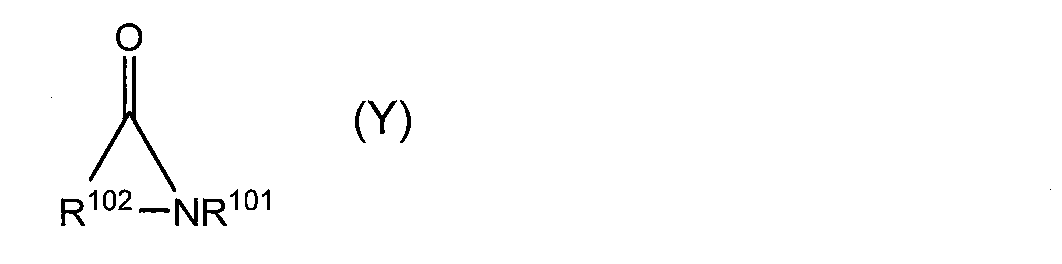
炭素数1~6のアルキル基の具体例としては、メチル基、エチル基、n-プロピル基、n-ブチル基等が挙げられ、炭素数1~6のアルキレン基の具体例としては、メチレン基、エチレン基、トリメチレン基、テトラメチレン、ペンタメチレン基、ヘキサメチレン基等が挙げられるが、これらに限定されない。
このようなその他の有機溶媒は、この種の用途に用いられるものであって、上述のアミド化合物と相溶性がある有機溶媒であれば特に限定されるものではない。
好ましいその他の溶媒としては、アルキレングリコールジアルキルエーテル、芳香族炭化水素化合物、環状構造含有エーテル化合物等が挙げられるが、これらに限定されない。
上述のアミド化合物とは異なるその他の有機溶媒の量は、洗浄剤組成物に含まれる第四級アンモニウム塩が析出又は分離せず、かつ、上述のアミド化合物と均一に混ざり合う限りにおいて、通常、洗浄剤組成物に含まれる溶媒中95質量%以下で適宜決定される。
なお、洗浄剤組成物は、溶媒として、水を含んでもよいが、基板の腐食等を回避する観点等から、通常、有機溶媒のみが、溶媒として意図して用いられる。なお、この場合において、塩の水和水や、有機溶媒に微量含まれる水が、洗浄剤組成物に含まれてしまうことまでもが、否定される訳ではない。本発明で用いる洗浄剤組成物の含水量は、通常5質量%以下である。
(1)撹拌機A:(株)シンキー製 自転公転ミキサー ARE―500
(2)撹拌機B:アズワン(株) ミックスローター VMR-5R
(3)スピン塗布装置:ズースマイクロテック(株)製 コーター
(4)真空加熱貼り合わせ装置:アユミ工業(株)製 VE09-07
[合成例1]
1-フェニルナフチルアミン56.02g、1-ピレンカルボキシアルデヒド(丸善化学工業(株)製)50.00g、4-(トリフルオロメチル)ベンズアルデヒド6.67g、及びメタンスルホン酸2.46gに1,4-ジオキサン86.36g、及びトルエン86.36gを加え、窒素雰囲気下、18時間還流撹拌した。反応終了後、テトラヒドロフラン96gで希釈し、希釈液をメタノール中に滴下させることで沈殿物を得た。得られた沈殿物をろ過し、メタノールで洗浄し、60℃で減圧乾燥することで、ノボラック樹脂72.12gを得た。GPCより標準ポリスチレン換算で測定される重量平均分子量は1100であった。
窒素下、100mL四口フラスコに、カルバゾール(東京化成工業(株)製)8.00g、1-ナフトアルデヒド(東京化成工業(株)製)7.55g、及びパラトルエンスルホン酸一水和物(関東化学(株)製)0.95gを加え、更に1,4-ジオキサン(関東化学(株)製)8gを加え、撹拌し、100℃まで昇温し溶解させ重合を開始した。4時間後60℃まで放冷後、クロロホルム(関東化学(株)製)40gを加え希釈し、メタノール200gへ再沈殿させた。得られた沈殿物をろ過し、減圧乾燥機で60℃、10時間さらに120℃、24時間乾燥し、目的とするポリマー(以下PCzNAと略す)を得た。
PCzNAのGPCによるポリスチレン換算で測定される重量平均分子量Mwは2600であった。得られたポリマーをPGMEA(プロピレングリコールモノメチルエーテルアセテート)に溶解させ、陽イオン交換樹脂と陰イオン交換樹脂を用いてイオン交換を4時間実施することで、目的のポリマー溶液を得た。
PCzNAは、以下の繰り返し単位を有する。

500mlセパラブルフラスコを窒素置換し、そのセパラブルフラスコに、溶媒としてN-メチル-2-ピロリドン(NMP)を、重合後の固形分含有量が15質量%となる量を入れ、更に、ジアミンとして2,2’-ビス(トリフルオロメチル)ベンジジン(TFMB)15.69g(49.0mmol)を入れ、撹拌してTFMBを溶解させた。その後、テトラカルボン酸二無水物としてピロメリット酸二無水物(PMDA)9.82g(45.0mmol)及び4,4’-(ヘキサフルオロイソプロピリデン)ジフタル酸無水物(6FDA)2.22g(5.0mmol)を加えた。次いで、窒素フロー下、80℃において4時間撹拌し、重合を行うことにより、ポリアミド酸のNMP溶液を得た。得られたポリアミド酸の重量平均分子量(Mw)は、180,000であった。
[調製例1]
合成例1で得たノボラック樹脂20gに、架橋剤として式(L)で表される化合物(本州化学工業(株)製 商品名 TMOM-BP)4.0g、酸触媒としてピリジニウムパラトルエンスルホネート0.60g、及び界面活性剤としてR-30N(大日本インキ化学(株)製、商品名)0.06gを混合し、プロピレングリコールモノメチルエーテル100.8g、及びプロピレングリコールモノメチルエーテルアセテート100.8gに溶解させ溶液とした。その後、孔径0.2μmのポリエチレン製ミクロフィルターを用いて濾過し、剥離剤組成物の溶液を調製した。
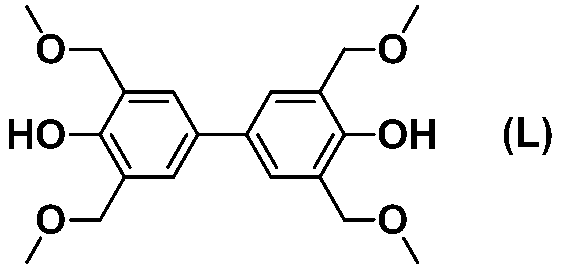
50mLスクリューバイアルに、合成例2で得られたポリマー溶液6.74g(PCzNAの30質量%PGMEA溶液)、ポリメチルメタクリル酸(Tg:48℃、重量平均分子量:54000、富士フィルム和光純薬工業(株)製)をPGMEAに溶かし20質量%溶液としたものを11.26g、さらに溶媒としてPGMEAを7.01gを加え、撹拌機Aによる5分間の撹拌を行ない、剥離剤組成物を得た。
50mLスクリューバイアルに合成例3で得られたポリマー溶液10gを入れ、NMPを追加して溶液粘度を51,000mPa・sに調整することで、剥離剤組成物を得た。
200mLの蓋付きガラス容器に、ビニル基含有MQ樹脂(ワッカーケミ社製)のp-メンタン溶液(濃度81.7質量%)96.2g、及び1,1,3,3-Tetramethyldisiloxane(東京化成株式会社製)1.44g、及び粘度1020mPa・sのSiH基含有直鎖状ポリジメチルシロキサン(ワッカーケミ社製)12.9gを加え、撹拌機Aで混合物が均一になるまで撹拌した。その後、白金触媒(ワッカーケミ社製)0.005gを加え、再度撹拌機Aで混合物が均一になるまで撹拌した後、撹拌機Bを用いて20時間40℃で反応することで混合物(I)を得た。
次に、1,1-ジフェニル-2-プロピン-1-オール(東京化成工業(株)製)0.50g及び1-エチニル-1-シクロヘキサノール(ワッカーケミ社製)0.50gを加え、撹拌機Aで5分間撹拌することで、混合物(II)を得た。
混合物(I)に、混合物(II)のうち0.50gを加え、撹拌機Aで混合物が均一になるまで撹拌した。その後、粘度100mPa・sのSiH基含有直鎖状ポリジメチルシロキサン(ワッカーケミ社製)6.52gを加え、再度撹拌機Aで混合物が均一になるまで撹拌し、混合物(III)を得た。
最後に、得られた混合物(III)をナイロンフィルター400メッシュでろ過し、接着剤組成物を得た。得られた接着剤組成物は、反応生成物(X)と、架橋剤(Y)とを含有する。
なお、使用したビニル基含有MQ樹脂は、それ自体は固体状である。
また、使用した1,1,3,3-Tetramethyldisiloxane及び粘度1020mPa・sのSiH基含有直鎖状ポリジメチルシロキサンは、SiH基を鎖末端に有する液状かつ鎖状の化合物である。
また、使用した粘度100mPa・sのSiH基含有直鎖状ポリジメチルシロキサンは、SiH基を側鎖に有する架橋剤である。
200mLの蓋付きガラス容器に、ビニル基含有MQ樹脂(ワッカーケミ社製)のp-メンタン溶液(濃度81.7質量%)96.2g、及び1,1,3,3,5,5,7,7,9,9,11,11-Dodecamethylhexasiloxane(東京化成株式会社製)4.62g、及び粘度1020mPa・sのSiH基含有直鎖状ポリジメチルシロキサン(ワッカーケミ社製)12.9gを加え、撹拌機Aで混合物が均一になるまで撹拌した。その後、白金触媒(ワッカーケミ社製)0.01gを加え、再度撹拌機Aで混合物が均一になるまで撹拌した後、撹拌機Bを用いて20時間室温で反応することで混合物(I)を得た。
次に、1,1-ジフェニル-2-プロピン-1-オール(東京化成工業(株)製)1.00g及び1-エチニル-1-シクロヘキサノール(ワッカーケミ社製)1.00gを加え、撹拌機Aで5分間撹拌することで、混合物(II)を得た。
混合物(I)に、混合物(II)のうち0.50gを加え、撹拌機Aで混合物が均一になるまで撹拌した。その後、粘度100mPa・sのSiH基含有直鎖状ポリジメチルシロキサン(ワッカーケミ社製)14.1gを加え、再度撹拌機Aで混合物が均一になるまで撹拌し、混合物(III)を得た。
最後に、得られた混合物(III)をナイロンフィルター400メッシュでろ過し、接着剤組成物を得た。得られた接着剤組成物は、反応生成物(X)と、架橋剤(Y)とを含有する。
なお、使用したビニル基含有MQ樹脂は、それ自体は固体状である。
また、使用した1,1,3,3,5,5,7,7,9,9,11,11-Dodecamethylhexasiloxane及び粘度1020mPa・sのSiH基含有直鎖状ポリジメチルシロキサンは、SiH基を鎖末端に有する液状かつ鎖状の化合物である。
また、使用した粘度100mPa・sのSiH基含有直鎖状ポリジメチルシロキサンは、SiH基を側鎖に有する架橋剤である。
1000mLの蓋付き容器に、ビニル基含有MQ樹脂(ワッカーケミ社製)(A)、粘度200mPa・sのビニル基含有直鎖状ポリジメチルシロキサン(ワッカーケミ社製)(B)、及び粘度100mPa・sのSiH基含有直鎖状ポリジメチルシロキサン(ワッカーケミ社製)(C)がそれぞれ質量比〔A:B:C〕51.6:9.5:38.9で混合された液状混合物385.2gを加え、そこに粘度100mPa・sのSiH基含有直鎖状ポリジメチルシロキサン(ワッカーケミ社製)57.87gを加え、混合物(I)を得た。
50mLの蓋付きガラス容器に、1,1-ジフェニル-2-プロピン-1-オール(東京化成工業(株)製)3.05g及び1-エチニル-1-シクロヘキサノール(ワッカーケミ社製)3.05gを加え、撹拌機Aで5分間撹拌して混合物(II)を得た。
混合物(I)に、混合物(II)のうち4.07gを加え、撹拌機Bで終夜撹拌し、混合物(III)を得た。
200mLの蓋付きガラス容器に、白金触媒(ワッカーケミ社製)0.86g及びビニル基含有MQ樹脂(ワッカーケミ社製)478.89gを加え、撹拌機Bで終夜撹拌して混合物(IV)を得た。
混合物(III)に、混合物(IV)のうち456.90gを加え、撹拌機Bで混合物が均一になるまで撹拌し、混合物(V)を得た。
最後に、得られた混合物(V)をナイロンフィルター400メッシュでろ過し、接着剤組成物を得た。得られた接着剤組成物は、反応生成物(X)を含有しない。
100mLの蓋付きガラス容器に、1,1-ジフェニル-2-プロピン-1-オール(東京化成工業(株)製)0.12g及び1-エチニル-1-シクロヘキサノール(ワッカーケミ社製)0.12gを加え、撹拌機Aで5分間撹拌した後、ビニル基含有MQ樹脂(ワッカーケミ社製)のp-メンタン溶液(濃度81.4質量%)42.78g、及び粘度100mPa・sのSiH基含有直鎖状ポリジメチルシロキサン(ワッカーケミ社製)5.8gを加え、撹拌機Aで混合物が均一になるまで撹拌し、混合物(I)を得た。
100mLの蓋付きガラス容器に、白金触媒(ワッカーケミ社製)0.01g及び粘度200mPa・sのビニル基含有直鎖状ポリジメチルシロキサン(ワッカーケミ社製)45.77gを加え、撹拌機Aで混合物が均一になるまで撹拌し、混合物(II)を得た。
混合物(I)に、混合物(II)のうち9.16gを加え、撹拌機Aで混合物が均一になるまで撹拌し、混合物(III)を得た。
最後に、得られた混合物(III)をナイロンフィルター400メッシュでろ過し、接着剤組成物を得た。得られた接着剤組成物は、反応生成物(X)を含有しない。
[製造例1]
調製例1で得られた剥離剤組成物を、キャリア側の基板として300mmのガラスウエハー(コーニング社製、厚さ700μm)に、最終的に得られる積層体中の膜厚が200nmとなるようにスピンコートし、300℃で30分間加熱することにより、支持基板であるガラスウエハー上に剥離剤塗布層を形成した。
調製例2で得られた剥離剤組成物を、キャリア側の基板として300mmのガラスウエハー(コーニング社製、厚さ700μm)に、最終的に得られる積層体中の膜厚が1500nmとなるようにスピンコートし、200℃で5分間加熱することにより、支持基板であるガラスウエハー上に剥離剤塗布層を形成した。
調製例3で得られた剥離剤組成物を、キャリア側の基板として300mmのガラスウエハー(コーニング社製、厚さ700μm)に、最終的に得られる積層体中の膜厚が100nmとなるようにスピンコートし、350℃で60分間加熱することにより、支持基板であるガラスウエハー上に剥離剤塗布層を形成した。
[実施例2-1]
デバイス側のウエハーとして300mmのシリコンウエハー(厚さ:770μm)に、実施例1-1で得られた接着剤組成物をスピンコートし、90℃で3分間加熱(前加熱処理)することにより、ウエハー表面に、最終的に得られる積層体中の接着層の厚さが約60μmとなるように接着剤塗布層を形成した。
その後、真空加熱貼り合わせ装置内で、この接着剤塗布層を有するシリコンウエハーと、製造例1で得られた剥離剤塗布層付きガラスウエハーとを、接着剤塗布層及び剥離剤塗布層を挟むように貼り合わせ、ホットプレート上でデバイス側のウエハーを下にして200℃で10分間加熱(後加熱処理)することにより積層体を作製した。なお、貼り合せは、温度120℃または130℃、減圧度700Paで、15kNの荷重を180秒間かけて行った。
実施例1-1で得られた接着剤組成物の代わりに、実施例1-2で得られた接着剤組成物を用いた以外は、実施例2-1と同様の方法で積層体を得た。
製造例1で得られた剥離剤塗布層付きガラスウエハーの代わりに、製造例2で得られた剥離剤塗布層付きガラスウエハーを用いた以外は、実施例2-1と同様の方法で積層体を得た。
製造例1で得られた剥離剤塗布層付きガラスウエハーの代わりに、製造例2で得られた剥離剤塗布層付きガラスウエハーを用いた以外は、実施例2-2と同様の方法で積層体を得た。
製造例1で得られた剥離剤塗布層付きガラスウエハーの代わりに、製造例3で得られた剥離剤塗布層付きガラスウエハーを用いた以外は、実施例2-1と同様の方法で積層体を得た。
製造例1で得られた剥離剤塗布層付きガラスウエハーの代わりに、製造例3で得られた剥離剤塗布層付きガラスウエハーを用いた以外は、実施例2-2と同様の方法で積層体を得た。
実施例1-1で得られた接着剤組成物の代わりに、比較例1-1で得られた接着剤組成物を用いた以外は、実施例2-1と同様の方法で積層体を得た。
実施例1-1で得られた接着剤組成物の代わりに、比較例1-2で得られた接着剤組成物を用いた以外は、実施例2-1と同様の方法で積層体を得た。

2 接着層
3 第2の基板
4 剥離層
5 無機材料層
Claims (15)
- 第1の官能基を有する固体状のポリマー(x1)と、前記第1の官能基と反応可能な第2の官能基を鎖末端に有する液状かつ鎖状の化合物(x2)との反応生成物(X)であって、前記第1の官能基又は前記第2の官能基を有する反応生成物(X)と、
前記第1の官能基又は前記第2の官能基を有する液状の架橋剤(Y)(ただし、前記反応生成物(X)が前記第1の官能基を有する場合、前記液状の架橋剤(Y)は前記第2の官能基を有し、前記反応生成物(X)が前記第2の官能基を有する場合、前記液状の架橋剤(Y)は前記第1の官能基を有する。)と、
を含有する接着剤組成物。 - 前記固体状のポリマー(x1)が、前記第1の官能基を有する固体状のポリオルガノシロキサンであり、
前記液状かつ鎖状の化合物(x2)が、前記第2の官能基を鎖末端に有し、かつシロキサン結合を有する化合物であり、
前記液状の架橋剤(Y)が、前記第1の官能基又は前記第2の官能基を有する液状のポリオルガノシロキサンである、
請求項1に記載の接着剤組成物。 - 前記第1の官能基が、炭素数2~40のアルケニル基であり、
前記第2の官能基が、Si-H基である、
請求項1に記載の接着剤組成物。 - 前記固体状のポリマー(x1)が、ケイ素原子に結合した炭素数2~40のアルケニル基を有するポリオルガノシロキサンであり、
前記液状かつ鎖状の化合物(x2)が、Si-H基を鎖末端に有し、かつシロキサン結合を有する化合物(x21)であり、
前記液状の架橋剤(Y)が、Si-H基を有する液状のポリオルガノシロキサンである、
請求項1に記載の接着剤組成物。 - 前記化合物(x21)が、下記式(x21-1)で表される、請求項4に記載の接着剤組成物。
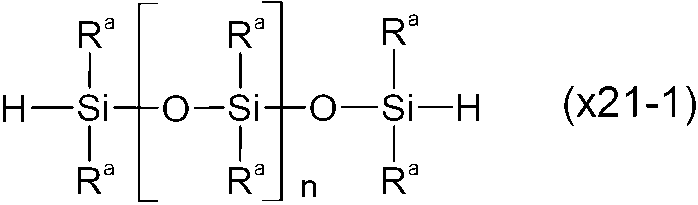
- 前記反応生成物(X)における、前記固体状のポリマー(x1)と、前記液状かつ鎖状の化合物(x2)との構成割合が、質量割合(ポリマー(x1):化合物(x2))として、95:5~10:90である、請求項1に記載の接着剤組成物。
- 前記反応生成物(X)と前記液状の架橋剤(Y)との質量割合(反応生成物(X):液状の架橋剤(Y))が、99:1~60:40である、請求項1に記載の接着剤組成物。
- 第1の基板と、第2の基板と、前記第1の基板と前記第2の基板との間に設けられた接着層とを有し、
前記接着層が、請求項1~7のいずれかに記載の接着剤組成物から形成される層である、積層体。 - 前記第1の基板と前記第2の基板との間に設けられた剥離層を更に有する、請求項8に記載の積層体。
- 前記第1の基板が半導体を備える基板であり、前記第2の基板が支持基板である、請求項8に記載の積層体。
- 請求項1~7のいずれかに記載の接着剤組成物が塗布され、接着層を与える接着剤塗布層が形成される工程と、
第1の基板及び第2の基板が、前記接着剤塗布層を介在して接するように、加熱及び加圧下で貼り合せられる工程と、
を含む、積層体の製造方法。 - 前記貼り合せられる工程の後に、前記接着剤塗布層が加熱され、前記接着層が形成される工程を更に含む、請求項11に記載の積層体の製造方法。
- 剥離剤組成物が塗布され、剥離層を与える剥離剤塗布層が形成される工程を含み、
前記貼り合せられる工程が、第1の基板及び第2の基板が、前記剥離剤塗布層及び前記接着剤塗布層を介在して接するように、加熱及び加圧下で貼り合せられる工程である、請求項11に記載の積層体の製造方法。 - 前記第1の基板が半導体を備える基板であり、前記第2の基板が支持基板である、請求項11に記載の積層体の製造方法。
- 加工された基板の製造方法であって、
請求項8に記載の積層体の前記第1の基板が加工される第1工程と、
前記第1工程によって加工された前記第1の基板と前記第2の基板とが分離される第2工程と、
を含む、加工された基板の製造方法。
Priority Applications (5)
| Application Number | Priority Date | Filing Date | Title |
|---|---|---|---|
| US18/726,583 US20250092292A1 (en) | 2022-01-06 | 2022-12-20 | Adhesive composition, laminate, method for producing laminate, and method for producing processed substrate |
| EP22918813.1A EP4456115A4 (en) | 2022-01-06 | 2022-12-20 | Composition of adhesive agent, laminate, process for manufacturing a laminate and process for manufacturing a treated substrate |
| KR1020247025567A KR20240132044A (ko) | 2022-01-06 | 2022-12-20 | 접착제 조성물, 적층체, 적층체의 제조 방법, 및 가공된 기판의 제조 방법 |
| CN202280087893.0A CN118511251A (zh) | 2022-01-06 | 2022-12-20 | 粘接剂组合物、层叠体、层叠体的制造方法以及经加工的基板的制造方法 |
| JP2023572408A JPWO2023132229A1 (ja) | 2022-01-06 | 2022-12-20 |
Applications Claiming Priority (2)
| Application Number | Priority Date | Filing Date | Title |
|---|---|---|---|
| JP2022001099 | 2022-01-06 | ||
| JP2022-001099 | 2022-01-06 |
Publications (1)
| Publication Number | Publication Date |
|---|---|
| WO2023132229A1 true WO2023132229A1 (ja) | 2023-07-13 |
Family
ID=87073633
Family Applications (1)
| Application Number | Title | Priority Date | Filing Date |
|---|---|---|---|
| PCT/JP2022/046833 Ceased WO2023132229A1 (ja) | 2022-01-06 | 2022-12-20 | 接着剤組成物、積層体、積層体の製造方法、及び加工された基板の製造方法 |
Country Status (7)
| Country | Link |
|---|---|
| US (1) | US20250092292A1 (ja) |
| EP (1) | EP4456115A4 (ja) |
| JP (1) | JPWO2023132229A1 (ja) |
| KR (1) | KR20240132044A (ja) |
| CN (1) | CN118511251A (ja) |
| TW (1) | TW202334348A (ja) |
| WO (1) | WO2023132229A1 (ja) |
Cited By (1)
| Publication number | Priority date | Publication date | Assignee | Title |
|---|---|---|---|---|
| WO2025187415A1 (ja) * | 2024-03-08 | 2025-09-12 | 日産化学株式会社 | 積層体、及び加工された化合物半導体基板の製造方法 |
Families Citing this family (1)
| Publication number | Priority date | Publication date | Assignee | Title |
|---|---|---|---|---|
| KR20230165266A (ko) * | 2021-03-31 | 2023-12-05 | 닛산 가가쿠 가부시키가이샤 | 적층체, 박리제 조성물 및 가공된 반도체 기판의 제조 방법 |
Citations (13)
| Publication number | Priority date | Publication date | Assignee | Title |
|---|---|---|---|---|
| JP2009008851A (ja) | 2007-06-27 | 2009-01-15 | Toray Eng Co Ltd | 液晶部品の製造方法および製造装置 |
| JP2010066711A (ja) | 2008-09-12 | 2010-03-25 | Kyoritsu Kagaku Sangyo Kk | 表示パネルの製造方法及び表示パネル |
| JP2014221892A (ja) | 2013-05-14 | 2014-11-27 | 株式会社カネカ | 表示パネル用接着剤及びそれを用いた表示パネル又は表示パネルの製造方法 |
| JP2014221893A (ja) | 2013-05-14 | 2014-11-27 | 株式会社カネカ | 表示パネル用接着剤及びそれを用いた表示パネル又は表示パネルの製造方法 |
| JP2016514754A (ja) * | 2013-04-04 | 2016-05-23 | エルジー・ケム・リミテッド | 硬化性組成物 |
| JP6167984B2 (ja) | 2014-05-02 | 2017-07-26 | 信越半導体株式会社 | ウェーハの加工方法 |
| US20180355176A1 (en) * | 2015-12-03 | 2018-12-13 | Elantas Beck Gmbh | One-component, storage-stable, uv-crosslinkable organosiloxane composition |
| WO2019088103A1 (ja) | 2017-11-01 | 2019-05-09 | 日産化学株式会社 | ノボラック樹脂を剥離層として含む積層体 |
| WO2020111069A1 (ja) * | 2018-11-28 | 2020-06-04 | 日産化学株式会社 | 接着剤組成物、積層体及び積層体の製造方法並びに半導体形成基板を薄化する方法 |
| JP6732871B2 (ja) | 2015-04-17 | 2020-07-29 | 旭化成株式会社 | 樹脂組成物、ポリイミド樹脂膜、及びその製造方法 |
| JP2021014507A (ja) | 2019-07-11 | 2021-02-12 | 信越化学工業株式会社 | 基板加工用仮接着材料及び積層体の製造方法 |
| WO2021256386A1 (ja) * | 2020-06-15 | 2021-12-23 | 日産化学株式会社 | 積層体、剥離剤組成物及び加工された半導体基板の製造方法 |
| WO2022004464A1 (ja) * | 2020-06-30 | 2022-01-06 | ダウ・東レ株式会社 | 硬化性シリコーン組成物及びその硬化物 |
Family Cites Families (3)
| Publication number | Priority date | Publication date | Assignee | Title |
|---|---|---|---|---|
| KR102869673B1 (ko) * | 2018-11-16 | 2025-10-13 | 닛산 가가쿠 가부시키가이샤 | 적외선 박리용 접착제 조성물, 적층체, 적층체의 제조 방법 및 박리 방법 |
| KR102935990B1 (ko) * | 2018-12-26 | 2026-03-10 | 모멘티브 퍼포먼스 머티리얼즈 인크. | 경화성 실리콘 기반 조성물 및 그 용도 |
| JP7820893B2 (ja) * | 2020-03-30 | 2026-02-26 | ダウ・東レ株式会社 | 硬化性ホットメルトシリコーン組成物、その硬化物、及び前記組成物又は硬化物を含む積層体 |
-
2022
- 2022-12-20 CN CN202280087893.0A patent/CN118511251A/zh active Pending
- 2022-12-20 JP JP2023572408A patent/JPWO2023132229A1/ja active Pending
- 2022-12-20 WO PCT/JP2022/046833 patent/WO2023132229A1/ja not_active Ceased
- 2022-12-20 KR KR1020247025567A patent/KR20240132044A/ko active Pending
- 2022-12-20 US US18/726,583 patent/US20250092292A1/en active Pending
- 2022-12-20 EP EP22918813.1A patent/EP4456115A4/en active Pending
-
2023
- 2023-01-05 TW TW112100385A patent/TW202334348A/zh unknown
Patent Citations (13)
| Publication number | Priority date | Publication date | Assignee | Title |
|---|---|---|---|---|
| JP2009008851A (ja) | 2007-06-27 | 2009-01-15 | Toray Eng Co Ltd | 液晶部品の製造方法および製造装置 |
| JP2010066711A (ja) | 2008-09-12 | 2010-03-25 | Kyoritsu Kagaku Sangyo Kk | 表示パネルの製造方法及び表示パネル |
| JP2016514754A (ja) * | 2013-04-04 | 2016-05-23 | エルジー・ケム・リミテッド | 硬化性組成物 |
| JP2014221892A (ja) | 2013-05-14 | 2014-11-27 | 株式会社カネカ | 表示パネル用接着剤及びそれを用いた表示パネル又は表示パネルの製造方法 |
| JP2014221893A (ja) | 2013-05-14 | 2014-11-27 | 株式会社カネカ | 表示パネル用接着剤及びそれを用いた表示パネル又は表示パネルの製造方法 |
| JP6167984B2 (ja) | 2014-05-02 | 2017-07-26 | 信越半導体株式会社 | ウェーハの加工方法 |
| JP6732871B2 (ja) | 2015-04-17 | 2020-07-29 | 旭化成株式会社 | 樹脂組成物、ポリイミド樹脂膜、及びその製造方法 |
| US20180355176A1 (en) * | 2015-12-03 | 2018-12-13 | Elantas Beck Gmbh | One-component, storage-stable, uv-crosslinkable organosiloxane composition |
| WO2019088103A1 (ja) | 2017-11-01 | 2019-05-09 | 日産化学株式会社 | ノボラック樹脂を剥離層として含む積層体 |
| WO2020111069A1 (ja) * | 2018-11-28 | 2020-06-04 | 日産化学株式会社 | 接着剤組成物、積層体及び積層体の製造方法並びに半導体形成基板を薄化する方法 |
| JP2021014507A (ja) | 2019-07-11 | 2021-02-12 | 信越化学工業株式会社 | 基板加工用仮接着材料及び積層体の製造方法 |
| WO2021256386A1 (ja) * | 2020-06-15 | 2021-12-23 | 日産化学株式会社 | 積層体、剥離剤組成物及び加工された半導体基板の製造方法 |
| WO2022004464A1 (ja) * | 2020-06-30 | 2022-01-06 | ダウ・東レ株式会社 | 硬化性シリコーン組成物及びその硬化物 |
Non-Patent Citations (1)
| Title |
|---|
| See also references of EP4456115A4 |
Cited By (1)
| Publication number | Priority date | Publication date | Assignee | Title |
|---|---|---|---|---|
| WO2025187415A1 (ja) * | 2024-03-08 | 2025-09-12 | 日産化学株式会社 | 積層体、及び加工された化合物半導体基板の製造方法 |
Also Published As
| Publication number | Publication date |
|---|---|
| EP4456115A4 (en) | 2025-12-10 |
| JPWO2023132229A1 (ja) | 2023-07-13 |
| TW202334348A (zh) | 2023-09-01 |
| KR20240132044A (ko) | 2024-09-02 |
| US20250092292A1 (en) | 2025-03-20 |
| EP4456115A1 (en) | 2024-10-30 |
| CN118511251A (zh) | 2024-08-16 |
Similar Documents
| Publication | Publication Date | Title |
|---|---|---|
| US20240182766A1 (en) | Adhesive composition, laminate, method for producing laminate, and method for producing semiconductor substrate | |
| EP4310157A1 (en) | Laminate, release agent composition, and method for manufacturing machined semiconductor substrate | |
| WO2023132229A1 (ja) | 接着剤組成物、積層体、積層体の製造方法、及び加工された基板の製造方法 | |
| WO2022210238A1 (ja) | 積層体、剥離剤組成物及び加工された半導体基板の製造方法 | |
| CN116507683B (zh) | 半导体基板的清洗方法、经加工的半导体基板的制造方法以及剥离和溶解用组合物 | |
| US20240213072A1 (en) | Laminate, release agent composition, and method for manufacturing processed semiconductor substrate | |
| WO2023074324A1 (ja) | 積層体、剥離剤組成物及び加工された半導体基板の製造方法 | |
| EP4317339A1 (en) | Adhesive composition, laminate, method for manufacturing laminate, and method for manufacturing processed substrate | |
| WO2024048493A1 (ja) | 光照射剥離用の剥離剤組成物、積層体、及び加工された半導体基板の製造方法 | |
| TWI920264B (zh) | 接著劑組成物、積層體、積層體之製造方法、及加工後之基板之製造方法 | |
| EP4678709A1 (en) | Adhesive composition, laminate, and method for producing processed semiconductor substrate | |
| WO2024062974A1 (ja) | 光照射剥離用の剥離剤組成物、積層体、及び加工された半導体基板の製造方法 | |
| KR20250168273A (ko) | 광조사 박리용 박리제 조성물, 적층체 및 가공된 반도체 기판의 제조 방법 | |
| WO2026009830A1 (ja) | 剥離剤組成物、積層体、及び加工された半導体基板の製造方法 | |
| CN120731493A (zh) | 半导体基板的制造方法和经加工的半导体基板的制造方法以及剥离和溶解用组合物 | |
| WO2024185684A1 (ja) | 接着剤組成物、積層体、及び加工された半導体基板の製造方法 | |
| CN119856258A (zh) | 半导体基板的清洗方法、经加工的半导体基板的制造方法以及剥离和溶解用组合物 |
Legal Events
| Date | Code | Title | Description |
|---|---|---|---|
| 121 | Ep: the epo has been informed by wipo that ep was designated in this application |
Ref document number: 22918813 Country of ref document: EP Kind code of ref document: A1 |
|
| WWE | Wipo information: entry into national phase |
Ref document number: 2023572408 Country of ref document: JP |
|
| WWE | Wipo information: entry into national phase |
Ref document number: 18726583 Country of ref document: US |
|
| WWE | Wipo information: entry into national phase |
Ref document number: 202280087893.0 Country of ref document: CN |
|
| ENP | Entry into the national phase |
Ref document number: 2022918813 Country of ref document: EP Effective date: 20240724 |
|
| ENP | Entry into the national phase |
Ref document number: 20247025567 Country of ref document: KR Kind code of ref document: A |
|
| NENP | Non-entry into the national phase |
Ref country code: DE |
|
| WWP | Wipo information: published in national office |
Ref document number: 18726583 Country of ref document: US |