WO2023133607A1 - Compositions comprising a chemokine receptor pathway inhibitor - Google Patents
Compositions comprising a chemokine receptor pathway inhibitor Download PDFInfo
- Publication number
- WO2023133607A1 WO2023133607A1 PCT/AU2022/050013 AU2022050013W WO2023133607A1 WO 2023133607 A1 WO2023133607 A1 WO 2023133607A1 AU 2022050013 W AU2022050013 W AU 2022050013W WO 2023133607 A1 WO2023133607 A1 WO 2023133607A1
- Authority
- WO
- WIPO (PCT)
- Prior art keywords
- concentration
- ccr2
- pathway inhibitor
- composition
- disease
- Prior art date
- Legal status (The legal status is an assumption and is not a legal conclusion. Google has not performed a legal analysis and makes no representation as to the accuracy of the status listed.)
- Ceased
Links
Classifications
-
- A—HUMAN NECESSITIES
- A61—MEDICAL OR VETERINARY SCIENCE; HYGIENE
- A61K—PREPARATIONS FOR MEDICAL, DENTAL OR TOILETRY PURPOSES
- A61K31/00—Medicinal preparations containing organic active ingredients
- A61K31/74—Synthetic polymeric materials
- A61K31/80—Polymers containing hetero atoms not provided for in groups A61K31/755 - A61K31/795
-
- A—HUMAN NECESSITIES
- A61—MEDICAL OR VETERINARY SCIENCE; HYGIENE
- A61P—SPECIFIC THERAPEUTIC ACTIVITY OF CHEMICAL COMPOUNDS OR MEDICINAL PREPARATIONS
- A61P9/00—Drugs for disorders of the cardiovascular system
-
- A—HUMAN NECESSITIES
- A61—MEDICAL OR VETERINARY SCIENCE; HYGIENE
- A61K—PREPARATIONS FOR MEDICAL, DENTAL OR TOILETRY PURPOSES
- A61K9/00—Medicinal preparations characterised by special physical form
- A61K9/0012—Galenical forms characterised by the site of application
- A61K9/0053—Mouth and digestive tract, i.e. intraoral and peroral administration
-
- A—HUMAN NECESSITIES
- A61—MEDICAL OR VETERINARY SCIENCE; HYGIENE
- A61K—PREPARATIONS FOR MEDICAL, DENTAL OR TOILETRY PURPOSES
- A61K9/00—Medicinal preparations characterised by special physical form
- A61K9/20—Pills, tablets, discs, rods
-
- A—HUMAN NECESSITIES
- A61—MEDICAL OR VETERINARY SCIENCE; HYGIENE
- A61K—PREPARATIONS FOR MEDICAL, DENTAL OR TOILETRY PURPOSES
- A61K9/00—Medicinal preparations characterised by special physical form
- A61K9/20—Pills, tablets, discs, rods
- A61K9/2004—Excipients; Inactive ingredients
- A61K9/2009—Inorganic compounds
-
- A—HUMAN NECESSITIES
- A61—MEDICAL OR VETERINARY SCIENCE; HYGIENE
- A61K—PREPARATIONS FOR MEDICAL, DENTAL OR TOILETRY PURPOSES
- A61K9/00—Medicinal preparations characterised by special physical form
- A61K9/20—Pills, tablets, discs, rods
- A61K9/2004—Excipients; Inactive ingredients
- A61K9/2013—Organic compounds, e.g. phospholipids, fats
-
- A—HUMAN NECESSITIES
- A61—MEDICAL OR VETERINARY SCIENCE; HYGIENE
- A61K—PREPARATIONS FOR MEDICAL, DENTAL OR TOILETRY PURPOSES
- A61K9/00—Medicinal preparations characterised by special physical form
- A61K9/20—Pills, tablets, discs, rods
- A61K9/2004—Excipients; Inactive ingredients
- A61K9/2022—Organic macromolecular compounds
- A61K9/205—Polysaccharides, e.g. alginate, gums; Cyclodextrin
- A61K9/2054—Cellulose; Cellulose derivatives, e.g. hydroxypropyl methylcellulose
-
- A—HUMAN NECESSITIES
- A61—MEDICAL OR VETERINARY SCIENCE; HYGIENE
- A61K—PREPARATIONS FOR MEDICAL, DENTAL OR TOILETRY PURPOSES
- A61K9/00—Medicinal preparations characterised by special physical form
- A61K9/20—Pills, tablets, discs, rods
- A61K9/2004—Excipients; Inactive ingredients
- A61K9/2022—Organic macromolecular compounds
- A61K9/205—Polysaccharides, e.g. alginate, gums; Cyclodextrin
- A61K9/2059—Starch, including chemically or physically modified derivatives; Amylose; Amylopectin; Dextrin
-
- A—HUMAN NECESSITIES
- A61—MEDICAL OR VETERINARY SCIENCE; HYGIENE
- A61K—PREPARATIONS FOR MEDICAL, DENTAL OR TOILETRY PURPOSES
- A61K9/00—Medicinal preparations characterised by special physical form
- A61K9/20—Pills, tablets, discs, rods
- A61K9/28—Dragees; Coated pills or tablets, e.g. with film or compression coating
-
- A—HUMAN NECESSITIES
- A61—MEDICAL OR VETERINARY SCIENCE; HYGIENE
- A61K—PREPARATIONS FOR MEDICAL, DENTAL OR TOILETRY PURPOSES
- A61K9/00—Medicinal preparations characterised by special physical form
- A61K9/48—Preparations in capsules, e.g. of gelatin, of chocolate
-
- A—HUMAN NECESSITIES
- A61—MEDICAL OR VETERINARY SCIENCE; HYGIENE
- A61K—PREPARATIONS FOR MEDICAL, DENTAL OR TOILETRY PURPOSES
- A61K9/00—Medicinal preparations characterised by special physical form
- A61K9/48—Preparations in capsules, e.g. of gelatin, of chocolate
- A61K9/4841—Filling excipients; Inactive ingredients
- A61K9/4858—Organic compounds
-
- A—HUMAN NECESSITIES
- A61—MEDICAL OR VETERINARY SCIENCE; HYGIENE
- A61K—PREPARATIONS FOR MEDICAL, DENTAL OR TOILETRY PURPOSES
- A61K9/00—Medicinal preparations characterised by special physical form
- A61K9/48—Preparations in capsules, e.g. of gelatin, of chocolate
- A61K9/4841—Filling excipients; Inactive ingredients
- A61K9/4866—Organic macromolecular compounds
-
- A—HUMAN NECESSITIES
- A61—MEDICAL OR VETERINARY SCIENCE; HYGIENE
- A61P—SPECIFIC THERAPEUTIC ACTIVITY OF CHEMICAL COMPOUNDS OR MEDICINAL PREPARATIONS
- A61P11/00—Drugs for disorders of the respiratory system
-
- A—HUMAN NECESSITIES
- A61—MEDICAL OR VETERINARY SCIENCE; HYGIENE
- A61P—SPECIFIC THERAPEUTIC ACTIVITY OF CHEMICAL COMPOUNDS OR MEDICINAL PREPARATIONS
- A61P13/00—Drugs for disorders of the urinary system
- A61P13/12—Drugs for disorders of the urinary system of the kidneys
-
- A—HUMAN NECESSITIES
- A61—MEDICAL OR VETERINARY SCIENCE; HYGIENE
- A61P—SPECIFIC THERAPEUTIC ACTIVITY OF CHEMICAL COMPOUNDS OR MEDICINAL PREPARATIONS
- A61P27/00—Drugs for disorders of the senses
- A61P27/02—Ophthalmic agents
-
- A—HUMAN NECESSITIES
- A61—MEDICAL OR VETERINARY SCIENCE; HYGIENE
- A61P—SPECIFIC THERAPEUTIC ACTIVITY OF CHEMICAL COMPOUNDS OR MEDICINAL PREPARATIONS
- A61P35/00—Antineoplastic agents
Definitions
- compositions Comprising a Chemokine Receptor Pathway Inhibitor
- the present invention relates to a composition comprising a chemokine receptor pathway inhibitor and methods of using the same.
- CCR2 chemokine receptor 2
- Repagermanium or propagermanium may be used as a CCR2 pathway inhibitor.
- NCE New Chemical Entity
- Repagermanium and propagermanium have previously been described in the literature as polymeric compounds.
- the drug substance 3-[(2-carboxyethyl-oxogermyl)oxy- oxogermyl]propanoic acid exhibits polymorphism and can exist in different solid forms.
- the present inventors have not observed any pharmacological effects of polymerisation of repagermanium during manufacture or testing of the drug substance.
- Polymorphs of 3-[(2-carboxyethyl-oxogermyl)oxy-oxogermyl]propanoic acid include repagermanium, propagermanium, proxigermanium, Ge-132, germanium sesquioxide, 2- carboxyethylgermasesquioxane, SK-818, bis(2carboxyethylgermanium) sesquioxide.
- propagermanium has a polymeric ladder-shaped structure of a concatenated eightmembered ring composed of Ge-0 bonds, which is clearly distinguished from the infinite sheet structure in repagermanium.
- propagermanium and repagermanium differ; however, in solution they are identical as the structural units are dissolved.
- the present invention provides a composition
- a composition comprising: i. at least one chemokine receptor 2 (CCR2) pathway inhibitor or a pharmaceutically acceptable salt thereof; ii. a diluent in a concentration from 30% to 70% w/w; iii. a binder in a concentration from 2% to 5% w/w; iv. a disintegrant in a concentration from 2% to 8% w/w; and v. a lubricant in a concentration from 0.05% to 5% w/w.
- CCR2 chemokine receptor 2
- the composition comprises from 2.5% to 65% w/w of the CCR2 pathway inhibitor.
- the CCR2 pathway inhibitor is a direct antagonist of CCR2. More preferably the CCR2 pathway inhibitor is repagermanium or propagermanium or a pharmaceutically acceptable salt thereof.
- the diluent is silicified microcrystalline cellulose (SMCC).
- SMCC silicified microcrystalline cellulose
- the composition comprises from 30% to 70% w/w SMCC.
- the binder is hypromellose (HPMC).
- HPMC hypromellose
- the composition comprises from 2% to 5% w/w HPMC.
- the disintegrant is sodium starch glycolate.
- the composition comprises from 2% to 8% w/w sodium starch glycolate.
- the lubricant is magnesium stearate.
- the composition comprises from 0.05% to 5% w/w magnesium stearate.
- the present invention further provides a method for the treatment, amelioration or prevention of a condition or disease comprising administering to said subject a therapeutically effective amount of: a) a composition comprising i. at least one chemokine receptor 2 (CCR2) pathway inhibitor or a pharmaceutically acceptable salt thereof; ii. a diluent in a concentration in a concentration from 30% to 70% w/w; iii. a binder in a concentration in a concentration from 2% to 5% w/w; iv. a disintegrant in a concentration in a concentration from 2% to 8% w/w; and v. a lubricant in a concentration in a concentration from 0.05% to 5% w/w.
- CCR2 chemokine receptor 2
- the method comprises administering from 10mg to 500mg per day of the CCR2 pathway inhibitor, provided in one or more doses.
- condition or disease to be treated, ameliorated or prevented is chosen from: kidney disease, cardiovascular disease, eye disease, oncological disease, or pulmonary disease.
- chemokine receptor 2 (CCR2) pathway inhibitor or a pharmaceutically acceptable salt thereof; ii. a diluent in a concentration from 30% to 70% w/w; iii. a binder in a concentration from 2% to 5% w/w; iv. a disintegrant in a concentration from 2% to 8% w/w; and v. a lubricant in a concentration from 0.05% to 5% w/w. in the manufacture of a medicament for the treatment, amelioration or prevention of a condition or disease.
- CCR2 chemokine receptor 2
- compositions comprising: i. at least one chemokine receptor 2 (CCR2) pathway inhibitor or a pharmaceutically acceptable salt thereof; ii. a diluent in a concentration from 30% to 70% w/w; iii. a binder in a concentration from 2% to 5% w/w; iv. a disintegrant in a concentration from 2% to 8% w/w; and v. a lubricant in a concentration from 0.05% to 5% w/w. for the treatment, amelioration or prevention of a condition or disease.
- CCR2 chemokine receptor 2
- a kit for the treatment, amelioration or prevention of a condition or disease comprising: a) a composition comprising: i. at least one chemokine receptor 2 (CCR2) pathway inhibitor or a pharmaceutically acceptable salt thereof; ii. a diluent in a concentration from 30% to 70% w/w; iii. a binder in a concentration from 2% to 5% w/w; iv. a disintegrant in a concentration from 2% to 8% w/w; and v. a lubricant in a concentration from 0.05% to 5% w/w. b) instructions for use.
- CCR2 chemokine receptor 2
- the present invention provides a composition for the delivery of a chemokine receptor 2 (CCR2) pathway inhibitor; preferably the CCR2 pathway inhibitor is repagermanium or propagermanium.
- CCR2 pathway inhibitor preferably the CCR2 pathway inhibitor is repagermanium or propagermanium.
- a number of problems can develop as powder comprising active agents flows through equipment such as bins, chutes, and press hoppers. If the powder is cohesive, an “arch” or “rathole” may form, resulting in erratic flow or a cessation in flow. In addition, flooding or uncontrolled discharge may occur if an arch or rathole spontaneously collapses.
- the adhesion force between particles can significantly reduce the powder flowability by increasing inter-particle friction. Poor flow can cause insufficient mixing of the blends (content uniformity) and rat-holing or arching in the hopper of a tablet press (segregation issue), impacting both product quality and operation.
- No flow no flow from a bin/hopper is a common and significant solids-handling problem, especially when handling fine/milled active agents and high active loading blends. In production, it can result in problems, such as starving downstream equipment, production delays, and the requirement for frequent operator intervention to reinitiate flow. No flow can be due to either arching (sometime referred to as “bridging” or “plugging”) or ratholing (also referred to as “piping”).
- Arching can occur in a bin when the powder empties through a central flow outlet, but once the powder directly above the central flow outlet has moved through the outlet, a dome or arch of further powder remains above the void left by the powder that has already flowed out. Arching is influenced by the bin/hopper geometry and outlet size. This problem will arise if the material has sufficient cohesive strength. Generally, powder discharge will stop once the flow channel directly above the central flow outlet empties. However, the unsupported arch or dome of powder above the void may collapse, leading to intermittent flow and possibly flooding or uncontrolled discharge.
- Ratholing can occur in a bin when the powder empties through a central flow outlet, but the powder at the bin walls remains stagnant and leaves an empty hole (rathole) through the powder, starting at the central flow outlet. Ratholing is influenced by the bin/hopper geometry and outlet size the powder is fed through. Similar to the problem of arching, this problem will arise if the powder has sufficient cohesive strength. Generally, powder discharge will stop once the flow channel surrounding the central flow outlet empties. However, there may be further slips of the stagnant powder around the walls, leading to intermittent flow and possibly flooding or uncontrolled discharge.
- CCR2 pathway inhibitors such as repagermanium and propagermanium are prone to clumping, leading to the creation of ratholes and/or arches. Without being held to any theory, this appears to be due to static build-up during manufacture of therapeutic compositions comprising CCR2 pathway inhibitors.
- Diluents act as inert fillers in pharmaceutical dosage forms to increase weight, improve content uniformity and enable accurate dosing of active agents. Diluents may also provide better encapsulation and tableting properties such as improved cohesion or promotion of ingredient flow.
- Natural diluents include starch; hydrolyzed starch; partially pregelatinized starch; simple carbohydrates such as mannitol, lactose, dextrin, glucose, sucrose, sorbitol; polysaccharides such as cellulose, chitin.
- Certain inorganic salts are also optionally used as diluents, including calcium triphosphate, magnesium carbonate and sodium chloride.
- Some commercially available diluents are Fast-Flo® and STA-Rx 1500®.
- the present invention has found that the problems associated with poor component flow during manufacture of dosage forms comprising CCR2 pathway inhibitors can be overcome by the addition of a suitable diluent.
- a suitable diluent Preferably the diluent is present in the composition in a concentration from 30% to 70% w/w, from 35% to 65%, from 40% to 60%, from 45% to 60% or from 50% to 60%.
- the composition may comprise 55% diluent w/w.
- the diluent may be chosen from the list comprising microcrystalline cellulose (MCC), colloidal silicon dioxide (CSD) or silicified microcrystalline cellulose (SMCC).
- MCC microcrystalline cellulose
- CSS colloidal silicon dioxide
- SMCC silicified microcrystalline cellulose
- MCC is a polymer composed of glucose units connected by a 1 -4 beta glycosidic bond.
- Microcrystalline cellulose is a commonly used excipient in the pharmaceutical industry. It has excellent compressibility properties and is used in solid dose forms, such as tablets and capsules. Both tablets and capsules can be formed that are hard, but dissolve quickly.
- CSD is also known as silicon dioxide, with the chemical formula SiOs. It has many uses in capsule and tablet-making: a diluent, anti-caking agent, adsorbent, disintegrant, or glidant to allow powder to flow freely when capsules and tablets are processed. CSD appear to be biologically inert.
- SMCC is a synergistic, intimate physical mixture of microcrystalline cellulose (MCC) and colloidal silicon dioxide (CSD), with the silicon dioxide located on the surface of the microcrystalline cellulose.
- MCC microcrystalline cellulose
- CCD colloidal silicon dioxide
- An example of a suitable SMCC is PROSOLV® SMCC90LM. It has improved compaction properties in both wet granulation and direct compression compared to conventional microcrystalline cellulose. Silicified microcrystalline cellulose appears to have beneficial properties for use in the formulation of powder-filled capsules. The properties of SMCC are advantageous when used in conjunction with a CCR2 pathway inhibitor (for example repagermanium or propagermanium).
- the SMCC is present in the composition in a concentration from 30% to 70% w/w, from 35% to 65%, from 40% to 60%, from 45% to 60% or from 50% to 60%.
- the composition may comprise 55% diluent w/w.
- composition of the present invention may therefore comprise: i. at least one chemokine receptor 2 (CCR2) pathway inhibitor or a pharmaceutically acceptable salt thereof; ii. a diluent that is SMCC in a concentration from 30% to 70% w/w; iii. a binder in a concentration from 2% to 5% w/w; iv. a disintegrant in a concentration from 2% to 8% w/w; and v. a lubricant in a concentration from 0.05% to 5% w/w.
- CCR2 chemokine receptor 2
- the diluent for example SMCC, has an average particle size fromI O pm to 500 pm as determined by Laser Diffraction, more preferably 20 pm to 300 pm.
- the diluent may have an average particle size of 90 pm.
- the diluent for example SMCC, has a low moisture content.
- the moisture content is less than 20%, less than 15% or more preferably less than 10%.
- the moisture content may be less than 6%, 5%, 4% 3% or 2%.
- composition comprising: i. at least one chemokine receptor 2 (CCR2) pathway inhibitor or a pharmaceutically acceptable salt thereof; ii. a diluent in a concentration from 30% to 70% w/w; iii. a binder in a concentration from 2% to 5% w/w; iv. a disintegrant in a concentration from 2% to 8% w/w; and v. a lubricant in a concentration from 0.05% to 5% w/w.
- CCR2 chemokine receptor 2
- the present invention provides a composition
- a composition comprising: i. at least one chemokine receptor 2 (CCR2) pathway inhibitor or a pharmaceutically acceptable salt thereof which is a direct antagonist of CCR2; ii. a diluent in a concentration from 30% to 70% w/w; iii. a binder in a concentration from 2% to 5% w/w; iv. a disintegrant in a concentration from 2% to 8% w/w; and v. a lubricant in a concentration from 0.05% to 5% w/w.
- CCR2 chemokine receptor 2
- chemokine receptor pathway inhibitor is selected from the group consisting of:
- the present invention therefore provides a composition comprising: i. at least one chemokine receptor 2 (CCR2) pathway inhibitor or a pharmaceutically acceptable salt thereof which inhibits a component of the CCR2 pathway other than the chemokine receptor; ii. a diluent in a concentration from 30% to 70% w/w; iii. a binder in a concentration from 2% to 5% w/w; iv. a disintegrant in a concentration from 2% to 8% w/w; and v. a lubricant in a concentration from 0.05% to 5% w/w.
- CCR2 chemokine receptor 2
- a more specific example of a chemokine receptor pathway inhibitor which targets a component of the chemokine receptor pathway other than the chemokine receptor might be an agent which blocks pathways associated with MCP-1 induced migration, activation of monocytes and chemotactic migration.
- agents that might be targeted include the functioning of cellular structures involved in chemotaxis such as microfilaments, microtubules, and intermediate filaments, and surface proteins such as glycosylphosphatidylinositol (GPI)-anchored proteins, and more specifically CD55, CD59 and CD16.
- GPI glycosylphosphatidylinositol
- the chemokine receptor pathway inhibitor is an antagonist of a chemokine receptor.
- chemokine receptors include: RS504393, RS102895 (Sigma-Aldrich); MLN-1202 (Millennium Pharmaceuticals); INCB3344, INCB3284 and INCB8696 (Incyte Pharmaceuticals); MK-0812 (Merck); CCX140, CCX872-B [CCX-872] (ChemoCentryx), PF-4136309, PF-04178903, PF-04634817 (Pfizer); BMS-741672 (Bristol-Myers Squibb); Cenicriviroc (Allergan).
- the chemokine receptor pathway inhibitor is selected from the group comprising RS504393, RS102895, MLN-1202, INCB8696, MK-0812, CCX140, PF-4136309, BMS-741672.
- the CCR2 pathway inhibitor is an antagonist of chemokine receptor 2, such as propagermanium, repagermanium or CCX140.
- chemokine receptor 2 such as propagermanium, repagermanium or CCX140.
- Propagermanium, repagermanium and CCX140 are prone to clumping, leading to the creation of ratholes and/or arches.
- the chemokine receptor pathway inhibitor is propagermanium or repagermanium.
- the INN for propagermanium is INN #6260 and repagermanium is INN #6259.
- Propagermanium has been used as an active agent against chronic hepatitis and has been shown to specifically inhibit in vitro chemotactic migration of monocytes by MCP-1 through a mechanism that seems to require glycosylphosphatidylinositol (GPI)-anchored proteins such as CD55, CD59 and CD16 (Yokochi, S. (2001 ) Journal of Interferon and Cytokine Research 21 :389-398).
- GPI glycosylphosphatidylinositol
- propagermanium and/or repagermanium include 3-[(2-carboxyethyl-oxogermyl)oxy-oxogermyl]propanoic acid, proxigermanium, Ge-132, bis (2-carboxyethylgermanium) sesquioxide (CEGS), 2- carboxyethylgermasesquioxane, SK-818, organic germanium, germanium sesquioxide, 3,3'- (1 ,3-dioxo-1 ,3-digermanoxanediyl) bispropionic acid, 3-oxygermylpropionic acid polymer and poly-trans-(2-carboxyethyl) germasesquioxane.
- composition comprising: i. repagermanium or propagermanium or a pharmaceutically acceptable salt thereof; ii. a diluent in a concentration from 30% to 70% w/w; iii. a binder in a concentration from 2% to 5% w/w; iv. a disintegrant in a concentration from 2% to 8% w/w; and v. a lubricant in a concentration from 0.05% to 5% w/w.
- the chemokine receptor pathway inhibitor inhibits the in vitro chemotactic migration of monocytes induced by MCP-1. In another preferred embodiment the chemokine receptor pathway inhibitor inhibits the in vitro chemotactic migration of monocytes induced by MCP-1 through a mechanism requiring glycosylphosphatidylinositol (GPI)-anchored proteins such as CD55, CD59 and CD16. In another preferred embodiment the chemokine receptor pathway inhibitor stabilizes the complexes CCR2/CD55 and/or CCR2/CD59 and/or CCR2/CD16.
- the chemokine receptor pathway inhibitor may be a peptide, polypeptide or small chemical entity.
- the chemokine receptor pathway inhibitor may be a protein, binding protein or antibody.
- the chemokine receptor pathway inhibitor may inhibit MCP-1 induced migration and activation of monocytes and chemotactic migration through the targeting of one or more glycosylphosphatidylinositol (GPI)-anchored proteins selected from the group comprising CD55, CD59 and CD16.
- GPI glycosylphosphatidylinositol
- the chemokine receptor pathway inhibitor may modify the complexes CCR2/CD55 and/or CCR2/CD59 and/or CCR2/CD16.
- Propagermanium is a chemokine receptor pathway inhibitor, but it does not inhibit MCP-1 binding and appears to target glycosylphosphatidylinositol (GPI)-anchored proteins such as CD55, CD59 and CD16 and inhibits in-vitro chemotactic migration of monocytes by MCP-1 (Yokochi (2001 ); Yamada (2004) The Journal of Immunology 172: 3869-3875).
- GPI glycosylphosphatidylinositol
- the compositions of the present invention may comprise a range of excipients, both those listed below and others.
- Binders, compression aids and granulating agents bind the tablet ingredients together giving form and mechanical strength.
- binders include materials from natural products such as acacia, tragacanth, starch and gelatine.
- Other binders include methylcellulose (MC), ethyl cellulose (EC) and carboxymethyl cellulose (CMC), polyvinyl pyrrolidone (PVP; povidone) and hydroxypropylmethyl cellulose (HPMC; hypromellose).
- MC methylcellulose
- EC ethyl cellulose
- CMC carboxymethyl cellulose
- PVP polyvinyl pyrrolidone
- HPMC hydroxypropylmethyl cellulose
- Some commercially available binders are Emdex®, Avicell ⁇ and Emcompress®.
- Suitable binders for use in the compositions of the present invention include hypromellose (HPMC) and povidone (PVP).
- HPMC hypromellose
- PVP povidone
- Hypromellose is a partly O-methylated and O- (2-hydroxypropylated) cellulose.
- the concentration of binder in the compositions of the present invention is from 2% w/w to 5% w/w, from 2.5% to 5%, from 3% to 5%, from 3.5% to 5%.
- the concentration of binder may be 4% w/w.
- An example of a suitable binder may be 4% w/w hypromellose (HPMC).
- Disintegrants aid dispersion of the tablet in the gastrointestinal tract, releasing the active agent and increasing the surface area for dissolution.
- disintegrants include but are not limited to starch including the commercial disintegrant based on starch, Explotab®. Sodium starch glycolate, AmberliteTM, sodium carboxymethylcellulose, ultramylopectin, sodium alginate, gelatine, orange peel, acid carboxymethyl cellulose, natural sponge and bentonite are also contemplated. Another form of the disintegrants is the insoluble cationic exchange resins. Powdered gums are also optionally used as disintegrants and as binders and these include powdered gums such as agar, karaya or tragacanth. Alginic acid and its sodium salt and crospovidone are also useful as disintegrants.
- Suitable disintegrants for use in the compositions of the present invention include sodium starch glycolate and crospovidone.
- Sodium starch glycolate is the sodium salt of a carboxymethyl ether of starch or of a crosslinked carboxymethyl ether of starch. Disintegration occurs by rapid uptake of water followed by rapid and enormous swelling. Although the effectiveness of many disintegrants is affected by the presence of hydrophobic excipients such as lubricants, the disintegrant efficiency of sodium starch glycolate is unimpaired.
- the concentration of disintegrant in the compositions of the present invention is from 2% w/w to 8% w/w, from 2% to 7%, from 3% to 6%, or from 4% to 6%.
- the concentration of disintegrant may be 5% w/w.
- An example of a suitable disintegrant may be 5% w/w sodium starch glycolate.
- lubricants can improve the flowability of blends and aid unit operations by reducing the inter-particle friction.
- Lubricants may slow disintegration and dissolution.
- Glidants improve the flow of powders during tablet manufacturing by reducing friction and adhesion between particles and to aid rearrangement during compression. They may also be used as anti-caking agents.
- the properties of glidants and lubricants are somewhat different, although some compounds, such as starch and talc, may be used for both purposes.
- Stearic acid and its salts such as magnesium stearate and calcium stearate, are the most frequently used lubricants in the pharmaceutical industry.
- other lubricants such as polytetrafluoroethylene (PTFE), liquid paraffin, vegetable oils and waxes may be used.
- PTFE polytetrafluoroethylene
- Exemplary soluble lubricants may also be used such as talc, starch, sodium lauryl sulfate, magnesium lauryl sulfate, sodium stearyl fumarate, polyethylene glycol of various molecular weights, and Carbowax® 4000 and 6000.
- the glidants may include starch, talc, pyrogenic silica and hydrated silicoaluminate.
- Suitable lubricants for use in the compositions of the present invention include magnesium stearate and sodium stearyl fumarate.
- Magnesium stearate creates a less compact or dense (fluffy) finished product which is easier to fill into capsules.
- the lubricant is not sodium stearyl fumarate.
- Magnesium stearate is a compound of magnesium with a mixture of solid organic acids that consists chiefly of variable proportions of magnesium stearate (CseHyoMgO ⁇ and magnesium palmitate (CssHesMgO ⁇ .
- the concentration of lubricant in the compositions of the present invention is from 0.05% w/w to 5% w/w, from 0.5% to 5%, from 1% to 5%, from 2% to 5%, from 3% to 5%, or from 4% to 5%.
- the concentration of lubricant may be 5% w/w.
- An example of a suitable lubricant may be 5% w/w magnesium stearate.
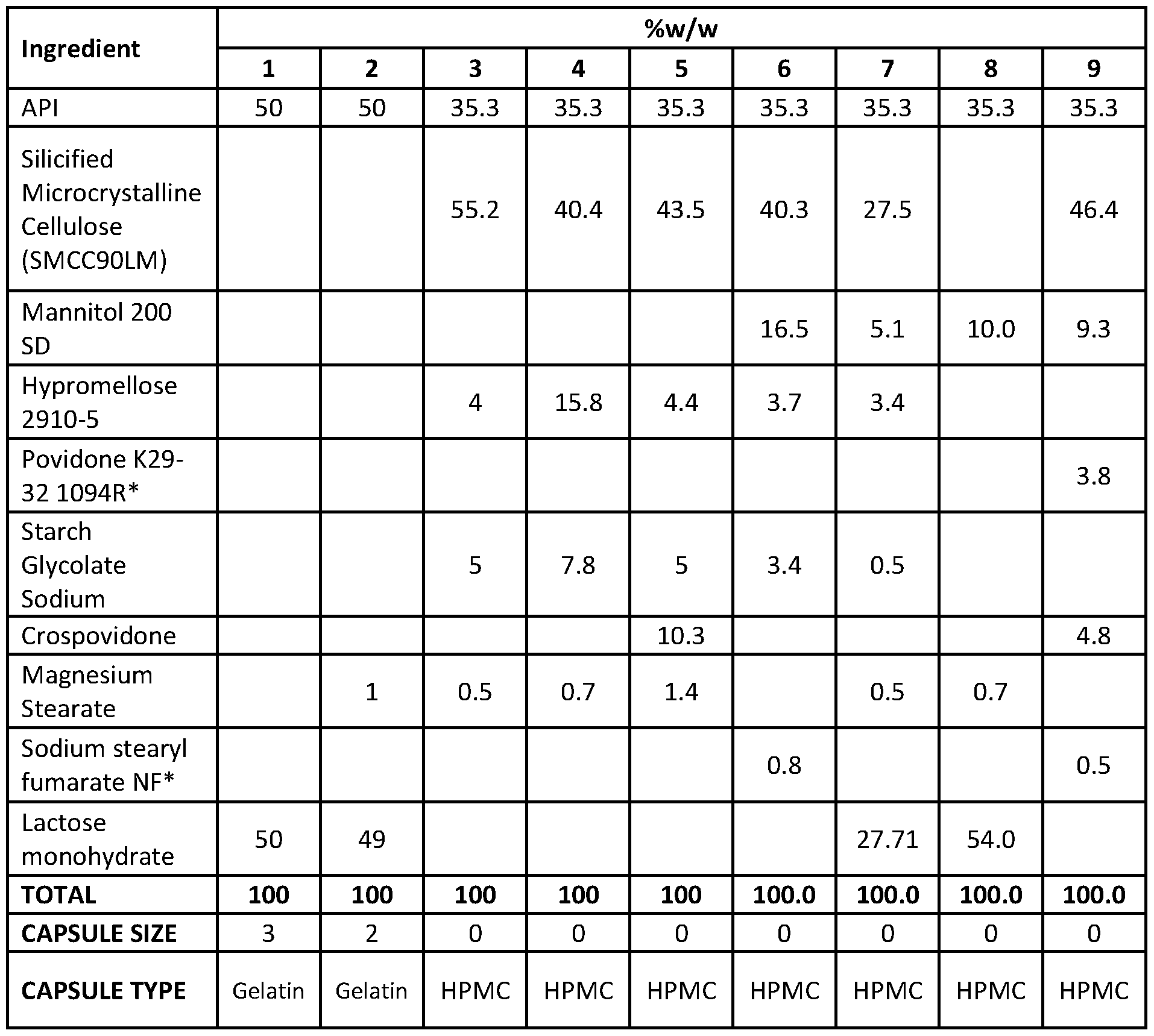
- Table 1 Excipients in exemplary compositions of the present invention
- the CCR2 pathway inhibitor may be a pharmaceutically acceptable salt of the active agent.
- Pharmaceutically and veterinary acceptable salts include salts which retain the biological effectiveness and properties of the compounds of the present disclosure and which are not biologically or otherwise undesirable.
- the compounds disclosed herein are capable of forming acid and/or base salts by virtue of the presence of amino and/or carboxyl groups or groups similar thereto.
- Acceptable base addition salts can be prepared from inorganic and organic bases. Salts derived from inorganic bases, include by way of example only, sodium, potassium, lithium, ammonium, calcium and magnesium salts.
- Salts derived from organic bases include, but are not limited to, salts of primary, secondary and tertiary amines, such as by way of example only, alkyl amines, dialkyl amines, trialkyl amines, substituted alkyl amines, di(subsrituted alkyl) amines, tri(substituted alkyl) amines, alkenyl amines, dialkenyl amines, trialkenyl amines, substituted alkenyl amines, di(substituted alkenyl) amines, tri(substituted alkenyl) amines, cycloalkyl amines, di(cycloalkyl) amines, tri(cycloalkyl) amines, substituted cycloalkyl amines, disubstituted cycloalkyl amines, trisubstituted cycloalkyl amines, cycloalkenyl amines
- Pharmaceutically and veterinary acceptable acid addition salts may be prepared from inorganic and organic acids.
- the inorganic acids that can be used include, by way of example only, hydrochloric acid, hydrobromic acid, sulfuric acid, nitric acid, phosphoric acid, and the like.
- the organic acids that can be used include, by way of example only, acetic acid, propionic acid, glycolic acid, pyruvic acid, oxalic acid, malic acid, malonic acid, succinic acid, maleic acid, fumaric acid, tartaric acid, citric acid, benzoic acid, cinnamic acid, mandelic acid, methanesulfonic acid, ethanesulfonic acid, p-toluenesulfonic acid, salicylic acid, and the like.
- the pharmaceutically or veterinary acceptable salts of the compounds useful in the present disclosure can be synthesized from the parent compound, which contains a basic or acidic moiety, by conventional chemical methods.
- such salts can be prepared by reacting the free acid or base forms of these compounds with a stoichiometric amount of the appropriate base or acid in water or in an organic solvent, or in a mixture of the two; generally, nonaqueous media like ether, ethyl acetate, ethanol, isopropanol, or acetonitrile are preferred. Lists of suitable salts are found in Remington's Pharmaceutical Sciences. 17th ed., Mack Publishing Company, Easton, Pa. (1985), p.
- salts are the iodide, acetate, phenyl acetate, trifluoroacetate, acryl ate, ascorbate, benzoate, chlorobenzoate, dinitrobenzoate, hydroxybenzoate, methoxybenzoate, methylbenzoate, o-acetoxybenzoate, naphthalene-2-benzoate, bromide, isobutyrate, phenylbutyrate, y-hydroxybutyrate, p- hydroxybutyrate, butyne-l,4-dioate, hexyne-l,4-dioate, hexyne- 1 ,6-dioate, caproate, caprylate, chloride, cinnamate, citrate, decanoate, formate, fumarate, glycollate, heptanoate, hippurate, lactate, malate, maleate, hydroxy
- the present invention further provides a method for the treatment, amelioration or prevention of a condition or disease comprising administering to said subject a therapeutically effective amount of: a) a composition comprising i. at least one chemokine receptor 2 (CCR2) pathway inhibitor or a pharmaceutically acceptable salt thereof; ii. a diluent in a concentration from 30% to 70% w/w; iii. a binder in a concentration from 2% to 5% w/w; iv. a disintegrant in a concentration from 2% to 8% w/w; and v. a lubricant in a concentration from 0.05% to 5% w/w.
- CCR2 chemokine receptor 2
- the subject to be treated is preferably a mammal, including a human mammal.
- the CCR2 pathway inhibitor may be administered alone, as a single therapy.
- the CCR2 pathway inhibitor may be a pharmaceutically acceptable salt of the CCR2 pathway inhibitor.
- chemokine-related may be treated by the method of the present invention. This includes ailments that are related to increased or decreased production of chemokines, and/or increased or decreased responsiveness of cells to chemokines.
- a chemokine-related ailment should also be understood to mean a condition in which chemokine receptors display aberrant characteristics, are the target of a particular pathogen or are a target of a pharmacological intervention.
- the ailments which are chemokine-related are inflammatory conditions, or conditions deriving from or associate with inflammation.
- the condition or disease to be treated or prevented may be chosen from: kidney disease, cardiovascular disease, eye disease, oncological disease, or pulmonary disease. Kidney Disease
- the condition or disease to be treated or prevented is a kidney disease.
- the kidney disease may be chosen from the list comprising: focal segmental glomerulosclerosis (FSGS; including idiopathic (primary) FSGS, secondary FSGS, genetic FSGS, and any other causes of FSGS), fibrotic disorders in the kidney, Immunoglobulin A nephropathy (IgAN), Alport’s Syndrome, chronic kidney disease including chronic kidney disease caused by diabetic nephropathy, renal insufficiency (diabetic and non-diabetic), and renal failure conditions, including diabetic nephropathy, glomerulonephritis, scleroderma, glomerular sclerosis, proteinuria of primary renal disease and renal vascular hypertension.
- FSGS focal segmental glomerulosclerosis
- IgAN Immunoglobulin A nephropathy
- Alport’s Syndrome chronic kidney disease including chronic kidney disease caused by diabetic nephropathy, renal insufficiency
- the condition or disease to be treated or prevented is a cardiovascular disease.
- the cardiovascular disease may be a cardiac disease, more preferably a coronary artery disease, preferably chosen from the list comprising: arthrosclerosis, pulmonary hypertension, ischaemic heart diseases, cardiomyopathies, and inflammatory heart diseases.
- the cardiovascular disease may be chronic heart failure, hypertension, congestive heart failure, left ventricular dysfunction, hypertrophic cardiomyopathy, diabetic cardiac myopathy, supraventricular and ventricular arrhythmias, atrial fibrillation, atrial flutter, myocardial infarction and its sequelae, atherosclerosis, angina, heart failure, angina pectoris, primary and pulmonary hypertension, vascular disorders.
- the condition or disease to be treated or prevented is an eye disease.
- inflammatory and fibrotic diseases of the eye including anterior and posterior fibrotic disease including macular degeneration, vascular eye disease, and fibrovascular scarring and gliosis-related disease, and ischemic disease including diabetic retinopathy.
- the condition or disease to be treated or prevented is an oncological disease.
- solid tumours including but not limited to carcinoma, sarcoma and undifferentiated tumors, lymphoma, blastoma, glioma, melanoma, germ cell tumours, and hybrid tumours such as carcinosarcoma.
- the treatment may also include adjunct or combination treatment of the invention with one or more anti-oncologic treatments including but not limited to surgery, radiotherapies, hormone therapies, chemotherapies, immune- mediated therapies, cell-based therapies, and oncolytic viral therapies.
- the condition or disease to be treated or prevented is a pulmonary (lung) disease.
- the pulmonary disease may be an infectious or non-infectious inflammatory lung disease, preferably chosen from the list comprising: community acquired pneumonia, chronic obstructive pulmonary disease, asthma, bronchiectasis, bronchiolitis, bronchitis, emphysema, pleurisy.
- the CCR2 pathway inhibitor is for use in the treatment, amelioration or prevention of Acute Respiratory Distress Syndrome (ARDS).
- ARDS is a type of respiratory failure characterized by rapid onset of widespread inflammation in the lungs.
- ARDS The most common cause of ARDS is primary pneumonia, which can be bacterial, viral, or fungal.
- the second most common cause of lung injury is severe sepsis, which may be associated with pneumonia or a non-pulmonary infectious source, such as peritonitis.
- the other important major causes of ARDS include aspiration of gastric contents; haemorrhage and shock following major trauma; and several other less common causes such as severe acute pancreatitis, transfusion-associated lung injury, and drug reactions.
- ARDS may be found in subjects with infection by severe acute respiratory syndrome coronavirus 2 (SARS-CoV-2). Thus, the ARDS may be associated with infection by SARS-CoV-2.
- SARS-CoV-2 severe acute respiratory syndrome coronavirus 2
- Additional diseases to be treated or prevented include secondary aldosteronism, primary and secondary pulmonary hyperaldosteronism, insulin resistance, migraine, Raynaud's disease, luminal hyperplasia, cognitive dysfunction, Alzheimer's disease, stroke, hyperkalemia, preeclampsia, sarcoidosis, ischemia and reperfusion injury, atherogenesis, and rheumatoid arthritis.
- prevention includes administration of the compositions of the present invention to subjects who have symptoms that indicate they are at risk of developing a kidney disease, cardiovascular disease, oncological disease, eye disease or pulmonary disease as indicated above, but may not, at the time of treatment, be diagnosed with the kidney disease, cardiovascular disease, eye disease or pulmonary disease.
- the subject may have severe persistent cough and/or low oxygen levels, but not be diagnosed with ARDS.
- the subject may have elevated blood creatine or urinary protein, but not yet be diagnosed with kidney disease.
- the term “amelioration” includes administration of the compositions of the present invention to subjects who have had a kidney disease, cardiovascular disease, oncological disease, eye disease or pulmonary disease and are at risk of developing post-disease conditions.
- the disease may be ARDS and the post-ARDS conditions may be fibrosis and persistent inflammation.
- the post-ARDS conditions may be due to the ARDS itself or may be due to the use of ventilators during the acute phase of ARDS.
- the chemokine receptor pathway inhibitor inhibits or partially inhibits a protein other than the chemokine receptor, more preferably, the pathway inhibitor is an agent which blocks MCP-1 induced migration and activation of monocytes and chemotactic migration through the targeting of glycosylphosphatidylinositol (GPI)-anchored proteins such as CD55, CD59 and CD16.
- the chemokine receptor pathway inhibitor is propagermanium or repagerman ium.
- chemokine receptor 2 pathway inhibitor is intended to include any compound or agent which inhibits or partially inhibits any one of the pathways associated with the chemokine receptor 2.
- inhibitors means a reduction below detectable limits when compared to a reference.
- the phrase includes blocking, retarding, or impeding an action to prevent an undesirable result.
- the term “partially inhibits” as used herein, means any reduction within detectable limits when compared to a reference.
- the phrase includes blocking, retarding, or impeding an action to prevent an undesirable result.
- the inhibition or partial inhibition of the CCR2 pathway by the CCR2 pathway inhibitor may be measured using the in vitro methods set out herein, and include but are not limited to, biochemical or cellular assays for the assessment of in vitro chemotactic migration of CCR2-expressing neutrophils and other cells such as are known in the art, as well as measurement of inositol phosphate production, extracellular-regulated kinase (ERK) phosphorylation, cAMP production, actin-recruitment, protein phosphorylation, nuclear protein localization, gene transcription, label-free technologies (such as using impedance, light refraction or charge redistribution), G protein coupling using proximity reporter systems or other approaches, p-arrestin recruitment or mediated signalling, transcription factor-based reporter systems, microscopy visualization using fluorescent labels, use of antibodies to assess receptor cellular localization (such as enzyme-linked immunosorbent assays) and fluorescence-activated cell sorting.
- biochemical or cellular assays for the assessment of in vitr
- the inhibition or partial inhibition of the CCR2 pathway by the CCR2 pathway inhibitor may be measured using the in vivo methods set out herein, and include but are not limited to, measurement of cellular and cytokine content of lung exudate, measurement of lung function including physical capacity of lung function using spirometry-based tests, or lung functional outputs measured using measurement blood gas or other biochemical measures, or improvement in functional benefit including clinical benefit measured by survival or quantitative methods such as walk tests or qualitative methods such as patient- reported outcome assessment. Inhibition or partial inhibition may be indicated by a qualitative improvement in lung structure as measured by one or more of the above- mentioned endpoints.
- the inhibition or partial inhibition may be measured using the in vivo methods set out herein, and include but are not limited to, serial measurements of renal function made by the measurement of plasma creatinine and urea such as by way of an autoanalyser; the measurement of proteinuria, the measurement of albuminuria such as by way of a radioimmunoassay; and GFR (single shot isotopic technique); the assessment of endpoints such as renal and/or cardiac and/or ocular structure, by way of, for example, light microscopy (LM) for the assessment of glomerular and cardiac hypertrophy, glomerulosclerosis and/or fibrosis and/or podocyte change and/or; immunohistochemistry to measure the extent of matrix deposition and modulation of profibrotic growth factors and their activity; assessment of systolic blood pressure, modulation of insulin fasting plasma glucose, modulation of Hemoglobin A1c; and molecular biological techniques to assess renal and cardiac and ocular structure according to conventional assays such as
- component as used herein in the context of a pharmaceutical composition of the invention, means the chemokine receptor pathway inhibitor.
- compositions of the invention may be administered by injection, or prepared for oral, pulmonary, nasal or for any other form of administration.
- the compositions are administered, for example, orally, intravenously, subcutaneously, intramuscularly, intraorbitally, ophthalmically, intraventricularly, intracranially, intracapsularly, intraspinally, intracisternally, intraperitoneally, buccal, rectally, vaginally, intranasally or by aerosol administration.
- the compositions of the invention are delivered via the oral, inhaled or topical route.
- the mode of administration is in one aspect at least suitable for the form in which the composition has been prepared.
- the mode of administration for the most effective response may be determined empirically and the means of administration described below are given as examples, and do not limit the method of delivery of the composition of the present invention in any way. All the compositions provided are commonly used in the pharmaceutical industry and are commonly known to suitably qualified practitioners.
- the CCR2 pathway inhibitor is provided at a dose of from 10 mg to 500 mg per day, provided in one or more doses. Most preferably the CCR2 pathway inhibitor is provided at a dose of from 25 to 250 mg per day, provided in one or more doses. Preferably an adult dose is from 100 to 250 mg per day. Preferably a paediatric dose is from 25 to 125 mg per day.
- the medicaments of the invention in certain aspects may include pharmaceutically acceptable nontoxic excipients and carriers.
- a "pharmaceutical carrier” is a pharmaceutically acceptable solvent, suspending agent, excipient or vehicle for delivering the compounds to the subject.
- the carrier may be liquid or solid and is selected with the planned manner of administration in mind.
- Solid oral dosage forms including tablets, capsules, pills, troches or lozenges, cachets or pellets.
- Solid dosage forms are described generally in Martin, Remington's Pharmaceutical Sciences, 18th Ed. (1990 Mack Publishing Co. Easton PA 18042) at Chapter 89, which is herein incorporated by reference.
- a description of possible solid dosage forms for the active agent is given by Marshall, in Modem Pharmaceutics (Chapter 10, Banker and Rhodes ed., (1979)).
- the composition will include the compounds described as part of the invention (or a chemically modified form thereof), and inert ingredients which allow for protection against the stomach environment and release of the biologically active agent in the intestine.
- the oral dosage form of the present invention may be a liquid, suspension or other appropriate dosage form.
- Such liquid oral dosage forms may be delivered directly into the feeding tube (nasogastric tube) of a patient who is in a coma and/or on a respirator and is unable to swallow a tablet etc.
- the oral dosage form may be a capsule comprising a powder or small pellets, wherein the powder or small pellets may be dispensed from the capsule into a feeding tube, or dissolved into a liquid and dispensed into a feeding tube.
- the oral dosage form may be a powder or small pellets (optionally provided in a capsule) that can be dissolved in a liquid for administering to, for example children and the elderly who cannot swallow a tablet or capsule.
- the oral dosage form comprising a CCR2 pathway inhibitor may be a powder or small pellets dissolved in a drink product such as water, apple juice or orange juice, or a food such as apple sauce. It is preferable that the solubilising medium be neutral or acidic in pH.
- a coating or mixture of coatings can also be used on tablets, which are not intended for protection against the stomach. This includes sugar coatings, or coatings that make the tablet easier to swallow.
- Exemplary capsules consist of a hard shell (such as gelatine) for delivery of dry active agents i.e. powder; for liquid forms, a soft gelatine shell may be used.
- the composition may be delivered in capsules.
- the capsules are gelatine capsules or vegetarian capsules such as VCaps® or Vcaps® plus.
- the capsules may be from size 4 to size 0.
- the capsules may contain the composition in the form of powders, granules or pellets.
- the location of release may be the stomach, the small intestine (the duodenum, the jejunum, or the ileum), or the large intestine.
- the small intestine the duodenum, the jejunum, or the ileum
- the large intestine One skilled in the art has available compositions that will not dissolve in the stomach yet will release the material in the duodenum or elsewhere in the intestine.
- the release will avoid the deleterious effects of the stomach environment, either by protection of the composition or by release of the compounds beyond the stomach environment, such as in the intestine.
- a coating impermeable to at least pH 5.0 is used.
- examples of the more common inert ingredients that are used as enteric coatings are cellulose acetate trimellitate (CAT), hydroxypropylmethylcellulose phthalate (HPMCP), HPMCP 50, HPMCP 55, polyvinyl acetate phthalate (PVAP), Eudragit L30D, Aquateric, cellulose acetate phthalate (CAP), Eudragit L, Eudragit S, and Shellac. These coatings may be used as mixed films.
- the invention further provides a sustained release oral dosage form comprising a therapeutically effective pharmaceutical composition according to the invention, and a release retardant.
- sustained release oral dosage forms are tablets or pills, or small granules or pellets.
- sustained release means the gradual but continuous or sustained release over a relatively extended period of the active agent content after oral ingestion. The release may continue after the pharmaceutical composition has passed from the stomach and through until and after the pharmaceutical composition reaches the intestine.
- sustained release also means delayed release wherein release of the active agent is not immediately initiated upon the pharmaceutical composition reaching the stomach but rather is delayed for a period of time, for example, until when the pharmaceutical composition reaches the intestine. Upon reaching the intestine, the increase in pH may then trigger release of the active agent from the pharmaceutical composition.
- release retardant means a substance that reduces the rate of release of an active agent from a pharmaceutical composition when orally ingested.
- the release retardant may be a polymer or a non-polymer.
- the release retardant may be used according to any one of several sustained release systems including, for example, a diffusion system, a dissolution system and/or an osmotic system.
- the release retardant may be an enteric coating or a semipermeable membrane.
- the release retardant is a water-soluble, water swellable and/or water insoluble polymer.
- water-soluble polymers are selected from the group comprising are ethylcellulose, hydroxypropyl cellulose, hydroxypropyl methyl cellulose or polyvinyl alcohol (PVA).
- the release retardant is a non-polymeric release retardant such as hydrogenated castor oil or carnauba wax.
- the release retardant may be a mixture of a water-soluble polymer and a non-polymeric release retardant.
- One example of such a coating is a mixture of the water- soluble polymer PVA (for example Opadry®) and the non-polymeric release retardant carnauba wax.
- the sustained release oral dosage form comprising a release retardant may be tablets or pills, or small granules or pellets.
- Colourants and flavouring agents may optionally be included.
- compounds may be formulated (such as by liposome or microsphere encapsulation) and then further contained within an edible product, such as a refrigerated beverage containing colorants and flavouring agents.
- a surfactant might be added in certain embodiments as a wetting agent.
- Surfactants may include, for example anionic detergents such as sodium lauryl sulfate, dioctyl sodium sulfosuccinate and dioctyl sodium sulfonate.
- anionic detergents such as sodium lauryl sulfate, dioctyl sodium sulfosuccinate and dioctyl sodium sulfonate.
- Cationic detergents might be optionally used and could include benzalkonium chloride or benzethomium chloride.
- nonionic detergents that could be included in the composition as surfactants are lauromacrogol 400, polyoxyl 40 stearate, polyoxyethylene hydrogenated castor oil 10, 50 and 60, glycerol monostearate, polysorbate 40, 60, 65 and 80, sucrose fatty acid ester, methyl cellulose and carboxymethyl cellulose.
- these surfactants could be present in the composition of the compounds either alone or as a mixture in different ratios.
- Additives which potentially enhance uptake of the compounds are, for instance, the fatty acids oleic acid, linoleic acid and linolenic acid.
- Controlled release composition may be desirable.
- the compositions are also contemplated.
- the compounds could be incorporated into an inert matrix that permits release by either diffusion or leaching mechanisms i.e., gums.
- slowly degenerating matrices may also be incorporated into the composition.
- Another form of a controlled release of this active agent is by a method based on the Oros therapeutic system (Alza Corp.), i.e. the drug is enclosed in a semipermeable membrane which allows water to enter and push drug out through a single small opening due to osmotic effects. Some enteric coatings also have a delayed release effect.
- a mix of materials might be used to provide a film coating.
- Film coating may be carried out, for example, in a pan coater or in a fluidized bed or by compression coating. Dosina schedule
- compositions of the invention may be given as a single dose schedule, or preferably, in a multiple dose schedule.
- a multiple dose schedule is one in which a primary course of delivery may be with 1 to 10 separate doses, is optionally followed by other doses given at subsequent time intervals required to maintain or reinforce the treatment.
- the dosage regimen will also, at least in part, be determined by the needs of the individual and the judgement of the practitioner.
- the invention thus provides a tablet comprising the pharmaceutical composition of the invention; a capsule comprising the pharmaceutical composition of the invention, an injectable suspension comprising the pharmaceutical composition of the invention, and a composition for pulmonary delivery comprising the pharmaceutical composition of the invention.
- the invention also provides for the use of: i. at least one chemokine receptor 2 (CCR2) pathway inhibitor or a pharmaceutically acceptable salt thereof; ii. a diluent in a concentration from 30% to 70% w/w; iii. a binder in a concentration from 2% to 5% w/w; iv. a disintegrant in a concentration from 2% to 8% w/w; and v. a lubricant in a concentration from 0.05% to 5% w/w. in the manufacture of a medicament for the treatment, amelioration or prevention of a condition or disease.
- CCR2 chemokine receptor 2
- the invention also provides for the use of a composition
- a composition comprising: i. at least one chemokine receptor 2 (CCR2) pathway inhibitor or a pharmaceutically acceptable salt thereof; ii. a diluent in a concentration from 30% to 70% w/w; iii. a binder in a concentration from 2% to 5% w/w; iv. a disintegrant in a concentration from 2% to 8% w/w; and v. a lubricant in a concentration from 0.05% to 5% w/w. for the treatment, amelioration or prevention of a condition or disease.
- CCR2 chemokine receptor 2
- the composition comprises from 2.5% to 65% w/w of the CCR2 pathway inhibitor.
- the CCR2 pathway inhibitor is a direct antagonist of CCR2. More preferably the CCR2 pathway inhibitor is repagermanium or propagermanium or a pharmaceutically acceptable salt thereof.
- the diluent is silicified microcrystalline cellulose (SMCC).
- SMCC silicified microcrystalline cellulose
- composition comprises from 30% to 70% w/w SMCC.
- the binder is hypromellose (HPMC).
- HPMC hypromellose
- the composition comprises from 2% to 5% w/w HPMC.
- the disintegrant is sodium starch glycolate.
- the composition comprises from 2% to 8% w/w sodium starch glycolate.
- the lubricant is magnesium stearate.
- the composition comprises from 0.05% to 5% w/w magnesium stearate.
- the invention also provides a kit for the treatment, amelioration or prevention of a condition or disease comprising: a) a composition comprising: i. at least one chemokine receptor 2 (CCR2) pathway inhibitor or a pharmaceutically acceptable salt thereof; ii. a diluent in a concentration from 30% to 70% w/w; iii. a binder in a concentration from 2% to 5% w/w; iv. a disintegrant in a concentration from 2% to 8% w/w; and v. a lubricant in a concentration from 0.05% to 5% w/w. b) instructions for use.
- CCR2 chemokine receptor 2
- the contents of the kit can be lyophilized, and the kit can additionally contain a suitable solvent for reconstitution of the lyophilized components.
- Individual components of the kit would be packaged in separate containers and, associated with such containers, can be a notice in the form prescribed by a governmental agency regulating the manufacture, use or sale of pharmaceuticals or biological products, which notice reflects approval by the agency of manufacture, use or sale for human administration.
- the liquid solution can be an aqueous solution, for example a sterile aqueous solution.
- the expression construct may be formulated into a pharmaceutically acceptable syringeable composition.
- the container means may itself be an inhalant, syringe, pipette, eye dropper, or other such like apparatus, from which the composition may be applied to an affected area of the animal, such as the lungs, injected into an animal, or even applied to and mixed with the other components of the kit.
- kits of the invention may also be provided in dried or lyophilized forms.
- reagents or components are provided as a dried form, reconstitution generally is by the addition of a suitable solvent. It is envisioned that the solvent also may be provided in another container means.
- the kits of the invention also may comprise, or be packaged with, an instrument for assisting with the injection/administration or placement of the ultimate complex composition within the body of an animal.
- an instrument may be an inhalant, syringe, pipette, forceps, measured spoon, eye dropper or any such medically approved delivery vehicle.
- the invention described herein may include one or more ranges of values (e.g. size, concentration etc).
- a range of values will be understood to include all values within the range, including the values defining the range, and values adjacent to the range that lead to the same or substantially the same outcome as the values immediately adjacent to that value which defines the boundary to the range.
- Exemplary formulations that could be used in treatment of a condition of disease include the following.
- Table 7 Exemplary propagermanium compositions for chronic use
- Table 10 Exemplary propagermanium compositions for acute use
- Tube type 1 Nasogastric feeding tube - KangarooTM by CovidienTM 8884720841 E 8Fr/CH (2.7mm) x 47” (109cm)
- Tube type 2 Nasogastric feeding tube - KangarooTM by CovidienTM 8884721237 E 12Fr/CH (4.0mm) x 43” (109cm)
- Table 11 Reconstitution in a medical pot
- Table 12 Assay results for reconstitution in a medical pot (15 ml water)
- Microbial load for each experiment was ⁇ 10 cfu/g TAMC and TYMC and did not change from 0 minutes to 180 minutes.
- the objective is to develop a stable tablet formulation with repagermanium as the active, to be sustained released over a period of 8 hours. Trials were performed to obtain a tablet which was capable of passing friability limits and required to be as small as possible to be aesthetically pleasing.
- the preferred manufacturing process is a dry blend direct compression process.
- Table 15 Composition of coated sustained release repagermanium tablet
- the tablet core contains 30mg of repagermanium and is a round tablet 10.3mm in diameter with a break-bar.
- the final tablet is film coated white.
- the tablet release profile was tested in 500 ml purified water.
- Example 5 Sustained-release propagermanium tablet
- the objective is to develop a stable propagermanium tablet formulation, to be sustained released over a period of 8 hours.
- the tablet passes friability limits and is as small as possible to be aesthetically pleasing.
- the preferred manufacturing process is a dry blend direct compression process.
- Table 18 Composition of coated sustained release repagermanium tablet
- the round 10.3mm in diameter film-coated white tablet has a core containing 30mg of propagermanium and has a break-bar.
Landscapes
- Health & Medical Sciences (AREA)
- Life Sciences & Earth Sciences (AREA)
- Chemical & Material Sciences (AREA)
- Medicinal Chemistry (AREA)
- Pharmacology & Pharmacy (AREA)
- Animal Behavior & Ethology (AREA)
- General Health & Medical Sciences (AREA)
- Public Health (AREA)
- Veterinary Medicine (AREA)
- Epidemiology (AREA)
- Engineering & Computer Science (AREA)
- Bioinformatics & Cheminformatics (AREA)
- Nuclear Medicine, Radiotherapy & Molecular Imaging (AREA)
- Organic Chemistry (AREA)
- General Chemical & Material Sciences (AREA)
- Chemical Kinetics & Catalysis (AREA)
- Heart & Thoracic Surgery (AREA)
- Cardiology (AREA)
- Biophysics (AREA)
- Molecular Biology (AREA)
- Inorganic Chemistry (AREA)
- Physiology (AREA)
- Nutrition Science (AREA)
- Ophthalmology & Optometry (AREA)
- Urology & Nephrology (AREA)
- Pulmonology (AREA)
- Medicinal Preparation (AREA)
- Pharmaceuticals Containing Other Organic And Inorganic Compounds (AREA)
- Medicines That Contain Protein Lipid Enzymes And Other Medicines (AREA)
- Acyclic And Carbocyclic Compounds In Medicinal Compositions (AREA)
Abstract
Description



Claims
Priority Applications (8)
| Application Number | Priority Date | Filing Date | Title |
|---|---|---|---|
| AU2022433642A AU2022433642A1 (en) | 2022-01-14 | 2022-01-14 | Compositions comprising a chemokine receptor pathway inhibitor |
| US18/718,617 US20250049840A1 (en) | 2022-01-14 | 2022-01-14 | Compositions comprising a chemokine receptor pathway inhibitor |
| CA3241043A CA3241043A1 (en) | 2022-01-14 | 2022-01-14 | Compositions comprising a chemokine receptor pathway inhibitor |
| IL313622A IL313622A (en) | 2022-01-14 | 2022-01-14 | Compositions comprising a chemokine receptor pathway inhibitor |
| PCT/AU2022/050013 WO2023133607A1 (en) | 2022-01-14 | 2022-01-14 | Compositions comprising a chemokine receptor pathway inhibitor |
| EP22919307.3A EP4463169A4 (en) | 2022-01-14 | 2022-01-14 | COMPOSITIONS CONTAINING A CHEMICAL INDICATOR PATHWAY INTAKER |
| JP2024532214A JP2025503380A (en) | 2022-01-14 | 2022-01-14 | Compositions Comprising Chemokine Receptor Pathway Inhibitors - Patent application |
| MX2024006989A MX2024006989A (en) | 2022-01-14 | 2022-01-14 | Compositions comprising a chemokine receptor pathway inhibitor. |
Applications Claiming Priority (1)
| Application Number | Priority Date | Filing Date | Title |
|---|---|---|---|
| PCT/AU2022/050013 WO2023133607A1 (en) | 2022-01-14 | 2022-01-14 | Compositions comprising a chemokine receptor pathway inhibitor |
Publications (1)
| Publication Number | Publication Date |
|---|---|
| WO2023133607A1 true WO2023133607A1 (en) | 2023-07-20 |
Family
ID=87278502
Family Applications (1)
| Application Number | Title | Priority Date | Filing Date |
|---|---|---|---|
| PCT/AU2022/050013 Ceased WO2023133607A1 (en) | 2022-01-14 | 2022-01-14 | Compositions comprising a chemokine receptor pathway inhibitor |
Country Status (8)
| Country | Link |
|---|---|
| US (1) | US20250049840A1 (en) |
| EP (1) | EP4463169A4 (en) |
| JP (1) | JP2025503380A (en) |
| AU (1) | AU2022433642A1 (en) |
| CA (1) | CA3241043A1 (en) |
| IL (1) | IL313622A (en) |
| MX (1) | MX2024006989A (en) |
| WO (1) | WO2023133607A1 (en) |
Cited By (1)
| Publication number | Priority date | Publication date | Assignee | Title |
|---|---|---|---|---|
| WO2024234031A1 (en) * | 2023-05-12 | 2024-11-21 | Dimerix Bioscience Pty Ltd | Therapeutic formulations for kidney disease comprising repagermanium or propagermanium and/or at1 r blockers |
Citations (6)
| Publication number | Priority date | Publication date | Assignee | Title |
|---|---|---|---|---|
| EP0186505A2 (en) * | 1984-12-25 | 1986-07-02 | Sanwa Kagaku Kenkyusho Co., Ltd. | Pharmaceutical compositions containing organogermanium compound and their use |
| US5240700A (en) * | 1989-12-29 | 1993-08-31 | Sanwa Kagaku Kenkyusho Co., Ltd. | Pharmaceutical composition comprising a medicament and 3-oxygermylpropionic acid |
| US5340806A (en) * | 1984-12-25 | 1994-08-23 | Sanwa Kagaku Kenkyusho Co., Ltd. | Composition containing organogermanium compound and immunity adjusting agent comprising the composition |
| US20030228263A1 (en) * | 2002-04-10 | 2003-12-11 | Surromed, Inc. | Propagermanium for treating myeloma bone disease and other bone disorders |
| US20180360846A1 (en) * | 2015-09-16 | 2018-12-20 | Tobira Therapeutics, Inc. | Cenicriviroc combination therapy for the treatment of fibrosis |
| WO2021222972A1 (en) * | 2020-05-06 | 2021-11-11 | Dimerix Bioscience Ltd | Treatment for acute respiratory distress syndrome |
Family Cites Families (2)
| Publication number | Priority date | Publication date | Assignee | Title |
|---|---|---|---|---|
| EP3922246A1 (en) * | 2014-03-21 | 2021-12-15 | Tobira Therapeutics, Inc. | Cenicriviroc for the treatment of fibrosis |
| EP3233057A2 (en) * | 2014-12-18 | 2017-10-25 | Genzyme Corporation | Pharmaceutical formulations of tropomyosin related kinase (trk) inhibitors |
-
2022
- 2022-01-14 EP EP22919307.3A patent/EP4463169A4/en active Pending
- 2022-01-14 JP JP2024532214A patent/JP2025503380A/en active Pending
- 2022-01-14 MX MX2024006989A patent/MX2024006989A/en unknown
- 2022-01-14 CA CA3241043A patent/CA3241043A1/en active Pending
- 2022-01-14 US US18/718,617 patent/US20250049840A1/en active Pending
- 2022-01-14 IL IL313622A patent/IL313622A/en unknown
- 2022-01-14 WO PCT/AU2022/050013 patent/WO2023133607A1/en not_active Ceased
- 2022-01-14 AU AU2022433642A patent/AU2022433642A1/en active Pending
Patent Citations (6)
| Publication number | Priority date | Publication date | Assignee | Title |
|---|---|---|---|---|
| EP0186505A2 (en) * | 1984-12-25 | 1986-07-02 | Sanwa Kagaku Kenkyusho Co., Ltd. | Pharmaceutical compositions containing organogermanium compound and their use |
| US5340806A (en) * | 1984-12-25 | 1994-08-23 | Sanwa Kagaku Kenkyusho Co., Ltd. | Composition containing organogermanium compound and immunity adjusting agent comprising the composition |
| US5240700A (en) * | 1989-12-29 | 1993-08-31 | Sanwa Kagaku Kenkyusho Co., Ltd. | Pharmaceutical composition comprising a medicament and 3-oxygermylpropionic acid |
| US20030228263A1 (en) * | 2002-04-10 | 2003-12-11 | Surromed, Inc. | Propagermanium for treating myeloma bone disease and other bone disorders |
| US20180360846A1 (en) * | 2015-09-16 | 2018-12-20 | Tobira Therapeutics, Inc. | Cenicriviroc combination therapy for the treatment of fibrosis |
| WO2021222972A1 (en) * | 2020-05-06 | 2021-11-11 | Dimerix Bioscience Ltd | Treatment for acute respiratory distress syndrome |
Non-Patent Citations (3)
| Title |
|---|
| ANONYMOUS: "SEROCION capsule 10, Product Information Sheet", SKK, 16 March 2022 (2022-03-16), XP093081400, Retrieved from the Internet <URL:https://med.skk-net.com/supplies/products/item/SER1610.pdf> [retrieved on 20230912] * |
| See also references of EP4463169A4 * |
| TOMAS, J. ET AL.: "Improvement of Flowability of Fine Cohesive Powders by Flow Additives", CHEMICAL ENGINEERING & TECHNOLOGY, vol. 32, no. 10, 2009, pages 1470 - 1483, XP071791069, DOI: 10.1002/ceat.200900173 * |
Cited By (1)
| Publication number | Priority date | Publication date | Assignee | Title |
|---|---|---|---|---|
| WO2024234031A1 (en) * | 2023-05-12 | 2024-11-21 | Dimerix Bioscience Pty Ltd | Therapeutic formulations for kidney disease comprising repagermanium or propagermanium and/or at1 r blockers |
Also Published As
| Publication number | Publication date |
|---|---|
| IL313622A (en) | 2024-08-01 |
| EP4463169A1 (en) | 2024-11-20 |
| CA3241043A1 (en) | 2023-07-20 |
| AU2022433642A1 (en) | 2024-05-09 |
| EP4463169A4 (en) | 2025-10-29 |
| JP2025503380A (en) | 2025-02-04 |
| US20250049840A1 (en) | 2025-02-13 |
| MX2024006989A (en) | 2024-06-19 |
Similar Documents
| Publication | Publication Date | Title |
|---|---|---|
| US10286069B2 (en) | Low, immune enhancing, dose MTOR inhibitors and uses thereof | |
| KR102369405B1 (en) | Solid dosage forms of palbociclib | |
| US20250326711A1 (en) | Solid dispersions and pharmaceutical compositions comprising a substituted indane and methods for the preparation and use thereof | |
| KR20220066310A (en) | Dosage Forms for TYK2 Inhibitors | |
| CN102014910A (en) | Methods, dosage forms and kits for administering ziprasidone under food-free conditions | |
| JP2020527575A (en) | Pharmaceutical composition containing entectinib | |
| CN110809471A (en) | Formulations, methods, kits and dosage forms for treating atopic dermatitis and for improving the stability of active pharmaceutical ingredients | |
| KR20210041589A (en) | Bioavailable oral dosage form | |
| KR20220134569A (en) | Amorphous solid dispersion of 8-chloro-N-(4-(trifluoromethoxy)phenyl)quinolin-2-amine | |
| EP4463169A1 (en) | Compositions comprising a chemokine receptor pathway inhibitor | |
| JP2023544327A (en) | Pharmaceutical formulations for treating diseases mediated by KDM1A | |
| US20250381146A1 (en) | Pharmaceutical compositions | |
| WO2021222972A1 (en) | Treatment for acute respiratory distress syndrome | |
| KR20230110416A (en) | Compositions Comprising a Chemokine Receptor Pathway Inhibitor | |
| CN116473956A (en) | Compositions comprising chemokine receptor pathway inhibitors | |
| TW202327564A (en) | Compositions comprising a chemokine receptor pathway inhibitor | |
| KR20250123210A (en) | Dosage schedule of HER2 inhibitor solid dispersions | |
| CN121969625A (en) | Crystalline forms of 6- (3- ((5-chloro-2-methoxypyridine) -3-sulfonylamino) -2, 6-difluorophenyl) -N-methylimidazo [1,5-a ] pyrazine-1-carboxamide and methods of use thereof | |
| WO2025250391A1 (en) | Compositions and methods for solid forms of ulixertinib | |
| HK40116103A (en) | Niraparib and abiraterone acetate plus prednisone to improve clinical outcomes in patients with metastatic castration-resistant prostate cancer and hrr alterations | |
| WO2021222971A1 (en) | Treatment for virus induced acute respiratory distress syndrome | |
| EA052400B1 (en) | FGFR TYROSINE KINASE INHIBITORS FOR THE TREATMENT OF UROTHELIAL CARCINOMA | |
| KR101798184B1 (en) | Composition for Controlled Release of Drug | |
| CN118632695A (en) | Niraparib and abiraterone acetate plus prednisone for improving clinical outcomes in patients with metastatic castration-resistant prostate cancer and HRR alterations | |
| US20220040196A1 (en) | Pharmaceutical Composition of Chlordiazepoxide and Clidinium Combination |
Legal Events
| Date | Code | Title | Description |
|---|---|---|---|
| 121 | Ep: the epo has been informed by wipo that ep was designated in this application |
Ref document number: 22919307 Country of ref document: EP Kind code of ref document: A1 |
|
| WWE | Wipo information: entry into national phase |
Ref document number: AU2022433642 Country of ref document: AU |
|
| ENP | Entry into the national phase |
Ref document number: 2022433642 Country of ref document: AU Date of ref document: 20220114 Kind code of ref document: A |
|
| WWE | Wipo information: entry into national phase |
Ref document number: 2024532214 Country of ref document: JP |
|
| WWE | Wipo information: entry into national phase |
Ref document number: MX/A/2024/006989 Country of ref document: MX |
|
| WWE | Wipo information: entry into national phase |
Ref document number: 18718617 Country of ref document: US |
|
| WWE | Wipo information: entry into national phase |
Ref document number: 202427045309 Country of ref document: IN |
|
| WWE | Wipo information: entry into national phase |
Ref document number: 3241043 Country of ref document: CA |
|
| WWE | Wipo information: entry into national phase |
Ref document number: 313622 Country of ref document: IL |
|
| REG | Reference to national code |
Ref country code: BR Ref legal event code: B01A Ref document number: 112024011673 Country of ref document: BR |
|
| WWE | Wipo information: entry into national phase |
Ref document number: 2022919307 Country of ref document: EP |
|
| NENP | Non-entry into the national phase |
Ref country code: DE |
|
| ENP | Entry into the national phase |
Ref document number: 2022919307 Country of ref document: EP Effective date: 20240814 |
|
| ENP | Entry into the national phase |
Ref document number: 112024011673 Country of ref document: BR Kind code of ref document: A2 Effective date: 20240610 |