WO2023187974A1 - 情報処理装置、情報処理装置の制御方法、及びプログラム - Google Patents
情報処理装置、情報処理装置の制御方法、及びプログラム Download PDFInfo
- Publication number
- WO2023187974A1 WO2023187974A1 PCT/JP2022/015399 JP2022015399W WO2023187974A1 WO 2023187974 A1 WO2023187974 A1 WO 2023187974A1 JP 2022015399 W JP2022015399 W JP 2022015399W WO 2023187974 A1 WO2023187974 A1 WO 2023187974A1
- Authority
- WO
- WIPO (PCT)
- Prior art keywords
- image data
- resolution
- information processing
- processing device
- resolution setting
- Prior art date
- Legal status (The legal status is an assumption and is not a legal conclusion. Google has not performed a legal analysis and makes no representation as to the accuracy of the status listed.)
- Ceased
Links
Images



Classifications
-
- H—ELECTRICITY
- H04—ELECTRIC COMMUNICATION TECHNIQUE
- H04N—PICTORIAL COMMUNICATION, e.g. TELEVISION
- H04N1/00—Scanning, transmission or reproduction of documents or the like, e.g. facsimile transmission; Details thereof
- H04N1/40—Picture signal circuits
- H04N1/40068—Modification of image resolution, i.e. determining the values of picture elements at new relative positions
-
- A—HUMAN NECESSITIES
- A63—SPORTS; GAMES; AMUSEMENTS
- A63F—CARD, BOARD, OR ROULETTE GAMES; INDOOR GAMES USING SMALL MOVING PLAYING BODIES; VIDEO GAMES; GAMES NOT OTHERWISE PROVIDED FOR
- A63F13/00—Video games, i.e. games using an electronically generated display having two or more dimensions
- A63F13/50—Controlling the output signals based on the game progress
- A63F13/52—Controlling the output signals based on the game progress involving aspects of the displayed game scene
-
- G—PHYSICS
- G06—COMPUTING OR CALCULATING; COUNTING
- G06T—IMAGE DATA PROCESSING OR GENERATION, IN GENERAL
- G06T11/00—Two-dimensional [2D] image generation
-
- G—PHYSICS
- G06—COMPUTING OR CALCULATING; COUNTING
- G06T—IMAGE DATA PROCESSING OR GENERATION, IN GENERAL
- G06T15/00—Three-dimensional [3D] image rendering
- G06T15/10—Geometric effects
- G06T15/20—Perspective computation
-
- G—PHYSICS
- G06—COMPUTING OR CALCULATING; COUNTING
- G06T—IMAGE DATA PROCESSING OR GENERATION, IN GENERAL
- G06T3/00—Geometric image transformations in the plane of the image
- G06T3/40—Scaling of whole images or parts thereof, e.g. expanding or contracting
-
- G—PHYSICS
- G06—COMPUTING OR CALCULATING; COUNTING
- G06F—ELECTRIC DIGITAL DATA PROCESSING
- G06F3/00—Input arrangements for transferring data to be processed into a form capable of being handled by the computer; Output arrangements for transferring data from processing unit to output unit, e.g. interface arrangements
- G06F3/01—Input arrangements or combined input and output arrangements for interaction between user and computer
- G06F3/011—Arrangements for interaction with the human body, e.g. for user immersion in virtual reality
- G06F3/013—Eye tracking input arrangements
-
- G—PHYSICS
- G06—COMPUTING OR CALCULATING; COUNTING
- G06T—IMAGE DATA PROCESSING OR GENERATION, IN GENERAL
- G06T2200/00—Indexing scheme for image data processing or generation, in general
- G06T2200/24—Indexing scheme for image data processing or generation, in general involving graphical user interfaces [GUIs]
-
- G—PHYSICS
- G06—COMPUTING OR CALCULATING; COUNTING
- G06T—IMAGE DATA PROCESSING OR GENERATION, IN GENERAL
- G06T2210/00—Indexing scheme for image generation or computer graphics
- G06T2210/36—Level of detail
-
- G—PHYSICS
- G06—COMPUTING OR CALCULATING; COUNTING
- G06T—IMAGE DATA PROCESSING OR GENERATION, IN GENERAL
- G06T2210/00—Indexing scheme for image generation or computer graphics
- G06T2210/52—Parallel processing
Definitions
- the present invention relates to an information processing device, a method of controlling the information processing device, and a program.
- the viewpoint of the user viewing the screenshot changes from the perspective of the screen recorded in the screenshot. Since the viewpoint is different from that of the user who is viewing the image, the viewer will be viewing images with partially different resolutions, which will create a sense of discomfort.
- the present invention has been made in view of the above circumstances, and one of its objects is to provide an information processing device, a control method for the information processing device, and a program that reduce the sense of discomfort in images for recording.
- an information processing apparatus including an image data generation unit that generates image data according to a predetermined first resolution setting, an accepting means for accepting a user's predetermined operation regarding recording; and when the predetermined operation is accepted, causing the image data generation unit to generate image data at a second resolution setting different from the first resolution setting. , and image recording means for recording the generated image data.
- FIG. 1 is a block diagram illustrating a configuration example of an information processing device according to an embodiment of the present invention.
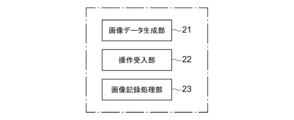
- FIG. FIG. 1 is a functional block diagram illustrating an example of an information processing device according to an embodiment of the present invention.
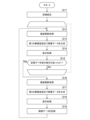
- FIG. 2 is a flowchart diagram illustrating an example of the operation of the information processing device according to the embodiment of the present invention.
- FIG. 2 is an explanatory diagram illustrating an example of image data generated by the information processing device according to the embodiment of the present invention.
- FIG. 2 is a schematic explanatory diagram showing an example of control of processing resources by the information processing apparatus according to the embodiment of the present invention.
- the information processing device 10 is, for example, a personal computer or a home game machine, and as illustrated in FIG. , a display control section 14 , and a communication section 15 , and are connected to a controller device 20 , a display device 30 , and a line-of-sight detection device 40 .
- the control unit 11 is a program control device including a CPU, GPU, etc., and operates according to a program stored in the storage unit 12.
- the control unit 11 includes a CPU 111 and a GPU 112, and the CPU 111 generates and outputs a screen including an image to be operated by the user, and
- information representing the position of the line of sight of the user who performs the operation while looking at the screen containing the image is acquired from the line of sight detection device 40.
- the GPU 112 of the control unit 11 functions as an image generation unit that generates image data using a predetermined first resolution setting.
- the CPU 111 of the control unit 11 accepts a user's predetermined operation regarding recording of image data
- the CPU 111 causes the GPU 112 to generate image data at a second resolution setting different from the first resolution setting, and generates the image data. Instructs to record the image data.
- the GPU 112 generates image data at the second resolution setting and executes a process of recording the generated image data. Thereafter, the GPU 112 may continue the process of generating image data using the first resolution setting. The details of the processing performed by the control unit 11 will be explained later.
- the storage unit 12 is configured to include storage devices such as disk devices and memory devices.
- the storage unit 12 stores programs executed by the control unit 11. This program may be provided stored in a computer-readable, non-transitory recording medium, and may be stored in this storage unit 12.
- This storage section 12 also operates as a work memory for the control section 11.
- the operation acquisition unit 13 receives the content of the user's operation from the controller device 20 and outputs it to the control unit 11.
- the display control unit 14 is connected to the display device 30 and outputs the instructed image to the display device 30 in accordance with instructions input from the control unit 11 .
- the communication unit 15 is a network interface, etc., and transmits output information, etc. to other information processing devices 10, server devices (not shown), etc. connected via the network, according to instructions input from the control unit 11. Send data.
- the communication unit 15 also outputs data received via the network from other information processing devices 10, server devices, etc. to the control unit 11.
- the controller device 20 is a game controller, a mouse, a keyboard, etc., and outputs information representing operations performed by the user to the information processing apparatus 10.
- the display device 30 is, for example, an HMD (Head Mount Display), and according to instructions input from the information processing device 10, displays the instructed image to the user.
- HMD Head Mount Display
- the line-of-sight detection device 40 detects the line-of-sight direction of the user viewing the image displayed by the display device 30, and outputs line-of-sight information representing the detection result to the information processing apparatus 10.
- This line-of-sight information may be in any format as long as it can indicate the position of the user's line of sight on the image displayed by the display device 30.
- the line-of-sight detection device 40 is arranged inside an HMD, which is the display device 30, and outputs line-of-sight information indicating the position of the user's line of sight on an image presented by the HMD.
- a line of sight detection device a widely known one can be used, so a detailed description thereof will be omitted here.
- control section 11 By executing the program stored in the storage unit 12, the control unit 11 functionally controls the image data generation unit 21, the operation reception unit 22, and the image recording processing unit 23, as illustrated in FIG. Realize the configuration included in.
- the image data generation unit 21 is realized by, for example, the GPU 112, and generates image data using predetermined resolution settings.
- the image data generation unit 21 when the control unit 11 executes an application program (game application, etc.), the image data generation unit 21 generates a virtual image to be displayed in a virtual three-dimensional space according to instructions from the control unit 11 when the application program (game application, etc.) is executed.
- a virtual scene is created by arranging three-dimensional objects.
- the image data generation unit 21 generates image data (here, a moving image) obtained by rendering the three-dimensional object etc. using the specified resolution setting, as images sequentially captured from a virtual camera arranged in the three-dimensional space. data).
- the image data generation unit 21 also arranges the two cameras at different positions and renders image data for the left eye and image data for the right eye as images taken from each camera.
- the resolution setting specified here is, for example, a resolution setting (hereinafter referred to as a first resolution setting) that generates image data that includes a relatively high resolution area and a relatively low resolution area.
- a resolution setting hereinafter referred to as a first resolution setting
- the image data generation unit 21 when the first resolution setting is specified, the image data generation unit 21 generates a predetermined image centering on the position of the user's line of sight based on the user's line of sight information output by the line of sight detection device 40. Render regions of the range at a relatively high resolution and other regions at a relatively low resolution.
- the image data generation section 21 generates image data with a second resolution setting different from the first resolution setting according to an instruction input from the image recording processing section 23, which will be described later.
- This second resolution setting is, for example, a setting in which image data is generated with the entire image at a uniform resolution.
- the image data generation unit 21 outputs the image data obtained by rendering at the first resolution setting to the display device 30 via the display control unit 14 for display.
- the image data generation unit 21 also outputs image data obtained by rendering at the second resolution to the image recording processing unit 23.
- the image data generation section 21 may also output the image data obtained by rendering at this second resolution to the display device 30 via the display control section 14 for display.
- the operation accepting unit 22 accepts information representing the user's operation from the operation acquiring unit 13.
- the operation receiving unit 22 accepts, for example, an operation related to a game application, and provides the control unit 11 with processing of the game application or the like.
- the operation receiving section 22 outputs an instruction to record the image data to the image recording processing section 23. do.
- the image recording processing unit 23 Upon accepting the instruction to record image data, the image recording processing unit 23 instructs the image data generation unit 21 to generate image data at the second resolution setting.
- the image data generation unit 21 outputs image data rendered using the second resolution setting in accordance with this instruction, the image data is stored in the storage unit 12 as, for example, a file.
- the information processing device 10 of this embodiment basically has the above-described configuration and operates as follows.
- the information processing device 10 is a home game machine and is executing processing of a game application.
- the display device 30 connected to this information processing apparatus 10 is assumed to be an HMD, and presents an image for the left eye and an image for the right eye to the user.
- the information processing apparatus 10 repeatedly receives, at predetermined timings, line-of-sight information indicating the direction of the line of sight of a user viewing an image displayed by the display device 30, which is sequentially detected by the line-of-sight detection device 40.
- the information processing device 10 processes the position and posture of a three-dimensional object such as a virtual character to be displayed in a virtual three-dimensional space (game space).
- a virtual scene is initialized by specifying information such as (S11: initialization).
- the information processing device 10 also accepts information representing operations performed by the user, updates information on the position and posture of the character in the game space, and also updates the information on the position and posture of the character in the game space, and also updates the information on the character's position and posture in the game space, and also updates the information on the character's position and posture in the game space.
- Information on the positions and postures of the virtual pair of cameras is updated (S12: screen update process).
- the information processing device 10 generates images captured by each of the pair of cameras using a preset first resolution setting (S13). That is, the information processing device 10 renders image data (image data for the left eye and image data for the right eye) obtained by rendering the three-dimensional object etc. as an image seen from each of the pair of cameras using the first resolution setting. generate. The information processing device 10 then outputs the generated pair of images to the display device 30 for display (S14).
- the first resolution setting used by the information processing device 10 here refers to a portion of the generated image data near a point corresponding to the direction of the user's line of sight obtained based on the line of sight information input from the line of sight detection device 40. It is assumed that the settings are such that the resolution of the image is relatively high, and the resolution of the other portions is relatively low.
- the image data generated by the information processing device 10 is an area centered on a point Q in the direction of the user's line of sight and within a predetermined distance from this point Q, as illustrated in FIG. 4(a).
- the portion within (R) is rendered at relatively high resolution, and the other portions are rendered at relatively low resolution.
- the information processing device 10 determines whether the user has performed a predetermined operation regarding recording of image data (operation to instruct that an image should be recorded) (S15). If the predetermined operation is not performed here (S15: No), the information processing device 10 returns to step S12 and continues processing the game application.
- step S15 if it is determined that the user has performed a predetermined operation related to recording image data (S15: Yes), information representing the operation performed by the user is accepted, and the position and posture of the character in this game space are determined. Information etc. are updated, and information on the positions and postures of a pair of virtual cameras placed at positions corresponding to the left and right eyes of the user is updated (S16: screen update process).
- the information processing device 10 generates images captured by each of the pair of cameras using a preset second resolution setting (S17). In other words, the information processing device 10 renders image data (image data for the left eye and image data for the right eye) of the three-dimensional object etc. as an image viewed from each of the pair of cameras using the second resolution setting. generate.
- the information processing device 10 outputs the generated pair of images to the display device 30 for display (S18), and stores one or both of the pair of images in the storage unit 12 as a recording image. (S19), and returns to step S12 to continue the process.
- the second resolution setting is a setting that generates image data with the entire image at a uniform resolution
- the image generated in step S17 is one in which the entire image is rendered at, for example, a relatively high resolution.
- the resolution of the image generated with the second resolution setting and the resolution of the image generated with the first resolution setting may have the following relationship. That is, in the following explanation, the resolution in a relatively high resolution area (referred to as a high resolution part) in the first resolution setting is R1H, and the resolution in a relatively low resolution area (referred to as a low resolution part) is R1L.
- the resolution R2 in the second resolution setting may be set as R1L ⁇ R2 ⁇ R1H. That is, the resolution R2 of the image generated with the second resolution setting may be set to a higher resolution than the resolution R1L of the low resolution portion of the image generated with the first resolution setting.
- step S19 when storing one of the image data for the left eye and the image data for the right eye as a recording image in the storage unit 12, the information processing device 10 performs the process of step S17.
- one of the image data for the left eye and the image data for the right eye to be stored in the storage unit 12 as a recording image is generated using a preset second resolution setting, and the other image data is generated using the first resolution setting. It may be generated according to the settings.
- images for recording such as screenshots can be generated at the timing after receiving a predetermined operation from the user.
- images for recording can be created without stopping the processing of the game application.
- the second resolution setting may be a setting in which recording images such as screenshots are generated at a uniform resolution.
- the information processing device 10 cuts out the image as the image for recording in the process of step S17. Only a portion may be generated at the resolution R2.
- the information processing device 10 processes the part (other part) that is not cut out as an image for recording at a resolution R2' that is different from the resolution R2 (for example, if R'2 ⁇ R2, (The load is reduced).
- the information processing device 10 executes only the screen update process in step S12 and performs rendering. After waiting for the completion of rendering and completing rendering, the processing from step S18 onward may be executed. In this case, the screen update rate will temporarily drop, but the game processing will continue.
- the information processing device 10 returns to step S12 and continues the process without waiting for the rendering of the second resolution setting in step S17 of FIG. , when the process in step S17 is completed, the process may proceed to step S19 (in this case, the process in step S18 may be skipped).
- the information processing device 10 reduces the execution speed of the repetitive processing from steps S12 to S15, and reduces the number of times rendering is performed at the first resolution setting in step S13.
- the time interval for generating image data may be controlled.
- the information processing device 10 may control the processing resources according to the resolution setting.
- the control unit 11 may include a plurality of GPUs 112a, b, . . . and may be capable of rendering a plurality of images in parallel.
- the information processing device 10 periodically generates relatively low-resolution image data for the entire screen using one GPU 112a, as illustrated in FIG. (The generation period is indicated by L in FIG. 5), and the other GPU 112b periodically generates relatively high-resolution image data in an area near the visual field (the generation period is indicated by H in FIG. 5).
- the information processing device 10 After each generation period ends, the information processing device 10 combines the generated image data, renders a predetermined range of area centered on the position of the user's line of sight at relatively high resolution, and renders other areas. image data rendered at a relatively low resolution is generated and displayed (F).
- the information processing device 10 When the information processing device 10 accepts the operation (T), the information processing device 10 starts rendering processing at the second resolution setting, and uses the GPU 112b to perform the entire rendering process. While generating relatively high-resolution image data for the screen (H'), one GPU 112a continues the process of periodically generating relatively low-resolution image data for the entire screen (L'). Image data is generated with a third rendering setting (a setting in which the entire screen has a relatively low resolution) that is different from both the first and second rendering settings.
- a third rendering setting a setting in which the entire screen has a relatively low resolution
- the generation of relatively high-resolution image data for the entire screen is illustrated as requiring a period in which relatively low-resolution image data for the entire screen is generated three times.
- the information processing device 10 is generating image data at the second and third resolution settings in parallel.
- image data rendered on the entire screen at a relatively low resolution is displayed (F').
- the information processing device 10 records the image data in the storage unit 12 (R), and then Return to the rendering process at the first resolution setting and continue the process (X).
- the usage of the GPU 112 which is a processing resource used for image data generation processing, is controlled, the frame rate of the image data for display is maintained, and the progress of the application program is maintained. It is possible to generate image data for recording with reduced turbulence.
- the second resolution setting generates image data (pan focus image data) in which the entire screen is generated at the same resolution, as image data that does not feel strange as a screenshot.
- This embodiment is not limited to this.
- the image data generation section 21 of the control section 11 of the present embodiment generates image data with the second resolution setting according to an instruction input from the image recording processing section 23.
- a part of the virtual three-dimensional objects obtained may be selected as the object of interest, and at the time of rendering, the area of the object of interest may be rendered at a relatively high resolution, and the other areas may be rendered at a relatively low resolution. .
- the object of interest may be a virtual object that exists in the area that includes the position of the user's line of sight, or an object that is rendered with an area larger than a predetermined threshold value in the image to be rendered. It may also be selected as an object of interest.
- the image data generation section 21 of the control section 11 generates the entire image at a relatively high resolution when generating image data at the second resolution setting according to an instruction input from the image recording processing section 23.
- blurring processing may be applied to areas other than the area of the object of interest.
- the second resolution setting is set so that the area including the object of interest selected by a predetermined method and the area not including the object of interest are image data of different resolutions, for example, the character the user is looking at may Image data displayed to stand out from the background is generated as a recording image such as a screenshot, making it possible to create an effect that highlights the area of interest.
- the area of the object of interest is set to a relatively high resolution (or no blurring is performed), but in this embodiment, the area of the object of interest is extended outward by a predetermined number of pixels (The image within the dilation-processed area may be rendered at a relatively high resolution, and the other areas may be rendered at a relatively low resolution.
- the number of pixels to be expanded here may be set to, for example, 1.1 times the square root of the area, depending on the area of the object, or may be specified by the user in advance.
- the amount of blurring is reduced as the area of the object of interest or an expanded area thereof approaches, so that the image data appears as if the resolution has been changed in stages. May be generated.
- the information processing device 10 includes information regarding the position of an object with respect to image data for recording, information on parameters used in processing of an application program such as a game application, etc.
- Information representing the operation status of the controller, information such as the number of remaining bullets, physical strength, and other information as parameters of the character in the game may be synthesized as a character string image, or may be recorded as incidental information accompanying the image data. .
- An information processing device comprising one or more processors, The one or more processors are functioning as an image data generation unit that generates image data according to a predetermined first resolution setting; accepting a user's predetermined operation regarding recording of the image data; When the predetermined operation is accepted, controlling the image data generation unit to generate image data at a second resolution setting different from the first resolution setting, and recording the generated image data.
- Information processing device comprising one or more processors, The one or more processors are functioning as an image data generation unit that generates image data according to a predetermined first resolution setting; accepting a user's predetermined operation regarding recording of the image data; When the predetermined operation is accepted, controlling the image data generation unit to generate image data at a second resolution setting different from the first resolution setting, and recording the generated image data.
- the information processing device is a setting that generates image data including a relatively high resolution area and a relatively low resolution area
- the second resolution setting is a setting that generates image data with a uniform resolution.
- the information processing device Furthermore, controlling processing resources used for image data generation processing when functioning as the image data generation unit, At a timing after receiving a predetermined operation from the user, the resource control means changes the control of the processing resources to increase the processing resources, controls the image data generation section, and controls the image data generation section to set the second resolution. Generate image data, record the generated image data, The second resolution setting generates image data at a higher resolution than at least the lowest resolution area included in the image data generated by the first resolution setting, and at a uniform resolution.
- An information processing device that is configured to
- the information processing device functions as an image data generation unit and sequentially generate image data, Upon receiving a predetermined operation by the user, image data is sequentially generated at a third resolution setting different from the first and second resolution settings, and image data is generated at the second resolution setting.
- An information processing device that performs operations in parallel.
- the information processing device functions as an image data generation unit and sequentially generate image data, An information processing device that controls a time interval for generating image data while generating image data at the second resolution.
- the information processing device includes at least one object
- the second resolution setting is a setting in which, among the objects, an object selected by a predetermined method is set as the object of interest, and an area including the object of interest and an area not including the object of interest are image data of mutually different resolutions.
- Information processing device is a setting in which, among the objects, an object selected by a predetermined method is set as the object of interest, and an area including the object of interest and an area not including the object of interest are image data of mutually different resolutions.
- An information processing device that includes one or more processors and generates image data according to a predetermined first resolution setting by the one or more processors, accepting a user's predetermined operation regarding recording of the image data; generating image data with a second resolution setting different from the first resolution setting when the predetermined operation is accepted, and recording the generated image data; A method for controlling an information processing device.
- a computer-readable, non-transitory recording medium A process of generating image data with a predetermined first resolution setting, and when accepting a predetermined operation by a user regarding recording of the image data, generating the image data with a second resolution setting different from the first resolution setting.
- a recording medium that stores a program for causing a computer to generate image data and record the generated image data.
Landscapes
- Engineering & Computer Science (AREA)
- Theoretical Computer Science (AREA)
- Physics & Mathematics (AREA)
- General Physics & Mathematics (AREA)
- Multimedia (AREA)
- Computing Systems (AREA)
- Geometry (AREA)
- Computer Graphics (AREA)
- Signal Processing (AREA)
- Processing Or Creating Images (AREA)
Abstract
Description
本実施の形態の情報処理装置10は、基本的に上述の構成を備え、次のように動作する。ここでは情報処理装置10は、家庭用ゲーム機であり、ゲームアプリケーションの処理を実行しているものとする。またこの情報処理装置10に接続されている表示デバイス30は、HMDであるものとし、ユーザに対して左目用の画像と、右目用の画像とを呈示する。さらに情報処理装置10は、視線検出デバイス40が逐次的に検出する、表示デバイス30が表示する画像を視認するユーザの視線の方向を表す視線情報を、所定のタイミングごとに繰り返し受け入れている。
・第2の解像度設定での解像度R2は、第1の解像度設定における比較的高解像度で生成される部分の解像度R1Hと同じ(R2=R1H)であってもよい。
・また第2の解像度設定での解像度R2は、上記解像度R1Hと異なり、R2>R1Hであってもよい。
・さらに、R2<R1Hであってもよい。
また第2の解像度設定は、スクリーンショット等の記録用の画像が均一の解像度で生成される設定としてもよい。この場合、記録用の画像が、情報処理装置10は、ステップS17の処理において生成する画像の一部であるときには、情報処理装置10は、当該ステップS17の処理では、当該記録用の画像として切り出す一部のみを上記解像度R2で生成してもよい。この場合、情報処理装置10は、ステップS17の処理において、記録用の画像として切り出されない部分(他の部分)については解像度R2とは異なる解像度R2′(例えばR′2<R2とすれば処理負荷は軽減される)で生成することとしてもよい。
本実施の形態の情報処理装置10の処理によると、上記図3のステップS13における第1の解像度設定でのレンダリングと、ステップS17における第2の解像度設定のレンダリングとをGPU112で行わせる場合、第1の解像度設定でのレンダリングと、第2の解像度設定でのレンダリングとで負荷が異なるために、これらが同じ時間内に処理完了しない場合があり得る。
また、ここまでの説明ではスクリーンショットとして違和感の少ない画像データとして、第2の解像度設定では全画面が同じ解像度で生成される画像データ(パンフォーカスの画像データ)が生成されるものとしたが、本実施の形態はこれに限られない。
また本実施の形態のある例では、情報処理装置10は、記録用画像データに対してオブジェクトの位置に関する情報や、ゲームアプリケーション等のアプリケーションプログラムの処理で利用しているパラメータの情報、例えばユーザによるコントローラの操作の状態を表す情報や、ゲーム中のキャラクタのパラメータとしての残弾数や体力値その他の情報を文字列の画像として合成し、あるいは画像データに付随する付随情報として記録してもよい。
[項目1]
情報処理装置であって、1以上のプロセッサを備え、
当該1以上のプロセッサが、
所定の第1の解像度設定により画像データを生成する画像データ生成部として機能し、
前記画像データの記録に関するユーザの所定操作を受け入れ、
前記所定操作が受け入れられたときに、前記画像データ生成部を制御して、前記第1の解像度設定とは異なる第2の解像度設定で画像データを生成し、当該生成させた画像データを記録する情報処理装置。
項目1に記載の情報処理装置であって、
前記第1の解像度設定は、比較的高解像度の領域と、比較的低解像度の領域とを含む画像データを生成させる設定であり、前記第2の解像度設定は、均一の解像度で画像データを生成させる設定である情報処理装置。
項目1に記載の情報処理装置であって、
前記ユーザの所定操作を受けた後のタイミングで、前記画像データ生成部を制御し、前記第2の解像度設定で画像データを生成して、当該生成した画像データを記録する情報処理装置。
項目3に記載の情報処理装置であって、
さらに、前記画像データ生成部として機能する際の、画像データの生成処理に利用する処理リソースを制御し、
前記ユーザの所定操作を受けた後のタイミングで、前記リソース制御手段に、処理リソースの制御を変更させて処理リソースを増大させ、前記画像データ生成部を制御して、前記第2の解像度設定で画像データを生成し、当該生成した画像データを記録し、
前記第2の解像度設定は、少なくとも前記第1の解像度設定により生成される画像データに含まれる最も解像度の低い領域での解像度よりも、高い解像度であって、かつ均一の解像度で画像データを生成させる設定である情報処理装置。
項目1に記載の情報処理装置であって、
前記1以上のプロセッサは、画像データ生成部として機能して、逐次的に画像データを生成し、
前記ユーザの所定操作を受けると、前記第1、第2の解像度設定とは異なる第3の解像度設定にて画像データを逐次的に生成するとともに、前記第2の解像度設定での画像データの生成を並行して行う情報処理装置。
項目1に記載の情報処理装置であって、
前記1以上のプロセッサは、画像データ生成部として機能して、逐次的に画像データを生成し、
前記第2の解像度で画像データを生成させる間、画像データを生成する時間間隔を制御する情報処理装置。
項目1に記載の情報処理装置であって、
前記画像データには、少なくとも一つのオブジェクトが含まれ、
前記第2の解像度設定は、当該オブジェクトのうち、所定の方法で選択されたオブジェクトを注目オブジェクトとして、当該注目オブジェクトを含む領域と、そうでない領域とを互いに異なる解像度の画像データとする設定である情報処理装置。
1以上のプロセッサを備え、当該1以上のプロセッサにより、所定の第1の解像度設定により画像データを生成する情報処理装置を用い、
前記画像データの記録に関するユーザの所定操作を受け入れ、
前記所定操作が受け入れられたときに、前記第1の解像度設定とは異なる第2の解像度設定で画像データを生成し、当該生成した画像データを記録する、
情報処理装置の制御方法。
コンピュータ読み取り可能かつ非一時的な記録媒体であって、
所定の第1の解像度設定により画像データを生成する処理と、前記画像データの記録に関するユーザの所定操作を受け入れたときに、前記第1の解像度設定とは異なる第2の解像度設定で画像データを生成し、当該生成した画像データを記録する処理とをコンピュータに実行させるためのプログラムを格納する記録媒体。
Claims (9)
- 所定の第1の解像度設定により画像データを生成する画像データ生成部を有し、
前記画像データの記録に関するユーザの所定操作を受け入れる受入手段と、
前記所定操作が受け入れられたときに、前記画像データ生成部に対し、前記第1の解像度設定とは異なる第2の解像度設定で画像データを生成させ、当該生成させた画像データを記録する画像記録手段と、
を含む情報処理装置。 - 請求項1に記載の情報処理装置であって、
前記第1の解像度設定は、比較的高解像度の領域と、比較的低解像度の領域とを含む画像データを生成させる設定であり、前記第2の解像度設定は、均一の解像度で画像データを生成させる設定である情報処理装置。 - 請求項1または2に記載の情報処理装置であって、
前記画像記録手段は、前記ユーザの所定操作を受けた後のタイミングで、前記画像データ生成部に対し、前記第2の解像度設定で画像データを生成させて、当該生成させた画像データを記録する情報処理装置。 - 請求項3に記載の情報処理装置であって、
前記画像データ生成部における画像データの生成処理に利用する処理リソースを制御するリソース制御手段をさらに有し、
前記画像記録手段は、前記ユーザの所定操作を受けた後のタイミングで、前記リソース制御手段に、処理リソースの制御を変更させて処理リソースを増大させ、前記画像データ生成部に対し、前記第2の解像度設定で画像データを生成させて、当該生成させた画像データを記録し、
前記第2の解像度設定は、少なくとも前記第1の解像度設定により生成される画像データに含まれる最も解像度の低い領域での解像度よりも、高い解像度であって、かつ均一の解像度で画像データを生成させる設定である情報処理装置。 - 請求項1から4のいずれか一項に記載の情報処理装置であって、
前記画像データ生成部は、逐次的に画像データを生成しており、
前記画像記録手段は、前記ユーザの所定操作を受けると、前記第1、第2の解像度設定とは異なる第3の解像度設定にて画像データを逐次的に生成させるとともに、前記第2の解像度設定での画像データの生成を並行して行わせる情報処理装置。 - 請求項1から5のいずれか一項に記載の情報処理装置であって、
前記画像データ生成部は、逐次的に画像データを生成しており、
前記画像記録手段は、前記第2の解像度で画像データを生成させる間、画像データを生成する時間間隔を制御する情報処理装置。 - 請求項1に記載の情報処理装置であって、
前記画像データには、少なくとも一つのオブジェクトが含まれ、
前記第2の解像度設定は、当該オブジェクトのうち、所定の方法で選択されたオブジェクトを注目オブジェクトとして、当該注目オブジェクトを含む領域と、そうでない領域とを互いに異なる解像度の画像データとする設定である情報処理装置。 - 所定の第1の解像度設定により画像データを生成する画像データ生成部を有する情報処理装置を用い、
受入手段が、前記画像データの記録に関するユーザの所定操作を受け入れ、
画像記録手段が、前記所定操作が受け入れられたときに、前記画像データ生成部に対し、前記第1の解像度設定とは異なる第2の解像度設定で画像データを生成させ、当該生成させた画像データを記録する、
情報処理装置の制御方法。 - コンピュータを、
所定の第1の解像度設定により画像データを生成する画像データ生成手段、
前記画像データの記録に関するユーザの所定操作を受け入れる受入手段、及び、
前記所定操作が受け入れられたときに、前記画像データ生成手段に対し、前記第1の解像度設定とは異なる第2の解像度設定で画像データを生成させ、当該生成させた画像データを記録する画像記録手段、
として機能させるプログラム。
Priority Applications (4)
| Application Number | Priority Date | Filing Date | Title |
|---|---|---|---|
| EP22935125.9A EP4503587A4 (en) | 2022-03-29 | 2022-03-29 | INFORMATION PROCESSING DEVICE, METHOD FOR CONTROLLING AN INFORMATION PROCESSING DEVICE, AND PROGRAM |
| US18/840,094 US20250161807A1 (en) | 2022-03-29 | 2022-03-29 | Information processing apparatus, method for controlling information processing apparatus, and program |
| JP2024510780A JP7806218B2 (ja) | 2022-03-29 | 2022-03-29 | 情報処理装置、情報処理装置の制御方法、及びプログラム |
| PCT/JP2022/015399 WO2023187974A1 (ja) | 2022-03-29 | 2022-03-29 | 情報処理装置、情報処理装置の制御方法、及びプログラム |
Applications Claiming Priority (1)
| Application Number | Priority Date | Filing Date | Title |
|---|---|---|---|
| PCT/JP2022/015399 WO2023187974A1 (ja) | 2022-03-29 | 2022-03-29 | 情報処理装置、情報処理装置の制御方法、及びプログラム |
Publications (1)
| Publication Number | Publication Date |
|---|---|
| WO2023187974A1 true WO2023187974A1 (ja) | 2023-10-05 |
Family
ID=88200011
Family Applications (1)
| Application Number | Title | Priority Date | Filing Date |
|---|---|---|---|
| PCT/JP2022/015399 Ceased WO2023187974A1 (ja) | 2022-03-29 | 2022-03-29 | 情報処理装置、情報処理装置の制御方法、及びプログラム |
Country Status (4)
| Country | Link |
|---|---|
| US (1) | US20250161807A1 (ja) |
| EP (1) | EP4503587A4 (ja) |
| JP (1) | JP7806218B2 (ja) |
| WO (1) | WO2023187974A1 (ja) |
Families Citing this family (1)
| Publication number | Priority date | Publication date | Assignee | Title |
|---|---|---|---|---|
| US12450022B2 (en) | 2022-01-31 | 2025-10-21 | Sony Interactive Entertainment Inc. | Information processing device, control method of information processing device, program, and recording medium |
Citations (4)
| Publication number | Priority date | Publication date | Assignee | Title |
|---|---|---|---|---|
| JP2002223380A (ja) * | 2001-01-25 | 2002-08-09 | Sony Corp | デジタルカメラコントローラ |
| WO2015037316A1 (ja) * | 2013-09-10 | 2015-03-19 | コニカミノルタ株式会社 | 器官画像撮影装置および器官画像撮影方法 |
| WO2016076059A1 (ja) * | 2014-11-12 | 2016-05-19 | コニカミノルタ株式会社 | 器官画像撮影装置およびプログラム |
| JP2020058710A (ja) * | 2018-10-12 | 2020-04-16 | ライオン株式会社 | 舌体画像処理方法、呼気中不快臭気成分含有レベル推定方法、舌体画像処理装置およびプログラム |
Family Cites Families (3)
| Publication number | Priority date | Publication date | Assignee | Title |
|---|---|---|---|---|
| JP6909286B2 (ja) * | 2017-05-18 | 2021-07-28 | 株式会社ソニー・インタラクティブエンタテインメント | 画像生成装置、画像表示システム、および画像生成方法 |
| WO2020071703A1 (ko) * | 2018-10-01 | 2020-04-09 | 엘지전자 주식회사 | 포인트 클라우드 데이터 전송 장치, 포인트 클라우드 데이터 전송 방법, 포인트 클라우드 데이터 수신 장치 및/또는 포인트 클라우드 데이터 수신 방법 |
| KR101965746B1 (ko) * | 2018-10-02 | 2019-04-05 | 주식회사 이노벤터 | Vr 콘텐츠 스트리밍 서버 및 방법 |
-
2022
- 2022-03-29 WO PCT/JP2022/015399 patent/WO2023187974A1/ja not_active Ceased
- 2022-03-29 JP JP2024510780A patent/JP7806218B2/ja active Active
- 2022-03-29 US US18/840,094 patent/US20250161807A1/en active Pending
- 2022-03-29 EP EP22935125.9A patent/EP4503587A4/en active Pending
Patent Citations (4)
| Publication number | Priority date | Publication date | Assignee | Title |
|---|---|---|---|---|
| JP2002223380A (ja) * | 2001-01-25 | 2002-08-09 | Sony Corp | デジタルカメラコントローラ |
| WO2015037316A1 (ja) * | 2013-09-10 | 2015-03-19 | コニカミノルタ株式会社 | 器官画像撮影装置および器官画像撮影方法 |
| WO2016076059A1 (ja) * | 2014-11-12 | 2016-05-19 | コニカミノルタ株式会社 | 器官画像撮影装置およびプログラム |
| JP2020058710A (ja) * | 2018-10-12 | 2020-04-16 | ライオン株式会社 | 舌体画像処理方法、呼気中不快臭気成分含有レベル推定方法、舌体画像処理装置およびプログラム |
Non-Patent Citations (1)
| Title |
|---|
| See also references of EP4503587A4 * |
Also Published As
| Publication number | Publication date |
|---|---|
| JPWO2023187974A1 (ja) | 2023-10-05 |
| EP4503587A4 (en) | 2026-01-07 |
| JP7806218B2 (ja) | 2026-01-26 |
| EP4503587A1 (en) | 2025-02-05 |
| US20250161807A1 (en) | 2025-05-22 |
Similar Documents
| Publication | Publication Date | Title |
|---|---|---|
| JP5194530B2 (ja) | 画像表示装置及び画像表示方法 | |
| US6717586B2 (en) | Apparatus, method, program code, and storage medium for image processing | |
| JP6407460B1 (ja) | 画像処理装置、画像処理方法およびプログラム | |
| KR102769510B1 (ko) | 3d 전환 | |
| CN113099298A (zh) | 虚拟形象的改变方法、装置和终端设备 | |
| US11995784B2 (en) | Image processing device and image processing method | |
| JP2014021570A (ja) | 動画像生成装置 | |
| US20090262139A1 (en) | Video image display device and video image display method | |
| CN111161685B (zh) | 一种虚拟现实显示设备及其控制方法 | |
| US20260011092A1 (en) | Customized passthrough | |
| CN114779981B (zh) | 全景视频中可拖拽式热点交互方法、系统及存储介质 | |
| US11423516B2 (en) | Gaze enhanced natural motion blur | |
| WO2023187974A1 (ja) | 情報処理装置、情報処理装置の制御方法、及びプログラム | |
| CN113206993A (zh) | 一种调整显示屏幕的方法及显示设备 | |
| US20050140668A1 (en) | Ingeeni flash interface | |
| US12333313B2 (en) | Encoding stereo splash screen in static image | |
| EP3800619A1 (en) | Variable rendering system and method | |
| JP4958499B2 (ja) | 画像表示制御装置、画像表示方法及びプログラム | |
| JP7296735B2 (ja) | 画像処理装置、画像処理方法及びプログラム | |
| JP2001204962A (ja) | 画像表示プログラムを記録した記録媒体、画像表示方法及びゲーム装置 | |
| JP6371547B2 (ja) | 画像処理装置、方法、および、プログラム | |
| JP2001051579A (ja) | 映像表示方法、映像表示装置及び映像表示プログラムを記録した記録媒体 | |
| JP7412826B1 (ja) | 映像合成装置、映像合成方法、及びプログラム | |
| JP6441426B1 (ja) | キャラクタ動画表示システム | |
| JPH0955959A (ja) | 画像表示装置 |
Legal Events
| Date | Code | Title | Description |
|---|---|---|---|
| 121 | Ep: the epo has been informed by wipo that ep was designated in this application |
Ref document number: 22935125 Country of ref document: EP Kind code of ref document: A1 |
|
| WWE | Wipo information: entry into national phase |
Ref document number: 18840094 Country of ref document: US |
|
| ENP | Entry into the national phase |
Ref document number: 2024510780 Country of ref document: JP Kind code of ref document: A |
|
| WWE | Wipo information: entry into national phase |
Ref document number: 2022935125 Country of ref document: EP |
|
| NENP | Non-entry into the national phase |
Ref country code: DE |
|
| ENP | Entry into the national phase |
Ref document number: 2022935125 Country of ref document: EP Effective date: 20241029 |
|
| WWP | Wipo information: published in national office |
Ref document number: 18840094 Country of ref document: US |