WO2023188637A1 - 銀めっき材およびその製造方法 - Google Patents
銀めっき材およびその製造方法 Download PDFInfo
- Publication number
- WO2023188637A1 WO2023188637A1 PCT/JP2022/047637 JP2022047637W WO2023188637A1 WO 2023188637 A1 WO2023188637 A1 WO 2023188637A1 JP 2022047637 W JP2022047637 W JP 2022047637W WO 2023188637 A1 WO2023188637 A1 WO 2023188637A1
- Authority
- WO
- WIPO (PCT)
- Prior art keywords
- silver
- plating film
- silver plating
- plated
- base
- Prior art date
- Legal status (The legal status is an assumption and is not a legal conclusion. Google has not performed a legal analysis and makes no representation as to the accuracy of the status listed.)
- Ceased
Links
Images

Classifications
-
- C—CHEMISTRY; METALLURGY
- C25—ELECTROLYTIC OR ELECTROPHORETIC PROCESSES; APPARATUS THEREFOR
- C25D—PROCESSES FOR THE ELECTROLYTIC OR ELECTROPHORETIC PRODUCTION OF COATINGS; ELECTROFORMING; APPARATUS THEREFOR
- C25D5/00—Electroplating characterised by the process; Pretreatment or after-treatment of workpieces
- C25D5/34—Pretreatment of metallic surfaces to be electroplated
-
- C—CHEMISTRY; METALLURGY
- C25—ELECTROLYTIC OR ELECTROPHORETIC PROCESSES; APPARATUS THEREFOR
- C25D—PROCESSES FOR THE ELECTROLYTIC OR ELECTROPHORETIC PRODUCTION OF COATINGS; ELECTROFORMING; APPARATUS THEREFOR
- C25D5/00—Electroplating characterised by the process; Pretreatment or after-treatment of workpieces
- C25D5/10—Electroplating with more than one layer of the same or of different metals
- C25D5/12—Electroplating with more than one layer of the same or of different metals at least one layer being of nickel or chromium
-
- B—PERFORMING OPERATIONS; TRANSPORTING
- B32—LAYERED PRODUCTS
- B32B—LAYERED PRODUCTS, i.e. PRODUCTS BUILT-UP OF STRATA OF FLAT OR NON-FLAT, e.g. CELLULAR OR HONEYCOMB, FORM
- B32B15/00—Layered products comprising a layer of metal
- B32B15/01—Layered products comprising a layer of metal all layers being exclusively metallic
-
- B—PERFORMING OPERATIONS; TRANSPORTING
- B32—LAYERED PRODUCTS
- B32B—LAYERED PRODUCTS, i.e. PRODUCTS BUILT-UP OF STRATA OF FLAT OR NON-FLAT, e.g. CELLULAR OR HONEYCOMB, FORM
- B32B15/00—Layered products comprising a layer of metal
- B32B15/20—Layered products comprising a layer of metal comprising aluminium or copper
-
- C—CHEMISTRY; METALLURGY
- C25—ELECTROLYTIC OR ELECTROPHORETIC PROCESSES; APPARATUS THEREFOR
- C25D—PROCESSES FOR THE ELECTROLYTIC OR ELECTROPHORETIC PRODUCTION OF COATINGS; ELECTROFORMING; APPARATUS THEREFOR
- C25D3/00—Electroplating: Baths therefor
- C25D3/02—Electroplating: Baths therefor from solutions
- C25D3/46—Electroplating: Baths therefor from solutions of silver
-
- C—CHEMISTRY; METALLURGY
- C25—ELECTROLYTIC OR ELECTROPHORETIC PROCESSES; APPARATUS THEREFOR
- C25D—PROCESSES FOR THE ELECTROLYTIC OR ELECTROPHORETIC PRODUCTION OF COATINGS; ELECTROFORMING; APPARATUS THEREFOR
- C25D5/00—Electroplating characterised by the process; Pretreatment or after-treatment of workpieces
- C25D5/10—Electroplating with more than one layer of the same or of different metals
-
- C—CHEMISTRY; METALLURGY
- C25—ELECTROLYTIC OR ELECTROPHORETIC PROCESSES; APPARATUS THEREFOR
- C25D—PROCESSES FOR THE ELECTROLYTIC OR ELECTROPHORETIC PRODUCTION OF COATINGS; ELECTROFORMING; APPARATUS THEREFOR
- C25D7/00—Electroplating characterised by the article coated
-
- H—ELECTRICITY
- H01—ELECTRIC ELEMENTS
- H01R—ELECTRICALLY-CONDUCTIVE CONNECTIONS; STRUCTURAL ASSOCIATIONS OF A PLURALITY OF MUTUALLY-INSULATED ELECTRICAL CONNECTING ELEMENTS; COUPLING DEVICES; CURRENT COLLECTORS
- H01R13/00—Details of coupling devices of the kinds covered by groups H01R12/70 or H01R24/00 - H01R33/00
- H01R13/02—Contact members
- H01R13/03—Contact members characterised by the material, e.g. plating, or coating materials
-
- B—PERFORMING OPERATIONS; TRANSPORTING
- B32—LAYERED PRODUCTS
- B32B—LAYERED PRODUCTS, i.e. PRODUCTS BUILT-UP OF STRATA OF FLAT OR NON-FLAT, e.g. CELLULAR OR HONEYCOMB, FORM
- B32B2307/00—Properties of the layers or laminate
- B32B2307/50—Properties of the layers or laminate having particular mechanical properties
- B32B2307/536—Hardness
-
- B—PERFORMING OPERATIONS; TRANSPORTING
- B32—LAYERED PRODUCTS
- B32B—LAYERED PRODUCTS, i.e. PRODUCTS BUILT-UP OF STRATA OF FLAT OR NON-FLAT, e.g. CELLULAR OR HONEYCOMB, FORM
- B32B2307/00—Properties of the layers or laminate
- B32B2307/70—Other properties
- B32B2307/732—Dimensional properties
- B32B2307/737—Dimensions, e.g. volume or area
- B32B2307/7375—Linear, e.g. length, distance or width
- B32B2307/7376—Thickness
-
- B—PERFORMING OPERATIONS; TRANSPORTING
- B32—LAYERED PRODUCTS
- B32B—LAYERED PRODUCTS, i.e. PRODUCTS BUILT-UP OF STRATA OF FLAT OR NON-FLAT, e.g. CELLULAR OR HONEYCOMB, FORM
- B32B2311/00—Metals, their alloys or their compounds
- B32B2311/02—Noble metals
- B32B2311/08—Silver
-
- B—PERFORMING OPERATIONS; TRANSPORTING
- B32—LAYERED PRODUCTS
- B32B—LAYERED PRODUCTS, i.e. PRODUCTS BUILT-UP OF STRATA OF FLAT OR NON-FLAT, e.g. CELLULAR OR HONEYCOMB, FORM
- B32B2311/00—Metals, their alloys or their compounds
- B32B2311/12—Copper
Definitions
- the present invention relates to a silver plating material and a method for producing the same, and in particular, a silver plating material used as a material for contacts and terminal parts such as connectors, switches, and relays used in electrical wiring for automobiles and consumer use, and the production thereof. Regarding the method.
- materials such as copper, copper alloys, and stainless steel, which are relatively inexpensive and have excellent corrosion resistance and mechanical properties, have been used as materials for contacts and terminal parts such as connectors and switches, while materials that have electrical properties and solderability are used as materials.
- plated materials with tin, silver, gold, etc. are used.
- Tin-plated materials which are tin-plated materials such as copper, copper alloys, and stainless steel, are inexpensive but have poor corrosion resistance in high-temperature environments. Furthermore, gold-plated materials obtained by gold-plating these materials have excellent corrosion resistance and high reliability, but are expensive. On the other hand, silver-plated materials obtained by subjecting these materials to silver plating are cheaper than gold-plated materials, and have better corrosion resistance than tin-plated materials.
- silver-plated materials are soft and easily abraded, so when used as a material for connection terminals, etc., they tend to stick together during insertion and removal or sliding, causing adhesive wear, and the surface is abraded when inserting the connection terminals.
- the coefficient of friction increases due to the insertion force, which increases the insertion force.
- the material can be electroplated in a silver plating solution consisting of an aqueous solution containing potassium silver cyanide or silver cyanide, potassium cyanide or sodium cyanide, and benzothiazoles or their derivatives.
- the concentration of free cyanide in the silver plating solution is A (g/L)
- the benzothiazole or its derivative benzothiazole in the silver plating solution is If the concentration of silver is B (g/L), the temperature of the silver plating solution is C (°C), and the current density of electroplating is D (A/dm 2 ), then (BC/A) 2 /D is 10 (°C).
- a method has been proposed for producing a silver-plated material with better wear resistance than the conventional one by performing electroplating so that the silver abrasion resistance is 2.dm 2 /A) or more (see, for example, Patent Document 2).
- the present invention solves the problem that when a silver plating film is formed on a material through a base plating film, the silver plating film peels off from the base plating film in a high temperature and high humidity environment.
- the purpose of the present invention is to provide a silver plating material that is difficult to adhere to and has excellent adhesion, and a method for producing the same.
- the present inventors have discovered that after forming a base silver plating film on a material via a base plating film, silver potassium cyanide or silver cyanide and potassium cyanide or cyanogen By performing electroplating in a silver plating solution consisting of an aqueous solution containing sodium chloride and benzothiazoles or their derivatives, a surface layer consisting of silver containing carbon and sulfur (containing carbon and sulfur) is formed on the underlying silver plating film. If a silver plating film is formed on a material through a base plating film, the silver plating film will not easily peel off from the base plating film in a high temperature and high humidity environment, and will have excellent adhesion. They discovered that it is possible to produce silver-plated materials and completed the present invention.
- a surface layer made of silver containing carbon and sulfur is formed on the underlying silver plating film by electroplating in a silver plating solution made of an aqueous solution containing thiazoles or derivatives thereof.
- the thickness of the underlying silver plating film is preferably 0.06 to 15 ⁇ m.
- the benzothiazoles are preferably mercaptobenzothiazoles
- the derivatives of benzothiazoles are preferably alkali metal salts of benzothiazoles
- the alkali metal salts are preferably sodium salts.
- the base plating film is preferably made of copper, nickel, or an alloy thereof, and the material is preferably made of copper or a copper alloy.
- a base silver plating film is formed on the material via a base plating film, and a surface layer made of silver containing carbon and sulfur is formed on the base silver plating film,
- the atomic concentration of Ag in the underlying silver plating film is higher than 95 at%, the atomic concentration of S is lower than 0.6 at%, and the ratio of the atomic concentration of C to the atomic concentration of Ag is lower than 3%, and carbon and sulfur are
- the atomic concentration of Ag in the surface layer consisting of silver is 95 at% or less, the atomic concentration of S is 0.6 at% or more, and the ratio of the atomic concentration of C to the atomic concentration of Ag is 3% or more. do.
- the thickness of the underlying silver plating film is preferably 0.06 to 15 ⁇ m. Further, it is preferable that the average crystallite diameter of silver in the silver plating material is 100 nm or less, and it is preferable that the Vickers hardness HV of the surface of the silver plating material is 70 to 160.
- the base plating film is preferably made of copper, nickel, or an alloy thereof, and the material is preferably made of copper or a copper alloy.
- the total atomic concentration of S derived from the mercapto group of sodium mercaptobenzothiazole and the S element of the five-membered ring in the surface layer made of silver containing carbon and sulfur is 0.3 at% or more, and the underlying silver plating film It is preferable that the total atomic concentration of S derived from the mercapto group of the sodium mercaptobenzothiazole and the S element of the five-membered ring is less than 0.3 at%.
- the surface layer made of silver containing carbon and sulfur is measured by X-ray photoelectron spectroscopy, the atomic concentration of S determined from the spectrum with a peak in the range of 161.6 to 162.9 eV and 163.2 to 162.9 eV.
- the total S atomic concentration determined from the spectrum having a peak in the range of 164.5 eV is 0.3 at% or more, and when the underlying silver plating film is measured by X-ray photoelectron spectroscopy, it is 161.6 ⁇
- the sum of the S atomic concentration determined from the spectrum with a peak in the 162.9 eV range and the S atomic concentration determined from the spectrum with a peak in the 163.2 to 164.5 eV range is less than 0.3 at%. is preferred.
- the silver plating film when a silver plating film is formed on a material via a base plating film, the silver plating film is difficult to peel from the base plating film in a high temperature and high humidity environment, and the silver plating film has excellent adhesion. and a manufacturing method thereof.
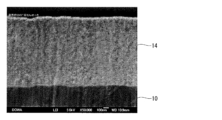
- SEM image This is a SEM image of a cross section of the silver-plated material of Comparative Example 1 magnified 50,000 times.
- a silver-plated material preferably made of copper, nickel or an alloy thereof (preferably having a thickness of 0.01 to A silver strike plating film is formed via a base plating film (with a thickness of 10 ⁇ m, more preferably 0.5 to 2 ⁇ m), and on this silver strike plating film (the thickness including the silver strike plating film is preferably 0.06 ⁇ m).
- an underlying silver plating film ( ⁇ 15 ⁇ m, more preferably 0.10 ⁇ 10 ⁇ m, most preferably 0.15 ⁇ 5 ⁇ m)
- silver potassium cyanide or silver cyanide, potassium cyanide or sodium cyanide By performing electroplating in a silver plating solution consisting of an aqueous solution containing thiazoles or derivatives thereof, a layer (preferably 0.1 to 5.0 ⁇ m thick, more preferably 0.5 to 0.5 ⁇ m thick) is formed on the underlying silver plating film.
- a surface layer of silver containing carbon and sulfur (3.0 ⁇ m, most preferably 0.5 to 2.0 ⁇ m) is formed.
- the underlying silver plating film is coated with electricity for 1 to 90 seconds at a current density of 1 to 10 A/dm 2 in a silver plating solution consisting of an aqueous solution containing potassium silver cyanide (KAg(CN) 2 ), potassium cyanide (KCN), and selenium. It can be formed by plating.
- a silver plating solution consisting of an aqueous solution containing potassium silver cyanide (KAg(CN) 2 ), potassium cyanide (KCN), and selenium. It can be formed by plating.
- benzothiazole (C 7 H 5 NS) is a heterocyclic compound having a benzene skeleton and a thiazole skeleton
- benzothiazoles include benzothiazoles having a mercapto group (-SH) such as 2-mercaptobenzothiazole. It is preferable to have one.
- sodium 2-mercaptobenzothiazole sodium mercaptobenzothiazole (sodium mercaptobenzothiazole (SMBT)), zinc-2-mercaptobenzothiazole, 5-chloro-2-mercaptobenzothiazole, 6-amino-2-mercapto Benzothiazole, 6-nitro-2-mercaptobenzothiazole, 2-mercapto-5-methoxybenzothiazole, and the like
- SMBT sodium 2-mercaptobenzothiazole
- zinc-2-mercaptobenzothiazole sodium 2-mercaptobenzothiazole
- 5-chloro-2-mercaptobenzothiazole 6-amino-2-mercapto Benzothiazole
- 6-amino-2-mercapto Benzothiazole 6-nitro-2-mercaptobenzothiazole
- 2-mercapto-5-methoxybenzothiazole 2-mercapto-5-methoxybenzothiazole, and the like
- the concentration of free cyanide in the silver plating solution is preferably 3 to 70 g/L (more preferably 10 to 70 g/L, most preferably 15 to 60 g/L),
- the concentration of benzothiazole in the silver plating solution is preferably 2 to 100 g/L (more preferably 5 to 90 g/L, even more preferably 8 to 80 g/L, most preferably 10 to 70 g/L),
- the concentration of silver in the silver plating solution is preferably 15 to 140 g/L (more preferably 15 to 125 g/L, most preferably 20 to 110 g/L).
- the concentration of silver potassium cyanide or silver cyanide in the silver plating solution is preferably 30 to 260 g/L (more preferably 30 to 25 g/L, most preferably 35 to 220 g/L), and silver plating
- the concentration of potassium cyanide or sodium cyanide in the liquid is preferably 10 to 200 g/L (more preferably 20 to 185 g/L, even more preferably 30 to 160 g/L, most preferably 40 to 115 g/L)
- the concentration of benzothiazoles or alkali metal salts thereof in the silver plating solution is preferably 3 to 100 g/L (more preferably 10 to 90 g/L, most preferably 15 to 80 g/L).
- electroplating is preferably carried out at a liquid temperature of 15 to 50°C, more preferably carried out at a liquid temperature of 18 to 47°C. Further, electroplating (silver plating) is preferably performed at a current density of 0.5 to 12 A/dm 2 , more preferably 1.5 to 10 A/dm 2 . In addition, in order to form a good silver plating film, the current density is preferably relatively high at 2 A/dm 2 or more, and more preferably 3 A/dm 2 or more.
- a material preferably made of copper, nickel or an alloy thereof (preferably made of copper or a copper alloy) (preferably having a thickness of 0.01
- a silver strike plating film is formed on the base plating film (with a thickness of 0.5 to 2 ⁇ m, preferably 0.5 to 2 ⁇ m), and the thickness including the silver strike plating film is preferably 0.5 ⁇ m. 06 to 15 ⁇ m, more preferably 0.10 to 10 ⁇ m, most preferably 0.15 to 5 ⁇ m) is formed.
- carbon and sulfur (preferably 0.1 to 5.0 ⁇ m thick, more preferably 0.5 to 3.0 ⁇ m, most preferably 0.5 to 2.0 ⁇ m thick) are deposited on this base silver plating film.
- a surface layer containing silver is formed, and the atomic concentration of Ag in the underlying silver plating film is higher than 95 at% (preferably 97 at% or more), and the atomic concentration of S is lower than 0.6 at% (preferably 0 .5at% or less) and the ratio of the C atomic concentration to the Ag atomic concentration is lower than 3% (preferably 2% or lower), and the Ag atomic concentration in the surface layer consisting of silver containing carbon and sulfur is The atomic concentration of S is 95 at% or less (preferably 80 at% or more and 93 at% or less), the atomic concentration of S is 0.6 at% or more (preferably 0.7 at% or more and 5 at% or less), and the atomic concentration of C is The atomic concentration ratio is 3% or more (preferably 5% or more and 20% or less).
- the average crystallite diameter of silver in the silver plating material is 100 nm or less, and it is preferable that the Vickers hardness HV of the surface of the silver plating material is 70 to 160. Further, it is preferable that the total atomic concentration of S derived from the mercapto group of sodium mercaptobenzothiazole and the S element of the five-membered ring in the surface layer made of silver containing carbon and sulfur is 0.3 at % or more, and 0.3 at % or more.
- the total atomic concentration of S derived from the mercapto group of sodium mercaptobenzothiazole and the S element of the five-membered ring in the underlying silver plating film is less than 0.3 at%.
- the content is preferably 0.2 at% or less, and more preferably 0.2 at% or less.
- the surface layer made of silver containing carbon and sulfur is measured by X-ray photoelectron spectroscopy, the atomic concentration of S determined from the spectrum with a peak in the range of 161.6 to 162.9 eV and 163.2 to 162.9 eV.
- the total atomic concentration of S determined from the spectrum having a peak in the range of 164.5 eV is 0.3 at% or more, more preferably 0.4 at% or more, and for the underlying silver plating film,
- the atomic concentration of S is determined from the spectrum with a peak in the range of 161.6 to 162.9 eV and the spectrum with a peak in the range of 163.2 to 164.5 eV.
- the total atomic concentration of S is preferably less than 0.3 at%, more preferably 0.2 at% or less.
- Example 1 a rolled plate made of oxygen-free copper (C1020 1/2H) of 67 mm x 50 mm x 0.3 mm is prepared as a base material (material to be plated), and as a pretreatment of this material to be plated, the material to be plated and the SUS plate are was placed in an alkaline degreasing solution, the material to be plated was used as a cathode, and the SUS plate was used as an anode, electrolytic degreasing was performed at a voltage of 5 V for 30 seconds, followed by washing with water, followed by pickling in 3% sulfuric acid for 15 seconds, and washing with water.
- C1020 1/2H oxygen-free copper
- the pretreated material to be plated was placed in a matte nickel plating solution consisting of an aqueous solution containing 540 g/L of nickel sulfamate tetrahydrate, 25 g/L of nickel chloride, and 35 g/L of boric acid.
- a matte nickel plating solution consisting of an aqueous solution containing 540 g/L of nickel sulfamate tetrahydrate, 25 g/L of nickel chloride, and 35 g/L of boric acid.
- electroplating (matte nickel plating) was performed at a liquid temperature of 50°C for 70 seconds at a current density of 7 A/dm 2 while stirring at 500 rpm with a stirrer to form matte nickel as the base plating film.
- a plating film was formed.
- the thickness of the central portion of this base plating film was measured using a fluorescent X-ray film thickness meter (SFT-110A manufactured by Hitachi High-Tech Science Co., Ltd.) and found to be
- a silver strike plating solution consisting of an aqueous solution containing 3 g/L of potassium silver cyanide (KAg(CN) 2 ) and 90 g/L of potassium cyanide (KCN)
- the material to be plated on which the base plating film was formed was placed on the cathode.
- electroplating was performed at room temperature (25°C) at a current density of 2.0 A/dm 2 for 10 seconds to form a plate with a thickness of about 0.01 ⁇ m.
- After forming the silver strike plating film it was washed with water to thoroughly wash away the silver strike plating solution.
- silver Electroplating silver plating was carried out for 3 seconds at a current density of 2.3 A/dm 2 at a liquid temperature of 18°C while stirring at 500 rpm with a stirrer, using the plated material on which the strike plating film was formed as a cathode and the silver electrode plate as an anode.
- the base silver plating film was formed.
- the thickness of the central part of the underlying silver plating film was measured using the above fluorescent X-ray film thickness meter and found to be 0.06 ⁇ m. Ta.
- a silver plating solution silver concentration 95 g/L, free cyan concentration 38 g/L, benzothiazole (BT) concentration 21 g/L
- the material to be plated on which the underlying silver plating film has been formed is used as a cathode, and the silver Using the electrode plate as an anode, electroplating (silver plating) was performed for 18 seconds at a liquid temperature of 35° C.
- the Vickers hardness HV of the surface (upper three locations) of the silver-plated material thus obtained was measured using a microhardness tester (HM-221 manufactured by Mitutoyo Co., Ltd.) under a measuring load of 10 gf at 10 gf.
- the average value was 139.2 when measured in accordance with JIS Z2244.
- the crystallite diameter in the direction perpendicular to each crystal plane of the (111) plane, (200) plane, (220) plane, and (311) plane on the surface of this silver plating material was measured using an XRD analyzer (manufactured by Rigaku Co., Ltd.). Peaks of crystal planes ((111) peak appearing around 38° and (200) peak appearing around 44° (220 peak that appears around 64° and (311) peak that appears around 77°) using Scherrer's formula. The average crystallite diameter was calculated by weighting and taking the weighted average of the crystallite diameters of each crystal face. As a result, the average crystallite diameter of silver in the silver plating material was 161.6 angstroms (16.16 nm).
- XRD X-ray diffraction
- adhesive tape (cellophane tape manufactured by Nichiban Co., Ltd.) was pasted on the surface of the silver-plated material, and a cross-cut tape peeling test was conducted according to JIS H8504. When the presence or absence of peeling of the silver plating film was visually evaluated, there was no peeling and the adhesion was good.
- Example 2 A silver-plated material was obtained in the same manner as in Example 1, except that the current density when forming the underlying silver-plated film was 2.8 A/dm 2 and the electroplating time was 5 seconds. The thickness of the central portion of the silver plating film on the base of this silver plating material was measured using the above-mentioned fluorescent X-ray film thickness meter, and was found to be 0.1 ⁇ m.
- the Vickers hardness HV of the thus obtained silver-plated material was measured in the same manner as in Example 1, the wear resistance was evaluated, and the crystallite diameter was calculated. As a result, the average Vickers hardness HV was 136.1. Furthermore, it was confirmed that the material was not exposed even after 400 reciprocating sliding operations, indicating excellent wear resistance, and the maximum value of the coefficient of dynamic friction was 0.44. Furthermore, the average crystallite diameter was 130.6 angstroms (13.06 nm).
- the above silver plating material was visually evaluated for the presence or absence of peeling of the silver plating film using the same method as in Example 1. After heating at 350°C for 1 minute, after heating at 350°C for 1 minute, 180° adhesion was observed. After bending and unbending, it was placed in a constant temperature and humidity chamber for 500 hours, and after 500 hours after being placed in a constant temperature and humidity chamber, it was bent 180° and then bent back. There was no peeling in either case, and the adhesion was good. was good.
- Example 3 A silver-plated material was obtained in the same manner as in Example 1, except that the current density when forming the base silver-plated film was 7 A/dm 2 and the electroplating time was 4 seconds. The thickness of the central portion of the silver plating film on the base of this silver plating material was measured using the above-mentioned fluorescent X-ray film thickness meter, and was found to be 0.2 ⁇ m.
- the Vickers hardness HV of the thus obtained silver-plated material was measured in the same manner as in Example 1, the wear resistance was evaluated, and the crystallite diameter was calculated. As a result, the average Vickers hardness HV was 132.1. Furthermore, it was confirmed that the material was not exposed even after 400 reciprocating sliding operations, indicating excellent wear resistance, and the maximum value of the coefficient of dynamic friction was 0.46. Furthermore, the average crystallite diameter was 118.8 angstroms (11.88 nm).
- the above silver plating material was visually evaluated for the presence or absence of peeling of the silver plating film using the same method as in Example 1. After heating at 350°C for 1 minute, after heating at 350°C for 1 minute, 180° adhesion was observed. After bending and unbending, it was placed in a constant temperature and humidity chamber for 500 hours, and after 500 hours after being placed in a constant temperature and humidity chamber, it was bent 180° and then bent back. There was no peeling in either case, and the adhesion was good. was good.
- Example 4 A silver-plated material was obtained in the same manner as in Example 1, except that the current density when forming the underlying silver-plated film was 7 A/dm 2 and the electroplating time was 9 seconds. The thickness of the central portion of the silver plating film on the base of this silver plating material was measured using the above-mentioned fluorescent X-ray film thickness meter, and was found to be 0.5 ⁇ m.
- the Vickers hardness HV of the thus obtained silver-plated material was measured in the same manner as in Example 1, the wear resistance was evaluated, and the crystallite diameter was calculated. As a result, the average Vickers hardness HV was 132.4. Furthermore, it was confirmed that the material was not exposed even after 200 reciprocating sliding operations, indicating excellent wear resistance, and the maximum value of the coefficient of dynamic friction was 0.34. Furthermore, the average crystallite diameter was 133.7 angstroms (13.37 nm).
- the above silver plating material was visually evaluated for the presence or absence of peeling of the silver plating film using the same method as in Example 1. After heating at 350°C for 1 minute, after heating at 350°C for 1 minute, 180° adhesion was observed. After bending and unbending, it was placed in a constant temperature and humidity chamber for 500 hours, and after 500 hours after being placed in a constant temperature and humidity chamber, it was bent 180° and then bent back. There was no peeling in either case, and the adhesion was good. was good.
- Example 5 A silver-plated material was obtained in the same manner as in Example 1, except that the current density when forming the base silver-plated film was 7 A/dm 2 and the electroplating time was 18 seconds. The thickness of the central portion of the silver plating film on the base of this silver plating material was measured using the above-mentioned fluorescent X-ray film thickness meter, and was found to be 1.0 ⁇ m.
- the Vickers hardness HV of the thus obtained silver-plated material was measured in the same manner as in Example 1, the wear resistance was evaluated, and the crystallite diameter was calculated. As a result, the average Vickers hardness HV was 124.1. Furthermore, it was confirmed that the material was not exposed even after 300 reciprocating sliding operations, indicating excellent wear resistance, and the maximum value of the coefficient of dynamic friction was 0.42. Furthermore, the average crystallite diameter was 528.1 angstroms (52.81 nm).
- the above silver plating material was visually evaluated for the presence or absence of peeling of the silver plating film using the same method as in Example 1. After heating at 350°C for 1 minute, after heating at 350°C for 1 minute, 180° adhesion was observed. After bending and unbending, it was placed in a constant temperature and humidity chamber for 500 hours, and after 500 hours after being placed in a constant temperature and humidity chamber, it was bent 180° and then bent back. There was no peeling in either case, and the adhesion was good. was good.
- the silver plating solution used to form the silver plating film on the surface was 175 g/L potassium cyanide (KAg(CN) 2 ), 50 g/L potassium cyanide (KCN), and 30 g/L 2-mercaptobenzo. Except that a silver plating solution (silver concentration 95 g/L, free cyan concentration 20 g/L, benzothiazole (BT) concentration 21 g/L) consisting of an aqueous solution containing sodium thiazole (sodium mercaptobenzothiazole (SMBT)) was used.
- a silver-plated material was obtained in the same manner as in Example 3.
- the thickness of the central part of the silver plating film of this silver plating material (the total thickness of the central part of the base and surface silver plating films) was measured using the above-mentioned fluorescent X-ray film thickness meter, and it was found to be 1.2 ⁇ m. Ta.
- Example 2 wear resistance was evaluated in the same manner as in Example 1, and the crystallite diameter was calculated. As a result, it was confirmed that the material was not exposed even after 400 reciprocating sliding operations, and the material had excellent wear resistance, with a maximum dynamic friction coefficient of 0.36. Further, the average crystallite diameter was 139.5 angstroms (13.95 nm).
- the above silver plating material was visually evaluated for the presence or absence of peeling of the silver plating film using the same method as in Example 1. After heating at 350°C for 1 minute, after heating at 350°C for 1 minute, 180° adhesion was observed. After bending and unbending, it was placed in a constant temperature and humidity chamber for 500 hours, and after 500 hours after being placed in a constant temperature and humidity chamber, it was bent 180° and then bent back. There was no peeling in either case, and the adhesion was good. was good.
- the silver plating solution used to form the silver plating film on the surface was 175 g/L potassium cyanide (KAg(CN) 2 ), 60 g/L potassium cyanide (KCN), and 30 g/L 2-mercaptobenzo. Except that a silver plating solution (silver concentration 95 g/L, free cyan concentration 24 g/L, benzothiazole (BT) concentration 21 g/L) consisting of an aqueous solution containing sodium thiazole (sodium mercaptobenzothiazole (SMBT)) was used.
- a silver-plated material was obtained in the same manner as in Example 3.
- the thickness of the central part of the silver plating film of this silver plating material (the total thickness of the central part of the base and surface silver plating films) was measured using the above-mentioned fluorescent X-ray film thickness meter, and it was found to be 1.2 ⁇ m. Ta.
- the above silver plating material was visually evaluated for the presence or absence of peeling of the silver plating film using the same method as in Example 1. After heating at 350°C for 1 minute, after heating at 350°C for 1 minute, 180° adhesion was observed. After bending and unbending, it was placed in a constant temperature and humidity chamber for 500 hours, and after 500 hours after being placed in a constant temperature and humidity chamber, it was bent 180° and then bent back. There was no peeling in either case, and the adhesion was good. was good.
- the silver plating solution used to form the surface silver plating film was 175 g/L potassium cyanide (KAg(CN) 2 ), 70 g/L potassium cyanide (KCN), and 30 g/L 2-mercaptobenzo. Except that a silver plating solution (silver concentration 95 g/L, free cyan concentration 28 g/L, benzothiazole (BT) concentration 21 g/L) consisting of an aqueous solution containing sodium thiazole (sodium mercaptobenzothiazole (SMBT)) was used.
- a silver-plated material was obtained in the same manner as in Example 3.
- the thickness of the central part of the silver plating film of this silver plating material (the total thickness of the central part of the base and surface silver plating films) was measured using the above-mentioned fluorescent X-ray film thickness meter, and it was found to be 1.2 ⁇ m. Ta.
- the above silver plating material was visually evaluated for the presence or absence of peeling of the silver plating film using the same method as in Example 1. After heating at 350°C for 1 minute, after heating at 350°C for 1 minute, 180° adhesion was observed. After bending and unbending, it was placed in a constant temperature and humidity chamber for 500 hours, and after 500 hours after being placed in a constant temperature and humidity chamber, it was bent 180° and then bent back. There was no peeling in either case, and the adhesion was good. was good.
- the silver plating solution used to form the surface silver plating film was 175 g/L potassium cyanide (KAg(CN) 2 ), 80 g/L potassium cyanide (KCN), and 30 g/L 2-mercaptobenzo. Except that a silver plating solution (silver concentration 95 g/L, free cyan concentration 32 g/L, benzothiazole (BT) concentration 21 g/L) consisting of an aqueous solution containing sodium thiazole (sodium mercaptobenzothiazole (SMBT)) was used.
- a silver-plated material was obtained in the same manner as in Example 3.
- the thickness of the central part of the silver plating film of this silver plating material (the total thickness of the central part of the base and surface silver plating films) was measured using the above-mentioned fluorescent X-ray film thickness meter, and it was found to be 1.2 ⁇ m. Ta.
- Example 2 wear resistance was evaluated in the same manner as in Example 1, and the crystallite diameter was calculated. As a result, it was confirmed that the material was not exposed even after 300 reciprocating sliding operations, and the material had excellent wear resistance, with a maximum dynamic friction coefficient of 0.40. Further, the average crystallite diameter was 132.6 angstroms (13.26 nm).
- the above silver plating material was visually evaluated for the presence or absence of peeling of the silver plating film using the same method as in Example 1. After heating at 350°C for 1 minute, after heating at 350°C for 1 minute, 180° adhesion was observed. After bending and unbending, it was placed in a constant temperature and humidity chamber for 500 hours, and after 500 hours after being placed in a constant temperature and humidity chamber, it was bent 180° and then bent back. There was no peeling in either case, and the adhesion was good. was good.
- the silver plating solution used to form the surface silver plating film was 175 g/L potassium cyanide (KAg(CN) 2 ), 90 g/L potassium cyanide (KCN), and 30 g/L 2-mercaptobenzo. Except that a silver plating solution (silver concentration 95 g/L, free cyan concentration 36 g/L, benzothiazole (BT) concentration 21 g/L) consisting of an aqueous solution containing sodium thiazole (sodium mercaptobenzothiazole (SMBT)) was used.
- a silver-plated material was obtained in the same manner as in Example 3.
- the thickness of the central part of the silver plating film of this silver plating material (the total thickness of the central part of the base and surface silver plating films) was measured using the above-mentioned fluorescent X-ray film thickness meter, and it was found to be 1.2 ⁇ m. Ta.
- Example 2 wear resistance was evaluated in the same manner as in Example 1, and the crystallite diameter was calculated. As a result, it was confirmed that the material was not exposed even after 500 reciprocating sliding operations, and the material had excellent wear resistance, with a maximum dynamic friction coefficient of 0.43. Further, the average crystallite diameter was 135.0 angstroms (13.50 nm).
- the above silver plating material was visually evaluated for the presence or absence of peeling of the silver plating film using the same method as in Example 1. After heating at 350°C for 1 minute, after heating at 350°C for 1 minute, 180° adhesion was observed. After bending and unbending, it was placed in a constant temperature and humidity chamber for 500 hours, and after 500 hours after being placed in a constant temperature and humidity chamber, it was bent 180° and then bent back. There was no peeling in either case, and the adhesion was good. was good.
- the silver plating solution used to form the surface silver plating film was 175 g/L potassium cyanide (KAg(CN) 2 ), 100 g/L potassium cyanide (KCN), and 30 g/L 2-mercaptobenzo. Except that a silver plating solution (silver concentration 95 g/L, free cyan concentration 40 g/L, benzothiazole (BT) concentration 21 g/L) consisting of an aqueous solution containing sodium thiazole (sodium mercaptobenzothiazole (SMBT)) was used.
- a silver-plated material was obtained in the same manner as in Example 3.
- the thickness of the central part of the silver plating film of this silver plating material (the total thickness of the central part of the base and surface silver plating films) was measured using the above-mentioned fluorescent X-ray film thickness meter, and it was found to be 1.2 ⁇ m. Ta.
- Example 2 wear resistance was evaluated in the same manner as in Example 1, and the crystallite diameter was calculated. As a result, it was confirmed that the material was not exposed even after 300 reciprocating sliding operations, and the material had excellent wear resistance, with a maximum dynamic friction coefficient of 0.39. Further, the average crystallite diameter was 134.0 angstroms (13.40 nm).
- the above silver plating material was visually evaluated for the presence or absence of peeling of the silver plating film using the same method as in Example 1. After heating at 350°C for 1 minute, after heating at 350°C for 1 minute, 180° adhesion was observed. After bending and unbending, it was placed in a constant temperature and humidity chamber for 500 hours, and after 500 hours after being placed in a constant temperature and humidity chamber, it was bent 180° and then bent back. There was no peeling in either case, and the adhesion was good. was good.
- the silver plating solution used to form the surface silver plating film was 175 g/L potassium cyanide (KAg(CN) 2 ), 110 g/L potassium cyanide (KCN), and 30 g/L 2-mercaptobenzo. Except that a silver plating solution (silver concentration 95 g/L, free cyan concentration 44 g/L, benzothiazole (BT) concentration 21 g/L) consisting of an aqueous solution containing sodium thiazole (sodium mercaptobenzothiazole (SMBT)) was used.
- a silver-plated material was obtained in the same manner as in Example 3.
- the thickness of the central part of the silver plating film of this silver plating material (the total thickness of the central part of the base and surface silver plating films) was measured using the above-mentioned fluorescent X-ray film thickness meter, and it was found to be 1.2 ⁇ m. Ta.
- Example 2 wear resistance was evaluated in the same manner as in Example 1, and the crystallite diameter was calculated. As a result, it was confirmed that the material was not exposed even after 400 reciprocating sliding operations, and the material had excellent wear resistance, with a maximum dynamic friction coefficient of 0.42. Further, the average crystallite diameter was 148.7 angstroms (14.87 nm).
- the above silver plating material was visually evaluated for the presence or absence of peeling of the silver plating film using the same method as in Example 1. After heating at 350°C for 1 minute, after heating at 350°C for 1 minute, 180° adhesion was observed. After bending and unbending, it was placed in a constant temperature and humidity chamber for 500 hours, and after 500 hours after being placed in a constant temperature and humidity chamber, it was bent 180° and then bent back. There was no peeling in either case, and the adhesion was good. was good.
- the silver plating solution used to form the surface silver plating film was 175 g/L potassium cyanide (KAg(CN) 2 ), 120 g/L potassium cyanide (KCN), and 30 g/L 2-mercaptobenzo. Except that a silver plating solution (silver concentration 95 g/L, free cyan concentration 48 g/L, benzothiazole (BT) concentration 21 g/L) consisting of an aqueous solution containing sodium thiazole (sodium mercaptobenzothiazole (SMBT)) was used.
- a silver-plated material was obtained in the same manner as in Example 3.
- the thickness of the central part of the silver plating film of this silver plating material (the total thickness of the central part of the base and surface silver plating films) was measured using the above-mentioned fluorescent X-ray film thickness meter, and it was found to be 1.2 ⁇ m. Ta.
- Example 2 wear resistance was evaluated in the same manner as in Example 1, and the crystallite diameter was calculated. As a result, it was confirmed that the material was not exposed even after 400 reciprocating sliding operations, and the material had excellent wear resistance, with a maximum dynamic friction coefficient of 0.41. Further, the average crystallite diameter was 142.3 angstroms (14.23 nm).
- the above silver plating material was visually evaluated for the presence or absence of peeling of the silver plating film using the same method as in Example 1. After heating at 350°C for 1 minute, after heating at 350°C for 1 minute, 180° adhesion was observed. After bending and unbending, it was placed in a constant temperature and humidity chamber for 500 hours, and after 500 hours after being placed in a constant temperature and humidity chamber set at 85% humidity, it was bent 180 degrees closely and bent back. There was no peeling and the adhesion was good.
- the silver plating solution used to form the surface silver plating film was 175 g/L potassium cyanide (KAg(CN) 2 ), 130 g/L potassium cyanide (KCN), and 30 g/L 2-mercaptobenzo. Except that a silver plating solution (silver concentration 95 g/L, free cyan concentration 52 g/L, benzothiazole (BT) concentration 21 g/L) consisting of an aqueous solution containing sodium thiazole (sodium mercaptobenzothiazole (SMBT)) was used.
- a silver-plated material was obtained in the same manner as in Example 3.
- the thickness of the central part of the silver plating film of this silver plating material (the total thickness of the central part of the base and surface silver plating films) was measured using the above-mentioned fluorescent X-ray film thickness meter, and it was found to be 1.2 ⁇ m. Ta.
- Example 2 wear resistance was evaluated in the same manner as in Example 1, and the crystallite diameter was calculated. As a result, it was confirmed that the material was not exposed even after 300 reciprocating sliding operations, and the material had excellent wear resistance, with a maximum dynamic friction coefficient of 0.46. Further, the average crystallite diameter was 141.0 angstroms (14.10 nm).
- the above silver plating material was visually evaluated for the presence or absence of peeling of the silver plating film using the same method as in Example 1. After heating at 350°C for 1 minute, after heating at 350°C for 1 minute, 180° adhesion was observed. After bending and unbending, it was placed in a constant temperature and humidity chamber for 500 hours, and after 500 hours after being placed in a constant temperature and humidity chamber, it was bent 180° and then bent back. There was no peeling in either case, and the adhesion was good. was good.
- the silver plating solution used to form the surface silver plating film was 175 g/L potassium cyanide (KAg(CN) 2 ), 90 g/L potassium cyanide (KCN), and 20 g/L 2-mercaptobenzo. Except that a silver plating solution (silver concentration 95 g/L, free cyan concentration 36 g/L, benzothiazole (BT) concentration 14 g/L) consisting of an aqueous solution containing sodium thiazole (sodium mercaptobenzothiazole (SMBT)) was used.
- a silver-plated material was obtained in the same manner as in Example 3.
- the thickness of the central part of the silver plating film of this silver plating material (the total thickness of the central part of the base and surface silver plating films) was measured using the above-mentioned fluorescent X-ray film thickness meter, and it was found to be 1.2 ⁇ m. Ta.
- the above silver plating material was visually evaluated for the presence or absence of peeling of the silver plating film using the same method as in Example 1. After heating at 350°C for 1 minute, after heating at 350°C for 1 minute, 180° adhesion was observed. After bending and unbending, it was placed in a constant temperature and humidity chamber for 500 hours, and after 500 hours after being placed in a constant temperature and humidity chamber, it was bent 180° and then bent back. There was no peeling in either case, and the adhesion was good. was good.
- the silver plating solution used to form the surface silver plating film was 175 g/L potassium cyanide (KAg(CN) 2 ), 90 g/L potassium cyanide (KCN), and 25 g/L 2-mercaptobenzo. Except that a silver plating solution (silver concentration 95 g/L, free cyan concentration 36 g/L, benzothiazole (BT) concentration 18 g/L) consisting of an aqueous solution containing sodium thiazole (sodium mercaptobenzothiazole (SMBT)) was used.
- a silver-plated material was obtained in the same manner as in Example 3.
- the thickness of the central part of the silver plating film of this silver plating material (the total thickness of the central part of the base and surface silver plating films) was measured using the above-mentioned fluorescent X-ray film thickness meter, and it was found to be 1.2 ⁇ m. Ta.
- Example 2 wear resistance was evaluated in the same manner as in Example 1, and the crystallite diameter was calculated. As a result, it was confirmed that the material was not exposed even after 400 reciprocating sliding operations, and the material had excellent wear resistance, with a maximum dynamic friction coefficient of 0.49. Further, the average crystallite diameter was 134.0 angstroms (13.40 nm).
- the above silver plating material was visually evaluated for the presence or absence of peeling of the silver plating film using the same method as in Example 1. After heating at 350°C for 1 minute, after heating at 350°C for 1 minute, 180° adhesion was observed. After bending and unbending, it was placed in a constant temperature and humidity chamber for 500 hours, and after 500 hours after being placed in a constant temperature and humidity chamber, it was bent 180° and then bent back. There was no peeling in either case, and the adhesion was good. was good.
- the silver plating solution used to form the silver plating film on the surface was 175 g/L of potassium silver cyanide (KAg(CN) 2 ), 90 g/L of potassium cyanide (KCN), and 35 g/L of 2-mercaptobenzo. Except that a silver plating solution (silver concentration 95 g/L, free cyan concentration 36 g/L, benzothiazole (BT) concentration 25 g/L) consisting of an aqueous solution containing sodium thiazole (sodium mercaptobenzothiazole (SMBT)) was used.
- a silver-plated material was obtained in the same manner as in Example 3.
- the thickness of the central part of the silver plating film of this silver plating material (the total thickness of the central part of the base and surface silver plating films) was measured using the above-mentioned fluorescent X-ray film thickness meter, and it was found to be 1.2 ⁇ m. Ta.
- the above silver plating material was visually evaluated for the presence or absence of peeling of the silver plating film using the same method as in Example 1. After heating at 350°C for 1 minute, after heating at 350°C for 1 minute, 180° adhesion was observed. After bending and unbending, it was placed in a constant temperature and humidity chamber for 500 hours, and after 500 hours after being placed in a constant temperature and humidity chamber, it was bent 180° and then bent back. There was no peeling in either case, and the adhesion was good. was good.
- the silver plating solution used to form the surface silver plating film was 175 g/L potassium cyanide (KAg(CN) 2 ), 90 g/L potassium cyanide (KCN), and 40 g/L 2-mercaptobenzo. Except that a silver plating solution (silver concentration 95 g/L, free cyan concentration 36 g/L, benzothiazole (BT) concentration 29 g/L) consisting of an aqueous solution containing sodium thiazole (sodium mercaptobenzothiazole (SMBT)) was used.
- a silver-plated material was obtained in the same manner as in Example 3.
- the thickness of the central part of the silver plating film of this silver plating material (the total thickness of the central part of the base and surface silver plating films) was measured using the above-mentioned fluorescent X-ray film thickness meter, and it was found to be 1.2 ⁇ m. Ta.
- Example 2 wear resistance was evaluated in the same manner as in Example 1, and the crystallite diameter was calculated. As a result, it was confirmed that the material was not exposed even after 700 reciprocating sliding operations, and the material had excellent wear resistance, with a maximum dynamic friction coefficient of 0.42. Further, the average crystallite diameter was 102.1 angstroms (10.21 nm).
- the above silver plating material was visually evaluated for the presence or absence of peeling of the silver plating film using the same method as in Example 1. After heating at 350°C for 1 minute, after heating at 350°C for 1 minute, 180° adhesion was observed. After bending and unbending, it was placed in a constant temperature and humidity chamber for 500 hours, and after 500 hours after being placed in a constant temperature and humidity chamber, it was bent 180° and then bent back. There was no peeling in either case, and the adhesion was good. was good.
- the silver plating solution used to form the surface silver plating film was 175 g/L potassium cyanide (KAg(CN) 2 ), 90 g/L potassium cyanide (KCN), and 50 g/L 2-mercaptobenzo. Except that a silver plating solution (silver concentration 95 g/L, free cyan concentration 36 g/L, benzothiazole (BT) concentration 36 g/L) consisting of an aqueous solution containing sodium thiazole (sodium mercaptobenzothiazole (SMBT)) was used.
- a silver-plated material was obtained in the same manner as in Example 3.
- the thickness of the central part of the silver plating film of this silver plating material (the total thickness of the central part of the base and surface silver plating films) was measured using the above-mentioned fluorescent X-ray film thickness meter, and it was found to be 1.2 ⁇ m. Ta.
- the above silver plating material was visually evaluated for the presence or absence of peeling of the silver plating film using the same method as in Example 1. After heating at 350°C for 1 minute, after heating at 350°C for 1 minute, 180° adhesion was observed. After bending and unbending, it was placed in a constant temperature and humidity chamber for 500 hours, and after 500 hours after being placed in a constant temperature and humidity chamber, it was bent 180° and then bent back. There was no peeling in either case, and the adhesion was good. was good.
- the silver plating solution used to form the silver plating film on the surface was 175 g/L potassium cyanide (KAg(CN) 2 ), 90 g/L potassium cyanide (KCN), and 60 g/L 2-mercaptobenzo. Except for using a silver plating solution (silver concentration 95 g/L, free cyan concentration 36 g/L, benzothiazole (BT) concentration 43 g/L) consisting of an aqueous solution containing sodium thiazole (sodium mercaptobenzothiazole (SMBT)). A silver-plated material was obtained in the same manner as in Example 3.
- a silver plating solution silver concentration 95 g/L, free cyan concentration 36 g/L, benzothiazole (BT) concentration 43 g/L
- SMBT sodium mercaptobenzothiazole
- the thickness of the central part of the silver plating film of this silver plating material (the total thickness of the central part of the base and surface silver plating films) was measured using the above-mentioned fluorescent X-ray film thickness meter, and it was found to be 1.2 ⁇ m. Ta.
- Example 2 wear resistance was evaluated in the same manner as in Example 1, and the crystallite diameter was calculated. As a result, it was confirmed that the material was not exposed even after 1,000 or more reciprocating sliding operations, and the material had excellent wear resistance, with a maximum dynamic friction coefficient of 0.54. Further, the average crystallite diameter was 126.6 angstroms (12.66 nm).
- the above silver plating material was visually evaluated for the presence or absence of peeling of the silver plating film using the same method as in Example 1. After heating at 350°C for 1 minute, after heating at 350°C for 1 minute, 180° adhesion was observed. After bending and unbending, it was placed in a constant temperature and humidity chamber for 500 hours, and after 500 hours after being placed in a constant temperature and humidity chamber, it was bent 180° and then bent back. There was no peeling in either case, and the adhesion was good. was good.
- the silver plating solution used to form the surface silver plating film was 175 g/L potassium cyanide (KAg(CN) 2 ), 90 g/L potassium cyanide (KCN), and 70 g/L 2-mercaptobenzo. Except for using a silver plating solution (silver concentration 95 g/L, free cyan concentration 36 g/L, benzothiazole (BT) concentration 50 g/L) consisting of an aqueous solution containing sodium thiazole (sodium mercaptobenzothiazole (SMBT)). A silver-plated material was obtained in the same manner as in Example 3.
- a silver plating solution silver concentration 95 g/L, free cyan concentration 36 g/L, benzothiazole (BT) concentration 50 g/L
- SMBT sodium mercaptobenzothiazole
- the thickness of the central part of the silver plating film of this silver plating material (the total thickness of the central part of the base and surface silver plating films) was measured using the above-mentioned fluorescent X-ray film thickness meter, and it was found to be 1.2 ⁇ m. Ta.
- Example 2 wear resistance was evaluated in the same manner as in Example 1, and the crystallite diameter was calculated. As a result, it was confirmed that the material was not exposed even after more than 1000 reciprocating sliding operations, and the material had excellent wear resistance, with a maximum dynamic friction coefficient of 0.57. Further, the average crystallite diameter was 128.1 angstroms (12.81 nm).
- the above silver plating material was visually evaluated for the presence or absence of peeling of the silver plating film using the same method as in Example 1. After heating at 350°C for 1 minute, after heating at 350°C for 1 minute, 180° adhesion was observed. After bending and unbending, it was placed in a constant temperature and humidity chamber for 500 hours, and after 500 hours after being placed in a constant temperature and humidity chamber, it was bent 180° and then bent back. There was no peeling in either case, and the adhesion was good. was good.
- Example 22 A silver-plated material was obtained in the same manner as in Example 1, except that the current density when forming the underlying silver-plated film was 7 A/dm 2 and the electroplating time was 36 seconds. The thickness of the central portion of the silver plating film on the base of this silver plating material was measured using the above-mentioned fluorescent X-ray film thickness meter, and was found to be 2 ⁇ m.
- the Vickers hardness HV of the thus obtained silver-plated material was measured in the same manner as in Example 1, the wear resistance was evaluated, and the crystallite diameter was calculated. As a result, the average Vickers hardness HV was 112.3. Furthermore, it was confirmed that the material was not exposed even after 200 reciprocating sliding operations, indicating excellent wear resistance, and the maximum value of the coefficient of dynamic friction was 0.50. Furthermore, the average crystallite diameter was 584.1 angstroms (58.41 nm).
- the above silver plating material was visually evaluated for the presence or absence of peeling of the silver plating film using the same method as in Example 1. After heating at 350°C for 1 minute, after heating at 350°C for 1 minute, 180° adhesion was observed. After bending and unbending, it was placed in a constant temperature and humidity chamber for 500 hours, and after 500 hours after being placed in a constant temperature and humidity chamber, it was bent 180° and then bent back. There was no peeling in either case, and the adhesion was good. was good.
- Example 23 A silver-plated material was obtained in the same manner as in Example 1, except that the current density when forming the underlying silver-plated film was 7 A/dm 2 and the electroplating time was 90 seconds. The thickness of the central part of the silver plating film on the base of this silver plating material was measured using the above-mentioned fluorescent X-ray film thickness meter, and was found to be 5 ⁇ m.
- the Vickers hardness HV of the thus obtained silver-plated material was measured in the same manner as in Example 1, the wear resistance was evaluated, and the crystallite diameter was calculated. As a result, the average Vickers hardness HV was 96.8. Furthermore, it was confirmed that the material was not exposed even after 400 reciprocating sliding operations, indicating excellent wear resistance, and the maximum value of the coefficient of dynamic friction was 0.52. Furthermore, the average crystallite diameter was 611.9 angstroms (61.19 nm).
- the above silver plating material was visually evaluated for the presence or absence of peeling of the silver plating film using the same method as in Example 1. After heating at 350°C for 1 minute, after heating at 350°C for 1 minute, 180° adhesion was observed. After bending and unbending, it was placed in a constant temperature and humidity chamber for 500 hours, and after 500 hours after being placed in a constant temperature and humidity chamber, it was bent 180° and then bent back. There was no peeling in either case, and the adhesion was good. was good.
- Example 24 A silver-plated material was obtained in the same manner as in Example 1, except that the current density when forming the base silver-plated film was 7 A/dm 2 and the electroplating time was 180 seconds. The thickness of the central part of the silver plating film on the base of this silver plating material was measured using the above-mentioned fluorescent X-ray film thickness meter, and was found to be 10 ⁇ m.
- the Vickers hardness HV of the thus obtained silver-plated material was measured in the same manner as in Example 1, the wear resistance was evaluated, and the crystallite diameter was calculated. As a result, the average Vickers hardness HV was 92.0. Furthermore, it was confirmed that the material was not exposed even after 400 reciprocating sliding operations, and the material had excellent wear resistance, with a maximum dynamic friction coefficient of 0.50. Furthermore, the average crystallite diameter was 625.1 angstroms (62.51 nm).
- the above silver plating material was visually evaluated for the presence or absence of peeling of the silver plating film using the same method as in Example 1. After heating at 350°C for 1 minute, after heating at 350°C for 1 minute, 180° adhesion was observed. After bending and unbending, it was placed in a constant temperature and humidity chamber for 500 hours, and after 500 hours after being placed in a constant temperature and humidity chamber, it was bent 180° and then bent back. There was no peeling in either case, and the adhesion was good. was good.
- Example 1 A silver-plated material was obtained in the same manner as in Example 1, except that the underlying silver-plated film was not formed.
- the Vickers hardness HV of the thus obtained silver-plated material was measured in the same manner as in Example 1, the wear resistance was evaluated, and the crystallite diameter was calculated. As a result, the average Vickers hardness HV was 139.4. Furthermore, it was confirmed that the material was not exposed even after 400 reciprocating sliding operations, indicating excellent wear resistance, and the maximum value of the coefficient of dynamic friction was 0.41. Furthermore, the average crystallite diameter was 146.3 angstroms (14.63 nm).
- the above silver plating material was visually evaluated for the presence or absence of peeling of the silver plating film using the same method as in Example 1. After heating at 350°C for 1 minute, after heating at 350°C for 1 minute, 180° adhesion was observed. After bending and bending back, there was no peeling in any case, and the adhesion was good. In addition, after 240 hours in a constant temperature and humidity chamber, the silver strike plating peeled off in an area larger than 5% of the surface area of the silver strike plating film, and after 500 hours in a constant temperature and humidity chamber, the silver strike plating peeled off. The peeling occurred in an area larger than 10% by area based on the surface area of the film, and the adhesion was not good.
- a solution silver concentration 95 g/L, free cyan concentration 38 g/L, selenium concentration 69 mg/L
- the material to be plated on which a silver strike plating film has been formed is used as a cathode
- the silver electrode plate is used as an anode, and stirred at 500 rpm with a stirrer.
- a silver-plated material was obtained in the same manner as in Example 1, except that electroplating (silver plating) was performed at a liquid temperature of 18° C. and a current density of 5 A/dm 2 for 120 seconds to form a silver-plated film.
- the thickness of the central portion of this silver plating film was measured using the above-mentioned fluorescent X-ray film thickness meter, and was found to be 5 ⁇ m.
- the Vickers hardness HV of the thus obtained silver-plated material was measured in the same manner as in Example 1, the wear resistance was evaluated, and the crystallite diameter was calculated. As a result, the average Vickers hardness HV was 132.0. Further, it was confirmed that the material was exposed after 80 reciprocating sliding operations, and the wear resistance was not good, and the maximum value of the coefficient of dynamic friction was 1.71. Furthermore, the average crystallite diameter was 278.0 angstroms (27.80 nm).
- the above silver plating material was visually evaluated for the presence or absence of peeling of the silver plating film using the same method as in Example 1. After heating at 350°C for 1 minute, after heating at 350°C for 1 minute, 180° adhesion was observed. After bending and unbending, it was placed in a constant temperature and humidity chamber for 500 hours, and after 500 hours after being placed in a constant temperature and humidity chamber, it was bent 180° and then bent back. There was no peeling in either case, and the adhesion was good. was good.
- the silver plating solution used to form the surface silver plating film was 138 g/L potassium cyanide (KAg(CN) 2 ), 80 g/L potassium cyanide (KCN), and 32 g/L 2-mercaptobenzo. Except for using a silver plating solution (silver concentration 75 g/L, free cyan concentration 32 g/L, benzothiazole (BT) concentration 23 g/L) consisting of an aqueous solution containing sodium thiazole (sodium mercaptobenzothiazole (SMBT)). A silver-plated material was obtained in the same manner as in Example 3.
- a silver plating solution silver concentration 75 g/L, free cyan concentration 32 g/L, benzothiazole (BT) concentration 23 g/L
- SMBT sodium mercaptobenzothiazole
- the thickness of the central part of the silver plating film of this silver plating material (the total thickness of the central part of the base and surface silver plating films) was measured using the above-mentioned fluorescent X-ray film thickness meter, and it was found to be 1.2 ⁇ m. Ta.
- the Vickers hardness HV of the thus obtained silver-plated material was measured in the same manner as in Example 1, the wear resistance was evaluated, and the crystallite diameter was calculated. As a result, the average Vickers hardness HV was 122.6. Furthermore, it was confirmed that the material was not exposed even after 400 reciprocating sliding operations, indicating excellent wear resistance, and the maximum value of the coefficient of dynamic friction was 0.41. Further, the average crystallite diameter was 116.0 angstroms (11.60 nm).
- the above silver plating material was visually evaluated for the presence or absence of peeling of the silver plating film using the same method as in Example 1. After heating at 350°C for 1 minute, after heating at 350°C for 1 minute, 180° adhesion was observed. After bending and unbending, it was placed in a constant temperature and humidity chamber for 500 hours, and after 500 hours after being placed in a constant temperature and humidity chamber, it was bent 180° and then bent back. There was no peeling in either case, and the adhesion was good. was good.
- the silver plating solution used to form the surface silver plating film was 240 g/L potassium cyanide (KAg(CN) 2 ), 100 g/L potassium cyanide (KCN), and 28 g/L 2-mercaptobenzo. Except that a silver plating solution (silver concentration 130 g/L, free cyan concentration 40 g/L, benzothiazole (BT) concentration 20 g/L) consisting of an aqueous solution containing sodium thiazole (sodium mercaptobenzothiazole (SMBT)) was used.
- a silver-plated material was obtained in the same manner as in Example 3.
- the thickness of the central part of the silver plating film of this silver plating material (the total thickness of the central part of the base and surface silver plating films) was measured using the above-mentioned fluorescent X-ray film thickness meter, and it was found to be 1.2 ⁇ m. Ta.
- the Vickers hardness HV of the thus obtained silver-plated material was measured in the same manner as in Example 1, the wear resistance was evaluated, and the crystallite diameter was calculated. As a result, the average Vickers hardness HV was 125.6. Furthermore, it was confirmed that the material was not exposed even after 300 reciprocating sliding operations, indicating excellent wear resistance, and the maximum value of the coefficient of dynamic friction was 0.48. Further, the average crystallite diameter was 132.5 angstroms (13.25 nm).
- the above silver plating material was visually evaluated for the presence or absence of peeling of the silver plating film using the same method as in Example 1. After heating at 350°C for 1 minute, after heating at 350°C for 1 minute, 180° adhesion was observed. After bending and unbending, it was placed in a constant temperature and humidity chamber for 500 hours, and after 500 hours after being placed in a constant temperature and humidity chamber, it was bent 180° and then bent back. There was no peeling in either case, and the adhesion was good. was good.
- Example 27 Silver consisting of an aqueous solution containing 175 g/L of potassium silver cyanide (KAg(CN) 2 ), 95 g/L of potassium cyanide (KCN), and 30 g/L of sodium 2-mercaptobenzothiazole (sodium mercaptobenzothiazole (SMBT)).
- a plating solution silver concentration 95 g/L, free cyan concentration 38 g/L, benzothiazole (BT) concentration 21 g/L
- the material to be plated on which the underlying silver plating film has been formed is used as a cathode, and a silver electrode plate is used as a cathode.
- Example 3 The same method as in Example 3 was used as the anode, except that electroplating (silver plating) was performed for 54 seconds at a current density of 7 A / dm 2 at a liquid temperature of 35 ° C. while stirring at 500 rpm with a stirrer to form a silver plating film. , a silver-plated material was obtained. The thickness of the central portion of this silver plating film was measured using the above-mentioned fluorescent X-ray film thickness meter and was found to be 3.29 ⁇ m.
- the Vickers hardness HV of the thus obtained silver-plated material was measured in the same manner as in Example 1, the wear resistance was evaluated, and the crystallite diameter was calculated. As a result, the average Vickers hardness HV was 104.3. Furthermore, it was confirmed that the material was not exposed even after 700 reciprocating sliding operations, and the material had excellent wear resistance, with a maximum dynamic friction coefficient of 0.35. Further, the average crystallite diameter was 87.1 angstroms (8.71 nm).
- the above silver plating material was visually evaluated for the presence or absence of peeling of the silver plating film using the same method as in Example 1. After heating at 350°C for 1 minute, after heating at 350°C for 1 minute, 180° adhesion was observed. After bending and unbending, it was placed in a constant temperature and humidity chamber for 500 hours, and after 500 hours after being placed in a constant temperature and humidity chamber, it was bent 180° and then bent back. There was no peeling in either case, and the adhesion was good. was good.
- Example 28 Silver consisting of an aqueous solution containing 175 g/L of potassium silver cyanide (KAg(CN) 2 ), 95 g/L of potassium cyanide (KCN), and 30 g/L of sodium 2-mercaptobenzothiazole (sodium mercaptobenzothiazole (SMBT)).
- a plating solution silver concentration 95 g/L, free cyan concentration 38 g/L, benzothiazole (BT) concentration 21 g/L
- the material to be plated on which the underlying silver plating film has been formed is used as a cathode, and a silver electrode plate is used as a cathode.
- Example 3 The same method as in Example 3 was used as the anode, except that electroplating (silver plating) was performed for 90 seconds at a current density of 7 A/dm 2 at a liquid temperature of 35° C. while stirring at 500 rpm with a stirrer to form a silver plating film. , a silver-plated material was obtained. The thickness of the central portion of this silver plating film was measured using the above-mentioned fluorescent X-ray film thickness meter, and was found to be 5.34 ⁇ m.
- the Vickers hardness HV of the thus obtained silver-plated material was measured in the same manner as in Example 1, the wear resistance was evaluated, and the crystallite diameter was calculated. As a result, the average Vickers hardness HV was 92.4. Furthermore, it was confirmed that the material was not exposed even after more than 1000 reciprocating sliding operations, and the material had excellent wear resistance, with a maximum dynamic friction coefficient of 0.35. Further, the average crystallite diameter was 90.39 angstroms (9.039 nm).
- the above silver plating material was visually evaluated for the presence or absence of peeling of the silver plating film using the same method as in Example 1. After heating at 350°C for 1 minute, after heating at 350°C for 1 minute, 180° adhesion was observed. After bending and unbending, it was placed in a constant temperature and humidity chamber for 500 hours, and after 500 hours after being placed in a constant temperature and humidity chamber, it was bent 180° and then bent back. There was no peeling in either case, and the adhesion was good. was good.
- Example 29 In a matte nickel plating solution consisting of an aqueous solution containing 540 g/L nickel sulfamate tetrahydrate, 25 g/L nickel chloride, and 35 g/L boric acid, the pretreated material to be plated is used as a cathode, Using a nickel electrode plate as an anode, electroplating (matte nickel plating) was performed at a liquid temperature of 50°C for 7 seconds at a current density of 7 A/dm 2 while stirring at 500 rpm with a stirrer to form a matte nickel plating film as a base plating film. A silver-plated material was obtained in the same manner as in Example 3, except for the formation. The thickness of the central portion of this base plating film was measured using the above-mentioned fluorescent X-ray film thickness meter and was found to be 0.1 ⁇ m.
- the Vickers hardness HV of the thus obtained silver-plated material was measured in the same manner as in Example 1, the wear resistance was evaluated, and the crystallite diameter was calculated. As a result, the average Vickers hardness HV was 101.8. Furthermore, it was confirmed that the material was not exposed even after 100 reciprocating sliding operations, indicating excellent wear resistance, and the maximum value of the coefficient of dynamic friction was 0.39. Further, the average crystallite diameter was 102.53 angstroms (10.253 nm).
- the above silver plating material was visually evaluated for the presence or absence of peeling of the silver plating film using the same method as in Example 1. After heating at 350°C for 1 minute, after heating at 350°C for 1 minute, 180° adhesion was observed. After bending and unbending, it was placed in a constant temperature and humidity chamber for 500 hours, and after 500 hours after being placed in a constant temperature and humidity chamber, it was bent 180° and then bent back. There was no peeling in either case, and the adhesion was good. was good.
- Example 30 In a matte nickel plating solution consisting of an aqueous solution containing 540 g/L nickel sulfamate tetrahydrate, 25 g/L nickel chloride, and 35 g/L boric acid, the pretreated material to be plated is used as a cathode, Using a nickel electrode plate as an anode, electroplating (matte nickel plating) was performed for 14 seconds at a current density of 7 A/dm 2 at a liquid temperature of 50°C while stirring at 500 rpm with a stirrer to form a matte nickel plating film as a base plating film. A silver-plated material was obtained in the same manner as in Example 3, except for the formation. The thickness of the central portion of this base plating film was measured using the above-mentioned fluorescent X-ray film thickness meter and was found to be 0.2 ⁇ m.
- the Vickers hardness HV of the thus obtained silver-plated material was measured in the same manner as in Example 1, the wear resistance was evaluated, and the crystallite diameter was calculated. As a result, the average Vickers hardness HV was 102.3. Furthermore, it was confirmed that the material was not exposed even after 100 reciprocating sliding operations, indicating excellent wear resistance, and the maximum value of the coefficient of dynamic friction was 0.48. Further, the average crystallite diameter was 106.79 angstroms (10.679 nm).
- the above silver plating material was visually evaluated for the presence or absence of peeling of the silver plating film using the same method as in Example 1. After heating at 350°C for 1 minute, after heating at 350°C for 1 minute, 180° adhesion was observed. After bending and unbending, it was placed in a constant temperature and humidity chamber for 500 hours, and after 500 hours after being placed in a constant temperature and humidity chamber, it was bent 180° and then bent back. There was no peeling in either case, and the adhesion was good. was good.
- Example 31 In a matte nickel plating solution consisting of an aqueous solution containing 540 g/L nickel sulfamate tetrahydrate, 25 g/L nickel chloride, and 35 g/L boric acid, the pretreated material to be plated is used as a cathode, Using a nickel electrode plate as an anode, electroplating (matte nickel plating) was performed for 210 seconds at a liquid temperature of 50°C and a current density of 7 A/dm 2 while stirring at 500 rpm with a stirrer to form a matte nickel plating film as a base plating film. A silver-plated material was obtained in the same manner as in Example 3, except for the formation. The thickness of the central portion of this base plating film was measured using the above-mentioned fluorescent X-ray film thickness meter, and was found to be 3 ⁇ m.
- the above silver plating material was visually evaluated for the presence or absence of peeling of the silver plating film using the same method as in Example 1. After heating at 350°C for 1 minute, after heating at 350°C for 1 minute, 180° adhesion was observed. After bending and unbending, it was placed in a constant temperature and humidity chamber for 500 hours, and after 500 hours after being placed in a constant temperature and humidity chamber, it was bent 180° and then bent back. There was no peeling in either case, and the adhesion was good. was good.
- Example 32 In a matte nickel plating solution consisting of an aqueous solution containing 540 g/L nickel sulfamate tetrahydrate, 25 g/L nickel chloride, and 35 g/L boric acid, the pretreated material to be plated is used as a cathode, Using a nickel electrode plate as an anode, electroplating (matte nickel plating) was performed for 350 seconds at a liquid temperature of 50°C and a current density of 7 A/dm 2 while stirring at 500 rpm with a stirrer to form a matte nickel plating film as a base plating film. A silver-plated material was obtained in the same manner as in Example 3, except for the formation. The thickness of the central portion of this base plating film was measured using the above-mentioned fluorescent X-ray film thickness meter, and was found to be 5 ⁇ m.
- the above silver plating material was visually evaluated for the presence or absence of peeling of the silver plating film using the same method as in Example 1. After heating at 350°C for 1 minute, after heating at 350°C for 1 minute, 180° adhesion was observed. After bending and unbending, it was placed in a constant temperature and humidity chamber for 500 hours, and after 500 hours after being placed in a constant temperature and humidity chamber, it was bent 180° and then bent back. There was no peeling in either case, and the adhesion was good. was good.
- the cross sections of the silver-plated materials obtained in Examples 10, 15, and 21 and Comparative Examples 1 and 2 were observed using a scanning electron microscope. Note that scanning electron micrographs (SEM images) of the cross sections of the silver-plated materials obtained in Example 10 and Comparative Example 1 at a magnification of 50,000 times are shown in FIGS. 1 and 2, respectively.
- a base plating film (matte nickel plating film) 10 was formed on the surface of the base material, and the base silver plating film 10 was formed on the base plating film 10.
- the surface layer made of silver containing carbon (C) and sulfur (S) (silver plating film containing carbon and sulfur) of the silver plating material obtained in Comparative Example 1
- a surface layer made of silver containing a trace amount of selenium (Se) (silver plating film containing a trace amount of selenium) was formed.
- the silver plating materials obtained in Examples 10, 15, 21, 25, and 26 were measured by X-ray photoelectron spectroscopy (XPS), and (results of composition analysis along the depth direction from the outermost surface) ) obtained the depth profile.
- XPS X-ray photoelectron spectroscopy
- the atomic concentration of Ag was 95 at% or less (89.3 at% in Example 10, 92.7 at% in Example 15, The atomic concentration of S was 83.6 at% in Example 21, 85.0 at% in Example 25, and 92.6 at% in Example 26), and the atomic concentration of S was 0.6 at% or more in all cases (1.3 at% in Example 10). %, 0.8 at% in Example 15, 2.5 at% in Example 21, 1.8 at% in Example 25, and 1.0 at% in Example 26), and the atomic concentration of C with respect to the atomic concentration of Ag.
- the atomic concentration of Ag is higher than 95 at% (98.5 at% in Example 10, 97.3 at% in Example 15, and 97.3 at% in Example 21).
- the atomic concentration of S was lower than 0.6 at% (0.5 at% in Example 10, 98.4 at% in Example 15).
- the ratio of the atomic concentration of C to the atomic concentration of Ag was 3% in each case. (0.4% in Example 10, 1.3% in Example 15, 0.6% in Example 21, 1.2% in Example 25, and 0.8% in Example 26).
- Se was not detected in any case (the atomic concentration of Se was lower than 0.014 at% (0.01 mass%)).
- the silver plating materials obtained in Comparative Examples 1 and 2 were measured by X-ray photoelectron spectroscopy (XPS), and the depth direction (showing the results of compositional analysis along the depth direction from the outermost surface)
- XPS X-ray photoelectron spectroscopy
- the atomic concentration of Ag was 90.2 at% in Comparative Example 1 and 99.6 at% in Comparative Example 2 at the central part in the thickness direction of the surface layer 14 made of silver
- the atomic concentration of S was is 1.2 at% in Comparative Example 1 and 0.0 at% in Comparative Example 2
- the ratio of the atomic concentration of C to the atomic concentration of Ag is 8.8% in Comparative Example 1 and 0.3 in Comparative Example 2.
- %Met the atomic concentration of Ag was 90.2 at% in Comparative Example 1 and 99.6 at% in Comparative Example 2 at the central part in the thickness direction of the surface layer 14 made of silver
- the atomic concentration of S was 1.2 at% in Comparative Example 1 and 0.0 at% in Comparative
- the specified elements C, O, S, Ag, K, Ni, and N were measured using an X-ray photoelectron spectrometer (PHI5000 VersaProbe III manufactured by ULVAC-PHI Co., Ltd.).
- the structure of the silver-plated material was investigated by analyzing the concentration.
- the X-ray irradiation conditions were as follows: the ultimate vacuum level was 10 -7 Pa, the excitation source was monochromatic AlK ⁇ , the output was 25 W, the acceleration voltage was 15 kV, and the beam size was 100 ⁇ m ⁇ .
- an electron beam was irradiated with an electron neutralization gun at an emission current of 20 ⁇ A, a bias voltage of 1.0 V, and an acceleration voltage of 30.0 V, and an argon gun was used to convert the ion species into Ar + at an acceleration voltage of 0.11 kV and emission.
- an electron neutralization gun at an emission current of 20 ⁇ A
- a bias voltage of 1.0 V at an acceleration voltage of 30.0 V
- an argon gun was used to convert the ion species into Ar + at an acceleration voltage of 0.11 kV and emission.
- the photoelectron extraction angle was 45 degrees
- the number of integrations was 5 times
- the integration time was 40 ms (20 ms x 2)
- the pass energy was 140 eV
- the measurement energy interval was 0.25 eV/step.
- the depth direction profile was obtained by performing ion sputtering using an argon ion gun with Ar + ion species, acceleration voltage of 4 kV, emission current of 20 mA, and sweep area of 2.7 mm x 2.7 mm.
- the samples were obtained by performing surface etching (for analysis) and alternately repeating this surface etching and measurement by X-ray photoelectron spectroscopy (XPS).
- the peak of the binding energy of the 3d orbit of Ag is 362.0 to 382.0 eV
- the peak of the binding energy of the 1s orbit of C is 278.0 to 308.0 eV
- the binding energy (S2p) of the 2p orbital of S has a peak of 156 to 170 eV
- the atomic concentrations of Ag, C, and S were determined from these peaks.
- the number of integrations for C was 10
- the integration time was 80 ms (20 ms x 4)
- the pass energy was 69 eV.
- the energy interval is 0.1250 eV/step
- the measurement range for S is 155.0 to 175.0 eV
- the number of integrations is 15
- the integration time is 80 ms (20 ms x 4)
- the pass energy is 69 eV
- the measurement energy interval is 0.
- Measurement was performed using X-ray photoelectron spectroscopy (XPS) in the same manner as above, except that the step was 1250 eV/step.
- XPS X-ray photoelectron spectroscopy
- the binding energy (S2p) peaks of the 2p orbital of S were 160.4 to 161.4 eV, 161.6 to 162.9 eV, and 163. It was observed in three ranges from 2 to 164.5 eV.
- peaks of the binding energy (S2p) of the S 2p orbital are observed in the above three ranges.
- the peak in the range of 163.2 to 164.5 eV is thought to be the peak derived from the S element of the five-membered ring of SMBT, and the peak in the range of 160.4 to 161.4 eV is a peak derived from the S element in the five-membered ring of SMBT. This peak is thought to be derived from S atoms.
- the atomic concentration of S derived from the S atom of the mercapto group of SMBT was 0.4 at%.
- the atomic concentration of S derived from the S atom of the five-membered ring of SMBT is 0.6 at%, and the sum of the atomic concentrations of S derived from the S atom of the mercapto group of SMBT and S derived from the S atom of the five-membered ring of SMBT is 1.
- the atomic concentration of S derived from the S atom of the mercapto group of SMBT is 0.3at%
- the atomic concentration of S derived from the S atom of the five-membered ring of SMBT is 0.2 at%
- the sum of the atomic concentrations of S derived from the S atom of the mercapto group of SMBT and S derived from the S atom of the five-membered ring of SMBT is 0.2 at%.
- the atomic concentration of S is 0.5 at%, and the atomic concentration of S is 0.5 at%.
- the sum of the atomic concentrations of S derived from S atoms and S derived from S atoms in the five-membered ring of SMBT is 0.3 at% or more, and S derived from SMBT is present in the surface layer 14 made of silver containing carbon and sulfur. was confirmed.
- the atomic concentration of S derived from the S atom of the mercapto group of SMBT was 0.0 at%
- the atomic concentration of S derived from the S atom of the membered ring is 0.1 at%
- the sum of the atomic concentrations of S derived from the S atom of the mercapto group of SMBT and S derived from the S atom of the five-membered ring of SMBT is 0.1 at%
- the atomic concentration of other S is 0.1 at%
- the atomic concentration of S derived from the S atom of the mercapto group of SMBT is 0.0 at%.
- the atomic concentration of S derived from the S atom of the ring is 0.1 at%, and the sum of the atomic concentrations of S derived from the S atom of the mercapto group of SMBT and S derived from the S atom of the five-membered ring of SMBT is 0.1 at%.
- the atomic concentration of S other than that is 0.1 at%, and in the silver plating film 12 as the base of the silver plating material obtained in Example 25 and Example 26, S derived from the S atom of the mercapto group of SMBT and the S of SMBT
- the total atomic concentration of S derived from the S atoms of the five-membered ring was less than 0.3 at%, which was a value at an error level close to the analytical limit.
- Base plating film 12 Base silver plating film 14 Surface layer made of silver (silver plating film)
Landscapes
- Chemical & Material Sciences (AREA)
- Engineering & Computer Science (AREA)
- Chemical Kinetics & Catalysis (AREA)
- Electrochemistry (AREA)
- Materials Engineering (AREA)
- Metallurgy (AREA)
- Organic Chemistry (AREA)
- Electroplating And Plating Baths Therefor (AREA)
- Electroplating Methods And Accessories (AREA)
Abstract
Description
まず、基材(被めっき材)として67mm×50mm ×0.3mmの無酸素銅(C1020 1/2H)からなる圧延板を用意し、この被めっき材の前処理として、被めっき材とSUS板をアルカリ脱脂液に入れ、被めっき材を陰極とし、SUS板を陽極として、電圧5Vで30秒間電解脱脂を行い、水洗した後、3%硫酸中で15秒間酸洗を行い、水洗した。
下地の銀めっき皮膜を形成する際の電流密度を2.8A/dm2、電気めっき時間を5秒間とした以外は、実施例1と同様の方法により、銀めっき材を得た。この銀めっき材の下地の銀めっき皮膜の中央部の厚さを上記の蛍光X線膜厚計により測定したところ、0.1μmであった。
下地の銀めっき皮膜を形成する際の電流密度を7A/dm2、電気めっき時間を4秒間とした以外は、実施例1と同様の方法により、銀めっき材を得た。この銀めっき材の下地の銀めっき皮膜の中央部の厚さを上記の蛍光X線膜厚計により測定したところ、0.2μmであった。
下地の銀めっき皮膜を形成する際の電流密度を7A/dm2、電気めっき時間を9秒間とした以外は、実施例1と同様の方法により、銀めっき材を得た。この銀めっき材の下地の銀めっき皮膜の中央部の厚さを上記の蛍光X線膜厚計により測定したところ、0.5μmであった。
下地の銀めっき皮膜を形成する際の電流密度を7A/dm2、電気めっき時間を18秒間とした以外は、実施例1と同様の方法により、銀めっき材を得た。この銀めっき材の下地の銀めっき皮膜の中央部の厚さを上記の蛍光X線膜厚計により測定したところ、1.0μmであった。
表面の銀めっき皮膜を形成する際に使用した銀めっき液として、175g/Lのシアン化銀カリウム(KAg(CN)2)と50g/Lのシアン化カリウム(KCN)と30g/Lの2-メルカプトベンゾチアゾールナトリウム(ナトリウムメルカプトベンゾチアゾール(SMBT))を含む水溶液からなる銀めっき液(銀濃度95g/L、フリーシアン濃度20g/L、ベンゾチアゾール分(BT)の濃度21g/L)を使用した以外は、実施例3と同様の方法により、銀めっき材を得た。この銀めっき材の銀めっき皮膜の中央部の厚さ(下地と表層の銀めっき皮膜の中央部の合計の厚さ)を上記の蛍光X線膜厚計により測定したところ、1.2μmであった。
表面の銀めっき皮膜を形成する際に使用した銀めっき液として、175g/Lのシアン化銀カリウム(KAg(CN)2)と60g/Lのシアン化カリウム(KCN)と30g/Lの2-メルカプトベンゾチアゾールナトリウム(ナトリウムメルカプトベンゾチアゾール(SMBT))を含む水溶液からなる銀めっき液(銀濃度95g/L、フリーシアン濃度24g/L、ベンゾチアゾール分(BT)の濃度21g/L)を使用した以外は、実施例3と同様の方法により、銀めっき材を得た。この銀めっき材の銀めっき皮膜の中央部の厚さ(下地と表層の銀めっき皮膜の中央部の合計の厚さ)を上記の蛍光X線膜厚計により測定したところ、1.2μmであった。
表面の銀めっき皮膜を形成する際に使用した銀めっき液として、175g/Lのシアン化銀カリウム(KAg(CN)2)と70g/Lのシアン化カリウム(KCN)と30g/Lの2-メルカプトベンゾチアゾールナトリウム(ナトリウムメルカプトベンゾチアゾール(SMBT))を含む水溶液からなる銀めっき液(銀濃度95g/L、フリーシアン濃度28g/L、ベンゾチアゾール分(BT)の濃度21g/L)を使用した以外は、実施例3と同様の方法により、銀めっき材を得た。この銀めっき材の銀めっき皮膜の中央部の厚さ(下地と表層の銀めっき皮膜の中央部の合計の厚さ)を上記の蛍光X線膜厚計により測定したところ、1.2μmであった。
表面の銀めっき皮膜を形成する際に使用した銀めっき液として、175g/Lのシアン化銀カリウム(KAg(CN)2)と80g/Lのシアン化カリウム(KCN)と30g/Lの2-メルカプトベンゾチアゾールナトリウム(ナトリウムメルカプトベンゾチアゾール(SMBT))を含む水溶液からなる銀めっき液(銀濃度95g/L、フリーシアン濃度32g/L、ベンゾチアゾール分(BT)の濃度21g/L)を使用した以外は、実施例3と同様の方法により、銀めっき材を得た。この銀めっき材の銀めっき皮膜の中央部の厚さ(下地と表層の銀めっき皮膜の中央部の合計の厚さ)を上記の蛍光X線膜厚計により測定したところ、1.2μmであった。
表面の銀めっき皮膜を形成する際に使用した銀めっき液として、175g/Lのシアン化銀カリウム(KAg(CN)2)と90g/Lのシアン化カリウム(KCN)と30g/Lの2-メルカプトベンゾチアゾールナトリウム(ナトリウムメルカプトベンゾチアゾール(SMBT))を含む水溶液からなる銀めっき液(銀濃度95g/L、フリーシアン濃度36g/L、ベンゾチアゾール分(BT)の濃度21g/L)を使用した以外は、実施例3と同様の方法により、銀めっき材を得た。この銀めっき材の銀めっき皮膜の中央部の厚さ(下地と表層の銀めっき皮膜の中央部の合計の厚さ)を上記の蛍光X線膜厚計により測定したところ、1.2μmであった。
表面の銀めっき皮膜を形成する際に使用した銀めっき液として、175g/Lのシアン化銀カリウム(KAg(CN)2)と100g/Lのシアン化カリウム(KCN)と30g/Lの2-メルカプトベンゾチアゾールナトリウム(ナトリウムメルカプトベンゾチアゾール(SMBT))を含む水溶液からなる銀めっき液(銀濃度95g/L、フリーシアン濃度40g/L、ベンゾチアゾール分(BT)の濃度21g/L)を使用した以外は、実施例3と同様の方法により、銀めっき材を得た。この銀めっき材の銀めっき皮膜の中央部の厚さ(下地と表層の銀めっき皮膜の中央部の合計の厚さ)を上記の蛍光X線膜厚計により測定したところ、1.2μmであった。
表面の銀めっき皮膜を形成する際に使用した銀めっき液として、175g/Lのシアン化銀カリウム(KAg(CN)2)と110g/Lのシアン化カリウム(KCN)と30g/Lの2-メルカプトベンゾチアゾールナトリウム(ナトリウムメルカプトベンゾチアゾール(SMBT))を含む水溶液からなる銀めっき液(銀濃度95g/L、フリーシアン濃度44g/L、ベンゾチアゾール分(BT)の濃度21g/L)を使用した以外は、実施例3と同様の方法により、銀めっき材を得た。この銀めっき材の銀めっき皮膜の中央部の厚さ(下地と表層の銀めっき皮膜の中央部の合計の厚さ)を上記の蛍光X線膜厚計により測定したところ、1.2μmであった。
表面の銀めっき皮膜を形成する際に使用した銀めっき液として、175g/Lのシアン化銀カリウム(KAg(CN)2)と120g/Lのシアン化カリウム(KCN)と30g/Lの2-メルカプトベンゾチアゾールナトリウム(ナトリウムメルカプトベンゾチアゾール(SMBT))を含む水溶液からなる銀めっき液(銀濃度95g/L、フリーシアン濃度48g/L、ベンゾチアゾール分(BT)の濃度21g/L)を使用した以外は、実施例3と同様の方法により、銀めっき材を得た。この銀めっき材の銀めっき皮膜の中央部の厚さ(下地と表層の銀めっき皮膜の中央部の合計の厚さ)を上記の蛍光X線膜厚計により測定したところ、1.2μmであった。
表面の銀めっき皮膜を形成する際に使用した銀めっき液として、175g/Lのシアン化銀カリウム(KAg(CN)2)と130g/Lのシアン化カリウム(KCN)と30g/Lの2-メルカプトベンゾチアゾールナトリウム(ナトリウムメルカプトベンゾチアゾール(SMBT))を含む水溶液からなる銀めっき液(銀濃度95g/L、フリーシアン濃度52g/L、ベンゾチアゾール分(BT)の濃度21g/L)を使用した以外は、実施例3と同様の方法により、銀めっき材を得た。この銀めっき材の銀めっき皮膜の中央部の厚さ(下地と表層の銀めっき皮膜の中央部の合計の厚さ)を上記の蛍光X線膜厚計により測定したところ、1.2μmであった。
表面の銀めっき皮膜を形成する際に使用した銀めっき液として、175g/Lのシアン化銀カリウム(KAg(CN)2)と90g/Lのシアン化カリウム(KCN)と20g/Lの2-メルカプトベンゾチアゾールナトリウム(ナトリウムメルカプトベンゾチアゾール(SMBT))を含む水溶液からなる銀めっき液(銀濃度95g/L、フリーシアン濃度36g/L、ベンゾチアゾール分(BT)の濃度14g/L)を使用した以外は、実施例3と同様の方法により、銀めっき材を得た。この銀めっき材の銀めっき皮膜の中央部の厚さ(下地と表層の銀めっき皮膜の中央部の合計の厚さ)を上記の蛍光X線膜厚計により測定したところ、1.2μmであった。
表面の銀めっき皮膜を形成する際に使用した銀めっき液として、175g/Lのシアン化銀カリウム(KAg(CN)2)と90g/Lのシアン化カリウム(KCN)と25g/Lの2-メルカプトベンゾチアゾールナトリウム(ナトリウムメルカプトベンゾチアゾール(SMBT))を含む水溶液からなる銀めっき液(銀濃度95g/L、フリーシアン濃度36g/L、ベンゾチアゾール分(BT)の濃度18g/L)を使用した以外は、実施例3と同様の方法により、銀めっき材を得た。この銀めっき材の銀めっき皮膜の中央部の厚さ(下地と表層の銀めっき皮膜の中央部の合計の厚さ)を上記の蛍光X線膜厚計により測定したところ、1.2μmであった。
表面の銀めっき皮膜を形成する際に使用した銀めっき液として、175g/Lのシアン化銀カリウム(KAg(CN)2)と90g/Lのシアン化カリウム(KCN)と35g/Lの2-メルカプトベンゾチアゾールナトリウム(ナトリウムメルカプトベンゾチアゾール(SMBT))を含む水溶液からなる銀めっき液(銀濃度95g/L、フリーシアン濃度36g/L、ベンゾチアゾール分(BT)の濃度25g/L)を使用した以外は、実施例3と同様の方法により、銀めっき材を得た。この銀めっき材の銀めっき皮膜の中央部の厚さ(下地と表層の銀めっき皮膜の中央部の合計の厚さ)を上記の蛍光X線膜厚計により測定したところ、1.2μmであった。
表面の銀めっき皮膜を形成する際に使用した銀めっき液として、175g/Lのシアン化銀カリウム(KAg(CN)2)と90g/Lのシアン化カリウム(KCN)と40g/Lの2-メルカプトベンゾチアゾールナトリウム(ナトリウムメルカプトベンゾチアゾール(SMBT))を含む水溶液からなる銀めっき液(銀濃度95g/L、フリーシアン濃度36g/L、ベンゾチアゾール分(BT)の濃度29g/L)を使用した以外は、実施例3と同様の方法により、銀めっき材を得た。この銀めっき材の銀めっき皮膜の中央部の厚さ(下地と表層の銀めっき皮膜の中央部の合計の厚さ)を上記の蛍光X線膜厚計により測定したところ、1.2μmであった。
表面の銀めっき皮膜を形成する際に使用した銀めっき液として、175g/Lのシアン化銀カリウム(KAg(CN)2)と90g/Lのシアン化カリウム(KCN)と50g/Lの2-メルカプトベンゾチアゾールナトリウム(ナトリウムメルカプトベンゾチアゾール(SMBT))を含む水溶液からなる銀めっき液(銀濃度95g/L、フリーシアン濃度36g/L、ベンゾチアゾール分(BT)の濃度36g/L)を使用した以外は、実施例3と同様の方法により、銀めっき材を得た。この銀めっき材の銀めっき皮膜の中央部の厚さ(下地と表層の銀めっき皮膜の中央部の合計の厚さ)を上記の蛍光X線膜厚計により測定したところ、1.2μmであった。
表面の銀めっき皮膜を形成する際に使用した銀めっき液として、175g/Lのシアン化銀カリウム(KAg(CN)2)と90g/Lのシアン化カリウム(KCN)と60g/Lの2-メルカプトベンゾチアゾールナトリウム(ナトリウムメルカプトベンゾチアゾール(SMBT))を含む水溶液からなる銀めっき液(銀濃度95g/L、フリーシアン濃度36g/L、ベンゾチアゾール分(BT)の濃度43g/L)を使用した以外は、実施例3と同様の方法により、銀めっき材を得た。この銀めっき材の銀めっき皮膜の中央部の厚さ(下地と表層の銀めっき皮膜の中央部の合計の厚さ)を上記の蛍光X線膜厚計により測定したところ、1.2μmであった。
表面の銀めっき皮膜を形成する際に使用した銀めっき液として、175g/Lのシアン化銀カリウム(KAg(CN)2)と90g/Lのシアン化カリウム(KCN)と70g/Lの2-メルカプトベンゾチアゾールナトリウム(ナトリウムメルカプトベンゾチアゾール(SMBT))を含む水溶液からなる銀めっき液(銀濃度95g/L、フリーシアン濃度36g/L、ベンゾチアゾール分(BT)の濃度50g/L)を使用した以外は、実施例3と同様の方法により、銀めっき材を得た。この銀めっき材の銀めっき皮膜の中央部の厚さ(下地と表層の銀めっき皮膜の中央部の合計の厚さ)を上記の蛍光X線膜厚計により測定したところ、1.2μmであった。
下地の銀めっき皮膜を形成する際の電流密度を7A/dm2、電気めっき時間を36秒間とした以外は、実施例1と同様の方法により、銀めっき材を得た。この銀めっき材の下地の銀めっき皮膜の中央部の厚さを上記の蛍光X線膜厚計により測定したところ、2μmであった。
下地の銀めっき皮膜を形成する際の電流密度を7A/dm2、電気めっき時間を90秒間とした以外は、実施例1と同様の方法により、銀めっき材を得た。この銀めっき材の下地の銀めっき皮膜の中央部の厚さを上記の蛍光X線膜厚計により測定したところ、5μmであった。
下地の銀めっき皮膜を形成する際の電流密度を7A/dm2、電気めっき時間を180秒間とした以外は、実施例1と同様の方法により、銀めっき材を得た。この銀めっき材の下地の銀めっき皮膜の中央部の厚さを上記の蛍光X線膜厚計により測定したところ、10μmであった。
下地の銀めっき皮膜を形成しなかった以外は、実施例1と同様の方法により、銀めっき材を得た。
下地の銀めっき皮膜を形成せず、175g/Lのシアン化銀カリウム(KAg(CN)2)と95g/Lのシアン化カリウム(KCN)と69mg/Lのセレン(Se)を含む水溶液からなる銀めっき液(銀濃度95g/L、フリーシアン濃度38g/L、セレン濃度69mg/L)中において、銀ストライクめっき皮膜を形成した被めっき材を陰極とし、銀電極板を陽極として、スターラにより500rpmで撹拌しながら液温18℃において電流密度5A/dm2で120秒間電気めっき(銀めっき)を行って銀めっき皮膜を形成した以外は、実施例1と同様の方法により、銀めっき材を得た。この銀めっき皮膜の中央部の厚さを上記の蛍光X線膜厚計により測定したところ、5μmであった。
表面の銀めっき皮膜を形成する際に使用した銀めっき液として、138g/Lのシアン化銀カリウム(KAg(CN)2)と80g/Lのシアン化カリウム(KCN)と32g/Lの2-メルカプトベンゾチアゾールナトリウム(ナトリウムメルカプトベンゾチアゾール(SMBT))を含む水溶液からなる銀めっき液(銀濃度75g/L、フリーシアン濃度32g/L、ベンゾチアゾール分(BT)の濃度23g/L)を使用した以外は、実施例3と同様の方法により、銀めっき材を得た。この銀めっき材の銀めっき皮膜の中央部の厚さ(下地と表層の銀めっき皮膜の中央部の合計の厚さ)を上記の蛍光X線膜厚計により測定したところ、1.2μmであった。
表面の銀めっき皮膜を形成する際に使用した銀めっき液として、240g/Lのシアン化銀カリウム(KAg(CN)2)と100g/Lのシアン化カリウム(KCN)と28g/Lの2-メルカプトベンゾチアゾールナトリウム(ナトリウムメルカプトベンゾチアゾール(SMBT))を含む水溶液からなる銀めっき液(銀濃度130g/L、フリーシアン濃度40g/L、ベンゾチアゾール分(BT)の濃度20g/L)を使用した以外は、実施例3と同様の方法により、銀めっき材を得た。この銀めっき材の銀めっき皮膜の中央部の厚さ(下地と表層の銀めっき皮膜の中央部の合計の厚さ)を上記の蛍光X線膜厚計により測定したところ、1.2μmであった。
175g/Lのシアン化銀カリウム(KAg(CN)2)と95g/Lのシアン化カリウム(KCN)と30g/Lの2-メルカプトベンゾチアゾールナトリウム(ナトリウムメルカプトベンゾチアゾール(SMBT))を含む水溶液からなる銀めっき液(銀濃度95g/L、フリーシアン濃度38g/L、ベンゾチアゾール分(BT)の濃度21g/L)中において、下地の銀めっき皮膜を形成した被めっき材を陰極とし、銀電極板を陽極として、スターラにより500rpmで撹拌しながら液温35℃において電流密度7A/dm2で54秒間電気めっき(銀めっき)を行って銀めっき皮膜を形成した以外は、実施例3と同様の方法により、銀めっき材を得た。この銀めっき皮膜の中央部の厚さを上記の蛍光X線膜厚計により測定したところ、3.29μmであった。
175g/Lのシアン化銀カリウム(KAg(CN)2)と95g/Lのシアン化カリウム(KCN)と30g/Lの2-メルカプトベンゾチアゾールナトリウム(ナトリウムメルカプトベンゾチアゾール(SMBT))を含む水溶液からなる銀めっき液(銀濃度95g/L、フリーシアン濃度38g/L、ベンゾチアゾール分(BT)の濃度21g/L)中において、下地の銀めっき皮膜を形成した被めっき材を陰極とし、銀電極板を陽極として、スターラにより500rpmで撹拌しながら液温35℃において電流密度7A/dm2で90秒間電気めっき(銀めっき)を行って銀めっき皮膜を形成した以外は、実施例3と同様の方法により、銀めっき材を得た。この銀めっき皮膜の中央部の厚さを上記の蛍光X線膜厚計により測定したところ、5.34μmであった。
540g/Lのスルファミン酸ニッケル四水和物と25g/Lの塩化ニッケルと35g/Lのホウ酸を含む水溶液からなる無光沢ニッケルめっき液中において、前処理を行った被めっき材を陰極とし、ニッケル電極板を陽極として、スターラにより500rpmで撹拌しながら液温50℃において電流密度7A/dm2で7秒間電気めっき(無光沢ニッケルめっき)を行って、下地めっき皮膜として無光沢ニッケルめっき皮膜を形成した以外は、実施例3と同様の方法により、銀めっき材を得た。この下地めっき皮膜の中央部の厚さを上記の蛍光X線膜厚計により測定したところ、0.1μmであった。
540g/Lのスルファミン酸ニッケル四水和物と25g/Lの塩化ニッケルと35g/Lのホウ酸を含む水溶液からなる無光沢ニッケルめっき液中において、前処理を行った被めっき材を陰極とし、ニッケル電極板を陽極として、スターラにより500rpmで撹拌しながら液温50℃において電流密度7A/dm2で14秒間電気めっき(無光沢ニッケルめっき)を行って、下地めっき皮膜として無光沢ニッケルめっき皮膜を形成した以外は、実施例3と同様の方法により、銀めっき材を得た。この下地めっき皮膜の中央部の厚さを上記の蛍光X線膜厚計により測定したところ、0.2μmであった。
540g/Lのスルファミン酸ニッケル四水和物と25g/Lの塩化ニッケルと35g/Lのホウ酸を含む水溶液からなる無光沢ニッケルめっき液中において、前処理を行った被めっき材を陰極とし、ニッケル電極板を陽極として、スターラにより500rpmで撹拌しながら液温50℃において電流密度7A/dm2で210秒間電気めっき(無光沢ニッケルめっき)を行って、下地めっき皮膜として無光沢ニッケルめっき皮膜を形成した以外は、実施例3と同様の方法により、銀めっき材を得た。この下地めっき皮膜の中央部の厚さを上記の蛍光X線膜厚計により測定したところ、3μmであった。
540g/Lのスルファミン酸ニッケル四水和物と25g/Lの塩化ニッケルと35g/Lのホウ酸を含む水溶液からなる無光沢ニッケルめっき液中において、前処理を行った被めっき材を陰極とし、ニッケル電極板を陽極として、スターラにより500rpmで撹拌しながら液温50℃において電流密度7A/dm2で350秒間電気めっき(無光沢ニッケルめっき)を行って、下地めっき皮膜として無光沢ニッケルめっき皮膜を形成した以外は、実施例3と同様の方法により、銀めっき材を得た。この下地めっき皮膜の中央部の厚さを上記の蛍光X線膜厚計により測定したところ、5μmであった。

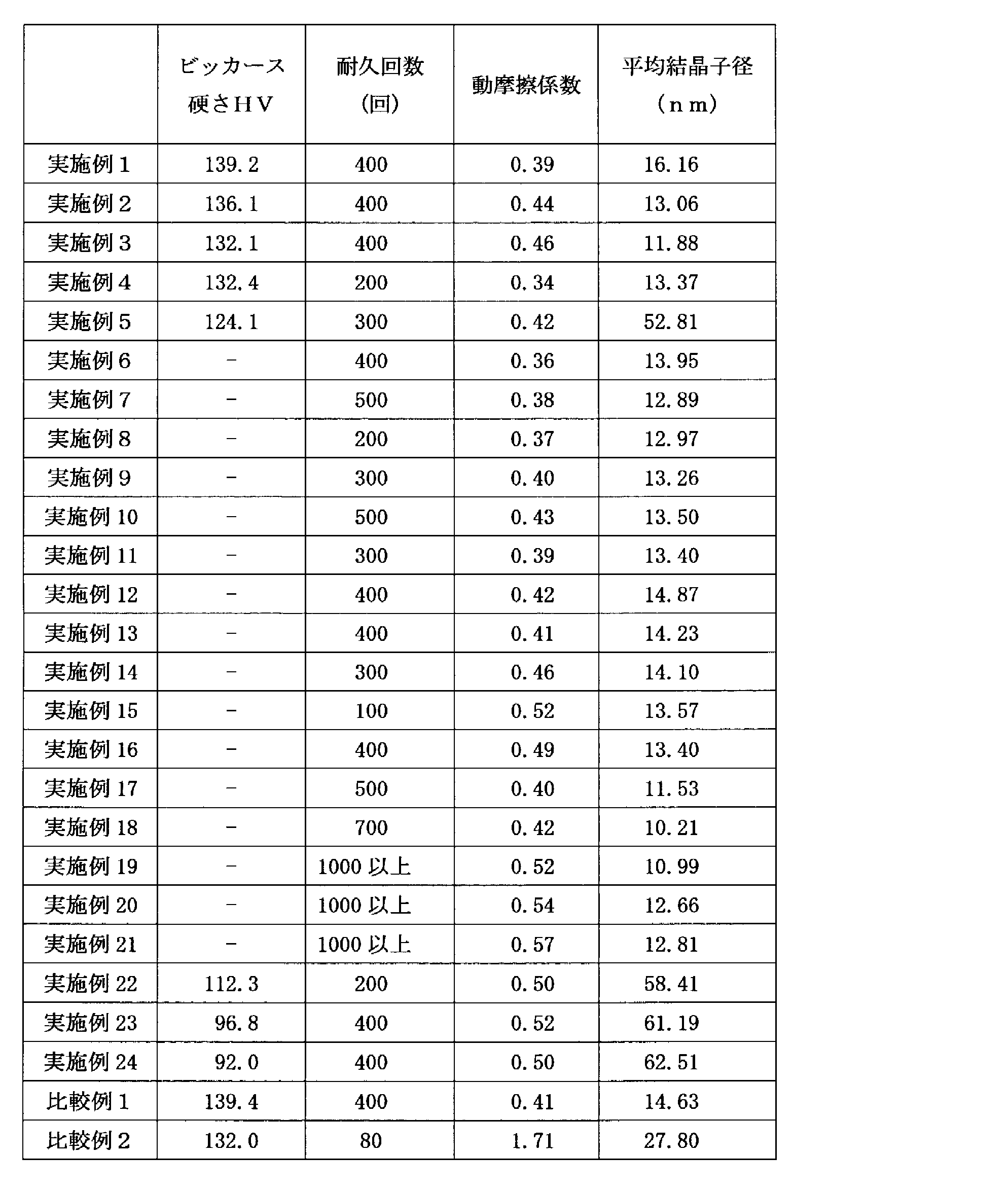
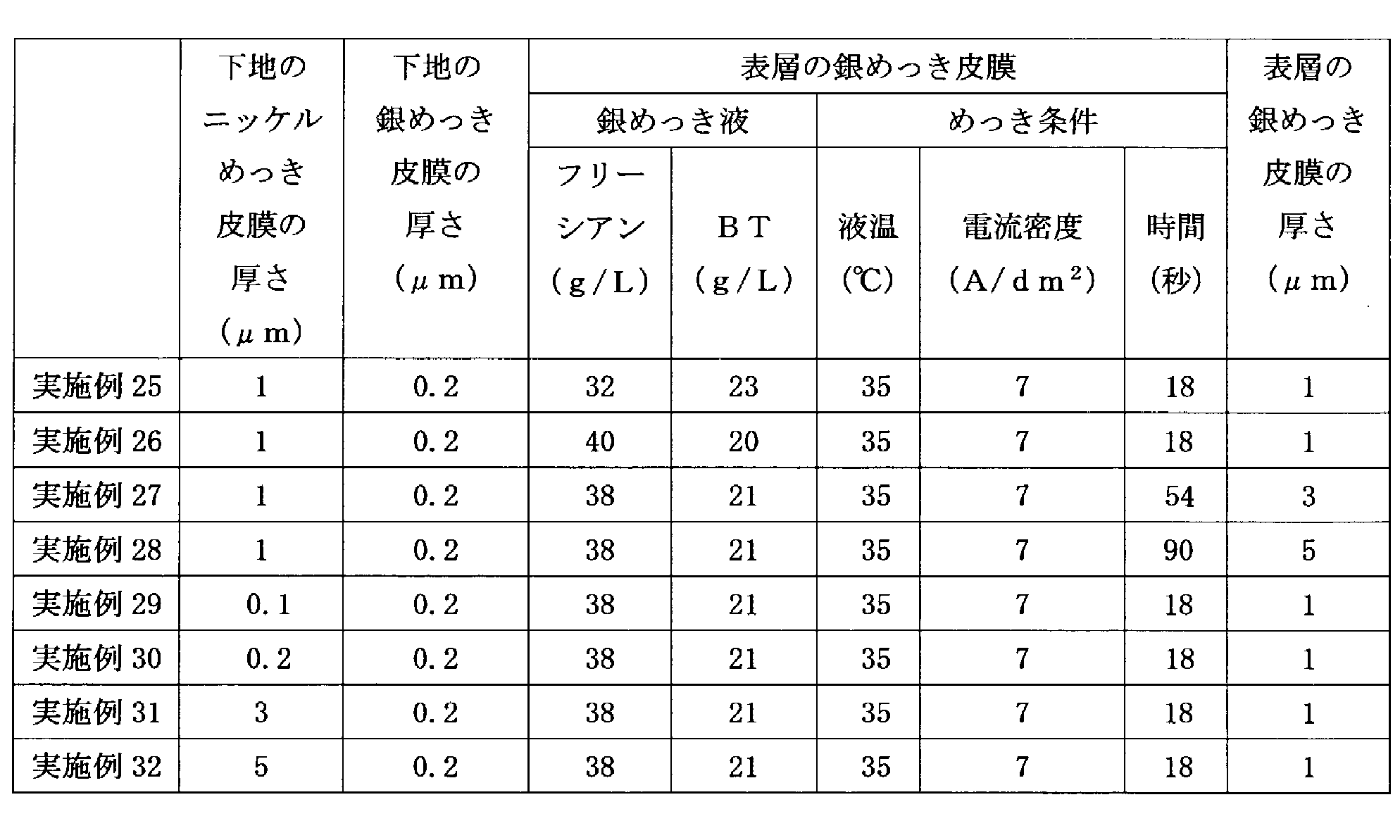
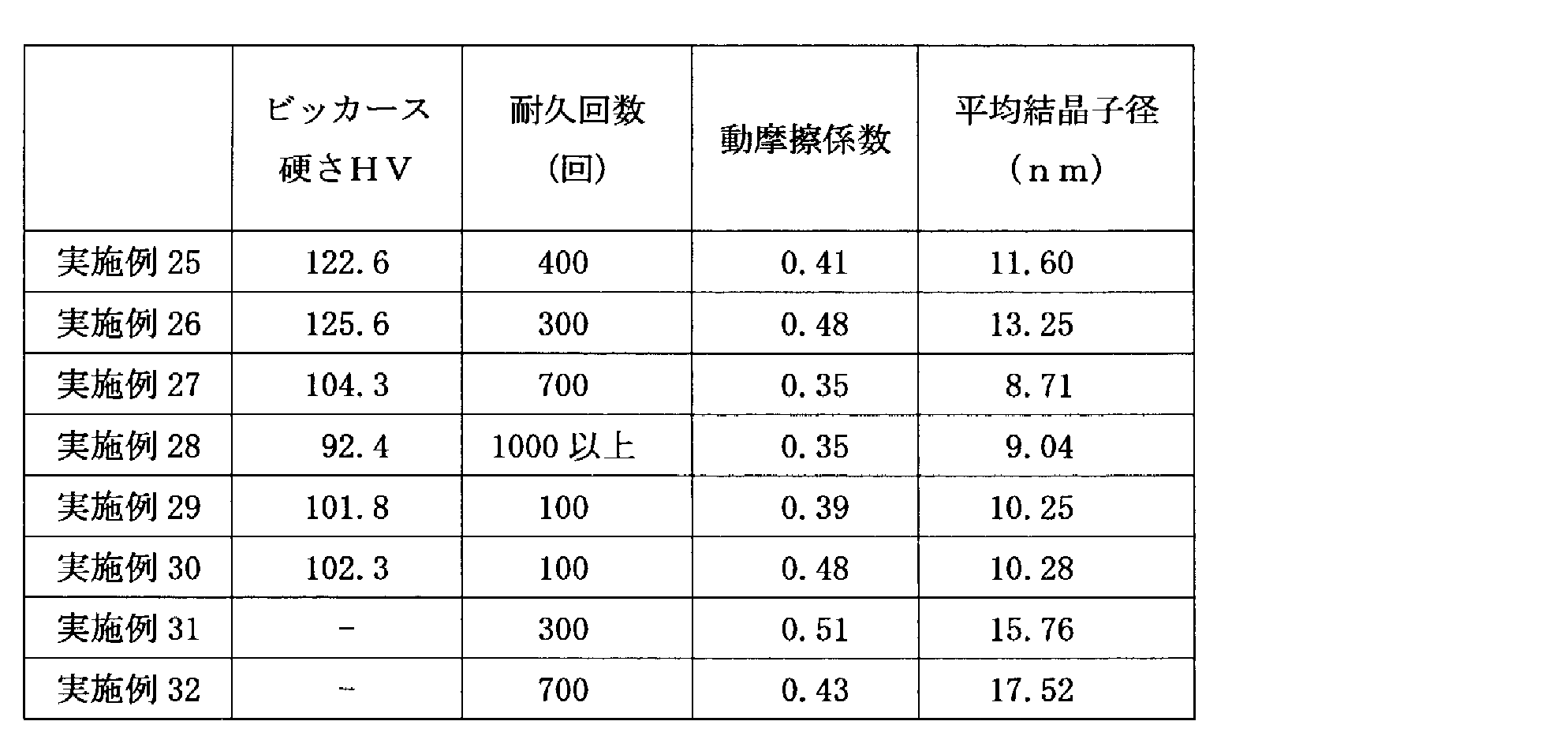
12 下地の銀めっき皮膜
14 銀からなる表層(銀めっき皮膜)
Claims (15)
- 素材上に下地めっき皮膜を介して下地の銀めっき皮膜を形成した後、シアン化銀カリウムまたはシアン化銀と、シアン化カリウムまたはシアン化ナトリウムと、ベンゾチアゾール類またはその誘導体とを含む水溶液からなる銀めっき液中において電気めっきを行うことによって、下地の銀めっき皮膜上に炭素と硫黄を含む銀からなる表層を形成することを特徴とする、銀めっき材の製造方法。
- 前記下地の銀めっき皮膜の厚さが0.06~15μmであることを特徴とする、請求項1に記載の銀めっき材の製造方法。
- 前記ベンゾチアゾール類がメルカプトベンゾチアゾールであることを特徴とする、請求項1に記載の銀めっき材の製造方法。
- 前記ベンゾチアゾール類の誘導体が前記ベンゾチアゾール類のアルカリ金属塩あることを特徴とする、請求項1に記載の銀めっき材の製造方法。
- 前記アルカリ金属塩がナトリウム塩であることを特徴とする、請求項4に記載の銀めっき材の製造方法。
- 前記下地めっき皮膜が銅、ニッケルまたはこれらの合金からなることを特徴とする、請求項1に記載の銀めっき材の製造方法。
- 前記素材が銅または銅合金からなることを特徴とする、請求項1に記載の銀めっき材の製造方法。
- 素材上に下地めっき皮膜を介して下地の銀めっき皮膜が形成され、この下地の銀めっき皮膜上に、炭素と硫黄を含む銀からなる表層が形成され、下地の銀めっき皮膜中のAgの原子濃度が95at%より高く、Sの原子濃度が0.6at%より低く且つAgの原子濃度に対するCの原子濃度の割合が3%より低く、炭素と硫黄を含む銀からなる表層中のAgの原子濃度が95at%以下、Sの原子濃度が0.6at%以上であり且つAgの原子濃度に対するCの原子濃度の割合が3%以上であることを特徴とする、銀めっき材。
- 前記下地の銀めっき皮膜の厚さが0.06~15μmであることを特徴とする、請求項8に記載の銀めっき材。
- 前記銀めっき材中の銀の平均結晶子径が100nm以下であることを特徴とする、請求項8に記載の銀めっき材。
- 前記銀めっき材の表面のビッカース硬さHVが70~160であることを特徴とする、請求項8に記載の銀めっき材。
- 前記下地めっき皮膜が銅、ニッケルまたはこれらの合金からなることを特徴とする、請求項8に記載の銀めっき材。
- 前記素材が銅または銅合金からなることを特徴とする、請求項8に記載の銀めっき材。
- 前記炭素と硫黄を含む銀からなる表層中のナトリウムメルカプトベンゾチアゾールのメルカプト基と五員環のS元素に由来するSの原子濃度の合計が0.3at%以上であり、前記下地の銀めっき皮膜中のナトリウムメルカプトベンゾチアゾールのメルカプト基と五員環のS元素に由来するSの原子濃度の合計が0.3at%未満であることを特徴とする、請求項8に記載の銀めっき材。
- 前記炭素と硫黄を含む銀からなる表層について、X線光電子分光法により測定したときに、161.6~162.9eVの範囲にピークがあるスペクトルから求められるSの原子濃度と163.2~164.5eVの範囲にピークがあるスペクトルから求められるSの原子濃度の合計が0.3at%以上であり、前記下地の銀めっき皮膜について、X線光電子分光法により測定したときに、161.6~162.9eVの範囲にピークがあるスペクトルから求められるSの原子濃度と163.2~164.5eVの範囲にピークがあるスペクトルから求められるSの原子濃度の合計が0.3at%未満であることを特徴とする、請求項8に記載の銀めっき材。
Priority Applications (4)
| Application Number | Priority Date | Filing Date | Title |
|---|---|---|---|
| US18/852,026 US20260055528A1 (en) | 2022-03-31 | 2022-12-23 | Silver-plated product and method for producing same |
| CN202280094458.0A CN119301312A (zh) | 2022-03-31 | 2022-12-23 | 镀银材料及其制造方法 |
| EP22935763.7A EP4467687A4 (en) | 2022-03-31 | 2022-12-23 | SILVER-PLATED MATERIAL AND ITS PRODUCTION PROCESS |
| MX2024011728A MX2024011728A (es) | 2022-03-31 | 2024-09-24 | Producto plateado y procedimiento para producir el mismo |
Applications Claiming Priority (4)
| Application Number | Priority Date | Filing Date | Title |
|---|---|---|---|
| JP2022-059229 | 2022-03-31 | ||
| JP2022059229 | 2022-03-31 | ||
| JP2022-188961 | 2022-11-28 | ||
| JP2022188961A JP2023152637A (ja) | 2022-03-31 | 2022-11-28 | 銀めっき材およびその製造方法 |
Publications (1)
| Publication Number | Publication Date |
|---|---|
| WO2023188637A1 true WO2023188637A1 (ja) | 2023-10-05 |
Family
ID=88200085
Family Applications (1)
| Application Number | Title | Priority Date | Filing Date |
|---|---|---|---|
| PCT/JP2022/047637 Ceased WO2023188637A1 (ja) | 2022-03-31 | 2022-12-23 | 銀めっき材およびその製造方法 |
Country Status (5)
| Country | Link |
|---|---|
| US (1) | US20260055528A1 (ja) |
| EP (1) | EP4467687A4 (ja) |
| CN (1) | CN119301312A (ja) |
| MX (1) | MX2024011728A (ja) |
| WO (1) | WO2023188637A1 (ja) |
Cited By (1)
| Publication number | Priority date | Publication date | Assignee | Title |
|---|---|---|---|---|
| WO2026070980A1 (ja) * | 2024-09-26 | 2026-04-02 | 矢崎総業株式会社 | めっき材 |
Citations (3)
| Publication number | Priority date | Publication date | Assignee | Title |
|---|---|---|---|---|
| JPH01156495A (ja) * | 1987-11-05 | 1989-06-20 | Soc Natl Etud Constr Mot Aviat <Snecma> | ステンレス鋼部品に薄膜銀皮膜を付着させる方法、及び玉軸受又はころ軸受の耐摩擦性を改善する方法 |
| JP2009079250A (ja) | 2007-09-26 | 2009-04-16 | Dowa Metaltech Kk | 最表層として銀合金層が形成された銅または銅合金部材およびその製造方法 |
| JP6916971B1 (ja) | 2020-09-15 | 2021-08-11 | Dowaメタルテック株式会社 | 銀めっき材およびその製造方法 |
Family Cites Families (4)
| Publication number | Priority date | Publication date | Assignee | Title |
|---|---|---|---|---|
| JP2016130362A (ja) * | 2015-01-08 | 2016-07-21 | Dowaメタルテック株式会社 | 銀めっき材およびその製造方法 |
| US12297556B2 (en) * | 2020-02-25 | 2025-05-13 | Dowa Metaltech Co., Ltd. | Silver-plated product and method for producing same |
| JP7749358B2 (ja) * | 2021-06-29 | 2025-10-06 | Dowaメタルテック株式会社 | 銀めっき材およびその製造方法 |
| JP7783754B2 (ja) * | 2022-02-08 | 2025-12-10 | Dowaメタルテック株式会社 | 銀めっき材の製造方法および銀めっき材 |
-
2022
- 2022-12-23 CN CN202280094458.0A patent/CN119301312A/zh active Pending
- 2022-12-23 US US18/852,026 patent/US20260055528A1/en active Pending
- 2022-12-23 WO PCT/JP2022/047637 patent/WO2023188637A1/ja not_active Ceased
- 2022-12-23 EP EP22935763.7A patent/EP4467687A4/en active Pending
-
2024
- 2024-09-24 MX MX2024011728A patent/MX2024011728A/es unknown
Patent Citations (3)
| Publication number | Priority date | Publication date | Assignee | Title |
|---|---|---|---|---|
| JPH01156495A (ja) * | 1987-11-05 | 1989-06-20 | Soc Natl Etud Constr Mot Aviat <Snecma> | ステンレス鋼部品に薄膜銀皮膜を付着させる方法、及び玉軸受又はころ軸受の耐摩擦性を改善する方法 |
| JP2009079250A (ja) | 2007-09-26 | 2009-04-16 | Dowa Metaltech Kk | 最表層として銀合金層が形成された銅または銅合金部材およびその製造方法 |
| JP6916971B1 (ja) | 2020-09-15 | 2021-08-11 | Dowaメタルテック株式会社 | 銀めっき材およびその製造方法 |
Non-Patent Citations (1)
| Title |
|---|
| See also references of EP4467687A4 |
Cited By (1)
| Publication number | Priority date | Publication date | Assignee | Title |
|---|---|---|---|---|
| WO2026070980A1 (ja) * | 2024-09-26 | 2026-04-02 | 矢崎総業株式会社 | めっき材 |
Also Published As
| Publication number | Publication date |
|---|---|
| CN119301312A (zh) | 2025-01-10 |
| EP4467687A1 (en) | 2024-11-27 |
| US20260055528A1 (en) | 2026-02-26 |
| EP4467687A4 (en) | 2026-04-01 |
| MX2024011728A (es) | 2024-11-08 |
Similar Documents
| Publication | Publication Date | Title |
|---|---|---|
| US12203189B2 (en) | Silver-plated product and method for producing same | |
| JP5086485B1 (ja) | 電子部品用金属材料及びその製造方法 | |
| JP5848169B2 (ja) | 銀めっき材 | |
| US12297556B2 (en) | Silver-plated product and method for producing same | |
| EP2977489B1 (en) | Silver-plated material | |
| JP2016130362A (ja) | 銀めっき材およびその製造方法 | |
| JP7770766B2 (ja) | 銀めっき材およびその製造方法 | |
| JP7749358B2 (ja) | 銀めっき材およびその製造方法 | |
| US20260055528A1 (en) | Silver-plated product and method for producing same | |
| JP7714514B2 (ja) | 銀被覆材の製造方法 | |
| JP2023152637A (ja) | 銀めっき材およびその製造方法 | |
| JP7455634B2 (ja) | 銀めっき材およびその製造方法、並びに、端子部品 | |
| JP7783754B2 (ja) | 銀めっき材の製造方法および銀めっき材 | |
| WO2023188446A1 (ja) | 銀めっき材の製造方法、銀被覆金属板材および通電部品 |
Legal Events
| Date | Code | Title | Description |
|---|---|---|---|
| 121 | Ep: the epo has been informed by wipo that ep was designated in this application |
Ref document number: 22935763 Country of ref document: EP Kind code of ref document: A1 |
|
| ENP | Entry into the national phase |
Ref document number: 2022935763 Country of ref document: EP Effective date: 20240823 |
|
| WWE | Wipo information: entry into national phase |
Ref document number: MX/A/2024/011728 Country of ref document: MX |
|
| WWE | Wipo information: entry into national phase |
Ref document number: 2401006471 Country of ref document: TH |
|
| WWE | Wipo information: entry into national phase |
Ref document number: 202280094458.0 Country of ref document: CN |
|
| NENP | Non-entry into the national phase |
Ref country code: DE |
|
| WWP | Wipo information: published in national office |
Ref document number: 202280094458.0 Country of ref document: CN |