WO2023189200A1 - 通信装置、通信方法、およびプログラム - Google Patents
通信装置、通信方法、およびプログラム Download PDFInfo
- Publication number
- WO2023189200A1 WO2023189200A1 PCT/JP2023/007954 JP2023007954W WO2023189200A1 WO 2023189200 A1 WO2023189200 A1 WO 2023189200A1 JP 2023007954 W JP2023007954 W JP 2023007954W WO 2023189200 A1 WO2023189200 A1 WO 2023189200A1
- Authority
- WO
- WIPO (PCT)
- Prior art keywords
- communication device
- communication
- period
- trigger frame
- txop
- Prior art date
- Legal status (The legal status is an assumption and is not a legal conclusion. Google has not performed a legal analysis and makes no representation as to the accuracy of the status listed.)
- Ceased
Links
Images




Classifications
-
- H—ELECTRICITY
- H04—ELECTRIC COMMUNICATION TECHNIQUE
- H04W—WIRELESS COMMUNICATION NETWORKS
- H04W74/00—Wireless channel access
- H04W74/002—Transmission of channel access control information
-
- H—ELECTRICITY
- H04—ELECTRIC COMMUNICATION TECHNIQUE
- H04W—WIRELESS COMMUNICATION NETWORKS
- H04W74/00—Wireless channel access
- H04W74/04—Scheduled access
- H04W74/06—Scheduled access using polling
-
- H—ELECTRICITY
- H04—ELECTRIC COMMUNICATION TECHNIQUE
- H04W—WIRELESS COMMUNICATION NETWORKS
- H04W52/00—Power management, e.g. Transmission Power Control [TPC] or power classes
- H04W52/02—Power saving arrangements
-
- H—ELECTRICITY
- H04—ELECTRIC COMMUNICATION TECHNIQUE
- H04W—WIRELESS COMMUNICATION NETWORKS
- H04W52/00—Power management, e.g. Transmission Power Control [TPC] or power classes
- H04W52/02—Power saving arrangements
- H04W52/0209—Power saving arrangements in terminal devices
- H04W52/0225—Power saving arrangements in terminal devices using monitoring of external events, e.g. the presence of a signal
- H04W52/0229—Power saving arrangements in terminal devices using monitoring of external events, e.g. the presence of a signal where the received signal is a wanted signal
-
- H—ELECTRICITY
- H04—ELECTRIC COMMUNICATION TECHNIQUE
- H04W—WIRELESS COMMUNICATION NETWORKS
- H04W72/00—Local resource management
- H04W72/04—Wireless resource allocation
- H04W72/044—Wireless resource allocation based on the type of the allocated resource
- H04W72/0446—Resources in time domain, e.g. slots or frames
-
- H—ELECTRICITY
- H04—ELECTRIC COMMUNICATION TECHNIQUE
- H04W—WIRELESS COMMUNICATION NETWORKS
- H04W74/00—Wireless channel access
- H04W74/04—Scheduled access
-
- H—ELECTRICITY
- H04—ELECTRIC COMMUNICATION TECHNIQUE
- H04W—WIRELESS COMMUNICATION NETWORKS
- H04W74/00—Wireless channel access
- H04W74/08—Non-scheduled access, e.g. ALOHA
- H04W74/0866—Non-scheduled access, e.g. ALOHA using a dedicated channel for access
-
- H—ELECTRICITY
- H04—ELECTRIC COMMUNICATION TECHNIQUE
- H04W—WIRELESS COMMUNICATION NETWORKS
- H04W74/00—Wireless channel access
- H04W74/08—Non-scheduled access, e.g. ALOHA
- H04W74/0808—Non-scheduled access, e.g. ALOHA using carrier sensing, e.g. carrier sense multiple access [CSMA]
- H04W74/0816—Non-scheduled access, e.g. ALOHA using carrier sensing, e.g. carrier sense multiple access [CSMA] with collision avoidance
-
- H—ELECTRICITY
- H04—ELECTRIC COMMUNICATION TECHNIQUE
- H04W—WIRELESS COMMUNICATION NETWORKS
- H04W84/00—Network topologies
- H04W84/02—Hierarchically pre-organised networks, e.g. paging networks, cellular networks, WLAN [Wireless Local Area Network] or WLL [Wireless Local Loop]
- H04W84/10—Small scale networks; Flat hierarchical networks
- H04W84/12—WLAN [Wireless Local Area Networks]
-
- Y—GENERAL TAGGING OF NEW TECHNOLOGICAL DEVELOPMENTS; GENERAL TAGGING OF CROSS-SECTIONAL TECHNOLOGIES SPANNING OVER SEVERAL SECTIONS OF THE IPC; TECHNICAL SUBJECTS COVERED BY FORMER USPC CROSS-REFERENCE ART COLLECTIONS [XRACs] AND DIGESTS
- Y02—TECHNOLOGIES OR APPLICATIONS FOR MITIGATION OR ADAPTATION AGAINST CLIMATE CHANGE
- Y02D—CLIMATE CHANGE MITIGATION TECHNOLOGIES IN INFORMATION AND COMMUNICATION TECHNOLOGIES [ICT], I.E. INFORMATION AND COMMUNICATION TECHNOLOGIES AIMING AT THE REDUCTION OF THEIR OWN ENERGY USE
- Y02D30/00—Reducing energy consumption in communication networks
- Y02D30/70—Reducing energy consumption in communication networks in wireless communication networks
Definitions
- the present invention relates to wireless communication technology.
- IEEE802.11 a standardization organization for wireless LAN technology. /ax etc.
- IEEE is an abbreviation for Institute of Electrical and Electronics Engineers.
- IEEE802.11ax which is described in Patent Document 1, uses OFDMA to achieve a high peak throughput of up to 9.6 gigabits per second (Gbps), as well as to improve communication speed under congested conditions.
- OFDMA is an abbreviation for Orthogonal Frequency-Division Multiple Access.
- the Task Group was established to formulate the IEEE802.11be standard as a successor standard to IEEE802.11ax.
- IEEE802.11be A task group called IEEE802.11be has been launched as a successor standard aiming to further improve throughput, frequency usage efficiency, and communication latency.
- the IEEE802.11be standard allows, for example, Multi-Link communication in which one AP (Access Point) establishes multiple links with one STA (Station) via multiple different frequency channels and communicates in parallel. It is being considered.
- IEEE802.11be proposes triggered TXOP sharing, in which a part of the TXOP secured by an AP is shared with STAs participating in the network using a Trigger frame.
- TXOP is an abbreviation for Transmission Opportunity.
- the TXOP acquired by the AP is shared with the STA designated by the AP, and frame transmission to undesignated STAs is prohibited during the shared TXOP, thereby avoiding unnecessary transmission frame collisions and efficiently communicating. becomes possible to execute.
- an object of the communication device of the present invention is to enable frames to be appropriately communicated between an AP and a STA in communication in which a TXOP acquired by an AP is shared with a designated STA.
- a communication device is a communication device that participates in a wireless network constructed by a first other communication device, wherein the communication device is in an awake state and the first other communication device Compliant with the IEEE 802.11 series standard, which allows communication by sharing at least a first period of at least a portion of a TXOP (Transmission Opportunity) acquired by the communication device with at least one of the communication devices participating in the wireless network.
- a first receiving unit that receives a Trigger frame received from the other communication device; and the communication device is permitted to share the first period by the Trigger frame received by the first receiving unit. and control means for continuing the Awake state during the first period if the device is not activated.
- the communication device is a communication device that operates in the role of constructing a wireless network, and the communication device has a TXOP acquired by the communication device with respect to other communication devices participating in the wireless network constructed by the communication device. (Transmission Opportunity) to share and communicate with at least one of the communication devices participating in the wireless network, transmitting a Trigger frame compliant with the IEEE 802.11 series standard.
- the Trigger frame includes information as to whether a communication device that is not permitted to share the first period by the Trigger frame continues to be in an awake state during the first period.
- frames can be appropriately communicated between the AP and the STA in communication in which the TXOP acquired by the AP is shared with the designated STA.
- FIG. 1 is a diagram illustrating an example of a configuration of a network constructed by a communication device 101.
- FIG. 3 is a diagram showing the hardware configuration of communication devices 101 to 104.
- FIG. 2 is a diagram showing an example of a functional configuration of communication devices 102 to 104.
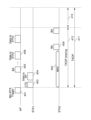
- FIG. FIG. 2 is a sequence diagram illustrating an example of communication using triggered TXOP sharing in the first embodiment.
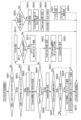
- 5 is a flowchart illustrating the operation of STA in the first embodiment.
- 7 is a diagram showing a frame format of a Trigger frame in Embodiment 2.
- FIG. 7 is a flowchart illustrating the operation of the AP in the second embodiment. 7 is a flowchart illustrating the operation of STA in Embodiment 2.
- FIG. 1 is a diagram illustrating an example of a configuration of a network constructed by a communication device 101.
- FIG. 3 is a diagram showing the hardware configuration of communication devices 101 to 104.
- FIG. 2 is a diagram showing an
- FIG. 1 is a diagram showing an example of the configuration of a wireless network according to the present embodiment.
- Communication device 101 can communicate with communication devices 102, 103, and 104.
- the communication device 101 is an access point (AP) that has the role of constructing the wireless network 105, and the communication devices 102, 103, and 104 are stations (STAs) that have the role of participating in the wireless network 105.
- AP access point
- STAs stations
- Each of the communication devices 101 to 104 can perform wireless communication in accordance with the IEEE802.11be standard.
- IEEE is an abbreviation for Institute of Electrical and Electronics Engineers.
- the communication devices 101 to 104 can communicate in frequency bands of 2.4 GHz, 5 GHz, and 6 GHz. Furthermore, the communication devices 101 to 104 can communicate using bandwidths of 20 MHz, 40 MHz, 80 MHz, 160 MHz, and 320 MHz.
- the communication devices 101 to 104 can realize multi-user (MU, Multi User) communication that multiplexes signals of multiple users.
- OFDMA is an abbreviation for Orthogonal Frequency Division Multiple Access.
- RU Resource Unit
- the AP can communicate with multiple STAs in parallel.
- the communication devices 101 to 104 are assumed to be compatible with the IEEE802.11be standard, they may also be compatible with the legacy standard, which is a standard earlier than the IEEE802.11be standard. Specifically, the communication devices 101 to 104 may comply with at least one of the IEEE802.11a/b/g/n/ac/ax standards. Alternatively, it may correspond to a standard that is a successor to IEEE802.11be.
- Bluetooth registered trademark
- NFC Universal Serial Bus
- UWB Universal Serial Bus
- ZigBee ZigBee
- MBOA Mobile Broadband
- UWB is an abbreviation for Ultra Wide Band
- MBOA is an abbreviation for Multi Band OFDM Alliance.
- NFC is an abbreviation for Near Field Communication.
- UWB includes wireless USB, wireless 1394, WiNET, and the like. Further, the communication standard of wired communication such as wired LAN may be supported.
- the communication devices 101 to 104 include, but are not limited to, wireless LAN routers and personal computers (PCs). Further, the communication devices 101 to 104 may be information processing devices such as wireless chips capable of performing wireless communication in accordance with the IEEE802.11be standard. Further, specific examples of the communication devices 102 to 104 include, but are not limited to, cameras, tablets, smartphones, PCs, mobile phones, and video cameras. Further, although the wireless network in FIG. 1 is configured with one AP and three STAs, the number of APs and STAs is not limited to this.
- Triggered TXOP sharing is a technique in which the communication device 101, which is an AP, uses triggered TXOP sharing to allocate and share a part of the secured TXOP to the communication devices 102 to 104, which are STAs.
- Triggered TXOP sharing allows an AP to share at least a portion of the TXOP acquired by the AP using a Trigger Frame with a communication device participating in a network constructed by the AP, thereby efficiently performing communication.
- TXOP Transmission Opportunity
- EDCA is an abbreviation for Enhanced Distributed Channel Access.
- Triggered TXOP sharing is a technology that allows STAs to share a portion of the TXOP acquired by the AP using a Trigger Frame and efficiently executes communication.
- the AP allocates a part of the acquired TXOP to the STAs through triggered TXOP sharing, and shares the TXOP acquired by the AP.
- the TXOP in which the TXOP acquired by the AP can be shared and used with the STA will be referred to as a TXOP sharing period.
- Triggered TXOP sharing starts when the AP sends a MU-RTS TXS Trigger frame to the STA.
- MU-RTS TXS Trigger frame is an abbreviation for Multi User-Request to Send TXOP sharing Trigger Frame.
- the AP allocates a part of the secured TXOP in the User Info field of the MU-RTS TXS Trigger frame and includes the AID of the STA that is permitted to perform communication.
- a STA that is assigned a portion of the TXOP can transmit data to the AP or other STAs during the TXOP sharing period. Whether communication is to be performed between STA and AP or between STA and STA during the TXOP sharing period can be specified by the TXOP sharing mode subfield included in the Common Info field of the Trigger frame.
- FIG. 2 shows an example of the hardware configuration of the communication device 101, which is an AP in this embodiment.
- the communication devices 102 to 104 which are STAs, can also have a similar configuration.
- the communication device 101 includes a storage section 201, a control section 202, a functional section 203, an input section 204, an output section 205, a communication section 206, and an antenna 207.
- the storage unit 201 is composed of a memory such as a ROM or a RAM, and stores computer programs for performing various operations described below and various information such as communication parameters for wireless communication.
- ROM Read Only Memory
- RAM Random Access Memory.
- the storage unit 201 may include storage media such as flexible disks, hard disks, optical disks, magneto-optical disks, CD-ROMs, CD-Rs, magnetic tapes, nonvolatile memory cards, and DVDs. may also be used. Further, the storage unit 201 may include a plurality of memories or the like.
- the control unit 202 is configured by one or more processors such as a CPU or MPU, and controls the entire communication device 104 by executing a computer program stored in the storage unit 201.
- CPU is an abbreviation for Central Processing Unit
- MPU is an abbreviation for Micro Processing Unit.
- the control unit 202 may control the entire communication device 101 through cooperation between a computer program stored in the storage unit 201 and an operating system (OS). Further, the control unit 202 generates data and signals to be transmitted in communication with other communication devices.
- the control unit 202 may include a plurality of processors such as multi-core processors, and the communication device 101 may be controlled as a whole by the plurality of processors.
- the control unit 202 controls the functional unit 203 to execute predetermined processing such as wireless communication, imaging, printing, and projection.
- the functional unit 203 is hardware for the communication device 101 to execute predetermined processing.
- the input unit 204 accepts various operations from the user.
- the output unit 205 performs various outputs to the user via a monitor screen and speakers.
- the output by the output unit 205 may be a display on a monitor screen, an audio output from a speaker, a vibration output, or the like.
- both the input section 204 and the output section 205 may be implemented in one module.
- the input unit 204 and the output unit 205 may be integrated with the communication device 101, or may be separate units.
- the communication unit 206 controls wireless communication in accordance with the IEEE802.11be standard. Further, the communication unit 206 may control wireless communication based on other IEEE802.11 series standards in addition to the IEEE802.11be standard, or control wired communication such as a wired LAN. The communication unit 206 controls the antenna 207 to transmit and receive wireless signals generated by the control unit 202 for wireless communication.
- the communication device 101 is compatible with the NFC standard, the Bluetooth standard, etc. in addition to the IEEE802.11be standard, wireless communication may be controlled in accordance with these communication standards. Furthermore, if the communication device 101 is capable of performing wireless communication in accordance with a plurality of communication standards, it may be configured to separately include a communication unit 206 and an antenna 207 that correspond to each communication standard. The communication device 101 communicates data such as image data, document data, video data, etc. with the communication devices 102 to 104 via the communication unit 206.
- FIG. 3 shows a block diagram of the functional configuration of communication devices 102 to 104, which are STAs in this embodiment.
- the TXOP sharing processing unit 301 performs control when triggered TXOP sharing is instructed by the AP.
- a TXOP When a TXOP is assigned to itself, data is transmitted to the destination AP or STA during the TXOP sharing period. Furthermore, if a TXOP is not assigned to itself, the device enters the Awake state and is able to receive data from the AP during the TXOP sharing period.
- the NAV setting unit sets the NAV indicating its own transmission prohibition time based on the duration information included in the MU-RTS TXS Trigger frame received from the AP or the CTS frame received from another STA.
- NAV is an abbreviation for Network Allocation Vector, and although NAV is a period in which transmission is prohibited, it is possible to receive frames transmitted by other communication devices.
- the power save control unit 303 controls whether to enter a power save state in which frames are intermittently received for power saving, or to maintain an awake state in which the power save state is canceled. In this embodiment, when a predetermined condition is satisfied, the Awake state is maintained during the TXOP sharing period.
- the MU-RTS TXS Trigger frame processing unit 304 analyzes and processes the MU-RTS TXS Trigger frame received from the opposite AP.
- the STA performs TXOP sharing processing, NAV setting, and Power save control according to the contents of the MU-RTS TXS Trigger frame.
- the frame transmitting/receiving unit 305 transmits and receives control frames, management frames, and data frames including MU-RTS TXS Trigger frames.
- FIG. 4 is a sequence diagram illustrating an example of communication using triggered TXOP sharing.
- the TXOP 411 acquired by the AP is assigned to the STA1, and communication is performed between the STA1 and the AP in the TXOP sharing period 412.
- the AP transmits the MU-RTS TXS Trigger frame to all STAs participating in the wireless network.
- the MU-RTS TXS Trigger frame is transmitted to STA1 and STA2, and 412, which is part of the TXOP 411 acquired by the AP, is assigned to STA1.
- the STA1 assigned the TXOP After responding with a CTS frame 403, the STA1 assigned the TXOP transmits a data frame 404 to the AP.
- the AP transmits a BA (Block ACK) 405 that is an acknowledgment response to the data frame to the STA1, and thereafter continues to exchange the data frame and BA during the TXOP sharing period 412 as necessary.
- BA Block ACK
- STA2 since STA2 is not assigned a TXOP, it sets NAV 402 in the TXOP sharing period.
- the NAV 402 indicates the transmission prohibition time of the own device, and is set using the Duration information included in the MU-RTS TXS Trigger frame 401 or CTS Frame 403. In this embodiment, STA2 continues in the Awake state without transitioning to the Doze state even if the NAV 402 is set.
- the AP detects that no data is received from STA1 for a certain period of time, and assumes that STA1 has finished transmitting in the TXOP sharing period 412. Next, the AP transmits a data frame 408 to STA2 within the TXOP sharing period. Since STA2 continues to be in the Awake state even during the period in which the NAV 402 is set, it can receive the data frame 408, cancels the NAV 402, and responds with BA409.
- STA2 continues to be in the Awake state, so STA2 can receive data frames and can efficiently use the TXOP acquired by the AP.
- STA2 which has not been assigned a TXOP, remains awake during the TXOP sharing period shared by the AP and STA1, so that it cannot receive data even if it is sent from the AP during that period. It becomes possible to do so.
- a TXOP sharing process in which the control unit 202 executes a program stored in the storage unit 201 of the communication device 102, the communication device 103, or the communication device 104, which is an STA, will be explained using FIG. 5.
- This flowchart is started in response to the STA receiving the MU-RTS TXS Trigger frame.
- the STA determines whether the MU-RTS TXS Trigger frame received from the AP permits execution of TXOP sharing communication (S501). If execution of TXOP sharing communication is permitted in S501, the process branches to S502, and if not, the process branches to S520.
- TXOP sharing communication can be specified using the TXOP sharing mode subfield included in the Common Info field of the MU-RTS TXS Trigger frame.
- the STA that has received the MU-RTS TXS Trigger frame determines S501 from the information of the subfield.
- TXOP sharing it is determined whether at least a part of the TXOP acquired by the AP is allocated to the own device (S502). That is, the device determines whether or not it is permitted to share the TXOP acquired by the AP and perform communication. If the TXOP acquired by the AP is assigned to the own device in S502, the process branches to S510, and if the TXOP has not been assigned, the process branches to S503.
- the CTS from the STA to which the TXOPs are allocated frame is received (S503).
- the NAV Upon receiving the CTS in S503, the NAV is set based on the Duration information included in the MU-RTS TXS Trigger frame or CTS frame (S504).
- the STA continues to be in the Awake state during the NAV period set in S504 (S505), and determines whether the TXOP sharing period has ended (S506).
- a CTS frame is transmitted to the AP as a response to the MU-RTS TXS Trigger frame (S510).
- the process After transmitting the CTS frame in S510, it is determined whether the TXOP sharing period, which is the TXOP assigned to the device by the AP, has ended (S511). If it is determined in S511 that the TXOP sharing period has ended, the process branches to S513; if it is determined that the TXOP sharing period has not ended, the process branches to S512, and the TXOP sharing period is determined to have ended by the AP or other STA. Perform data communication with.
- the STA continues the Awake state in S513, and if data is received from the AP in the remaining TXOP period, it performs data communication with the AP (S509), and Exit the flowchart.
- the STA determines in S520 whether the own device is the destination of DL MU communication (S520 ).
- DL MU is an abbreviation for Down Link Multi User. If it is determined in S520 that the destination is the destination, the process branches to S521, and if it is determined that the destination is not the destination, the process branches to S523.
- the own device If it is determined in S520 that the own device is the destination for DL MU communication, it transmits a CTS frame as a response to the MU-RTS TXS Trigger frame (S521), and communicates DL MU data with the AP (S522). If it is determined in S520 that the own device is not the destination of the DL MU communication, the device receives a CTS frame from the STA that is the destination of the DL MU communication (S523).
- NAV is set based on the Duration information included in the MU-RTS TXS Trigger frame received in S501 or the CTS frame received in S523 (S524).
- the STA enters the Power save state (S525), waits until the NAV ends (S526), and then ends this flowchart.
- an STA that has not been instructed to communicate during the TXOP sharing period can receive frames transmitted from the AP during the period by continuing the awake state during the period. .
- FIG. 6 shows an example of the frame format of the extended Trigger Frame in this embodiment.
- the extended Trigger Frame is composed of Frame Control, Duration, RA, TA, Common info, User info List, Padding, and FCS fields.
- Trigger Type Trigger Type, UL Length, GI And HE/EHT-LTF Type/Triggered TXOP Sharing Mode, Triggered T Includes XOP Sharing Power save mode.
- the Trigger Type field indicates the type of Trigger Frame.
- MU-RTS TXS Trigger frame is specified in the field.
- the GI And HE/EHT-LTF Type/Triggered TXOP Sharing Mode field includes information on whether to execute TXOP sharing communication.
- the triggered TXOP sharing Power save mode field is a field that specifies whether a communication device that is not allowed to perform communication during the TXOP sharing period operates in the Power Save state during the period. When 0 is stored in this field, it indicates that a communication device that is not allowed to share the TXOP of the AP for communication should not transition to the Power save state during the TXOP sharing period. Further, when 1 is stored in the field, it indicates that a communication device that is not allowed to share the TXOP of the AP for communication may transition to the Power save state during the TXOP sharing period.
- field and subfield are just examples, and may be different names, and the correspondence between values and states may be different as long as it can indicate a transition to the Power save state.
- the field is included in the Common Info field of the MU-RTS TXS Trigger frame, but it may also be included in the User Info field.
- FIG. 7 describes a process when TXOP sharing is executed by the control unit 202 executing a program stored in the storage unit 201 of the communication device 101, which is an AP.
- This embodiment shows an example in which the Subfield defined in FIG. 6 is included in the MU-RTS TXS Trigger frame. This flowchart is started in response to the AP starting communication of DL MU or Triggered TXOP sharing.
- the AP determines whether the MU-RTS TXS Trigger frame that is about to be transmitted allows execution of TXOP sharing communication (S700). If it is determined in S700 that execution of TXOP sharing communication is permitted, the process branches to S703, and if it is determined that it is not permitted, the process branches to S701.
- the AP transmits an MU-RTS TXS Trigger frame and receives a CTS frame from the STA performing DL MU communication (S701). Further, when a CTS Frame is received in S701, communication processing of DL MU data is performed in S702.
- S700 If it is determined in S700 that execution of TXOP sharing communication is permitted, it is determined whether there is a possibility that an AP and an STA to which a TXOP is not assigned will communicate during the TXOP sharing period (S703).
- the possibility that an AP may communicate with an STA to which a TXOP has not been assigned means that, for example, if the TXOP sharing period ends earlier than expected, the AP may wish to communicate with an STA to which a TXOP has not been assigned. This is the case.
- the Triggered TXOP sharing Power save mode field is set to 0 (S710). In other words, it is shown in S710 that the state should not transition to the Power save state during the TXOP sharing period. Then, the MU-RTS TXS Trigger frame with the triggered TXOP sharing Power save mode field set to 0 is transmitted (S711).
- the Triggered TXOP sharing Power save mode field is set to 1 (S704). That is, it indicates that the state may transition to the Power save state during the TXOP sharing period in S710. Then, the MU-RTS TXS Trigger frame with the triggered TXOP sharing Power save mode field set to 1 is transmitted (S711).
- S712 After confirming that the CTS frame, which is a response frame to the MU-RTS TXS Trigger frame transmitted in S711, has been received, it is determined whether data communication with the STA to which the TXOP has been assigned has ended (S712). If it is determined in S712 that the data communication with the STA to which the TXOP has been assigned has ended, the process branches to S715, and if it is determined that the data communication has not ended, the process branches to S713. The determination in S712 is made, for example, when it is determined that the data communication has ended when the AP cannot receive data from the STA to which the TXOP has been assigned for a certain period of time.
- S712 If it is determined in S712 that data communication with the STA to which the TXOP has been assigned has ended, it is determined whether the TXOP sharing period has ended (S713). If it is determined in S713 that the data communication with the STA to which the TXOP has been assigned has ended, communication with other STAs is performed as necessary during the remaining TXOP period, and if it is determined that the data communication has not ended, in S714 Data communication is performed with the STA to which the TXOP is assigned.
- Triggered TXOP sharing Power save mode field is set to 1 (S715). If it is determined in S715 that the field is set to 1, that is, if it is specified that a transition to the Power save state may be made during the TXOP sharing period, the following operation is performed. In other words, if it is determined that the field is set to 1, even if there is data addressed to an STA to which a TXOP has not been assigned, that STA has transitioned to the Power save state, so it will not send the data. The process branches to S719.
- S716 If it is determined in S716 that there is data addressed to another STA, it is determined whether the TXOP sharing period has ended (S717), and if it is determined that the TXOP sharing period has not ended, in S718 there is data addressed to another STA. Performs data communication with the STA.
- an STA that has not been instructed to communicate during a TXOP sharing period is instructed by the Trigger Frame to continue in the Awake state during the period, the STA continues the Awake state during the period. can do.
- the STA determines whether the MU-RTS TXS Trigger frame received from the AP permits execution of TXOP sharing communication (S801). If it is determined in S801 that execution of TXOP sharing communication is permitted, the process branches to S802, and if it is determined that execution of TXOP sharing communication is not permitted, the process branches to S830. TXOP sharing communication can be permitted to be executed in the TXOP sharing mode subfield included in the Common Info field of the MU-RTS TXS Trigger frame.
- the AP receives a CTS frame from the STA to which the TXOP has been assigned (S803). Further, the NAV is set based on the Duration information included in the received MU-RTS TXS Trigger frame or CTS frame (S804).
- Triggered TXOP sharing Power save mode field included in the MU-RTS TXS Trigger frame is set to 0 (S805). If it is determined that the field is set to 0, the process branches to S806 and enters the Awake state; if it is determined that the field is not set to 0, the process branches to S820 and transitions to the Power save state. .
- S807 If it is determined in S807 that the TXOP sharing period has not ended, it is determined whether a data frame has been received from the AP during the TXOP sharing period (S808). If it is determined in S808 that a data frame from the AP has not been received, the process returns to S807, and if it is determined that a data frame from the AP has been received, the NAV set in S809 is canceled and data communication with the AP is resumed. (S809). In S823, data communication with the AP is performed when data is received from the AP during the remaining TXOP period. After the STA completes data communication with the AP, this flowchart ends.
- the STA transitions to the Power save state in S820, waits until the TXOP sharing period ends in S821, and then transitions to the Awake state in S822. Thereafter, in S823, if data is received from the AP during the remaining TXOP period, data communication with the AP is performed.
- the STA If the STA has been assigned a TXOP, it transmits a CTS frame as a response to the AP in S810. After that, it is determined in S811 whether or not the TXOP sharing period has ended, and if it is determined that it has ended, the process branches to S823, and if it is determined that it has not ended, the process branches to S812 and the acquired TXOP is used. Performs data communication with AP or other STAs.
- the process branches to S831, and if it is determined that the destination is not the destination, the process branches to S833.
- the own device If it is determined in S830 that the own device is the destination of DL MU communication, it transmits a CTS frame to the AP as a response frame to the MU-RTS TXS Trigger frame (S831), and initiates communication of DL MU data with the AP. Execute (S832).
- the device receives a CTS frame from the STA that is the destination of the DL MU communication (S833).
- NAV is set based on the Duration information included in the MU-RTS TXS Trigger frame or CTS frame.
- the STA Since the STA does not receive data during DL MU communication, it transitions to the Power save state in S835, waits until the NAV ends in S836, and then ends this flowchart.
- the Trigger frame indicates that an STA that is not allowed to perform communication during the TXOP sharing period will maintain the Awake state during the period, the STA will maintain the Awake state during the period. do. Therefore, by maintaining the Awake state during the TXOP sharing period, an STA that is not allowed to perform communication in the TXOP becomes able to receive frames transmitted from the AP during the TXOP sharing period.
- a recording medium recording a software program code that realizes the above functions is supplied to the system or device, and the computer (CPU, MPU) of the system or device reads and executes the program code stored in the recording medium. It's okay.
- the program code itself read from the storage medium will implement the functions of the above-described embodiments, and the storage medium that has stored the program code will constitute the above-described device.
- the storage medium for supplying the program code for example, a flexible disk, hard disk, optical disk, magneto-optical disk, CD-ROM, CD-R, magnetic tape, nonvolatile memory card, ROM, DVD, etc. can be used. can.
- OS is an abbreviation for Operating System.
- the program code read from the storage medium is written into a memory provided in a function expansion board inserted into the computer or a function expansion unit connected to the computer. Then, based on instructions from the program code, a CPU included in the function expansion board or function expansion unit may perform part or all of the actual processing to realize the above-mentioned functions.
- the present invention provides a system or device with a program that implements one or more functions of the embodiments described above via a network or a storage medium, and one or more processors in a computer of the system or device reads and executes the program. This can also be achieved by processing. It can also be realized by a circuit (for example, ASIC) that realizes one or more functions.
- a circuit for example, ASIC
Landscapes
- Engineering & Computer Science (AREA)
- Computer Networks & Wireless Communication (AREA)
- Signal Processing (AREA)
- Mobile Radio Communication Systems (AREA)
Abstract
Description
本実施形態では、TXOP sharing通信の実行を指示するTrigger Frameを受信したSTAが、TXOP sharing期間において通信を実行することが許されていない場合に、当該期間はAwakeの状態を維持する例を示す。
実施形態1では、TXOP sharingを指示するTrigger Frameを受信したSTAが、TXOP sharing期間において通信の実行を許可されない場合に、当該期間の間はAwake状態を継続する例を示した。
Claims (10)
- 第1の他の通信装置が構築する無線ネットワークに参加する通信装置であって、
前記通信装置がAwake状態で、前記第1の他の通信装置が獲得したTXOP(Transmission Opportunity)の少なくとも一部の第1の期間を、前記無線ネットワークに参加する通信装置の少なくとも1つと共有して通信することを許可する、IEEE802.11シリーズ規格に準拠したTrigger frameを、前記他の通信装置から受信する第1の受信手段と、
前記通信装置が、前記第1の受信手段によって受信した前記Trigger frameによって、前記第1の期間を共有することが許可されない場合、前記第1の期間においてAwake状態を継続する制御手段と、
を有することを特徴とする通信装置。 - 前記Trigger frameによって前記第1の期間を共有することが許可されている第2の他の通信装置から、前記Trigger frameに対する応答フレームを受信する第2の受信手段と、
前記第1の受信手段によって受信した前記Trigger frameによって、前記通信装置が前記第1の期間を共有することが許可されない場合に、前記第1の受信手段で受信した前記Trigger frameまたは前記第2の受信手段で受信した応答フレームの情報に基づいて、前記通信装置のフレームの送信を禁止する第2の期間を設定する設定手段と、
を有することを特徴とする請求項1に記載の通信装置。 - 前記設定手段によって設定された第2の期間においてAwake状態を継続することを特徴とする請求項2に記載の通信装置。
- 前記第2の期間はNAV(Network Allocation Vector)であることを特徴とする請求項2または3に記載の通信装置。
- 前記Trigger frameには、前記第1の受信手段によって受信した前記Trigger frameによって前記通信装置が前記第1の期間を共有することが許可されない場合に、前記第1の期間においてAwake状態を継続するか否かの情報を含むことを特徴とする請求項1から4の何れか一項に記載の通信装置。
- 無線ネットワークを構築する役割で動作する通信装置であって、
前記通信装置が構築する無線ネットワークに参加する他の通信装置に対して、前記通信装置が獲得したTXOP(Transmission Opportunity)の少なくとも一部の第1の期間を、前記無線ネットワークに参加する通信装置の少なくとも1つと共有して通信することを許可する、IEEE802.11シリーズ規格に準拠したTrigger frameを送信する送信手段を有し、
前記Trigger frameは、前記Trigger frameによって前記第1の期間を共有することが許可されない通信装置が、前記第1の期間においてAwake状態を継続するか否かの情報を含む
ことを特徴とする通信装置。 - 前記Trigger frameはMU-RTS TXS Trigger frameであることを特徴とする請求項1から5の何れか一項に記載の通信装置。
- 第1の他の通信装置が構築する無線ネットワークに参加する通信装置の通信方法であって、
前記通信装置がAwake状態で、前記第1の他の通信装置が獲得したTXOP(Transmission Opportunity)の少なくとも一部の第1の期間において、前記無線ネットワークに参加する通信装置の少なくとも1つと共有して通信することを許可する、IEEE802.11シリーズ規格に準拠したTrigger frameを、前記他の通信装置から受信する第1の受信工程と、
前記通信装置が、前記第1の受信工程によって受信した前記Trigger frameによって、前記第1の期間を共有することが許可されない場合、前記第1の期間においてAwake状態を継続する制御工程と、
を有することを特徴とする通信装置の通信方法。 - 無線ネットワークを構築する役割で動作する通信装置の通信方法であって、
前記通信装置が構築する無線ネットワークに参加する通信装置に対して、前記通信装置が獲得したTXOP(Transmission Opportunity)少なくとも一部の第1の期間を、前記無線ネットワークに参加する通信装置の少なくとも1つを共有して通信することを許可する、IEEE802.11シリーズ規格に準拠したTrigger frameを送信する送信工程を有し、
前記Trigger frameは、前記Trigger frameによって前記第1の期間を共有することが許可されない通信装置が、Awake状態を継続するか否かの情報を含む
ことを特徴とする通信装置の通信方法。 - コンピュータを請求項1から5の何れか1項に記載の通信装置の各手段として機能させるためのプログラム。
Priority Applications (4)
| Application Number | Priority Date | Filing Date | Title |
|---|---|---|---|
| CN202380031188.3A CN119054381A (zh) | 2022-03-28 | 2023-03-03 | 通信装置、通信方法和程序 |
| KR1020247035458A KR20240161833A (ko) | 2022-03-28 | 2023-03-03 | 통신 장치 및 통신 방법 |
| EP23779229.6A EP4503809A4 (en) | 2022-03-28 | 2023-03-03 | COMMUNICATION DEVICE, COMMUNICATION METHOD AND PROGRAM |
| US18/897,208 US20250024501A1 (en) | 2022-03-28 | 2024-09-26 | Communication apparatus and communication method |
Applications Claiming Priority (2)
| Application Number | Priority Date | Filing Date | Title |
|---|---|---|---|
| JP2022-052636 | 2022-03-28 | ||
| JP2022052636A JP2023145264A (ja) | 2022-03-28 | 2022-03-28 | 通信装置、通信方法、およびプログラム |
Related Child Applications (1)
| Application Number | Title | Priority Date | Filing Date |
|---|---|---|---|
| US18/897,208 Continuation US20250024501A1 (en) | 2022-03-28 | 2024-09-26 | Communication apparatus and communication method |
Publications (1)
| Publication Number | Publication Date |
|---|---|
| WO2023189200A1 true WO2023189200A1 (ja) | 2023-10-05 |
Family
ID=88201228
Family Applications (1)
| Application Number | Title | Priority Date | Filing Date |
|---|---|---|---|
| PCT/JP2023/007954 Ceased WO2023189200A1 (ja) | 2022-03-28 | 2023-03-03 | 通信装置、通信方法、およびプログラム |
Country Status (6)
| Country | Link |
|---|---|
| US (1) | US20250024501A1 (ja) |
| EP (1) | EP4503809A4 (ja) |
| JP (1) | JP2023145264A (ja) |
| KR (1) | KR20240161833A (ja) |
| CN (1) | CN119054381A (ja) |
| WO (1) | WO2023189200A1 (ja) |
Cited By (1)
| Publication number | Priority date | Publication date | Assignee | Title |
|---|---|---|---|---|
| EP4557646A1 (en) * | 2023-11-20 | 2025-05-21 | Synaptics Incorporated | Early frame check sequence (fcs) for trigger frame validation |
Citations (2)
| Publication number | Priority date | Publication date | Assignee | Title |
|---|---|---|---|---|
| JP2018050133A (ja) | 2016-09-20 | 2018-03-29 | キヤノン株式会社 | 通信装置、制御方法、及びプログラム |
| JP2022052636A (ja) | 2020-09-23 | 2022-04-04 | 株式会社TVer | 匿名加工装置、プログラム及び匿名加工方法 |
Family Cites Families (1)
| Publication number | Priority date | Publication date | Assignee | Title |
|---|---|---|---|---|
| WO2018008890A1 (ko) * | 2016-07-07 | 2018-01-11 | 엘지전자 주식회사 | 무선 랜 시스템에서 txop 파워 세이브 모드로 동작하는 방법 및 장치 |
-
2022
- 2022-03-28 JP JP2022052636A patent/JP2023145264A/ja active Pending
-
2023
- 2023-03-03 CN CN202380031188.3A patent/CN119054381A/zh active Pending
- 2023-03-03 WO PCT/JP2023/007954 patent/WO2023189200A1/ja not_active Ceased
- 2023-03-03 EP EP23779229.6A patent/EP4503809A4/en active Pending
- 2023-03-03 KR KR1020247035458A patent/KR20240161833A/ko active Pending
-
2024
- 2024-09-26 US US18/897,208 patent/US20250024501A1/en active Pending
Patent Citations (2)
| Publication number | Priority date | Publication date | Assignee | Title |
|---|---|---|---|---|
| JP2018050133A (ja) | 2016-09-20 | 2018-03-29 | キヤノン株式会社 | 通信装置、制御方法、及びプログラム |
| JP2022052636A (ja) | 2020-09-23 | 2022-04-04 | 株式会社TVer | 匿名加工装置、プログラム及び匿名加工方法 |
Non-Patent Citations (3)
| Title |
|---|
| DIBAKAR, DAS (INTEL): "CR for remaining CIDs on Triggered TXOP Sharing Procedure-part 1 [online]", IEEE 802.11-21/1731R4, 12 December 2021 (2021-12-12) * |
| DIBAKAR, DAS (INTEL): "PDT: Channel access for Triggered TXOP Sharing", IEEE 802.11-21/0268R8, 13 May 2021 (2021-05-13), pages 1 - 7, XP068181688 * |
| See also references of EP4503809A4 |
Cited By (2)
| Publication number | Priority date | Publication date | Assignee | Title |
|---|---|---|---|---|
| EP4557646A1 (en) * | 2023-11-20 | 2025-05-21 | Synaptics Incorporated | Early frame check sequence (fcs) for trigger frame validation |
| US12628200B2 (en) | 2023-11-20 | 2026-05-12 | Synaptics Incorporated | Early frame check sequence (FCS) for trigger frame validation |
Also Published As
| Publication number | Publication date |
|---|---|
| EP4503809A4 (en) | 2026-04-01 |
| EP4503809A1 (en) | 2025-02-05 |
| US20250024501A1 (en) | 2025-01-16 |
| KR20240161833A (ko) | 2024-11-12 |
| CN119054381A (zh) | 2024-11-29 |
| JP2023145264A (ja) | 2023-10-11 |
Similar Documents
| Publication | Publication Date | Title |
|---|---|---|
| WO2023189198A1 (ja) | 通信装置、通信方法、およびプログラム | |
| US12477605B2 (en) | Communication apparatus, communication method, and storage medium | |
| US20230371078A1 (en) | Communication apparatus, control method for communication apparatus, and storage medium | |
| JP7618412B2 (ja) | 通信装置、通信方法及びプログラム | |
| US20190349926A1 (en) | Determining access slot for communications on radio interface | |
| JP2020182126A (ja) | 通信装置、無線通信システムおよびアクセスポイントの制御方法 | |
| JP2025081702A (ja) | 通信装置、通信方法及びプログラム | |
| WO2023189692A1 (ja) | 通信装置、通信方法、およびプログラム | |
| US20250024501A1 (en) | Communication apparatus and communication method | |
| US20250234383A1 (en) | Communication apparatus, communication method, and recording medium | |
| JP7657555B2 (ja) | 通信装置、制御方法、およびプログラム | |
| TWI890945B (zh) | 通訊裝置、通訊方法、及程式 | |
| JP7625398B2 (ja) | 通信装置、制御方法、およびプログラム | |
| WO2026014364A1 (ja) | 通信装置、プログラム、通信方法 | |
| JP7755479B2 (ja) | 通信装置、制御方法、およびそのプログラム | |
| JP7638103B2 (ja) | 通信装置、通信装置の制御方法、およびプログラム | |
| JP4223891B2 (ja) | 無線端末における共有データの同期方法および無線モジュール | |
| JP2025154554A (ja) | 通信装置、通信装置の制御方法、およびプログラム | |
| WO2025094702A1 (ja) | 通信装置、制御方法、及び、プログラム | |
| WO2026048384A1 (ja) | 通信装置、制御方法、及びプログラム | |
| JP2025086824A (ja) | 通信装置、制御方法、及び、プログラム |
Legal Events
| Date | Code | Title | Description |
|---|---|---|---|
| 121 | Ep: the epo has been informed by wipo that ep was designated in this application |
Ref document number: 23779229 Country of ref document: EP Kind code of ref document: A1 |
|
| REG | Reference to national code |
Ref country code: BR Ref legal event code: B01A Ref document number: 112024019156 Country of ref document: BR |
|
| WWE | Wipo information: entry into national phase |
Ref document number: 202380031188.3 Country of ref document: CN |
|
| WWE | Wipo information: entry into national phase |
Ref document number: 202447076545 Country of ref document: IN |
|
| ENP | Entry into the national phase |
Ref document number: 20247035458 Country of ref document: KR Kind code of ref document: A |
|
| WWE | Wipo information: entry into national phase |
Ref document number: 1020247035458 Country of ref document: KR |
|
| WWE | Wipo information: entry into national phase |
Ref document number: 2023779229 Country of ref document: EP |
|
| NENP | Non-entry into the national phase |
Ref country code: DE |
|
| ENP | Entry into the national phase |
Ref document number: 2023779229 Country of ref document: EP Effective date: 20241028 |
|
| ENP | Entry into the national phase |
Ref document number: 112024019156 Country of ref document: BR Kind code of ref document: A2 Effective date: 20240917 |