WO2023190844A1 - マスキング剤 - Google Patents
マスキング剤 Download PDFInfo
- Publication number
- WO2023190844A1 WO2023190844A1 PCT/JP2023/013129 JP2023013129W WO2023190844A1 WO 2023190844 A1 WO2023190844 A1 WO 2023190844A1 JP 2023013129 W JP2023013129 W JP 2023013129W WO 2023190844 A1 WO2023190844 A1 WO 2023190844A1
- Authority
- WO
- WIPO (PCT)
- Prior art keywords
- vegetable protein
- enzyme
- glutaminase
- food
- protein
- Prior art date
- Legal status (The legal status is an assumption and is not a legal conclusion. Google has not performed a legal analysis and makes no representation as to the accuracy of the status listed.)
- Ceased
Links
Images



Classifications
-
- A—HUMAN NECESSITIES
- A23—FOODS OR FOODSTUFFS; TREATMENT THEREOF, NOT COVERED BY OTHER CLASSES
- A23L—FOODS, FOODSTUFFS OR NON-ALCOHOLIC BEVERAGES, NOT OTHERWISE PROVIDED FOR; PREPARATION OR TREATMENT THEREOF
- A23L27/00—Spices; Flavouring agents or condiments; Artificial sweetening agents; Table salts; Dietetic salt substitutes; Preparation or treatment thereof
- A23L27/88—Taste or flavour enhancing agents
-
- A—HUMAN NECESSITIES
- A23—FOODS OR FOODSTUFFS; TREATMENT THEREOF, NOT COVERED BY OTHER CLASSES
- A23L—FOODS, FOODSTUFFS OR NON-ALCOHOLIC BEVERAGES, NOT OTHERWISE PROVIDED FOR; PREPARATION OR TREATMENT THEREOF
- A23L27/00—Spices; Flavouring agents or condiments; Artificial sweetening agents; Table salts; Dietetic salt substitutes; Preparation or treatment thereof
- A23L27/84—Flavour masking or reducing agents
-
- A—HUMAN NECESSITIES
- A23—FOODS OR FOODSTUFFS; TREATMENT THEREOF, NOT COVERED BY OTHER CLASSES
- A23C—DAIRY PRODUCTS, e.g. MILK, BUTTER OR CHEESE; MILK OR CHEESE SUBSTITUTES; PREPARATION THEREOF
- A23C11/00—Milk substitutes, e.g. coffee whitener compositions
- A23C11/02—Milk substitutes, e.g. coffee whitener compositions containing at least one non-milk component as source of fats or proteins
- A23C11/10—Milk substitutes, e.g. coffee whitener compositions containing at least one non-milk component as source of fats or proteins containing or not lactose but no other milk components as source of fats, carbohydrates or proteins
- A23C11/103—Milk substitutes, e.g. coffee whitener compositions containing at least one non-milk component as source of fats or proteins containing or not lactose but no other milk components as source of fats, carbohydrates or proteins containing only proteins from pulses, oilseeds or nuts, e.g. nut milk
-
- A—HUMAN NECESSITIES
- A23—FOODS OR FOODSTUFFS; TREATMENT THEREOF, NOT COVERED BY OTHER CLASSES
- A23J—PROTEIN COMPOSITIONS FOR FOODSTUFFS; WORKING-UP PROTEINS FOR FOODSTUFFS; PHOSPHATIDE COMPOSITIONS FOR FOODSTUFFS
- A23J3/00—Working-up of proteins for foodstuffs
- A23J3/14—Vegetable proteins
-
- A—HUMAN NECESSITIES
- A23—FOODS OR FOODSTUFFS; TREATMENT THEREOF, NOT COVERED BY OTHER CLASSES
- A23J—PROTEIN COMPOSITIONS FOR FOODSTUFFS; WORKING-UP PROTEINS FOR FOODSTUFFS; PHOSPHATIDE COMPOSITIONS FOR FOODSTUFFS
- A23J3/00—Working-up of proteins for foodstuffs
- A23J3/14—Vegetable proteins
- A23J3/16—Vegetable proteins from soybean
-
- A—HUMAN NECESSITIES
- A23—FOODS OR FOODSTUFFS; TREATMENT THEREOF, NOT COVERED BY OTHER CLASSES
- A23J—PROTEIN COMPOSITIONS FOR FOODSTUFFS; WORKING-UP PROTEINS FOR FOODSTUFFS; PHOSPHATIDE COMPOSITIONS FOR FOODSTUFFS
- A23J3/00—Working-up of proteins for foodstuffs
- A23J3/30—Working-up of proteins for foodstuffs by hydrolysis
- A23J3/32—Working-up of proteins for foodstuffs by hydrolysis using chemical agents
- A23J3/34—Working-up of proteins for foodstuffs by hydrolysis using chemical agents using enzymes
- A23J3/346—Working-up of proteins for foodstuffs by hydrolysis using chemical agents using enzymes of vegetable proteins
-
- A—HUMAN NECESSITIES
- A23—FOODS OR FOODSTUFFS; TREATMENT THEREOF, NOT COVERED BY OTHER CLASSES
- A23L—FOODS, FOODSTUFFS OR NON-ALCOHOLIC BEVERAGES, NOT OTHERWISE PROVIDED FOR; PREPARATION OR TREATMENT THEREOF
- A23L11/00—Pulses, i.e. fruits of leguminous plants, for production of food; Products from legumes; Preparation or treatment thereof
- A23L11/30—Removing undesirable substances, e.g. bitter substances
- A23L11/33—Removing undesirable substances, e.g. bitter substances using enzymes; Enzymatic transformation of pulses or legumes
-
- A—HUMAN NECESSITIES
- A23—FOODS OR FOODSTUFFS; TREATMENT THEREOF, NOT COVERED BY OTHER CLASSES
- A23L—FOODS, FOODSTUFFS OR NON-ALCOHOLIC BEVERAGES, NOT OTHERWISE PROVIDED FOR; PREPARATION OR TREATMENT THEREOF
- A23L11/00—Pulses, i.e. fruits of leguminous plants, for production of food; Products from legumes; Preparation or treatment thereof
- A23L11/60—Drinks from legumes, e.g. lupine drinks
-
- A—HUMAN NECESSITIES
- A23—FOODS OR FOODSTUFFS; TREATMENT THEREOF, NOT COVERED BY OTHER CLASSES
- A23L—FOODS, FOODSTUFFS OR NON-ALCOHOLIC BEVERAGES, NOT OTHERWISE PROVIDED FOR; PREPARATION OR TREATMENT THEREOF
- A23L11/00—Pulses, i.e. fruits of leguminous plants, for production of food; Products from legumes; Preparation or treatment thereof
- A23L11/60—Drinks from legumes, e.g. lupine drinks
- A23L11/65—Soy drinks
-
- A—HUMAN NECESSITIES
- A23—FOODS OR FOODSTUFFS; TREATMENT THEREOF, NOT COVERED BY OTHER CLASSES
- A23L—FOODS, FOODSTUFFS OR NON-ALCOHOLIC BEVERAGES, NOT OTHERWISE PROVIDED FOR; PREPARATION OR TREATMENT THEREOF
- A23L2/00—Non-alcoholic beverages; Dry compositions or concentrates therefor; Preparation or treatment thereof
- A23L2/38—Other non-alcoholic beverages
-
- A—HUMAN NECESSITIES
- A23—FOODS OR FOODSTUFFS; TREATMENT THEREOF, NOT COVERED BY OTHER CLASSES
- A23L—FOODS, FOODSTUFFS OR NON-ALCOHOLIC BEVERAGES, NOT OTHERWISE PROVIDED FOR; PREPARATION OR TREATMENT THEREOF
- A23L2/00—Non-alcoholic beverages; Dry compositions or concentrates therefor; Preparation or treatment thereof
- A23L2/52—Adding ingredients
- A23L2/56—Flavouring or bittering agents
-
- A—HUMAN NECESSITIES
- A23—FOODS OR FOODSTUFFS; TREATMENT THEREOF, NOT COVERED BY OTHER CLASSES
- A23L—FOODS, FOODSTUFFS OR NON-ALCOHOLIC BEVERAGES, NOT OTHERWISE PROVIDED FOR; PREPARATION OR TREATMENT THEREOF
- A23L2/00—Non-alcoholic beverages; Dry compositions or concentrates therefor; Preparation or treatment thereof
- A23L2/52—Adding ingredients
- A23L2/66—Proteins
-
- A—HUMAN NECESSITIES
- A23—FOODS OR FOODSTUFFS; TREATMENT THEREOF, NOT COVERED BY OTHER CLASSES
- A23L—FOODS, FOODSTUFFS OR NON-ALCOHOLIC BEVERAGES, NOT OTHERWISE PROVIDED FOR; PREPARATION OR TREATMENT THEREOF
- A23L27/00—Spices; Flavouring agents or condiments; Artificial sweetening agents; Table salts; Dietetic salt substitutes; Preparation or treatment thereof
- A23L27/20—Synthetic spices, flavouring agents or condiments
- A23L27/204—Aromatic compounds
-
- C—CHEMISTRY; METALLURGY
- C12—BIOCHEMISTRY; BEER; SPIRITS; WINE; VINEGAR; MICROBIOLOGY; ENZYMOLOGY; MUTATION OR GENETIC ENGINEERING
- C12P—FERMENTATION OR ENZYME-USING PROCESSES TO SYNTHESISE A DESIRED CHEMICAL COMPOUND OR COMPOSITION OR TO SEPARATE OPTICAL ISOMERS FROM A RACEMIC MIXTURE
- C12P21/00—Preparation of peptides or proteins
- C12P21/06—Preparation of peptides or proteins produced by the hydrolysis of a peptide bond, e.g. hydrolysate products
-
- C—CHEMISTRY; METALLURGY
- C12—BIOCHEMISTRY; BEER; SPIRITS; WINE; VINEGAR; MICROBIOLOGY; ENZYMOLOGY; MUTATION OR GENETIC ENGINEERING
- C12P—FERMENTATION OR ENZYME-USING PROCESSES TO SYNTHESISE A DESIRED CHEMICAL COMPOUND OR COMPOSITION OR TO SEPARATE OPTICAL ISOMERS FROM A RACEMIC MIXTURE
- C12P7/00—Preparation of oxygen-containing organic compounds
- C12P7/24—Preparation of oxygen-containing organic compounds containing a carbonyl group
-
- C—CHEMISTRY; METALLURGY
- C12—BIOCHEMISTRY; BEER; SPIRITS; WINE; VINEGAR; MICROBIOLOGY; ENZYMOLOGY; MUTATION OR GENETIC ENGINEERING
- C12P—FERMENTATION OR ENZYME-USING PROCESSES TO SYNTHESISE A DESIRED CHEMICAL COMPOUND OR COMPOSITION OR TO SEPARATE OPTICAL ISOMERS FROM A RACEMIC MIXTURE
- C12P7/00—Preparation of oxygen-containing organic compounds
- C12P7/24—Preparation of oxygen-containing organic compounds containing a carbonyl group
- C12P7/26—Ketones
-
- C—CHEMISTRY; METALLURGY
- C12—BIOCHEMISTRY; BEER; SPIRITS; WINE; VINEGAR; MICROBIOLOGY; ENZYMOLOGY; MUTATION OR GENETIC ENGINEERING
- C12Y—ENZYMES
- C12Y305/00—Hydrolases acting on carbon-nitrogen bonds, other than peptide bonds (3.5)
- C12Y305/01—Hydrolases acting on carbon-nitrogen bonds, other than peptide bonds (3.5) in linear amides (3.5.1)
- C12Y305/01002—Glutaminase (3.5.1.2)
Definitions
- the present invention relates to an off-flavor masking agent for vegetable protein materials and a method for producing the same.
- Non-Patent Document 1 describes that hamburgers prepared using plant-based meat have a stronger bitter taste and astringent taste than animal-based hamburgers.
- Methods for reducing off-flavors of vegetable protein materials include masking by enhancing other flavors (for example, Patent Document 1), masking by adding compounds (for example, Patent Documents 2 and 3), and production of vegetable protein materials. Reduction by devising a process (for example, Patent Document 4) is disclosed.
- masking with other flavors is likely to impair the flavor of the material itself.
- masking by adding compounds requires the use of compounds extracted with organic solvents or compounds designated as food additives, which is contrary to the consumer trend of avoiding the use of raw materials and additives containing organic solvents.
- the method of devising the manufacturing process requires consideration of a unique process for the raw materials, and therefore lacks versatility.
- this method involves the use of additives during the manufacturing process, which may not be in line with consumer trends.
- this material is preferably prepared from plant-derived raw materials without using organic solvents.
- An object of the present invention is to provide a novel off-flavor masking agent for vegetable protein materials.
- a more specific objective is to provide an off-flavor masking agent for vegetable protein materials prepared from plant-derived raw materials without using organic solvents.
- PAA phenylacetaldehyde
- 4HPAA 4-hydroxyphenylacetaldehyde
- the present invention (1) A masking agent for off-flavor of vegetable protein materials containing phenylacetaldehyde and/or 4-hydroxyphenylacetaldehyde; (2) the masking agent of (1), wherein the vegetable protein material is derived from a legume; (3) A method for masking the off-flavor of a vegetable protein material, the method comprising blending phenylacetaldehyde and/or 4-hydroxyphenylacetaldehyde into a food or food raw material containing the vegetable protein material; (4) The method of (3), wherein the vegetable protein material is derived from leguminous plants.
- a method for producing an off-flavor masking agent for a vegetable protein material which comprises enzymatically treating the vegetable protein-containing material with an enzyme containing glutaminase; (6) The production method of (5), wherein the enzyme-treated product obtained by treating the vegetable protein-containing material with an enzyme containing glutaminase contains phenylacetaldehyde and/or 4-hydroxyphenylacetaldehyde; (7) The manufacturing method of (5) or (6), wherein the vegetable protein-containing material contains ⁇ -glutamyl peptide; (8) Enzymatically treating a vegetable protein-containing material with an enzyme containing glutaminase to produce an enzyme-treated product containing phenylacetaldehyde and/or 4-hydroxyphenylacetaldehyde, and incorporating the enzyme-treated product into food.
- a method for producing a vegetable protein-containing food in which the off-flavor of a vegetable protein material is masked (9) The manufacturing method of (8), wherein the vegetable protein-containing food is a vegetable protein-containing beverage derived from legumes; (10) The manufacturing method of (8) or (9), wherein the vegetable protein-containing material contains ⁇ -glutamyl peptide; (11) A method for producing phenylacetaldehyde and/or 4-hydroxyphenylacetaldehyde, comprising a step of treating ⁇ -glutamyl peptide with an enzyme including glutaminase, Regarding.
- a novel off-flavor masking agent for vegetable protein materials can be provided. More specifically, the present invention can provide an off-flavor masking agent for vegetable protein materials prepared from natural raw materials without using organic solvents. Furthermore, more specifically, according to the present invention, by enzymatically treating a vegetable protein-containing material with glutaminase, it is possible to provide a vegetable protein material whose off-flavor is masked. In another aspect, the present invention can provide a novel method for producing phenylacetaldehyde and/or 4-hydroxyphenylacetaldehyde.
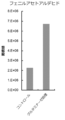
- FIG. 1 is a diagram showing the results of Example 2.
- FIG. 2 is a diagram showing a possible pathway by which phenylacetaldehyde and 4-hydroxyphenylacetaldehyde are produced by glutaminase hydrolysis.
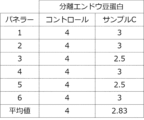
- FIG. 3 is a diagram showing the raw data of the sensory evaluation of Example 4.
- FIG. 4 is a diagram showing the raw data of the sensory evaluation of Example 5.
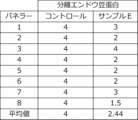
- FIG. 5 is a diagram showing the raw data of the sensory evaluation of Example 6.
- FIG. 6 is a diagram showing the raw data of the sensory evaluation of Example 7.
- the present invention provides a masking agent for off-flavor of vegetable protein materials, which contains phenylacetaldehyde (PAA) and/or 4-hydroxyphenylacetaldehyde (4HPAA).
- PAA phenylacetaldehyde
- HPAA 4-hydroxyphenylacetaldehyde
- the masking agent of this embodiment contains PAA and/or 4HPAA.
- the method for obtaining and producing PAA and 4HPAA is not particularly limited, and commercially available products may be used, or they may be produced by chemical synthesis or enzymatic reaction.
- the masking agent of this aspect is produced from plant-derived raw materials without using organic solvents.
- PAA and 4HPAA are produced from plant-derived raw materials using an enzymatic reaction.
- PAA and 4HPAA are legume-derived materials, such as soybeans, lupine beans, alfalfa, white clover, mung beans, adzuki beans, fava beans, peas, chickpeas, kidney beans, lentil beans, cowpeas, etc.
- PAA and 4HPAA are produced by treating soybean-derived material with glutaminase.
- the masking agent of this aspect is manufactured according to the method for manufacturing a masking agent described below.
- the content of PAA and/or 4HPAA contained in the masking agent of this embodiment is not particularly limited, and for example, 1 ppb to 99%, 10 ppb to 75%, 100 ppb to 50%, 1 ppm to 30%, 100 ppm to 10%, Examples include 1 to 5%.
- a 100% pure product of PAA and/or 4HPAA may be used as the masking agent in this embodiment.
- the masking agent of this aspect may be manufactured from plant-derived raw materials using an enzymatic reaction and used as it is, and in this case, the PAA and/or 4HPAA content may be, for example, It can be between 10 ppb and 1 ppm.
- examples of the origin of the vegetable protein material to which the masking agent of the present embodiment is applied include soybean, lupine bean, alfalfa, white clover, mung bean, adzuki bean, fava bean, pea, chickpea, kidney bean, and lentil bean. , legumes such as cowpea, seeds such as sesame, canola seeds, coconut seeds, and almond seeds, grains such as corn, buckwheat, wheat, barley, and rice, vegetables, and fruits.
- the vegetable protein material to which the masking agent of this aspect is applied is derived from a leguminous plant.
- the vegetable protein materials targeted by the masking agent of this aspect include soybeans, lupine beans, alfalfa, white clover, mung beans, adzuki beans, fava beans, peas, chickpeas, kidney beans, lentil beans, and cowpeas. or a combination thereof.
- the vegetable protein material targeted by the masking agent of this aspect is derived from soybean.
- examples include proteins and/or their decomposition products, and if the proteins and/or their decomposition products contained in legumes are separated and purified, the production The method is not particularly limited.
- the legume-derived protein and/or its decomposition product may be commercially available.
- defatted soybeans such as whole soybeans are defatted with organic solvents such as hexane or ethanol, soybean milk obtained by extracting protein from whole soybeans or defatted soybeans with water, and further methods such as acid precipitation or alcohol precipitation from soybean milk.
- examples include the resulting isolated soy protein, concentrated soy protein, soy whey, and concentrated soy whey.
- Lupine beans, alfalfa, white clover, mung beans, adzuki beans, fava beans, peas, chickpeas, kidney beans, lentil beans, cowpeas, etc. may also be separated and purified in the same way as soybeans. Further, it may be a concentrate of these, whey, or a concentrate of whey. Alternatively, a mixture of these may be used.
- the content of vegetable protein in the vegetable protein material of this embodiment is not particularly limited.
- the content of vegetable protein in the vegetable protein material of this aspect is 10 to 100%, for example, 10% or more, 20% or more, 30% or more, 40% or more, 50% or more, 60% or more. , 70% or more, 80% or more, 90% or more, 95% or more, 99% or more.
- the vegetable protein material of this aspect may contain carbohydrates, lipids, ash, etc. in addition to protein.
- the vegetable protein material has a lipid content of, for example, 5% or less, 2% or less, 1% or less, or 0.5% or less.
- Off-flavor as used herein means an unpleasant odor and unpleasant taste derived from vegetable proteins.
- specific examples of off-flavors include “protein odor", “astringent/astringent taste”, “harsh taste” and “bitter taste” derived from vegetable proteins such as soy protein and wheat protein, soy protein, pea protein, etc. These include ⁇ bean odor'' and ⁇ grassy odor'' derived from proteins in leguminous plants, and ⁇ cereal odor'' derived from grain proteins such as wheat protein.
- the masking agent of this aspect has the effect of masking "bean odor” and "grassy odor” derived from proteins of leguminous plants.
- the masking agent of this aspect has the effect of masking "soybean odor" and "grassy odor" of soybean protein.
- the masking agent of this aspect has a salt concentration of 0 to 10% as sodium chloride, such as 9.5% or less, 7.5% or less, 4.5% or less, 3% or less, 2% or less, 1% or less. .
- the form of the masking agent of this embodiment is not particularly limited, and examples include solids such as powder, granules, and pellets, semisolids such as paste, and liquids such as solutions, suspensions, and emulsions.
- the masking agent may be, for example, a product produced using an enzymatic reaction from a plant-derived raw material as it is, a crudely purified liquid, or a powder obtained by drying the liquid.
- the present invention provides a method for masking the off-flavor of a vegetable protein material, which includes blending PAA and/or 4HPAA into a food or food raw material containing the vegetable protein material.
- PAA and/or 4HPAA may be formulated in the form of a masking agent according to the above embodiments.
- Food as used herein includes foods and drinks unless otherwise specified. Note that the matters explained in the aspect of the masking agent above also apply to this aspect.
- the food or food raw material in this embodiment is not particularly limited except that it contains a vegetable protein material.
- Foods or food raw materials containing vegetable protein materials also include cases where the vegetable protein materials themselves are foods or food raw materials.
- Examples of foods in this embodiment include beverages such as soy milk drinks, milk substitute drinks, vegetable protein-containing drinks, and nutritional drinks; processed meat foods such as ham, sausages, and hamburgers; processed meat products using soy protein, pea protein, etc.
- Food substitutes Processed marine foods such as kamaboko and chikuwa; Processed marine food substitutes using soy protein, pea protein, etc.; Dairy products such as butter, fermented milk, powdered milk, cream, cheese, yogurt, and ice cream; Soybean cream , soybean cheese, soybean yogurt, soybean ice cream, and other dairy substitutes; snacks, cookies, whipped cream, custard cream, flower paste, cakes, puddings, jellies, buns, dumplings, and other confectionery or confectionery ingredients; sauces, mayonnaise, etc. seasonings; bread, noodles, etc.
- the food products of this aspect include proteins derived from legumes.
- the food products of this aspect include proteins from soybeans, lupine beans, alfalfa, white clover, mung beans, adzuki beans, fava beans, peas, chickpeas, kidney beans, lentil beans, cowpeas, or combinations thereof.
- the food product of this aspect comprises soybean-derived protein.
- the food of this aspect is a protein material itself derived from a legume, and examples thereof include soy milk, low-fat soy milk, powdered soy milk, milk substitute milk, isolated soy protein, isolated pea protein, and the like.
- the food of this aspect may be a food composition.
- the food of this aspect may be a quasi-drug instead of a food.
- the food composition or quasi-drug may also contain a carrier and additives.
- surfactants, excipients, coloring agents, flavoring agents, preservatives, stabilizers, buffering agents, suspending agents, tonicity agents, binders, disintegrants, lubricants, fluidity promoters, and flavoring agents include, but are not limited to, and other commonly used carriers can be used as appropriate.
- the form of the food composition or quasi-drug is not particularly limited, and examples thereof include concentrates, powders, granules, tablets, tablets, gums, candies, capsules, pastes, jellies, drinks, and the like.
- blending means adding PAA and/or 4HPAA to food or food raw materials, for example, treating vegetable protein materials contained in foods or food raw materials with glutaminase to add PAA and/or 4HPAA to foods or food raw materials. It also includes producing PAA and/or 4HPAA.
- the amount of PAA and/or 4HPAA added to the food or food raw material in the method of this embodiment is not particularly limited, and can be adjusted as appropriate depending on the type and intensity of the off-flavor to be masked.
- the food or food raw material may be blended to contain PAA and/or 4HPAA in an amount of 0.1 ppb to 10 ppm, 1 ppb to 10 ppm, for example, 5 ppb to 5 ppm, 10 ppb to 1 ppm, 50 ppb to 0.5 ppm. Can be mentioned.
- PAA and/or 4HPAA are blended into food or food ingredients are not particularly limited. Moreover, it may be blended with other food raw materials or may be blended alone. For example, PAA and/or 4HPAA may be blended at the beginning, in the middle, or at the end. Further, for example, PAA and/or 4HPAA may be blended at once, or may be blended in two or more divided doses. Additionally, the process includes a step of treating a vegetable protein material contained in a food or food raw material with glutaminase to generate PAA and/or 4HPAA in the food or food raw material, and a step of adding PAA and/or 4HPAA to the food or food raw material. May be combined.
- the present invention provides a method for producing an off-flavor masking agent for a vegetable protein material, which comprises enzymatically treating the vegetable protein-containing material with an enzyme containing glutaminase. Note that the matters explained in each of the above embodiments also apply to this embodiment.
- examples of the origin of the vegetable protein-containing material to be enzyme-treated with an enzyme containing glutaminase in the production method of this aspect include soybean, lupine bean, alfalfa, white clover, mung bean, adzuki bean, fava bean, pea, and chickpea.
- Legumes such as beans, beans, kidney beans, black-eyed peas, seeds such as sesame, canola seeds, coconut seeds, almond seeds, grains such as corn, buckwheat, wheat, barley, rice, vegetables, fruits, etc. can be mentioned.
- the vegetable protein-containing material of this aspect is derived from a leguminous plant.
- the vegetable protein-containing material of this aspect is derived from soybean, lupine bean, alfalfa, white clover, mung bean, adzuki bean, fava bean, pea, chickpea, kidney bean, lentil bean, cowpea, or a combination thereof. It is. In an even more specific embodiment, the vegetable protein-containing material is derived from soybeans.
- examples include proteins and/or their decomposition products, and if the proteins and/or their decomposition products contained in legumes are separated and purified, the production The method is not particularly limited.
- the legume-derived protein and/or its decomposition product may be commercially available.
- defatted soybeans such as whole soybeans are defatted with organic solvents such as hexane or ethanol, soybean milk obtained by extracting protein from whole soybeans or defatted soybeans with water, and further methods such as acid precipitation or alcohol precipitation from soybean milk.
- examples include the resulting isolated soy protein, concentrated soy protein, soy whey, and concentrated soy whey.
- Lupine beans, alfalfa, white clover, mung beans, adzuki beans, fava beans, peas, chickpeas, kidney beans, lentil beans, cowpeas, etc. may also be separated and purified in the same way as soybeans. Further, it may be a concentrate of these, whey, or a concentrate of whey. Alternatively, a mixture of these may be used.
- the content of vegetable protein in the vegetable protein-containing material of this embodiment is not particularly limited.
- the content of vegetable protein in the vegetable protein-containing material of this aspect is 10 to 100%, for example, 10% or more, 20% or more, 30% or more, 40% or more, 50% or more, 60%. 70% or more, 80% or more, 90% or more, 95% or more, 99% or more.
- the vegetable protein-containing material of this aspect may contain carbohydrates, lipids, ash, etc. in addition to protein.
- the vegetable protein-containing material has a lipid content of, for example, 5% or less, 2% or less, 1% or less, or 0.5% or less.
- Glutaminase as used herein is an enzyme that cleaves the amide bond at the ⁇ -position of glutamine and catalyzes a reaction that produces glutamic acid. Any enzyme or microorganism having this enzyme activity can be used in this embodiment as long as it has this enzyme activity.
- glutaminase preparations may be used. Examples of commercially available glutaminase preparations include glutaminase SD-C100S, glutaminase SD-100NA, and glutaminase F "Amano" 100 (all manufactured by Amano Enzyme Co., Ltd.).
- the glutaminase used in this aspect has ⁇ -glutamyl transferase activity.
- the glutaminase used in this aspect is derived from bacteria.
- the glutaminase used in this aspect is derived from the genus Bacillus, such as Bacillus amyloliquefaciens.
- the glutaminase used in this aspect is not derived from filamentous fungi.
- enzymes other than glutaminase may or may not be used together.
- examples of enzymes used in combination include amylase and protease.
- enzyme preparations containing glutaminase and amylase, glutaminase and protease may be used in the production method of this embodiment.
- amylase or protease when it is desired to decompose saccharides and proteins contained in a vegetable protein-containing material, it is preferable to use amylase or protease in combination.
- the enzyme used in combination may be an enzyme derived from a glutaminase-producing bacterium, or an enzyme derived from another source.
- the reaction pH and reaction temperature of the enzyme treatment in this embodiment may be set according to the characteristics of the enzyme used, and the reaction pH may normally be carried out near the optimum pH, and the reaction temperature may be carried out near the optimum temperature.
- the reaction can be carried out at a pH in the range of 2 to 10.
- the reaction can generally be carried out at a temperature of 20 to 80°C, preferably 40 to 60°C.
- the reaction may be carried out continuously in a bioreactor or the like. After the reaction, residual enzyme activity may be deactivated by heating at a temperature sufficient to deactivate the enzyme (approximately 60 to 170°C).
- the amount of enzyme used in this embodiment may be determined depending on the characteristics of the enzyme used. Specific examples of the usage amount include 0.0001U to 100U, such as 0.001U to 10U, and 0.01 to 1U, per gram of the vegetable protein-containing material.
- Enzyme activity (U) as referred to herein is determined by reacting for 10 minutes at 37°C using 1% (w/v) L-glutamine solution (0.1 mol/L acetate buffer (pH 6.0)) as a substrate.
- 1 unit (U) is the amount of enzyme that produces 1 ⁇ mol of L-glutamic acid per minute.
- the salt concentration during the reaction in this aspect is 0 to 10% as sodium chloride, for example, 9.5% or less, 7.5% or less, 4.5% or less, 3% or less, 2% or less, 1% or less.
- the timing and number of enzymatic reactions in the method of this embodiment are not particularly limited.
- the enzymatic reaction may be carried out once, or may be carried out in two or more parts.
- the glutaminase used when performing the enzyme reaction multiple times may be the same or different.
- the masking agent obtained by the production method of this aspect contains PAA and/or 4HPAA.
- the vegetable protein-containing material that is enzymatically treated with an enzyme containing glutaminase in the production method of this aspect contains ⁇ -glutamyl peptide.
- the vegetable protein-containing material of this aspect contains a ⁇ -glutamyl peptide represented by ⁇ -Glu-Phe-X n and/or ⁇ -Glu-Tyr-X n .
- Glu is glutamic acid
- Phe is phenylalanine
- Teyr is tyrosine
- X is any amino acid or amino acid derivative
- "n” is an integer of 0 or more. means.
- ⁇ -Glu-Phe means that Glu and Phe are bonded via the carboxyl group at the ⁇ -position of glutamic acid.
- n is 0-20, such as 0-10, 0-5.
- the vegetable protein-containing material of this aspect contains a ⁇ -glutamyl peptide represented by ⁇ -Glu-Phe and/or ⁇ -Glu-Tyr. Specific examples include plants that are said to contain ⁇ -glutamyl peptide in Takanori Kasai et al. (1975), No. 49, No. 6, p. 313-316.
- the vegetable protein-containing material to be enzyme-treated and the vegetable protein material to be masked are the same material. In another embodiment, the vegetable protein-containing material to be enzyme-treated and the vegetable protein material to be masked are different materials.
- the present invention includes enzymatically treating a vegetable protein-containing material with an enzyme containing glutaminase, producing an enzyme-treated product containing PAA and/or 4HPAA, and incorporating the enzyme-treated product into food.
- "blending" includes adding an enzyme-treated product containing PAA and/or 4HPAA to food as a food raw material, as well as adding, for example, a vegetable protein-containing material contained in food with an enzyme containing glutaminase. It also includes enzymatically treating foods to produce enzyme-treated products containing PAA and/or 4HPAA.
- the manufacturing method of this aspect includes adding an enzyme-treated product containing PAA and/or 4HPAA to a food product as a food raw material.
- the manufacturing method of this aspect includes enzymatically treating a vegetable protein-containing material contained in a food with an enzyme containing glutaminase to generate an enzyme-treated product containing PAA and/or 4HPAA in the food. including.
- the timing and number of times that the enzyme-treated product containing PAA and/or 4HPAA is added to food as a food raw material is not particularly limited. Moreover, it may be blended with other food raw materials or may be blended alone. For example, the enzyme-treated product may be added at the beginning, during the course, or at the end. Further, for example, the enzyme-treated product may be blended in one time, or may be blended in two or more times.
- there is a step of adding an enzyme-treated product containing PAA and/or 4HPAA to food as a food raw material and a step of enzymatically treating a vegetable protein-containing material contained in food with an enzyme containing glutaminase to add PAA and/or 4HPAA to food. You may combine the steps of producing an enzyme-treated product containing.
- the present invention provides a method for producing phenylacetaldehyde and/or 4-hydroxyphenylacetaldehyde, which includes a step of treating ⁇ -glutamyl peptide with an enzyme including glutaminase.
- the ⁇ -glutamyl peptide treated in the method of this aspect comprises a ⁇ -glutamyl peptide designated as ⁇ -Glu-Phe-X n and/or ⁇ -Glu-Tyr-X n .
- "n" is 0-20, such as 0-10, 0-5.
- the ⁇ -glutamyl peptide of this aspect comprises a ⁇ -glutamyl peptide designated as ⁇ -Glu-Phe and/or ⁇ -Glu-Tyr.
- any enzyme or microorganism having glutaminase activity can be used in this embodiment as long as it has this enzyme activity.
- commercially available glutaminase preparations may be used.
- commercially available glutaminase preparations include glutaminase SD-C100S, glutaminase SD-100NA, and glutaminase F "Amano" 100 (all manufactured by Amano Enzyme Co., Ltd.).
- the glutaminase used in this aspect has ⁇ -glutamyl transferase activity.
- the glutaminase used in this aspect is derived from bacteria.
- the glutaminase used in this aspect is derived from the genus Bacillus, such as Bacillus amyloliquefaciens. In other embodiments, the glutaminase used in this aspect is not derived from filamentous fungi.
- enzymes other than glutaminase may or may not be used together.
- examples of enzymes used in combination include amylase and protease.
- enzyme preparations containing glutaminase and amylase, glutaminase and protease may be used in the production method of this embodiment.
- amylase or protease when it is desired to decompose saccharides and proteins contained in a vegetable protein-containing material, it is preferable to use amylase or protease in combination.
- the enzyme used in combination may be an enzyme derived from a glutaminase-producing bacterium, or an enzyme derived from another source.
- the reaction pH and reaction temperature of the enzyme treatment in this embodiment may be set according to the characteristics of the enzyme used, and the reaction pH may normally be carried out near the optimum pH, and the reaction temperature may be carried out near the optimum temperature.
- the reaction can be carried out at a pH in the range of 2 to 10.
- the reaction can generally be carried out at a temperature of 20 to 80°C, preferably 40 to 60°C.
- the reaction may be carried out continuously in a bioreactor or the like. After the reaction, residual enzyme activity may be deactivated by heating at a temperature sufficient to deactivate the enzyme (approximately 60 to 170°C).
- the salt concentration during the reaction in this aspect is 0 to 10% as sodium chloride, for example, 9.5% or less, 7.5% or less, 4.5% or less, 3% or less, 2% or less, 1% or less.
- the timing and number of enzymatic reactions in the method of this embodiment are not particularly limited.
- the enzymatic reaction may be carried out once, or may be carried out in two or more parts.
- the glutaminase used at that time may be the same or different.
- the phenylacetaldehyde and/or 4-hydroxyphenylacetaldehyde obtained in this embodiment can be used as a raw material for foods, fragrances, etc.
- Example 1 Glutaminase treatment of soy milk Glutaminase (product name: Glutaminase SD-C100S, manufactured by Amano Enzyme Co., Ltd.) was added to low-fat soy milk (manufactured by Fuji Oil Co., Ltd.) at a concentration of 0.1% based on the weight of the soy milk. After reaction at 50°C for 1 hour, the enzyme was deactivated by boiling for 15 minutes.
- the obtained enzyme-treated low-fat soymilk and the pre-processed low-fat soymilk were evaluated for flavor by 10 trained panelists. It was confirmed that the flavor of soy milk was improved by glutaminase treatment.
- Example 2 GC/MS analysis of phenylacetaldehyde GC/MS analysis was performed to confirm whether the aroma components in soymilk change with or without glutaminase treatment. The results are shown in Figure 1. It was confirmed that phenylacetaldehyde (PAA) increased in glutaminase-treated soymilk. Furthermore, it was confirmed that 4-phenylacetaldehyde (4HPAA) also increased in glutaminase-treated soymilk.
- PAA phenylacetaldehyde
- 4HPAA 4-phenylacetaldehyde
- Example 3 Analysis of aldehydes derived from glutaminase hydrolyzate Analysis of the peptide content in soymilk confirmed that ⁇ -glutamyl peptide in soymilk was degraded after glutaminase treatment. From this, as shown in FIG. 2, it was predicted that PAA would be produced as a byproduct of the hydrolysis reaction of ⁇ -Glu-Phe, and 4HPAA would be produced as a byproduct of the hydrolysis reaction of ⁇ -Glu-Tyr.
- Example 4 Addition of PAA and 4HPAA to prepared soy milk or soy protein solution A 5% solution was prepared with prepared soy milk powder (Soyafit 2000/Fuji Oil Co., Ltd.) or isolated soy protein (Fuji Pro E/Fuji Oil Co., Ltd.) did. PAA and 4HPAA were each dissolved in propylene glycol to a concentration of 0.1%. 5% prepared soymilk or isolated soybean protein solution, PAA solution and 4HPAA solution were mixed so that PAA was 6 ppb and 4HPAA was 30 ppb, Sample A was prepared from the prepared soymilk powder, and Sample B was prepared from the isolated soybean protein.
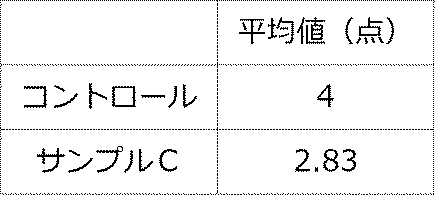
- Example 5 Addition of PAA and 4HPAA to isolated pea protein solution A 5% solution was prepared with isolated pea protein (EmproE86/EMSLAND). PAA and 4HPAA were each dissolved in propylene glycol to a concentration of 0.1%. Sample C was prepared by mixing a 5% isolated pea protein solution, a PAA solution, and a 4HPAA solution so that PAA was 6 ppb and 4HPAA was 30 ppb.
- Example 6 Addition of concentrated soybean whey enzyme-treated product to isolated soybean protein solution Concentrated soybean whey was adjusted to pH 7, and glutaminase was added to the concentrated soybean whey at a concentration of 0.1%. Enzyme treatment was performed at a reaction temperature of 50° C. for 1 hour. The obtained concentrated soybean whey enzyme-treated product was added to a 10% solution of isolated soybean protein (FujiPro E/Fuji Oil Co., Ltd.) to give a concentration of 5%, and sample D was prepared.
- Sample D to which concentrated soy whey enzyme-treated product was added had a weaker soy odor than the control.
- Example 7 Addition of concentrated soy whey enzyme-treated product to isolated pea protein solution A concentrated soy whey enzyme-treated product obtained by the same procedure as Example 6 was added to a 5% solution of isolated pea protein (EmproE86/EMSLAND). Sample E was obtained by adding the sample to a concentration of 5%.
- sample E to which concentrated soybean whey enzyme-treated product was added had a weaker pea odor than the control.
- a masking agent for off-flavor of vegetable protein materials can be provided.
- This masking agent can be used in foods, food compositions, quasi-drugs, and the like.
Landscapes
- Chemical & Material Sciences (AREA)
- Life Sciences & Earth Sciences (AREA)
- Engineering & Computer Science (AREA)
- Health & Medical Sciences (AREA)
- Polymers & Plastics (AREA)
- Food Science & Technology (AREA)
- Nutrition Science (AREA)
- Organic Chemistry (AREA)
- Biochemistry (AREA)
- Wood Science & Technology (AREA)
- Zoology (AREA)
- General Chemical & Material Sciences (AREA)
- Chemical Kinetics & Catalysis (AREA)
- Microbiology (AREA)
- General Health & Medical Sciences (AREA)
- Genetics & Genomics (AREA)
- General Engineering & Computer Science (AREA)
- Bioinformatics & Cheminformatics (AREA)
- Biotechnology (AREA)
- Agronomy & Crop Science (AREA)
- Botany (AREA)
- Oil, Petroleum & Natural Gas (AREA)
- Molecular Biology (AREA)
- Seasonings (AREA)
- Enzymes And Modification Thereof (AREA)
Abstract
Description
この出願は、令和4年3月31日に日本国特許庁に出願された出願番号2022-058519号の優先権の利益を主張する。優先権基礎出願はその全体について、出典明示により本明細書の一部とする。
(1)フェニルアセトアルデヒド及び/又は4-ヒドロキシフェニルアセトアルデヒドを含有する、植物性蛋白質素材のオフフレーバー用マスキング剤;
(2)植物性蛋白質素材がマメ科植物由来のものである、(1)のマスキング剤;
(3)フェニルアセトアルデヒド及び/又は4-ヒドロキシフェニルアセトアルデヒドを、植物性蛋白質素材を含む食品又は食品原料に配合することを含む、植物性蛋白質素材のオフフレーバーのマスキング方法;
(4)植物性蛋白質素材がマメ科植物由来のものである、(3)の方法。
(5)植物性蛋白質含有素材をグルタミナーゼを含む酵素で酵素処理することを含む、植物性蛋白質素材のオフフレーバー用マスキング剤の製造方法;
(6)植物性蛋白質含有素材をグルタミナーゼを含む酵素で酵素処理した酵素処理物が、フェニルアセトアルデヒド及び/又は4-ヒドロキシフェニルアセトアルデヒドを含む、(5)の製造方法;
(7)植物性蛋白質含有素材が、γ-グルタミルペプチドを含む、(5)又は(6)の製造方法;
(8)植物性蛋白質含有素材を、グルタミナーゼを含む酵素で酵素処理し、フェニルアセトアルデヒド及び/又は4-ヒドロキシフェニルアセトアルデヒドを含む酵素処理物を製造し、該酵素処理物を食品に配合することを含む、植物性蛋白質素材のオフフレーバーがマスキングされた植物性蛋白質含有食品の製造方法;
(9)植物性蛋白質含有食品が、マメ科植物由来の植物性蛋白質含有飲料である、(8)の製造方法;
(10)植物性蛋白質含有素材が、γ-グルタミルペプチドを含む、(8)又は(9)の製造方法;
(11)γ-グルタミルペプチドを、グルタミナーゼを含む酵素で処理する工程を含む、フェニルアセトアルデヒド及び/又は4-ヒドロキシフェニルアセトアルデヒドの製造方法、
に関する。
低脂肪豆乳(不二製油株式会社製)に、グルタミナーゼ(品名:グルタミナーゼSD-C100S、天野エンザイム株式会社製)を、豆乳の重量に対して0.1%となるように添加し、50℃で1時間反応後、15分間沸騰浴して酵素を失活させた。
グルタミナーゼ処理の有無で豆乳中の香気成分に変化があるか確認するため、GC/MS分析を行った。結果を図1に示す。グルタミナーゼ処理豆乳では、フェニルアセトアルデヒド(PAA)が増加することが確認された。また、グルタミナーゼ処理豆乳では4-フェニルアセトアルデヒド(4HPAA)も増加することが確認された。
豆乳中のペプチド含量の分析により、グルタミナーゼ処理後に、豆乳中のγ-グルタミルペプチドが分解されていることが確認された。このことから、図2に示すとおり、γ-Glu-Pheの加水分解反応の副産物としてPAAが、γ-Glu-Tyrの加水分解反応の副産物として4HPAAが生成すると予想された。これを確認するため、γ-Glu-Phe及びγ-Glu-Tyrの標品を、ペプチド初濃度1000ppm、0.1%グルタミナーゼで50℃、1時間酵素処理した後、PAA及び4HPAAの濃度を測定した。結果を表1に示す。

調製豆乳粉末(ソヤフィット2000/不二製油株式会社)又は分離大豆蛋白(フジプロE/不二製油株式会社)で5%溶液を調製した。PAA及び4HPAAをそれぞれプロピレングリコール中に0.1%となるように溶解した。5%調製豆乳又は分離大豆蛋白溶液、PAA溶液及び4HPAA溶液を混合し、PAAが6ppb、4HPAAが30ppbとなるよう調製し、調製豆乳粉末からサンプルA、分離大豆蛋白からサンプルBを調製した。

分離エンドウ豆蛋白(EmproE86/EMSLAND)で5%溶液を調製した。PAA及び4HPAAをそれぞれプロピレングリコール中に0.1%となるように溶解した。5%分離エンドウ蛋白溶液、PAA溶液及び4HPAA溶液を混合し、PAAが6ppb、4HPAAが30ppbとなるよう調製し、サンプルCとした。
濃縮大豆ホエイをpH7に調整し、濃縮大豆ホエイに対して0.1%となるようにグルタミナーゼを添加した。反応温度50℃で1時間酵素処理を実施した。分離大豆蛋白(フジプロE/不二製油株式会社)10%溶液に、得られた濃縮大豆ホエイ酵素処理物を5%となるように添加し、サンプルDとした。

分離エンドウ豆蛋白(EmproE86/EMSLAND)5%溶液に、実施例6と同様の手順で得た濃縮大豆ホエイ酵素処理物を5%となるように添加し、サンプルEとした。

Claims (11)
- フェニルアセトアルデヒド及び/又は4-ヒドロキシフェニルアセトアルデヒドを含有する、植物性蛋白質素材のオフフレーバー用マスキング剤。
- 植物性蛋白質素材がマメ科植物由来のものである、請求項1記載のマスキング剤。
- フェニルアセトアルデヒド及び/又は4-ヒドロキシフェニルアセトアルデヒドを、植物性蛋白質素材を含む食品又は食品原料に配合することを含む、植物性蛋白質素材のオフフレーバーのマスキング方法。
- 植物性蛋白質素材がマメ科植物由来のものである、請求項3記載の方法。
- 植物性蛋白質含有素材をグルタミナーゼを含む酵素で酵素処理することを含む、植物性蛋白質素材のオフフレーバー用マスキング剤の製造方法。
- 植物性蛋白質含有素材をグルタミナーゼを含む酵素で酵素処理した酵素処理物が、フェニルアセトアルデヒド及び/又は4-ヒドロキシフェニルアセトアルデヒドを含む、請求項5記載の製造方法。
- 植物性蛋白質含有素材が、γ-グルタミルペプチドを含む、請求項5又は6記載の製造方法。
- 植物性蛋白質含有素材を、グルタミナーゼを含む酵素で酵素処理し、フェニルアセトアルデヒド及び/又は4-ヒドロキシフェニルアセトアルデヒドを含む酵素処理物を製造し、該酵素処理物を食品に配合することを含む、植物性蛋白質素材のオフフレーバーがマスキングされた植物性蛋白質含有食品の製造方法。
- 植物性蛋白質含有食品が、マメ科植物由来の植物性蛋白質含有飲料である、請求項8記載の製造方法。
- 植物性蛋白質含有素材が、γ-グルタミルペプチドを含む、請求項8又は9記載の植物性蛋白質含有食品の製造方法。
- γ-グルタミルペプチドを、グルタミナーゼを含む酵素で処理する工程を含む、フェニルアセトアルデヒド及び/又は4-ヒドロキシフェニルアセトアルデヒドの製造方法。
Priority Applications (4)
| Application Number | Priority Date | Filing Date | Title |
|---|---|---|---|
| JP2024512782A JPWO2023190844A1 (ja) | 2022-03-31 | 2023-03-30 | |
| EP23780852.2A EP4501134A4 (en) | 2022-03-31 | 2023-03-30 | MASKING AGENT |
| CN202380030226.3A CN118973407A (zh) | 2022-03-31 | 2023-03-30 | 掩蔽剂 |
| US18/850,235 US20250204562A1 (en) | 2022-03-31 | 2023-03-30 | Masking agent |
Applications Claiming Priority (2)
| Application Number | Priority Date | Filing Date | Title |
|---|---|---|---|
| JP2022058519 | 2022-03-31 | ||
| JP2022-058519 | 2022-03-31 |
Publications (1)
| Publication Number | Publication Date |
|---|---|
| WO2023190844A1 true WO2023190844A1 (ja) | 2023-10-05 |
Family
ID=88202842
Family Applications (1)
| Application Number | Title | Priority Date | Filing Date |
|---|---|---|---|
| PCT/JP2023/013129 Ceased WO2023190844A1 (ja) | 2022-03-31 | 2023-03-30 | マスキング剤 |
Country Status (5)
| Country | Link |
|---|---|
| US (1) | US20250204562A1 (ja) |
| EP (1) | EP4501134A4 (ja) |
| JP (1) | JPWO2023190844A1 (ja) |
| CN (1) | CN118973407A (ja) |
| WO (1) | WO2023190844A1 (ja) |
Cited By (3)
| Publication number | Priority date | Publication date | Assignee | Title |
|---|---|---|---|---|
| WO2024237271A1 (ja) * | 2023-05-16 | 2024-11-21 | 合同酒精株式会社 | 風味の改善された大豆組成物の製造方法 |
| WO2025057484A1 (ja) * | 2023-09-11 | 2025-03-20 | アサヒグループホールディングス株式会社 | 乳酸菌含有飲料、当該飲料の製造方法、及び当該飲料の風味改善方法 |
| JP2025123210A (ja) * | 2024-02-09 | 2025-08-22 | Bフードサイエンス株式会社 | 豆類の不快臭・不快味を抑制するための剤および方法ならびに豆類含有食品の製造方法 |
Citations (8)
| Publication number | Priority date | Publication date | Assignee | Title |
|---|---|---|---|---|
| JPS57206353A (en) | 1981-06-15 | 1982-12-17 | San Ei Chem Ind Ltd | Method for improving smell of soya milk |
| JPH02257831A (ja) * | 1988-12-08 | 1990-10-18 | Ajinomoto Co Inc | 植物性タンパク粉末およびそれを用いる豆腐の製造法 |
| WO2002028197A1 (fr) | 2000-09-29 | 2002-04-11 | Fuji Oil Company,Limited | Procede de production de proteine de soja |
| JP2003023988A (ja) * | 2001-07-13 | 2003-01-28 | Perikan:Kk | 大豆粉を原料とする粉豆乳の製造方法、粉豆乳及び粉豆乳を加工した乳製品 |
| JP2006141231A (ja) * | 2004-11-17 | 2006-06-08 | Fuji Oil Co Ltd | 大豆蛋白の製造法 |
| WO2019039490A1 (ja) | 2017-08-23 | 2019-02-28 | 三栄源エフ・エフ・アイ株式会社 | タンパク臭抑制剤 |
| WO2019230903A1 (ja) | 2018-05-31 | 2019-12-05 | 三栄源エフ・エフ・アイ株式会社 | 豆類タンパク質由来の豆臭マスキング剤 |
| JP2022058519A (ja) | 2017-12-15 | 2022-04-12 | エルジー エレクトロニクス インコーポレイティド | 非分離二次変換に基づいた画像コーディング方法及びその装置 |
Family Cites Families (4)
| Publication number | Priority date | Publication date | Assignee | Title |
|---|---|---|---|---|
| JP2007189943A (ja) * | 2006-01-19 | 2007-08-02 | National Univ Corp Shizuoka Univ | 芳香族アルデヒドの製造方法及びこれに用いられる酵素 |
| WO2018207818A1 (ja) * | 2017-05-12 | 2018-11-15 | カゴメ株式会社 | アブラナ科野菜調味料及びその製造方法、並びにアブラナ科野菜含有飲食品、及びアブラナ科野菜含有飲食品のコクを強化する方法 |
| JPWO2022191303A1 (ja) * | 2021-03-11 | 2022-09-15 | ||
| WO2024048785A1 (ja) * | 2022-09-02 | 2024-03-07 | 天野エンザイム株式会社 | フェニルアセトアルデヒドの製造方法及びその応用 |
-
2023
- 2023-03-30 EP EP23780852.2A patent/EP4501134A4/en active Pending
- 2023-03-30 JP JP2024512782A patent/JPWO2023190844A1/ja active Pending
- 2023-03-30 CN CN202380030226.3A patent/CN118973407A/zh active Pending
- 2023-03-30 WO PCT/JP2023/013129 patent/WO2023190844A1/ja not_active Ceased
- 2023-03-30 US US18/850,235 patent/US20250204562A1/en active Pending
Patent Citations (8)
| Publication number | Priority date | Publication date | Assignee | Title |
|---|---|---|---|---|
| JPS57206353A (en) | 1981-06-15 | 1982-12-17 | San Ei Chem Ind Ltd | Method for improving smell of soya milk |
| JPH02257831A (ja) * | 1988-12-08 | 1990-10-18 | Ajinomoto Co Inc | 植物性タンパク粉末およびそれを用いる豆腐の製造法 |
| WO2002028197A1 (fr) | 2000-09-29 | 2002-04-11 | Fuji Oil Company,Limited | Procede de production de proteine de soja |
| JP2003023988A (ja) * | 2001-07-13 | 2003-01-28 | Perikan:Kk | 大豆粉を原料とする粉豆乳の製造方法、粉豆乳及び粉豆乳を加工した乳製品 |
| JP2006141231A (ja) * | 2004-11-17 | 2006-06-08 | Fuji Oil Co Ltd | 大豆蛋白の製造法 |
| WO2019039490A1 (ja) | 2017-08-23 | 2019-02-28 | 三栄源エフ・エフ・アイ株式会社 | タンパク臭抑制剤 |
| JP2022058519A (ja) | 2017-12-15 | 2022-04-12 | エルジー エレクトロニクス インコーポレイティド | 非分離二次変換に基づいた画像コーディング方法及びその装置 |
| WO2019230903A1 (ja) | 2018-05-31 | 2019-12-05 | 三栄源エフ・エフ・アイ株式会社 | 豆類タンパク質由来の豆臭マスキング剤 |
Non-Patent Citations (3)
| Title |
|---|
| KASAI, TAKANORI ET AL., JOURNAL OF AGRICULTURAL CHEMICAL SOCIETY OF JAPAN, vol. 49, no. 6, 1975, pages 313 - 316 |
| KAWAKAMI, RYOEI ET AL.: "Investigation Research on Plant-Based Meat", GUNMA INDUSTRIAL TECHNOLOGY CENTER RESEARCH REPORT, 2020 |
| See also references of EP4501134A4 |
Cited By (3)
| Publication number | Priority date | Publication date | Assignee | Title |
|---|---|---|---|---|
| WO2024237271A1 (ja) * | 2023-05-16 | 2024-11-21 | 合同酒精株式会社 | 風味の改善された大豆組成物の製造方法 |
| WO2025057484A1 (ja) * | 2023-09-11 | 2025-03-20 | アサヒグループホールディングス株式会社 | 乳酸菌含有飲料、当該飲料の製造方法、及び当該飲料の風味改善方法 |
| JP2025123210A (ja) * | 2024-02-09 | 2025-08-22 | Bフードサイエンス株式会社 | 豆類の不快臭・不快味を抑制するための剤および方法ならびに豆類含有食品の製造方法 |
Also Published As
| Publication number | Publication date |
|---|---|
| CN118973407A (zh) | 2024-11-15 |
| US20250204562A1 (en) | 2025-06-26 |
| EP4501134A1 (en) | 2025-02-05 |
| EP4501134A4 (en) | 2026-04-01 |
| JPWO2023190844A1 (ja) | 2023-10-05 |
Similar Documents
| Publication | Publication Date | Title |
|---|---|---|
| JP7836371B2 (ja) | 食物繊維由来のフレーバー改変成分 | |
| WO2023190844A1 (ja) | マスキング剤 | |
| US11779039B2 (en) | Enzymatic process | |
| CA3150687A1 (en) | Method for producing plant protein concentrate | |
| JP5576265B2 (ja) | 発酵成分 | |
| US20230028073A1 (en) | Masking agent | |
| US9833012B2 (en) | Enzymatic process | |
| JP2011524176A5 (ja) | ||
| EP4030931A1 (en) | Taste modifying ingredient derived from rice protein | |
| JP2024527343A (ja) | 植物ベースのフレーバー改変成分 | |
| JP2025536358A (ja) | 消費物におけるオフノートをマスキングするための組成物および方法 | |
| JP2025143421A (ja) | 豆類の不快臭・不快味を抑制するための剤および方法ならびに豆類含有食品の製造方法 |
Legal Events
| Date | Code | Title | Description |
|---|---|---|---|
| 121 | Ep: the epo has been informed by wipo that ep was designated in this application |
Ref document number: 23780852 Country of ref document: EP Kind code of ref document: A1 |
|
| ENP | Entry into the national phase |
Ref document number: 2024512782 Country of ref document: JP Kind code of ref document: A |
|
| WWE | Wipo information: entry into national phase |
Ref document number: 18850235 Country of ref document: US |
|
| WWE | Wipo information: entry into national phase |
Ref document number: 202380030226.3 Country of ref document: CN |
|
| WWE | Wipo information: entry into national phase |
Ref document number: 2023780852 Country of ref document: EP |
|
| ENP | Entry into the national phase |
Ref document number: 2023780852 Country of ref document: EP Effective date: 20241031 |
|
| NENP | Non-entry into the national phase |
Ref country code: DE |
|
| WWP | Wipo information: published in national office |
Ref document number: 18850235 Country of ref document: US |