WO2023197318A1 - 信号接收方法、装置、设备及存储介质 - Google Patents
信号接收方法、装置、设备及存储介质 Download PDFInfo
- Publication number
- WO2023197318A1 WO2023197318A1 PCT/CN2022/087182 CN2022087182W WO2023197318A1 WO 2023197318 A1 WO2023197318 A1 WO 2023197318A1 CN 2022087182 W CN2022087182 W CN 2022087182W WO 2023197318 A1 WO2023197318 A1 WO 2023197318A1
- Authority
- WO
- WIPO (PCT)
- Prior art keywords
- downlink
- time domain
- domain position
- positioning signal
- frequency
- Prior art date
- Legal status (The legal status is an assumption and is not a legal conclusion. Google has not performed a legal analysis and makes no representation as to the accuracy of the status listed.)
- Ceased
Links
Images




Classifications
-
- H—ELECTRICITY
- H04—ELECTRIC COMMUNICATION TECHNIQUE
- H04W—WIRELESS COMMUNICATION NETWORKS
- H04W64/00—Locating users or terminals or network equipment for network management purposes, e.g. mobility management
-
- H—ELECTRICITY
- H04—ELECTRIC COMMUNICATION TECHNIQUE
- H04W—WIRELESS COMMUNICATION NETWORKS
- H04W64/00—Locating users or terminals or network equipment for network management purposes, e.g. mobility management
- H04W64/003—Locating users or terminals or network equipment for network management purposes, e.g. mobility management locating network equipment
-
- H—ELECTRICITY
- H04—ELECTRIC COMMUNICATION TECHNIQUE
- H04B—TRANSMISSION
- H04B7/00—Radio transmission systems, i.e. using radiation field
- H04B7/02—Diversity systems; Multi-antenna system, i.e. transmission or reception using multiple antennas
- H04B7/04—Diversity systems; Multi-antenna system, i.e. transmission or reception using multiple antennas using two or more spaced independent antennas
- H04B7/06—Diversity systems; Multi-antenna system, i.e. transmission or reception using multiple antennas using two or more spaced independent antennas at the transmitting station
- H04B7/0613—Diversity systems; Multi-antenna system, i.e. transmission or reception using multiple antennas using two or more spaced independent antennas at the transmitting station using simultaneous transmission
- H04B7/0615—Diversity systems; Multi-antenna system, i.e. transmission or reception using multiple antennas using two or more spaced independent antennas at the transmitting station using simultaneous transmission of weighted versions of same signal
- H04B7/0619—Diversity systems; Multi-antenna system, i.e. transmission or reception using multiple antennas using two or more spaced independent antennas at the transmitting station using simultaneous transmission of weighted versions of same signal using feedback from receiving side
- H04B7/0621—Feedback content
- H04B7/0626—Channel coefficients, e.g. channel state information [CSI]
-
- H—ELECTRICITY
- H04—ELECTRIC COMMUNICATION TECHNIQUE
- H04L—TRANSMISSION OF DIGITAL INFORMATION, e.g. TELEGRAPHIC COMMUNICATION
- H04L5/00—Arrangements affording multiple use of the transmission path
- H04L5/003—Arrangements for allocating sub-channels of the transmission path
- H04L5/0048—Allocation of pilot signals, i.e. of signals known to the receiver
-
- H—ELECTRICITY
- H04—ELECTRIC COMMUNICATION TECHNIQUE
- H04W—WIRELESS COMMUNICATION NETWORKS
- H04W72/00—Local resource management
- H04W72/04—Wireless resource allocation
- H04W72/044—Wireless resource allocation based on the type of the allocated resource
- H04W72/0446—Resources in time domain, e.g. slots or frames
-
- H—ELECTRICITY
- H04—ELECTRIC COMMUNICATION TECHNIQUE
- H04L—TRANSMISSION OF DIGITAL INFORMATION, e.g. TELEGRAPHIC COMMUNICATION
- H04L5/00—Arrangements affording multiple use of the transmission path
- H04L5/003—Arrangements for allocating sub-channels of the transmission path
- H04L5/0053—Allocation of signalling, i.e. of overhead other than pilot signals
Definitions
- the present application relates to the field of mobile communications, and in particular to a signal receiving method, device, equipment and storage medium.
- network equipment can locate the terminal by sending downlink positioning signals to the terminal.
- the network equipment may also send other downlink transmissions other than downlink positioning signals to the terminal.
- the terminal how to receive the network equipment
- the transmitted downlink positioning signals and other downlink transmissions have become urgent problems that need to be solved.
- Embodiments of the present application provide a signal receiving method, device, equipment and storage medium, provide a way for a terminal to receive downlink positioning signals and other downlink transmissions, and ensure the reliability of data transmission between the terminal and network equipment.
- the technical solutions are as follows:
- a signal receiving method is provided, the method is performed by a terminal, and the method includes:
- a signal receiving device includes:
- a position determination module configured to determine the first time domain position of the downlink positioning signal and the second time domain position of other downlink transmissions except the downlink positioning signal;
- a rule determination module configured to determine whether to receive the downlink positioning signal according to the first time domain position, the second time domain position, and a conflict judgment rule.
- a terminal includes: a processor; a transceiver connected to the processor; a memory for storing executable instructions of the processor; wherein the processor is configured to load and execute the executable instructions. Execute instructions to implement the signal receiving method as described above.
- a computer-readable storage medium stores executable program code.
- the executable program code is loaded and executed by a processor to implement the signal receiving method in the above aspect.
- a chip is provided.
- the chip includes programmable logic circuits and/or program instructions. When the chip is run on a terminal, it is used to implement the signal receiving method in the above aspect.
- a computer program product is provided.
- the computer program product is executed by a processor of a terminal, it is used to implement the signal receiving method of the above aspect.
- the terminal determines whether to receive the downlink positioning signal based on the first time domain position of the downlink positioning signal and the second time domain position of other downlink transmissions except the downlink positioning signal, as well as the conflict judgment rules. , provides a way for terminals to receive downlink positioning signals and other downlink transmissions, ensuring the reliability of data transmission between terminals and network equipment.
- Figure 1 shows a block diagram of a communication system provided by an exemplary embodiment of the present application
- Figure 2 shows a flow chart of a signal receiving method provided by an exemplary embodiment of the present application
- Figure 3 shows a schematic diagram of time domain position overlap provided by an exemplary embodiment of the present application
- Figure 4 shows a schematic diagram of non-overlapping time domain positions provided by an exemplary embodiment of the present application
- Figure 5 shows a schematic diagram of the first extended time domain provided by an exemplary embodiment of the present application
- Figure 6 shows a flow chart of a positioning report transmission method provided by an exemplary embodiment of the present application
- Figure 7 shows a block diagram of a signal receiving device provided by an exemplary embodiment of the present application.
- Figure 8 shows a block diagram of another signal receiving device provided by an exemplary embodiment of the present application.
- Figure 9 shows a schematic structural diagram of a communication device provided by an exemplary embodiment of the present application.
- first, second, third, etc. may be used in this application to describe various information, the information should not be limited to these terms. These terms are only used to distinguish information of the same type from each other.
- first information may also be called second information, and similarly, the second information may also be called first information.
- word “if” as used herein may be interpreted as "when” or “when” or “in response to determining.”
- the information including but not limited to user equipment information, user personal information, etc.
- data including but not limited to data used for analysis, stored data, displayed data, etc.
- signals involved in this application All are authorized by the user or fully authorized by all parties, and the collection, use and processing of relevant data need to comply with relevant laws, regulations and standards of relevant countries and regions.
- Figure 1 shows a block diagram of a communication system provided by an exemplary embodiment of the present application.
- the communication system may include: a terminal 10 and a network device 20.
- the number of terminals 10 is usually multiple, and one or more terminals 10 can be distributed in the cell managed by each network device 20 .
- the terminal 10 may include various handheld devices, vehicle-mounted devices, wearable devices, computing devices or other processing devices connected to wireless modems with wireless communication functions, as well as various forms of user equipment (User Equipment, UE), mobile stations ( Mobile Station, MS) and so on.
- UE User Equipment
- MS Mobile Station
- the access network device 20 is a device deployed in the access network to provide wireless communication functions for the terminal 10 .
- the above-mentioned devices that provide wireless communication functions for the terminal 10 are collectively referred to as network equipment.
- a connection can be established between the network device 20 and the terminal 10 through the air interface, so that communication can be carried out through the connection, including the exchange of signaling and data.
- the number of network devices 20 may be multiple, and communication between two adjacent network devices 20 may also be carried out in a wired or wireless manner.
- the terminal 10 can switch between different network devices 20 , that is, establish connections with different network devices 20 .
- the access network device 20 may include various forms of macro base stations, micro base stations, relay stations, access points, transmission and reception points (Transmission Reception Points, TRPs), and so on.
- TRPs Transmission Reception Points
- the names of devices with network device functions may be different.
- 5G NR New Radio, new wireless technology
- gNodeB New Radio, new wireless technology
- gNB network device
- the core network device 30 is a device deployed in the core network.
- the functions of the core network device are mainly to provide user connections, manage users, and carry services, and serve as an interface for the bearer network to provide to external networks.
- the core network equipment in the 5G NR system can include Access and Mobility Management Function (AMF) network elements, User Plane Function (UPF) network elements and Session Management Function (Session Management Function, SMF) network element, etc.
- the core network device 30 in the embodiment of the present application may include a location management function network element.
- the location management function network element includes a location server.
- the location server can be implemented as any of the following: LMF (Location Management Function, location management network element), E-SMLC (Enhanced Serving Mobile Location Center, enhanced Service mobile location center), SUPL (Secure User Plane Location, secure user plane location), SUPL SLP (SUPL Location Platform, secure user plane location platform).
- LMF Location Management Function, location management network element
- E-SMLC Enhanced Serving Mobile Location Center, enhanced Service mobile location center
- SUPL Secure User Plane Location, secure user plane location
- SUPL SLP SUPL Location Platform, secure user plane location platform.
- the network equipment includes at least one of core network equipment and access network equipment.
- Figure 2 shows a flow chart of a signal receiving method provided by an exemplary embodiment of the present application.
- the exemplary method can be applied to the terminal shown in Figure 1.
- the method includes at least part of the following content:
- Step 201 The terminal determines the first time domain position of the downlink positioning signal and the second time domain position of other downlink transmissions except the downlink positioning signal.
- the network device can not only send downlink positioning signals to the terminal, but also send other downlink transmissions other than the downlink positioning signal to the terminal.
- the network device needs to configure the first time domain position for the terminal to transmit the downlink positioning signal, and also configure the second time domain position for the terminal to transmit other downlink transmissions.
- the terminal can determine the first time domain position of the downlink positioning signal and the second time domain position of other downlink transmissions except the downlink positioning signal.
- Step 202 The terminal determines whether to receive the downlink positioning signal based on the first time domain position, the second time domain position, and the conflict judgment rule.
- the conflict judgment rule includes two situations: conflict between the first time domain position and the second time domain position and no conflict.
- the conflict judgment rule is used by the terminal to determine whether there is a conflict between the first time domain position and the second time domain position. conflict.
- the terminal when the terminal is in RRC (Radio Resource Control) idle state, the terminal performs steps 201-202 to determine whether to receive a downlink positioning signal according to conflict judgment rules.
- RRC Radio Resource Control
- the terminal determines the first time domain position of the downlink positioning signal and the second time domain position of other downlink transmissions, and the relationship between the first time domain position and the second time domain position includes the existence of conflict and There are two situations where there is no conflict.
- the terminal needs to determine whether the downlink positioning signal conflicts with other downlink transmissions according to the conflict judgment rules.
- steps performed by the network device may form an embodiment alone, and the steps performed by the terminal may also form an embodiment alone, which is not limited in this application.
- the terminal determines whether to receive the downlink positioning signal based on the first time domain position of the downlink positioning signal and the second time domain position of other downlink transmissions except the downlink positioning signal, as well as the conflict judgment rules, and provides A method of how a terminal receives downlink positioning signals and other downlink transmissions to ensure the reliability of data transmission between the terminal and network equipment.
- the terminal determines whether to receive the downlink positioning signal based on the conflict judgment rule and the priority of the downlink positioning signal.
- the terminal responds to determining that the downlink positioning signal conflicts with other downlink transmissions based on the conflict determination rule, and receives the downlink positioning signal when the priority of the downlink positioning signal is higher than other downlink transmissions. Or, when the priority of the downlink positioning signal is lower than the priority of other downlink transmissions, the downlink positioning signal is not received.
- the conflict judgment rule is used to determine whether the downlink positioning signal conflicts with other downlink transmissions based on the first time domain position and the second time domain position, and when determining that the downlink positioning signal conflicts with other downlink transmissions, if the downlink positioning signal has priority If the priority level is higher than other downlink transmissions, the terminal will receive the downlink positioning signal first. If the priority of the downlink positioning signal is lower than the priority of other downlink transmissions, the terminal receives other downlink transmissions first.
- the embodiment of the present application takes as an example that when the downlink positioning signal conflicts with other downlink transmissions, the terminal preferentially receives the downlink positioning signal or other downlink transmission. In another embodiment, if the downlink positioning signal does not conflict with other downlink transmissions, the terminal receives the downlink positioning signal and other downlink transmissions.
- the conflict judgment rule includes multiple ways to determine whether the downlink positioning signal conflicts with the downlink transmission.
- the conflict judgment rule includes at least one of the following situations:
- Type 1 When there are overlapping symbols between the first time domain position and the second time domain position, it is determined that the downlink positioning signal conflicts with other downlink transmissions.
- the terminal cannot receive the downlink positioning signal and other downlink transmissions at the same time. transmission to determine whether the downlink positioning signal conflicts with other downlink transmissions.
- the first time domain position is located at the front position in Figure 3
- the second time domain position is located at the back position in Figure 3
- the first time domain position and the second time domain position are
- the shaded part in is the repeated part of the first time domain position and the second time domain position, indicating that there are overlapping symbols between the first time domain position and the second time domain position.
- the embodiment of the present application takes as an example that there are overlapping symbols between the first time domain position and the second time domain position. In another embodiment, if there is no overlapping symbol between the first time domain position and the second time domain position, it is determined that the downlink positioning signal does not conflict with other downlink transmissions.
- the first time domain position is located at the front position in Figure 4
- the second time domain position is located at the back position in Figure 4
- the first time domain position and the second time domain position are There is no overlapping part between them, indicating that the first time domain position and the second time domain position do not affect each other, and there are no overlapping symbols between the first time domain position and the second time domain position.
- the second type when there are overlapping symbols between the first time domain position and the first extended time domain, it is determined that the downlink positioning signal conflicts with other downlink transmissions.
- the first extended time domain includes the second time domain position, X symbols or time slots located before the second time domain position, and Y symbols or time slots located after the second time domain position, where X and Y are not Negative integer.
- X and Y are specified by the communication protocol, or X and Y are configured by the network device through SIB (System Information Block), or X and Y are configured in other ways, which are not limited by the embodiments of this application.
- SIB System Information Block
- the first extended time domain is a time domain obtained by extending the second time domain position.
- the second time domain position includes a first starting position and a first ending position.
- the position of X symbols or time slots before the starting position is determined as the second starting position of the first extended time domain.
- the position of Y symbols or time slots after the first end position is determined as the second end position of the first extended time domain, then the time domain between the second start position and the second end position is the first extended time domain .
- the first extended time domain includes a second time domain position, X symbols located before the second time domain position, and Y symbols located after the second time domain position, where X and Y are non-negative integers.
- the first extended time domain includes a second time domain position, X time slots located before the second time domain position, and Y time slots located after the second time domain position, where X and Y are non-negative integers.
- the first extended time domain includes a second time domain position, X symbols located before the second time domain position, and Y time slots located after the second time domain position, where X and Y are non-negative integers.
- the first extended time domain includes a second time domain position, X symbols before the second time domain position, and Y time slots after the second time domain position, where X and Y are non-negative integers.
- the first extended time domain can be represented by a timewindow, which is not limited in the embodiment of this application.
- the terminal cannot receive the downlink positioning signal and other downlink transmissions at the same time. transmission to determine conflicts between downlink positioning signals and other downlink transmissions.
- the embodiment of the present application takes as an example that there are overlapping symbols between the first time domain position and the first extended time domain. In another embodiment, if there are overlapping symbols between the first time domain position and the first extended time domain, When there are no overlapping symbols in the domain, it is determined that the downlink positioning signal does not conflict with other downlink transmissions.
- the downlink positioning signal is located within the initial BWP (Bandwidth Part, bandwidth part), or the downlink positioning signal is located outside the initial BWP.
- the initial BWP is the BWP configured by the network device for the terminal through system message broadcast, or the initial BWP is the BWP agreed between the network device and the terminal by agreement, or the initial BWP is the SSB ( Synchronization Signal/PBCH Block) corresponding BWP, or the initial BWP can also be a BWP configured in other ways, which is not limited in the embodiment of this application.
- the initial BWP is the BWP configured by the network device for the terminal through system message broadcast, or the initial BWP is the BWP agreed between the network device and the terminal by agreement, or the initial BWP is the SSB ( Synchronization Signal/PBCH Block) corresponding BWP, or the initial BWP can also be a BWP configured in other ways, which is not limited in the embodiment of this application.
- SSB Synchronization Signal/PBCH Block
- the initial BWP includes an activated BWP, a default BWP, or other types of BWP, which are not limited in the embodiments of this application.
- the downlink positioning signal if the downlink positioning signal is located within the initial BWP, the time required for BWP switching does not need to be considered. If the downlink positioning signal is located outside the initial BWP, the time required for BWP switching needs to be considered. Therefore, for the above-mentioned third In the extended frequency domain, when the downlink positioning signal is within the initial BWP or outside the initial BWP, X and Y can have different values.
- the first extended time domain in the case where the downlink positioning signal is located outside the initial BWP, includes a second time domain position, a first number of symbols or time slots located before the second time domain position, a first number of symbols or time slots located before the second time domain position, and a second time domain position.
- the first extended time domain includes the second time domain position.
- the first quantity and the second quantity may be the same, or may be different.
- the third quantity and the fourth quantity may be the same or different.
- the first quantity, the second quantity, the third quantity and the fourth quantity may also be the same or different.
- the first extended time domain includes the second time domain position, 5 symbols before the second time domain position, and 6 symbols after the second time domain position
- the first extended time domain includes the second time domain position, 4 symbols located before the second time domain position, and 4 symbols located after the second time domain position.
- the terminal determines whether to receive the downlink positioning signal based on the conflict judgment rule, so as to ensure the reception of data when the downlink positioning signal conflicts with other downlink transmissions other than the downlink positioning signal, and improve the connection between the terminal and the downlink positioning signal.
- the above embodiment describes the conflict determination rules for other downlink transmissions, and for other downlink transmissions, other downlink transmissions include downlink transmissions corresponding to the serving cell.
- other downlink transmissions include downlink channels and/or downlink signals corresponding to the serving cell.
- the downlink channel and/or downlink signal corresponding to the serving cell includes the following situations:
- the downlink channel and/or downlink signal corresponding to the serving cell includes at least one of the following:
- CSI-RS Channel State Information Reference Signal
- TRS Tracking Reference Signal, tracking reference signal
- PDCCH Physical Downlink Control Channel
- CSS Common Search Space
- the PDCCH includes a PDCCH corresponding to at least one of SIB, paging, RA (Random Access), and PEI (Paging Early Indication).
- the priority of the downlink positioning signal is lower than the priority of other downlink transmissions. That is to say, the priority of the downlink positioning signal is lower than the priority of the downlink channel and/or downlink signal corresponding to the serving cell.
- the terminal obtains the first time domain position of the downlink positioning signal and the downlink channel corresponding to the serving cell and/or the second time domain position of the downlink signal, and the priority of the downlink positioning signal is lower than that of the serving cell.
- the downlink channel and/or the priority of the downlink signal Therefore, for the terminal, the terminal needs to determine whether to receive the downlink positioning signal based on the first time domain position, the second time domain position and the conflict judgment rule. Among them, the terminal determines whether to receive the downlink positioning signal, including at least one of the following situations:
- the first method when there are overlapping symbols between the first time domain position and the second time domain position, determine that the downlink positioning signal conflicts with the downlink channel and/or downlink signal corresponding to the serving cell, and receive the downlink channel and/or the corresponding downlink signal of the serving cell. or downward signal.
- the terminal if there are overlapping symbols between the first time domain position and the second time domain position, it means that the downlink positioning signal and the downlink channel and/or downlink signal corresponding to the serving cell share a time domain position, so the terminal cannot At the same time, the downlink positioning signal and the downlink channel and/or downlink signal corresponding to the serving cell are received, and since the priority of the downlink positioning signal is lower than the priority of the downlink channel and/or downlink signal corresponding to the serving cell, the terminal receives the downlink positioning signal corresponding to the serving cell. Downlink channel and/or downlink signal.
- the embodiment of the present application takes as an example that there are overlapping symbols between the first time domain position and the second time domain position. In another embodiment, if there is no overlapping symbol between the first time domain position and the second time domain position, and it is determined that the downlink positioning signal does not conflict with the downlink channel and/or downlink signal corresponding to the serving cell, the terminal can Receive downlink positioning signals and downlink channels and/or downlink signals corresponding to the serving cell.
- the second type when there are overlapping symbols between the first time domain position and the first extended time domain, determine that the downlink positioning signal conflicts with the downlink channel and/or downlink signal corresponding to the serving cell, and receive the downlink channel and/or corresponding to the serving cell. or downward signal.
- the first extended time domain includes the second time domain position, X symbols or time slots located before the second time domain position, and Y symbols or time slots located after the second time domain position, where X and Y are not Negative integer.
- X and Y are specified by the communication protocol, or X and Y are configured by the network device through SIB, or X and Y are configured in other ways, which are not limited by the embodiments of this application.
- the first extended time domain is a time domain obtained by extending the second time domain position.
- the second time domain position includes a first starting position and a first ending position.
- the position of X symbols or time slots before the starting position is determined as the second starting position of the first extended time domain.
- the position of Y symbols or time slots after the first end position is determined as the second end position of the first extended time domain, then the time domain between the second start position and the second end position is the first extended time domain .
- the first extended time domain includes a second time domain position, X symbols located before the second time domain position, and Y symbols located after the second time domain position, where X and Y are non-negative integers.
- the first extended time domain includes a second time domain position, X time slots located before the second time domain position, and Y time slots located after the second time domain position, where X and Y are non-negative integers.
- the first extended time domain includes a second time domain position, X symbols located before the second time domain position, and Y time slots located after the second time domain position, where X and Y are non-negative integers.
- the first extended time domain includes a second time domain position, X symbols before the second time domain position, and Y time slots after the second time domain position, where X and Y are non-negative integers.
- the first extended time domain can be represented by a time window, which is not limited in the embodiments of this application.
- the terminal if there are overlapping symbols between the first time domain position and the first extended time domain, it means that the downlink positioning signal and the downlink channel and/or downlink signal corresponding to the serving cell share a time domain position, so the terminal cannot At the same time, the downlink positioning signal and the downlink channel and/or downlink signal corresponding to the serving cell are received, and since the priority of the downlink positioning signal is lower than the priority of the downlink channel and/or downlink signal corresponding to the serving cell, the terminal receives the downlink positioning signal corresponding to the serving cell. Downlink channel and/or downlink signal.
- the embodiment of the present application takes as an example that there are overlapping symbols between the first time domain position and the first extended time domain. In another embodiment, if there are overlapping symbols between the first time domain position and the first extended time domain, When there are no overlapping symbols in the domain, it is determined that the downlink positioning signal does not conflict with the downlink channel and/or downlink signal corresponding to the serving cell, and the terminal can receive the downlink positioning signal and the downlink channel and/or downlink signal corresponding to the serving cell.
- the downlink positioning signal is located within the initial BWP, or the downlink positioning signal is located outside the initial BWP.
- the initial BWP is a BWP configured by the network device for the terminal through system message broadcast, or the initial BWP is a BWP agreed between the network device and the terminal by agreement, or the initial BWP is the SSB corresponding to the terminal receiving the network device.
- BWP, or the initial BWP can also be a BWP configured in other ways, which is not limited in the embodiment of this application.
- the downlink positioning signal if the downlink positioning signal is located within the initial BWP, the time required for BWP switching does not need to be considered. If the downlink positioning signal is located outside the initial BWP, the time required for BWP switching needs to be considered. Therefore, for the above-mentioned third In the extended frequency domain, when the downlink positioning signal is within the initial BWP or outside the initial BWP, X and Y have different values.
- the first extended time domain in the case where the downlink positioning signal is located outside the initial BWP, includes a second time domain position, a first number of symbols or time slots located before the second time domain position, a first number of symbols or time slots located before the second time domain position, and a second time domain position.
- the first extended time domain includes the second time domain position.
- the first quantity and the second quantity may be the same, or may be different.
- the third quantity and the fourth quantity may be the same or different.
- the first quantity, the second quantity, the third quantity and the fourth quantity may also be the same or different.
- the terminal determines whether to receive the downlink positioning signal based on the conflict judgment rule, so that when the downlink positioning signal conflicts with the downlink channel and/or downlink signal corresponding to the serving cell other than the downlink positioning signal, This ensures the reception of data and improves the reliability of communication between the terminal and network equipment.
- the above embodiment describes the conflict judgment rules for other downlink transmissions, and for other downlink transmissions, other downlink transmissions include downlink transmissions corresponding to neighboring cells.
- other downlink transmissions include downlink signals and/or downlink signals corresponding to neighboring cells.
- the downlink channel and/or downlink signal corresponding to the neighboring cell includes any of the following situations:
- the downlink channel and/or downlink signal corresponding to the neighboring cell includes at least one of the following:
- the PDCCH includes the PDCCH corresponding to the SIB.
- the neighboring cells include at least one of an intra-frequency neighboring cell having the same frequency as the serving cell and an inter-frequency neighboring cell having a different frequency than the serving cell.
- the neighboring cell includes any of the following situations:
- Neighboring cells include co-frequency neighboring cells.
- Neighboring cells include inter-frequency neighboring cells.
- Neighboring cells include same-frequency neighboring cells and inter-frequency neighboring cells.
- the downlink transmission of the neighboring cell corresponds to the second time domain position
- the second time domain position is determined according to SMTC.
- SMTC SSB-based Measurement Timing configuration, SSB-based measurement timing configuration
- SSB-based measurement timing configuration is a periodic duration. That is to say, the downlink transmission of the neighboring cell corresponding to the second time domain position is periodic as indicated by SMTC.
- the terminal needs to measure the SSB on the corresponding carrier frequency within the periodic duration.
- the neighboring cells include same-frequency neighboring cells or inter-frequency neighboring cells, and when the neighboring cells include same-frequency neighboring cells, or the inter-frequency neighboring cells included in the neighboring cells are the first inter-frequency neighboring cells,
- the priority of the downlink positioning signal is lower than the priority of other downlink transmissions, and other downlink transmissions include the downlink signals and/or downlink signals corresponding to neighboring cells. That is to say, the priority of the downlink positioning signal is lower than the downlink channels corresponding to neighboring cells and /or the priority of the downlink signal.
- the neighboring cells include same-frequency neighboring cells or first inter-frequency neighboring cells.
- the terminal obtains the first time domain position of the downlink positioning signal and the downlink channel corresponding to the same frequency neighboring cell and/or the second time domain position of the downlink signal, and the priority of the downlink positioning signal Lower than the priority of the downlink channel and/or downlink signal corresponding to the same-frequency neighboring cell. Therefore, for the terminal, the terminal needs to determine whether to receive downlink positioning based on the first time domain position, the second time domain position and the conflict judgment rule. Signal. Among them, the terminal determines whether to receive the downlink positioning signal, including at least one of the following situations:
- the first method When there are overlapping symbols between the first time domain position and the second time domain position, determine that the downlink positioning signal conflicts with the downlink channel and/or downlink signal corresponding to the same-frequency neighboring cell, and receive the corresponding downlink signal of the same-frequency neighboring cell. Downlink channel and/or downlink signal.
- the terminal cannot simultaneously receive the downlink positioning signal and the downlink channel and/or downlink signal corresponding to the same-frequency neighboring cell, and because the priority of the downlink positioning signal is lower than the priority of the downlink channel and/or downlink signal corresponding to the same-frequency neighboring cell, therefore The terminal receives the downlink channel and/or downlink signal corresponding to the same-frequency neighboring cell.
- the embodiment of the present application takes as an example that there are overlapping symbols between the first time domain position and the second time domain position. In another embodiment, if there is no overlapping symbol between the first time domain position and the second time domain position, it is determined that the downlink positioning signal does not conflict with the downlink channel and/or downlink signal corresponding to the co-frequency neighboring cell, The terminal may receive downlink positioning signals and downlink channels and/or downlink signals corresponding to co-frequency neighboring cells.
- the second type when there are overlapping symbols between the first time domain position and the first extended time domain, determine that the downlink positioning signal conflicts with the downlink channel and/or downlink signal corresponding to the same-frequency neighboring cell, and receive the corresponding downlink signal of the same-frequency neighboring cell. Downlink channel and/or downlink signal.
- the first extended time domain includes the second time domain position, X symbols or time slots located before the second time domain position, and Y symbols or time slots located after the second time domain position, where X and Y are not Negative integer.
- X and Y are specified by the communication protocol, or X and Y are configured by the network device through SIB, or X and Y are configured in other ways, which are not limited by the embodiments of this application.
- the first extended time domain is a time domain obtained by extending the second time domain position.
- the second time domain position includes a first starting position and a first ending position.
- the position of X symbols or time slots before the starting position is determined as the second starting position of the first extended time domain.
- the position of Y symbols or time slots after the first end position is determined as the second end position of the first extended time domain, then the time domain between the second start position and the second end position is the first extended time domain .
- the first extended time domain includes a second time domain position, X symbols located before the second time domain position, and Y symbols located after the second time domain position, where X and Y are non-negative integers.
- the first extended time domain includes a second time domain position, X time slots located before the second time domain position, and Y time slots located after the second time domain position, where X and Y are non-negative integers.
- the first extended time domain includes a second time domain position, X symbols located before the second time domain position, and Y time slots located after the second time domain position, where X and Y are non-negative integers.
- the first extended time domain includes a second time domain position, X symbols before the second time domain position, and Y time slots after the second time domain position, where X and Y are non-negative integers.
- the first extended time domain can be represented by a time window, which is not limited in the embodiments of this application.
- the terminal cannot simultaneously receive the downlink positioning signal and the downlink channel and/or downlink signal corresponding to the same-frequency neighboring cell, and because the priority of the downlink positioning signal is lower than the priority of the downlink channel and/or downlink signal corresponding to the same-frequency neighboring cell, therefore The terminal receives the downlink channel and/or downlink signal corresponding to the same-frequency neighboring cell.
- the embodiment of the present application takes as an example that there are overlapping symbols between the first time domain position and the first extended time domain. In another embodiment, if there are overlapping symbols between the first time domain position and the first extended time domain, When there are no overlapping symbols in the domain, it is determined that the downlink positioning signal does not conflict with the downlink channel and/or downlink signal corresponding to the same-frequency neighboring cell.
- the terminal can receive the downlink positioning signal and the downlink channel and/or downlink signal corresponding to the same-frequency neighboring cell. .
- the downlink positioning signal is located within the initial BWP, or the downlink positioning signal is located outside the initial BWP.
- the initial BWP is a BWP configured by the network device for the terminal through system message broadcast, or the initial BWP is a BWP agreed between the network device and the terminal by agreement, or the initial BWP is the SSB corresponding to the terminal receiving the network device.
- BWP, or the initial BWP can also be a BWP configured in other ways, which is not limited in the embodiment of this application.
- the downlink positioning signal if the downlink positioning signal is located within the initial BWP, the time required for BWP switching does not need to be considered. If the downlink positioning signal is located outside the initial BWP, the time required for BWP switching needs to be considered. Therefore, for the above-mentioned third In the extended frequency domain, when the downlink positioning signal is within the initial BWP or outside the initial BWP, X and Y can have different values.
- the first extended time domain includes a second time domain position, a first number of symbols or time slots located before the second time domain position, a first number of symbols or time slots located before the second time domain position, and a second time domain position.
- the second number of symbols or time slots after the time domain position X is the first number
- Y is the second number, where the first number and the second number are non-negative integers
- the first extended time domain includes a second time domain position, a third number of symbols or time slots located before the second time domain position, and a fourth number of symbols or time slots located after the second time domain position
- X is the Three quantities
- Y is the fourth quantity, where the third quantity and the fourth quantity are non-negative integers; among them, the first quantity is not less than the third quantity, and the second quantity is not less than the fourth quantity.
- the first quantity and the second quantity may be the same, or may be different.
- the third quantity and the fourth quantity may be the same or different.
- the first quantity, the second quantity, the third quantity and the fourth quantity may also be the same or different.
- the terminal determines whether to receive the downlink positioning signal based on the conflict judgment rule, so as to facilitate the situation where the downlink positioning signal conflicts with the downlink channel and/or downlink signal corresponding to the same-frequency neighboring cell except the downlink positioning signal. This ensures the reception of data and improves the reliability of communication between the terminal and network equipment.
- the priority of the frequency corresponding to the first inter-frequency neighboring cell is higher than the priority of the frequency corresponding to the serving cell.
- the terminal since the priority of the frequency corresponding to the first inter-frequency neighboring cell is higher than the priority of the frequency corresponding to the serving cell, the terminal will preferentially select the first inter-frequency neighboring cell, and the terminal will select the first inter-frequency neighboring cell. Take measurements.
- the signal quality of the first inter-frequency neighboring cell measured by the terminal is higher than the signal quality of the serving cell, it means that the communication quality of the terminal through the first inter-frequency neighboring cell is higher than that of the serving cell, and the terminal can reselect to the third inter-frequency neighboring cell.
- An inter-frequency neighboring cell An inter-frequency neighboring cell.
- the terminal obtains the first time domain position of the downlink positioning signal and the downlink channel corresponding to the first inter-frequency neighboring cell and/or the second time domain position of the downlink signal, and the priority of the downlink positioning signal is low.
- the priority of the downlink channel and/or downlink signal corresponding to the first inter-frequency neighboring cell Therefore, for the terminal, the terminal needs to determine whether to receive the downlink based on the first time domain position, the second time domain position and the conflict judgment rule.
- Positioning signal the terminal determines whether to receive the downlink positioning signal, including at least one of the following situations:
- the first method when there are overlapping symbols between the first time domain position and the second time domain position, determine that the downlink positioning signal conflicts with the downlink channel and/or downlink signal corresponding to the first inter-frequency neighboring cell, and receive the first inter-frequency The downlink channel and/or downlink signal corresponding to the neighboring cell.
- the terminal cannot simultaneously receive the downlink positioning signal and the downlink channel and/or downlink signal corresponding to the first inter-frequency neighboring cell, and because the priority of the downlink positioning signal is lower than the downlink channel and/or downlink signal corresponding to the first inter-frequency neighboring cell The priority of the signal, so the terminal receives the downlink channel and/or downlink signal corresponding to the first inter-frequency neighboring cell.
- the embodiment of the present application takes as an example that there are overlapping symbols between the first time domain position and the second time domain position. In another embodiment, if there is no overlapping symbol between the first time domain position and the second time domain position, it is determined that the downlink positioning signal does not correspond to the downlink channel and/or downlink signal of the first inter-frequency neighboring cell. In case of conflict, the terminal may receive the downlink positioning signal and the downlink channel and/or downlink signal corresponding to the first inter-frequency neighboring cell.
- the second type when there are overlapping symbols between the first time domain position and the first extended time domain, determine that the downlink positioning signal conflicts with the downlink channel and/or downlink signal corresponding to the first inter-frequency neighboring cell, and receive the first inter-frequency The downlink channel and/or downlink signal corresponding to the neighboring cell.
- the first extended time domain includes the second time domain position, X symbols or time slots located before the second time domain position, and Y symbols or time slots located after the second time domain position, where X and Y are not Negative integer.
- X and Y are specified by the communication protocol, or X and Y are configured by the network device through SIB, or X and Y are configured in other ways, which are not limited by the embodiments of this application.
- the first extended time domain is a time domain obtained by extending the second time domain position.
- the second time domain position includes a first starting position and a first ending position.
- the position of X symbols or time slots before the starting position is determined as the second starting position of the first extended time domain.
- the position of Y symbols or time slots after the first end position is determined as the second end position of the first extended time domain, then the time domain between the second start position and the second end position is the first extended time domain .
- the first extended time domain includes a second time domain position, X symbols located before the second time domain position, and Y symbols located after the second time domain position, where X and Y are non-negative integers.
- the first extended time domain includes a second time domain position, X time slots located before the second time domain position, and Y time slots located after the second time domain position, where X and Y are non-negative integers.
- the first extended time domain includes a second time domain position, X symbols located before the second time domain position, and Y time slots located after the second time domain position, where X and Y are non-negative integers.
- the first extended time domain includes a second time domain position, X symbols before the second time domain position, and Y time slots after the second time domain position, where X and Y are non-negative integers.
- the first extended time domain can be represented by a time window, which is not limited in the embodiments of this application.
- the terminal cannot simultaneously receive the downlink positioning signal and the downlink channel and/or downlink signal corresponding to the first inter-frequency neighboring cell, and because the priority of the downlink positioning signal is lower than the downlink channel and/or downlink signal corresponding to the first inter-frequency neighboring cell The priority of the signal, so the terminal receives the downlink channel and/or downlink signal corresponding to the first inter-frequency neighboring cell.
- the embodiment of the present application takes as an example that there are overlapping symbols between the first time domain position and the first extended time domain.
- the terminal can receive the downlink positioning signal and the downlink channel corresponding to the first inter-frequency neighboring cell and /or downward signal.
- the downlink positioning signal is located within the initial BWP, or the downlink positioning signal is located outside the initial BWP.
- the initial BWP is a BWP configured by the network device for the terminal through system message broadcast, or the initial BWP is a BWP agreed between the network device and the terminal by agreement, or the initial BWP is the SSB corresponding to the terminal receiving the network device.
- BWP, or the initial BWP can also be a BWP configured in other ways, which is not limited in the embodiment of this application.
- the downlink positioning signal if the downlink positioning signal is located within the initial BWP, the time required for BWP switching does not need to be considered. If the downlink positioning signal is located outside the initial BWP, the time required for BWP switching needs to be considered. Therefore, for the above-mentioned third In the extended frequency domain, when the downlink positioning signal is within the initial BWP or outside the initial BWP, X and Y can have different values.
- the first extended time domain in the case where the downlink positioning signal is located outside the initial BWP, includes a second time domain position, a first number of symbols or time slots located before the second time domain position, a first number of symbols or time slots located before the second time domain position, and a second time domain position.
- the first extended time domain includes the second time domain position.
- the first quantity and the second quantity may be the same, or may be different.
- the third quantity and the fourth quantity may be the same or different.
- the first quantity, the second quantity, the third quantity and the fourth quantity may also be the same, or they may be different.
- the terminal determines whether to receive the downlink positioning signal based on the conflict judgment rule, so that the downlink positioning signal conflicts with the downlink channel and/or downlink signal corresponding to the first inter-frequency neighboring cell other than the downlink positioning signal. In this case, the reception of data is guaranteed and the reliability of communication between the terminal and the network device is improved.
- the inter-frequency neighboring cells included in the neighboring cells include the first inter-frequency neighboring cell, and the priority of the frequency corresponding to the first inter-frequency neighboring cell is higher than the priority of the frequency corresponding to the serving cell.
- the inter-frequency neighboring cell also includes a second inter-frequency neighboring cell.
- the priority of the downlink positioning signal is higher than the priority of other downlink transmissions of the second inter-frequency neighboring cell, and the priority of the downlink positioning signal is higher than that of the second inter-frequency neighboring cell. 2.
- the priority of the frequency corresponding to the inter-frequency neighbor cell is lower than the priority of the frequency corresponding to the serving cell.
- the second inter-frequency neighboring cell is measured.
- the preset threshold is configured by the network device, or agreed by the communication protocol, or set in other ways, which is not limited by the embodiments of this application.
- the terminal needs to measure the signal strength of the second inter-frequency neighboring cell so that the terminal can Find neighboring cells whose signal strength meets the requirements, and then reselect the neighboring cells whose signal strength meets the requirements.
- the embodiment of the present application takes as an example that the signal strength of the serving cell is not greater than the preset threshold. In another embodiment, when the signal strength of the serving cell is greater than the preset threshold, the terminal does not perform measurements on the second inter-frequency neighboring cell.
- the terminal can communicate based on the serving cell at this time, without Measure the second inter-frequency neighboring cell.
- the terminal obtains the first time domain position of the downlink positioning signal and the downlink channel corresponding to the second inter-frequency neighboring cell and/or the second time domain position of the downlink signal, and the priority of the downlink positioning signal is high.
- the priority of the downlink channel and/or downlink signal corresponding to the second inter-frequency neighbor cell Therefore, for the terminal, the terminal needs to determine whether to receive the downlink based on the first time domain position, the second time domain position and the conflict judgment rule.
- Positioning signal the terminal determines whether to receive the downlink positioning signal, including at least one of the following situations:
- the first method when there are overlapping symbols between the first time domain position and the second time domain position, determine that the downlink positioning signal conflicts with the downlink channel and/or downlink signal corresponding to the second inter-frequency neighboring cell, and receive the downlink positioning signal.
- the terminal if there are overlapping symbols between the first time domain position and the second time domain position, it means that the downlink positioning signal and the downlink channel and/or downlink signal corresponding to the second inter-frequency neighboring cell have a common time domain position. , so the terminal cannot simultaneously receive the downlink positioning signal and the downlink channel and/or downlink signal corresponding to the second inter-frequency neighboring cell, and because the priority of the downlink positioning signal is higher than the downlink channel and/or downlink signal corresponding to the second inter-frequency neighboring cell The priority of the signal, so the terminal receives the downlink positioning signal.
- the embodiment of the present application takes as an example that there are overlapping symbols between the first time domain position and the second time domain position. In another embodiment, if there is no overlapping symbol between the first time domain position and the second time domain position, it is determined that the downlink positioning signal does not correspond to the downlink channel and/or the downlink signal of the second inter-frequency neighboring cell. In case of conflict, the terminal may receive the downlink positioning signal and the downlink channel and/or downlink signal corresponding to the second inter-frequency neighboring cell.
- the second method when there are overlapping symbols between the first time domain position and the first extended time domain, determine that the downlink positioning signal conflicts with the downlink channel and/or downlink signal corresponding to the second inter-frequency neighboring cell, and receive the downlink positioning signal.
- the first extended time domain includes the second time domain position, X symbols or time slots located before the second time domain position, and Y symbols or time slots located after the second time domain position, where X and Y are not Negative integer.
- X and Y are specified by the communication protocol, or X and Y are configured by the network device through SIB, or X and Y are configured in other ways, which are not limited by the embodiments of this application.
- the first extended time domain is a time domain obtained by extending the second time domain position.
- the second time domain position includes a first starting position and a first ending position.
- the position of X symbols or time slots before the starting position is determined as the second starting position of the first extended time domain.
- the position of Y symbols or time slots after the first end position is determined as the second end position of the first extended time domain, then the time domain between the second start position and the second end position is the first extended time domain .
- the first extended time domain includes a second time domain position, X symbols located before the second time domain position, and Y symbols located after the second time domain position, where X and Y are non-negative integers.
- the first extended time domain includes a second time domain position, X time slots located before the second time domain position, and Y time slots located after the second time domain position, where X and Y are non-negative integers.
- the first extended time domain includes a second time domain position, X symbols located before the second time domain position, and Y time slots located after the second time domain position, where X and Y are non-negative integers.
- the first extended time domain includes a second time domain position, X symbols located before the second time domain position, and Y time slots located after the second time domain position, where X and Y are non-negative integers.
- the first extended time domain can be represented by a time window, which is not limited in the embodiments of this application.
- the terminal if there are overlapping symbols between the first time domain position and the first extended time domain, it means that the downlink positioning signal and the downlink channel and/or downlink signal corresponding to the second inter-frequency neighboring cell have a common time domain position. , so the terminal cannot simultaneously receive the downlink positioning signal and the downlink channel and/or downlink signal corresponding to the second inter-frequency neighboring cell, and because the priority of the downlink positioning signal is higher than the downlink channel and/or downlink signal corresponding to the second inter-frequency neighboring cell The priority of the signal, so the terminal receives the downlink positioning signal.
- the embodiment of the present application takes as an example that there are overlapping symbols between the first time domain position and the first extended time domain.
- the terminal can receive the downlink positioning signal and the downlink channel corresponding to the second inter-frequency neighboring cell and /or downward signal.
- the downlink positioning signal is located within the initial BWP, or the downlink positioning signal is located outside the initial BWP.
- the initial BWP is a BWP configured by the network device for the terminal through system message broadcast, or the initial BWP is a BWP agreed between the network device and the terminal by agreement, or the initial BWP is the SSB corresponding to the terminal receiving the network device.
- BWP, or the initial BWP can also be a BWP configured in other ways, which is not limited in the embodiment of this application.
- the downlink positioning signal if the downlink positioning signal is located within the initial BWP, the time required for BWP switching does not need to be considered. If the downlink positioning signal is located outside the initial BWP, the time required for BWP switching needs to be considered. Therefore, for the above-mentioned third In the extended frequency domain, when the downlink positioning signal is within the initial BWP or outside the initial BWP, X and Y can have different values.
- the first extended time domain in the case where the downlink positioning signal is located outside the initial BWP, includes a second time domain position, a first number of symbols or time slots located before the second time domain position, a first number of symbols or time slots located before the second time domain position, and a second time domain position.
- the first extended time domain includes the second time domain position.
- the first quantity and the second quantity may be the same, or may be different.
- the third quantity and the fourth quantity may be the same or different.
- the first quantity, the second quantity, the third quantity and the fourth quantity may also be the same or different.
- the terminal determines whether to receive the downlink positioning signal based on the conflict judgment rule, so that the downlink positioning signal conflicts with the downlink channel and/or downlink signal corresponding to the second inter-frequency neighboring cell other than the downlink positioning signal. In this case, the reception of data is guaranteed and the reliability of communication between the terminal and the network device is improved.
- the priority of the downlink positioning signal involved in this application is lower than the priority of other downlink transmissions, and for the other downlink transmissions, other downlink transmissions include multiple types of transmissions.
- other downlink transmissions include at least one of the following:
- other downlink transmissions include other downlink transmissions transmitted by the serving cell, or other downlink transmissions include other downlink transmissions transmitted by the serving cell and other downlink transmissions transmitted by co-frequency neighboring cells.
- other downlink transmissions include other downlink transmissions transmitted by same-frequency neighboring cells and other downlink transmissions transmitted by the first inter-frequency neighboring cells.
- other downlink transmissions include other downlink transmissions transmitted by the serving cell and other downlink transmissions transmitted by the first inter-frequency neighboring cell.
- other downlink transmissions include other downlink transmissions transmitted by the serving cell, other downlink transmissions transmitted by the same-frequency neighboring cells, and other downlink transmissions transmitted by the first inter-frequency neighboring cells.
- the other downlink transmissions include other downlink transmissions of the second inter-frequency neighbor cell transmission.
- the terminal can determine whether to receive the downlink positioning signal according to the conflict judgment rule.
- the method also includes:
- Step 601 The terminal receives the downlink positioning signal sent by the network device and generates a positioning report based on the downlink positioning signal.
- the terminal determines that it can receive the downlink positioning signal based on the conflict judgment rules, it can receive the downlink positioning signal, and then generate a positioning report based on the received downlink positioning signal.
- the positioning report includes at least one of the following:
- Step 602 The terminal sends a positioning report to the network device.
- Step 603 The network device receives the positioning report sent by the terminal.
- the terminal sends a positioning report to the network device, and the network device receives the positioning report sent by the terminal, and then positions the terminal according to the received positioning report to determine the location of the terminal.
- the network device includes a Location Management Function (LMF).
- LMF Location Management Function
- the terminal sends a location report to the LMF.
- the LMF receives the location report sent by the terminal, and then locates the terminal based on the location report to determine the location of the terminal.
- the steps performed by the terminal can form an embodiment alone, and the steps performed by the network device can also form an embodiment alone, which are not limited by the embodiment of the present application.
- the terminal when the terminal determines to receive the downlink positioning signal, it generates a positioning report based on the downlink positioning signal, and sends the positioning report to the network device, so that the network device can position the terminal based on the received positioning report.
- the stability of terminal positioning is improved.
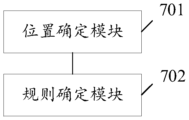
- Figure 7 shows a block diagram of a signal receiving device provided by an exemplary embodiment of the present application.
- the device includes:
- Position determination module 701 used to determine the first time domain position of the downlink positioning signal and the second time domain position of other downlink transmissions except the downlink positioning signal;
- the rule determination module 702 is used to determine whether to receive a downlink positioning signal based on the first time domain position, the second time domain position, and the conflict judgment rule.
- the rule determination module 702 is also configured to respond to determining that the downlink positioning signal conflicts with other downlink transmissions based on the conflict judgment rule, and receive the downlink positioning signal when the priority of the downlink positioning signal is higher than other downlink transmissions;
- the downlink positioning signal is not received.
- conflict judgment rules include:
- the downlink positioning signal When there are overlapping symbols between the first time domain position and the second time domain position, it is determined that the downlink positioning signal conflicts with other downlink transmissions.
- conflict determination rules include:
- the first extended time domain includes the second time domain position, X symbols or time slots located before the second time domain position, and Y symbols or time slots located after the second time domain position, where X and Y are not Negative integer.
- the downlink positioning signal is located within the initial BWP, or the downlink positioning signal is located outside the initial BWP.
- the first extended time domain includes a second time domain position, a first number of symbols or time slots located before the second time domain position, a first number of symbols or time slots located before the second time domain position, and a second time domain position.
- the first extended time domain includes a second time domain position, a third number of symbols or time slots located before the second time domain position, and a third number of symbols or time slots located after the second time domain position.
- the first quantity is not less than the third quantity
- the second quantity is not less than the fourth quantity
- other downlink transmissions include downlink channels and/or downlink signals corresponding to the serving cell.
- the downlink channel and/or downlink signal corresponding to the serving cell includes at least one of the following:
- other downlink transmissions include downlink channels and/or downlink signals corresponding to neighboring cells.
- the downlink channel and/or downlink signal corresponding to the neighboring cell includes at least one of the following:
- the neighboring cells include at least one of an intra-frequency neighboring cell having the same frequency as the serving cell and an inter-frequency neighboring cell having a different frequency than the serving cell.
- the second time domain position of the neighboring cell's downlink transmission is determined according to SMTC.
- the inter-frequency neighboring cell includes a first inter-frequency neighboring cell, and the priority of the frequency corresponding to the first inter-frequency neighboring cell is higher than the priority of the frequency corresponding to the serving cell.
- the device further includes:
- the measurement module 703 is used to measure the first inter-frequency neighboring cell.
- the inter-frequency neighboring cell includes a second inter-frequency neighboring cell, where the priority of the frequency corresponding to the second inter-frequency neighboring cell is lower than the priority of the frequency corresponding to the serving cell.
- the device further includes:
- the measurement module 703 is configured to measure the second inter-frequency neighboring cell when the signal strength of the serving cell is not greater than a preset threshold.
- the priority of the downlink positioning signal is lower than the priority of other downlink transmissions, and the other downlink transmissions include at least one of the following:
- the priority of the downlink positioning signal is higher than the priority of other downlink transmissions, including other downlink transmissions transmitted by the second inter-frequency neighboring cell.
- the terminal is in RRC idle state.
- Figure 9 shows a schematic structural diagram of a communication device provided by an exemplary embodiment of the present application.
- the communication device includes: a processor 901, a receiver 902, a transmitter 903, a memory 904 and a bus 905.
- the processor 901 includes one or more processing cores.
- the processor 901 executes various functional applications and information processing by running software programs and modules.
- the receiver 902 and the transmitter 903 can be implemented as a communication component, and the communication component can be a communication chip.
- the memory 904 is connected to the processor 901 through a bus 905.
- the memory 904 can be used to store at least one program code, and the processor 901 is used to execute the at least one program code to implement each step in the above method embodiment.
- Memory 1004 may be implemented by any type of volatile or non-volatile storage device, or combination thereof, including but not limited to: magnetic or optical disks, electrically erasable programmable read-only Memory (EEPROM), Erasable Programmable Read-Only Memory (EPROM), Static Read-Only Memory (SRAM), Read-Only Memory (ROM), Magnetic Memory, Flash Memory, Programmable Read-Only Memory (PROM).
- EEPROM electrically erasable programmable read-only Memory
- EPROM Erasable Programmable Read-Only Memory
- SRAM Static Read-Only Memory
- ROM Read-Only Memory
- Magnetic Memory Flash Memory
- PROM Programmable Read-Only Memory
- a computer-readable storage medium is also provided, with executable program code stored in the readable storage medium, and the executable program code is loaded and executed by the processor to implement each of the above methods.
- the example provides a signal receiving method performed by a communication device.
- a chip is provided.
- the chip includes programmable logic circuits and/or program instructions. When the chip is run on a terminal, it is used to implement the signal receiving method as provided in various method embodiments. .
- a computer program product is provided, and when the computer program product is executed by a processor of a terminal, it is used to implement the signal receiving method provided by each of the above method embodiments.
Landscapes
- Engineering & Computer Science (AREA)
- Signal Processing (AREA)
- Computer Networks & Wireless Communication (AREA)
- Mobile Radio Communication Systems (AREA)
Abstract
Description
Claims (40)
- 一种信号接收方法,其特征在于,所述方法由终端执行,所述方法包括:确定下行定位信号的第一时域位置以及除所述下行定位信号以外的其他下行传输的第二时域位置;根据所述第一时域位置和所述第二时域位置,以及冲突判断规则,确定是否接收所述下行定位信号。
- 根据权利要求1所述的方法,其特征在于,所述确定是否接收所述下行定位信号,包括:响应于基于所述冲突判断规则确定所述下行定位信号与所述其他下行传输冲突,在所述下行定位信号的优先级高于所述其它下行传输时,接收所述下行定位信号;或在所述下行定位信号的优先级低于所述其它下行传输时,不接收所述下行定位信号。
- 根据权利要求1或2所述的方法,其特征在于,所述冲突判断规则包括:在所述第一时域位置与所述第二时域位置存在重叠符号的情况下,确定所述下行定位信号与所述其他下行传输冲突。
- 根据权利要求1或2所述的方法,其特征在于,所述冲突判断规则包括:在所述第一时域位置与第一扩展时域存在重叠符号的情况下,确定所述下行定位信号与所述其他下行传输冲突;其中,所述第一扩展时域包括所述第二时域位置、位于所述第二时域位置之前的X个符号或时隙、位于所述第二时域位置之后的Y个符号或时隙,其中X、Y为非负整数。
- 根据权利要求4所述的方法,其特征在于,所述下行定位信号位于初始带宽部分BWP内,或者,所述下行定位信号位于所述初始BWP外。
- 根据权利要求5所述的方法,其特征在于,在所述下行定位信号位于所述初始BWP外的情况下,所述第一扩展时域包括所述第二时域位置、位于所述第二时域位置之前的第一数量的符号或时隙、位于所述第二时域位置之后的第二数量的符号或时隙,其中所述第一数量、所述第二数量为非负整数;在所述下行定位信号位于所述初始BWP内的情况下,所述第一扩展时域包括所述第二时域位置、位于所述第二时域位置之前的第三数量的符号或时隙、位于所述第二时域位置之后的第四数量的符号或时隙,其中所述第三数量、所述第四数量为非负整数;其中,所述第一数量不小于所述第三数量,所述第二数量不小于所述第四数量。
- 根据权利要求2至6任一所述的方法,其特征在于,所述其他下行传输包括服务小区对应的下行信道和/或下行信号。
- 根据权利要求7所述的方法,其特征在于,所述服务小区对应的下行信道和/或下行信号包括以下至少一项:所述服务小区的同步信号块SSB;所述服务小区的系统信息块SIB;用于跟踪参考信号TRS的信道状态信息参考信号CSI-RS;控制资源集0CORESET#0关联的公共搜索空间CSS中的物理下行控制信道PDCCH。
- 根据权利要求2至6任一所述的方法,其特征在于,所述其他下行传输包括邻小区对应的下行信道和/或下行信号。
- 根据权利要求9所述的方法,其特征在于,所述邻小区对应的下行信道和/或下行信号包括以下至少一项:所述邻小区的SSB;所述邻小区的SIB;CORESET#0关联的CSS中的PDCCH。
- 根据权利要求9或10所述的方法,其特征在于,所述邻小区包括与服务小区的频率相同的同频邻小区和与所述服务小区的频率不同的异频邻小区的至少一项。
- 根据权利要求11所述的方法,其特征在于,所述邻小区的下行传输的所述第二时域位置根据基于SSB的测量定时配置SMTC确定。
- 根据权利要求11所述的方法,其特征在于,所述异频邻小区包括第一异频邻小区,所述第一异频邻小区对应频率的优先级高于所述服务小区对应频率的优先级。
- 根据权利要求13所述的方法,其特征在于,所述方法还包括:对所述第一异频邻小区进行测量。
- 根据权利要求11所述的方法,其特征在于,所述异频邻小区包括第二异频邻小区,其中所述第二异频邻小区对应频率的优先级低于所述服务小区对应频率的优先级。
- 根据权利要求15所述的方法,其特征在于,所述方法还包括:在所述服务小区的信号强度不大于预设门限的情况下,对所述第二异频邻小区进行测量。
- 根据权利要求2-16任一项所述的方法,其特征在于,所述下行定位信号的优先级低于所述其他下行传输的优先级,所述其它下行传输包括以下至少一项:服务小区传输的其它下行传输;同频邻小区传输的其它下行传输;第一异频邻小区传输的其它下行传输。
- 根据权利要求2-16任一项所述的方法,其特征在于,所述下行定位信号的优先级高于所述其他下行传输的优先级,所述其它下行传输包括第二异频邻小区传输的其它下行传输。
- 根据权利要求1至18任一所述的方法,其特征在于,所述终端处于RRC空闲态。
- 一种信号接收装置,其特征在于,所述装置包括:位置确定模块,用于确定下行定位信号的第一时域位置以及除所述下行定位信号以外的其他下行传输的第二时域位置;规则确定模块,用于根据所述第一时域位置和所述第二时域位置,以及冲突判断规则确定是否接收所述下行定位信号。
- 根据权利要求20所述的装置,其特征在于,所述规则确定模块,还用于响应于基于冲突判断规则确定所述下行定位信号与所述其他下行传输冲突,在所述下行定位信号的优先级高于所述其它下行传输时,接收所述下行定位信号;或在所述下行定位信号的优先级低于所述其它下行传输时,不接收所述下行定位信号。
- 根据权利要求20或21所述的装置,其特征在于,所述冲突判断规则包括:在所述第一时域位置与所述第二时域位置存在重叠符号的情况下,确定所述下行定位信号与所述其他下行传输冲突。
- 根据权利要20或21所述的装置,其特征在于,所述冲突判断规则包括:在所述第一时域位置与第一扩展时域存在重叠符号的情况下,确定所述下行定位信号与所述其他下行传输冲突;其中,所述第一扩展时域包括所述第二时域位置、位于所述第二时域位置之前的X个符号或时隙、位于所述第二时域位置之后的Y个符号或时隙,其中X、Y为非负整数。
- 根据权利要求23所述的装置,其特征在于,所述下行定位信号位于初始BWP内,或者,所述下行定位信号位于所述初始BWP外。
- 根据权利要求24所述的装置,其特征在于,在所述下行定位信号位于所述初始BWP外的情况下,所述第一扩展时域包括所述第二时域位置、位于所述第二时域位置之前的第一数量的符号或时隙、位于所述第二时域位置之后的第二数量的符号或时隙,其中所述第一数量、第二数量为非负整数;在所述下行定位信号位于所述初始BWP内的情况下,所述第一扩展时域包括所述第二时域位置、位于所述第二时域位置之前的第三数量的符号或时隙、位于所述第二时域位置之后的第四数量的符号或时隙,其中所述第三数量、第四数量为非负整数;其中,所述第一数量不小于所述第三数量,所述第二数量不小于所述第四数量。
- 根据权利要求21至25任一所述的装置,其特征在于,所述其他下行传输包括服务小区对应的下行信道和/或下行信号。
- 根据权利要求26所述的装置,其特征在于,所述服务小区对应的下行信道和/或下行信号包括以下至少一项:所述服务小区的SSB;所述服务小区的SIB;用于TRS的CSI-RS;CORESET#0关联的CSS中的PDCCH。
- 根据权利要求21至25任一所述的装置,其特征在于,所述其他下行传输包括邻小区对应的下行信道和/或下行信号。
- 根据权利要求28所述的装置,其特征在于,所述邻小区对应的下行信道和/或下行信号包括以下至少一项:所述邻小区的SSB;所述邻小区的SIB;CORESET#0关联的CSS中的PDCCH。
- 根据权利要求28或29所述的装置,其特征在于,所述邻小区包括与服务小区的频率相同的同频邻小区和与所述服务小区的频率不同的异频邻小区的至少一项。
- 根据权利要求30所述的装置,其特征在于,所述邻小区的下行传输的所述第二时域位置根据SMTC确定。
- 根据权利要求30所述的装置,其特征在于,所述异频邻小区包括第一异频邻小区,所述第一异频邻小区对应频率的优先级高于所述服务小区对应频率的优先级。
- 根据权利要求32所述的装置,其特征在于,所述装置还包括:测量模块,用于对所述第一异频邻小区进行测量。
- 根据权利要求30所述的装置,其特征在于,所述异频邻小区包括第二异频邻小区,其中所述第二异频邻小区对应频率的优先级低于所述服务小区对应频率的优先级。
- 根据权利要求34所述的装置,其特征在于,所述装置还包括:测量模块,用于在服务小区的信号强度不大于预设门限的情况下,对所述第二异频邻小区进行测量。
- 根据权利要求21-35任一项所述的装置,其特征在于,所述下行定位信号的优先级低于所述其他下行传输的优先级,所述其它下行传输包括以下至少一项:服务小区传输的其它下行传输;同频邻小区传输的其它下行传输;第一异频邻小区传输的其它下行传输。
- 根据权利要求21-35任一项所述的装置,其特征在于,所述下行定位信号的优先级高于所述其他下行传输的优先级,所述其它下行传输包括第二异频邻小区传输的其它下行传输。
- 根据权利要求20至37任一所述的装置,其特征在于,所述终端处于RRC空闲态。
- 一种终端,其特征在于,所述终端包括:处理器;与所述处理器相连的收发器;其中,所述处理器被配置为加载并执行可执行指令以实现如权利要求1至19任一所述的信号接收方法。
- 一种计算机可读存储介质,所述可读存储介质中存储有可执行程序代码,所述可执行程序代码由处理器加载并执行以实现如权利要求1至19任一所述的信号接收方法。
Priority Applications (4)
| Application Number | Priority Date | Filing Date | Title |
|---|---|---|---|
| CN202280001195.4A CN117242730A (zh) | 2022-04-15 | 2022-04-15 | 信号接收方法、装置、设备及存储介质 |
| US18/855,929 US20250254649A1 (en) | 2022-04-15 | 2022-04-15 | Signal receiving method and apparatus, and device and storage medium |
| PCT/CN2022/087182 WO2023197318A1 (zh) | 2022-04-15 | 2022-04-15 | 信号接收方法、装置、设备及存储介质 |
| EP22936963.2A EP4510484A4 (en) | 2022-04-15 | 2022-04-15 | SIGNAL RECEIVING METHOD AND APPARATUS, DEVICE, AND STORAGE MEDIUM |
Applications Claiming Priority (1)
| Application Number | Priority Date | Filing Date | Title |
|---|---|---|---|
| PCT/CN2022/087182 WO2023197318A1 (zh) | 2022-04-15 | 2022-04-15 | 信号接收方法、装置、设备及存储介质 |
Publications (1)
| Publication Number | Publication Date |
|---|---|
| WO2023197318A1 true WO2023197318A1 (zh) | 2023-10-19 |
Family
ID=88328652
Family Applications (1)
| Application Number | Title | Priority Date | Filing Date |
|---|---|---|---|
| PCT/CN2022/087182 Ceased WO2023197318A1 (zh) | 2022-04-15 | 2022-04-15 | 信号接收方法、装置、设备及存储介质 |
Country Status (4)
| Country | Link |
|---|---|
| US (1) | US20250254649A1 (zh) |
| EP (1) | EP4510484A4 (zh) |
| CN (1) | CN117242730A (zh) |
| WO (1) | WO2023197318A1 (zh) |
Citations (1)
| Publication number | Priority date | Publication date | Assignee | Title |
|---|---|---|---|---|
| CN113396555A (zh) * | 2019-02-15 | 2021-09-14 | 瑞典爱立信有限公司 | 在通信系统中分配定位参考信号的系统和方法 |
Family Cites Families (1)
| Publication number | Priority date | Publication date | Assignee | Title |
|---|---|---|---|---|
| US11129195B2 (en) * | 2017-08-09 | 2021-09-21 | Qualcomm Incorporated | Techniques and apparatuses for positioning reference signal (PRS) management |
-
2022
- 2022-04-15 WO PCT/CN2022/087182 patent/WO2023197318A1/zh not_active Ceased
- 2022-04-15 CN CN202280001195.4A patent/CN117242730A/zh active Pending
- 2022-04-15 EP EP22936963.2A patent/EP4510484A4/en active Pending
- 2022-04-15 US US18/855,929 patent/US20250254649A1/en active Pending
Patent Citations (1)
| Publication number | Priority date | Publication date | Assignee | Title |
|---|---|---|---|---|
| CN113396555A (zh) * | 2019-02-15 | 2021-09-14 | 瑞典爱立信有限公司 | 在通信系统中分配定位参考信号的系统和方法 |
Non-Patent Citations (3)
| Title |
|---|
| CMCC: "Discussion on latency improvement for positioning", 3GPP DRAFT; R1-2111611, 3RD GENERATION PARTNERSHIP PROJECT (3GPP), MOBILE COMPETENCE CENTRE ; 650, ROUTE DES LUCIOLES ; F-06921 SOPHIA-ANTIPOLIS CEDEX ; FRANCE, vol. RAN WG1, no. e-Meeting; 20211111 - 20211119, 5 November 2021 (2021-11-05), Mobile Competence Centre ; 650, route des Lucioles ; F-06921 Sophia-Antipolis Cedex ; France, XP052074974 * |
| HUAWEI, HISILICON: "Enhancements to positioning latency improvements", 3GPP DRAFT; R1-2110853, 3RD GENERATION PARTNERSHIP PROJECT (3GPP), MOBILE COMPETENCE CENTRE ; 650, ROUTE DES LUCIOLES ; F-06921 SOPHIA-ANTIPOLIS CEDEX ; FRANCE, vol. RAN WG1, no. e-Meeting; 20211111 - 20211119, 6 November 2021 (2021-11-06), Mobile Competence Centre ; 650, route des Lucioles ; F-06921 Sophia-Antipolis Cedex ; France, XP052074634 * |
| See also references of EP4510484A4 * |
Also Published As
| Publication number | Publication date |
|---|---|
| EP4510484A1 (en) | 2025-02-19 |
| EP4510484A4 (en) | 2025-05-14 |
| US20250254649A1 (en) | 2025-08-07 |
| CN117242730A (zh) | 2023-12-15 |
Similar Documents
| Publication | Publication Date | Title |
|---|---|---|
| EP3400736B1 (en) | Sharing network feedback information using a device-to-device link | |
| WO2022000366A1 (zh) | 定位方法、装置、终端、网络侧设备和存储介质 | |
| CN117395769A (zh) | 信息传输方法及相关设备 | |
| CN111819814A (zh) | 通信方法、装置、网络侧设备、终端和存储介质 | |
| US10306646B2 (en) | Method for device-to-device communication, base station and user equipment | |
| WO2023197220A1 (zh) | 邻小区测量方法、装置、设备及存储介质 | |
| WO2023230960A1 (zh) | 测量信息的上报方法、接收方法、装置、设备及存储介质 | |
| WO2024016236A1 (zh) | 切换方法、装置、设备及存储介质 | |
| WO2020155071A1 (zh) | 网络标识的显示方法、终端设备和网络设备 | |
| US10743292B2 (en) | Method and apparatus for resource allocation | |
| US20250254643A1 (en) | Downlink positioning method and apparatus, and device and storage medium | |
| WO2023197318A1 (zh) | 信号接收方法、装置、设备及存储介质 | |
| WO2024192774A1 (zh) | 通信方法、装置、设备、存储介质、芯片、产品及程序 | |
| CN106162816B (zh) | 网络发现方法、站点及接入点 | |
| CN119521243A (zh) | 通信方法及相关装置 | |
| WO2023197221A1 (zh) | 信息配置方法、装置、设备及存储介质 | |
| WO2024031308A1 (zh) | 传输方法、定位参考信号的配置方法、装置、设备及介质 | |
| CN117412387A (zh) | 通信方法与通信装置 | |
| CN114026818A (zh) | 信息配置方法、装置、设备及存储介质 | |
| WO2023123477A1 (zh) | 无线通信方法、终端设备和网络设备 | |
| RU2806445C1 (ru) | Способ и устройство для передачи опорного сигнала позиционирования нисходящей линии связи и носитель данных | |
| WO2023151144A1 (zh) | 信号测量方法、装置、设备、介质及程序产品 | |
| CN118695373A (zh) | 通信方法和装置 | |
| WO2025092573A1 (zh) | 一种通信方法及装置 | |
| CN120345282A (zh) | 通信方法、装置、设备、存储介质、芯片、产品及程序 |
Legal Events
| Date | Code | Title | Description |
|---|---|---|---|
| WWE | Wipo information: entry into national phase |
Ref document number: 202280001195.4 Country of ref document: CN |
|
| 121 | Ep: the epo has been informed by wipo that ep was designated in this application |
Ref document number: 22936963 Country of ref document: EP Kind code of ref document: A1 |
|
| WWE | Wipo information: entry into national phase |
Ref document number: 18855929 Country of ref document: US |
|
| WWE | Wipo information: entry into national phase |
Ref document number: 202427086845 Country of ref document: IN |
|
| WWE | Wipo information: entry into national phase |
Ref document number: 2022936963 Country of ref document: EP |
|
| NENP | Non-entry into the national phase |
Ref country code: DE |
|
| ENP | Entry into the national phase |
Ref document number: 2022936963 Country of ref document: EP Effective date: 20241115 |
|
| WWP | Wipo information: published in national office |
Ref document number: 18855929 Country of ref document: US |