WO2023205171A1 - Method for treating central nervous system diseases - Google Patents
Method for treating central nervous system diseases Download PDFInfo
- Publication number
- WO2023205171A1 WO2023205171A1 PCT/US2023/018978 US2023018978W WO2023205171A1 WO 2023205171 A1 WO2023205171 A1 WO 2023205171A1 US 2023018978 W US2023018978 W US 2023018978W WO 2023205171 A1 WO2023205171 A1 WO 2023205171A1
- Authority
- WO
- WIPO (PCT)
- Prior art keywords
- disease
- flavonoid
- cns disease
- egcg
- drug
- Prior art date
- Legal status (The legal status is an assumption and is not a legal conclusion. Google has not performed a legal analysis and makes no representation as to the accuracy of the status listed.)
- Ceased
Links
Classifications
-
- A—HUMAN NECESSITIES
- A61—MEDICAL OR VETERINARY SCIENCE; HYGIENE
- A61K—PREPARATIONS FOR MEDICAL, DENTAL OR TOILETRY PURPOSES
- A61K47/00—Medicinal preparations characterised by the non-active ingredients used, e.g. carriers or inert additives; Targeting or modifying agents chemically bound to the active ingredient
- A61K47/50—Medicinal preparations characterised by the non-active ingredients used, e.g. carriers or inert additives; Targeting or modifying agents chemically bound to the active ingredient the non-active ingredient being chemically bound to the active ingredient, e.g. polymer-drug conjugates
- A61K47/69—Medicinal preparations characterised by the non-active ingredients used, e.g. carriers or inert additives; Targeting or modifying agents chemically bound to the active ingredient the non-active ingredient being chemically bound to the active ingredient, e.g. polymer-drug conjugates the conjugate being characterised by physical or galenical forms, e.g. emulsion, particle, inclusion complex, stent or kit
- A61K47/6905—Medicinal preparations characterised by the non-active ingredients used, e.g. carriers or inert additives; Targeting or modifying agents chemically bound to the active ingredient the non-active ingredient being chemically bound to the active ingredient, e.g. polymer-drug conjugates the conjugate being characterised by physical or galenical forms, e.g. emulsion, particle, inclusion complex, stent or kit the form being a colloid or an emulsion
- A61K47/6907—Medicinal preparations characterised by the non-active ingredients used, e.g. carriers or inert additives; Targeting or modifying agents chemically bound to the active ingredient the non-active ingredient being chemically bound to the active ingredient, e.g. polymer-drug conjugates the conjugate being characterised by physical or galenical forms, e.g. emulsion, particle, inclusion complex, stent or kit the form being a colloid or an emulsion the form being a microemulsion, nanoemulsion or micelle
-
- A—HUMAN NECESSITIES
- A61—MEDICAL OR VETERINARY SCIENCE; HYGIENE
- A61K—PREPARATIONS FOR MEDICAL, DENTAL OR TOILETRY PURPOSES
- A61K9/00—Medicinal preparations characterised by special physical form
- A61K9/10—Dispersions; Emulsions
- A61K9/107—Emulsions ; Emulsion preconcentrates; Micelles
-
- A—HUMAN NECESSITIES
- A61—MEDICAL OR VETERINARY SCIENCE; HYGIENE
- A61K—PREPARATIONS FOR MEDICAL, DENTAL OR TOILETRY PURPOSES
- A61K31/00—Medicinal preparations containing organic active ingredients
- A61K31/33—Heterocyclic compounds
- A61K31/335—Heterocyclic compounds having oxygen as the only ring hetero atom, e.g. fungichromin
- A61K31/35—Heterocyclic compounds having oxygen as the only ring hetero atom, e.g. fungichromin having six-membered rings with one oxygen as the only ring hetero atom
- A61K31/352—Heterocyclic compounds having oxygen as the only ring hetero atom, e.g. fungichromin having six-membered rings with one oxygen as the only ring hetero atom condensed with carbocyclic rings, e.g. methantheline
- A61K31/353—3,4-Dihydrobenzopyrans, e.g. chroman, catechin
-
- A—HUMAN NECESSITIES
- A61—MEDICAL OR VETERINARY SCIENCE; HYGIENE
- A61K—PREPARATIONS FOR MEDICAL, DENTAL OR TOILETRY PURPOSES
- A61K31/00—Medicinal preparations containing organic active ingredients
- A61K31/65—Tetracyclines
-
- A—HUMAN NECESSITIES
- A61—MEDICAL OR VETERINARY SCIENCE; HYGIENE
- A61K—PREPARATIONS FOR MEDICAL, DENTAL OR TOILETRY PURPOSES
- A61K31/00—Medicinal preparations containing organic active ingredients
- A61K31/70—Carbohydrates; Sugars; Derivatives thereof
- A61K31/7028—Compounds having saccharide radicals attached to non-saccharide compounds by glycosidic linkages
- A61K31/7034—Compounds having saccharide radicals attached to non-saccharide compounds by glycosidic linkages attached to a carbocyclic compound, e.g. phloridzin
- A61K31/704—Compounds having saccharide radicals attached to non-saccharide compounds by glycosidic linkages attached to a carbocyclic compound, e.g. phloridzin attached to a condensed carbocyclic ring system, e.g. sennosides, thiocolchicosides, escin, daunorubicin
-
- A—HUMAN NECESSITIES
- A61—MEDICAL OR VETERINARY SCIENCE; HYGIENE
- A61K—PREPARATIONS FOR MEDICAL, DENTAL OR TOILETRY PURPOSES
- A61K45/00—Medicinal preparations containing active ingredients not provided for in groups A61K31/00 - A61K41/00
- A61K45/06—Mixtures of active ingredients without chemical characterisation, e.g. antiphlogistics and cardiaca
-
- A—HUMAN NECESSITIES
- A61—MEDICAL OR VETERINARY SCIENCE; HYGIENE
- A61K—PREPARATIONS FOR MEDICAL, DENTAL OR TOILETRY PURPOSES
- A61K47/00—Medicinal preparations characterised by the non-active ingredients used, e.g. carriers or inert additives; Targeting or modifying agents chemically bound to the active ingredient
- A61K47/50—Medicinal preparations characterised by the non-active ingredients used, e.g. carriers or inert additives; Targeting or modifying agents chemically bound to the active ingredient the non-active ingredient being chemically bound to the active ingredient, e.g. polymer-drug conjugates
- A61K47/51—Medicinal preparations characterised by the non-active ingredients used, e.g. carriers or inert additives; Targeting or modifying agents chemically bound to the active ingredient the non-active ingredient being chemically bound to the active ingredient, e.g. polymer-drug conjugates the non-active ingredient being a modifying agent
- A61K47/54—Medicinal preparations characterised by the non-active ingredients used, e.g. carriers or inert additives; Targeting or modifying agents chemically bound to the active ingredient the non-active ingredient being chemically bound to the active ingredient, e.g. polymer-drug conjugates the non-active ingredient being a modifying agent the modifying agent being an organic compound
- A61K47/55—Medicinal preparations characterised by the non-active ingredients used, e.g. carriers or inert additives; Targeting or modifying agents chemically bound to the active ingredient the non-active ingredient being chemically bound to the active ingredient, e.g. polymer-drug conjugates the non-active ingredient being a modifying agent the modifying agent being an organic compound the modifying agent being also a pharmacologically or therapeutically active agent, i.e. the entire conjugate being a codrug
-
- A—HUMAN NECESSITIES
- A61—MEDICAL OR VETERINARY SCIENCE; HYGIENE
- A61P—SPECIFIC THERAPEUTIC ACTIVITY OF CHEMICAL COMPOUNDS OR MEDICINAL PREPARATIONS
- A61P25/00—Drugs for disorders of the nervous system
-
- A—HUMAN NECESSITIES
- A61—MEDICAL OR VETERINARY SCIENCE; HYGIENE
- A61P—SPECIFIC THERAPEUTIC ACTIVITY OF CHEMICAL COMPOUNDS OR MEDICINAL PREPARATIONS
- A61P25/00—Drugs for disorders of the nervous system
- A61P25/28—Drugs for disorders of the nervous system for treating neurodegenerative disorders of the central nervous system, e.g. nootropic agents, cognition enhancers, drugs for treating Alzheimer's disease or other forms of dementia
-
- A—HUMAN NECESSITIES
- A61—MEDICAL OR VETERINARY SCIENCE; HYGIENE
- A61P—SPECIFIC THERAPEUTIC ACTIVITY OF CHEMICAL COMPOUNDS OR MEDICINAL PREPARATIONS
- A61P35/00—Antineoplastic agents
-
- A—HUMAN NECESSITIES
- A61—MEDICAL OR VETERINARY SCIENCE; HYGIENE
- A61P—SPECIFIC THERAPEUTIC ACTIVITY OF CHEMICAL COMPOUNDS OR MEDICINAL PREPARATIONS
- A61P9/00—Drugs for disorders of the cardiovascular system
- A61P9/10—Drugs for disorders of the cardiovascular system for treating ischaemic or atherosclerotic diseases, e.g. antianginal drugs, coronary vasodilators, drugs for myocardial infarction, retinopathy, cerebrovascula insufficiency, renal arteriosclerosis
-
- C—CHEMISTRY; METALLURGY
- C07—ORGANIC CHEMISTRY
- C07D—HETEROCYCLIC COMPOUNDS
- C07D311/00—Heterocyclic compounds containing six-membered rings having one oxygen atom as the only hetero atom, condensed with other rings
- C07D311/02—Heterocyclic compounds containing six-membered rings having one oxygen atom as the only hetero atom, condensed with other rings ortho- or peri-condensed with carbocyclic rings or ring systems
- C07D311/04—Benzo[b]pyrans, not hydrogenated in the carbocyclic ring
-
- C—CHEMISTRY; METALLURGY
- C07—ORGANIC CHEMISTRY
- C07K—PEPTIDES
- C07K16/00—Immunoglobulins [IG], e.g. monoclonal or polyclonal antibodies
- C07K16/18—Immunoglobulins [IG], e.g. monoclonal or polyclonal antibodies against material from animals or humans
- C07K16/32—Immunoglobulins [IG], e.g. monoclonal or polyclonal antibodies against material from animals or humans against translation products of oncogenes
Definitions
- the present invention provides a method of treating Central nervous system (CNS) diseases.
- the method comprises the step of administering to a subject in need thereof an effective amount of (i) a polymer-flavonoid conjugate, (ii) a flavonoid oligomer, or (iii) micelles having a shell formed by one or more polymer-flavonoid conjugates or one or more flavonoid oligomers, or the combination thereof, and having an agent encapsulated within the shell.
- Central nervous system (CNS) diseases are neurological disorders that affect the structure or function of the brain or spinal cord, which collectively form the CNS.
- the condition may be an inherited metabolic disorder, the result of neural damages from infections, neurodegenerative conditions, stroke, brain tumor or other problems from unknown or multiple factors.
- CNS diseases include brain tumors, Alzheimer’s disease, Parkinson's disease, Huntington's disease, migraine, infection, multiple sclerosis, addiction, arachnoid cysts, attention deficit/hyperactivity disorder (ADHD), autism, catalepsy, encephalitis, epilepsy/seizures, infection, locked-in syndrome, meningitis, migraine, myelopathy, Tourette's syndrome, Bell's palsy, headache (largest brain disease), autoimmune disorders, cerebral palsy, motor neuron disease (MND), neurofibromatosis, epilepsy and Seizures, acute spinal cord injury, amyotrophic lateral sclerosis (ALS), ataxia, Bell's Palsy, cerebral aneurysm, obsessive-compulsive disorder (OCD), defects in the cerebral cortex include microgyria, polymicrogyria, bilateral frontoparietal polymicrogyria, and pachygyria.
- ADHD attention deficit/hyperactivity disorder
- Brain tumor occurs when abnormal cells form within the brain.
- Brain tumor can be primary cancer of the brain, metastatic cancer to the brain or benign brain tumors. In general, they appear when there is a problem with cellular division. Problems with the body's immune system can lead to brain tumors.
- Stroke is a medical condition in which poor blood flow to the brain causes cell death.
- the main risk factor for stroke is high blood pressure.
- Other risk factors include high blood cholesterol, tobacco smoking, obesity, diabetes mellitus, a previous transient ischemic attack, end-stage kidney disease, and atrial fibrillation.
- the only FDA-approved drug for ischemic stroke is the tPA that breaks down blood clots in the brain. Prevention is an important clinical strategy.
- Oral anticoagulants such as warfarin are the mainstay of stroke prevention.
- Neurodegenerative diseases are a group of diseases which primarily affect the neurons in the human brain. Examples of neurodegenerative diseases are Alzheimer’s disease (AD) and other dementias, Parkinson’s disease (PD) and Parkinsonism, Prion disease, Motor neuron diseases (MND), Huntington’s disease (HD), Spinocerebellar ataxia (SCA) and Spinal muscular atrophy (SMA). Two major neurodegenerative diseases are Alzheimer’s and Parkinson’s diseases. Some neurodegenerative disorders are caused by inherited genetic changes. Majority of neurodegenerative disorders are due to a combination of genetic and environmental factors. This makes it difficult to predict who will develop disease.
- AD Alzheimer's disease
- symptoms can include problems with language, disorientation (including easily getting lost), mood swings, loss of motivation, self-neglect, and behavioral issues.
- Alzheimer's disease is believed to occur when abnormal amounts of amyloid beta (AP), accumulating extracellularly as amyloid plaques and tau proteins, or intracellularly as neurofibrillary tangles, form in the brain, affecting neuronal functioning and connectivity, resulting in a progressive loss of brain function.
- AP amyloid beta
- Parkinson's disease is a long-term degenerative disorder of the central nervous system that mainly affects the motor system. It is sometimes referred to as a type of neurodegenerative disease called synucleinopathy due to an abnormal accumulation of the protein alpha-synuclein in the brain.
- synucleinopathy due to an abnormal accumulation of the protein alpha-synuclein in the brain.
- the most obvious early symptoms of PD are tremor, rigidity, slowness of movement, and difficulty with walking. Cognitive and behavioral problems may also occur with depression, anxiety, and apathy occurring in many people with PD. Parkinson's disease dementia becomes common in the advanced stages of the disease. No cure for PD is known; treatment aims to reduce the effects of the symptoms.
- the blood-brain-barrier (BBB) is a highly selective semipermeable border of endothelial cells of the central nervous system (CNS) that prevents solutes in the circulating blood vessel from non- selectively crossing into central nervous system where neurons reside. Therefore, BBB is a barrier hindering effective drugs from accumulating at brain.
- Adsorptive- mediated transcytosis is the major pathway.
- AMT pathway uses Caveolae as transporting vehicle. Caveolae are a subgroup of lipid rafts present in endothelial cells of BBB. Caveolae-mediated endocytosis is a critical transporting mechanism for macromolecule uptake from blood stream to CNS.
- Flavonoids have the general structure of a 15-carbon skeleton, which consists of two phenyl rings (A and B) and a heterocyclic ring (C, the ring containing the embedded oxygen).
- flavonoids can be classified into:
- neoflavonoids derived from 4-phenylcoumarine (4-phenyl-l,2-benzopyrone) structure
- FIG. 1 illustrates one embodiment of a MINC (Multi-pathway Immune-modulating Nanocomplex Combination therapy)-agent, which is a micelle having a polymer-flavonoid conjugate, for example, a PEG-EGCG conjugate, in a shell and having an agent encapsulated.
- MINC Multi-pathway Immune-modulating Nanocomplex Combination therapy
- FIG. 2 illustrates another embodiment of a MINC-agent, which is a micelle comprises a polymer-flavonoid conjugate, e.g., a PEG-EGCG conjugate in an outer shell and a flavonoid oligomer, for example, oligomeric EGCG (OEGCG), in an inner shell, and having an agent encapsulated.
- a polymer-flavonoid conjugate e.g., a PEG-EGCG conjugate in an outer shell and a flavonoid oligomer, for example, oligomeric EGCG (OEGCG)
- OEGCG oligomeric EGCG
- FIG. 3 shows that more MINC-doxorubicin (PEG-EGCG, OEGCG, and doxorubicin) penetrated the surrogate BBB transwell model than doxorubicin alone.
- FIG. 4 shows the tumor suppression efficacy of OEGCG in both HER2 positive and negative glioma and OEGCG overcomes temozolomide resistance.
- FIG. 5 shows that comparing to the saline treatment control group, mice treated with MINC-anti-HER2 (PEG-EGCG, OEGCG, and anti-HER2) have reduced luciferase signal in Al 72 glioma.
- FIG. 6 shows that OEGCG and MINC-BSA suppress triple negative breast cancer growth.
- FIG. 7 shows the ability of OEGCG in protecting Ap-induced cell death.
- FIG. 8 shows that different polymer-flavonoid conjugate and different flavonoid oligomers all successfully generated MINC-anti-HER2 with similar particle size around 100 nm.
- FIG. 9 demonstrates that different polymers in polymer-flavonoid conjugates can be used to successfully generate MINC-BSA. These different polymers are PEG (A), HA (B) and dextran (C).
- FIG. 10 shows a successful formulation of MINC-anti-Ap.
- FIG. 11 shows a successful formulation of MINC-anti-a-syn.
- cytokines refer to small proteins (-5-70 kDa) important in cell signaling. Cytokines have been shown to be involved in autocrine, paracrine, and endocrine signaling as immunomodulating agents. Cytokines include interferons, interleukins, lymphokines, tumor necrosis factors, and chemokines.
- epigallocatechin gallate refers to an ester of epigall ocatechin and gallic acid, and is used interchangeably with “epigallocatechin-3-gallate” or EGCG.
- oligomeric EGCG refers to 3-20 monomers of EGCG that are covalently linked. OEGCG preferably contains 4 to 12 monomers of EGCG.
- PEG-EGCG polyethylene glycol-epigallocatechin gallate conjugate
- PEG-EGCG polyethylene glycol conjugated to one or two molecules of EGCG.
- PEG-EGCG refer to both PEG-mEGCG conjugate (monomeric EGCG) and PEG-dEGCG (dimeric EGCG) conjugate.
- the present invention provides a method of treating CNS diseases.
- the method comprises the step of administering to a subject in need thereof an effective amount of (i) a polymer-flavonoid conjugate, (ii) a flavonoid oligomer, or (iii) micelles having an outer shell formed by one or more polymer-flavonoid conjugates and optionally an inner shell formed by one or more flavonoid oligomer and a drug encapsulated within the shells.
- Flavonoids suitable for the present invention have the general structure of Formula I:
- Ri is H, or phenyl
- R2 is H, OH, Gallate, or phenyl; wherein the phenyl is optionally substituted by one or more (e.g., 2-3) hydroxyl;
- Ri and R2 together form a close-looped ring structure
- R2 and R3 together form close-looped ring structure.
- the 2, 3, 4, 5, 6, 7, or 8 position of Formula I can be linked to a group containing hydrocarbon, halogen, oxygen, nitrogen, sulfur, phosphorus, boron or metals.
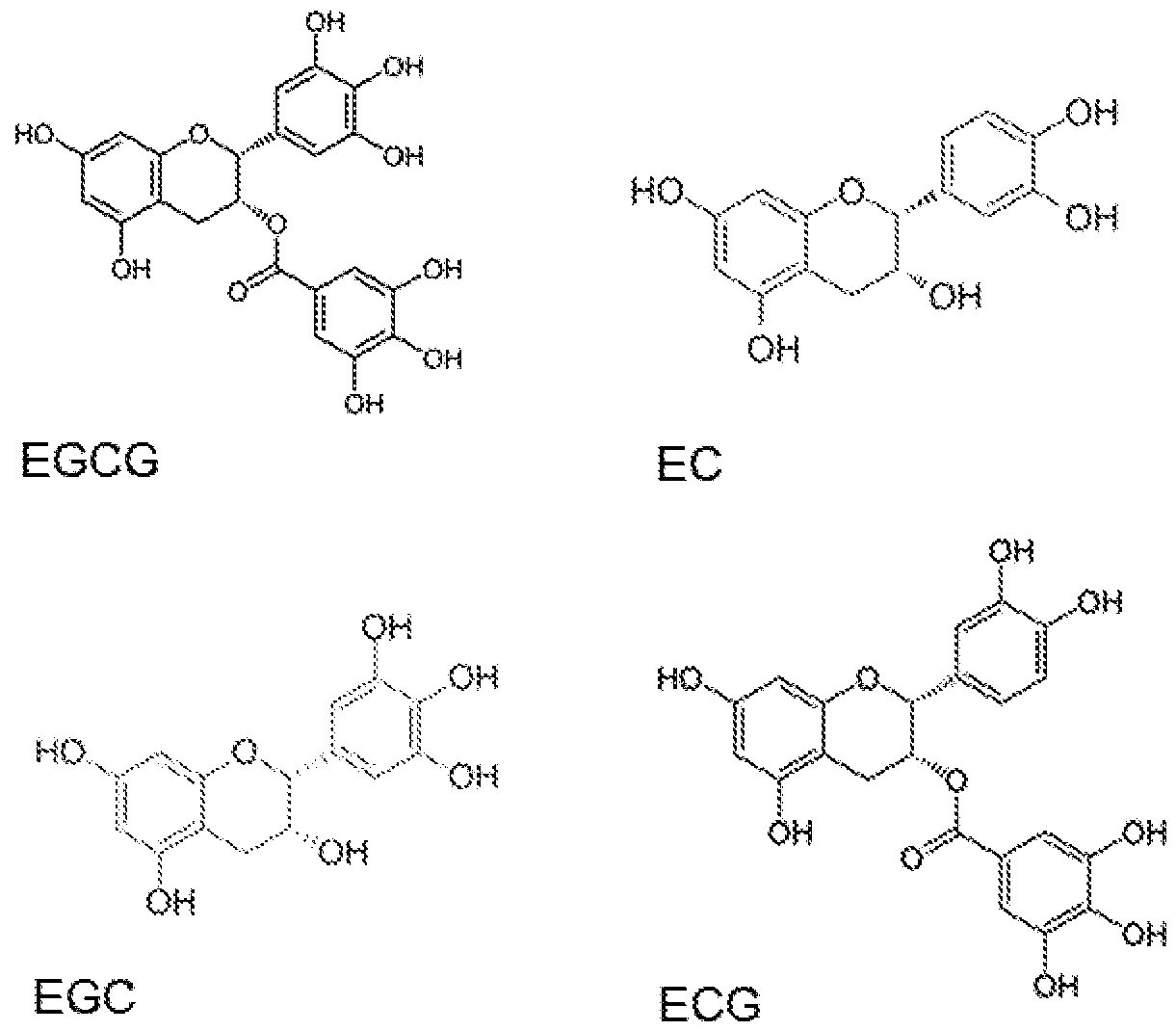
- flavonoids of Formula I examples include:
- Preferred flavonoid compounds of Formula I include:
- a polymer-flavonoid conjugate refers to a conjugate of a hydrophilic polymer and the flavonoid compound of Formula I.
- a hydrophilic polymer refers to a polymer that is soluble in polar solvents and can form hydrogen bonds.
- Hydrophilic polymers suitable for the present polymer-flavonoid conjugates include, but not limited to: poly(ethylene glycol), aldehyde-derivatized hyaluronic acid, hyaluronic acid, , dextran, diethylacetal conjugate (e.g.
- diethylacetal PEG diethylacetal PEG
- D-alpha- tocopheryl polyethylene glycol succinate aldehyde-derivatized hyaluronic acid-tyramine, hyaluronic acid-aminoacetylaldehyde diethylacetal conjugate-tyramine, cyclotriphosphazene core phenoxymethyl(methylhydrazono)dendrimer or thiophosphoryl core phenoxymethyl(methylhydrazono)dendrimer.
- Preferred hydrophilic polymers include poly(ethylene glycol), hyaluronic acid, dextran, polyethylenimine, poloxamers, povidone, D-alpha-tocopheryl and polyethylene glycol succinate.
- the molecular weight of the hydrophilic polymer in the polymer-flavonoid conjugate is in general 1K-100K Daltons, preferably 2K-40K, 2K-50K, 2K-80K, 3K-80K, or 5K-40K Daltons.
- the polymer contains an aldehyde group which is conjugated to the 5, 6, 7, or 8 position (preferably 6 or 8 position) of the A ring of the flavonoid compound.
- the polymer contains a thiol group which is conjugated to Ri or R2 of the B-ring of a flavonoid (when Ri or R2 is -OH).
- the polymer-flavonoid conjugate is PEG-EGCG, which is PEG conjugated to one or two molecules of epigallocatechin gallate (EGCG).
- PEG-EGCG for example, can be prepared by conjugating aldehyde-terminated PEG to EGCG by attachment of the PEG via reaction of the free aldehyde group with the 5, 6, 7, or 8 position (preferably 6 or 8 position) of Formula I. See W02006/124000 and W02009/054813.
- PEG-EGCG can also be prepared by conjugating thio-terminated PEG to EGCG by attachment of the PEG via reaction of the free thio group with the R1 or R2 of Formula I, wherein, R1 or R2 is a phenyl group. See W02015/171079.
- a flavonoid oligomer is a conjugate of one flavonoid with one or more flavonoids.
- the flavonoid oligomer can contain the same flavonoid (a homo oligomer) or different flavonoids (a hetero oligomer).
- Flavonoid oligomers useful for the present invention in general have 2- 50 or 2-20, preferably 4-12 flavonoids of one or mixed types.
- a flavonoid oligomer is oligomeric EGC (OEGCG), oligomer EC (OEC), oligomer EGC (OEGC), or oligomer ECG (OECG).
- OEGCG refers to 3-20 monomers of EGCG that are covalently linked.
- OEGCG for example, can be synthesized at 5, 6, 7, or 8 position (preferably 6 or 8 position) of the A ring according to W02006/124000.
- A-ring is present in all of the flavonoids according to Formula 1, other oligomeric flavonoids can be made similarly according to W02006/124000.
- OEC, OEGC, and OECG can also be made according to W02006/124000.
- MINC Multi-pathway Immune-modulating Nanocomplex Combination therapy
- MINC platform can encapsulate additional agents to form a nanoparticle composition for a therapy.
- MINC-agent is a micelle having an outer shell formed by one or more polymerflavonoid conjugates and optionally an inner shell formed by one or more flavonoid oligomer and a drug encapsulated within the shells.
- the agent as used herein, reference to a molecule that have a therapeutic activity (e.g., a drug).
- the encapsulated agents can be various molecules including small molecules, peptides, proteins, monoclonal antibodies, and vaccine.
- MINC-agent is a micelle comprises a polymer-flavonoid conjugate, for example, a PEG-EGCG conjugate, in a shell and with an agent encapsulated (see FIG. 1).
- MINC-agent is a micelle comprises a polymer-flavonoid conjugate, for example, a PEG-EGCG conjugate in an outer shell and a flavonoid oligomer, for example, oligomeric EGCG (OEGCG), in an inner shell, with an agent encapsulated (see FIG 2).
- the MINC-Agent composition comprises two or more components that have therapeutic activities, which are complementary in function to form a multiple targeted combination therapy by its backbone components (a flavonoid conjugate or a flavonoid oligomer), and the encapsulated agent.
- the agent in MINC-agent is an antibody including but not limited to anti-HER2, anti-EGFR, anti-PD-Ll, anti-PDGFRA, anti-VEGFR2 anti-P amyloid, anti-tau, or anti-a-synuclein.
- the agent in MINC-agent is a cytokine including but not limited to IL-2, IL-4, IL-12, IFN-a, IFN-p, IFN-y, TNF-a, GM-CSF, GDNF, NRTN, PDGF-BB, CDNF.
- the agent is a small compound including but not restricted to doxorubicin, disulfiram, celecoxib, temsirolimus, everolimus, vorinostat, cabozantinib, marizomib, fimepinostat, acetazolamide, metformin, vinblastine, and cyclophosphamide.
- the MINC-agent is anti-HER2 encapsulated in the micelle formed by a polymer-flavonoid conjugate PEG-EGCG and a flavonoid oligomer OEGCG. See W02009/054813 for the structure and formulation method.
- the MINC-agent is doxorubicin encapsulated in the micelle formed by a polymer-flavonoid conjugate PEG-EGCG. See WO2011/112156 for the structure and formulation method.
- the present invention uses pharmaceutical compositions comprising the polymer- flavonoid conjugate, flavonoid oligomer, or MINC-agent as described in the application, and optionally one or more pharmaceutically acceptable excipients.
- the nanoparticle component in a pharmaceutical composition in general is about 1-100% or 1-90%, preferably 20-90%, or 30-80% for a tablet, powder, or parenteral formulation.
- the polymer-flavonoid conjugate, flavonoid oligomer, or MINC-agent composition in a pharmaceutical composition in general is 1-100%, preferably 20-100%, 50-100%, or 70-100% for a capsule formulation.
- the nanoparticle composition in a pharmaceutical composition in general is 1-50%, 5-50%, or 10- 40% for a liquid suspension formulation.
- the pharmaceutical composition can be in a dosage form such as tablets, capsules, granules, fine granules, powders, suspension, solution, patch, parenteral, injectable, or the like.
- a dosage form such as tablets, capsules, granules, fine granules, powders, suspension, solution, patch, parenteral, injectable, or the like.
- the above pharmaceutical compositions can be prepared by conventional methods.
- Pharmaceutically acceptable carriers which are inactive ingredients, can be selected by those skilled in the art using conventional criteria.
- the pharmaceutically acceptable carriers may contain ingredients that include, but are not limited to, saline and aqueous electrolyte solutions; ionic and nonionic osmotic agents, such as sodium chloride, potassium chloride, glycerol, and dextrose; pH adjusters and buffers, such as salts of hydroxide, phosphate, citrate, acetate, borate, and trolamine; antioxidants, such as salts, acids, and/or bases of bisulfite, sulfite, metabisulfite, thiosulfite, ascorbic acid, acetyl cysteine, cysteine, glutathione, butylated hydroxy anisole, butylated hydroxytoluene, tocopherols, and ascorbyl palmitate; surfactants, such as lecithin and phospholipids, including, but not limited to, phosphatid
- Such pharmaceutically acceptable carriers may be preserved against bacterial contamination using well-known preservatives, which include, but are not limited to, benzalkonium chloride, ethylene diamine tetra-acetic acid and its salts, benzethonium chloride, chlorhexidine, chlorobutanol, methylparaben, thimerosal, and phenylethyl alcohol, or may be formulated as a non-preserved formulation for either single or multiple use.
- preservatives include, but are not limited to, benzalkonium chloride, ethylene diamine tetra-acetic acid and its salts, benzethonium chloride, chlorhexidine, chlorobutanol, methylparaben, thimerosal, and phenylethyl alcohol, or may be formulated as a non-preserved formulation for either single or multiple use.
- a tablet, capsule, or parenteral formulation of the active compound may contain other excipients that have no bioactivity and no reaction with the active compound.
- Excipients of a tablet or a capsule may include fillers, binders, lubricants and glidants, disintegrators, wetting agents, and release rate modifiers.
- Examples of excipients of a tablet or a capsule include, but are not limited to, carboxymethylcellulose, cellulose, ethylcellulose, hydroxypropylmethylcellulose, methylcellulose, karaya gum, starch, tragacanth gum, gelatin, magnesium stearate, titanium dioxide, poly(acrylic acid), and polyvinylpyrrolidone.
- a tablet formulation may contain inactive ingredients, such as colloidal silicon dioxide, crospovidone, hypromellose, magnesium stearate, microcrystalline cellulose, polyethylene glycol, sodium starch glycolate, and titanium dioxide.
- a capsule formulation may contain inactive ingredients, such as gelatin, magnesium stearate, and titanium dioxide.
- a powder oral formulation may contain inactive ingredients, such as silica gel, sodium benzoate, sodium citrate, sucrose, and xanthan gum.
- the pharmaceutical composition can be applied by local administration and systemic administration.
- Local administration includes topical administration.
- Systemic administration includes oral, parenteral (such as intravenous, intramuscular, subcutaneous, or rectal), and other systemic routes of administration.
- parenteral such as intravenous, intramuscular, subcutaneous, or rectal
- other systemic routes of administration In systemic administration, the active compound first reaches plasma and then distributes into target tissues.
- Parenteral administration such as intravenous bolus injection or intravenous infusion, and oral administration are preferred routes of administration.
- the present invention is directed to a method of preventing or treating CNS diseases, by administering to a subject in need thereof a polymer-flavonoid conjugate, flavonoid oligomer, or MINC-agent, as described above.
- Suitable CNS disease to be treated by the present invention include, but not limited to, neuron degenerative disease, dementia, Alzheimer’s disease, Parkinson’s disease, Huntington's disease, spongiform encephalopathies, West Nile virus encephalitis, multiple sclerosis, brain injury, spinal cord injury, primary cancer of the brain, and metastatic cancer of the brain, Bell's palsy, headache (largest brain disease), autoimmune disorders, cerebral palsy, motor neuron disease (MND), neurofibromatosis, epilepsy and Seizures, acute spinal cord injury, amyotrophic lateral sclerosis (ALS), ataxia, Bell's Palsy, cerebral aneurysm, obsessive-compulsive disorder (OCD), defects in the cerebral cortex include microgyria, polymicrogyria, bilateral frontoparietal polymicrogyria, and pachygyria.
- polymer-flavonoid conjugate and flavonoid oligomer One important function of polymer-flavonoid conjugate and flavonoid oligomer is to increase drug delivery to the brain (crossing BBB) to enhance therapeutic efficacy. This function is due to the ability of polymer-flavonoid conjugate to penetrate BBB. Drug molecules are encapsulated, and they are not exposed to the BBB and thus they have no influence on entering CNS.
- brain delivery applies to all kinds of brain diseases including brain tumors (glioma, choroid plexus tumors, pineal tumors, brain metastatic tumors, meningiomas, pituitary tumors, nerve tumor, central nervous system lymphoma), neuroinflammation diseases (encephalitis, meningitis), neurodegenerative diseases (Alzheimer’s disease, Parkinson's disease, Lewy body dementia, Huntington's disease), motor neuron diseases (ataxia, neurofibromatosis, amyotrophic lateral sclerosis (ALS), catalepsy, epilepsy/seizures, locked-in syndrome), CNS diseases with spinal cord injury (acute spinal cord injuries, myelopathy, multiple sclerosis), CNS diseases caused by circulatory system disorder (stroke, cerebral aneurysm), and cerebral cortex disorders (microgyria, polymicrogyria, bilateral frontoparietal polymicrogyria, and pachygyria).
- brain tumors glioma,
- polymer-flavonoid conjugate and flavonoid oligomer Another function of polymer-flavonoid conjugate and flavonoid oligomer is to reduce neural cell death and enhance cell regeneration to restore cognitive behavior. This function treats neurodegenerative diseases such as Alzheimer’s disease, Parkinson's disease, Lewy body dementia, and Huntington's disease. Ex6
- Another function of polymer-flavonoid conjugate and flavonoid oligomer is to reduce neural cell oxidative stress and inflammation and to reduce the disease progression and recurrences.
- Oxidative stress leads to neural toxicity and is involved in the development of neurodegenerative diseases and CNS inflammation diseases including ischemic and hemorrhagic strokes.
- Neuroinflammation diseases encephalitis, meningitis
- motor neuron diseases ALS locked-in syndrome
- catalepsy epilepsy or seizures CNS diseases with spinal cord injury (acute spinal cord injuries, myelopathy, multiple sclerosis)
- CNS diseases caused by circulatory system disorder stroke, cerebral aneurysm
- cerebral cortex disorders microgyria, polymicrogyria, bilateral frontoparietal polymicrogyria, and pachygyria
- neurodegenerative diseases Alzheimerer’s disease, Parkinson's disease, Lewy body dementia, Huntington's disease.
- polymer-flavonoid conjugate and flavonoid oligomer Another function of polymer-flavonoid conjugate and flavonoid oligomer is to reduce accumulation of abnormal proteins (e.g., P-amyloid, Tau, and a-synuclein) and to delay and/or reduce the progression and/or recurrence of diseases.
- abnormal proteins e.g., P-amyloid, Tau, and a-synuclein
- These processes treat neurodegenerative diseases (Alzheimer’s disease, Parkinson's disease, Lewy body dementia, and Huntington's disease).
- polymer-flavonoid conjugate and flavonoid oligomer are useful to activate patient immune system and reduce the development of brain tumors. These processes are useful to treat brain tumors (glioma, choroid plexus tumors, pineal tumors, brain metastatic tumors, meningiomas, pituitary tumors, nerve tumor, CNS lymphoma).
- brain tumors glioma, choroid plexus tumors, pineal tumors, brain metastatic tumors, meningiomas, pituitary tumors, nerve tumor, CNS lymphoma.
- the method comprises the step of administering an effective amount of a polymer-flavonoid conjugate to a subject in need thereof to treat a CNS disease.
- the CNS disease is brain tumor, circulatory system disorder, CNS disease with spinal cord injury, neuroinflammation disease, motor neuron disease, or cerebral cortex disorder.
- An effective amount is the amount effective to treat a disease by ameliorating the pathological condition or reducing the symptoms of the disease.
- the polymer-flavonoid conjugate of the present invention is capable of crossing the Blood-Brain Barrier (BBB) from the circulating blood vessel to the brain.
- BBB Blood-Brain Barrier
- the Polymer- flavonoid conjugate has immune and disease-modulating functions for treating CNS disorders. Additionally, it has neuron cell repair or regeneration activity for treating CNS disorders.
- the flavonoid is EGCG, EC, EGC, or ECG.
- the polymer is a hydrophilic polymer having a molecular weight of 1,000 to 100,000 daltons, and is selected from the group consisting of: PEG, hyaluronic acid, dextran, polyethylenimine, poloxamers, povidone, D-alpha-tocopheryl, and polyethylene glycol succinate.
- a preferred polymer-flavonoid conjugate is PEG-EGCG.
- the CNS disease is brain tumor selected from the group consisting of: glioma, brain metastatic tumors, nerve tumors, central nervous system lymphoma, choroid plexus tumors, pineal tumors, meningiomas, and pituitary tumors.
- the CNS disease is a CNS disease caused by circulatory system disorder selected from the group consisting of: stroke and cerebral aneurysm.
- the CNS disease is caused by spinal cord injury selected from the group consisting of: multiple sclerosis, acute spinal cord injuries, and myelopathy,
- the CNS disease is a neuroinflammation disease of encephalitis or meningitis.
- the CNS disease is a motor neuron disease is selected from the group consisting of: amyotrophic lateral sclerosis (ALS), epilepsy, seizures, catalepsy, ataxia, and locked-in syndrome.
- ALS amyotrophic lateral sclerosis
- epilepsy epilepsy
- seizures catalepsy
- ataxia ataxia
- locked-in syndrome locked-in syndrome
- the CNS disease is a cerebral cortex disorder selected from the group consisting of: microgyria, polymicrogyria, bilateral frontoparietal polymicrogyria, and pachygyria.
- Dosing for a polymer-flavonoid, e.g., PEG-EGGC, for injection is in general 0.1- 5000 mg/kg (total weight of the polymer-flavonoid/ subject body weight), or 1-1000 mg/kg.
- the method comprises the step of administering an effective amount of a flavonoid oligomer to a subject in need thereof, to treat a CNS disease.
- the CNS disease is brain tumor, circulatory system disorder, CNS disease with spinal cord injury, neuroinflammation disease, motor neuron disease, or cerebral cortex disorder.
- the flavonoid oligomer of the present invention is capable of crossing the BBB from the circulating blood vessel to the brain.
- the flavonoid oligomer has immune and diseasemodulating functions for treating CNS disorders. Additionally, it has neuron cell repair or regeneration activity for treating CNS disorders.
- the flavonoid oligomer is an oligomer of EGCG, EC, EGC, or ECG.
- the flavonoid oligomer comprises 4-12 flavonoids of EGCG, EC, EGC, or ECG.
- the CNS disease is brain tumor selected from the group consisting of: glioma, brain metastatic tumors, nerve tumors, central nervous system lymphoma, choroid plexus tumors, pineal tumors, meningiomas, and pituitary tumors.
- the CNS disease is a CNS disease caused by circulatory system disorder selected from the group consisting of: stroke and cerebral aneurysm.
- the CNS disease is caused by spinal cord injury selected from the group consisting of: multiple sclerosis, acute spinal cord injuries, and myelopathy,
- the CNS disease is a neuroinflammation disease of encephalitis or meningitis.
- the CNS disease is a motor neuron disease is selected from the group consisting of: amyotrophic lateral sclerosis (ALS), epilepsy, seizures, catalepsy, ataxia, and locked-in syndrome.
- ALS amyotrophic lateral sclerosis
- epilepsy epilepsy
- seizures catalepsy
- ataxia ataxia
- locked-in syndrome locked-in syndrome
- the CNS disease is a cerebral cortex disorder selected from the group consisting of: microgyria, polymicrogyria, bilateral frontoparietal polymicrogyria, and pachygyria.
- Dosing for a flavonoid oligomer, e.g., OEGCG, for injection is in general 0.1-1000 mg/kg (total weight of the flavonoid oligomer/subject body weight), or 1-100 mg/kg.
- the method comprises the step of administering to a subject in need thereof an effective amount of micelles having an outer shell comprising one or more polymer-flavonoid conjugates and optionally an inner shell comprising one or more flavonoid oligomer and a drug encapsulated within the shells, to treat a CNS disease.
- the outer shell is formed by one or more polymer-flavonoid conjugates.
- the inner shell is formed by one or more flavonoid oligomer.
- the CNS disease is Alzheimer’s disease, Parkinson's disease, Lewy body dementia, brain tumors, stroke, Huntington's disease, multiple sclerosis, amyotrophic lateral sclerosis (ALS), or acute spinal cord injury, encephalitis, epilepsy, seizures, meningitis, motor neuron disease (MND), or cerebral aneurysm.
- ALS amyotrophic lateral sclerosis
- MND motor neuron disease
- the Polymer-flavonoid conjugate or the flavonoid oligomer is capable of crossing BBB from the circulating blood vessel to the brain as an agent delivery vehicle to deliver said agent for treating or diagnosing CNS disorders.
- the polymer is a hydrophilic polymer having a molecular weight of 1,000 to 100,000 Daltons, and is selected from the group consisting of: poly(ethylene glycol) (PEG), hyaluronic acid, dextran, polyethylenimine, poloxamers, povidone, D-alpha- tocopheryl, and polyethylene glycol succinate;
- PEG poly(ethylene glycol)
- hyaluronic acid hyaluronic acid
- dextran dextran
- polyethylenimine polyethylenimine
- poloxamers povidone
- D-alpha- tocopheryl D-alpha- tocopheryl
- polyethylene glycol succinate polyethylene glycol succinate
- the flavonoid oligomer comprises 2-20 flavonoids of EGCG, EC, EGC, or ECG;
- the shell is formed by PEG-EGCG.
- the shell is formed by PEG-EGCG and OEGCG.
- the CNS disease is Alzheimer’s disease, and the drug is anti-P amyloid, anti-tau, anti-IL6R, anti-IL-ip, anti-CD38, anti-TREM2. or BDNF.
- the CNS disease is Parkinson's disease, and the drug is anti-a- synuclein, anti-IL6R, anti-IL-ip, anti-CD38, anti-TREM2, GDNF, NRTN, PDGF-BB, CDNF, or BDNF.
- the CNS disease is Lewy body dementia
- the drug is anti-P amyloid or, anti-a-synuclein, anti-IL6R, anti-IL-ip, anti-CD38, anti-TREM2, or BDNF.
- the CNS disease is brain tumor
- the drug is doxorubicin, disulfiram, celecoxib, temsirolimus, everolimus, vorinostat, cabozantinib, marizomib, fimepinostat, acetazolamide, metformin, vinblastine, cyclophosphamide, anti-HER2, anti- EGFR, anti-PD-1, anti-PD-Ll, anti-PDGFRA, anti-VEGFR2, IL-2, IL-4, IL- 12, IFN-a, IFN- P, IFN-y, or TNF-a.
- the CNS disease is stroke
- the drug is MMP inhibitor, eNOS inhibitor, anti-TLR4, anti-HSP, anti-IL6, anti-IL-12, S1OOP, Fibronectin, MCP-1, MMP9, UCH-L1, BDNF, GDNF, NRTN, PDGF-BB, or CDNF.
- the CNS disease is Huntington's disease
- the drug is anti- mHtt, anti-a- synuclein, anti-SEMA4D, anti-TNFa, Tetrabenazine, deutetrabenazine, valbenazine, bevantolol, pridopidine, branaplam, nilotinib, mitoconix, or azathioprine
- the CNS disease is multiple sclerosis
- the drug is anti-CD4, anti-IL-17, anti-CD19, anti-CD20, anti-CD25, anti-CD52, anti-RGMA, anti-IL-12, anti-IL- 23, anti-a4 integrin, anti-IL-2R, LINGO- 1, or anti -NOGO- A.
- the CNS disease is amyotrophic lateral sclerosis (ALS), and the drug is anti-NOGO-A, PKC inhibitor, IGF-1, NOGO-A, GDNF, VEGF, anti-SODl, SIR, GLT-1, anti-Ataxin2, anti-TDP43, anti-hnRNPs, CK-1 inhibitor, anti-FET or HDAC inhibitor, EPO, or IL-2.
- ALS amyotrophic lateral sclerosis
- the CNS disease is acute spinal cord injury
- the drug is Extracellular domain of Nogo receptor, 5-HT1 A receptor, FGF, GSK-3bp inhibitor, anti-IN- 1, TNF-a, IL-12, SDF-la, SOD1, NEC-1, anti-P-selectin, or anti-CDl ld.
- the CNS disease is encephalitis
- the drug is anti-FcRn, anti-IL-6, anti-CD20, anti-CD19, anti-CD38, anti-C5, or IL-2.
- the CNS disease is epilepsy or seizures
- the drug is mTOR inhibitor, PI3K inhibitor, GABA inhibitor, anti-Glu3B peptide antibody, anti-NRl antibody, anti-CASPR2, or anti-LGI-1.
- the CNS disease is meningitis, and the drug is Cl inhibitor, anti- C5, anti-MASP-2, anti-PD-Ll, anti-CTLA-4, or anti-PD-1.
- the CNS disease is motor neuron disease (MND), and the drug is Anti-SODl, anti-TDP-43, anti-C90RF72, anti -Nogo- A, anti-MuSK, anti-IL-6R, anti-NRP-1, anti -Myostatin, anti-CD40L, anti -DR-6, anti-IFN-g, anti-GDla, anti-CTGF, or anti-HMGBl.
- the CNS disease is cerebral aneurysm
- the drug is TNF-a inhibitor, MMP inhibitor, MCP-1 inhibitor, Phosphodiesterase-4 inhibitor, Mast cell degranulation inhibitor, anti-IL-lbeta.
- Dosing of the MINC-agent is based on the known dosage of the agents for treating a particular disease and the subject condition.
- the dosage can be a food drug administration (FDA) approved dosage or a dosage used in clinical trial.
- FDA food drug administration
- the dosage of PEG-EGCG combined with OEGCG is between 10 ug/kg to 100 mg/kg.
- the concentration for the encapsulated drug agents can be as low as 10 pg/kg (e. g., for cytokine drugs, rhBDNF) and as high as 100 mg/kg (for antibody drugs, e.g., anti-a synuclein antibody is at this level).
- anti-HER2 for treating brain metastatic breast cancer in an adult human, anti-HER2 (Trastuzumab) is administered 6-10 mg/kg IV every 3 weeks.
- the effective dose of MINC- anti-HER2 in the same dose range can be used for treating brain metastatic breast cancer.
- liposome-doxorubicin is given at 40 mg/m 2 IV every 4 weeks.
- the effective dose of MINC-doxorubicin in the same dose range can be used for treating glioma.
- anti-P amyloid (Aducanumab) is given at 10 mg/kg IV every four weeks.
- the effective dose of MINC-anti-P amyloid in the same dose range can be used for treating Alzheimer’s disease.
- anti-tau antibody for treating Alzheimer’s disease, anti-tau antibody (Semorinemab) is given at 3-30 mg/kg IV every four weeks.
- the effective dose of MINC -anti-tau in the same dose range can be used for treating Alzheimer’s disease.
- anti-a synuclein antibody is given between 1500- 4500 mg IV every four weeks.
- the effective dose of MINC-anti-a synuclein in the same dose range can be used for treating Parkinson’s disease.
- BDNF BDNF
- rhBDNF BDNF
- the effective dose of MINC-BDNF in the same dose range can be used for treating stroke and neuron degenerative diseases, which cause neural cell death.
- EGCG also exerts neuron protective function in these and additional central nerve system diseases. Mechanically, EGCG has the neuron protective functions on neuron cells directly.
- the EGCG in the polymer-flavonoid conjugate and MINC- agent provides additional benefits of protecting neural cells from damage by toxins.
- the present invention is useful in treating human and non-human animals.
- the present invention is useful in treating a mammal subject, such as humans, horses, pigs, cats, and dogs.
- the present invention provides use of a composition in preventing or treating a CNS disease, or maintaining the health of a CNS subject, wherein the composition comprises (i) a polymer-flavonoid conjugate, (ii) one or more flavonoid oligomers, or (iii) micelles having an outer shell formed by one or more polymer-flavonoid conjugates and optionally an inner shell formed by one or more flavonoid oligomer and a drug encapsulated within the shells, and having an agent encapsulated within the shell, wherein the agent is a drug.
- OEGCG is oligomerized EGCG.
- OEGCG is prepared according to W02006/124000.
- PEG-EGCG is PEG conjugated with one or two EGCG.
- PEG-EGCG is prepared according to W02006/124000, W02009/054813, or W02015/171079.
- MINC-doxorubicin is doxorubin encapsulated within PEG-EGCG and it is prepared according to WO2011/112156.
- MINC-agents are made according to WO2011/112156 or W02015/171079.
- MINC-agents can be prepared by encapsulated an agent within the micelle formed by PEG-EGCG and OEGCG, according to the method in W02006/124000 or W02009/054813.
- MINC-drug brings drugs through BBB and to treat CNS diseases (Examples 1-3)
- OEGCG is oligomerized EGCG.
- OEGCG is prepared according to W02006/124000.
- PEG-EGCG is PEG conjugated with one or two EGCG.
- PEG-EGCG is prepared according to W02006/124000, W02009/054813, or W02015/171079.
- MINC-doxorubicin is doxorubicin encapsulated within PEG-EGCG and it was prepared according to WO2011/112156.
- Zebrafish (Zebrafish International Resource Center, University of Oregon, USA).
- Doxorubicin does not efficiently penetrate BBB into brain parenchyma.
- flila.EGFP transgenic zebrafish obtained from the Zebrafish International Resource Center were kept under a 14-hour light and 10-hour dark photoperiod at 28.5°C. Following fertilization, the eggs were collected and cultured in an aquarium. Embryos developed to the 48 h post-fertilization (hpf) stage were used for cardiac venous sinus microinjection. For microinjection, MINC-doxorubicin was diluted to 386.37 pM in ddH2O containing phenol red (1 %) as an injection tracer. Same amount of doxorubicin was used as control.
- doxorubicin is a red fluorescent compound
- NANOLITER 2000 microinjector with Micromanipulators 3301R manipulator the distribution of doxorubicin (red fluorescence) was observed under Leica DM 2500 fluorescence microscope using filter CHROMA 41004 (mcherry).
- MINC platform delivers more doxorubicin to the brain than the control doxorubicin (without MESIC).
- This experiment used a transparent zebrafish model in order to visualize a red colored drug doxorubicin, which is not able to enter the brain.
- Doxorubicin was able to enter the brain in large quantity (bright red) after MINC formulation.
- Example 2 MINC platform delivers drug to penetrate BBB in surrogate cell model.
- OEGCG, PEG-EGCG, and MINC-Doxorubin are the same as described in Example 1.
- Example 3 MINC platform delivers anti-HER2 to the brain in mouse.
- Anti-HER2-Cy5.5 conjugate is prepared by reacting the anti-HER2 antibody with Cy5.5- NHS ester according to manufacturer’s instructions (Aladdin).
- MINC-anti-ElER2-Cy5.5 is anti-HER2-Cy5.5 encapsulated within PEG-EGCG and OEGCG, and it is prepared according to W02009/054813.
- IVIS in vivo imaging system
- trastuzumab is able to treat HER2+ breast cancer, but it is not approved for glioma because poor delivery into the brain.
- This example shows MINC-trastuzumab can deliver trastuzumab into the brain in mouse.
- Flavonoid -oligomer (Example 4) and MINC-agent (Examples 5-6) have efficacies in treating hard to treat CNS diseases
- Example 4 OEGCG suppresses glioma cell growth.
- OEGCG is prepared according to Example 1.
- HER2 positive and negative human glioma cell lines Al 72 (HER2+) and U87 (HER2-) obtained from ATCC were used to test the anti-tumor ability of OEGCG on glioma.
- Temozolomide-resistant cells derived from Al 72 and U87 were used to investigate potential of OEGCG to overcome temozolomide resistance.
- cells were seeded in 96-well plates at a density of 5000 cells/well and were allowed to adhere to the surface for 24 hours. Cells were then treated with OEGCG at 0, 30, 60, 120 pM for 72 h.
- the treated cells were incubated with CCK-8 reagent for 1 h at 37 °C, and the absorption values were detected at 450 nm using a SpectraMax® iD3 reader. The results were reported as the mean ⁇ standard deviation of at least two replicates.
- FIG. 4 shows the tumor suppression efficacy of OEGCG in two glioma cell lines, Al 72 (HER2+) and U87 (HER2-).
- the results demonstrate that OEGCG has broad efficacy for treating glioma cells regardless of their HER2 expression level (Fig. 4A and 4C).
- OEGCG is also effective for treating temozolomide resistant glioma cells (Fig. 4B and 4D).
- Temozolomide is first line treatment for high grade glioma, the results support that OEGCG can overcome temozolomide resistance and be used as a combination therapy with additional drugs encapsulated in MINC.
- Example 5 MINC-anti-HER2 efficacy study in glioma mouse model.
- OEGCG and PEG-EGCG are prepared according to Example 1.
- MINC-anti-HER2-Cy5.5 is anti-HER2 encapsulated within PEG-EGCG and OEGCG, and it is prepared according to W02009/054813.
- mice were divided into two groups, vehicle group (saline as no treatment control) and MINC-anti-HER2 group.
- IVIS in vivo imaging system
- FIG. 5 shows that comparing to the saline treatment control group, mice treated with MINC-anti-HER2 have reduced luciferase signal in Al 72 glioma.
- the data demonstrate that MINC-anti-HER2 effectively suppressed glioma growth.
- Example 6 OEGCG and MINC-BSA suppress triple negative cancer cell growth.
- OEGCG is prepared according to Example 1.
- MINC-BSA is BSA encapsulated within PEG-EGCG and OEGCG, and it is prepared according to W02009/054813.
- ACP Acid Phosphatase
- LSBio Assay kit
- MDA-MB-231 cell line (CRM-HTB-26D, ATCC).
- MDA-MB-468 cell line (HTB-132, ATCC).
- BT-20 cell line (HTB-19, ATCC).
- Acid Phosphatase is an enzyme which catalyzes the cleavage of phosphate groups from other molecules during digestion.
- the enzyme levels can be used as a biomarker for cancer.
- This non-radioactive, colorimetric ACP assay is based on the cleavage of p-Nitrophenol from the synthetic substrate. The increase in absorbance at 405 nm after addition of the stop reagent is directly proportional to the enzyme activity, reflecting the viability of cancer cells.
- FIG. 6 shows the tumor suppression efficacy of OEGCG and MINC-BSA in three triple negative breast cancer cell lines.
- the results demonstrate that OEGCG (Fig 6A) and MINC-BSA (Fig 6B) have significant tumor suppression effect in triple negative breast cancer cell lines.
- Triple negative breast cancer are non-responder to anti-HER2 therapy.
- OEGCG and MINC nanoparticle platform (MINC-BSA, BSA has no anticancer effect by itself) can overcome anti-HER2 therapy resistance, and MINC can be used with additional drugs encapsulated.
- MINC platform can be used for the brain metastatic cancer patients.
- OEGCG is prepared according to Example 1.
- Recombinant Ap (1-42) peptide, MTT (3-(4,5-Dimethylthiazol-2-yl)-2,5- Diphenyltetrazolium Bromide) are purchased from Genscript, Thermo Fisher, or any publically available suppliers.
- HT-22 cell was obtained from Millipore (Bedford, MA, USA)
- HT-22 cells were seed 2*10 5 per well in 24-well dish and maintained in a logarithmic growth phase for 3 days. The cell then treated with prepared 2.5 pM oligo- Ap, Ap+OEGCG for 24 hours. After incubation, cells were washed once with warmed PBS to remove test materials and add tetrazolium salt for 30 mins at room temperature. Then the formazan product was measured spectrophotometrically at 550 nm. Viability was calculated as percent of control cells treated with vehicle alone (mock).
- FIG. 7 shows the ability of OEGCG in protecting Ap-induced cell death.
- Pathogenic Ap accumulation can induce neural cell death and lead to neurodegeneration.
- Reduction of Ap accumulation have therapeutic potential to treat Alzheimer’s disease.
- the result demonstrates OEGCG reduces Ap-induced cell death, which is the cause and primary target to treat Alzheimer’s disease.
- OEGCG and PEG-EGCG are prepared according to Example 1.
- Recombinant Ap (1-42) peptide, DCFH-DA are purchased from Genscript, Thermo Fisher, or any publically available suppliers.
- HT-22 cell was obtained from Millipore (Bedford, MA, USA)
- HT- 22 cells were seeded 2 ⁇ 105 cells per well in 24-well dish and maintained for 3 days. Then cells were treated with Ap with or without OEGCG (OE) and PEG-EGCG (PE). Oligo- Ap was prepared according to previous experience. In brief, Ap peptide was dissolved in 1 mM in 100% l,l,l,3,3,3-hexafluoro-2-propanol and was dried using a vacuum desiccator.
- Ap was resuspended to a concentration of 5 mM in dimethylsulfoxide (DMSO) and stored at -20°C.
- DMSO dimethylsulfoxide
- Ap peptide was diluted to a final concentration of 100 pM by using Dulbecco’s modified Eagle’s medium (DMEM; Gibco), incubated at 4°C after 24 h of gentle shaking, and immediately added to cell cultures at a final concentration of 2.5 pM. After cells were treated with Ap for 1 hour, 50.9, 25.4 and 12.7 pg/mL of OEGCG and 105.7, 52.4 and 26.4 pg/mL of PEG-EGCG were added to cell and incubated for 6 hours.
- DMEM Dulbecco’s modified Eagle’s medium
- Example 9 Method for preparing MINC-anti-HER2 using different flavonoids in flavonoid oligomers and polymer-flavonoid conjugates.
- OEGCG is oligomerized EGCG.
- OECG is oligomerized ECG. These flavonoid oligomers were prepared according to W02006/ 124000.
- PEG-EGCG is PEG conjugated with one or two EGCG.
- PEG-EC is PEG conjugated with one or two EC.
- PEG-ECG is PEG conjugated with one or two ECG.
- Anti-HER2 is trastuzumab obtained from Eirgenix.
- MINC anti-HER2 nanoparticles were prepared according to W02009/054813.
- anti-HER2 was incubated in PBS.
- different flavonoid oligomer including OEGCG or OECG was added to anti-HER2, followed by adding different polymer-flavonoid including PEG-EGCG, PEG-ECG or PEG-EC.
- 10K MWCO centrifugal filter was used to remove the unreacted oligomer flavonoid and polymer-flavonoid.
- DLS (Anton Paar Litesizer 500) was used to measure the nanoparticle size and the results are shown in FIG. 8. Results
- FIG. 8 shows that different polymer-flavonoid conjugate and different flavonoid oligomers all successfully generated MINC-anti-HER2 micelles with one single peak of similar particle size around 100 nm.
- the results demonstrate that homogenous nanoparticles (micelles) were sucessfully formed with an expected size, and there was no small peak (about 5-10 nm) of unencapsulated anti-HER2 observed.
- different flavonoid oligomers used include OEGCG (FIG. 8A, 8C and 8D) and OECG (FIG. 8B); and different polymer-flavonoids used include PEG-EGCG (FIG. 8A and 8B), PEG-EC (FIG. 8C) and PEG-ECG (FIG. 8D).
- MINC nanoparticle can be formed by different flavonoid oligomers and different polymer-flavonoid conjugates.
- Example 10 Method for preparing MINC-BSA using different polymers in polymer- flavonoid conjugates.
- OEGCG is oligomerized EGCG, which is prepared according to W02006/124000.
- PEG-EGCG is PEG conjugated with one or two EGCG.
- HA-EGCG is HA conjugated with one or two EGCG.
- Dextran-EGCG is Dextran conjugated with one or two EGCG.
- BSA is purchased from Sigma-Aldrich.
- MINC Multi -target Immune Nanocarrier Combination
- BSA was incubated in PBS.
- OEGCG or OEGCG was added to BSA, followed by adding different polymer-flavonoid including PEG-EGCG, HA-EGCG and Dextran-EGCG.
- 10K MWCO centrifugal filter was used to remove the unreacted OEGCG and polymer-flavonoid.
- DLS was used to measure the nanoparticle size.
- FIG. 9 demonstrates that different polymers in polymer-flavonoid conjugates can be used to successfully generate MINC-BSA.
- the results demonstrate that homogenous nanoparticles (micelles) were successfully formed, and there was no small peak (about 5-10 nm) of unencapsulated BSA observed.
- These different polymers are PEG (Fig. 9A), HA (Fig. 9B) and Dextran (Fig. 9C). Altogether, these data support that MINC nanoparticle can be formed by different polymer-flavonoids conjugates.
- Example 11 Method for preparing MINC-anti-Ap.
- OEGCG is oligomerized EGCG, which is prepared according to W02006/124000.
- PEG-EGCG is PEG conjugated with one or two EGCG, which is prepared according to W02006/124000, W02009/054813, or W02015/171079.
- Anti-Ap is purchased from Biolegend.
- MINC-anti-Ap nanoparticles (PEG-EGCG, OEGCG and anti-AP) were prepared according to Example 9. DLS (Anton Paar Litesizer 500) was used to measure the size of MINC-anti-Ap nanoparticles
- FIG. 10 shows a successful formulation of MINC-anti-Ap.
- Example 12 Method for preparing MINC-anti-a-syn.
- OEGCG is oligomerized EGCG, which is prepared according to W02006/124000.
- PEG-EGCG is PEG conjugated with one or two EGCG, which is prepared according to W02006/124000, W02009/054813, or W02015/171079.
- Anti-a-syn is purchased from Biolegend.
- MINC-anti-a-syn nanoparticles (PEG-EGCG, OEGCG and anti-a-syn) were prepared according to Example 8. DLS (Anton Paar Litesizer 500) was used to measure the size of MINC-anti-a-syn nanoparticles
- Fig. 11 shows a successful formulation of MINC-anti-a-syn.
- GSK-3P inhibitor Glycogen Synthase Kinase-3 Beta Inhibitor
- PD-L1 Programmed Death-Ligand 1 PEG Polyethylene glycol PI3K Phosphoinositide 3-Kinases RGMA Repulsive Guidance Molecule Bmp Co-Receptor A SIR Sigma- 1 Receptor SEMA4D Semaphorin 4D SOD1 Superoxide Dismutase 1 TLR4 Toll-Like Receptor 4 Antibody TNFa Tumor Necrosis Factor Alpha TREM2 Triggering Receptor Expressed On Myeloid Cells 2
Landscapes
- Health & Medical Sciences (AREA)
- Chemical & Material Sciences (AREA)
- Life Sciences & Earth Sciences (AREA)
- Medicinal Chemistry (AREA)
- General Health & Medical Sciences (AREA)
- Pharmacology & Pharmacy (AREA)
- Animal Behavior & Ethology (AREA)
- Public Health (AREA)
- Veterinary Medicine (AREA)
- Engineering & Computer Science (AREA)
- Bioinformatics & Cheminformatics (AREA)
- Organic Chemistry (AREA)
- Epidemiology (AREA)
- General Chemical & Material Sciences (AREA)
- Nuclear Medicine, Radiotherapy & Molecular Imaging (AREA)
- Chemical Kinetics & Catalysis (AREA)
- Neurosurgery (AREA)
- Biomedical Technology (AREA)
- Neurology (AREA)
- Dispersion Chemistry (AREA)
- Hospice & Palliative Care (AREA)
- Psychiatry (AREA)
- Nanotechnology (AREA)
- Molecular Biology (AREA)
- Proteomics, Peptides & Aminoacids (AREA)
- Vascular Medicine (AREA)
- Biophysics (AREA)
- Biochemistry (AREA)
- Immunology (AREA)
- Oncology (AREA)
- Urology & Nephrology (AREA)
- Genetics & Genomics (AREA)
- Cardiology (AREA)
- Heart & Thoracic Surgery (AREA)
- Pharmaceuticals Containing Other Organic And Inorganic Compounds (AREA)
- Medicinal Preparation (AREA)
- Medicines That Contain Protein Lipid Enzymes And Other Medicines (AREA)
- Medicines Containing Antibodies Or Antigens For Use As Internal Diagnostic Agents (AREA)
Abstract
Description


Claims


Priority Applications (5)
| Application Number | Priority Date | Filing Date | Title |
|---|---|---|---|
| KR1020247037991A KR20250002517A (en) | 2022-04-20 | 2023-04-18 | Treatment of central nervous system diseases |
| CN202380046240.2A CN119403795A (en) | 2022-04-20 | 2023-04-18 | Methods for treating central nervous system diseases |
| EP23792440.2A EP4511364A4 (en) | 2022-04-20 | 2023-04-18 | METHOD FOR THE TREATMENT OF DISEASES OF THE CENTRAL NERVOUS SYSTEM |
| JP2024561578A JP2025513275A (en) | 2022-04-20 | 2023-04-18 | Methods for Treating Central Nervous System Disorders |
| US18/919,148 US20250041218A1 (en) | 2022-04-20 | 2024-10-17 | Method for treating central nervous system diseases |
Applications Claiming Priority (2)
| Application Number | Priority Date | Filing Date | Title |
|---|---|---|---|
| US202263332788P | 2022-04-20 | 2022-04-20 | |
| US63/332,788 | 2022-04-20 |
Related Child Applications (1)
| Application Number | Title | Priority Date | Filing Date |
|---|---|---|---|
| US18/919,148 Continuation US20250041218A1 (en) | 2022-04-20 | 2024-10-17 | Method for treating central nervous system diseases |
Publications (1)
| Publication Number | Publication Date |
|---|---|
| WO2023205171A1 true WO2023205171A1 (en) | 2023-10-26 |
Family
ID=88420496
Family Applications (1)
| Application Number | Title | Priority Date | Filing Date |
|---|---|---|---|
| PCT/US2023/018978 Ceased WO2023205171A1 (en) | 2022-04-20 | 2023-04-18 | Method for treating central nervous system diseases |
Country Status (6)
| Country | Link |
|---|---|
| US (1) | US20250041218A1 (en) |
| EP (1) | EP4511364A4 (en) |
| JP (1) | JP2025513275A (en) |
| KR (1) | KR20250002517A (en) |
| CN (1) | CN119403795A (en) |
| WO (1) | WO2023205171A1 (en) |
Cited By (1)
| Publication number | Priority date | Publication date | Assignee | Title |
|---|---|---|---|---|
| WO2024254192A3 (en) * | 2023-06-05 | 2025-01-30 | Suntec Medical, Inc. | Method for treating neurodegenerative diseases |
Citations (4)
| Publication number | Priority date | Publication date | Assignee | Title |
|---|---|---|---|---|
| WO2009054813A1 (en) * | 2007-10-23 | 2009-04-30 | Agency For Science, Technology And Research | Method of delivering an anti-cancer agent to a cell |
| US20190262271A1 (en) * | 2016-12-30 | 2019-08-29 | Agency For Science, Technology And Research | A nanocomplex |
| WO2021242545A1 (en) * | 2020-05-29 | 2021-12-02 | The Regents Of The University Of California | Agents and methods for treating tauopathies |
| WO2022104327A1 (en) * | 2020-11-11 | 2022-05-19 | Suntec Medical, Inc. | Nanoparticle complex with defined sizes |
Family Cites Families (4)
| Publication number | Priority date | Publication date | Assignee | Title |
|---|---|---|---|---|
| PT1372682E (en) * | 2001-03-15 | 2012-08-03 | Proteotech Inc | Catechins for the treatment of fibrillogenesis in alzheimer`s disease, parkinson`s disease, systemic aa amyloidosis, and other amyloid disorders |
| MX2016014606A (en) * | 2014-05-09 | 2017-08-24 | Agency Science Tech & Res | A micellar nanocomplex. |
| JP2025517354A (en) * | 2022-05-16 | 2025-06-05 | サンテック メディカル,インコーポレイティド | Methods for Treating Autoimmune Diseases |
| WO2023240022A2 (en) * | 2022-06-06 | 2023-12-14 | Suntec Medical, Inc. | Conjugate for targeting central nervous system |
-
2023
- 2023-04-18 CN CN202380046240.2A patent/CN119403795A/en active Pending
- 2023-04-18 EP EP23792440.2A patent/EP4511364A4/en active Pending
- 2023-04-18 JP JP2024561578A patent/JP2025513275A/en active Pending
- 2023-04-18 WO PCT/US2023/018978 patent/WO2023205171A1/en not_active Ceased
- 2023-04-18 KR KR1020247037991A patent/KR20250002517A/en active Pending
-
2024
- 2024-10-17 US US18/919,148 patent/US20250041218A1/en active Pending
Patent Citations (4)
| Publication number | Priority date | Publication date | Assignee | Title |
|---|---|---|---|---|
| WO2009054813A1 (en) * | 2007-10-23 | 2009-04-30 | Agency For Science, Technology And Research | Method of delivering an anti-cancer agent to a cell |
| US20190262271A1 (en) * | 2016-12-30 | 2019-08-29 | Agency For Science, Technology And Research | A nanocomplex |
| WO2021242545A1 (en) * | 2020-05-29 | 2021-12-02 | The Regents Of The University Of California | Agents and methods for treating tauopathies |
| WO2022104327A1 (en) * | 2020-11-11 | 2022-05-19 | Suntec Medical, Inc. | Nanoparticle complex with defined sizes |
Non-Patent Citations (3)
| Title |
|---|
| JULIA ROUSSEAU ; ROLF F. BARTH ; MANUEL FERNANDEZ ; JEAN-FRANçOIS ADAM ; JACQUES BALOSSO ; FRANçOIS ESTèVE ; HéLèNE ELLEAUME: "Efficacy of intracerebral delivery of cisplatin in combination with photon irradiation for treatment of brain tumors", JOURNAL OF NEURO-ONCOLOGY, KLUWER ACADEMIC PUBLISHERS, BO, vol. 98, no. 3, 11 December 2009 (2009-12-11), Bo , pages 287 - 295, XP019827177, ISSN: 1573-7373 * |
| LV LIJIE, YANG FAN, LI HE, YUAN JIULI: "Brain-targeted co-delivery of beta-amyloid converting enzyme 1 shRNA and epigallocatechin-3-gallate by multifunctional nanocarriers for Alzheimer's disease treatment", IUBMB LIFE, JOHN WILEY & SONS, INC., HOBOKEN, USA, vol. 72, no. 8, 8 August 2020 (2020-08-08) - 15 July 2020 (2020-07-15), Hoboken, USA, pages 1819 - 1829, XP009550217, ISSN: 1521-6543, DOI: 10.1002/iub.2330 * |
| See also references of EP4511364A4 * |
Cited By (1)
| Publication number | Priority date | Publication date | Assignee | Title |
|---|---|---|---|---|
| WO2024254192A3 (en) * | 2023-06-05 | 2025-01-30 | Suntec Medical, Inc. | Method for treating neurodegenerative diseases |
Also Published As
| Publication number | Publication date |
|---|---|
| EP4511364A4 (en) | 2026-02-25 |
| JP2025513275A (en) | 2025-04-24 |
| US20250041218A1 (en) | 2025-02-06 |
| KR20250002517A (en) | 2025-01-07 |
| EP4511364A1 (en) | 2025-02-26 |
| CN119403795A (en) | 2025-02-07 |
Similar Documents
| Publication | Publication Date | Title |
|---|---|---|
| Liu et al. | Anti-angiogenic activity of bevacizumab-bearing dexamethasone-loaded PLGA nanoparticles for potential intravitreal applications | |
| Liu et al. | Target delivering paclitaxel by ferritin heavy chain nanocages for glioma treatment | |
| Wang et al. | Mesenchymal stem cells loaded with paclitaxel-poly (lactic-co-glycolic acid) nanoparticles for glioma-targeting therapy | |
| JP5484339B2 (en) | Dendrimers for sustained release of composites | |
| Karpisheh et al. | RETRACTED: Inhibition of HIF-1α/EP4 axis by hyaluronate-trimethyl chitosan-SPION nanoparticles markedly suppresses the growth and development of cancer cells | |
| JP2021502451A (en) | Dendrimer delivery system and how to use it | |
| Jia et al. | Macromolecular platform with super-cation enhanced trans-cornea infiltration for noninvasive nitric oxide delivery in ocular therapy | |
| US20140294967A1 (en) | Stable nanocomposition comprising paclitaxel, process for the preparation thereof, its use and pharmaceutical compositions containing it | |
| JP2017518280A (en) | Micelle nano complex hand scanner | |
| US20250041218A1 (en) | Method for treating central nervous system diseases | |
| Yang et al. | Subcellular co-delivery of two different site-oriented payloads for tumor therapy | |
| Jia et al. | Radioiodine‐131‐Labeled theranostic nanoparticles for transarterial radioembolization and chemoembolization combination therapy of VX2 liver tumor | |
| CN107157950A (en) | A kind of albumin nano granular and its production and use | |
| US20250090673A1 (en) | Conjugate for targeting central nervous system | |
| Zhang et al. | M2-type macrophage-targeted delivery of IKKβ siRNA induces M2-to-M1 repolarization for CNV gene therapy | |
| US20140294966A1 (en) | Stable nanocomposition comprising docetaxel, process for the preparation thereof, its use and pharmaceutical compositions containing it | |
| CN106606783B (en) | A drug delivery system for targeted co-delivery of photosensitizers and chemotherapy drugs | |
| WO2018049017A1 (en) | Block copolymer systems for local administration of toll-like receptor agonists | |
| JP2016509060A (en) | Phosphaplatin as a neuroprotective agent | |
| WO2020076886A1 (en) | Lignin-plga biopolymers and nanoparticles, and their synthesis and use | |
| US10632080B2 (en) | Compositions and methods to improve nanoparticle distribution within the brain interstitium | |
| US20260097130A1 (en) | Method for treating neurodegenerative diseases | |
| US20250090683A1 (en) | Conjugate targeting cardiovascular disease | |
| JP2022513336A (en) | Use of VEGF at multiple doses to increase blood-brain barrier permeability | |
| WO2023212621A1 (en) | Development of nano-encapsulated fatty-acyl conjugated colchicine |
Legal Events
| Date | Code | Title | Description |
|---|---|---|---|
| 121 | Ep: the epo has been informed by wipo that ep was designated in this application |
Ref document number: 23792440 Country of ref document: EP Kind code of ref document: A1 |
|
| WWE | Wipo information: entry into national phase |
Ref document number: 2024561578 Country of ref document: JP |
|
| ENP | Entry into the national phase |
Ref document number: 20247037991 Country of ref document: KR Kind code of ref document: A |
|
| WWE | Wipo information: entry into national phase |
Ref document number: 1020247037991 Country of ref document: KR |
|
| WWE | Wipo information: entry into national phase |
Ref document number: 2023792440 Country of ref document: EP |
|
| NENP | Non-entry into the national phase |
Ref country code: DE |
|
| ENP | Entry into the national phase |
Ref document number: 2023792440 Country of ref document: EP Effective date: 20241120 |
|
| WWE | Wipo information: entry into national phase |
Ref document number: 202380046240.2 Country of ref document: CN |
|
| WWP | Wipo information: published in national office |
Ref document number: 202380046240.2 Country of ref document: CN |