WO2023207214A1 - 通信方法及电子设备 - Google Patents
通信方法及电子设备 Download PDFInfo
- Publication number
- WO2023207214A1 WO2023207214A1 PCT/CN2023/070294 CN2023070294W WO2023207214A1 WO 2023207214 A1 WO2023207214 A1 WO 2023207214A1 CN 2023070294 W CN2023070294 W CN 2023070294W WO 2023207214 A1 WO2023207214 A1 WO 2023207214A1
- Authority
- WO
- WIPO (PCT)
- Prior art keywords
- electronic device
- mode
- mobile communication
- cell
- communication network
- Prior art date
- Legal status (The legal status is an assumption and is not a legal conclusion. Google has not performed a legal analysis and makes no representation as to the accuracy of the status listed.)
- Ceased
Links
Images




Classifications
-
- H—ELECTRICITY
- H04—ELECTRIC COMMUNICATION TECHNIQUE
- H04W—WIRELESS COMMUNICATION NETWORKS
- H04W48/00—Access restriction; Network selection; Access point selection
- H04W48/02—Access restriction performed under specific conditions
-
- H—ELECTRICITY
- H04—ELECTRIC COMMUNICATION TECHNIQUE
- H04B—TRANSMISSION
- H04B17/00—Monitoring; Testing
- H04B17/30—Monitoring; Testing of propagation channels
- H04B17/309—Measuring or estimating channel quality parameters
- H04B17/318—Received signal strength
-
- H—ELECTRICITY
- H04—ELECTRIC COMMUNICATION TECHNIQUE
- H04W—WIRELESS COMMUNICATION NETWORKS
- H04W48/00—Access restriction; Network selection; Access point selection
- H04W48/18—Selecting a network or a communication service
-
- H—ELECTRICITY
- H04—ELECTRIC COMMUNICATION TECHNIQUE
- H04W—WIRELESS COMMUNICATION NETWORKS
- H04W60/00—Affiliation to network, e.g. registration; Terminating affiliation with the network, e.g. de-registration
-
- H—ELECTRICITY
- H04—ELECTRIC COMMUNICATION TECHNIQUE
- H04W—WIRELESS COMMUNICATION NETWORKS
- H04W60/00—Affiliation to network, e.g. registration; Terminating affiliation with the network, e.g. de-registration
- H04W60/04—Affiliation to network, e.g. registration; Terminating affiliation with the network, e.g. de-registration using triggered events
-
- H—ELECTRICITY
- H04—ELECTRIC COMMUNICATION TECHNIQUE
- H04W—WIRELESS COMMUNICATION NETWORKS
- H04W88/00—Devices specially adapted for wireless communication networks, e.g. terminals, base stations or access point devices
- H04W88/02—Terminal devices
- H04W88/06—Terminal devices adapted for operation in multiple networks or having at least two operational modes, e.g. multi-mode terminals
-
- Y—GENERAL TAGGING OF NEW TECHNOLOGICAL DEVELOPMENTS; GENERAL TAGGING OF CROSS-SECTIONAL TECHNOLOGIES SPANNING OVER SEVERAL SECTIONS OF THE IPC; TECHNICAL SUBJECTS COVERED BY FORMER USPC CROSS-REFERENCE ART COLLECTIONS [XRACs] AND DIGESTS
- Y02—TECHNOLOGIES OR APPLICATIONS FOR MITIGATION OR ADAPTATION AGAINST CLIMATE CHANGE
- Y02D—CLIMATE CHANGE MITIGATION TECHNOLOGIES IN INFORMATION AND COMMUNICATION TECHNOLOGIES [ICT], I.E. INFORMATION AND COMMUNICATION TECHNOLOGIES AIMING AT THE REDUCTION OF THEIR OWN ENERGY USE
- Y02D30/00—Reducing energy consumption in communication networks
- Y02D30/70—Reducing energy consumption in communication networks in wireless communication networks
Definitions
- the present application relates to the field of communication technology, and in particular, to a communication method and electronic equipment.
- 5G mobile communication network is the latest generation of mobile communication technology. Compared with earlier mobile communication technologies such as 4G, 3G, and 2G, 5G can provide higher data transmission rates.
- the wireless access technology of the 4G mobile communication network is Long Term Evolution (LTE), and the voice call service carried on it is called VoLTE;
- the wireless access technology of the 5G mobile communication network is New Radio. , NR), the voice call service carried on it is called VoNR.
- LTE Long Term Evolution
- NR New Radio.
- VoNR will serve as the ultimate voice service solution for 5G SA (StandAlone, independent networking).
- 5G SA StandAlone, independent networking
- VoNR was not fully commercialized, and the EPS Fallback call solution was used.
- Voice communications based on EPS Fallback need to fall back from 5G mobile communications to 4G mobile communications and reset the network to use VoLTE to carry voice services.
- the voice communication failure rate based on EPS Fallback is higher than VoLTE.
- embodiments of the present application provide a communication method and electronic device.
- the 5G SA mode of the electronic device is turned off, so that the electronic device registers in the 4G mobile communication network and performs voice communication based on VoLTE, and performs data communication based on the Wi-Fi connection, thereby avoiding Eps fallback type voice communication. Not only does it reduce the failure rate of voice calls, it also ensures users a good online experience.
- embodiments of the present application provide a communication method.
- This communication method is applied to electronic devices registered in the 5G SA.
- the communication method includes: when the Wi-Fi status of the electronic device changes, if Wi-Fi is available and the Wi-Fi signal strength is higher than the first threshold, the electronic device turns off the 5G SA mode of the electronic device; Complete registration in the mobile communication network.
- the electronic device cannot be registered in the 5G mobile communication network. Then, the electronic device can be registered in the 4G mobile communication network. At this time, the electronic device can establish a voice call under VoLTE, avoiding Eps fallback type voice communication, thereby reducing the failure rate of voice communication. In this way, it can not only ensure the success rate of voice calls, but also enable users to have a good Internet experience based on WI-FI communication, achieving a balance between maintaining calls and maintaining the Internet.
- the electronic device if Wi-Fi is available and the Wi-Fi signal strength is higher than the first threshold, the electronic device turns off the 5G SA mode of the electronic device, which may include: if Wi-Fi is available and the Wi- The Fi signal strength is higher than the first threshold and meets certain conditions, then the electronic device turns off the 5G SA mode of the electronic device.
- the electronic device if Wi-Fi is available and the Wi-Fi signal strength is higher than the first threshold, and certain conditions are met, the electronic device is turned off
- the 5G SA mode may include: if Wi-Fi is available and the Wi-Fi signal strength is higher than the first threshold, and the electronic device does not support VoNR, and the 5G cell where the electronic device currently resides is not a 5G cell with abnormal 4G neighbor cells, The electronic device turns off the 5G SA mode of the electronic device.
- the electronic device can establish a call under VoNR. Since electronic devices support VoNR, Eps fallback type voice communications can be avoided. Therefore, when the electronic device supports VoNR, there is no need to turn off the 5G SA mode of the electronic device and adjust the mobile communication network of the electronic device.
- the electronic device if the 5G cell where the electronic device currently resides is a 5G cell with an abnormal 4G neighbor cell, the electronic device itself cannot register in the 4G mobile communication network to complete the registration. Therefore, when the 5G cell where the electronic device currently resides is a 5G cell with abnormal 4G neighboring cells, turning off the 5G SA mode of the electronic device will not only cause the electronic device to exit the 5G mobile communication network, but will also prevent the electronic device from successfully registering in the 4G mobile communication network. in the network.
- the electronic device in the communication method, if Wi-Fi is available and the Wi-Fi signal strength is higher than the first threshold, and the electronic device does not support VoNR, the electronic device currently The resident 5G cell is not a 5G cell with abnormal 4G neighboring cells. At the same time, the electronic device is in the target mode, and the electronic device turns off the 5G SA mode of the electronic device. Among them, the target mode is used to indicate that the user is not sensitive to the mobile communication network where the electronic device is registered.
- the target mode may be a simple mode or an aging mode. In this way, turning off the 5G SA mode of the electronic device when the electronic device is in the target mode will not affect the user's experience, that is, it will not affect the user's psychological sense of the mobile communication network.
- the electronic device in the communication method, if Wi-Fi is available and the Wi-Fi signal strength is higher than the first threshold, and the electronic device does not support VoNR, the electronic device currently The resident 5G cell is not a 5G cell with abnormal 4G neighboring cells, and if the NR signal strength of the electronic device is lower than the second threshold, the electronic device turns off the 5G SA mode of the electronic device.
- the 5G SA mode of the electronic device is turned off, allowing the electronic device to re-enter the 4G mobile communication network.
- the voice call success rate is promote.
- the electronic device in the communication method, if Wi-Fi is available and the Wi-Fi signal strength is higher than the first threshold, and the electronic device does not support VoNR, the electronic device currently If the resident 5G cell is not a 5G cell with abnormal 4G neighboring cells, and the electronic device is in the target mode, and the NR signal strength of the electronic device is lower than the second threshold, the electronic device turns off the 5G SA mode of the electronic device.
- the communication method also includes: if the electronic device fails to register in the 4G mobile communication network, the electronic device restarts the 5G SA mode of the electronic device.
- the electronic device After the electronic device re-enables the 5G SA mode, the electronic device will re-register to the 5G mobile communication network. This can avoid the problem of no mobile communication network available for the electronic device.
- the communication method further includes: if the electronic device fails to register in the 4G mobile communication network, the electronic device marks the target 5G cell as a 4G neighbor cell with abnormality. 5G cell; among them, the target 5G cell is the 5G cell where the electronic device resides before turning off the 5G SA mode.
- marking 5G cells with abnormal 4G neighboring cells can be used as a basis for electronic devices to determine whether to turn off 5G SA mode, and avoid the problem that no mobile network is available after electronic equipment turns off 5G SA mode.
- the electronic device after the electronic device completes registration in the 4G mobile communication network, it also includes: if Wi-Fi is unavailable or the Wi-Fi signal strength is not higher than the first threshold , the electronic device restarts the 5G SA mode of the electronic device.
- the 5G SA mode of the electronic device is re-enabled so that the electronic device can be re-registered in the 5G mobile communication network to ensure a smooth Internet experience for users.
- inventions of the present application provide an electronic device.
- the electronic device includes: one or more processors; memory; and one or more computer programs, wherein the one or more computer programs are stored on the memory, and when the computer program is executed by the one or more processors, the electronic device Perform the following steps: when the Wi-Fi status of the electronic device changes, if Wi-Fi is available and the Wi-Fi signal strength is higher than the first threshold, the electronic device turns off the 5G SA mode of the electronic device; the electronic device is in the 4G mobile communication network Complete registration.
- the electronic device when the computer program is executed by one or more processors, the electronic device is caused to perform the following steps: if Wi-Fi is available and the Wi-Fi signal strength is higher than the first threshold, and certain conditions are met, the electronic device The device turns off the 5G SA mode of the electronic device.
- the electronic device when the computer program is executed by one or more processors, the electronic device is caused to perform the following steps: if Wi-Fi is available and the Wi-Fi signal strength is higher than The first threshold, and the electronic device does not support VoNR, and the 5G cell where the electronic device currently resides is not a 5G cell with abnormal 4G neighboring cells, then the electronic device turns off the 5G SA mode of the electronic device.
- the electronic device when the computer program is executed by one or more processors, the electronic device is caused to perform the following steps: if Wi-Fi is available and the Wi-Fi signal strength is higher than The first threshold, and the electronic device does not support VoNR, the 5G cell where the electronic device currently resides is not a 5G cell with abnormal 4G neighboring cells, and the electronic device is in the target mode, the electronic device turns off the 5G SA mode of the electronic device.
- the target mode is used to indicate that the user is not sensitive to the mobile communication network where the electronic device is registered.
- the electronic device when the computer program is executed by one or more processors, the electronic device is caused to perform the following steps: if Wi-Fi is available and the Wi-Fi signal strength is higher than The first threshold, and the electronic device does not support VoNR, the 5G cell where the electronic device currently resides is not a 5G cell with abnormal 4G neighboring cells, and the NR signal strength of the electronic device is lower than the second threshold, the electronic device turns off the 5G of the electronic device. SA mode.
- the electronic device when the computer program is executed by one or more processors, the electronic device is caused to perform the following steps: if Wi-Fi is available and the Wi-Fi signal strength is higher than The first threshold, and the electronic device does not support VoNR, the 5G cell where the electronic device currently resides is not a 5G cell with abnormal 4G neighboring cells, and the electronic device is in target mode, and the NR signal strength of the electronic device is lower than the second threshold, then the electronic device The device turns off the 5G SA mode of the electronic device.
- the electronic device when the computer program is executed by one or more processors, the electronic device also performs the following steps: If the electronic device fails to register in the 4G mobile communication network , the electronic device restarts the 5G SA mode of the electronic device.
- the electronic device when the computer program is executed by one or more processors, the electronic device also performs the following steps: If the electronic device fails to register in the 4G mobile communication network , the electronic device marks the target 5G cell as a 5G cell with abnormal 4G neighbor cells; where the target 5G cell is the 5G cell where the electronic device resides before turning off the 5G SA mode.
- the electronic device when the computer program is executed by one or more processors, the electronic device also performs the following steps: after the electronic device completes registration in the 4G mobile communication network, If Wi-Fi is unavailable or the Wi-Fi signal strength is not higher than the first threshold, the electronic device restarts the 5G SA mode of the electronic device.
- the second aspect and any implementation manner of the second aspect respectively correspond to the first aspect and any implementation manner of the first aspect.
- the technical effects corresponding to the second aspect and any implementation manner of the second aspect may be referred to the technical effects corresponding to the above-mentioned first aspect and any implementation manner of the first aspect, which will not be described again here.
- inventions of the present application provide a computer-readable storage medium.
- the computer-readable storage medium includes a computer program.
- the computer program When the computer program is run on the electronic device, the electronic device performs the first aspect and any one of the communication methods of the first aspect.
- the third aspect and any implementation manner of the third aspect respectively correspond to the first aspect and any implementation manner of the first aspect.
- the technical effects corresponding to the third aspect and any implementation manner of the third aspect please refer to the technical effects corresponding to the above-mentioned first aspect and any implementation manner of the first aspect, which will not be described again here.
- embodiments of the present application provide a computer program product, including a computer program, which when the computer program is run, causes the computer to perform the communication method of the first aspect or any one of the first aspects.
- the fourth aspect and any implementation manner of the fourth aspect respectively correspond to the first aspect and any implementation manner of the first aspect.
- the technical effects corresponding to the fourth aspect and any implementation manner of the fourth aspect please refer to the technical effects corresponding to the above-mentioned first aspect and any implementation manner of the first aspect, which will not be described again here.
- this application provides a chip, which includes a processing circuit and transceiver pins.
- the transceiver pin and the processing circuit communicate with each other through an internal connection path, and the processing circuit performs the communication method as in the first aspect or any one of the first aspects to control the receiving pin to receive the signal and to control the sending pin. Send a signal.
- the fifth aspect and any implementation manner of the fifth aspect respectively correspond to the first aspect and any implementation manner of the first aspect.
- the technical effects corresponding to the fifth aspect and any implementation manner of the fifth aspect please refer to the technical effects corresponding to the above-mentioned first aspect and any implementation manner of the first aspect, which will not be described again here.
- Figure 1a is a schematic diagram of an exemplary implementation of 5G SA networking
- Figure 1b is a schematic diagram illustrating an implementation method of 5G SA networking
- Figure 2 is a schematic diagram of the network elements involved in the EPS Fallback service of the 5G SA network
- Figure 3 is a schematic flow diagram of an exemplary EPS Fallback service
- Figure 4 is a schematic diagram of the hardware structure of an exemplary electronic device
- Figure 5 is a schematic diagram of the software structure of an exemplary electronic device
- Figure 6 is a flow chart of a communication method provided by an embodiment of the present application.
- Figure 7 is a flow chart of a communication method provided by an embodiment of the present application.
- Figure 8 is a flow chart of a communication method provided by an embodiment of the present application.
- a and/or B can mean: A exists alone, A and B exist simultaneously, and they exist alone. B these three situations.
- first and second in the description and claims of the embodiments of this application are used to distinguish different objects, rather than to describe a specific order of objects.
- first target object, the second target object, etc. are used to distinguish different target objects, rather than to describe a specific order of the target objects.
- multiple processing units refer to two or more processing units; multiple systems refer to two or more systems.
- 5G is the latest generation of mobile communication technology. Compared with earlier mobile communication technologies such as 4G, 3G, and 2G, 5G can provide higher data rates, lower delays, full connectivity of the Internet of Everything, more energy saving, and lower costs. cost, higher system capacity and large-scale equipment access.
- 5G NR is a new wireless access technology developed by the 3rd generation partnership project (3GPP) for 5G mobile communication networks. It is a global standard for 5G network air interfaces.
- 3GPP 3rd generation partnership project
- 5G NSA Non-Standalone, non-independent networking
- 5G SA independent networking
- the 5G NSA networking method requires the use of 4G base stations and 4G core networks, with 4G as the anchor point of the control plane, meeting the needs of aggressive operators to utilize existing LTE network resources to achieve rapid deployment of 5G NR.
- the SA network is independent of the 4G network and requires a new network to be built.
- 5G Option2 networking is an implementation method of 5G SA networking.
- gNB is directly connected to 5GC (5G Core Network, 5G core network), as shown in Figure 1a.
- 5G Option5 networking is an implementation method of 5G SA networking. This networking mainly evolves from LTE networking. With the deployment of 5GC, the original access to the 4G core network EPC (Evolved Packet Core, evolved packet After the eNB of the core network is upgraded to ng-eNB, it is cut over to the 5GC, as shown in Figure 1b.
- EPC Evolved Packet Core
- the 5G SA mobile communication network follows the voice architecture of the 4G mobile communication network and still provides voice services based on IMS (IP Multimedia Core Network Subsystem, IP Multimedia Network Subsystem).
- the wireless access technology of the 4G mobile communication network is LTE, and the voice call service carried on it is called voice on LTE (VoLTE); the wireless access technology of the 5G mobile communication network is NR as shown above, and the voice call service carried on it is The call service is called voice on NR (VoNR).
- VoNR will serve as the ultimate voice service solution for 5G SA.
- 5G NR may not provide voice services, so voice services need to be implemented based on VoLTE.
- VoLTE and VoNR will exist as different access methods for 5G IMS voice services.
- FIG. 2 is a schematic diagram of the network elements involved in the EPS Fallback service of the 5G SA network.
- VoNR is carried through the 5G core network 5GC and the 5G access network NG-RAN (for example: gNB base station).
- the network elements involved include: user equipment UE, NG-RAN, 5GC, and IMS.
- VoLTE is carried through the 4G core network EPC and the 4G access network E-UTRAN (for example: eNB base station). Therefore, in addition to the network elements involved in VoNR mentioned above, the EPS Fallback service also includes EPC and E-UTRAN.
- the network elements in 5GC involved in VoNR services may include, for example: AMF (Access and Mobility Management Function) network elements, SMF (Session Management Function) network elements, UPF (User plane Function, User plane function) network element and PCF (Policy Control Function) network element.
- AMF Access and Mobility Management Function
- SMF Session Management Function
- UPF User plane Function
- User plane function User plane function
- PCF Policy Control Function
- the AMF network element is used to process control plane messages of the network. Its functions include: access network control plane processing, registration management, connection management, accessibility management, mobility management, legal information interception, providing some special session management messages to SMF, access authentication and authorization, and security anchoring function SEAF , Location service management, allocation of EPS bearer ID when interacting with 4G system EPS, UE mobility event notification, optimization of control plane data transmission in 5G IoT, provision of external configuration parameters, etc.
- the SMF network element is used to implement session management. Its functions include: session establishment, modification and release, maintenance of channels between UPF and access network nodes, IP address allocation and management of UE, selection and control of user plane functions, configuring correct service routing on UPF, policy control Implementation of functions, collection of billing data and provision of billing interfaces, etc.
- the UPF network element is used to provide user plane functions. Its functions include: local system/different system mobility anchor point, allocating UE IP address according to SMF request, PDN session node to interface with external data network, data packet routing/forwarding, data packet inspection, user plane policy execution, legal interception, Service usage report, user plane QoS processing, uplink service verification (mapping of service data flow (SDF) to QoS flow), uplink and downlink transport layer packet marking, downlink data packet buffering and triggering downlink data indication, completion of cross-cell handover Afterwards, the service termination transmission identifier (end marker) (from SMF) is sent or forwarded to the source cell, and the corresponding UE MAC address is provided in response to Ethernet data transmission.
- end marker from SMF
- PCF network elements are used to support a unified policy framework for controlling network behavior, provide policy rules for control plane execution, and access subscription information related to policy formulation in UDR (a user subscription data repository).
- the network elements in the EPC involved in the EPS Fallback service may also include, for example: MME (Mobility Management Entity) network elements, SGW (Serving Gateway) network elements and PGW (PDN gateway) networks. Yuan.
- MME Mobility Management Entity
- SGW Serving Gateway
- PGW Packet Data Network gateway
- MME network elements are mainly used for signaling processing and mobility management. Its functions include: NAS signaling and security; management of tracking area (Tracking Area) list; selection of PGW and SGW; selection of MME during cross-MME handover; business GPRS support during handover to 2G/3G access system Node (serving GPRS support node, SGSN) selection; authentication, roaming control and bearer management; mobility management between core network nodes of different 3GPP access networks; legal interception of the signaling plane, etc.
- NAS signaling and security management of tracking area (Tracking Area) list
- selection of PGW and SGW selection of MME during cross-MME handover
- authentication, roaming control and bearer management mobility management between core network nodes of different 3GPP access networks; legal interception of the signaling plane, etc.
- the SGW network element accepts MME control and carries user plane data. Its functions include: serving as a local anchor point when switching between eNBs and assisting in completing the reordering function of the eNB; a mobility anchor point when switching between different 3GPP access systems; lawful interception and routing and forwarding of data packets; PDN and QoS class identifier (QoS class identifier, QCI) related charging for the uplink and downlink, etc.
- QoS class identifier QoS class identifier, QCI
- the PGW network element is connected to the packet date network (PDN), accepts MME control, and carries user plane data. Its functions include: packet data packet routing and forwarding; UE IP address allocation, gateway function to access external PDN; user-based packet filtering; lawful interception; accounting and QoS policy execution function; service-based charging function; in Data packet transmission level marking is performed in the uplink; uplink and downlink service level charging and service level threshold control; service-based uplink and downlink rate control, etc.
- PDN packet date network
- Its functions include: packet data packet routing and forwarding; UE IP address allocation, gateway function to access external PDN; user-based packet filtering; lawful interception; accounting and QoS policy execution function; service-based charging function; in Data packet transmission level marking is performed in the uplink; uplink and downlink service level charging and service level threshold control; service-based uplink and downlink rate control, etc.
- NG-RAN When 5GC initiates a request to NG-RAN to establish a dedicated bearer QoS Flow for IMS voice sessions, if NG-RAN does not have VoNR capabilities, it can be based on the NR capabilities of the UE, the deployment of the N26 interface, the wireless conditions of LTE, and AMF (Access and Mobility Management Function (Access and Mobility Management Function) instruction information to determine whether to trigger EPS Fallback. If EPS Fallback is triggered, NG-RAN initiates a redirection or inter-RAT handover request to 5GC, and waits for the UE to fall back to the LTE network, and EPC and E-UTRAN provide voice services through VoLTE.
- AMF Access and Mobility Management Function
- the EPS Fallback process may include the following steps:
- IMS will trigger the process of establishing a dedicated bearer QoS Flow for the IMS voice session based on SIP signaling interaction (1.MO or MT IMS voice session in 5GS; Qos Flow for voice establishment initiated ).
- the 5GC side initiates the PDU (Protocol Data Unit, protocol data unit) session modification process to initiate a request to the access network NG-RAN to establish a dedicated bearer QoS flow (2.NW initiated PDU session modification to setup Qos flow for ims voice).
- PDU Protocol Data Unit, protocol data unit
- NG-RAN is configured to support EPS Fallback for IMS Voice and based on UE capabilities, indication from AMF that "redirection of EPS Fallback is possible", network configuration (e.g. N26 availability configuration) and wireless conditions Decide whether to fall back to 4G.
- NG-RAN can initiate an LTE measurement request message to the UE to collect the measurement report. After that, the UE needs to perform LTE cell measurement and send the measurement report to NG-RAN (3.Trigger for fallback, optional Measurement Report Solicitation) .
- NG-RAN instructs 5GC to reject the PDU session modification through the PDU session response message and initiates the IMS voice fallback process.
- 5GC waits for the UE to fall back to 4G (4.Reject PDU session modification indicating IMS Voice Fallback in progress ).
- NG-RAN selects 6a or 6b based on the UE's capabilities, network configuration (such as N26 availability configuration) and wireless conditions, and switches the UE to 4G (5.Redirection or Handover to EPS).
- the UE switches from 5G to 4G, or uses inter-system redirection of the N26 interface to fall back to 4G, and then starts the tracking area update TAU procedure (6a.TAU Procedure).
- the UE will initiate a connection request with PDN connectivity request with request type "handover" to 5GC (6b.Attach with PDN connectivity request with request type "handover") .
- the EPC (including the converged network element of SMF/PGW-C) initiates the PDU session modification process to initiate a request to the access network E-UTRAN to establish a dedicated bearer QoS flow (7.NW initiated PDN connection modification to setup dedicated bearer for voice).
- the IMS voice session continues to be established. At least during LTE voice calls, E-UTRAN is configured not to trigger any handover to 5G (8.IMS Voice session establishment continued).
- the Eps fallback called process includes paging reception, NRRC establishment, 4G cell selection and camping after redirection, TAU/ATTACH process, voice bearer activation under 4G, SIP interaction, etc. Abnormalities in any sub-process will cause The called establishment failed.
- the problems encountered by Eps fallback callees include failure to receive paging, receiving paging but not receiving the invite message of the incoming call, failure to establish NRRC, poor signal in the cell corresponding to the designated frequency point of the network, and slow TAU leading to resource reservation
- the called party establishment fails due to timeout, TAU rejection, SIP message sending failure, etc.
- embodiments of the present application provide a communication method that can be applied to terminal equipment UE.
- it can balance the voice communication success rate and data transmission rate, while ensuring that the user's voice
- the success rate of communication can also ensure the user's Internet speed.
- Terminal devices in the embodiments of this application may include, for example, mobile phones, tablet computers, wearable devices, handheld game consoles, vehicle-mounted smart terminals, etc.
- Figure 4 shows a schematic structural diagram of the electronic device 100.
- the electronic device 100 may be called a terminal or a terminal device.
- the terminal may be a wearable electronic device, such as a smart watch, which is not limited in this application.
- the schematic structural diagram of the electronic device 100 can be applied to the above-mentioned mobile phone.
- the electronic device 100 shown in FIG. 4 is only an example of an electronic device, and the electronic device 100 may have more or fewer components than shown in the figure, and two or more components may be combined. , or can have different component configurations.
- the various components shown in Figure 4 may be implemented in hardware, software, or a combination of hardware and software including one or more signal processing and/or application specific integrated circuits.
- the electronic device 100 may include: a processor 110, an external memory interface 120, an internal memory 121, a universal serial bus (USB) interface 130, a charging management module 140, a power management module 141, a battery 142, an antenna 1, an antenna 2.
- Mobile communication module 150 wireless communication module 160, audio module 170, speaker 170A, receiver 170B, microphone 170C, headphone interface 170D, sensor module 180, button 190, motor 191, indicator 192, camera 193, display screen 194, And subscriber identification module (subscriber identification module, SIM) card interface 195, etc.
- SIM subscriber identification module
- the sensor module 180 may include a pressure sensor, a gyroscope sensor, an acceleration sensor, a temperature sensor, a motion sensor, an air pressure sensor, a magnetic sensor, a distance sensor, a proximity light sensor, a fingerprint sensor, a touch sensor, an ambient light sensor, a bone conduction sensor, etc.
- the processor 110 may include one or more processing units.
- the processor 110 may include an application processor (application processor, AP), a modem processor, a graphics processing unit (GPU), and an image signal processor. (image signal processor, ISP), controller, memory, video codec, digital signal processor (digital signal processor, DSP), baseband processor, and/or neural-network processing unit (NPU) wait.
- application processor application processor, AP
- modem processor graphics processing unit
- GPU graphics processing unit
- image signal processor image signal processor
- ISP image signal processor
- controller memory
- video codec digital signal processor
- DSP digital signal processor
- baseband processor baseband processor
- NPU neural-network processing unit
- different processing units can be independent devices or integrated in one or more processors.
- the controller may be the nerve center and command center of the electronic device 100 .
- the controller can generate operation control signals based on the instruction operation code and timing signals to complete the control of fetching and executing instructions.
- the processor 110 may also be provided with a memory for storing instructions and data.
- the memory in processor 110 is cache memory.
- the USB interface 130 is an interface that complies with the USB standard specification, and may be a Mini USB interface, a Micro USB interface, a USB Type C interface, etc.
- the USB interface 130 can be used to connect a charger to charge the electronic device 100, and can also be used to transmit data between the electronic device 100 and peripheral devices. It can also be used to connect headphones to play audio through them. This interface can also be used to connect other electronic devices, such as AR devices, etc.
- the charging management module 140 is used to receive charging input from the charger.
- the charger can be a wireless charger or a wired charger.
- the charging management module 140 may receive charging input from the wired charger through the USB interface 130 .
- the charging management module 140 may receive wireless charging input through the wireless charging coil of the electronic device 100 . While the charging management module 140 charges the battery 142, it can also provide power to the electronic device through the power management module 141.
- the power management module 141 is used to connect the battery 142, the charging management module 140 and the processor 110.
- the power management module 141 receives input from the battery 142 and/or the charging management module 140, and supplies power to the processor 110, internal memory 121, external memory, display screen 194, camera 193, wireless communication module 160, etc.
- the wireless communication function of the electronic device 100 can be implemented through the antenna 1, the antenna 2, the mobile communication module 150, the wireless communication module 160, the modem processor and the baseband processor.
- Antenna 1 and Antenna 2 are used to transmit and receive electromagnetic wave signals.
- Each antenna in electronic device 100 may be used to cover a single or multiple communication frequency bands. Different antennas can also be reused to improve antenna utilization. For example: Antenna 1 can be reused as a diversity antenna for a wireless LAN. In other embodiments, antennas may be used in conjunction with tuning switches.
- the mobile communication module 150 can provide solutions for wireless communication including 2G/3G/4G/5G applied on the electronic device 100 .
- the mobile communication module 150 may include at least one filter, switch, power amplifier, low noise amplifier (LNA), etc.
- the mobile communication module 150 can receive electromagnetic waves through the antenna 1, perform filtering, amplification and other processing on the received electromagnetic waves, and transmit them to the modem processor for demodulation.
- the mobile communication module 150 can also amplify the signal modulated by the modem processor and convert it into electromagnetic waves through the antenna 1 for radiation.
- at least part of the functional modules of the mobile communication module 150 may be disposed in the processor 110 .
- at least part of the functional modules of the mobile communication module 150 and at least part of the modules of the processor 110 may be provided in the same device.
- a modem processor may include a modulator and a demodulator.
- the modulator is used to modulate the low-frequency baseband signal to be sent into a medium-high frequency signal.
- the demodulator is used to demodulate the received electromagnetic wave signal into a low-frequency baseband signal.
- the demodulator then transmits the demodulated low-frequency baseband signal to the baseband processor for processing.
- the application processor outputs sound signals through audio devices (not limited to speaker 170A, receiver 170B, etc.), or displays images or videos through display screen 194.
- the modem processor may be a stand-alone device.
- the modem processor may be independent of the processor 110 and may be provided in the same device as the mobile communication module 150 or other functional modules.
- the wireless communication module 160 can provide applications on the electronic device 100 including wireless local area networks (WLAN) (such as wireless fidelity (Wi-Fi) network), Bluetooth (bluetooth, BT), and global navigation satellites.
- WLAN wireless local area networks
- System global navigation satellite system, GNSS
- frequency modulation frequency modulation, FM
- near field communication technology near field communication, NFC
- infrared technology infrared, IR
- the wireless communication module 160 may be one or more devices integrating at least one communication processing module.
- the wireless communication module 160 receives electromagnetic waves via the antenna 2 , frequency modulates and filters the electromagnetic wave signals, and sends the processed signals to the processor 110 .
- the wireless communication module 160 can also receive the signal to be sent from the processor 110, frequency modulate it, amplify it, and convert it into electromagnetic waves through the antenna 2 for radiation.
- the antenna 1 of the electronic device 100 is coupled to the mobile communication module 150, and the antenna 2 is coupled to the wireless communication module 160, so that the electronic device 100 can communicate with the network and other devices through wireless communication technology.
- the wireless communication technology may include global system for mobile communications (GSM), general packet radio service (GPRS), code division multiple access (CDMA), broadband Code division multiple access (wideband code division multiple access, WCDMA), time division code division multiple access (time-division code division multiple access, TD-SCDMA), long term evolution (long term evolution, LTE), new radio interface (new radio, NR ), BT, GNSS, WLAN, NFC, FM, and/or IR technology, etc.
- GSM global system for mobile communications
- GPRS general packet radio service
- CDMA code division multiple access
- WCDMA wideband code division multiple access
- WCDMA wideband code division multiple access
- time division code division multiple access time-division code division multiple access
- LTE long term evolution
- new radio interface new radio, NR
- BT
- the GNSS may include global positioning system (GPS), global navigation satellite system (GLONASS), Beidou navigation satellite system (BDS), quasi-zenith satellite system (quasi) -zenith satellite system (QZSS) and/or satellite based augmentation systems (SBAS).
- GPS global positioning system
- GLONASS global navigation satellite system
- BDS Beidou navigation satellite system
- QZSS quasi-zenith satellite system
- SBAS satellite based augmentation systems
- the electronic device 100 implements display functions through a GPU, a display screen 194, an application processor, and the like.
- Processor 110 may include one or more GPUs that execute program instructions to generate or alter display information.
- the display screen 194 is used to display images, videos, etc.
- Display 194 includes a display panel.
- the electronic device 100 may include 1 or N display screens 194, where N is a positive integer greater than 1.
- the electronic device 100 can implement the shooting function through an ISP, a camera 193, a video codec, a GPU, a display screen 194, an application processor, and the like.
- Camera 193 is used to capture still images or video.
- the electronic device 100 may include 1 or N cameras 193, where N is a positive integer greater than 1.
- the external memory interface 120 can be used to connect an external memory card, such as a Micro SD card, to expand the storage capacity of the electronic device 100.
- an external memory card such as a Micro SD card
- Internal memory 121 may be used to store computer executable program code, which includes instructions.
- the processor 110 executes instructions stored in the internal memory 121 to execute various functional applications and data processing of the electronic device 100, so that the electronic device 100 implements the communication method in the embodiment of the present application.
- the electronic device 100 can implement audio functions through the audio module 170, the speaker 170A, the receiver 170B, the microphone 170C, the headphone interface 170D, and the application processor. Such as music playback, recording, etc.
- the audio module 170 is used to convert digital audio information into analog audio signal output, and is also used to convert analog audio input into digital audio signals. Audio module 170 may also be used to encode and decode audio signals. In some embodiments, the audio module 170 may be provided in the processor 110 , or some functional modules of the audio module 170 may be provided in the processor 110 .
- Speaker 170A also called “speaker” is used to convert audio electrical signals into sound signals.
- the electronic device 100 can listen to music through the speaker 170A, or listen to hands-free calls.
- the electronic device 100 may be provided with multiple speakers 170A.
- Receiver 170B also called “earpiece” is used to convert audio electrical signals into sound signals.
- the electronic device 100 answers a call or a voice message, the voice can be heard by bringing the receiver 170B close to the human ear.
- Microphone 170C also called “microphone” or “microphone” is used to convert sound signals into electrical signals. When making a call or sending a voice message, the user can speak close to the microphone 170C with the human mouth and input the sound signal to the microphone 170C.
- the electronic device 100 may be provided with at least one microphone 170C. In other embodiments, the electronic device 100 may be provided with two microphones 170C, which in addition to collecting sound signals, may also implement a noise reduction function. In other embodiments, the electronic device 100 can also be provided with three, four or more microphones 170C to collect sound signals, reduce noise, identify sound sources, and implement directional recording functions, etc.
- the headphone interface 170D is used to connect wired headphones.
- the headphone interface 170D may be a USB interface 130, or may be a 3.5mm open mobile terminal platform (OMTP) standard interface, or a Cellular Telecommunications Industry Association of the USA (CTIA) standard interface.
- OMTP open mobile terminal platform
- CTIA Cellular Telecommunications Industry Association of the USA
- Pressure sensors are used to sense pressure signals and convert pressure signals into electrical signals.
- the pressure sensor may be disposed on the display screen 194 .
- the electronic device 100 may also calculate the touched position based on the detection signal of the pressure sensor.
- Touch sensor also called “touch panel”.
- the touch sensor can be disposed on the display screen 194, and the touch sensor and the display screen 194 form a touch screen, which is also called a "touch screen”.
- Touch sensors are used to detect touches on or near them.
- the touch sensor can pass the detected touch operation to the application processor to determine the touch event type.
- the buttons 190 include a power button (also called a power button), a volume button, etc.
- Key 190 may be a mechanical key. It can also be a touch button.
- the electronic device 100 may receive key inputs and generate key signal inputs related to user settings and function control of the electronic device 100 .
- the motor 191 can generate vibration prompts.
- the motor 191 can be used for vibration prompts for incoming calls and can also be used for touch vibration feedback.
- touch operations for different applications can correspond to different vibration feedback effects.
- the indicator 192 may be an indicator light, which may be used to indicate charging status, power changes, or may be used to indicate messages, missed calls, notifications, etc.
- the software system of the electronic device 100 may adopt a layered architecture, an event-driven architecture, a microkernel architecture, a microservice architecture, or a cloud architecture.
- the embodiment of this application takes the Android system with a layered architecture as an example to illustrate the software structure of the electronic device 100 .
- FIG. 5 is a software structure block diagram of the electronic device 100 according to the embodiment of the present application.
- the layered architecture of the electronic device 100 divides the software into several layers, and each layer has clear roles and division of labor.
- the layers communicate through software interfaces.
- the Android system is divided into four layers, from top to bottom: application layer, application framework layer, Android runtime (Android Runtime) and system libraries, and kernel layer.
- the application layer can include a series of application packages.
- the application package can include calls, Wi-Fi modules, mobile communication modules, and can also include applications such as cameras, galleries, calendars, maps, navigation, Bluetooth, music, videos, and short messages.
- the Wi-Fi module can be used to detect whether the Wi-Fi status of the electronic device changes, and the mobile communication module can be used to adjust the mobile communication network registered by the electronic device.
- the application framework layer provides an application programming interface (API) and programming framework for applications in the application layer.
- API application programming interface
- the application framework layer includes some predefined functions.
- the application framework layer can include window manager, content provider, view system, phone manager, resource manager, notification manager, etc.
- a window manager is used to manage window programs.
- the window manager can obtain the display size, determine whether there is a status bar, lock the screen, capture the screen, etc.
- Content providers are used to store and retrieve data and make this data accessible to applications.
- Said data can include videos, images, audio, calls made and received, browsing history and bookmarks, phone books, etc.
- the view system includes visual controls, such as controls that display text, controls that display pictures, etc.
- a view system can be used to build applications.
- the display interface can be composed of one or more views.
- a display interface including a text message notification icon may include a view for displaying text and a view for displaying pictures.
- the phone manager is used to provide communication functions of the electronic device 100 .
- call status management including connected, hung up, etc.
- the resource manager provides various resources to applications, such as localized strings, icons, pictures, layout files, video files, etc.
- the notification manager allows applications to display notification information in the status bar, which can be used to convey notification-type messages and can automatically disappear after a short stay without user interaction.
- the notification manager is used to notify download completion, message reminders, etc.
- Android Runtime includes core libraries and virtual machines. Android Runtime is responsible for the scheduling and management of the Android system.
- the core library contains two parts: one part is the functional functions that need to be called by the Java language, and the other part is the core library of Android.
- the application layer and application framework layer run in virtual machines.
- the virtual machine executes the java files of the application layer and application framework layer into binary files.
- the virtual machine is used to perform object life cycle management, stack management, thread management, security and exception management, and garbage collection and other functions.
- System libraries can include multiple functional modules. For example: surface manager (surface manager), media libraries (Media Libraries), 3D graphics processing libraries (for example: OpenGL ES), 2D graphics engines (for example: SGL), etc.
- the surface manager is used to manage the display subsystem and provides the fusion of 2D and 3D layers for multiple applications.
- the media library supports playback and recording of a variety of commonly used audio and video formats, as well as static image files, etc.
- the media library can support a variety of audio and video encoding formats, such as: MPEG4, H.264, MP3, AAC, AMR, JPG, PNG, etc.
- the 3D graphics processing library is used to implement 3D graphics drawing, image rendering, composition, and layer processing.
- 2D Graphics Engine is a drawing engine for 2D drawing.
- the kernel layer is the layer between hardware and software.
- the kernel layer at least includes display driver, audio driver, Wi-Fi driver, sensor driver, mobile communication driver, etc.
- the hardware at least includes processors, displays, Wi-Fi modules, mobile communication modules, sensors, etc.
- the layers in the software structure shown in FIG. 5 and the components included in each layer do not constitute specific limitations on the electronic device 100 .
- the electronic device 100 may include more or fewer layers than shown in the figures, and each layer may include more or fewer components, which is not limited by this application.
- the electronic device includes corresponding hardware and/or software modules that perform various functions.
- the present application can be implemented in the form of hardware or a combination of hardware and computer software. Whether a function is performed by hardware or computer software driving the hardware depends on the specific application and design constraints of the technical solution. Those skilled in the art can use different methods to implement the described functions in conjunction with the embodiments for each specific application, but such implementations should not be considered to be beyond the scope of this application.
- the embodiment of this application provides a communication method.
- the following explanation takes the UE as a mobile phone as an example.
- the mobile phone when the mobile phone is connected to Wi-Fi and the Wi-Fi signal is better, the mobile phone turns off its 5G SA mode so that the mobile phone can re-register in the 4G mobile communication network.
- users can surf the Internet based on Wi-Fi network and make voice calls based on 4G mobile communication network. In this way, it not only ensures the success rate of voice calls for users, but also provides users with a better online experience.
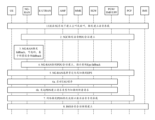
- FIG. 6 is a schematic diagram of the interaction of each module. Referring to Figure 6, the flow of the communication method provided by the embodiment of the present application specifically includes:
- the Wi-Fi module detects a change in Wi-Fi status.
- the Wi-Fi status refers to the status related to the Wi-Fi connection, including but not limited to: Wi-Fi connection status and Wi-Fi signal strength value, etc.
- Wi-Fi connection status which can include Wi-Fi connected and Wi-Fi not connected.
- the Wi-Fi module detects that the Wi-Fi status of the mobile phone switches from Wi-Fi connected to Wi-Fi not connected, or from Wi-Fi not connected to Wi-Fi connected, it determines that the mobile phone's Wi-Fi status -Fi status changes.
- the Wi-Fi module when the Wi-Fi module detects that the Wi-Fi signal strength value increases or decreases, it is determined that the Wi-Fi status of the mobile phone has changed.
- the Wi-Fi module detects whether the Wi-Fi status of the mobile phone has changed in real time based on the relevant data collected by the Wi-Fi module.
- the Wi-Fi module sends instruction information to the mobile communication module.
- the Wi-Fi module When the Wi-Fi module detects a change in the Wi-Fi status, it sends indication information to the mobile communication module.
- the indication information is used to indicate to the mobile communication module that the Wi-Fi status of the mobile phone has changed.
- the indication information includes but is not limited to Wi-Fi connection status and Wi-Fi signal strength value.
- the mobile communication module determines whether Wi-Fi is available and the signal strength is higher than the first threshold. If yes, S604 is executed. If not, S612 is executed.
- the mobile communication module receives the indication information and determines whether Wi-Fi is available based on the indication information. If the Wi-Fi connection status is connected, the mobile phone Wi-Fi is available; if the Wi-Fi connection status is not connected, the mobile phone Wi-Fi is not available.
- the mobile communication module continues to determine whether the Wi-Fi signal strength is higher than the first threshold. When the Wi-Fi signal strength is higher than the first threshold, the mobile communication module can determine that the current mobile phone Wi-Fi signal is better; when the Wi-Fi signal strength is not higher than the first threshold, the mobile communication module can determine that the current mobile phone Wi-Fi signal is poor.
- the first threshold can be set, and this embodiment does not limit the first threshold.
- the Wi-Fi module of the mobile phone cannot provide users with Internet access conditions.
- the mobile phone also needs the mobile communication module to turn on the 5G SA mode to provide users with Internet access conditions at a higher data rate.
- the mobile communication module of the mobile phone needs to further determine whether the 5G SA mode of the mobile phone is turned off. If the 5G SA mode of the mobile phone is turned off, the 5G SA mode of the mobile phone needs to be turned on again. If the 5G SA mode of the mobile phone is not turned off, there is no need to adjust the mobile communication network registered by the mobile phone, and the process ends.
- the Wi-Fi module of the mobile phone when Wi-Fi is available, that is, the Wi-Fi status of the mobile phone is Wi-Fi connected, but the Wi-Fi signal strength is not higher than the first threshold, the Wi-Fi module of the mobile phone also It cannot provide users with better Internet access conditions.
- the mobile communication module of the mobile phone turns on the 5G SA mode, it can provide users with Internet access conditions at a higher data rate.
- the mobile communication module of the mobile phone needs to further determine whether the 5G SA mode of the mobile phone is turned off. If the 5G SA mode of the mobile phone is turned off, you need to turn on the 5G SA mode of the mobile phone again. If the 5G SA mode of the mobile phone is not turned off, there is no need to adjust the mobile communication network registered by the mobile phone, and the process ends.
- the Wi-Fi module of the mobile phone can be Provide users with better Internet access conditions. At this time, if the mobile communication module of the mobile phone turns off the 5G SA mode, it will not affect the user's online experience.
- the mobile communication module of the mobile phone can consider turning off the 5G SA mode so that the mobile phone can re-enter the 4G mobile communication network. In this way, when the mobile phone performs voice communication, there will no longer be Eps fallback type voice communication, but the call will be established under VoLTE, which improves the success rate of mobile phone voice communication.
- the mobile communication module determines whether the mobile phone is in the simple mode. If so, S605 is executed. If not, S611 is executed.
- the mobile communication module of the mobile phone can further determine whether the mobile phone is in the simple mode, and determine whether to adjust the mobile communication network registered by the mobile phone based on the judgment result.
- the simple mode can also be called the aging-friendly mode (this embodiment does not limit the name of the mode), and its switch state is used to indicate whether the user is sensitive to the mobile network registered by the mobile phone.
- the mobile phone when the mobile phone is in simple mode, that is, when the simple mode of the mobile phone is turned on, it indicates that the user is not sensitive to or does not care about the mobile network registered by the mobile phone. For example, it indicates that the user is not aware of whether the mobile phone is currently using 5G mobile communication displayed on the mobile phone interface. The network is not sensitive.
- the mobile communication module of the mobile phone can consider turning off the 5G SA mode so that the mobile phone can re-enter the network to 4G mobile communication. network. In this way, turning off the 5G SA mode of the mobile phone in this situation will not affect the user's experience, that is, it will not affect the user's psychological perception of the mobile communication network.
- S605 The mobile communication module determines whether the mobile phone supports VoNR. If not, execute S606. If yes, execute S611.
- the mobile phone can establish a call under VoNR. Since the mobile phone supports VoNR to avoid Eps fallback type voice communication, the mobile communication module of the mobile phone does not need to turn off the 5G SA mode at this time, that is, there is no need to adjust the mobile communication network registered by the mobile phone, and the process ends.
- mobile phones can not only provide users with stable and high-success rate voice communications based on VoNR, but also provide users with high-speed Internet access conditions.
- the mobile communication module of the mobile phone can further combine other conditions to determine whether to adjust the mobile communication network registered by the mobile phone.
- the mobile communication module determines whether the mobile phone is registered under the 5G SA network. If so, S607 is executed. If not, S611 is executed.
- the mobile communication module also needs to confirm whether the mobile phone is registered under the 5G SA network. If so, it can further combine other conditions to determine whether to adjust the mobile communication network registered by the mobile phone to avoid Eps fallback type voice calls.
- the mobile communication module does not need to adjust the mobile communication network registered by the mobile phone, and the process ends.
- the mobile communication module determines whether the mobile phone is camped in a 5G cell with an abnormal 4G neighbor cell. If not, perform 608. If yes, perform S611.
- 4G neighboring cells refer to adjacent 4G cells.
- the mobile phone cannot register normally in the 4G mobile communication network. Therefore, if the mobile communication module of the mobile phone determines that the 5G SA cell it currently resides in is a 5G cell with abnormal 4G neighboring cells, it will not be able to complete the adjustment of the mobile communication network registered by the mobile phone, that is, it will not be able to use the mobile phone in the 4G mobile communication Registration is completed on the network and the process ends.
- the mobile communication module determines that the mobile phone is stationed in a 5G cell with abnormal 4G neighboring cells, the mobile communication network registered by the mobile phone will not be adjusted, thereby avoiding the failure of adjusting the mobile communication network registered by the mobile phone and the failure of the mobile phone to successfully register with the mobile phone. Communication network issues.
- the mobile communication module can query each 5G cell with abnormal 4G neighboring cells, for example, query the list of 5G cells with abnormal 4G neighboring cells.
- the mobile communication module compares the 5G cell where the mobile phone currently resides with each 5G cell with abnormal 4G neighboring cells to determine whether the mobile phone resides in a 5G cell with abnormal 4G neighboring cells.
- 4G neighbor cell abnormality refers to the lack of 4G neighbor cell coverage or the failure of 4G registration due to 4G cell abnormality.
- the mobile communication module determines that the mobile phone is not camped in a 5G cell with abnormal 4G neighboring cells, it can further determine whether to adjust the mobile communication network registered by the mobile phone based on other conditions.
- the mobile phone's Wi-Fi is available and the Wi-Fi signal strength is higher than the first threshold
- the mobile phone does not support VoNR
- the mobile phone is registered under the 5G SA network, and the 5G cell where the mobile phone currently resides is not a 4G neighboring cell
- the mobile communication module of the mobile phone can turn off the 5G SA mode, so that the mobile phone can re-enter the 4G mobile communication network, and then a voice call can be established under VoLTE.
- this embodiment does not limit the execution order of S604, S605, S606 and S607. That is to say, the order of S604, S605, S606 and S607 in this embodiment can be exchanged.
- the mobile communication module determines whether the NR signal strength of the mobile phone is lower than the second threshold. If yes, execute 609; if not, execute S611.
- the mobile communication module of the mobile phone can also determine whether to adjust the mobile communication network registered by the mobile phone based on the current NR signal strength of the mobile phone.
- the mobile communication module of the mobile phone may not adjust the mobile communication network registered by the mobile phone, and the process ends.
- the NR signal strength of the mobile phone is lower than the second threshold, it indicates that the NR signal of the mobile phone is poor, which will undoubtedly increase the failure rate of Eps fallback type voice communication.
- the mobile communication module turns off the 5G SA mode, allowing the mobile phone to re-enter the 4G mobile communication network, and establish a voice call under VoLTE.
- the 5G SA mode to adjust the mobile communication network of the mobile phone, compared with adjusting the mobile communication network by turning off the 5G SA mode when the NR signal is better, the success rate of voice calls will be more obvious.
- the second threshold can be set, and this embodiment does not limit the second threshold.
- the mobile communication module turns off the 5G SA mode.
- the mobile phone After the 5G SA mode of the mobile phone is turned off, the mobile phone cannot register in the 5G mobile communication network, and can then perform the registration process in the 4G mobile communication network.
- the mobile communication module determines whether the mobile phone is successfully camped in the 4G cell. If not, execute 614. If yes, execute S611.
- the mobile phone can be registered normally in the 4G mobile communication network, the mobile communication network registered by the mobile phone is successfully adjusted from 5G to 4G. At this time, the mobile phone is re-registered to the 4G mobile communication network, and the mobile phone can establish a voice call under VoLTE. This process Finish.
- the mobile phone when the mobile phone can be re-camped on the 4G mobile communication network, it indicates that the 5G cell where the mobile phone was previously camped has a normal 4G neighbor cell. Furthermore, the mobile communication module can update the abnormal 4G cell list based on the normal 4G neighboring cells to ensure the accuracy of the recorded abnormal 4G cells.
- the mobile phone when the mobile phone can be re-camped on the 4G mobile communication network, it indicates that the 5G cell where the mobile phone was previously camped is not a 5G cell with abnormal 4G neighboring cells. Furthermore, the mobile communication module can update the list of 5G cells with abnormal 4G neighboring cells according to the 5G cell to ensure the accuracy of the recorded 5G cells with abnormal 4G neighboring cells.
- the mobile communication module determines whether the 5G SA mode is turned off. If so, execute 613. If not, execute S611.
- the mobile communication module turns on the 5G SA mode.
- the mobile phone After the 5G SA mode of the mobile phone is turned on, the mobile phone can register in the 5G mobile communication network.
- the mobile communication module marks the previously resident 5G cell as a 5G cell with abnormal 4G neighbor cells, and executes S613.
- the mobile phone After the 5G SA mode of the mobile phone is turned off, the mobile phone cannot register in the 5G mobile communication network and then registers in the 4G mobile communication network. If the mobile phone cannot register normally in the 4G mobile communication network, it means that the adjacent 4G cells of the 5G cell where the mobile phone previously resided are abnormal 4G cells, which means that the 5G cell where the mobile phone previously resided is a 5G cell with abnormal 4G neighboring cells. . At this time, the mobile communication module can mark the previously camped 5G cell as a 5G cell with abnormal 4G neighboring cells, and update the recorded 5G cell with abnormal 4G neighboring cells.
- the mobile communication module can also mark the 4G cell adjacent to the previously camped 5G cell as an abnormal 4G cell, and update the recorded abnormal 4G cell.
- recording abnormal 5G cells or abnormal 4G cells in 4G neighboring cells will help the mobile communication module determine whether the purpose of adjusting the mobile communication network can be achieved by turning off the 5G SA mode, which also provides a basis for judgment for S607.
- the 5G SA mode of the mobile phone After the 5G SA mode of the mobile phone is turned off, if the mobile phone cannot register normally in the 4G mobile communication network, you need to re-enable the 5G SA mode of the mobile phone so that the mobile phone can re-register in the 5G mobile communication network, which can ensure mobile communication normal operation of the function.
- the 5G SA mode of the mobile phone is turned off, so that the mobile phone is re-stationed in 4G and a voice call is established under VoLTE.
- VoLTE Voice over IP
- the mobile phone after the 5G SA mode of the mobile phone is turned off, if the mobile phone successfully completes registration in the 4G mobile communication network, the mobile phone will also exit the 4G mobile communication network based on changes in the Wi-Fi status and re-register to the 4G mobile communication network. In 5G mobile communication network. In this way, once the Wi-Fi connection cannot provide users with a better Internet experience, the mobile phone will re-register to the 5G mobile communication network instead of continuing to reside in the 4G community to ensure a smooth Internet experience for users.
- FIG. 7 is a schematic diagram of the interaction of each module. Referring to Figure 7, the flow of the communication method provided by the embodiment of the present application specifically includes:
- the Wi-Fi module detects a change in Wi-Fi status.
- the Wi-Fi module sends the first instruction information to the mobile communication module.
- the mobile communication module determines that the mobile phone Wi-Fi is available and the signal strength value is higher than the first threshold.
- the mobile communication module determines that the mobile phone is in simple mode.
- the mobile communication module determines that the mobile phone does not support VoNR.
- the mobile communication module determines that the mobile phone is registered under the 5G SA network.
- the mobile communication module determines that the mobile phone is stationed in an abnormal 5G cell in the 4G neighboring cell.
- This embodiment does not limit the execution order of S704 to S707.
- the mobile communication module determines that the NR signal strength of the mobile phone is lower than the second threshold.
- the mobile communication module turns off the 5G SA mode.
- the mobile communication module determines that the mobile phone is successfully stationed in the 4G community.
- the Wi-Fi module detects a change in Wi-Fi status.
- the mobile phone After the mobile communication module turns off the 5G SA mode, the mobile phone exits the 5G mobile communication network, and successfully registers with the 4G mobile communication network, the Wi-Fi status of the mobile phone may change, such as the Wi-Fi connection status changes, or the Wi-Fi connection status changes. Fi signal strength value changes.
- the Wi-Fi module sends the second instruction information to the mobile communication module.
- the Wi-Fi module When the Wi-Fi module detects a change in the Wi-Fi status, it continues to send instruction information to the mobile communication module, and informs the mobile communication module of the current Wi-Fi status of the mobile phone, so that the mobile communication module can respond to the current Wi-Fi status of the mobile phone.
- the status determines whether the mobile phone's mobile communication network needs to be adjusted.
- the mobile communication module determines that Wi-Fi is unavailable or the signal strength value is not higher than the first threshold.
- the mobile communication module turns on the 5G SA mode.
- the Wi-Fi module of the mobile phone cannot provide users with Internet access conditions and switches to the mobile communication module based on 4G mobile communication network provides users with Internet access conditions.
- the mobile phone communication module also needs to turn on the 5G SA mode, so that the mobile phone can re-register to the 5G community and provide users with Internet access conditions at a higher data rate.
- the Wi-Fi module of the mobile phone In another possible situation, when Wi-Fi is available, that is, the Wi-Fi status of the mobile phone is Wi-Fi connected, but the Wi-Fi signal strength is not higher than the first threshold, the Wi-Fi module of the mobile phone also It cannot provide users with better Internet access conditions. At this time, in order to ensure that users have a better Internet experience, the mobile phone communication module also needs to turn on the 5G SA mode, so that the mobile phone can re-register to the 5G community and provide users with Internet access conditions at a higher data rate.
- the 5G SA mode of the mobile phone will be re-enabled so that the mobile phone can be re-registered in the 5G mobile communication network to ensure that the user Smooth Internet experience.
- This embodiment provides a communication method.
- This communication method is applied to electronic devices (such as mobile phones or smart wearable devices, etc.), and the electronic devices are registered in the 5G SA.
- the communication method includes:
- the Wi-Fi status refers to the status related to the Wi-Fi connection, including but not limited to: Wi-Fi connection status and Wi-Fi signal strength value, etc.
- Wi-Fi connection status which can include Wi-Fi connected and Wi-Fi not connected.
- the Wi-Fi module when the Wi-Fi module detects that the Wi-Fi status of the electronic device switches from Wi-Fi connected to Wi-Fi unconnected, or from Wi-Fi unconnected to Wi-Fi connected, it determines that the electronic device The device Wi-Fi status changes. In another example, when the Wi-Fi module detects that the Wi-Fi signal strength value increases or decreases, it is determined that the Wi-Fi status of the electronic device changes.
- the electronic device When the Wi-Fi status changes, if Wi-Fi is available and the Wi-Fi signal strength is higher than the first threshold, the electronic device turns off its 5G SA mode. After the 5G SA mode of the electronic device is turned off, the electronic device cannot register in the 5G mobile communication network and can then register in the 4G mobile communication network.
- the electronic device completes registration in the 4G mobile communication network.
- the electronic device can successfully register in the 4G mobile communication network and reside in the corresponding 4G cell.
- the electronic device After the electronic device is reconnected to the 4G mobile communication network, the electronic device can establish a voice call under VoLTE without Eps fallback type voice communication, thus ensuring the success rate of the voice call. At the same time, electronic devices can also provide users with a good Internet experience based on Wi-Fi communication. Therefore, in the early stage of 5G SA system construction, when the 5G SA network is not stable enough, this can not only ensure the success rate of user voice communication, but also ensure the user's Internet speed, achieving a balance between maintaining calls and maintaining Internet access. .
- the electronic device if the electronic device fails to register in the 4G mobile communication network, the electronic device re-enables its 5G SA mode.
- the electronic device After the 5G SA mode of the electronic device is turned off, the electronic device cannot register in the 5G mobile communication network and then register in the 4G mobile communication network. If the electronic device cannot register normally in the 4G mobile communication network, it means that the adjacent 4G cells of the 5G cell where the electronic device previously resided are abnormal 4G cells or there are no available 4G neighboring cells, which means that the 5G cell where the electronic device previously resided The cell is a 5G cell with abnormal 4G neighbor cells. At this time, the electronic device reopens its 5G SA mode so that the electronic device can re-register in the 5G mobile communication network to ensure the normal operation of the mobile communication function of the electronic device.
- the target 5G cell is marked as a 5G cell with abnormal 4G neighbor cells; where the target 5G cell is where the electronic device resides before turning off the 5G SA mode. 5G cell.
- the electronic device After the 5G SA mode of the electronic device is turned off, the electronic device cannot register in the 5G mobile communication network and then register in the 4G mobile communication network. If the electronic device cannot register normally in the 4G mobile communication network, it means that the adjacent 4G cells of the 5G cell where the electronic device previously resided are abnormal 4G cells, which means that the 5G cell where the electronic device previously resided is an abnormal 4G neighbor cell. 5G community. At this time, the electronic device can mark the previously resident 5G cell as a 5G cell with abnormal 4G neighbor cells, and update the recorded 5G cell with abnormal 4G neighbor cells.
- the 5G SA mode of the electronic device is re-enabled.
- Wi-Fi module of the electronic device cannot provide users with Internet access conditions and switches to mobile communication.
- the module provides users with Internet access conditions based on the 4G mobile communication network.
- the electronic device also needs the mobile communication module to turn on the 5G SA mode, so that the electronic device can re-register to the 5G community and provide users with Internet access conditions at a higher data rate.
- the Wi-Fi status of the electronic device is Wi-Fi connected, but the Wi-Fi signal strength is not higher than the first threshold, the Wi-Fi status of the electronic device
- the module also cannot provide users with better Internet access conditions.
- the electronic device in order to ensure that users have a better Internet experience, the electronic device also needs the mobile communication module to turn on the 5G SA mode, so that the electronic device can re-register to the 5G community and provide users with Internet access conditions at a higher data rate.
- the 5G SA mode of the electronic device is re-enabled so that the electronic device can be re-registered in the 5G mobile communication network. , ensuring users a smooth Internet experience.
- S801 can be adjusted to: when the Wi-Fi status changes, if Wi-Fi is available and the Wi-Fi signal strength is higher than the first threshold, and certain conditions are met, then close the 5G SA mode for electronic devices.
- the electronic device when Wi-Fi is available and the Wi-Fi signal strength is higher than the first threshold, if the electronic device does not support VoNR and the 5G cell where the electronic device currently resides is not a 5G cell with abnormal 4G neighboring cells, the electronic device will be turned off. The device's 5G SA mode.
- the electronic device can establish a call under VoNR. Since electronic devices supporting VoNR can avoid Eps fallback type voice communication, the mobile communication module of the electronic device does not need to turn off the 5G SA mode at this time, that is, there is no need to adjust the mobile communication network registered by the electronic device.
- the electronic device cannot register normally in the 4G mobile communication network. Therefore, if the electronic device determines that the 5G SA cell it currently resides in is a 5G cell with abnormal 4G neighboring cells, it will not be able to complete the adjustment of the mobile communication network registered by the electronic device, that is, it will not be able to adjust the electronic device in the 4G mobile communication network. Complete registration.
- the electronic device when Wi-Fi is available and the Wi-Fi signal strength is higher than the first threshold, if the electronic device does not support VoNR and the 5G cell where the electronic device currently resides is not a 5G cell with abnormal 4G neighboring cells, the electronic device will be turned off. 5G SA mode to enable electronic devices to exit the 5G mobile communication network. If the electronic device supports VoNR, or the 5G cell where the electronic device currently resides is a 5G cell with abnormal 4G neighboring cells, the 5G SA mode of the electronic device will not be turned off, that is, the mobile communication network of the electronic device will not be adjusted.
- the electronic device when Wi-Fi is available and the Wi-Fi signal strength is higher than the first threshold, if the electronic device does not support VoNR, the 5G cell where the electronic device currently resides is not a 5G cell with abnormal 4G neighbor cells, and the electronic device is in Target mode, turn off the 5G SA mode of the electronic device.
- the target mode is used to indicate that the user is not sensitive to the mobile communication network where the electronic device is registered.
- the target mode may be called a simple mode or an aging mode.
- simple mode that is, when the simple mode of the electronic device is turned on, it indicates that the user is not sensitive to or does not care about the mobile network registered by the electronic device. For example, it indicates that the user is not interested in whether the electronic device is displayed on the interface of the electronic device.
- 5G mobile communication networks is not sensitive.
- the electronic device when Wi-Fi is available and the Wi-Fi signal strength is higher than the first threshold, if the electronic device does not support VoNR, the 5G cell where the electronic device currently resides is not a 5G cell with abnormal 4G neighbor cells, and the electronic device is in the target mode, turn off the 5G SA mode of the electronic device so that the electronic device exits the 5G mobile communication network.
- the electronic device when Wi-Fi is available and the Wi-Fi signal strength is higher than the first threshold, if the electronic device does not support VoNR, the 5G cell where the electronic device currently resides is not a 5G cell with abnormal 4G neighbor cells, and the electronic device's If the NR signal strength is lower than the second threshold, the 5G SA mode of the electronic device is turned off.
- the NR signal strength of the electronic device is higher than the second threshold, it indicates that the NR signal of the electronic device is better, and the failure rate of Eps fallback type voice communication may be relatively low. If the NR signal strength of the electronic device is lower than the second threshold, it indicates that the NR signal of the electronic device is poor, which will undoubtedly increase the failure rate of Eps fallback type voice communication.
- the electronic device when Wi-Fi is available and the Wi-Fi signal strength is higher than the first threshold, if the electronic device does not support VoNR, the 5G cell where the electronic device currently resides is not a 5G cell with abnormal 4G neighboring cells, and the NR of the electronic device is If the signal strength is lower than the second threshold, the 5G SA mode of the electronic device is turned off so that the electronic device exits the 5G mobile communication network.
- the electronic device when Wi-Fi is available and the Wi-Fi signal strength is higher than the first threshold, if the electronic device does not support VoNR, the 5G cell where the electronic device currently resides is not a 5G cell with abnormal 4G neighbor cells, and the electronic device is in the target mode, and the NR signal strength of the electronic device is lower than the second threshold, the 5G SA mode of the electronic device is turned off.
- the target mode is used to indicate that the user is not sensitive to the mobile communication network where the electronic device is registered.
- the 5G SA mode of the electronic device is turned off, so that the electronic device can re-station on the 4G network and establish a voice call under VoLTE. In this way, it not only ensures the success rate of voice calls, but also enables users to have a good Internet experience based on Wi-Fi communication. Therefore, in the early stage of 5G SA system construction, when the 5G SA network is not stable enough, this can not only ensure the success rate of user voice communication, but also ensure the user's Internet speed, achieving a balance between maintaining calls and maintaining Internet access. .
- This embodiment also provides a computer storage medium that stores computer instructions.
- the computer instructions When the computer instructions are run on an electronic device, the electronic device executes the above related method steps to implement the communication method in the above embodiment.
- This embodiment also provides a computer program product.
- the computer program product When the computer program product is run on a computer, it causes the computer to perform the above related steps to implement the communication method in the above embodiment.
- inventions of the present application also provide a device.
- This device may be a chip, a component or a module.
- the device may include a connected processor and a memory.
- the memory is used to store computer execution instructions.
- the processor can execute computer execution instructions stored in the memory, so that the chip executes the communication method in each of the above method embodiments.
- the electronic devices such as mobile phones, etc.
- computer storage media such as hard disk drives, etc.
- computer program products or chips provided in this embodiment are all used to execute the corresponding methods provided above. Therefore, the beneficial effects they can achieve can be referred to the above. The beneficial effects of the corresponding methods provided will not be described again here.
- the disclosed devices and methods can be implemented in other ways.
- the device embodiments described above are only illustrative.
- the division of modules or units is only a logical function division.
- there may be other division methods for example, multiple units or components may be combined or can be integrated into another device, or some features can be ignored, or not implemented.
- the coupling or direct coupling or communication connection between each other shown or discussed may be through some interfaces, and the indirect coupling or communication connection of the devices or units may be in electrical, mechanical or other forms.
Landscapes
- Engineering & Computer Science (AREA)
- Computer Networks & Wireless Communication (AREA)
- Signal Processing (AREA)
- Computer Security & Cryptography (AREA)
- Quality & Reliability (AREA)
- Physics & Mathematics (AREA)
- Electromagnetism (AREA)
- Mobile Radio Communication Systems (AREA)
Abstract
Description
Claims (17)
- 一种通信方法,其特征在于,应用于电子设备中,所述电子设备注册在5G独立组网SA中,包括:在Wi-Fi状态变化时,如果Wi-Fi可用且Wi-Fi信号强度高于第一阈值,则关闭所述电子设备的5G SA模式;在4G移动通信网络中完成注册。
- 根据权利要求1所述的方法,其特征在于,所述关闭所述电子设备的5G SA模式,包括:如果满足一定的条件,则关闭所述电子设备的5G SA模式。
- 根据权利要求2所述的方法,其特征在于,所述如果满足一定的条件,则关闭所述电子设备的5G SA模式,包括:如果所述电子设备不支持VoNR,且所述电子设备当前驻留的5G小区不是4G邻区异常的5G小区,则关闭所述电子设备的5G SA模式。
- 根据权利要求3所述的方法,其特征在于,所述关闭所述电子设备的5G SA模式,包括:如果所述电子设备处于目标模式,则关闭所述电子设备的5G SA模式;其中,所述目标模式用于指示用户对所述电子设备注册的移动通信网络不敏感。
- 根据权利要求3或4所述的方法,其特征在于,所述关闭所述电子设备的5G SA模式,包括:如果所述电子设备的新空口NR信号强度低于第二阈值,则关闭所述电子设备的5G SA模式。
- 根据权利要求1所述的方法,其特征在于,还包括:如果在4G移动通信网络中注册不成功,则重新开启所述电子设备的5G SA模式。
- 根据权利要求6所述的方法,其特征在于,还包括:如果在4G移动通信网络中注册不成功,则将目标5G小区标记为4G邻区异常的5G小区;其中,所述目标5G小区为所述电子设备在关闭所述5G SA模式之前驻留的5G小区。
- 根据权利要求1所述的方法,其特征在于,在4G移动通信网络中完成注册之后,还包括:如果Wi-Fi不可用或者Wi-Fi信号强度不高于所述第一阈值,则重新开启所述电子设备的5G SA模式。
- 一种电子设备,其特征在于,所述电子设备注册在5G SA中,包括:一个或多个处理器;存储器;以及一个或多个计算机程序,其中所述一个或多个计算机程序存储在所述存储器上,当所述计算机程序被所述一个或多个处理器执行时,使得所述电子设备执行以下步骤:在Wi-Fi状态变化时,如果Wi-Fi可用且Wi-Fi信号强度高于第一阈值,则关闭所述 电子设备的5G SA模式;在4G移动通信网络中完成注册。
- 根据权利要求9所述的电子设备,其特征在于,当所述计算机程序被所述一个或多个处理器执行时,使得所述电子设备执行以下步骤:如果满足一定的条件,则关闭所述电子设备的5G SA模式。
- 根据权利要求10所述的电子设备,其特征在于,当所述计算机程序被所述一个或多个处理器执行时,使得所述电子设备执行以下步骤:如果所述电子设备不支持VoNR,且所述电子设备当前驻留的5G小区不是4G邻区异常的5G小区,则关闭所述电子设备的5G SA模式。
- 根据权利要求11所述的电子设备,其特征在于,当所述计算机程序被所述一个或多个处理器执行时,使得所述电子设备执行以下步骤:如果所述电子设备处于目标模式,则关闭所述电子设备的5G SA模式;其中,所述目标模式用于指示用户对所述电子设备注册的移动通信网络不敏感。
- 根据权利要求11或12所述的电子设备,其特征在于,当所述计算机程序被所述一个或多个处理器执行时,使得所述电子设备执行以下步骤:如果所述电子设备的新空口NR信号强度低于第二阈值,则关闭所述电子设备的5G SA模式。
- 根据权利要求9所述的电子设备,其特征在于,当所述计算机程序被所述一个或多个处理器执行时,使得所述电子设备还执行以下步骤:如果在4G移动通信网络中注册不成功,则重新开启所述电子设备的5G SA模式。
- 根据权利要求14所述的电子设备,其特征在于,当所述计算机程序被所述一个或多个处理器执行时,使得所述电子设备还执行以下步骤:如果在4G移动通信网络中注册不成功,则将目标5G小区标记为4G邻区异常的5G小区;其中,所述目标5G小区为所述电子设备在关闭所述5G SA模式之前驻留的5G小区。
- 根据权利要求9所述的电子设备,其特征在于,当所述计算机程序被所述一个或多个处理器执行时,使得所述电子设备还执行以下步骤:在4G移动通信网络中完成注册之后,如果Wi-Fi不可用或者Wi-Fi信号强度不高于所述第一阈值,则重新开启所述电子设备的5G SA模式。
- 一种计算机可读存储介质,包括计算机程序,其特征在于,当所述计算机程序在电子设备上运行时,使得所述电子设备执行如权利要求1-8中任一项所述的通信方法。
Priority Applications (2)
| Application Number | Priority Date | Filing Date | Title |
|---|---|---|---|
| US18/695,686 US20250133477A1 (en) | 2022-04-24 | 2023-01-04 | Communications Method and Electronic Device |
| EP23794654.6A EP4387331B1 (en) | 2022-04-24 | 2023-01-04 | Communication method and electronic device |
Applications Claiming Priority (2)
| Application Number | Priority Date | Filing Date | Title |
|---|---|---|---|
| CN202210454773.1A CN114916035B (zh) | 2022-04-24 | 2022-04-24 | 通信方法、电子设备及存储介质 |
| CN202210454773.1 | 2022-04-24 |
Publications (1)
| Publication Number | Publication Date |
|---|---|
| WO2023207214A1 true WO2023207214A1 (zh) | 2023-11-02 |
Family
ID=82765199
Family Applications (1)
| Application Number | Title | Priority Date | Filing Date |
|---|---|---|---|
| PCT/CN2023/070294 Ceased WO2023207214A1 (zh) | 2022-04-24 | 2023-01-04 | 通信方法及电子设备 |
Country Status (4)
| Country | Link |
|---|---|
| US (1) | US20250133477A1 (zh) |
| EP (1) | EP4387331B1 (zh) |
| CN (1) | CN114916035B (zh) |
| WO (1) | WO2023207214A1 (zh) |
Cited By (1)
| Publication number | Priority date | Publication date | Assignee | Title |
|---|---|---|---|---|
| CN118317381A (zh) * | 2024-04-29 | 2024-07-09 | 荣耀终端有限公司 | 一种通信方法、终端设备和可读存储介质 |
Families Citing this family (3)
| Publication number | Priority date | Publication date | Assignee | Title |
|---|---|---|---|---|
| CN114916035B (zh) * | 2022-04-24 | 2023-06-09 | 荣耀终端有限公司 | 通信方法、电子设备及存储介质 |
| CN116170850B (zh) * | 2023-02-16 | 2026-03-17 | 中国联合网络通信集团有限公司 | Eps回落处理方法、装置、设备及存储介质 |
| CN117119392B (zh) * | 2023-10-23 | 2024-04-09 | 荣耀终端有限公司 | 一种通信方法、处理器、电子设备及存储介质 |
Citations (6)
| Publication number | Priority date | Publication date | Assignee | Title |
|---|---|---|---|---|
| WO2021087413A1 (en) * | 2019-10-31 | 2021-05-06 | Qualcomm Incorporated | Enhancements of vowi-fi handover from epdg to lte when vonr is not supported |
| CN113099496A (zh) * | 2021-03-30 | 2021-07-09 | 惠州Tcl移动通信有限公司 | 一种网络通话切换方法、系统和移动终端 |
| CN113573377A (zh) * | 2021-06-24 | 2021-10-29 | 宇龙计算机通信科技(深圳)有限公司 | 一种网络优化方法、装置、存储介质及电子设备 |
| WO2021261843A1 (en) * | 2020-06-22 | 2021-12-30 | Samsung Electronics Co., Ltd. | Methods and systems for managing a voice over new radio call by a user equipment |
| CN114258090A (zh) * | 2020-09-23 | 2022-03-29 | 华为技术有限公司 | 一种网络系统和终端设备 |
| CN114916035A (zh) * | 2022-04-24 | 2022-08-16 | 荣耀终端有限公司 | 通信方法及电子设备 |
Family Cites Families (15)
| Publication number | Priority date | Publication date | Assignee | Title |
|---|---|---|---|---|
| TWI577203B (zh) * | 2015-07-13 | 2017-04-01 | 宏碁股份有限公司 | 無線存取能力控制方法與使用此方法的使用者設備 |
| US10652811B2 (en) * | 2018-06-21 | 2020-05-12 | T-Mobile Usa, Inc. | Systems and methods for enhanced frequency allocation |
| US12273940B2 (en) * | 2019-08-16 | 2025-04-08 | Apple Inc. | 5G NR voice call EPS fallback enhancements |
| US11503527B2 (en) * | 2019-10-03 | 2022-11-15 | Apple Inc. | WLAN to cellular handover techniques for voice calls |
| US11071036B2 (en) * | 2019-10-24 | 2021-07-20 | Cisco Techneiogy, Inc. | Managing voice calls in heterogenous network environments |
| US11700650B2 (en) * | 2020-04-17 | 2023-07-11 | Qualcomm Incorporated | Methods to handle slicing accounting for evolved packet data gateway Wi-Fi access |
| CN113556798B (zh) * | 2020-04-26 | 2022-06-10 | 华为技术有限公司 | 一种sa网络5g自动开户的搜网方法及相关装置 |
| CN114158033B (zh) * | 2020-09-07 | 2024-04-26 | 华为技术有限公司 | 一种网络系统和终端设备 |
| WO2022104291A1 (en) * | 2020-12-02 | 2022-05-19 | Innopeak Technology, Inc. | Selective device switching of fifth generation (5g) mode |
| CN113055856B (zh) * | 2021-03-05 | 2022-11-25 | 展讯通信(上海)有限公司 | 支持VoWIFI的5G终端的网络驻留方法及装置、存储介质、终端 |
| CN113329465B (zh) * | 2021-05-21 | 2023-03-14 | Oppo广东移动通信有限公司 | 一种驻网控制方法、装置、设备及计算机存储介质 |
| US11924691B2 (en) * | 2021-06-24 | 2024-03-05 | Samsung Electronics Co., Ltd. | Method for improving call performance in wireless network |
| CN113453261B (zh) * | 2021-06-25 | 2022-12-20 | 维沃移动通信有限公司 | 异常小区识别方法、装置和电子设备 |
| CN113873597A (zh) * | 2021-10-11 | 2021-12-31 | 展讯通信(上海)有限公司 | 数据处理方法、装置、终端设备以及存储介质 |
| CN113873608A (zh) * | 2021-10-18 | 2021-12-31 | 南昌酷派众盈智能科技有限公司 | 语音通话方法、装置、存储介质及终端 |
-
2022
- 2022-04-24 CN CN202210454773.1A patent/CN114916035B/zh active Active
-
2023
- 2023-01-04 US US18/695,686 patent/US20250133477A1/en active Pending
- 2023-01-04 WO PCT/CN2023/070294 patent/WO2023207214A1/zh not_active Ceased
- 2023-01-04 EP EP23794654.6A patent/EP4387331B1/en active Active
Patent Citations (6)
| Publication number | Priority date | Publication date | Assignee | Title |
|---|---|---|---|---|
| WO2021087413A1 (en) * | 2019-10-31 | 2021-05-06 | Qualcomm Incorporated | Enhancements of vowi-fi handover from epdg to lte when vonr is not supported |
| WO2021261843A1 (en) * | 2020-06-22 | 2021-12-30 | Samsung Electronics Co., Ltd. | Methods and systems for managing a voice over new radio call by a user equipment |
| CN114258090A (zh) * | 2020-09-23 | 2022-03-29 | 华为技术有限公司 | 一种网络系统和终端设备 |
| CN113099496A (zh) * | 2021-03-30 | 2021-07-09 | 惠州Tcl移动通信有限公司 | 一种网络通话切换方法、系统和移动终端 |
| CN113573377A (zh) * | 2021-06-24 | 2021-10-29 | 宇龙计算机通信科技(深圳)有限公司 | 一种网络优化方法、装置、存储介质及电子设备 |
| CN114916035A (zh) * | 2022-04-24 | 2022-08-16 | 荣耀终端有限公司 | 通信方法及电子设备 |
Non-Patent Citations (2)
| Title |
|---|
| CHINA UNICOM: "Support of EPS fallback-23.501", SA WG2 MEETING #122BIS, S2-175486, 15 August 2017 (2017-08-15), XP051334983 * |
| See also references of EP4387331A4 |
Cited By (1)
| Publication number | Priority date | Publication date | Assignee | Title |
|---|---|---|---|---|
| CN118317381A (zh) * | 2024-04-29 | 2024-07-09 | 荣耀终端有限公司 | 一种通信方法、终端设备和可读存储介质 |
Also Published As
| Publication number | Publication date |
|---|---|
| CN114916035A (zh) | 2022-08-16 |
| US20250133477A1 (en) | 2025-04-24 |
| EP4387331A1 (en) | 2024-06-19 |
| CN114916035B (zh) | 2023-06-09 |
| EP4387331B1 (en) | 2025-11-26 |
| EP4387331A4 (en) | 2024-12-18 |
Similar Documents
| Publication | Publication Date | Title |
|---|---|---|
| CN114916035B (zh) | 通信方法、电子设备及存储介质 | |
| US20240022469A1 (en) | Method for determining edge configuration server and apparatus | |
| US12382521B2 (en) | Relay connection establishment method and device | |
| KR20210129220A (ko) | 네트워크 연결 처리 방법, 관련 장치 및 컴퓨터 저장 매체 | |
| CN111479262B (zh) | 一种业务注册方法、终端及网络侧设备 | |
| JP2021520127A (ja) | サービス実現方法、ネットワークユニット及び端末 | |
| KR102430861B1 (ko) | 네트워크 접속을 위한 제어 방법 및 통신 장치 | |
| CN111277998B (zh) | 一种无线通信方法及终端设备 | |
| US20250212071A1 (en) | Information transmission method and apparatus, communication device and storage medium | |
| WO2022001378A1 (zh) | 一种提醒方法、图形用户界面及终端设备 | |
| EP4132041B1 (en) | Information transmission method and apparatus, communication device, and storage medium | |
| CN113453318A (zh) | 一种寻呼方法、设备及系统 | |
| CN109451525B (zh) | 一种拥塞判断的方法及装置 | |
| WO2021129244A1 (zh) | 网络标识的显示方法、设备及系统 | |
| US12464495B2 (en) | Method for increasing paging response speed of terminal and terminal | |
| WO2021197151A1 (zh) | 信息传输方法、用户终端和接入网网元 | |
| US20250227663A1 (en) | Method for determining paging restriction rule, communication device, and storage medium | |
| US20240137910A1 (en) | Methods and apparatuses for controlling multi-usim behaviour of user equipment | |
| US20220408469A1 (en) | Downlink control information configuration method and apparatus, and communication device and storage medium | |
| EP4716308A1 (en) | Information processing method and apparatus, communication device, and storage medium | |
| WO2023236659A1 (zh) | 随卡配置特性的配置管理方法及电子设备 | |
| US20240098768A1 (en) | Information transmission methods, and communication devices | |
| CN116074912A (zh) | 用户设备及其网络切换方法、介质 | |
| CN121815348A (zh) | 一种通信方法和终端设备 | |
| HK40071635B (zh) | 一种提升终端寻呼响应速度的方法及终端 |
Legal Events
| Date | Code | Title | Description |
|---|---|---|---|
| 121 | Ep: the epo has been informed by wipo that ep was designated in this application |
Ref document number: 23794654 Country of ref document: EP Kind code of ref document: A1 |
|
| WWE | Wipo information: entry into national phase |
Ref document number: 2023794654 Country of ref document: EP |
|
| ENP | Entry into the national phase |
Ref document number: 2023794654 Country of ref document: EP Effective date: 20240315 |
|
| WWE | Wipo information: entry into national phase |
Ref document number: 18695686 Country of ref document: US |
|
| NENP | Non-entry into the national phase |
Ref country code: DE |
|
| WWP | Wipo information: published in national office |
Ref document number: 18695686 Country of ref document: US |
|
| WWG | Wipo information: grant in national office |
Ref document number: 2023794654 Country of ref document: EP |