WO2023242972A1 - 通信システム、通信装置、方法、及びプログラム - Google Patents
通信システム、通信装置、方法、及びプログラム Download PDFInfo
- Publication number
- WO2023242972A1 WO2023242972A1 PCT/JP2022/023867 JP2022023867W WO2023242972A1 WO 2023242972 A1 WO2023242972 A1 WO 2023242972A1 JP 2022023867 W JP2022023867 W JP 2022023867W WO 2023242972 A1 WO2023242972 A1 WO 2023242972A1
- Authority
- WO
- WIPO (PCT)
- Prior art keywords
- key
- key sharing
- communication
- sharing method
- shared
- Prior art date
- Legal status (The legal status is an assumption and is not a legal conclusion. Google has not performed a legal analysis and makes no representation as to the accuracy of the status listed.)
- Ceased
Links
Images



Classifications
-
- H—ELECTRICITY
- H04—ELECTRIC COMMUNICATION TECHNIQUE
- H04L—TRANSMISSION OF DIGITAL INFORMATION, e.g. TELEGRAPHIC COMMUNICATION
- H04L9/00—Cryptographic mechanisms or cryptographic arrangements for secret or secure communications; Network security protocols
- H04L9/12—Transmitting and receiving encryption devices synchronised or initially set up in a particular manner
-
- H—ELECTRICITY
- H04—ELECTRIC COMMUNICATION TECHNIQUE
- H04L—TRANSMISSION OF DIGITAL INFORMATION, e.g. TELEGRAPHIC COMMUNICATION
- H04L9/00—Cryptographic mechanisms or cryptographic arrangements for secret or secure communications; Network security protocols
- H04L9/08—Key distribution or management, e.g. generation, sharing or updating, of cryptographic keys or passwords
- H04L9/0816—Key establishment, i.e. cryptographic processes or cryptographic protocols whereby a shared secret becomes available to two or more parties, for subsequent use
- H04L9/0838—Key agreement, i.e. key establishment technique in which a shared key is derived by parties as a function of information contributed by, or associated with, each of these
-
- H—ELECTRICITY
- H04—ELECTRIC COMMUNICATION TECHNIQUE
- H04L—TRANSMISSION OF DIGITAL INFORMATION, e.g. TELEGRAPHIC COMMUNICATION
- H04L9/00—Cryptographic mechanisms or cryptographic arrangements for secret or secure communications; Network security protocols
- H04L9/08—Key distribution or management, e.g. generation, sharing or updating, of cryptographic keys or passwords
- H04L9/0816—Key establishment, i.e. cryptographic processes or cryptographic protocols whereby a shared secret becomes available to two or more parties, for subsequent use
- H04L9/0852—Quantum cryptography
-
- H—ELECTRICITY
- H04—ELECTRIC COMMUNICATION TECHNIQUE
- H04L—TRANSMISSION OF DIGITAL INFORMATION, e.g. TELEGRAPHIC COMMUNICATION
- H04L9/00—Cryptographic mechanisms or cryptographic arrangements for secret or secure communications; Network security protocols
- H04L9/08—Key distribution or management, e.g. generation, sharing or updating, of cryptographic keys or passwords
- H04L9/0816—Key establishment, i.e. cryptographic processes or cryptographic protocols whereby a shared secret becomes available to two or more parties, for subsequent use
- H04L9/0852—Quantum cryptography
- H04L9/0855—Quantum cryptography involving additional nodes, e.g. quantum relays, repeaters, intermediate nodes or remote nodes
-
- H—ELECTRICITY
- H04—ELECTRIC COMMUNICATION TECHNIQUE
- H04L—TRANSMISSION OF DIGITAL INFORMATION, e.g. TELEGRAPHIC COMMUNICATION
- H04L9/00—Cryptographic mechanisms or cryptographic arrangements for secret or secure communications; Network security protocols
- H04L9/14—Cryptographic mechanisms or cryptographic arrangements for secret or secure communications; Network security protocols using a plurality of keys or algorithms
- H04L9/16—Cryptographic mechanisms or cryptographic arrangements for secret or secure communications; Network security protocols using a plurality of keys or algorithms the keys or algorithms being changed during operation
Definitions
- QKD Quantum Key Distribution
- KME Key Management Entity
- SAE Secure Application Entity
- QKD has the problem that keys cannot be shared if tapping on the optical fiber cable continues. Therefore, from the viewpoint of service continuity, it is necessary to be able to switch to another key sharing method even if a certain key sharing method becomes unavailable for some reason.
- a technology is provided that allows switching between multiple key sharing methods.
- FIG. 1 is a diagram showing an example of the overall configuration of a communication system according to the present embodiment.
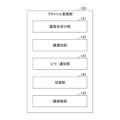
- FIG. 3 is a diagram illustrating an example of a detailed functional configuration of a protocol converter according to the present embodiment.
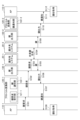
- FIG. 3 is a sequence diagram illustrating an example of key acquisition processing according to the present embodiment. It is a sequence diagram which shows an example of the switching process based on this embodiment. It is a figure showing a modification of the whole composition of a communication system concerning this embodiment.
- 1 is a diagram showing an example of a hardware configuration of a computer.
- the key sharing system 20A-1 and the key sharing system 20A-2 are capable of mutually generating shared keys using a certain key sharing method (for example, QKD) in which KME and SAE exist on different devices. do.
- the key sharing system 20B-1 and the key sharing system 20B-2 are able to mutually generate shared keys using a certain key sharing method (for example, PQKD) in which the KME and SAE exist on the same device.
- the key sharing system 20C-1 and the key sharing system 20C-2 can mutually generate shared keys using a certain key sharing method in which KME and SAE exist on the same device. Therefore, in the example shown in FIG.
- the key sharing system 20A-1 exists separately from the communication device 10-1, while the key sharing system 20B-1 and the key sharing system 20C-1 are connected to the communication device 10-1. included in. The same applies to the key sharing system 20A-2 to the key sharing system 20C-2.
- the communication device 10-1 and the key sharing system 20A-1 are communicably connected, for example, via an intra-site network.
- the communication device 10-2 and the key sharing system 20A-2 are communicably connected via, for example, an intra-site network.
- the communication device 10-2 uses the key (shared key) shared between the key sharing system 20-2 and the key sharing system 20-1 that use the same key sharing method. Perform encrypted communication with 1.
- the communication device 10-2 includes an AP 110-2, a protocol conversion section 120-2, and a key output section 130-2 corresponding to each key sharing system 20-2.
- the key output units 130-2 corresponding to the key sharing systems 20A-2 to 20C-2 are the key output units 130A-2 to 130C-2, respectively.
- communication device 10 when the communication device 10-1 and the communication device 10-2 are not distinguished, they will be referred to as “communication device 10", and when the key sharing system 20-1 and the key sharing system 20-2 are not distinguishable, they will be referred to as “key sharing system 10".
- System 20 Other components are similarly expressed as “AP 110,” “protocol conversion unit 120,” “key output unit 130,” etc.
- key sharing system 20A-1 and the key sharing system 20A-2 are not distinguished, they are referred to as “key sharing system 20A”.
- Other information will be similarly expressed as “key sharing system 20B”, “key sharing system 20C”, etc.
- the AP 110 is an application program that performs encrypted communication with the AP 110 of another communication device 10 using a shared key.
- the protocol converter 120 accepts (a message representing) a key request from the AP 110 and sends (a message representing) a key notification to the AP 110. Further, the protocol conversion unit 120 switches to another key sharing system 20 when an error or the like occurs in the key sharing system 20. Note that a detailed functional configuration example of the protocol converter 120 will be described later.
- the key output unit 130 has a function of hiding the specific mechanism of the key sharing method executed by the key sharing system 20 corresponding to the key output unit 130, and upon receiving a key request, the key sharing system 20 corresponding to the key output unit 130 The shared key generated in step 20 is returned. That is, upon receiving a key request from the protocol conversion unit 120, the key output unit 130 returns a key output containing the shared key generated by the key sharing system 20 corresponding to itself to the protocol conversion unit 120. Note that the key output unit 130 may also be called a protocol driver or the like.
- the specific mechanism of the key sharing method is hidden from the AP 110, and the AP 110 can obtain a shared key by simply requesting a key from the protocol conversion unit 120 and receiving a key notification in response to the key request. .
- the key request reception unit 121 receives a switching notification from the switching unit 124, and sets the key sharing method included in the switching notification as the key sharing method currently in use. Furthermore, the key request reception unit 121 transmits the switching notification to the other communication devices 10.
- the key notification unit 122 receives the key output from the key output unit 130, extracts the shared key included in the key output, and transmits a key notification including the shared key to the AP 110.
- the error notification unit 123 receives an error notification from the key output unit 130 and transmits the error notification to the switching unit 124.
- the switching unit 124 receives the error notification from the key output unit 130, determines a key sharing method to switch to, and sends a switching notification containing information indicating the determined key sharing method to the key request receiving unit. Send to 121.
- the key storage unit 125 stores the shared key generated by the key sharing method in the storage device.
- the key (shared key) stored in the storage device will also be referred to as a stored key.
- the key storage unit 125 is not an essential component, and the protocol conversion unit 120 may not include the key storage unit 125.
- the overall configuration of the communication system 1 shown in FIG. 1 is an example, and is not limited to this.
- the communication device 10 can use three key sharing methods, and key sharing systems 20A to 20C corresponding to those key sharing methods are illustrated.
- key sharing systems 20 there are as many key sharing systems 20 as there are key sharing methods that can be used by the communication device 10.
- the communication device 10 can use N key sharing schemes, there are N key sharing systems 20 that respectively correspond to the N key sharing schemes.
- the communication network between the communication devices 10 and the communication network between the key sharing system 20 may be the same, or may be different depending on the key sharing method executed by the key sharing system 20.
- the key sharing method executed by the key sharing system 20A is QKD
- the communication network between the communication devices 10 (AP 110) is the Internet, etc.
- the communication network between the key sharing systems 20A is an optical communication network, etc.
- the key sharing method executed by the key sharing system 20B is PQKD or the like
- the communication network between the communication devices 10 (the AP 110 thereof) and the communication network between the key sharing system 20B are both the Internet or the like.
- AP 110-1 performs encrypted communication with AP 110-2
- FIG. 3 for key acquisition processing for AP 110-1 and AP 110-2 to acquire a shared key. I will explain while doing so.
- the AP 110-1 corresponds to an initiator
- the AP 110-2 corresponds to a responder.
- the key request receiving unit 121-1 of the protocol conversion unit 120-1 Upon receiving the key request, the key request receiving unit 121-1 of the protocol conversion unit 120-1 sends the key request to the key output unit 130 corresponding to the key sharing method currently set as the key sharing method. (Step S102). For example, when QKD is set as the key sharing method currently in use, the key request receiving unit 121-1 sends a message to the key output unit 130A-1 corresponding to the key sharing system 20A-1 that performs key sharing using QKD. and send the key request. On the other hand, for example, if PQKD is set as the key sharing method currently in use, the key request receiving unit 121-1 sends the key output unit 130B- corresponding to the key sharing system 20B-1 that performs key sharing using PQKD. The key request is sent to 1.
- the key output unit 130-1 Upon receiving the key request from the key request receiving unit 121-1, the key output unit 130-1 transmits the key request to the key sharing system 20-1 corresponding to itself (step S103). For example, when the key output unit 130A-1 receives a key request, the key output unit 130A-1 transmits the key request to the key sharing system 20A-1. On the other hand, for example, when the key output unit 130B-1 receives a key request, the key output unit 130B-1 transmits the key request to the key sharing system 20B-1.
- the key sharing system 20-1 executes the key sharing method with the key sharing system 20-2 that executes the same key sharing method as itself, A shared key is generated (step S104). For example, when the key sharing system 20A-1 that executes QKD receives a key request, the key sharing system 20A-1 executes QKD with the key sharing system 20A-2 and generates a shared key. On the other hand, for example, when the key sharing system 20B-1 that executes PQKD receives a key request, this key sharing system 20B-1 executes PQKD with the key sharing system 20B-2 and shares the shared key. generate.
- the key sharing system 20-1 transmits the key (shared key) generated in step S104 above to the key output unit 130-1 corresponding to itself (step S105).
- the key notification unit 122-1 of the protocol conversion unit 120-1 Upon receiving the key output from the key output unit 130-1, the key notification unit 122-1 of the protocol conversion unit 120-1 extracts the shared key included in the key output and sends a key notification containing the shared key. is transmitted to the AP 110-1 (step S107).
- the AP 110-1 Upon receiving the key notification from the protocol converter 120-1, the AP 110-1 acquires the shared key from this key notification (step S108).
- the key output unit 130-2 Upon receiving the shared key from the key sharing system 20-2, the key output unit 130-2 transmits a key output containing this shared key to the protocol conversion unit 120-2 (step S110).
- the key notification unit 122-2 of the protocol conversion unit 120-2 Upon receiving the key output from the key output unit 130-2, the key notification unit 122-2 of the protocol conversion unit 120-2 extracts the shared key included in the key output and generates a key notification containing the shared key. is transmitted to the AP 110-2 (step S111).
- the AP 110-2 Upon receiving the key notification from the protocol converter 120-2, the AP 110-2 acquires the shared key from this key notification (step S112).
- the key notification unit 122-1 notifies the protocol conversion unit 120-2 of the key ID of the shared key.
- the protocol conversion unit 120-2 similarly passes the shared key of the key ID from among the stored keys to the key notification unit 122-2, and the shared key is notified to the AP 110-2.
- Error when requesting a key for example, communication error when sharing a key with the key sharing system 20-2, internal error in the key sharing system 20-1 when sharing a key, etc.
- Key exhaustion including exhaustion of keys stored by the key storage unit 125
- Computation capacity depletion (4) System error (5) Tamper abnormality For example, an event in which key sharing becomes impossible due to tapping on an optical fiber cable can be detected as a tamper abnormality.
- the key output unit 130-1 Upon receiving the error notification from the key sharing system 20-1, the key output unit 130-1 transmits this error notification to the protocol conversion unit 120-1 (step S203).
- the error notification unit 123-1 of the protocol conversion unit 120-1 Upon receiving the error notification from the key output unit 130-1, the error notification unit 123-1 of the protocol conversion unit 120-1 transmits this error notification to the switching unit 124-1 (step S204).
- the switching unit 124-1 of the protocol conversion unit 120-1 determines the key sharing method to which to switch (step S205).
- the switching unit 124 can determine the key sharing method of the switching destination using various methods, and for example, it is conceivable to determine the key sharing method of the switching destination using the following method.
- One key sharing method is determined randomly or according to a predetermined order (predetermined priority order) from among key sharing methods other than the key sharing method currently in use.
- the key sharing method may be determined in various other ways. Further, in addition to this, for example, when the key storage unit 125 stores a shared key, it may be determined to switch the acquisition source of the shared key to the stored key. This allows the stored key to be used as a shared key until the stored key is exhausted, and the key sharing method can be switched after the stored key is exhausted. In the following description, it is assumed that the key sharing method to be switched to has been determined.
- the switching unit 124-2 of the protocol converting unit 120-2 Upon receiving the switching notification from the protocol converting unit 120-2, the switching unit 124-2 of the protocol converting unit 120-2 transmits this switching notification to the key request receiving unit 121-2 (step S209).
- the key request reception unit 121-2 of the protocol conversion unit 120-2 selects the key sharing method indicated by the information included in this switching notification as the currently used key sharing method. settings (step S210).
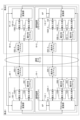
- FIG. 5 shows a modification of the overall configuration of the communication system 1 according to this embodiment.
- FIG. 1 shows a communication system 1 in which a server 30-1 is further included in base 1 and a server 30-2 is further included in base 2.
- server 30 when the servers 30-1 and 30-2 are not distinguished from each other, they will be referred to as "server 30.”
- the server 30 includes a protocol conversion section 120 and a key output section 130.
- the server 30 also includes a key sharing system 20 that corresponds to the key output unit 130 that the server 30 has, or is communicably connected to the key sharing system 20 that corresponds to the key output unit 130 that the server 30 has.
- the server 30-1 includes a protocol conversion section 120-11, a key output section 130D-1, and a key output section 130E-1. Furthermore, there are a key sharing system 20D-1 corresponding to the key output section 130D-1 and a key sharing system 20E-1 corresponding to the key output section 130E-1.
- the server 30-2 includes a protocol conversion section 120-21, a key output section 130D-2, and a key output section 130E-2. Furthermore, there are a key sharing system 20D-2 corresponding to the key output section 130D-2 and a key sharing system 20E-2 corresponding to the key output section 130E-2.
- which key sharing system 20 is used to generate the shared key (that is, which key sharing method is used to generate the shared key) is shared and coordinated among all communication devices 10 and servers 30. That is, for example, if an error or the like occurs in a certain key sharing system 20 and the key sharing method is switched (or it may be a switch to using a stored key as a shared key),
- the switching unit 124 that has determined the switching destination also sends a switching notification to the protocol conversion units 120 included in all other communication devices 10 and servers 30. Thereby, the key sharing method used throughout the communication system 1 is shared and linked.
- the communication device 10 side Operations such as generating a shared key using the key sharing system 20 become possible.
- the switching unit 124 determines the key sharing method to switch to, the communication device 10 side or the server 30 It is possible to consider which key sharing system 20 (the key sharing method executed by) on the side should be switched to. As a result, for example, if an error occurs in the key sharing system 20 on the server 30 side, the switch is switched to the key sharing system 20 on the communication device 10 side, and conversely, if an error occurs in the key sharing system 20 on the communication device 10 side, This enables operations such as switching to the key sharing system 20 on the server 30 side.
- the input device 501 is, for example, a keyboard, a mouse, a touch panel, various physical buttons, etc.
- the display device 502 is, for example, a display, a display panel, or the like. Note that the computer 500 may not include at least one of the input device 501 and the display device 502, for example.
- the external I/F 503 is an interface with an external device such as a recording medium 503a.
- Examples of the recording medium 503a include a CD-ROM, a DVD-ROM, an SD memory card, and a USB memory card.
- the communication I/F 504 is an interface for connecting the computer 500 to a communication network.
- the processor 505 is, for example, various arithmetic devices such as a CPU (Central Processing Unit).
- the memory device 506 is, for example, various storage devices such as a HDD (Hard Disk Drive), an SSD (Solid State Drive), a RAM (Random Access Memory), a ROM (Read Only Memory), and a flash memory.
Landscapes
- Engineering & Computer Science (AREA)
- Computer Security & Cryptography (AREA)
- Computer Networks & Wireless Communication (AREA)
- Signal Processing (AREA)
- Physics & Mathematics (AREA)
- Electromagnetism (AREA)
- Theoretical Computer Science (AREA)
- Computer And Data Communications (AREA)
- Mobile Radio Communication Systems (AREA)
Abstract
Description
本実施形態に係る通信システム1の全体構成例を図1に示す。図1では、一例として、拠点1と拠点2の間で暗号化通信を行う場合の通信システム1を示している。図1に示す通信システム1では、通信装置10-1が拠点1、通信装置10-2が拠点2に存在する場合を示している。また、図1に示す通信システム1では、通信装置10-1が利用可能な鍵共有方式にそれぞれ対応する鍵共有システム20A-1、鍵共有システム20B-1、鍵共有システム20C-1も示されている。同様に、通信装置10-2が利用可能な鍵共有方式にそれぞれ対応する鍵共有システム20A-2、鍵共有システム20B-2、鍵共有システム20C-2も示されている。
以下、一例として、AP110-1がAP110-2との間で暗号化通信を行うことを想定し、AP110-1及びAP110-2が共有鍵を取得するための鍵取得処理について、図3を参照しながら説明する。なお、AP110-1がイニシエータ、AP110-2がレスポンダに相当する。
以下、一例として、現在利用中の或る鍵共有方式に対応する鍵共有システム20-1で何等かのエラーが発生し、他の鍵共有方式に切り替える場合の切替処理について、図4を参照しながら説明する。
(2)鍵枯渇(鍵蓄積部125によって蓄積されている鍵の枯渇も含む。)
(3)計算能力枯渇
(4)システムエラー
(5)タンパー異常
なお、例えば、光ファイバーケーブルへのタッピングにより鍵共有ができなくなる事象はタンパー異常として検知され得る。
本実施形態に係る通信システム1の全体構成の変形例を図5に示す。図1では、サーバ30-1が拠点1に更に含まれると共に、サーバ30-2が拠点2に更に含まれる通信システム1を示している。以下、サーバ30-1とサーバ30-2とを区別しないときは「サーバ30」と表記する。
本実施形態に係る通信システム1に含まれる通信装置10、鍵共有システム20、及びサーバ30は、例えば、図6に示すコンピュータ500のハードウェア構成により実現することができる。図6に示すコンピュータ500は、入力装置501と、表示装置502と、外部I/F503と、通信I/F504と、プロセッサ505と、メモリ装置506とを有する。これらの各ハードウェアは、それぞれがバス507を介して通信可能に接続される。
以上のように、本実施形態に係る通信システム1では、何等かの理由で或る鍵共有方式が利用できなくなった場合、他の鍵共有方式に切り替えることができる。このため、暗号化通信を利用するアプリケーションプログラムによって提供されるサービスの可用性を高めることが可能となり、サービス品質の向上が実現できる。
10 通信装置
20 鍵共有システム
30 サーバ
110 AP
120 プロトコル変換部
121 鍵要求受付部
122 鍵通知部
123 エラー通知部
124 切替部
125 鍵蓄積部
130 鍵出力部
500 コンピュータ
501 入力装置
502 表示装置
503 外部I/F
503a 記録媒体
504 通信I/F
505 プロセッサ
506 メモリ装置
507 バス
Claims (8)
- 複数の通信装置が含まれる通信システムであって、
前記通信装置は、
他の通信装置との間で暗号化通信を行うように構成されているアプリケーションプログラムと、
前記暗号化通信に用いられる共有鍵を生成する鍵共有方式を切り替えるように構成されている切替部と、を有し、
前記切替部は、
現在利用中の鍵共有方式によって前記共有鍵を生成できない場合、他の鍵共有方式に切り替えるように構成されている、通信システム。 - 前記切替部は、
現在利用中の鍵共有方式によって前記共有鍵を生成する鍵共有システムにエラーが発生した場合、前記他の鍵共有方式に切り替えるように構成されている、請求項1に記載の通信システム。 - 前記エラーには、
前記共有鍵を生成するときの通信エラー若しくは内部エラー、前記共有鍵の鍵枯渇、前記鍵共有システムの計算能力枯渇、前記鍵共有システムのシステムエラー、及び前記鍵共有システムの通信路に関するタンパー異常の少なくとも1つが含まれる、請求項2に記載の通信システム。 - 前記切替部は、
前記エラーの内容、前記エラーの原因、及び前記エラーの発生箇所の少なくとも1つに応じて、複数の鍵共有方式の中から切替先となる前記他の鍵共有方式又は鍵蓄積機能を決定し、決定した前記他の鍵共有方式又は鍵蓄積機能に切り替えるように構成されている、請求項2又は3に記載の通信システム。 - 前記複数の鍵共有方式には、量子鍵配送と耐量子計算機鍵交換とが少なくとも含まれる、請求項4に記載の通信システム。
- 他の通信装置との間で暗号化通信を行うように構成されているアプリケーションプログラムと、
前記暗号化通信に用いられる共有鍵を生成する鍵共有方式を切り替えるように構成されている切替部と、を有し、
前記切替部は、
現在利用中の鍵共有方式によって前記共有鍵を生成できない場合、他の鍵共有方式に切り替えるように構成されている、通信装置。 - 通信装置に用いられる方法であって、
アプリケーションプログラムが、他の通信装置との間で暗号化通信を行うステップと、
切替部が、前記暗号化通信に用いられる共有鍵を生成する鍵共有方式を切り替えるステップと、を実行し、
前記切替部は、現在利用中の鍵共有方式によって前記共有鍵を生成できない場合、他の鍵共有方式に切り替えるステップを実行する、方法。 - コンピュータを、請求項1に記載の通信システムに含まれる通信装置として機能させるプログラム。
Priority Applications (4)
| Application Number | Priority Date | Filing Date | Title |
|---|---|---|---|
| PCT/JP2022/023867 WO2023242972A1 (ja) | 2022-06-14 | 2022-06-14 | 通信システム、通信装置、方法、及びプログラム |
| KR1020247042845A KR20250013236A (ko) | 2022-06-14 | 2022-06-14 | 통신 시스템, 통신 장치, 방법, 및 프로그램 |
| EP22946792.3A EP4542923A4 (en) | 2022-06-14 | 2022-06-14 | COMMUNICATION SYSTEM, DEVICE, METHOD AND PROGRAM |
| JP2024527972A JP7835288B2 (ja) | 2022-06-14 | 2022-06-14 | 通信システム、通信装置、方法、及びプログラム |
Applications Claiming Priority (1)
| Application Number | Priority Date | Filing Date | Title |
|---|---|---|---|
| PCT/JP2022/023867 WO2023242972A1 (ja) | 2022-06-14 | 2022-06-14 | 通信システム、通信装置、方法、及びプログラム |
Publications (1)
| Publication Number | Publication Date |
|---|---|
| WO2023242972A1 true WO2023242972A1 (ja) | 2023-12-21 |
Family
ID=89192658
Family Applications (1)
| Application Number | Title | Priority Date | Filing Date |
|---|---|---|---|
| PCT/JP2022/023867 Ceased WO2023242972A1 (ja) | 2022-06-14 | 2022-06-14 | 通信システム、通信装置、方法、及びプログラム |
Country Status (4)
| Country | Link |
|---|---|
| EP (1) | EP4542923A4 (ja) |
| JP (1) | JP7835288B2 (ja) |
| KR (1) | KR20250013236A (ja) |
| WO (1) | WO2023242972A1 (ja) |
Citations (2)
| Publication number | Priority date | Publication date | Assignee | Title |
|---|---|---|---|---|
| JP2018037888A (ja) * | 2016-08-31 | 2018-03-08 | 株式会社東芝 | 通信装置、通信方法および通信システム |
| JP2018207348A (ja) * | 2017-06-06 | 2018-12-27 | 株式会社東芝 | 通信装置、通信システム、鍵共有方法及びプログラム |
Family Cites Families (1)
| Publication number | Priority date | Publication date | Assignee | Title |
|---|---|---|---|---|
| KR102595369B1 (ko) * | 2019-09-16 | 2023-10-30 | 주식회사 케이티 | 양자 암호키 분배 방법, 장치 및 시스템 |
-
2022
- 2022-06-14 WO PCT/JP2022/023867 patent/WO2023242972A1/ja not_active Ceased
- 2022-06-14 EP EP22946792.3A patent/EP4542923A4/en active Pending
- 2022-06-14 KR KR1020247042845A patent/KR20250013236A/ko active Pending
- 2022-06-14 JP JP2024527972A patent/JP7835288B2/ja active Active
Patent Citations (2)
| Publication number | Priority date | Publication date | Assignee | Title |
|---|---|---|---|---|
| JP2018037888A (ja) * | 2016-08-31 | 2018-03-08 | 株式会社東芝 | 通信装置、通信方法および通信システム |
| JP2018207348A (ja) * | 2017-06-06 | 2018-12-27 | 株式会社東芝 | 通信装置、通信システム、鍵共有方法及びプログラム |
Non-Patent Citations (1)
| Title |
|---|
| See also references of EP4542923A4 * |
Also Published As
| Publication number | Publication date |
|---|---|
| KR20250013236A (ko) | 2025-01-31 |
| EP4542923A4 (en) | 2026-04-22 |
| JP7835288B2 (ja) | 2026-03-25 |
| JPWO2023242972A1 (ja) | 2023-12-21 |
| EP4542923A1 (en) | 2025-04-23 |
Similar Documents
| Publication | Publication Date | Title |
|---|---|---|
| JP6856772B2 (ja) | 信頼できる実行環境において実行されるスマートコントラクト動作に基づくブロックチェーンデータの処理 | |
| EP3417569B1 (en) | System and method for quantum key distribution | |
| JP2024010123A (ja) | ブロックチェーンコンセンサス方法、装置及びシステム | |
| JP6951649B2 (ja) | ブロック検証装置、ブロック検証方法、及びプログラム | |
| MX2008013324A (es) | Solicitud y respuesta de contacto par a par. | |
| US20250016522A1 (en) | Geofence tracking with device location privacy | |
| US20210297397A1 (en) | Computer-implemented system and methods for off-chain exchange of transactions pertaining to a distributed ledger | |
| US12081675B2 (en) | Content use system, permission terminal, browsing terminal, distribution terminal, and content use program | |
| JP2012504287A (ja) | データ転送記憶における測定 | |
| US7398388B2 (en) | Increasing peer privacy | |
| JP2012504284A (ja) | データ転送記憶における分解/再構築 | |
| JP2014038637A (ja) | クラスタデータ処理のための方法及び装置 | |
| US10630589B2 (en) | Resource management system | |
| US7600253B1 (en) | Entity correlation service | |
| Naghizadeh et al. | Structural‐based tunneling: preserving mutual anonymity for circular P2P networks | |
| US12032713B1 (en) | Systems and methods for sending and receiving encrypted submessages | |
| CN106571968A (zh) | 一种业务切换方法和系统 | |
| US20230004356A1 (en) | Secure random number generation system, secure computation apparatus, secure random number generation method, and program | |
| JP7835288B2 (ja) | 通信システム、通信装置、方法、及びプログラム | |
| WO2024185146A1 (ja) | 鍵提供システム、方法、及びプログラム | |
| WO2024095451A1 (ja) | 通信システム、通信装置、方法、及びプログラム | |
| CN112529402A (zh) | 任务委派方法、系统、装置、设备和存储介质 | |
| JP2020038506A (ja) | 情報処理システム、情報処理方法、及び、プログラム | |
| CN118074901A (zh) | 基于代理重加密的数据查询方法、装置、存储介质及设备 | |
| US20140280787A1 (en) | Auditable distribution of a data file |
Legal Events
| Date | Code | Title | Description |
|---|---|---|---|
| 121 | Ep: the epo has been informed by wipo that ep was designated in this application |
Ref document number: 22946792 Country of ref document: EP Kind code of ref document: A1 |
|
| WWE | Wipo information: entry into national phase |
Ref document number: 2024527972 Country of ref document: JP |
|
| ENP | Entry into the national phase |
Ref document number: 20247042845 Country of ref document: KR Kind code of ref document: A |
|
| WWE | Wipo information: entry into national phase |
Ref document number: 1020247042845 Country of ref document: KR |
|
| WWE | Wipo information: entry into national phase |
Ref document number: 2022946792 Country of ref document: EP |
|
| NENP | Non-entry into the national phase |
Ref country code: DE |
|
| ENP | Entry into the national phase |
Ref document number: 2022946792 Country of ref document: EP Effective date: 20250114 |
|
| WWP | Wipo information: published in national office |
Ref document number: 2022946792 Country of ref document: EP |