WO2023249992A2 - Topical benzimidazole formulations and methods for use in treating inflammatory dermatoses - Google Patents
Topical benzimidazole formulations and methods for use in treating inflammatory dermatoses Download PDFInfo
- Publication number
- WO2023249992A2 WO2023249992A2 PCT/US2023/025829 US2023025829W WO2023249992A2 WO 2023249992 A2 WO2023249992 A2 WO 2023249992A2 US 2023025829 W US2023025829 W US 2023025829W WO 2023249992 A2 WO2023249992 A2 WO 2023249992A2
- Authority
- WO
- WIPO (PCT)
- Prior art keywords
- mebendazole
- composition
- mbz
- around
- treatment
- Prior art date
- Legal status (The legal status is an assumption and is not a legal conclusion. Google has not performed a legal analysis and makes no representation as to the accuracy of the status listed.)
- Ceased
Links
Classifications
-
- A—HUMAN NECESSITIES
- A61—MEDICAL OR VETERINARY SCIENCE; HYGIENE
- A61K—PREPARATIONS FOR MEDICAL, DENTAL OR TOILETRY PURPOSES
- A61K31/00—Medicinal preparations containing organic active ingredients
- A61K31/33—Heterocyclic compounds
- A61K31/395—Heterocyclic compounds having nitrogen as a ring hetero atom, e.g. guanethidine or rifamycins
- A61K31/41—Heterocyclic compounds having nitrogen as a ring hetero atom, e.g. guanethidine or rifamycins having five-membered rings with two or more ring hetero atoms, at least one of which being nitrogen, e.g. tetrazole
- A61K31/4164—1,3-Diazoles
- A61K31/4184—1,3-Diazoles condensed with carbocyclic rings, e.g. benzimidazoles
-
- A—HUMAN NECESSITIES
- A61—MEDICAL OR VETERINARY SCIENCE; HYGIENE
- A61K—PREPARATIONS FOR MEDICAL, DENTAL OR TOILETRY PURPOSES
- A61K31/00—Medicinal preparations containing organic active ingredients
- A61K31/33—Heterocyclic compounds
- A61K31/395—Heterocyclic compounds having nitrogen as a ring hetero atom, e.g. guanethidine or rifamycins
- A61K31/41—Heterocyclic compounds having nitrogen as a ring hetero atom, e.g. guanethidine or rifamycins having five-membered rings with two or more ring hetero atoms, at least one of which being nitrogen, e.g. tetrazole
- A61K31/425—Thiazoles
- A61K31/427—Thiazoles not condensed and containing further heterocyclic rings
-
- A—HUMAN NECESSITIES
- A61—MEDICAL OR VETERINARY SCIENCE; HYGIENE
- A61K—PREPARATIONS FOR MEDICAL, DENTAL OR TOILETRY PURPOSES
- A61K47/00—Medicinal preparations characterised by the non-active ingredients used, e.g. carriers or inert additives; Targeting or modifying agents chemically bound to the active ingredient
- A61K47/06—Organic compounds, e.g. natural or synthetic hydrocarbons, polyolefins, mineral oil, petrolatum or ozokerite
- A61K47/08—Organic compounds, e.g. natural or synthetic hydrocarbons, polyolefins, mineral oil, petrolatum or ozokerite containing oxygen, e.g. ethers, acetals, ketones, quinones, aldehydes, peroxides
- A61K47/10—Alcohols; Phenols; Salts thereof, e.g. glycerol; Polyethylene glycols [PEG]; Poloxamers; PEG/POE alkyl ethers
-
- A—HUMAN NECESSITIES
- A61—MEDICAL OR VETERINARY SCIENCE; HYGIENE
- A61K—PREPARATIONS FOR MEDICAL, DENTAL OR TOILETRY PURPOSES
- A61K47/00—Medicinal preparations characterised by the non-active ingredients used, e.g. carriers or inert additives; Targeting or modifying agents chemically bound to the active ingredient
- A61K47/06—Organic compounds, e.g. natural or synthetic hydrocarbons, polyolefins, mineral oil, petrolatum or ozokerite
- A61K47/08—Organic compounds, e.g. natural or synthetic hydrocarbons, polyolefins, mineral oil, petrolatum or ozokerite containing oxygen, e.g. ethers, acetals, ketones, quinones, aldehydes, peroxides
- A61K47/14—Esters of carboxylic acids, e.g. fatty acid monoglycerides, medium-chain triglycerides, parabens or PEG fatty acid esters
-
- A—HUMAN NECESSITIES
- A61—MEDICAL OR VETERINARY SCIENCE; HYGIENE
- A61K—PREPARATIONS FOR MEDICAL, DENTAL OR TOILETRY PURPOSES
- A61K47/00—Medicinal preparations characterised by the non-active ingredients used, e.g. carriers or inert additives; Targeting or modifying agents chemically bound to the active ingredient
- A61K47/06—Organic compounds, e.g. natural or synthetic hydrocarbons, polyolefins, mineral oil, petrolatum or ozokerite
- A61K47/22—Heterocyclic compounds, e.g. ascorbic acid, tocopherol or pyrrolidones
-
- A—HUMAN NECESSITIES
- A61—MEDICAL OR VETERINARY SCIENCE; HYGIENE
- A61K—PREPARATIONS FOR MEDICAL, DENTAL OR TOILETRY PURPOSES
- A61K47/00—Medicinal preparations characterised by the non-active ingredients used, e.g. carriers or inert additives; Targeting or modifying agents chemically bound to the active ingredient
- A61K47/06—Organic compounds, e.g. natural or synthetic hydrocarbons, polyolefins, mineral oil, petrolatum or ozokerite
- A61K47/26—Carbohydrates, e.g. sugar alcohols, amino sugars, nucleic acids, mono-, di- or oligo-saccharides; Derivatives thereof, e.g. polysorbates, sorbitan fatty acid esters or glycyrrhizin
-
- A—HUMAN NECESSITIES
- A61—MEDICAL OR VETERINARY SCIENCE; HYGIENE
- A61K—PREPARATIONS FOR MEDICAL, DENTAL OR TOILETRY PURPOSES
- A61K47/00—Medicinal preparations characterised by the non-active ingredients used, e.g. carriers or inert additives; Targeting or modifying agents chemically bound to the active ingredient
- A61K47/30—Macromolecular organic or inorganic compounds, e.g. inorganic polyphosphates
- A61K47/36—Polysaccharides; Derivatives thereof, e.g. gums, starch, alginate, dextrin, hyaluronic acid, chitosan, inulin, agar or pectin
- A61K47/38—Cellulose; Derivatives thereof
-
- A—HUMAN NECESSITIES
- A61—MEDICAL OR VETERINARY SCIENCE; HYGIENE
- A61K—PREPARATIONS FOR MEDICAL, DENTAL OR TOILETRY PURPOSES
- A61K47/00—Medicinal preparations characterised by the non-active ingredients used, e.g. carriers or inert additives; Targeting or modifying agents chemically bound to the active ingredient
- A61K47/30—Macromolecular organic or inorganic compounds, e.g. inorganic polyphosphates
- A61K47/36—Polysaccharides; Derivatives thereof, e.g. gums, starch, alginate, dextrin, hyaluronic acid, chitosan, inulin, agar or pectin
- A61K47/40—Cyclodextrins; Derivatives thereof
-
- A—HUMAN NECESSITIES
- A61—MEDICAL OR VETERINARY SCIENCE; HYGIENE
- A61K—PREPARATIONS FOR MEDICAL, DENTAL OR TOILETRY PURPOSES
- A61K47/00—Medicinal preparations characterised by the non-active ingredients used, e.g. carriers or inert additives; Targeting or modifying agents chemically bound to the active ingredient
- A61K47/44—Oils, fats or waxes according to two or more groups of A61K47/02-A61K47/42; Natural or modified natural oils, fats or waxes, e.g. castor oil, polyethoxylated castor oil, montan wax, lignite, shellac, rosin, beeswax or lanolin
-
- A—HUMAN NECESSITIES
- A61—MEDICAL OR VETERINARY SCIENCE; HYGIENE
- A61K—PREPARATIONS FOR MEDICAL, DENTAL OR TOILETRY PURPOSES
- A61K9/00—Medicinal preparations characterised by special physical form
- A61K9/0012—Galenical forms characterised by the site of application
- A61K9/0014—Skin, i.e. galenical aspects of topical compositions
-
- A—HUMAN NECESSITIES
- A61—MEDICAL OR VETERINARY SCIENCE; HYGIENE
- A61K—PREPARATIONS FOR MEDICAL, DENTAL OR TOILETRY PURPOSES
- A61K9/00—Medicinal preparations characterised by special physical form
- A61K9/06—Ointments; Bases therefor; Other semi-solid forms, e.g. creams, sticks, gels
-
- A—HUMAN NECESSITIES
- A61—MEDICAL OR VETERINARY SCIENCE; HYGIENE
- A61P—SPECIFIC THERAPEUTIC ACTIVITY OF CHEMICAL COMPOUNDS OR MEDICINAL PREPARATIONS
- A61P17/00—Drugs for dermatological disorders
-
- A—HUMAN NECESSITIES
- A61—MEDICAL OR VETERINARY SCIENCE; HYGIENE
- A61P—SPECIFIC THERAPEUTIC ACTIVITY OF CHEMICAL COMPOUNDS OR MEDICINAL PREPARATIONS
- A61P29/00—Non-central analgesic, antipyretic or antiinflammatory agents, e.g. antirheumatic agents; Non-steroidal antiinflammatory drugs [NSAID]
-
- A—HUMAN NECESSITIES
- A61—MEDICAL OR VETERINARY SCIENCE; HYGIENE
- A61P—SPECIFIC THERAPEUTIC ACTIVITY OF CHEMICAL COMPOUNDS OR MEDICINAL PREPARATIONS
- A61P37/00—Drugs for immunological or allergic disorders
Definitions
- the present invention relates to topical formulations of benzimidazoles, and specifically of mebendazole, and their use in treating and preventing inflammatory and other skin diseases and conditions, such as rosacea.
- Mebendazole is an approved anthelminthic drug with favorable toxicity profile. It is generally given orally for intestinal helminthiasis. Dosing regimens have ranged from short-term low-dose treatments to long-term high-dose treatments over several months.
- U.S. Patent Nos. 9,877,950 and 5,169,846 disclose the use of mebendazole as an anthelminthic for treatment of parasites and worms in animals.
- mebendazole has also been shown to have significant antiproliferative activity across various cancer models. These include glioblastoma, breast, lung, ovarian, colon, osteosarcoma, melanoma cell lines among others. Clinical trials are currently assessing the utility of mebendazole for high-grade glioma, medulloblastoma and metastatic gastrointestinal cancer.
- W02002058697 discloses the use of mebendazole for the treatment of cancers, including through topical application.
- US20210369679 discloses the use of mebendazole with a non-steroidal anti-inflammatory (NSAID) for treating cancer, including skin cancer.
- NSAID non-steroidal anti-inflammatory
- mebendazole The anti-helminthic effect of mebendazole is attributed to its inhibition of tubulin, which disrupts the organism’s cytoskeletal network leading to parasite death. Mebendazole also inhibits mammalian tubulin but with lesser binding affinity. It is believed that inhibition of tubulin is also one mechanism by which mebendazole exerts a cytotoxic effect on tumor cells. In addition to its ability to bind and inhibit tubulin polymerization, mebendazole also binds and inhibits numerous cytoplasmic kinases that are critical to cancer initiation, progression and metastasis. Examples of these kinases include ABL1 , BRAF, DYRK1 B, JAK3, and PDGFR.
- mebendazole has been found to cause an M2 to M1 phenotypic switch in monocyte/macrophage models. This could potentially explain the benefit of mebendazole in solid malignancies beyond its direct antiproliferative effect on tumor cells as the M1 macrophages induce direct and indirect anti-tumor effects.
- mebendazole has been shown to uniquely upregulate ERK signaling in THP-1 monocytoid cells and human CD4+ T-cells isolated from patients with systemic lupus erythematosus with known defective ERK signaling, an effect that is unique to mebendazole and not the other benzimidazoles. It is therefore postulated that mebendazole may be of use in autoimmune diseases characterized by defective ERK signaling. Mebendazole treatment of scleroderma is disclosed, for example, in WO2019112031. It has not, however, been known to use benzimidazoles for the topical treatment of other inflammatory or autoimmune diseases and conditions of the skin, such as rosacea.
- Rosacea is one of the most common inflammatory skin disorders in humans. Rosacea is a chronic inflammatory skin disorder characterized by facial flushing, telangiectasias, irritation, pain, papules, pustules and phymatous/granulomatous changes. There are four major subtypes: erythematotelangiectactic rosacea (ETR), papulopustular rosacea (PPR), phymatous rosacea (PR), and ocular rosacea (OR). While initially thought to be vascular-driven disorder, rosacea is now appreciated to have a major immunologic component driving the disease process.
- ETR erythematotelangiectactic rosacea
- PPR papulopustular rosacea
- PR phymatous rosacea
- OR ocular rosacea
- This immunologic component is driven by numerous processes: pro-inflammatory neuropeptide release by cutaneous nerve endings, changes in the inflammatory milieu by the local microbiome, components of resident innate immunity altering the cytokine milieu, among others. With respect to adaptive immunity, presence and proliferation of CD4+ and CD8+ T-cells have been shown to be increased in ETR and PPR compared to healthy skin.
- mebendazole treatment composition that may be used for treating such skin conditions that has improved solubility and skin penetration ability.
- Mebendazole is poorly soluble in water with an aqueous solubility of approximately 0.035mg/mL for mebendazole Polymorph C at 25 °C.
- mebendazole has negligible solublility in most solvents other than DMSO (approximately 2% by weight).
- Mebendazole is also freely soluble in formic acid.
- DMSO and formic acid are not suitable as pharmaceutical vehicle ingredients for a skin treatment product, particularly a facial skin treatment composition (as rosacea primarily impacts the face), due to safety considerations.
- a process and composition ingredients to increase the solubility of mebendazole in a pharmaceutical vehicle that would be appropriate for use on human and animal skin, particularly human facial skin.
- a treatment composition comprising one or more benzimidazoles in a pharmaceutically acceptable vehicle for topical application is used for the treatment of an inflammatory or autoimmune disease and/or condition of the skin.
- the disease or condition treated with a composition according to the invention is one affecting only animals (non-humans), only humans, or both animals and humans.
- compositions according to preferred embodiments are used for the treatment of rosacea in humans.
- the treatment composition comprises mebendazole or a salt of mebendazole or methyl 5-benzoylbenzimidazole- 2-carbamate (each referred to herein generally as MBZ).
- the treatment composition comprises one or more of albenzadole, thiabenzadole, fenbenzadole, MBZ, or salts of the foregoing.
- any other benzimidazoles may be substituted for or used in addition to mebendazole or MBZ referenced herein in connection with the description of the invention and preferred embodiments of the invention.
- Mebenzadole exists in several polymorph crystalline states that include Polymorph A, B, and C.
- Polymorph C is the preferred form for compositions of this invention, but the others may also be used or may be excluded.
- Salts of mebenzadole may include mebendazolium lactate, mebendazolium glycolate, and mebendazolium mesylate.
- an MBZ treatment composition comprises around 0.01-1.0% mebendazole by weight, more preferably around 0.05- 0.25% by weight, and most preferably around 0.05-0.15% by weight, in an MBZ gel composition, an MBZ cream base vehicle, or in another pharmaceutically acceptable vehicle for topical use with human and/or animal skin, with or without other active ingredients.
- Such amounts of MBZ are particularly preferred when the vehicle for the MBZ treatment composition is a clear aqueous or anhydrous solution or gel.
- the composition comprises (1 ) around 0.01 -0.50% mebendazole by weight, more preferably around 0.05-0.25%, and most preferably around 0.05-0.15%; (2) around 10-60% by weight total of one or more solvents, penetrants, and/or emulsifying ingredients, more preferably around 25-60%, most preferably around 40-55%; and (3) water.
- One or more other active ingredients may also be included in these embodiments.
- the solvents and/or other ingredients preferably increase the solubility of MBZ to at least 5 times, more preferably at least 10 times or more of the solubility of MBZ in water, allowing less MBZ to be used to achieve preferred skin penetration performance.
- an MBZ treatment composition comprises a vehicle that does not increase the solubility of MBZ as much as other preferred embodiments, thus requiring more MBZ to achieve to increase the skin penetration performance of such MBZ treatment compositions.
- a vehicle is Vanicream® as described herein.
- an MBZ treatment composition comprises 1 .0-20.0% mebendazole by weight, more preferably around 1 .0- 10.0%, and most preferably around 1.0-5.0%.
- Such amounts of MBZ are particularly preferred when the vehicle for the MBZ treatment composition is an aqueous lotion, cream, emulsion or anhydrous suspension of mebendazole wherein the mebendozole is mostly in a non-soluble, crystalline form.
- the solvents and/or other ingredients preferably increase the solubility of MBZ to no more than 10 times, more preferably no more than 5 times or less of the solubility of MBZ in water.
- the mebendazole (or other benzimidazole) is physically nanosized in the composition.
- the mebendazole (or other benzimidazole) is also preferably suspended and/or non-solubilized mebendazole and is encapsulated in the composition.
- the mebendazole (or other benzimidazole) is solubilized as much as possible with non-DMSO solvents and/or surfactants.
- the mebendazole (or other benzimidazole) and at least one solvent are processed through a microfluidizer to form an MBZ (or other benzimidazole) concentrate composition and/or an MBZ (or other benzimidazole) treatment composition.
- the mebendazole (or other benzimidazole) and at least one solvent are not processed through a microfluidizer to form an MBZ (or other benzimidazole) concentrate composition and/or an MBZ (or other benzimidazole) treatment composition.
- These variations on the mebendazole (or other benzimidazole) may be used with any compositions comprising mebendazole (or other benzimidazole) according to preferred embodiments of the compositions herein.
- the vehicle in the composition comprises an aqueous lotion, cream, gel, solution, suspension, or ointment.
- the vehicle in the composition comprises a non-aqueous lotion, cream, solution, suspension, gel or ointment.
- Preferred embodiments for a vehicle comprise one or more of the following, preferably all of the following: (1 ) water (preferably purified or deionized), (2) petrolatum, (3) sorbitol, (4) cetearyl alcohol, (5) propylene glycol, (6) ceteareth-20(a polyethylene glycol ether of cetearyl alcohol), (7) simethicone, (8) glyceryl stearate, (9) PEG-30 Stearate (a polyethylene glycol ester of stearic acid), (10) sorbic acid, and (11 ) BHT (butylated hydroxytoluene).
- a vehicle comprise one or more of the following, preferably all of the following: (1 ) water (preferably purified or deionized), (2) glycerin, (3) polyacrylic acid (preferably carbomer), (4) disodium ethylenediaminetetraacetic acid (EDTA), (5) cetyl alcohol, (6) stearyl alcohol, (7) glyceryl stearate and/or PEG 100 stearate, (8) polysorbate 80, (9) triethanolamine, and (10) phenoxyethanol. Any ingredient listed as potentially included in one preferred embodiment, may also be excluded in another preferred embodiment.
- an MBZ concentrate composition comprises: (1 ) mebendazole (or other benzimidazole) and (2) one or more compounds or ingredients that act as solvents, skin penetrants, and/or emulsifying agents.
- at least one ingredients in category (2) acts as a solvent and an emulsifying agent.
- an MBZ concentrate composition comprises: (1 ) mebendazole (or other benzimidazole); (2) a sorbitol based solvent, (3) an ethylene and/or propylene glycol based solvent, and (4) a solubilizer and/or emulsifying agent.
- These preferred MBZ concentrate compositions comprise around 1.0-10.0% by weight mebendazole, more preferably around 3.0-6.0%, most preferably around 3.0-4.0%.
- the amount of mebendazole in an MBZ concentrate composition is reduced to around 0.05-1 .0% by weight, more preferably 0.05-0.2%, and most preferably 0.05-0.15%.
- a preferred ethylene glycol based solvent is diethylene glycol monoethyl ether (Transcutol P®), but others may also be used.
- a preferred propylene glycol based solvent is propylene glycol monolaurate (Lauryl Glycol®), but others may also be used.
- an MBZ concentrate composition comprises around 15.00-25.00% by weight total of the ethylene and/or propylene glycol based solvent, more preferably around 18.00-21.00%.
- both an ethylene glycol based solvent and a propylene glycol based solvent are used together in an MBZ concentrate composition in weight ratios of around 80:20 to 70:30, more preferably around 75:25 to 65:35, and most preferably around 60:40.
- a preferred sorbitol based solvent is dimethyl isosorbide (DM I).
- DM I dimethyl isosorbide
- an MBZ concentrate composition comprises around 32.00-45.00% by weight of the sorbitol based solvent, more preferably around 36.00- 40.00%.
- a preferred solubilizer and/or emulsifying agent is polyoxyl 40 hydrogenated castor oil (Cremophor RH 40).
- an MBZ concentrate composition comprises around 32.00-45.00% by weight of the solubilizer and/or emulsifying agent, more preferably around 36.00-40.00%.
- compositions according to preferred embodiments are (1) preferably capable of dissolving MBZ at 10x or more the solubility of MBZ in water (which is approximately 35 ug/mL) and (2) suitable for use, in amounts necessary to dissolve MBZ according to preferred embodiments, on human or animal skin.
- solvents/skin penetrants that may be used in addition to or as alternates to dimethyl isosorbide, diethylene glycol monoethyl ether, and Cremophor RH 40 include: caprylocaproyl macrogol-8 glycerides, propylene glycol monocaprylate, polyglyceryl-3 dioleate; diisopropyl adipate, diethyhexyl adipate, poly(glyceryl) adipate.
- an MBZ concentrate composition is made by: (1 ) mixing the one or more solvents and mebendazole to form a first mixture; (2) heating the first mixture to a temperature within a first temperature range for a first period of time; and (3) mixing or stirring during the heating step, such as by using a magnetic stirrer.
- the first period of time is around 5 to 20 minutes, more preferably around 5 to 15 minutes. Most preferably, the heating temperature and first period of time will not result in degradation of the MBZ of more than 10%, more preferably not more than 8% and most preferably not more than 5%.
- the first temperature range is most preferably between at least 60 °C but less than a temperature at which MBZ will experience degradation of 5% or more. More preferably, the first temperature range is 60-90 °C, and most preferably 70-90 °C. Preferably, steps 1 -3 are carried out before mixing the MBZ or the first mixture with any water or aqueous based application vehicle.
- an MBZ gel composition comprises (1 ) mebendazole (or other benzimidazole); (2) water, and (3) a gelling or thickening agent.
- an MBZ gel composition comprises (1 ) an MBZ concentrate composition, (2) water, and (3) a gelling or thickening agent.
- an MBZ gel composition further comprises (4) a cyclodextrin compound to aid in solubility/reduce precipitation of the MBZ.
- a preferred cyclodextrin compound is hydroxypropyl beta cyclodextrin (Cavasol® W7 HP).
- cyclodextrin compounds comprising alpha- and gammacyclodextrins and alternate chemical modifications of the alpha, beta and gamma cyclodextrins in addition to hydroxyalkylation including, methylation, ethylation, phosphated and sulfonated, may also be used.
- an MBZ treatment composition comprises an MBZ gel composition that may be mixed with a vehicle or applied to skin for treatment without mixing with additional vehicle ingredients.
- an MBZ treatment composition comprises an MBZ concentrate composition that is mixed with a vehicle prior to application to skin for treatment.
- a method of treating an inflammatory or autoimmune disease and condition of the skin comprises topically applying a composition comprising one or more benzimidazoles in a pharmaceutically acceptable vehicle to an affected area of the skin at least once daily for a treatment period of at least two weeks, more preferably at least twelve weeks and continue to apply the composition to the affected facial area daily or every other day to prevent reoccurrence of a new rosacea outbreak.
- the composition used in the preferred methods is one according to a preferred embodiment of the invention.
- a composition comprising mebendazole is applied to the affected area of the skin at a dosage rate of around 100 to 500 milligrams, more preferably 50 to 250 milligrams to each side of the face to the affected areas.
- the methods and compositions of the preferred embodiments provide advantages as a therapeutic agent for immunomodulation, particularly through a suppressive effect on CD8+ T-cells, for treatment of inflammatory and autoimmune diseases and conditions of the skin, particularly rosacea, with improved penetration and solubility of the MBZ.
- FIG. 1 is a graph depicting the reduction in density of T-lymphocytes when exposed to various concentrations of a composition comprising mebendazole;
- FIG. 2 is a graph depicting a reduction in the number of papules and pustules on the left (treated) cheek of a patient with rosacea when treated with a cream composition comprising 10% mebendazole by weight;
- FIG. 3 contains photographs showing the left (treated) and right (untreated/control) cheeks of the patient with rosacea referenced in FIG. 2.
- the mebendazole topical treatment compositions according to preferred embodiments of the invention are effective in the reduction of T-lymphocytes (see FIGS. 1 -3), and can be used as effective immune modulators alone, as well as in combination with an additional therapeutic agent, such as oxymetazoline.
- an additional therapeutic agent such as oxymetazoline.
- disclosed herein are methods of treating or preventing a disease or disorder in a subject (preferably a human), comprising administering to the subject a therapeutically effective amount of a composition comprising one or more benzimidazoles in a vehicle or carrier for topical application.
- the benzimidazole comprises mebendazole, which is in a topical cream vehicle as described herein.
- the vehicle or carrier is a pharmaceutically acceptable carrier composition suitable to use on human and/or animal (non-human) skin.
- the disease or disorder is an autoimmune disease or an inflammatory skin disorder.
- the disease or disorder is rosacea.
- treat refers to eliminating, reducing, or ameliorating a disease or condition, and/or symptoms associated therewith. Although not precluded, treating a disease or condition does not require that the disease, condition, or symptoms associated therewith be completely eliminated.
- the terms “treat,” “treating,” “treatment,” and the like may include “prophylactic treatment,” which refers to reducing the probability of redeveloping a disease or condition, or of a recurrence of a previously-controlled disease or condition, in a subject who does not have, but is at risk of or is susceptible to, redeveloping a disease or condition or a recurrence of the disease or condition.
- proliferative treatment refers to reducing the probability of redeveloping a disease or condition, or of a recurrence of a previously-controlled disease or condition, in a subject who does not have, but is at risk of or is susceptible to, redeveloping a disease or condition or a recurrence of the disease or condition.
- the term “treat” and synonyms contemplate administering a therapeutically effective amount of a composition of the disclosure to an individual in need of such treatment.
- treatment also includes relapse prophylaxis or phase prophylaxis, as well as the treatment of acute or chronic signs, symptoms and/or malfunctions.
- the treatment can be orientated symptomatically, for example, to suppress symptoms. It can be affected over a short period, be oriented over a medium term, or can be a long-term treatment, for example within the context of a maintenance therapy.
- prevention is art- recognized, and when used in relation to a condition, such as rosacea, is well understood in the art, and includes administration of a composition which reduces the frequency of, or delays the onset of, symptoms of a medical condition in a subject relative to a subject which does not receive the composition.
- prevention of rosacea includes, for example, reducing inflammation, restoring or reducing the levels of T-cell lymphocytes near hair follicles in a treated population versus an untreated control population, e.g., by a statistically and/or clinically significant amount.
- compositions and methods disclosed herein comprise those for treating or preventing rosacea. In some cases, the compositions and methods disclosed herein comprise those for treating rosacea. In some cases, the compositions and methods disclosed herein comprise those for preventing rosacea.
- Preferred MBZ treatment compositions comprise around 0.01-1.0% mebendazole by weight, more preferably around 0.05-0.5%, and most preferably around 0.1 -0.15%.
- the amount of mebendazole may be increased to up to around 20.0% by weight, more preferably up to around 10.0%, and most preferably up to around 5.0% to allow for sufficient solubility and skin penetration of the mebendazole.
- the balance of preferred MBZ treatment composition comprise pharmaceutically acceptable carrier or vehicle ingredients for topical administration and optionally one or more other pharmaceutically active ingredients.
- a pharmaceutically active vehicle or carrier may comprise a lotion, cream, solution, suspension, or ointment that is aqueous or non-aqueous, or a clear aqueous or anhydrous solution or gel.
- One preferred vehicle is a moisturizing cream or lotion comprising an emulsion or microemulsion for facial treatment or prevention of erythematotelangiectactic rosacea, papulopustular rosacea, and phymatous rosacea, and a sterile ophthalmic solution, suspension, emulsion, or ointment for treatment or prevention of ocular rosacea.
- the methods disclosed herein comprise administering to the subject one or more additional pharmaceutically active agents and/or such one or more additional pharmaceutically active agents may be included in the composition according to preferred embodiments.
- the additional pharmaceutically active agent is an immunosuppressant, an anti-infective, calcineurin inhibitor, Janus kinase (JAK) inhibitor, retinoid or vasoconstricting agent.
- the immunosuppressant is a corticosteroid.
- the corticosteroid is hydrocortisone, triamcinolone, clobetasol, fluocinonide, etc.
- the anti- infective agent is tetracycline, doxycycline, minocycline, erythromycin, metronidazole, ivermectin, etc.
- the calcineurin inhibitor is cyclosporine, pimecrolimus or tacrolimus.
- the JAK inhibitor is ruxolitinib, tofacitinib, baricitinib or oclacitinib.
- the retinoid agent is azelaic acid, tretinoin, retinol.
- the vasoconstricting agent is brimonidine, midodrine or oxymetazoline. In other preferred embodiments, any of these ingredients may also be excluded from the composition or excluded from use in the methods of the invention. Chronic use of corticosteroids are excluded from the composition according to some preferred embodiments as contraindicated.
- compositions and methods of preferred embodiment involve topical application to the skin or ocular membranes
- other non-active excipients which may aid in or induce penetration of the active benzimidazole agent(s) into the facial skin or ocular tissue may be used.
- Substances termed “permeation enhancers,” are typically used in compositions designed to deliver drugs transdermally to increase the amount of the active that is delivered into the systemic circulation.
- Permeation enhancers constitute various classes of compounds including certain compounds such as dimethylsulfoxide, methylsulfonylmethane, pyrrolidones, ethanol, propylene glycol, dimethylacetamide, and others that are capable of disrupting the barrier function of the stratum corneum.
- lipophilic compounds such as laurocapram (Azone); alpha-hydroxy and beta-hydroxy acids, fatty acids or alcohols such as oleic acid, oleyl alcohol, linoleic acid and the like; certain fatty acid esters such as isopropyl myristate, methyl nonanoate, methyl caprate and others.
- Certain surfactants may also increase penetration of active agents through solubilization and reduction in interfacial surface tension or encapsulation of the active agent and may include PEG- 40 hydrogenated castor oil, Cremophor® or other surfactants combining glyceryl polyethylene glycol oxystearate, fatty acid glyceryl polyglyceryl esters, polyethylene glycol, and glyceryl ethoxylates.
- Encapsulation media for the benzimidazole drug substance or compositions according to preferred embodiments may also include soy or egg based lecithin or chemically modified lecithin, phosphatidylcholine or modified phosphatidylcholine, beta-cyclodextrins, PLGA [poly(lactic-co-glycolic acid], dextran, chitosan, d-alpha-tocopheryl polyethylene glycol succinate polymers and poloxamer (polyoxyethylene-polyoxypropylene) block polymers.
- Compositions according to preferred embodiments may comprise one or more of these ingredients or other permeation enhancers. In other preferred embodiments, any of these ingredients may also be excluded from the composition or excluded from use in the methods of the invention.
- compositions according to certain preferred embodiments do not include NSAIDs, 2,6-di-tert-butyl-4-methylphenol, phenyl-pentanedione/or pyridine/or phenylbenzene/or benzoxazine compounds (such as 3-(4-methozyphenyl)-1 ,5-bis(2- methoxyphenyl)-1 ,5-pentanedione).
- Hyaluronic acid/salt may be included in certain preferred compositions and may be excluded in other preferred compositions according to the invention.
- the mebendazole content will typically be adjusted such that when the topical formulation is applied to a treatment area of a subject in need thereof, the amount of compound for reducing inflammation, (i.e. , for treating rosacea) is present in an amount effective to achieve at least one of: (i) reduction of T-cell viability, (ii) reduction of T-cell proliferation, (iii) reduction of T-cell activation, (iv) reduction of T-cell activity.
- EXAMPLES Described in the below Examples 1 and 2 are methods for evaluating mebendazole for efficacy in modulating T-lymphocytes in an in vitro platform translatable to human skin disease and its clinical application with a MBZ treatment composition according to a preferred embodiment of the invention.
- the results of these examples demonstrate that mebendazole is a promising immunomodulatory agent for treatment of rosacea and possibly other forms of inflammatory and neoplastic skin diseases driven by T-lymphocytes to ultimately improve the patient’s quality of life.
- compositions and methods for making compositions comprising MBZ according to preferred embodiments of the invention along with solubility analysis of MBZ in select solvents and Skin PAMPA testing of select compositions for evaluation of skin penetration.
- the following examples are provided for illustration and are not intended to limit the scope of the disclosure.
- CTLL-2 (ATCC® TIB-214TM) are cytotoxic T lymphocytes that were purchased and cultured according to ATCC protocol. Once confluent, cells were seeded in a 12-well plate at a concentration of 55,000 cells/mL and treated, in triplicates, with a solution of mebendazole dissolved in dimethyl sulfoxide (DMSO) at varying mebendazole concentrations of 1 nM, 5 nM, 500 nM and 1 pM for comparison to a control that had only DMSO applied (without any mebendazole).
- DMSO dimethyl sulfoxide
- the maximum volume added to the 1 mL of each of the 12 wells was 10pL for the highest test concentration of mebenzadole and the control.
- concentrations of mebendazole are within preferred embodiments of treatment compositions according to the invention, the preferred treatment compositions for use do not include DMSO.
- MBZ has good solubility in DMSO (approximately 2% by weight), which is why it was selected as a solvent for this example; however, it is preferred to not use DMSO as a solvent in MBZ treatment compositions according to the invention due to safety considerations with skin applications.
- mebendazole is shown to dose dependently kill T- lymphocytes.
- the inflammatory process induced by activated T-cells leads to the following changes that give rise to all sub-types of rosacea previously noted: angiogenesis, formation of papules and pustules, and granulomatous inflammation that leads to phymatous changes of the skin.
- the recovery process is complex.
- the activated T-cells must be deactivated (e.g., with mebendazole) and then the skin achieves homeostatic normalcy that resolves the cutaneous erythema, telangiectasias, papules, pustules and phymatous changes.
- a clinical study was conducted to determine the effect of 10% mebendazole cream according to one preferred MBZ treatment composition applied daily according to one preferred treatment method on the remission of rosacea after 12 weeks.
- a split-face study was performed where the Patient applied the MBZ treatment composition (comprising 10% mebendazole by weight) to the left side of her face and the vehicle cream (as a control, without any mebendazole) to the right side of her face nightly for 12 weeks.
- the Patient is a 52-year-old female with clinically diagnosed papulopustular rosacea (PPR) of the face over decades. She received numerous treatments including topical ivermectin, topical metronidazole, topical steroids, topical antibiotics and systemic antibiotics. After discontinuation of the aforementioned treatments, her rosacea would flare with erythema, telangiectasias, papules and pustules. The Patient underwent a 4-week washout period without use of topical or systemic active medications prior to initiating the active (10% mebendazole) and control (vehicle) creams. The amount of mebendazole in the cream used in Example 2 is equivalent to a molar concentration of 0.339M and approximately 0.25 to 0.5 mL of the cream was applied to the left cheek of the Patient once per day.
- PPR papulopustular rosacea
- results are also represented by photos in FIG. 3 depicting improvement of the rosacea of the left cheek with a 12-week nightly treatment with active (10% mebendazole) cream but no improvement of rosacea of the right cheek with 12-week nightly treatment with control (vehicle). Improvement is noted by reduction in papules and pustules as well as reduction in erythema and telangiectasias.
- the MBZ treatment composition used in the treatment of the Patient was formulated by adding Mebenzadole Tablets, USP, 500mg, crushed to a fine powder, mixed until uniform and in a sufficient amount to make a 10% by weight mebenzadole suspension in a commercially available Vanicream® Moisturizing Skin Cream vehicle. No attempt to increase the solubility of the MBZ in the commercial Vanicream® vehicle was made.
- the label ingredient listing (INCI; International Nomenclature Cosmetic Ingredient) for the Vanicream® Moisturizing Skin Cream, which is an oil-in-water emulsion cream base, is as follows: Purified water, petrolatum, sorbitol, cetearyl alcohol, propylene glycol, ceteareth-20(a polyethylene glycol ether of cetearyl alcohol), simethicone, glyceryl stearate, PEG-30 Stearate (a polyethylene glycol ester of stearic acid), sorbic acid, BHT (butylated hydroxytoluene).
- MBZ is poorly soluble in water and it should be noted that the aqueous solubility of MBZ is approximately 0.035mg/mL (Polymorph C at 25 degrees C). In addition to negligible solubility in water, MBZ has negligible solublility in most solvents other than DMSO (approximately 2% by weight). MBZ is also freely soluble in formic acid. Neither DMSO nor formic acid is an appropriate pharmaceutical vehicle ingredient for a facial treatment product due to safety considerations. Thus, there is a need for a process to increase the solubility of MBZ in a pharmaceutical vehicle that would be appropriate for use on human and animal skin, particularly human facial skin. [0049] Example 3 - Increased Penetration and Solubility Trials
- solvent compositions 2-4 and 6 had better solubility than solvent compositions 1 and 5 (with dimethyl isosorbide or DMI) because undissolved, but small, solid particles remained in solvent compositions 1 and 5; however, each of the solvent compositions were assayed by UV-VIS spectrophotometric (300-325nm) or by HPLC (Mebendazole; USP-NF Monograph) methods to determine the amount of MBZ in the compositions after the filtration step.
- the solubility of MBZ was found to be highest in either solvent composition 1 (DM I) or 2 (Transcutol P). However, this solubility is reduced to 10-20% of the theoretical maximum amount when the solvent compositions 1 and 2 are diluted 50% with deionized water. Although concentrations of up to 0.5% by weight MBZ can be achieved in undiluted solvent compositions containing (1 ) only MBZ and Transcutol P or (2) only MBZ and DMI, the resulting liquid solvent composition has undesirable cosmetic or aesthetic qualities, including a lingering oiliness on skin application.
- Such issues can be avoided by diluting such solvent compositions with water (preferably deionized or purified water); however, the diluted solvent composition can be runny, making it difficult to apply to skin, particularly facial skin.
- water preferably deionized or purified water
- viscosity modifiers or gelling agents to create an MBZ treatment composition comprising a topical gel or thickened liquid.
- Such viscosity modifiers or gelling agents may be part of a topical application vehicle to which MBZ (or an MBZ concentrate composition) is added or may be part of an MBZ gel composition further described herein.
- an MBZ concentrate composition is made by: (1 ) mixing an ethylene or propylene glycol based solvent (preferably diethylene glycol monoethyl ether (Transcutol P®)) with a sorbitol based solvent (preferably dimethyl isosorbide) and 0.05-0.2% w/w MBZ (more preferably 0.05- 0.15% w/w MBZ); (2) heating to a temperature within a first temperature range; and (3) mixing or stirring during the heating step, such as by using a magnetic stirrer.
- an ethylene or propylene glycol based solvent preferably diethylene glycol monoethyl ether (Transcutol P®)
- a sorbitol based solvent preferably dimethyl isosorbide
- 0.05-0.2% w/w MBZ more preferably 0.05- 0.15% w/w MBZ
- the first period of time is around 5 to 20 minutes, more preferably around 5 to 15 minutes.
- the heating temperature and first period of time will not result in degradation of the MBZ of more than 10%, more preferably not more than 8% and most preferably not more than 5%.
- the first temperature range is most preferably between at least 60 °C but less than a temperature at which MBZ will experience degradation of 5% or more. More preferably, the first temperature range is 60-90 °C, and most preferably 70-90 °C.
- steps 1-3 are carried out before mixing the MBZ with any water or aqueous based application vehicle.
- MBZ concentrate compositions according to preferred embodiments of the invention were prepared and added to a topical MBZ cream base (or vehicle) formulation according to a preferred embodiment of the invention for testing (as further described in Example 6).
- Preferred embodiments of MBZ concentrate compositions are shown in Table 2 and preferred embodiments of a topical MBZ cream base compositions are shown in Table 3.
- an MBZ solvent/skin penetrant concentrate composition (formula 45-147) was prepared as follows: (1 ) MBZ was micronized to a an average particle size of around 3.5 to 4.0 microns; (2) the micronized MBZ powder is added to a liquid mixture of (a) a sorbitol based solvent (preferably dimethyl isosorbide), (b) an ethylene and/or propylene glycol based solvent (preferably diethylene glycol monoethyl ether (Transcutol P®), propylene glycol monolaurate (Lauryl Glycol®) 60:40), and (c) a solubilizer and/or emulsifying agent (preferably Cremophor RH 40/polyoxyl 40 hydrogenated castor oil); and (3) the MBZ powder is mixed with the liquid ingredients preferably at 25-50 °C, more preferably at 35- 50 °C, and for 15-30 minutes or until a uniform white suspension of MBZ powder in the liquid is created.
- a laboratory batch of 1 Kg of MBZ concentrate composition (formula 45- 147) was made according to the Trial Example 6 percentages in Table 2 and divided into two parts substantially equal parts for use in preparing MBZ treatment compositions for use in Example 6.
- the first part of the concentrate batch is processed at 35-35 °C through a Microfluidics EH-110 microflu id izer at 14,000 psi for 3 discreet complete passes, while the second half of the concentrate batch is not processed further.
- the topical MBZ cream base composition (also referred to as formulation 45-149) is an oil-in-water (O/W) type cream emulsion base vehicle, preferred embodiments of which are shown in Table 3. [0064] Table 3. Mebendazole Vehicle Cream Base
- the MBZ cream base preferably comprises an aqueous phase composition and an oil phase composition.
- the aqueous phase composition is preferably made as follows: (1 ) mix the glycerin and phenoxyethanol together until a clear uniform solution is created; (2) add the deionized water to the solution with mixing; (3) heat the aqueous mixture to 60-70 °C, while continuing to mix/stir; (4) add the disodium EDTA with mixing until dissolved in the water phase; (5) slowly add the Carbomer 940 to the heated water phase by sprinkling on the water surface and mix for 45 minutes (maintaining temperature at 60-70 °C) until a uniform hydrated dispersion of the carbomer is created.
- the oil phase composition is preferably separately made as follows: (1 ) mix the (a) cetyl alcohol, (b) stearyl alcohol, (c) glyceryl stearate (and) PEG 100 stearate (which is an emulsifier composition), and (d) polysorbate 80 together; (2) heat the mixture to 60-70 °C with mixing until a uniform liquid oil phase is created.
- the MBZ cream base is preferably made by (1 ) adding the aqueous phase composition and the oil phase composition together; (2) heat to 60-70 °C with homogenization (Silverson L4RT-A homogenizer) at 5000-7000 rpm for 15-30 minutes; (3) cool to around 35-50°C, more preferably around 35 °C, and add the triethanolamine while mixing until a smooth and uniform mixture is formed; and (4) further cool to around 25 °C (around room temperature). As further described below, it is most preferred that the MBZ concentrate composition be added and mixed with the MBZ cream base composition prior to cooling in step (4).
- the final MBZ treatment compositions were made by mixing the required amount of MBZ concentrate composition, previously heated to 35-50 °C, with the required amount of MBZ cream base composition, also previously heated to 35-50 °C, in the desired proportions, followed by cooling to room temperature.
- Table 4 shows the amounts of ingredients for the MBZ cream base as added to varying amounts of MBZ concentrate composition to create a range of MBZ topical treatment compositions A-E having 0.05% up to 1 % by weight MBZ.
- the MBZ treatment compositions A-E from Example 5 were created twice where one set of the treatment compositions used the first half of the lab batch of MBZ concentrate 45-147 that had been processed through the microfluidizer as previously described (shown in Table 5 as batches A1 -E1 ) and a second set of the treatment compositions used the second half of the lab batch of MBZ concentrate 45-147 that had not been processed through the microfluidizer (shown in Table 5 as batches A2-E2). These sets of compositions were used in testing in this Example 6.
- MBZ treatment compositions A1 -E1 (with microfiluidization of the MBZ concentrate) and A2-E2 (without microfluidization) were evaluated for skin penetration using the Skin PAMPA- Parallel Artificial Membrane Permeability Assay- in vitro artificial skin model (Pion, Inc.).
- Anothertreatment composition comprising Vanicream® plus 10% by weight MBZ as used in Example 2 was also tested as a control for comparison to the MBZ treatment compositions using MBZ concentrate compositions and MBZ cream base compositions according to preferred embodiments of the invention.
- the Vanicream® plus 10% by weight MBZ is also considered an MBZ treatment composition according to a preferred embodiment of the invention, but for purposes of these tests was treated as the control.
- Table 5 lists the compositions tested in the Skin PAMPA skin model, where 150 microliters of each composition was applied to the Skin PAMPA artificial skin membrane and a PAMPA receptor (or acceptor media) fluid of 20% aqueous Hydroxypropyl-beta- cyclodextrin solution. For all trials, measurements were taken at 0.25, 0.5, 1 , 6, and 24 hour intervals and the temperature was 32 °C. In addition to the listed compositions, negative controls of the MBZ cream base (without MBZ) and Vanicream (without MBZ added) were also evaluated in the SKIN PAMPA tests to measure any interference in the UV assay of MBZ in the PAMPA acceptor plate solution.
- Mebendazole flux and permeated amount is observed to increase with an increase of treatment composition loading, although permeated amount does not appear to increase proportionally with concentration of MBZ in the treatment compositions. Additionally, although the amounts using Vanicream® as the base vehicle for MBZ are slightly higher than when using the MBZ cream base as the base vehicle, no significant increase can be observed between the MBZ cream base vehicles containing 0.5 % or 1 % MBZ and the Vanicream plus 10% MBZ control.
- the Vanicream plus 10% MBZ control uses 10-20X the amount of MBZ compared to the 1 % and 0.5% amounts in the treatment compositions using the MBZ concentrate (with its solvents designed to increase the solubility of the mebendazole and its penetration) in the MBZ cream base as the vehicle, there is a substantial improvement achieved through the use of the MBZ cream base according to preferred embodiments herein as they require substantially less active MBZ to achieve similar dermal penetrations.
- the 24- hour cumulative penetration data for the Skin PAMPA test samples would seem to be most relevant.
- the 24-hour cumulative penetration of Mebendazole for the Vanicream plus 10% MBZ control were not statistically different than the 0.5% and 1 % MBZ treatment compositions D1-E1 , D2-E2 with a range of approximately 13-17 pg of MBZ, indicating that the skin penetrants and MBZ solvents used in the MBZ concentrate composition 45- 147 most likely were responsible for increasing the MBZ penetration relative to the MBZ content of the D2-E2 and D1 -E1 treatment compositions compared to the Vanicream plus 10% MBZ control.
- the microfluidization processing used for the MBZ concentrate 45-147 used in the D1-E1 treatment compositions appears to have had no significant effect on MBZ penetration over the longer term 24 hour test.
- a thickened or gel composition comprising MBZ.
- An MBZ gel composition is preferably one that can be directly applied to the skin with or without being pre-mixed with a separate vehicle or other vehicle ingredients, such as MBZ cream base compositions or Vanicream®.
- the use of the term “gel” is not intended to be limiting and includes thickened compositions, such as creams, ointments, and emulsions, preferably having a viscosity of around 10,000 to 400,000 centipoise, more preferably of around 50,000 to 200,000 centipoise, that are suitable for application to human and/or animal skin.
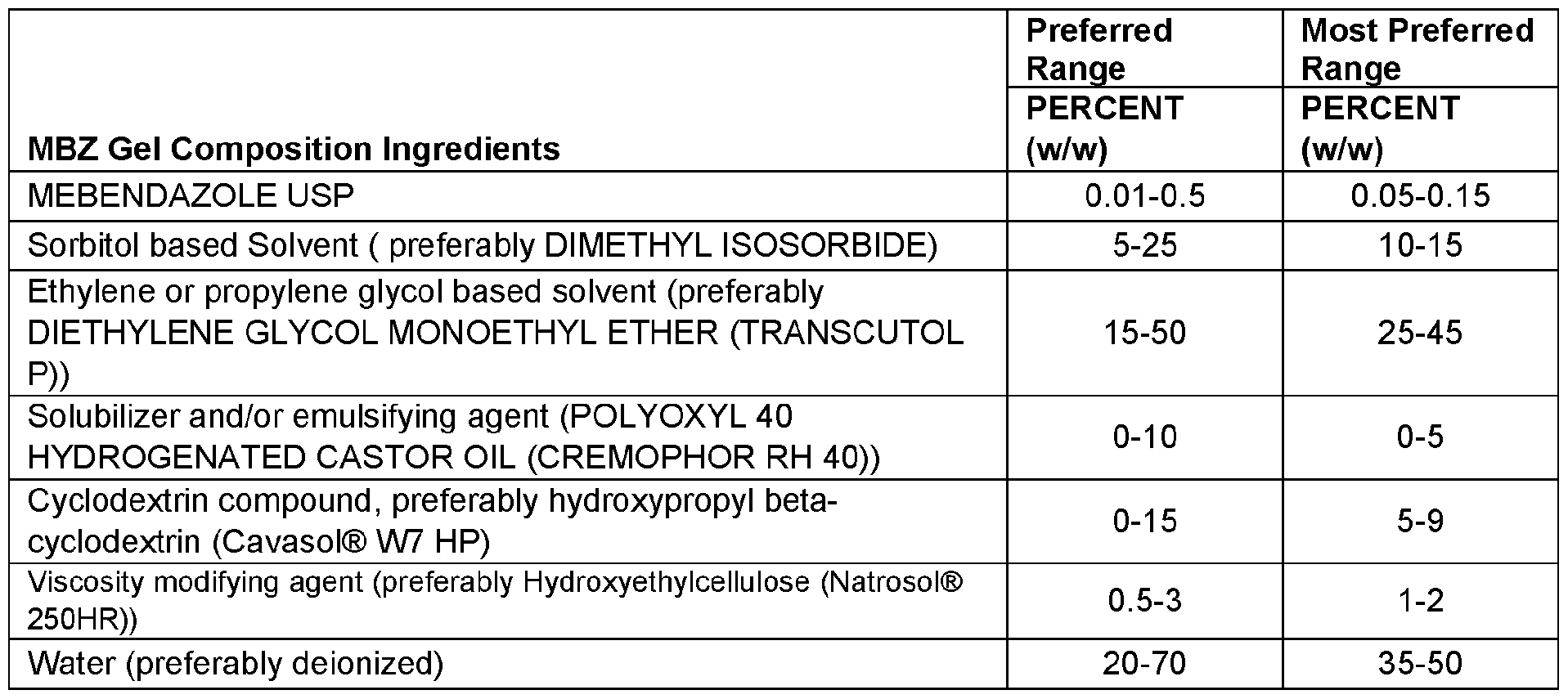
- MBZ gel compositions include MBZ in combination with one or more of the other ingredients as shown in Table 8. [0082] Table 8. Mebendazole Gel Compositions
- moderate magnetic stirrer mixing of the Transcutol P and DMI and MBZ (2) heating at the stated temperature (60, 70, 80, or 90 °C) for a first period of time of 5-15 minutes; (3) continuing to mix/stir during the heating step, such as by using the magnetic stir
- steps (1 )-(3) are carried out prior to the addition of water in step (4).
- one or more other ingredients such as the viscosity modifying agents or gelling agents may be pre-mixed or pre-dissolved in the water prior to step (4).
- a cyclodextrin compound preferably hydroxypropyl betacyclodextrin (Cavasol® W7 HP)
- the cyclodextrin compound is preferably first dissolved in the deionized water prior to the addition of the viscosity modifying agent (preferably hydroxyethylcellulose (Natrosol)).
- other viscosity modifying agents such as carboxymethylcellulose, hydroxypropylcellulose, magnesium aluminum silicate, Carbomer, or other pharmaceutically acceptable viscosity modifying agents may be used in place of or in addition to hydroxyethylcellulose (Natrosol).
- Other ingredients that may improve or maintain stability of the compositions according to the invention such as antioxidants, including ascorbic acid or ascorbate salts or ascorbyl esters, ferulic acid, ubidecarenone, dl-alpha tocopherol, BHT, BHA, or other pharmaceutically acceptable antioxidants may be added to the compositions according to preferred embodiments herein, as will be understood by those of ordinary skill in the art. Such antioxidant ingredients may be beneficial in improving or maintaining MBZ product stability.
- topical compositions, MBZ concentrate compositions, and MBZ treatment compositions comprise ingredients and amounts according to one or more of the following paragraphs:
- a topical composition for treating or preventing an inflammatory or autoimmune disease or condition of human skin comprising 0.25 to 20% of one or more benzimidazole compounds by weight of the topical composition.
- (B) The topical composition of paragraph (A) further comprising a carrier suitable for application to human skin and/or wherein the topical composition has a viscosity of around 10,000 to 400,000 centipoise and/or wherein the benzimidazole has a particle size of around 3.5 to 4.0 microns as an ingredient prior to any dissolution in the topical composition.
- topical composition of any one of paragraphs (A)-(H) wherein the topical composition comprises around 1-30% of a mebendazole concentrate composition and/or around 70-99% of vehicle or carrier composition suitable for application to human skin, the percentages by weight of the topical composition.
- the mebendazole concentrate composition comprises: (1 ) around 1-10% mebendazole; (2) around 32- 45% of a sorbitol based solvent; (3) around 15-25% of a glycol based solvent comprising an ethylene glycol based solvent, or a propylene glycol based solvent, or both; and/or (4) around 32-45% total of a solubilizer or emulsifying agent or both; and wherein the percentages are by weight of the mebendazole concentrate.
- An aqueous mebendazole treatment composition for topically treating or preventing an inflammatory or autoimmune disease or condition of human skin comprising: around 0.01 -1 % of one or more benzimidazole compounds; around 5-25% of a sorbitol based solvent; and/or around 15-50% of a glycol based solvent comprising an ethylene glycol based solvent, or a propylene glycol based solvent, or both; and wherein the percentages are by weight of the mebendazole treatment composition.
- the solubilizer comprises polyoxyl 40 hydrogenated castor oil
- the cyclodextrin compound comprises hydroxypropyl beta-cyclodextrin
- the viscosity modifying agent comprises hydroxyethylcellulose.
- a method of treating or preventing an inflammatory or autoimmune disease or condition of human or animal skin comprises steps, ingredients, and amounts according to one or more of the following paragraphs:
- (S) A method for treating or preventing an inflammatory or autoimmune disease or condition of human skin, the method comprising applying (1 ) a topical composition comprising 0.25 to 20% by weight of one or more benzimidazole compounds and a carrier or (2) a topical composition according to any one of paragraphs (A)-(L) or (3) an aqueous mebendazole treatment composition according to any one of paragraphs (M)-(R) to an area of a subject’s skin affected by the disease or condition.
- (W) The method of any one of paragraphs (S)-(V) wherein the one or more benzimidazole compounds comprises mebendazole and wherein the disease or condition comprises any form of rosacea.
- (X) The method of any one of paragraphs (S)-(W) wherein the applying step is repeated at least once per day for a treatment period comprising at least two weeks.
- (BB) The method of any one of paragraphs (S)-(AA) further comprising repeating the applying step at least once per day for a treatment period comprising at least twelve weeks; wherein the one or more benzimidazole compounds comprises mebendazole; wherein the carrier comprises a cream, gel, lotion, liquid, emulsion, microemulsion, aerosol spray, non-aerosol spray, serum, solution, suspension, or ointment for topical application to skin; wherein the disease or condition comprises any form of rosacea; and/or wherein the method achieves a reduction in the number of cutaneous cytotoxic CD+8 T-cells of 50% or greater in the area of skin at the end of the treatment period compared to a number of cutaneous cytotoxic CD+8 T-cells in the area prior to the treatment period.
- the carrier comprises a cream, gel, lotion, liquid, emulsion, microemulsion, aerosol spray, non-aerosol spray, serum, solution, suspension, or oint
- a method of making a mebendazole treatment composition for topically treating or preventing an inflammatory or autoimmune disease or condition of human skin comprises steps, ingredients, and amounts according to one or more of the following paragraphs:
- CC A method of making a mebendazole treatment composition for topically treating or preventing an inflammatory or autoimmune disease or condition of human skin, the method comprising: (1 ) adding an amount of one or more solvents and an amount mebendazole to form a first mixture; and (2) heating the first mixture to a first temperature within a first temperature range for a first period of time while mixing or stirring to form a heated mixture; and wherein the amount of mebendazole is around 0.05-0.2% by weight of the mebendazole treatment composition.
- cyclodextrin compound comprises hydroxypropyl beta-cyclodextrin.
- compositions and methods according to the invention are capable of achieving one or more of the following benefits: (1 ) reducing T-lymphocyte cell density by at least around 50 %, more preferably by at least around 90 % compared to before treatment with a mebendazole composition; (2) reducing the number of papules and/or pustules or diffuse redness on the skin of a rosacea patient by at least around 25%, more preferably by at least around 75% compared to before treatment with a mebendazole composition; (3) reducing the appearance of swelling on the skin compared to before treatment with a mebendazole composition; (4) reducing a level of itchiness on the skin compared to before treatment with a mebendazole composition; and/or (5) for the treatment of erythematotelangiectactic rosacea, a significant reduction in the redness “a” or “a*” value of the facial skin is demonstrated with the topical mebenzadole treatment.
- the “a” or “a*” value is an objective measurement of redness as measured by the Hunter L,a,b (Hunter Labs) and CIE L*a*b* (CIELAB) colorimeters, the Minolta CR type colorimeters or other suitable colorimeter or chromameter. Visible changes in redness can be detected in colorimeter a* units as low as 0.2 units and a decrease in one (1 .0) or more a or a* colorimeter units after topical treatment of erythematotelangiectactic rosacea is generally considered to show clinical efficacy.
- Preferred embodiments of MBZ treatment compositions and methods according to the invention are also capable of achieving cumulative skin penetrations after 24 hours of at least 5 ug of MBZ , more preferably at least 10 pg, most preferably at least 15pg. These amounts are as measured in acceptor solution using the Skin PAMPA tests described herein and based on application of 150 pL MBZ Treatment Composition to 0.3 cm 2 artificial skin membrane.
Landscapes
- Health & Medical Sciences (AREA)
- Chemical & Material Sciences (AREA)
- Life Sciences & Earth Sciences (AREA)
- Medicinal Chemistry (AREA)
- Pharmacology & Pharmacy (AREA)
- Animal Behavior & Ethology (AREA)
- General Health & Medical Sciences (AREA)
- Public Health (AREA)
- Veterinary Medicine (AREA)
- Epidemiology (AREA)
- General Chemical & Material Sciences (AREA)
- Chemical Kinetics & Catalysis (AREA)
- Engineering & Computer Science (AREA)
- Oil, Petroleum & Natural Gas (AREA)
- Nuclear Medicine, Radiotherapy & Molecular Imaging (AREA)
- Organic Chemistry (AREA)
- Inorganic Chemistry (AREA)
- Bioinformatics & Cheminformatics (AREA)
- Dermatology (AREA)
- Rheumatology (AREA)
- Pain & Pain Management (AREA)
- Immunology (AREA)
- Biochemistry (AREA)
- Molecular Biology (AREA)
- Pharmaceuticals Containing Other Organic And Inorganic Compounds (AREA)
- Medicinal Preparation (AREA)
Abstract
Description



Claims
Priority Applications (7)
| Application Number | Priority Date | Filing Date | Title |
|---|---|---|---|
| IL317832A IL317832A (en) | 2022-06-21 | 2023-06-21 | Topical benzimidazole formulations and methods for use in treating inflammatory dermatoses |
| AU2023288446A AU2023288446A1 (en) | 2022-06-21 | 2023-06-21 | Topical benzimidazole formulations and methods for use in treating inflammatory dermatoses |
| CA3259267A CA3259267A1 (en) | 2022-06-21 | 2023-06-21 | Topical benzimidazole formulations and methods for use in treating inflammatory dermatoses |
| JP2024575439A JP2025521574A (en) | 2022-06-21 | 2023-06-21 | Topical benzimidazole formulations and methods for use in treating inflammatory skin conditions - Patents.com |
| EP23827777.6A EP4543441A4 (en) | 2022-06-21 | 2023-06-21 | Topical Benzimidazole Formulations and Methods of Use in the Treatment of Inflammatory Dermatoses |
| KR1020257001947A KR20250025733A (en) | 2022-06-21 | 2023-06-21 | Topical benzimidazole formulations and methods for use in the treatment of inflammatory dermatoses |
| MX2024015802A MX2024015802A (en) | 2022-06-21 | 2024-12-17 | Topical benzimidazole formulations and methods for use in treating inflammatory dermatoses |
Applications Claiming Priority (4)
| Application Number | Priority Date | Filing Date | Title |
|---|---|---|---|
| US202263353907P | 2022-06-21 | 2022-06-21 | |
| US63/353,907 | 2022-06-21 | ||
| US18/212,065 | 2023-06-20 | ||
| US18/212,065 US20240423959A1 (en) | 2022-06-21 | 2023-06-20 | Topical benzimidazole formulations and methods for use in treating inflammatory dermatoses |
Publications (2)
| Publication Number | Publication Date |
|---|---|
| WO2023249992A2 true WO2023249992A2 (en) | 2023-12-28 |
| WO2023249992A3 WO2023249992A3 (en) | 2024-03-14 |
Family
ID=89380515
Family Applications (1)
| Application Number | Title | Priority Date | Filing Date |
|---|---|---|---|
| PCT/US2023/025829 Ceased WO2023249992A2 (en) | 2022-06-21 | 2023-06-21 | Topical benzimidazole formulations and methods for use in treating inflammatory dermatoses |
Country Status (10)
| Country | Link |
|---|---|
| US (1) | US20240423959A1 (en) |
| EP (1) | EP4543441A4 (en) |
| JP (1) | JP2025521574A (en) |
| KR (1) | KR20250025733A (en) |
| AU (1) | AU2023288446A1 (en) |
| CA (1) | CA3259267A1 (en) |
| CL (1) | CL2024003959A1 (en) |
| IL (1) | IL317832A (en) |
| MX (1) | MX2024015802A (en) |
| WO (1) | WO2023249992A2 (en) |
Cited By (2)
| Publication number | Priority date | Publication date | Assignee | Title |
|---|---|---|---|---|
| US20250241898A1 (en) * | 2022-06-21 | 2025-07-31 | Jjr&D, Llc | Topical Benzimidazole Formulations and Methods for Use in Treating Inflammatory Dermatoses |
| WO2025221973A1 (en) * | 2024-04-18 | 2025-10-23 | Jjr&D, Llc | Topical benzimidazole formulations and methods for use in treating inflammatory dermatoses |
Citations (10)
| Publication number | Priority date | Publication date | Assignee | Title |
|---|---|---|---|---|
| US5169846A (en) | 1989-10-12 | 1992-12-08 | Crooks Michael J | Non-aqueous micellar solutions of anthelmintic benzimidazoles, closantel, or phenothiazine, and insect growth regulators |
| US5446059A (en) | 1991-05-31 | 1995-08-29 | Centre International De Recherches Dermatologiques Galderma (Cird Galderma) | Benzimidazole-derived compounds, method for preparing the same, and therapeutical and cosmetic uses thereof |
| WO2002058697A1 (en) | 2001-01-24 | 2002-08-01 | Combinatorx, Incorporated | Combinations of drugs (e.g., a benzimidazole and pentamidine) for the treatment of neoplastic disorders |
| US20050038096A1 (en) | 2003-08-13 | 2005-02-17 | The University Of Houston | Parenteral and oral formulations of benzimidazoles |
| CN104337821A (en) | 2013-07-25 | 2015-02-11 | 青岛康地恩动物药业有限公司 | Suspension containing methylene bendazole and dipterex, and preparation method thereof |
| US9877950B2 (en) | 2011-09-12 | 2018-01-30 | Merial Inc. | Parasiticidal compositions comprising an isoxazoline active agent, methods and uses thereof |
| US20180339054A1 (en) | 2013-07-19 | 2018-11-29 | Boehringer Ingelheim Vetmedica Gmbh | Preserved etherified cyclodextrin derivatives containing liquid aqueous pharmaceutical composition |
| WO2019112031A1 (en) | 2017-12-08 | 2019-06-13 | サイエンスファーム株式会社 | Systemic scleroderma therapeutic agent |
| KR20210129574A (en) | 2020-08-25 | 2021-10-28 | 김해성 | Composition for treating skin inflammation using anthelmintic |
| US20210369679A1 (en) | 2015-02-06 | 2021-12-02 | The Johns Hopkins University | Mebendazole polymorph for treatment and prevention of tumors |
Family Cites Families (12)
| Publication number | Priority date | Publication date | Assignee | Title |
|---|---|---|---|---|
| YU2792A (en) * | 1991-01-19 | 1995-01-31 | Hoechst A Ktiengesellschaft | DISPERSIONS OF FINE PARTICLES, ANTIHELMINTENTALLY EFFECTIVE DERIVATIVES, BENZIMIDAZOLE OR BENZTIAZOLE OR PRO-BENZIMIDAZOLE IN WATER |
| NZ544851A (en) * | 2003-06-23 | 2008-03-28 | Macrochem Corp | A vanishing cream base composition suitable for topical administration of an active agent to an animal or plant |
| US9259390B2 (en) * | 2003-08-13 | 2016-02-16 | The University Of Houston System | Parenteral and oral formulations of benzimidazoles |
| US8530569B2 (en) * | 2003-12-05 | 2013-09-10 | Sun Chemical Corporation | Polymeric dispersants and dispersions containing same |
| JP2010031653A (en) * | 2008-07-24 | 2010-02-12 | Fujifilm Corp | Method for pumping agglomerative liquid and method for manufacturing recording medium |
| FR2937247B1 (en) * | 2008-10-16 | 2010-12-17 | Sederma Sa | WHITENING AND ANTI-REDNESS COSMETIC COMPOSITION |
| UA108641C2 (en) * | 2010-04-02 | 2015-05-25 | PARASITICID COMPOSITION CONTAINING FOUR ACTIVE AGENTS AND METHOD OF APPLICATION | |
| CA2827373C (en) * | 2011-02-15 | 2019-05-14 | Epi Health, Llc | Pharmaceutical cream compositions of oxymetazoline for treating symptoms of rosacea |
| IN201721019939A (en) * | 2017-06-07 | 2018-12-07 | ||
| GB201721287D0 (en) * | 2017-12-19 | 2018-01-31 | Repos Pharma Ab | Treatment for inflammatory disease |
| KR20220118525A (en) * | 2019-12-20 | 2022-08-25 | 화이자 인코포레이티드 | Benzimidazole derivatives |
| CN113956205B (en) * | 2021-12-21 | 2022-03-25 | 山东国邦药业有限公司 | Preparation method of mebendazole |
-
2023
- 2023-06-20 US US18/212,065 patent/US20240423959A1/en active Pending
- 2023-06-21 AU AU2023288446A patent/AU2023288446A1/en active Pending
- 2023-06-21 IL IL317832A patent/IL317832A/en unknown
- 2023-06-21 WO PCT/US2023/025829 patent/WO2023249992A2/en not_active Ceased
- 2023-06-21 JP JP2024575439A patent/JP2025521574A/en active Pending
- 2023-06-21 EP EP23827777.6A patent/EP4543441A4/en active Pending
- 2023-06-21 KR KR1020257001947A patent/KR20250025733A/en active Pending
- 2023-06-21 CA CA3259267A patent/CA3259267A1/en active Pending
-
2024
- 2024-12-17 MX MX2024015802A patent/MX2024015802A/en unknown
- 2024-12-20 CL CL2024003959A patent/CL2024003959A1/en unknown
Patent Citations (10)
| Publication number | Priority date | Publication date | Assignee | Title |
|---|---|---|---|---|
| US5169846A (en) | 1989-10-12 | 1992-12-08 | Crooks Michael J | Non-aqueous micellar solutions of anthelmintic benzimidazoles, closantel, or phenothiazine, and insect growth regulators |
| US5446059A (en) | 1991-05-31 | 1995-08-29 | Centre International De Recherches Dermatologiques Galderma (Cird Galderma) | Benzimidazole-derived compounds, method for preparing the same, and therapeutical and cosmetic uses thereof |
| WO2002058697A1 (en) | 2001-01-24 | 2002-08-01 | Combinatorx, Incorporated | Combinations of drugs (e.g., a benzimidazole and pentamidine) for the treatment of neoplastic disorders |
| US20050038096A1 (en) | 2003-08-13 | 2005-02-17 | The University Of Houston | Parenteral and oral formulations of benzimidazoles |
| US9877950B2 (en) | 2011-09-12 | 2018-01-30 | Merial Inc. | Parasiticidal compositions comprising an isoxazoline active agent, methods and uses thereof |
| US20180339054A1 (en) | 2013-07-19 | 2018-11-29 | Boehringer Ingelheim Vetmedica Gmbh | Preserved etherified cyclodextrin derivatives containing liquid aqueous pharmaceutical composition |
| CN104337821A (en) | 2013-07-25 | 2015-02-11 | 青岛康地恩动物药业有限公司 | Suspension containing methylene bendazole and dipterex, and preparation method thereof |
| US20210369679A1 (en) | 2015-02-06 | 2021-12-02 | The Johns Hopkins University | Mebendazole polymorph for treatment and prevention of tumors |
| WO2019112031A1 (en) | 2017-12-08 | 2019-06-13 | サイエンスファーム株式会社 | Systemic scleroderma therapeutic agent |
| KR20210129574A (en) | 2020-08-25 | 2021-10-28 | 김해성 | Composition for treating skin inflammation using anthelmintic |
Non-Patent Citations (3)
| Title |
|---|
| SCHALLER ET AL., JOURNAL DER DEUTSCHEN DERMATOLOGISCHEN, vol. 14, no. S6, 2016, pages 17 - 27 |
| See also references of EP4543441A4 |
| SKIN, PAMPA METHOD REFERENCE: PHARMACEUTICS, vol. 13, no. 11, 21 October 2021 (2021-10-21), pages 1758 |
Cited By (2)
| Publication number | Priority date | Publication date | Assignee | Title |
|---|---|---|---|---|
| US20250241898A1 (en) * | 2022-06-21 | 2025-07-31 | Jjr&D, Llc | Topical Benzimidazole Formulations and Methods for Use in Treating Inflammatory Dermatoses |
| WO2025221973A1 (en) * | 2024-04-18 | 2025-10-23 | Jjr&D, Llc | Topical benzimidazole formulations and methods for use in treating inflammatory dermatoses |
Also Published As
| Publication number | Publication date |
|---|---|
| EP4543441A4 (en) | 2025-10-08 |
| CL2024003959A1 (en) | 2025-04-25 |
| EP4543441A2 (en) | 2025-04-30 |
| WO2023249992A3 (en) | 2024-03-14 |
| MX2024015802A (en) | 2025-04-02 |
| JP2025521574A (en) | 2025-07-10 |
| US20240423959A1 (en) | 2024-12-26 |
| IL317832A (en) | 2025-02-01 |
| KR20250025733A (en) | 2025-02-24 |
| AU2023288446A1 (en) | 2025-01-02 |
| CA3259267A1 (en) | 2023-12-28 |
Similar Documents
| Publication | Publication Date | Title |
|---|---|---|
| Miastkowska et al. | The kinetic study of isotretinoin release from nanoemulsion | |
| US9314431B2 (en) | Solubilized benzoyl small molecule | |
| US11191717B2 (en) | Topical therapy for the treatment of skin malignancies using nanoparticles of taxanes | |
| US20240423959A1 (en) | Topical benzimidazole formulations and methods for use in treating inflammatory dermatoses | |
| KR20190003535A (en) | Delivery system | |
| RU2741504C2 (en) | Composition for local application containing tacrolimus | |
| JP2015042658A (en) | Formulations of vitamin k analogs for topical use | |
| Salau et al. | Enhancement of transdermal permeation of cannabinoids and their pharmacodynamic evaluation in rats | |
| JP2024507266A (en) | Hydrogel compositions and their use in the prevention and/or treatment of radiation-induced skin damage | |
| Caddeo et al. | Functional response of novel bioprotective poloxamer-structured vesicles on inflamed skin | |
| US9308268B2 (en) | Solubilized benzoyl peroxyde acne | |
| US20250241898A1 (en) | Topical Benzimidazole Formulations and Methods for Use in Treating Inflammatory Dermatoses | |
| Doppalapudi et al. | Fenoldopam mesylate for treating psoriasis: A new indication for an old drug | |
| WO2025221973A1 (en) | Topical benzimidazole formulations and methods for use in treating inflammatory dermatoses | |
| JP6322575B2 (en) | Topical formulation containing lipid microcapsule delivery vehicle and use thereof | |
| JP2003342171A (en) | Compositions for administration of disulanol | |
| US20240226068A9 (en) | Topical Formulation of Disease-Modifying Antirheumatic Drug (DMARDs) for the Treatment of Rheumatoid Arthritis, Melanoma, Squamous Cell Carcinoma, Atopic Dermatitis, and Psoriasis | |
| Sharma et al. | Synergistic Topical Therapy for Squamous Cell Carcinoma via Mixed Micelles Co-delivering 5-Fluorouracil and Genistein | |
| WO2022180199A1 (en) | Emulsion for use in the treatment of rosacea | |
| KR20260023915A (en) | Foam-type minoxidil preparation with improved skin permeability and solubility and method for manufacturing the same | |
| CN121731481A (en) | Lipozotinib phosphate nanostructured lipid carrier, preparation method and application thereof, and pozotinib phosphate composition | |
| WO2013111817A1 (en) | Oil-in-water-type creamy composition containing tacrolimus | |
| Caddeo et al. | ÔØ Å ÒÙ× Ö ÔØ | |
| HK1201468B (en) | Topical formulations including lipid microcapsule delivery vehicles and their uses |
Legal Events
| Date | Code | Title | Description |
|---|---|---|---|
| 121 | Ep: the epo has been informed by wipo that ep was designated in this application |
Ref document number: 23827777 Country of ref document: EP Kind code of ref document: A2 |
|
| WWE | Wipo information: entry into national phase |
Ref document number: AU2023288446 Country of ref document: AU |
|
| WWE | Wipo information: entry into national phase |
Ref document number: MX/A/2024/015802 Country of ref document: MX |
|
| WWE | Wipo information: entry into national phase |
Ref document number: 317832 Country of ref document: IL |
|
| WWE | Wipo information: entry into national phase |
Ref document number: 2024575439 Country of ref document: JP |
|
| ENP | Entry into the national phase |
Ref document number: 2023288446 Country of ref document: AU Date of ref document: 20230621 Kind code of ref document: A |
|
| ENP | Entry into the national phase |
Ref document number: 20257001947 Country of ref document: KR Kind code of ref document: A |
|
| WWE | Wipo information: entry into national phase |
Ref document number: 1020257001947 Country of ref document: KR |
|
| WWE | Wipo information: entry into national phase |
Ref document number: 2023827777 Country of ref document: EP |
|
| NENP | Non-entry into the national phase |
Ref country code: DE |
|
| ENP | Entry into the national phase |
Ref document number: 2023827777 Country of ref document: EP Effective date: 20250121 |
|
| REG | Reference to national code |
Ref country code: BR Ref legal event code: B01A Ref document number: 112024026946 Country of ref document: BR |
|
| WWP | Wipo information: published in national office |
Ref document number: 1020257001947 Country of ref document: KR |
|
| WWP | Wipo information: published in national office |
Ref document number: MX/A/2024/015802 Country of ref document: MX |
|
| REG | Reference to national code |
Ref country code: BR Ref legal event code: B01E Ref document number: 112024026946 Country of ref document: BR Free format text: APRESENTAR NOVA FOLHA REFERENTE AO RELATORIO DESCRITIVO TRADUZIDO (ALTERACOES), UMA VEZ QUE A APRESENTADA TEM INCORRECAO NA NUMERACAO DA PRIMEIRA PAGINA (1/44). |
|
| WWP | Wipo information: published in national office |
Ref document number: 2023827777 Country of ref document: EP |
|
| ENP | Entry into the national phase |
Ref document number: 112024026946 Country of ref document: BR Kind code of ref document: A2 Effective date: 20241220 |